❤️ Would you like to save this?
The 1980s office wardrobe did not believe in slipping quietly into a room. Shoulders widened. Waists snapped into focus. Silk blouses tied themselves into bows the size of small bouquets. Gold hardware flashed from belts, earrings and bags, while jewel tones competed with gray flannel, camel wool and enough navy to furnish a trading floor.
None of that excess was entirely frivolous. Professional dressing had become a language of proportion and presence, particularly for women moving through workplaces whose rules had largely been written without them in mind. Tailoring borrowed some of its visual authority from menswear, then rewrote the silhouette with peplums, cinched waists, silk scarves, saturated color and unapologetically oversized accessories.
What makes these looks worth another look isn’t nostalgia alone. Strip away the hairspray and heroic shoulder pads and the styling is remarkably deliberate: one loud print against quiet separates, one gleaming chain over matte wool, one strong belt giving shape to a loose dress. Some of it now looks audacious. Some looks unexpectedly elegant. And a surprising amount of it never really forgot how to make an entrance.
FYI, thanks to AI imagery software, we’re able to create very specific fashion and hairstyle examples to illustrate the points being made. In some cases, imagery is exaggerated to hammer home the point. Also, assume links that take you off the site are affiliate links such as links to Amazon. this means we may earn a commission if you buy something.
28. The Cropped Bolero Jacket Worn Over a Column Sheath
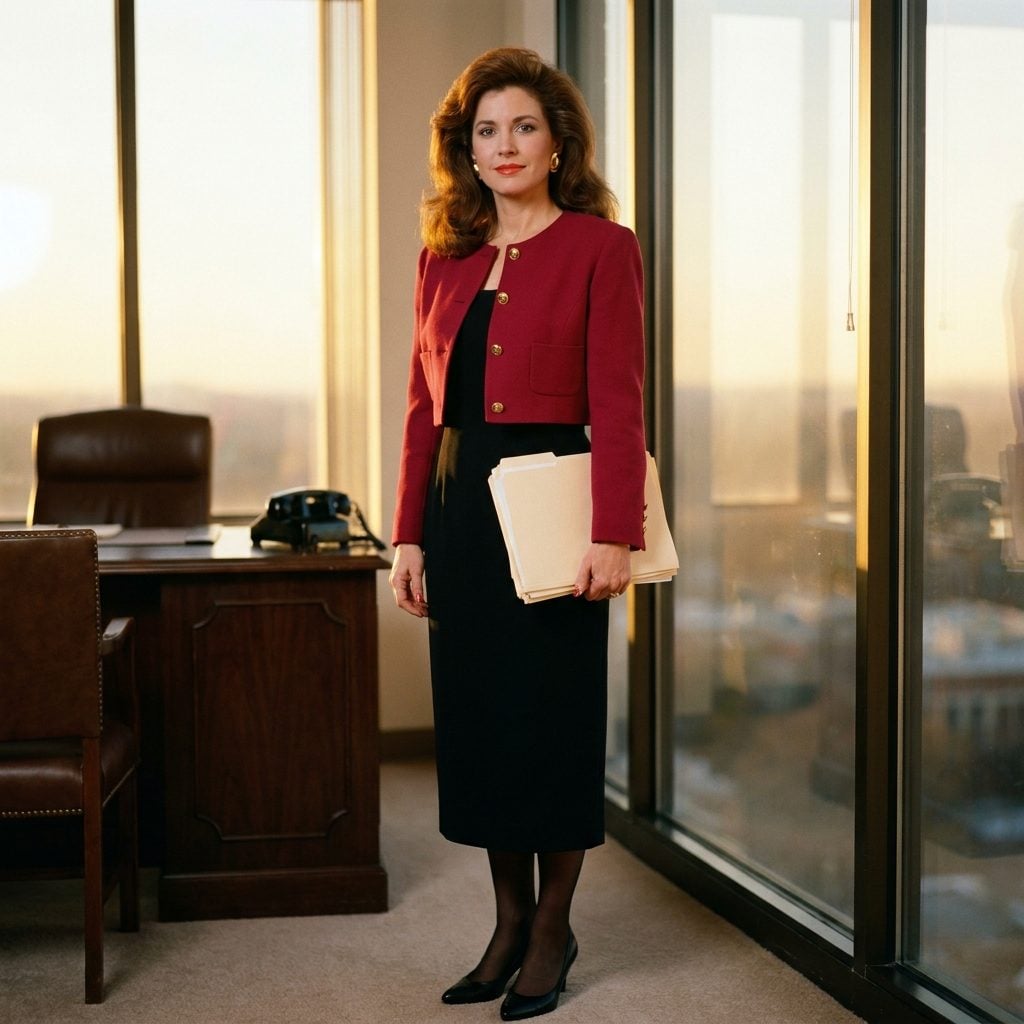
The bolero was the mullet of 1980s office dressing: all business up top, all silhouette below. Cutting the jacket off at the waist did what a longer boxy blazer could not — it let the eye travel down the uninterrupted line of the dress, then snapped attention straight back to those emphatic shoulders.
Proportion runs the show. A cropped jacket over a long, lean black dress creates one tall vertical column with a crisp interruption at the waist. Structure sits above, fluid crepe below, and neither has to compete with a belt for definition.
Cranberry against black gives the combination another advantage: enough warmth to lift the dark column without breaking it apart. Add pointed pumps and a cropped bolero jacket, and the result has the architectural swagger the decade did so well.
27. The Soft Floral Secretary Dress

After all that architectural tailoring, the floral secretary dress feels almost subversively gentle. A muted navy print, softly pleated skirt and fluid fabric offered a different version of professional polish without abandoning the decade’s appetite for structure.
The slim burgundy belt pulls the scattered florals together and gives the skirt a clean starting point. Structured shoulders keep the softness from drifting toward garden-party territory. The interesting tension is exactly there: romantic print, disciplined silhouette.
26. The Leather Portfolio Bag You Carried Instead of a Purse
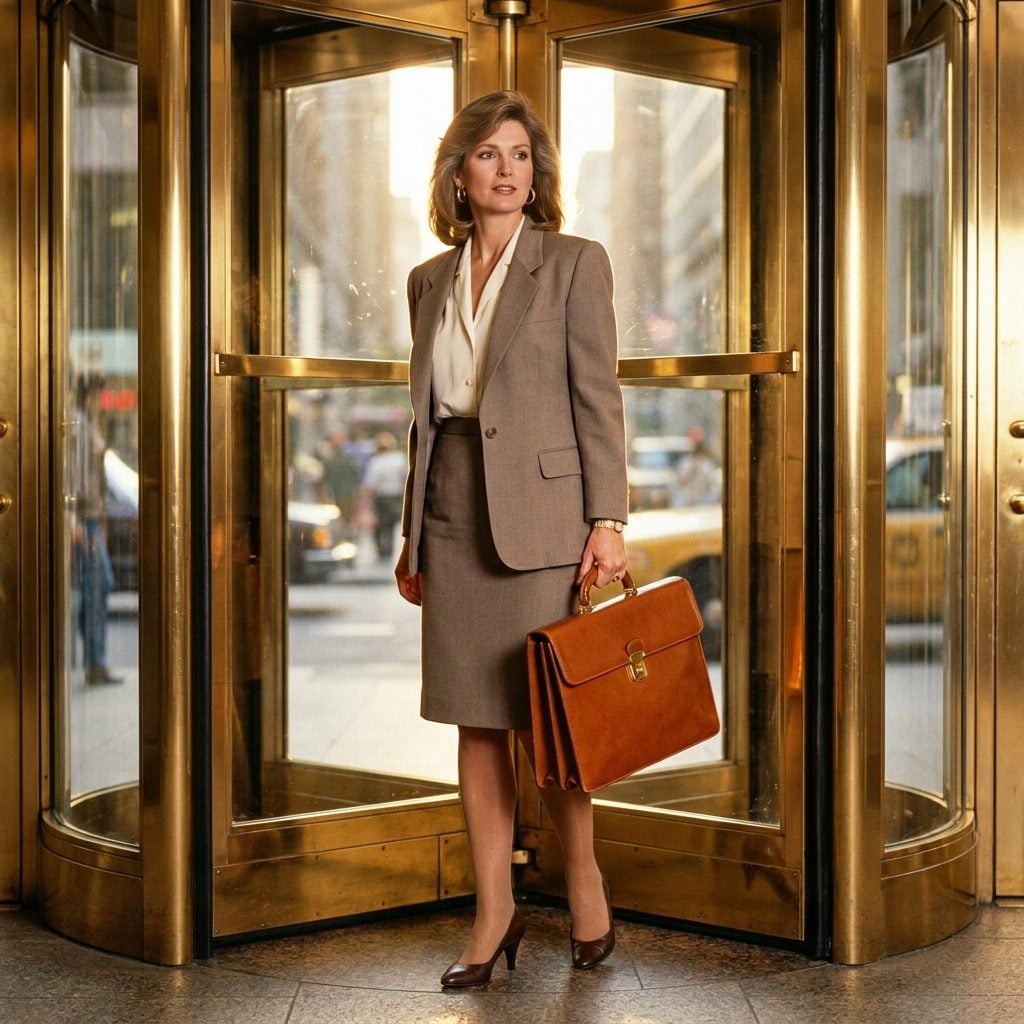
The bag changed the posture of the outfit. A structured portfolio had the flat planes and purposeful hardware of a briefcase, with enough room for documents, a legal pad and the miscellaneous equipment of a pre-laptop workday.
A cognac leather portfolio bag also does useful color work against taupe tailoring. The warm leather breaks up the neutrality without introducing another pattern, while the rigid rectangular shape echoes the crisp geometry of the suit.
The distinction from a conventional handbag was visual as much as practical. This was an accessory designed to look as though work belonged inside it.
25. The Dusty-Mauve Pastel Skirt Suit
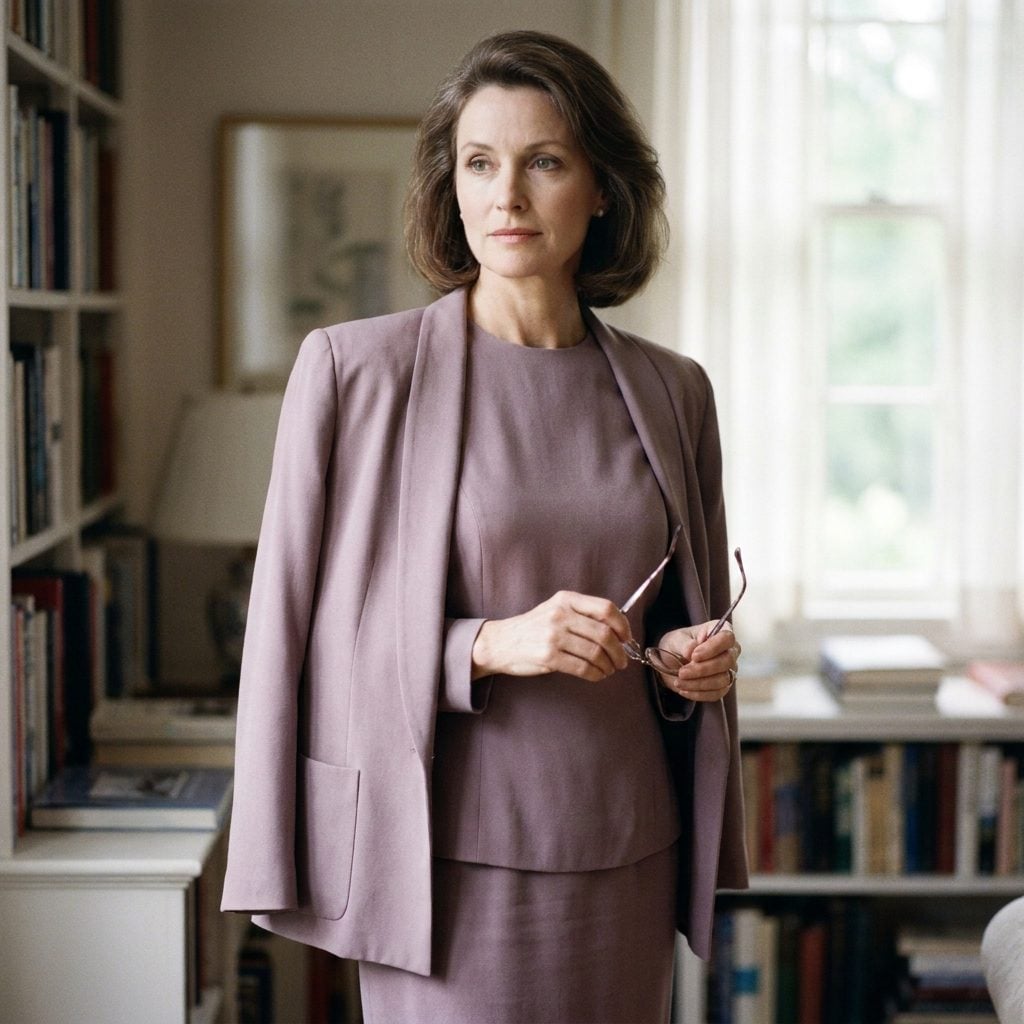
Not every power suit arrived in navy, charcoal or red. Dusty mauve took the same emphatic architecture and ran it through a much softer color filter.
The construction still carries the visual weight: padded shoulders, a shaped waist and a clean knee-length skirt. What makes the combination interesting is the disagreement between silhouette and palette. The tailoring is assertive; the color barely raises its voice.
24. The Abstract Silk Blouse Tucked Into High-Waisted Pleated Trousers
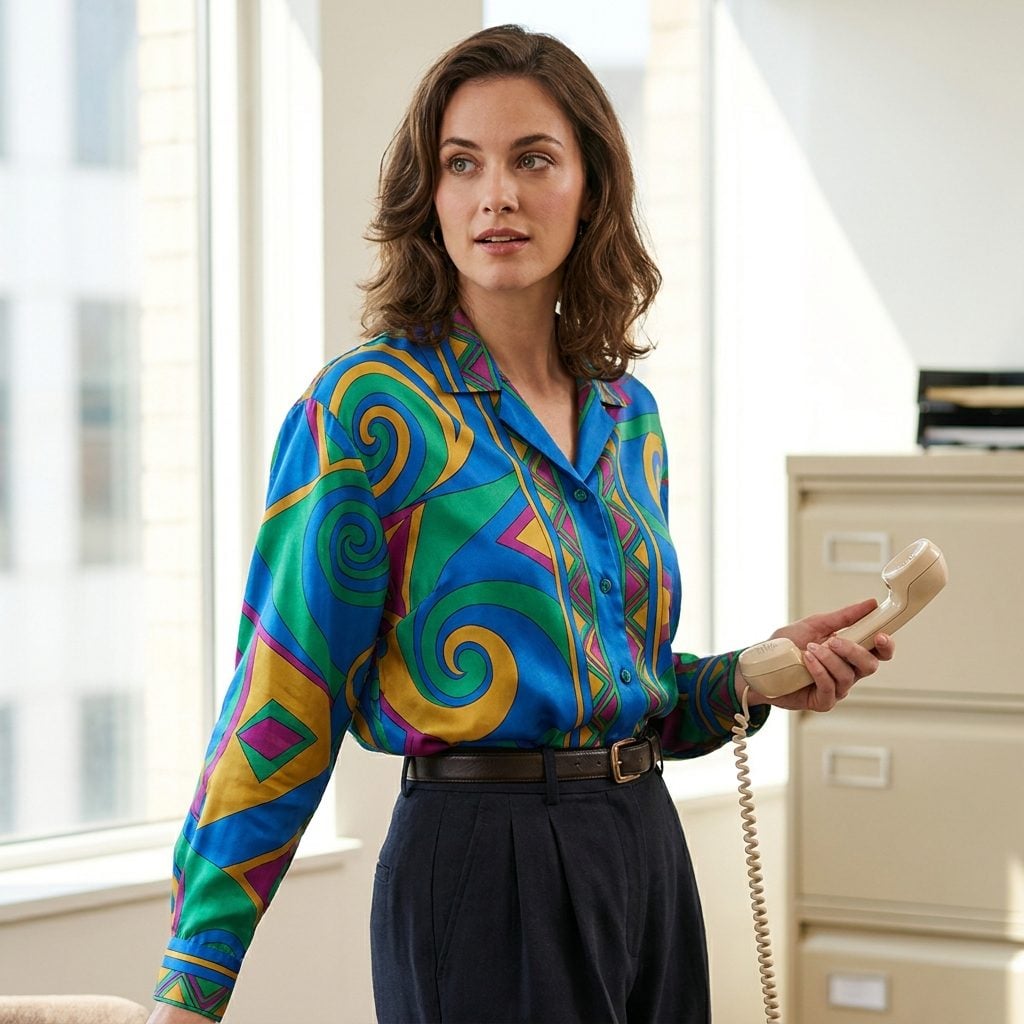
The print gets to make the noise. Burgundy, teal, cream and black move across the silk while tapered black trousers provide the visual full stop underneath. One expressive piece, one disciplined foundation.
The high waist gives the soft blouse its structure. Tucking in a printed silk blouse contains all that drape, while pleats give the trousers enough volume to balance the fuller sleeves without duplicating them.
23. The Trench Coat You Cinched Hard Enough to Mean It
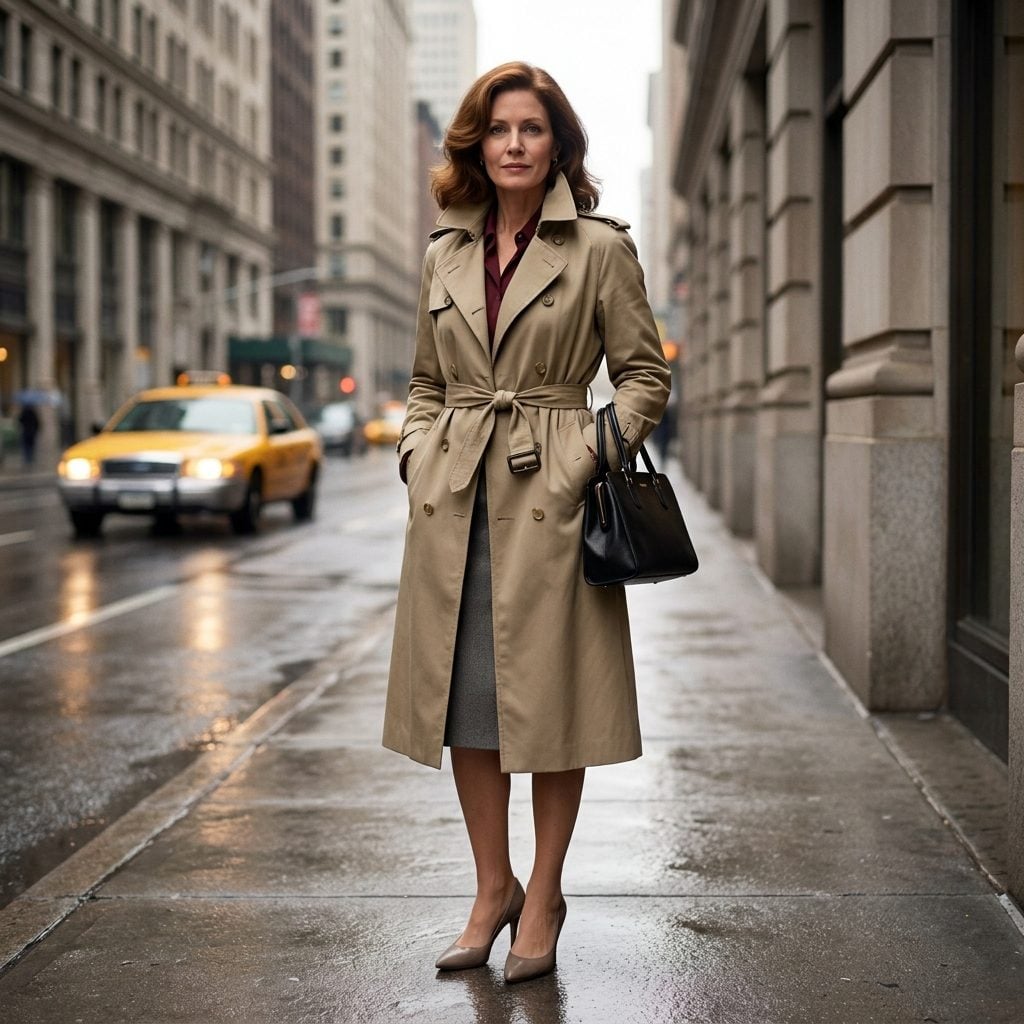
The belt wasn’t left hanging there as a suggestion. Cinching or knotting a khaki belted trench coat turned a practical outer layer into one more piece of 1980s silhouette engineering.
The transformation is all shape. A pulled-in waist makes the shoulders appear broader and gives the straight body of the coat an hourglass line. Add epaulettes, a raised collar and a knee-length hem and even the raincoat starts participating in the decade’s obsession with proportion.
22. The Cream-and-Black Bouclé Executive Suit
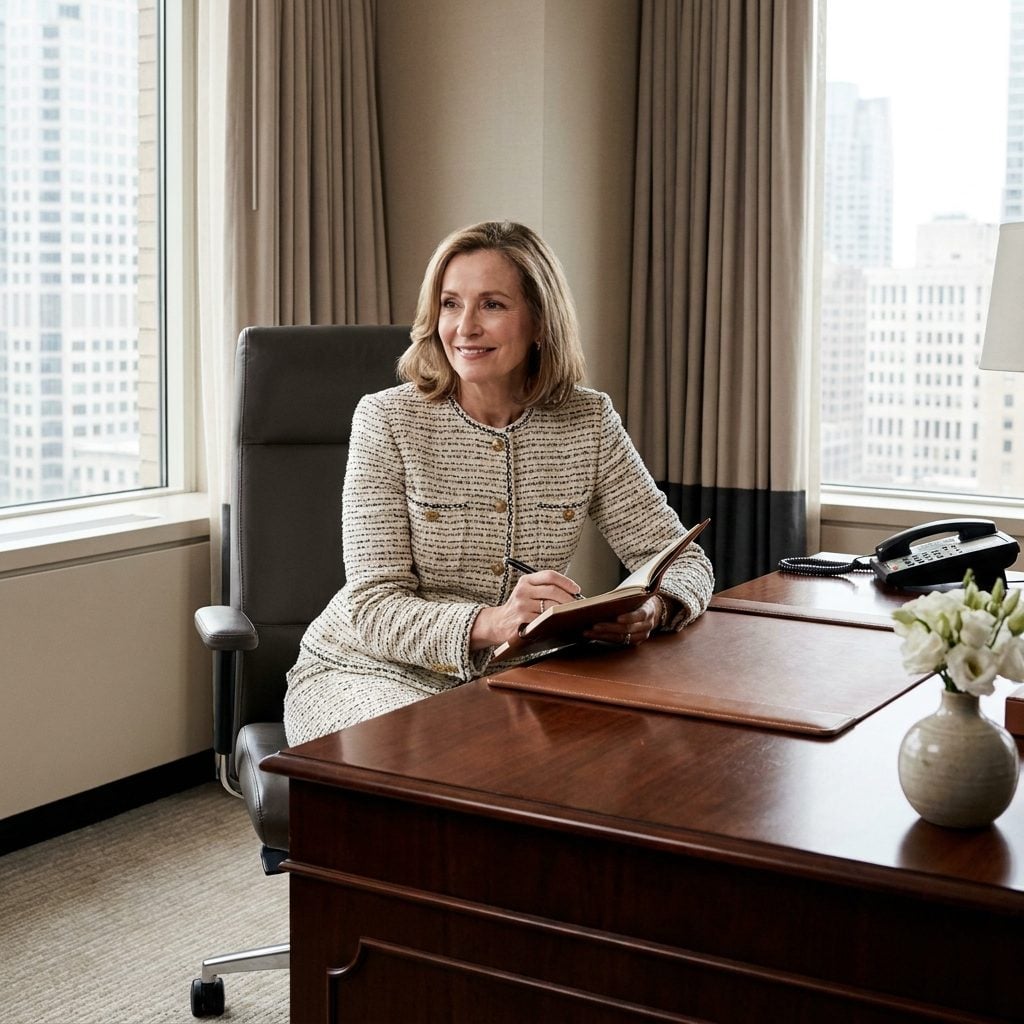
Bouclé changed the temperature of the power suit. Instead of smooth worsted wool and razor-sharp pinstripes, the surface itself became part of the design: nubby, tactile and visibly softer even when the jacket remained rigorously shaped.
Black braid outlining the cream jacket makes every edge legible from across the room. The vocabulary inevitably recalls Chanel — textured fabric, contrast trim, graphic borders — but the stronger 1980s shoulder gives the formula a period-specific jolt. Texture provides the richness; the black edging supplies the discipline.
21. Forest-Green Knit Dress Cinched With a Wide Cognac Belt
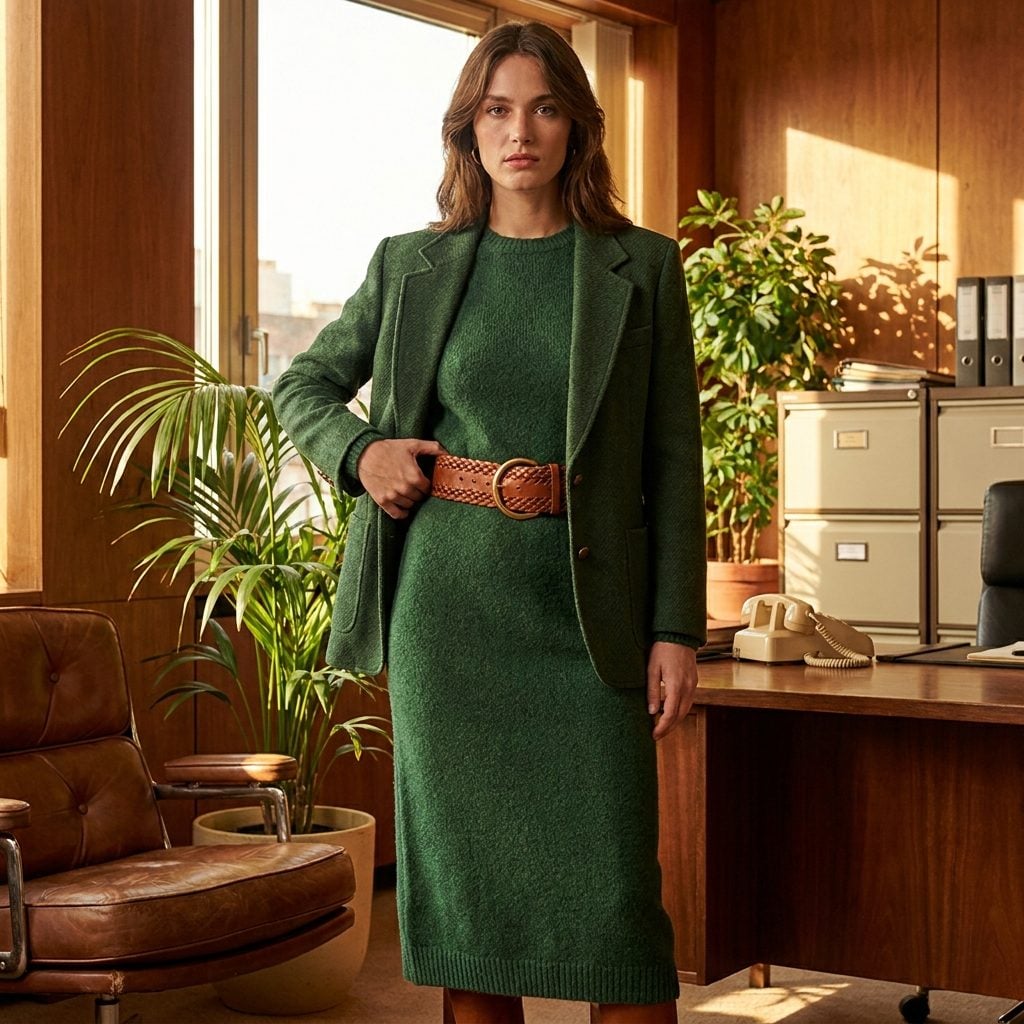
Knitwear offered relief from all that woven tailoring without giving up polish. Forest green has depth without the severity of charcoal or navy, while cognac leather warms the palette rather than fighting it.
The belt matters, but the fabric is the real distinction here. A knit blouson top falls softly where a blazer would hold its shape, and the skirt moves rather than standing at attention. The wide cognac belt gives the softness a boundary, letting comfort and structure occupy the same dress.
20. The Oversized Plaid Blazer That Took Up Its Share of the Room
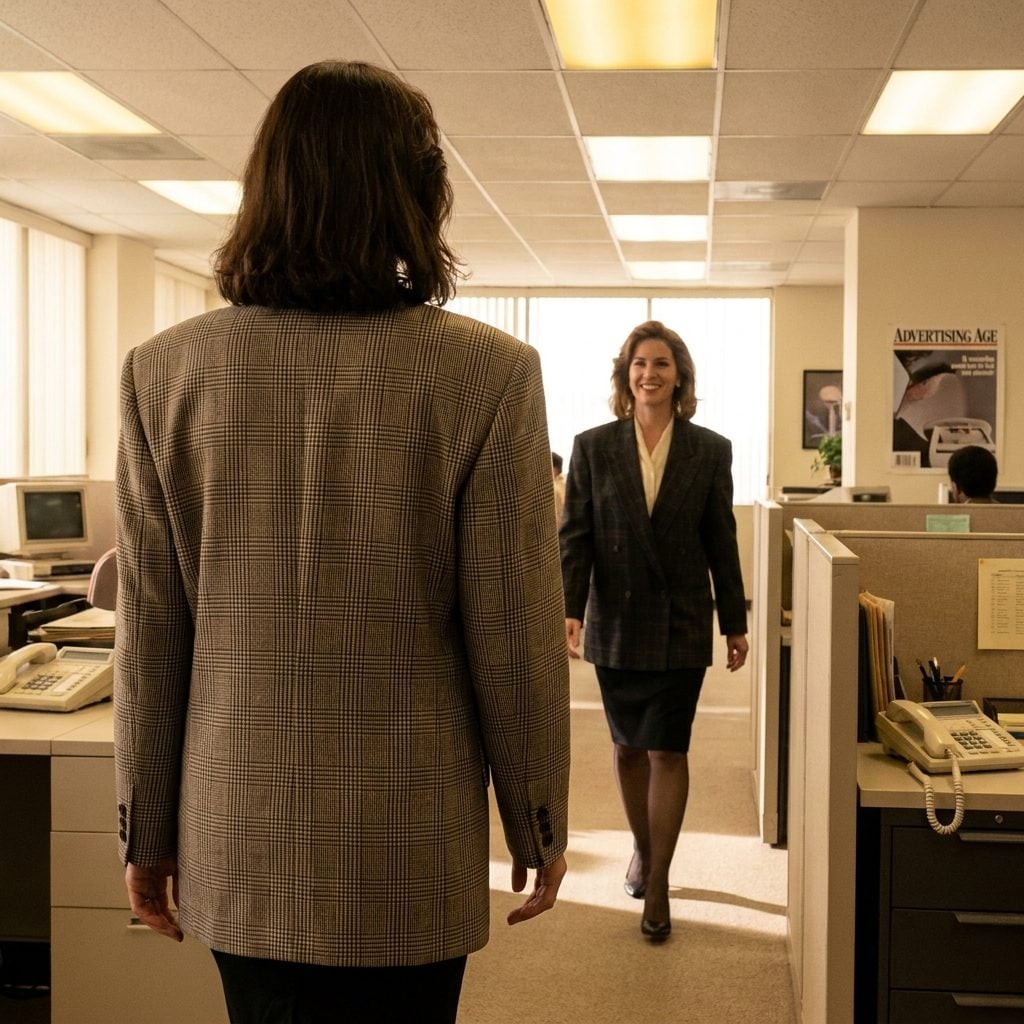
The shoulders arrive first. An oversized plaid blazer takes the already generous proportions of 1980s tailoring and pushes them farther, with a long body, broad upper line and enough fabric to make a fitted jacket look almost timid by comparison.
The rust-olive-camel-navy check supplies most of the visual activity, which is why the cream blouse and olive trousers can remain quiet. Pushing the sleeves upward breaks the jacket’s mass and exposes the forearm, keeping all that menswear volume from swallowing the entire figure.
19. The Faux Pearl Rope Knotted Once and Left to Swing

One knot was enough. A long rope of faux pearls could fall almost to the waist, turning a plain black knit into a backdrop for a single moving line of gloss.
The contrast is beautifully simple: matte boat-neck knit, luminous round pearls. Nothing else needs to sparkle. The knot keeps the strand from reading like a conventional short necklace and gives all that length a little asymmetry and swing.
18. The Royal-Blue Coatdress Built Like a Suit
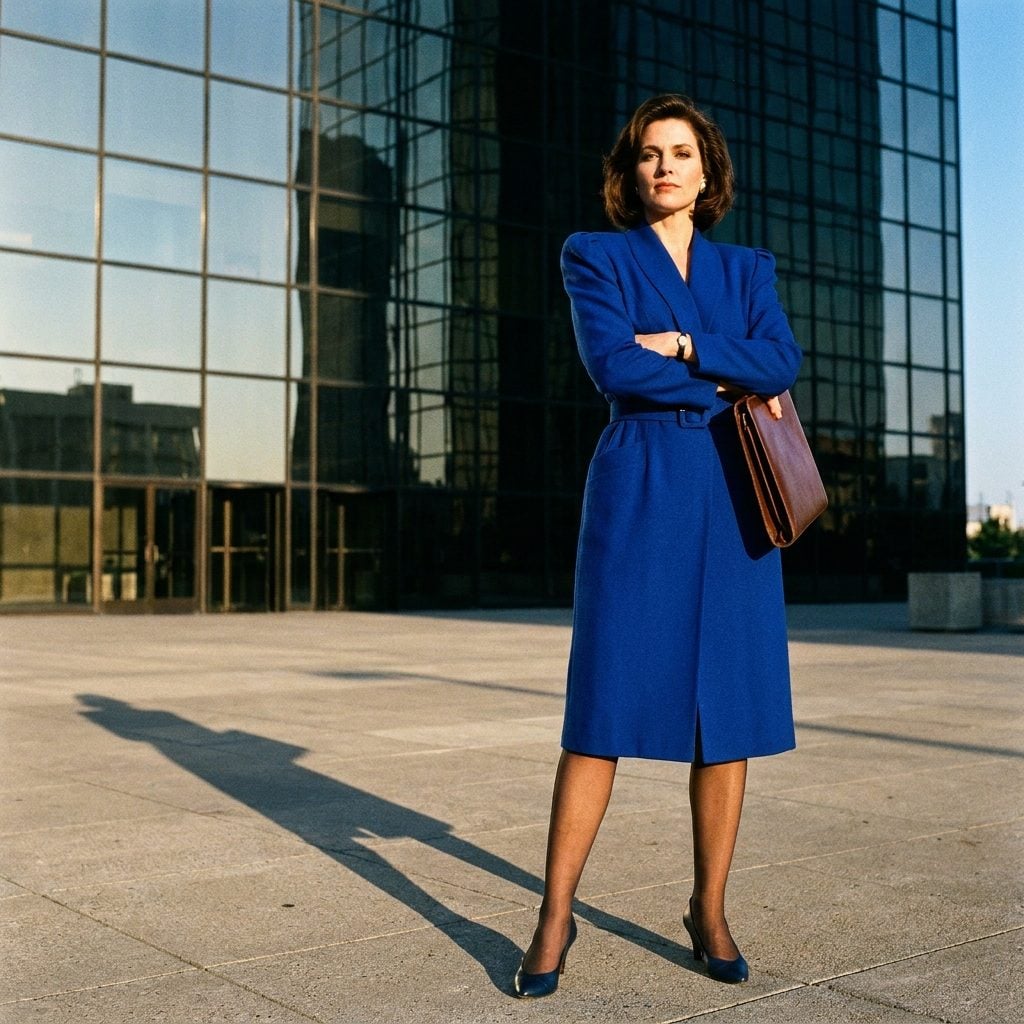
The coatdress borrowed the visual grammar of tailoring and compressed it into one garment. A double row of tonal buttons gives the front a strong vertical framework, while the fitted waist and structured shoulders supply the architecture normally divided between jacket and skirt.
Royal blue refuses to behave like a neutral, which is precisely why the simplicity of the cut matters. Saturated color gets the attention; disciplined construction keeps it from becoming theatrical. A blue dress this vivid barely needs an accessory to establish its presence.
17. The Silk Scarf Tied at the Neck Like a Corporate Cravat
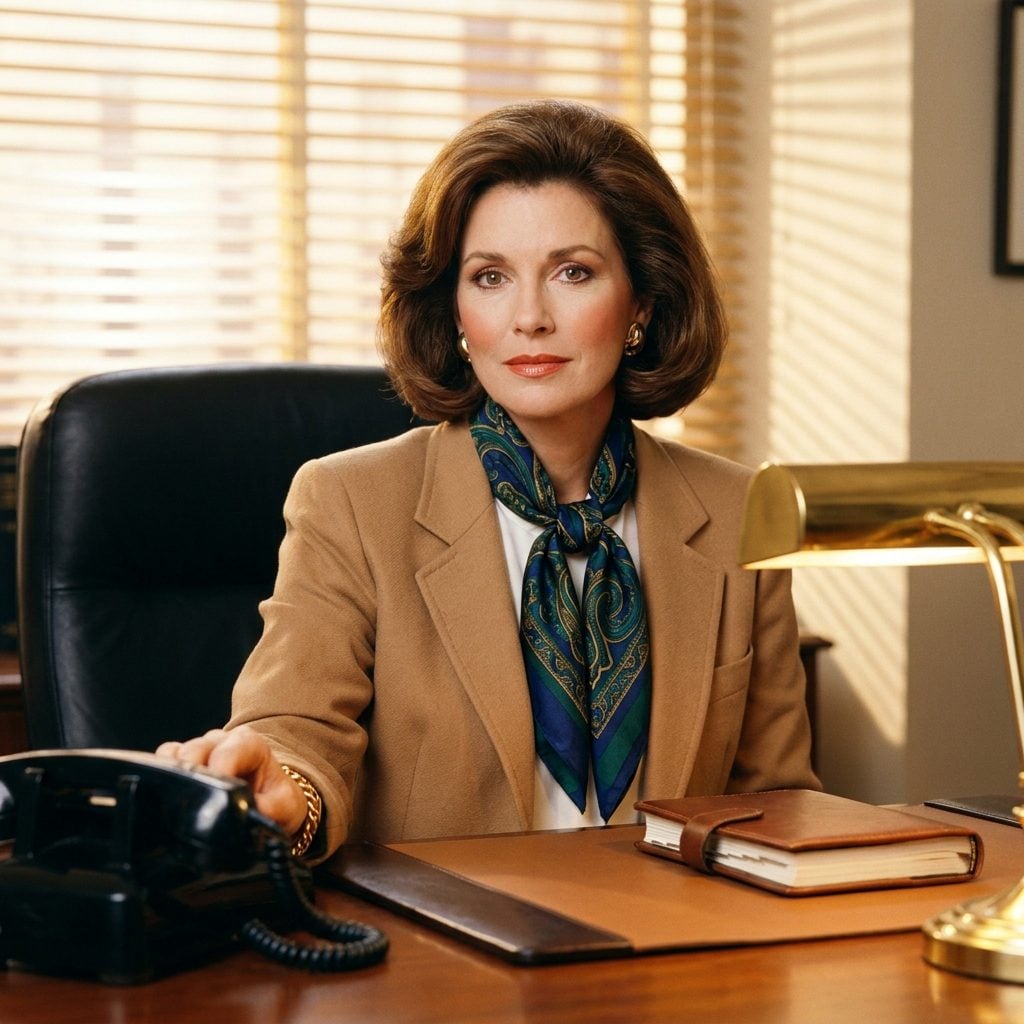
The silk scarf performed some of the visual work of a necktie without pretending to be one. A jewel-toned square folded and knotted at the throat introduced pattern and sheen inside the clean lines of a camel blazer.
Restraint is what keeps the combination sharp. One sapphire-and-emerald paisley against camel and cream gives the eye a concentrated patch of color rather than scattering accents across the entire outfit. The silk softens the tailoring; the tailoring keeps the silk from floating away with the show.
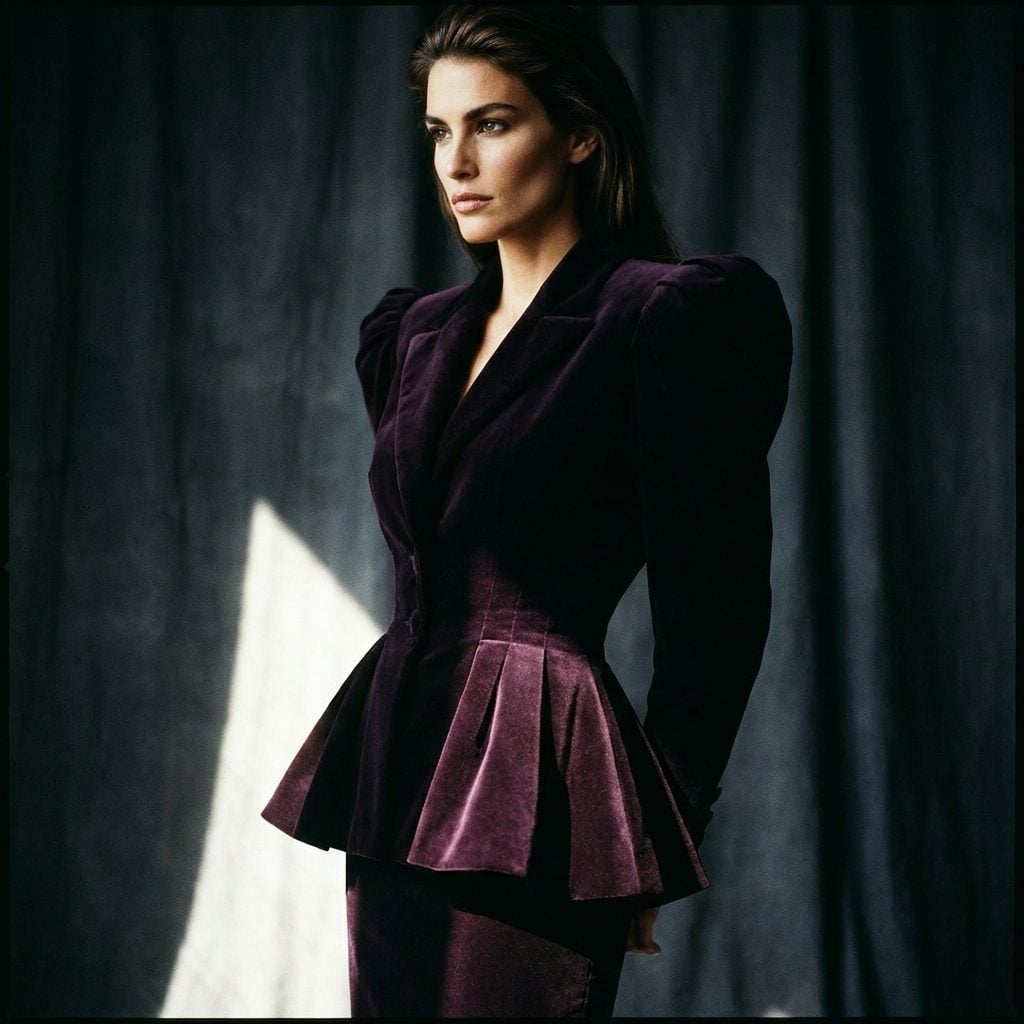
16. The Deep-Plum Peplum Power Suit
❤️ Would you like to save this?
The peplum solves one of the decade’s favorite proportion puzzles: how to keep the shoulder broad without allowing the entire jacket to become a rectangle. The answer is a sharply narrowed middle followed by a controlled flare over the hips.
That flare changes the rhythm of the suit. Shoulder, waist, peplum, skirt — four distinct moves rather than one straight jacket line. Deep plum adds another layer of sophistication, sitting somewhere between the expected authority of navy and the drama of red.
15. The Camel Wrap Coat That Made the Belt Part of the Architecture
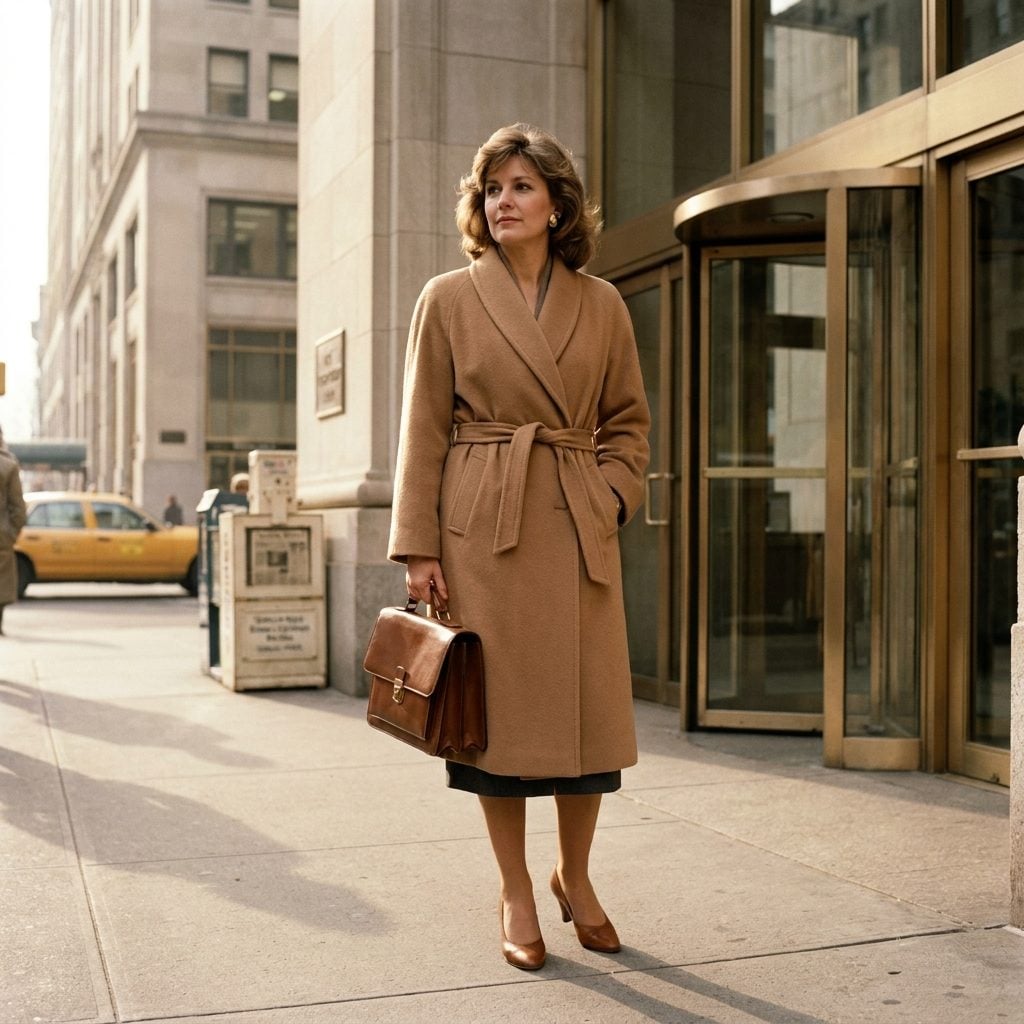
A wrap coat doesn’t need a regiment of buttons because the belt is doing the closing and shaping at once. Pull the two sides together, knot the waist, and a broad expanse of wool suddenly has a center.
The camel wool wrap coat works especially well over office tailoring because the color is quiet and the line is long. Instead of introducing another complicated silhouette over a suit or trousers, the coat creates one uninterrupted outer layer and lets the tie provide the definition.
14. The Houndstooth Blazer Over a Black Skirt

Houndstooth broke the matching-suit rule without making the outfit look accidental. The patterned blazer carries the activity; the plain black skirt repeats one of its colors and gives the eye somewhere to rest.
Oversized gold button earrings are exactly the right finishing move because tiny jewelry would disappear beside a pattern this assertive. The scale has to keep up. Black-and-white geometry below, polished gold beside the face — two strong ideas, carefully kept out of each other’s way.
13. The Ivory Silk Blouse With Covered Buttons Down the Back
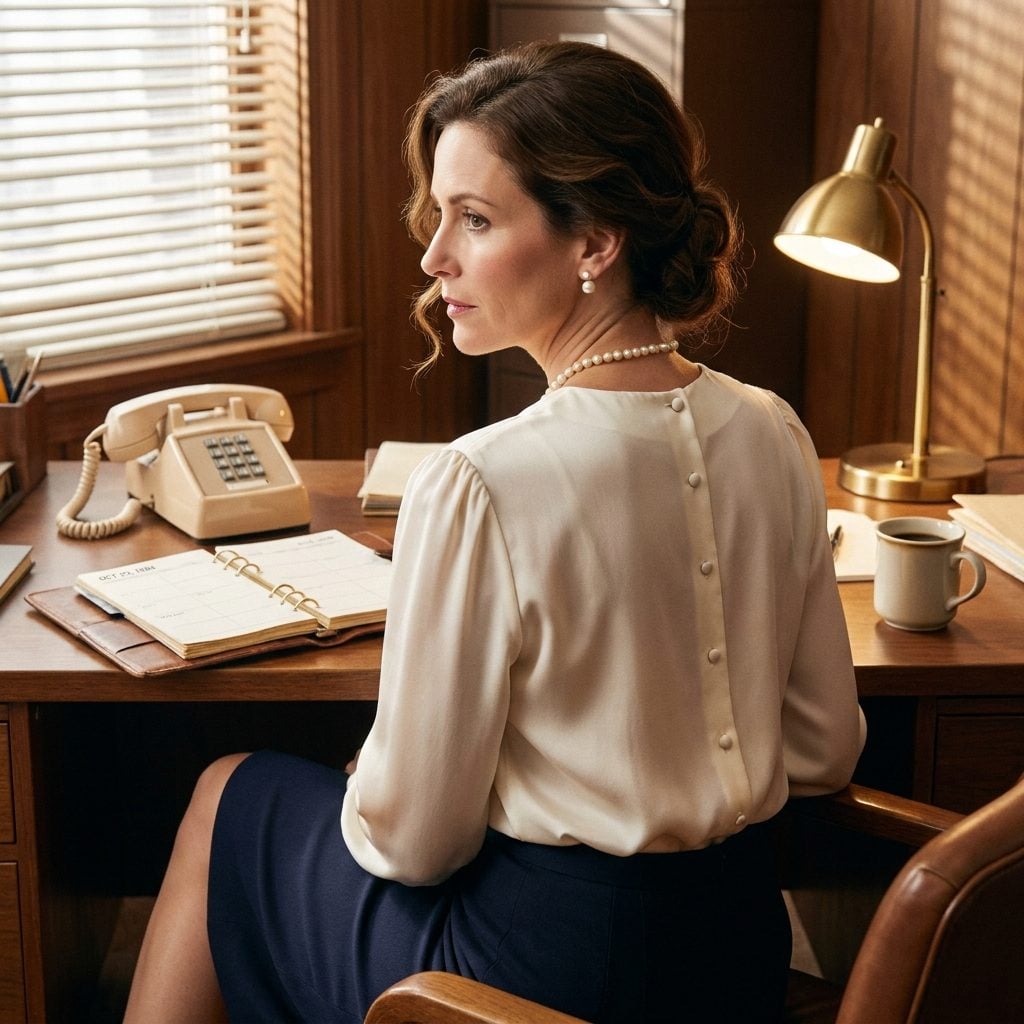
The surprise is entirely behind you. From the front, an ivory silk blouse can look almost austere; turn around and a precise line of fabric-covered buttons runs down the spine, turning the closure into ornament.
That restraint is what makes the detail effective. Against a navy skirt, the ivory silk supplies softness and luster while the buttons introduce texture without adding another color, print or piece of jewelry. The blouse looks simple until it doesn’t.
12. The Navy Pinstripe Wall Street Power Suit

Pinstripes brought one of menswear’s clearest business codes into women’s tailoring, then the 1980s altered the proportions. The shoulder stayed broad, but the waist came inward, turning the straight geometry of the stripe into a much more sculpted silhouette.
An oxblood briefcase keeps all that navy from becoming visually chilly, while the neck bow introduces a softer counterpoint near the face. The interesting part isn’t imitation. It’s how many traditionally masculine tailoring cues were being rearranged into something distinctly different.
11. The Abstract-Print Day Dress That Was Loud in a Controlled Way
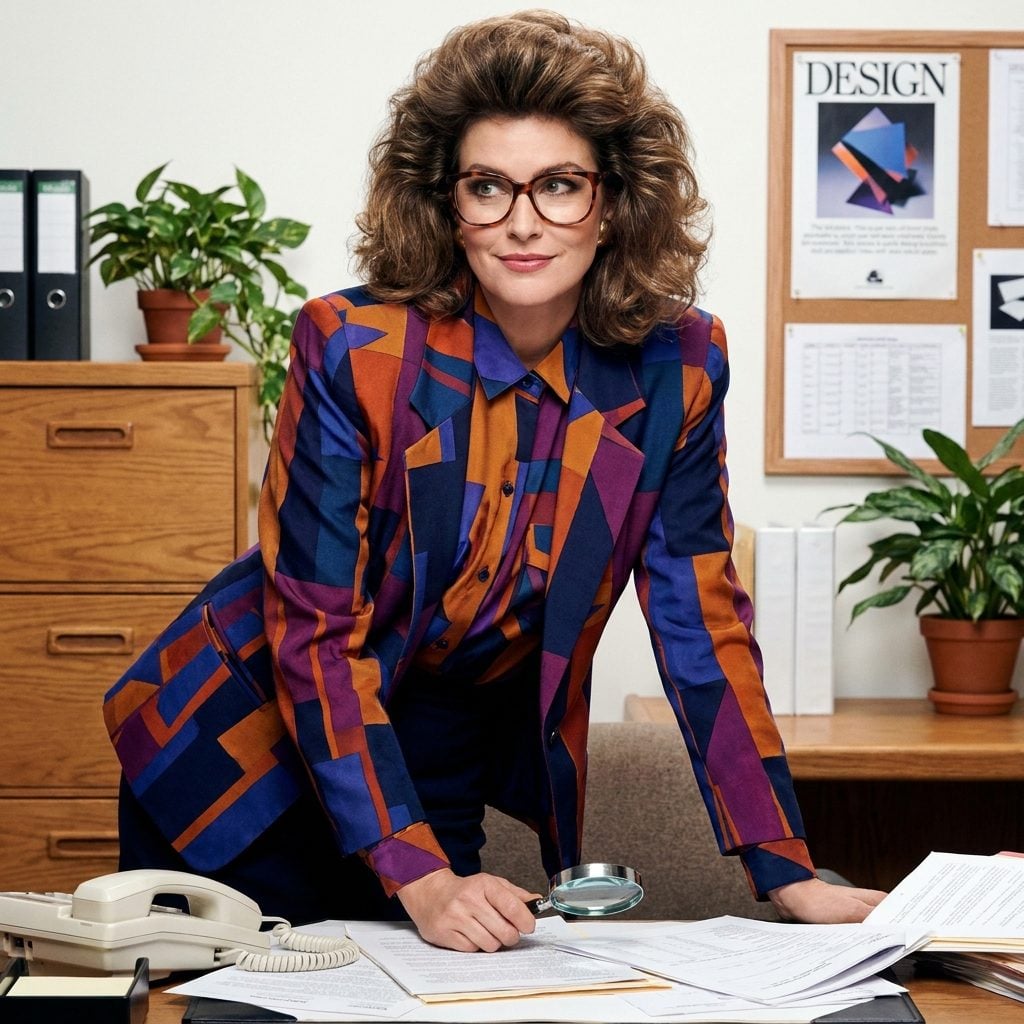
Print was another route through the 1980s office wardrobe. Instead of building impact through a solid power suit, a graphic silk-look dress could put cobalt, black, cream and gold into motion across one continuous surface.
The cobalt bag is the sleeper move. It extracts one color from the busy print and repeats it as a solid block, making the accessory look connected rather than added afterward. A crossover neckline and defined waist provide enough structure to keep the draped skirt from turning the whole composition into pattern soup.
For anyone who found monochrome tailoring too severe, dresses like this offered another kind of professional polish: expressive, coordinated and unmistakably of their decade.
10. The Gray Flannel Skirt Suit With Shoulder Pads You Could Rest a Coffee Cup On
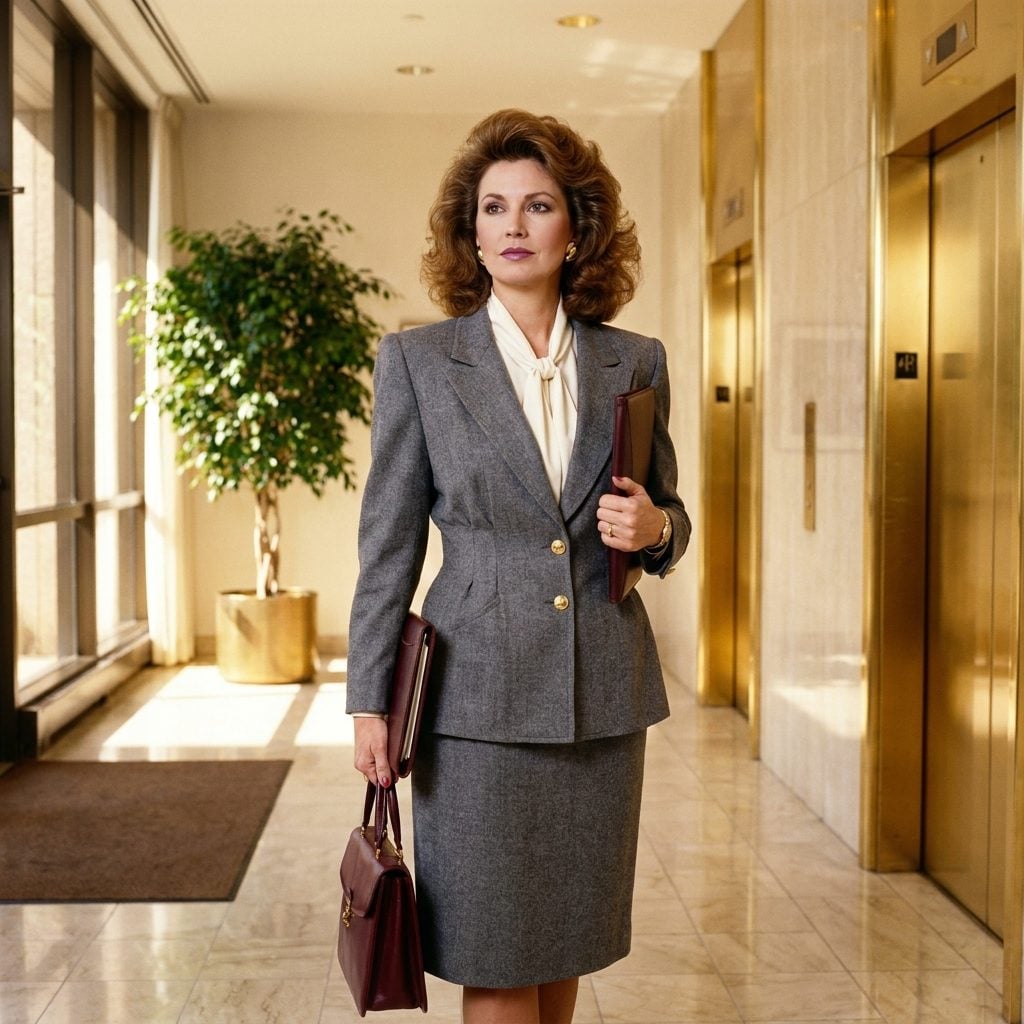
Gray flannel gave the decade’s exaggerated tailoring a sober foundation. The shoulder pads widen the upper line into the familiar inverted triangle, while the fitted waist prevents all that wool from turning into a linebacker’s jersey.
The clever counterweight is the ivory silk blouse. Hard gray tailoring meets a warmer, more fluid fabric at the throat, and that material contrast keeps the suit from becoming a single block of corporate armor.
Sheer taupe hosiery and practical pumps finish the look without adding another competing idea. With shoulders doing this much work, restraint everywhere else is not exactly a sacrifice.
9. Burgundy Sweater Tucked Into a Camel Knife-Pleated Midi
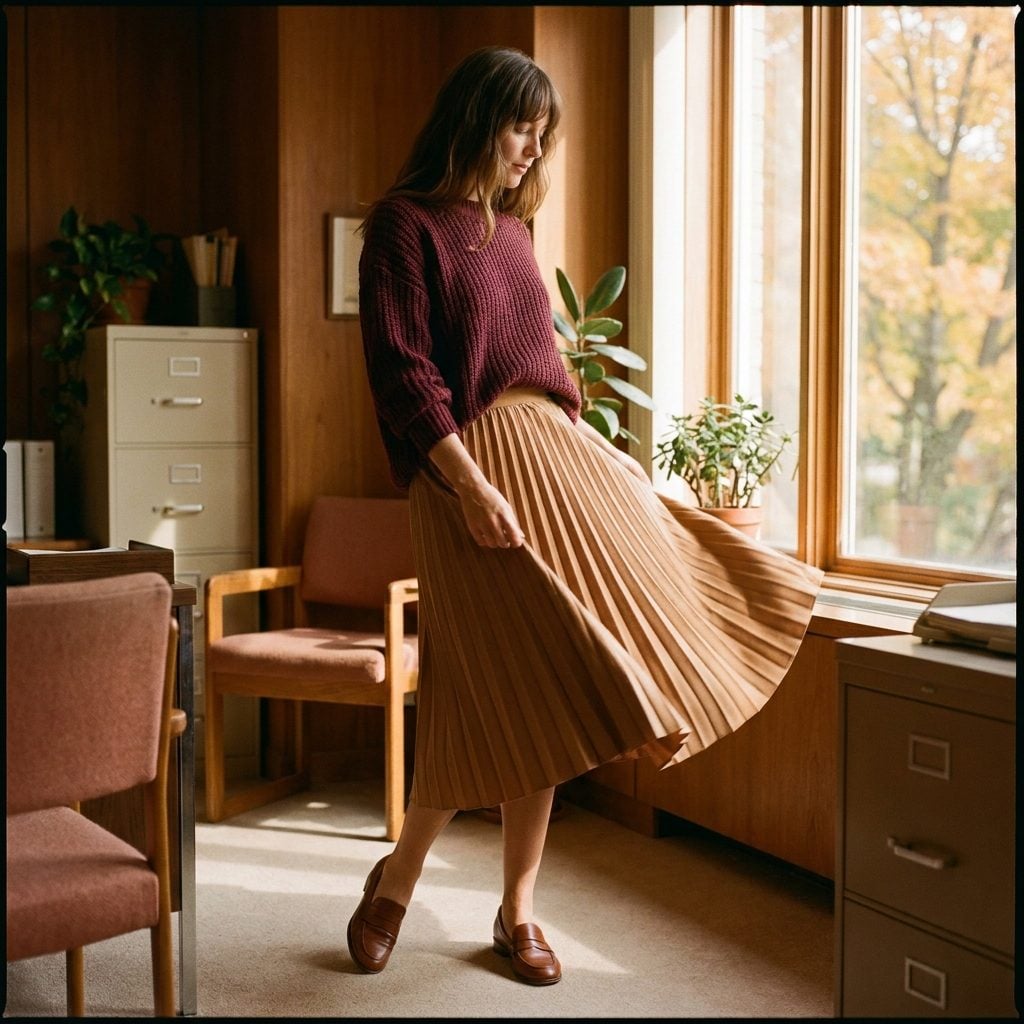
Not every 1980s office look was preparing to storm a boardroom. A burgundy sweater and camel pleated midi occupy the softer end of professional dressing, where knitwear and movement replace hard-edged suiting without sliding into weekend clothes.
The knife pleats are what keep the skirt disciplined. They open as the fabric moves but return to a precise vertical rhythm at rest, while the tucked sweater keeps the waist clean. A small silk scarf at the neck adds just enough polish to stop cozy from becoming casual.
8. The Deep-Teal Dress With Shoulders You Could See From the Hallway
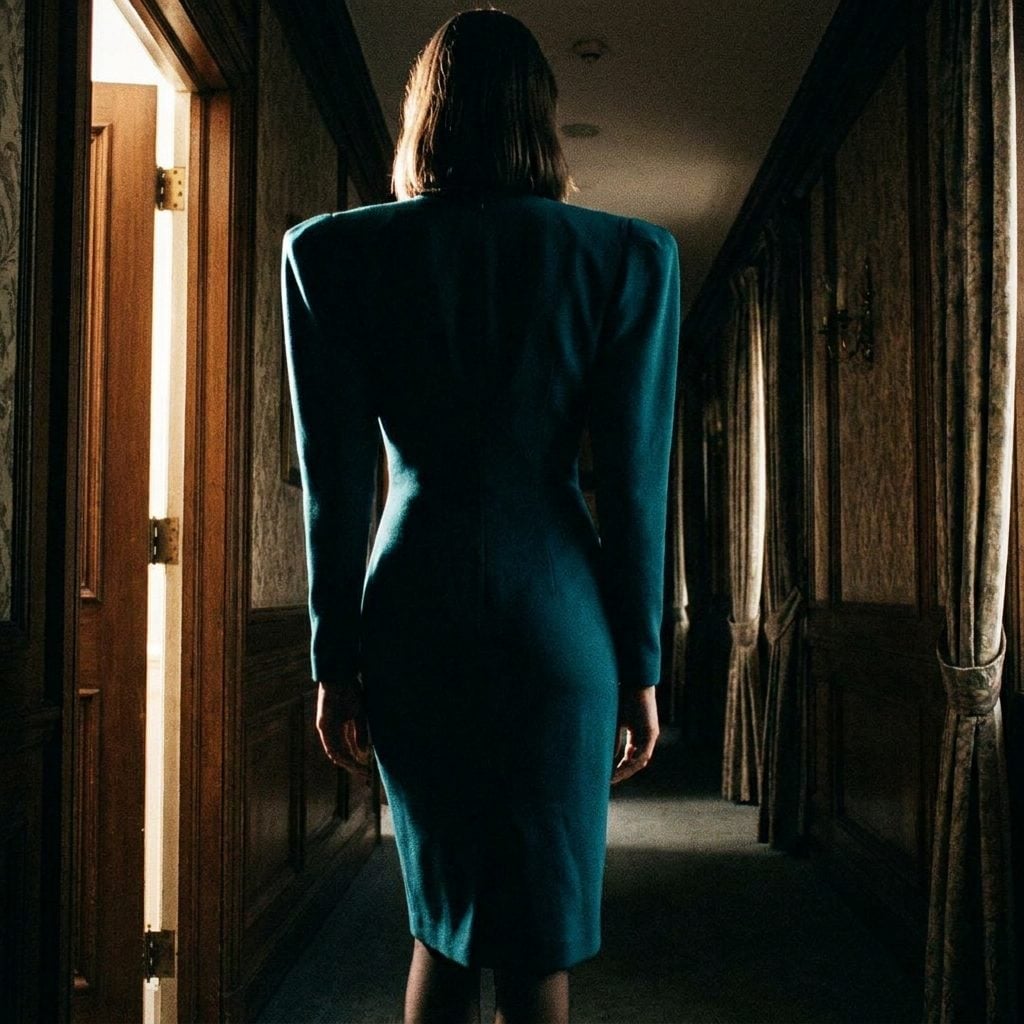
By the late 1980s, the shoulder had stopped apologizing for itself. This deep-teal crepe dress makes the upper line unmistakable, then sends a crossover bodice diagonally across the torso so the eye doesn’t simply travel straight down from pad to hem.
The gold geometric earrings are almost co-stars. Their scale matches the strength of the shoulders, while the warm metal cuts through the cool jewel tone. Smaller jewelry would behave itself. That was not really the assignment.
7. The Wide Leather Belt Worn Over Everything, No Exceptions
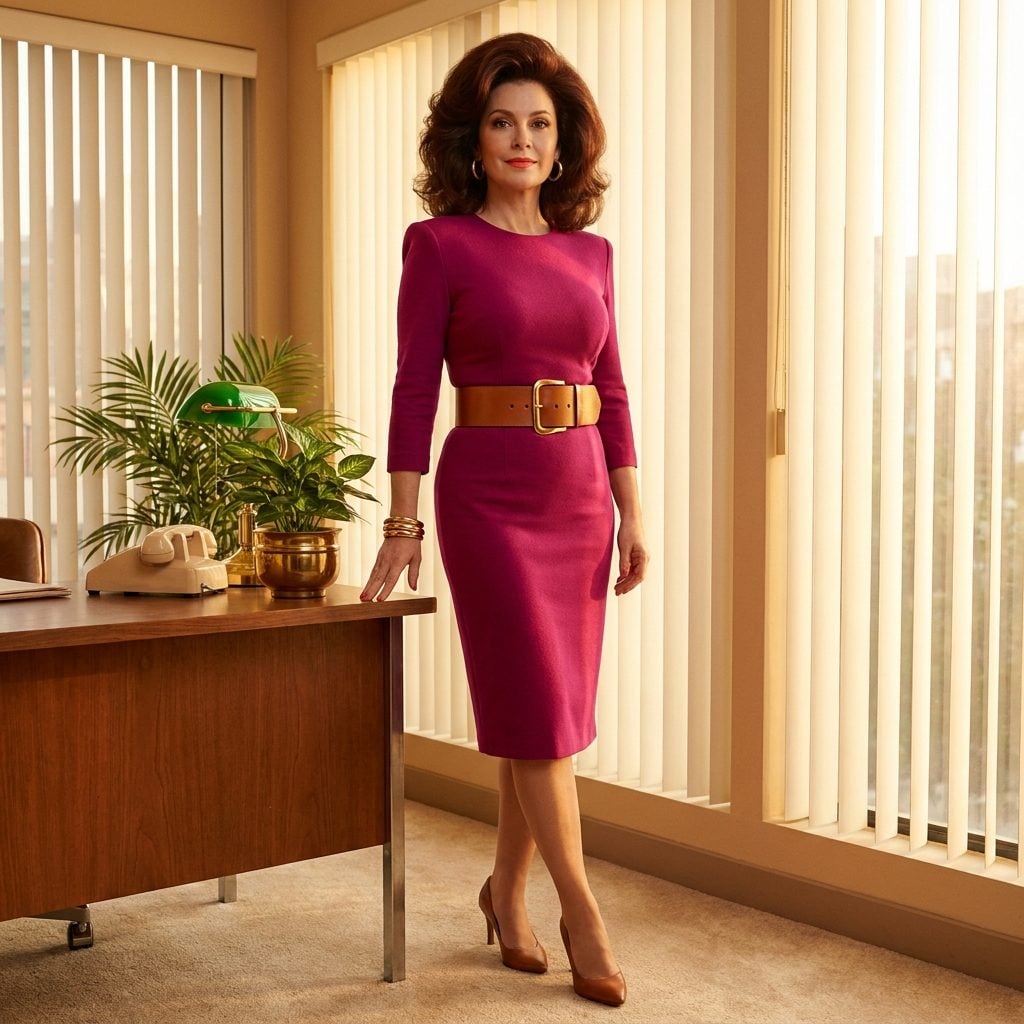
The belt did the editing. Shift dress too loose? Sweater dress too uninterrupted? Shirtdress disappearing into its own fabric? Add four inches of cognac or oxblood leather and a brass buckle roughly the size of a small clock.
Scale is what makes this different from an ordinary waist belt. The width turns the accessory into a structural band across the outfit, breaking up long expanses of fabric and giving loose 1980s volume a deliberate boundary. On a simple dress, the belt can be the strongest graphic element in the entire look.
6. The Navy Suit and That Enormous White Bow Blouse
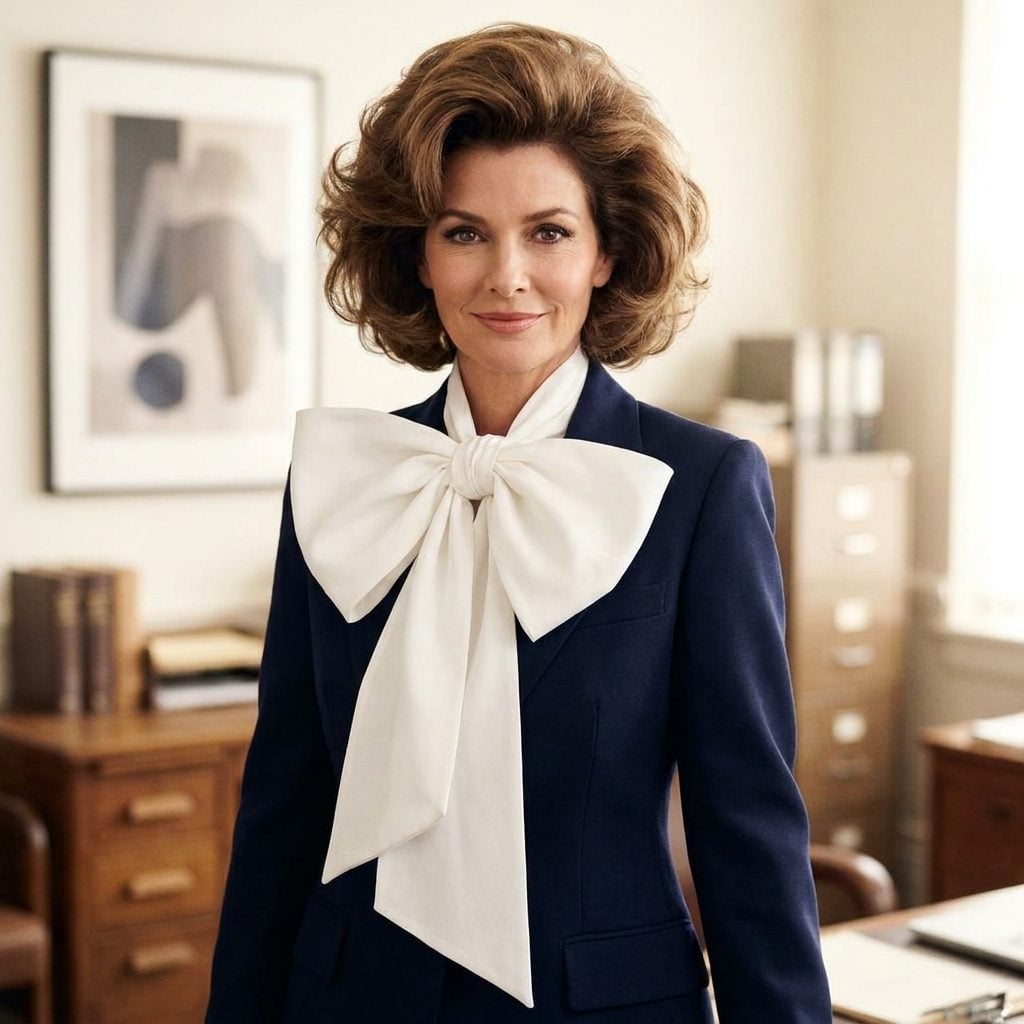
The bow blouse was the soft counterargument tucked under the power suit. Ivory silk erupts at the throat while navy tailoring holds everything around it in a strict frame.
Pronounced shoulder pads and a fitted jacket create the decade’s familiar top-heavy geometry, but the bow prevents the neckline from becoming severe. Hard line, soft knot. Neither would be nearly as memorable without the other.
The bow said feminine. The shoulders said do not underestimate me. Wearing both at once was the entire strategy.
5. The Chunky Gold Chain Belt Slung Over a Sheath Dress
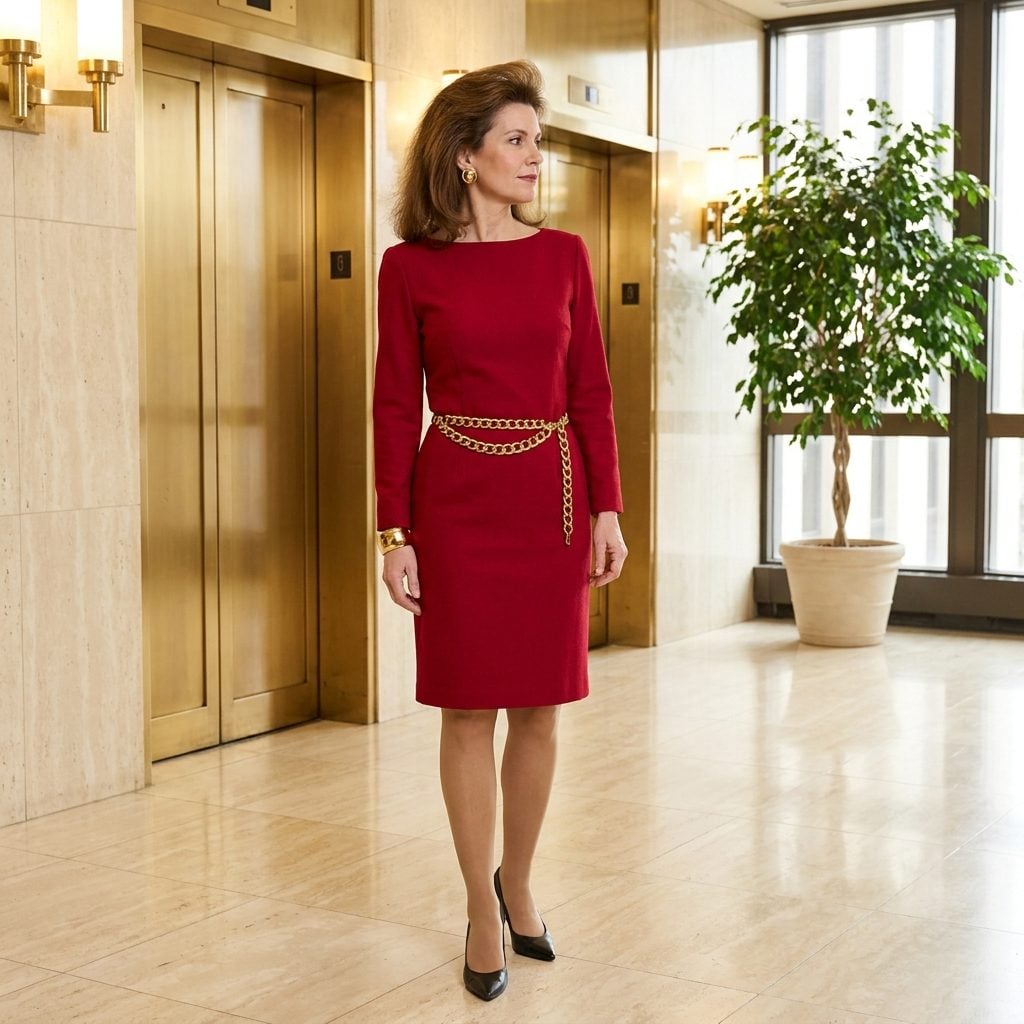
One color, one silhouette, and then that belt lands across the hips like punctuation. A gold chain keeps a plain sheath from remaining quite so plain without slicing the dress in half the way a wide leather belt would.
The pleasure is in the material contrast. Matte wool absorbs light; polished metal catches it. Worn loose at the hip, the chain introduces movement into an otherwise controlled silhouette and gives the straight sheath a glint every time the body moves.
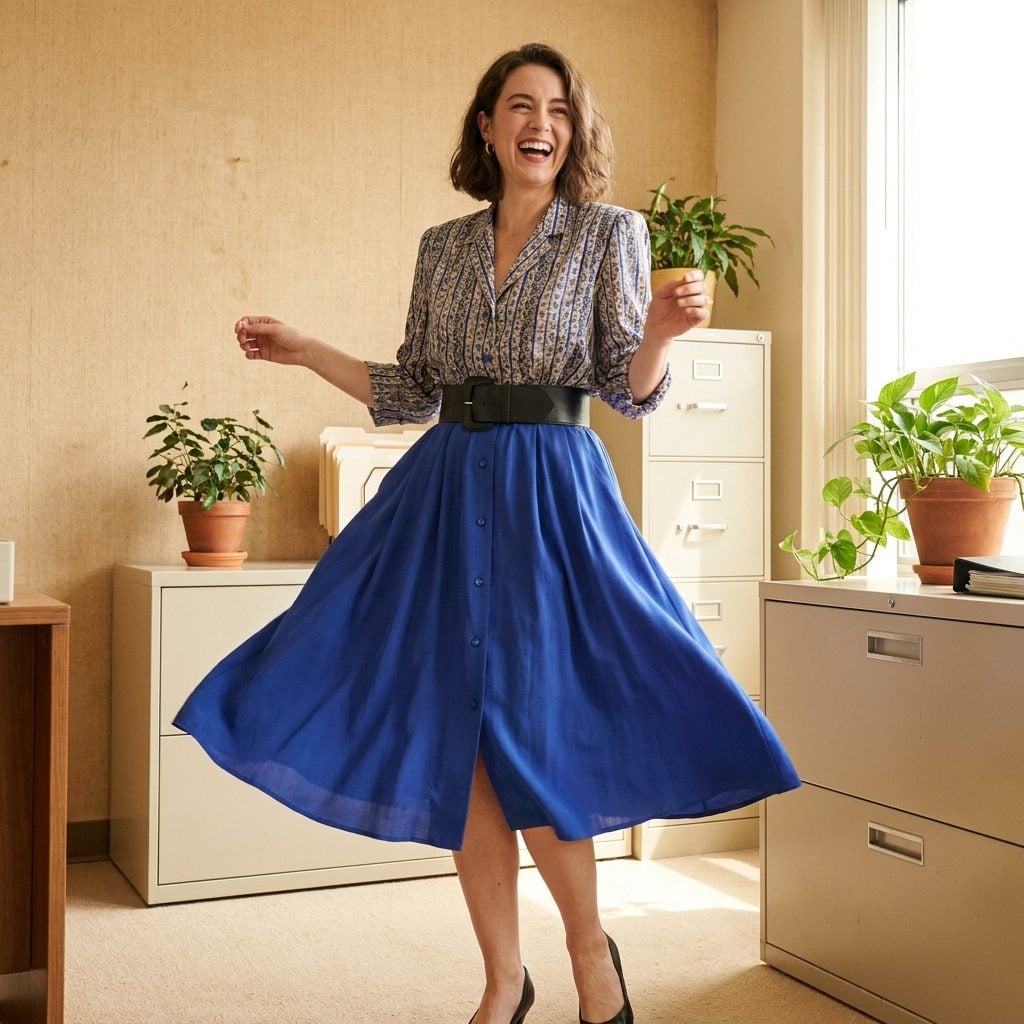
4. The Cobalt Belted Shirtwaist Dress
❤️ Would you like to save this?
The shirtwaist dress borrowed familiar elements from a button-front shirt — collar, placket, cuffs — and extended them into a complete blue dress. In cobalt, all that practical construction suddenly looks considerably less practical and considerably more fun.
The matching belt doesn’t introduce a new color or texture; it simply interrupts the blue long enough to define the middle. That’s the key distinction. Collar and buttons provide vertical order, the belt supplies the horizontal break, and the saturated color gets to run through everything.
3. Camel Blazer Over a Black Turtleneck, the Thinking Woman’s Armor

After the jewel tones, giant bows and graphic prints, camel and black feel almost radical in their restraint. No pattern. No decorative blouse. No accessory trying to win an argument with the jacket.
The black turtleneck is the crucial move. It gives the camel blazer a dark, uninterrupted ground and sharpens its outline, while pleated trousers add volume below without introducing another color. A wide belt keeps the generous proportions from becoming shapeless.
2. The Emerald Pussy-Bow Secretary Blouse
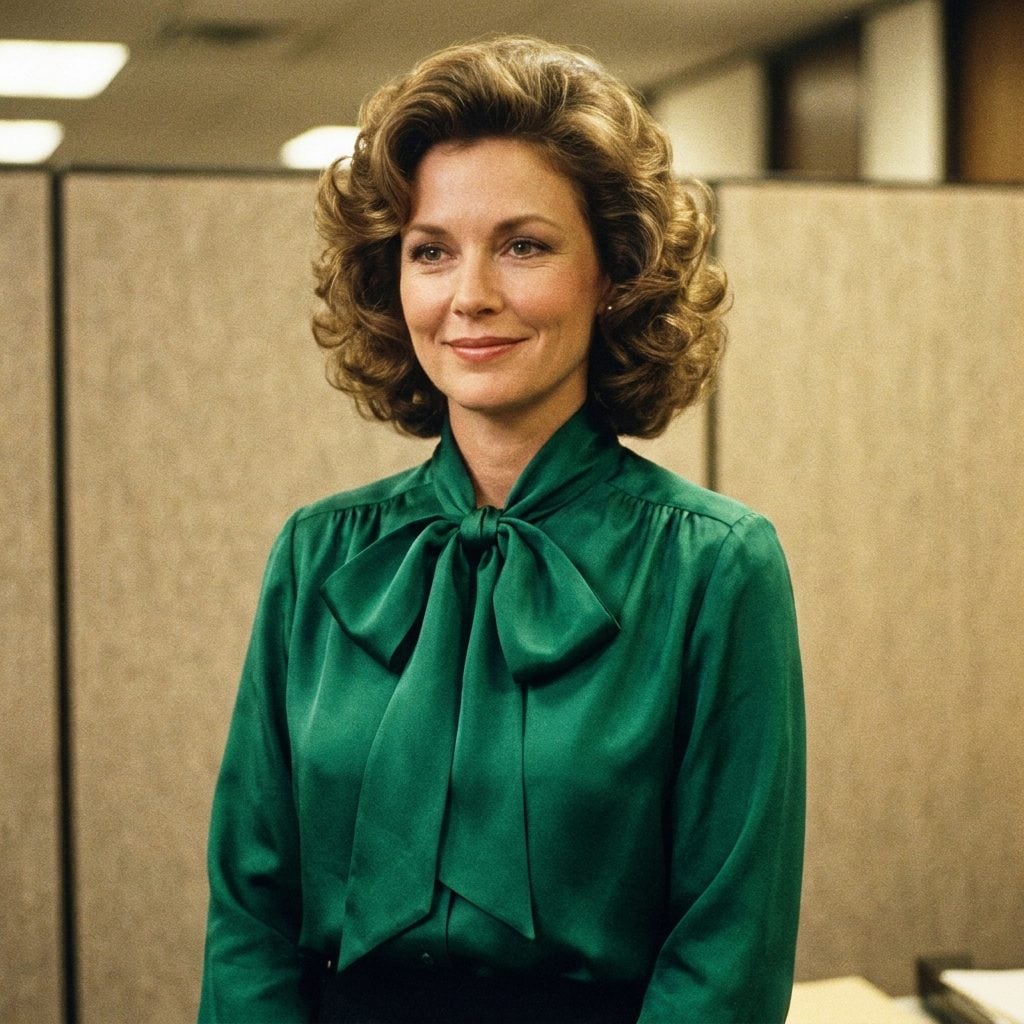
Emerald silk inside a charcoal office palette was never going to disappear politely. That’s exactly why the rest of the combination stays restrained: dark skirt, black belt, simple pumps, nowhere else for the eye to wander.
The bow is the personality of the blouse. Tied loosely rather than pulled into a hard little knot, it creates volume at the neckline and frames the face with color. The result is soft without being timid, decorative without needing jewelry to finish the sentence.
1. The Windowpane Wool Blazer That Meant Business
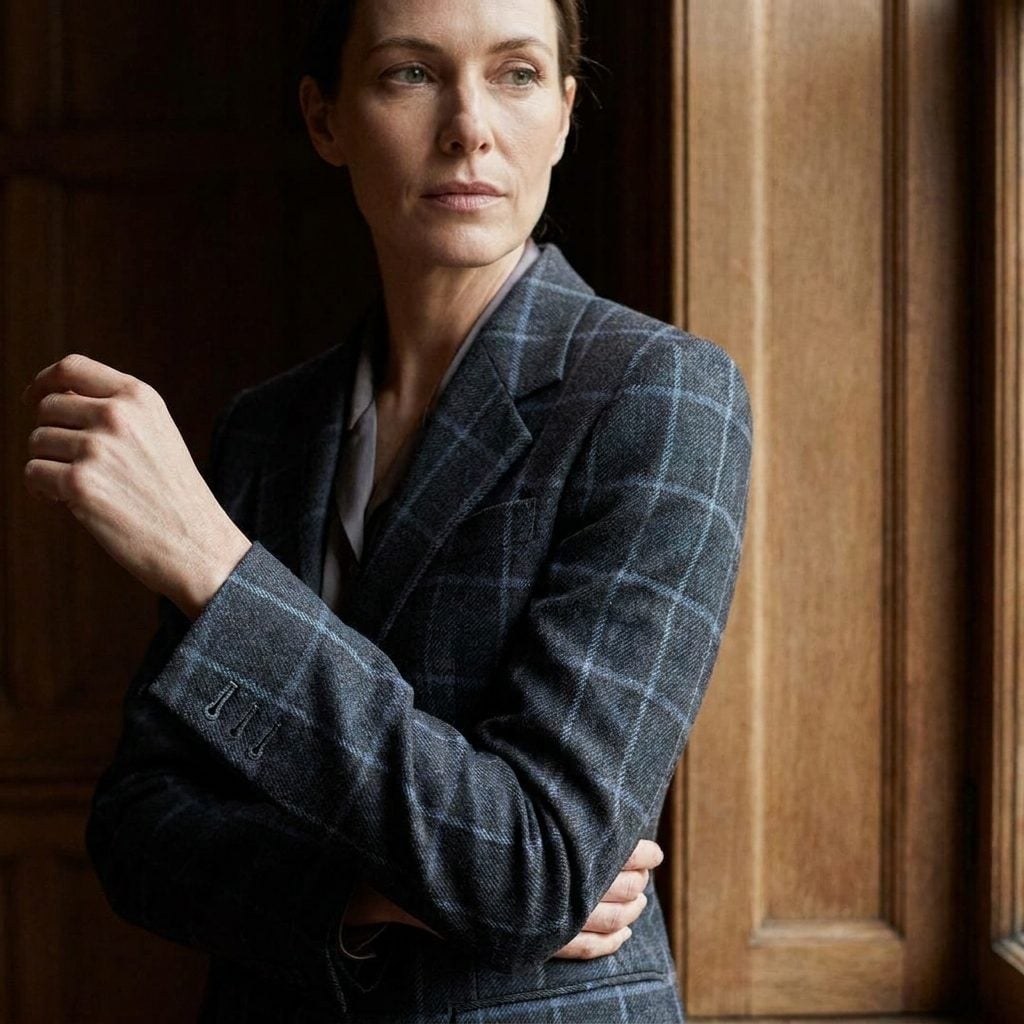
Windowpane check is what happens when a business suit decides pinstripes are being a little too obvious. The gray-and-navy grid gives wool tailoring pattern without turning the jacket into visual static, especially when everything underneath stays within the same restrained palette.
The elongated blazer lets those clean lines run farther than they would on a cropped jacket, while the broad shoulder gives the grid a strong horizontal starting point. A solid navy skirt and hosiery underneath turn the lower half into one quiet column, leaving the check to command the upper half.
That’s the enduring trick behind the best looks in this gallery. The 1980s may have loved more — more shoulder, more color, more bow, more gold — but the memorable outfits rarely threw everything on at once. One element took command and the others knew when to stand down.