❤️ Would you like to save this?
The 1990s ran on denim. Not one denim, though. Dozens of silhouettes, each tied to a different girl, a different mood, a different Saturday. You had a favorite, and you knew the exact pair. Now, many of these fits are circling back, which means the woman who wore them the first time gets to reconsider them with better instincts.
FYI, thanks to AI imagery software, we’re able to create very specific fashion and hairstyle examples to illustrate the points being made. In some cases, imagery is exaggerated to hammer home the point. Also, assume links that take you off the site are affiliate links such as links to Amazon. this means we may earn a commission if you buy something.
32. Cropped Denim Vest and Jean Combo (The Head-to-Toe Denim Set)

Denim on denim used to get you side-eye. In the ’90s, it got you a spot on the yearbook page. What separated the girls who pulled it off from the ones who looked like a walking Levi’s ad came down to one thing: the wash. Same blue top to bottom read as a set, not an accident.
The cropped vest establishes the proportion. Cut short at the waist over a longer high-waisted jean, it breaks the column of blue right where it matters and keeps the whole thing from reading like a jumpsuit—and that single proportional choice is what makes matching blue jeans and a vest feel deliberate rather than lazy.
Restraint helps the matched set feel current. Keep the supporting pieces simple. A white tank, clean white leather sneakers, one pair of gold hoops, and you’re done. Let the matched denim remain the focus. Get busier than that and you lose the very confidence that makes a matched set work in the first place.
31. Butterfly-Embroidered Bootcut Jeans
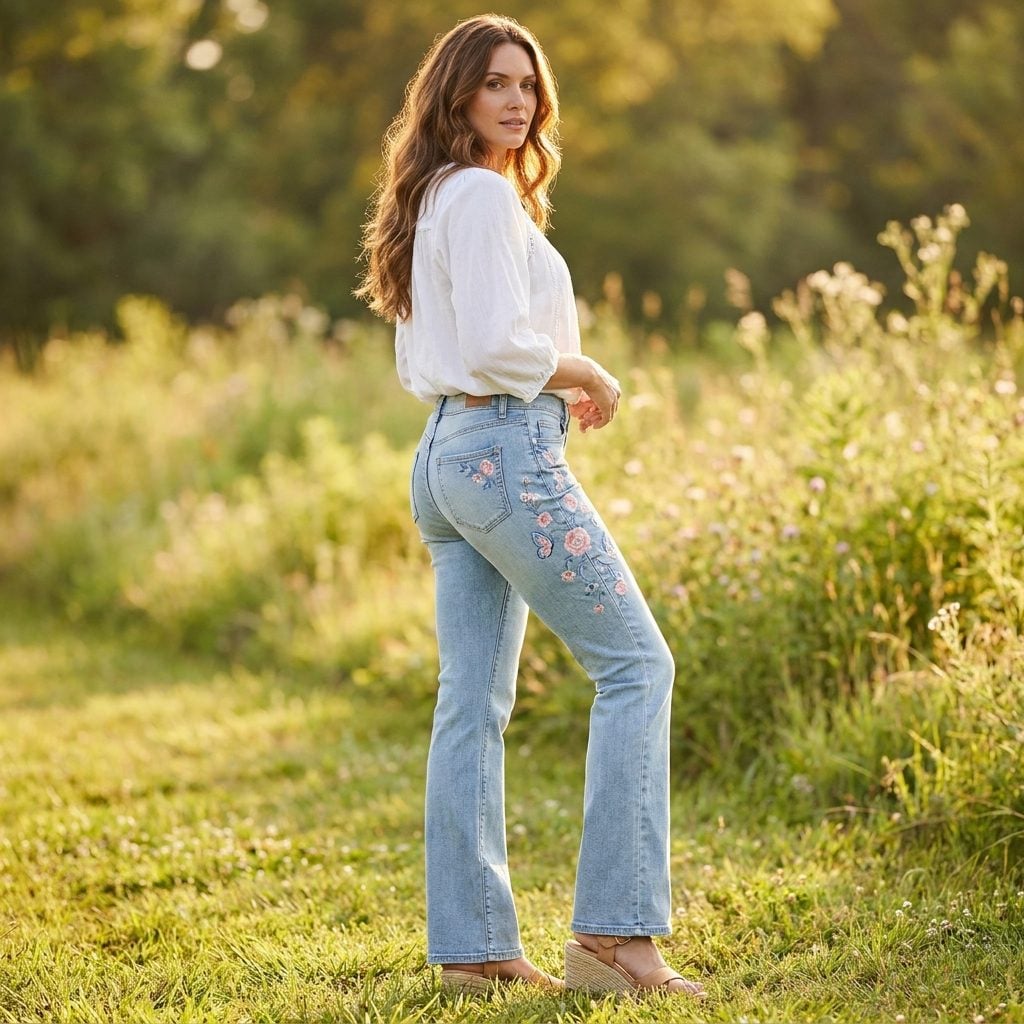
Peak whimsy. Embroidered butterflies climbing up the thigh, tiny flowers on the back pocket, the whole thing screaming late-’90s bedroom poster energy. The embroidery carried the whole design, turning a plain bootcut jean with a bit of decoration into a keepsake.
Because the embroidery already supplies the detail, the rest of the outfit can stay quiet. A white peasant blouse and wedge sandals let the stitching be the star. Pastel thread against pale denim washes gives it a soft, sun-faded sweetness that feels nostalgic now instead of juvenile.
30. Zip-Ankle Tapered Jeans
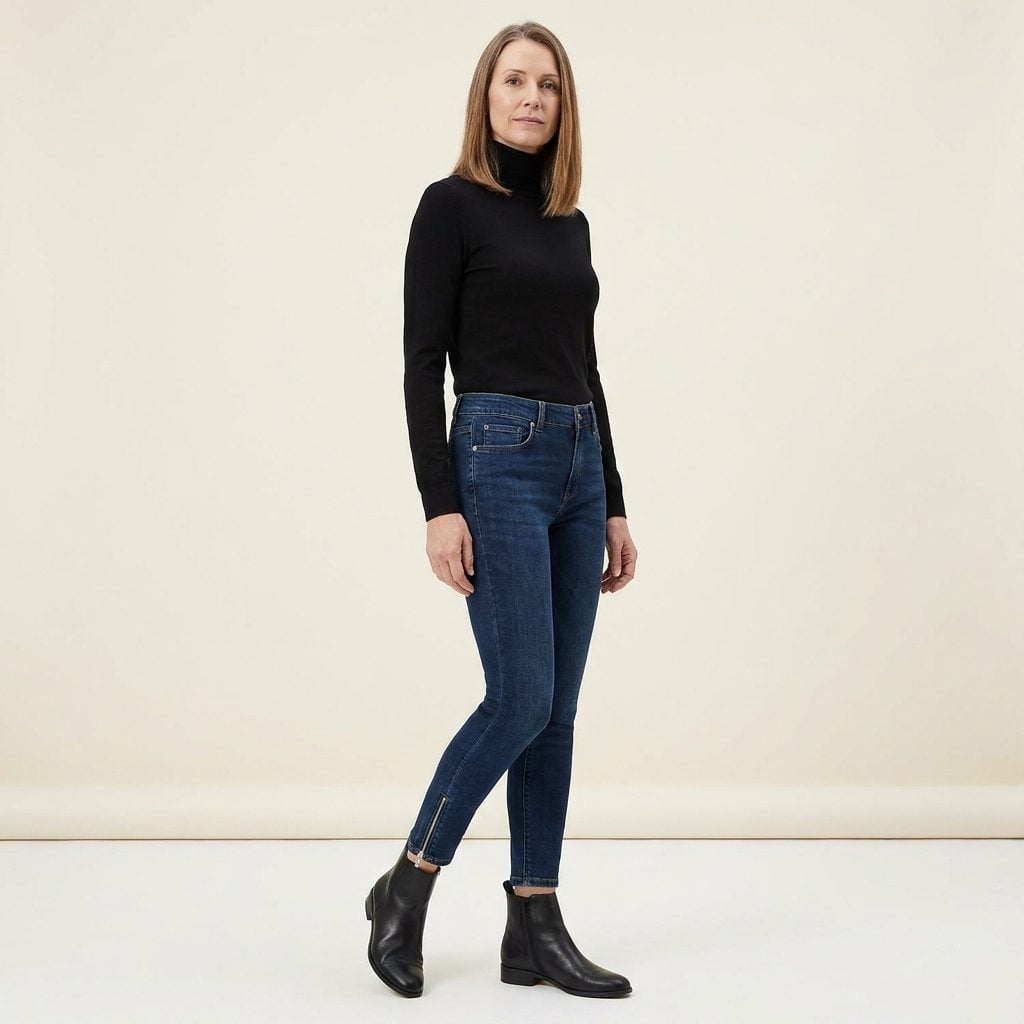
The everyday zip-ankle jean used a small zipper to adjust the opening around a heel or boot. Unlike the moto-inspired version later in the gallery, this pair kept the hardware minimal and treated the zipper as a practical finishing detail.
A tapered leg and matching dark boot create a continuous line, especially with a black turtleneck above. The dark wash makes this the quieter, more polished version of the ankle-zip idea.
29. Menswear-Cut Boyfriend Jeans
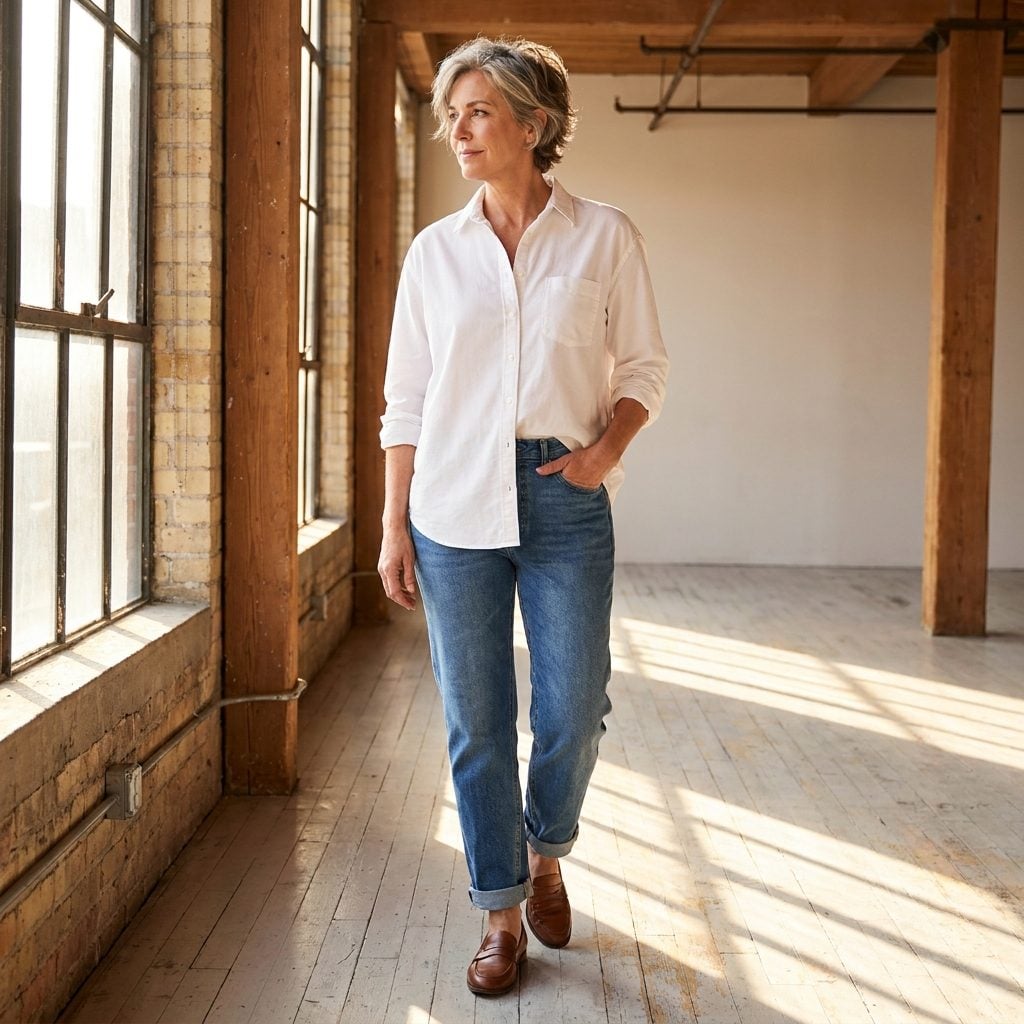
Before “boyfriend jeans” was a marketing category, girls were just raiding their brothers’ closets. The roomy straight leg, the low slouch, the extra fabric at the hip, it was denim that didn’t cling anywhere. There’s an ease to a menswear cut that fitted styles never quite reach.
Here, the point is the full-length, uncuffed drape. A crisp Oxford can be half-tucked, fully tucked, or worn loose depending on its length; the important part is preserving the relaxed line without letting excess fabric overwhelm the outfit. If you love that oversized, borrowed cut, a pair of androgynous jeans with a relaxed drape gets you there without leaving you swimming in fabric.
28. Colored Denim (Candy-Bright Hues)
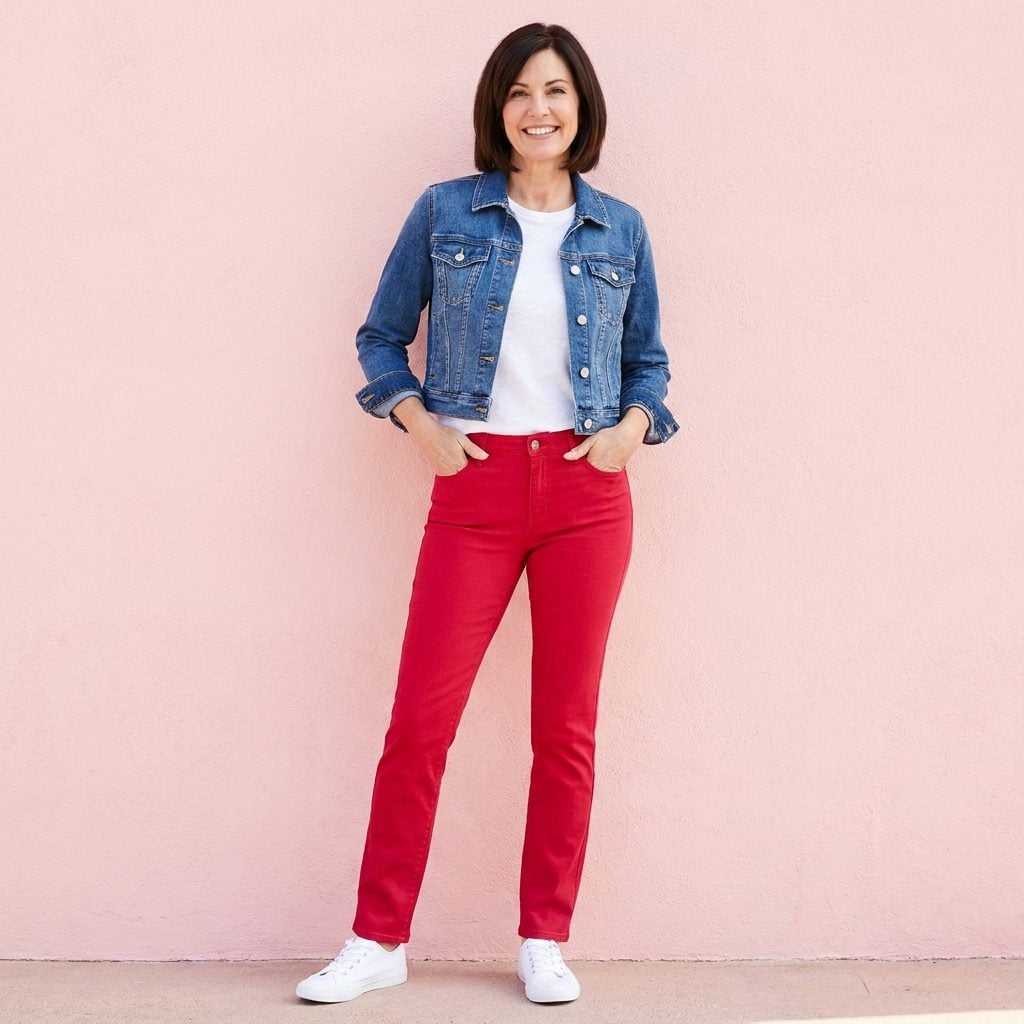
Red, Kelly green, hot purple, that specific ’90s cranberry. Colored denim was the loud kid at the denim party, and the whole point was that it wasn’t blue. Bright dye on a familiar cut gives you the comfort of jeans with the punch of a statement piece.
The saturated color is the main event. A cherry-red pair works easily with white, cream, navy, or denim above, while the familiar mid-rise cut keeps the silhouette straightforward.
27. Pinstriped Denim Jeans
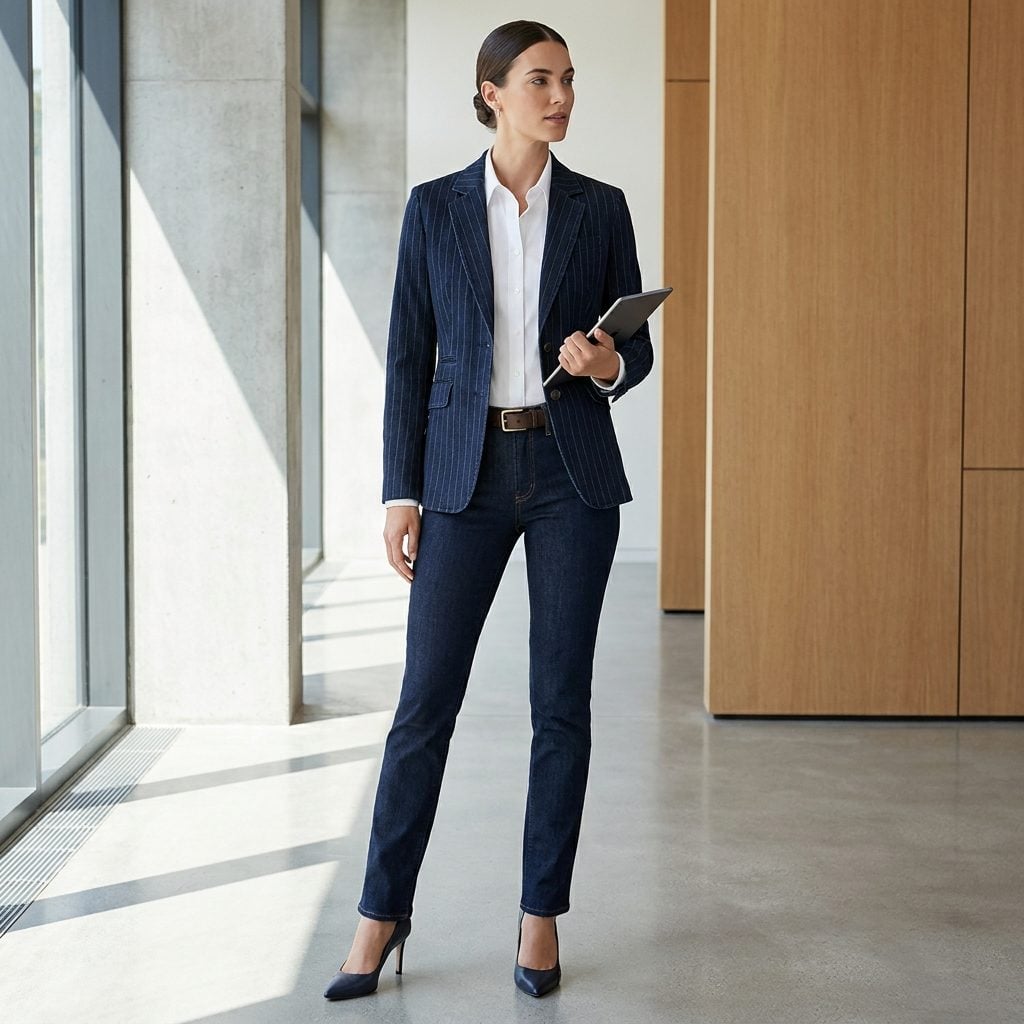
Pinstripes on denim were the ’90s trying to make jeans go to work. Fine vertical white lines running down a dark wash borrowed the language of a suit and applied it somewhere no suit had asked.
The odd thing is that it worked, and it still does. That vertical stripe can create a longer visual line the way a good pair of trousers does, so this is the rare novelty denim that feels more tailored than gimmicky. Pair it with a blazer, and it leans dressed. Pair it with a sweater, and the stripe just quietly disappears into the outfit. A dark wash gives the stripe a trouser-like finish, while a pale version reads more casual.
26. Carpenter Jeans With the Hammer Loop
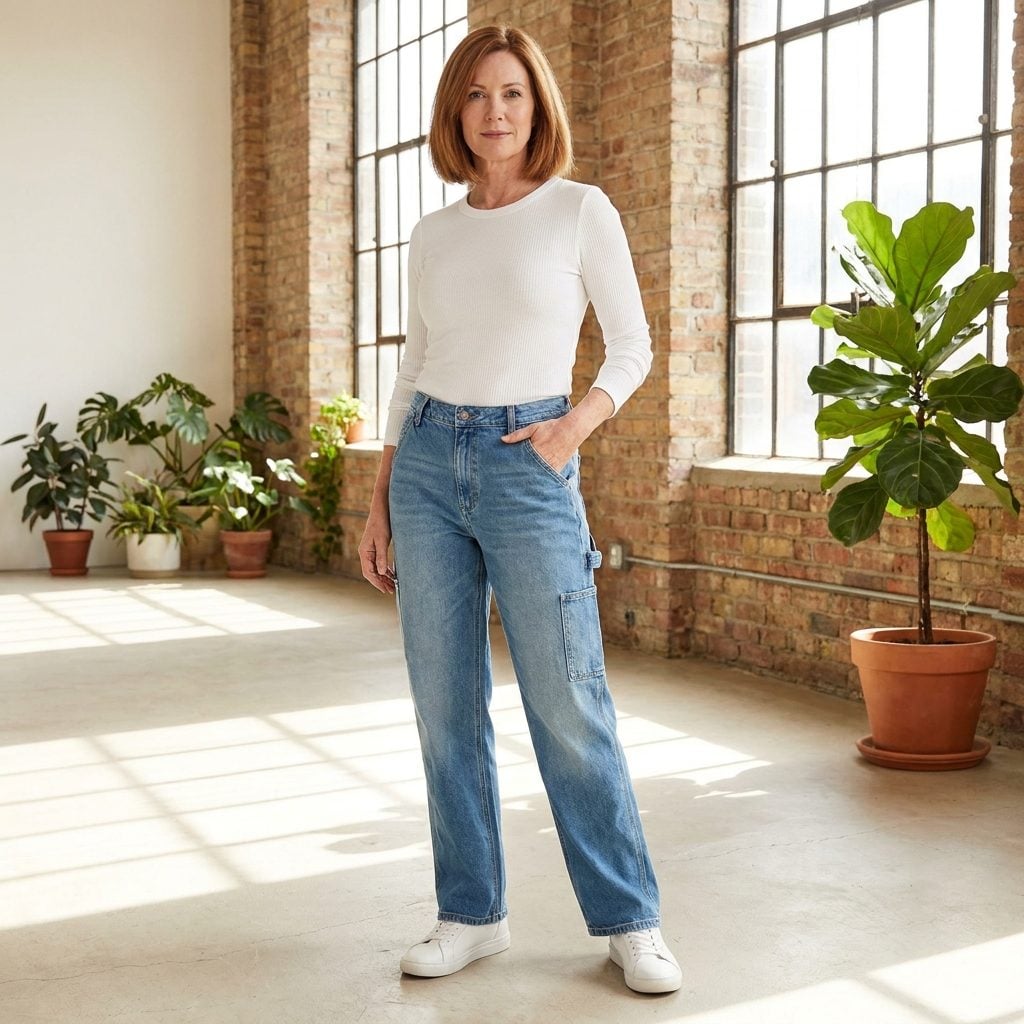
You knew the girl who wore these had a skateboard, even if she didn’t. The hammer loop, the flat pencil pocket, the extra leg pocket—none of it ever held a hammer. It held a lip balm and a folded note, and nobody minded that the pockets were mostly for show.
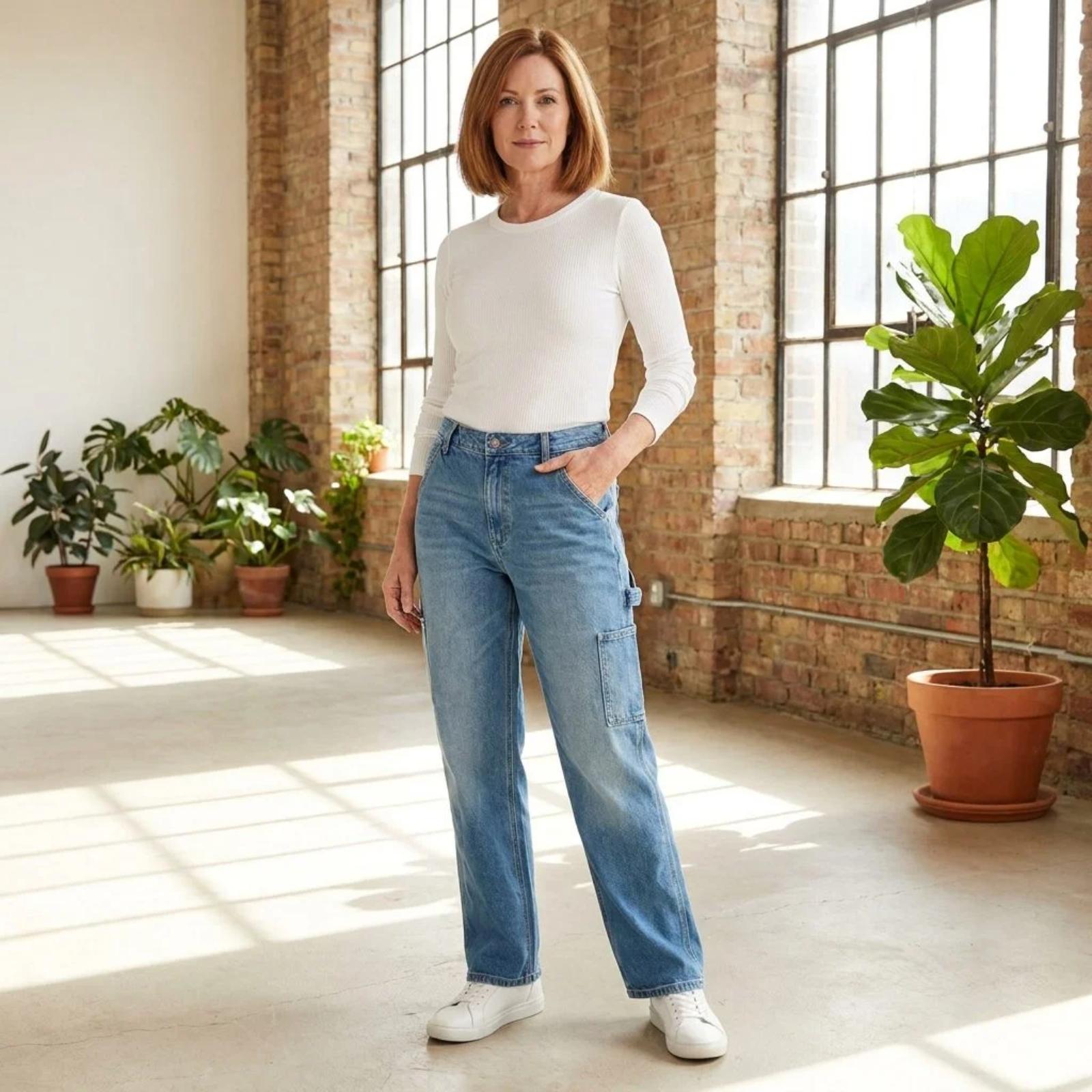
Carpenter jeans sat looser through the leg and rode a little lower, which gave them that borrowed-from-the-hardware-store slouch. The utility details do the styling work: they break up a plain wash and add interest without a single embellishment.
Worn today, the relaxed straight cut feels current rather than nostalgic, especially in a mid or light blue. Keep the top fitted and tucked so the volume stays deliberate—a ribbed knit or a plain white tee both do the job. They play the same role as athleisure: easy enough for a long day but structured enough to look finished.
A softer wash keeps the pockets, loop, and stitching visible without competing with the relaxed shape.
25. White Denim Jeans
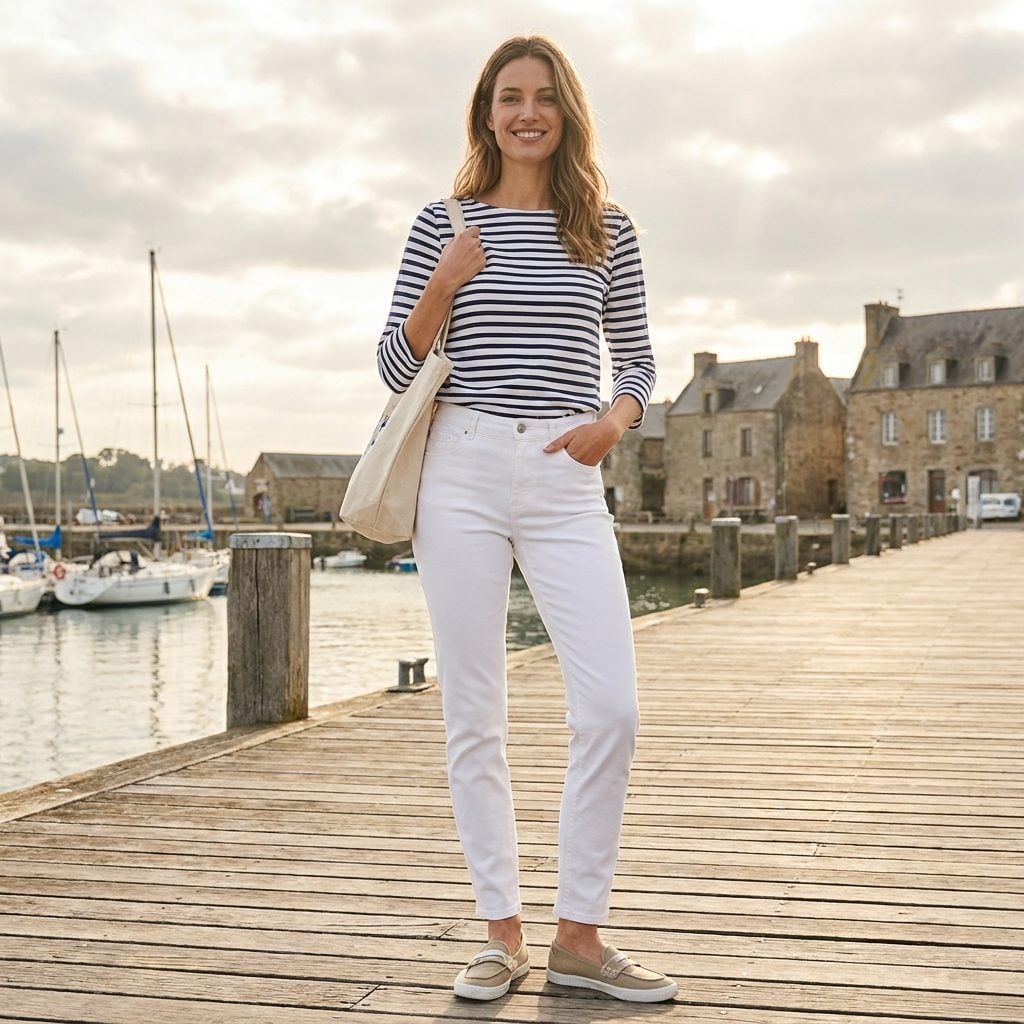
White jeans and a Breton stripe. There’s a reason this pairing survived three decades. The navy anchors the brightness of the white so the whole thing reads coastal instead of clinical.
White denim benefits from a substantial fabric that holds its shape and remains opaque in bright light. A high-waisted straight cut keeps the outline clean. Then let a navy striped boat-neck top and tan espadrilles handle the rest.
24. Light-Wash Denim Jeans
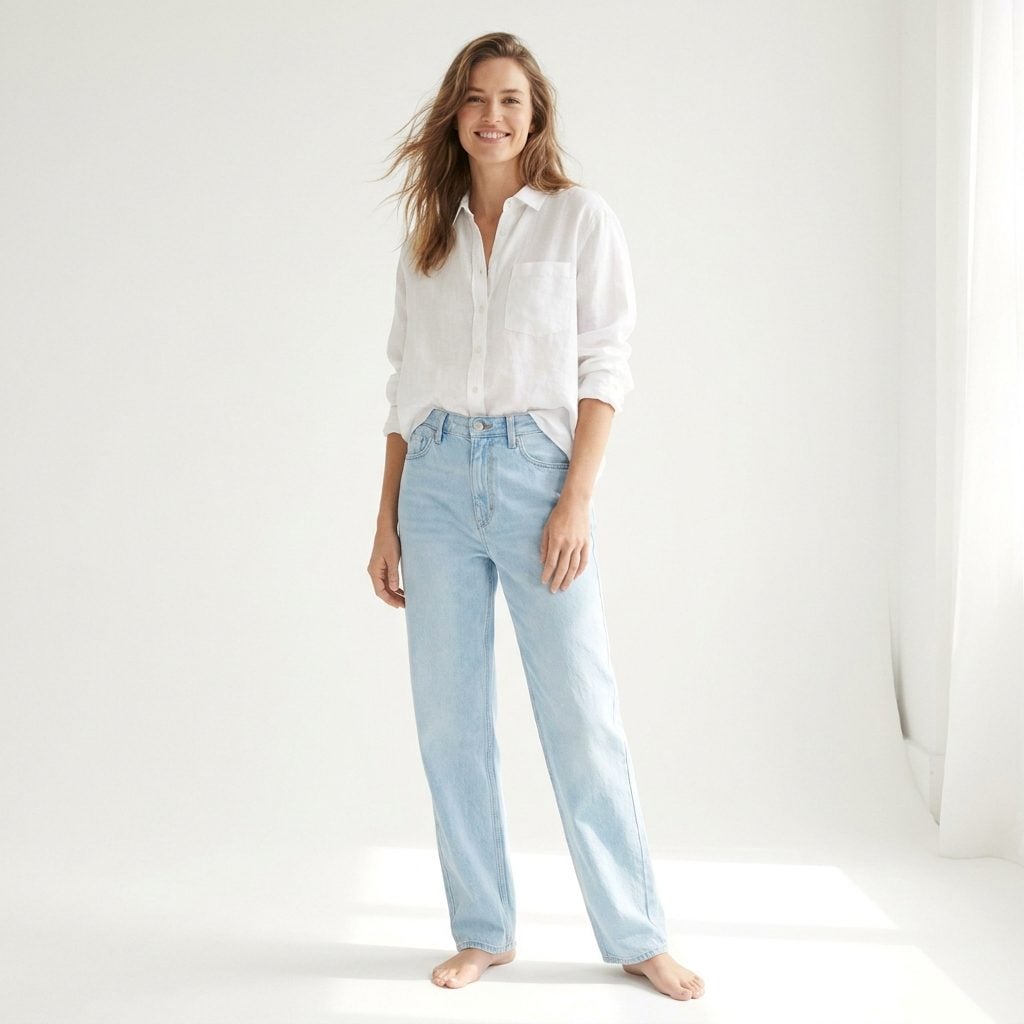
The palest blue in the drawer, faded almost to the color of a washed-out sky. Light-wash blue jeans carry a Saturday-morning ease no dark denim can fake.
There’s a catch, though. Because a pale wash draws more attention than dark indigo, pocket placement, fading, fabric weight, and cut matter more here. A straight or slim leg keeps the outline clean, while a high rise gives the outfit a clear waistline. Tuck in a fitted top to define the waist, then add a tan mule for a light, streamlined finish. Best spring through early fall, when the airy color matches the light.
23. High-Waisted Mom Jeans
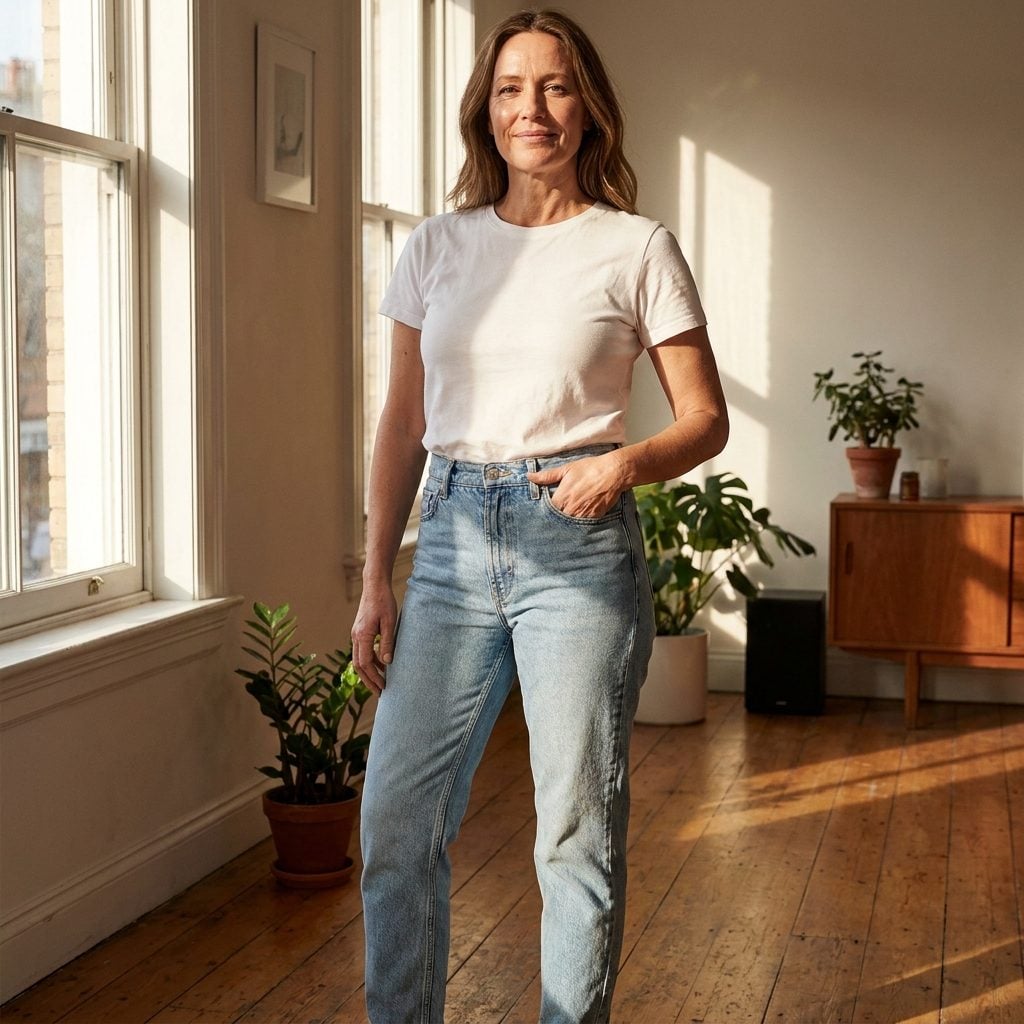
The waistband sat at the belly button, and nobody apologized for it. That high-rise is the whole trick. It places the waistband high, then relaxes through the hip before tapering gently at the ankle.
This remains one of the easiest 1990s silhouettes to wear now. The higher rise gives the relaxed hip and tapered ankle a clear center. Pair it with a tucked knit and a real belt, or leave it loose under an oversized shirt for the full ’90s read. A white platform sneaker keeps it era-correct without tipping into costume.
22. Relaxed Straight-Leg Jeans
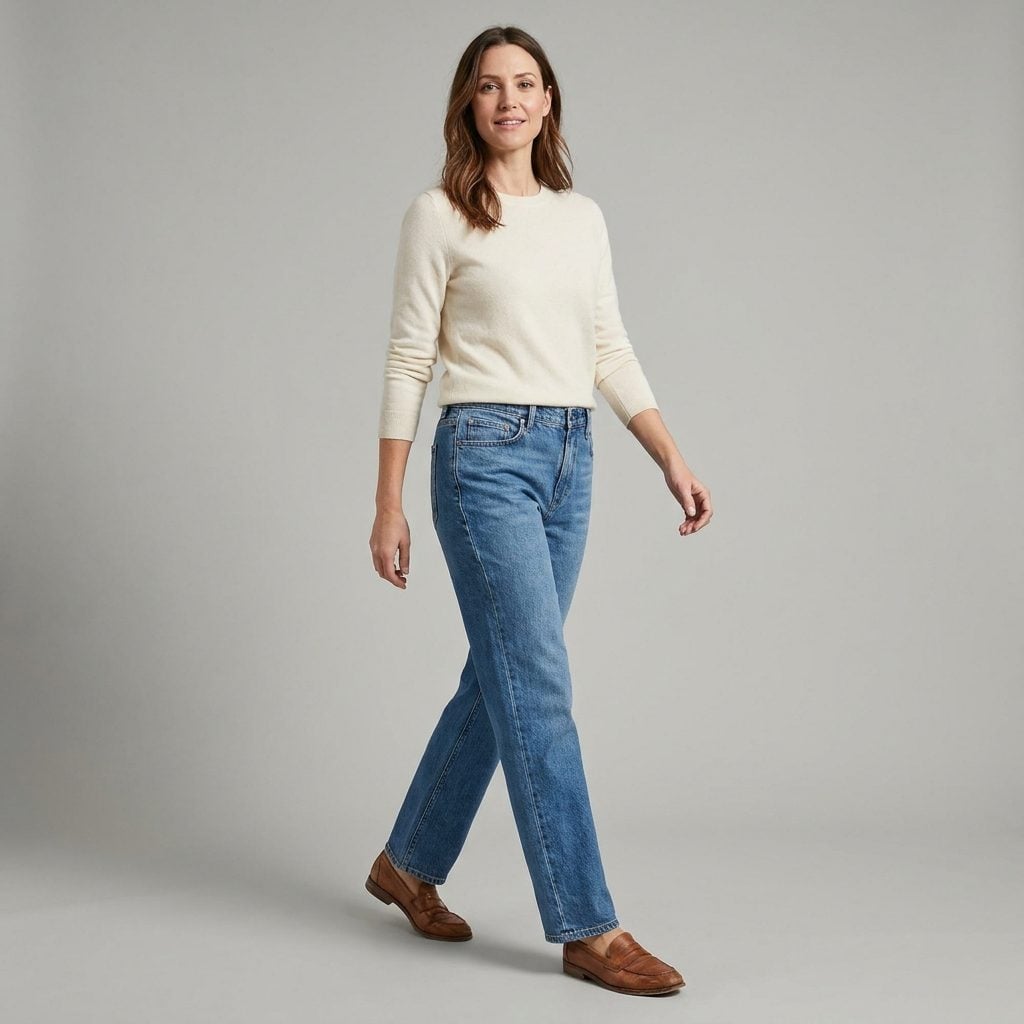
The workhorse. No drama in the hip, no cling at the calf, just a leg that runs straight and forgiving from top to bottom. This was the pair that lived in everyone’s drawer and got worn on the days when the outfit didn’t matter.
Which is exactly why it earns a spot now. The relaxed straight leg is the most versatile jean shape a wardrobe can hold—it takes a heel or a flat, a blazer or a hoodie, no complaints. The straight outline keeps the fit uncomplicated, giving you comfort without losing structure.
21. Baggy Skate Jeans
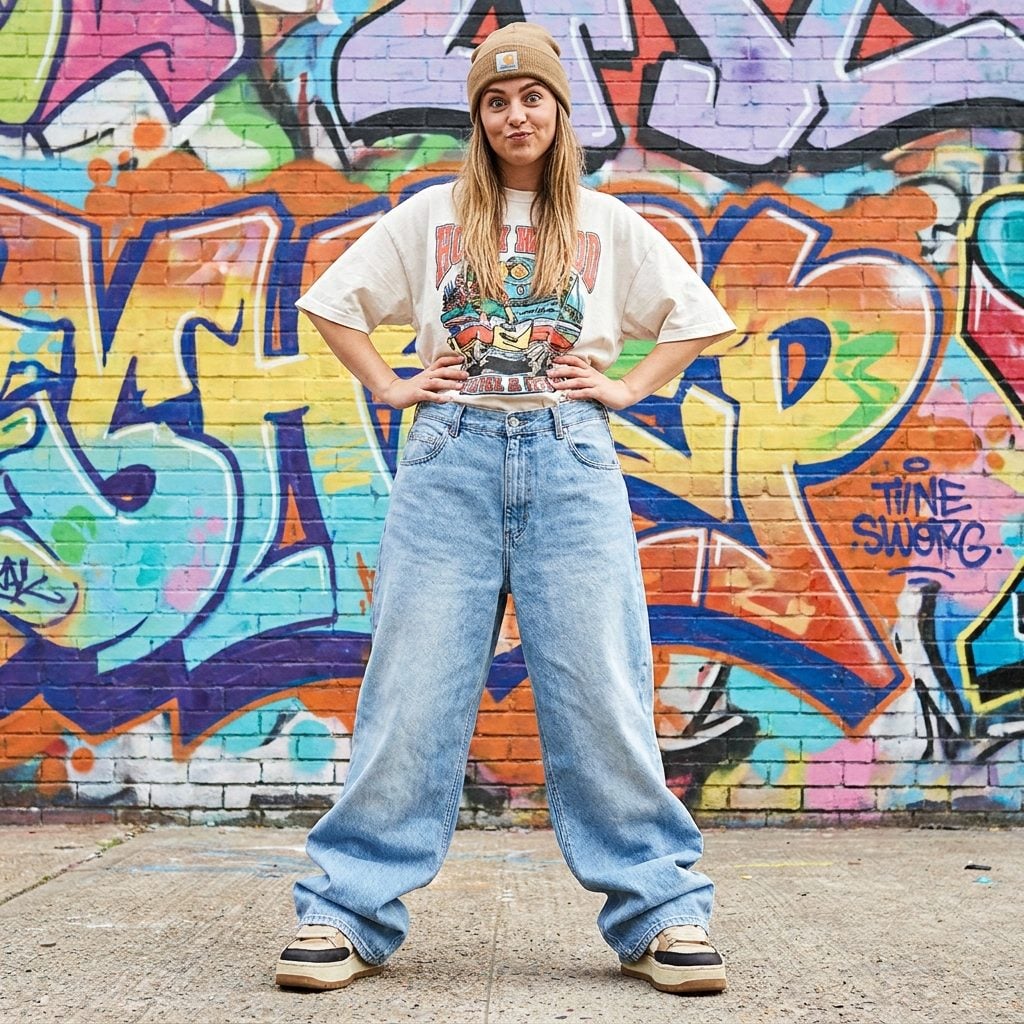
Generic skate jeans were loose through the seat and leg without necessarily reaching JNCO proportions. The ease came from room to move, a low-slung fit, and enough width to sit over skate shoes. Girls stole them from their brothers and never gave them back.
Worn now, the baggy fit looks deliberate instead of sloppy—if you anchor it. Crop the top, show a sliver of waist or a defined shoulder, and let the volume carry the rest. The current return of relaxed denim owes something to this 1990s skate silhouette, though wide-leg trousers and jeans existed long before it. That loose skate-shop silhouette is half of what makes them work.
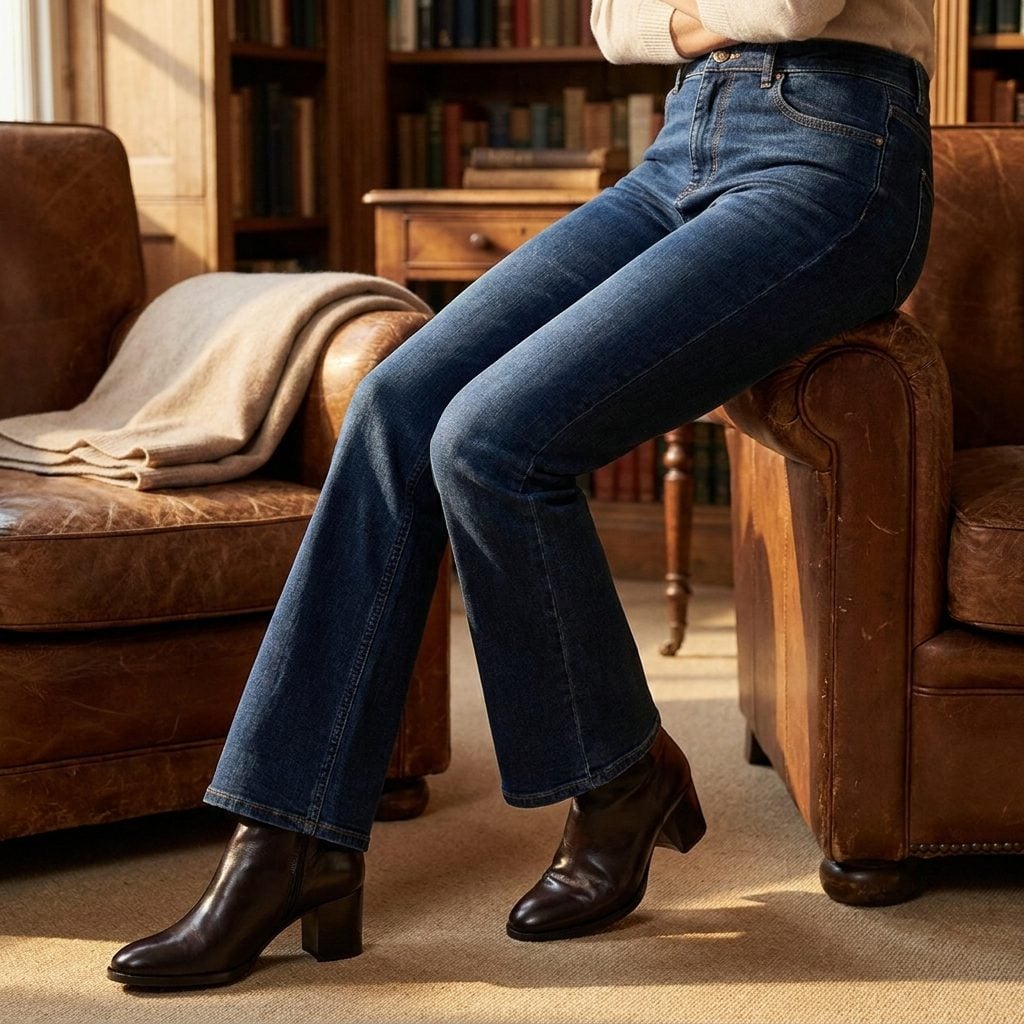
20. Bootcut Jeans
❤️ Would you like to save this?
Fitted through the thigh, a whisper of flare below the knee, just enough to clear a boot. The bootcut was the grown-up jean of the decade—the one you wore when you wanted to look like you had somewhere to be.
It’s still a useful option when you want a little width below the knee. The slight flare covers the upper part of a boot or shoe and gives the lower half of the silhouette a balanced finish. A dark, clean wash creates the more polished version.
19. Wide-Leg Jeans
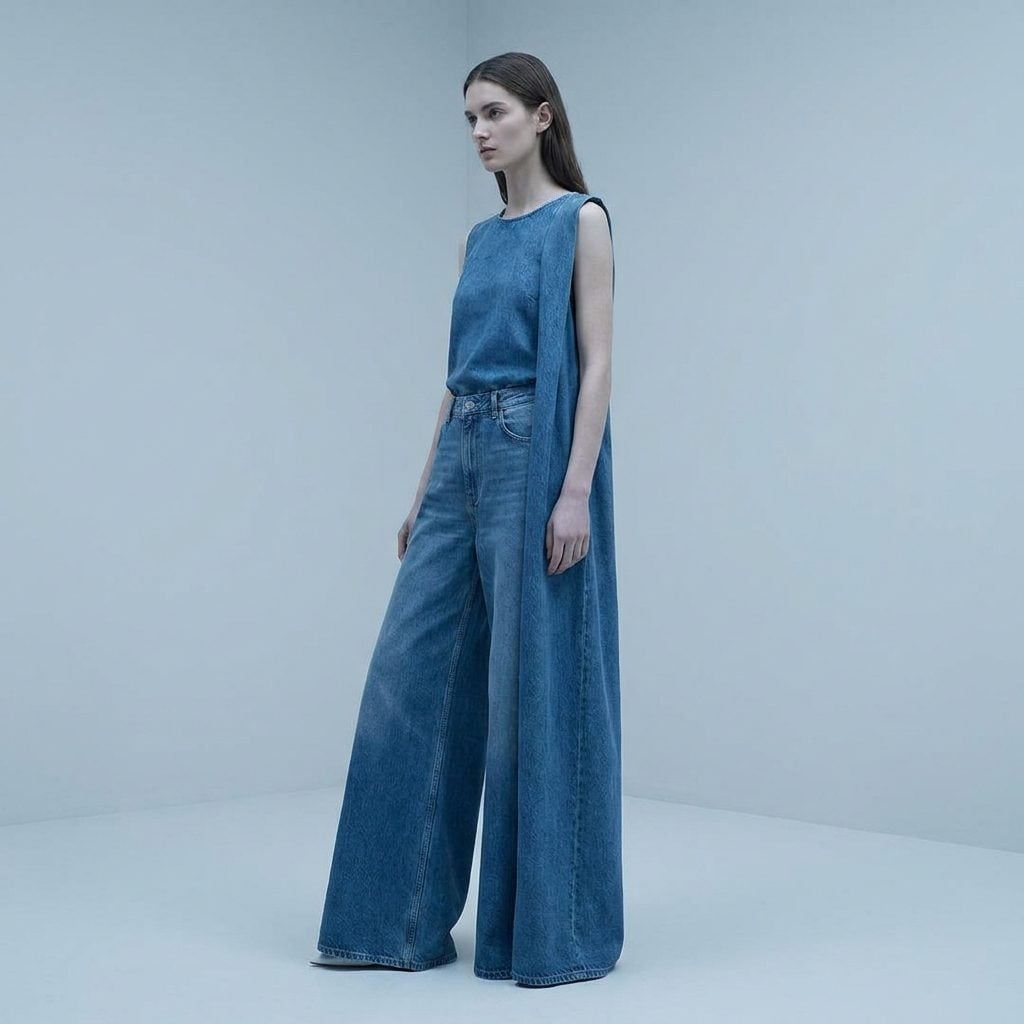
Not baggy, not flared. Wide from the top and wide all the way down, a straight column that turns denim into something closer to a pair of trousers. This was the fit for the girl who liked a little structure in her clothes.
It might be the single most modern shape on this list. The wide leg carries both ease and authority, especially with a crisp shirt, belt, or structured jacket above. Finish with a pointed shoe peeking out to sharpen the trouser-like line.
18. Denim Overalls

One strap down was the familiar 1990s styling move, though both straps create a cleaner version now. Full-length denim overalls were the uniform of the carefree ’90s girl, worn over tees, tanks, flannels, whatever was clean. The brass buckle and the bib pocket did the styling for you.
Grown up, it comes down to fit and layering. A tailored leg and crisp white tee give the nostalgic shape a cleaner finish. Loosen one buckle if you want the memory; keep both fastened if you want the polish. Either way, the silhouette signals ease—a rare and welcome thing to project at any age.
17. Bib Overall Shorts (Shortalls)

Summer’s answer to overalls. Shortalls kept the bib and the buckles and cut the legs off at the thigh, which made them the go-to for hot months and county fairs. Frayed hem is optional but very much on brand.
Worn with a fitted tank and a sandal, the shortall feels playful without trying too hard. The long bib and short hem create an easy contrast that suits a clean, unfussy cut. Keep the wash light and the shape clean, and it lands somewhere between nostalgia and now.
16. Acid-Wash Jeans
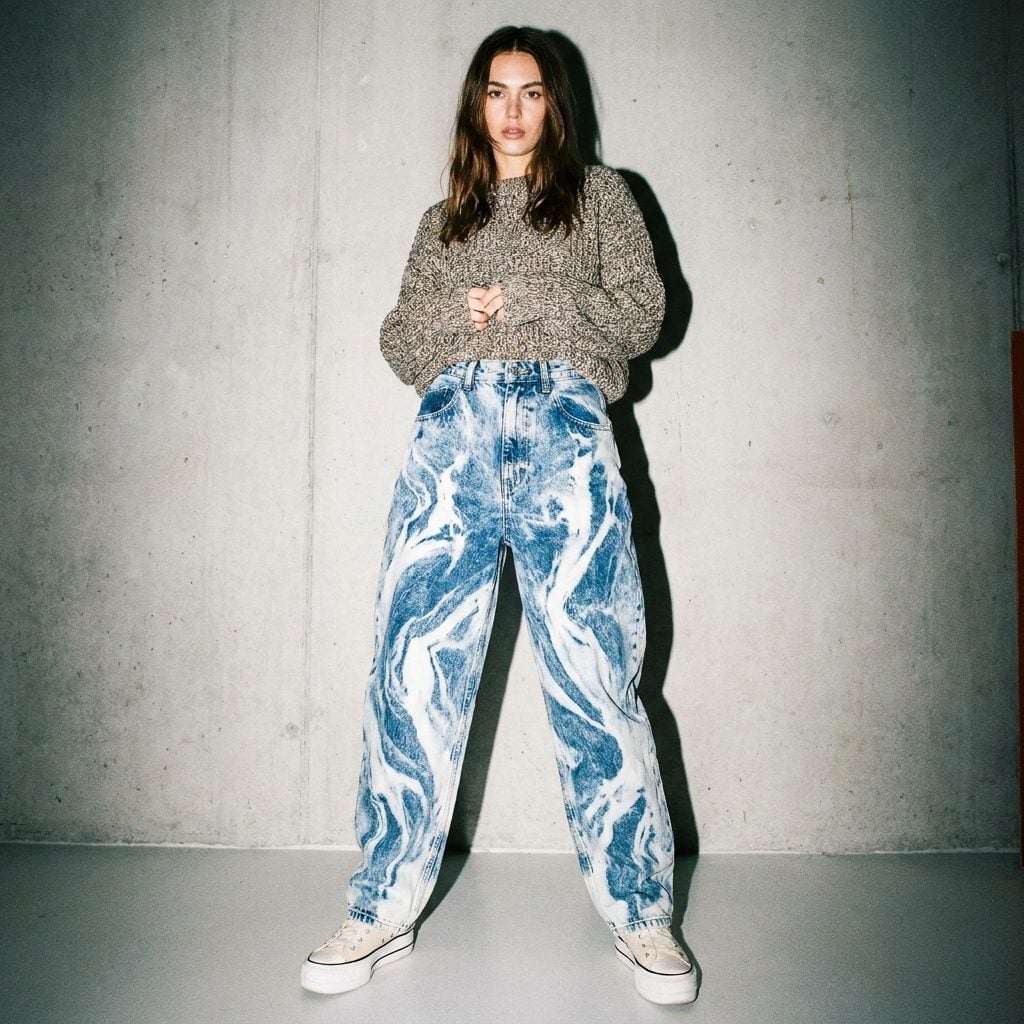
Nothing screamed 1990 louder than jeans that looked like they’d lost a fight with a bottle of bleach. Acid-wash got its marbled blotches from pumice stones soaked in chlorine and tumbled with the denim until the color ate away at random. No two pairs matched, and every mismatched pair became its own kind of proof of ownership.
A higher-waisted cut gives the aggressive wash a cleaner framework now. The higher rise gives the mottled wash a cleaner framework. A plain white tee and simple shoes keep the strong pattern from competing with the rest of the outfit.
15. Stone-Wash Jeans
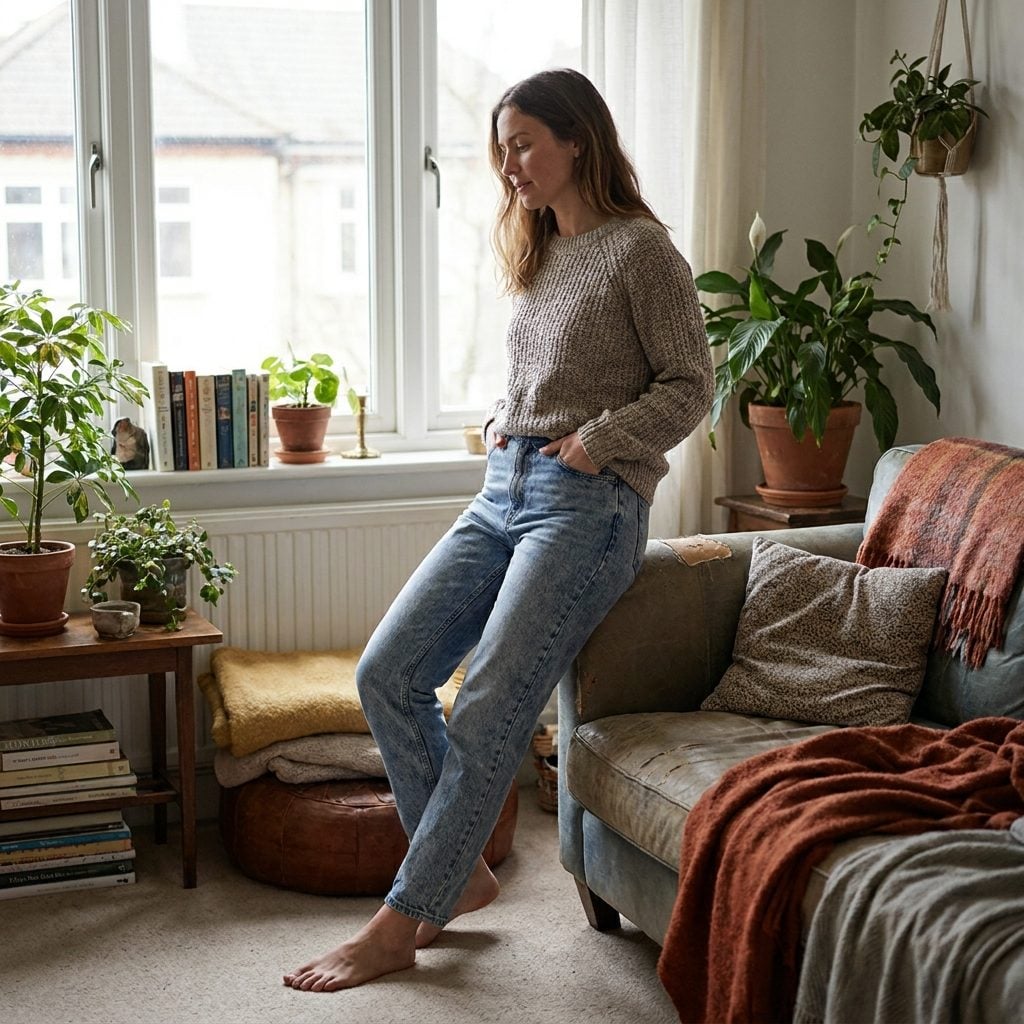
Stone-wash was the softer sibling. It traded the aggressive marbling for an even, sun-faded blue that looked broken in from day one, and pumice stones tumbled with wet denim in industrial washing equipment until the denim felt like it had already lived through a summer or two.
This is the workhorse wash. Its appeal comes from the even fading, which avoids the sharp patches and marbling of acid wash. Pair a mid-blue stone-wash with a black knit for contrast, or a knotted chambray shirt for a full denim moment that stops just short of Canadian tuxedo. Comfortable, forgiving, quietly the most wearable wash here.
14. Dark Indigo Jeans
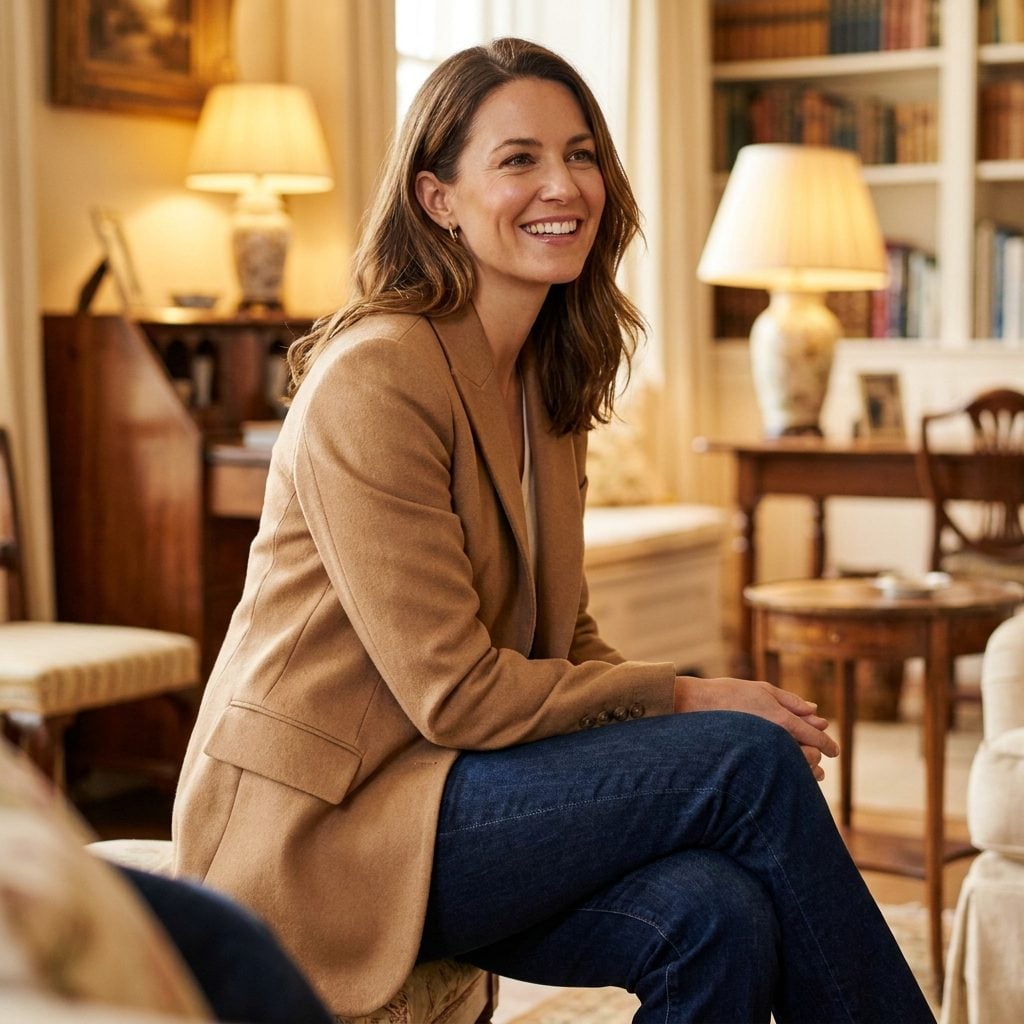
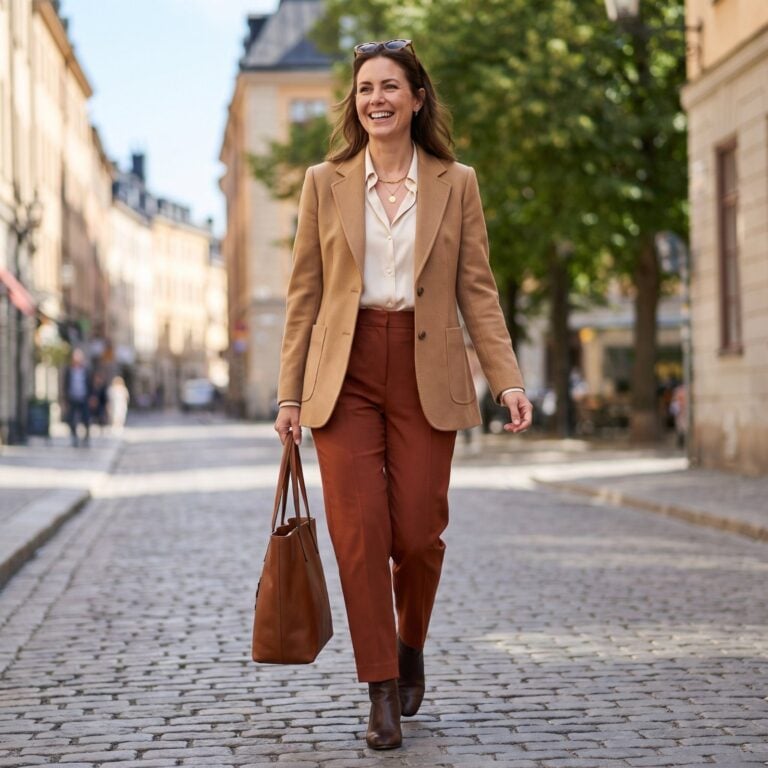
The camel blazer does the elevating, but the dark indigo underneath earns its keep. Deep, saturated, almost inky. This is the wash that looks put-together rather than merely casual. Back in the ’90s, it was the going-out denim, and it still is.
That uninterrupted field of color has no pale patches to break it up. That makes it one of the easiest denim washes to dress up. Add a camel wool blazer and a white silk shell, and the whole look tips toward polished. These are the jeans you reach for when you want denim to behave.
13. Black Denim Jeans
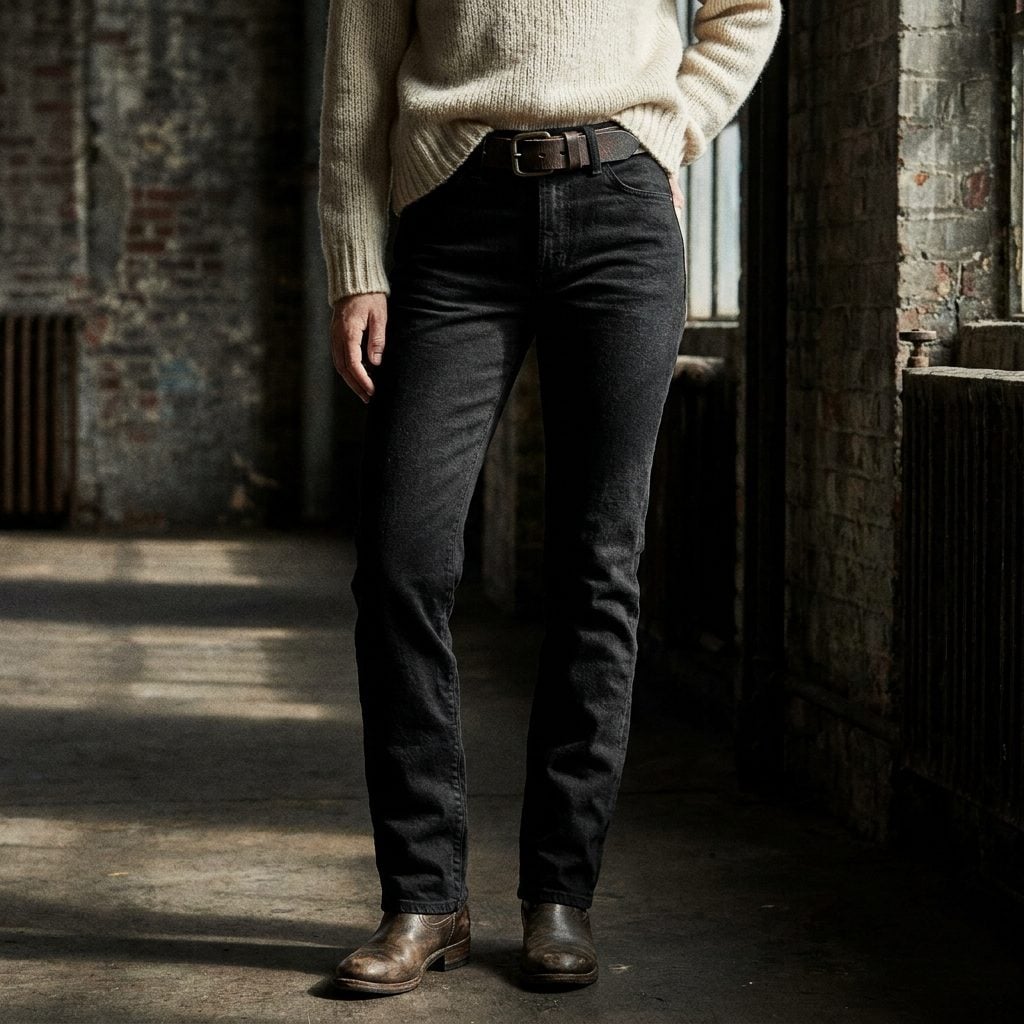
Black denim was the grunge-era rebel that never actually retired. That half-tuck of ivory knit is the styling engine here, breaking up the black column so it doesn’t flatten into a uniform.
True black jeans create a cleaner, more evening-ready effect than dark indigo. Swap the tee for a silk blouse and they cross into dinner territory without blinking. The trick? Keeping the black genuinely black, not that tired gray-black that shows every wash. Turn them inside out to launder, and they hold color far longer. Want the full breakdown? We’ve got a whole guide on what to wear with black jeans.
12. Cuffed Boyfriend-Style Jeans
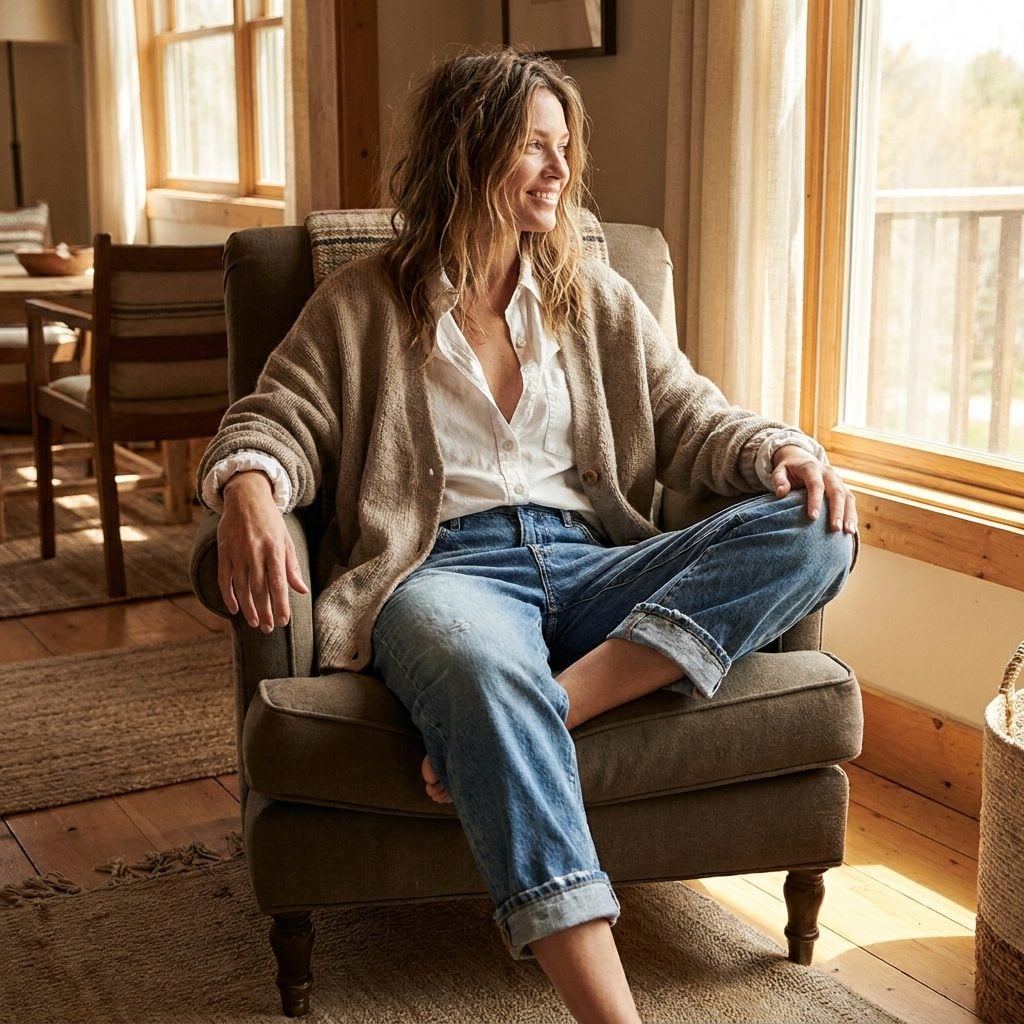
The genius of the boyfriend jean was borrowing a man’s cut and making it read soft on a woman’s frame. Slouchy through the hip, roomy in the leg, then that double cuff at the ankle to bring shape back.
The cuff is what separates this pair from the full-length boyfriend jean earlier in the gallery. Because the bottom half is deliberately loose, the top benefits from one point of definition—a front tuck, a belt, or a fitted tee—so the shape does not take over the entire outfit. The oversized blazer works because it echoes the relaxed spirit, while the leopard flat drops in one sharp, unexpected note. This is an androgynous jean done right. All ease, none of the shapelessness people fear it brings.
11. Cropped Capri Jeans
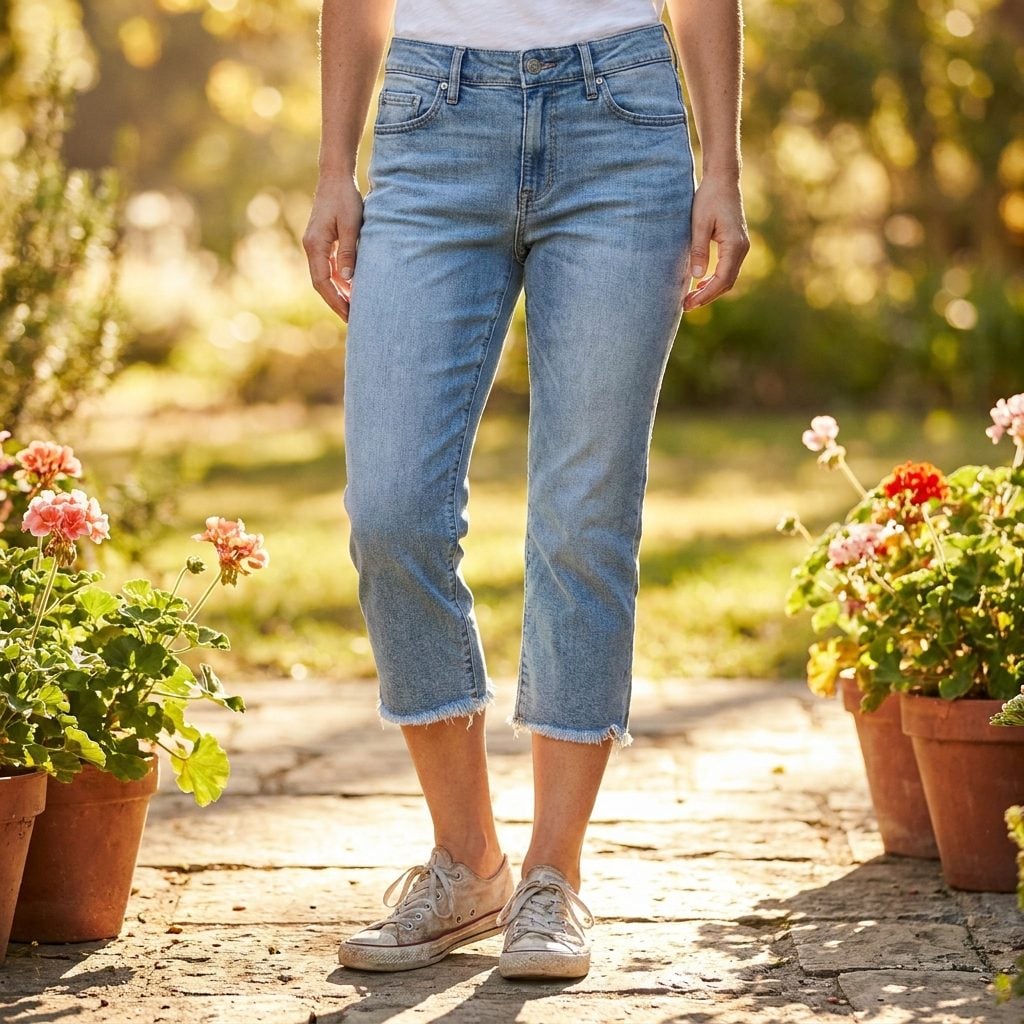
The capri was the jean for women who wanted denim but refused the heat. Cut to end mid-calf, it showed part of the lower leg and skipped the whole ankle debate. With a clean hem and simple styling, it looks deliberate rather than dated, especially in a light indigo wash.
The mid-calf crop is the defining feature. A heeled sandal sharpens the look, while a flat keeps it relaxed. A white ribbed tank keeps the top half quiet and lets the proportion do its job. The same tonal blue jeans logic applies: keep everything else soft.
10. Patchwork Denim Jeans
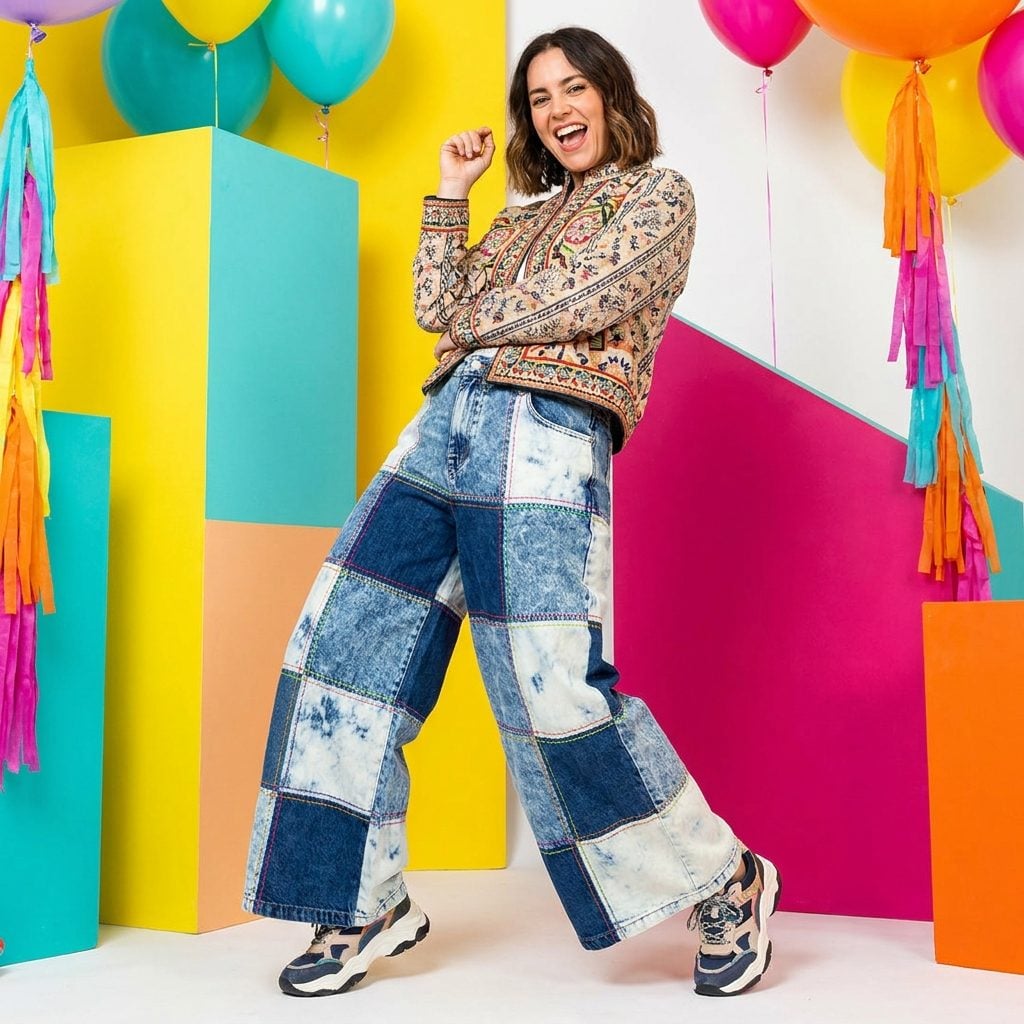
Patchwork jeans were the loud cousin at the denim table. Squares of different washes stitched into one leg, sometimes deliberate, sometimes looking like a repair job that got ambitious. The ’90s adored that DIY energy.
The easiest way to wear them now is with restraint everywhere else. Because the jeans already carry several washes and seams, a cream sweater and white sneakers provide a calm backdrop. Fight the pants with a busy top, and the whole thing reads chaotic.
A related range of washes creates a more unified rhythm than sharply contrasting blocks. Mixed indigos keep the patchwork visible without making every square compete.
9. Vintage Levi’s 501 Jeans
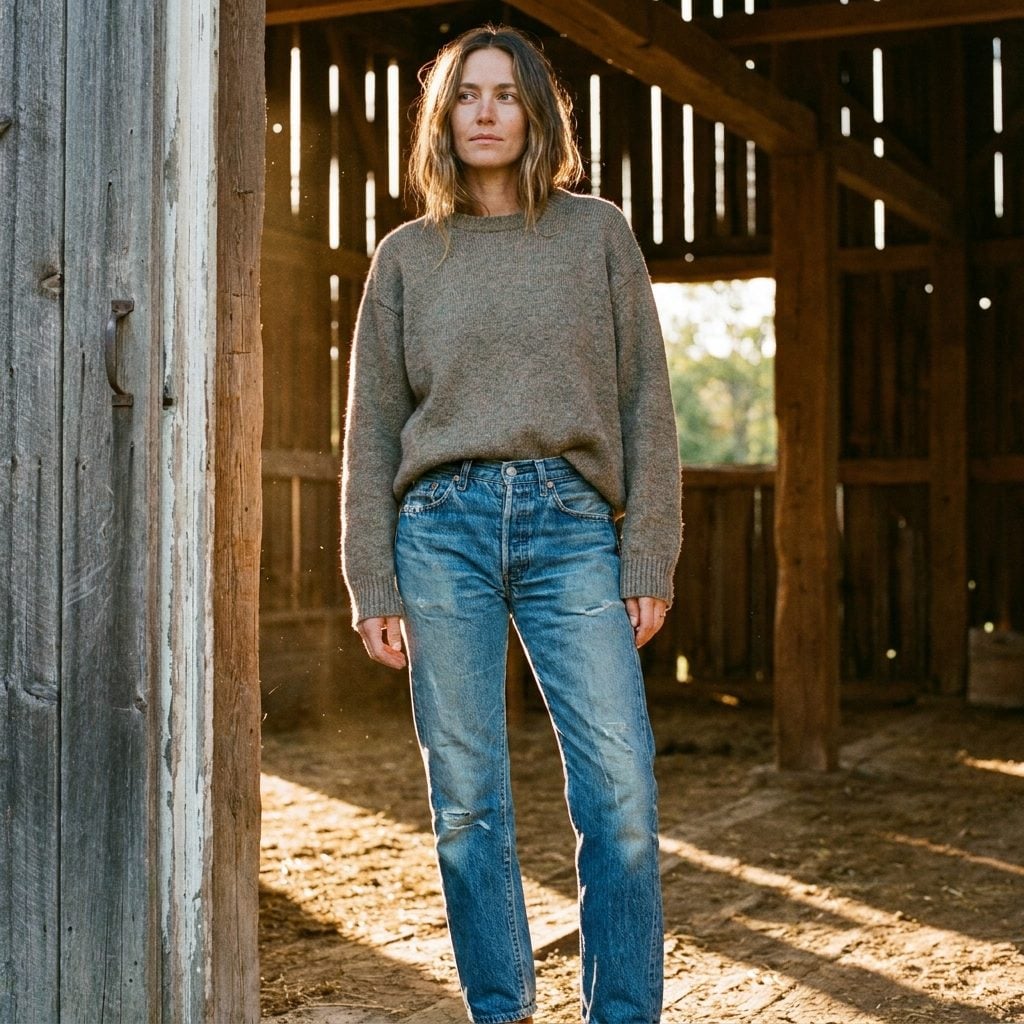
Every closet in the decade had a pair, and half of them were stolen from an older brother. The 501 became the benchmark—rigid indigo, a button fly, and a straight leg that sat high on the waist and softened into your body over years of wear. Nothing tricky about the cut, and that simplicity is exactly why it stuck.
These are the straight, androgynous jeans that never stopped working, and the rigid cut has remained remarkably durable. The high rise gives the cut a clear waistline, while honeycomb fading behind the knee records years of wear. Roll a single cuff, tuck in a chambray or a fine-gauge sweater, and add a boot with a bit of heel so the proportion doesn’t go flat.
A worn-in 501 says you’ve had these longer than most of your friends have had their haircuts.
8. JNCO Wide-Leg Skater Jeans
❤️ Would you like to save this?
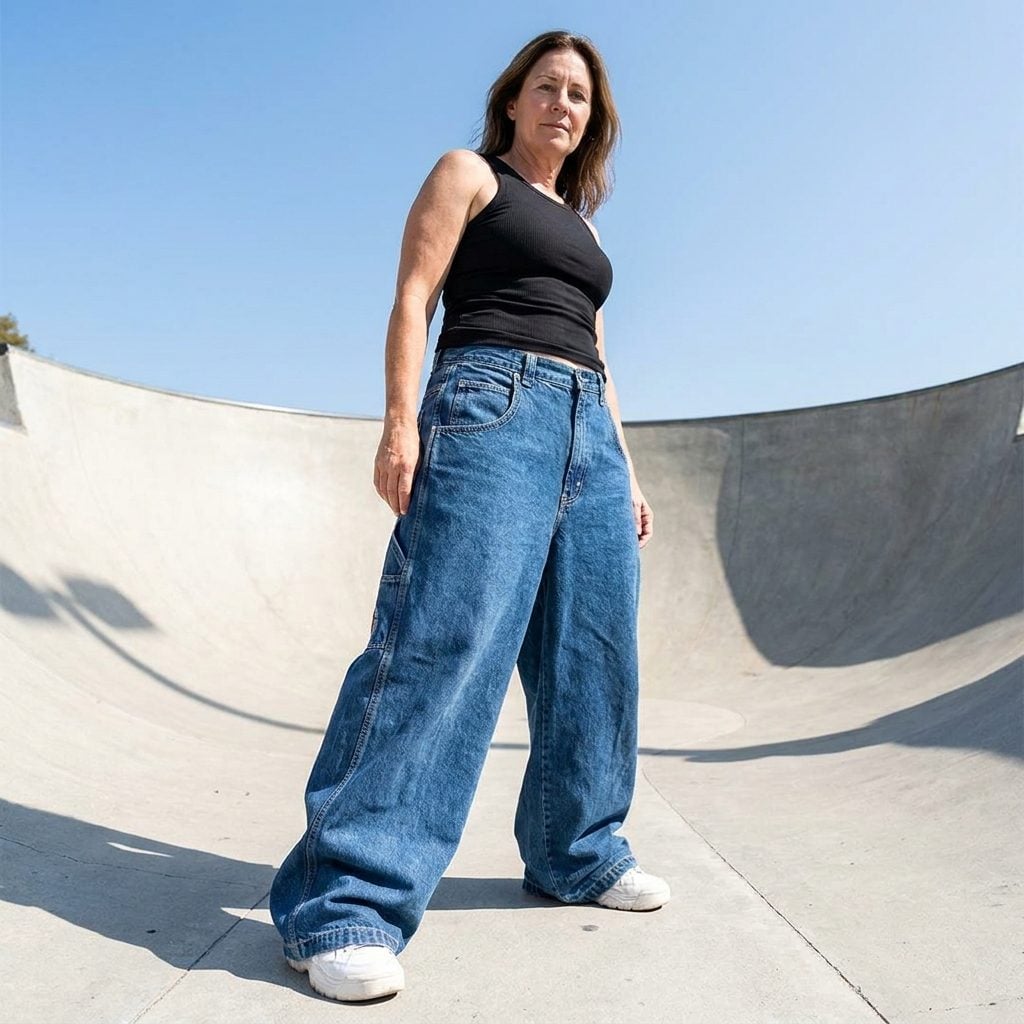
The wider, the better. That was the entire philosophy. JNCOs were less jeans and more a statement of allegiance, the fabric so voluminous you could hide a small skateboard in each leg. Nobody wore them because they were flattering. They wore them because they made a sound walking down a hallway.
Now the appeal reads differently. That enormous leg against a fitted top creates a contrast that still works: slim on top, dramatic below, and suddenly the silhouette has architecture. If you loved these the first time around, the modern reboot keeps the dramatic width but uses firmer denim and a controlled hem that grazes the shoe rather than swallowing it.
7. Belted Denim Jumpsuit
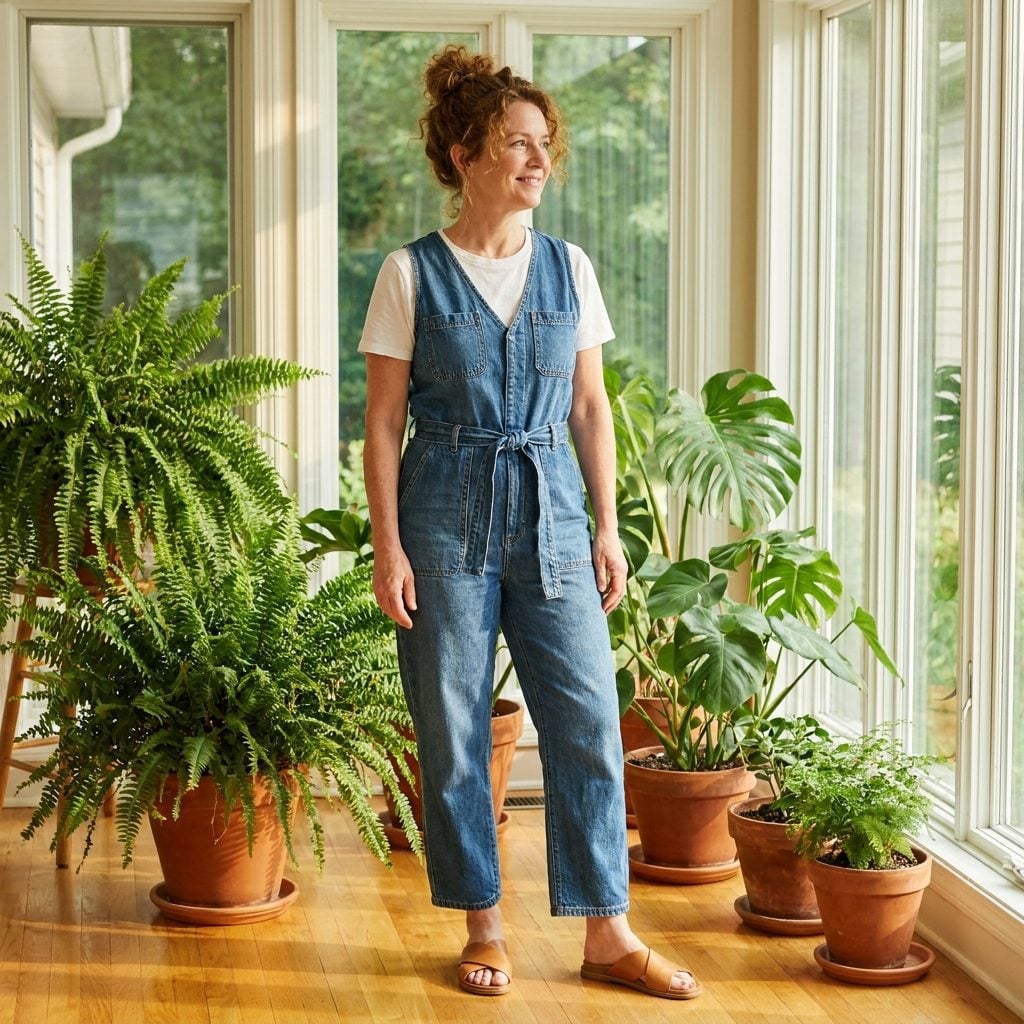
The denim jumpsuit solved a problem nobody knew they had: one piece, no thinking, out the door. In the ’90s it was the low-effort answer to looking put-together, and the tie belt gives the one-piece shape a clear center. Without the belt, the line stays loose and utilitarian. Cinched at the waist, it becomes more tailored.
The denim jumpsuit looks complete even when it takes only minutes to put on. Cinching the waist above relaxed legs creates contrast between the fitted center and looser lower half. Add a white tee underneath and tan slides, and you’ve got the kind of outfit that looks decisive without demanding a single decision.
6. Late-’90s Low-Rise Flared Hip-Huggers
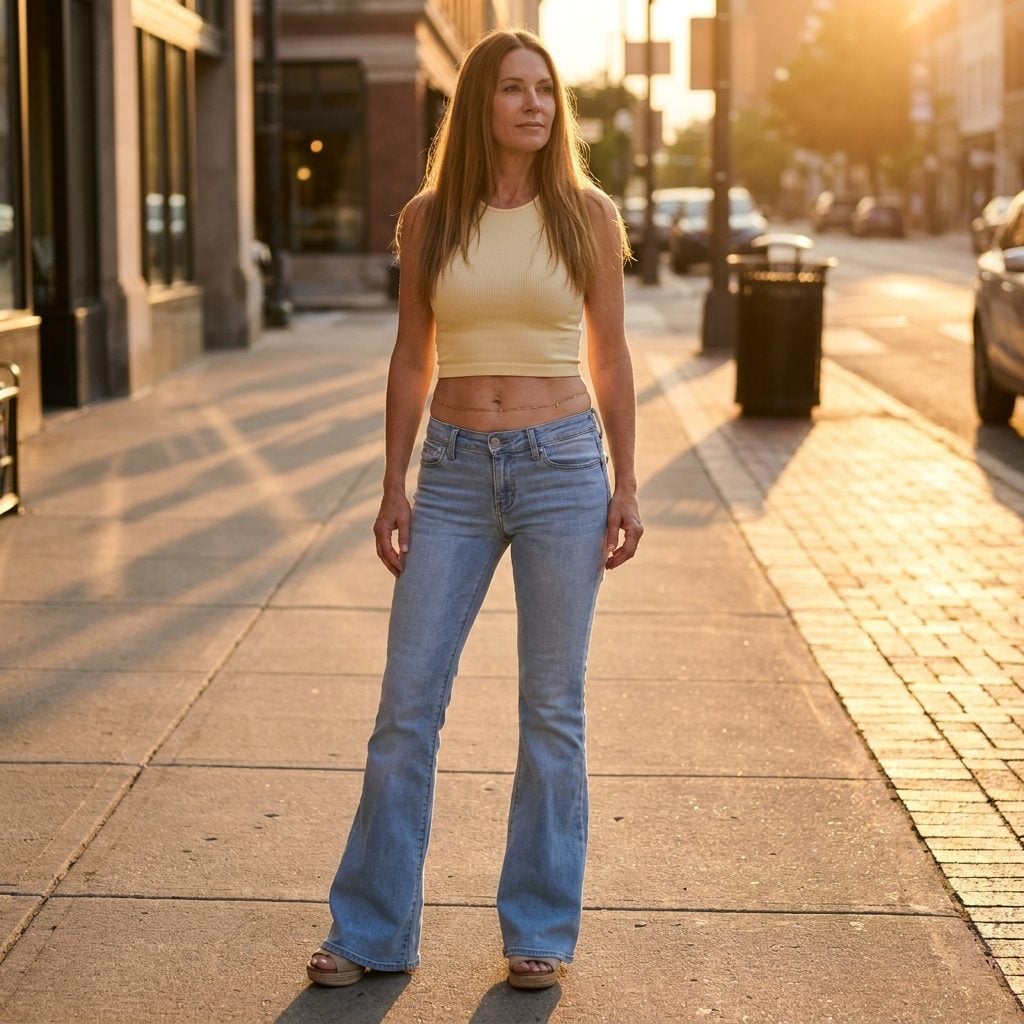
These jeans were held up by pure optimism. Low-rise hip-huggers sat where gravity said they shouldn’t, and the flare from the knee down was the counterweight that balanced the whole thing out visually. The look relied on contrast: a short fitted top, a dropped waist, and a flare that widened below the knee.
5. Slim Dark-Wash Trouser Jeans
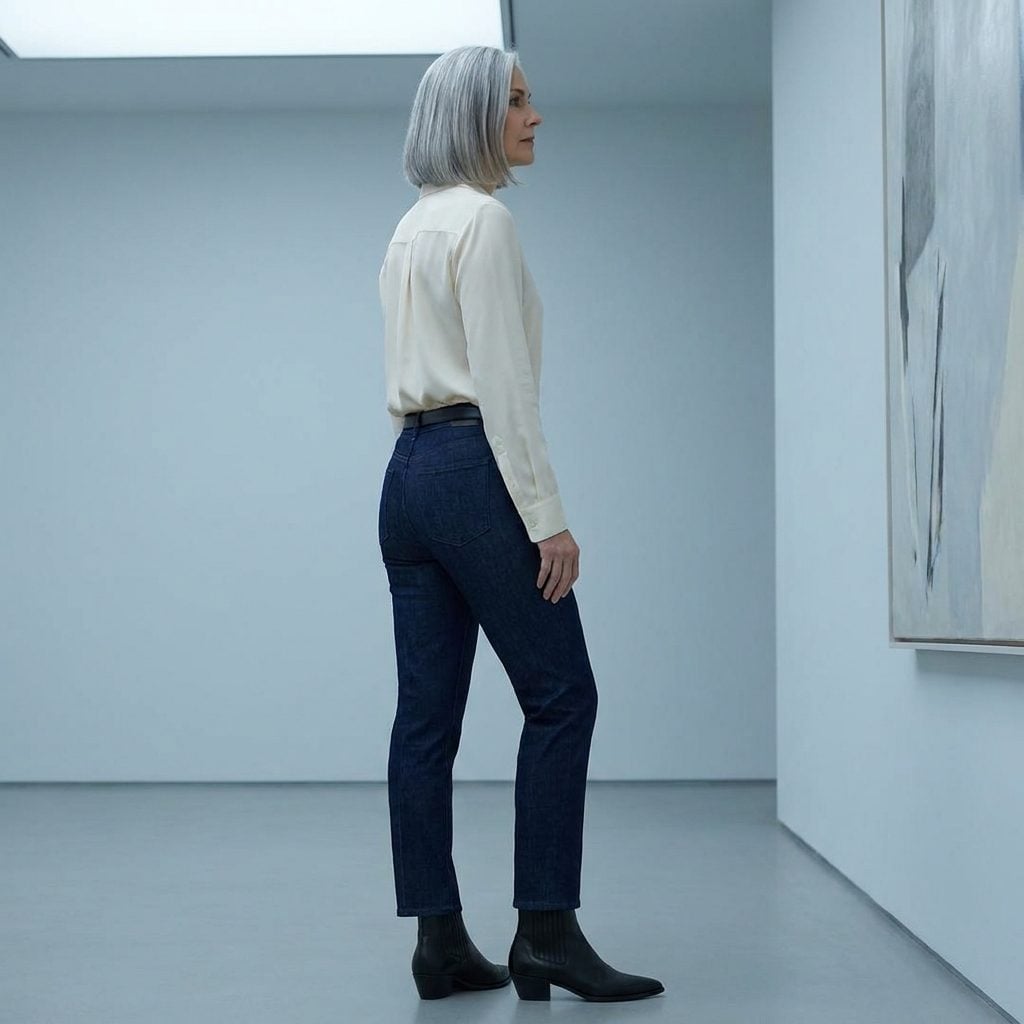
The grown-up cousin of the ’90s denim family. Trouser jeans borrowed everything from tailored slacks, the pressed crease, the clean front, the near-invisible pockets, and reframed denim as something that could pass in a business-casual office where ordinary five-pocket jeans looked too casual. Sneaky.
The pressed crease and near-black wash give this pair its tailored character. Together, they reinforce the trouser construction. Tuck in a cream silk blouse, add pointed boots, and nobody clocks it as jeans until they’re standing close. This tailored construction has remained especially durable because it was never tied to a youthful or heavily distressed finish.
4. Overdyed Forest-Green Jeans
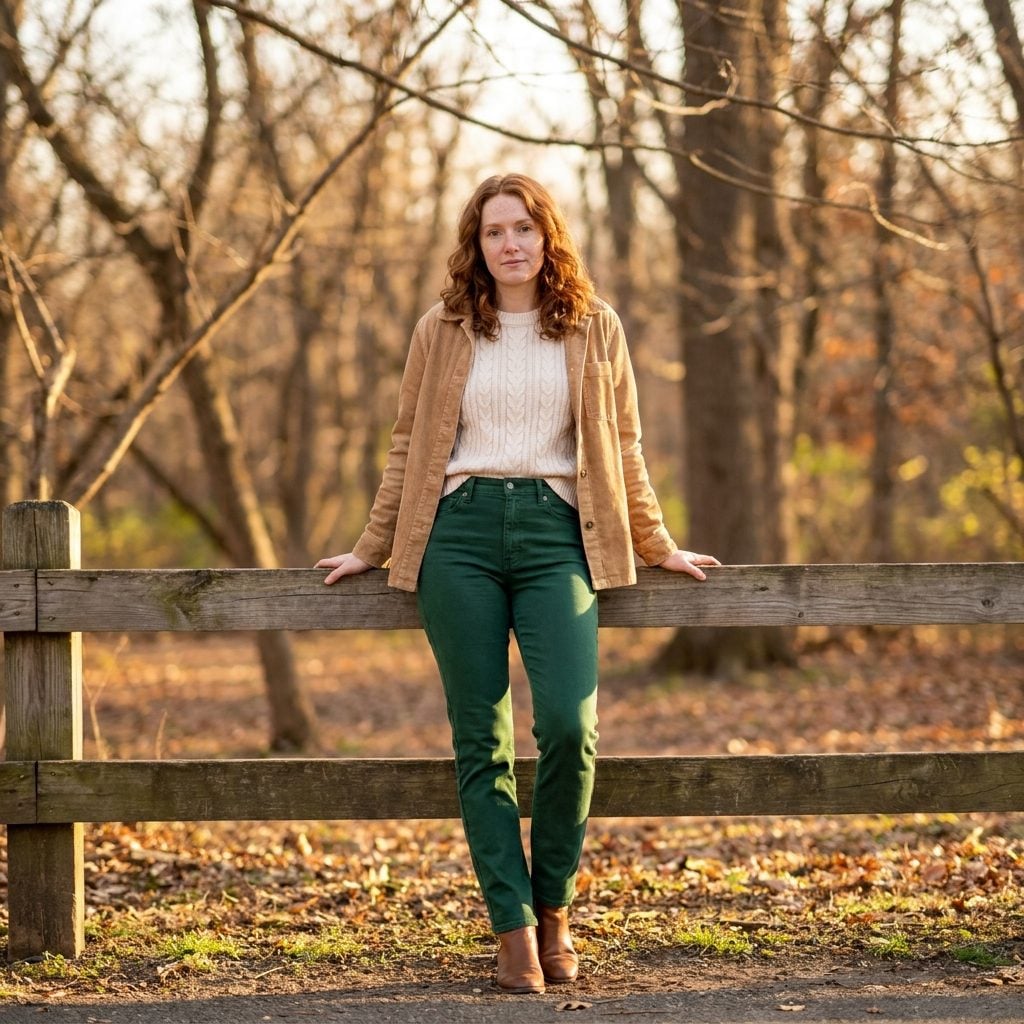
Blue was never the only option, though catalogs from 1994 tried to convince everyone otherwise. Overdyed denim took on a moodier character in these deep, slightly muddy greens that looked steeped in tea and forest floor.
The slim straight cut gives the unusual color a simple foundation. Green denim behaves like a neutral once you commit to it, and it plays beautifully with cream, tan, and rust. This particular pairing works because the corduroy jacket picks up the earthy register of the dye, while the cream knit lightens the overall palette.
3. Rhinestone-Studded Party Jeans
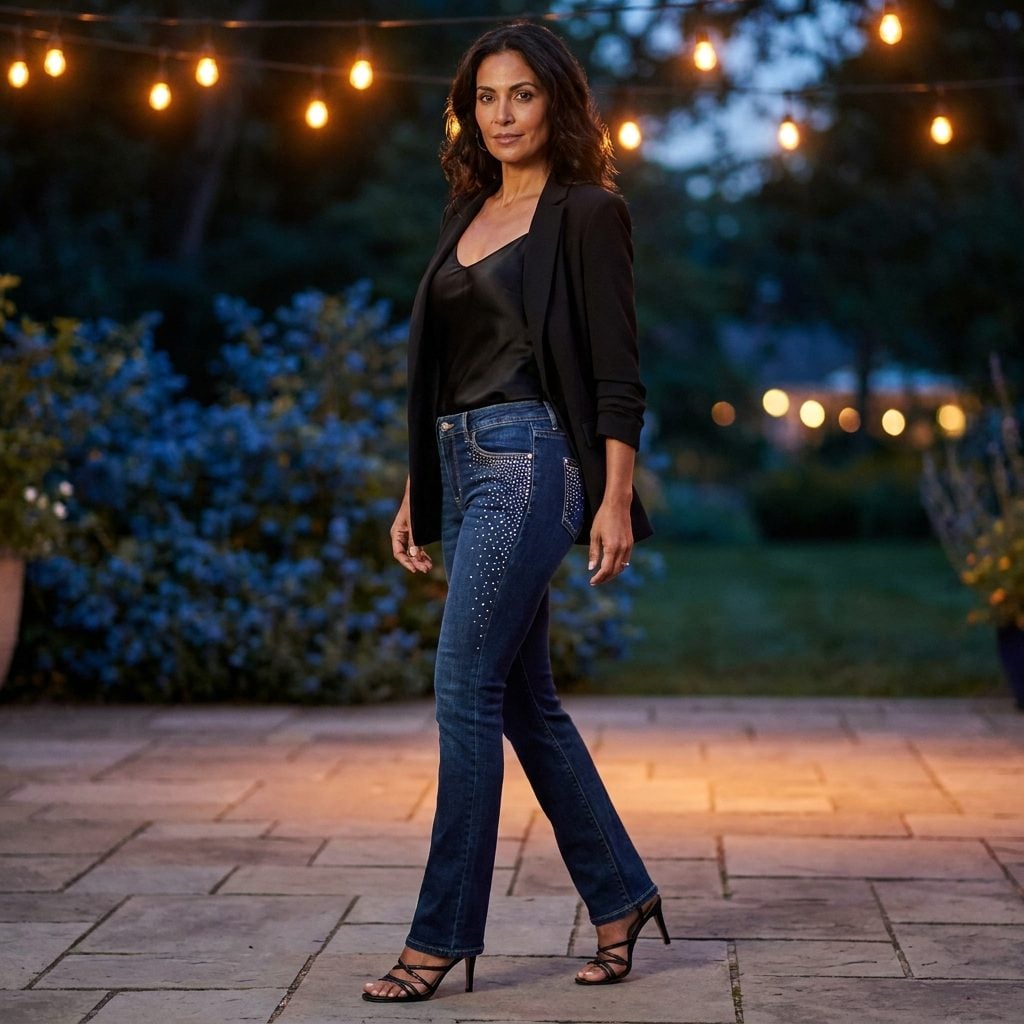
Denim you could wear to a wedding—or at least a house party where someone had rigged up a strobe light. Rhinestones ran down the seams and around the pockets, turning a workaday fabric into something that flashed every time you moved.
Kept subtle, the sparkle still works. Let the crystals provide the shine while the remaining pieces stay matte and dark. A black silk cami and a sharp blazer let the denim do the flirting while you control the volume.
2. Frosted Ice-Wash Jeans
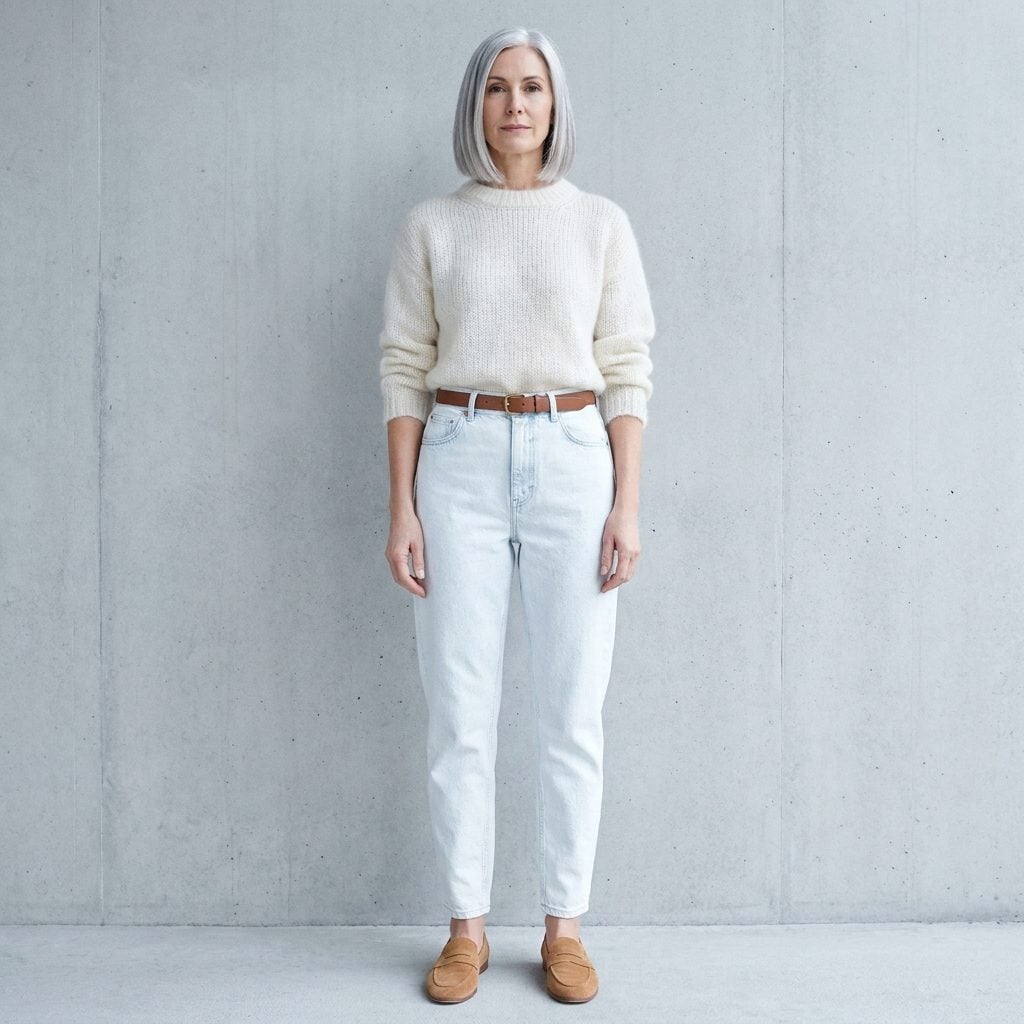
Somewhere between stone-wash and acid-wash lived this frosty, almost silver treatment that made the denim look like it had spent a night in the freezer. Cold, crystallized, pale blue tipping toward white.
The high waist and tapered leg give this one a sharper spine than most ’90s revivals. Warm neutrals temper the chill. The ecru mohair adds warmth to the icy palette, while the tan belt and loafers complete the contrast.
1. Ankle-Zip Tapered Moto Jeans
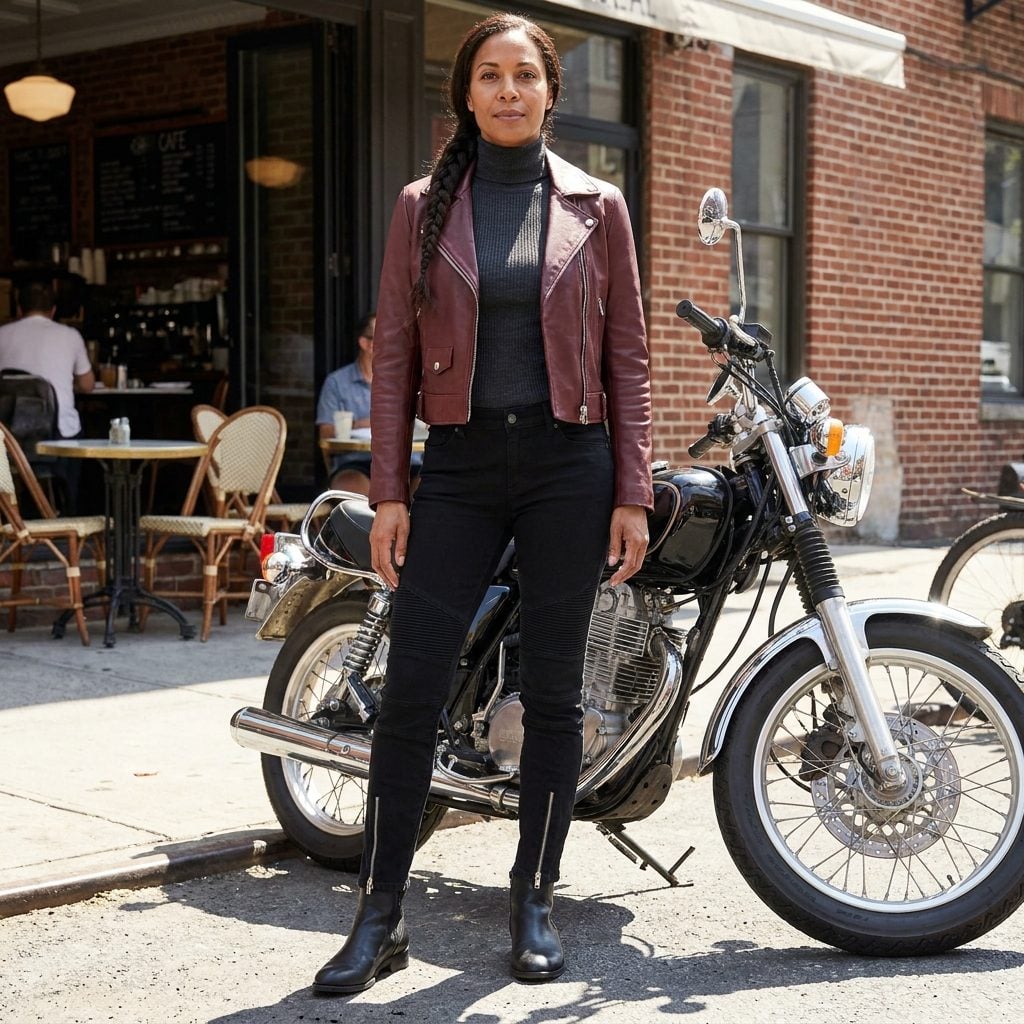
The moto version turns the ankle zipper from a practical detail into the visual focus. Silver zippers, a darker wash, and sharper styling move it away from practical everyday denim.
This look leans into that hardware. The oxblood moto jacket answers the chrome zips, while the fitted, cropped pieces keep the outfit cohesive. The result is lean, modern, and deliberately cut at the ankle.
Hardware on denim ages beautifully. Zips, rivets, and a good boot say the outfit has somewhere to be.
This darker moto pair can move from weekend errands to dinner with little more than a change of top.