❤️ Would you like to save this?
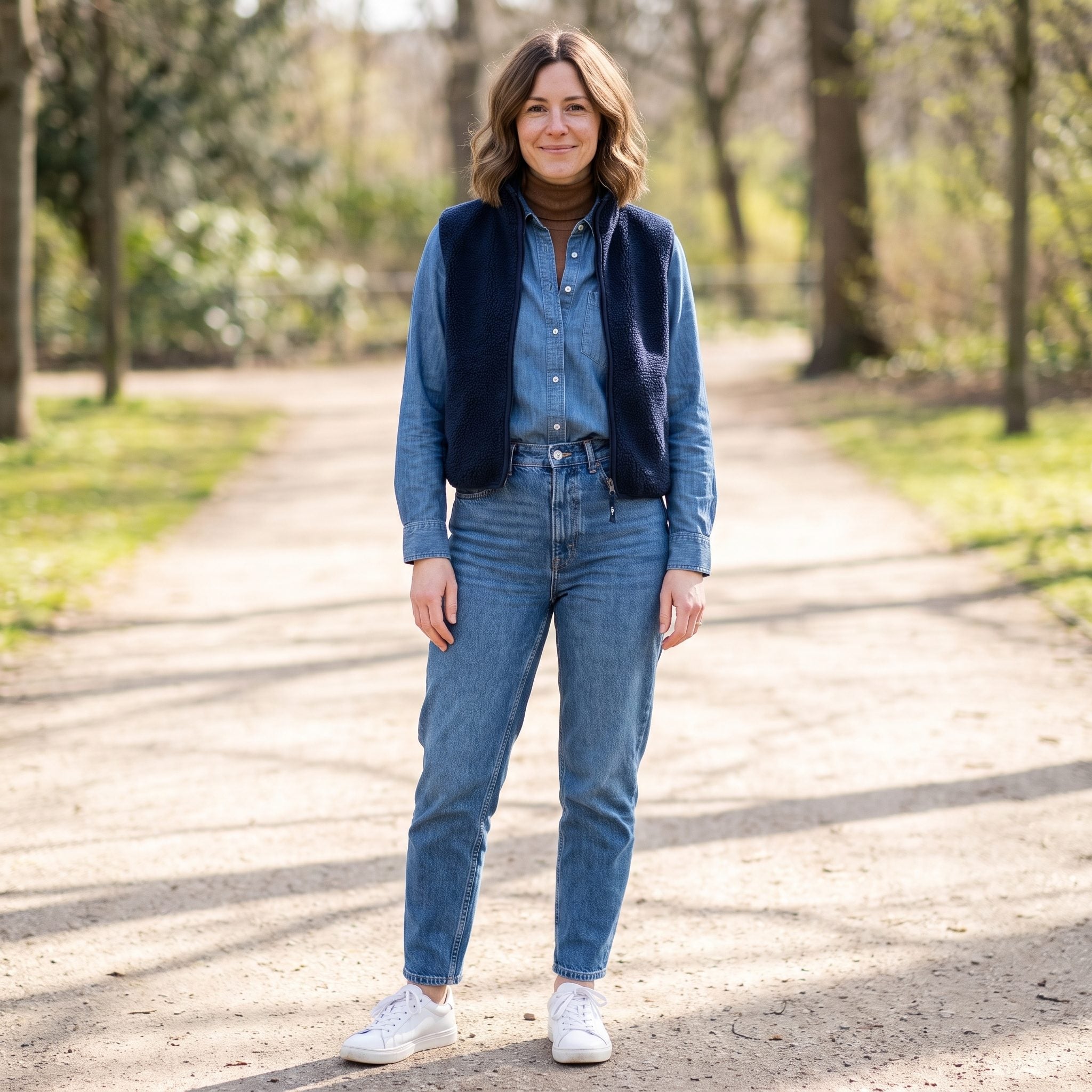
A fleece vest over denim. White sneakers. A practical blue-on-blue formula that once looked perfectly normal and now reads like a photograph you forgot was still hanging in the closet. Nothing is disastrous. That is exactly what makes it interesting. The outfit has not failed so much as stopped moving.
These 25 transformations take that same denim-heavy starting point and pull it in completely different directions. Some keep the jeans and change the proportions. Others abandon denim for silk, leather, tailoring, knits, utility pieces, or color. The face stays recognizable. The body stays the same. What changes is the styling vocabulary: fabric, line, scale, footwear, layering, and attitude. One familiar outfit, 25 very different futures.
FYI, thanks to AI imagery software, we’re able to create very specific fashion and hairstyle examples to illustrate the points being made. In some cases, imagery is exaggerated to hammer home the point. Also, assume links that take you off the site are affiliate links such as links to Amazon. this means we may earn a commission if you buy something.
25. Modernist Neutrals Let the Silhouette Do the Talking
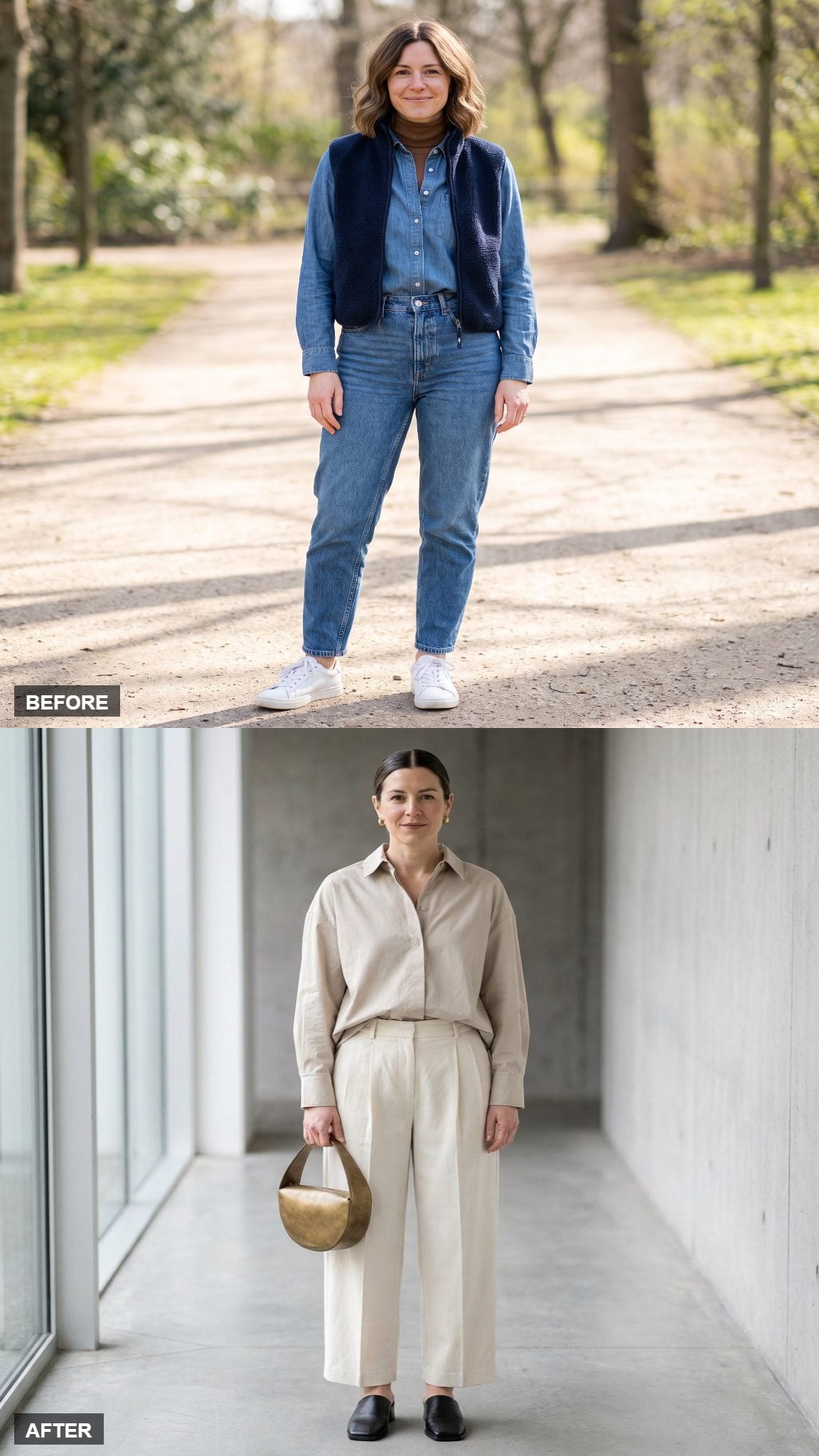
The familiar denim layers disappear completely here. In their place: stone-colored poplin, fluid cream trousers, black shoes, and enough breathing room in the silhouette to make volume look architectural rather than accidental.
The aged brass half-moon bag is the interruption the neutrals need. One sculptural object against all that softness keeps the palette from turning beige and sleepy.
24. Weekend Denim Gets a Cleaner Line and a Black Turtleneck
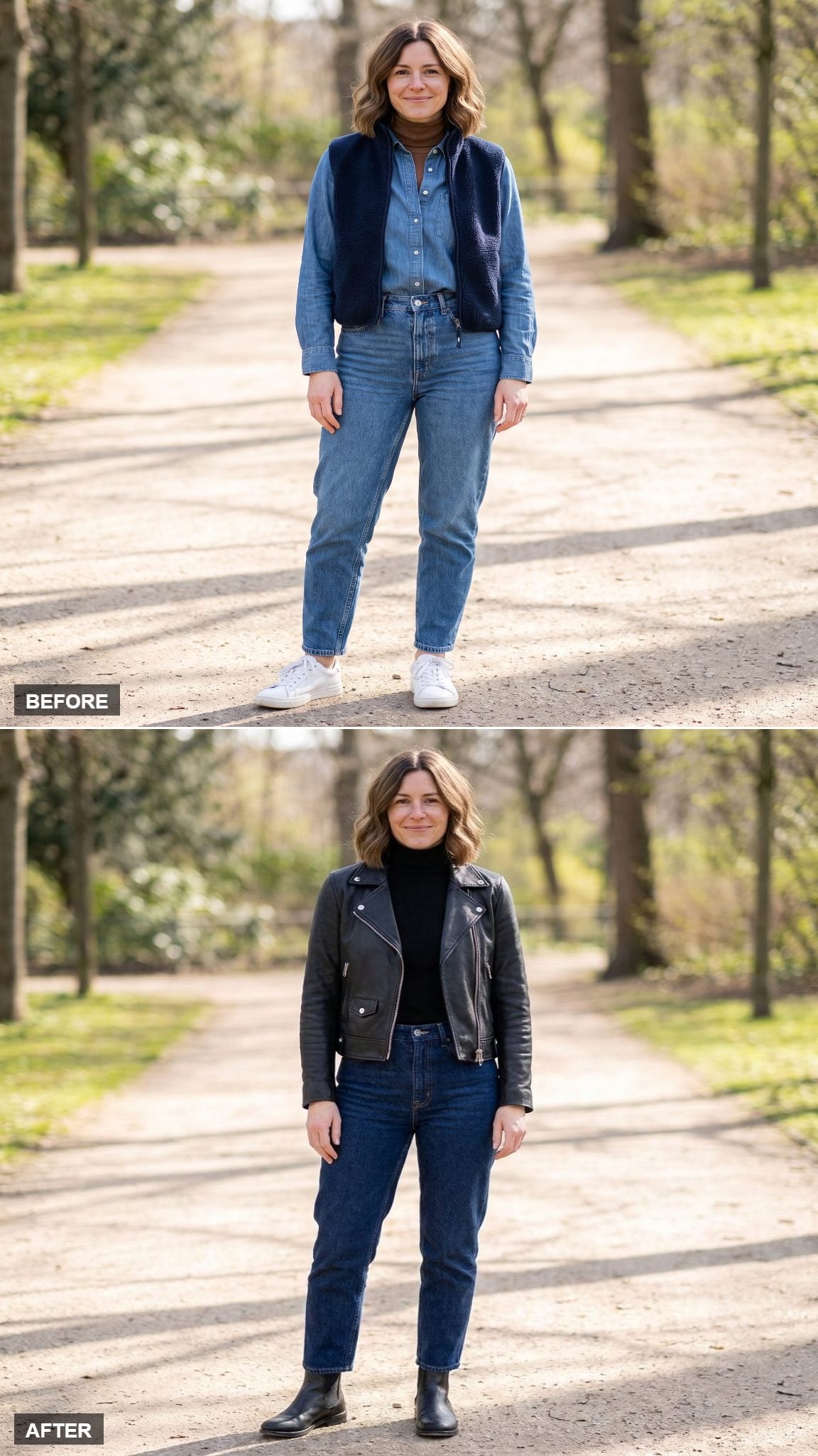
This transformation stays closest to the starting point, which makes the differences especially useful. Denim remains central, but the layers simplify and the silhouette gets cleaner. A darker turtleneck replaces the stacked denim-and-fleece combination, while the jeans fall in a more controlled line.
Mom jeans are not automatically the problem. Here, a cleaner rise and straighter leg give the denim more definition without abandoning its casual character. You can style familiar jeans very differently once the pieces surrounding them stop competing for attention.
23. The Modern Trench Brings Shape, Polish, and a Little Leopard
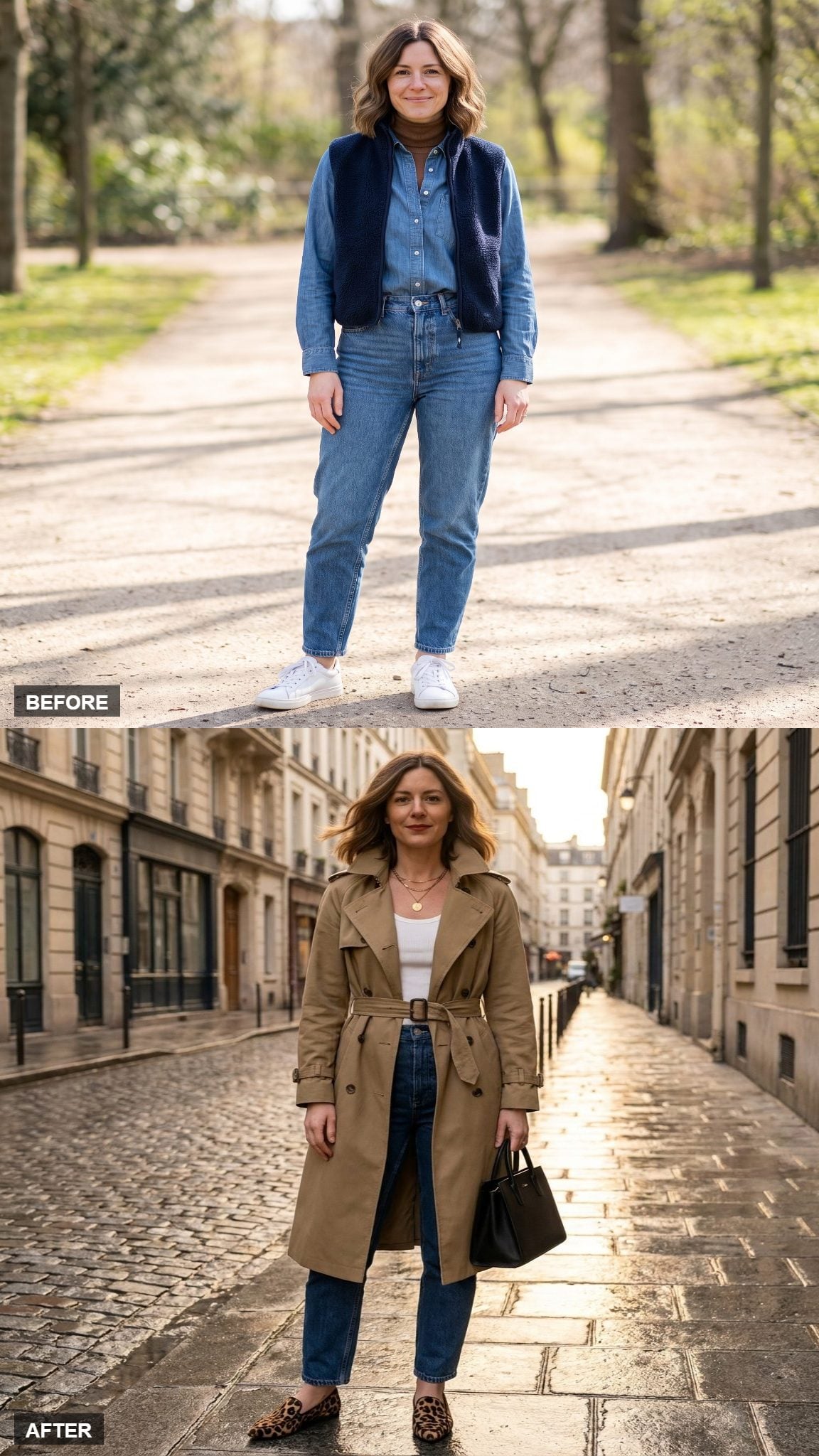
The denim baseline is casual from collar to sneaker. This version moves to the opposite end of the spectrum with one strong outer layer: a long trench pulled in at the waist and allowed to carry most of the visual weight.
The leopard loafer is the useful troublemaker. One pattern against an otherwise disciplined neutral palette gives the eye something to catch without turning the outfit into a print exercise.
22. Cargo Pants Look Different the Minute Silk Enters the Room
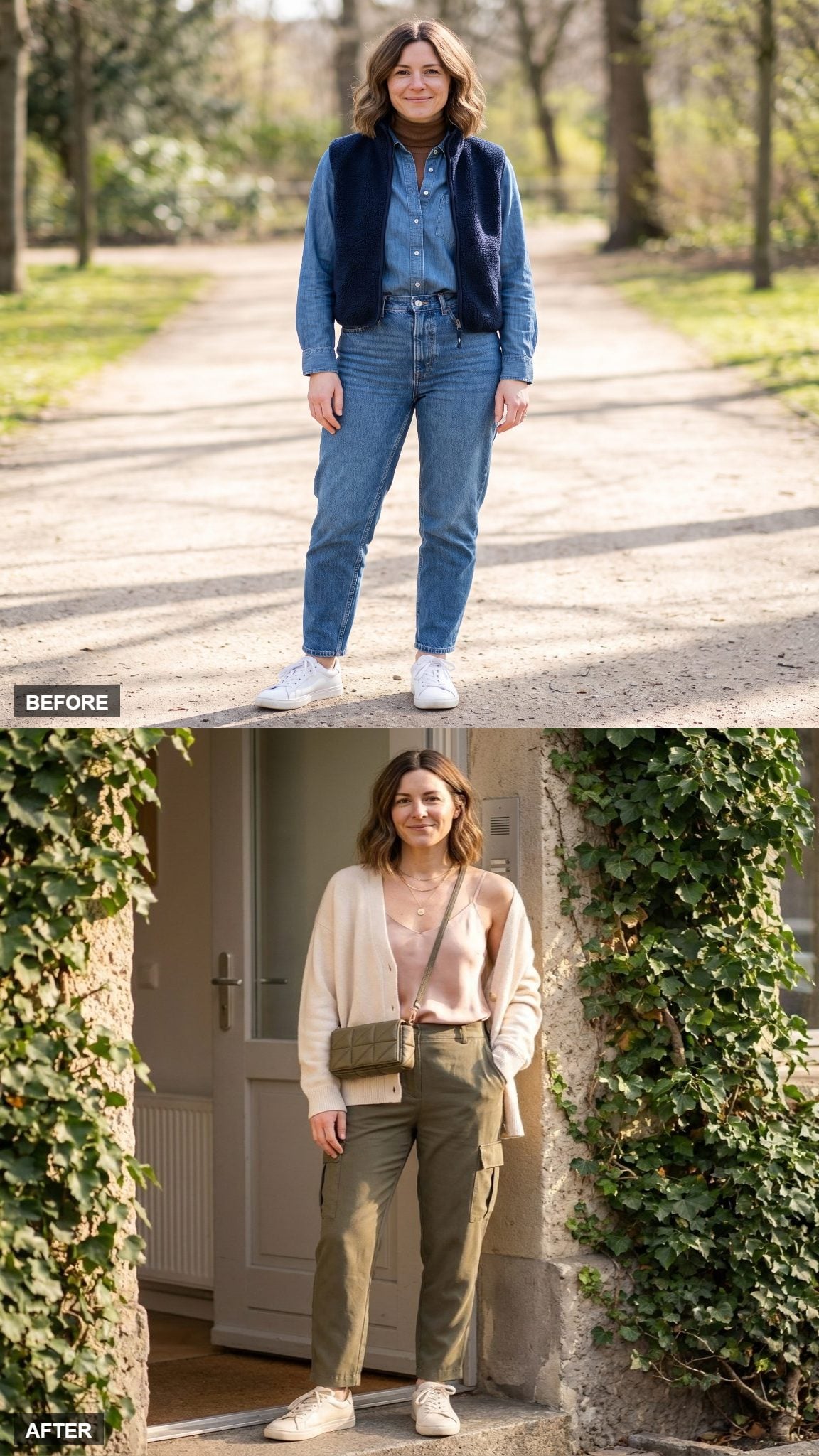
The transformation trades dependable denim for a pant with far more hardware and visual detail. Cargo pockets could easily make the result feel even more utilitarian than the starting outfit, so the top half moves deliberately in the other direction.
A silk cami and slouchy cashmere cardigan soften all those seams and pockets. Against those quieter surfaces, the cargo detailing starts reading as contrast rather than costume. That same high-low logic can rescue plenty of utilitarian pieces already sitting in a wardrobe.
21. A Knit Set Makes Comfort Look Deliberate
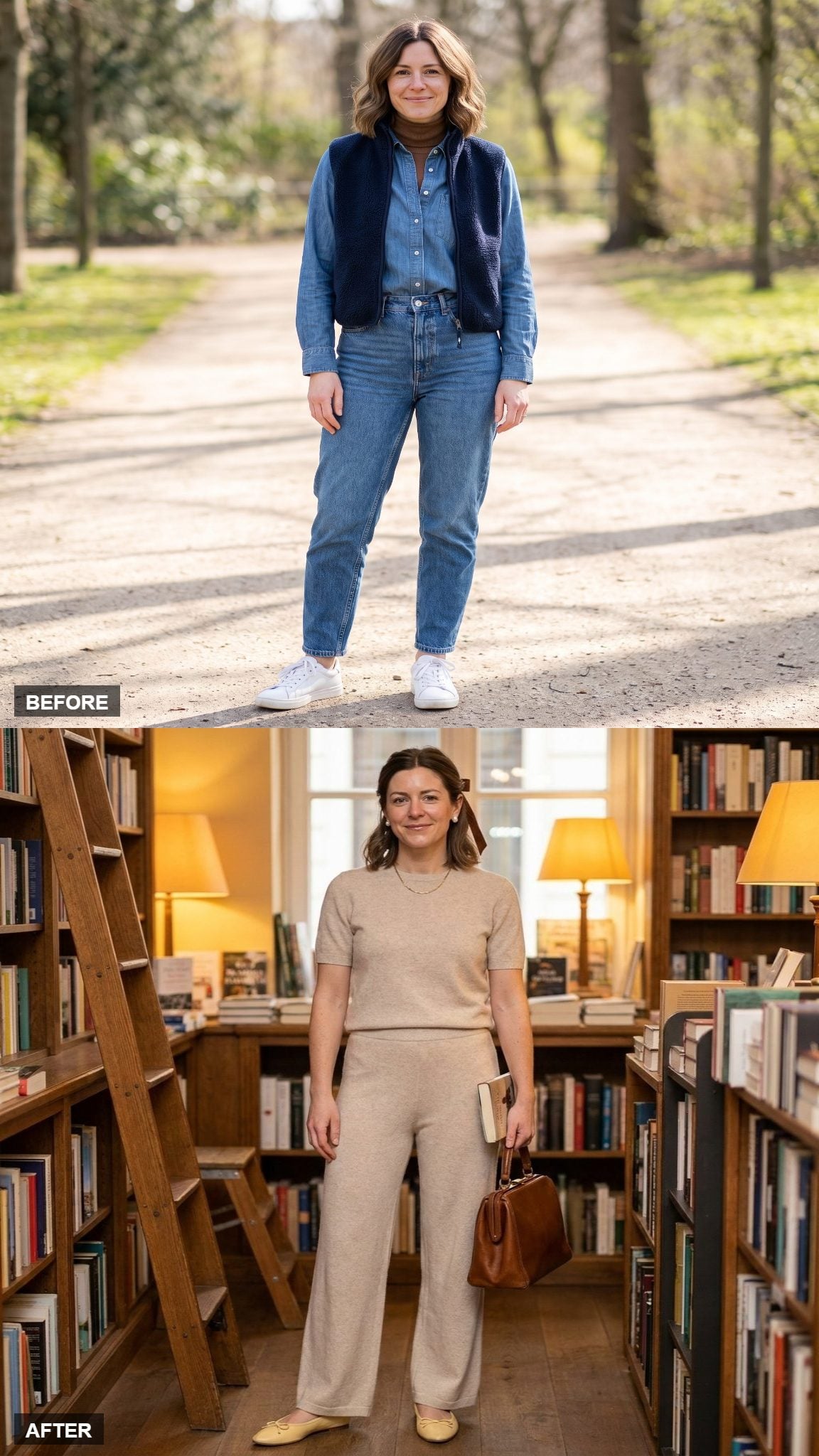
The Before relies on several separate casual pieces layered together. This After takes the opposite approach: one coordinated knit story, one restrained palette, almost no visual interruption.
Matching tone and texture create the discipline; the soft fabric keeps the outfit from feeling remotely corporate. Butter yellow at the foot is the wink. Neutrals from shoulder to ankle, then color at the toe. Fashion equivalent of a small joke at the end of a serious paragraph.
20. The Flannel Shirt Stops Playing Grunge and Starts Working as a Jacket
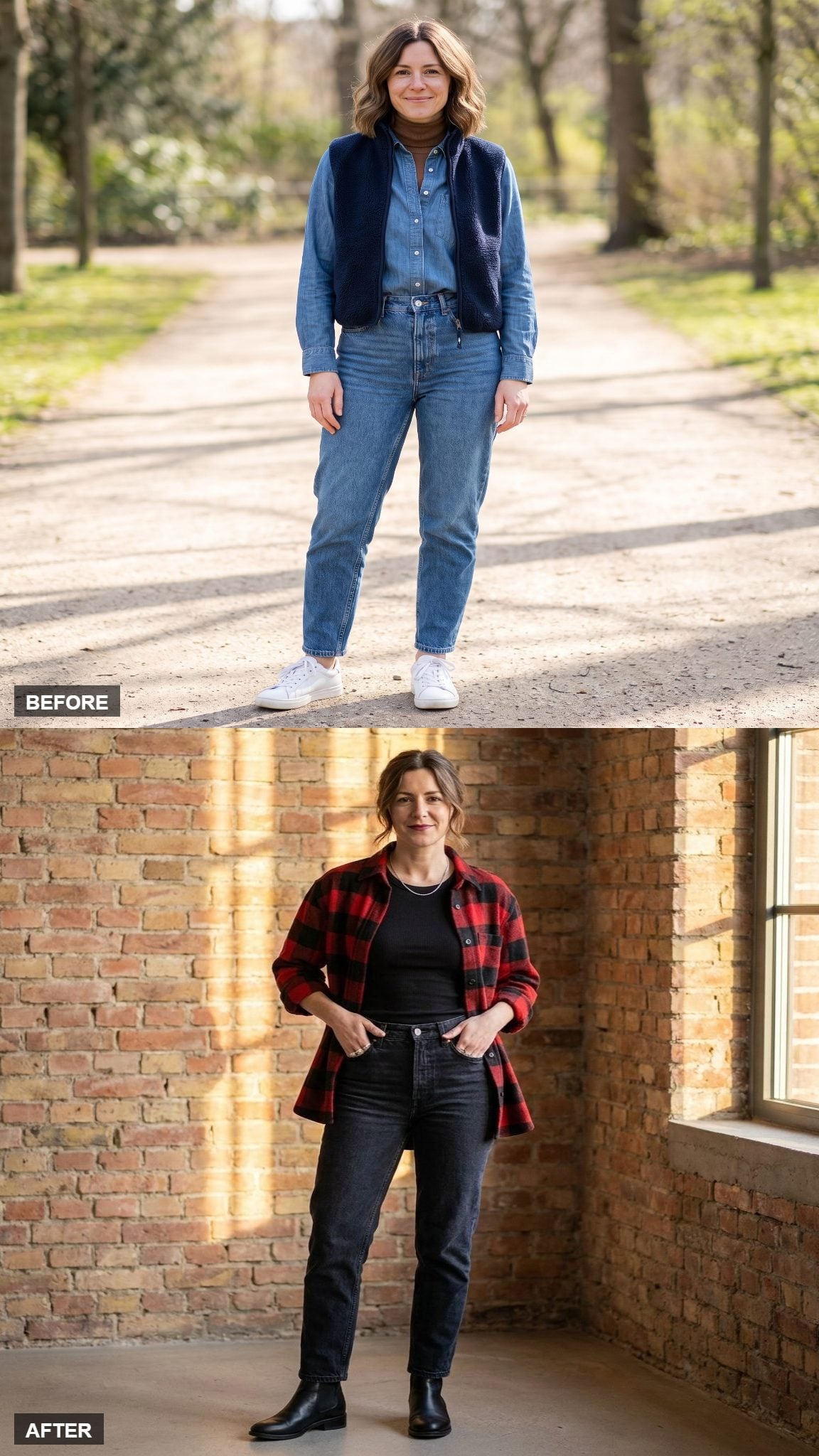
This transformation actually keeps some of the relaxed 1990s spirit of the starting outfit. The difference is hierarchy. Instead of several casual layers carrying equal weight, the flannel becomes the outer layer and everything underneath gets quieter.
Worn open over a fitted tank and cleaner denim, it behaves more like lightweight outerwear. The close-fitting base keeps the top half from becoming one large block, while the dark boots pick up the deeper tones in the shirt and finish the line.
19. Sharp Trousers Give the Soft Pieces Something to Push Against
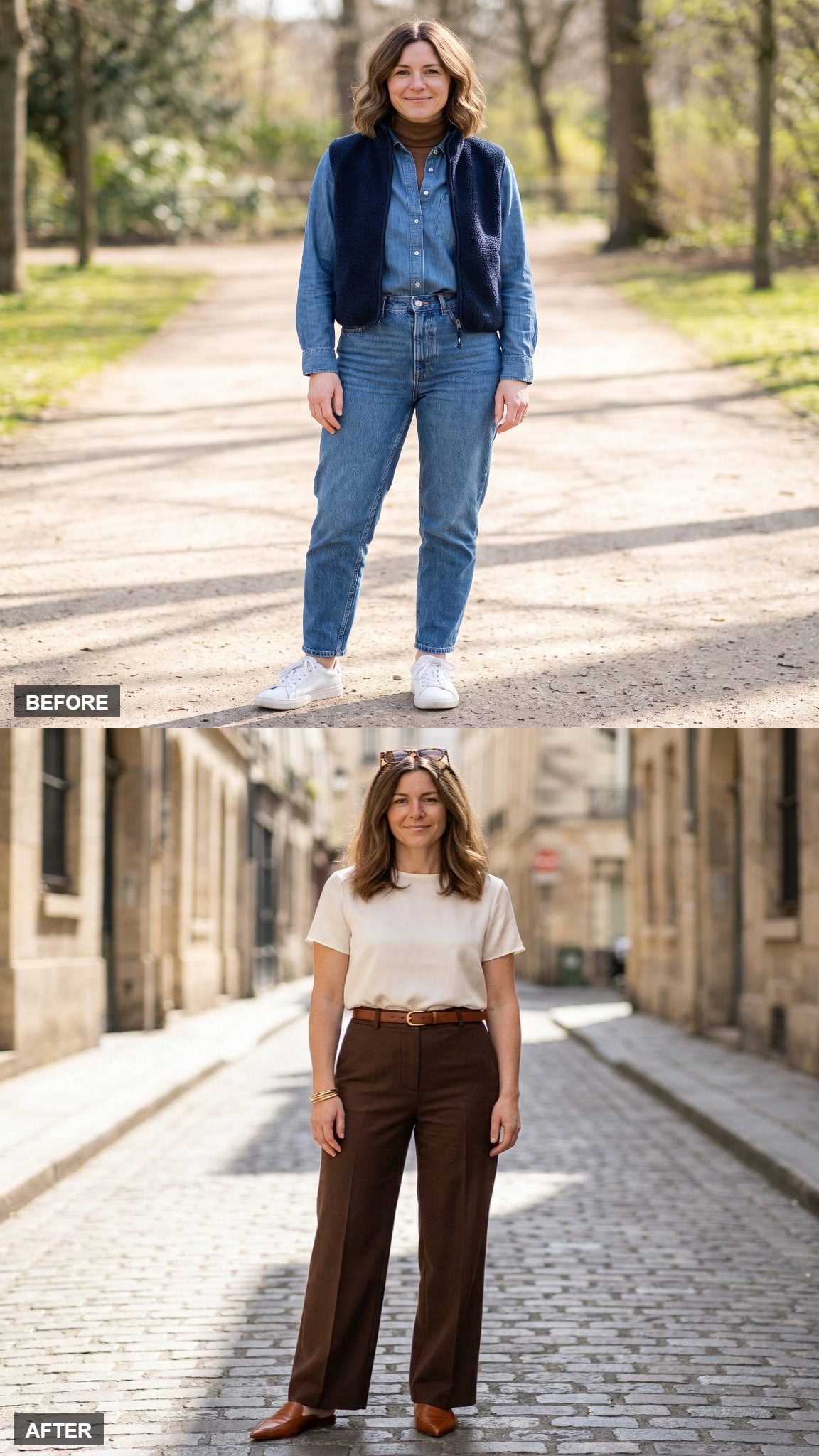
Replacing the jeans with sharply cut trousers changes the entire rhythm. The chocolate brown has more warmth than black, while the defined waistband gives the softer top a crisp place to end.
The strength comes from contrast: tailored below, soft above. That is a very different proposition from the casual-on-casual layering of the Before. Neither half has to work particularly hard because the other supplies what it lacks.
18. Modern Preppy Keeps the Familiarity and Changes the Scale
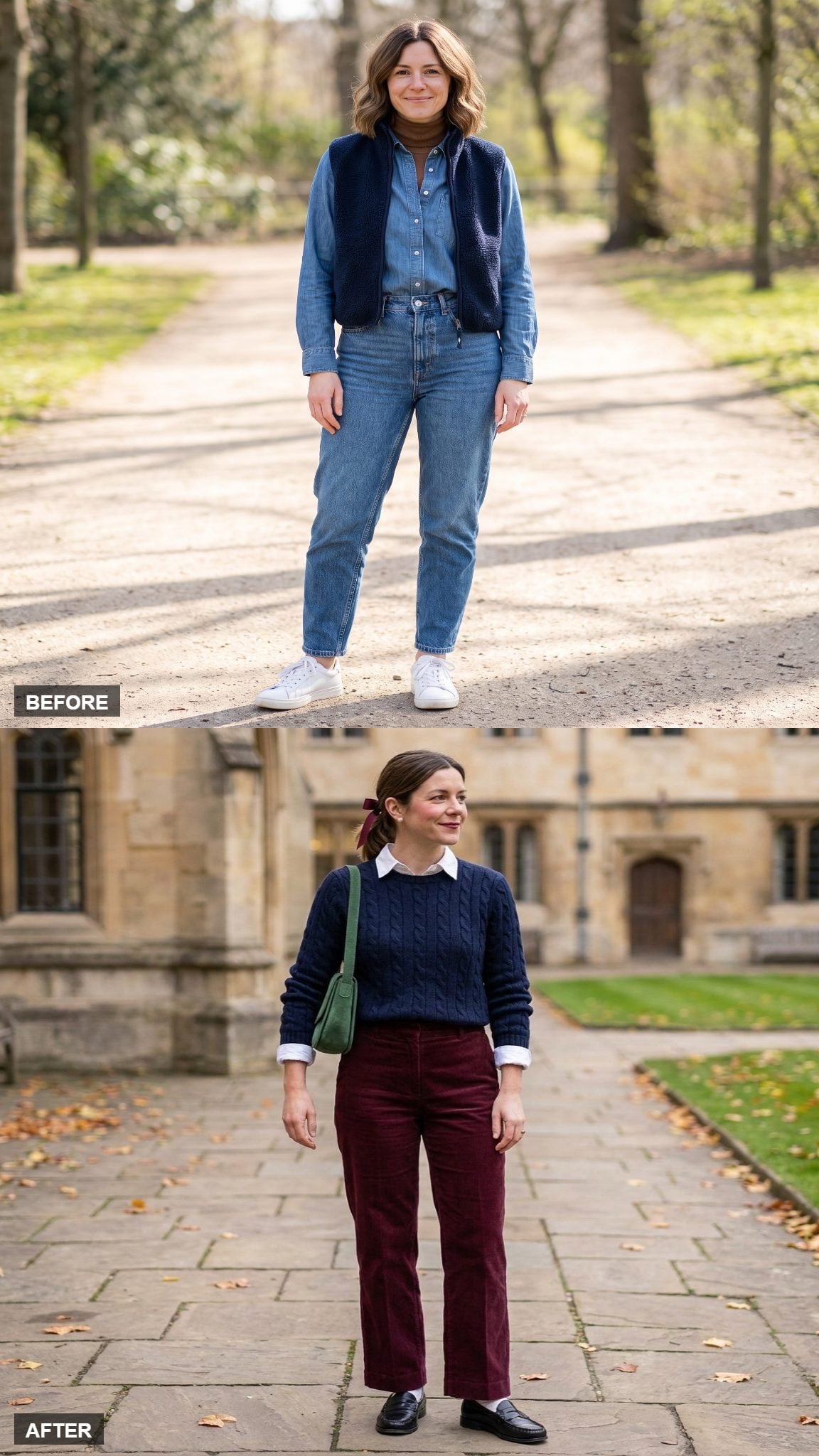
The original denim-and-fleece look is practical and recognizable. This transformation keeps that sense of familiarity but shifts the references toward prep: cable knit, corduroy, loafers, visible socks.
The update comes through scale and color. An oversized cable knit replaces anything prim or fitted, while burgundy corduroy brings more depth than predictable khaki. The white sock above the loafer adds one small disruption that keeps the whole thing from reading like a uniform.
17. White Sneakers Get Serious When the Coat Does
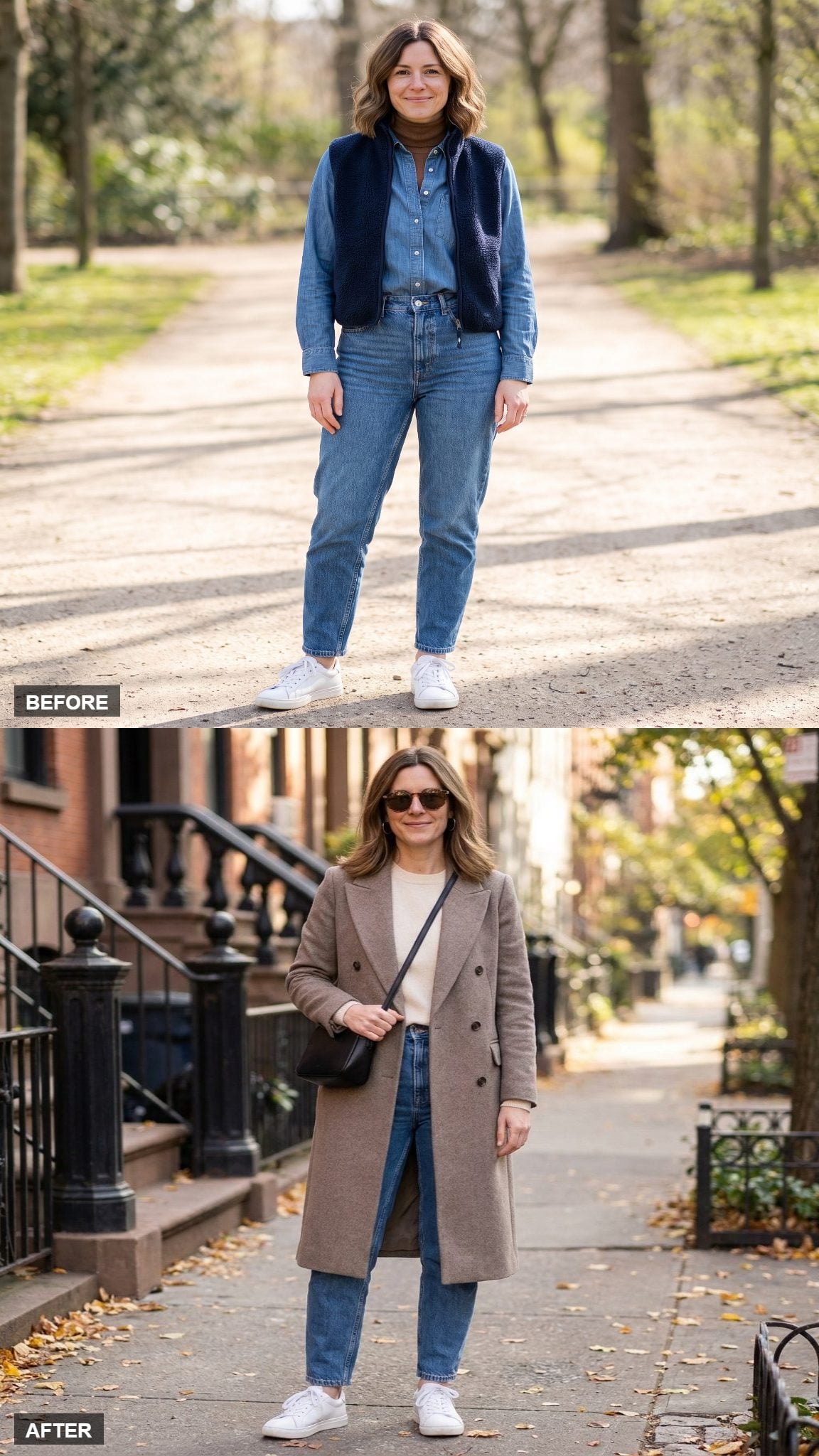
The white sneakers survive the transformation, but almost everything around them changes. Instead of reinforcing a completely casual outfit, they now sit under a taupe wool coat and more polished separates.
The sneaker is not trying to become elegant. The coat is doing enough of that already. A clean sneaker keeps the tailoring from becoming formal; the coat keeps the sneaker from reading like an afterthought.
16. The Utility Jumpsuit Replaces Layers With One Decisive Piece
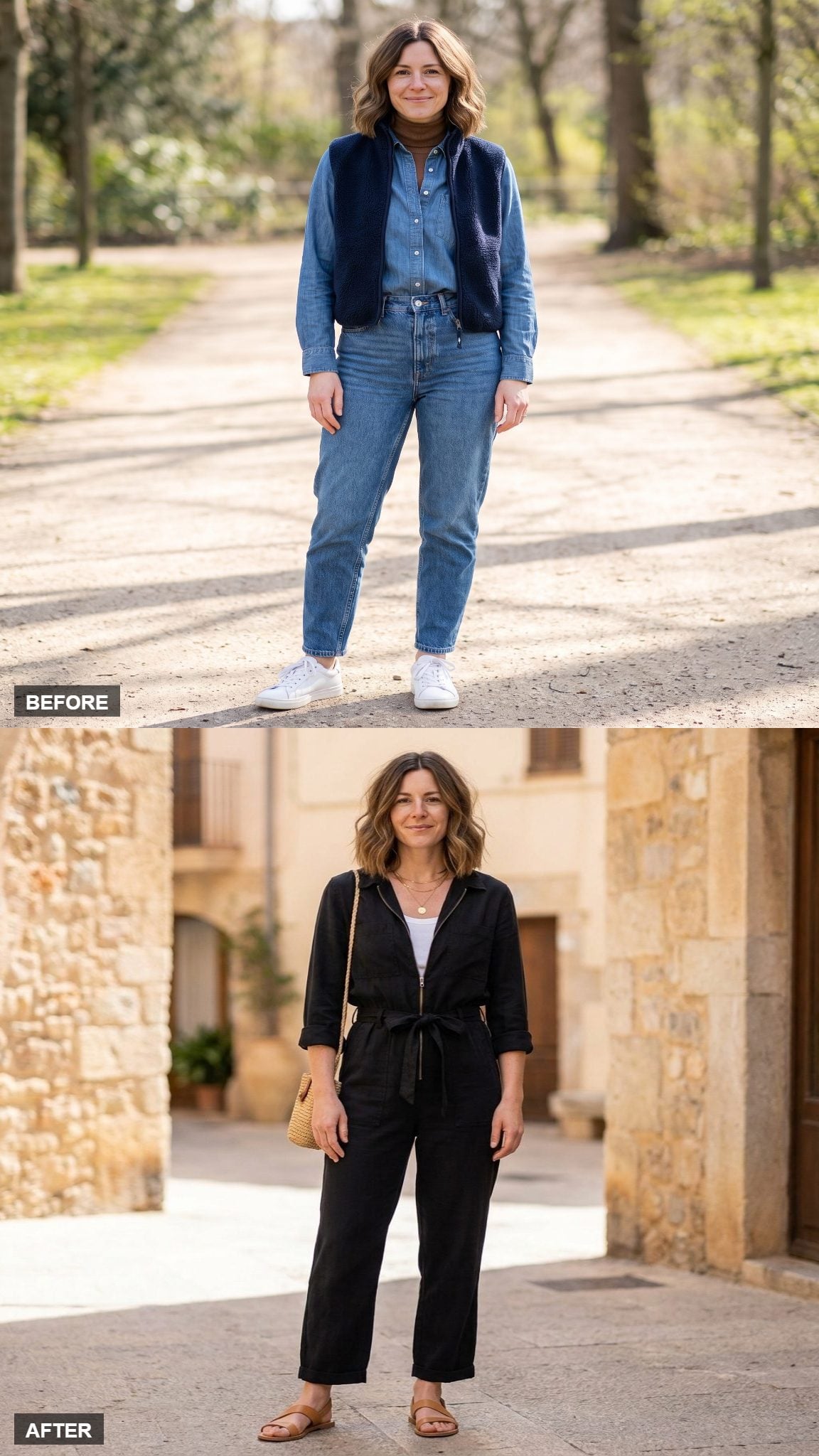
The Before builds an outfit by stacking separate casual pieces. This transformation does the reverse. One utility jumpsuit handles the top, bottom, waist, and overall silhouette in a single move.
Seaming and a tie belt divide the garment into proportions without destroying its relaxed attitude. There is still plenty of ease, but far fewer competing lines. One piece. Much more shape.
15. The Denim Jacket Keeps the Familiar Fabric but Changes Everything Around It
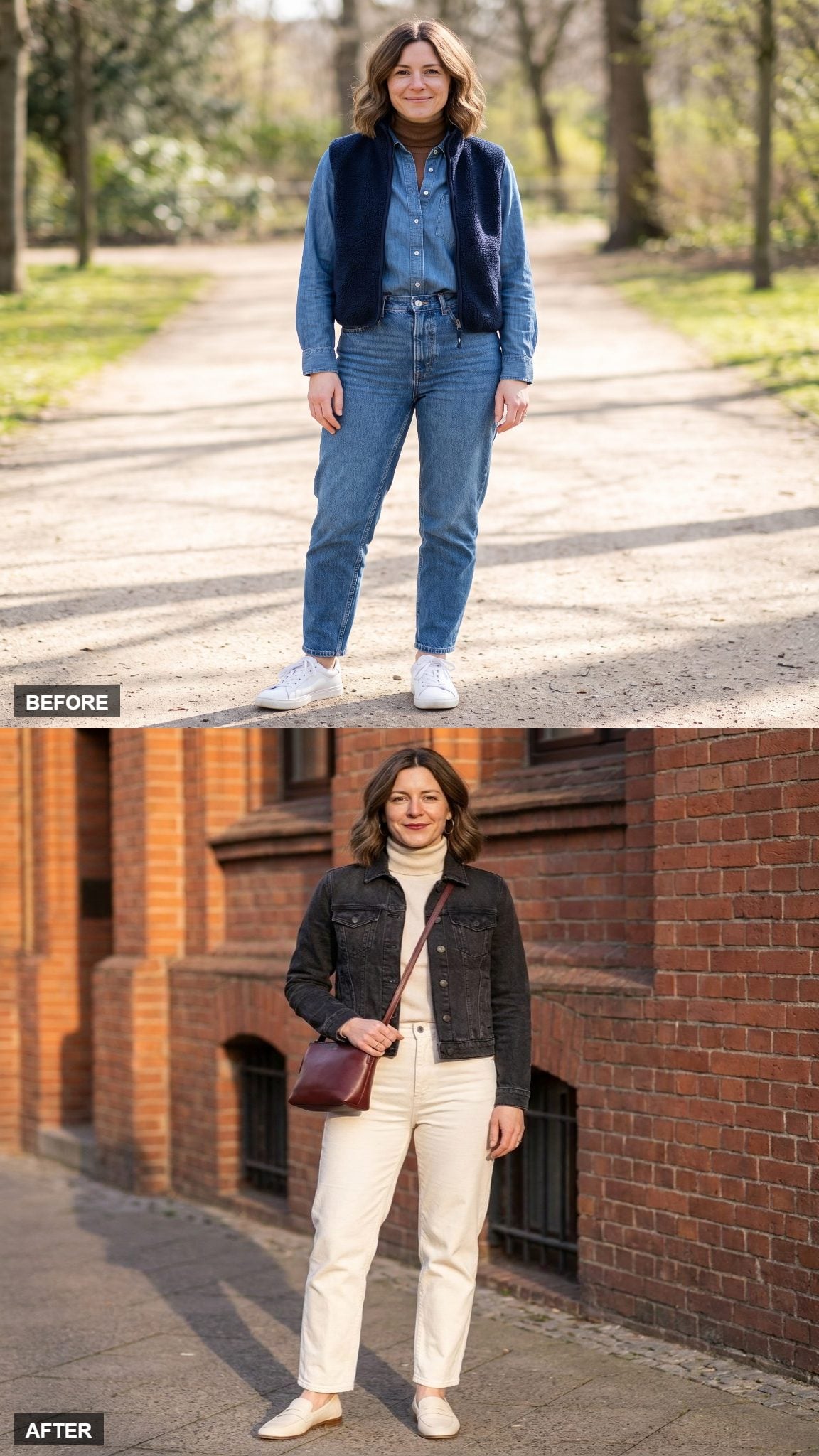
Denim is one of the strongest links back to the starting outfit, but here it moves from being the whole visual story to one compact layer within a much more varied combination.
A cropped jacket changes the proportion immediately. Cashmere underneath gives denim a softer surface to sit against, while ecru trousers prevent the palette from becoming another head-to-toe blue statement. Nothing about denim itself needed fixing. It simply gets better company.
14. A Cropped Jacket and Long Skirt Flip the Proportions Completely
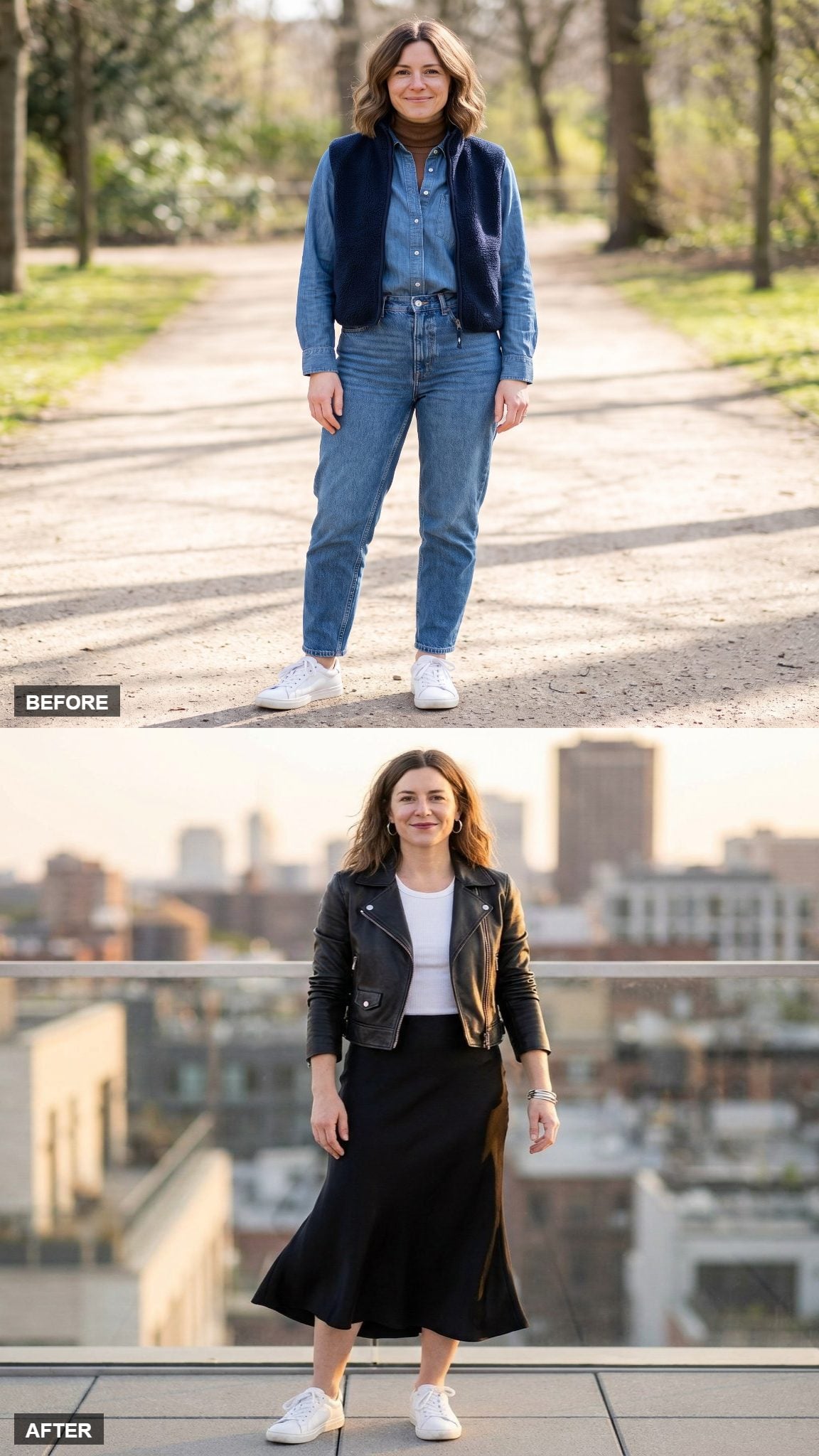
The denim Before keeps most of its proportions conventional. This transformation pushes them much harder: abbreviated jacket above, long sweep of skirt below.
The shorter top exposes more of the skirt’s length and gives the waist a clear location. Sneakers stop the flowing silhouette from becoming precious and preserve some of the casual energy of the original outfit.
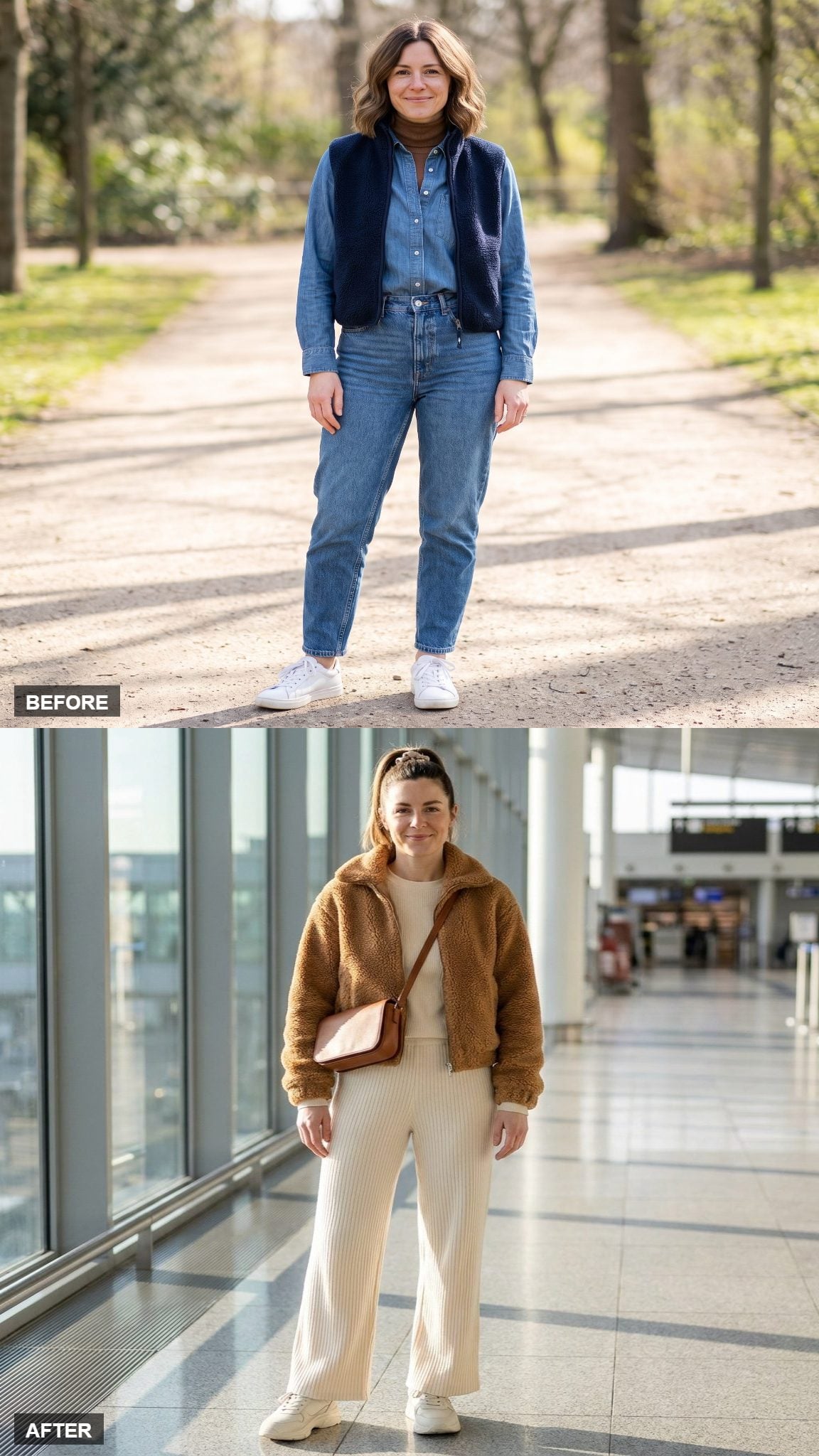
13. Athleisure Uses Monochrome and Texture Instead of More Denim
❤️ Would you like to save this?
The starting outfit mixes denim, fleece, knit, and sneakers in a familiar weekend combination. This After pares the palette back so the casual pieces feel connected rather than accumulated.
Matching the top and bottom in one rich neutral simplifies the picture, then the teddy jacket changes the surface completely. Plush texture over a smooth base gives the outfit depth without asking color to do all the work.
12. The Denim Skirt Keeps the Fabric and Changes the Entire Register
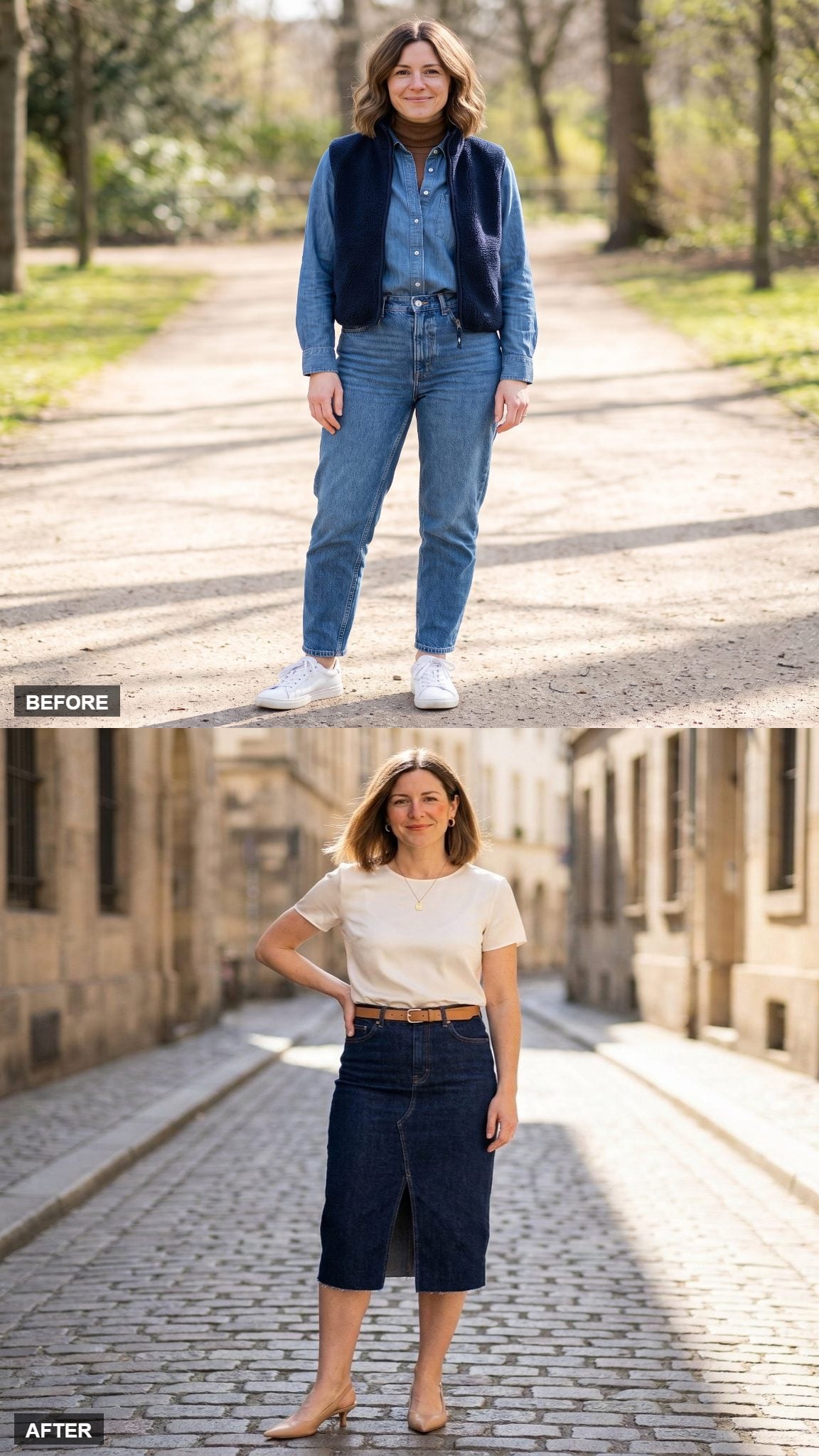
This transformation keeps denim in the conversation but removes almost every other casual cue from the starting look. The wash grows darker, the line gets longer, and a skirt replaces jeans entirely.
Silk on top introduces a surface the original outfit did not have, while kitten heels make the final shift in register. Denim remains familiar; everything around it tells a different story.
11. Leather Trousers Take the Outfit Somewhere Denim Never Intended to Go
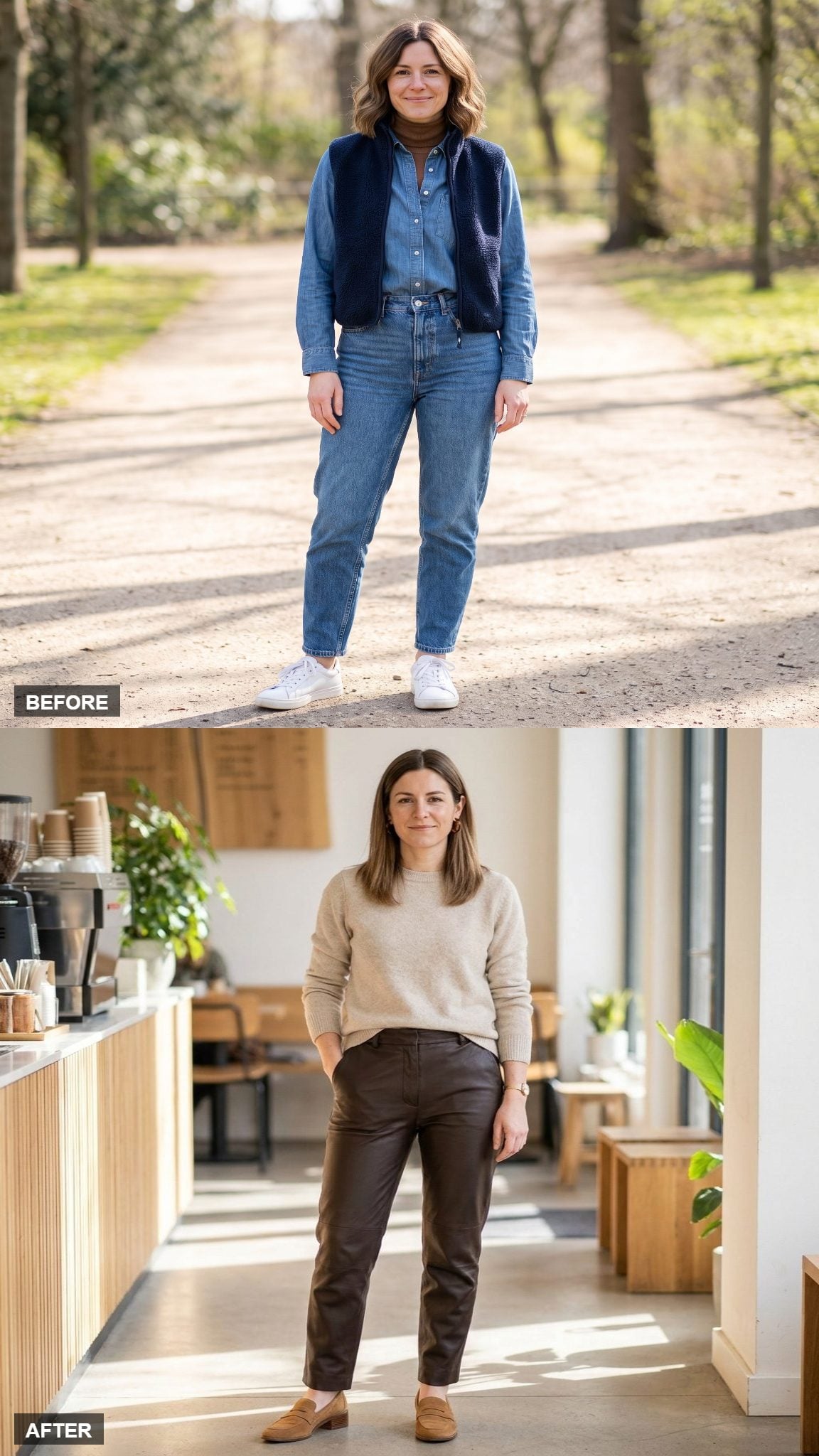
The jeans disappear in favor of espresso leather, immediately giving the lower half more sheen and visual weight. The smartest move is refusing to add more drama above it.
A heavy oatmeal crewneck softens the shine and takes the trousers into daylight. Cashmere against leather gives you matte versus gloss, softness versus structure, without turning either piece into a costume.
10. The White Button-Down and Jeans Strip the Denim Formula Back to Basics
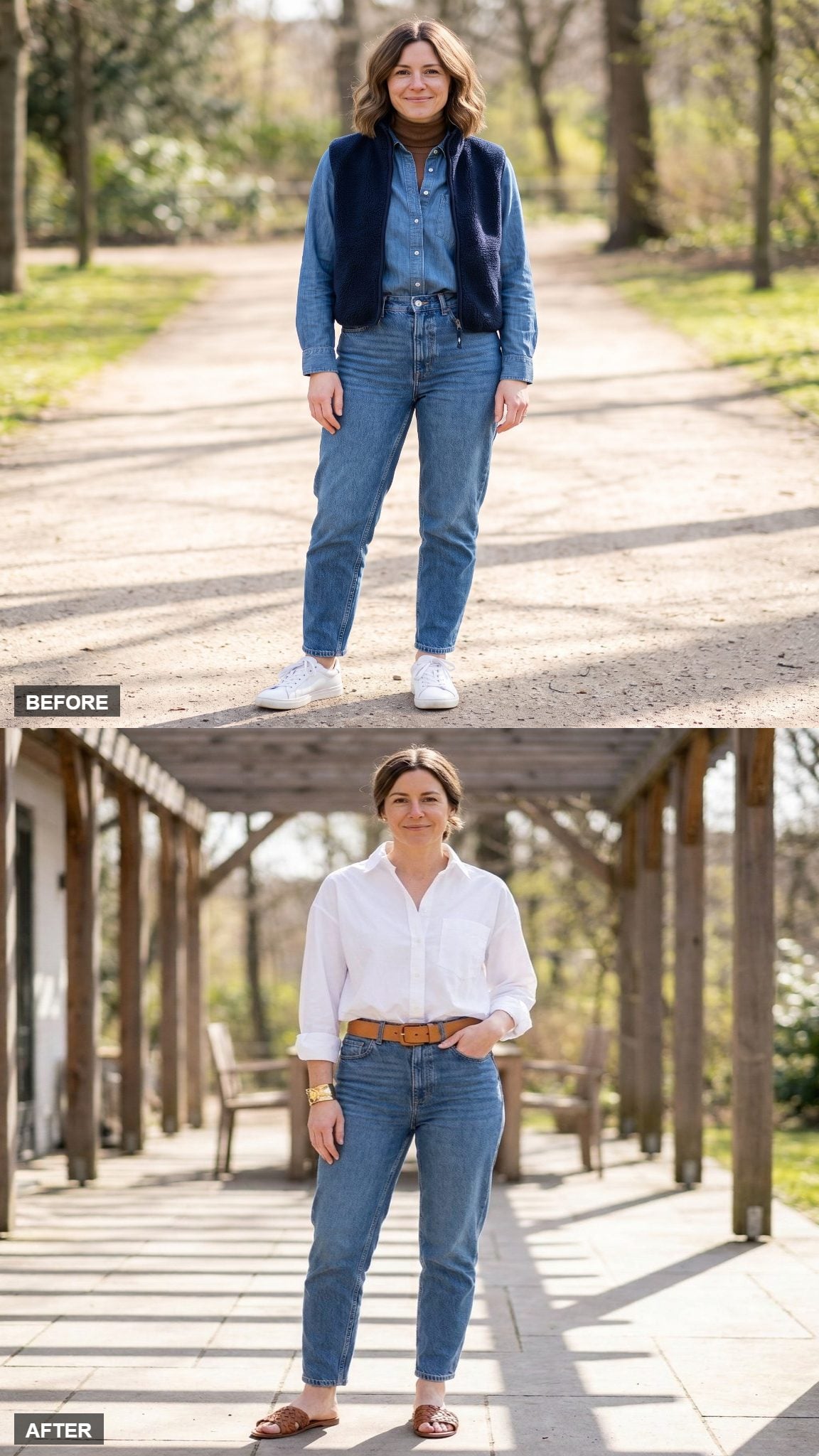
This is another transformation that stays close enough to the Before to reveal exactly what changes the mood. The jeans remain. The casual attitude remains. What disappears is the extra layer upon extra layer.
A crisp cotton shirt holds its own shape, darker denim finishes cleanly at the ankle, and rolled cuffs put a little air between wrist and sleeve. A partial tuck keeps the oversized shirt from covering the entire waistband without turning the outfit into a complicated styling exercise.
9. The Cropped Puffer Makes the Jacket End Before the Trouser Begins Its Drama
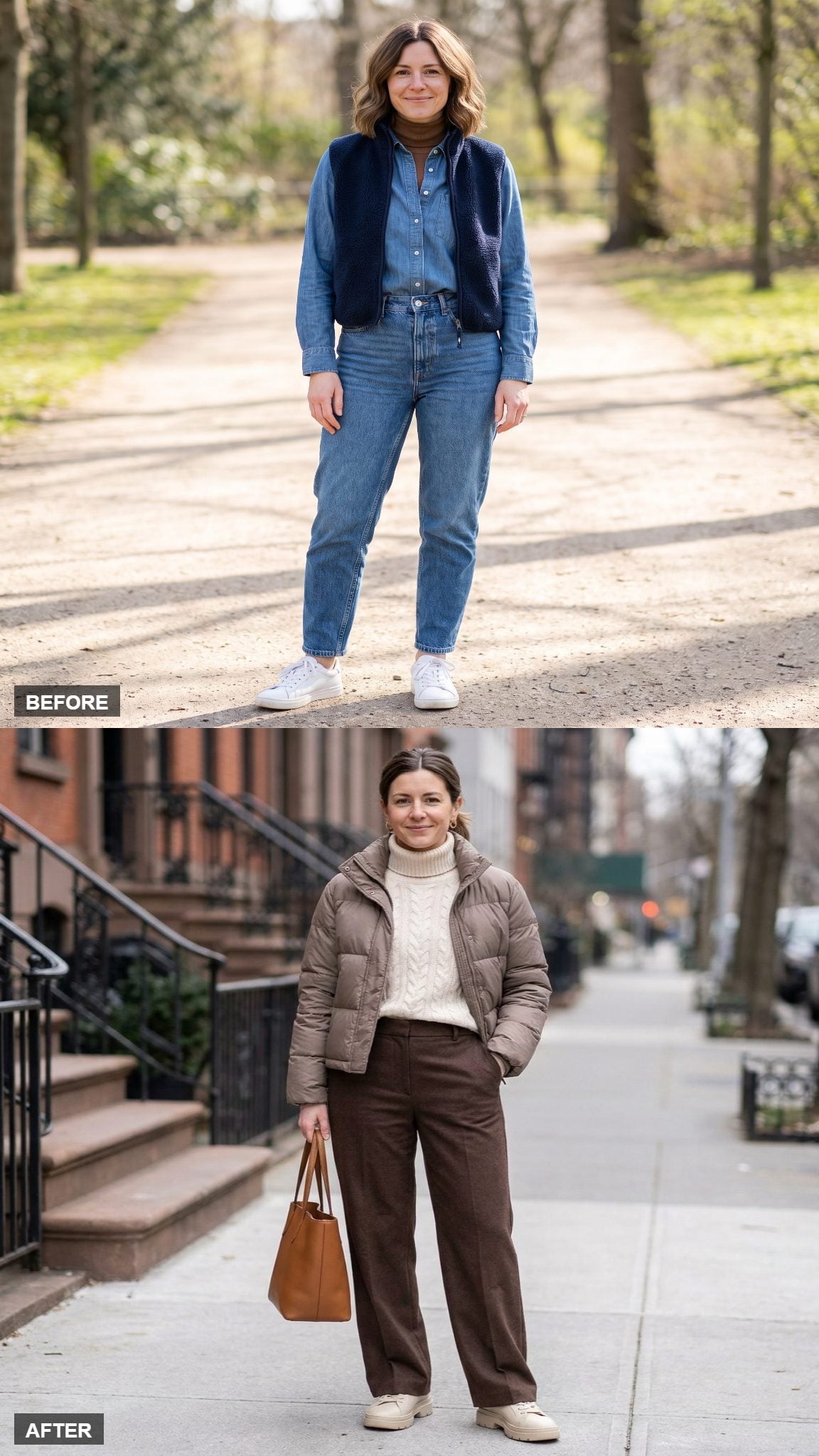
The starting vest creates another horizontal layer through the torso without changing much below it. The cropped puffer makes a much more decisive choice about where outerwear stops.
Ending near the waist gives the wide-leg trouser room to run uninterrupted from waistband to shoe. Sneakers with wool trousers supply the second contrast: practical footwear against a more polished fabric.
8. The Slip Skirt Replaces Denim Weight With Satin Movement
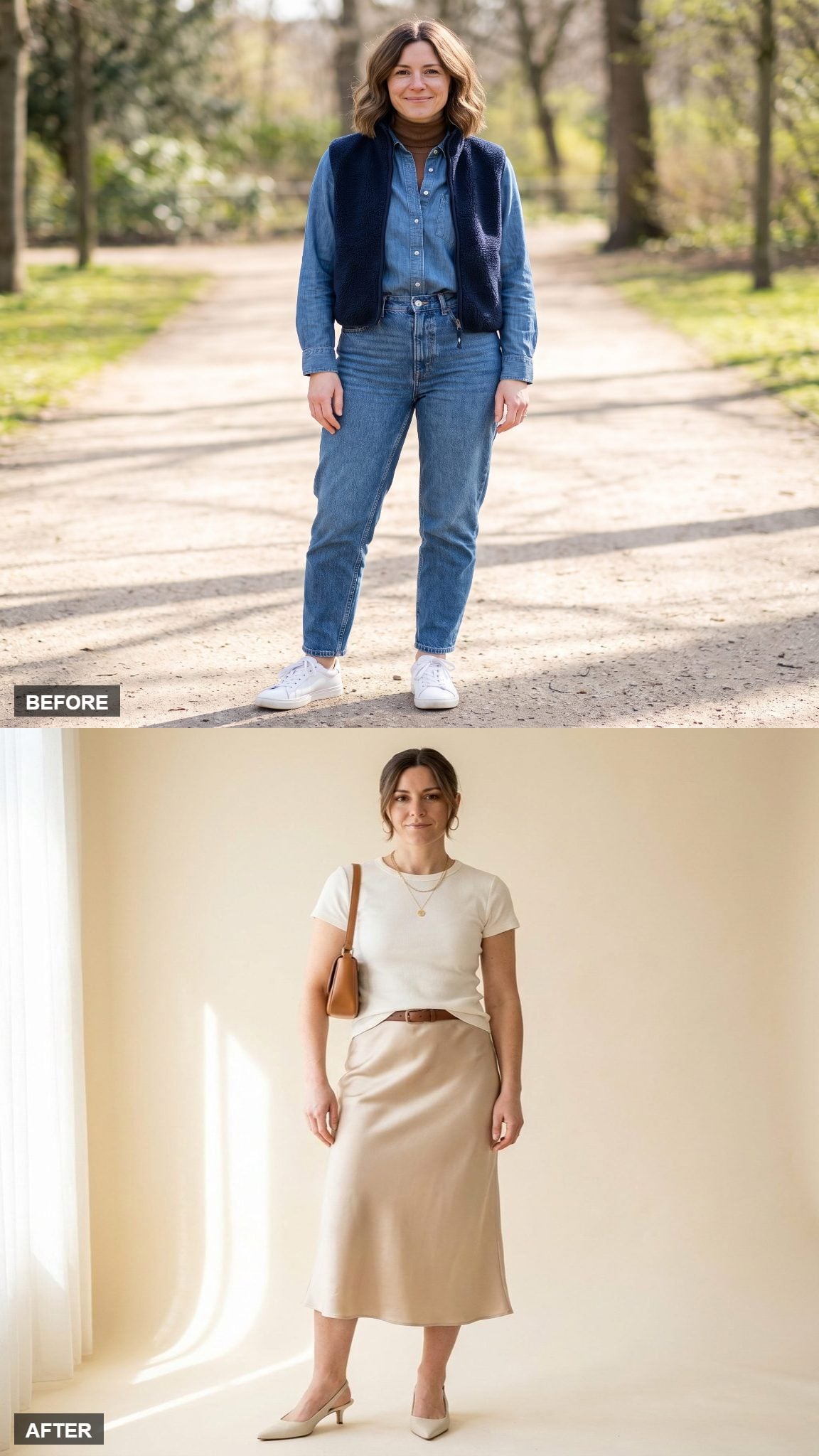
The starting outfit is built from sturdy casual fabrics. This transformation goes deliberately lighter below the waist, replacing denim with the fluid movement and shine of satin.
A plain white ribbed tee keeps that sheen grounded. The partial tuck simply prevents the two textures from meeting in a shapeless overlap. Liquid below, ribbed and ordinary above. Sunday, not gala.
7. A Blazer Over a Tee Replaces Casual Layering With a Stronger Outer Line
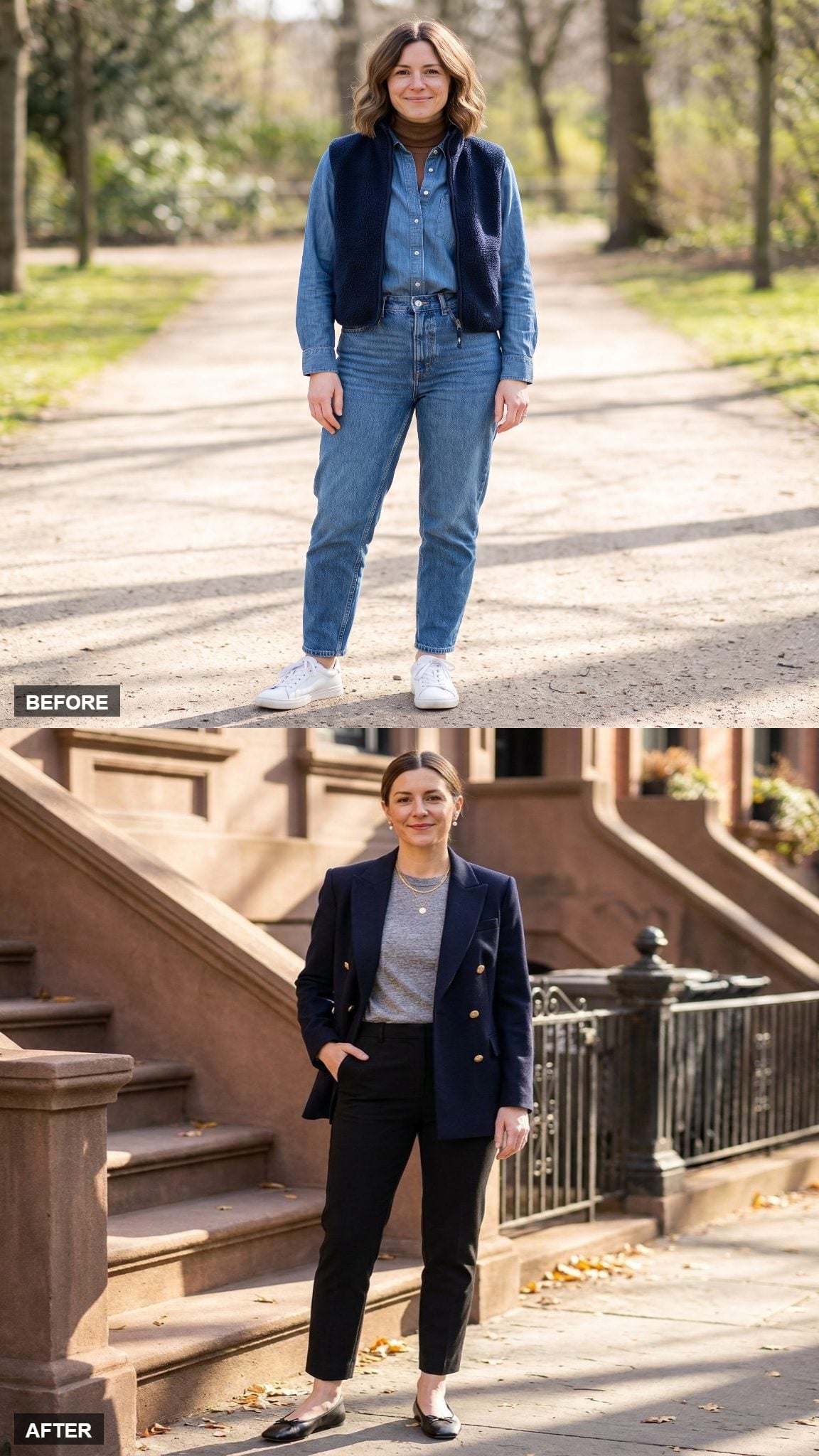
The Before gets its structure mostly from denim. Here the blazer takes over that job, establishing a clearer shoulder and a more controlled outer line while the fitted tee stays quiet underneath.
Slim trousers keep the lower half neat, and ballet flats stop the tailoring before it wanders into office territory. The useful contrast is not formal versus casual so much as structured versus relaxed.
6. Wide-Leg Ecru Denim Takes the Original Jeans in a Completely Different Direction
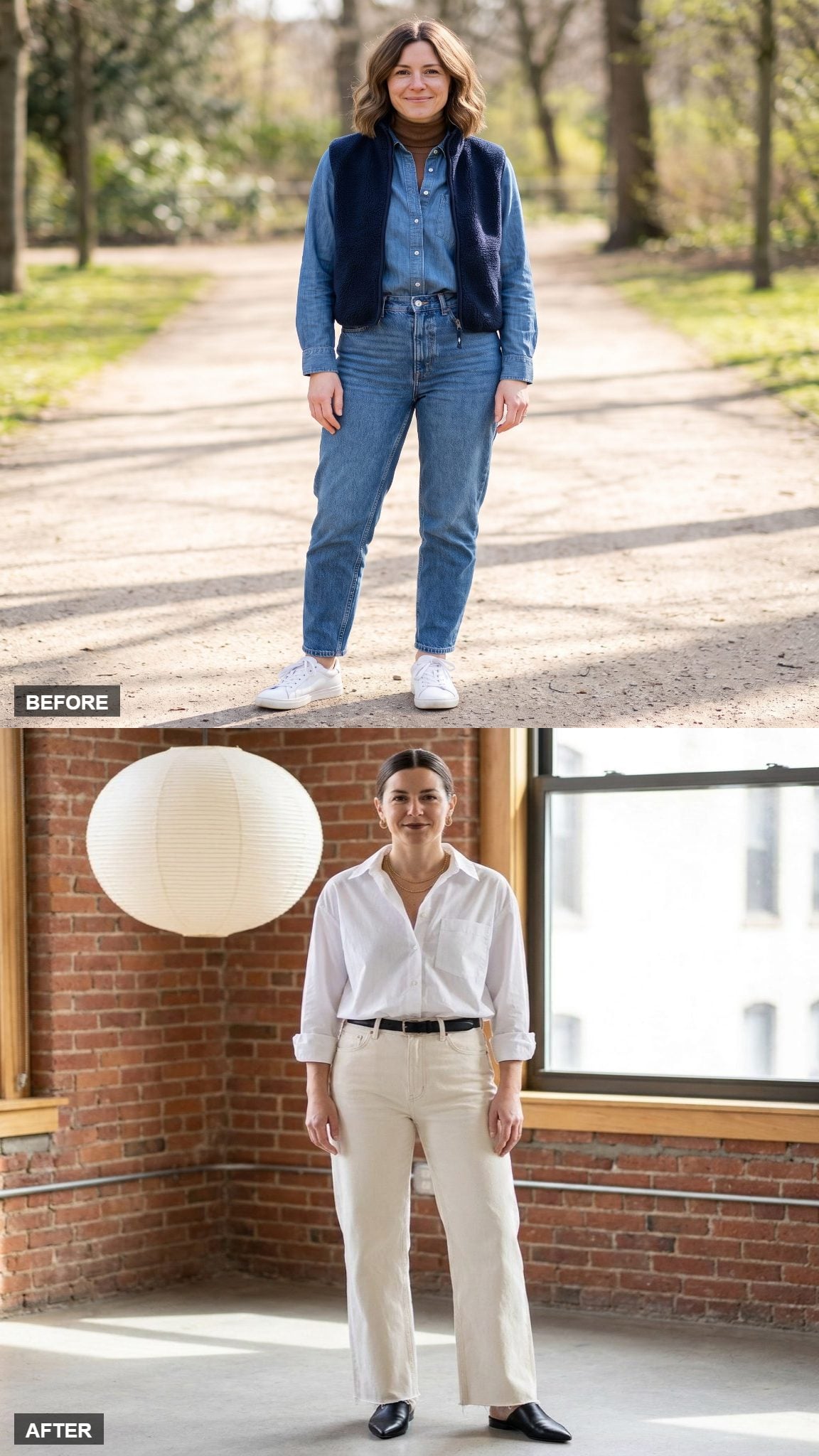
Denim survives again, but almost none of its original visual weight does. Pale ecru changes the mood immediately, while a high rise and wide leg move the silhouette far away from the narrower blue-jean baseline.
The shirt stays intentionally generous, but pushed-up sleeves and a partial front tuck interrupt all that fabric before it can hang from shoulder to thigh as one continuous block.
5. The Long Cardigan Trades the Fleece Vest for a Full-Length Layer
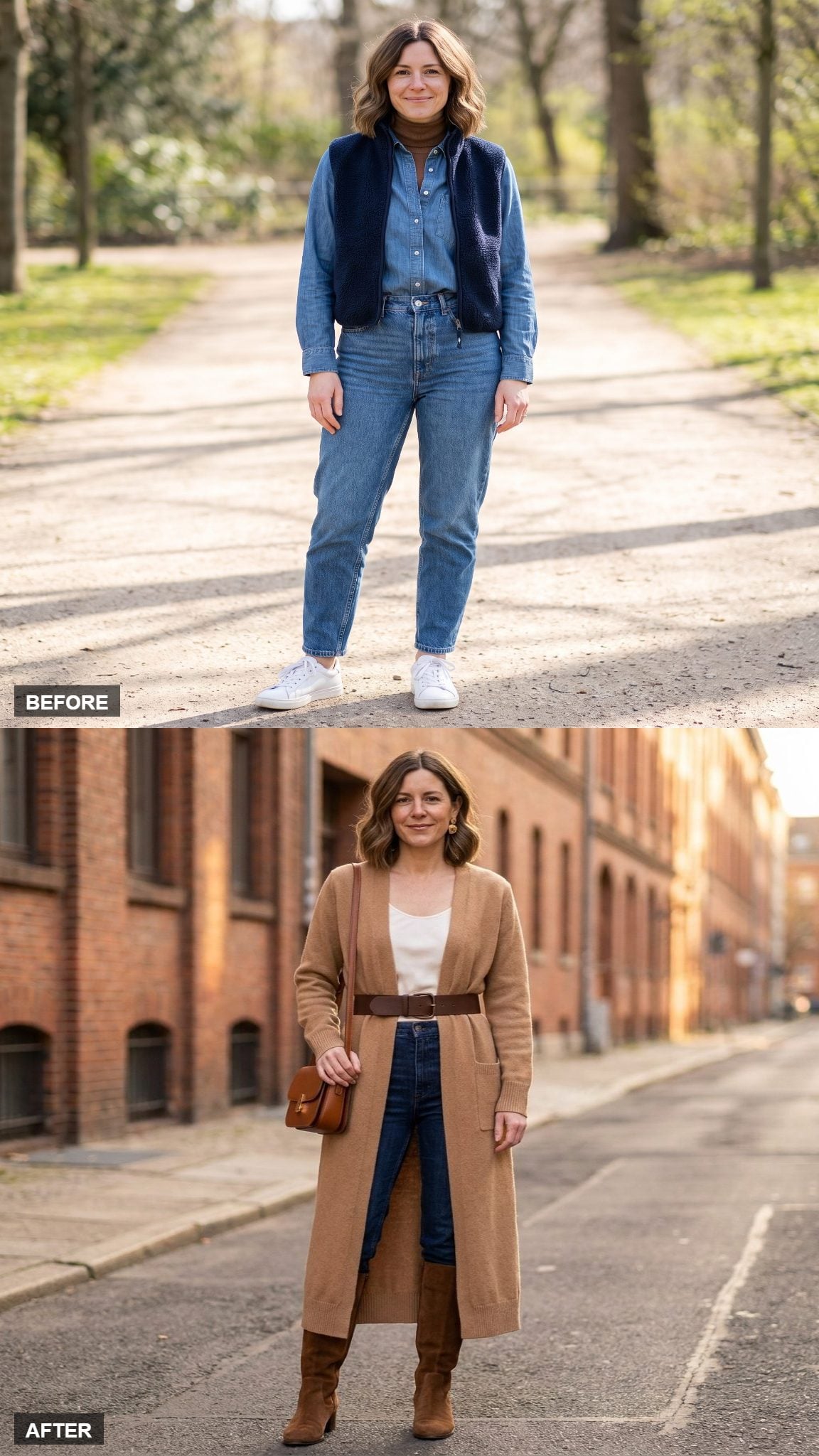
The original vest cuts across the torso and stops abruptly. This transformation stretches the outer layer dramatically, sending knitwear almost the full length of the body instead.
The belt gives that extra fabric a center point. Leather against knit adds a firmer texture, while the cinched middle keeps the long cardigan from behaving like one uninterrupted curtain. Same basic idea of layering, radically different geometry.
4. Modern Bohemian Replaces Practical Basics With Color and Movement
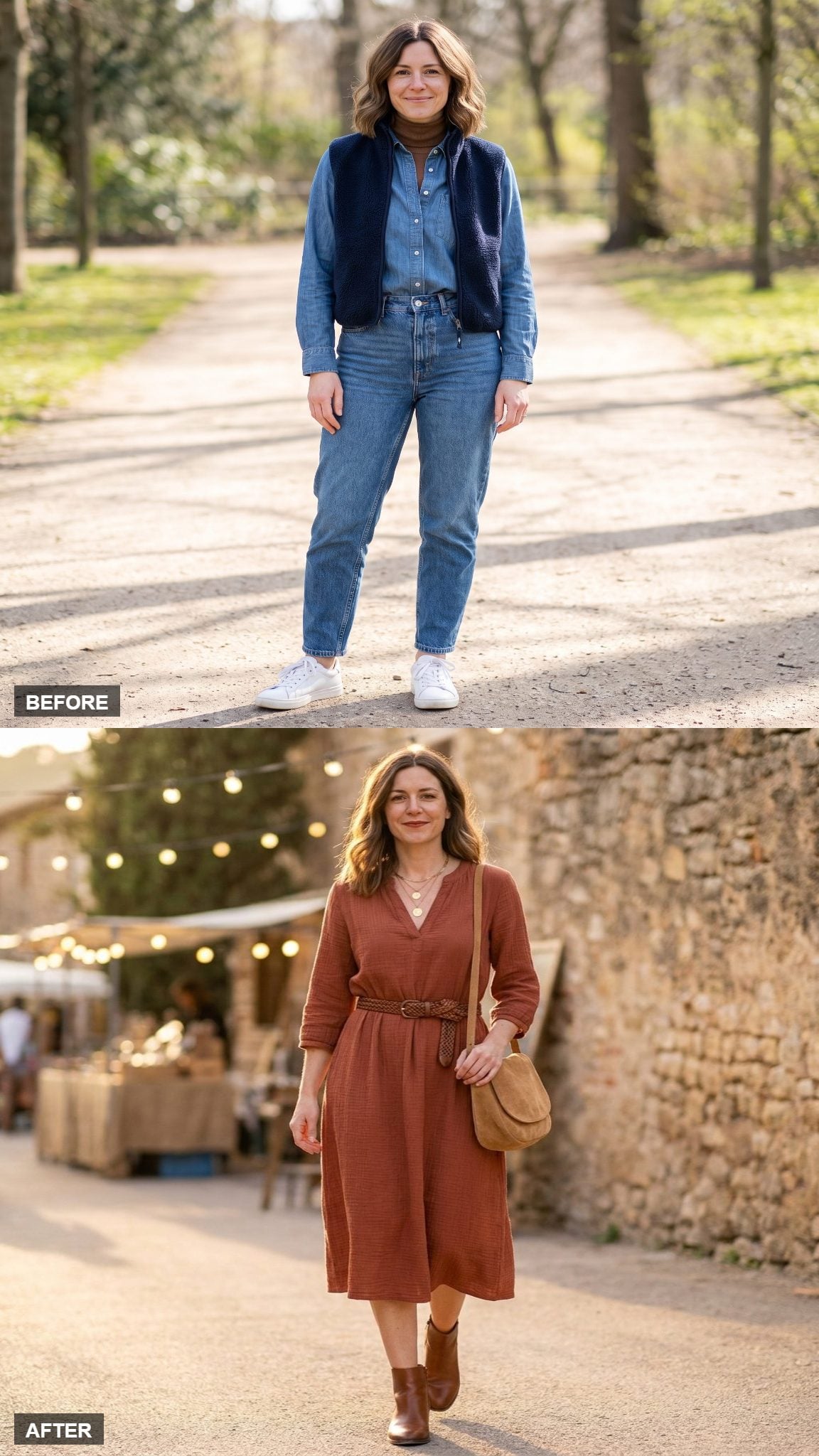
Few transformations travel farther from the denim baseline than this one. Jeans, sneakers, fleece, and chambray disappear in favor of one earthy dress and a much warmer palette.
The restraint matters. One belt, one restrained layer of gold coin jewelry, no pileup of fringe, embroidery, prints, and suede. Burnt sienna supplies enough color on its own, while cleaner accessories leave room for the dress to move. A useful template for anyone reconsidering personal style after years of automatic neutrals.
3. Wide-Leg Indigo Denim Keeps the Blue but Rebuilds the Shape
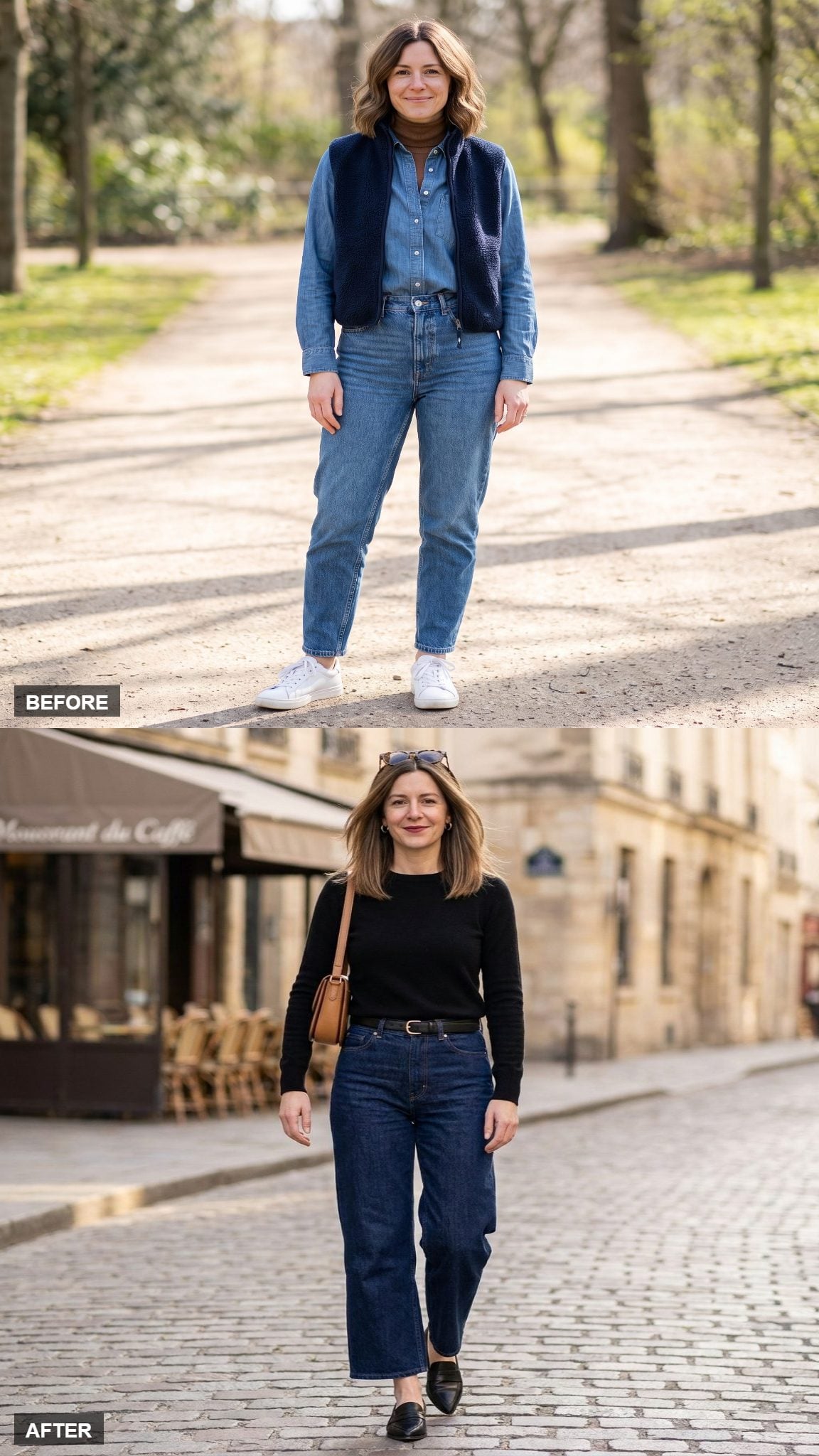
This one proves how far the gallery can travel without abandoning blue denim at all. The difference comes from scale and fabrication: dark indigo, substantially wider legs, and enough rigidity to hold a cleaner line.
The fine cashmere above does the opposite. It sits close, feels soft, and lets the heavier denim own the volume. Nothing is loud. The interest comes from weight against lightness.
2. The Utility Jacket Frames a Column of Cream
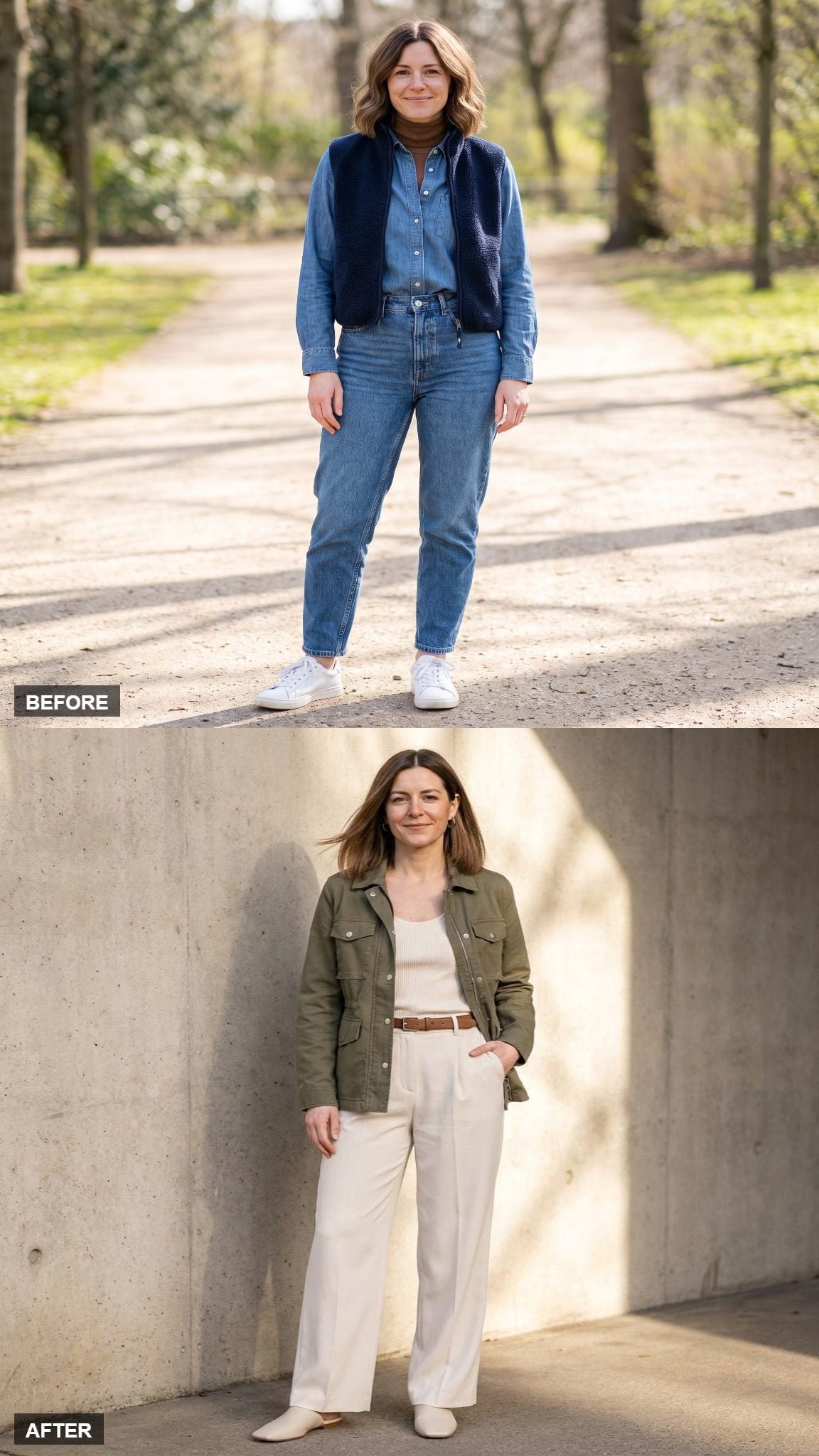
The starting outfit divides itself into several shades and layers of blue. This transformation does almost the reverse, building one near-continuous cream base and reserving contrast for the olive jacket.
The jacket sits around that pale column like a frame. The square-toe mule matters more than its size suggests, adding just enough sharpness at the bottom to keep the cream from feeling soft all the way to the floor.
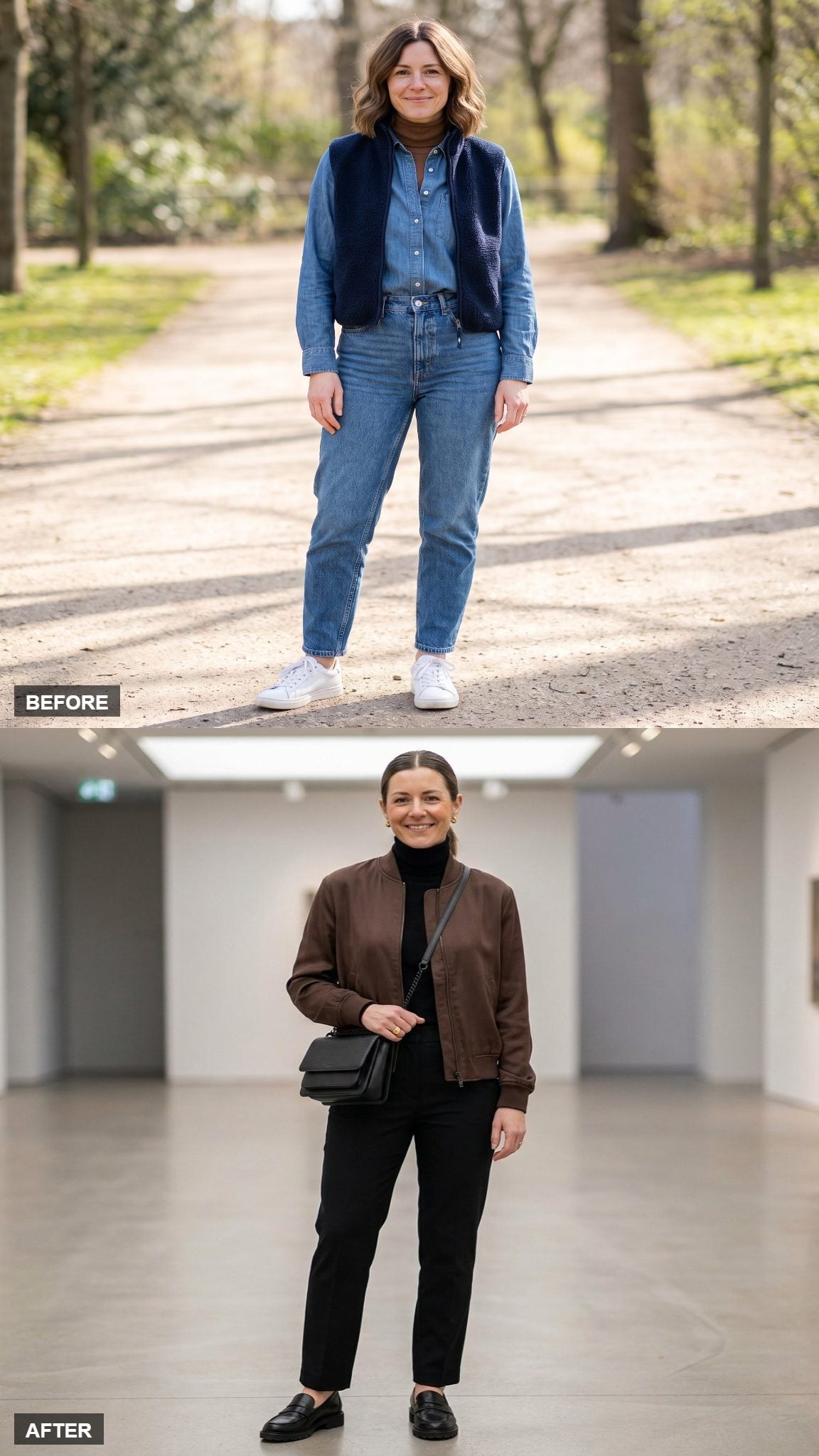
1. The Sleek Bomber Keeps the Casual Attitude and Edits Out the Bulk
❤️ Would you like to save this?
The final transformation circles back to the casual spirit of the denim Before without repeating its proportions. A bomber still brings the ease of sportswear, but this one sits closer through the shoulder and body instead of building another bulky layer around the torso.
Straight-leg trousers continue the controlled line below while brown and black keep the palette deep without defaulting to head-to-toe black. Fine merino under the slicker jacket adds one last matte-against-shine contrast.
The low ponytail leaves the neckline clear and lets the clothes finish the argument. The 1990s reference is still there. It just no longer gets the final say.