
❤️ Would you like to save this?
Aging transforms our faces through a fascinating biological journey that begins at birth and continues throughout our lifetime. Collagen production, bone density, fat distribution, and skin elasticity all shift dramatically across the decades. These AI-generated images illustrate how one woman’s face evolves from childhood through her centenarian years, showcasing the natural progression of facial aging. Understanding these changes helps us appreciate each stage of life’s beauty.
FYI, thanks to AI imagery software, we’re able to create very specific fashion and hairstyle examples to illustrate the points being made. In some cases, imagery is exaggerated to hammer home the point. Also, assume links that take you off the site are affiliate links such as links to Amazon. this means we may earn a commission if you buy something.
19. Age 45 – Mid-Forties
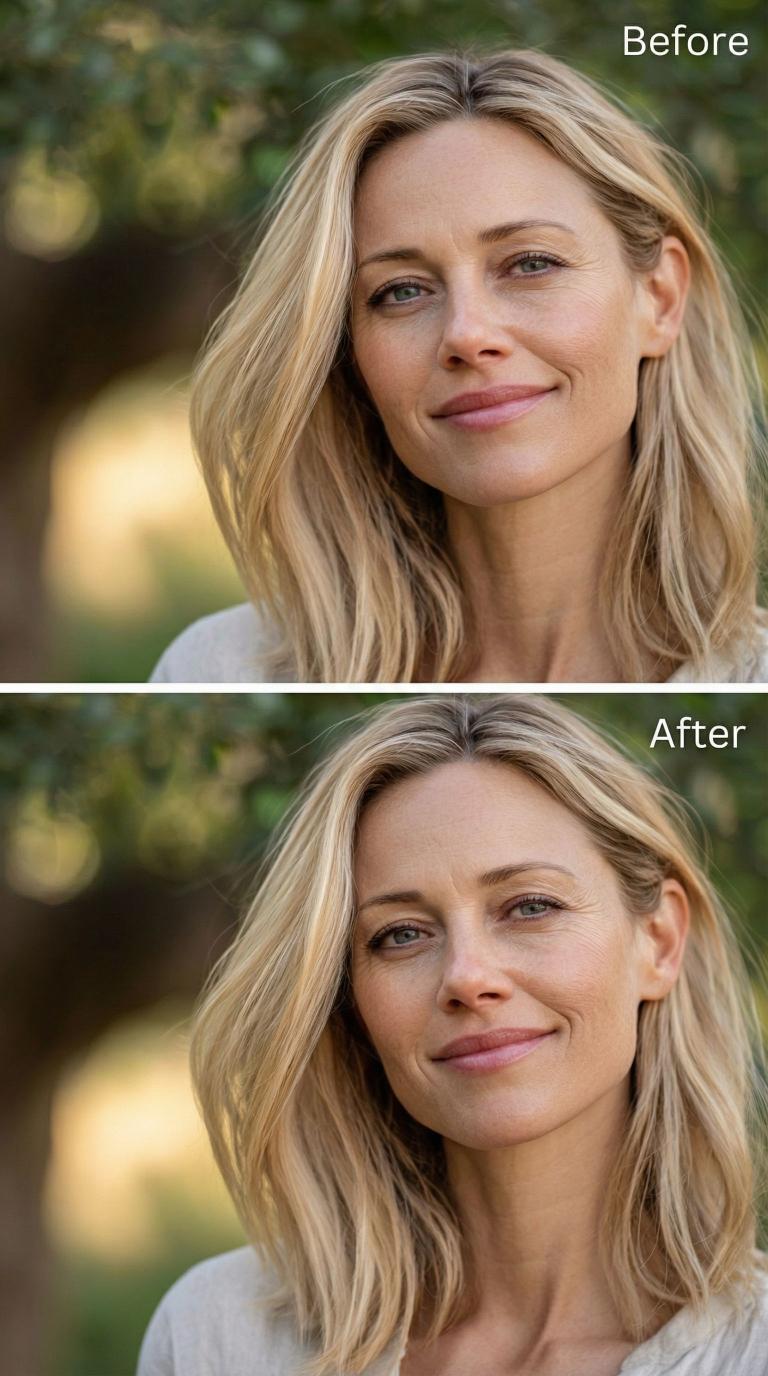
Mid-forties faces display more pronounced volume loss in the cheeks and temples, creating subtle hollowing that shifts facial proportions. Jowls may begin forming as skin loses its grip on underlying structures and gravity exerts its persistent influence. Wrinkles deepen around the mouth, eyes, and forehead, becoming permanent fixtures rather than temporary expressions. Skin texture coarsens slightly, and pigmentation irregularities often emerge, requiring targeted treatments for evenness.
18. Age 50 – Fifty Years

Fifty brings significant hormonal shifts, particularly perimenopause or menopause, which dramatically affect skin thickness, moisture retention, and elasticity. Facial contours soften considerably as fat pads diminish and descend, altering the face’s overall shape and definition. Wrinkles become deeper and more numerous, particularly around areas of repeated movement and expression. Many women notice increased dryness, requiring richer moisturizers and more intensive hydration strategies for comfortable, healthy skin.
17. Age 55 – Mid-Fifties

The mid-fifties face shows accelerated volume depletion in the midface, creating more hollow cheeks and prominent nasolabial folds extending to the chin. Eyelids may develop hooding as skin loses firmness and begins draping over itself in delicate areas. Lip volume decreases noticeably, with vertical lines forming above the upper lip from decades of speaking and expression. Jawline definition softens further, though bone structure still provides foundational architecture beneath changing soft tissues.
16. Age 60 – Sixty Years
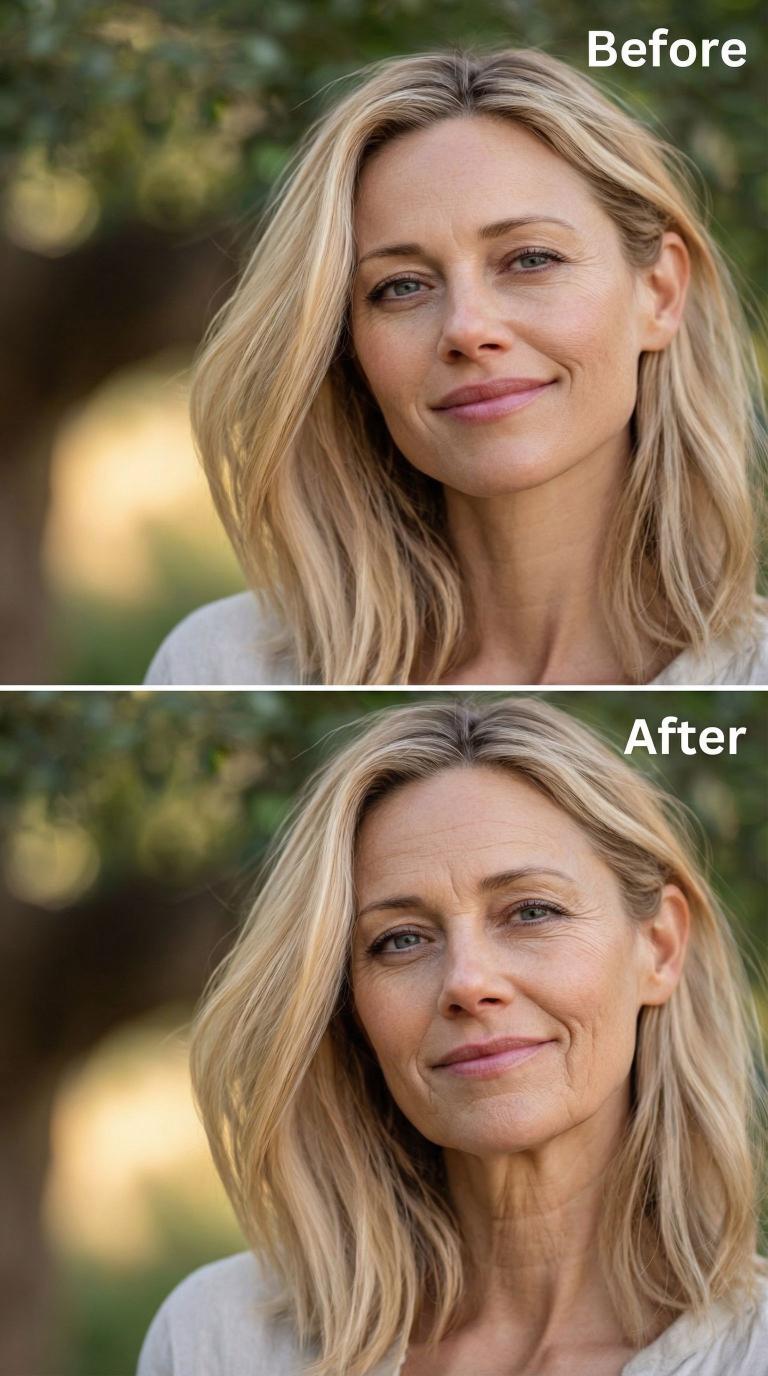
Sixty represents a threshold where aging signs become unmistakably visible, yet many women radiate confidence that transcends physical changes. Skin thins considerably due to reduced estrogen, making blood vessels more visible and bruising more common. Deep wrinkles form networks across the face, particularly concentrating around the eyes, mouth, and forehead. Neck skin loosens significantly, often showing horizontal lines and vertical banding that extend the aging process beyond the face itself.
15. Age 65 – Mid-Sixties

Mid-sixties faces display substantial bone resorption, where the facial skeleton actually shrinks, removing structural support for overlying tissues. This creates more pronounced sagging, particularly in the lower face and neck areas that lose their youthful definition. Age spots and sun damage accumulate visibly after decades of UV exposure, creating uneven pigmentation patterns. Hair thins noticeably on the scalp while sometimes appearing in unwanted facial areas due to hormonal changes.
14. Age 70 – Seventy Years

Seventy brings deeply etched wrinkles that map a lifetime of expressions, emotions, and experiences across the facial landscape. Skin becomes paper-thin and fragile, requiring gentle handling and protective measures against injury and environmental damage. Facial fat continues its downward journey, creating jowls and a less defined jawline that merges gradually into the neck. Despite these changes, many seventy-year-old women project remarkable beauty through their eyes, smile, and the wisdom radiating from their faces.
13. Age 75 – Mid-Seventies

The mid-seventies face shows advanced textural changes with pronounced crepiness, especially around the eyes and mouth where skin remains constantly mobile. Gravity’s cumulative effect creates significant drooping in all facial areas, from eyelids to cheeks to the entire lower face. Lip borders blur as definition fades and vertical lip lines deepen into permanent fixtures. Skin tone becomes increasingly uneven, with age spots, broken capillaries, and areas of hyperpigmentation creating a mottled appearance.
12. Age 80 – Eighty Years
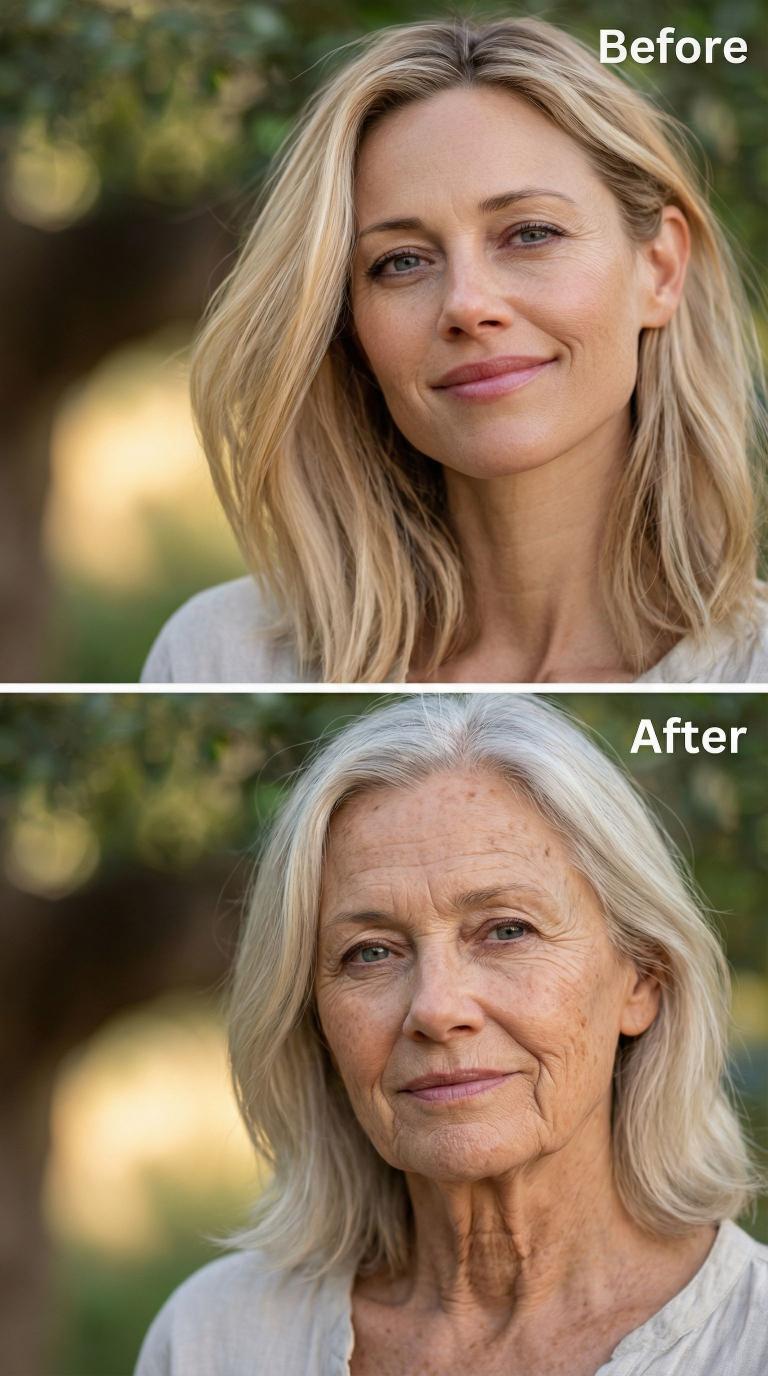
Eighty years of life create faces marked by extreme volume loss, where bone resorption has significantly reduced facial structure dimensions. Skin hangs loosely over diminished underlying support, creating folds and deep creases throughout all facial regions. Eyes may appear smaller as lids droop heavily and surrounding tissues lose their lift and firmness. Yet these faces often possess extraordinary character, with each line representing decades of laughter, tears, wisdom, and resilience that younger faces cannot possibly convey.
11. Age 85 – Mid-Eighties

Mid-eighties faces display profound structural changes where the entire facial architecture has shifted from its youthful foundation. Extreme thinning of skin reveals underlying bone structure prominently, creating angular appearances in previously soft areas. Wrinkles form complex, overlapping patterns that cover virtually every facial surface with varying depths and directions. Hair becomes sparse and fine, often completely white, while eyebrows and lashes thin dramatically, changing the face’s framing and overall expression significantly.
10. Age 95 – Mid-Nineties
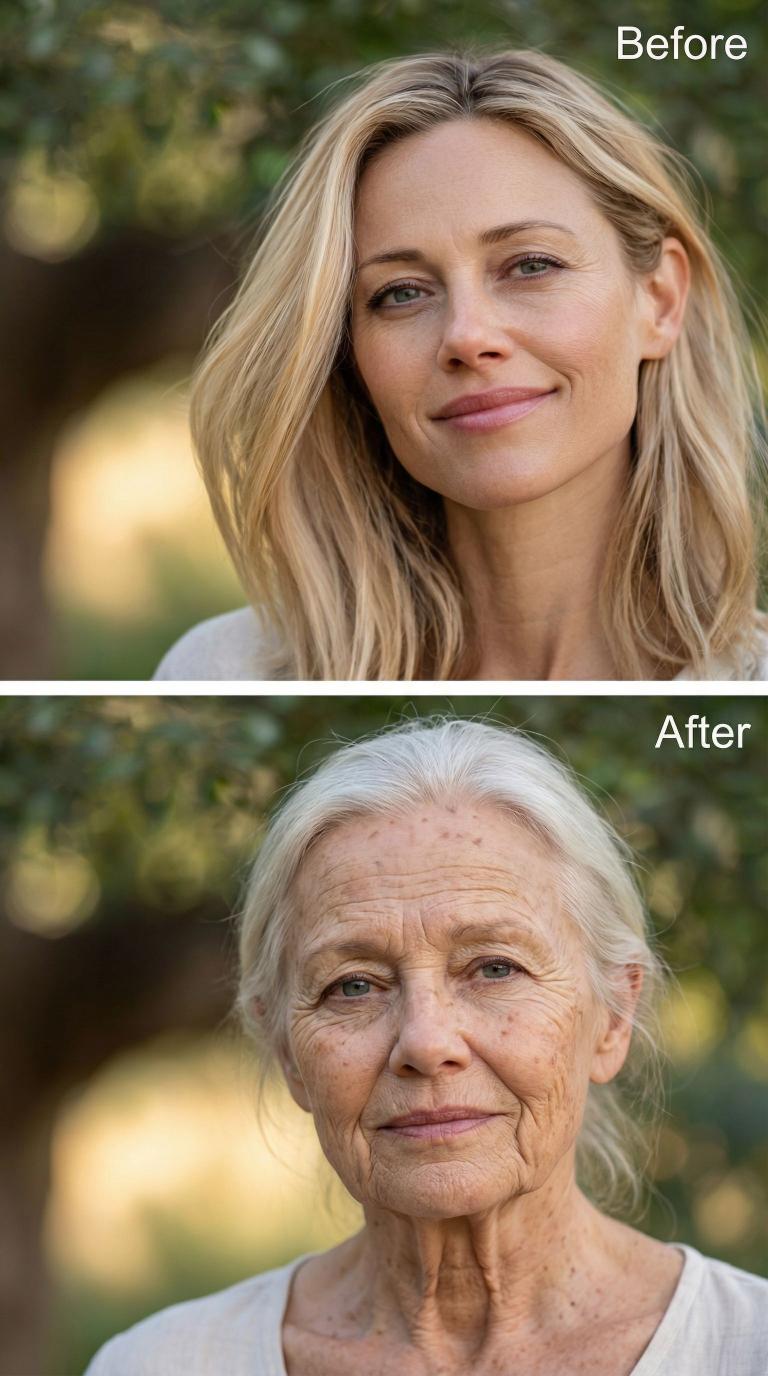
Mid-nineties faces represent extraordinary longevity, displaying skin so delicate it resembles tissue paper draped over fragile bone structure. Every facial movement creates ripples and folds in skin that has lost virtually all elasticity and collagen support. Features become less distinct as extreme volume loss and sagging blur the boundaries between different facial areas. Yet these rare faces command respect and admiration, representing lives fully lived through nearly a century of human experience, change, and survival.
9. Age 95
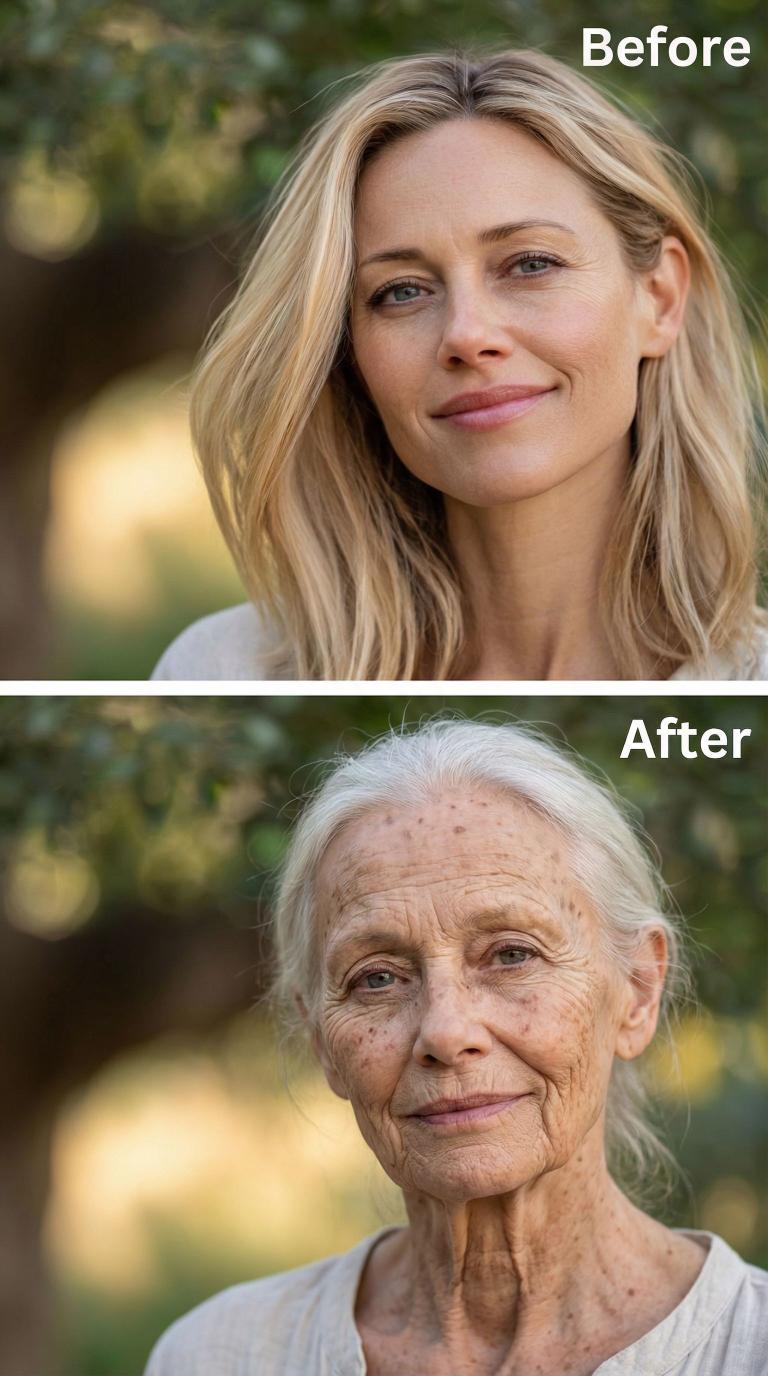
This before-and-after shows a realistic aging progression from age 40 to 95. Fine lines deepen into etched wrinkles, facial volume softens, skin thins, and hair turns white. The transformation isn’t dramatic for shock value—it’s a quiet, honest look at how time naturally reshapes the human face.
8. Age 100 – Centenarian

Reaching one hundred years old creates faces that tell century-long stories through every deeply etched line and weathered surface. Skin becomes extraordinarily fragile and thin, requiring exceptional care to prevent tears and injury from even minor contact. Facial structure has diminished significantly through decades of bone resorption, creating a smaller overall face size than in youth. These centenarian faces embody remarkable achievement, representing genetic gifts, lifestyle choices, and sheer determination that allowed them to witness an entire century of life’s magnificent journey.
7. Age 5 – Early Childhood
❤️ Would you like to save this?
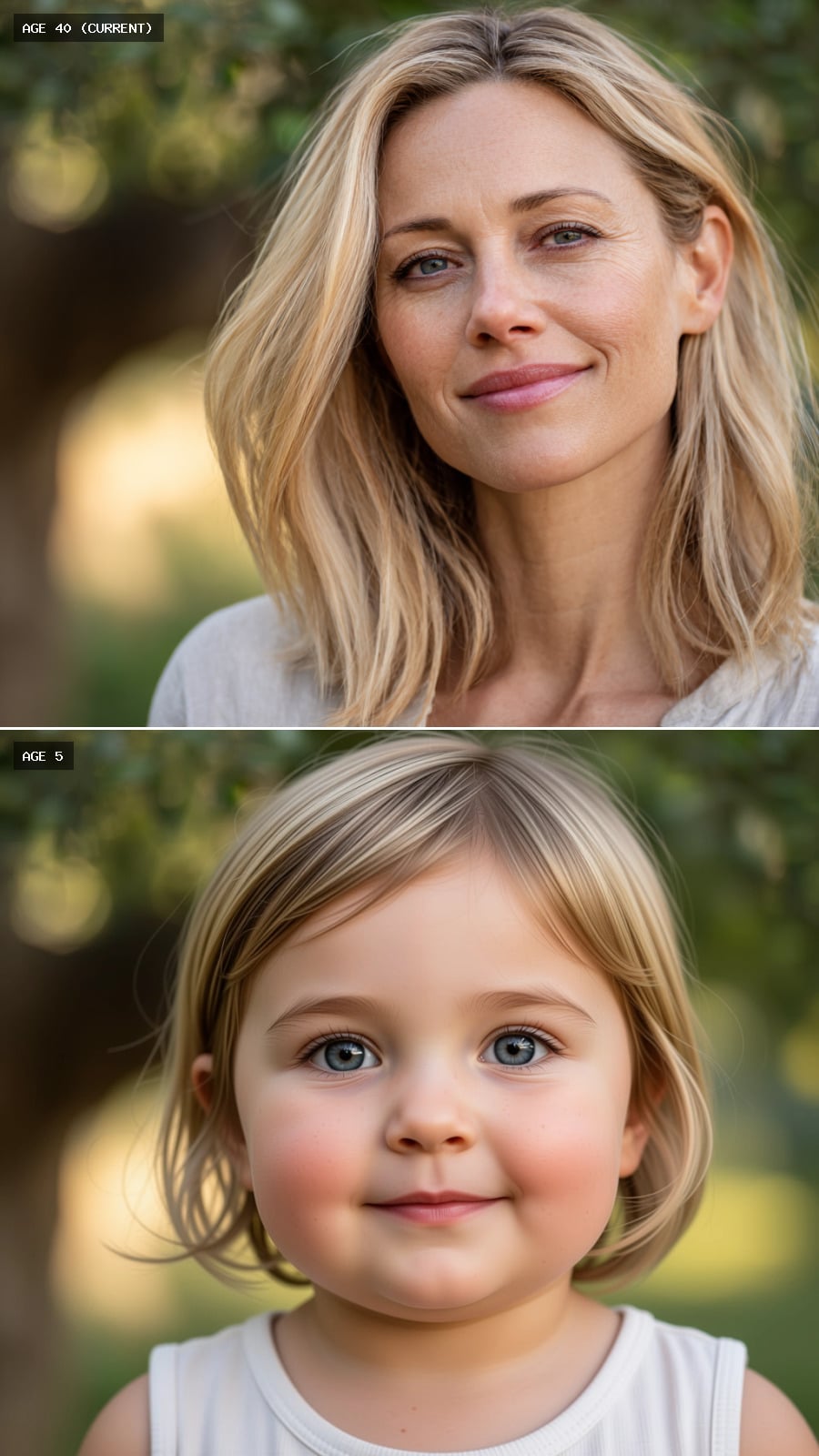
At five years old, the face displays cherubic roundness with plump cheeks created by buccal fat pads that give children their characteristic softness. The skin appears porcelain-smooth with fine texture and natural luminosity. Facial features remain small and delicate, with large eyes dominating the face’s proportions. This stage represents pure innocence, with flawless skin untouched by sun damage or environmental stressors.
6. Age 10 – Childhood

The ten-year-old face begins elongating as bone structure develops, though roundness still softens the overall appearance. Baby fat starts diminishing slightly, revealing emerging cheekbones and a more defined jawline. Skin maintains its youthful dewiness with even tone and zero visible pores. Hair grows thick and lustrous, often at its lifetime peak density and natural shine during these carefree childhood years.
5. Age 15 – Adolescence

Adolescence brings dramatic facial changes as hormones reshape features into their adult form. The face lengthens significantly, with the nose and chin becoming more prominent and defined. Skin may experience temporary challenges with oiliness or breakouts as sebaceous glands activate. Cheekbones emerge more distinctly as childhood roundness fades, creating the foundational facial architecture that will characterize adulthood and beyond.
4. Age 20 – Young Adult

Twenty marks peak facial maturity with optimal collagen production creating firm, resilient skin that bounces back instantly when touched. Facial symmetry reaches its zenith, with balanced proportions and smooth contours. The complexion glows with youthful radiance, requiring minimal intervention to look fresh and vibrant. Fine lines remain nonexistent, and facial volume distributes evenly across all areas, creating that coveted plumpness associated with youth.
3. Age 25 – Mid-Twenties

The mid-twenties represent the last years of peak collagen production before the gradual decline begins around age twenty-five. Skin still appears flawless and tight, though the very first hint of expression lines may appear with repeated movements. Facial bone structure stands fully developed, showcasing individual beauty in its prime form. This stage captures faces at their most photogenic, with natural radiance requiring little enhancement.
2. Age 30 – Early Thirties

Entering the thirties brings subtle but noticeable changes as collagen production decreases approximately one percent annually. Fine lines may appear around the eyes and mouth, particularly for expressive faces that smile and laugh frequently. Skin texture remains relatively smooth, though cellular turnover slows slightly, sometimes creating minor dullness. Bone density stays strong, maintaining facial structure, while lifestyle factors increasingly influence appearance and skin quality.
1. Age 35 – Mid-Thirties

At thirty-five, crow’s feet become more apparent, etching themselves around the eyes even when the face relaxes into neutral expressions. Nasolabial folds deepen slightly as facial fat begins its gradual downward migration. Skin may lose some luminosity as cellular regeneration continues slowing, making intentional skincare increasingly important. Forehead lines emerge for those with animated expressions, marking years of emotions, conversations, and lived experiences.