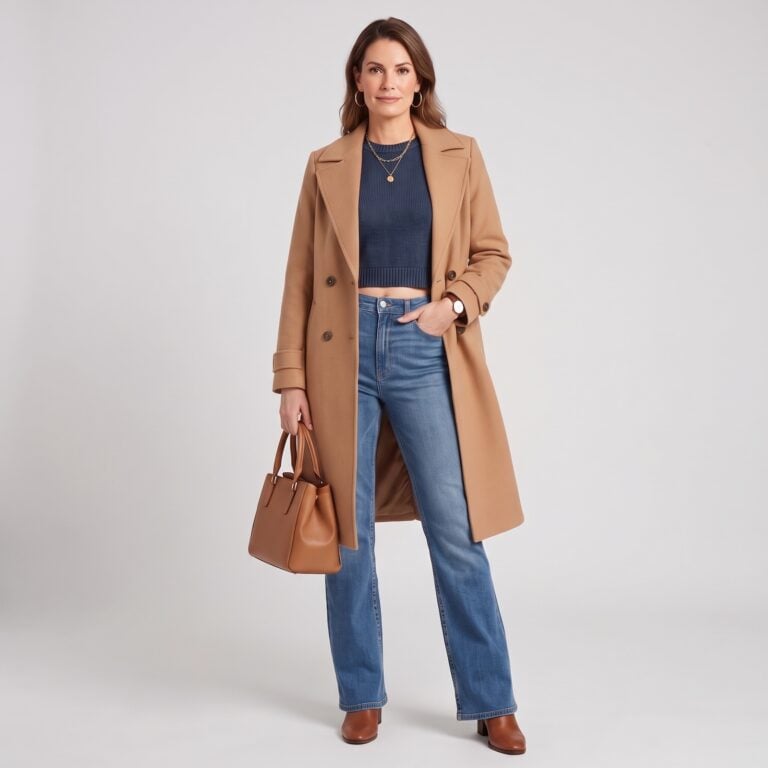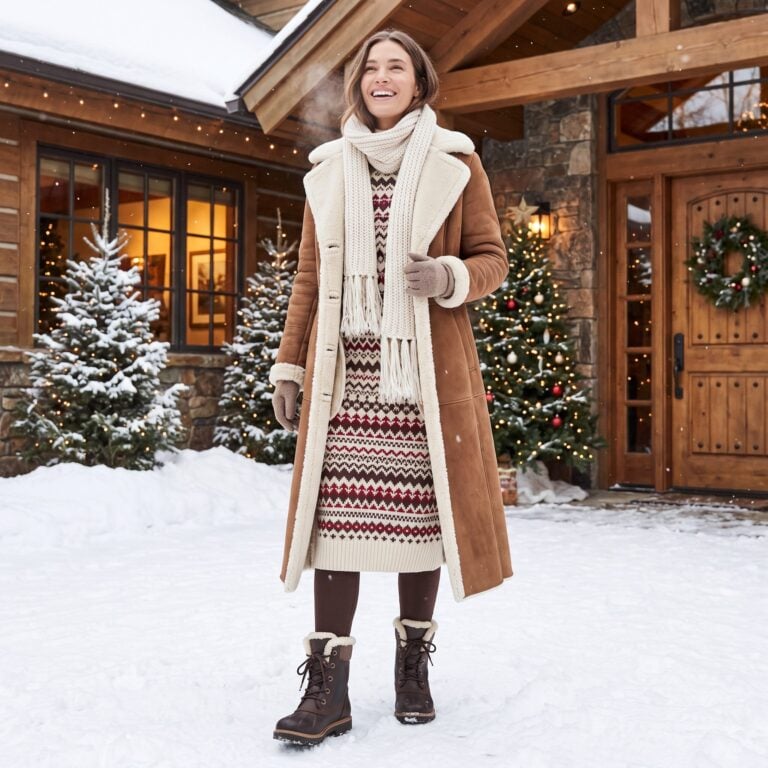

❤️ Would you like to save this?
The boots-and-tights combination went stale somewhere around 2012, when every woman owned the same chunky knee-highs and the same 40-denier tights and wore them under everything. The formula still works. Execution is where it lives or dies. What separates a current holiday look from a tired one comes down to proportion — where the hem lands, how the shaft fits, whether the colors read as one line or three competing zones. These before-and-afters show you which small choices keep things sharp.
FYI, thanks to AI imagery software, we’re able to create very specific fashion and hairstyle examples to illustrate the points being made. In some cases, imagery is exaggerated to hammer home the point. Also, assume links that take you off the site are affiliate links such as links to Amazon. this means we may earn a commission if you buy something.
39. Match Black Tights to Black Boots for One Long Line

The whole trick is color continuity. Match opaque black tights to black boots and the eye reads one unbroken vertical line from hem to floor — that line makes you look taller and the outfit look deliberate.
Break the color and you chop the leg into segments. A grey tight under a black boot, or worse, a nude one, creates a visible seam that drops the hem line and shortens everything below it. Same dress, suddenly frumpier.
38. Keep the Dress Hem Clear of the Boot Top
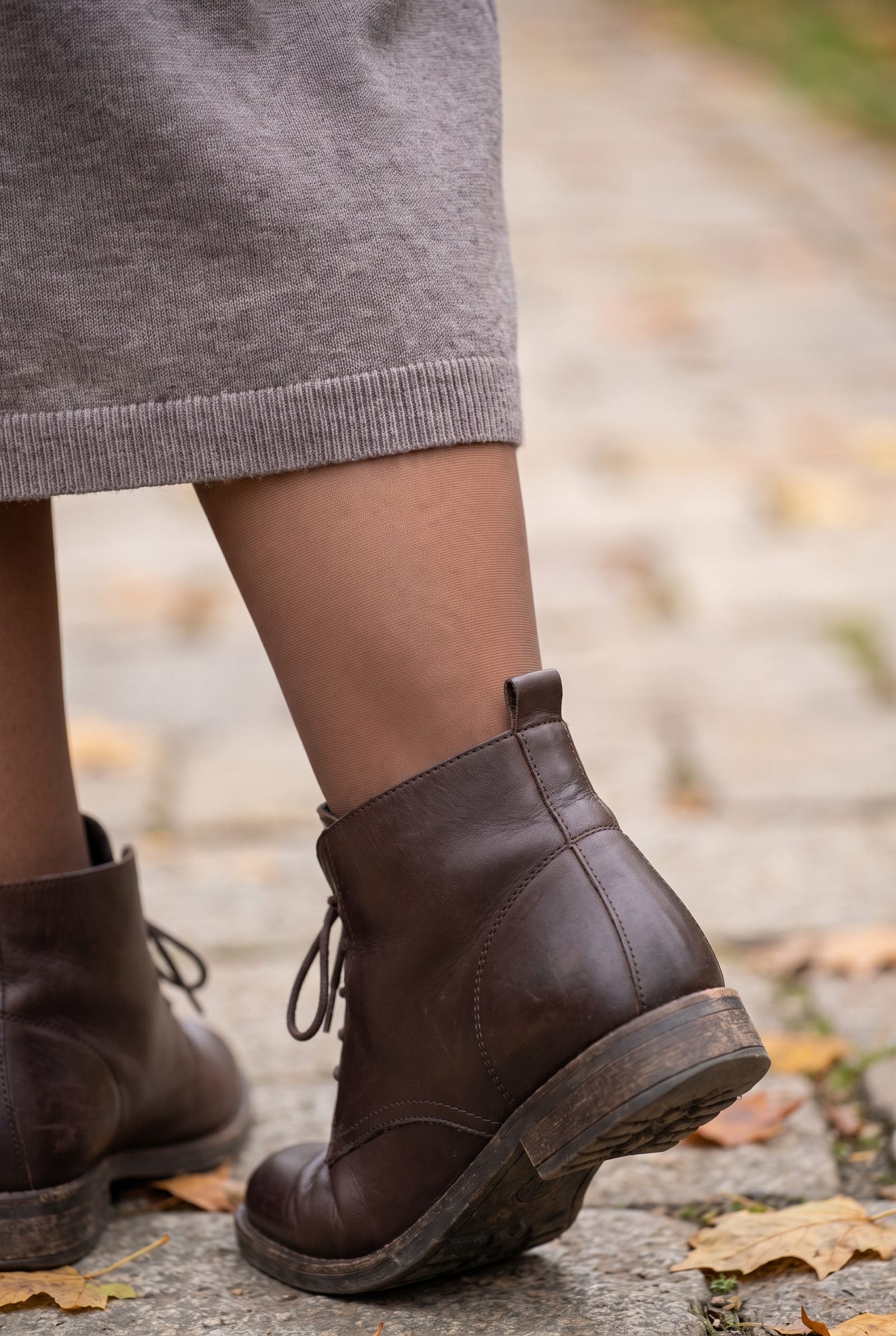
A sliver of leg between hem and boot top does more than you’d expect. That little gap of tight-covered leg gives the eye a resting point and keeps the dress from looking like it’s swallowing the boot whole.
When the hem sits right at the boot line, the two pieces fight each other, you lose the leg entirely, and the proportion flattens out. Leave two or three inches of breathing room and the whole look opens up.
37. Pick a Close-Fitting Boot Shaft Under a Midi Hem
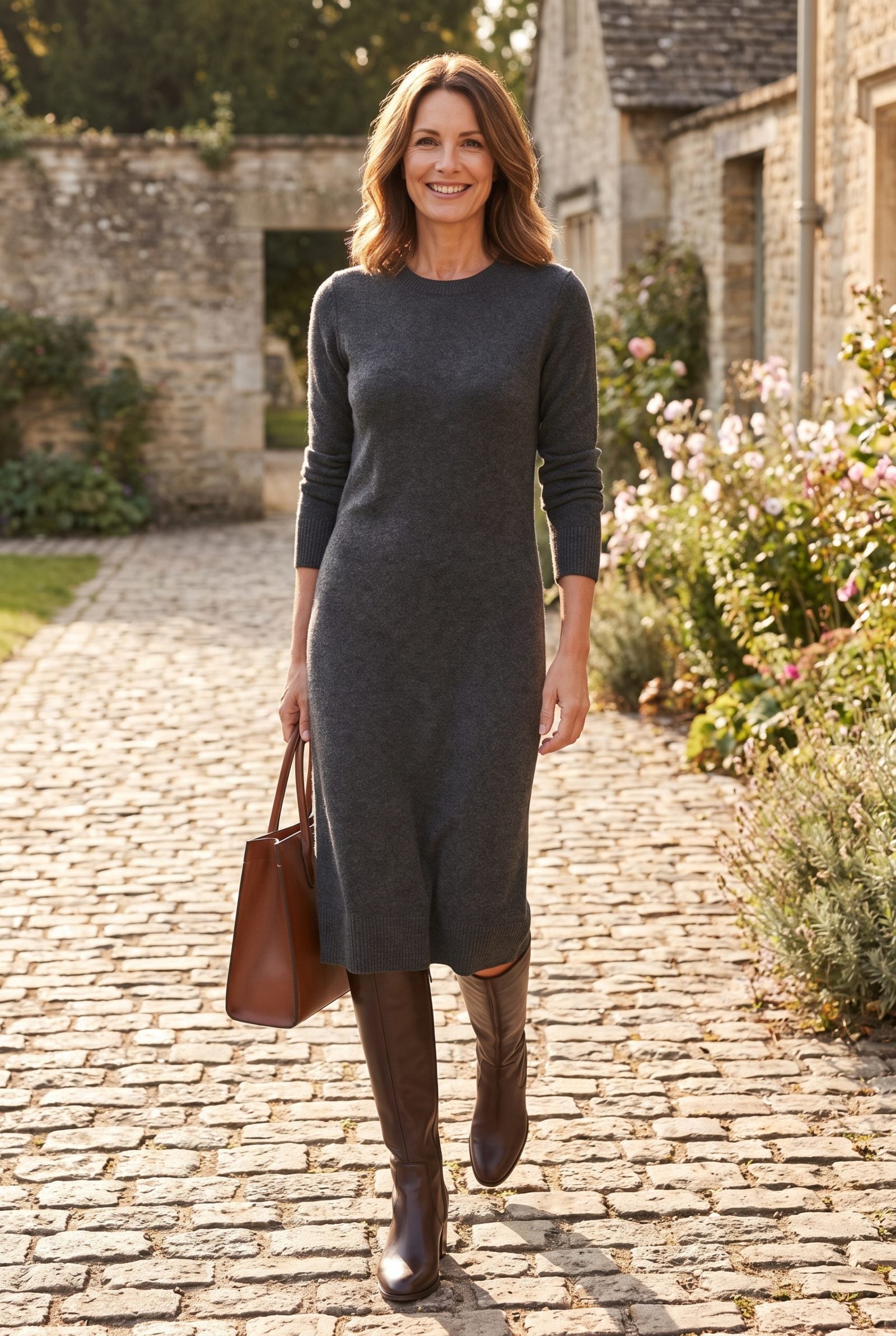
Under a midi, the only part of the boot that shows is the shaft — so the shaft fit is the entire story. A close, smooth shaft that traces the calf keeps the line clean and modern.
Slouchy or gaping shafts pool extra leather at the ankle and look dated the moment the hem clears them. The boots you reach for under a midi should hug the leg like a second skin, not hang off it.
What Our Readers Say
- Asked which heel height they would actually buy, about half of ThreadCurve readers chose flat, 37% picked low, and only 9% went for high.
- In our reader polls, 63% of ThreadCurve readers said they put comfort first when getting dressed, while 37% said polish comes first.
From ThreadCurve reader polls and votes.
36. Land the Hem Above the Calf Bulge
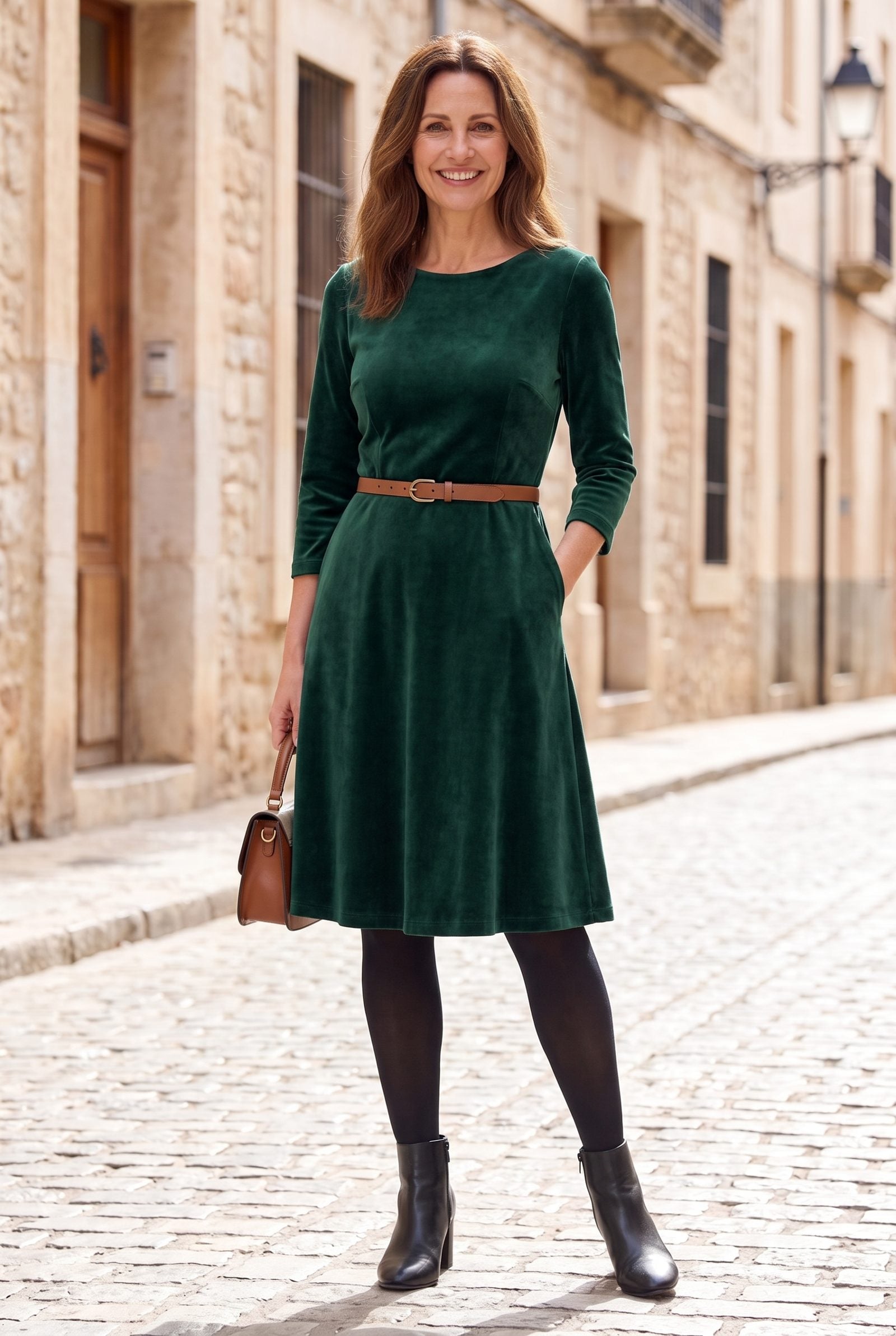
Where the hem lands on your calf decides everything. Hit the leg at its widest point and you draw a line straight across the thickest part. Hit it just above, at the narrower stretch below the knee, and the leg reads longer and leaner.
This is geometry, not body type. Every leg has a slim spot. Find yours, hem to it, and the same boots and tights that looked heavy a minute ago suddenly balance out.
35. Pair a Short Dress With Tall Fitted Boots
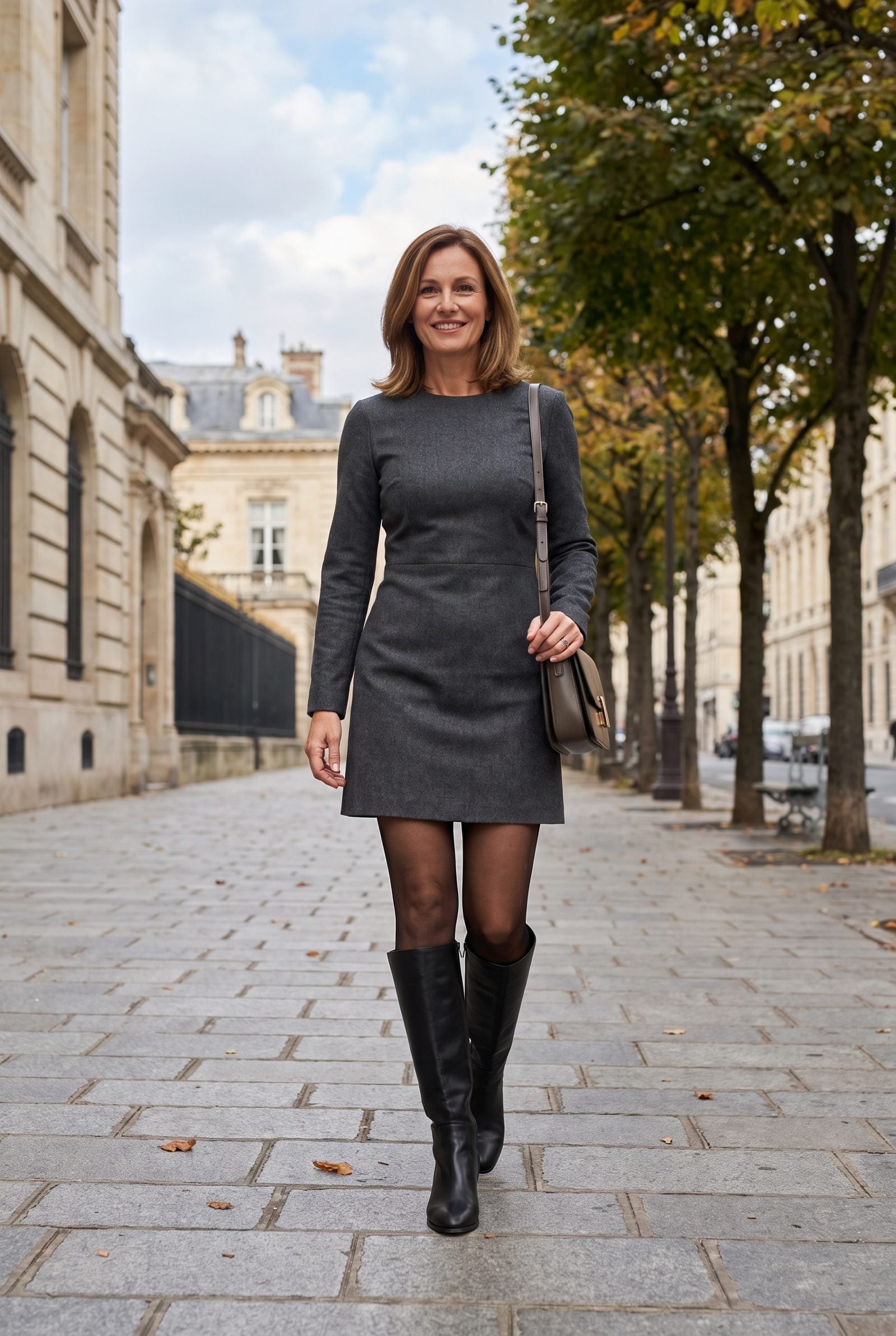
Short dress, tall boot, and a controlled band of tight in between. That middle stretch of leg keeps the proportion from tipping into costume territory. Too much gap and it reads young. Too little and the boot and dress collide.
The dress staying short works precisely because the over-the-knee boot pulls the weight back down and anchors it. A confident look — and confidence is most of what sells it.
34. Slip a Pointed Toe Under an A-Line Midi
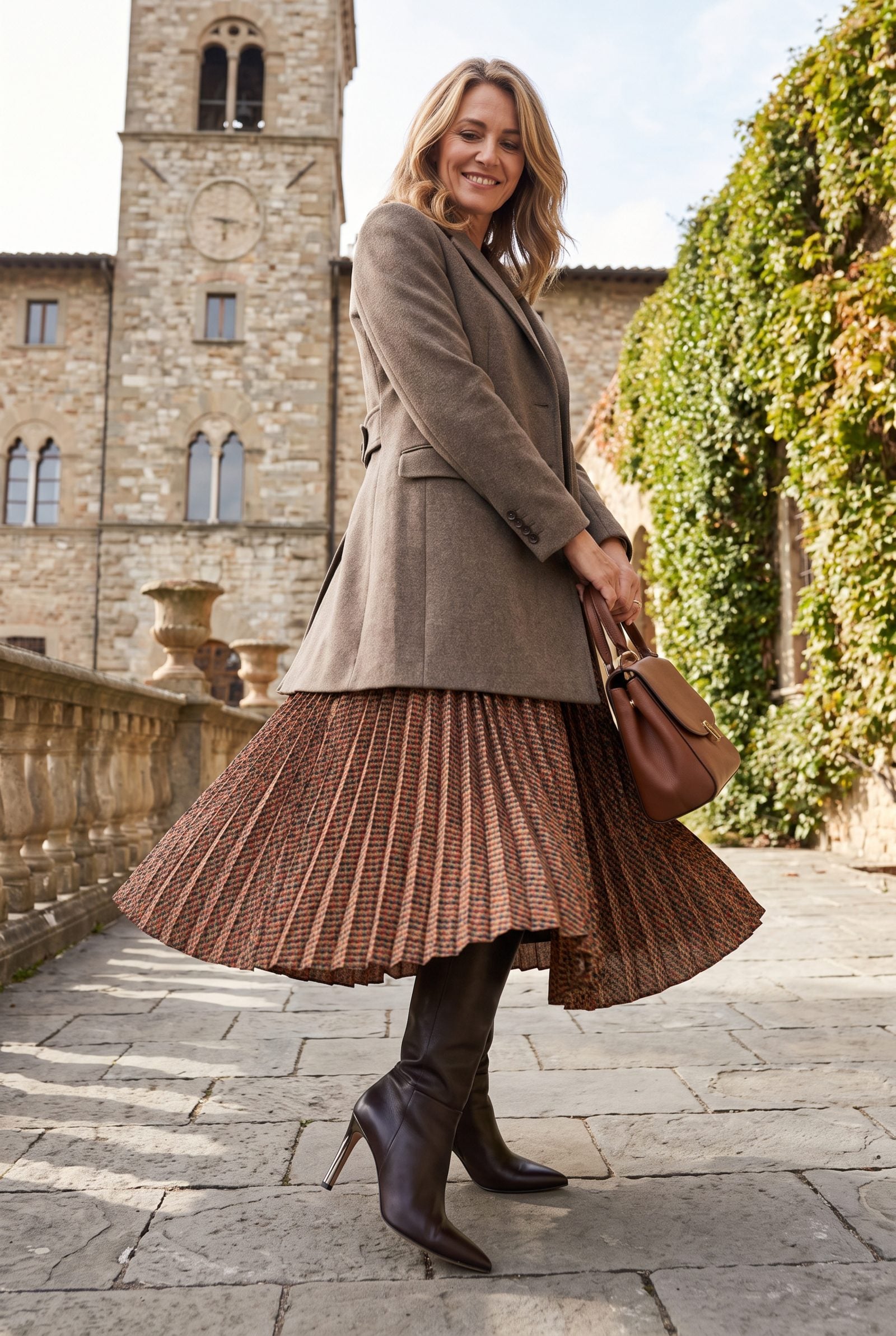
An A-line midi carries volume at the hem, so the toe shape peeking out beneath it has a big job to do. A pointed toe draws the line down and out, finishing the swing of the skirt with a sharp point instead of a blunt stop.
Round or square toes under all that fabric read heavy and kill the momentum. The point extends it — a tiny finishing detail that makes the whole silhouette feel like you meant it.
33. Lighten Chunky Ankle Boots With Sheer Tights
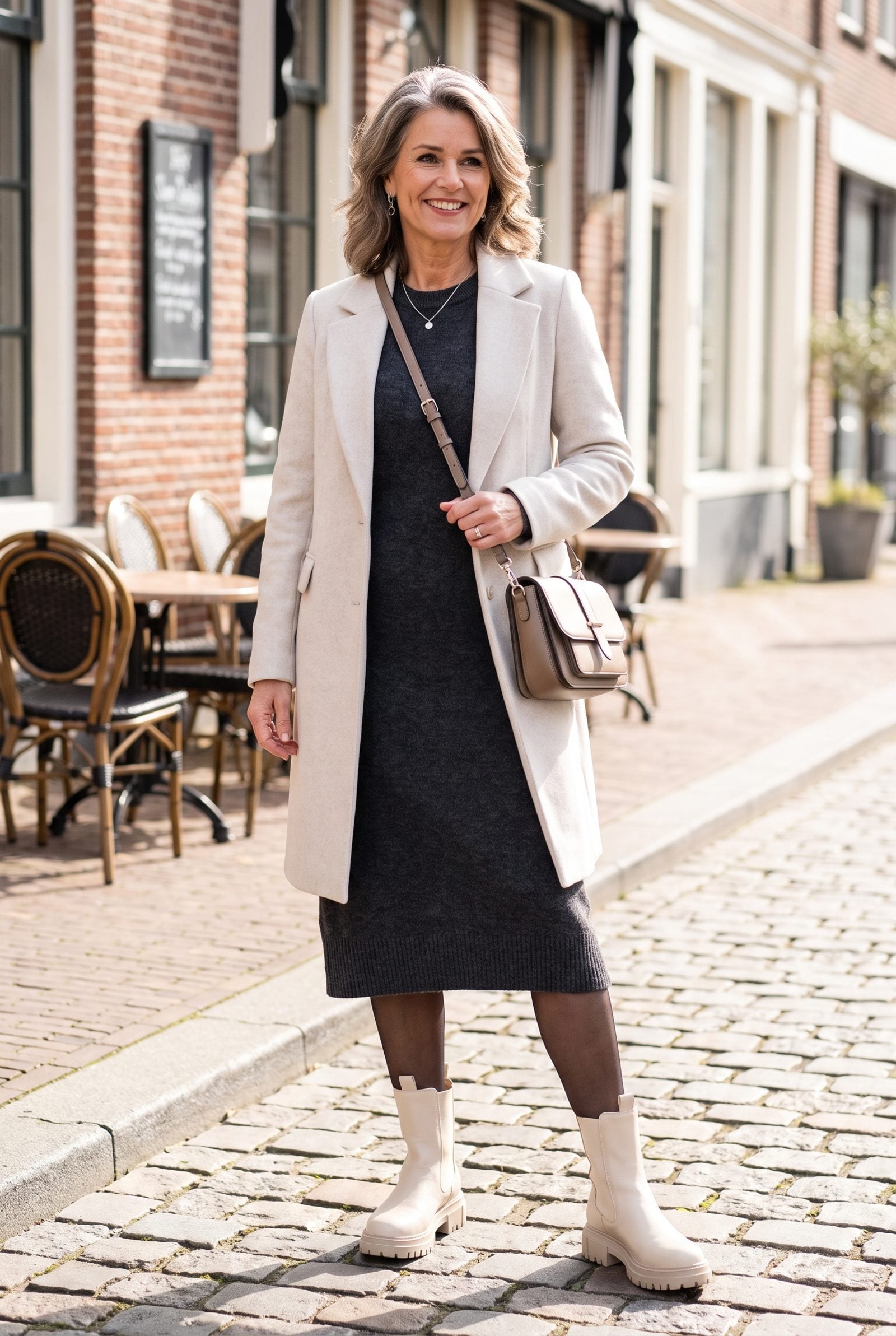
Chunky lug-sole boots carry real visual weight. Pair them with opaque tights and the leg turns into one heavy block. Switch to a sheer tight, though, and the leg reads light, which frees the boot to be the bold piece without dragging the whole bottom half down with it.
The contrast does the work: delicate leg, substantial boot. That tension is what keeps a trendy chunky boot from looking plain clunky under a refined dress.
32. Match the Tight Denier to the Weight of the Dress
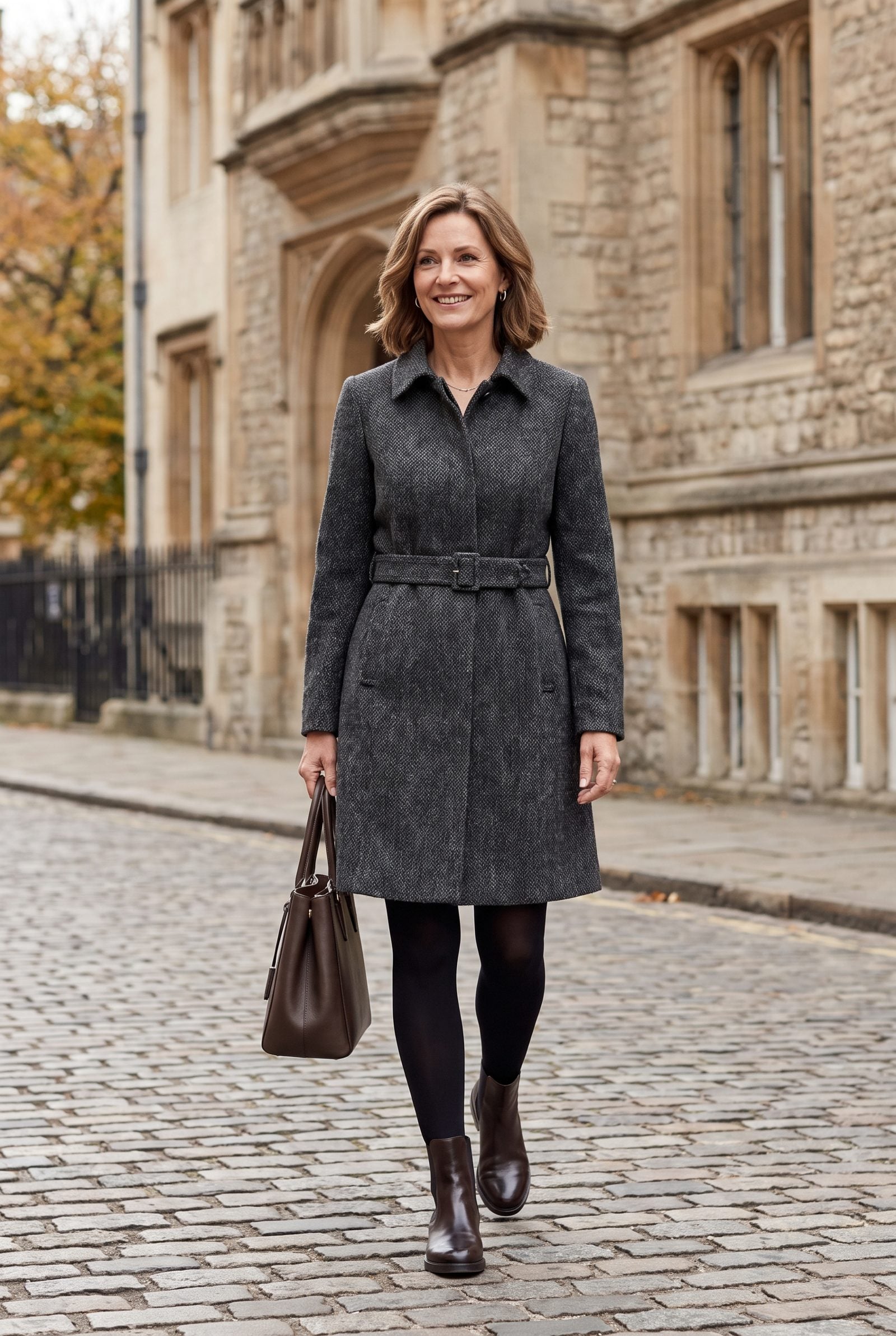
Weight should talk to weight. A heavy knit dress wants a thick opaque tight, a fluid silk dress wants a fine sheer one, and mismatching the denier makes the two pieces argue.
Picture a chunky sweater dress over flimsy 10-denier tights. The leg looks fragile under all that bulk and the balance tips wrong. Thick on thick holds together. Then the tight becomes part of the dress’s texture family instead of a thin afterthought stuck below it.
31. Ground a Sparkly Mini With Opaque Tights
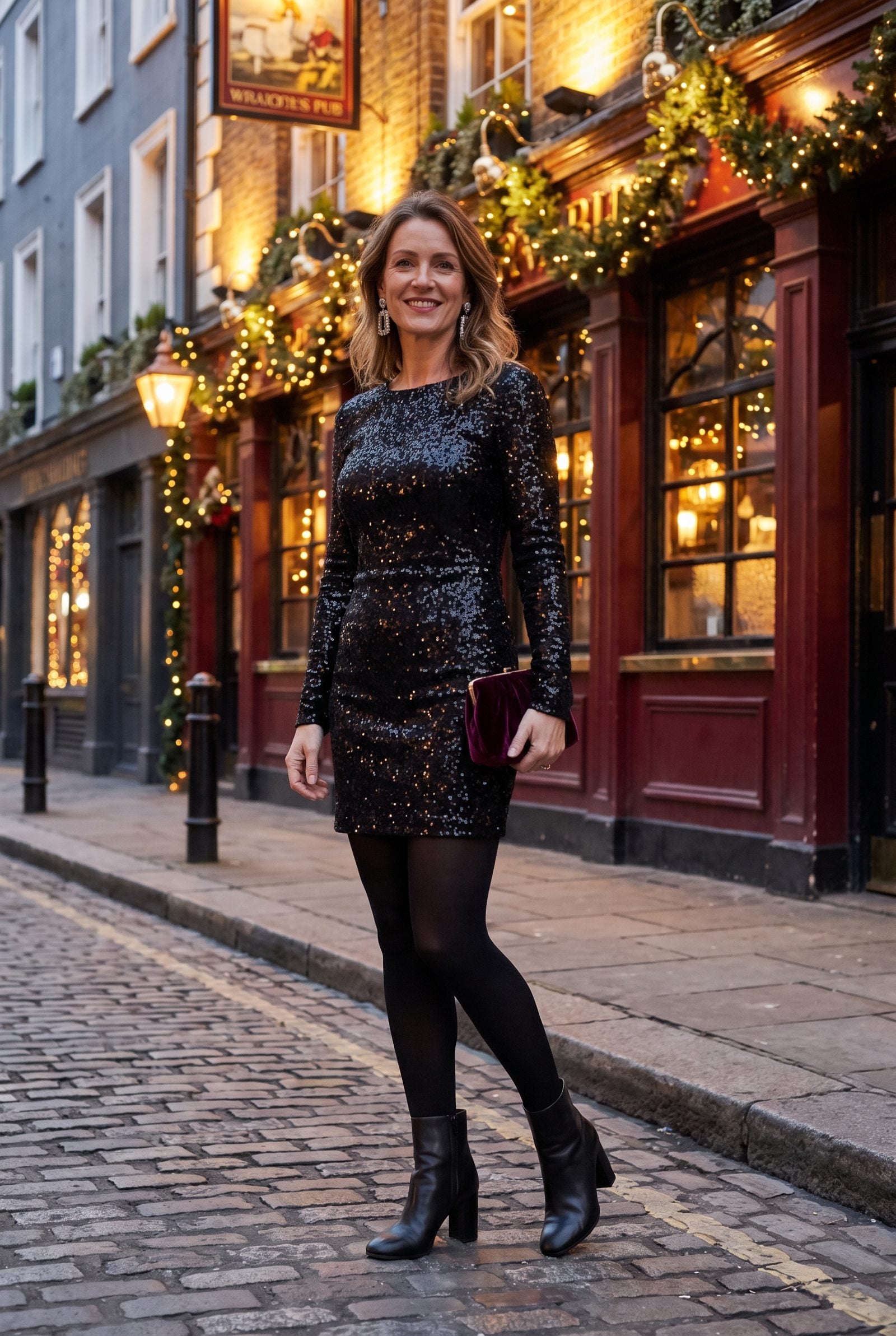
A sequin mini is a lot of shine concentrated up top. Dense opaque tights below act as the counterweight, soaking up all that glitter’s energy so the dress reads festive rather than frantic.
Bare legs or sheer tights under a sparkly mini shove the whole thing toward party-girl territory. Matte black legs pull it back to grown and deliberate. The holiday version of a sequin dress stands or falls on what you put beneath it.
30. Pair Matte Tights With a High-Shine Satin Dress
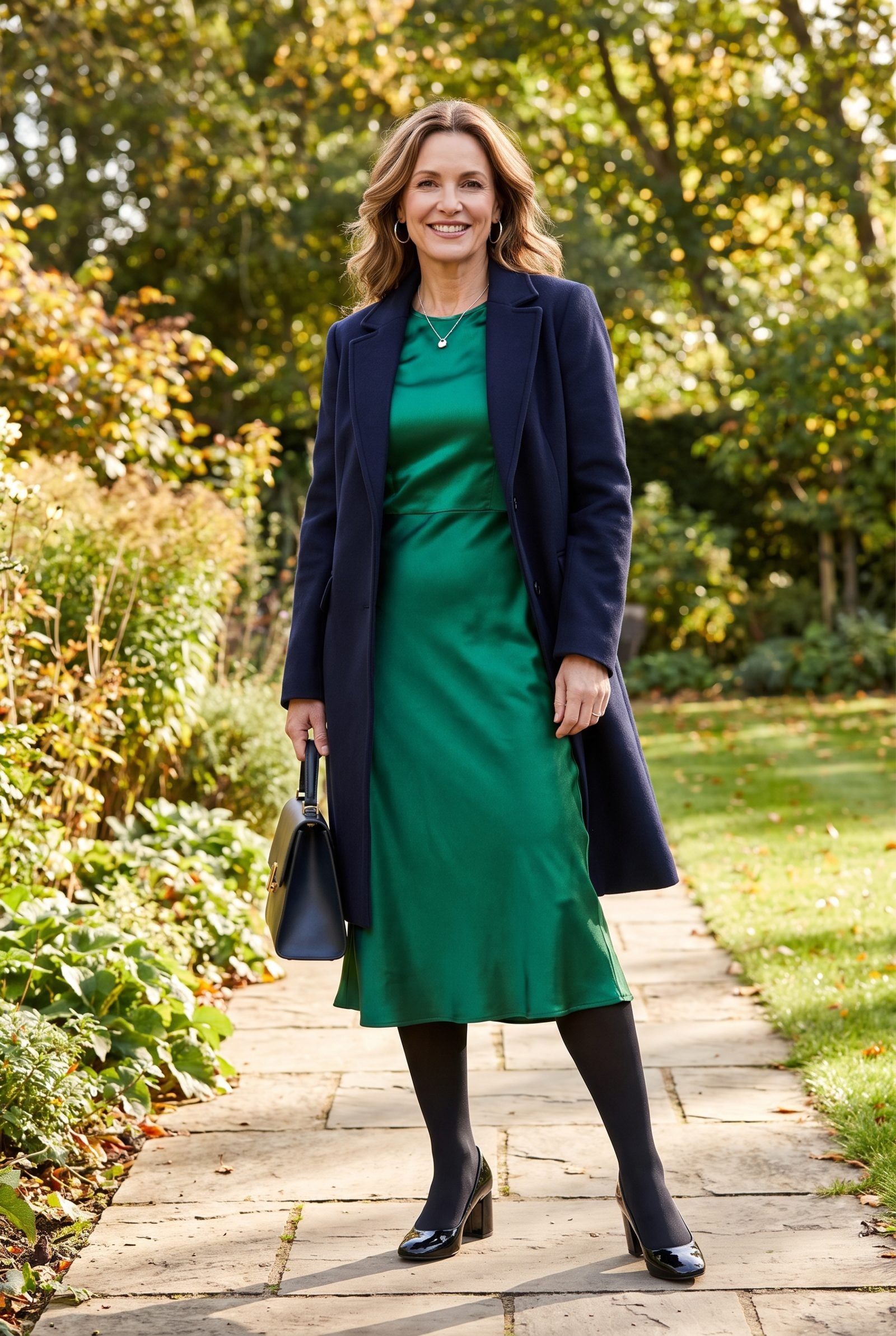
Satin already does the shine work. Put a shiny tight under it and you get two gleams fighting, which cheapens both. Go dense and matte instead. The flat black leg lets the satin’s liquid sheen stay the star.
Texture contrast is the engine: all shine up top, all matte below. That difference makes the satin look expensive rather than slippery and cheap. Finish with a matte suede boot so the whole bottom half stays quiet and lets the dress talk.
29. Letting Burgundy Tights Echo a Wine Floral Print

A busy floral print usually fights with whatever you put below it. So don’t fight. Pull the deepest wine shade out of the print and let your tights wear exactly that color, and suddenly the leg becomes a continuation of the dress instead of a competing event.
The oxblood boot closes the loop. Hem to tights to suede boot, it all reads as one long wash of related reds, which is far more flattering than the hard break you get when black tights slam into a soft floral. You’re not matching perfectly — you’re staying in the family. That gentle gradient does something quietly slimming too, though that’s a happy accident more than the goal.
28. Swapping Black for Espresso Tights and Boots Against Warm Jewel Tones
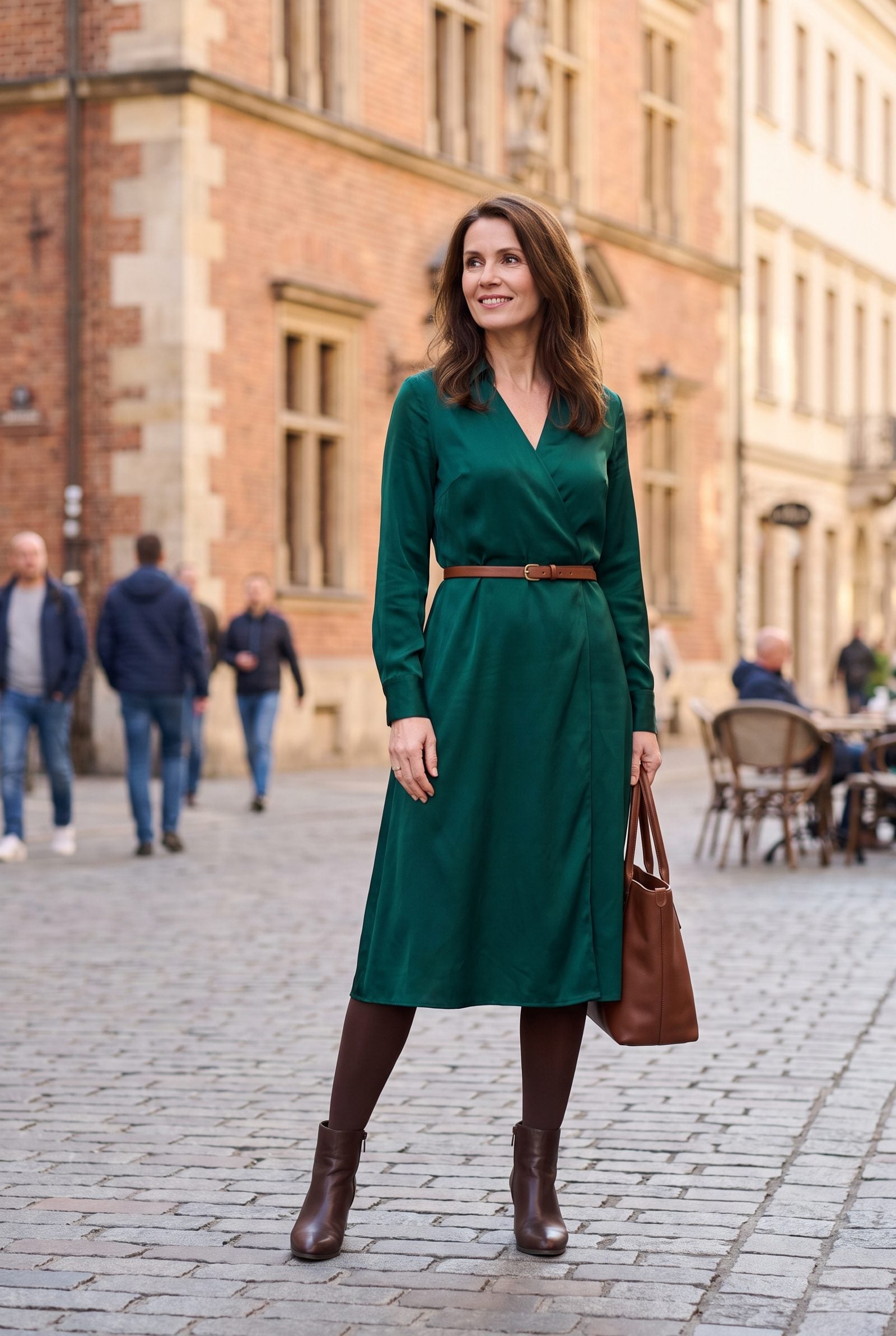
Black is the reflex. With a warm jewel tone like emerald, though, black is the wrong reflex — it goes cold and a little harsh at the hem. Espresso brown warms everything up.
Swap the black tights for a rich espresso, add a dark chocolate boot, and the green reads deeper and more expensive. The brown echoes the warmth already living in that emerald instead of punching against it, so the whole bottom half becomes one soft anchor. It’s easy to resist this out of pure habit, but once you try it, it’s hard to go back.
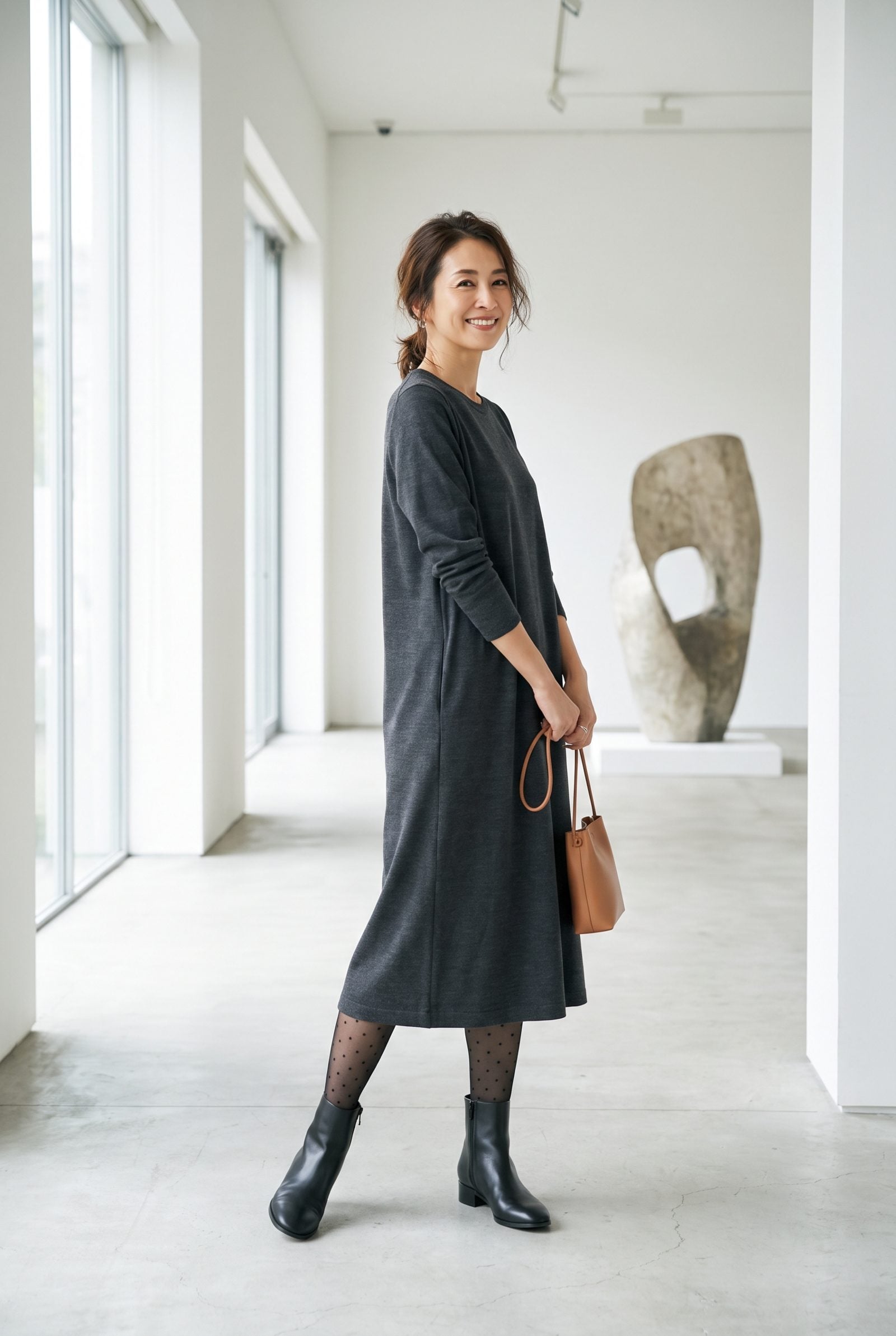
27. Making Semi-Sheer Polka-Dot Tights the Only Print in the Room
❤️ Would you like to save this?
Here’s the trick most people miss: a patterned tight only works when nothing else in the outfit is competing for attention. Keep the dress plain — a charcoal wool sheath, nothing on it — and let the semi-sheer polka-dot tights be the single piece of pattern in the whole room.
Now the eye travels from that clean hem straight down into the dotted leg and stops there, exactly where you want it. Black suede ankle boots to finish, because a plain boot won’t argue with the dots. The flocked velvet dots catch a little light and read almost like jewelry. One pattern, placed with intent, and that’s it.
That one-print rule matches our readers’ instincts: in a ThreadCurve poll, 77% said they never mix prints at all.
26. Pairing Micro-Fishnet Tights With a Conservative Midi
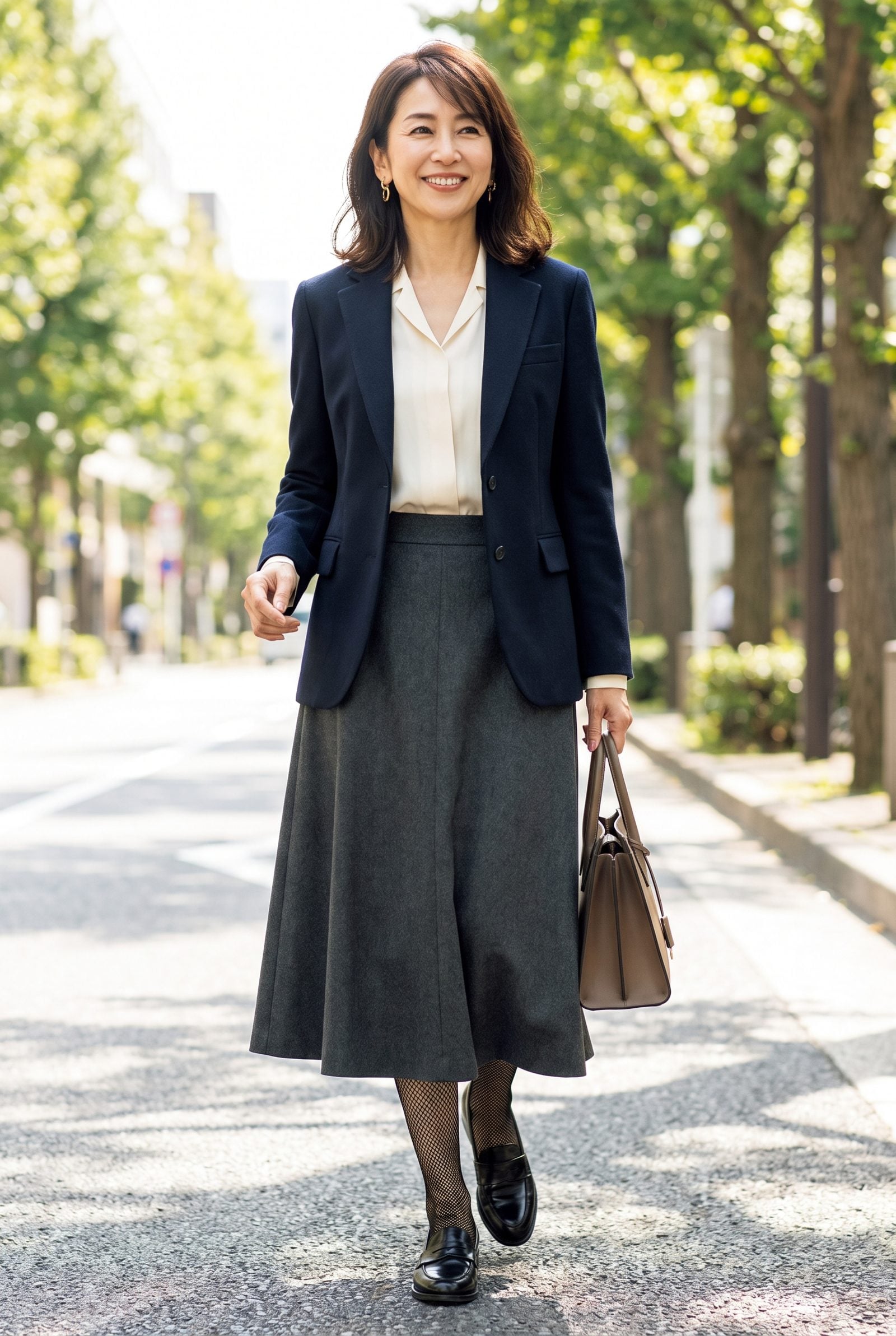
Fishnet has a reputation, and it isn’t a work-appropriate one. Micro-fishnet quietly fixes that. The grid is so fine you have to look twice to catch it, so what you actually register is texture rather than anything risqué.
Wear it under a buttoned-up navy midi with long sleeves — the most proper dress you own — and that tiny sliver of patterned leg peeking out above the boot becomes the one unexpected note in an otherwise impeccable look. A pointed leather boot keeps the whole thing sharp. Conservative up top, a wink down below, and nobody at the dinner table will know why your outfit looks more interesting than everyone else’s.
25. Using Fine Ribbed Tights to Add Depth to a Plain Knit Dress
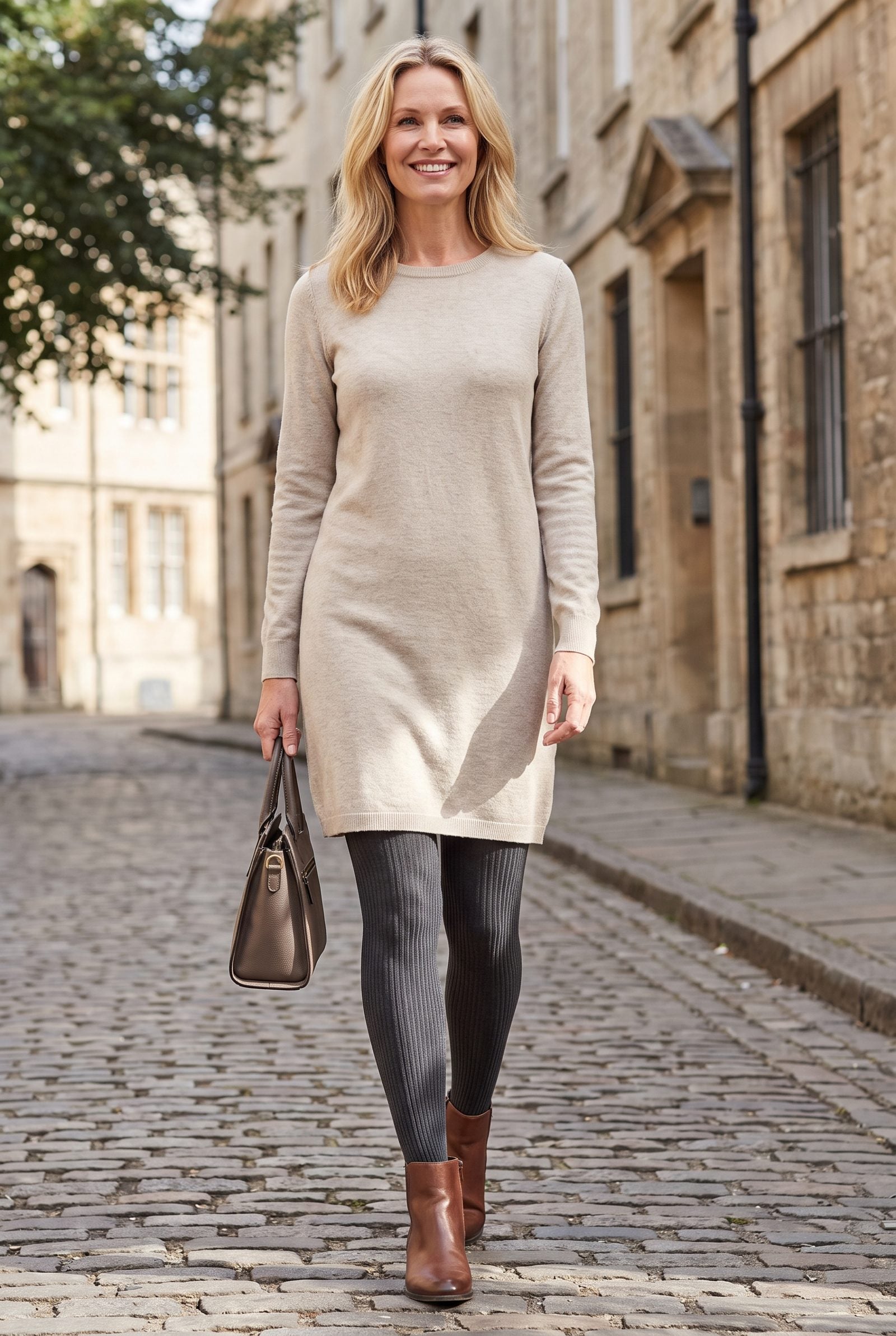
A plain knit dress can go a bit flat and shapeless by late afternoon. Ribbed tights rescue it by carrying the vertical line of the knit straight down the leg. The rib of the dress meets the rib of the tights and the whole column reads as one piece of fabric rather than two.
Stay in one tonal family while you’re at it — deep cognac tights under a camel dress, tan suede boots to close it out. It makes you look longer and a little pulled together without a single bright accent. Texture doing the work that color usually gets credit for.
24. Wearing Fleece-Lined Tights That Still Read Sheer
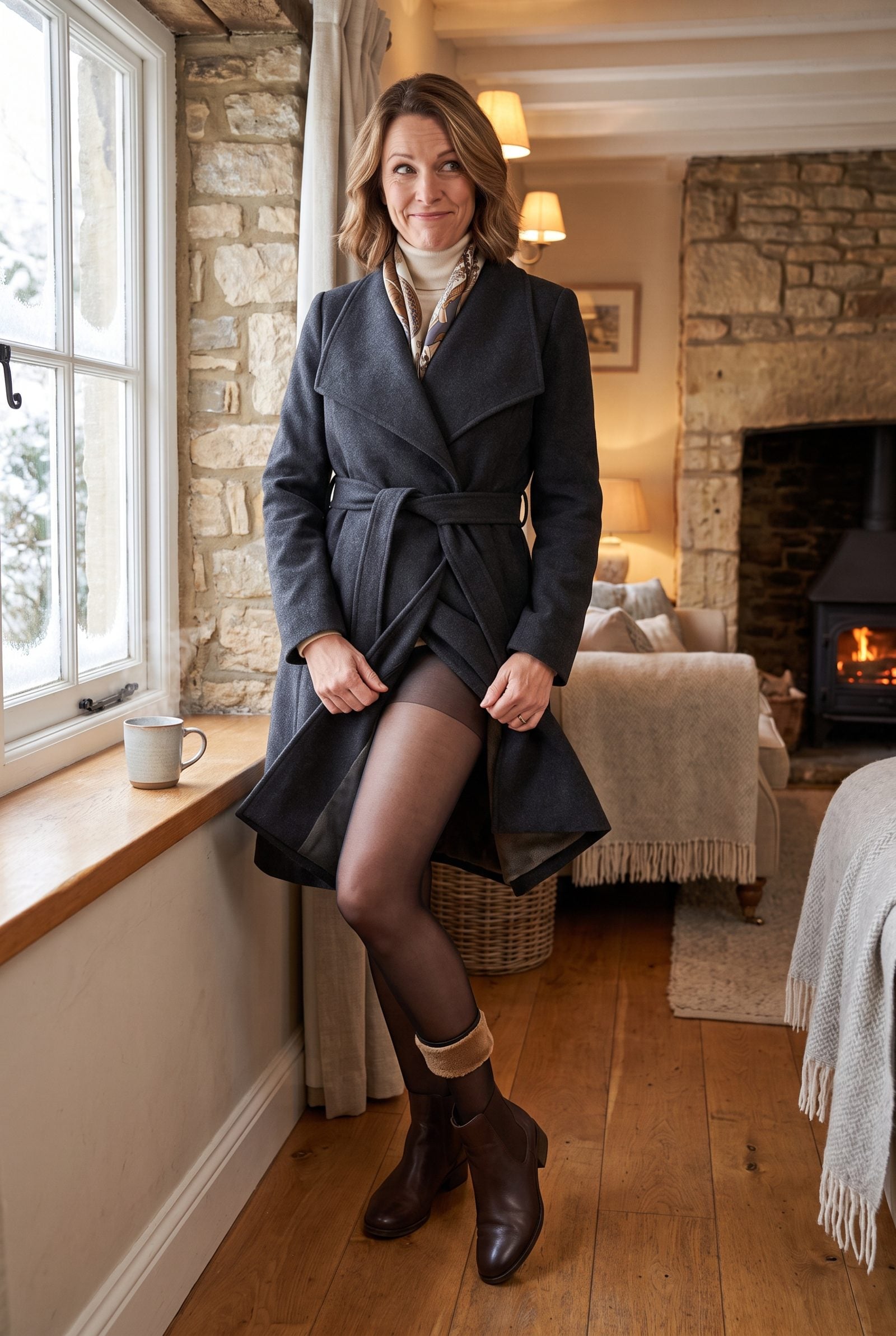
These are the unsung hero of winter dressing. Fleece-lined tights that are engineered to look sheer give you the slim black leg you want with a warm layer hidden against your skin, so you can wear a dress to a drafty December party without visibly shivering through dessert.
Pair them with a deep plum velvet midi and a patent boot. The leg stays a clean dark line from hem to boot, nobody suspects there’s fleece doing all the heavy lifting underneath, and you get to actually enjoy standing near the door when it keeps opening.
23. Grounding a Fluid Bias-Cut Dress With Sock Boots
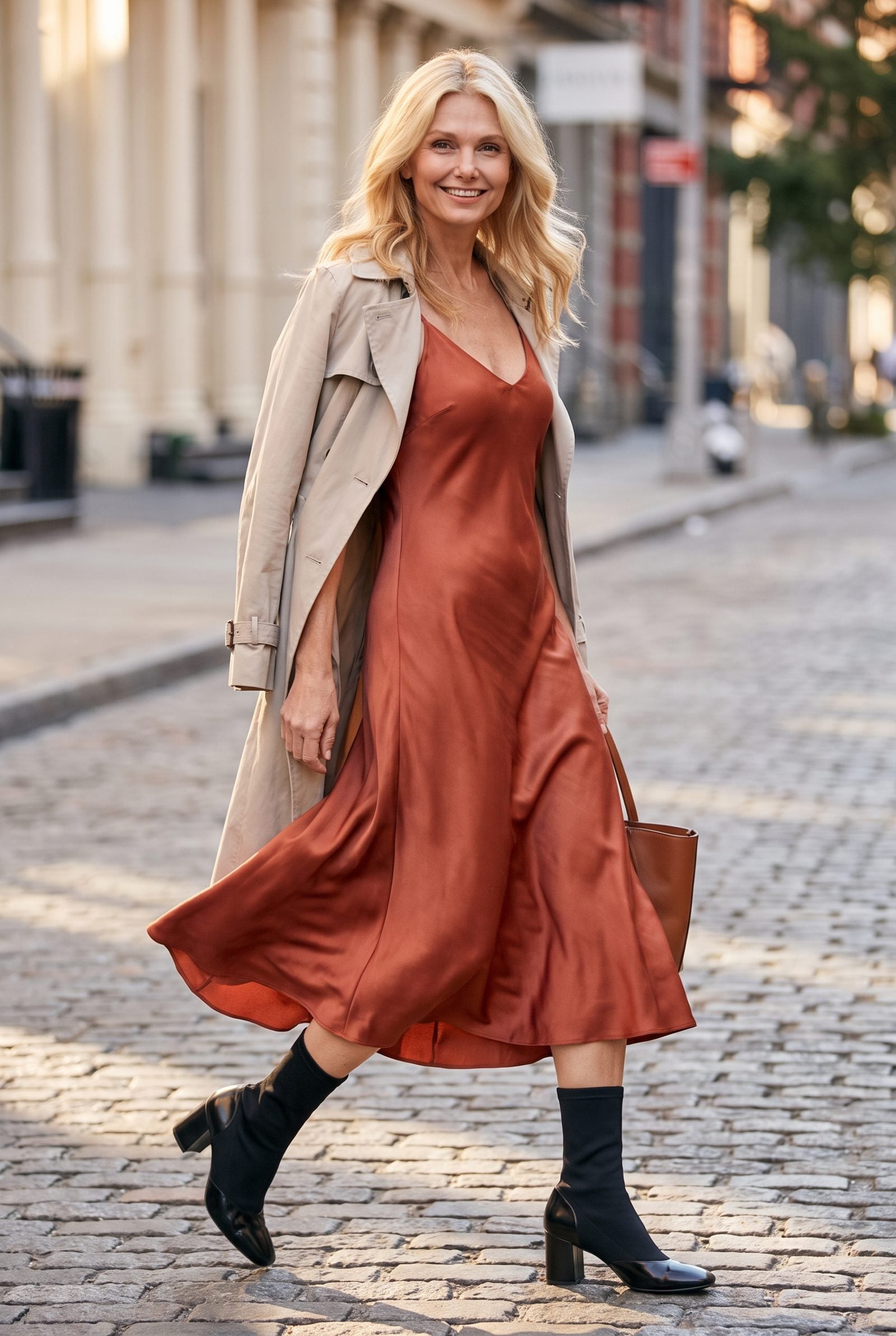
A bias-cut satin slip is all liquid and movement. Left alone it can read a little too soft, almost like a nightgown that wandered into the party. You need something firm underneath to pull it back.
Sock boots are that something. The stretch knit grips the ankle and rises just past the dress hem, drawing a crisp, precise edge right where the fabric is at its most fluid. Suddenly the whole look has a spine. Keep the tights sheer black so nothing interrupts the transition, let the teal satin catch the light, and the contrast between slink and structure is the entire reason it works.
22. Choosing a Front-Seam Boot to Draw a Vertical Line
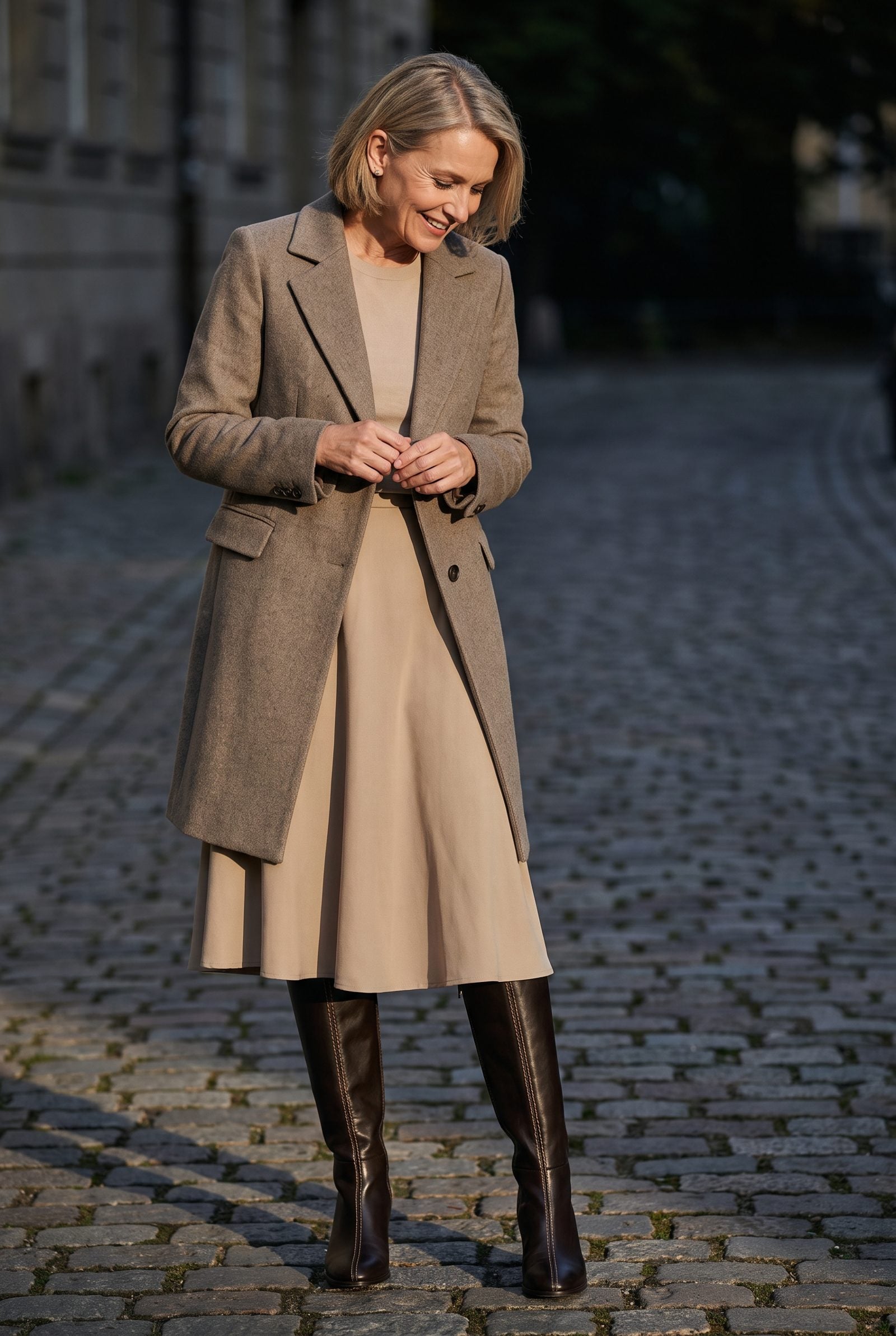
Small detail, big payoff. A knee-high boot with a seam running straight down the center of the shaft draws a vertical line up your leg, and vertical lines read as length. Your eye follows that seam upward without being told to.
Here it works with opaque dark green tights under a forest green shift, so the leg and the boot read as one long unbroken sweep from hem to knee. Nothing loud, nothing that announces itself across a room — just a quiet piece of construction doing exactly what a good tailor’s seam is supposed to do. Worth seeking out when you shop.
21. Picking a Low Vamp to Lengthen the Ankle

The vamp is the part of the boot that covers the top of your foot, and how deeply it’s cut changes everything about your leg. A low vamp dips down toward the toes and leaves more of the ankle and foot exposed, which tricks the eye into reading the whole lower leg as longer.
It matters most with a midi, where the hem lands mid-calf and you’ve already got a chunk of leg on show. Rust knit dress, sheer nude-black tights, a low-cut black boot, and that exposed stretch of ankle keeps the proportion feeling light instead of chopped off at the shaft. Tiny design choice. You’ll notice it in the mirror.
20. Softening Velvet With an Almond-Toe Boot
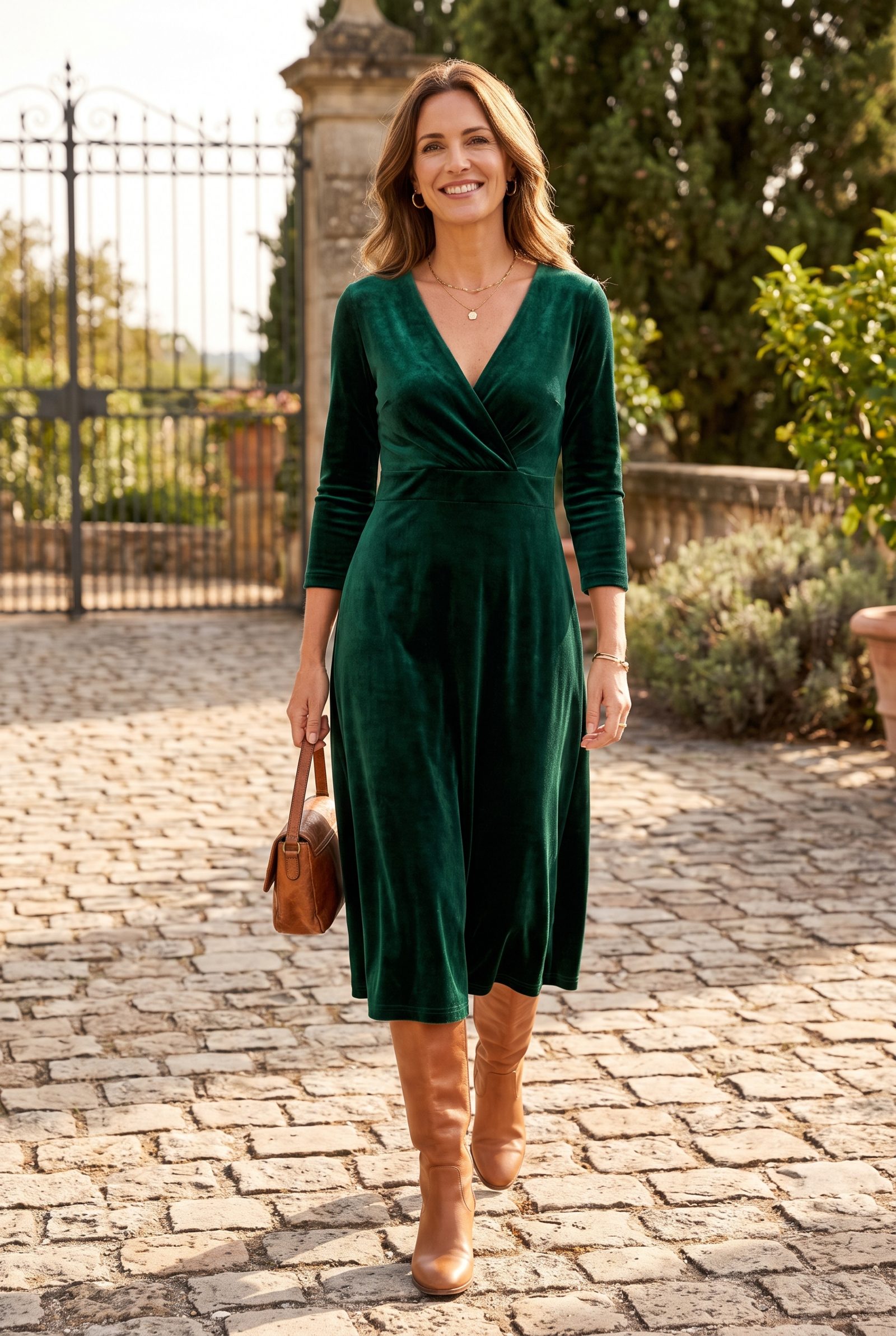
Velvet is plush, rounded, soft to look at. Put a hard pointed stiletto underneath it and you get a jarring little argument at the ankle — all that softness suddenly meeting a sharp spike. An almond toe settles the dispute.
That gently rounded shape picks up the softness of the velvet instead of fighting it, so a sapphire blue velvet midi flows down into opaque navy tights and a black suede almond-toe boot without a single hard edge in sight. The whole thing stays quietly cohesive, cozy even, and a mid heel keeps it from tipping into fussy. Sometimes the kindest thing you can do for a plush fabric is not sharpen it.
19. Using a Square-Toe Boot With a Minimal Shift Dress
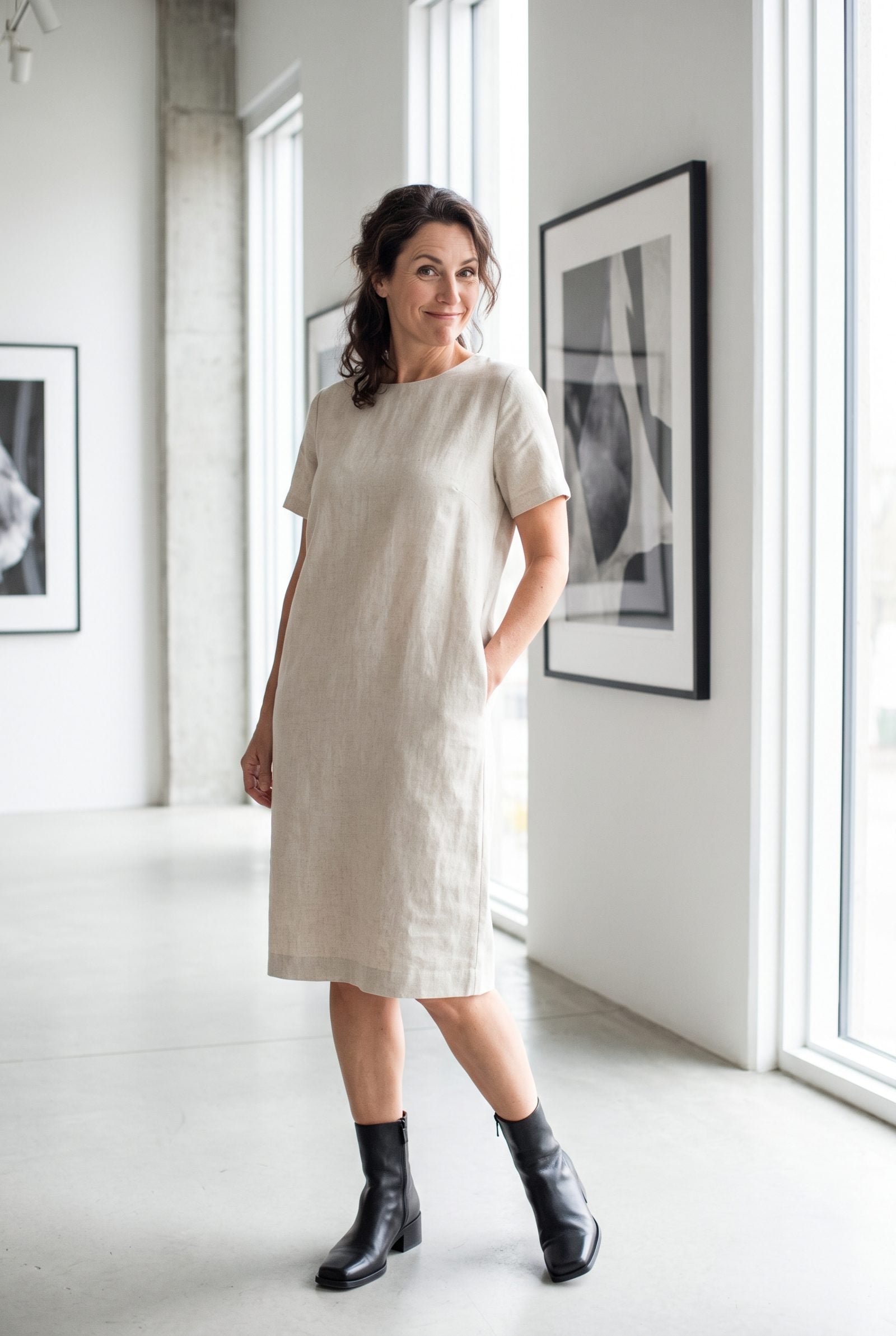
The square toe is the whole update. A rounded or pointed boot under a plain shift reads safe, almost like a uniform, but swap in a square toe and the outfit tilts modern without ever raising its voice.
What makes it work is restraint on both ends. The dress gives nothing away, so the boot carries the character. Matte opaque tights bridge the two and keep the leg as one clean column from hem to boot. No competing shine. No fussy strap. The eye reads a single confident line and moves on.
18. Choosing a Block Heel Proportional to the Hemline
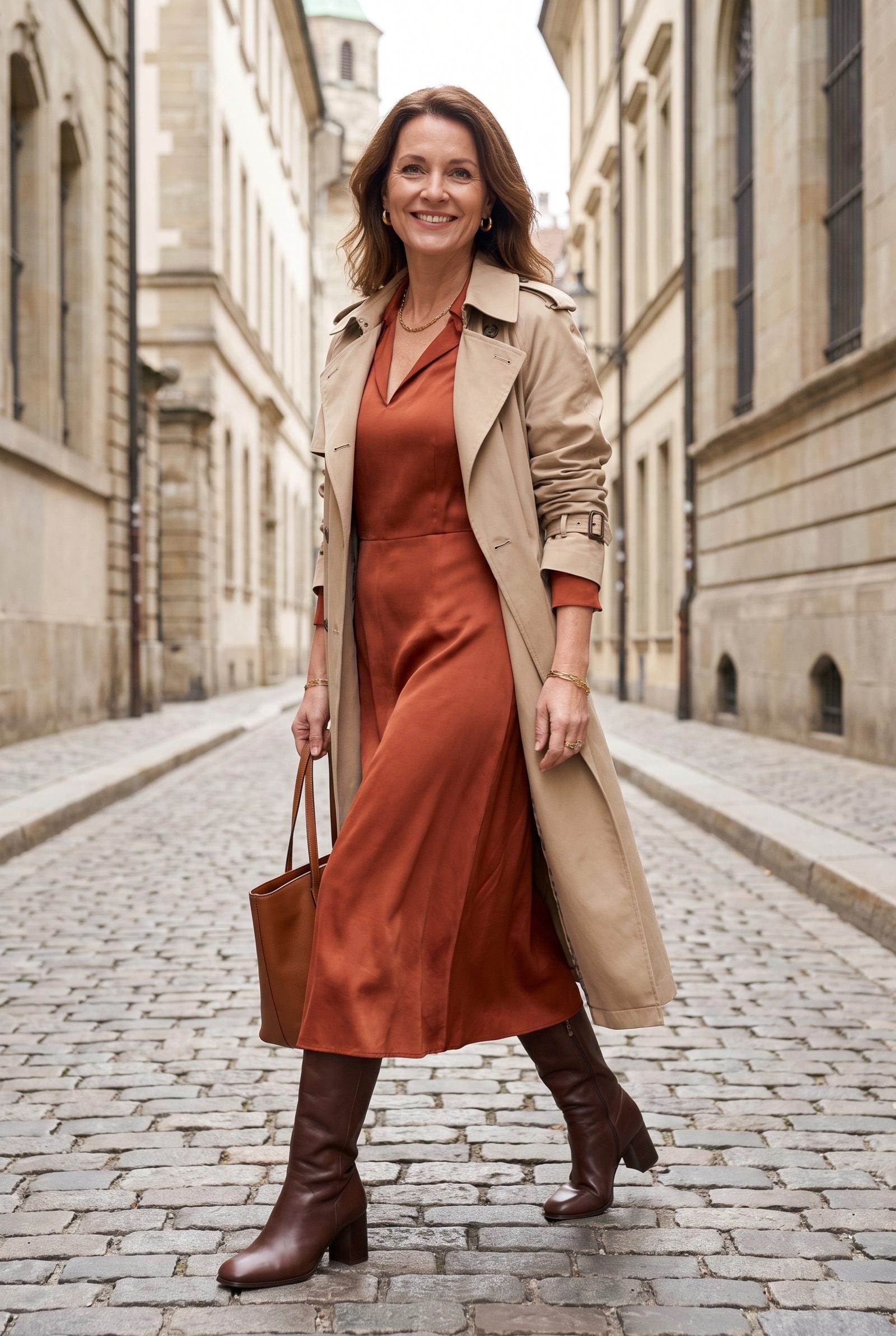
A spindly stiletto under a heavier midi hem looks like a mismatch. The weight of the fabric wants a heel with weight to answer it, and that’s the quiet logic of the block heel — it matches the mass of whatever’s falling above it.
Here the mid-calf crepe hem and the two-and-a-half-inch squared heel speak the same language. The brown leather picks up the warmth of the green without matching it. And a thin self-belt keeps a waist in the picture so the long sleeves and long hem don’t collapse into one solid rectangle.
17. Choosing a Kitten-Heel Boot for a Tea-Length Dress
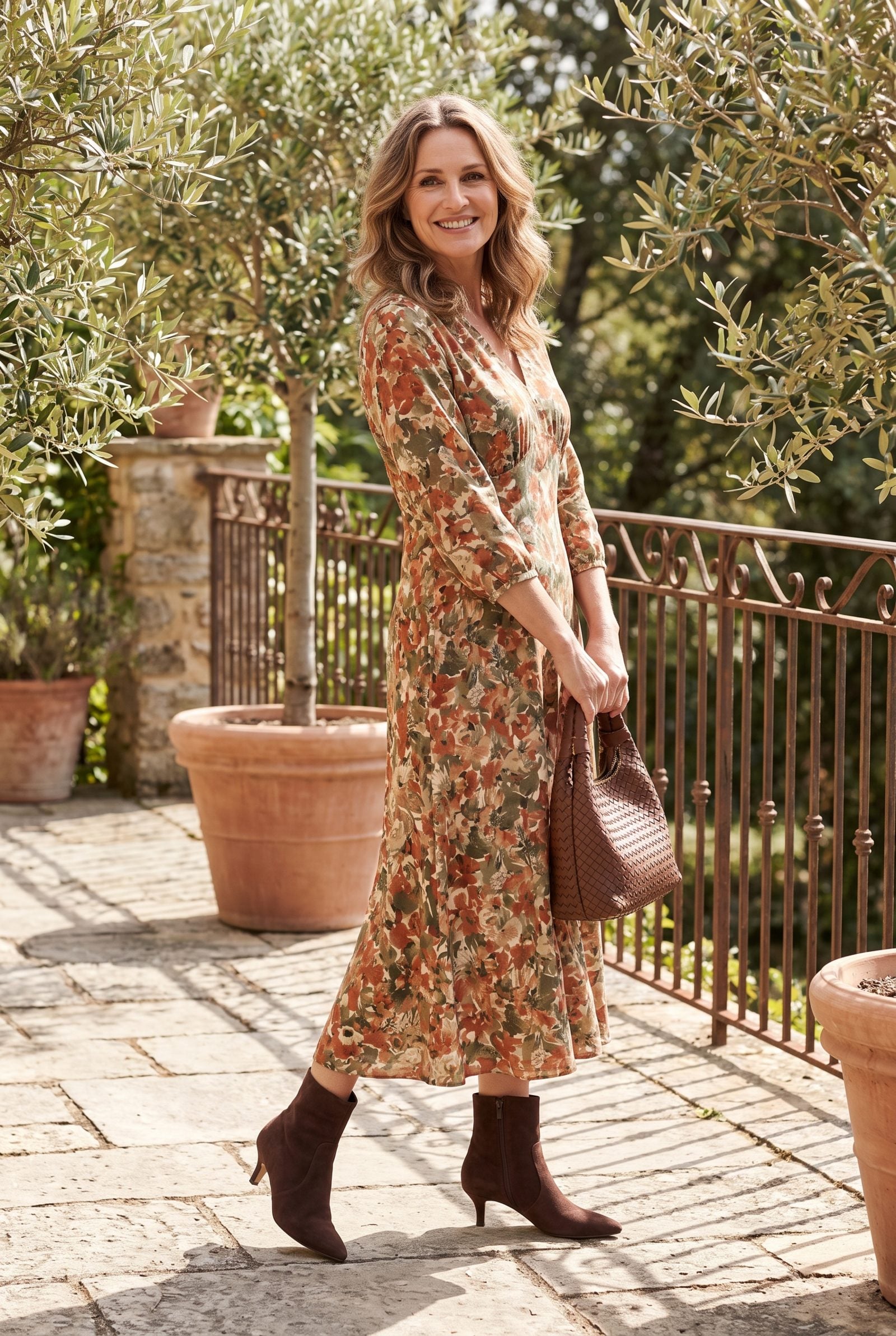
Tea-length hems used to send everyone reaching for a pump. The modern move is a kitten-heel boot, which keeps the leg covered through winter while holding onto the dress’s slightly formal register.
Scale is everything. A short, slim heel under a floaty mid-shin hem keeps the whole thing light on its feet, but pile on a chunky sole and the dress loses its drift entirely. Semi-opaque tights add just enough coverage to read seasonal without turning the leg heavy.
16. Choosing an Inner-Side Zip for an Unbroken Boot Line
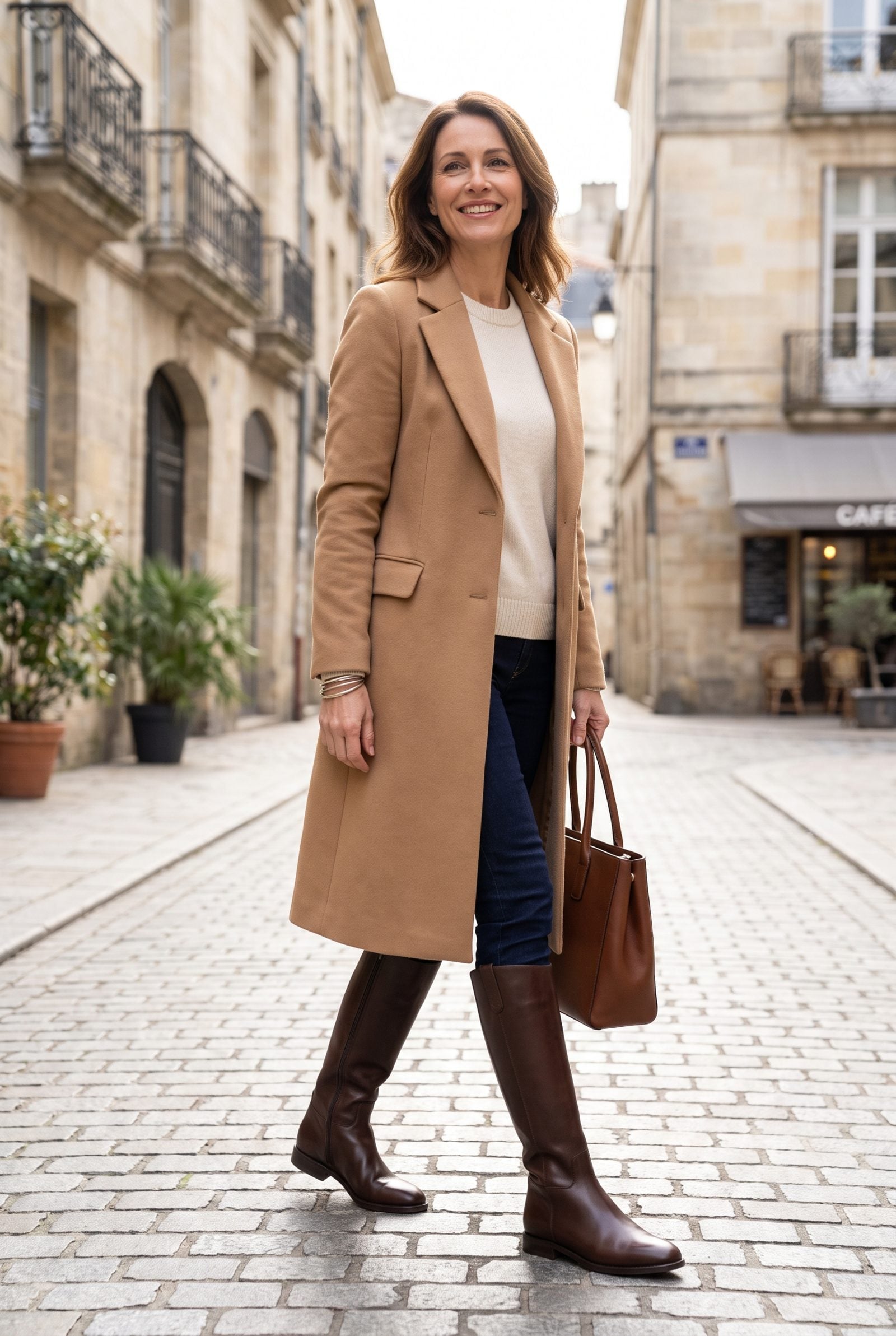
Look at the outer side of the boot. No zip pull, no exposed metal teeth, nothing to chop the leg into sections. That hidden inner-side zip is a small design choice doing big visual work.
An unbroken shaft lets the eye travel the full length of the boot uninterrupted, and that lengthens the whole leg. Here the camel knit, chocolate tights and matching suede build one tonal column, and a hard zip line on the outside would have snapped that column clean in half. Monochrome dressing rewards smooth surfaces — it has nowhere to hide a clumsy seam.
15. Using a Boot With a Covered Heel for Evening Polish

❤️ Would you like to save this?
A covered heel is the detail that pushes a boot from day to evening. Wrap the heel in the same suede or leather as the shaft and nothing interrupts the surface — the boot reads as one considered object instead of a function with a stick underneath it.
Against navy velvet, that continuity really earns its keep. The matte velvet and the faintly sheened tights already create a quiet play of surfaces, and a bare lacquered heel would have dropped a note of hardness into a look that wants none of it. The covered heel keeps everything soft, and intentional.
14. Repeating Metallic Boot Hardware in the Jewelry
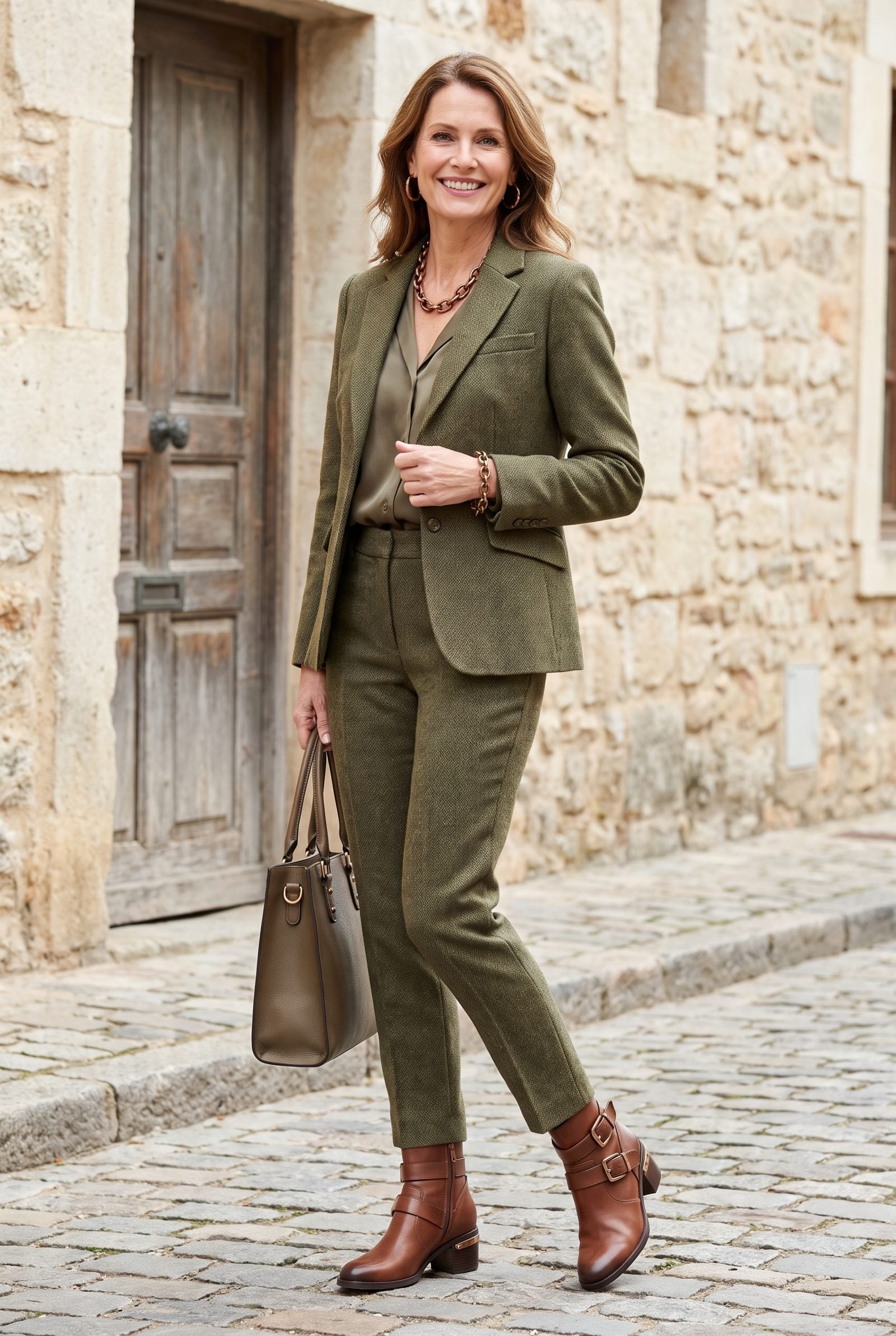
That gold buckle on the boot isn’t a detail to ignore. It’s a thread to pull. Echo the warm metal in the earrings, the bangles, a slim chain, and suddenly a near-all-black outfit has an organising principle running right through it.
Repetition that reads as intention is the oldest move in the accessory book. One gold detail is a fluke. Three or four of them talking to each other is a decision, and the eye clocks that rhythm before you ever consciously name it.
Our readers are close to split on metals: in a ThreadCurve poll, 53% said they always match them, while 47% prefer to mix.
13. Balancing Lug-Sole Boots With a Floaty Chiffon Dress
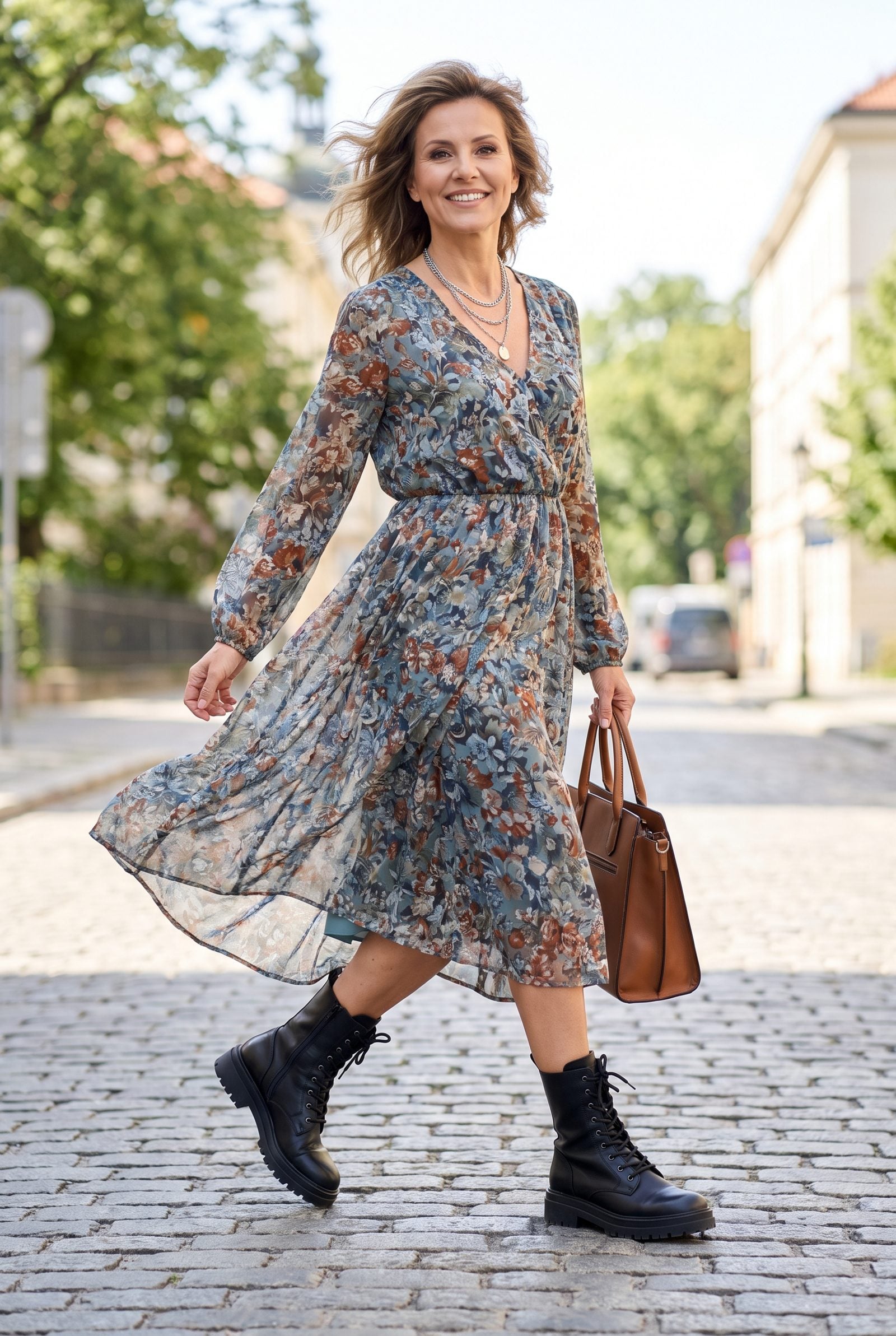
The heavy boot does all the talking here. Left on its own, the chiffon dress drifts toward sweet and a little predictable. Ground it with a lug-sole boot and the whole mood sharpens.
It works because of the collision, not in spite of it. Airy floral chiffon up top, thick black rubber tread at the bottom, and the tension between the two makes each piece look deliberate. Burgundy tights tie the leg into the dress so the boot lands as a true contrast rather than some stray afterthought nobody planned.
12. Pairing a Pleated Dress With Smooth Unembellished Boots
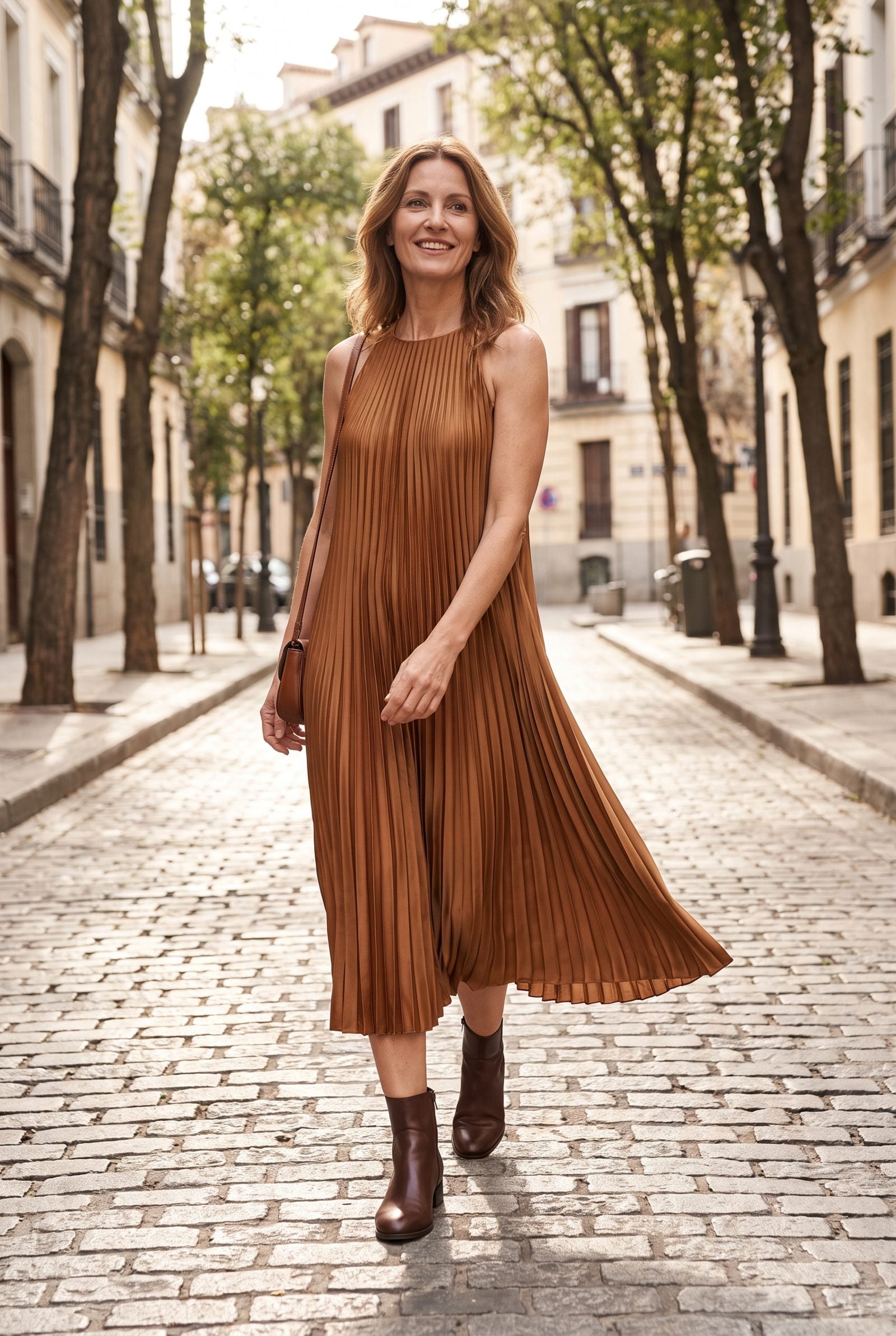
Pleats are busy. Dozens of narrow folds, light flickering across every one. The boot’s only job is to shut up and let them move.
A smooth, hardware-free boot gives the eye somewhere to rest. Add a buckle or a bit of texture and now you’re fighting the pleats for attention, and both sides lose. Here the plain black leather anchors all that movement, charcoal tights keep the transition quiet, and the metallic skirt gets to be the only voice in the room. Which is exactly how it should be.
11. Pairing Lace-Up Boots With a Clean Shirt Dress

A shirt dress is the most honest shape in the closet. Collar, buttons, belt, nothing hiding. And that plainness is precisely what makes a lace-up boot land, because all the busy detail down at the foot has clean ground to stand on.
The laces bring in a practical, slightly utilitarian texture that keeps the emerald poplin from reading too tidy. Tan against green is the real engine, though — a warm-cool pairing both pieces benefit from. It all leans into a lightly androgynous look, and the belted waist keeps it from tipping too far toward menswear.
10. Adding a Side Slit to Reveal a Sleek Boot Shape
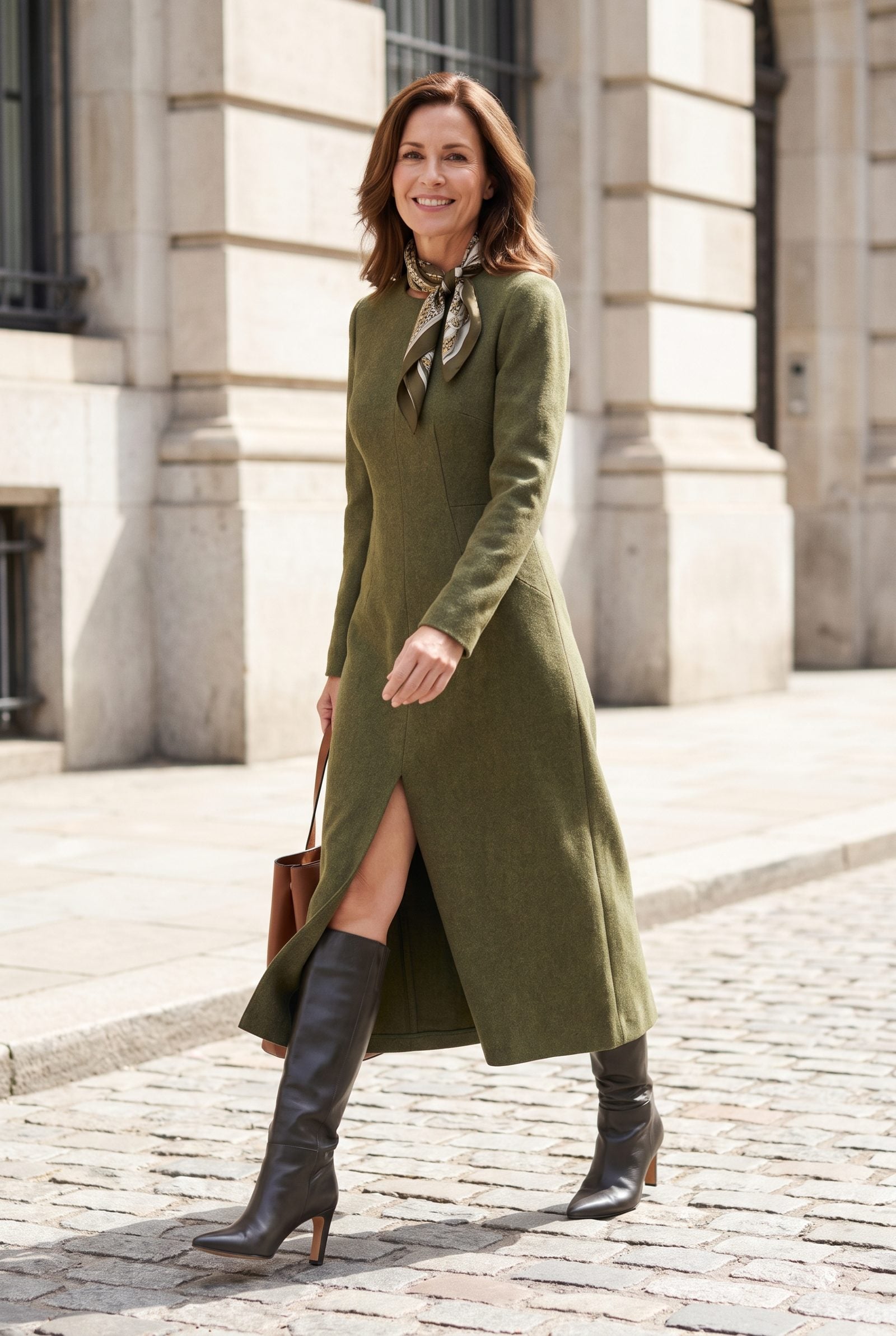
The slit is the reveal, and the boot is what it reveals. Without that opening, a tall boot under a midi hem is simply assumed. Cut a slit and you get a flash of leg and leather with every step, which reframes the whole look from covered to chosen.
All-black could read flat. The slit saves it by introducing motion and a glimpse of that sleek shaft, giving the eye something to chase. Semi-opaque tights keep the opening elegant rather than stark. The boot has to be clean-lined for any of this to work — any bulk and the reveal just turns awkward.
9. Choosing a Low-Contrast Boot for Barely Sheer Tights
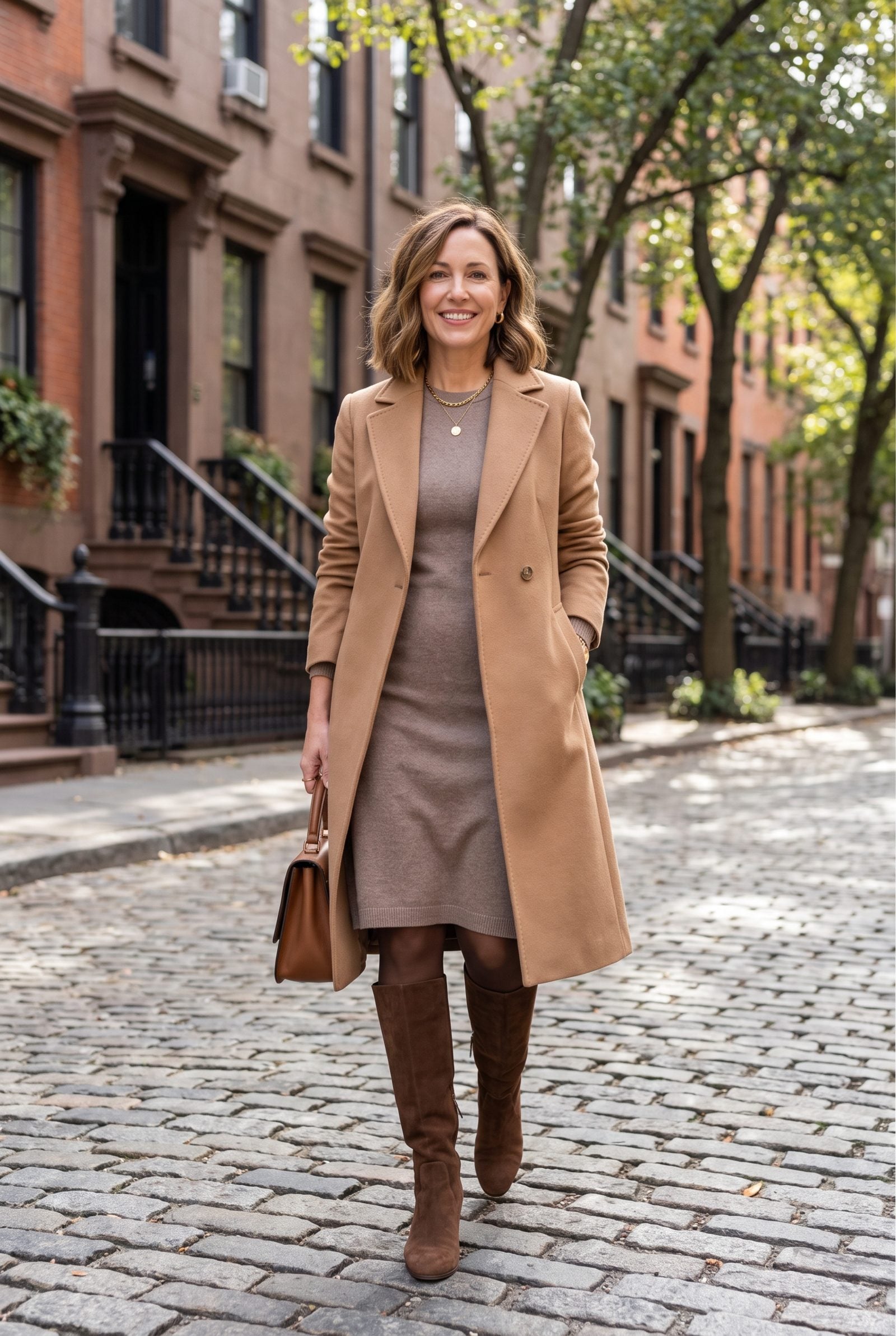
The oldest mistake with tights and boots is contrast. Black boot, bare leg, dark hem up top, and suddenly your leg looks chopped into segments. Match the boot to the tights and the whole line reads as one long column from hem to toe.
Here the charcoal boot sits within a whisper of the charcoal tights. No hard break, no visual scissor across the ankle, and the leg looks longer because nothing interrupts it.
8. Adding a Defined Waist Above Flat Riding Boots
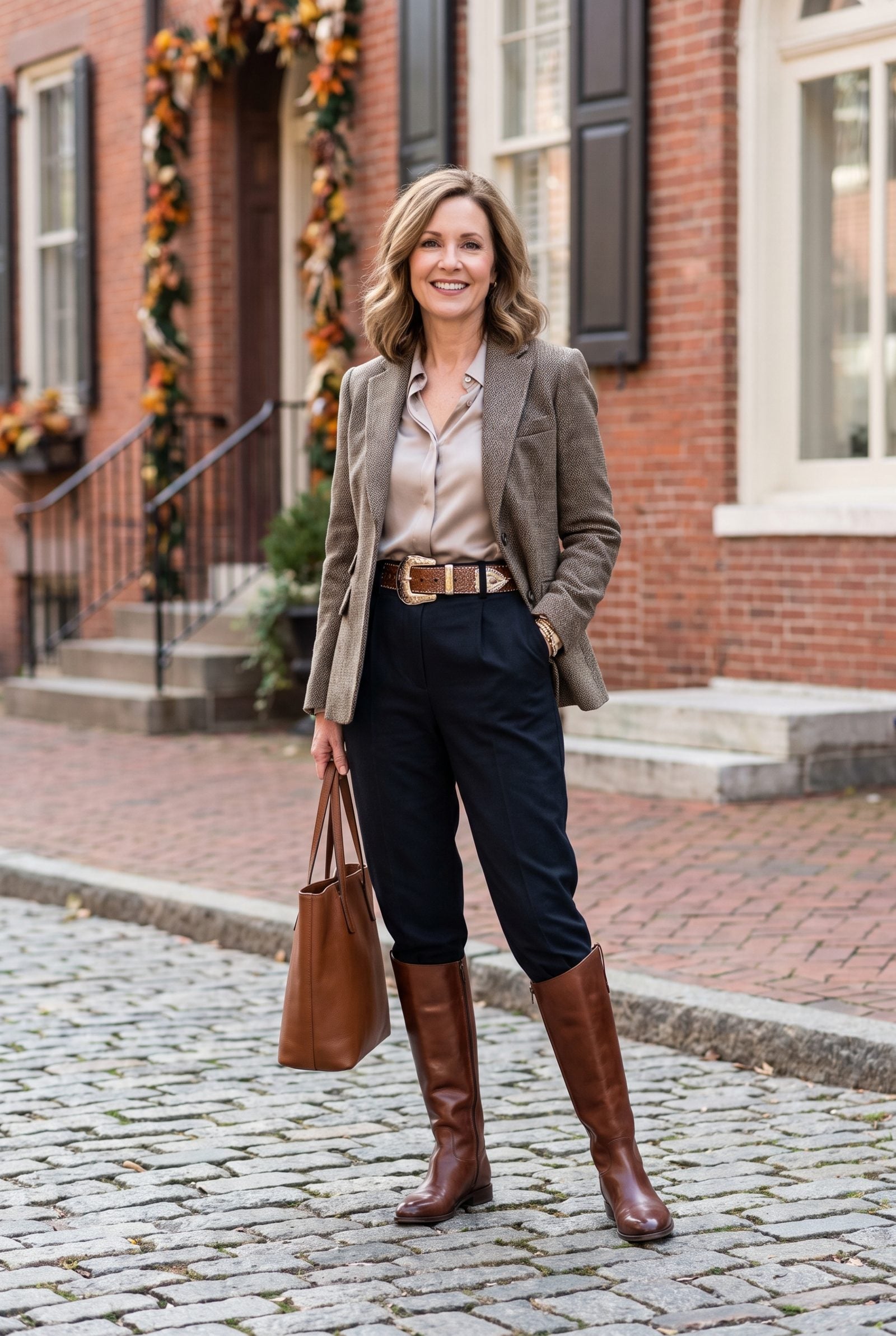
Flat riding boots have a reputation for reading practical rather than festive. The fix isn’t the boot. It’s the waist above it.
A wrap dress cinched at the middle gives the flat boot a job to do — it anchors a silhouette that already has shape. Without the defined waist, the flat boot and straight skirt would run together into one soft tube. With it, you get an hourglass up top and a grounded, elegant base below. Notice too that the hem falls just above the boot shaft, so the boots frame the leg instead of swallowing it.
7. Adding a Cropped Jacket That Ends at the Waist
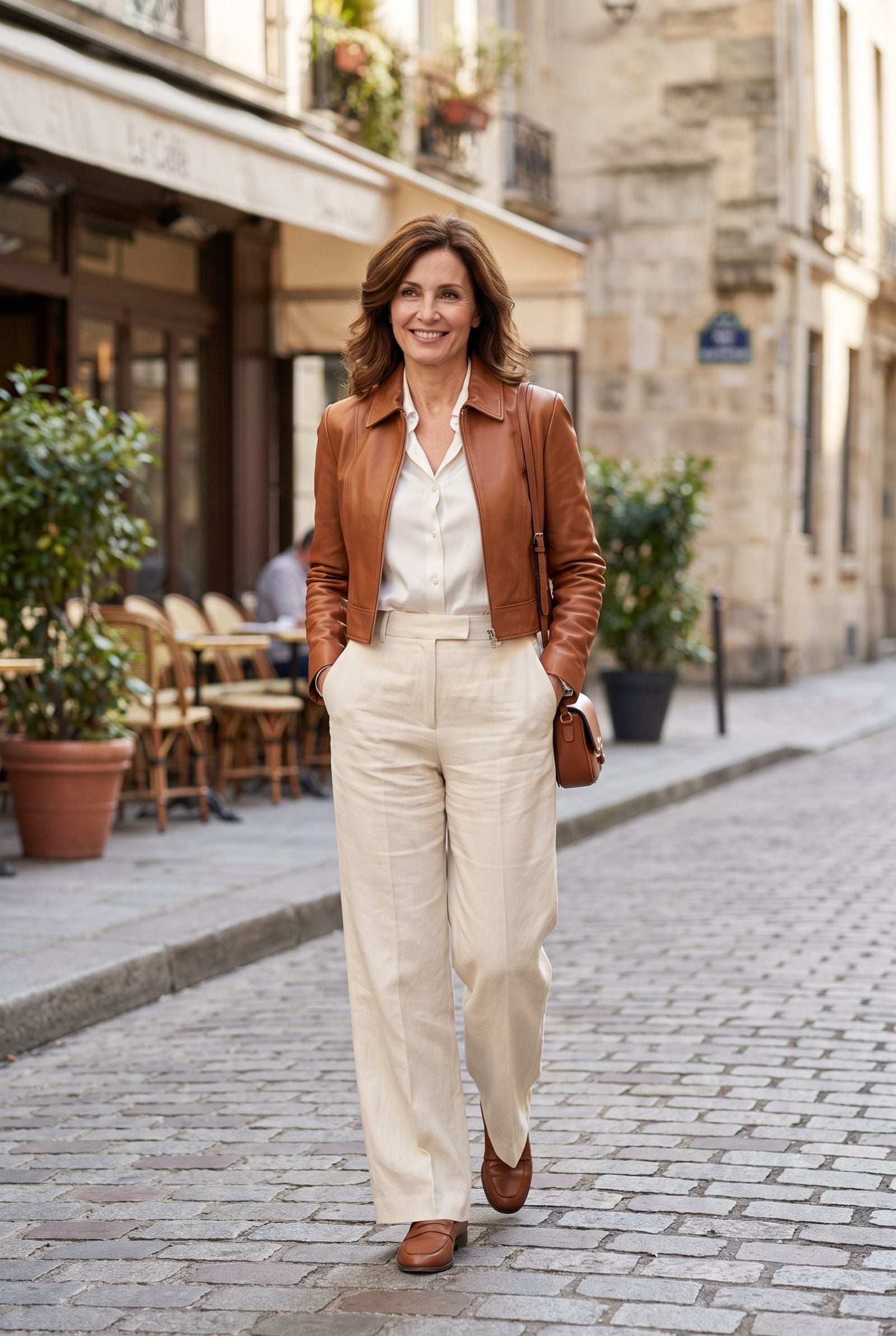
Where a jacket ends decides how long your legs look. End it at the hip and you’ve drawn a line across your widest point. Raise that hem to the natural waist and you’ve pushed the whole conversation up the body.
This cropped wool jacket stops exactly at the waist, so everything below it reads as leg. The sweater dress continues beneath, uninterrupted all the way to the boot. One cut, and the proportions reset.
6. Cuffing a Sweater Dress to Expose the Wrist
❤️ Would you like to save this?
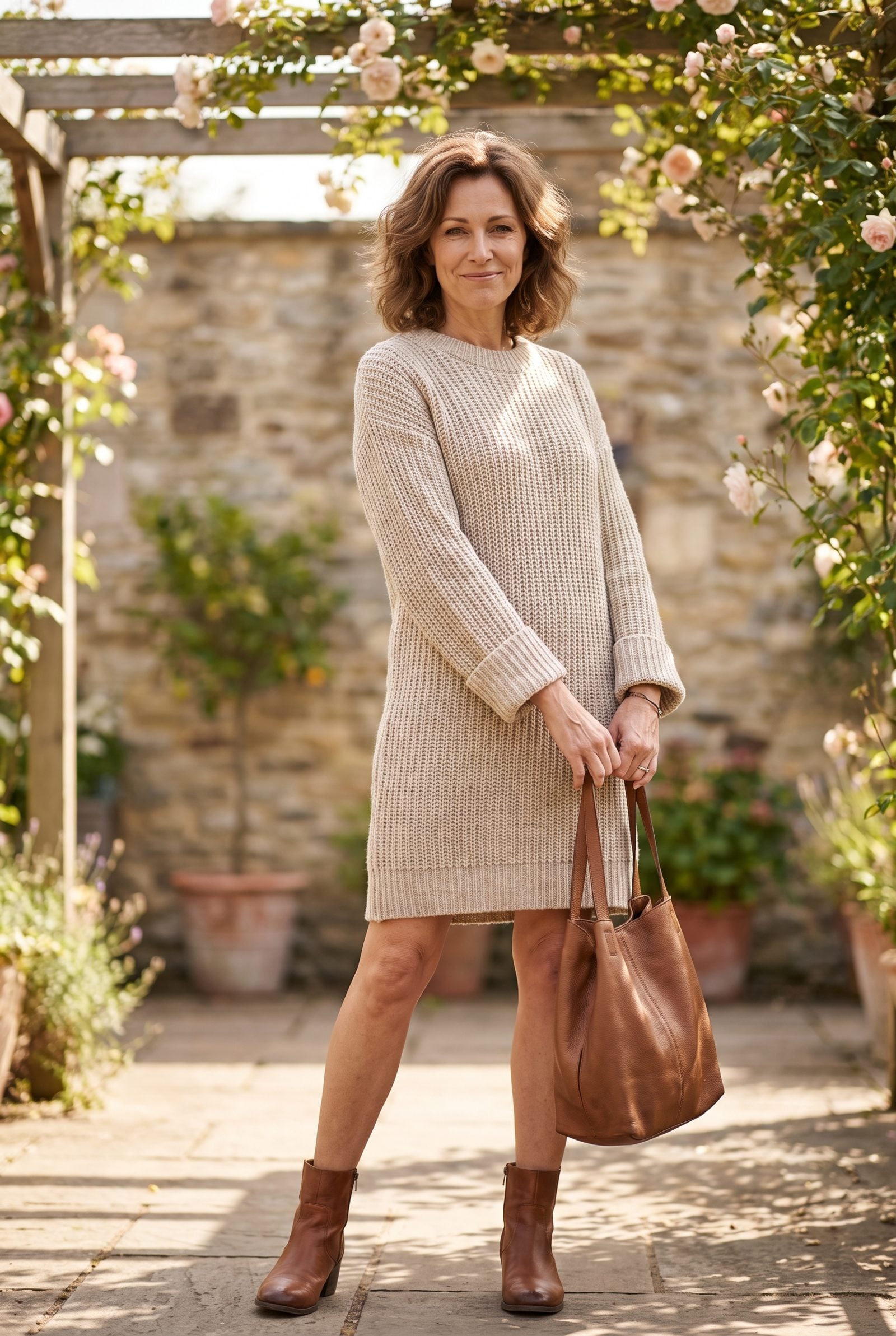
A sweater dress can bury you if you let it. All that knit, sleeves to the knuckle, and the whole thing turns into a cozy sack.
So push the sleeves back and cuff them at the forearm. Suddenly there’s a flash of wrist, a glint of a watch, a visible hand — and that small reveal does an outsized amount of work, breaking up the knit and signaling you chose this rather than surrendered to the cold.
5. Adding a Long Pendant to Extend the Vertical Line
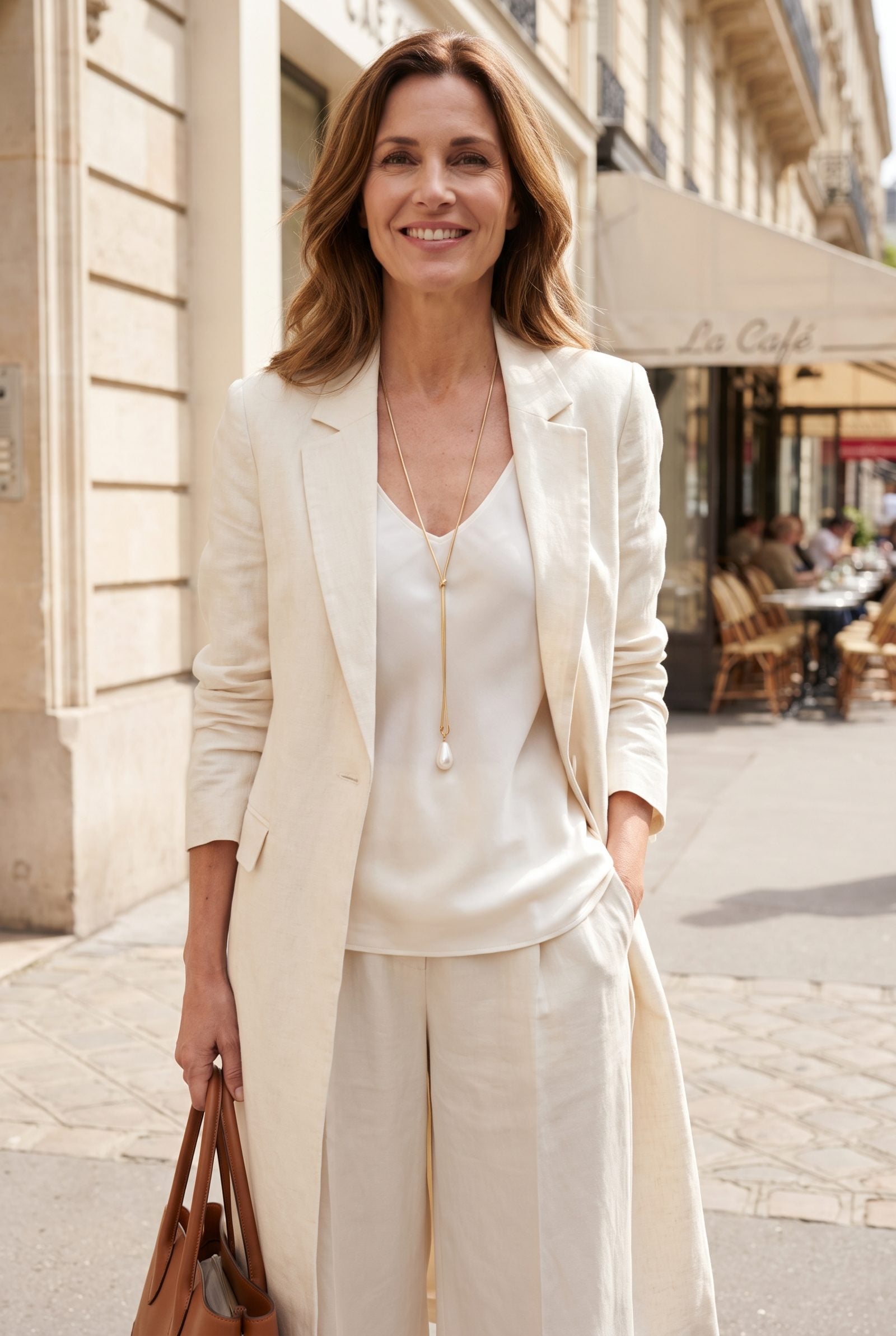
The pendant is the quiet hero here. A short necklace sits across the collarbone and stops. A long one drops a vertical line straight down the center of the torso and keeps the eye moving downward, toward a tonal navy leg that already reads as a single column.
Everything pulls lengthwise. The matching navy boots and tights extend the line below the hem; the pendant extends it above the waist. Top to toe, nothing cuts across.
4. Adding a Structured Handbag to Sharpen a Knit Dress
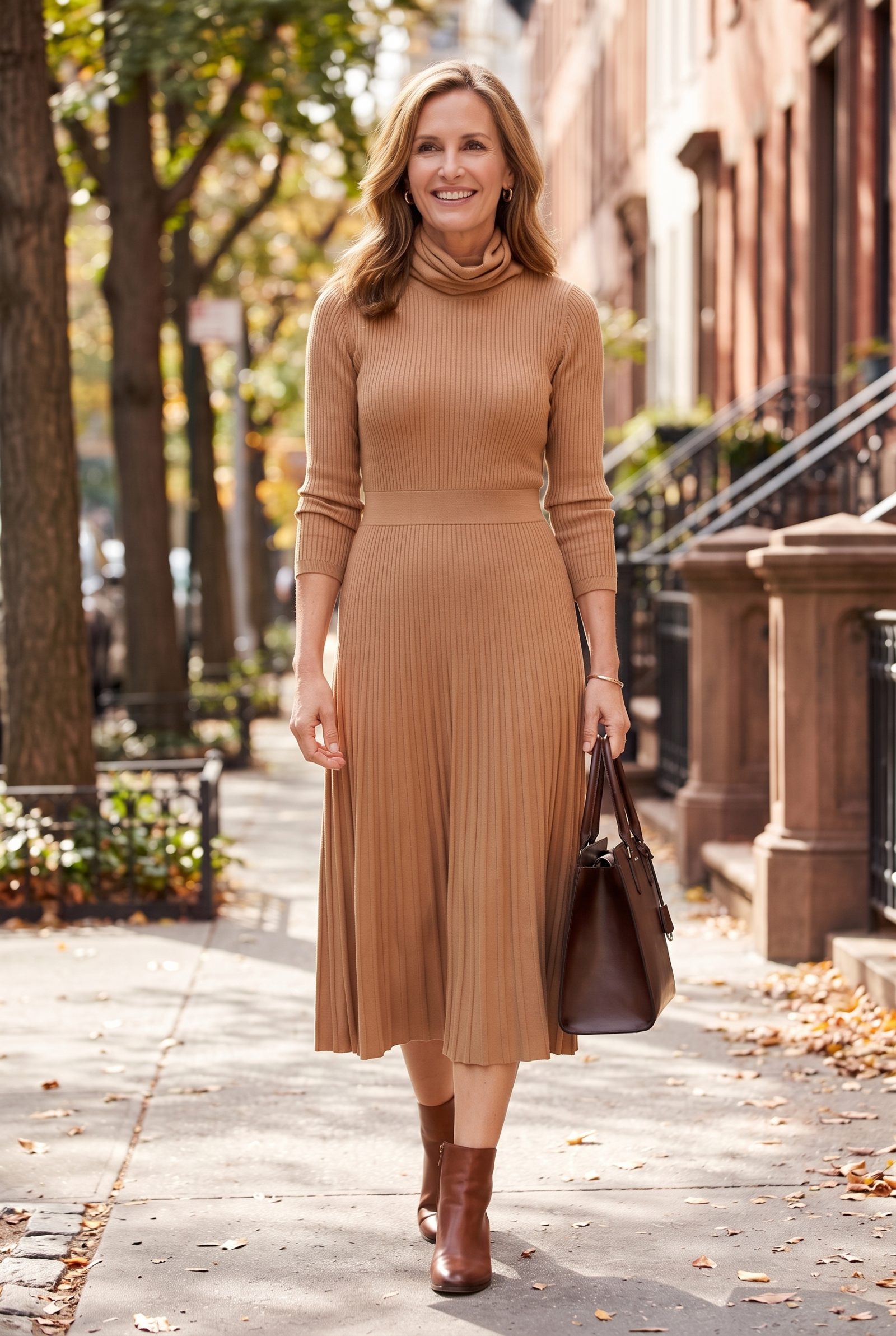
Soft knit wants a hard counterpoint. Left to itself, a ribbed dress reads comfortable, and comfortable can tip into shapeless.
Enter a structured dark brown leather top-handle bag with its crisp, rigid lines against all that drape. The stiffness makes the softness of the wool look like a choice. Call it texture contrast doing the heavy lifting — firm leather set against pliable knit.
3. Adding a Brooch High on the Shoulder to Lift the Eye

Pin a brooch high on the shoulder and watch where people look. Up. Toward your face.
Jewelry placed near the neckline keeps the gaze at the top of the outfit, which is exactly where you want it in a photo-heavy season. A crystal brooch on the emerald knit adds the holiday sparkle without a necklace competing for attention lower down.
2. Finishing With a Steam-Crisp Hem That Falls Cleanly
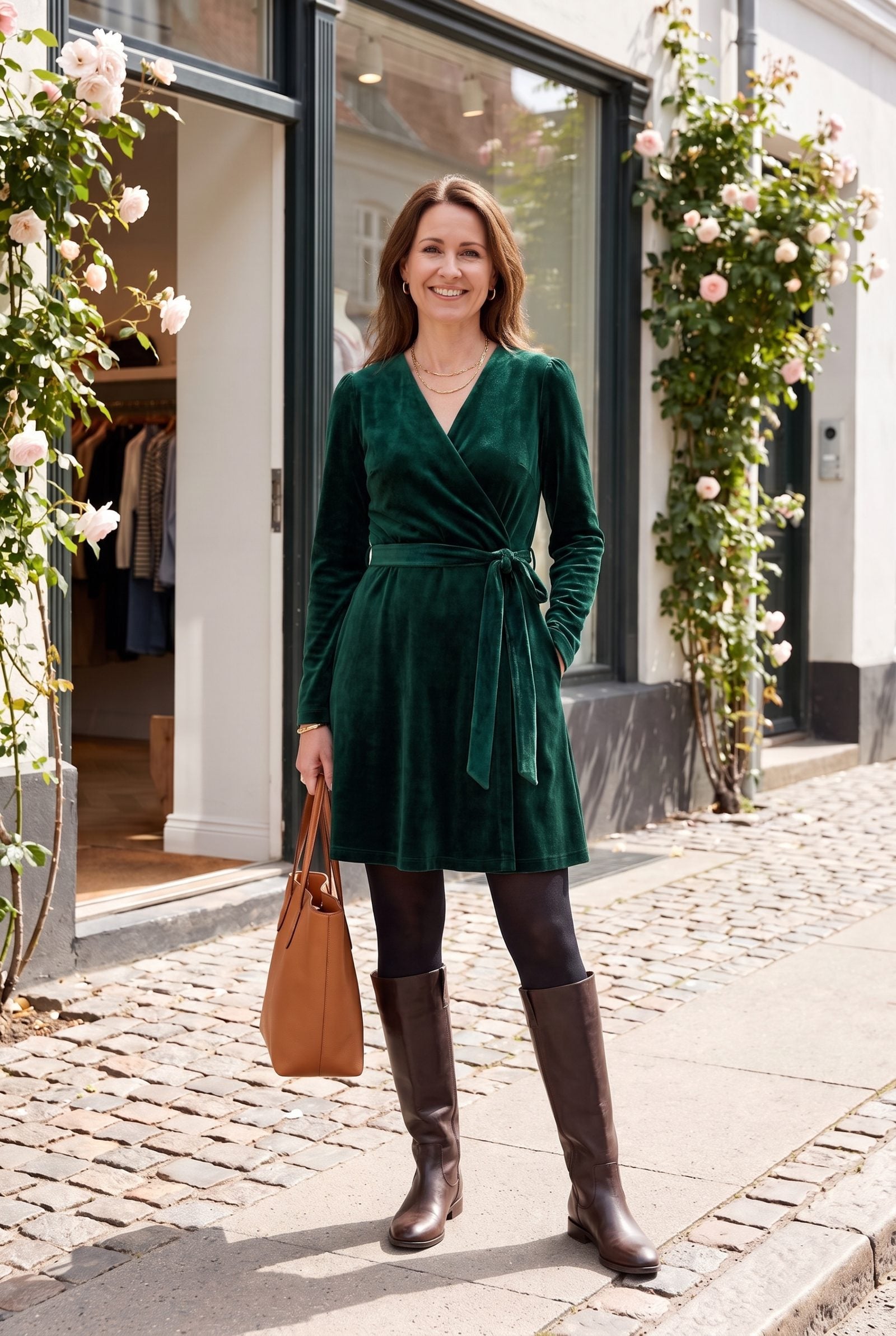
Nothing dates an outfit faster than a hem that ripples and curls at the edge. Even the most polished dress in the closet can be undone entirely by skipping ten seconds with a steamer. A crumpled hem whispers neglect even when nothing else does.
Steam it until it falls in one flat line and the whole dress reads sharper. That level edge sits clean above the boot, the leg beneath looks longer, and the finish looks like you meant it. Free, and the detail most people forget.
1. Echoing Cream Boots With an Ivory Collar
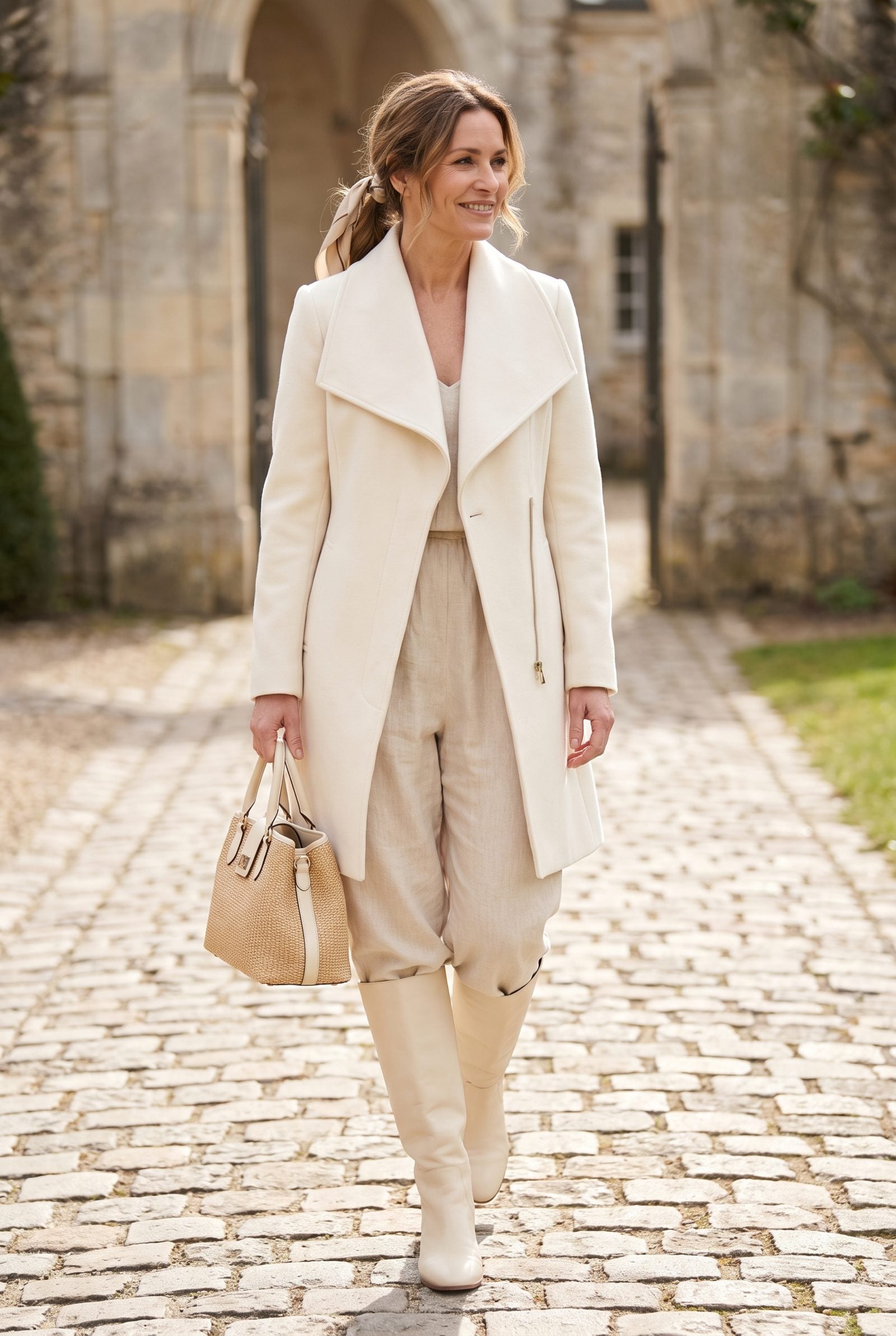
Repetition is a stylist’s quiet trick. A light tone that appears twice, top and bottom, frames everything between and makes the whole outfit feel composed.
So the ivory collar at the neckline and the cream boots at the floor bracket this camel knit dress in matching light notes. The eye reads the echo as intention — a bookend holding the look together head to toe. And cream leather boots read fresher than black in winter, lightening the base so the dark months don’t drag the whole thing down.