
The cardigan was born to behave. Buttoned to the collarbone, worn over a blouse, draped on a chair until somebody got cold. For its first few decades in women’s closets, the sensible wool layer asked for nothing and got exactly that.
Designers had other plans. They dropped the shoulders, then padded them. Cropped the hem to the ribs, then dragged it to the floor. Fine gauge gave way to rope-thick cables, plain buttons to crystal, and wool to cashmere with a four-figure price tag. Glass beads, a varsity initial, granny squares, a cape collar: every era handed one humble idea, a knit that opens down the front, a fresh dare.
The cardigan kept saying yes. Beatniks, preppies, power dressers, grunge romantics, and minimalists each took a turn bending the shape, and every one handed back a knit more sure of itself than before. Few garments have changed this much without losing the plot. Fewer have looked this good along the way.
FYI, thanks to AI imagery software, we’re able to create very specific fashion and hairstyle examples to illustrate the points being made. In some cases, imagery is exaggerated to hammer home the point. Also, assume links that take you off the site are affiliate links such as links to Amazon. this means we may earn a commission if you buy something.
32. The Library Workday Cardigan (1950): Tobacco Wool and Patch Pockets
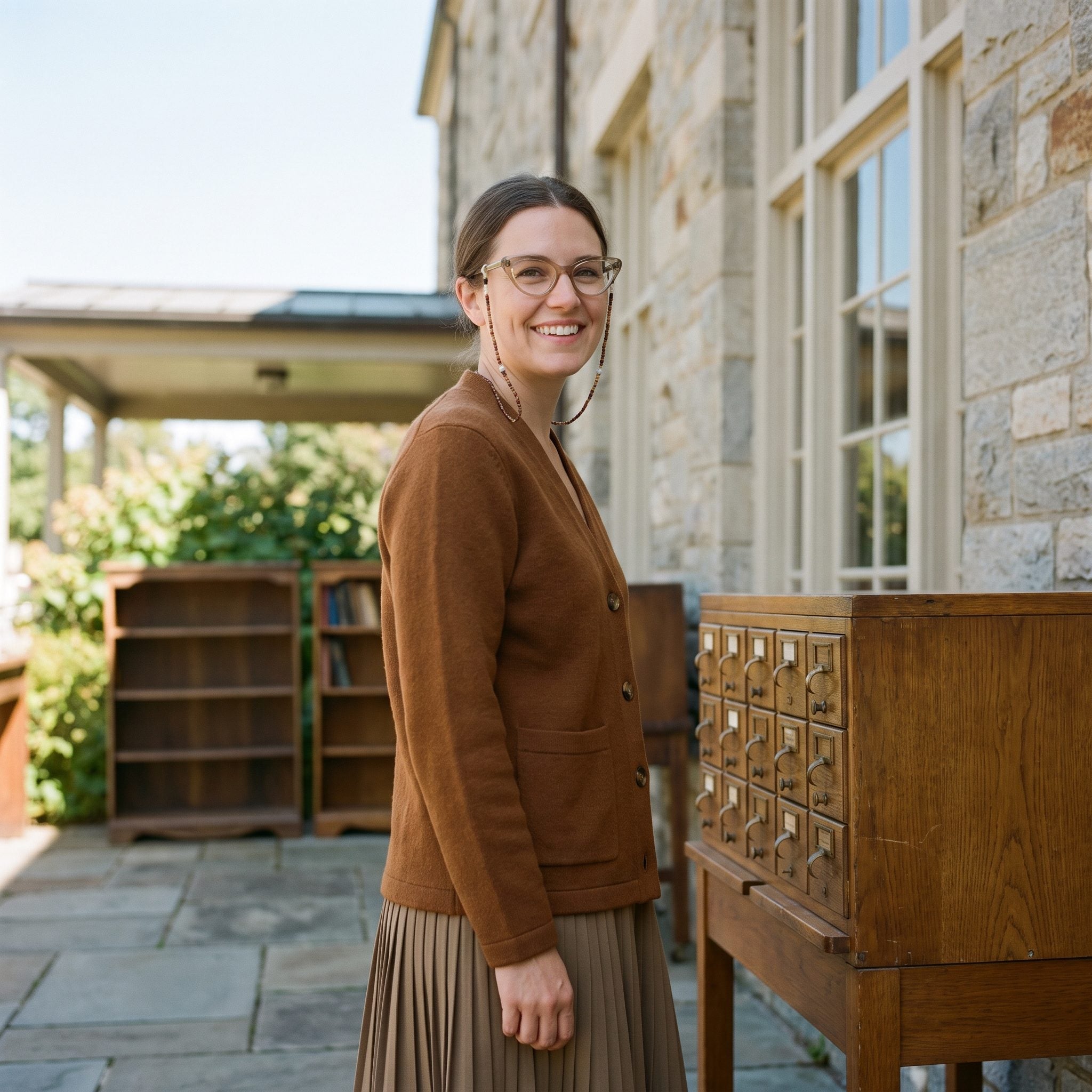
Everything here is built for a long shift on her feet. The tobacco wool gives where a fitted knit would pinch, the patch pockets actually hold things, and the plain buttons snag on nothing. A working woman’s uniform, years before it earned the name.
Brown over cream over muted tweed: no color competing, no detail raising its voice. The cardigan does the one job it was invented for: warmth you shrug off once the radiator finally kicks in.
31. The Coordinated Twinset (1952): Powder Blue in Matching Pairs
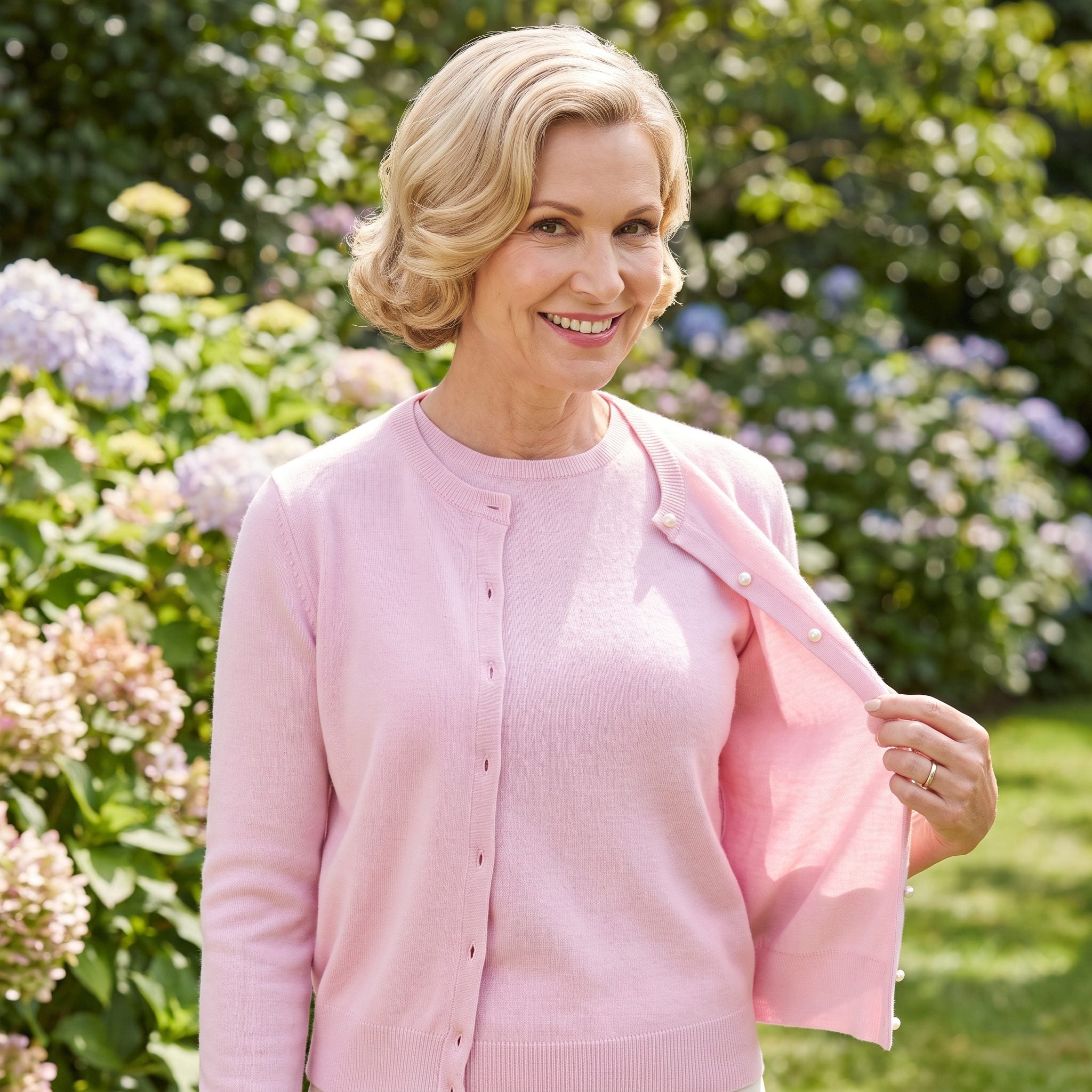
The twinset is all about the reveal. She wears the cardigan open so you catch the matching shell underneath, both pieces in the identical powder blue, and that doubling signals money and intention. One knit is practical. Two from the same dye lot is a decision.
The pearls work as punctuation against the soft blue, confirming a woman who dressed with care. A fitted cut through the waist balances the full gray skirt: narrow top, wide bottom, a clean hourglass without a single cinch.
What Our Readers Say
- Asked which era they dress in, two out of three ThreadCurve readers picked timeless over retro revival or current trends.
From ThreadCurve reader polls and votes.
30. The Beaded Cocktail Cardigan (1955): Glass Beads Meet Black Taffeta
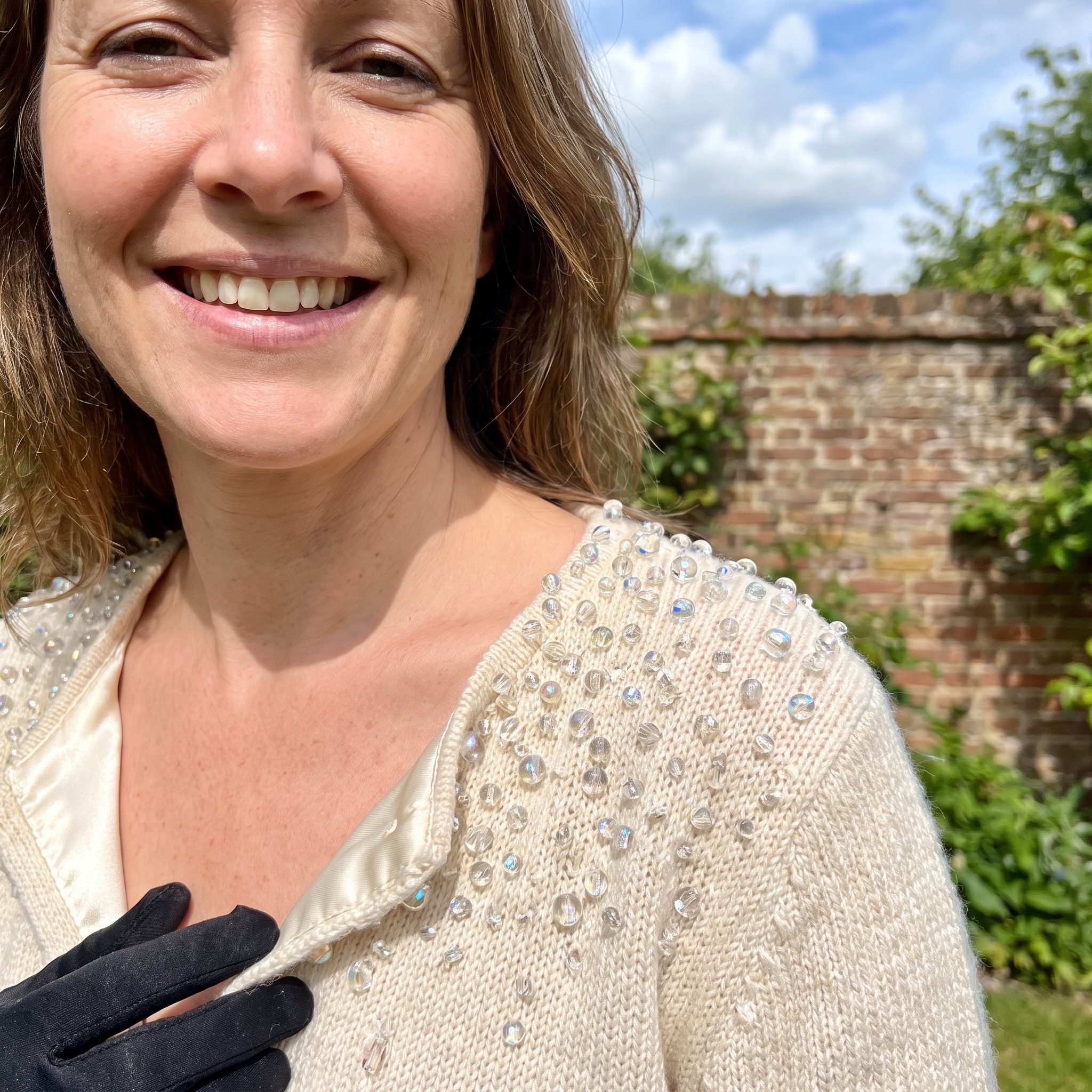
Someone took the most sensible garment in the closet and buried it in glass beads. A cardigan at a supper club should feel wrong; the beading is the argument for why it doesn’t.
Matte ivory knit studded with light-catching beadwork, set against the liquid sheen of black taffeta. Soft against structured, dull against gleaming. For the first time, the cardigan stops apologizing for being a cardigan and starts asking for attention.
29. The Collegiate Letter Cardigan (1957): One Initial, Full Membership

One stitched cream initial turns a cardigan into a membership card. The white blouse, plaid pleats, and penny loafers are standard-issue campus; the letter is what says you belong to something, and in 1957 belonging was everything.
The V-neck and striped cuffs give it a jaunty, sporty edge the fitted twinset never had. Borrowed from menswear and school athletics at once, it hangs looser and moves more freely for it.
28. The Beatnik Black Cardigan (1959): Buttoned Up, Blouse Skipped
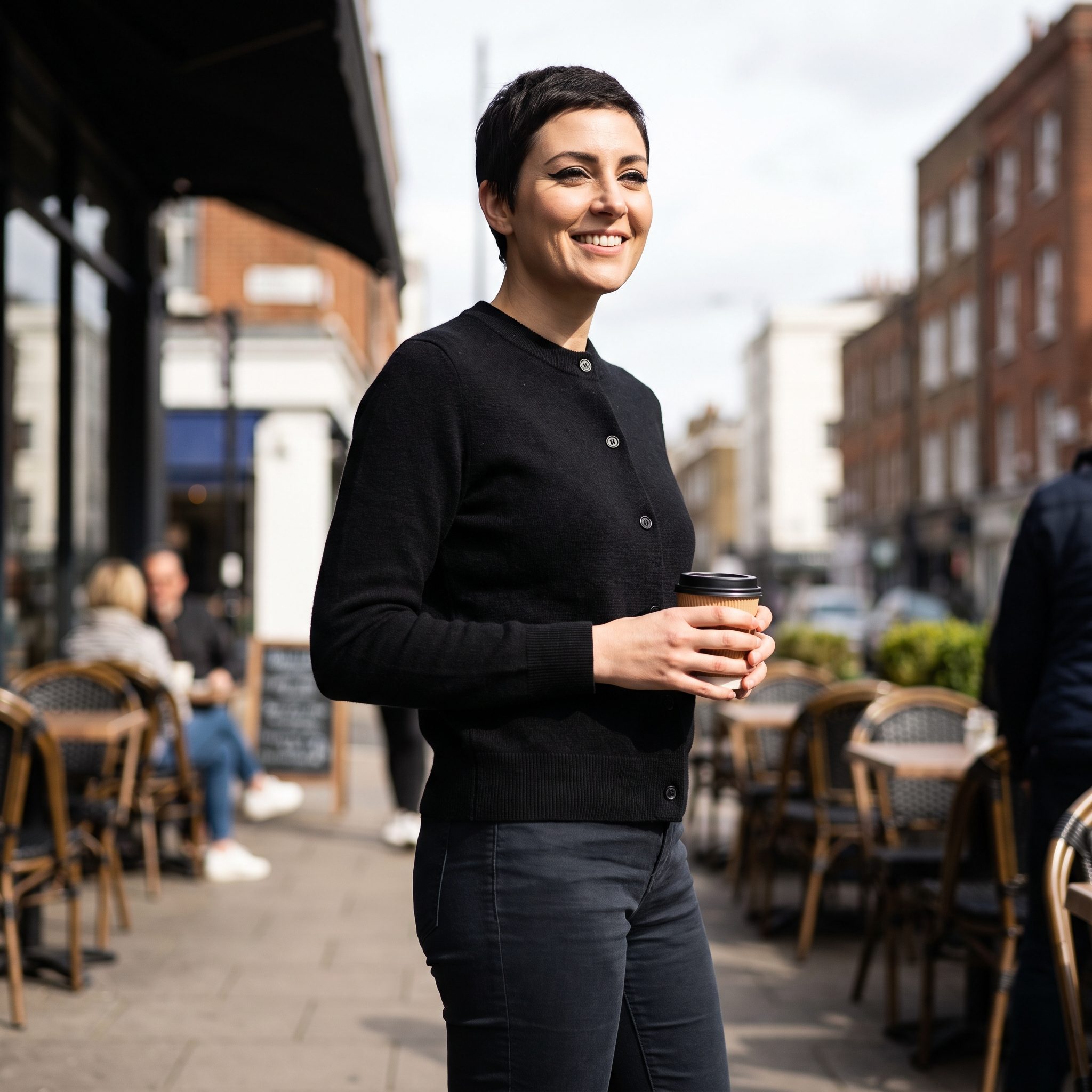
Buttoned to the top, no blouse underneath. Wearing the cardigan as the top instead of the layer is the rebellion here: the garment built to go over things suddenly has nothing to go over.
All black, sleeves shoved to the forearm, flats instead of heels. Severe and easy in the same breath, it hands the cardigan a whole new personality. No longer polite, now a little aloof.
27. The Country-Club Argyle Cardigan (1962): Mustard Diamonds Off the Fairway
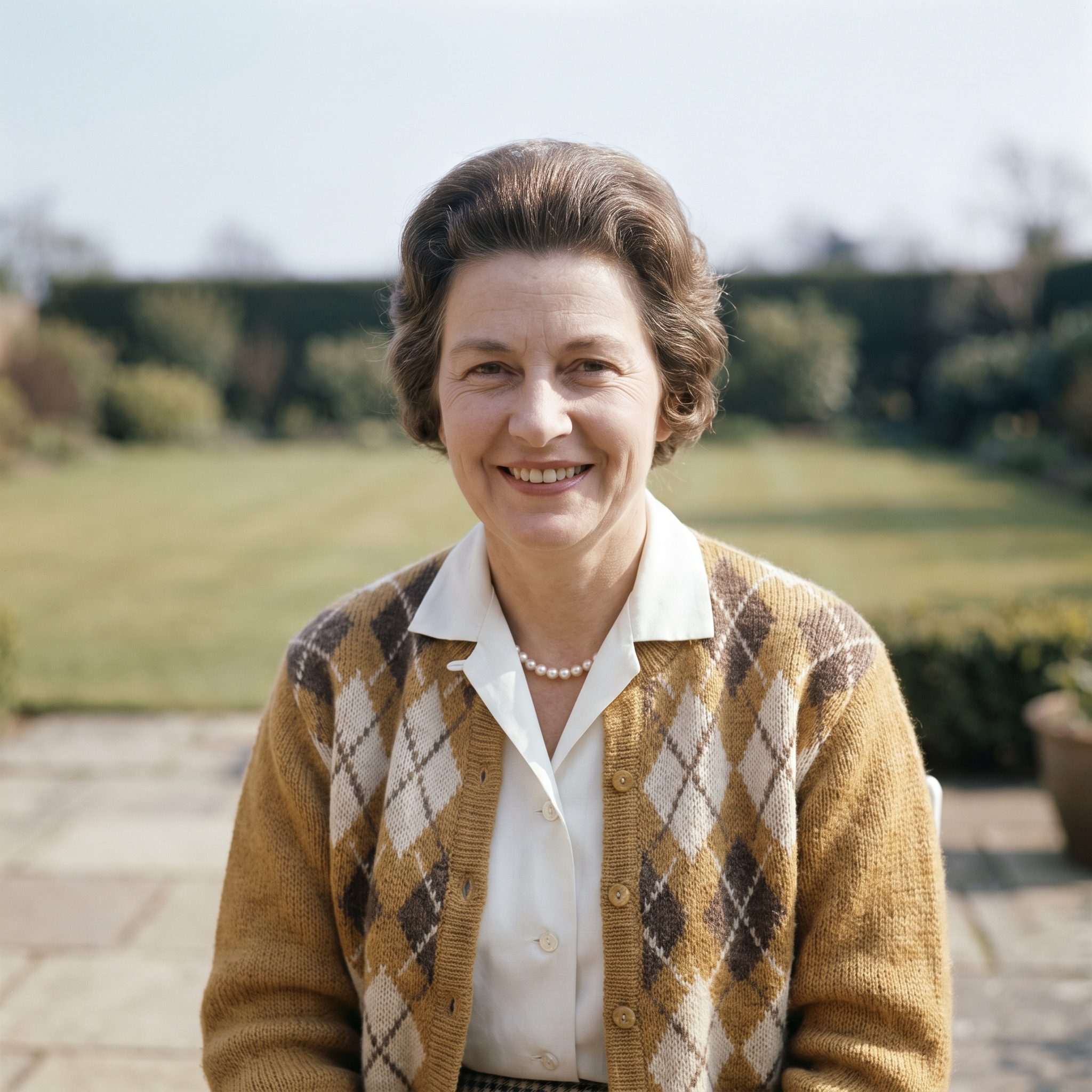
Mustard, cream, and brown diamonds lock into an interlocking grid that gives the eye a rhythm to follow, so the collared shirt and tapered slacks happily stay in the background.
Argyle wandered off the golf course and stuck around because it looks moneyed without trying. The fitted cut and tapered slacks build a clean vertical line, and the warm palette flatters with no cool note fighting it. Leisure as a social signal, worn by someone with somewhere relaxing to be.
26. The Mod Geometric Cardigan (1965): Color Blocks and a Tangerine Mini
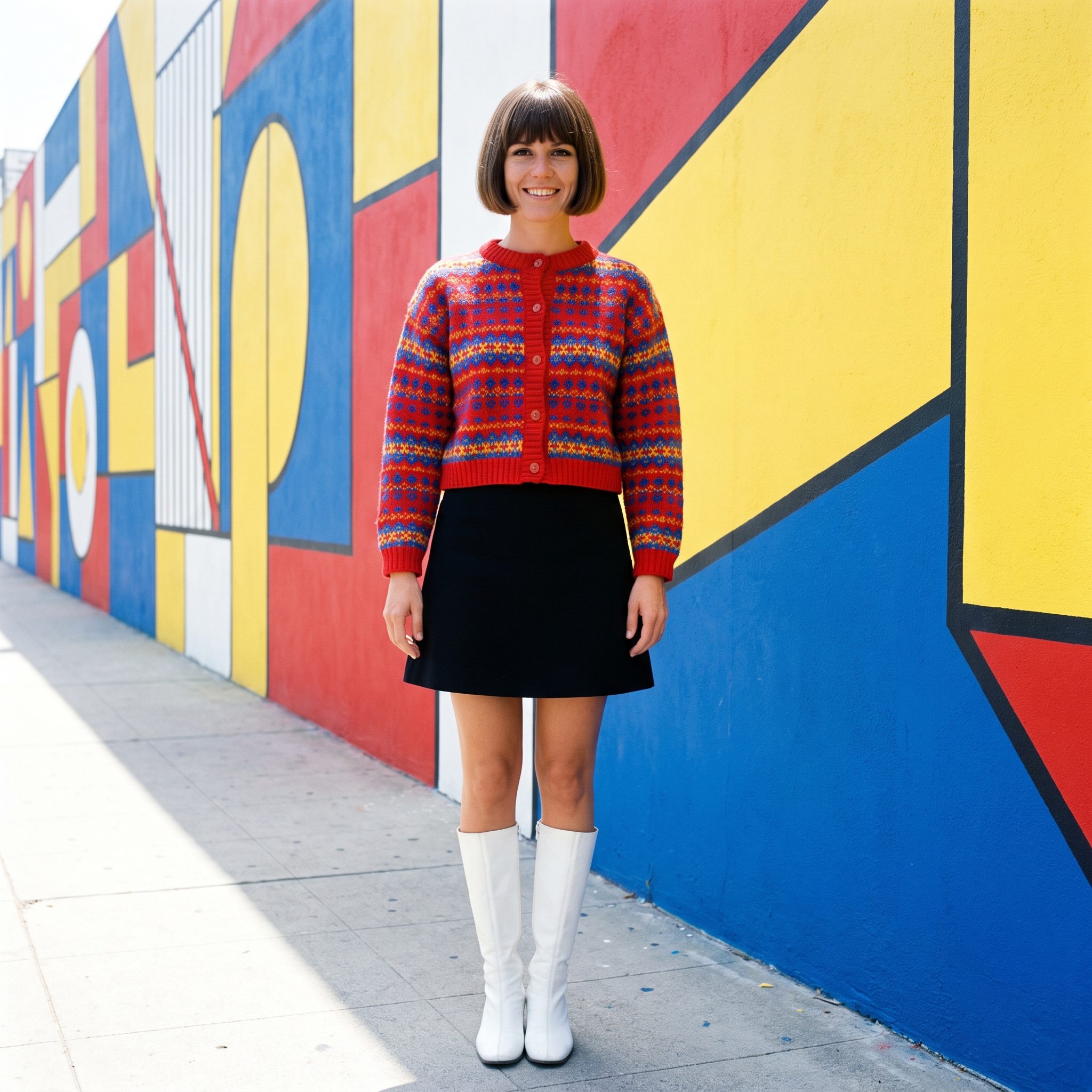
Boxy, short cardigan. Tiny A-line skirt. The silhouette squares off into something engineered, and knitwear had never looked this graphic.
Navy-and-white panels hit like a poster, flat blocks of color with no shading, while the tangerine miniskirt detonates underneath. Oversized buttons add the toy-box nerve of the mod era. The cardigan goes young and loud, shedding every scrap of its sensible past.
25. The Embroidered Folk Cardigan (1968): Floral Vines and Faded Denim
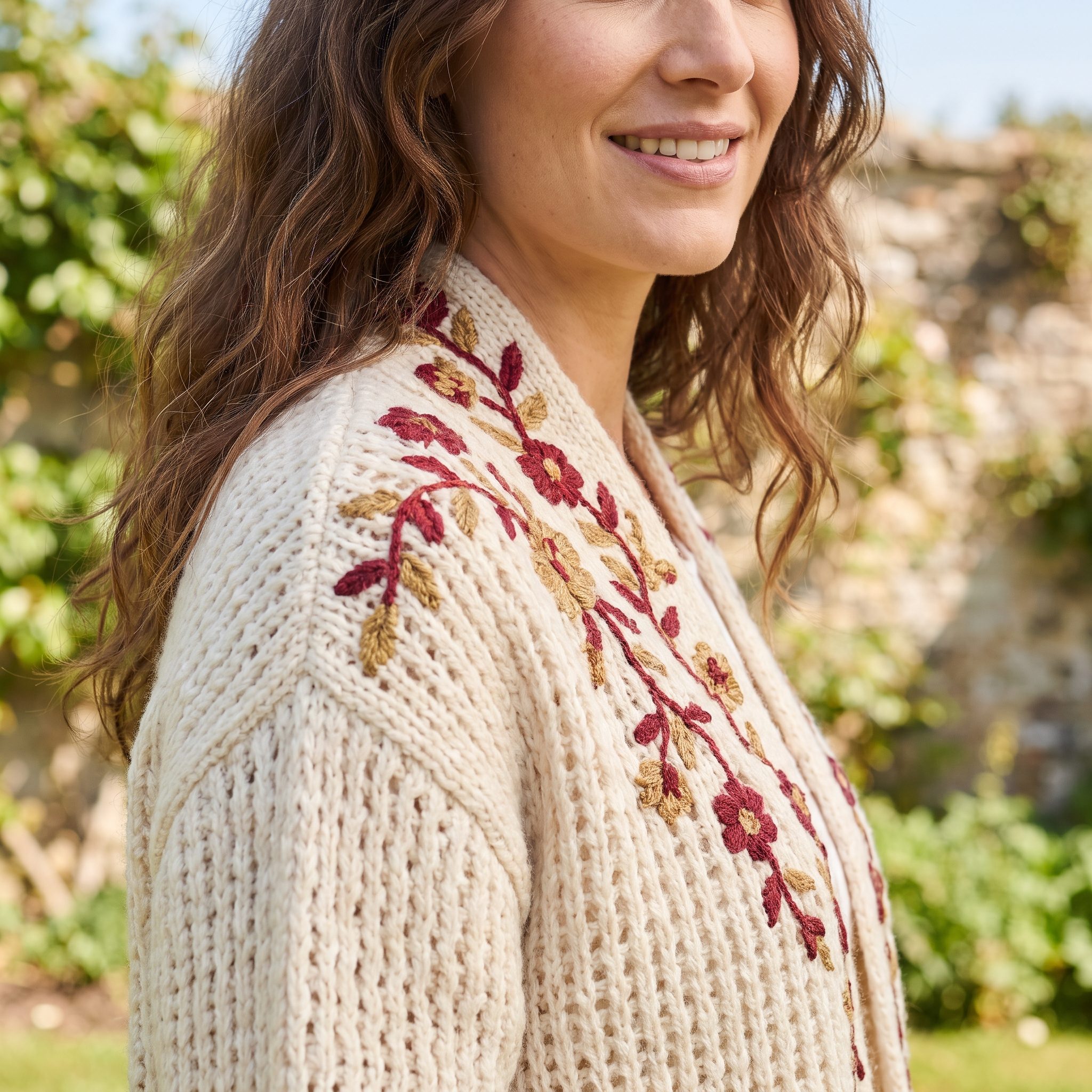
Floral vines in red and gold trace the neckline and front edges like a story told in thread. Against plain cream knit, the color concentrates right where the eye lands first, and the whole piece feels handmade and personal.
Faded denim and suede boots keep it earthy instead of precious. The folk cardigan was the late 1960s pushing back against mass production: a knit that looks like someone’s hands made it.
24. The Granny-Square Crochet Cardigan (1971): Handwork Visible From Across the Room
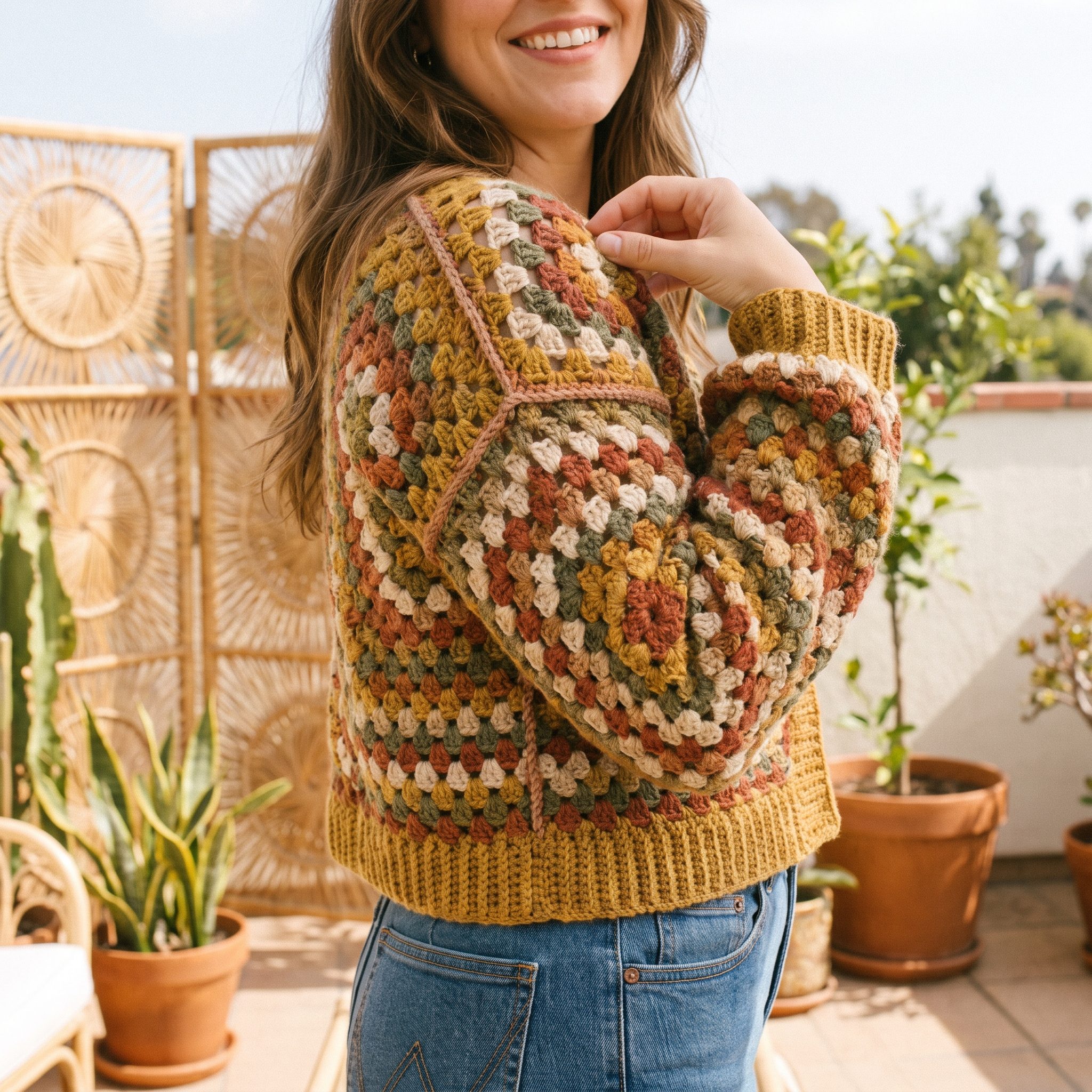
Each square is its own small decision, stitched separately and joined. The handwork reads from across the room, and no machine could fake it.
The open front lets the squares breathe, flared jeans keep it grounded, and the rust-and-mustard palette ties it to every other warm tone of the decade. This is the cardigan at its most homemade and least commercial, and it has since aged into pure nostalgia.
23. The Belted Ribbed Cardigan (1974): Rust, Cream, and a Knotted Waist
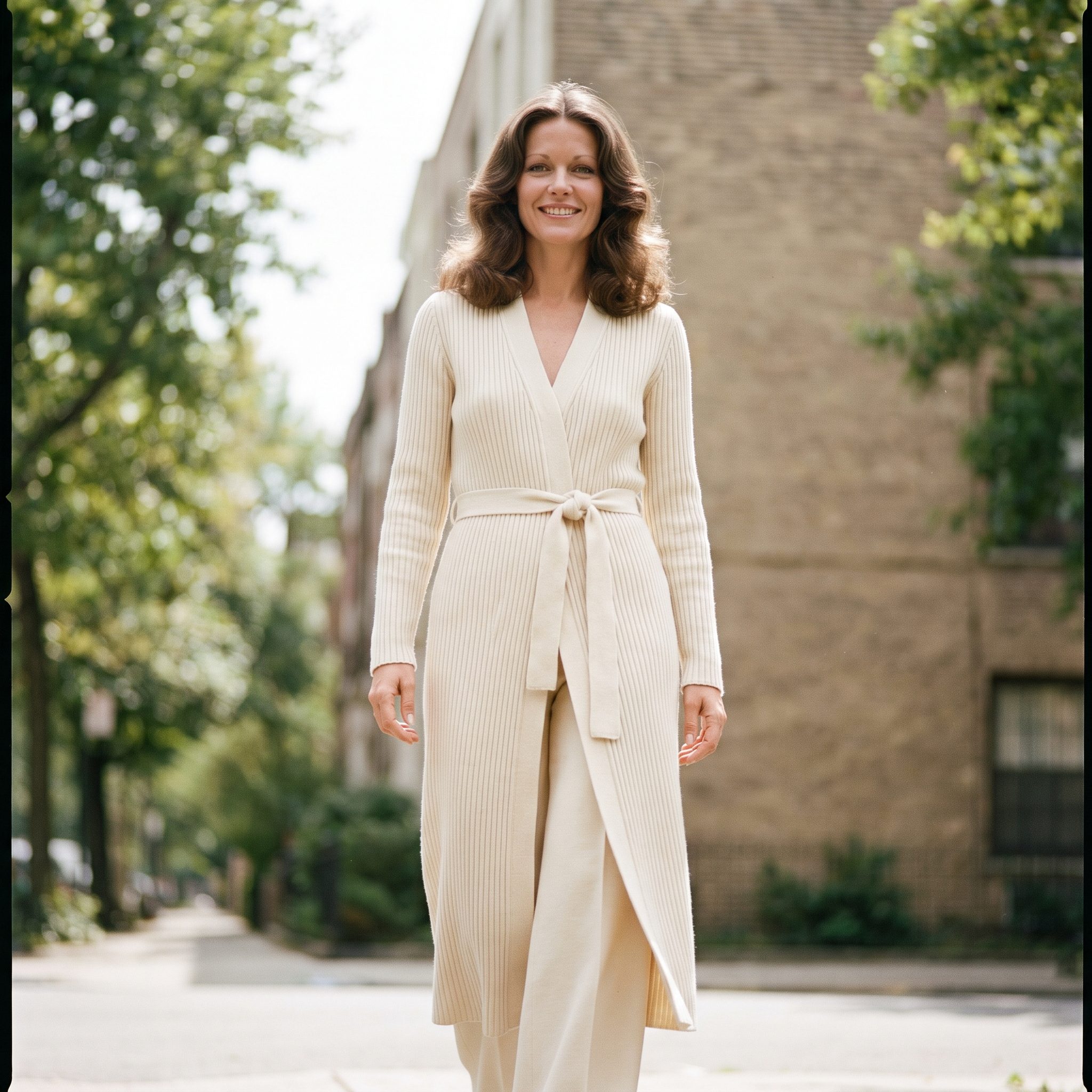
A long ribbed cardigan hangs straight as a column until a matching tie knots at the waist. Suddenly there’s a shape, a middle, and a reason for the vertical ribbing running long and lean on either side of the cinch.
Rust over cream over chocolate brown builds in one warm family, so nothing clashes and the look reads deep and considered. Stacked-heel boots add the height the proportions want. No longer something thrown over an outfit, this cardigan is the outfit, and the clearest preview of the luxury statement knit still to come.
22. The Nordic Lodge Cardigan (1977): Wooden Buttons, Wool, and a Fireplace

Heavy enough to double as outerwear, and on cold mornings it did. The shawl collar frames the face and softens the whole upper half, giving the eye somewhere warm to land before it travels down the Nordic yoke.
The cream-and-brown patterning across the shoulders also widens the top line just enough to balance the corduroy trousers below, so the silhouette never turns bottom-heavy. Wooden buttons instead of plastic signaled quality. This was a buy-once, wear-for-a-decade piece.
21. The Metallic Evening Cardigan (1979): When Knitwear Learned to Shimmer

A cardigan was supposed to be practical. This one caught the light across a room and announced an evening out.
The deep V lengthens the torso and draws the eye toward the face, while bronze yarn brings a glamour plain knit never could. Over a silk camisole and black palazzo trousers, it bridges cozy and cocktail without picking a lane. Dopamine dressing, decades ahead of the term.
In our reader polls, readers who reach for a V-neck were more likely to choose a fine knit as their next top, 76% versus 55% of everyone else.
20. The Preppy Tennis Cardigan (1982): Navy-and-Green Edging and Court Sneakers
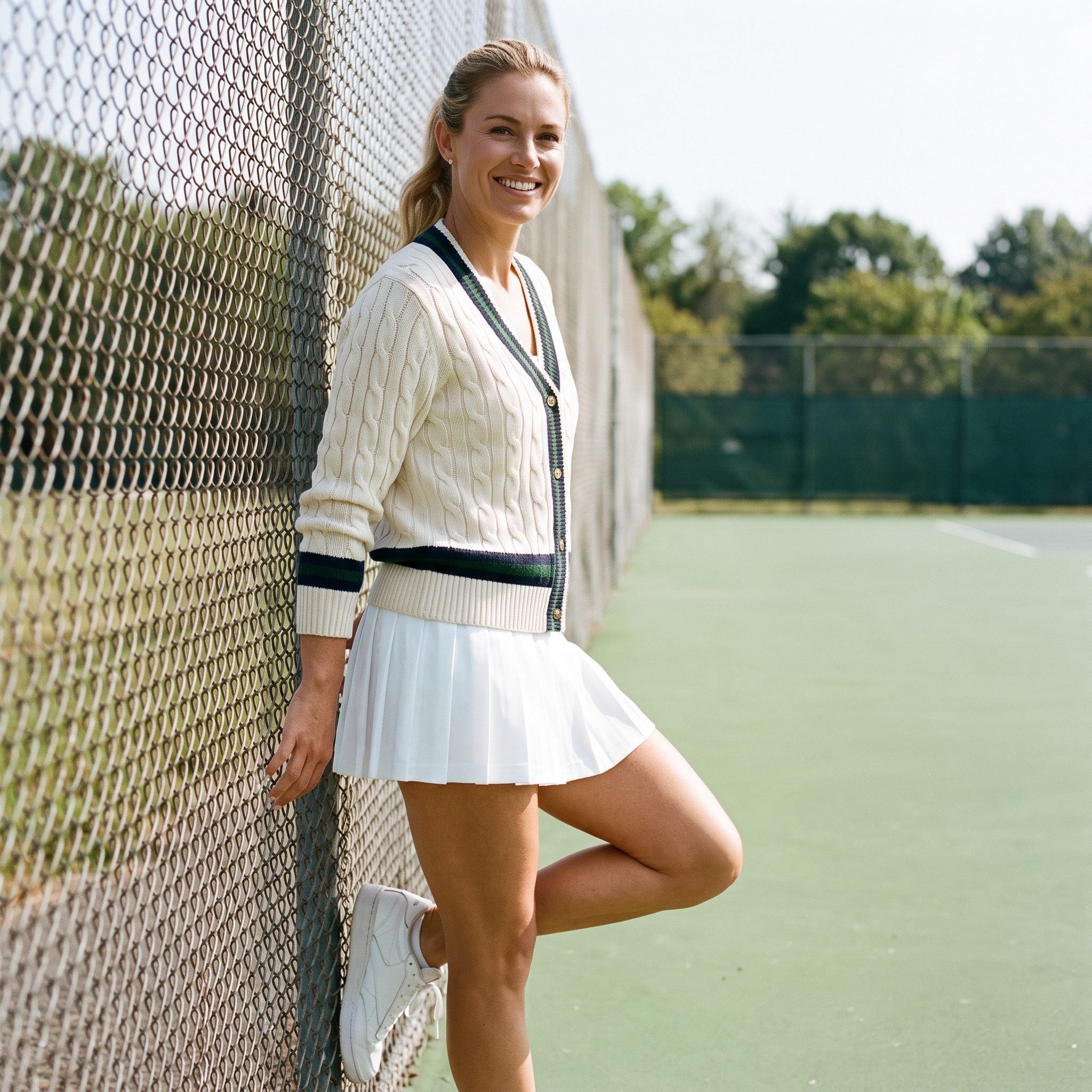
Three colors, one message: you belonged at the club whether you played or not. Navy-and-green striping along the V-neck and cuffs was the preppy signature that turned a plain white knit into a uniform.
White holds the base, the striped edging adds the club credentials, and the pleated skirt keeps the proportion crisp. Layered over a pastel polo, it stacks two sporty pieces without a scrap of clutter. Ralph Lauren and the broader Ivy League revival pushed this look hard, and suburban malls fell in line within a season.
19. The Oversized Graphic Cardigan (1985): Cobalt, Magenta, and Dropped Shoulders
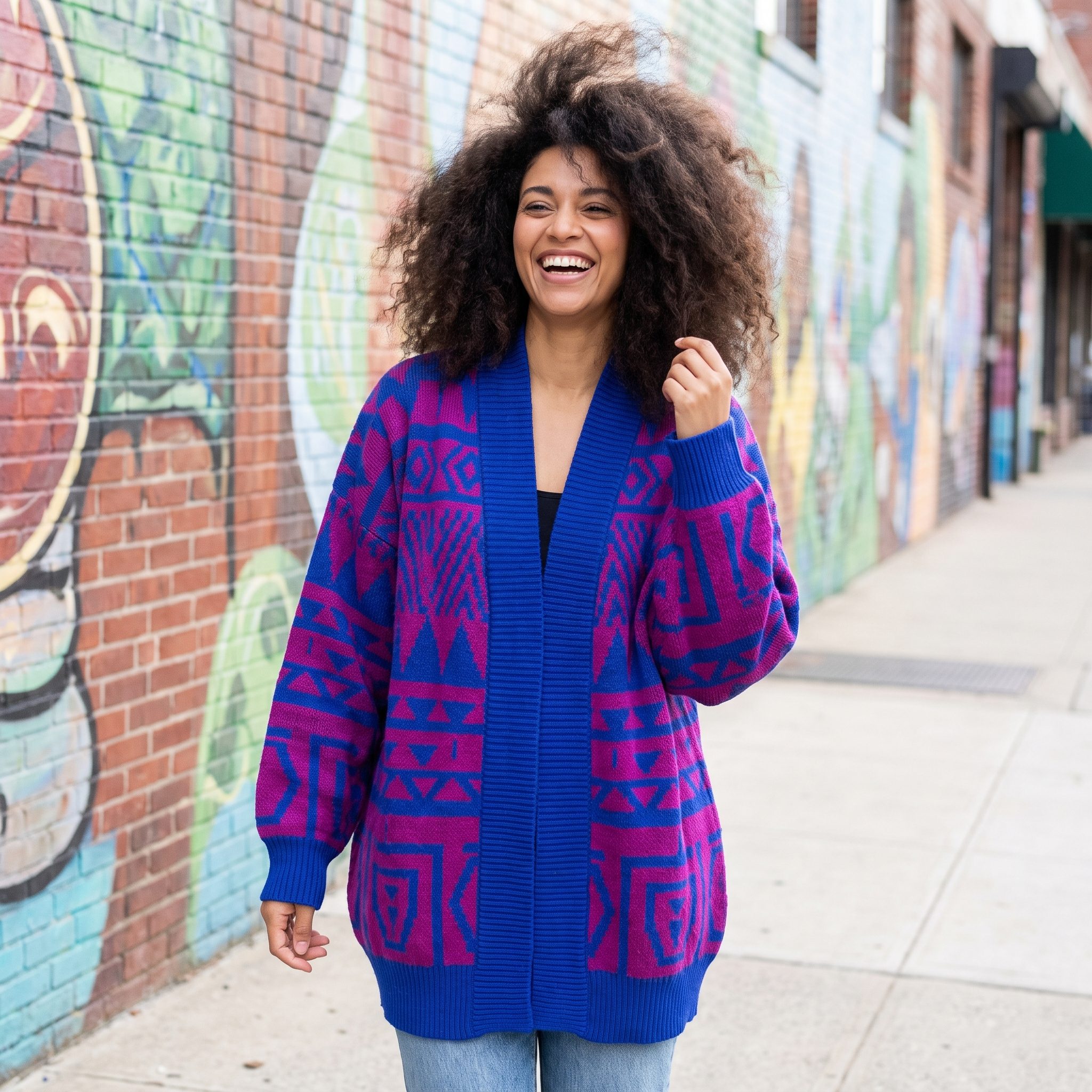
The sleeve alone could start a conversation. Dropped shoulders let the whole thing hang roomy and loose, the entire mood of 1985: more fabric than any frame strictly needed, worn with a shrug.
Abstract motifs in cobalt, magenta, and black hold all the attention, so everything else goes silent: plain black top, tapered trousers, pointed flats. A loud cardigan needs a calm base or the eye has nowhere to rest, and the tapered trouser pulls the volume up top back into something intentional.
Not everyone agrees on the volume: in our readers’ votes, images with oversized silhouettes got fewer hearts than the other outfits in the same articles.
18. The Executive Cardigan Jacket (1988): Padded Shoulders and Gold Buttons
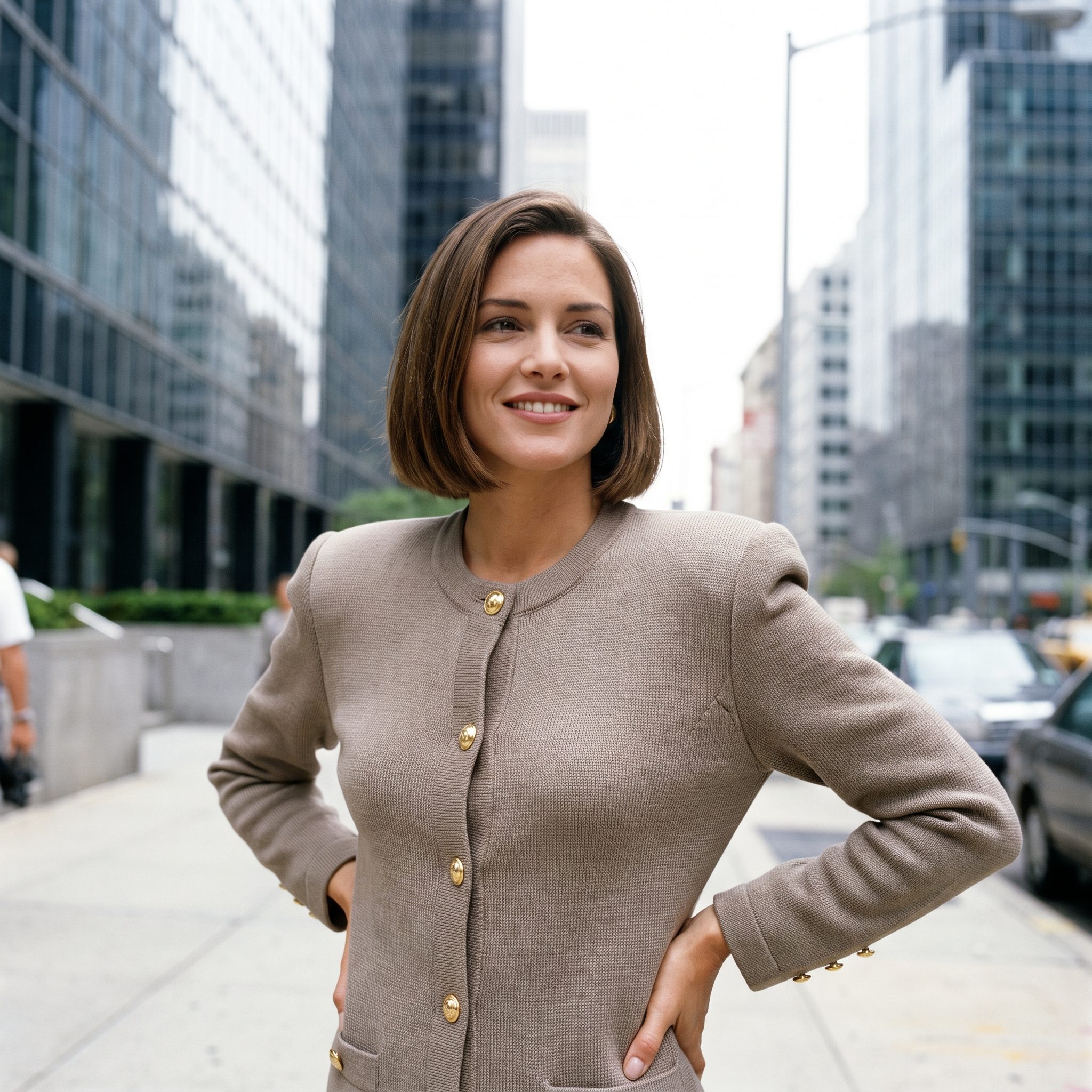
Knitwear dressed as a blazer, and it fooled the whole office. Padded shoulders and a structured hem lend it a jacket’s authority, while the soft knit stays comfortable through a nine-hour day.
Red was the power move. Against a black pencil skirt and ivory blouse, the color commits hard, and gold buttons supply the finish that separates boardroom from break room. Armor you could button. Shoulder pads got mocked later, but the confidence they built was real.
17. The Grunge Mohair Cardigan (1993): Moss Green, Dark Florals, and Combat Boots
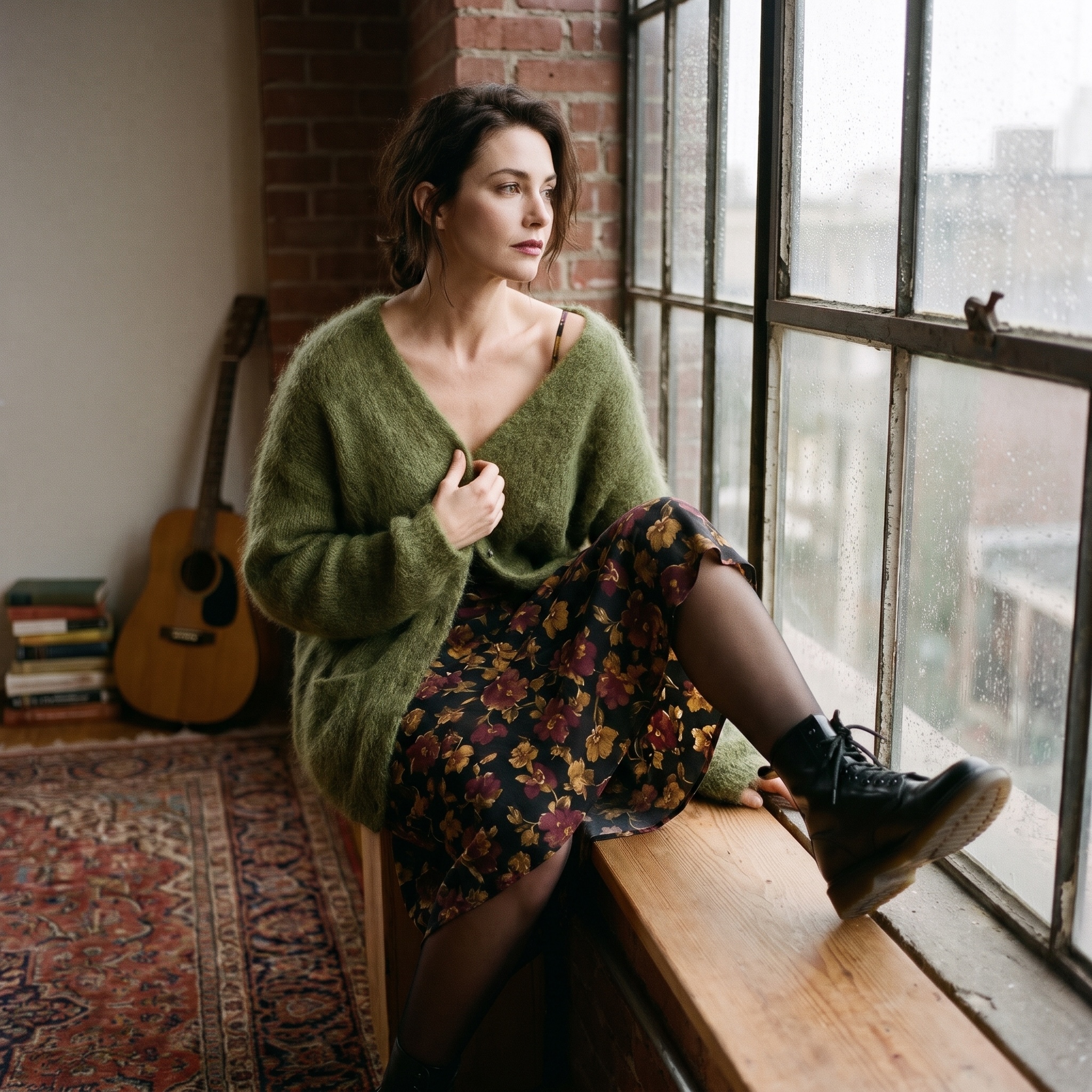
The 1990s turned the whole thing inside out. After a decade of shoulder pads and gold buttons, the cardigan went slouchy, fuzzy, and pointedly undone: moss-green mohair, big enough to swallow the hands, sliding off one shoulder like it was borrowed and never returned.
The trick was pairing it with something delicate. A dark floral slip dress in burgundy and gold, sheer black tights, and lace-up combat boots set soft against tough and pretty against practical. Rain on the window, brick at her back, and that collision of romance and rebellion has never really gone out of style.
16. The Minimalist Longline Cardigan (1994): Charcoal, Knee-Length, Nothing Extra
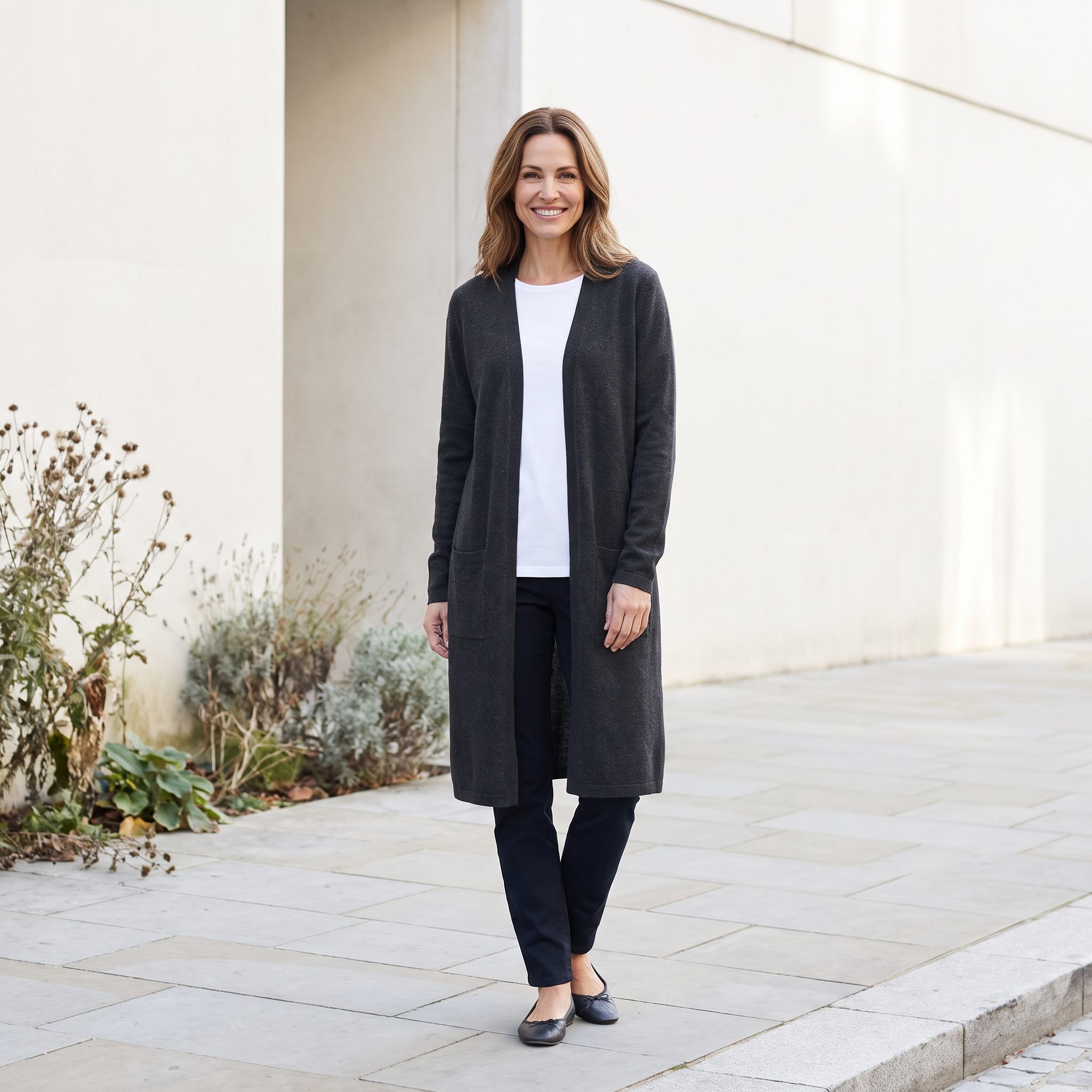
After the excess of the 1980s and the cultivated mess of grunge, this was the exhale. One color, one clean line, not a single extra detail.
Two straight panels fall to the knee and draw the body long, so the look feels calm instead of severe. Charcoal over a white tank over black trousers, and that’s it. The Calvin Klein and Jil Sander minimalism of the mid-1990s turned restraint into a statement, and this cardigan carried the flag. When the line is this good, pattern only gets in the way.
15. The Fuzzy Cardigan Over a Slip Dress (1996): Texture Against Satin
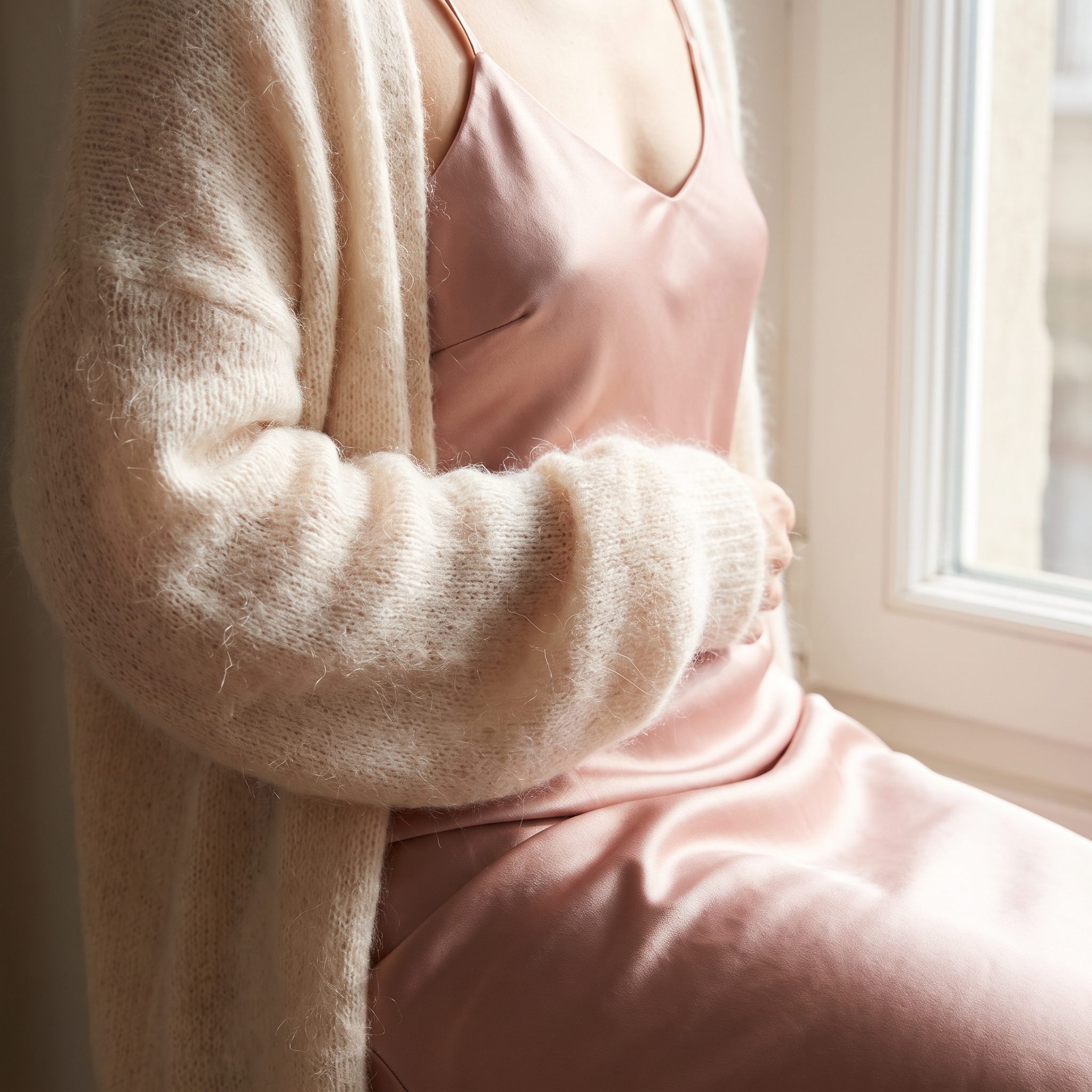
Fuzzy knit against liquid satin. That texture clash is why this look still holds up.
Left alone, a slip dress could read like lingerie that had wandered out of the house. Buttoned over it, a short pale-pink cardigan makes it dinner-ready, and the cropped hem lands at the waist so the proportion never slides into shapelessness. Where grunge wore the slip dress rough, this is the Kate Moss era rendered soft: romance with a little cover-up. The blush cardigan and champagne satin share just enough warmth to look intended.
14. The Shrunken Cardigan Worn as a Top (1998): Tiny Buttons, Cropped Hem
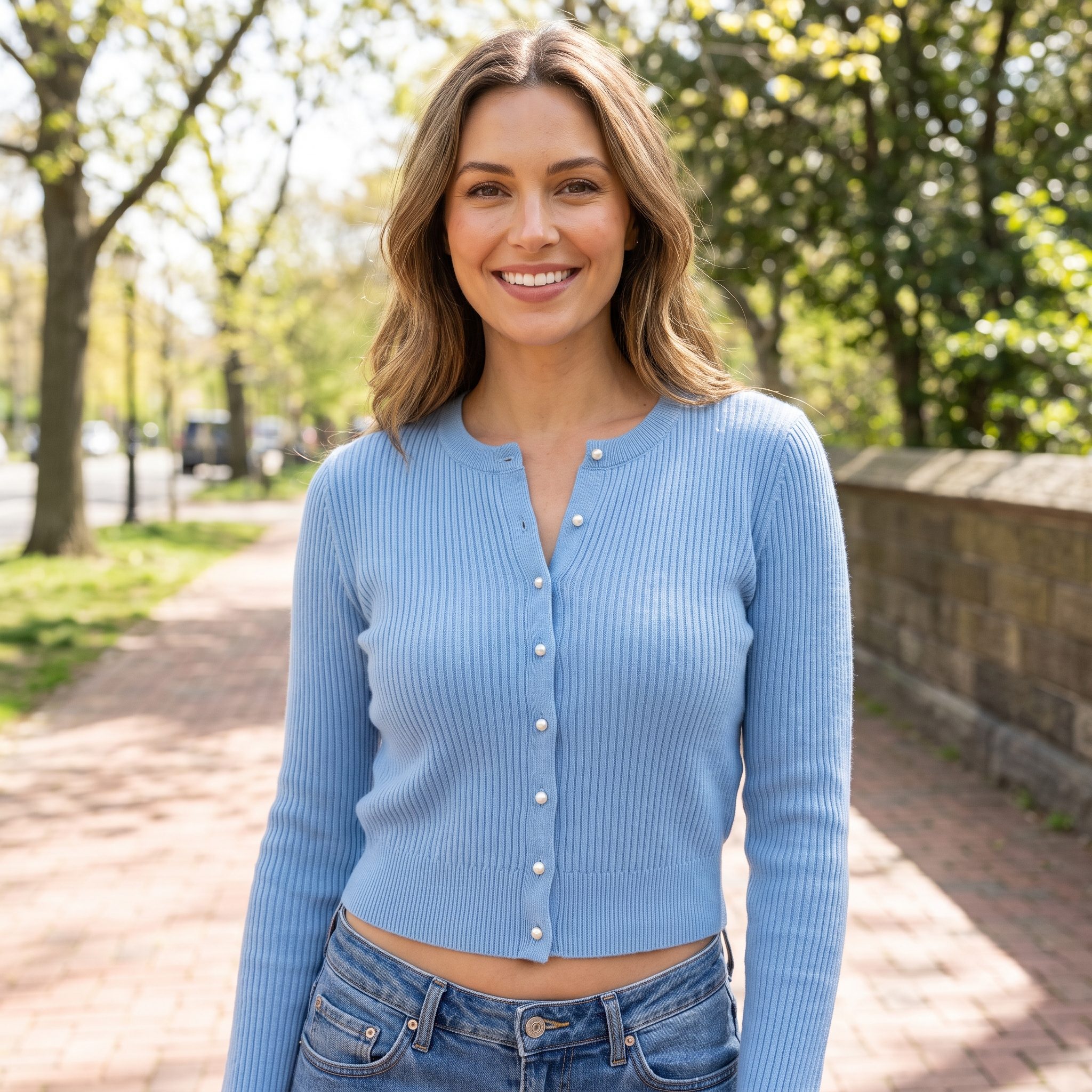
Shrunken, fitted, and cropped just above the waistband, with buttons so small they took patience to fasten. Short sleeves and a hem that stops early turn the cardigan into a snug little top.
Worn close to the body, the lilac knit defines the waist that a decade of oversized cuts had buried. With an A-line mini and platforms, the proportion is all leg, plus the sliver of midriff that defined the late 1990s. A small act of confidence, worn on a Tuesday.
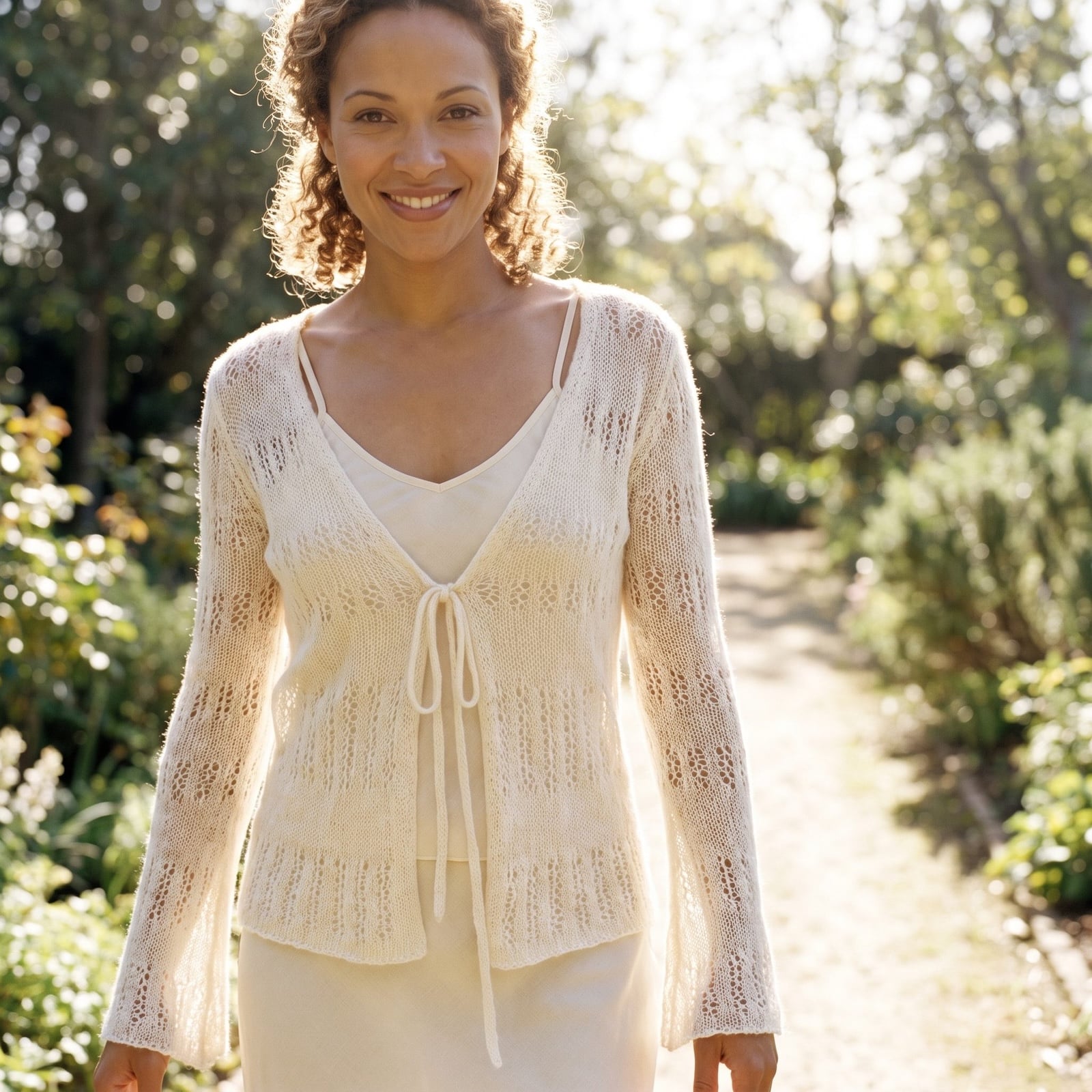
13. The Openwork Tie-Front Cardigan (2001): Flared Cuffs and a Loose Knot
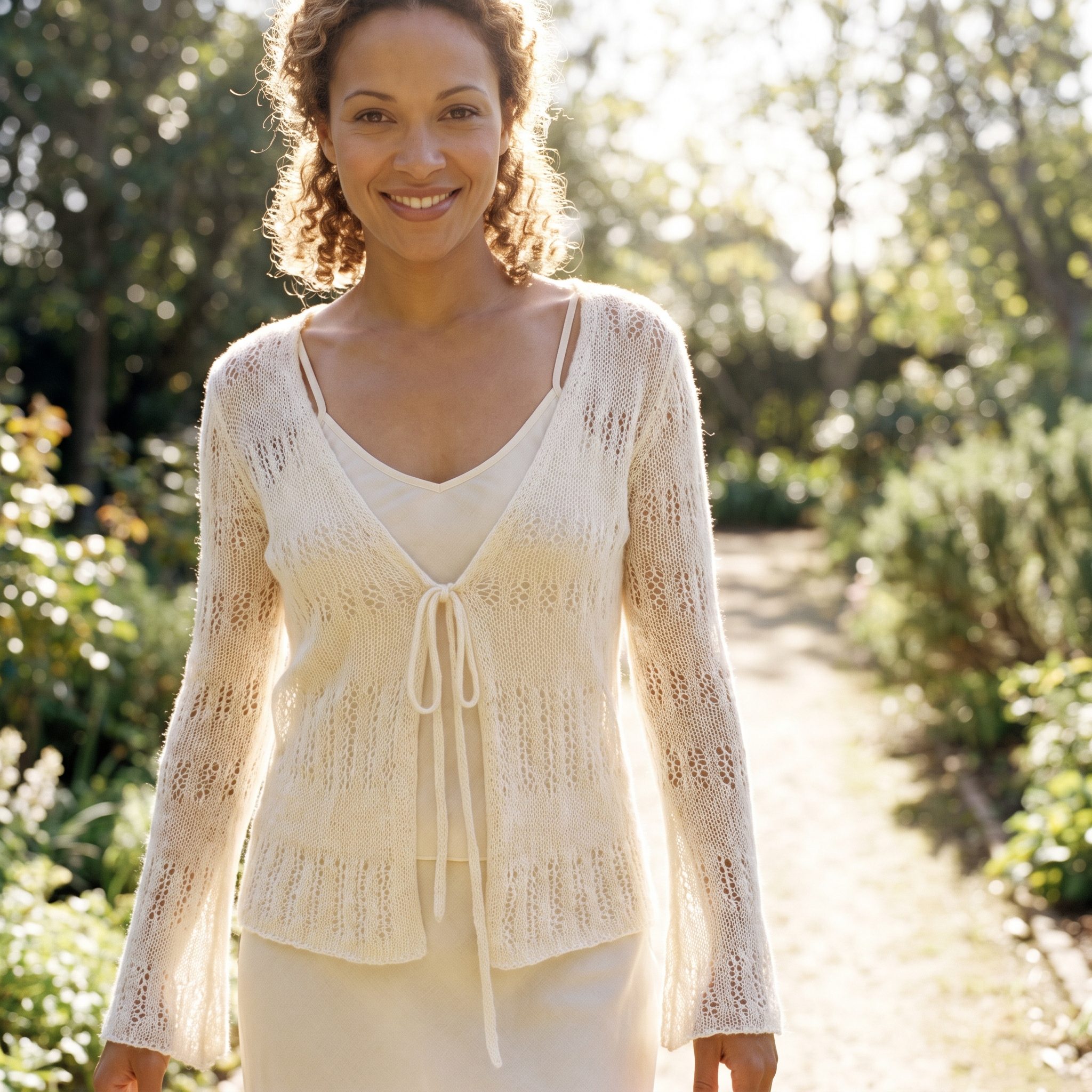
Light passes straight through the open stitch, making this the airy counterweight to every heavy cardigan that came before.
Instead of buttons, two narrow ties knot loosely at the chest, casual and a little undone. Over a camisole with low-rise bootcut jeans, the cardigan grazes the hip and keeps everything soft. Bell-shaped flared cuffs are the one theatrical touch.
12. The Cropped Bolero Cardigan (2004): Curved Edges and a Garden Wedding
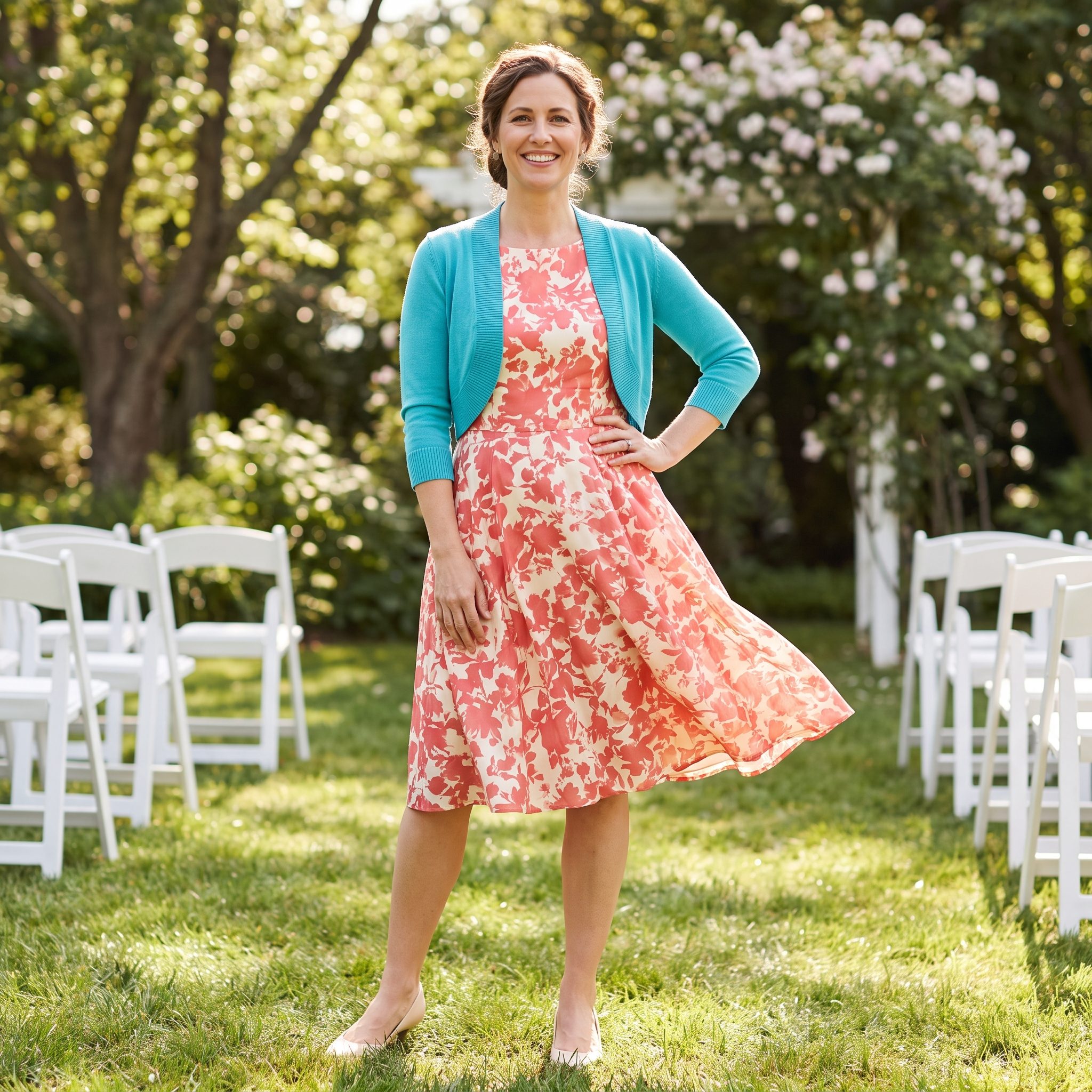
The bolero gave up on covering anything. Curved front edges, no buttons, three-quarter sleeves that left the forearms bare. Its one job: put a knit layer over a party dress without hiding the dress.
The abbreviated hem sits above the dress waist, keeping the eye high and letting the fit-and-flare skirt do its full work below. Turquoise against coral florals is a warm-cool pairing that feels chosen rather than matched. For a few summers in the mid-2000s, garden weddings were lined with rows of these.
11. The Waterfall Cardigan (2009): Front Panels That Never Quite Closed
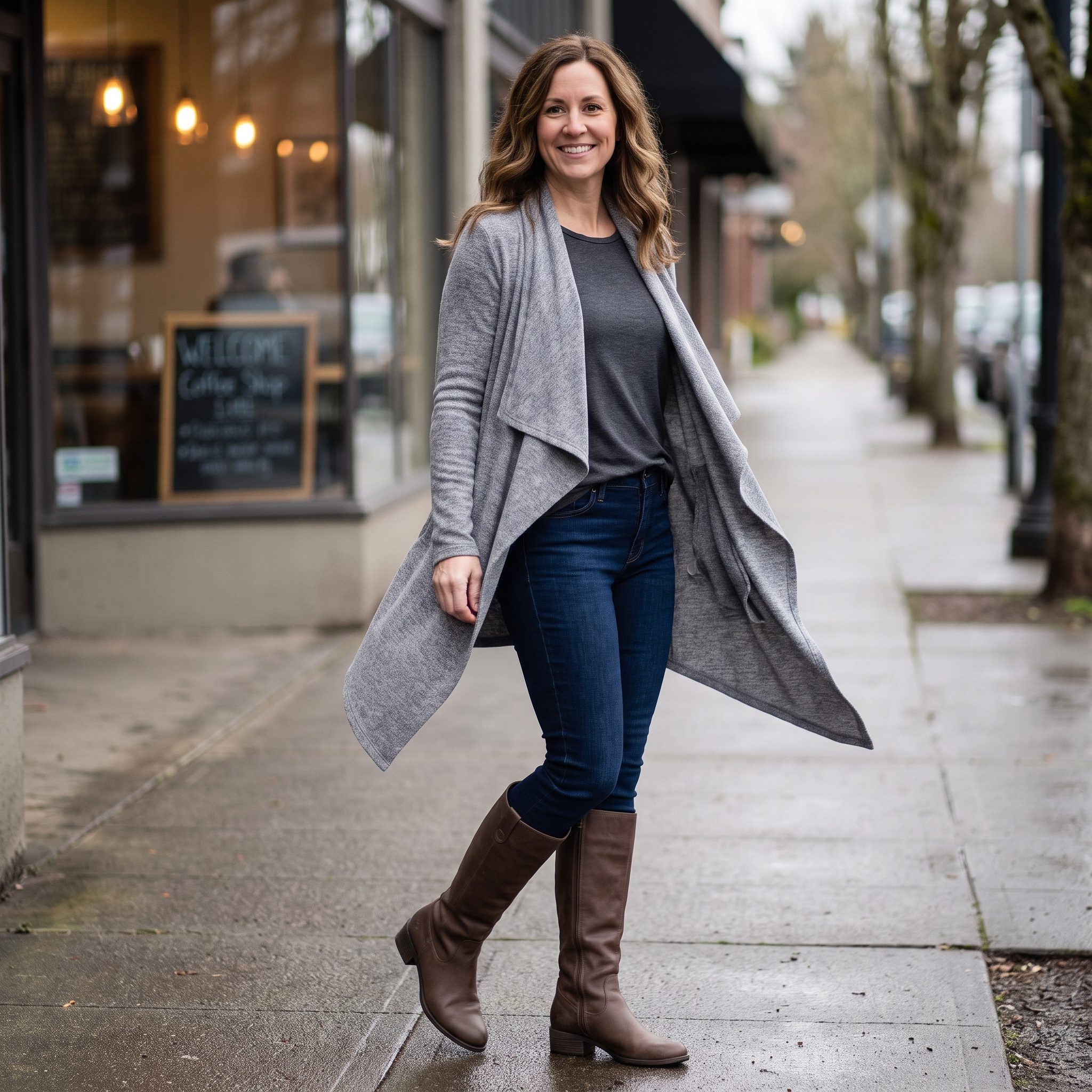
This was the cardigan that taught a generation how to drape. No buttons, no belt, just two long front panels that cascaded down and swung with every step, a close cousin of the kimono cardigan.
Those long panels draw a line from shoulder to hip, which is exactly why skinny jeans and tall boots became the obvious partners: lean on the bottom, movement on top. Gray on charcoal on indigo keeps the palette tonal, so all the motion belongs to the drape.
10. The Ribbon-Trimmed Cardigan (2010): Grosgrain Edges in a Bookshop
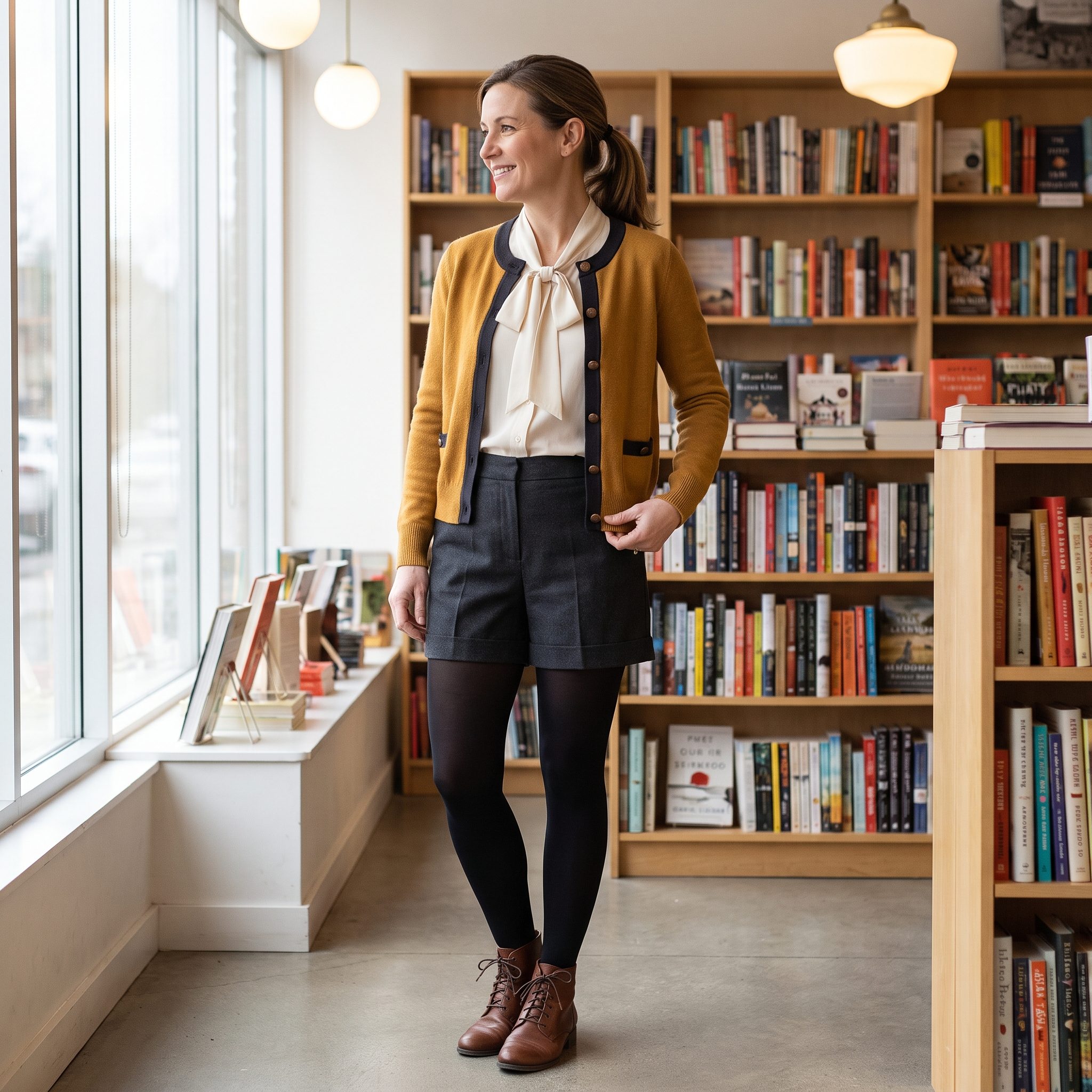
Mustard. Covered buttons. A ribbon of grosgrain running down the placket like someone finished the knit by hand. This was the era of the slightly fussy, slightly bookish cardigan, and the bow-neck blouse underneath was non-negotiable.
Texture leads over shape: fine knit, slippery blouse, opaque tights, matte leather boots, four surfaces in one muted palette. Tailored shorts with tights were the bold move that year, and the short cardigan sat right at the waist to keep the top half neat above them.
9. The Oversized Cable-Knit Cardigan (2013): Pockets You Lived Inside

Easy to disappear into. Cream, chunky, cables as thick as rope, and two low patch pockets that hands never left between October and March.
Volume up top wants something lean below, so black leggings and a slim chambray collar were the standard partners. That bit of chambray at the neck stops the cream from washing out the complexion, and warm wooden buttons add a note of warmth plain cream can’t manage alone.
8. The Floor-Skimming Duster Cardigan (2016): Side Slits and Desert Light
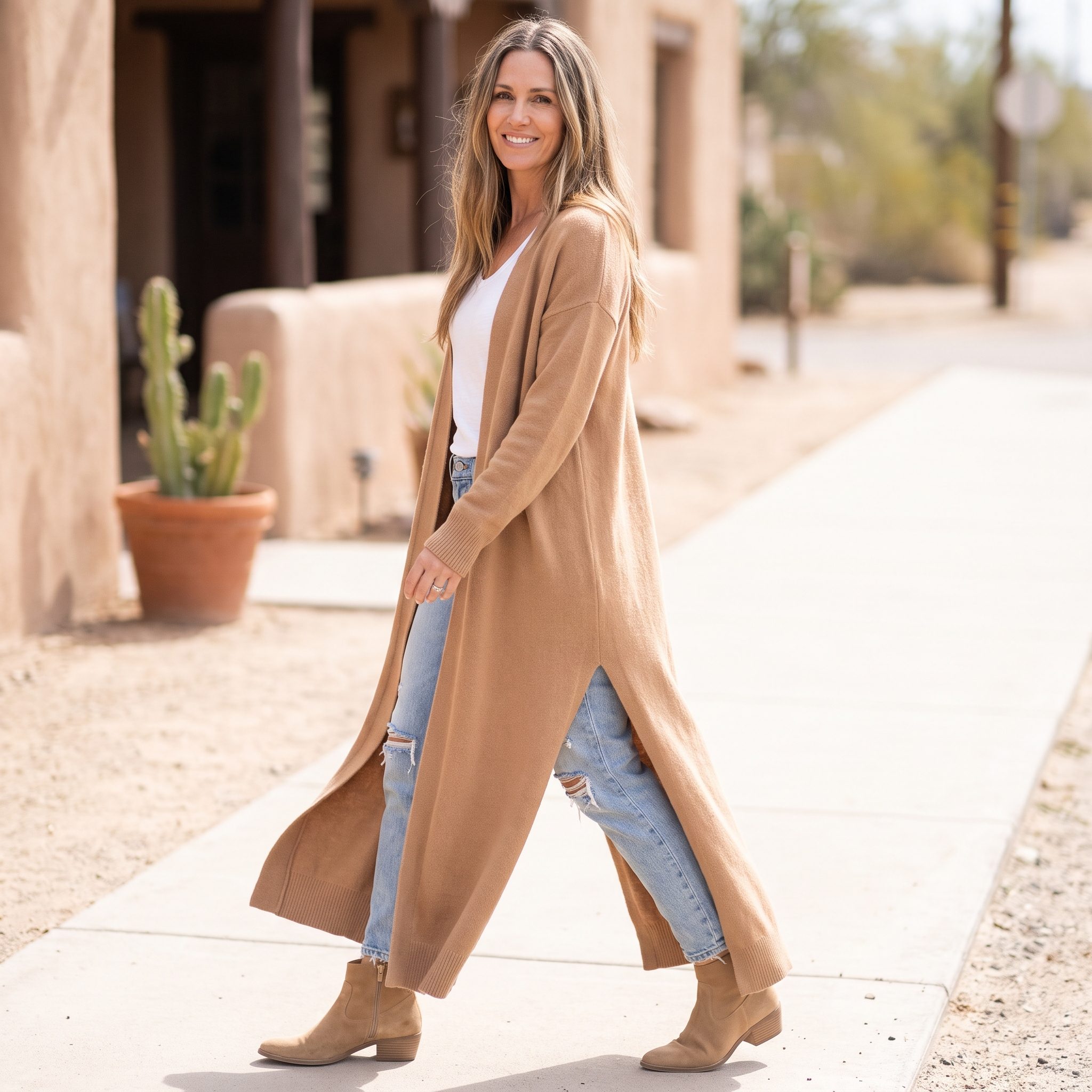
The duster was a cardigan auditioning for coat. Camel, nearly ankle-length, with side slits that opened mid-stride so the whole thing moved like a cape that couldn’t commit.
Where the 1994 longline stood still, this one is all motion: slits flaring, hem swinging, fabric catching the light. A plain white top and straight-leg jeans keep the canvas clean so the length can perform. Camel against light-wash denim was the uniform of the minimalist-blogger era, and a good beige cardigan in this cut is still a genuine ten-year piece.
7. The Cashmere Cardigan and Knit Bralette (2019): The Set That Changed the Rules
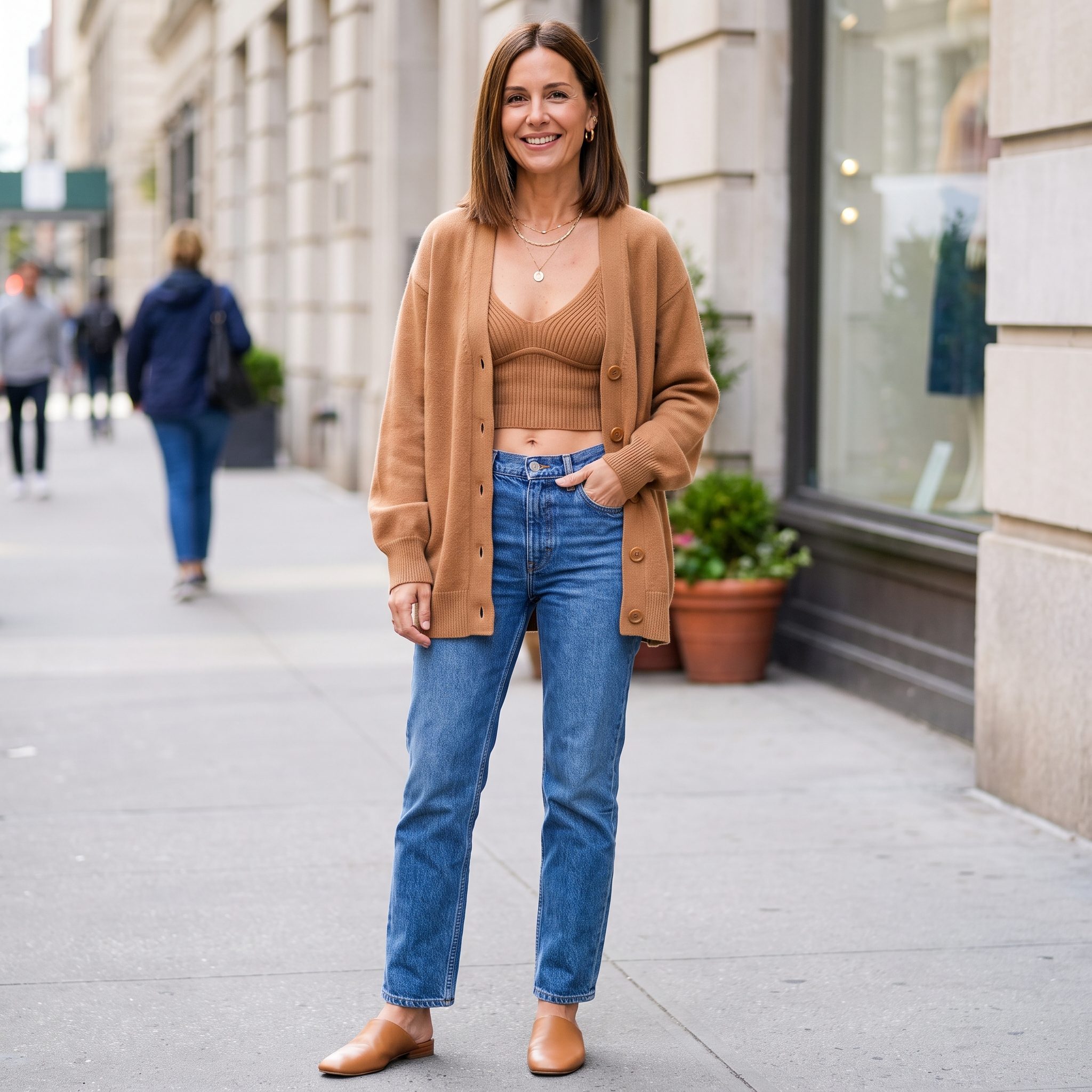
Two pieces of the same knit, worn together, with a stripe of skin in between. The matching cardigan-and-bralette set was the moment luxury cashmere stopped reading as grandmother’s and started showing up on every well-dressed woman in the city.
Same yarn, same caramel, so the eye reads one considered thing instead of two separate pieces. Gold jewelry against the warm knit, straight denim to ground it, leather mules to finish. The bare midriff is a confidence move, and on a woman in her forties it lands as self-possession, not trend-chasing.
The matching knit set did for cashmere what the slip dress did for silk: made the expensive thing look casual on purpose.
6. The Bold Patchwork Cardigan (2020): The One Everybody Tried to Knit
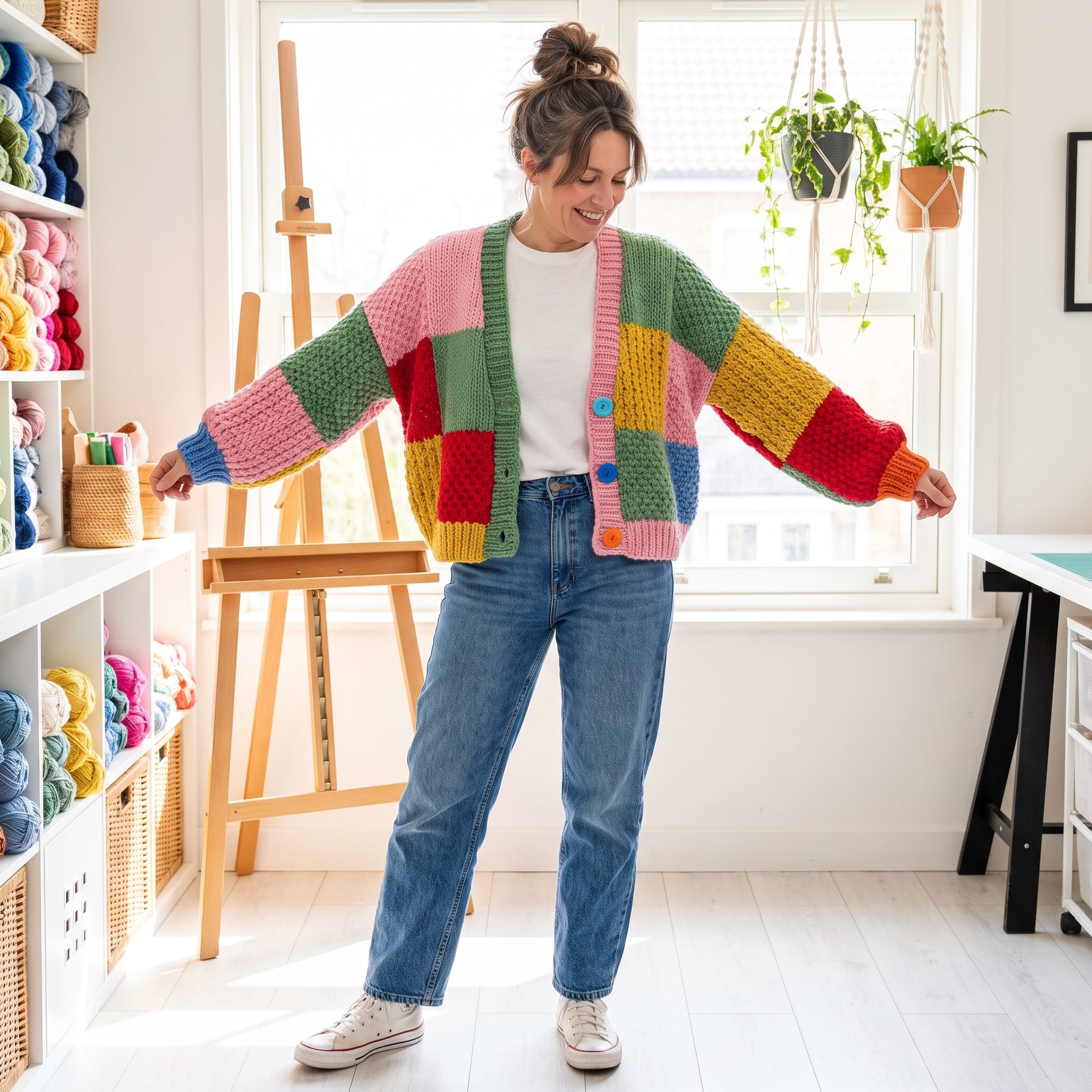
The one the whole internet tried to knit during lockdown. Pink beside green beside yellow beside red, every panel a different stitch, buttons the size of coasters. One viral pop-star moment sent knitting-kit orders through the roof.
Color does all the shouting, so the base layer stays silent: white tee, plain jeans, white sneakers. The varied stitch textures add a depth flat color-blocking never has, and that detail separated the handmade originals from the mass-produced copies.
5. The Cashmere Polo Cardigan (2023): A Collar That Means Business
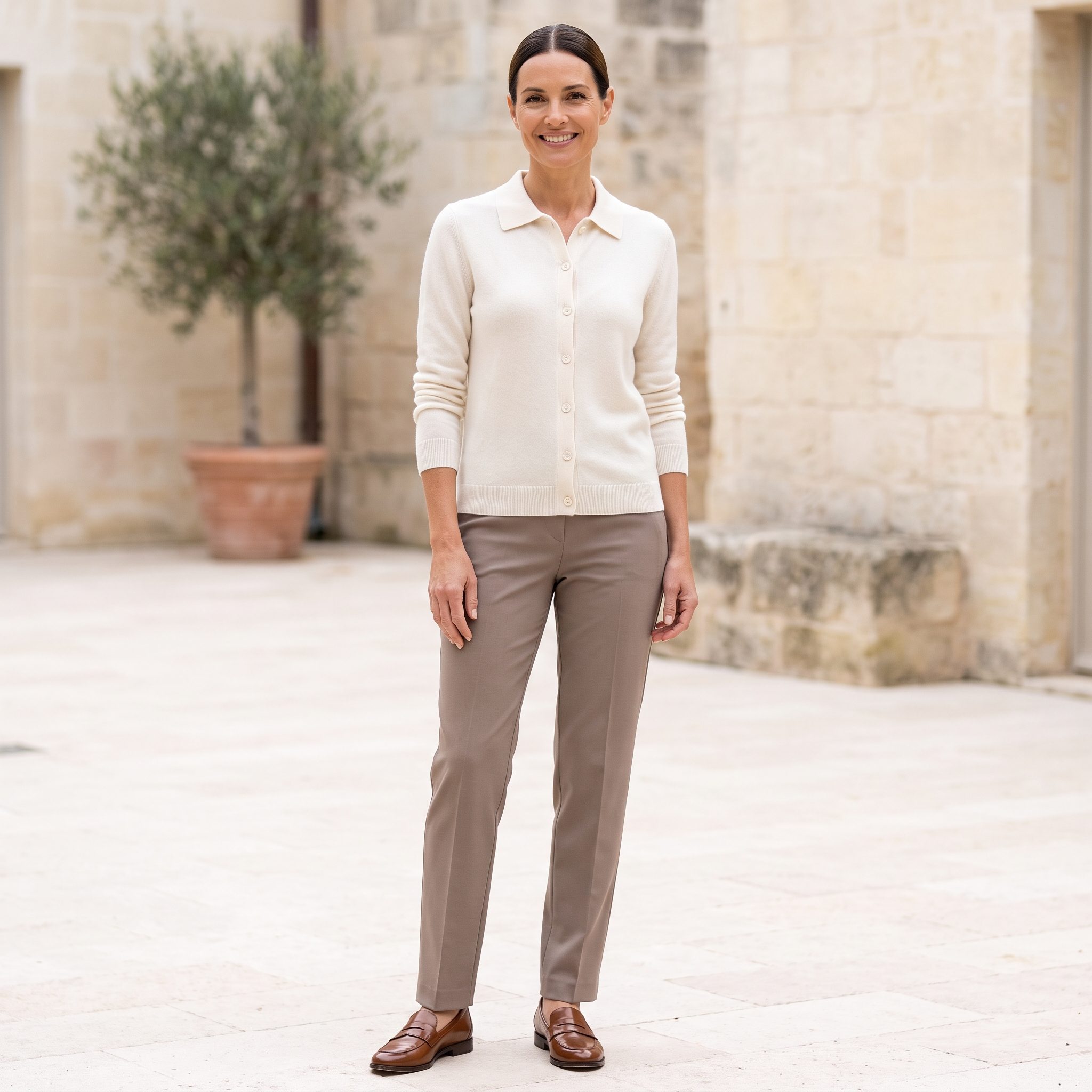
A polo collar turned the cardigan into something you could wear to a meeting and mean it. Fine-gauge ivory cashmere, buttoned to the throat, shoulder seams sitting exactly where they should.
Nothing here is decorative, so every bit of polish comes from precision: the collar point, the smooth knit, the trouser break. Ivory over taupe is a tonal pairing that murmurs instead of announcing. Fit over flash, start to finish.
4. The Sculpted Wrap Cardigan (2024): One Sculptural Clasp
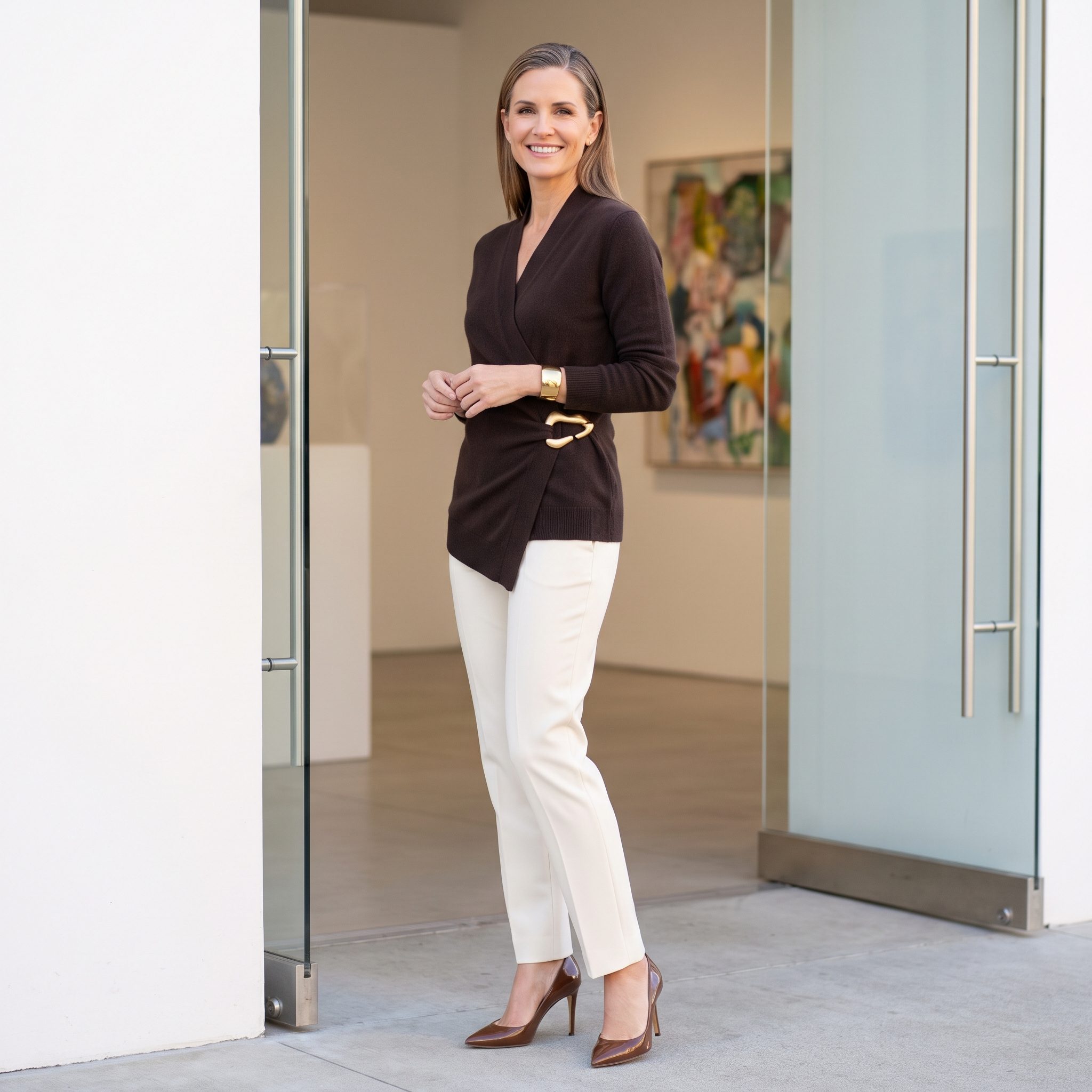
A wrap cardigan with a clasp instead of a belt. Espresso cashmere crosses the body on a diagonal and fastens at the side with one sculptural piece of hardware.
That diagonal overlap carves a waist out of a knit, something almost no cardigan manages. Espresso over ivory trousers is a high-contrast neutral pairing with real depth, and the gold cuff echoes the gold clasp so the hardware reads as a set. Dressing with a point of view.
3. The Cashmere Cardigan Coat (2025): Knitwear That Replaced the Wool Coat
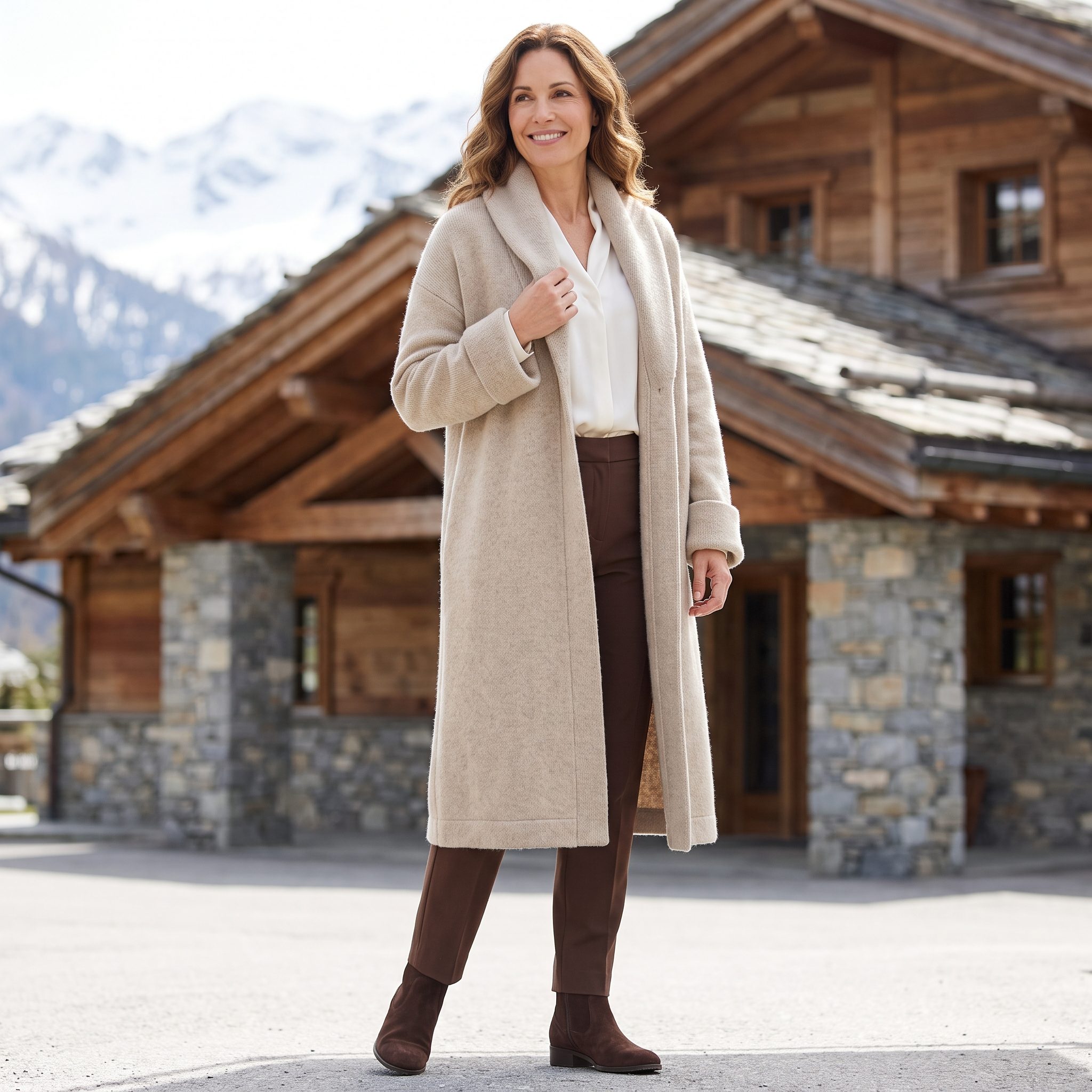
Calf-length, broad shawl collar, deep cuffs, oatmeal cashmere heavy enough to stand in for a wool coat on a cold morning. The cardigan has grown into outerwear.
A collar this broad and a hem this long need rich neutrals, so oatmeal over chocolate trousers keeps the weight warm instead of heavy. The ivory silk blouse at the neck adds a flash of shine against all that matte knit, the detail that keeps a coat-sized cardigan from reading like a bathrobe.
2. The Fine-Gauge Cardigan and Silk Midi (2026): Butter Yellow and Mother-of-Pearl
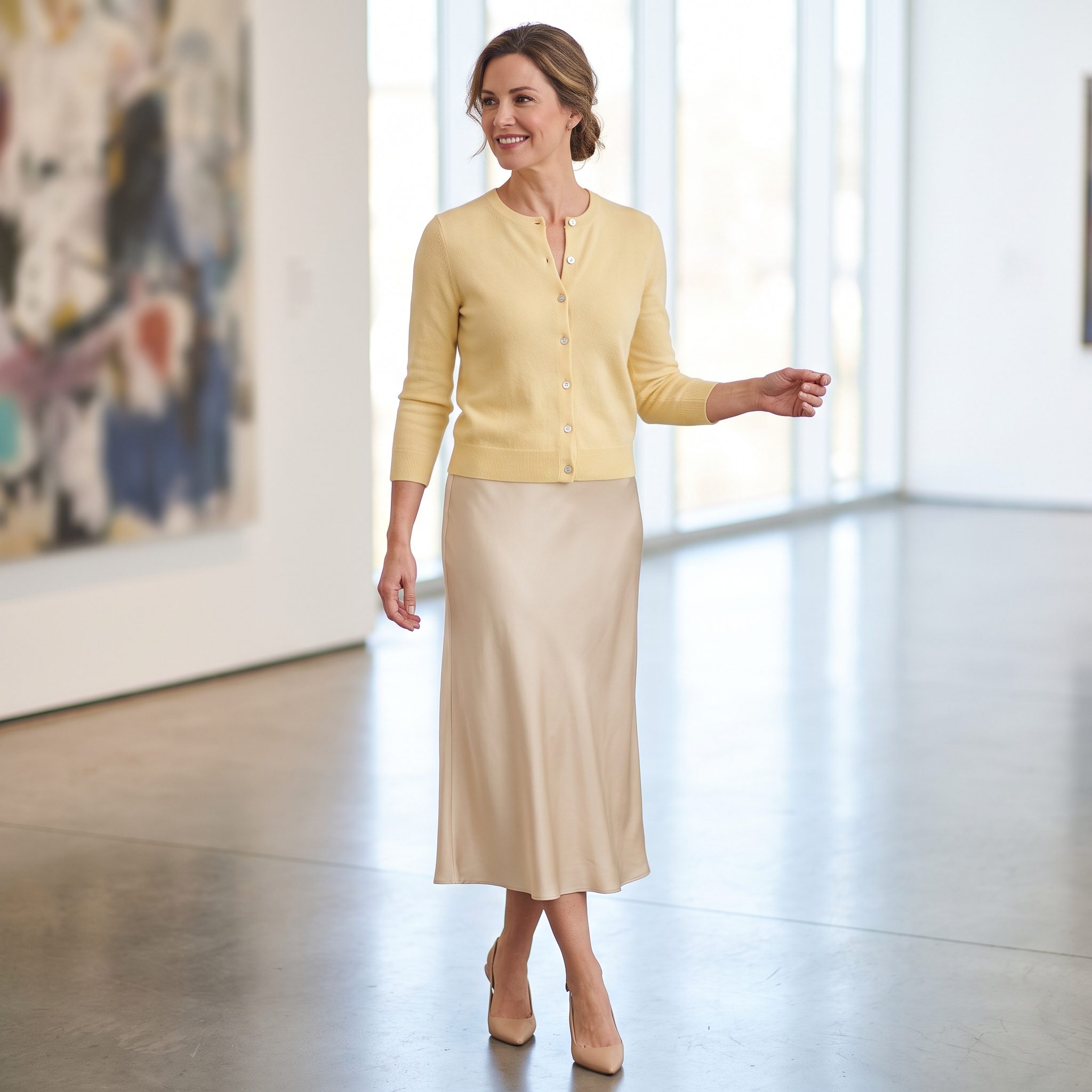
Butter yellow, feather-light, with mother-of-pearl buttons that catch the gallery light. The cardigan as the softest thing in the room, tucked just so above a champagne silk midi.
Pale yellow against champagne silk is a sun-warmed tonal pairing with no hard edges, and the bracelet-length sleeve shows a little wrist so the whole look feels lighter. Those iridescent buttons are the only detail that glints, which is exactly enough.
When we asked ThreadCurve readers to pick a top, fine knit came out ahead of the blouse and the tee, with 40% of the vote.
1. The Cape-Collar Evening Cardigan (2026): Knitwear in Its Evening Dress
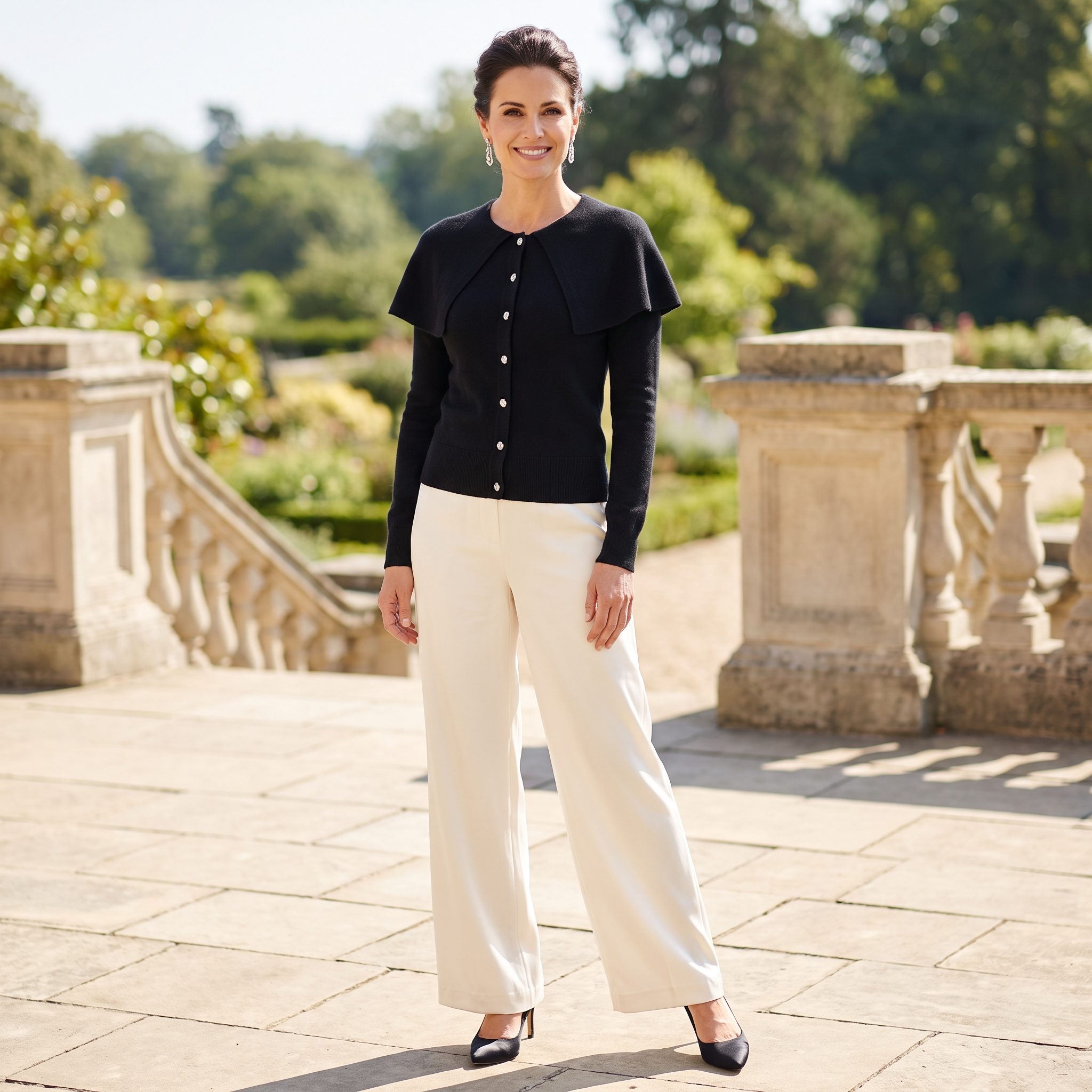
Then the cardigan went black tie. A fitted black cashmere-and-silk knit with a broad cape collar sweeping the shoulders and a line of crystal buttons down the front, worn as the evening top it was always capable of becoming.
That sweep of fabric across the shoulders reframes a cardigan as formalwear, while the fitted body holds the drama in check. Black knit over wide ivory silk trousers is the old tuxedo contrast rewritten in cashmere, and the crystal buttons answer the diamond earrings across the outfit.
Seventy-six years from a librarian’s shoulders to a chandelier-lit salon. The cardigan never once stopped being useful. It just kept finding new rooms to walk into.