
❤️ Would you like to save this?
You don’t buy a coat. You buy a version of yourself. The one who negotiates harder, or disappears quietly, or walks into the room already decided about. We tend to treat outerwear as weather management, but the thing hanging by your door is doing far more psychological work than keeping out the cold. It’s broadcasting ambition, signaling status, soothing something old and animal in your nervous system.
So why does a camel coat read as figured it out to a complete stranger? Why does a structured shoulder make you push back in a meeting you’d otherwise fold in? We pulled apart a long list of coat styles and traced each one back to the routine, the climate, the quiet ambition it seems designed to serve. Some of these will feel like being seen. Keep reading. The last one is the one you’ve been looking for.
FYI, thanks to AI imagery software, we’re able to create very specific fashion and hairstyle examples to illustrate the points being made. In some cases, imagery is exaggerated to hammer home the point. Also, assume links that take you off the site are affiliate links such as links to Amazon. this means we may earn a commission if you buy something.
28. The Coat That Makes You Walk Into a Room Like You Own It

You’ve felt it. You put on the long wool coat with the clean shoulders and the belt you actually bother to tie, and your spine does something it wasn’t doing five minutes ago. That’s not vanity. That’s chemistry.
Researchers at Northwestern coined the term enclothed cognition for exactly this: clothing changes how your brain performs, not just how you look (Source). The catch is that it only works when the garment carries a meaning you already believe. A doctor’s coat sharpened attention. A painter’s coat, same cloth, did nothing. So the coat that makes you walk in like you own the place has to already mean authority to you.
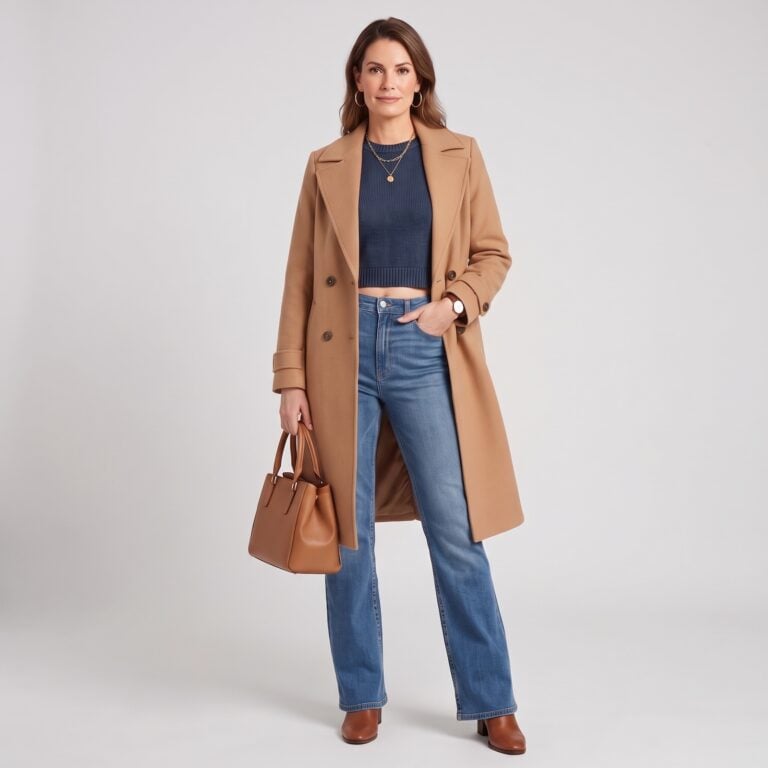
A structured coat in camel wool does that for a lot of women over 40. You’ve had decades to load it with meaning. The coat isn’t giving you confidence. It’s reminding you of confidence you already earned.
27. Why the Longest Coat in Your Closet Is Secretly About Control

The floor-skimming coat does something quiet and a little bossy. It draws one unbroken vertical line from your shoulder to your shoe, and the eye has no choice but to follow it. Nothing interrupts. Nothing scatters.
There’s a reason that reads as composed. Wearing more formal, structured clothing has been linked to more abstract, big-picture thinking, and the effect was mediated by a felt sense of power (Source). The long coat is formality stretched to its full height. You put it on and you stop sweating the small stuff, partly because the coat has literally arranged you into a single clean statement.
Control isn’t about restriction here. It’s about edit. A maxi coat erases the fussy middle of an outfit and leaves one decision standing. For women who’ve spent years managing everyone else’s chaos, wearing the thing that imposes order feels less like fashion and more like exhaling.
26. The Shoulder Shape That Tricks Your Brain Into Feeling Powerful
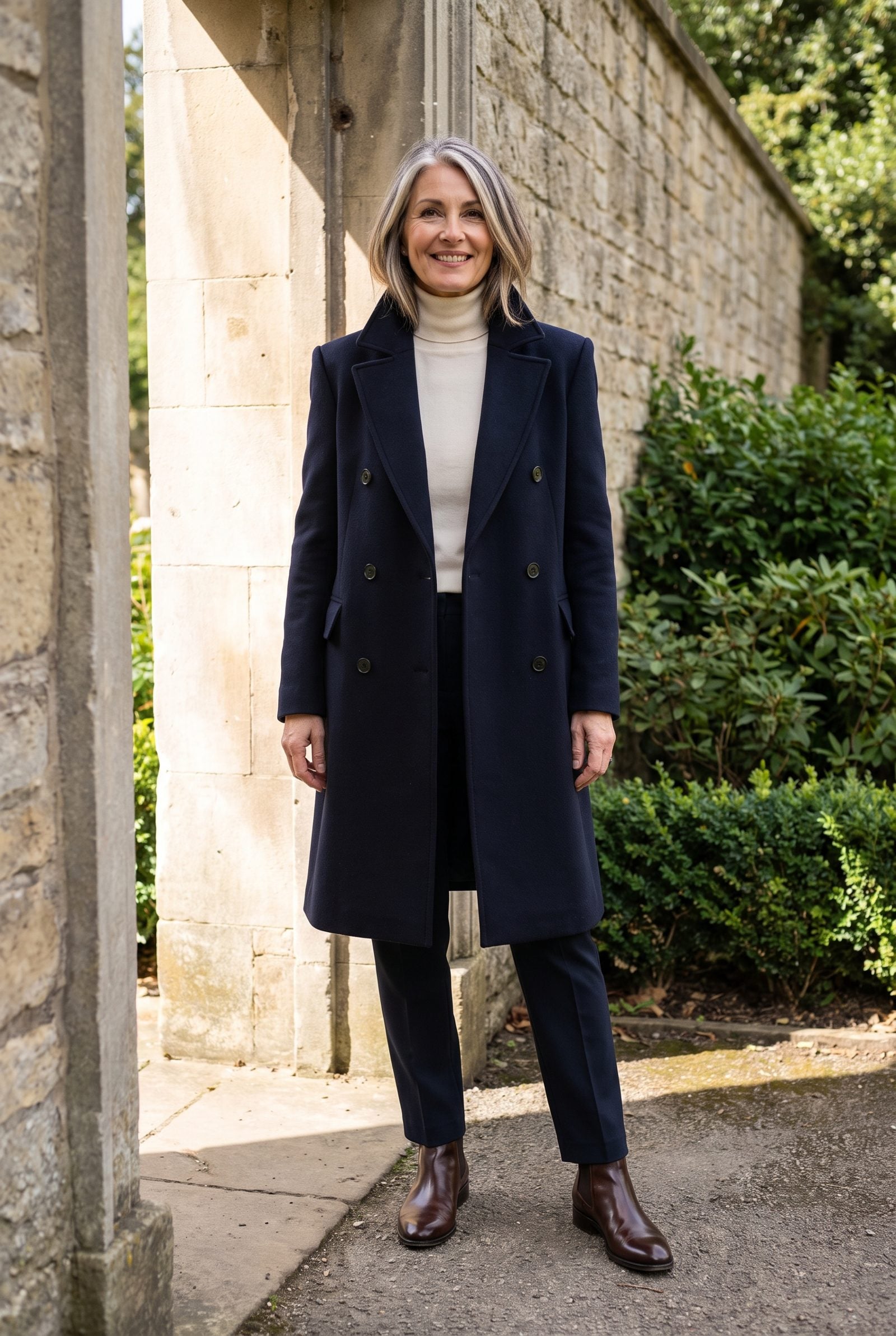
Broad shoulders read as dominance across cultures, and your brain knows it before you finish the thought. A coat with a defined, slightly extended shoulder line borrows that signal and hands it to you.
The research on body shape is blunt about this. Posture and body language studies consistently find that expansive, broad-shouldered stances are perceived as more powerful than narrow, contracted ones (Source). A padded or structured shoulder does part of that work for you before you’ve even straightened up.
Think about what the power suit of the 1980s actually was. A shoulder. The rest was commentary.
- A squared shoulder widens your silhouette’s top, which the eye reads as authority.
- It pulls you into better posture without any effort on your part.
- It balances the hip, so you feel proportioned, which quietly steadies everything above it.
This is also where a well-cut androgynous coat earns its keep. It takes a signal borrowed from menswear and makes it entirely yours.
25. The Collar Everyone Trusts Before You Say a Word

A notched lapel is the fashion equivalent of a firm handshake. People read it as competent and reliable in about the time it takes to cross a room, and most of them couldn’t tell you why.
Part of it is symbolic freight. Clothing with a recognized meaning shifts how both the wearer and the observer behave, which is why a uniform can amplify how empathetic or authoritative a person is perceived to be (Source). The tailored collar sits in that same vocabulary. It says this person has done something serious before, and probably again today.
The notch isn’t loud. That’s the point. It signals the kind of competence that doesn’t need to announce itself, the quiet authority of someone who has stopped auditioning. A tailored collar on a woman over 50 lands differently than it does on anyone else in the room, because the face above it has the receipts to back it.
24. The Coat You Reach For When You Need to Disappear a Little
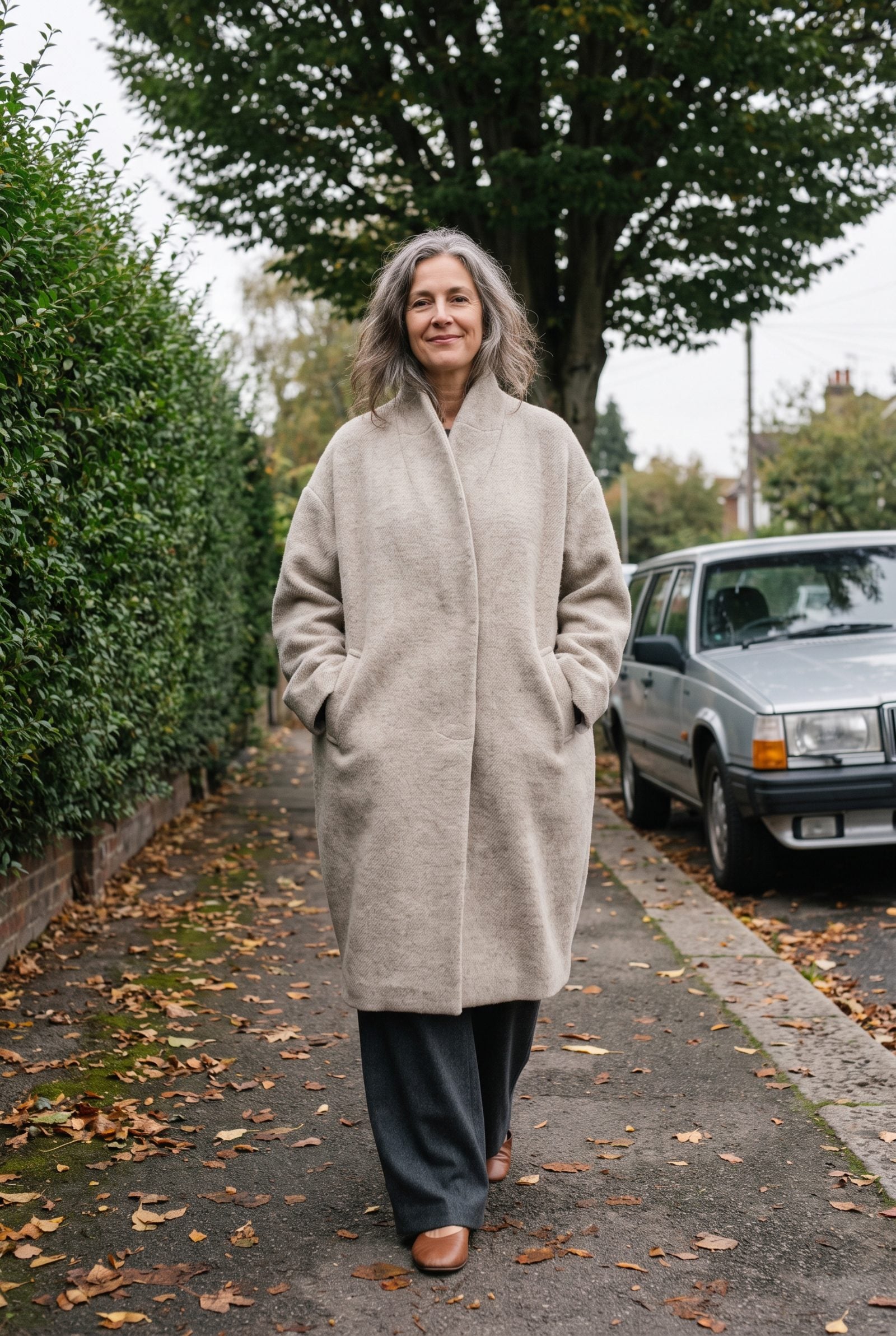
Some days you don’t want to be read. You want a coat that lets you move through the grocery store, the school pickup line, the waiting room, without broadcasting anything at all. Usually it’s an oversized one in a quiet neutral. Grey. Oatmeal. The color of a decision nobody will remember you made.
This is the armor instinct, and it’s real. Clothing can act as psychological protection, a barrier between a tender self and a world that’s asking too much that day. The enclothed cognition work suggests the effect runs both directions: the symbolic meaning of what you wear changes your own internal state, not only how others see you (Source). A coat that reads as neutral and unbothered can actually make you feel more neutral and unbothered.
There’s no shame in a coat whose job is to hide you. A roomy cocoon coat is a portable quiet room. Sometimes self-expression is choosing not to express anything, and keeping that power for yourself.
23. What Wearing Your Teenager’s Decade Says About the Woman You Still Are

You bought the varsity-style coat or the slouchy ’90s bomber and half-expected to feel like you were playing dress-up. Instead you felt sixteen in the good way. Lighter. More yourself, not less.
There’s a reason, and it isn’t a midlife wobble. Nostalgia does measurable psychological work. Across six experiments, researchers found that nostalgia strengthens self-continuity, the felt sense that the person you were and the person you are now are one connected thread (Source). A coat from a decade that shaped you is a shortcut to that thread. You’re not borrowing your kid’s style. You’re collecting a piece of your own.
The same work tied that continuity to a feeling of aliveness and energy, which is exactly what you felt zipping it up. This is also where a touch of androgynous style earns its place in a grown woman’s closet. The forms you loved at seventeen still fit the person you became. They just carry more now.
22. The Fabric That Delivers a Small Dopamine Hit Every Time You Touch It

You know the coat. The one you pet while you’re wearing it. Boucle, brushed wool, shearling, a soft cashmere blend. Your hand finds the sleeve without being asked, and something settles.
That reflex is wired into your skin. Human skin carries specialized nerve fibers called C-tactile afferents that respond to slow, gentle touch, and when they fire, they carry a measurable positive emotional value, triggering activity in the smile muscle and slowing the heart (Source). Soft, slow stroking against the skin is read by your nervous system as comfort, closeness, safety.
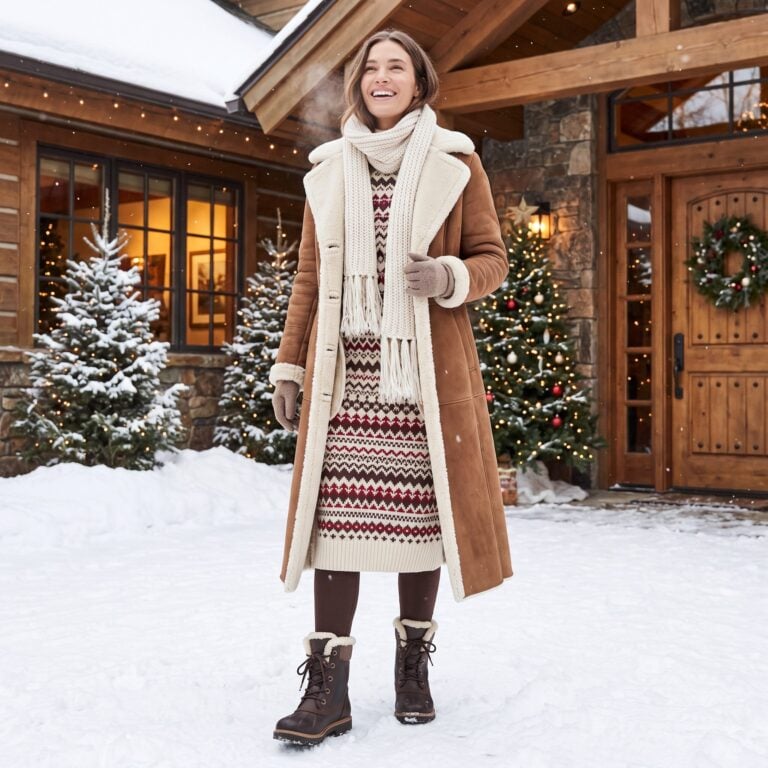
So a brushed-wool sleeve isn’t just warm. It’s a tiny, renewable source of calm you can reach for in a meeting, in traffic, in a waiting room. The coat soothes you the way a hand on the arm would. A fine shearling or a soft knit coat is the one you’ll keep reaching for, long after the trend that sold it to you has moved on.
The coat soothes you the way a hand on the arm would.
21. The Hemline That Quietly Signals You’ve Stopped Asking Permission
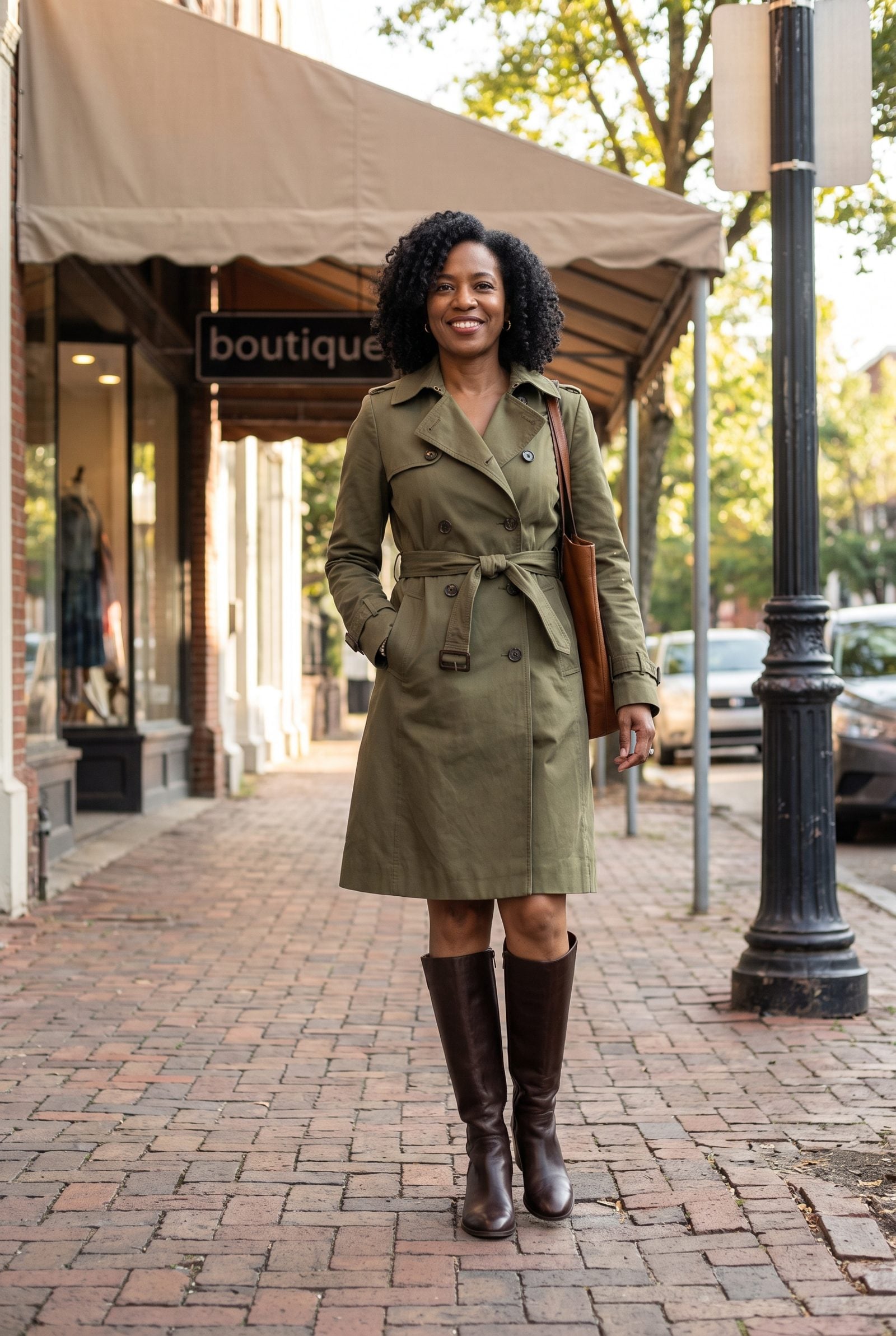
There’s a hem length women are told, directly and indirectly, to avoid after a certain age. You already know which one. The woman who wears it anyway, the midi that stops exactly where it wants, the coat cut longer or shorter than the rulebook allows, is making a statement she doesn’t have to say out loud.
The research gives it a frame. Nostalgia and identity work shows that a stable, continuous sense of self is tied to well-being, and that it lets people act from a settled sense of aliveness rather than from anxiety about how they’re being received (Source). The hemline that ignores the rules is that settledness made visible. It’s not rebellion. It’s the absence of the question.
Choosing a length because it’s right for your legs and your day, instead of right for a decade that isn’t yours, is one of the clearest signals of a woman who’s done auditioning. The hem does the talking. You just walk.
20. Why a Belted Waist Feels Like Being Held Together
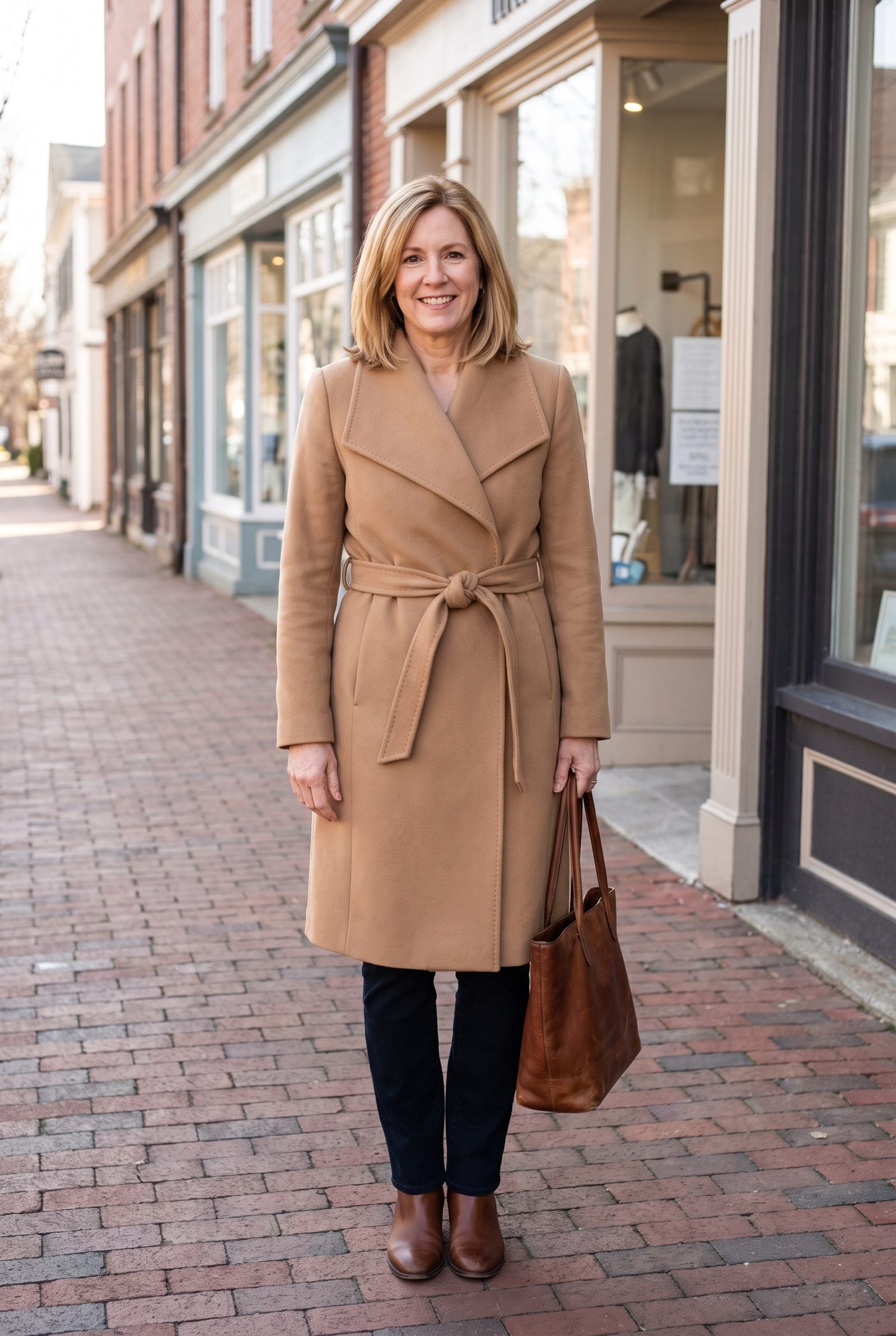
You cinch the belt and something in your shoulders drops half an inch. That’s not vanity. That’s your nervous system responding to pressure.
A belted coat wraps the torso and pulls it in at the narrowest point, and the gentle compression it creates has a documented physiological effect. Occupational therapists have used deep pressure for decades to calm the body. One review found deep pressure stimulation shifts the autonomic nervous system away from the stress response and toward the parasympathetic side, the branch that handles rest and recovery. Source
A belt isn’t a weighted blanket. But the principle rhymes. Structure around the middle reads to the body as containment, and containment reads as safe. The soft trench with no belt flaps open and you fuss with it all day. Pull the belt tight on a camel wool wrap coat and you stop thinking about the coat entirely. You just move.
19. The Color That Makes Strangers Assume You’re in Charge

Walk into a room in black and the room adjusts before you say a word.
Dark colors carry centuries of freight. European aristocracy wore black because a rich, deep black took layers of expensive dyeing, so it signaled money. Judges, priests, scholars wore it to project impartiality and weight. That conditioning never left us. People now consistently associate black and navy with dominance, formality and control. Source
Research on perception backs it up. Black clothing reliably reads as powerful and serious, which is why it became the default for boardrooms and job interviews. Source The catch: the same color that commands can also keep people at arm’s length. Full black can tip into unapproachable.
That’s where navy earns its keep. It scores high on authority and on trust at the same time, the reason it dominates uniforms and bank logos. A navy wool overcoat says you run things and you’re safe to approach. After 40, that combination is the whole game.
18. The Coat That Belongs to a Life You Haven’t Started Yet

Everyone has one. The coat bought for the version of you that travels more, hosts more, walks into galleries on a Tuesday afternoon with nowhere to be.
It hangs at the end of the rail, tags sometimes still on, waiting for an occasion that keeps not arriving. Buying it wasn’t a mistake. It was a wish wearing a price tag.
There’s real psychology in this. Clothes carry symbolic meaning, and the research on enclothed cognition shows that meaning only activates when you physically put the garment on, not when it sits in the closet. Source The aspirational coat stays aspirational precisely because it stays on the hanger. The woman it was meant for can’t show up until you wear it to the grocery store on an ordinary Wednesday.
So wear it badly. Wear it to nothing special. The dramatic opera coat or the crisp ivory belted trench doesn’t become yours at the event. It becomes yours the first time you wear it somewhere it was technically too good for.
17. The Hood Isn’t About Rain and Your Brain Knows It
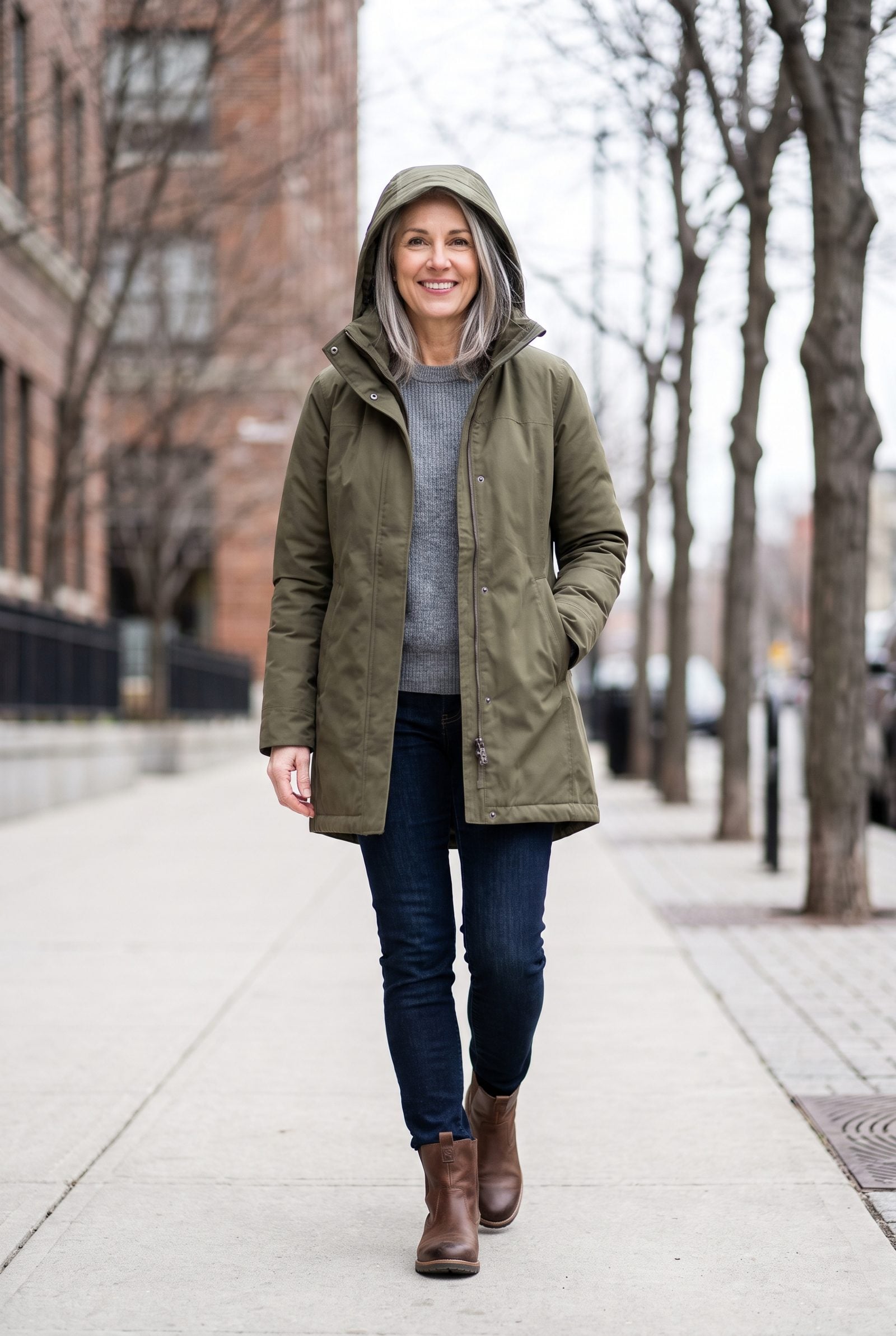
Watch what people do with a hood on a dry day. They pull it up anyway.
A hood is a boundary you can raise at will. In a crowded train, a waiting room, a city street that’s grating on you, flipping it up draws a line between you and everyone else. The rain is the alibi. The real function is retreat without leaving.
Fabric around the head and the body registers as containment, and deep touch pressure on the nervous system has a measurable calming effect, nudging the body out of fight-or-flight. Source A hood up is a mild, voluntary version of that, a small cave you carry on your shoulders.
It also controls what others can read off your face, and people tend to be curious about what they can’t fully see. There’s a reason the hooded parka outsells the collared version every winter. One keeps the weather off. The other gives you a door you can close.
16. Why the Coat With No Logo Reads as More Money Than the One With One
❤️ Would you like to save this?
The loudest wealth in the room is usually the most anxious.
Status research draws a clean line here. A 2010 study on brand prominence sorted luxury buyers into four groups and found a consistent pattern: wealthy consumers with little need to prove it pay a premium for quiet, logo-free goods that only their own kind can recognize, while people who crave status lean loud. Source The understated version often costs more than the branded one from the same house.
Newer work on so-called quiet luxury confirms the shift. Status increasingly travels through subtle cues readable only by those with the cultural literacy to decode them, not through a logo splashed across the chest. Source
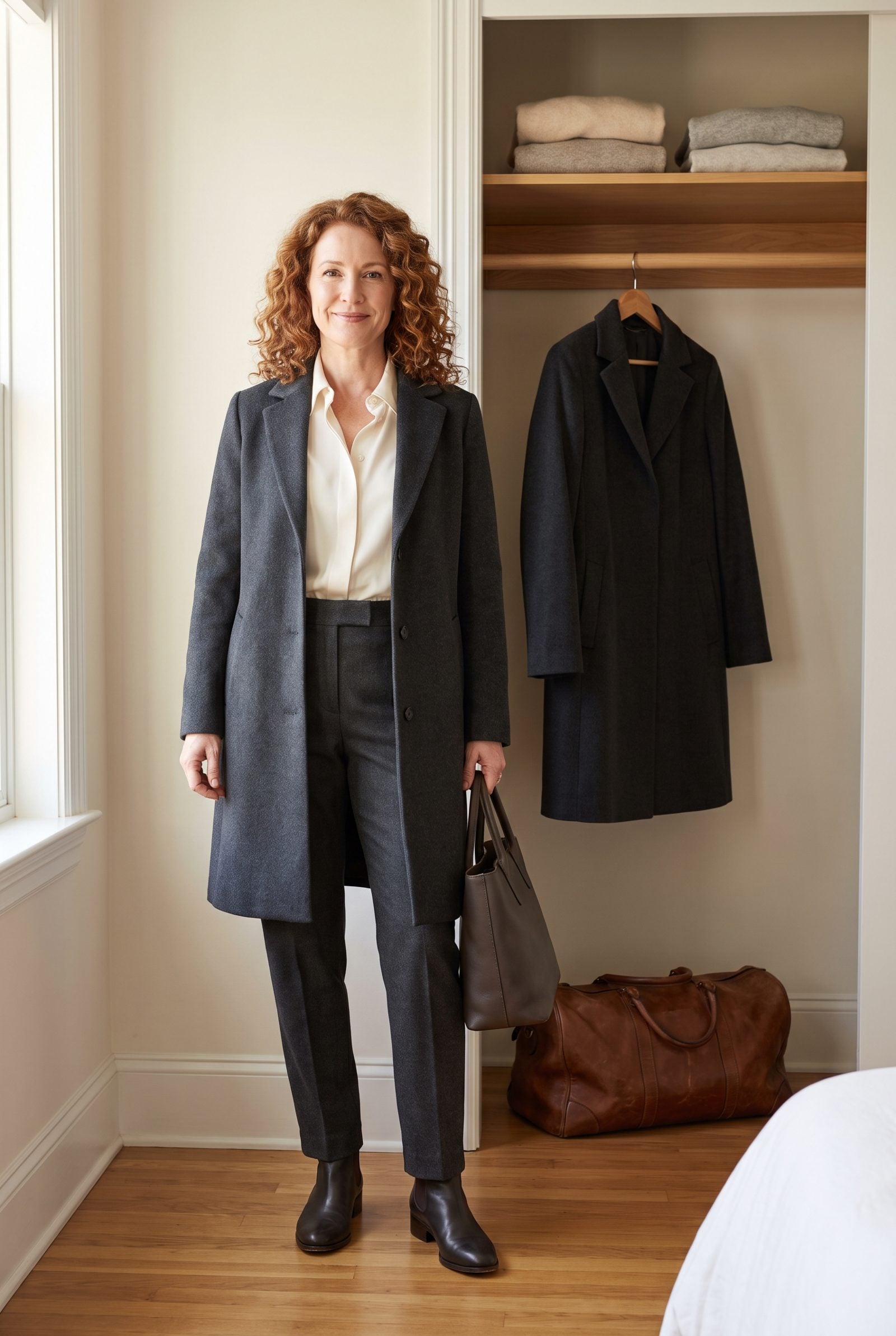
Which is why a good charcoal cashmere coat with no visible branding reads richer than a monogram. The cut, the drape, the way the shoulder sits. People who know, know. Everyone else just senses it and can’t say why.
15. The Masculine Cut That Makes Women Feel Most Like Themselves
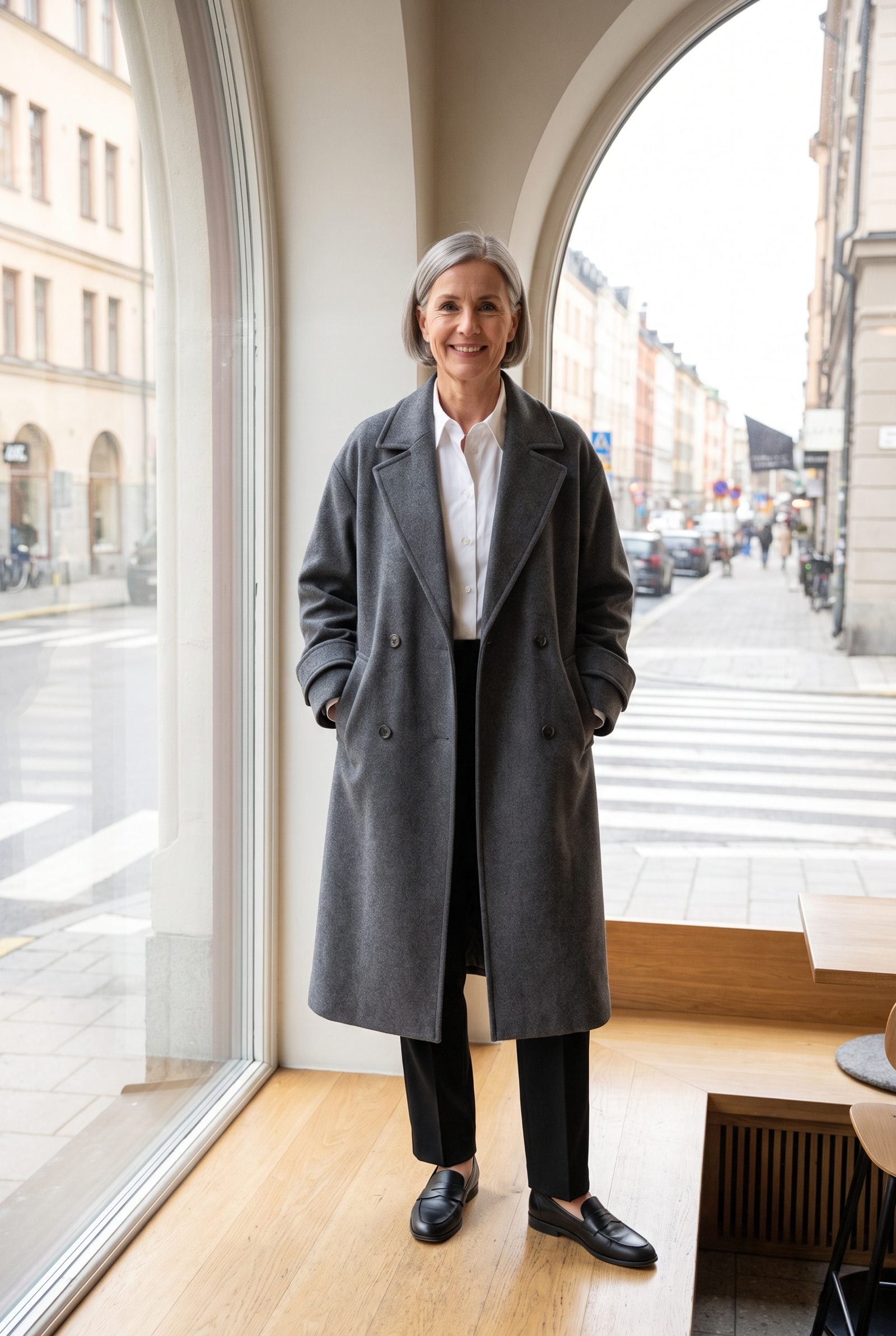
Here’s the paradox. The coat borrowed from the men’s department is often where a woman feels most herself.
A boxy overcoat, a double-breasted peacoat, a drop-shoulder chore coat. Straight lines, square shoulders, nothing clinging anywhere. For a lot of women over 40, that cut lands as freedom, not disguise. Nobody is reading your body. They’re reading you.
Enclothed cognition helps explain the lift. When you put on a garment whose symbolism you recognize, its associated traits transfer to how you think and carry yourself, an effect the original lab-coat experiments demonstrated by showing the shift only happened when people actually wore the coat. Source A structured androgynous coat carries associations of authority and ease, and you inherit them the moment it’s on your shoulders.
This isn’t about wanting to look like a man. The whole appeal of androgynous style is that it strips out the question of how you measure up and leaves only presence. A double-breasted wool coat cut generously says you occupy space on purpose. Most women spend decades being taught to take up less. The big coat quietly overrules that.
14. The Puffer and the Primal Comfort of Being Wrapped

Zip a long puffer to the chin and notice the exhale. That’s older than fashion.
The body reads even, all-over pressure as a signal to stand down. Deep pressure stimulation, the kind weighted blankets deliver, has been shown to increase parasympathetic tone and reduce arousal, which is the physiological definition of calming down. Source
A quilted long black puffer coat isn’t weighted, but it surrounds you. It traps warmth against the whole torso and holds a soft, consistent volume all around the body. The sensation is less fashion and more swaddle, which is probably why puffers trigger such loyalty in people who claim not to care about clothes at all.
The athleisure coat version of this, the sleek technical puffer you’d wear to walk the dog or catch an early flight, sells the same comfort with a more capable silhouette. Warm, contained, hands-free, ready. It’s armor that happens to feel like a hug.
13. The Coat You Keep for the Woman You Were at 28

It doesn’t fit the same. It doesn’t suit your life anymore. You will not throw it out.
The leather jacket from a trip you took alone. The bright swing coat you wore the year everything changed. It stays in the closet as a kind of evidence, proof that the woman who wore it existed and is still, somewhere in there, you.
Clothes hold identity, and that’s not sentimentality talking. Enclothed cognition shows garments carry symbolic meaning that shapes how we think and feel, which is exactly why a coat can function as a time machine you can actually put on. Source Pull it over your shoulders and the old self flickers back, not as nostalgia but as information. She had nerve. She still does.
Keep the coat. But try wearing it occasionally instead of only guarding it. Throw the vintage red wool swing coat over today’s jeans. The point of these accessory styles from your past isn’t to mourn who you were. It’s to remind yourself she never left.
12. Why Red Outerwear Changes How You Behave, Not Just How You Look

Put on a red coat and something happens before you’ve said a word. The color does work. Researchers have found that men photographed in red were rated as more dominant and aggressive than the same men in blue or grey (Source), and the signal registered with viewers of both sexes. That’s the part most people know.
Here’s the part they don’t. The effect runs inward too. Seeing red raises heart rate and physiological arousal, a low hum of alertness your body reads as readiness. In the 2005 Olympic analysis, competitors assigned red outfits won more combat-sport matches even after controlling for skill (Source). A coat isn’t a boxing ring. But the mechanism travels.
A red coat at 50 isn’t about being noticed. It’s about walking into the room already decided. Try a red wool coat on a grey Tuesday and watch your own posture change in the shop mirror.
11. The Lining Nobody Sees That Changes Everything About How You Move
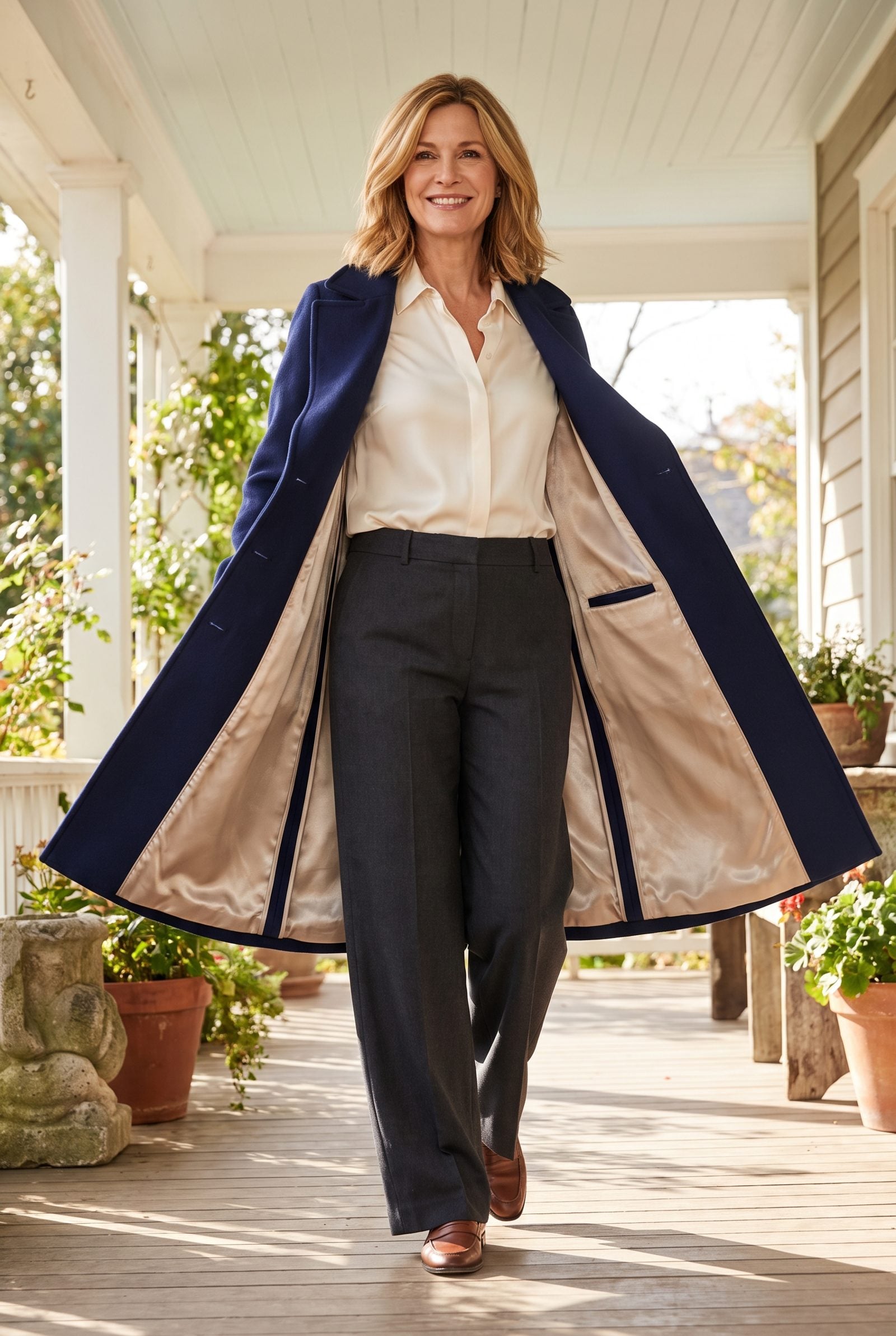
You know the difference the second your arm goes in. A silk-lined sleeve lets the coat fall onto your shoulder like it was poured there. A scratchy acetate lining fights you at the cuff all day. Nobody else sees the inside. You feel it every hour.
This is the physical half of what researchers call enclothed cognition. In the 2012 study that coined the term, Adam and Galinsky showed clothing works on the wearer through two things at once: what the garment means, and how it physically feels to wear (Source). The meaning part gets all the attention. The feel part is doing quiet work underneath.
A lining that glides tells your body the day is handled. A lining that drags tells it, all afternoon, that something’s slightly off. You won’t name it. You’ll just move stiffer. Check the inside seam before you check the price tag. A clean silk-lined coat is a daily gift you give yourself and nobody congratulates you for.
10. The Coat That Does Your Confidence for You on the Days You Can’t
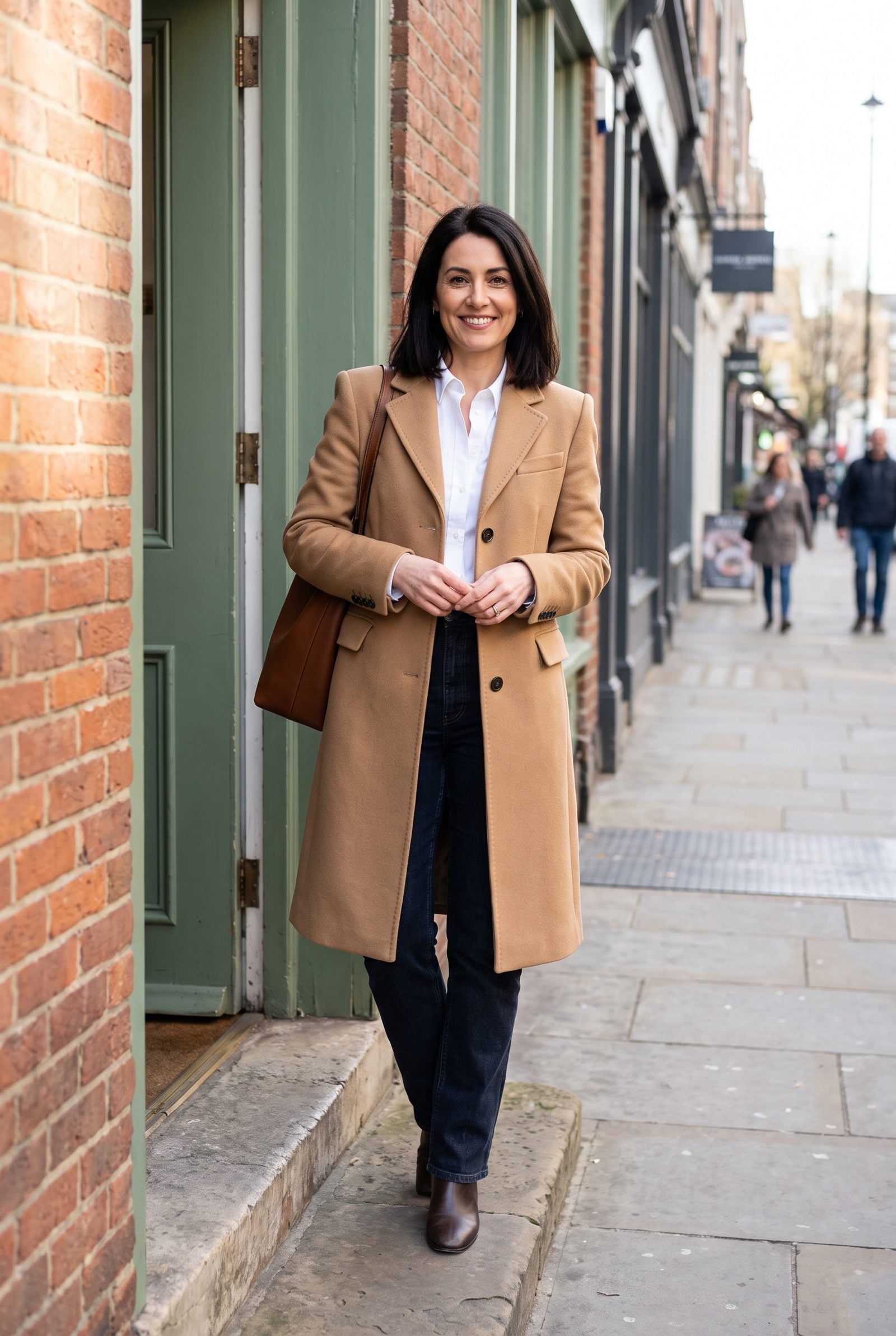
Some mornings you have nothing to give. The structured coat doesn’t ask you to. It stands up on its own while you catch up.
A sharp-shouldered wool coat carries symbolic weight your brain borrows from. In the enclothed cognition experiments, participants performed better on attention tasks only when the coat they wore carried a meaning of competence (Source), the doctor’s version, not the painter’s. The garment lends you an identity you can step into before you feel it.
That’s the trick of the proper coat on a hard day. You put on the authority first. The feeling of authority catches up second. A woman over 50 already knows this in her bones, she’s just never had a name for it.
A well-cut camel structured coat does half your heavy lifting at the door.
9. Why the Softest Coat in the Closet Is the One You Never Wear Out

There’s a coat you reach for without deciding to. Usually it’s the softest one. A brushed wool, a teddy fleece, a cashmere blend that your hand finds in the dark.
That pull isn’t weakness or habit. It’s wired in. Human skin carries a class of nerve fibers called C-tactile afferents that fire hardest to slow, soft, gentle contact, and that exact touch produces measurable heart-rate deceleration and even activates the smile muscle (Source). Soft, slow contact literally calms you down. Reviews of this system link it to oxytocin release and reduced reactivity to stress (Source).
So the fuzzy coat you’ve half worn through isn’t a style failure. It’s self-soothing you can wear outdoors. The texture is doing to your nervous system what a hand on the shoulder does.
8. The Military Detail That Makes You Feel Oddly Unbreakable

Epaulettes. Double rows of buttons. A storm flap across the chest. A belt you cinch like you mean it. The trench and the peacoat didn’t get these details for looks, they got them from uniforms built to survive weather and worse.
Your brain remembers the origin even when you don’t. This is enclothed cognition at the level of symbol. The same research found it isn’t only what we wear but what we think about what we’re wearing that shifts how we behave (Source). Military detailing carries a built-in meaning of protection and command. You put on hardware designed for the trenches, and some part of you stands at a different angle.
An androgynous coat with real military bones isn’t borrowing from menswear. It’s borrowing from armor. A classic khaki belted trench coat does this better than almost anything.
7. The Coat That Says You Have Somewhere Better to Be
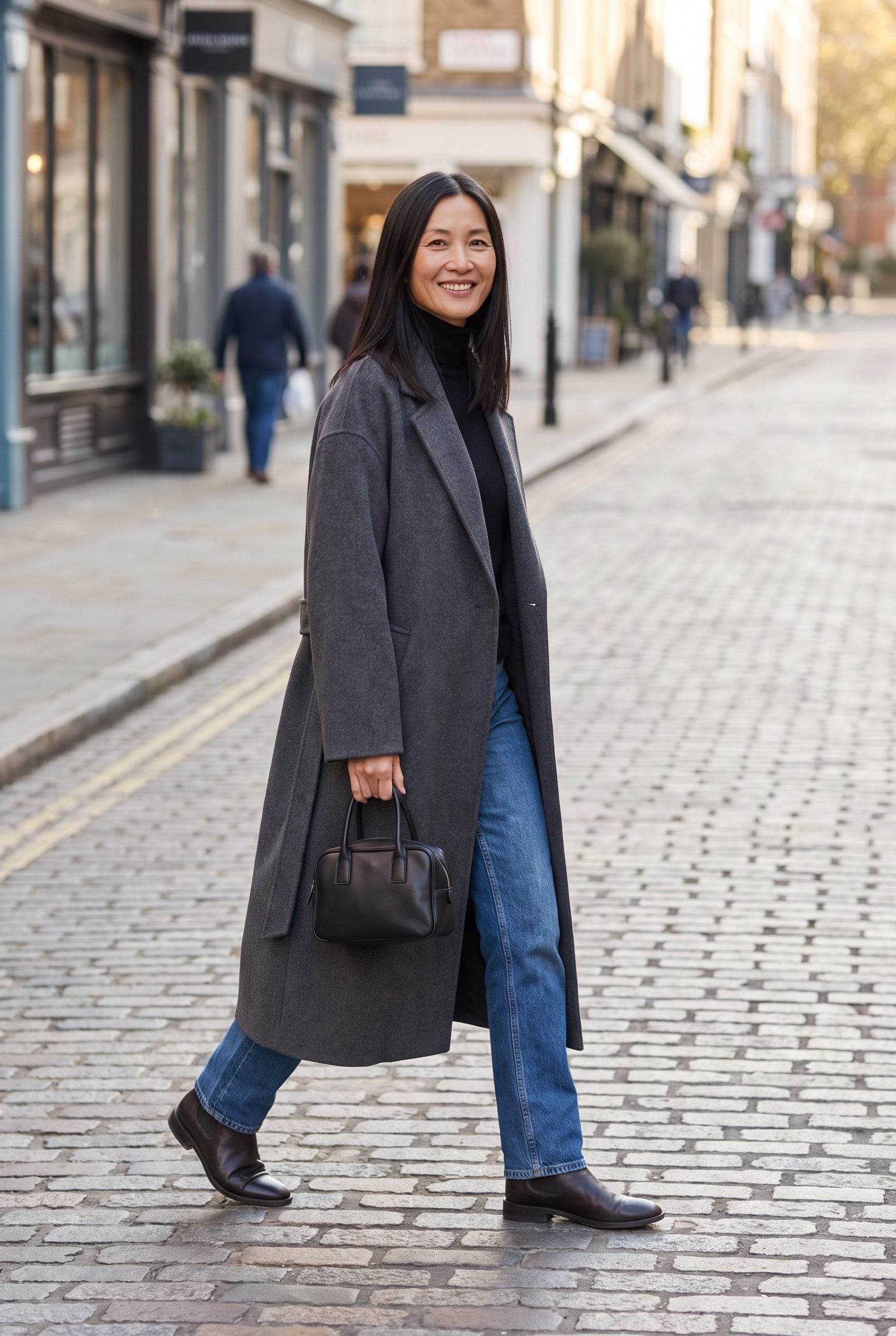
The long, lean, drop-shouldered coat worn open, moving. It reads as motion even when you’re standing still. There’s a reason it signals a woman with a schedule and no time to explain it.
Part of that is pure line. A vertical column of dark wool lengthens you and sets you in forward motion. But part of it is read by other people as status, and status reads as busy. Sharpness telegraphs competence before you speak, which is the social half of enclothed cognition, where a garment alters not only your performance but how others size you up (Source).
Thrown over jeans, this coat whispers: I threw this on and I still look like this. Over heels it says the opposite and means the same thing. Either way, it never looks like you’re trying. That’s the whole point.
6. Why Camel Reads as ‘Figured It Out’ Across Every Generation

A camel coat is a quiet claim. It says, without raising its voice, that the person inside it stopped chasing and started choosing. Your grandmother read it that way. So does the 25-year-old at the next table.
Neutral, mid-tone colors sidestep the loud signals that other hues send. Where red pushes a message of dominance and alarm onto the viewer (Source), camel does the opposite. It withholds. And in a culture trained to equate restraint with money, the absence of a loud signal reads as its own kind of status, the stealth-wealth logic where the expensive thing refuses to announce itself.
Camel also happens to flatter nearly everyone, warming the skin without competing with it. The androgynous style of a clean camel wrap coat costs you no attention and buys you authority. A proper camel wrap coat is one of the few things that looks more earned the longer you own it.
5. The Oversized Silhouette and the Freedom of Taking Up Space

The big coat. The one that swallows you a little, drops past the hip, hangs off the shoulder. For a generation of women trained to shrink, to cross the legs, to make themselves small, there’s something close to rebellion in a coat that insists on volume.
Expansive postures, limbs open, body spread wide, are the universal nonverbal language of power, and the research is clear that people shrink and hunch before high-stakes moments, literally taking up less space when they feel small (Source). A coat built to occupy room nudges you the other way. You can’t disappear inside something this generous. It won’t let you fold up.
The hormonal claims around posture have been walked back. But one finding has held up across replications: expansive, open postures reliably make people feel more confident (Source). A coat that opens your stance and widens your frame is working that same lever all day. The oversized silhouette isn’t hiding you. It’s giving you permission.
4. The Coat You Bought for an Occasion That Never Came
❤️ Would you like to save this?
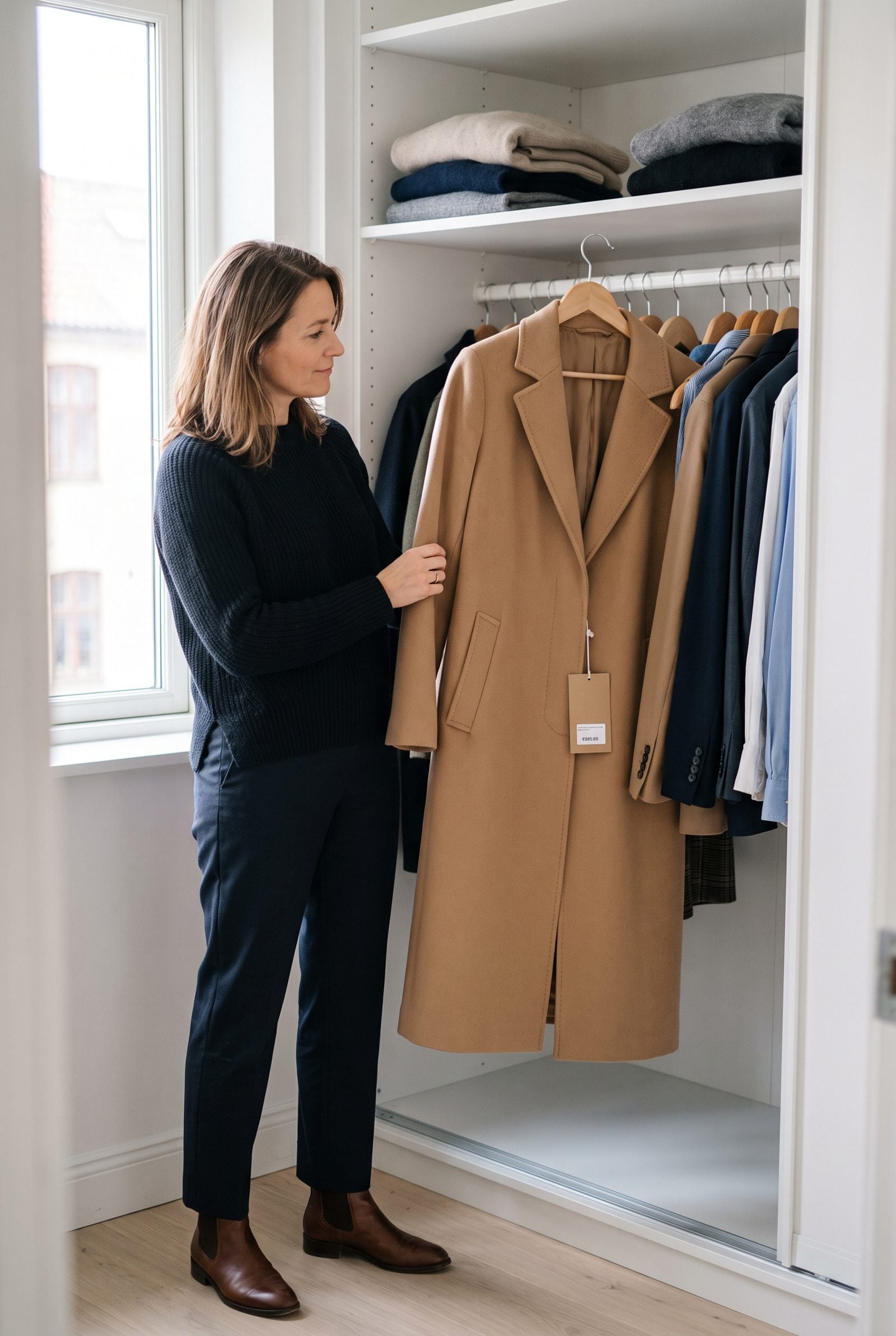
There’s one in nearly every closet. The structured wool piece with the tags still looped at the underarm, bought for a gallery opening, a second wedding, a trip to somewhere colder and more cinematic than your actual life. You didn’t buy it for who you are on a Tuesday. You bought it for who you’d be if the right Tuesday finally showed up.
Fashion psychologist Dr. Carolyn Mair has a name for this. People shop for an aspirational version of themselves rather than their actual lifestyle, which is exactly how closets fill with unworn purchases. Source Consumer researchers call the broader mechanism compensatory consumption: using a purchase to patch a hole in how you feel about yourself. Source
Here’s the part that stings. When researchers asked people to release dormant clothes, most refused, and the overwhelming reason was the intention to wear them one day. Source The coat isn’t clutter. It’s evidence of an intention. It keeps its promise precisely by never being tested.
3. Why Structure at the Shoulders Makes You Negotiate Harder
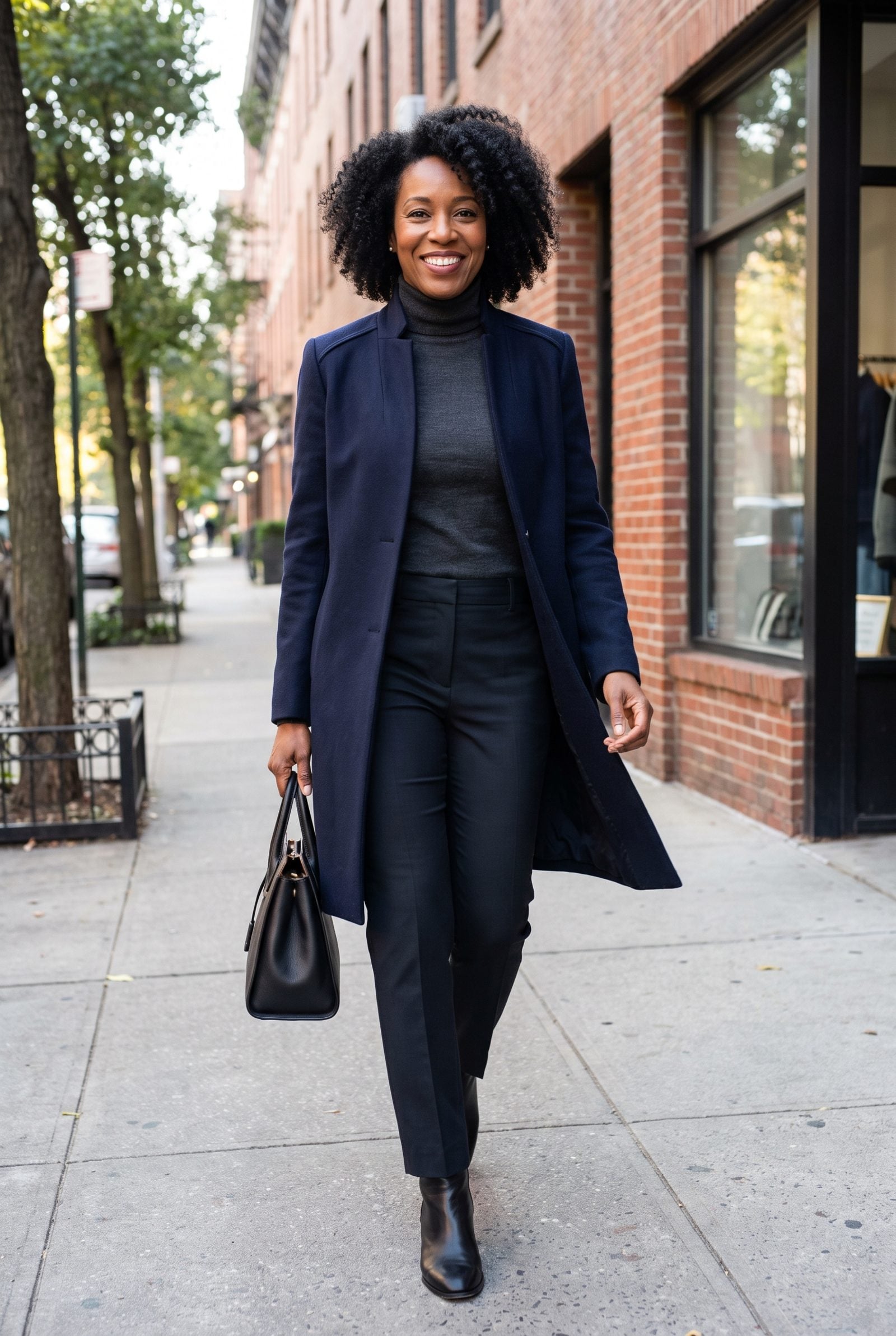
You know the feeling. You slide into a coat cut with a defined shoulder, maybe a navy wool coat with a clean seam across the top, and you stand a half inch taller before you’ve even checked the mirror. The question is whether that feeling does any actual work.
The famous theory says yes. Adam Galinsky coined the term enclothed cognition after finding that people wearing a coat they believed was a doctor’s coat made roughly half as many attention errors as people in street clothes, while the identical coat called a painter’s smock did nothing. Source The symbol, not the fabric, changed how they thought.
But here’s where the puzzle gets interesting. When researchers ran four studies pairing expansive, powerful body positioning with an actual negotiation task, the effect on negotiation outcomes vanished. Source A later review confirmed it: no reliable effect of power postures on negotiation success. Source
So the strong shoulder might not win you the room. What it does, quietly, is change the person wearing it before anyone else has a say. Whether that inner shift is enough is the thread this whole guide keeps tugging.
2. The Weatherproof Coat and the Myth of the Woman Who Plans Ahead
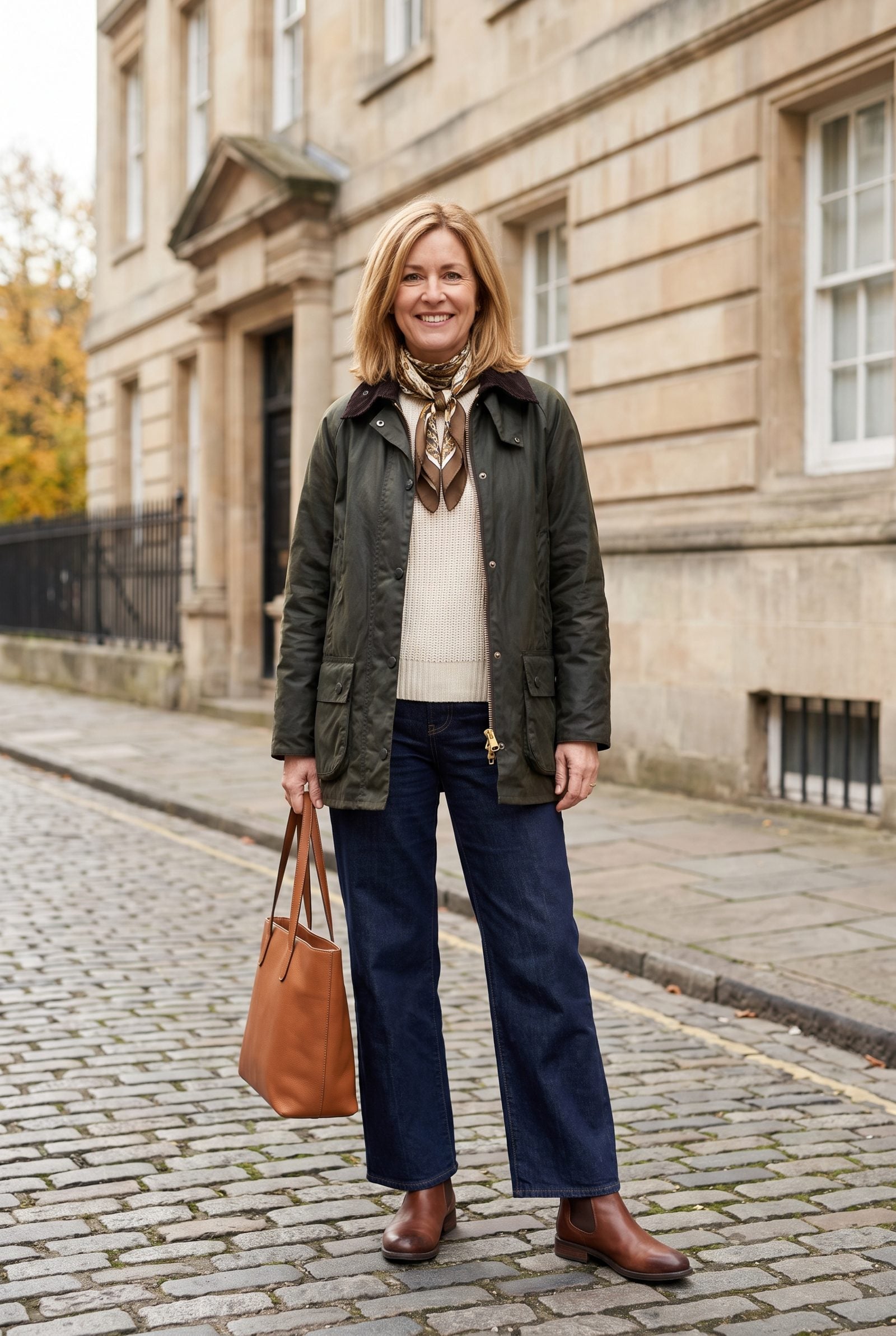
The waxed parka. The sealed-seam rain shell. The insulated piece rated for conditions you will almost certainly never stand in. You bought it ready for the storm, and that readiness is the whole point, even on the days no storm arrives.
This is aspirational identity wearing a practical disguise. You buy the hiking boots for the version of you who camps every weekend, and you buy the weatherproof coat for the version of you who checks the forecast, packs the night before, and never gets caught out. Source
The purchase is rarely about the garment itself. It’s about what we imagine the garment will change in our lives. Source The coat sells you competence. Preparedness you can zip into.
And honestly? Plenty of storm-rated shells only ever see drizzle. No regrets. The coat does its quiet job every time you see it on the hook: it tells you you’re the kind of woman who’s ready. Whether you ever test that is between you and the weather.
1. The One Coat That Finally Looks Like the Inside of Your Head
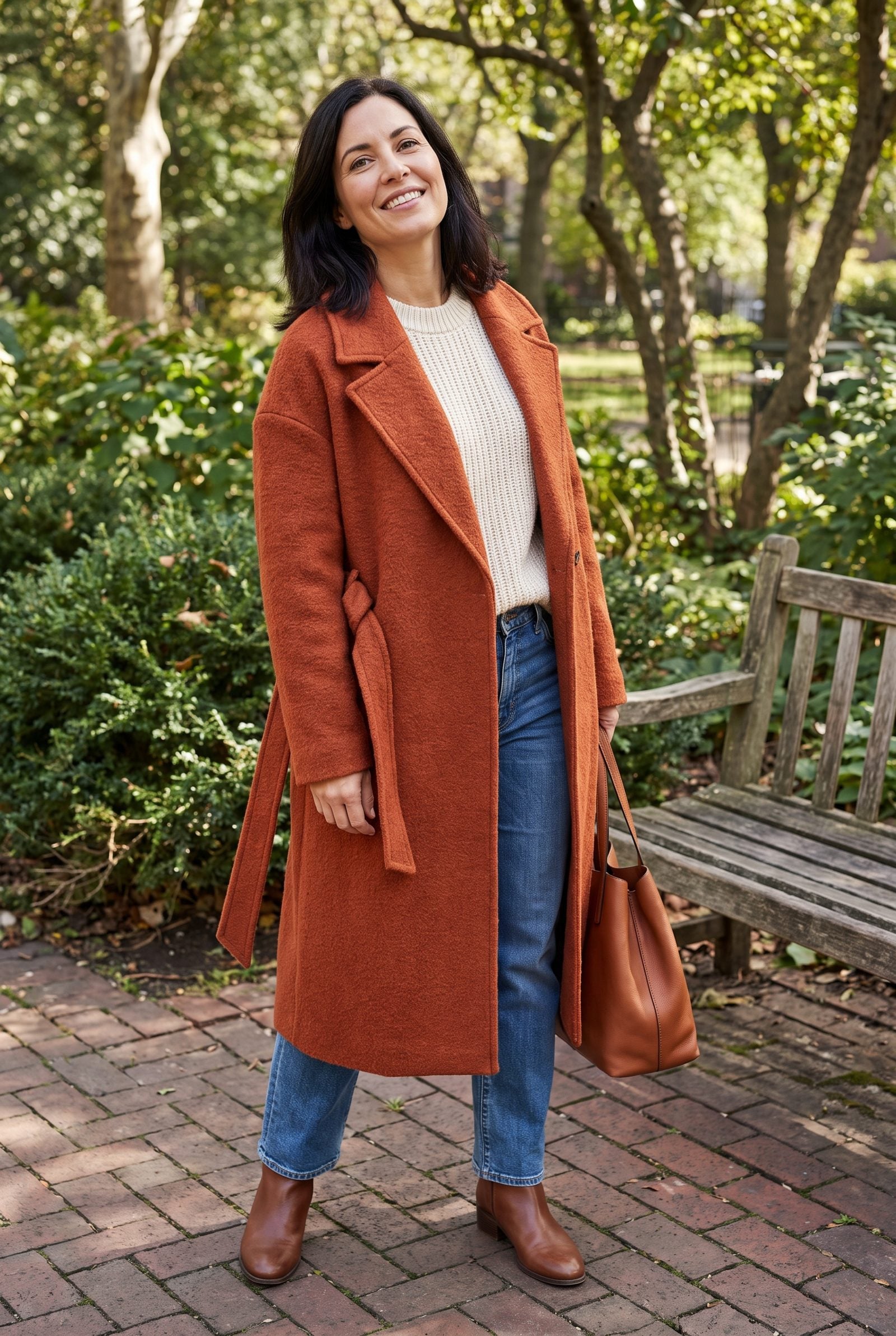
Every so often a coat stops being a purchase and starts being a confession. The unusual color you talked yourself into. The androgynous coat with the dropped shoulder and the belt you tie your own way. It’s the one piece in the closet that doesn’t argue with you.
Our closets are archives of who we once were, who we are now, and who we hoped to become, which is why most wardrobes feel like negotiations. Source This coat skips the negotiation. By your forties and beyond, you’ve stopped dressing for the imagined version and started dressing for the woman who actually showed up.
That’s the quiet reward of enclothed cognition working in your favor. The garment carries a symbolic meaning, and once you physically wear it, that meaning becomes part of how you think and move. Source When the symbol finally matches the self, the coat stops performing and starts belonging.
You’ll know it when you own it. You reach for it without deciding to. Pair it with your brass statement earrings and the look is just you, out loud.
The Bottom Line
Here’s what your coat knows: you don’t dress for the weather, you dress for the version of yourself you’re trying to become that day. The coat you reach for is a quiet vote for who you want to be before you’ve found the nerve to say it out loud. So tomorrow, notice which one your hand goes to first, and ask yourself what she’s trying to tell you.