
❤️ Would you like to save this?
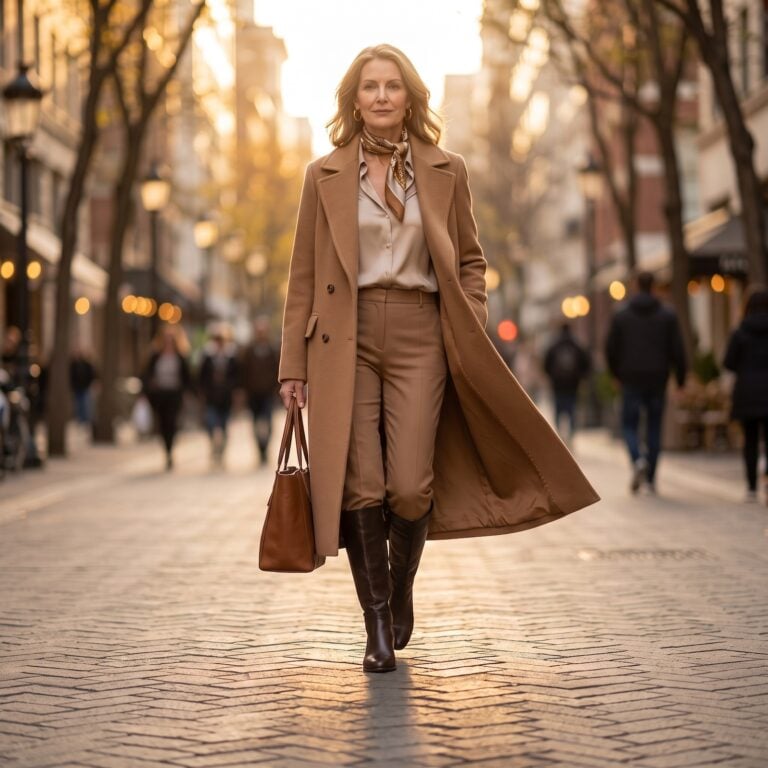
The outfit was right. You knew the outfit was right. Then came one more thing. A necklace, earrings to match, a bracelet because the wrist looked bare, maybe a belt because the waist needed something. Somewhere between the mirror and the front door, finished became fussy.
That is the problem with accessories. The gap between polished and cluttered is almost never about owning the wrong pieces. More often, the damage comes from wearing too many of the right ones at once.
The fixes here are specific, fast, and painless. Most start with taking one thing off.
FYI, thanks to AI imagery software, we’re able to create very specific fashion and hairstyle examples to illustrate the points being made. In some cases, imagery is exaggerated to hammer home the point. Also, assume links that take you off the site are affiliate links such as links to Amazon. this means we may earn a commission if you buy something.
25. Wearing a Statement Necklace and Statement Earrings and a Statement Bracelet All at the Same Time
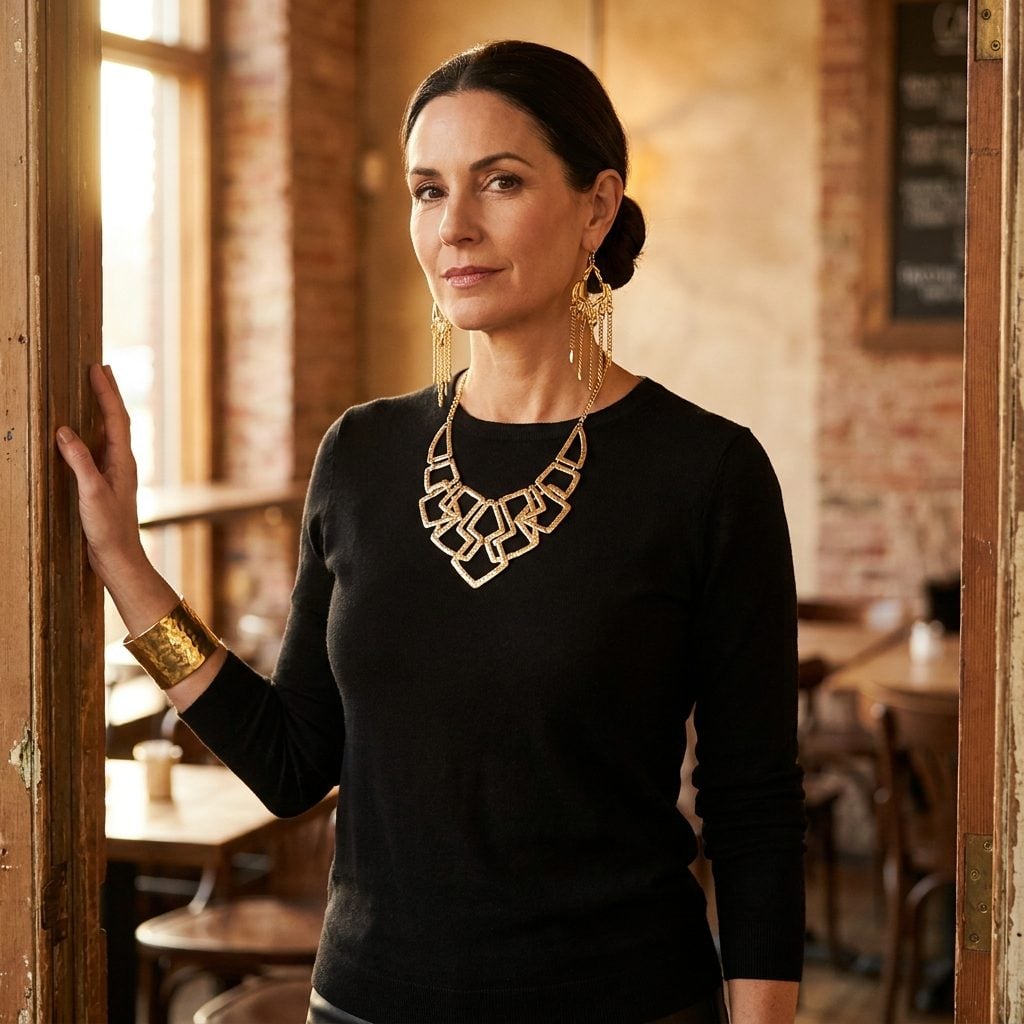
Three exclamation points in one sentence. That’s what this looks like. A bold necklace, bold earrings, and a bold cuff all fighting for the same attention creates a visual traffic jam where the eye bounces between all three and absorbs none of them. Each piece cancels the others out.
One volume knob goes up. The rest stay low. A gold statement necklace works beautifully with small stud earrings and a bare wrist. Chandelier earrings sing when the neckline is clean and uninterrupted. Pick your star, then let everything else play backup.
24. Stacking Too Many Rings on Every Finger Until the Hand Looks Busy and Overwhelmed
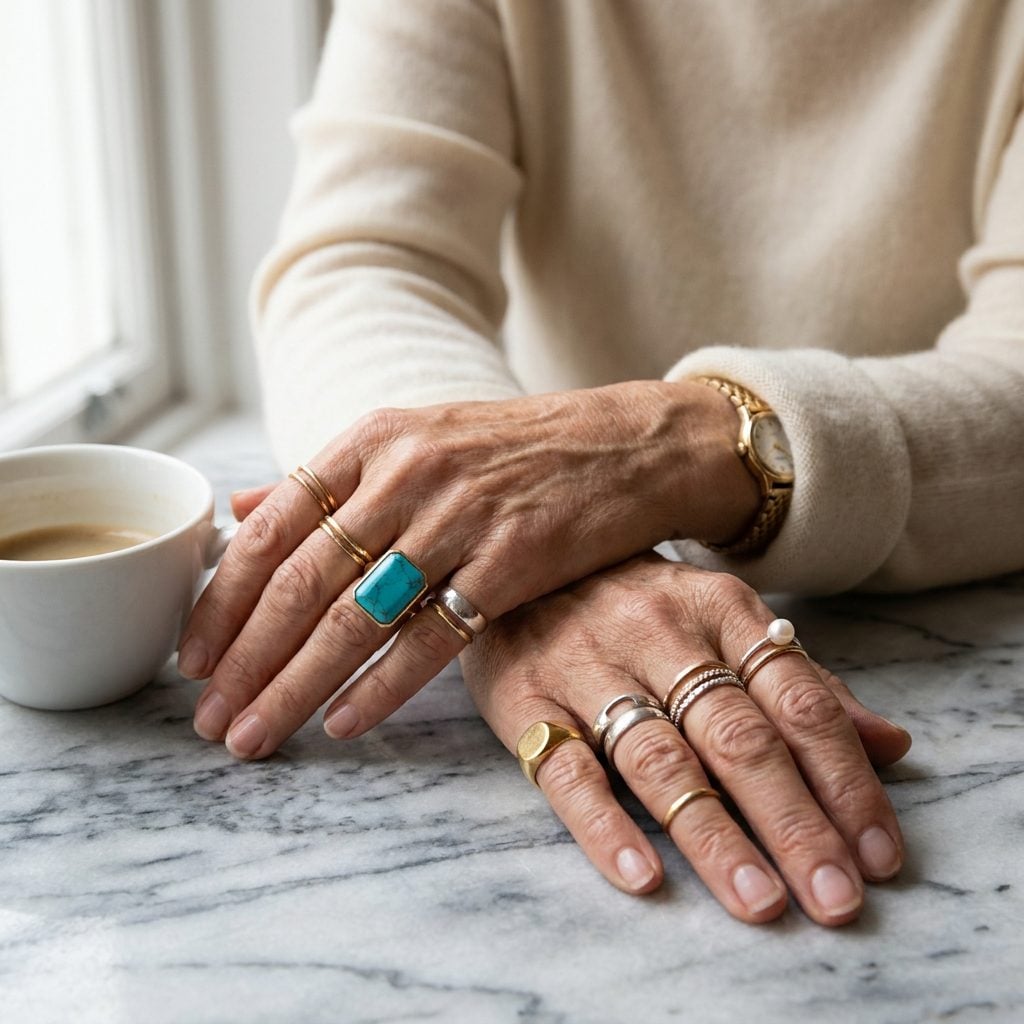
I wore rings on eight fingers for about a year in my early forties. Looked like I’d raided a flea market with no exit strategy. A hand covered in metal stops reading as intentional — it starts reading as anxious, like visual noise rather than a decision somebody made on purpose.
Two or three rings across both hands is the sweet spot. Vary the weight: one gold signet ring paired with a thin band on a different finger and maybe a gold midi ring on the opposite hand. Leave at least three fingers bare. The negative space is what makes the rings look chosen rather than hoarded.
23. Pairing a Bold Printed Scarf with an Already Patterned Outfit and a Colorful Bag
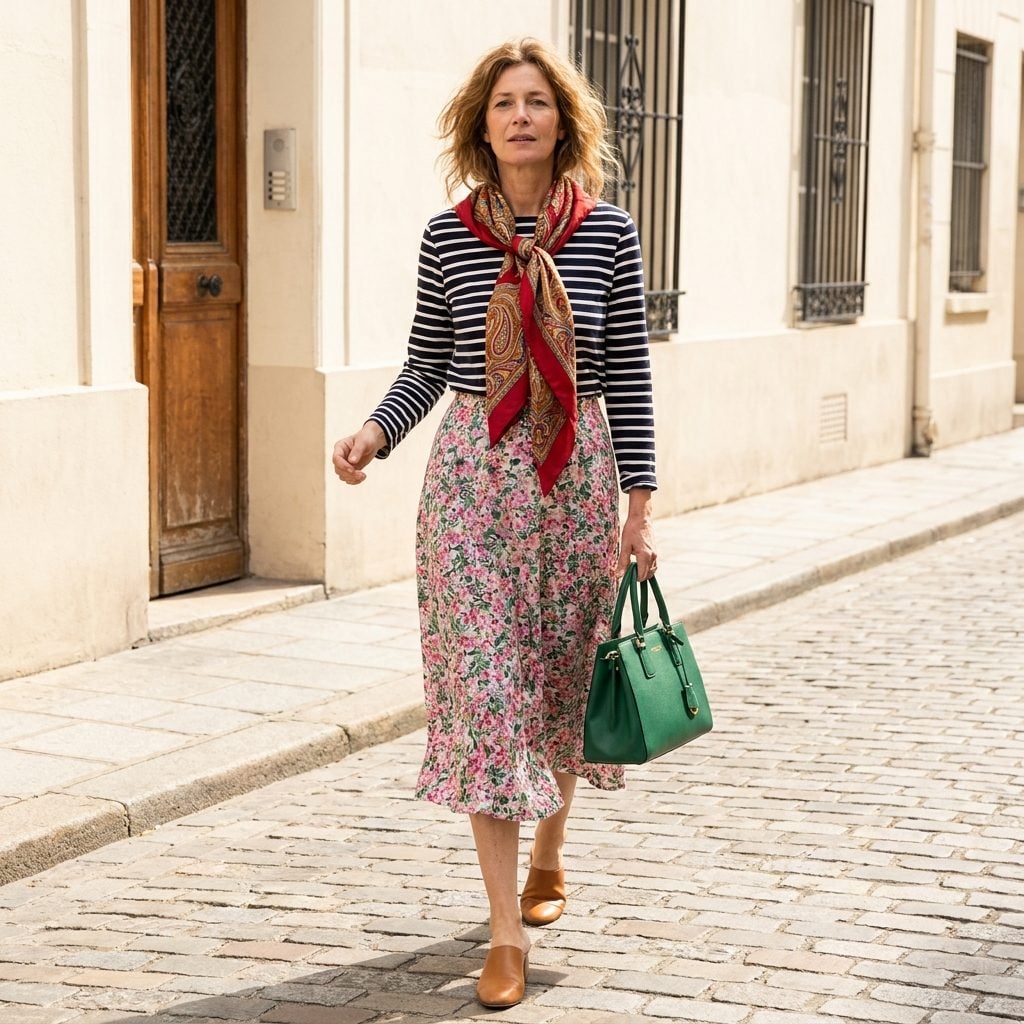
Pattern mixing is a skill. Pattern avalanche is something else entirely. When a floral skirt, a striped top, a paisley scarf, and a brightly colored bag all land on the same body, there’s no focal point left. The look reads loud in a way that has nothing to do with confidence — it reads like four outfits collided on one person.
Two patterns maximum, and they need to share at least one color. Then the scarf and bag stay solid, pulling from the existing palette. A navy bag with a navy-and-cream stripe and a red floral, for instance. Cohesion isn’t the absence of personality. It’s personality with a plan.
22. Wearing a Chunky Belt Over a Dress That Already Has Waist Definition Built In
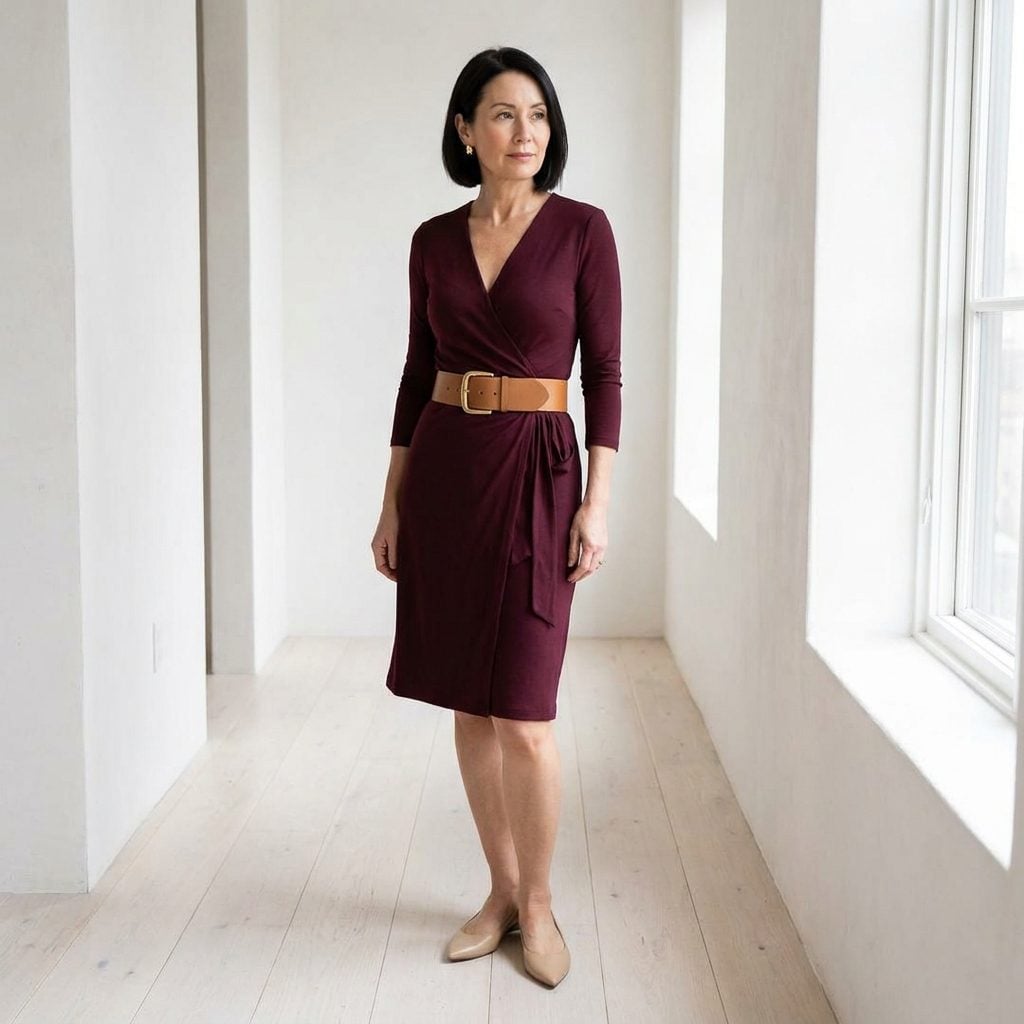
The dress already did the work. Darts, a seam, a sash, a tie — some kind of intent at the waist. And then a wide belt lands on top of it like a second opinion nobody requested.
Visually, instead of a clean waist, you get a thick horizontal band of conflicting hardware and fabric that makes the midsection heavier, not more defined. The opposite of the belt’s supposed job.
If the dress has built-in waist shaping, trust it. Want a belt over a dress? Choose one with a simple, unstructured waistline — a straight shift or a shirt dress that genuinely needs the definition. A belt earns its place when it’s solving a problem, not duplicating a solution.
21. Adding a Brooch to a Lapel That Already Carries a Pocket Square and a Pin
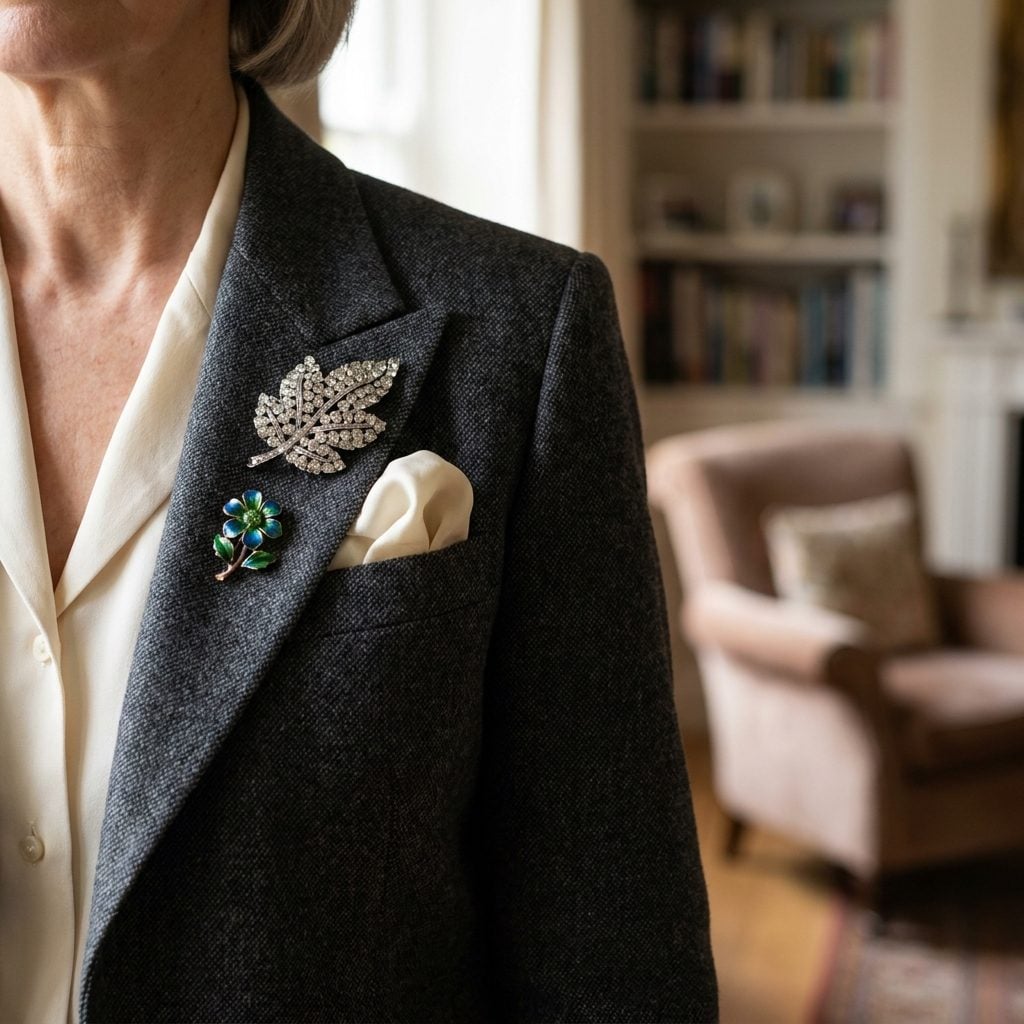
One lapel is about four square inches of real estate. A brooch, a pin, and a pocket square on that same patch of fabric isn’t accessorizing — it’s a bulletin board.
Two decorative elements on the same lapel start competing. Three turn the chest into a collage. And the beautiful tailoring of the charcoal wool blazer? Gone. Buried under the clutter. That’s the real loss, because the blazer was the expensive part.
Pick one. A pocket square alone. A vintage brooch alone. A single lapel pin. Whichever has the most personality gets the spot; the others go back in the drawer. Not forever — just not today.
20. Choosing a Bag in a Print That Directly Competes with the Print in the Outfit
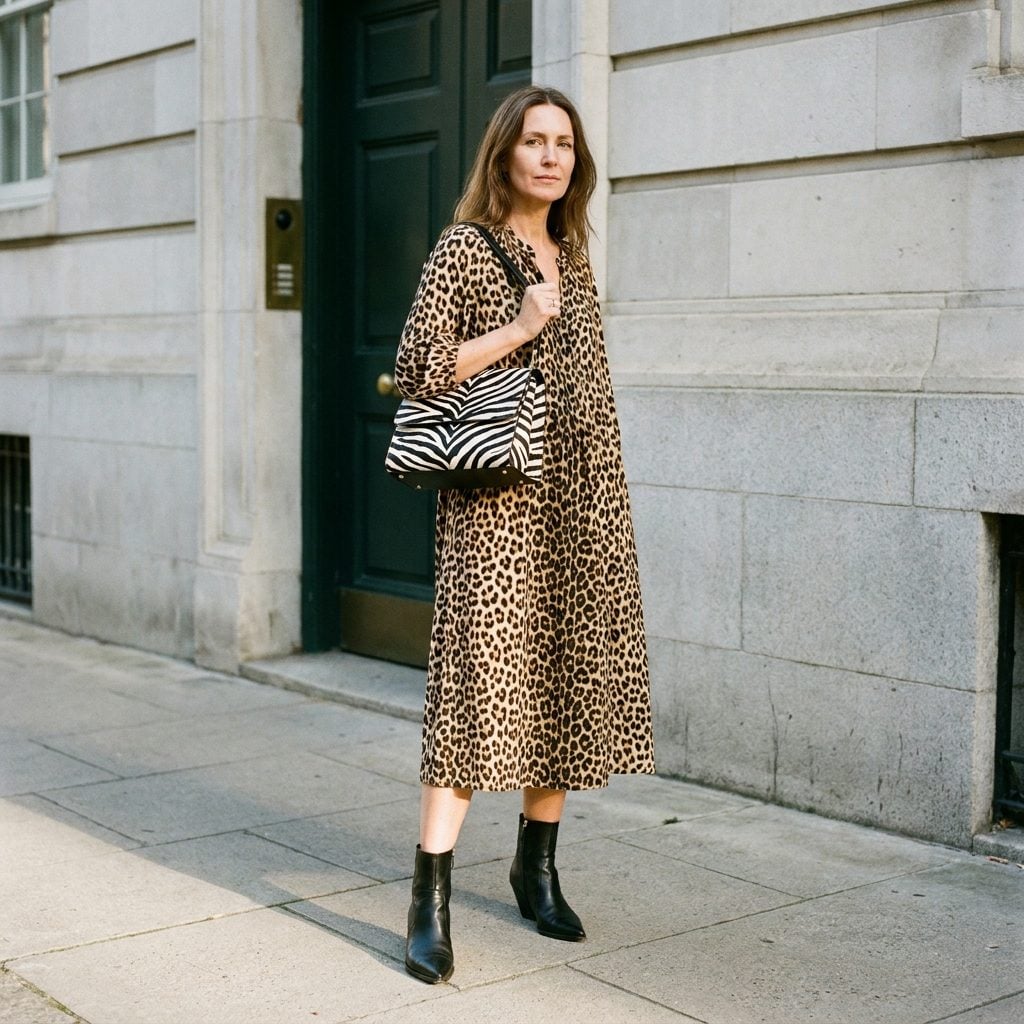
Leopard dress. Zebra bag. Two apex predators on the same savanna, and nobody wins.
When two prints of similar scale and visual weight share an outfit, neither registers as intentional. The brain processes competing patterns as disorder, not daring — a perceptual reflex, not a taste judgment. Your eye literally cannot settle, so it files the whole look under “noise.”
What actually works: the bag stays solid when the outfit carries a print. A black leather structured bag or a tan leather tote anchors a printed dress and lets the pattern breathe. If you want the bag to be the print moment, the clothing goes quiet. One voice at a time.
19. Wearing Long Dangly Earrings with a Heavily Embellished Neckline at the Same Time
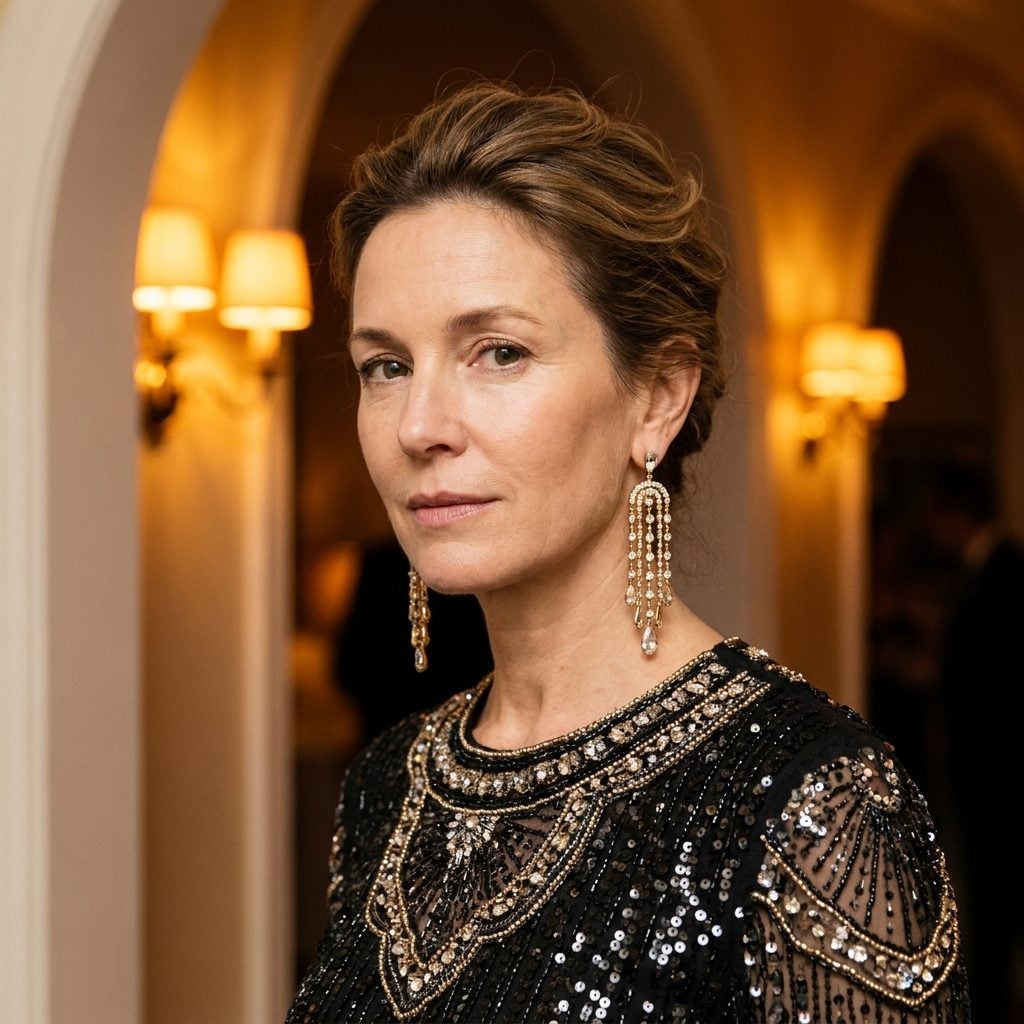
The neckline is doing a lot. Beading, sequins, embroidery — maybe all three. It’s the centerpiece of the outfit. And then two shoulder-length chandelier earrings swing into the frame and start a border dispute.
Result: a wall of sparkle from earlobe to sternum with no breathing room. The eye can’t distinguish where the earrings end and the neckline begins, so the entire zone between chin and collarbone reads as one undifferentiated mass of decoration. Exhausting to look at, honestly.
An embellished neckline needs quiet ears. Small studs, pearl studs, tiny hoops, or nothing at all. Save the dramatic drop earrings for a night when the neckline is a clean boat neck or a simple V. Let each piece have its own evening.
18. Layering Three Necklaces of Similar Length So They Tangle and Read as One Messy Chain
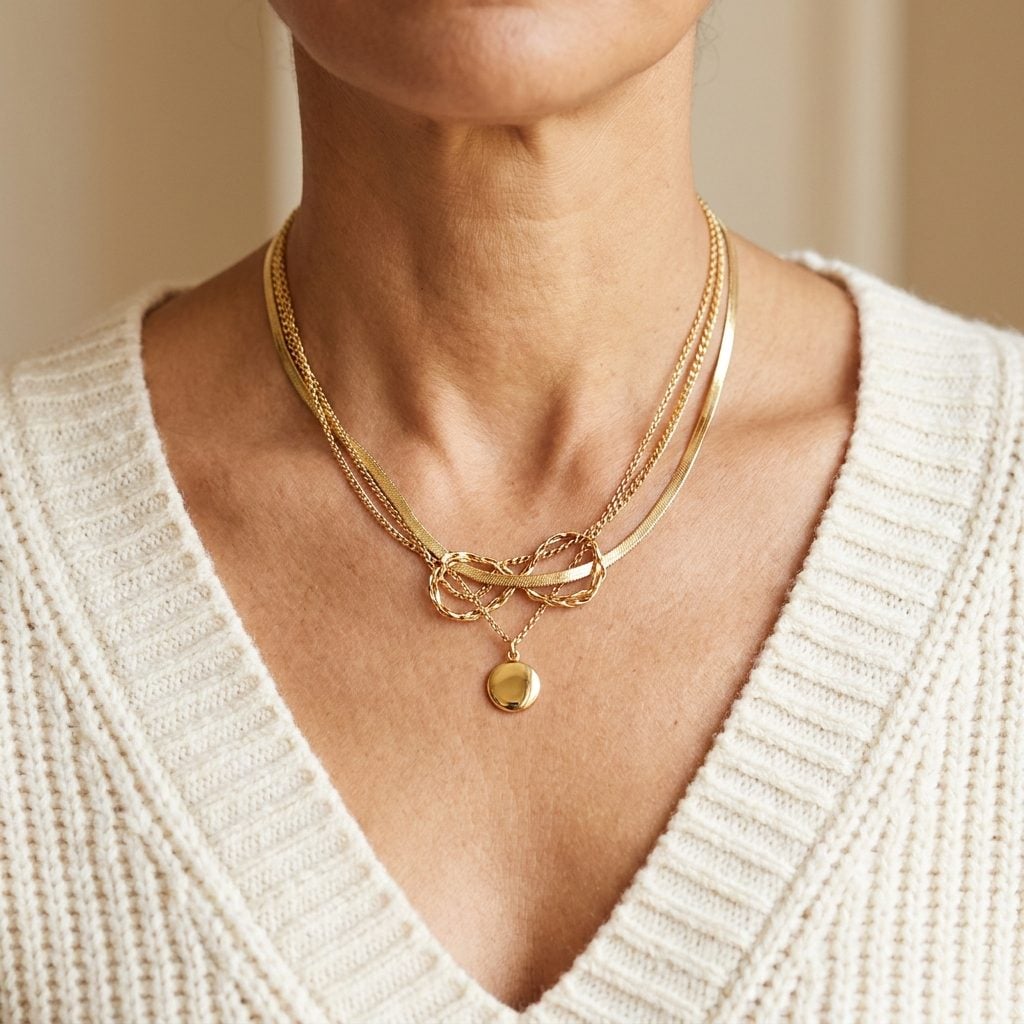
Necklace layering is everywhere right now. The versions that look good in magazines have one thing going for them that the tangled mess at your collarbone doesn’t: each chain sits at a distinctly different length.
Three chains landing at the same spot twist together, the pendants cluster, and the whole arrangement reads as one confused piece of broken jewelry rather than three deliberate ones. Layering disappears. You just look like you couldn’t commit to a necklace.
Space them at least two inches apart — a 16-inch choker, an 18-inch chain, a 22-inch pendant. Different weights help too: a thin delicate gold chain next to a slightly heavier link next to a pendant on a fine cord. The visual stagger is everything. Without it, you just have a knot.
17. Adding a Headband and Hair Clips and Earrings and a Scarf to the Hair All in One Look

You’ve watched this happen in real time. The headband went on and looked great. Then the clips because one side felt bare. Then the scarf because it tied the color scheme together. Then the earrings because bare ears felt weird. Now the area between the eyebrows and the crown is running a small accessories boutique out of someone’s head.
Everything from the jawline up occupies the same visual territory, and more than two elements in that zone makes the face feel framed by clutter rather than styled with any kind of intent.
One hair accessory plus earrings. That’s the ceiling for most looks. A velvet headband with small studs. A pair of decorative clips with bare ears. The scarf on its own, solo, unbothered. Your face is what people are supposed to see. Let them.
16. Carrying an Oversized Tote That Swallows the Proportions of a Delicate Feminine Outfit
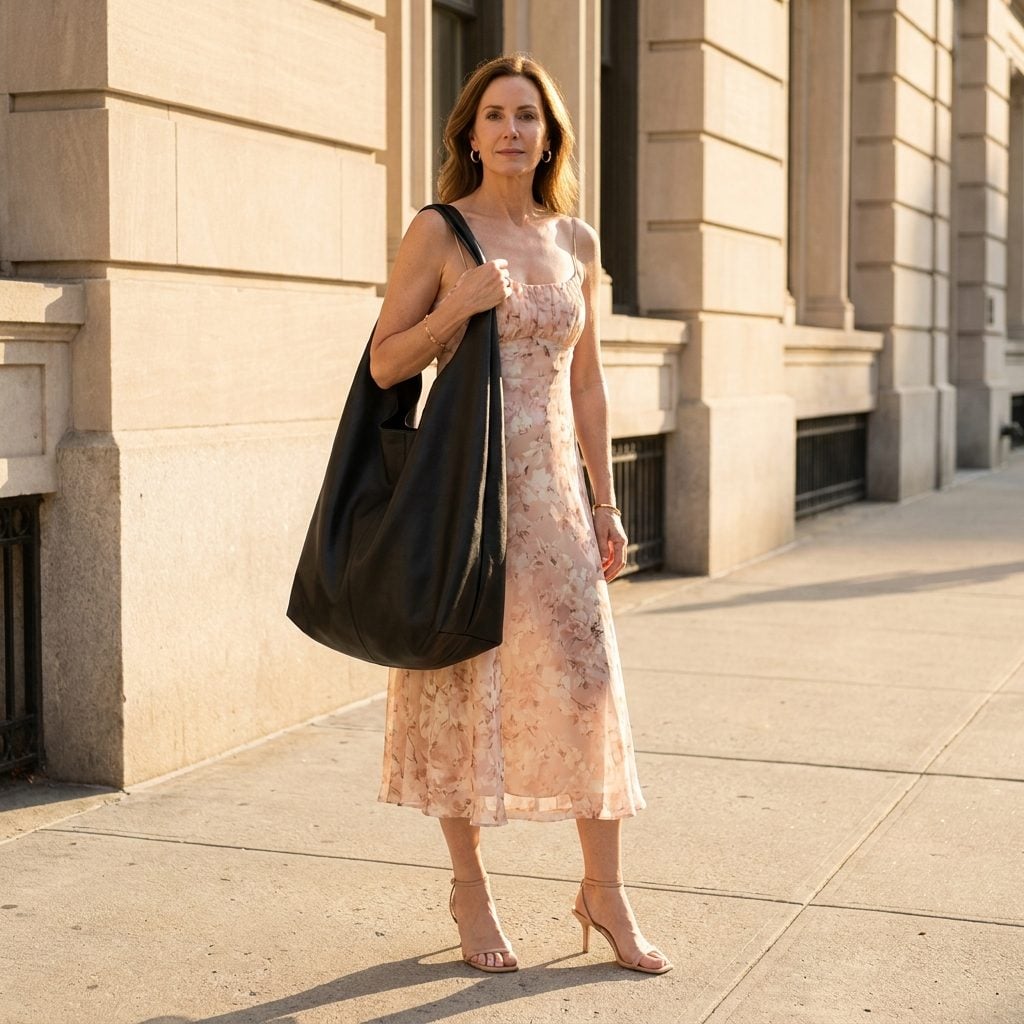
The dress is doing something quiet and precise — thin straps, light fabric, a silhouette that suggests ease. Then a bag the size of a carry-on duffel lands on one shoulder and the whole composition collapses to one side. Those delicate proportions vanish under the sheer square footage of leather.
Scale matters more than people think. A bag should echo the visual weight of the outfit, not bully it. A chiffon midi dress wants a structured crossbody or a mid-sized shoulder bag — something that doesn’t dwarf the frame. Save the oversized tote for a chunky knit, wide-leg trousers, substantial shoes. Pieces with enough heft to hold their own against a bigger bag.
15. Wearing a Wide Statement Belt Over a Top That’s Already Embellished or Heavily Detailed
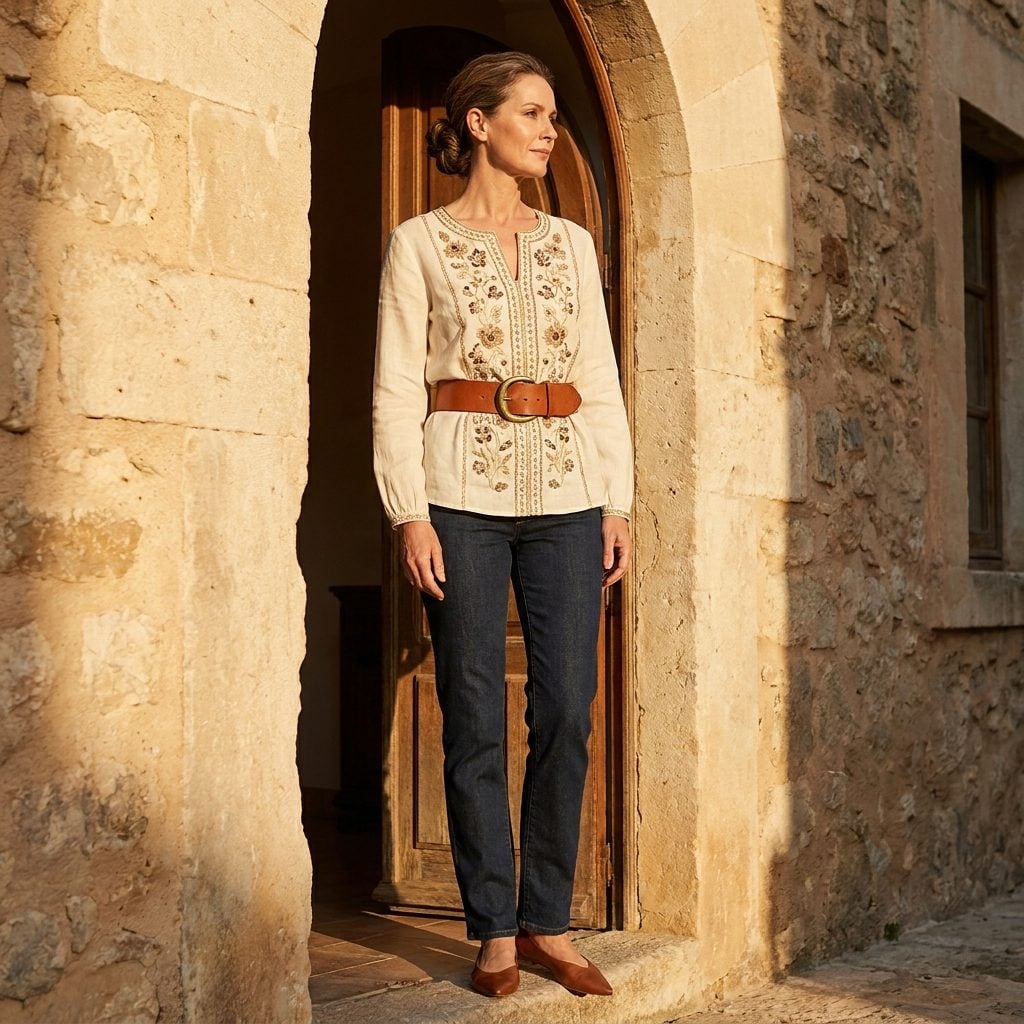
When a wide statement belt lands on top of a blouse covered in embroidery, sequins, or heavy texture, you get two design elements wrestling for the same strip of torso. The eye bounces between buckle and beadwork, and the whole midsection dissolves into visual static.
Fix is simple. Match the belt’s volume to the top’s quietness, or flip it. A heavily detailed blouse wants a thin, tonal belt that nearly disappears. A wide statement belt needs a clean solid-colored top underneath so the hardware can actually register. One anchor per zone — that’s it.
14. Stacking Bracelets on Both Wrists at the Same Time So Neither Arm Gets a Visual Rest
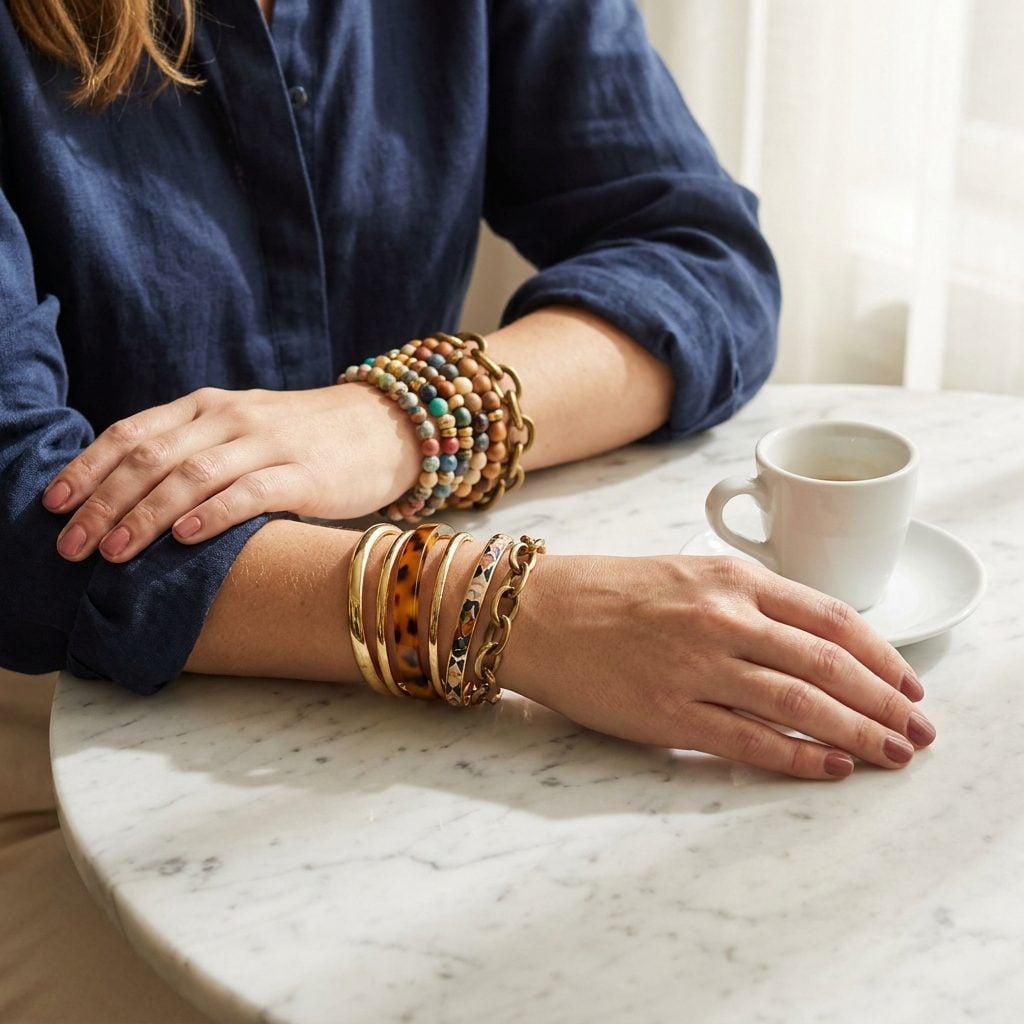
I got this wrong for years — both wrists loaded, convinced more was more. Not even close. Bracelets stacked on both arms means the eye has nowhere to land, and every hand gesture broadcasts from two directions at once. The effect reads less like intention and more like a jewelry drawer exploded onto your outfit.
Pick one wrist. Load it up if you want — five bangles deep, mixed metals, go wild. But let the other arm stay bare, or wear just a simple watch. That empty wrist is what makes the stacked one look deliberate. Without the contrast, you just have volume.
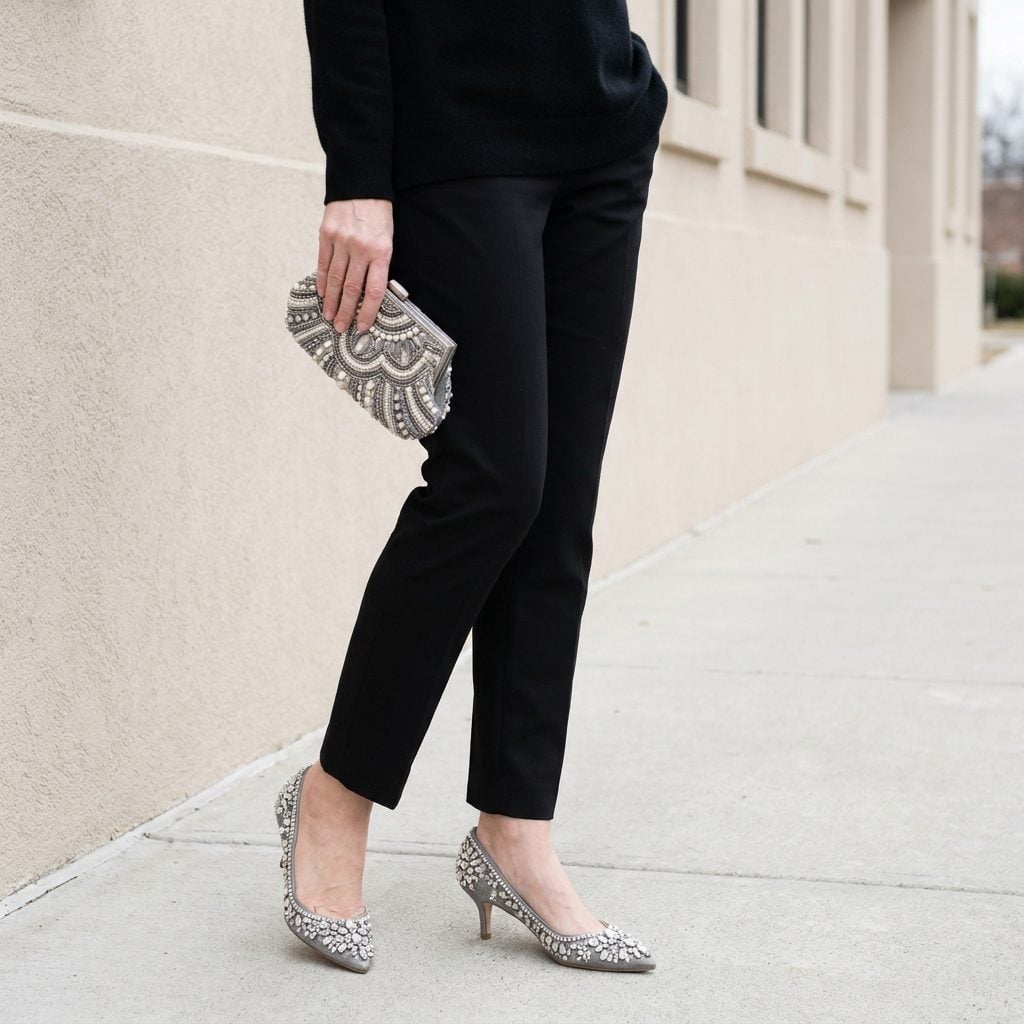
13. Choosing Heavily Embellished Shoes When the Bag Is Already Beaded or Metallic
❤️ Would you like to save this?
Shoes and bags are the bookends of an outfit — the eye naturally toggles between them. Cover both in beading, crystals, or metallic hardware, and that back-and-forth turns into two people shouting over each other at dinner. Nobody wins.
If the beaded clutch is the star, the shoes should be a clean pump or simple flat in a coordinating tone. If the embellished heels are doing the talking, carry a quiet leather bag. One sparkles, one recedes.
12. Wearing a Watch Plus Multiple Bracelets on the Same Wrist Until You Can Barely Move It
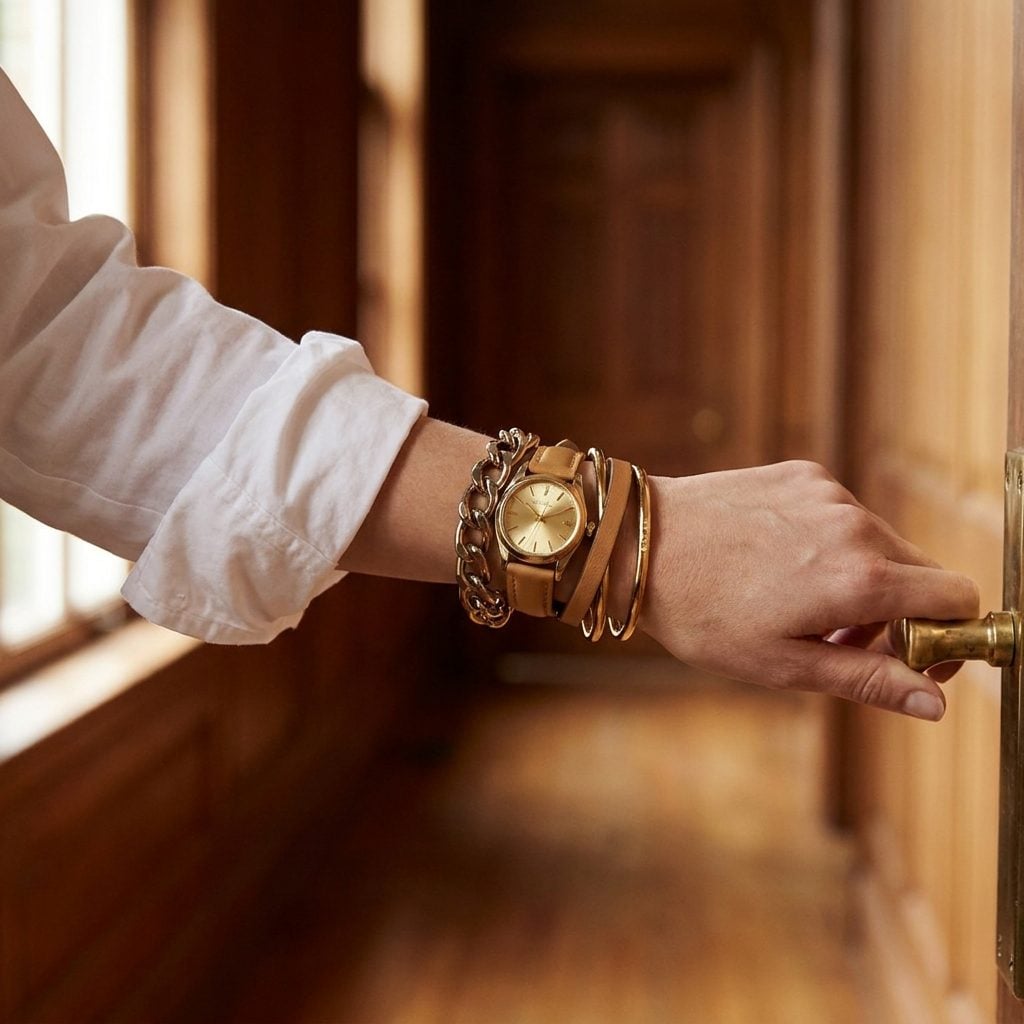
There’s a threshold where accessorizing crosses into inconvenience, and a watch plus three or four bracelets on the same wrist hits it hard. The stack slides over the watch face every time you reach for something. You push them back. Constantly. That fidgeting becomes the most noticeable thing about the outfit.
A watch works best with one companion — maybe two thin bangles that sit below it and stay put. Want a heavier stack? Skip the watch entirely and commit to the bracelet arm. Nothing reads confident when you’re fussing with your wrist every forty-five seconds.
11. Adding a Colorful Statement Bag to an Outfit That Already Has Three Competing Focal Points
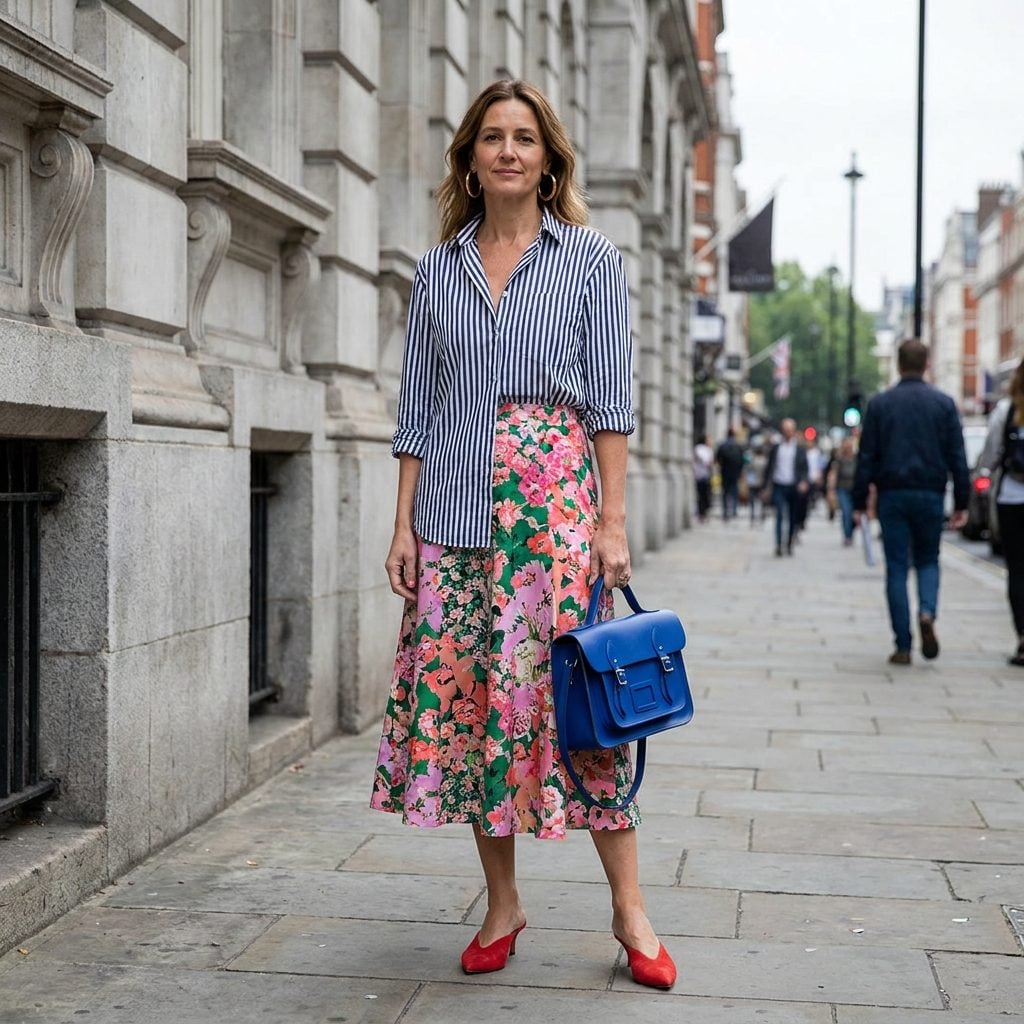
The Fourth Voice in a Three-Way Conversation
Printed skirt, patterned top, statement earrings — the outfit already has three things demanding attention. Now drop a cobalt blue satchel into the mix and the whole look loses its center of gravity. No hero piece anymore. Just noise.
A statement bag needs room. The outfit around it should stay relatively quiet: solids, neutrals, minimal jewelry. Like a gallery wall — the painting needs blank space around it to register as significant.
Already wearing a bold print and big earrings? Reach for a bag in black, tan, or a shade pulled directly from the print. Let it blend instead of compete.
10. Wearing Chandelier Earrings with a Turtleneck That Visually Crowds the Entire Neck Area
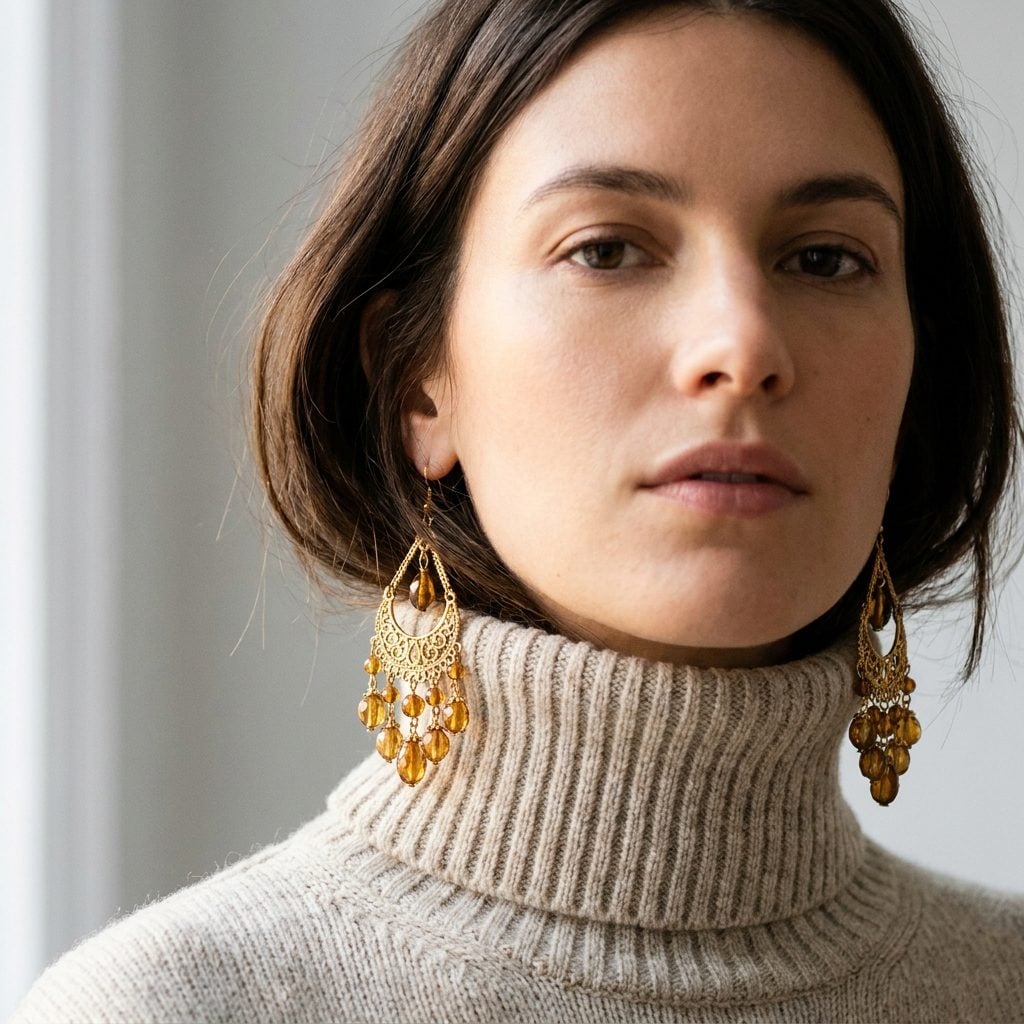
Chandelier earrings need air. They’re designed to swing, catch light, draw the eye along the jawline and down the neck. A ribbed turtleneck fills exactly the space those earrings need to breathe — fabric crowds up against the dangles, the neckline competes with the earring length, and everything from chin to collarbone becomes gridlock.
Turtlenecks pair well with studs, small huggies, or nothing at all. Chandeliers want an open neckline: a V-neck, a boat neck, an off-the-shoulder top — anything that gives them negative space. I will die on this hill.
9. Choosing an Embellished Hat When Earrings, Sunglasses, and a Scarf Are Already in Play
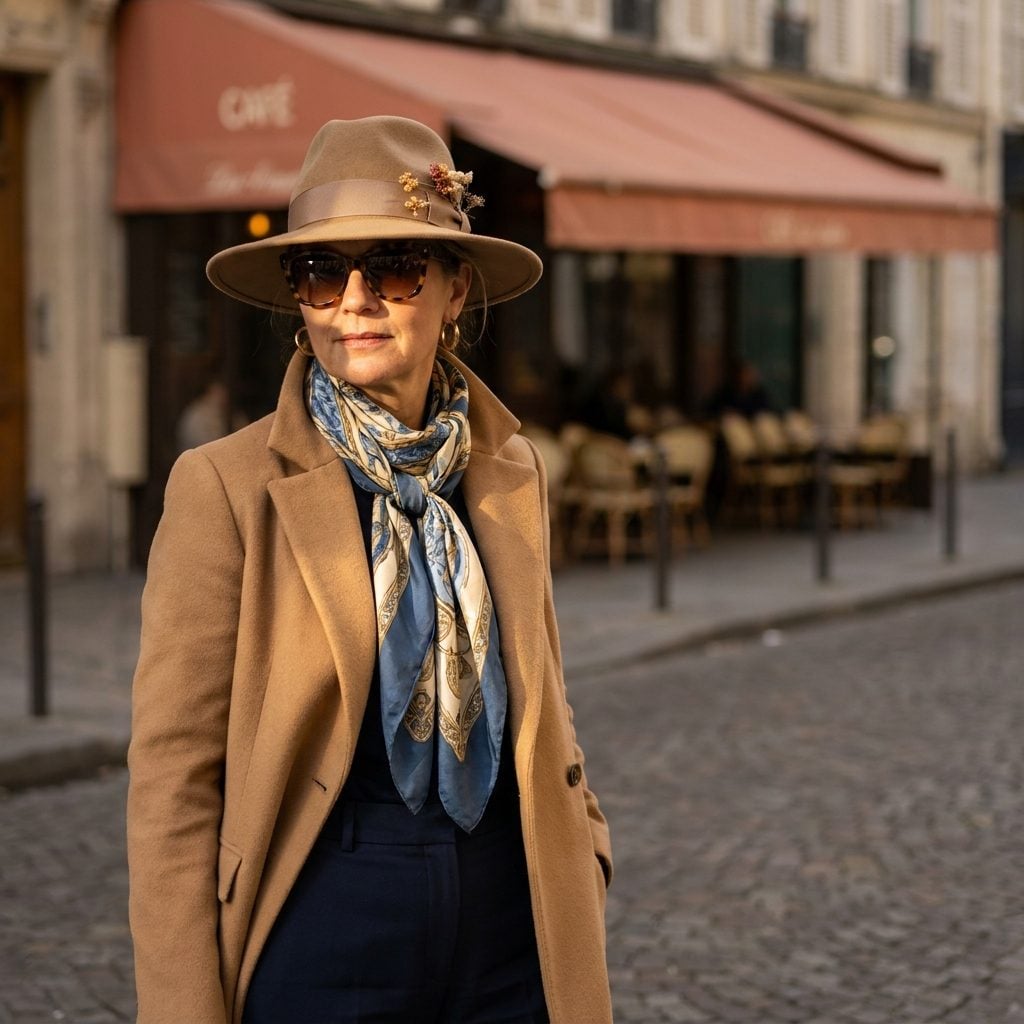
Hat, earrings, sunglasses, scarf. Four separate design statements crammed into a space roughly twelve inches tall. The face — which should be the natural focal point of any outfit — gets buried under a pile of decisions.
How to edit it down:
- Hat plus sunglasses: skip the earrings and the scarf.
- Scarf plus earrings: skip the hat.
- Embellished hat alone: let it be the only thing happening from the neck up.
The head-and-neck rule is brutal but reliable. Two accessories maximum. Three is a crowd. Four is a costume.
8. Layering a Long Pendant Necklace Over a Busy Print Where It Disappears Completely
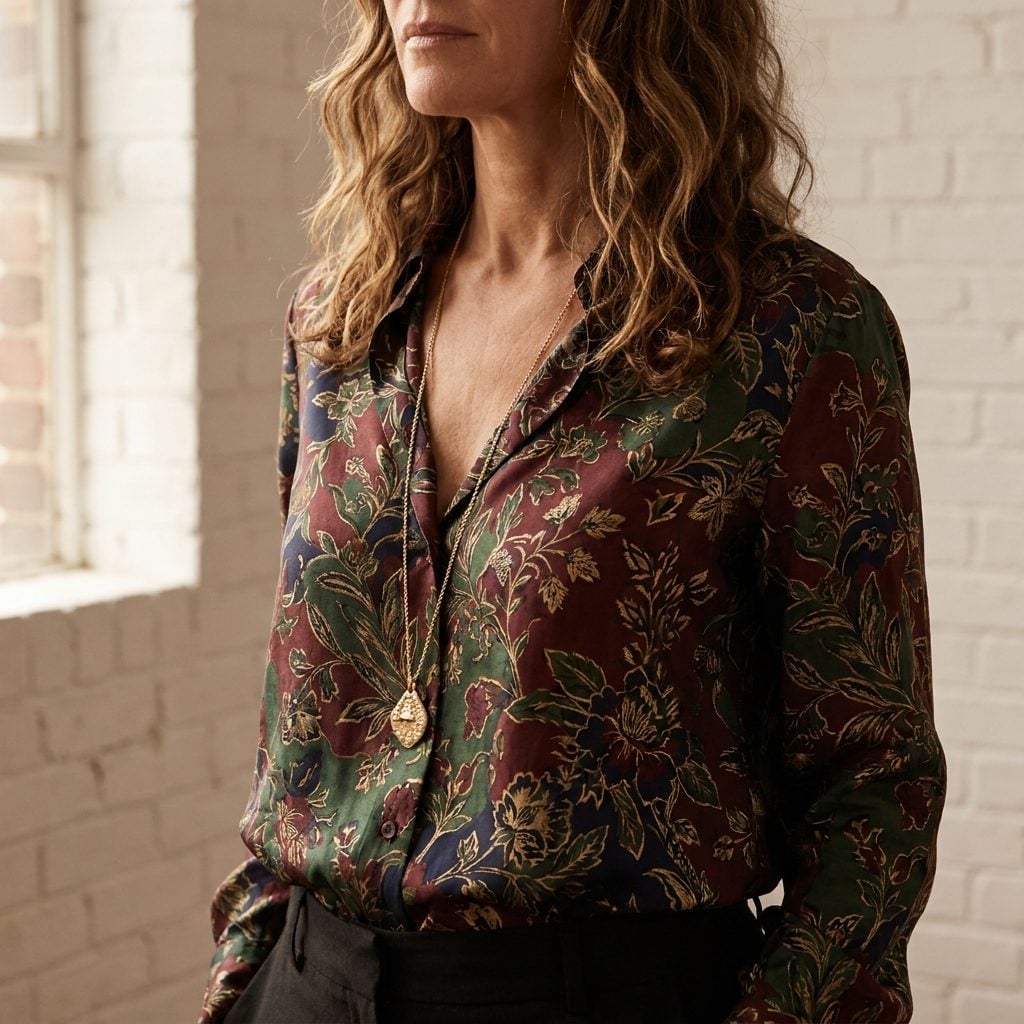
What’s the point of a necklace nobody can see? A long pendant over a densely printed blouse just vanishes — chain lost in the pattern, pendant sitting somewhere between the third and fourth flower. Might as well be in a drawer.
A gold pendant necklace needs a solid backdrop. A plain knit, a clean button-down, a one-color silk shell — that’s where it reads. Over a busy print, you’re better off with a short choker that sits above the pattern or skipping necklaces entirely and letting the fabric do the work. An accessory only counts if someone can actually notice it. Otherwise it’s just dead weight around your neck.
7. Wearing Anklets and Toe Rings and Strappy Sandals Together Until the Foot Looks Overwhelmed
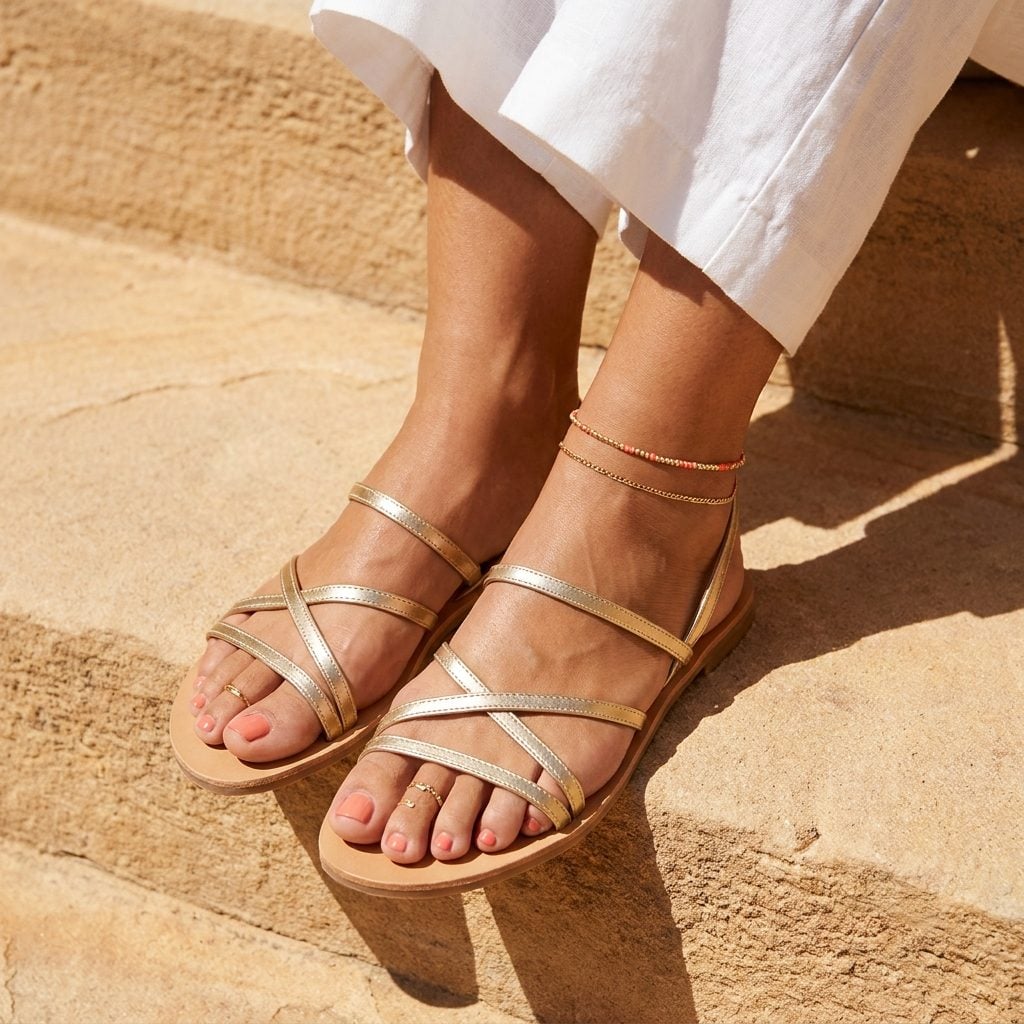
The foot is small. That’s the whole problem right there. Anklets, toe rings, and strappy sandals are each lovely on their own, but stack all three and you’ve crammed more visual detail onto a few inches of skin than most people put on an entire outfit. Where does the jewelry end? Where does the shoe begin? Impossible to tell.
Pick one layer. Strappy sandals with lots of hardware? Skip the anklet and toe ring. Want to wear a delicate gold anklet? Choose a simple slide or clean flat that lets the chain show. The foot looks best with a single thing worth noticing.
6. Adding a Belt Bag to an Outfit That Already Includes a Tote and a Crossbody at the Same Time
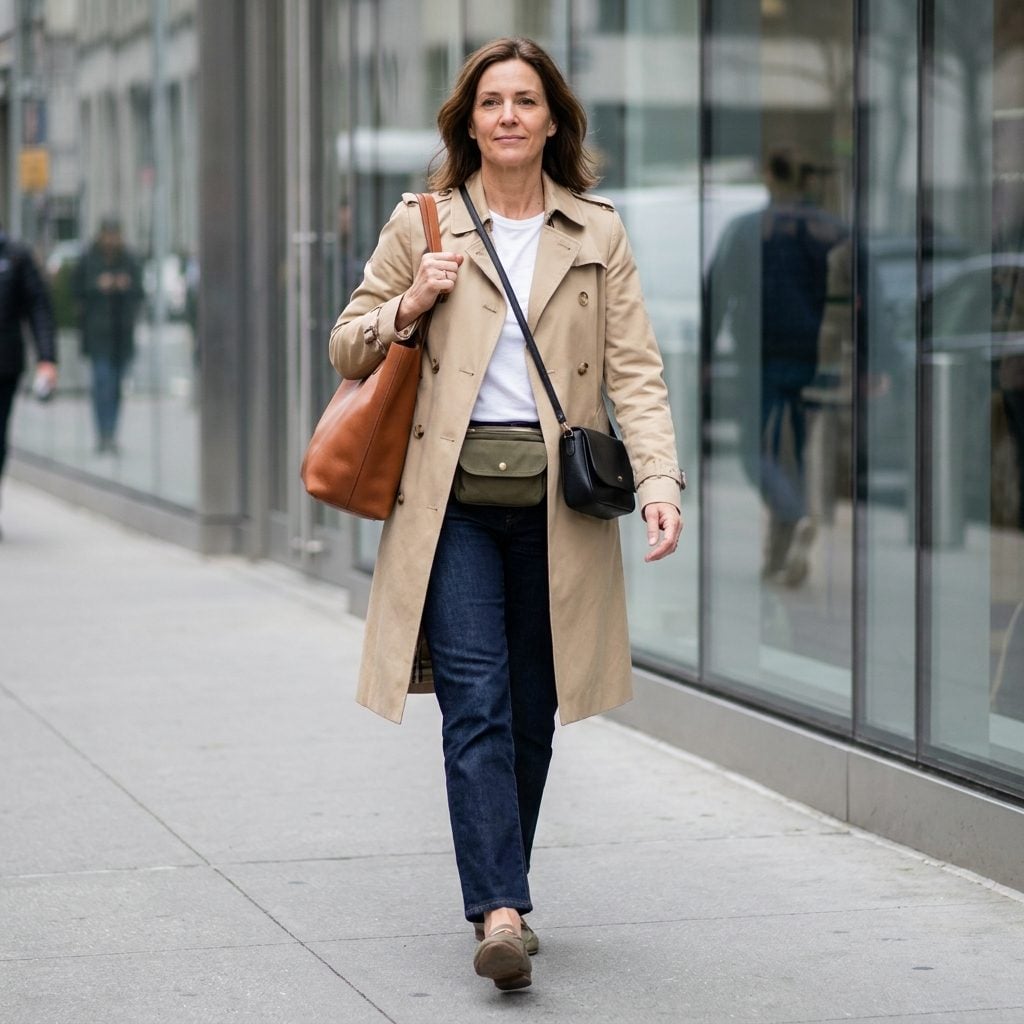
Three bags. On one body. At the same time.
It happens more than you’d think — the tote carries the laptop, the crossbody holds the phone and wallet for quick access, and the belt bag is for sunglasses and keys. Each made sense in isolation. Together they turn a clean outfit into a luggage carousel, which, honestly? Not the vibe anyone is going for.
Every bag adds a strap, a closure, a block of color, and a shape working against your silhouette. Three of them carve the body into horizontal zones at the waist, hip, and shoulder. The cognac tote says one thing, the black crossbody says another, and the belt bag chimes in with a third opinion nobody requested.
One bag per outfit. If you need carrying capacity and quick access, get a tote with interior organization or a structured bag with an exterior zip pocket. Your silhouette will thank you. So will your shoulders.
5. Wearing Rhinestone Buttons on a Blouse and Then Adding a Rhinestone Necklace Right on Top
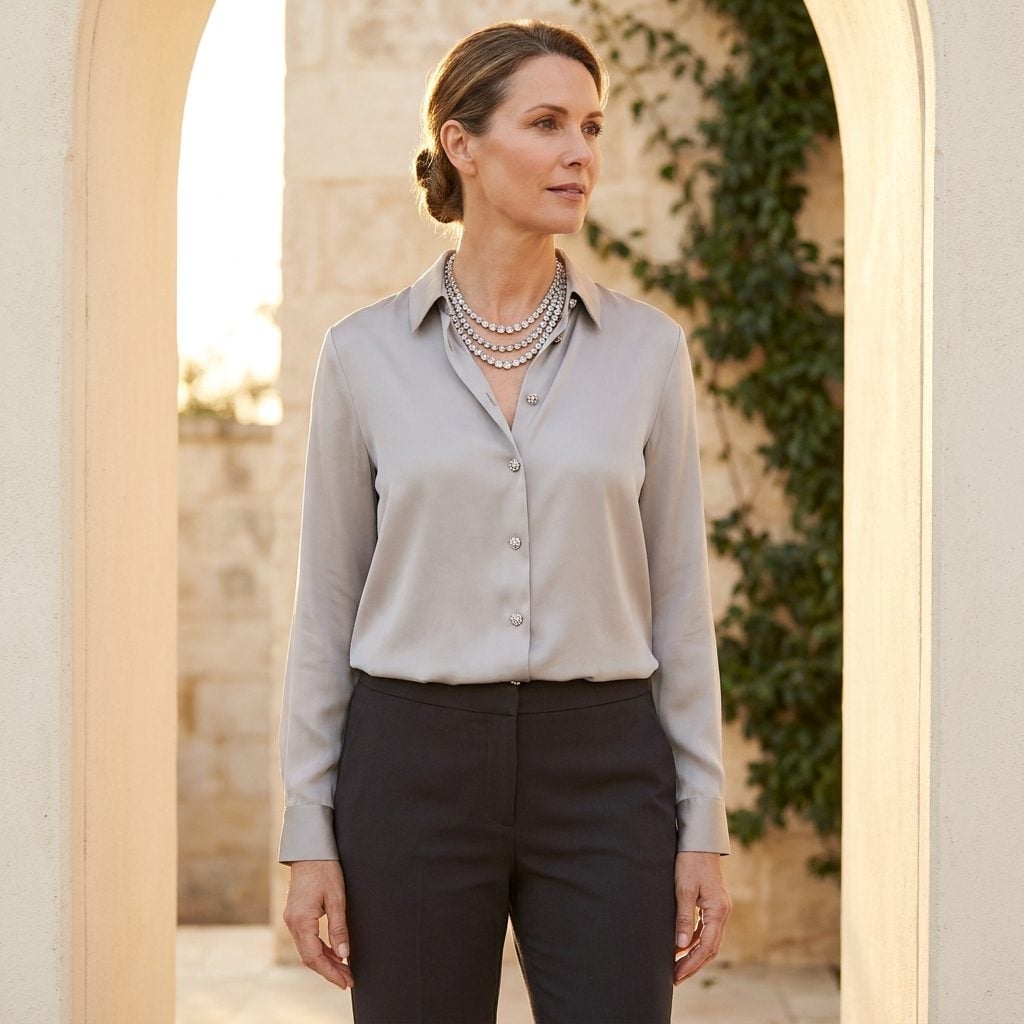
The blouse already has its own jewelry. Those rhinestone buttons running up the placket do exactly what a necklace does — draw the eye to the center of the chest and catch light on every movement. Stack a rhinestone necklace on top and the eye has nowhere to land, because two light sources are competing at the same address. The result isn’t more sparkle. It’s visual noise.
The fix is almost embarrassingly simple: if the blouse has decorative buttons, skip the necklace entirely. Let the buttons carry the moment. Wear a simple stud earring and a clean wrist. Or, if you love that necklace, pair it with a plain silk blouse whose flat matte buttons vanish into the fabric. One sparkle zone per outfit. That’s it — the entire rule.
4. Layering a Kimono Over a Printed Dress When Both Carry Bold Competing Patterns
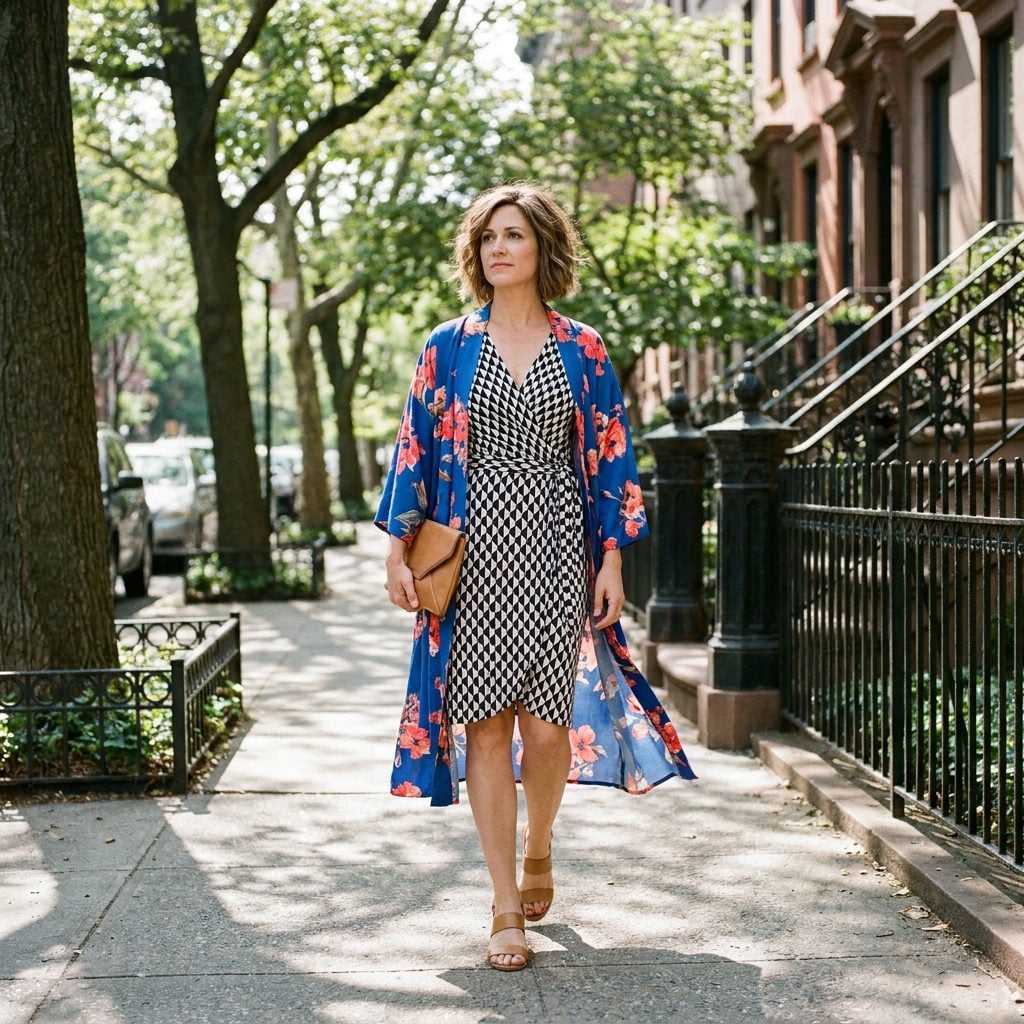
Pattern mixing is a real skill. This isn’t it. A large-scale floral kimono over a geometric print dress creates two visual conversations happening at once with no translator between them — the eye bounces from one pattern to the other, hunting for a connection that doesn’t exist. Instead of reading as intentionally eclectic, the outfit looks like two separate outfits worn at the same time.
If the kimono has a bold print, layer it over a solid-color slip dress or a simple knit pulled from the kimono’s secondary palette. That gives the print breathing room. Or flip it: a bold printed dress under a solid linen kimono in a neutral that lives somewhere in the dress’s color story. One pattern leads. The other supports.
3. Wearing a Logo-Heavy Bag with a Logo Belt Creating a Branded Clash from Waist to Hand

Two Logos, Zero Cohesion
I got this wrong for years, and I say that without embarrassment because I genuinely thought visible logos signaled investment in quality. Sometimes they do. But two competing logo moments from waist to hand turn a polished outfit into a billboard. The belt broadcasts one brand name. The bag broadcasts another. Neither wins. Your outfit loses its own identity entirely and becomes a display rack for someone else’s branding.
Think of it as volume control. If the bag carries a visible monogram or logo print, swap the belt for a plain leather belt with a simple or tonal buckle. If you love a statement buckle, carry a bag with clean lines and no visible branding. One branded accent reads intentional. Two? That reads like dueling sponsorships.
2. Choosing Oversized Sunglasses with Large Hoop Earrings That Compete at the Same Face Level

Both pieces are statement pieces. That’s the conflict. Oversized sunglasses colonize the face from brow line to mid-cheek. Large hoops claim the zone from earlobe to jawline. Together, the entire face — forehead to chin — gets boxed in by competing circles of hardware. Nothing breathes. Rather than framing the face, the accessories bury it.
Scale down one or the other. Big sunglasses pair well with a small gold huggie earring that stays tight to the lobe and stays out of the way. Love the drama of a big hoop? Wear it with sleeker, smaller-framed sunglasses that don’t crowd the same zone. Accessories near the face work best when they occupy different vertical territory — not the same narrow band of space.
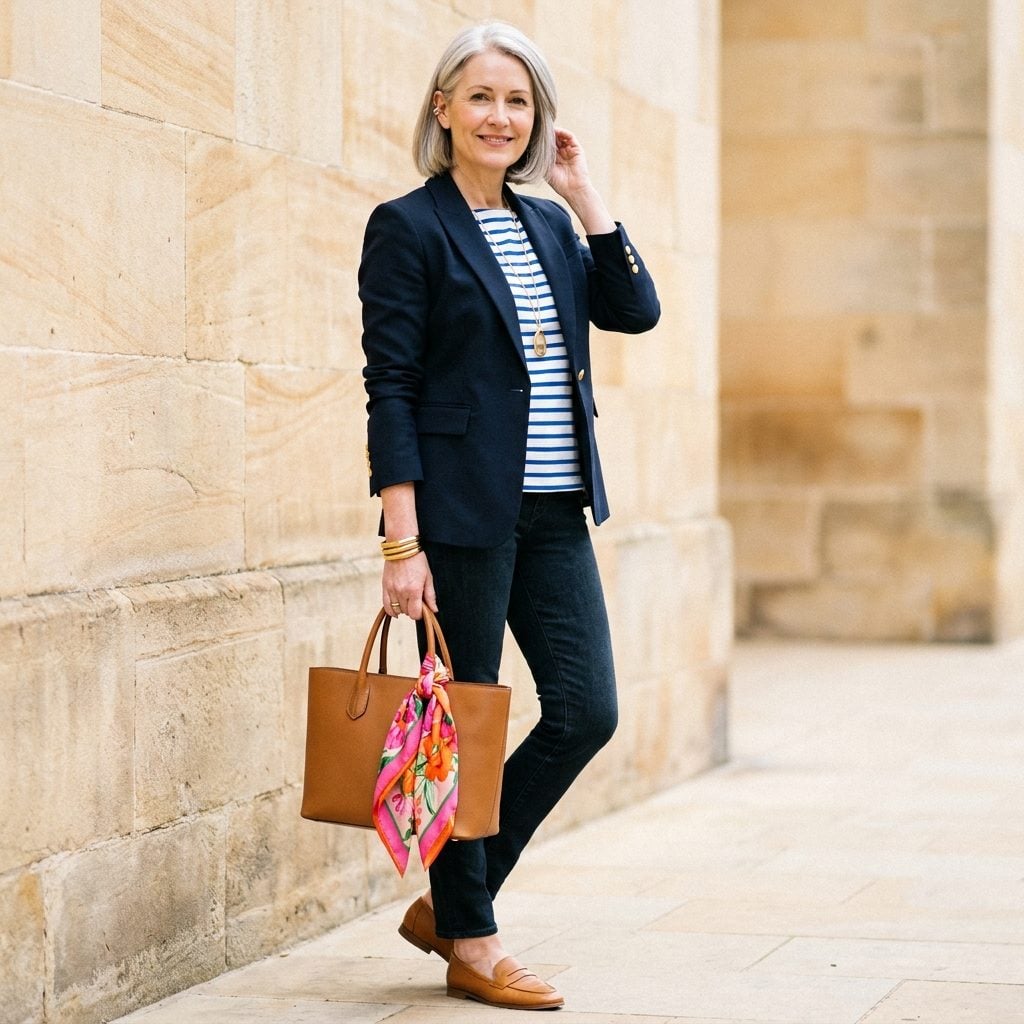
1. Pinning a Decorative Scarf to the Bag Handle When the Outfit Is Already Heavily Accessorized
❤️ Would you like to save this?
That bag scarf is charming on its own. On a Tuesday with a plain tee and clean denim, it’s the one detail that says someone actually cared. But add it to an outfit already running gold buttons, a pendant necklace, stacked bangles, and an ear cuff? It becomes the straw that breaks the look. Every zone of the body is sending a signal, and the net effect is static rather than style.
Count your accessory zones before leaving the house. Ears, neck, wrists, waist, bag. Three active zones is interesting. Four is the ceiling for most outfits. Hit five or more and the individual pieces stop mattering — none of them can be seen clearly on their own. When the outfit is already well-loaded, let the structured leather tote stand naked. Save the silk scarf for a day when it gets to be the main character.