❤️ Would you like to save this?
A city street can remain almost stubbornly familiar while fashion transforms everyone crossing the pavement. Brick walls, shop awnings, gray sidewalks, morning light — then a woman enters the frame and the decade begins revealing itself. In 1960, the clues are a camel coat, cropped wool trousers, loafers and a silk scarf. Twenty years later, color-blocked puffers and high-waisted denim have redrawn the silhouette. By 2000, bootcuts are brushing the pavement.
The real story runs deeper than a procession of trends. Watch the proportions change. Shoulders broaden, soften and broaden again. Trouser legs travel from narrow to flared to tapered to enormous. Coats migrate from structured wool to parkas, puffers, anoraks and technical shells. Sneakers move from the casual edges of the wardrobe toward the center, while garments once associated with hiking, sport and utility become ordinary city dress.
Texture keeps rewriting the street as well. Camel wool and polished loafers give way to suede, shearling, corduroy and quilted nylon; later come fleece, velour, technical fabrics and teddy textures. Even the definition of looking “put together” refuses to stand still. Some decades find polish through tailoring and coordination. Others prefer deliberate looseness, unexpected layering or the friction between something refined and something defiantly practical.
Through all six decades, the pavement provides the constant while the silhouettes keep moving. These 36 snapshots follow that transformation year by year, from the disciplined lines of 1960 through the increasingly relaxed, hybrid wardrobes that follow. Which year would you want to walk through?
FYI, thanks to AI imagery software, we’re able to create very specific fashion and hairstyle examples to illustrate the points being made. In some cases, imagery is exaggerated to hammer home the point. Also, assume links that take you off the site are affiliate links such as links to Amazon. this means we may earn a commission if you buy something.
36. 1960: Camel Coat and Ankle-Length Wool Trousers
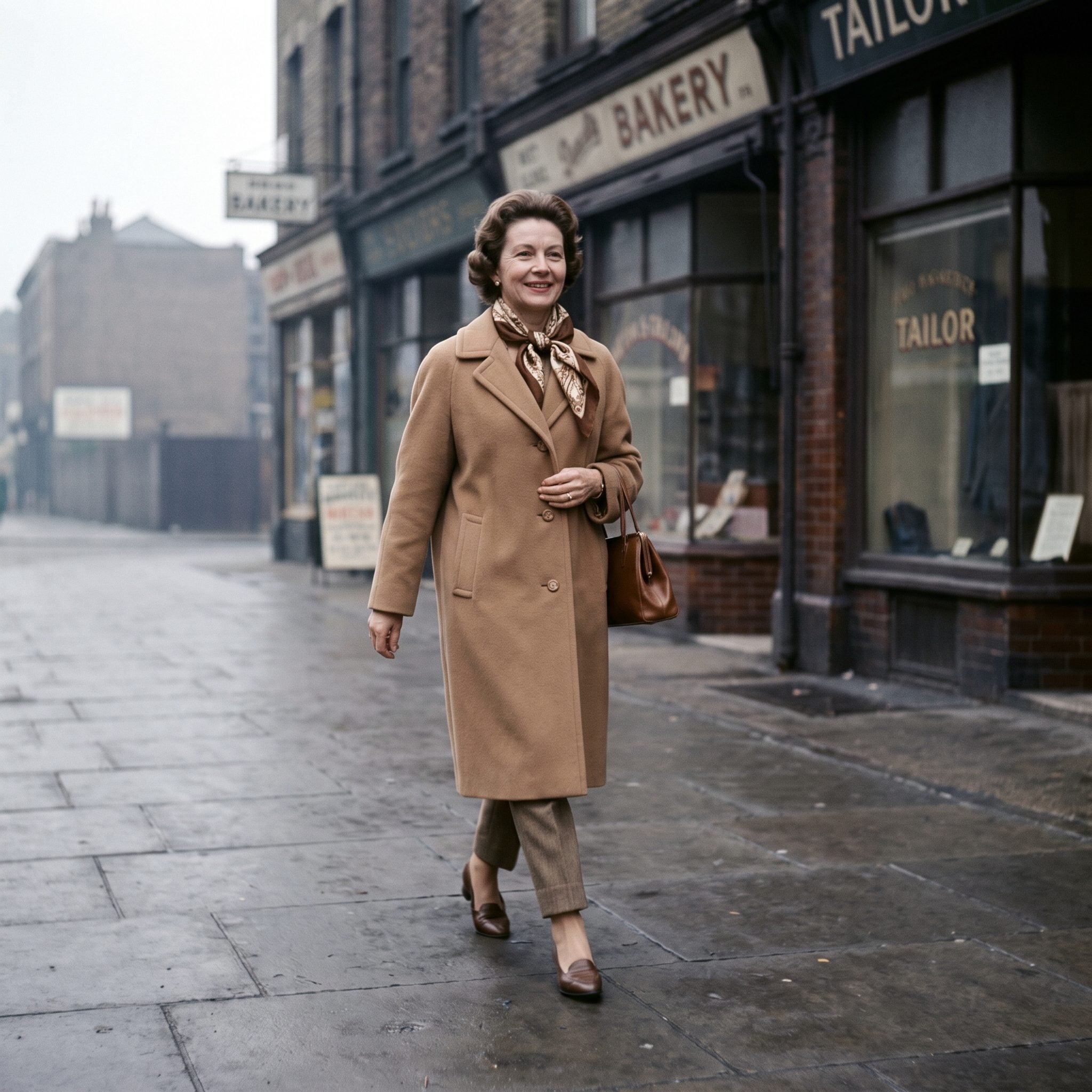
The scarf is the quiet tell. A knotted silk square at the throat introduces a small concentration of pattern between the charcoal, cream and camel, turning an otherwise restrained palette into something much more considered.
The real story is length. A calf-length coat falls over ankle-length trousers but stops well before the shoes, leaving a narrow stripe of argyle sock and loafer visible at the bottom. That sequence of coat, trouser, sock and shoe gives the silhouette several precise stopping points without making it busy. The beige style here isn’t soft or vague. It’s structured, upright and unusually sure of its proportions.
35. 1962: Red Hooded Jacket and Canvas Sneakers
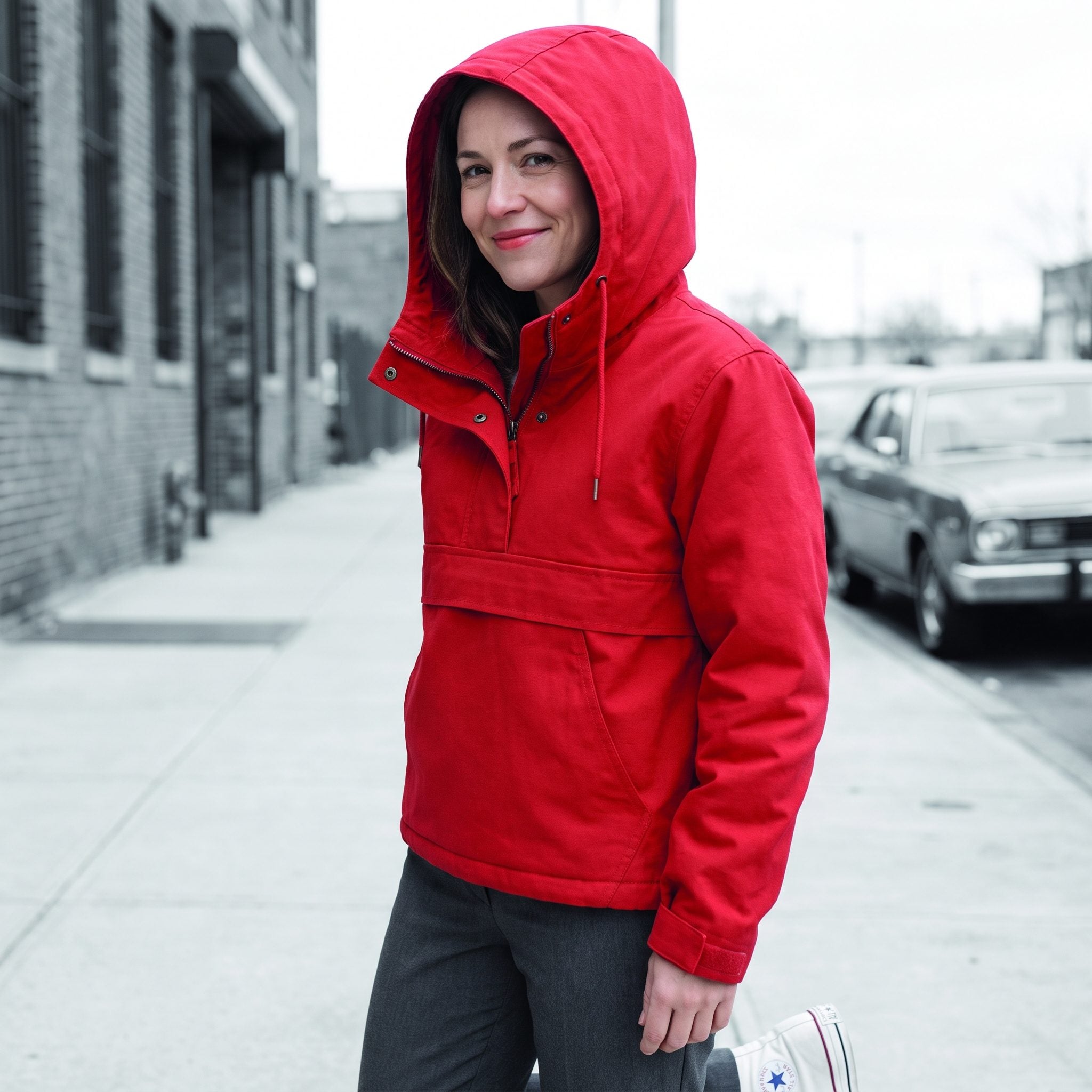
One loud color against a quiet everything else. The red hooded jacket drives this look precisely because the oatmeal sweater and charcoal slacks refuse to compete with it.
Then come the cream canvas sneakers. Against tailored slacks and a tidy knit, their informality changes the register of the entire outfit. The silhouette remains neat, but the footwear pulls it away from dressier midcentury conventions and toward something built for an ordinary day on foot.
34. 1964: Checked Car Coat and Matching Knit Separates
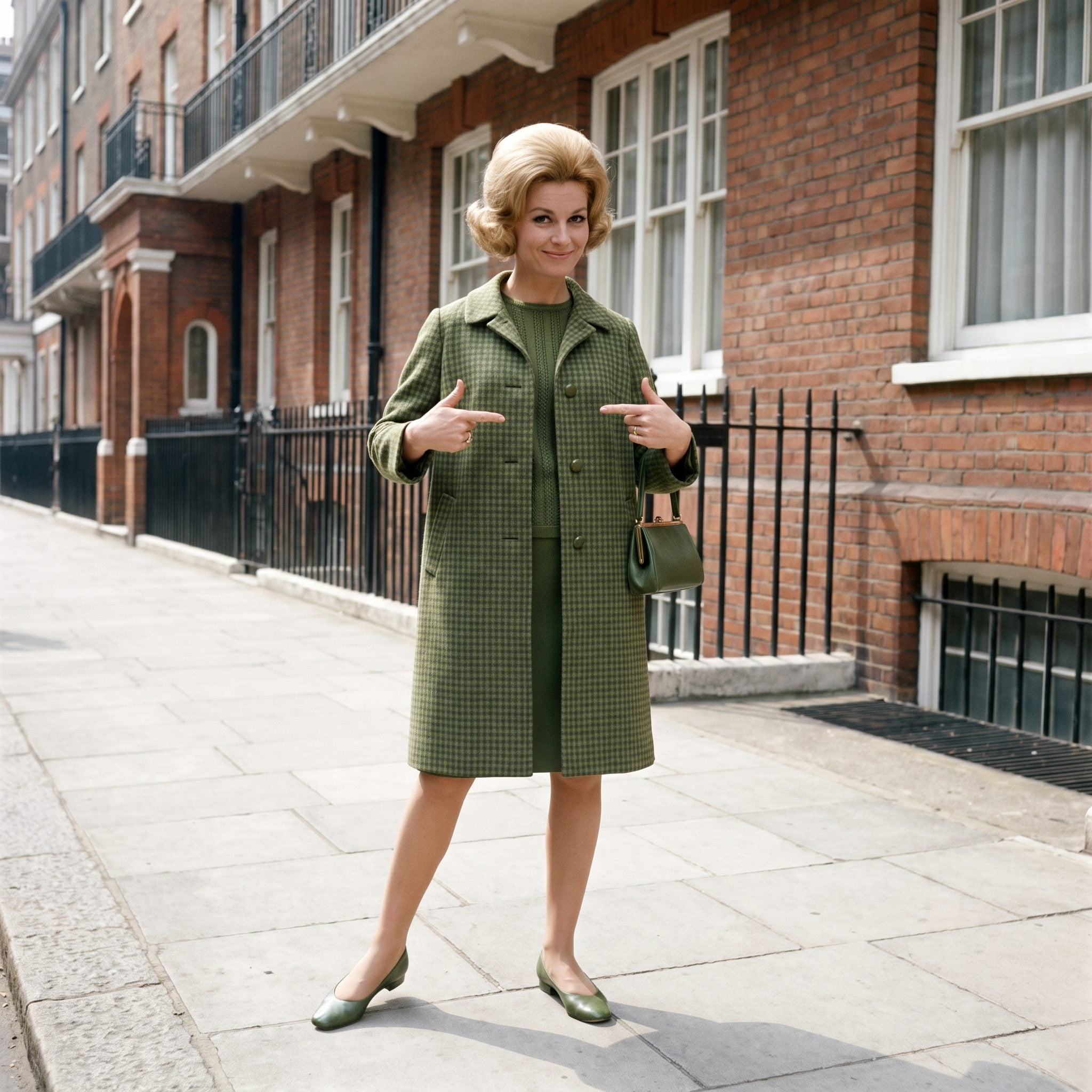
Matching knit separates make color do the work that complicated layering might otherwise have to do. Moss green runs uninterrupted from sweater into skirt, while the boxy brown checked car coat introduces pattern and a firmer outer shape.
Texture keeps all those subdued colors from flattening together. Soft knit sits against a more structured woven check, then thick tights and flat boots give the lower half additional visual weight. Nothing needs a decorative flourish because the contrast between surfaces is already carrying the outfit.
33. 1965: Duffle Coat and Narrow Corduroys
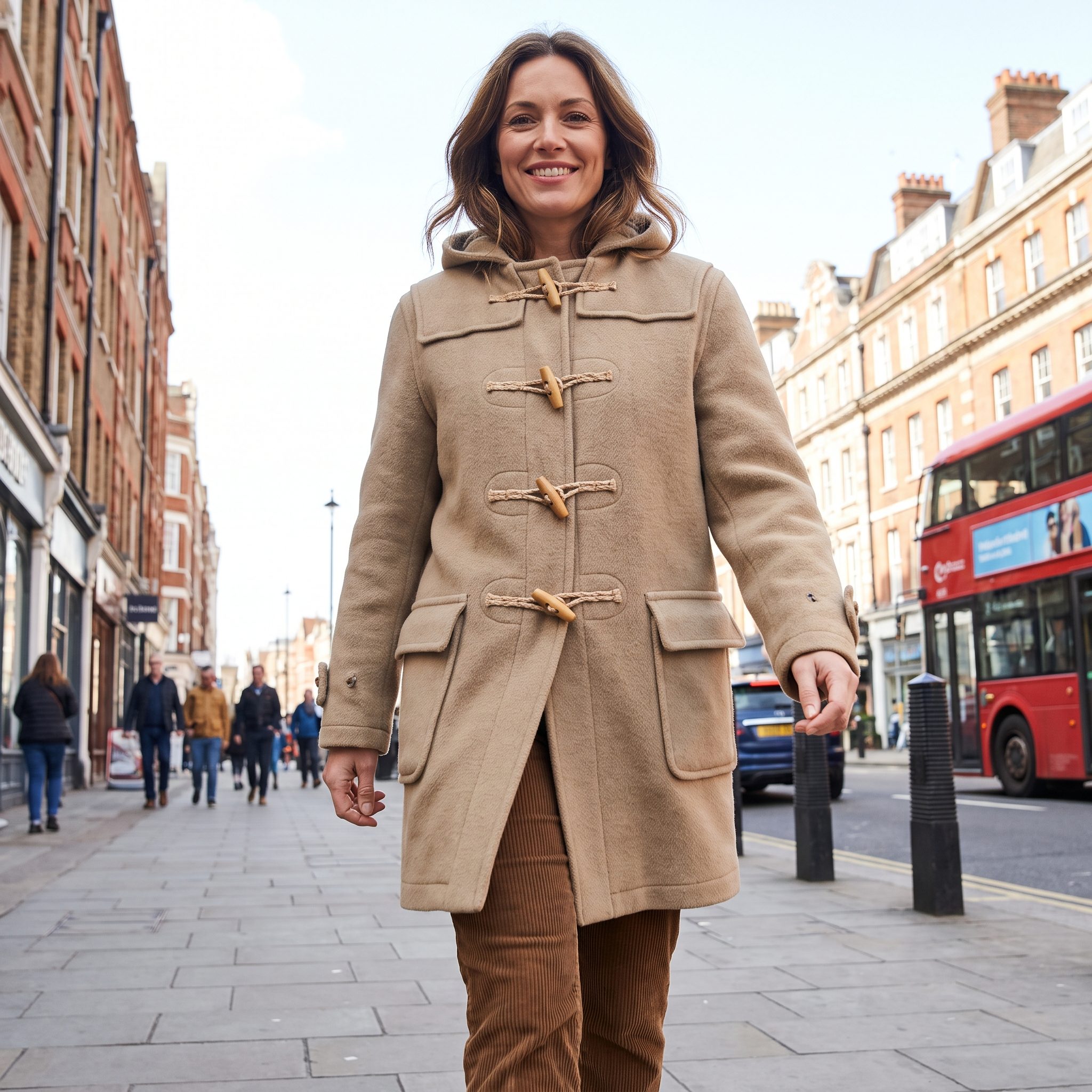
The toggle duffle carries plenty of hardware before another accessory even enters the picture. Rope loops and wooden toggles break up the broad charcoal surface, turning functional fastenings into the coat’s strongest visual detail.
The mustard roll-neck is the decision that wakes everything up. Against charcoal and chocolate, that warm strip at the neckline prevents the palette from becoming overly solemn. Narrow corduroys provide a cleaner shape beneath the substantial coat, while their ribbed surface adds another texture without another pattern.
32. 1967: Diamond-Quilted Jacket and Checked Slacks
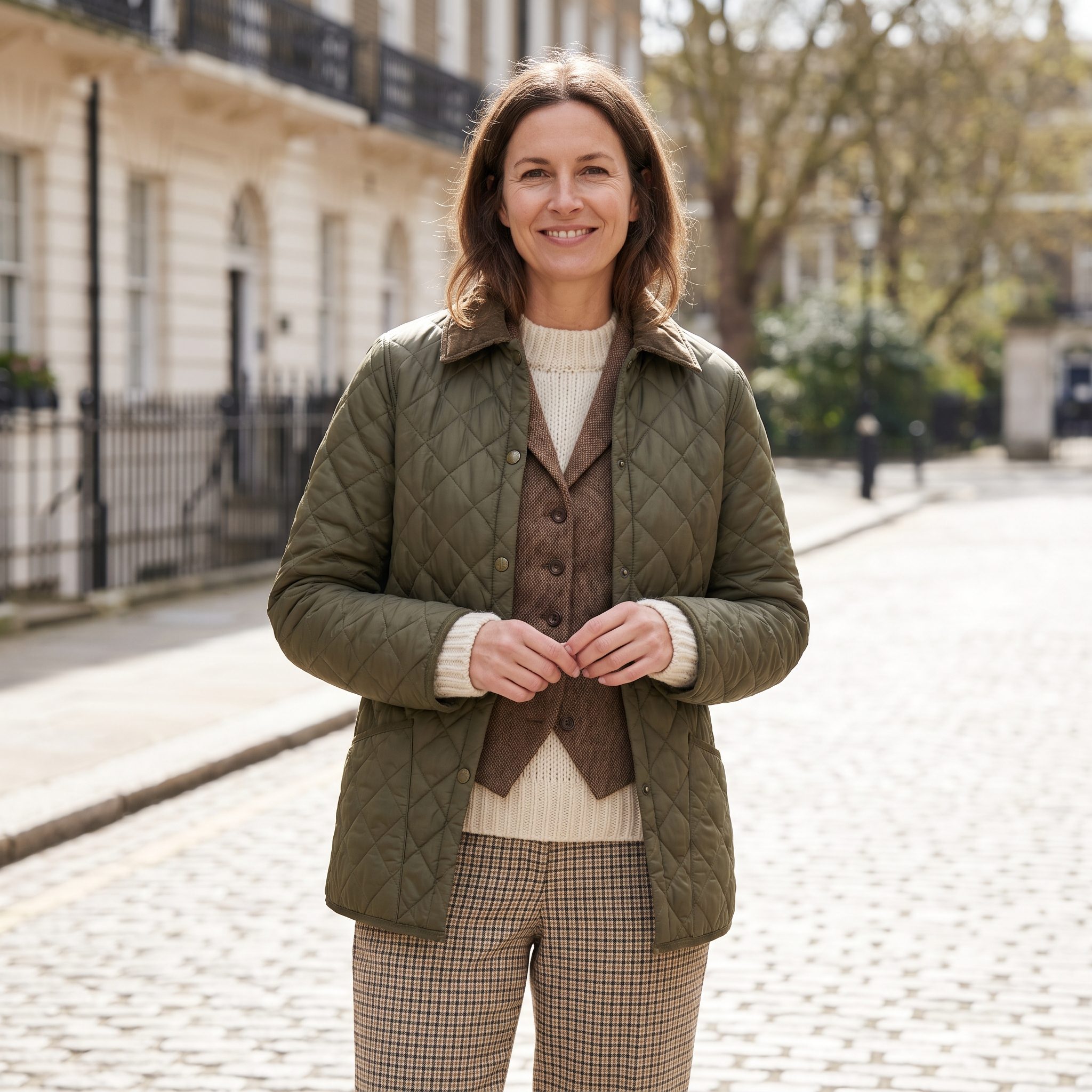
Four earthy neutrals and not one needs to shout. Olive, oatmeal, brown check and cream sit close enough in temperature to feel related, while their different surfaces keep the outfit from dissolving into one muddy field.
Diamond quilting gives the olive jacket its strongest graphic element. Checked trousers answer with a smaller pattern below, and the ribbed wool cap introduces a third texture at the top. The palette whispers; the surfaces do considerably more talking.
31. 1969: Suede Jacket and Gentle Denim Flares
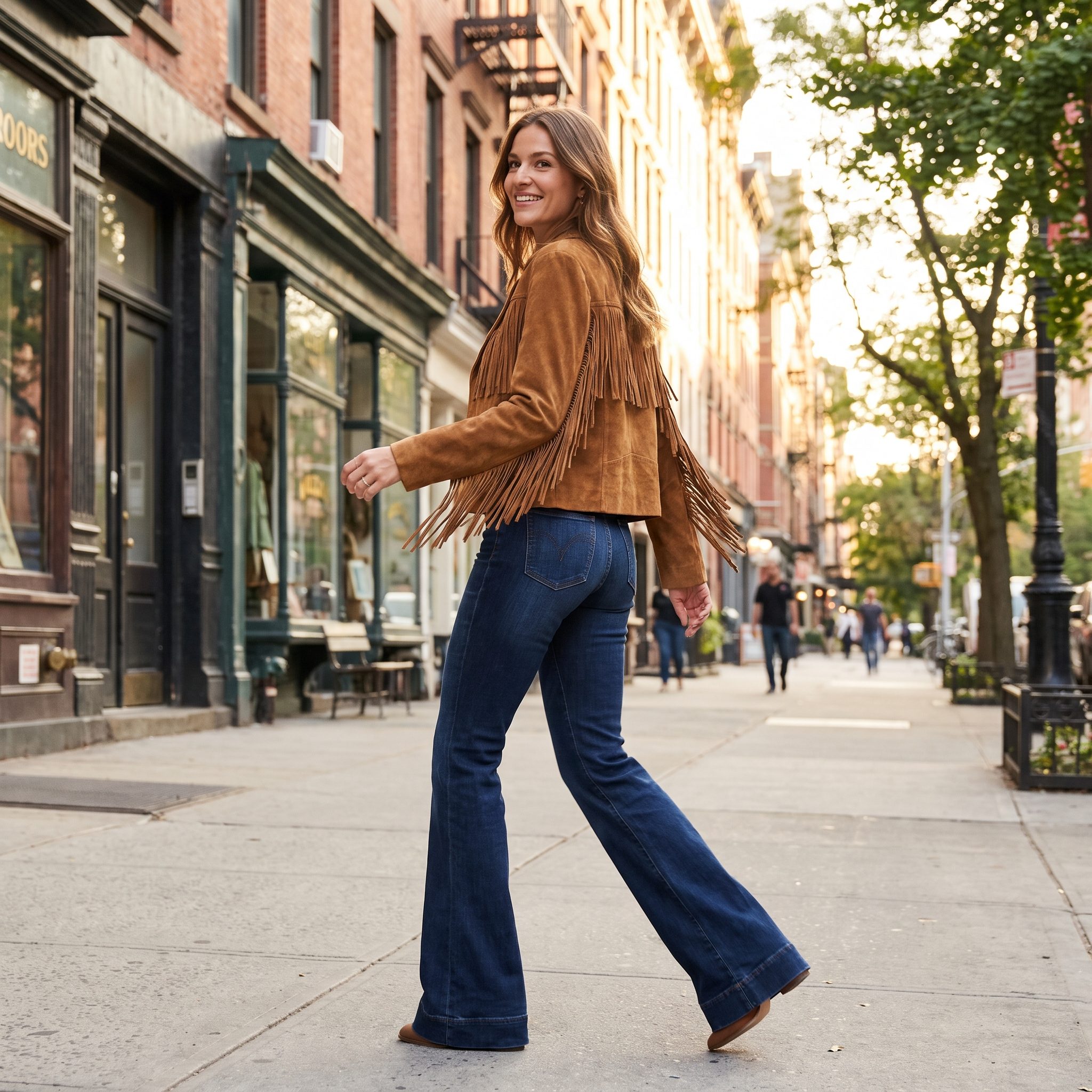
Here the street starts to loosen. The indigo jeans widen gently toward the hem, breaking with the narrower trouser lines that dominated several earlier snapshots and giving the lower half noticeably more movement.
Up top, suede, a pale shearling collar and a rust turtleneck build the palette almost entirely from warm, tactile surfaces. Denim supplies the cool counterpoint. For the first time in this sequence, the blue style of denim isn’t merely casual punctuation. It is central to the silhouette.
30. 1970: Belted Maxi Coat and Checked Midi Skirt
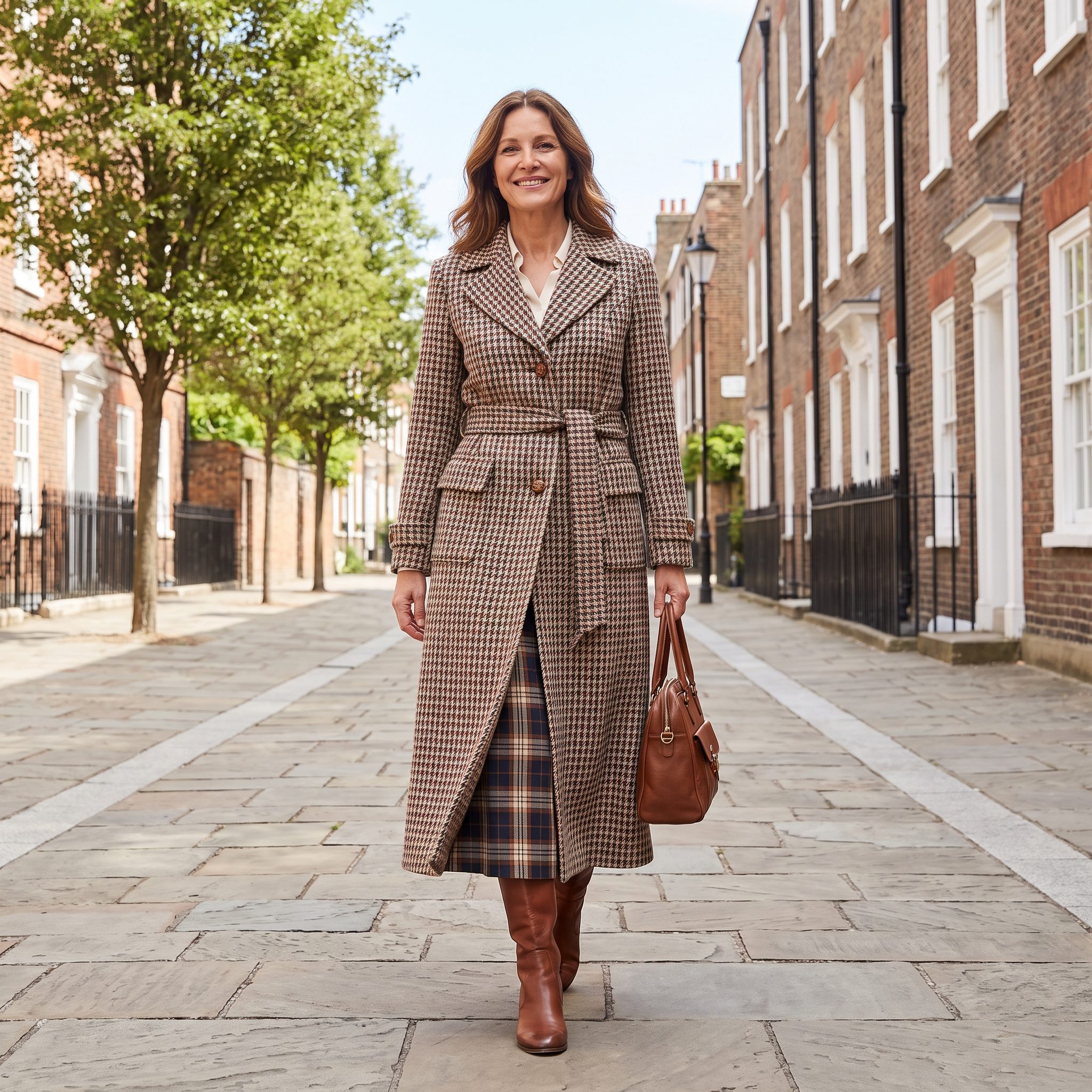
This is length piled deliberately on length. The coat drops almost to the ankle, the checked skirt continues well below the knee, and tall boots occupy much of what remains.
The belt prevents that sweep of chocolate brown from becoming visually anonymous by giving the coat a distinct center. A cream sweater appears only at the neckline, creating one small light break before the darker palette resumes. Rather than trying to shorten anything, the outfit commits completely to the long silhouette.
29. 1972: Rust Puffer Vest and Golden Corduroys
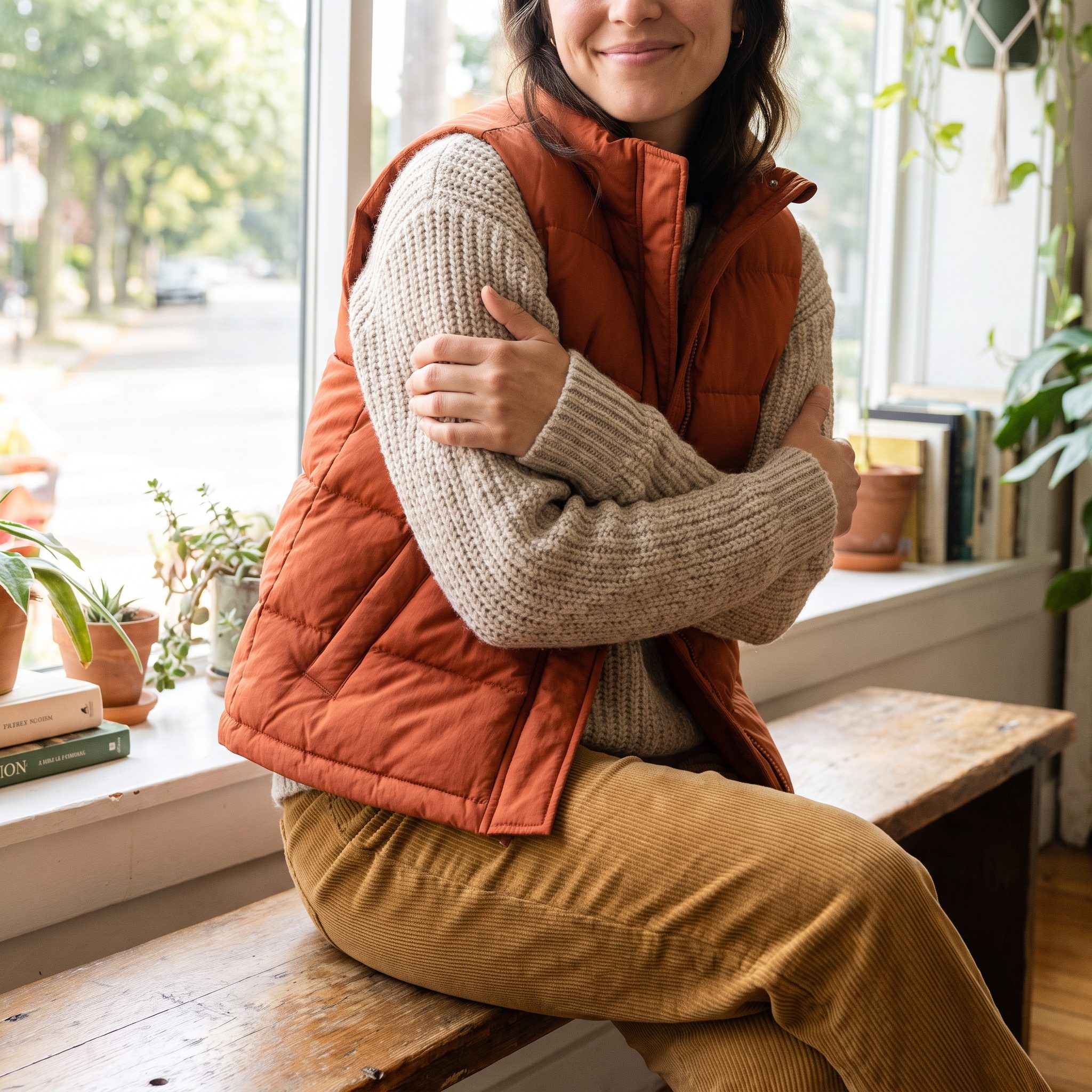
This may be the most tactile stop on the block so far. A rust puffer vest over a chunky oatmeal fisherman sweater creates a pile-up of quilted channels and cable knit before the wide-wale corduroys even enter the frame.
Those golden-brown flares extend the warm palette downward, while the mustard beanie closes it at the top. Suede hiking boots add another outdoor reference. What feels important here isn’t modern athleisure so much as the growing ease with which practical, outdoors-oriented pieces can participate in everyday city dressing.
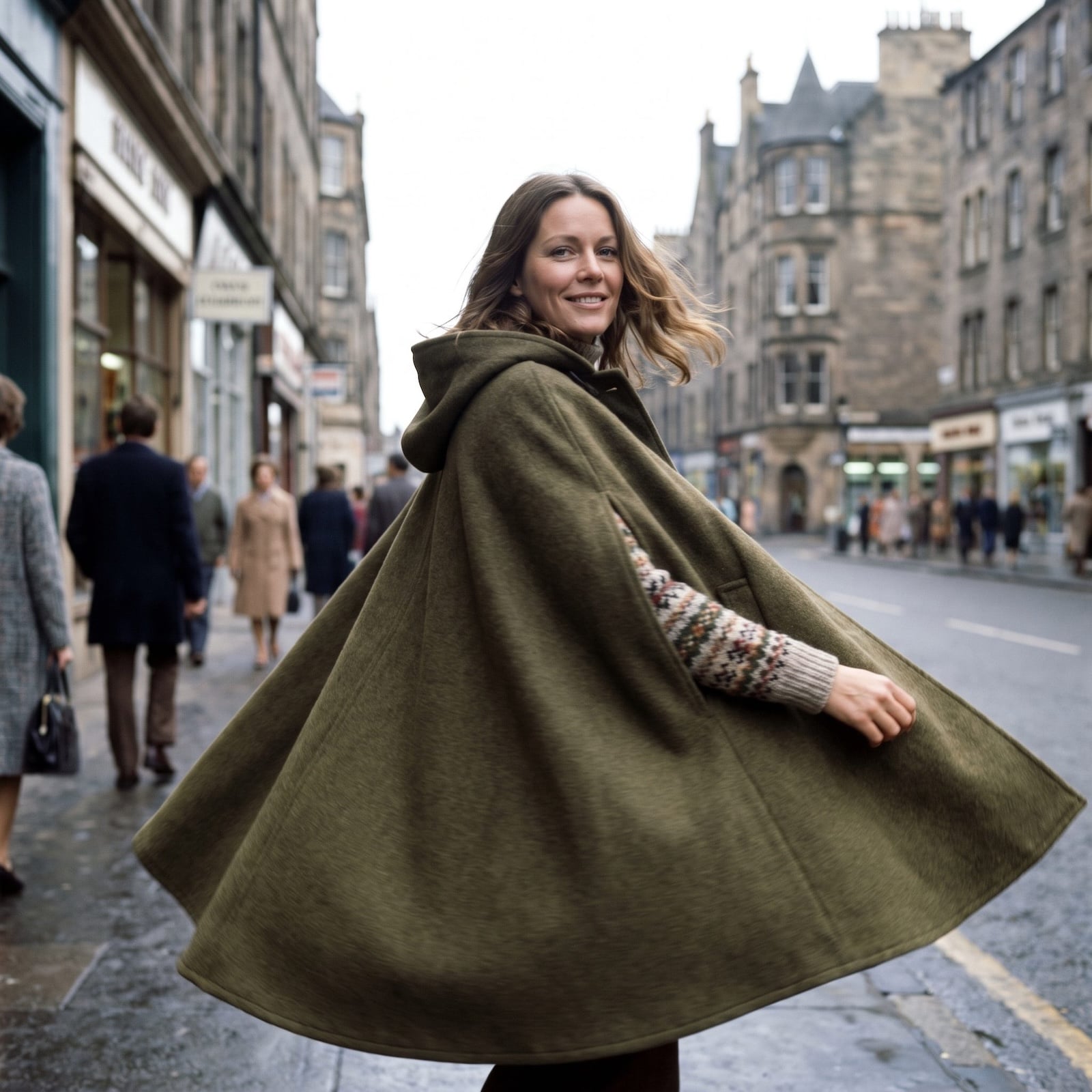
28. 1974: Hooded Wool Cape and Fair Isle Knit
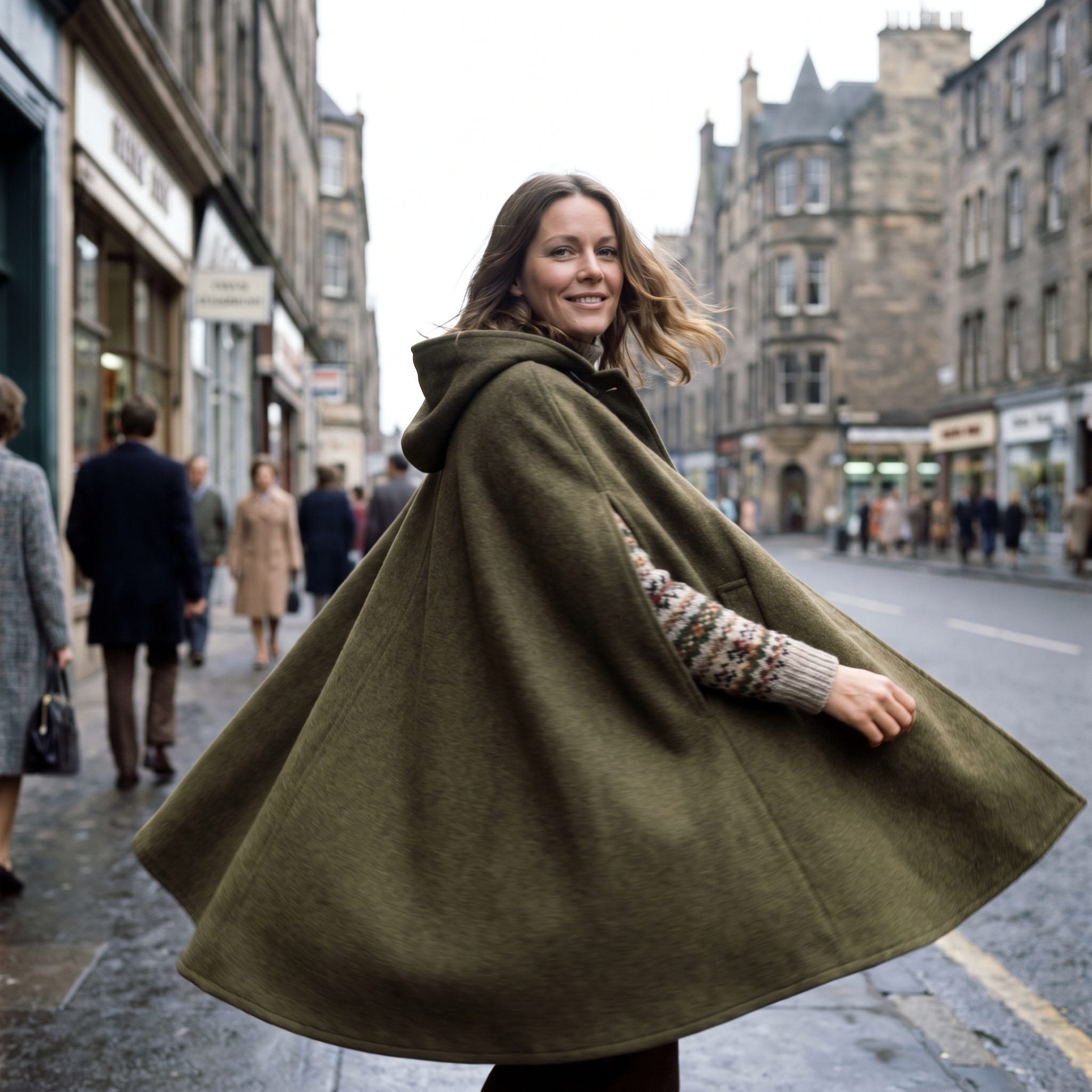
A cape changes shape every few steps. Instead of following the arms like a conventional coat, the navy wool folds, opens and swings around them, making movement part of the silhouette.
The Fair Isle sweater underneath is the surprise. Cream, red, blue and gold appear in narrow patterned bands beneath a nearly solid outer layer. That makes the pattern feel discovered rather than announced: restraint outside, considerable activity underneath. Walk the street in 1974 and the cape gets there first.
27. 1976: Olive Parka and Denim Overalls
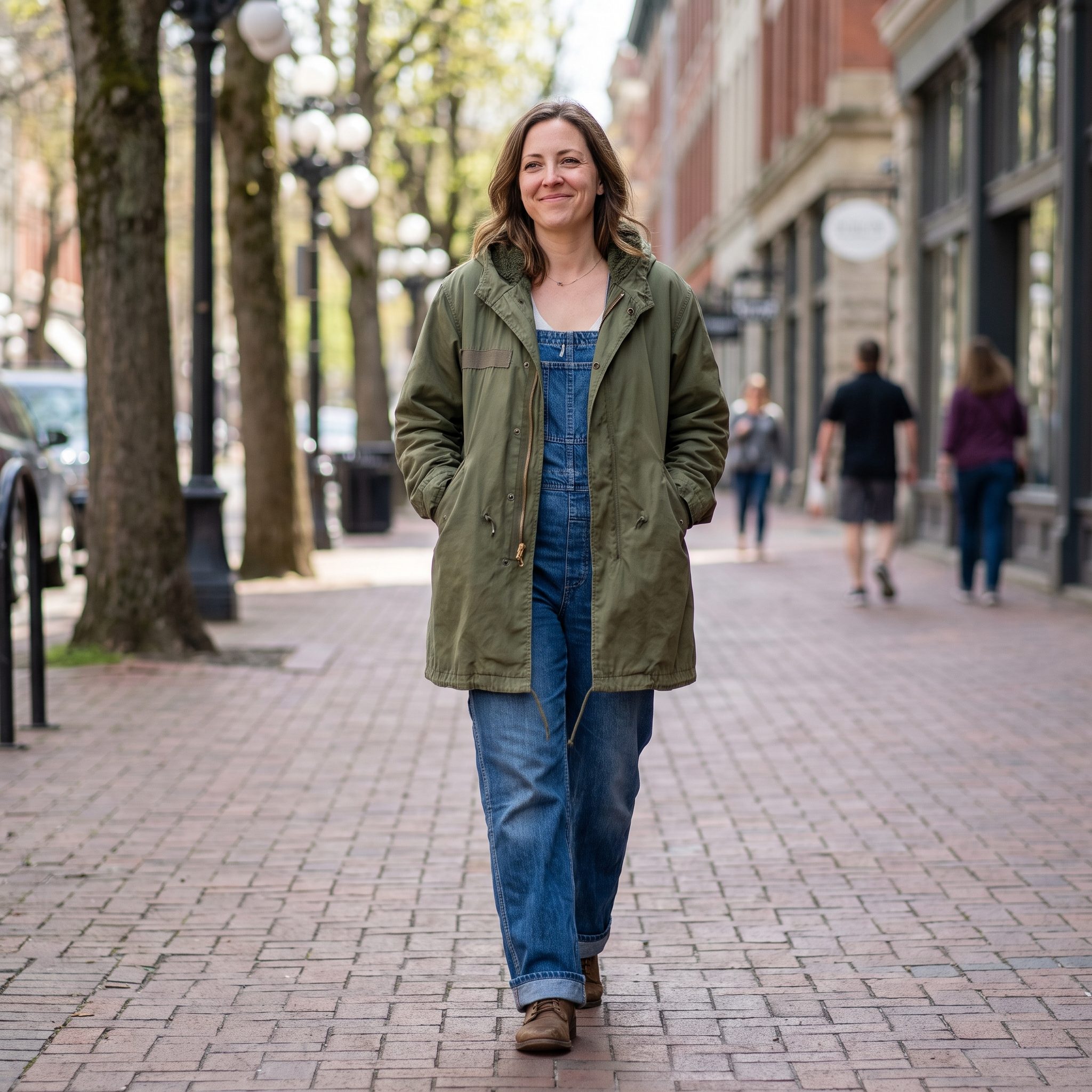
By 1976, the distance between workwear and citywear has become much more interesting. Denim overalls supply the clearest example here: visible hardware, bib front, straight utility lines and none of the tailoring that organized the earliest looks in the gallery.
A burgundy thermal introduces a warm layer beneath the blue denim, while the open olive parka pulls both colors toward an earthier palette. The relaxed androgynous style comes from the pieces themselves — parka, overalls, thermal — rather than from decorative styling piled on afterward.
26. 1978: Piped Velour Tracksuit and Cream Windbreaker
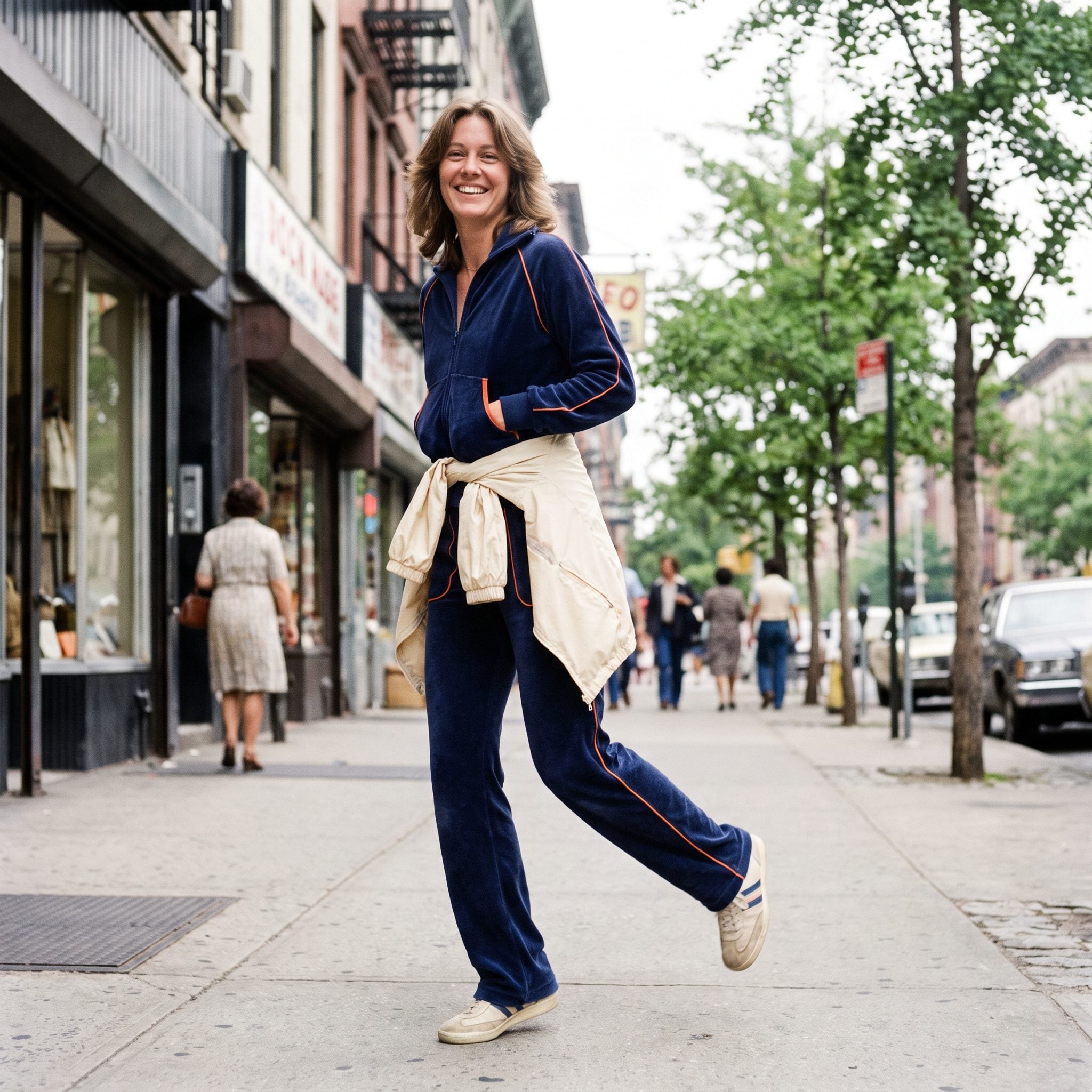
Matching navy velour creates a single soft field from torso to ankle, but the cream piping refuses to let that field stay featureless. Narrow pale lines trace the edges and make the construction visible.
The cream windbreaker adds a larger light shape over the matching set. Worn open, it leaves the vertical center of the tracksuit visible rather than covering it completely. A narrow knit scarf contributes one more soft line without competing with the piping.
25. 1979: Longline Leather Jacket and Camel Wool Culottes
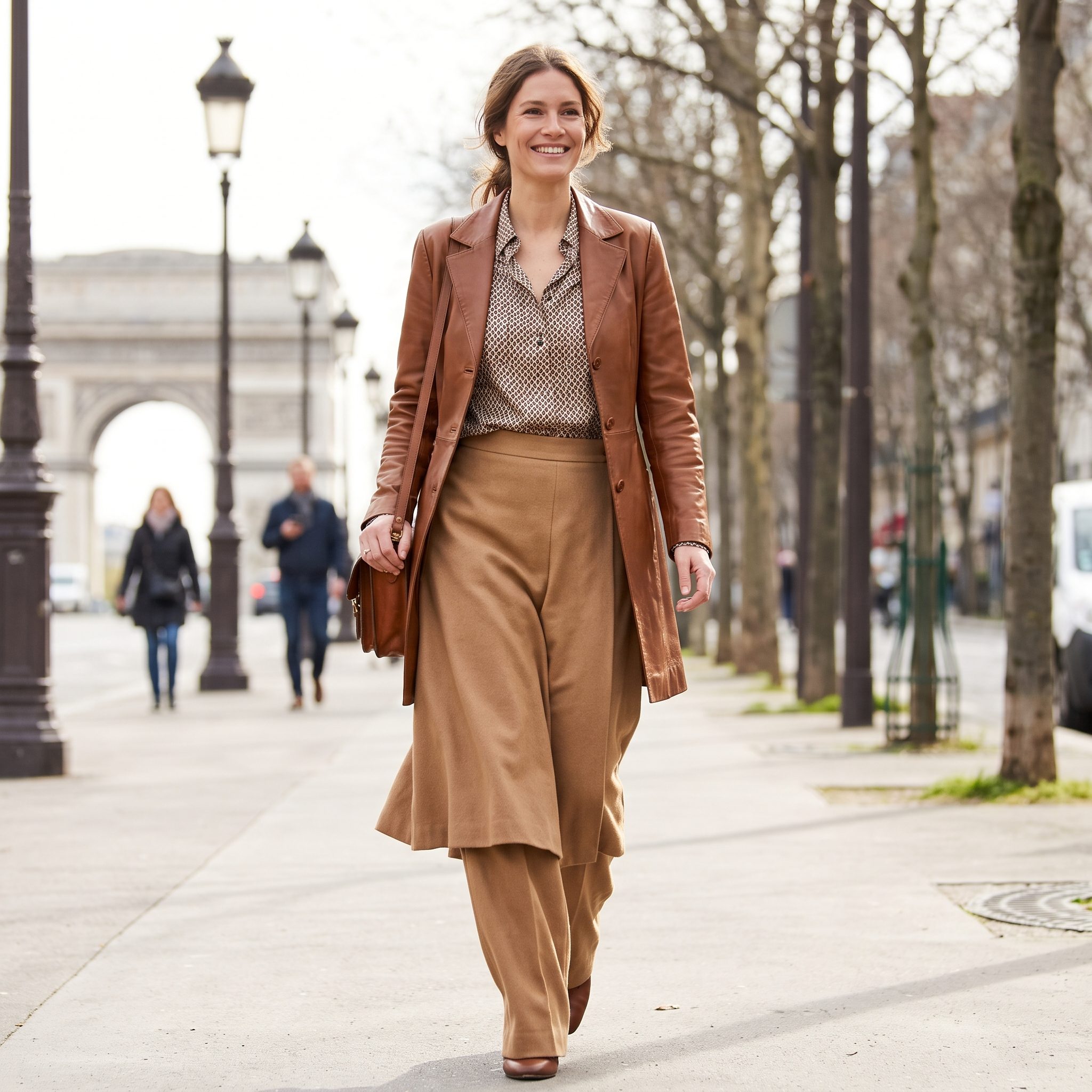
The culottes are the shape-shifters. Camel wool falls with enough width to approach the visual sweep of a skirt, but the divided construction reveals itself as soon as the legs move independently. That ambiguity gives the lower half far more interest than a conventional straight trouser would provide.
Then the longline leather jacket arrives with a completely different kind of weight. Dark and comparatively rigid against the softer copper turtleneck and wide camel trousers, it puts a firm outer boundary around all that movement. Three related browns, three very different surfaces. Monochrome this is not.
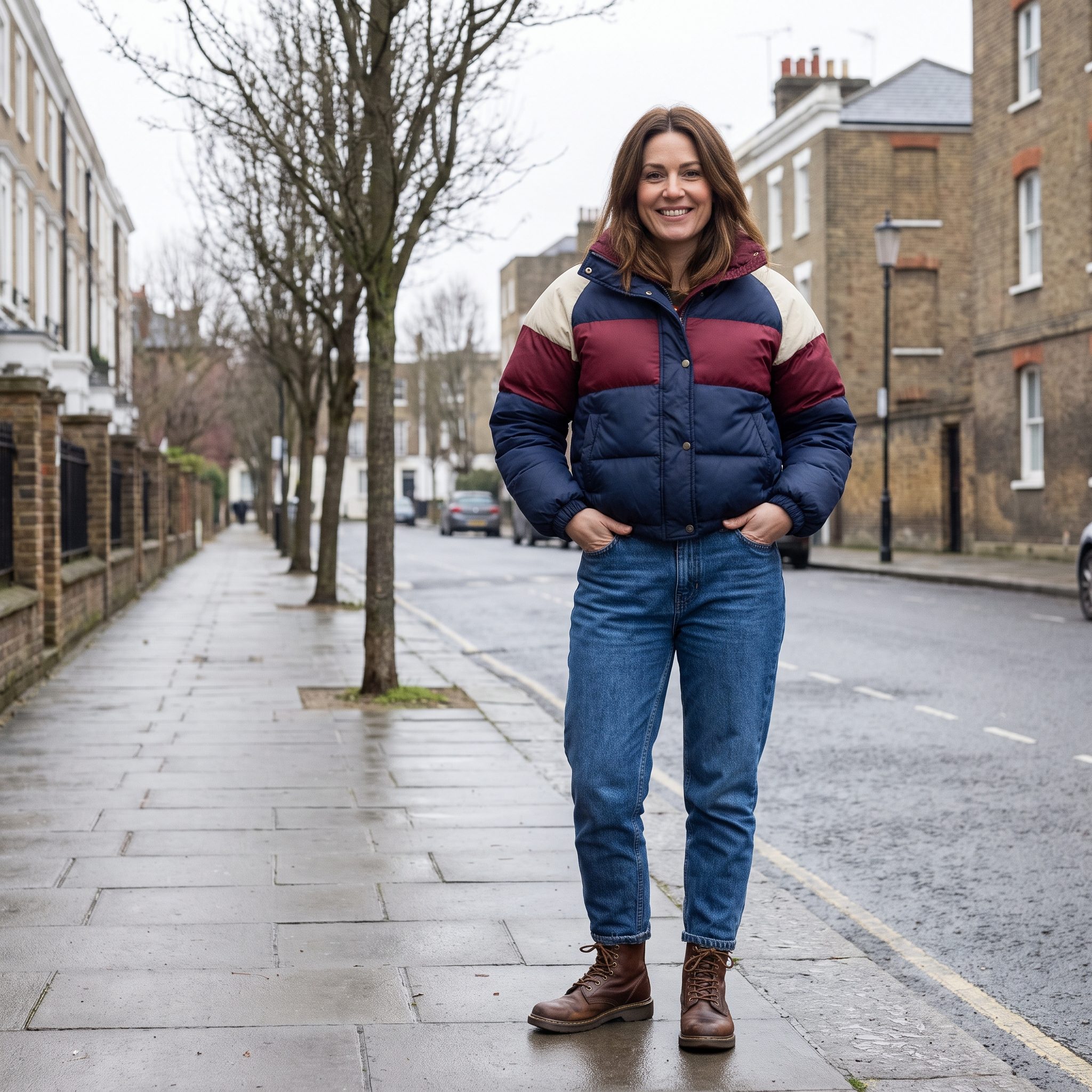
24. 1980: Color-Blocked Puffer and High-Waisted Tapered Jeans
❤️ Would you like to save this?
The decade announces itself in padded geometry. Navy occupies most of the puffer, burgundy cuts across it in a broad horizontal panel, and suddenly the jacket’s volume has structure rather than simply bulk.
Below, the denim changes direction completely: high at the waist and increasingly narrow toward the ankle. Wide and padded above, tapered below. The burgundy beanie repeats the jacket panel just once, closing the palette without turning the outfit into a matching set. The whole thing clicks shut like a drawer.
23. 1982: Cobalt Padded Jacket and Burgundy Leggings
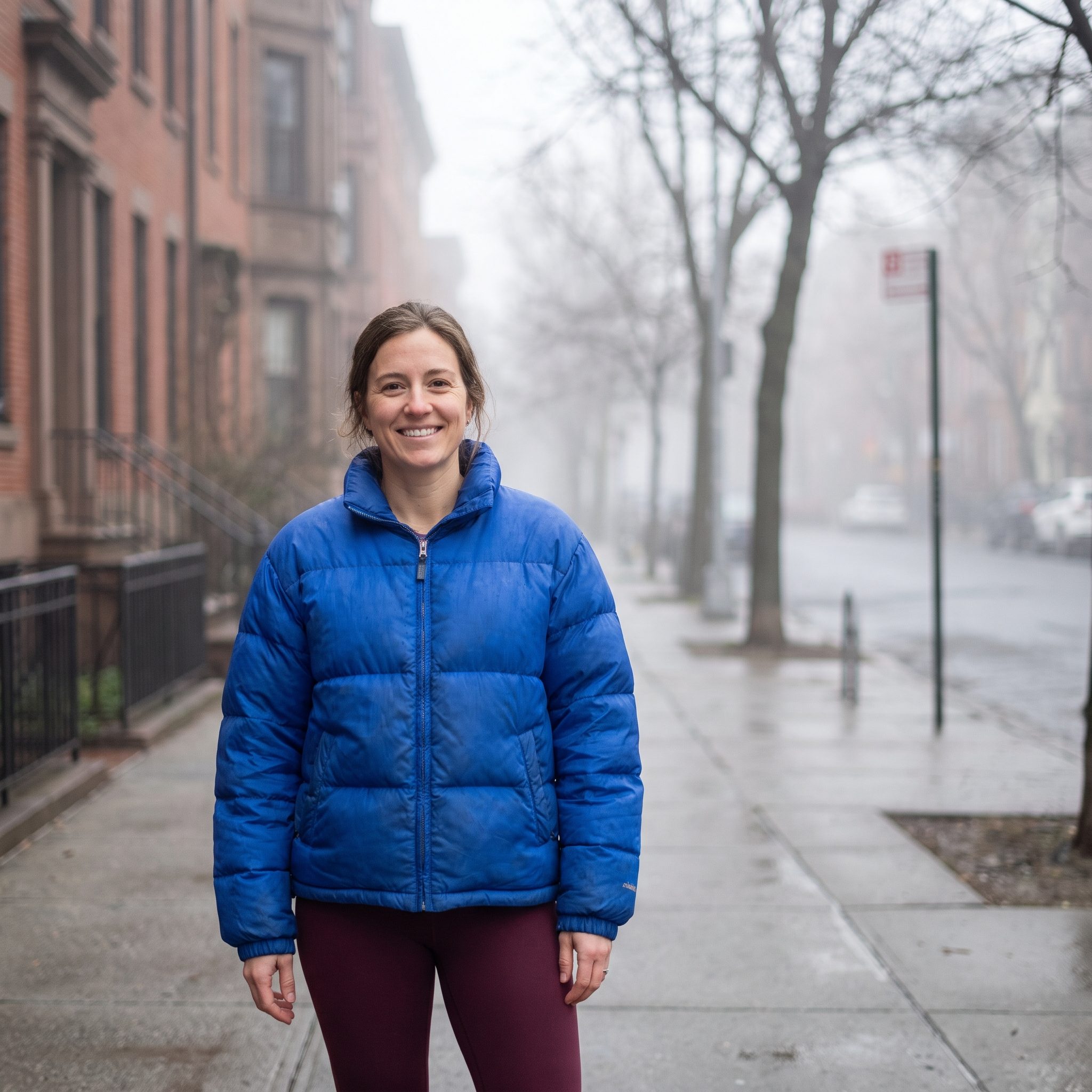
Cobalt has no intention of behaving like a neutral, particularly at this scale. The padded jacket occupies a large part of the silhouette, so its saturated blue becomes the first thing the eye encounters.
A long cream sweatshirt separates that blue from the burgundy leggings and prevents two strong colors from colliding directly. Then come the slouch socks over high-tops: deliberately bunched fabric interrupting an otherwise narrow lower line. Few details locate this snapshot in the early eighties more efficiently.
22. 1984: Strong-Shouldered Charcoal Coat and Pleated Trousers
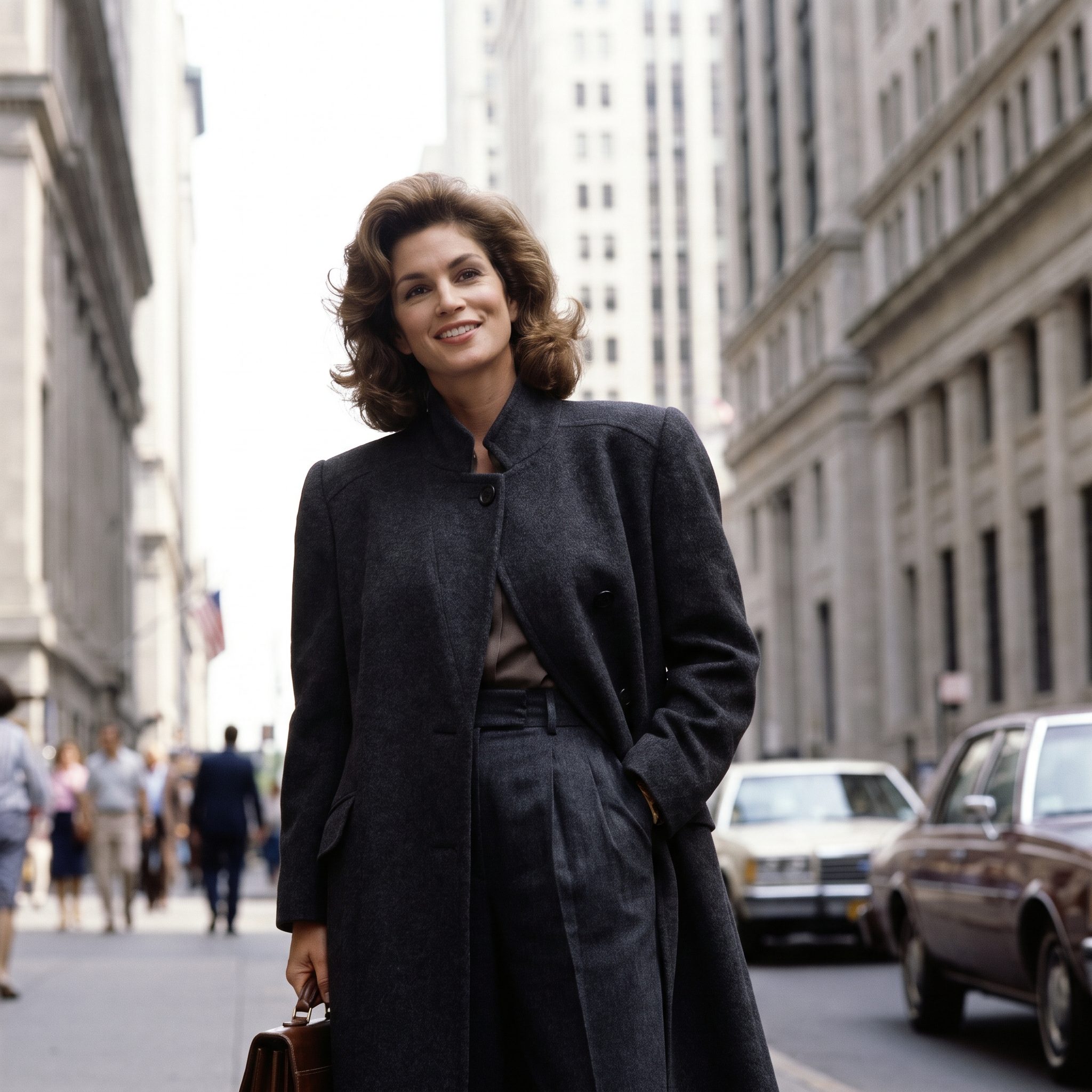
The shoulders are the story. A squared upper line gives the long charcoal coat an architectural presence that earlier, softer outerwear simply didn’t have.
Underneath, a red mock-neck inserts one concentrated shot of color at the throat. Pleated trousers loosen the lower half, so the strongest geometry remains at the shoulders rather than being repeated everywhere. Flat boots finish the silhouette without adding another decorative idea.
The shoulder line isn’t background anymore. By 1984, it has become part of the architecture.
21. 1986: Teal Windbreaker and Navy Stirrup Pants
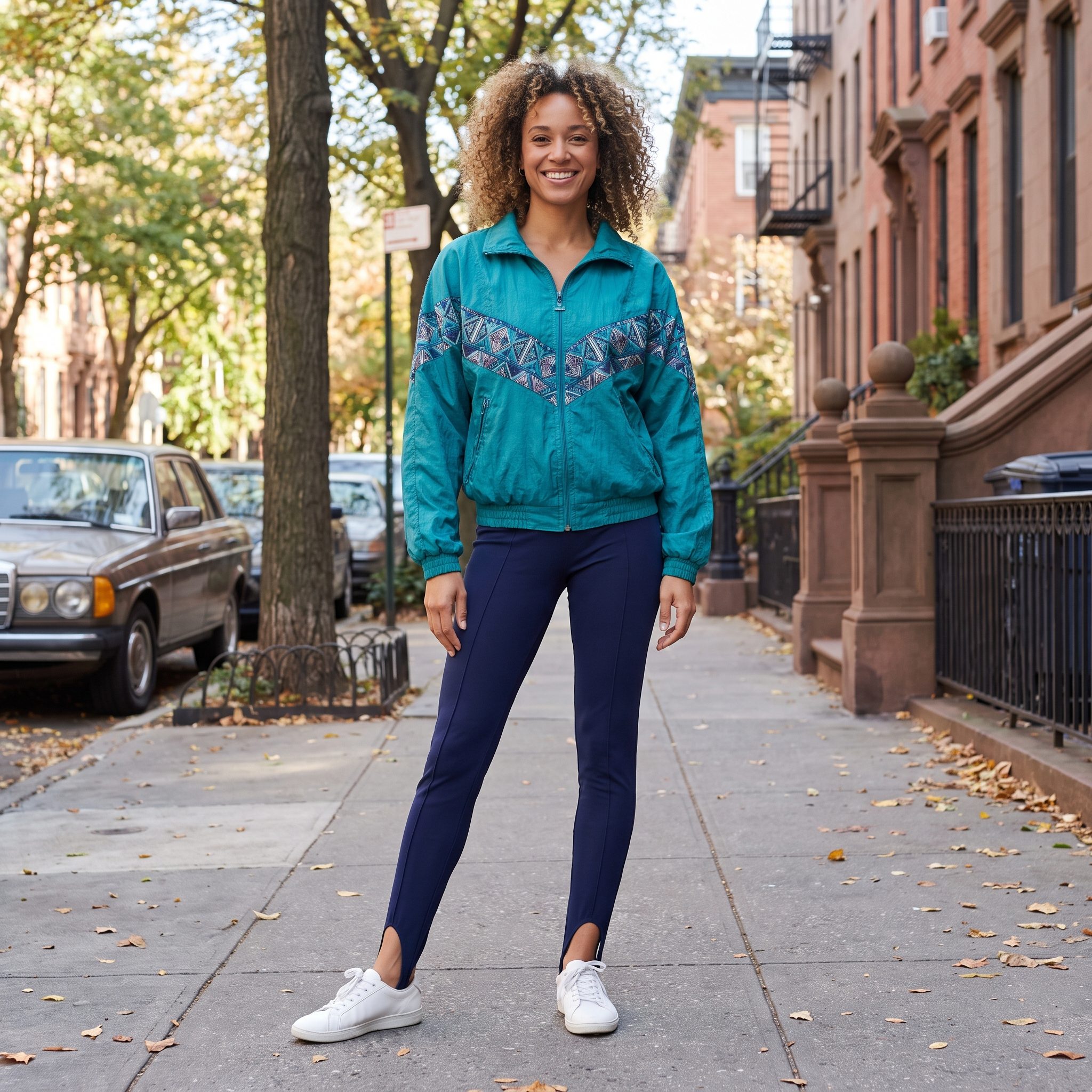
Stirrup pants solve a construction problem with one tiny strip of fabric. The strap passes beneath the foot to keep the trouser taut at the ankle, making the narrow shape particularly crisp beside all the volume happening above.
The long teal windbreaker over cream fleece is almost as much about surface as color: slick outer shell against soft pile. Matching the cap to the fleece rather than the jacket repeats the pale texture at the top while allowing teal to remain the dominant color.
20. 1988: Long Quilted Gilet and Plum Sweater Dress
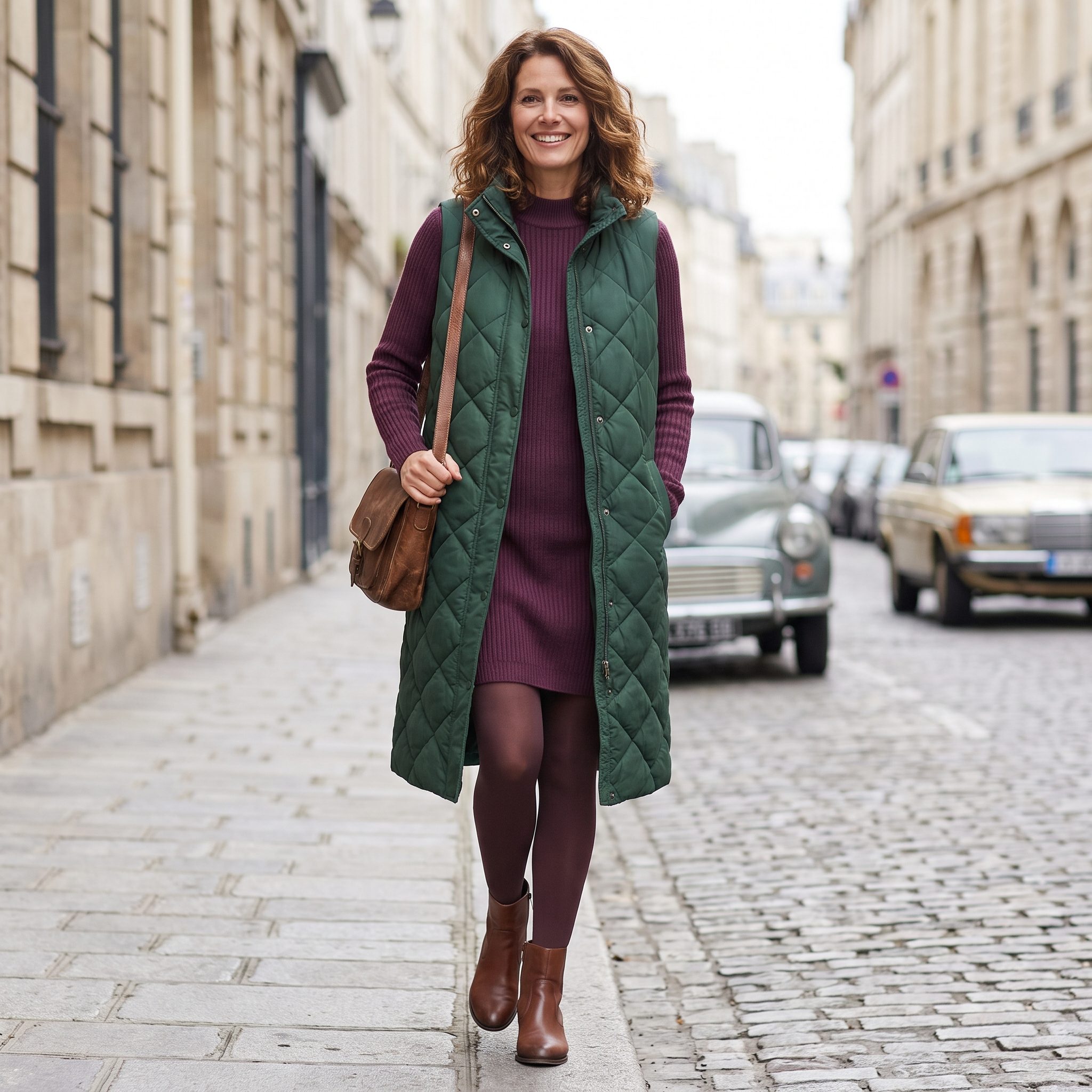
A sweater dress is already a remarkably economical silhouette: one uninterrupted knitted shape from shoulder downward. The plum color makes that simplicity more visible rather than hiding it beneath pattern.
The long charcoal quilted gilet then puts two darker vertical panels around the dress. Because it’s sleeveless, the plum remains visible at the arms as well as through the center. Soft knit inside, geometric quilting outside — an uncomplicated outfit made interesting by the frame around it.
19. 1989: Oversized Denim Jacket and Gathered Knit Trousers
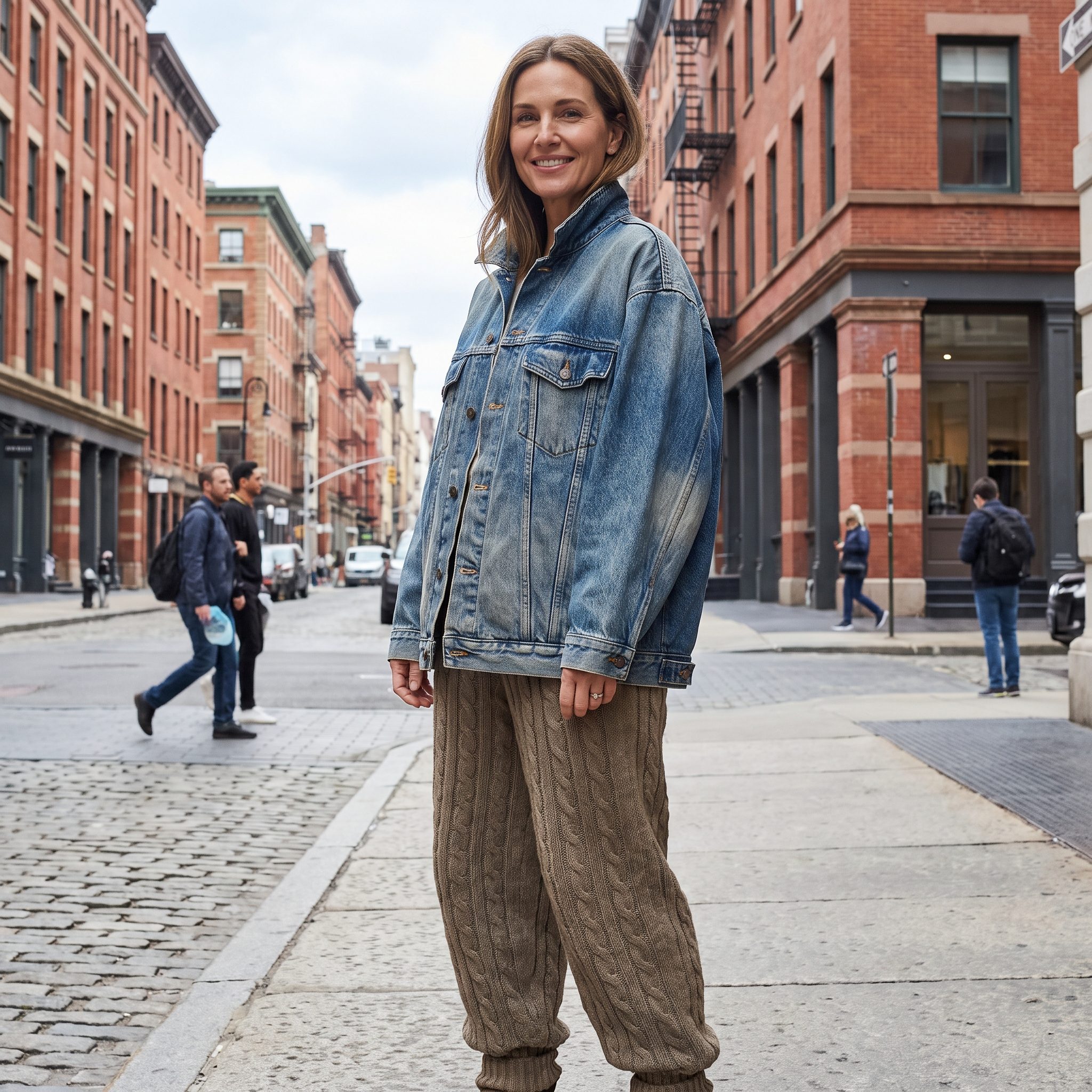
Everything here is about volume and where it collects. The denim jacket is big, the cable knit is chunky, and the trousers remain generous through the thigh. Then the ankle gathers abruptly pull all that softness inward.
That change in width gives the lower half its shape. Ivory cable against indigo denim supplies strong texture contrast, while white sneakers keep the finish uncomplicated.
18. 1990: Forest Fleece Half-Zip and Relaxed Chinos
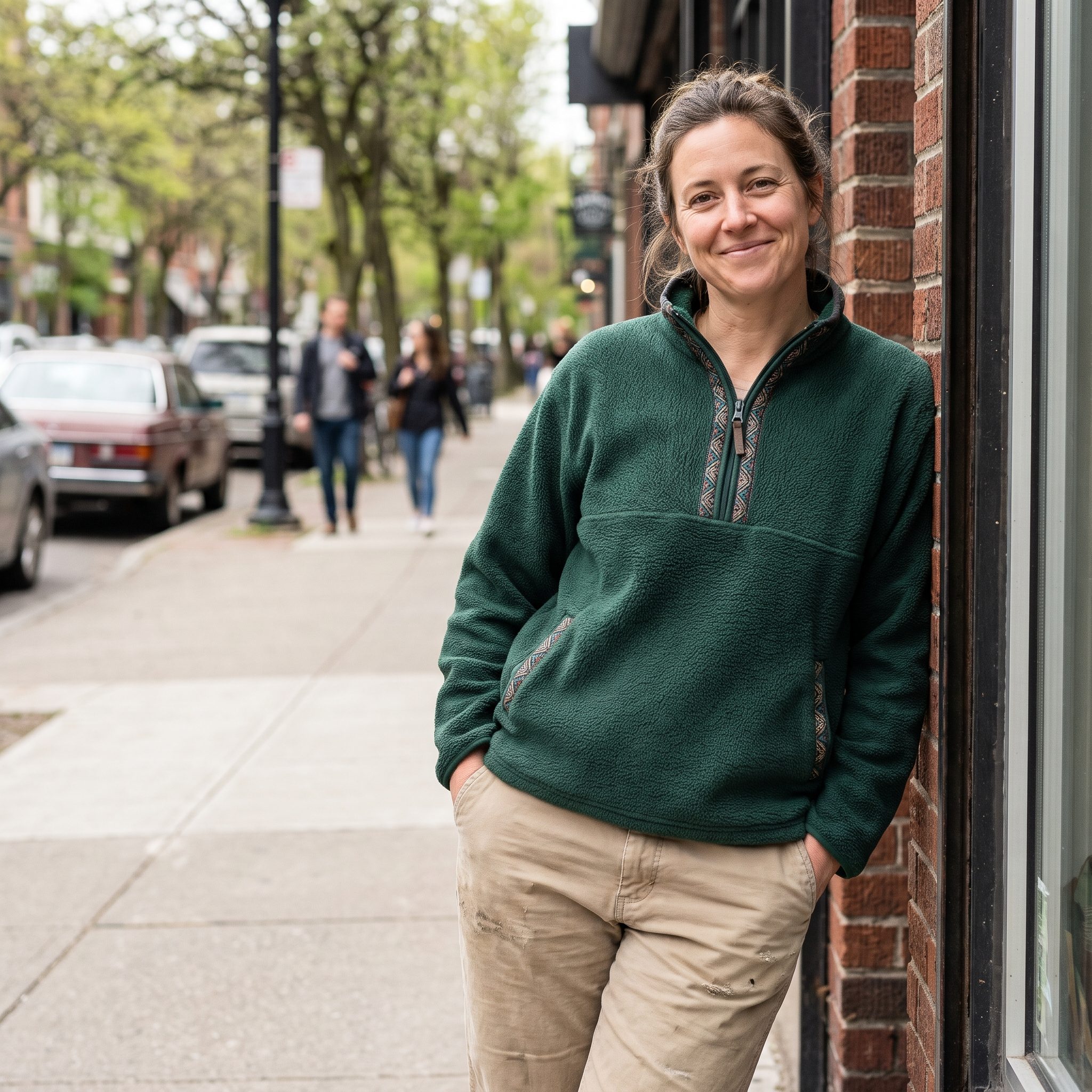
After the exaggerated volumes and strong color of the eighties, this looks almost startlingly quiet. Forest fleece, relaxed chinos and a cream thermal build the outfit from practical pieces rather than obvious statement garments.
The half-zip opened at the throat reveals the waffle texture underneath, giving an otherwise smooth upper half one small interruption. Forest, cream and stone stay deliberately low-key. Outdoor casualwear has moved comfortably onto the city pavement, and nobody needs a neon panel to explain it.
17. 1992: Black Puffer Vest and Grunge Flannel Layers
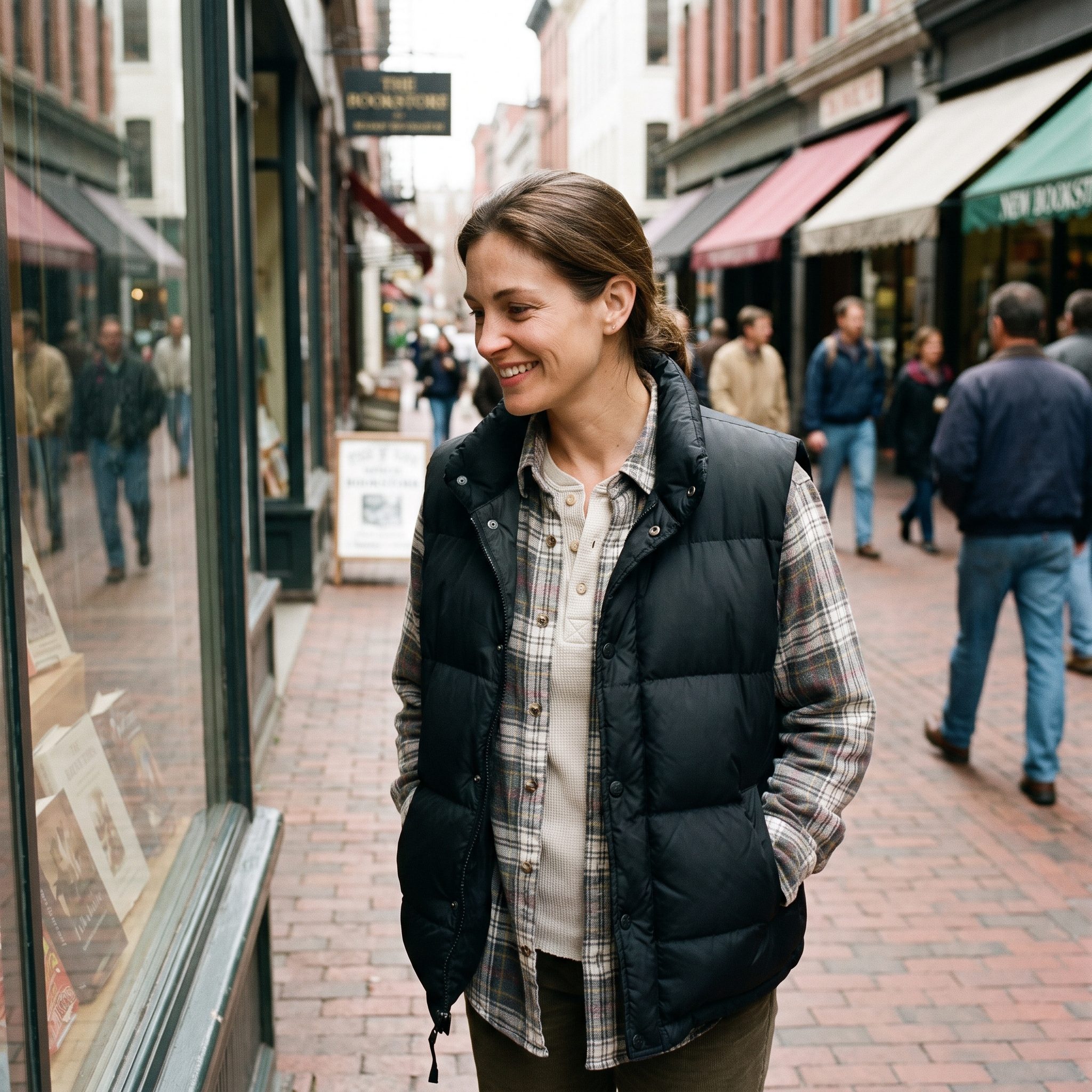
Layering is the language here. Vest over flannel over Henley, with the edges of each piece remaining visible rather than disappearing into a polished whole.
The black puffer vest puts a dark outer frame around the loose plaid and gives the torso a more definite boundary. Faded jeans and heavy boots keep the lower half equally casual. Nothing is pretending to be precious, and that’s precisely why the combination still looks surprisingly familiar decades later.
Grunge made looking deliberately unstudied into part of the style itself.
16. 1994: Minimalist Coat and Knit Column Dress
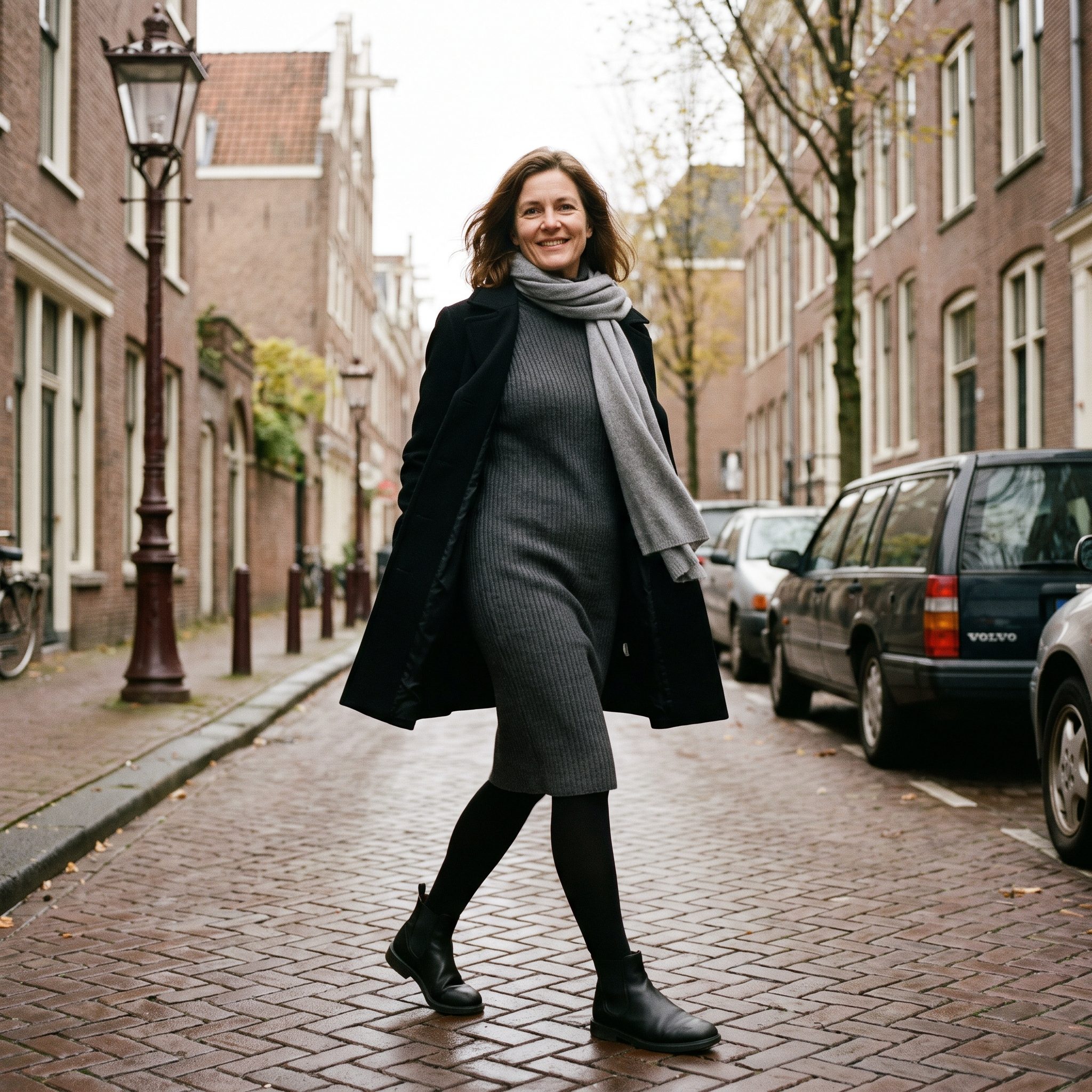
One influential strand of nineties style stripped almost everything away. Here there’s no visible color blocking, no conspicuous hardware and no complicated layering — just a long black coat cut cleanly over a knit column dress.
That restraint makes proportion and cut unusually exposed. There is nowhere for an awkward seam or unnecessary embellishment to hide. The beige style sensibility is less about beige itself than the disciplined neutrality surrounding the silhouette.
15. 1996: Navy Anorak and Striped Track Trousers
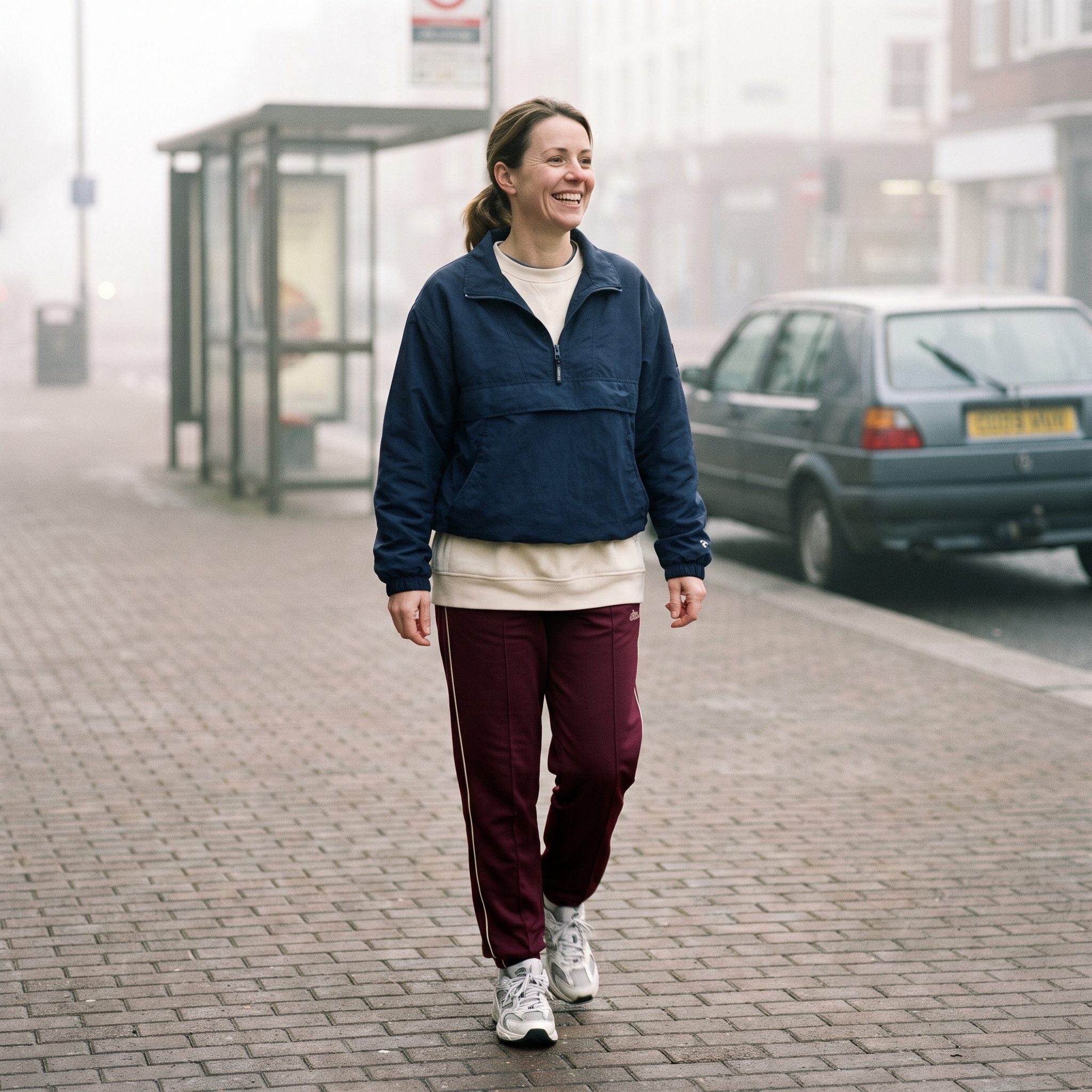
Sportswear is no longer merely visiting the street. A navy anorak and striped track trousers can now make up the outfit rather than serving as layers worn on the way to something else.
That thin side stripe matters because almost everything around it is solid navy. It draws a crisp line through an otherwise relaxed trouser, while pushed sleeves and a partially open half-zip keep the upper half equally casual. The road toward today’s athleisure style is becoming considerably easier to see.
14. 1998: Field Jacket and Striped Rugby Shirt
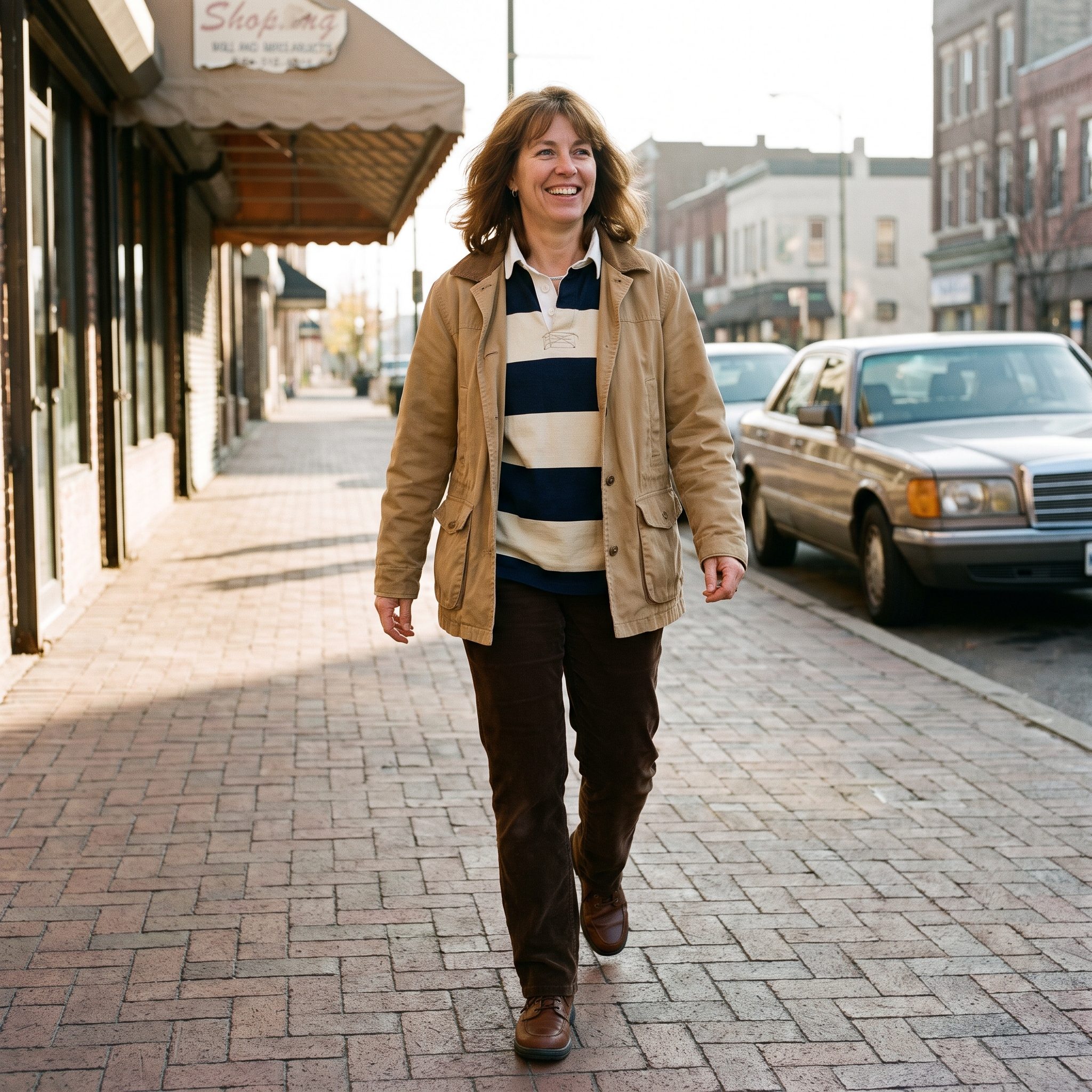
A field jacket, rugby shirt and corduroys bring three different utilitarian traditions into one very relaxed city outfit. None is especially refined on its own, which is part of the point.
The open jacket leaves the rugby stripe visible through the center, while rolled sleeves keep the outer layer from becoming too visually heavy. Corduroy adds texture below without introducing another pattern. The result has the relaxed androgynous style that comes from borrowing shapes and details traditionally associated with menswear without turning the outfit into a costume.
13. 1999: Plum Padded Coat and Cargo Trousers
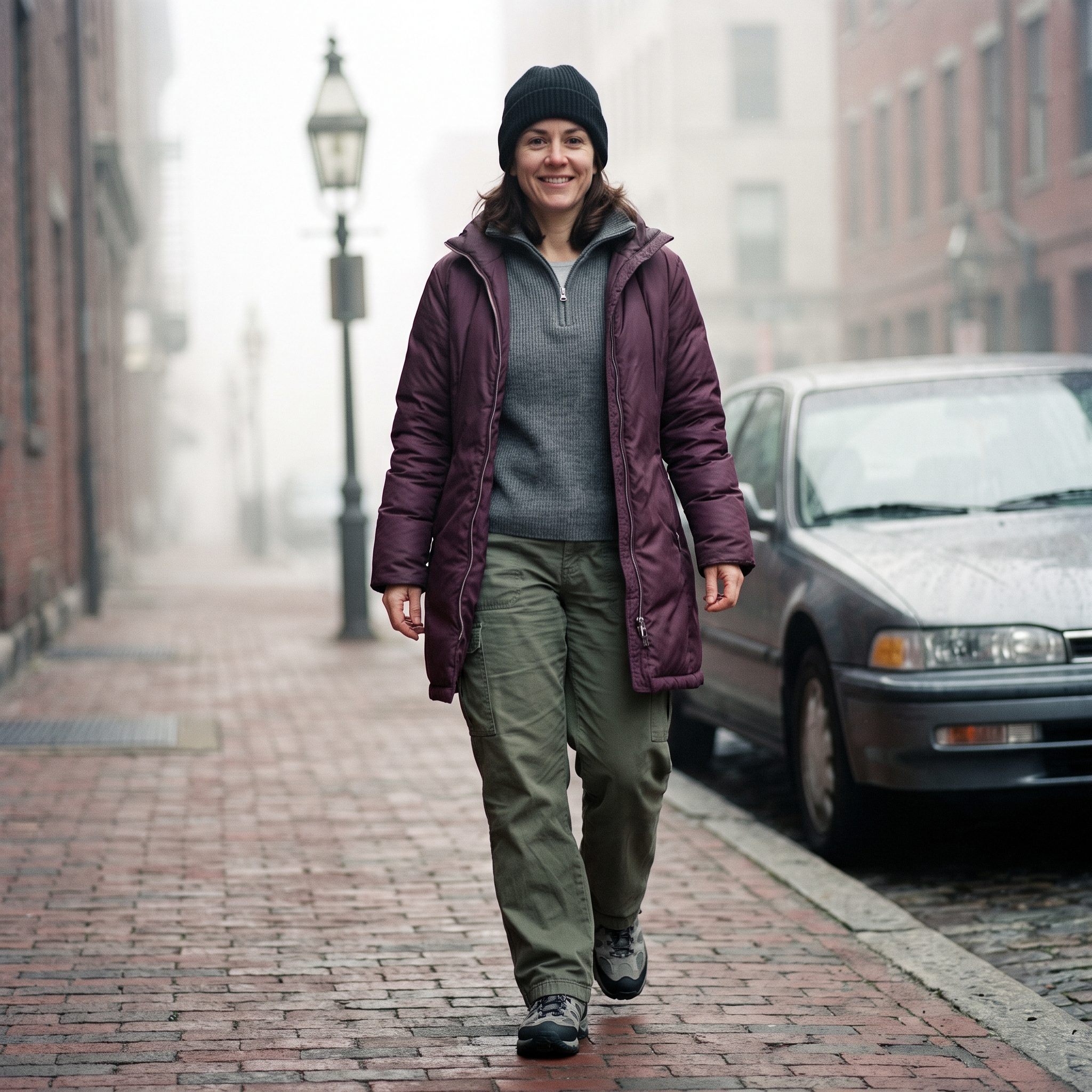
The decade closes with utility becoming decoration. Cargo pockets are technically functional, but repeated across the trouser they also create rhythm and visible structure along the leg.
Above them, the plum padded coat provides a much cleaner block of color. That contrast is useful: detail below, simplicity above. A beanie finishes the practical vocabulary without requiring the outfit to pretend practicality isn’t part of its appeal.
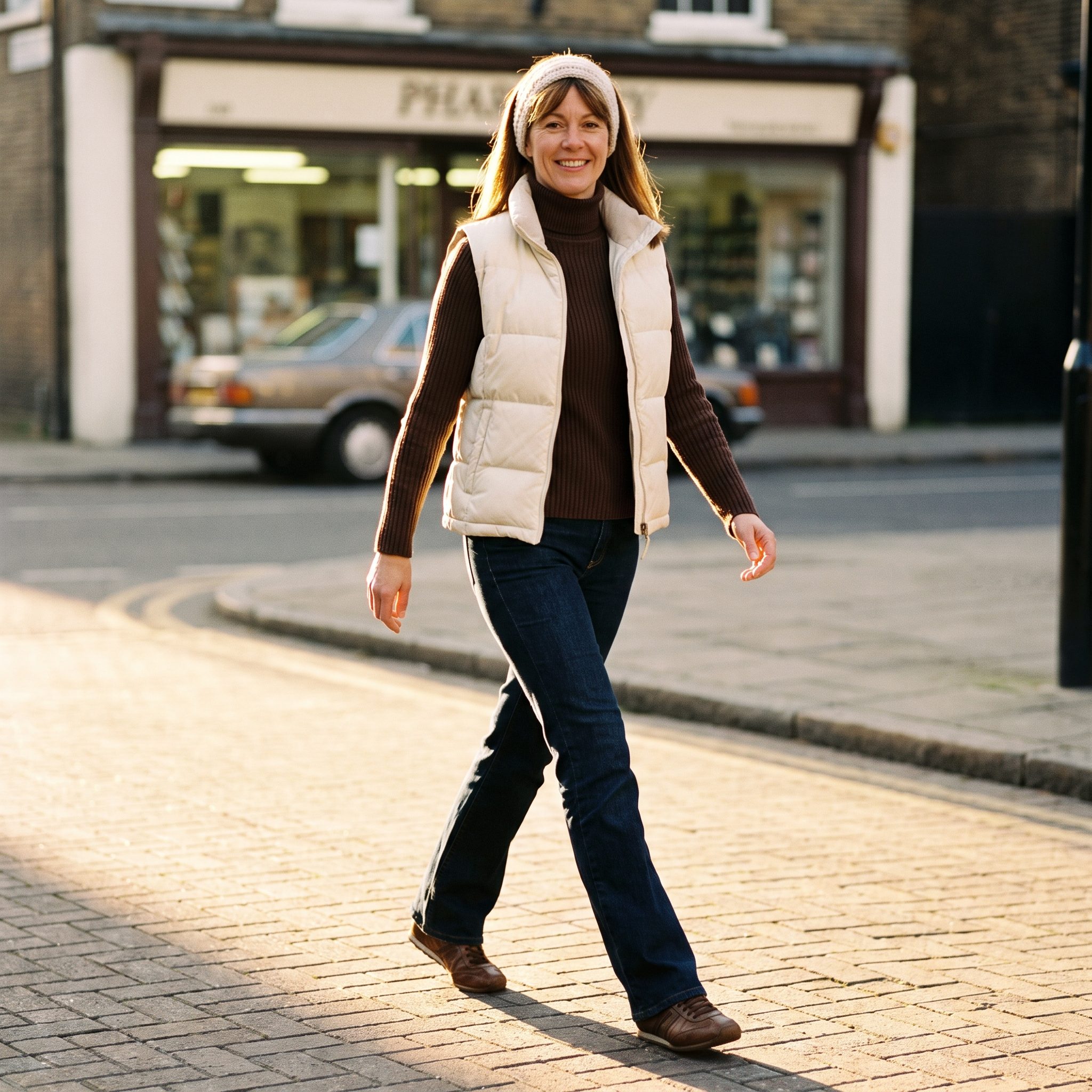
12. 2000: Fitted Cream Vest and Bootcut Jeans
❤️ Would you like to save this?
The millennium arrives with a fitted upper half and denim widening toward the floor. A cream vest over a brown turtleneck keeps the torso compact, while dark indigo bootcuts begin their flare below the knee and settle over the shoe.
The knitted headband adds another very specific shape around the face without requiring a full hat. What makes the snapshot legible isn’t one spectacular garment; it’s the combination of fitted layers, dark denim and that unmistakable bootcut break at the hem. A whole language of early-2000s denim lives in that one line.
11. 2002: Chocolate Velour and Burgundy Quilting
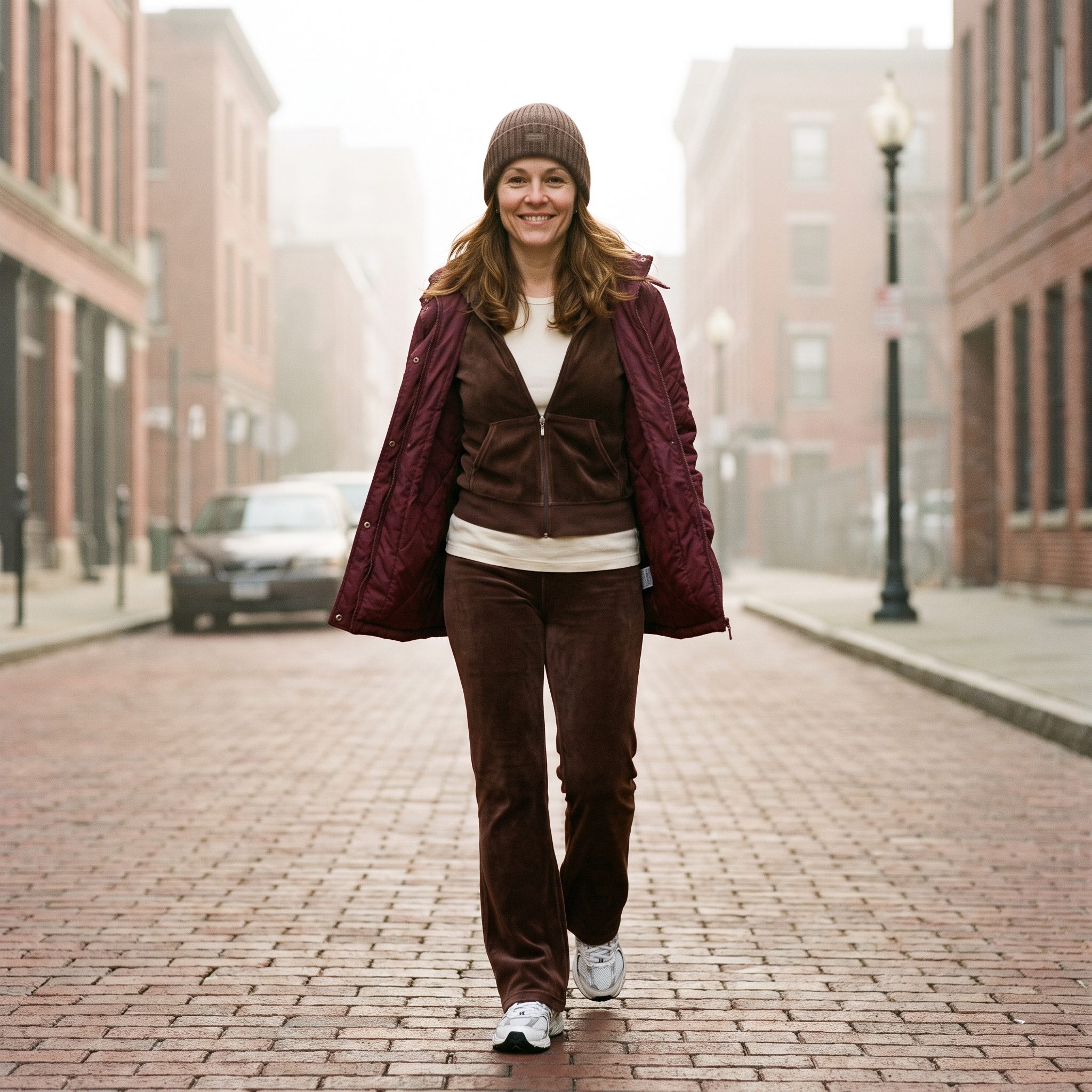
Velour makes surface the event. Chocolate brown from top to bottom would be remarkably quiet in a flatter fabric, but the brushed pile catches light differently as the body moves.
A cream tee breaks the brown at the neckline, while the burgundy quilted jacket introduces both a second warm color and a completely different texture. Plush velour beside geometric quilting gives the outfit more structure than the relaxed shapes initially suggest. The beanie keeps the finish casual without adding another competing color.
10. 2004: Black Shearling-Lined Jacket and Wool Trousers
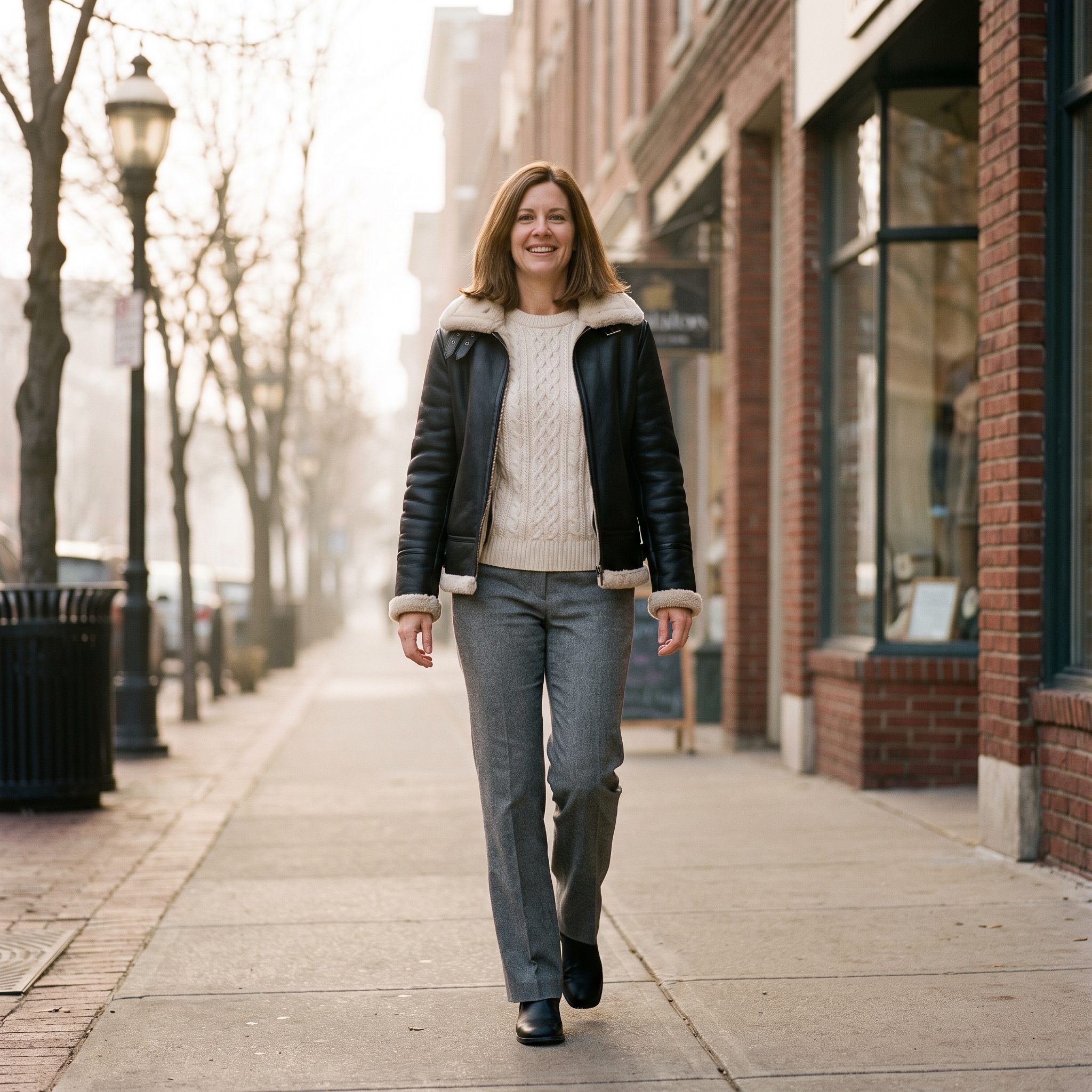
The black jacket gets most of its character from the pale lining exposed around the collar and edges. That contrast outlines the garment almost like piping, except the texture is much softer and more substantial.
Underneath, a cream cable-knit sweater repeats the lighter collar, while gray wool trousers fall cleanly to the ankle. Flat black ankle boots return to the jacket color at the bottom. Black, cream and gray: restrained palette, considerable texture.
9. 2006: Navy Toggle Coat and Slim Denim
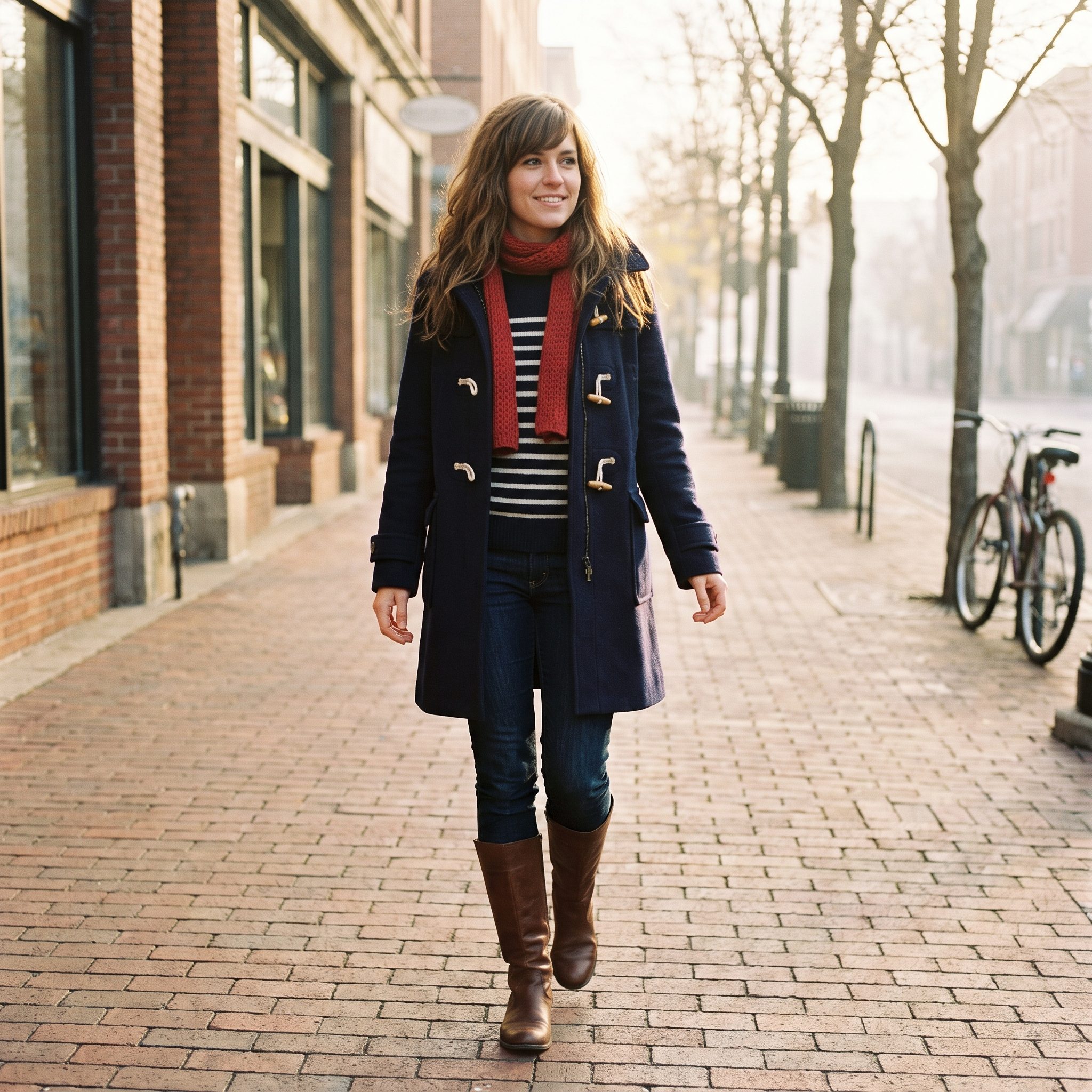
The toggle coat returns, but compare it with 1965. This time the surrounding pieces are doing something entirely different. Slim dark denim continues almost directly into flat boots, giving the substantial navy coat a much narrower base.
A red knitted scarf supplies the one emphatic color break near the face. The wooden toggles already give the coat plenty of visible detail, so little else is required. The blue style here is nearly tonal: navy outerwear against dark indigo denim, interrupted by red.
8. 2008: Patterned Tunic and Brown Leggings
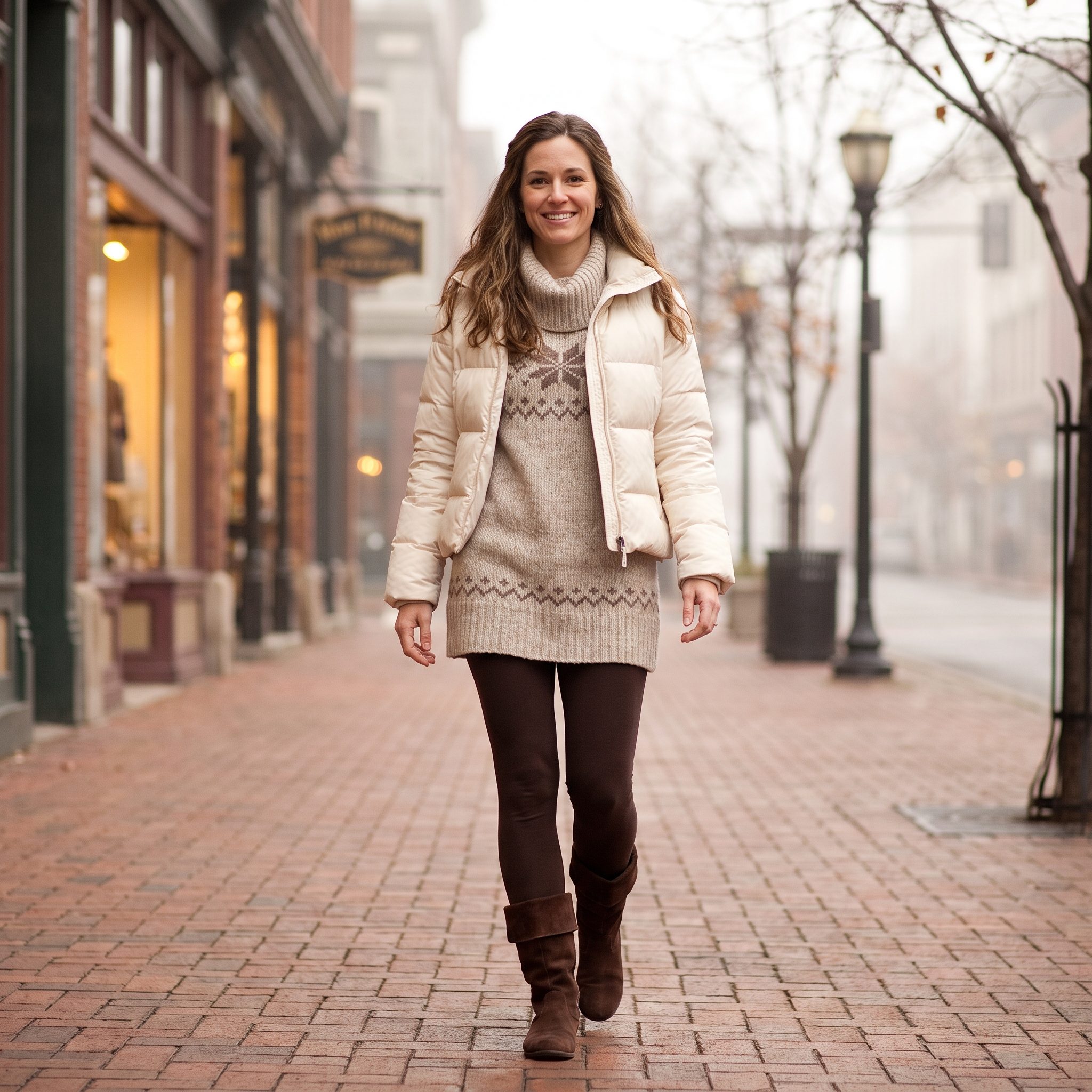
The tunic does something earlier long tops rarely attempted in this gallery: it becomes the visual center while the narrow trouser almost disappears underneath. Oatmeal and chocolate geometric pattern occupies most of the torso, then brown leggings continue the darker tone downward.
A cropped puffer changes the proportions again by stopping well above the tunic hem, deliberately exposing one layer beneath another. Flat chocolate suede boots complete an earthy beige style palette in which shape and layering matter more than sharp color contrast.
7. 2010: Long Navy Puffer and Riding Boots
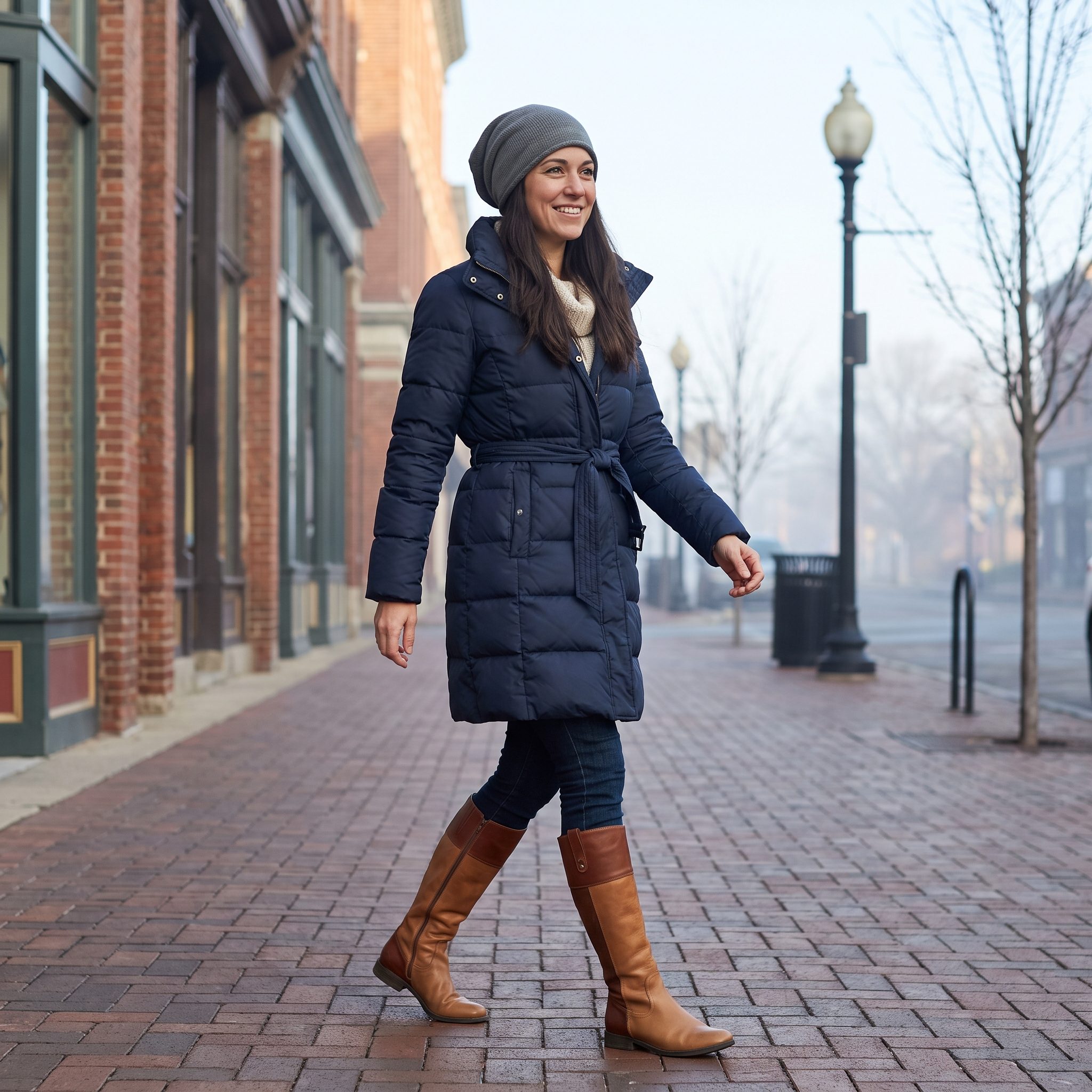
The knee-length puffer takes up an enormous amount of visual territory, yet almost none of it is decorative. Quilting supplies the surface pattern; everything else is essentially function translated into silhouette.
Skinny jeans disappear directly into flat leather riding boots, creating a narrow lower half beneath the substantial coat. A gray slouchy beanie adds softness at the top without disturbing the navy-and-neutral palette. Practicality isn’t hiding anymore. It’s the design.
6. 2012: Blanket Scarf and Camel Trousers
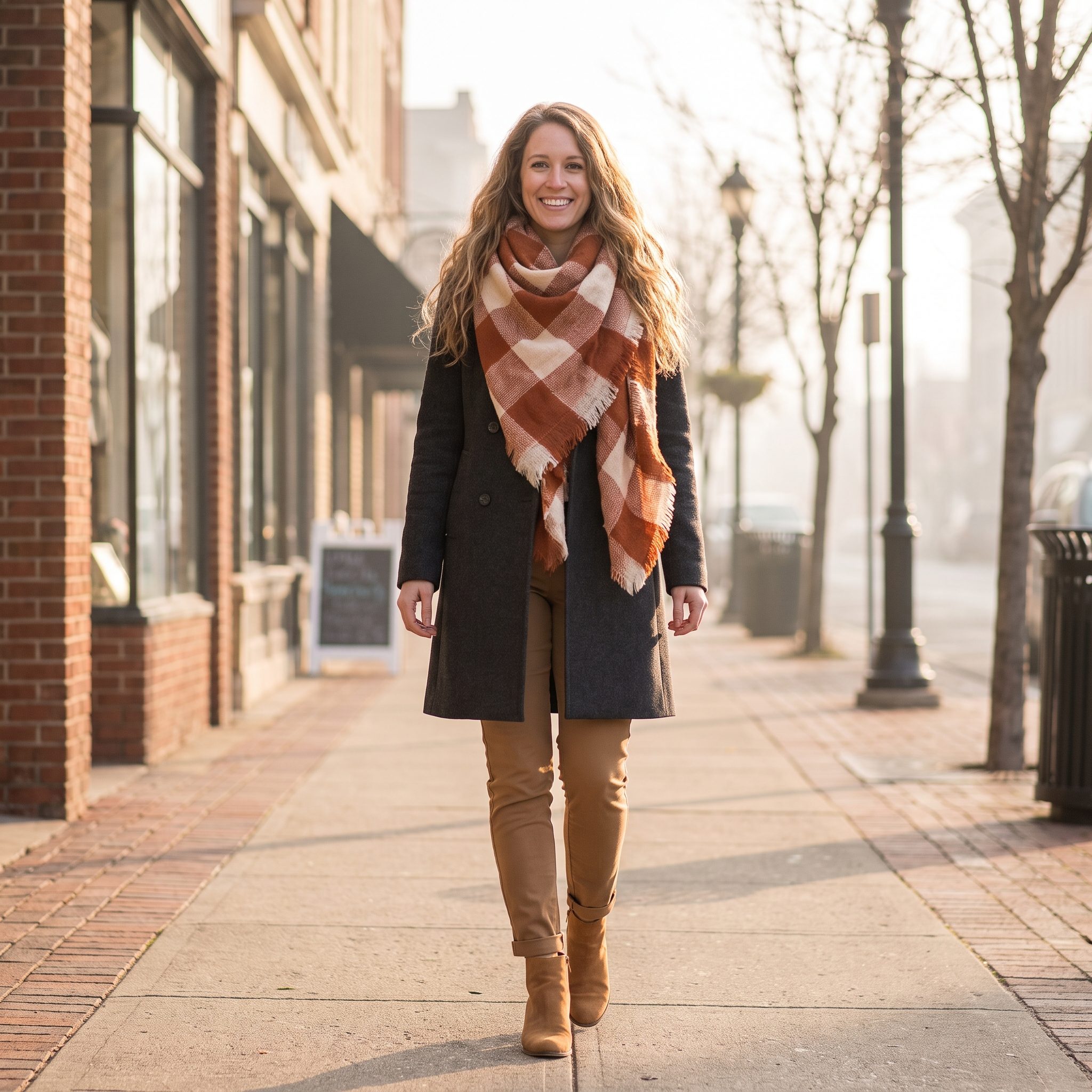
The blanket scarf arrived looking suspiciously like a small rug. Rust-and-cream check, oversized scale, enough fabric to fold and drape into several different shapes — subtlety was never really the assignment.
Against a charcoal coat, the scarf becomes both pattern and volume around the upper body. Slim camel trousers and flat suede ankle boots stay comparatively quiet underneath, allowing one accessory to dominate the entire composition.
5. 2014: Olive Puffer Vest and Fleece Joggers
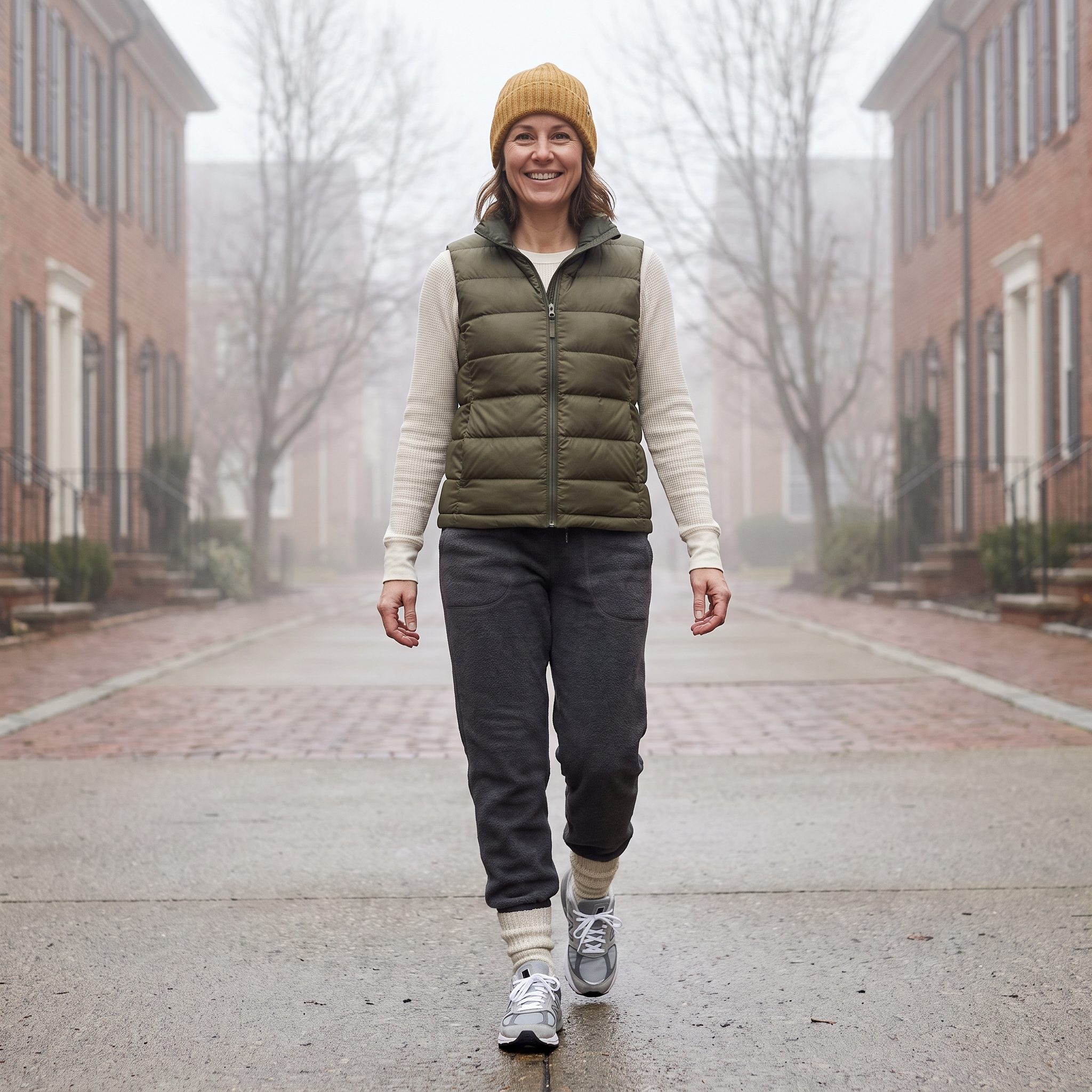
The vest layered over waffle knit gives the upper half a more defined outer shape while leaving the arms soft and unstructured. Below, brushed charcoal fleece joggers make comfort part of the silhouette rather than something concealed beneath it.
Olive, charcoal and cream keep the base muted. Then the mustard beanie interrupts all three with one warmer, more saturated note. Quilting, waffle knit and fleece provide enough surface variation that the outfit never has to rely on ornament.
4. 2016: Camel Coat and Black Athleisure
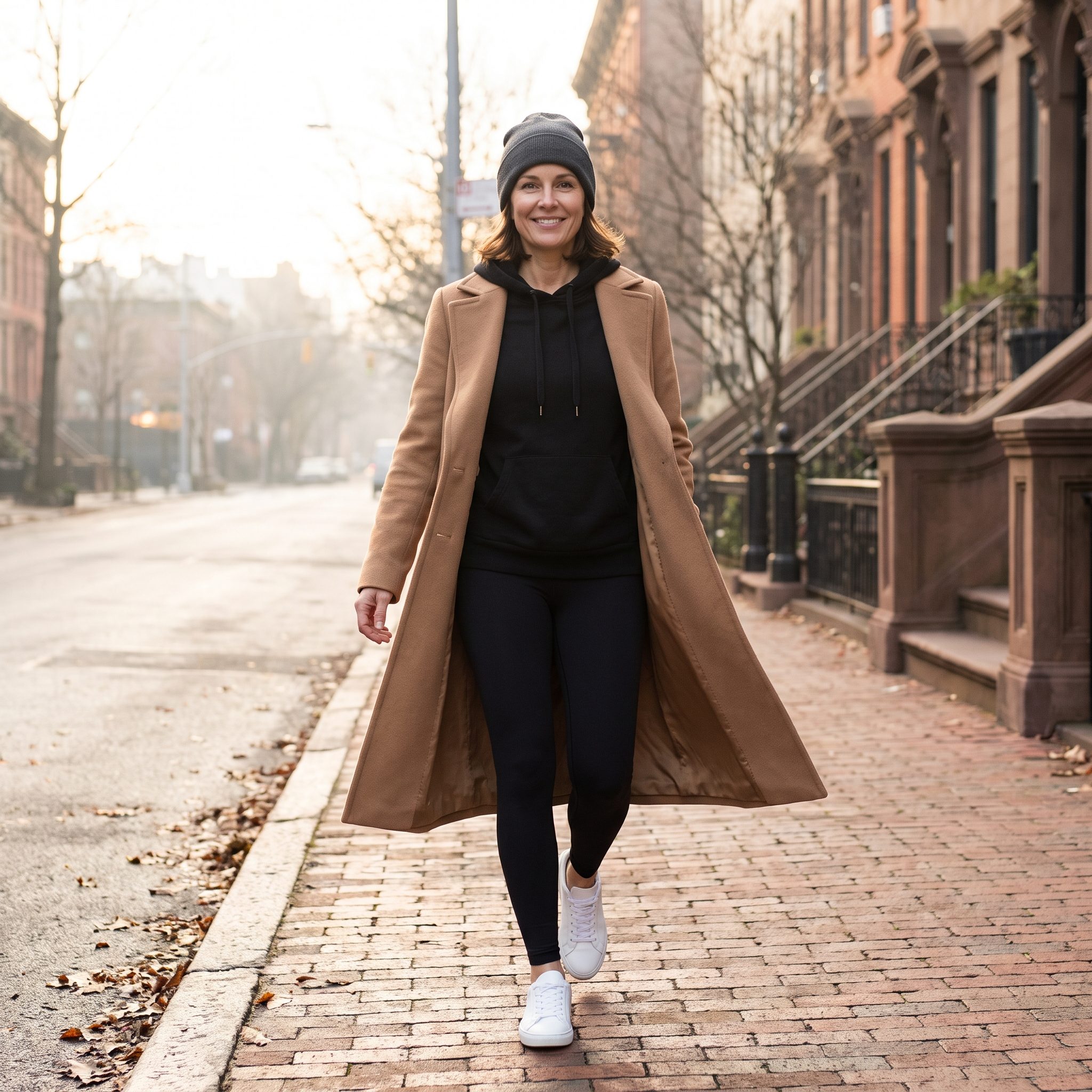
Here’s the collision that defines the look: traditional tailored outerwear over unapologetically athletic basics. The long camel wool coat brings structure, length and a classic warm neutral; black leggings and sneakers underneath pull in the opposite direction.
Neither half has to disguise itself. The coat still looks like a coat, the athletic pieces still look athletic, and the friction between them is what makes the combination feel deliberate. By this point, athleisure style no longer needs to stay on its own side of the wardrobe.
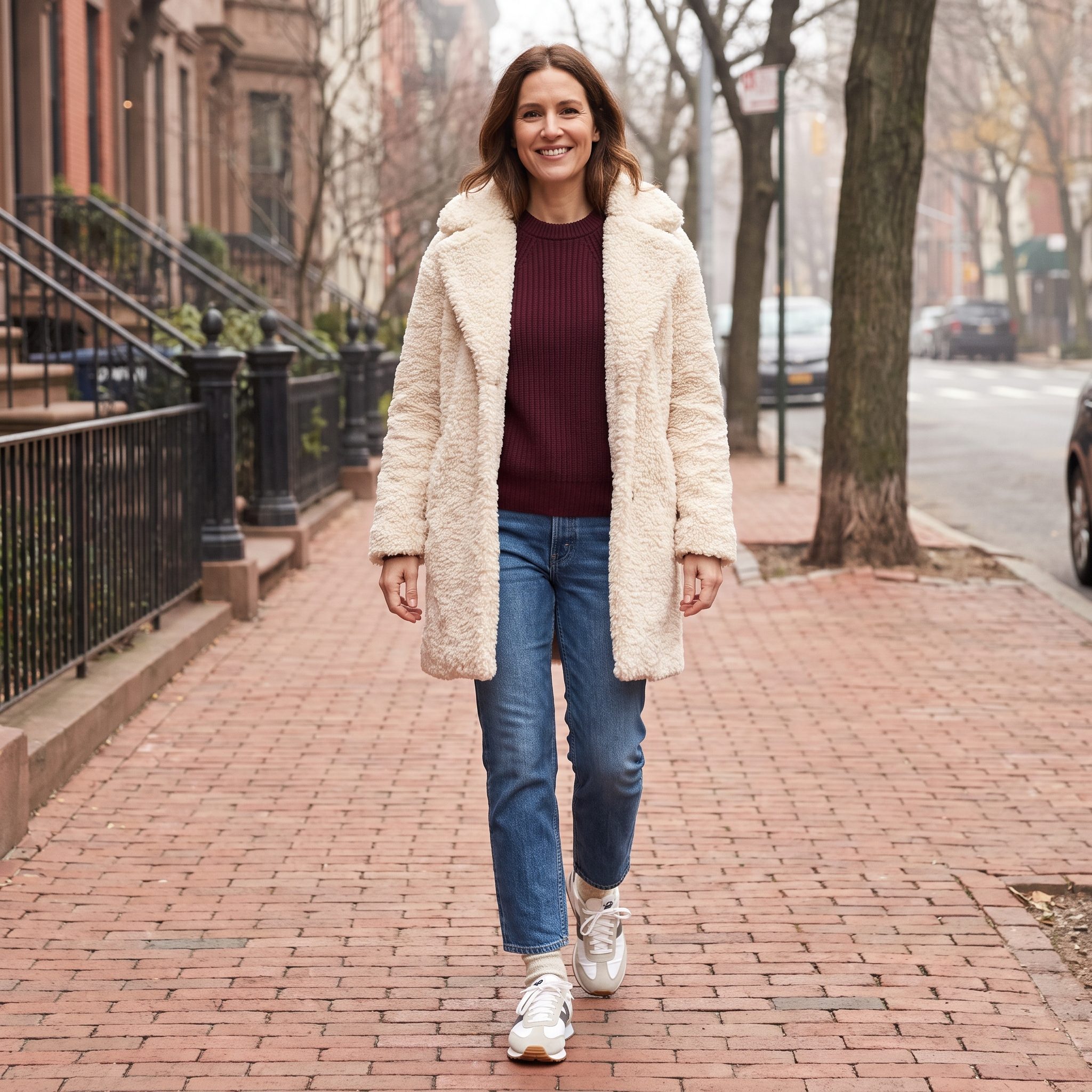
3. 2018: Teddy Coat and Straight-Leg Denim
❤️ Would you like to save this?
The teddy coat is almost entirely about texture. Against smoother straight denim and a flatter burgundy knit, that deep, curly surface becomes the dominant feature before color has much chance to compete.
Burgundy against cream supplies the richer color relationship, while straight-leg denim gives the lower half more width than the skinny-jean silhouettes seen earlier in the decade. Wool socks peeking above retro sneakers add one small interruption at the ankle. Not a loud outfit. Just several familiar pieces with very different surfaces sharing the same frame.
2. 2019: Sage Raincoat and Wide-Leg Trousers
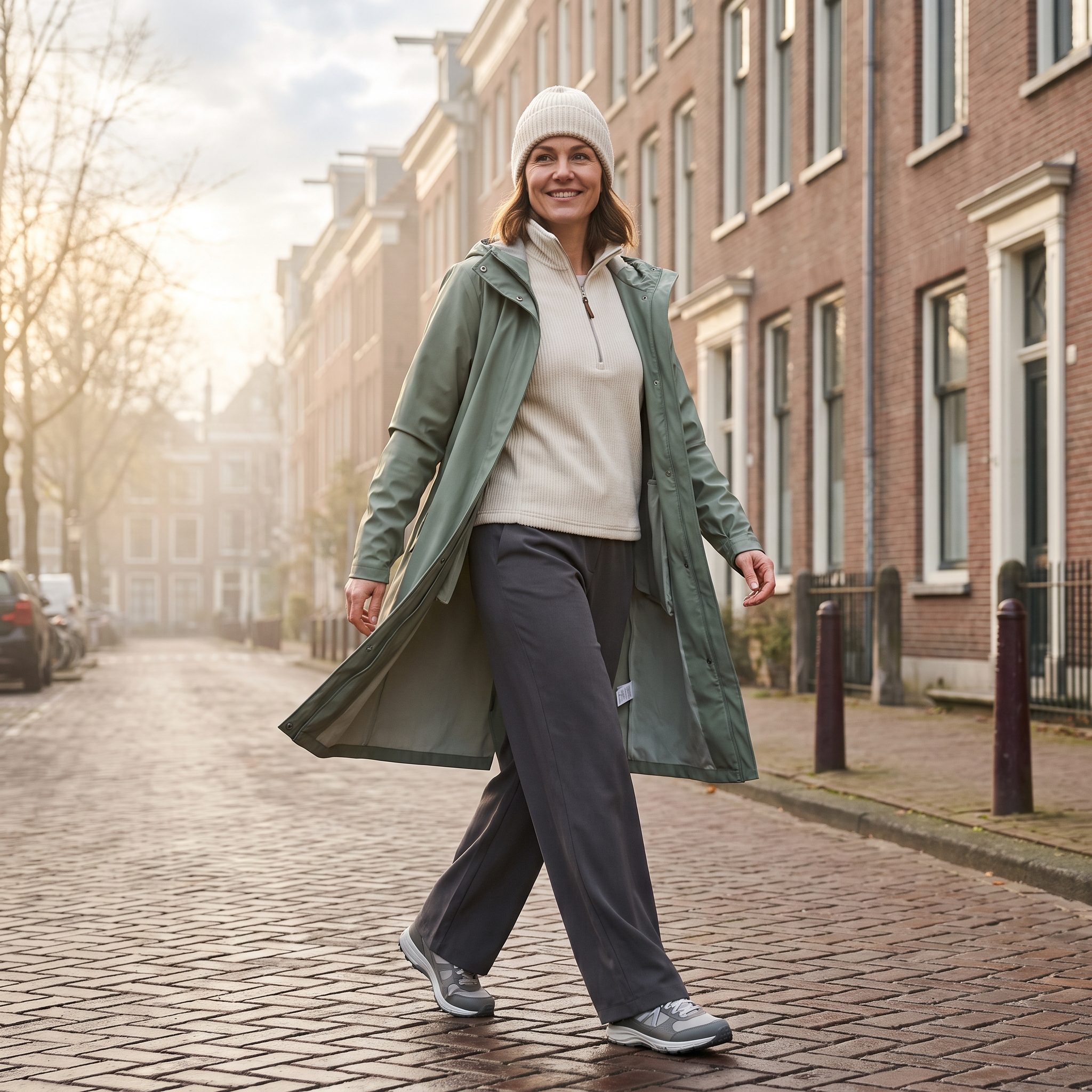
Sage gives technical outerwear a very different presence from the navy, black and high-saturation shells earlier in the gallery. Softer than olive and cooler than khaki, it sits quietly against the cream fleece underneath.
Then the wide-leg trouser changes the proportions. Instead of balancing a longer coat with a narrow leg, this outfit allows volume both above and below, with the ankle crop keeping the trouser shape clearly visible. Cushioned walking sneakers complete a wardrobe in which practical performance details no longer need to masquerade as something dressier. The sage raincoat simply makes function look unusually good.
1. 2020: Houndstooth Blazer Over Indigo Wide-Leg Jeans
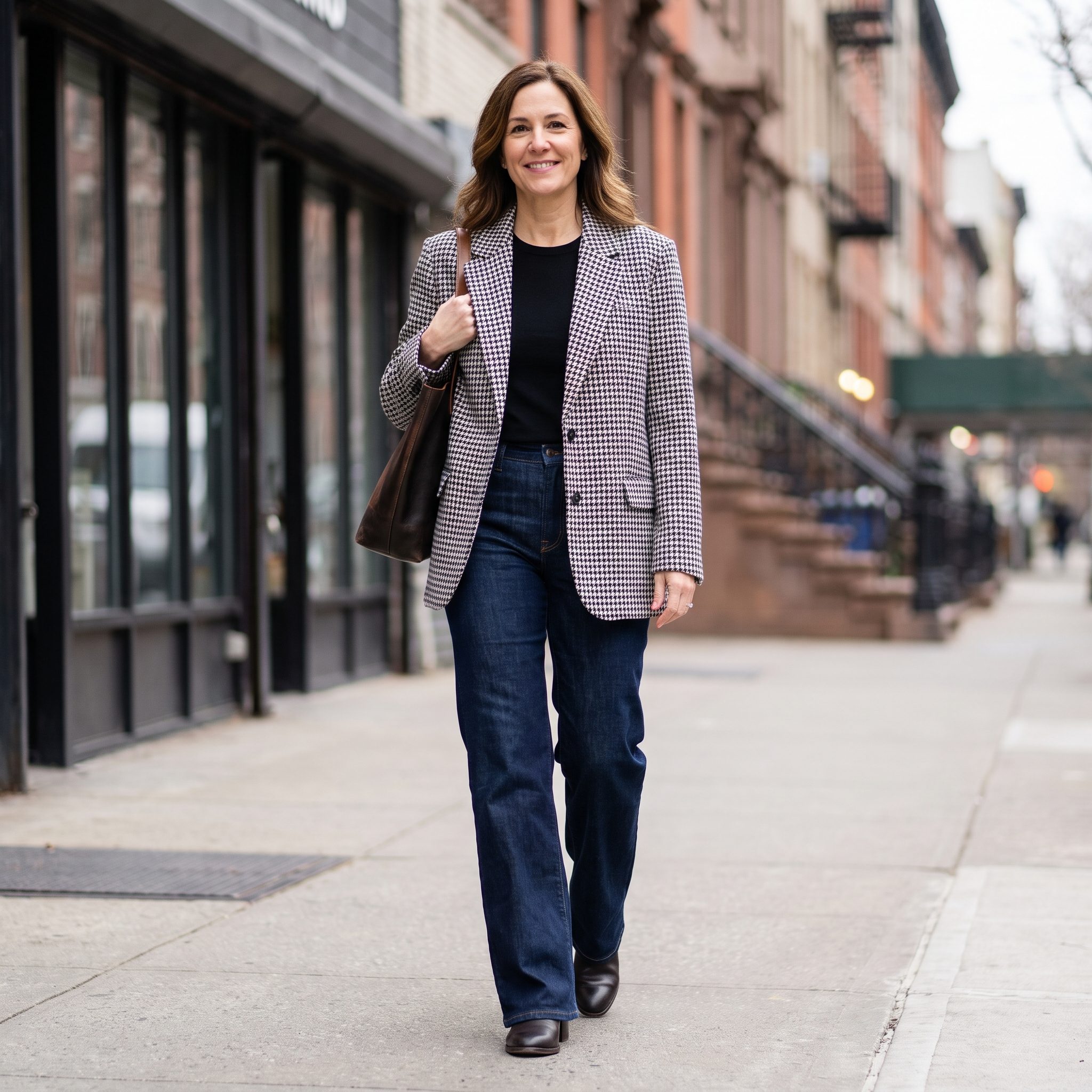
Sixty years after the camel coat opened this walk, tailoring is still on the street — but the proportions have been rewritten.
The black-and-white houndstooth blazer keeps a recognizable tailored shoulder while allowing more room through the body. A fine black turtleneck recedes underneath it, leaving the jacket’s pattern and shape exposed. Then the indigo jeans go wide: high-waisted, full through the leg and breaking at the loafer rather than narrowing toward it.
Burgundy loafers provide the one unexpected color note at floor level. Formal pattern above, relaxed denim below, classic tailoring sharing space with considerable ease.
The street never needed to change. Fashion did enough of that on its own. From the disciplined wool layers of 1960 to the wide denim and relaxed tailoring of 2020, the most revealing changes weren’t simply colors or individual trends. They were changes in proportion, movement, texture and what counted as dressed enough to walk out the door.
So which year gets your shoes on the pavement?