❤️ Would you like to save this?
Shoulder pads that could double as a shelf. Acid-wash denim. Neon knitwear. Plastic jewelry piled on like the outfit was being paid by the accessory. The 1980s knew how to commit, and this before look commits to almost everything at once.
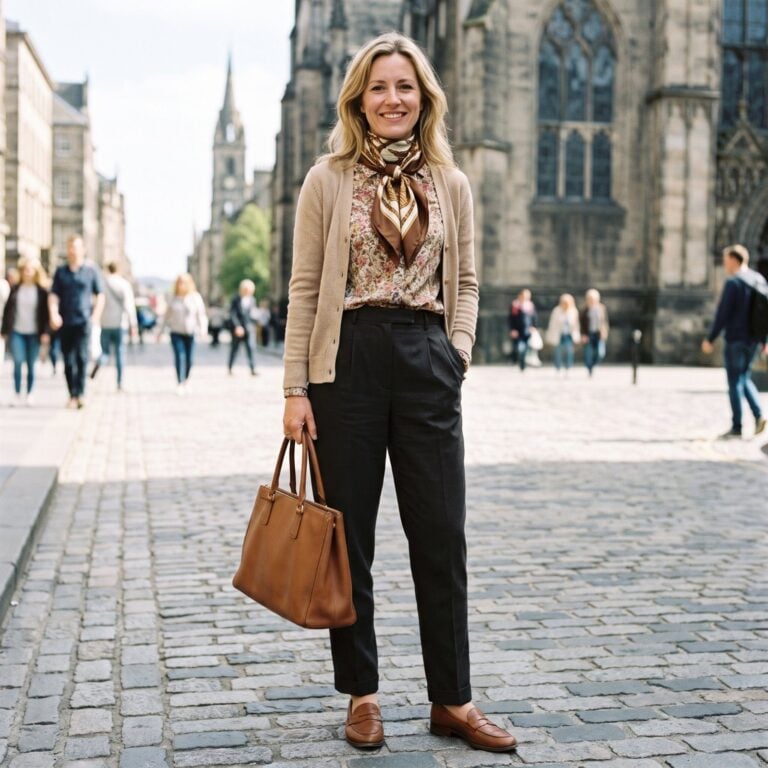
The problem is not that bold clothes suddenly became forbidden. It is that every element is demanding top billing. These 24 before-and-after concepts take that same woman and rebuild the visual hierarchy from scratch: sometimes with a razor-sharp suit, sometimes with linen and sneakers, sometimes with blush, plum, rust, olive, black, or enough camel to make beige feel positively theatrical.
The useful lesson is not that modern style means turning the volume down to zero. It means deciding what gets to be loud. A shoulder can dominate if the rest of the silhouette gives it room. A saturated color can carry an outfit when the accessories stop competing. Even the most restrained neutral look needs texture, proportion, or one sly detail to keep it from disappearing into the wallpaper.
FYI, thanks to AI imagery software, we’re able to create very specific fashion and hairstyle examples to illustrate the points being made. In some cases, imagery is exaggerated to hammer home the point. Also, assume links that take you off the site are affiliate links such as links to Amazon. this means we may earn a commission if you buy something.
24. Espresso Tailoring and Ivory Silk Give the Chaos a Center of Gravity
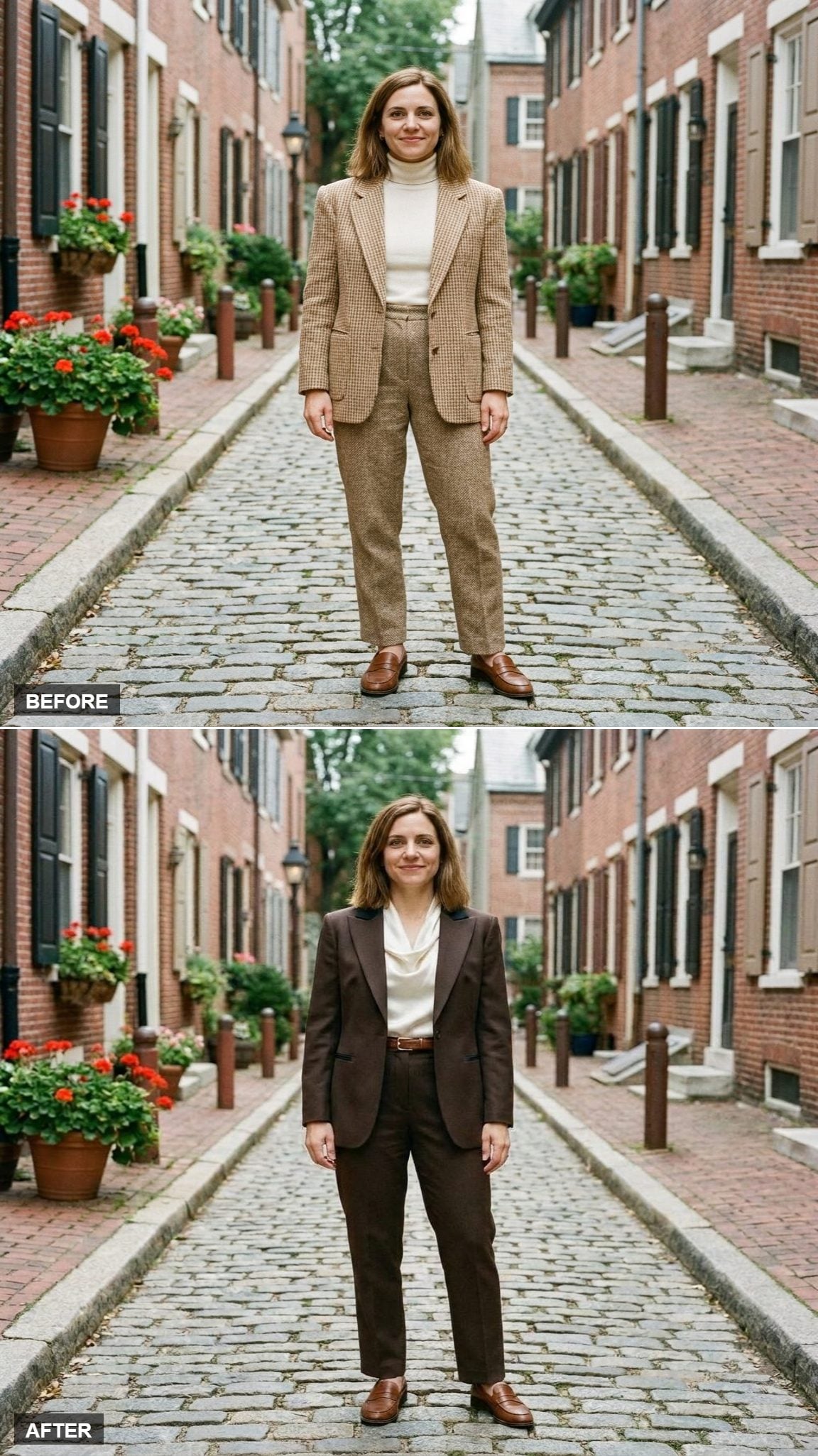
The before look sends neon, acid wash, and chunky accessories in three different directions. This version does the opposite. Deep espresso tailoring establishes one dark, uninterrupted frame, while ivory silk brings light back toward the face.
A softer shoulder and cleaner trouser line let the tailoring look deliberate rather than theatrical. Gold jewelry appears in a few controlled flashes instead of arriving as a committee. The whole transformation is an exercise in editing: fewer competing notes, much stronger melody.
23. Blush Wool Proves Soft Color Can Still Hold a Room
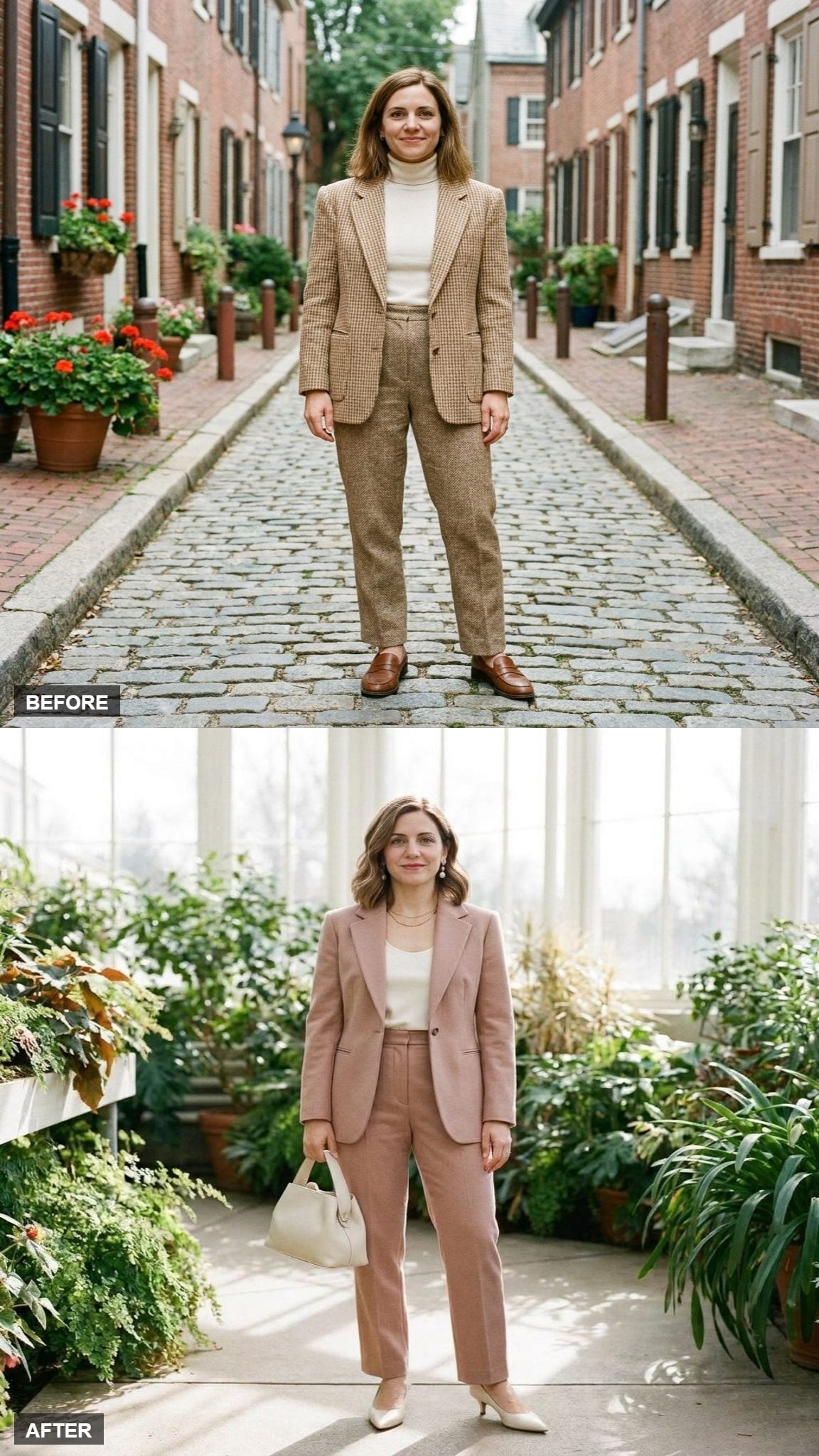
Pink suiting sounds risky until the color moves away from bubblegum and into dusty blush. The muted wool has enough warmth to soften the tailoring without making it sweet.
The nipped waist changes the proportions immediately. Instead of letting strong shoulders turn the torso into one broad block, the blazer follows the body and opens over an ivory silk shell. Pearl drops and a side part add just enough softness around the face to keep the tailoring from becoming too stern.
22. Oatmeal Tailoring and White Sneakers Take the Suit Off Duty
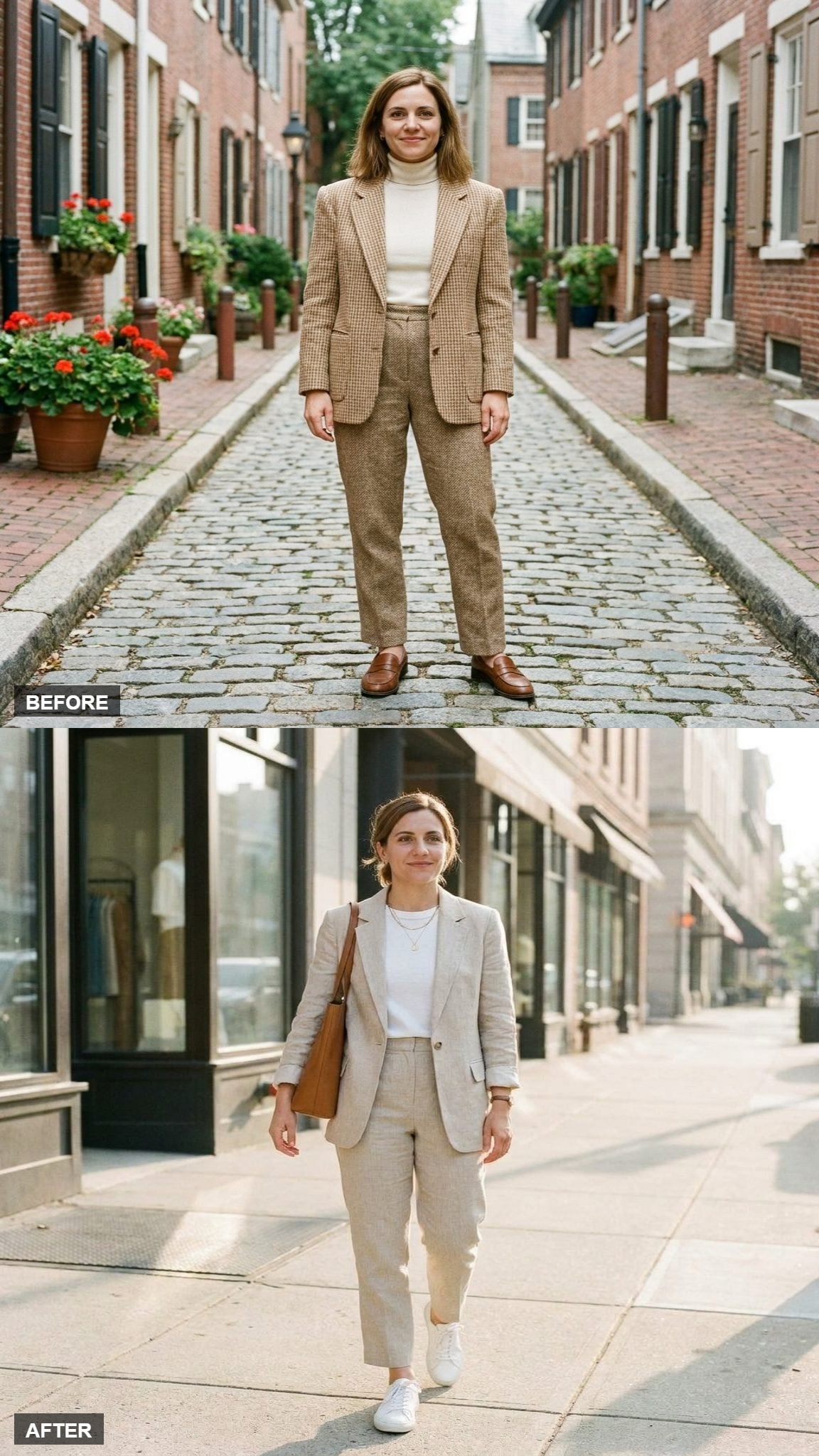
A suit with sneakers works because the two pieces disagree just enough. Oatmeal tailoring brings polish; a plain white tee and clean white leather sneakers pull the formality straight back down to street level.
The trouser stops above the ankle so the sneaker gets some air, and a caramel tote adds warmth without making the outfit feel dressed up again. Nothing here is trying to impersonate officewear. That is why it looks so relaxed.
21. Deep Plum and Black Silk Move the Story Straight Into Evening
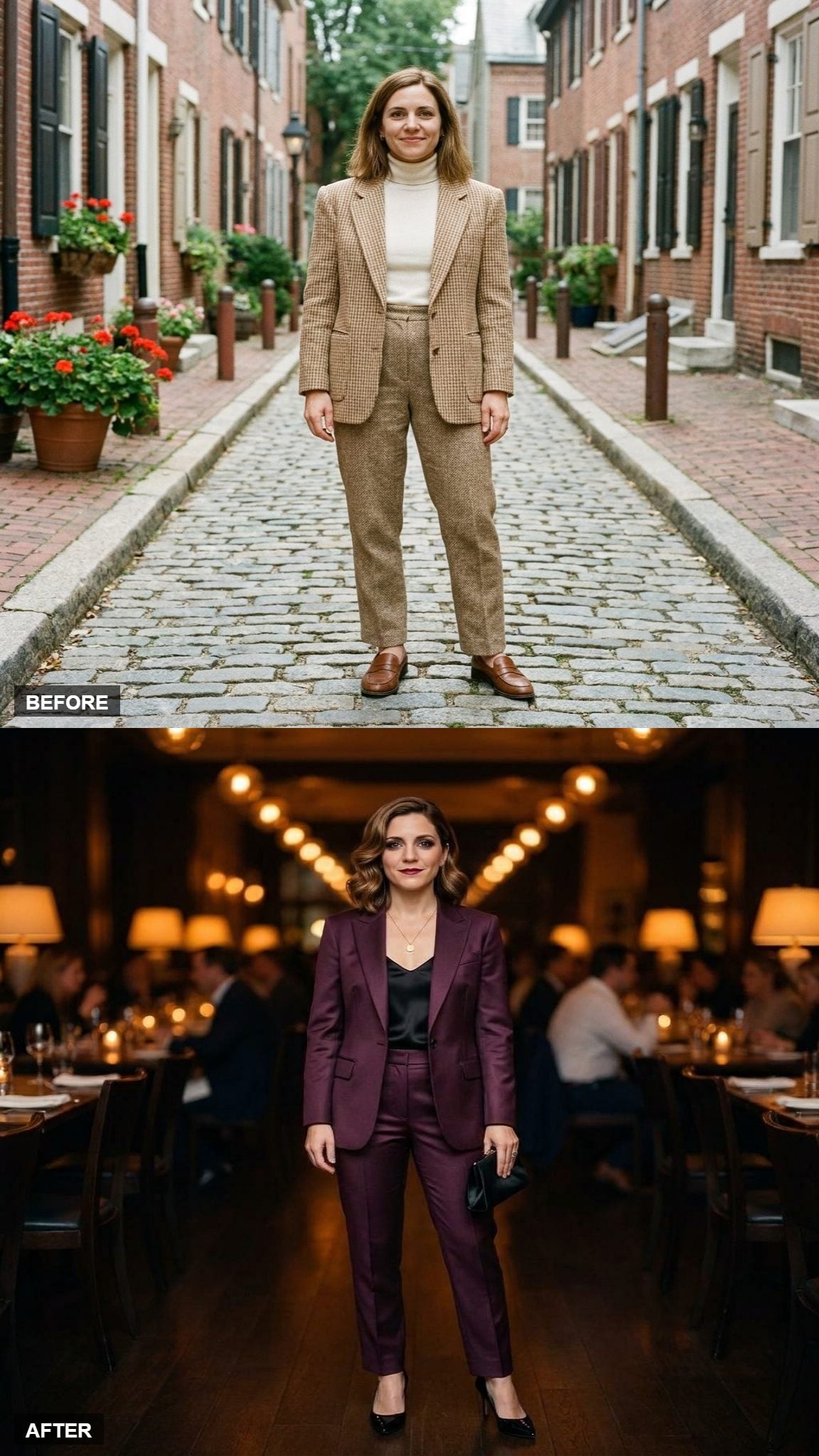
Plum gives tailoring evening weight without automatically reaching for another black suit. The subtle sheen across the wool catches warm light, while black silk underneath keeps the neckline fluid rather than buttoned-up.
This is where color does most of the scene-setting. The silhouette remains controlled, but the palette has shifted from daytime competence into dinner territory. A better shoe and a darker underlayer finish the job without requiring sequins, sparkle, or any other obvious announcement.
20. Camel and Cashmere Make Restraint Feel Almost Decadent
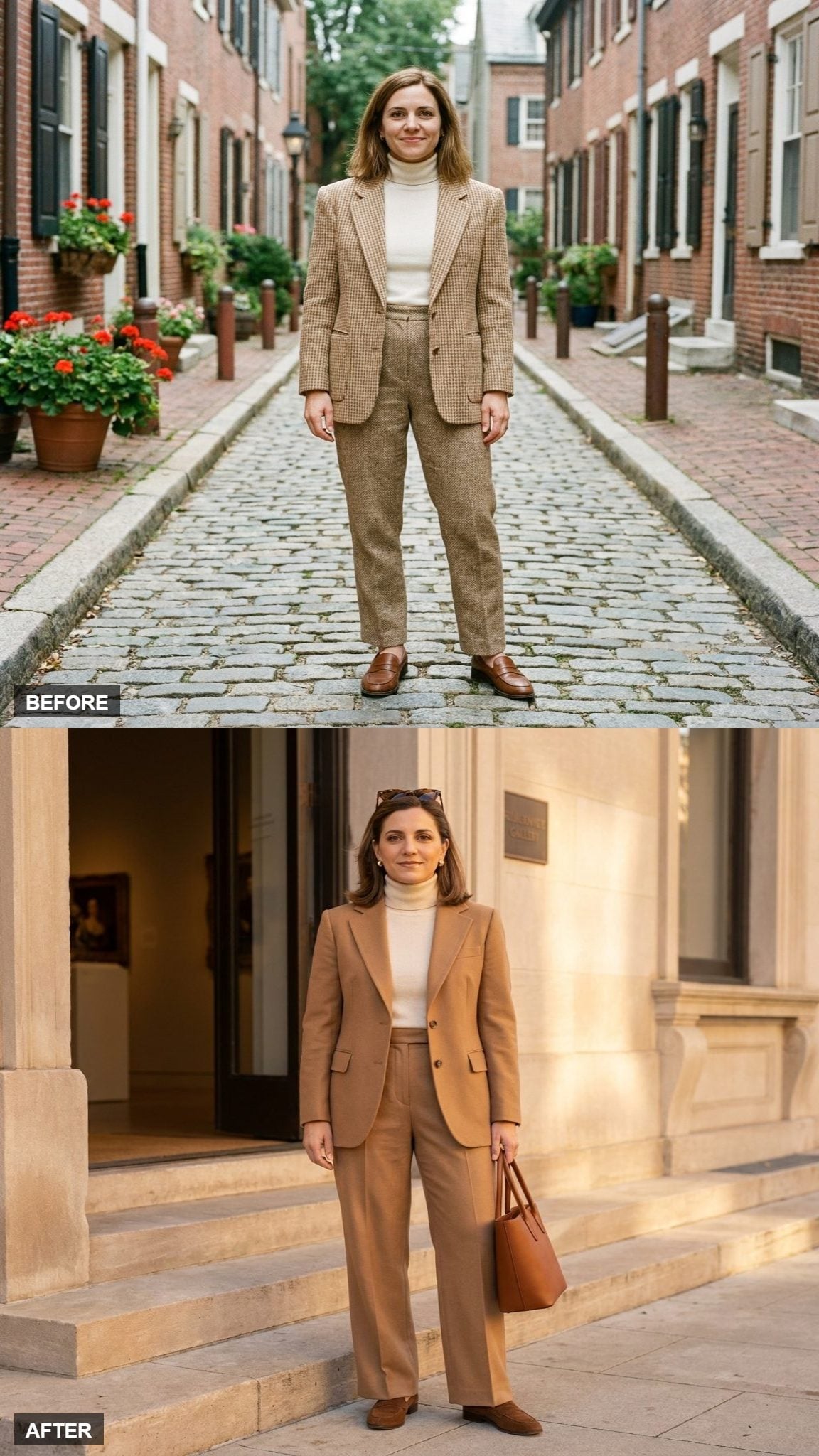
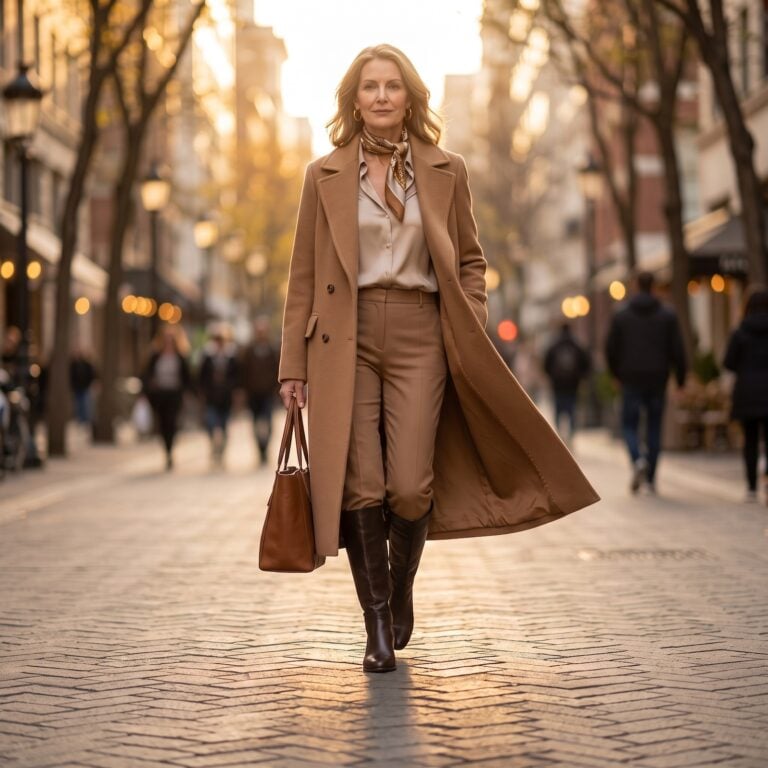
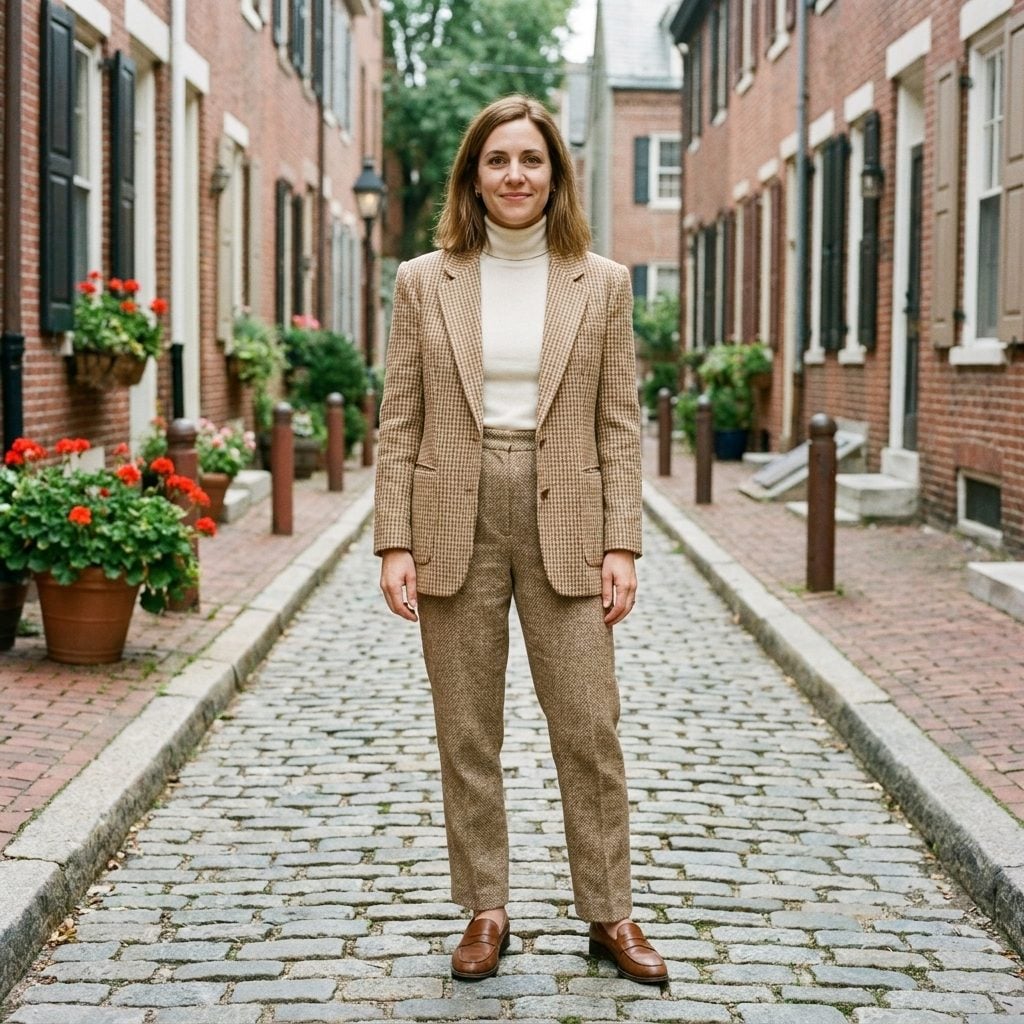
Camel is doing less visually than neon ever did, yet the outfit feels far more considered. A cream cashmere turtleneck replaces decorative clutter with texture, while the cognac leather tote and brown suede loafers keep the entire palette in one warm neighborhood.
Wide straight trousers fall over a low loafer without pooling. There is no print asking for a reaction and no accessory trying to rescue the outfit. The pleasure is in the materials: wool, suede, leather, cashmere. Beige, apparently, can have quite a personality when the textures stop being polite about it.
19. All-Black and Silver Hardware Hit the Reset Button
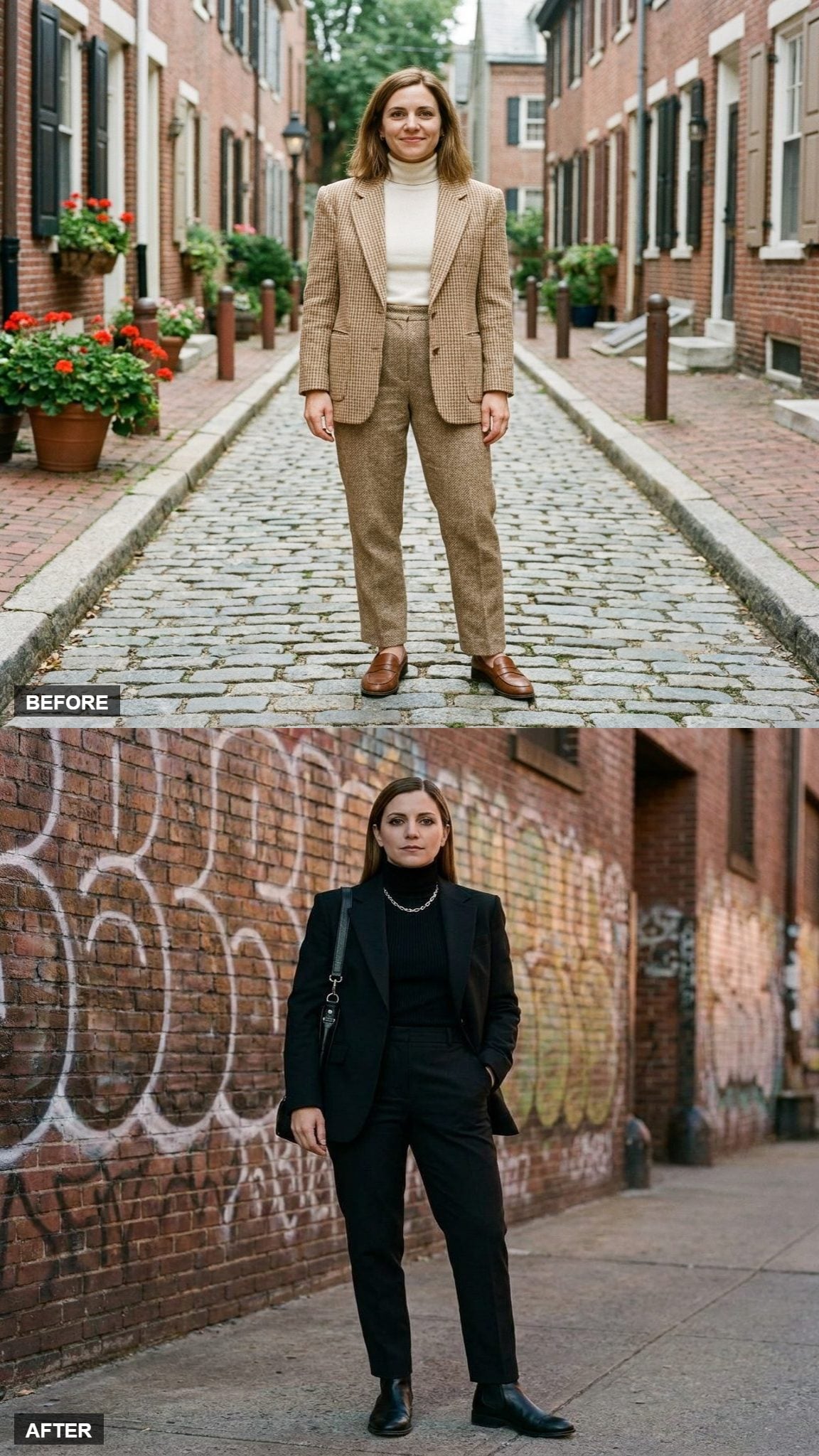
After all the warm neutrals, black clears the board. The silhouette becomes one uninterrupted dark line, leaving silver hardware to provide the only real flash.
Chelsea boots and a chain-link necklace keep the result from drifting into generic evening black. Call it androgynous style, call it downtown armor, call it the outfit that finally told the accessories to organize themselves. Whatever the label, the discipline is what gives it bite.
18. Olive and Cream Take Tailoring Somewhere Less Corporate
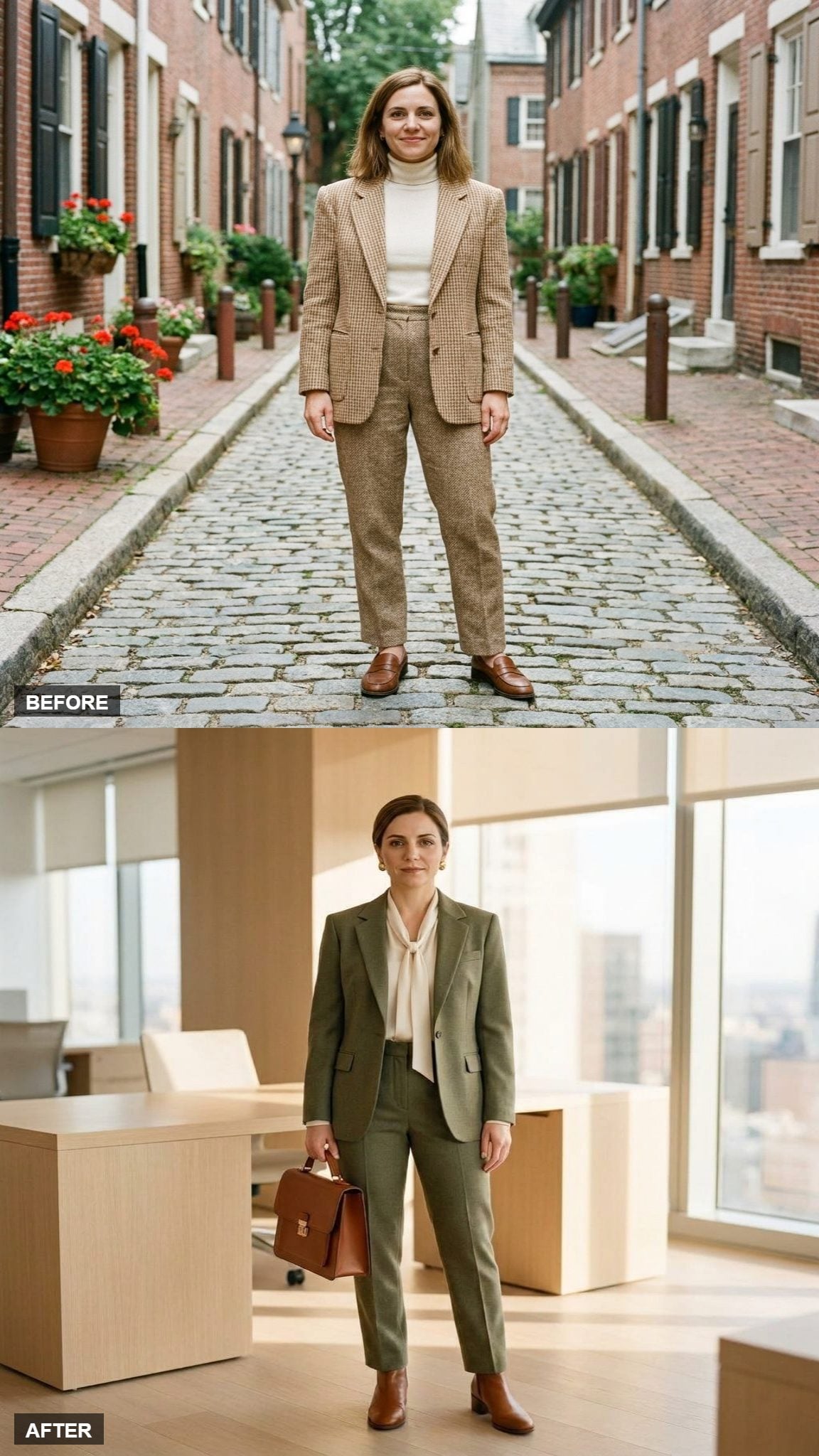
Olive is the neutral everyone forgets is a neutral. Against a cream silk tie-neck blouse, it feels more creative studio than boardroom without losing any of the structure.
Cognac accessories bring warmth into the green, while the soft tie neck gives the upper half some movement against the clean tailoring. The combination avoids two easy traps at once: too military, too corporate. It lands somewhere much more interesting in between.
17. Sand Linen Lets the Tailoring Finally Exhale
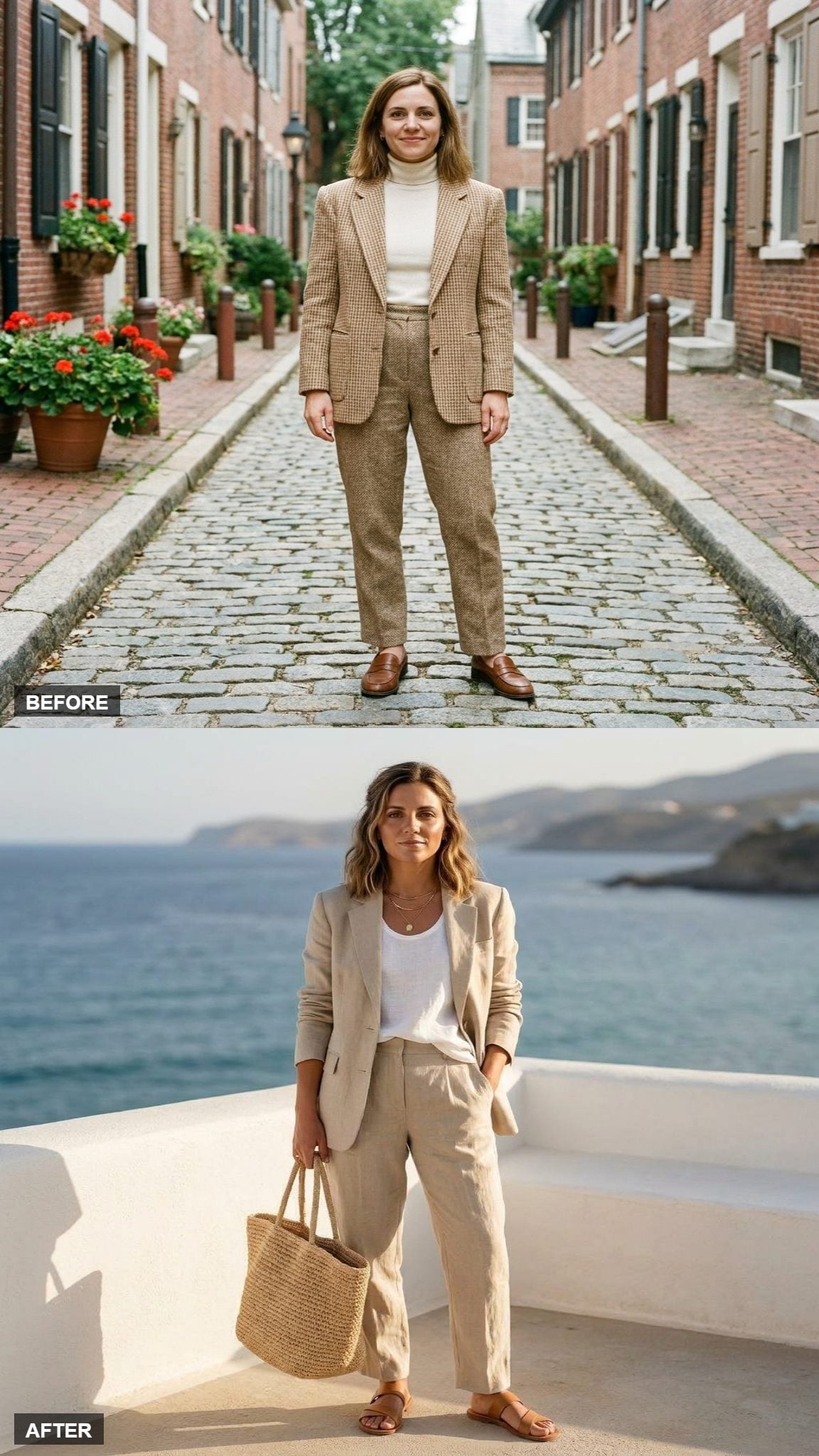
Changing the fabric changes the entire attitude. Sand-colored linen takes the basic language of a blazer and trousers and loosens every syllable. The natural rumple is not something to iron into submission; it is half the charm.
A woven raffia tote and layered gold chains lean into the warmth, while white against sand keeps the palette bright without becoming sugary. The before outfit wanted to dominate the room. This one looks perfectly content to let the weather participate.
16. Slate Wool Shows How Strong Shoulders Can Survive the 1980s
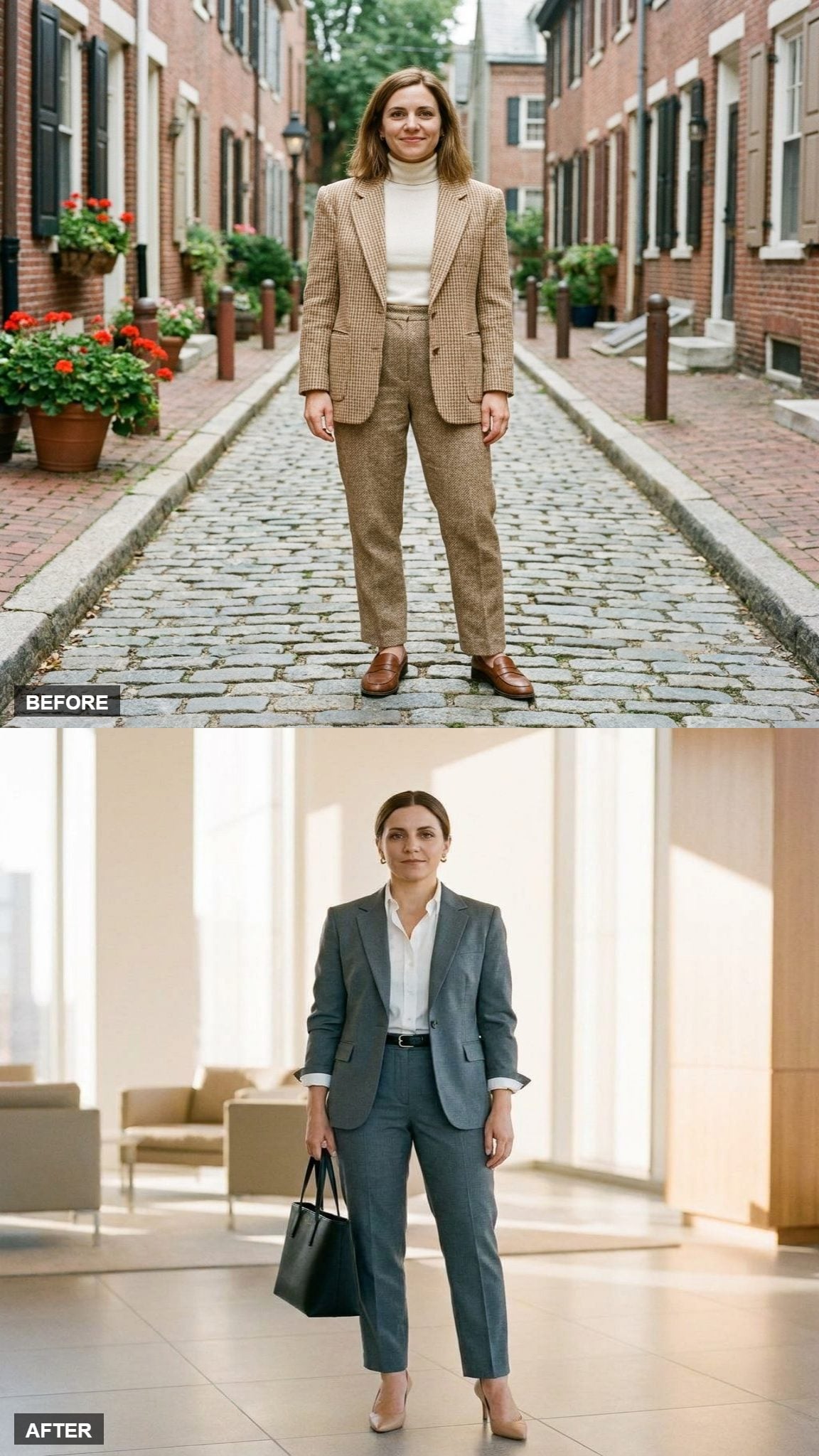
The lesson here is not that shoulder structure itself was the crime. It was proportion. A modern slate suit can still carry a defined shoulder, but the waist, sleeve length, and trouser line keep the volume from spreading unchecked.
A white poplin shirt open at the collar breaks up the gray and gives the face some breathing room. The suit remains authoritative without reenacting a corporate takeover from 1987.
15. Ink Navy and Rust Find the One Accent the Before Look Never Had
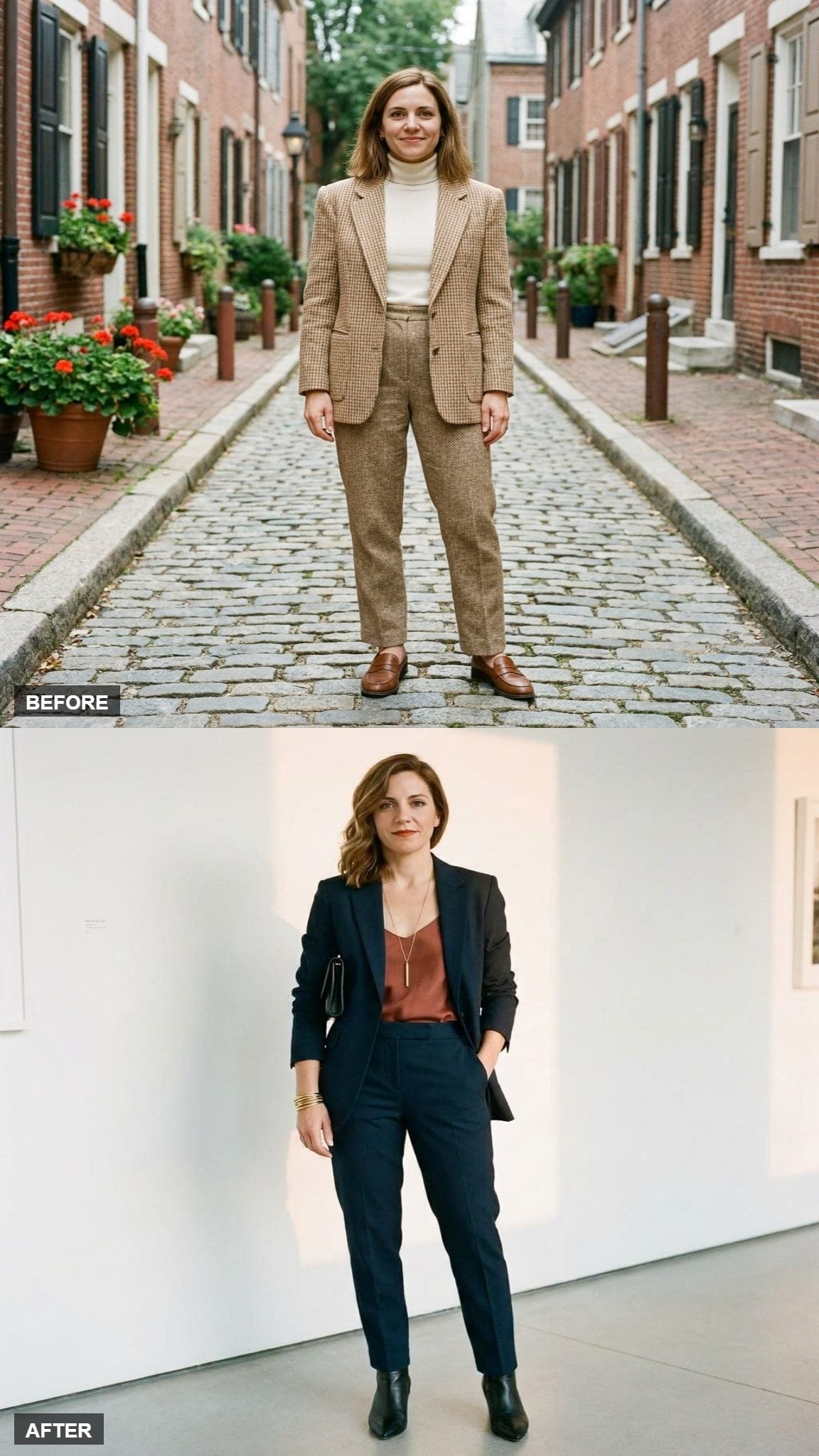
Navy and rust know how to share a room. The rust silk camisole warms the cool ink tailoring without asking for another accent color to referee.
Leaving the blazer open gives the camisole enough space to matter, while a long gold pendant creates a clean vertical line through the center. The result is an outfit with an actual hierarchy: navy first, rust second, gold as punctuation.
14. Menswear Goes Fluid Instead of Boxy
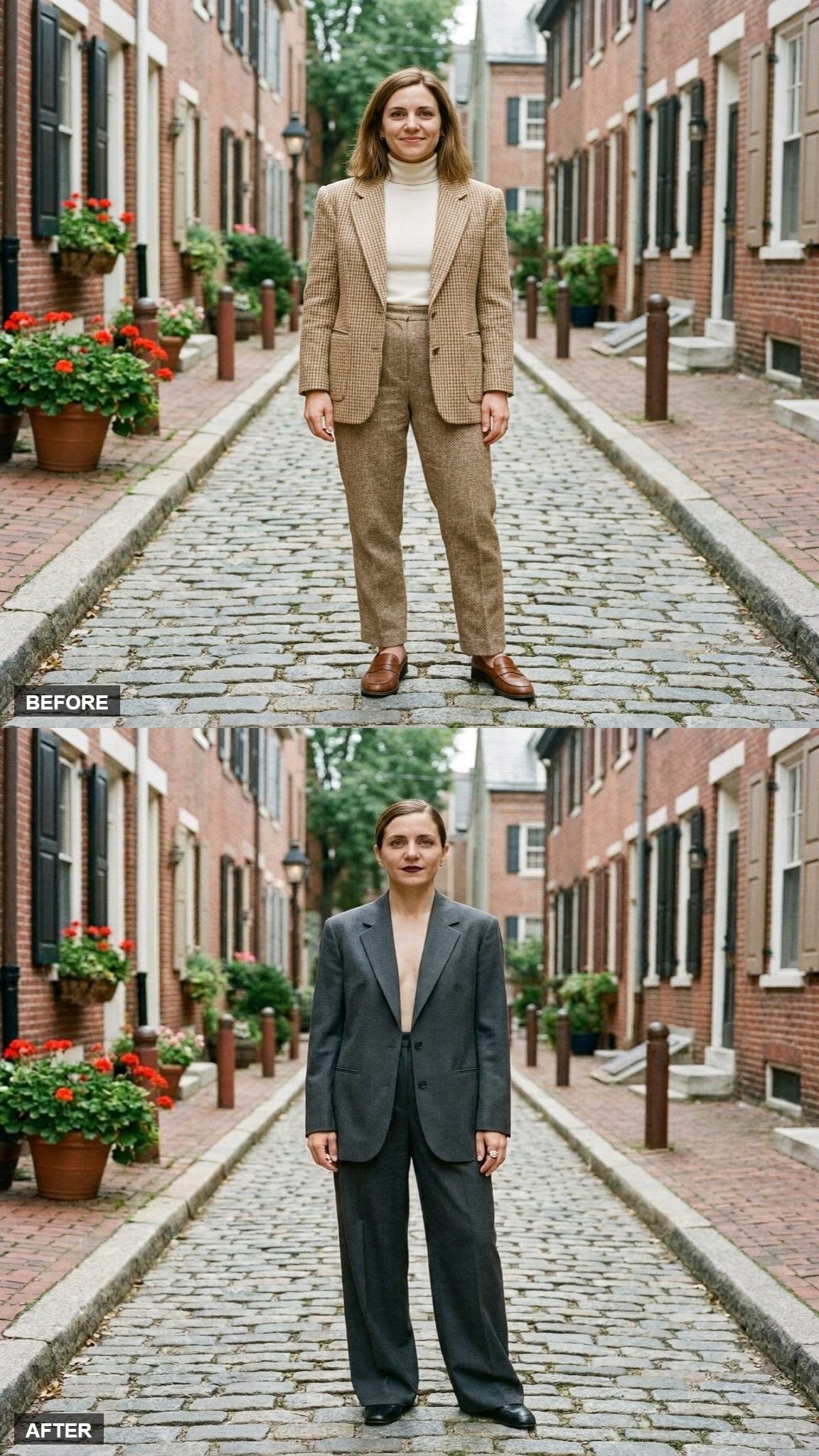
Borrow the language of menswear, then refuse to wear it stiffly. Wide-legged trousers and a more fluid blazer replace the rigid boxiness associated with some 1980s power dressing.
A plum lip supplies one concentrated hit of color against all that quiet tailoring. A slicked-back bun and a single silver signet finish the idea without piling on decoration. The restraint is not timid. It is what lets the silhouette look intentional.
13. Warm Taupe and Ivory Turn Formal Pieces Into Saturday Clothes
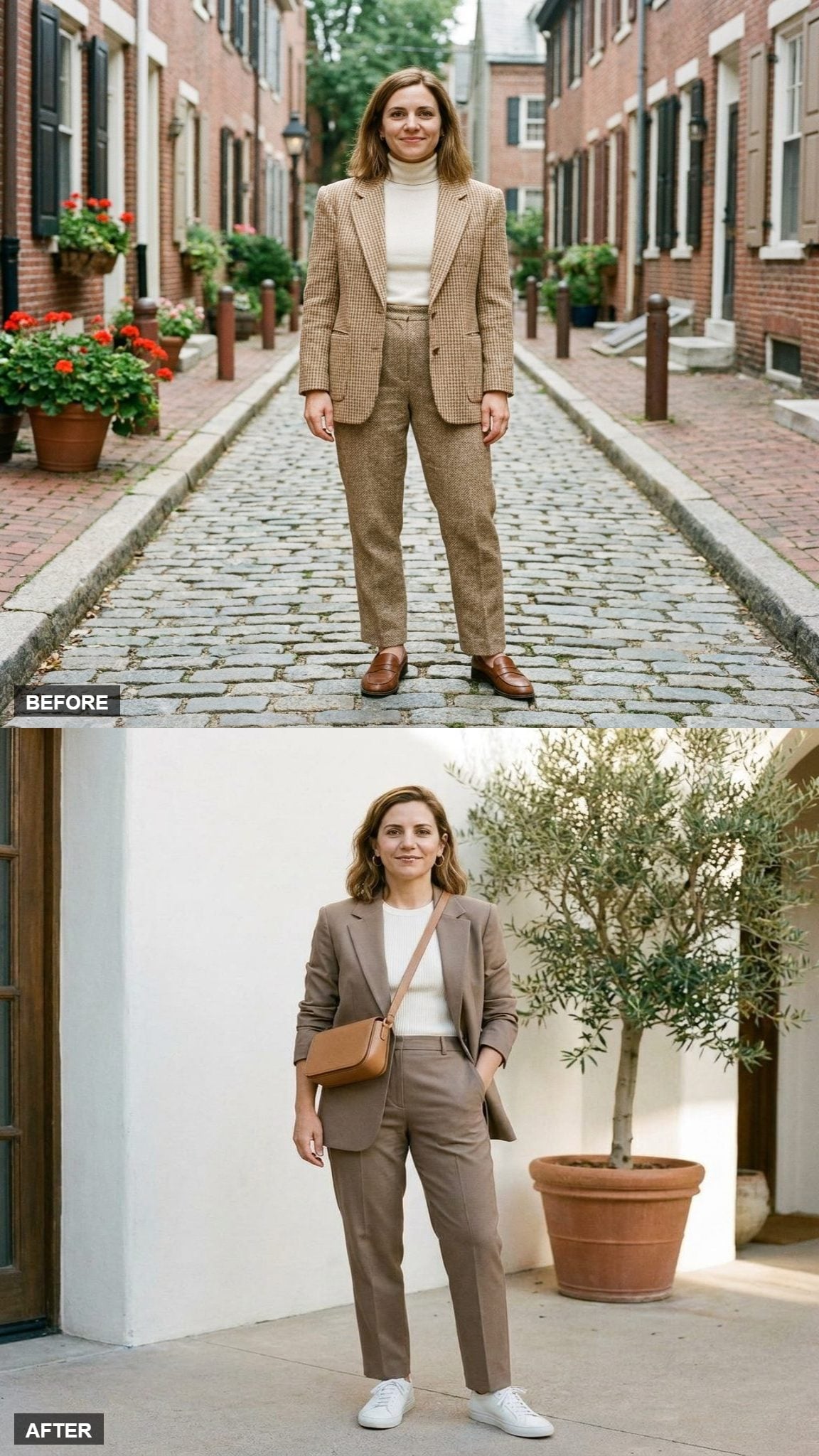
Push the sleeves, trade a formal blouse for a ribbed ivory knit, and put white sneakers underneath. Suddenly the tailoring stops behaving like a uniform.
The texture swap matters as much as the shoe. Soft cotton against pressed taupe wool gives the outfit a relaxed friction that a matching blouse and pump never would. The whole outfit looks prepared for coffee rather than a quarterly review.
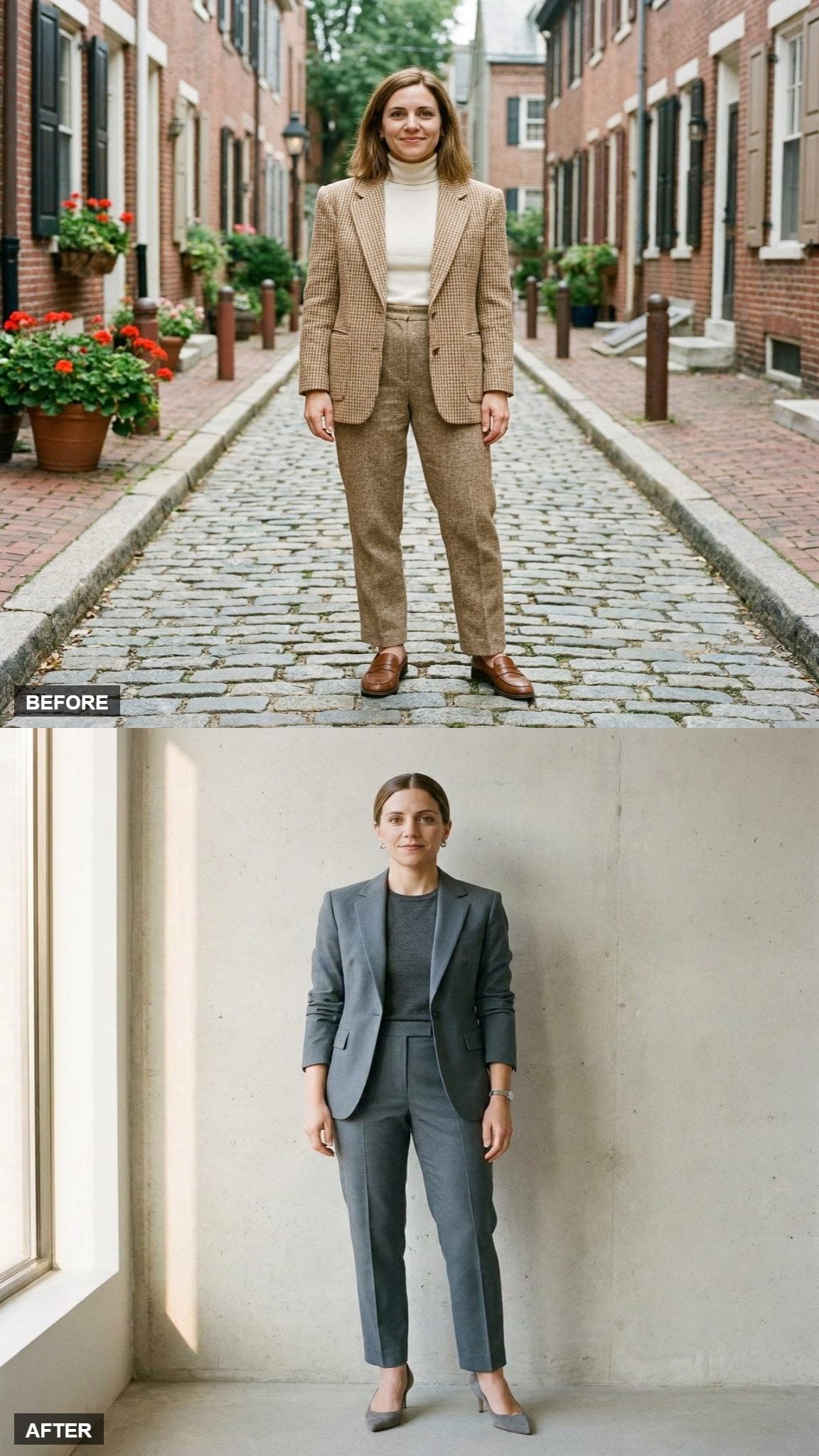
12. Slate Gray Goes Monochrome and Lets the Silhouette Speak
❤️ Would you like to save this?
One continuous field of slate gray does something the busy before never allowed: it gives the eye one shape to follow.
The grey suede pumps continue the tonal line right to the floor, while the close tailoring keeps the monochrome effect from becoming shapeless. The interest comes from proportion and surface rather than contrast. One color, nowhere to hide.
11. A Bold Shoulder Gets Better Company After Dark
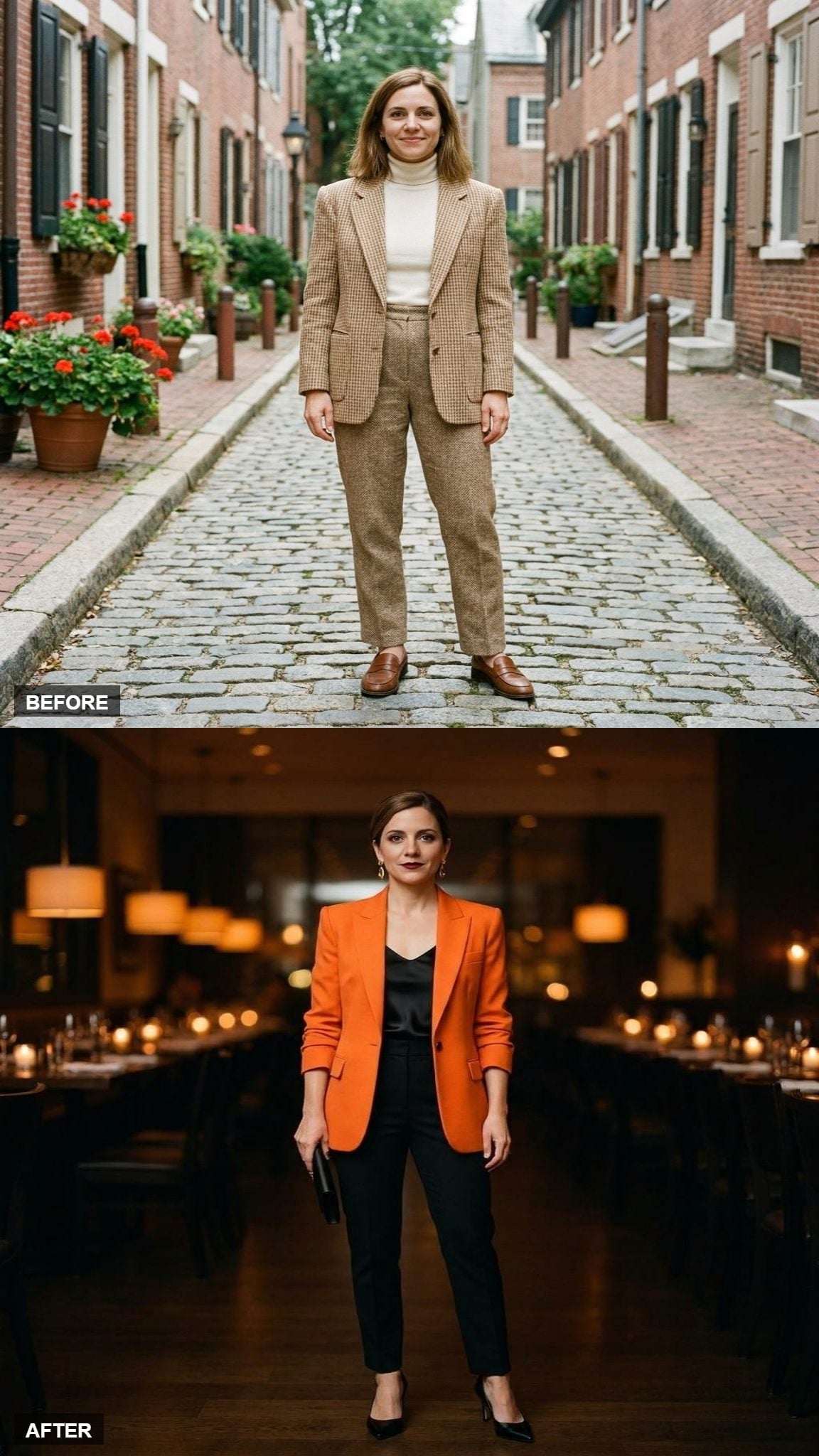
A dramatic shoulder can still look terrific when the rest of the outfit stops competing with it. Slim black tailoring gives the upper structure a clean base instead of adding another round of volume below.
Push the sleeves, add a red lip, and let the shoulder remain the event. The difference between retro reference and costume is often not the feature itself. It is whether the rest of the outfit knows when to leave it alone.
10. Camel and Chocolate Make Brown Feel Anything but Basic
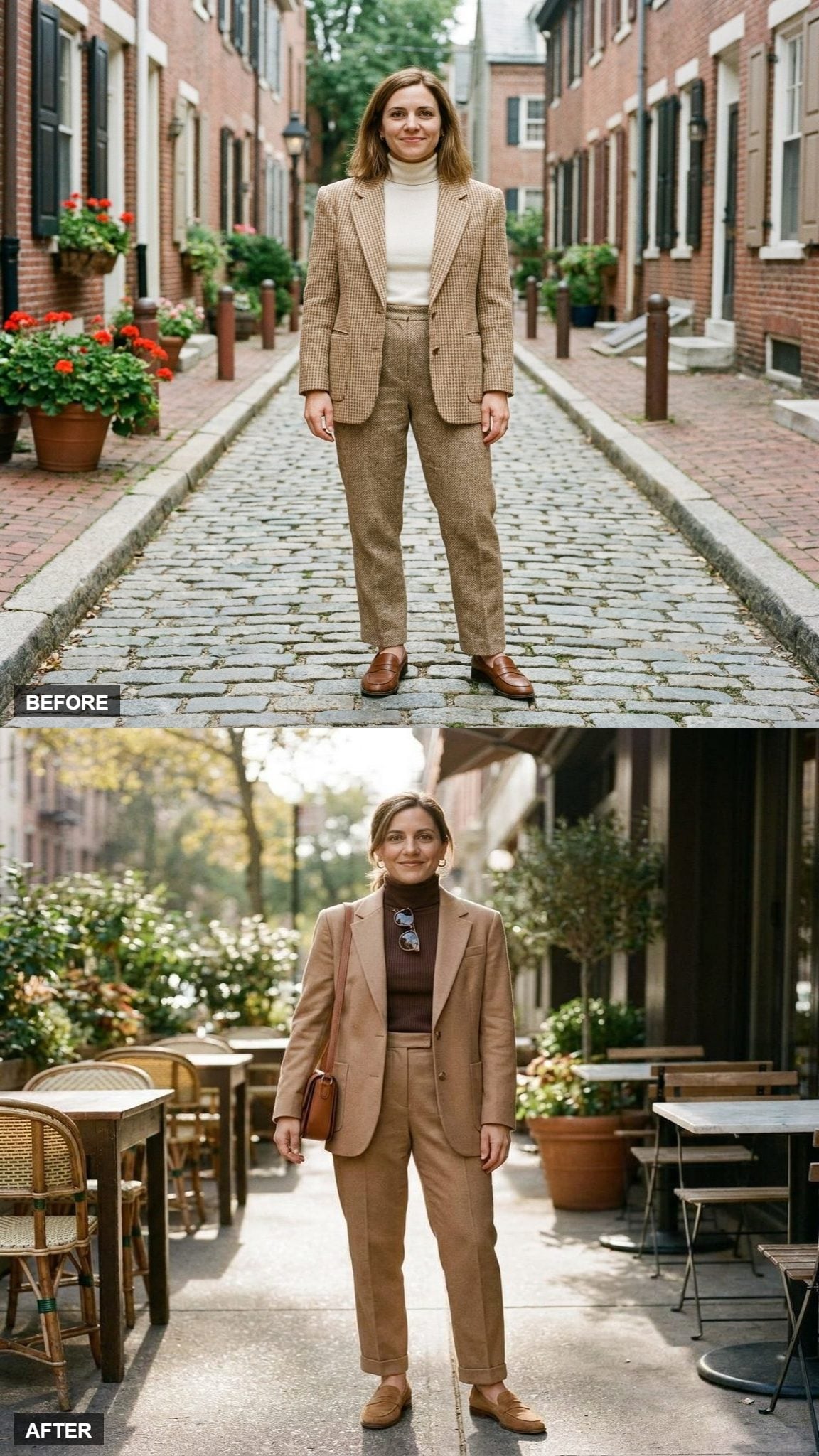
A chocolate turtleneck under camel tailoring builds the outfit in warm layers rather than hard contrast. Brown suede loafers keep it grounded and slightly informal.
Cuffing the trouser once gives the suede loafers room to register and breaks up what might otherwise become one long block of brown. Tonal dressing works best when the shades are close enough to belong together but different enough to remain visible.
9. Charcoal Check and White Sneakers Put Some Air Into the Suit
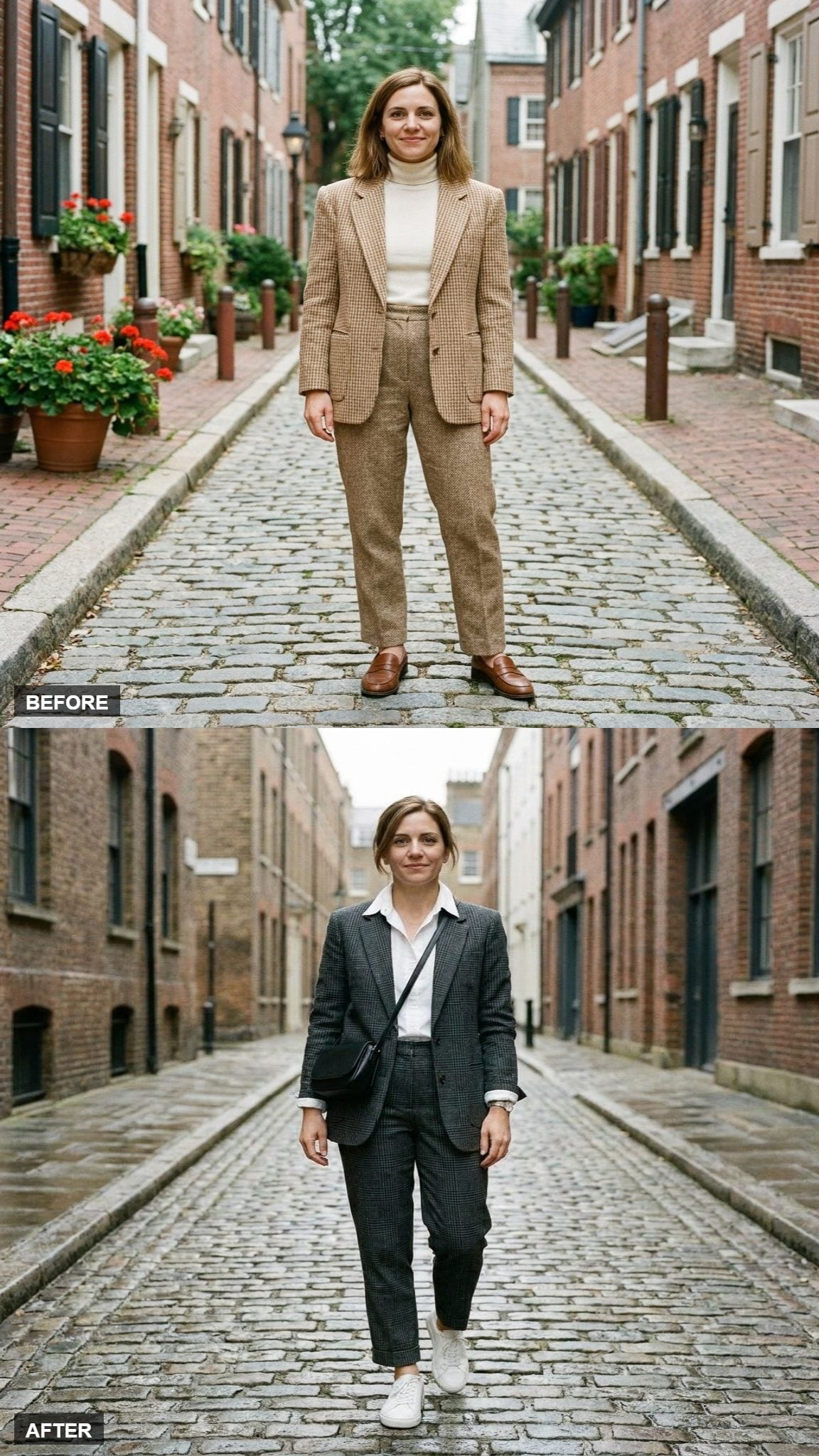
Checked tailoring can turn officious quickly. A crisp white button-down and clean sneakers pull it back toward the street before the pattern gets too serious.
The ankle-length trouser is important here because it creates space between fabric and shoe. That bit of exposed ankle keeps the look moving and makes the suit practical for a day of actual walking. It is one way to style tailoring without carrying a Tuesday meeting around all weekend.
8. Oatmeal and Off-White Turn Monochrome Warmer
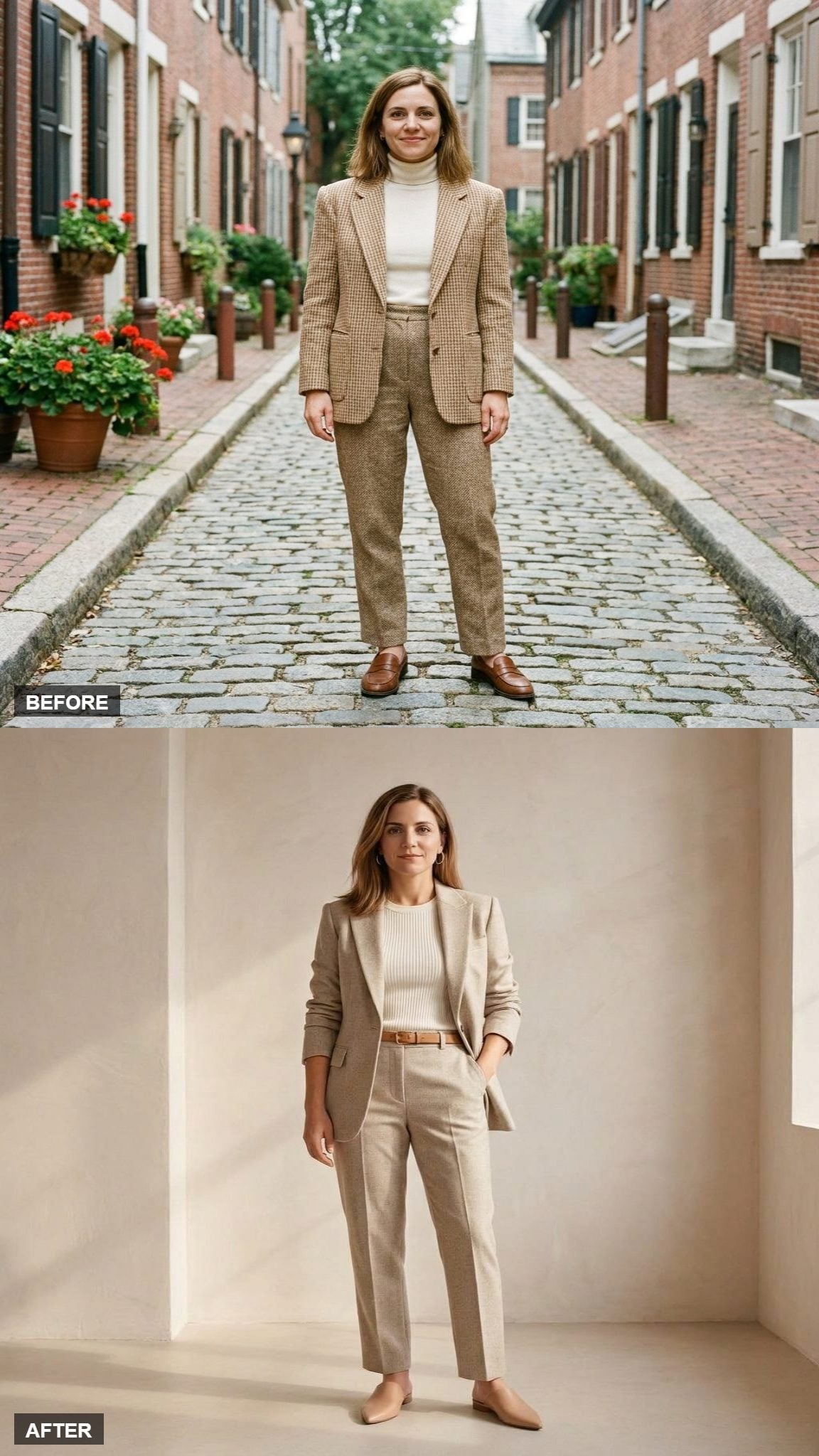
Oatmeal wool and off-white take the monochrome idea somewhere softer than slate. The tones are close, but not identical, which gives the outfit depth without breaking its long vertical line.
A tucked ribbed knit brings texture to the center, while nude leather mules keep the lower edge light. Rolled sleeves prevent all that restraint from becoming precious. Neutral does not have to mean anonymous.
7. Blush and Gray Marl Take the Edge Off Without Going Sweet
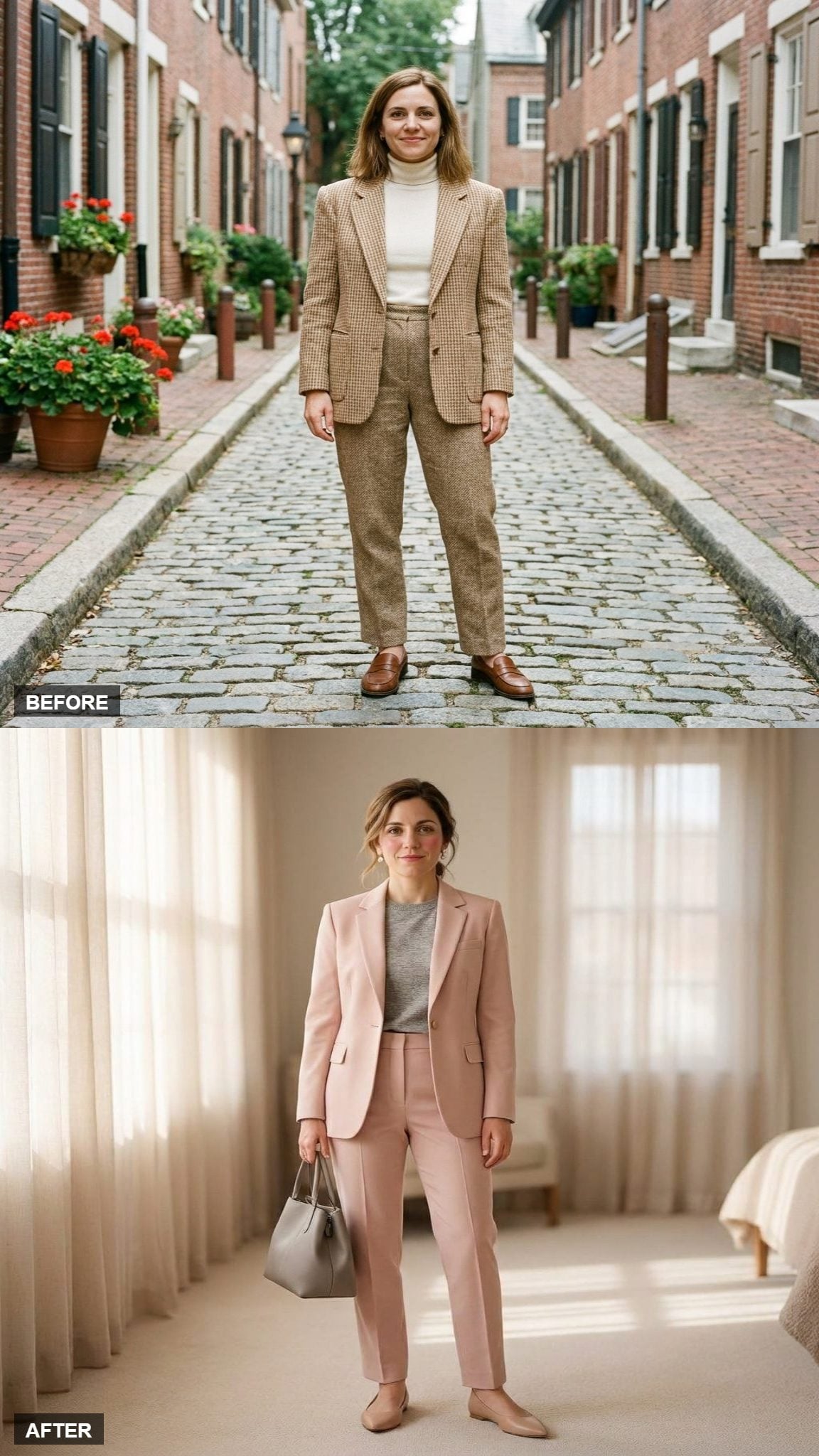
Blush and gray work because neither color arrives at full volume. The gray marl knit grounds the pink, while the pink keeps the gray from drifting into office territory.
Pearl studs and nude flats keep the styling spare. There is no need to decorate the softness further. The color pairing already changes the atmosphere.
6. Ink Navy and Ivory Bring the Drama Back to the Cut
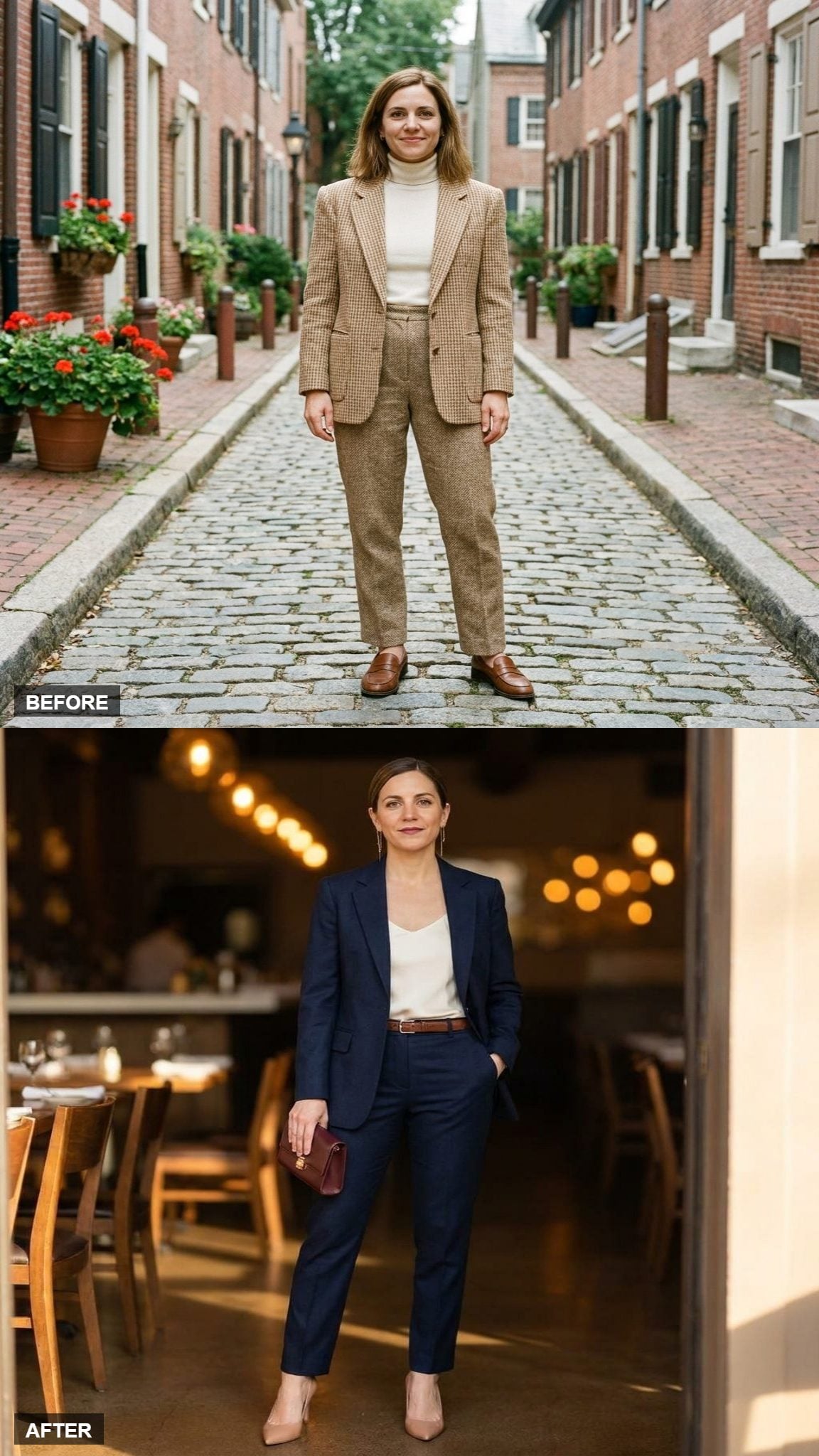
Ink navy against ivory silk creates a crisp light-dark relationship that makes the tailoring easy to read. Unlike the original outfit, the color contrast has a hierarchy rather than six competing destinations.
The slimmer trouser break is especially effective. A shorter hem prevents fabric from pooling around the foot, while a pointed nude leather pump keeps the lower line clean. The jacket remains structured, but nothing around it is shouting.
5. Stone Gray and White Strip City Dressing Down to the Useful Parts
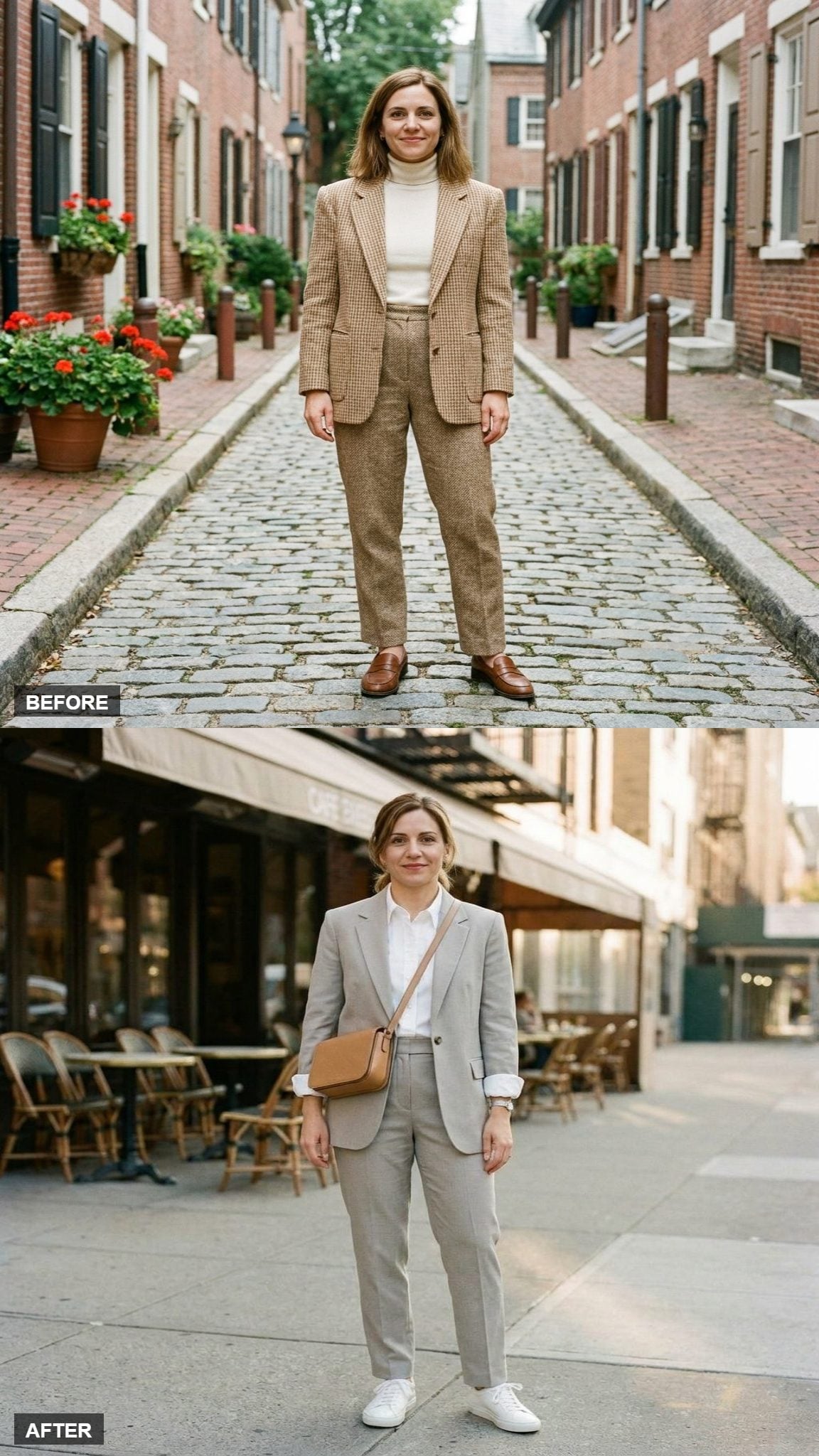
A white poplin shirt half-tucked into gray trousers is about proportion more than decoration. Showing part of the waistband breaks up the long shirt hem and gives the lower half a clearer starting point.
Rolled sleeves and white sneakers finish the casual shift. Nothing here is revolutionary, and that is almost refreshing after the before image. The outfit simply knows what job it came to do.
4. Burnt Sienna Against Ink Navy Gives the Gallery Look More Heat
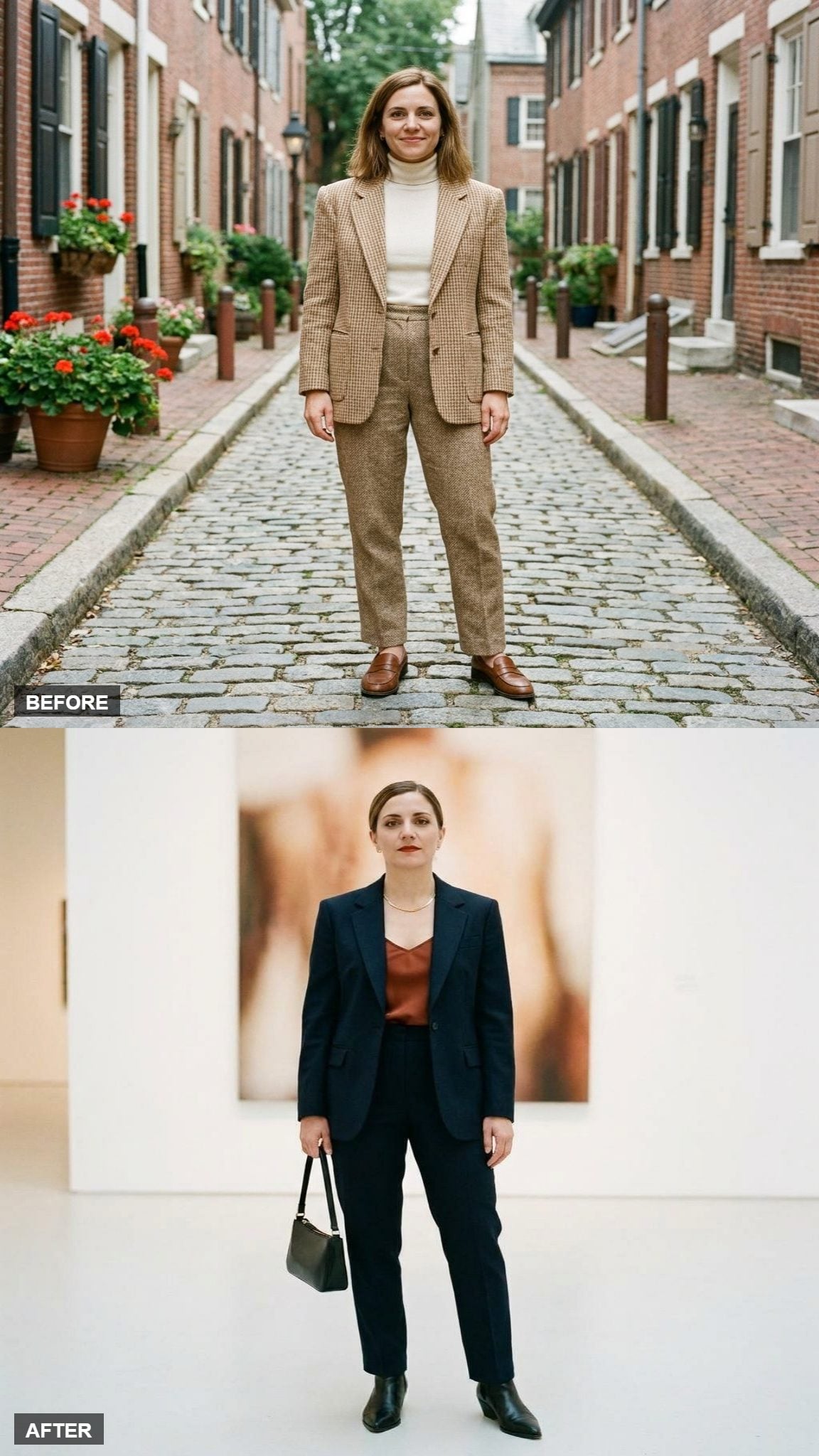
This second navy-and-rust direction pushes the warm accent harder. Burnt sienna sits brighter against the ink tailoring, giving the center of the outfit more visual heat than the softer rust version earlier.
A terracotta lip echoes the camisole and carries the accent upward toward the face. That repetition is what makes the color feel deliberate rather than dropped in at random. In a room full of black at an opening, this is the one with a pulse.
3. Two Shades of Brown Turn Tonal Dressing More Graphic
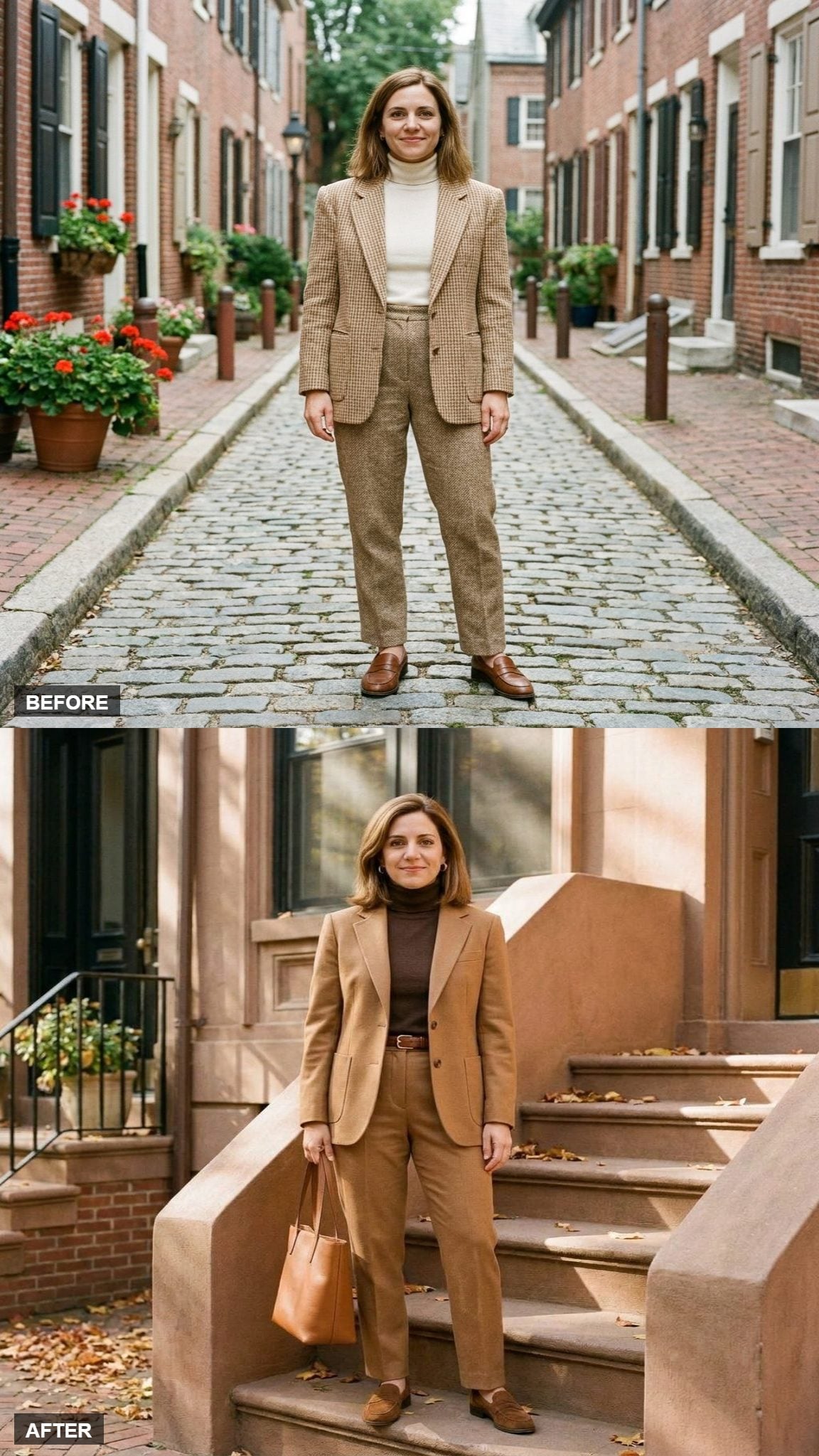
Two shades of brown can do more than a whole fistful of unrelated color. Here the contrast between camel tailoring and a darker chocolate turtleneck is cleaner and more graphic than the softer brown-on-brown version earlier.
The brown suede loafers keep the palette grounded, while the darker knit gives the upper half a clear focal point. The result is still tonal, but there is more edge in the contrast.
2. Camel Suiting and a White Tee Finally Stop Taking Themselves So Seriously
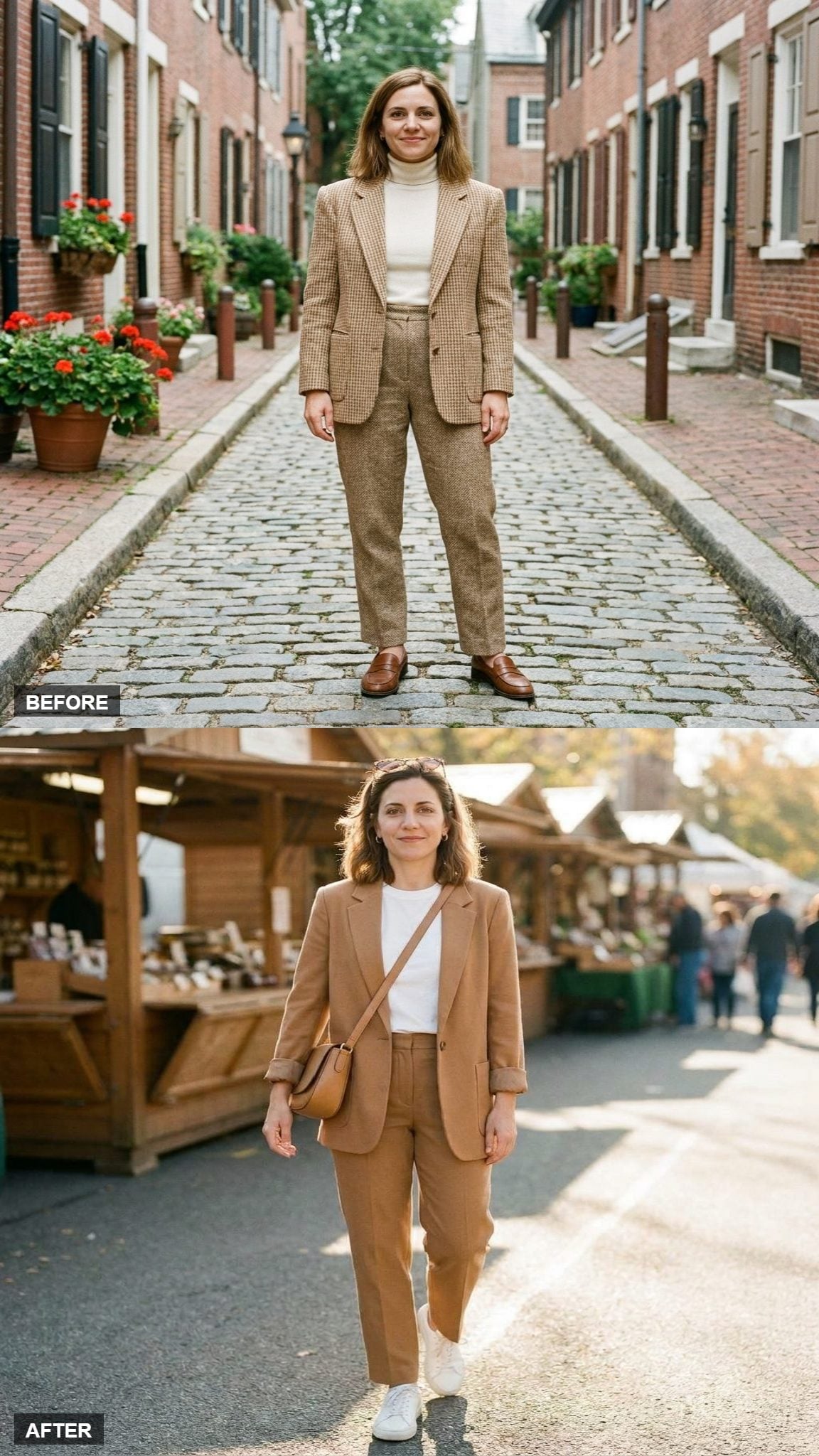
Nobody said a suit has to behave like one. Warm camel tailoring over a plain white cotton tee turns the jacket into something closer to a polished outer layer than a corporate uniform.
White leather sneakers finish the deflation. The silhouette stays sharp, but the styling refuses ceremony. That is the useful tension: enough tailoring to look considered, enough cotton and rubber underneath to suggest nobody packed a laptop.
1. Slate Gray and Rust Make a Better Finale Than Another Safe Neutral
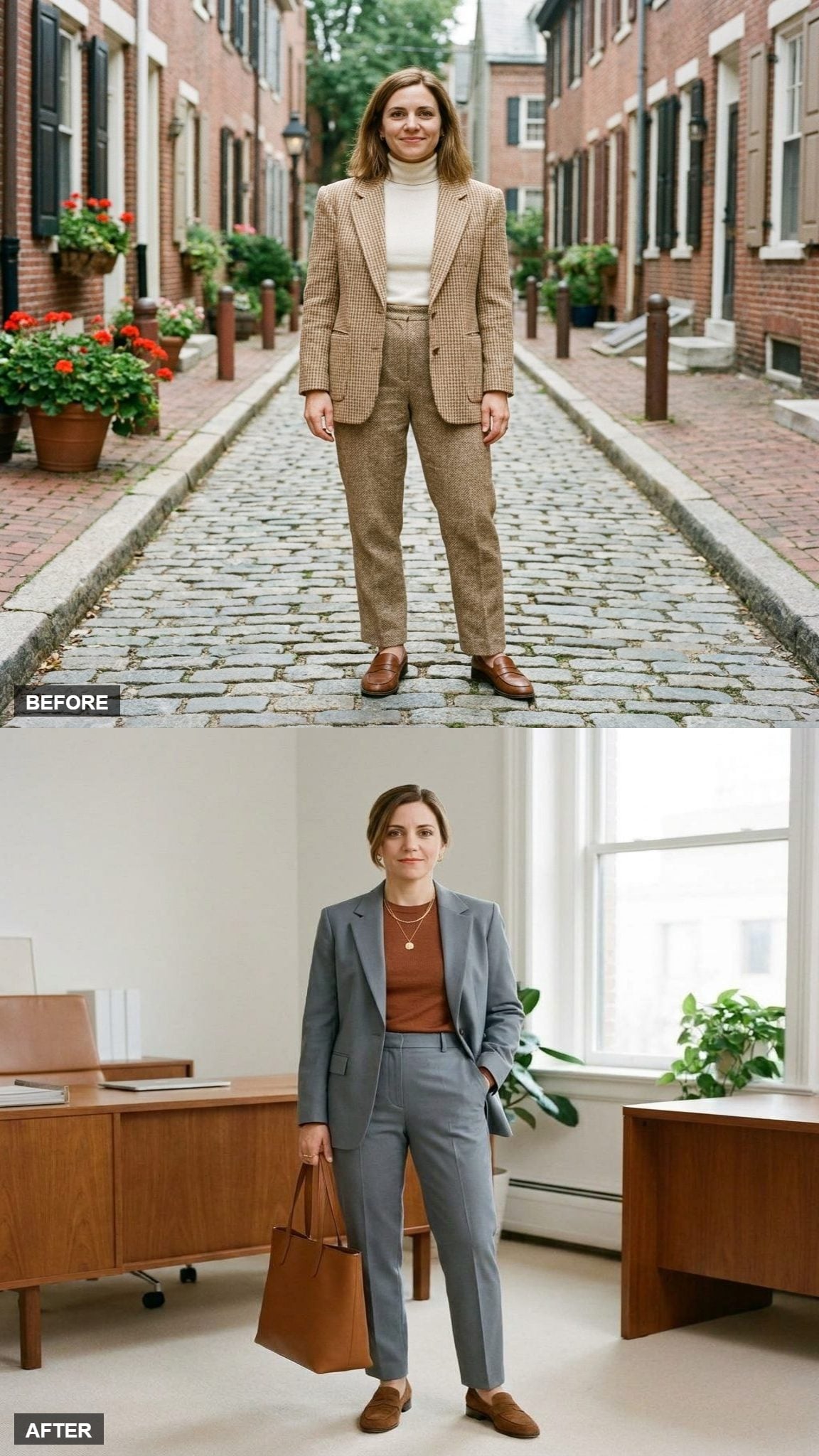
Slate gray provides the cool, controlled frame; rust brings the heat. Neither color has to dominate because the contrast between them is already enough to make the outfit register.
A suede loafer with a low heel keeps the look practical for a long day without draining the personality out of it. That final balance feels like the real answer to the before image. Modernizing a loud outfit does not require bleaching every idea out of it. It requires choosing which idea gets the microphone.
The 1980s version failed because everything wanted to be remembered at once: the shoulders, the acid wash, the neon, the jewelry, the sheer quantity of visual information. These restyles work when they establish an order. Sometimes the cut leads. Sometimes the color does. Sometimes texture quietly takes over after the palette has been reduced to oatmeal and cream.
That is also why the strongest looks here are not necessarily the quietest. Plum still has drama. Rust still has heat. Black with silver hardware has edge. A bold shoulder can survive just fine. The difference is that the outfit makes one decision, then gives that decision enough room to be seen.