❤️ Would you like to save this?
Nobody sees it. That’s exactly why it tells the truth. The dress you chose this morning was a decision made partly for other people. The layer underneath it was made for no one but you, which is what makes it the most honest thing you own.
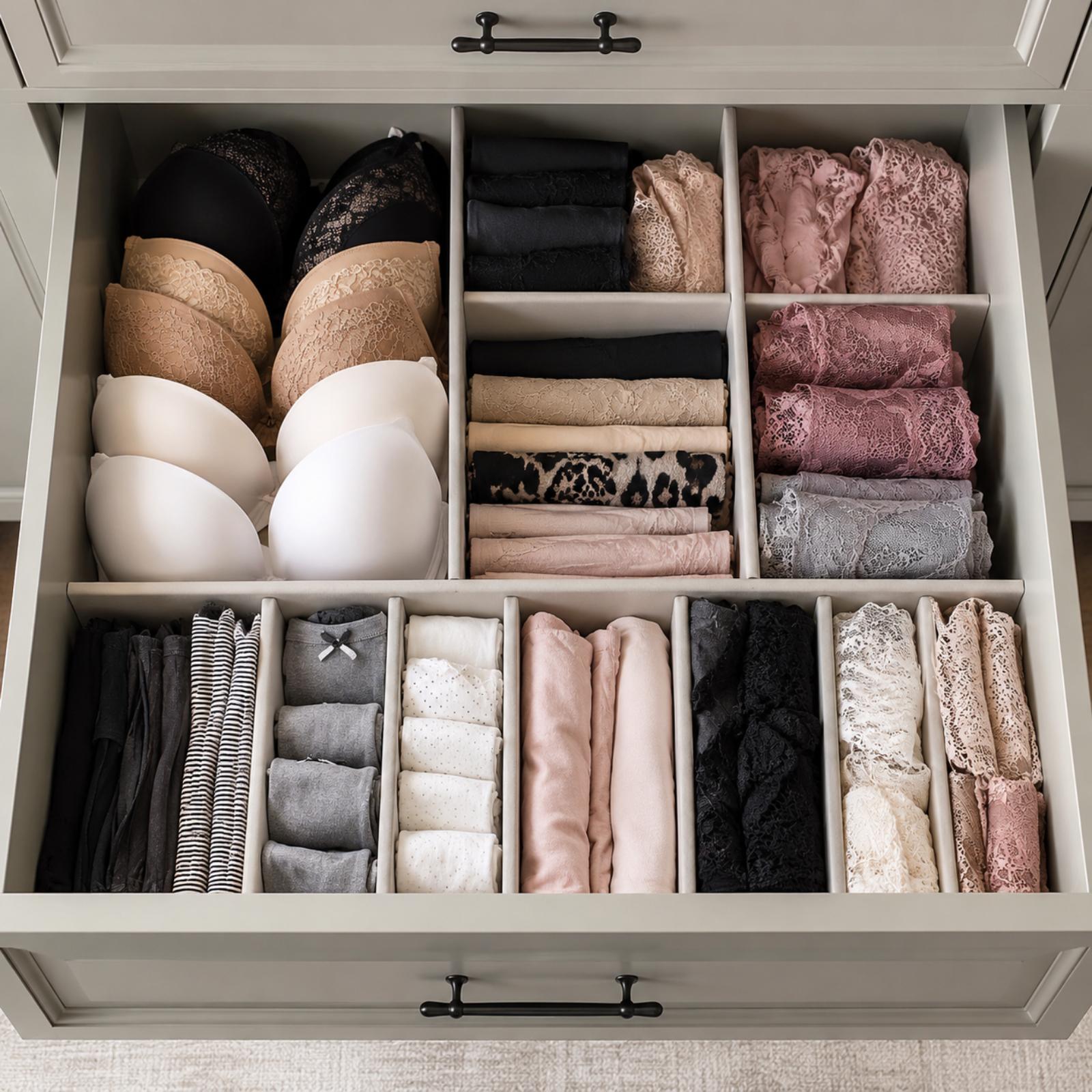
Open the drawer. The lace you never wear. The soft cotton you reach for on the hard days. The matched set saved for occasions that keep not arriving. Every one of those choices is a small confession about who you’re dressing for, how much you expect from the day, and what part of yourself you’re guarding.
Ten drawers, ten psychological tells. Some will make you laugh. One or two might sting a little. And by the end, you’ll never open that drawer the same way again.
FYI, thanks to AI imagery software, we’re able to create very specific fashion and hairstyle examples to illustrate the points being made. In some cases, imagery is exaggerated to hammer home the point. Also, assume links that take you off the site are affiliate links such as links to Amazon. this means we may earn a commission if you buy something.
The Secret Layer That Changes How You Walk Into a Room

Nobody at the meeting can see it. That’s exactly why it works. The layer against your skin runs a private conversation with your nervous system all day, and your posture answers back before your mouth does.
Psychologists call the mechanism enclothed cognition, and the wild part is that a garment nobody else knows about still moves the needle. (Source). The effect doesn’t require an audience. It requires you knowing.
You’ve felt this. The morning you grabbed the good pair on the way out the door, and somehow you stood taller in the elevator without deciding to. That wasn’t vanity. (Source). The room reads your walk. Your walk started at your skin.
Why Matching Sets Do Something Strange to Your Ambition
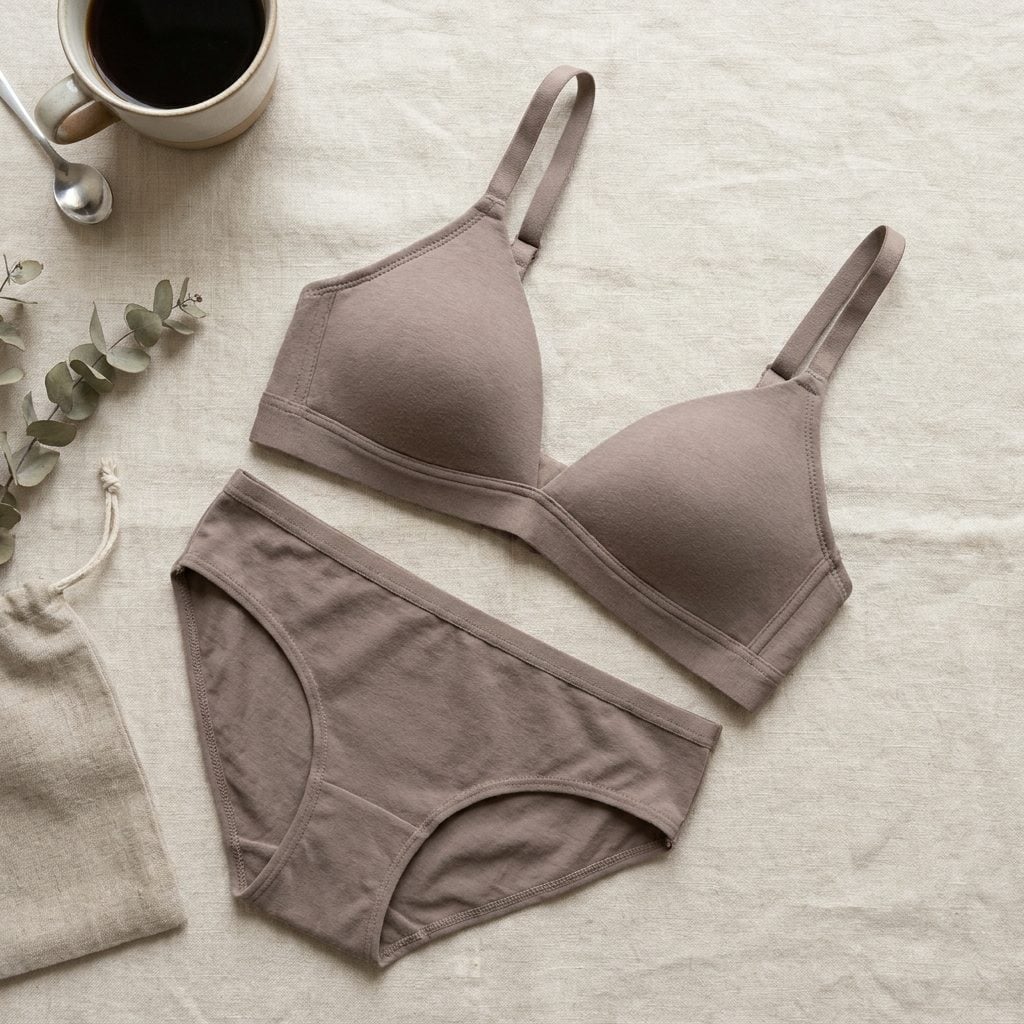
A matching set is a decision you made before the day started. Cotton bra, cotton briefs, same color, same drawer slot. It reads as coordination, and coordination has a quiet way of leaking into everything after it.
The number that gets thrown around: most women say matching underwear makes them feel more confident (Source). A matched set isn’t about the lace. It’s about the signal you send yourself that today got a plan.
One school of thought says the set primes a whole chain of “I’ve got this” behavior. A matching set can make you feel confident and put-together (Source), and put-together is a mood that negotiates harder. The mismatched morning has its own energy, looser, more forgiving. Neither is wrong. But notice which drawer you reach for on the days you need to win something.
The Fabric Choice That Predicts How Bold Your Whole Day Will Be
Run your hand across the drawer. Some mornings your fingers stop on silk. Some mornings they land on the soft cotton that never asks anything of you. That choice is a forecast.
Texture talks to the skin, and the skin talks to the brain. underwear material is more than tactile; it can influence overall well-being (Source). The same source notes roughly 57% of people reach for cotton or modal for daily wear, associating it with grounding and ease.
Neither fabric is braver than the other. A silk day and a cotton day are two different plans for the same person. The silk says push. The cotton says hold steady, I already know who I am. (Source). Read your own hand in the drawer. It knows what kind of day it’s bracing for.
What Your ‘Good Underwear’ Says About Who You’re Really Dressing For
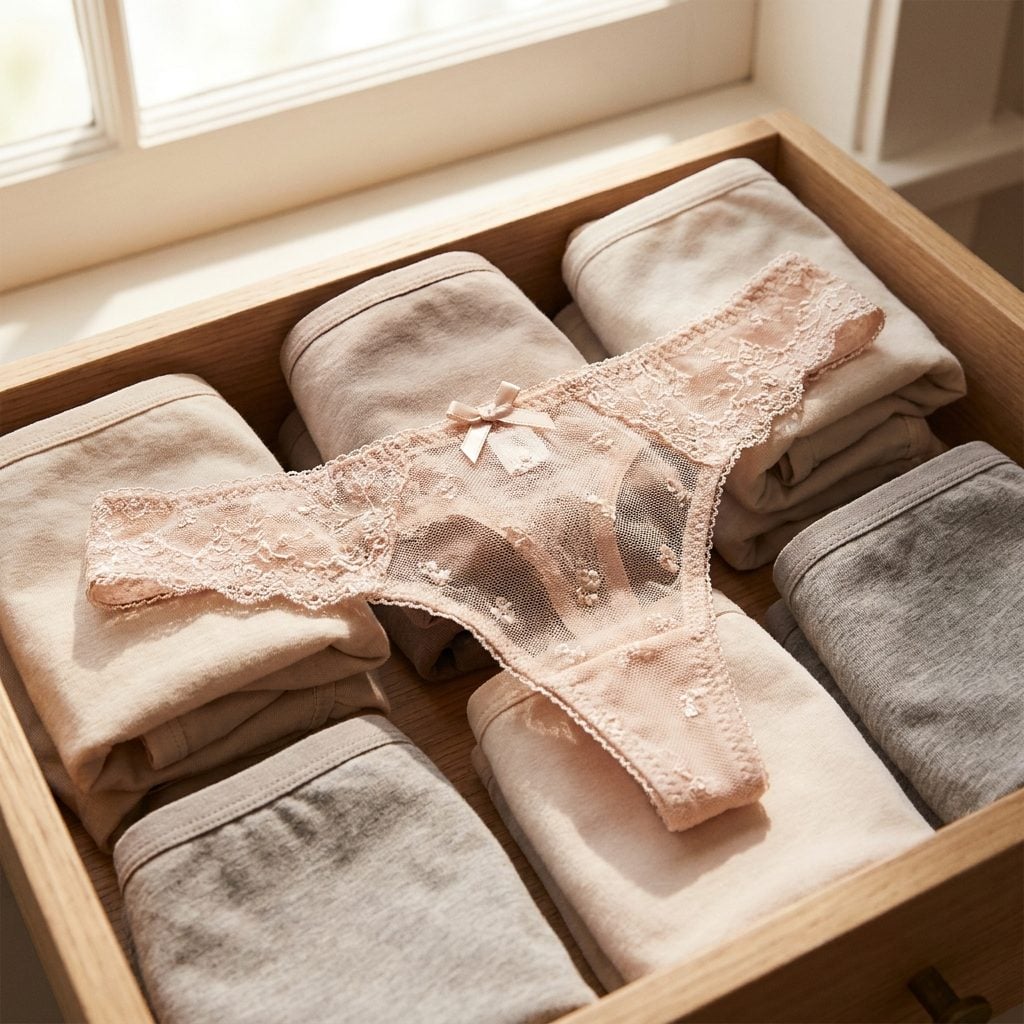
There’s a pair you’d never wear to sit through a dentist appointment. You save it. The question worth sitting with: save it for whom?
For a long time the answer was assumed to be a partner. That assumption is aging out. Many women now wear lingerie for themselves, not their partners (Source). The good underwear stopped being a gift you wrapped yourself in for someone else. It became a message you send inward.
Fashion psychologist Carolyn Mair puts a finer point on the loop. feeling confident changes how we stand, walk, speak and gesticulate (Source). So the audience for the good pair might be everyone you meet, filtered through the way it changes how you carry yourself. Or it might be no one at all. By fifty, most women have figured out that the second answer is the more powerful one.
The Color Nobody Sees That Still Rewires Your Confidence

Red under a grey suit. Nobody in the building will ever know. You’ll know all day.
Color runs deeper than decoration when it sits against skin for sixteen hours. red psychologically boosts confidence and heart rate while symbolizing passion and power (Source). That same guide points to the placebo engine underneath it: people wearing items they believe are lucky set higher goals and persist longer at hard tasks.
Black carries its own quiet authority, white its clean-slate feeling, blue a steadiness you can lean on. colour choice matters for psychological benefits, but also for personal preference (Source). That last clause is the whole trick. The color has to be yours, not the one a magazine assigned you. An unseen color still gets a vote. The strange part is it votes even though it never testifies.
Why You Keep the Pair You Never Wear (And What It’s Protecting)
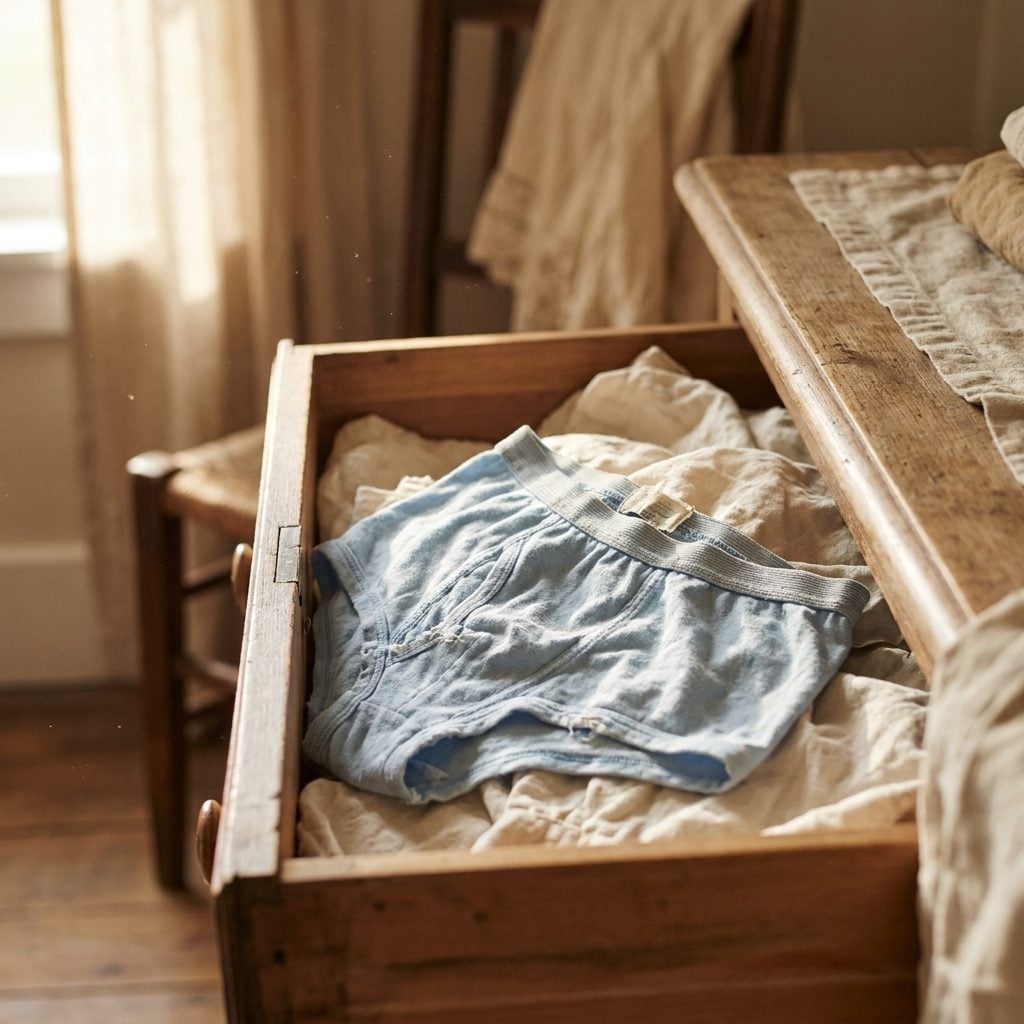
The tags are still on. Or the elastic went years ago and you kept it anyway. Everyone has this pair. It never gets worn and it never gets thrown out, which is its own kind of loud.
What you’re holding onto usually isn’t fabric. (Source). The unworn pair is a placeholder. Sometimes for a body you had, sometimes for a body you’re promised.
There’s a lonelier version of this too. (Source). The garment becomes something to hold when the connection you actually want feels out of reach. The pair you never wear is protecting a version of you. Maybe the one from the wedding. Maybe the one you keep promising to become. Deciding which one is where all the real information lives.
The Drawer Divide That Reveals How You Split Your Self in Two
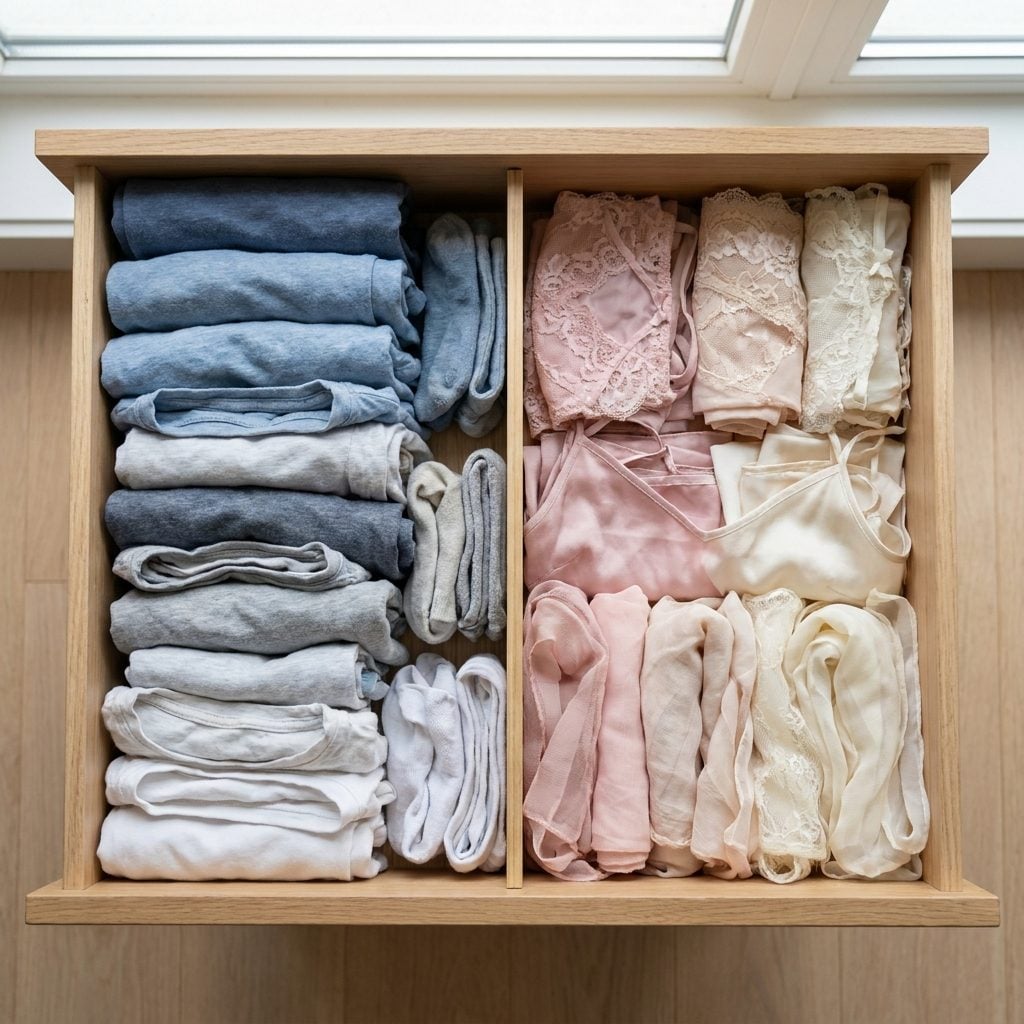
Open the drawer and look at the border. On one side, the everyday cotton, soft and unbothered. On the other, the good stuff, folded like it’s waiting. Most women keep this line without ever drawing it on purpose.
The divide is a map of your identities. One consumer-psychology framing calls these garments “external vessels for internal experience,” where objects carry past and future selves in physical form. (Source). Your underwear drawer runs a tighter version of the same split.
Some women flip between the two sides fluidly, and that fluency is its own personality type. Women who mix a silk bodysuit one day and a minimalist bralette the next tend to enjoy change and experiment with moods, per a breakdown of lingerie preferences and personality. The question isn’t which side is the real you. Both are. The question is whether the wall between them has gotten so high you forgot you’re allowed to cross it on a random Wednesday.
What Choosing Comfort Over Lace Actually Signals About Where You Are in Life
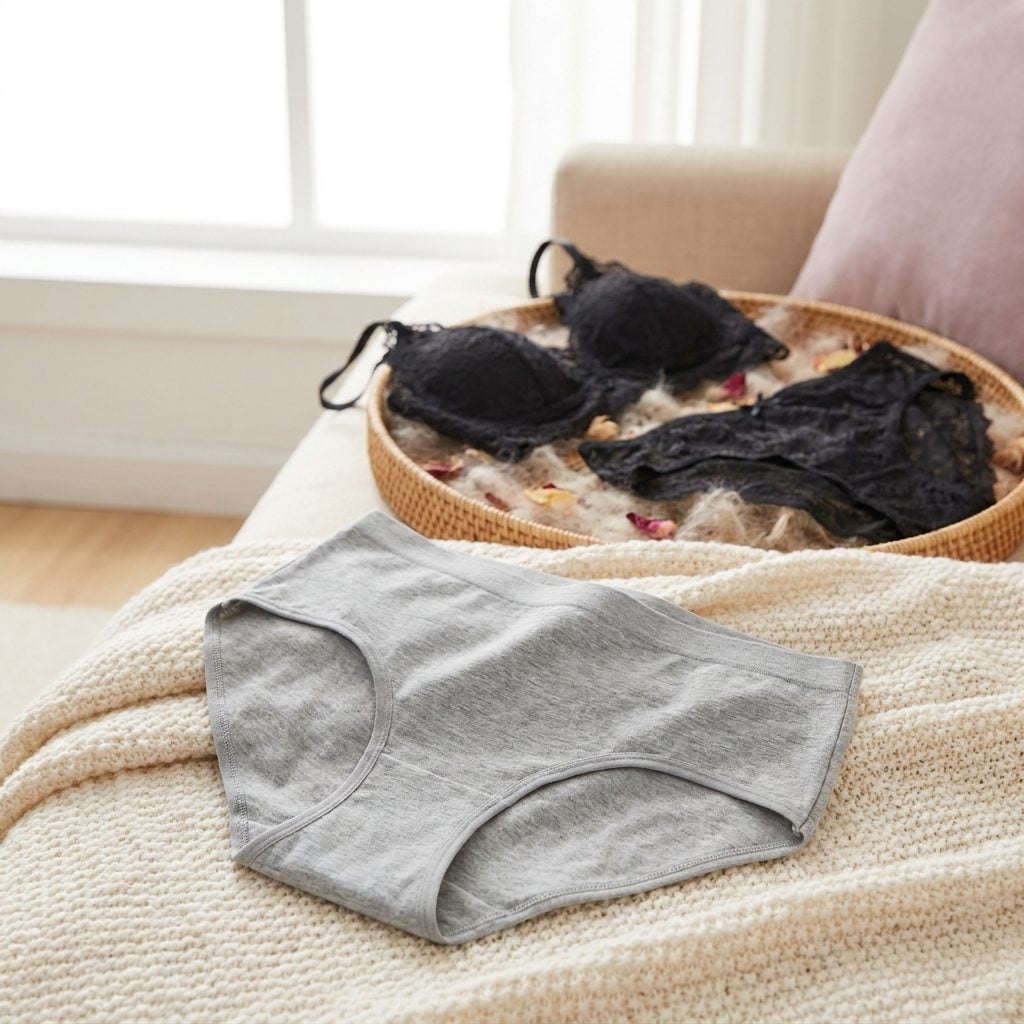
Somewhere along the line, the seamless soft pair started winning. The lace stayed in the drawer. If you’ve caught yourself feeling like that’s a surrender, sit with the opposite reading for a second.
Reaching for comfort is rarely giving up. Choosing lingerie without underwires, seams, or sparkle is often the decision of a woman who has traveled a long way toward self-acceptance and no longer subscribes to an image, according to a breakdown of lingerie preferences. Body-oriented therapists in that same piece read “neutral” underwear as a sign of inner steadiness, someone who doesn’t need external confirmation because the joy is in the comfort itself.
There’s a bigger shift underneath your drawer, and it isn’t only about you. lingerie chosen for how it makes you feel, not someone else’s approval (Source). So the comfort pick isn’t the absence of a choice. It’s a choice that finally stopped asking permission. By this point in life, that’s not settling. That’s arriving.
The Hidden Ritual That Sets the Emotional Tone Before You’ve Even Left the House
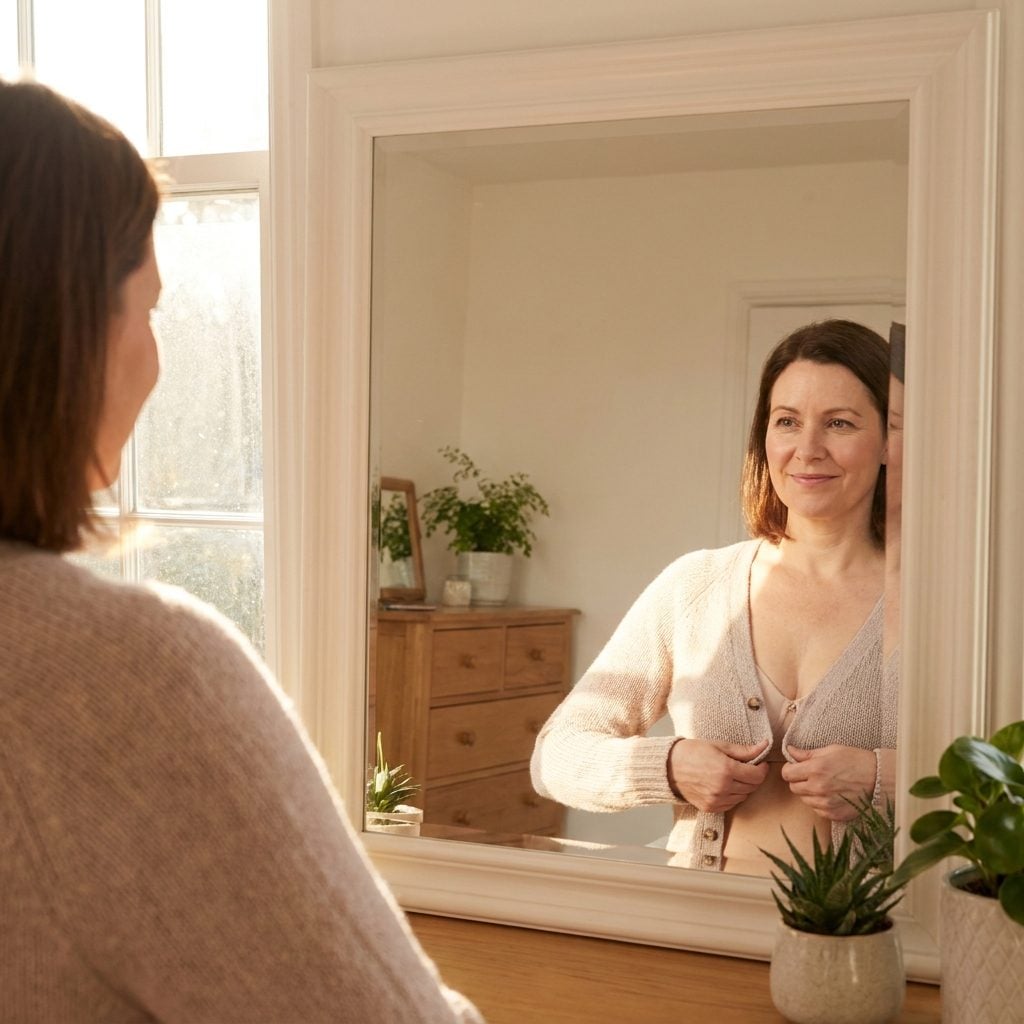
The bra clasp comes first. Then the decision. And by the time you’ve chosen what goes underneath, your brain has already picked a mood for the day, whether you asked it to or not.
The drawer you open before anyone sees you is the quiet rehearsal room. A piece on the neuroscience of dopamine dressing makes the case that getting dressed is a ritual, and rituals carry mood-affecting properties independent of what you actually put on. The intentionality of it, the choosing, the fastening, the checking, all of it primes a mental state before the day starts.
That’s why the first layer matters more than it looks like it should. A therapist writing on the psychology of getting dressed notes that fabrics that feel good on your skin reduce stress and distraction (Source), while the scratchy, digging, twisted ones needle at you all day. Nobody sees the choice. You feel it in every meeting.
Why the Underwear You Buy at 50 Tells a Different Story Than the Underwear You Bought at 30
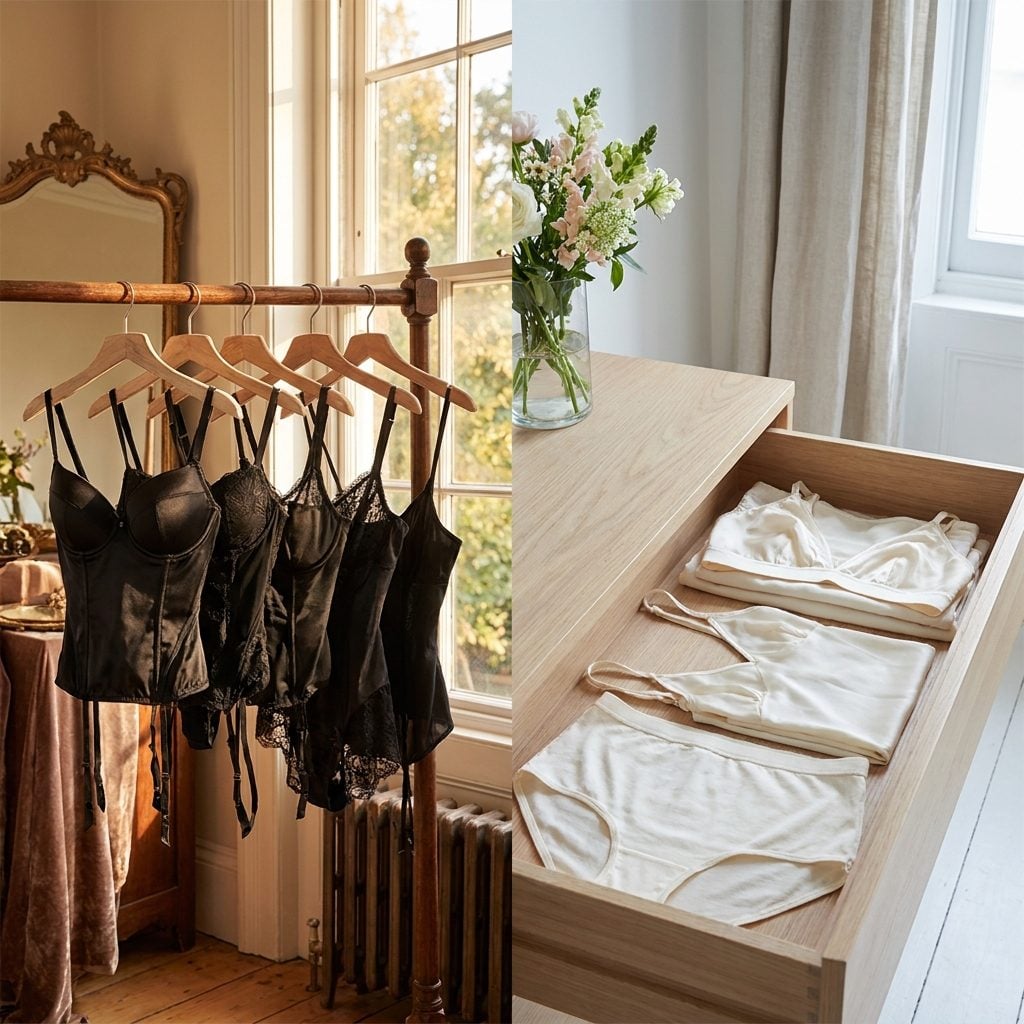
At thirty, the drawer performed. Push-up padding, straps that dug in by three o’clock, the black lace set bought for someone else’s eyes. At fifty, the drawer stopped auditioning.
The shift isn’t surrender. It’s authorship. Research on lingerie and identity, drawn from interviews with 22 women about their underwear and lingerie consumption (Source), found that women use the layer nobody sees to control how they feel in their own skin, not how they read to a room. One woman in the study put it plainly: nobody sees it, but she can feel it, sense it. That’s the whole point. The buyer changed. The audience became you.
Age doesn’t dull this. It sharpens it. A study on body image in younger and older women (Source) notes that some older women carry a more positive body image than younger women, less preoccupied, more settled into the body they actually have. The fifty-year-old buying a bra that fits her ribcage instead of a fantasy isn’t giving up on herself. She’s finally shopping for the woman in the mirror instead of the one in the ad.
What a Cluttered Drawer Confesses That a Curated Closet Hides
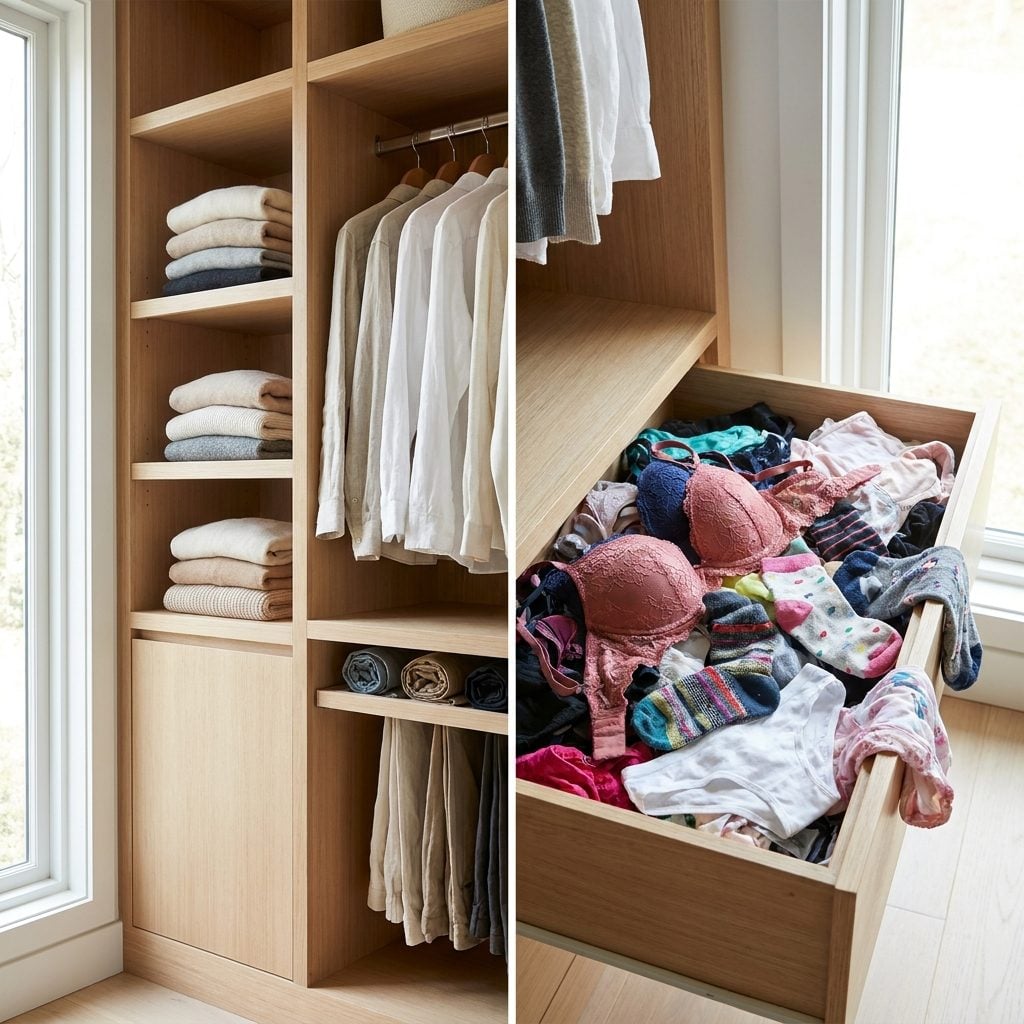
Your closet is a performance. Everything hanging there was chosen to be seen, arranged to tell a story to whoever opens the door. The drawer answers to no one.
That’s what makes it revealing. The three identical black bras bought on three separate occasions confess a scarcity mindset the tidy closet works hard to hide. So does the tangle of hosiery you’ll never wear and the “just in case” pieces from a body you had two sizes ago. Psychologists point to the same knot of forces behind why we can’t let clothing go: the “just in case” mentality, nostalgia, and clothing’s tie to identity all conspire to grow a wardrobe larger than it needs to be. In the drawer, none of that gets edited for an audience.
By 40-plus, you’ve stopped performing for the closet. But the drawer still keeps a private ledger of every self you’ve been reluctant to close the book on.
The Psychology of Dressing the Part No One Will Ever Witness

Nobody is grading your underwear. That’s the whole point of why it works on you.
Enclothed cognition, the term coined by researchers Hajo Adam and Adam Galinsky, describes how clothing carries psychological weight through two channels at once: the symbolic meaning of the garment and the physical experience of wearing it. In their now-famous experiment, a lab coat described as a doctor’s coat boosted attention, but a painter’s coat didn’t (Source). Same coat. Different mind.
Now apply that to the layer only you know about. One survey found that most people feel more confident wearing underwear they love (Source). That confidence isn’t for a witness. It’s a private signal you send yourself before the day starts, and your brain accepts it as evidence of who you are today.
A qualitative study found women choose specific underwear for specific occasions, treating it as a technology of their most inner self (Source). The part you dress for an audience of one might be the most sincere costume you wear.
Why the Softest Thing You Own Might Be Doing the Heaviest Emotional Work
❤️ Would you like to save this?
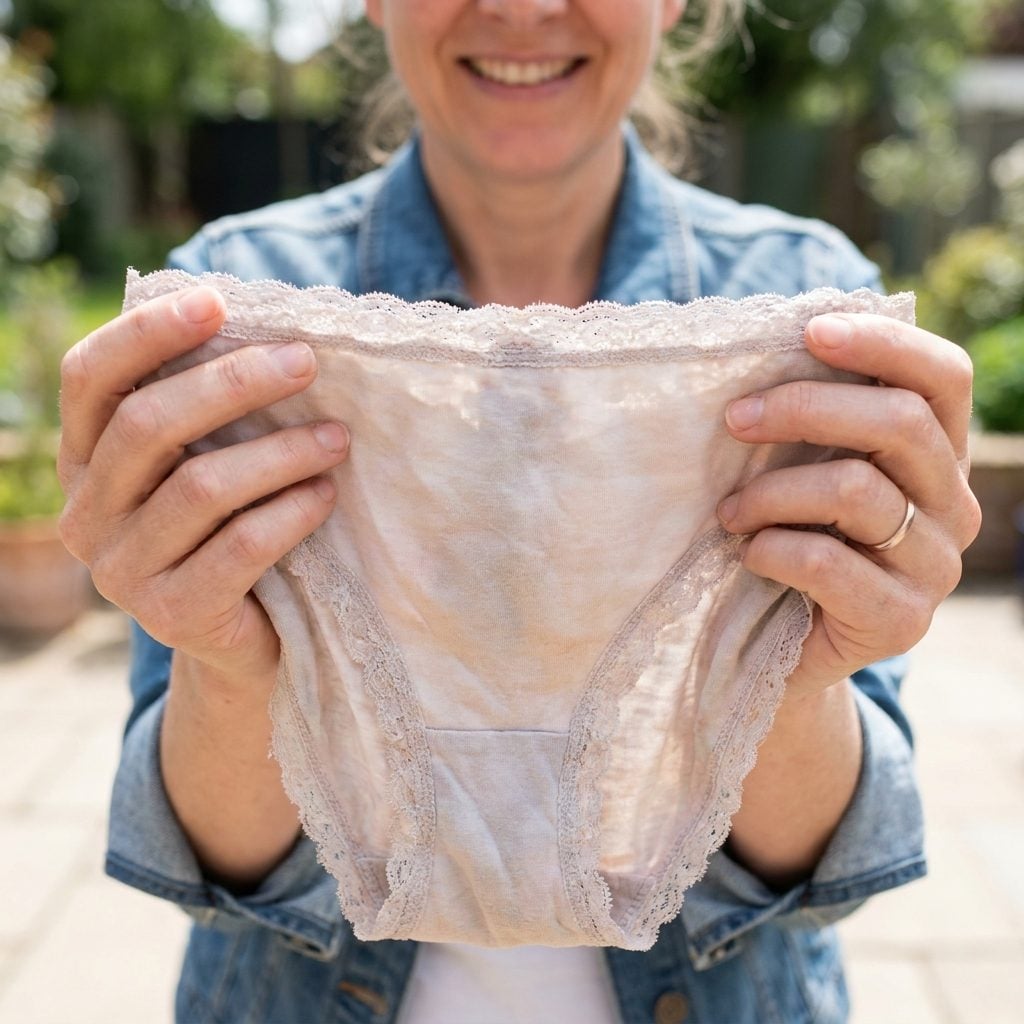
You know the pair. Worn thin, past their prime, the ones you reach for on the hardest days without thinking. Function has nothing to do with it. It’s the feel.
Soft, gentle touch talks directly to your nervous system. Pleasant tactile input activates the parasympathetic system, the body’s rest-and-digest mode, which helps lower cortisol, the body’s main stress hormone (Source). Smooth softness against the skin registers as a safety signal, while scratchy or tight fabric keeps the brain on quiet alert. Research on soft touch and stress shows it (Source).
That’s the heavy lifting hiding in the lightest thing you own. The worn-soft pair isn’t a habit. It’s physiological reassurance, a hand on the shoulder you can wear.
There’s a memory layer too. Textured, tactile fabrics can trigger vivid memories and emotional associations (Source). You remember with your fingertips.
The Bottom Line
Here it is: your underwear drawer reveals who you dress for when no one is watching, and that person, the one you clothe in private, is the truest version of yourself you have. The rest of your closet performs for the world; this single drawer answers only to you, which is exactly why it never lies. Open it tomorrow and ask one question, am I dressing this hidden self out of love, or out of neglect, because the answer is the quiet foundation everything else you wear is built on.