❤️ Would you like to save this?
The 1970s could turn a handful of wooden beads into a handbag handle and make it look like a fashion statement. The 1980s preferred leather with sharp corners, brass hardware, and enough authority to accompany a power suit into the boardroom. Then the 1990s shortened the straps, softened the silhouettes, and made carrying a tiny bag beneath your arm look like the most natural thing in the world. Three decades, three very different ideas about what a handbag should say before anyone opened it.
Some of these designs were practically miniature works of textile art. Macramé, patchwork denim, carved leather, and crocheted granny squares carried the 1970s fascination with craft into everyday fashion. The 1980s answered with lacquered patent leather, quilted chains, graphic color blocking, and structured satchels that could stand upright without assistance. By the 1990s, the pendulum had swung again: nylon backpacks, sleek shoulder bags, understated woven leather, and the little baguette that helped turn handbag proportions into a fashion obsession.
Across these 39 designs, the details tell the story. A buckle the size of a brooch. A shoulder strap that suddenly stops at the armpit. A leather surface so richly worked that it needs no ornament. Some handbags look unmistakably tied to their decade; others seem to have skipped the intervening years entirely. The most interesting question isn’t which ones are back in fashion. It’s how many never really left.
FYI, thanks to AI imagery software, we’re able to create very specific fashion and hairstyle examples to illustrate the points being made. In some cases, imagery is exaggerated to hammer home the point. Also, assume links that take you off the site are affiliate links such as links to Amazon. this means we may earn a commission if you buy something.
39. The 1970s Tooled Leather Shoulder Bag That Turned Craft Into Fashion
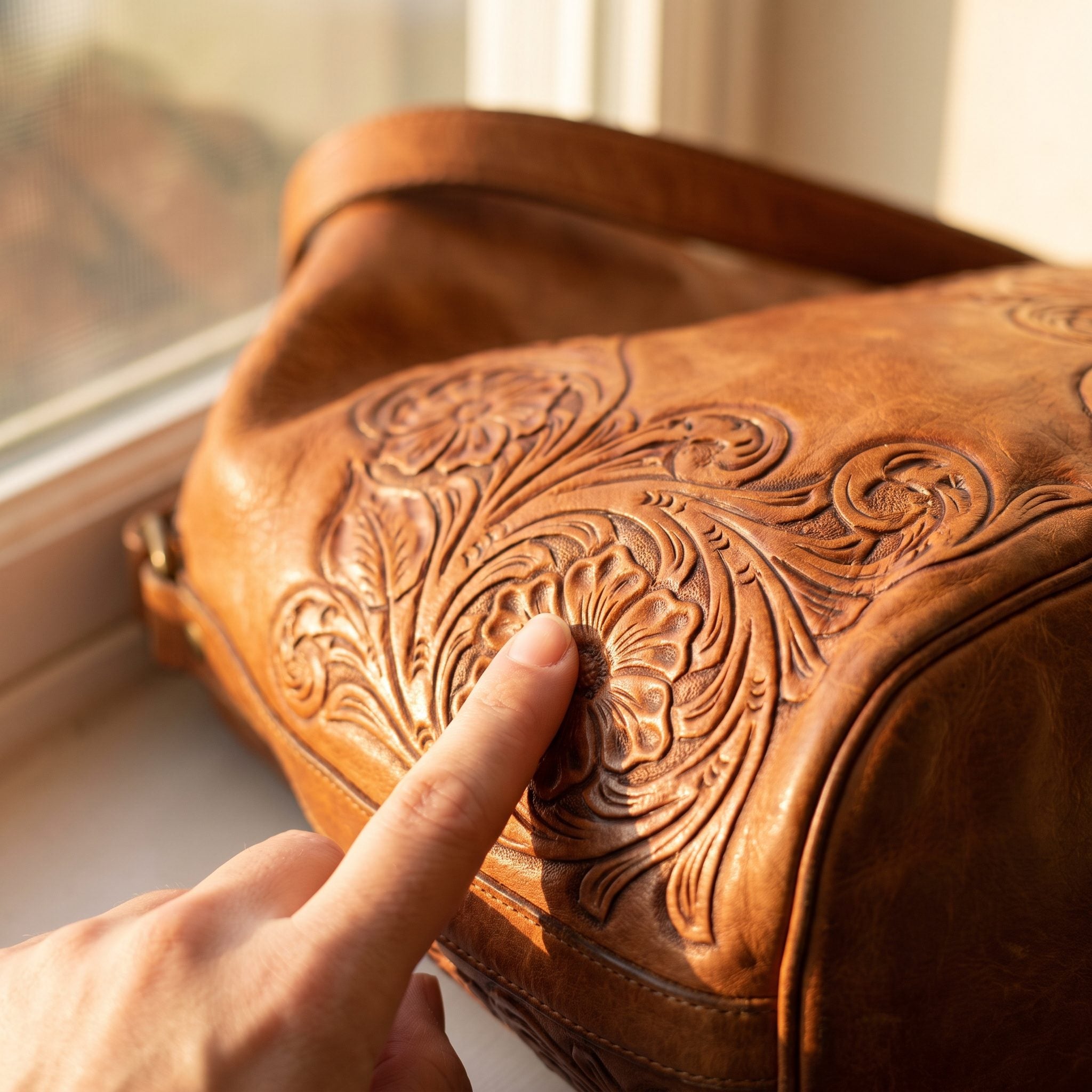
Deeply carved floral patterns give tooled leather a richly textured surface quite unlike smooth calfskin. The scrollwork, antique-brass buckle, and cognac finish draw from Western leatherworking traditions that found a receptive audience in 1970s fashion.
Against a cream ribbed turtleneck, flared jeans, and brown boots, the bag supplies the ornament. Its carved surface catches shadows along every groove, making an otherwise simple combination considerably more interesting. The Western influence is unmistakable without requiring the rest of the outfit to become a costume.
38. The 1970s Crochet Granny-Square Bag That Wore the Living Room’s Colors
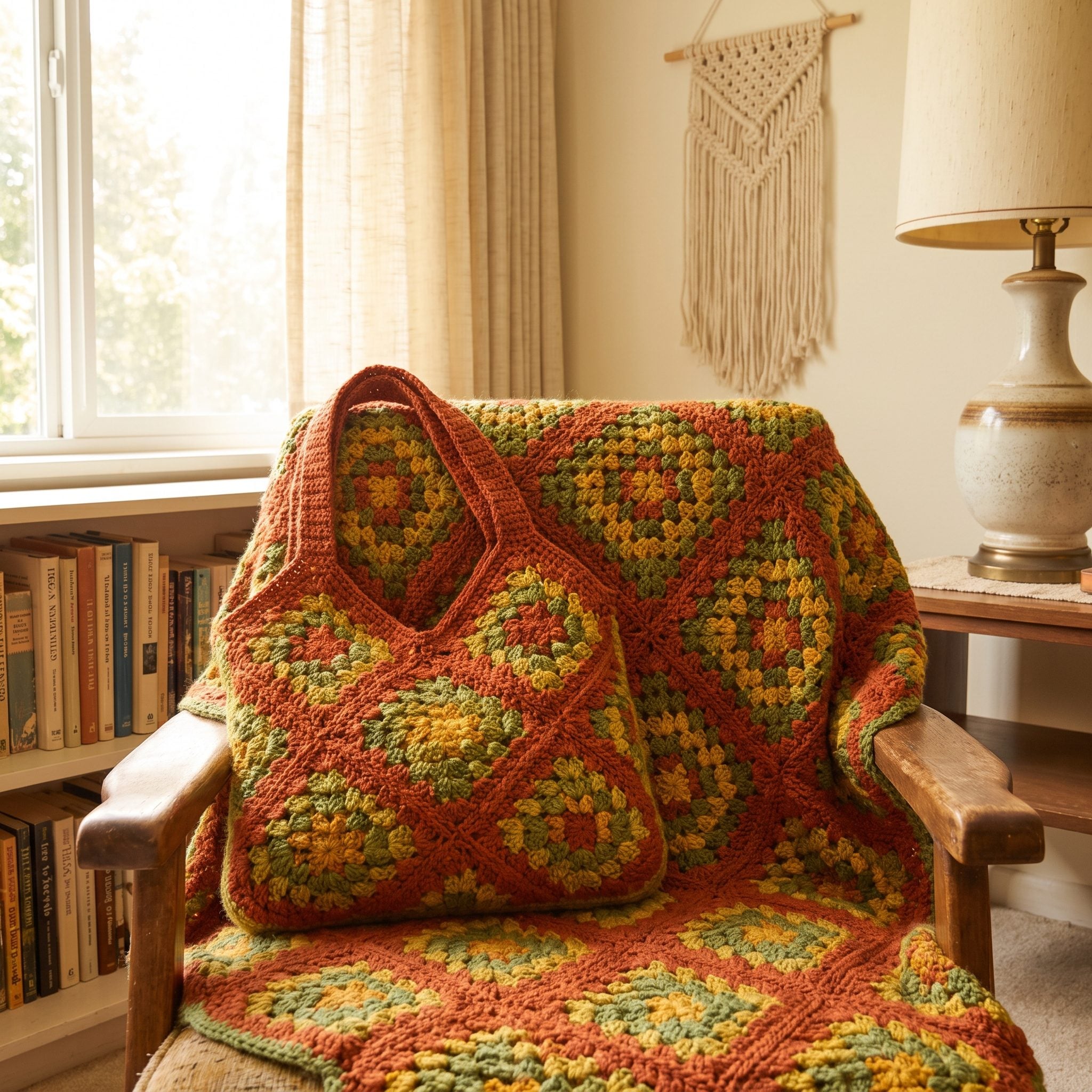
Burnt orange, avocado, mustard, cream, and chocolate: the same colors that appeared on countless 1970s afghans found their way into handbag design. Granny squares gave a soft crocheted bag a wonderfully graphic structure, with each block contributing another little collision of color.
A fitted cream top and brown corduroy flares provide a quiet setting for the patchwork. The bag’s open stitches, multicolored squares, and crocheted handles create visual complexity without a single piece of metal hardware. Few accessories capture the decade’s domestic craft enthusiasm quite so directly.
37. The 1970s Leather Saddle Bag That Made the Crossbody Strap Look Good
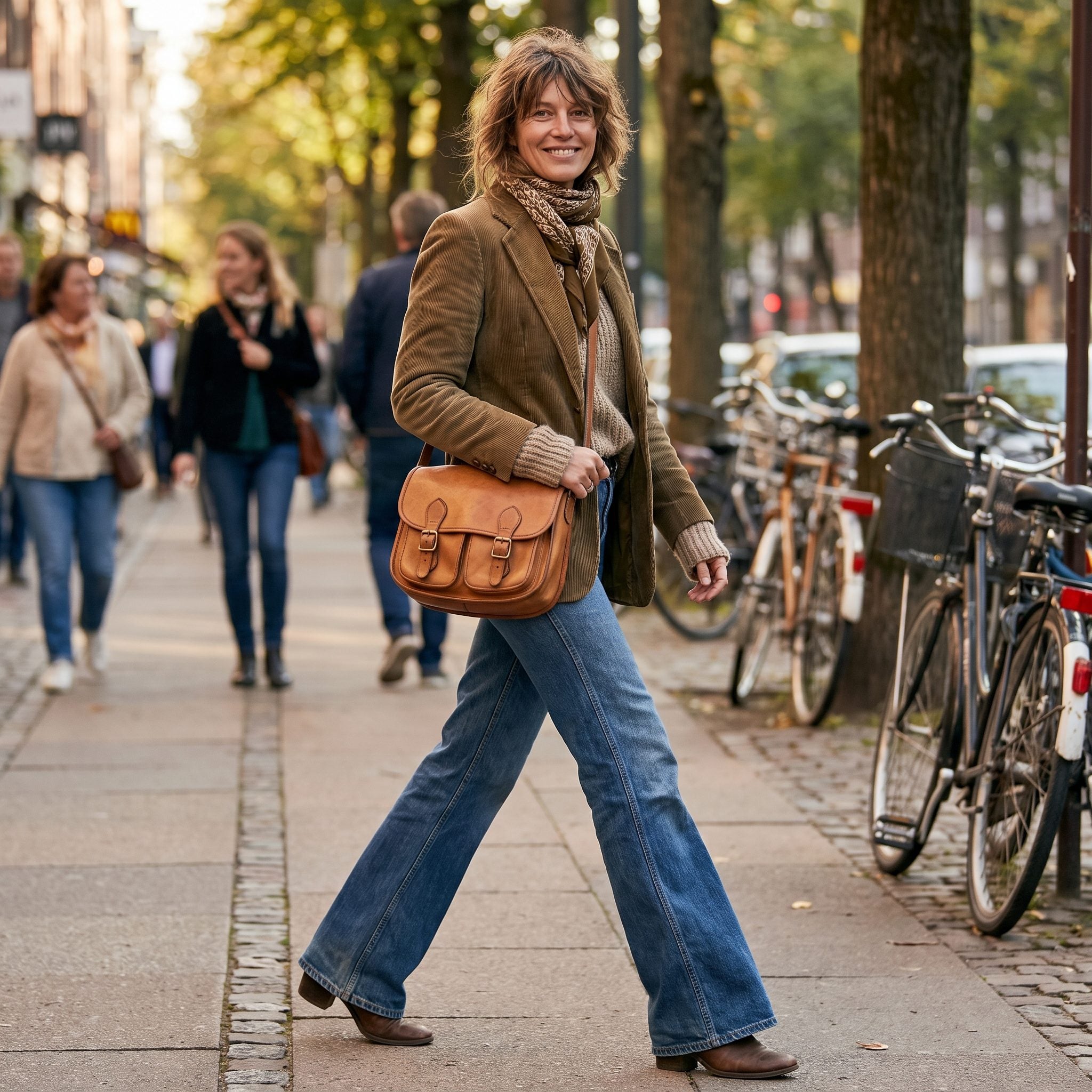
The curved base, rounded flap, and long strap borrow their vocabulary from equestrian equipment. Yet the saddle bag’s appeal was thoroughly modern: compact enough to stay close to the body, roomy enough for daily essentials, and practical without surrendering its shape.
Chestnut leather and a brass closure introduce a firm outline against a striped knit and soft suede jacket. The curved flap interrupts the vertical fall of the clothing, while the crossbody strap adds a diagonal line. Function and proportion work together here, which helps explain the silhouette’s extraordinary longevity.
36. The 1970s Beaded Bohemian Pouch That Put the Decoration in One Place
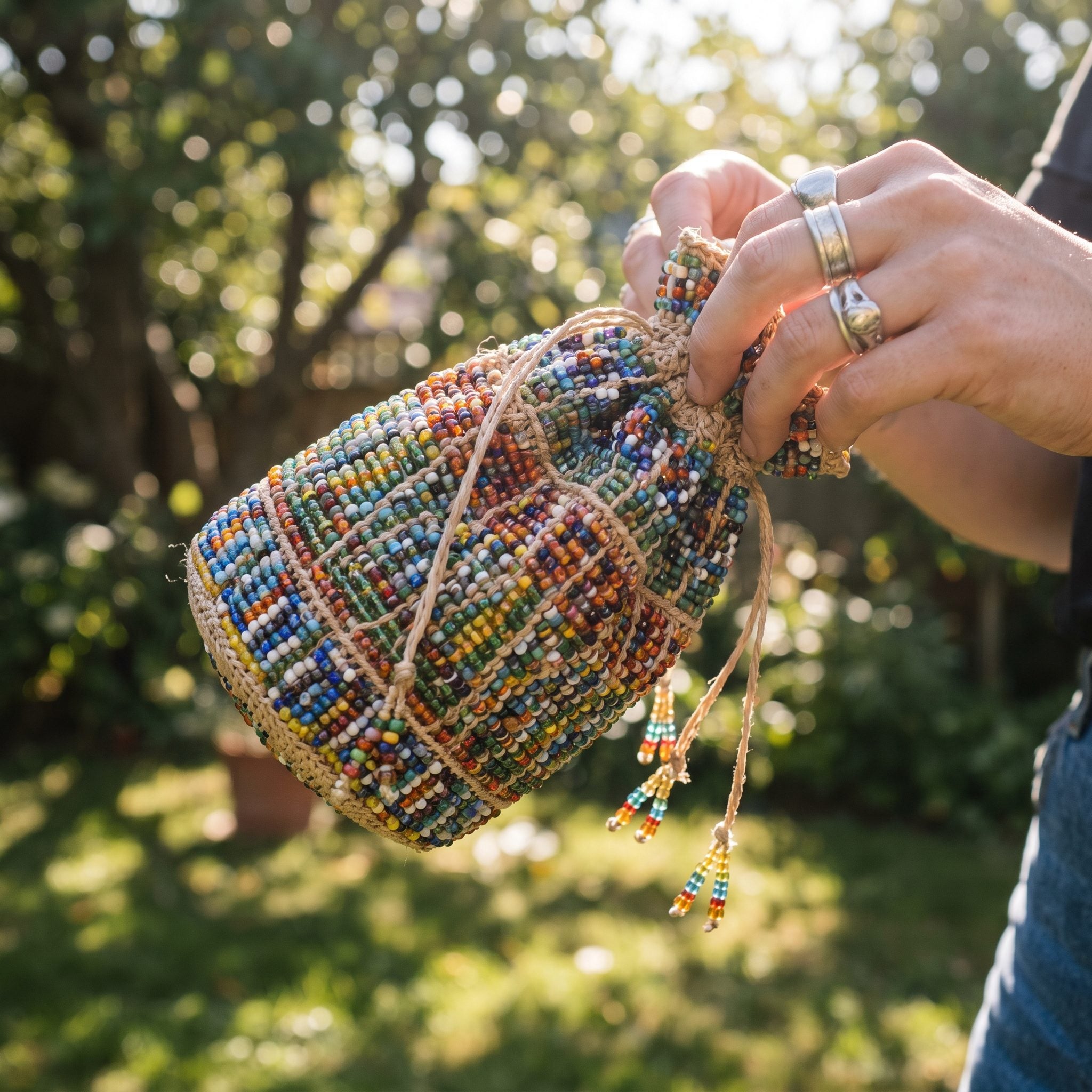
Small, colorful, and richly embellished, the beaded drawstring pouch offered almost no competition in the practicality department. Its appeal lay elsewhere: embroidered motifs, glassy beads, tassels, and a braided cord turned a tiny accessory into the most intricate object in the outfit.
Beside an ivory blouse and flowing rust-colored skirt, the pouch acts almost like jewelry. Its concentrated color breaks up the broad areas of soft fabric, while the tassels repeat the movement of the skirt on a smaller scale. The proportions are modest; the personality isn’t.
35. The 1970s Patchwork Leather Bag That Found Room for Every Shade of Brown
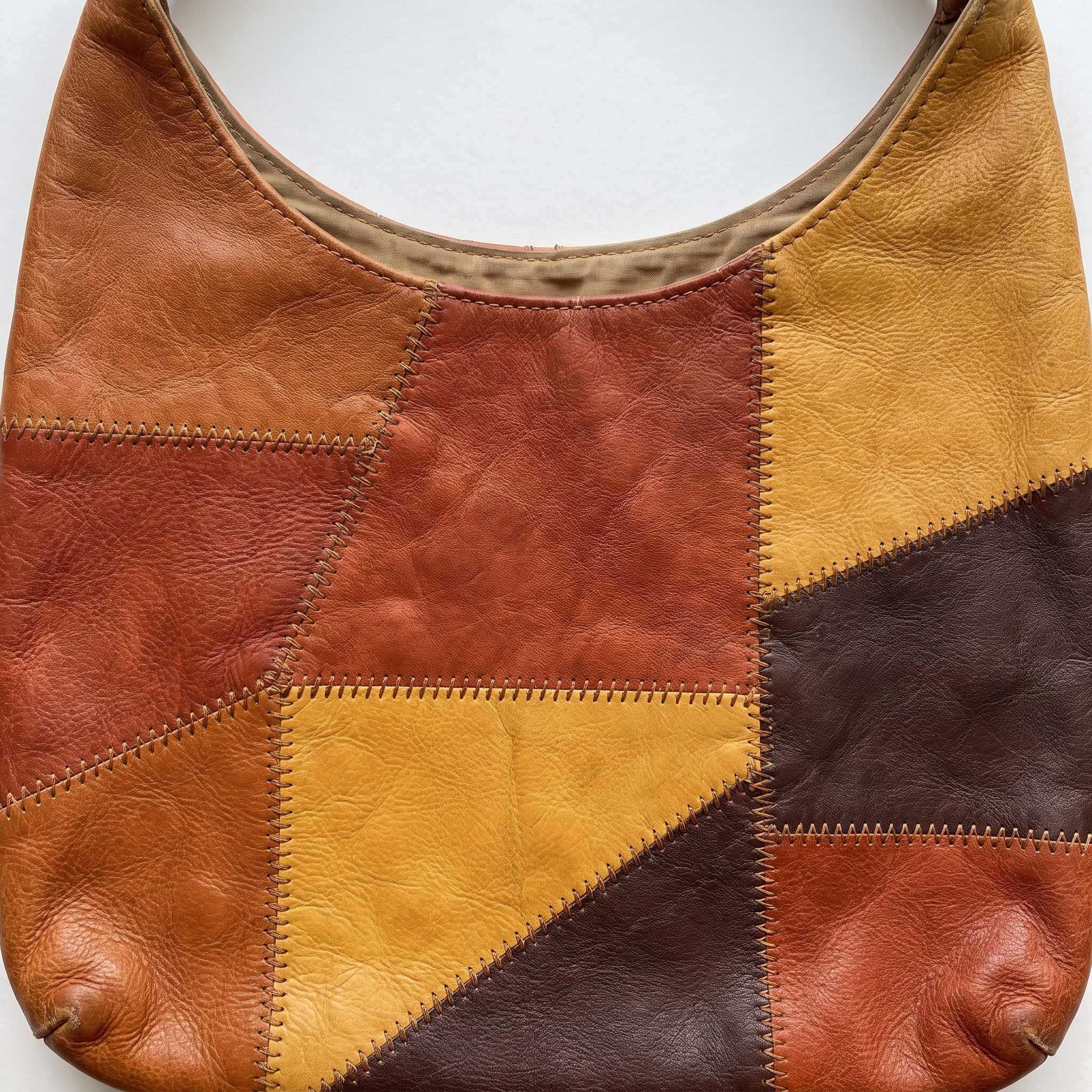
Cognac, chocolate, tan, rust, and mustard appear together in a geometric arrangement that turns the leather itself into a pattern. Instead of relying on printed decoration, this bag gets its visual character from joined panels and their changing finishes.
The mustard knit top repeats one of the bag’s warmer shades, while dark brown flares give the composition a deeper base. A long pendant introduces another vertical element. The handbag’s patchwork remains the focus because its colors are distributed through the outfit rather than isolated at the hip.
34. The 1970s Macramé Handbag That Made Knots Look Like Design
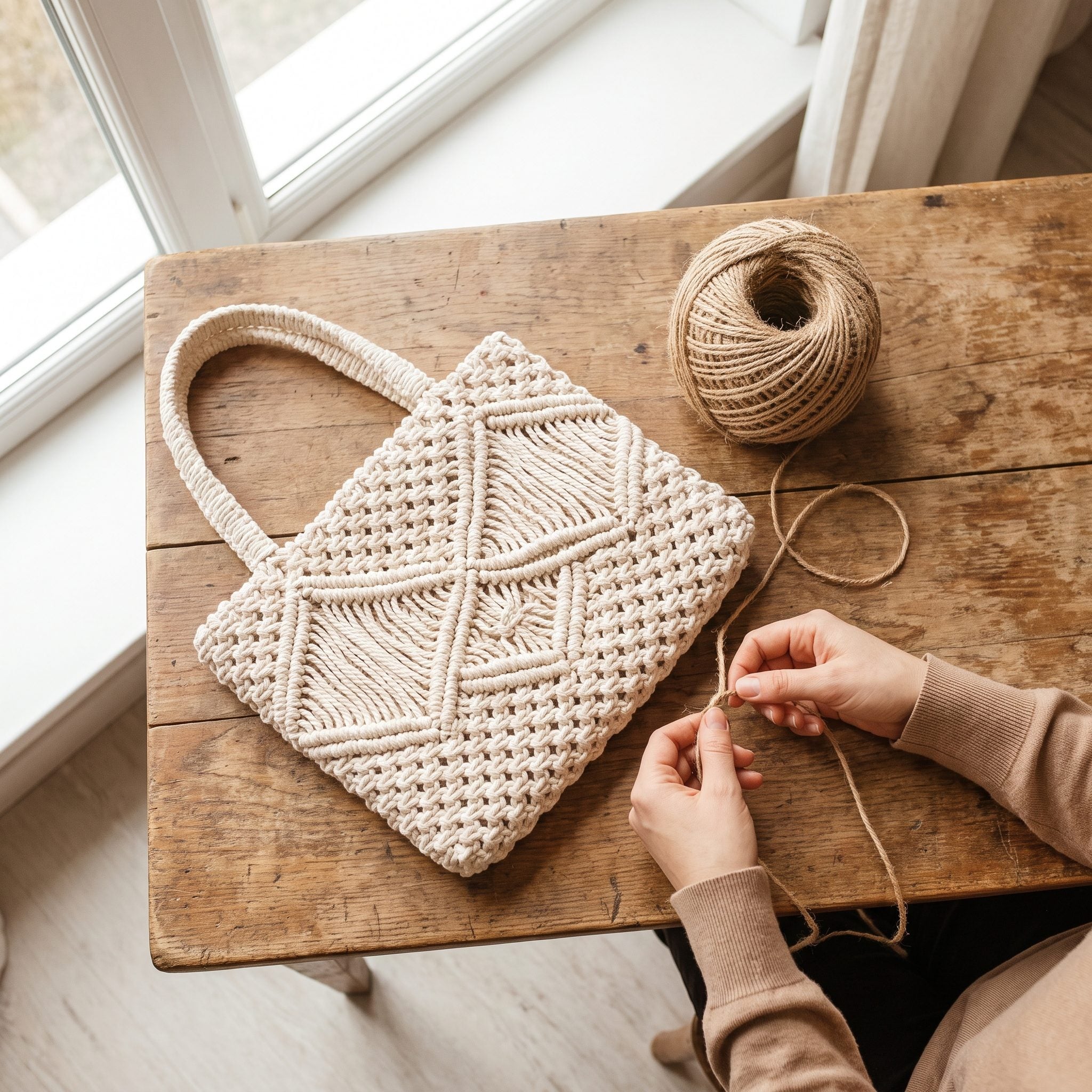
Macramé gave the decade one of its most recognizable accessory textures. Knotted cotton cords formed open geometric patterns, often finished with fringe and paired with wooden handles. The construction was decorative and structural at once, with the knots determining the shape of the bag.
A rust-orange maxi skirt supplies the color, leaving the cream macramé to contribute texture. Wooden jewelry, natural leather sandals, and the rounded handles reinforce the organic material palette. The result is unmistakably 1970s without depending on a busy print or exaggerated silhouette.
33. The 1970s Suede Fringe Bag That Refused to Stay Still
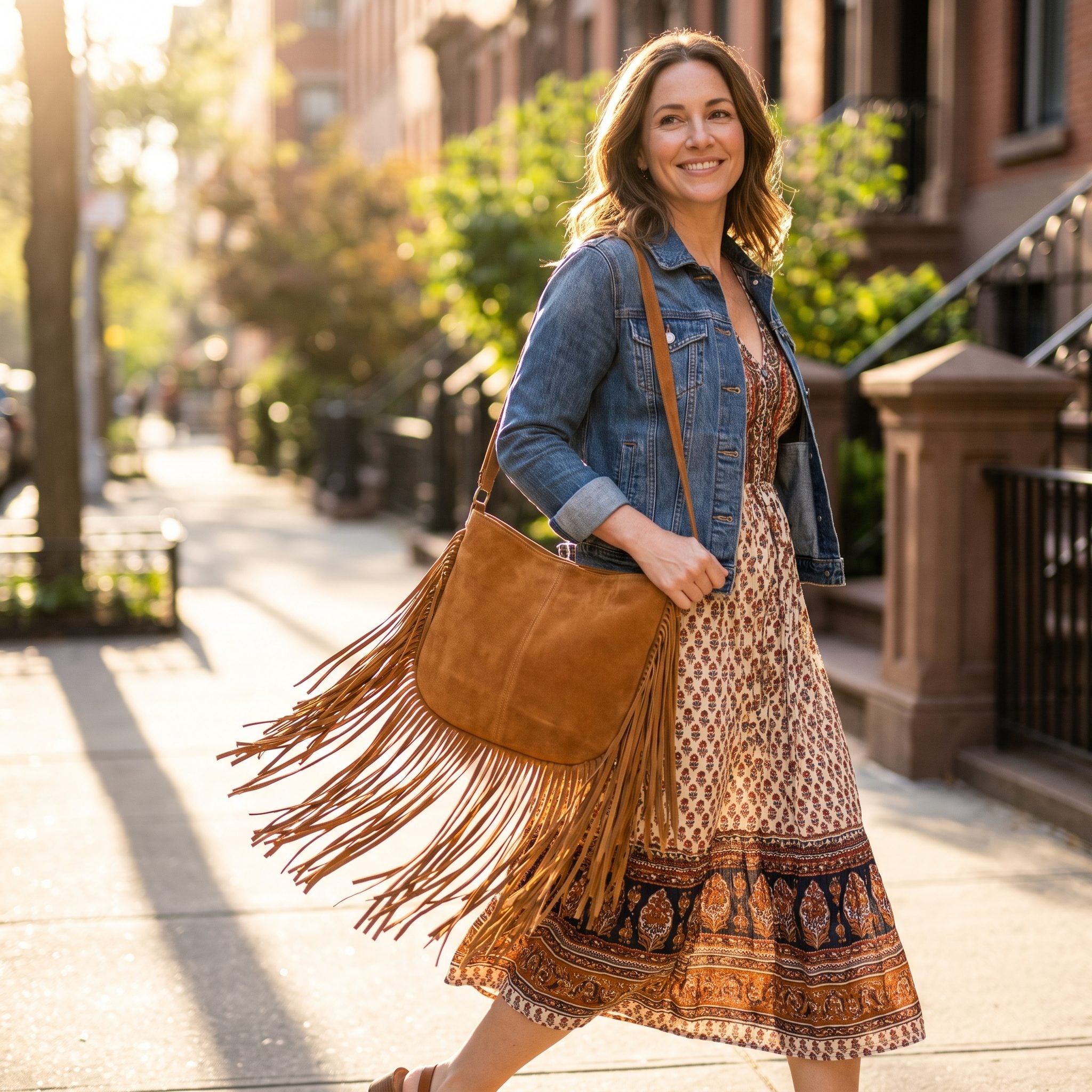
Fringe gave a handbag movement before the wearer had taken more than a step. Long strands of caramel suede extended the bag’s outline, creating a soft, irregular edge that swayed against the comparatively solid shape of bell-bottom jeans.
The peasant blouse, broad brown belt, and indigo denim establish the decade’s relaxed proportions. The bag adds another layer of texture, with the suede’s matte surface picking up the warmth of the belt and blouse. Against dark denim, every strand remains visible. No additional embellishment is necessary.
32. The 1970s Basket Purse That Gave a Floral Dress Some Backbone
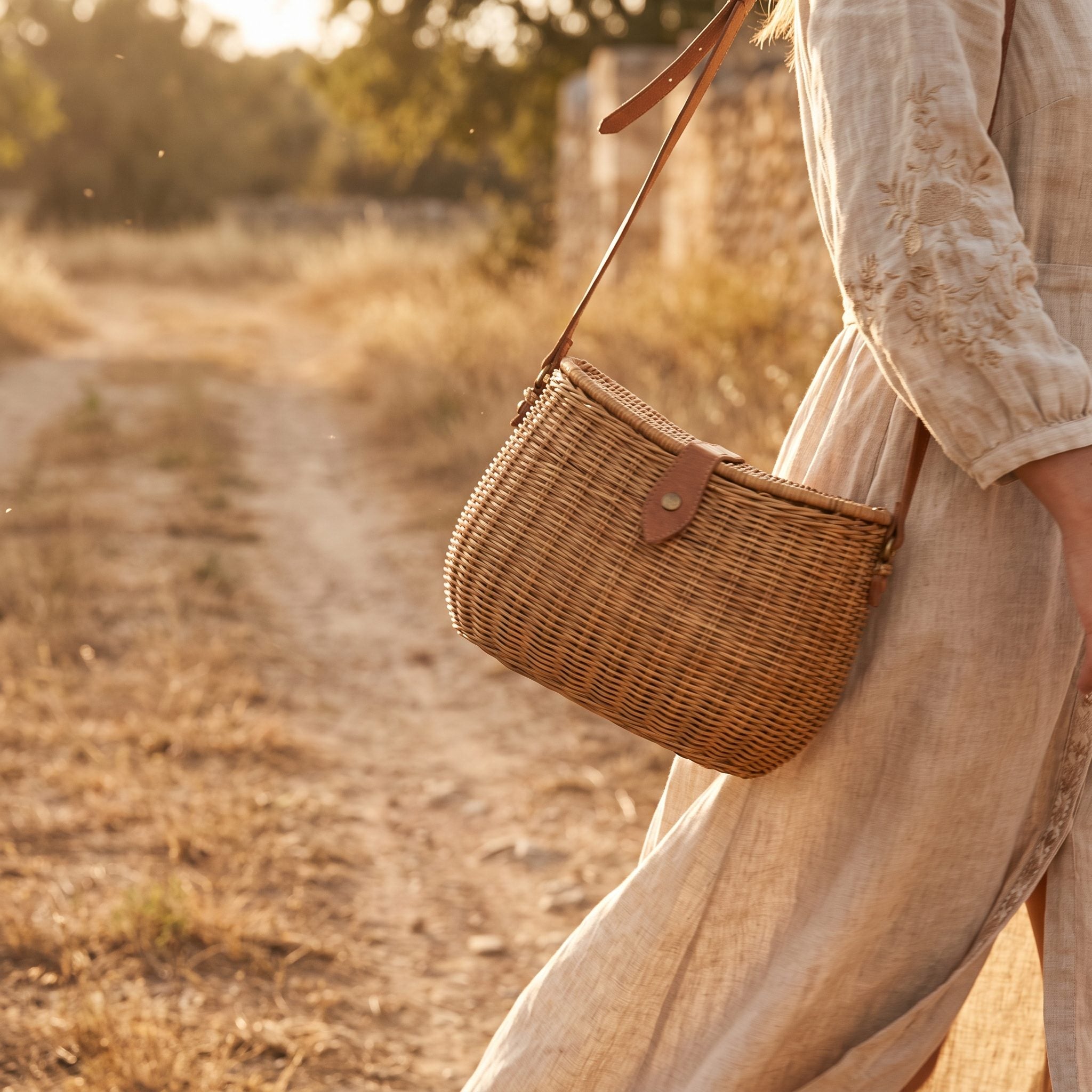
A basket purse brings something unusual to a soft summer outfit: an uncompromising shape. Rigid woven sides, a firm handle, and a defined base provide a geometric counterweight to flowing fabric.
The floral midi dress moves around the body, while the purse holds its outline. That difference gives the combination its character. The natural woven material keeps the accessory informal, but the construction is closer to a small piece of furniture than a slouchy shoulder bag.
31. The 1970s Wooden-Handle Fabric Bag That Turned a Print Into Architecture
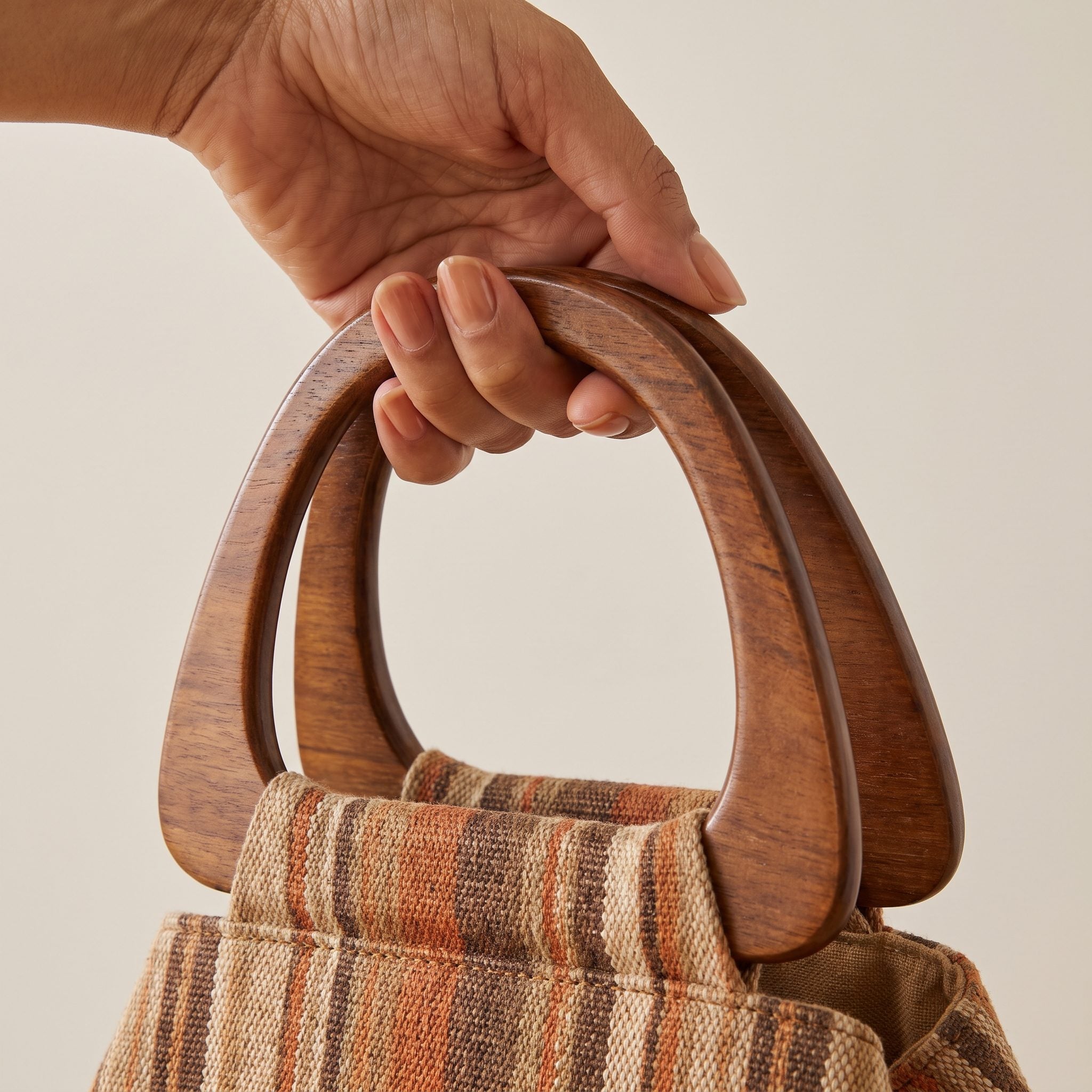
Curved wooden handles lend a tailored finish to an otherwise flexible fabric bag. The polished arcs create a firm upper boundary, while the geometric print gives the body a lively pattern that wouldn’t have the same effect in plain canvas.
Chocolate, cream, and brown recur in the midi skirt and boots, making the printed accessory part of a coherent palette. The handle’s smooth surface contrasts with the softer fabric below it. That combination of hard and soft materials was one of the most appealing possibilities of 1970s craft-influenced accessories.
30. The 1970s Woven Straw Market Bag That Made Practicality Look Like Summer
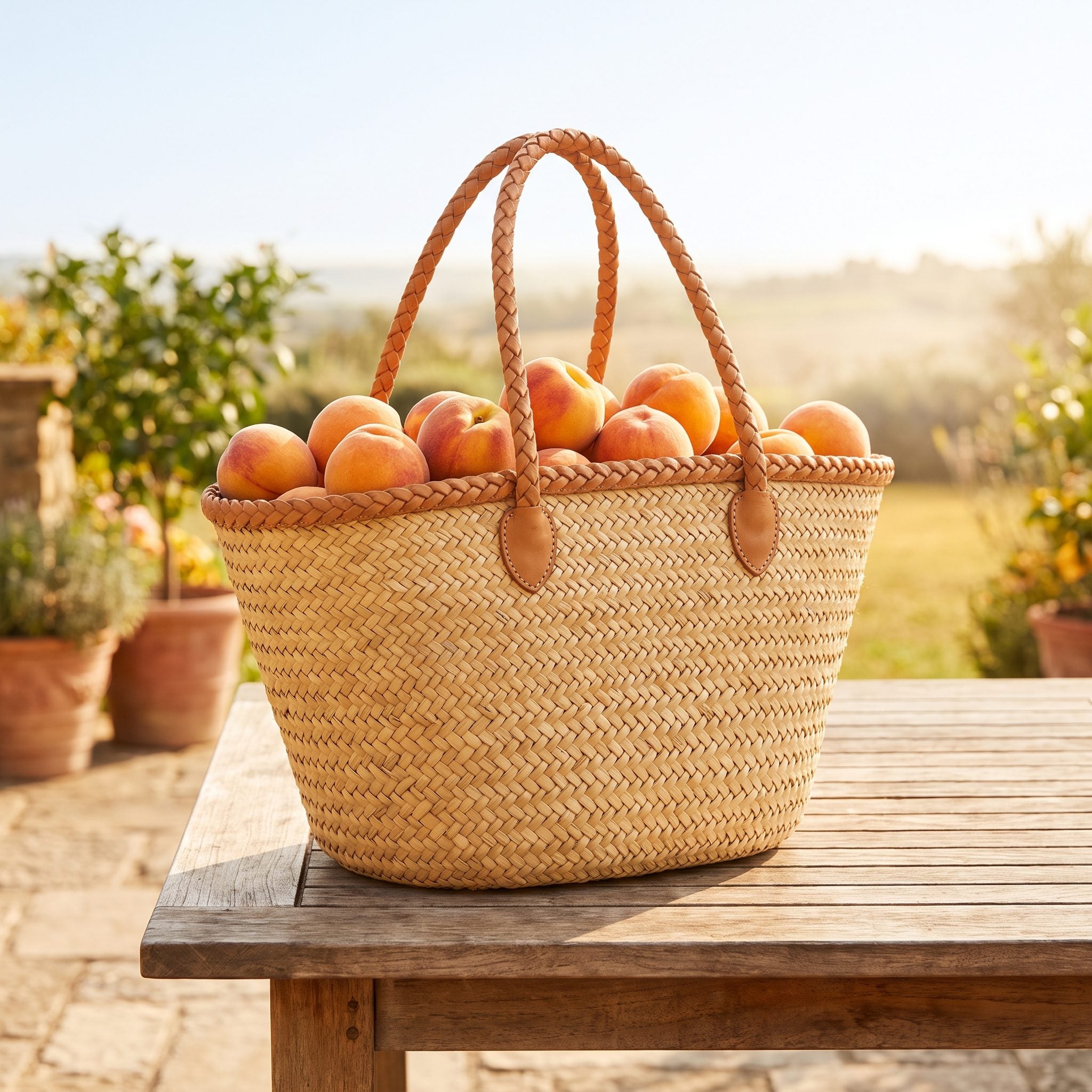
Broad woven sides, rounded proportions, and sturdy tan leather handles give this market bag the appealing directness of an object designed to be used. Its straw texture belongs naturally with summer fabrics, but the leather trim keeps it from looking like a beach basket pressed into service.
Burnt orange and cream establish a sun-warmed palette, while woven wedge sandals echo the handbag’s construction. The textures relate without matching exactly. Oversized sunglasses complete the outfit, but the straw bag supplies the strongest seasonal cue.
29. The 1970s Patchwork Denim Bag That Made Old Jeans Interesting Again
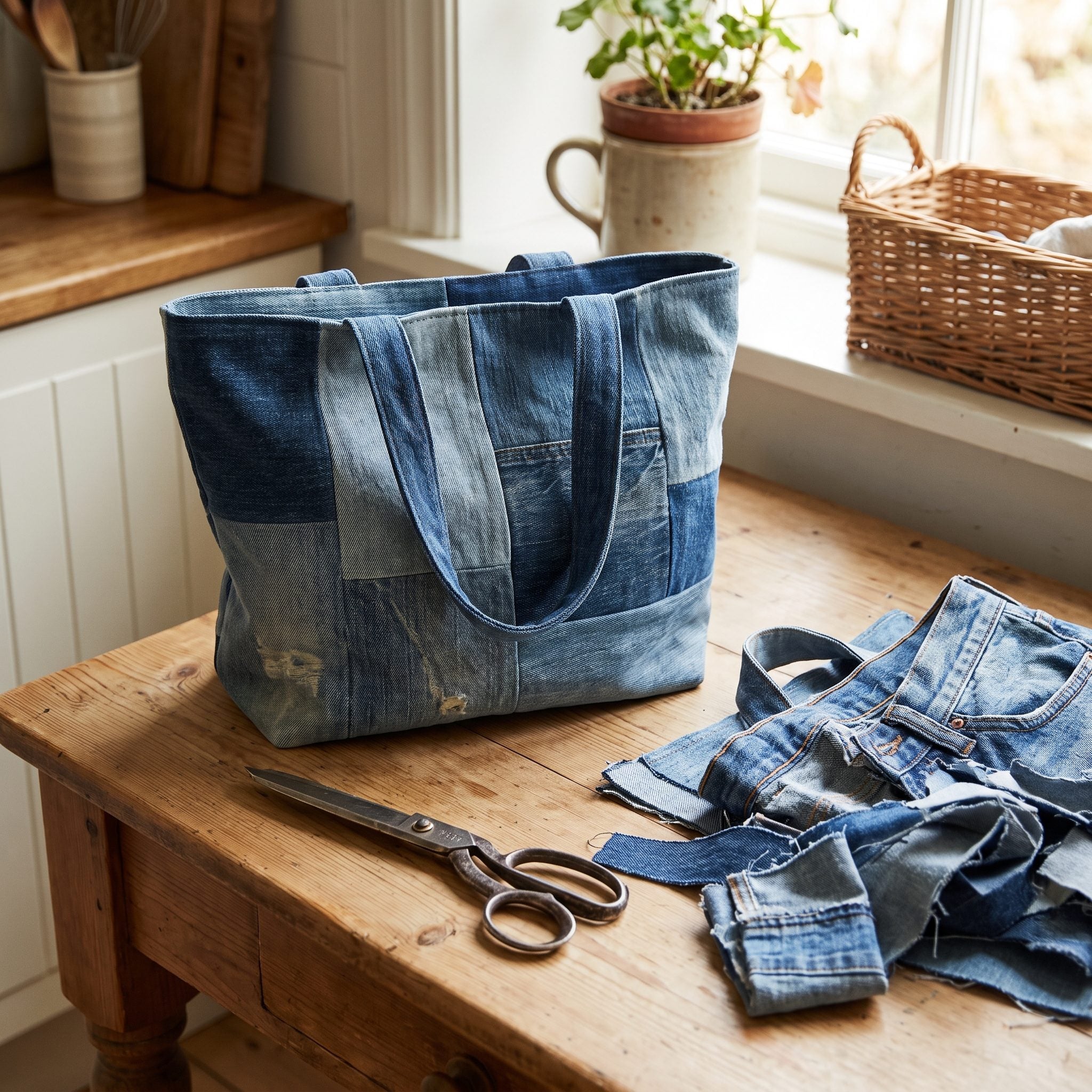
Different washes of denim, visible seams, and recycled-looking panels give this bag the character of a textile collage. The appeal comes from variation: faded blue beside dark indigo, familiar stitching beside unexpected joins.
The denim layers in the outfit could easily become visually repetitive, but rust corduroy interrupts the blue with a warm, ribbed surface. That single material change makes the patchwork easier to distinguish. The bag reflects the decade’s enthusiasm for customization and the creative possibilities of ordinary fabric.
28. The 1970s Wooden-Bead Handle Bag That Turned Hardware Into Decoration
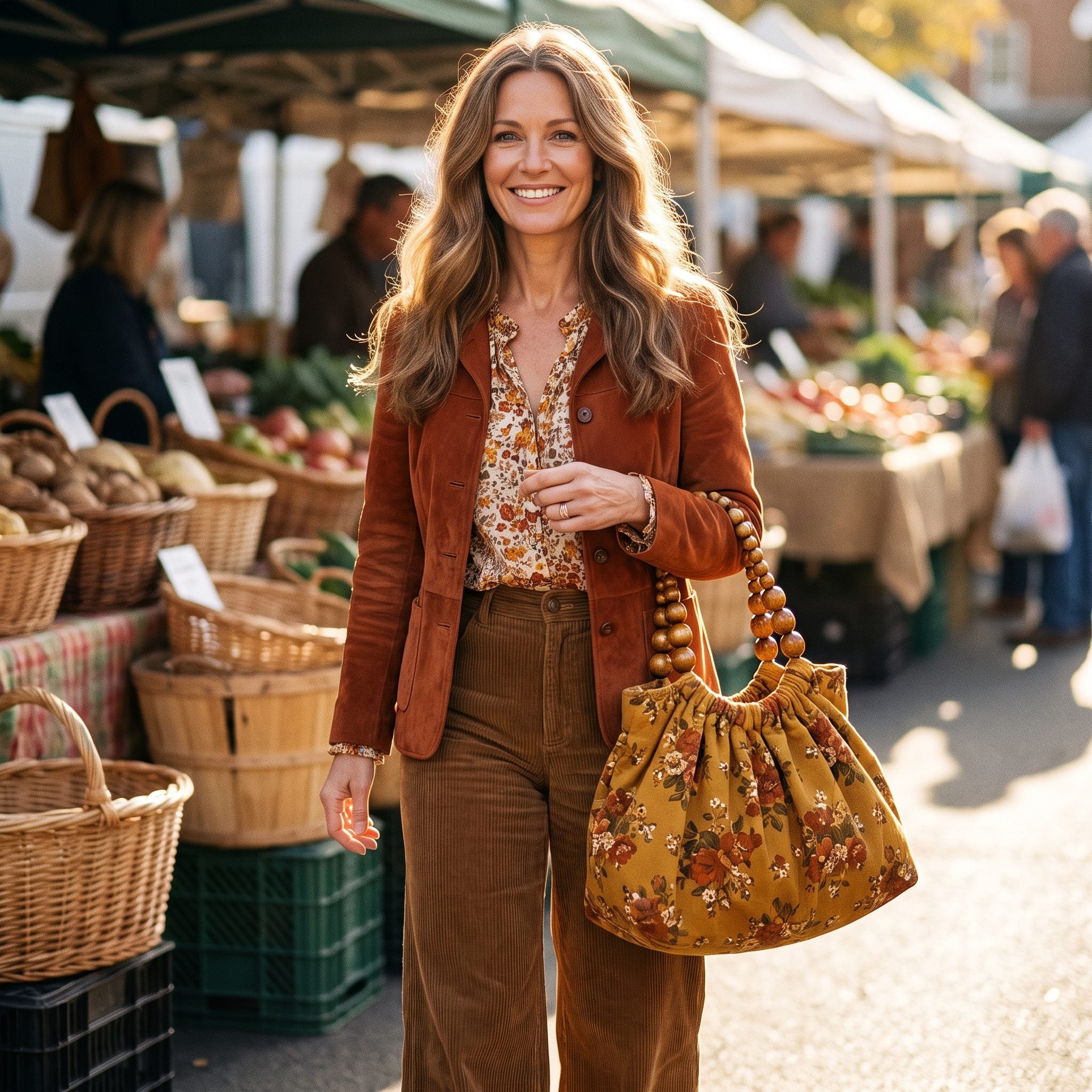
Instead of a conventional leather strap or a pair of smooth wooden arcs, this handbag uses substantial beads to construct its handles. Their rounded shapes introduce rhythm and texture above the floral fabric body.
Honey-colored wood complements the mustard, rust, and brown shades of the print. The beads give a relatively soft pouch a distinct upper silhouette, while their polished surfaces contrast with the matte fabric. The detail is playful, but the material palette remains controlled.
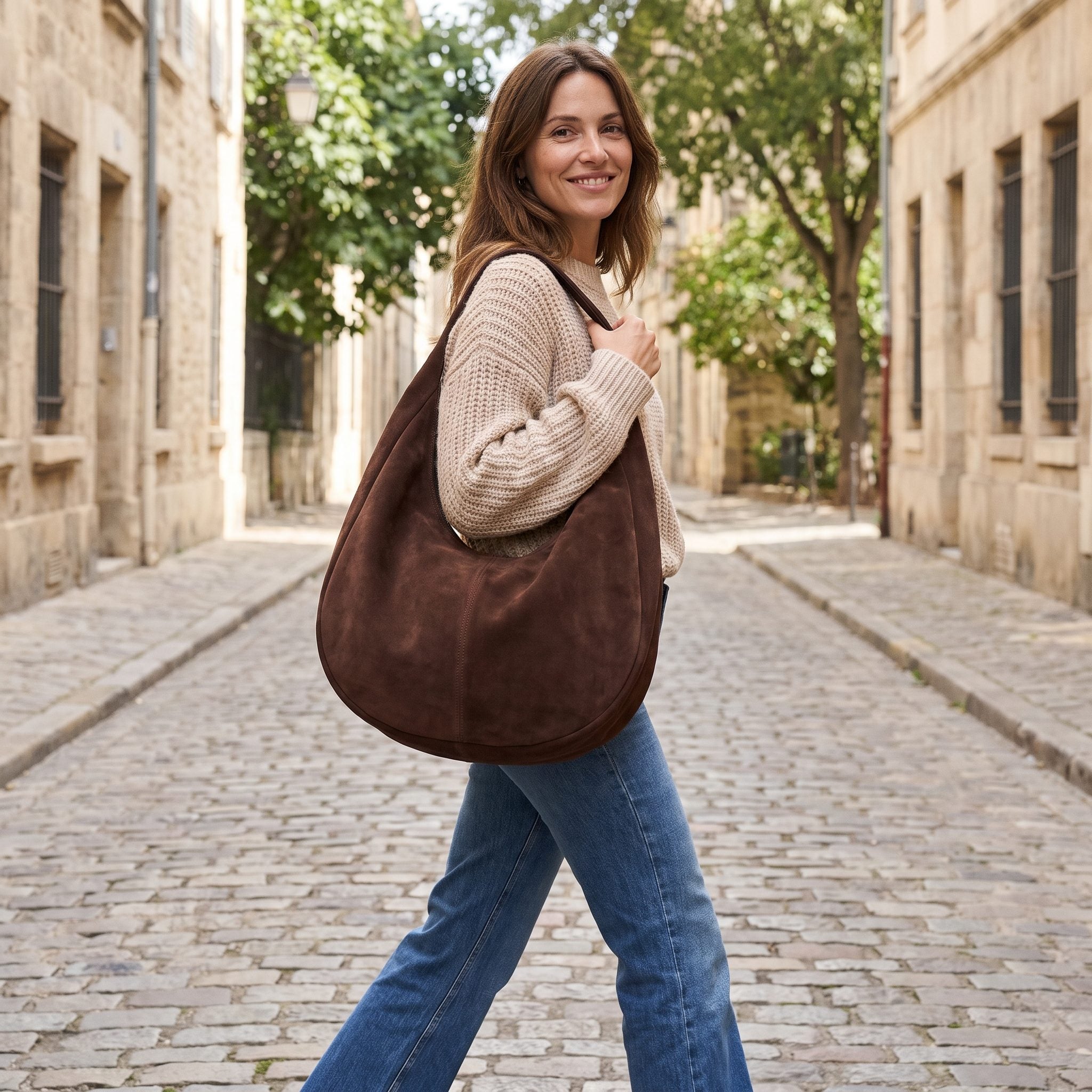
27. The 1970s Soft Suede Hobo Bag That Made Slouching Look Sophisticated
❤️ Would you like to save this?
After all that carving, knotting, patchwork, and fringe, the suede hobo offers a different proposition: let the material determine the shape. Chocolate suede folds beneath the arm, creating a soft crescent with little interest in rigid corners.
A camel suede jacket repeats the bag’s matte finish in a lighter shade, while a cream silk blouse introduces a smooth, luminous contrast. The combination feels relaxed without becoming shapeless. Its sophistication comes from the depth of the materials rather than ornament.
26. The 1980s Color-Blocked Leather Bag That Turned Geometry Up Loud
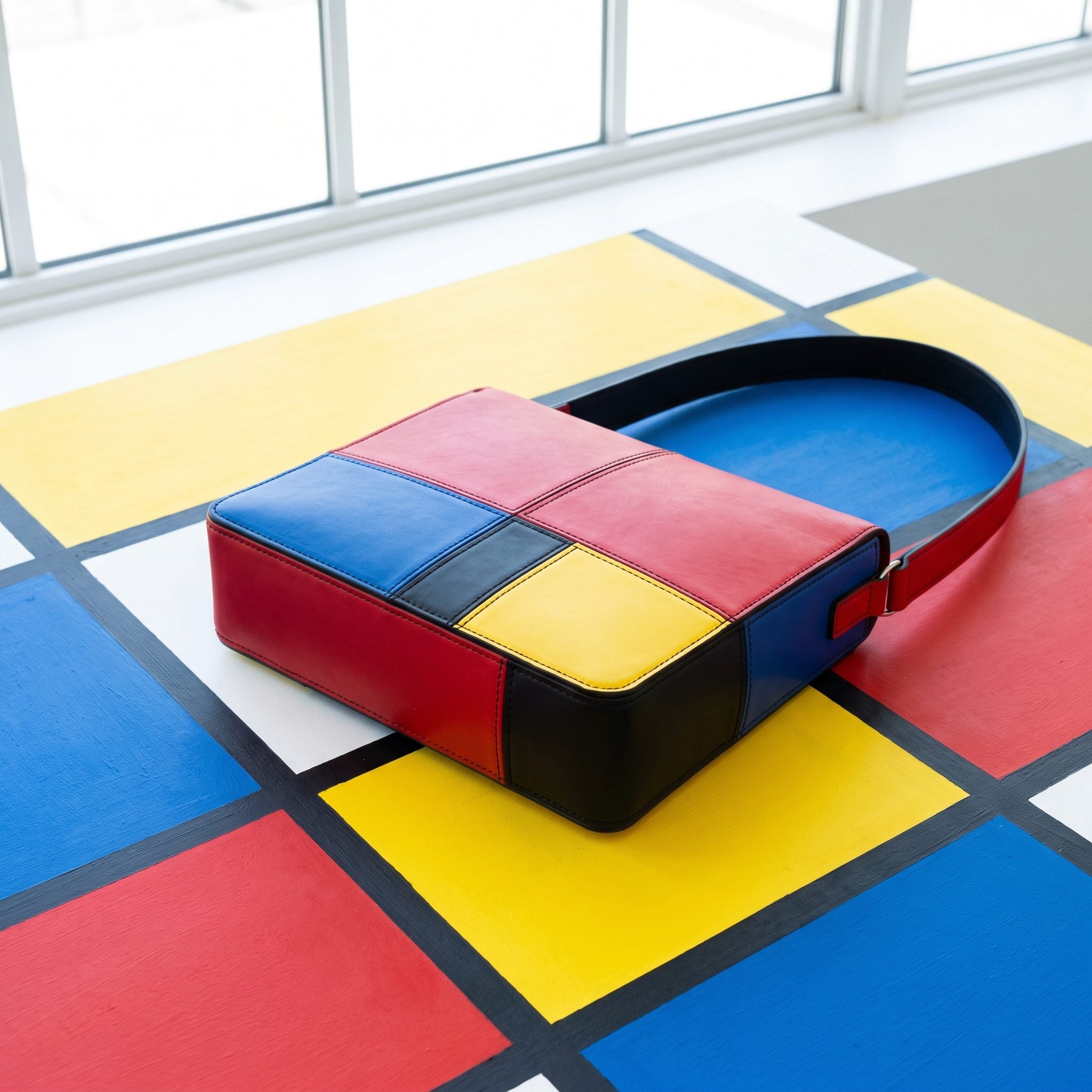
Primary colors, hard seams, and sharply defined panels give this leather bag the graphic force of a modernist painting. Its geometry makes the handbag conspicuous even without elaborate hardware or a recognizable monogram.
The cobalt blouse repeats the strongest blue in the accessory, while black garments provide a controlled background. Rather than competing with the bag’s color blocks, the outfit gives them room to register. The effect captures the decade’s appetite for bold, assertive design.
25. The 1980s Quilted Chain-Strap Bag That Brought Jewelry Into the Handbag
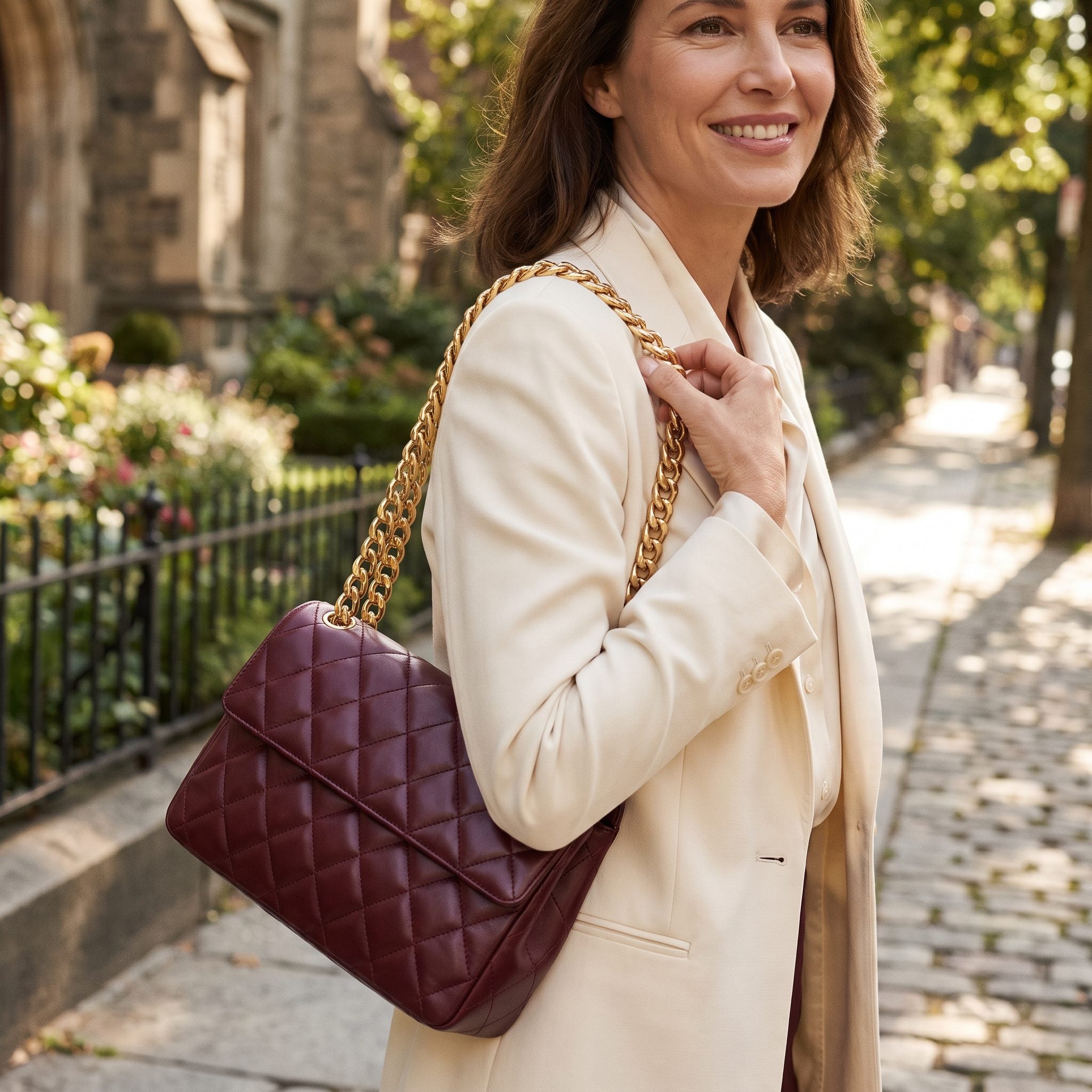
Quilted leather and a woven gold-and-leather chain combine two different kinds of ornament. The stitching gives the bag a padded, tactile surface; the metal adds a brilliant line that changes direction as it falls over the shoulder.
An ivory blazer and black trousers create a crisp two-tone outfit, leaving the chain and quilting as the principal decorative elements. The style’s roots extend well before the 1980s, but its polished luxury suited the decade’s taste for recognizable sophistication.
24. The 1980s Bright Nylon Shoulder Bag That Took Color Seriously
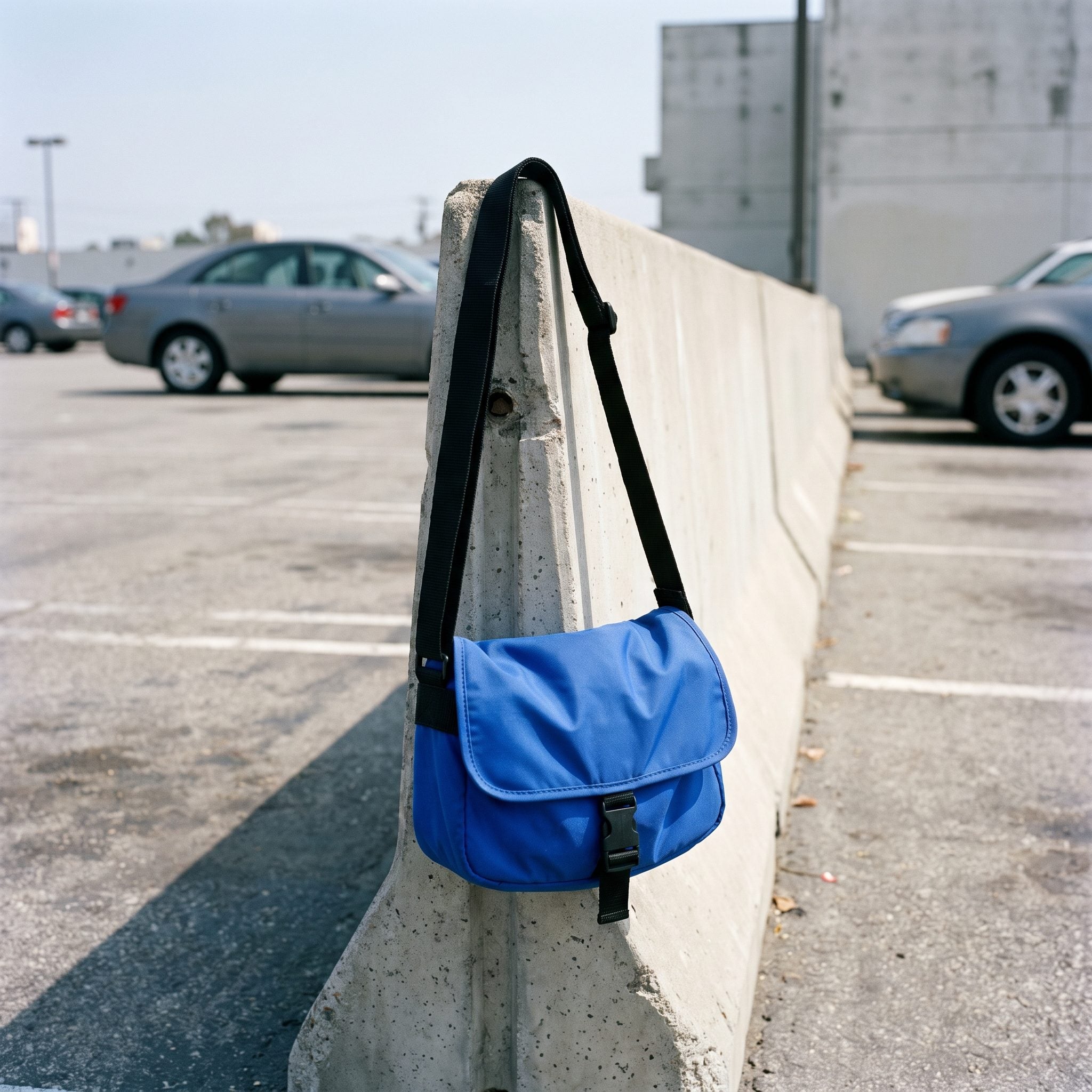
Cobalt nylon makes an entirely different statement from polished leather. Lightweight, practical, and vividly colored, this zippered shoulder bag treats durability and visual impact as compatible ambitions.
The oversized patterned sweater and slim stirrup pants establish a classic 1980s proportion: volume above, narrowness below. Repeating the sweater’s blue in the bag pulls the combination together without requiring additional accessories. Its synthetic sheen is part of the period character, not something to disguise.
23. The 1980s Patent Leather Handbag That Reflected Every Light in the Room
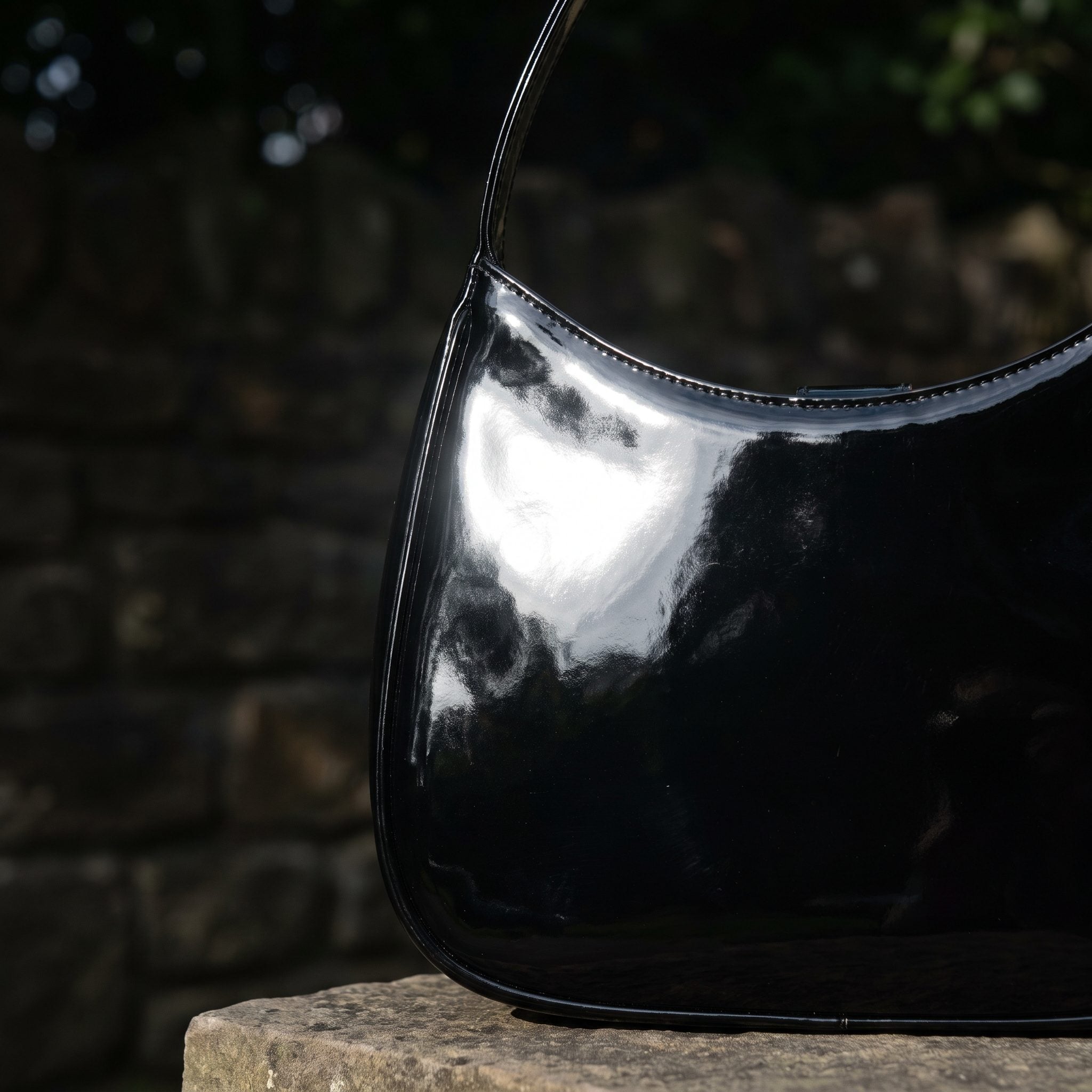
Black patent leather transforms an ordinary handbag silhouette through surface alone. The lacquered finish catches highlights along the curves and edges, giving the accessory a sharply defined presence under evening lighting.
Against a saturated red dress, the glossy black creates a dramatic interruption. The contrast is both chromatic and tactile: rich color meets mirrorlike shine. A matte bag would soften the combination considerably, but patent leather keeps the mood unapologetically dressed up.
22. The 1980s Oversized Leather Clutch That Looked Ready for Business
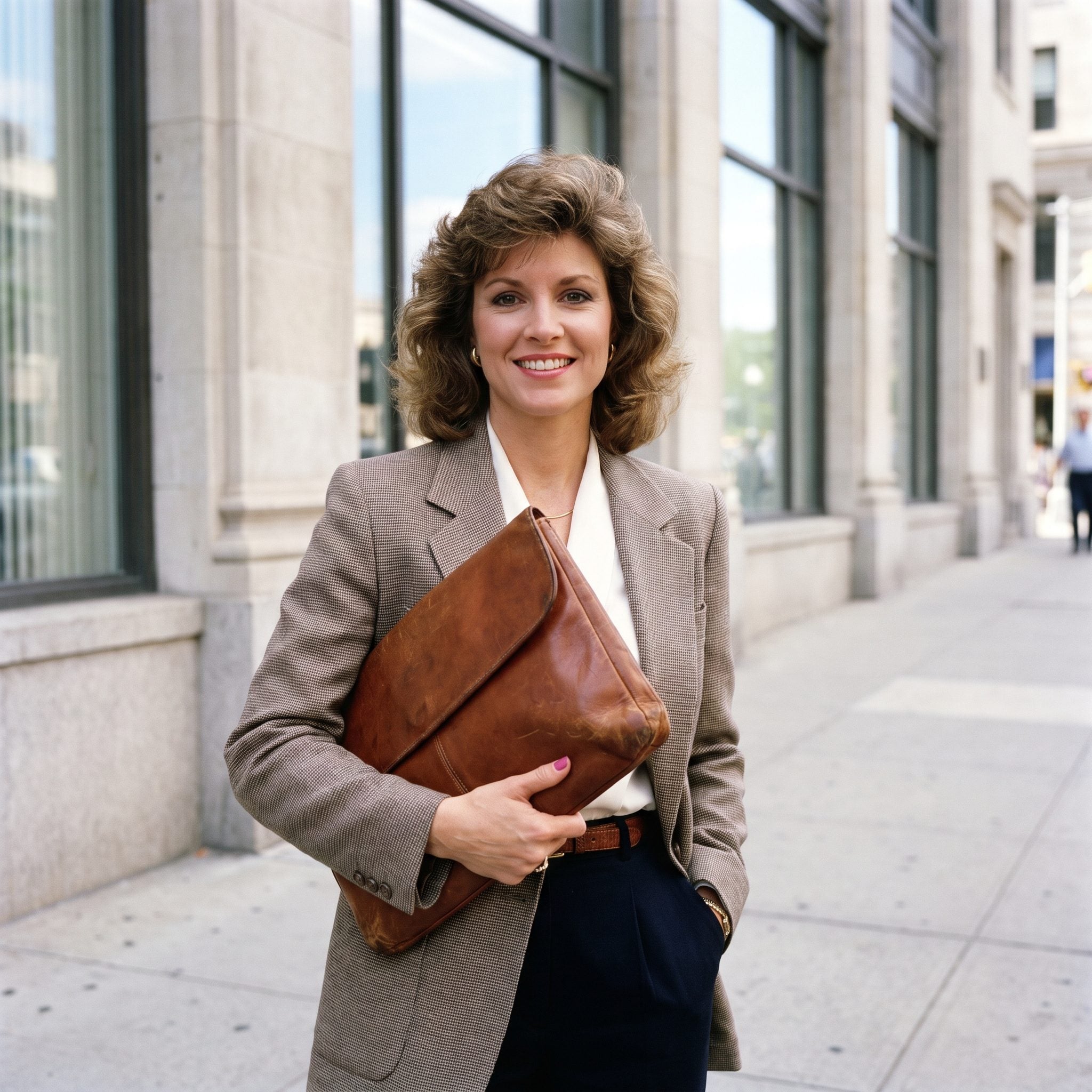
The oversized envelope clutch borrows the proportions of a document case. Its broad, flat shape looks particularly convincing alongside tailored clothing, where the angular flap echoes the clean lines of a blazer.
Deep burgundy introduces warmth against a charcoal suit without disturbing its professional character. Held beneath the arm, the clutch becomes an extension of the outfit’s architecture rather than a separate ornament. The scale is substantial, but the design remains disciplined.
21. The 1980s Logo-Print Shoulder Bag That Made the Pattern the Point
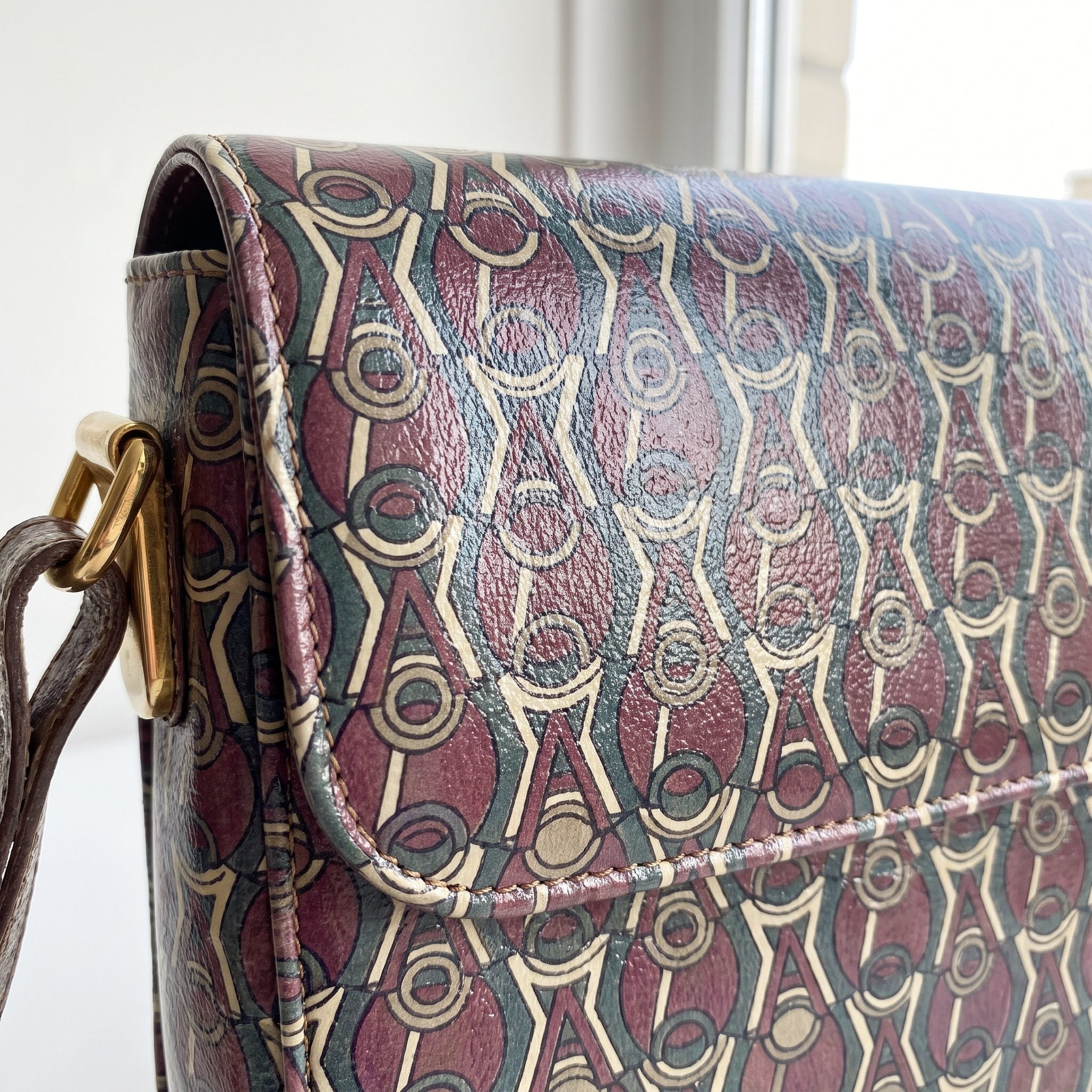
Repeating monograms turned the entire surface of a handbag into a recognizable graphic. The appeal wasn’t simply the logo itself but the way an allover pattern could make even a familiar rectangular silhouette distinctive.
Camel, cream, and brown keep the outfit within a narrow tonal range, allowing the patterned accessory to command attention without introducing another competing color. It’s a useful illustration of how a conspicuous bag can work with restrained clothing.
20. The 1980s Metal-Framed Kisslock Purse With a Clasp Worth Noticing
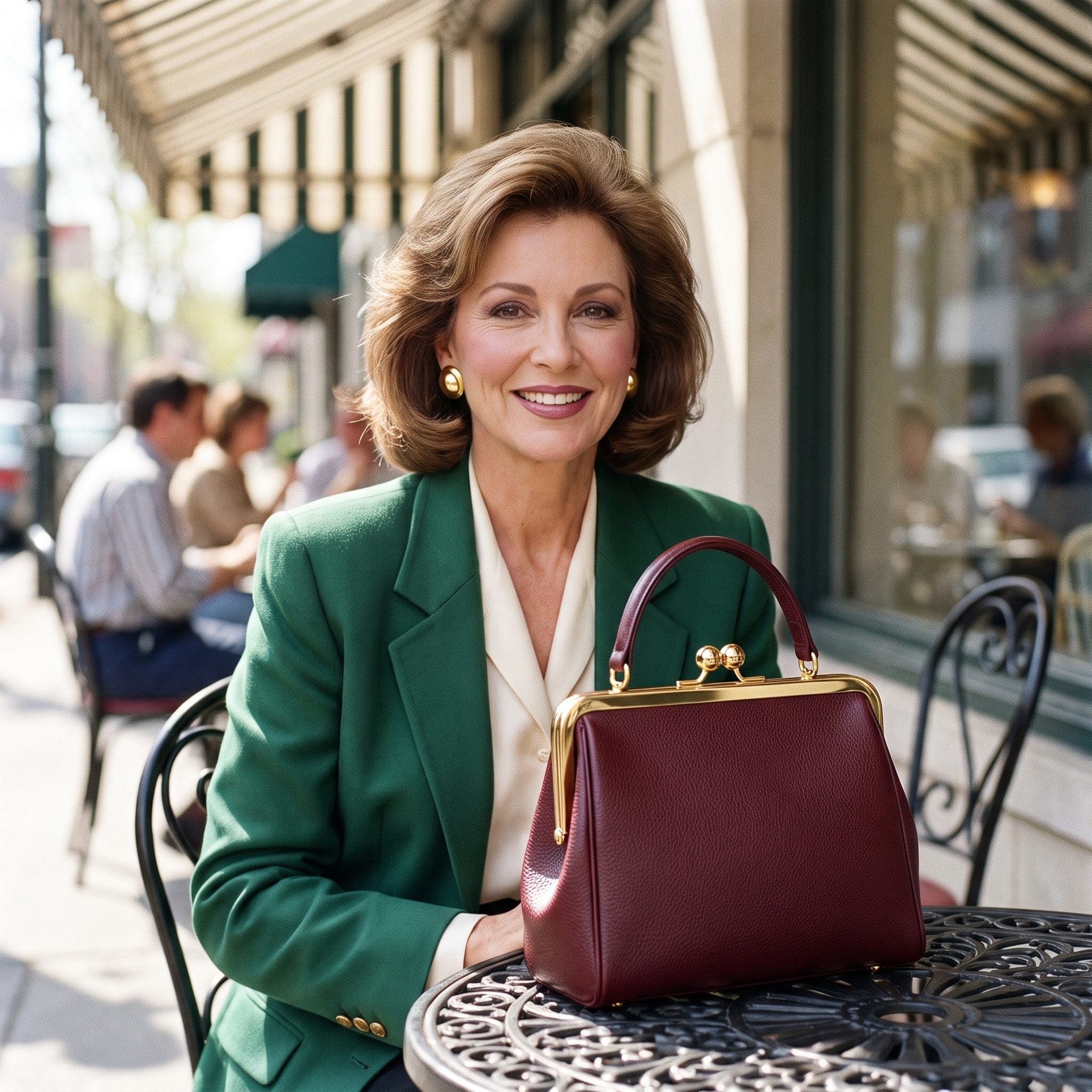
Two rounded metal knobs, a rigid frame, and a compact leather body give the kisslock purse its unmistakable outline. The closure is both mechanical and decorative, turning the simple act of opening the bag into part of its appeal.
Burgundy and forest green lend the design a formal character, while the gold-toned clasp provides a small but concentrated highlight. Kisslock closures have a much longer history than the 1980s, yet their traditional elegance fit comfortably into the decade’s more polished handbag wardrobe.
19. The 1980s Metallic Evening Bag That Made Black Velvet Look Richer
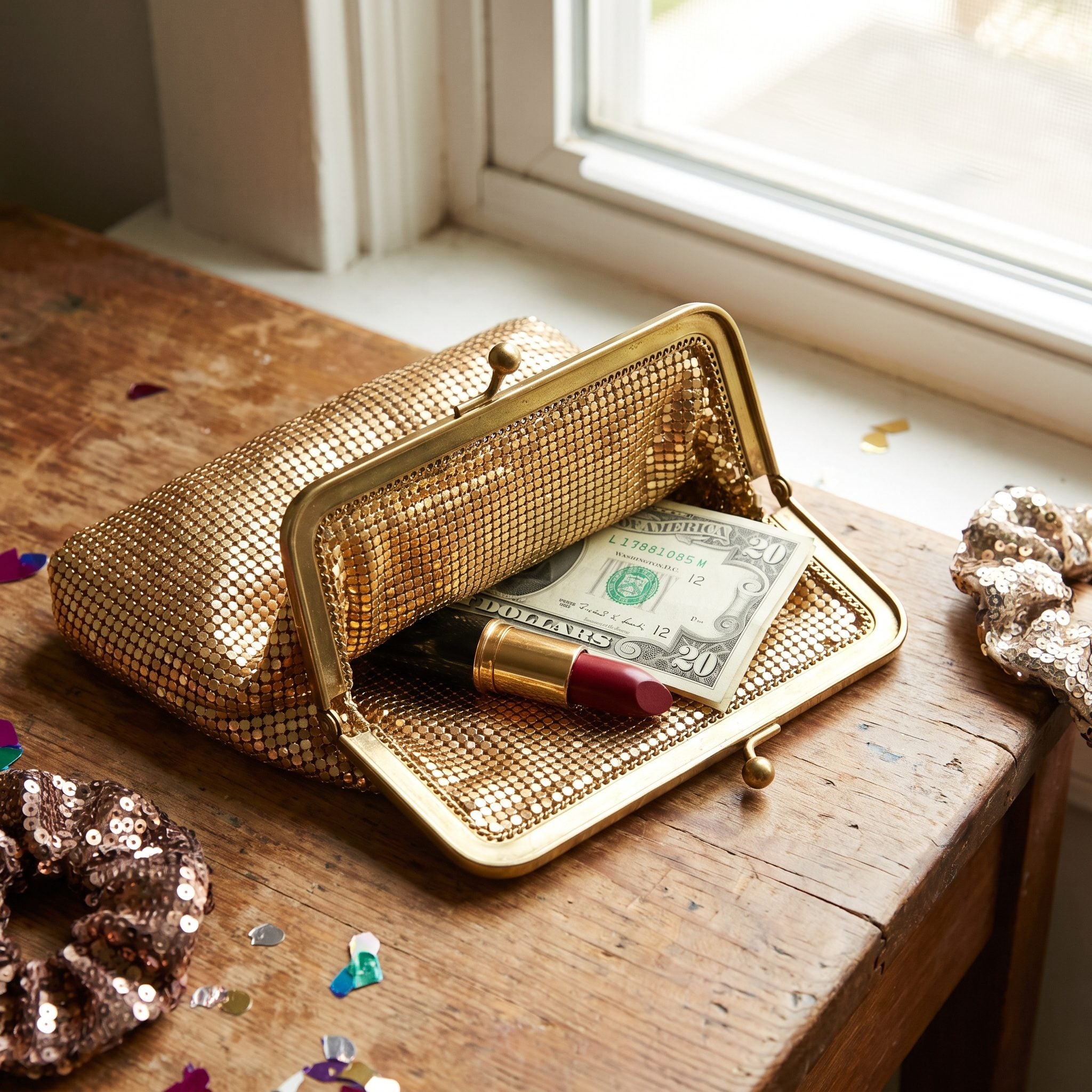
A compact gold evening bag doesn’t need much surface area to change an outfit. Its metallic finish catches available light, while the small silhouette keeps the shine concentrated rather than overwhelming.
Against black velvet, the contrast is particularly effective. Velvet absorbs light into its deep pile; the gold metallic evening bag reflects it. The two materials make each other more noticeable, creating evening glamour without additional decoration.
18. The 1980s Envelope Clutch That Made Ivory the Sharpest Accent

Where the gold evening bag depends on shine, the ivory envelope clutch relies on shape and contrast. Its pale rectangular body and triangular flap become sharply visible against a black dress.
The effect is almost graphic: one bright geometric form interrupting a continuous dark silhouette. There is no elaborate pattern, no chain, and no decorative hardware demanding attention. The strength of the design lies in its simplicity.
17. The 1980s Bright Suede Convertible Bag That Changed Its Silhouette
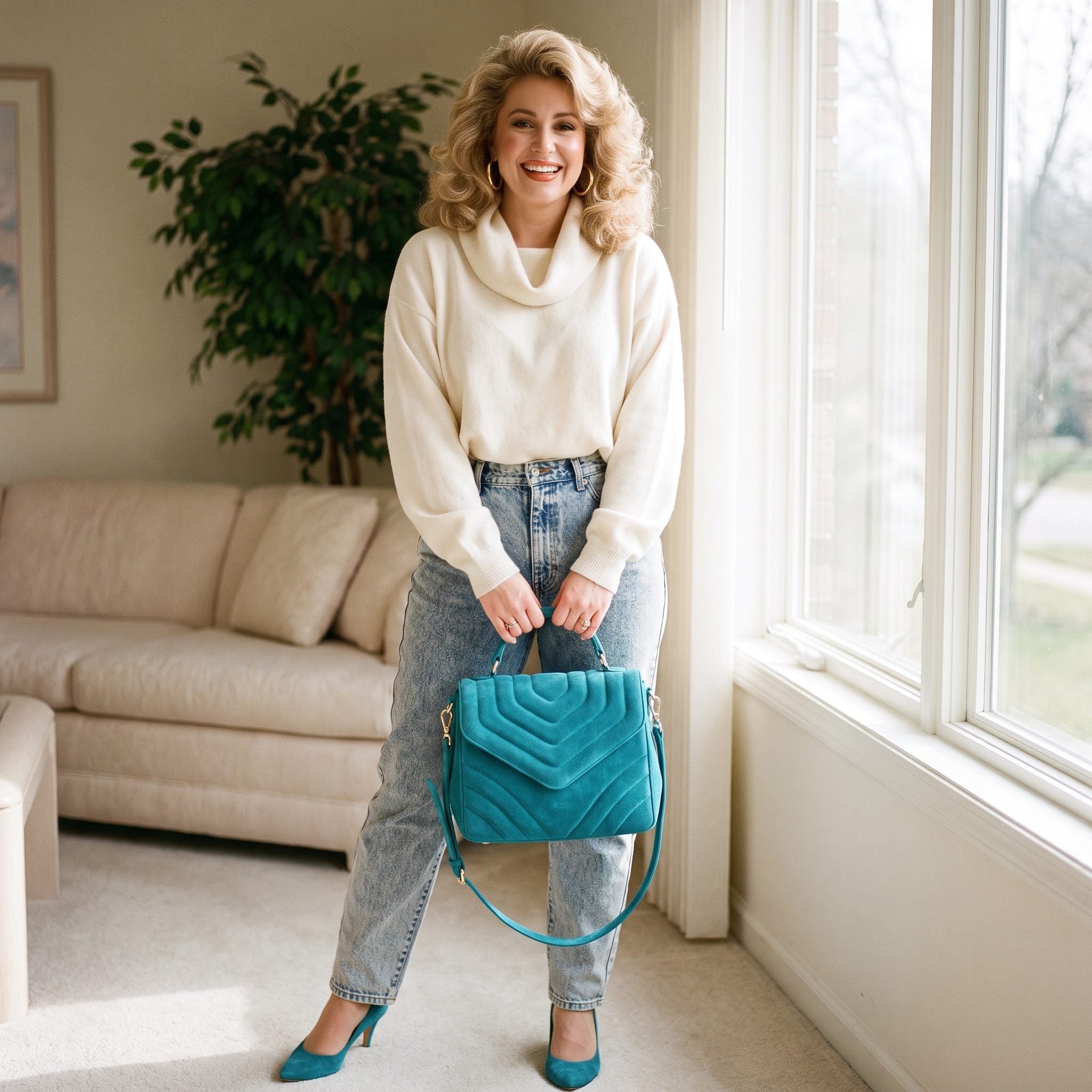
Convertible handbags introduced a practical kind of versatility: detachable straps, short handles, and alternative carrying positions could give one design several different appearances. The bright suede finish makes the bag’s construction especially noticeable, with its saturated color drawing attention to the flap, seams, and hardware.
The suede’s soft nap contrasts with the more defined edges of the bag, while its adjustable carrying options allow the same accessory to shift between tailored and relaxed outfits. The appeal lies in that combination of bold material and adaptable shape, rather than in decoration alone.
16. The 1980s Drawstring Bucket Bag That Made Room for Everything
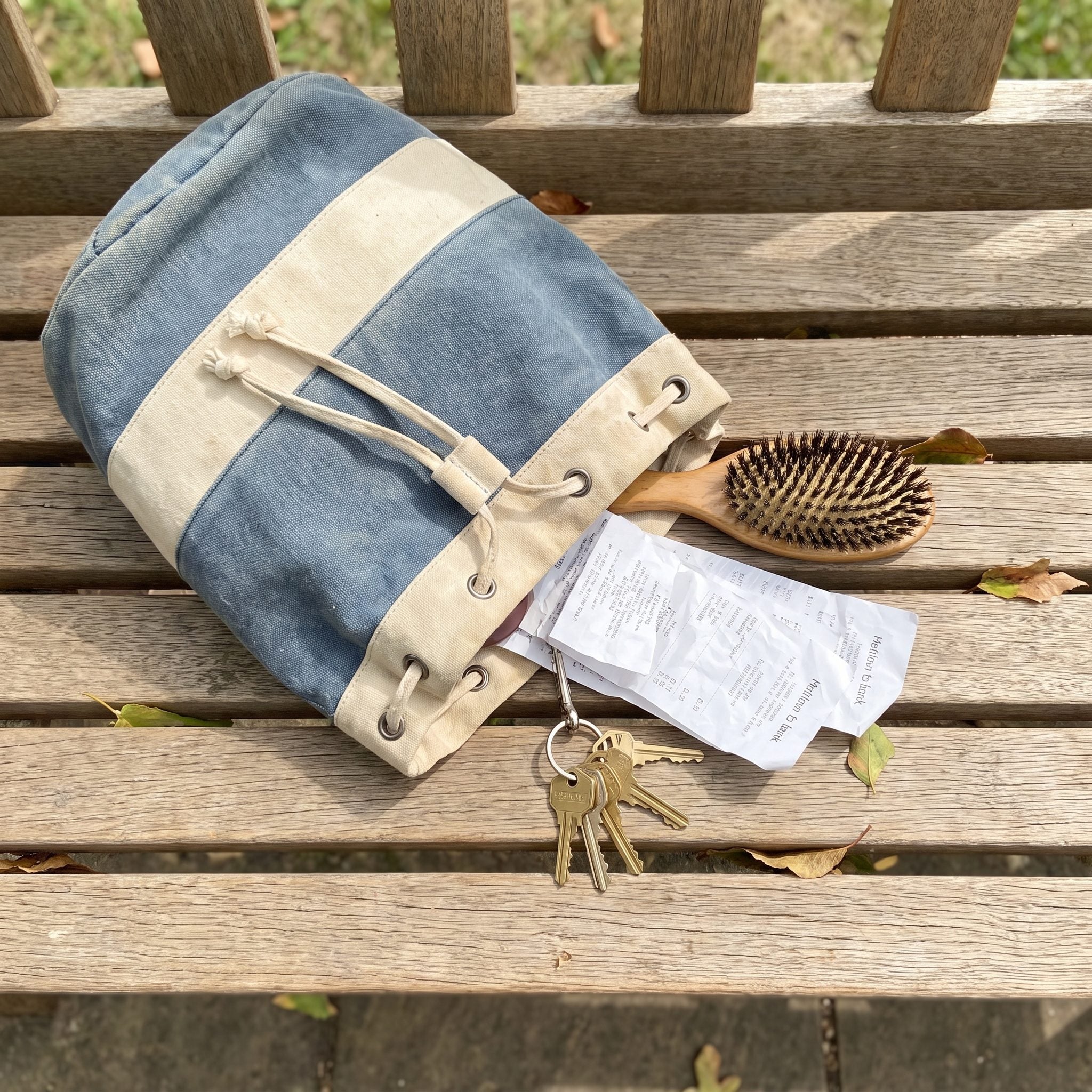
The bucket bag replaces rigid rectangular construction with a cylindrical body that gathers at the top. Soft tan leather creates generous folds around the drawstring, giving the bag a relaxed appearance even when its proportions are substantial.
Pressed pleated trousers provide the necessary contrast. Their crisp vertical lines emphasize the leather’s pliability, while the bag’s rounded shape interrupts the outfit’s tailoring. It’s a useful reminder that an accessory doesn’t have to imitate the structure of the garments around it.
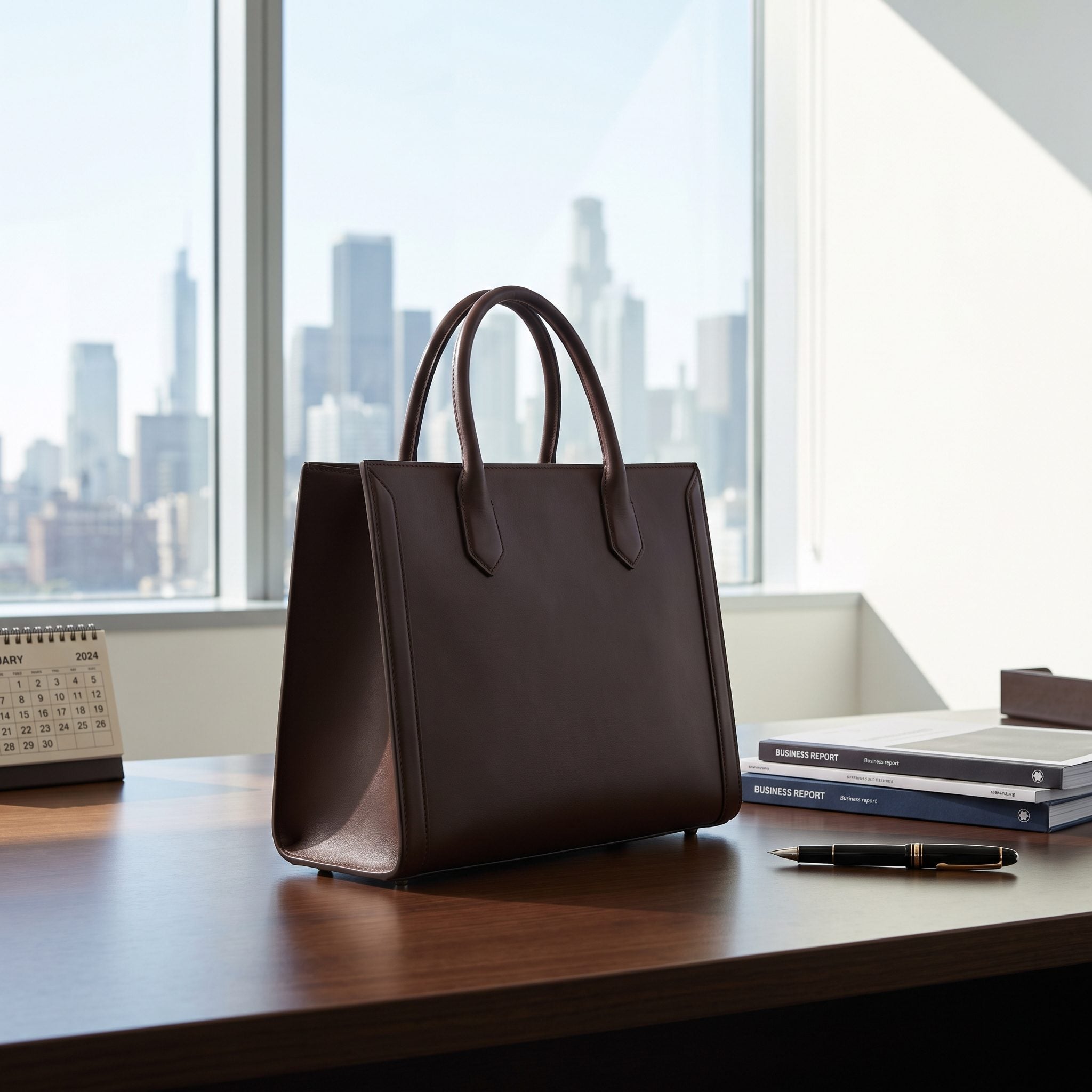
15. The 1980s Structured Top-Handle Satchel That Meant Business
❤️ Would you like to save this?
Rigid corners, two short handles, a substantial clasp, and a base designed to stand upright: the structured satchel has little interest in looking casual. Its proportions are architectural, with every seam contributing to the outline.
Oxblood leather against navy tailoring creates a sophisticated combination of deep colors. The bag’s firm construction contrasts with the silk blouse beneath the jacket, balancing authority with softness. The result captures an important part of 1980s professional dressing without needing oversized hardware or a conspicuous logo.
14. The 1990s Mini Shoulder Bag That Moved the Strap Up Under the Arm
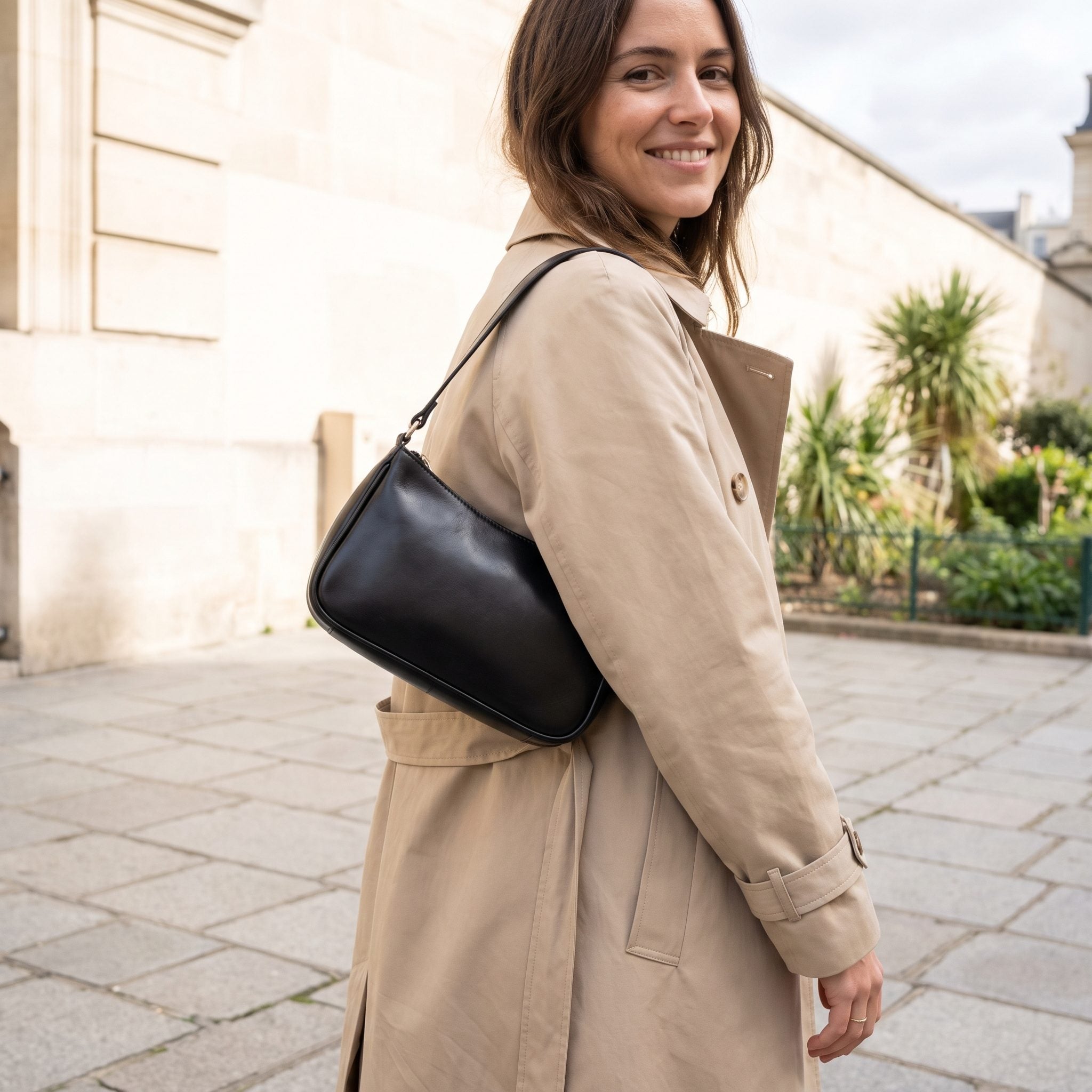
The shortened shoulder strap changed the relationship between handbag and outfit. Instead of hanging at the hip, the compact bag sat close beneath the arm, keeping its silhouette within the upper body rather than extending the vertical line.
A white T-shirt, straight-leg jeans, and black bag demonstrate the decade’s interest in pared-back styling. The simplicity leaves the proportions exposed: high-waisted denim, a clean neckline, and an accessory with almost no excess material. The high-waisted jeans reinforce that unfussy approach.
13. The 1990s Cherry-Red Patent Vinyl Mini Bag That Refused to Blend In
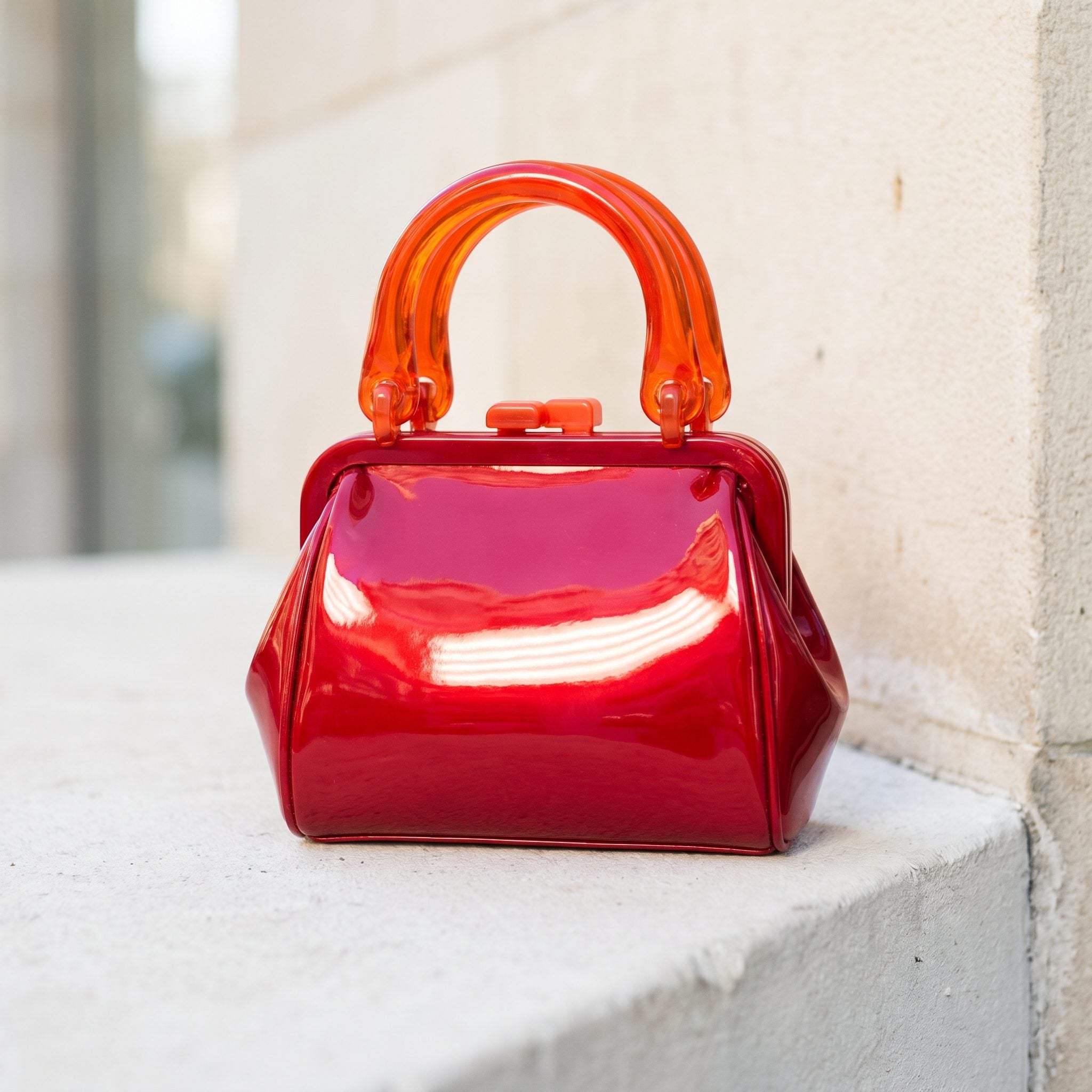
Cherry-red patent vinyl has none of the restraint associated with minimalist leather. Its saturated color and reflective finish make a compact handbag conspicuous from across a room.
Black and indigo provide a dark background, giving the red a crisp visual boundary. The bag becomes the outfit’s strongest color statement without requiring a matching jacket or shoes. Its synthetic gloss is part of the appeal, capturing the playful, accessible side of 1990s accessories.
12. The Black Nylon Backpack Purse That Made Practicality Fashionable
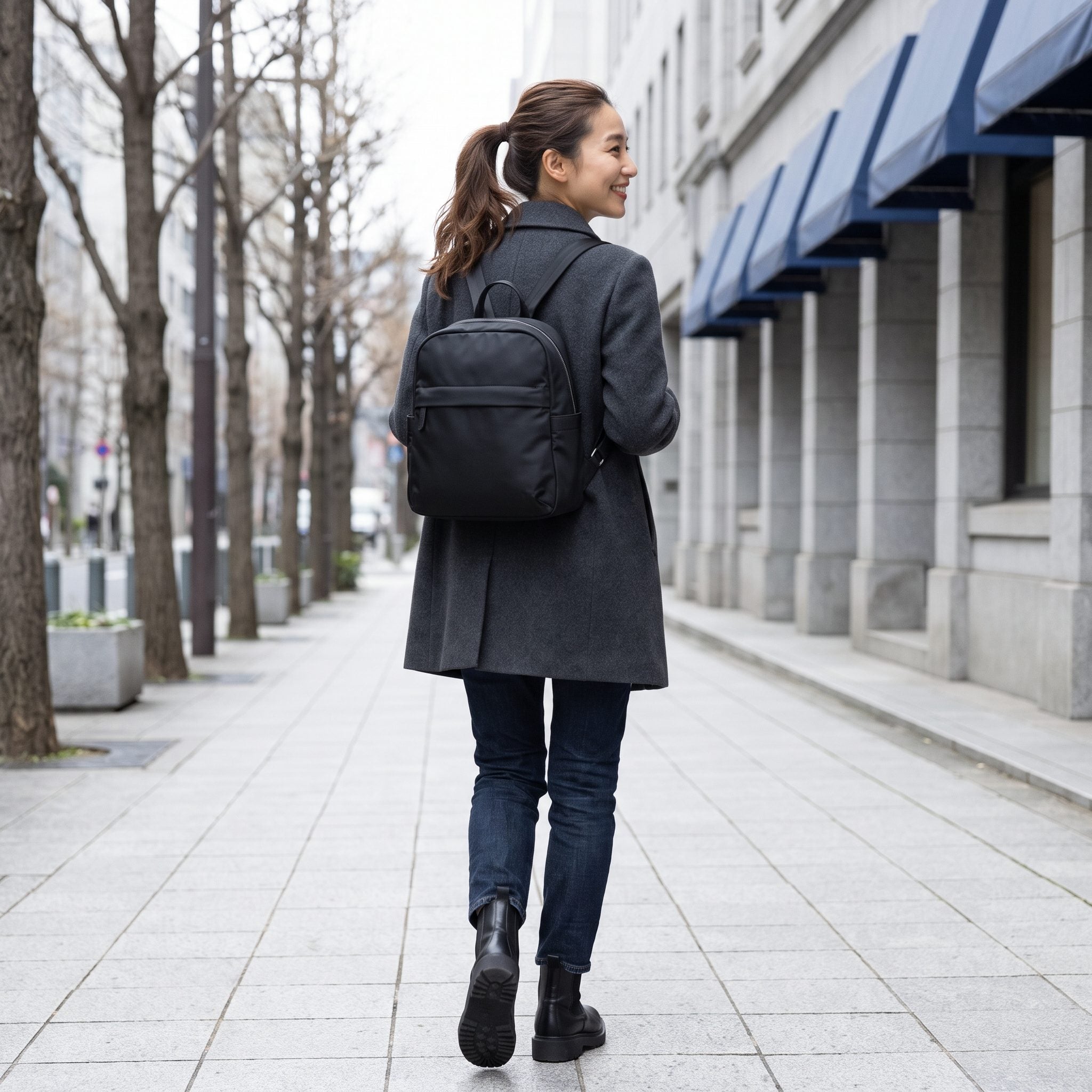
Lightweight nylon gave the backpack purse a practical advantage over heavier leather designs. Its compact body, zippered compartments, and simple straps made it an appealing everyday accessory at a time when casual dressing was becoming increasingly influential.
Paired with a baby tee, relaxed jeans, and a choker, the black nylon introduces a clean utilitarian note. The fabric’s slight sheen distinguishes it from the cotton and denim around it, while the backpack’s shape keeps the outfit informal. Unlike a decorative miniature backpack, this version emphasizes lightweight construction and everyday convenience.
11. The 1990s Burgundy Velvet Evening Bag That Preferred Texture to Sparkle
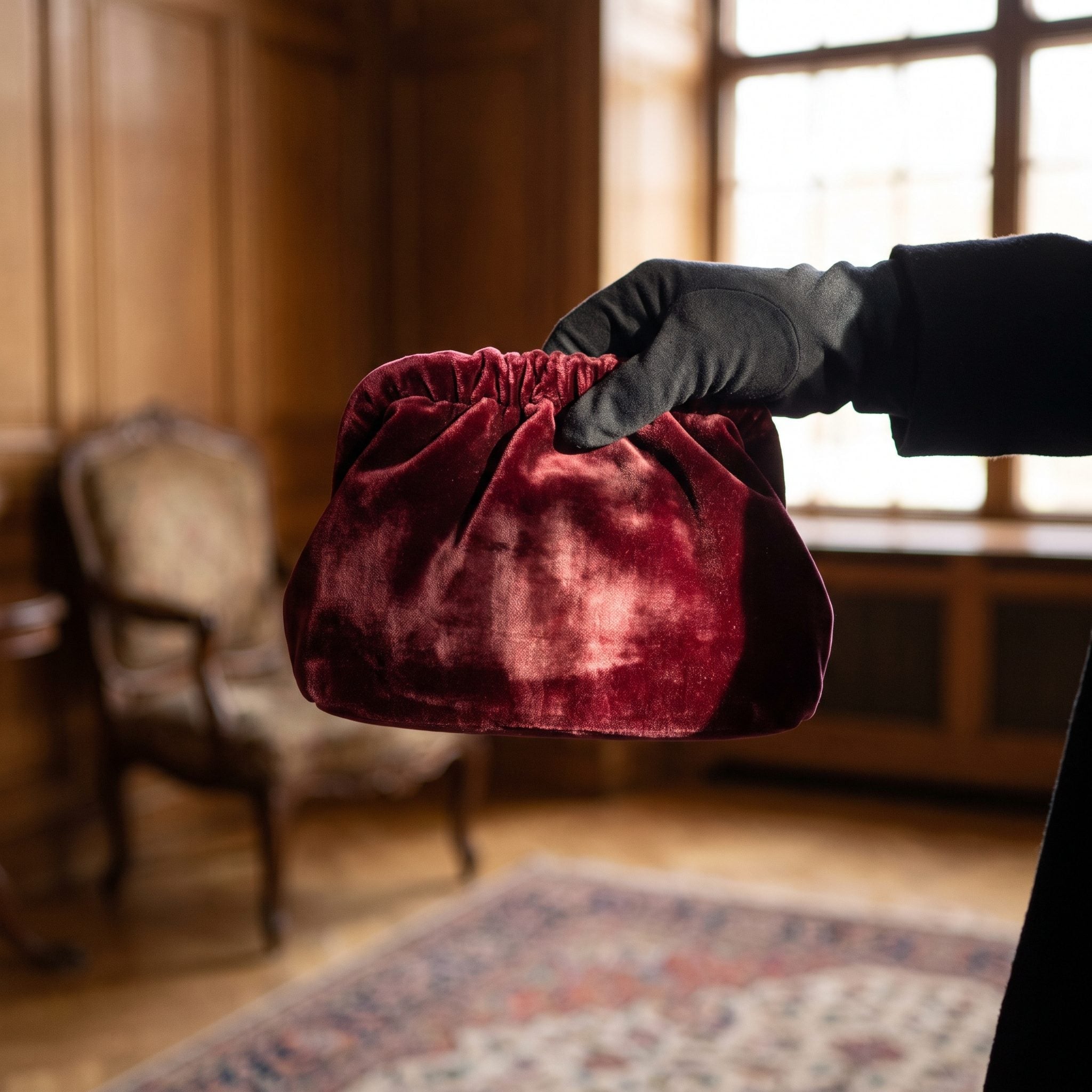
Burgundy velvet offers evening richness without metallic shine. The pile changes tone as it catches the light, creating subtle variations across an otherwise simple handbag silhouette.
Beside a bias-cut black dress, the plush surface contrasts with the fluid fall of the fabric. Both materials are soft, but they behave differently: one holds a dense, light-absorbing texture, while the other follows the body’s movement. The combination is elegant precisely because the decoration remains minimal.
10. The 1990s Denim Shoulder Bag That Took Casual Dressing Literally
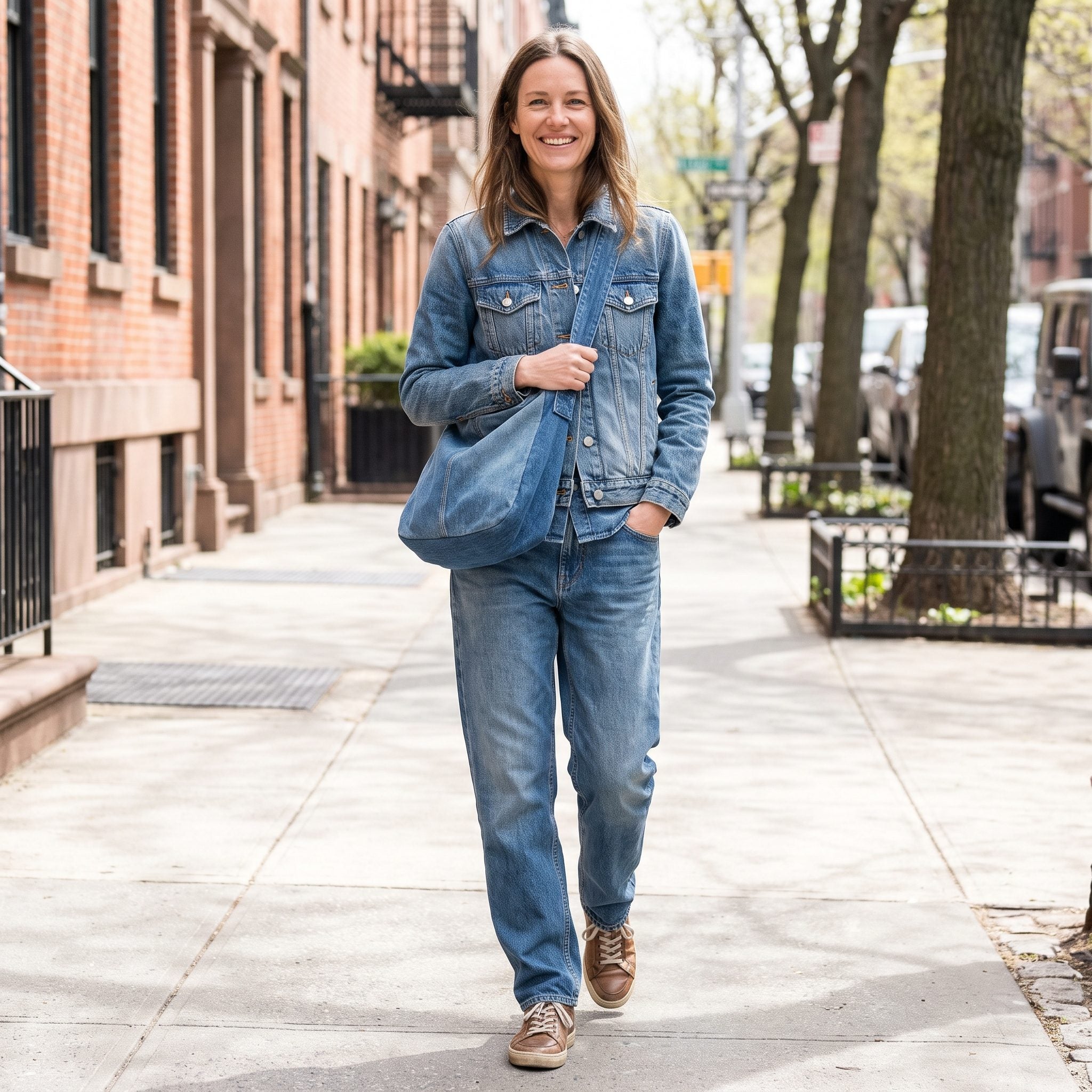
Denim handbags took an ordinary clothing fabric and gave it the proportions of a conventional accessory. Contrast topstitching, familiar indigo color, and sturdy construction made the material immediately recognizable.
A white ribbed tank and khaki cargo pants prevent the look from becoming a denim uniform. The bag introduces a cooler blue against the warm neutral trousers, while the stitching supplies detail that plain cotton lacks. Casual materials can still create a carefully balanced outfit.
9. The 1990s Minimalist Leather Shoulder Bag That Needed No Explanation
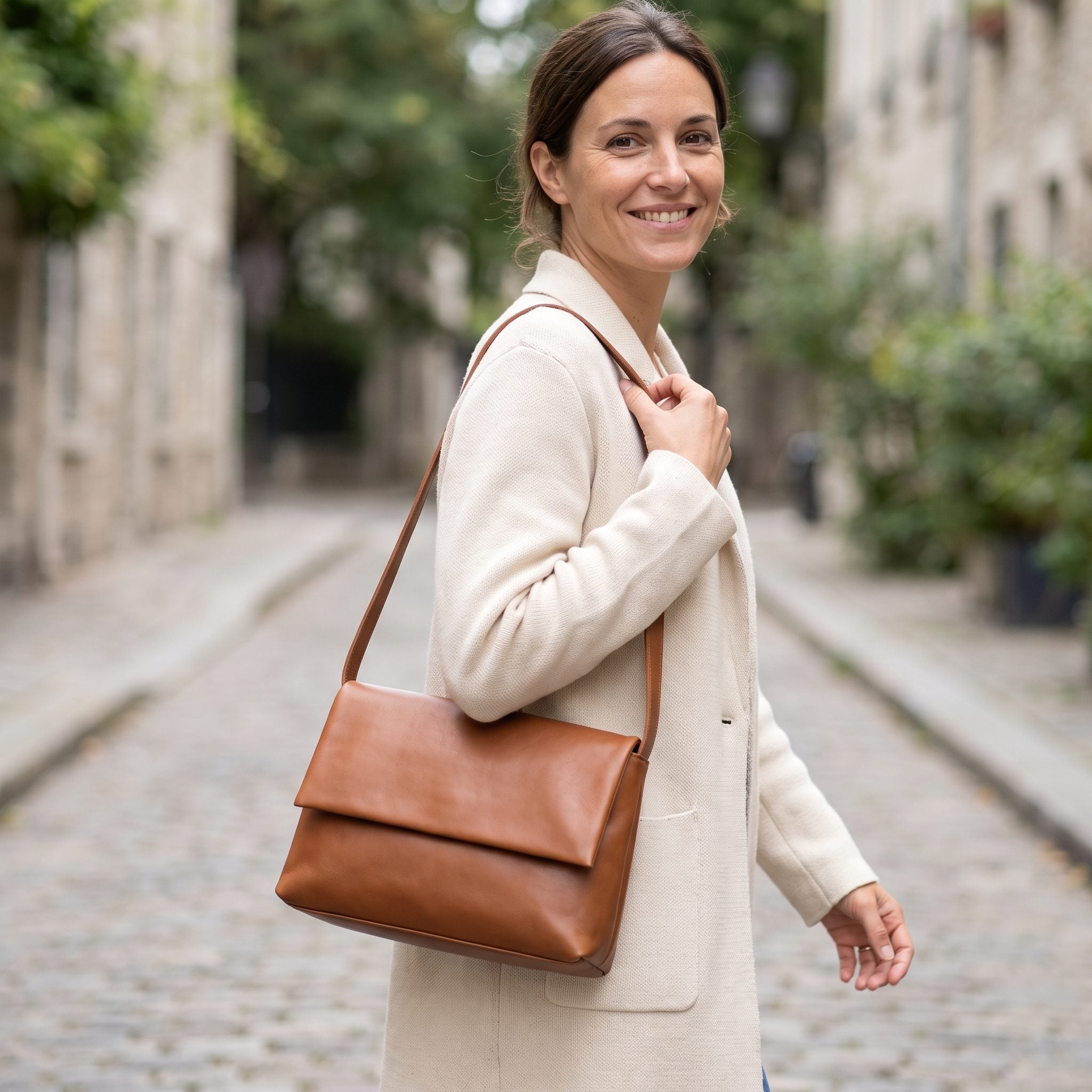
No visible logo, elaborate buckle, or decorative stitching. This brown leather shoulder bag reduces the design to proportion, material, and a clean rectangular outline. With so little ornament, the quality of the leather and construction becomes particularly important.
Cream knitwear and black trousers create a restrained foundation, while the espresso leather adds a warmer middle tone. The bag doesn’t interrupt the outfit so much as complete its palette. The simplicity also explains why this type of accessory remains easy to wear decades later.
8. The Clear Vinyl Handbag That Made Transparency the Design
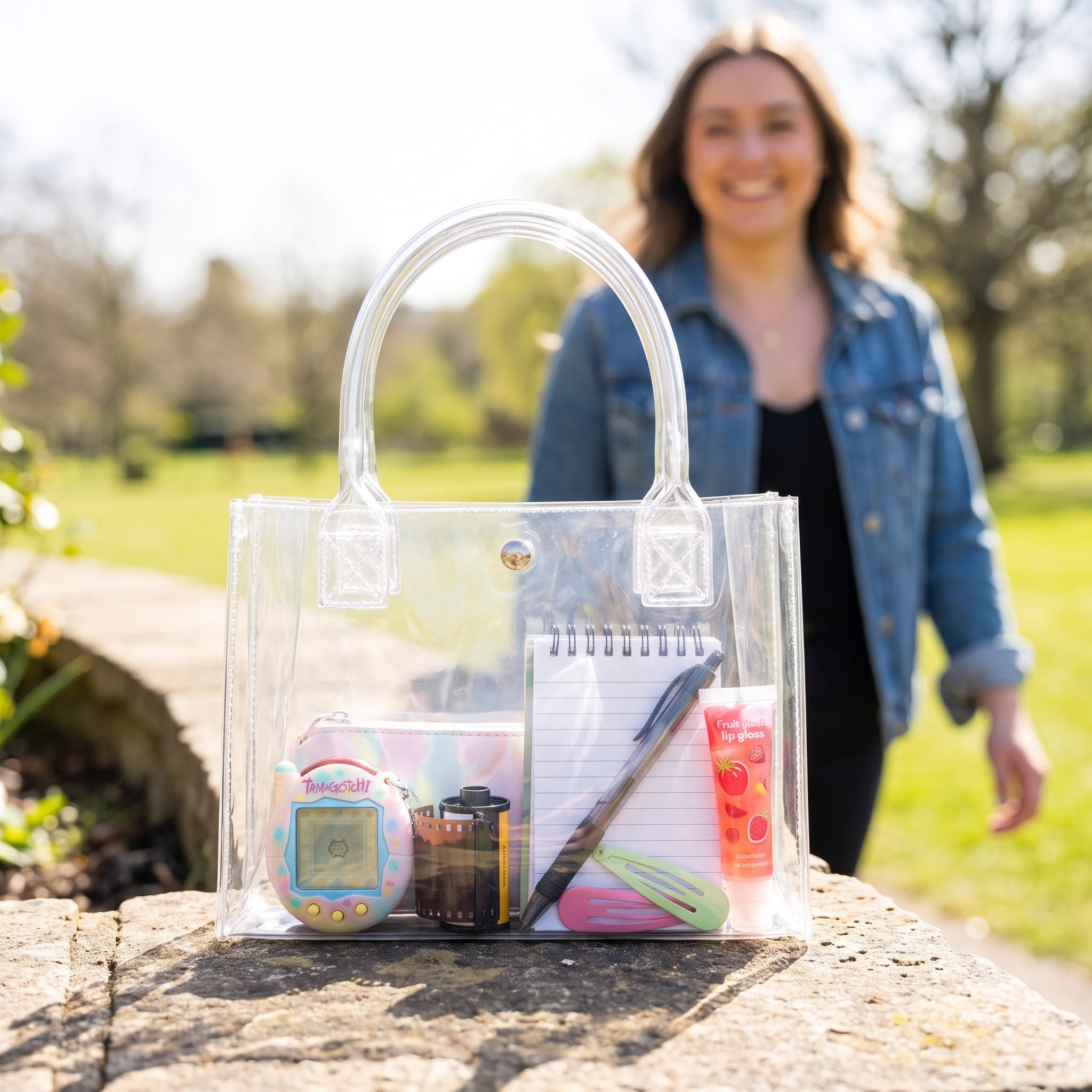
A transparent handbag removes the usual distinction between exterior and contents. Seams, handles, and the objects inside become part of its appearance, making the opaque inner pouch a particularly useful design element.
Pastel clothing and light denim emphasize the bag’s airy quality. Rather than introducing a large block of color, the clear vinyl allows the surrounding palette to remain visible through its body. The result has a playful, almost futuristic character that fits the decade’s experiments with synthetic materials.
7. The Baguette Bag That Turned a Short Shoulder Strap Into a Fashion Phenomenon
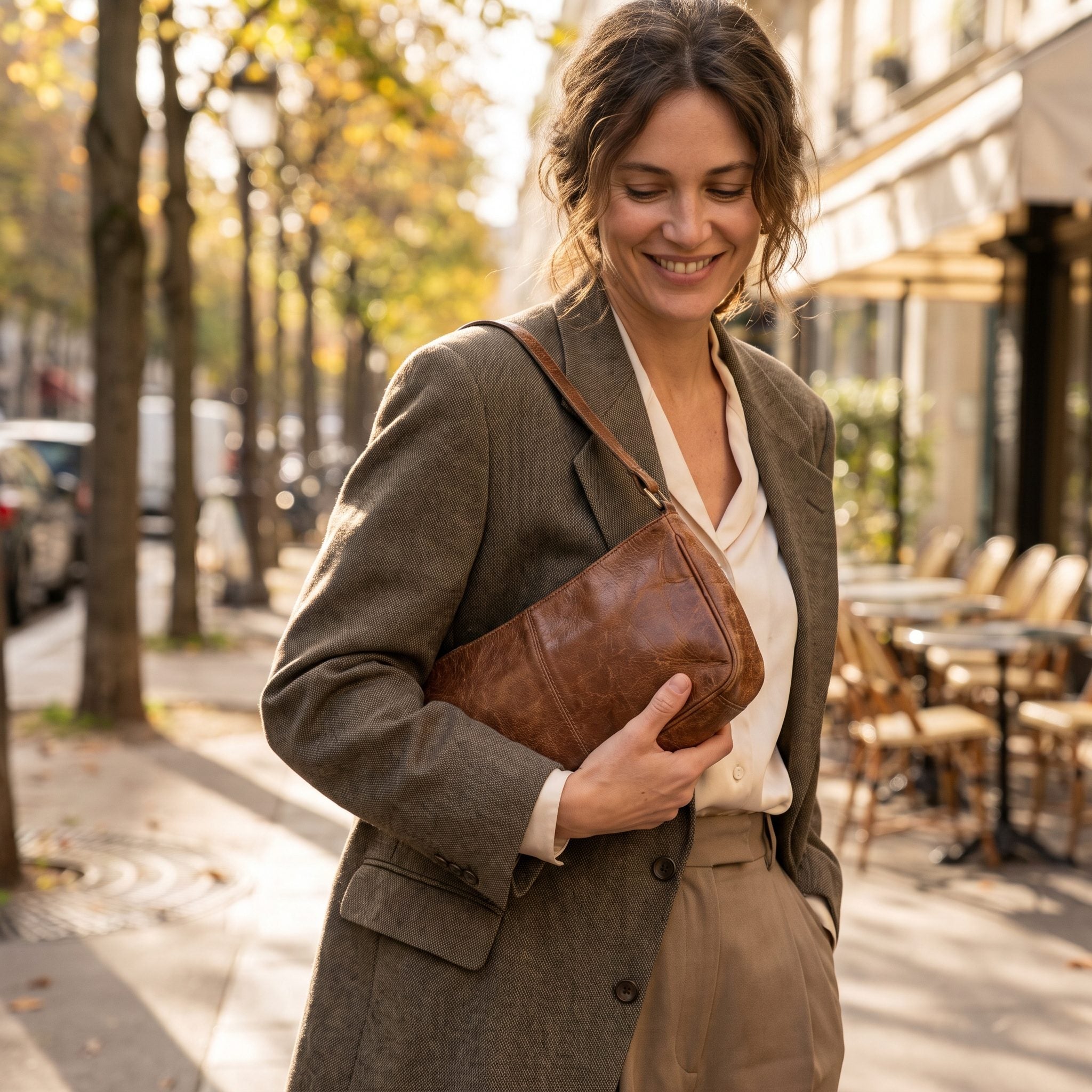
Introduced by Fendi in 1997, the Baguette helped make the short, horizontal shoulder bag one of the defining accessories of the late 1990s. Its name refers to the way the bag is carried beneath the arm, recalling a loaf of French bread.
Chocolate leather against a black mock-neck and dark denim creates a narrow, subdued palette. The bag’s horizontal shape becomes the strongest interruption in an otherwise vertical silhouette. That small change in proportion gives the accessory a presence far greater than its size.
6. The Olive Messenger Bag That Brought Utility Into the Wardrobe
❤️ Would you like to save this?
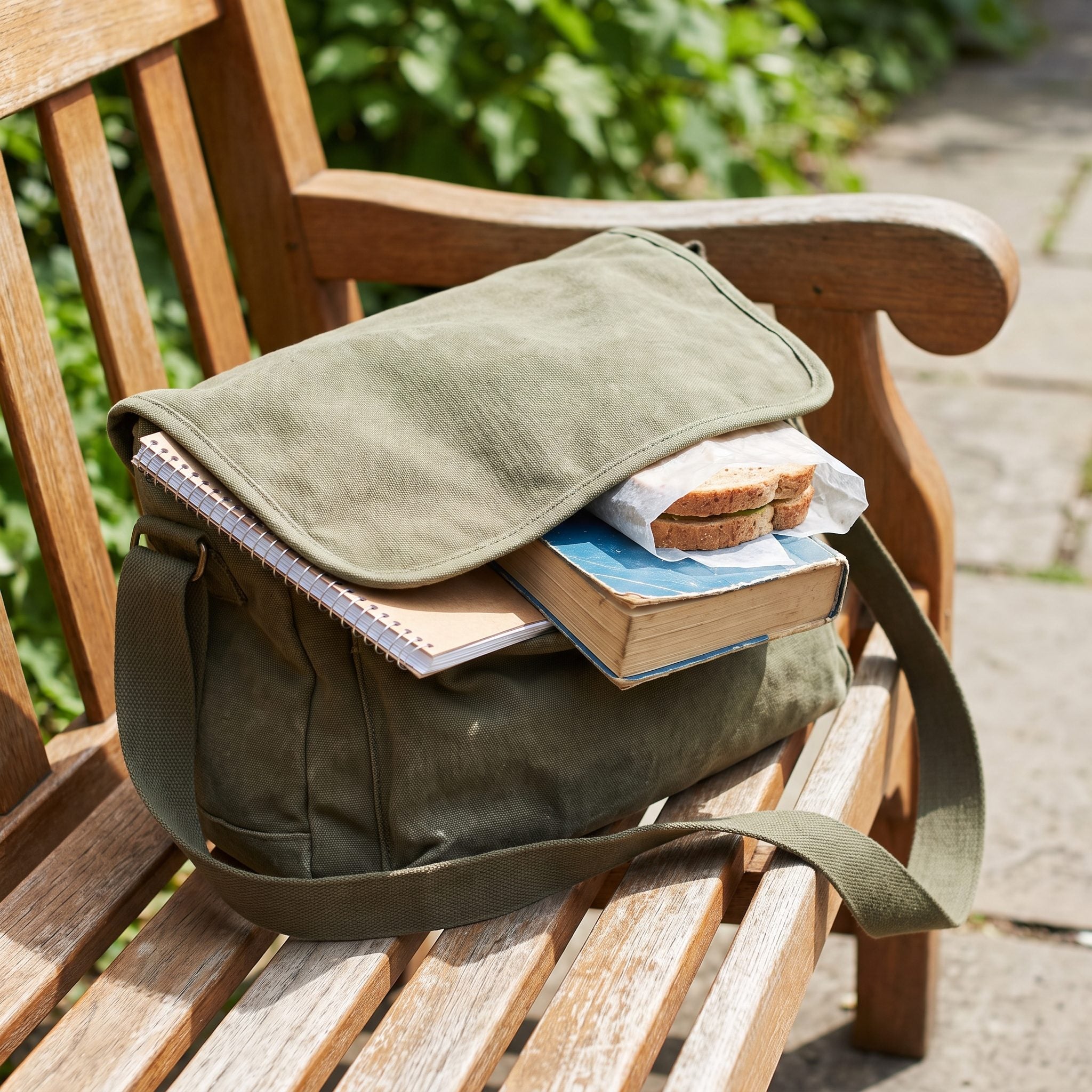
Olive canvas, reinforced seams, broad straps, and practical buckles give the messenger bag a functional appearance rooted in utility rather than decoration. Its generous rectangular body offers a very different proportion from the decade’s compact evening and shoulder bags.
A denim jacket and burgundy T-shirt introduce warmth against the muted green canvas. The sturdy material and visible construction make the accessory feel appropriate for everyday use, while its diagonal strap adds movement across the outfit.
5. The Mini Backpack That Made a Floral Dress Look Less Sweet
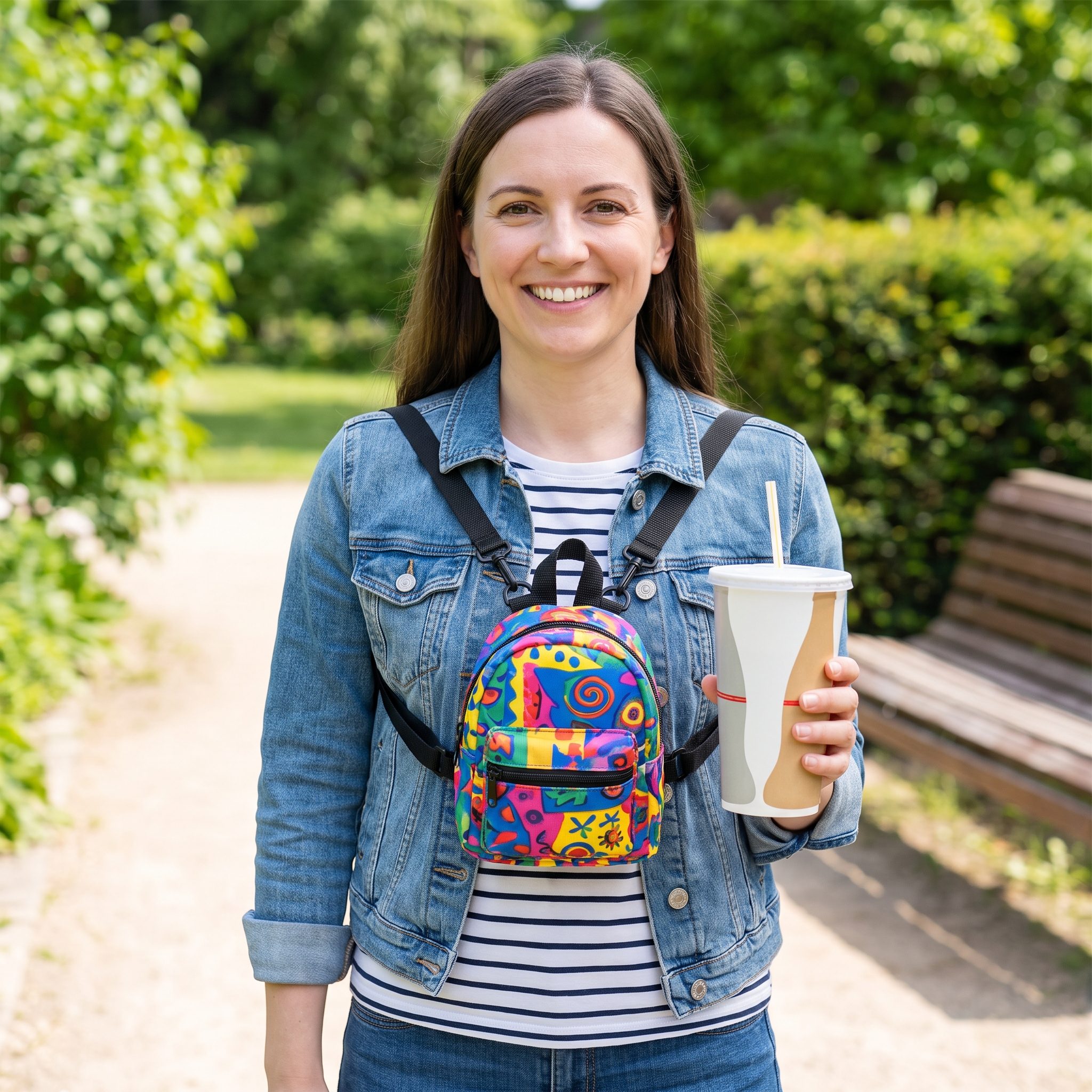
The miniature backpack borrowed the familiar shape of a full-size school bag and reduced it to accessory proportions. Unlike the practical nylon backpack purse, this version uses its tiny scale as a fashion statement, making the contrast between the accessory and the clothing particularly important.
A floral dress layered over a white T-shirt establishes a soft, youthful silhouette. The black backpack, opaque tights, and chunky shoes add darker, more substantial elements, keeping the outfit from becoming overly delicate. The contrast between romantic print and utilitarian accessories is unmistakably 1990s.
4. The 1990s Woven Leather Tote That Made Craftsmanship Look Expensive
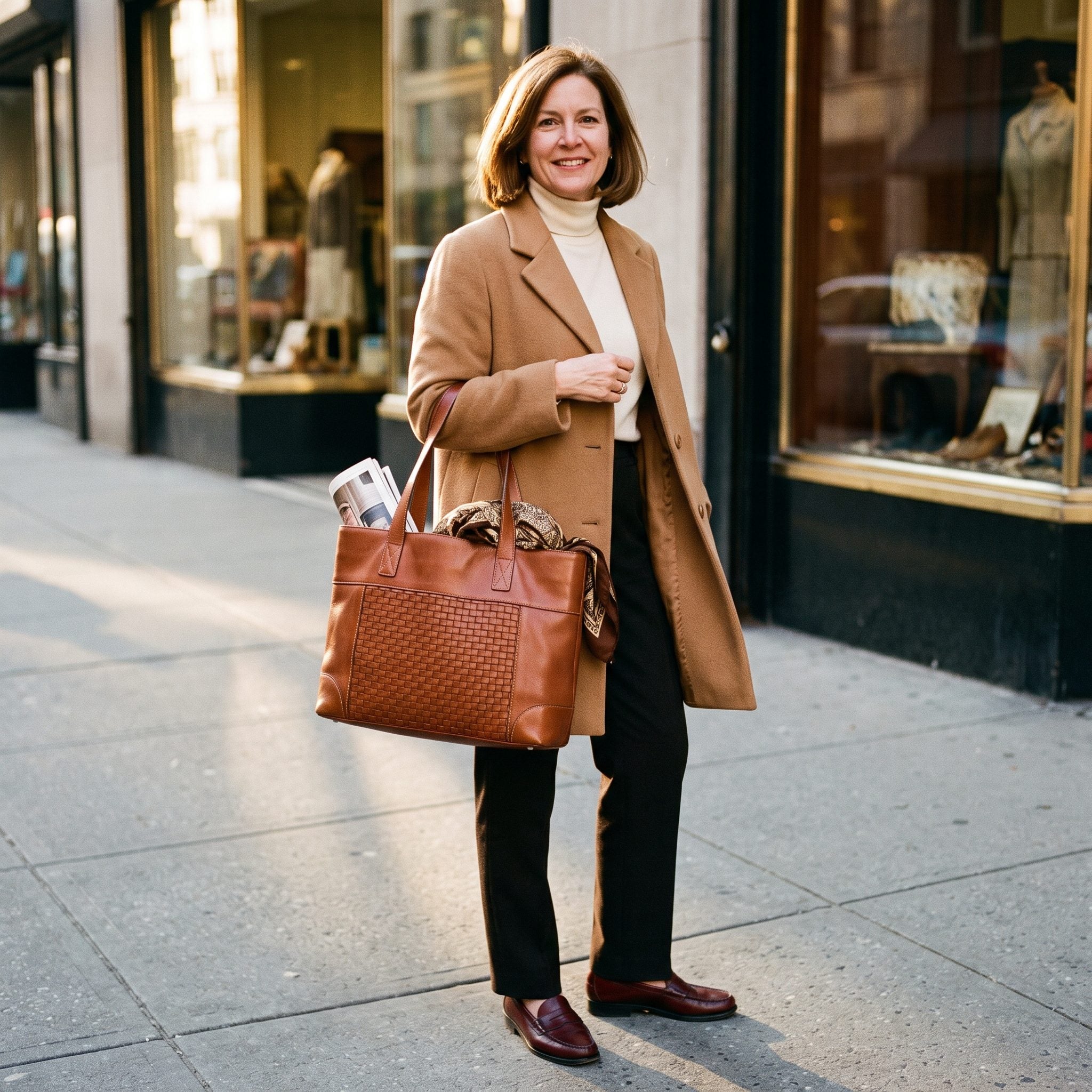
Interlaced strips of leather create a richly textured surface without relying on a printed pattern. The woven construction gives the tote a recognizable identity, while the structured body maintains a substantial silhouette.
Cognac brown emphasizes the variations in the leather, allowing light to catch the overlapping strips. The result is luxurious but comparatively understated. The technique recalls the tradition of fine woven-leather accessories, including the intrecciato construction associated with Bottega Veneta, without requiring the bag itself to be identified as a particular designer’s work.
3. The Croc-Embossed Shoulder Bag That Borrowed Luxury’s Texture
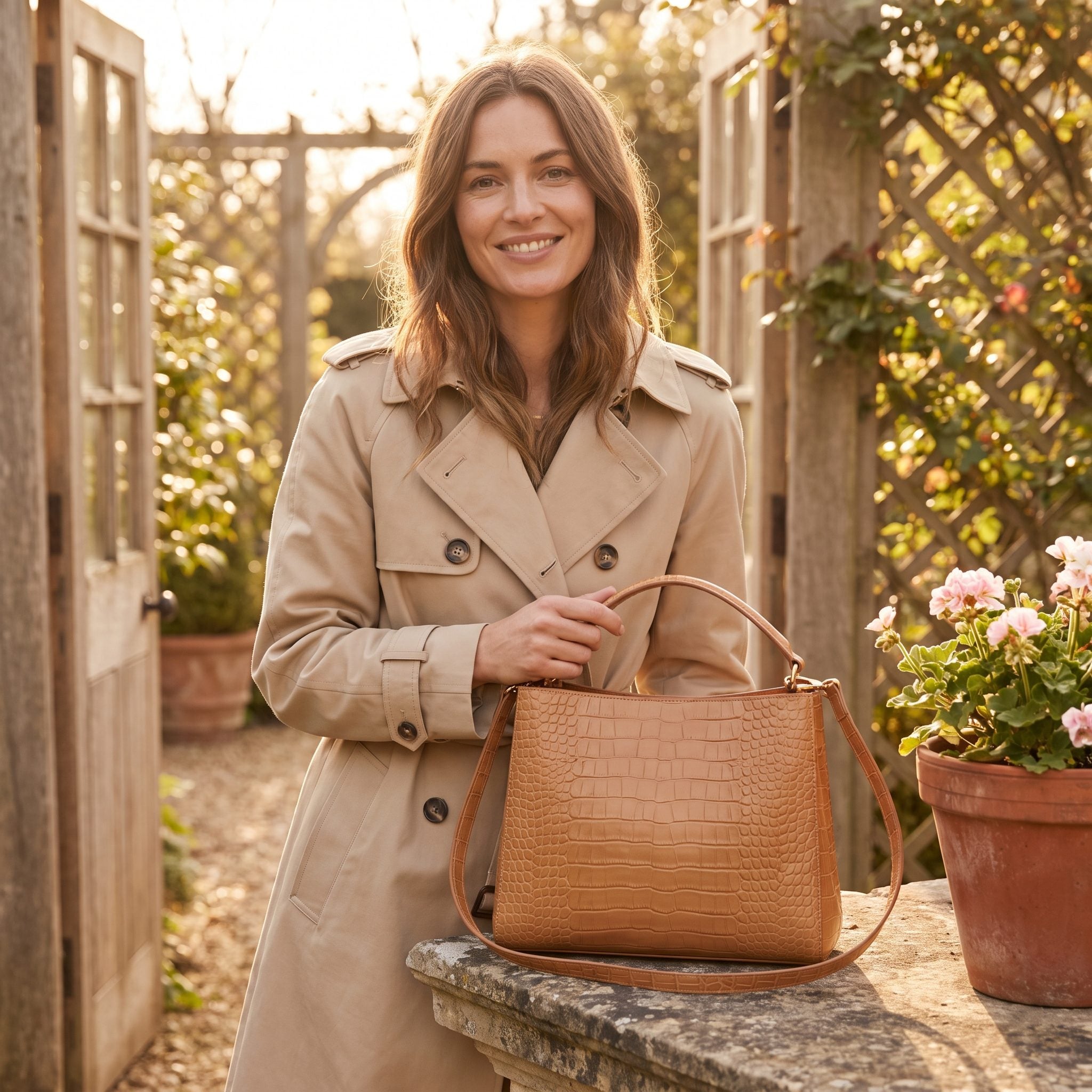
Crocodile embossing transforms smooth leather through a repeated pattern of raised scales and recessed lines. The effect brings a luxurious visual texture to a familiar shoulder-bag silhouette without requiring exotic leather.
A cream turtleneck and black bootcut trousers provide a clean background for the chocolate-brown accessory. The embossed surface introduces detail at the center of the outfit, while the warm leather color bridges the light upper half and dark lower half. The styling remains restrained enough to let the material speak.
2. The Leopard-Print Mini Bag That Gave Black Tailoring a Wild Streak
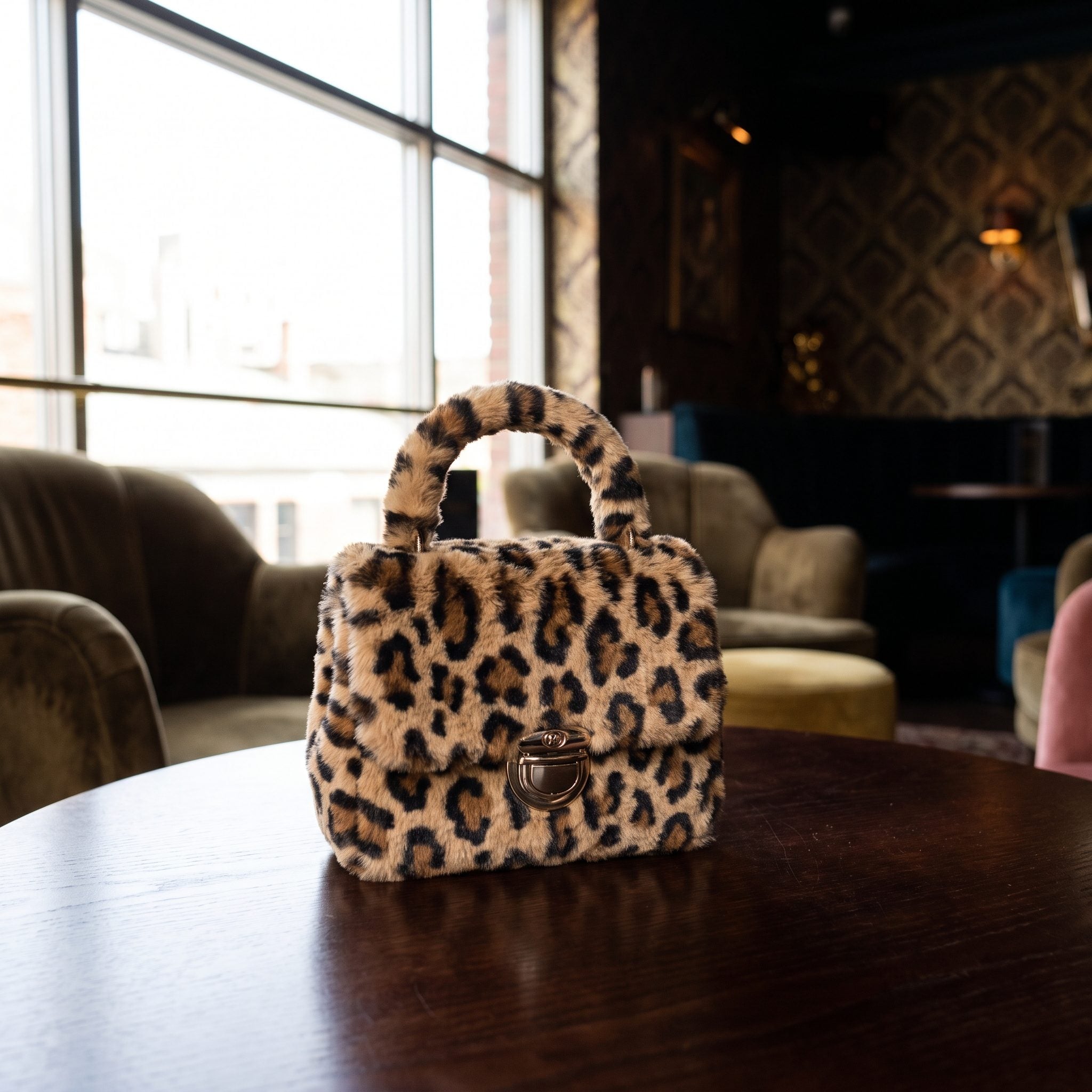
Leopard print brings irregular pattern and warm color into an otherwise controlled outfit. The miniature scale keeps the animal motif concentrated, making the bag a sharp accent rather than the beginning of an entirely patterned ensemble.
Black tailoring creates a continuous dark silhouette from neckline to boots. Against it, the leopard bag introduces tan, brown, and black in a compact graphic arrangement. The contrast is confident, but the outfit never loses its clean lines.
1. The Boxy Shoulder Bag With a Buckle That Refused to Be Overlooked
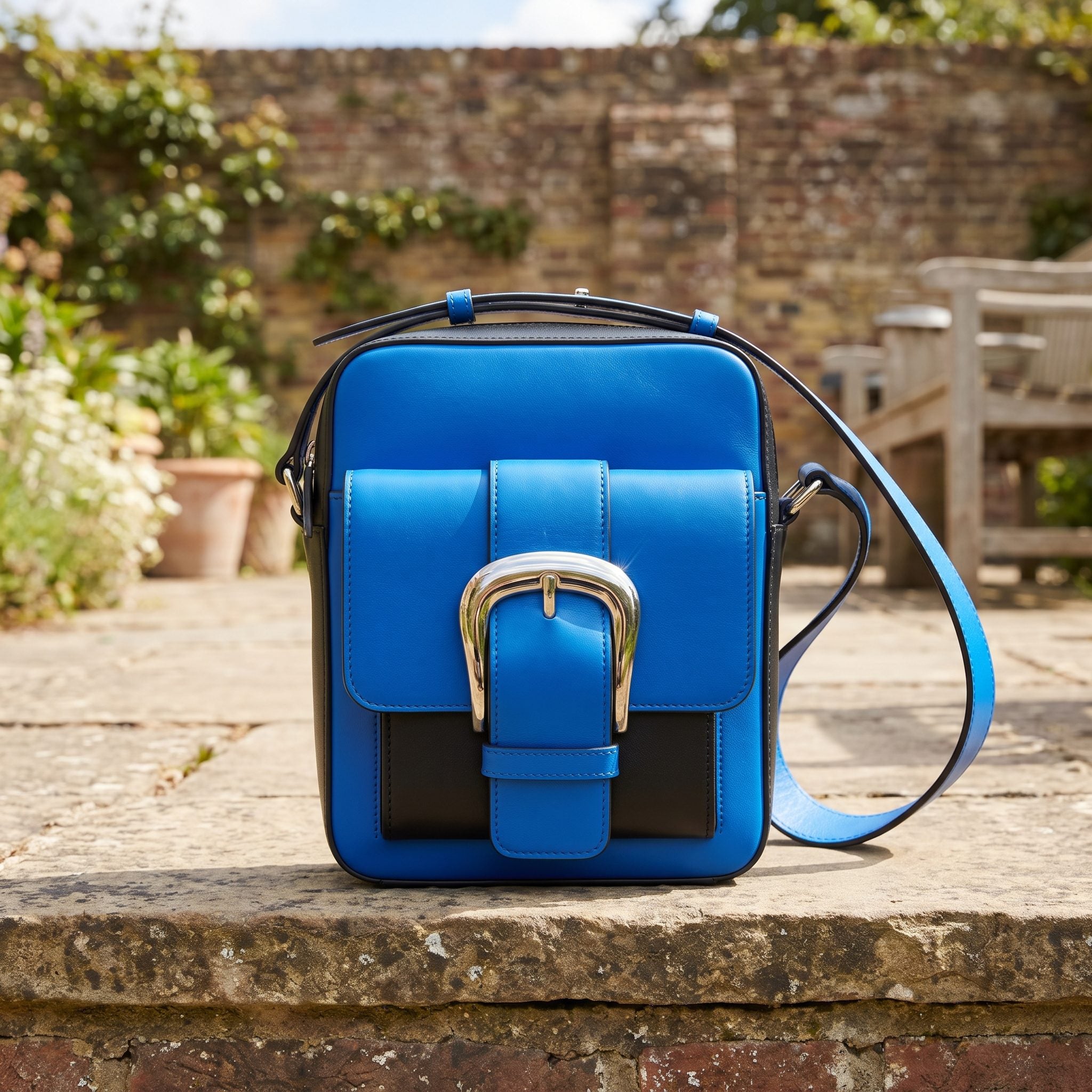
Rigid corners, a sharply defined flap, and a substantial brass buckle give this shoulder bag an assertive architectural quality. Unlike the soft hobo or flexible bucket, its appeal depends on holding a precise shape.
Forest green leather looks particularly rich against a camel wool coat. The warm brass hardware creates a focal point between the two colors, while the bag’s structured outline adds definition to the softer fall of the coat. It’s a compelling example of how a well-chosen handbag can establish the character of an entire outfit without matching anything exactly.