❤️ Would you like to save this?
Prom night was fashion’s annual permission slip to lose all restraint. The 1970s brought prairie lace, sweeping chiffon, and disco gowns with daring open backs. The 1980s took one look at those silhouettes and decided they needed bigger shoulders, wider skirts, and enough taffeta to furnish a ballroom. Then the 1990s arrived with a satin slip dress and quietly dismantled the whole production.
The engineering was half the entertainment. A dropped waist stretched the torso before releasing an avalanche of fabric. Puff sleeves widened the shoulders to make a cinched waist look impossibly small. Bias-cut satin did the opposite, following the body’s contours without a mountain of underskirts. Every decade had its own ideas about proportion, and prom was where those ideas became spectacularly visible.
Color and fabric carried their own arguments. Emerald fabric gleamed like polished metal. Iridescent taffeta shifted from teal to purple with every turn. Velvet absorbed the glare, while rhinestones, lamé, and metallic threads sent it straight back. Even the quieter prairie dresses had something to say, trading sparkle for lace, tiny florals, and an almost Victorian sense of romance.
One gown is practically a piece of architecture; the next could fold into a handbag. Some designs still look remarkably modern. Others are so gloriously attached to their decade that removing a single bow would qualify as vandalism. Three decades, 37 dresses, and enough competing ideas about glamour to start an argument in any fitting room.
FYI, thanks to AI imagery software, we’re able to create very specific fashion and hairstyle examples to illustrate the points being made. In some cases, imagery is exaggerated to hammer home the point. Also, assume links that take you off the site are affiliate links such as links to Amazon. this means we may earn a commission if you buy something.
37. The 1980s Neon Taffeta Dress That Refused to Enter Quietly
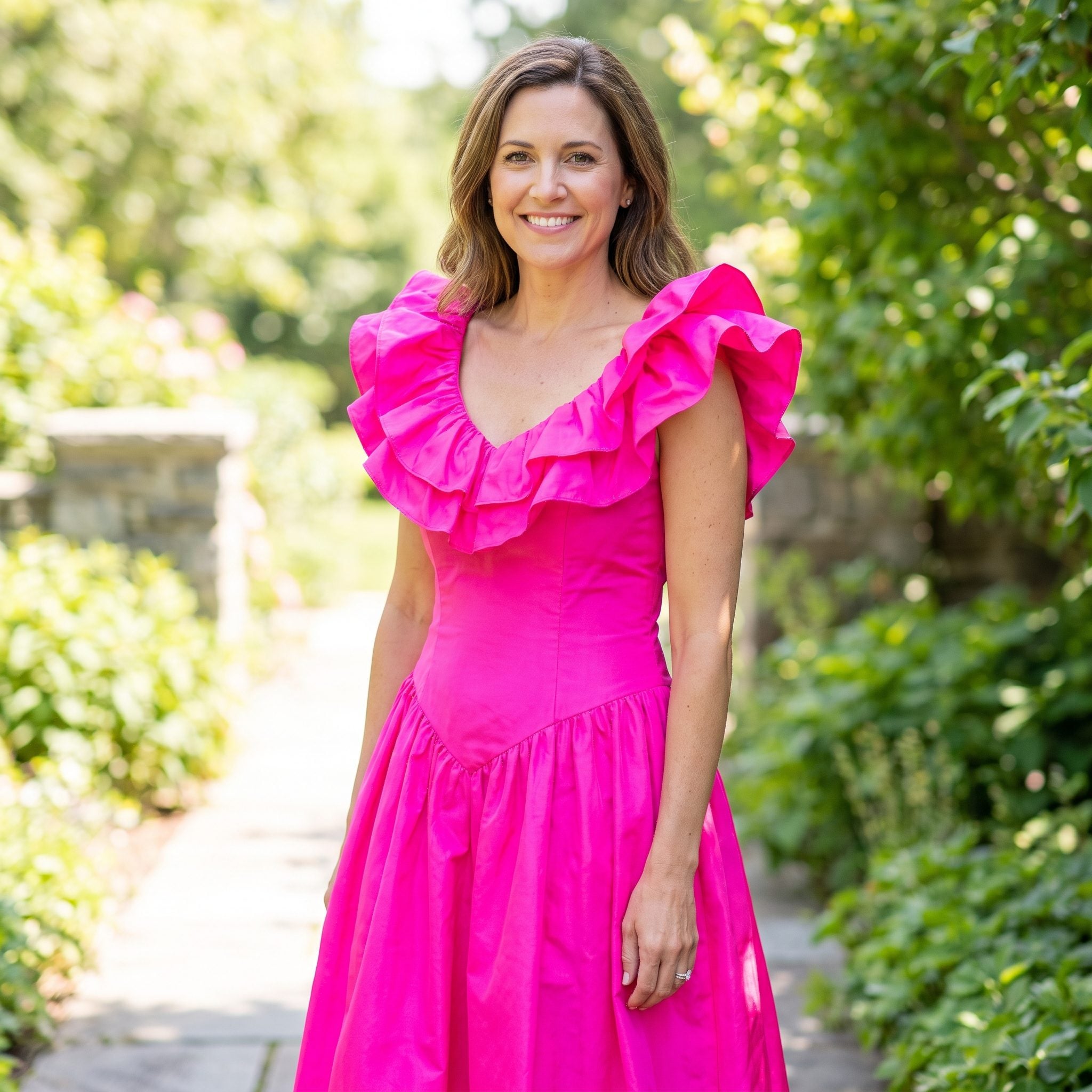
Neon fuchsia taffeta arrives with giant puff sleeves, a sharply defined waist, an oversized bow, and a skirt that refuses to be ignored. The color alone could command a room. The silhouette makes certain nobody misses it.
Those enormous sleeves create width across the shoulders, while the cinched middle exaggerates the hourglass shape. The bow adds another burst of volume to an already extravagant arrangement. This is 1980s prom design with every dial turned clockwise.
36. The 1990s Ice-Blue Satin Sheath That Changed the Proportions

After that explosion of pink, ice-blue satin feels like someone turned down the volume. A clean scoop neckline leads into a narrow column skirt, with no enormous sleeves, tiers, or bows demanding their share of the attention.
The long vertical silhouette gives the dress its modern character. A little jewelry could provide sparkle, although the pale color and uninterrupted line already establish an elegant alternative to the previous decade’s architectural ambitions.
35. The 1970s Studio 54 Halter Gown With a Surprise Around Back
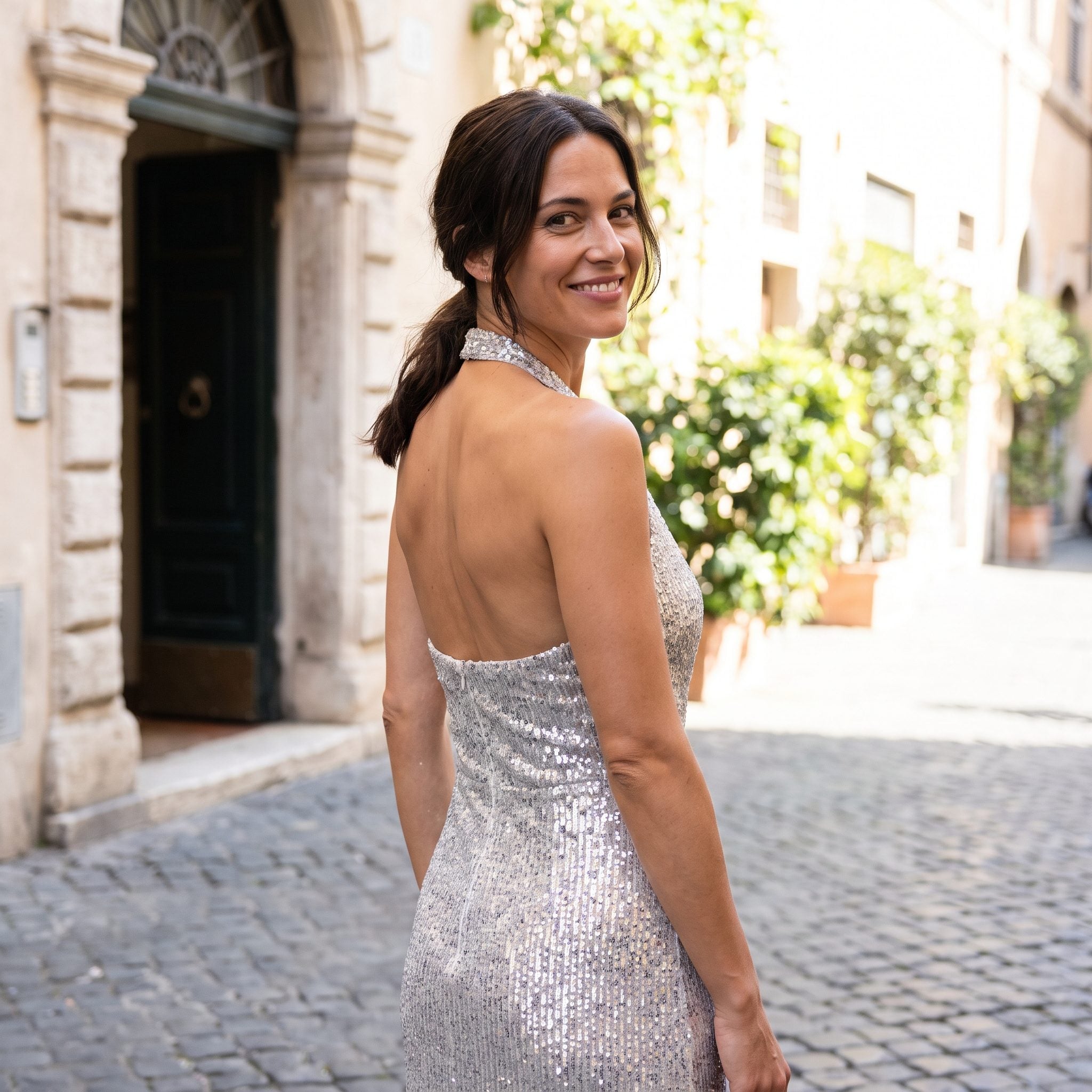
The halter neckline draws attention upward, then the open back delivers the real surprise. Emerald fabric drapes from the shoulders, leaving an expanse of bare skin that becomes particularly striking as the dress moves.
Late-1970s disco fashion favored fluid fabrics, saturated colors, and silhouettes that looked alive under changing lights. This gown brings that nightclub vocabulary to formalwear, trading prairie romance for a considerably more daring entrance.
34. The 1990s Black-and-White Gown With a Collar That Does All the Talking
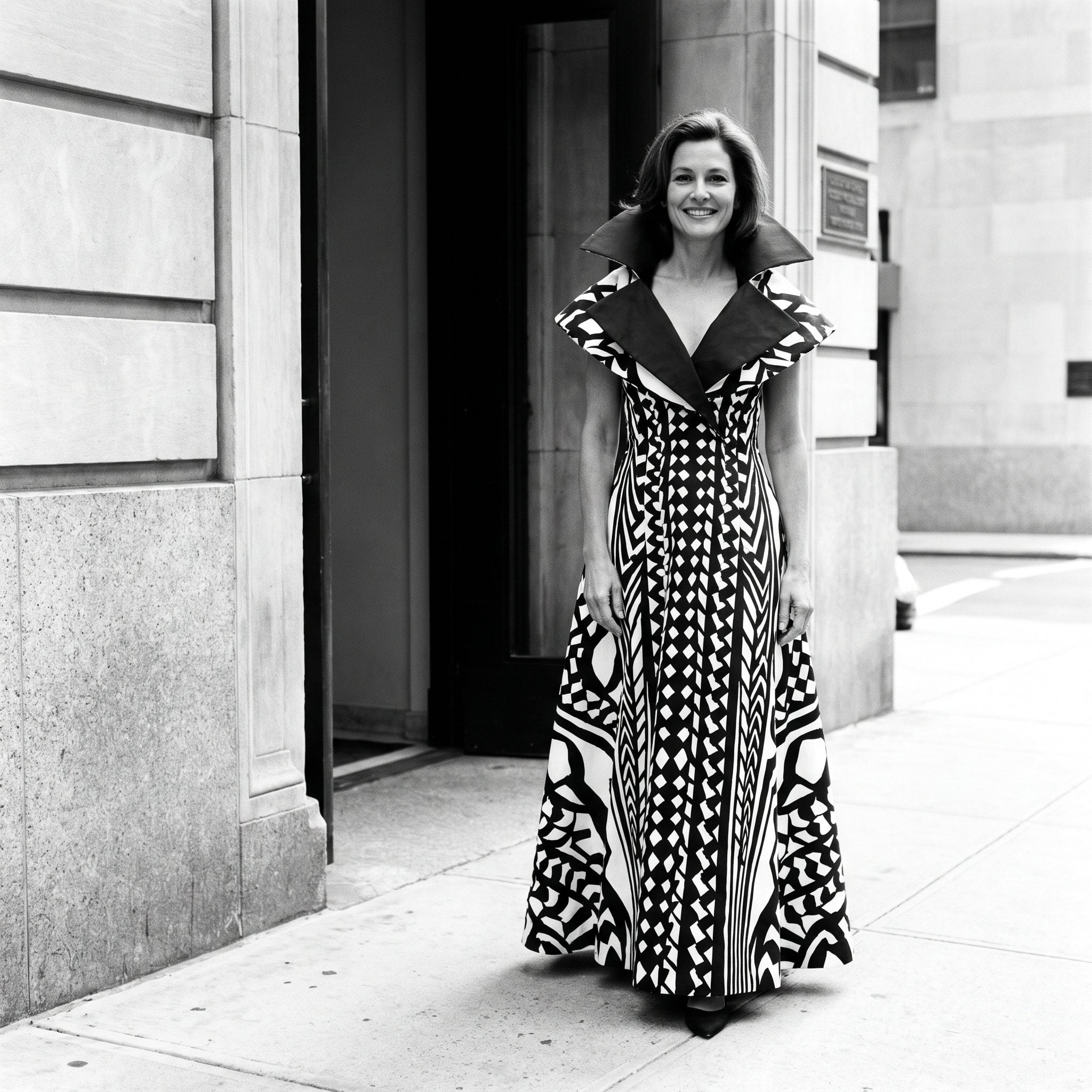
A broad white collar cuts across the shoulders of a black column gown, giving the face a bright architectural frame. The contrast is immediate, graphic, and considerably sharper than a scattering of decorative rhinestones.
Pearl earrings and an updo complete the tailored effect. The design borrows from classic black-and-white eveningwear, using one emphatic shape to provide all the ornament the gown needs.
33. The 1970s Empire-Waist Chiffon Gown That Practically Floats
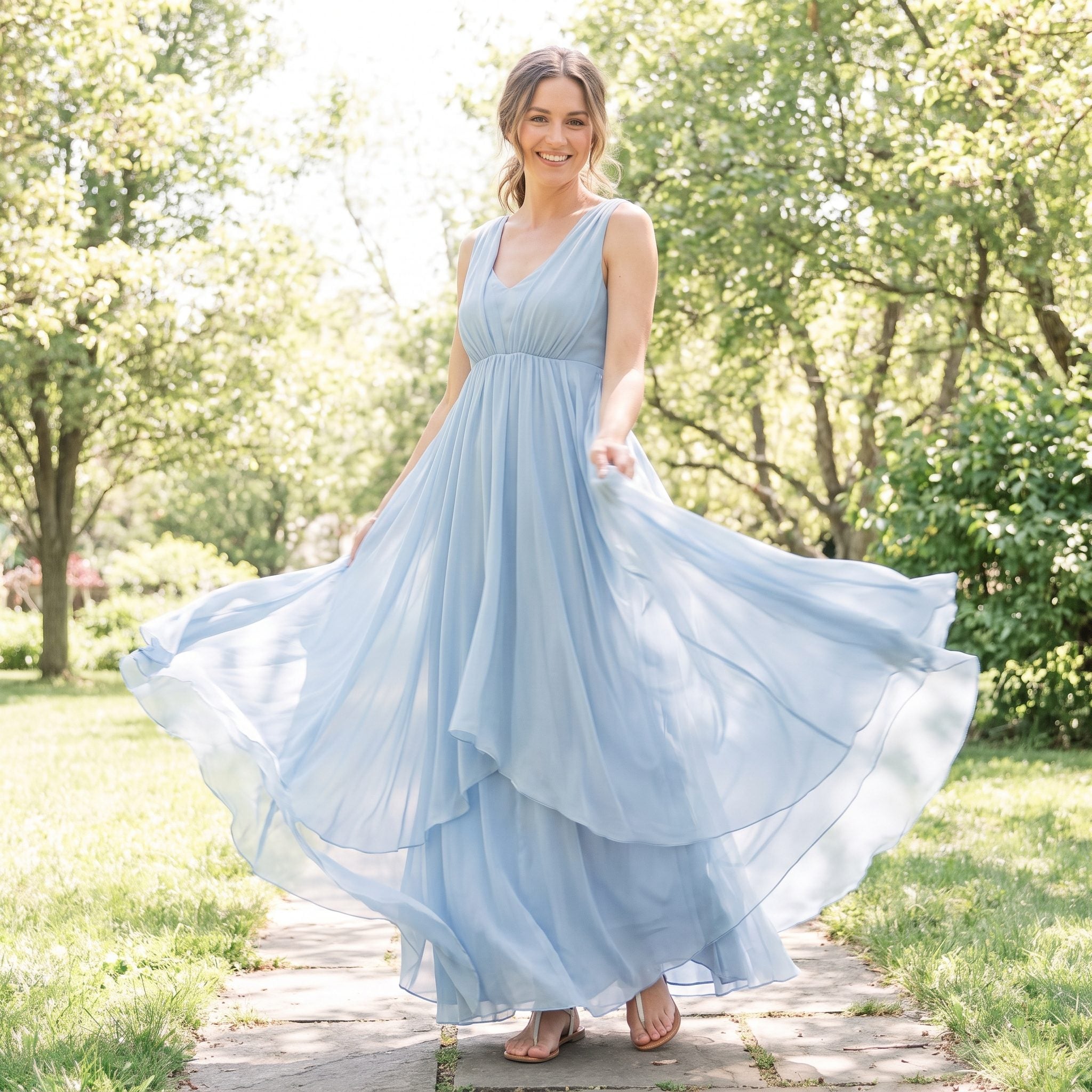
The empire seam sits immediately beneath the bust, releasing layers of powder-blue chiffon into a loose, floating skirt. The fabric responds to the slightest movement, giving the gown a softness that more structured formalwear cannot imitate.
Rather than compressing the waist or building an enormous skirt around it, the design allows the material to fall naturally. This is the romantic side of 1970s occasion dressing, with proportion established through a high seam and layers of airy fabric.
32. The 1980s Silver Lamé Gown That Turned Light Into an Accessory
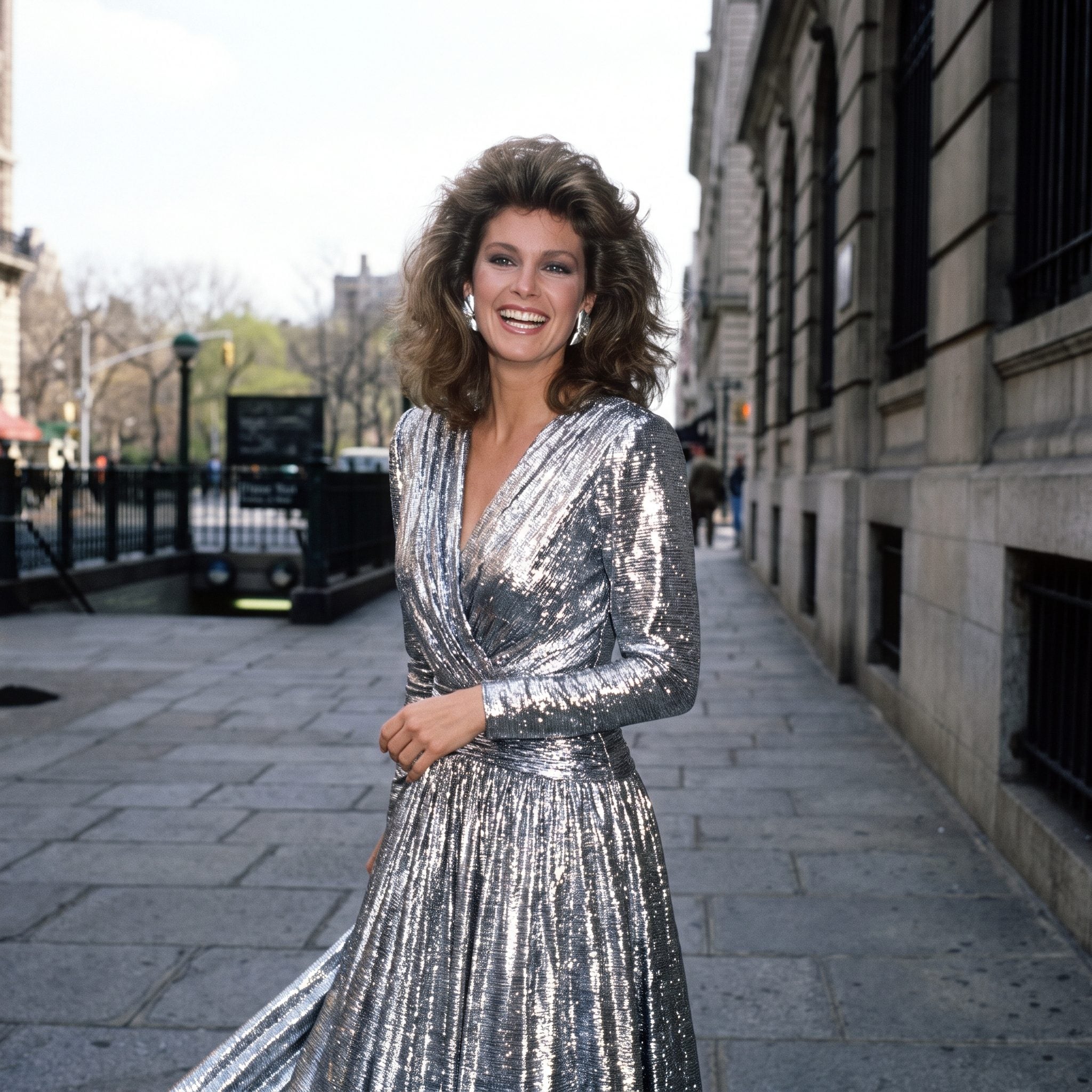
Silver lamé transforms this gown into a moving reflector. Every fold catches another highlight, while the ruched bodice breaks the metallic surface into shadows and flashes of light.
Structured shoulders and a defined waist give the shimmering fabric a disciplined outline. Without those proportions, the silver might overwhelm the design. Instead, the gown turns a dramatic textile into a remarkably coherent piece of 1980s eveningwear.
31. The 1970s Ivory Eyelet Gown That Found Romance in the Fabric
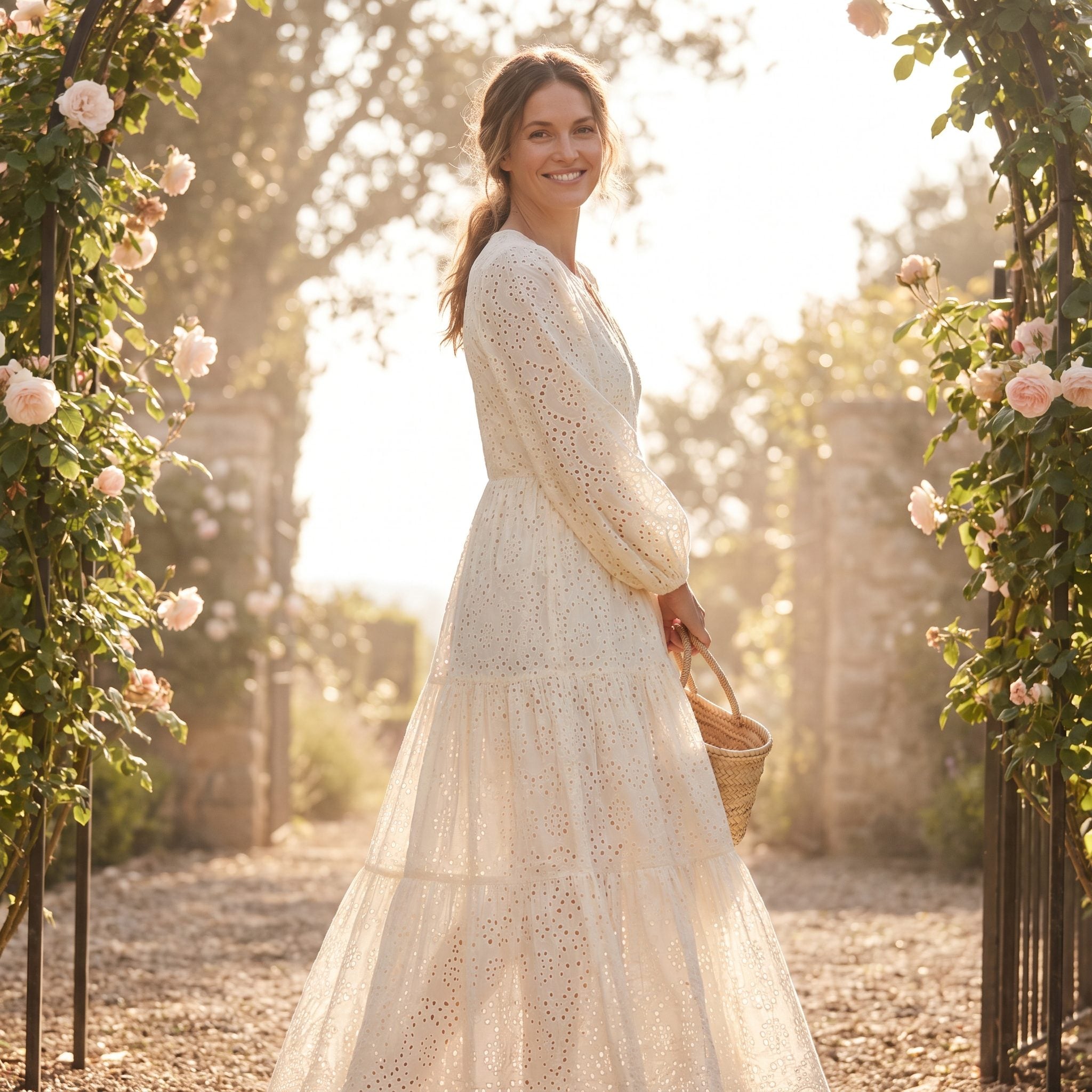
After all that metallic glare, ivory eyelet lace offers an entirely different kind of visual interest. Tiny openings punctuate the fabric, creating a delicate pattern that becomes more apparent wherever the light passes through.
The gathered neckline and fitted waist give the peasant-inspired shape definition. Its beauty comes from the material’s texture and the restraint of the silhouette, an approach closely associated with the decade’s enthusiasm for folk-influenced fashion.
30. The 1980s Giant Puff-Sleeve Gown That Made Shoulders a Spectator Sport
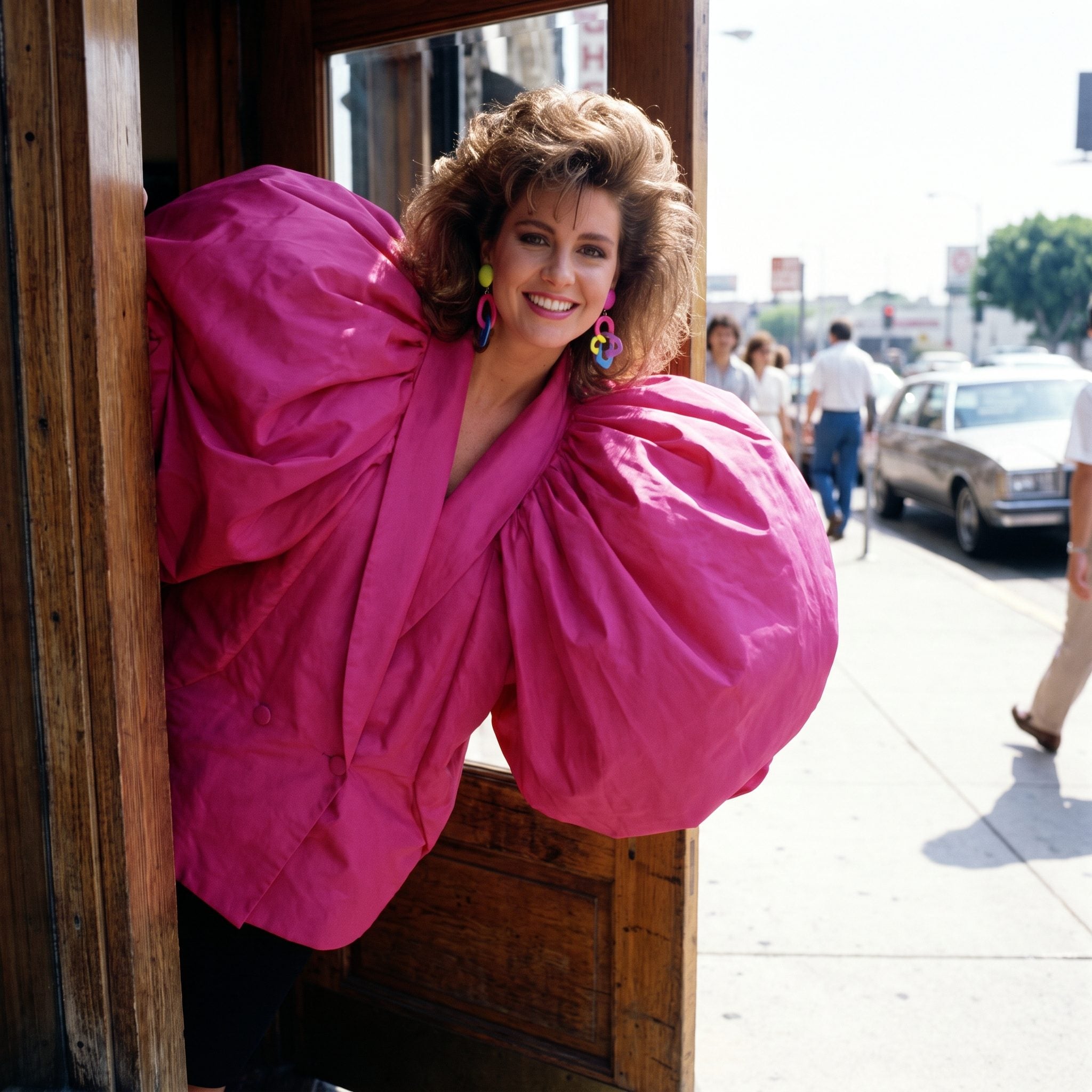
Fuchsia taffeta rises into enormous puff sleeves, creating almost as much visual width at the shoulders as the skirt provides below. The narrow waist is the only quiet moment in a silhouette built around exaggeration.
The 1980s treated shoulders as major design opportunities. Here, the sleeves expand the upper body while the full skirt supplies a matching counterweight. Matching pink accessories finish an outfit with absolutely no interest in subtlety.
29. The 1990s Black Slip Dress That Needed Almost Nothing
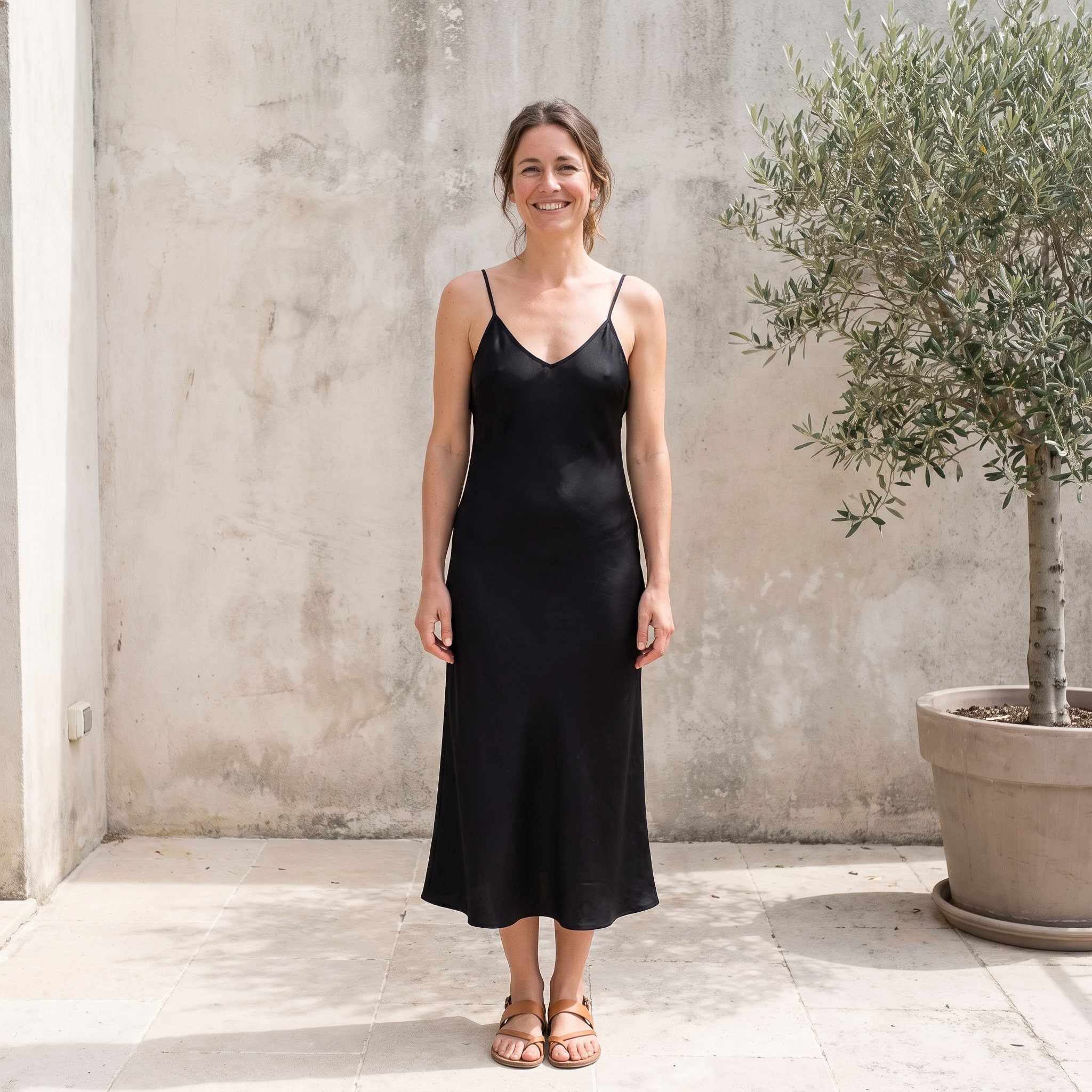
Black satin, spaghetti straps, and a fluid silhouette reduce the prom gown to a handful of essential decisions. The fabric follows the body without the stiff construction or decorative volume associated with the previous decade.
Black gives this version a particularly versatile eveningwear character. Its visual strength lies in the smooth surface and uncomplicated outline, making it an unusually durable expression of 1990s minimalism.
What Our Readers Say
- Asked which dress they would buy, ThreadCurve readers picked the classic style 45% of the time, with minimalist and boho tied at 26% each.
- When our readers voted on the print they would actually wear, solid won with 49%, ahead of stripe at 28% and floral at 20%.
From ThreadCurve reader polls and votes.
28. The 1980s Giant Hip Bow That Reorganized an Entire Dress
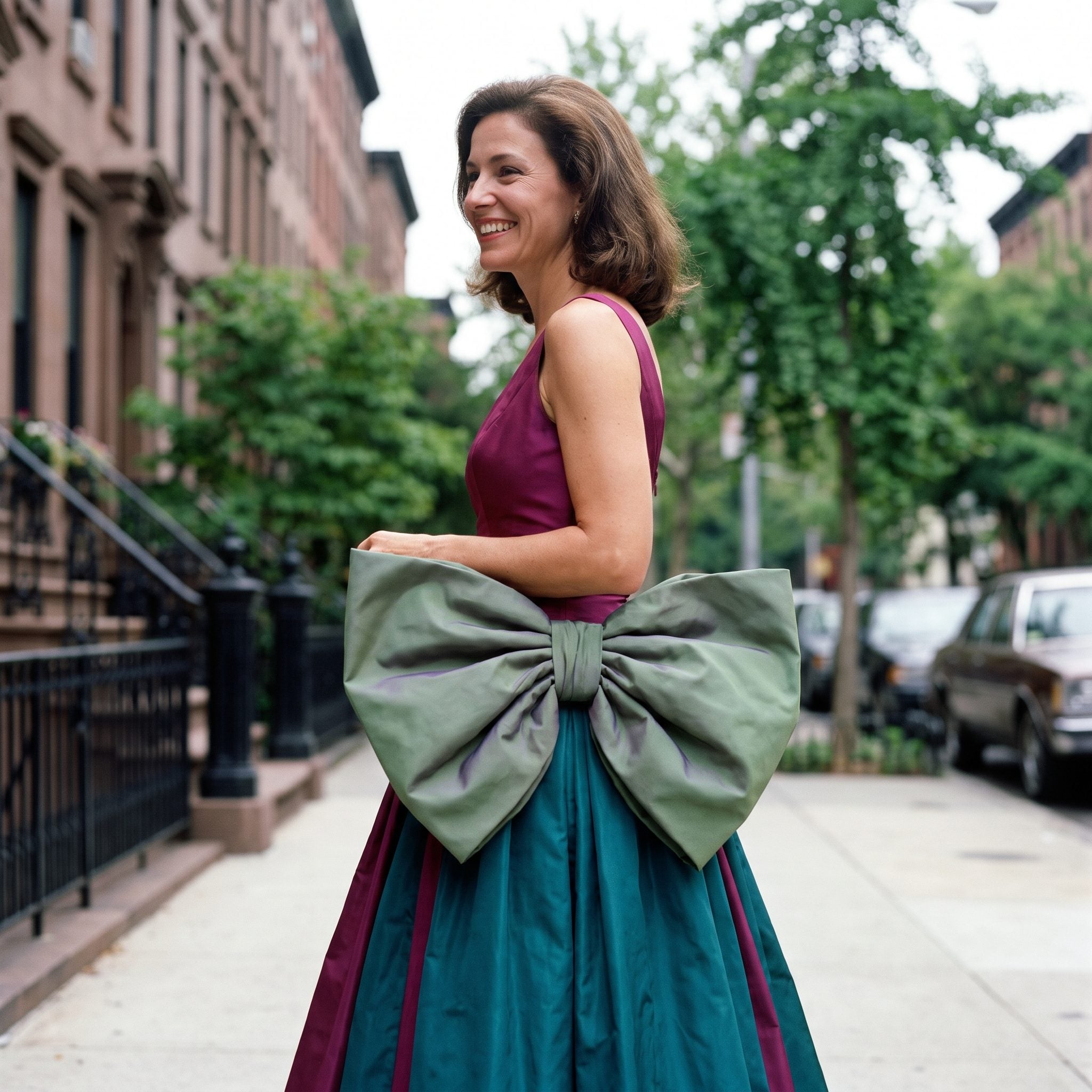
An enormous bow sits at the hip of a turquoise taffeta gown, turning a familiar formal silhouette into something approaching sculpture. The detail is deliberately off-center, creating a dramatic interruption in the dress’s outline.
Placement makes the difference. A bow at the neckline would emphasize the shoulders; here it draws attention toward the hip and gives the skirt an asymmetrical flourish. One extravagant addition changes the entire composition.
27. The 1990s Wine-Red Gown That Put Velvet Against Satin
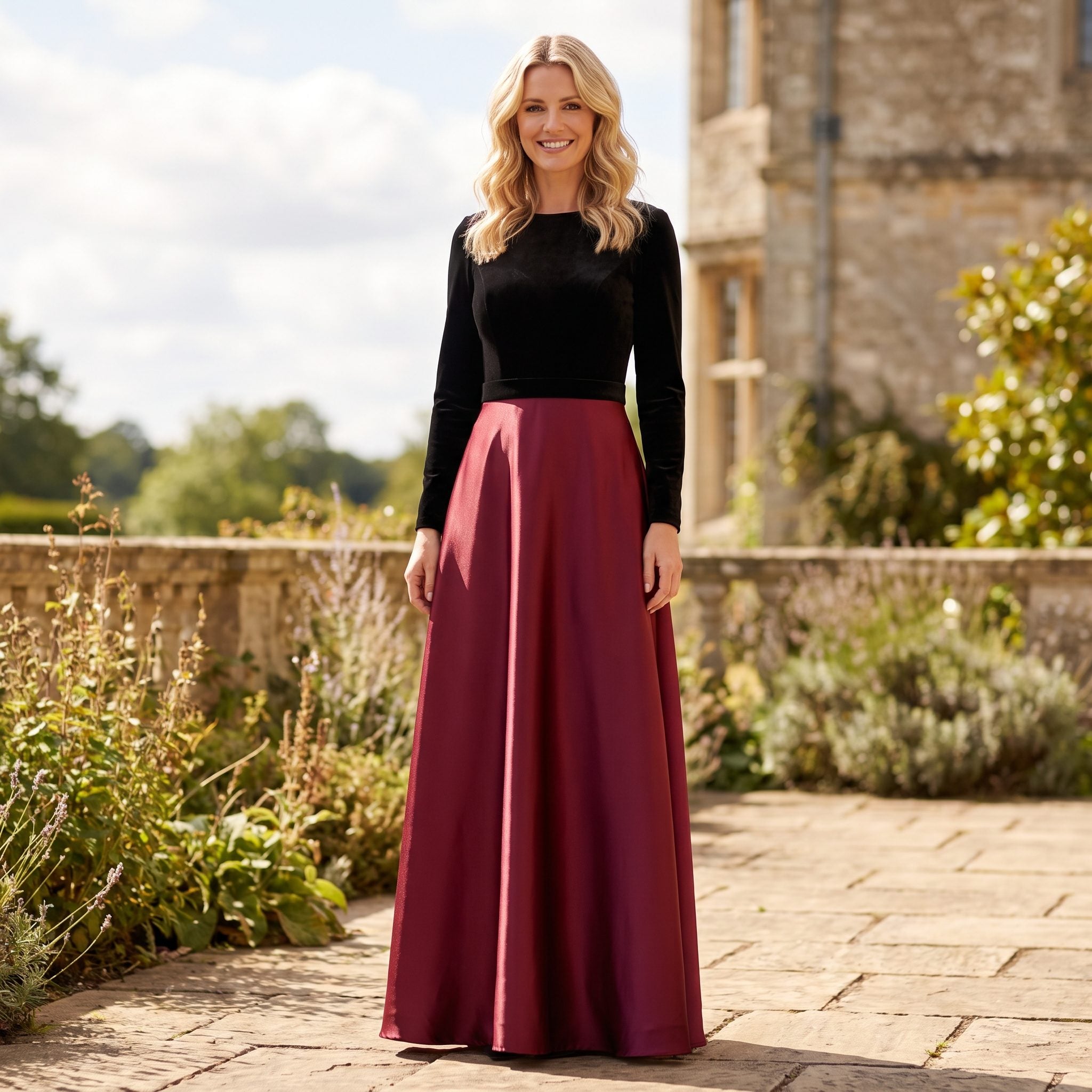
Black velvet meets wine-red satin in a gown built around two very different responses to light. The bodice appears deep and matte, while the skirt catches brighter highlights with every fold.
The contrast gives the dress richness without complicated ornament. Its simple silhouette allows the fabrics to remain the central attraction, capturing a 1990s preference for restrained shapes with carefully chosen textures.
26. The 1970s Gunne Sax Prairie Dress With a Lace-Up Waist
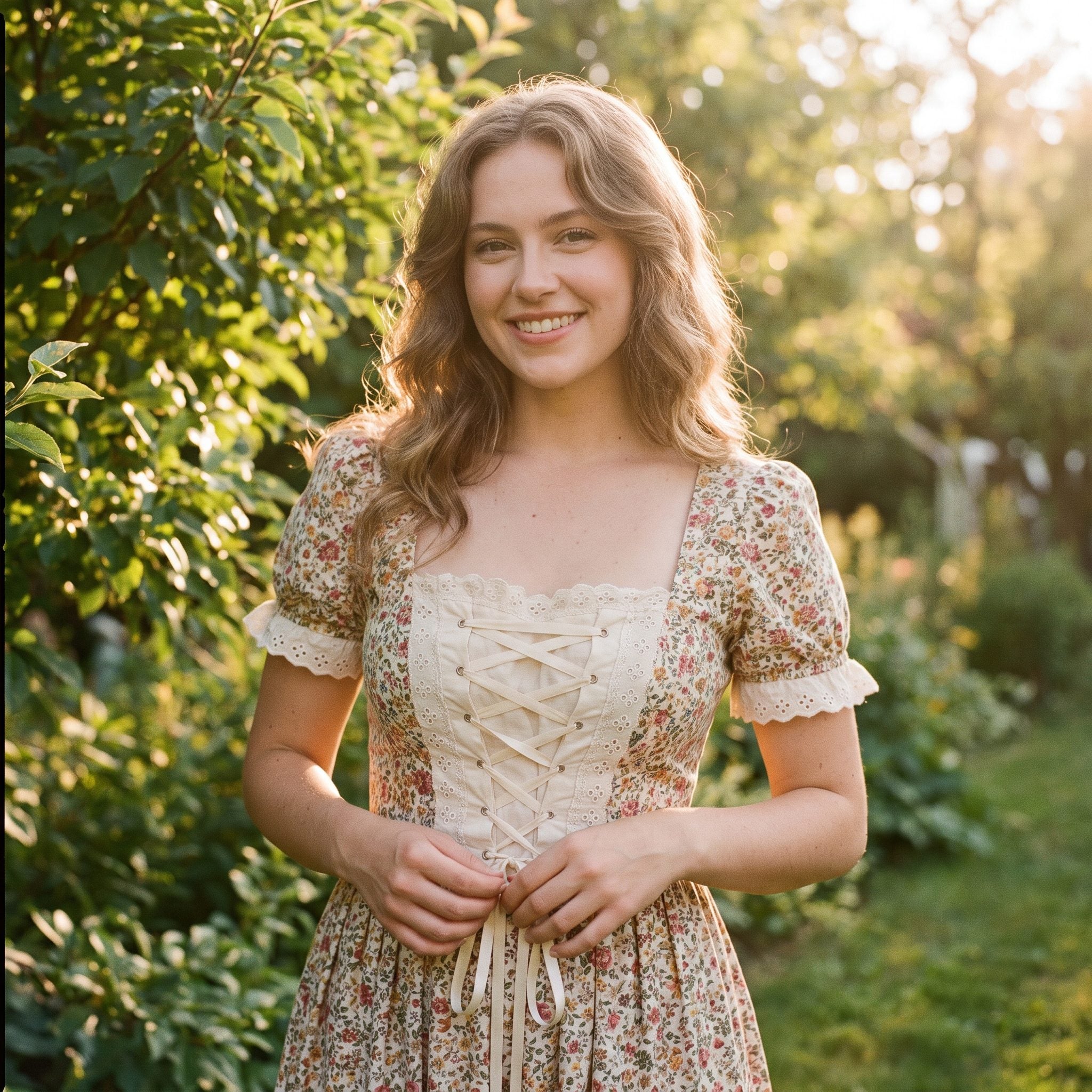
A lace-up bodice draws the waist inward beneath a high neckline and softly gathered sleeves. The construction gives structure to a floral dress otherwise devoted to flowing fabric and romantic detailing.
Gunne Sax helped popularize prairie-inspired formalwear during the 1970s, bringing lace, historical references, and delicate prints into contemporary wardrobes. This gown illustrates how a relatively modest silhouette could still feel elaborate enough for a special occasion.
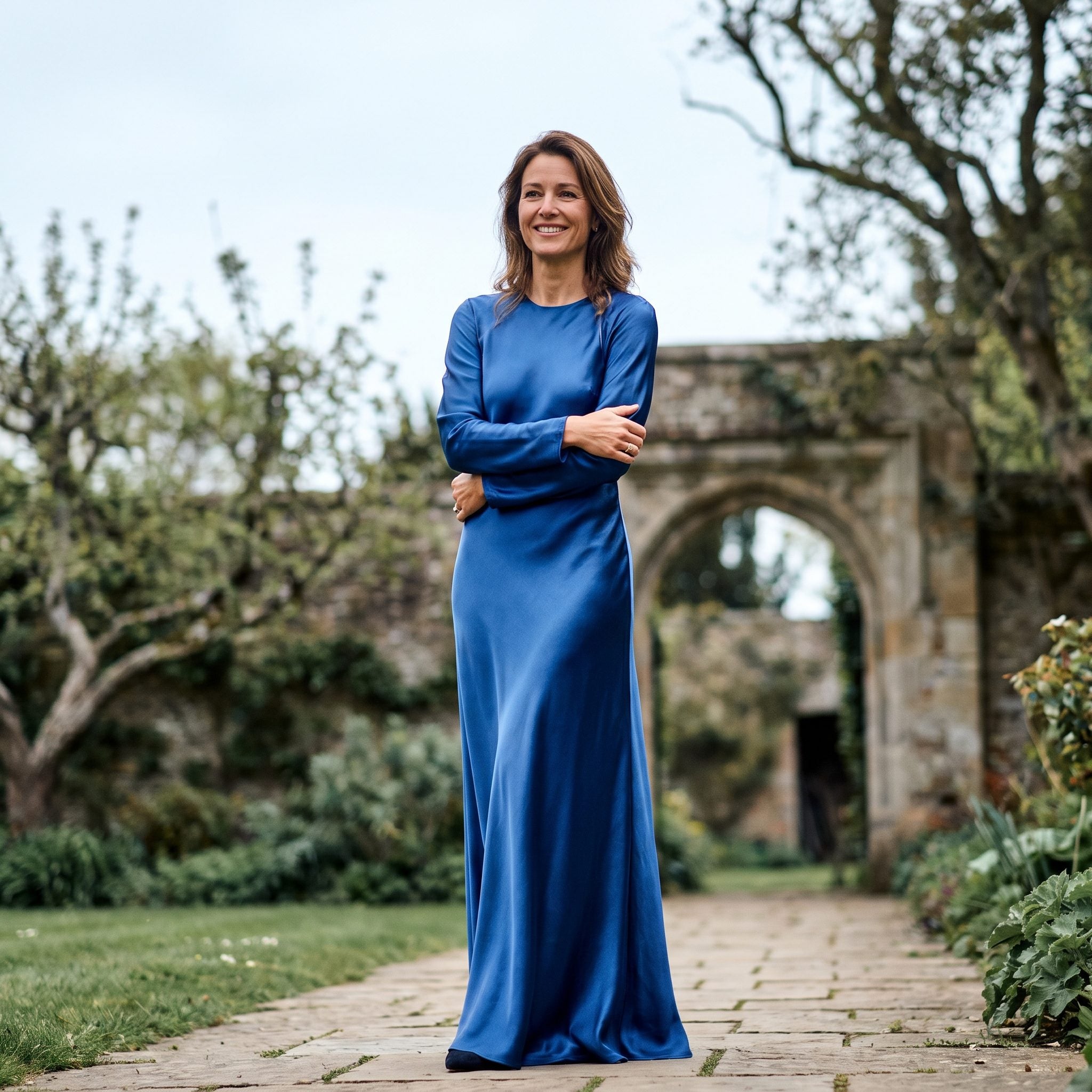
25. The 1980s Sapphire Satin Gown That Let Color Lead
❤️ Would you like to save this?
Sapphire-blue satin delivers an immediate burst of color, its glossy surface catching the light along a gathered skirt. A sweetheart neckline gives the bodice a romantic curve without competing with the richness of the fabric.
Compared with crisp taffeta, satin produces longer, more fluid highlights. This gown relies on that sheen and its saturated jewel tone, demonstrating that 1980s glamour did not always require an enormous bow to make an impression.
24. The 1990s Black Velvet Mini That Broke the Floor-Length Rule
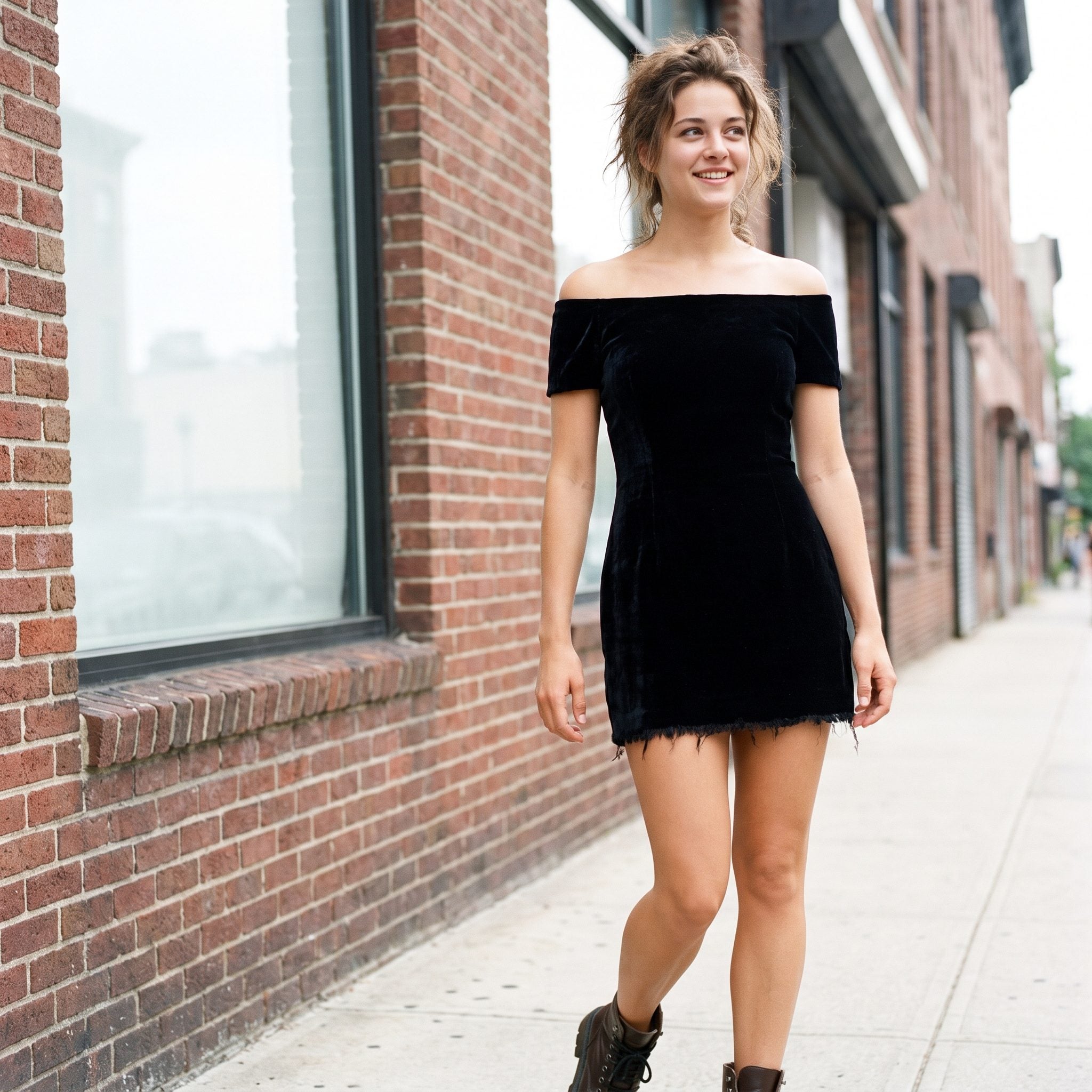
Black velvet stops above the knee, replacing the sweeping formal skirt with a much shorter, sharper silhouette. A broad satin collar frames the shoulders and provides a contrasting finish against the matte fabric.
Sheer tights and black pumps preserve the occasion-ready polish. The result is unmistakably early 1990s: dark, compact, and willing to challenge the assumption that prom demanded a floor-length gown.
23. The 1980s Iridescent Taffeta Gown That Couldn’t Settle on One Color
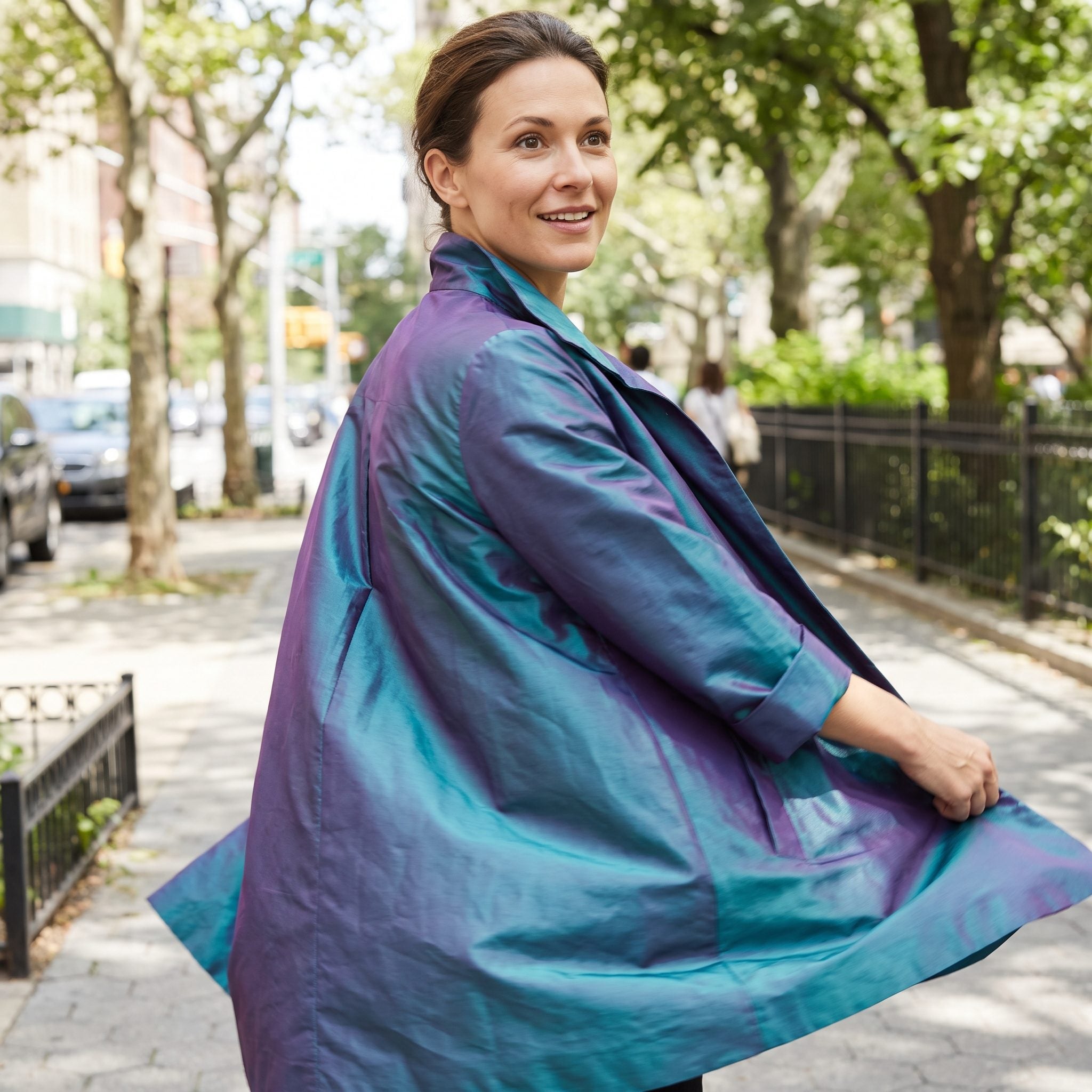
Teal turns toward purple as the iridescent taffeta moves, giving the gown a surface that seems to change with every viewing angle. The shifting color provides a spectacle quite separate from the silhouette.
Puff sleeves, a fitted bodice, and a gathered skirt establish familiar 1980s proportions. The fabric then adds another dimension, with folds and changing light revealing different tones across the dress.
22. The 1970s Floral Prairie Maxi That Looked Backward to Move Forward
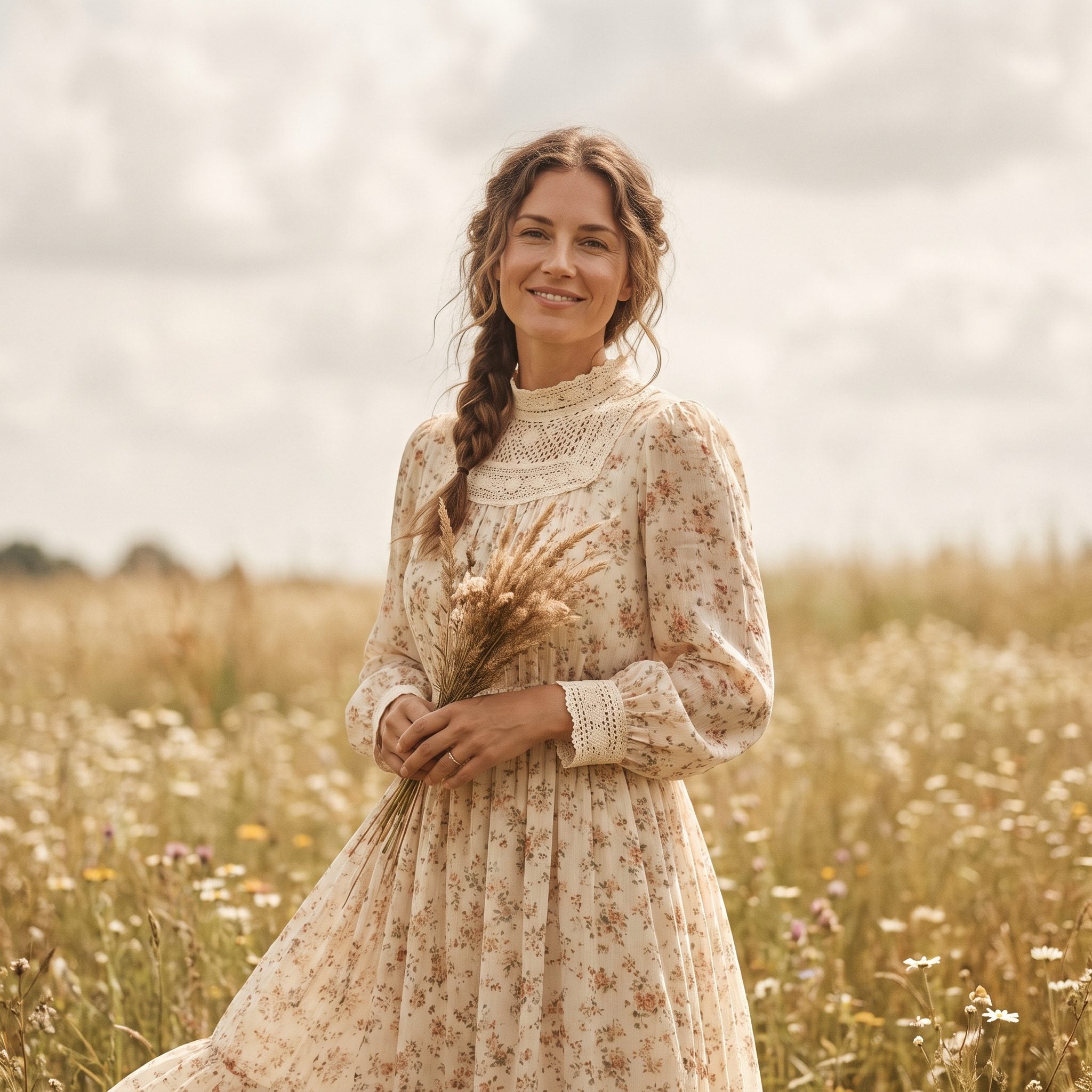
Tiny flowers scatter across cream fabric, while a high lace neckline and puffed sleeves borrow their vocabulary from an earlier century. The long skirt flows loosely, giving the historical references a relaxed 1970s interpretation.
The small-scale floral print is particularly important. Rather than covering the gown in one bold motif, it creates a delicate pattern that supports the lace and gathered details. The overall effect is romantic without relying on the elaborate volume of a ball gown.
Today, floral outfits get fewer hearts from ThreadCurve readers than the other images in the same articles, 28% versus 40%, so the prairie revival still divides opinion.
21. The 1980s High-Low Ruffled Gown With Two Completely Different Hemlines
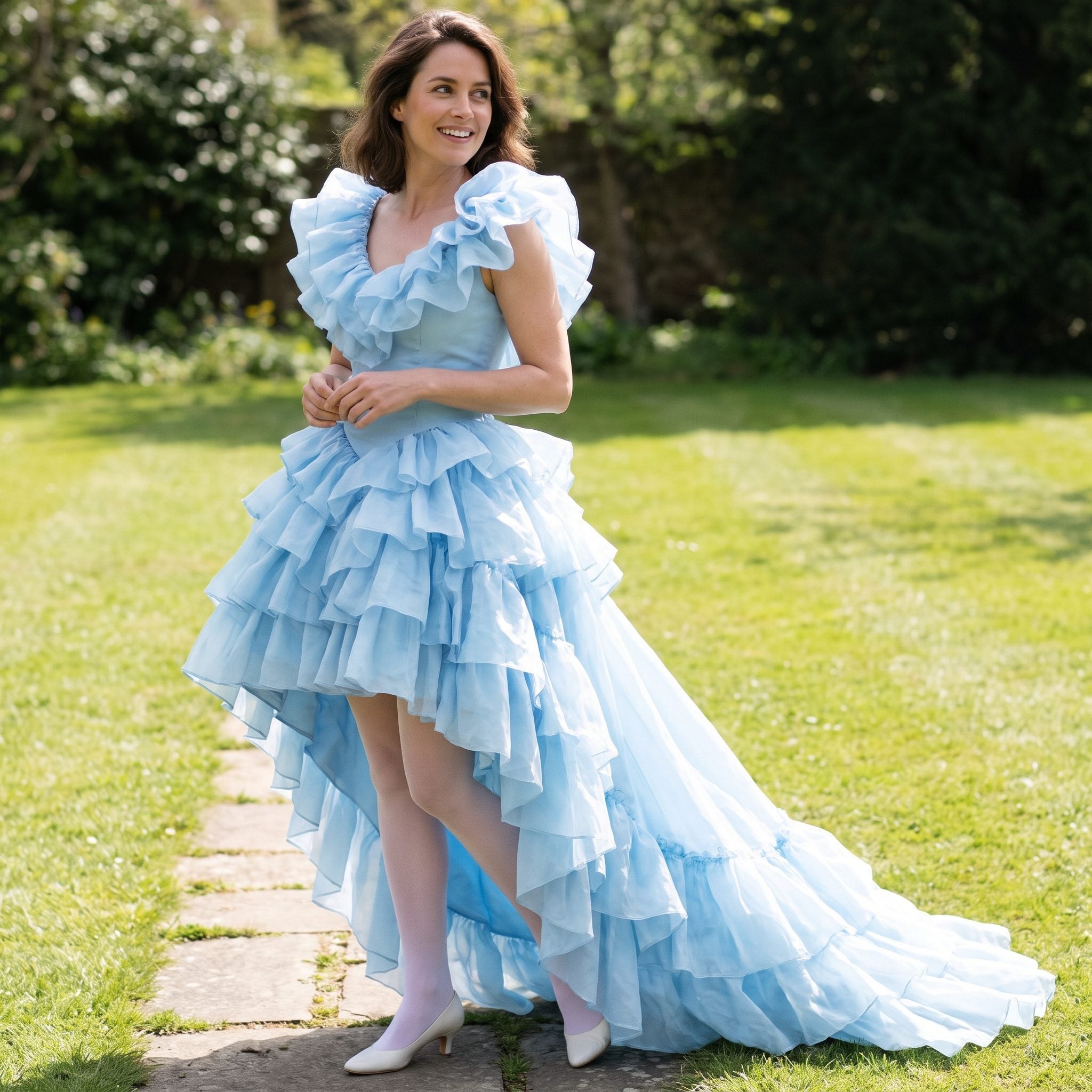
Short in front, long and ruffled behind, this turquoise taffeta gown turns the hemline into its central design experiment. The front reveals the legs while the back creates a trailing cascade of fabric.
Puffed sleeves anchor the look in the 1980s, but the uneven skirt makes it distinctive. The contrast between the abbreviated front and the elaborate back gives the dress a shifting outline that changes dramatically with movement.
20. The 1990s Midnight-Blue Halter That Reworked Disco Glamour
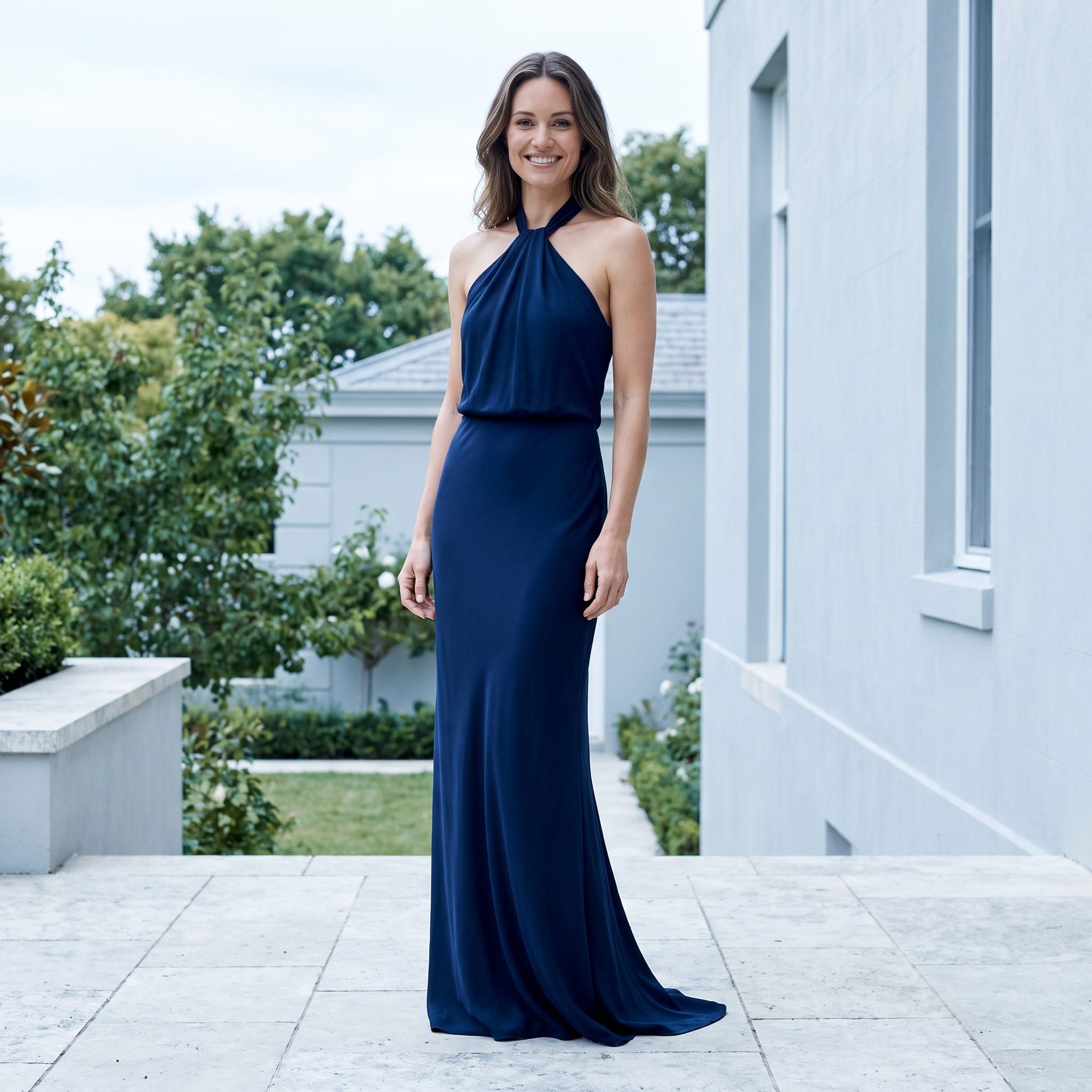
A halter neckline frames the shoulders above a long column of midnight-blue satin. The fabric falls in a clean line, with silver accessories adding a cool flash against the dark color.
Unlike the open-backed disco halter, this version favors a composed, streamlined silhouette. The same basic neckline has been adapted to a very different decade, demonstrating how much fashion can change without abandoning a familiar design element.
19. The 1980s Pale-Pink Tulle Gown That Built Volume Out of Air
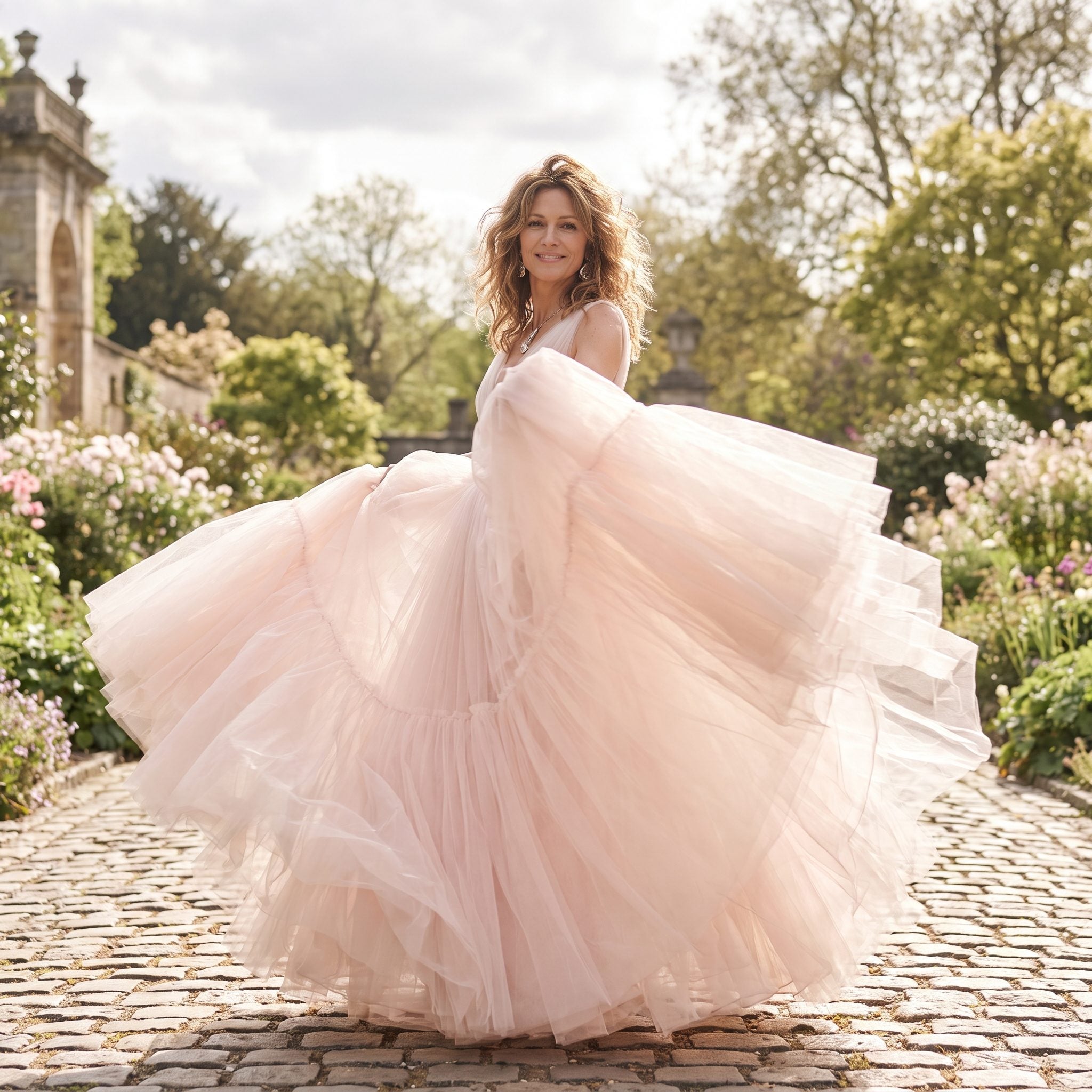
A smooth satin bodice meets an enormous cloud of pale-pink tulle. The netted layers build the skirt outward while remaining visually light, creating a softer effect than the crisp, sharply folded surfaces of taffeta.
Floral appliqués introduce small decorative accents across the airy fabric. The gown achieves impressive scale without appearing heavy, combining the 1980s appetite for volume with a distinctly delicate material.
18. The 1980s Emerald One-Shoulder Gown That Made Asymmetry the Attraction
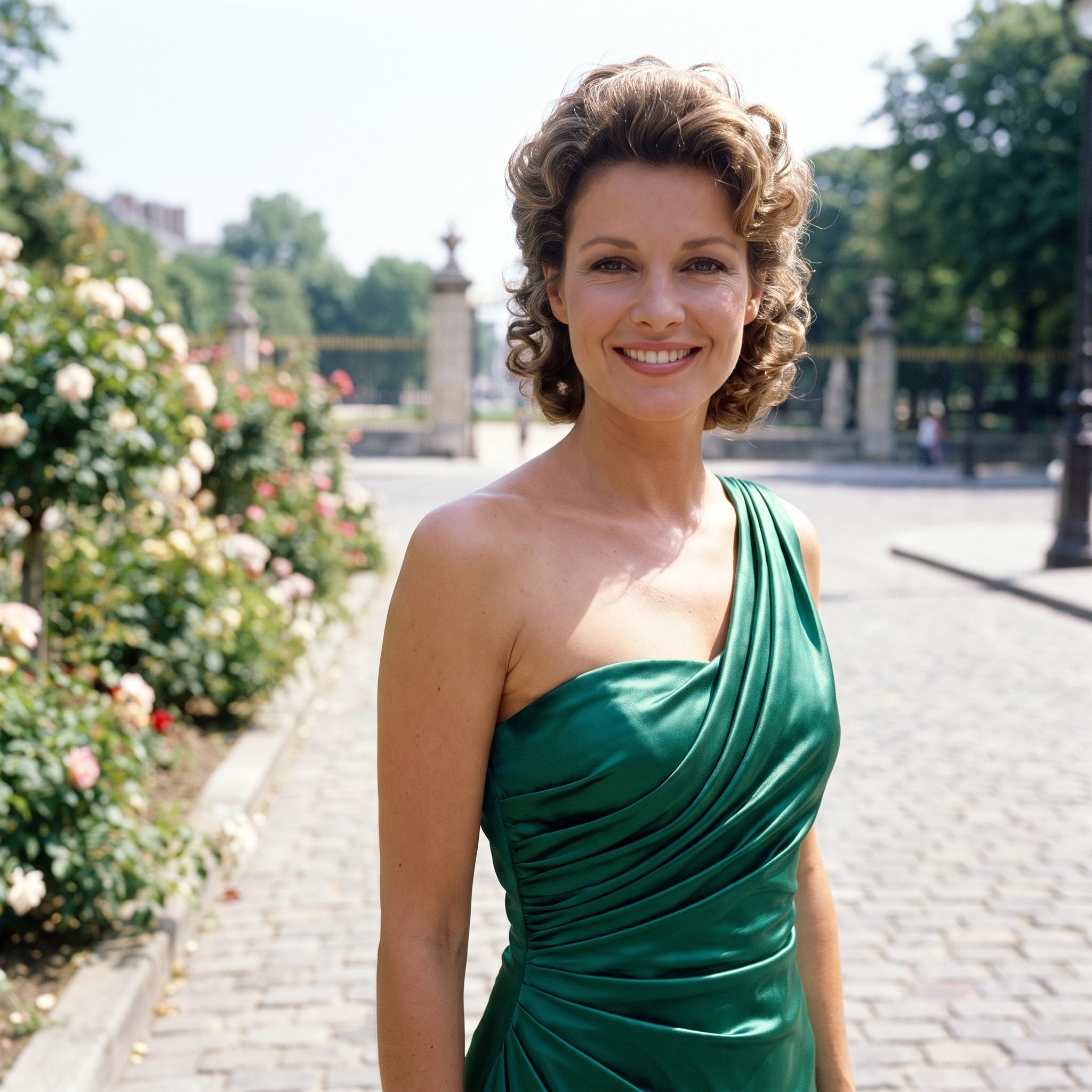
A gathered sweep of emerald satin crosses one shoulder while leaving the other bare. The diagonal neckline gives the gown its defining shape, replacing the familiar symmetry of sweetheart bodices and puffed sleeves.
Light travels across the folds of the saturated green fabric, emphasizing the direction of the draping. This is a more angular, streamlined expression of 1980s glamour, with the neckline providing the drama.
17. The 1990s Burgundy Sheath That Made Saturated Color Look Sophisticated
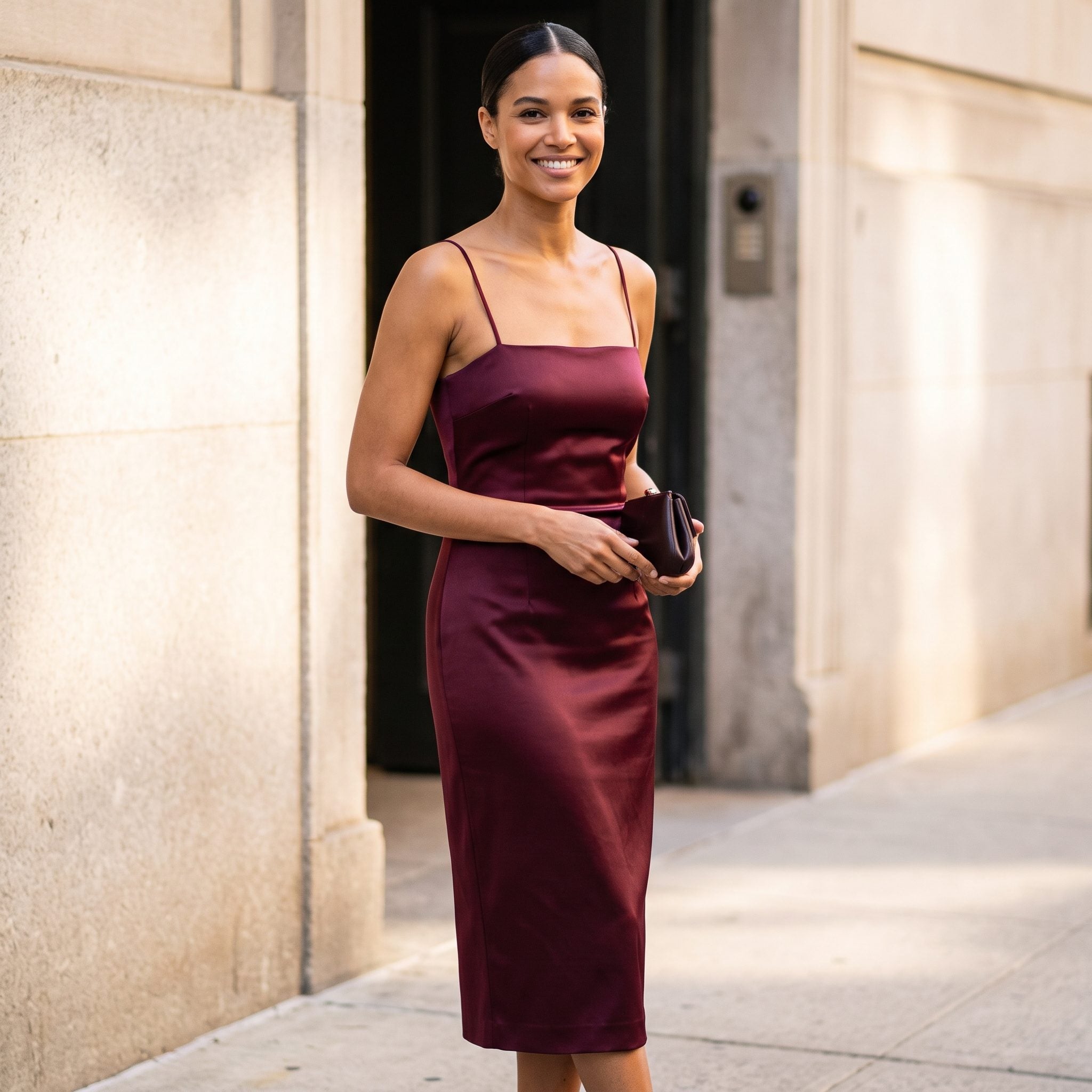
Burgundy satin gives this slender sheath its depth, with thin straps and an uncomplicated bodice allowing the color to remain uninterrupted from neckline to hem.
The richness of the wine shade supplies the visual weight that elaborate decoration might otherwise provide. It is a distinctly 1990s proposition: a close, fluid silhouette made memorable through fabric and color rather than volume.
16. The 1980s Giant Shoulder Bow That Turned a Gown Into Sculpture
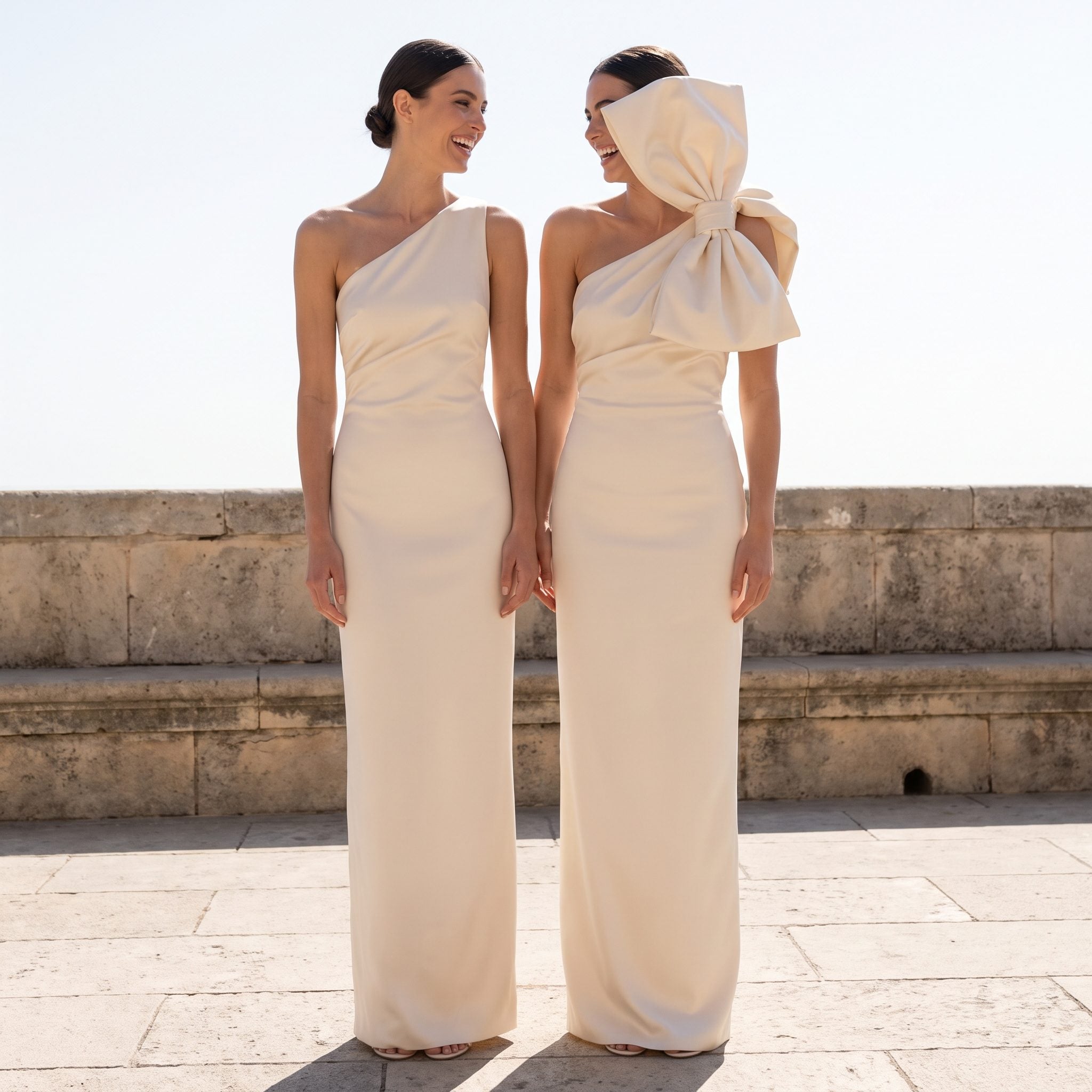
A monumental bow rises above one shoulder of a royal-purple satin gown, giving a relatively sleek silhouette an extravagant architectural flourish. Its asymmetrical placement makes the upper body the center of attention.
Unlike a hip bow, which changes the outline of the skirt, this decoration redirects the eye toward the neckline and face. The diagonal relationship between the bow and bodice creates a dramatic composition without requiring an enormous skirt.
15. The 1970s Victorian Revival Gown That Made High Collars Fashionable Again
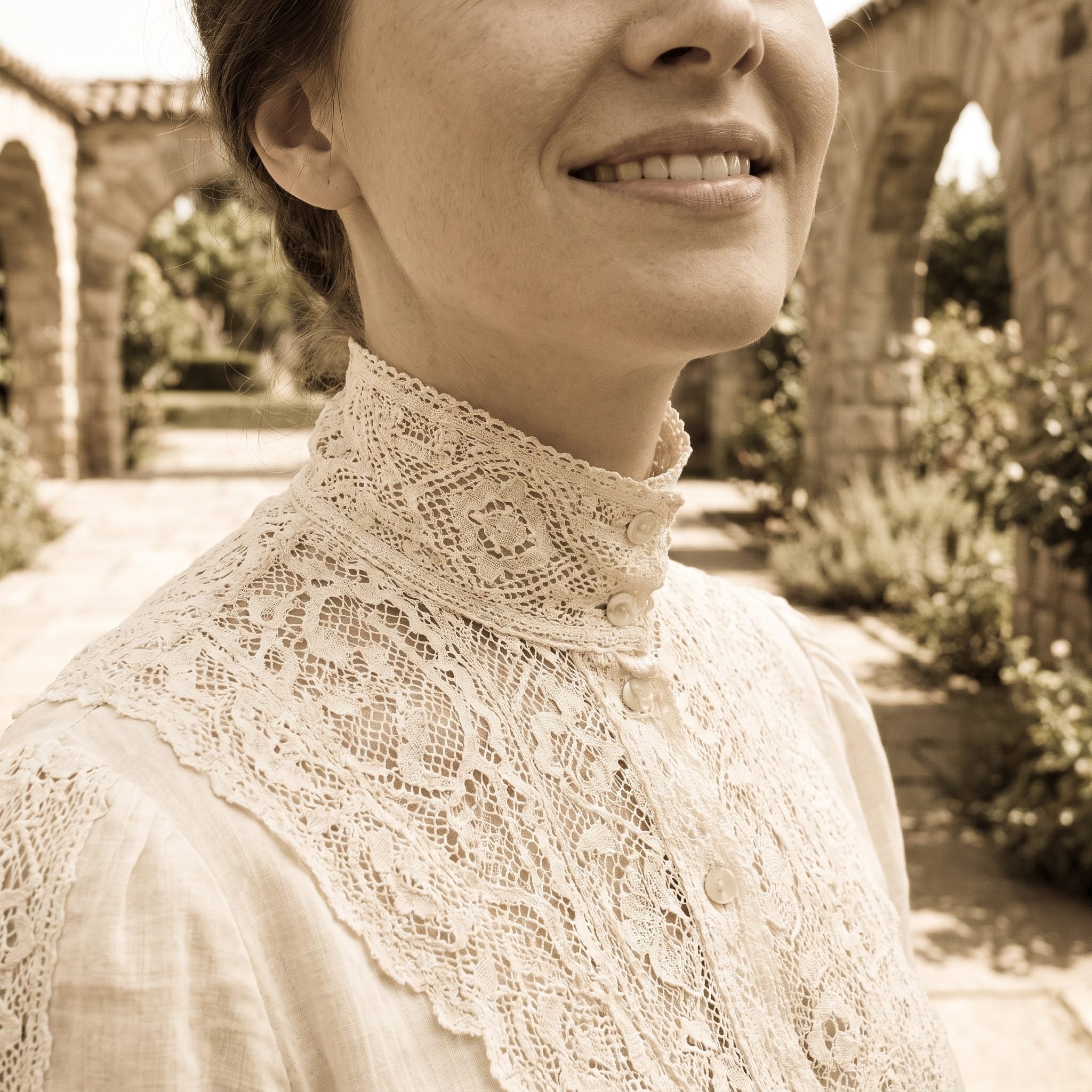
An ivory gown with a high lace collar, gathered sleeves, and a sweeping skirt borrows its visual language from Victorian fashion. The covered neckline gives the dress a formal character far removed from the decade’s disco-inspired eveningwear.
Historical revival styles were a significant part of 1970s fashion, particularly through labels associated with prairie and romantic dressing. Here, the lacework and high collar establish the mood, with the long ivory skirt completing the portrait-like silhouette.
14. The 1980s Bubble-Skirt Dress That Turned the Hem Inside Out
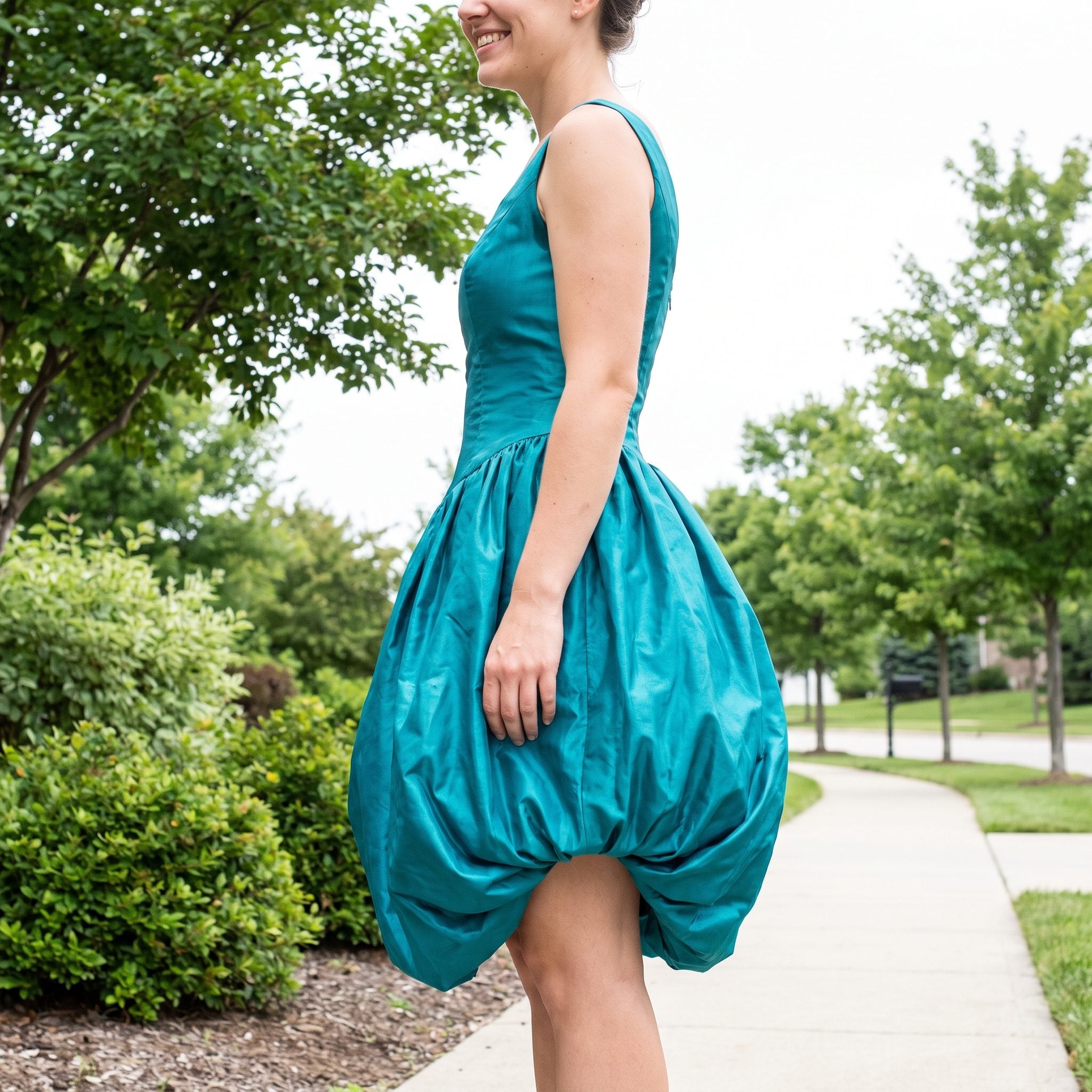
Hot-pink satin curves inward at the hem, creating the rounded, inflated outline that gives the bubble skirt its name. The shape pushes outward before folding back underneath, making the lower half of the dress the main attraction.
A strapless bodice provides a relatively uncomplicated counterpoint. Where a conventional full skirt expands toward the floor, the bubble hem pulls the fabric inward, producing one of the decade’s more adventurous experiments with proportion.
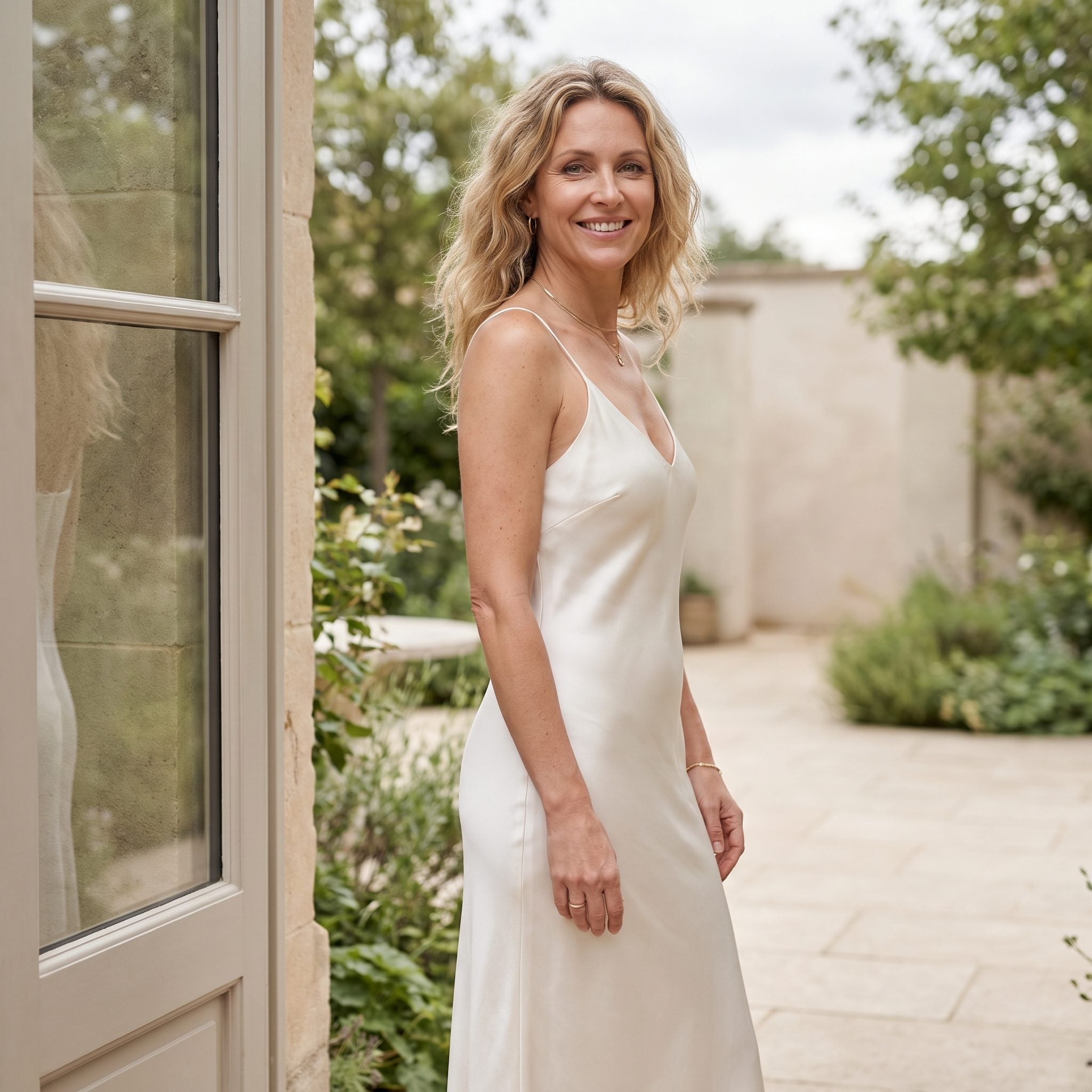
13. The 1990s Minimalist Slip Dress That Made Bias Cutting the Star
❤️ Would you like to save this?
The diagonal grain allows satin to fall close to the body while remaining fluid in motion. The resulting silhouette has none of the rigid architecture of a princess gown, relying instead on the relationship between fabric, cut, and movement.
Minimalist fashion brought these spare shapes into prominence during the 1990s. A softly gleaming slip could make its point without tiers, bows, or elaborate trim, allowing the craftsmanship of the cut to become the attraction.
12. The 1980s Drop-Waist Ball Gown That Stretched the Silhouette
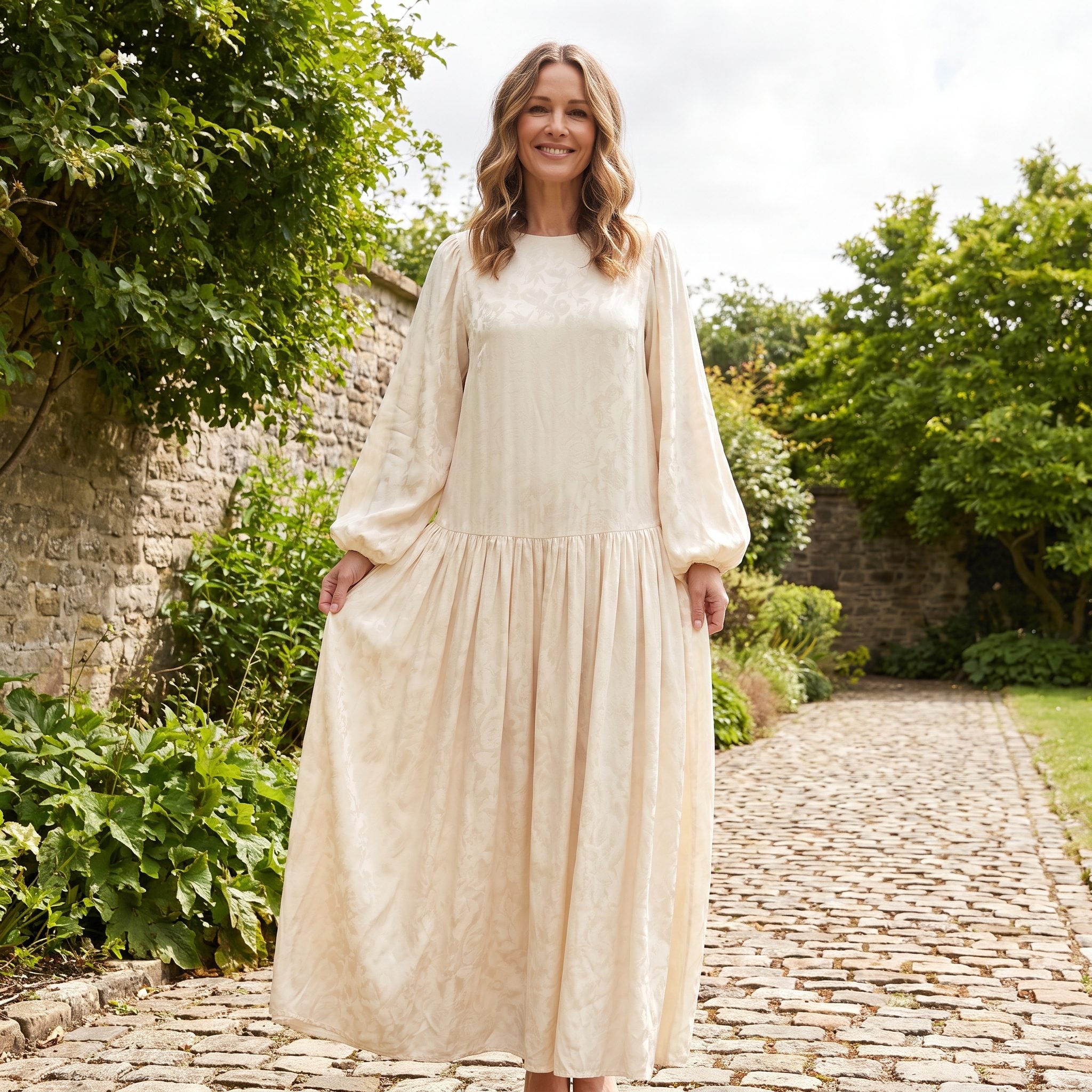
The electric-blue bodice continues past the natural waist before releasing a gathered skirt. That lowered seam visually lengthens the torso and shifts the greatest concentration of fabric toward the hips.
Glossy satin above and structured taffeta below create two distinct zones. Rather than relying on a conventional waistline, the dress changes the body’s apparent proportions, giving its enormous skirt an unusually elongated foundation.
11. The 1970s Deep-Plum Maxi That Made Every Gesture Dramatic
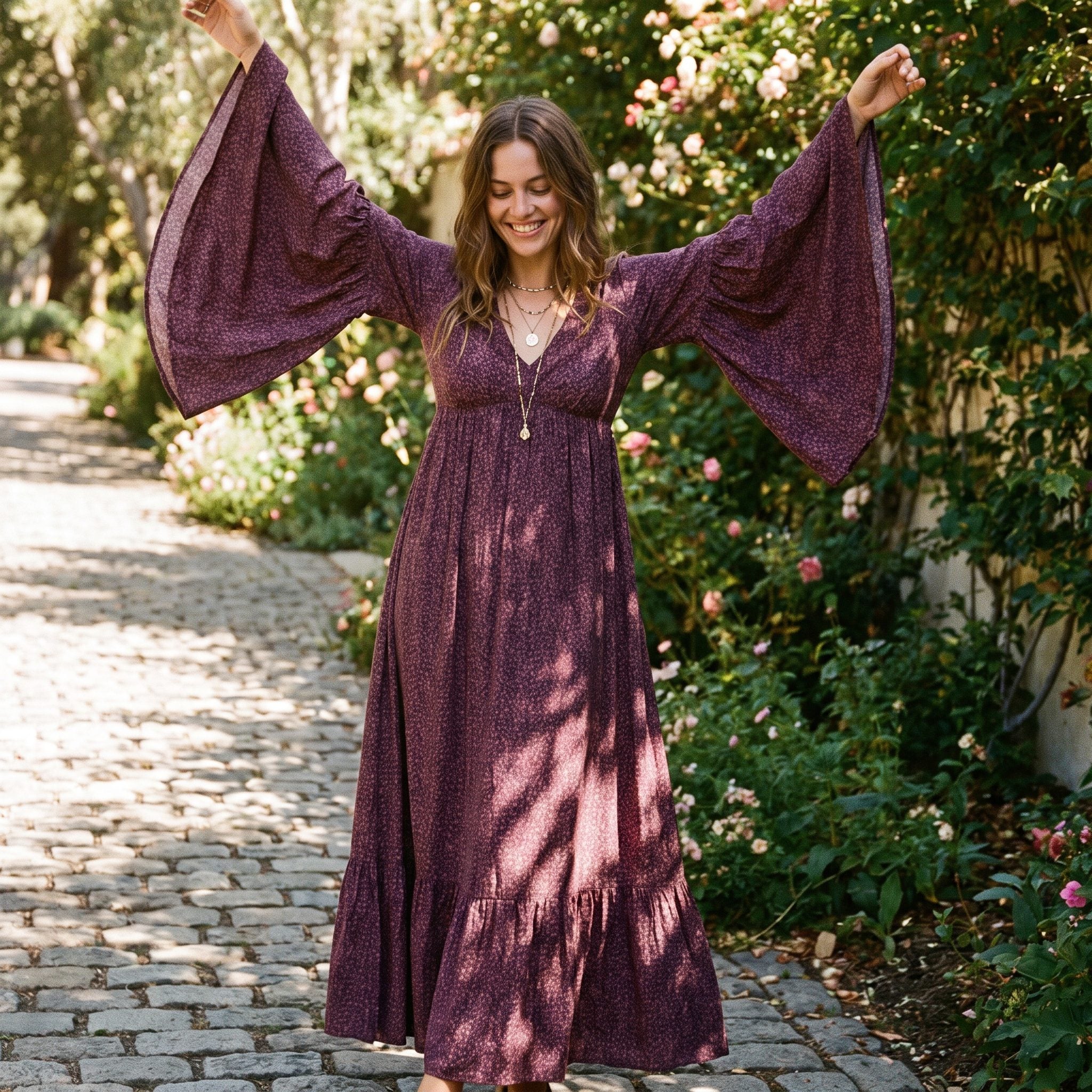
Bell sleeves widen dramatically toward the wrists, turning the simplest movement of an arm into a flourish of fabric. Deep plum adds a moody richness that suits the gown’s flowing proportions.
The long skirt and relaxed sleeves favor movement over a tightly constructed silhouette. Unlike puff sleeves, which build volume around the shoulder, bell sleeves release their fullness toward the hand, creating an entirely different kind of drama.
10. The 1990s Dusty-Rose Gown That Kept Its Flowers Small
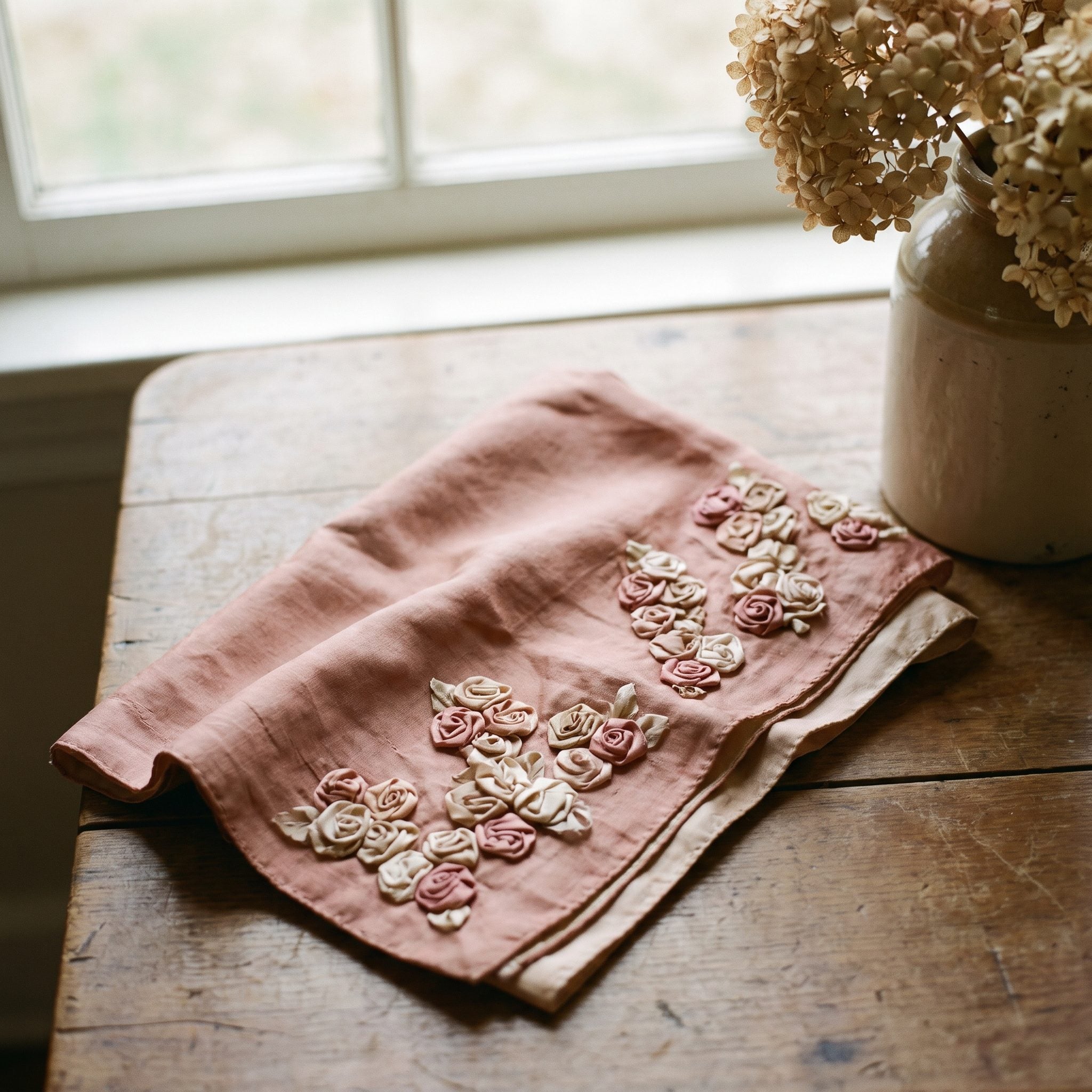
Dusty-rose satin and delicate fabric rosettes give this gown a romantic personality without overwhelming its gently flared silhouette. The flowers decorate the straps and waist, keeping the ornament close to the body.
That small scale distinguishes the design from the enormous fabric bows of the previous decade. The result is soft, carefully composed, and unmistakably connected to the quieter formalwear aesthetic of the 1990s.
9. The 1980s Lavender Ruffle Gown That Never Found an Edge It Couldn’t Decorate
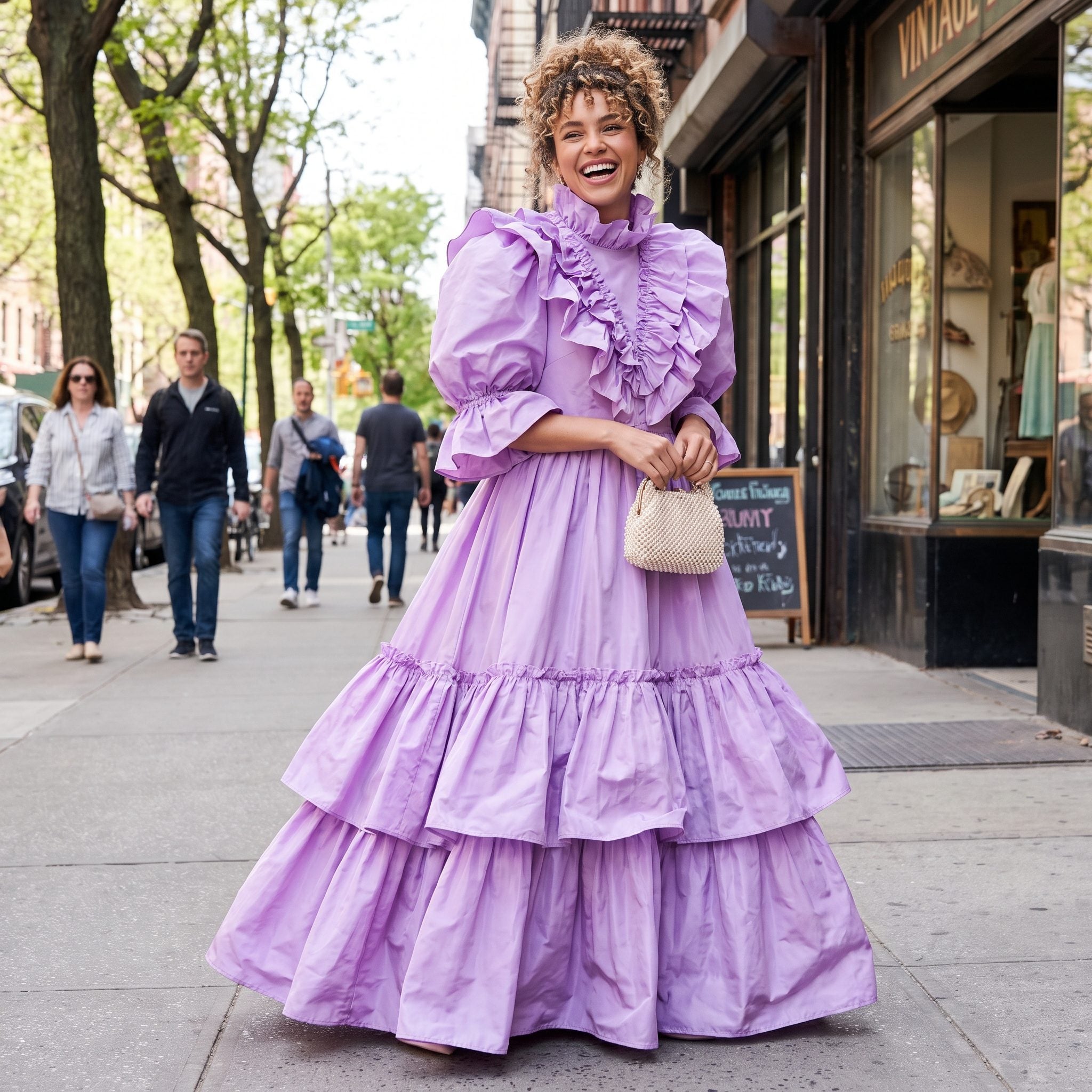
Lavender taffeta gathers into ruffles at the neckline, sleeves, and skirt. Each tier catches the light along its folded edge, creating a procession of highlights across the dress.
The off-the-shoulder neckline gives the upper silhouette a clean boundary before the ruffles take over. The design embraces decoration as a structural principle, turning the skirt into an elaborate arrangement of fabric rather than a simple sweeping shape.
8. The 1990s Royal-Blue Satin Gown With Sparkle in Exactly the Right Place
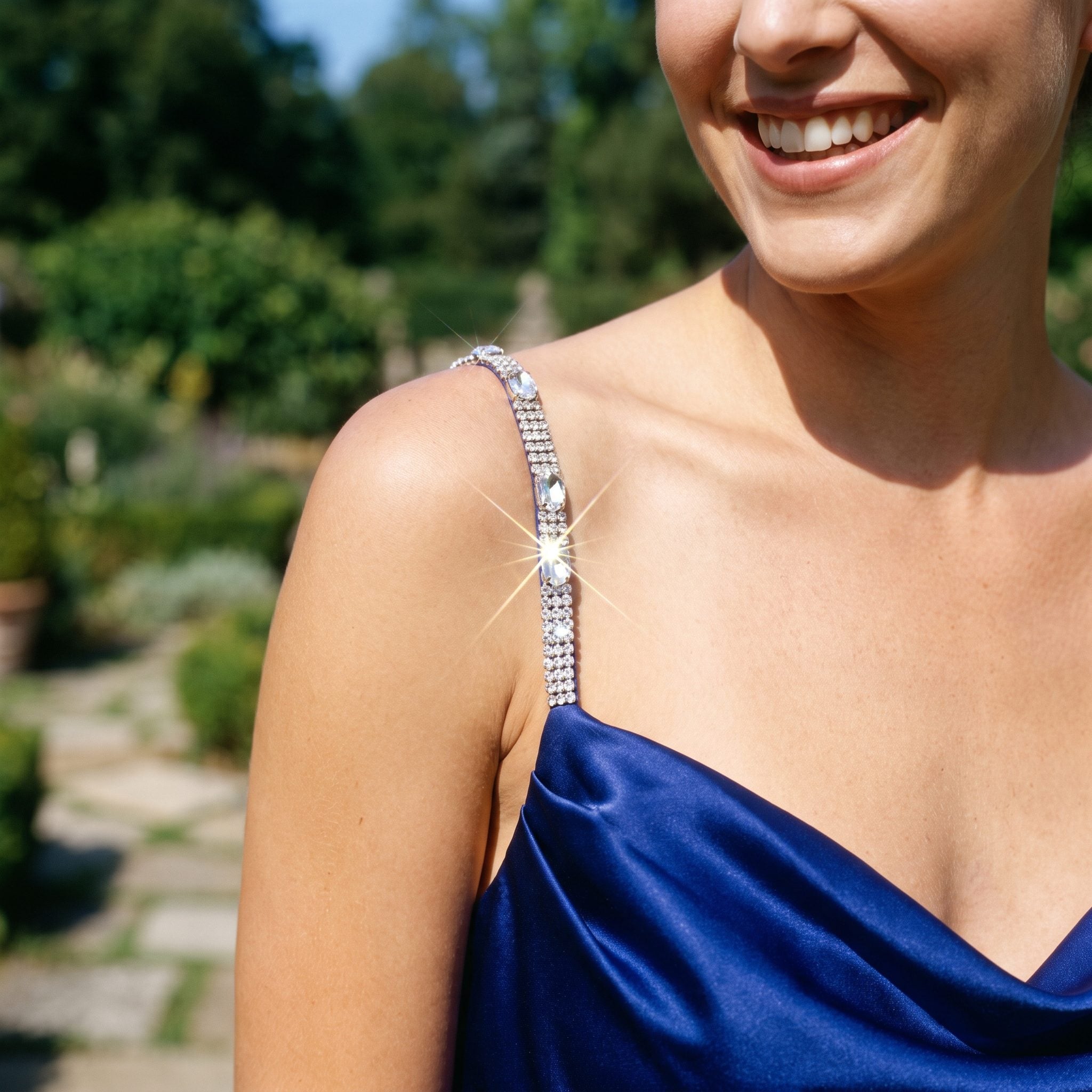
Two rhinestone straps provide a concentrated flash of sparkle above a clean column of royal-blue satin. The decorative detail is small, but its placement gives the shoulders and neckline a clear focal point.
Rather than spreading embellishment across the entire gown, the design lets the satin supply the shine and the straps supply the glitter. The result has the polished economy associated with much of the decade’s eveningwear.
7. The 1980s Ruffle-on-Ruffle Princess Gown That Turned Fabric Into Architecture
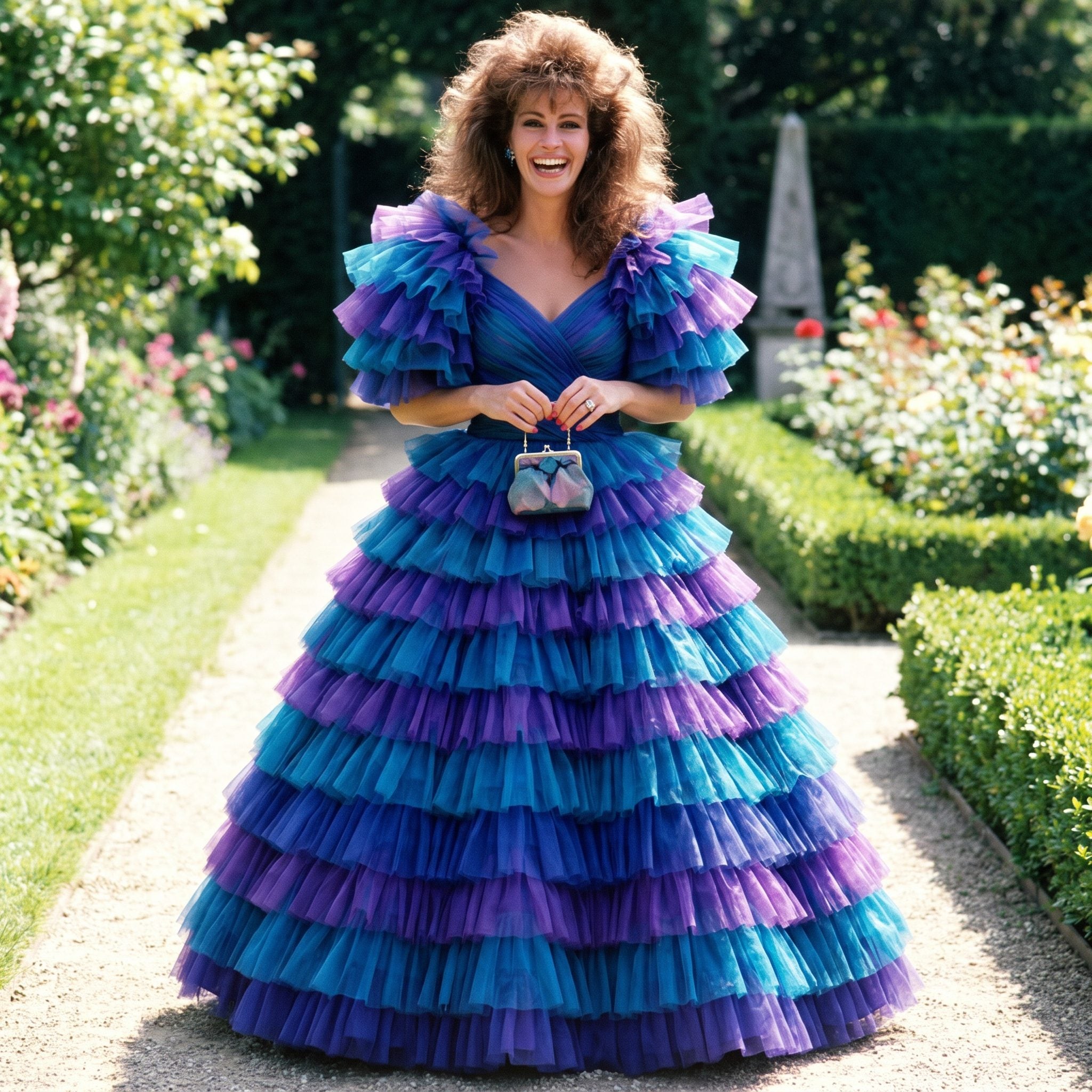
Peach taffeta forms a procession of ruffles from the sleeves through the enormous skirt. The fitted bodice creates a narrow center, while the fabric expands outward in repeated tiers.
There is considerable construction behind the extravagance. Each layer needs enough body to maintain its shape against the next, turning the skirt into a carefully assembled structure. The result resembles an elaborate confection, although the proportions are entirely intentional.
6. The 1980s Lavender Princess Gown That Balanced Sweetness With Scale
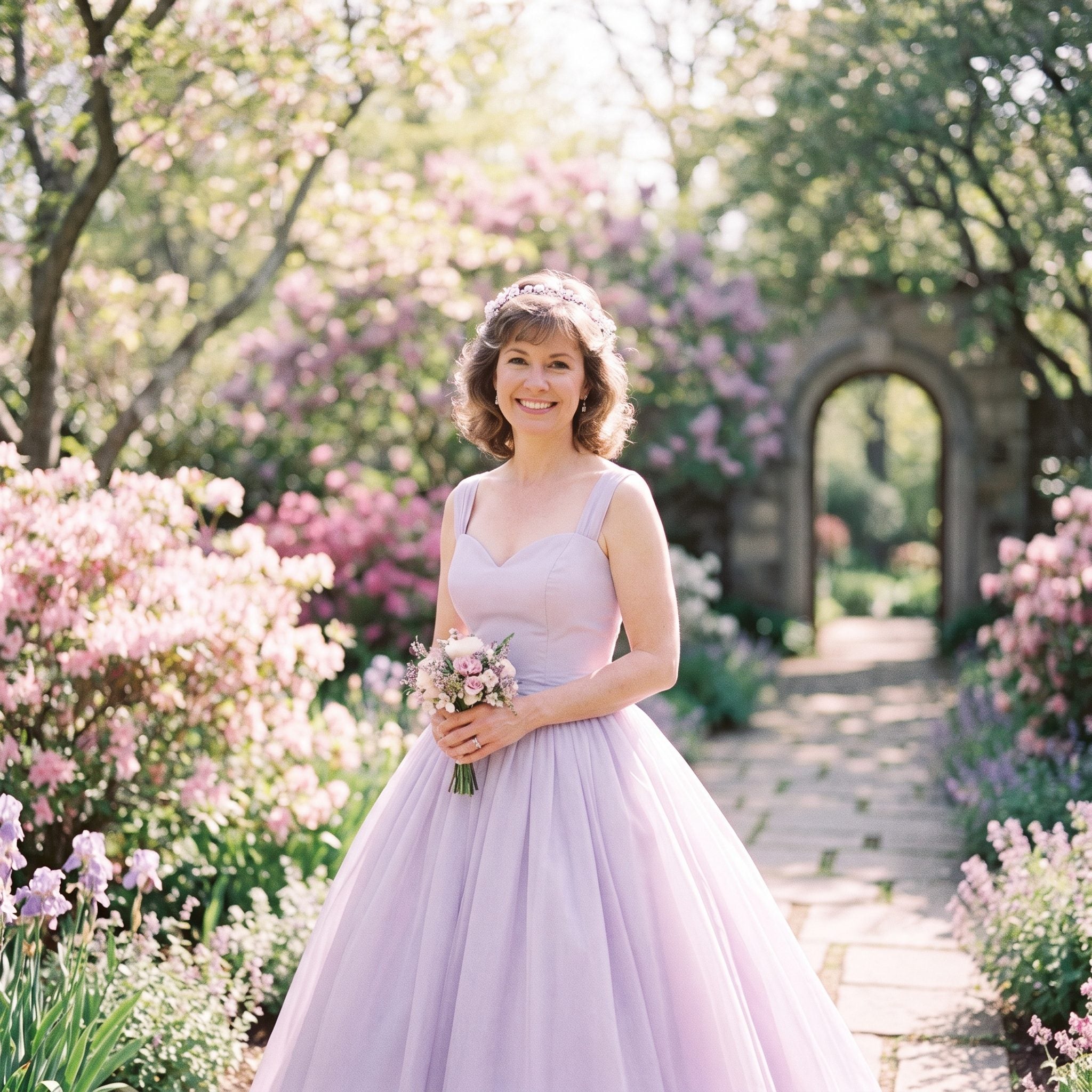
Lavender taffeta, a sweetheart neckline, and puffed sleeves combine in a romantic princess silhouette. The fitted bodice gives the upper body definition before the skirt expands into a considerable sweep of fabric.
The pale color softens the overall effect, while the curved neckline provides an elegant contrast to the sleeves’ rounded volume. This is the 1980s fairy-tale ideal expressed through proportion as much as decoration.
5. The 1980s Off-the-Shoulder Taffeta Gown That Made Pink Impossible to Ignore
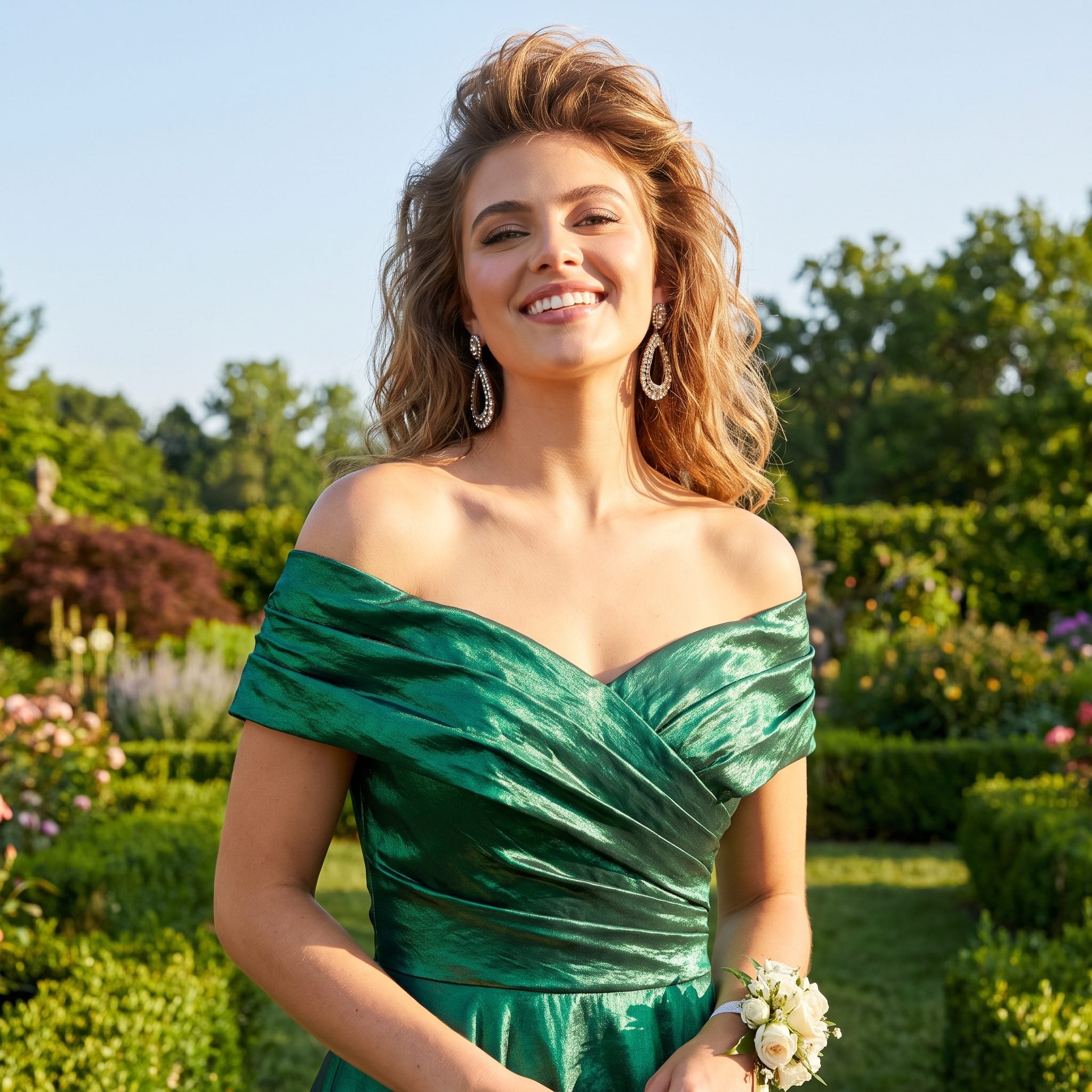
A broad off-the-shoulder ruffle frames the collarbone before pink taffeta expands into a full, rustling skirt. The fitted bodice provides the essential contrast, holding the center of the silhouette close while the fabric spreads outward.
Tiny bows scattered across the folds add another layer of romantic detailing. The design captures the decade’s fascination with fairy-tale formalwear, combining exposed shoulders, a sharply defined waist, and a skirt built to occupy serious space.
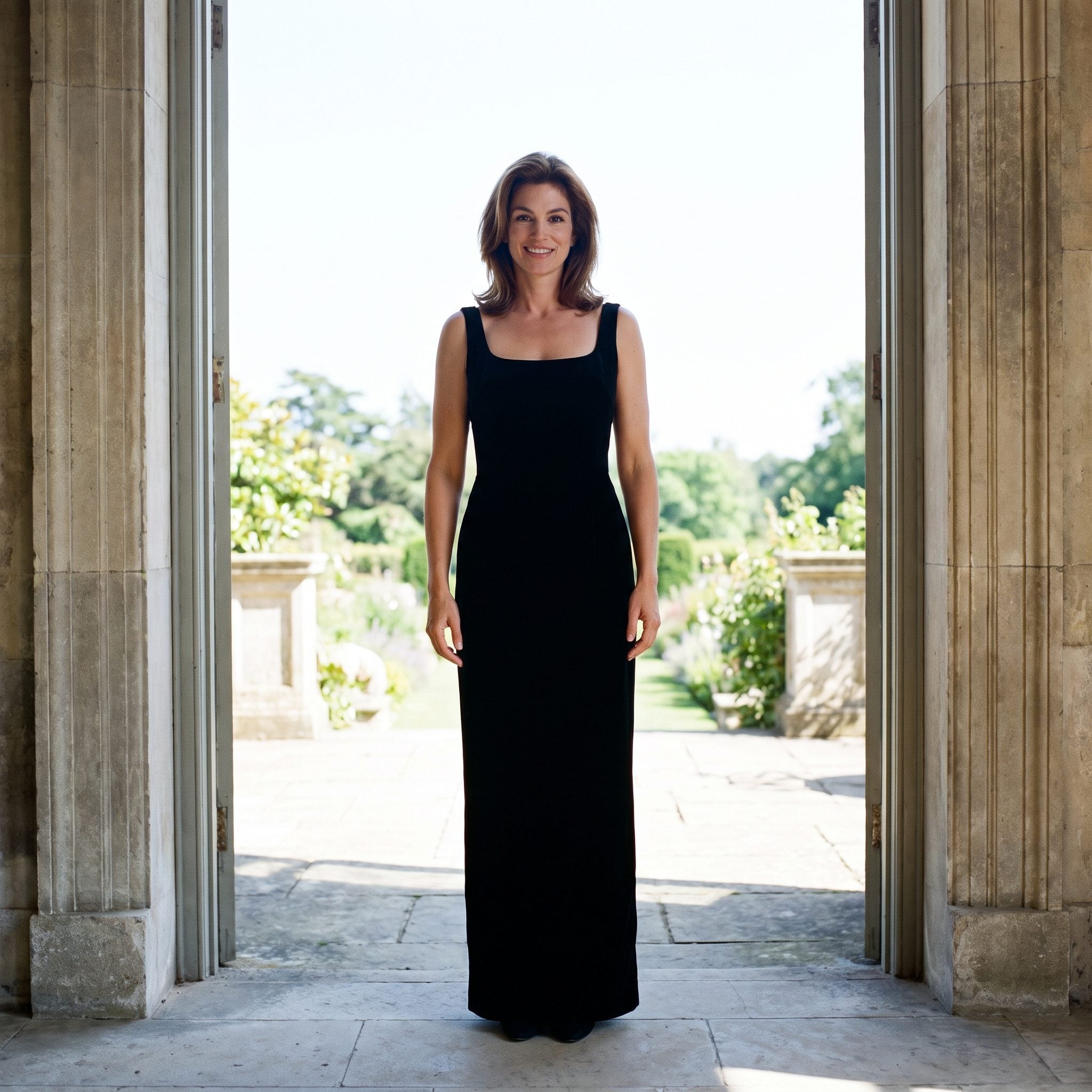
4. The 1990s Black Velvet Column That Made Darkness Look Expensive
❤️ Would you like to save this?
A square neckline, black velvet, and a single rhinestone choker create a remarkably disciplined composition. The velvet absorbs much of the surrounding light, allowing the jewelry to provide the sharpest point of sparkle.
The narrow column silhouette gives the gown an elongated appearance, while the absence of elaborate trim keeps attention on the fabric’s depth. After the extravagant pink ball gown, the contrast could hardly be more emphatic.
3. The 1980s Purple Gown That Combined Puff Sleeves, a Giant Bow, and a Tiered Skirt
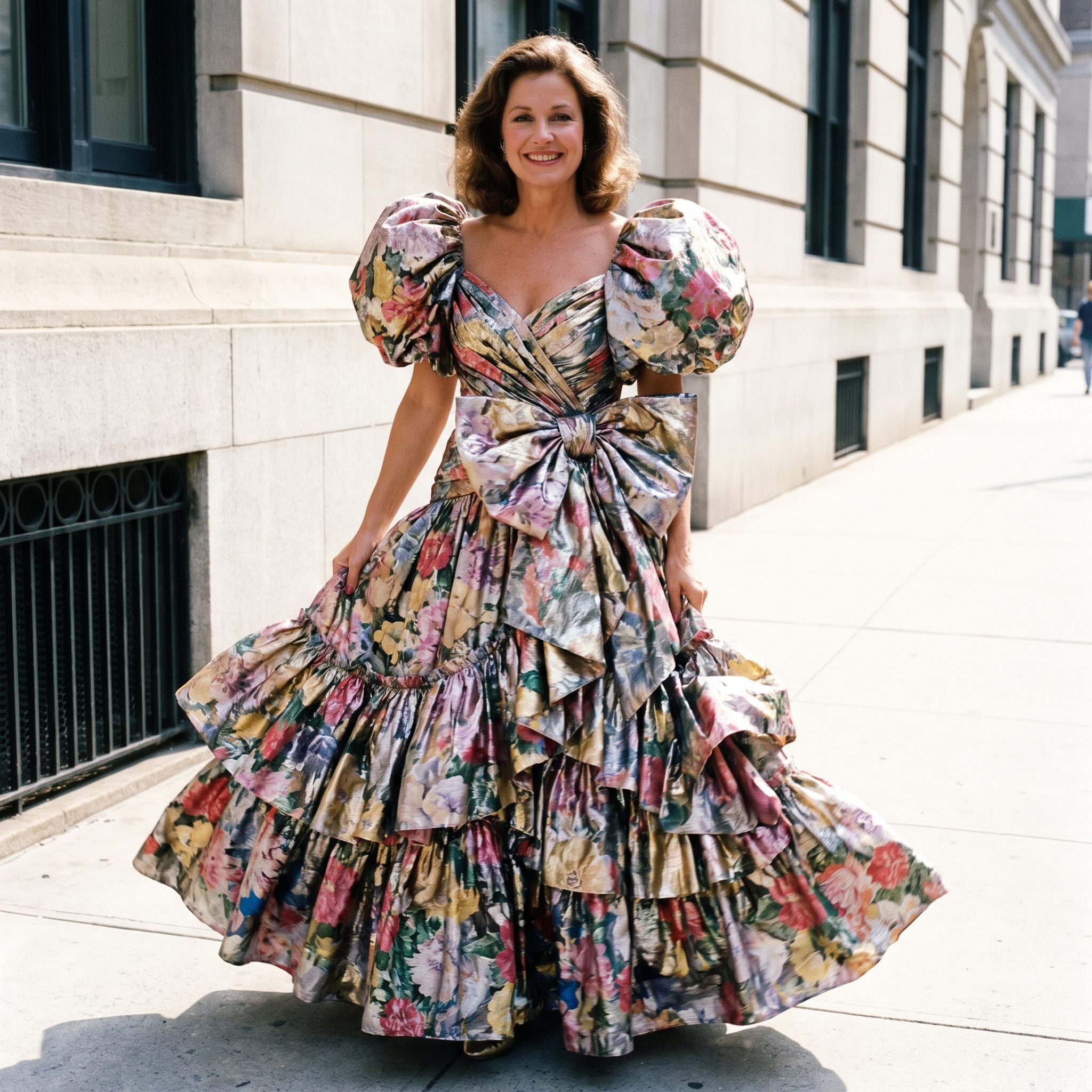
Puff sleeves, an enormous bow, and tiers of purple taffeta compete for attention across the same gown. The sweetheart bodice provides a brief moment of visual discipline before the fabric begins its elaborate expansion.
Each feature could have carried a simpler design on its own. Combined, they produce a spectacular expression of late-1980s formalwear, where saturated color, exaggerated proportions, and extravagant construction were treated as complementary ambitions.
2. The 1970s Peach Chiffon Maxi That Let the Fabric Breathe
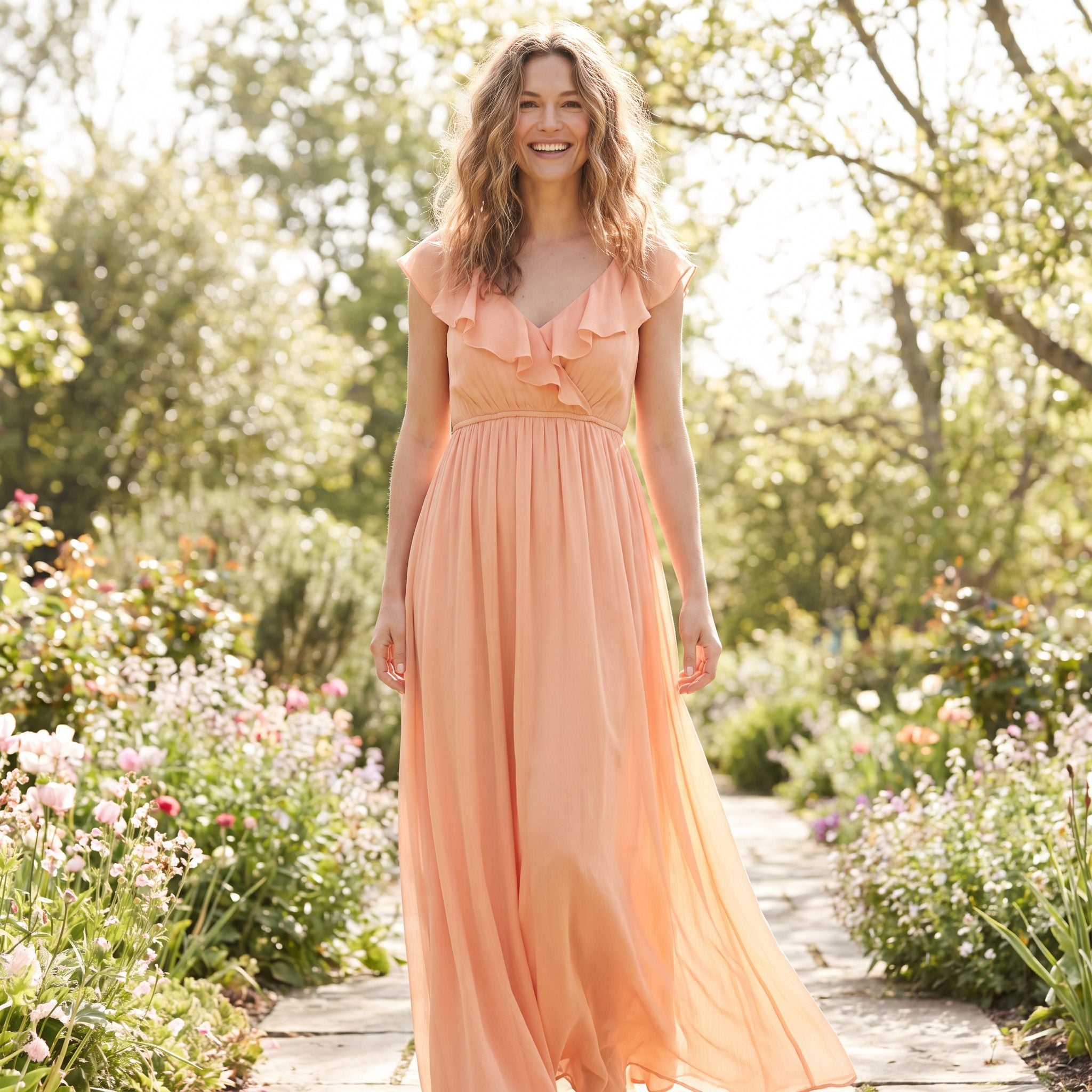
A ruffled neckline gathers peach fabric around the shoulders, while a high empire seam releases the skirt into loose, flowing folds. The silhouette has little interest in the tightly engineered shapes that would dominate the following decade.
Its soft color and lightweight fabric reflect the romantic side of 1970s occasion dressing. The layered neckline provides enough ceremony for prom, while the skirt moves with an ease that makes the design feel almost weightless.
1. The 1980s Maximum-Volume Taffeta Gown That Left Nothing on the Drawing Board
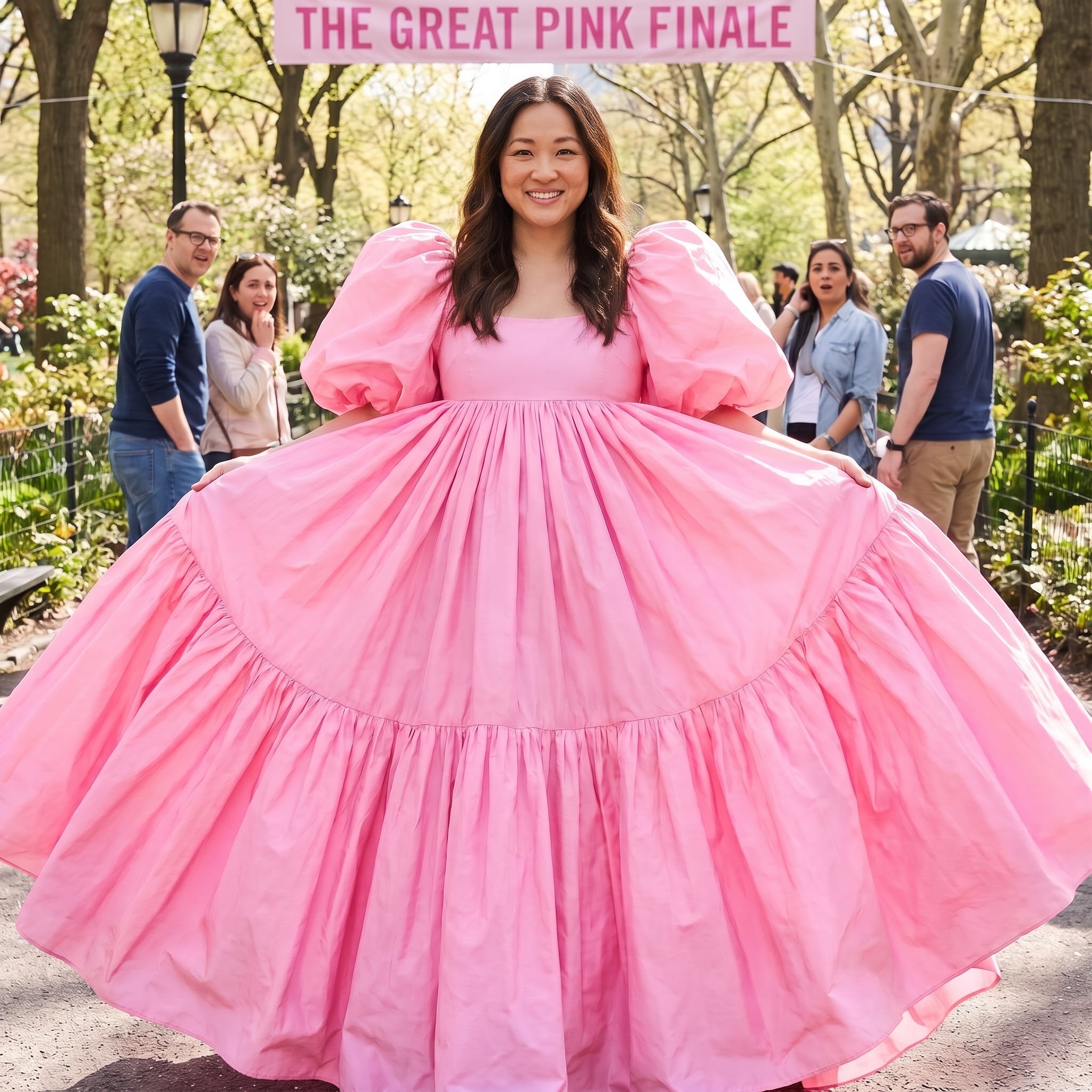
The 1980s reach their grand finale in bubblegum-pink taffeta: giant puff sleeves, an off-the-shoulder ruffle, multiple bows, and a skirt constructed in extravagant tiers. The fitted bodice is almost overwhelmed by the surrounding celebration.
Every major design element contributes another dimension of volume. The sleeves widen the shoulders, the ruffles frame the neckline, and the layered skirt expands outward in an enormous sweep of pink fabric. From the restrained chiffon of the previous dress to this architectural extravaganza, the difference is practically a history of prom fashion in two photographs.
Some dresses whisper. This one arrived with its own weather system.