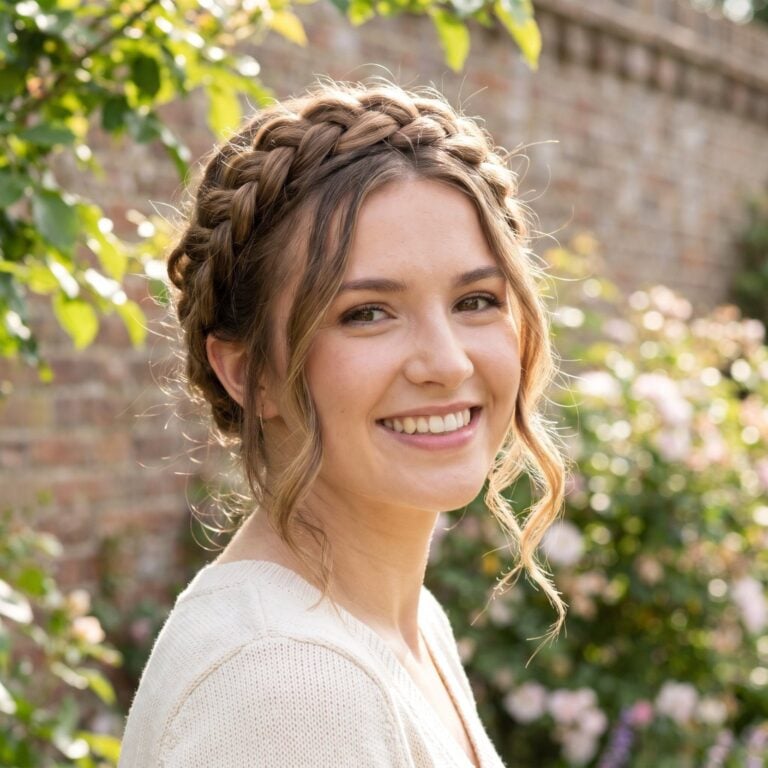

❤️ Would you like to save this?
Somewhere between the sheet cake at a fortieth birthday and the quiet drive home, a thought arrives. Something has to change, and the mirror is closest, so you book the appointment. You want bangs, or copper, or twelve inches gone by Saturday. The salon chair becomes the cheapest therapy anyone ever invented, and the receipt costs less than a sports car.
The funny part is how familiar it all feels. The same wiring that makes a person buy a motorcycle at fifty-two makes you text your stylist at midnight. Novelty seeking, identity disruption, the need to mark a before and an after on something you can actually see. Below are the parallels you’ll recognize instantly, and the psychology that explains why your hair keeps starring in your reinvention.
FYI, thanks to AI imagery software, we’re able to create very specific fashion and hairstyle examples to illustrate the points being made. In some cases, imagery is exaggerated to hammer home the point. Also, assume links that take you off the site are affiliate links such as links to Amazon. this means we may earn a commission if you buy something.
18. You Treat Gray Roots Like Proof Time Is Winning

You spot the silver stripe at your part and something tightens in your chest. Not because gray is ugly. Because it feels like a scoreboard, and time just put a point up.
It’s the same flinch you feel catching a reflection in a shop window and not recognizing the posture. The root isn’t information, it’s a message about mortality, and you’d rather not read it over coffee.
Psychologists call this identity threat. When a visible cue clashes with how we picture ourselves, the brain treats it as a small emergency and reaches for the fastest fix, which is how the 10 p.m. box dye ends up in your hand. Covering the gray doesn’t actually address the feeling, though. It just resets the clock on when you’ll feel it again.
What Our Readers Say
- When ThreadCurve readers loved a hairstyle and tapped a reason, overall style came first at 28%, with cut shape at 18% and looking younger at 16%.
From ThreadCurve reader polls and votes.
17. You Ask for Bangs After One Terrible Week
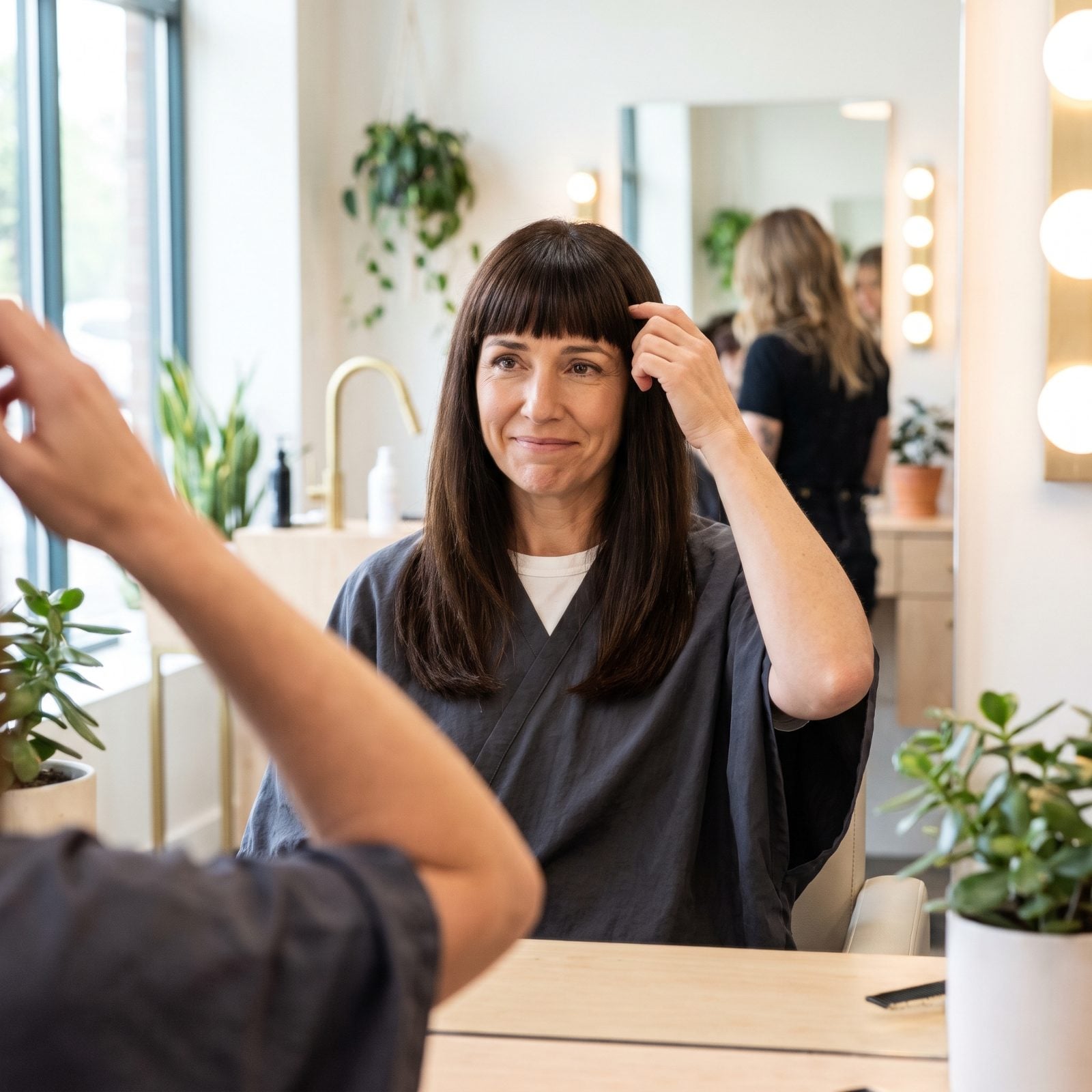
Bangs are the emotional impulse buy of the hair world. Nobody books a fringe after a calm, well-rested month. You book it on a Thursday after a week that flattened you, and suddenly cutting hair into your eyeline feels like taking back control.
That’s the midlife version of rearranging the furniture at midnight or signing up for a 6 a.m. spin class you’ll quit by March. When the big things feel unfixable, we fix a small visible thing to feel capable again.
The mechanism is emotional regulation through action. Doing something, anything, lowers the helplessness. Bangs just happen to be the most available something, and they grow back, which is more than can be said for most impulsive decisions made in a bad week.
16. You Save Celebrity Cuts for a Life You Don’t Live
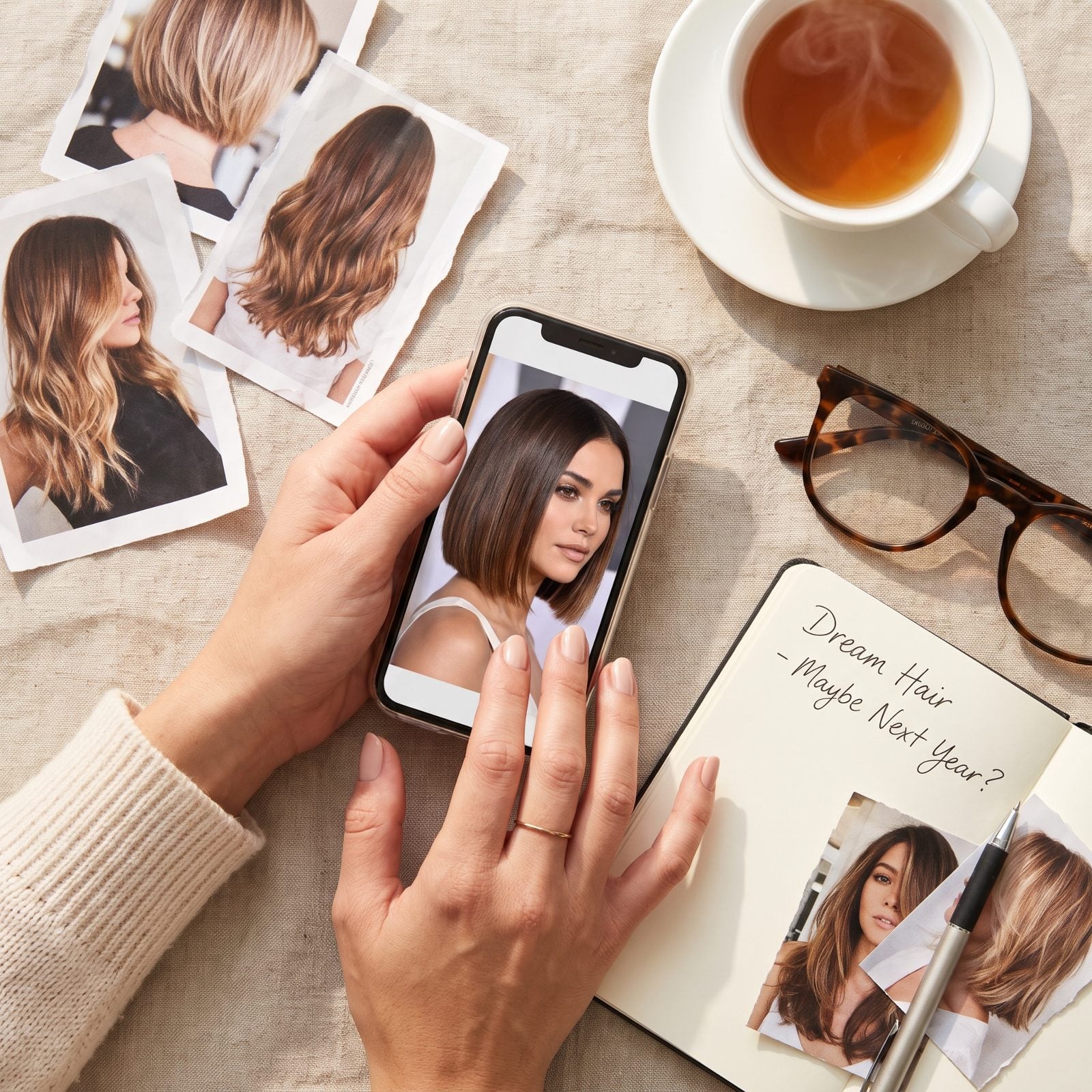
Your camera roll holds a folder of polished, blow-dried celebrity cuts that require a stylist on retainer and a job that doesn’t involve carpool. You save them anyway. They’re not haircuts. They’re a daydream about a calmer, richer, more unhurried version of you.
Same instinct as buying linen pants for a Tuscan trip you haven’t booked. You’re not shopping for your actual life. You’re shopping for the life you picture when you close your eyes.
Researchers call this the idealized possible self, the future version we quietly believe we’re becoming. Harmless, until you ask your stylist for a look that only survives under studio lighting and a glam team.
15. You Bring Three Reference Photos That Contradict Each Other
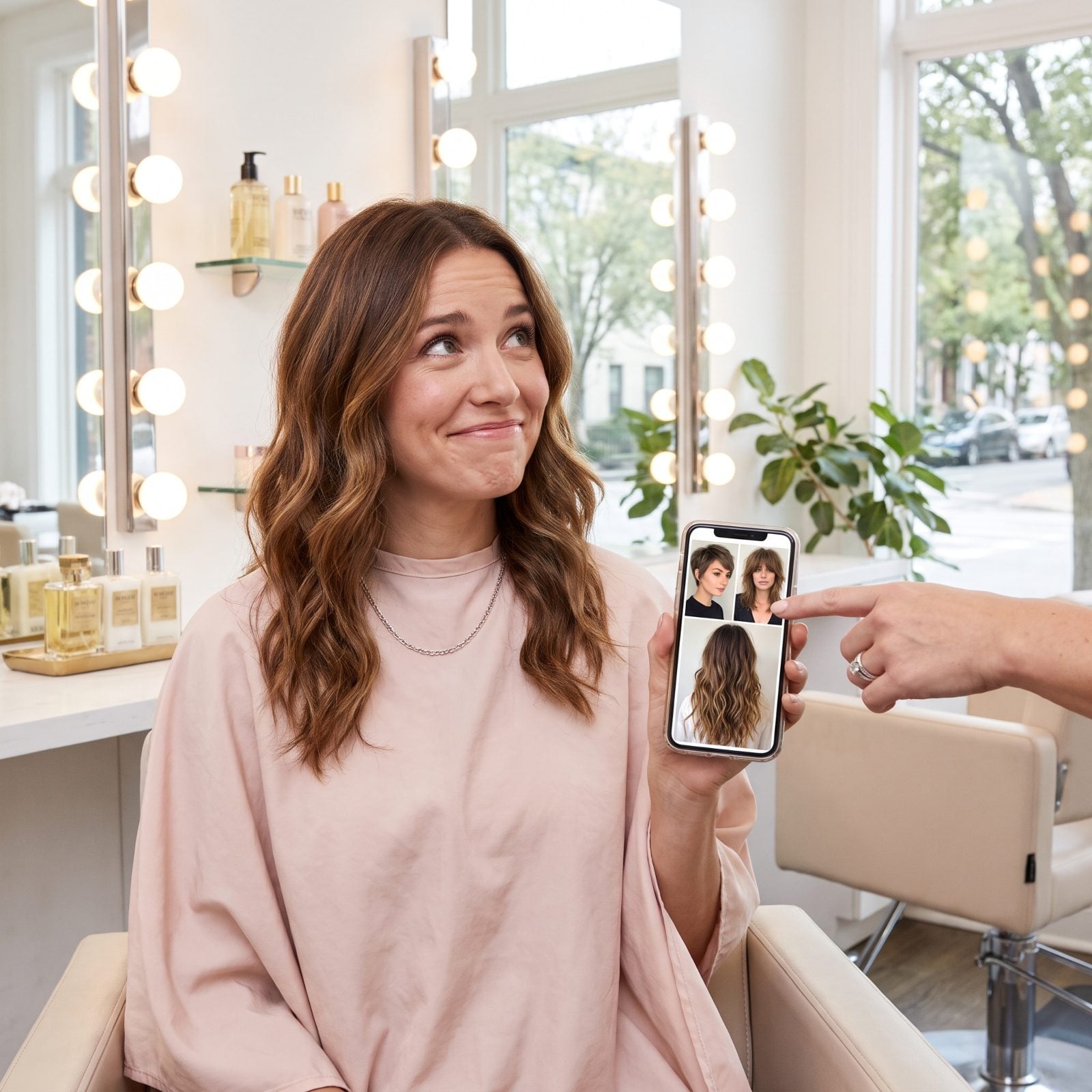
One photo is a pixie. One is a long shag. The third is somewhere in between with bangs you swore off two items ago, and you present all three to your stylist and wait for her to perform a miracle of translation.
Nobody says this out loud, but the contradictory photos aren’t about hair. They’re about not knowing which version of yourself you’re trying to become. Each image is a different answer to the same question.
This is choice overload wearing a cute outfit. Faced with too many appealing directions, we can’t commit, so we hedge by wanting all of them. The midlife equivalent is the vision board with nine conflicting dreams on it. A good stylist, like a good friend, doesn’t pick for you. She asks the one question that makes the other two photos fall away.
14. You Book the Appointment Before Anyone Can Talk You Out

You hit confirm fast. On purpose. Because you know if you sit with it for forty-eight hours, your sister, your partner, and your own second-guessing will file in one by one to vote no.
Booking before the window closes is the same move as putting down a deposit on the trip before you can run the numbers and chicken out. The speed isn’t impulsiveness. It’s a strategy against your own cold feet.
Behavioral science calls this a commitment device, a trick you play on your future self to lock in a decision your present self actually wants. The deposit, the booked date, the appointment reminder, all of it is you protecting a brave choice from the committee in your head.
13. You Pick Copper Because Everything Else Feels Too Predictable
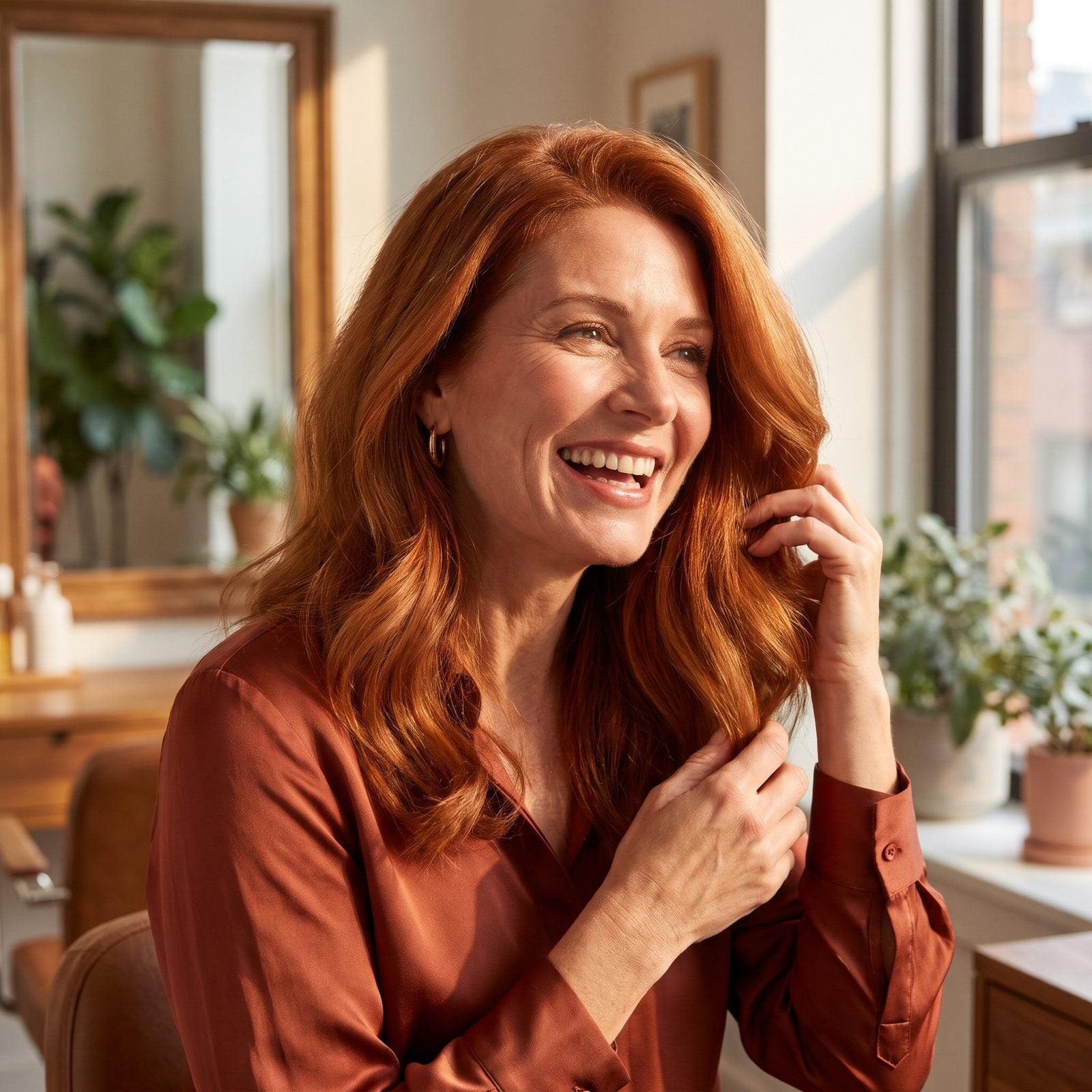
You’ve been the same brown for two decades and one morning it reads as a rut. So you point at the swatch nobody expects and say copper. The safe, beige hairstyle choices suddenly feel like giving up without a fight.
That reach for the unexpected color is the dopamine pulling the strings. Novelty lights up the reward system the same way a new sports car or a last-minute flight to somewhere you’ve never been does. The brain is hunting for a hit of new, and your hair is the nearest frontier.
Copper works because it sits warm against most skin and softens rather than ages. The deeper reason it feels good is older than any trend: variety reads to the brain as aliveness.
12. You Chop Off Twelve Inches to Mark a Clean Break
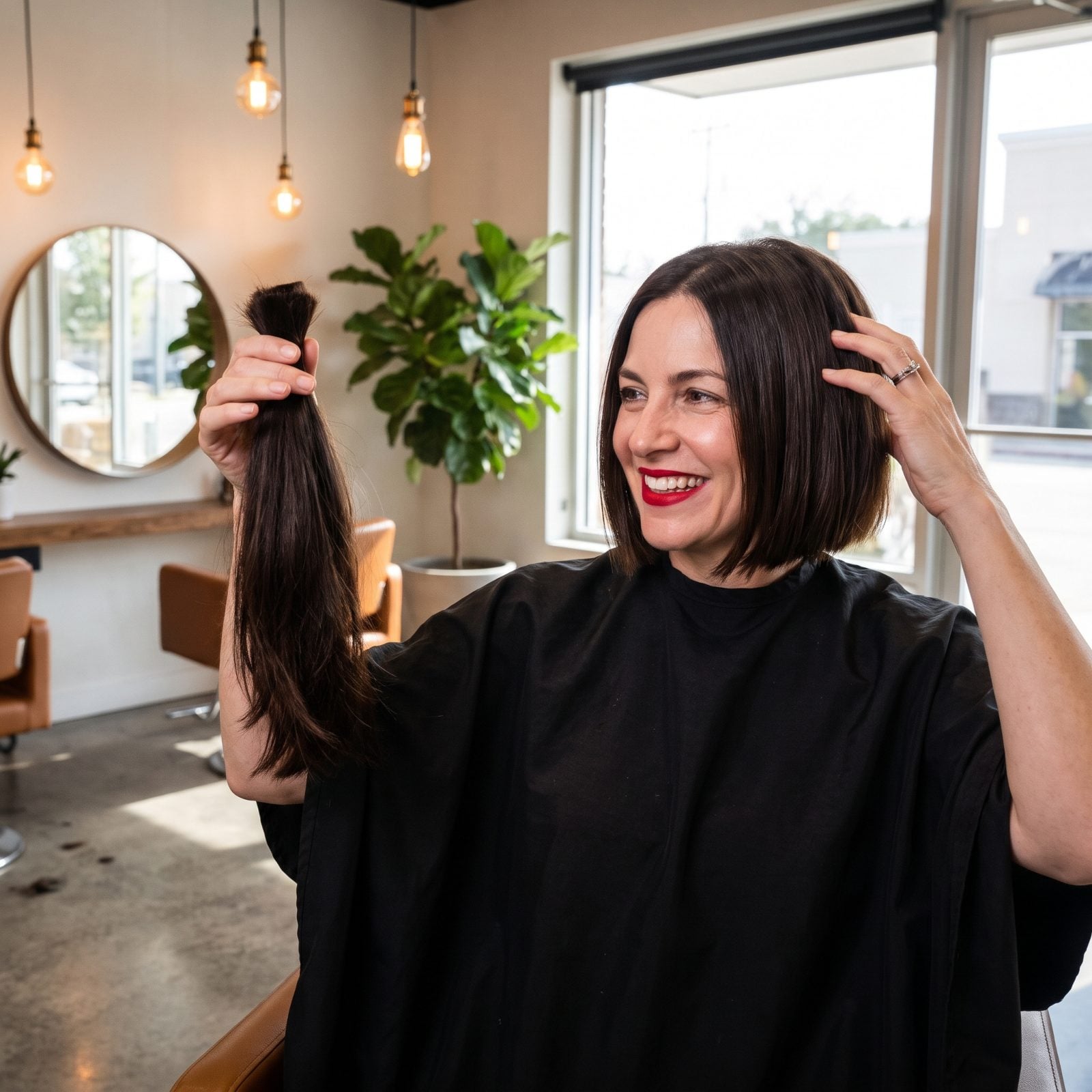
The long hair goes into a ponytail and then onto the floor, and you feel pounds lighter in a way no scale would register. Something ended. You wanted to feel it in your body, not just know it in your head.
The big chop after a loss, a divorce, a diagnosis, a milestone birthday is ritual, plain and simple. It’s the human need to make an internal change external and undeniable, and cultures have done it for thousands of years.
Psychologists call this embodied cognition. We think with our bodies, not only our brains, and a physical act helps the mind register that a chapter has actually closed. Twelve inches on the floor is proof you can point to. The mirror backs you up, which the inside of your head has been refusing to do all month.
11. You Choose the Cut Your Younger Self Was Denied

At nineteen your mother said absolutely not. At twenty-six a boyfriend said he preferred it straightened. At forty you decided the committee no longer gets a vote, and you finally let your hair grow into the big, natural curls you wanted the whole time.
This is the hair version of the fifty-five-year-old learning to surf or the woman going back for the art degree her parents vetoed. Midlife loosens the grip of other people’s approval, and the old denied wants come back up for air.
There’s real psychology here called the reminiscence bump, the way choices and songs and styles from our teens and twenties stay emotionally supercharged for life. The cut you were refused then carries decades of unfinished business. Getting it now isn’t rebellion. It’s settling a tab you’ve been carrying since you were young enough to need permission.
10. You Find a Stylist Who Understands the “New You”
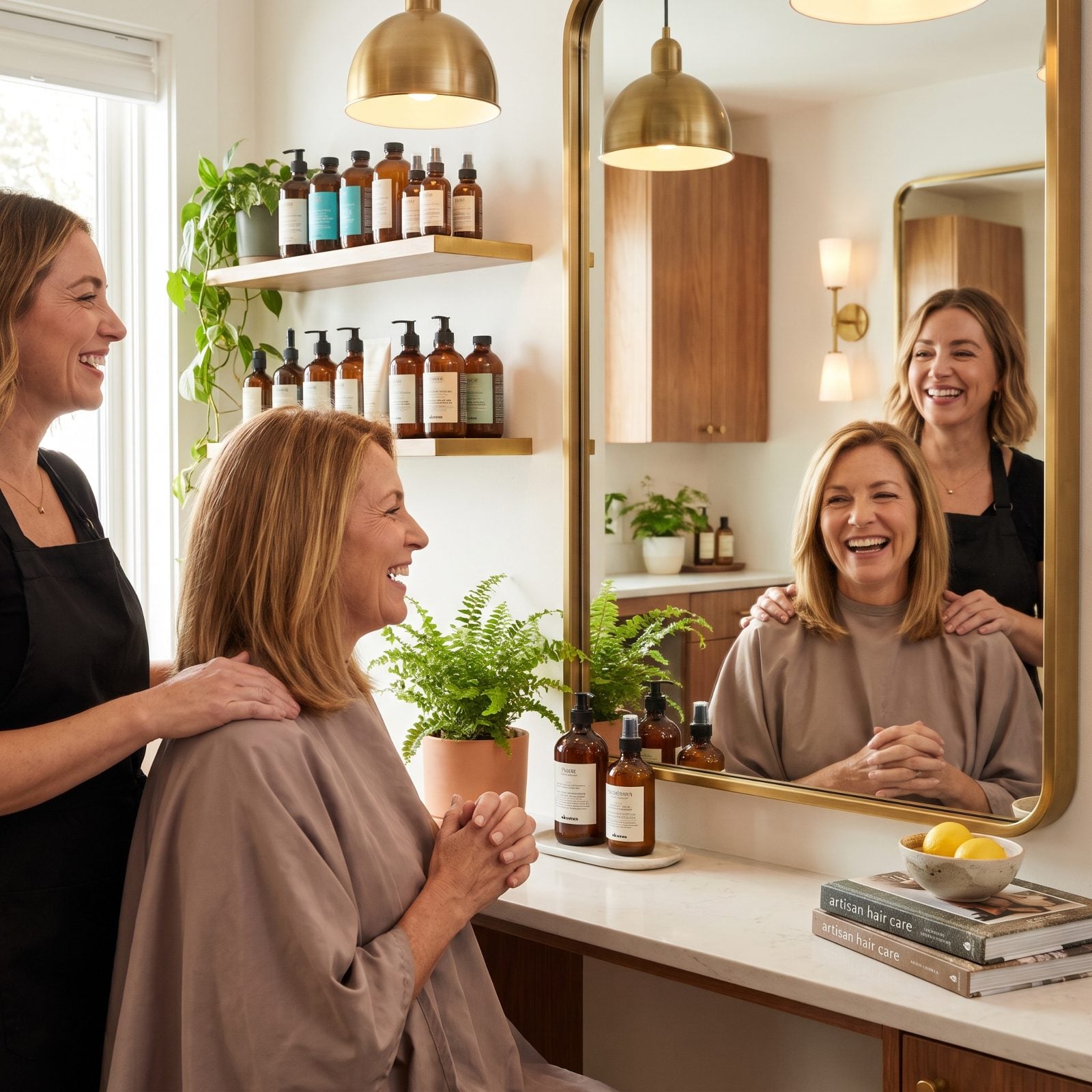
A haircut wasn’t really what you were after. You wanted someone to look at you, really look, and say yes, I see where you’re headed, and I know how to get you there. When you find that stylist, you’d follow her to a new salon across town without blinking.
That loyalty is the same force behind finding the right trainer, the right therapist, the right friend at a new job. During reinvention, we desperately want a witness who believes the new self is real before it fully exists.
The mechanism is validation of identity. Change feels fragile until someone outside your own head confirms it’s happening. A stylist who gets the new you isn’t selling a service. She’s co-signing a version of yourself you’re still nervous to claim out loud.
9. You Announce the Pixie Like It’s Major Personal News

You text the before-and-after to the group chat with three exclamation points, then you post it and watch the comments roll in. The short pixie cut isn’t just a haircut now. It’s an announcement, and you want the reaction to match the size of the leap.
Same instinct as the big LinkedIn post about the new chapter, or the dramatic reveal of a tattoo. When we make a change that matters internally, we broadcast it externally to make it count.
The mechanism is self-signaling. We tell other people partly to convince ourselves. Every like and gasp and “you look amazing” is a small deposit in the account that says this new version is real and here to stay. The pixie went to your head in the best way. Enjoy it. Go run your fingers through it one more time.
Not everyone in the group chat will cheer, though: in our Hot or Not matchups, pictures with pixie cuts won fewer of their head-to-head contests than expected.
8. You Swear It’s Just Hair While Photographing Every Angle

The new bob is barely a week old and you’ve said “it’s just hair” out loud at least twice. Yet here you are at the farmers market, grinning, phone aimed at your own reflection, catching the cut from every possible angle. Photographing it obsessively is easier than admitting how much the change matters to you.
The midlife parallel is almost too on the nose. A person swears the convertible or the guitar lessons or the sudden triathlon obsession means nothing, then mentions it in every conversation. We narrate change as trivial precisely when it feels enormous. The downplaying is the tell.
Psychologists call it the mere exposure effect. We photograph the new thing over and over because looking at it repeatedly is how we train ourselves to accept it, and each angle is a small vote for the person we just became. “It’s just hair” isn’t a dismissal. It’s the warm-up act for a self you’re still auditioning.
7. You Keep Checking Reactions Before Deciding You Love It

You said you did this for yourself. Then the first family member walked in and your whole nervous system went still, waiting for their face to react. One lukewarm “oh, you changed it” and the shine drains out of the entire day.
Same wiring runs the midlife reinvention. The woman who took the big swing — new job, new city, new body — insists it was a private decision, then scans every reaction like a weather report. We tell ourselves approval doesn’t matter most loudly when it’s doing the most work.
Call it social proof: the quiet way we treat other people’s responses as evidence about reality. A change you chose alone still needs a chorus to feel real. The hair didn’t become “right” when you cut it. It became right when three people told you it was.
6. You Buy New Clothes Because the Bob Changed Everything
❤️ Would you like to save this?
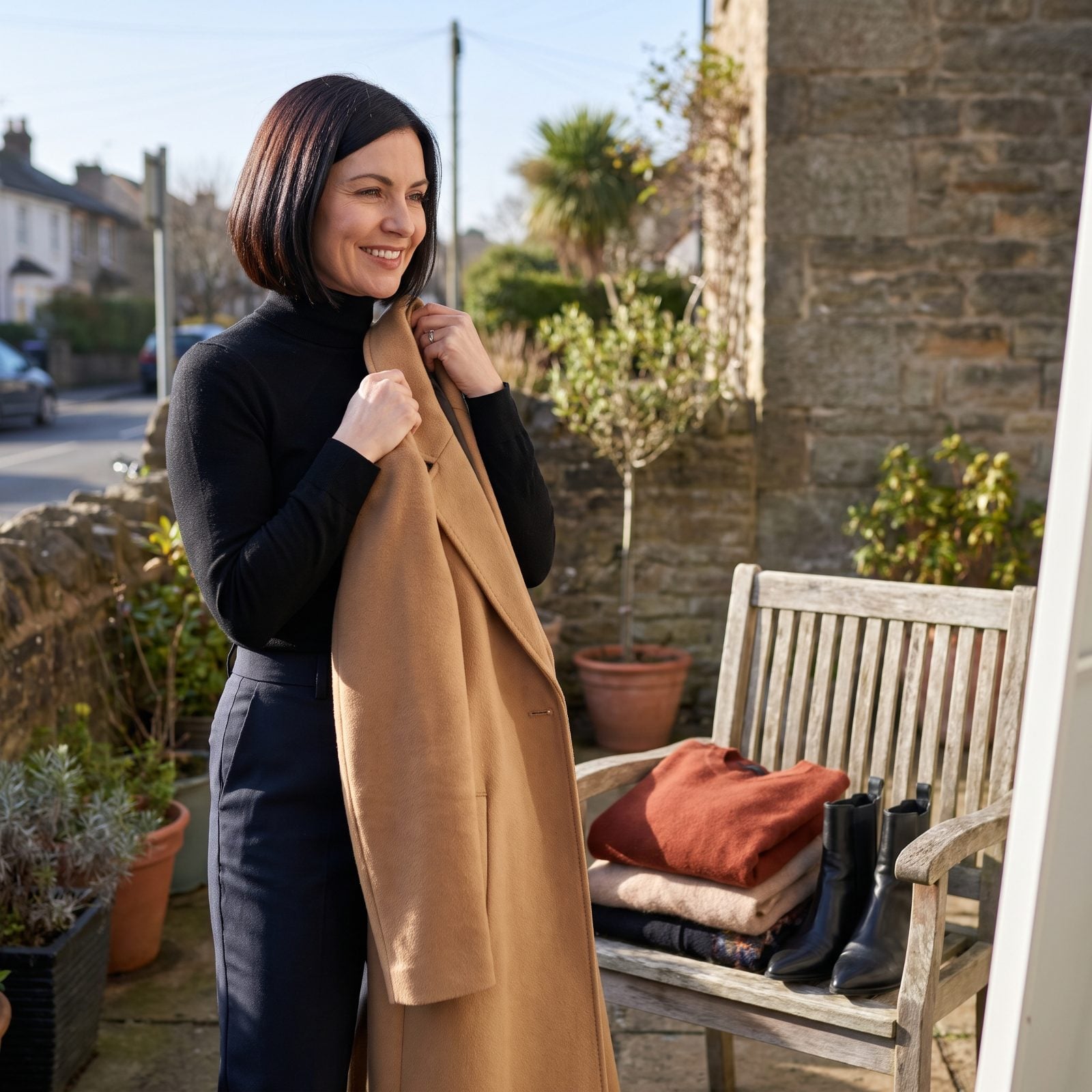
The camel wool coat suddenly feels wrong against the new jaw-length bob. So does the old necklace, the soft cardigans, half the closet. One haircut, and your wardrobe reads like it belongs to a stranger who moved out.
The bob is doing heavy lifting here, and it demands an answer from everything around it. A precision cut at the jaw sharpens the whole face, which is why the pointed boots and the structured coat suddenly make sense while the slouchy knit does not. The hair reset the register and the clothes have to catch up.
The midlife version is the man who buys a motorcycle and then needs the jacket, the boots, the sunglasses — a whole costume to prop up one decision. Behavioral economists call it the Diderot effect: one new thing that doesn’t fit your old things triggers a spiral of upgrades until everything agrees. You didn’t want a new coat. The bob made you need one.
5. You Hide the Color Receipt From Your Partner

Three hundred dollars of glossy silver, and the receipt goes straight to the bottom of the bag. If anyone asks, it was “just a trim and gloss.” You’re not lying, exactly. You’re editing.
Everyone knows the cousin of this move — the shopping bag smuggled past the front door, the “this old thing” said about a brand-new coat. We hide the price of reinvention because the number makes the feeling look frivolous, and the feeling is the part we can’t justify out loud.
The receipt isn’t hidden because of the money. It’s hidden because the money measures how much you wanted it.
Motivated concealment is the term — tidying a story so our choices look more reasonable than they felt. The spend was emotional, so we dress it up as practical maintenance. Here’s the honest part, though: wanting to look like yourself again is not a frivolous reason to spend money. You just haven’t decided to say that at full volume yet.
4. You Blame the Mirror When the Fantasy Never Arrives
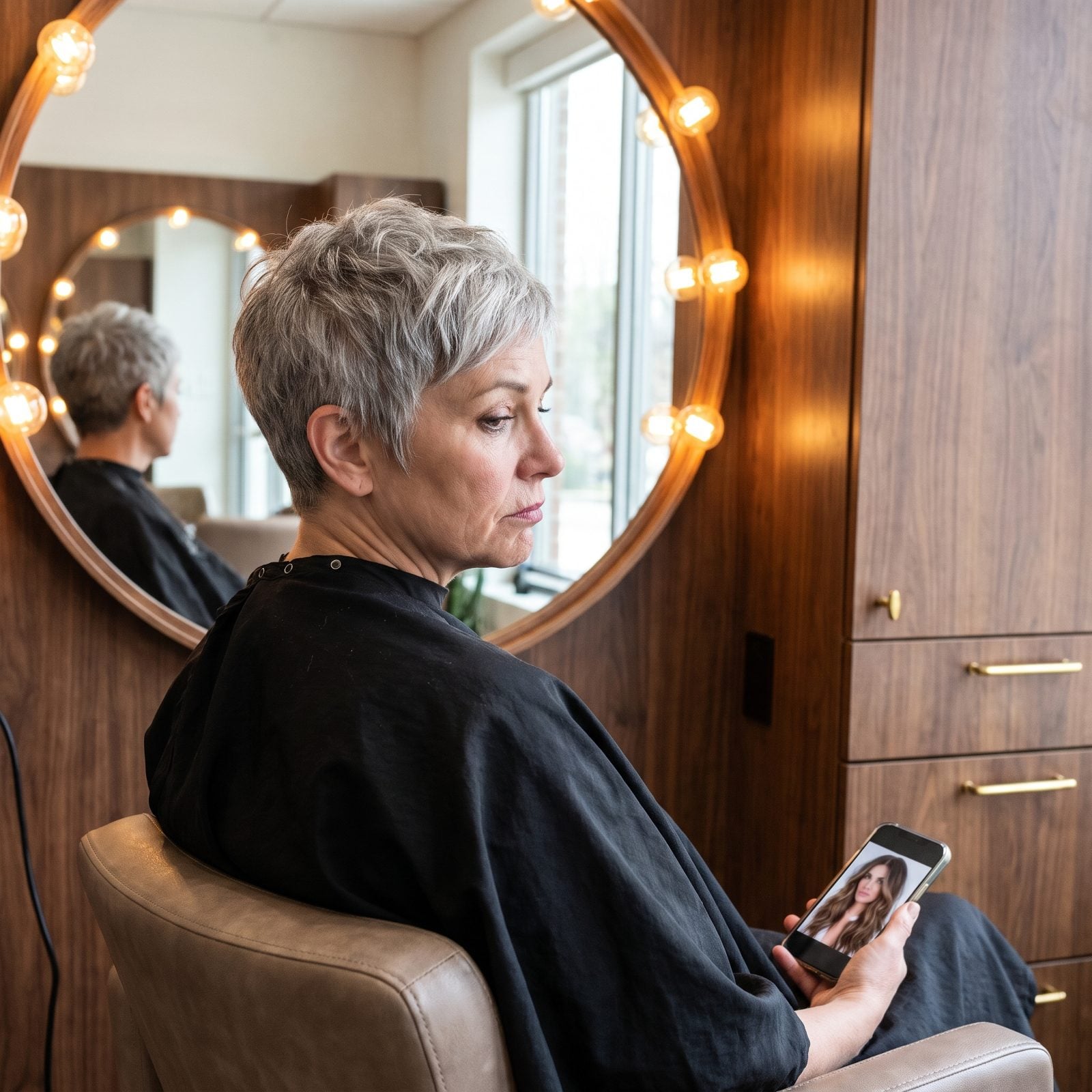
You brought the reference photo. You trusted the stylist. The cut is genuinely good. And still, the face in the mirror isn’t the face you pictured, so the first suspect is the mirror itself — the lighting, the chair, anything but the gap between the fantasy and the actual day.
The midlife twin is the fresh start that doesn’t fix the underlying feeling. New city, same restlessness. The haircut, like the move, was carrying a job it was never built to do: rewrite how you feel from the outside in.
Psychologists call it the arrival fallacy — the belief that reaching the thing delivers the feeling. The photo promised a different life, not just different hair. When the life doesn’t follow, the disappointment has to land somewhere, and the mirror is closest. The cut is fine. It just can’t be a personality transplant.
3. You Miss Your Old Hair Once the Compliments Fade

The flurry of compliments lasted about two weeks. Now nobody comments, the newness has worn off, and you catch yourself scrolling back to old photos of the hair you couldn’t wait to lose. Suddenly it looked great. Suddenly you miss it.
Hedonic adaptation and a little nostalgia, working together. The new hair stopped producing a dopamine hit the moment it became your normal, and the brain, bored of the present, repaints the past in flattering light. The old cut you rejected now stars in a highlight reel it never actually earned.
Every reinvention runs this loop. The exciting new chapter becomes ordinary, and the thing you escaped starts to glow in memory. You didn’t actually love the long hair — you love that it’s gone and therefore safe to romanticize. Give the pixie a few more months and it’ll be the “old hair” you miss next.
2. You Call It Maintenance as the Appointments Keep Multiplying

It started as one color appointment. Now it’s a toner every few weeks, a gloss in between, a trim you can’t skip, and a standing booking your calendar treats as non-negotiable. You call it maintenance. Your bank account calls it a subscription you never consciously signed up for.
That color did this. The more vivid and glossy you want it, the more upkeep it demands — the trade nobody mentions in the before-and-after photos. The commitment escalates quietly, one “just this once” at a time.
Commitment escalation, the psychologists would say: a small first step locks us into bigger ones to protect what we’ve already poured in. The midlife version is the hobby that needed one piece of gear and now owns a garage. Each appointment justifies the last. You’re not maintaining the hair anymore. You’re defending the decision.
1. You Schedule Another Change Before This One Grows Out

The burgundy bob hasn’t even grown past its first awkward phase, and you’re already at the desk with your phone open to the next reference photo, booking the change after this one. The current look is barely yours and you’re mentally finished with it.
Novelty seeking is the engine, and midlife turns the dial up. When the present version of yourself feels settled — even solved — the restless part of the brain goes hunting for the next transformation to chase. Anticipating who you’ll become is often sweeter than actually being them.
The pattern shows up everywhere at this stage: the finished renovation, the next trip booked before you’ve unpacked, the goal reached and immediately replaced. We confuse the thrill of changing with the satisfaction of having changed. If you’re already scrolling for the next cut, it was never really about the hair. It’s about keeping a door open.