
❤️ Would you like to save this?
The scissors open and something in your chest lets go a full second before the hair hits the floor. You’ve felt it. Maybe not at a salon — maybe hunched over a laptop at 11pm, finger hovering over a resignation email you wrote three weeks ago and never sent. Different rooms, same exact nervous system. A dramatic chop after a breakup and the morning you finally walk out of a job that was slowly eating you alive? Same move, different outfit. Both are a declaration you make with your body because the words felt too big. Both terrify you right up until they set you loose. Below, the strange and funny psychology that drives both. Once you see the pattern, you’ll understand yourself a little better the next time you reach for the shears.
FYI, thanks to AI imagery software, we’re able to create very specific fashion and hairstyle examples to illustrate the points being made. In some cases, imagery is exaggerated to hammer home the point. Also, assume links that take you off the site are affiliate links such as links to Amazon. this means we may earn a commission if you buy something.
15. You Research Pixie Cuts Before You Admit It’s Over

Your search history knows before you do. Weeks of scrolling pixie cuts and silver bobs at midnight, telling yourself it’s just curiosity, just a vibe board, nothing serious. Meanwhile the relationship is already dead and you haven’t said the word out loud yet.
It’s the same move as updating your resume at your desk during lunch while still telling colleagues you love it here. Psychologists call it the rehearsal phase of change. You run the decision in simulation long before you commit, because imagining the leap lets your nervous system practice surviving it. The browsing isn’t idle — it’s your gut quietly filing the paperwork while your conscious mind stalls.
14. One Brutal Text Sends You Straight to the Salon

A single screenshot. A careless reply. One sentence that lands like a slammed door — and suddenly you’re calling the salon from the car asking if they have anything today. The urgency is almost comic. You waited months and now it has to happen in the next ninety minutes.
Same engine fires the day a boss says the wrong thing in a meeting and you quietly decide, right there, that you’re done. The trigger is rarely the real reason. It’s the last straw on a pile you’d been carrying for a long time. The androgynous haircut you book in a fury isn’t about the text at all. It’s the accumulated weight finally finding a release valve.
That final insult just gives your body permission to do what the slow truth had already decided.
13. You Announce the Appointment Date So You Can’t Bail

Telling three friends you booked it is the quiet genius of a commitment device. You announce the date out loud precisely because you know yourself. Left alone, you’d reschedule twice and then cancel. Make it public and now bailing costs you face — so you don’t bail.
It’s why people tell everyone they’re quitting before they’ve handed in notice, or broadcast the move-out date to make the breakup real. You’re building a fence around your own escape route so the frightened version of you can’t tiptoe back to what’s familiar.
12. The First Big Snip Feels Thrillingly Past No Return
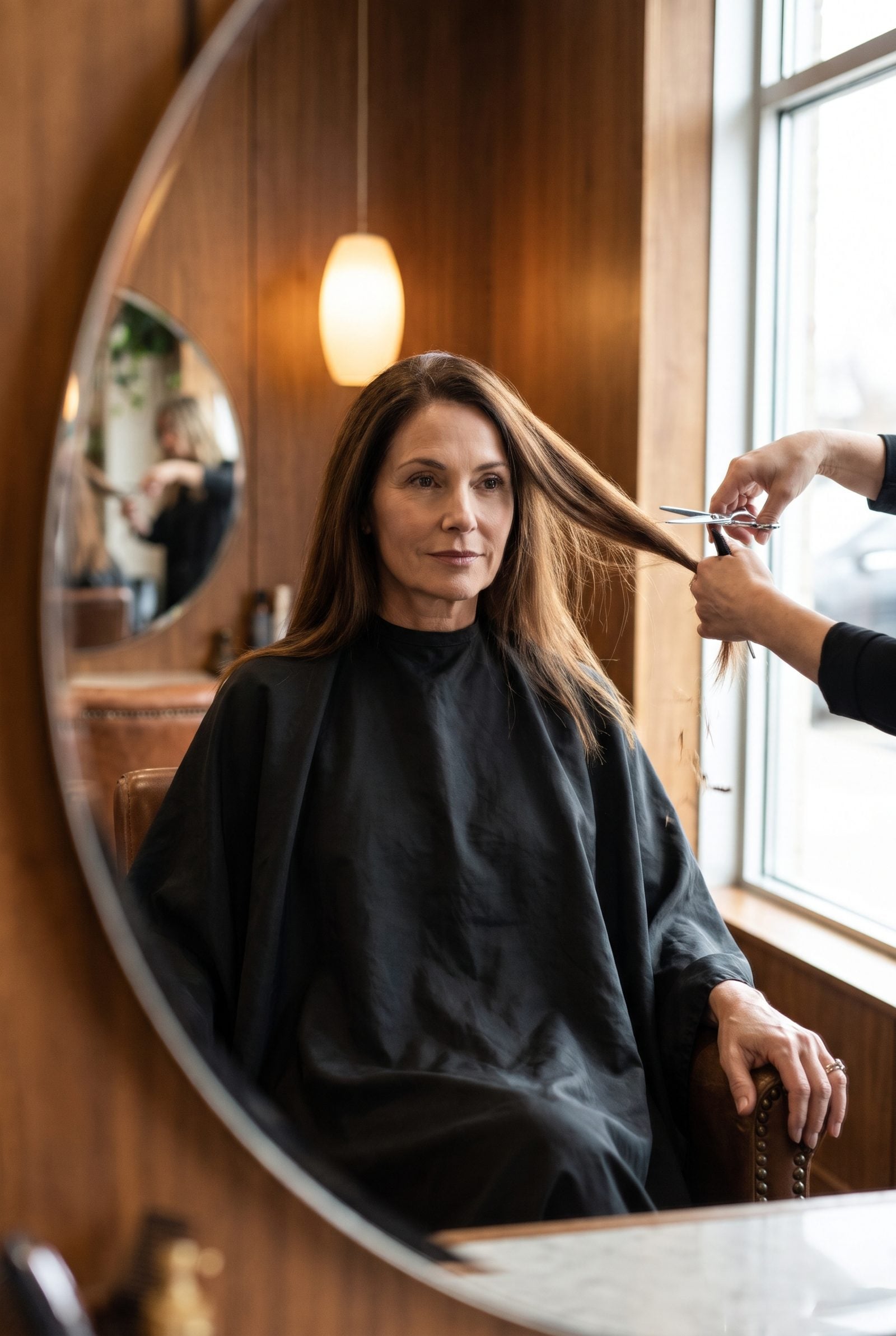
There’s a specific thrill the moment the stylist closes the blades on that first big section. No gradual trim, no toe in the water. A length of hair that took years to grow — gone in one sound. Your heart jumps because the choice just became permanent in a way talking never was.
Hitting send on the resignation email delivers the identical jolt. The second it leaves your outbox it cannot be unsent, and your whole body knows it. That flood of fear-mixed-with-elation is the brain clocking an act it can’t walk back.
We crave that permanence far more than we admit. A decision you can undo is a decision you’ll agonize over forever. Slamming the door shut is often the only way to stop renegotiating with yourself.
The relief isn’t in the new look. It’s in knowing you can’t take it back.
11. You Feel Lighter Before the Cape Even Comes Off

The hair is only half done and already something has shifted in your shoulders. You sit up straighter. The breath goes deeper. Nothing external has changed yet — the appointment’s still in progress — but your body has decided to feel free.
Same phenomenon hits the morning after you finally quit. The actual relief arrives before the last day, before the exit interview, the instant the decision locks in. The dread, it turns out, was always heavier than the thing you dreaded.
10. You Mistake a Bob for a Whole New Personality

You leave the salon convinced you’re a different woman. More decisive. More interesting. The kind of person who wears bold lipstick and says no without apologizing. One blunt bob and your entire self-concept got a software update.
Leaving a draining job triggers the identical overcorrection. Suddenly you’re going to learn pottery, run a marathon, become a morning person. One external change and the brain generously extends it into a full personality overhaul.
There’s a name for a cousin of this: enclothed cognition, the way altering your appearance genuinely shifts how you behave. The confidence isn’t fake. Look like someone decisive and you start acting decisive. The bohemian haircut doesn’t create the new you — but it gives her somewhere to stand.
9. You Panic the First Morning Your Long Hair Is Gone

The high crashes right on schedule. You wake up, pad to the mirror, and a stranger blinks back. Where did you go? That cold stab of what have I done hits almost every dramatic cut around day two or three.
Day three at the new job — or week one of unemployment — delivers the exact same gut drop. The thrill of leaving curdles into panic. Did I throw away something good? Was it really that bad?
This is the predictable dip after any big change, the moment the novelty fades and the loss becomes real before the gains have arrived. It is not a sign you chose wrong. It’s just the nervous system adjusting to a new baseline, mourning the old one on autopilot.
8. You Keep Reaching for a Ponytail That Isn’t There

Your hand goes to gather it up a dozen times a day. Hot kitchen, workout, that automatic sweep of the arm to tie it back — and your fingers close on air. The muscle memory outlasts the hair by weeks.
You’ll do the same thing after leaving a job. Monday morning dread fires on cue even though you no longer work there. You reach for the old routine, the badge, the commute reflex, before remembering it’s gone.
7. New Hair Demands a Routine Nobody Mentioned at Consultation

Nobody warned you the short cut needs product you’ve never owned and a blow-dry technique you can’t replicate. The wash-and-go fantasy lasts exactly one morning. Turns out freedom comes with a styling tutorial.
A matching surprise waits on the other side of quitting. The new job, or the freelance life, carries its own invisible admin — taxes, self-discipline, a learning curve nobody flagged. Every escape swaps one set of maintenance for another.
We romanticize the leap and skip the homework, because the fantasy of change is always smoother than the logistics of it. Not a reason to stay stuck. Just worth knowing the cape comes off and the real work begins.
6. Your Friends Compliment the Cut and Mean the Decision

Everyone says it looks amazing. But listen closely and they’re not really talking about your hair. They’re praising the nerve it took. The compliment is for the courage, and the hair is just where they can point.
When you finally leave the job that was dimming you, the same thing happens. Friends say they’re proud, that you look better, lighter, more like yourself. They watched you shrink, and now they’re cheering the person who refused to keep shrinking.
A dramatic cut and a brave exit are both visible proof that you chose yourself. The people who love you recognize that instantly, even when the only words available are “wow, the hair.” They mean the whole thing. The hair’s just the part they can see.
5. You Suddenly See How Bad the Split Ends Were

The haircut’s done, and now you can actually feel it — how much healthier it is without the frayed ends you’d been swearing were “fine.” Twirling a healthy strand and smiling at your reflection in a shop window, you finally see how bad the old damage was in a way you never could while it hung off your head.
You know this feeling. It’s the Monday after you quit, when the dysfunction you normalized for years suddenly reads clear as daylight: the passive-aggressive emails, the meetings that were punishments dressed as calendar invites. You couldn’t see any of it from inside it.
That’s normalcy bias. When conditions degrade slowly, the brain keeps resetting its baseline to whatever’s happening now, so nothing ever feels like an emergency until you step out and look back. Distance is the magnifying glass. The split ends were always that bad — you just had to cut them off to believe it.
4. You Stop Styling Your Hair for Someone Else’s Taste

Here’s the quiet rebellion nobody warns you about. You let the hair grow long and wavy and realize you’d been taming it because someone, somewhere, once said they liked it sleek. A partner. A mother. Some ghost of an opinion you absorbed and mistook for your own.
Quitting the job unlocks that same door. Suddenly you’re not dressing for a code or shrinking your ideas to fit a room that never wanted them anyway. You get to ask what you actually prefer — maybe for the first time in a decade.
Call it the undoing of self-silencing: we trim our edges to stay agreeable long after the audience has wandered off. A tumble of long, loose, untamed waves or a soft natural, unfussed style can be the most honest thing you own, because it answers to exactly one person.
3. The First Trim Feels Like Maintenance, Not Emergency Surgery
❤️ Would you like to save this?
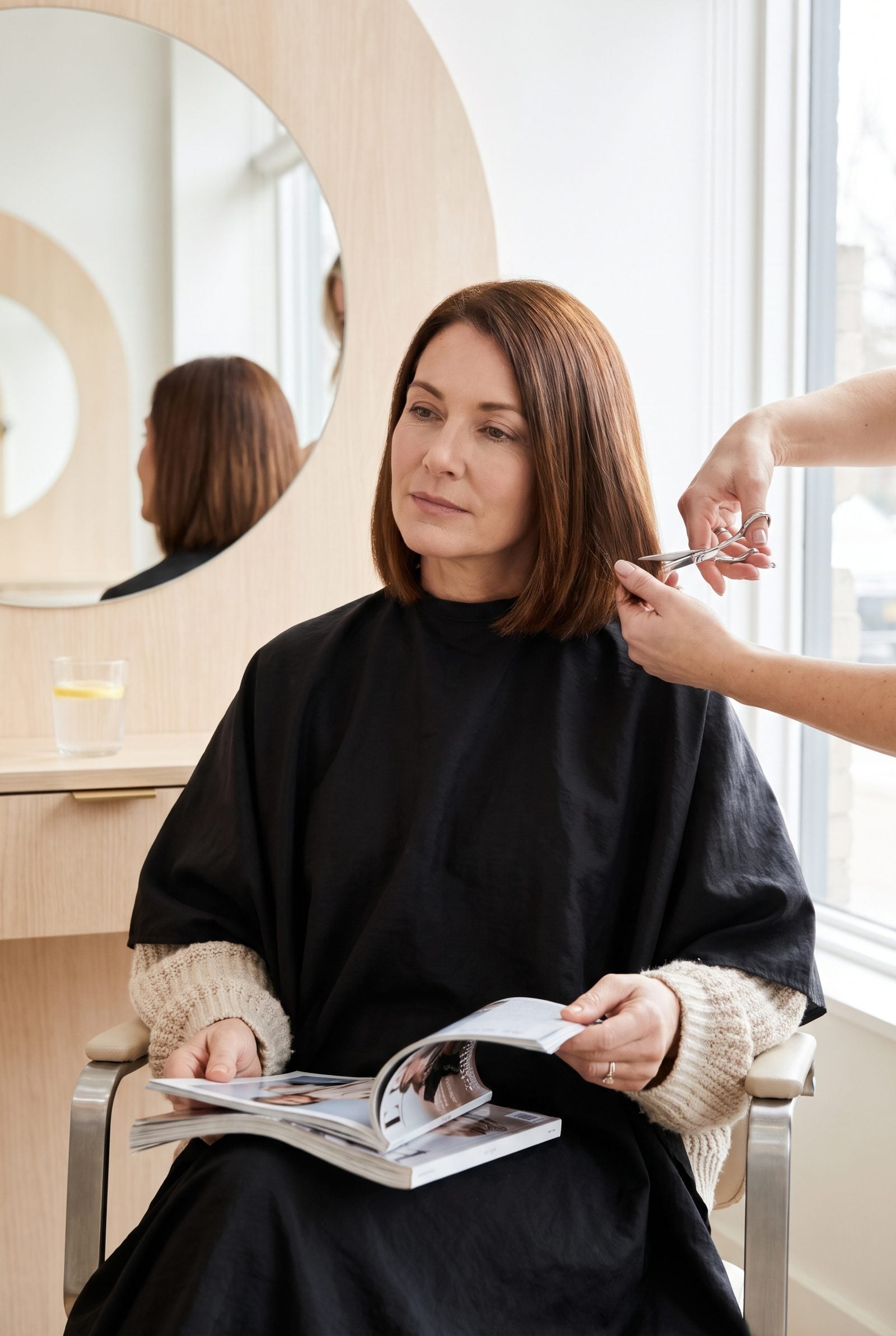
The dramatic chop is a crisis response — scissors as catharsis. But the second appointment, that little half-inch trim three months on, feels nothing like it. No tears. No grand statement. Just upkeep.
And that shift is everything. You’ve gone from reacting to tending, from “get me out of here” to “let’s keep this good.” Starting a job you actually chose brings the same temperature drop: the first week is adrenaline, and by month three it’s routine. Routine, in the right place, is a gift.
We tend to think change should feel dramatic to count. It shouldn’t. The healthiest version of anything is the version you can maintain without a meltdown — a trim you booked calmly, a Tuesday that doesn’t fill you with dread. That ordinary steadiness is what repair actually looks like.
2. Regrowth Becomes a Calendar for How Far You’ve Come

Hair grows about half an inch a month. Boring fact — until you realize what it means. Every inch is a small, undeniable record that time passed and you survived it. The regrowth after a big change is a ruler you carry around on your own head.
People who leave bad jobs keep the same ledger. “Six months since I quit.” “A year ago I was still crying in the parking lot.” Those markers measure distance from the version of you that was stuck.
Growth you can measure is growth you can trust. The mirror doesn’t lie about how far you’ve come.
This is the progress principle. We’re moved not by giant wins but by visible evidence of forward movement, however small. Watching silver roots come in, or an inch return, isn’t vanity — it’s proof the clock kept ticking in your favor, and you can feel it under your fingers.
1. You Eventually Change Stylists Without Repeating the Whole Story

There’s a milestone that sneaks up on you. One day you sit in a brand-new stylist’s chair and feel zero need to recount the entire saga — the breakup, the revenge haircut, the tears in the sink. You show a photo, say what you want, and that’s it.
That’s the final mile of recovery. The wound stopped being your introduction. You switch jobs the same way eventually, interviewing without bad-mouthing the old place, because the old place no longer defines you. You’ve quit auditioning your pain.
Narrative identity is how we stitch our experiences into a story of who we are, and healing shows up when a painful chapter quietly slides from “the headline” to “something that happened once.” A fresh chair, a clean brief, no backstory required. That’s not forgetting. It’s freedom.