❤️ Would you like to save this?
You tell yourself it’s practical. That your current cut works, that you’ve found what suits you, that now isn’t the right time. But therapists who ask their clients about hair, and more are doing this than you might expect, keep hearing something else underneath those answers. Something quieter, more loaded, and far more interesting than personal style preference.
The haircut you’ve had for years isn’t just a haircut. It’s a psychological artifact. And the reason you haven’t changed it probably has very little to do with what looks good on you. What’s actually going on is stranger, more human, and once you see it, you’ll never sit in a salon chair the same way again.
FYI, thanks to AI imagery software, we’re able to create very specific fashion and hairstyle examples to illustrate the points being made. In some cases, imagery is exaggerated to hammer home the point. Also, assume links that take you off the site are affiliate links such as links to Amazon. this means we may earn a commission if you buy something.
The Therapist Who Started Asking About Haircuts, And Kept Hearing the Same Answer

It starts, almost always, as a throwaway question. A therapist, somewhere between discussing work stress and relationship dynamics, asks: “When did you last change your hair?” The answer, in session after session, tends to arrive with a pause that feels longer than it should. Not because the client doesn’t know. Because they do know, and the knowing is awkward.
Therapists who work with women in midlife have started noticing this pattern, not as a footnote to bigger conversations, but as a thread running through them. Mental health clinicians increasingly recognize hair-related choices as behaviors tied to emotional regulation and identity management, not vanity, not inertia. The same woman who will renegotiate a salary, rethink a career, or leave a twenty-year marriage will sit in the salon chair and say, calmly: same as usual.
What makes that particular phrase so psychologically loaded? It isn’t really about what looks good. It’s about what feels safe to maintain. And the distance between those two things is exactly where the real conversation begins.
Why the Brain Files a Haircut Under ‘Identity’ Instead of ‘Appearance’
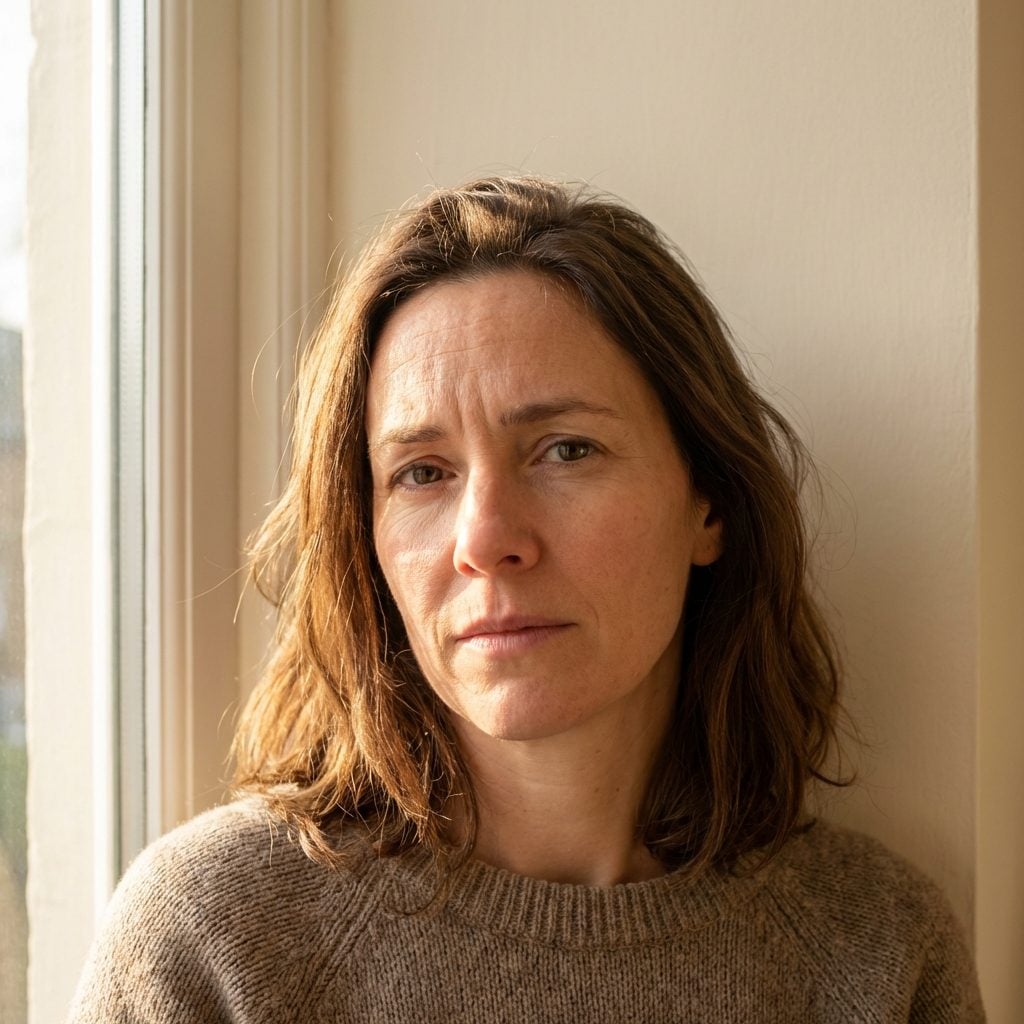
Most people think of their hair as something they have. Psychology suggests the brain treats it as something you are.
Research on hair and self-perception consistently finds that individuals associate their hair with their core identity and sense of attractiveness, placing it in a different mental category than, say, the shoes they wore yesterday. Shoes are accessories. Hair is closer to a signature. The brain doesn’t store “my hairstyle” alongside “my handbag”, it stores it alongside “my name,” “my job,” “my values.”
This cognitive filing matters because of what it means for change. When you rearrange furniture, the disruption is spatial. When you change your hair, the disruption is self-referential, the brain interprets it as a shift in who you are, not just how you look. Psychologists have begun calling this “hair esteem”, the idea that how we see, feel about, and relate to our hair is an overlooked but genuine component of psychological well-being.
Once something is filed under identity rather than appearance, the rules change. You don’t just change it. You negotiate with it.
The Invisible Social Contract You Signed the Last Time You Said ‘Same as Usual’
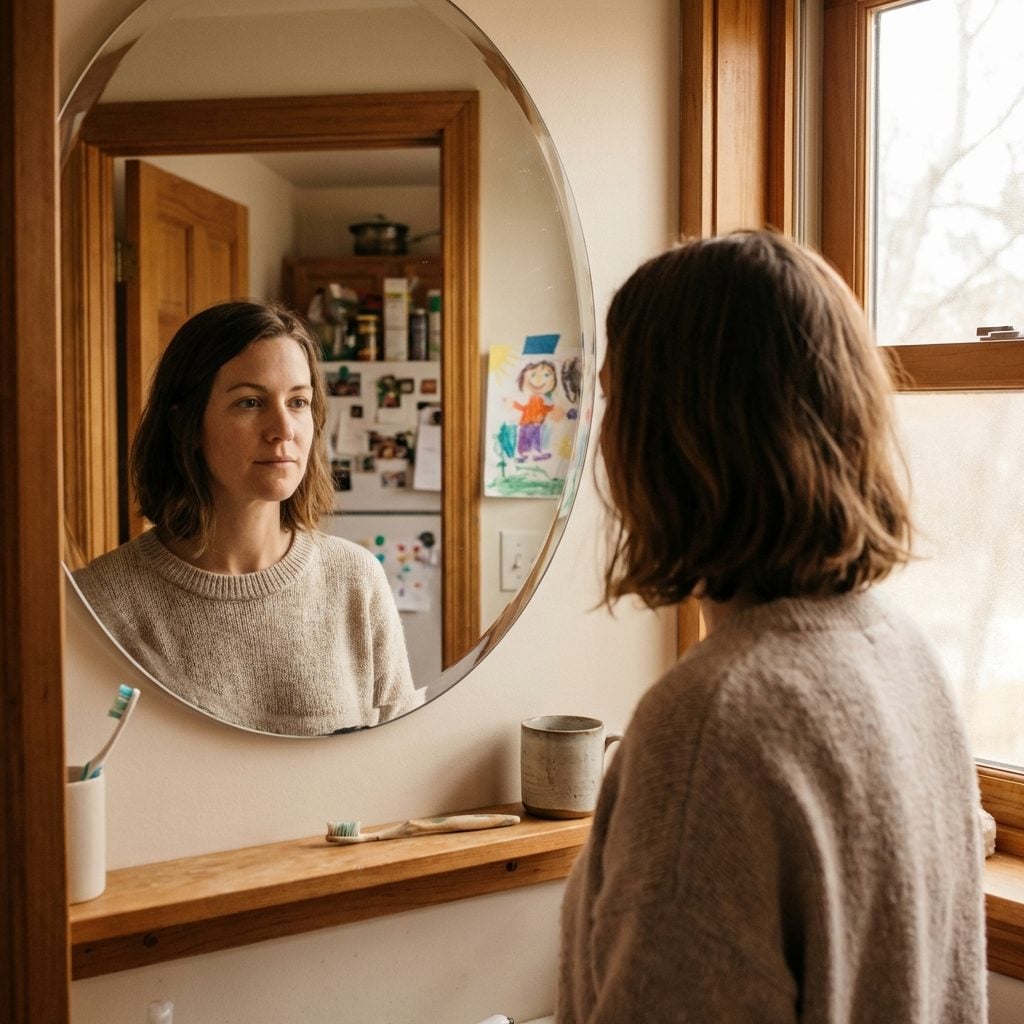
Every time you sit in that chair and say same as usual, you’re not just making a styling decision. You’re renewing an agreement with everyone who recognizes you, your partner, your colleagues, your children, the woman at the school gate who’s known you for six years.
There’s a psychological concept worth pausing on here: the way our self-concept is partly socially maintained. We don’t just hold an image of ourselves inside our own heads, we hold it in relationship. Research on self-concept confirms that others’ perceptions of us actively shape and reinforce our own self-image in a continuous feedback loop: we form an idea of who we are, others react to that idea, and their reactions feed back into ours. The haircut is a key part of that loop.
So when you keep the same cut, you’re not just avoiding change, you’re preserving the version of you that everyone around you has agreed upon. They know what you look like. You know what you look like to them. That double-sided recognition is, quietly, a form of social security. And the thought of disrupting it, even with a trim here, a few inches there, can feel, inexplicably, like a small breach of trust. Not because it actually is. But because the brain registers it that way.
What Psychologists Call the Moment a Hairstyle Stops Being a Choice and Becomes a Self
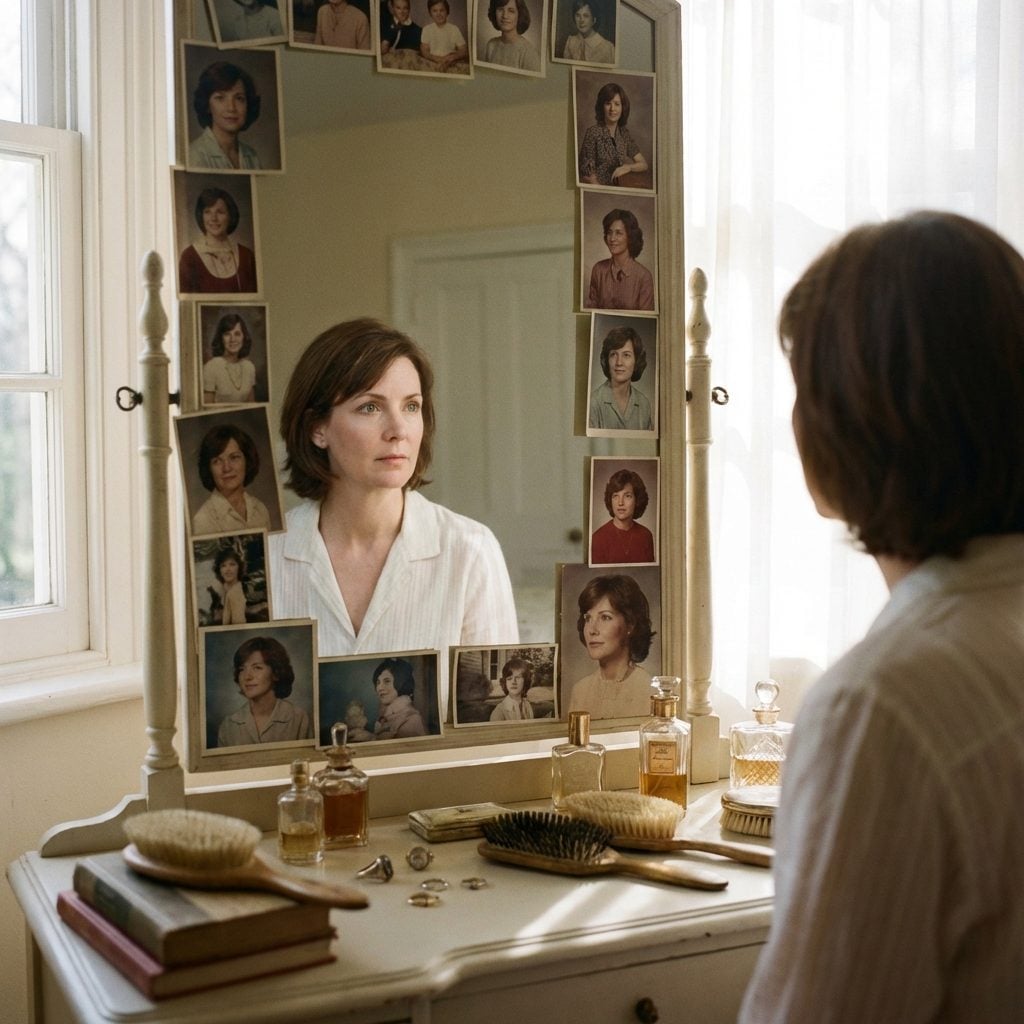
Somewhere between year one and year five of the same cut, something shifts. What began as a decision, I liked how this looked, quietly becomes a definition: this is how I look. The hairstyle stops being something you chose and starts being something you are. Psychologists have a framework for this. Identity Process Theory, developed by social psychologist Glynis Breakwell, proposes that the self is governed by core principles, among them continuity, the need to feel consistent with who you were in the past.
When Hair Becomes a Continuity Anchor
The longer a style is maintained, the more it gets absorbed into your sense of continuity, that felt thread connecting the you of ten years ago to the you of today. At some point, it stops being a style choice and starts functioning as an identity anchor: one of the quiet, visible things that says I am still recognizably myself.
This isn’t weakness or lack of imagination. It’s the brain doing what it’s supposed to do: maintaining a stable sense of self across time. The problem only arises when the anchor becomes a tether, when “I’ve always looked like this” starts to crowd out “I could look like something else.”
The Surprising Reason a New Cut Feels More Like a Confession Than a Makeover
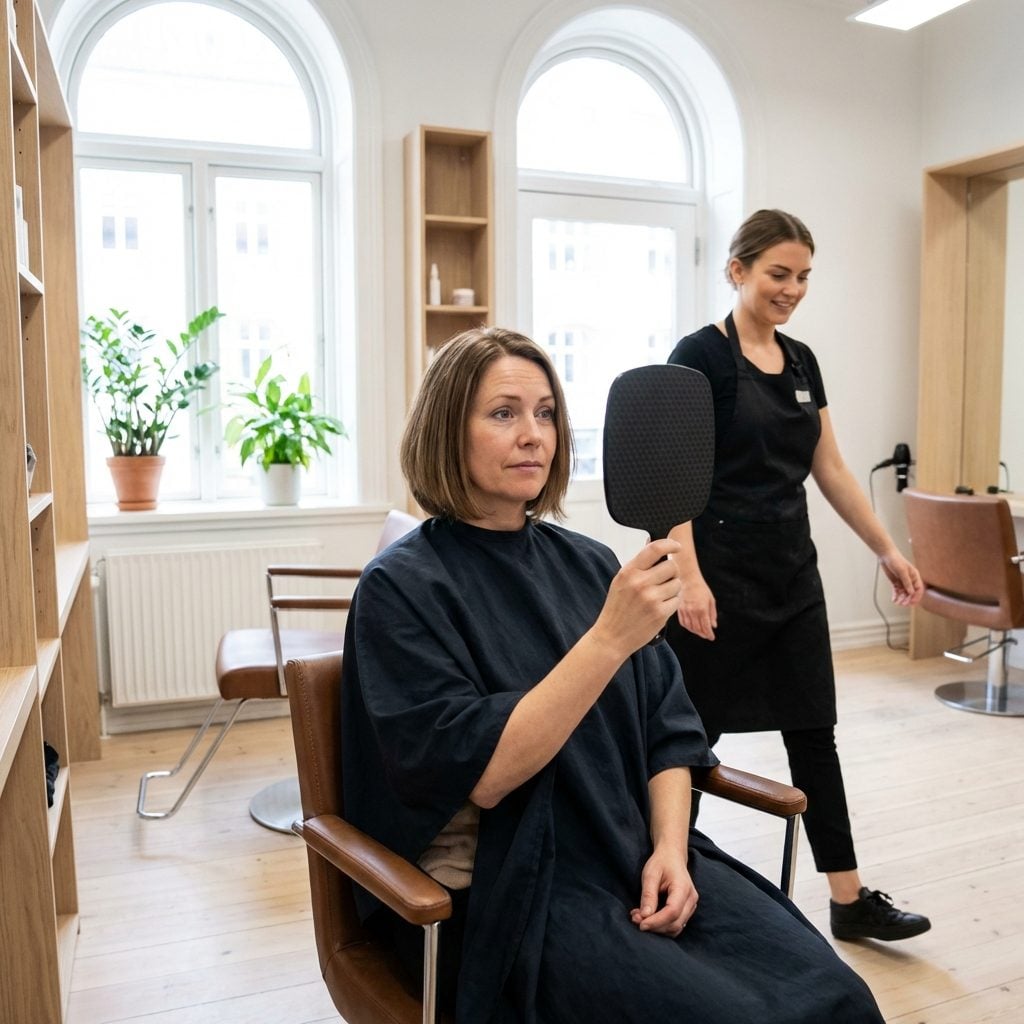
You’d expect a haircut to feel like addition, adding something new, some freshness, some change. But for a lot of women over 40, the prospect of a genuinely different cut arrives with an emotion that’s closer to exposure. Not excitement. Exposure.
Part of this is what psychologists call identity discontinuity, the unsettling sensation that you might no longer cohere with who you were before. Research published in the European Journal of Social Psychology found that resistance to change is driven not just by threats to self-esteem, but by threats to self-continuity, the perceived stability of the self over time. Individuals, the researchers found, manage these threats by maintaining prior self-conceptions, even when the change is ostensibly minor.
A new haircut is a small change with a disproportionate psychological footprint because hair is so visible, so immediate. The moment you walk back into your life with different hair, people notice. People ask. And in those questions, “Oh, you cut your hair!”, there is an implicit acknowledgment that something has shifted. That can feel less like a compliment and more like a spotlight. As if the new cut is confessing something you hadn’t decided to say yet.
Why Women Over 40 Experience Hair Change as Social Risk, Not Style Risk

For women in midlife, appearance change carries a different social weight than it does at 25. At 25, a bold new cut reads as experimentation, evidence of youth, flexibility, creativity. At 45, the exact same cut is read differently by the people around you. Sometimes as a crisis signal. Sometimes as a statement. Sometimes as a question that no one quite asks aloud.
Research published in the Mental Health: Global Challenges Journal found that women over 40 contend with “gendered ageism” that makes their visibility and appearance choices uniquely scrutinized, appearance changes that would be unremarkable in younger women become loaded with interpretation in midlife. The social stakes of physical change are genuinely higher.
This matters for the haircut question because the resistance isn’t irrational. The woman who stays with the same cut isn’t imagining the social reading she’d face with something new. She’s accurately perceiving it. The style risk is minimal. The social risk, the raised eyebrows, the loaded questions, the sudden attention to something she’d rather not explain, that’s real. Staying the same keeps those conversations from happening. And that, it turns out, is exactly the point.
The ‘Mirror Agreement’, and Why Breaking It Feels Like Betraying Everyone Who Knows You
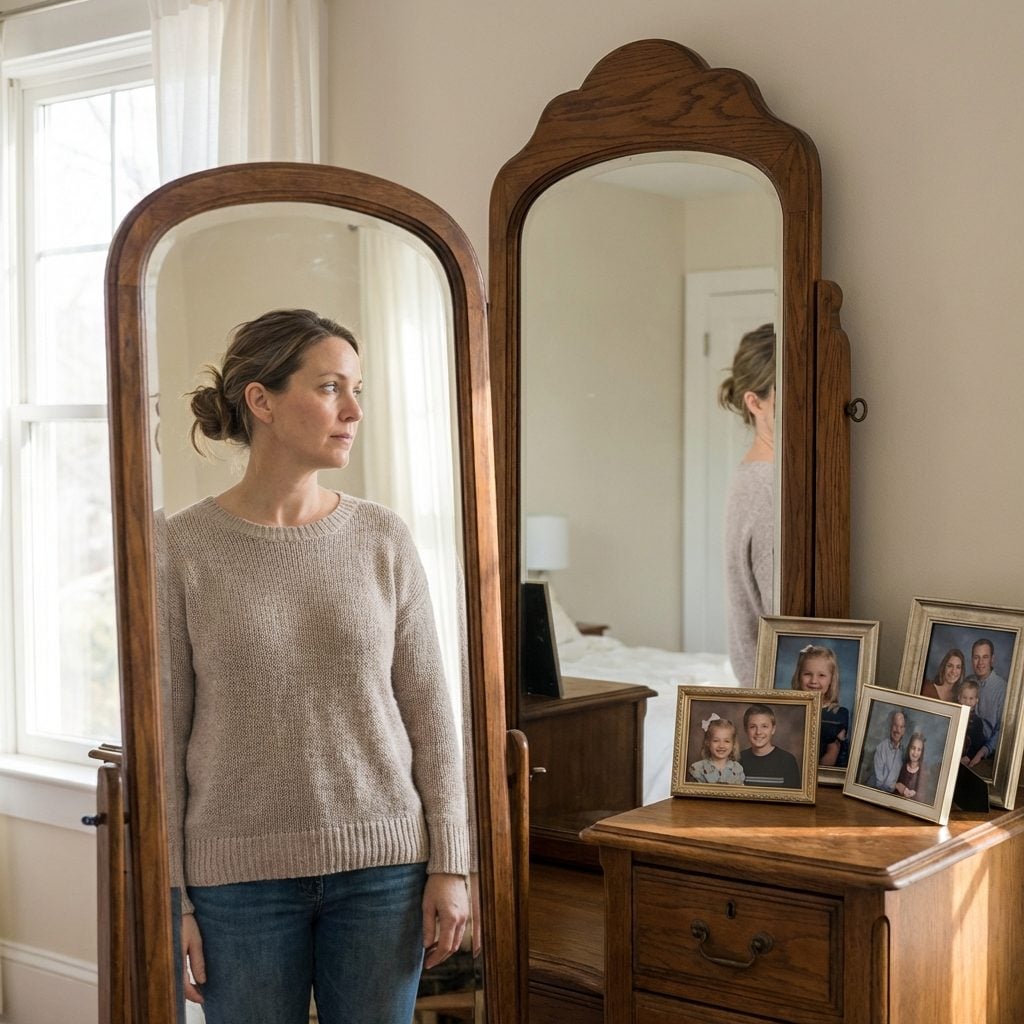
Think of the mirror as a standing agreement you’ve made, not just with yourself, but with everyone who’s looked at you for the past decade. Your partner knows this face. Your children were raised by this face. Your colleagues built a professional impression around it. The hair is part of the agreement, and the agreement isn’t just aesthetic. It’s relational.
This relational dimension of self-perception is baked into how identity actually works. Self-concept research describes a continuous feedback loop: how we see ourselves shapes how others respond to us, and how others respond to us reinforces how we see ourselves. The hairstyle isn’t floating free of this loop. It’s woven into it. Which is why changing it can feel, bizarrely, like a small betrayal, as if you’re revising something other people had a stake in. As if you’re editing yourself without asking permission.
Of course, no one gave you permission to keep the cut either. The agreement was never made in words. But unspoken agreements, psychologists know, are often the hardest to break, precisely because you can’t renegotiate what was never formally established.
What Attachment Theory Has to Do With the Cut You’ve Had Since 2011

Attachment theory, at its core, is about what the mind does when security feels available versus when it feels at risk. Most people apply it to relationships. But the underlying mechanics, the drive toward familiar, consistent figures as a source of felt safety, shows up in some unexpected places. Including, quietly, the mirror.
Recent research published in Self and Identity explores how attachment styles shape self-perception and self-concept change, finding that the way we relate to our own identity closely mirrors the way we relate to people we depend on. Secure individuals can absorb change without feeling destabilized. Those with more anxious patterns tend to cling to stable self-representations, because consistency in the self feels like the same thing as safety in a relationship.
The haircut you’ve had since 2011 may, from this angle, be less about the cut and more about what the cut represents: a self that has remained coherent, predictable, and present. Attachment research consistently links the need for a secure base to emotional regulation, and for some women, the familiar reflection in the mirror is the secure base. Not a person. Not a place. Their own, unchanged face.
The Psychological Phenomenon That Makes Familiar Hair Feel Like Safety

There’s a well-documented effect in psychology that most people have experienced without ever naming it. The more you see something, the more you like it, not because it gets objectively better, but because the brain interprets familiarity as goodness. Psychologist Robert Zajonc called it the mere exposure effect: repeated exposure to a stimulus increases preference for it, without conscious reasoning and sometimes without even conscious awareness.
Apply this to the face in the mirror. You have seen your hair in this particular configuration thousands of times. Zajonc’s research showed that the brain associates familiarity with safety, an evolutionary holdover from a time when the unfamiliar often meant danger. The familiar cut isn’t just comfortable. It’s registered, at a near-automatic level, as good, not because it’s the most flattering option, but because it’s the most processed one. Your brain has had years to categorize it as safe.
This creates a quietly circular problem. The longer you have a cut, the more the mere exposure effect reinforces it. The preference isn’t built on ongoing assessment, it’s built on repetition. Which means the question isn’t really “does this still suit me?” The question is whether the preference you feel is actually about how you look, or whether it’s simply the warm, reliable glow of the familiar.
Why the Women Who Most Want a Change Are Often the Last to Make One
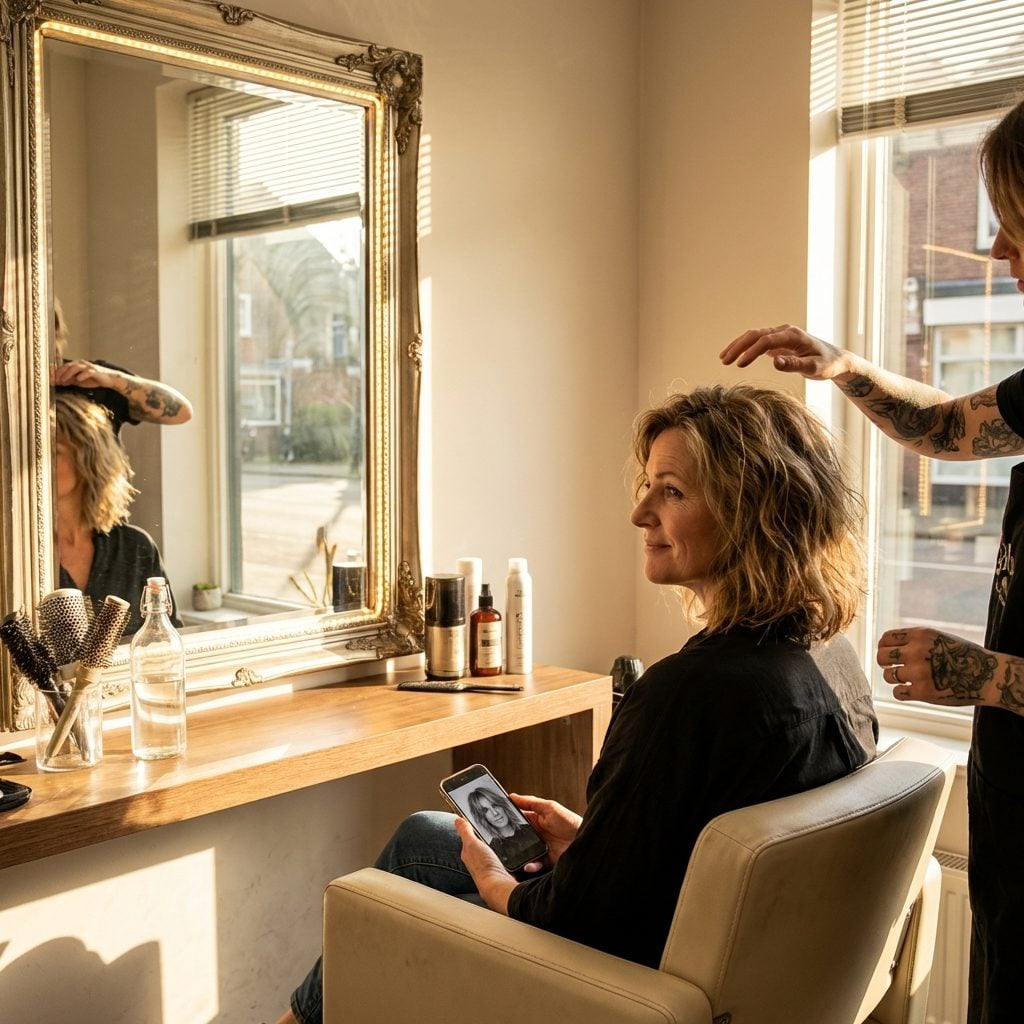
There’s a particular kind of person who keeps a screenshot of a short bob in her camera roll for two years. She has shown it to her stylist, maybe even saved it to a mood board. She knows exactly what she wants. And yet, every six weeks, she sits down in the chair and says, “Just a trim.”
The gap between wanting and doing is widest when the desire is tied to identity, not just aesthetics. Wanting a different haircut isn’t like wanting a different lamp. It’s closer to wanting to be a different person, or at least being seen as one. And that gap, psychologists have observed, grows in direct proportion to how meaningful the change feels. The woman who couldn’t care less gets a pixie cut on impulse. The woman who has dreamed about it for three years flinches at the last second.
This isn’t indecision. It’s something closer to the psychological phenomenon researchers call status quo bias, the tendency to prefer inaction over change even when the change is something we genuinely want. The more emotionally loaded the decision, the stronger the pull toward staying put. Hair, it turns out, is about as emotionally loaded as it gets.
The Specific Fear That Lives Behind ‘I Just Don’t Think It Would Suit Me’

“I don’t think it would suit me” is doing a lot of work for a sentence that sounds so simple. Strip it back and it’s rarely about bone structure or face shape. It’s about something more precarious: the fear of what happens if you try to become someone different and it doesn’t take.
The phrase is a socially acceptable exit ramp. It sounds practical, even self-aware. But what it’s actually protecting against is the possibility of public failure at self-reinvention. Researchers have identified a construct called fear of negative appearance evaluation, and while the research applies most directly to cosmetic procedures, the underlying psychology maps neatly onto any appearance change that feels high-stakes.
There’s a secondary fear layered underneath that one too. Not just “what if it doesn’t suit me?” but “what if I love it, and then everyone realizes I spent years looking like a version of myself that wasn’t fully me?” The change doesn’t only risk failure. It risks retroactively reframing the past, which is, in some ways, even harder to sit with.
What Your Stylist Knows About You That Your Therapist Is Still Working Out
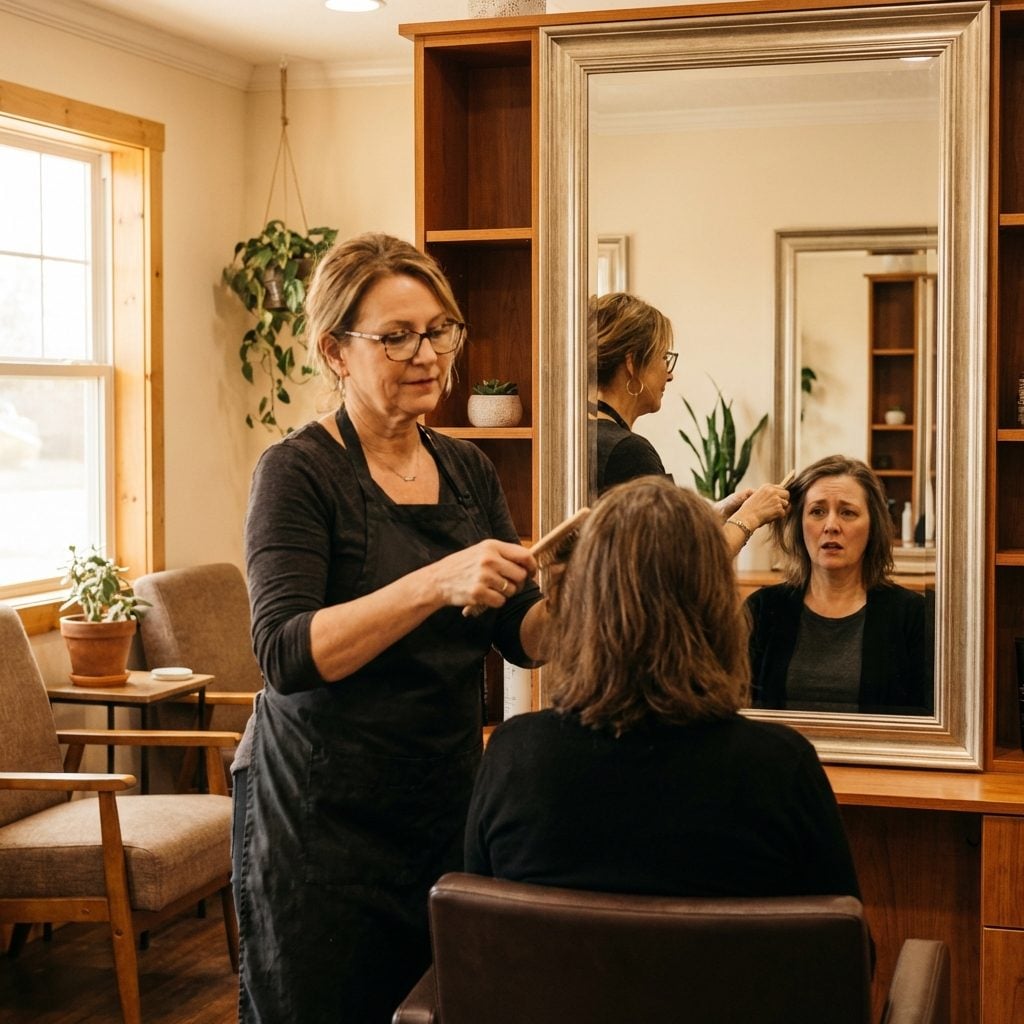
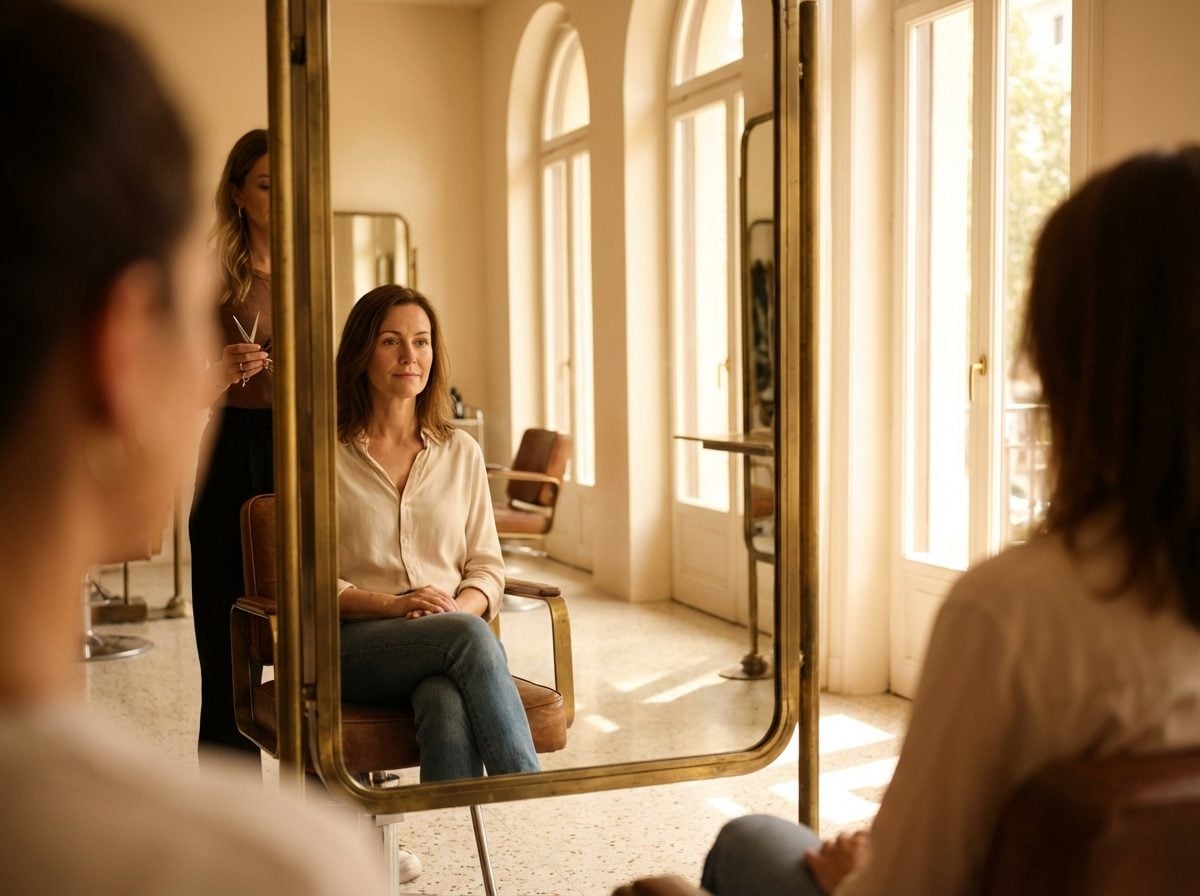
Hair stylists have always functioned as informal therapists, and the psychology of why is more interesting than the joke version suggests. It’s not just that people are chatty in the chair. It’s the specific physical setup: you’re not facing each other. One Psychology Today piece on the psychology of hair salons points out that the client looks into a mirror while the stylist stands behind them, which creates a dynamic far less threatening than face-to-face therapy. You’re talking toward your own reflection, which changes what you’re willing to say.
But stylists accumulate something else over years of working with the same clients: pattern recognition. They notice that you always ask for a change and always pull back. They notice you scheduled a consultation two months before your anniversary but cancelled it. They see the behavioral loop in a way that’s hard to replicate in a weekly hour of talk therapy, because they have their hands in your hair while you make the same decision you always make.
Clinical psychologist and stylist Dr. Afiya Mbilishaka has built an entire program, PsychoHairapy, around this precise insight: that the salon chair is already a mental health space, whether or not anyone admits it. The stylist, she argues, is a natural helper. The therapist is still filling out intake forms.
The Role Grief Plays in the Haircut You’ve Been Meaning to Change for Three Years

❤️ Would you like to save this?
Grief doesn’t always announce itself as grief. Sometimes it looks like inertia. A haircut that belongs to a version of you from before a loss, a divorce, a career shift, a child leaving home, can become something you unconsciously preserve because changing it feels like acknowledging that the before is over.
a peer-reviewed study in OMEGA: Journal of Death and Dying on identity disruption as a central feature of complicated grief has documented that identity confusion is a central feature of unprocessed loss, that grief doesn’t just make you sad, it makes you unsure of who you are now. When that happens, the familiar haircut isn’t passive or lazy. It’s a thread back to the last version of yourself you felt certain about.
Hair already sits at the intersection of grief and identity in a way most other appearance choices don’t. Many cultures use hair change as a mourning ritual precisely because of this: cutting it signals that something is over, that the self is shifting. Holding the cut steady signals the opposite. The three-year-old haircut might not be about style at all. It might be a quiet, physical insistence that the grief hasn’t finished yet, or that it has, but the new self hasn’t made herself known.
Why Changing Your Hair After 40 Feels Like Making a Statement You Haven’t Written Yet

There’s a reason mid-life hair changes feel heavier than they did at 25. At 25, a dramatic cut reads as experimentation. After 40, it reads as a declaration. The audience around you, your colleagues, your partner, your own children, has more context for who you’ve been. A change doesn’t occur in a vacuum. It occurs against years of established expectation, and that makes it feel, correctly, like it means something.
The psychological literature on hair and identity transformation consistently shows that dramatic hair changes tend to coincide with pivotal life transitions, the end of a relationship, a new professional chapter, the closing of a significant era. Which means there’s an implicit cultural grammar around when you’re “allowed” to change your hair: you change it because something happened.
After 40, the desire to change your hair without a big explanation, just because you want to, just because you’re curious, runs into that grammar at full speed. It feels like it needs a reason. Like you owe the people around you an answer to a question they haven’t asked but you’re certain they will. The statement isn’t in the hair itself. It’s in the fact that you changed it without justification. And for some women, that particular act of quiet self-possession is the most radical thing they could do.
The Invisible Audience Every Woman Imagines Before She Says ‘Actually, Let’s Try Something Different’
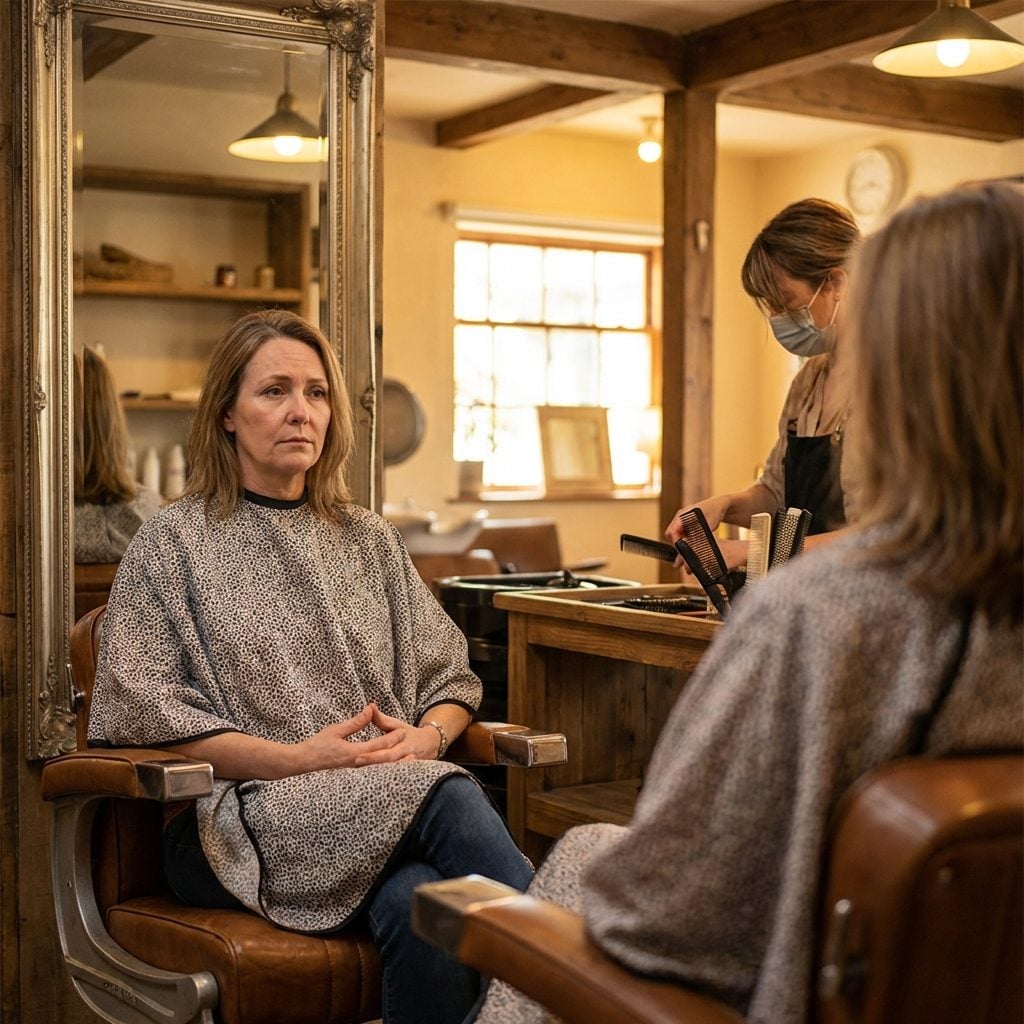
Before the words come out, there’s a cast of characters assembled in the mind. A partner who might not like it. Colleagues who will definitely comment. A mother who will definitely comment twice. Friends who will say they love it in a tone that suggests otherwise. And a version of the woman herself, watching from outside, wondering if this is the kind of thing she does.
This imagined social scrutiny is, in a sense, what psychologists at Psychology Today are pointing to when they write that hair helps define the persona we create to impress others, and influences how we define ourselves to ourselves. The audience isn’t hypothetical. It’s constructed from years of social data: who noticed last time you changed something, what they said, how it landed.
For women over 40, the invisible audience has a particular character. There’s the fear of trying too hard, of being seen as trying to look younger. There’s also the fear of the opposite: of looking like you’ve given up, let go, stopped caring. Research on the paradox of women’s aging captures this double bind neatly: looking young matters, but effort must be invisible. The haircut sits right at the center of that impossible equation.
- The partner reading: Will they think this means something? Will they like it less?
- The colleague reading: Will they say something in a meeting? Will they say nothing and somehow that’s worse?
- The mirror reading: What does this say about who I think I am now?
The Psychological Concept That Explains Why ‘I’ll Change It After the Holidays’ Never Comes

Behavioral economists have a name for this. It’s called status quo bias, and it’s one of the most robust findings in the psychology of decision-making. Originally documented by researchers Samuelson and Zeckhauser in their landmark 1988 study in the Journal of Risk and Uncertainty, the concept describes the consistent human tendency to stick with the current default option, even when switching would produce a better outcome.
The mechanism isn’t laziness. It’s loss aversion, the psychological reality that potential losses feel roughly twice as heavy as equivalent gains. You’re not weighing “new haircut I might love” against “old haircut I’m comfortable with.” You’re weighing “risk of regret” against “guaranteed safety of the familiar.” That math is almost always going to land on the side of doing nothing.
What makes “after the holidays” so psychologically seductive is that it’s a commitment that preserves the fantasy. You still get to imagine yourself with a different cut, a different self. The promise, deferred infinitely forward, costs nothing and risks nothing. The actual appointment risks everything. As behavioral economics research confirms, this pattern is consistent with loss aversion and regret avoidance. The longer the delay, the stronger the status quo becomes, because now there’s an entire history of not-changing to protect.
What Identity Anchoring Actually Means, and Why Hair Is Its Favorite Target
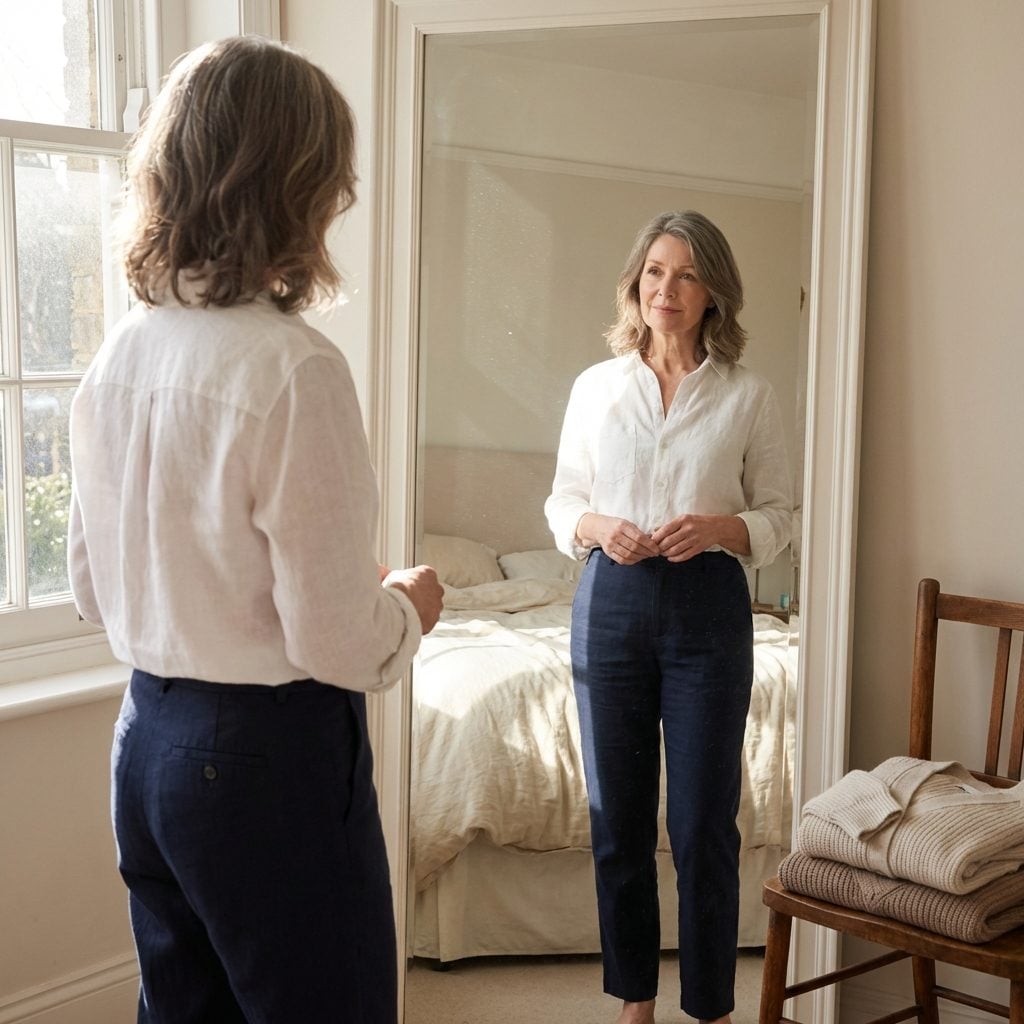
Identity anchoring, at its core, is the psychological process of tying your sense of self to specific, stable external markers, behaviors, objects, rituals, that keep your self-concept coherent and continuous over time. Psychologists studying the stability of self describe how our self-concept needs consistency and predictability to function well: we need to know who we are yesterday, today, and likely tomorrow.
Hair is an unusually powerful anchor because of what makes it unique among physical attributes. Unlike the rest of your face and body, your hair can, theoretically, be held constant across decades. You can keep the same cut at 28, 38, and 58 if you choose to. That’s rare. That controllability makes hair a particularly tempting place to anchor identity, because it’s one of the only aspects of appearance that actually cooperates.
For women over 40, navigating a culture that offers contradictory messages about how to age, identity anchoring through hair becomes a form of quiet self-governance. The cut says: this is still me. Even when other things have shifted, professionally, relationally, physically, the haircut remains a legible signal to the world and to the self. Changing it doesn’t just update the hair. It forces a renegotiation of the entire anchor system. And that is, objectively, a lot to ask of a Tuesday afternoon appointment.
The Real Reason ‘It’s Just Hair’ Is the Least Convincing Sentence in the English Language

You’ve said it. Someone else has said it to you. The intention is reassurance, but something about it always lands wrong, because on some level, both people in the conversation know it isn’t true.
Hair is, by most objective measures, a significant carrier of identity. A multidimensional review of the psychology of haircuts concludes that hair serves as “an essential medium in identity construction and non-verbal communication, reflecting autonomy and self-expression.” But you didn’t need research to know that. You know it from the way a bad haircut can undo a perfectly good morning. From the way a woman notices this about your style immediately and they’ll never say it but somehow you feel it anyway.
The sentence “it’s just hair” is actually a form of social pressure disguised as comfort. It’s designed to make the hesitation seem irrational, to suggest that what the woman is protecting is trivial. But what she’s protecting isn’t trivial at all. It’s coherence. It’s continuity. It’s the only part of her appearance she’s been able to hold perfectly still while everything else moved.
Hair is the place where identity and the body negotiate their terms. It changes when we need it to change, and stays fixed when we need it to stay fixed. The real reason “it’s just hair” fails to land is that everyone already knows the truth: if it were just hair, she would have changed it three years ago.
The Bottom Line
The answer therapists keep arriving at, from every direction, is this: the haircut most women over 40 are protecting isn’t a style, it’s a self-concept, preserved in place because changing it would force a renegotiation of who they are to everyone who thinks they already know. The familiar cut isn’t about what flatters them; it’s about not having to explain a change they haven’t yet found the words for. So the most useful question isn’t “what style would suit you”, it’s “what are you afraid the new one would say about you that the old one doesn’t?”