
❤️ Would you like to save this?
The cut was wrong the second you left the salon. You knew it in the car, knew it again under the overhead lights at home, and somehow three months later you’re still blow-drying it sideways and insisting it has potential. Here’s the uncomfortable part. The exact mental tricks that keep you loyal to a haircut you secretly resent are the ones that keep people parked in marriages they stopped enjoying years ago. Sunk cost. Fear of worse. The one good day that erases ten bad ones. We tell ourselves stories to avoid the chair, and we tell ourselves stories to avoid the hard conversation. Different stakes, same wiring. So let’s look at the habits, laugh a little, and maybe finally book the appointment.
FYI, thanks to AI imagery software, we’re able to create very specific fashion and hairstyle examples to illustrate the points being made. In some cases, imagery is exaggerated to hammer home the point. Also, assume links that take you off the site are affiliate links such as links to Amazon. this means we may earn a commission if you buy something.
20. You Wear Ponytails Daily but Still Preserve the Haircut

The ponytail has become the whole relationship. You wear your hair up six days out of seven, which means you barely interact with the actual cut anymore — and yet let someone suggest changing it and you’ll defend that haircut like it’s holding the family together.
Same logic that keeps people married to a routine instead of a person. You’ve stopped engaging with the thing itself and started protecting the structure around it. The cut isn’t doing a single thing for you. But it’s familiar, and familiar feels like safety even after it stopped being satisfying.
Psychologists call this status quo bias. We treat whatever currently exists as the correct default, and any change gets filed under risk. A ponytail every day isn’t loyalty. It’s avoidance in a hair tie.
19. One Perfect Hair Day Earns the Cut Another Month

It happens every few weeks. The humidity cooperates, you sleep on it right, and suddenly the mirror shows you the haircut you thought you booked. For a little while, you are genuinely in love. And just like that, the cut gets a stay of execution.
Same cruel math keeps people in unhappy marriages. One good weekend, one tender moment, and the entire case for leaving collapses. We weight the rare high so heavily it blots out the ordinary disappointment of every other day.
Behavioral science calls it the peak-end effect — we judge an experience by its best moment and its ending, not by the dull middle where you actually live. That one perfect hair day isn’t evidence. It’s a highlight reel. And highlight reels lie.
18. You Blame Humidity Instead of the Haircut Underneath

Every bad hair day has a scapegoat, and the scapegoat is never the cut. It’s the weather, the water, the new conditioner, the dryer that runs too hot. You’ll indict the entire ecosystem before you point one finger at the shape sitting on your head.
People do this with marriages constantly. The job stress, the kids, the money, the in-laws — always some external pressure strains the thing, never the thing itself. External blame protects us from the harder conclusion that the foundation might be wrong.
Psychologists call this the fundamental attribution error, flipped inward. When our own choices disappoint us, we reach for circumstances. Humidity is real. But humidity doesn’t give you a cut with no structure to begin with.
17. You Spend Twenty Minutes Fixing What a Better Cut Would Solve

Twenty minutes with a round brush. A flat iron for the piece that never behaves. Three clips to hold back the part that falls flat. You’ve built an entire morning ritual to compensate for a cut that should have done the work for you.
This is the labor that quietly keeps bad marriages running, too — the constant managing, smoothing, working around. You get so good at the daily repair job that you forget the whole point was supposed to be ease.
There’s a psychological pull here called effort justification. The more work we pour into something, the more we value it, because admitting it was never worth the effort feels unbearable. An androgynous haircut with real structure might cut your morning to five minutes. But five minutes doesn’t feel earned, and twenty does, so you keep laboring.
16. You Buy More Products Rather Than Question the Shape

The shelf tells the whole story. Volumizing mousse. Smoothing cream. A texture spray you used twice. The salt spray that promised beach waves and delivered crunchy regret. Every new bottle is a fresh promise that the problem is the product, not the cut.
We do the identical thing in relationships we won’t leave. The new vacation. The couples book. The fresh set of resolutions. We keep adding interventions to avoid asking whether the base is sound.
No product fixes a shape. It just changes how expensively you fail at it.
Call it the sunk cost fallacy in pretty packaging. You’ve already spent so much chasing the fix that stopping now feels like admitting it was all wasted. So you buy one more bottle and call it hope.
15. You Keep the Length Because Growing It Took Years

Years. That’s how long it took to grow it this long, and you will not let a stylist near it with real scissors, even though the ends are thin and the length drags the whole thing down. The time you invested has become the reason you can’t let go.
People stay for the years, too. Decades of shared history, so heavy that walking away feels like setting fire to your own biography. The investment becomes the argument, regardless of what the thing is doing now.
This is the endowment effect braided with sunk cost. We overvalue what we already own simply because it’s ours, and we double down on past spending that no scissors can refund. But the years it took to grow aren’t a reason to keep it. They’re already gone either way.
14. You Swear It Will Work Once the Bangs Grow

You’re stuck in the awkward in-between. The bangs hang in your eyes, you push them aside a dozen times a day, and you’re sure it’ll come together any day now. Your entire defense of this haircut rests on a future that hasn’t arrived yet: once they grow out, it will all make sense.
But that’s also the sentence people say about a marriage that isn’t working. Once the kids are grown. Once he retires. Once we have more time. We bet the present on a version of the future that keeps staying just out of reach.
Hope is a legitimate feeling. Pinned to a haircut, it can pay off beautifully. Pinned to a life, though, it can become a stalling tactic — a way to avoid deciding today by outsourcing the decision to a you who exists six months from now. Bangs grow out on their own; that future you will only inherit the same excuse.
13. You Postpone the Big Change Until After Every Special Event
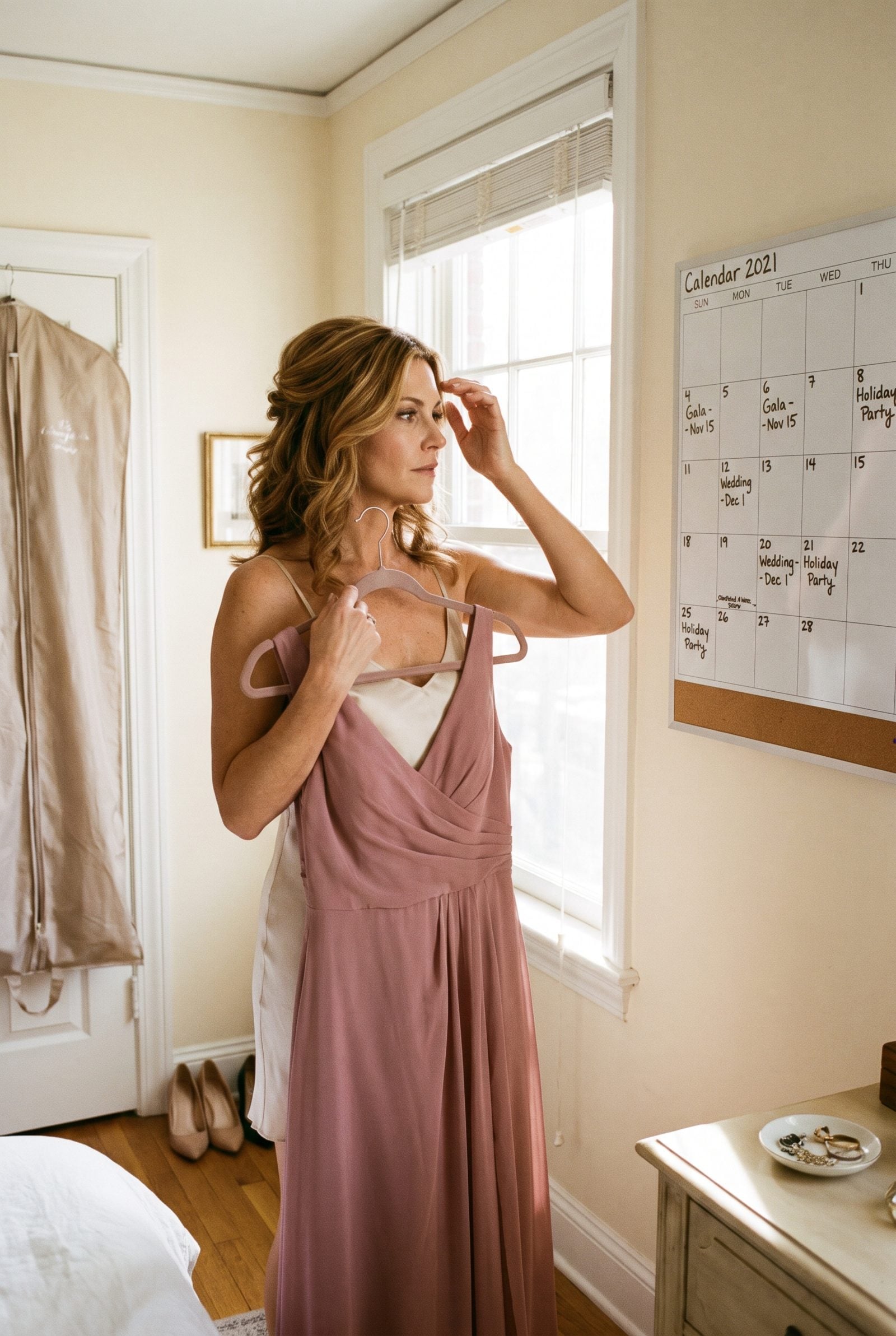
You can’t cut it before the wedding. Obviously. Or the reunion, or the holidays, when there’ll be photos. There’s always a next event just close enough to justify keeping the familiar cut you already know how to fake for a camera.
Watch how people schedule leaving a marriage the same way. Not before the anniversary. Not during the move. Not until after the graduation. The calendar fills with reasons to wait, and the waiting becomes permanent.
This is a cousin of the planning fallacy. We keep believing the right moment is coming, a clean window with no complications, and it never arrives because life doesn’t do clean windows. Something is always scheduled.
12. You Fear the Next Haircut Could Be Even Worse

Here’s the quiet terror in the salon chair: at least you know this bad cut. You know exactly how it fails you. The next one is a stranger, and a stranger could be worse. Better the disappointment you’ve memorized than a new one you can’t predict.
That fear keeps people frozen in half-happy marriages for decades. The devil you know. At least this disappointment is familiar, and starting over means facing the terrifying possibility that the alternative could be lonelier, harder, worse.
Psychologists call it loss aversion, and it’s brutal. The pain of a potential loss registers far louder than the promise of an equal gain. So we cling to a known mediocre over an unknown that might be wonderful, because might-be-worse screams and might-be-better whispers.
11. You Compare It Only With Your Worst Haircut Ever

Whenever doubt creeps in, you reach for the worst reference point you’ve got. Remember that layered disaster from years ago, the one that made you cry in the parking lot? Next to that, today’s merely-fine cut looks like a triumph. And the bar sinks another inch.
People keep unhappy marriages afloat on exactly this trick. At least it’s not like my parents’ marriage. At least nobody’s screaming. We measure the present against the lowest possible past and call surviving a bad precedent a win.
This is anchoring, and it quietly poisons every standard you have. Compare your cut only to the catastrophe and you never ask the real question — not is this better than the worst, but is this actually good. Set the anchor low and mediocre feels like heaven. Set it to what you actually want and the truth gets loud. You deserve the second question.
10. You Accept Looking Fine Because the Cut Isn’t Disastrous

“Fine” is the most dangerous word in your vocabulary. Not ugly, not wrong, just fine. The cut doesn’t make you wince, so you let it stay, and another year goes by with hair that frames your face while adding nothing to it.
People stay in fine marriages for the exact same reason. No betrayal, no shouting, nothing broken enough to point at — just a low hum of nothing-much. The absence of disaster reads as a reason to keep going.
Psychologists call it the mere-exposure effect, and it’s sneakier than you’d think. We rate the familiar as more acceptable simply because we’ve seen it a thousand times. Your mediocre bob isn’t good. It’s just known. And known feels safe in a way that good-but-new never does.
9. You Assume You’re Bad at Styling an Unworkable Cut

You stand at the mirror fighting the cowlick for the fourth morning running, and the story is always the same: I’m just hopeless with a round brush. Not the cut. Never the cut. You.
Same quiet self-blame that keeps people apologizing their way through an unhappy marriage, isn’t it? If only I were more patient. More easygoing. Better at this. The flaw gets filed under personal failure instead of structural mismatch.
Here’s what a good stylist will tell you. A cut that only works with twenty minutes of heat tools and three products isn’t a cut you’re bad at — it’s a cut that doesn’t fit your hair. A shape that suits your texture falls into place with your fingers and a shake. You were never the problem. The geometry was.
8. You Let the Stylist’s Confidence Override What the Mirror Shows
❤️ Would you like to save this?
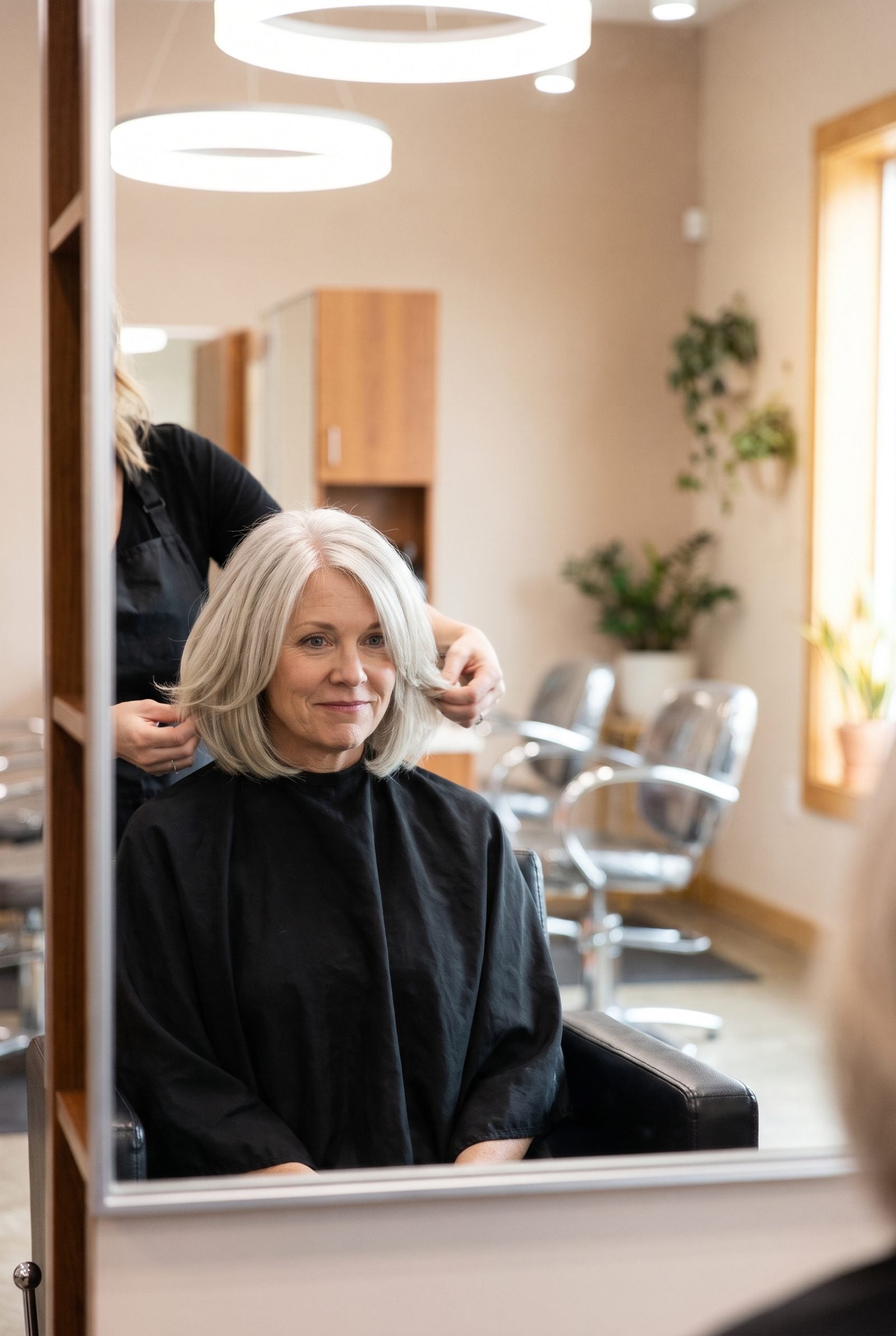
She fluffs the ends from behind you and says “it’s perfect on you.” The trick is to look in that mirror and make sure it’s truly you before you say “I love it.” Out loud. To a person holding scissors you trusted.
The confidence of whoever delivers the verdict overrides the evidence of your own eyes. We default to the expert in the room, even when the expert is standing behind us and the data is right in front of us.
It mirrors the marriage where one partner’s certainty becomes the house rule. They’re so sure things are fine that your own doubt starts to feel like the error. Authority is persuasive. It is not the same as being right.
The person most confident about your haircut is rarely the one who has to live under it.
Your reflection gets a vote. Cast it before you leave the chair, and you’ll walk out smiling about that bob instead of clipping them back three weeks later.
7. You Defend the Stylist Because She Knows Your Whole History

She’s cut your hair for fourteen years. She knew you through the divorce, the gray coming in, the terrible fringe phase you both now laugh about. So when the last three cuts have been meh, you don’t switch. You can’t. It would feel like a betrayal.
This is sunk-cost loyalty, and it runs the same track that keeps people in marriages long past their expiry. We stay because of everything invested, not because of what the thing currently delivers. The history becomes the reason, even when the present isn’t working.
Relationship history is real and it has worth. But shared memories don’t sharpen anyone’s scissors. You can love someone, be grateful to them, send a card at the holidays, and still book a consultation somewhere new. Loyalty to a person does not have to mean loyalty to a cut that stopped serving you two years ago.
6. One Ancient Compliment Still Outvotes Today’s Bathroom Mirror

Someone told you this cut suited you in 2016. One person, one time. And that single sentence has somehow outvoted every unenthusiastic bathroom-mirror glance you’ve given it since.
We anchor hard to the data point that flattered us, even when it’s wildly out of date. That old compliment becomes the fixed star you steer by, long after your face, your coloring, and your life have moved on.
Same emotional math keeps people clinging to the best year of a marriage as proof the whole thing still works. One good memory, replayed enough, drowns out a hundred ordinary disappointments.
Ask yourself who last complimented this cut, and when. If the answer is a face you can’t quite place from a party you barely remember, that’s your sign.
5. You Keep the Bob Because Your Partner Likes It

You’ve wanted to grow it out for two years. But he loves the bob. Mentioned it once at a wedding, said you looked great, and now that offhand remark has calcified into a rule you follow without quite deciding to.
Shaping your choices around a partner’s casual preference is one of the oldest moves in the long-relationship playbook. We quietly outsource decisions about our own body to keep someone else content, then call it compromise.
Worth noticing, though: he said one nice thing, once. He is not monitoring your hair length with a clipboard. The constraint you’re living under is mostly self-imposed, built from a single data point you’ve been dutifully honoring ever since. Grow it out for a season. Odds are strong he’ll like whatever makes you walk taller, because that’s the part people actually respond to.
4. You Call It Your Signature Cut When It’s Really Habit
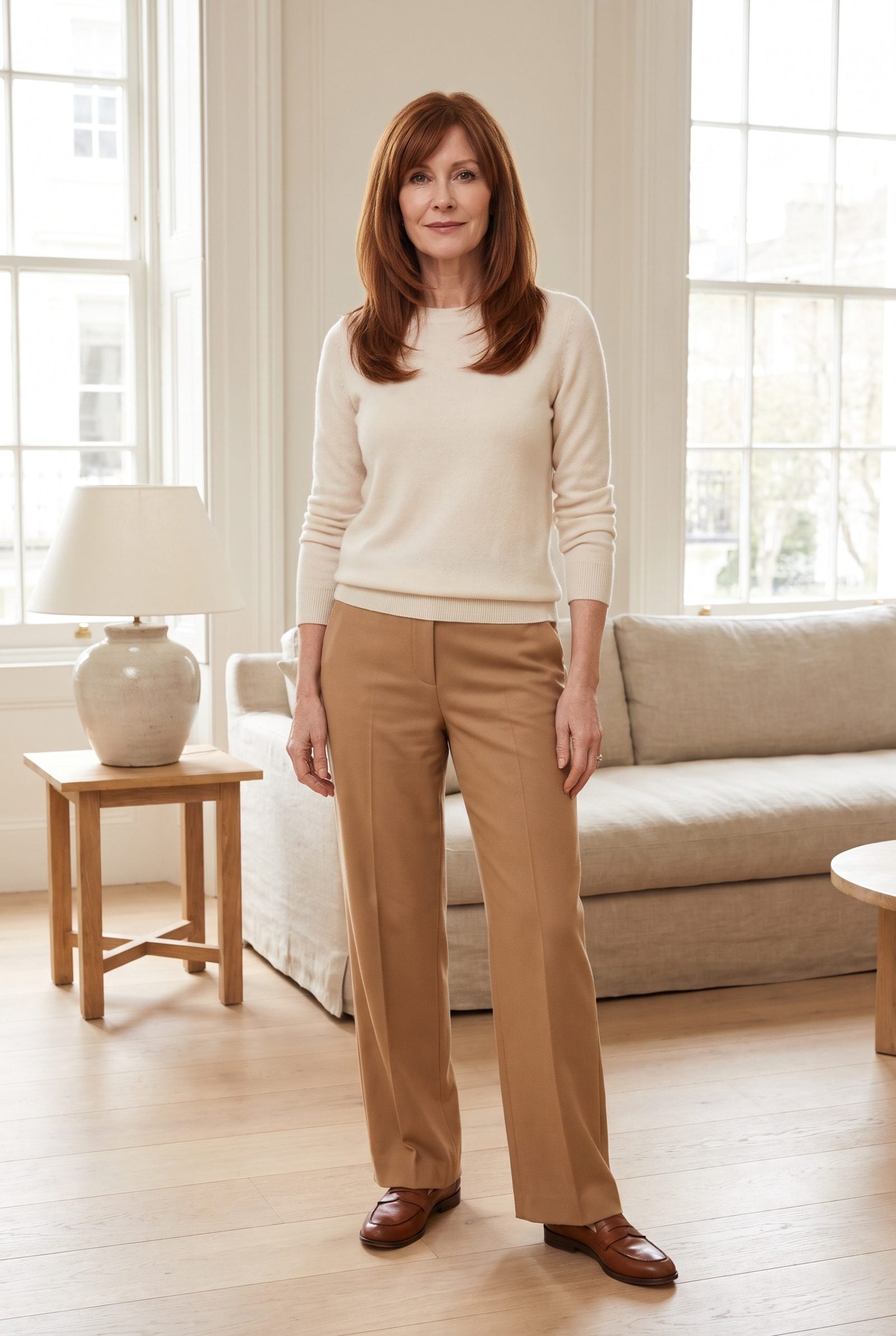
“It’s my signature.” You say it with real conviction, and it does sound better than the truth, which is that you’ve worn the same haircut for years because changing it feels like a small identity crisis.
We dress up habit as philosophy all the time. A rut, renamed, becomes a principle. “This is just who I am” ends more conversations about change than almost any other line, in salons and in marriages both.
A real signature is a choice you keep re-making because it still serves you. A habit is a choice you stopped questioning. The test is simple: when did you last genuinely consider something else and decide, fresh, to stay? If you can’t remember, it isn’t your signature. It’s your autopilot wearing a nicer name.
3. You Bring Inspiration Photos Then Request Almost No Actual Change

The screenshot on your phone shows a real change — shorter, bolder, nothing like your current hair. Then you sit down and hear your own voice say “but obviously not that dramatic, maybe just freshen up what I have.” The photo was a decoy all along.
This is the gap between wanting change and tolerating it, and it’s achingly familiar to anyone who’s stayed in a relationship by negotiating it down to nothing. We fantasize about the big shift, then flinch at the first real step and settle for a trim, a talk, a slightly different arrangement of the same thing.
Loss aversion is the culprit. The pain of losing what’s familiar looms larger than the pleasure of gaining something better, so we hedge ourselves right back to the starting point. That inspiration photo isn’t a plan. It’s a wish you’ve already pre-abandoned at the door.
2. You Decide Women Your Age Have Fewer Flattering Options

Somewhere along the way you absorbed the idea that past fifty, the menu shrinks. Long hair reads as trying too hard, short reads as giving up, and you’re left choosing between two cuts you don’t love because you’ve decided those are the only two on offer.
They aren’t. The belief that options narrow with age is a story we tell ourselves, and like most limiting beliefs, it does the narrowing all by itself. We stop looking, then mistake our own not-looking for proof there was nothing to find.
Same shrinking-horizon trap keeps people in unhappy marriages convinced it’s too late to want more. The silver pixie, the long layered gray, the soft shag, the androgynous haircut with genuine edge — all of it is still yours. Your face at this age carries more authority than it ever did at thirty, and authority wears bold choices beautifully.
1. You Wait for Weight Loss Before Trying a Different Shape

The cut is on hold until the weight comes off. You’ve decided the good shape is a reward you have to earn, so you keep the current one as a kind of waiting room, half-living in it until the “real” you arrives.
We postpone pleasure constantly, pinning it to a future milestone that keeps receding. The new haircut, like the new life, gets filed under someday. And someday has a way of never quite showing up.
Here’s what a good stylist knows that you’ve forgotten: the right cut doesn’t reward a changed body, it flatters the one you have today. A shape that defines your jaw, lifts the eye, or softens the proportions works now — at this weight, in this body, this week.
The reward isn’t on the far side of a diet. It’s on the far side of one appointment you keep putting off.