
❤️ Would you like to save this?
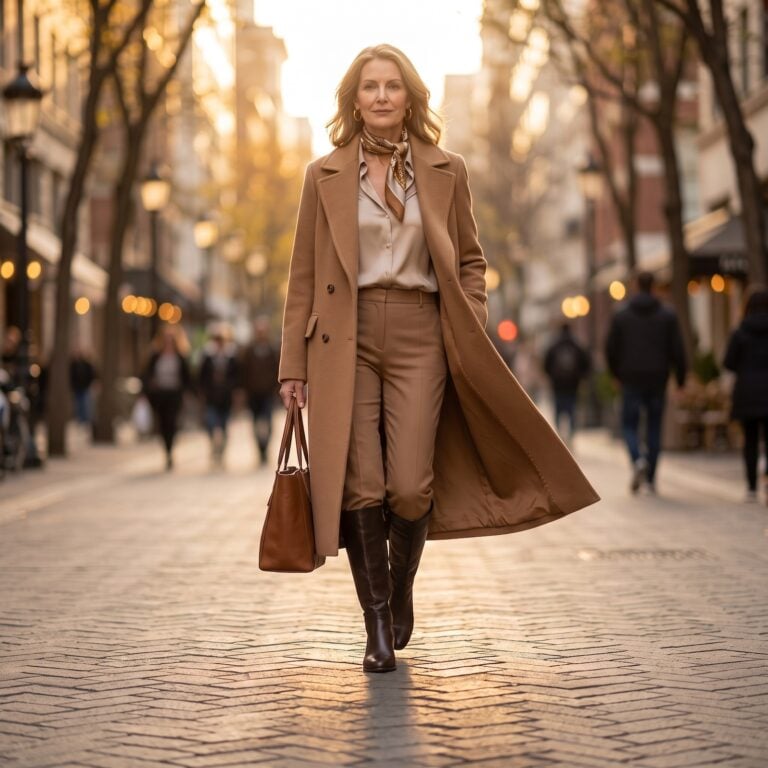
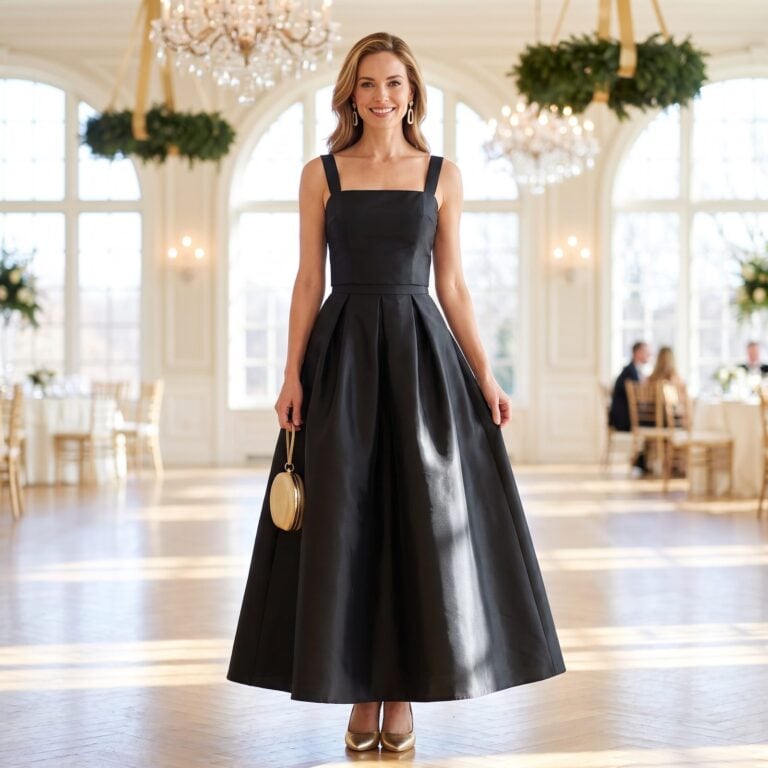
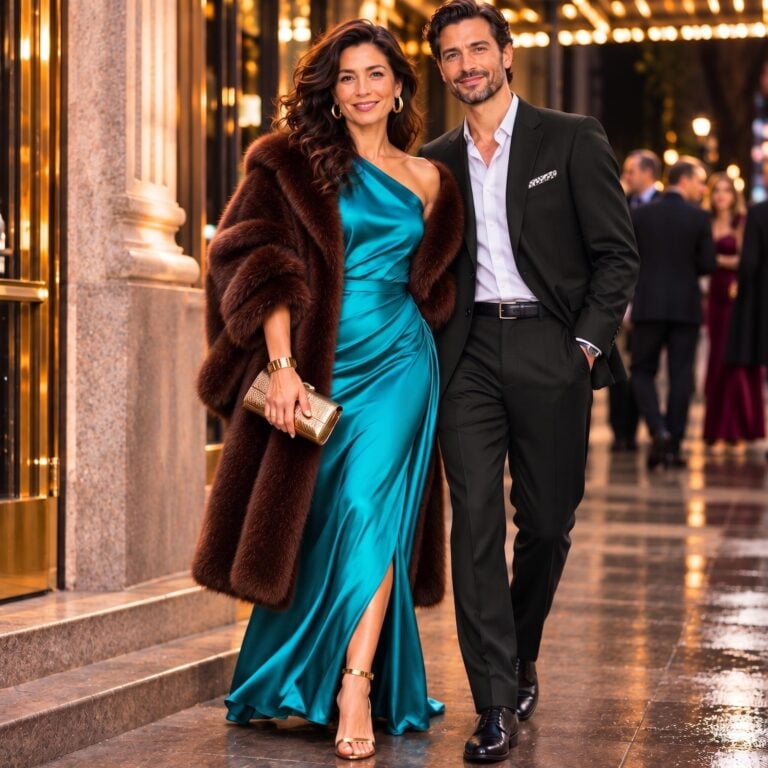
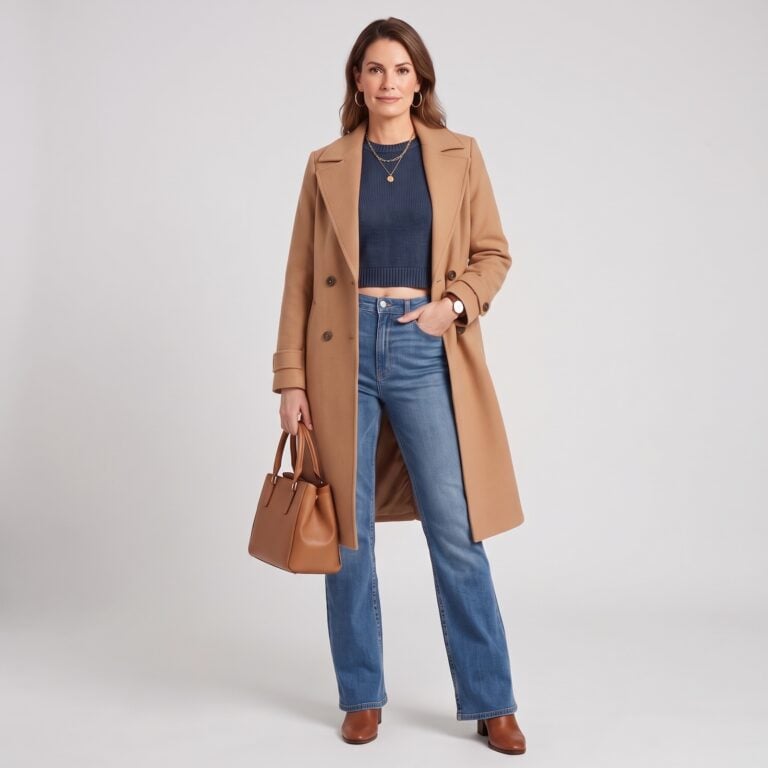
Fireplace smoke mixing with a cloud of hairspray. The Sears Portrait Studio photographer counting down while everyone held a frozen smile over that mottled blue backdrop. The card landed in December, and for decades it was the family’s annual flex. Matching sweaters. Giant satin bows. Taffeta that crinkled when you so much as breathed. We pulled these looks out of the album and rebuilt each one for right now — same festive spirit, new silhouettes. Here’s what changed.
FYI, thanks to AI imagery software, we’re able to create very specific fashion and hairstyle examples to illustrate the points being made. In some cases, imagery is exaggerated to hammer home the point. Also, assume links that take you off the site are affiliate links such as links to Amazon. this means we may earn a commission if you buy something.
Matching Red Turtleneck → Merlot Ribbed Mock Neck

The 1985 version had a specific crime: that acrylic shine, the kind that caught the studio flash and glowed like a traffic cone. Everyone in the family wore the same red, so the card was basically a uniform.
Merlot does what fire-engine red couldn’t — it reads festive without shouting, and the deeper saturation sits kinder against mature skin. The real upgrade is the ribbing. It gives the knit a vertical line that lengthens the neck instead of swallowing it, and a slim mock neck frames the jaw where a bunched turtleneck just hid it.
Bell-Trimmed Novelty Sweater → Minimalist Festive Embroidery
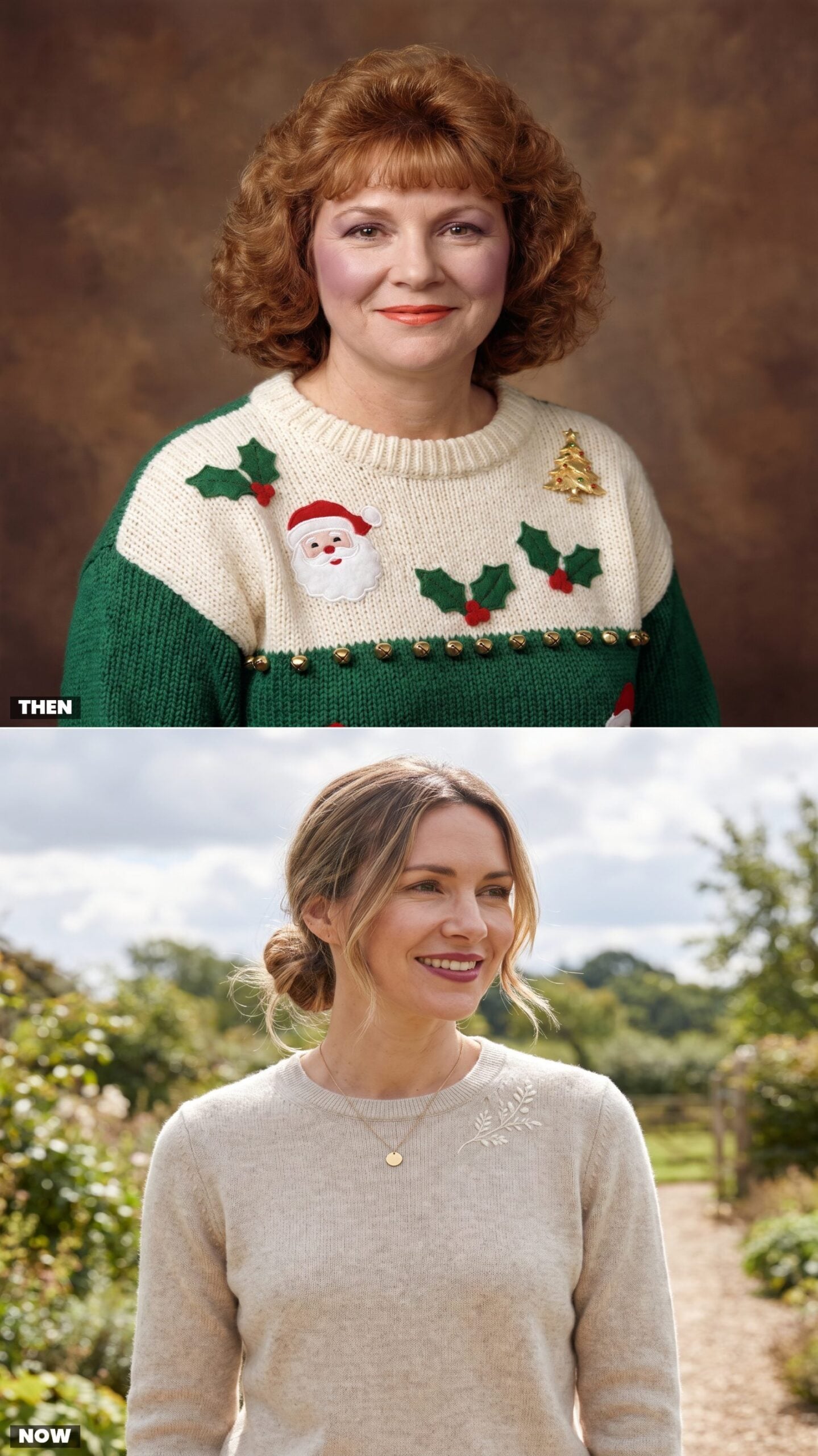
Someone sewed actual bells onto a sweater and then sat through a two-hour church service in it. That was the energy of 1985 holiday knitwear — maximum cheer, zero restraint.
Now the move is tone-on-tone. Cream embroidery on an oatmeal ground reads as festive from three feet away and simply refined from across the room. Restraint is doing the driving: one single motif accomplishes what a dozen appliques used to, and the sweater actually earns a second wear in January instead of living in a bin for eleven months.
What Our Readers Say
- Asked whether comfort or polish comes first, 63% of ThreadCurve readers chose comfort, which helps explain why so many festive looks have relaxed.
- When our readers picked a top, fine knit came out ahead at 40%, ahead of the blouse at 33% and the tee at 26%.
From ThreadCurve reader polls and votes.
Laura Ashley High-Neck Floral Dress → Dark-Floral Prairie Midi
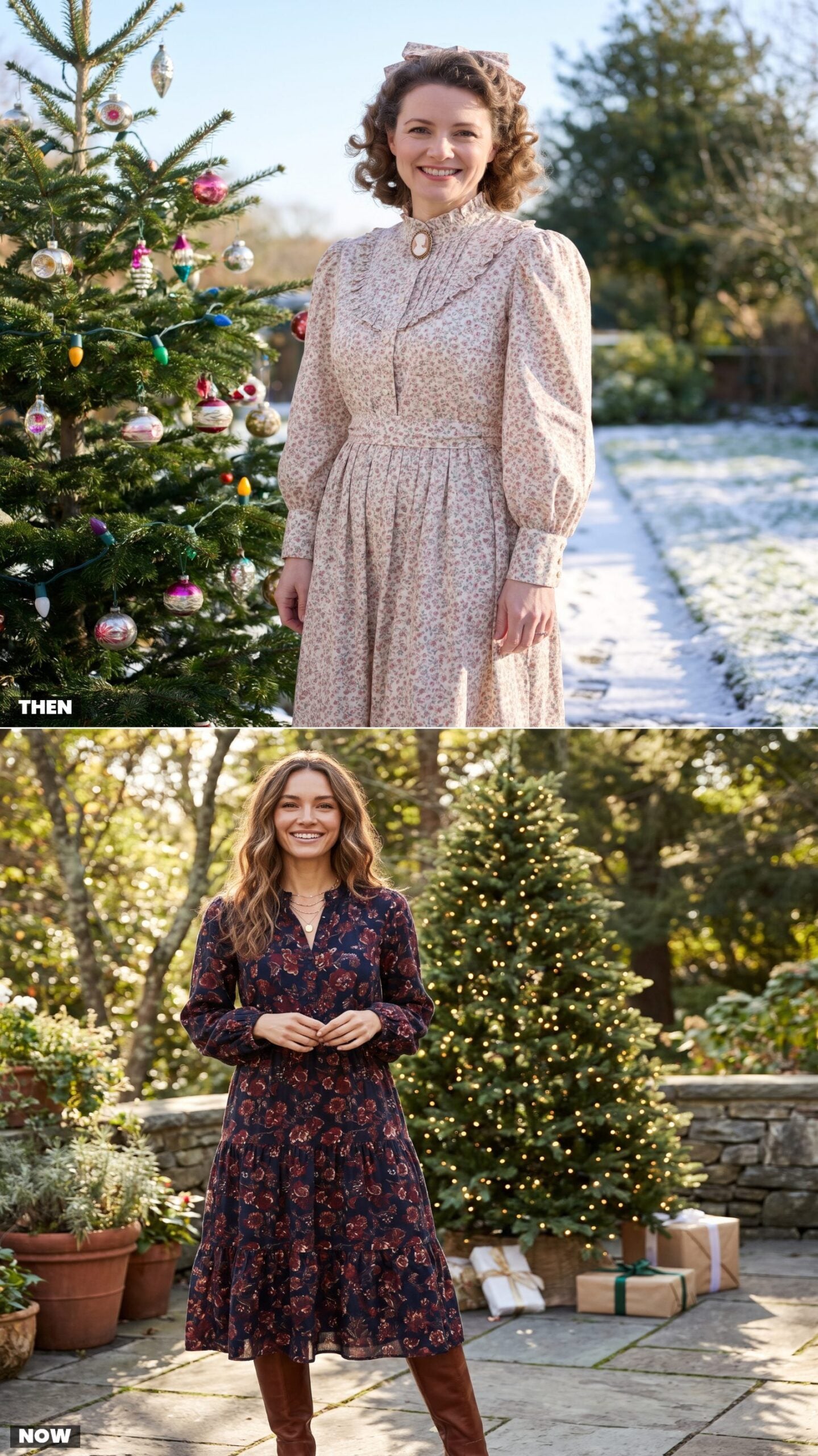
Laura Ashley ran the eighties mantelpiece. All that cream cotton and dusty rose, the neck ruffle climbing right up to the chin, the fabric hair bow dyed to match. It was sweet. It was also a whole lot of sweet.
The prairie silhouette survived; the palette grew up. A dark floral on navy brings the drama the ditsy print never could, and the deeper ground reads as evening rather than Sunday school. Tall boots under the tiered midi are what pull it off, grounding all that romance so it lands grown, not girlish. For more on timeless festive dressing, our guide to the holiday outfit traps worth sidestepping is worth a read.
Plaid Taffeta Party Dress → Streamlined Tartan Midi
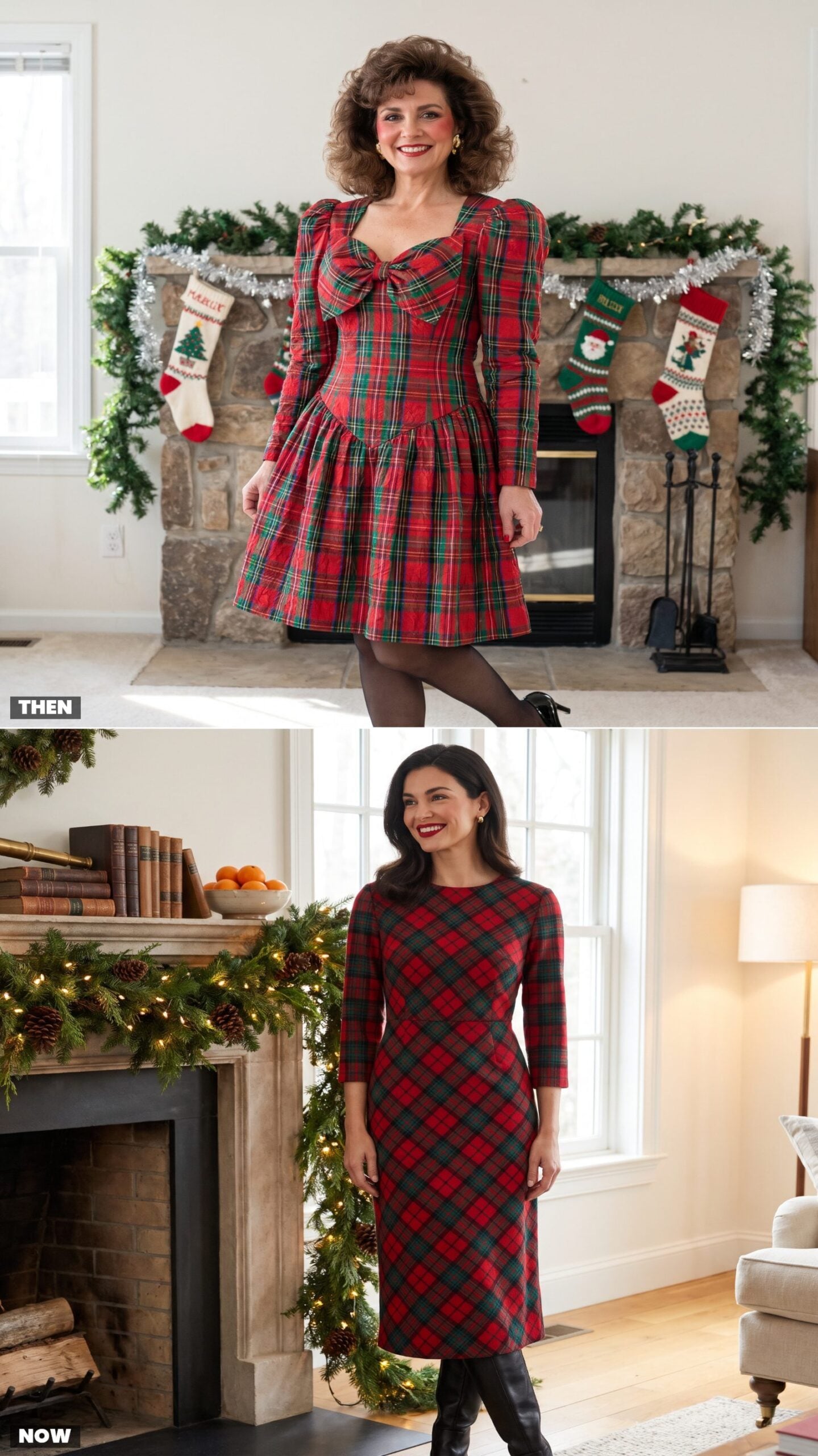
Taffeta had a sound. That crisp, synthetic crinkle every time you sat down, audible clear across the dinner table. Add a crinoline, a chest bow the size of a dinner plate, and puffed shoulders, and the 1985 party dress took up a whole doorway.
The 2026 answer keeps the tartan and loses the inflation. A matte wool plaid on a clean bias cut lets the pattern do the work. Deleting the bow and the crinoline is the one decision that modernizes everything — you trade the built-up structure for a column that actually moves. Tartan still says December. It just no longer announces it from the next room. Plenty of party outfits still fall into the volume trap.
Satin Blouse With a Giant Neck Bow → Fluid Blouse With a Slim Scarf Tie

The pussy bow in 1985 wasn’t a detail. It was the entire top half of the outfit — satin, high shine, tied into a bloom that fanned out across the sternum. Pair it with shoulder pads and you had a silhouette built to intimidate the PTA.
Now the neck tie whispers. A slim silk scarf knotted loose keeps the gesture and drops the theatrics, and swapping shine for matte silk stops the whole thing from flashing under lights. The narrow tie is the hero here, a single vertical line that elongates where the old bow widened and interrupted.
Fair Isle Crewneck → Oversized Nordic Knit
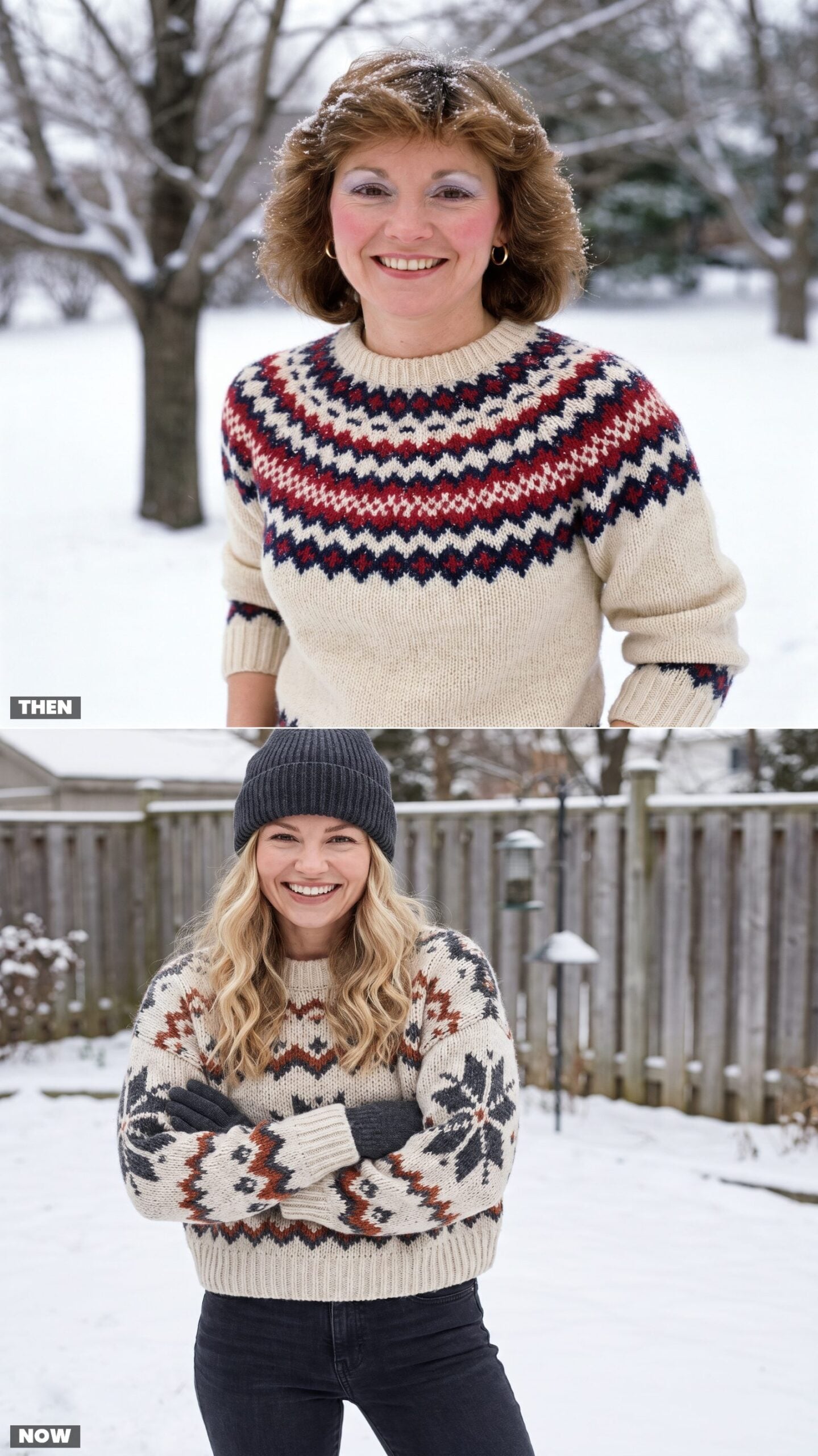
Fair Isle meant snug in 1985 — that traditional yoke pattern across a close crewneck, cuffs ribbed tight at the wrist, the whole thing fitted to the body like it was personally guarding you against the cold.
Scale flipped. The current version is oversized, drop-shouldered, worn slightly cropped over slim denim so the volume reads intentional. That proportional play is the whole story: a generous knit up top, a lean line below. Rust and charcoal update the old cream-red-navy without ditching the heritage reference, and a chunky gauge adds a tactile depth no thin crewneck ever managed.
Batwing-Sleeve Sweater → Sculptural Balloon-Sleeve Knit

The batwing let the whole sweater pool at the underarm — one continuous drape from neck to hip, usually with a thread of lurex sparkle for the evening. Glamorous, sure. Shapeless, also sure.
Volume moved to the sleeve and finally found some discipline. A balloon sleeve builds its drama on a fitted body, rounding out at the upper arm and tapering to a snug cuff, so the shape comes off sculptural rather than slouchy. And that fitted body against the dramatic sleeve puts the waist back where the batwing had erased it — the whole difference between draped and shaped.
Cable Cardigan With a Brooch → Cropped Cardigan With Pearl Buttons
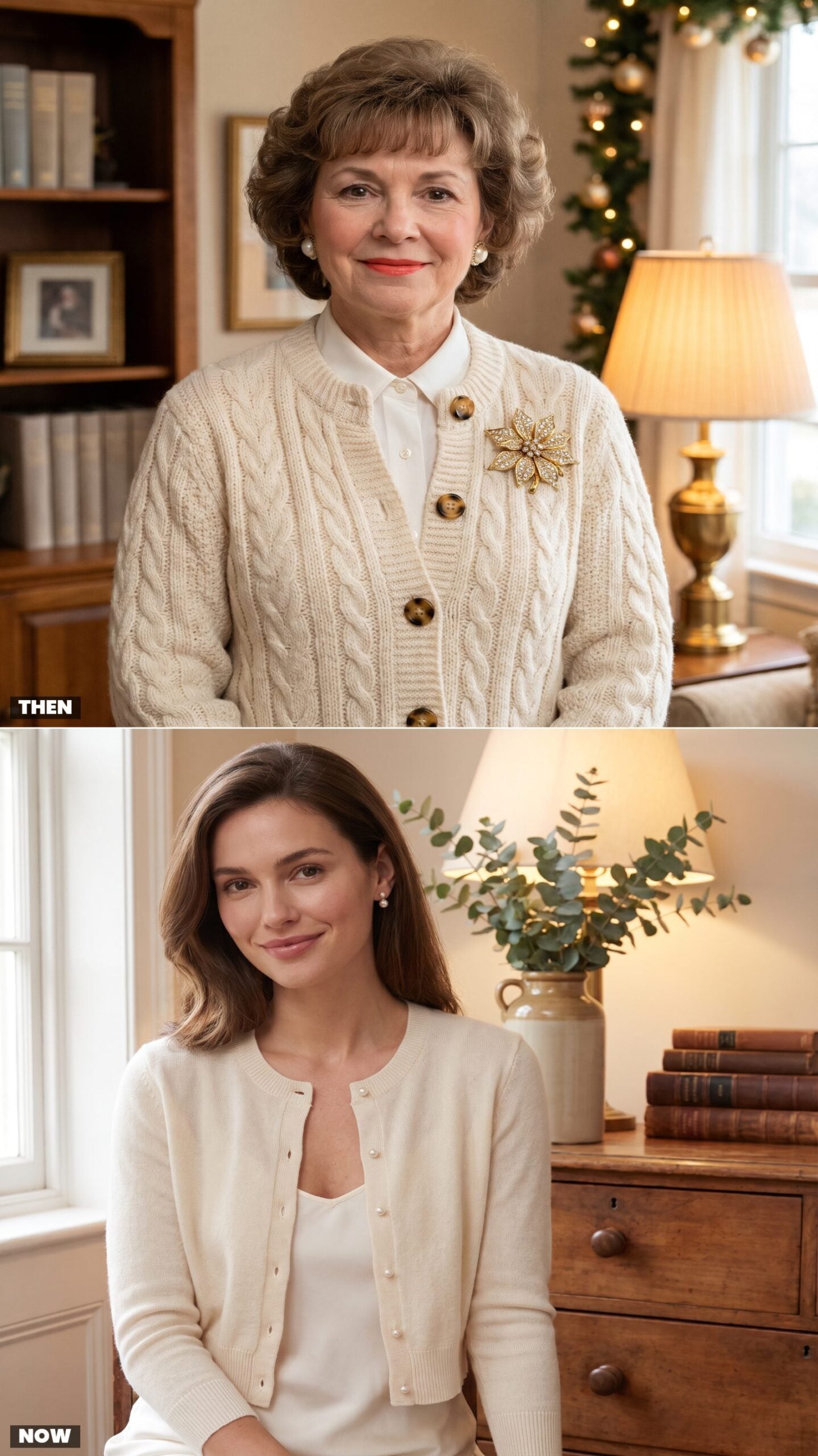
The brooch did a lot of talking in 1985. A rhinestone wreath or bell pinned to a hip-length cable cardigan buttoned all the way up, the whole thing cozy to the point of hiding the waist entirely.
Cropping the cardigan changed its job. Ending at the natural waist, a fine-gauge knit sits right where the eye wants to find the smallest point. Pearl buttons took over the ornament role from the brooch, built into the piece instead of pinned on top. Quieter. And it photographs younger without visibly trying to.
Sweater Vest Over an Oxford Shirt → Longline Knit Vest Over Poplin
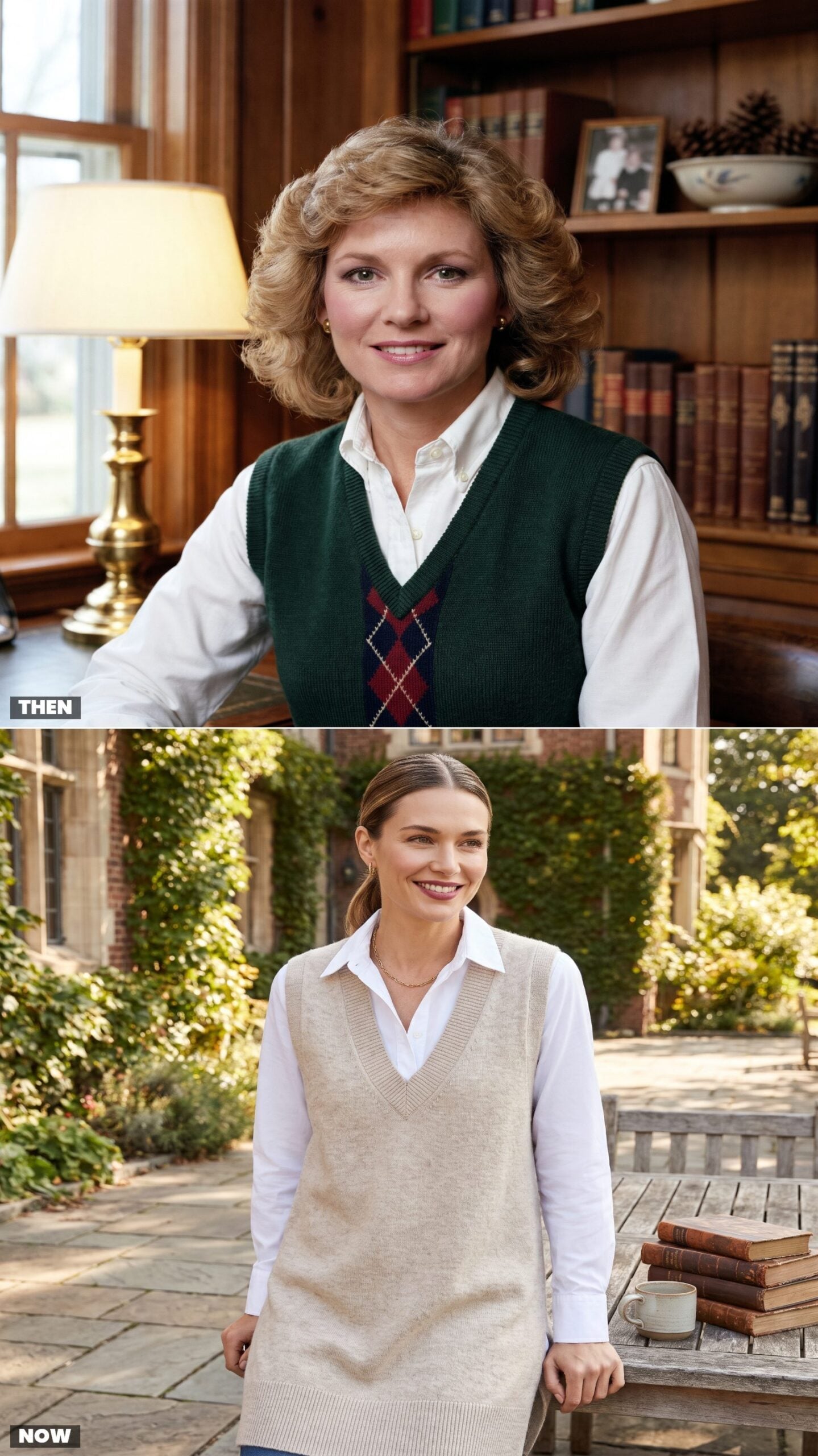
Prep in 1985 kept everything buttoned and tucked. The sweater vest sat short and snug, the oxford collar sprang out stiff and fastened to the throat. Correct, contained, a little starched.
The longline vest loosened the posture. A deeper V and a hem that drops past the hip create a vertical line the old cropped vest couldn’t manage, and leaving the poplin collar open releases the throat the oxford used to choke. Same two-piece logic, reworked for ease over formality. This is the rare work outfit that reads just as well on a holiday card.
Belted Knit Sweater Dress → Ribbed Column Sweater Dress
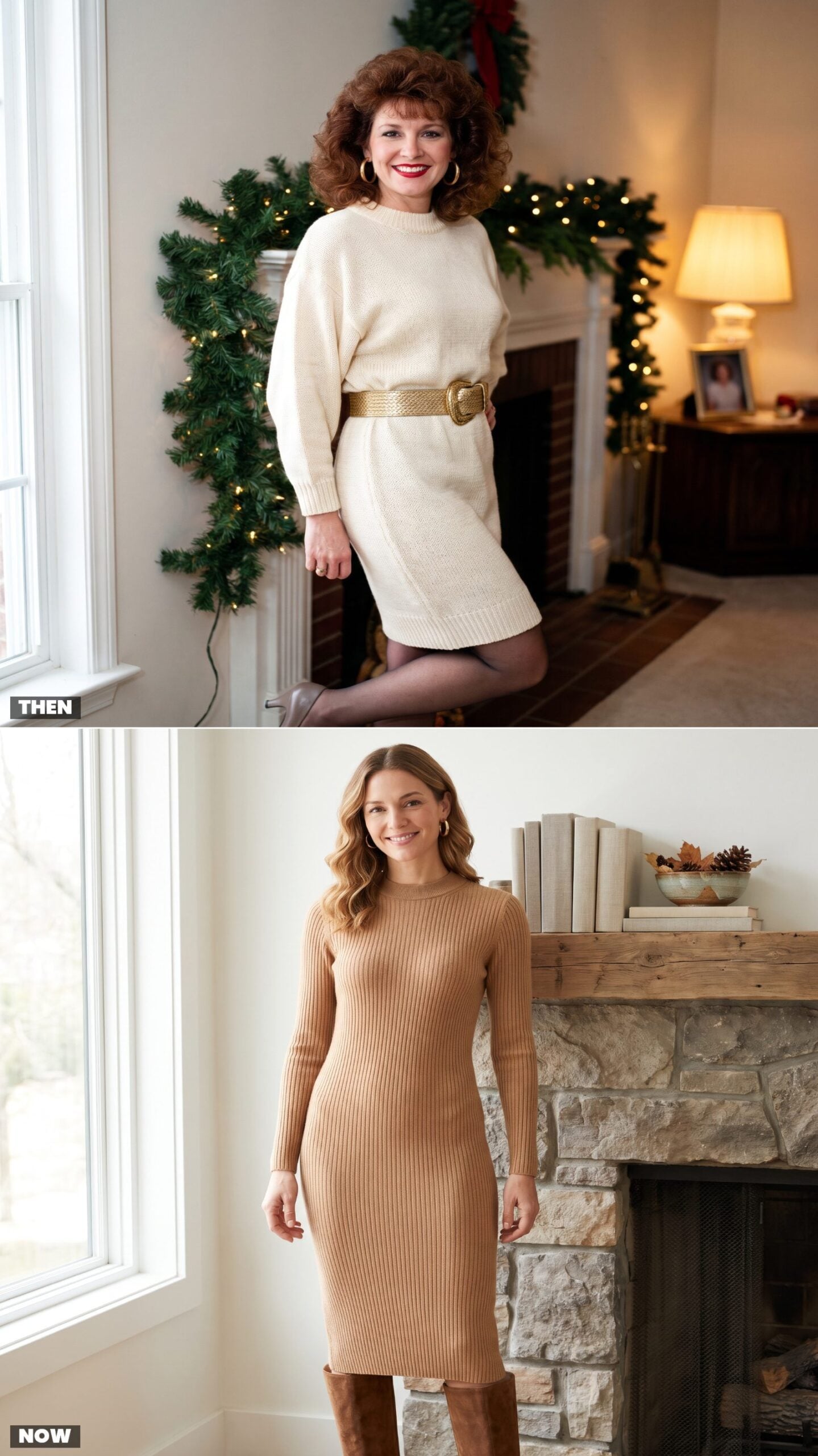
The belt was non-negotiable in 1985. A blousy acrylic knit dress cinched violently at the middle with a wide gold buckle, the top ballooning above it, the skirt flaring below. It created a waist by force.
The column creates one by cut. A fine vertical rib skims from shoulder to mid-calf in a single unbroken line, letting the body define itself with no belt doing the heavy lifting. Camel reads warmer and more current than the old cream, and tall suede boots run that vertical all the way down. One long line beats a cinched one for a plain reason — it moves with you instead of against you. If you’d rather push into a monochrome white outfit, the column shape carries pale tones just as cleanly.
The Velvet Dress: From Puff Sleeves to the Wrap
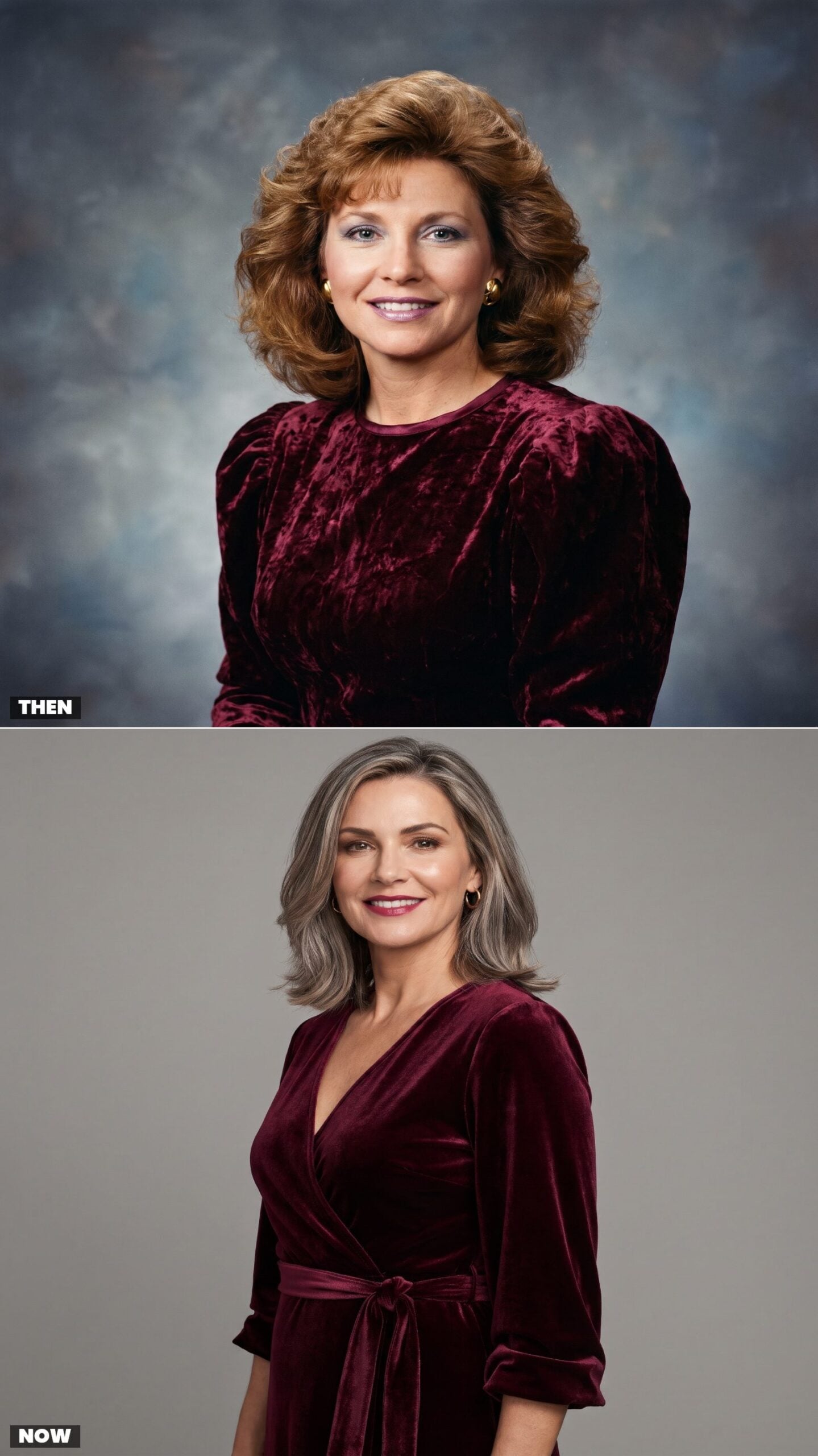
The 1985 version shouted from the shoulders down. Those puff sleeves added a full extra foot of visual width while the bloused bodice swallowed the waist whole, so it read festive and boxy at the same time — the shape of the decade more than the shape of the woman.
The wrap rewrote the whole conversation. Same burgundy velvet wrap dress, except now the surplice neckline and that tie at the natural waist carry your eye on a diagonal, which happens to be the most forgiving line a dress can draw. Velvet still catches light like candle glow. The difference? It moves with you now instead of around you.
Sequins: The Allover Blast Versus the Matte Slip
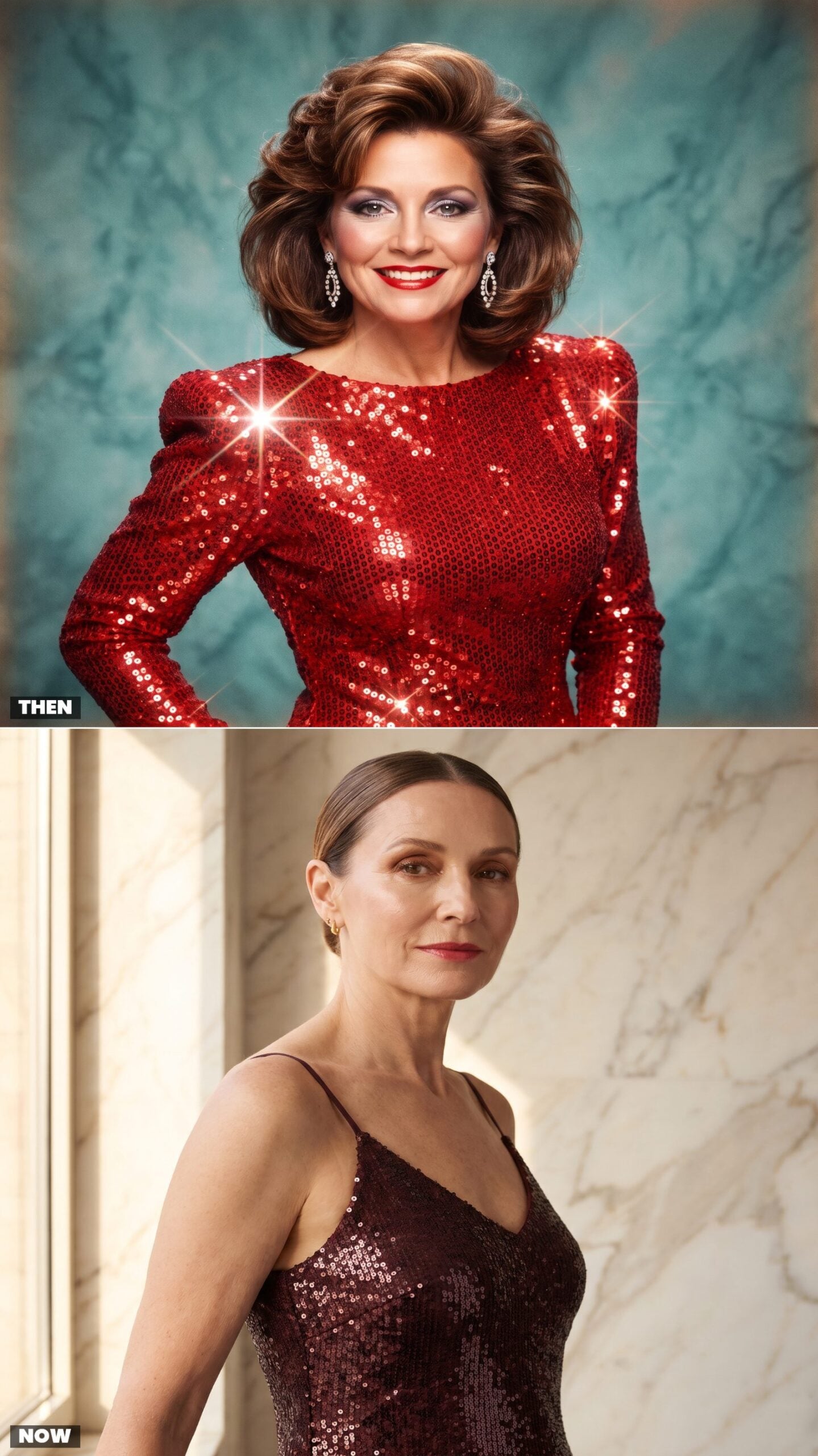
Allover sequins in 1985 meant committing to being seen from across a parking lot. Shiny, dense, every panel firing light back at the flash, padded shoulders squaring the whole thing off. It had energy. It also had no off switch.
Matte sequins changed the temperature entirely. A garnet sequin slip dress on the bias still catches light, just in low liquid flickers instead of a floodlamp. The slip skims the body and leaves the shoulders soft. One of our favorite shifts in party outfits is exactly this: sparkle you can wear to dinner without blinding the person across the table.
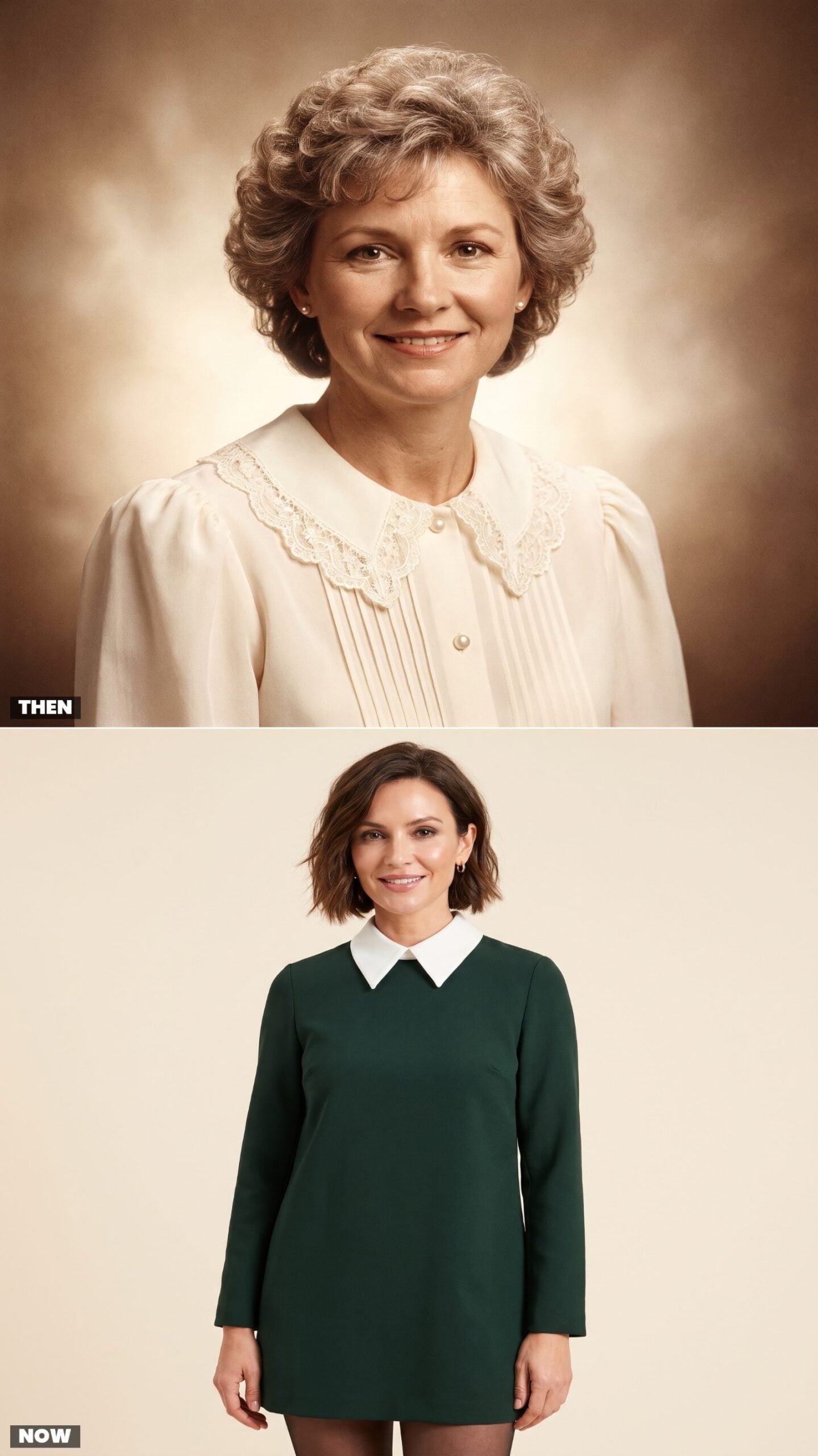
The Lace Collar, Grown Up
❤️ Would you like to save this?
That wide scalloped lace collar in 1985 did exactly one job: it made a grown woman read ten years younger and faintly doll-like. The pearl button at the throat, the pintucks, all of it leaned sweet to the point of saccharine.
The contrast collar now does the opposite. Set a crisp white point collar against a forest-green shift and suddenly it’s a graphic detail, not a cute one. Those sheer black tights ground the mini and keep it grown. Same collar DNA, completely different message.
Where the Waist Landed: Dropped Versus Defined
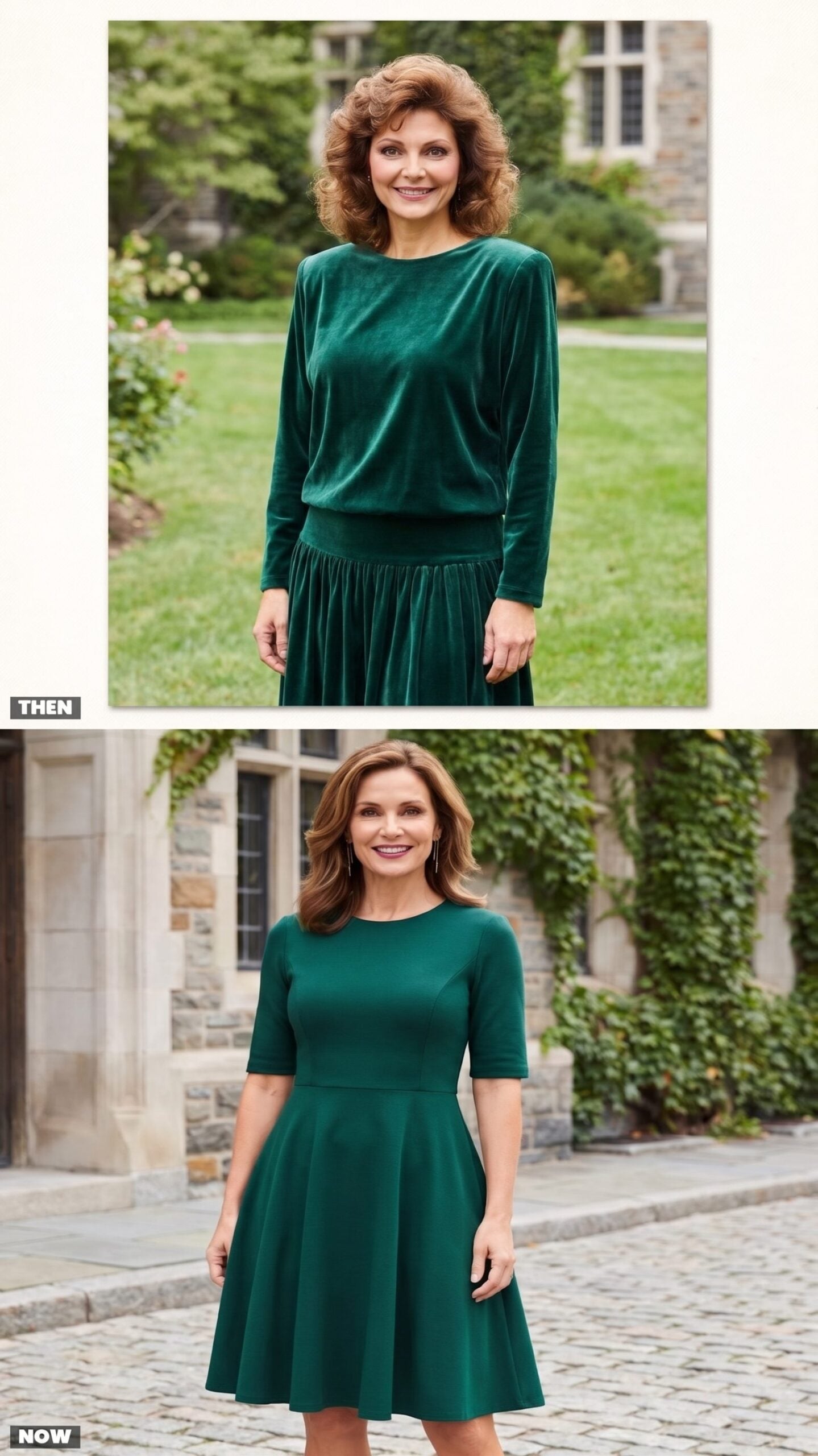
One color, head to hem, and somehow the 1985 dropped-waist dress still managed to hide the figure completely. The seam fell to the hip, the bodice hung loose above it, and the narrowest part of the torso got no mention at all. Comfortable, yes. Also a shapeless column.
The fit-and-flare puts the waist back where it does the most work. A fitted bodice nipping in at your natural waist, a skirt breaking into movement from there — that’s the single most reliable shape for creating an hourglass read. Same emerald, same festive spirit, but now the dress actually knows where you are.
The Shirtdress Reinvention
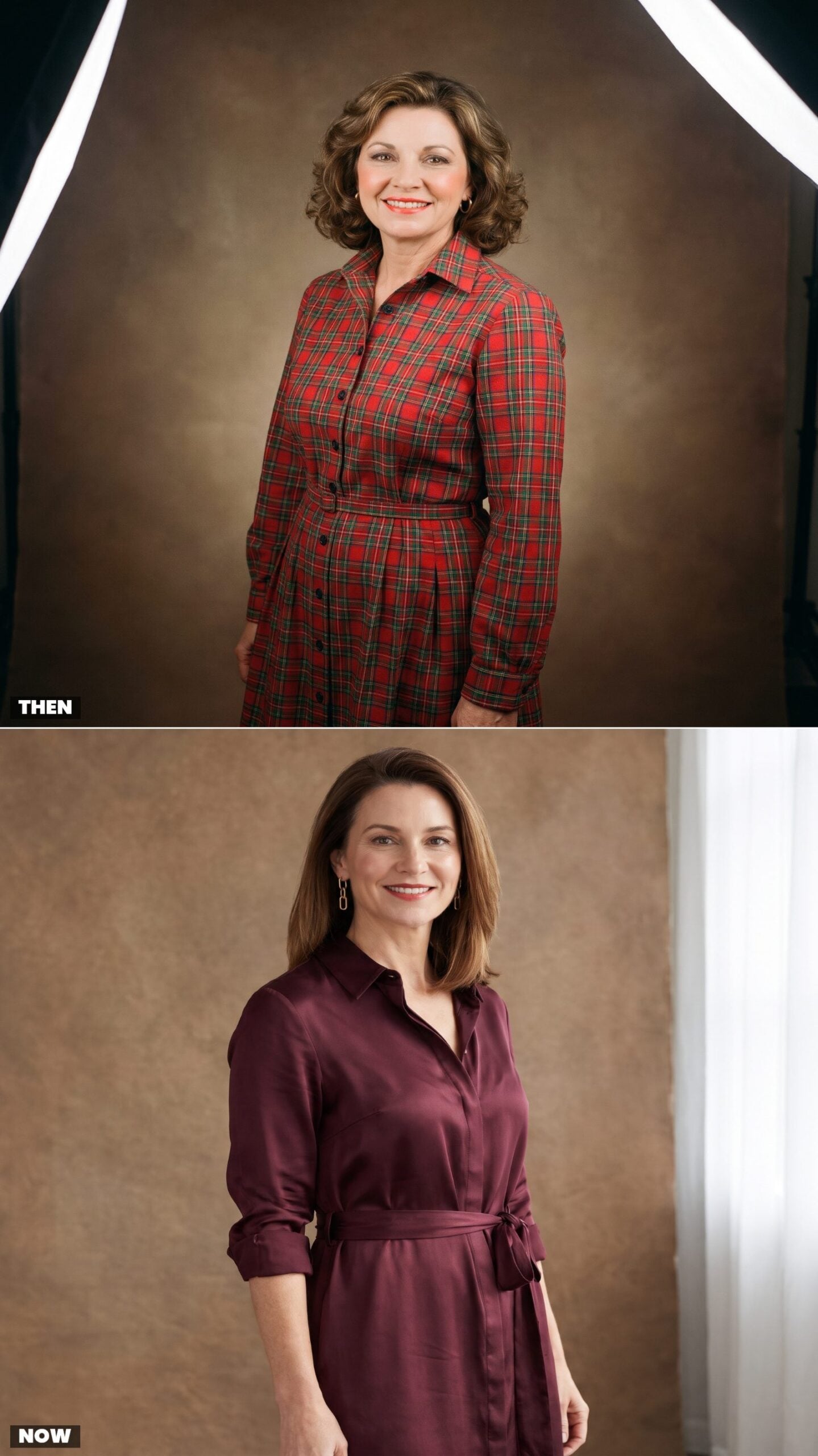
A plaid cotton shirtwaist was the practical holiday dress of 1985 — the one you could wear to church and then to serve the ham. Crisp, buttoned, belted in self-fabric, and about as sensual as a bulletin board.
Swap the cotton for liquid satin and the whole register shifts. A wine satin shirtdress keeps the collar, the placket, the belt, so it still reads as an easy no-fuss dress. But the fluid drape and the sheen turn it into something you’d wear to the party, not to set up for it. That sash at the natural waist is the one decision pulling the most weight.
Metallic Gold: Lamé Then, Liquid Now
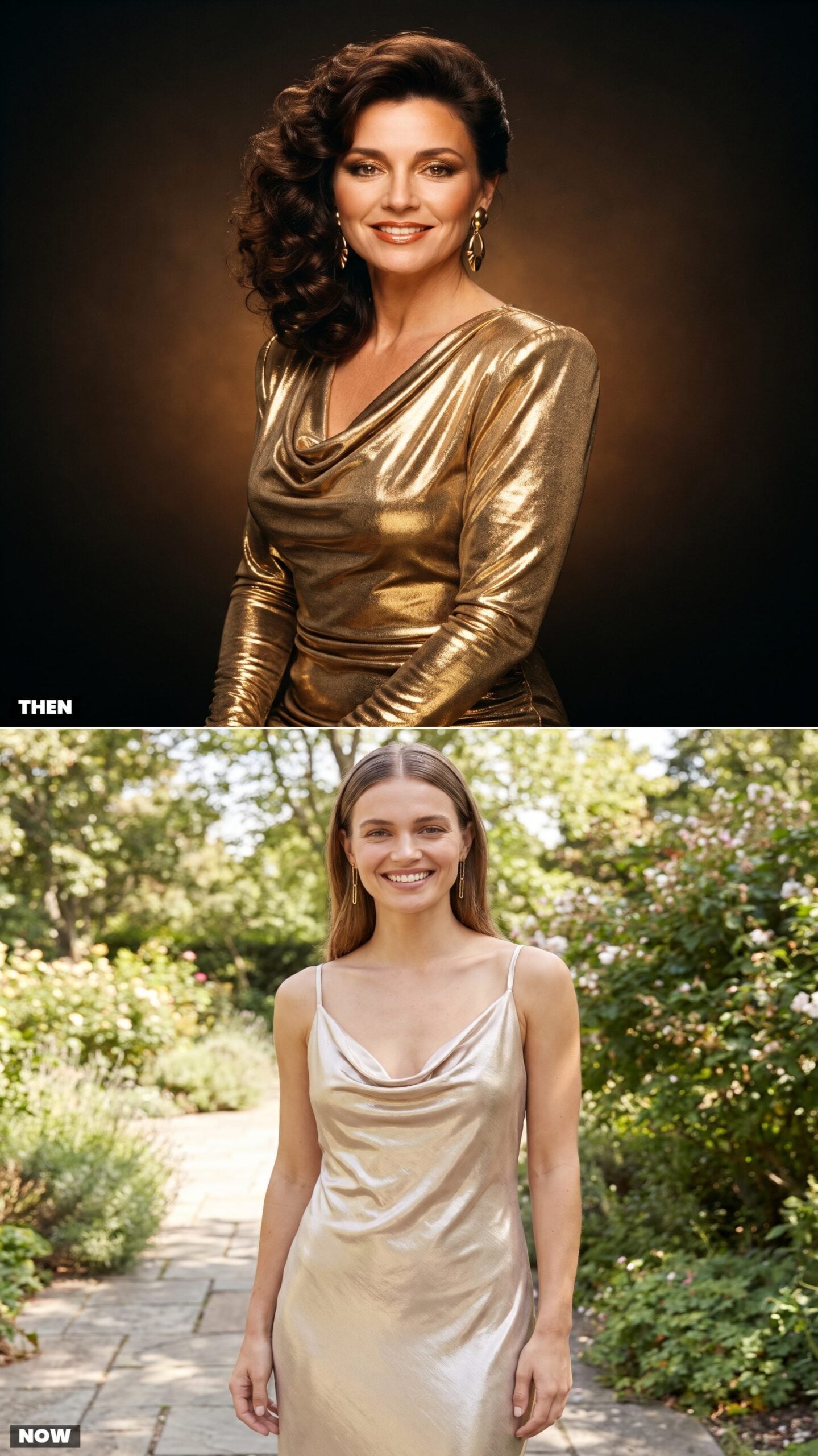
Gold lamé in 1985 was stiff as foil and twice as loud. The cowl draped, sure, but the fabric held its own structure, and those padded shoulders turned the look into armor plating that happened to be gold.
The bias cut melted it. A champagne gold bias dress pours over the body instead of standing away from it, catching light in long liquid ribbons as you move. Same metallic ambition — the gap between flashy and rich usually comes down to how the fabric moves.
Ruffles at the Neck, Revisited

The ruffled bib of 1985 buried the chest in a froth of polyester gathers, topped with a pussy-bow that finished it off like a wrapped present. Romantic in theory. In practice, a lot of fabric doing a lot of fluttering.
Organza pleats take the same idea and hand it some discipline. A pleated organza top uses structure where the old blouse used volume — crisp vertical folds that hold their shape and catch light along each edge. Texture with restraint, which is what separates a detail from a distraction.
Pleats: From Rigid Wool to Liquid Drape
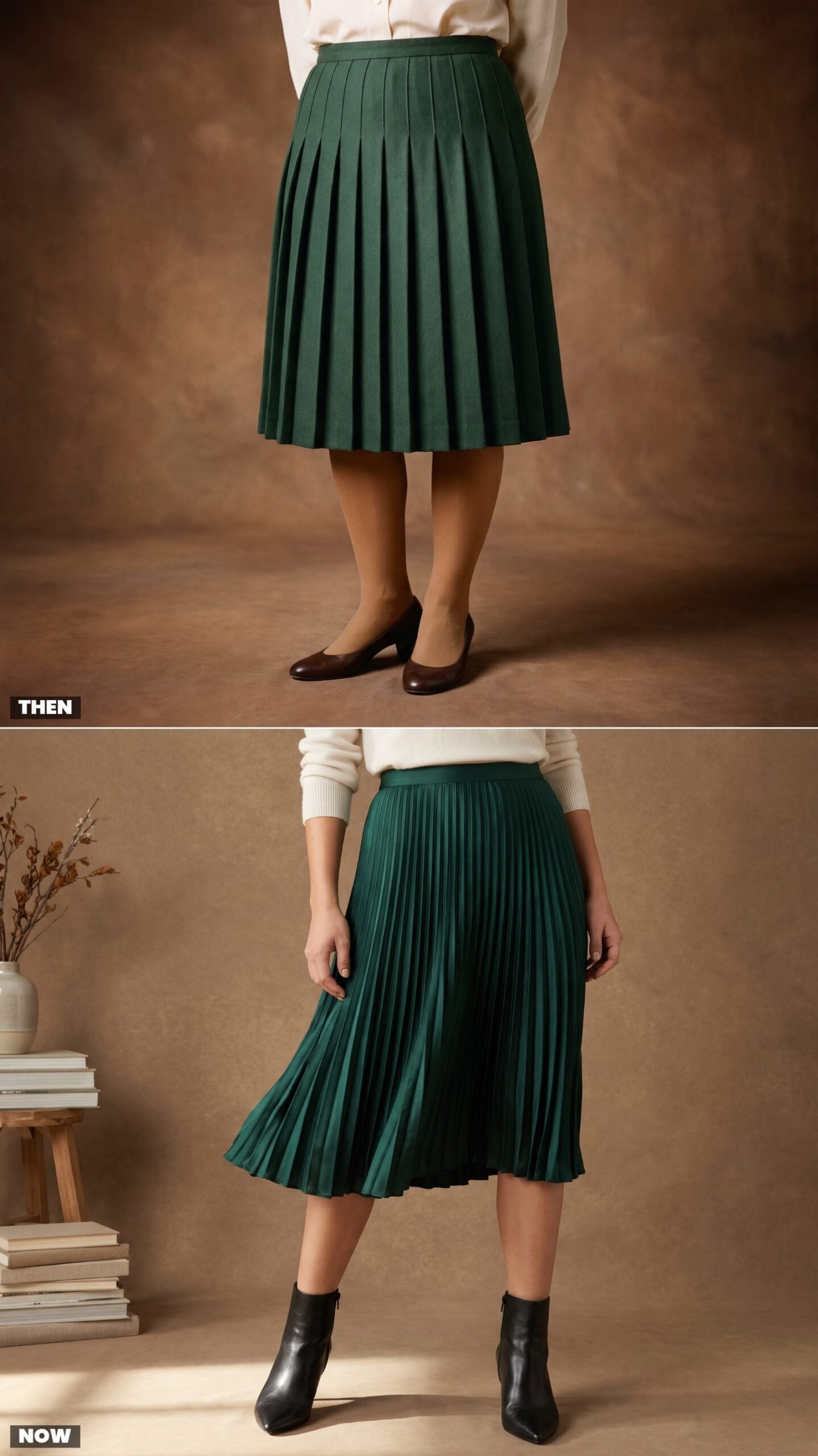
Knife pleats in heavy hunter-green wool were built to stay put. Pressed sharp, lined, stiff, they moved as one disciplined unit — and with the tan pantyhose and low brown pumps, the whole bottom half read sensible to a fault.
Fluid accordion pleats took that same technique and let it breathe. An emerald pleated satin midi skirt sways with every step and throws light down each fold like water. Pair it with a sleek ankle boot and the proportion suddenly has intention. Soft knit on top, shimmering pleats below — that texture contrast is the whole engine of the look.
The Stirrup Pant Grows Up
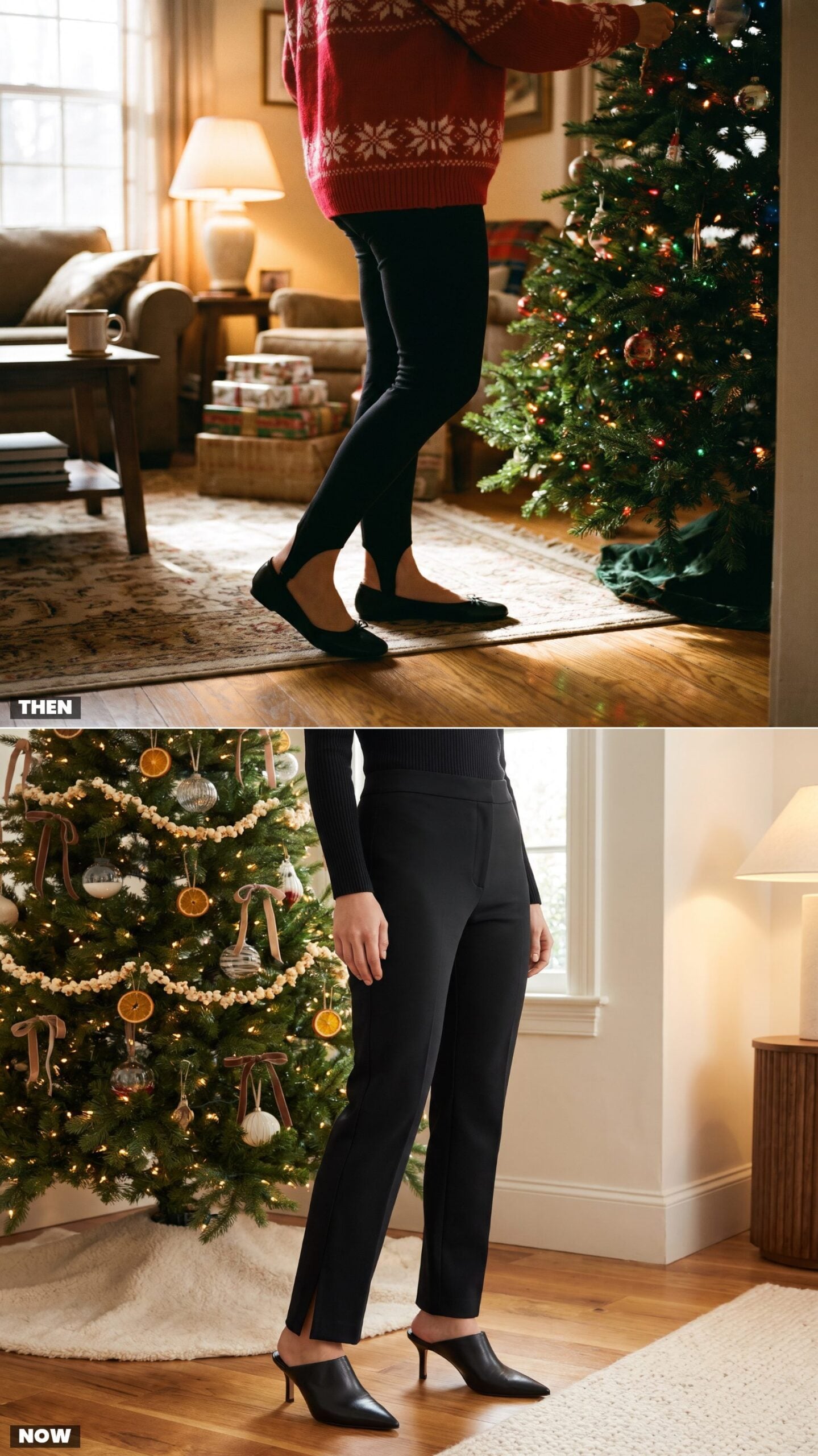
Stirrup pants solved one problem — the pant leg riding up — and created several more. That loop under the foot kept everything taut and tapered, so the leg narrowed to nothing at the ankle and every eye went straight to the foot. Add a bulky sweater up top and the proportion was all wrong.
Split-hem ponte trousers keep the sleek leg and fix the geometry. These split-hem ponte trousers fall clean and straight, with a little vent at the hem that opens the line over a mule instead of choking it off. Ponte holds its shape without the shrink-wrap effect. Honestly? Plenty of us avoided anything slim for years because of the stirrup trauma. This is the pant that fixed it.
Trouser Volume: Tapered Then, Wide Now
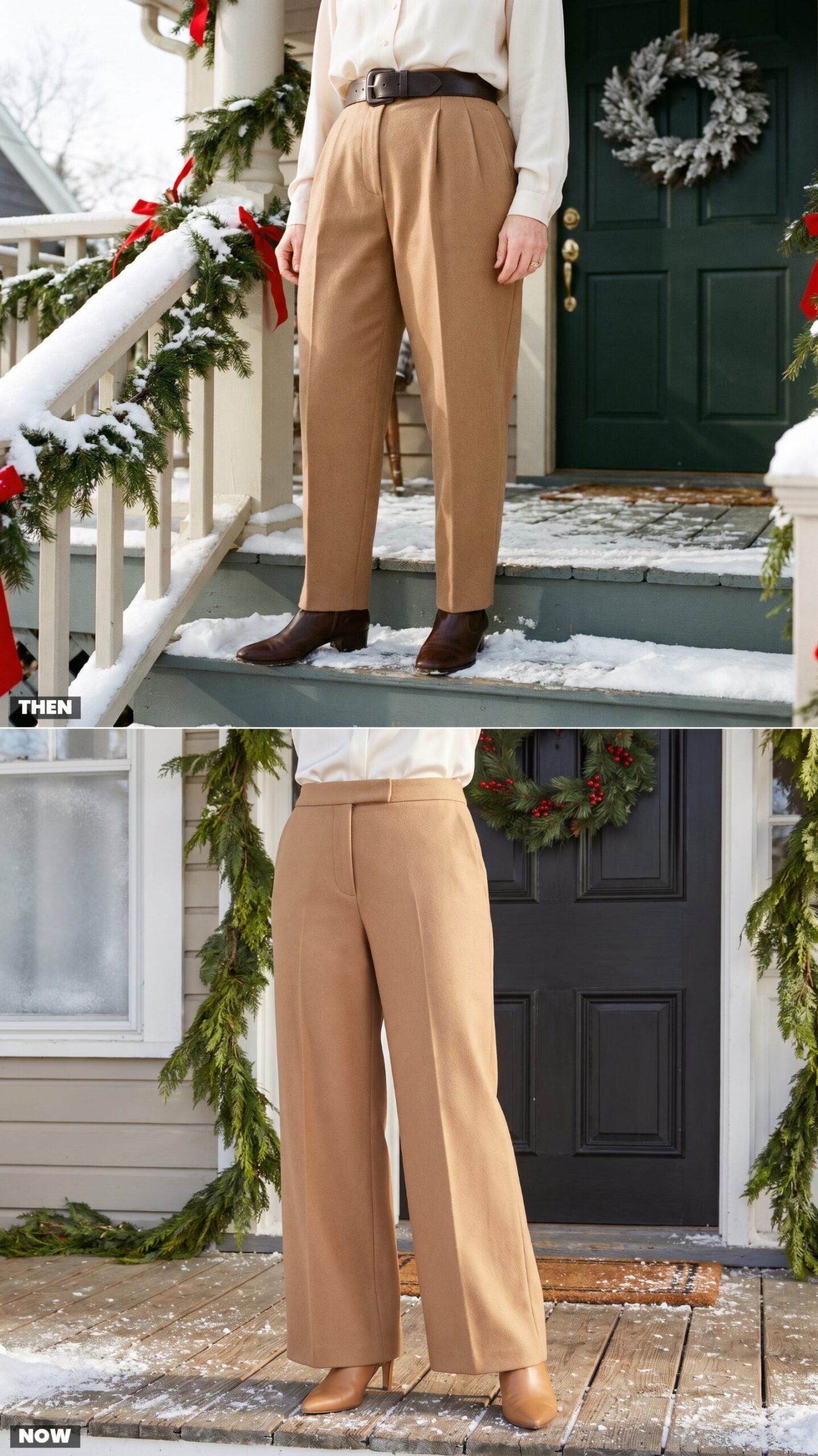
High-waisted tapered trousers in 1985 carried all their volume up top. Pleats, a roomy hip, then a hard pinch at the ankle that turned the leg into the shape of an upside-down lightbulb. The silhouette widened exactly where most women didn’t want width and narrowed where it did no favors.
The wide leg flipped the math. A tan outfit built around camel wide-leg wool trousers keeps the high waist for leg-lengthening but lets the fabric fall in one unbroken column to the floor. Nothing pinches. Nothing interrupts the line. You read taller and calmer, and the trouser does the heavy lifting a tapered cut never could.
1985 Acid-Wash Mom Jeans → NOW Dark Straight-Leg Jeans
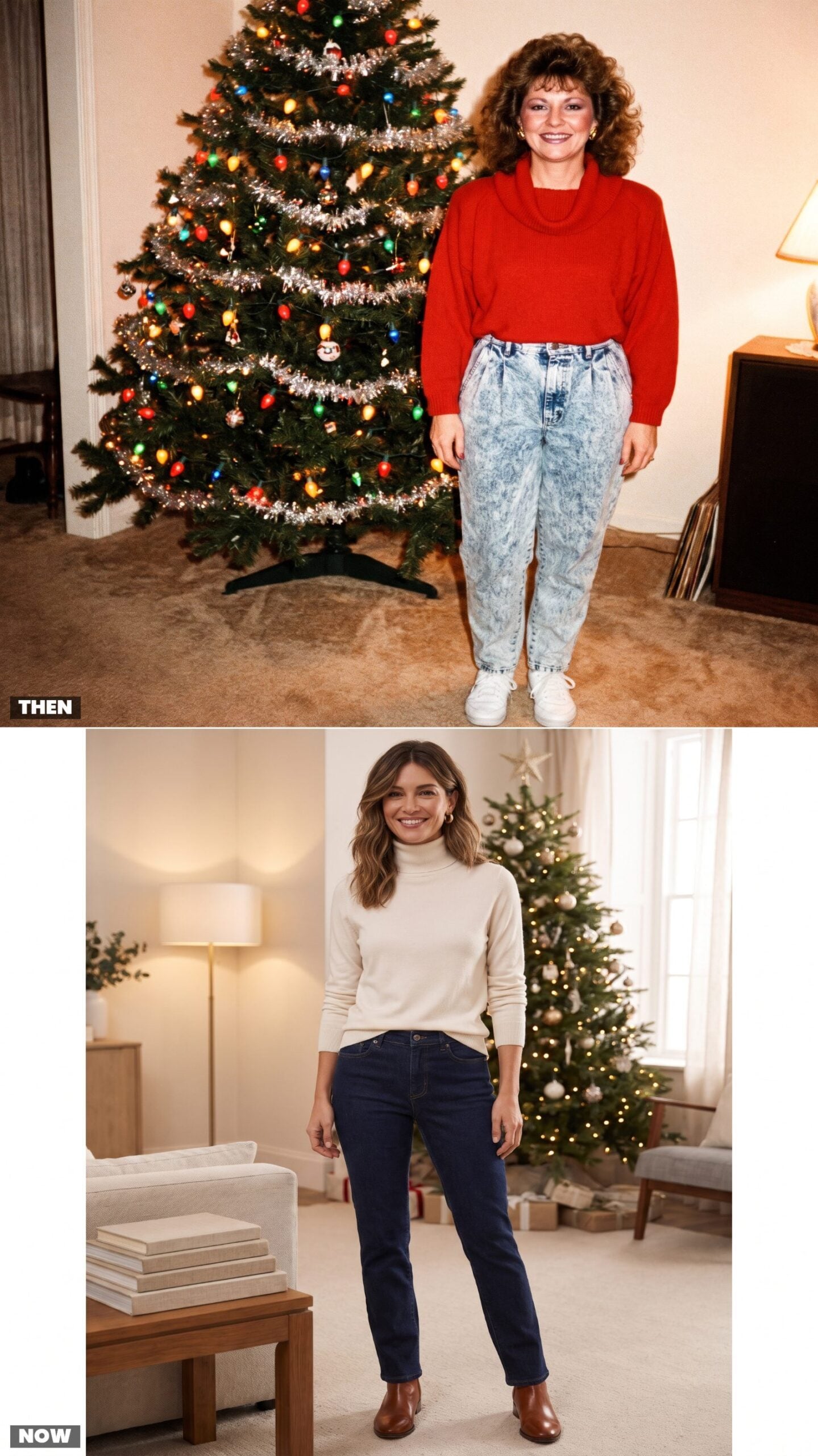
The acid-wash tapered jean sat high, pinched at the ankle, and fought the leg every step of the way. Pair it with a tucked cowl-neck and shoulder pads and you’ve built a top-heavy triangle that reads as effort without flow.
The modern swap keeps the high waist but drops the taper. A dark straight-leg jean with a clean rinse falls in one uninterrupted line from hip to boot, and the busy-wash date outfits trap disappears. Half-tuck the cream turtleneck for a defined waist with none of the bulk. Same denim category, forty years apart — one elongates instead of chopping.
1985 Leggings Under a Long Holiday Tunic → NOW Ponte Leggings Under a Structured Longline Top
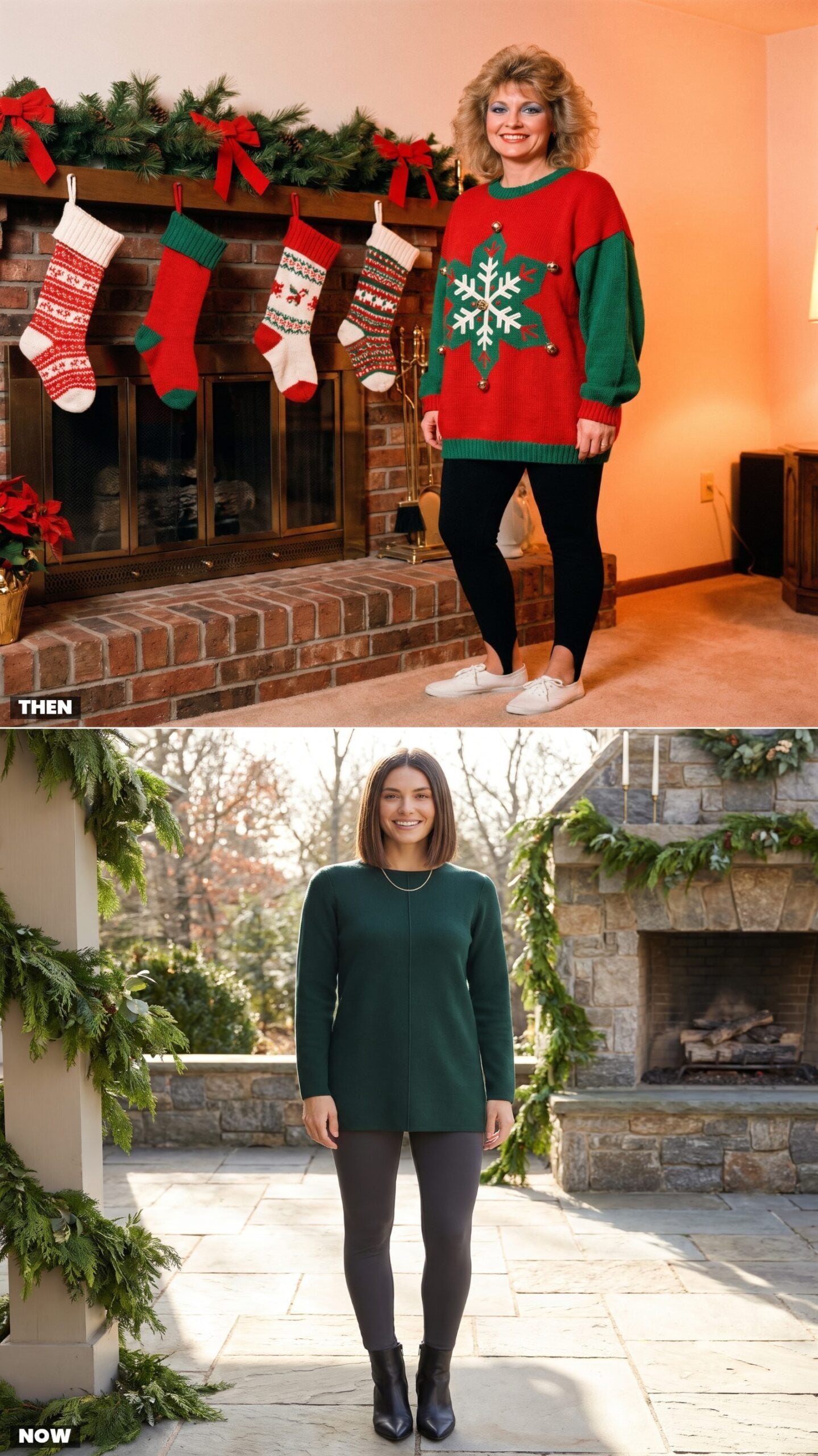
Stirrup leggings plus a slouchy appliqué tunic was comfort dressing that gave up on shape entirely. The thin spandex clung, the dolman sweater billowed, and the whole thing was soft on soft with nothing holding it up.
Now the formula works because both pieces have backbone. Matte ponte leggings carry weight and hold their shape, so they stop reading as hosiery and start reading as trousers. A longline knit with real shoulder seams skims the hip instead of drowning it. Structured top over sleek bottom — that’s the engine, and it gives you the ease of leggings without the collapse.
1985 Winter-White Power Suit → NOW Softly Tailored Ivory Suit
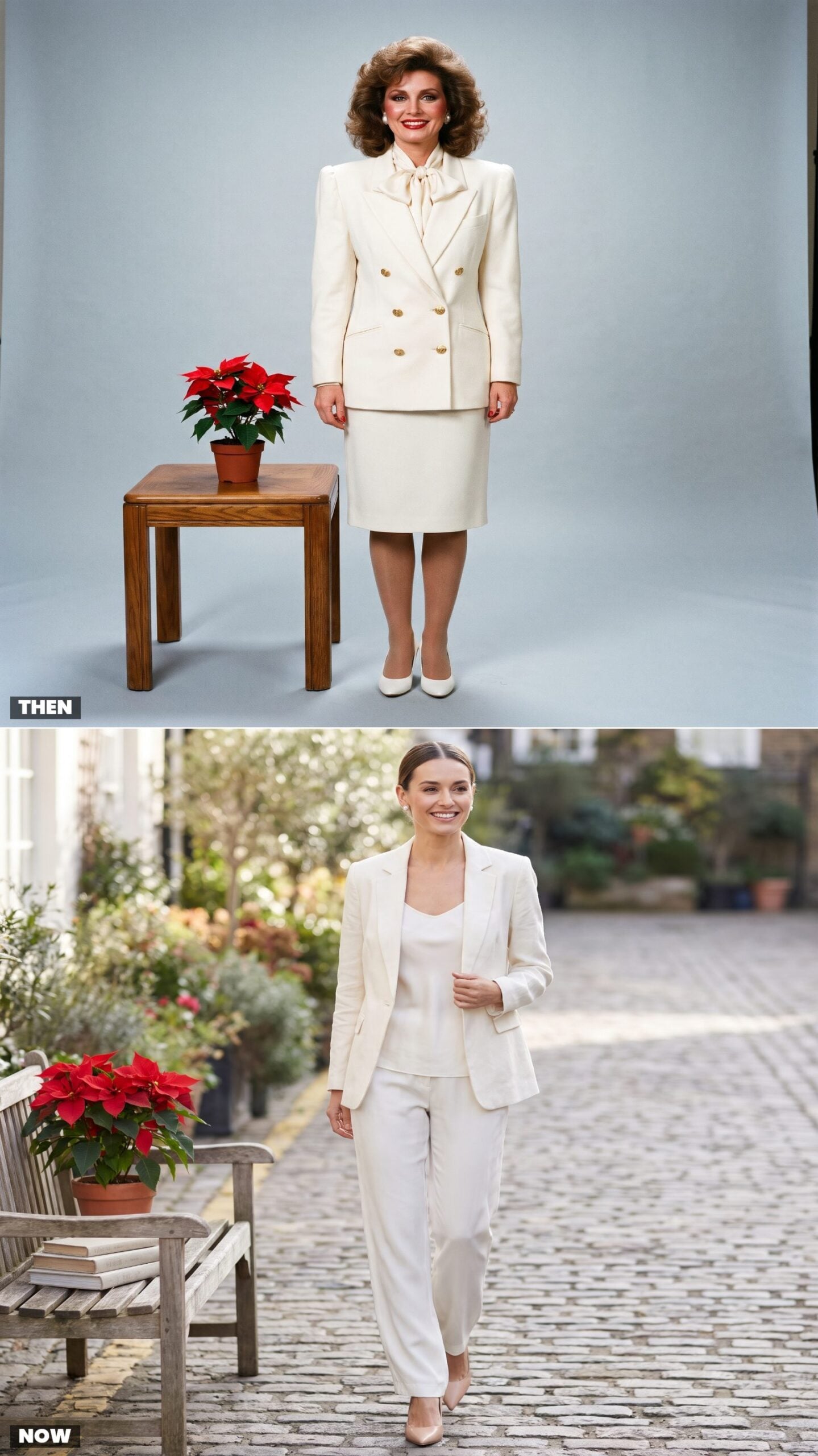
The 1985 power suit announced itself from across the room. Padded shoulders wide as a doorframe, gold buttons, a cinched waist — the silhouette of someone who meant business and wanted you to know it before she spoke.
The ivory version today trades armor for ease. A natural shoulder and fluid straight-leg trouser let the fabric move, and swapping the stiff pencil skirt for soft tailoring reads as quiet authority rather than a battle stance. The real work gets done by the color commitment: one tone, top to bottom, expensive-looking and deliberate. And honestly? Styling an all-white outfit is less about the pieces and more about keeping the tones close enough to not clash.
In a ThreadCurve reader poll on workwear, 57% picked blazer and trousers, so a softly tailored suit has plenty of fans beyond the holiday card.
1985 Plaid Skirt Suit → NOW Tonal Bouclé Jacket-and-Skirt Set
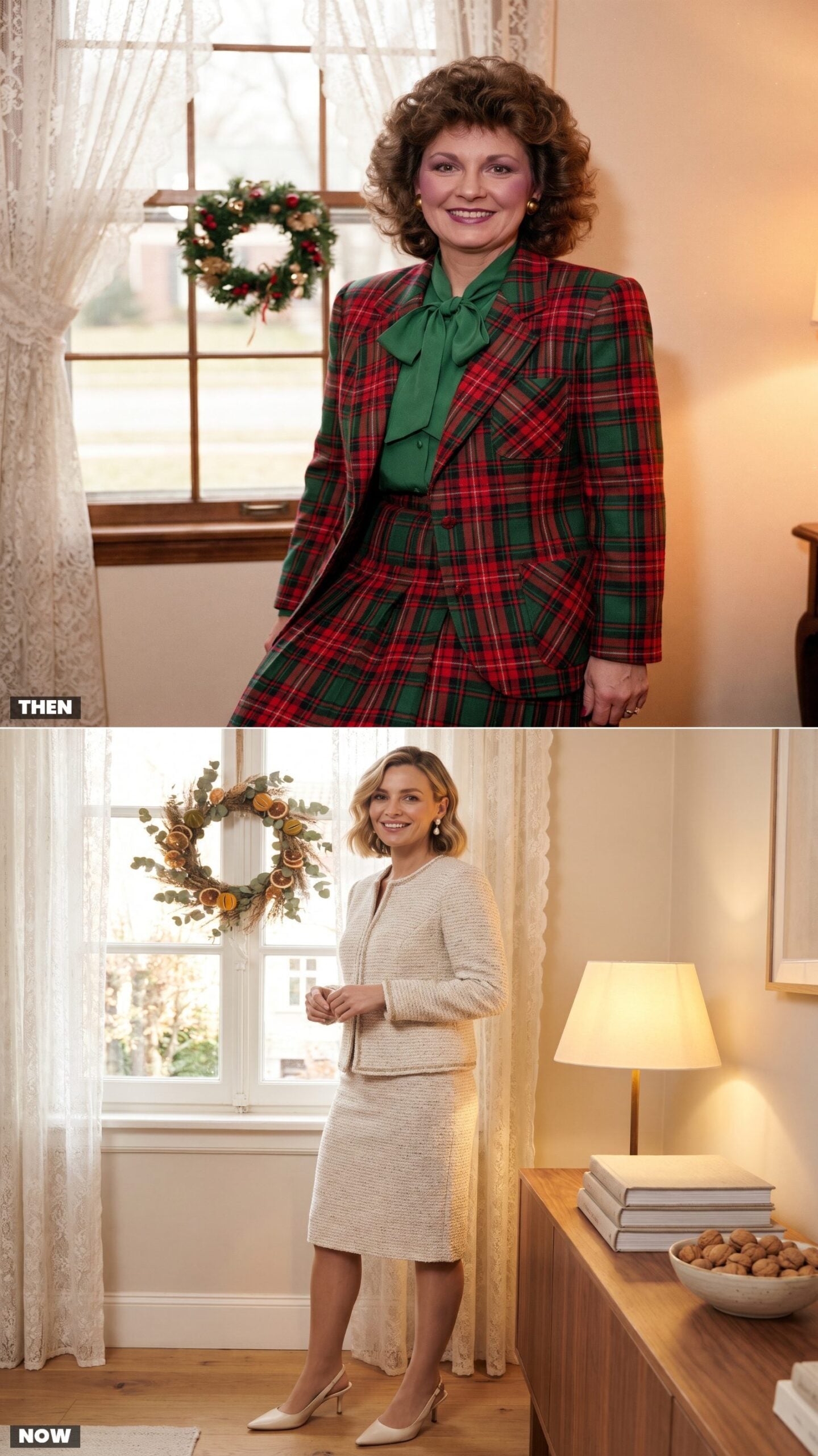
Loud tartan, boxy jacket, pleated A-line skirt. The 1985 plaid suit matched too perfectly and sat too stiff, with pattern fighting shoulder pads for attention and neither one winning.
The tonal bouclé set keeps the matched-separates idea and softens every edge. A collarless jacket with gold-flecked trim brings texture instead of pattern, and a slim knee-length skirt replaces the swingy pleats. Texture does the whole job here — nubbly bouclé feels festive and rich without one bright color shouting for it. Quiet, but it still holds up under a flash.
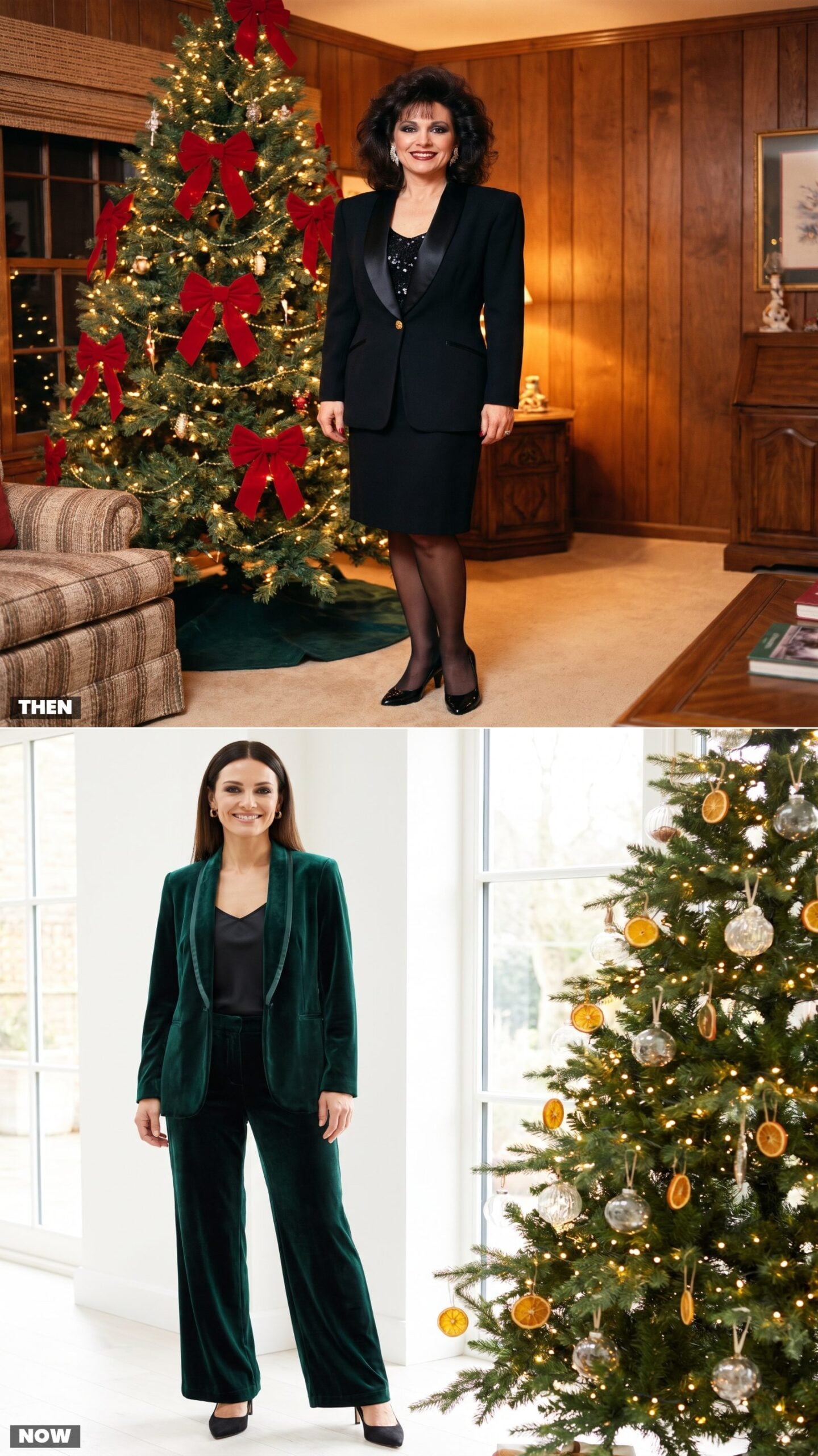
1985 Satin-Lapel Tuxedo Suit → NOW Relaxed Velvet Dinner Suit
❤️ Would you like to save this?
The satin-lapel tux suit was the holiday party outfit of 1985. Sharp shoulders, a sequin camisole, a shiny shawl lapel that caught every bulb on the tree. Glamorous, sure. Also rigid as a mannequin.
Velvet changed the conversation. A soft, unstructured emerald dinner suit over fluid wide-leg trousers carries all the evening weight with none of the stiffness, and the pile does what sequins used to do — catches light and moves with you. Let the fabric lead and nothing else in the outfit has to try.
1985 Red Wool Blazer With Gold Buttons → NOW Burgundy Double-Breasted Blazer
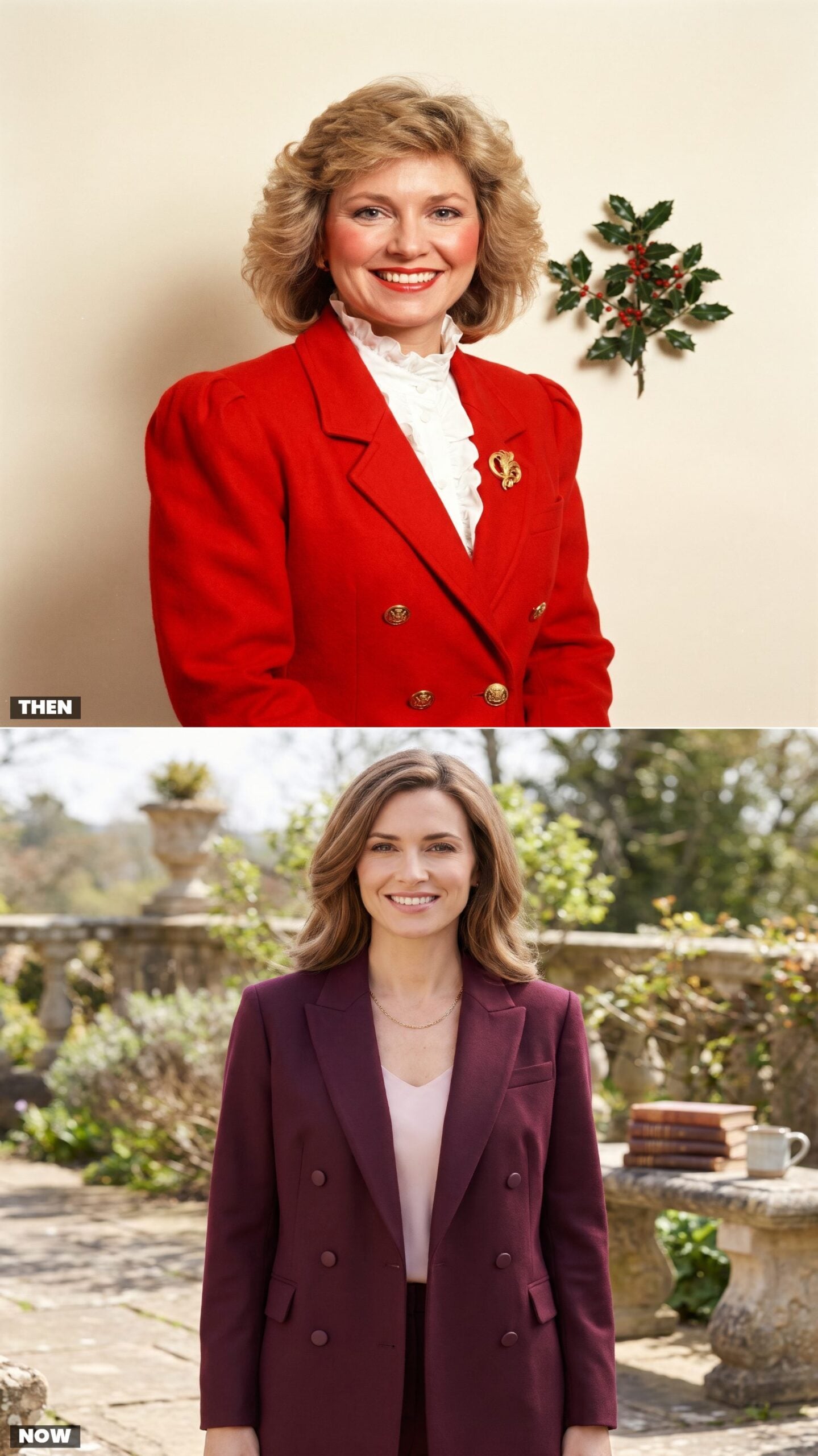
Fire-engine red, gold crest buttons, a ruffled high-neck blouse underneath. The 1985 statement blazer leaned on hardware and brightness to do its talking, and the padded shoulders made sure you noticed from the back of the room.
Burgundy is the grown-up cousin. A double-breasted cut in a deep wine tone brings the same confidence with a fraction of the volume, and swapping shiny gold buttons for tonal matte ones lets the color carry everything. That deeper hue reads warmer against winter skin, and the soft shoulder moves the whole thing from boardroom to dinner.
1985 Full-Length Faux-Fur Coat → NOW Belted Teddy Coat
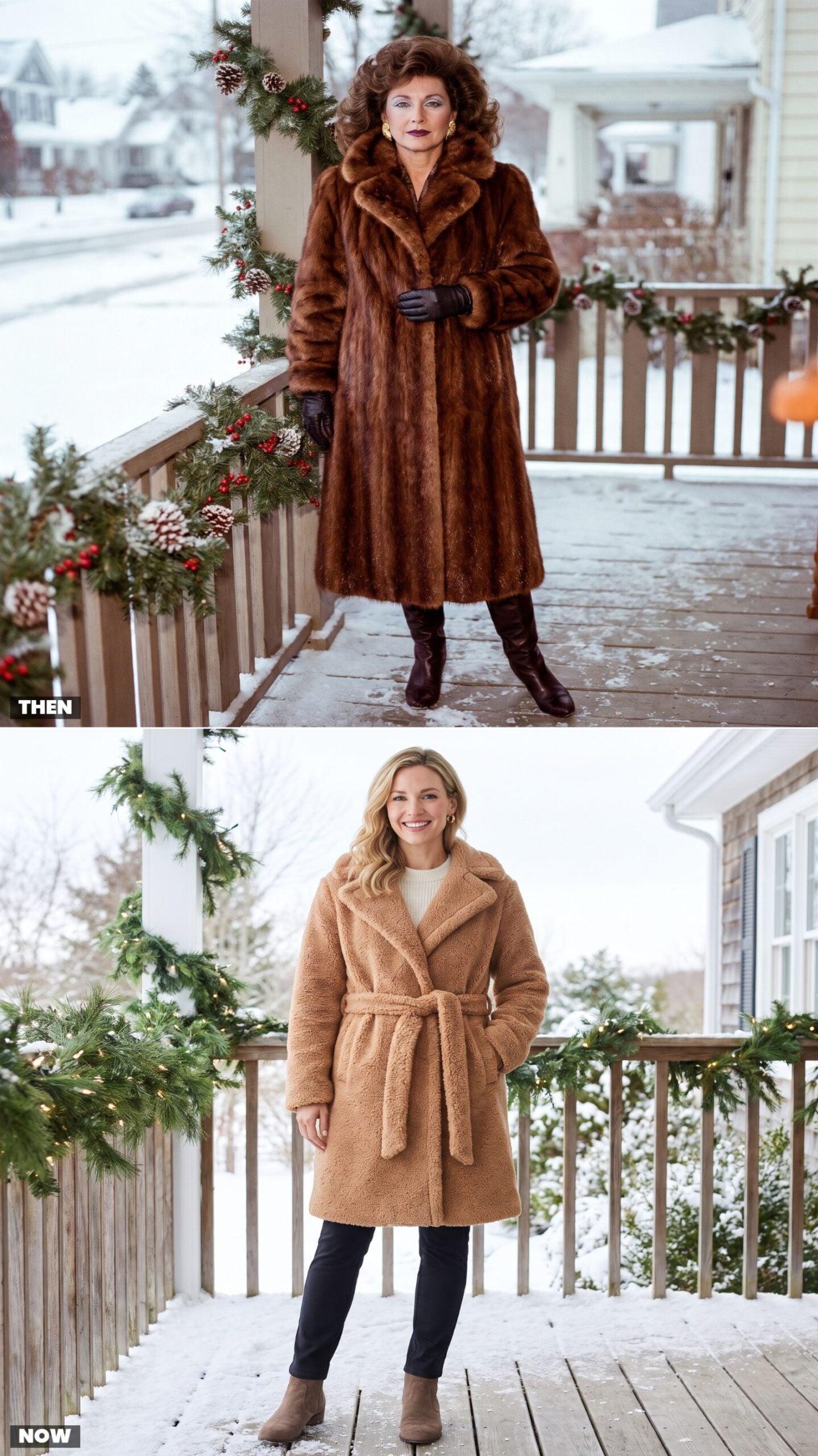
The floor-length faux fur was pure theater. Long glossy pile, a collar you could disappear into, a boxy cut that swallowed the frame shoulder to ankle. Glamour by sheer volume.
The teddy coat does warmth without the production. A belted camel sherpa in soft curly pile cinches at the waist, so instead of a column of fur you get a defined shape with cozy texture. One decision changes everything here — the belt carves a waist out of what could have been a sack, and the shorter mid-calf length keeps it from reading heavy. Warm, soft, and it looks great against snow.
1985 Boxy Camel Overcoat → NOW Fluid Wrap Coat
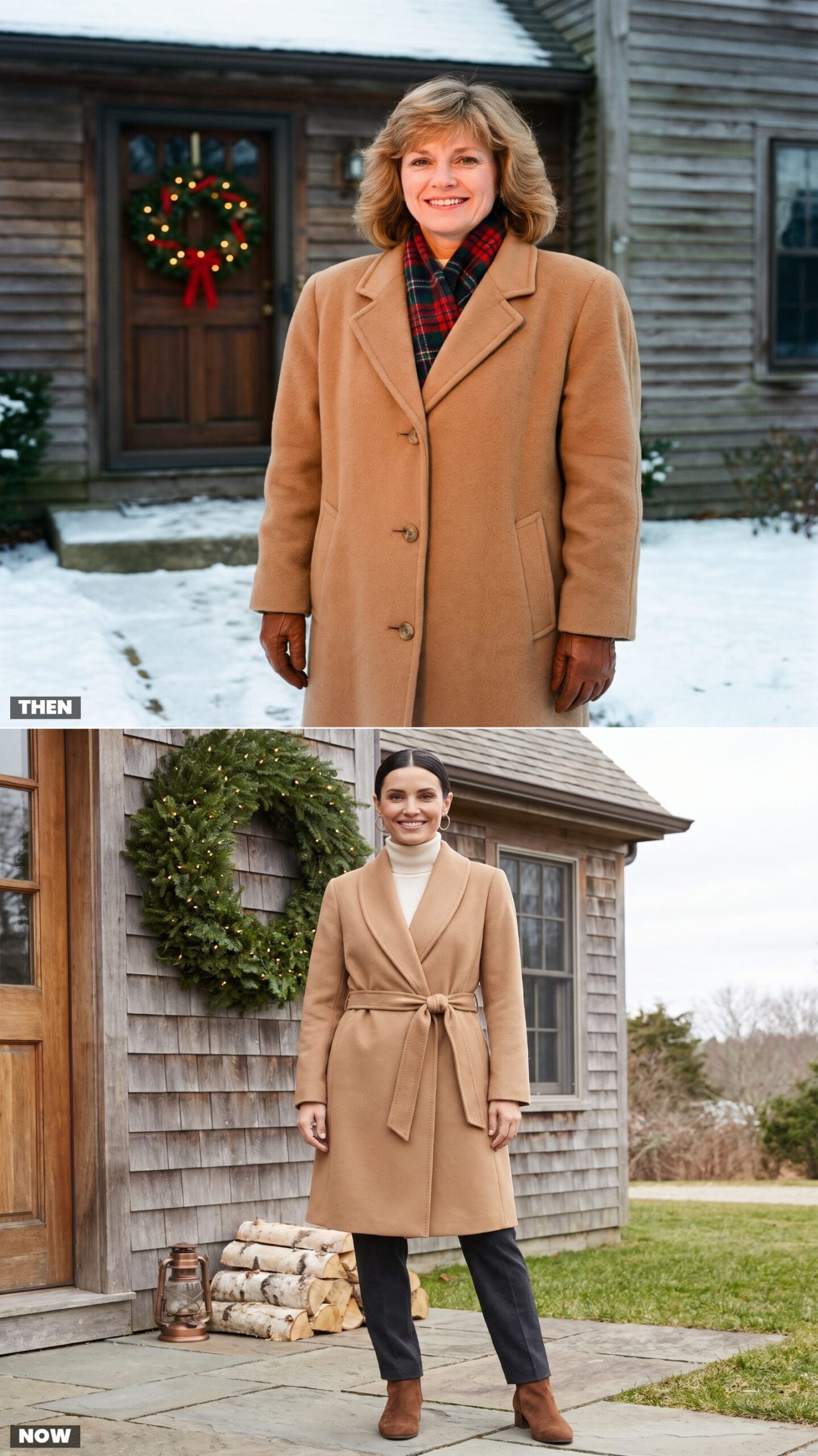
Same camel, completely different attitude. The 1985 overcoat was stiff and square, padded at the shoulder, buttoned to the chin, built like outerwear that could stand up on its own in the hall closet.
The wrap coat flows. Soft drapey wool, no buttons, a self-tie belt that lets you define the waist exactly where you want it. The lesson tucked in those outfit styles? Drape beats structure for grace. A belt knotted at the waist looks more considered than a row of buttons ever did, and the softer shape moves with you instead of boxing you in.
1985 Color-Blocked Puffer Coat → NOW Belted Longline Puffer

Horizontal bands of teal, purple, and hot pink in slick nylon. The 1985 color-blocked puffer was loud, short, and widened everything it touched with those fat horizontal baffles.
The modern puffer learned restraint. Matte olive nylon, slim vertical quilting, a self-belt at the waist, a length that drops below the knee — every one of those choices works against width and for length. The belt alone turns a shapeless marshmallow into a coat with a waist, which might be the single biggest upgrade in cold-weather dressing this century.
1985 Hooded Wool Cape → NOW Minimalist Asymmetric Cape
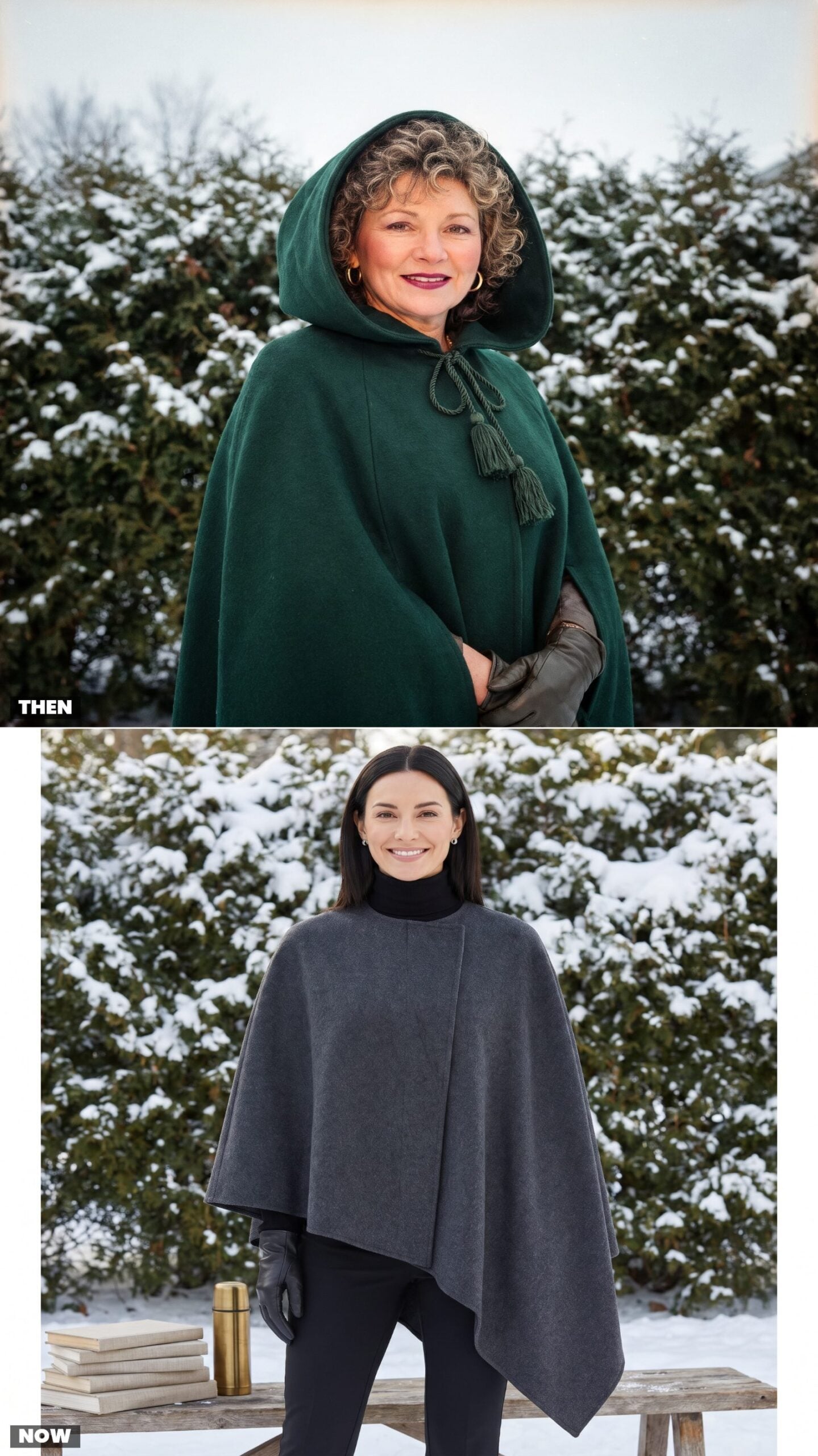
The 1985 cape committed to the bit. Pointed hood, swinging wool body, a tassel-tie at the throat, somewhere between medieval and Christmas-pageant. Charming — but it wore you more than you wore it.
The asymmetric cape strips all of that away. Clean charcoal wool, a collarless neck, one side draping longer than the other for a line that feels modern and deliberate. That off-center hem creates all the movement and interest, no decorative flourish required. Worn over a black turtleneck and slim trousers, it looks like something out of a winter editorial rather than a carol service.
The Ruffled Christmas Apron, Then a Linen Cross-Back Now
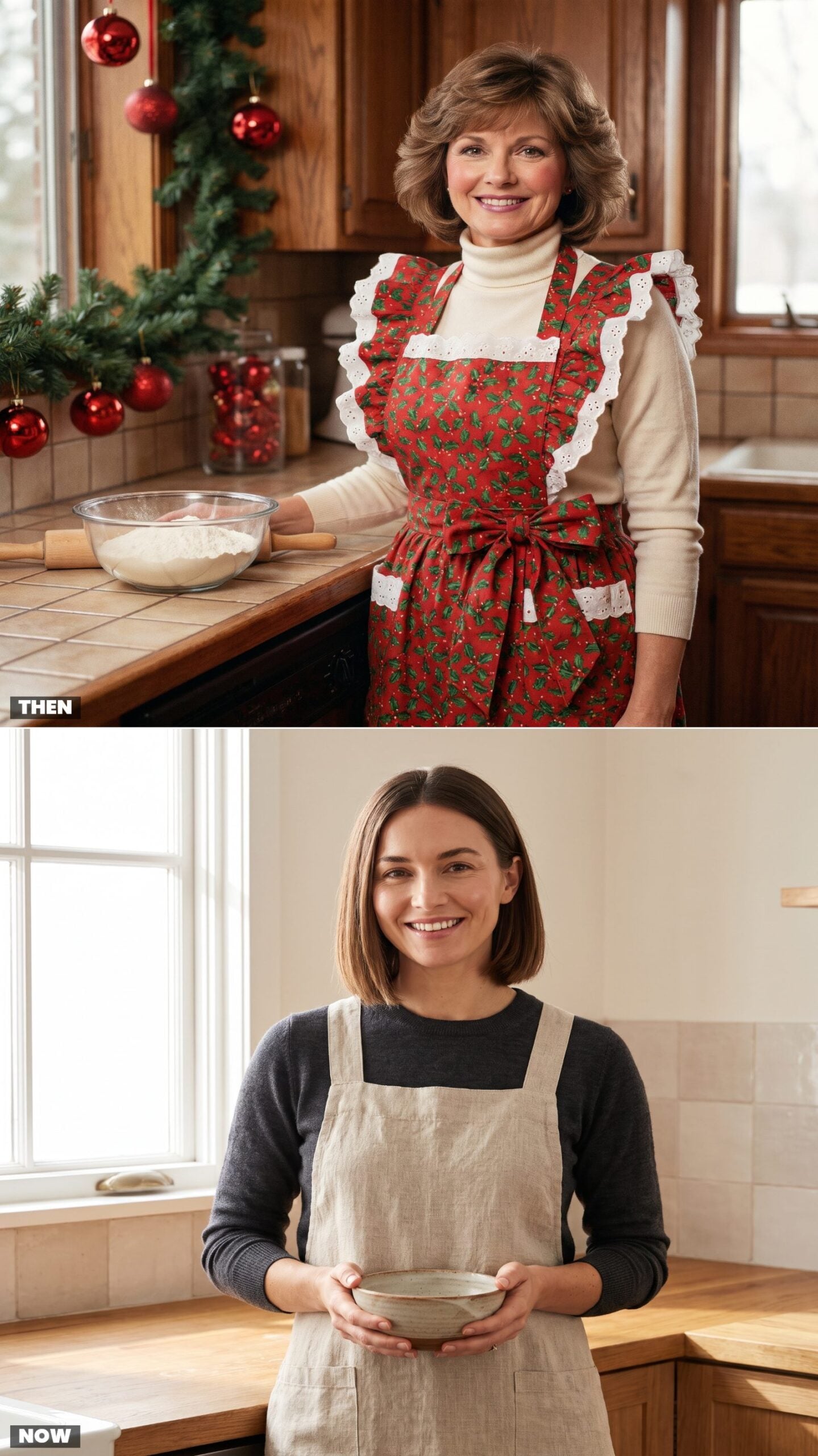
The 1985 apron worked hard to be seen. Ruffles stacked on ruffles, holly print, eyelet trim on every edge, and a bow roughly the size of a dinner plate. It read festive because it shouted festive. The linen cross-back version does the opposite, with one color, one texture, and straps that vanish behind the shoulders so nothing competes with your face. The drama is gone, and suddenly the apron looks like a choice instead of a costume.
Natural flax over a charcoal merino crewneck is the whole move. Matte fabric, quiet palette, zero holly. It photographs like you meant it.
The Empire-Waist Smock Becomes a Rib-Knit Midi
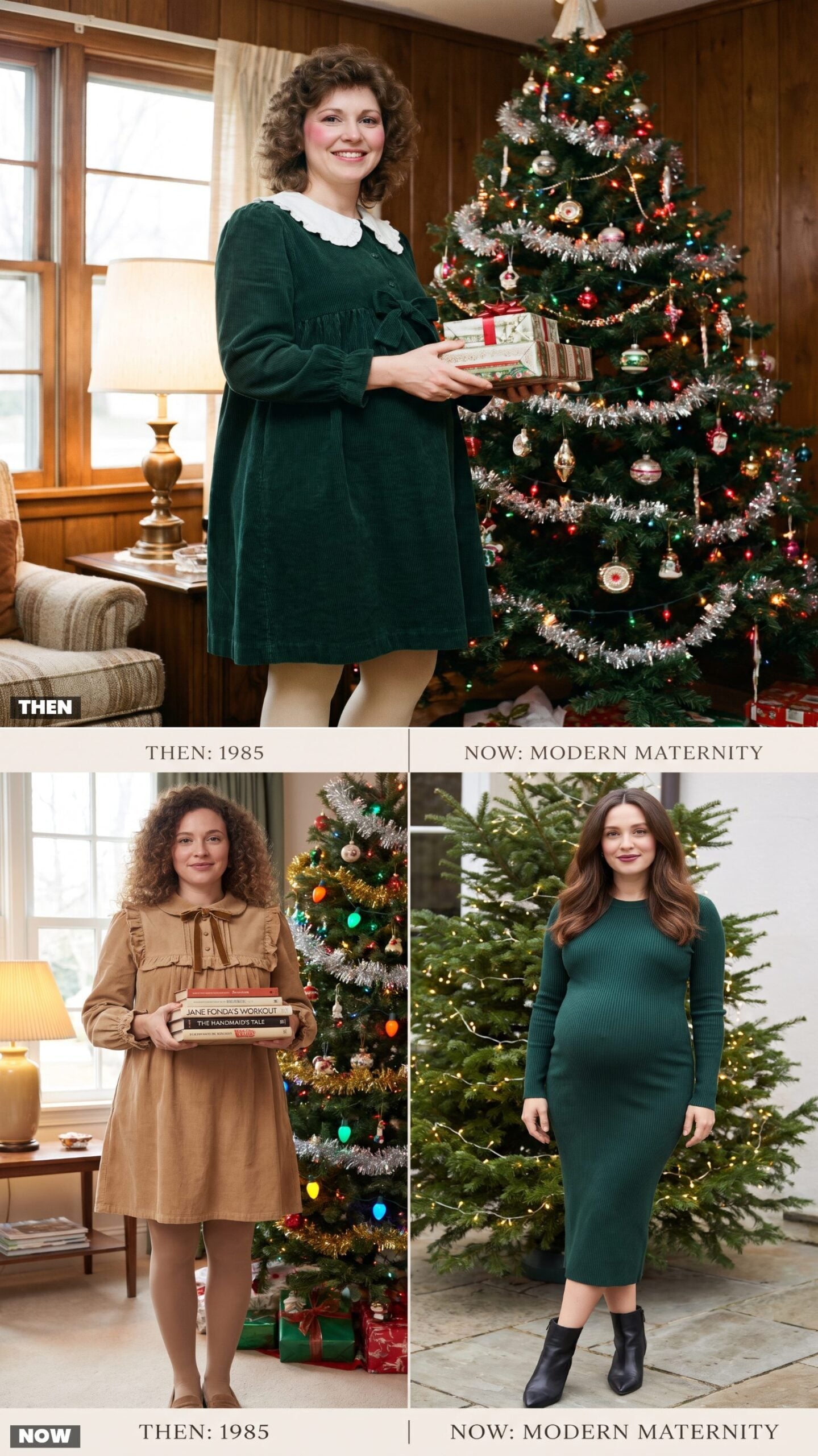
Maternity dressing in 1985 was built on concealment. The empire smock billowed out from a bow under the bust and swallowed everything below it, while the Peter Pan collar and ruffles did their best to point attention anywhere but the pregnancy. The forest green ribbed midi ended that whole conversation. Rib knit traces the bump instead of apologizing for it.
Same color, opposite silhouette. The vertical ribbing elongates, the fitted sleeve keeps the proportion clean, and the bump becomes the point of the dress rather than its secret.
Double-Strand Pearls, Now a Single Baroque Drop
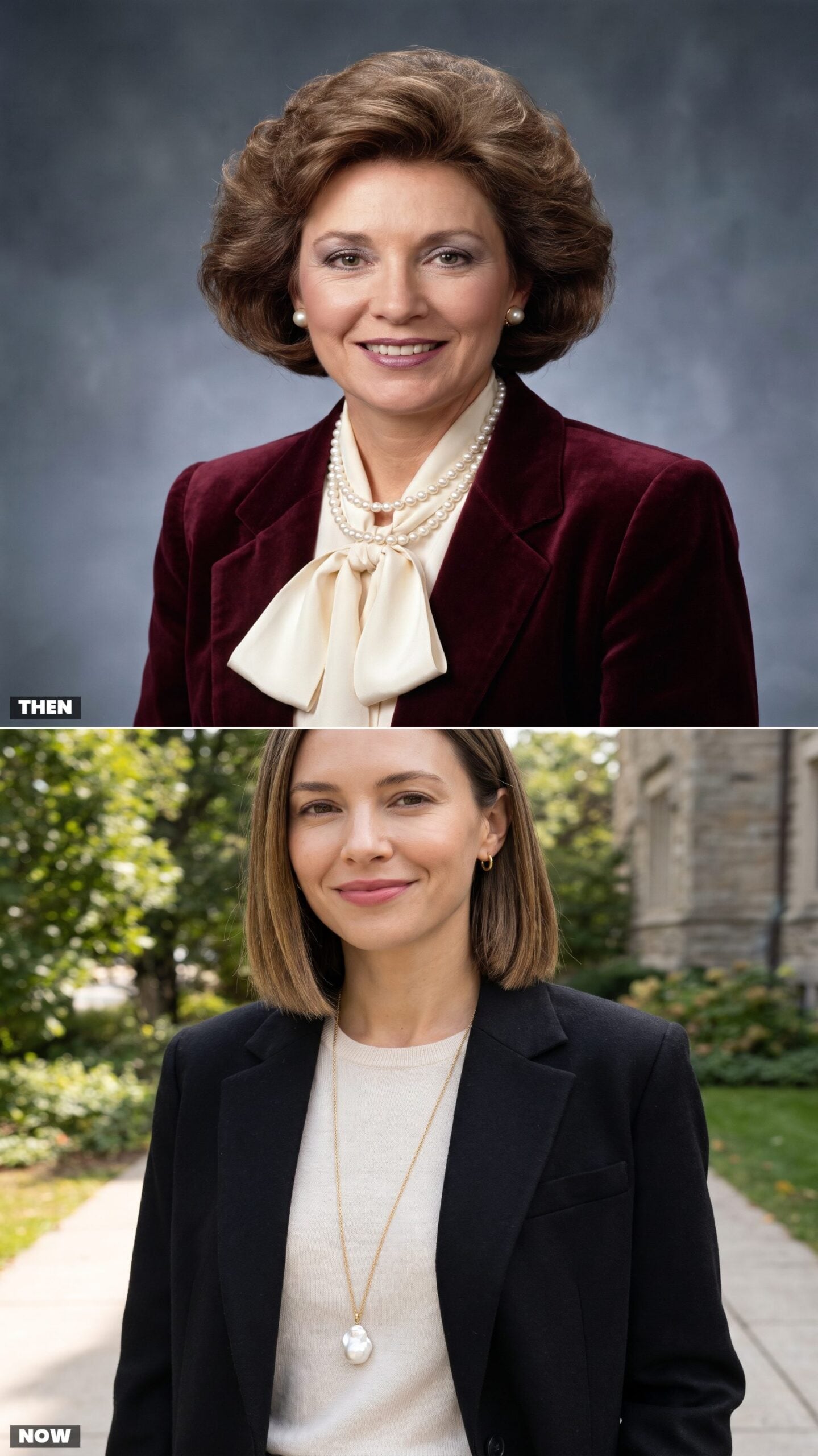
Two strands of identical round pearls, worn high and tight, was the 1985 shorthand for polish. Uniformity was the flex. Every bead matched the next, which made the whole thing read a little like a uniform.
The baroque pendant flipped the logic. One pearl, irregular and clearly imperfect, hanging low on a fine gold chain. Now the asymmetry is what sells it. It says you chose this one piece because it was odd, not because a set came in a velvet box. The lower placement also draws the eye down and lengthens the neckline, something the choker-height strands never managed.
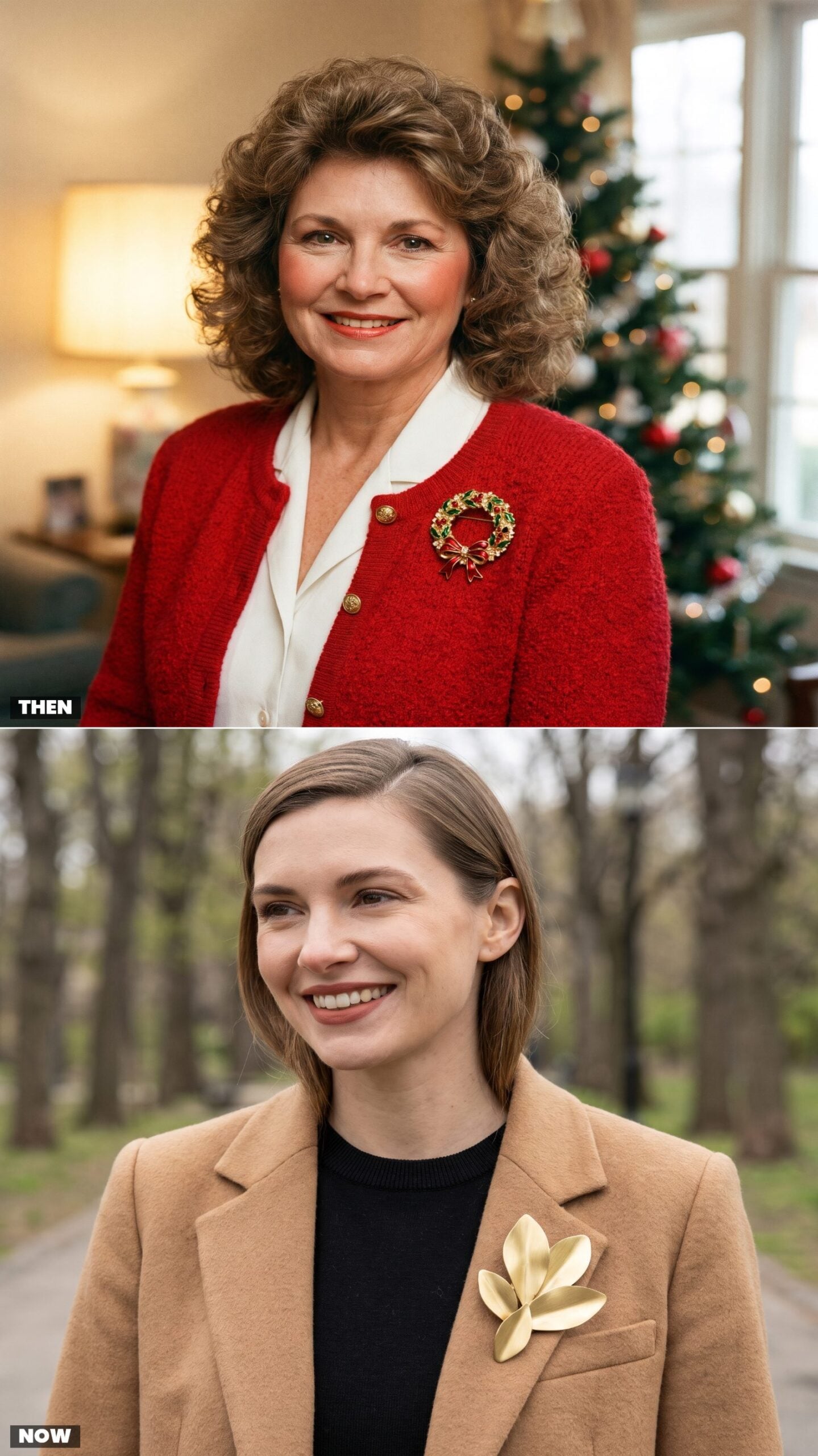
The Christmas Wreath Brooch Grows Up Into Sculpture
❤️ Would you like to save this?
The wreath brooch told you the date. Red and green enamel berries, a rhinestone sparkle, a tiny bow, all pinned to a boucle cardigan like a little seasonal announcement. It only worked in December, and only barely.
The sculptural botanical pin keeps the lapel interest and drops the calendar. Matte brushed brass, abstract leaf shapes, no color at all. Against camel wool the brushed brass botanical pin reads as a design object you could wear in March without anyone thinking of holly. One piece of hardware carrying the whole look.
Rhinestone Clip-Ons Give Way to Crystal Drops
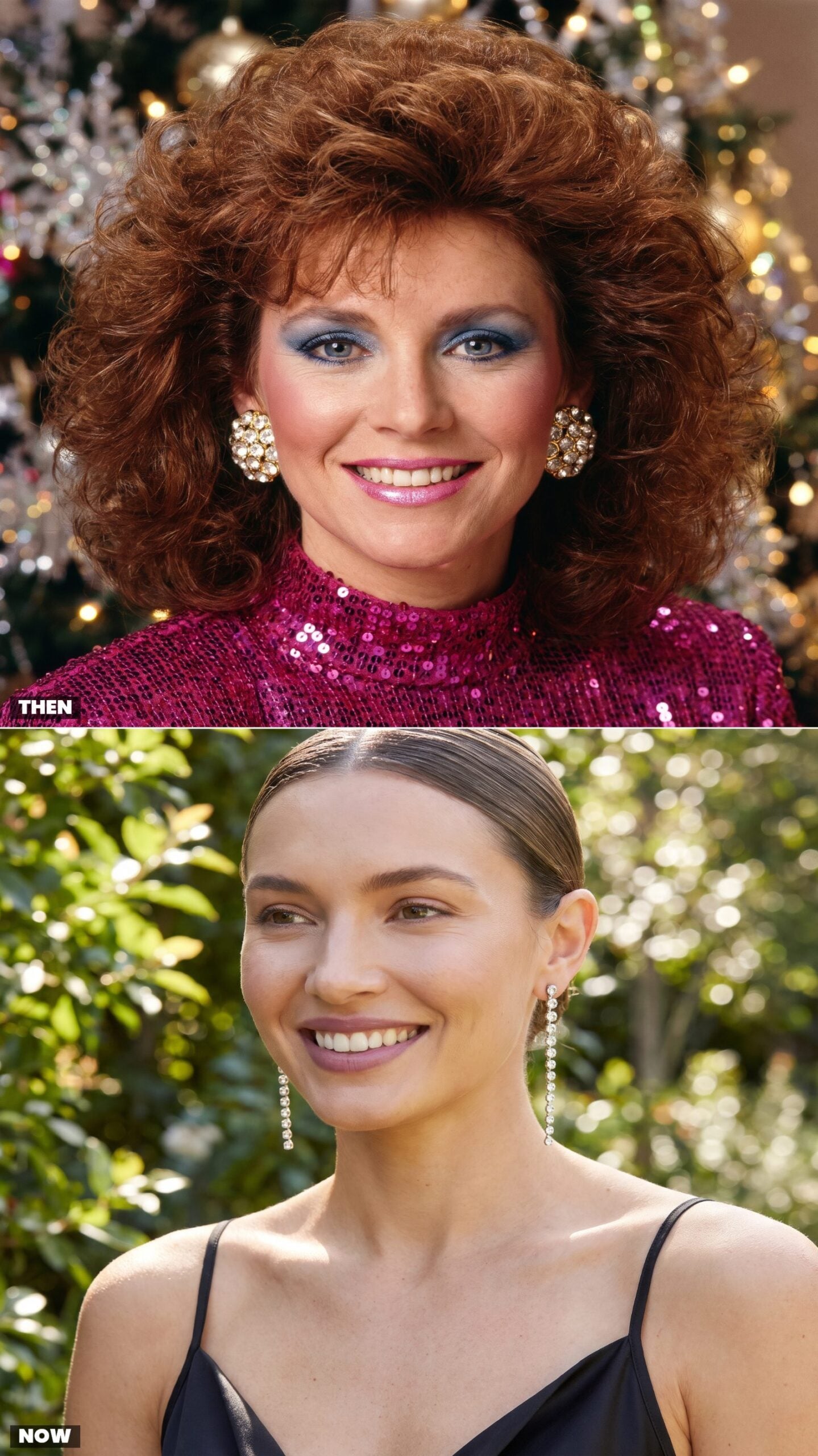
Those clip-ons were round, loud, and roughly the size of a bottle cap. Clustered rhinestones catching the flash, worn under teased hair so you got twice the sparkle fighting for attention. Maximum shine, maximum weight on the earlobe.
The crystal drop reversed the geometry. Where a round cluster sat flat against the ear, a vertical line of graduated crystals falls and elongates, and the hair gets pulled back to show it off rather than bury it. Same sparkle budget, spent on length instead of width. Against plain black silk it draws the eye down the neck and reads far more deliberate.
From the Velvet Hair Bow to a Sleek Black Ribbon
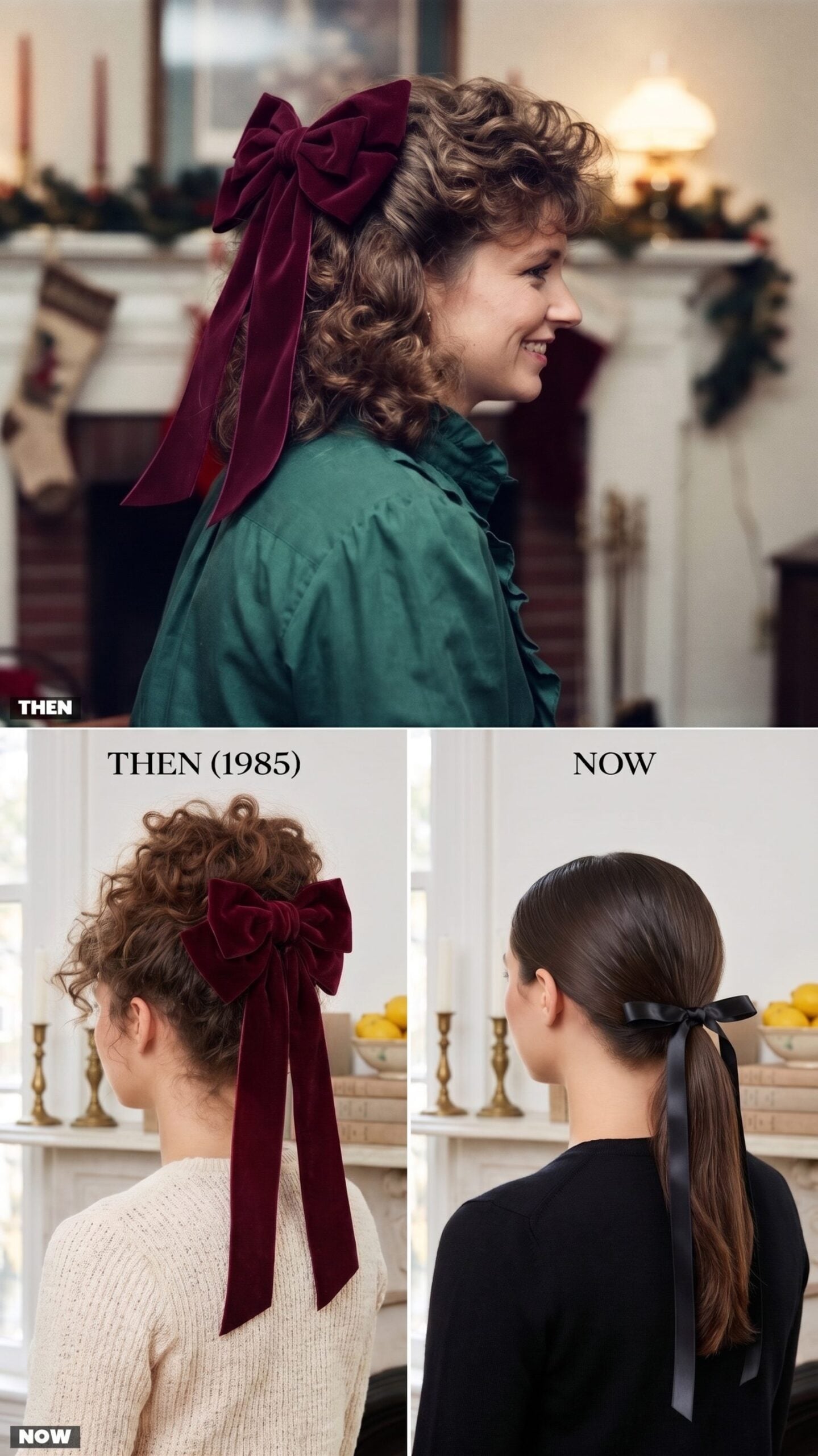
The 1985 bow was a construction project. Burgundy velvet, puffed and structured, clipped high on a crown of teased curls with ribbon tails long enough to notice. It added height to hair that already had plenty of its own.
The black ribbon pony is flat where the old one was puffed. Hair slicked smooth and low, a glossy satin ribbon tied in a small bow at the nape, tails hanging straight. The volume is gone, and it looks more finished for it. Restraint, basically.
Sheer Black Pantyhose, Now Opaque Merlot Tights
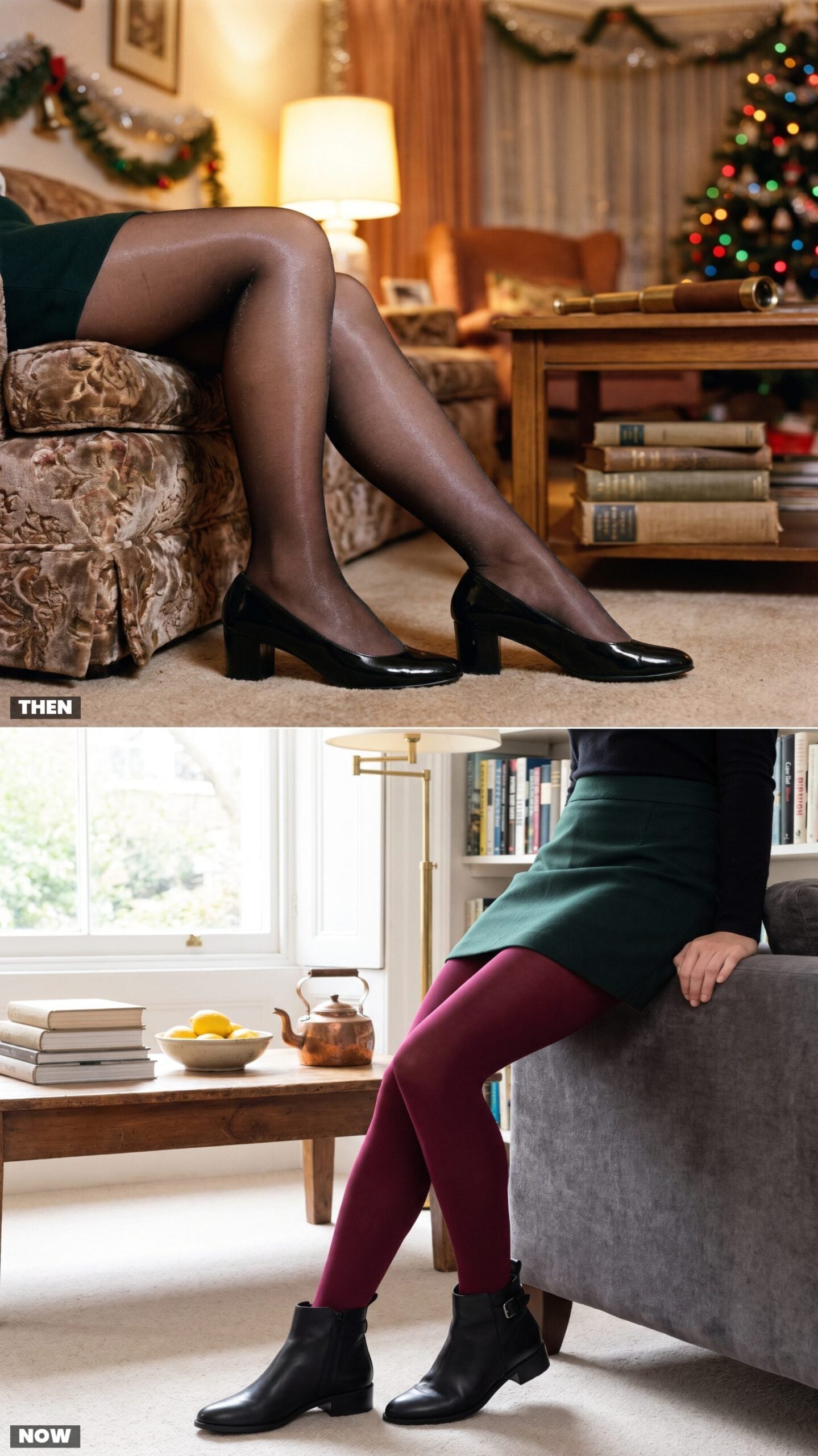
Sheer black nylons were the default, glossy and a touch shiny under the flash, worn with everything from October to March. They read as formal by doing almost nothing. Which also meant they did almost nothing.
Opaque merlot tights bring color into the game. Matte wine-red against a dark green skirt is a real color decision, the kind of festive that skips the holly entirely. The saturated burgundy warms the whole lower half and gives a short skirt somewhere interesting to land.
Dyed-to-Match Pumps Become Pointed Slingbacks
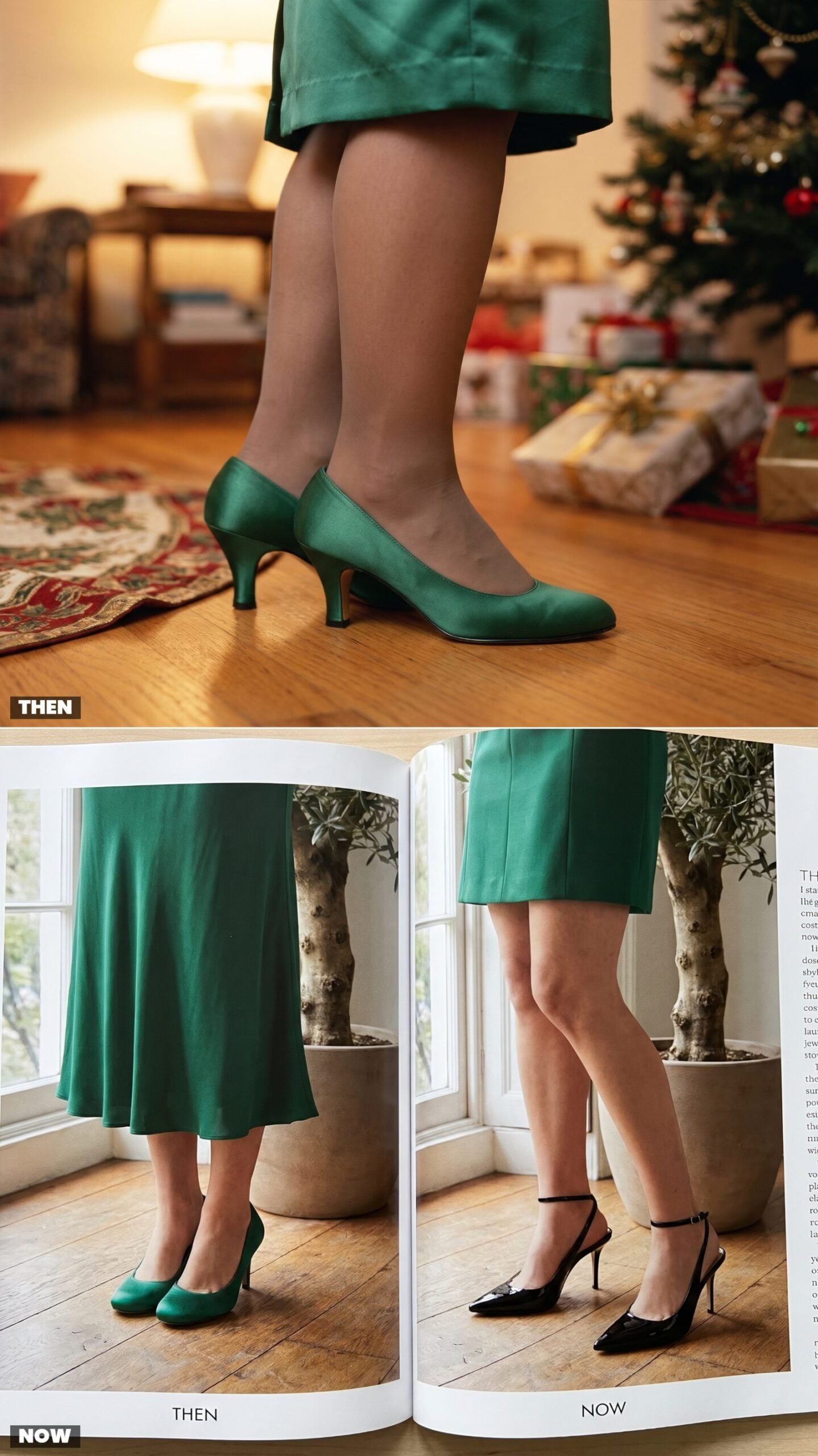
Dyed-to-match was the formalwear reflex in 1985. You ordered the dress, sent the satin pumps off to be dyed the identical emerald, and arrived as one unbroken block of green from shoulder to toe. Matchy was the intention. It also flattened the look into a single color smear.
The pointed black patent slingbacks break that chain on purpose. A sharp black point against an emerald dress lengthens the leg and lets the dress carry the color on its own. Want more on shoes and party outfits that read current? The pointed slingback is doing the heaviest lifting here.
Penny Loafers and Knee Socks, Reworked in Lug Soles
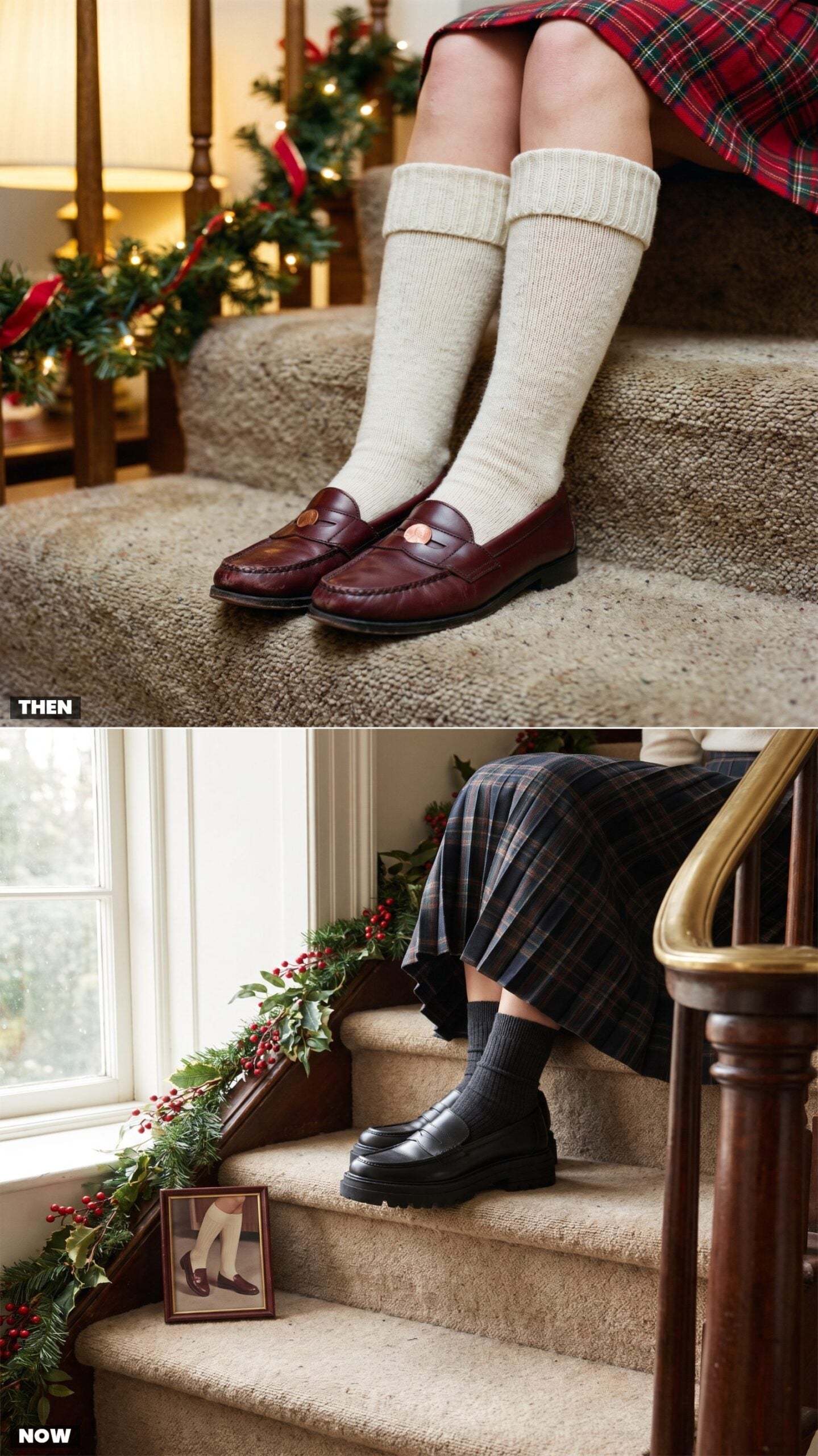
Thin sole, slim shape, a penny in the slot, folded wool knee socks climbing the shin. The 1985 loafer was dainty and a little prim, built to sit quietly under a plaid skirt.
Lug soles rewrote the loafer entirely. Thick ribbed rubber, a heavier black leather upper, ribbed socks stopping at the ankle instead of the knee. That weight at the bottom grounds a pleated plaid midi and keeps the whole thing from tipping into schoolgirl. Chunky where the old one was delicate, which is exactly why it looks current.
Tall Riding Boots, Now Sculpted Knee-Highs
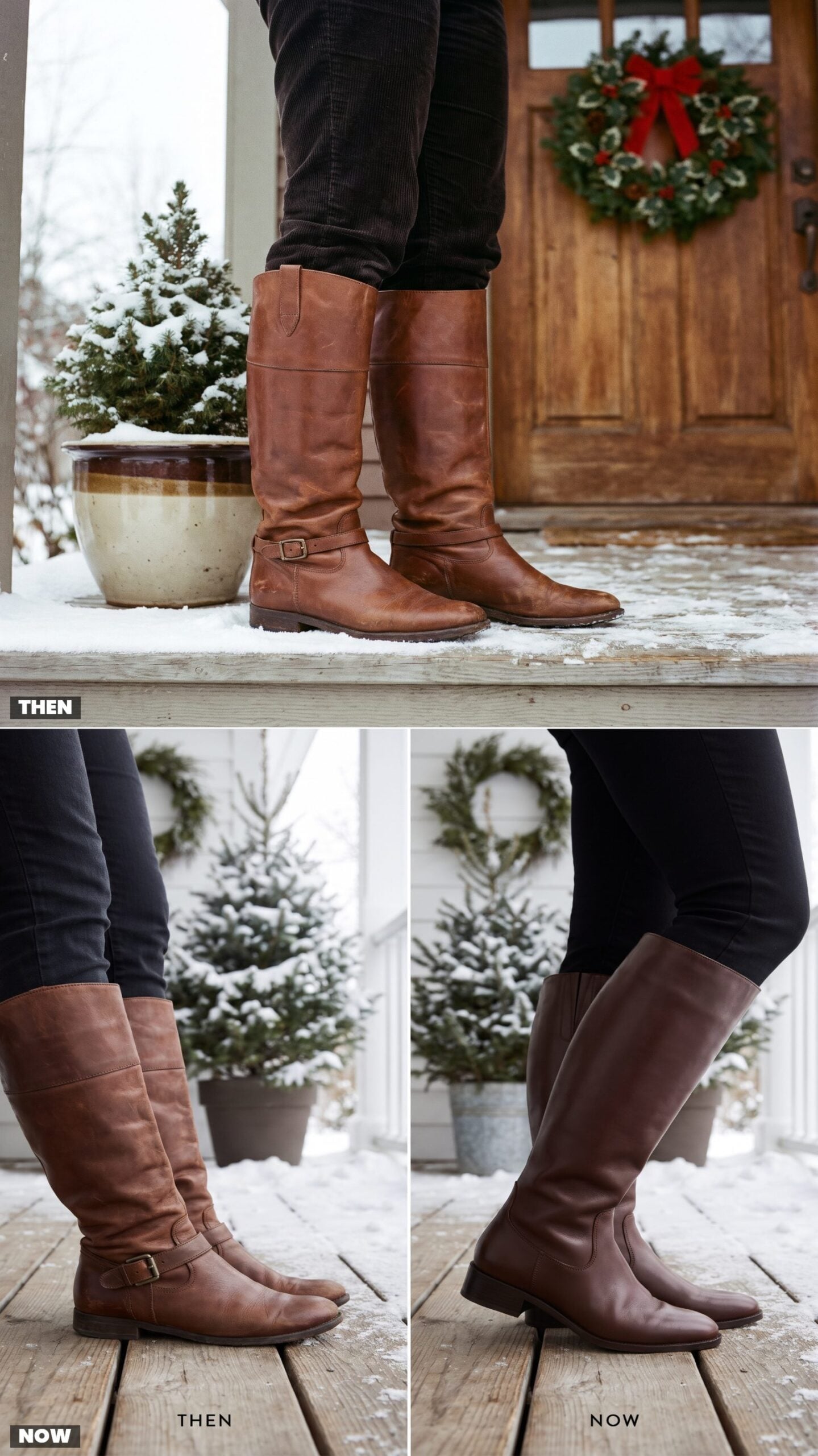
The riding boot of 1985 slouched. Flat sole, a soft shaft that pooled a little below the knee, an ankle buckle for the equestrian nod. Practical and a touch casual, it never quite finished a dressier leg.
The sculpted knee-high tightened everything up. A close fitted shaft in chocolate leather, a low block heel, a clean almond toe, and no hardware at all. The fit against the calf is what separates it. A snug shaft over slim trousers makes the leg one continuous line, where the old slouch broke it with folds. For outfit styles built around a boot, the fitted shaft is the single decision that reads modern.
1985 Polyester Palazzo Hostess Set vs. Silk Pajama Set With Contrast Piping
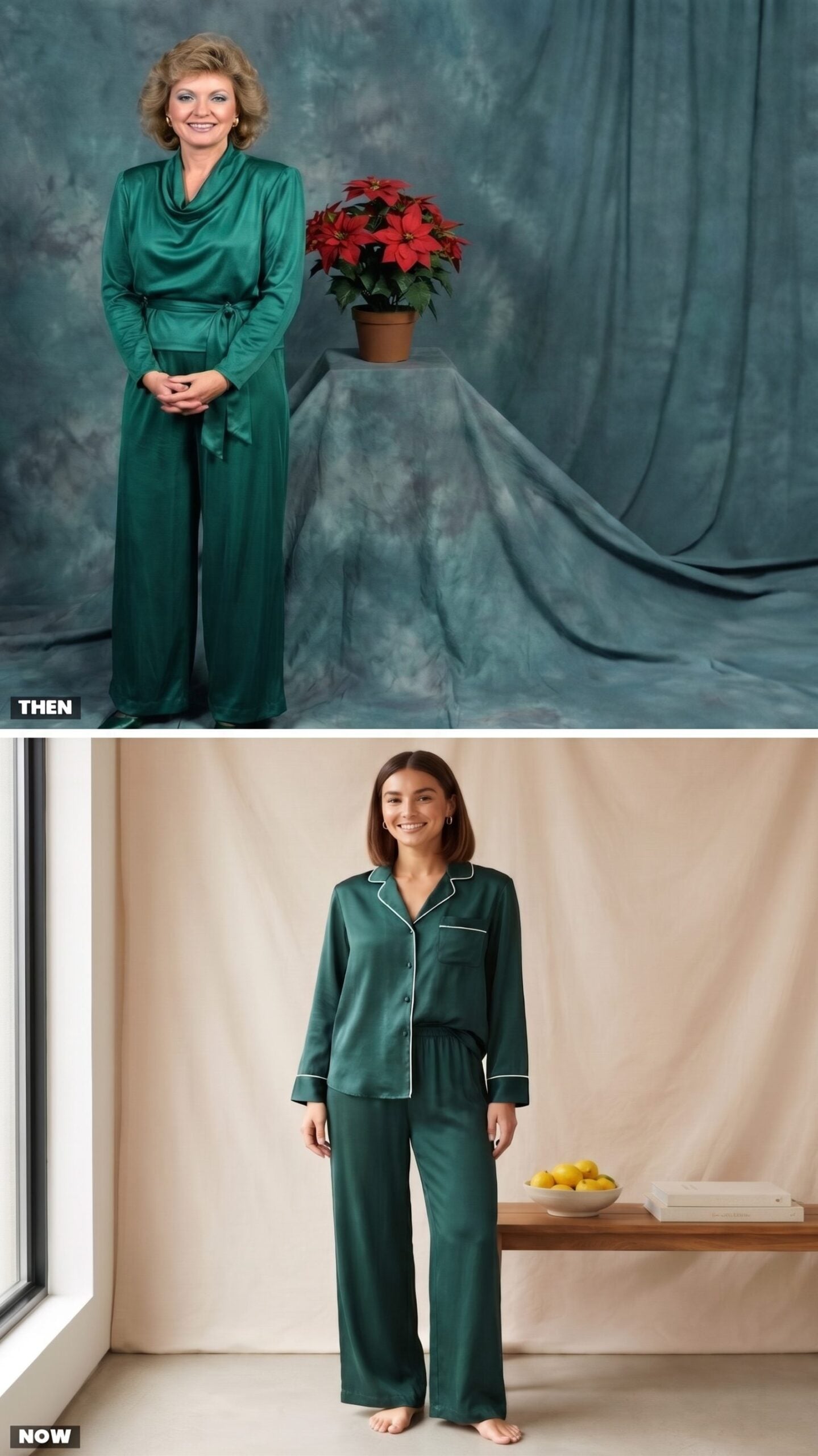
The 1985 version worked by drowning you in fabric and calling it glamour. All that slick polyester moved as one flowing column and read as festive, but the synthetic sheen bounced the studio flash straight back and flattened everything into a single green blur.
The modern emerald silk pajama set keeps the ease and the wide leg but adds what the original never had: contrast. That ivory piping traces the collar, placket, pocket and cuffs, so the eye reads neckline, front and pocket instead of one shapeless sweep. Same comfort, but now there’s a line to follow. Holiday dressing, done without the time-stamp — and if you’re curious which pieces still date you, the holiday outfit breakdown covers it.
1985 One-Piece Ski Suit vs. Belted Technical Ski Set
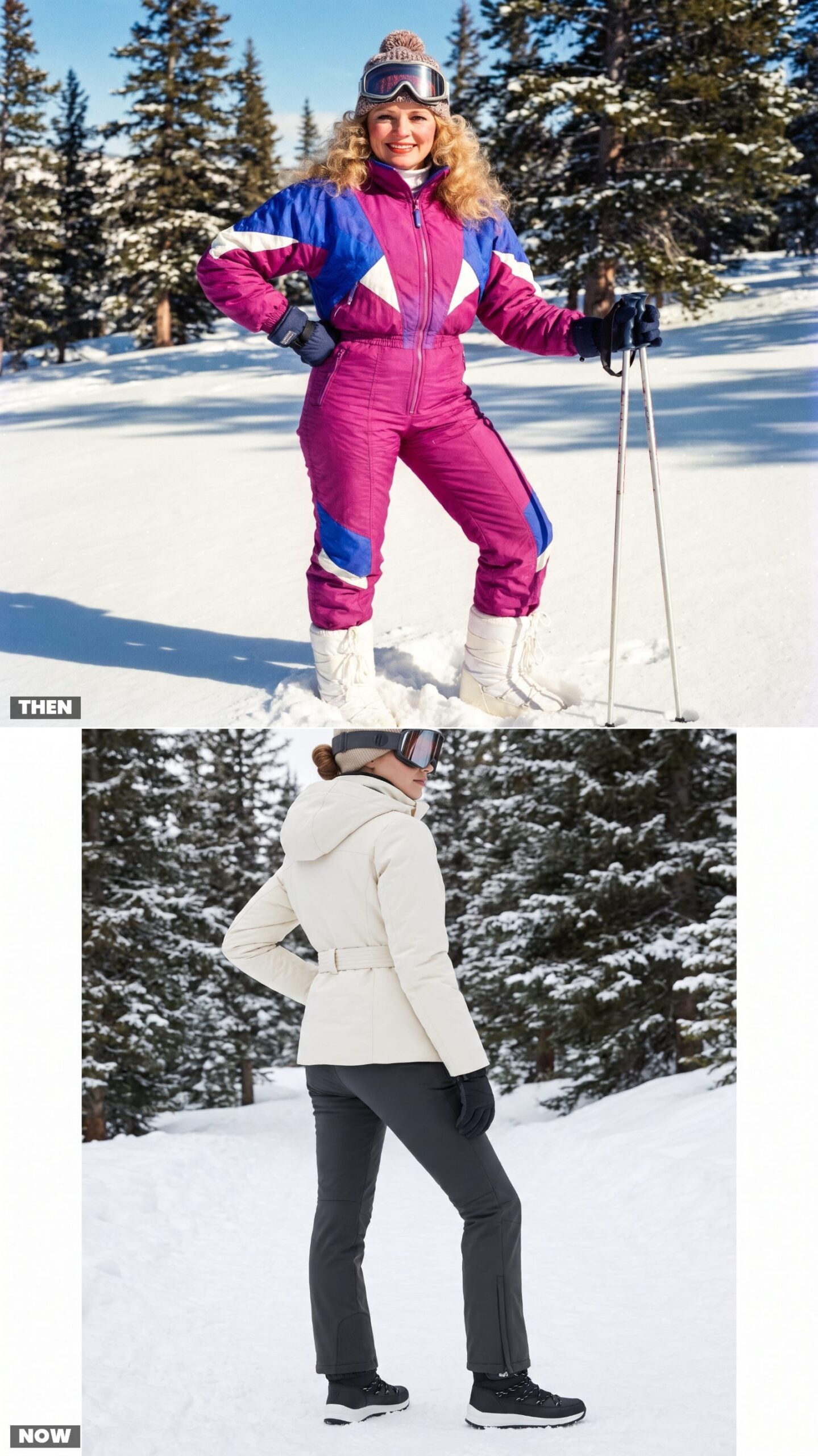
A one-piece ski suit in 1985 was a construction decision dressed up as a fashion one. The color-blocked magenta and blue looked fun, sure, but the zip-front onesie had no waist, so it columned you from collar to boot like a brightly wrapped crayon.
The belted set fixes the single biggest flaw with one piece of hardware. Cinch the waist over slim pants and the vertical run breaks — suddenly there’s an actual shape on a snowy hillside. Cream jacket, charcoal charcoal ski pants, and the whole carnival palette is gone. You could walk straight into après-ski without changing a thing.
1985 Head-to-Toe Jewel-Tone Studio Outfit vs. Tonal Neutral Layers
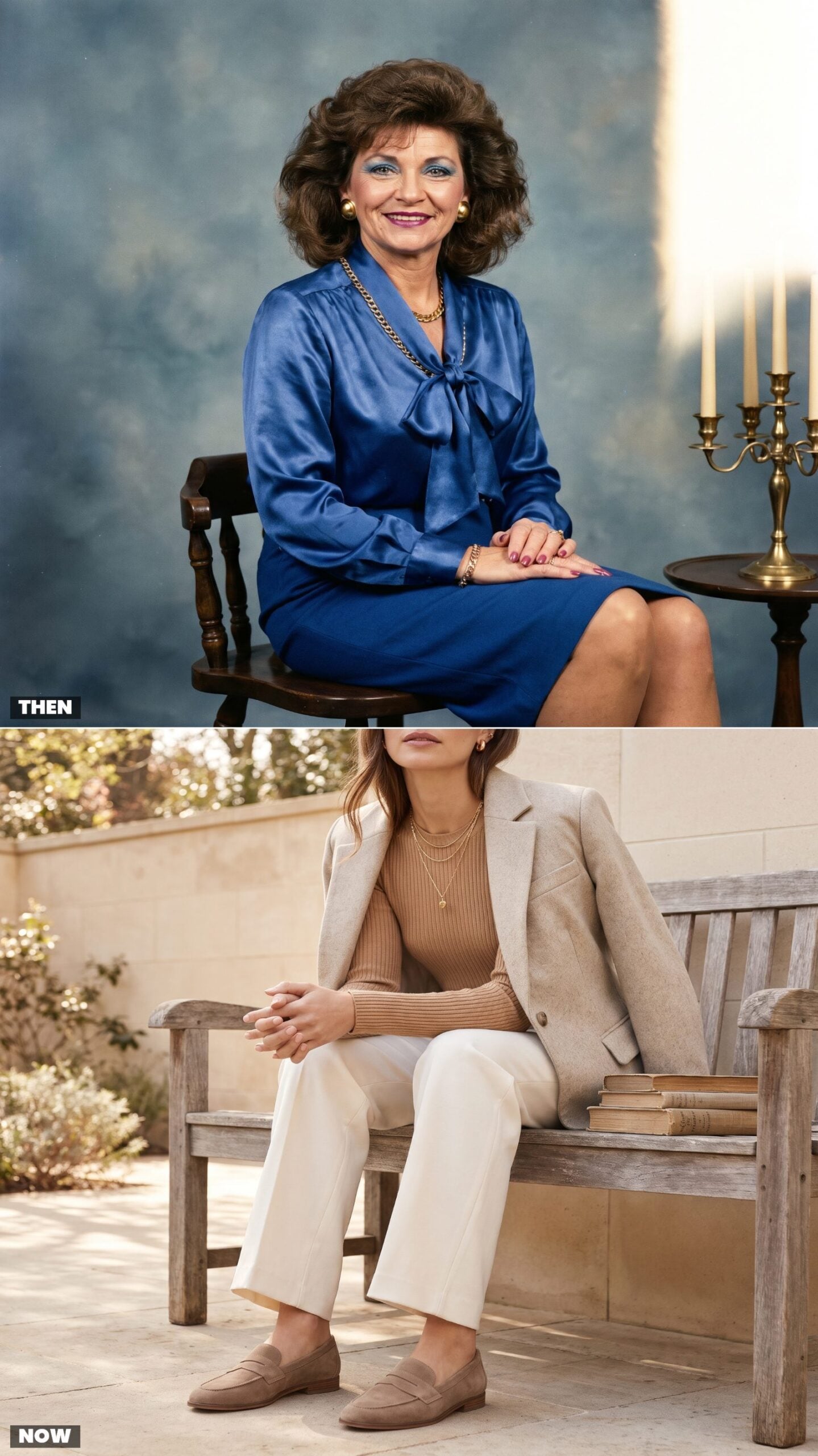
One color, head to toe, matched right down to the shoes. In 1985 that sapphire monolith signaled coordination and effort — and the shiny satin plus gold hardware doubled the shine until the whole look practically buzzed under the flash.
Here’s the modern fix. You get the same richness without the single-color shout. Camel, oatmeal, ivory and taupe stack into a gradient where four neutrals build depth no flat block could manage. The oatmeal wool blazer draped over the shoulders does most of the work, softening the line without turning it into armor. Nobody in this photo was worrying about winter white rules — but if you want those nailed down, the white outfit edit is worth a read.