
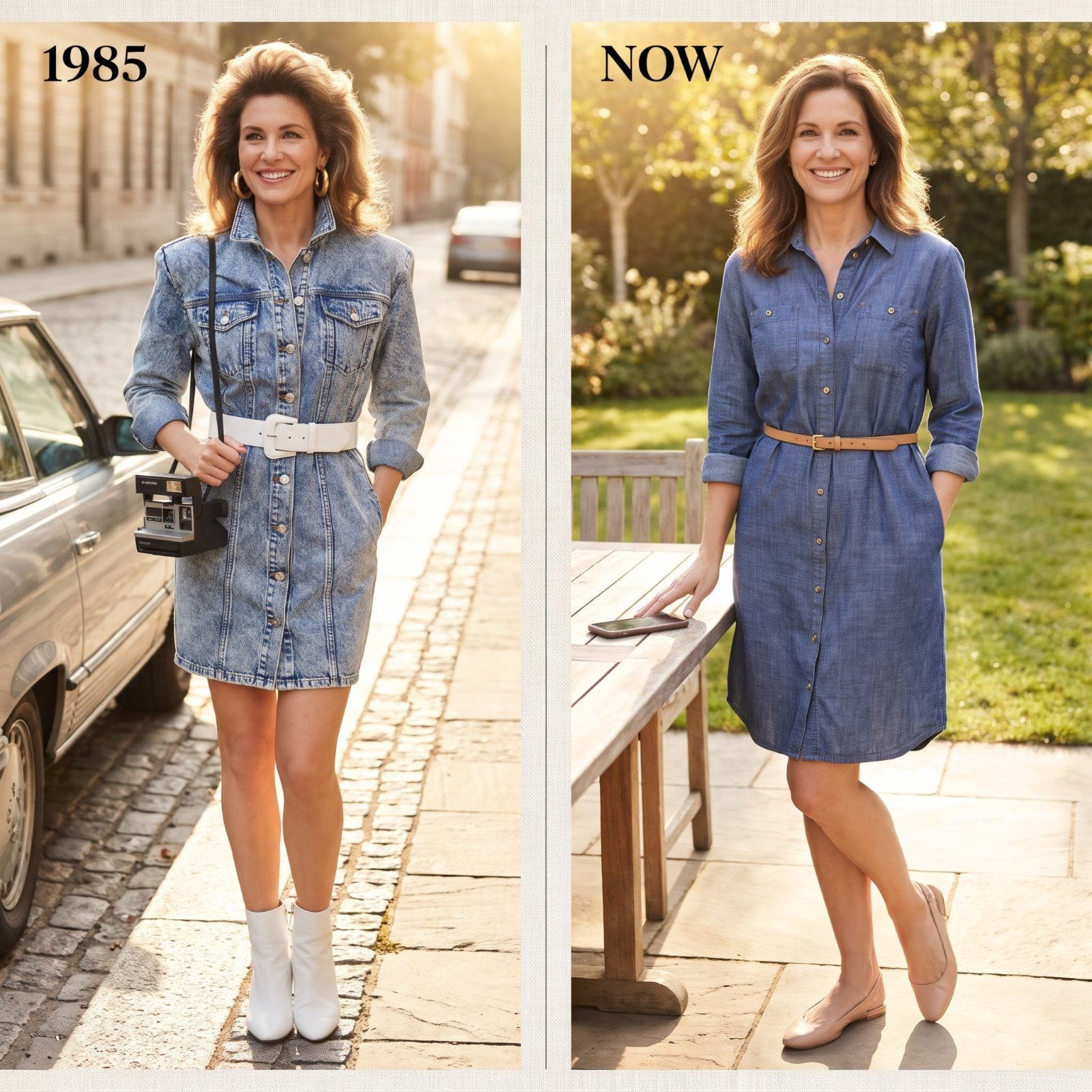
The dressing room at the mall, 1985. That particular squeak of rigid indigo against your knees, stiff as cardboard, smelling faintly of the warehouse. You bought it one size too big because everything was one size too big. Denim dresses back then had opinions, and most of those opinions involved shoulder pads and a lot of hardware. Four decades on, the same denim has learned restraint. We lined up the loudest silhouettes of the Reagan era against what you’d actually reach for today. The grain is the same. Everything else changed.
FYI, thanks to AI imagery software, we’re able to create very specific fashion and hairstyle examples to illustrate the points being made. In some cases, imagery is exaggerated to hammer home the point. Also, assume links that take you off the site are affiliate links such as links to Amazon. this means we may earn a commission if you buy something.
39. Shoulder-Padded Shirtwaists vs. Softly Tailored Shirt Dresses
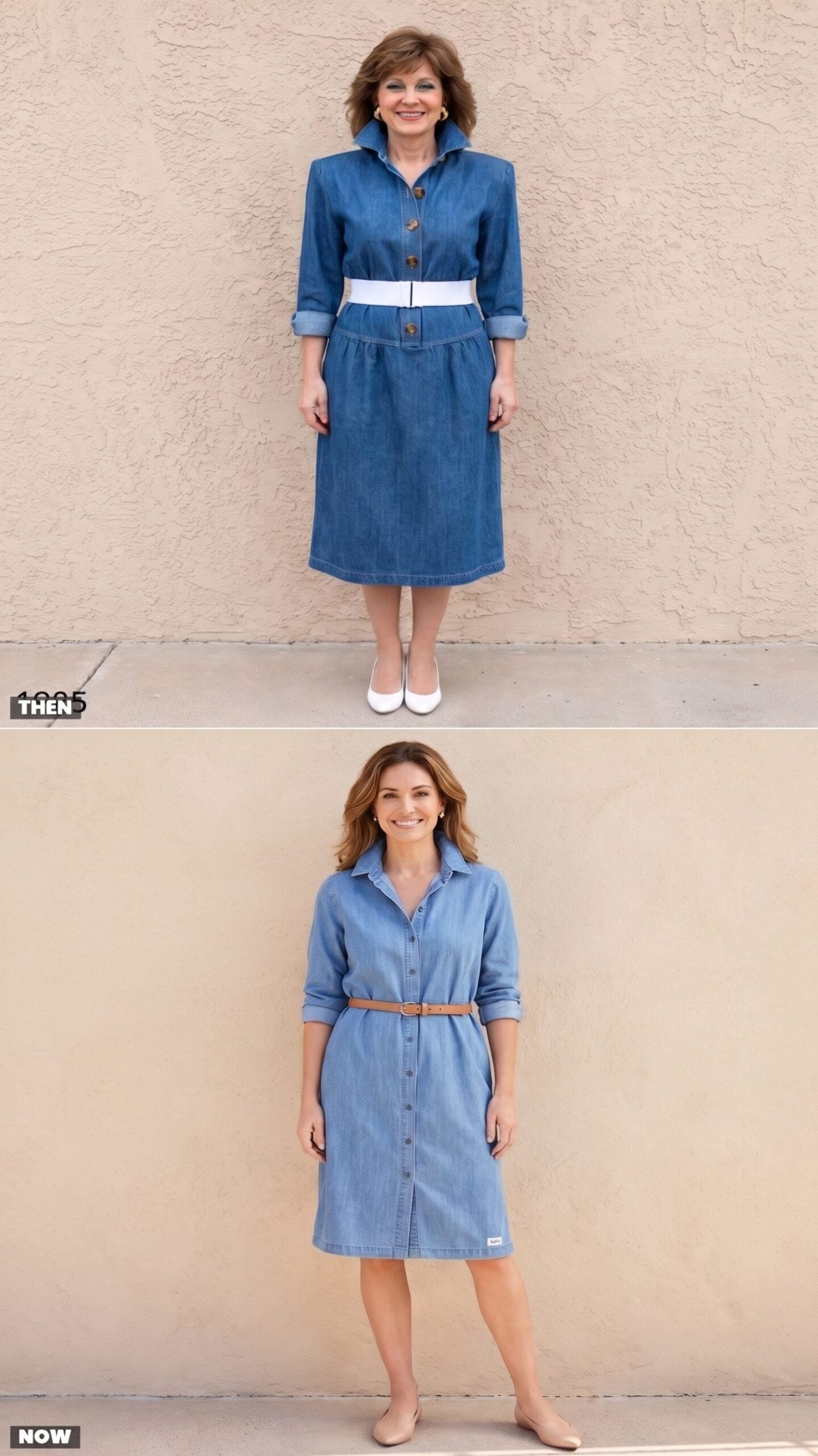
The shoulder pad wasn’t a suggestion. In 1985 the shirtwaist widened you up top so the belt could nip you back in, a hard hourglass drawn in rigid indigo that read as capable, almost combative.
Now the same dress exhales. Drop the padding, let the denim drape, and the style is all about the slim belt doing the shaping instead of the shoulders. One tan leather belt at the true waist defines everything the pads used to shout about, quietly.
38. Acid-Wash Minidresses vs. Clean-Wash Denim Minis
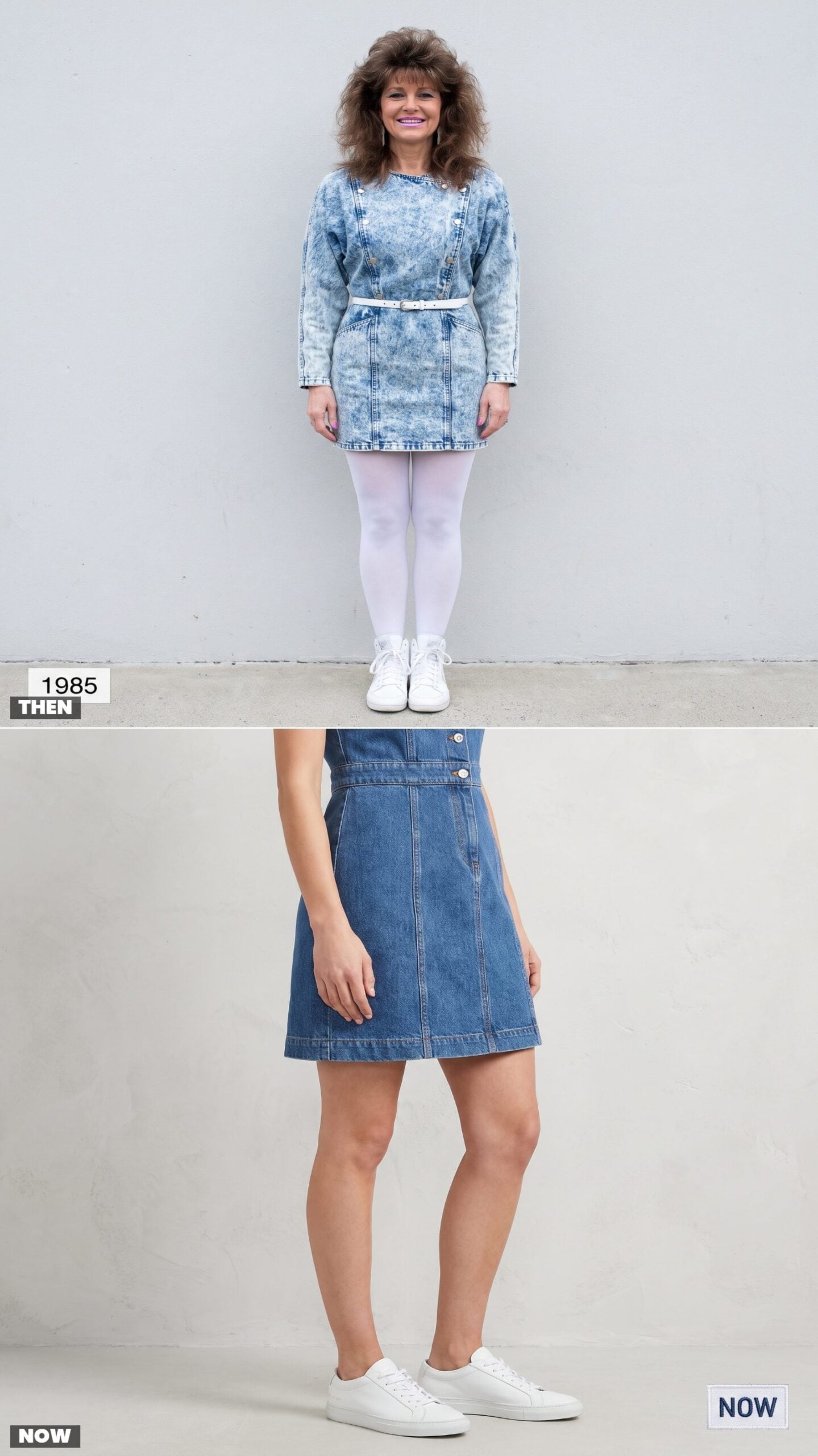
Acid wash was the texture of the decade, that bleached, lightning-struck finish everybody wore and nobody quite understood. Pair it with batwing sleeves and white tights and the mini screamed before it said hello.
The modern mini trades chaos for a clean, even wash and a tailored A-line that skims instead of clings. Same leg-baring confidence, volume dialed way down. Want the current read on trending denim? The clean wash is the whole conversation now.
37. Ruffled Prairie Dresses vs. Streamlined Tiered Midis
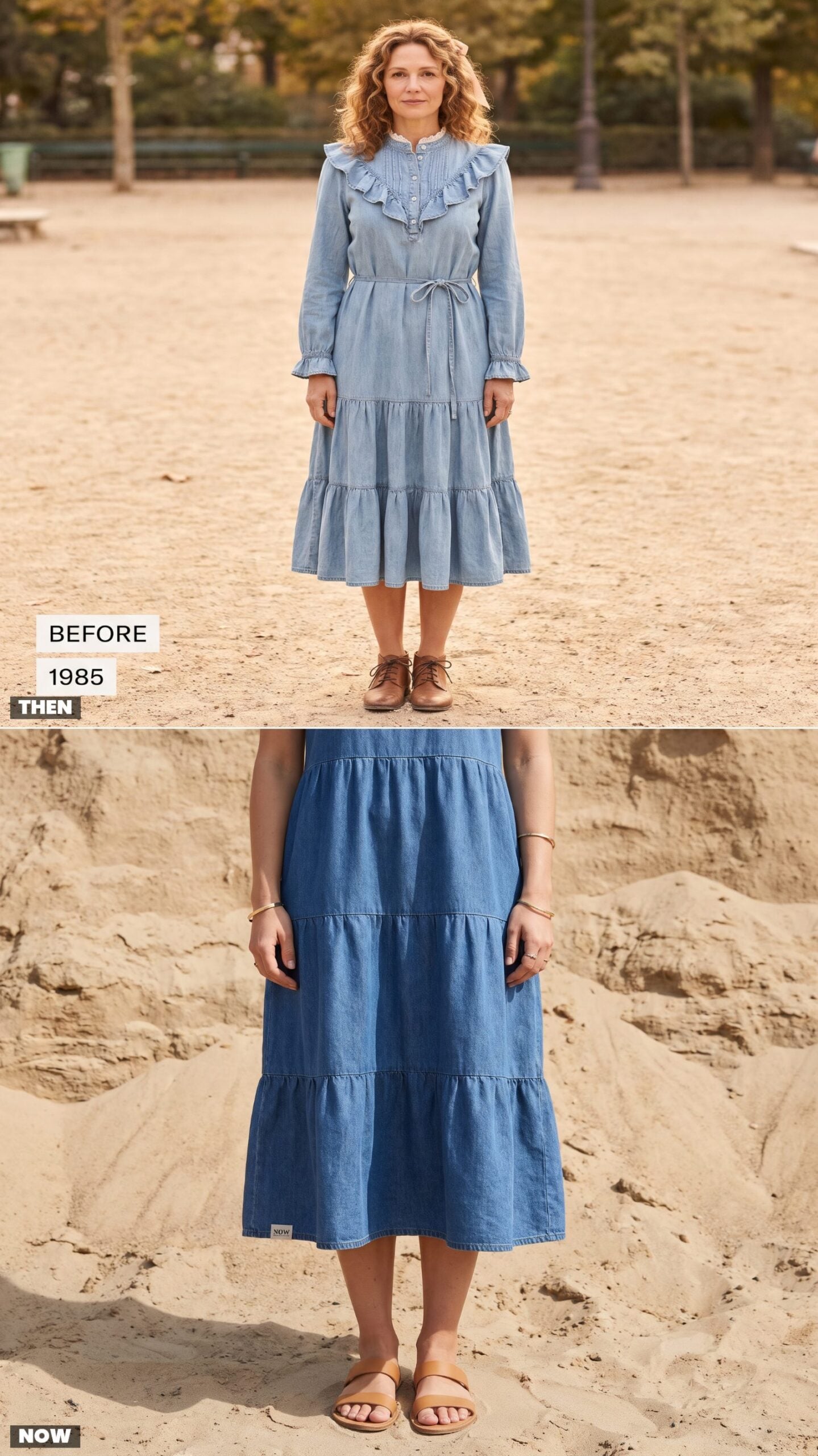
Little House on the Prairie took over fashion for a stretch, and denim went soft and ruffled to match. Flounces at the yoke, lace at the collar, a sash, a ruffled cuff. Charming and completely busy.
The tiered midi keeps the romance of movement and loses the fuss. Three clean tiers do the swaying, no ruffle required, and it reads as a grown-up festival dress rather than a costume.
36. Boxy Zip-Front Work Dresses vs. Cinched Utility Dresses
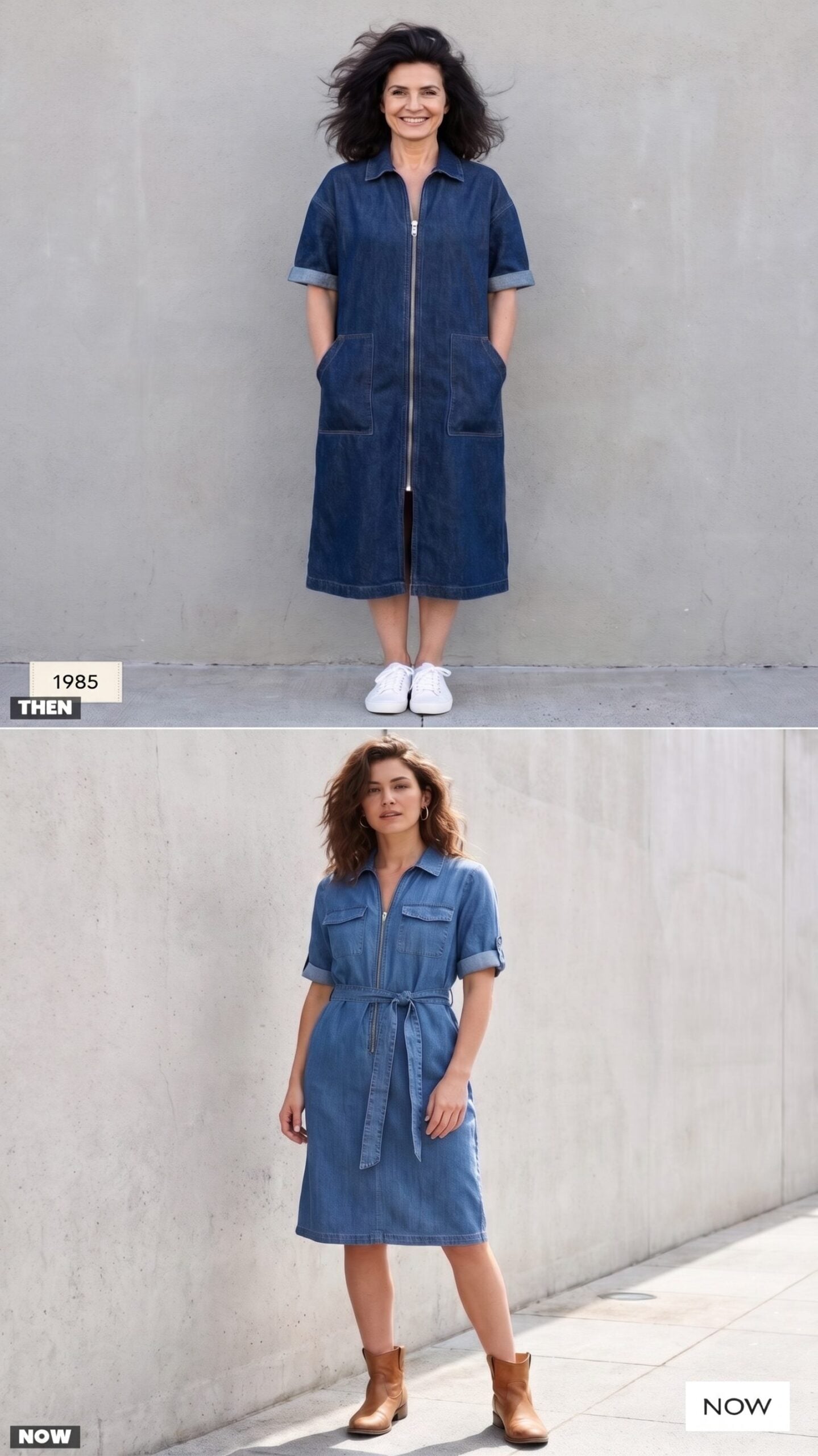
The ’80s workwear dress was built like a filing cabinet. Straight down, zip front, no waist, all business. It said efficient and nothing else, which was sort of the goal in a decade that loved a power statement.
Today’s utility dress keeps the hardware and adds a waist. One self-tie belt turns the boxy column into a shape, and suddenly the pockets and zip look deliberate rather than function-first. The denim details still carry that workwear DNA, just with a point of view.
35. Loose Denim Jumpers vs. Fitted Pinafore Dresses
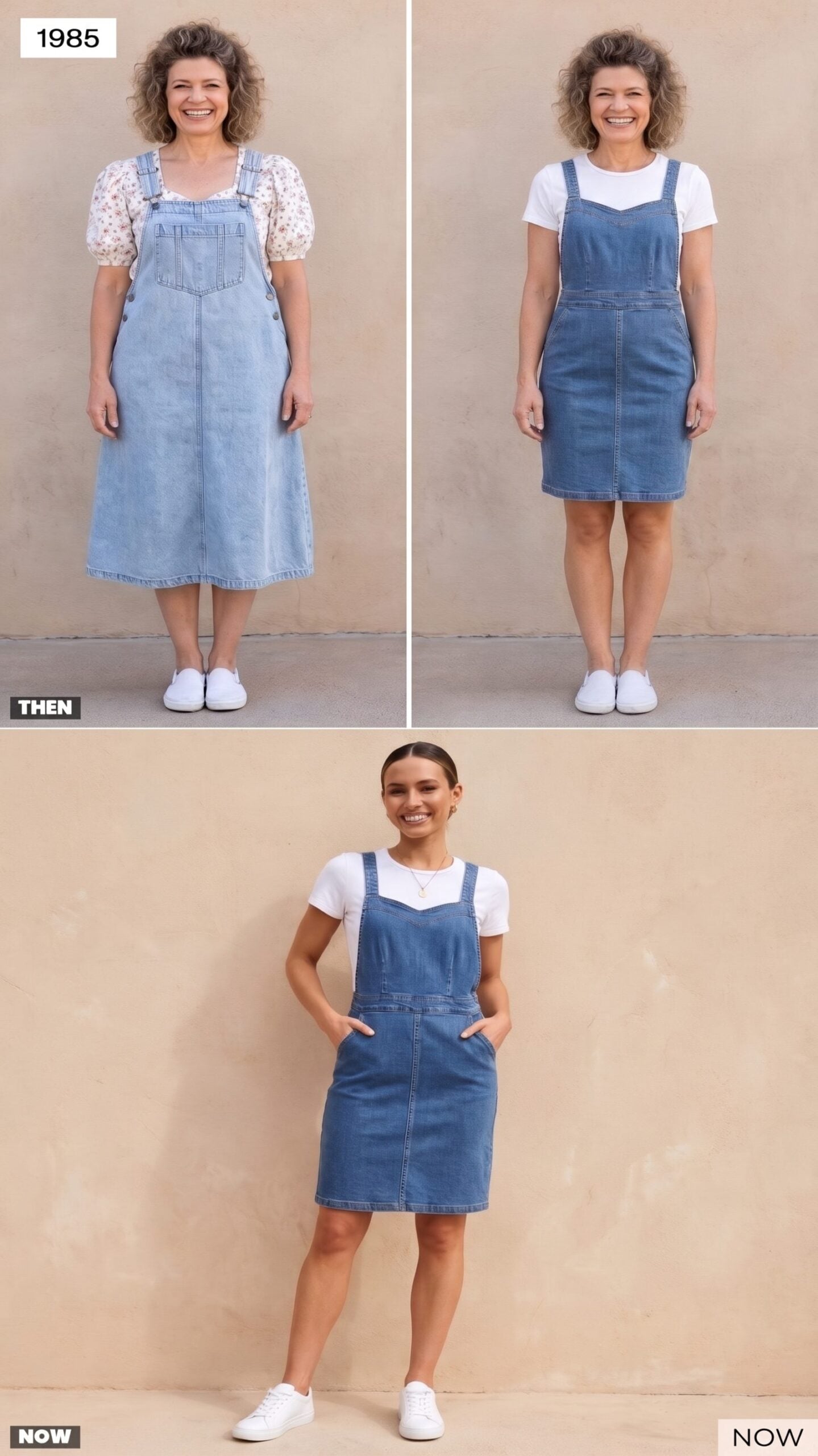
Roomy was the rule. The ’80s jumper floated over a puff-sleeve blouse like a tent with straps, cute but shapeless, hiding the body under yards of stonewash.
The modern pinafore gets tailored. A defined waist seam and slim straps turn the same bib-front idea into something that follows the body instead of swallowing it, worn over a plain white tee that does quiet, essential work.
A pinafore that fits reads as intentional. A pinafore that floats reads as borrowed from someone taller.
34. Oversized Western Shirtdresses vs. Relaxed Longline Shirtdresses
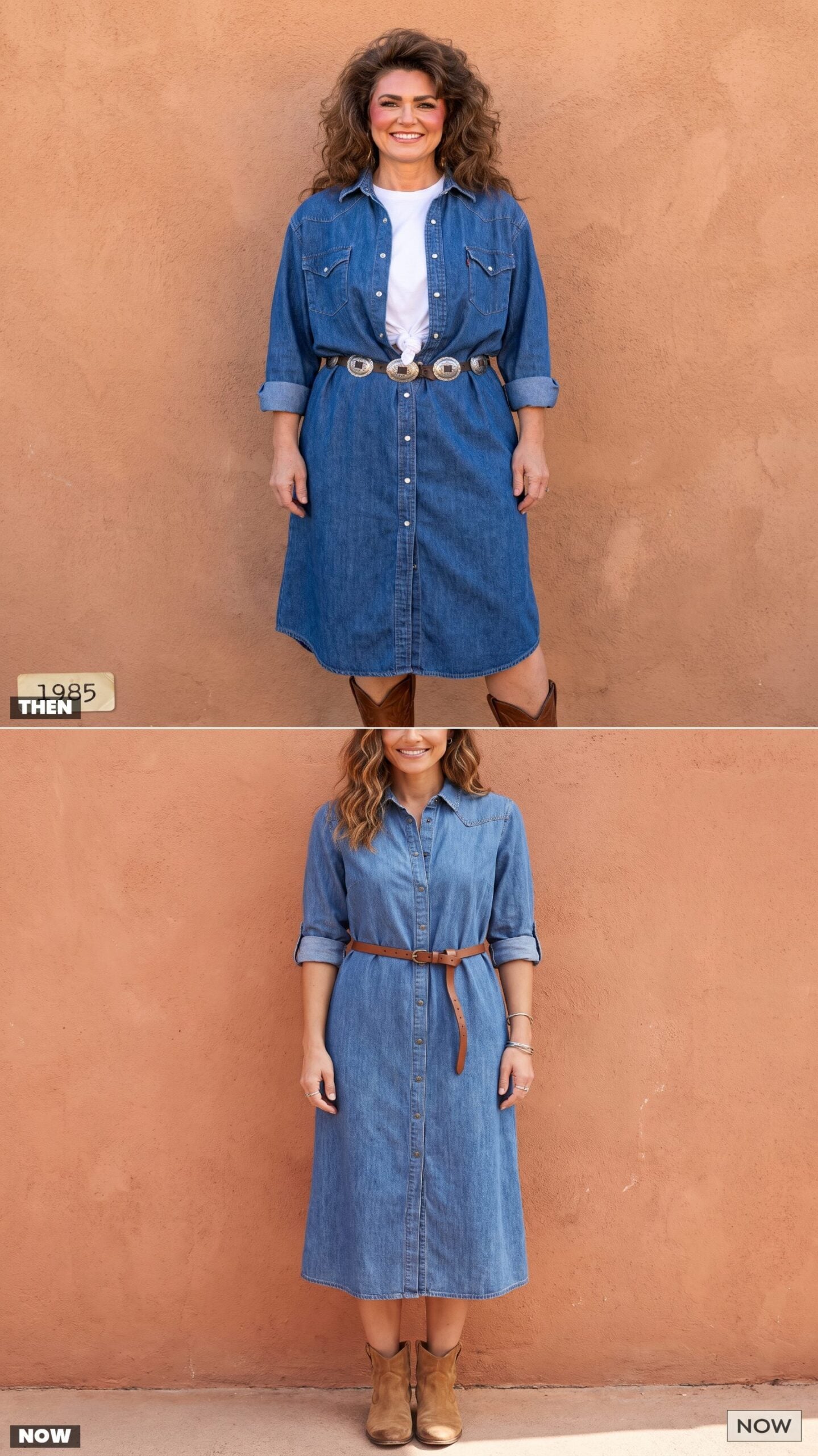
Western everything, and the bigger the better. Pearl snaps, pointed yokes, a concho belt heavy enough to set off a metal detector, all worn two sizes up and knotted at the hip. Pure rodeo-meets-mall energy.
The longline version keeps one Western nod, the subtle yoke, and lets the length do the talking. A relaxed straight cut to mid-calf, a thin belt instead of a silver slab. Still a little cowboy, just without the full saloon. Layer a good denim jacket over this in cooler months and the idea stretches without any fighting.
33. Full-Skirted Fit-and-Flares vs. Minimal A-Line Dresses
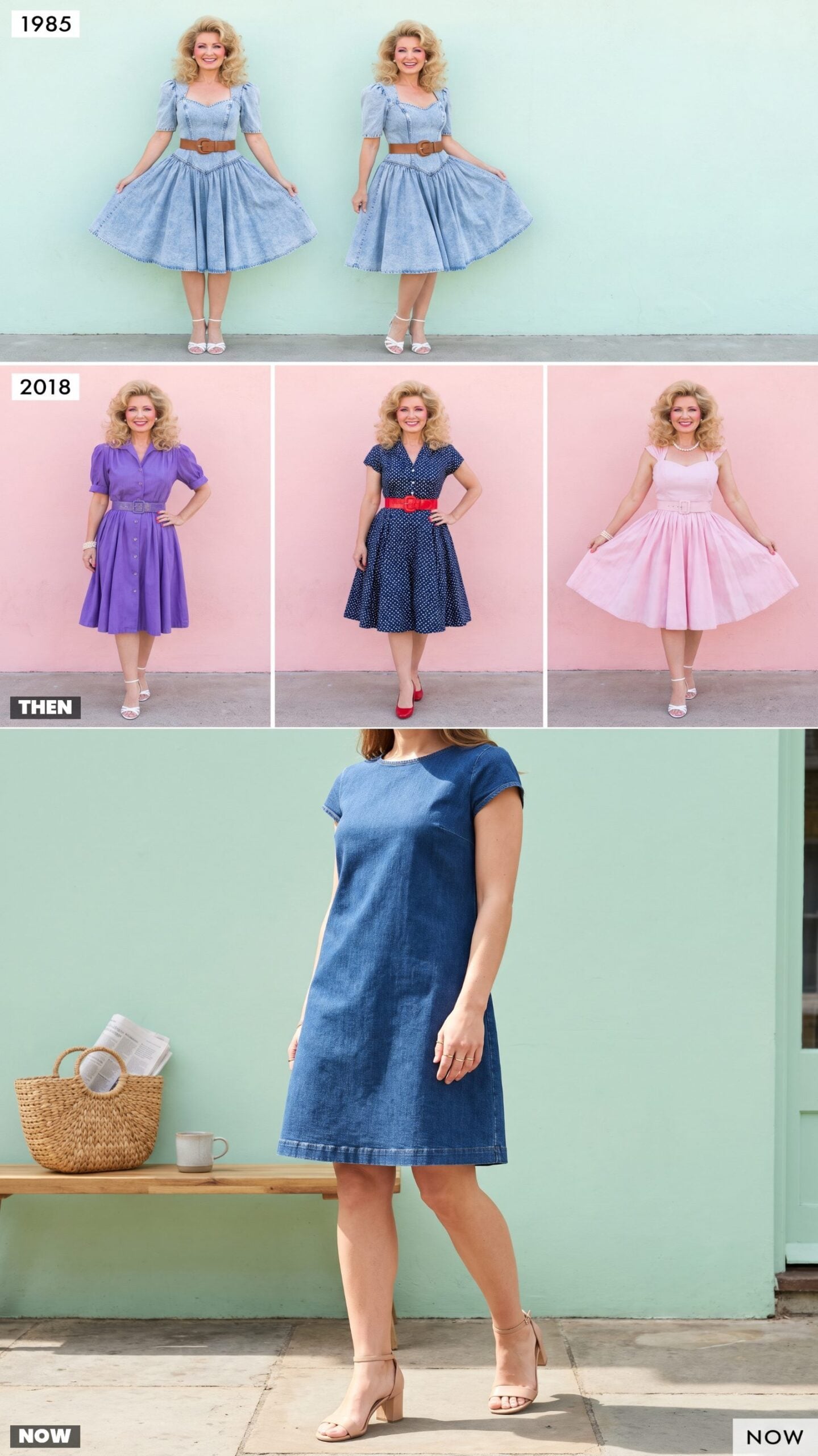
Volume was the flex. The fit-and-flare took a fitted bodice and bolted a parade float to it, skirt gathered to the maximum and propped out by whatever stiffening the decade could manage. Twirling was mandatory.
The minimal A-line keeps the fitted-top, flared-bottom logic and deletes the drama. A clean skirt that skims out from the waist gives you the same flattering line, no petticoat, no belt, no twirl required. Call it the quiet descendant of a very loud dress.
32. Low-Slung Drop Waists vs. Contoured Drop-Waist Dresses
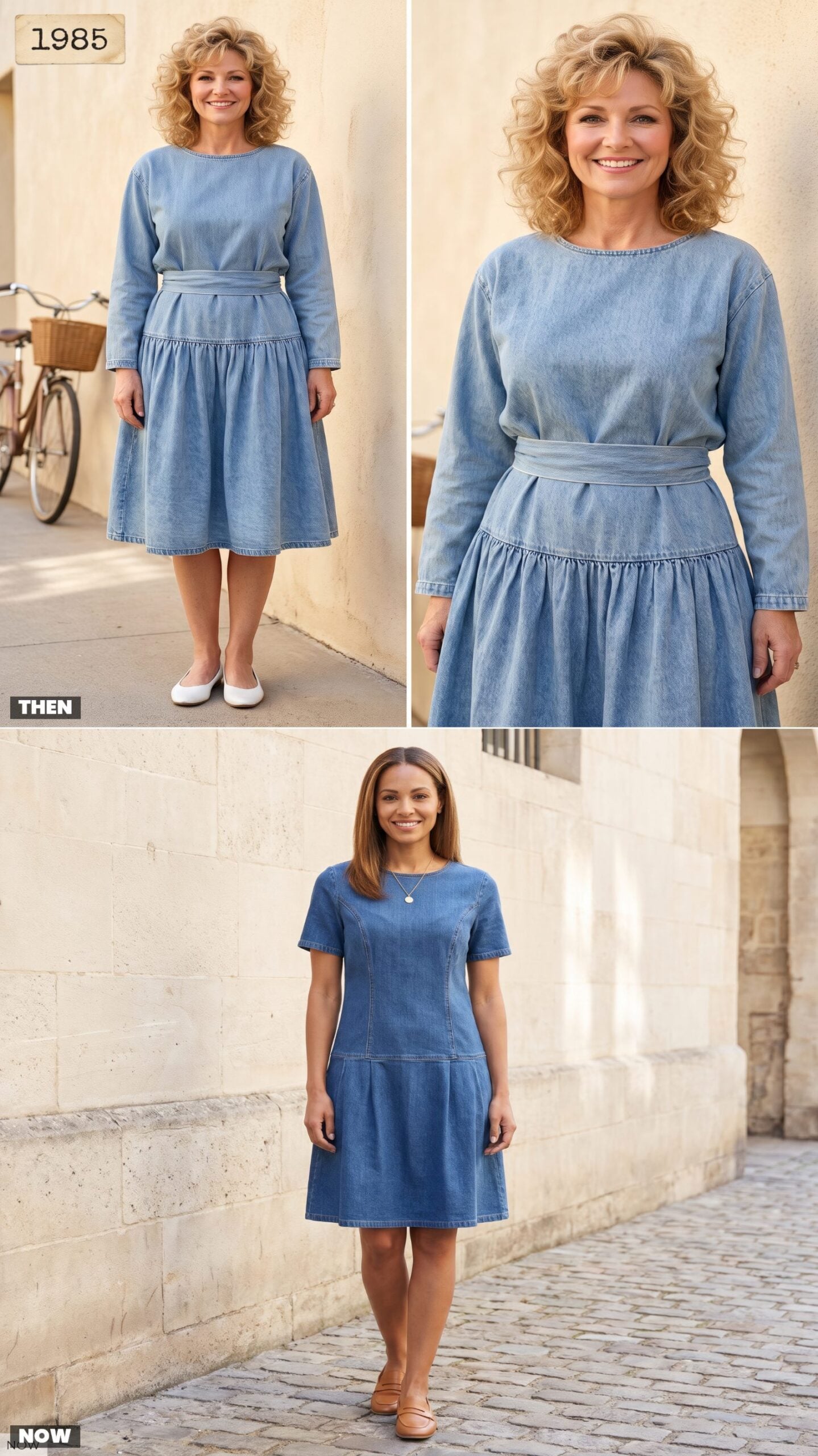
The drop waist of the mid-’80s put the seam somewhere near the hip, then gathered a flounce beneath it, flattering almost no one. Boxy up top, bunched below, with a sash doing nothing useful.
The contoured version pulls that waist seam up toward the real hip and shapes the bodice so it skims. A smooth pleated skirt replaces the flounce. The line finally works because it stopped fighting the body it’s on.
31. Sweetheart Strapless Dresses vs. Sculpted Bandeau Midis
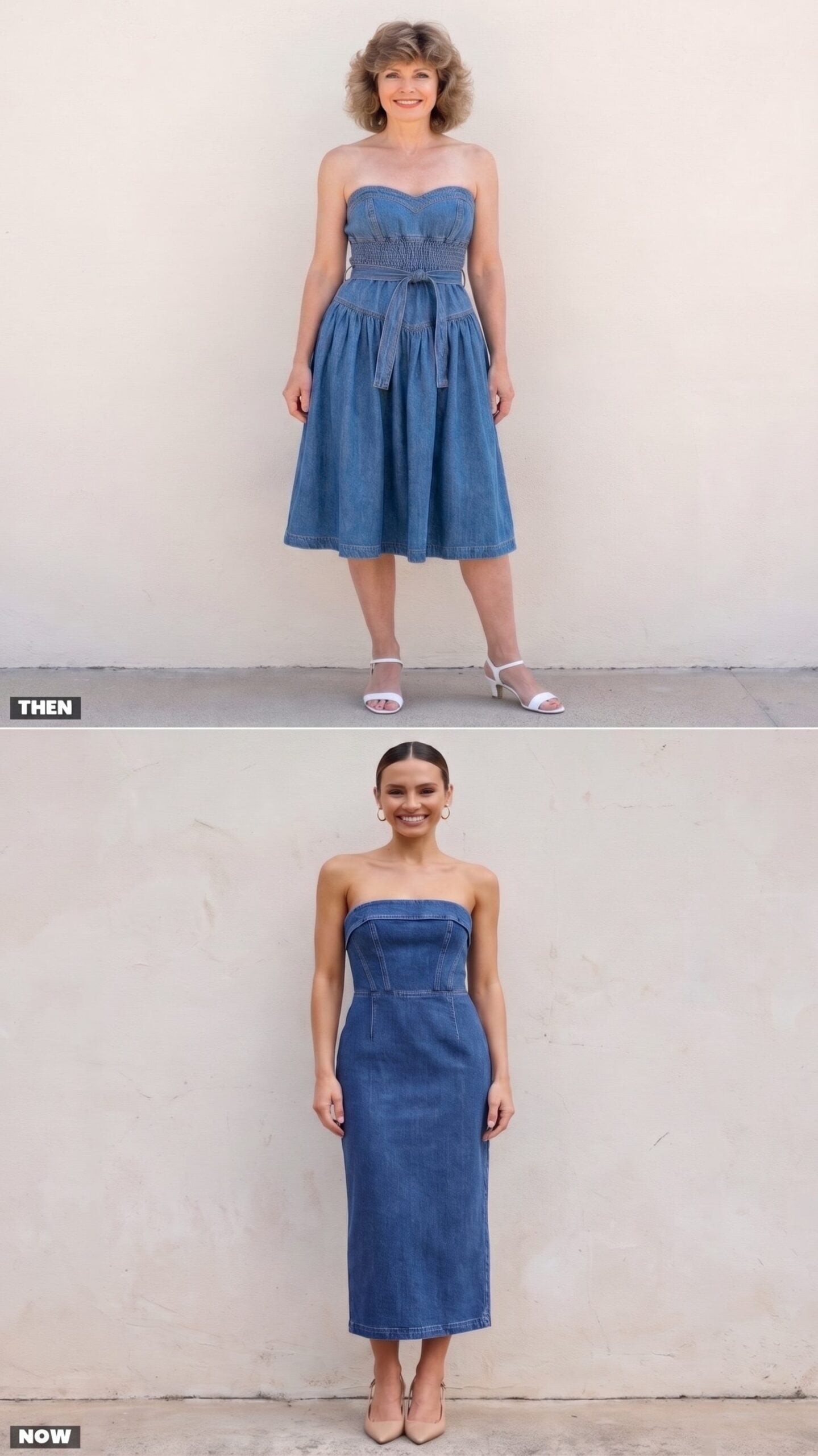
The 1985 version leaned on shirring to do the holding. That elasticated sweetheart bodice gripped the ribcage while the full skirt swung out, and the whole thing read sweet and a little fussy. The modern bandeau midi does the opposite job — structure instead of stretch.
Boning carries the bust now, so the fabric stays smooth and the eye travels straight down. That single switch from gathered to sculpted is why one looks like a souvenir and the other looks deliberate. A bare neckline past fifty is a quiet power move, not a risk.
30. High-Neck Halters vs. Open-Back Denim Halter Dresses
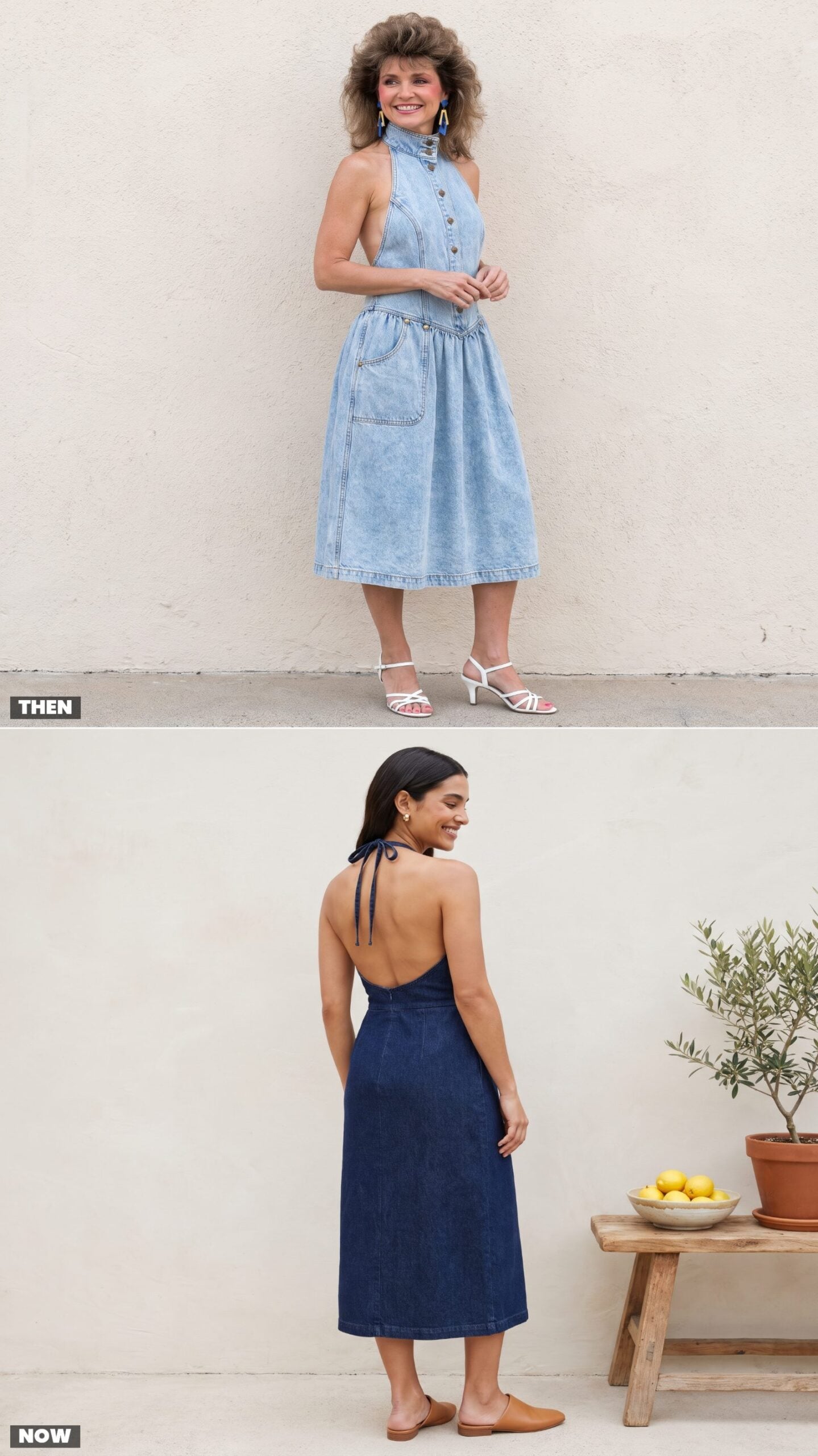
Covered to the collarbone, gathered at the hem, the 1985 halter kept everything buttoned and modest. All the drama happened at the front, none at the back. Flip that logic and you land on the current version: closed and clean up front, dramatically open behind.
The back is the new neckline. It works because it suggests rather than announces — a high neck paired with a bare spine, the sort of restraint-then-reveal that keeps a look interesting from every angle.
29. Elasticated Off-Shoulder Minis vs. Sculptural Bardot Dresses
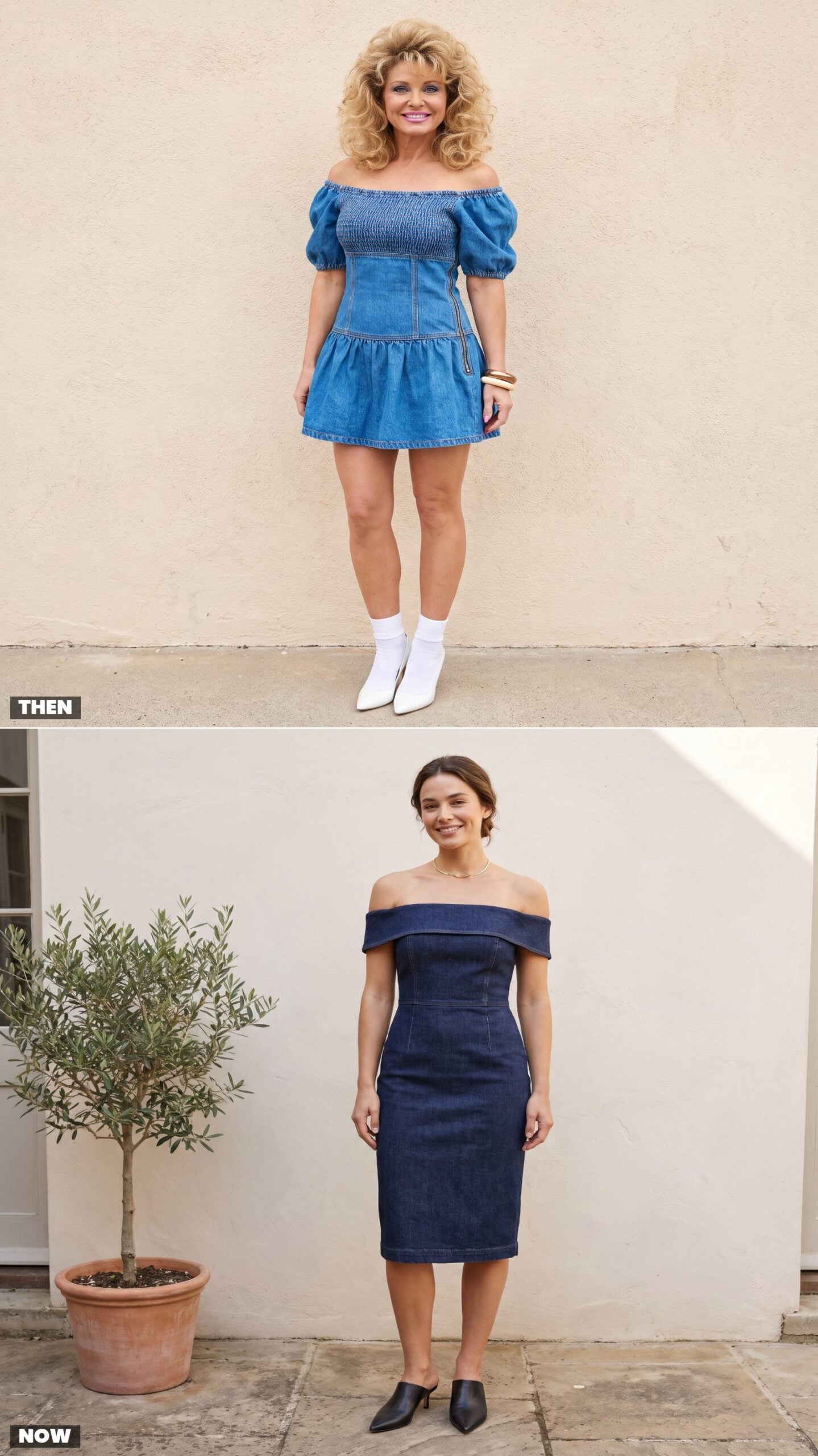
Shirring everywhere, hem up to here. The 1985 off-shoulder mini relied on elastic and a lot of hope to stay put. The sculptural Bardot version fixed the thing that never worked — that structured band sits flat across the arms and stays there.
Longer hem, firmer shoulder, calmer stitching. The off-shoulder line frames the collarbone and lengthens the neck, which is why the cut exists at all. Done with structure instead of elastic, it reads composed rather than clingy.
28. Handkerchief Hems vs. Polished Asymmetrical Midis
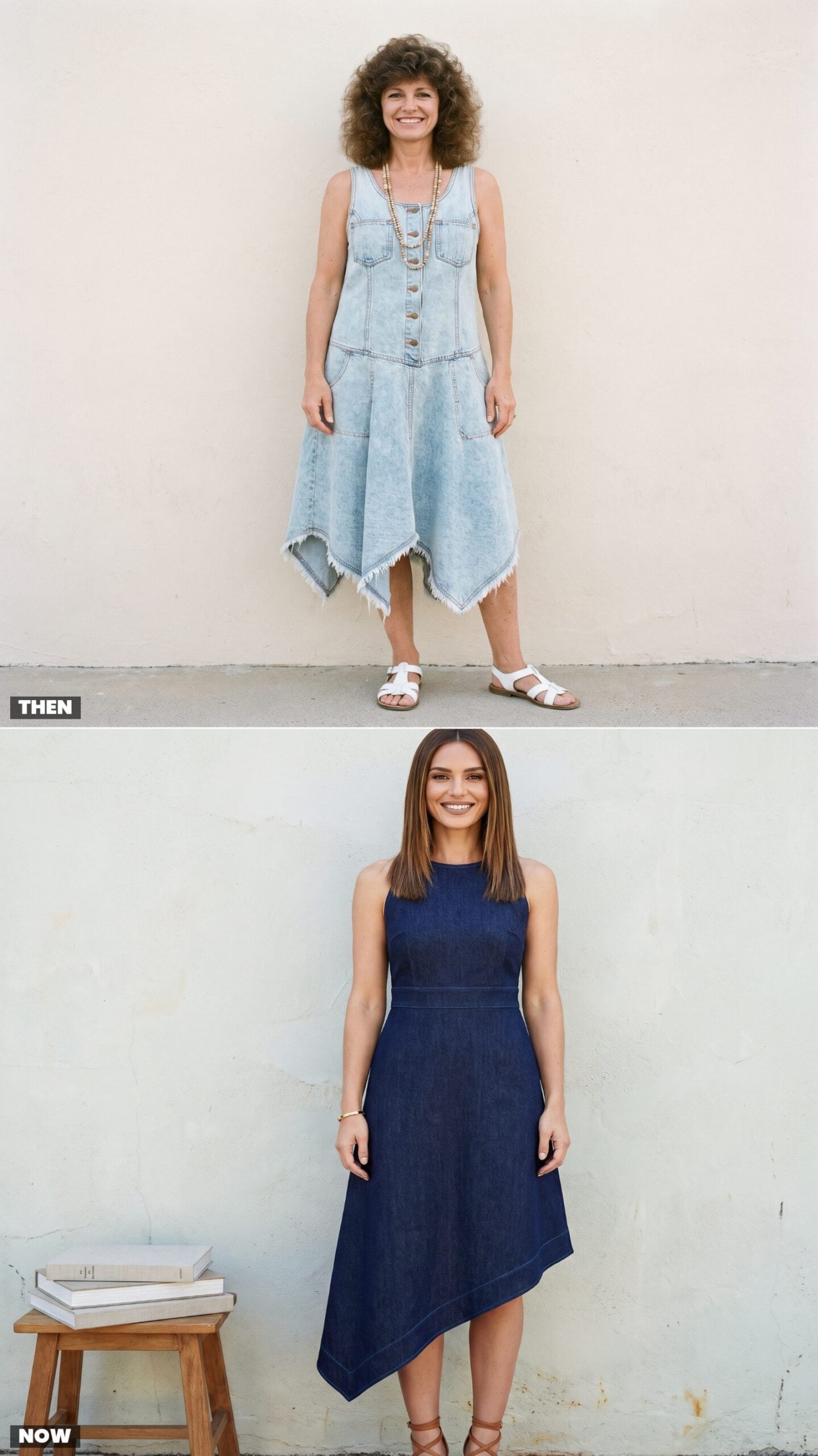
The handkerchief hem was 1985’s idea of movement: four or five points, all fraying at slightly different rates, a dropped waist swallowing whatever shape was underneath. Romantic in theory, shapeless in practice. The modern asymmetrical midi keeps the diagonal interest and ditches the chaos.
One clean diagonal line instead of a handful of frayed points. The hem still moves and still catches the eye, but now it does it on purpose. These are the kind of denim details that separate a look that is designed from one that is just worn out.
27. Straight Denim Maxis vs. Fluid Column Dresses
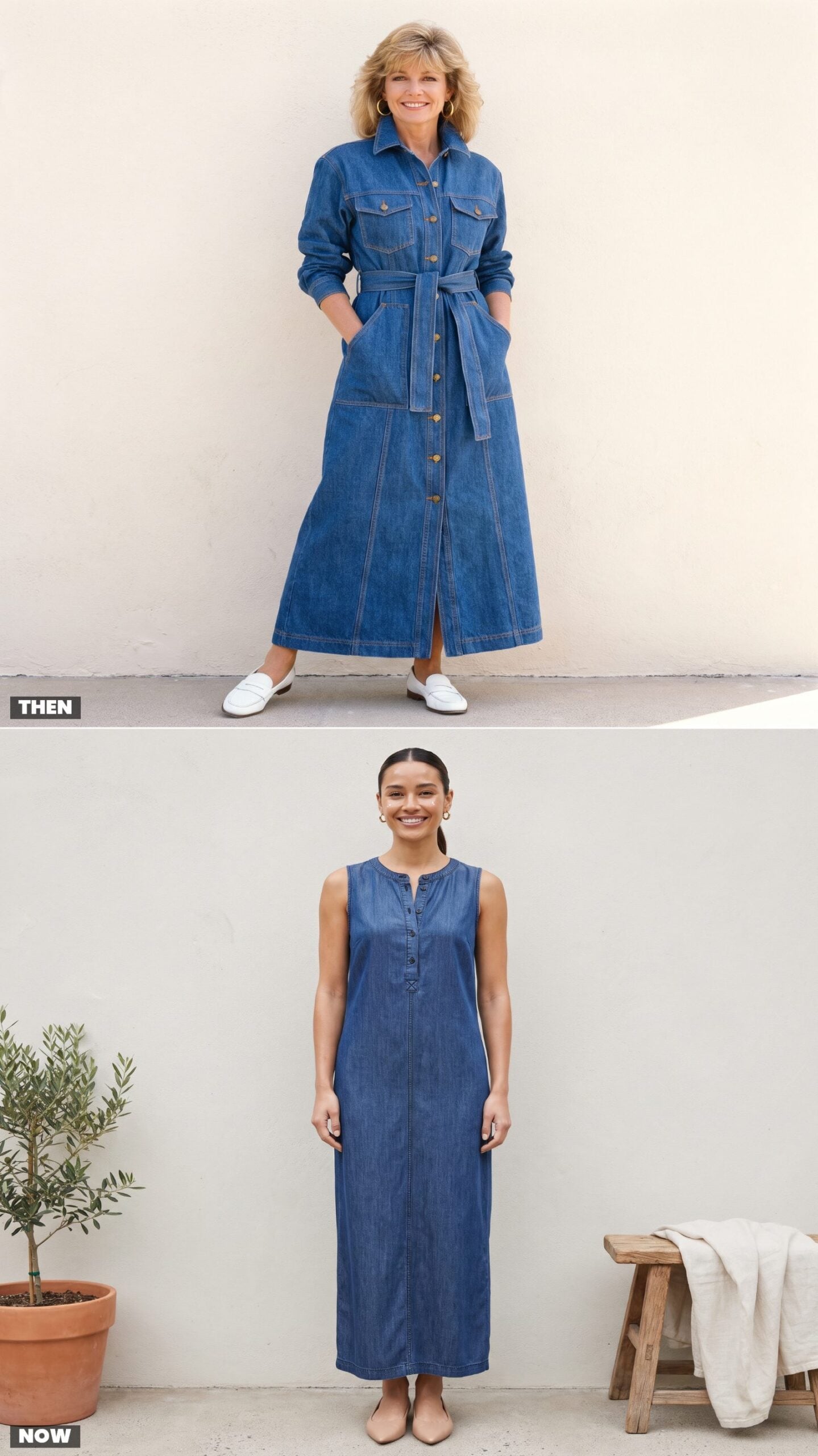
Rigid denim had one setting in 1985: stand up straight and hold. That maxi was practically a structure you could lean against, a boxy button-front that moved like a tent in the wind. The fluid column changed what denim could even do.
Soft Tencel-blend denim drapes now instead of standing, so the dress falls in one unbroken vertical line from shoulder to ankle. That single column does everything — it lengthens the body and asks for almost no styling. Proof that a wardrobe is only as modern as its fabrics.
26. Double-Breasted Coat Dresses vs. Denim Trench Dresses
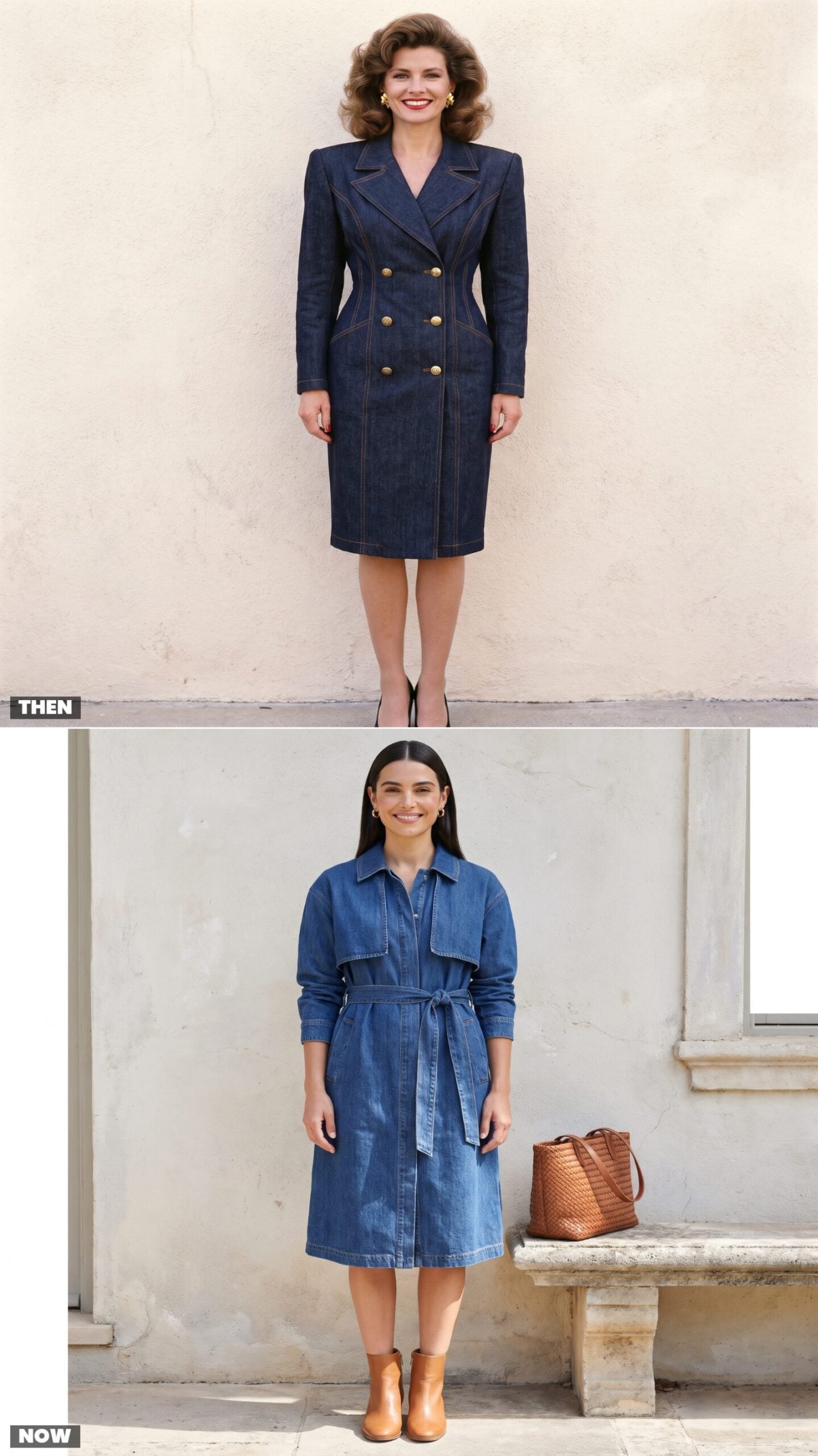
Shoulders out to here, two fists of brass buttons, a waist cinched like it meant business. The 1985 coat dress was armor and it looked it. The denim trench dress keeps the authority and drops the padding.
Natural shoulders now, a soft tie belt instead of a nipped seam, a longer hem that moves when you walk. What structure there is comes from the trench itself — the storm flap, the belt — not from shoulder pads trying to intimidate the room. Capable without shouting. That shift from rigid to relaxed is where style in this decade actually lives.
25. Cropped Jacket Dresses vs. Tailored Denim Blazer Dresses
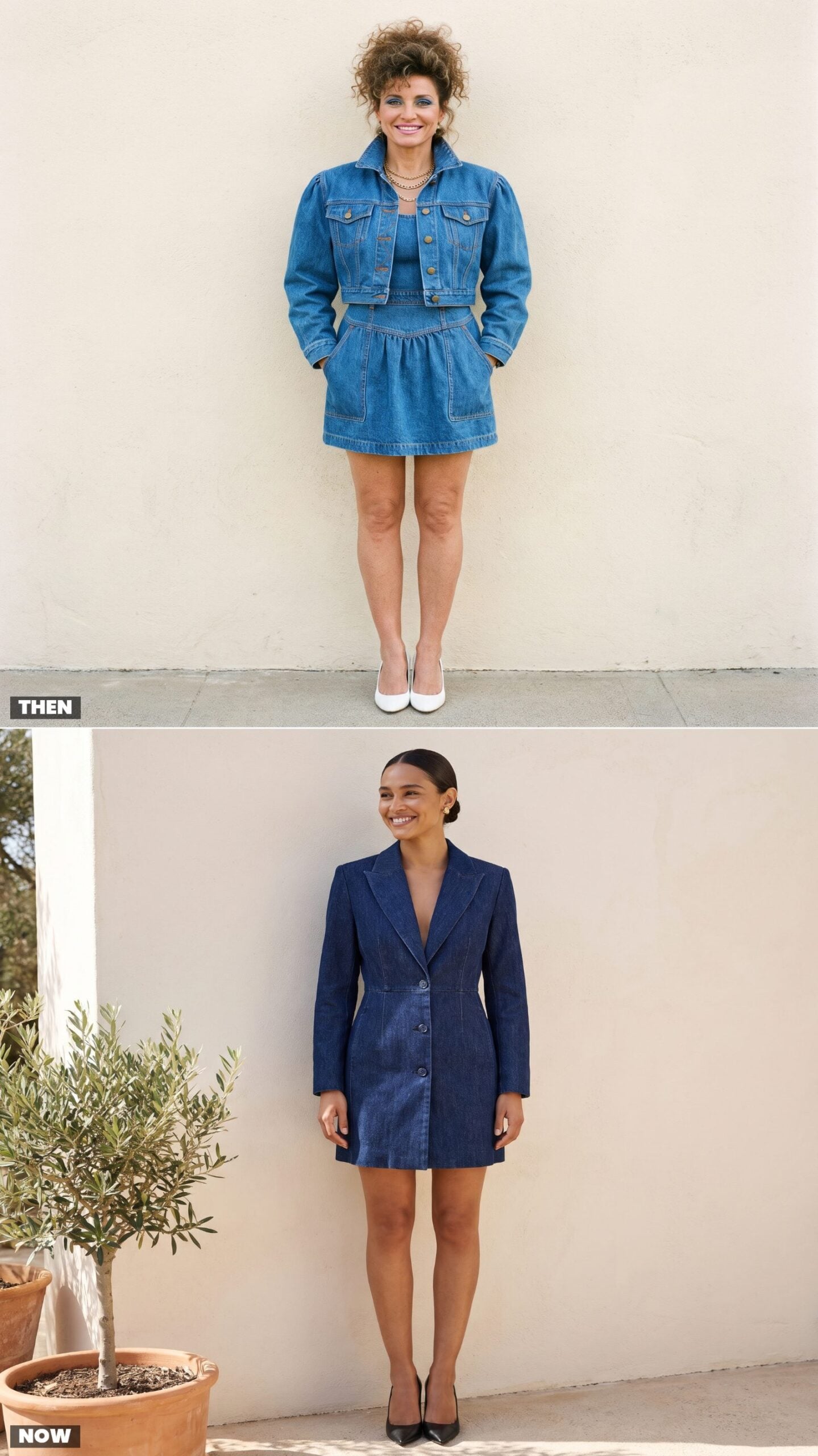
The cropped jacket over a matching mini was the double-denim dream of 1985: boxy up top, short down below, a brass-buttoned denim jacket that stopped at the ribs. All that cropping chopped the body in half. The blazer dress solved it by making the jacket the whole dress.
One unbroken tailored line from shoulder to hem, lapels sharp, waist defined. It all comes down to proportion. Lengthen the jacket into a dress and the eye stops hitting a hard break at the waist — the vertical does the work instead. Easily the most useful piece of trending denim for anyone who wants put-together without a second thought.
24. Homespun Apron Dresses vs. Minimalist Cross-Back Aprons
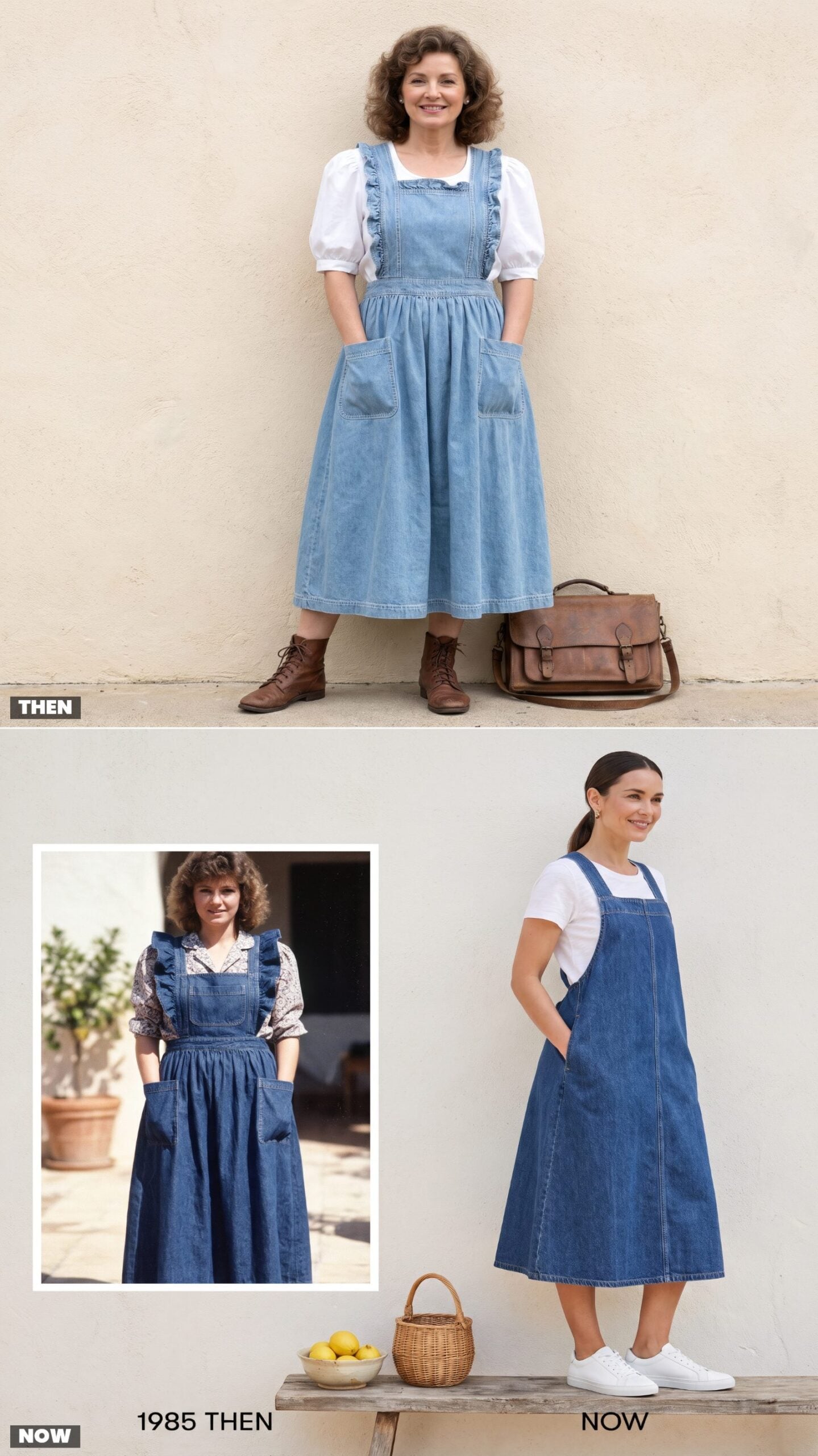
Ruffles, a bib, a blouse underneath, and enough gathered skirt to clear a farmhouse table. The 1985 apron dress leaned hard into the prairie moment. The cross-back version strips it down to the one good idea hiding underneath.
Square neck, crossed straps, clean A-line — no ruffle, no puff sleeve, just the pinafore shape left to speak for itself. Thrown over a plain white tee, it comes off easy and clean-lined at once. Sometimes good style is just knowing which details to delete.
23. Scrap-Pieced Dresses vs. Designer Patchwork Denim
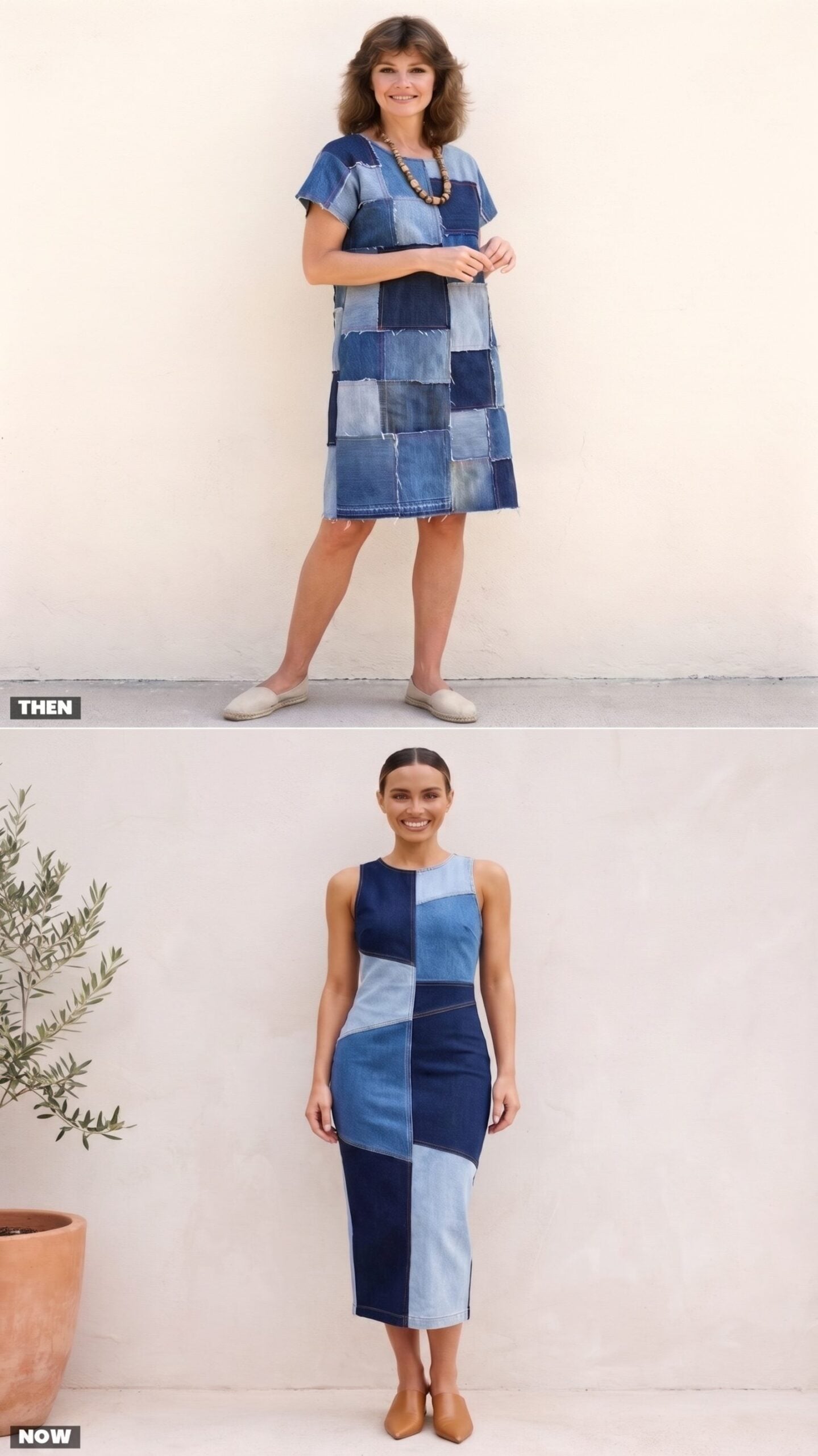
Patchwork in 1985 meant whatever scraps were in the basket, sewn into a shift, fingers crossed. Charming, a little chaotic, loudly homemade. Designer patchwork took the same idea and gave it a plan.
Two or three coordinated washes, panels placed for shape instead of thrift, flat-felled seams that lie flat. It works now because it holds back — three washes instead of twelve, arranged to sculpt the waist rather than just fill a dress. Deliberate beats busy every single time.
22. Stonewashed Weekend Dresses vs. Vintage-Wash Day Dresses
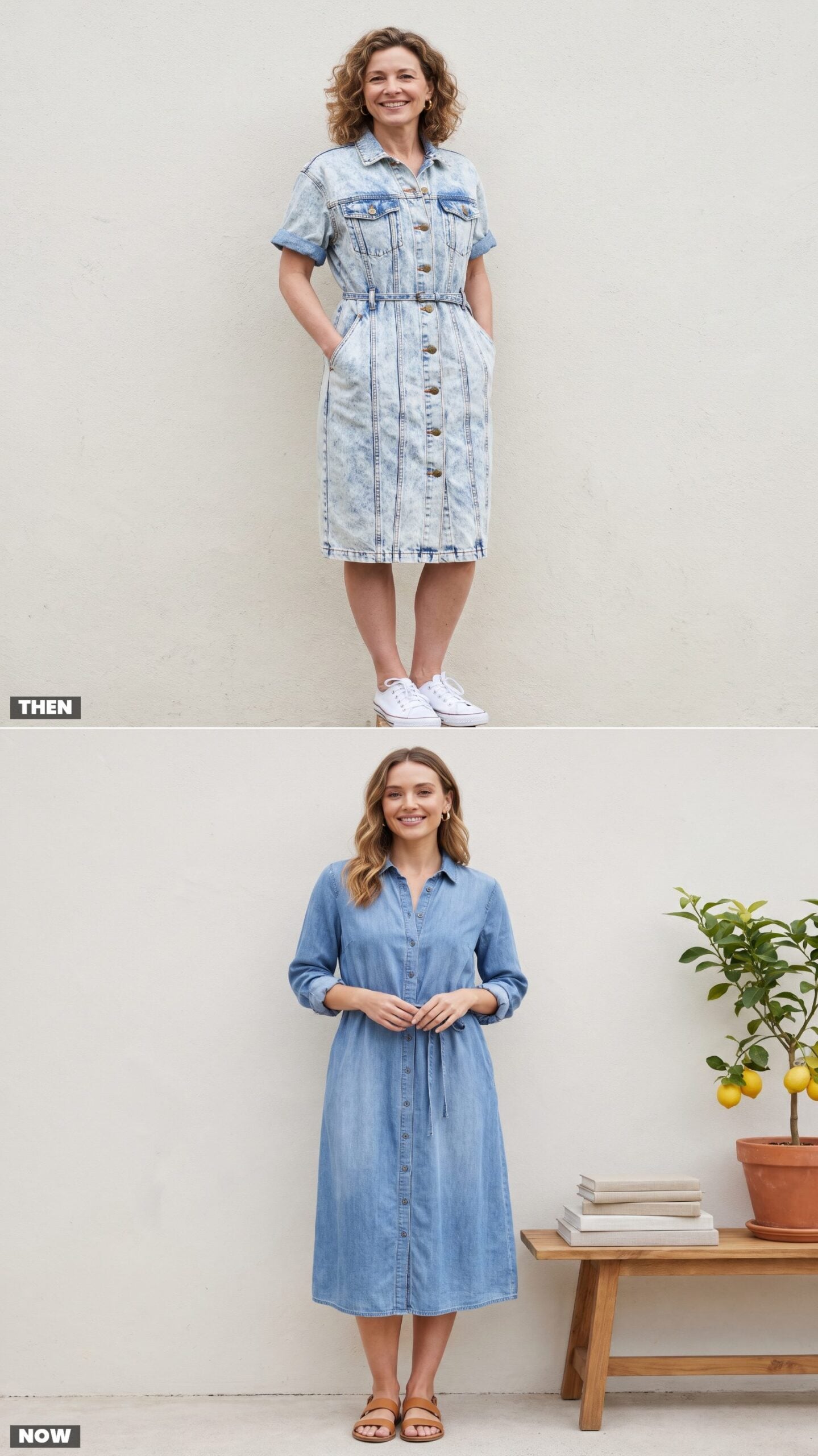
Stonewash was the weekend uniform in 1985 — faded, uneven, loud about how distressed it was. Today’s vintage wash whispers the same story with better manners: even fading, soft mid-blue, a finish that looks loved rather than attacked.
Same casual spirit, calmer execution. Swap patchy acid for uniform vintage wash and one dress dates a photo instantly while the other could have been bought this morning. A good beach dress in soft worn denim goes everywhere a festival dress would, minus the effort.
21. Bright White Denim Minis vs. Ecru Denim Shirt Dresses
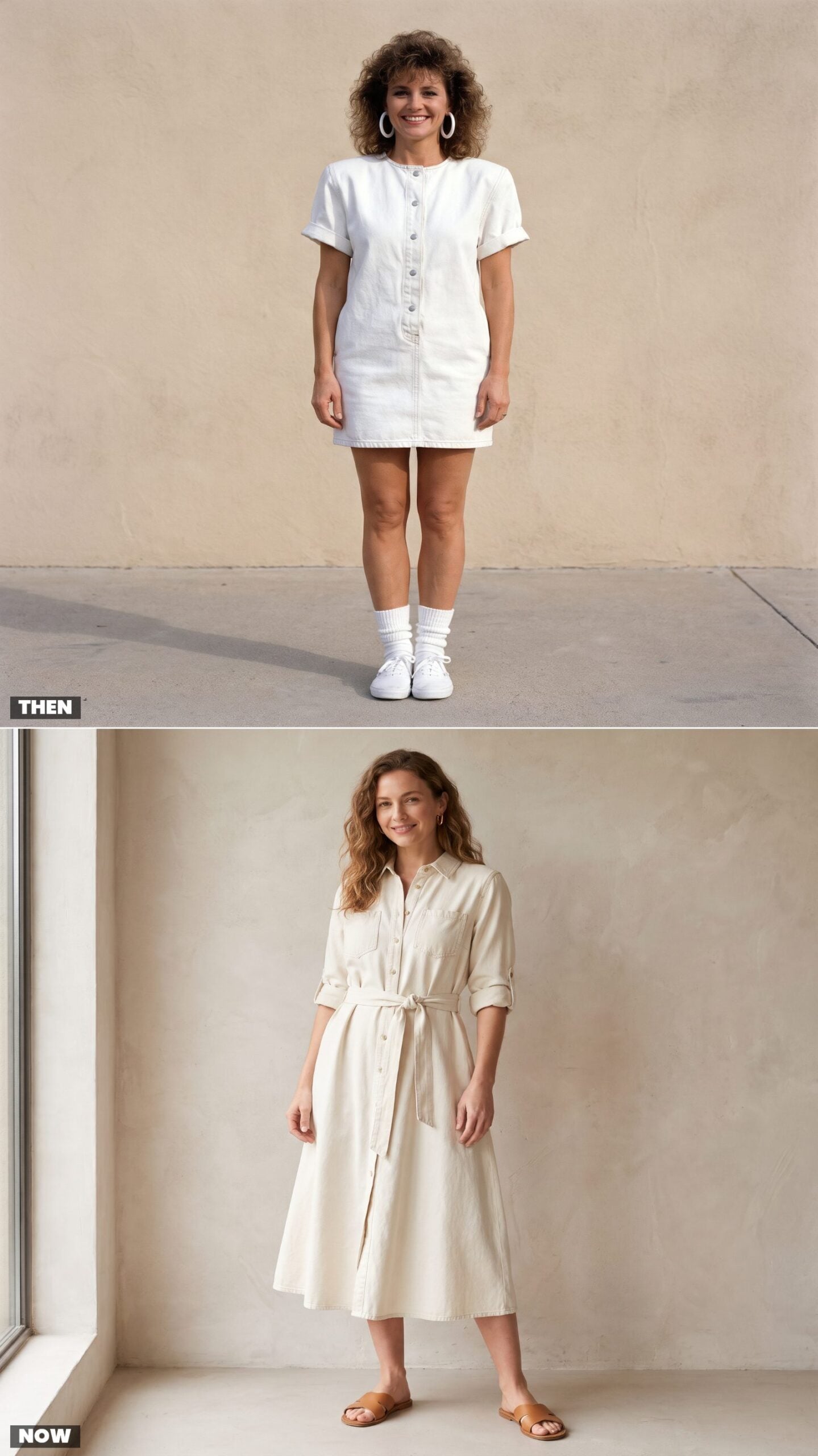
The 1985 version shouted. A blinding white mini, rigid as cardboard, snapping up the front with hardware that could survive a car crash — confident in the loud way that decade did everything.
Now the white has softened into ecru, and the mini has grown up into a calf-skimming shirt dress. The self-tie belt does all the work here, carving a waist out of what would otherwise read as a tent. Bleached-white rigidity gave way to warm undyed drape, and that’s the whole story. One commanded attention. This one holds it.
20. Pastel-Dyed Denim Dresses vs. Bold Contemporary Color Denim
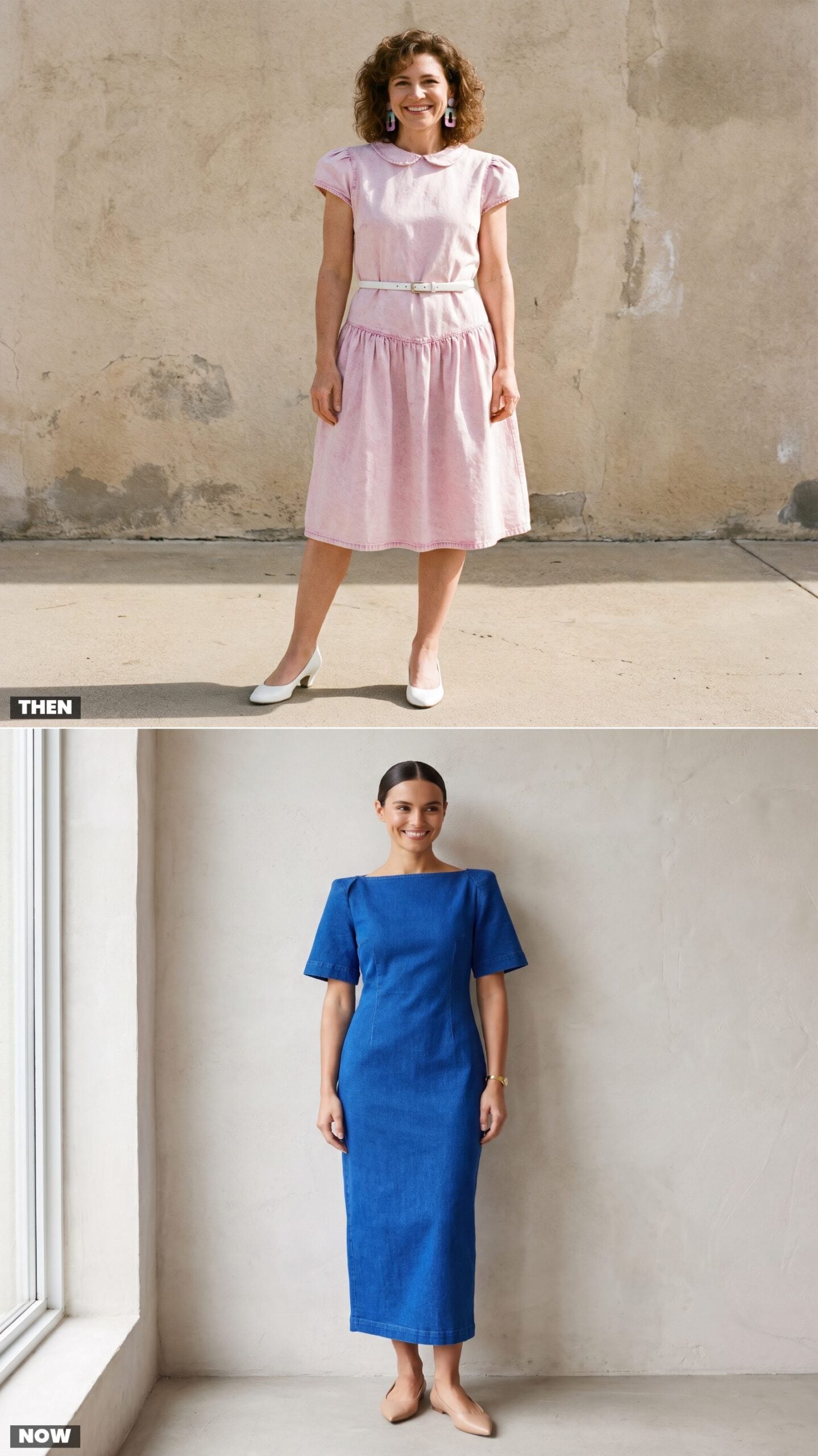
Pastel denim in 1985 was sweet and a little apologetic — that chalky baby-pink wash, the drop-waist, the gathered skirt. It whispered when it could have spoken.
Today’s colored denim commits. A saturated cobalt column dress makes one deliberate color decision and lets it carry everything. What makes it work? Dropping the belt and the fussy gathers, so nothing competes with the color. This is color as a social signal, worn without hedging.
If you came up thinking colored denim was juvenile, consider this your permission to reconsider. Saturation and silhouette are the whole difference, and both now land firmly on your side.
19. Lightweight Chambray Dresses vs. Draped Tencel-Denim Dresses
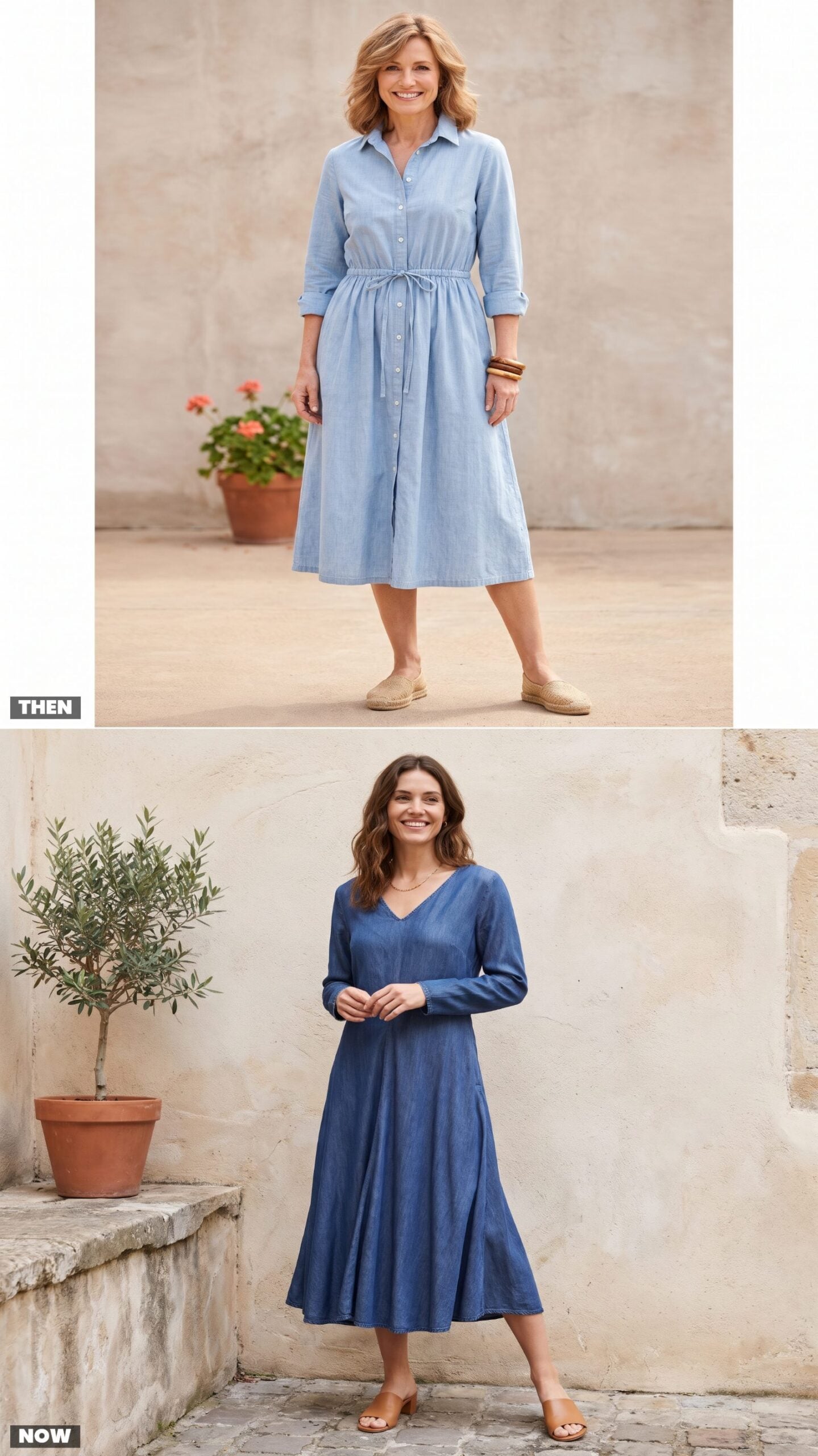
Chambray in the eighties was the easy answer — breathable, pale, forgiving, a bit shapeless around that elastic waist tie. It did the job and asked for nothing.
The modern version swaps cotton chambray for fluid Tencel-blend denim, and suddenly the fabric moves like water. The bias cut is the whole trick. It skims the body instead of hanging off it, so you get the ease of chambray with actual line and movement. That liquid drape is what separates a casual beach dress from something you’d wear to dinner. Same denim DNA, completely different behavior.
18. Sleeveless Tank Dresses vs. Ribbed Denim Bodycon Maxis
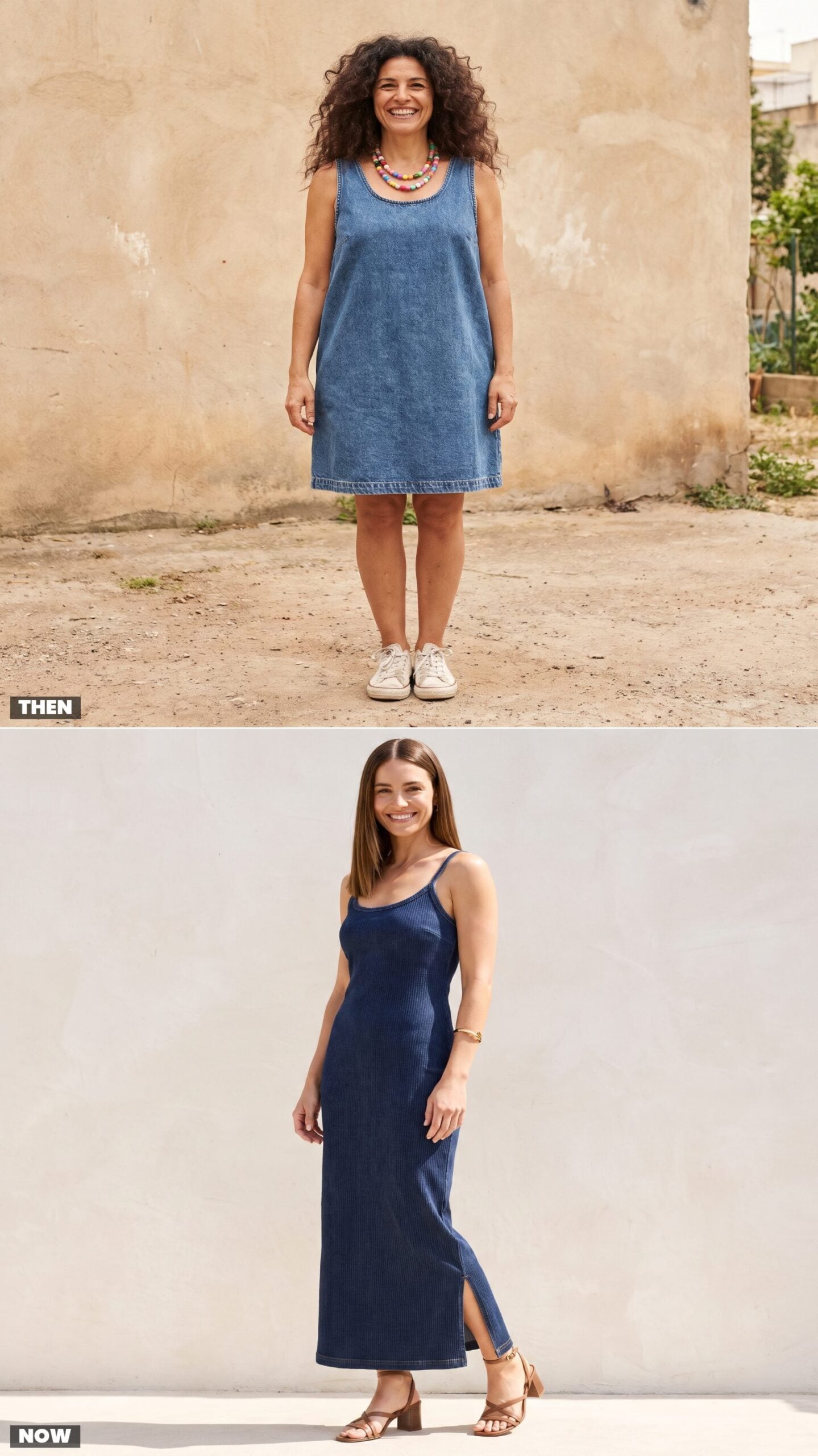
The eighties tank dress was pure boxy practicality — wide armholes, straight cut, zero relationship with the body underneath it.
Fast forward and the same sleeveless idea turns into a ribbed stretch-denim maxi that actually follows your shape. That fine vertical ribbing pulls double duty, adding a lengthening line while the stretch handles the contour. Fit and self-perception work together here. A dress that moves with you reads as confidence before you’ve said a word.
17. Studded Cowgirl Dresses vs. Refined Western Hardware
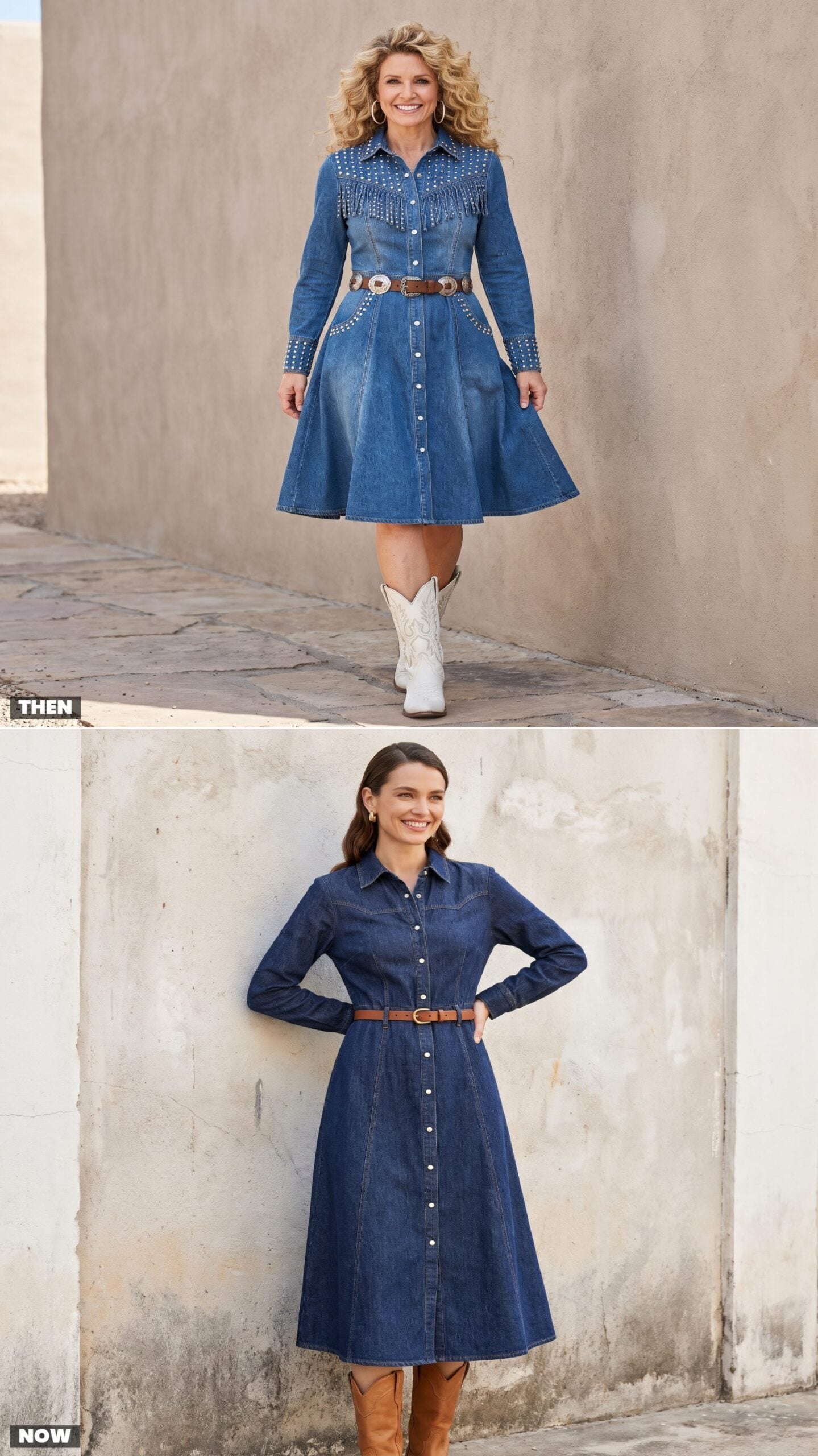
Everything that could hold a stud, held a stud. The 1985 cowgirl dress buried its denim under silver hardware, fringe, and conchos until the fabric was almost an afterthought.
The refined version keeps exactly one western signal and lets it do the talking: a single row of pearl snaps, a whisper of yoke stitching, a slim brass buckle. That restraint is what carries it. Edit the references down to one or two and the whole look reads as intention rather than costume. The denim details still nod to the ranch, but they stop shouting about it.
16. Brass-Button Sailor Dresses vs. Minimal Nautical Denim Dresses
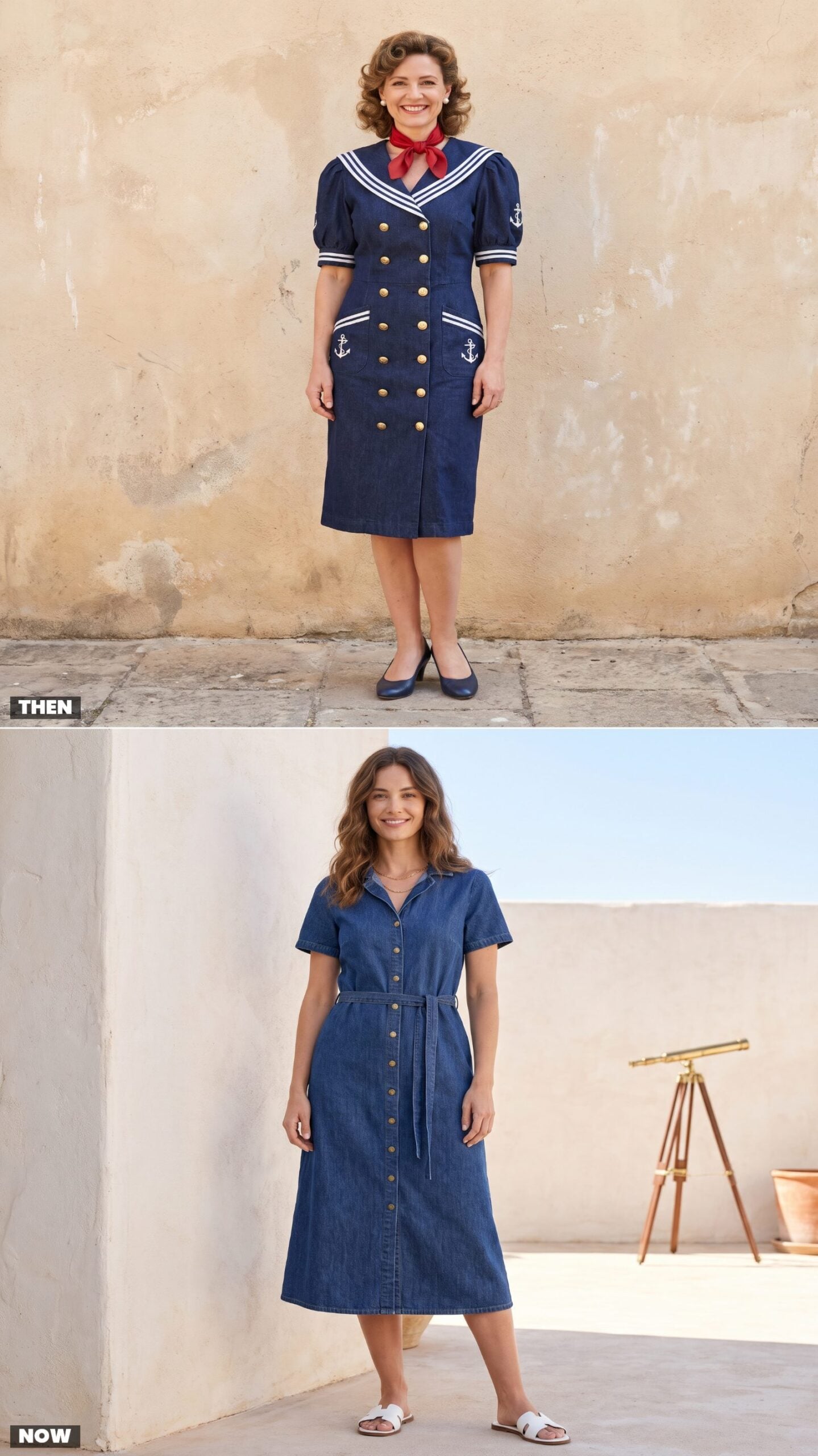
The 1985 sailor dress took the nautical theme literally — double rows of gleaming brass, a wide striped collar, an anchor motif just in case anyone missed the point.
The modern take keeps the brass and drops the costume. One row of small matte buttons, a clean collar, a self-belt that defines the waist without any help from a red neck scarf. Pulling back is exactly what makes the hardware look intentional instead of thematic. Nautical as a hint, not a headline.
15. Full-Length Button-Front Dresses vs. Split-Hem Button Midis
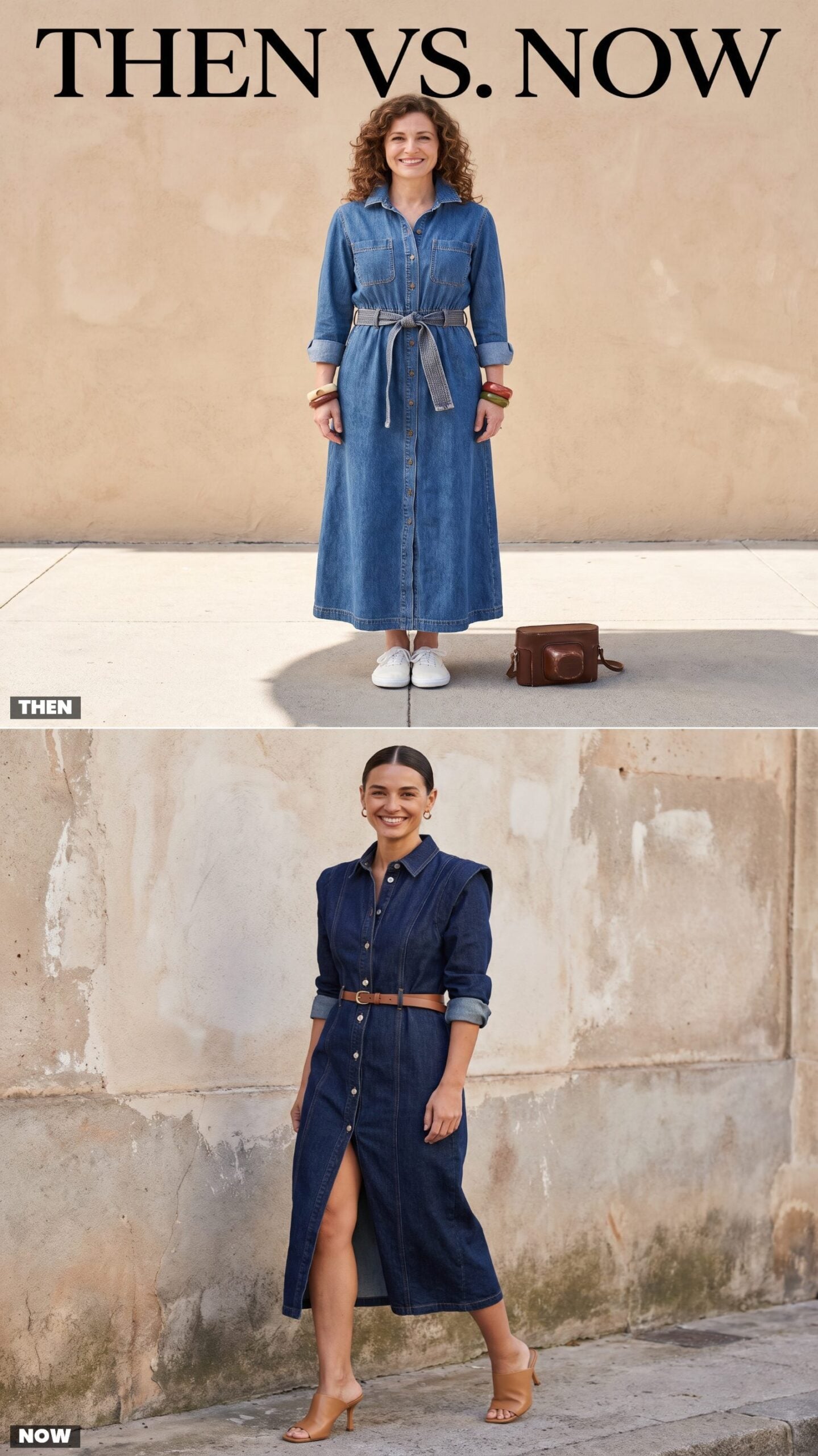
The eighties full-length button dress covered everything from collar to ankle, loose and relaxed, buttons marching the whole way down like a row of soldiers.
The split-hem midi kept the button-front but gave it a point of view. That high front split is the single most important decision in the look, turning a conservative column into something with motion and a little nerve. The movement does the flirting so you don’t have to. Tailoring through the waist earns the rest. A wardrobe is only as modern as its hemlines, and this one knows exactly where to stop.
14. Rounded Puff-Sleeve Dresses vs. Sculpted Statement-Sleeve Midis
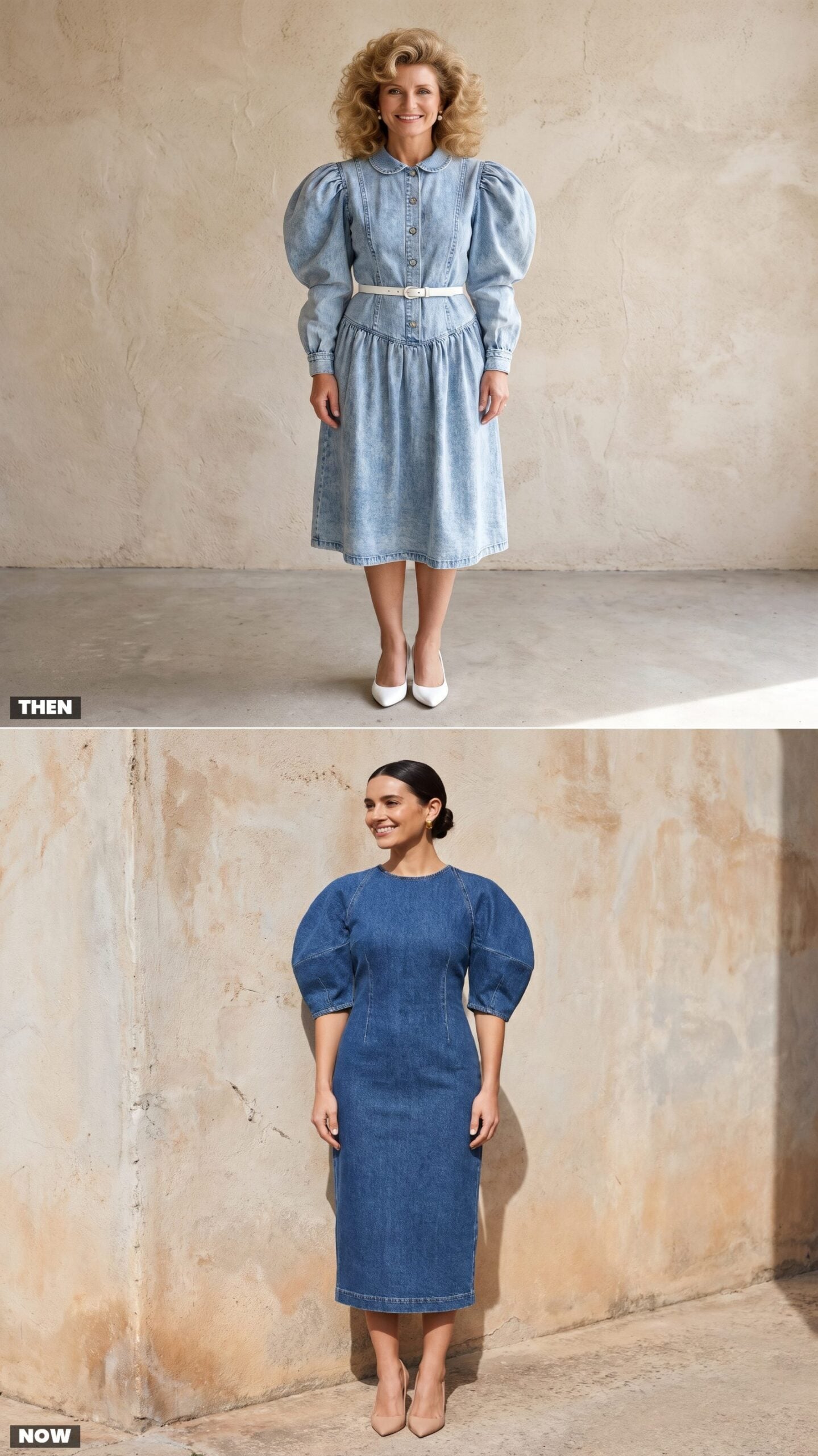
Puff sleeves in 1985 were soft, round, and romantic — gathered at the shoulder, tapering to the wrist, the kind of volume that read as sweetness.
Today’s statement sleeve has structure. Crisp and sculpted, it holds its own shape rather than leaning on gathers and a shoulder pad. That build is the whole point, adding drama at the top of the body and balancing the straight midi skirt below. A sleeve with a defined line reads as proper tailoring. One billowed. This one is engineered.
13. Batwing-Sleeve Dresses vs. Draped Dolman-Sleeve Designs
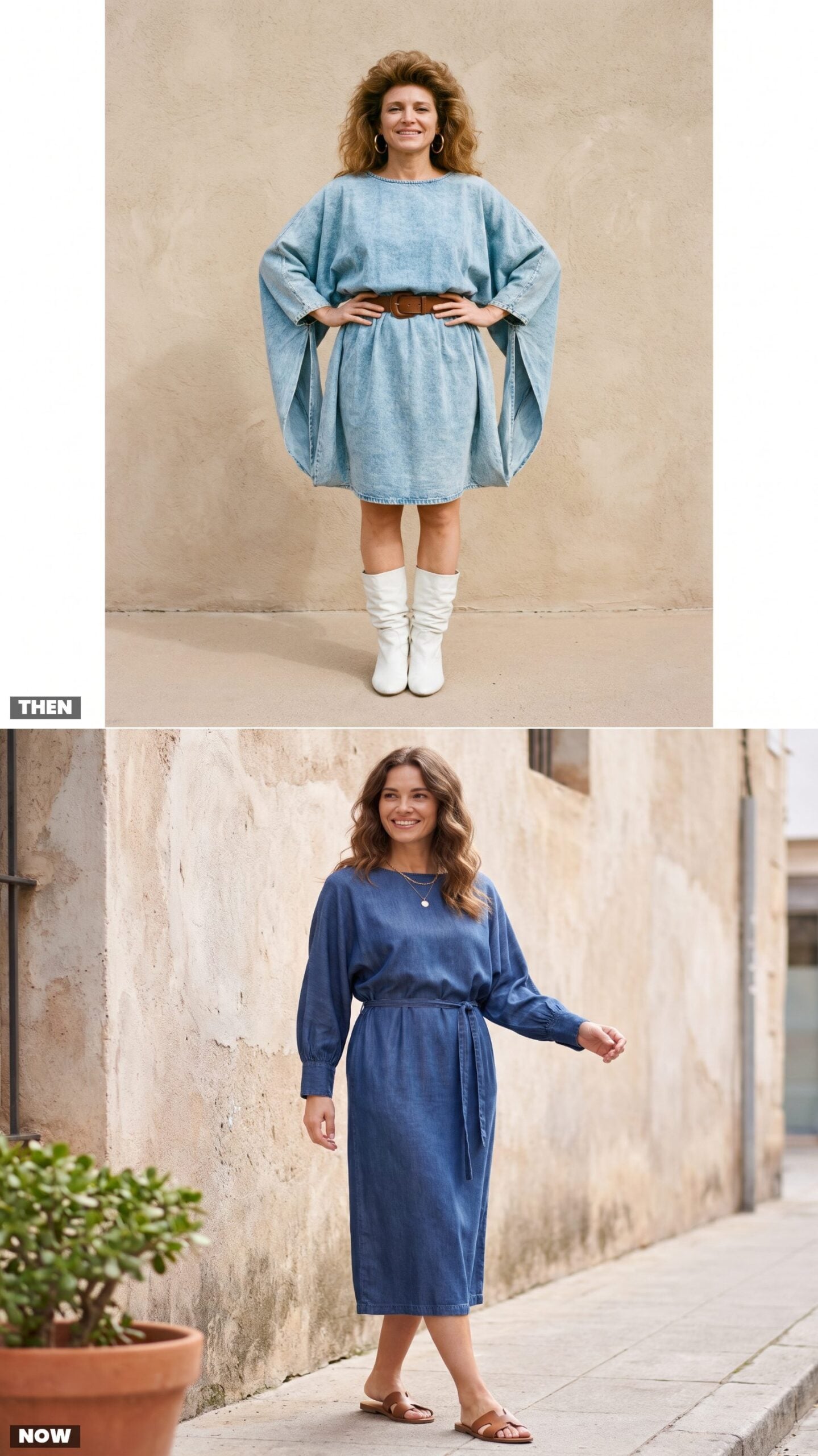
The batwing sleeve of 1985 was pure theatre. Yards of denim hanging from wrist to waist, dramatic, a little impractical, and entirely committed to the bit.
The dolman kept the ease and lost the excess — a soft sleeve that drapes from the shoulder to a fitted wrist, giving you movement without the flapping. The self-tie waist rescues the whole silhouette, pulling in all that soft fabric so you read as relaxed rather than lost inside the dress. Both prize comfort. Only one of them knows when to stop. Your style is at its sharpest when ease and shape agree, and this is where they shake hands.
12. Band-Collar Dresses vs. Clean Mandarin-Collar Designs
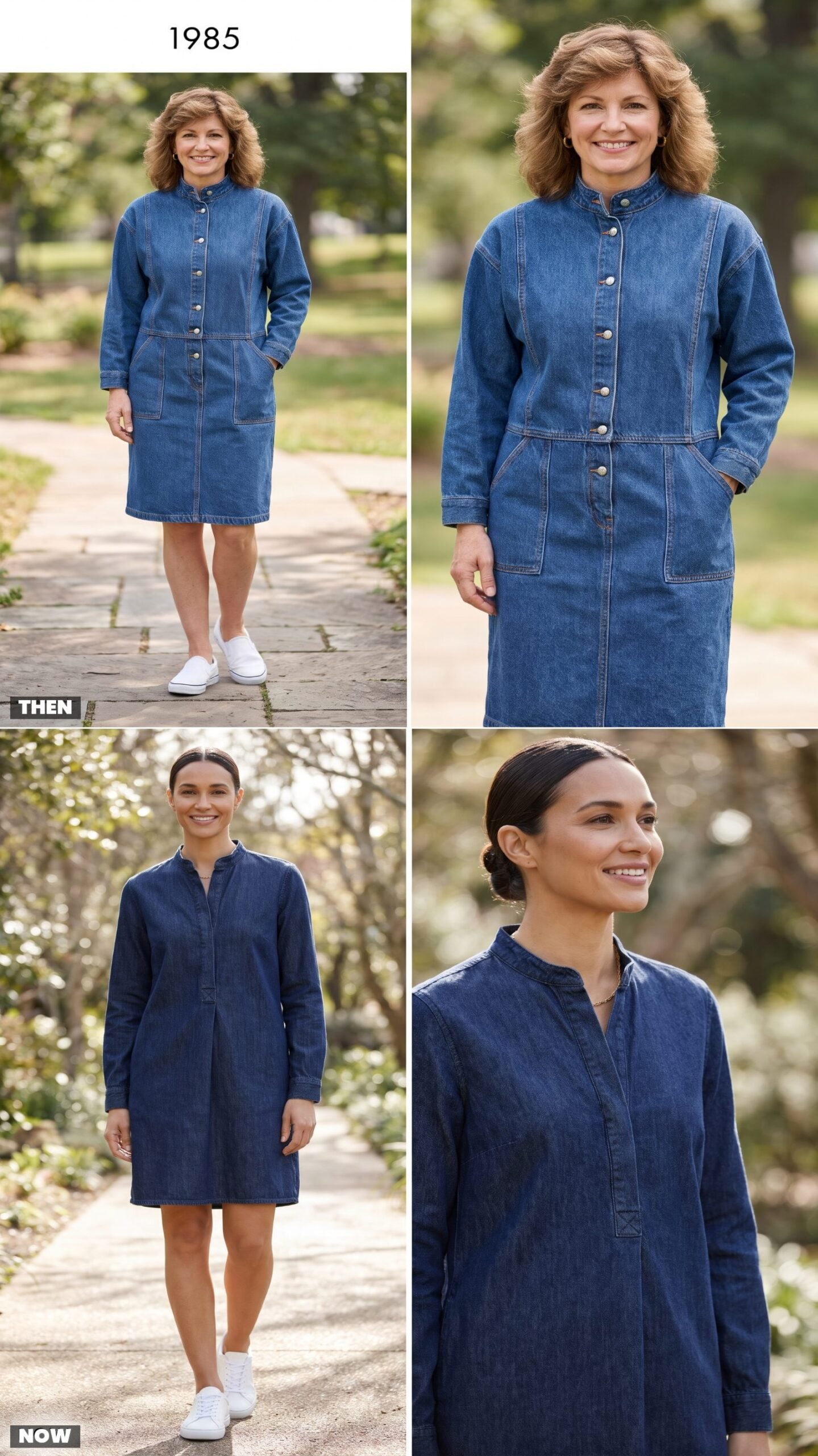
The 1985 version shouted. That high buttoned band collar, paired with boxy shoulders and orange contrast stitching, was denim trying to look like a uniform and a party at the same time, and the dropped waist flattened everything it touched — which, somehow, the era called easy.
The modern mandarin collar does the opposite work. One clean stand collar, a concealed placket, tonal stitching, and suddenly the denim reads like tailoring. Strip the hardware, slim the column, and the neckline carries the whole thing on its own. Same collar family, forty years apart. The quiet one wins.
11. Oversized Contrast Collars vs. Tonal Sculptural Collars
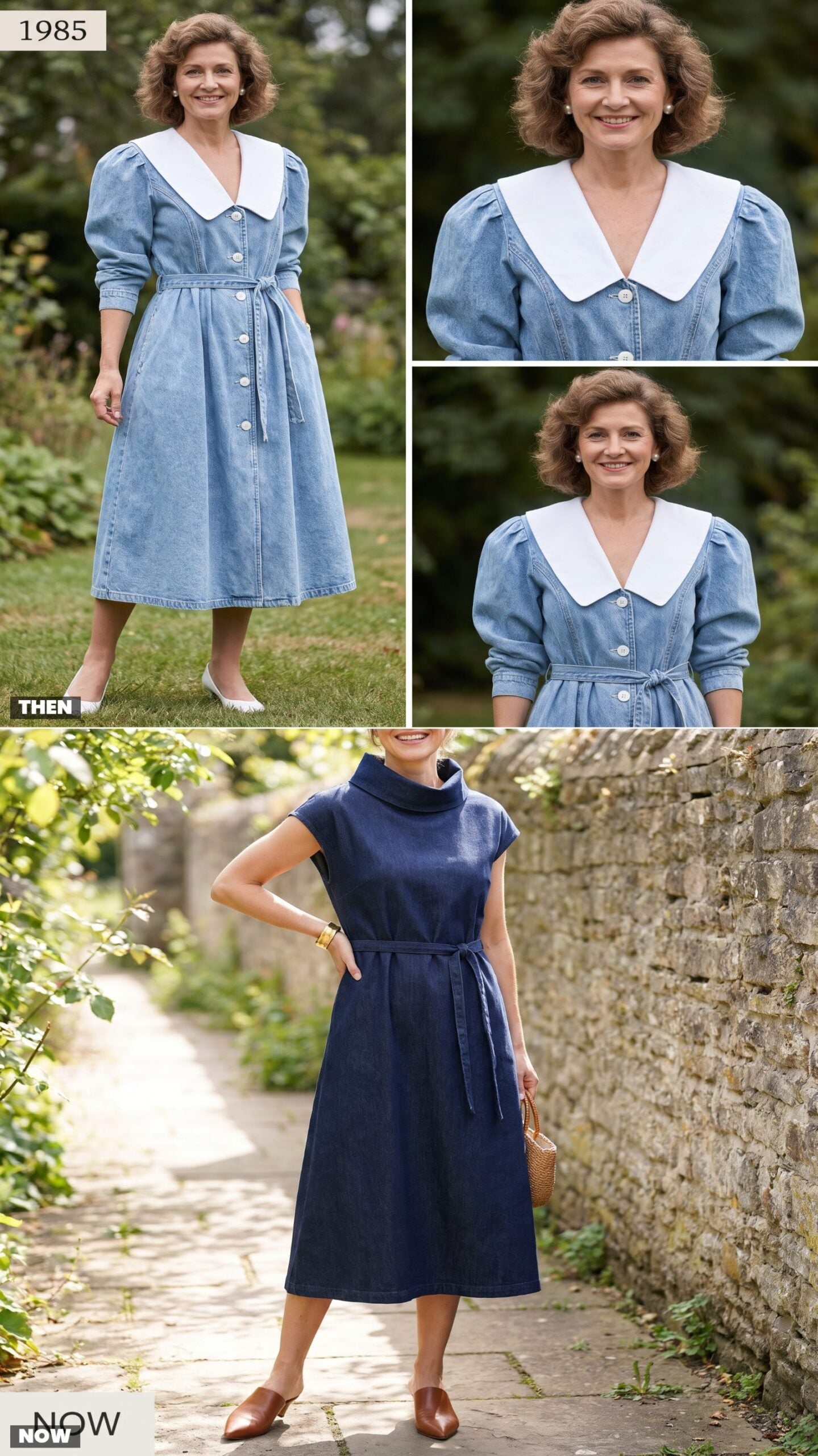
That giant white collar in 1985 was the loudest thing in any room — flat, crisp, perched on stonewashed denim like a bib with ambition. It worked by contrast: white against blue, soft against sturdy, innocence stapled onto a workhorse fabric.
Now the collar is carved from the same cloth as the dress. No contrast at all, just shape. A funnel neck or a raised structural edge does the drama through form instead of color, letting one fabric and one color carry the whole look. Nobody needs the white collar to notice the neckline anymore.
10. Exposed Brass Zippers vs. Sleek Two-Way Zip Dresses
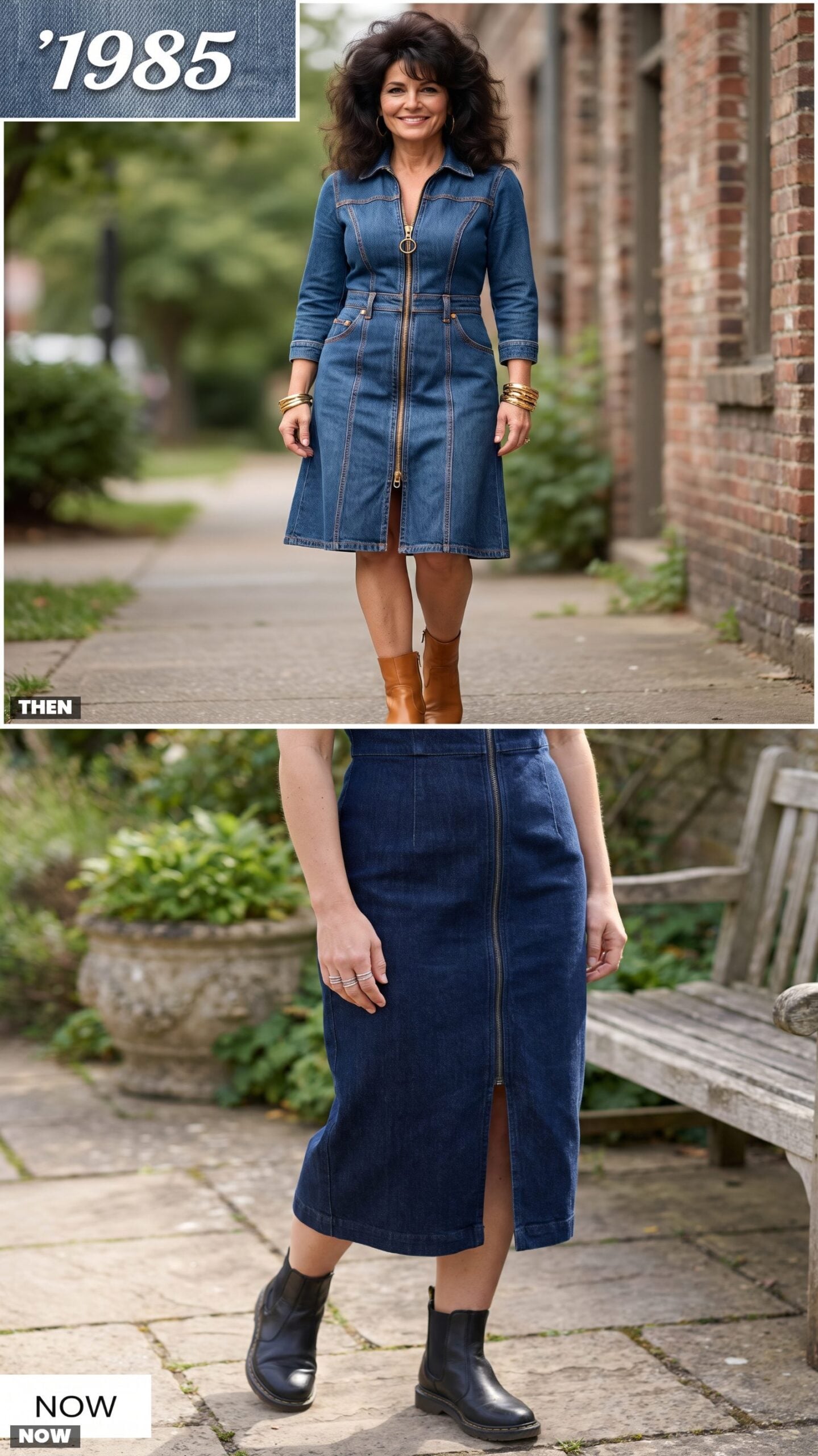
The brass zipper was the hero and the villain of 1985 denim. Chunky, gleaming, a ring pull the size of a key fob running straight down the front. It announced the dress before the woman did.
The modern two-way zip went flush and quiet — matte gunmetal, slim tape, lying flat against a dark rinse so it reads as a seam until you look twice. And the function improved too: unzip from the bottom when you sit and the skirt stops fighting you. Same hardware instinct, now with manners.
9. Eyelet-Trimmed Denim Dresses vs. Laser-Cut Denim Panels
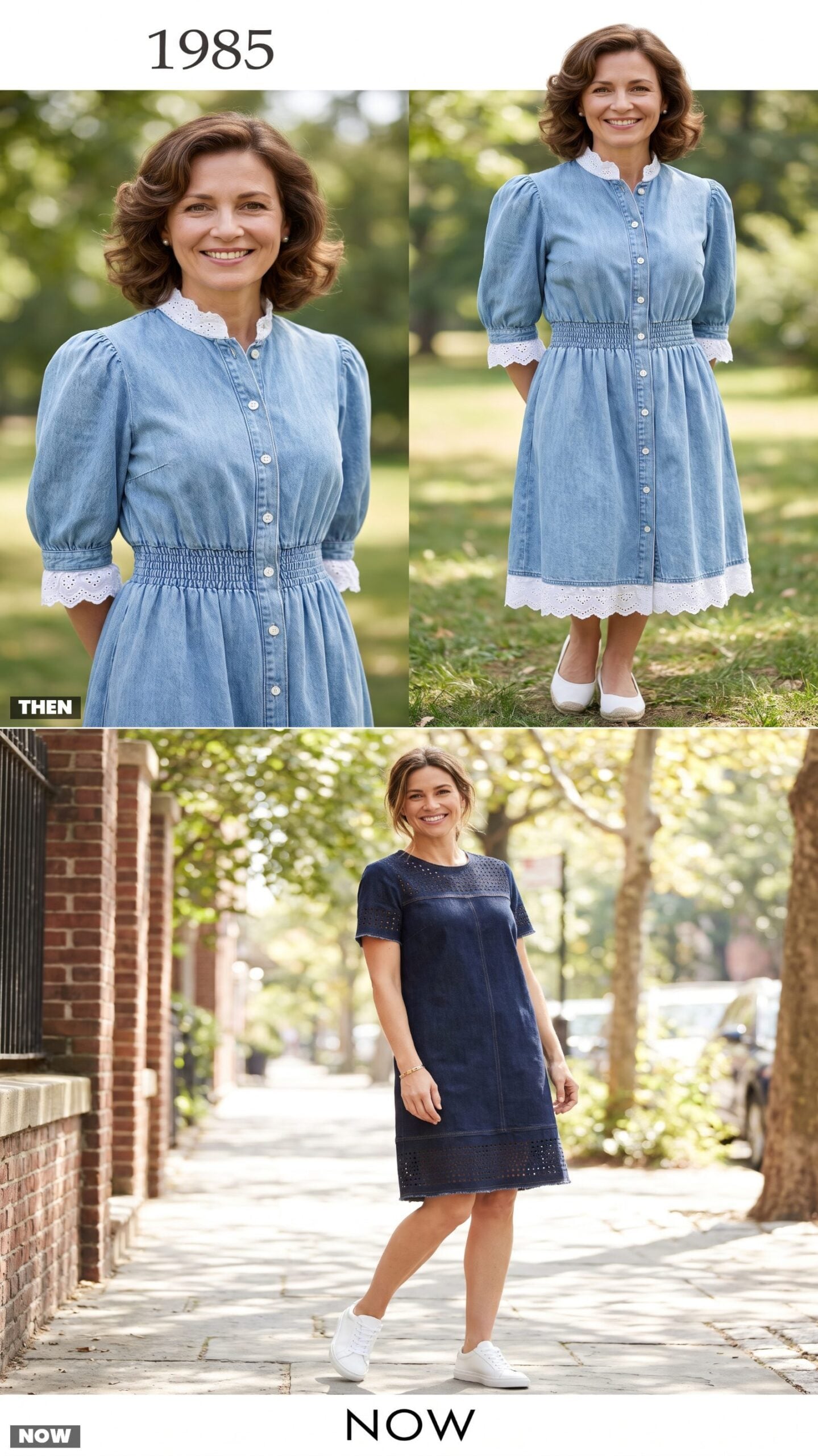
Eyelet trim softened everything in 1985. That white broderie anglaise edging at the collar and hem turned a workhorse fabric sweet, almost prairie, and read as romance pinned onto something sturdy. Plenty of women loved exactly that tension.
Laser cutting took the same idea — the openwork, the pattern, the play of light through holes — and made it machine-sharp. No lace, no thread, just precise perforations burned straight into the denim along the yoke. One is handwork nostalgia; the other is a machine flexing. Both let air and light do the decorating. The denim details are where the forty-year gap shows loudest.
8. Floral-Embroidered Dresses vs. Tonal Botanical Stitching
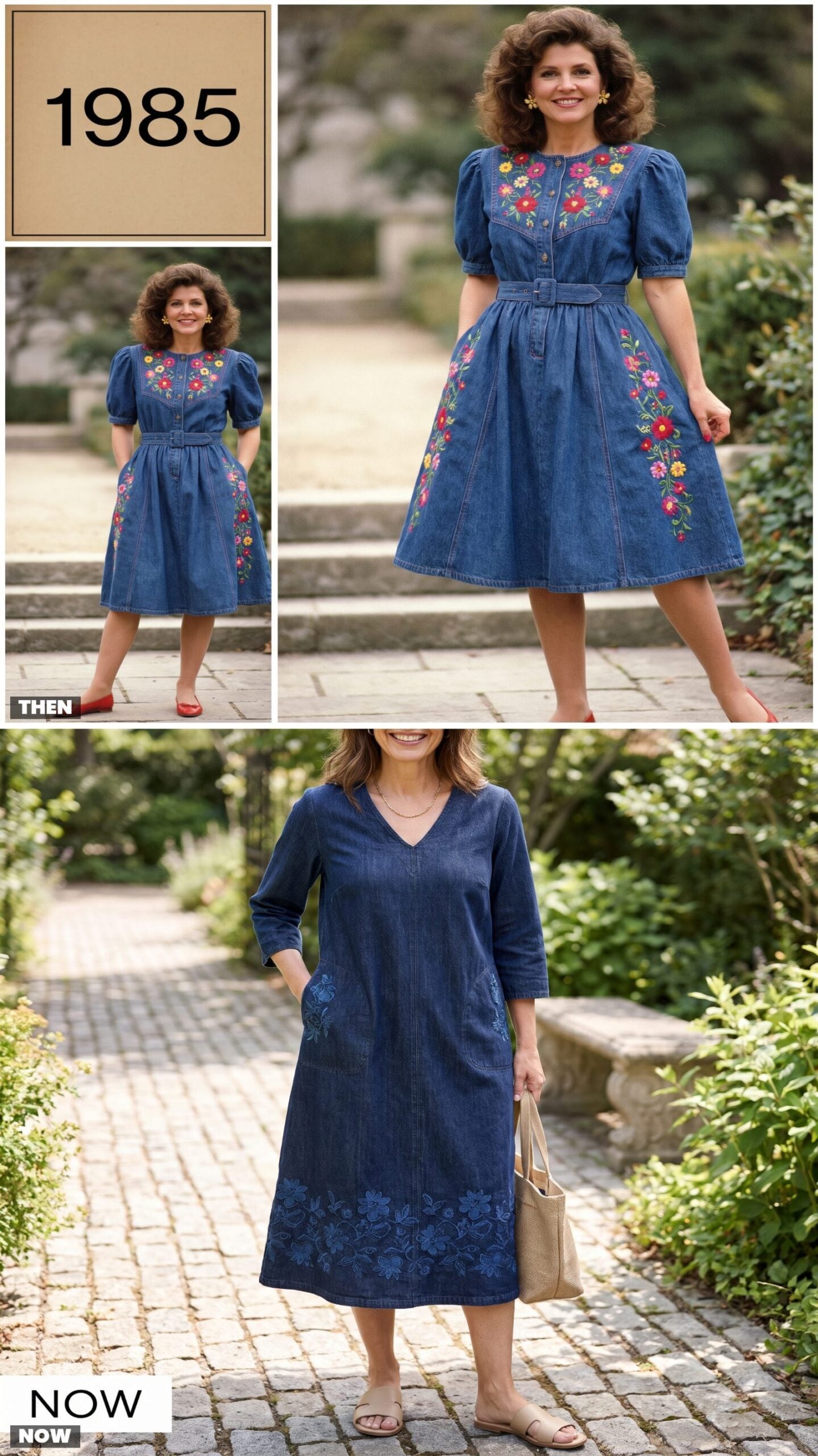
Color everywhere. The 1985 embroidered denim dress wore its flowers like a billboard, red and yellow and green blooms crawling across the yoke and down the skirt. Subtlety was never the assignment.
The modern take keeps the needlework and ditches the rainbow — tone-on-tone botanical stitching in matching blue thread, so the flowers only show themselves when you lean in. Texture you feel before you see. It’s the difference between a dress that performs for strangers and one that rewards whoever’s already standing close.
7. Rhinestone-Trimmed Party Dresses vs. Crystal-Studded Denim Minis
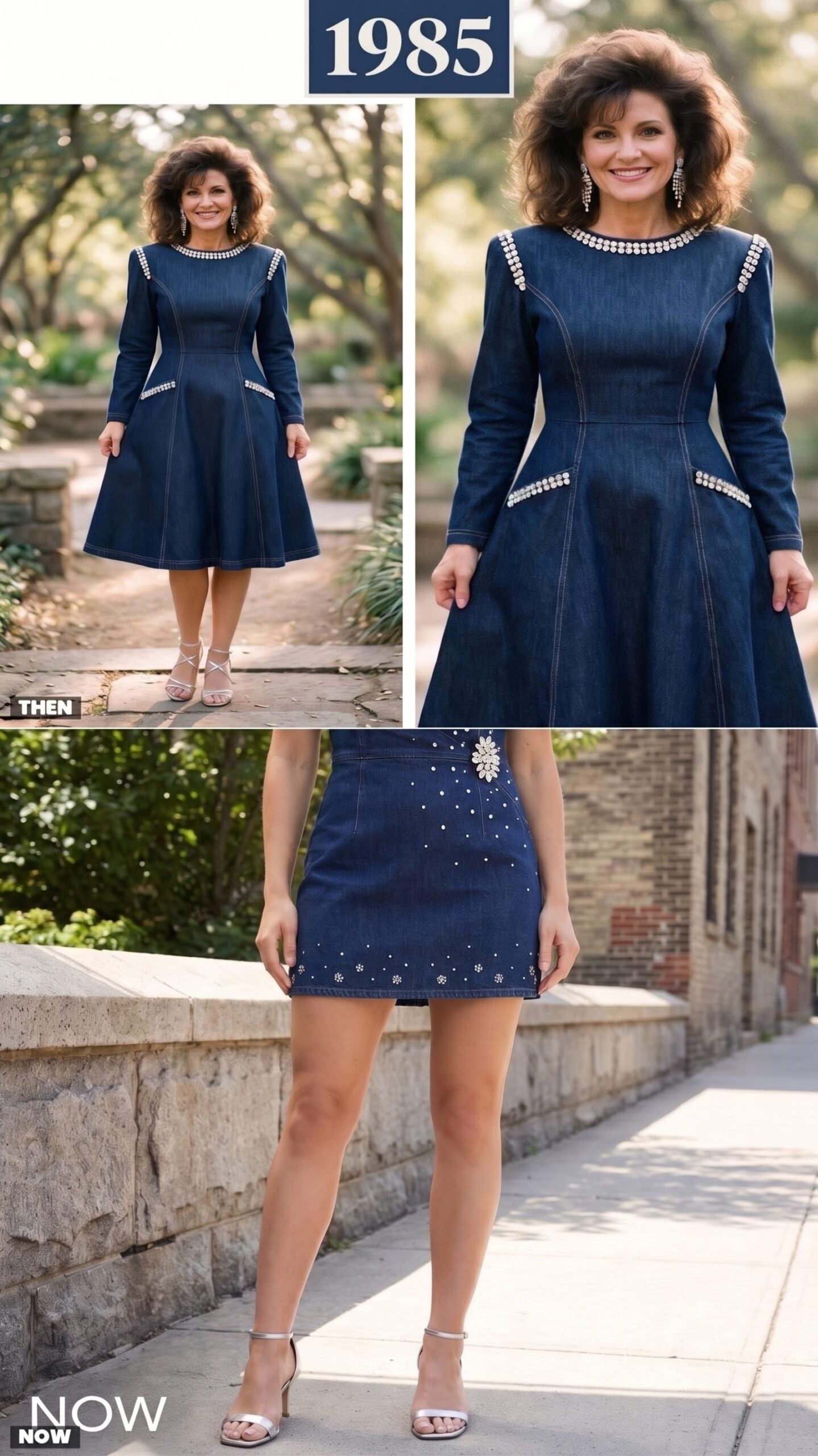
Rhinestones in 1985 went on like frosting. Every shoulder, every pocket, the collar, all of it catching the light at once. The dress wanted to be seen from across a parking lot, and it absolutely was.
The modern crystal-studded mini places the sparkle instead of spreading it — a cluster at one side of the waist, a glint along the hem, everything else left plain dark denim. The eye goes where the crystals gather because the rest stays quiet. Same shine instinct, edited by someone who finally learned that more is just more.
Sparkle reads as luxury only when there is something plain around it to notice.
6. Western Fringe Dresses vs. Runway Denim Fringe Maxis
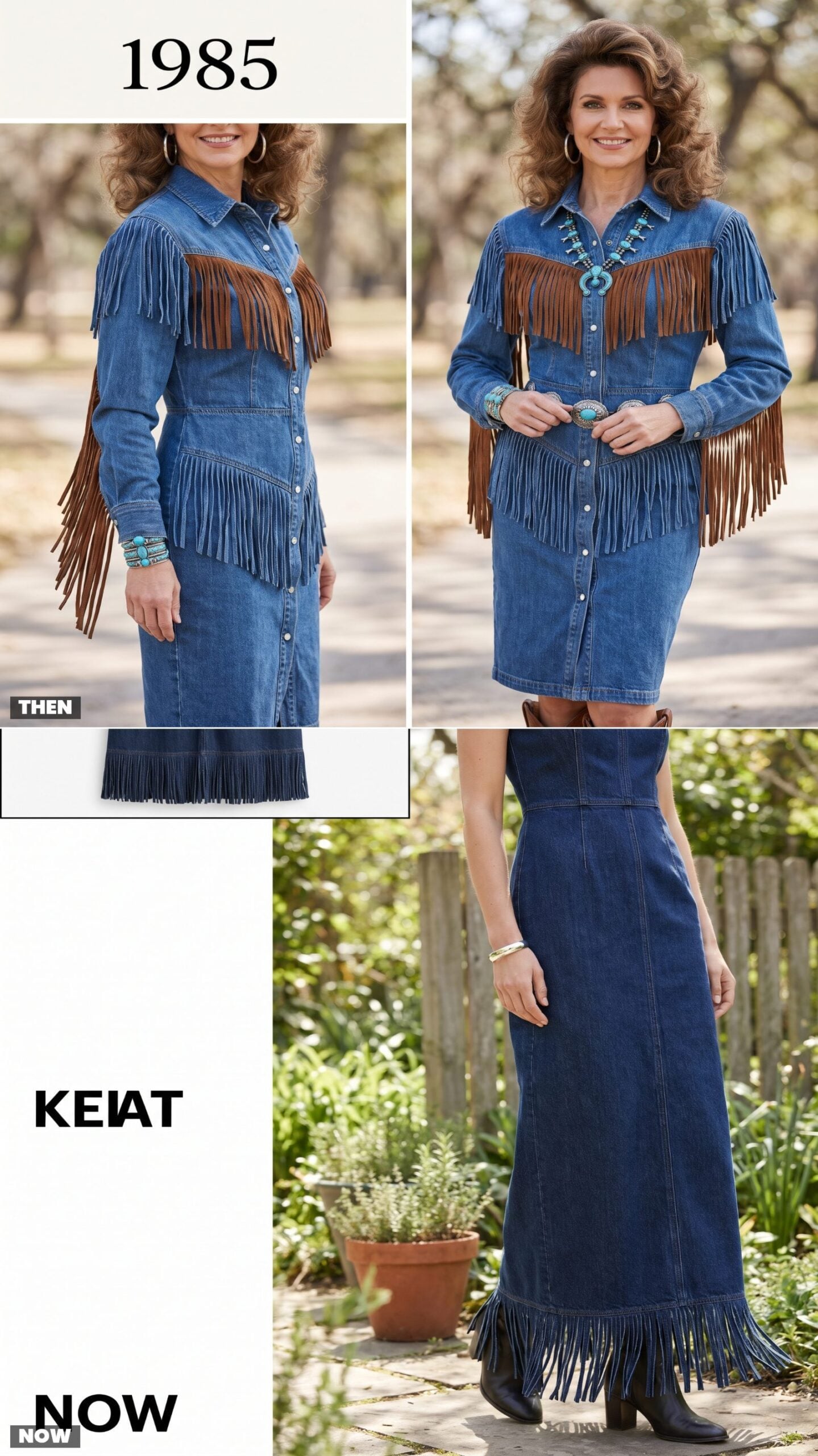
The 1985 fringe dress leaned all the way into cowgirl. Suede tassels swinging off the yoke and hips, snap buttons, a concho belt, turquoise stacked on every surface. A costume you could wear to the grocery store — that was the fun of it.
The runway maxi kept exactly one idea from all that: movement. Long self-fringe hangs only from the hem of a dark indigo column, so the dress stays sleek up top and comes alive the second you walk. All-over theme traded for a single kinetic detail. Western became a texture instead of a getup.
5. Wide Elastic Belts vs. Modern Corset-Belt Styling
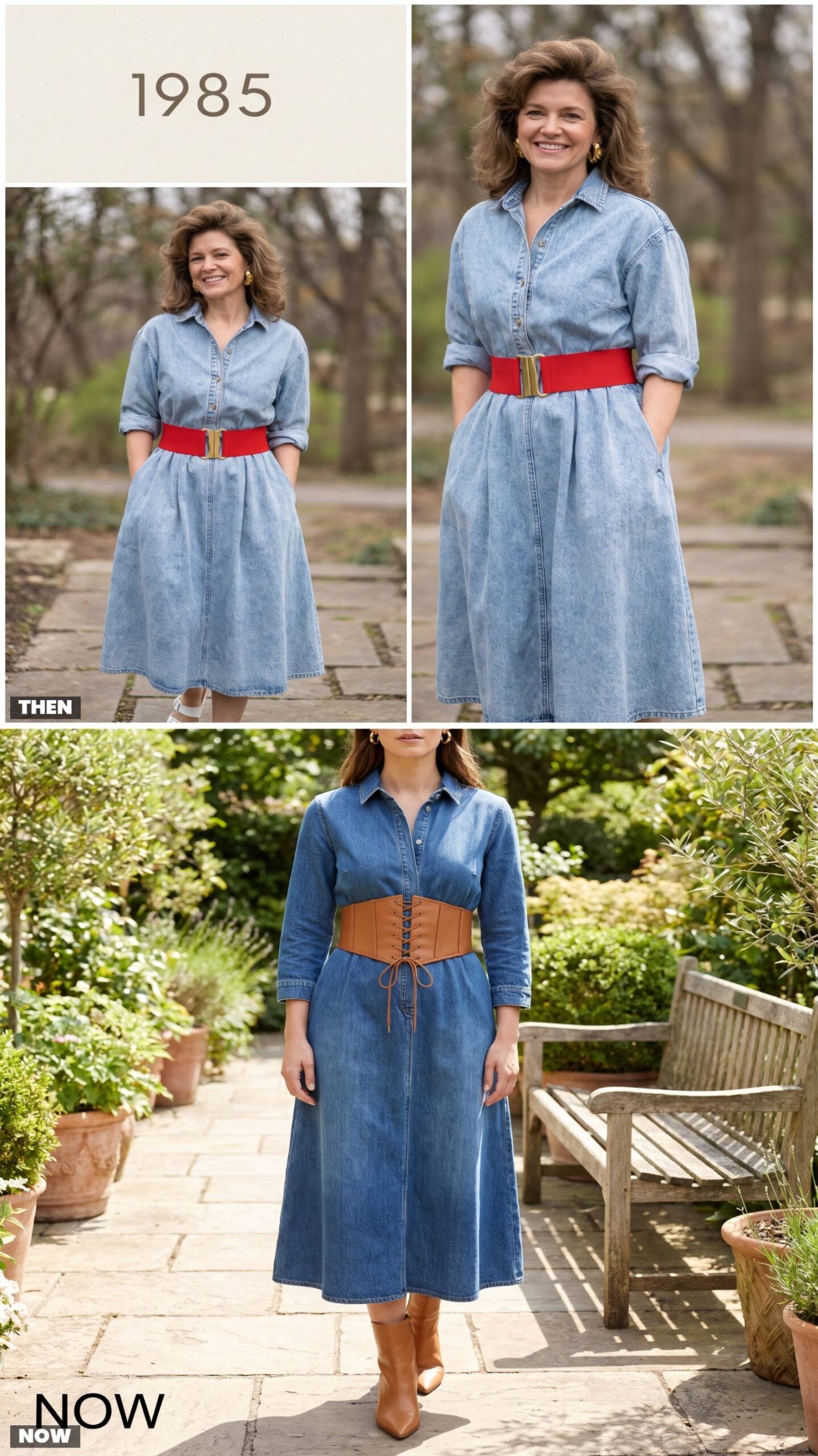
That wide red elastic belt was the 1985 fix for a shapeless dress. Snap it on, cinch the middle, done. The stretch meant it never quite held its shape, and the giant gold buckle did most of the talking.
The corset belt does the same job with structure — a stiff leather band that curves over the ribs, carving a waist instead of just hinting at one. Rigidity in place of elastic. Support you can actually feel, versus support that gives the second you exhale.
4. Matching Jean Jackets and Dresses vs. Tonal Double-Denim Layering
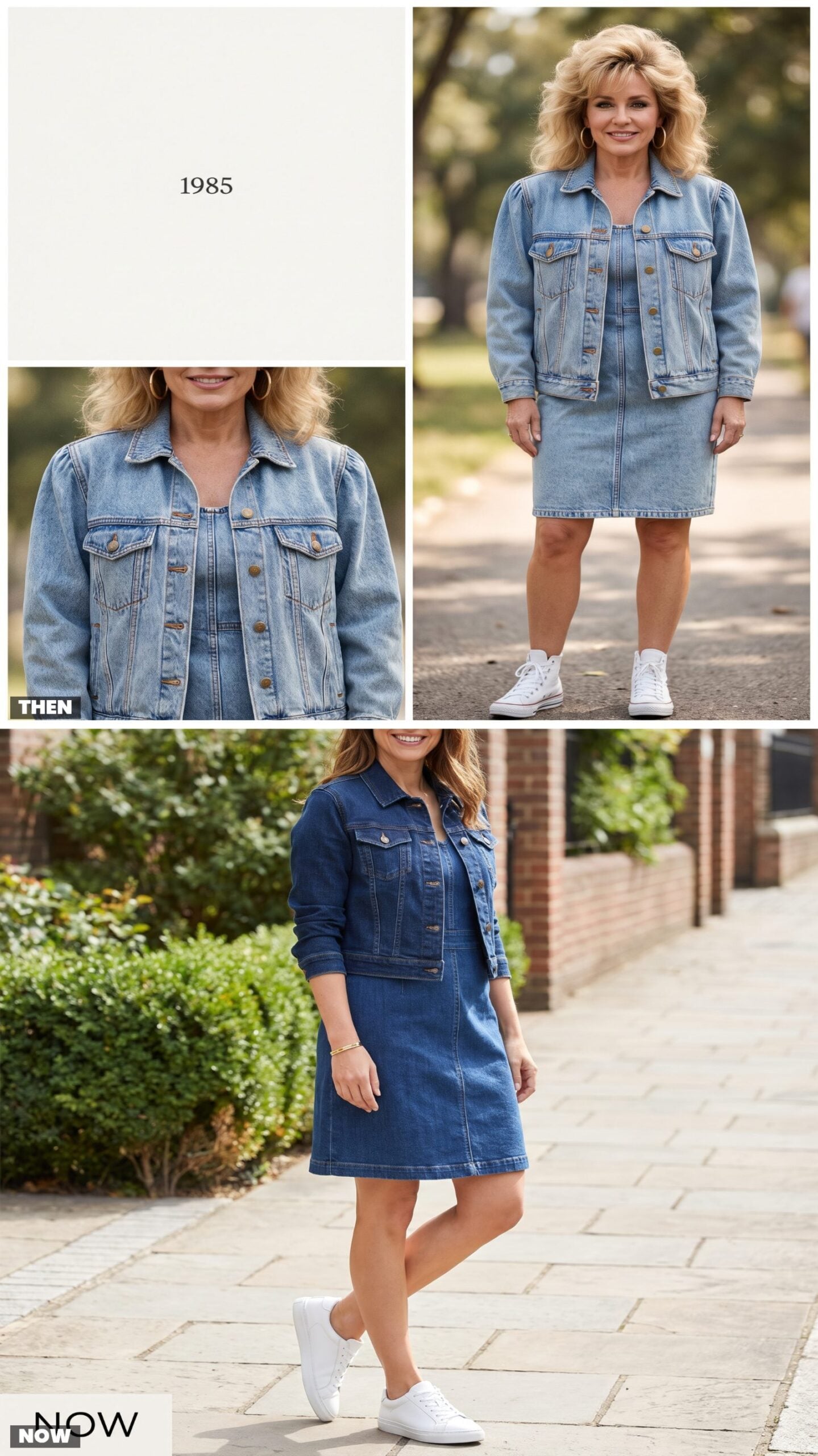
The 1985 matching set was denim committing to the bit. Identical stonewash top to bottom, puffed shoulders on the jacket, orange stitching screaming off both pieces. It looked like one enormous garment somebody cut in half, and that sameness was the whole flex.
The modern approach plays with shade instead of matching it. A dark jacket over a mid-wash dress, close enough to read as one idea, different enough to add depth. A tonal gradient in place of exact repetition. This is where a well-cut denim jacket earns its keep, and it’s why so much trending denim now sells the top and bottom in deliberately mismatched blues.
3. Maternity Denim Smocks vs. Stretch-Panel Denim Midis
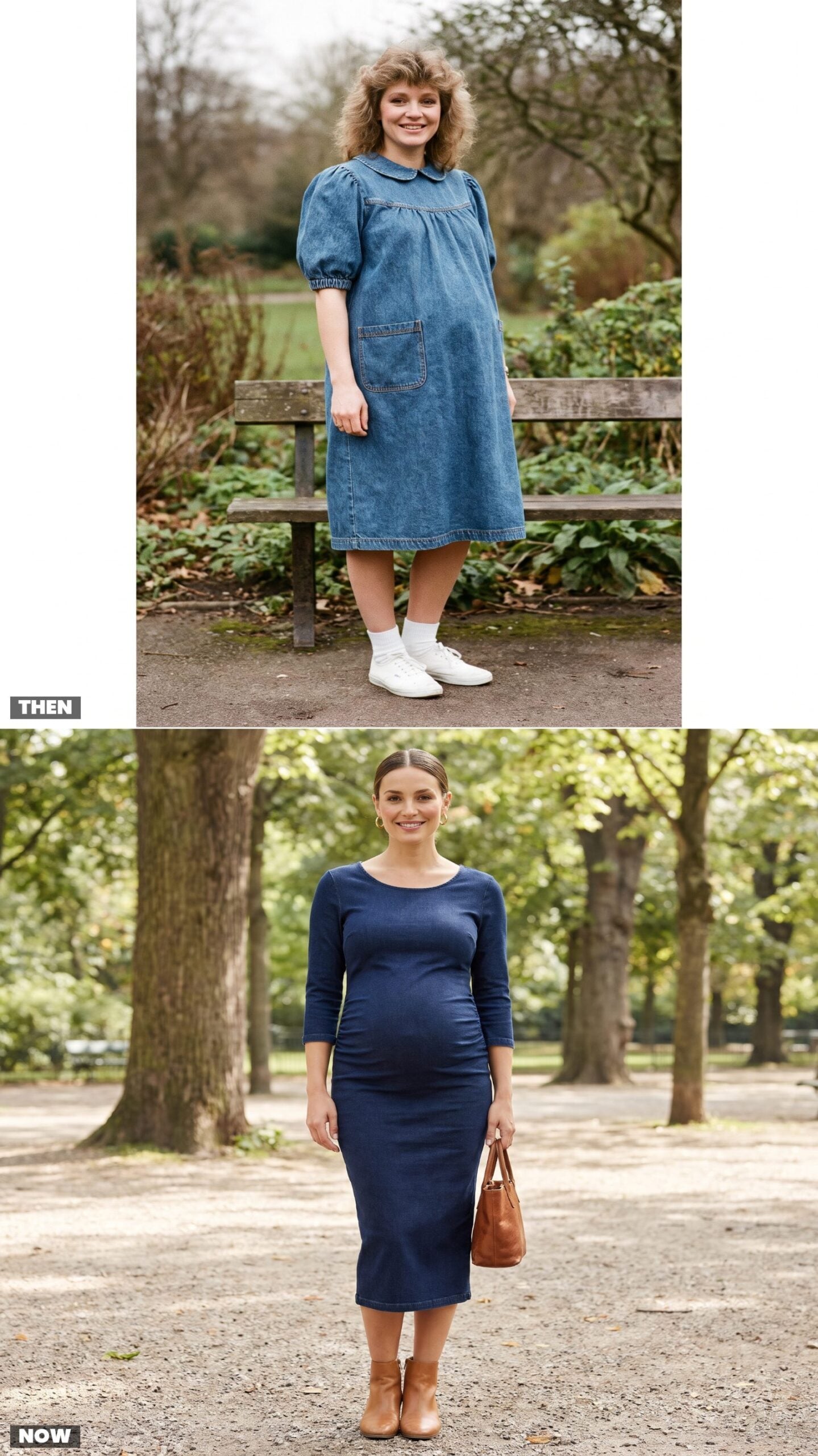
The 1985 smock had one job: hide. It did that by swallowing the whole body in stiff stonewashed denim, puffed sleeves and a bib yoke that made every pregnant woman read like a piece of upholstered furniture. Comfortable, sure. Shapeless by design, and proud of it.
The modern midi does the opposite. A soft indigo stretch panel curves over the bump instead of draping away from it, so the body-skimming cut lets a woman look like herself, just pregnant. It all comes down to fabric. Rigid denim could only go loose, while stretch denim follows a shape without squeezing it.
2. Limited-Cut Fuller-Figure Dresses vs. Curve-Specific Seamed Designs
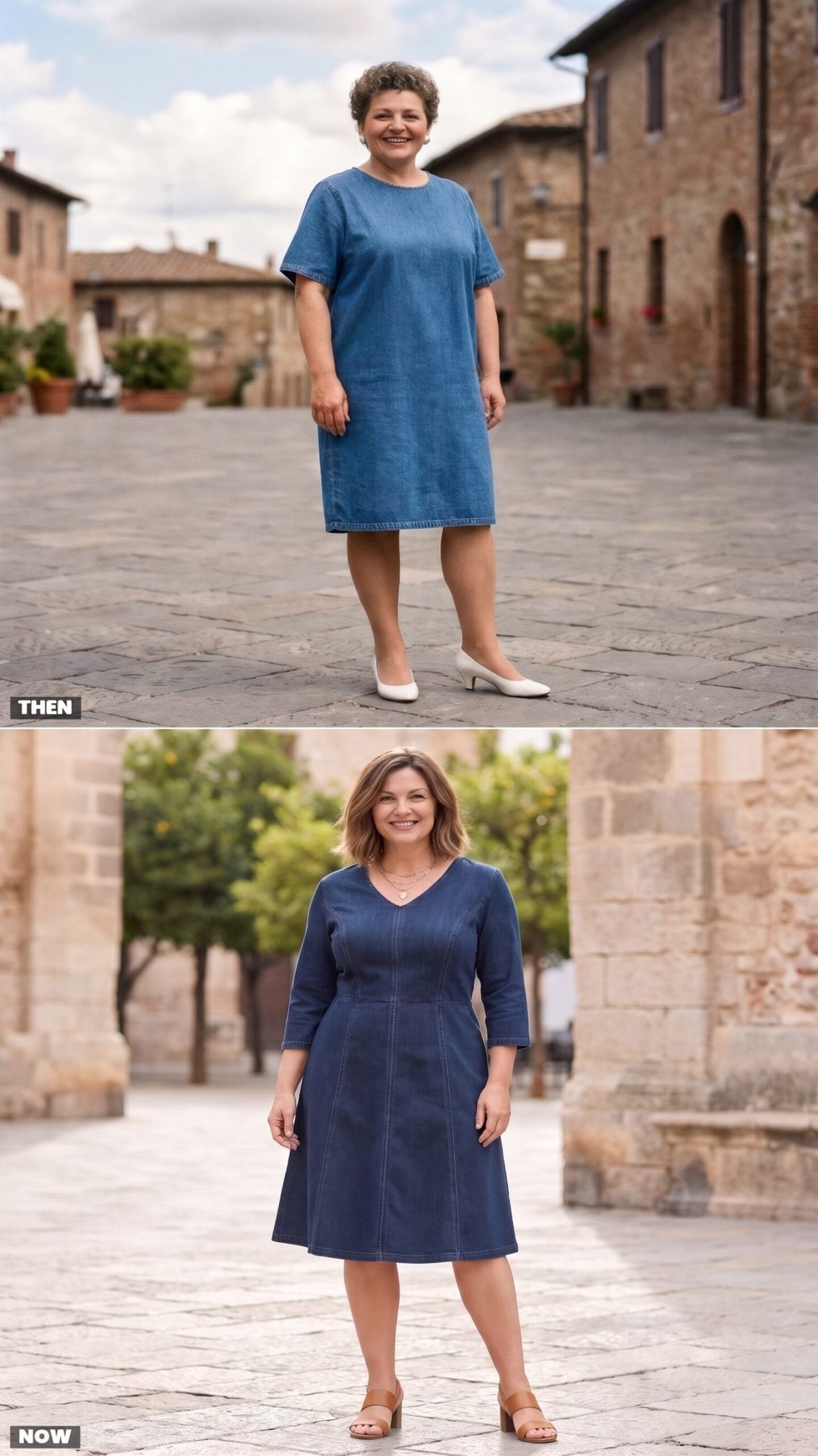
Back in 1985, a fuller-figure woman got whatever the pattern cutters bothered to grade up, which usually meant a straight denim shift with no seaming and no waist at all, hanging straight past a figure the dress itself refused to acknowledge. Size was something to drape over, never something to design for.
The curve-specific version flips the whole logic. Princess seams do the shaping, carving a waist into the garment instead of cinching one on top of it. The dress is built to follow the body rather than box it.
A fit-and-flare skirt in soft dark denim finishes the job, defining the waist and giving the hip room without excess fabric. From across the street you can tell the difference between a dress that was merely sized and one that was actually designed for a real figure.
Grading a dress up is not the same as designing one for curves, and for decades the industry pretended it was.
1. Repurposed Jeans Dresses vs. Designer Upcycled Denim
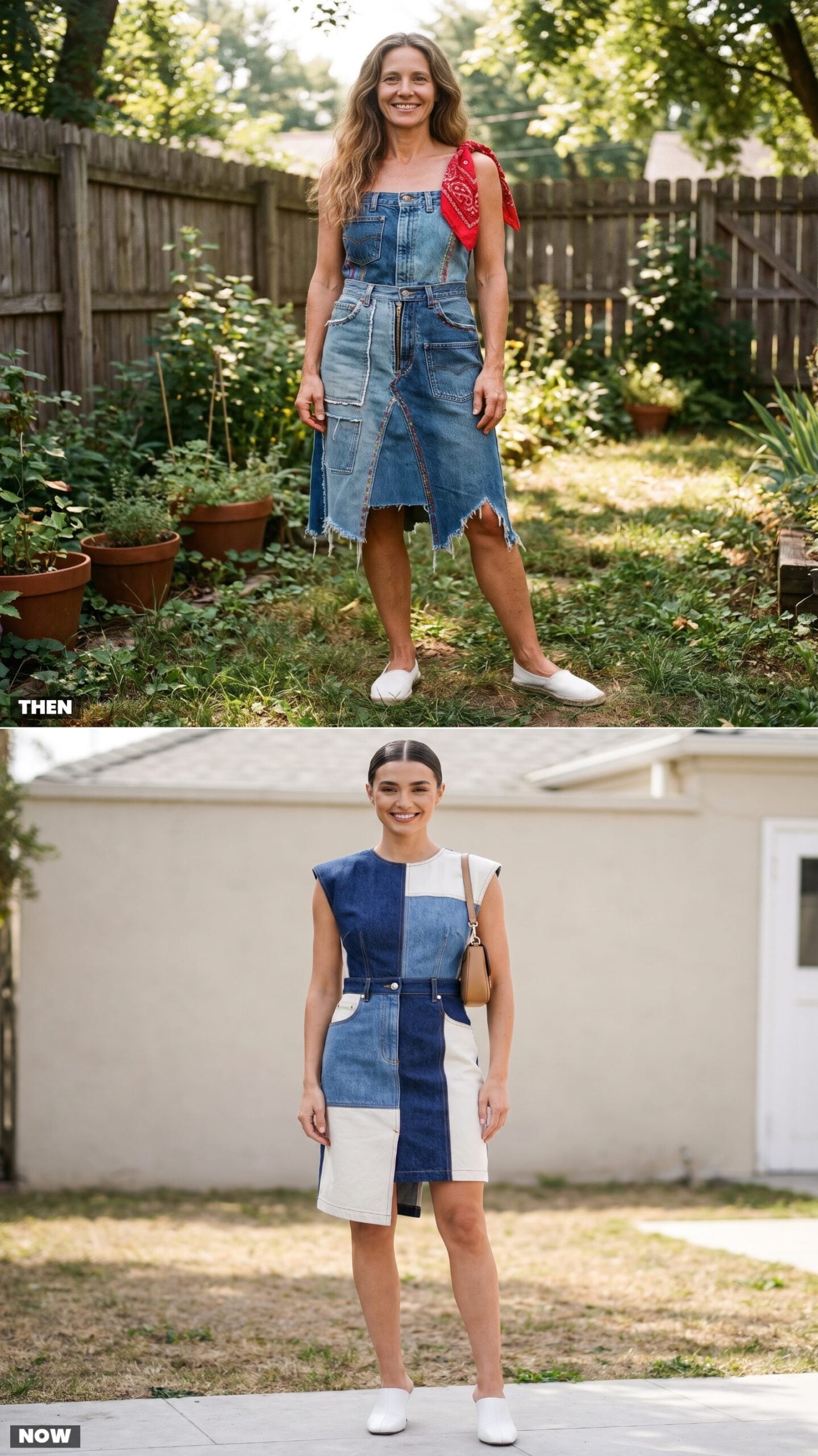
The 1985 jeans dress was a Saturday project. Two old pairs cut apart, stitched back together with embroidery floss, waistbands and belt loops left in as proof of where the denim came from. Charming, scrappy, unmistakably handmade. The seams did not line up and nobody pretended they did.
The designer upcycled version takes that same idea and runs it through a studio. Contrasting indigo and ecru panels get color-blocked on purpose, the topstitching is clean, the waist is tailored, the hem is deliberate. What used to whisper thrift now announces intent. Same raw material, completely different confidence.
Hunting for trending denim with a conscience? This is where the old DIY instinct and real tailoring finally meet on equal terms.