
❤️ Would you like to save this?
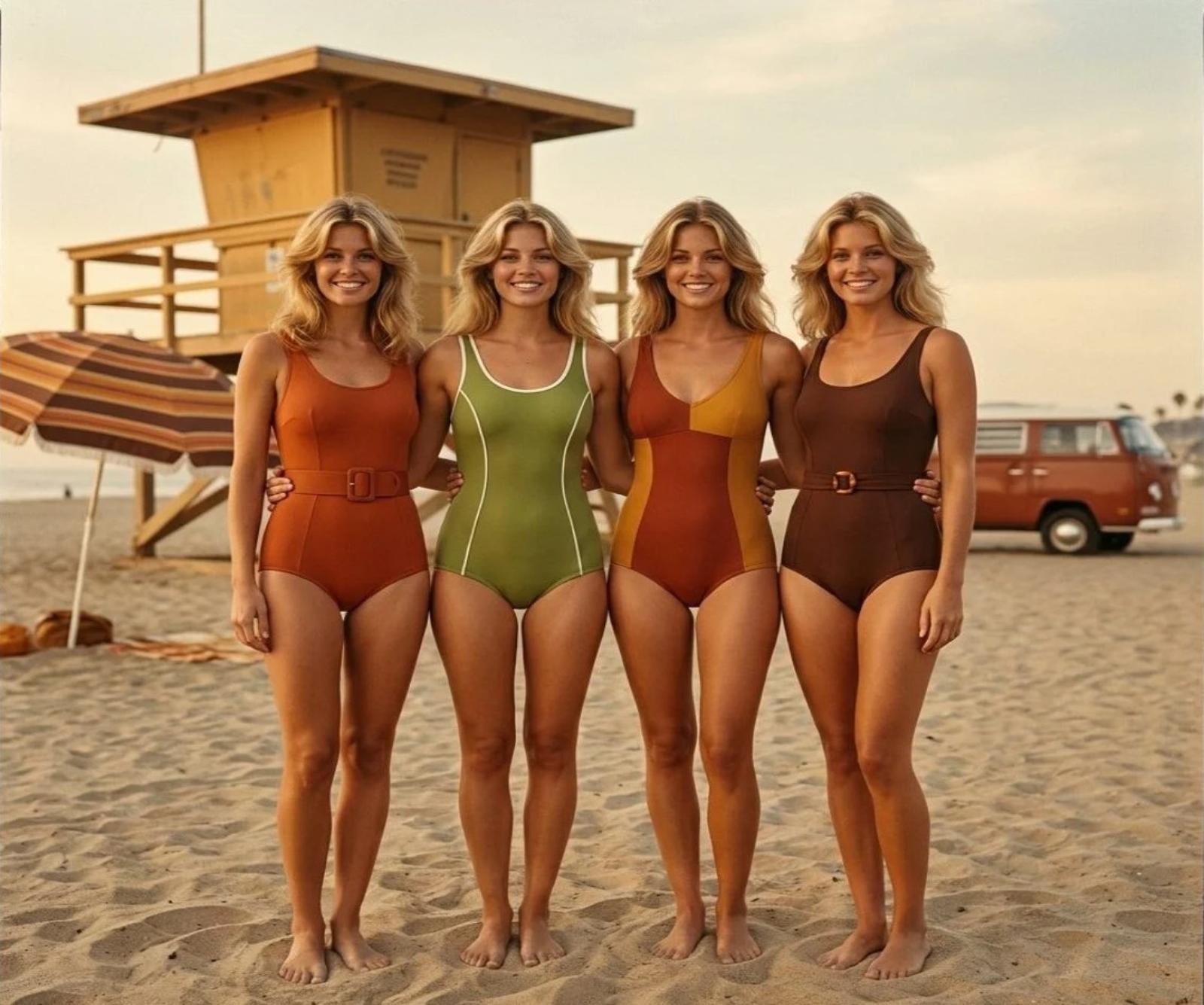
The swimsuit rack in 1970 smelled like rubber and ambition. Structured cups, full coverage, a silhouette that owed more to architecture than comfort. Women wore swimwear that held opinions about the body rather than simply covering it. Fifty-five years later, the philosophy has flipped so completely that side-by-side, the two eras look like different sports entirely. Here are 26 specific things that changed, shown exactly as they were and exactly as they are now.
FYI, thanks to AI imagery software, we’re able to create very specific fashion and hairstyle examples to illustrate the points being made. In some cases, imagery is exaggerated to hammer home the point. Also, assume links that take you off the site are affiliate links such as links to Amazon. this means we may earn a commission if you buy something.
26. The Swimsuit Fabric Went From Heavy Cotton to Second Skin
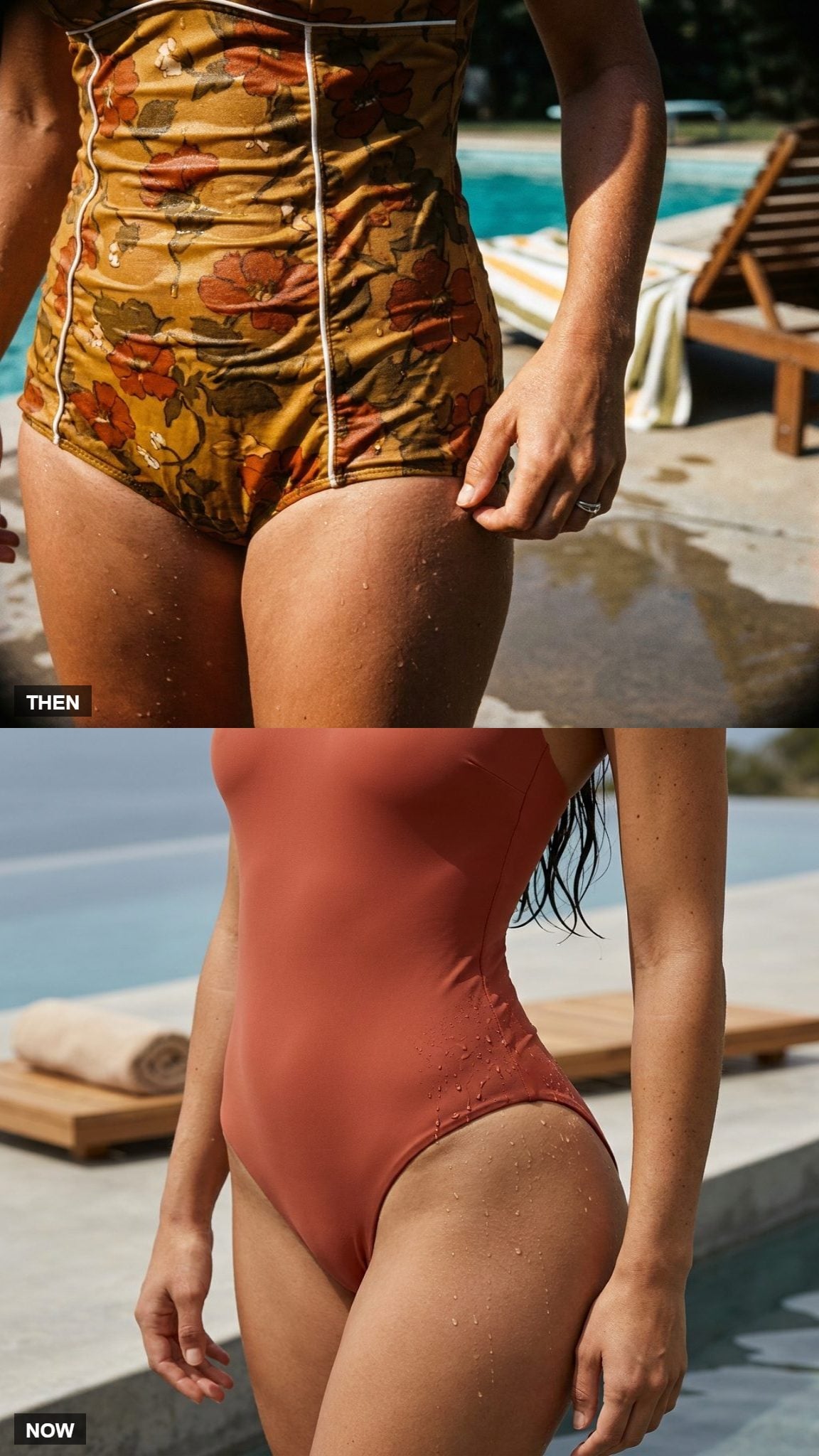
In 1970, a wet swimsuit was essentially a wet sweater. Cotton-polyester blends absorbed water like a sponge, added real weight once you were in the pool, and sagged in places you’d rather they didn’t. Getting out of the water meant tugging and readjusting for a solid minute before you looked like yourself again.
Now swimsuit fabric is a feat of engineering. Chlorine-resistant Italian nylon, four-way stretch blends, UV-blocking weaves so thin they’re nearly weightless, the suit performs whether it’s wet or dry. It holds its shape on the first lap and the hundredth. The fabric changed everything else about how swimwear is designed.
25. Swimsuit Leg Opening: Modest Arc vs. Sky-High Slash

The leg opening on a 1970 one-piece sat right at the thigh crease, a gentle, practical arc that covered what coverage was for. No drama. No architectural intent. Just a leg hole.
Today that same cut has migrated to the natural waist, sometimes above it. The high-cut leg line is now a deliberate design statement, used to lengthen the leg visually and shrink the suit’s footprint to almost nothing. It’s the same garment category doing a completely different visual job.
24. The Swimsuit Back: Full Coverage vs. Calculated Exposure
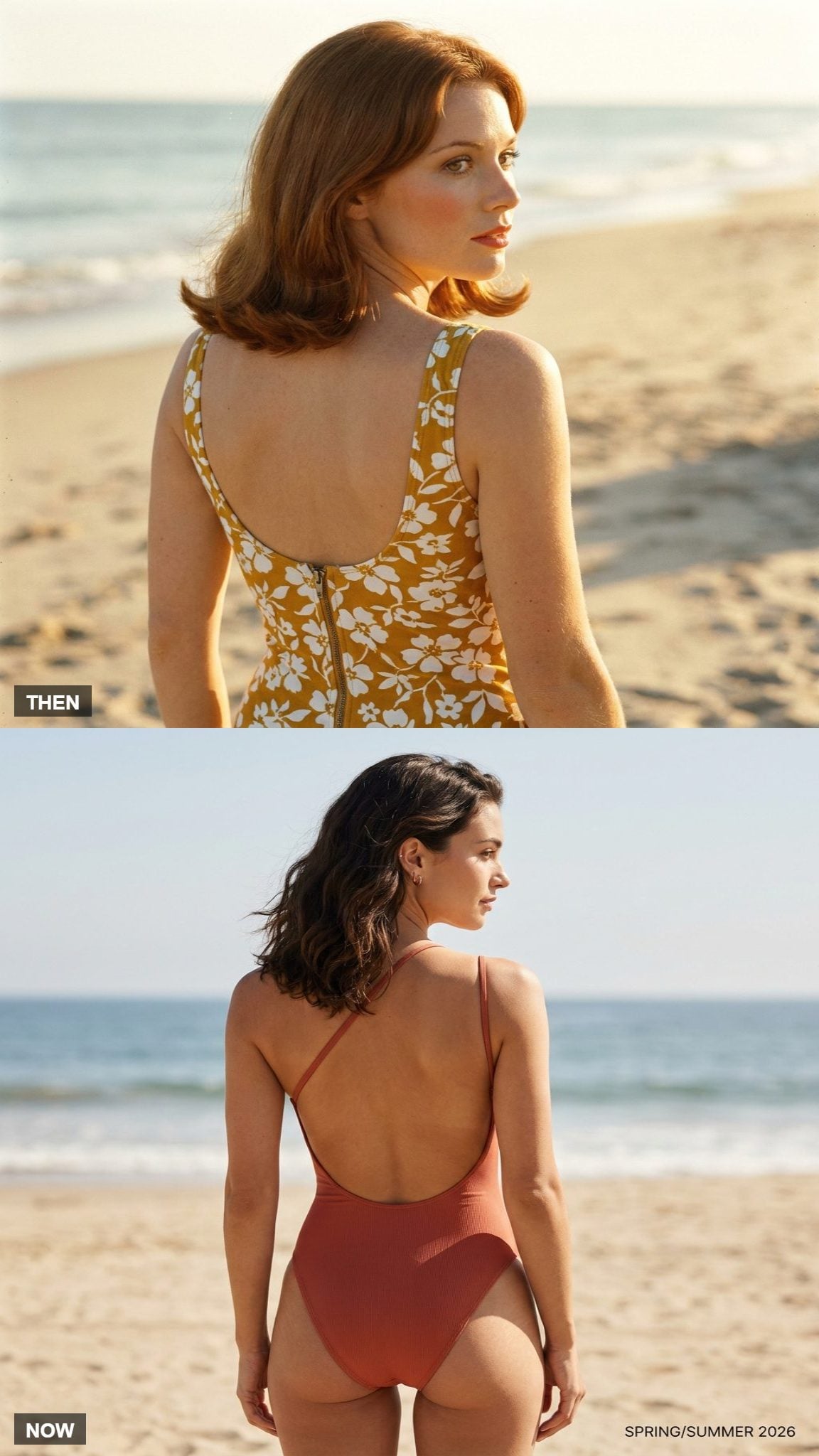
The back of a 1970 swimsuit was an afterthought. Wide straps, full fabric, maybe a zipper, functional, forgettable, and facing the wrong direction to matter anyway.
The swimsuit back is now the headline. Open-back construction, geometric strap patterns, deep-V cutouts that descend to the waist, designers treat the back as the primary visual surface. It’s worth noting that sunscreen application has become considerably more complicated, but the tradeoff is a piece that photographs better from behind than the front ever did.
23. The Swim Cap: Rubber Necessity vs. Forgotten Accessory
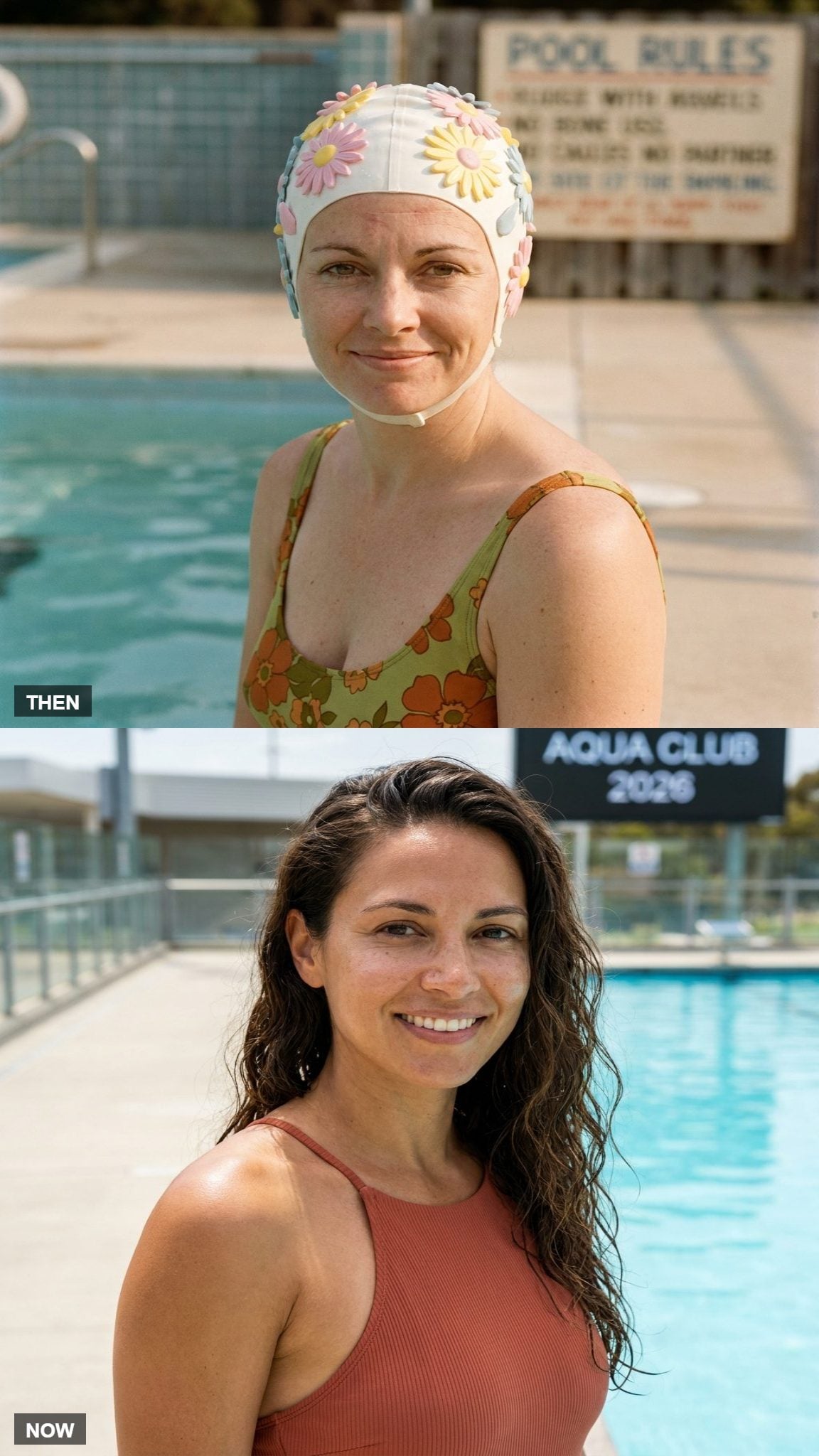
Public pools in 1970 often required them. The rubber swim cap was mandatory for many women, a clammy, temple-gripping, hair-flattening experience that left red marks and took three minutes of determined tugging to remove. They were sold in flowered and plain styles, as if aesthetic choice softened the indignity.
Now they’ve nearly vanished from recreational swimming. Serious lap swimmers still use silicone versions, but for the vast majority of beachgoers and casual pool visitors, the swim cap is just gone. Hair is a hair thing again, not a pool regulation.
22. The Printed Pattern: Polite Floral vs. Maximum Visual Noise

Swimsuit prints in 1970 were polite. Small repeating florals, neat geometric checks, conservative paisleys, patterns sized to stay in their lane and not alarm anyone. A floral print meant flowers the size of a fingernail, distributed evenly across the fabric like wallpaper in a dentist’s waiting room.
Current swimwear print culture operates on different logic entirely. Oversized botanicals where a single bloom takes up an entire bikini top panel. Abstract paint-splatter patterns. Color blocking so aggressive it reads as a statement from fifty yards. The print stopped being decoration and became the whole point.
21. Sun Protection: Baby Oil vs. SPF Architecture
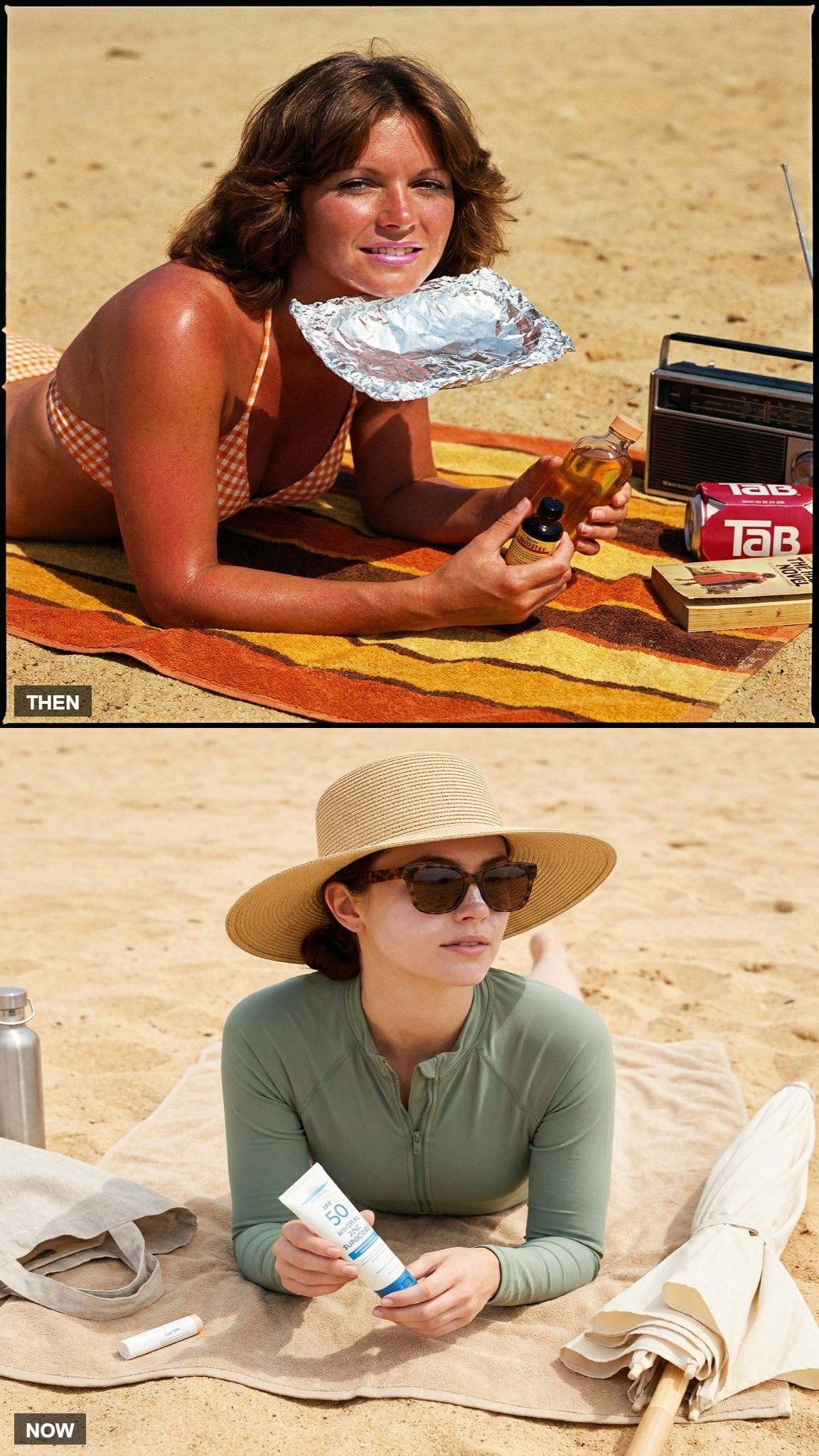
The 1970 beach kit for sun was a bottle of Johnson’s baby oil, possibly with iodine stirred in to speed the tan. The goal was maximum UV absorption. Burning was considered the first step, peeling the second, and tan the final destination. Foil reflectors aimed sunlight directly at the face. This was normal.
Now the beach bag carries SPF 50+ mineral sunscreen, a UPF 50 rash guard, and a hat with a four-inch brim. Dermatology made its case and eventually won. The shift isn’t just behavioral, swimwear itself is now engineered with UV-blocking fabric, a category that didn’t exist in any commercial sense until the 1990s.
20. The Swimsuit Neckline in the Back: Racer vs. Plunge
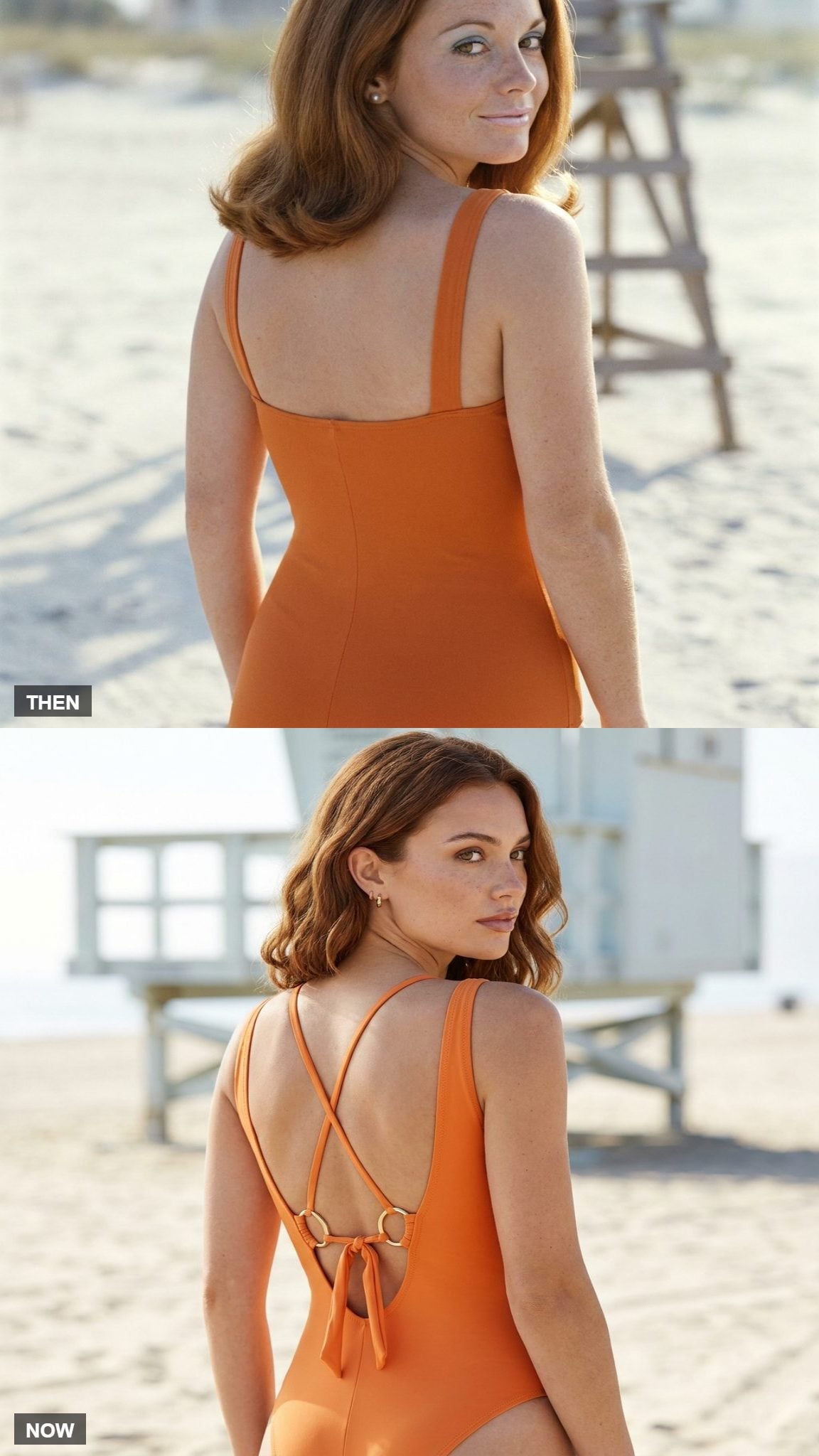
The back neckline of a 1970 swimsuit matched the front in its priorities: covered, structured, functional. Straps were wide enough to provide real support without an underwire, and the back sat high enough to make a standard bra irrelevant.
Contemporary one-pieces often feature a back neckline that plunges lower than the front, creating an inverted relationship between the two views. Hardware rings, adjustable ties, and decorative clasp details now appear at the back neckline as focal points. The suit asks to be seen from both directions equally.
19. Swimwear Sizing: One Universal Shape vs. A System Built for Actual Bodies

In 1970, swimwear came in small, medium, and large. That was the entire conversation. If your top and bottom didn’t match in size, a common reality for most women’s bodies, you bought a size that split the difference and made peace with the result. The industry designed for one shape and called it universal.
Separates sizing changed everything. Buying a different top and bottom size is now standard practice at most swimwear brands, with bikini tops sized by cup and band measurement the same way bras are. The fit logic finally caught up to the fact that bodies are not proportionally uniform, which took about fifty years longer than it should have.
18. The Swimsuit Neckline Went From Prim to Practically Nonexistent
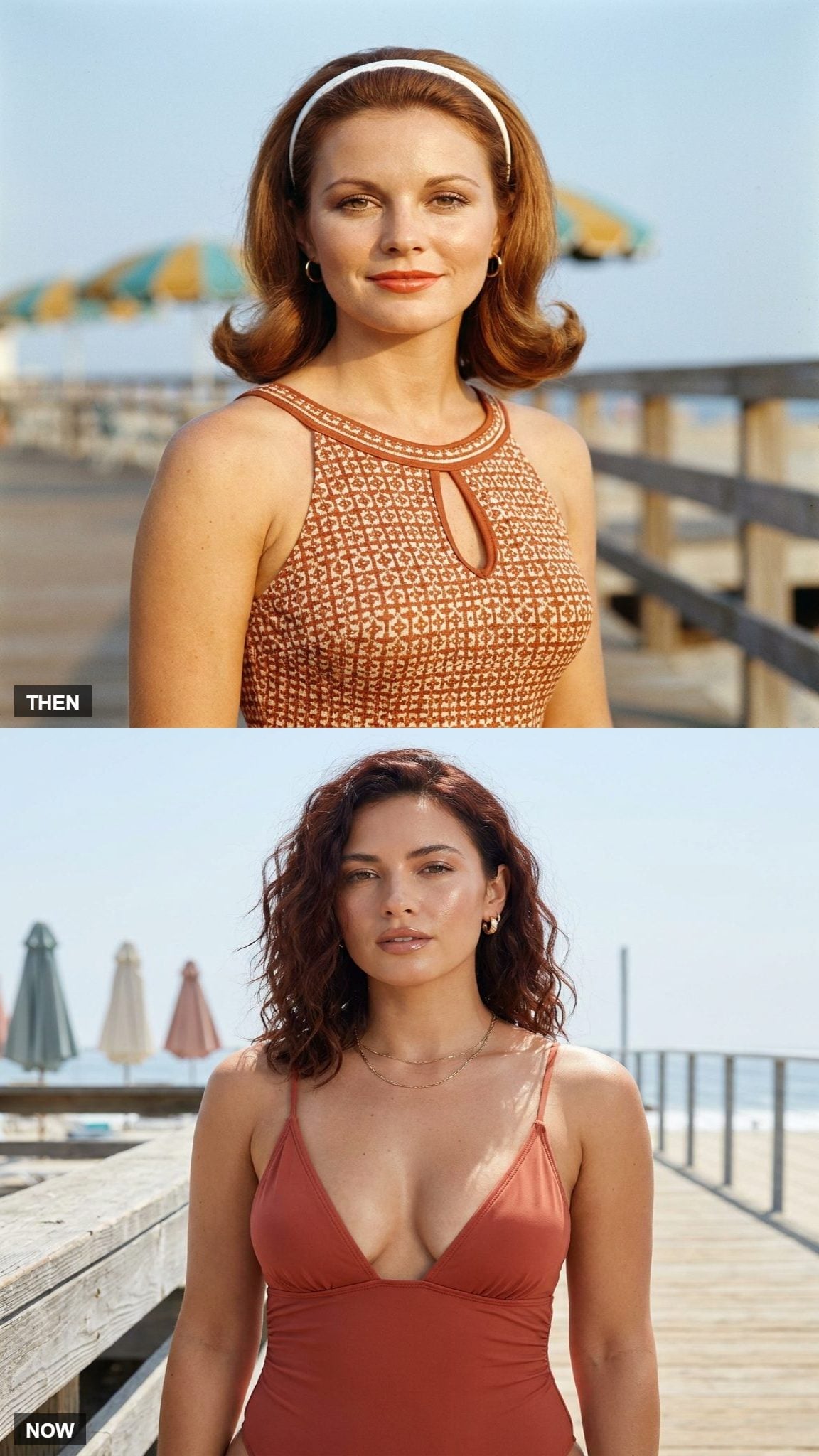
In 1970, a swimsuit’s neckline covered your clavicle and left nothing to discussion. High scoop, sometimes banded, occasionally with a modest keyhole detail if you were feeling adventurous. The whole front of the suit was a statement about decorum.
By 2026, the deep-V plunge is practically the default. plunge V-neck swimsuits go halfway to the navel. Cowl necks dip low. The neckline isn’t an afterthought, it’s the whole architectural statement of the piece. The fabric above the bust is now optional, apparently.
17. The Swimsuit Color Palette Traded Earth Tones for Anything Goes
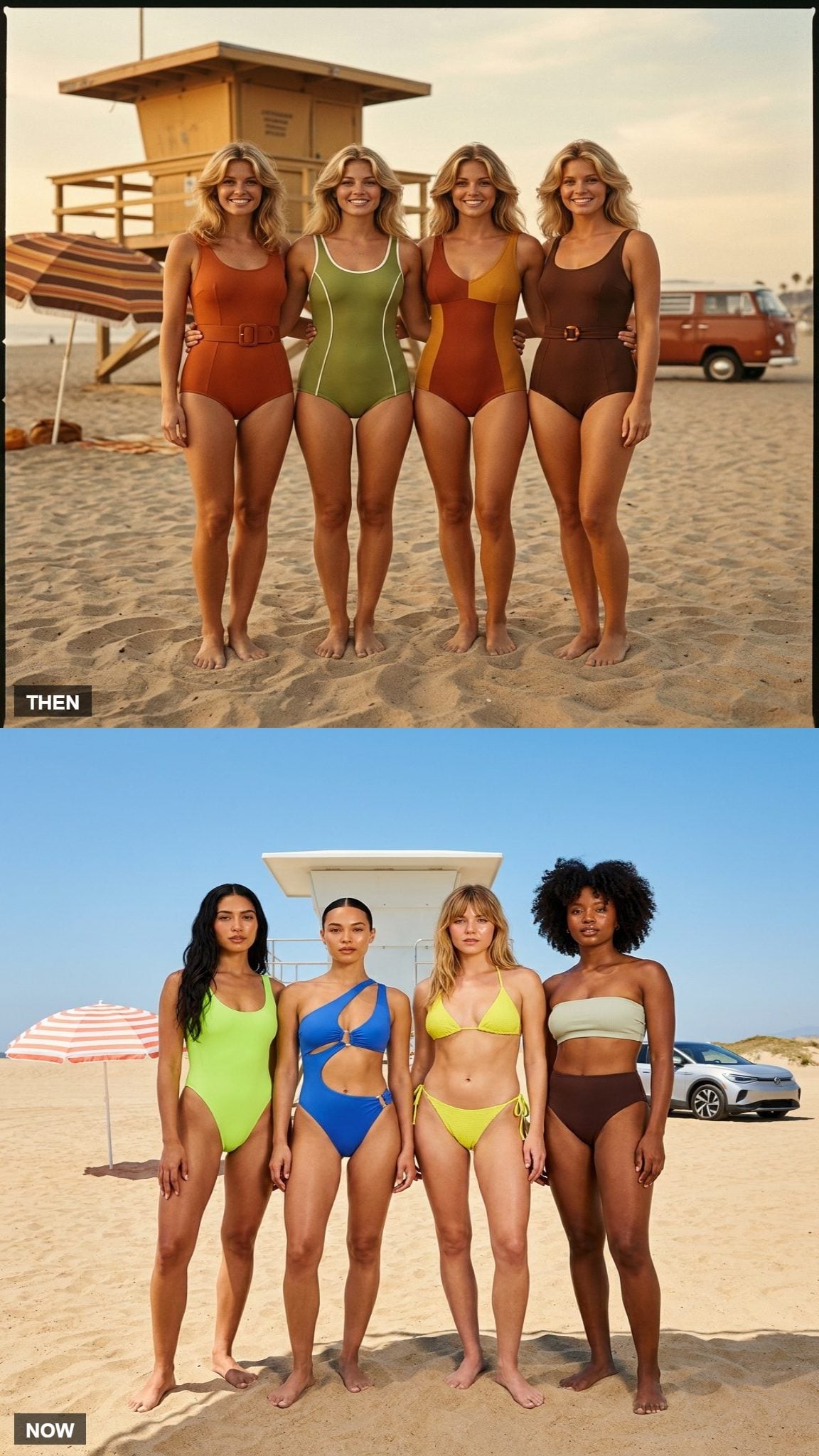
Rust. Avocado. Burnt orange. Mustard. Brown. The 1970 beach palette was essentially the same as the kitchen. Everything was warm, earthy, slightly amber-toned as if the decade itself had been aged in a walnut cabinet.
Today the spectrum has no rules. Neon lime, cobalt, acid yellow, pale sage, deep chocolate, all legitimate, all on the same beach at the same time. A 1970 woman dropped into a 2026 resort would think a paint factory had exploded. Not a complaint. Just a fact.
16. The Swimsuit Silhouette at the Hip: From Skirted Coverage to the String

The skirted swimsuit was mainstream in 1970, not a specialty item. That little flap of fabric at the hip wasn’t modest panic, it was just how swimsuits were designed. Coverage at the thigh was normal. A bare hip was a statement.
The string bikini bottom of 2026 covers roughly the area of a playing card per side. High-cut, Brazilian-cut, and the tanga bikini bottoms that barely happen. The skirt panel, when it appears now, is ironic beachwear or a cover-up. The gap between then and now is measurable in square inches.
15. The Tan Line Became a Deliberate Design Choice

In 1970, the tan line you got was the tan line your suit gave you. Nobody thought about it strategically. You wore your suit, you baked in baby oil, you ended up with a clean border at the shoulder and thigh. It was a consequence, not a choice.
By 2026, the tan line is something people curate. Strapless suits, backless designs, and adhesive swimwear exist specifically to manage where the line falls. Some people go topless to avoid lines entirely. The sun exposure itself is now medically suspect, but the tan line as aesthetic decision? Completely modern.
14. Swimsuit Straps: Thick as a Belt vs. Barely a Thread
❤️ Would you like to save this?
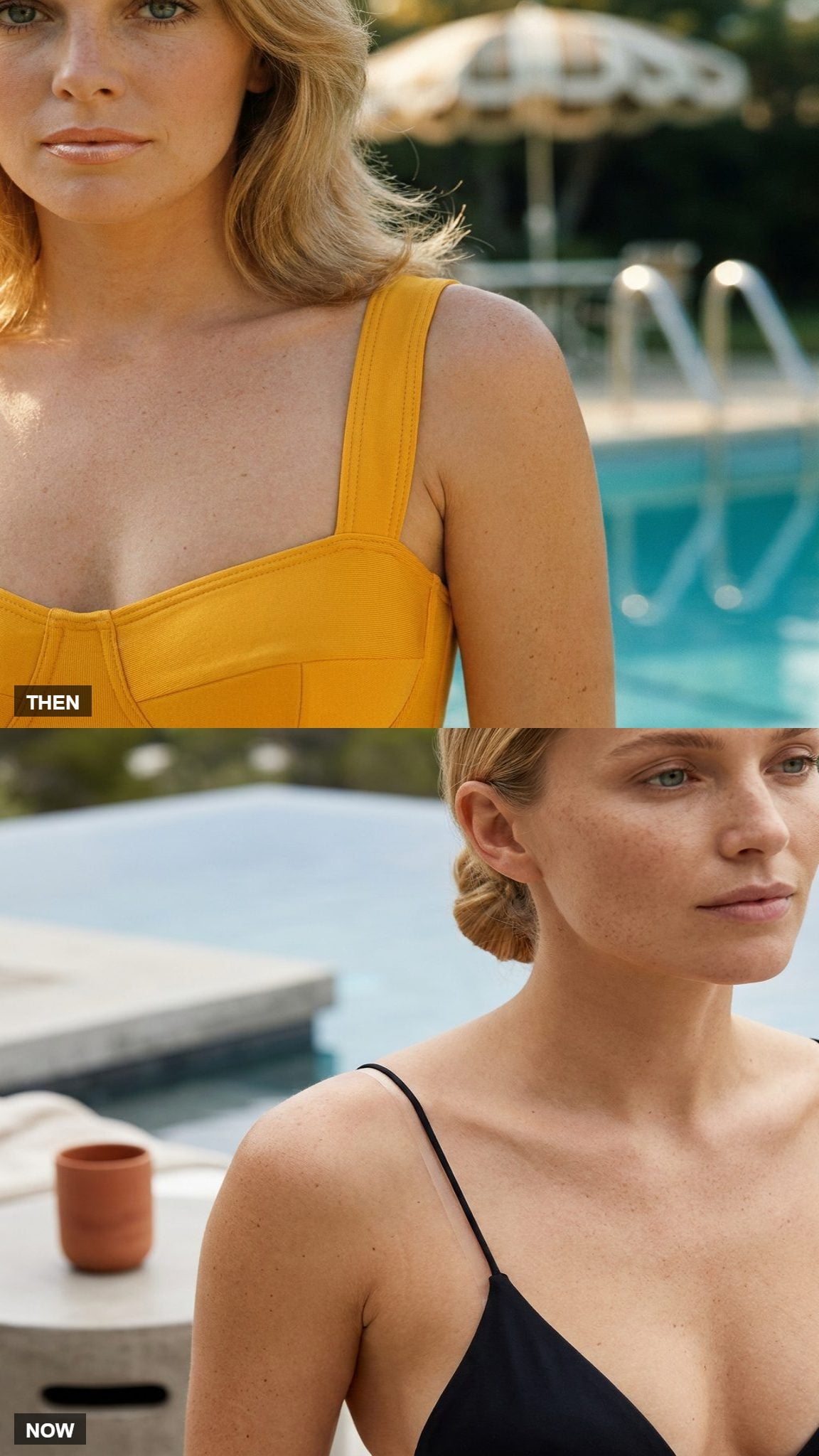
1970 swimsuit straps were built like seat belts. Wide, flat, firmly anchored to the shoulder. They did their job without apology. The suit stayed where you put it. That was the whole contract.
Now straps can be so thin they’re essentially decorative. Spaghetti strap swimsuits with straps narrower than a shoelace are everywhere. Adjustable, removable, crossable, convertible. The structural engineering is largely irrelevant because the suit is also being held up by adhesive tape, boning, or sheer optimism.
13. The Swimsuit Cover-Up: Terry Cloth Robe vs. Sheer Resort Dress

The terry cloth cover-up robe was the standard exit vehicle from the 1970 beach or pool. Thick, absorbent, zip-fronted, looked exactly like a bathrobe because it basically was. You wore it from the lounge chair to the snack bar and nobody had any questions.
The 2026 cover-up is a separate fashion category. Sheer linen sheer beach cover-up dresses, embroidered kaftans, wide-leg trousers worn over a bikini top. People walk from the beach to a restaurant in their cover-up and it reads as an outfit. The terry cloth robe did not do that.
12. The Bikini Brief: Cotton-Blend Modesty vs. Performance Fabric Precision
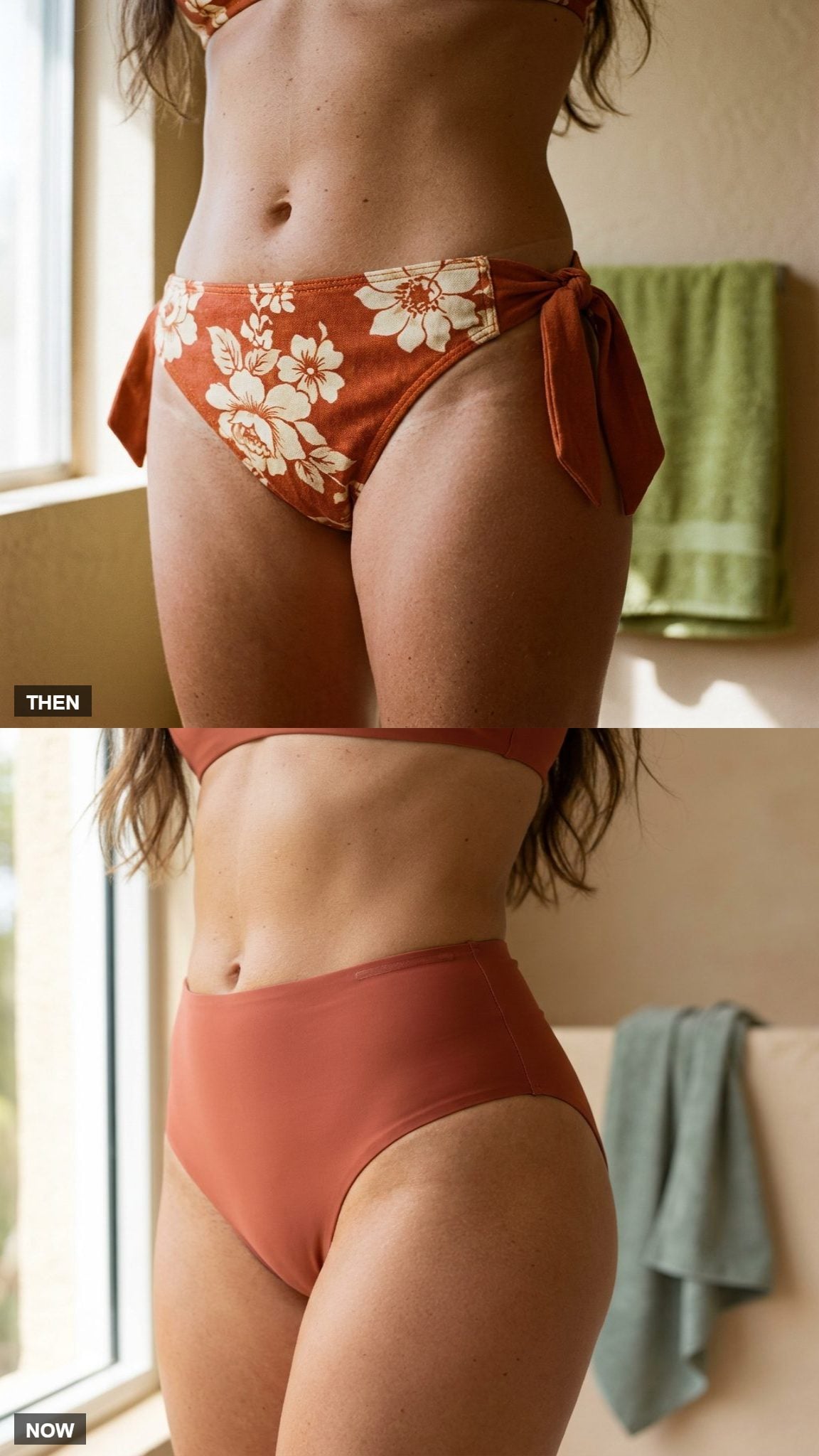
The 1970 bikini brief was made from thick cotton-blend fabric that sagged when wet, faded by August, and had all the technical performance of a dish towel. Nobody complained because nobody knew there was anything better to compare it to.
Modern bikini bottoms are cut from nylon-spandex blends that hold their shape wet or dry, resist chlorine fade, and dry in twenty minutes. High waist bikini bottoms now have flat seams, bonded edges, and silicone grip strips. The fabric technology gap between 1970 and now is roughly the same as the gap between a flip phone and a satellite.
11. The Cover-Up Went From Beach Towel Territory to an Actual Outfit

The 1970 beach cover-up had one job: cover you up. It did that job without apology, in terry cloth, in boxy shapes that would fit two of you, sometimes with a drawstring that gave it the silhouette of a paper bag. It was functional in the way a rain poncho is functional.
Now the linen beach cover-up is something you’d actually wear to lunch. Lightweight crochet cover-ups, sheer wide-leg beach pants, slip dresses that pull double duty from the sand to the boardwalk. The cover-up stopped covering and started starring.
10. The Bikini Bottom Rose From the Hips, Way, Way Up From the Hips
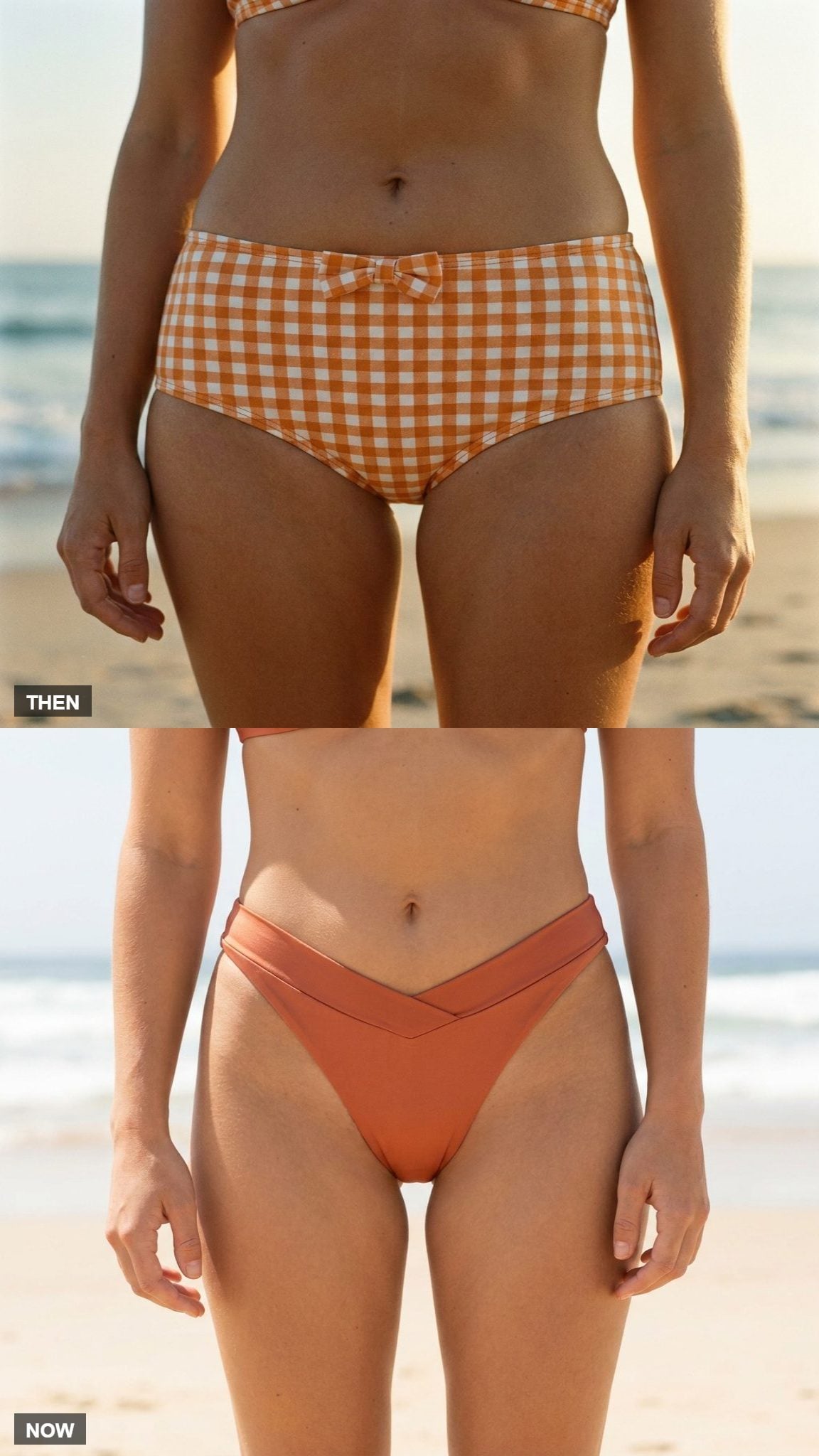
In 1970, a bikini bottom sat at the natural waist or just below it, covered the hip fully, and the leg opening started somewhere sensible. Not conservative exactly, but not architectural either. It was a bikini bottom, not a geometry problem.
What happened between then and now is a slow, steady migration upward. The high-cut cheeky bikini bottom of 2026 starts where the 1970 version stopped. The leg opening rides up to the hip bone and sometimes above it, visually lengthening the leg in a way the old cut never attempted. It’s not just a different swimsuit. It’s a different theory about what a swimsuit is for.
9. The Swimsuit Underwire: Nonexistent vs. Engineering Feat

In 1970, the bust of a swimsuit was held up by hope and a strip of elastic. Shelf bras were common. Underwire in swimwear? Almost unheard of, because the wires rusted, the casings disintegrated in chlorine, and the whole idea felt too close to lingerie for a beach.
Now the underwire is an engineering discipline — coated wires that survive salt and sun, molded cups shaped like actual breasts, power mesh wings that anchor the whole system to the ribcage. The 1970 suit trusted you to arrange yourself. The 2026 suit does the arranging for you and does not ask.
8. The Beach Hair: Set and Sprayed vs. Salt-Sprayed on Purpose
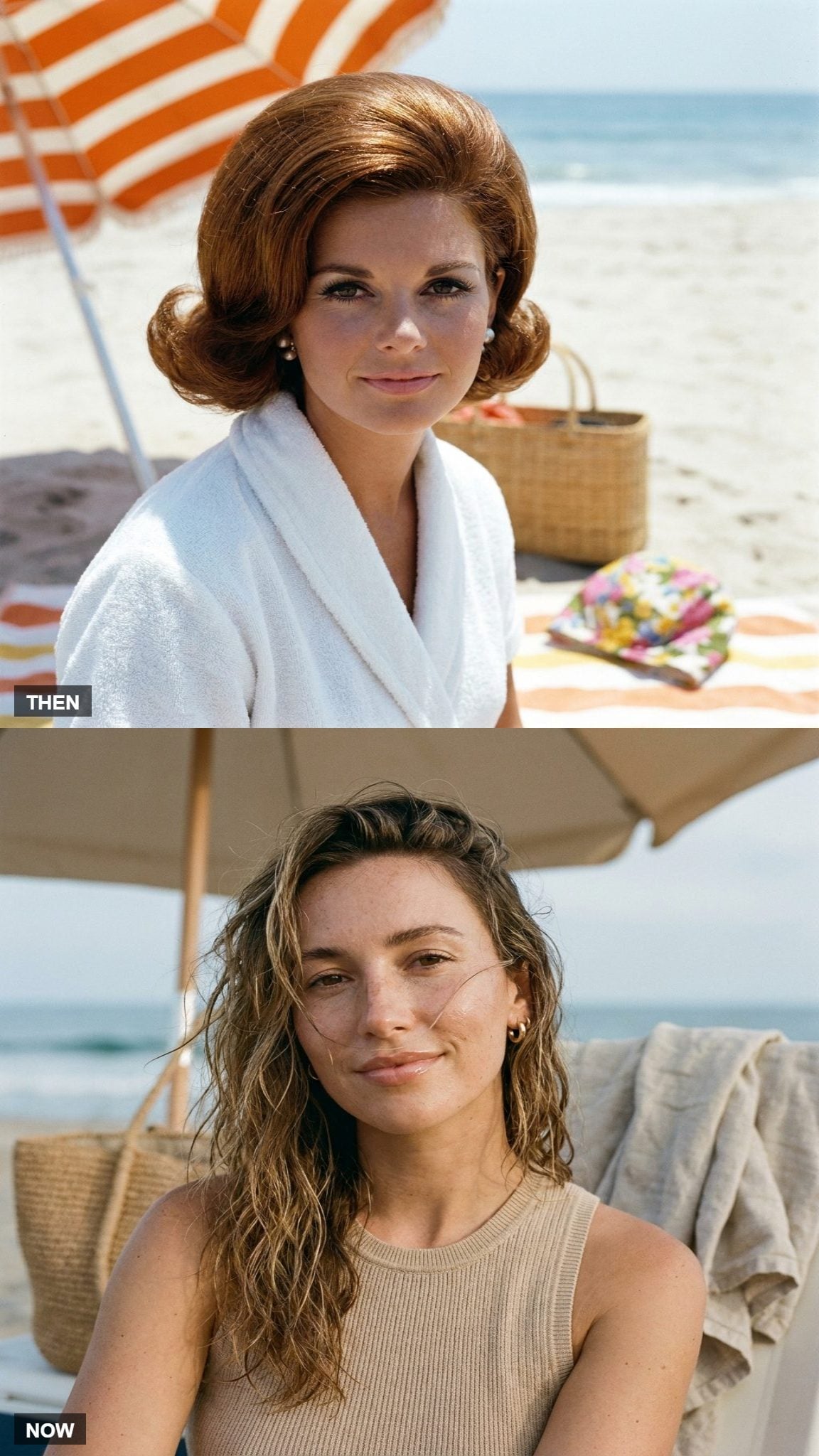
Beach hair in 1970 was a project completed before you left the house. Rollers the night before, teasing, a helmet of hairspray, a swim cap kept nearby for the rare event of actually getting wet. Decorative. Not meant to swim.
Today the whole point is looking like you did swim, whether you did or not. Salt sprays sold in bottles, texturizing creams, a whole industry built to fake what the 1970 beachgoer spent a bottle of Aqua Net trying to prevent. A good tan hairstyle now is one that looks like it hasn’t been touched.
7. The Swimsuit Lining: Scratchy Nylon vs. Buttery Second Layer
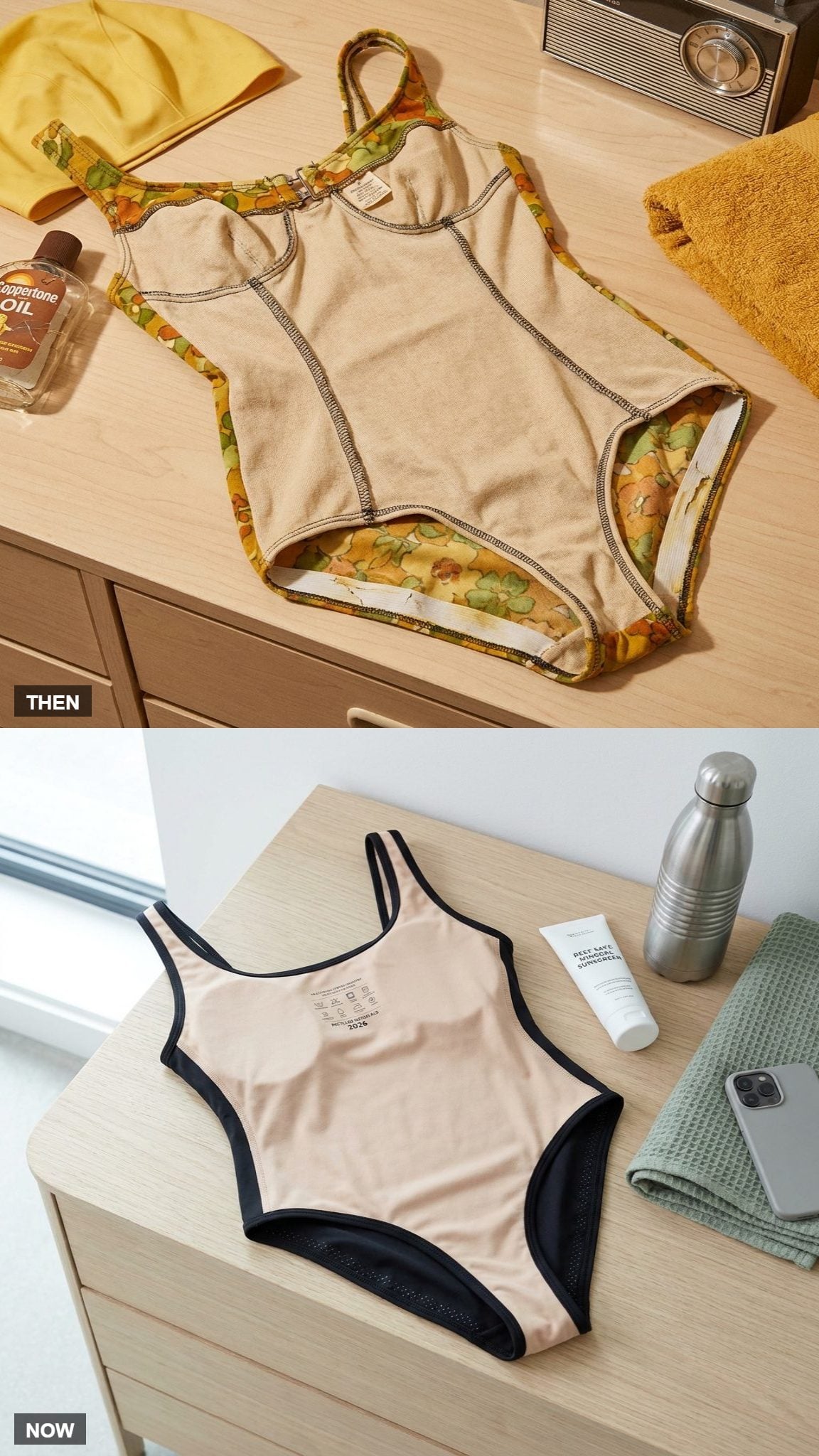
Turn a 1970 swimsuit inside out and you’d find a lining that felt like construction paper after a swim — coarse nylon, serged seams that left marks on your skin, elastic that dried stiff and cracked by year two.
The 2026 interior is soft enough to sleep in. Bonded seams leave no imprint, peached linings feel like a t-shirt worn a hundred times, and silicone grippers replaced the scratchy elastic. Nobody was going to see the inside of the 1970 suit, so nobody made it comfortable. Now the inside gets the same attention as the outside.
6. The Poolside Drink: Tab in a Can vs. Electrolyte in a Bottle
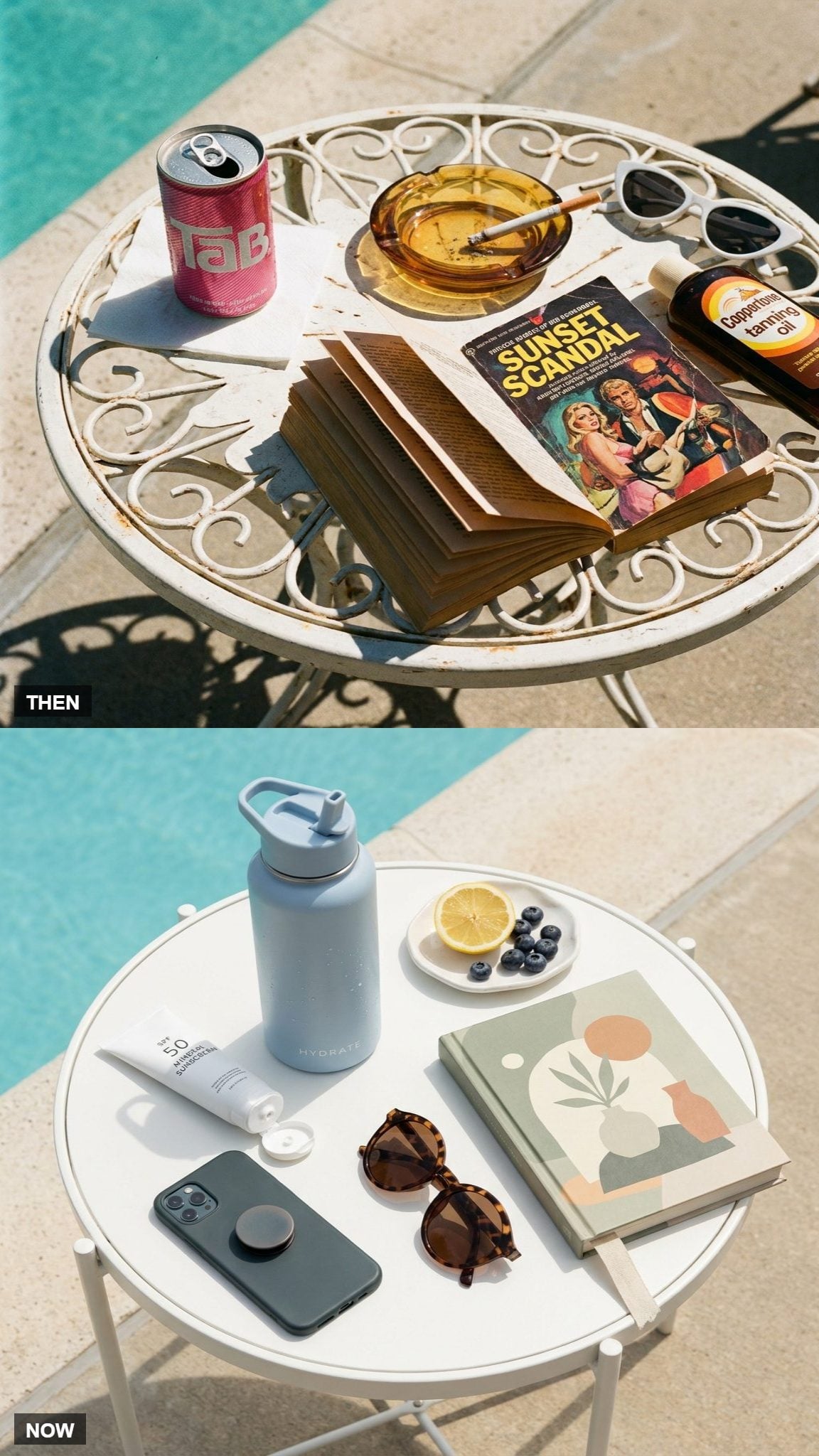
The 1970 pool table held a Tab, a cigarette, and a paperback. Hydration was not a concept. You were at a pool, you had a drink with your drink, and that was the day.
Now the pool table holds an electrolyte bottle, a mineral sunscreen, and a phone facedown because you’re trying. Same woman. Same pool. Wildly different assumption about what a body needs to survive an afternoon in the sun.
5. The Swimsuit Boning: Yes, Actually vs. Absolutely Not
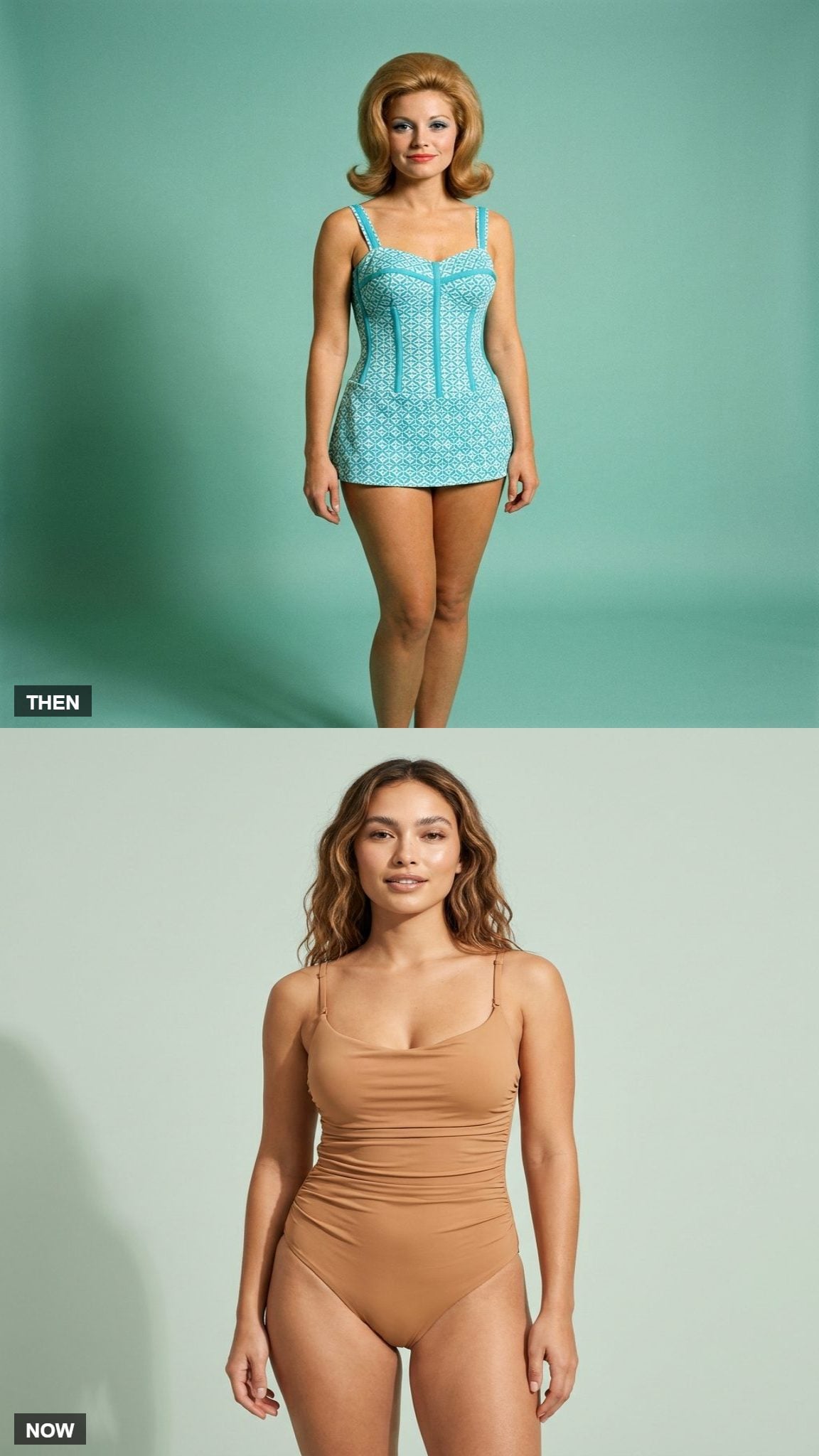
Some 1970 swimsuits had actual boning in the bodice. Plastic stays running vertically through the fabric, holding the suit in a fixed shape whether your body was in it or not. You didn’t wear the suit — you installed yourself into it.
Now the swimsuit moves. Soft caramel one-piece swimsuits drape and ruche and stretch with the body instead of forcing the body into the suit. The engineering went internal, into fabric technology, so the outside could finally relax.
4. The Bathing Cap Flowers: Rubber Petals vs. Long Gone
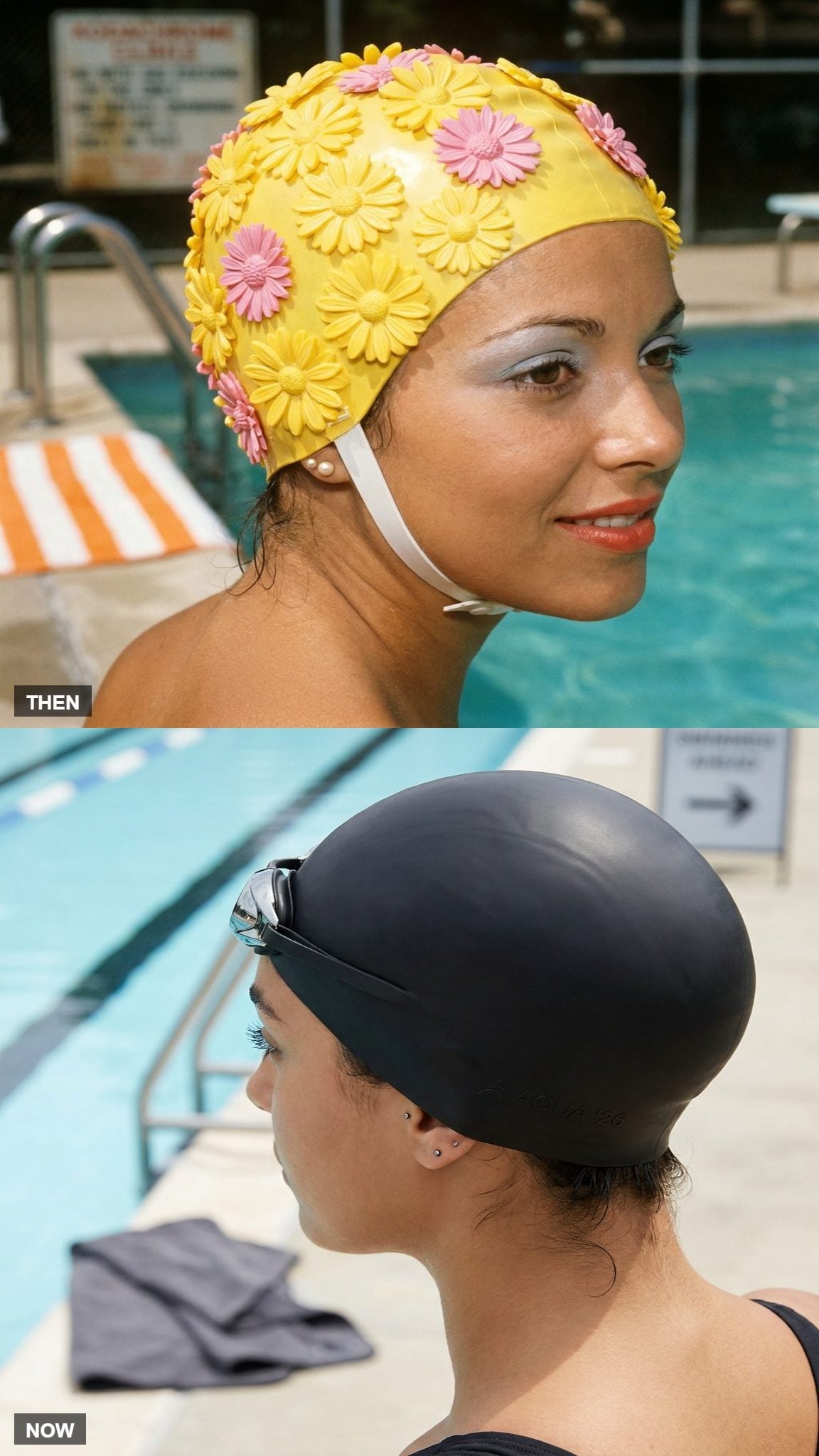
The flowered bathing cap deserves its own museum. Rubber petals sculpted individually, glued in overlapping rows, meant to decorate the mandatory swim caps of every public pool. Yellow daisies. Pink chrysanthemums. Whole rubber gardens on your head.
They are gone. Not evolved, not updated. Gone. The 2026 head at the pool wears nothing, or a plain silicone racing cap if she’s swimming laps. The decorative swim cap did not survive the shift from pool as social venue to pool as workout venue. Something was lost. I’ll admit it.
3. The Beach Body Standard: Coca-Cola Curves vs. Every Body Welcome
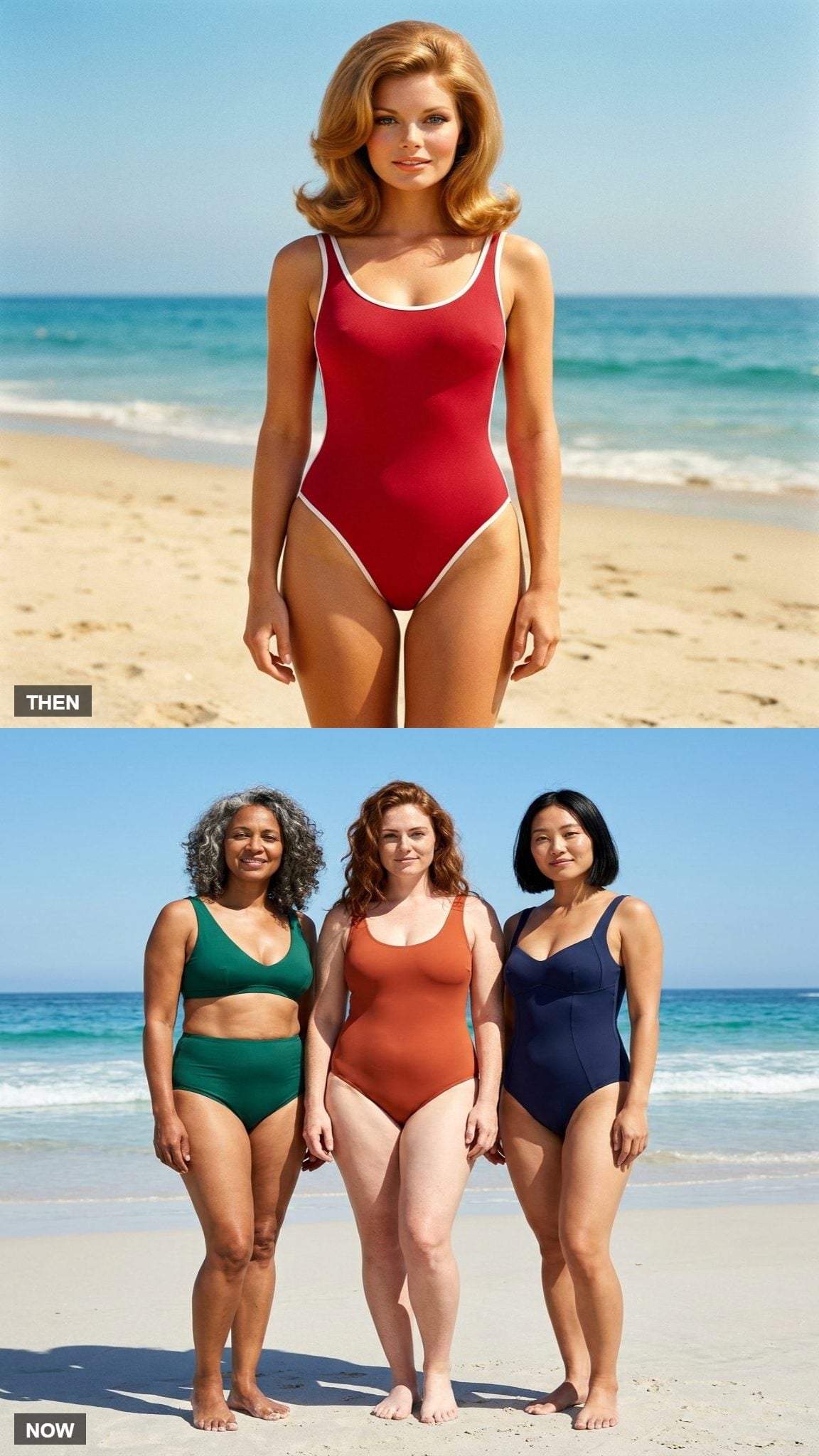
The 1970 swimwear ad showed one body. Tall, thin, hourglass, white, retouched into a shape most women could not reach with a year of effort. That was the standard, presented as neutral, and every woman who did not match it shopped inside that gap.
The 2026 campaign shows three women — different sizes, different ages, different skin — and the suits are cut to actually fit them. This is not marketing kindness. The market caught up to the fact that the woman with money to spend on swimwear is often 45 and does not appreciate being told she is invisible.
2. The Swimsuit Price: Twelve Dollars vs. Two Hundred and Fifty
❤️ Would you like to save this?
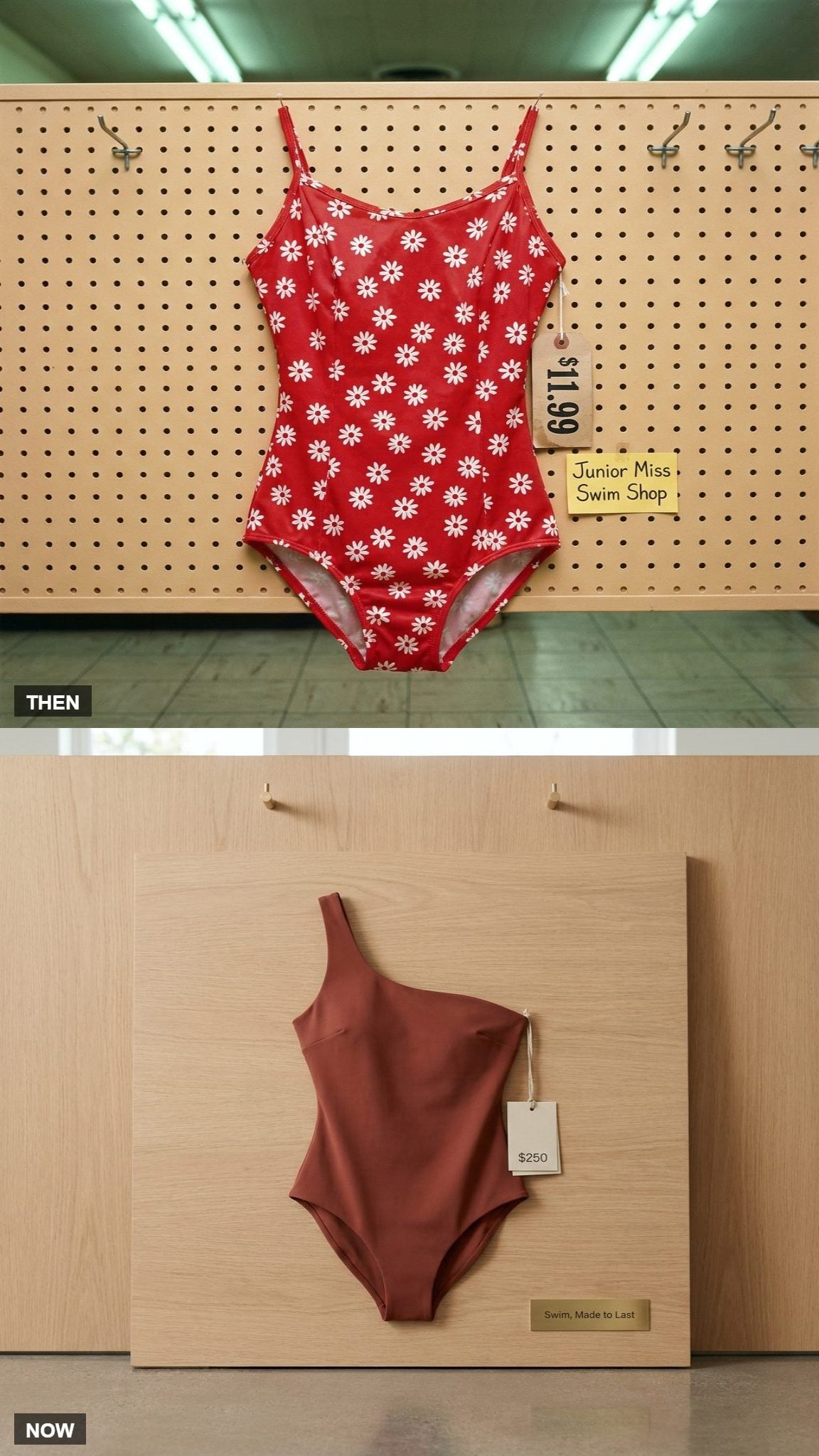
A department store swimsuit in 1970 cost around twelve dollars — roughly ninety-five today after inflation. It was expected to last one summer, maybe two, and then the elastic would go and you’d buy another one.
The 2026 designer swimsuit runs two-fifty and up. Fabric technology alone justifies part of it. The rest is brand, marketing, and the accepted premise that a swimsuit is now a considered purchase rather than a seasonal disposable. You buy one and it lasts five summers because the fabric can take it.
1. The Pool-to-Bar Transition: Not a Thing vs. The Whole Point

In 1970, you got out of the pool, wrapped yourself in terry cloth, and went inside to change into real clothes before anyone saw you eat. Swimsuit for swimming, dinner clothes for dinner. The two did not meet.
Now the swimsuit is the base layer of the evening. Add linen trousers, gold hoops, cream linen trousers, an open shirt — and the same suit that swam laps at four is drinking a spritz at seven. The 1970 woman would find this scandalous. The 2026 woman finds it efficient.