❤️ Would you like to save this?
Earth tones, sturdy handles, and a clasp that clicked shut with the satisfying finality of a bank vault. That was the handbag in 1975. Not a billboard for a luxury label or something designed to be recognized from across a parking lot. A practical object with personality, chosen to carry everything a woman needed without announcing what it cost. Fifty years later, the handbag has changed in nearly every way possible. These before and afters show exactly how far it travelled.
FYI, thanks to AI imagery software, we’re able to create very specific fashion and hairstyle examples to illustrate the points being made. In some cases, imagery is exaggerated to hammer home the point. Also, assume links that take you off the site are affiliate links such as links to Amazon. this means we may earn a commission if you buy something.
24. The Drawstring Bag Was Having a Whole Moment
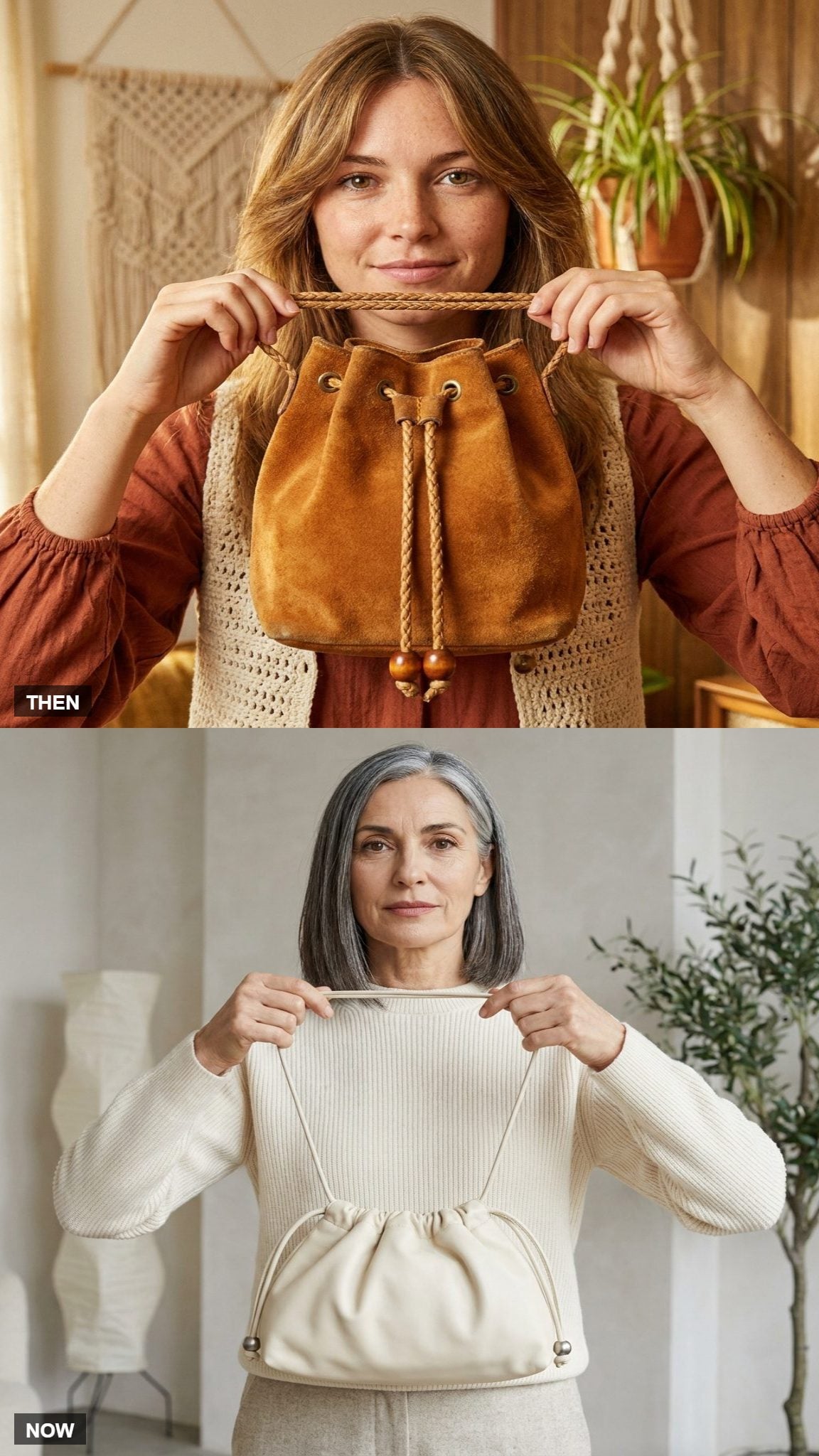
Before the bucket bag reclaimed cool-girl status on every street style blog, there was its scrappier, earthier ancestor: the drawstring pouch. In 1975, these showed up in suede, canvas, and occasionally macramé, cinched shut with a braided cord and two wooden beads that clacked together when you reached inside for your ChapStick. The silhouette was completely impractical for finding anything quickly, which somehow made everyone want one more. Today’s version in butter-soft leather or recycled canvas has cleaned up the proportions, but that same satisfying slouch is still there.
23. The Box Bag Was Geometric and Meant Business
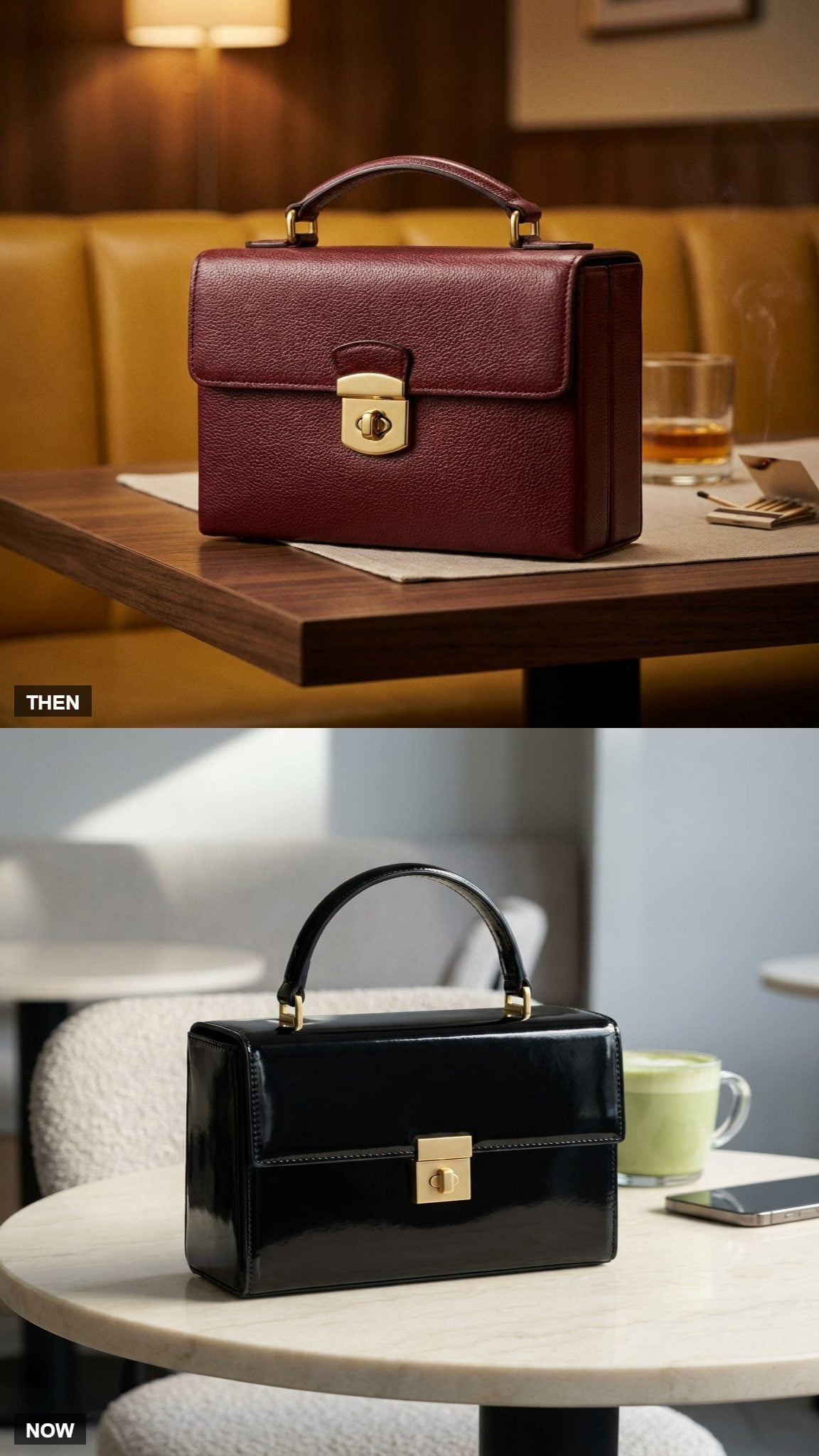
The box bag of 1975 was architecture you could carry. Rigid, structured, often burgundy or forest green, it snapped shut with a satisfying click-lock clasp and held its shape through everything. No slumping, no stretching, no apologizing. It sat upright on a restaurant table like it had made a reservation.
The modern reissue in sleek black patent or warm cognac leather has the same sculptural confidence, now sold at a price point that requires its own justification conversation. Some things improve with repetition.
What Our Readers Say
- When ThreadCurve readers were asked which statement piece they would buy, the bag won with 52%, well ahead of shoes and tops.
- For a colour pop, though, our readers lean elsewhere: 54% reach for a top, while 27% would let the bag carry the colour.
From ThreadCurve reader polls and votes.
22. Saddle Bags Were Not Just for Horses or the 1990s
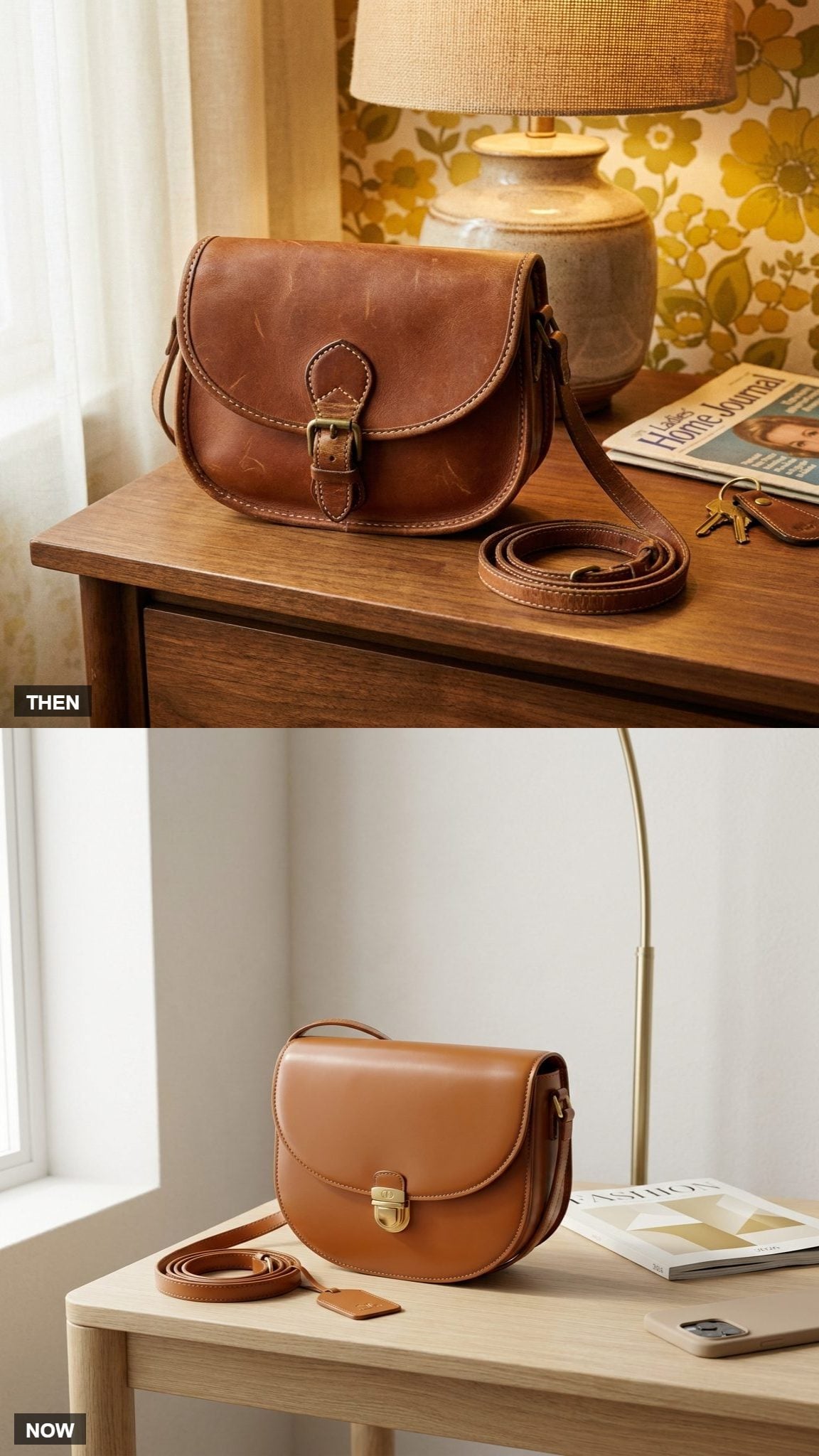
The saddle bag was everywhere in 1975. Chestnut leather, that curved D-flap, hand-stitching in cream thread, a thin adjustable strap that never stayed on your shoulder through a full grocery run. It was a workhorse that also looked like it belonged somewhere nicer than the A&P.
Dior put it back on the map in the 2000s and the shape has refused to leave since. The bones haven’t changed. The price has changed dramatically.
21. Carpet Bags Were Not a Mary Poppins Joke, Women Wore Them Daily
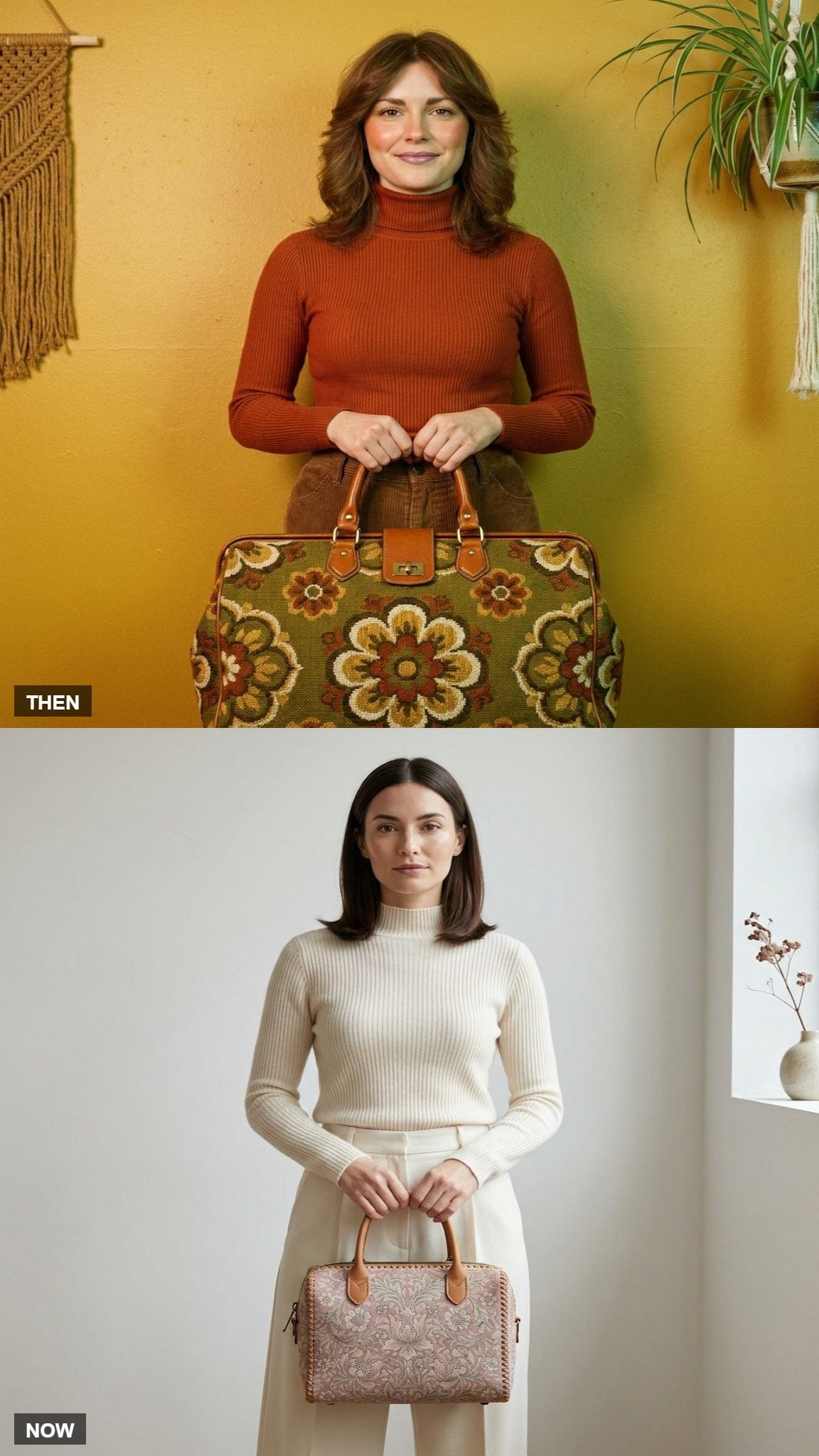
Woven tapestry fabric with a pattern roughly the size of a dinner plate, leather trim at the handles, a brass zipper across the top. The 1975 carpet bag was not subtle and did not try to be. Women carried them everywhere: to work, to market, to PTA meetings, to places that probably deserved better.
Today’s version is positioned as an artisan collectible. Etsy has seventeen pages of them. The price per inch of tapestry has increased considerably since the Ford administration.
Today the dinner-plate pattern would be a harder sell, since four out of five ThreadCurve readers say they rarely wear prints.
20. The Clutch With a Chain Was the Original Evening Crossbody
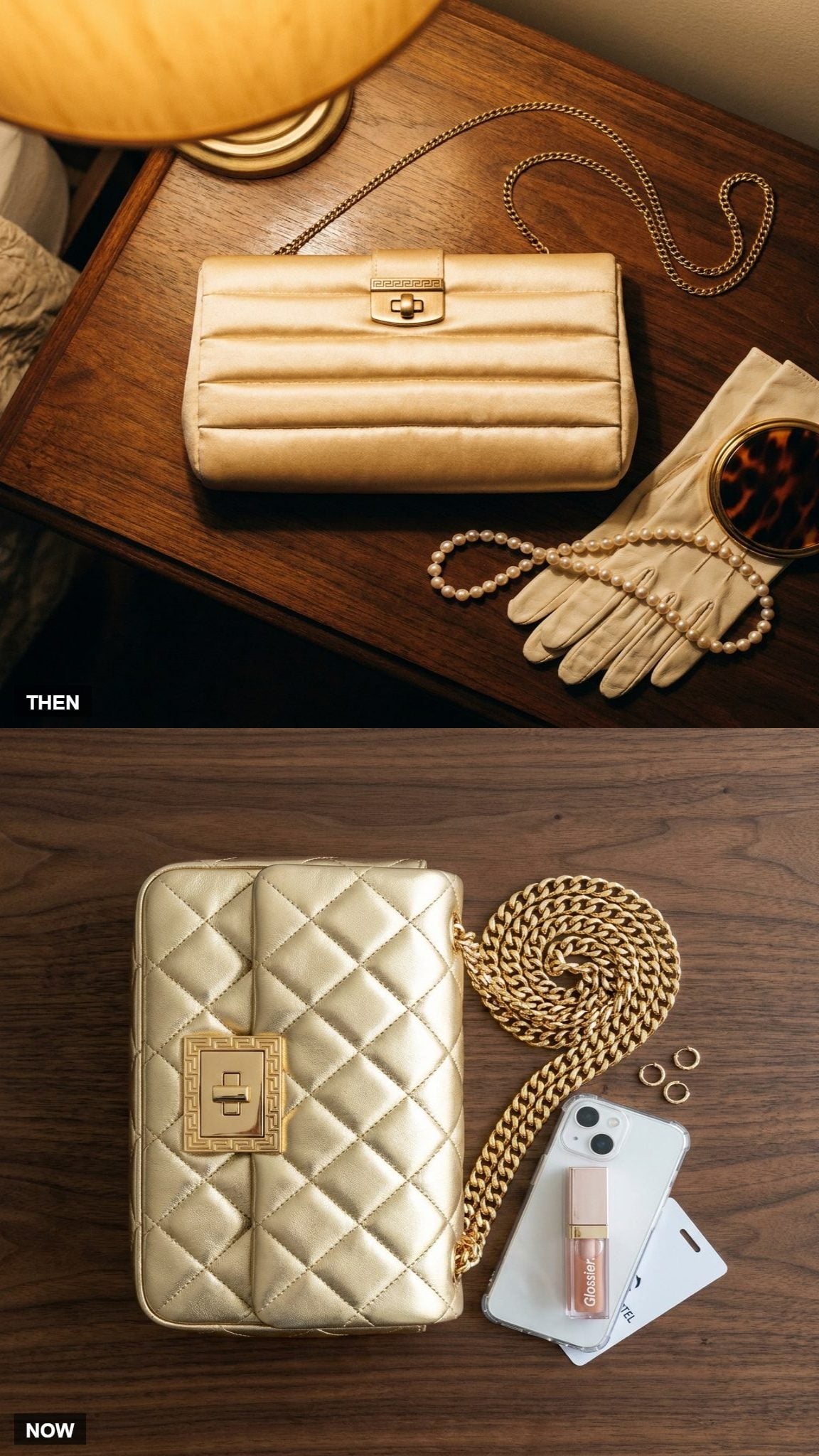
Gold satin, a rectangular push-lock clasp with an engraved border, and a chain so delicate it could be mistaken for jewelry. In 1975, this was what you carried to your cousin’s wedding, your company holiday party, and any dinner that required pantyhose.
The chain-strap evening bag never actually went away. Chanel made it iconic in the 1980s. Every fast-fashion retailer has a version now. The original 1975 iteration had a certain unforced elegance, gold satin that caught candlelight and a chain that rested on your shoulder without making a statement about it.
19. The Bucket Bag Before It Got a Luxury Rebrand
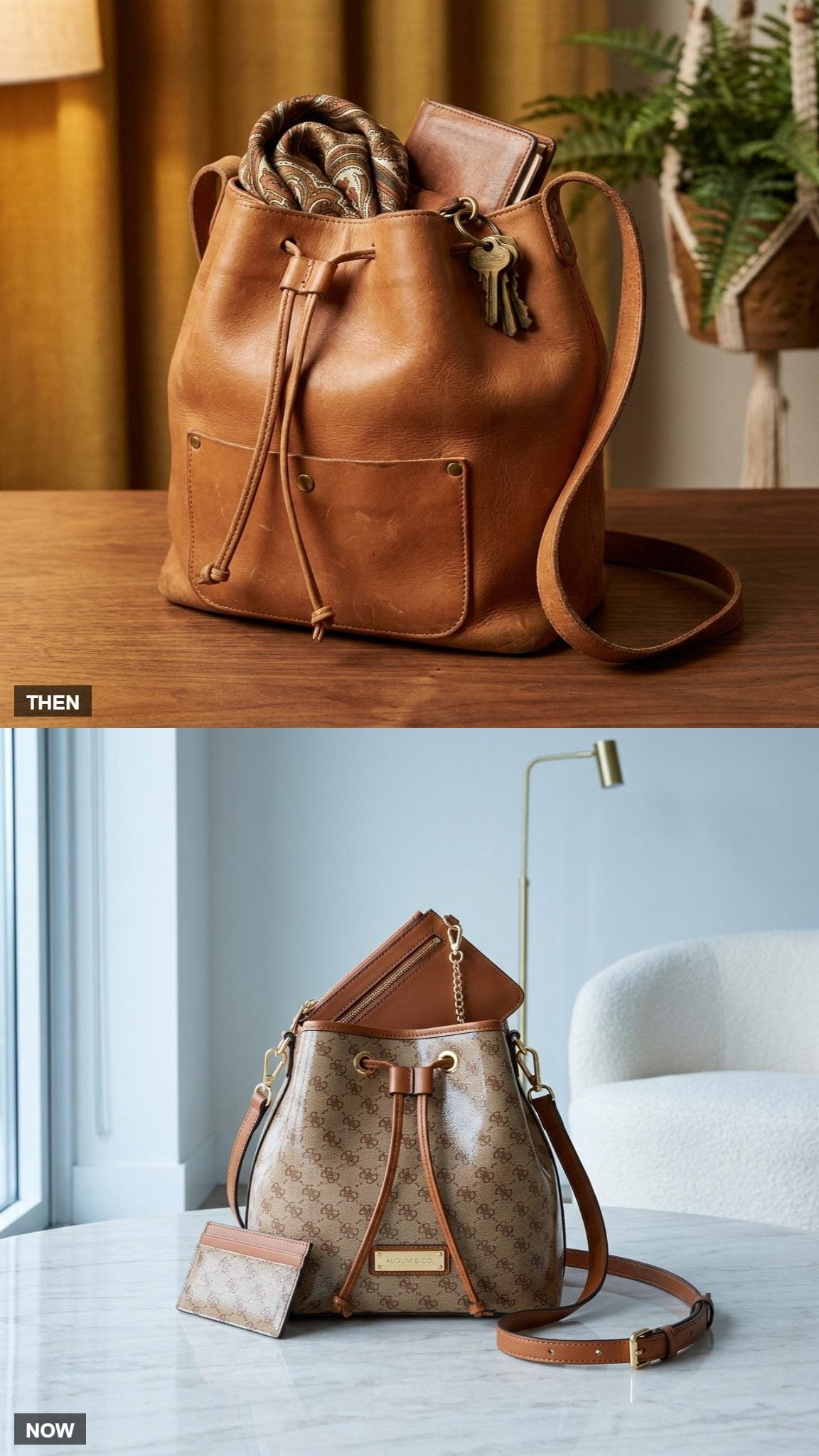
The 1975 bucket bag was purely practical. Tan leather, a drawstring top, one shoulder strap, a small front pocket. No branding, no hardware, no capsule-collection backstory. It held what you needed and closed loosely enough that you dug around in it every time.
Louis Vuitton eventually got credit for the bucket bag’s entire history, which is the kind of revisionism that happens when a brand has good lawyers and a good archive. The original was just a bag that worked.
18. The Zip-Top Tote That Held Absolutely Everything
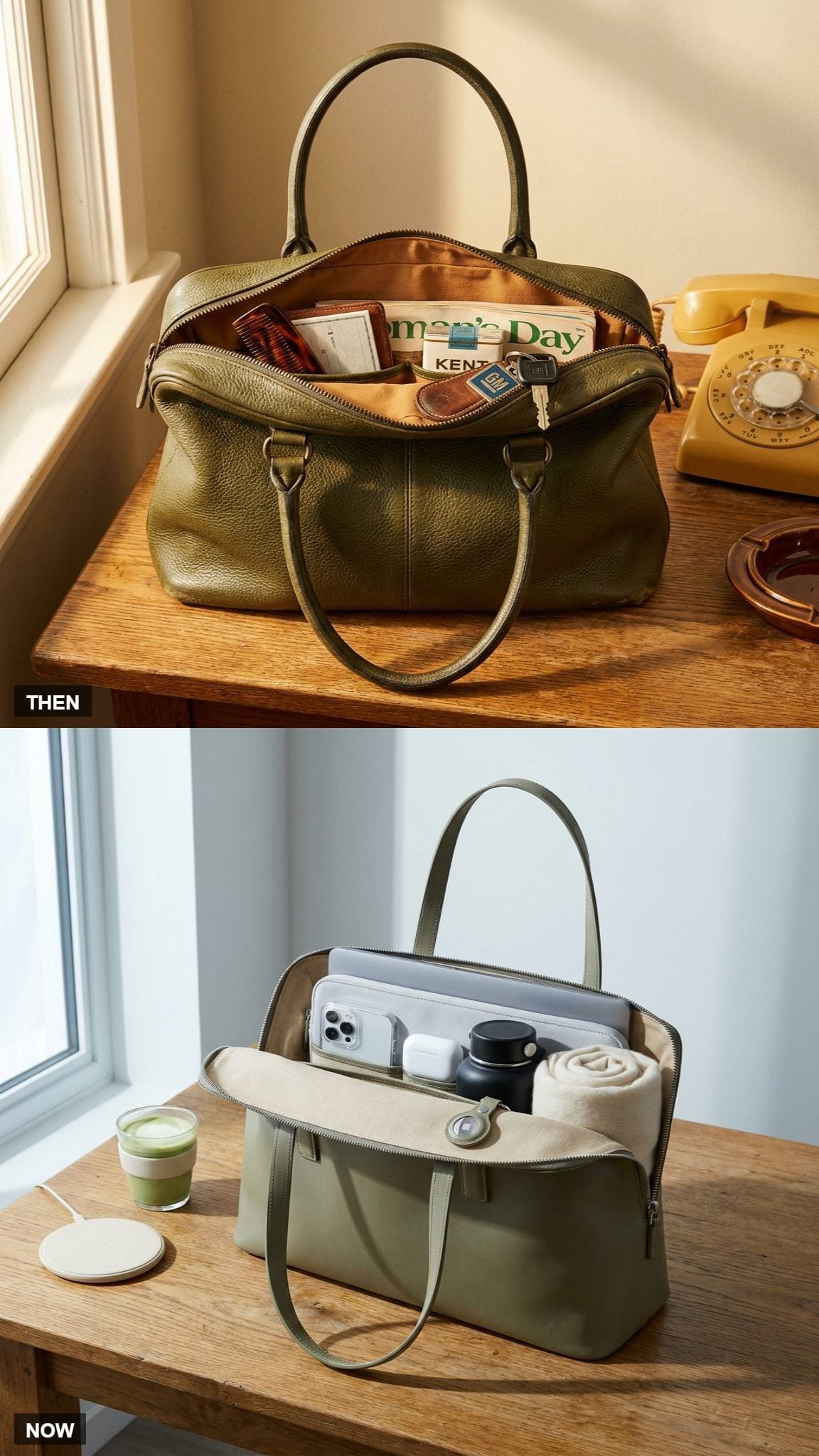
Olive green, pebble grain leather, twin handles, a brass zip the full width of the top, and enough interior square footage to carry a week’s worth of decisions. The 1975 zip-top tote was the bag for women who had things to do and needed their hands free to do them.
It predates the “work tote” as a category by about twenty years. Women who carried these weren’t making a style statement. They were just going to work.
17. The Shoulder Strap That Could Have Anchored a Boat
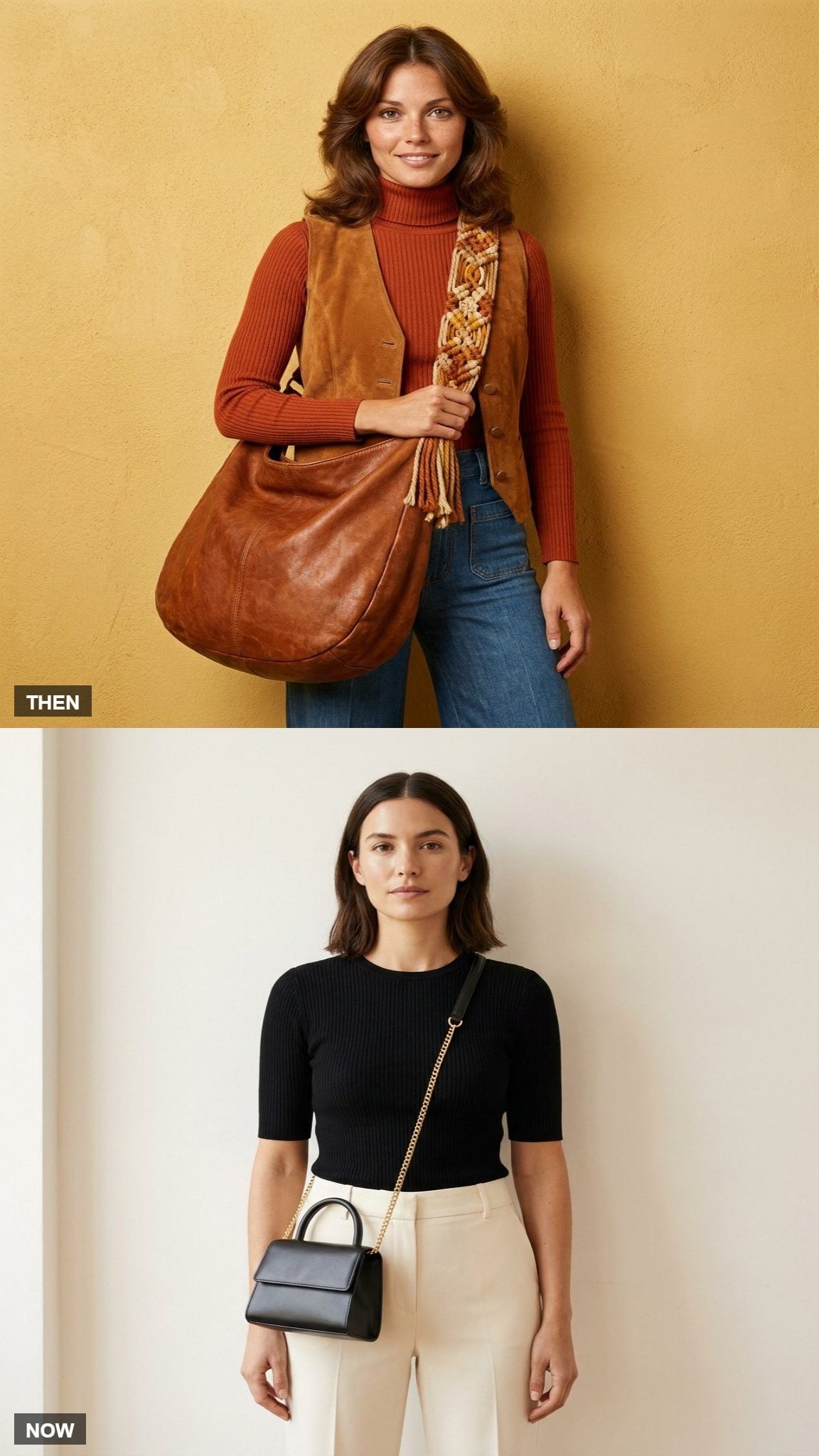
In 1975, the shoulder strap was not an afterthought. It was a structural event. Wide, woven, sometimes braided, occasionally macramé, and almost always stiff enough to leave a mark on your collarbone by noon. The bags themselves were enormous and unstructured, flopping sideways the moment you set them down. Today’s shoulder bags have thin, adjustable straps, often chain, often padded, always considered, and the bag itself holds its shape without your help. Progress, honestly.
16. Embroidery Took Over Everything, Including Your Purse
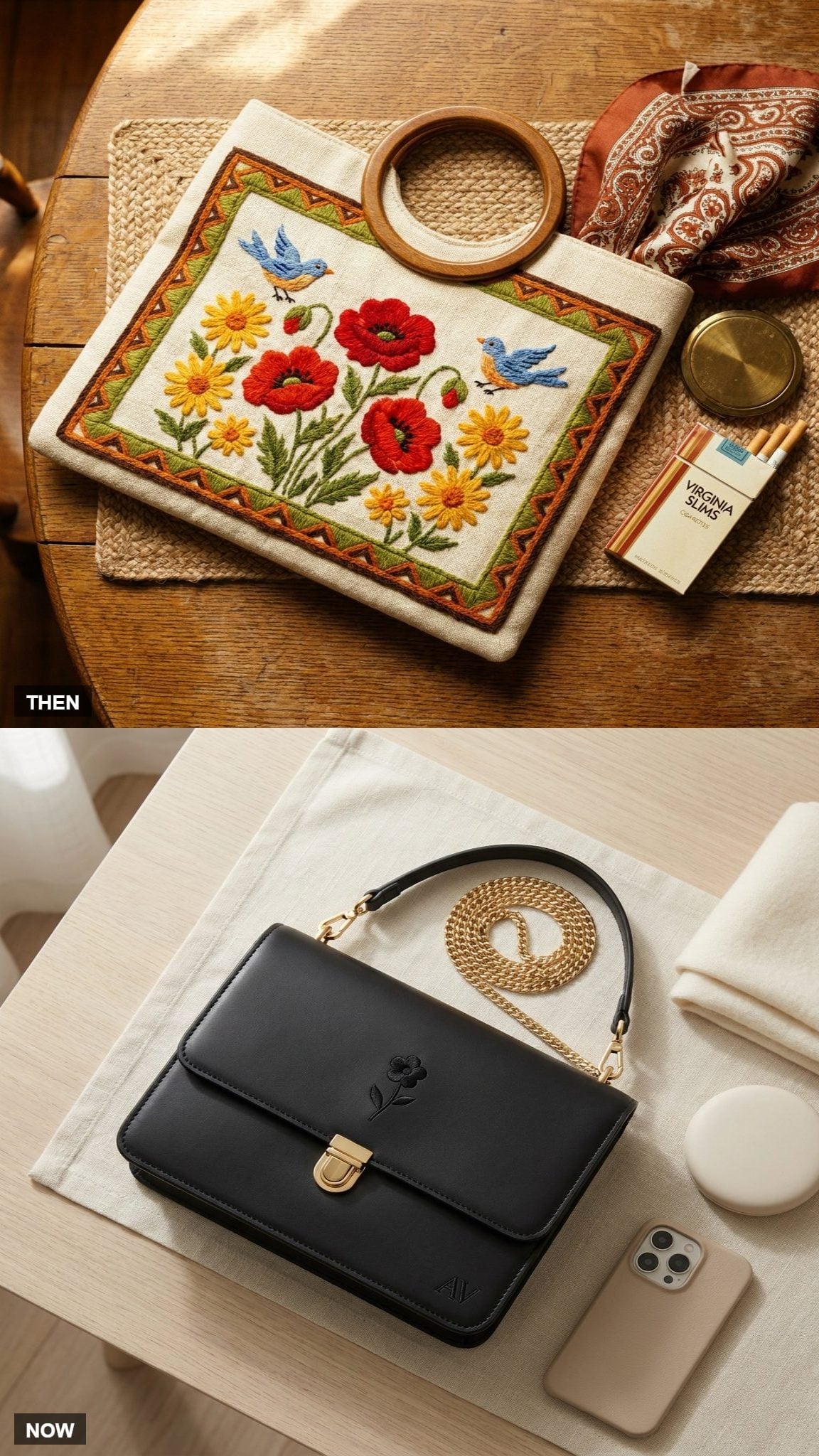
Folk embroidery on handbags had a very specific moment in the mid-seventies and it committed fully. Flowers, birds, geometric borders, sometimes all three on one six-inch clutch. The craftsmanship was real, these weren’t printed patterns, and the results ranged from genuinely beautiful to truly chaotic.
Today’s embroidered bags are more restrained. A single motif on a structured flap, or a discreet logo embroidered in tonal thread. The spirit is the same but the volume has been turned down considerably. Not necessarily an improvement, depending on who you ask.
15. The Doctor’s Bag Wasn’t Just for Doctors Anymore
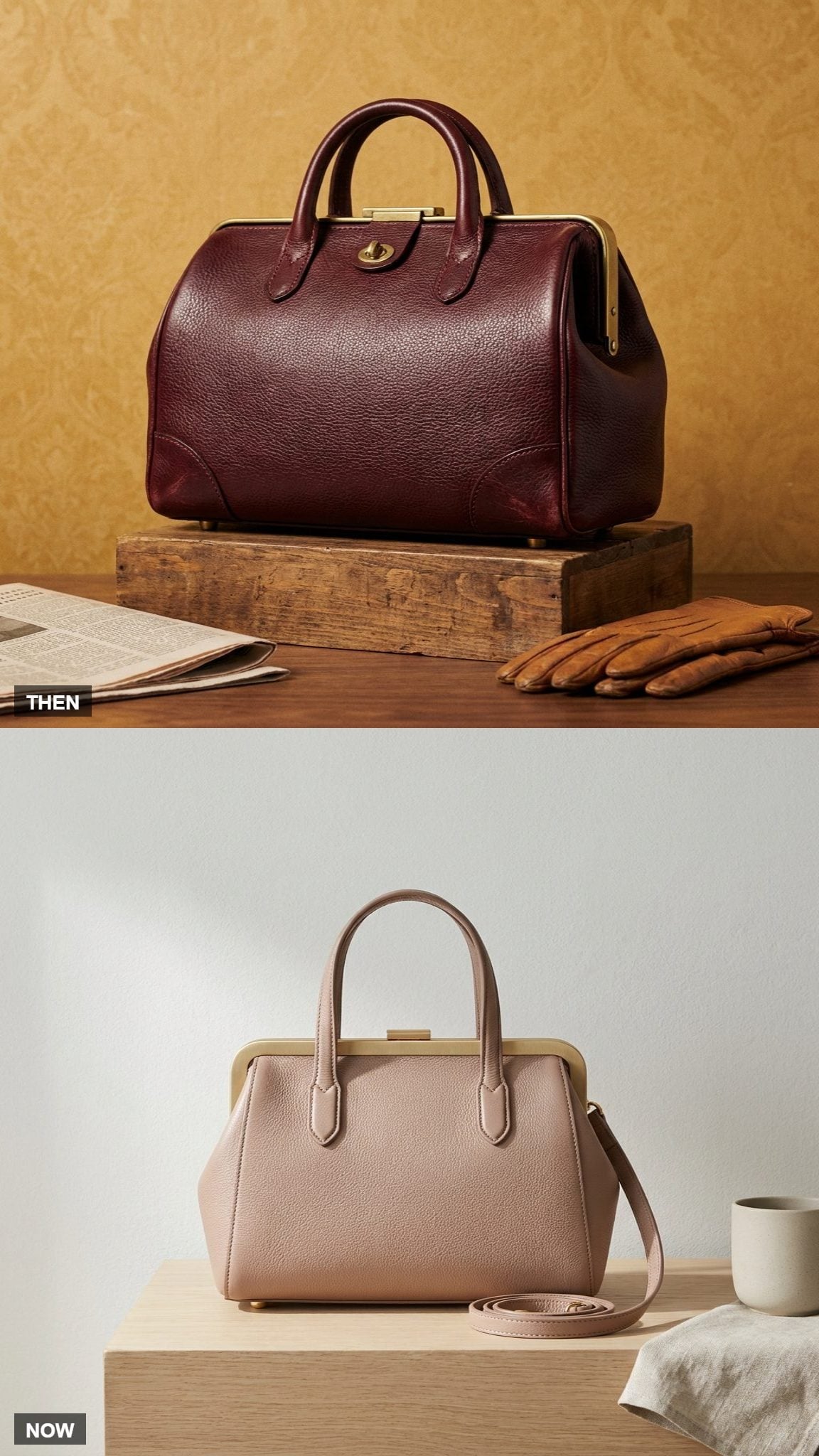
The structured doctor bag was everywhere in 1975, in burgundy, in tan, in black, and women carried them like they meant business, because they did. Wide-mouthed, hinged at the top, brass-footed, and heavy before you put anything inside. They did not swing. They did not slouch. They arrived.
The silhouette quietly circled back in the 2020s. A new generation of structured top-handle bags borrows the same architecture but in pebbled leather and softer palettes. Same bones, different attitude.
14. The Wristlet Before ‘Wristlet’ Was Even a Word
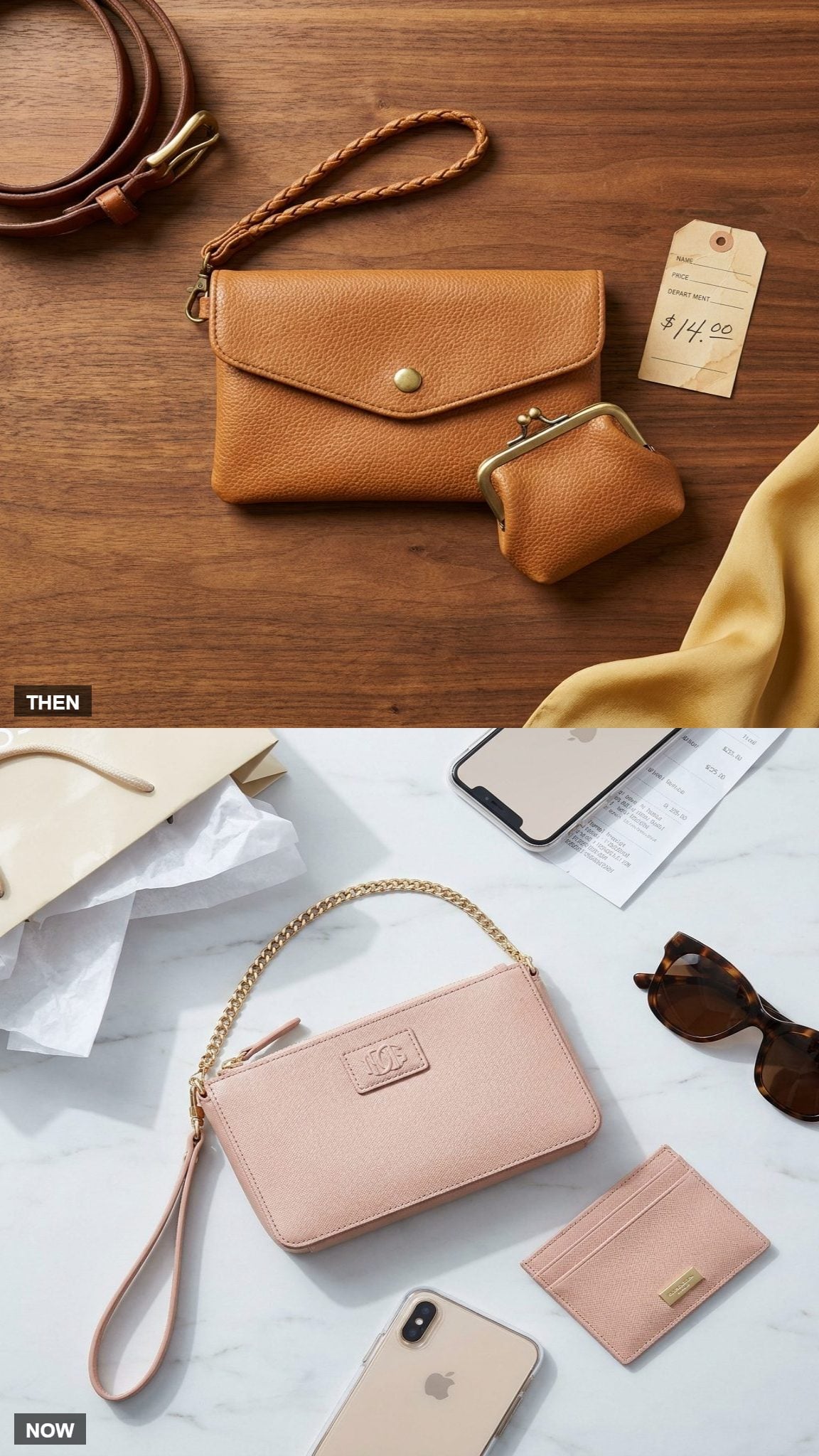
Before the branded wristlet existed as a retail category, the 1975 version was just a small fold-over pouch with a single short strap and a snap. Usually sold as a set with a matching coin purse. Utterly practical. Zero branding. Often purchased at a department store counter alongside a belt. The whole thing cost about as much as a movie ticket and lasted a decade.
13. Beads Were for Your Neck, Your Ears, AND Apparently Your Bag
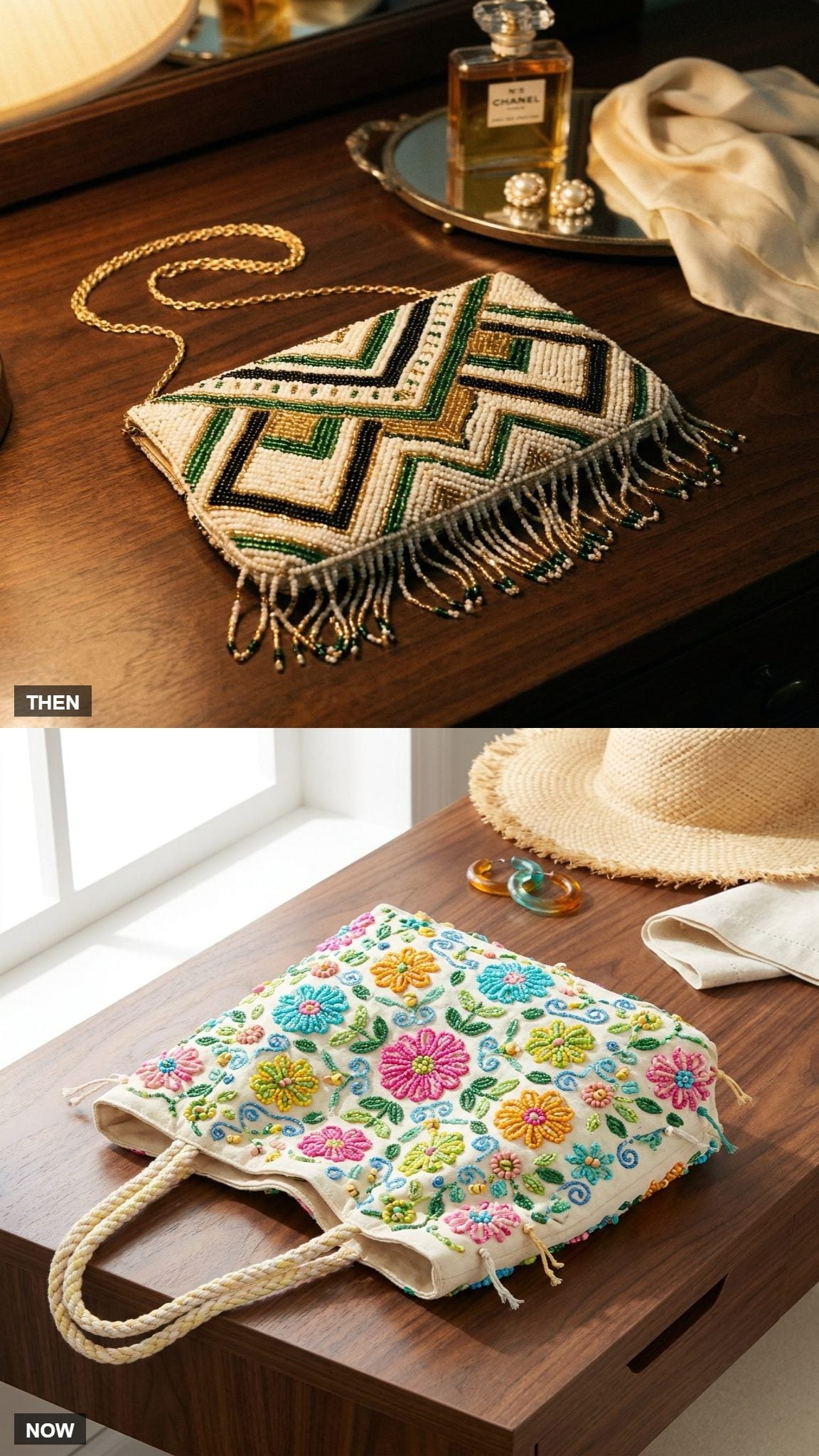
The fully beaded evening bag of 1975 was a labor-intensive object. Thousands of glass seed beads, geometric patterns, fringe trim, gold chain. It was the kind of thing passed down not because it was practical but because someone had clearly worked very hard on it.
Modern beaded bags have come back in a big way since around 2022, but today’s versions tend toward playful and handmade-looking rather than formal. Daytime, not evening. Slouchy, not rigid. You can find them at markets in Oaxaca and luxury boutiques in Paris for prices that are very, very far apart.
12. The Kelly-Adjacent That Wasn’t the Kelly
❤️ Would you like to save this?
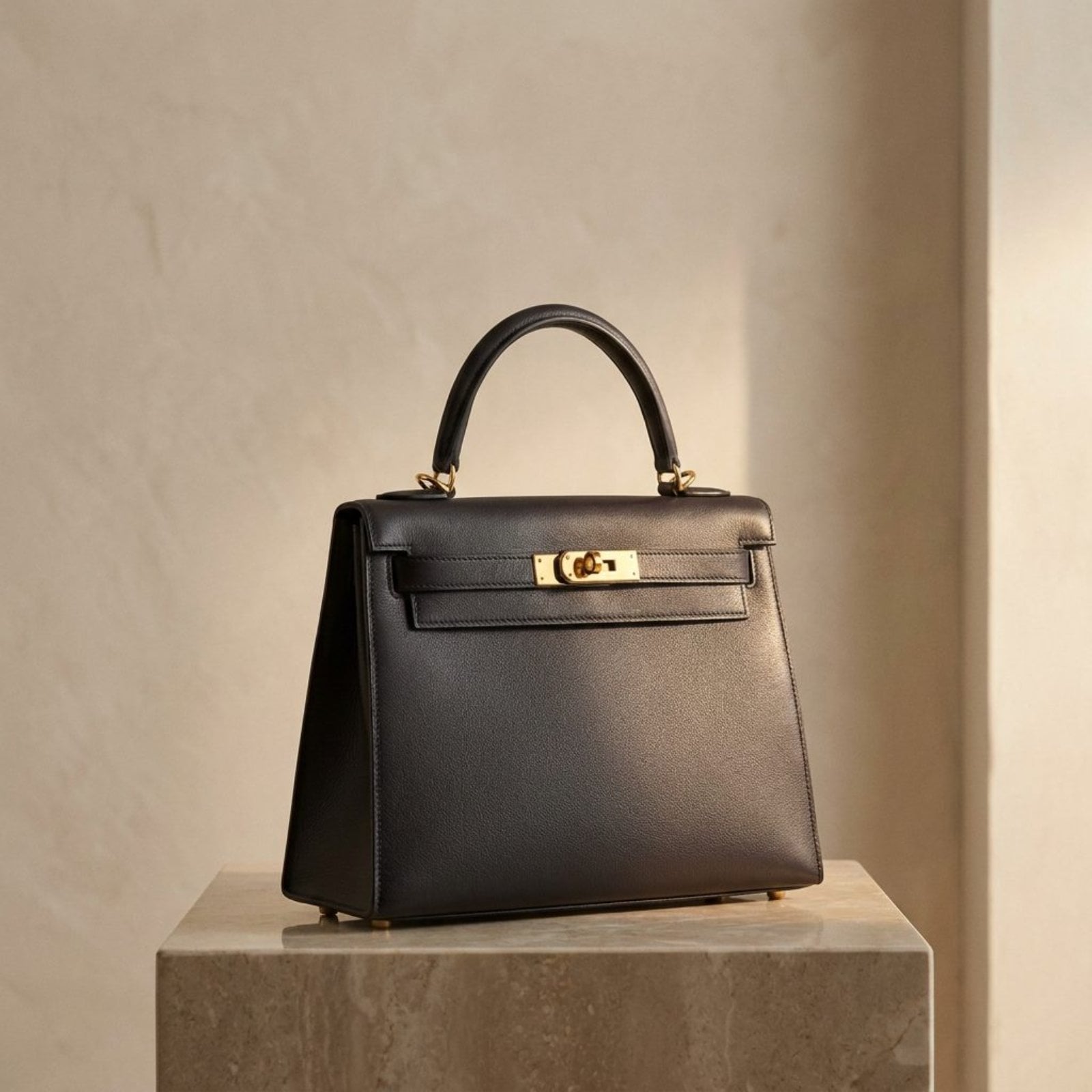
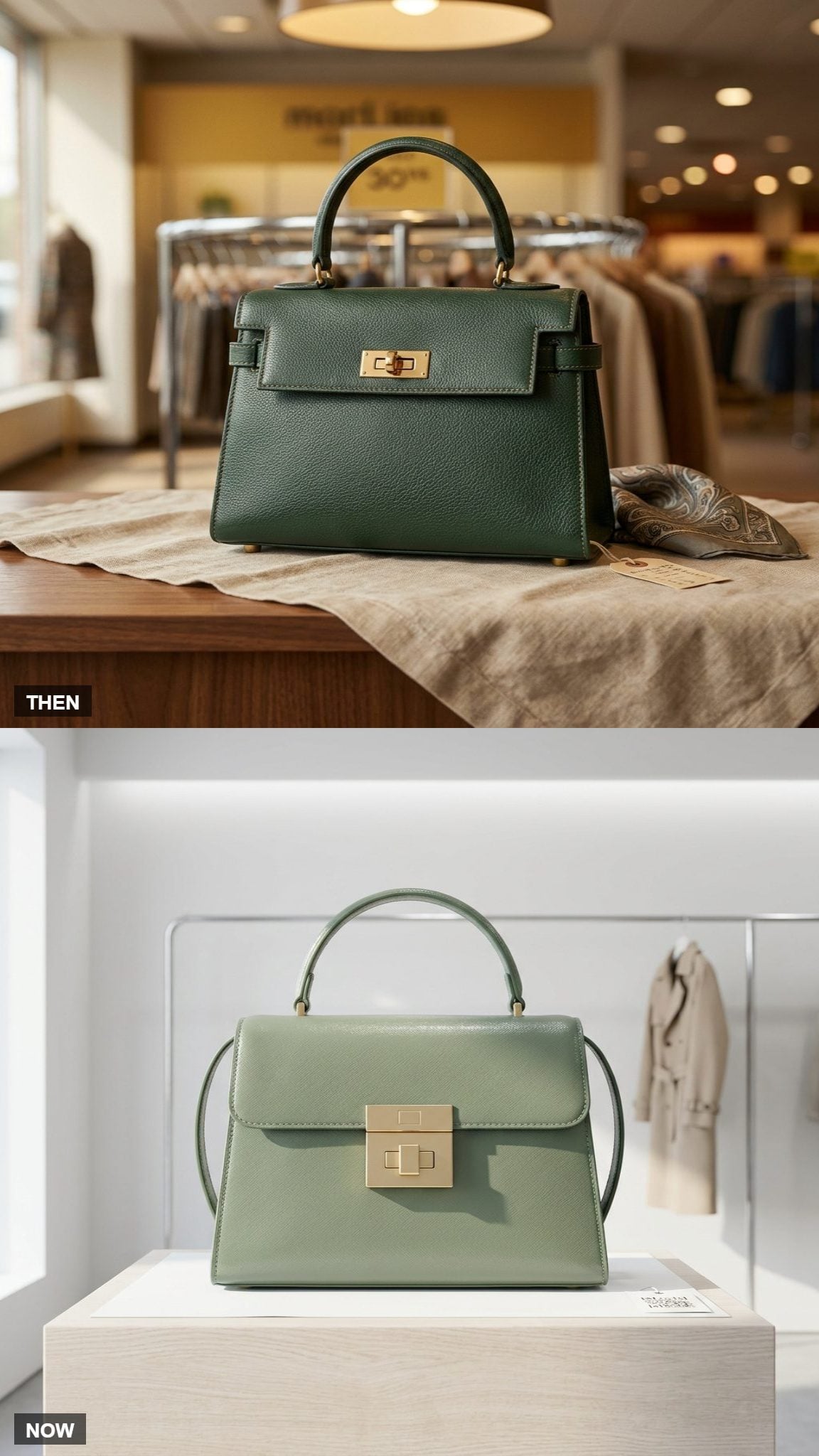
Every major handbag house in 1975 had a version of the structured flap with a single top handle and a turn-lock clasp. Not the Kelly, which was already a decade into its mythology, but something that shared its bones and cost about a hundred times less. Forest green, tobacco brown, navy. Department stores had entire tables of them.
There is a specific pleasure in finding one of these at an estate sale, still intact, corners worn but the clasp still satisfying to open. A well-made structured leather top-handle bag built for the mass market still outlasted most of what’s being manufactured right now.
11. The Knit Bag That Grandma Made and You Actually Wanted
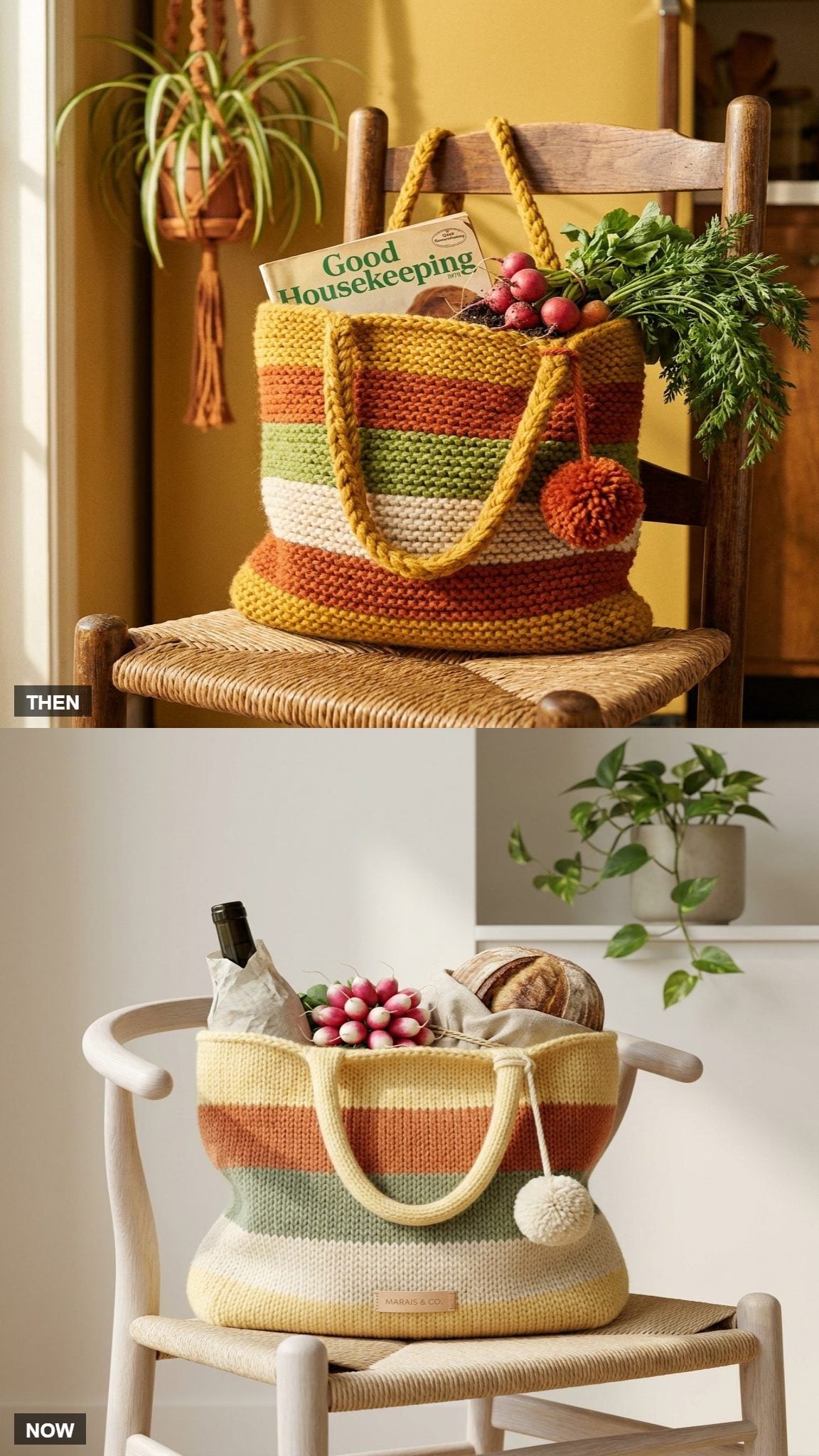
A knitted bag in 1975 was almost certainly made by someone’s hands and given as a gift. Chunky yarn, stripes, possibly a pom-pom. Carried without irony to the farmer’s market or the school run. Then for twenty-five years it was considered embarrassing, then craft-fair adjacent, then suddenly in 2018 every luxury brand dropped a version in cashmere for four hundred dollars.
10. Patent Leather Had Its Own Zip Code in 1975
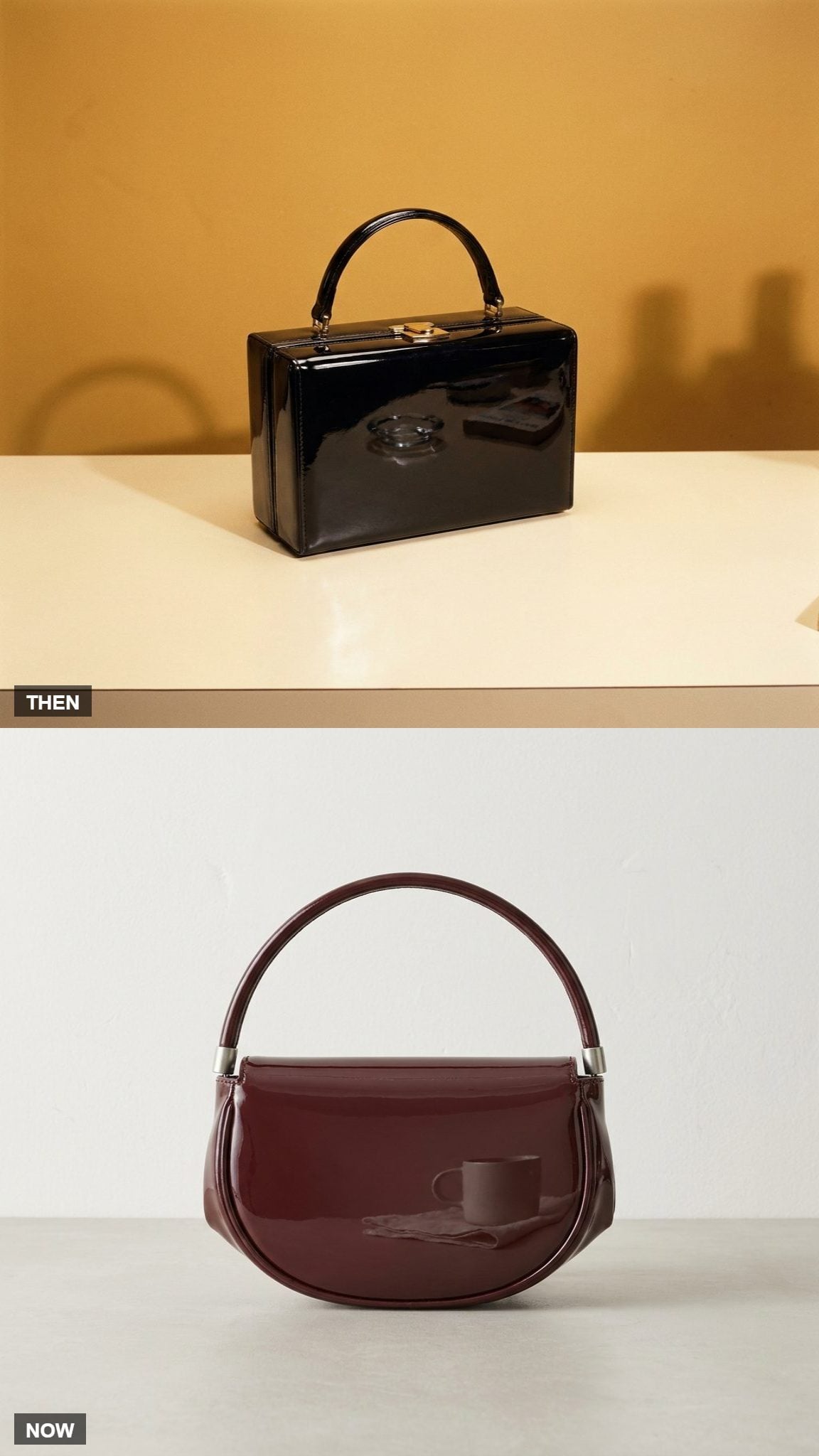
Patent leather in 1975 was not subtle. The whole point was the reflection. Box-shaped, high-gloss, black or white or occasionally fire-engine red, it had a graphic quality that read from across a room. You wore it when you wanted to be seen wearing a patent leather box bag and that was reason enough.
Patent went through a long exile during the nineties and early 2000s and has come back in waves since. The current iteration tends toward smaller silhouettes and softer shaping, a patent tote here, a patent leather mini bag there. The material is the same. The bravado is slightly more restrained.
9. The Envelope Clutch That Went Everywhere, And Still Does
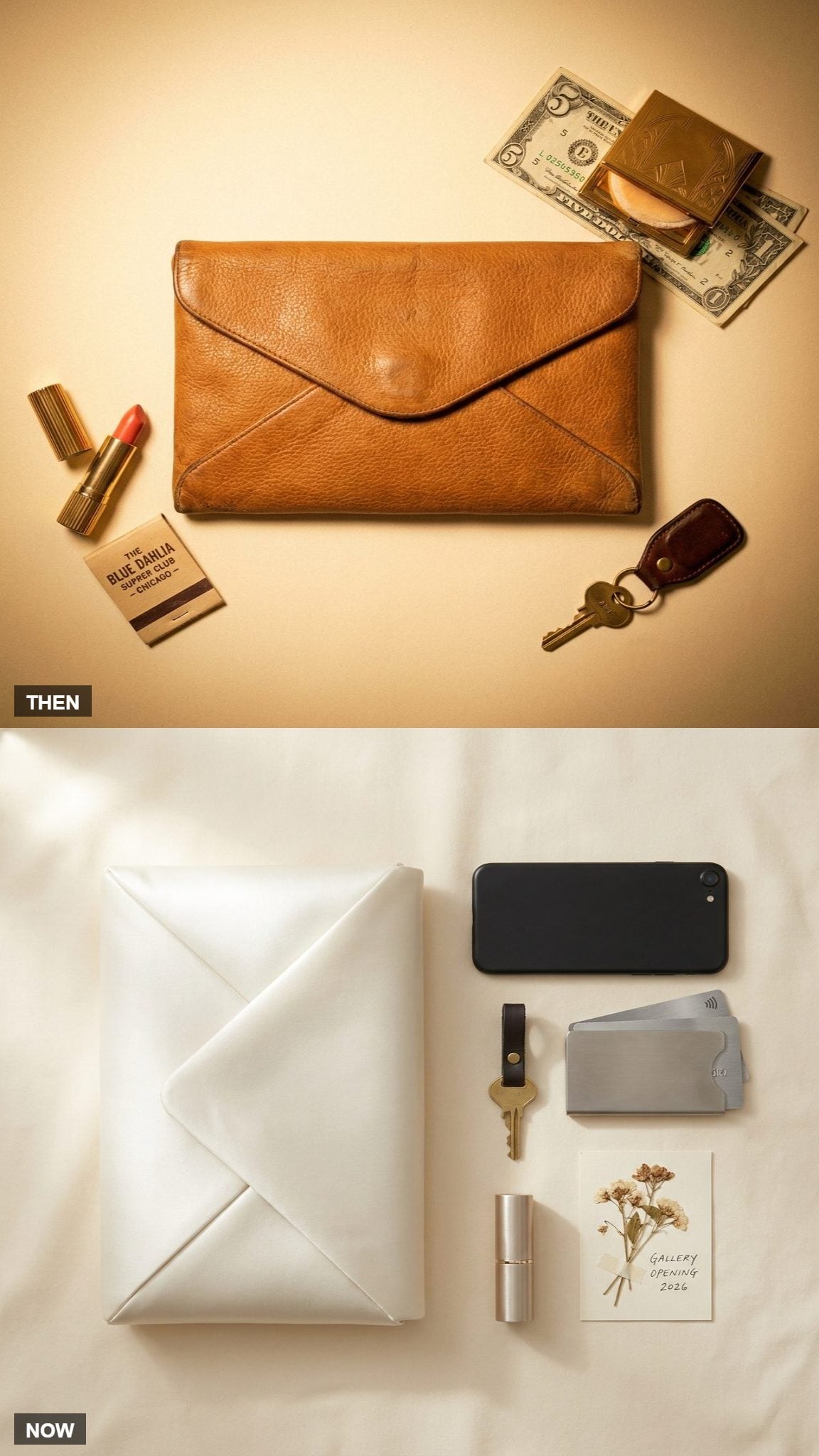
The envelope clutch of 1975 was the bag equivalent of a firm handshake. Flat, tan, no hardware to speak of, maybe a hidden snap if you were lucky. It held your cash, your compact, and your keys, in that order of importance. You tucked it under your arm at a cocktail party and hoped nothing fell out when you reached for a drink.
The 2026 version still has the same silhouette, but now it shows up in structured satin clutch at awards shows and as a sculptural leather envelope bag at gallery openings. The shape never left. It just learned that a bag doesn’t have to match anything to mean something.
8. The Frame Bag With the Twist Clasp Your Mother Guarded Like Gold
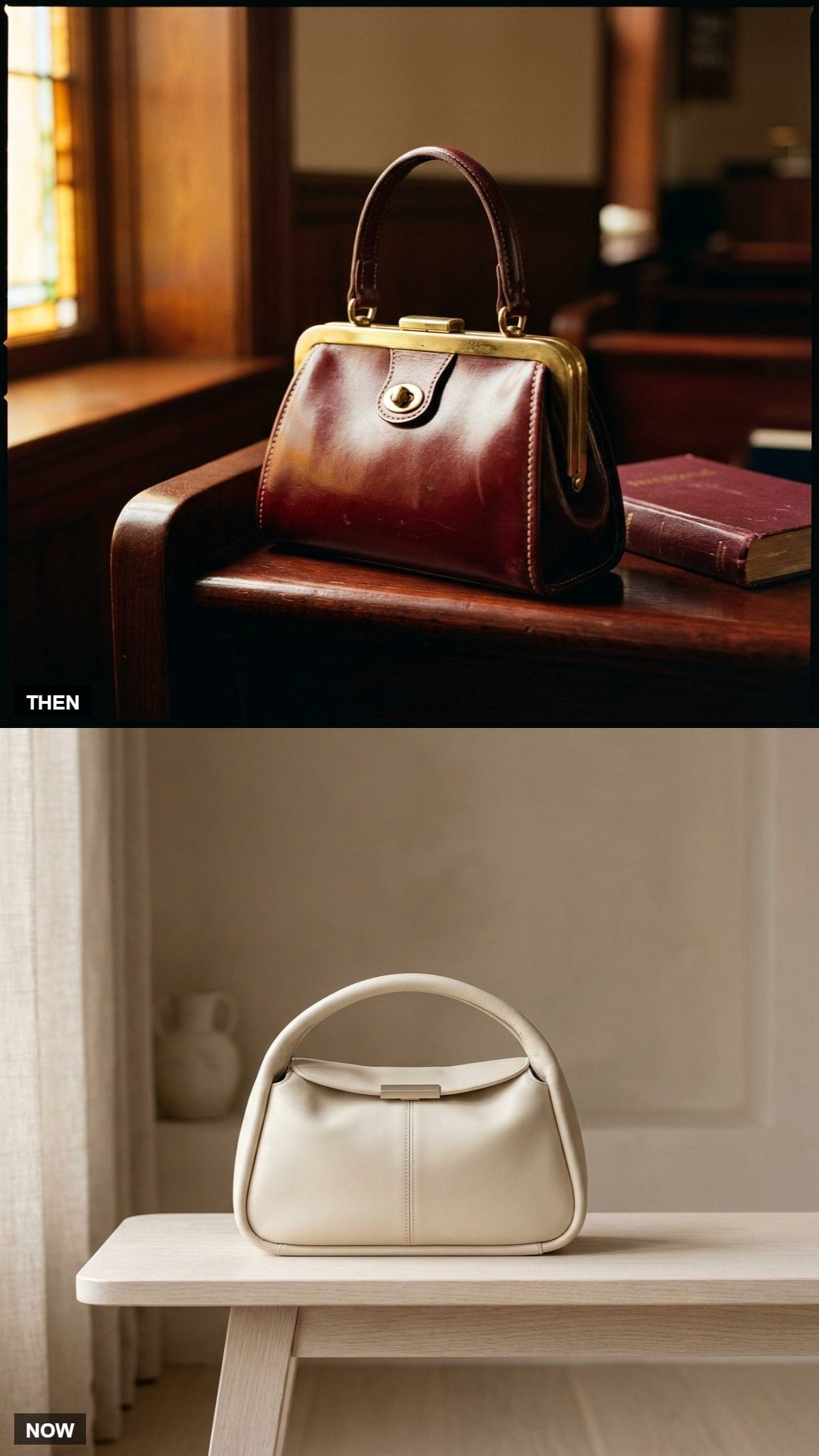
The 1975 frame bag was small architecture — structured, unforgiving, engineered with a twist clasp that made a satisfying metallic click every time your mother opened it to hand you a Kleenex during the sermon. The leather stood on its own on the church pew, no slouching, no apologies. You could hear it close from three pews back.
The 2026 version kept the frame and threw out the formality.
Softer leathers now. Matte hardware. Closures that don’t announce themselves the way brass used to. It reads modern because it whispers where the original one shouted, and honestly, part of me misses the shouting.
7. The Wooden Handle Bag That Clacked When You Walked
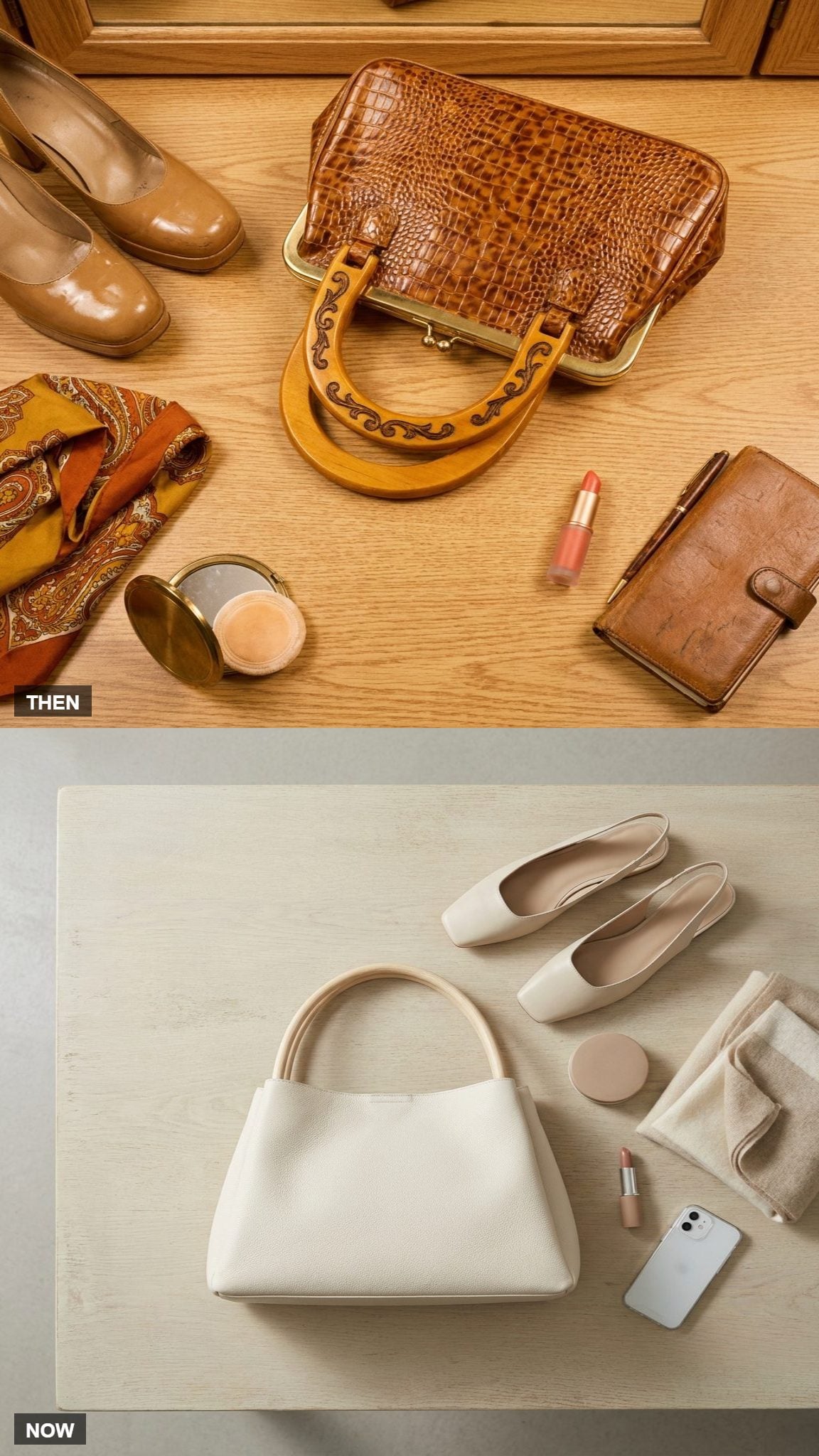
Wooden handles were everywhere in 1975, and so was Bakelite — plastic pretending to be wood, wood pretending to be sculpture, sometimes the same handle doing both jobs at once. You could hear a woman coming down the hallway before you saw her because the handles clacked against the metal frame with every step, a kind of domestic percussion.
The current version sanded off the drama. Handles are lighter now, quieter, often bleached or blond. The bag still nods to the era, but it stopped making so much noise about it.
6. The Straw Market Bag Before Rattan Got Its Rebrand
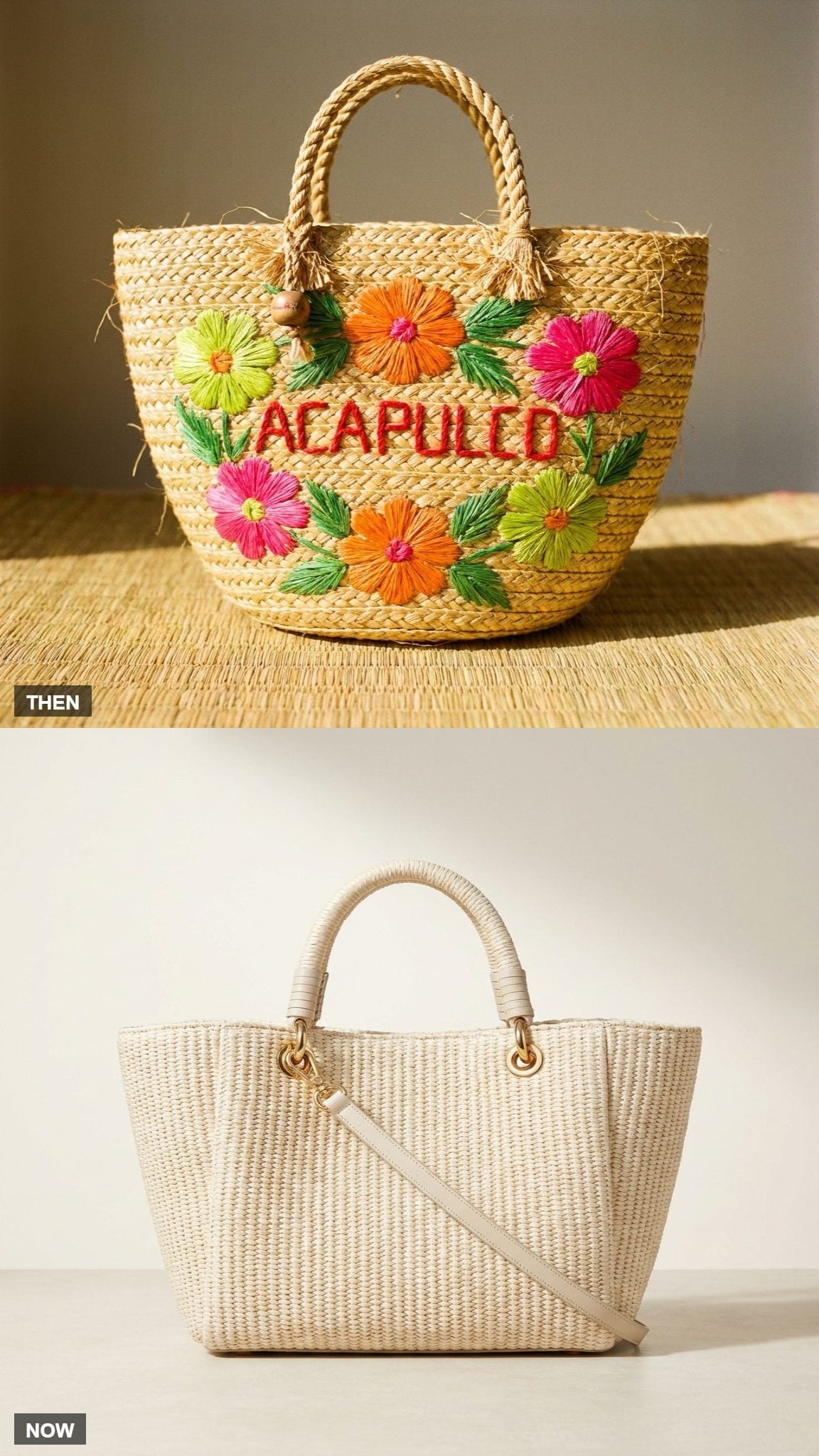
The straw bag in 1975 came home from vacation and never left the closet. Flowers embroidered on the front, sometimes a name, sometimes a city, and straw rough enough to snag your pantyhose if you weren’t careful about how you carried it.
Now the same shape sells for four figures under a French label, refined and stripped of anything that looks like a souvenir. Same materials. Different social contract.
5. The Vinyl Handbag That Pretended to Be Leather and Fooled Nobody
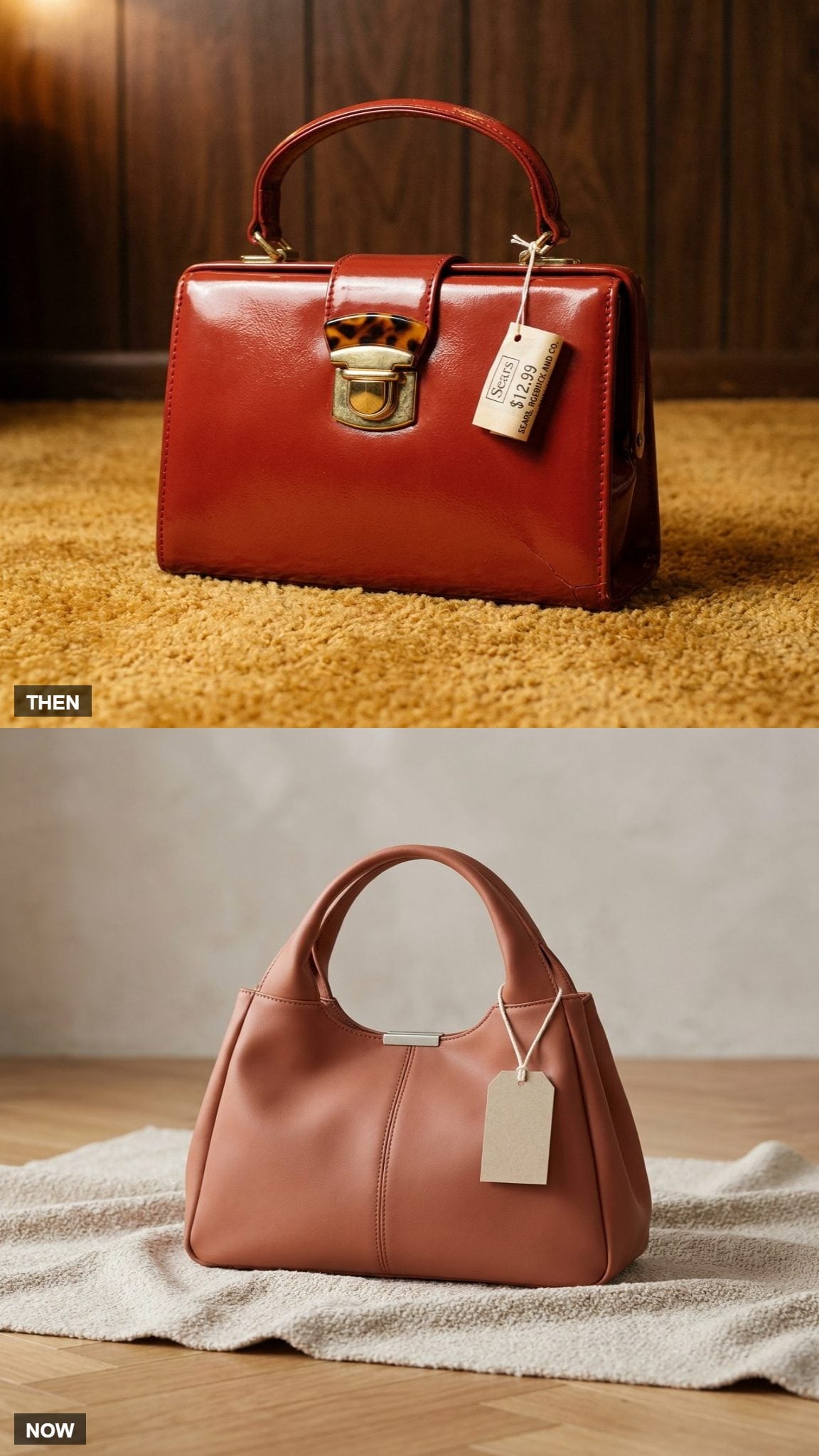
Vinyl in 1975 was ambitious. It wanted to be patent leather so badly that it developed a personality about it — a shiny plastic that cracked at the corners by year two and got sticky against your wrist every August. Nobody was fooled, and nobody minded, because the price on the tag was the whole appeal.
The 2026 replacement is a bio-based synthetic that actually behaves. Matte, supple, no crackling in the cold. Same democratic price point, none of the shame.
4. The Fringe Suede Hobo That Belonged to Someone Named Stevie
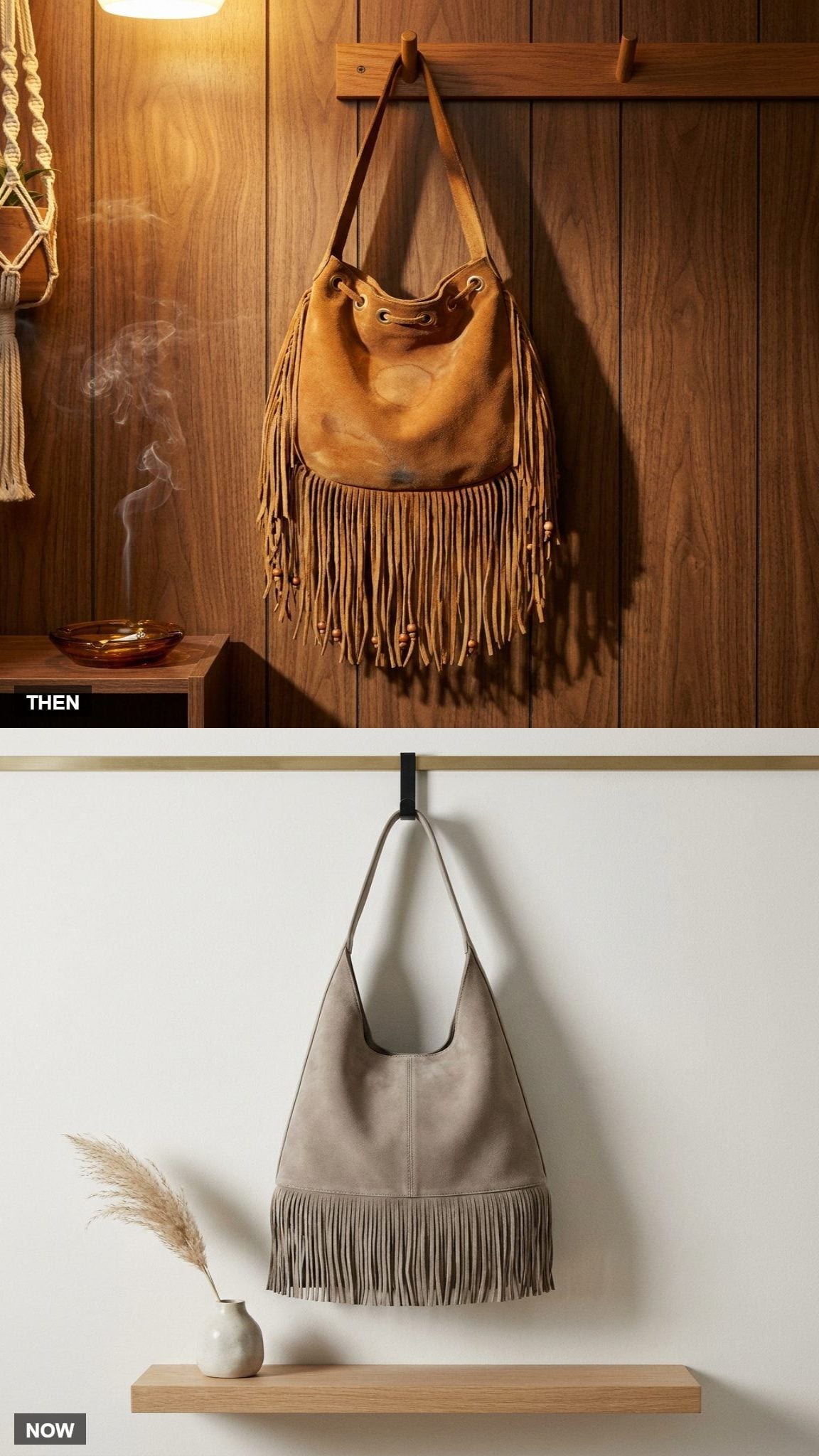
Fringe in 1975 was not a detail — it was the whole reason you bought the bag. Longer was better. It swung when you walked, got caught in car doors, and picked up cigarette ash off every surface it grazed on the way to the coat check.
Today’s fringe is edited. Shorter, denser, treated more like a texture than a declaration. The bohemian ghost is still in there, just wearing better shoes now.
3. The Convertible Clutch-to-Shoulder That Nobody Called Convertible
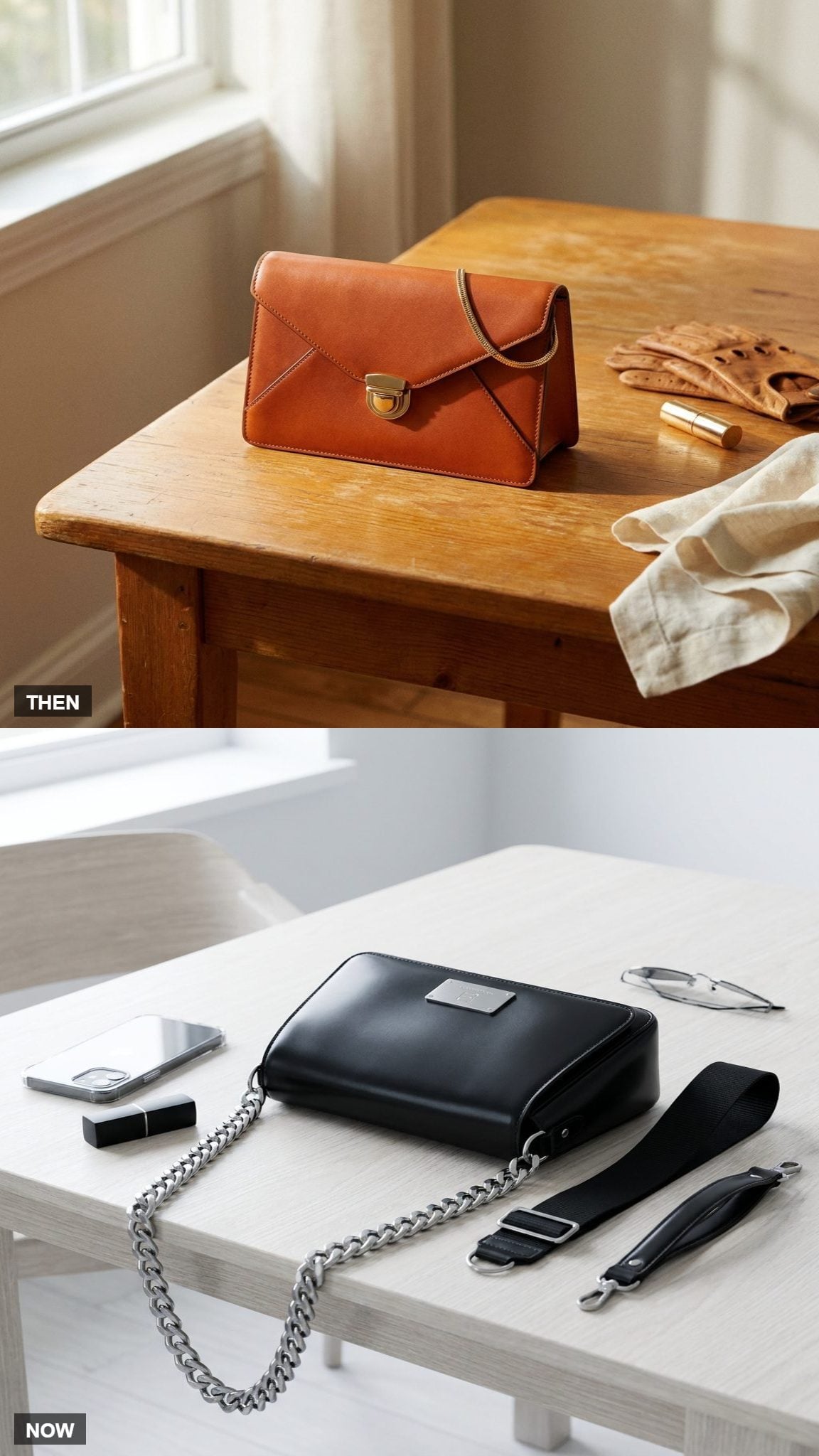
The convertible bag existed in 1975 and nobody bragged about it — you just tucked the chain inside for daytime and pulled it out at the restaurant, a small piece of magic women knew and never bothered explaining to anyone. The trick was the whole pleasure of owning it.
The current version leads with the feature. Marketing copy calls it a three-way bag, a five-way bag, a hybrid. The chain is always visible. The trick isn’t a trick anymore.
2. The Novelty Wicker Basket Shaped Like Absolutely Nothing Practical
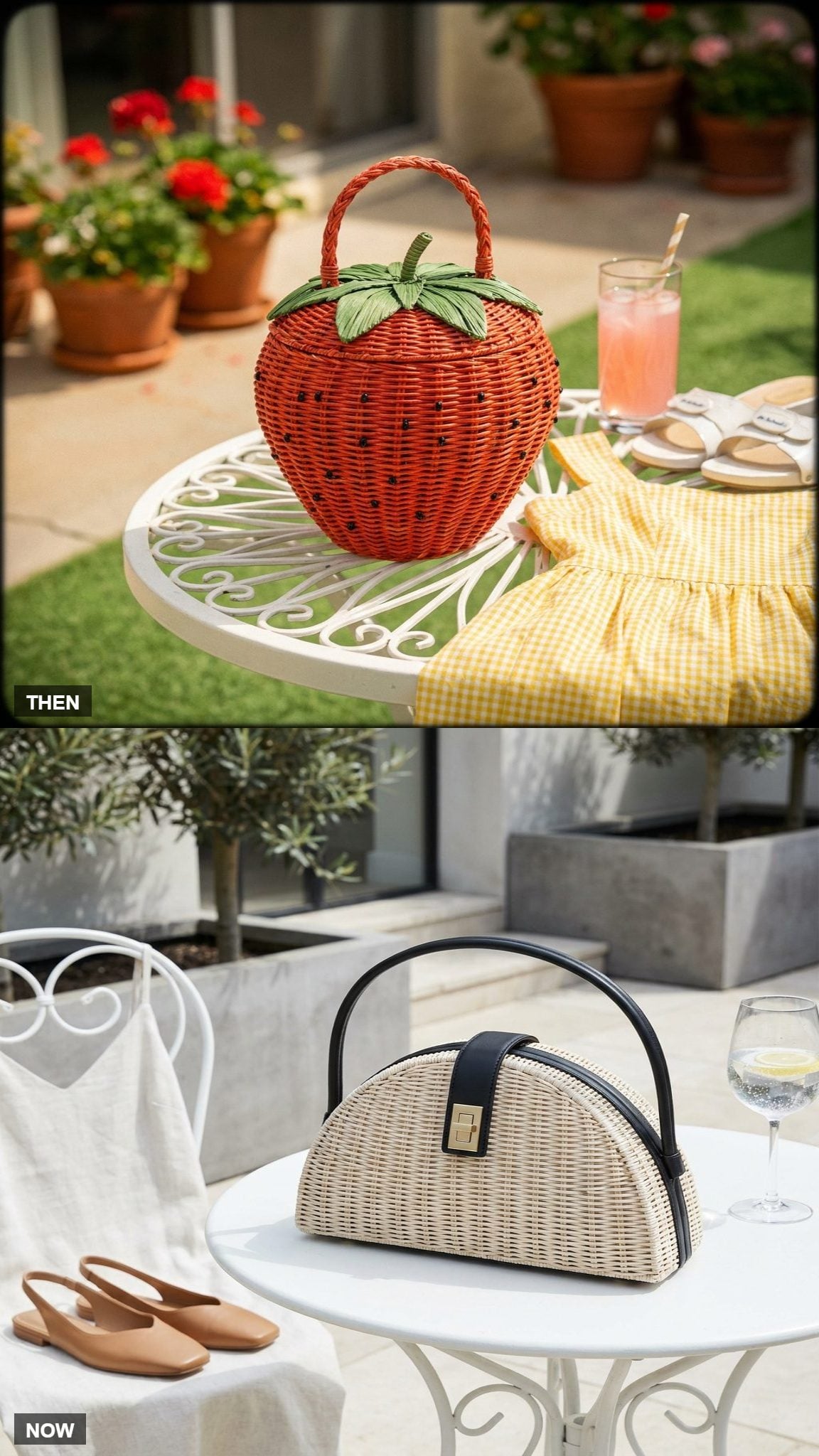
In 1975 your summer bag could be shaped like a beehive, a birdcage, a strawberry, a lobster. Nobody thought it was strange — you matched it to your sundress, took it to a garden party, and everyone said isn’t that cute and then went to get more punch.
Contemporary wicker got serious.
The shapes are architectural now. The novelty is gone and something is genuinely lost, even if what replaced it photographs better in overhead flatlays.
1. The Two-Tone Contrast Bag That Read Like a 1970s Ford
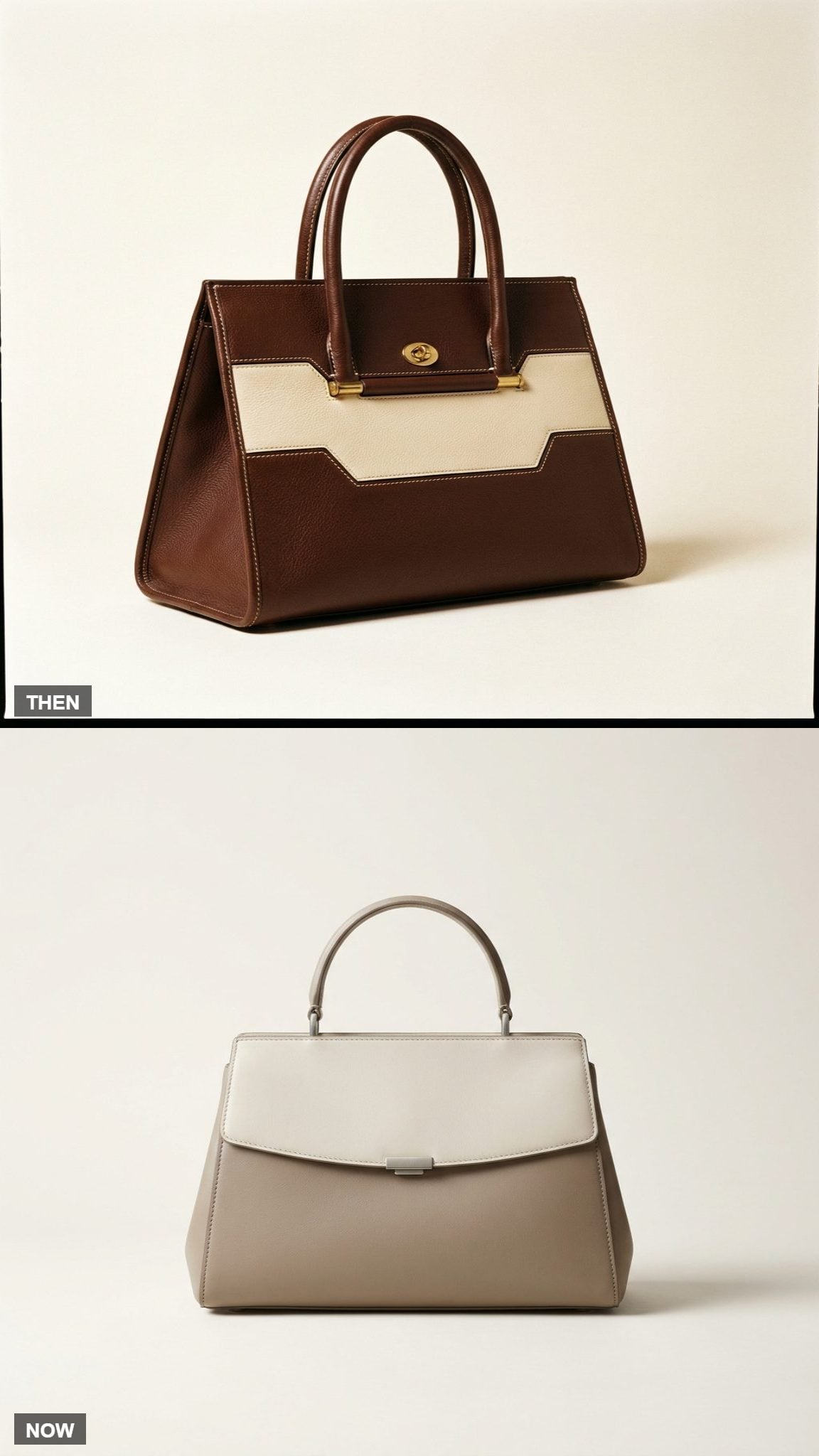
Two-tone leather in 1975 committed to the bit. Cream against chocolate, camel against oxblood, hard color lines that looked like they were designed by the same person who did the interior of a Ford Granada — and probably were. Nothing subtle about the meeting of the two shades, and no attempt at pretending otherwise.
The current two-tone whispers. Ivory next to taupe, sand next to bone, colors that are technically different but ask permission to be seen together. The refinement is real. So is the loss of nerve.
The 1975 handbag walked into a room and told you what it was. The 2026 handbag waits to be asked.