❤️ Would you like to save this?
Stiff, dark, unforgiving denim that could practically stand up on its own. That was the fabric of 1980. You broke it in over months, not days. The cut was specific, the rules were unspoken, and wearing the wrong pair in the wrong context meant something. Four decades later, the material is still everywhere but almost nothing about it is the same. The fit, the wash, the occasion, the shoes underneath it. Twenty-three things changed. Here they all are.
FYI, thanks to AI imagery software, we’re able to create very specific fashion and hairstyle examples to illustrate the points being made. In some cases, imagery is exaggerated to hammer home the point. Also, assume links that take you off the site are affiliate links such as links to Amazon. this means we may earn a commission if you buy something.
23. The Acid Wash Era Was Its Own Civilization
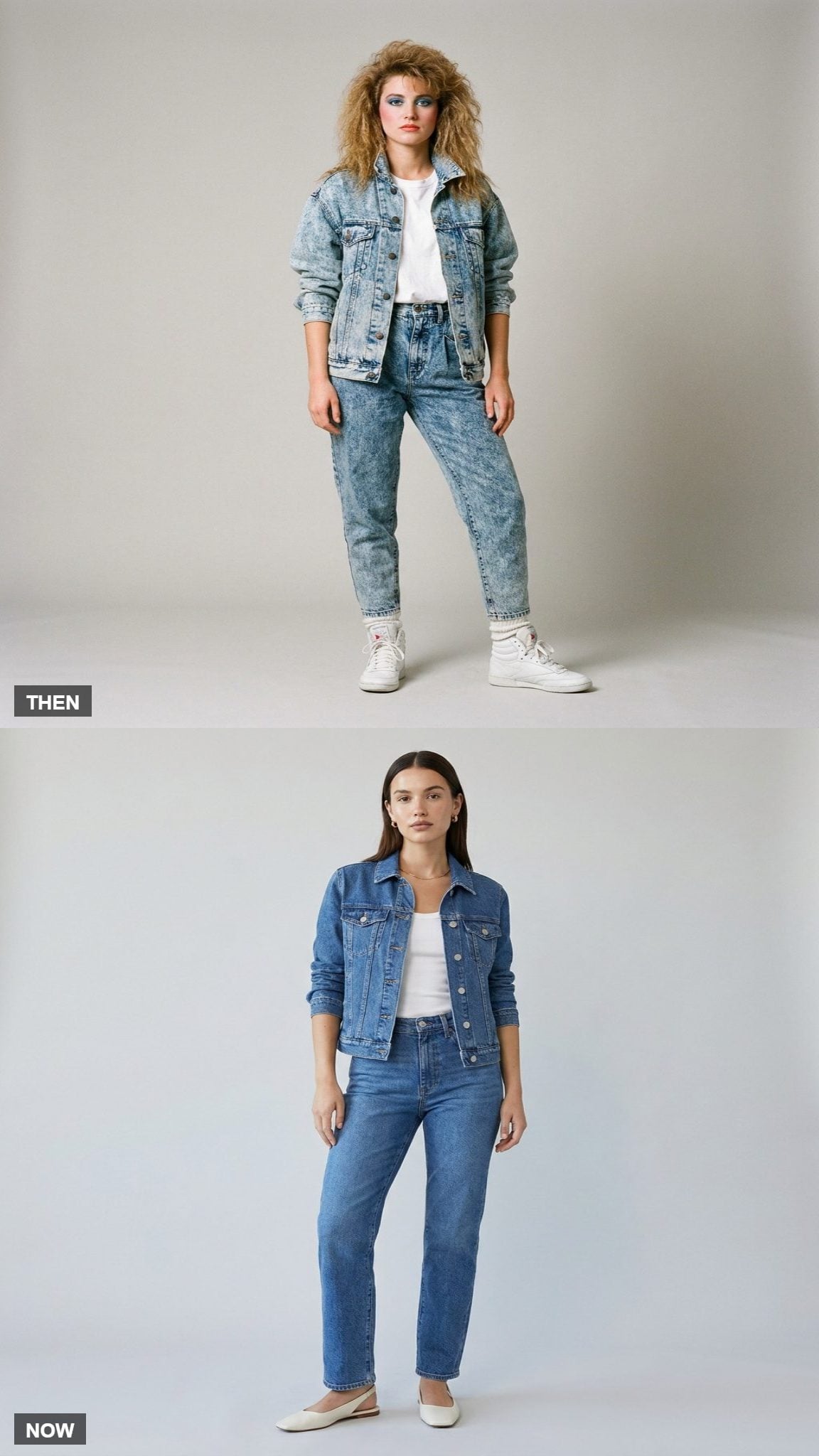
By the mid-1980s, acid wash was not merely a finish. It was a commitment. Pumice stones and chlorine-based bleaching created that mottled, aggressive pattern, and the less predictable the result looked, the better. In malls from Omaha to Orlando, the jeans often came with a matching jacket so the whole outfit looked as though it had survived the same chemical experiment.
Today’s acid wash is more controlled. Brands decide exactly where the light and dark areas will fall, producing a softer, more deliberate effect that can work with clean tailoring rather than a matching denim set. The technique survived. The chaos was edited out.
22. How Denim Handled the Office Is a Story Worth Telling
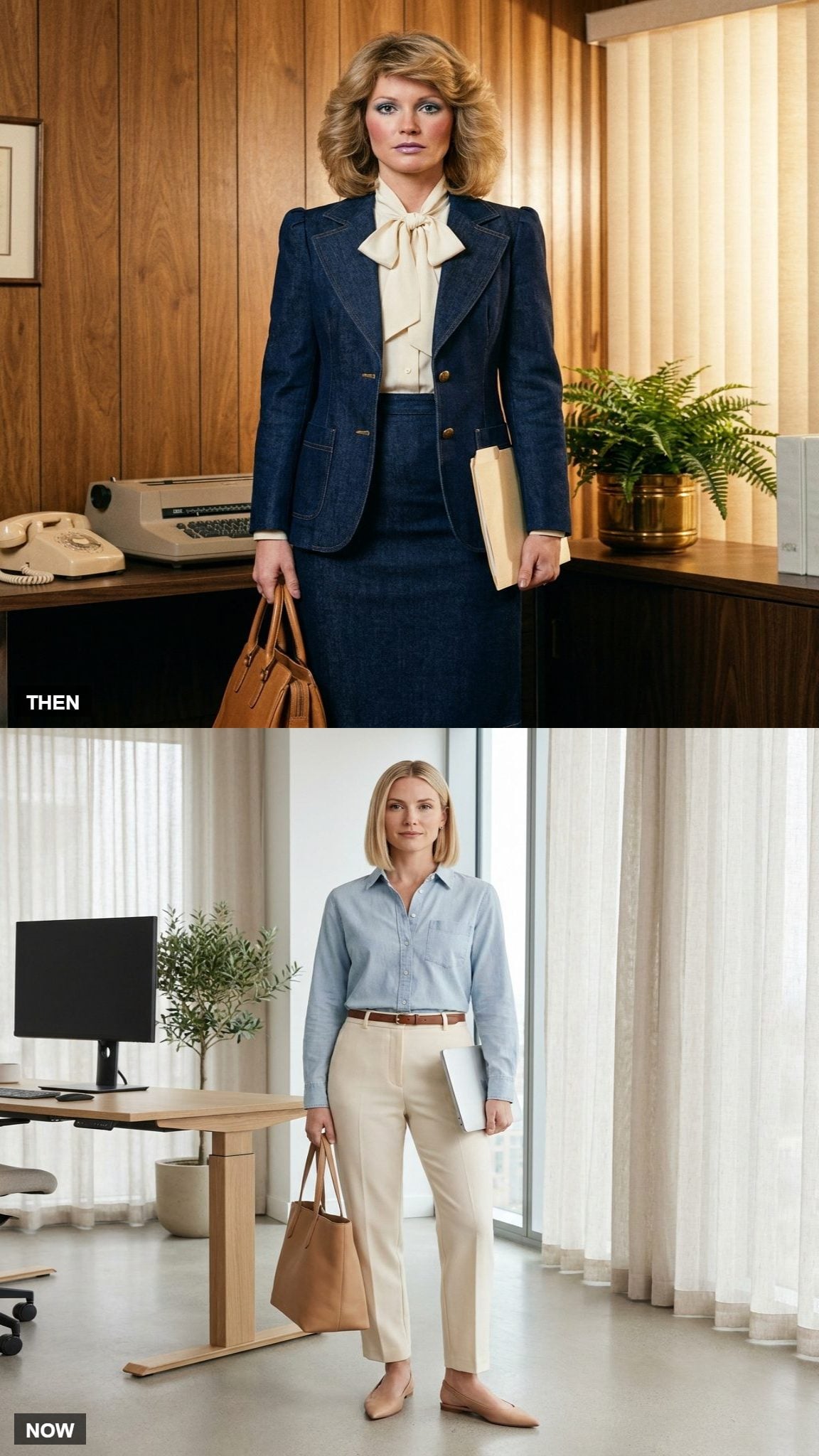
The 1980 working woman wore denim to the office if she was making a statement, and the statement required a matching set. A denim blazer and skirt suit, both the same shade of stiff navy, both cut like they meant business. It looked powerful in the way that required architectural undergarments and a certain walk.
The 2026 version is a chambray shirt tucked into tailored trousers. Same idea, denim at work, executed with exactly none of the drama.
21. What Denim Did on a Date Night in 1980 vs. Right Now
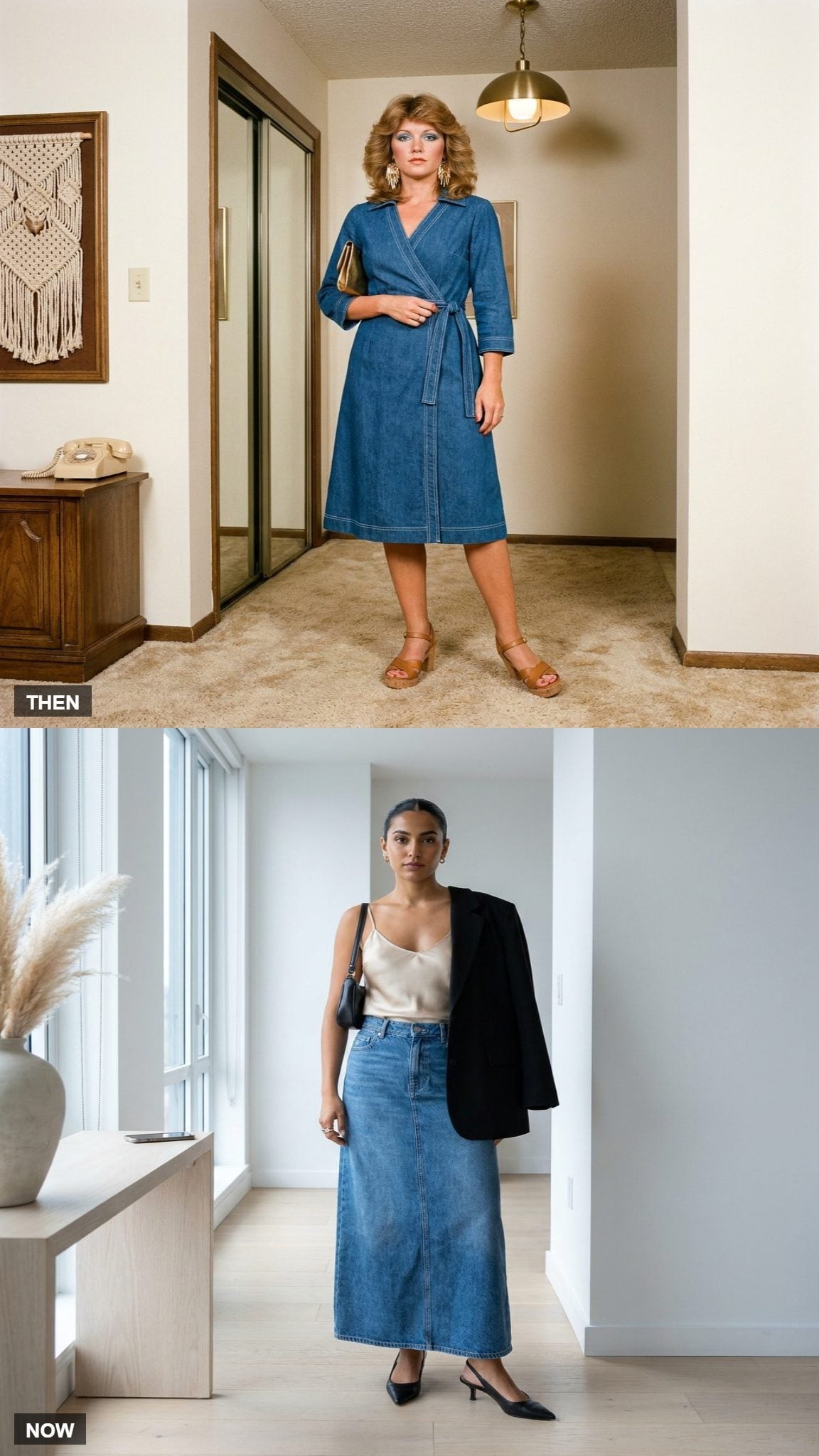
A 1980 date night in denim meant the denim wrap dress: V-neck, flutter sleeves, knee-length, white topstitching everywhere. It tried to split the difference between casual and dressed-up and landed confidently in its own category. Platform sandals. Chandelier earrings. Feathered hair. The whole look took at least forty-five minutes.
Now a wide-leg blue denim skirt does the same job in a third of the time. A satin cami, a blazer draped over one shoulder, and you’re done.
The 1980 date night look wanted to be remembered. The 2026 one wants to look like it wasn’t trying.
20. The Embellishment Phase That Denim Went Through
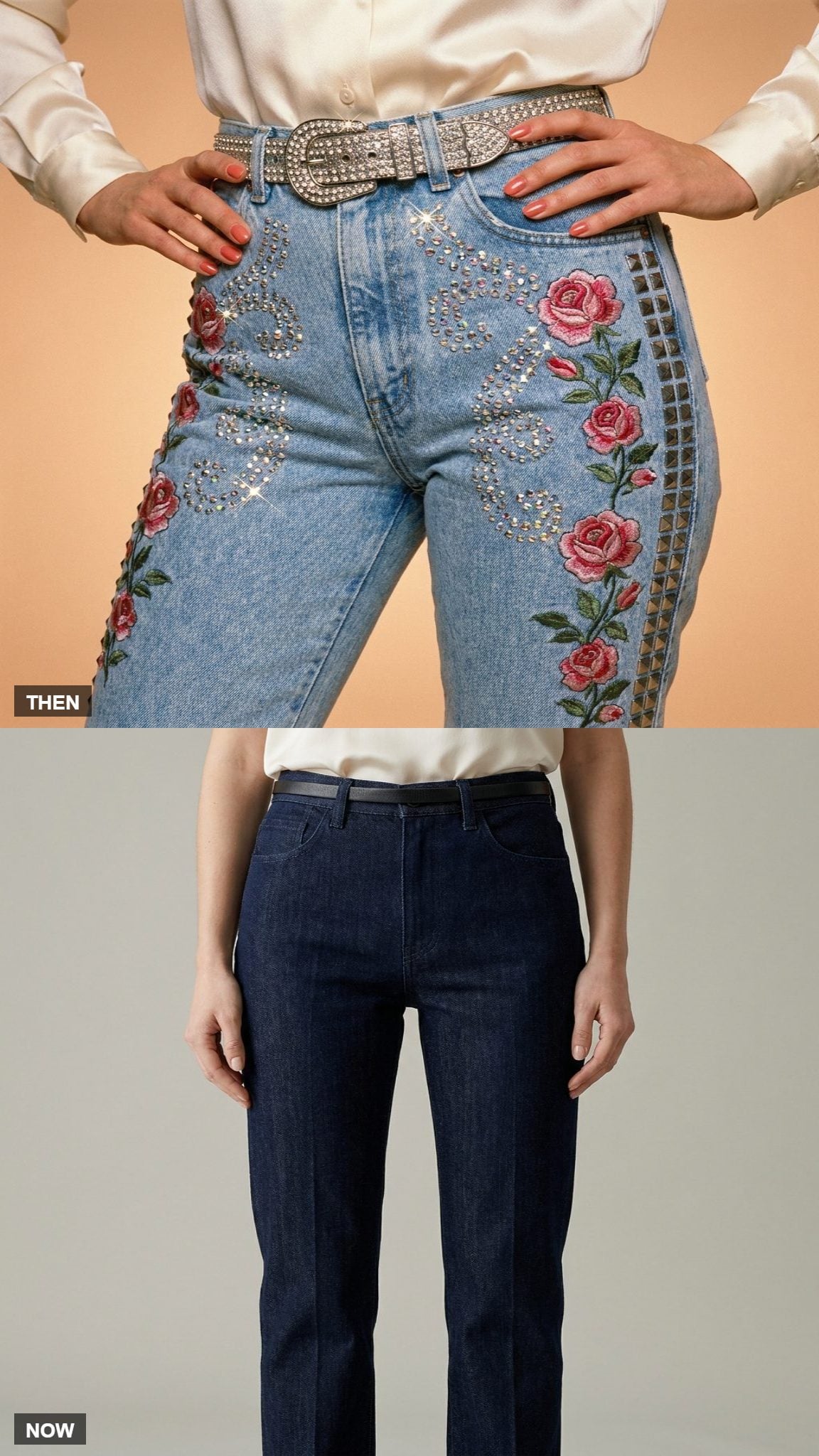
At some point in the early 1980s, plain denim was apparently not enough. Rhinestones got bedazzled onto thighs. Embroidered roses climbed up back pockets. Studs marched in rows from hip to ankle. The result was a pair of jeans that caught the light at every angle and announced themselves before you were even fully in the room.
The current counter-move is maximum restraint. Dark indigo, no hardware, no embroidery, no nothing. The jeans are the background and everything else does the talking.
19. The Denim Jacket Went From Power Shoulder to Something You Actually Wear
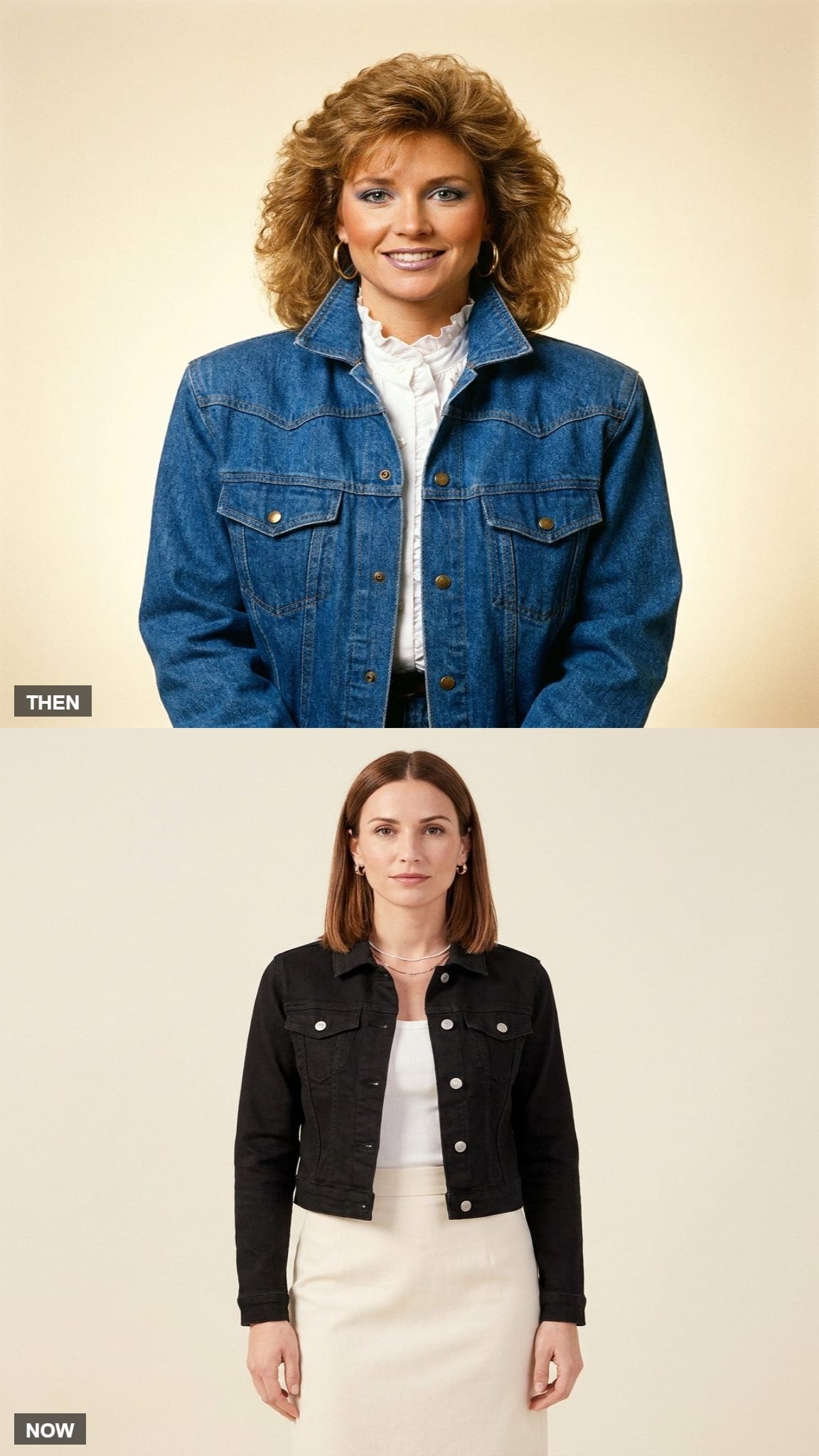
The 1980 denim jacket had shoulder pads wide enough to park a small car. The silhouette was the point, broad, structured, unmistakably powerful. It didn’t drape. It held its shape with or without you inside it, which says something.
A black denim jacket in 2026 does the opposite: it follows the shoulder, sits cropped at the hip, and works over practically anything from a floral midi dress to a basic white tee. The power is still there. It just stopped announcing itself.
18. The Rise of the High-Rise Was a Slow Betrayal
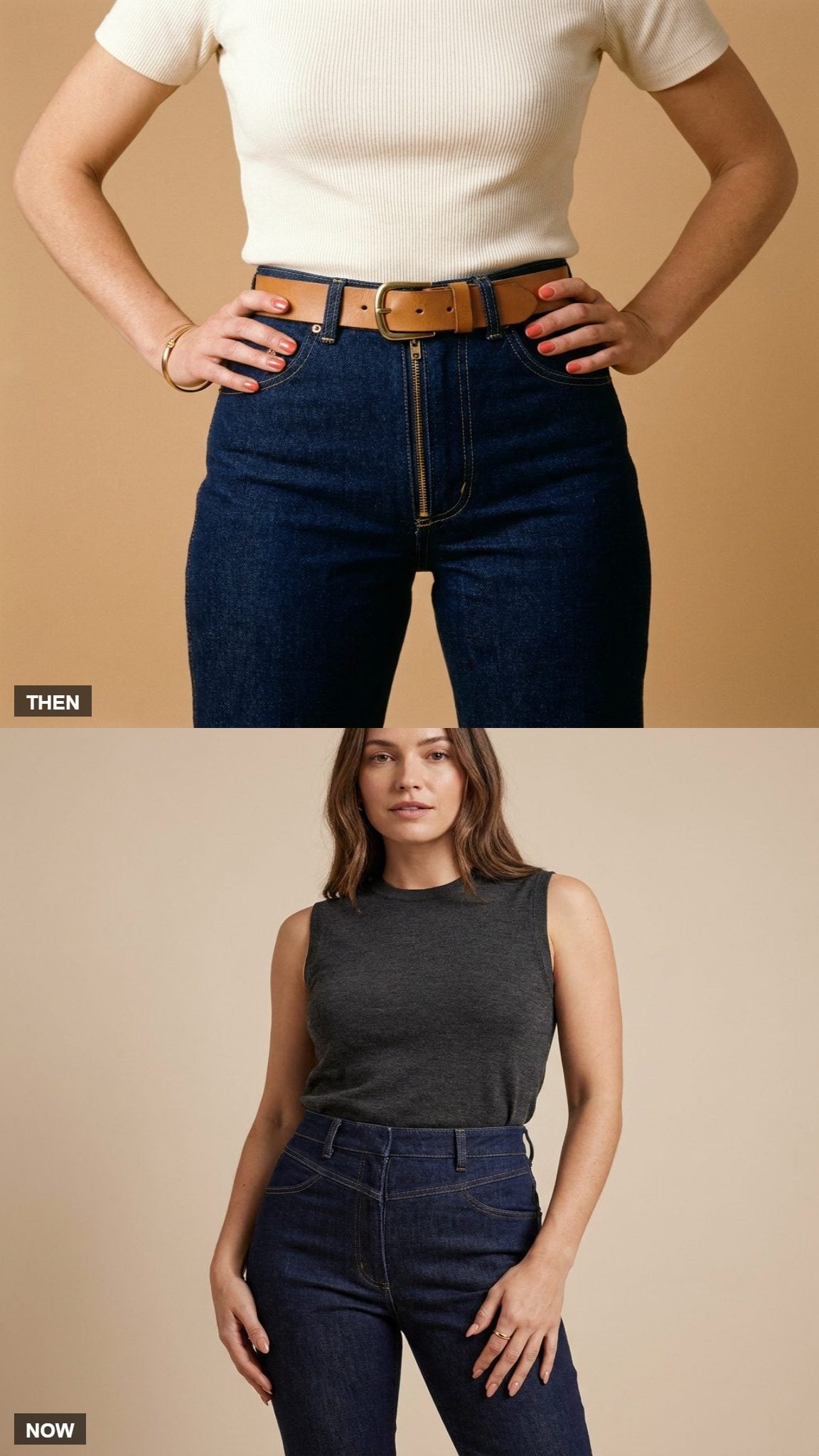
In 1980 the natural waist was sacred territory. Jordache, Sasson, Gloria Vanderbilt — all of them cinched a woman right at her belly button and stayed put. Waistbands were engineered to hold you in, and belt loops were built for a real belt to do real work.
Now the waistband has climbed two inches higher and stopped apologizing. Modern high-rise sits above the navel, smooths the softest part of the midsection, and lets a fine knit tuck in without any belt doing structural labor. Same idea. Better math.
What Our Readers Say
- Denim hasn’t lost its grip on everyday dressing: 66% of ThreadCurve readers named jeans as their daily go-to, well ahead of trousers or dresses.
- On jeans rise, our readers are a true coin toss, splitting 50% high and 50% mid when asked which they reach for.
From ThreadCurve reader polls and votes.
17. Designer Logos Went From Back Pocket to Nowhere
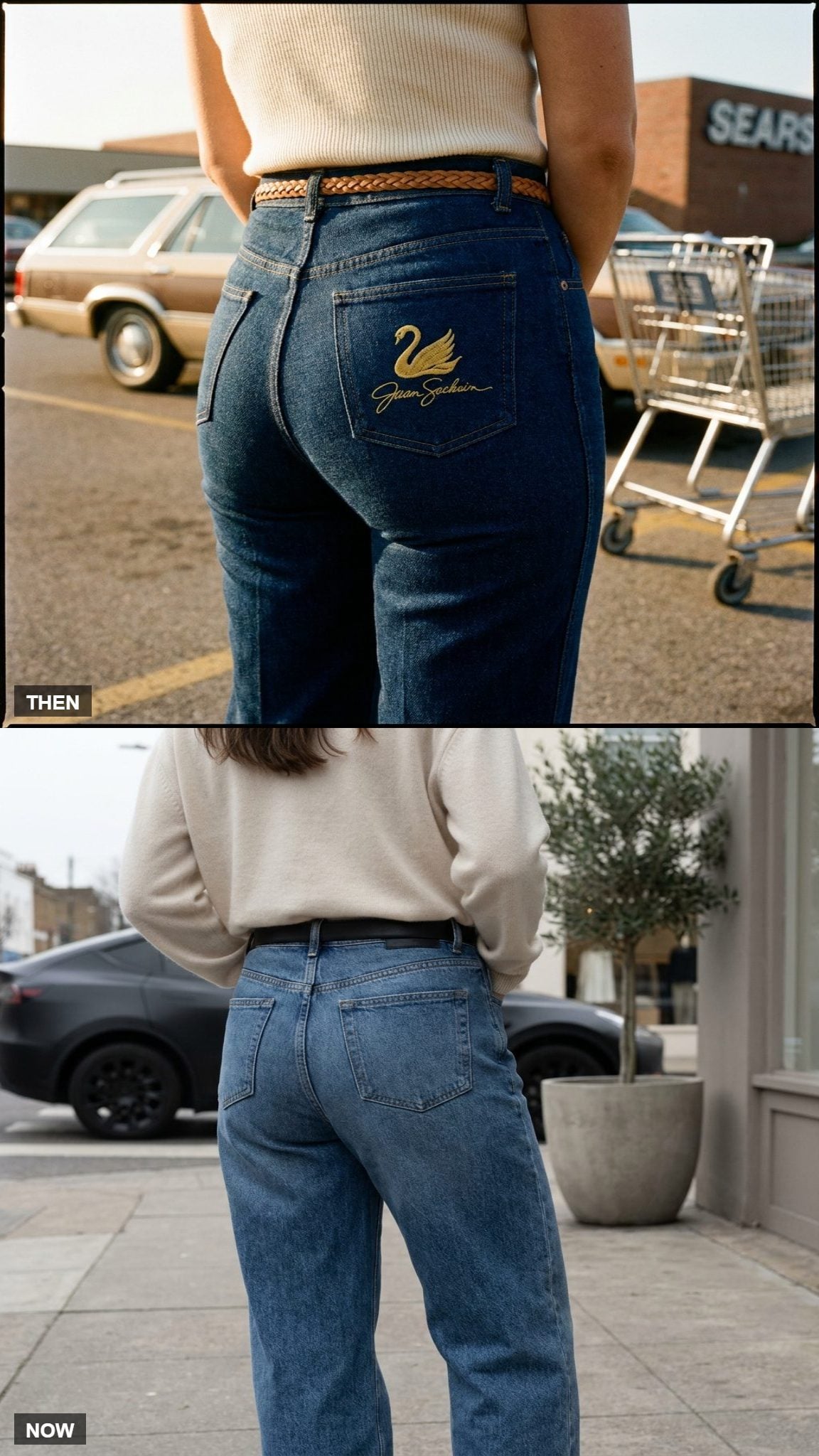
The back pocket used to work for a living. Gloria Vanderbilt’s swan, Jordache’s horse, Sasson’s script — all of it announced the brand from across a parking lot. You paid for the logo and you displayed the logo. That was the contract.
Now the same money buys a pocket that says nothing at all. Status has flipped. Quiet denim reads as more expensive than loud denim, a tiny leather patch tucked into the waistband is considered maximum branding, and the women who can afford the good jeans want you to have absolutely no idea what they cost.
16. The Bootcut Went Extinct and Then Came Home
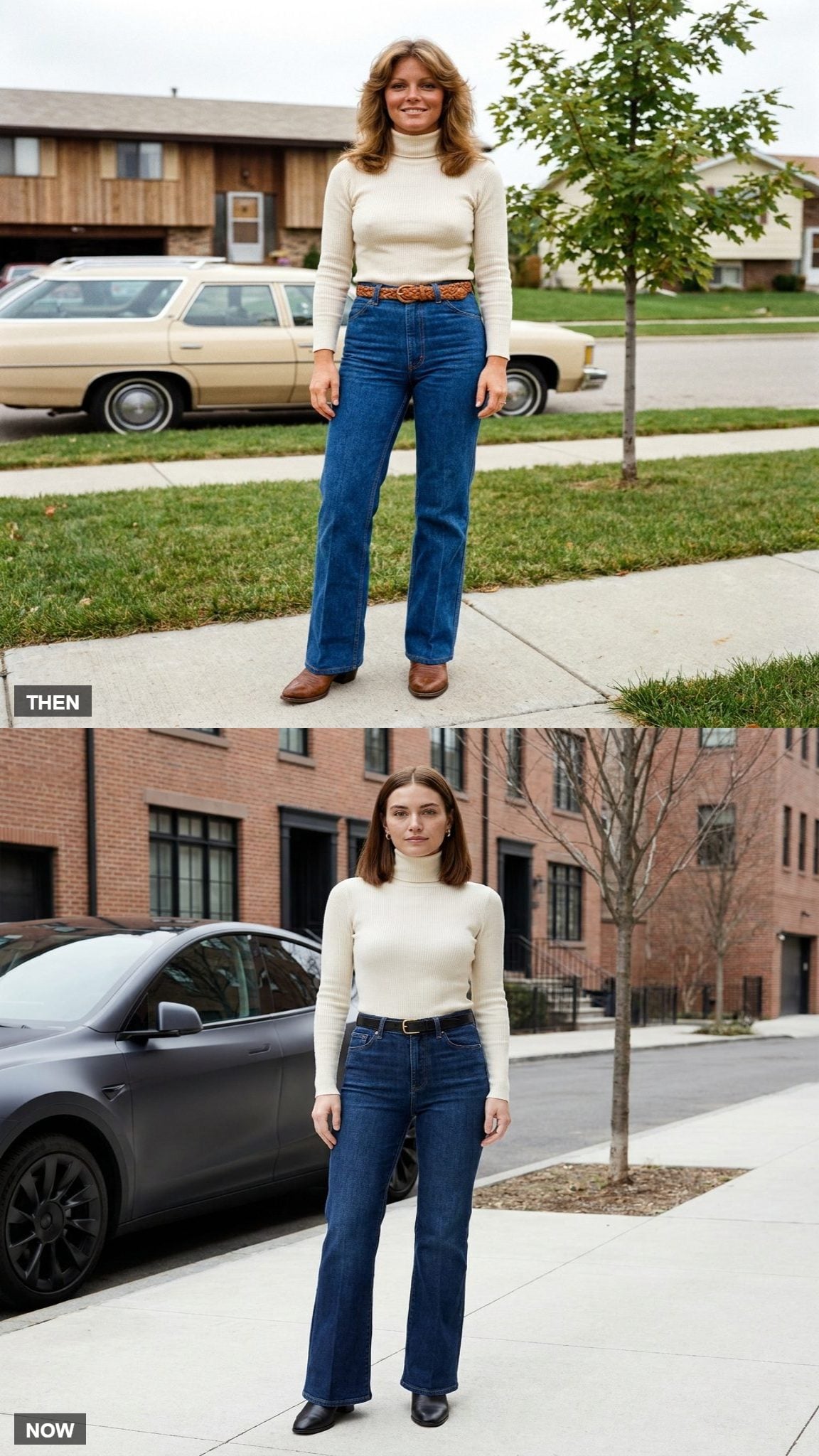
The bootcut of 1980 was a modest flare — a gentle opening from the knee down that could accommodate a boot without drama. For a decade it stood as the default American jean shape.
Then the 90s murdered it. Skinny jeans buried it. For fifteen years the bootcut was something your aunt wore and you did not.
The current version returns with better tailoring, a longer inseam, and a flare that actually flares. Shape identical. Execution smarter. Sometimes fashion just repaints the room.
15. The Denim Shirt Stopped Being a Uniform Piece
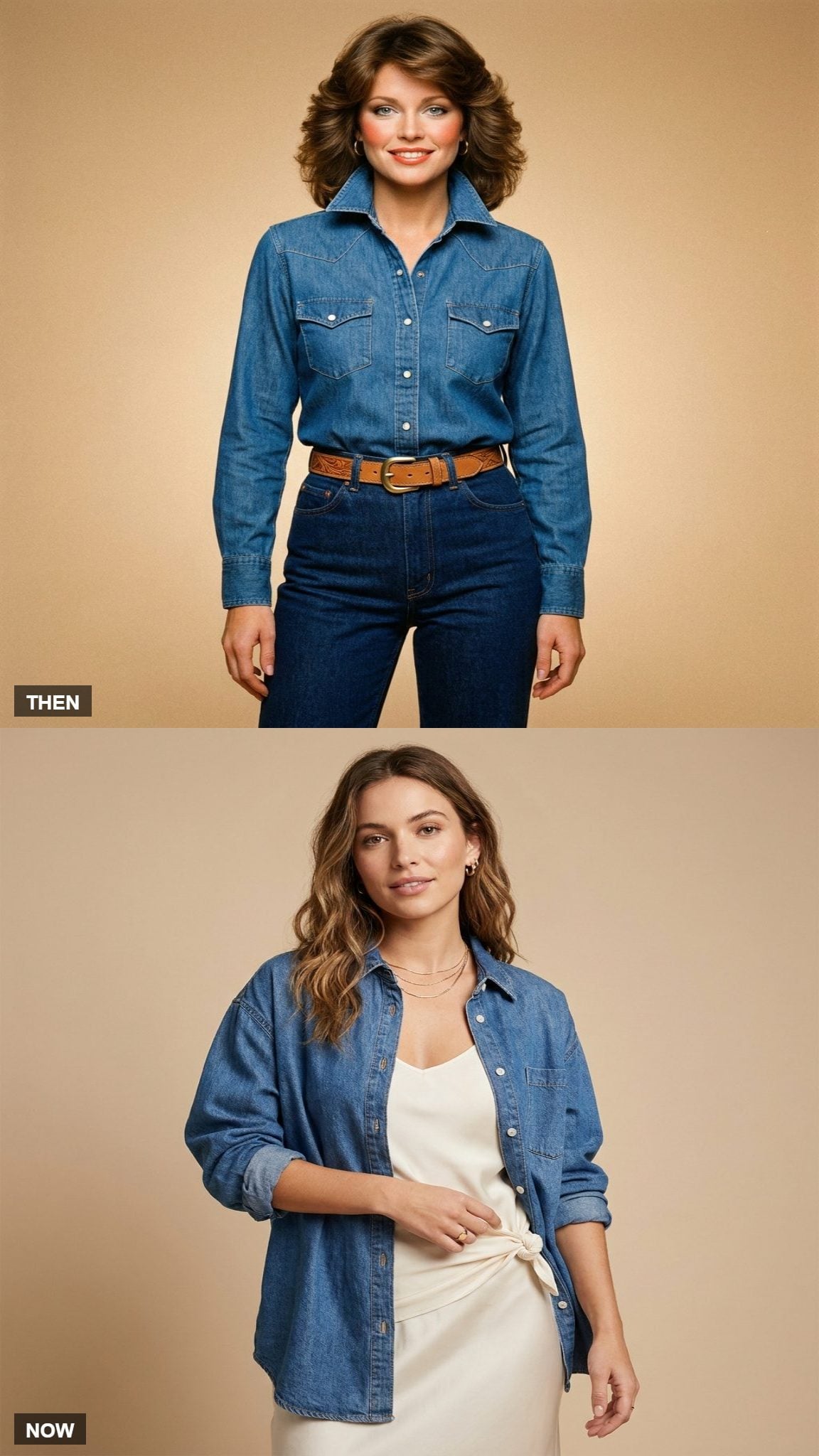
A denim shirt in 1980 came with pearl snaps, a Western yoke, and a very specific job. It went with jeans, it went with a belt, and it went tucked in. Ralph Lauren made a fortune off that shirt, and everyone else made a version of it.
The modern denim shirt has been let out at the shoulder, loosened everywhere, and reassigned. It gets worn open as a jacket. Thrown over a slip dress. Pushed up the sleeves and knotted at the hip. The pearl snaps are gone, and the rules went with them.
14. Denim Overalls Grew Up and Moved Out of the Barn
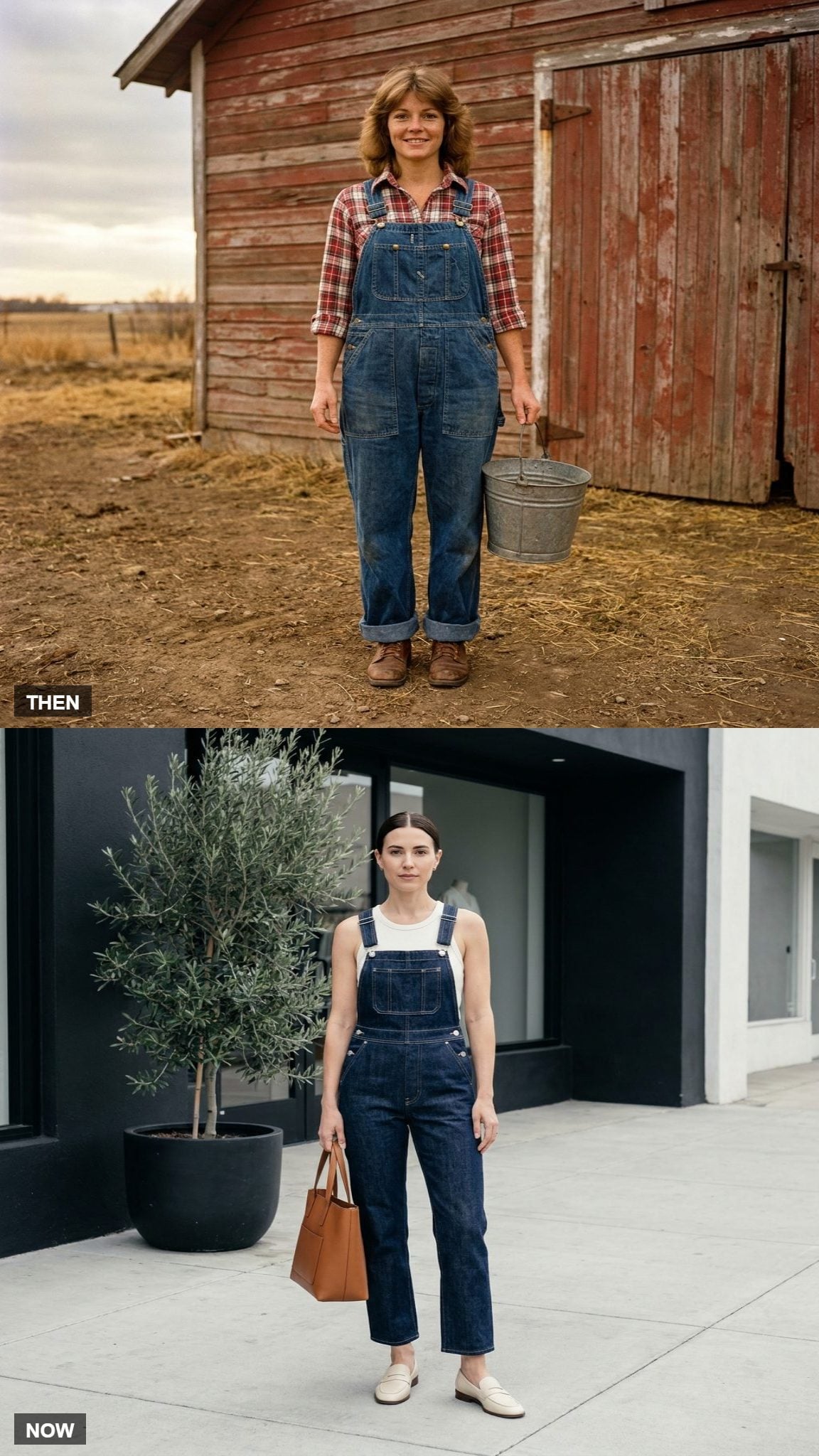
Overalls in 1980 lived in two places: on farms and on children. The bib was generous, the fit was boxy, the hardware was heavy, and nobody was styling them. Work clothes worn for work.
The current overall has been through fashion school. The leg is cut with intention, the bib is proportioned to actually flatter a torso, the hardware got smaller and cleaner, and the fabric is often raw selvedge denim that costs a fortune. A garment invented for railroad workers now costs what railroad workers used to earn in a week.
13. The Denim Mini Skirt Traded Sweetness for Structure
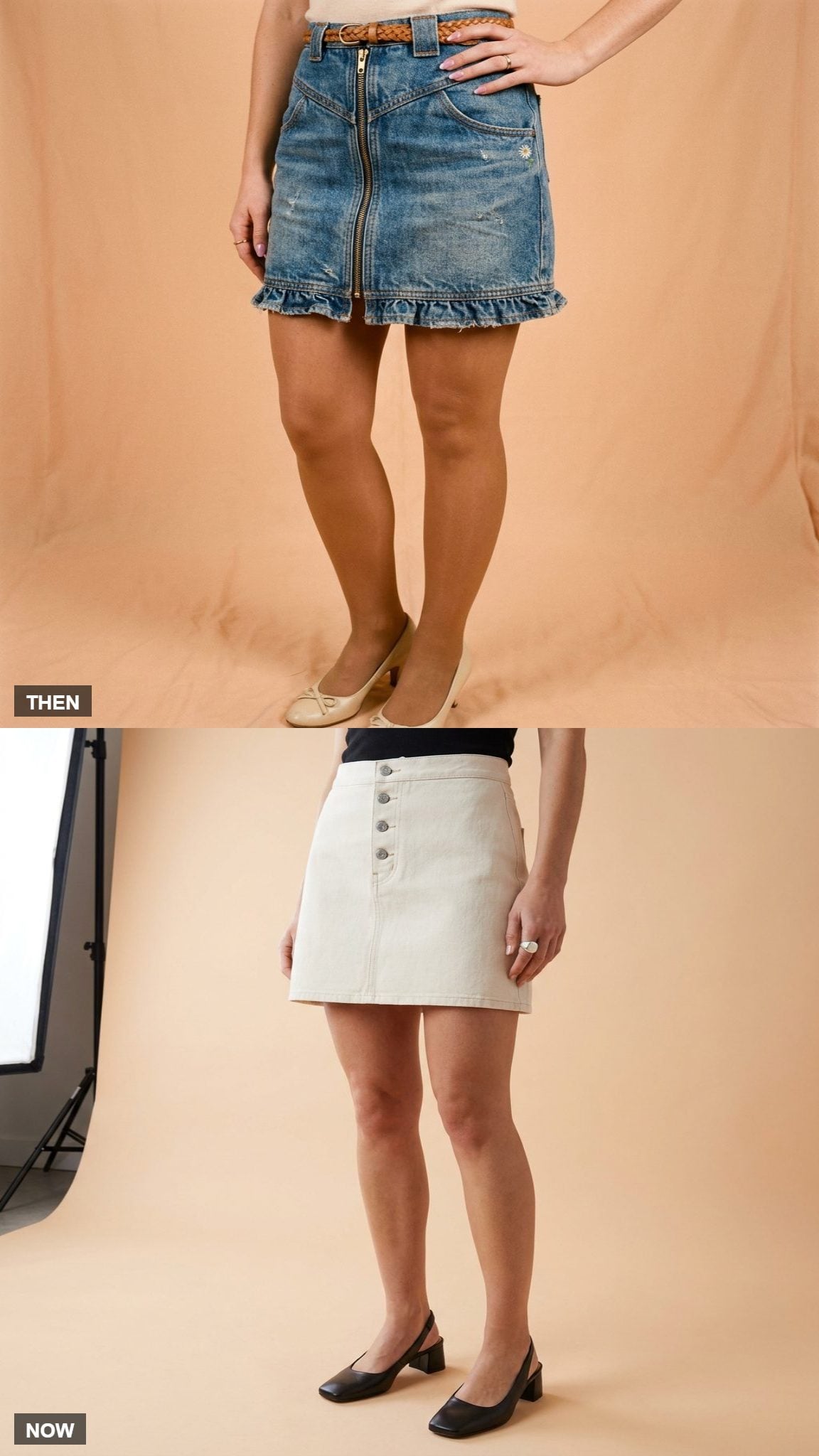
The 1980 denim mini leaned sweet. Contrast topstitching in bright orange, a curved yoke that softened the silhouette, sometimes a little ruffle at the hem if the designer was feeling romantic about it. Flirtatious in a specific 1980 way.
The modern denim mini has stopped flirting and started declaring. Rigid ecru denim, exposed button fly, sharp A-line cut, no decorative stitching, no belt loops calling attention to themselves. The garment does its job and steps back.
12. Whiskering Moved From Real to Rendered
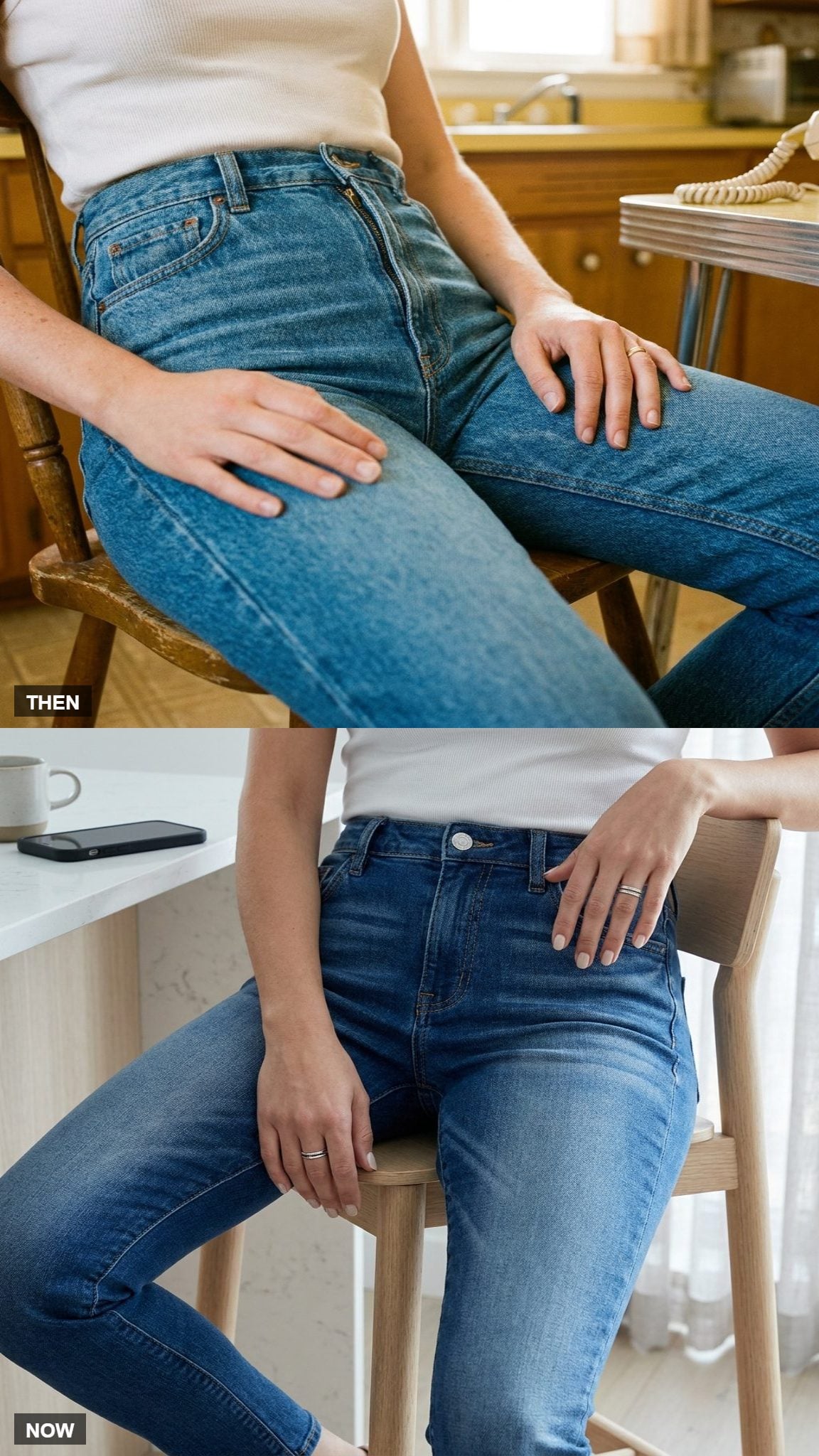
Whiskers in 1980 were a badge. They meant you had owned the jeans long enough for your body to leave a signature on them — messy, asymmetrical, honest.
Whiskers now are printed on. Lasers do it in about a minute per pair, the pattern is symmetrical, the fade lines are engineered, and the result is a garment that looks like it has been through something it has not. There’s an honesty in old whiskering the new version cannot fake, though the new version is undeniably prettier.
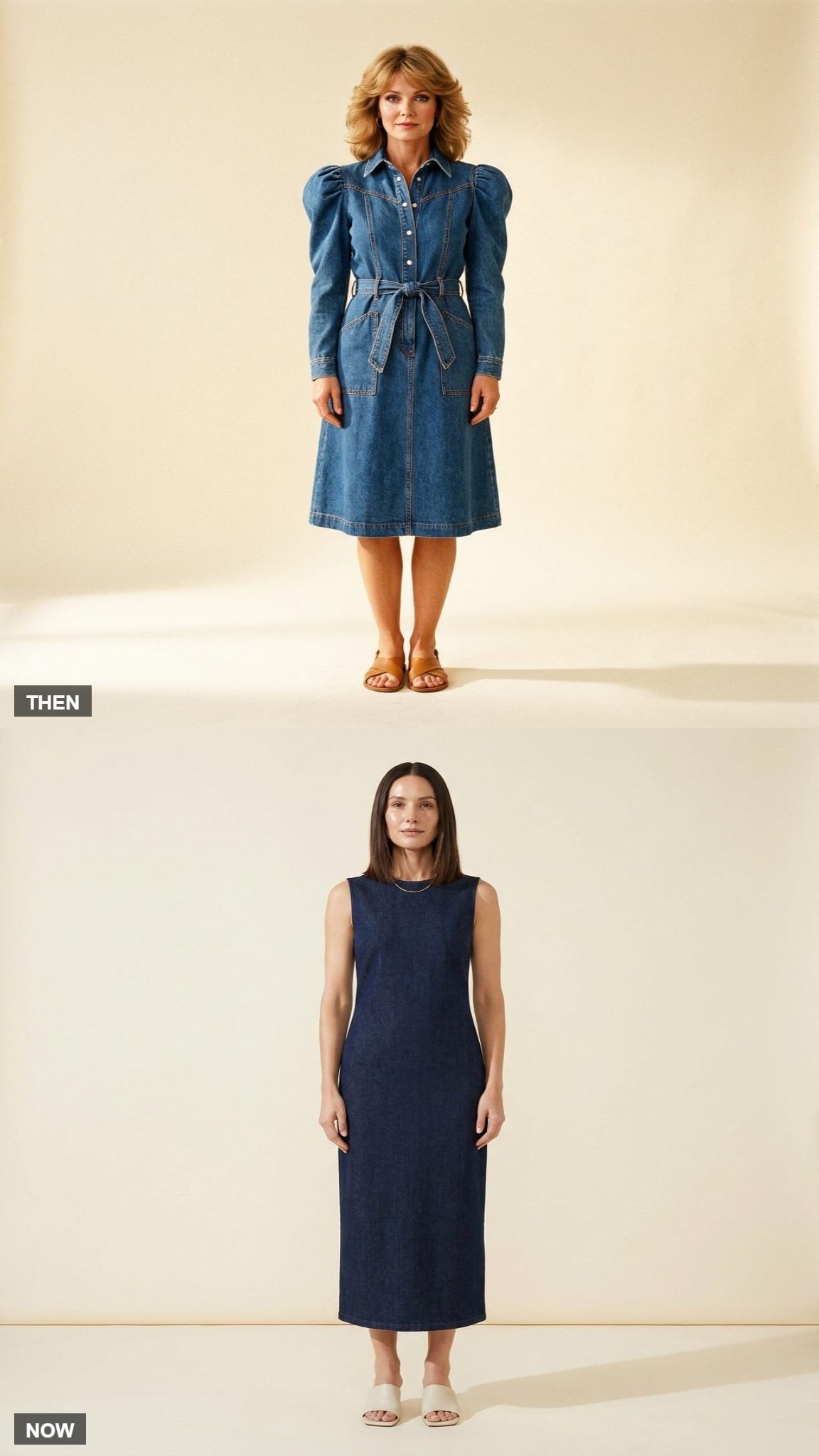
11. The Denim Dress Learned to Behave
❤️ Would you like to save this?
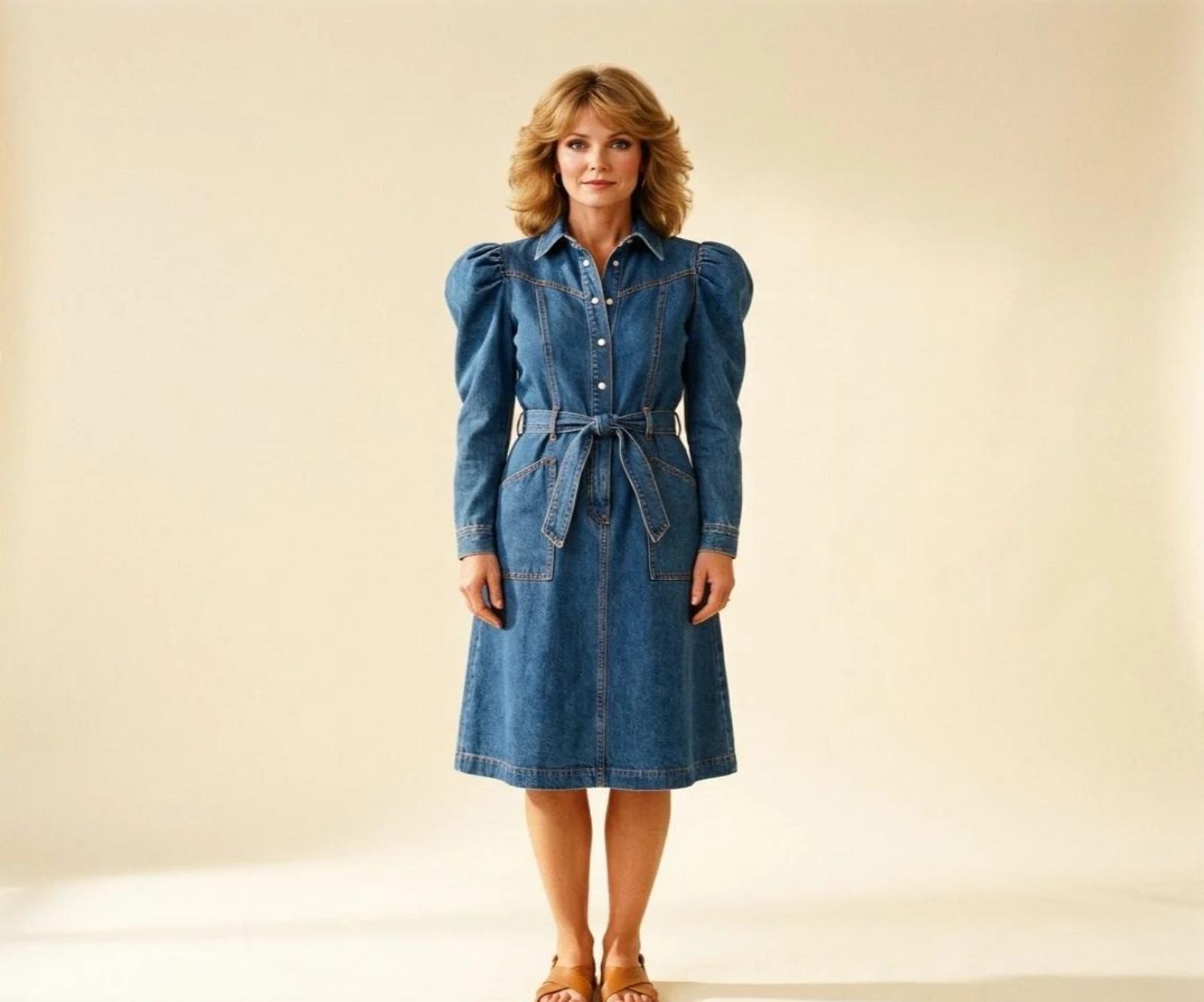
The 1980 denim dress had opinions. Puffed sleeves, pearl snaps, a self-fabric tie belt that had to be knotted just so, and contrast stitching in a color that fought with the denim — a garment that arrived with a personality already assembled.
The modern denim dress has been quieted down. The silhouette is a column, the sleeves are cut clean into the bodice, the seaming is minimal, and the whole thing reads as one long uninterrupted piece of indigo. It lets the woman inside do the talking.
10. The Weekend Uniform Rebuilt Itself From the Ground Up
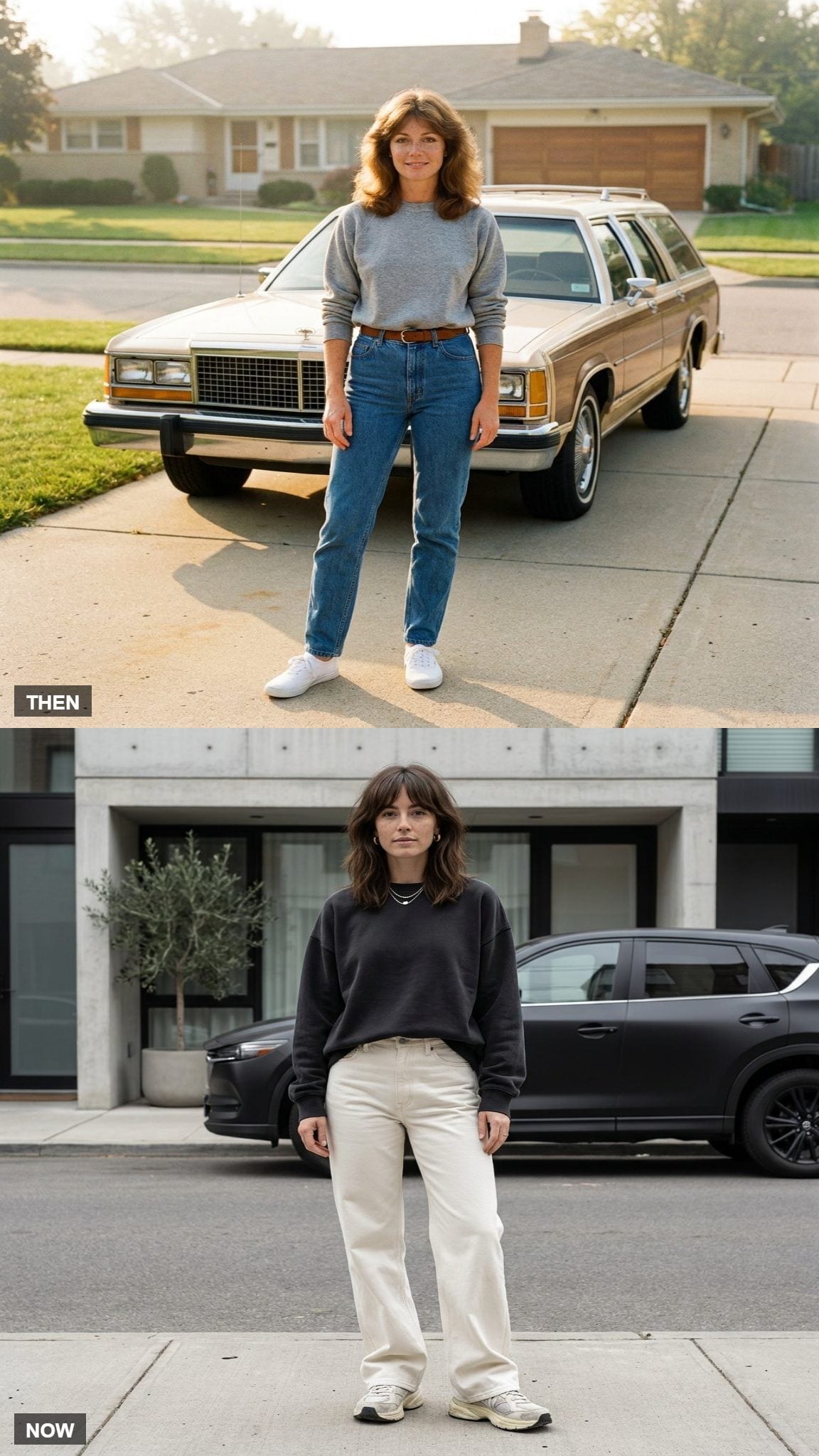
Saturday in 1980 came with a formula: tapered jeans, a sweatshirt tucked into them, a thin belt to make the tuck look intentional, and white sneakers that stayed white because the woman wearing them had done six loads of laundry that week. Everything was fitted at the waist and slim through the leg.
Saturday now has flipped every one of those decisions. Wide-leg jeans, untucked crewneck, no belt anywhere, chunky sneakers built to look worn from day one. Volume moved from the top to the bottom. The waist got left alone. And somehow the result reads as more grown-up, not less.
The modern weekend formula is simpler still: in our reader polls, 59% picked jeans and a tee for Saturdays, far ahead of athleisure or a dress.
9. The Stonewash That Ate the Eighties
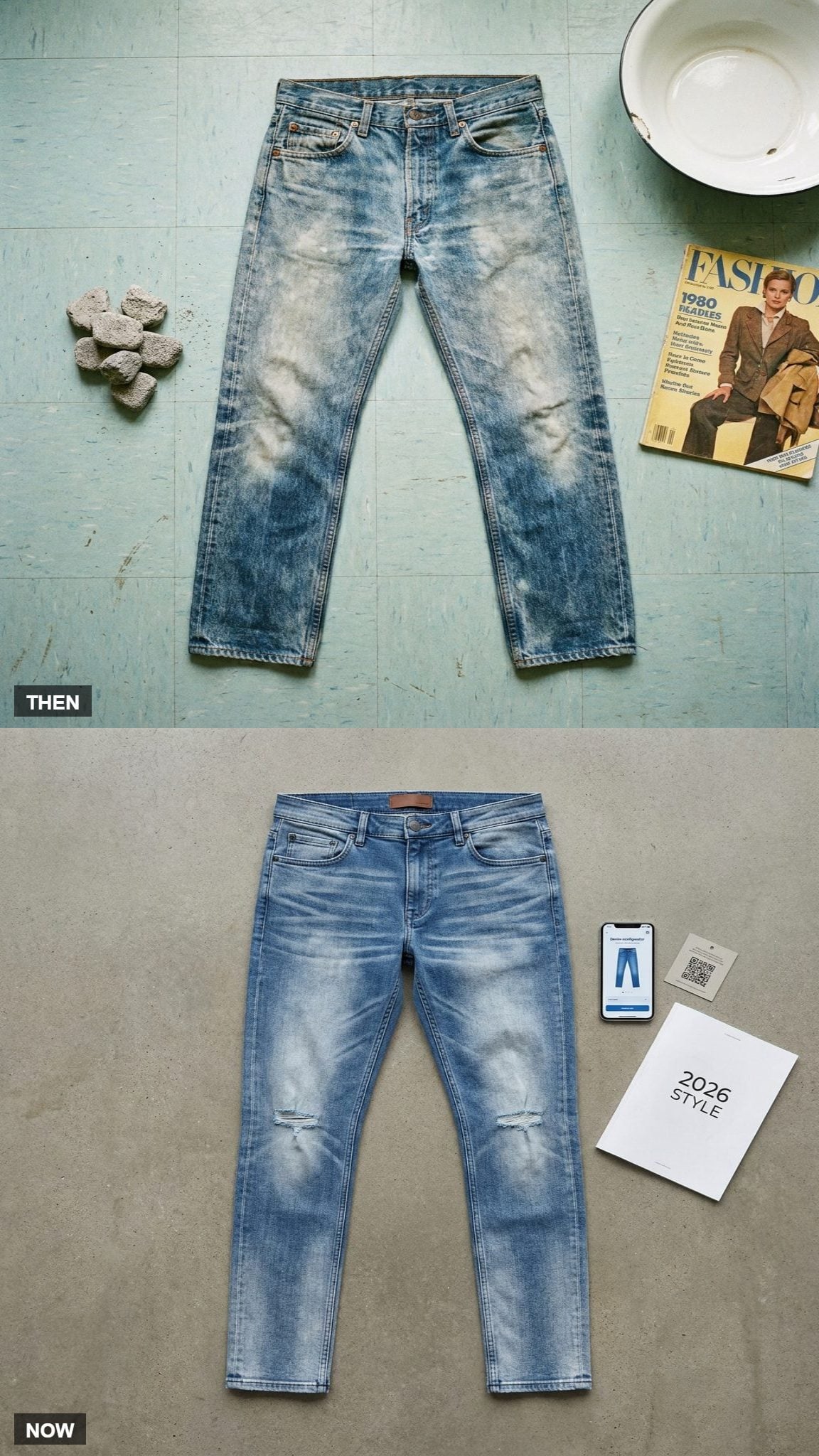
Stonewash in 1980 meant actual stones — pumice tumbling in industrial washers, chewing the indigo off in patches nobody could have planned. The process was violent, so every pair came out with its own personality. No two identical.
The effect is now printed, laser-etched, or hand-sanded by someone working from a template. Predictable. Repeatable. A little too well-mannered for its own good. You can buy the look, sure, but the look no longer remembers what pumice felt like.
8. The Zipper Fly Got Loud, Then Got Quiet
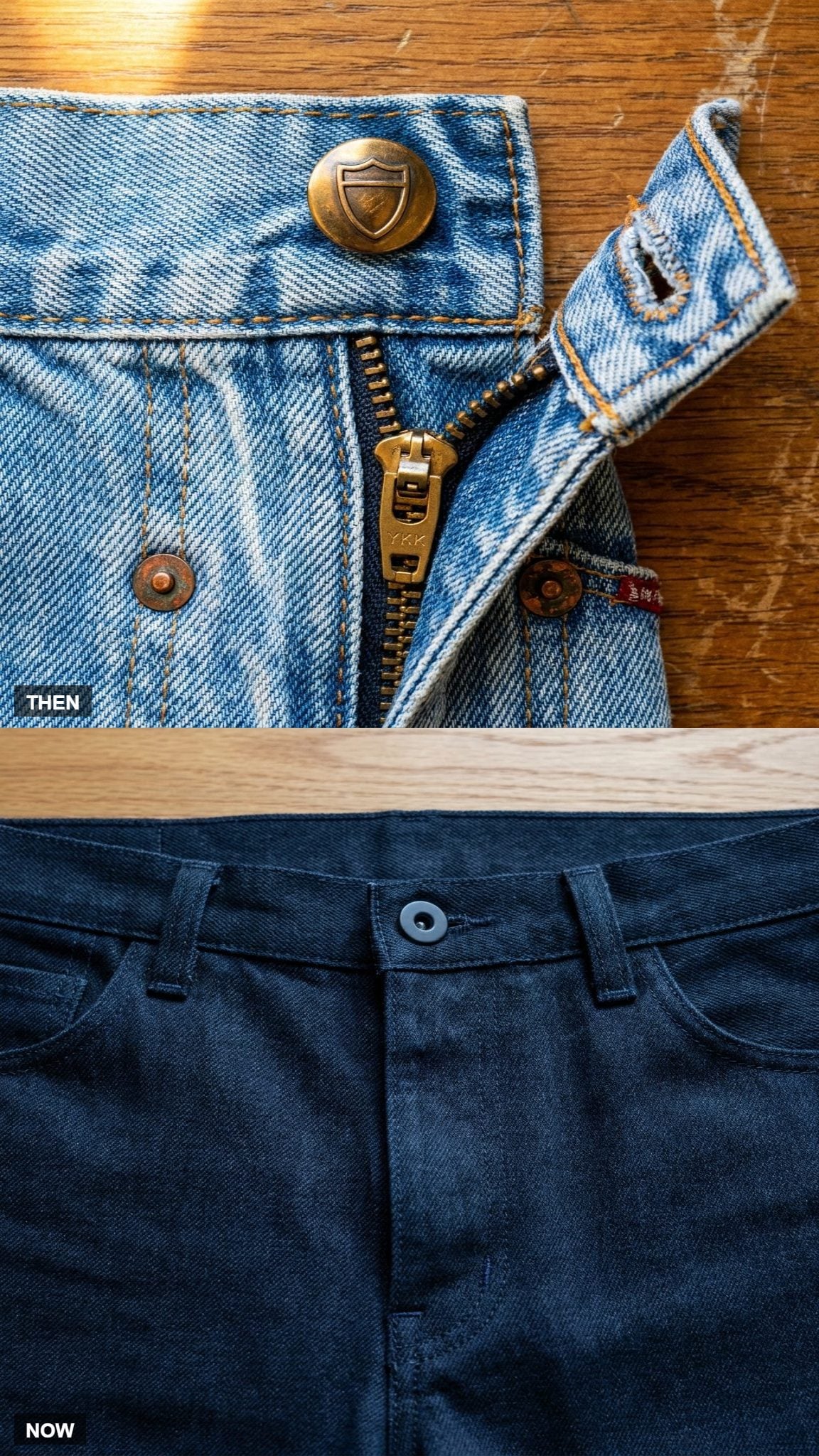
In 1980, the hardware announced itself — brass buttons the size of a nickel, zipper pulls you could grip with a full hand, rivets that caught light across a room. Denim wanted to be noticed at the closure.
Today? The fly is a whisper. Tonal thread, buttons finished in muted gunmetal or coated to disappear into the wash, zipper teeth hidden under a placket that closes flat. The garment does its job without begging for a compliment.
7. The Tapered Leg Was the Only Leg
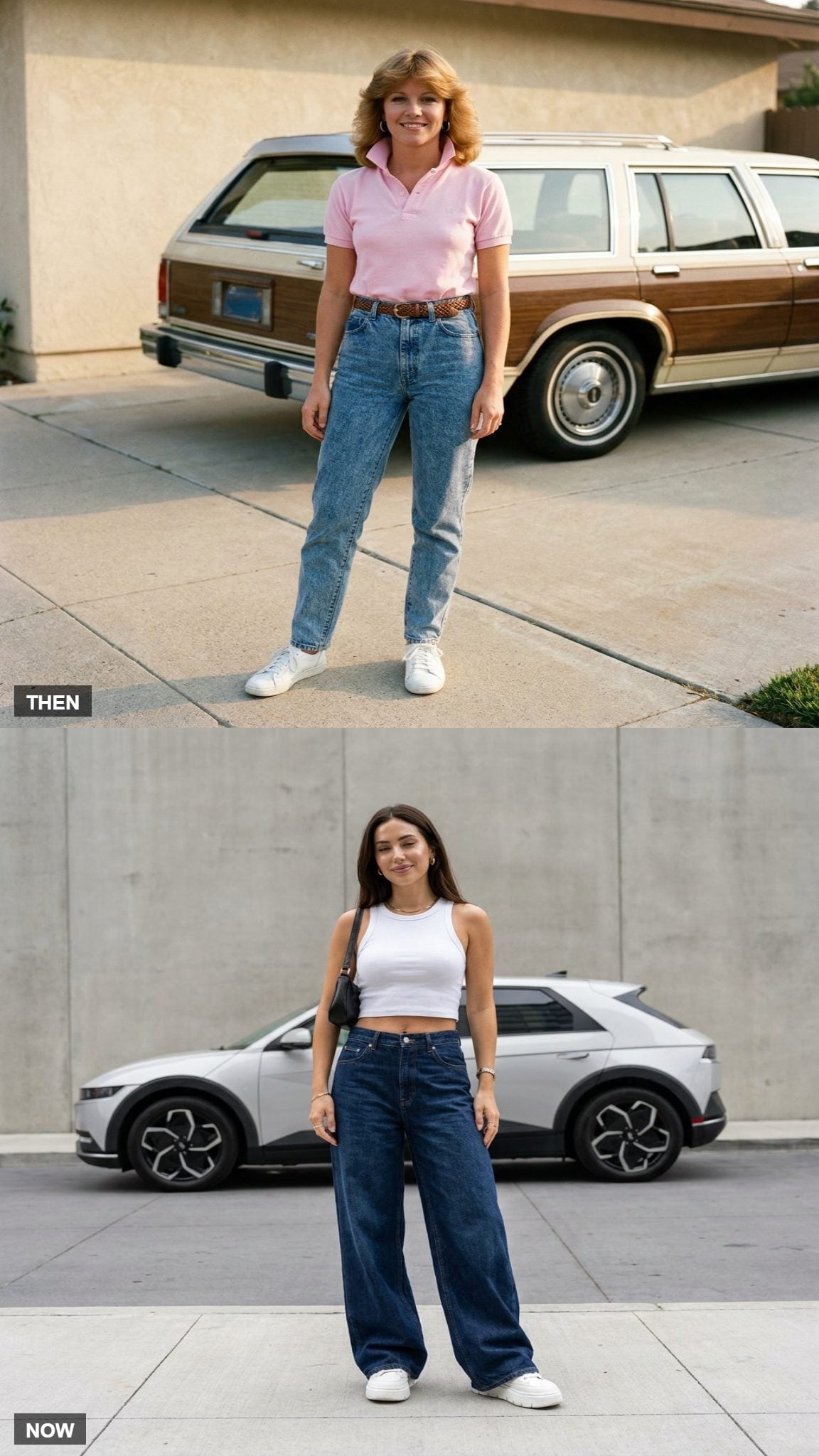
The 1980 leg pegged. Full at the hip, squeezed at the ankle, sometimes rolled tight if the taper wasn’t aggressive enough on its own. Every woman got the same silhouette, which was sort of the whole idea.
Now the leg does whatever it wants — wide, straight, barrel, bootcut, cropped kick flare, puddled and dragging behind. Picking a leg shape is picking an identity. The tapered ankle still exists, but it’s one option among ten instead of the only shape in the store.
6. The Colored Denim Moment Nobody Talks About
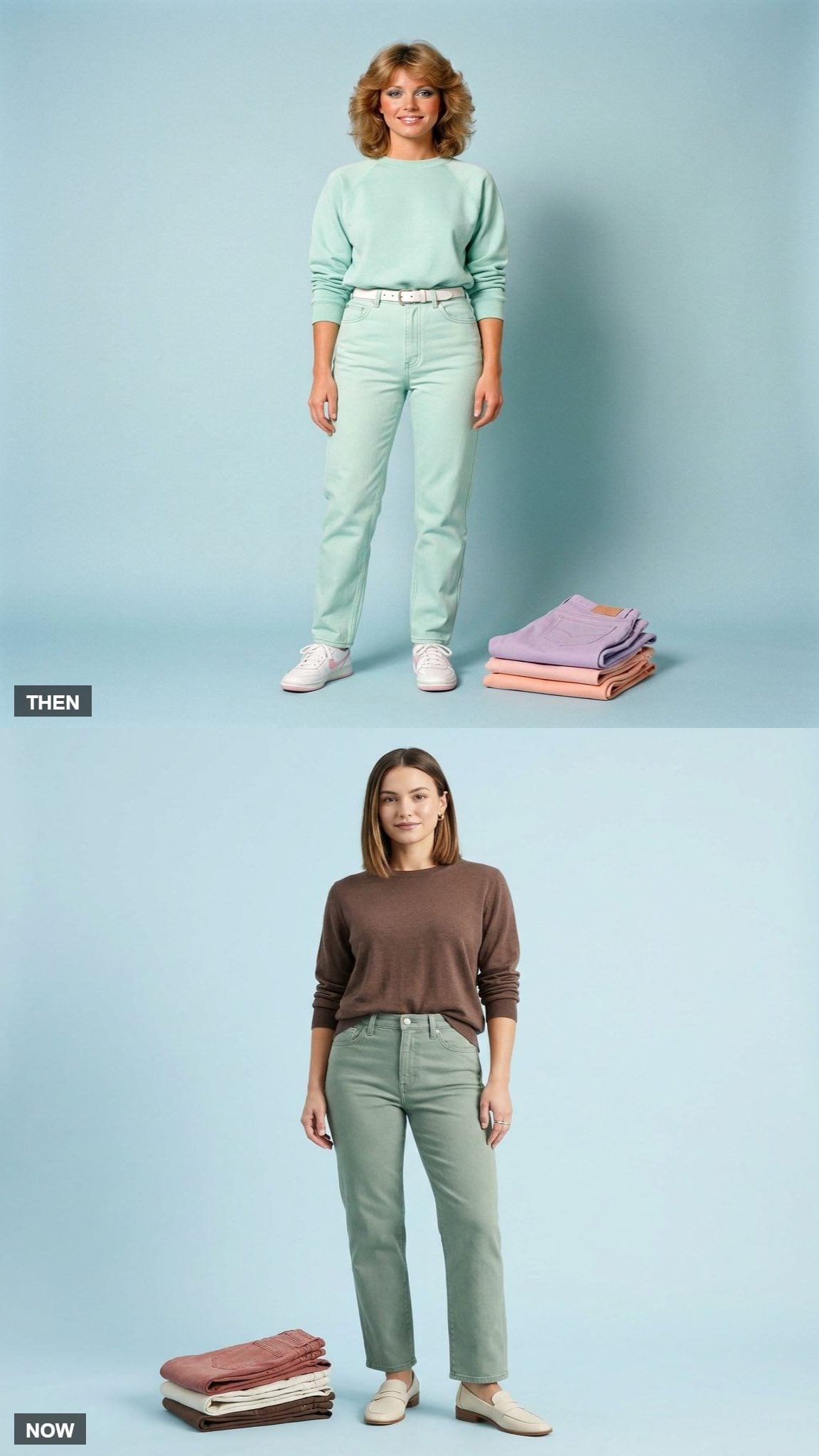
Colored denim in 1980 was pastel and everywhere — mint, lavender, that specific peach that only existed for about eighteen months. Women bought them in stacks and matched them to sweatshirts.
The 2026 version is nothing like it. Ecru, sage, cocoa, faded brick, occasionally a real black. Grown-up colors on grown-up cuts. The pastel jean will circle back eventually. They always do.
5. The Denim Vest Went From Layering Rule to Layering Choice
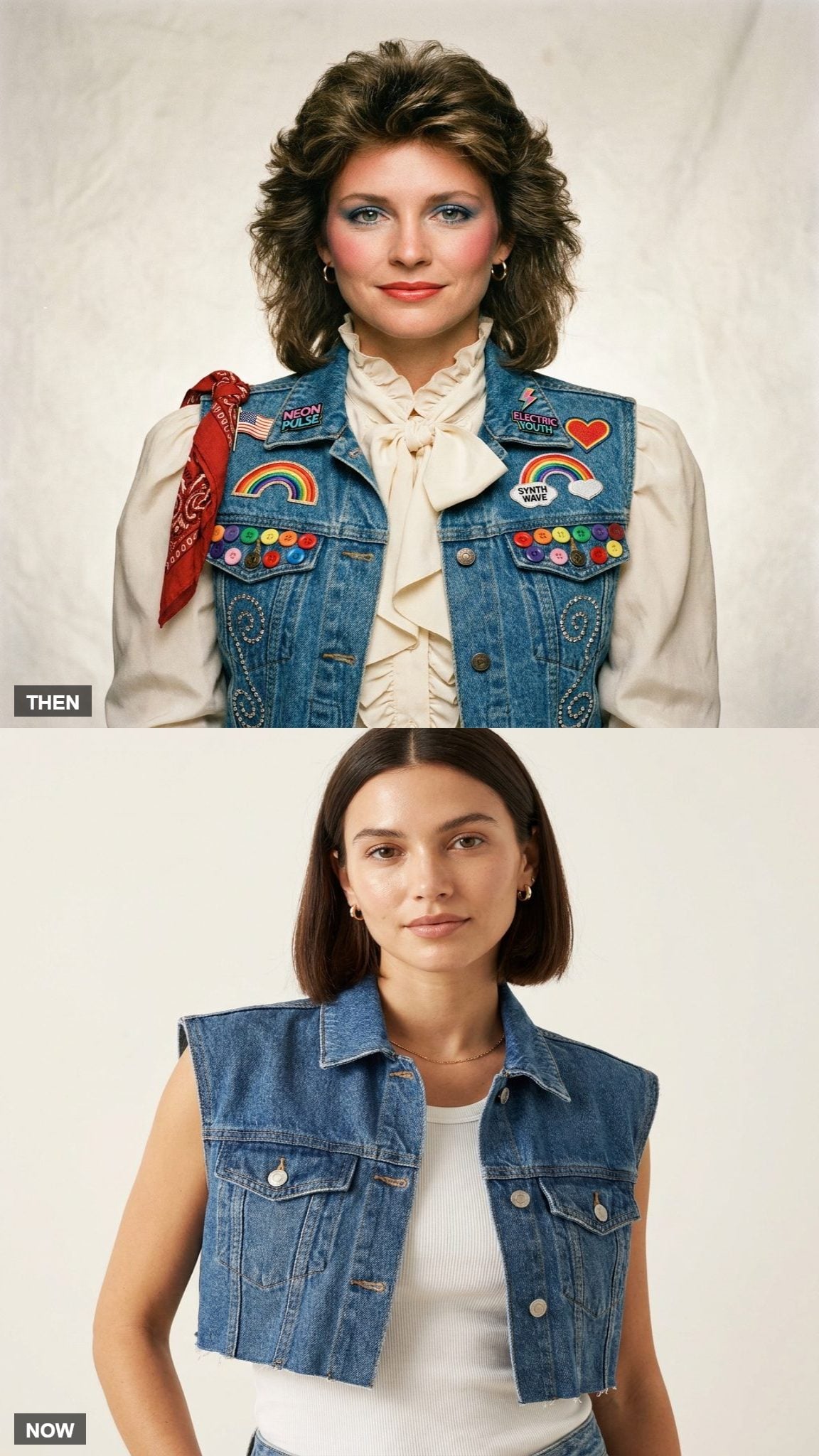
The 1980 denim vest was covered. Pins, patches, band buttons, sometimes rhinestones a woman applied herself with a kit from the craft store. The vest was a canvas, and the ruffled, puffed blouse underneath was already doing too much on its own.
Now the denim vest is clean — worn over a fine-gauge knit or a slim white tank, nothing pinned, nothing patched, the fit skimming the ribcage. What drives the modern version is restraint, exactly what the 1980 vest refused to consider.
4. Maternity Denim Stopped Pretending
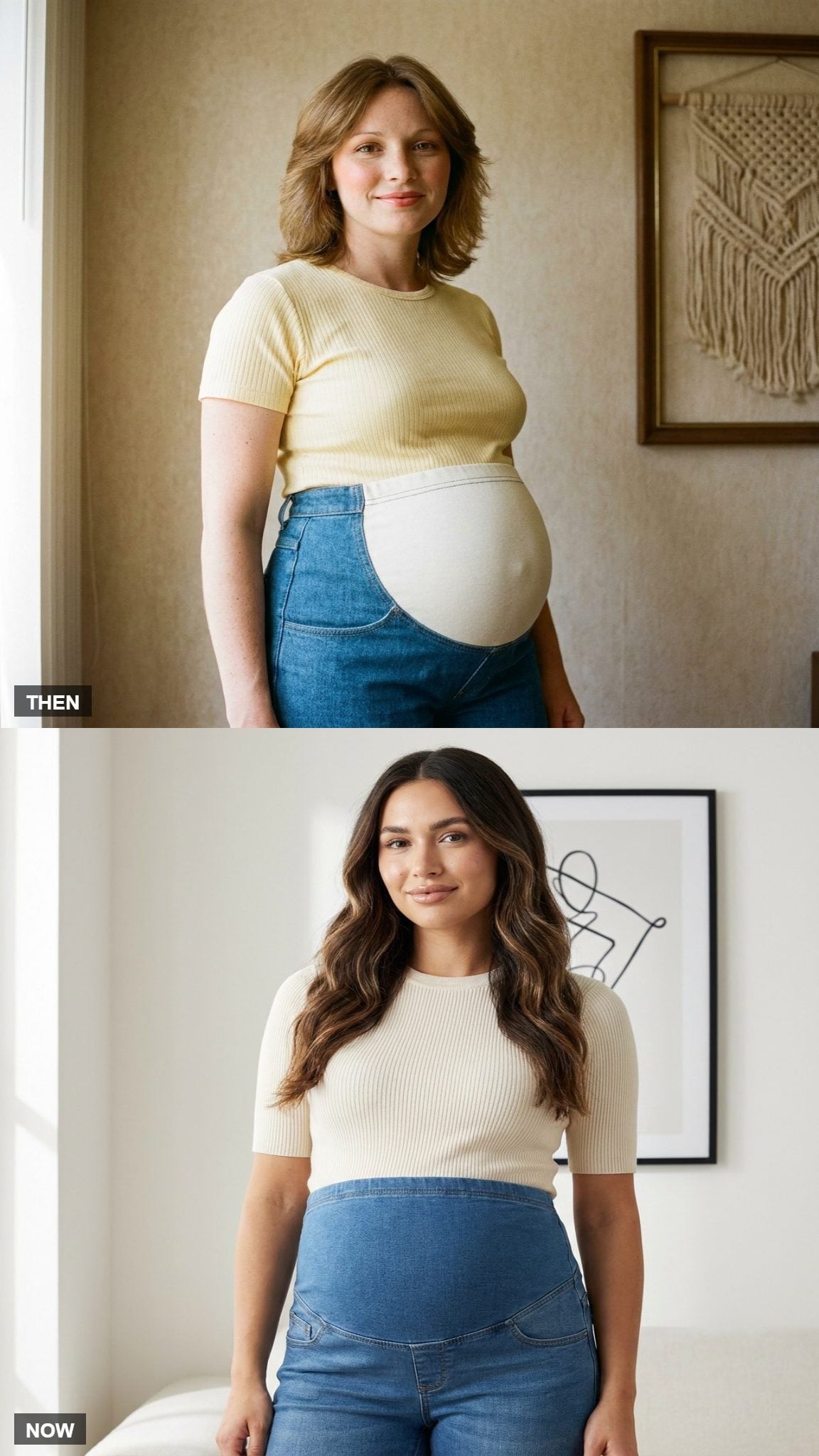
The 1980 maternity jean announced the pregnancy from across a parking lot — a pale elastic panel stitched into the front, visible under every top, a design that essentially confessed we gave up trying to make this look like normal pants.
The current version hides the mechanism entirely. Full side panels in a matched wash, or a low under-belly band that vanishes under any shirt. A pregnant woman can wear jeans that look like jeans. The 1980 version treated that as impossible.
3. The Bleach-Splatter DIY Went Professional
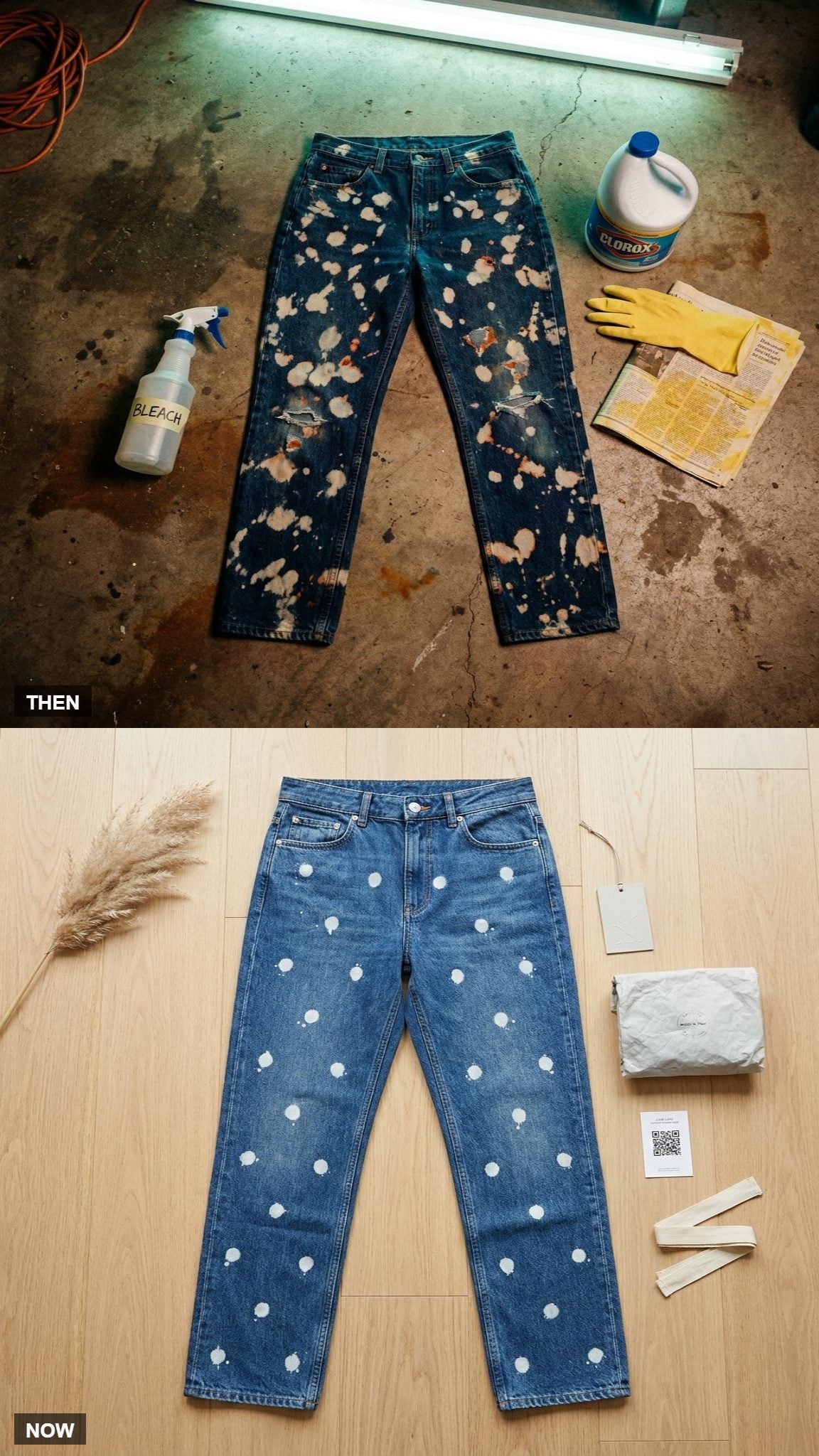
A woman in 1980 made her splatter jeans in the garage with a spray bottle and a prayer. The bleach ate through in patterns nobody could replicate, sometimes ate through too far and left a hole, sometimes turned the wrong shade of orange around the edges. That was the charm.
Now splatter comes factory-applied, plotted by software, evenly distributed across every leg. Some designer decided where each drop lands. The homemade jean was better because it could go wrong.
2. The Denim Culotte Came and Went and Came Back Different
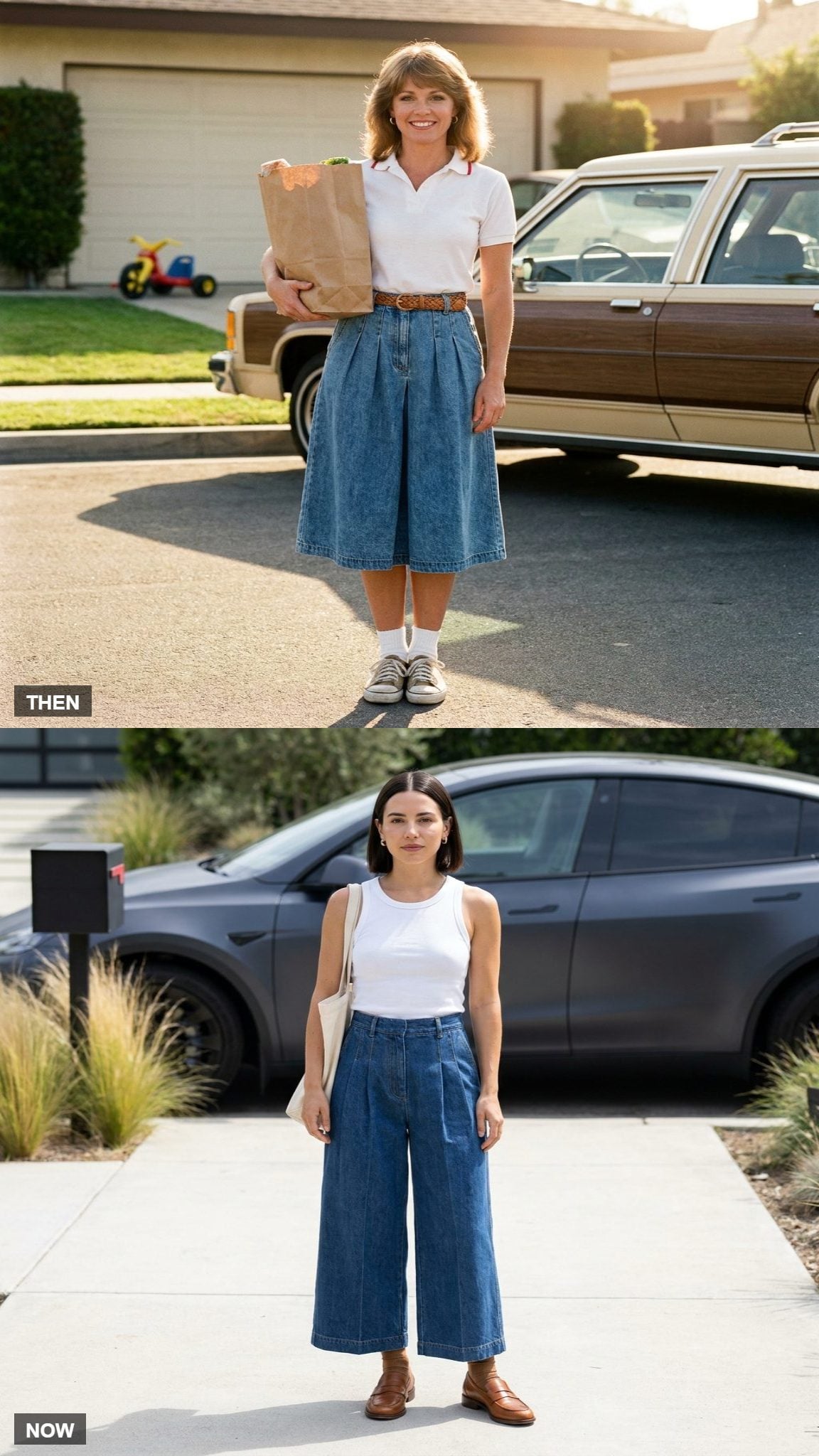
1980 culottes wanted to be a skirt and flat-out refused to be pants. Wide, pleated, mid-calf, so voluminous the divided-leg construction stayed invisible until she sat down. Paired with tennis shoes and a polo, they were the uniform of women who had errands and did not want to explain themselves.
The modern denim culotte is sharper. Cropped just above the ankle, cleaner pleats, structured enough to work with a heel or a loafer. Same idea, less fabric, more intention.
1. The Denim Jumpsuit Traded Snap Buttons for Real Tailoring
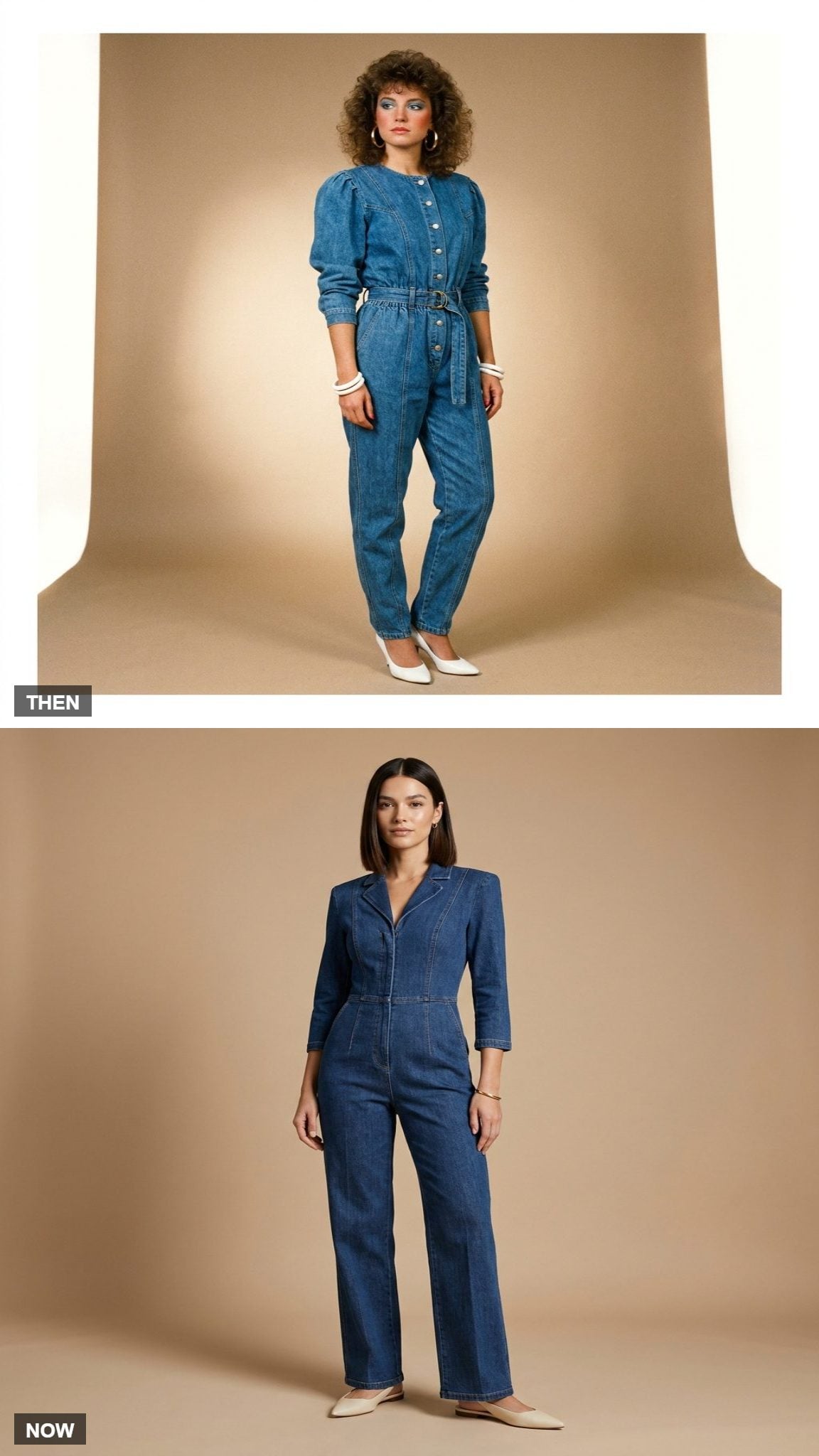
The 1980 denim jumpsuit was an event. Snap buttons in a marching column down the chest, elastic waist gathering everything into a shape it did not naturally have, puffed sleeves competing with a permed head for airspace. She wore it to a nightclub or nowhere.
The 2026 version is quieter and works harder. Real waist seaming, a proper zipper hidden under a placket, wide clean leg, straight shoulders. It goes to dinner, an office, or a plane. Same garment category, completely different job.