
❤️ Would you like to save this?
The sound came first. That bright, metallic percussion every time you reached for your coffee, answered the phone, or gestured halfway through a story. Your wrist was a wind chime in 1986, and quiet was never the goal.
Gold on gold on gold, punctuated by something neon, something leather, something plastic, something your best friend knotted onto your arm at summer camp. One bracelet looked unfinished. Two looked cautious. By the middle of the decade, bare wrists practically felt underdressed.
The wrists in those old photos tell the whole story: where you shopped, who you copied, which trend got you, and how completely the 1980s believed more could solve almost anything.
FYI, thanks to AI imagery software, we’re able to create very specific fashion and hairstyle examples to illustrate the points being made. In some cases, imagery is exaggerated to hammer home the point. Also, assume links that take you off the site are affiliate links such as links to Amazon. this means we may earn a commission if you buy something.
28. The Chunky Gold Chain-Link Bracelet You Wore Three at a Time on the Same Wrist
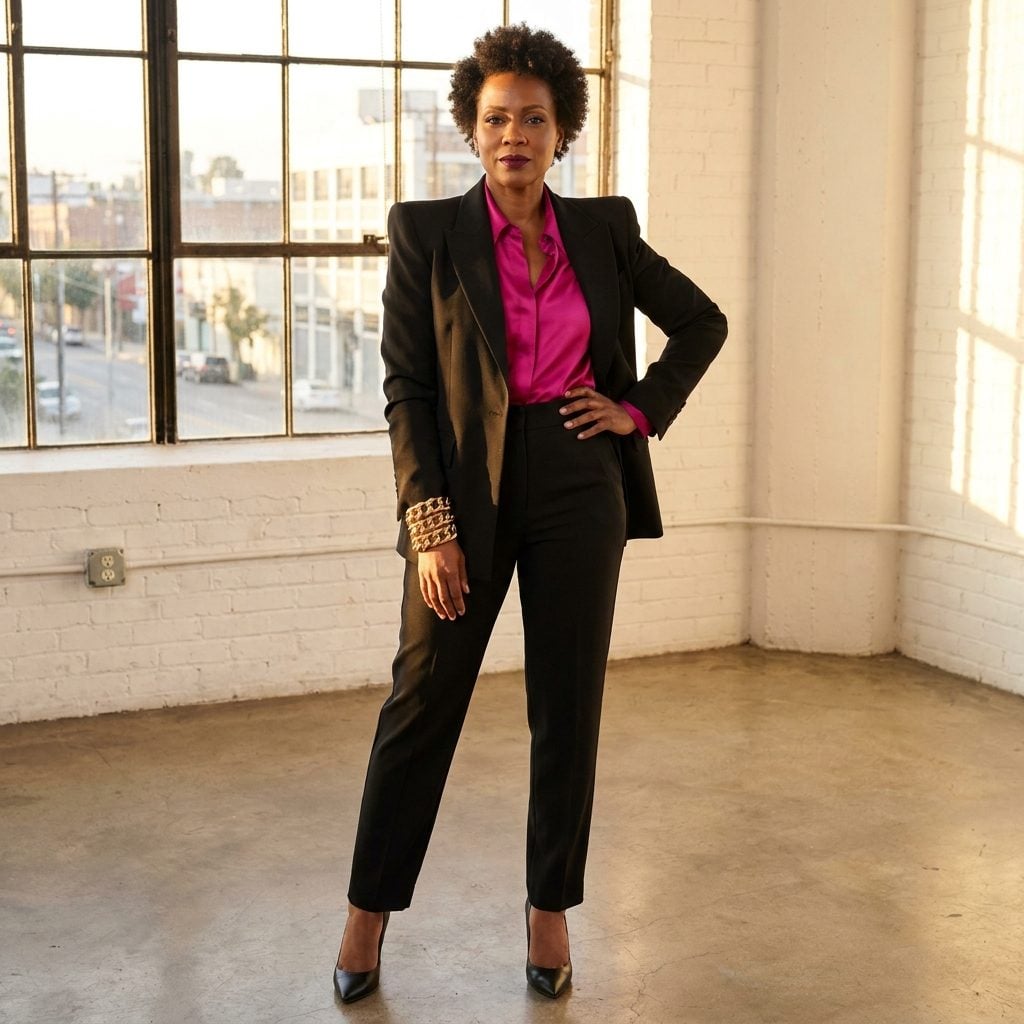
Three was the number. Not two, which looked accidental, and not four, which started to feel like armor. Three chunky gold chain-link bracelets on one wrist, heavy enough that you knew they were there every second of the day.
The links were fat, oval, unapologetically loud. They clattered against your desk at work. They caught on your sweater cuffs. They made a sound when you set your hand down on a table that announced you before you said a word. Dynasty started it. Joan Collins wore gold like it owed her money, and the rest of us followed.
The real ones were 14-karat and came from a jewelry counter at Macy’s or a gift from someone who meant it. The rest of us had gold-plated versions from Accessory Lady or the jewelry kiosk at the mall, and the plating wore thin at the clasp within six months. Nobody cared. The weight was the point.
27. Neon Rubber Jelly Bracelets Stacked Wrist to Elbow in Every Clashing Color You Could Find

They cost almost nothing. A quarter each from a bin at Claire’s, maybe fifty cents at the drugstore. That was the whole economy of it. You bought them in fistfuls, neon pink tangled with electric green and safety orange, and you wore every single one at once.
The goal wasn’t coordination. The goal was volume. Fifteen, twenty, twenty-five thin rubber circles riding up your forearm like a fever chart of color. They stuck to your skin in the heat. They left faint colored marks on your wrist by the end of summer. Madonna wore them in stacks in the “Lucky Star” video and that was all the permission anyone needed.
26. The Wide Gold Cuff With an Engraved Geometric Pattern That Made You Feel Like Cleopatra
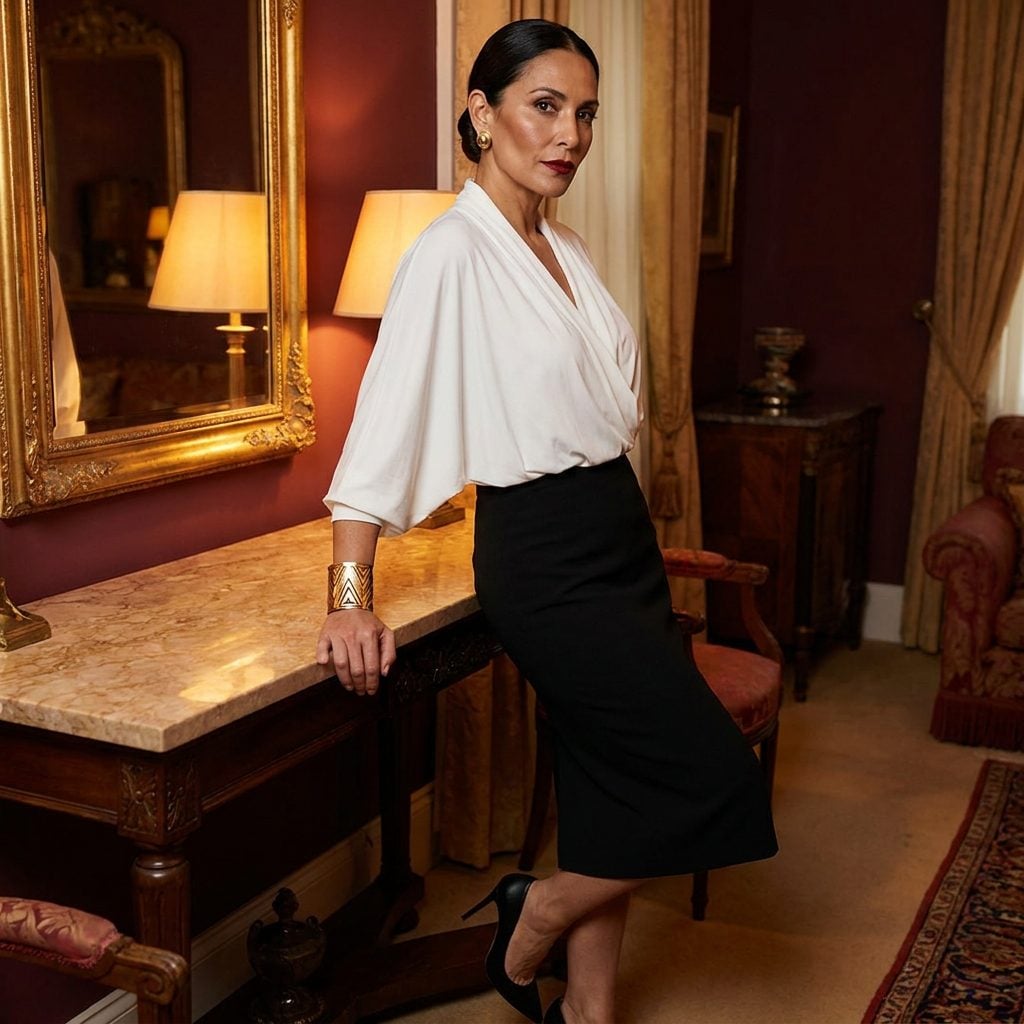
This was the serious bracelet. Not the fun one, not the casual one. The wide gold cuff with geometric engraving was for women who wanted their jewelry to look like it had a history, even if it came from a department store counter in 1984.
The patterns were always Art Deco-inflected. Chevrons, triangles, interlocking lines. Two inches wide, sometimes wider. It sat on the wrist like a piece of architecture. You wore it alone, no stacking, because it didn’t need company.
25. Thin Gold Bangles Worn in Sets of Ten or More, Jangling Like a One-Woman Orchestra
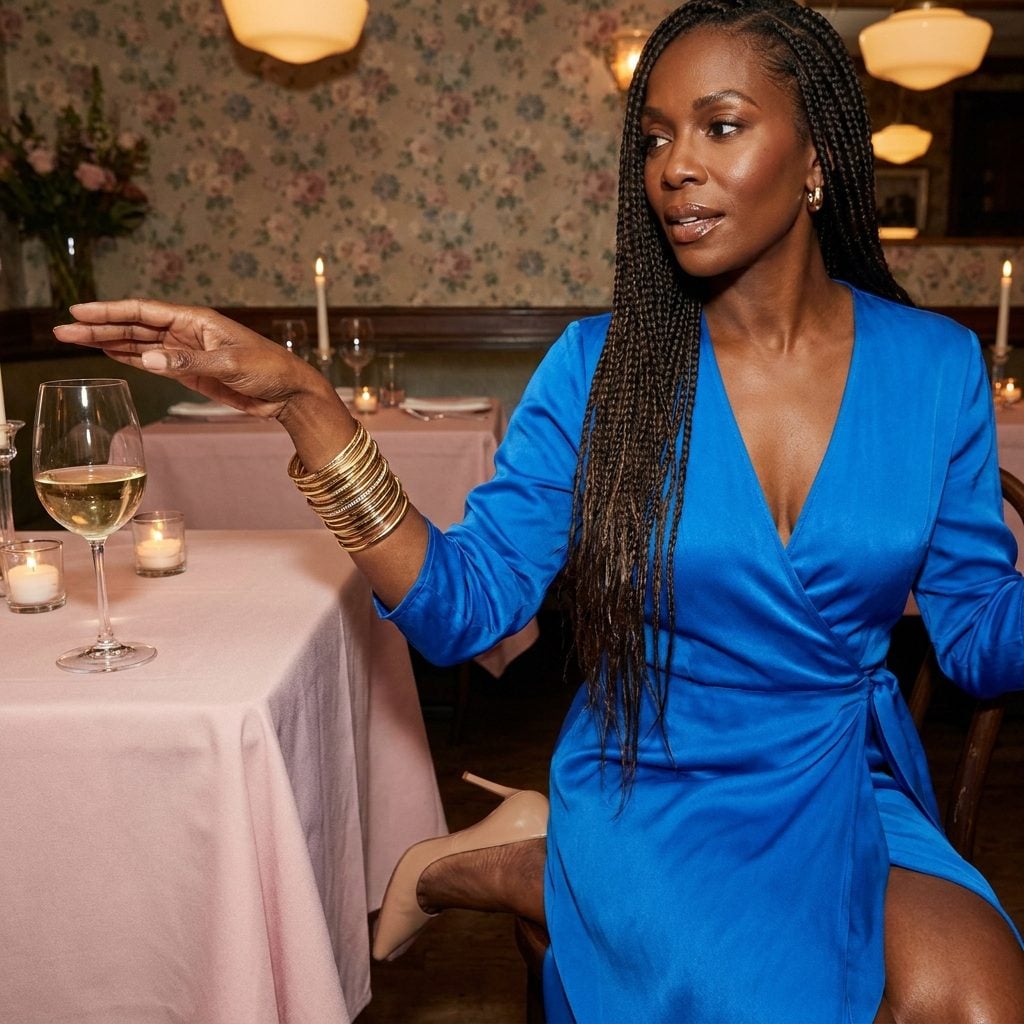
You never bought these all at once. They accumulated. One from your mother’s jewelry box, two from a vacation, four from the Indian jewelry store on the avenue, a few more from a street vendor in the city. The collection grew and eventually you stopped counting. You just shoved them all on.
The sound was the signature. That bright, sliding jangle every time you moved your hand. Writing a check at the grocery store became a performance. Raising your hand in a meeting became an announcement. They slid up and down your forearm with their own momentum, bunching at the wrist, spreading toward the elbow when you reached for something on a high shelf. Ten was good. Fifteen was better. The woman at the office who wore twenty was the one you secretly wanted to be.
What Our Readers Say
- Today, ThreadCurve readers are close to split on metals: 53% say they always match them, while 47% prefer to mix them.
- In our reader polls on sleeve length, wrist, bracelet-length and elbow sleeves came out as a statistical tie, so there is no single right length for a sleeve over a stacked wrist.
From ThreadCurve reader polls and votes.
24. The Tortoiseshell Plastic Bangle You Always Stacked With Matching Earrings

Matching was the entire philosophy of 1980s accessories, and tortoiseshell was the pattern that made it easiest. The tortoiseshell plastic bangle, the clip-on earrings in the same swirl, sometimes a barrette to complete the set. You looked coordinated in a way that felt very grown-up, even at twenty-three.
The plastic was thick, substantial. Not flimsy costume jewelry but not pretending to be anything other than what it was. That amber-brown-gold swirl against a tan turtleneck or a camel blazer. It read as pulled-together, professional, like you had a plan for your outfit and your life.
23. The Rhinestone Tennis Bracelet You Wore With Jeans and Evening Gowns and Everything Between
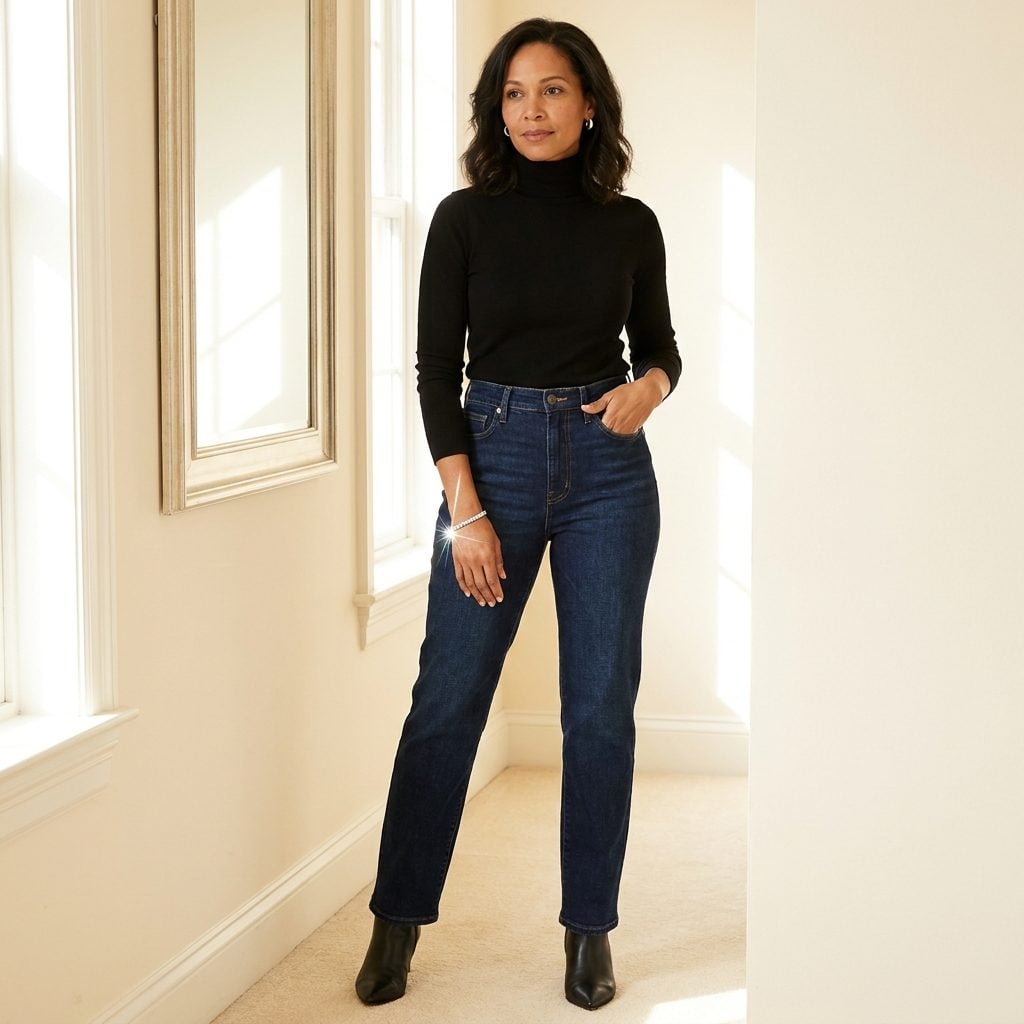
Chris Evert lost hers during the 1987 U.S. Open and stopped the match to find it. After that, every woman in America wanted one, and the jewelry industry had a name for a bracelet style that had existed for decades without needing one.
The tennis bracelet was the great equalizer. Diamonds if you had them, cubic zirconia if you didn’t, rhinestones if you were sixteen and buying your own. It went with everything because it went with nothing specifically. Jeans and a blazer on Saturday. A cocktail dress on New Year’s Eve. A hospital gown the day your daughter was born, because you forgot to take it off and nobody asked you to.
The clasp was always the weak point. You checked it twelve times a day, pinching the tiny safety catch with your fingernail. Losing a tennis bracelet was a specific kind of heartbreak that belonged entirely to the decade.
22. The Woven Friendship Bracelet Tied at the Wrist in Bright Primary Colors That You Swore You’d Never Cut Off

Someone made this for you. That was the whole point. Your best friend, your camp bunkmate, your cousin who sat on the floor of the den for two hours knotting embroidery floss into a chevron pattern because she saw it in a magazine and wanted to get it right.
You tied it on and the deal was you wore it until it fell off on its own. Cutting it was betrayal. Taking it off meant something, though nobody could articulate exactly what. So it stayed. Through showers, through swim practice, through months of fading until the bright red and yellow dulled to something softer, and the cotton threads started to fray and pill.
The knot at the clasp was always too tight. Your mother offered scissors and you looked at her like she’d suggested something criminal.
21. The Oversized Charm Bracelet With Dangling Hearts, Stars, and Initials That Announced You From Across the Room
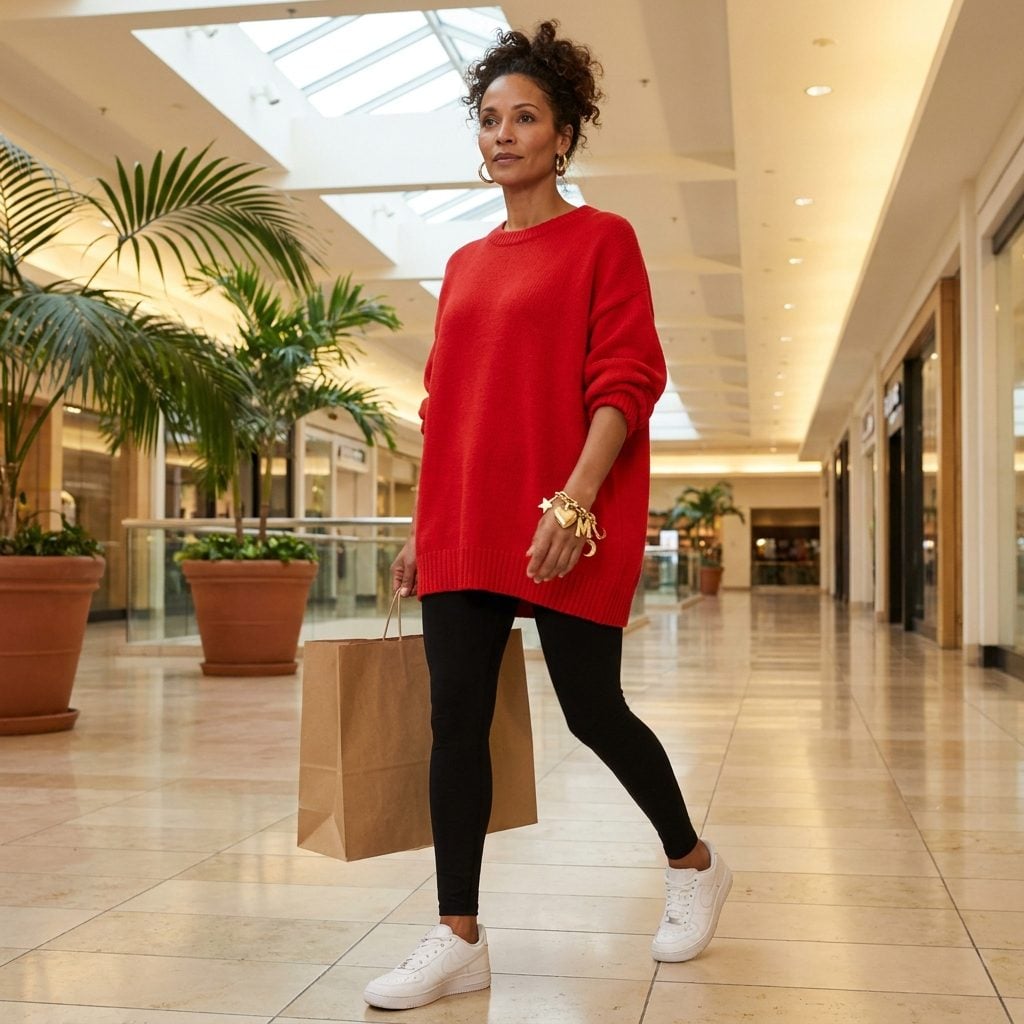
Every charm was a story you were telling strangers without saying a word. The heart from your boyfriend. The initial because it was yours. The star because you saw it and liked it. The tiny Eiffel Tower from a trip you may or may not have actually taken.
The charm bracelet grew over birthdays and Christmases. Relatives who didn’t know what to get you always knew to get you a charm. It was the gift that required no imagination and always landed, which is why by 1987 your bracelet weighed roughly the same as a small weapon and made roughly the same amount of noise.
20. The Wide Leather Cuff With Gold Stud Detailing and a Snap Closure That Made Every Outfit a Little Tougher

Somewhere between Madonna and the motorcycle jacket, the leather cuff with gold studs became the bracelet that said you had an edge, even if your actual evening plans involved folding laundry.
The snap closure was important. Not a buckle. A snap. One firm press to put it on, one firm pull to take it off. It felt decisive. The leather was stiff when it was new and softened over months of wearing, eventually molding to the exact shape of your wrist in a way that made it feel custom. The studs were usually dome-shaped, gold or brass, arranged in rows or a geometric pattern.
You wore it with everything. A blazer for work. A sweatshirt on the weekend. It was the single accessory that could shift an outfit from polished to rebellious without changing anything else.
19. The Braided Cord Bracelet in Neon Pink or Electric Blue That You Bought at the Beach and Wore Until October

You bought it from a kiosk on the boardwalk. Maybe a vendor at the beach. Maybe a tent at a county fair where someone was braiding them on the spot, letting you pick your colors from a pegboard of neon cord. It cost two dollars and it smelled faintly of sunscreen and salt water for the rest of the summer.
The neon braided cord bracelet was a souvenir of a specific week, a specific trip, a specific version of yourself that only existed between June and September. But you kept wearing it. Through the first week of school. Through fall. Through the point where the neon had dulled and the braid had loosened and your mother finally said it looked like it needed to come off. And even then, you hesitated.
18. The Hammered Silver Cuff You Wore Alone Because It Didn’t Need Help

One bracelet. No stack. The hammered silver cuff sat on your wrist like armor you’d chosen rather than inherited — wide enough to catch light from across a restaurant table, heavy enough that you felt it every time you moved your hand.
Most of us found ours at a craft fair or one of those turquoise-heavy jewelry counters in a department store. The surface had deliberate dents, each catching a slightly different angle of light. You wore it with a pushed-up blazer sleeve or a simple black dress, and it announced itself without any help from you. Stacking was the opposite of what this bracelet wanted. It was a full stop.
17. The Pearl and Gold Twisted Rope Bracelet Reserved for Church Pews and Christenings

Two materials braided into one quiet declaration of occasion. The gold rope chain twisted around a strand of small pearls, closing with a tiny lobster clasp you needed someone else’s fingers to fasten. This was the bracelet your mother gave you — or you gave yourself when you decided you were old enough for real jewelry.
It lived in a velvet pouch inside a dresser drawer and came out for Easter services, weddings, and any dinner that required cloth napkins. The pearls were almost never real. That didn’t matter. What mattered was the weight of it, the way it sat just above the wrist bone, and the specific click it made against the hymnal when you turned the page.
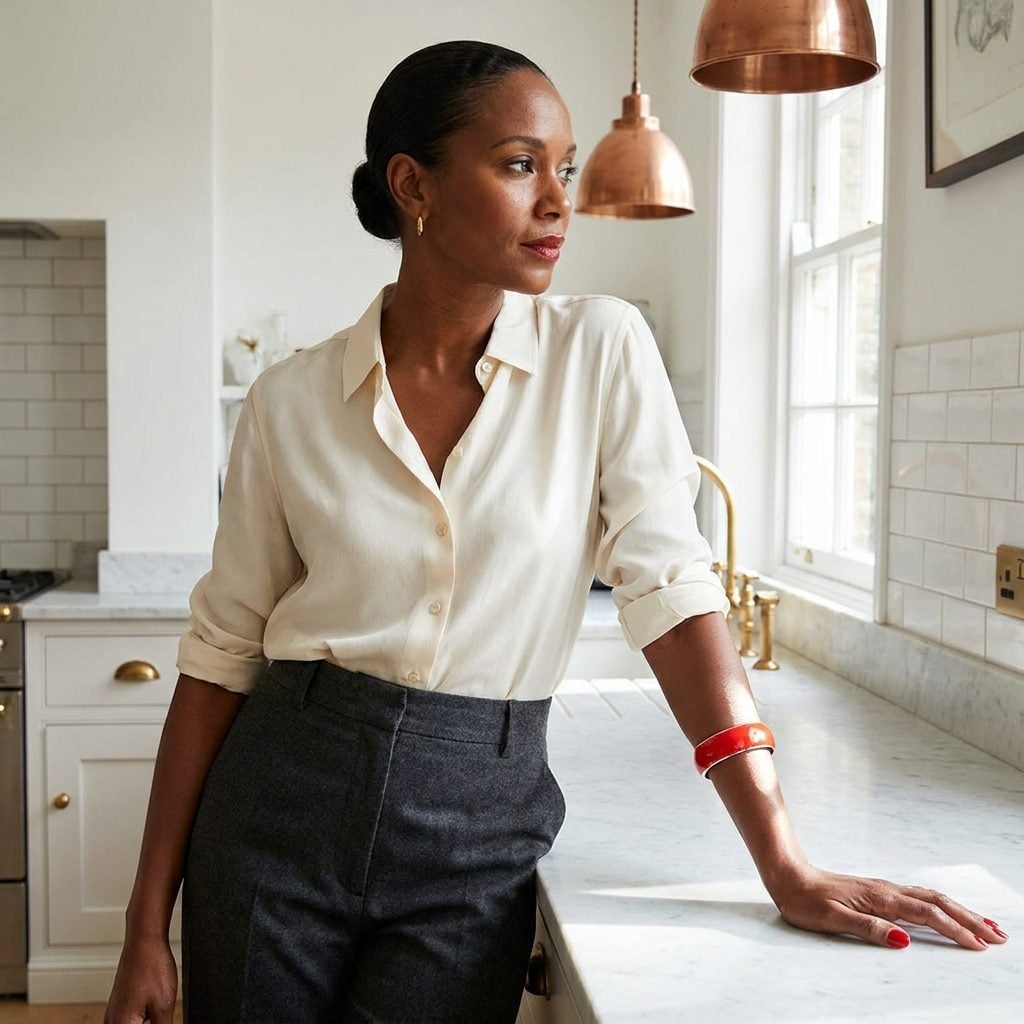
16. The Glossy Enamel Bangle in Poppy Red or Cobalt Blue That Matched Absolutely Nothing and Everything
❤️ Would you like to save this?
Color without apology. The enamel bangle was a single saturated stripe around your wrist — glossy as a new car hood, usually a red so vivid it practically hummed or a blue deep enough to bruise. No stones, no texture, no engraving. Just a smooth cylinder of lacquered brass that slid on over the knuckles and stayed put.
With a cream blouse it became the only thing anyone noticed. With a black turtleneck it looked like you’d planned the whole outfit around it. You probably had. And the inside edge? Always left a faint green line on your skin after a long day — a temporary tattoo of commitment that you wore with mild annoyance and zero regret.
15. The Frosted Pastel Lucite Bangle That Looked Like Candy You Weren’t Supposed to Eat
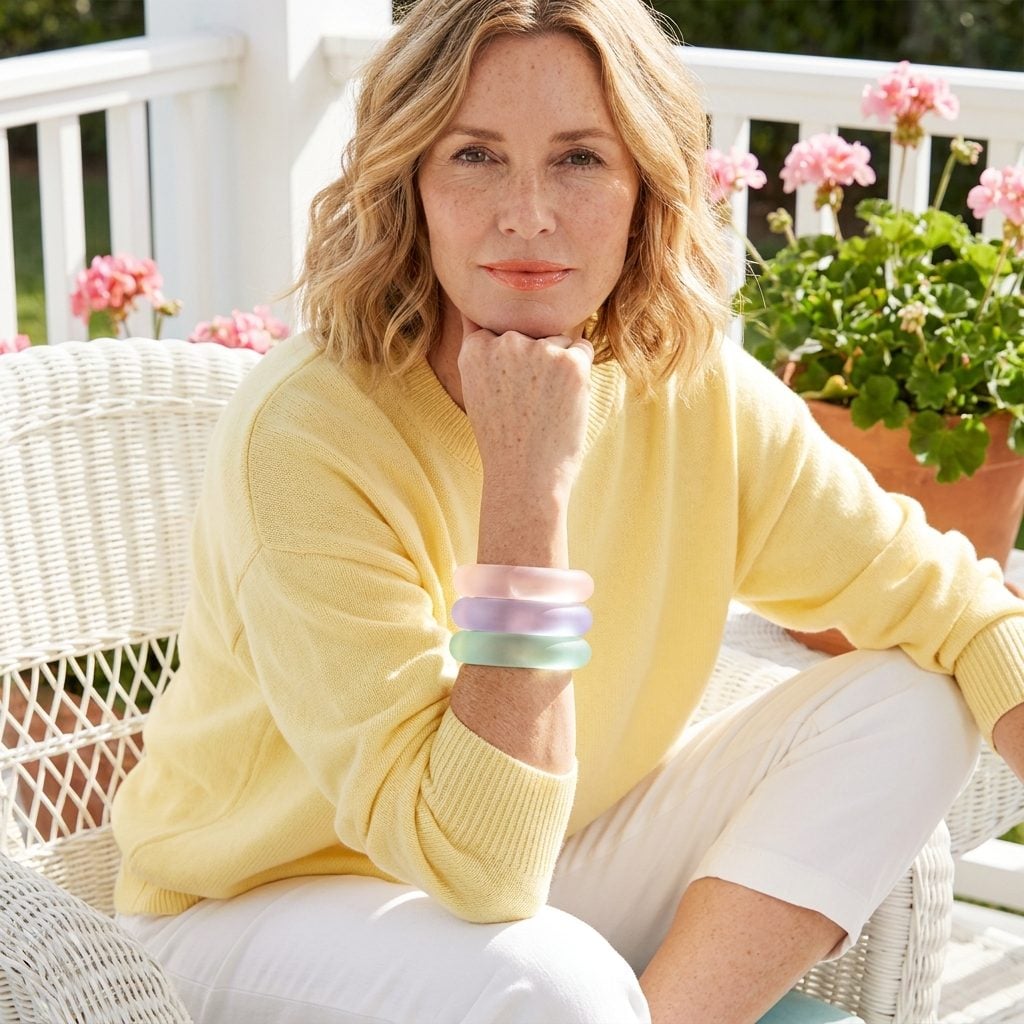
Translucent, weightless, and the exact color of a mint green Jordan almond. The Lucite bangle was pure ’80s optimism bent into a circle — some frosted like sea glass, others crystal clear with tiny flecks of glitter suspended inside like a snow globe someone had turned into jewelry.
They stacked beautifully because they weighed almost nothing. Three or four up the forearm in graduating pastels — pink to lavender to mint — clicking together with that hollow plastic-on-plastic sound. You found them at Claire’s, at Mervyn’s, on a spinning rack at the drugstore for pocket change. They cracked if you dropped them on tile. You always dropped them on tile. You always bought another one.
14. The Woven Macramé Bracelet With Turquoise Beads That Said You’d Been Somewhere (Even If You Hadn’t)

Natural tan cord knotted in a flat braid with two or three small turquoise stone beads threaded through at intervals. The macramé bracelet belonged to someone who wanted you to know she valued handmade things, nature, and probably owned at least one Joni Mitchell record on vinyl.
You tied it on and it stayed. Part of the contract. It darkened with water and oil from your skin, the cord softening from stiff to supple over weeks until it felt like part of your body. Some had a small wooden toggle closure; some you knotted and wore until the fibers gave out entirely.
The turquoise beads were the signal — Southwest, road trip, a craft market in Taos. Even if you bought it at a kiosk in the mall.
13. The Gold Coil Spring Bracelet That Spiraled Up Your Wrist Like It Owned the Place
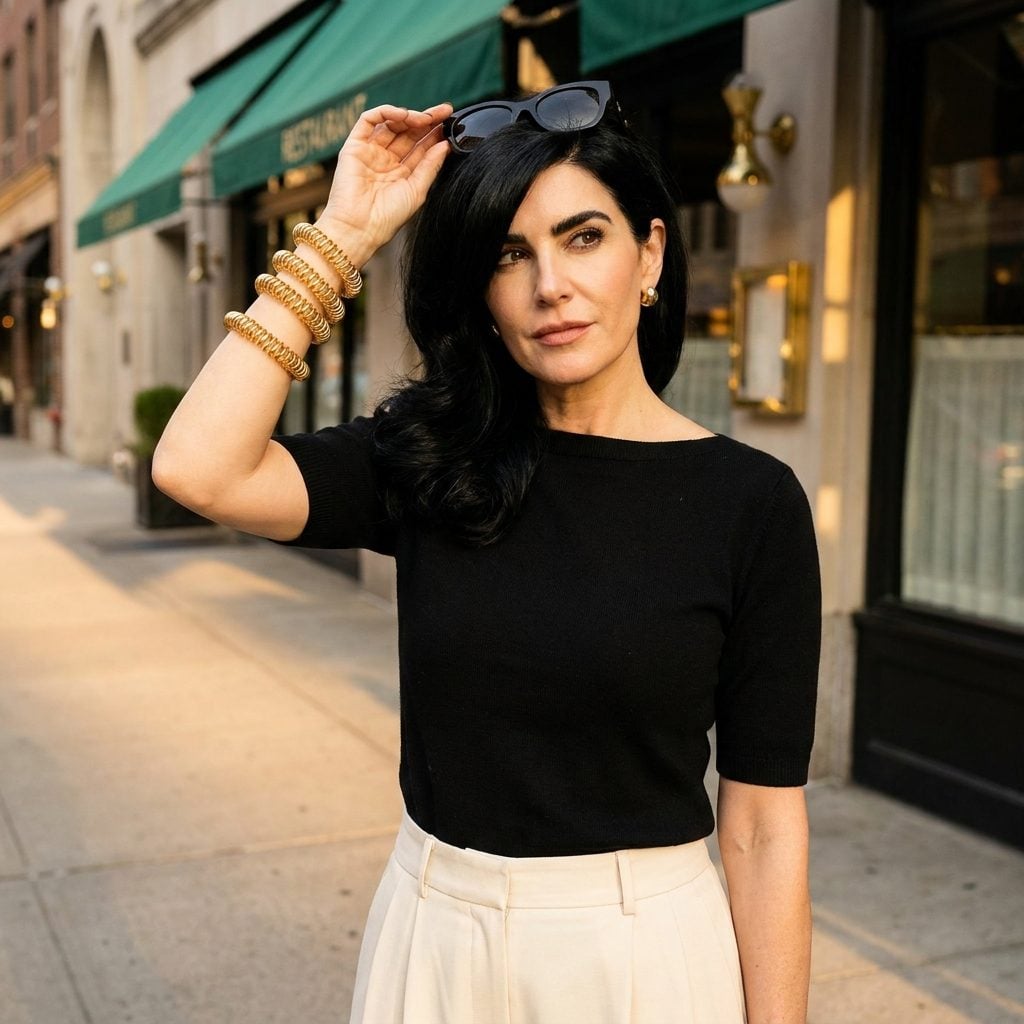
A single piece of gold-toned metal, coiled tight as a telephone cord and designed to wrap around the wrist three, four, sometimes five times depending on how aggressively you stretched it. No clasp. You didn’t put it on — you wound it on, twisting until it gripped.
It caught arm hair. Everyone knew this, nobody talked about it. But the trade-off was worth it because nothing else had that look: the spiral climbing your forearm projected an Egyptian-warrior-queen energy that a standard bangle couldn’t touch. Pair it with a short-sleeved sweater and the exposed coils peeking out below the cuff carried the whole outfit.
12. The Wide Gold Mesh Bracelet With the Box Clasp and Safety Chain Your Aunt Always Wore
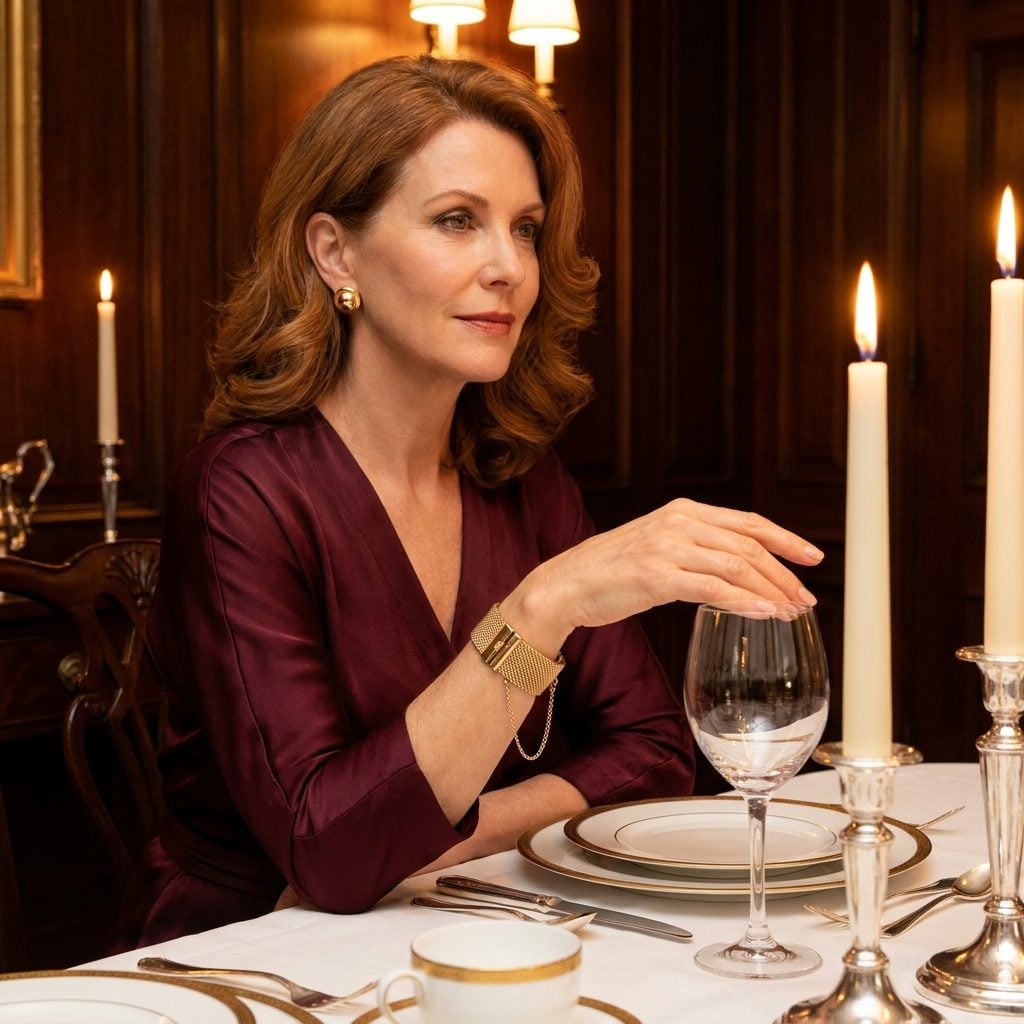
Grown-up jewelry. Real jewelry — or at least jewelry that behaved like it. The wide gold mesh bracelet had a satisfying heft and a box clasp that snapped shut with authority, plus a delicate safety chain dangling alongside to prevent catastrophe. Every woman over forty in the 1980s seemed to own one, and I’m not exaggerating by much.
The mesh was made of tiny interlocking links that moved like fabric against the skin, catching light in a way solid metal never quite managed. It created a wide band of shimmer that looked expensive whether it cost a fortune or a fraction. You recognized it on news anchors, on your mother’s friends at dinner parties, on every woman who had reached the stage of life where her jewelry had stopped being experimental.
11. Beaded Stretch Bracelets in Black and Gold Worn Three at a Time Minimum

Tiny uniform beads strung on elastic cord — black ones and gold ones alternating on the wrist in a pattern you decided was intentional even when it wasn’t. They sold in packs of three or five at accessory stores, already color-coordinated, already designed to stack.
The elastic gave out eventually. Always at the worst moment. Beads scattering across a restaurant floor was a rite of passage, followed by the split-second decision: crawl under the table, or pretend it hadn’t happened? Most of us pretended. The remaining bracelets on the other wrist suddenly looked bereft, and within a week you’d replaced the casualties with a fresh pack from the same store. The cycle had no end. That was honestly fine with us.
10. The Thin Silver Chain Bracelet With a Single Floating Heart Charm That Meant Everything

So delicate you forgot you were wearing it. Then you’d glance down and there it was — the tiny silver heart sliding along the chain — and for a second you remembered exactly who gave it to you.
Someone picked it out for you, or you picked it out for yourself during a moment when you needed a small quiet thing on your wrist. The heart was no bigger than a pencil eraser. The chain was so fine it tangled in the clasp every single time you took it off, which was almost never. It wasn’t about fashion; it was about feeling. Those are different categories entirely, and this bracelet had no interest in crossing over.
A lot of us still have ours in a jewelry box somewhere. Clasp broke years ago. We kept it anyway.
9. The Bold Resin Bangle in Marbled Black and Gold That Looked Like It Belonged in a Museum Gift Shop

Heavy for its size — that was the first thing you noticed. A thick resin bangle with swirls of black and gold running through it like someone had poured liquid metal into dark stone and then curved the result into a circle. No two were identical because the marbling happened during the pour, giving each one the feeling of being singular even when forty others sat on the same display stand.
Black dress, gold earrings, this bangle, done. The marbling made it look far more expensive than plastic had any right to look. And it was plastic, technically — resin is just plastic that got a better job title. I’ve always found that funny, the way one word can move something from the bargain bin to the velvet-lined case.
8. The Oversized Wood Bangle in a Natural Finish, Stacked With Gold Chains Like It Was the Law
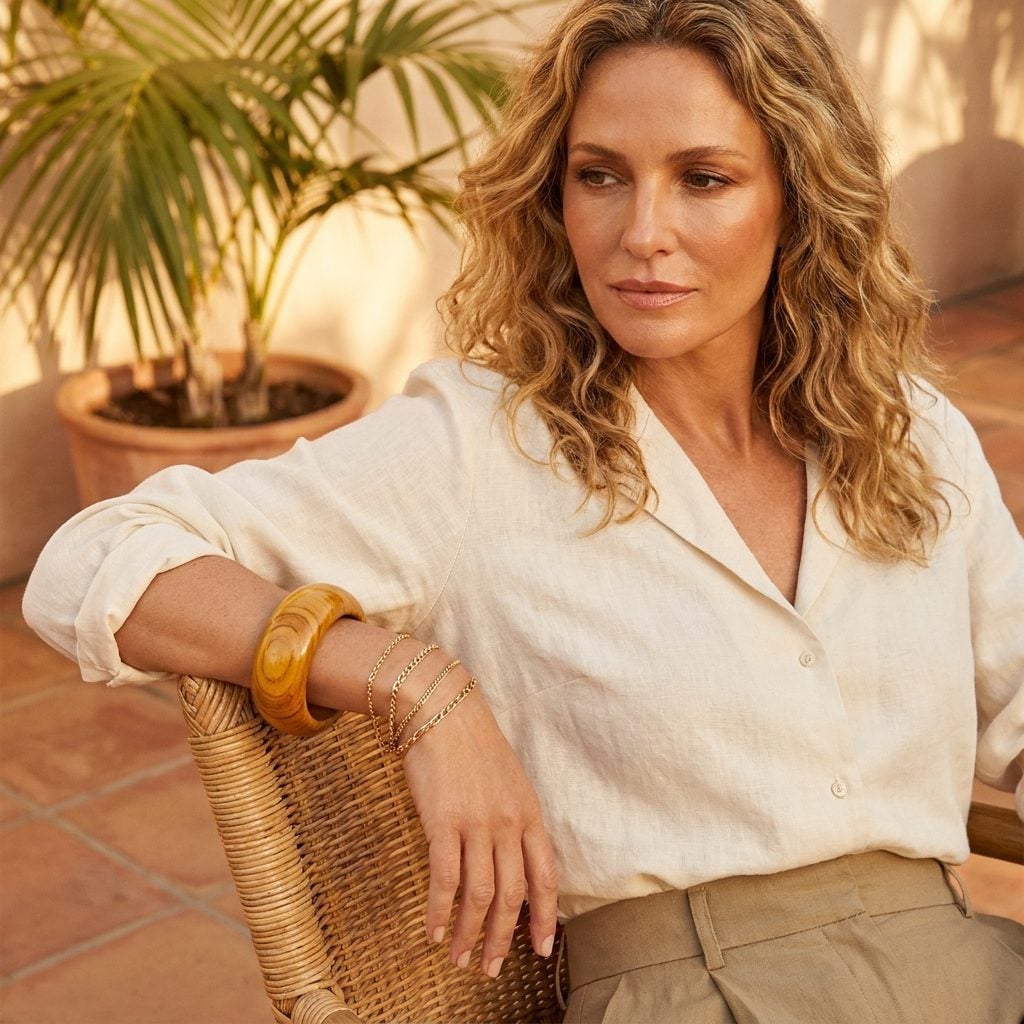
Wood against gold. The contrast felt intentional in a way most 1980s accessorizing never bothered with, and that’s why the formula worked. The natural wood bangle was thick — sometimes two inches wide — sanded smooth enough to slide over your knuckles but heavy enough that you never forgot it was on your arm.
You’d pair it with two or three thin gold chain bracelets, the kind that came in packs from the accessories counter at Mervyn’s or Macy’s. Nobody planned the combination. It just happened, and then suddenly everyone’s wrist looked identical in every photo from 1985 to 1988.
And the sound. That quiet clinking of metal against wood against a laminate desk whenever you wrote something down — you’d hear it in every office, every classroom, every restaurant where a woman reached for a glass of wine.
7. The Crystal and Rhinestone Wrap Bracelet in Aurora Borealis Finish
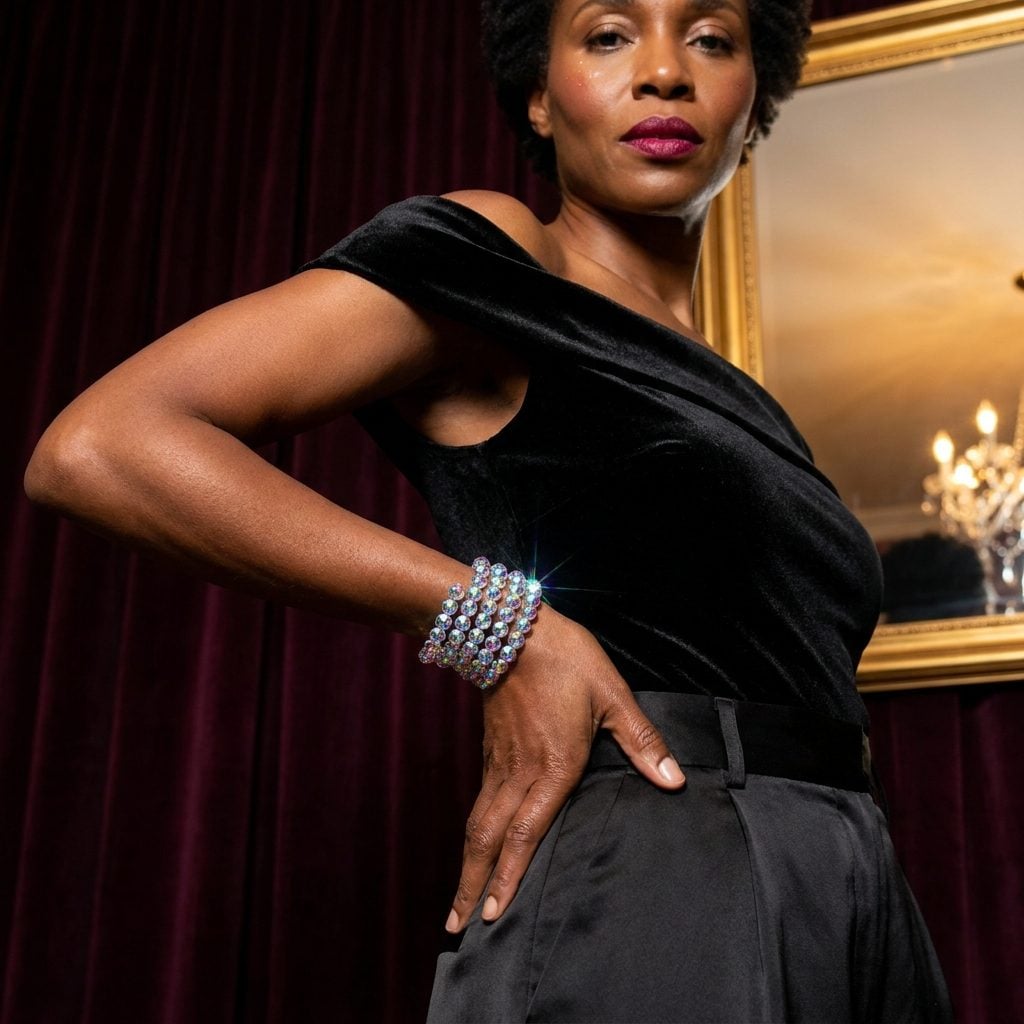
That shifting rainbow finish — the aurora borealis coating — made a single crystal wrap bracelet look like it held fourteen colors depending on the angle. Swarovski made the famous ones. The versions at Claire’s and Spencer’s cost next to nothing, and honestly, nobody could tell the difference from across a table.
The wrap style mattered. One continuous strand of faceted stones coiling two or three times around the wrist, secured by a tiny clasp you needed a friend to fasten. These lived on the same arm as your watch — always — and the rhinestones snagged the cuff of every sweater you owned. You learned to push your sleeves up or accept the pilling. Most of us chose the sleeves.
6. The Braided Leather Bracelet With a Gold Toggle Clasp You Never Wanted to Take Off
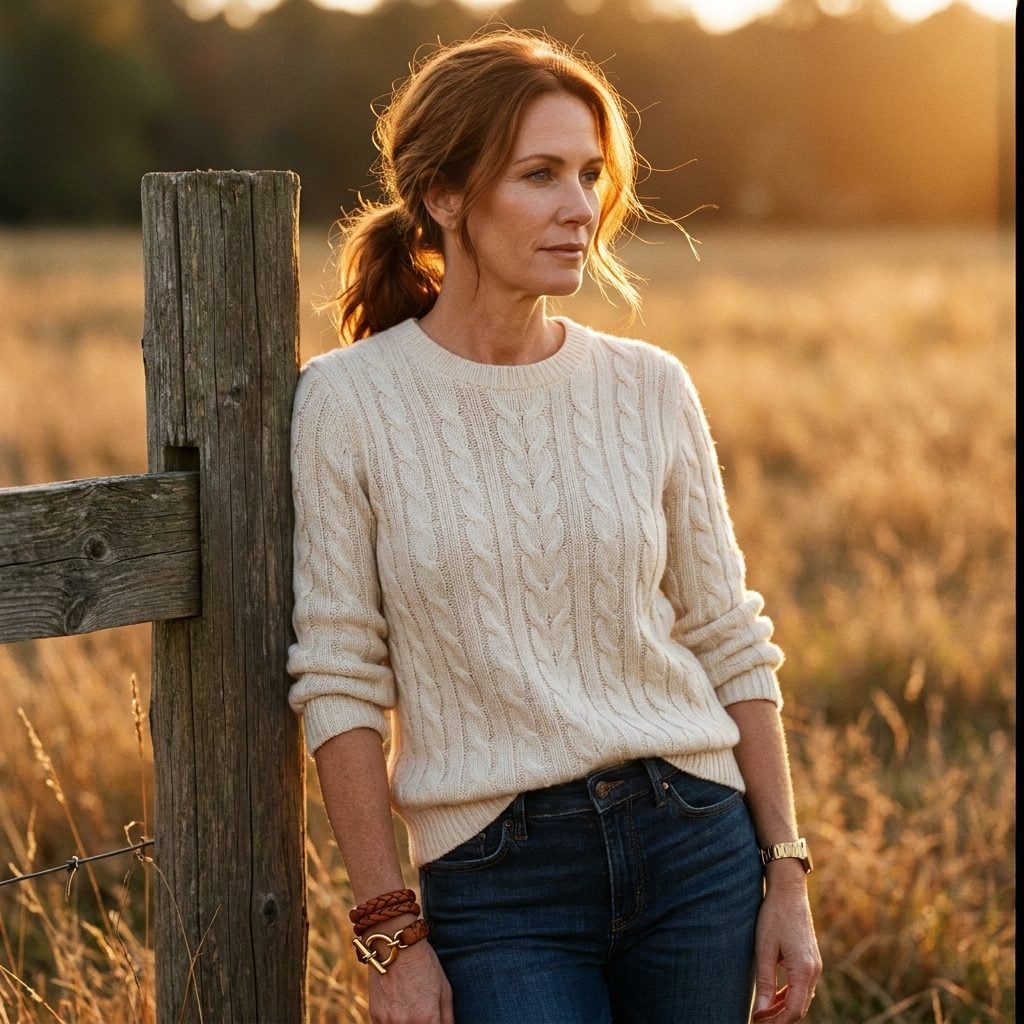
Shower. Bed. Swim practice. This one never came off because the toggle clasp was just tricky enough to discourage removal, and the braided leather got softer and darker with every week on your wrist until it stopped feeling like jewelry and started feeling like skin.
The good ones came from leather shops at the mall or from that one booth at the craft fair your mom dragged you to. Cognac and tan were the defaults, but black existed for the girls who leaned slightly more downtown. What elevated it past a friendship bracelet was the gold toggle clasp — that single degree of polish. It said: I’m casual, but I chose this deliberately.
5. The Coin Charm Bracelet With Dangling Ancient-Style Medallions That Announced Your Arrival

You heard this bracelet before you saw the woman wearing it. Every flick of the wrist produced a tiny percussion section of gold medallions tapping against each other, and there was no subtle way to wear one. Which was, naturally, the draw.
The coins had vaguely Roman profiles stamped into them. Greek key borders. Laurel wreaths. Nobody knew who the faces were, and nobody asked — the point was that they suggested some imagined life of Mediterranean travel, even if you’d picked the bracelet up at a department store jewelry counter in suburban Ohio.
The Dynasty effect was real here. Joan Collins and Linda Evans wore versions on screen, and within a season every woman in a power suit had gold coins swinging from her wrist at the office. Television moved product in the 1980s the way Instagram does now, except faster, because there were only three channels worth watching.
4. The Wristwatch With the Wide Padded Leather Band in Pastel Pink or White

❤️ Would you like to save this?
The watch face was almost beside the point — tiny, round, usually gold-rimmed, sitting in the center of a wide padded leather band that was doing all the heavy lifting. Pastel pink. Cream. Stark white. The band was the accessory; the watch just gave it a reason to be on your wrist.
Swatch owned the playful end of the market, but the padded leather versions came from brands like Guess and Anne Klein and signaled something more buttoned-up. You wore this to the office with your blazer sleeves pushed just far enough to show it off. What good was a conspicuous watch if it stayed hidden under a cuff? None. Zero good.
3. The Interchangeable Snap Bangle With a Decorative Enamel Medallion in the Center

The genius was the snap. One rigid gold bangle, multiple personalities — you’d pop out the center medallion and click in a different one depending on your outfit, your mood, the color of your earrings. Cobalt blue for Tuesday. Red and black for Saturday night. Emerald for whenever.
The enamel medallions came in those little plastic trays, organized by color family, sold at jewelry counters and gift shops that always smelled faintly of potpourri. Some had geometric art deco patterns, some had tiny painted flowers, and a few ambitious ones featured cloisonné detailing that genuinely looked expensive.
Collecting them became its own quiet hobby. You didn’t display them — they lived in a velvet pouch or a shallow dish on your dresser, and you’d swap them the way a later generation would swap phone cases. There was a ritual to it. Outfit first, then medallion. Or medallion first and build the outfit around it, which happened more often than anyone admitted.
2. The Rope-Twist Gold Bangle, Hollow and Lightweight, That Made You Feel Like a Grown Woman
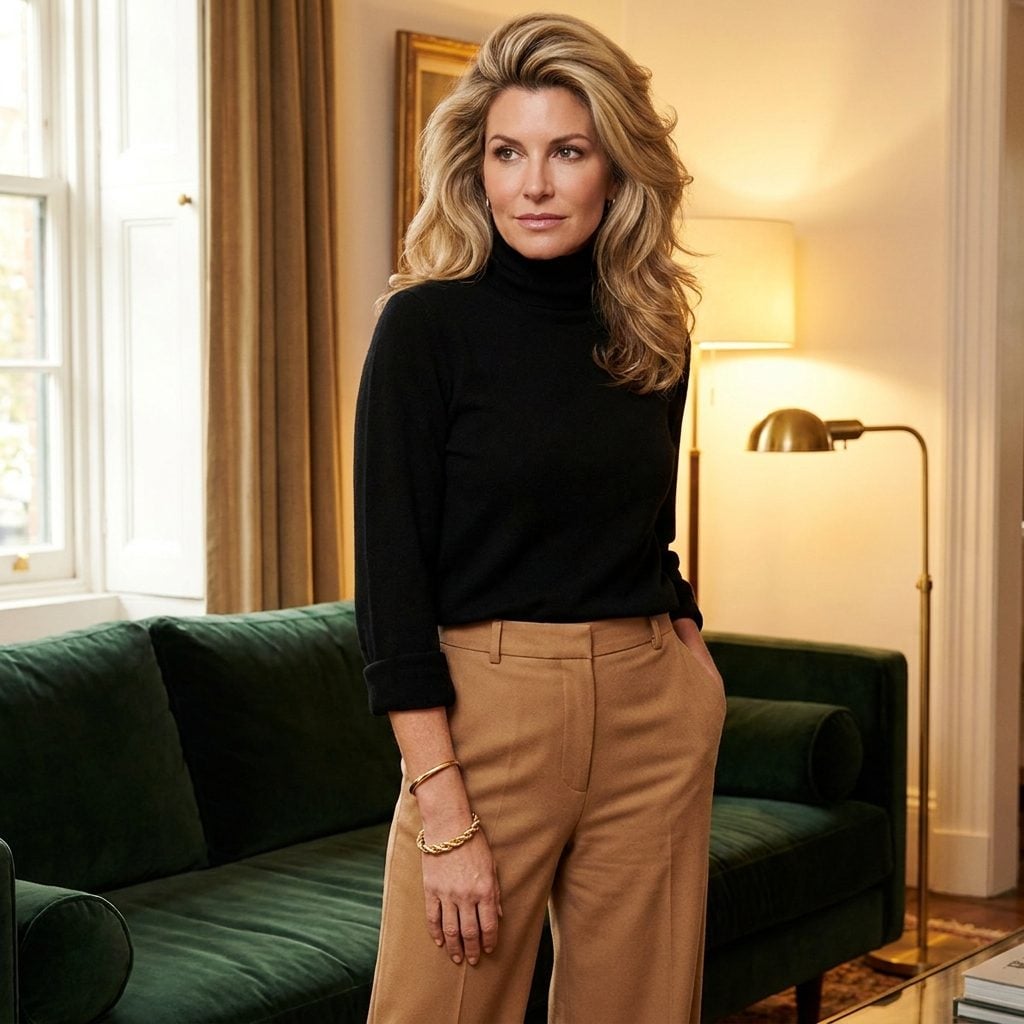
Hollow. That was the trick nobody talked about. A solid gold rope-twist bangle would have cost a mortgage payment, but the hollow version weighed almost nothing and looked identical on your wrist. Tap it against a table and you’d hear the faint ping that gave the game away — but who was tapping?
This was the bracelet your mother wore. Or your aunt. Or the woman at church who always looked put together in a way that seemed effortless but absolutely was not — the kind of woman who ironed her jeans and would deny it if asked. The rope-twist pattern belonged to a certain kind of polished, adult femininity, and wearing one for the first time felt like crossing a threshold you couldn’t quite name.
1. The Fabric Ribbon Bracelet Tied in a Bow With a Gold Charm Dangling From the Center
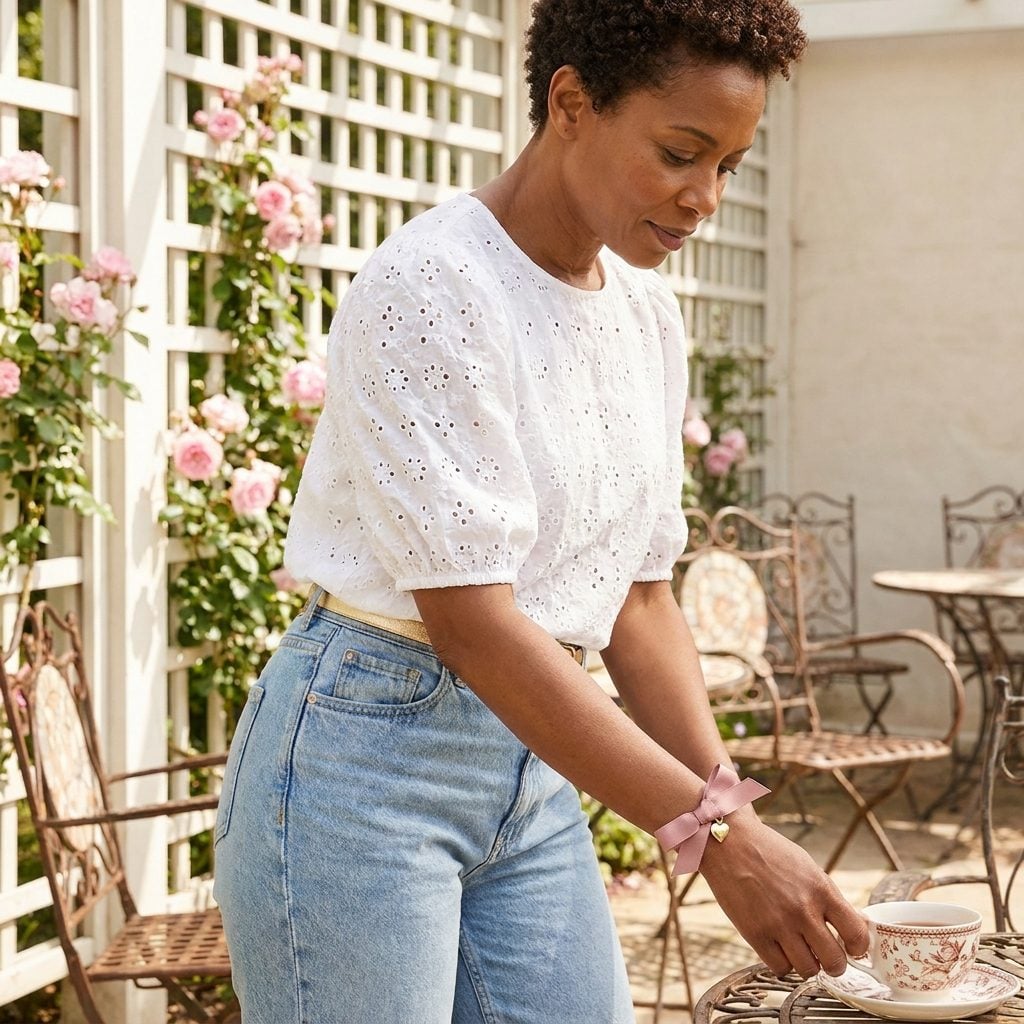
Some bracelets tried to impress. This one just sat on your wrist being quietly pretty, and that was enough. A length of grosgrain ribbon in dusty rose or ivory or pale blue, tied in a bow, with a single small gold charm — a heart, a star, an initial — hanging from the center knot.
You made these at home. Or your friend made one at a sleepover, tied it on your wrist, and you wore it until the ribbon frayed and the bow went limp. The gold charm was the upgrade that moved it from craft project to real accessory, and you could find those charms in little bins at fabric stores for almost nothing.
There was something tender about this one — the bracelet equivalent of a handwritten note. Even store-bought versions carried that feeling, that sense of someone choosing a ribbon and a charm and putting them together with care. It didn’t try to look expensive. Didn’t need to. It looked like it mattered to somebody, and that was plenty.