❤️ Would you like to save this?
Most women don’t fade into invisibility on purpose. It happens in small, specific ways: a style that once worked so well she never questioned it, a routine that calcified into a rut, a version of “put together” that quietly stopped evolving somewhere around year five. The effect is cumulative, and it tends to sneak up on you.
One woman realized she’d been wearing the same tired style for 15 years. She wasn’t dressing badly — she just felt unseen, like her clothes were on autopilot while everything else about her had moved on. A stylist convinced her it was time for a real change and asked for full access to rework her look from the ground up.
What came back was 19 complete before-and-afters. Not dramatic reinventions, just sharp, practical changes that altered how each look was perceived. Some of the fixes are obvious in hindsight. Most of them aren’t.
FYI, thanks to AI imagery software, we’re able to create very specific fashion and hairstyle examples to illustrate the points being made. In some cases, imagery is exaggerated to hammer home the point. Also, assume links that take you off the site are affiliate links such as links to Amazon. this means we may earn a commission if you buy something.
19. Highlights That Actually Move With You, Not Against You
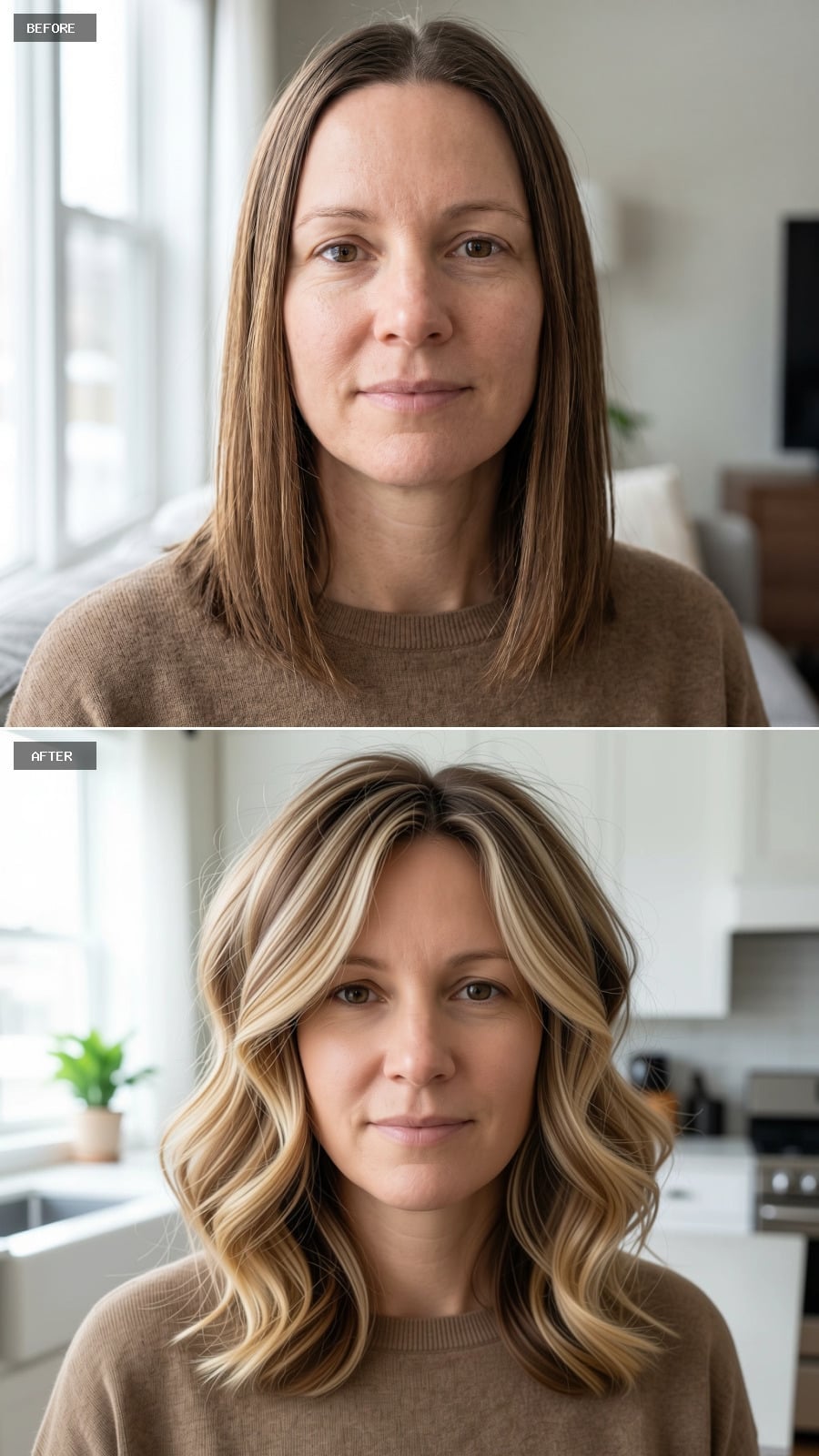
Soft blonde highlights layered through medium-length hair do something most color jobs don’t: they create dimension that shifts with movement rather than sitting flat against the scalp. The waves here are loose and unstructured, closer to air-dried than styled, which keeps the whole look from reading as too finished.
What’s doing the real work is the contrast between the darker root and the lighter mid-lengths, a gradient that adds volume at the sides without any actual volumizing product visible. It frames the face wider, which on a narrower face shape reads as softness rather than severity.
The color itself lands in that warm champagne-to-wheat range that tends to work well against neutral skin tones. Wavy texture at this length almost always looks younger than pin-straight, and the reason isn’t glamour. It’s movement.
18. Dark, Blunt, and Shorter Than She Expected It to Be
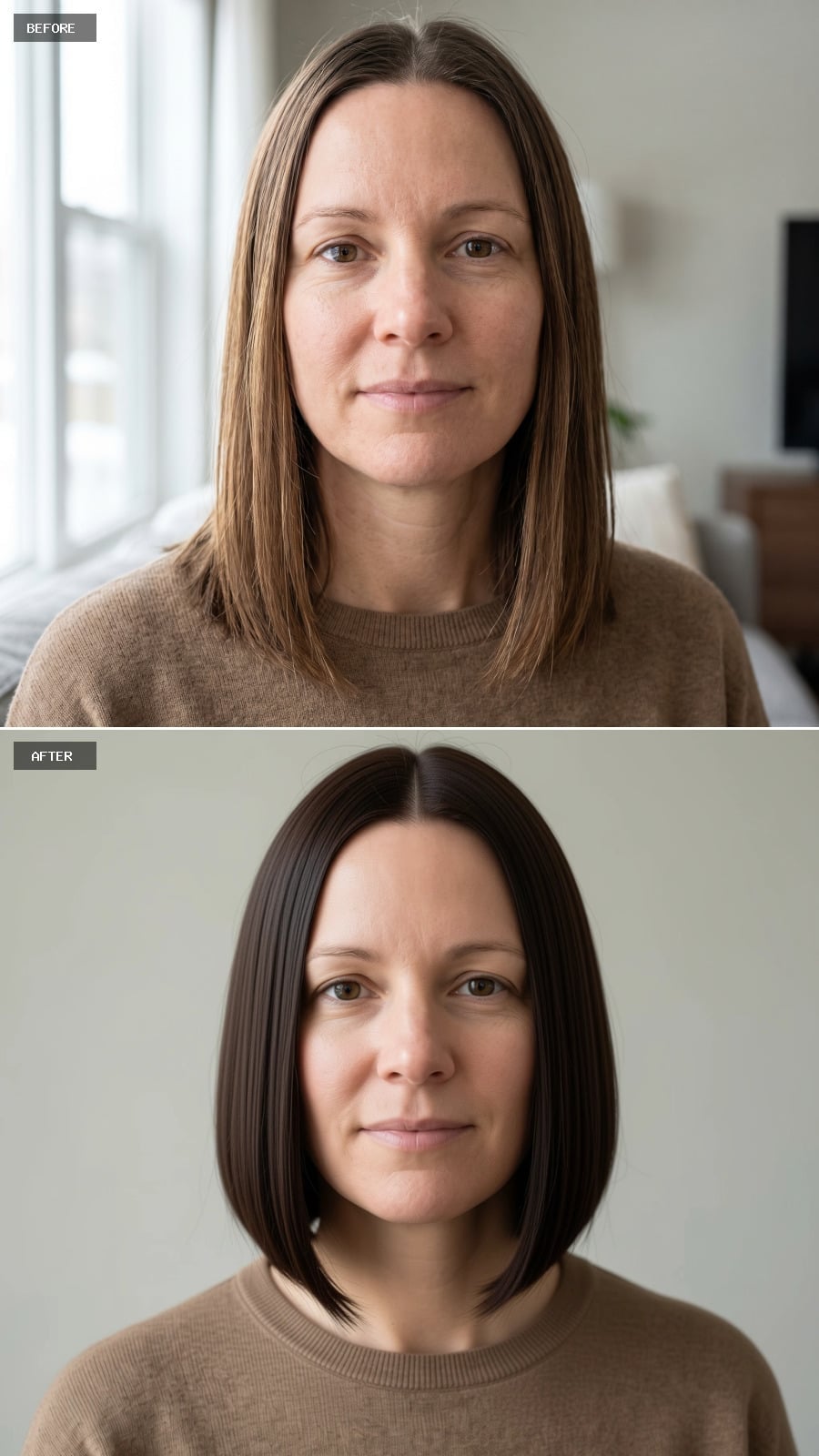
The cut lands just at the collarbone, which is doing more work here than it looks like. That blunt bob line is what makes the dark espresso color read as intentional rather than heavy. It frames the face without softening everything into submission. And the center part? It keeps it from feeling cozy.
17. Curtain Bangs Changed the Math on Her Whole Face
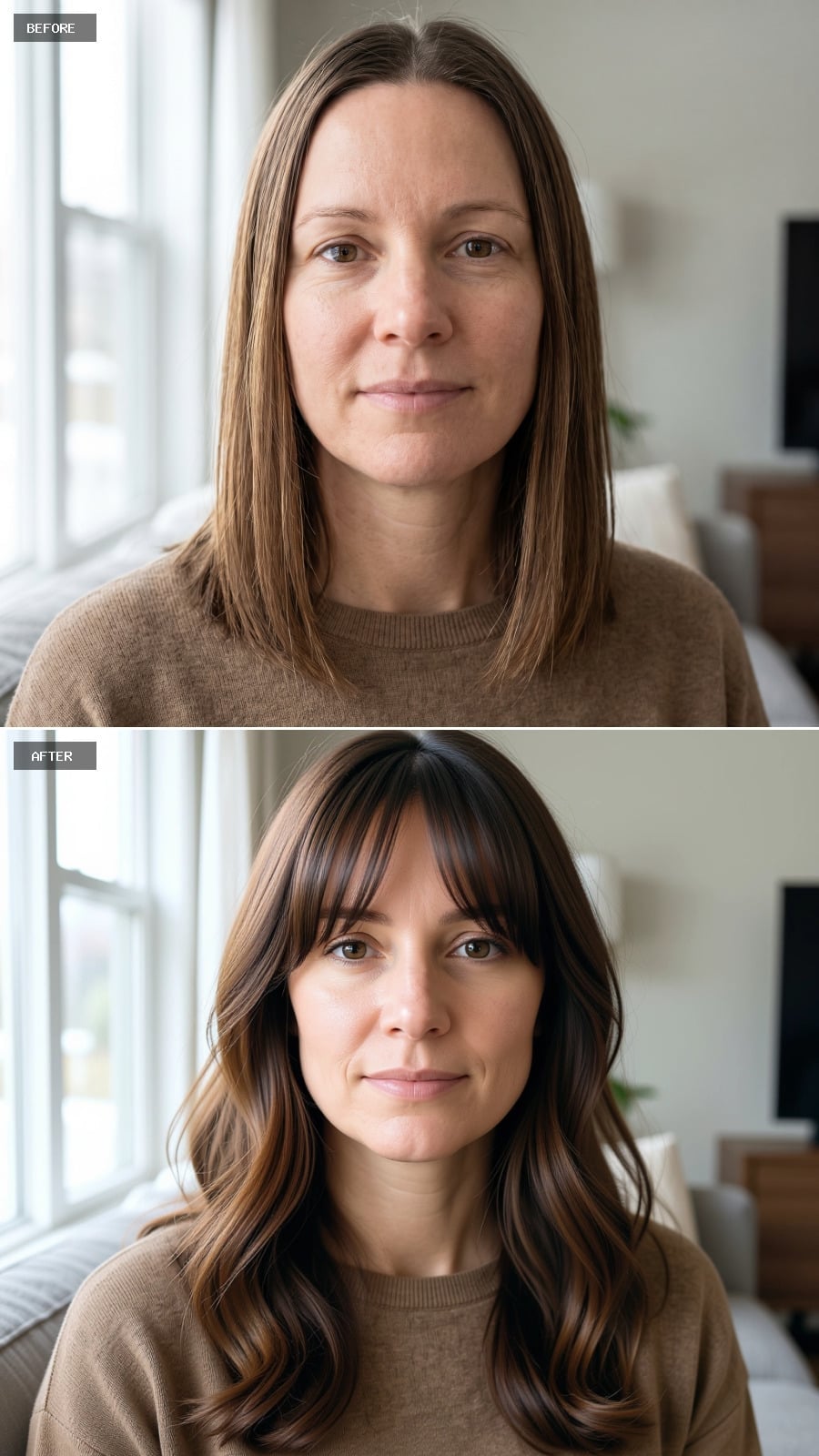
Longer, wavier, and darker than what she started with, this cut does something specific to her face shape that a blunt straight style couldn’t. The curtain bangs part at the center and sweeps outward just past her brow line, drawing attention to her eyes rather than the width of her forehead.
Waves start at roughly chin level, which keeps volume where it flatters and avoids the triangle silhouette that longer hair without movement tends to create.
Why the Part in Those Bangs Actually Matters
A curtain bang that parts exactly at center creates two diagonal lines that angle away from the face, and that geometry does real work. It shortens the visual length of a longer face and softens a strong forehead without hiding it entirely. The effect is different from a full fringe, which sits heavier and can pull a face downward instead of opening it up.
16. Darker, Choppier, and Somehow More Her Than the Length Ever Was
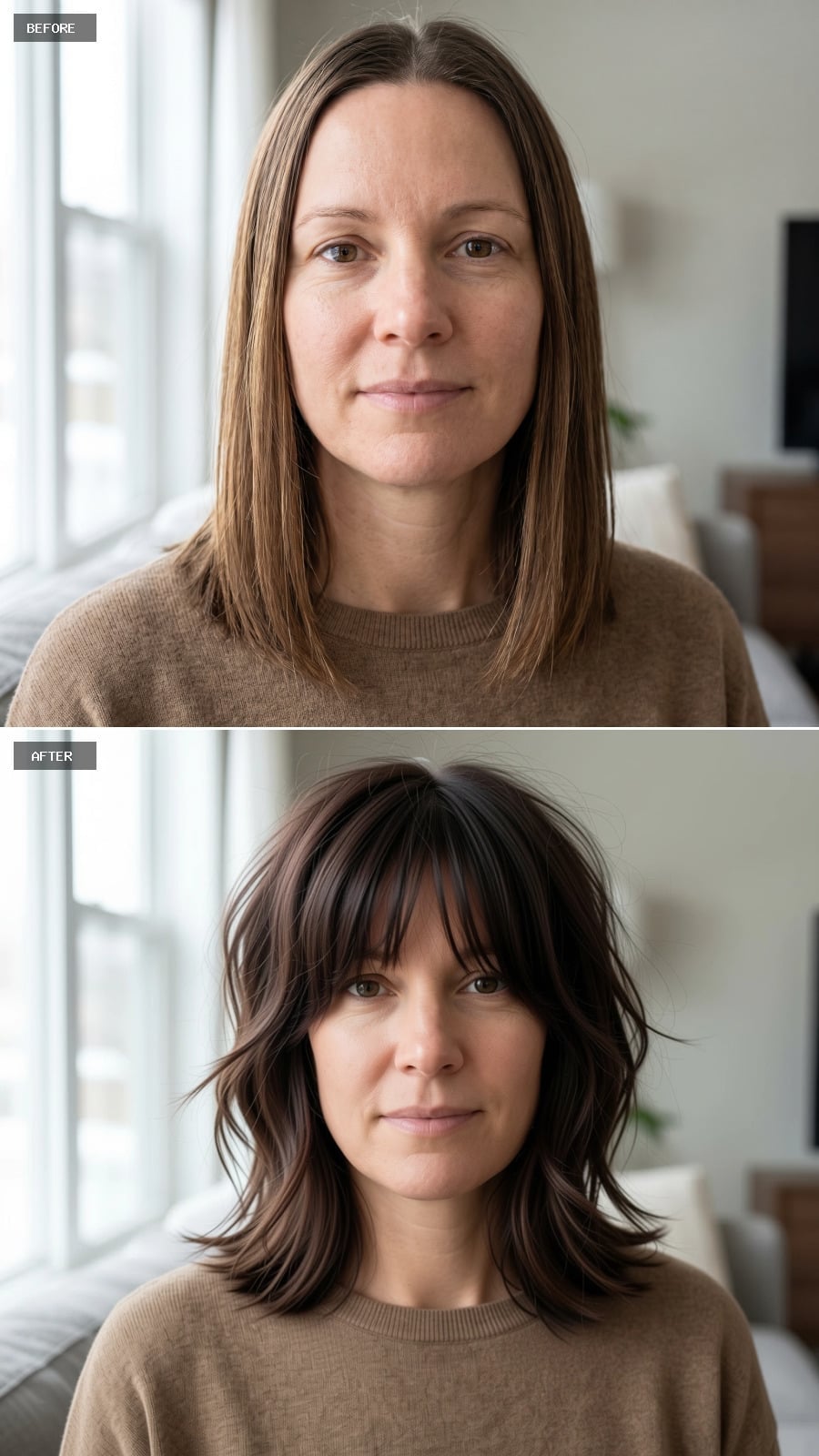
Dark chocolate brown with visible layering, cut into a shaggy mid-length bob does something the previous style couldn’t: it gives her face an actual frame. Curtain-style fringe falls just past the brow, breaking the forehead in a way that pulls attention to her eyes. The ends aren’t polished. They’re intentionally undone, and that’s where the whole thing earns its keep.
15. Purple-Black Bob, Blunt Enough to Mean It
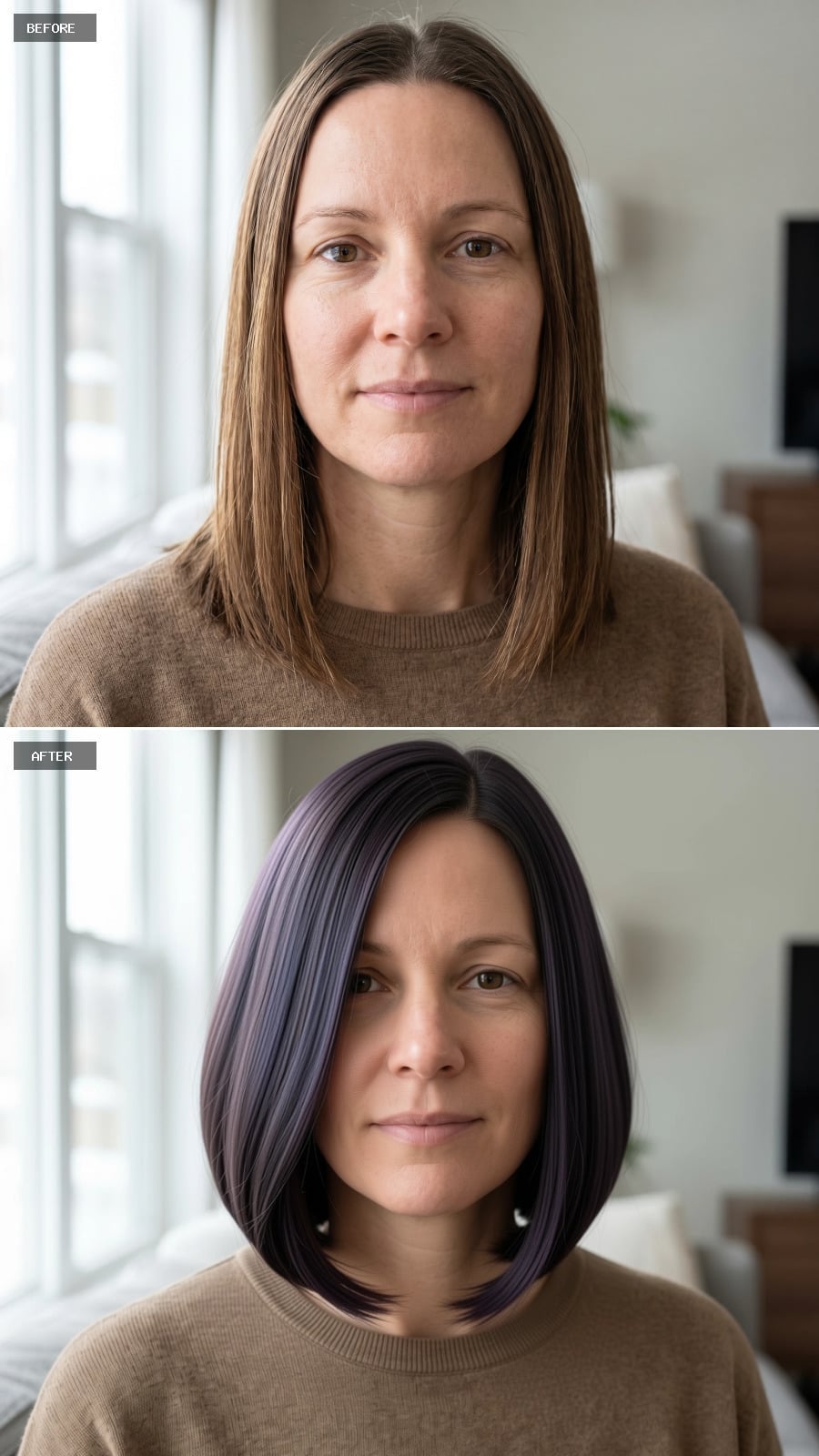
Violet runs through the base color here, a deep blue-black shade that shifts purple depending on how light hits the strands. What makes it work isn’t the color alone. It’s the cut: a blunt bob that lands just below the jaw, with a center part that splits the weight evenly on both sides. She went shorter than most women her age would risk. The result reads intentional rather than cautious, which is exactly the kind of signal a haircut can send when everything else lines up.
14. Copper Waves and Curtain Bangs: When the Color Does Half the Work
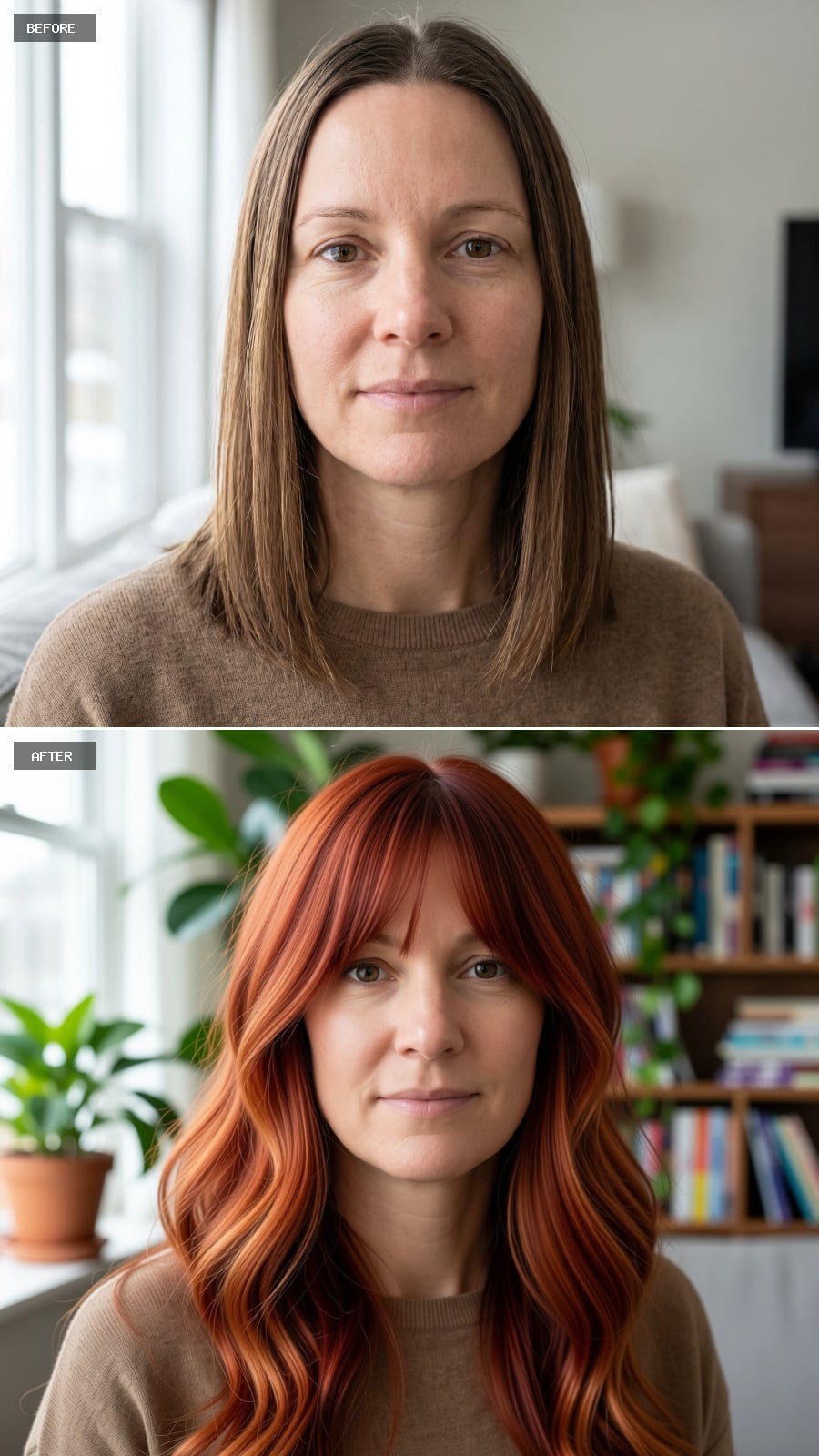
Red that reads auburn in shadow and straight copper in light tends to do something structural to a face, and that’s exactly what’s happening here. The stylist layered the color through long waves, letting the darker roots anchor everything so it doesn’t read as costume. Curtain bangs part naturally at the center, framing without covering.
The length hits past the collarbone with enough wave to add width at the jaw. It’s not a dramatic cut. The drama is in the color shift from root to tip, which pulls attention upward and keeps the face as the actual focal point.
13. Highlights Cut Short and Placed Like They Were Planned That Way
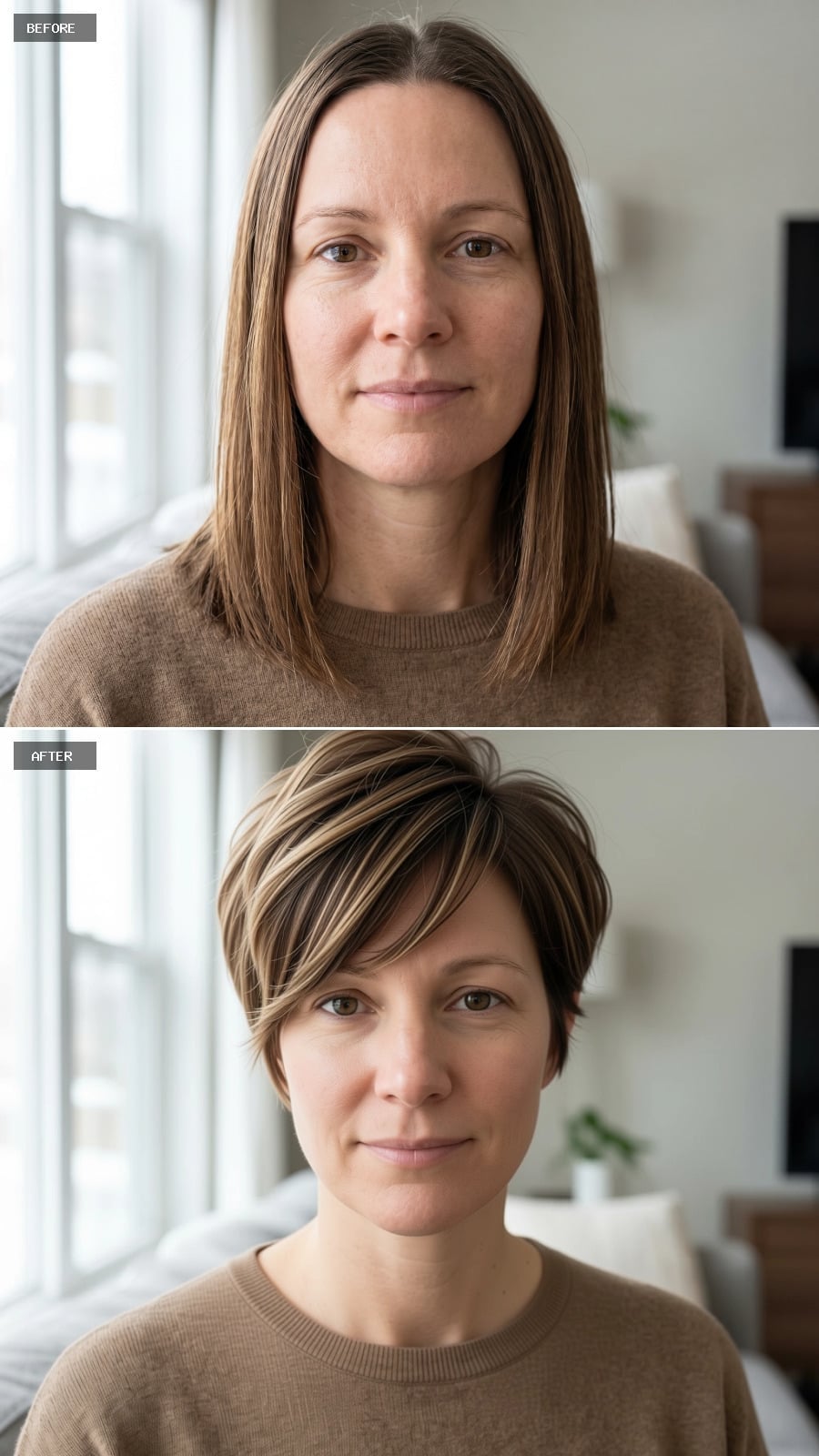
She walked out with a pixie-length cut that’s longer on top and cropped close at the sides, styled with a side sweep that pulls the weight of the hair forward rather than back. The highlights are the real decision here: warm honey tones ribboned through a darker brown base, placed at the crown and through the sweep so they catch light where the cut has movement. It reads intentional. Short without being severe, which is harder to pull off than it looks.
12. Blunt Bob, Dark Enough to Reset Everything She Thought About Her Hair
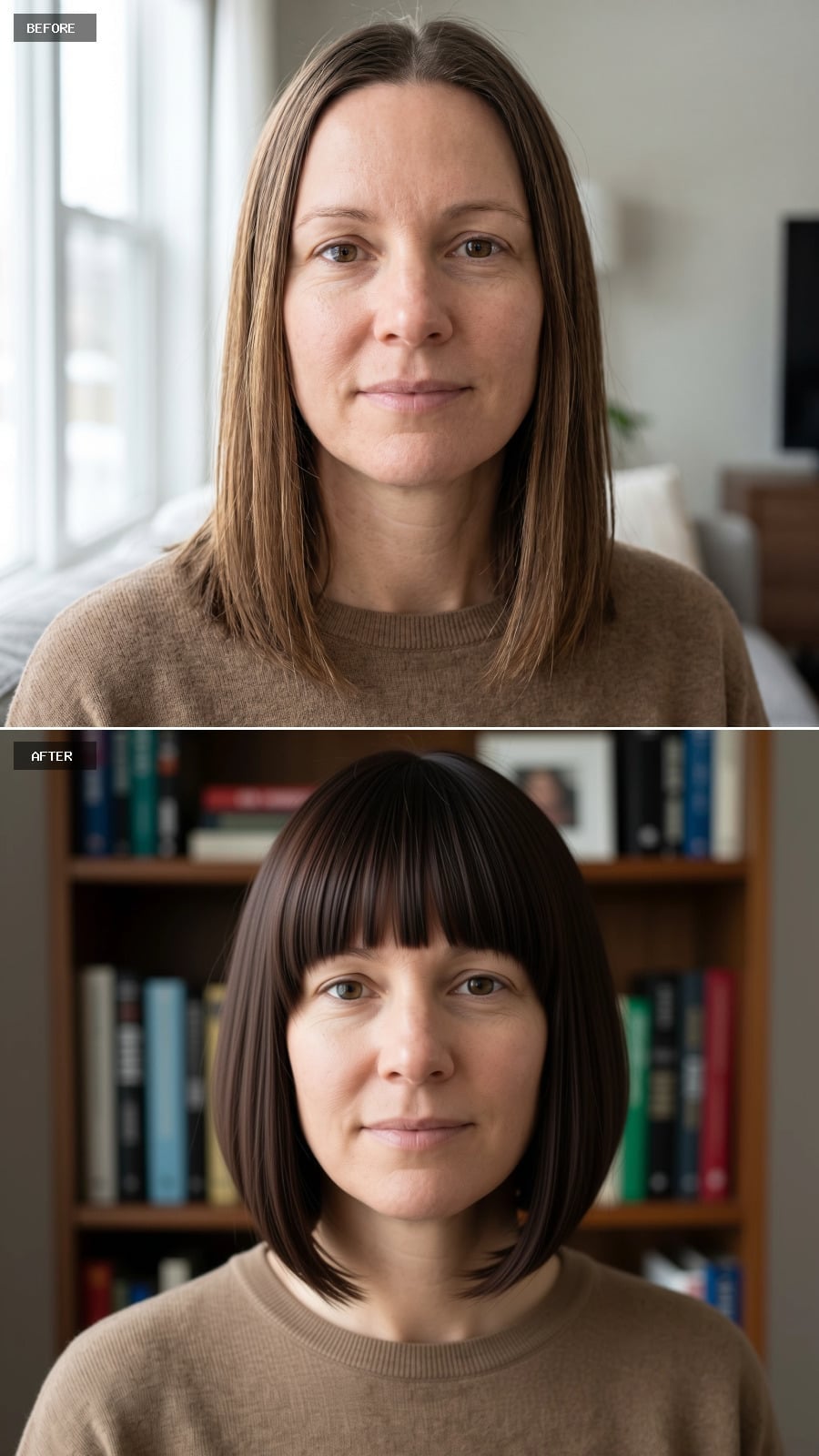
What a stylist reached for here wasn’t subtle. A chin-length bob with full, blunt bangs cut straight across the forehead, all in a shade of dark brown so deep it reads almost black under certain light. The weight of the cut is the whole point. Both the fringe and the perimeter land with intention, no feathering, no softening at the ends.
And that density of color does something specific to the face: it draws the eyes inward rather than letting them drift. Blunt bangs tend to polarize people, but when they sit at exactly the right length above the brow, they stop looking costume-y and start looking considered.
Did You Know: A blunt bob depends on a clean perimeter, so regular trims help preserve its shape. Layered cuts grow out differently, with the timing depending on the length, texture and amount of graduation.
11. Balayage This Lived-In Proves Color Can Add Years Back, Not On
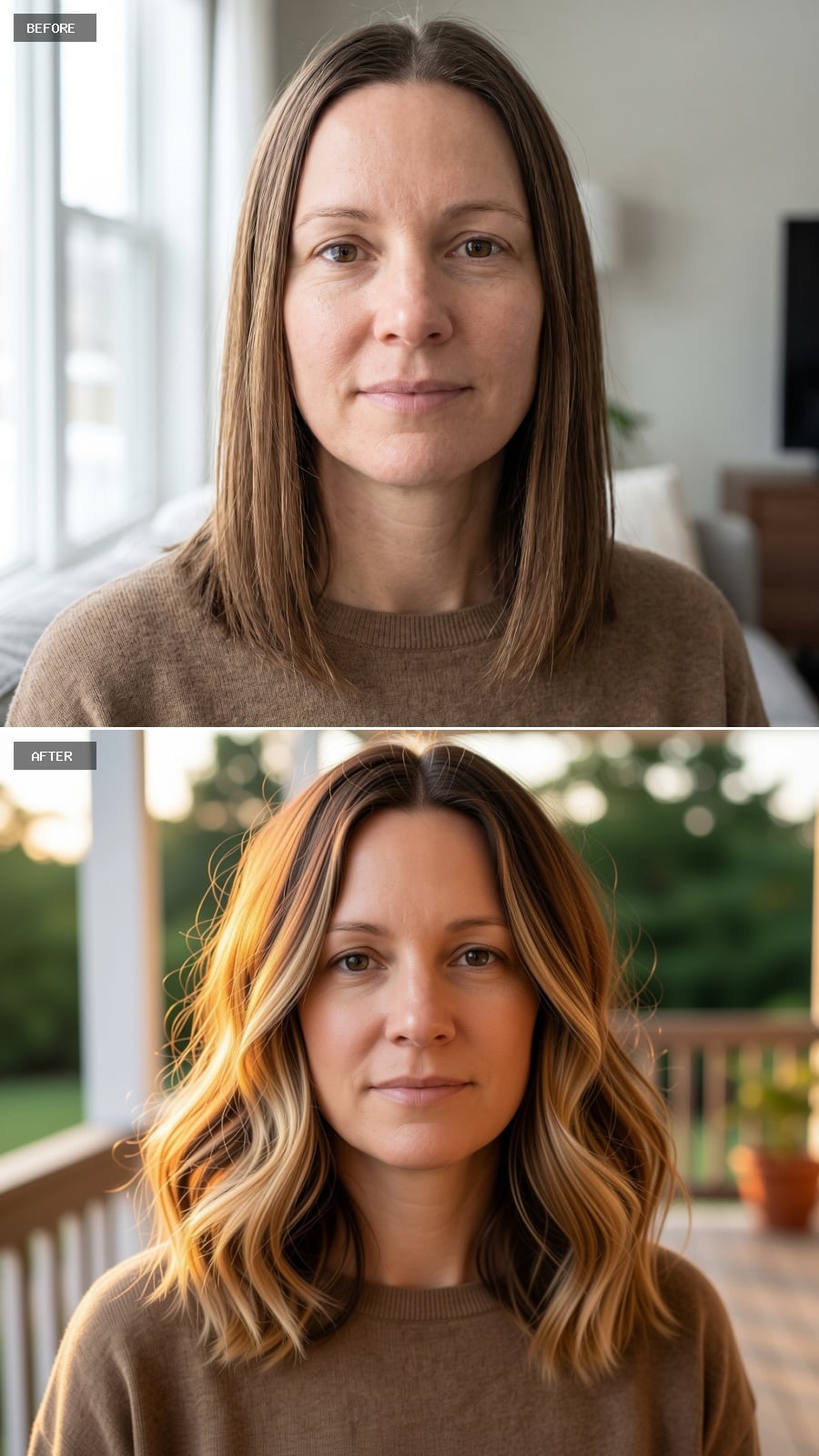
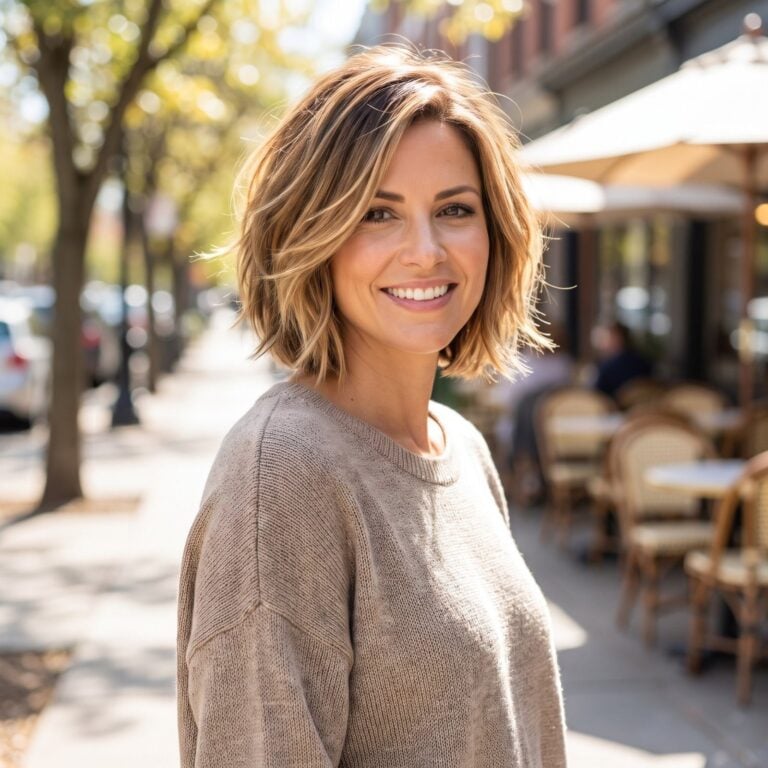
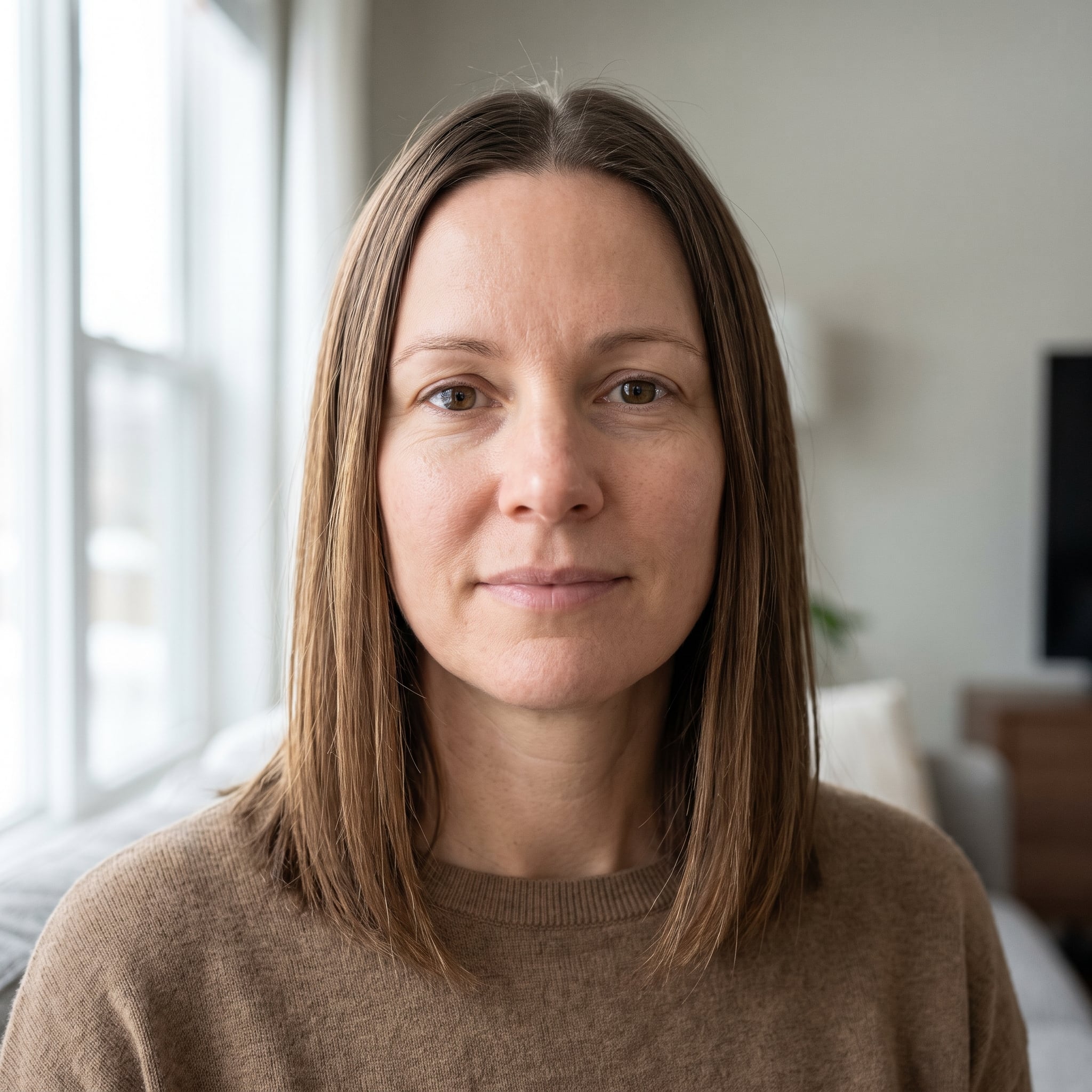
Warm golden balayage with dark roots does something specific here: it pulls light toward the center of the face without looking like it was placed there on purpose. The waves are loose enough to read relaxed but shaped enough to hold structure at the ends. Her brown sweater, a neutral that could easily disappear, actually anchors the warmth in the hair instead of competing with it. That’s the part most people miss when they go lighter.
10. Pulled Up, Grown Out, and Somehow Younger for Both
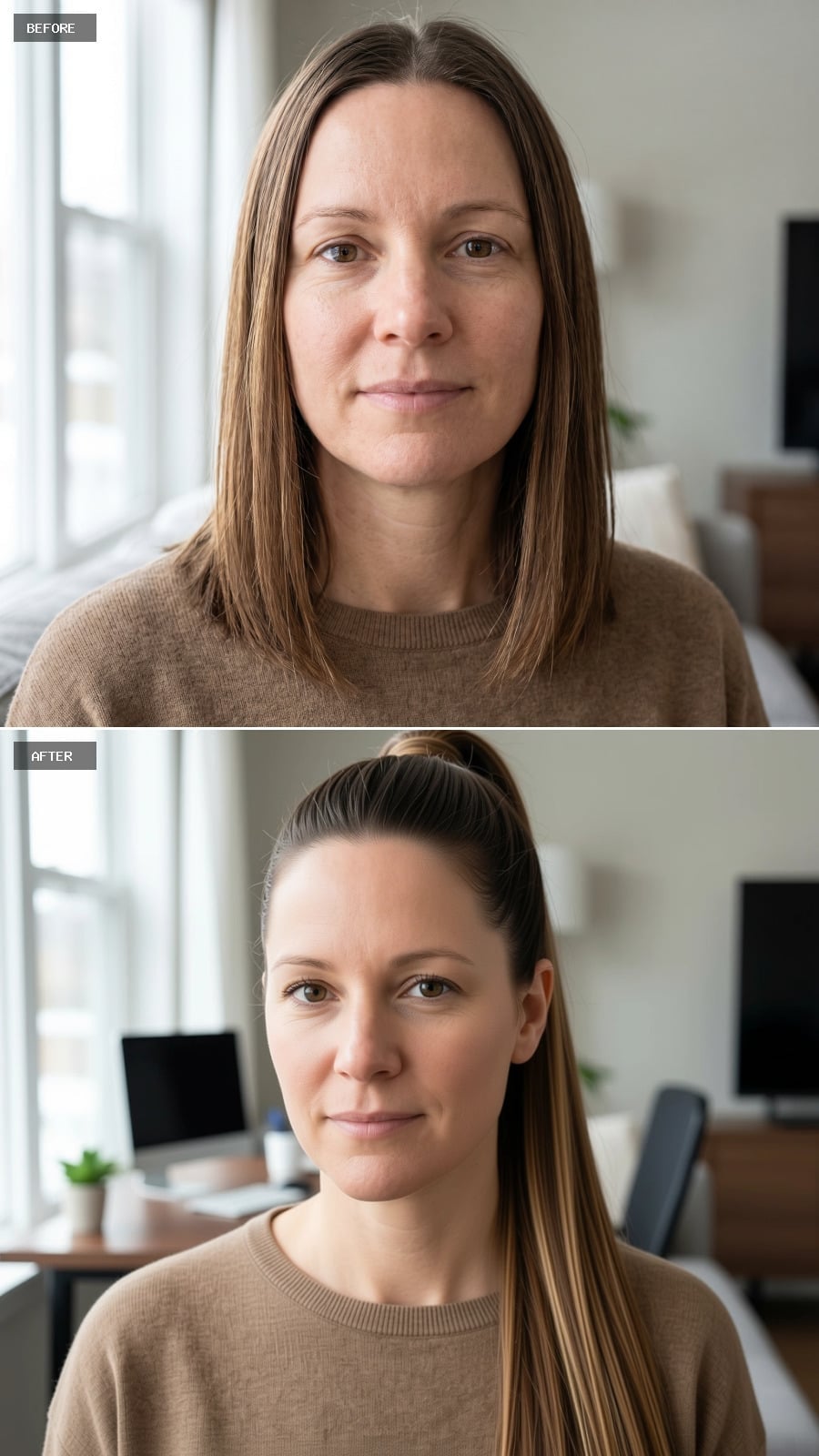
Hair pulled into a high ponytail does something specific to the face: it lifts the eye upward and opens up the jawline in a way a blowout rarely achieves. Her ponytail isn’t polished to the point of stiffness. It has length and a little weight to it, with lighter pieces near the front that keep the style from reading too severe. Paired with a crew-neck sweater in a muted tan, the whole picture reads put-together without announcing itself.
9. Skunk Stripe Placement That Actually Requires Some Nerve
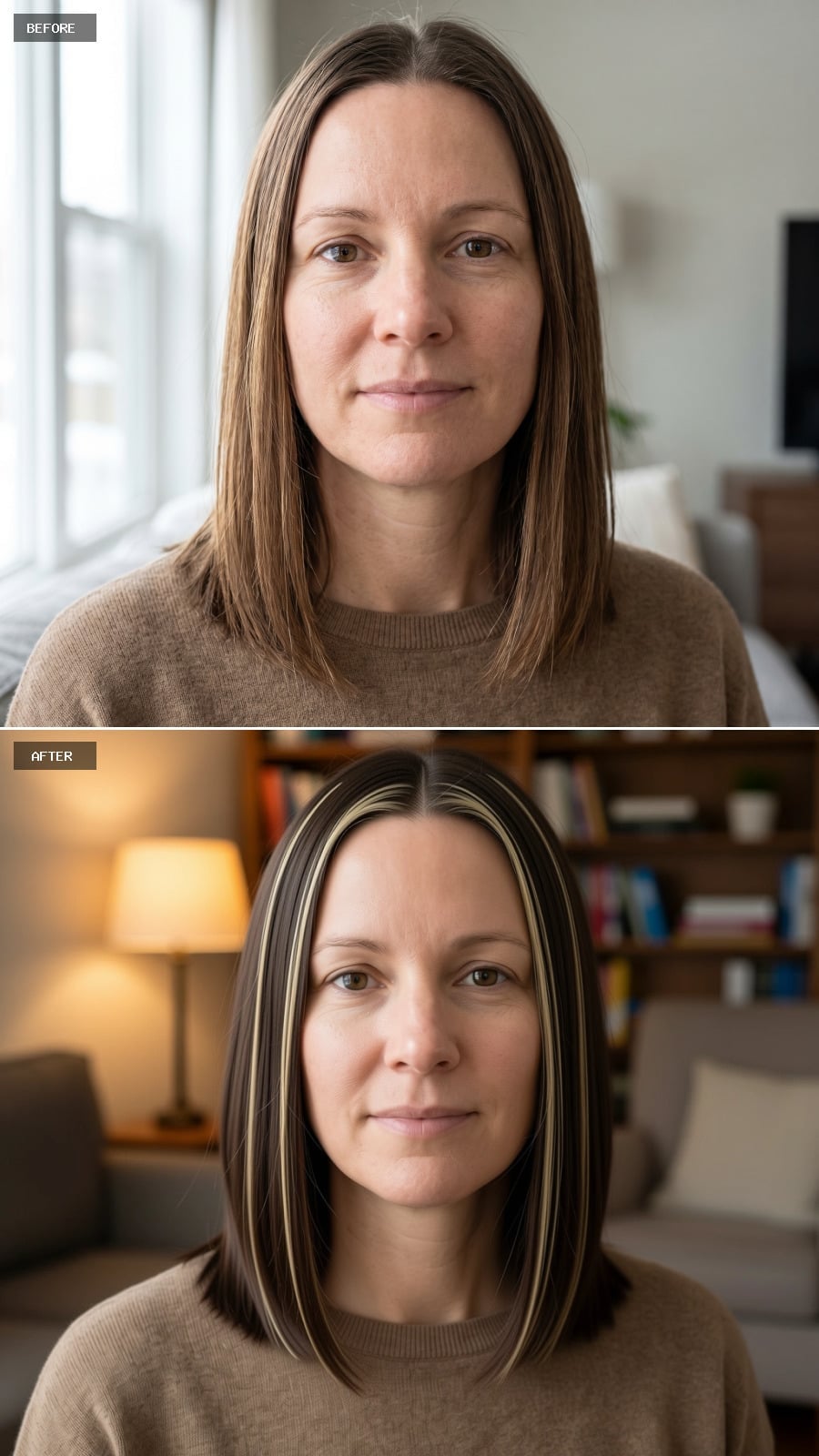
Bold face-framing highlights like these don’t happen by accident. Two thick, near-blond panels run from root to tip on either side of the part, sitting against a base that’s been deepened to near-espresso. The contrast is intentional and high enough that there’s no reading it as sun damage or grown-out color. It’s a choice that announces itself.
What makes it work at this length is the blunt perimeter. The cut lands just below the collarbone, and because the ends are straight across rather than layered out, the highlights stay visible as distinct vertical columns rather than blending into texture. Structure holds the color story in place.
Stylists call this kind of placement “money pieces,” but that phrase undersells how specific the decision is. Too narrow and it reads as frosted tips from a different decade. Too wide and it starts to compete with the face rather than frame it. Here, the width hits the part of the cheekbone where the eye naturally goes first.
8. Bangs and Dark Color Together: Why the Combination Reads Younger, Not Harder
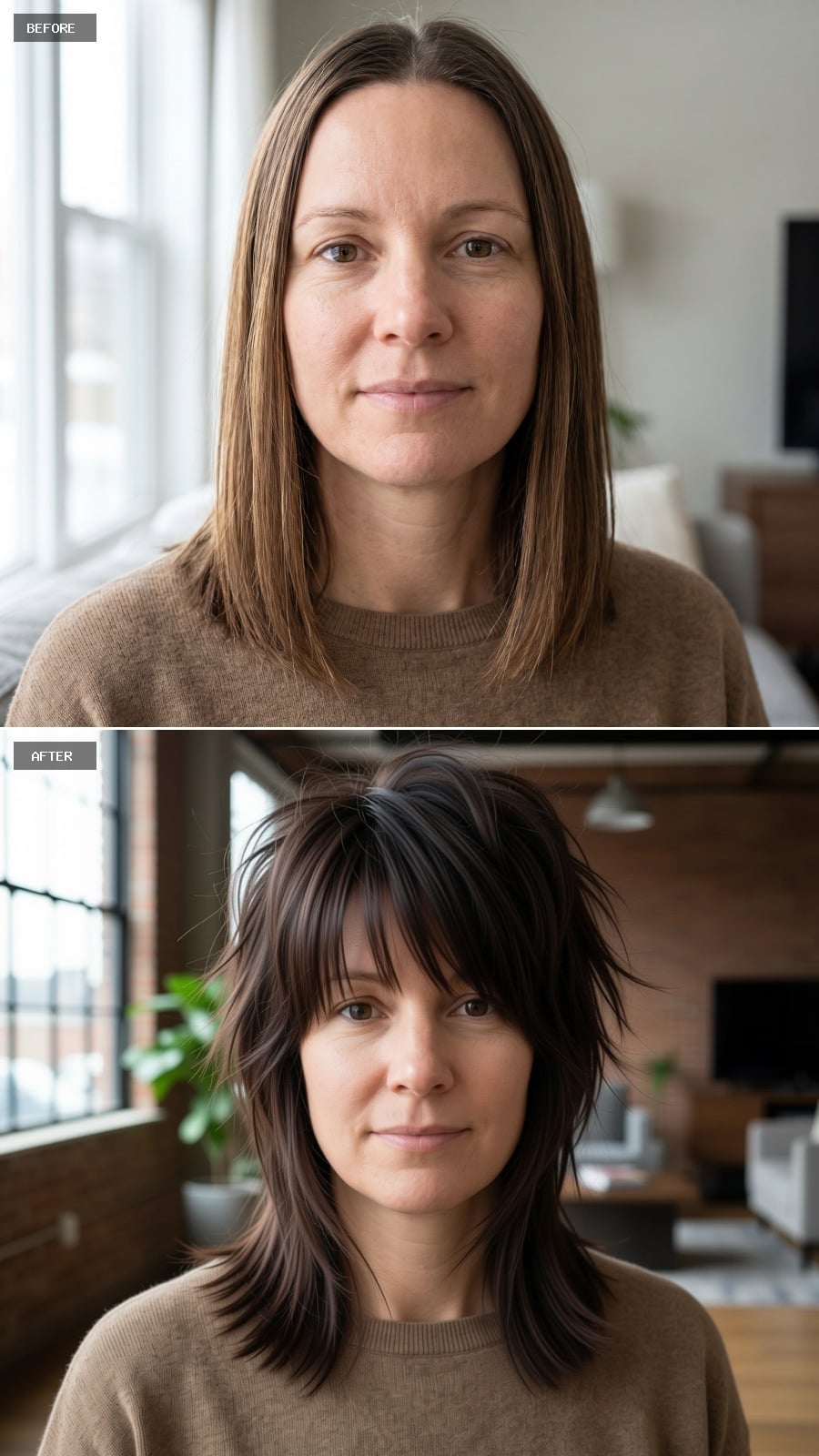
Choppy layers cut to mid-length with curtain bangs swept across the forehead do something specific to the face: they narrow the visual field and pull attention to the eyes before anything else registers. The color here is a deep brunette with barely-there dimension, not highlights exactly, more like the way hair looks when it catches light from across a room. It reads natural even though it clearly isn’t.
The layers aren’t soft. They’re deliberate, with ends that flip and separate rather than curl under, which gives the whole shape a kind of casual tension that blunt cuts can’t produce. Bangs this length, sitting just above the brow line, tend to make women nervous because they feel like a commitment. They are. But they’re also one of the few cuts that genuinely reshapes the upper third of the face rather than just framing it from the sides.
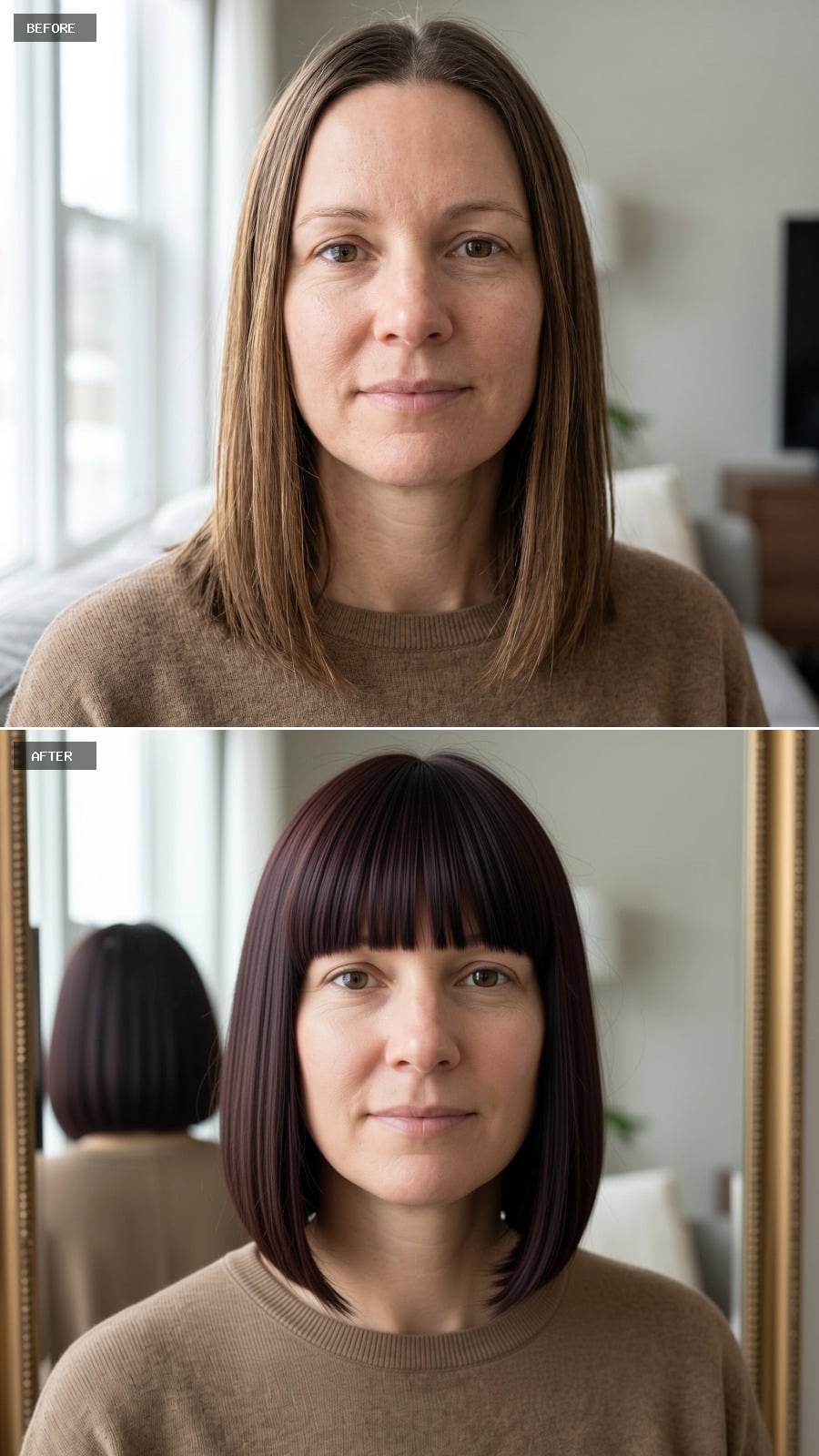
7. Burgundy Bob With Bangs: When the Cut Stops Apologizing for Itself
❤️ Would you like to save this?
The color is a deep plum-burgundy that reads almost black in shadow and wine-red where the light catches the ends, and that range is doing serious work here. It’s cut into a blunt bob that falls just below the jaw, with a fringe that’s trimmed straight across and sits just above the brows. No wisp. No side-sweep. Just a clean horizontal line that resets the whole upper third of the face. The bangs are the decision most women talk themselves out of, and also the thing that makes this look feel like it belongs to someone specific rather than just anyone who wanted a change. At this length, with this color, the geometry holds together in a way that longer hair rarely achieves without constant styling effort.
Beauty Pairing: Plum and burgundy tones can pull warm or cool depending on your undertone, so ask your colorist to mix a shade with both red and violet pigment rather than committing to one direction. A colourist can balance red and violet to suit the wearer’s undertone and the lighting in which the shade will usually be seen.
6. Pixie Cut, Dark Enough to Mean It, Textured Enough to Stay Modern
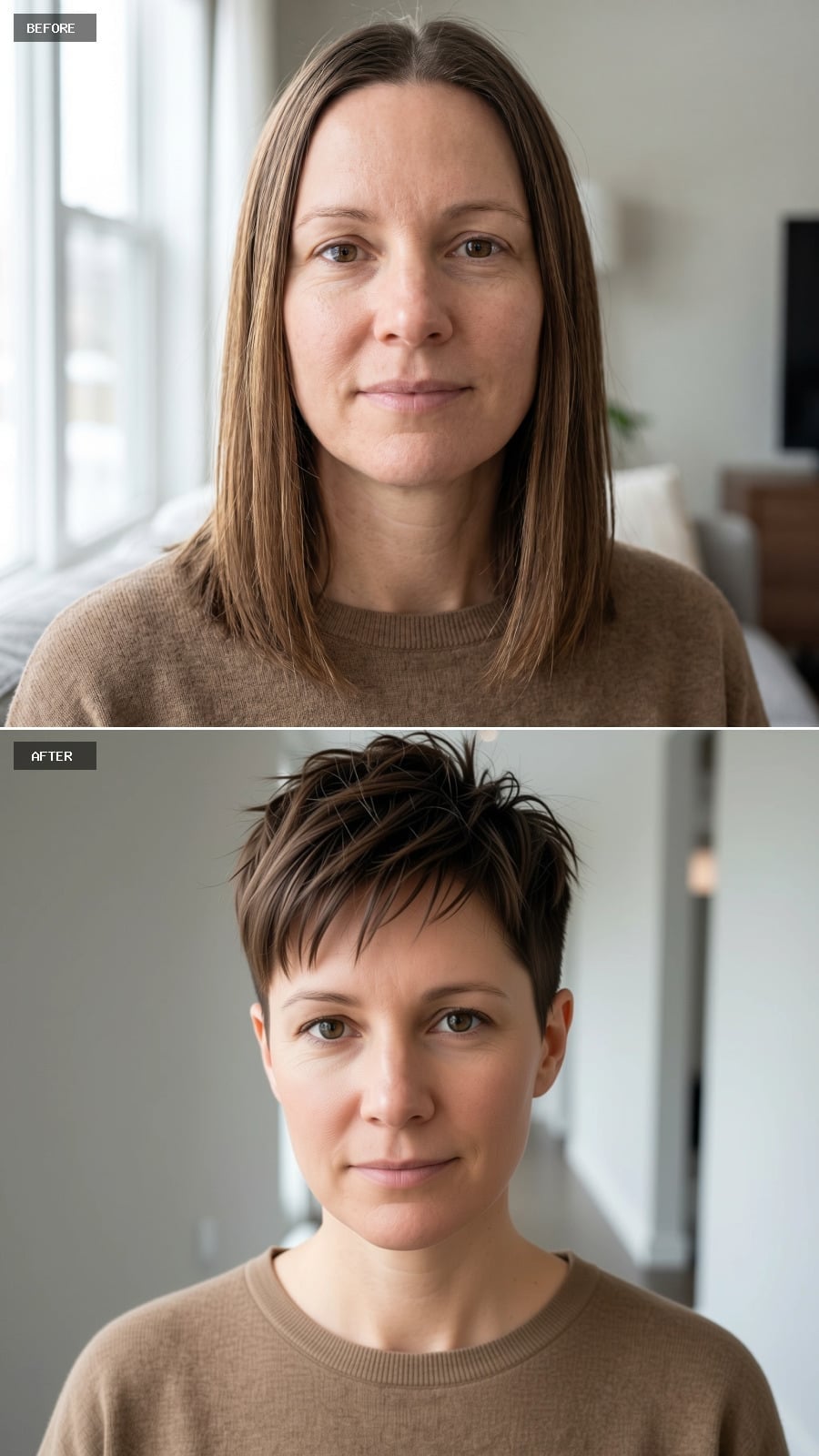
Dark brown, close-cropped at the sides, with length pulled forward and broken up into pieces at the top. The cut reads intentional without reading severe. What the stylist understood was that softness doesn’t require length. The forward fringe and lifted crown do the work that longer hair was doing less efficiently.
Younger doesn’t always mean more. Sometimes it means less weight, less framing, less apology for having a face worth seeing. The cut pulls attention upward and keeps it there, which is something most mid-length styles quietly fail to do.
5. Copper-to-Blonde Balayage, Worn Wavy, and Suddenly Nothing Looks Dated
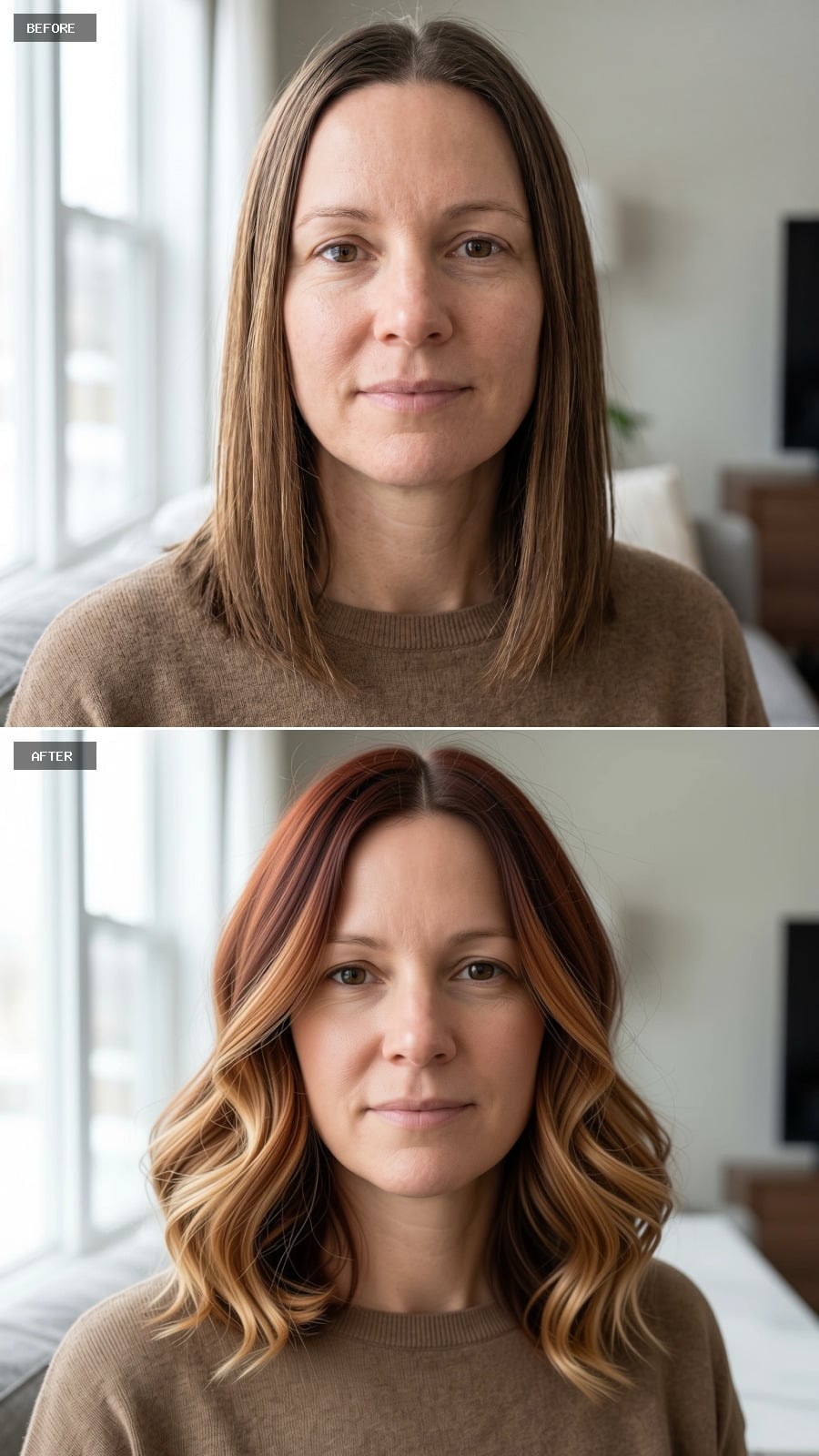
Soft waves starting around the collarbone do something specific for a face: they add movement around the jawline, keeping the length from falling in one uninterrupted line. Her color runs from a deep copper root through a mid-shaft auburn, then breaks into a warm golden blonde at the ends. It’s not a subtle transition. But it doesn’t need to be.
The waves keep it from being high-maintenance because the curl breaks up any hard line where one shade meets the next. Worn against a caramel-toned sweater, the whole thing reads cohesive without looking like she planned it that closely.
4. Curtain Bangs, Chunky Highlights, and Suddenly the Whole Face Has Room to Breathe
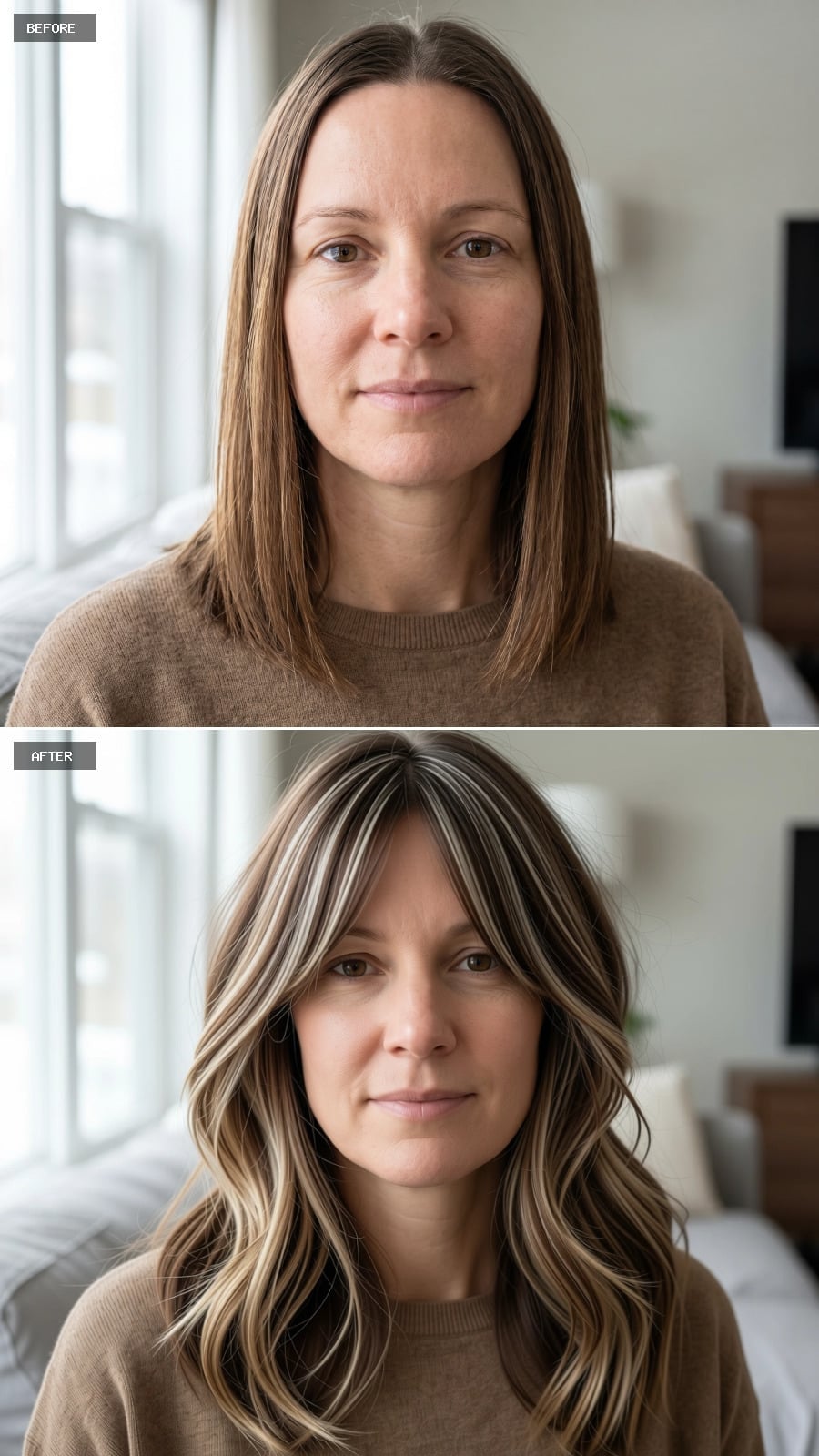
Someone finally let the highlights do the heavy lifting. The pieces framing her face go almost platinum near the root, which pulls light forward instead of letting it flatten against a single tone. Wavy ends keep the length from reading heavy. It’s the kind of color that looks like it took three sessions to get right, and it probably did.
3. Highlights and a Bob Cut Shorter Than She’s Probably Worn It in Years
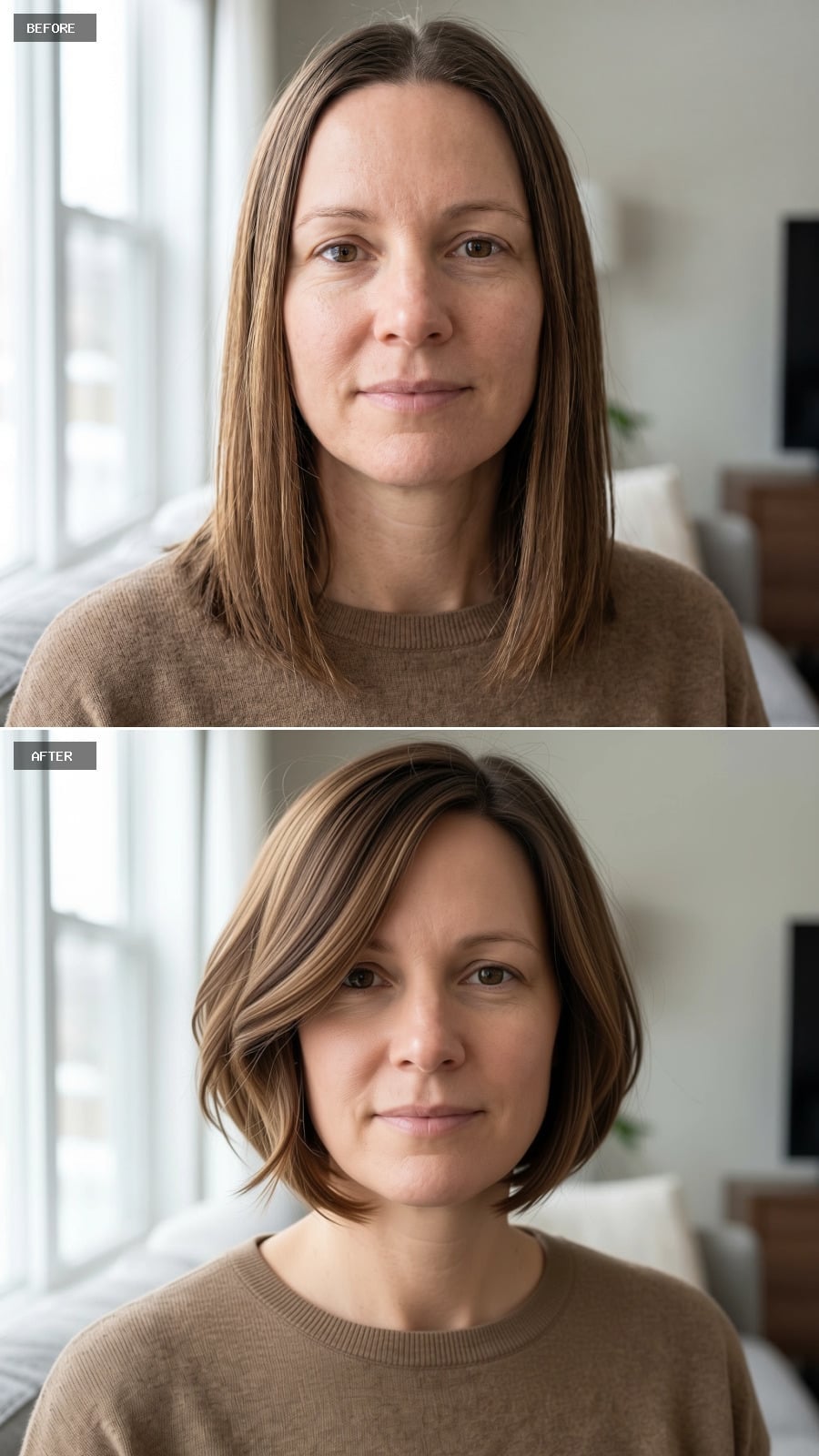
Her hair’s been cut to chin length and styled with a slight inward bend at the ends, which keeps it from reading flat. The color is where things get interesting: a warm brunette base with face-framing highlights that lighten toward honey without going full blonde. That placement matters more than people realize.
Highlights that start close to the root and concentrate near the face create the same effect as good lighting. They pull attention upward and forward. The result reads polished without looking like she tried to correct anything, which is exactly the effect a cut like this should have. It doesn’t announce itself. It just works.
Decade Dressing: Highlights placed specifically around the face tend to need less frequent touch-ups than all-over color because the regrowth blends into the base tone rather than creating a hard line. If you’re maintaining color on a budget or a tight schedule, face-framing placement is worth asking your colorist about directly.
2. Darker, Shorter, Side-Swept, and Suddenly Ten Years Disappeared
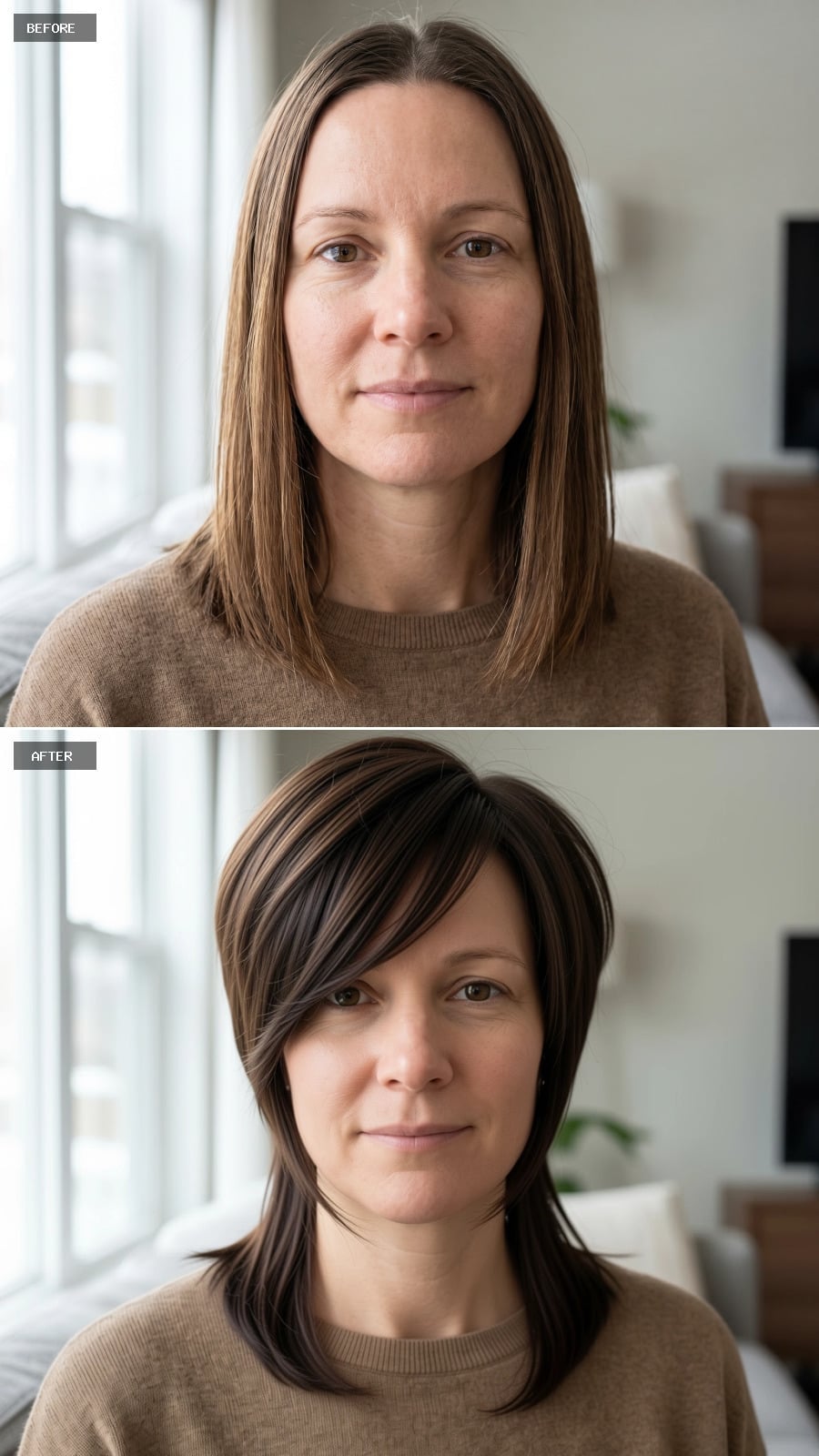
What the stylist did here wasn’t subtle. She took medium brown hair and made it darker, richer, with dimensional highlights running through the layers that keep it from reading flat. The cut lands at the collarbone, but it’s the side-swept movement that does the real work. Bangs cut at an angle and swept across the forehead pull attention toward the eyes instead of letting everything fall straight down.
Layering this length creates weight at the ends while keeping volume at the crown, which is the opposite of what gravity does on its own. The whole shape feels intentional without being stiff. Sometimes the difference between looking your age and looking younger is just twenty degrees of angle on a haircut.
1. Plum Hair, Blunt Ends, and Suddenly the Cut Has an Opinion
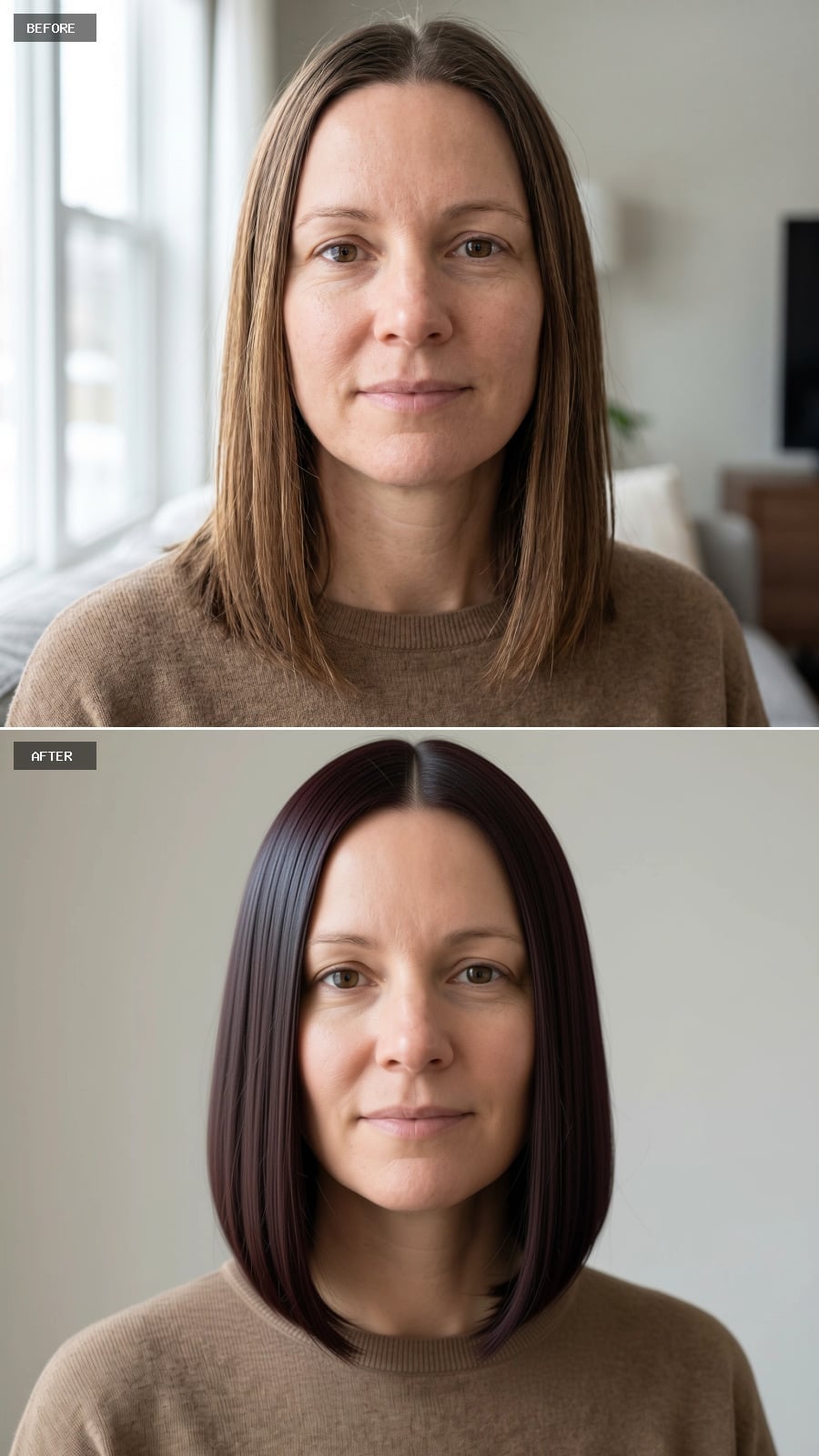
Going dark with a purple-leaning base changes how a face reads from across a room. This shade sits somewhere between black cherry and deep eggplant, and the blunt cut that ends just below the jaw gives it structure that looser styles tend to lose. Nothing graduates. Nothing fades. It stops clean.
What’s doing most of the work is actually the center part. It’s severe enough to let the color speak, and the hair falls in panels rather than waves, which keeps the whole thing from looking casual when it doesn’t want to be. A cut like this doesn’t need volume to register. It needs precision, and it clearly got it.