❤️ Would you like to save this?
That post-checkout dopamine hit lasts about eleven seconds. The credit card statement sticks around for thirty days. Somewhere between those two moments, most of us quietly hemorrhage more money than we’d ever admit — on shopping habits that feel perfectly harmless but compound into genuinely alarming totals. Nothing here is about spending less or punishing yourself for wanting nice things. It’s about spotting the specific psychological traps retailers have wired into every click, every countdown timer, every “only 2 left” badge. Most of what follows will probably sound familiar. Uncomfortably so.
FYI, thanks to AI imagery software, we’re able to create very specific fashion and hairstyle examples to illustrate the points being made. In some cases, imagery is exaggerated to hammer home the point. Also, assume links that take you off the site are affiliate links such as links to Amazon. this means we may earn a commission if you buy something.
36. Buying Clothes for Your Fantasy Life Instead of Your Actual Life
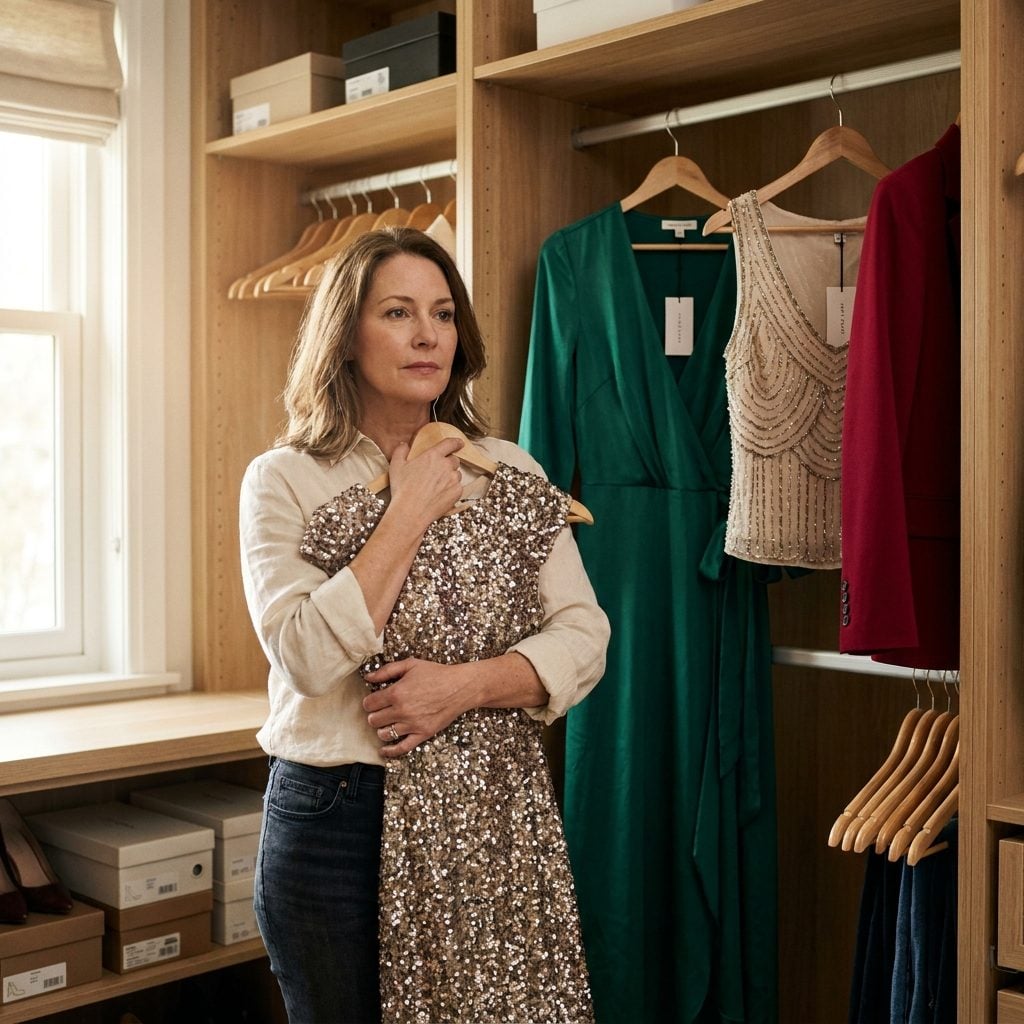
You know that woman who buys the silk jumpsuit because she pictures herself at a rooftop party in Barcelona? She’s you. She’s also me. I burned a full calendar year buying clothes for a version of my life that involved way more gallery openings and way fewer Tuesday night soccer pickups.
Retailers understand this impulse down to its roots. They stage product photography in aspirational settings on purpose — the sequined cocktail dress photographed at a candlelit dinner makes you feel like buying the dress buys you the dinner. It doesn’t. Your actual life has a dress code, and it’s probably closer to dark wash jeans and a good knit than anything requiring a clutch bag.
The fix is embarrassingly simple. Before checkout, ask: “Where would I wear this in the next two weeks?” Not two months. Not next summer. Two weeks. Can’t name a specific occasion? Close the tab.
35. Keeping Items You Don’t Love Because Returning Them Feels Like a Hassle
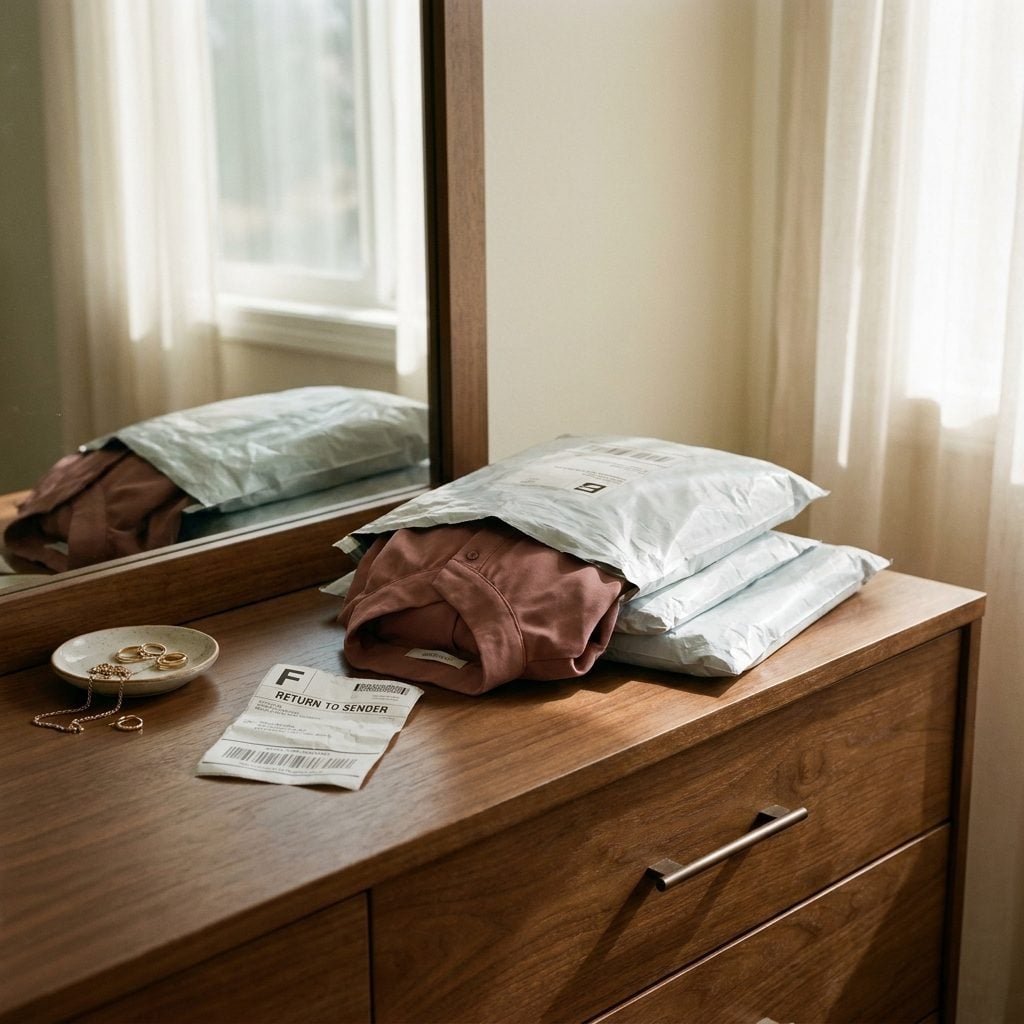
This one makes me genuinely irritated on your behalf. Retailers have done the math — they know a huge chunk of online purchases never get returned, not because customers love the items, but because repackaging, printing a label, and schlepping to a drop-off point costs just enough friction to keep that dusty rose blouse sitting in your closet forever.
Some retailers have made the return process deliberately friction-heavy. Others tack on restocking fees or deduct return shipping. All of them profit when you shrug and keep the thing.
Set a rule: try everything on within 24 hours of delivery. Not “this weekend.” Not “when I have time.” Tomorrow. And stick the return label in your car immediately if something doesn’t work. That $45 top you kept because the post office felt far? That’s a tax on your time the retailer already budgeted for.
34. Letting Return Windows Expire While Telling Yourself You’ll Decide Later
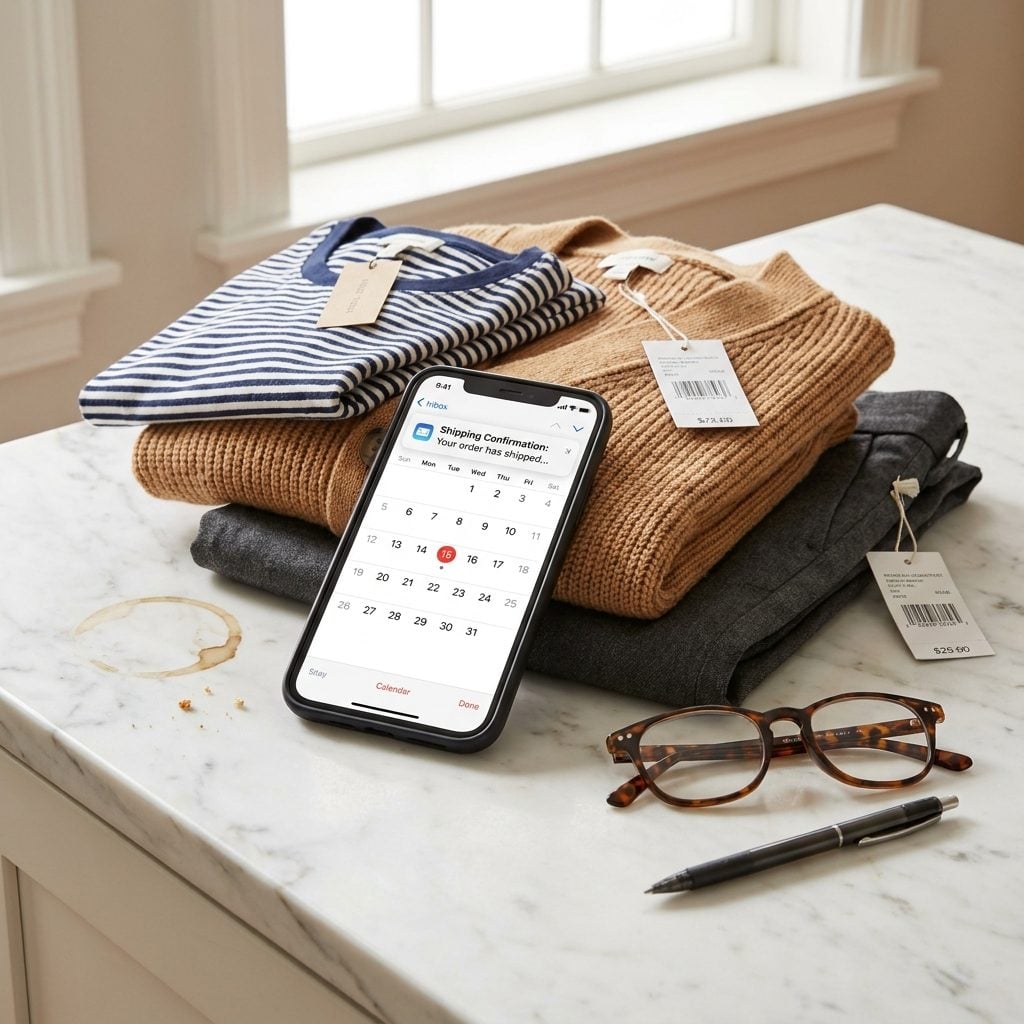
“I’ll try it on this weekend” is a sentence that has cost me personally more than I’m comfortable admitting in print.
The return window isn’t a generous gesture. It’s a carefully calibrated trap. Retailers have tested the exact number of days it takes for a purchase to shift from “new arrival” to “thing that lives here now” in your head. Fourteen days is the sweet spot for most of them, because that’s roughly when ownership psychology kicks in — once you’ve seen that camel cardigan on your shelf for two weeks, your brain reclassifies it as yours. And returning something that’s “yours” feels like a loss, not a correction.
33. Buying Something Because It’s 60% Off Instead of Because You’d Actually Buy It at Full Price

The sale price is a story. The retailer tells you how much money you’re “saving,” and it works because your brain processes discounts as gains rather than expenses. You didn’t save $90. You spent $60 on something you wouldn’t have glanced at yesterday.
Here’s the test I use now, and I will die on this hill: cover the sale price. Look only at the original number. Would you buy it at full? If the answer is no, the discount isn’t saving you money — it’s manufacturing desire that didn’t exist three minutes ago. Retailers rotate these “sales” constantly because a permanent 60% markdown moves more product than an honest price tag ever would.
32. Purchasing Outfits That Require Three More Purchases to Make Them Work
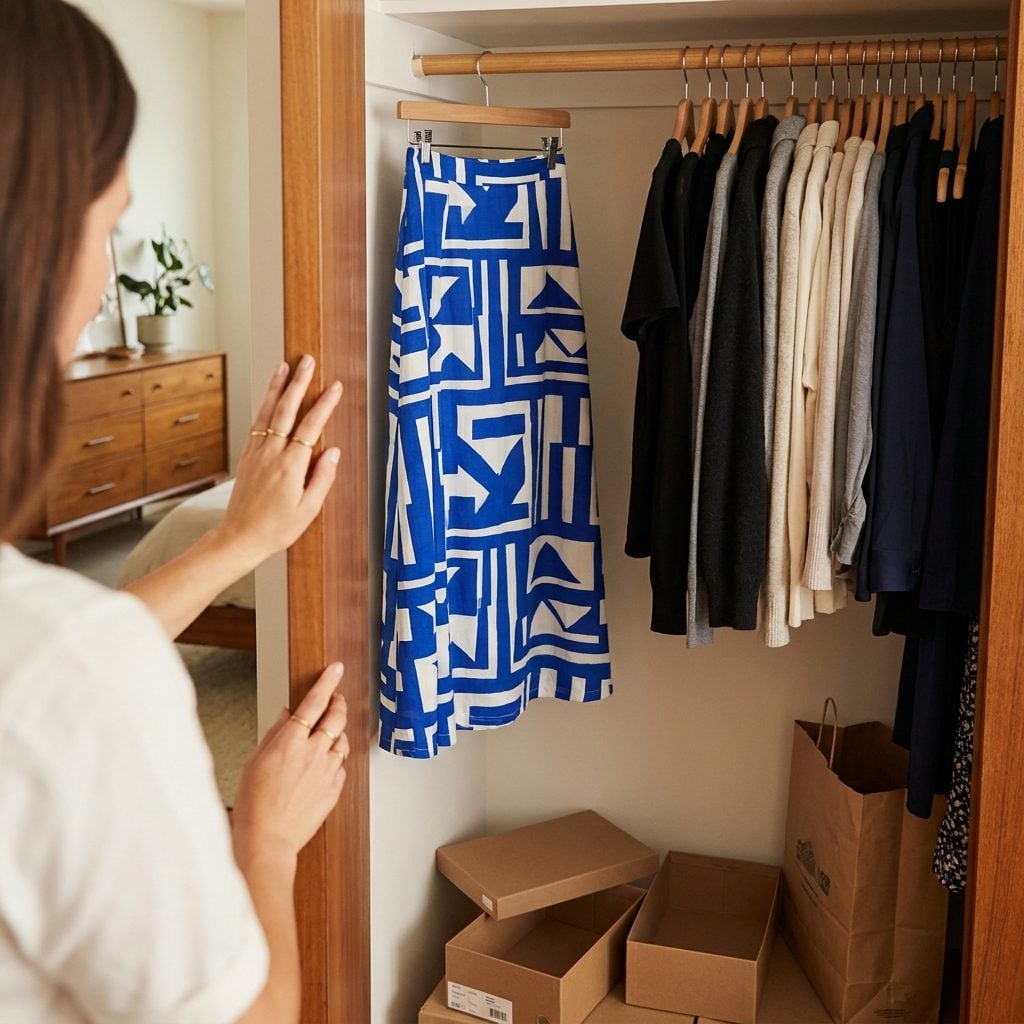
A cobalt geometric midi skirt is a perfectly fine purchase on its own. But a cobalt geometric midi skirt that needs a specific white bodysuit, cobalt heels you don’t own, and a structured bag in a complementary tone to avoid looking like you’re in costume? That’s four purchases wearing a trenchcoat pretending to be one.
Retailers encourage this through “complete the look” modules at the bottom of product pages. They’re not being helpful — they’re showing you the additional items their algorithm has calculated you’ll need, because a skirt that functions only as a full styled set generates triple the revenue of a skirt that pairs with what you already have.
Before buying any single piece, open your closet (physically or mentally) and identify two tops and one pair of shoes you already own that work with it. Can’t do it? That piece doesn’t belong in your wardrobe.
31. Owning Hundreds of Dollars of Unworn Clothing Because Returning It Felt Like Work
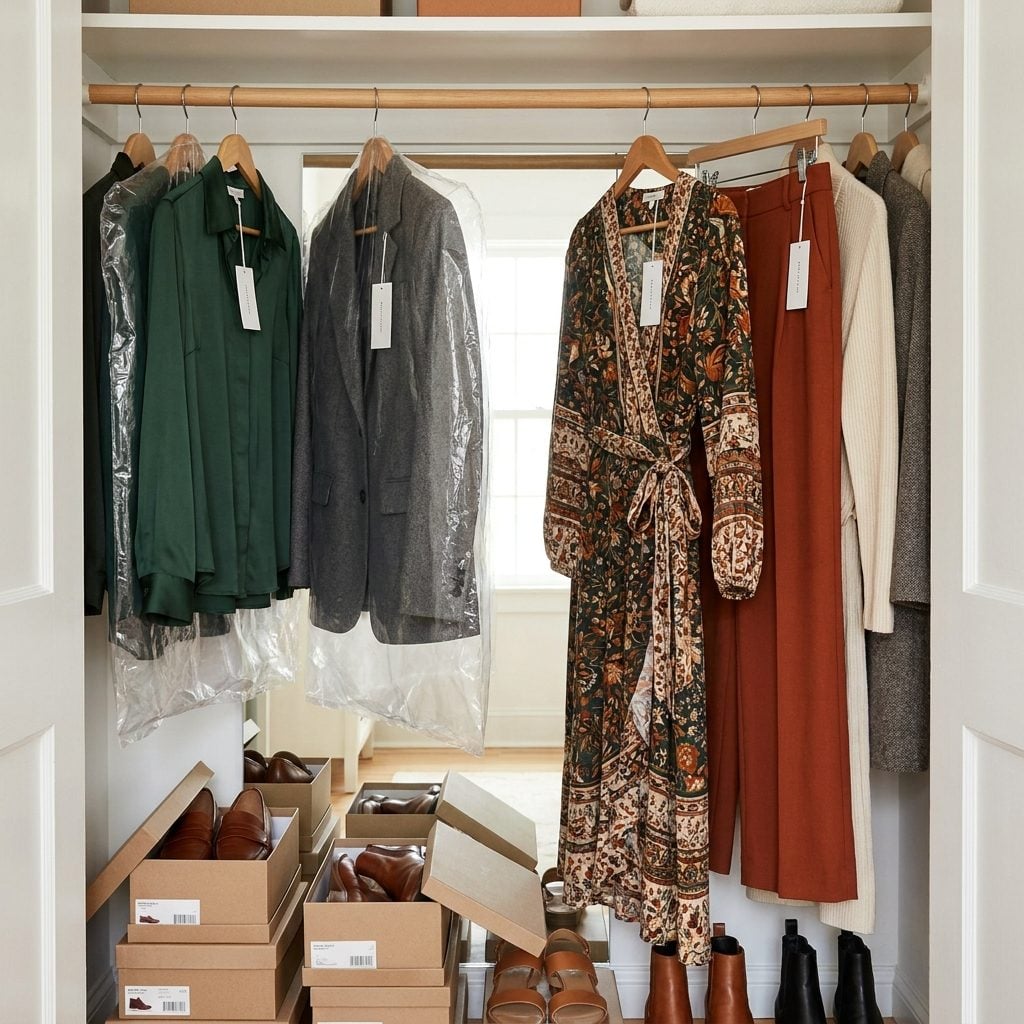
This is the cumulative version of mistake number two, and the totals get genuinely uncomfortable. Pull out every item in your closet that still has tags on it. Add up what you paid. If the number doesn’t make you wince, you’re either remarkably disciplined or remarkably wealthy — and statistically, neither is likely.
Most women I’ve talked to about this land somewhere in the range of a weekend trip. Or a really good coat. Instead, the money lives inside a forest green silk blouse they forgot they ordered and a grey wool blazer that fit weird in the shoulders. Dead inventory, collecting nothing but dust and vague regret.
The most expensive item in your closet isn’t the one with the highest price tag. It’s the one you never wore.
30. Buying “Goal Weight” Clothes Years Before Reaching the Goal
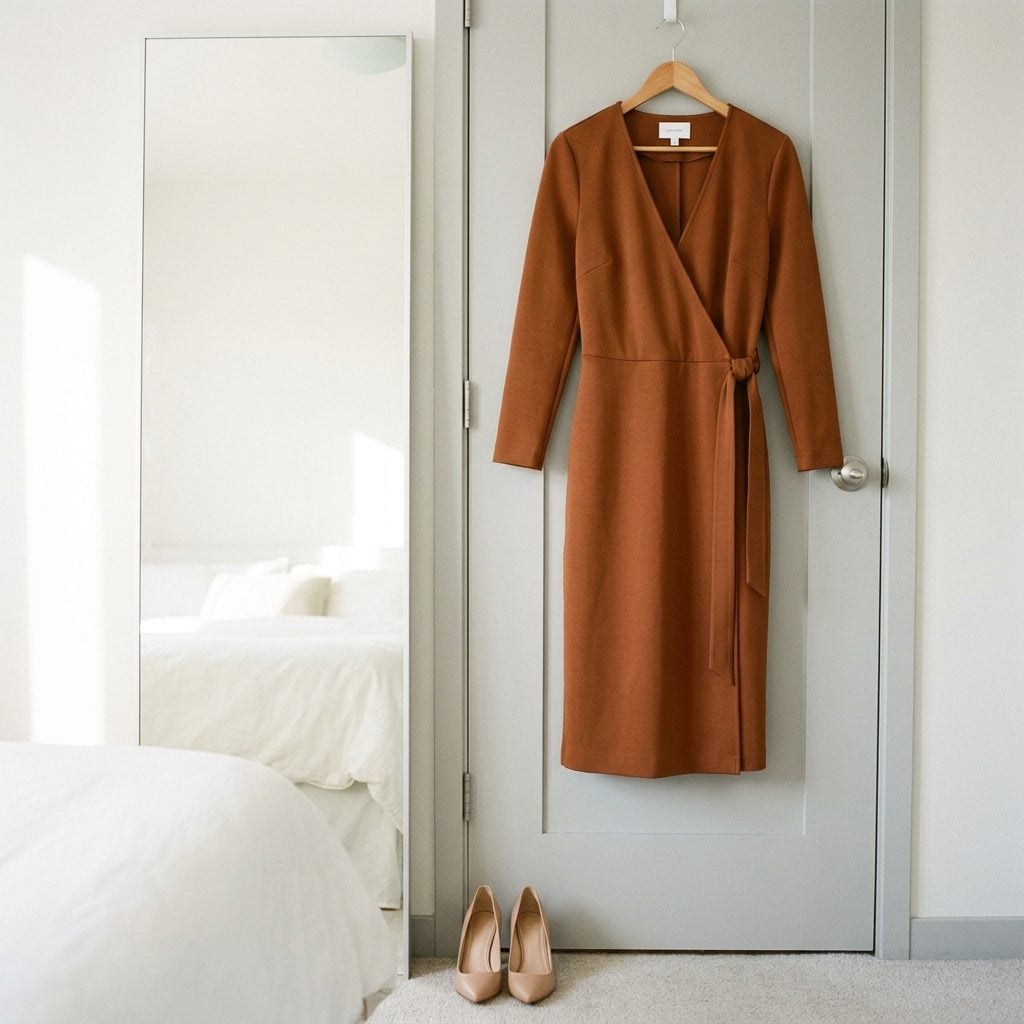
Different from keeping clothes that used to fit — this is buying clothes for a body that doesn’t exist yet as a form of pre-commitment. It feels proactive. Investing in your future self. In reality, you’re spending money today on a garment that will likely be out of style by the time it fits, if it ever does.
That cognac wrap dress hanging on the door isn’t inspiration. It’s a sunk cost that flavors every future shopping trip with a faint guilt. And here’s what retailers don’t want rattling around your head: fashion moves. The silhouette, the cut, the color you loved eighteen months ago may not be what you reach for when your body does change. You’ll want something new. You always do. Buy clothes that fit the person who showed up today.
29. Paying $30 Extra for Clothes You Don’t Need Just to Qualify for Free Shipping

You need a $48 pair of earrings. Shipping is $8. Free shipping kicks in at $75. So you toss in a $30 tank top you sort of like to “save” on shipping — and now you’ve spent $78 instead of $56. You saved nothing. You bought a tank top you didn’t want.
This is one of the most reliably profitable tricks in e-commerce, and honestly, I fell for it for years before I did the actual subtraction. Free shipping thresholds are deliberately parked just above the average order value to nudge you into adding one more item. Every retailer running a threshold has A/B tested exactly where to plant it for maximum cart padding.
- Calculate the actual shipping cost versus the filler item cost. If shipping is cheaper, pay for shipping. That’s it.
- If you genuinely need something else, fine — but open a new search for that specific need. Don’t browse the “under $35” section like it’s a candy aisle.
- Certain browser extensions will flag whether the item has been cheaper elsewhere with free shipping baked in. Use them.
28. Buying a Trendy Piece That Gets Compliments But Almost Never Gets Worn

The chartreuse blazer that made your friend say “oh my god, where did you get that” at dinner? Same blazer that’s been hanging untouched for nine weeks because it goes with exactly nothing else in your life. Compliment magnets and wardrobe workhorses are almost never the same garment, and retailers stage their photography to trigger the first reaction — never the second.
Nothing wrong with owning a statement piece. The mistake is confusing the social reward of wearing it once — compliments, attention, the brief thrill of novelty — with it being a good purchase. Cost per wear is the only honest metric. A $200 blazer worn twice runs you $100 an outing. Worn forty times? Five bucks.
If you love bold, commit to it across your whole wardrobe so the pieces have something to talk to. But if you’re mostly a neutrals person who occasionally craves a jolt of something electric, rent it. Seriously. Rental services exist for this exact impulse, and they’re dramatically cheaper than a closet full of once-worn splurges.
27. Keeping Uncomfortable Shoes Because You’ve Already Worn Them Outside Once
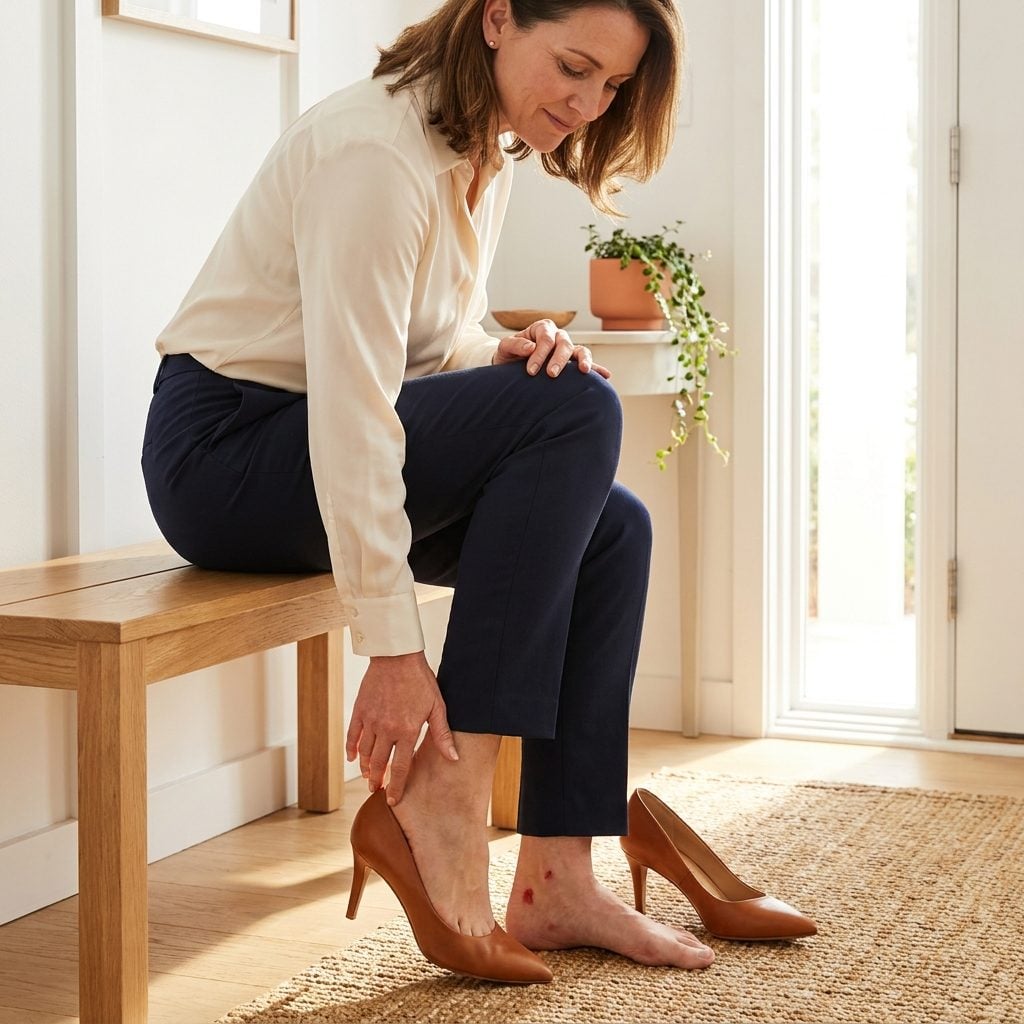
You wore them to one lunch. The heel rubbed a blister by the appetizer course, and you spent dessert fantasizing about your car’s floor mats. But they’ve touched pavement now, so the return window feels closed, and into the closet they go — where they’ll sit for three years doing absolutely nothing except making you feel vaguely guilty every time you scan the shoe shelf.
The sunk cost fallacy is running your closet. That money is gone whether you keep the shoes or donate them, and wearing painful pointed-toe pumps once a year out of guilt doesn’t recoup a cent. Donate them. Sell them on consignment. Give them to a friend with different feet. Then redirect that budget toward one pair you’d actually reach for on a Tuesday morning. I spent years hoarding shoes that hurt because I convinced myself they’d “break in.” They never did. Not once.
26. Shopping to Improve Your Mood Instead of Solving a Wardrobe Need

Retail therapy works — for about forty-five minutes. Then the dopamine fades, the bag sits by the door, and you’re stuck with a receipt and a top you bought because you were bored on a Wednesday night. The problem isn’t that you shopped. It’s that you shopped without a question to answer. “Do I need a layering piece for early fall?” is a question. “I feel blah” is a mood, and moods make terrible shopping lists.
Next time the urge hits, open your notes app and write down three actual gaps in your wardrobe. Maybe it’s a mid-weight jacket. Maybe it’s a white tee that isn’t see-through. Shop for those, and only those. You’ll spend less, keep more, and — weirdly — the satisfaction actually lasts past the unboxing. Which is the whole point of buying clothes, no?
25. Buying Vacation Clothes for a One-Week Trip and Rarely Wearing Them Again
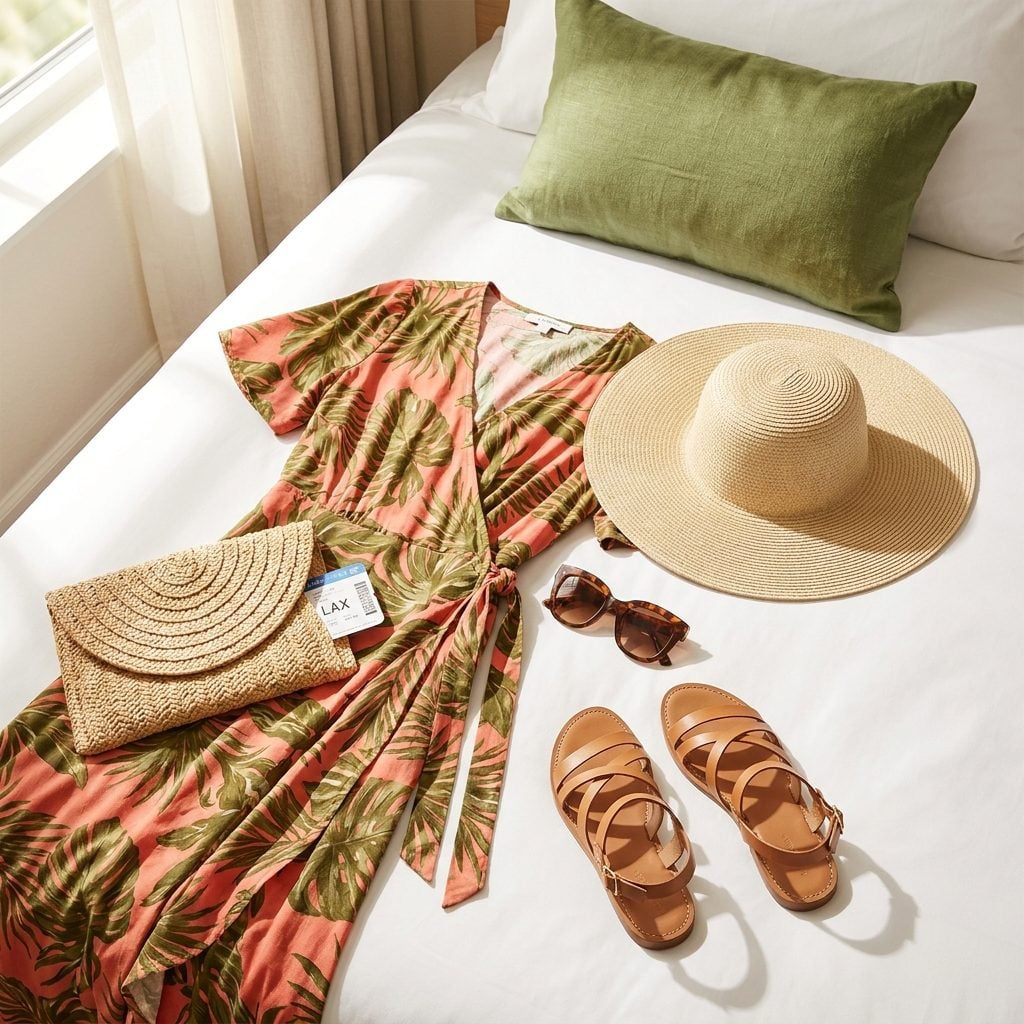
A trip to Tulum shouldn’t require a whole new wardrobe, but somehow it always does. The tropical wrap dress, the linen set you’d never wear to the office, the espadrilles that scream “I’m on holiday” — you wear each piece twice across seven days, then they hang in your closet for years smelling faintly of sunscreen and regret.
The fix is annoyingly simple: buy vacation clothes that also work at home. A linen shirt layers over a tank in July anywhere, not just in Mykonos. A beach hat works at the farmers market. Choose pieces in solid neutrals or subtle prints that don’t telegraph resort, and suddenly your trip wardrobe does double duty for Saturday errands and summer dinners. I will die on this hill: if you can’t imagine wearing it in your own zip code, leave it on the rack.
24. Accumulating Dozens of “Pretty Good” Items Instead of Building Around a Few Favorites
❤️ Would you like to save this?
Thirty mediocre tops and nothing to wear. Sound familiar?
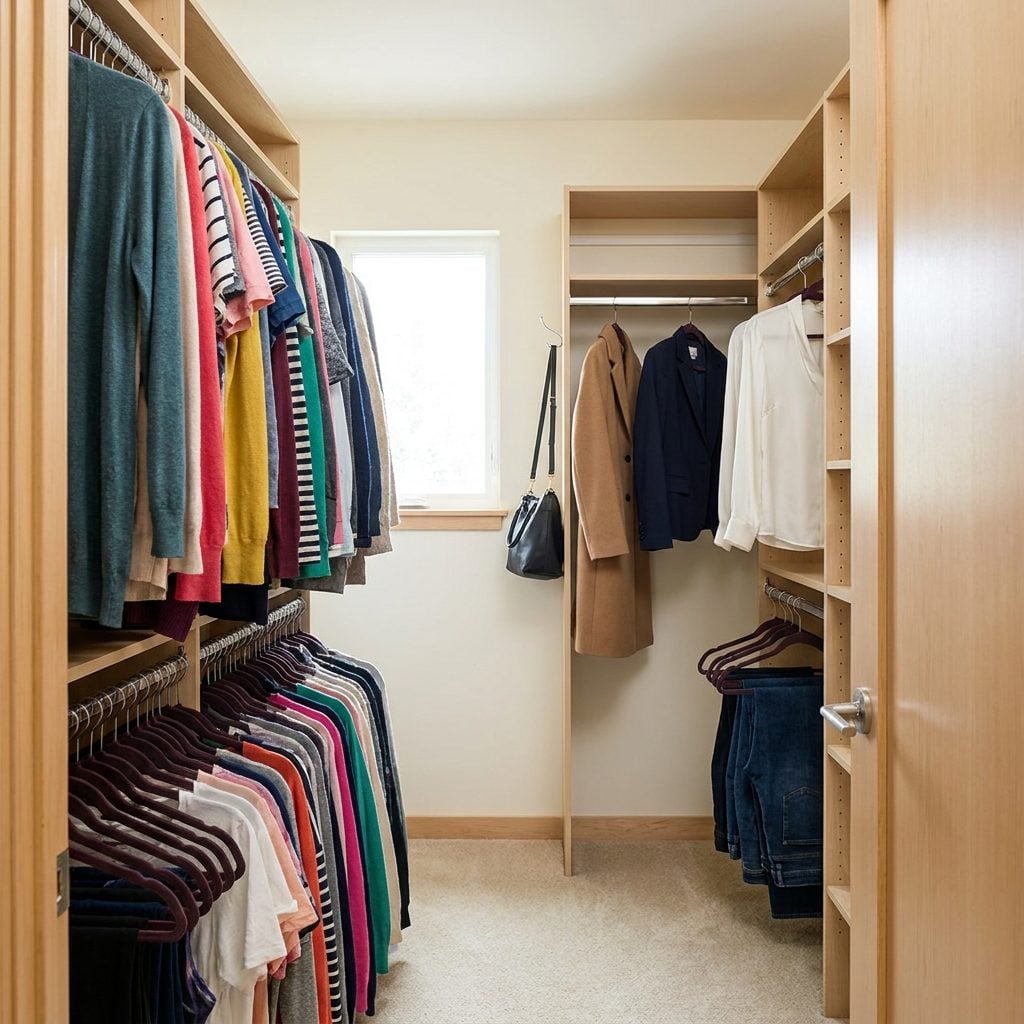
You buy things that are fine — not wrong, not right, just acceptable. A $24 blouse here, a $35 sweater there. None of them make you feel like yourself, so you keep buying more, hoping volume solves the problem. It never does. You end up with a closet that’s stuffed and a getting-dressed experience that’s exhausting, because the visual noise of too many “okay” options actually makes it harder to see what works.
Flip the ratio. Sell or donate twenty of those lukewarm pieces and redirect the budget toward three items you genuinely love: a camel wool coat that fits your shoulders perfectly, a pair of jeans with the right rise, a navy blazer that makes you stand a little taller. Fewer pieces, more outfit satisfaction. Every single time.
23. Focusing on the Discount Percentage Rather Than Whether You’ll Actually Wear the Item
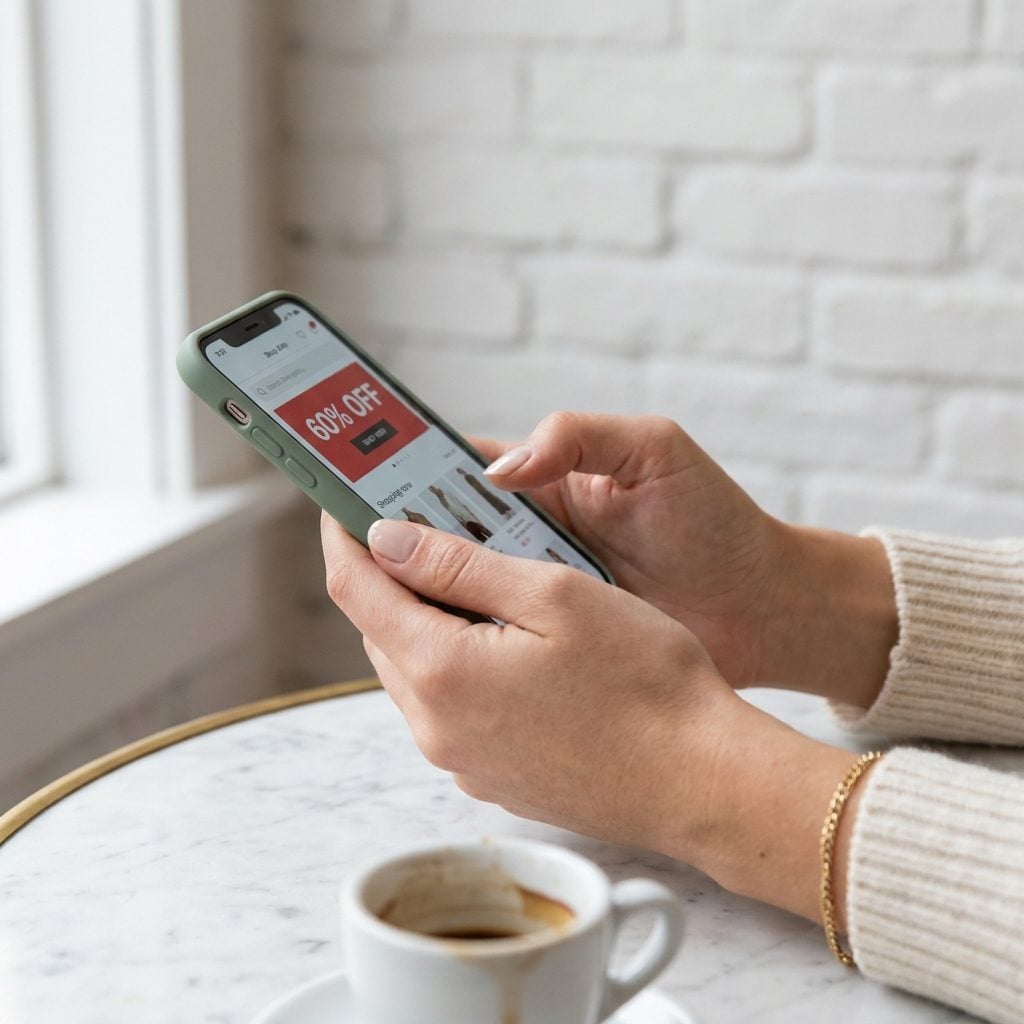
“It was 70% off” has never been a good reason to own a peplum top you’d otherwise walk right past. Retailers know exactly what they’re doing when they show you the original price crossed out next to the sale price — that anchor number makes the discount feel urgent and the purchase feel like a win. But you didn’t save $90. You spent $40 on something you don’t need.
One question before every sale purchase: would I buy this at full price? Not “would I consider it.” Not “would I think about it.” Would I see it on the rack at full retail and hand over my card? If the answer is anything softer than a hard yes, close the tab. I got this wrong for years, and I have a donation pile that could furnish a small apartment to prove it.
22. Buying Clothes Because an Influencer Looks Great in Them (When Her Body, Lighting, and Tailor Are Doing the Work)
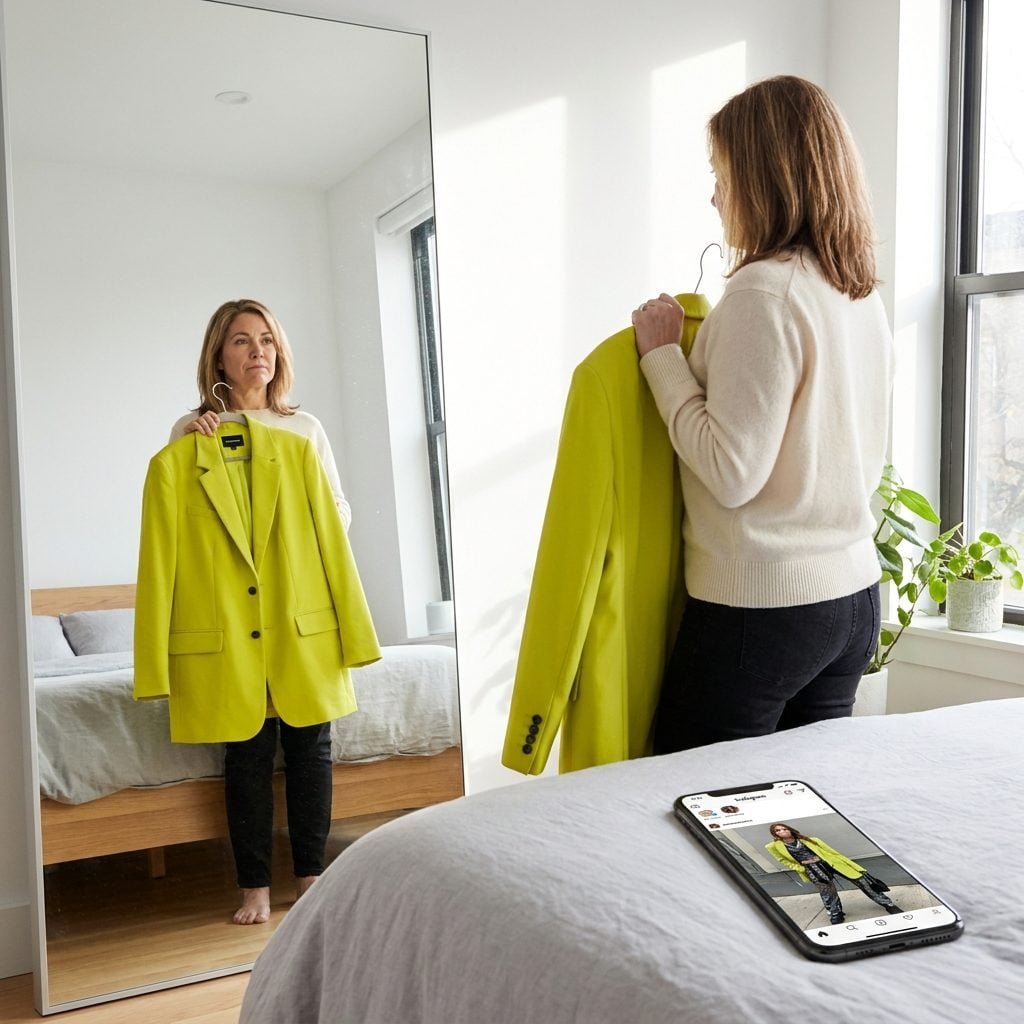
She looked incredible in that chartreuse oversized blazer. Of course she did — she’s 5’10”, backlit by a ring light, and the garment was pinned with clips you can’t see. The algorithm showed it to you because you lingered, not because it would suit your proportions or your Tuesday morning.
Influencer content is advertising styled to perfection. The question isn’t “does this look good on her?” It’s “does this silhouette, color, and proportion work for my frame, my coloring, and my actual life?” Completely different questions with completely different answers. Copy the principle, not the product. Love how she looks in that oversized-blazer-over-slim-pants combination? Find a blazer in a color that flatters you, in a cut that doesn’t swallow your shoulders. That’s how you borrow the inspiration without absorbing the regret.
21. Purchasing Special-Occasion Outfits That Only Get Worn to One Wedding and Then Haunt Your Closet
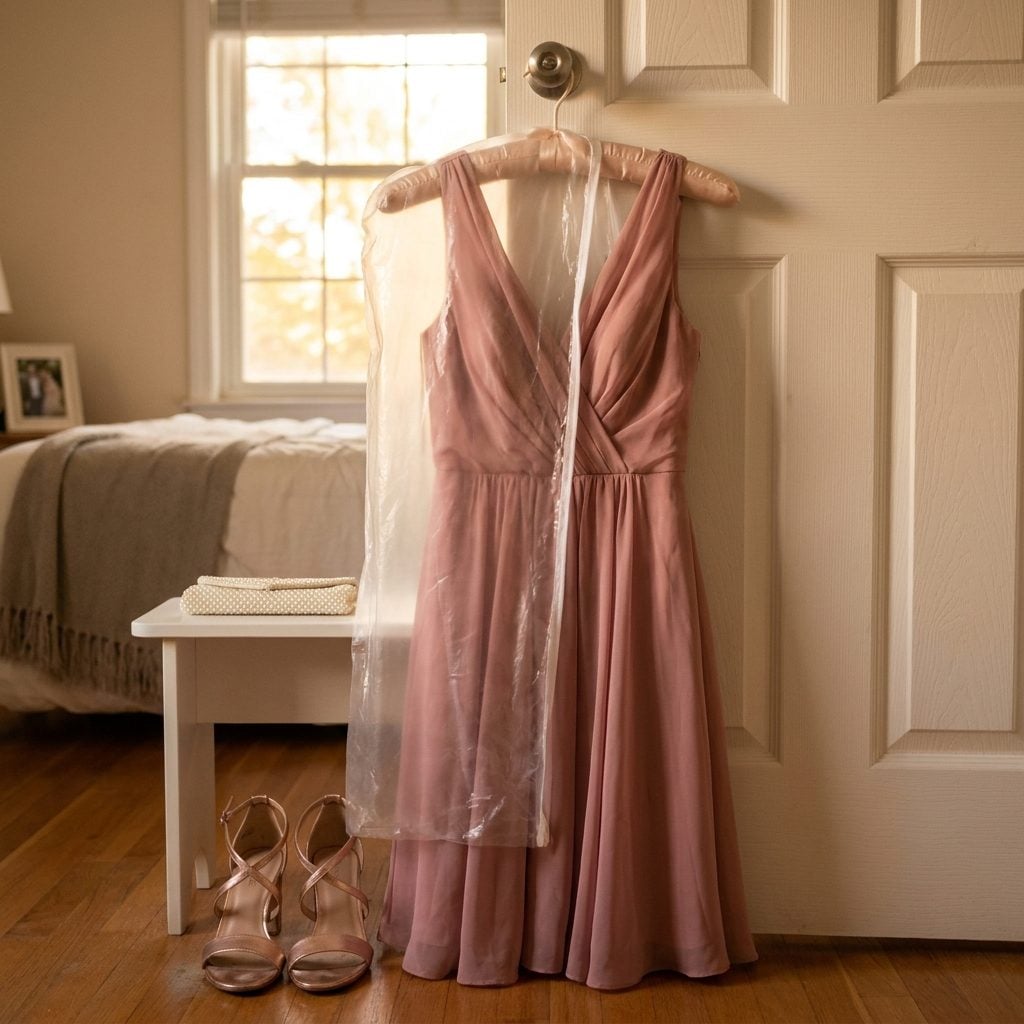
That dusty rose cocktail dress was perfect for Sarah’s wedding in 2022. And it has done absolutely nothing since.
The Real Cost of “Just This Once”
Special-occasion pieces are the most expensive items per wear in most women’s closets. A $200 dress worn once costs $200 per wear. Worn fifteen times? About $13. The math is grade-school simple, but we ignore it every time a save-the-date arrives. Something about weddings short-circuits the rational brain entirely.
Buy occasion pieces that can be dressed down. A well-cut midi dress in a solid color works for a wedding with heels and a clutch, then again for a nice dinner with flats and a denim jacket. If the dress only functions at a black-tie event, consider renting — services like Rent the Runway exist precisely because this trap is so universal.
20. Paying Attention to the Price Tag Instead of Calculating Cost-Per-Wear
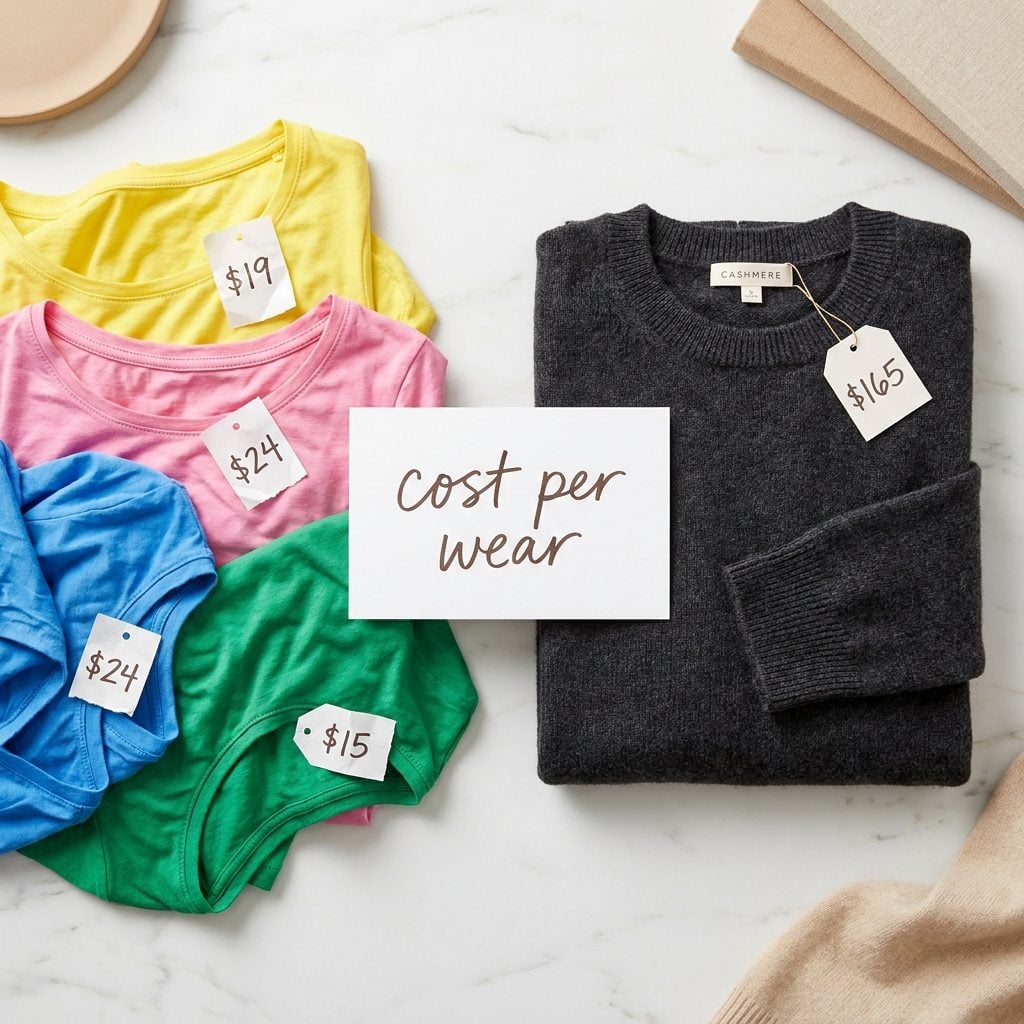
A $20 top you wear twice costs $10 per wear. A $165 cashmere sweater you wear eighty times costs about $2. That’s the entire argument, and it took me an embarrassing number of years to internalize it.
Price is what you pay at the register. Cost-per-wear is what the item actually costs your wardrobe over its lifetime. Fast fashion trains us to think in sticker prices, but the cheap piece that pills after three washes, loses its shape, or just doesn’t feel good enough to reach for again? That’s the most expensive thing you own. Before you buy, run a quick mental calculation: how many times will I realistically wear this in the next year? Divide the price by that number. If you’re wincing at the result, reconsider.
19. Buying Duplicates Because You Forgot What You Already Own (Your Closet Has Three Nearly Identical Navy Tops)
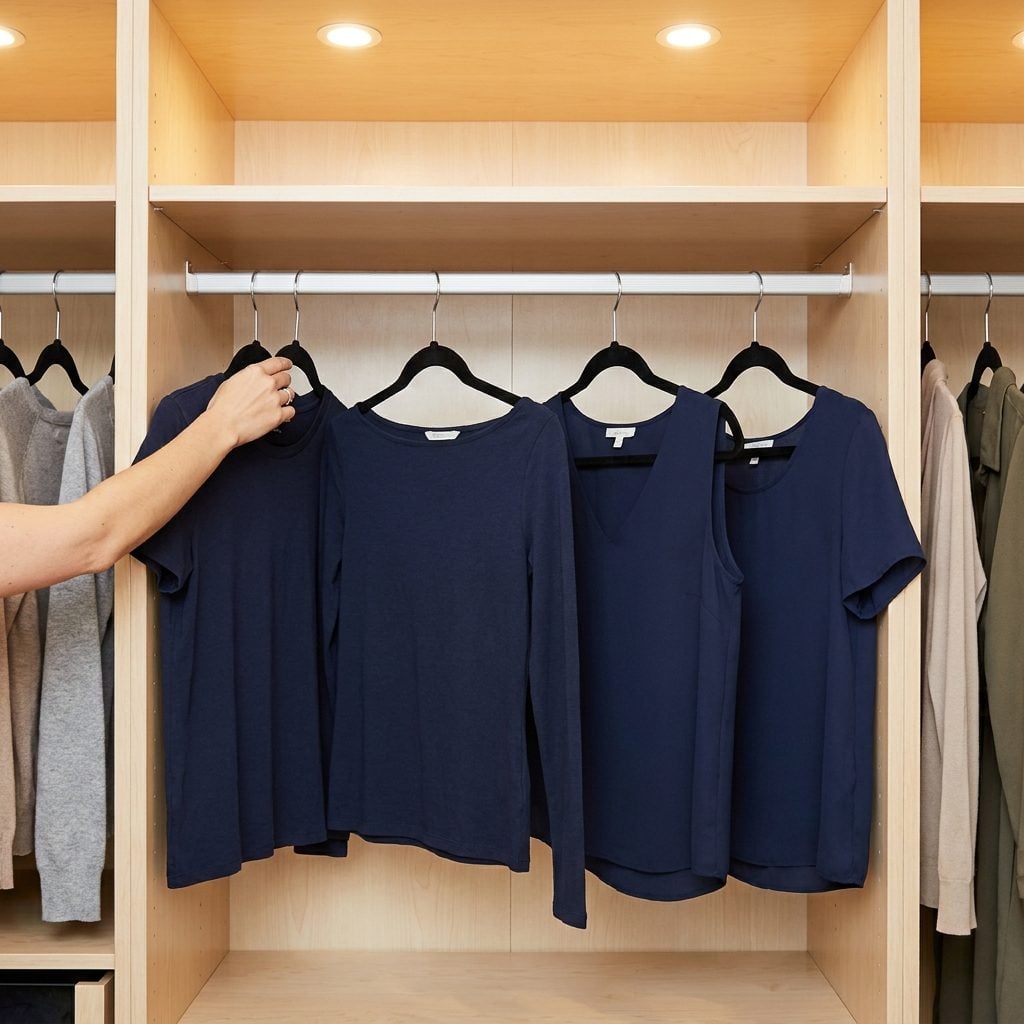
You’re scrolling, you see a nice navy top, you buy it. It arrives. And it joins the two other navy tops already hanging in your closet that you’d completely forgotten about.
This happens because most of us have no real inventory of what we own — we shop from memory, and memory is wildly unreliable when it comes to basics. Your brain just files them under “I probably have something like that” and then lets you buy another one anyway. Maddening.
The fix takes twenty minutes and saves real money: photograph your closet. Not a styled flatlay for Instagram — just quick phone photos of every category, hung or folded, saved in a dedicated album. Next time you’re tempted by a navy crewneck, check the album first. You already have it. You have three of it.
18. Keeping Items Because Returning Them Would Mean Admitting They Were a Bad Purchase
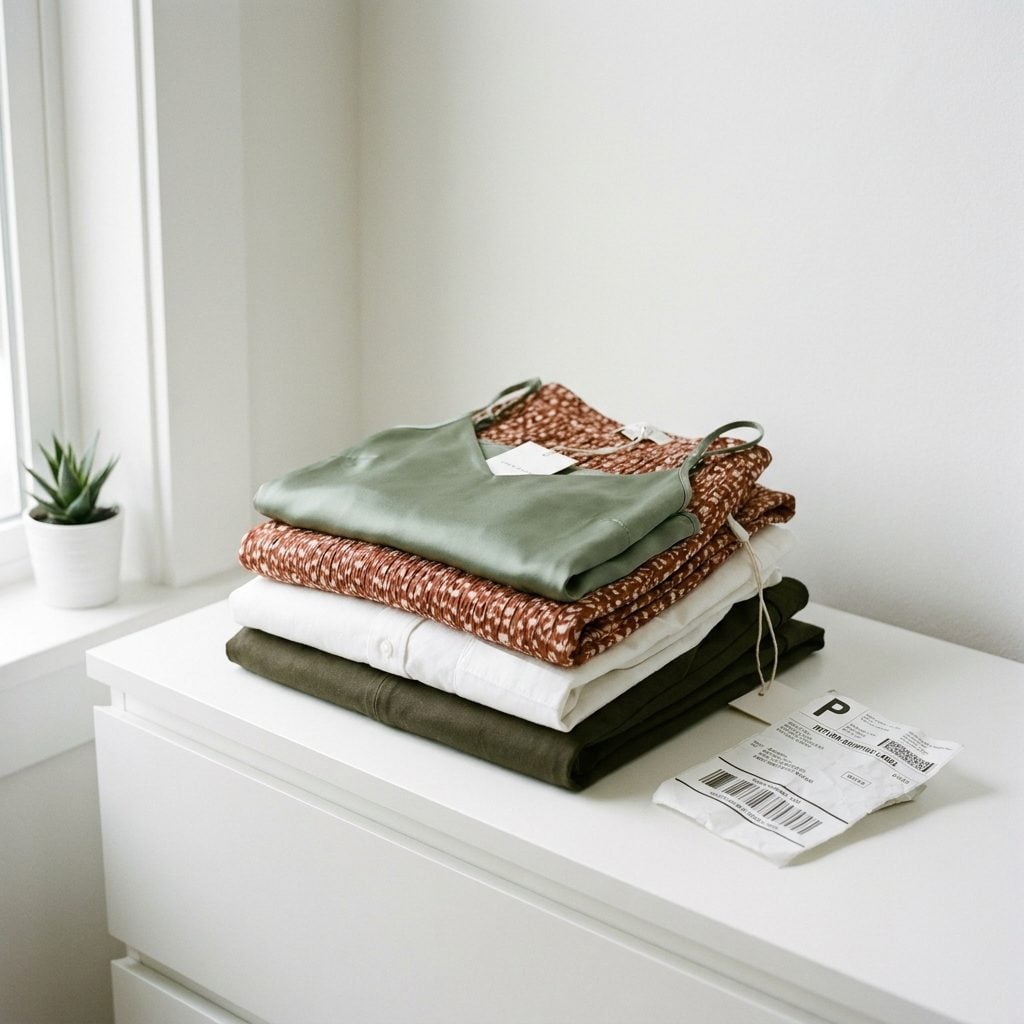
The tags are still on. You know they’re still on. You’ve moved the sage silk camisole from the dresser to the closet to the “maybe” pile and back again, and the return window closed two weeks ago while you were supposedly deciding.
This one isn’t about laziness — it’s about identity. Returning something feels like confessing you made a mistake, and our brains would rather eat a quiet financial loss than face that moment at a returns counter. Merchants know this. They’re counting on it. Return policies that feel generous but require effort (print a label, find the box, drive to a drop-off point) exploit exactly this friction. Every day you delay, the return gets less likely. They’ve done the behavioral math on you.
What I tell myself now, and it actually works: returning a bad purchase isn’t admitting failure. Keeping it is. The money sitting in your closet with tags on could be a dress that makes you feel something. Go get the refund. Seriously — today.
17. Believing You’ll Suddenly Start Hand-Washing Silk and Steaming Linen on a Tuesday Morning
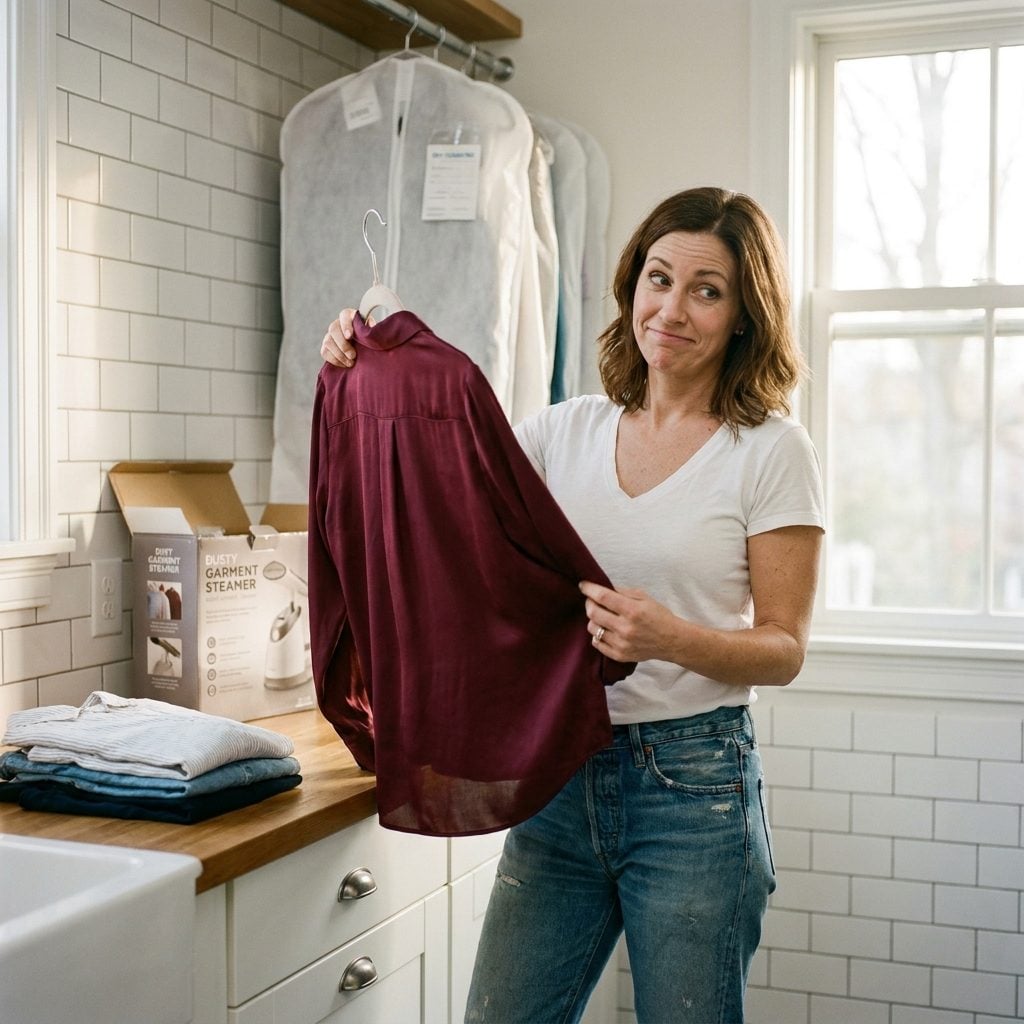
That silk camisole looked incredible on the model. You added it to your cart fully aware it says “hand wash only, lay flat to dry,” telling yourself you’d handle it. You won’t. I owned three silk tops that lived in laundry-pile purgatory for two months before I finally surrendered them to the dry cleaner.
The honest math: if a garment demands care you’re not already performing for other clothes, it will either sit unworn or get ruined. Before buying, ask one question — do I currently own anything requiring this level of maintenance, and am I actually maintaining it? No? Stick with fabrics that match your real laundry habits. Machine-washable modal, cotton blends, polyester crepe — they can look just as polished without the guilt spiral or the dry-cleaning bill.
16. Adding a Beautiful Piece That Coordinates With Exactly Zero Things You Already Own
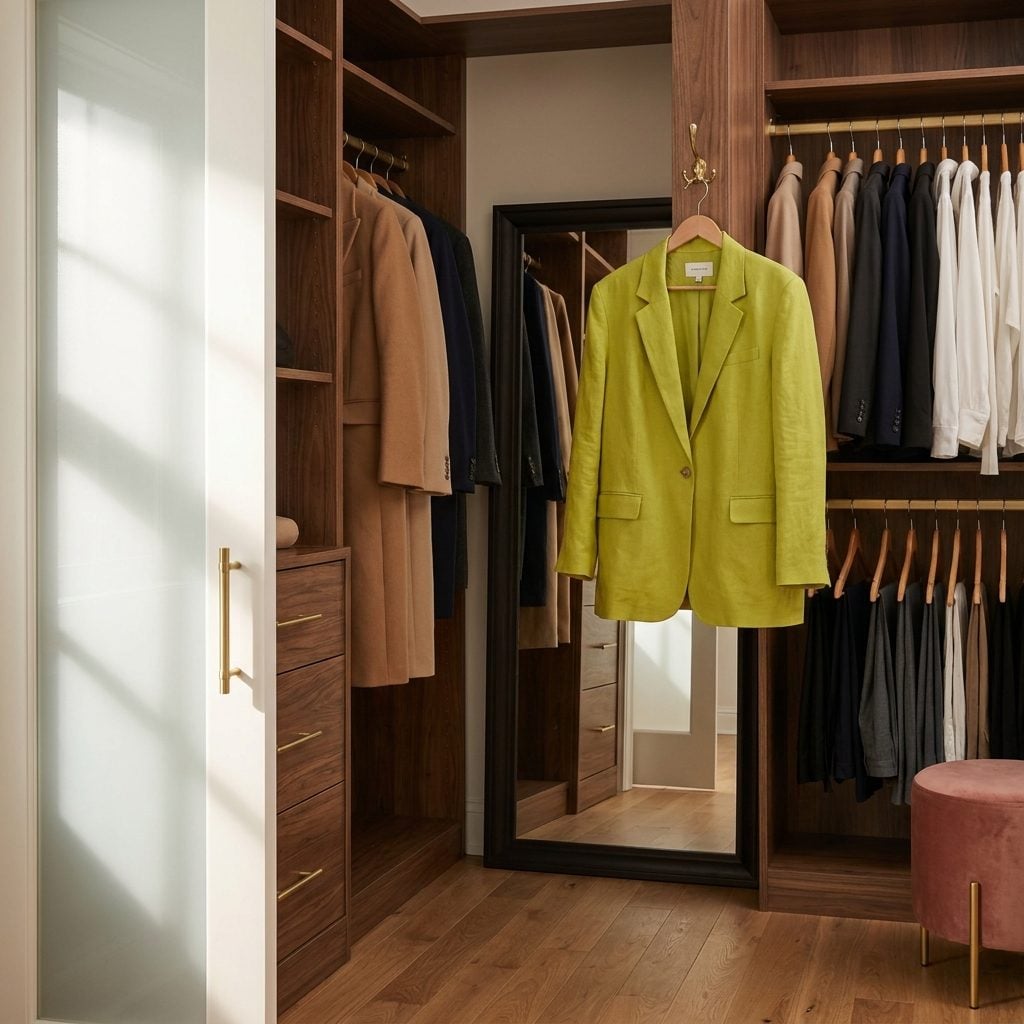
An orphan piece is the most expensive thing in your closet because its cost-per-wear stays infinite. That chartreuse blazer is objectively great. But if your wardrobe runs on navy, camel, and white, it just hangs there looking stranded, waiting for a companion that never shows up.
Retailers understand this dynamic perfectly. The “complete the look” widget isn’t a styling service — it’s built to sell you the second, third, and fourth piece that makes the first one functional, so you spend $200 justifying a $90 impulse buy.
The fix is boring but effective. Before checkout, mentally pair the item with three outfits using clothes you already own. Not “clothes I plan to buy someday.” Actual garments, hanging in your actual closet, right now. Can’t name three pairings? Close the tab.
15. Ignoring Customer Photos and Trusting Only the Perfectly Lit Professional Shots

Professional product images are shot with expensive lighting rigs, pinned and clipped on the back with binder clips you never see, then post-processed until the fabric practically glows. They’re advertisements, not previews. The dress on the model and the dress on your doorstep share a name. That’s about it.
Customer photos — taken in bathroom mirrors under overhead fluorescent light — are frankly more useful, because they show how the fabric drapes without clips, what the color reads like in normal lighting, and how proportions land on bodies that don’t belong to a 5’10” sample-size model. Scroll past the five-star reviews. Hunt for the three- and four-star ones. Those reviewers get specific about fit issues. “Runs wide in the shoulders” or “the hem is shorter than pictured” — details like that are worth more than anything the brand’s copywriter produced.
14. Assuming Your Size Is the Same Number at Every Single Brand You Shop
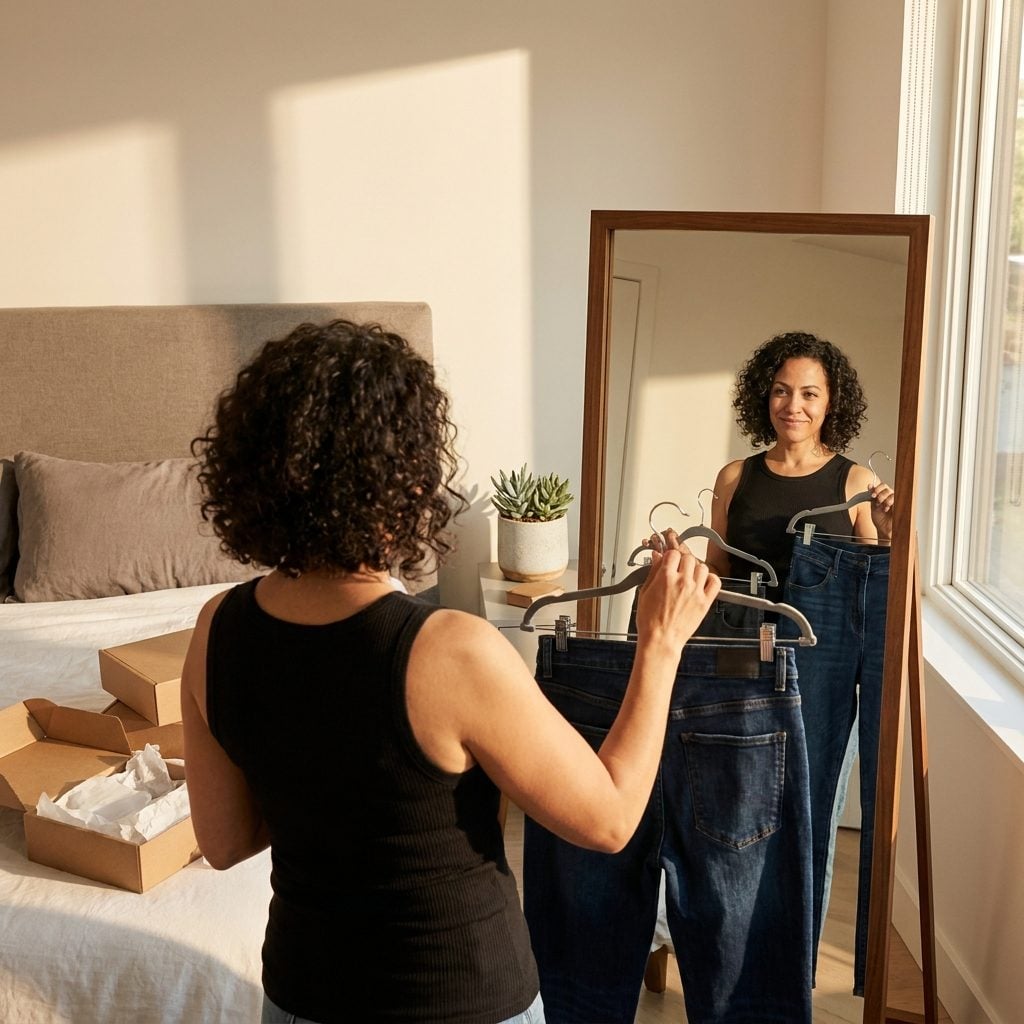
Vanity Sizing Has Made Numbers Meaningless
A size 8 at one retailer and a size 8 at another can differ by multiple inches in the waist. Not a secret. It’s called vanity sizing — brands quietly grade their patterns up while keeping the label the same, because you feeling good about a smaller number drives sales. And it’s only gotten more aggressive over the years.
The practical cost? You order your “usual size,” it doesn’t fit, you return it (or worse, keep it and never wear it), and the cycle repeats. Stop shopping by the number on the tag. Shop by measurements. Grab a soft measuring tape, measure a garment you own that fits well, and compare those numbers to the brand’s size chart. Takes under two minutes. Dramatically reduces returns.
13. Not Checking the Actual Garment Measurements Before Hitting ‘Add to Cart’
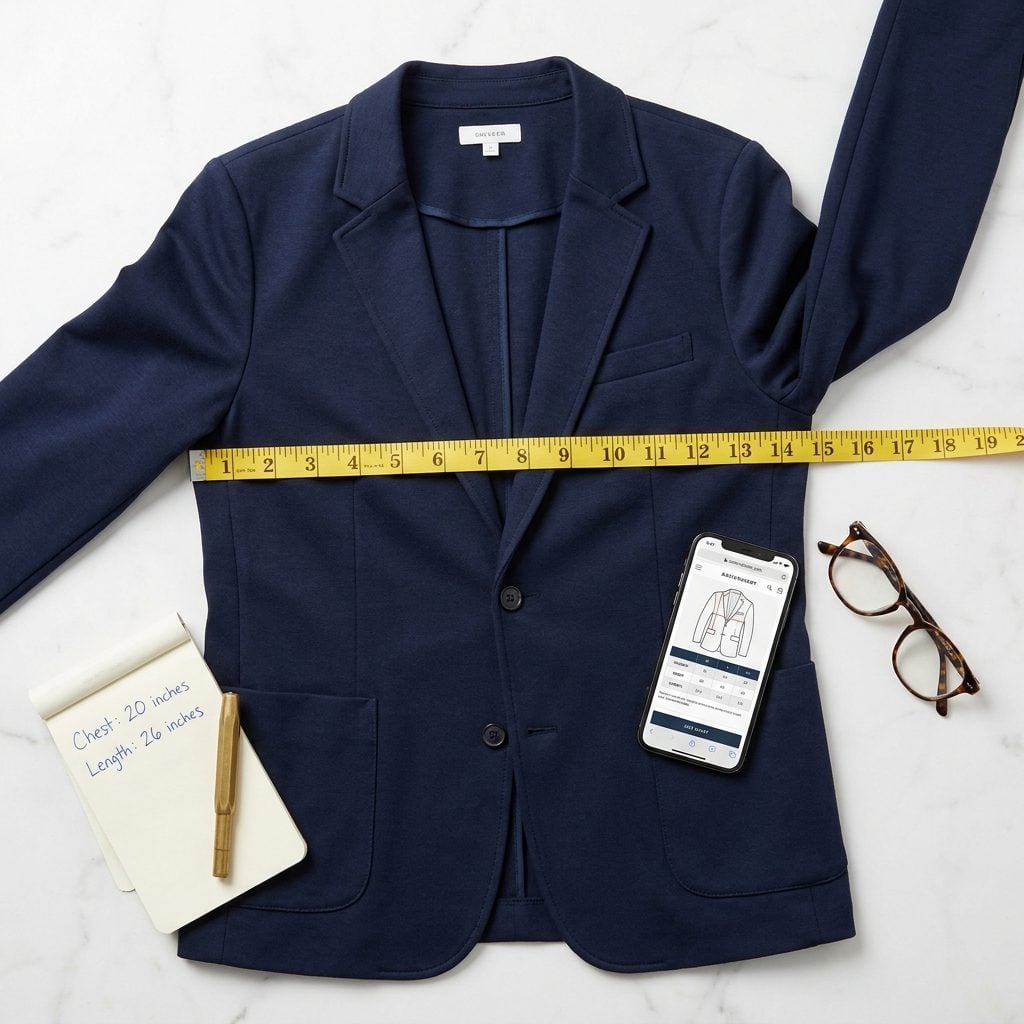
Different from the sizing mistake above, and honestly more important. Even after you’ve figured out which “size” to order, many brands publish flat garment measurements — chest width, waist, hip, total length, inseam, sleeve length. Most shoppers blow right past this. That’s like eyeballing whether a couch fits through the door instead of checking the tape measure.
Here’s what actually works: lay a similar garment you love flat on your bed and measure its width at the chest, the length from shoulder to hem, the sleeve from shoulder seam to cuff. Write those numbers down. Compare them to the brand’s garment measurements — not the “body measurements” chart (which tells you what body the size is designed for), but the actual finished garment dimensions. Two inches separates a top that grazes your hip from one that hits mid-thigh, and that gap changes everything about whether you’ll reach for it or leave it on the shelf.
12. Buying Clothes That Need Shapewear, a Specific Bra, or Three Other Purchases to Actually Work
❤️ Would you like to save this?
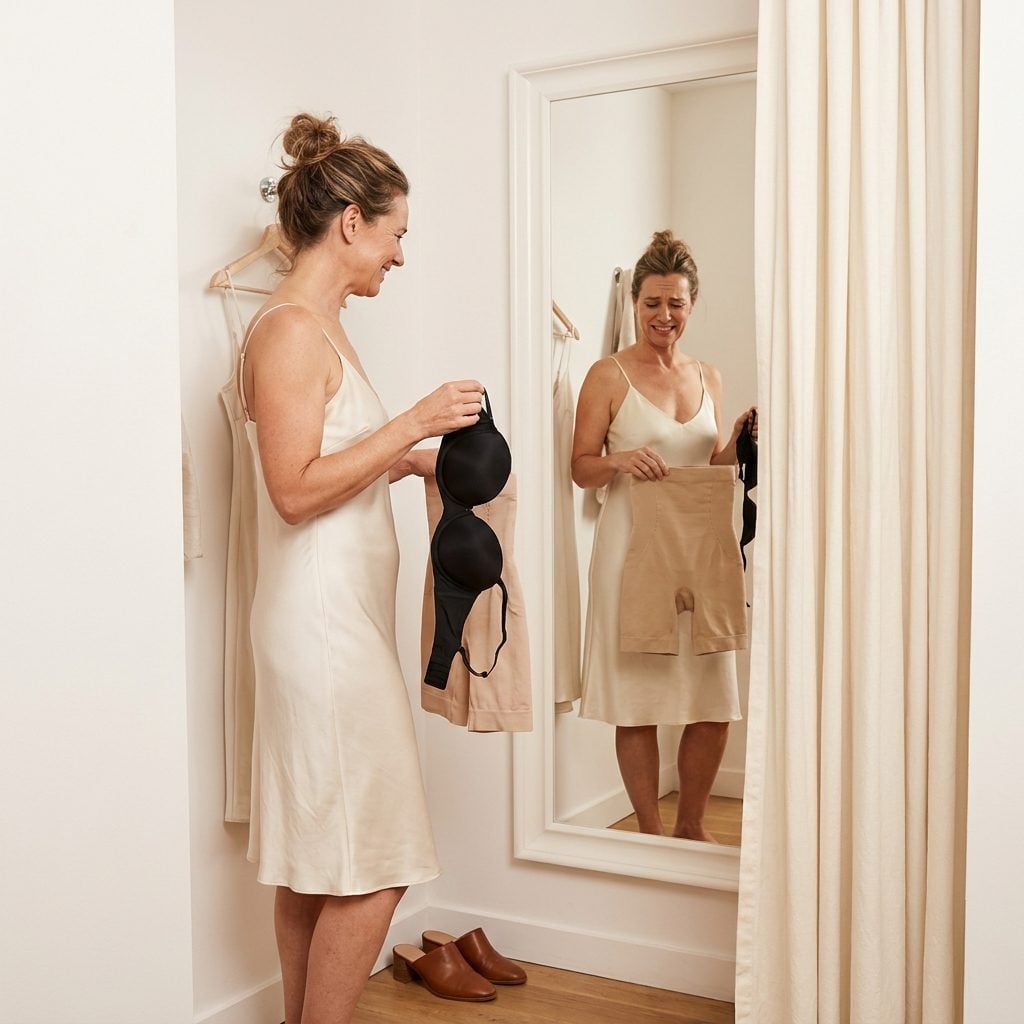
If a dress requires a strapless backless adhesive bra, control-top shapewear, and fashion tape to function, that’s not a dress. That’s an engineering problem. And engineering problems get worn once — to a wedding — before living in the back of your closet permanently.
The hidden cost goes beyond the garment itself: the adhesive bra that loses its grip after two uses, the shapewear that rolls down when you sit, the fashion tape you forgot to pack for the work trip. Suddenly a $79 dress has an entire support system orbiting it. Look for pieces that work with a bra you already own and underwear you’d wear on any normal day. A ponte sheath dress with built-in structure or a wrap dress in matte jersey can give you the same silhouette without the supply chain.
11. Treating Every Purchase Under $50 as Too Small to Worry About
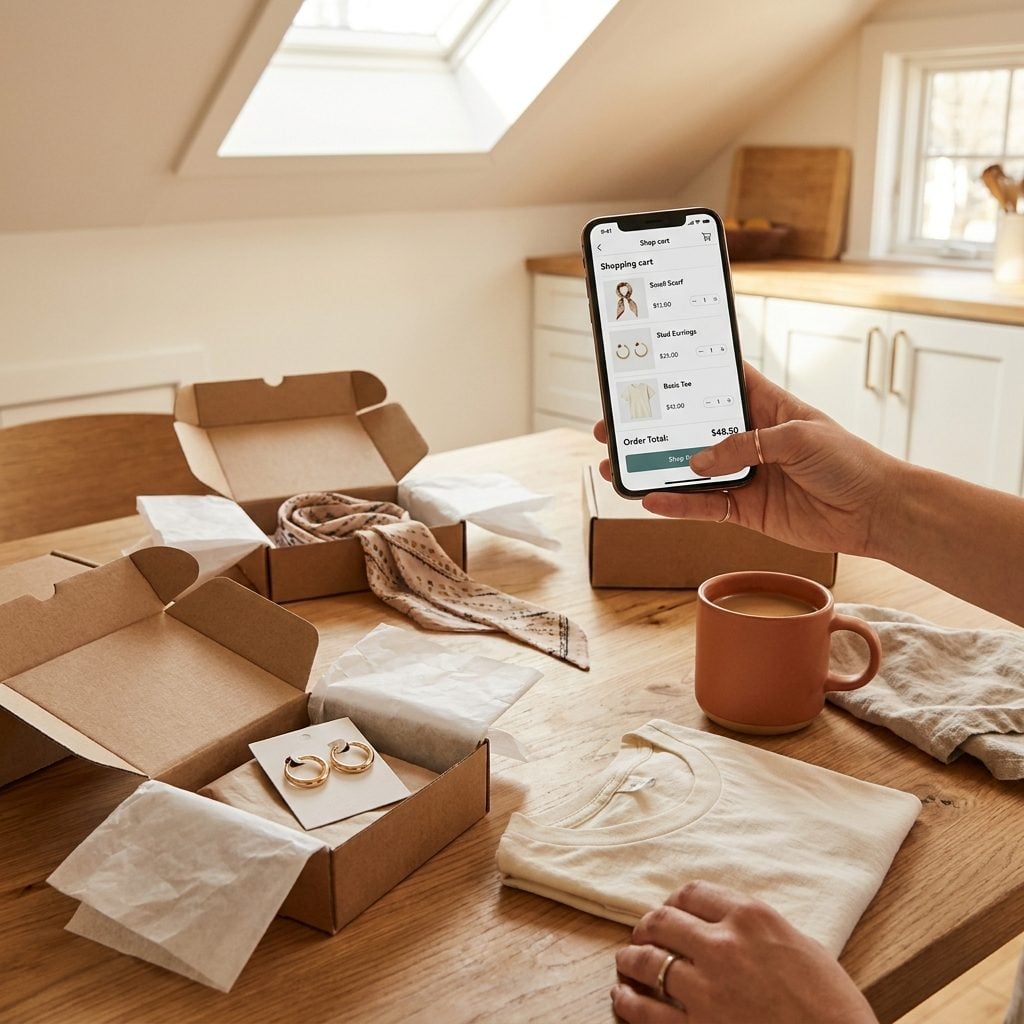
“It’s only $30” might be the most expensive sentence in online shopping. Retailers bank on the “low-ticket, low-guilt” effect: your brain processes each small purchase in isolation, so thirty here, twenty-two there, forty-five for that basic tee on sale — none of them register as significant.
They compound fast, though. Pull up your order history for the last six months and add up every purchase under $50. I did this last year and genuinely gasped — the total was staggering, and I couldn’t remember half of what I’d bought. Most of those items got worn once or never, because the low price made me less picky about fit, fabric, and actual need. A useful discipline: give a $35 purchase the same scrutiny you’d give a $150 one. If the item wouldn’t be worth $150 to you, ask yourself why you’re willing to spend $35 on it at all.
10. Falling for Countdown Timers and ‘Only 2 Left in Stock’ Warnings That Are Engineered to Panic You
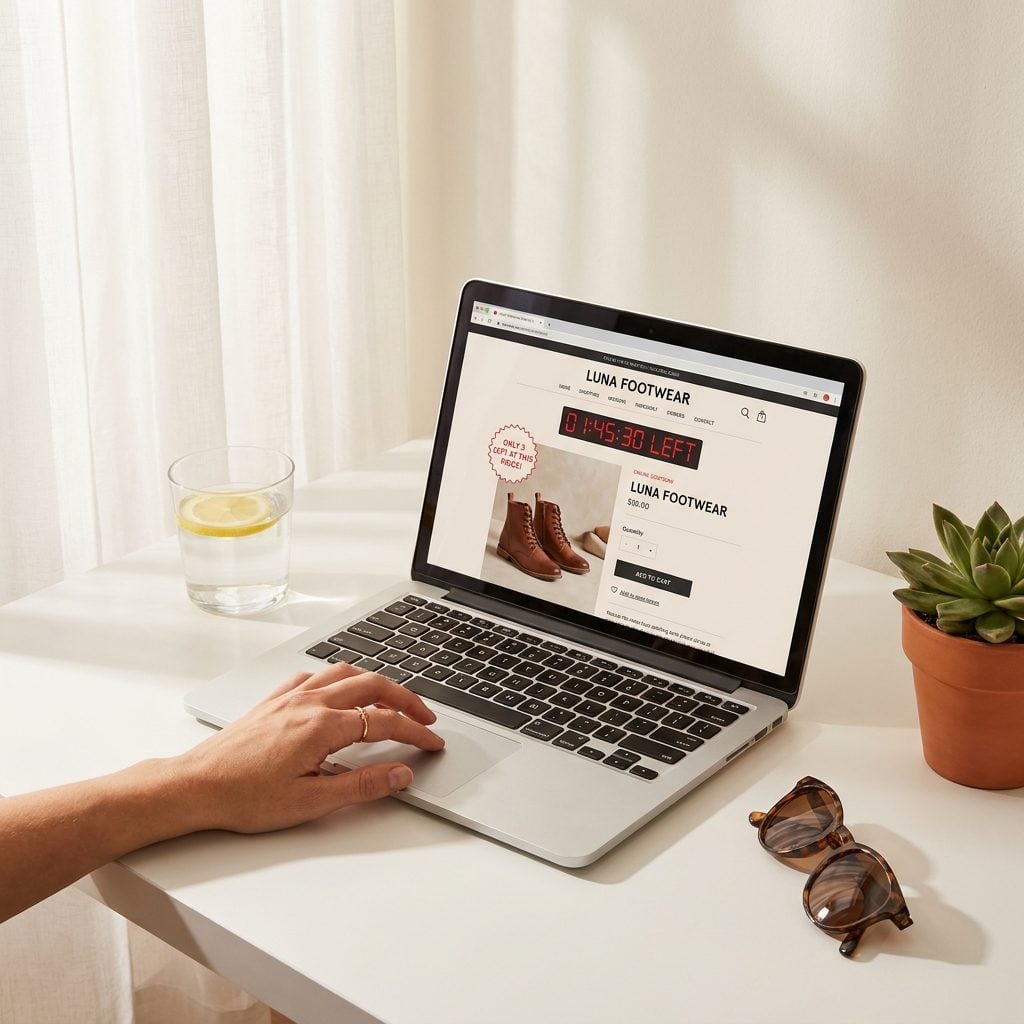
That timer is probably a lie. Not always — but often enough that you should treat it as set dressing rather than information. Scarcity cues (countdown timers, “only 3 left,” “12 people are viewing this right now”) are conversion tools built to trigger loss aversion: the fear of missing out overwhelms your rational assessment of whether you even want the thing.
Some of these counters literally reset when you refresh the page. Try it sometime. It’s almost funny.
The fix is simple and slightly annoying, which is exactly why it works. When you feel that spike of urgency, close the tab and set a phone reminder for 24 hours later. Still want it tomorrow? Buy it. If it “sold out” — it almost certainly didn’t, and even if it did, a nearly identical version exists somewhere else. The scarcity was manufactured. Your bank account is real.
9. Paying Full Price for Items That Go on Sale Like Clockwork Every Six Weeks

Certain brands run sales so predictably you could build a calendar around them. I won’t name names, but if a retailer sends you a “surprise” 40% off email on a roughly five- to six-week loop, that isn’t a sale — that’s the real price. The “full price” is just the inflated anchor designed to make the discount feel generous.
Try this: sign up for email lists from your favorite brands and watch the pattern for two months without buying anything. Just observe. You’ll quickly identify the chronic discounters versus the brands that genuinely hold their prices. For the perpetual-sale crowd, never pay full price. For brands that rarely mark down? A full-price purchase might actually be worth it, because the pricing is more honest to begin with.
8. Buying Clothes Because They’re Trending on Instagram Rather Than Because They Fit Your Actual Life and Style
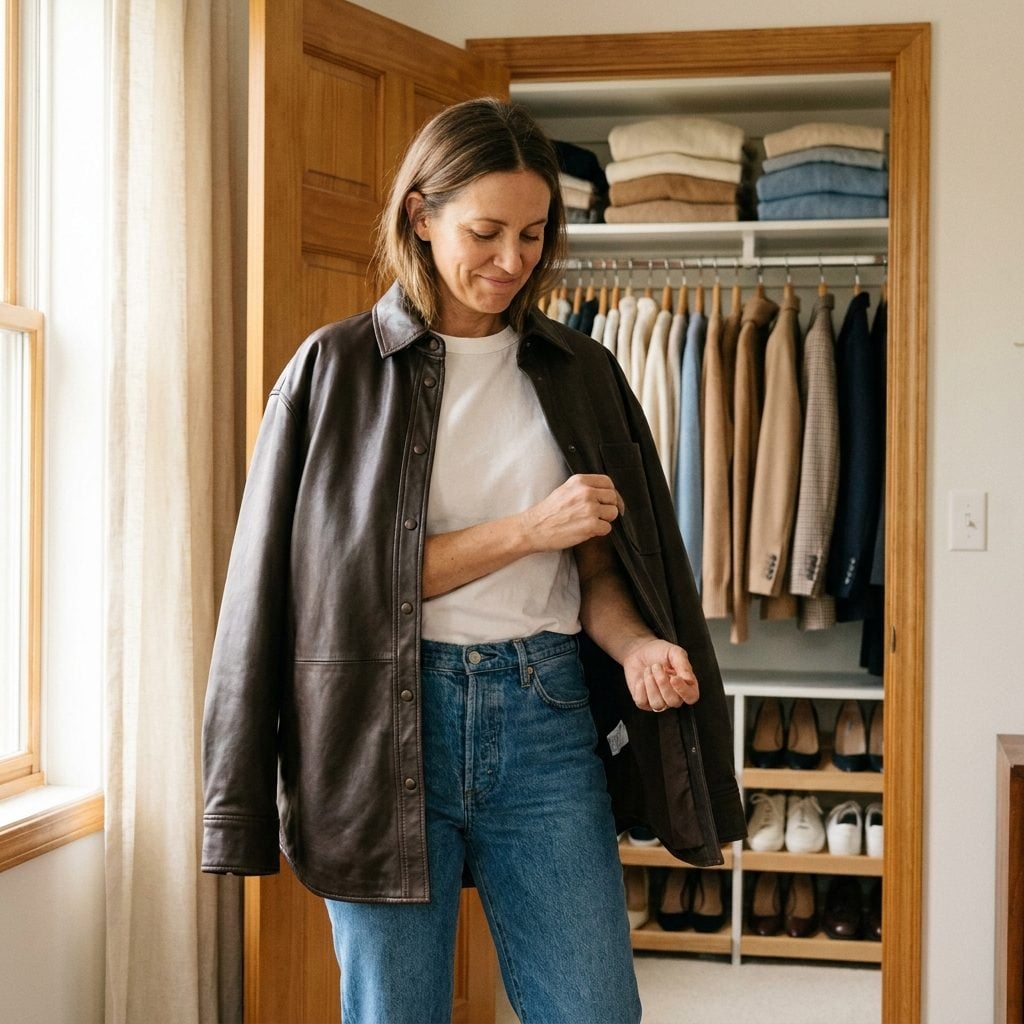
A trend is someone else’s style decision amplified to mass scale. That oversized leather shacket looks incredible on the influencer who built her entire wardrobe around relaxed, borrowed-from-the-boys proportions. On you, if your instinct runs tailored and clean, it feels like wearing a costume. Not bad — just not yours.
This particular trap cost me real money in my early forties. Wide-leg linen trousers, chunky platform sandals, a cropped cardigan, a bucket hat — all purchased in one feverish summer because I’d seen them everywhere online. Wore the trousers twice. Everything else still has tags. I’m still a little annoyed about it.
The question worth asking isn’t “is this piece good?” It’s “is this piece mine?” Does it match the way you actually dress on a regular Wednesday — not for a photoshoot in your backyard? Build around your own recurring preferences: the necklines you reach for, the silhouettes that make you stand taller, the colors your eye gravitates toward first. Trends can inform those choices. They shouldn’t overwrite them.
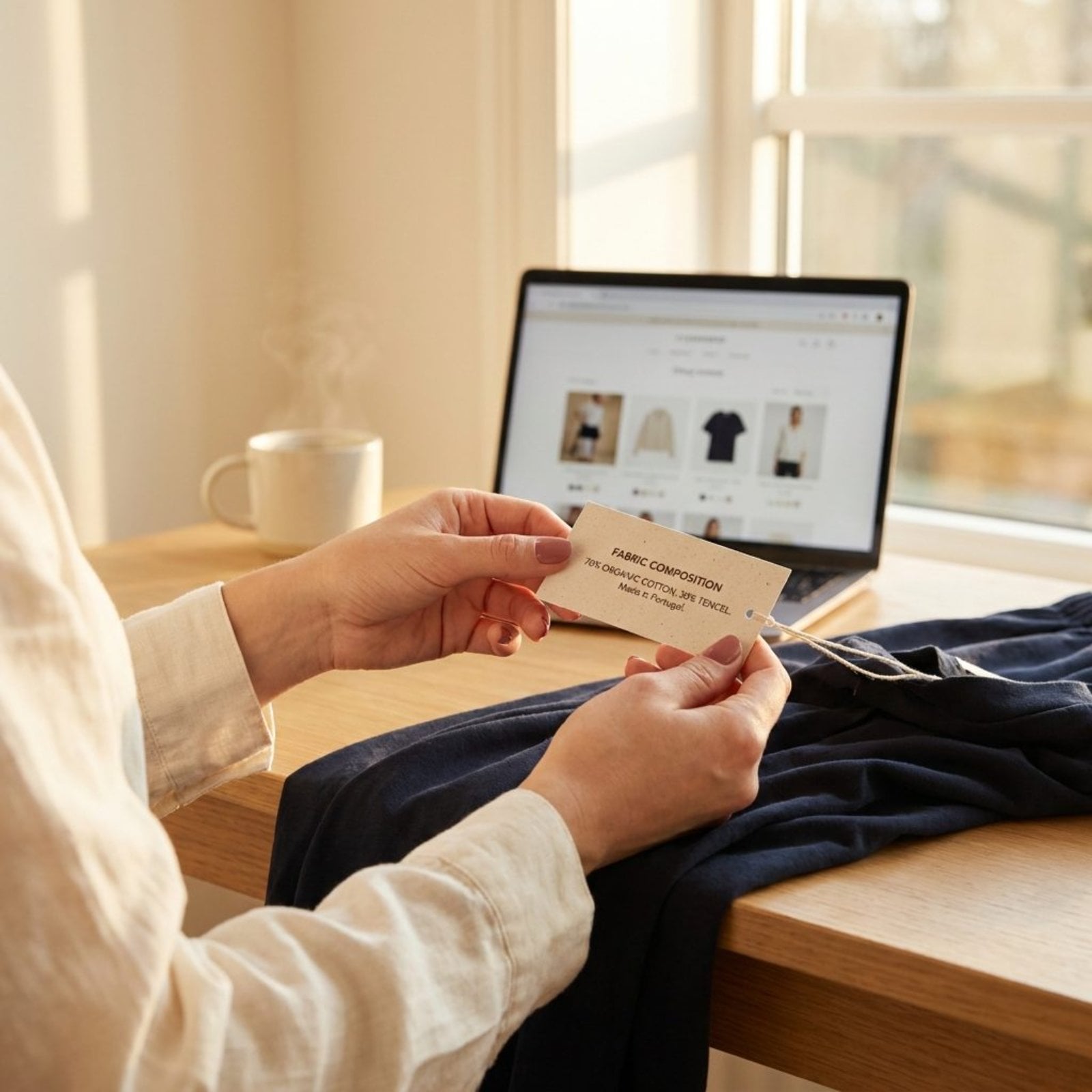
7. Skipping the Fabric Composition Tab and Ending Up with a Closet Full of Polyester That Feels Like a Plastic Bag
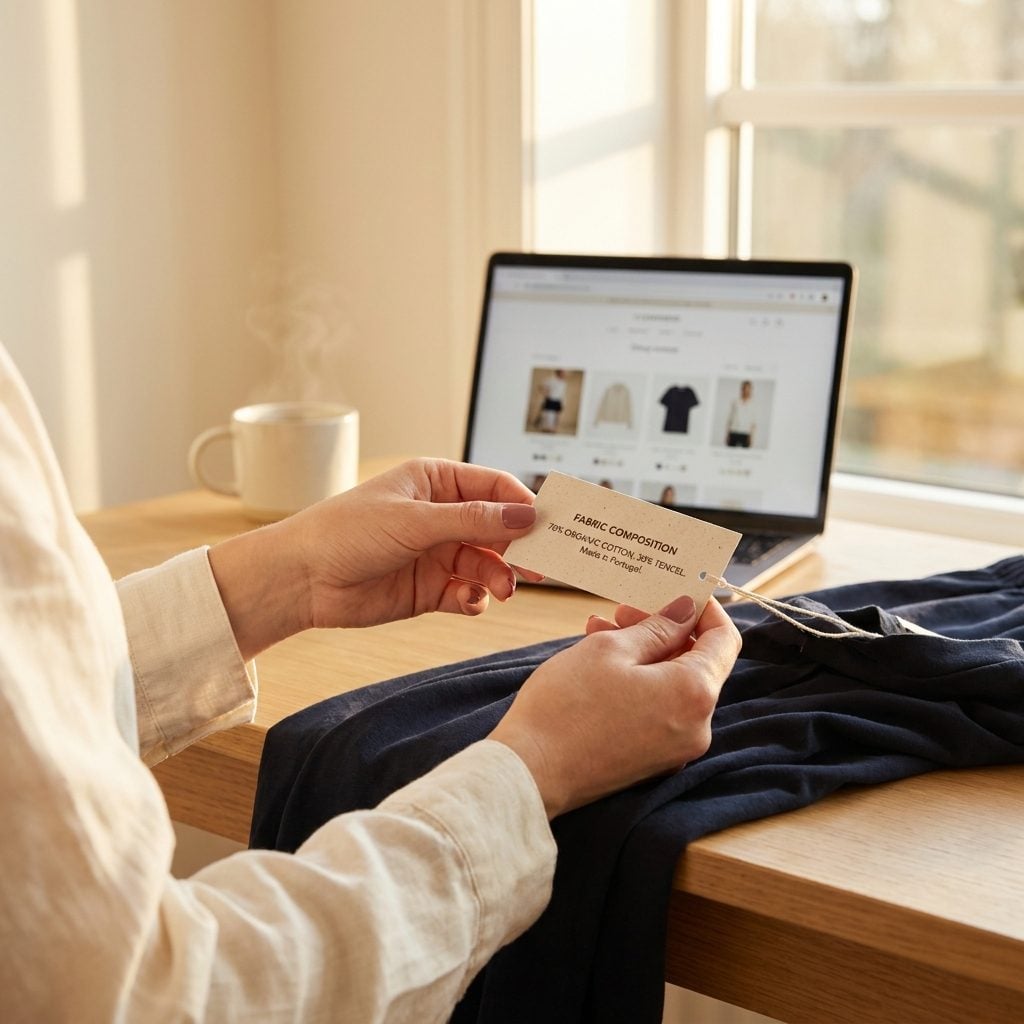
That product photo showed a gorgeous, fluid blouse with a beautiful drape. What arrived was a stiff, shiny shell that trapped heat like a greenhouse — because you didn’t scroll down to the fabric composition, and the listing was banking on exactly that. “Polyester crepe” gets the same aspirational flat-lay treatment as silk. Most shoppers never check.
Fabric composition determines how a garment hangs, how it ages, how it feels pressed against your skin at 2 p.m. when the office air conditioning gives up. A silk blend blouse and a 100% polyester one can look identical on screen but exist in separate universes on your body. Before you add to cart, scroll to “Materials” or “Fabric” and look for natural fiber content — cotton, linen, wool, silk, Tencel. If the listing doesn’t disclose composition at all? That’s your answer. Close the tab.
6. Ordering Three Sizes ‘Just to Be Safe’ and Letting the Return Deadline Quietly Pass

I’ve done this more times than I’ll admit. Two sizes arrive, the right one goes in the closet, and the wrong one goes… into a bag by the door. Then under the door. Then behind the door. You know how this ends.
Retailers have studied this behavior extensively. That generous return window feels like a safety net, but it functions as a psychological trap — the longer the window, the less urgency you feel, and the more likely you are to blow right past the deadline. Bracketing, ordering multiple sizes, generates enormous volumes of unreturned merchandise every year. That isn’t merchant loss. That’s your money decomposing in a tote bag you keep meaning to drop off. The fix is boring but it works: set a phone reminder the day your order arrives, try everything on immediately, repack what doesn’t fit, and schedule a pickup or drop-off before the box even gets comfortable.
5. Keeping the ‘It’s Fine, I Guess’ Purchase Instead of Returning It While You Still Can
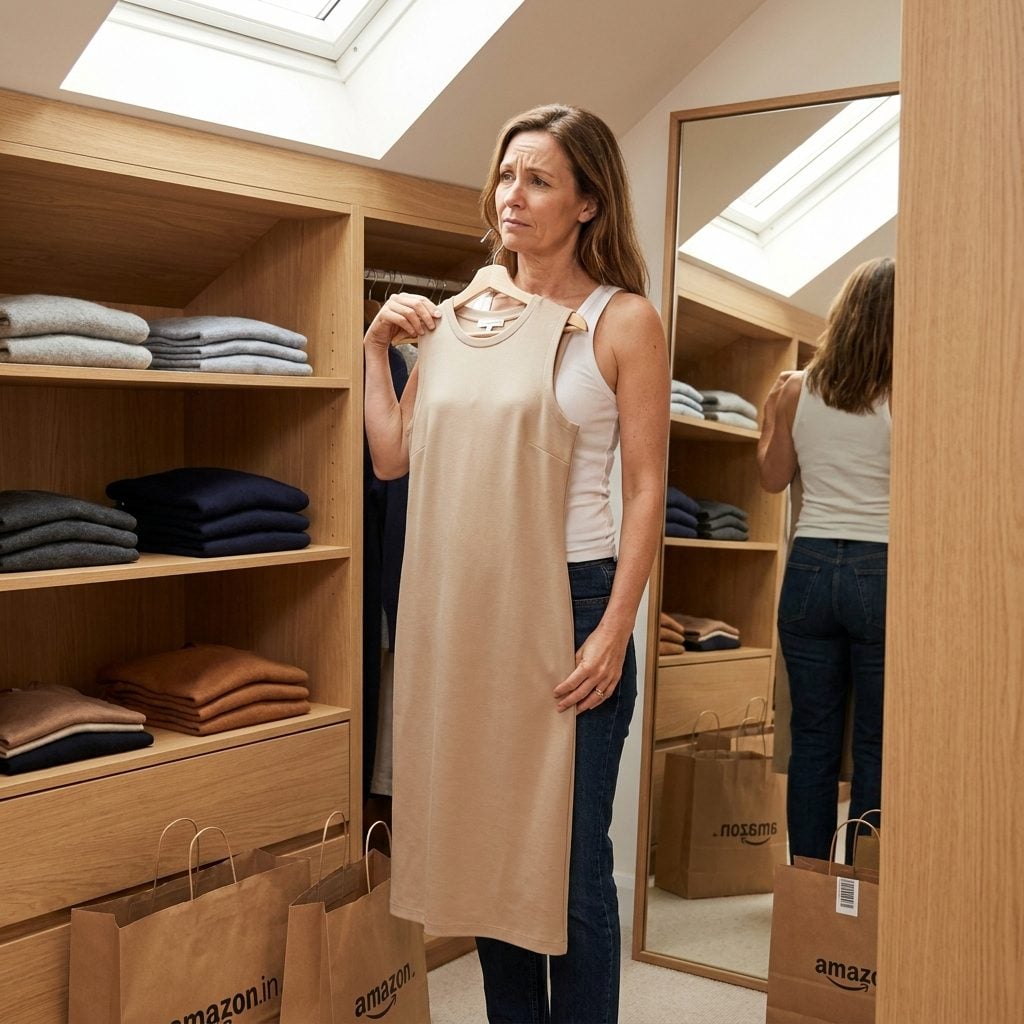
“Good enough” is the most expensive phrase in your closet. That top that doesn’t quite fit through the shoulders but was on sale. The dress that’s a little shorter than you wanted but the color is nice. You keep them because returning feels like effort, and they’re not bad exactly. But here’s what actually happens: they sit there, untouched, while you reach past them every single morning for the pieces you genuinely love.
Mediocre purchases compound. Each one eats physical space and mental bandwidth — you open your closet and see options, but nothing pulls you in, so you shop again looking for the thing that actually excites you. The cycle just restarts. If you wouldn’t buy it again at full price knowing exactly how it fits and feels, send it back. A curated closet of 30 pieces you reach for constantly will always outperform a bloated rotation of items you tolerate.
4. Only Reading the Five-Star Reviews and Skipping the Two- and Three-Star Ones That Actually Tell You the Truth
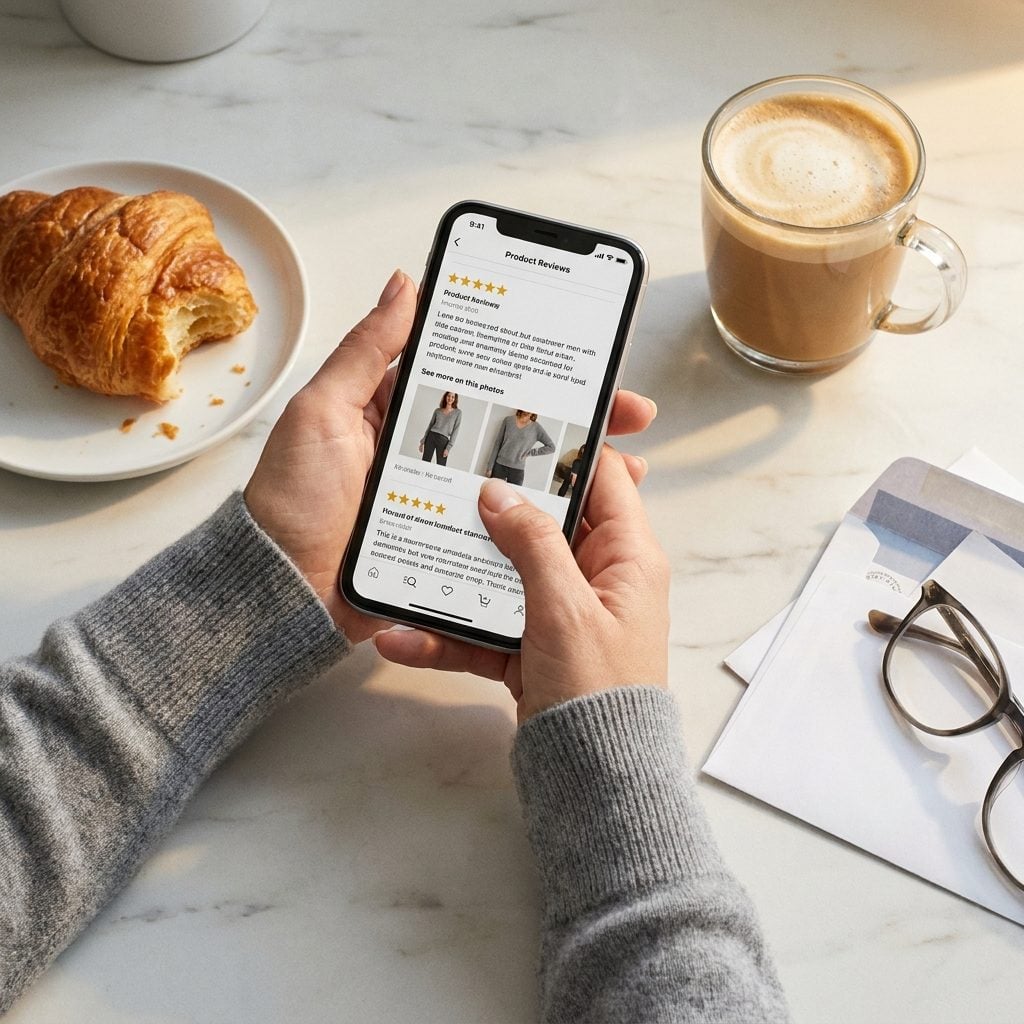
Five-star reviews get written in the first 48 hours of ownership — sometimes by people who received the item at a discount in exchange for their feedback. They tell you the color is pretty and shipping was fast. Barely useful.
The real intelligence lives in two- and three-star territory. Those reviewers wanted to love the item. They’re telling you specifically why they didn’t. “Runs a full size small through the bust.” “The white is completely see-through.” “Zipper broke after two wears.” That’s actionable data, and 90 seconds of reading it will save you more bad purchases than any amount of careful browsing. Sort by “most recent” rather than “most helpful” to get past the optimistic early wave — the honest frustration tends to show up a few weeks in.
3. Buying the $19 Version Three Times Instead of the $55 Version Once
❤️ Would you like to save this?
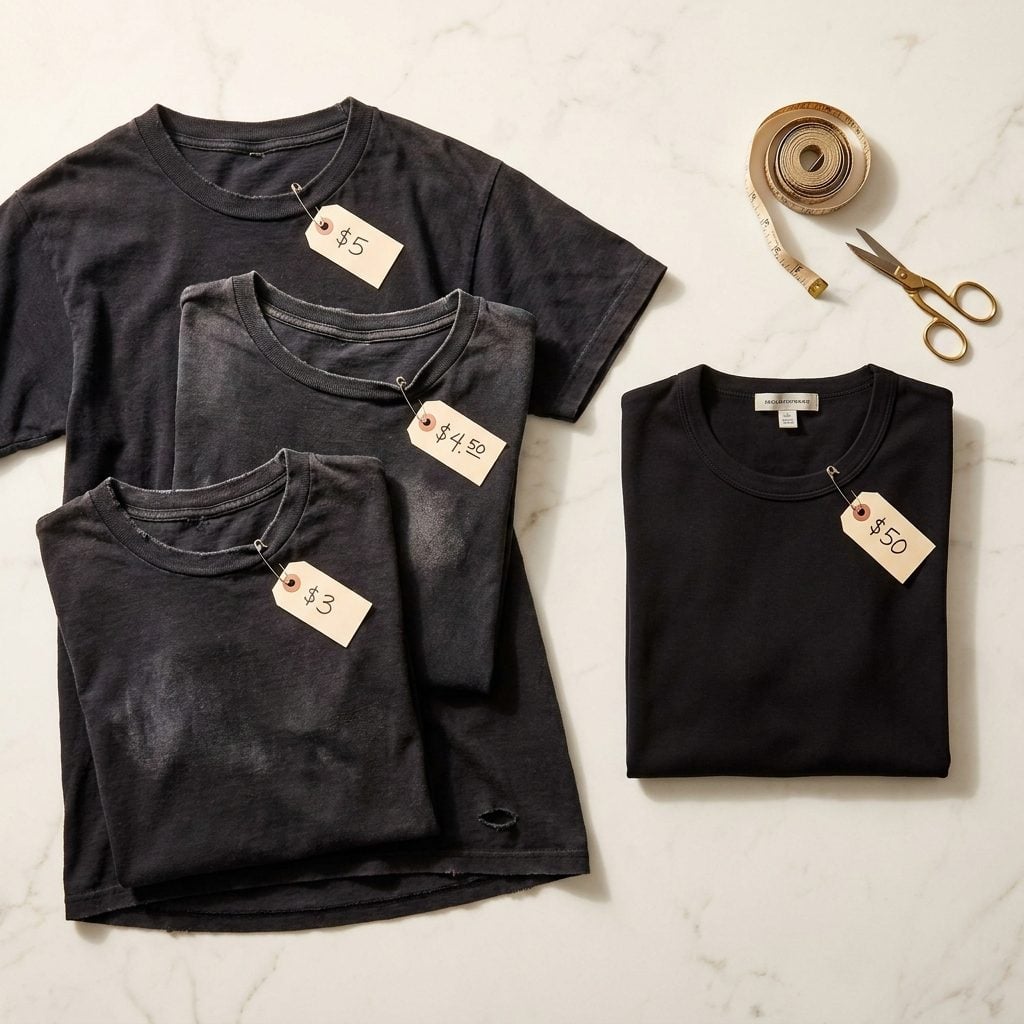
The math never lies on this one, and yet I kept ignoring it for years. Three cheap cotton t-shirts at $19 each that pill, stretch, and fade within two months: $57. One well-made version at $55 that holds its shape for two years: $55. You spent more, got less, and had to shop three separate times to accomplish it.
Fast fashion retailers are built on exactly this cycle — they know the garment won’t last, and they’re counting on you coming back. The replacement cost is baked into their business model. Your fix doesn’t require a luxury budget. It requires shifting your per-item spend slightly upward and buying fewer pieces. Look for tight, even stitching. Finished seams. Fabric weight you can feel has substance. A $45 to $65 range often lands in a sweet spot where construction quality jumps noticeably without approaching designer pricing.
2. Paying $14.99 for Two-Day Shipping on a Sweater You Won’t Wear for Three Weeks
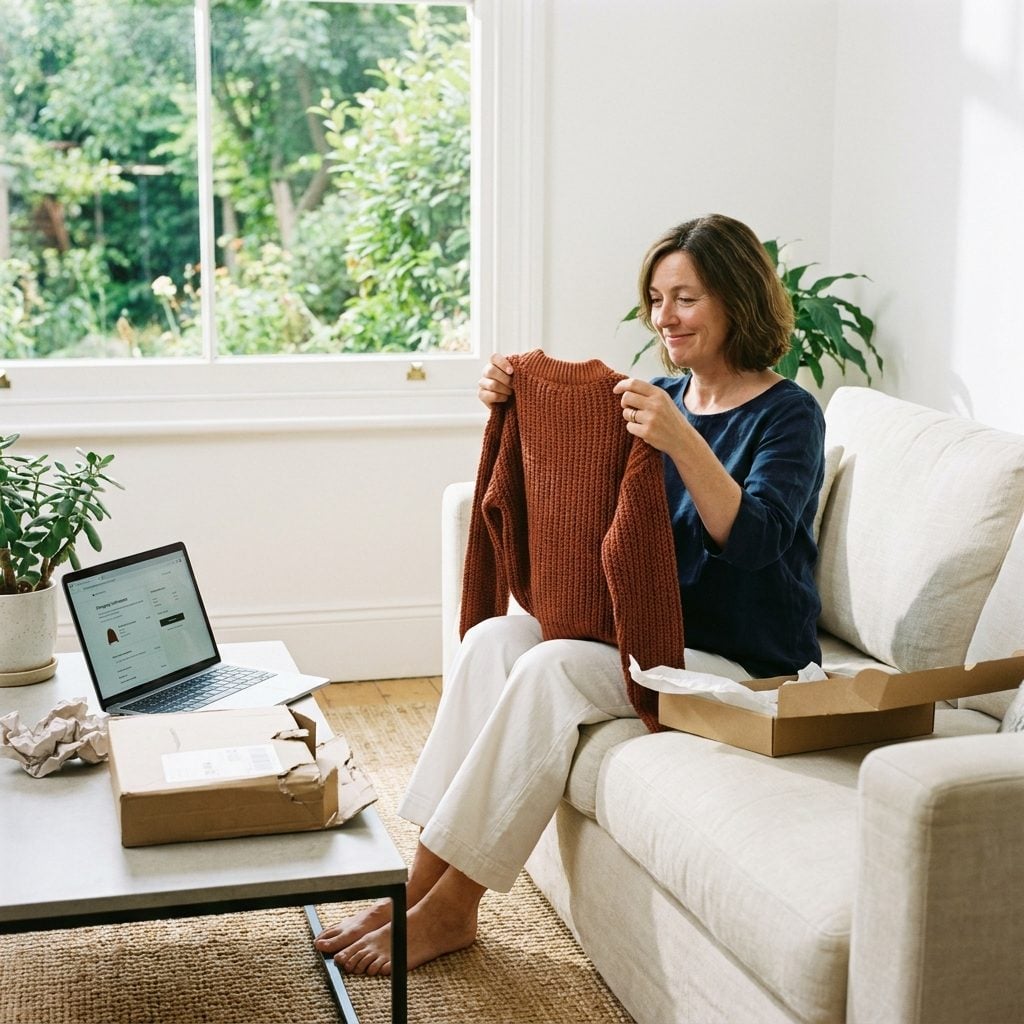
Expedited shipping is a dopamine tax. You’re not paying for speed — you’re paying for that small chemical reward your brain releases at the thought of the package arriving sooner. And merchants know this, which is why the express option is always prominently displayed, often pre-selected at checkout like some kind of default you never agreed to.
When was the last time you genuinely needed a clothing purchase within 48 hours? Not wanted. Needed. A funeral, a last-minute event — sure. But a pair of wide-leg trousers for “sometime next month”? Standard shipping does the same job and keeps $12 to $18 in your pocket per order. Over a year of regular online shopping, those fees accumulate into the price of an actual garment you’d enjoy owning. Which is mildly infuriating once you realize it.
1. Letting Store Credits and Gift Cards Expire in Your Email Inbox Like They’re Not Real Money
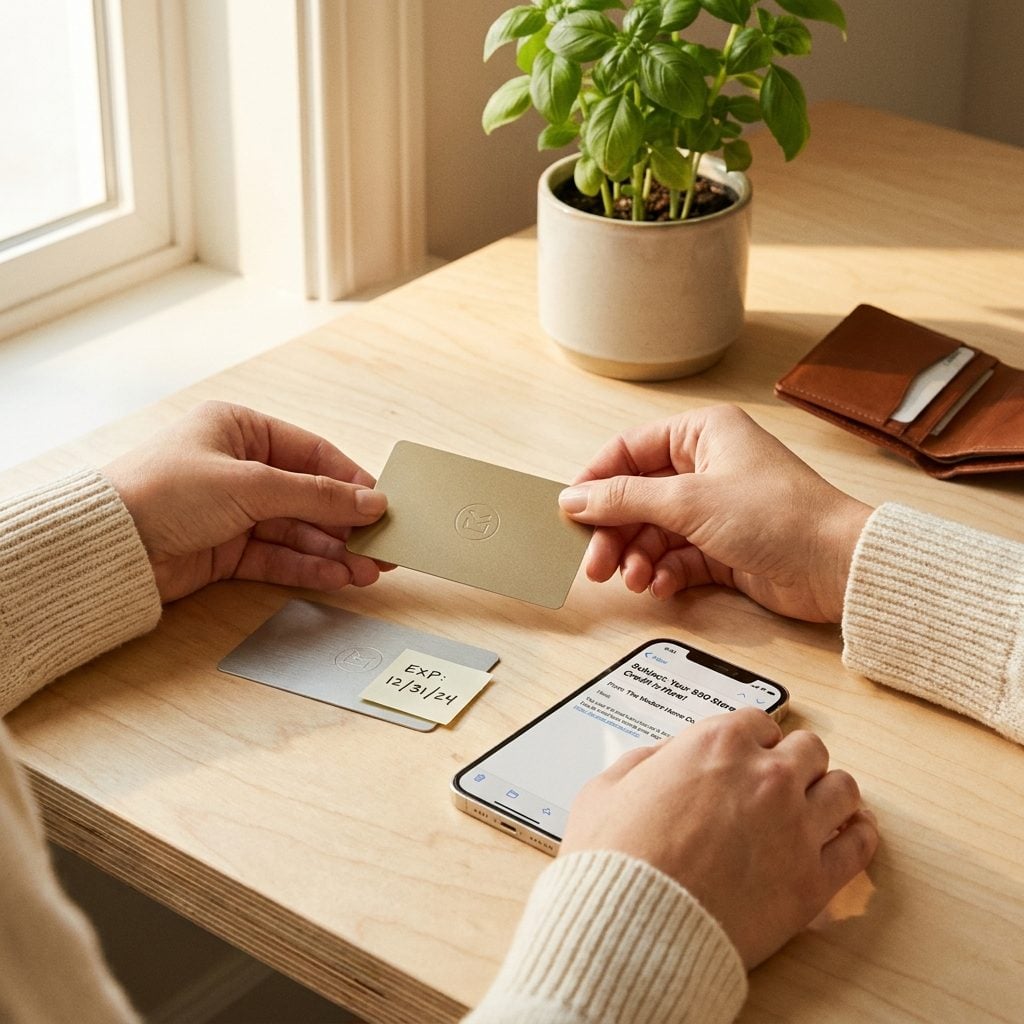
Store credits are cash. Gift cards are cash. Your brain refuses to treat them that way, and retailers are deeply aware of this cognitive gap — a significant chunk of gift card value goes unredeemed every year. Not forgetfulness on a massive scale. A design feature.
Credits land in email, which is already a graveyard of unread promotions. They come with quiet expiration dates buried in fine print. And because the money feels “free,” there’s less urgency to use it, even though it came directly from a return you made with your own actual money. Treat every store credit like someone handed you a $50 bill. Screenshot it, add the expiration date to your calendar, and spend it within the first week. If the store doesn’t carry anything you need right now, grab a staple you’ll always reach for — a white crew-neck tee, a quality pair of socks, a belt.