
❤️ Would you like to save this?
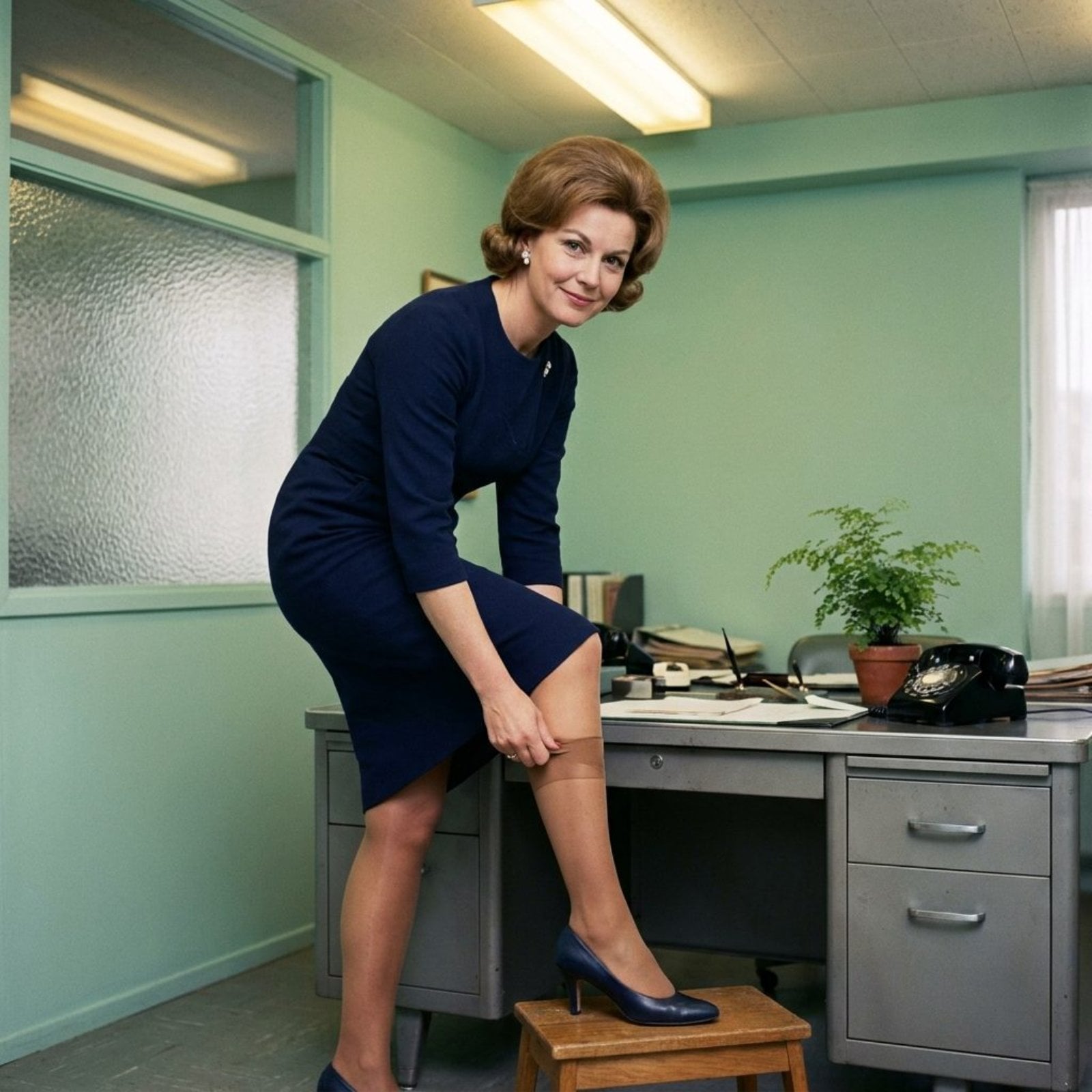
The scratch of nylon against your fingernail. That specific cool-to-warm feeling as you eased them up one leg, then the other, praying you hadn’t nicked them with a hangnail before you even got out the door. Pantyhose in the 1960s weren’t an accessory. They were a social contract, a daily ritual with more rules than a convent school dress code. If you lived it, you remember every single unwritten law. Here are ten that defined an era.
FYI, thanks to AI imagery software, we’re able to create very specific fashion and hairstyle examples to illustrate the points being made. In some cases, imagery is exaggerated to hammer home the point. Also, assume links that take you off the site are affiliate links such as links to Amazon. this means we may earn a commission if you buy something.
26. Bare Legs Were Not an Option: The Unspoken Rule About Church, Work, and Anywhere That Mattered
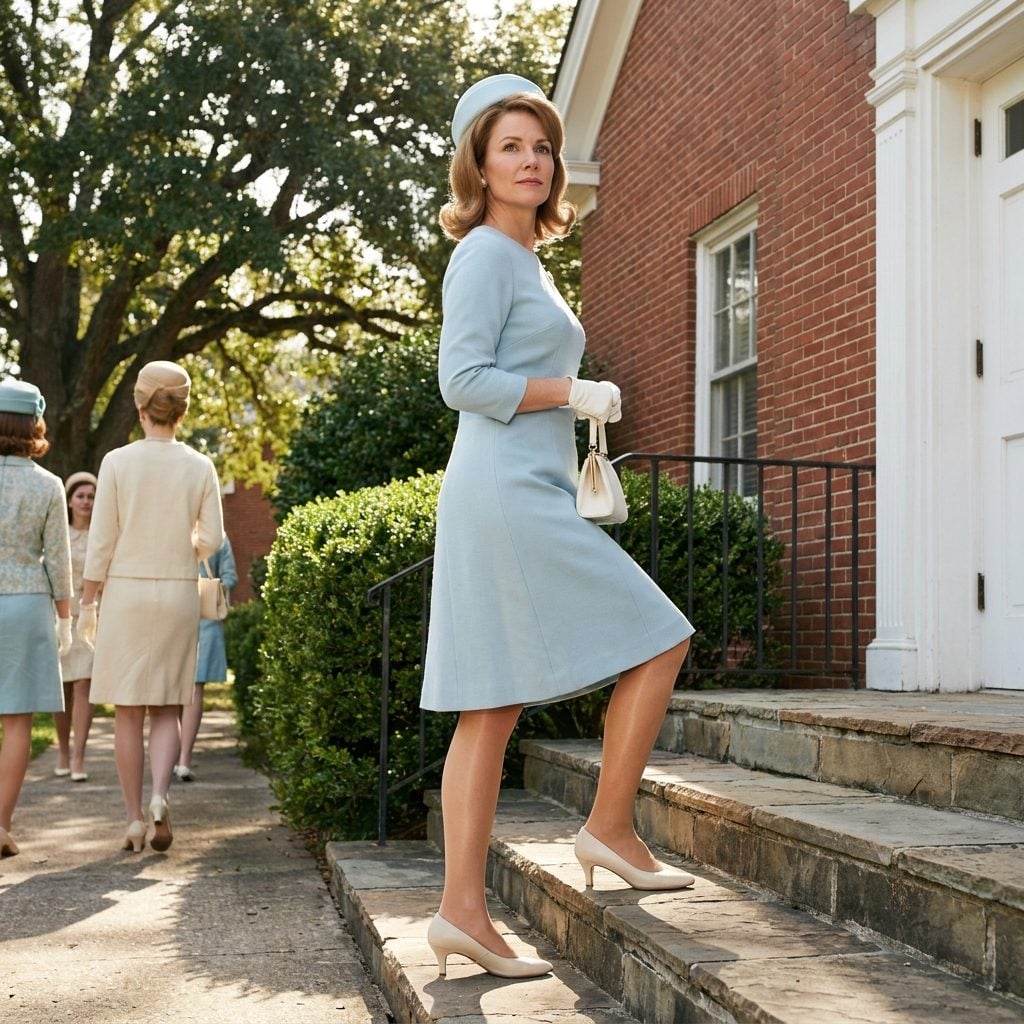
You could wear a wrinkled blouse. You could forget your lipstick. But showing up to Sunday service, your office, or a PTA meeting with bare legs? That was the line nobody crossed. It wasn’t written in any handbook. It didn’t have to be. Your mother told you once, maybe twice, and the message was permanent.
The rule applied in July. In August. On days so humid your thighs stuck together under that layer of nylon and you still didn’t take them off. Bare legs read as unfinished, like leaving the house with your slip showing. Pantyhose completed you the way a period completes a sentence.
25. The Emergency Spare Pair Hiding in Every Handbag You Owned

Somewhere between your wallet and your lipstick case, there they were: a spare pair of pantyhose, still sealed in their little cellophane envelope, slightly warm from living in your purse all week. Every woman carried one. It wasn’t paranoia. It was math. The odds of getting through a full day without a run were roughly the same as getting through a full day without breathing.
I knew women who kept spares in their desk drawer, their glove compartment, and their purse simultaneously. That’s not excessive. That’s strategy.
24. Matching Your Hosiery Shade to Your Exact Skin Tone Like It Was a Science Experiment
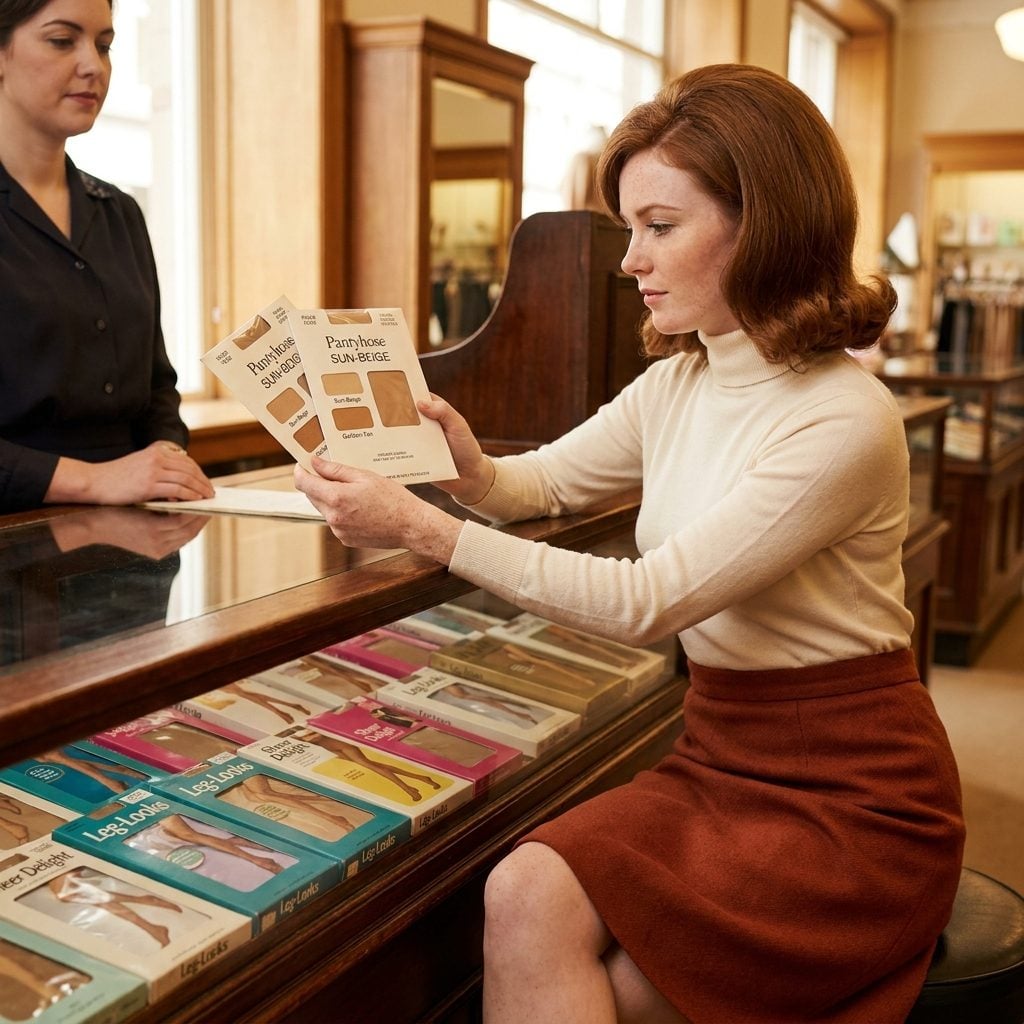
The shade names alone were an education. Suntan. Barely There. Coffee Bean. Nude (which was nude for exactly one skin tone, and if that wasn’t yours, good luck). Finding your match meant holding the package up to your inner wrist under fluorescent department store light and squinting like you were appraising a diamond.
Get it wrong and your legs looked orange. Or ashy. Or like they belonged to someone else entirely. The goal was invisibility: hosiery so perfectly matched to your skin that people couldn’t quite tell if you were wearing any. But everyone knew you were, because of course you were. See rule number one.
23. Darker Hose for Winter, Lighter for Summer, and You Didn’t Question the Calendar
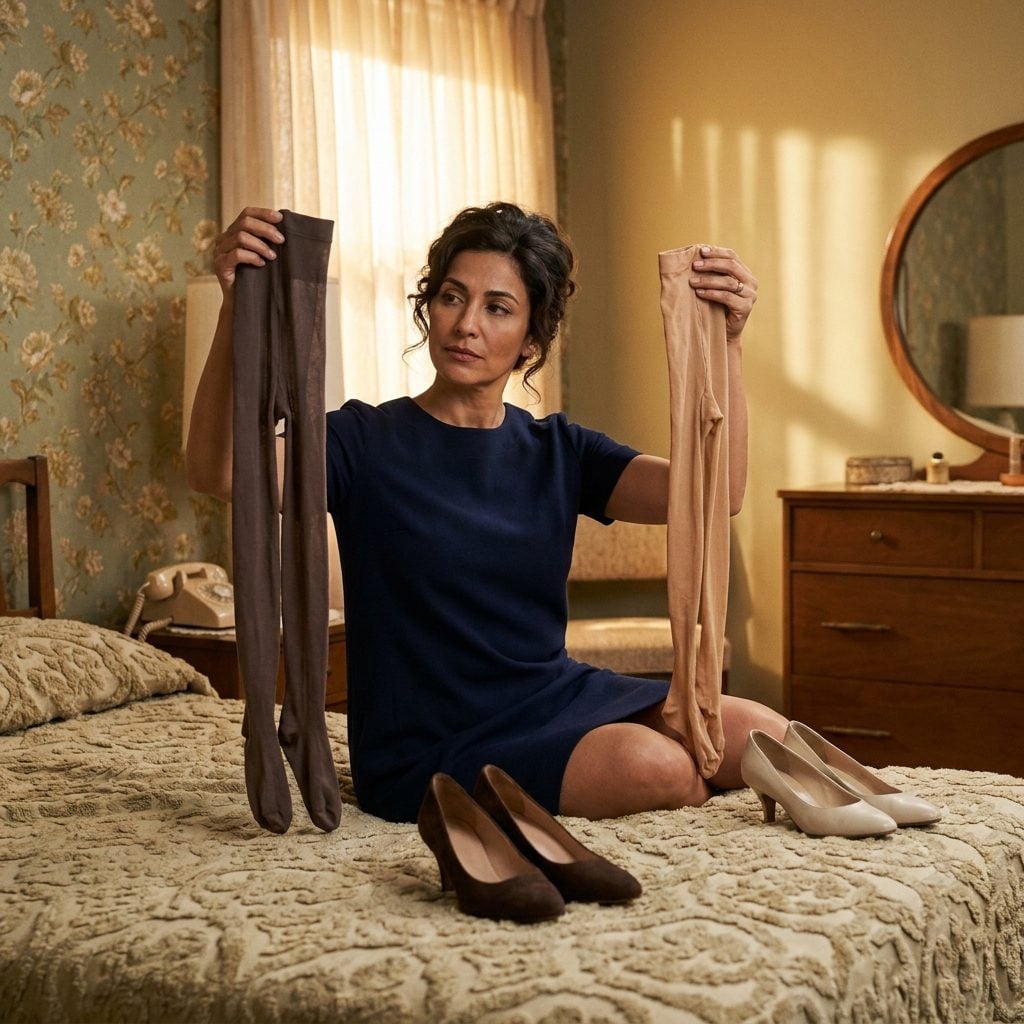
Labor Day wasn’t just about putting away white shoes. It was the official changeover to darker hosiery, and Memorial Day swung the pendulum back to lighter shades. This seasonal rotation was followed with the seriousness of a religious observance.
Wearing summer-weight “Barely There” in November was an error on par with wearing white after Labor Day. And pulling out your winter-weight “Off Black” in June? Absolutely not. The calendar dictated your legs. You didn’t need to agree with it. You just needed to follow it.
22. The Clear Nail Polish Trick That Saved More Pantyhose Than Any Product Ever Made
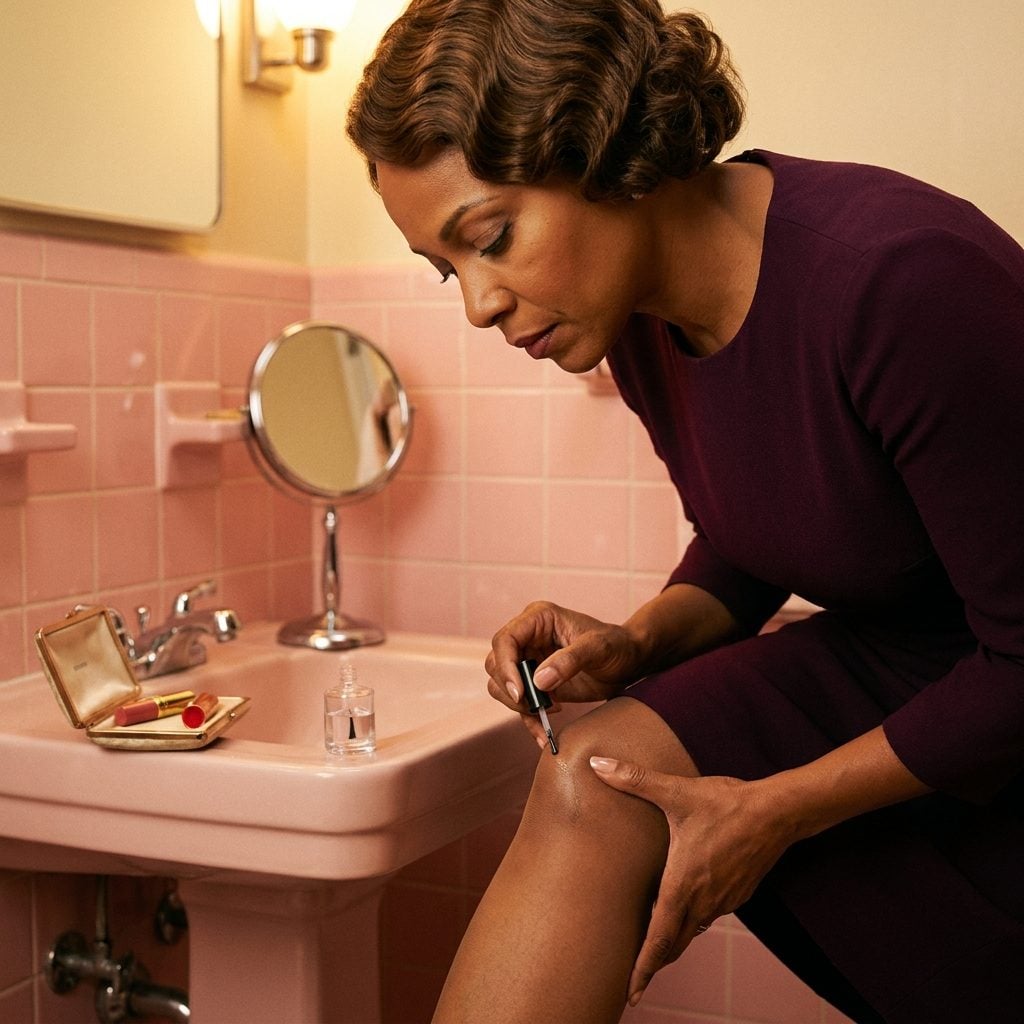
You felt it before you saw it. That tiny give in the fabric, the whisper of a thread letting go somewhere around your knee. And then the race began: could you get to a bottle of clear nail polish before the run traveled the full length of your leg like a crack in a windshield?
Every woman had a bottle. In the bathroom. In her desk. In that emergency purse kit right next to the spare pair. A single dab on either end of the run, let it dry, and you’d bought yourself another four hours. Maybe six if you were careful. It wasn’t elegant. It was survival.
21. Rolling, Never Bunching: The Sacred Ritual of Putting Pantyhose On Correctly
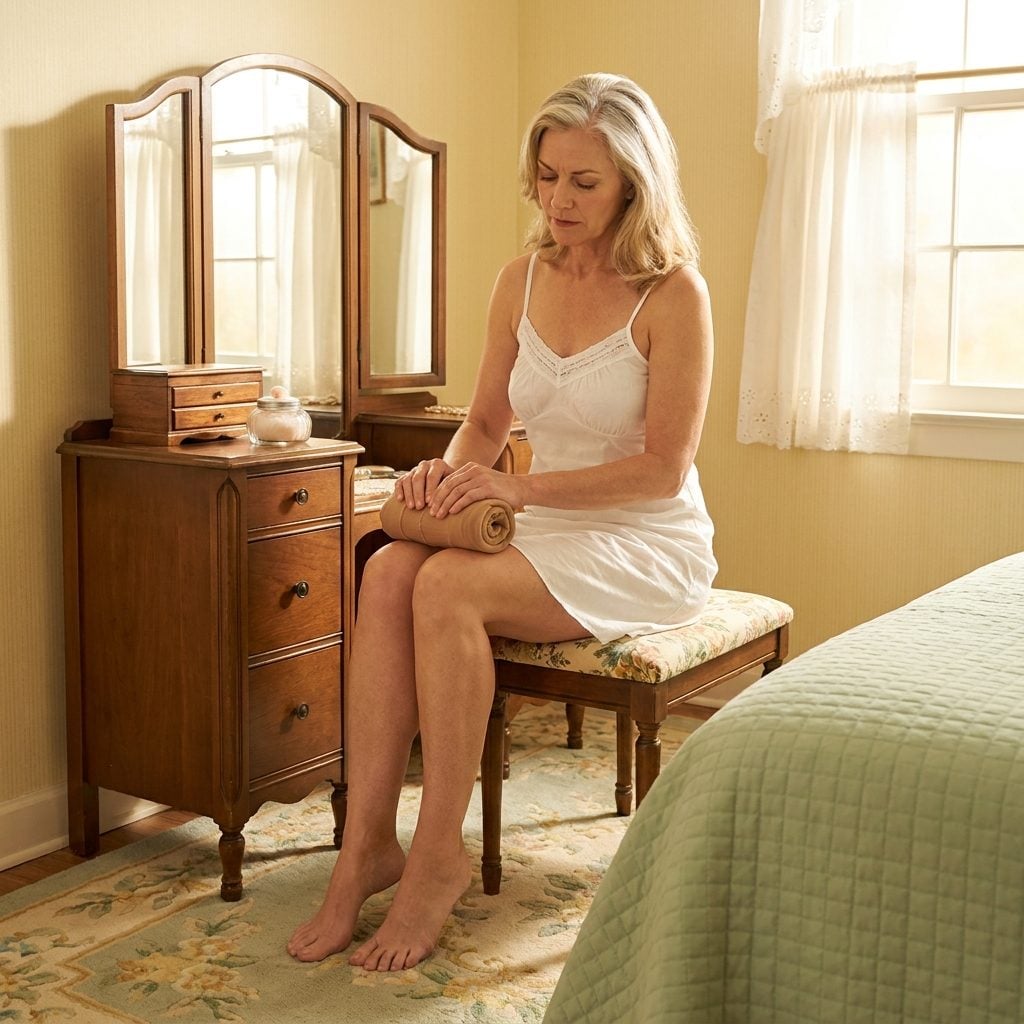
If you yanked them on like socks, you deserved whatever happened next. That was the unspoken judgment, and honestly, it was fair.
The correct method: gather each leg of the pantyhose from waistband to toe, rolling them into a neat little donut. Slip your toes in first. Then ease the fabric up, inch by inch, smoothing as you go. Both legs done, then the careful shimmy to pull the waistband into place. The whole production took a solid two minutes. Rushing was how you ended up with a fingernail-sized hole before 8 AM. I learned this the hard way more times than I’ll admit.
20. Pantyhose Before Jewelry: The Dressing Order Nobody Taught You Twice
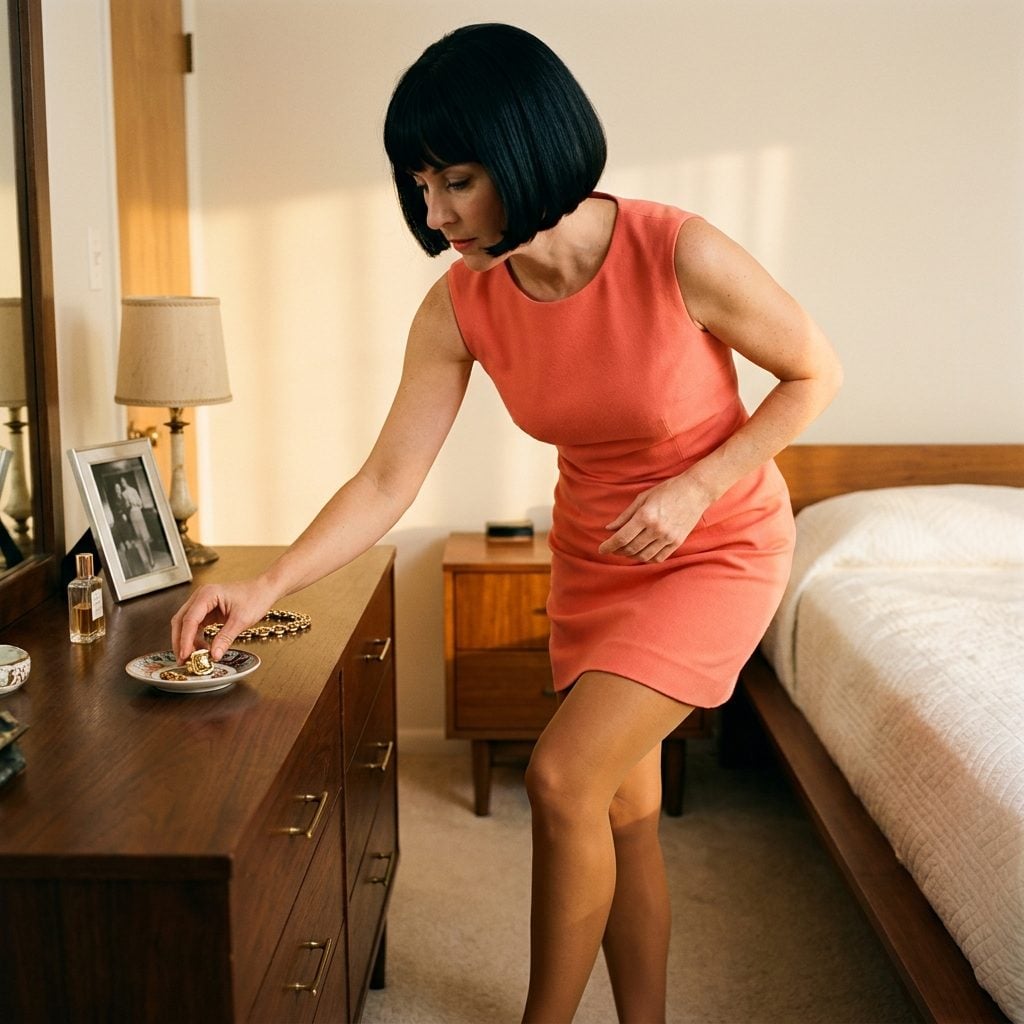
One snag from a diamond ring or a loose bracelet clasp and the whole operation was over before it started. So you learned the order: pantyhose first, everything else second. Rings went on after. Bracelets after. Even watches, if the band had any rough edge at all.
It sounds fussy now. It was just common sense then, the kind of knowledge passed between women like a whispered inheritance. Your mother showed you. Or your older sister. Or you destroyed one pair and never made the mistake again.
19. Sitting Down Was a Risk Assessment: The Constant Threat of Rough Wooden Chairs
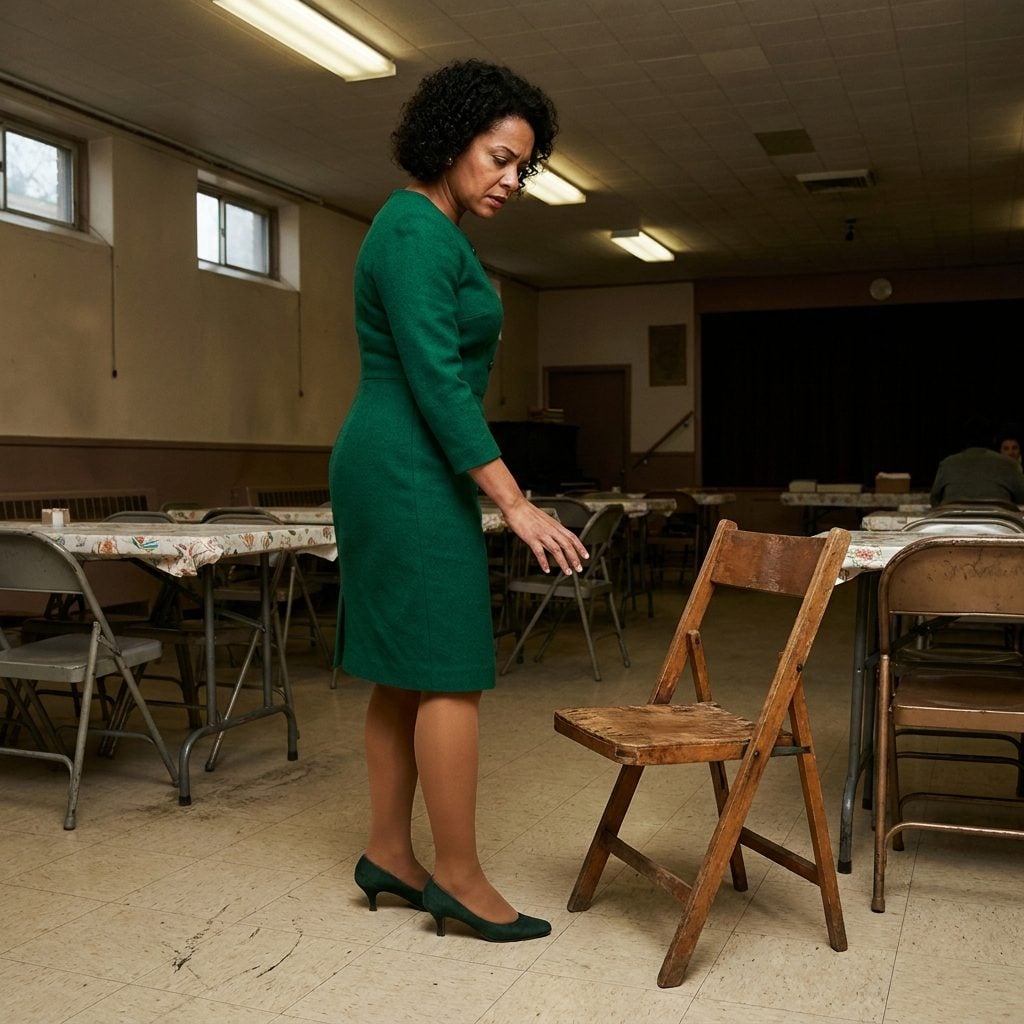
Every chair was a threat assessment. Smooth plastic? Fine. Upholstered? Safe. But an unfinished wooden folding chair at a church potluck or a school assembly? That was a snag waiting to happen, and you could feel the danger before you even sat down.
18. Seamless Pantyhose: The Status Upgrade That Changed Everything
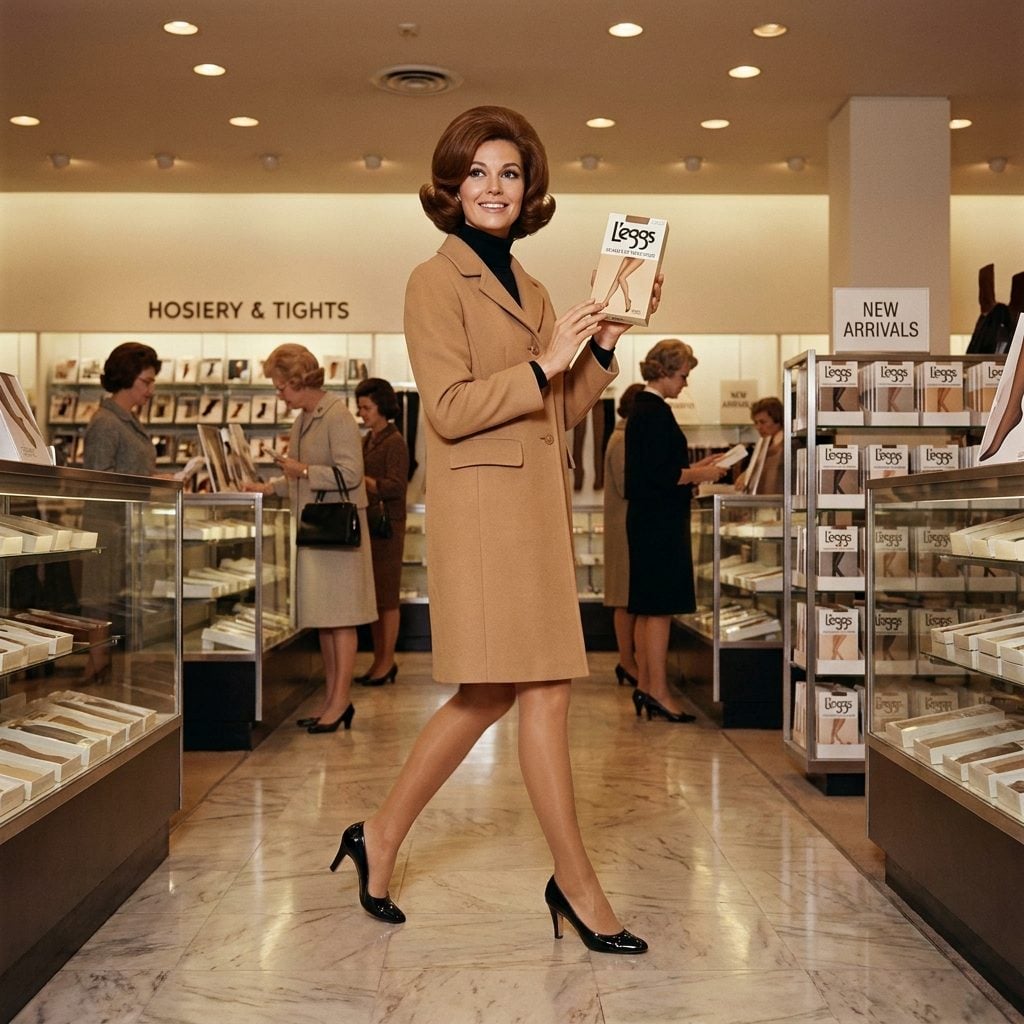
When seamless pantyhose arrived, it was like upgrading from a manual typewriter to an electric one. The old seamed styles required constant vigilance (see the next item on this list). Seamless meant freedom. Seamless meant you could cross your legs without worrying about a crooked line broadcasting your carelessness to the entire room.
They cost more. Noticeably more. And buying them felt like a small declaration that you had standards, that you’d arrived at some minor tier of sophistication. The packaging even looked sleeker, like it knew it was better.
Of course, they still snagged on rough chairs. Progress has its limits.
17. The Back-Seam Mirror Check: A Pre-Flight Inspection You Never Skipped
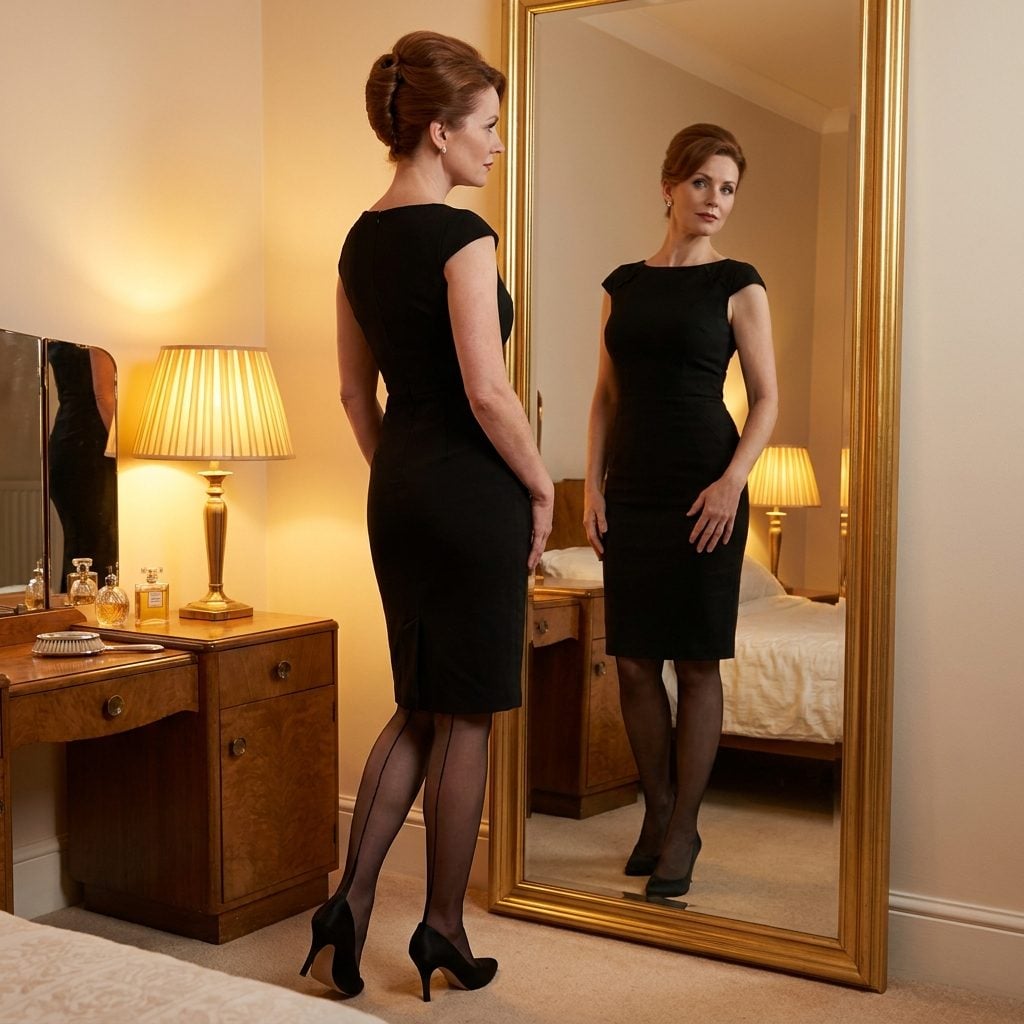
Before seamless took over, seamed pantyhose demanded something extra from you: a final inspection. You’d stand with your back to the mirror, crane your neck, and check that both seams ran in a straight, centered line from the back of your ankle to just behind your knee. A crooked seam was the 1960s equivalent of walking around with spinach in your teeth. Everyone noticed. Nobody told you.
Some women enlisted help. “Is my seam straight?” was a question you asked your sister, your coworker, your mother, your best friend at the restaurant table. It was a small act of trust, really. You were asking someone to look at the back of your legs and tell you the truth.
And if the seam twisted after you sat down? You excused yourself and fixed it in the ladies’ room. Because that’s what you did. You maintained the line.
16. Girdles and Garter Belts Were the Price of Admission Before Pantyhose Even Existed
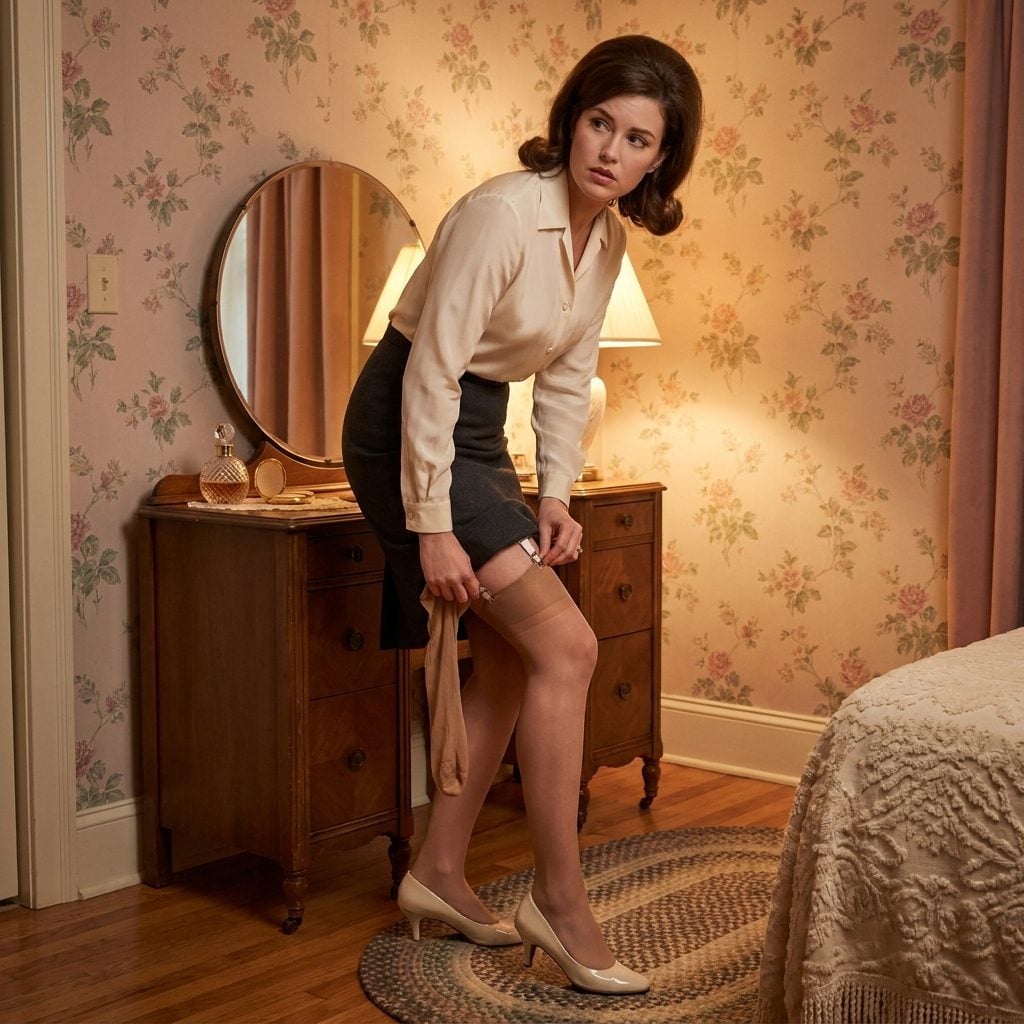
Before the one-piece pantyhose revolution hit around 1959, getting dressed from the waist down was a multi-step ordeal. You stepped into a girdle or clipped on a garter belt, attached each stocking individually, and then spent the rest of the day praying nothing shifted when you bent down to grab your handbag. The hardware alone ate five minutes of your morning. And if one clip popped loose during a meeting or a church service? You felt it instantly. You could do absolutely nothing about it.
The girdle wasn’t optional. It got sold as figure-shaping, sure, but really it was the scaffolding that held your stockings up — no girdle, no stockings, and without stockings you weren’t leaving the house looking “finished.” Young women today hear “garter belt” and picture a lingerie drawer. We think Tuesday morning, 7:15 AM, already running late.
15. Hand-Washing Your Hosiery in the Bathroom Sink Like It Was a Nightly Ritual
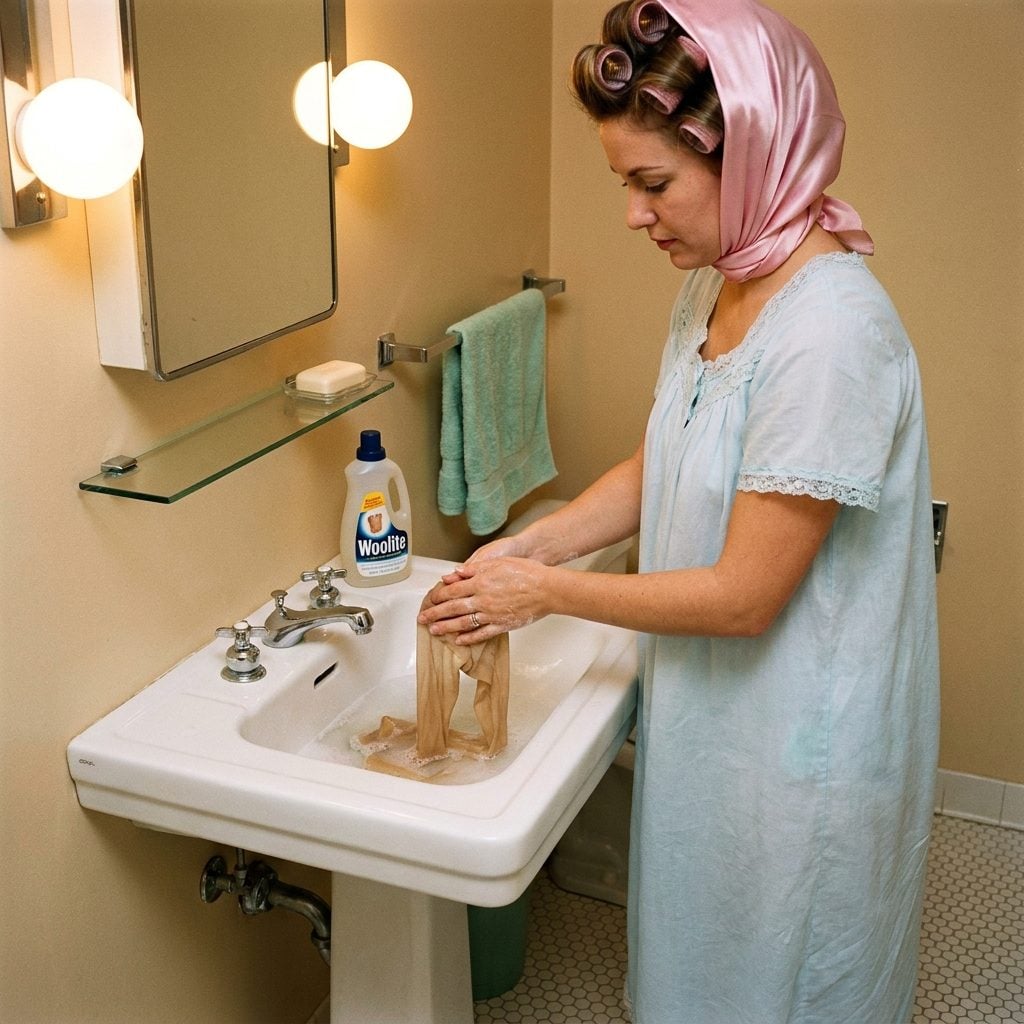
Every night. You’d fill the bathroom sink with lukewarm water, add a squeeze of Woolite or a sliver of Ivory soap, and gently knead each pair of pantyhose like you were handling something borrowed from a museum. Not some extra-credit domestic goddess move — basic maintenance.
A pair of good hosiery cost real money relative to what you earned, and tossing them in the washing machine was how careless people lived. The agitator would shred nylon in a single cycle. So you stood at the sink, water up to your wrists, swirling fabric in soapy circles while the rest of the house got quiet. Something almost meditative about it, honestly. Nobody called it that at the time. Nobody called anything that at the time.
14. Hanging Pantyhose to Air Dry on the Shower Rod Because the Dryer Was the Enemy
❤️ Would you like to save this?
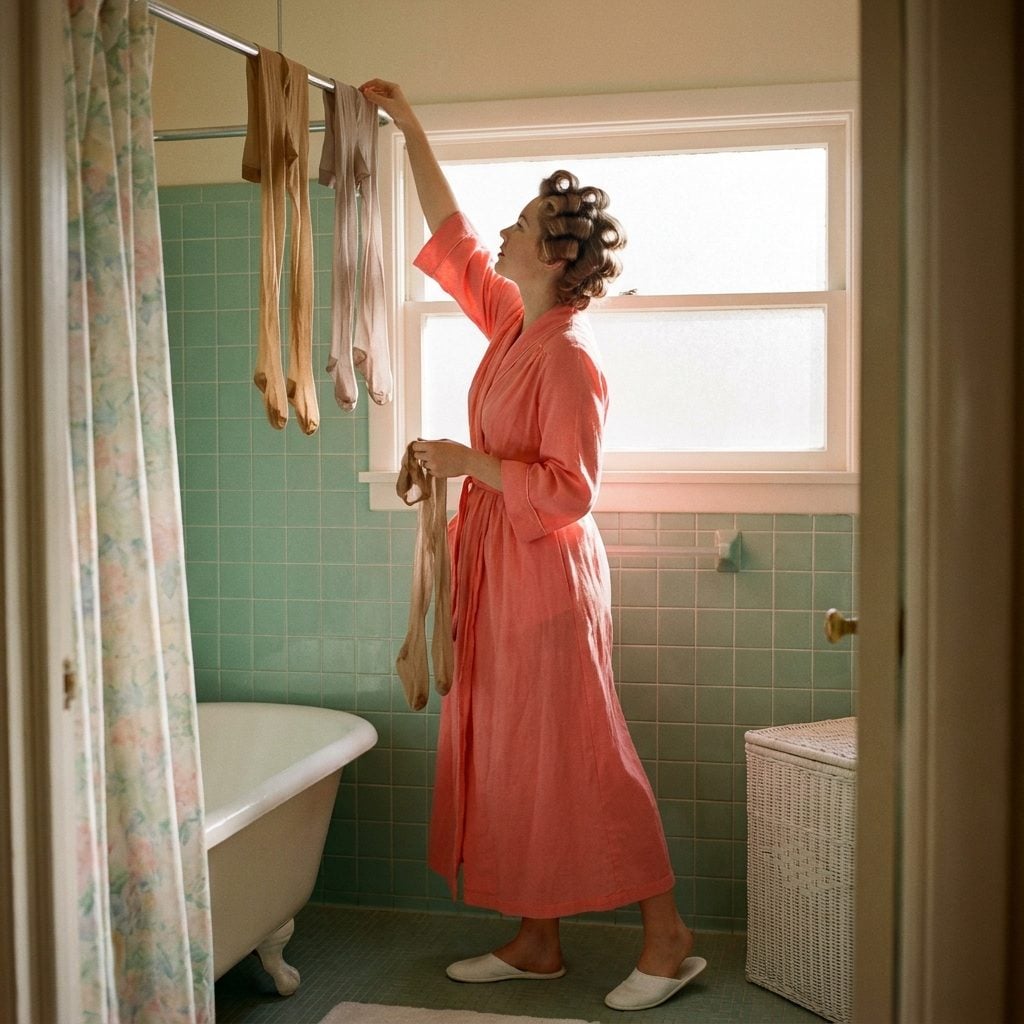
Walk into any woman’s bathroom in 1965 and you’d find them: two or three pairs of pantyhose draped over the shower curtain rod, stretched out like ghostly leg-shaped flags. Maybe a pair hung from the towel rack. Maybe one dangled from the doorknob because you’d run out of space.
The clothes dryer was a death sentence for hosiery — heat destroyed the elasticity, tumbling created snags, and one cycle could turn a perfectly good pair into something resembling cheesecloth. So air drying it was. Your husband learned to navigate around the nylon curtain when he needed a shower, your kids assumed that’s just how bathrooms looked, and frankly they were right.
13. Removing Your Shoes With Surgical Precision So Your Toenails Wouldn’t Destroy Everything

You didn’t kick off your pumps. You eased each foot out like you were defusing a very small, very expensive bomb.
One jagged toenail edge catching the toe of your stocking could end the whole pair. If you were at someone else’s house, slipping off shoes at the door, you had an audience for the operation — so you’d press one heel against the other shoe, pull slowly, and keep your toes pointed and together like a reluctant ballerina. The whole performance took maybe ten seconds, but those ten seconds carried the accumulated frustration of a woman who’d already ruined two pairs that week and couldn’t stomach a third.
12. Filing Your Toenails Smooth Specifically to Protect a $1.50 Pair of Hose

Sounds absurd until you do the math. A pair of pantyhose in the mid-1960s cost a dollar or two — adjusted for inflation, that’s a meaningful sum for something you might destroy in a single wearing. So yes, you filed your toenails. Religiously. Smooth as river stones.
Not for aesthetics. Not for a pedicure. For hosiery preservation. The emery board on the nightstand wasn’t there because you were vain — it was there because a tiny rough edge on your big toe could cost you a day’s lunch money. We approached toenail maintenance the way a mechanic approaches tire pressure: operational requirement, not indulgence.
11. Wearing Pantyhose in 95-Degree Heat Because Bare Legs Were Simply Not Done
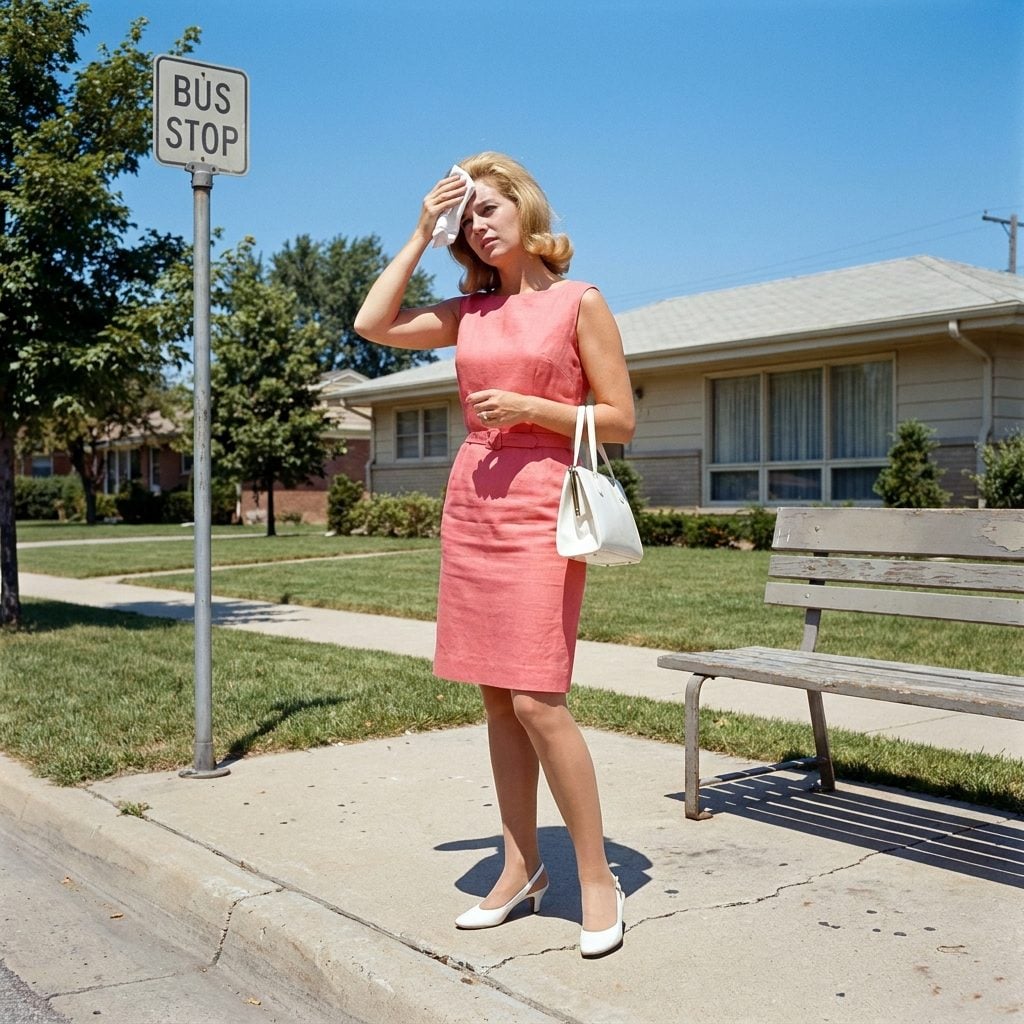
July. August. The kind of heat that softens asphalt. And there you were, encased from waist to toe in nylon, walking to the bus stop with sweat pooling in places you couldn’t politely acknowledge.
Bare legs in public, for most of the 1960s, registered somewhere between “unfinished” and “inappropriate.” Didn’t matter if the temperature hit triple digits — a woman in a skirt without hosiery looked undressed. The office required it. Church expected it. Even running errands at the department store, you wore them because everyone wore them, and going without announced something you didn’t want announced.
The discomfort was relentless. Your thighs stuck together, the waistband rolled, and complaining about it felt like complaining about gravity. It was just a fact of being female and dressed. Younger women genuinely cannot fathom how recently “bare legs in the workplace” counted as rebellious.
10. Hiding Garters and Stocking Clips Under a Fitted Dress Like a Secret Agent
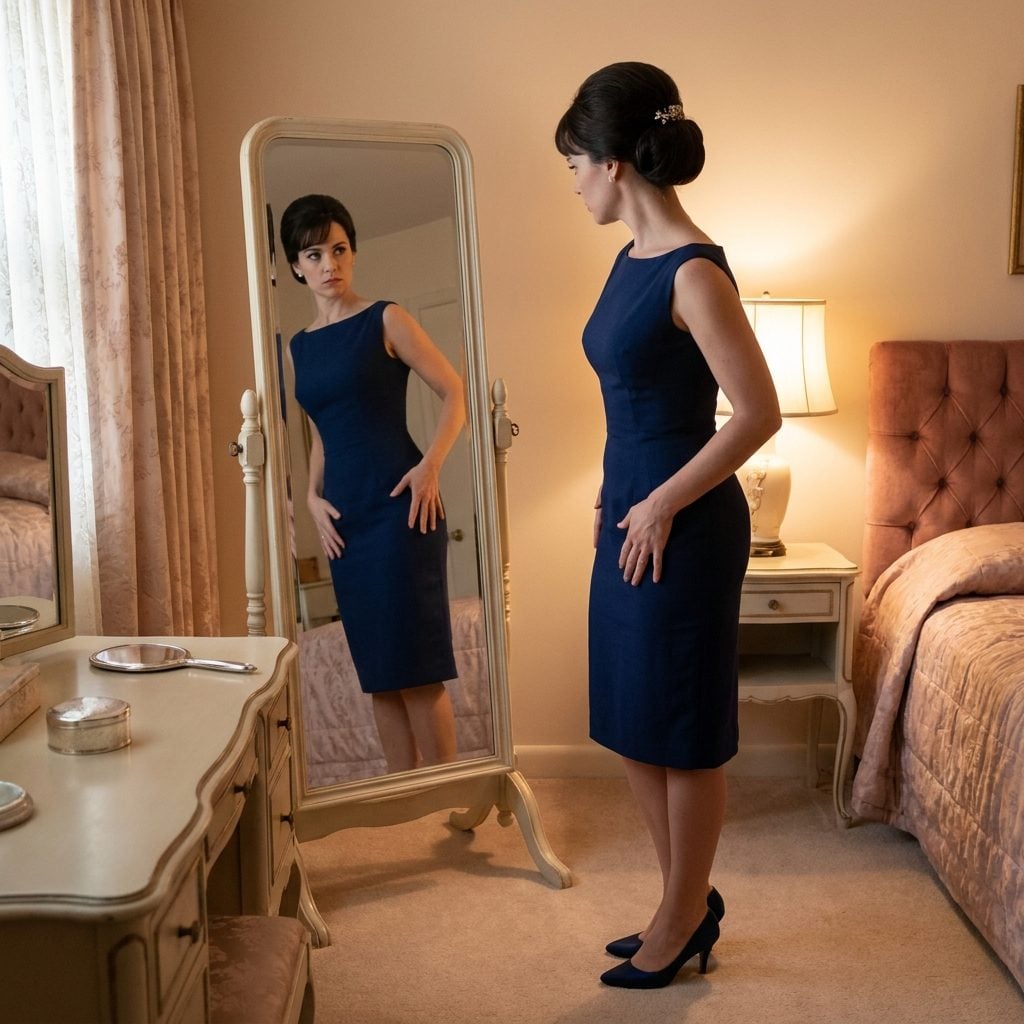
The whole point of the hardware was that nobody could know about the hardware. Garter clips, stocking tabs, those little rubber nubs gripping the stocking tops — all of it had to vanish under a smooth dress silhouette. If someone spotted the outline of a clip through your skirt? Mortifying.
So you became an expert in placement. Clips angled at the sides rather than straight down the front and back. Girdles chosen for flatter fasteners. You checked your silhouette in the mirror by bending, sitting, and walking before leaving the bedroom — a whole inspection routine performed in private so the public version of you could look “effortless.” The bitter comedy of that word has never been lost on those of us who lived through the process.
9. Owning Separate Hosiery for Daytime and Evening Because One Shade Didn’t Fit All Occasions
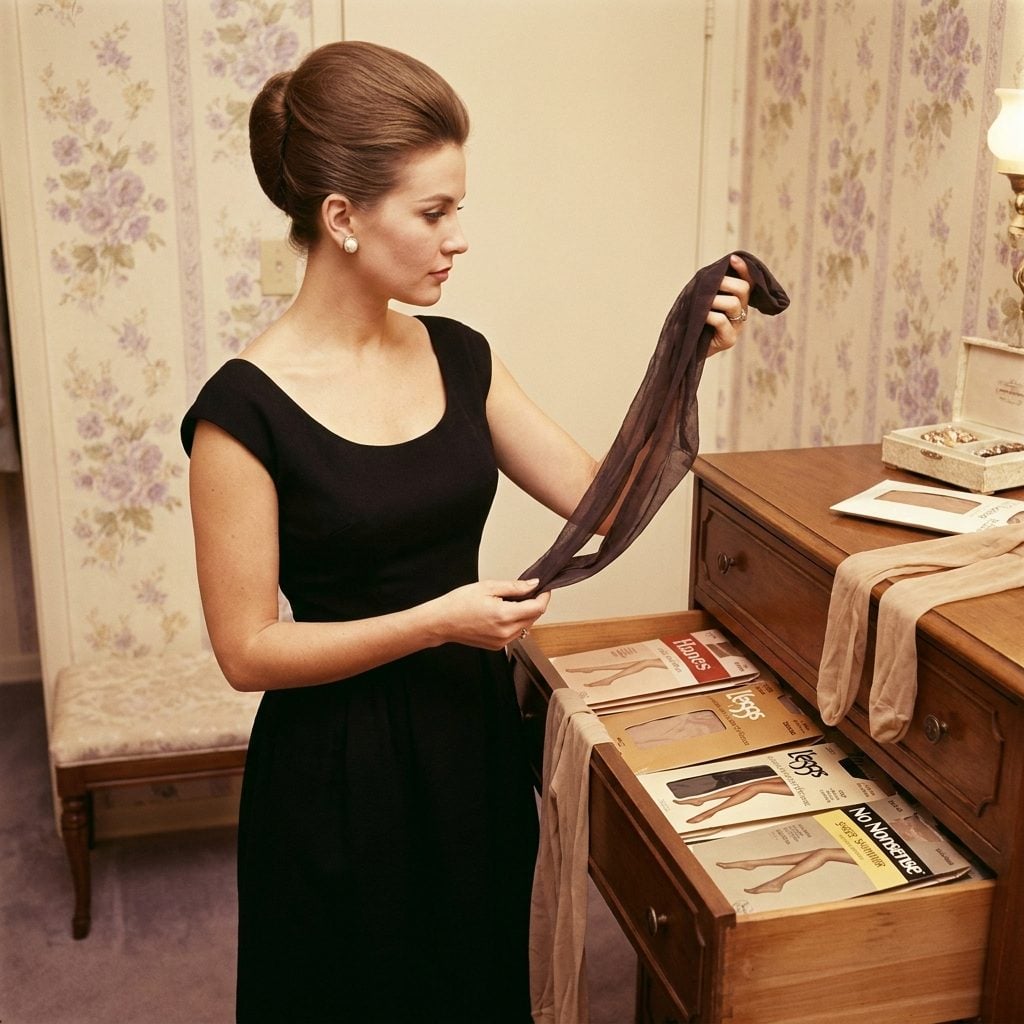
Nude for the office. Barely-there for cocktails. Dark for winter evenings. Your hosiery drawer was sorted with the same logic some people bring to a wine collection: occasion, season, and what you were pairing it with.
Daytime hosiery ran toward practical — “suntan,” “natural,” “barely beige” in a heavier denier that could survive a workday. Evening pairs were sheerer, sometimes with a subtle shimmer or a darker tone like “off-black” that lengthened the leg under a cocktail dress. Wearing your daytime hose to a dinner party was like wearing sneakers to a wedding: technically your feet were covered, but you’d missed the assignment entirely.
8. Never Crossing Your Legs While Seated Because a Run Could Start Right There at the Knee

Sitting with your ankles crossed and knees together wasn’t a deportment school leftover. It was tactical. Crossing at the knee created friction at the exact point where nylon was most vulnerable, and one good cross-uncross cycle could birth a run that crawled up your thigh before dessert arrived.
So you sat like a duchess — ankles together, knees together, hands in your lap. Young women sometimes assume this was purely about modesty or some outdated etiquette rule, and sure, modesty played a part. But the practical driver was blunter: that pair of pantyhose needed to survive until you got home. Every sitting position was a quiet cost-benefit analysis running beneath whatever conversation you were pretending to focus on.
7. Treating a Visible Run in Your Stockings Like a Minor Public Disgrace
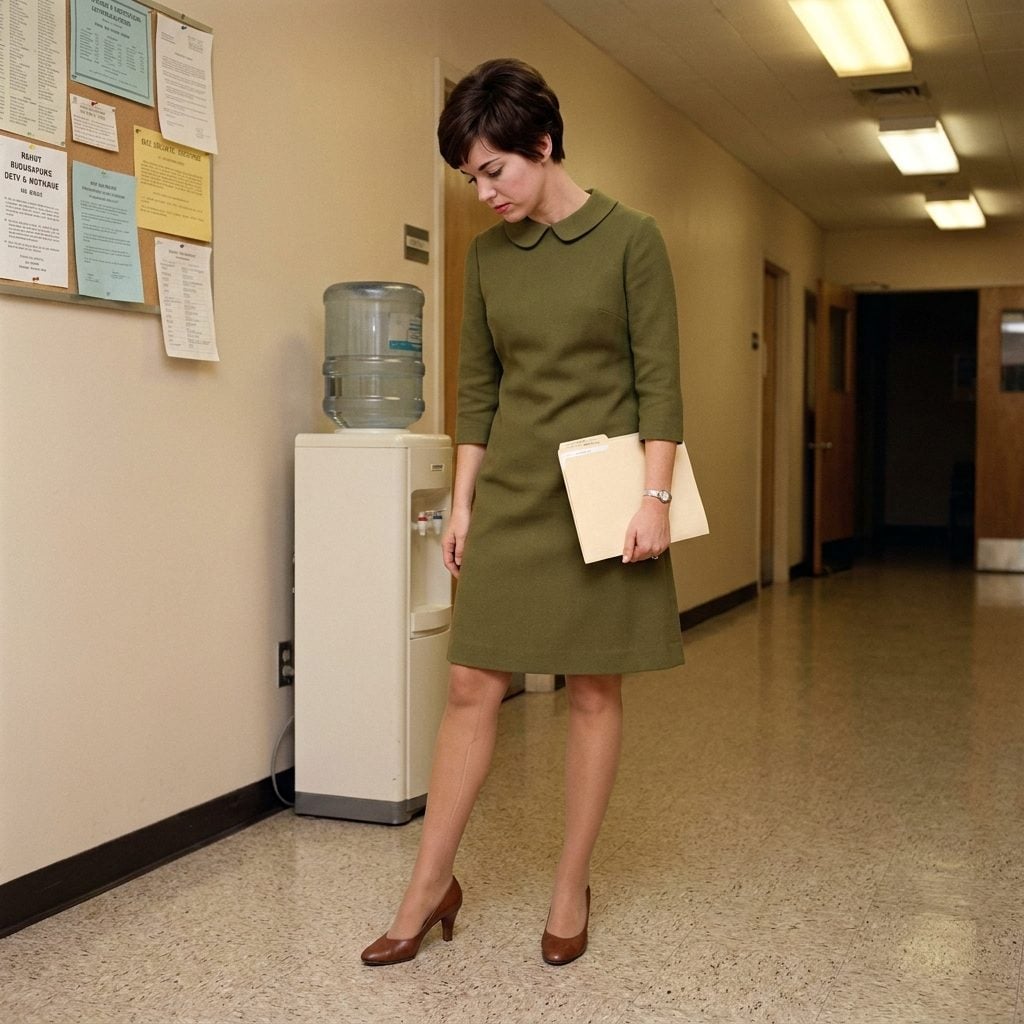
You felt it before you saw it — that tiny release of tension somewhere around your calf or behind your knee. Then came the slow, sick awareness that a run was traveling, visibly, while you stood in a grocery store checkout line or sat in a restaurant booth where you couldn’t exactly slip away unnoticed.
A run wasn’t just a damaged garment. It was a social signal suggesting you hadn’t prepared properly, that your personal standards had slipped. Absurd, obviously — nylon tears if you look at it wrong — but the flush of embarrassment was automatic and universal regardless.
Women carried spare pairs in their handbags because of this. Clear nail polish lived in desk drawers at work, dabbed onto the edges of a run to stop it spreading. And when pantyhose finally stopped being mandatory decades later, the collective relief was almost physical. I don’t miss the anxiety. Not remotely.
6. Buying “Support Hose” for Long Workdays Like They Were Medical Equipment
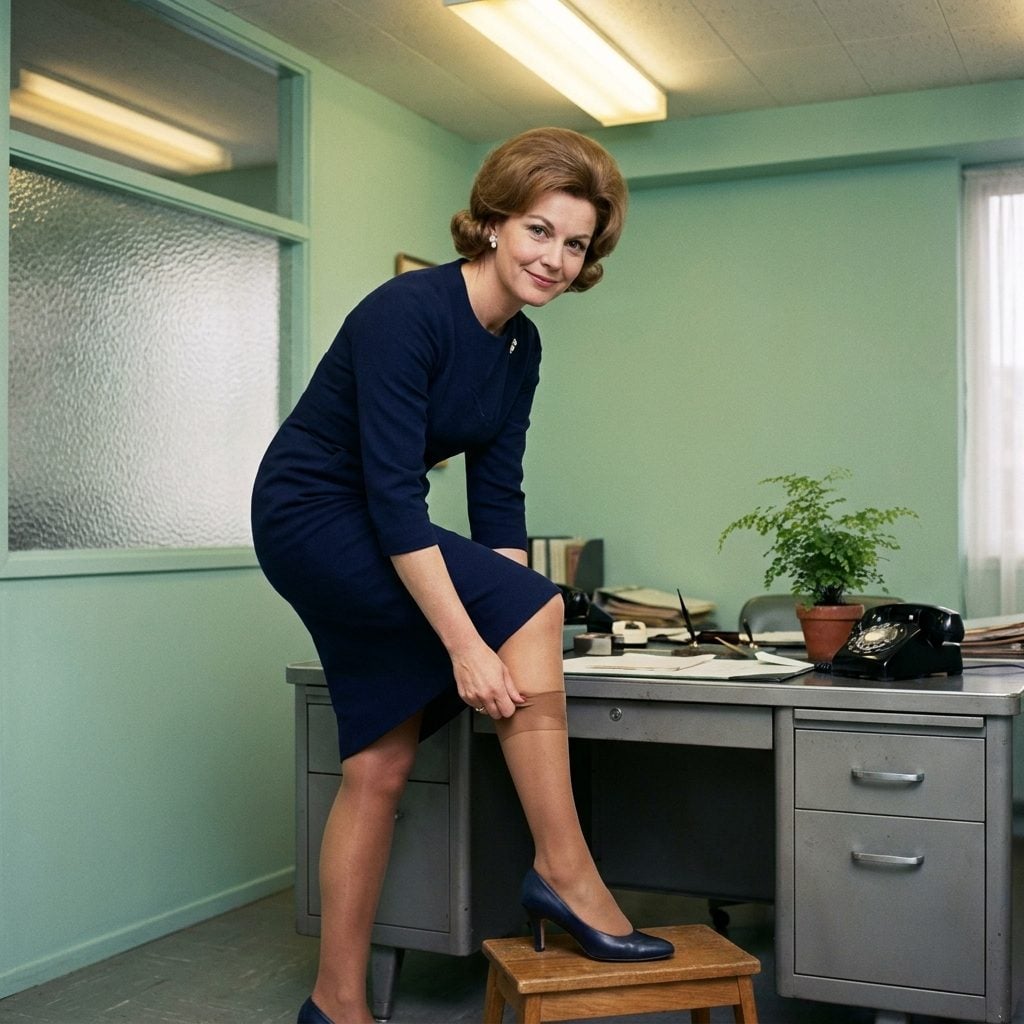
The word “support” did a lot of heavy lifting in the 1960s hosiery aisle. These weren’t your regular pantyhose — thicker, tighter, packaged in something that looked suspiciously pharmaceutical. You bought them when your shift started at 7 AM and didn’t end until your feet were basically screaming at you from inside your leather pumps.
Flight attendants swore by them. Teachers lived in them. Office workers kept a spare pair in their desk drawer right next to the aspirin. The compression was real, and honestly? The concept wasn’t wrong. Modern compression stockings sell for serious money now and get called “wellness technology.” In 1964, your mother just called them her good hose and moved on with her day.
5. Coordinating Your Hosiery With Your Gloves, Shoes, and Handbag Like a Chess Game

This was not optional. Mismatched hosiery in the 1960s was like showing up to a job interview with your shirt untucked — an immediate tell. Your stockings matched your shoes. Or your gloves. Or your structured leather handbag. Ideally all three.
The coordination rules were unwritten but absolute. Taupe hose with taupe pumps and taupe clutch for daytime. A slightly warmer beige if you were wearing cognac accessories. Black shoes? The hosiery had better be a shade of sheer charcoal or smoke, not nude. Nude with black shoes was a rookie mistake that your mother-in-law would clock instantly, never mention, and never forget.
Some women kept index cards in their dresser drawers noting which hosiery shade went with which outfit. I’m not even slightly exaggerating. That was just Tuesday.
4. Replacing Stockings Every Other Week Because Runs Were Basically Inevitable
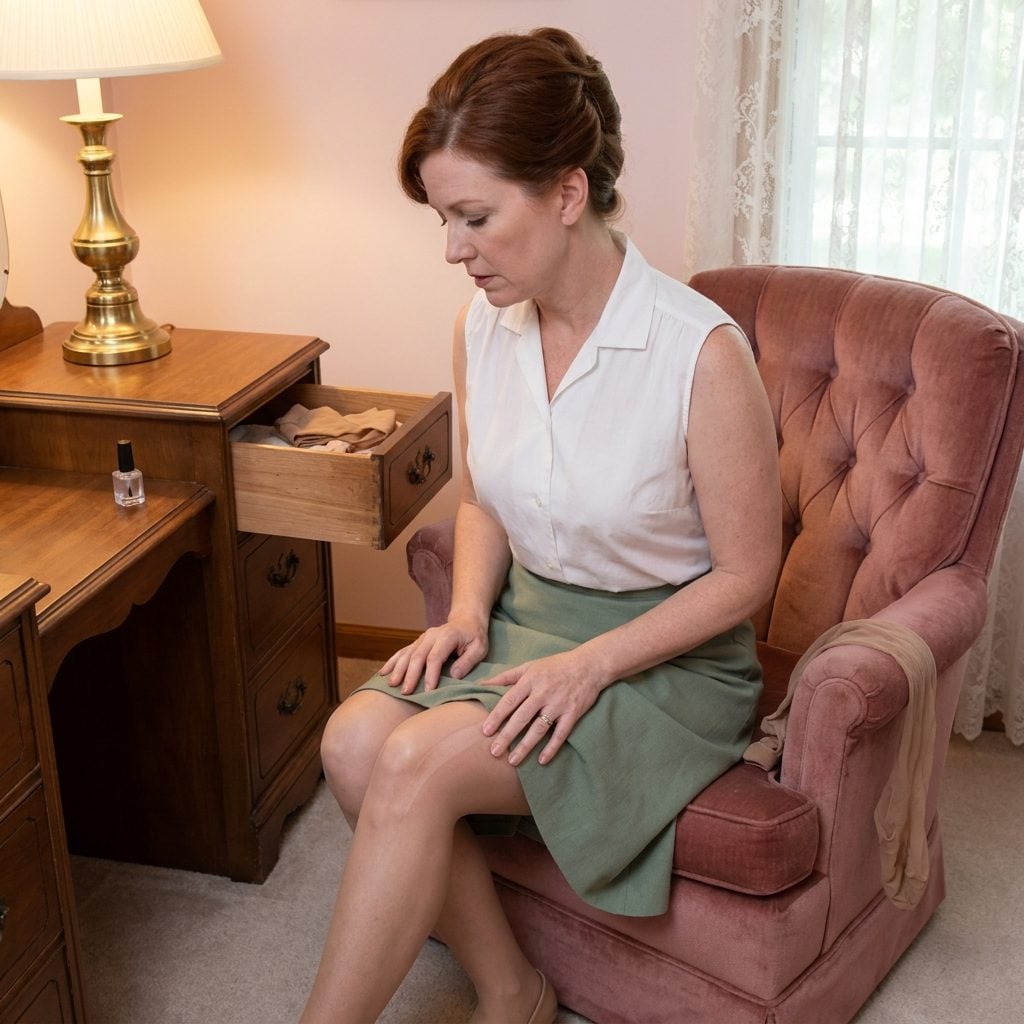
A run in your stockings wasn’t a question of if — only when. Desk drawer. Fingernail. Car door handle. Zipper. Rough spot on a wooden chair. Breathing too aggressively near a rosebush could probably do it.
Women in the 1960s budgeted for hosiery the way we budget for coffee: recurring, nonnegotiable, weirdly expensive over time. Department stores sold them in multi-packs for exactly this reason, and every woman alive had a drawer dedicated entirely to pantyhose in various states of usability. The good pair. The backup pair. The pair with the run you could hide under a longer skirt. And then the pair you kept “just in case” even though both legs had runs going in opposite directions — which, if we’re being honest, was most of them by mid-month.
3. Wearing a Slip Under Every Dress So Your Pantyhose Didn’t Cling to the Fabric

Nobody under 35 even knows what a slip is anymore, and that’s genuinely wild to me. In the 1960s, leaving the house without one was like leaving without underwear — it simply did not happen. Slips existed partly for modesty, partly for silhouette, but their most critical daily function? Acting as a buffer between your dress and your pantyhose.
Without a slip, nylon pantyhose grabbed onto fabric like velcro. Your skirt would ride up, bunch, twist around your thighs in a way that made you look like you’d gotten dressed during an earthquake. Static cling was the perpetual enemy. A silk or nylon slip created a smooth layer that let everything hang the way it was supposed to — full slips for dresses, half slips for skirts. Every woman owned at least three, and if you didn’t, you borrowed one from your sister or your roommate and nobody thought twice about it.
2. Choosing Reinforced Toe Pantyhose for Closed-Toe Heels (And Sandal Toe for Open Ones)
❤️ Would you like to save this?
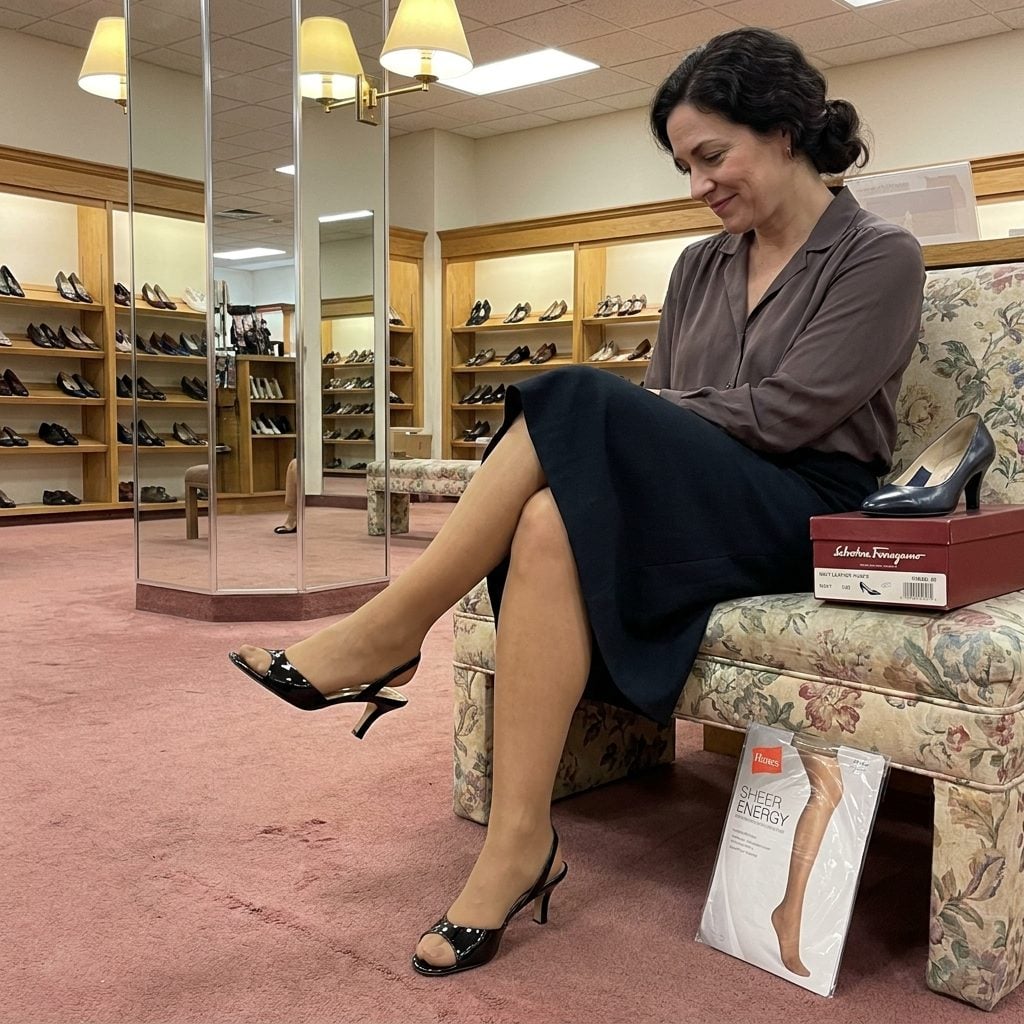
Subcategories within the subcategories. Reinforced toe. Sandal toe. Sheer toe. Control top with reinforced toe. Sandal foot with sheer waistband. The hosiery aisle had more options than most wine lists, and you were expected to navigate all of it without a guide.
Closed-toe pumps got the reinforced version because that darker band across the toes stayed invisible inside the shoe, and the thicker nylon held up longer against the friction of leather. But wearing open-toe sandals with reinforced-toe hose? Absolutely not. That visible seam across your toes broadcast to everyone that you didn’t know the unspoken code.
Sandal-toe pantyhose existed to fix this exact problem — sheer all the way to the tip. More expensive, more fragile, more likely to get a run by noon. But your toes looked right in your summer slides, and looking right was the whole currency.
1. Getting Fitted for Pantyhose at the Department Store Counter Like It Was a Medical Consultation
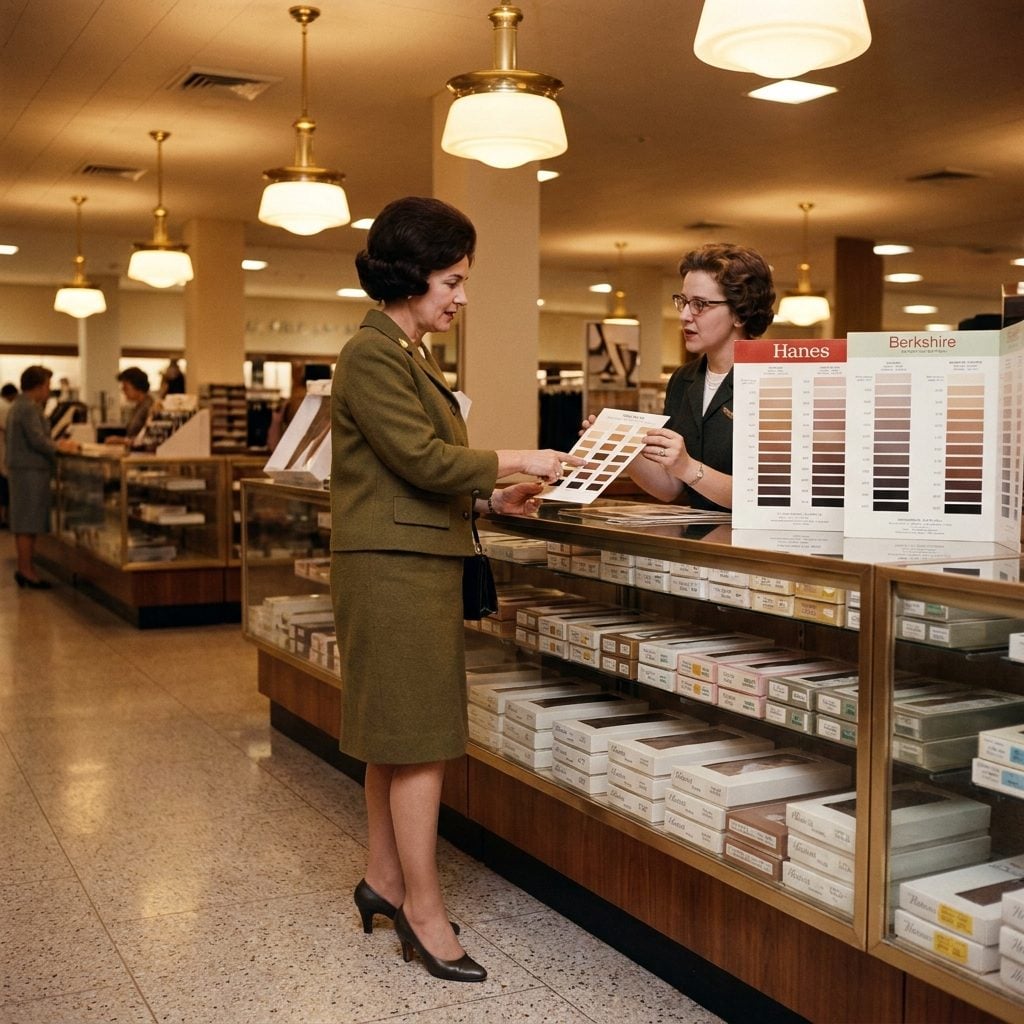
Before self-service killed it, the hosiery counter at a department store was a destination. It had its own saleswoman — someone who knew the difference between Barely There and Suntan and could eyeball your shade from across the floor. She would ask about your height, your weight, the shape of your calves, what shoes you planned to wear. None of this felt invasive. She was a professional, and frankly, you needed her.
The hosiery counter saleswoman knew things about color matching that most of us have completely lost. She was part stylist, part therapist, part magician.
Hanes, L’eggs, Berkshire, and Kayser all had their own shade charts mounted behind the counter. The saleswoman walked you through the differences between Coffee, Toast, Buff, and Barely Black the way a sommelier discusses vintages. You trusted her opinion more than your own eyes because she’d fitted hundreds of women and she knew — really knew — what worked with your particular skin tone under fluorescent office lighting versus daylight.
These counters started disappearing in the 1970s when brands moved to supermarket distribution and self-service packaging. L’eggs literally invented the egg-shaped container so women could grab hosiery at the grocery store without help. Convenient? Sure. But something genuine vanished with those counters. That woman saved you from buying the wrong shade and spending all day looking like your legs belonged to a completely different person.