❤️ Would you like to save this?
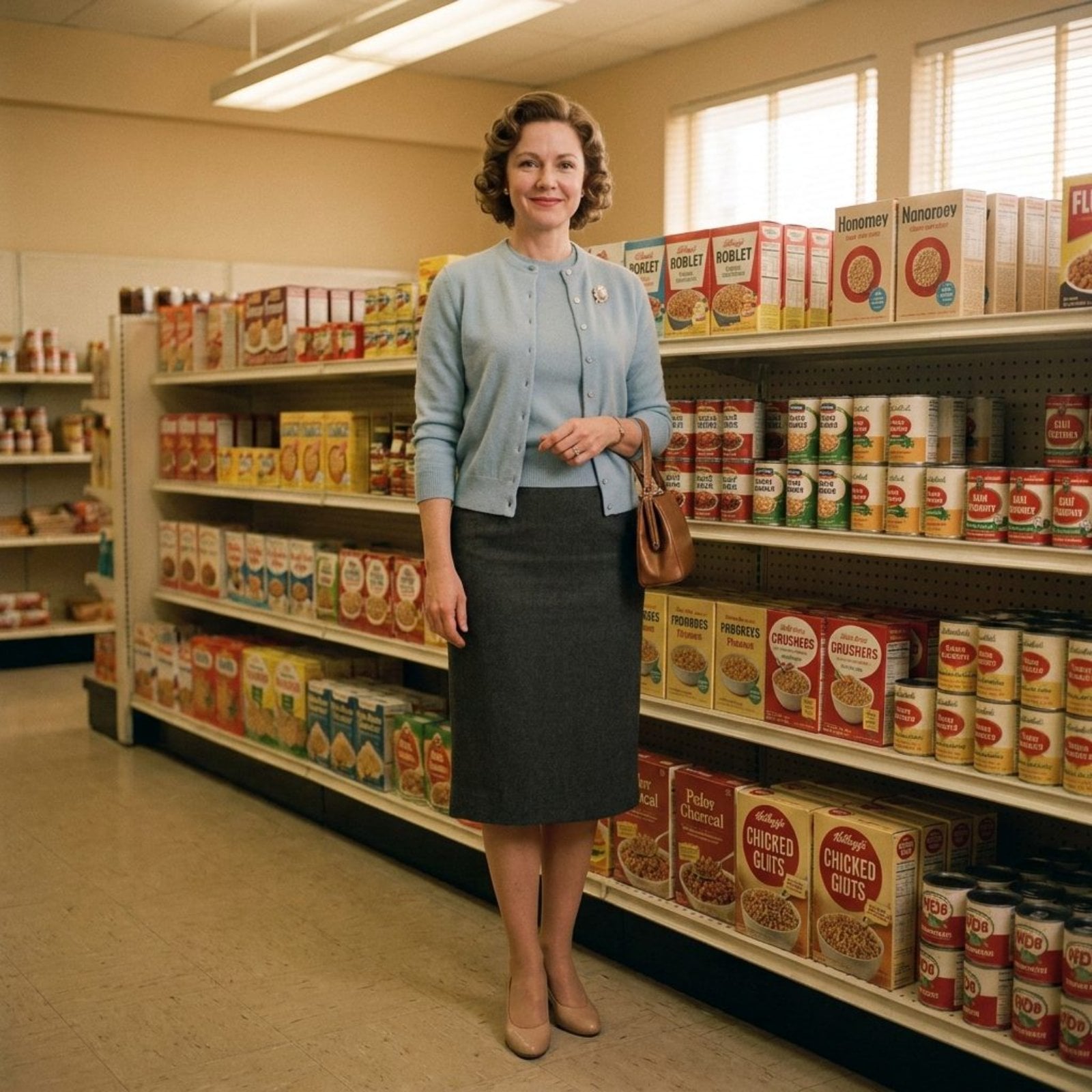
The click of kitten heels on linoleum. A full skirt brushing past a pyramid of canned peaches. The snap of a handbag clasp in the checkout line. Going to the Piggly Wiggly in 1953 demanded the same outfit coordination some of us now save for weddings—nobody blinked. You just got dressed, really dressed, to buy milk. Here’s what that looked like.
FYI, thanks to AI imagery software, we’re able to create very specific fashion and hairstyle examples to illustrate the points being made. In some cases, imagery is exaggerated to hammer home the point. Also, assume links that take you off the site are affiliate links such as links to Amazon. this means we may earn a commission if you buy something.
32. The Shirtwaist Dress With the Cinched Waist You Could Spot Three Aisles Away
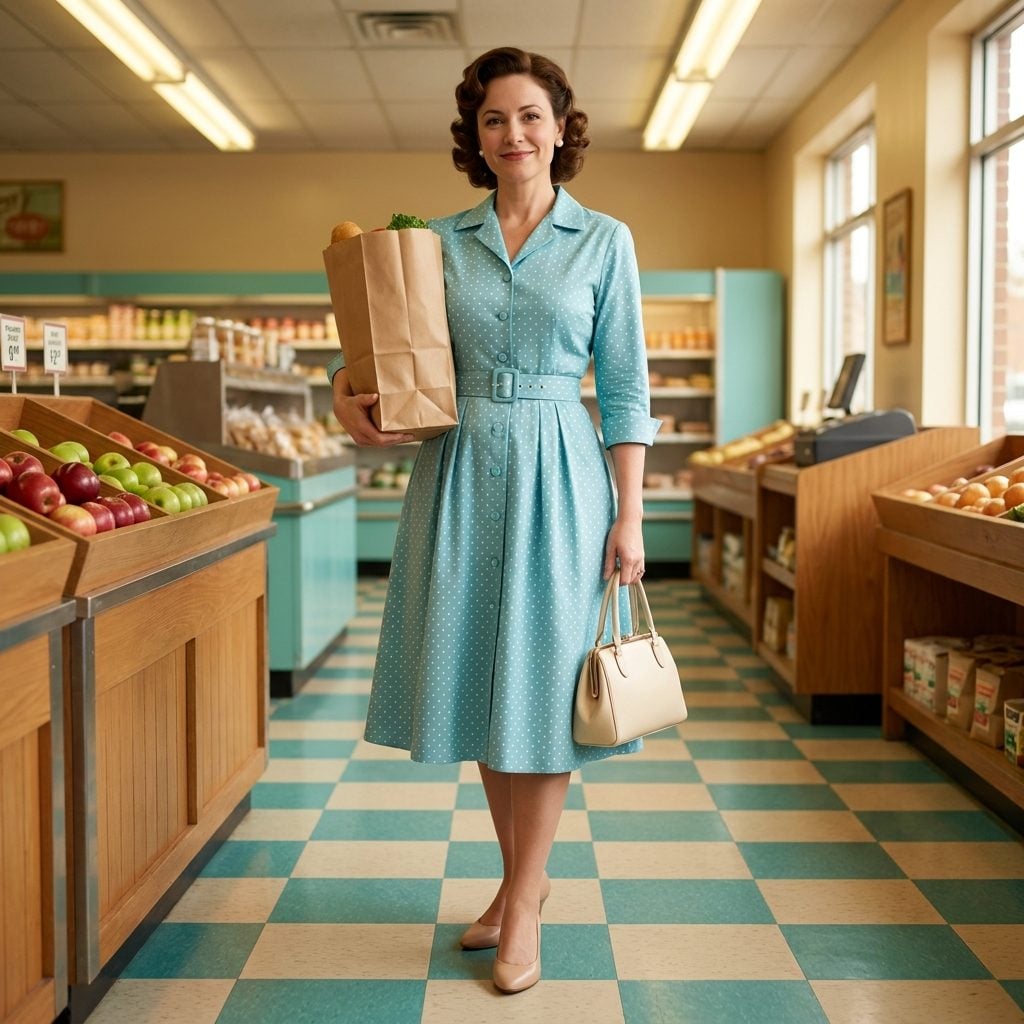
Buttoned to the collar, belted to within an inch of its life, and full enough in the skirt to demand a sideways shimmy past the canned goods display. The shirtwaist dress wasn’t special occasion wear. It was Tuesday. Leaving the house in anything less structured would have raised genuine concern among the neighbors, possibly whispered phone calls.
Most women kept four or five in rotation, each in a different cotton print—tiny florals, polka dots, stripes in colors that looked cheerful under fluorescent grocery lighting. Fitted through the bodice, nipped at the waist with a wide belt, then that generous swing of skirt that made pushing a metal grocery cart look like choreography. Dior’s New Look had trickled from Paris runways to Peoria sewing rooms, and by 1954 every Simplicity pattern catalog carried a version. Your aunt probably made three of them herself.
31. The Cotton House Dress in Gingham or Floral Print (a.k.a. Your Actual Uniform)
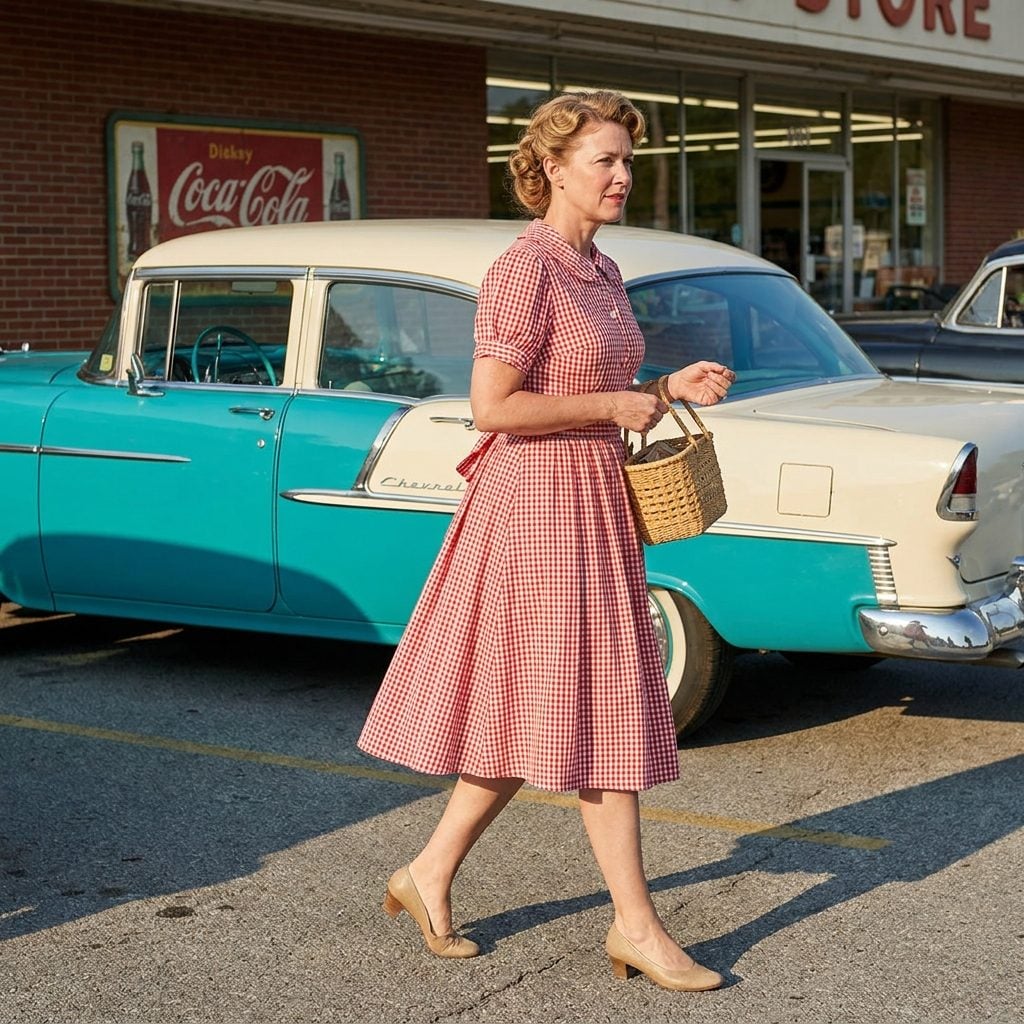
Less polished than the shirtwaist. More personal somehow. The cotton house dress was the garment you reached for without thinking—the one that smelled like Tide and ironing starch, cost a couple of dollars from the Sears catalog, and came in prints ranging from tiny cherries to bold gingham checks. It went everywhere with you: the kitchen, the yard, the A&P.
There was no shame in wearing your house dress to the store. Most of the women in the produce section had one on too. The difference between this and the shirtwaist was basically ambition. House dress said “I have things to do and this errand is one of seventeen.”
What Our Readers Say
- Everyday dressing looks different now: in a ThreadCurve poll, about two out of three readers said they reach for separates rather than dresses.
From ThreadCurve reader polls and votes.
30. An Apron Worn Right Over Your Dress Because You Didn’t Have Time to Take It Off
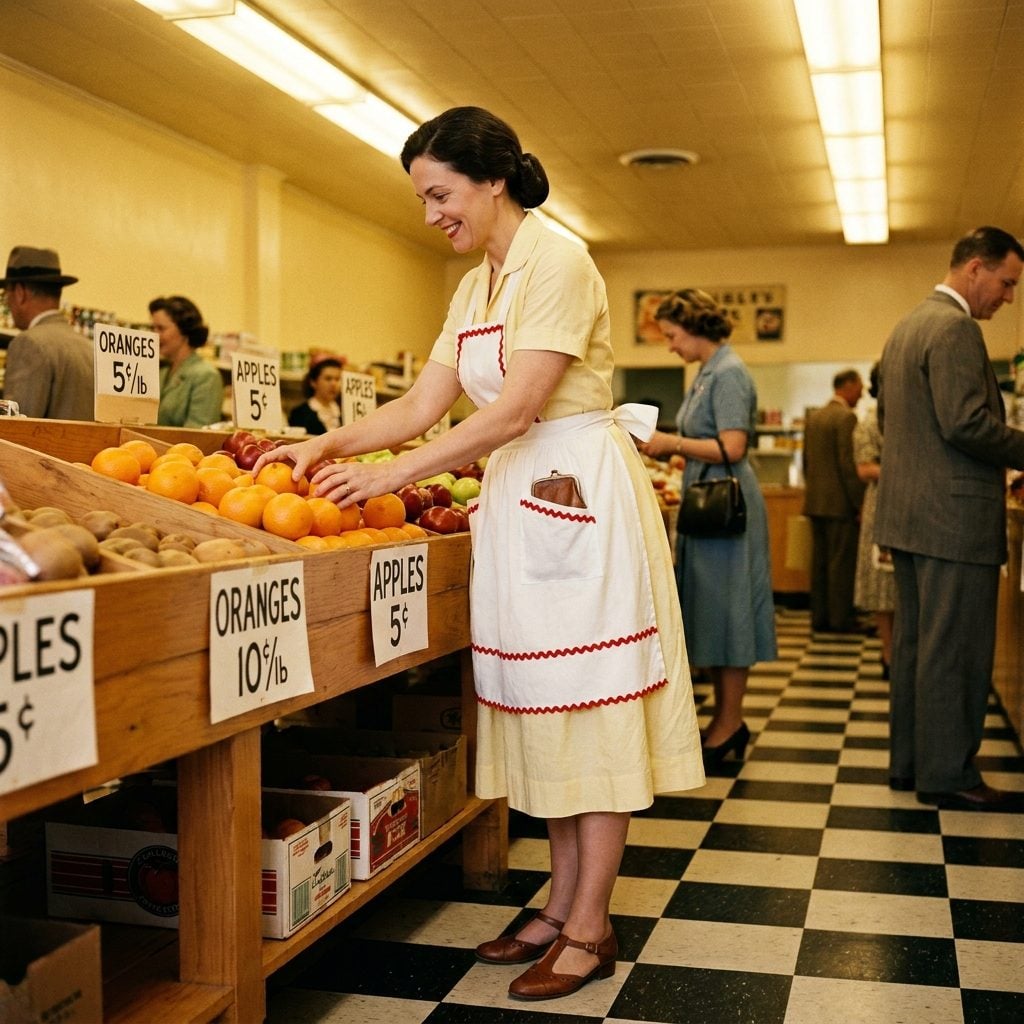
You were in the middle of something. Pie crust, probably. Or the breakfast dishes. Then you realized you were out of butter, grabbed your purse and car keys, and walked straight into the grocery store still wearing the apron you’d tied on at seven in the morning.
Nobody looked twice. A woman in an apron at the store just meant she was busy—competent, running a household at full speed. Wearing one over a dress was practically a badge of productivity: proof you were mid-task, not idle. Some women kept a dedicated “errand apron” that was cleaner than the cooking one, which is a level of organizational thinking I deeply respect and have never once achieved.
29. White Cotton Gloves, Even If You Were Just Buying Bread
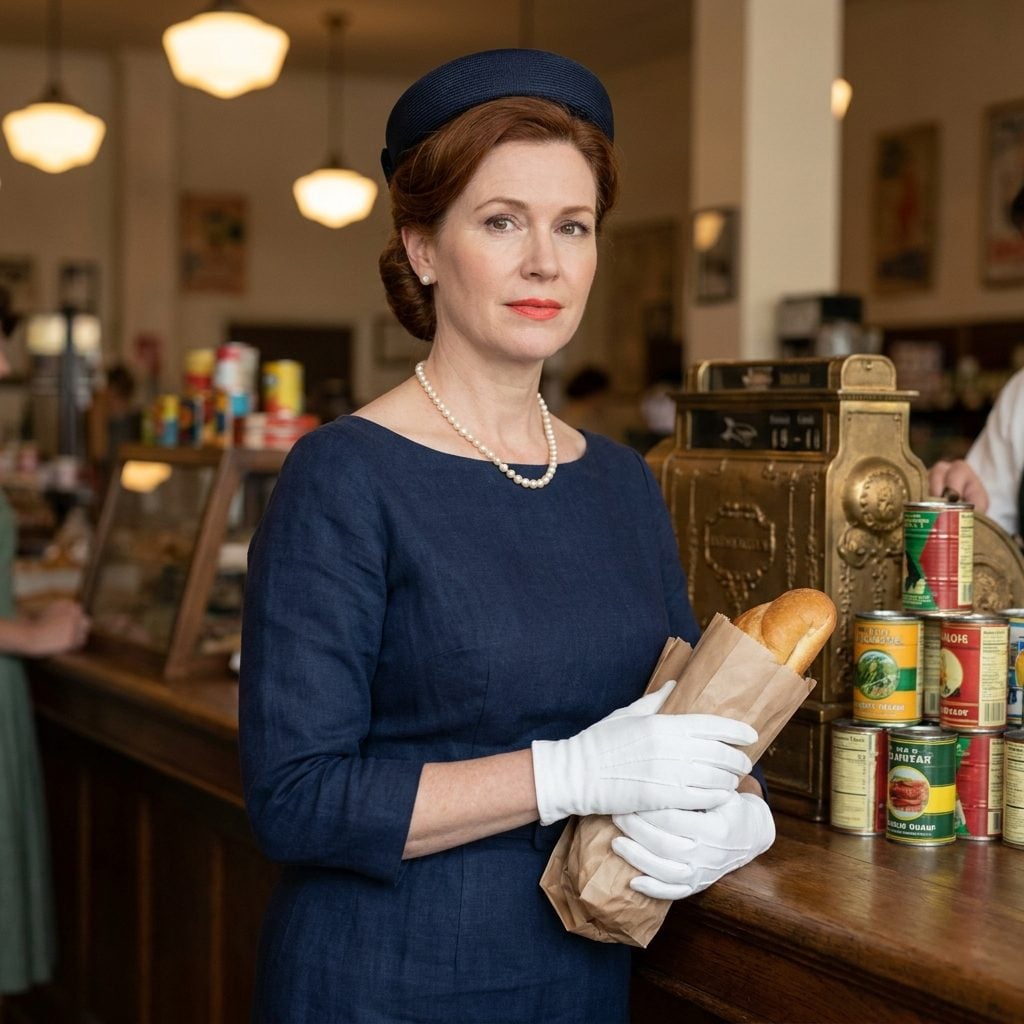
Wrist-length. Cotton. Spotless. You pulled them on before leaving the house and kept them on while squeezing the tomatoes—which raises practical questions nobody seemed interested in asking at the time. White cotton gloves for daytime errands were as automatic as shoes. Going without them? Like skipping your lipstick: technically possible, socially conspicuous.
Emily Post and the broader etiquette establishment had declared gloves non-negotiable for any public outing, grocery store included. Whiter the glove, sharper the impression. Keeping them pristine while handling canned goods and loose produce was the real domestic achievement nobody talks about. I suspect a lot of bleach was involved.
28. Cat-Eye Sunglasses That Made Every Trip to the Dairy Aisle Feel Like a Movie
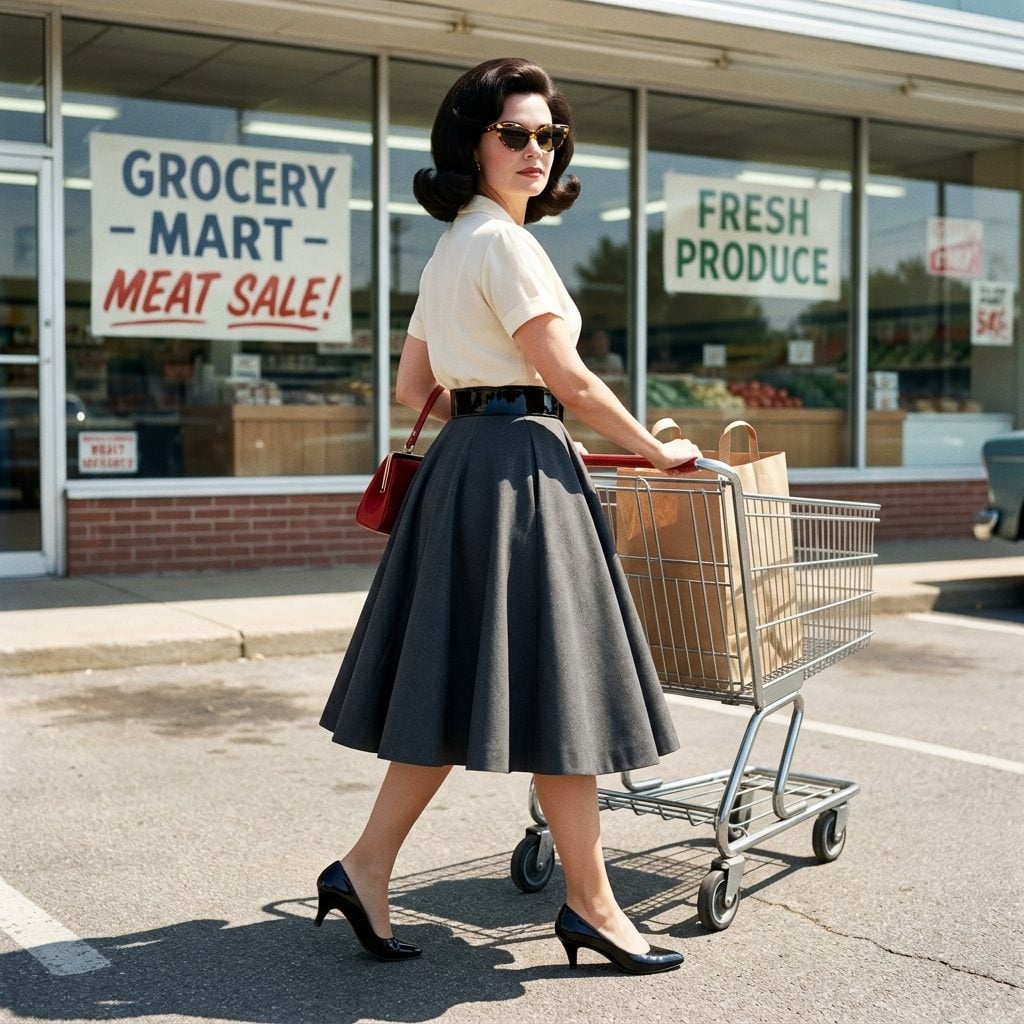
Those upswept corners altered the geometry of a woman’s entire face—turned a squint against the parking lot sun into something deliberate, almost cinematic. Cat-eye frames were everywhere by the mid-fifties: on movie stars, on your mother, on the woman ahead of you in the checkout line with her cart full of Campbell’s soup.
The cat-eye frame didn’t just protect your eyes from the sun. It gave you cheekbones you didn’t know you had.
Most were plastic—tortoiseshell or solid black, sometimes adorned with rhinestone details at the temples that caught the light when you turned your head. A few dollars at the drugstore counter. And suddenly you felt like Audrey Hepburn picking up eggs. Hard to beat that kind of return.
Cat-eye frames still have pull today: asked which sunglasses they would buy, 49% of ThreadCurve readers picked cat-eye, well ahead of round and aviator styles.
27. Seamed Nylon Stockings, Because Bare Legs Were Not an Option
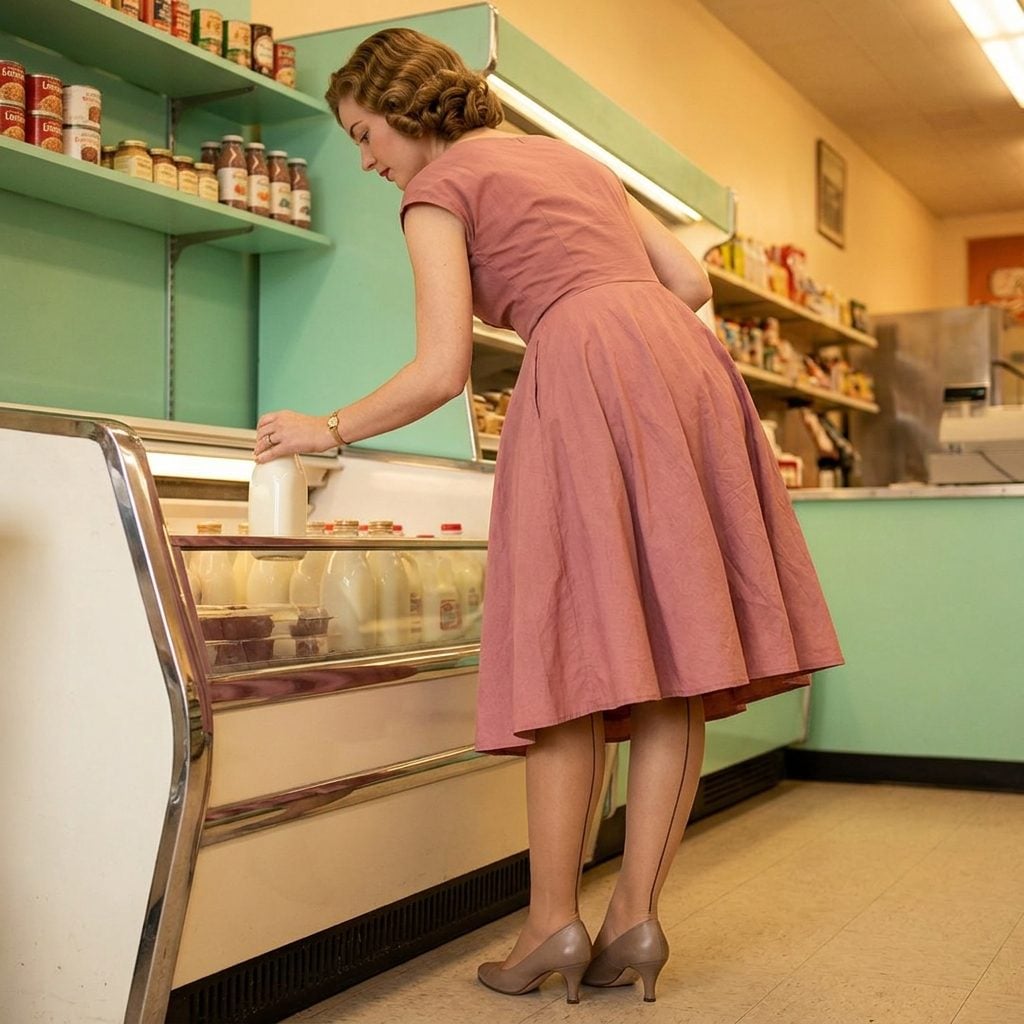
Getting the seam straight was its own morning ritual. You’d twist around in front of the bathroom mirror, crane your neck, verify those dark lines ran perfectly vertical up the backs of your calves before daring to step outside. A crooked seam was a social misdemeanor—minor enough to survive, conspicuous enough to be remembered.
Nylon stockings with seams weren’t a preference. They were a mandate. Bare legs at the grocery store in 1953 would have been roughly as alarming as showing up barefoot. Even in July. Even in Memphis. You wore your stockings, attached them to your girdle with metal clips that left tiny round marks on your thighs, and prayed you didn’t snag them on the cart’s wire edge.
26. Low Kitten Heels, the Practical Choice That Still Wasn’t Flat
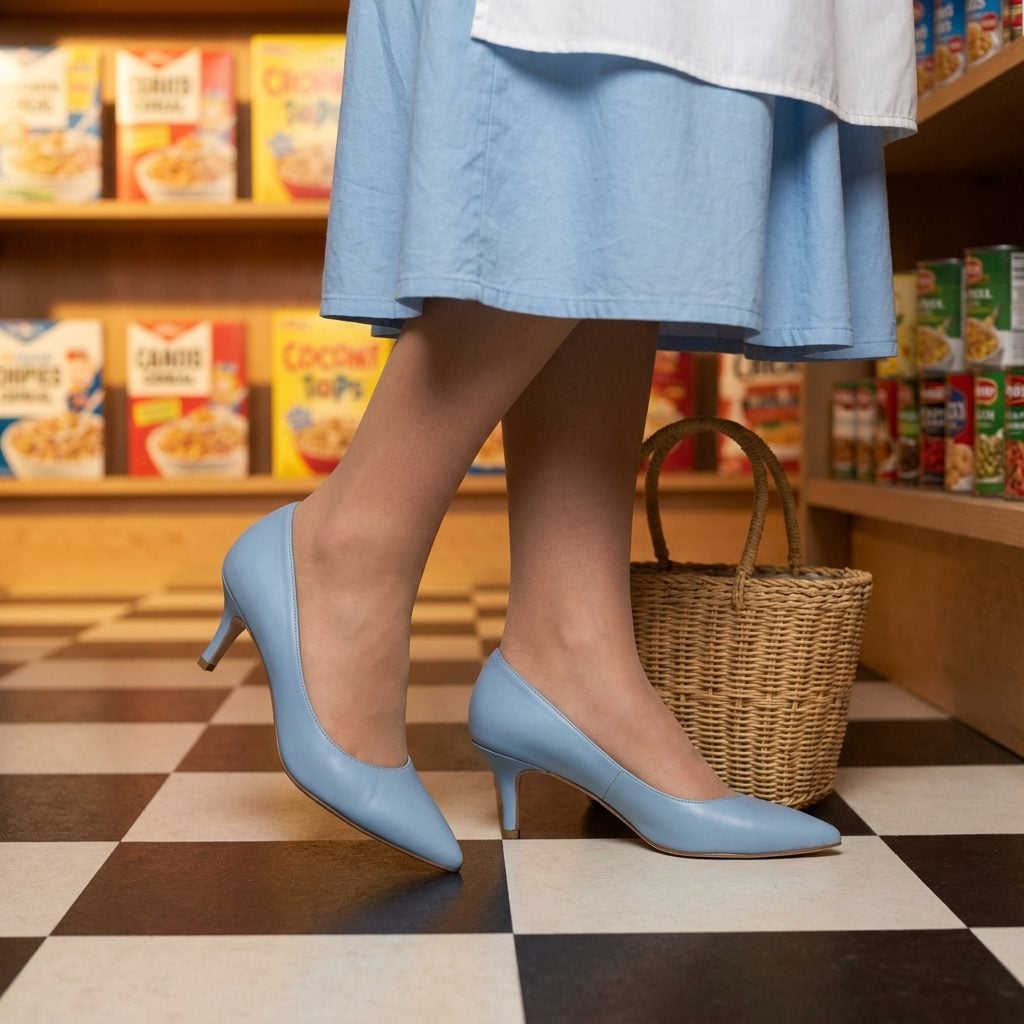
Flats were for teenagers. High heels were for dinner. The kitten heel split the difference—an inch and a half, maybe two—occupying that narrow zone between casual and dressed up. It became the unofficial shoe of the American grocery run for most of the decade.
Just enough height to create a deliberate line from ankle to calf, but not so much that wrestling a loaded cart down the canned goods aisle turned into a balance exercise. They came in every color Sears stocked, and the truly committed shopper owned a pair to coordinate with each dress. I admire that dedication. Also find it slightly terrifying.
25. Saddle Shoes for the Younger Wives Running Casual Errands
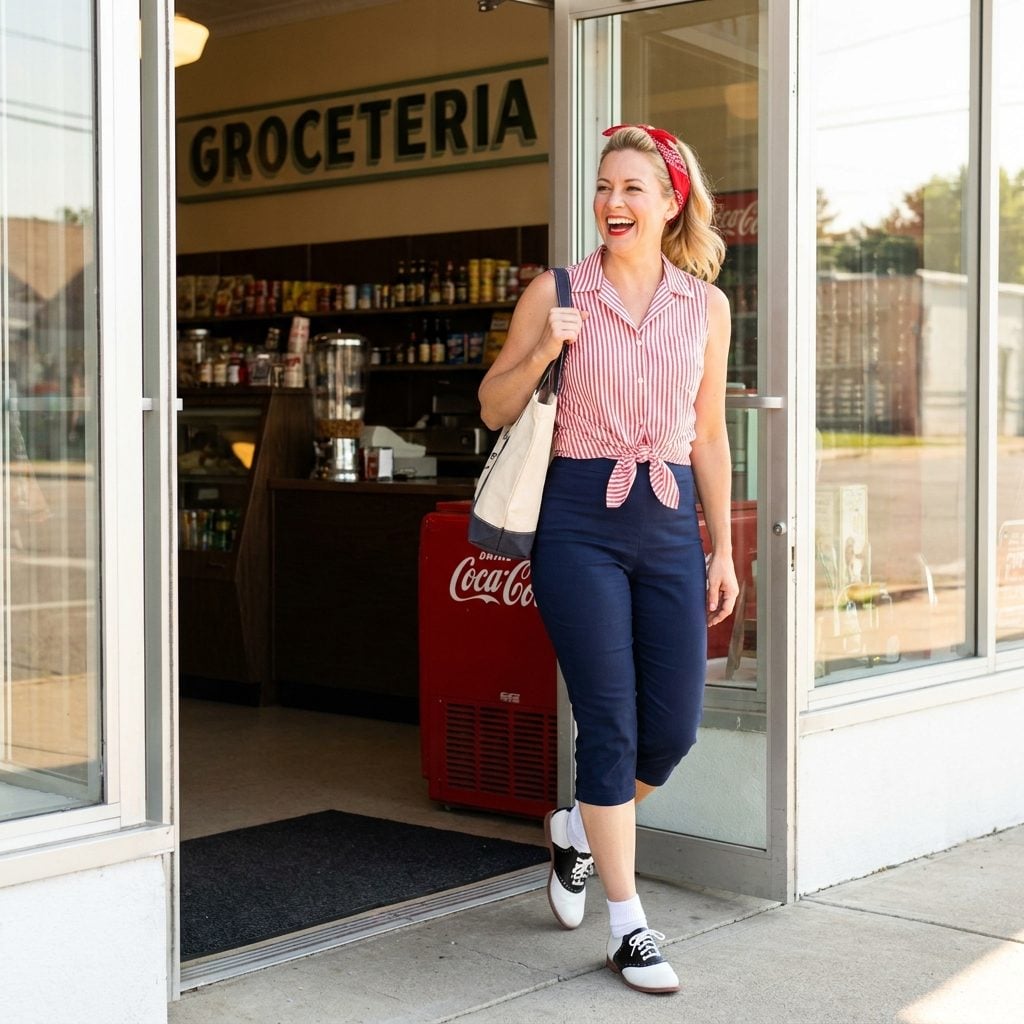
Not every woman went full gloves-and-heels for a quart of milk. The younger crowd—toddlers in the cart, shorter errand list—showed up in saddle shoes and bobby socks, looking like they’d just walked off a college campus. Some of them had, about three years earlier.
Black-and-white leather with white rubber soles, worn with rolled cuffed jeans or pedal pushers. Call it the fifties precursor to athleisure: casual enough to chase a bolting toddler through the cereal aisle, composed enough that nobody questioned your respectability at checkout.
24. A Pearl Necklace for Buying Produce, Because of Course

A strand of pearls against a cotton dress while sorting through heads of iceberg lettuce. Regular Wednesday. Most weren’t real—Majorica or simulated, bought at the department store jewelry counter, cool and smooth against the collarbone. Nobody cared about the distinction.
They went on every morning alongside the lipstick and the stockings, a kind of finishing step that signaled you were ready for public life. Mamie Eisenhower wore hers. Your mother wore hers. And you wore yours—to the grocery store, the post office, the pediatrician’s waiting room. Skipping them would have felt like leaving the house with wet hair. Which, come to think of it, was also unthinkable.
23. The Matching Handbag and Shoe Set, Because Coordination Was Non-Negotiable
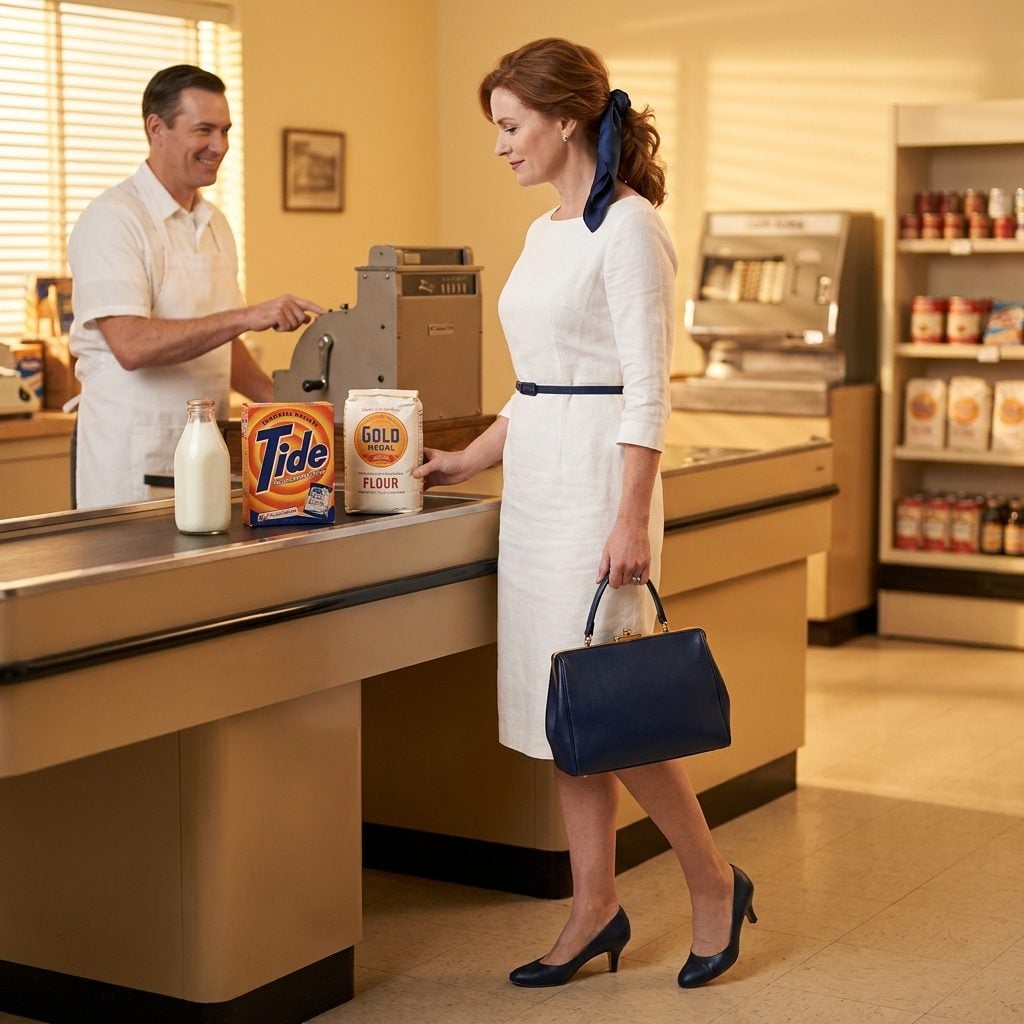
Your bag matched your shoes. Period. Not “kind of matched” or “in the same family”—the exact same color, ideally the exact same leather, purchased as a set from the same department store counter. Navy shoes, navy bag. Brown shoes, brown bag. This was the law, unwritten but universally enforced.
A structured leather handbag with a top handle and a gold clasp, sized just big enough for a compact, a coin purse, and your grocery list scrawled on the back of an envelope. The coordination told the world your outfit was a decision, not an accident—even if you were only picking up pork chops. Mismatched accessories? That would haunt you. Women remembered. They always remembered.
22. The Structured Leather Handbag With Short Handles You Carried Like a Shield
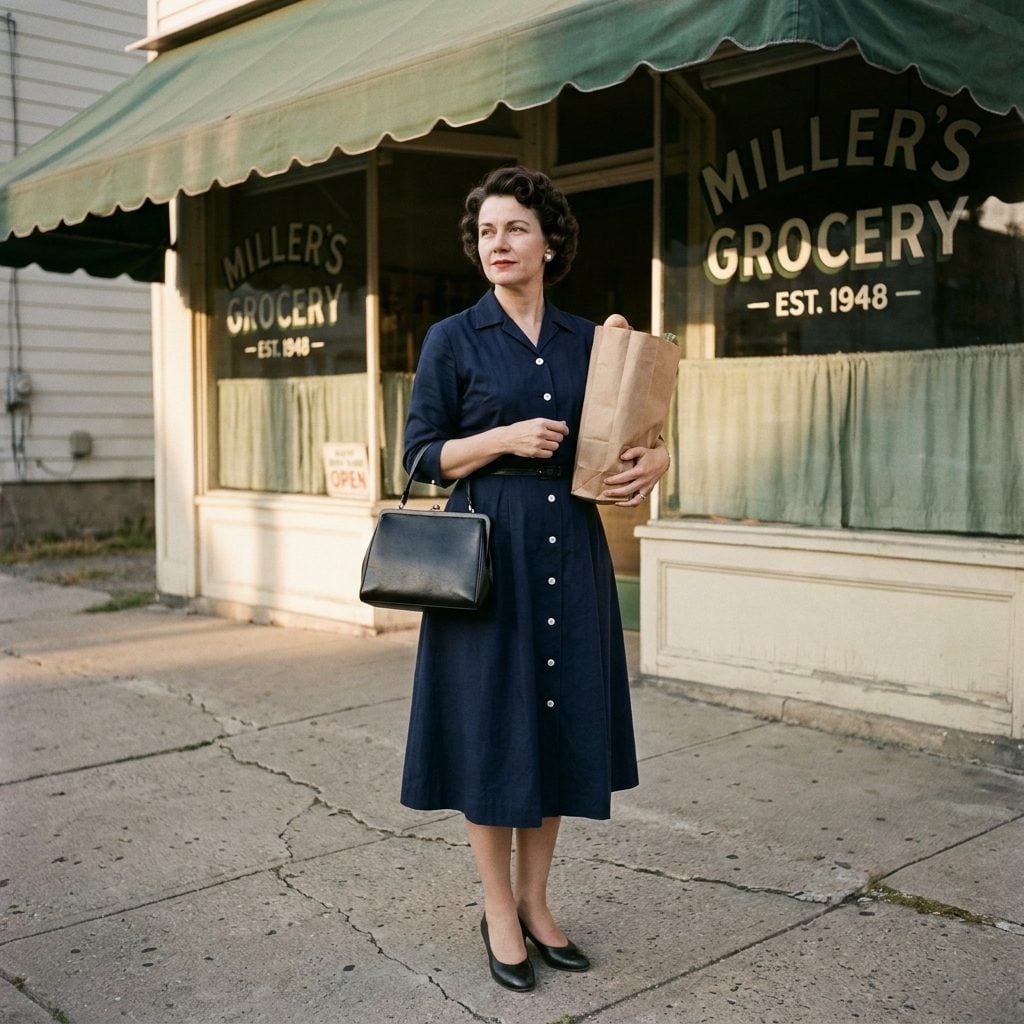
Nobody slung a bag over their shoulder in 1955. You gripped a stiff structured leather handbag by its two short handles and carried it in the crook of your elbow like you were presenting evidence at trial. The bag held exactly one compact, one handkerchief, a coin purse, and your grocery list written on the back of an envelope. Nothing else fit, and nothing else needed to.
These weren’t soft. Full or empty, they kept their shape, and they closed with a clasp that made a satisfying click — the kind of sound that said the transaction is over. Every woman had one in black or brown. Fancier versions had a gold-toned frame. You matched it to your shoes, obviously. Matching wasn’t optional. Matching was civilization.
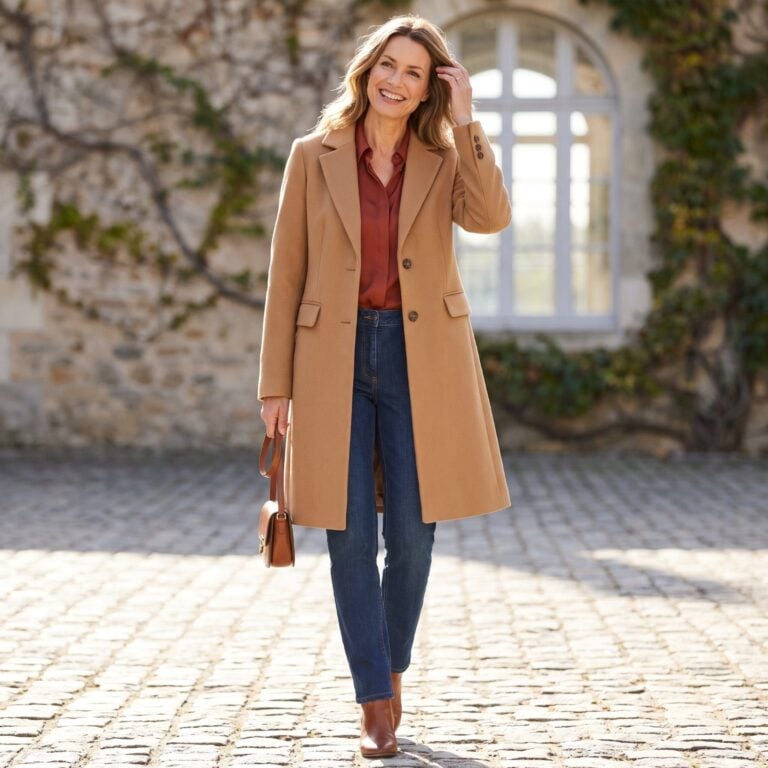
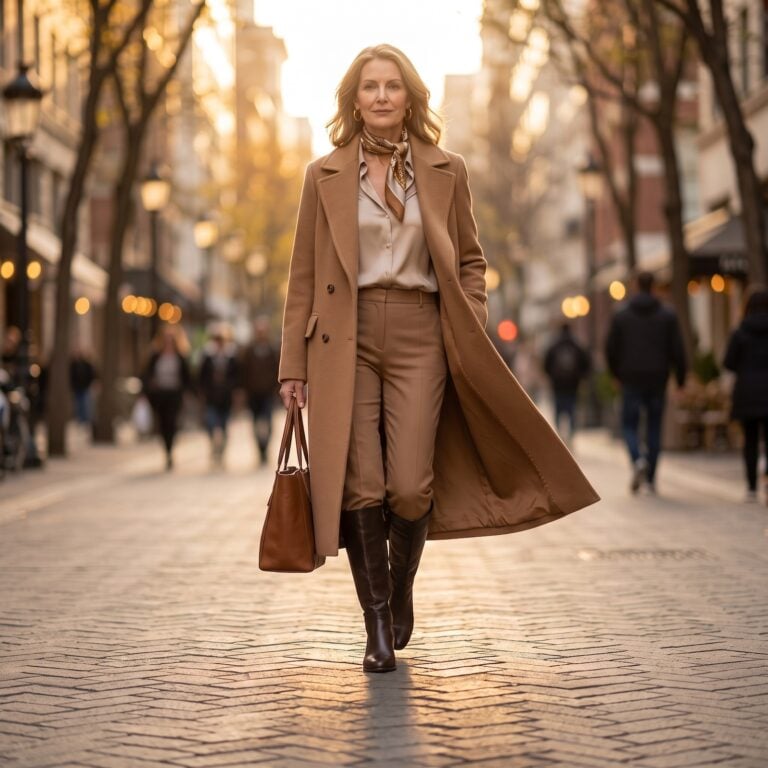
21. Tailored Wool Coats That Made a Trip to the A&P Look Like a Foreign Film
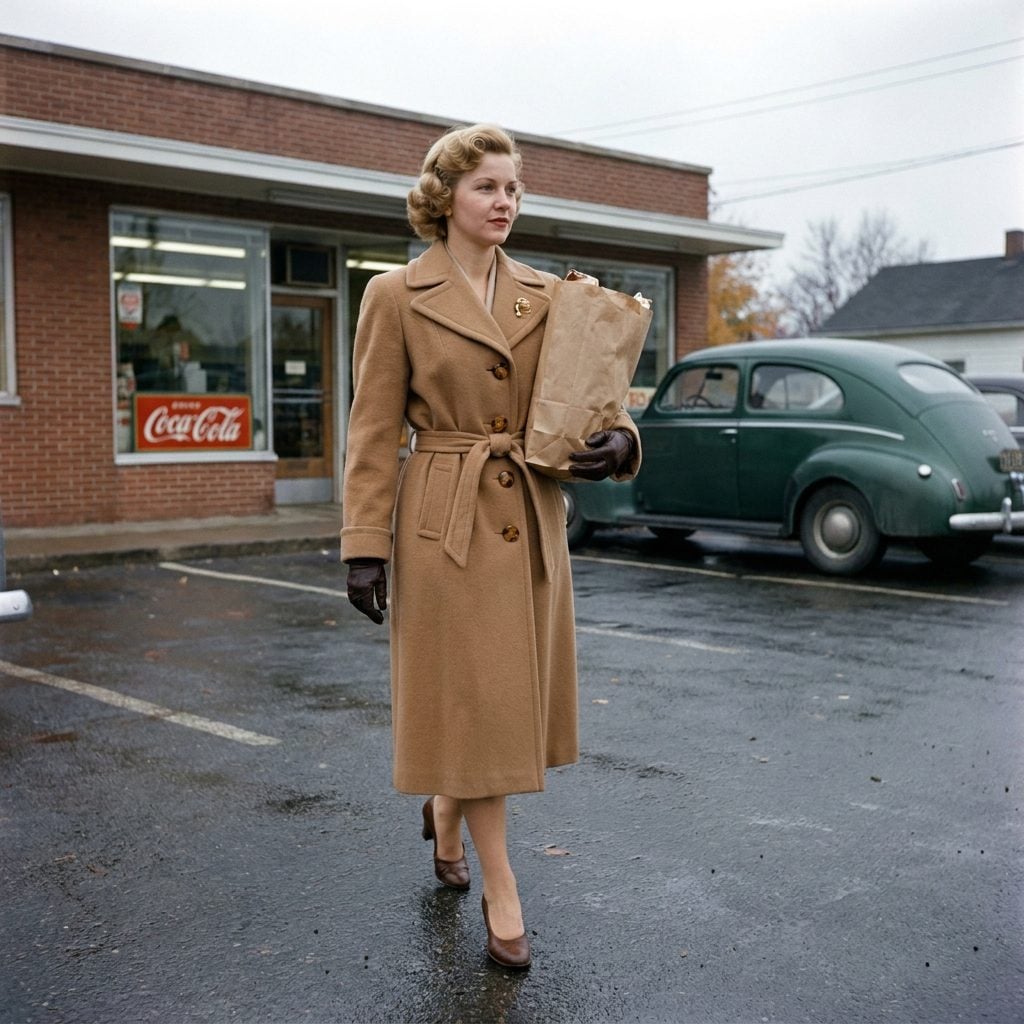
October rolled in and out came the tailored wool coat, and you wore it to buy canned peas like you were meeting a dignitary. Real structure — nipped waists, wide lapels, sometimes a belt, always buttons that actually buttoned. Camel, charcoal, hunter green, or a deep burgundy if you were feeling brave.
What gets me now is the weight of them. Modern coats feel like suggestions. A 1950s wool coat felt like an oath. You couldn’t throw it on; you put it on. Different verb, different posture. And you walked through the Piggly Wiggly parking lot with your shoulders back because the coat basically demanded it.
Wool coats have held their ground: when our readers were asked which coat they would buy, 47% chose wool over a trench or leather.
20. Headscarves Tied Under the Chin Like You Were Protecting State Secrets
❤️ Would you like to save this?
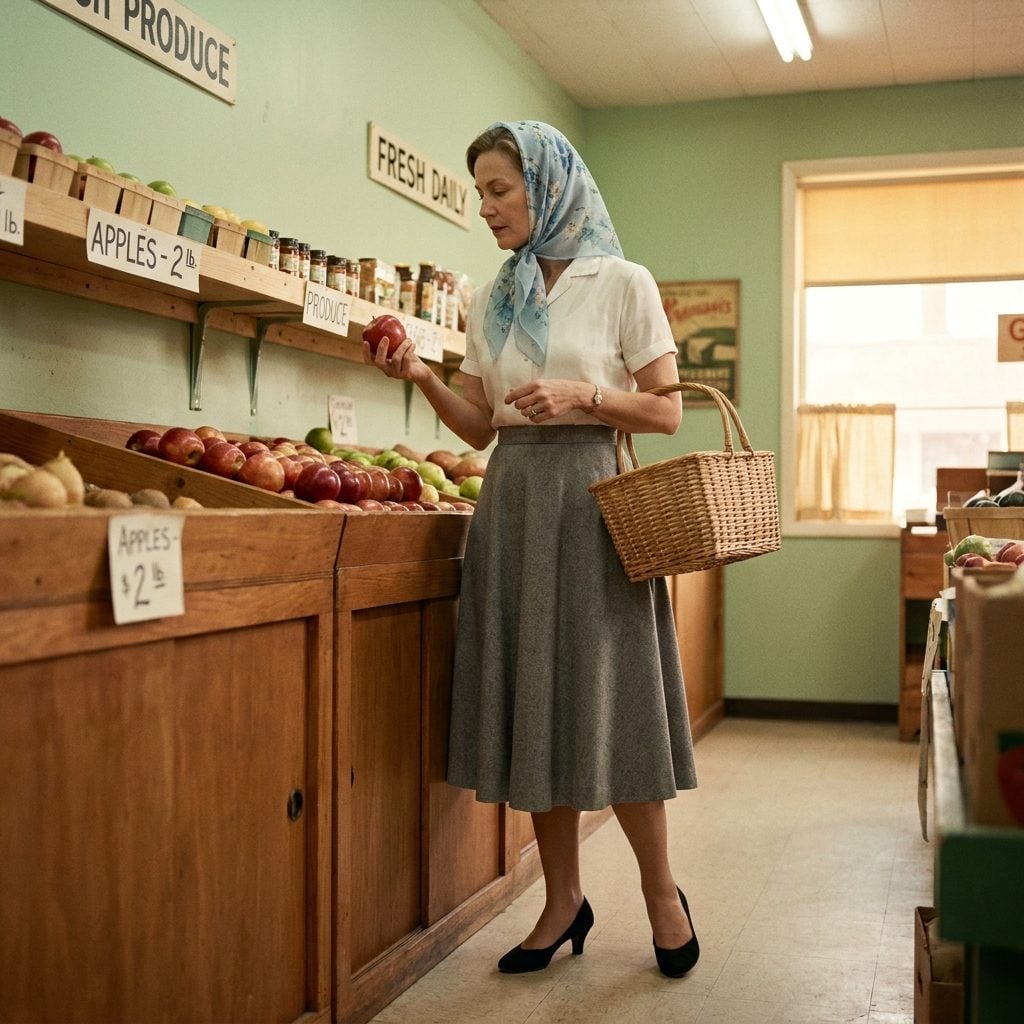
Rain, wind, fresh set, or just a Tuesday — didn’t matter. The headscarf came out, folded into a triangle, placed over the hair, and tied firmly under the chin. This wasn’t about style. This was defense. You’d spent forty-five minutes with pin curls and setting lotion that morning, and no breeze between the house and the store was going to undo that.
Silk ones for nice occasions. Cotton for errands. Sheer chiffon ones that matched your blouse if you were that particular breed of put-together. Grace Kelly wore hers in a convertible. Your mother wore hers pushing a cart past the frozen vegetables. Honestly? Same energy.
19. The Small Pillbox Hat That Somehow Made Sense at the Supermarket
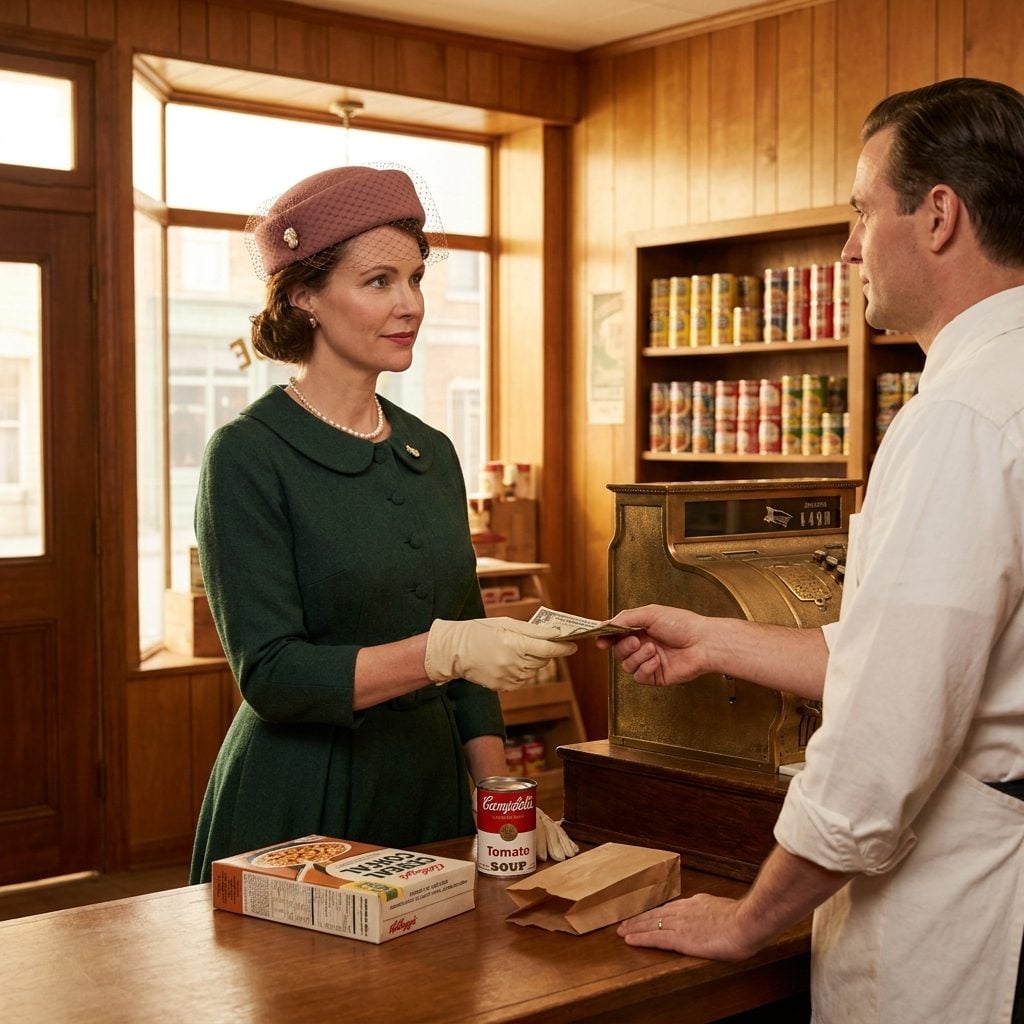
Before Jackie Kennedy made the pillbox hat internationally iconic, women were already perching them on top of their heads to run errands. And I say perching deliberately — these things didn’t sit on the head so much as hover there, held in place by a hatpin and sheer willpower.
A small round hat with no brim, covered in felt or sometimes velvet, occasionally sporting a tiny mesh veil that came down to the eyebrows. You wore this to the grocery store. To pick up dry cleaning. To the post office. A bare head in public felt unfinished, the way leaving the house without your phone feels now.
Sometimes the hat matched the coat. Sometimes it matched absolutely nothing, and that was fine, because coordination wasn’t really the driving principle. You wore a hat outside the house because going without one felt naked.
18. Hair Pinned in Victory Rolls or Soft Curls That Took an Hour Before You Left the House
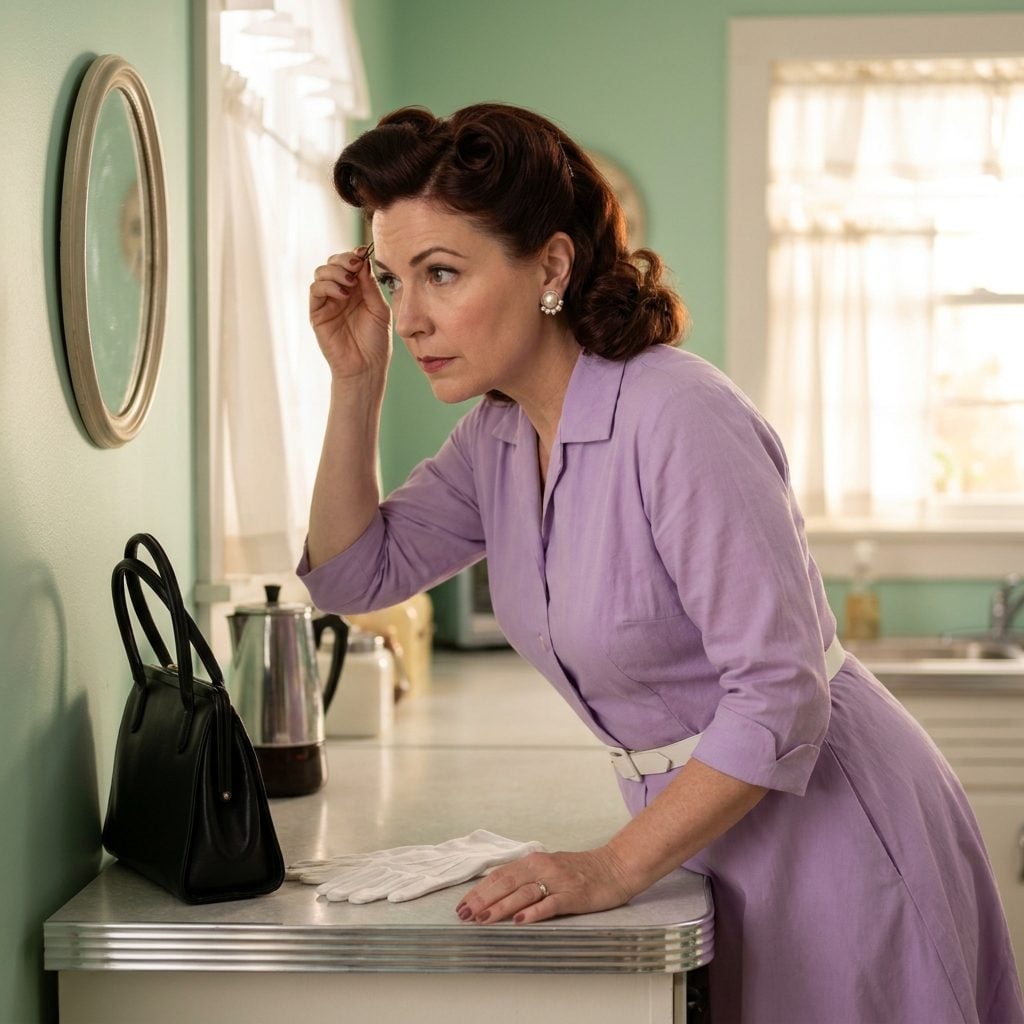
The effort was invisible — that was the whole trick. You showed up at the store with waves that looked sculpted by angels, and nobody was supposed to ask how long it took because the answer was embarrassing. Pin curls set the night before, slept on like tiny torture devices. Setting lotion that made everything stiff until you brushed it out. Then the careful brushing, the bobby pins, the final arrangement.
Victory rolls at the front, soft curls at the sides, maybe a chignon at the back for the women who really committed. All before 9 AM. All to buy flour and butter. The hair was the outfit; everything else just filled in around it.
17. Poodle Skirts for the Younger Women Who Turned the Frozen Aisle Into a Sock Hop
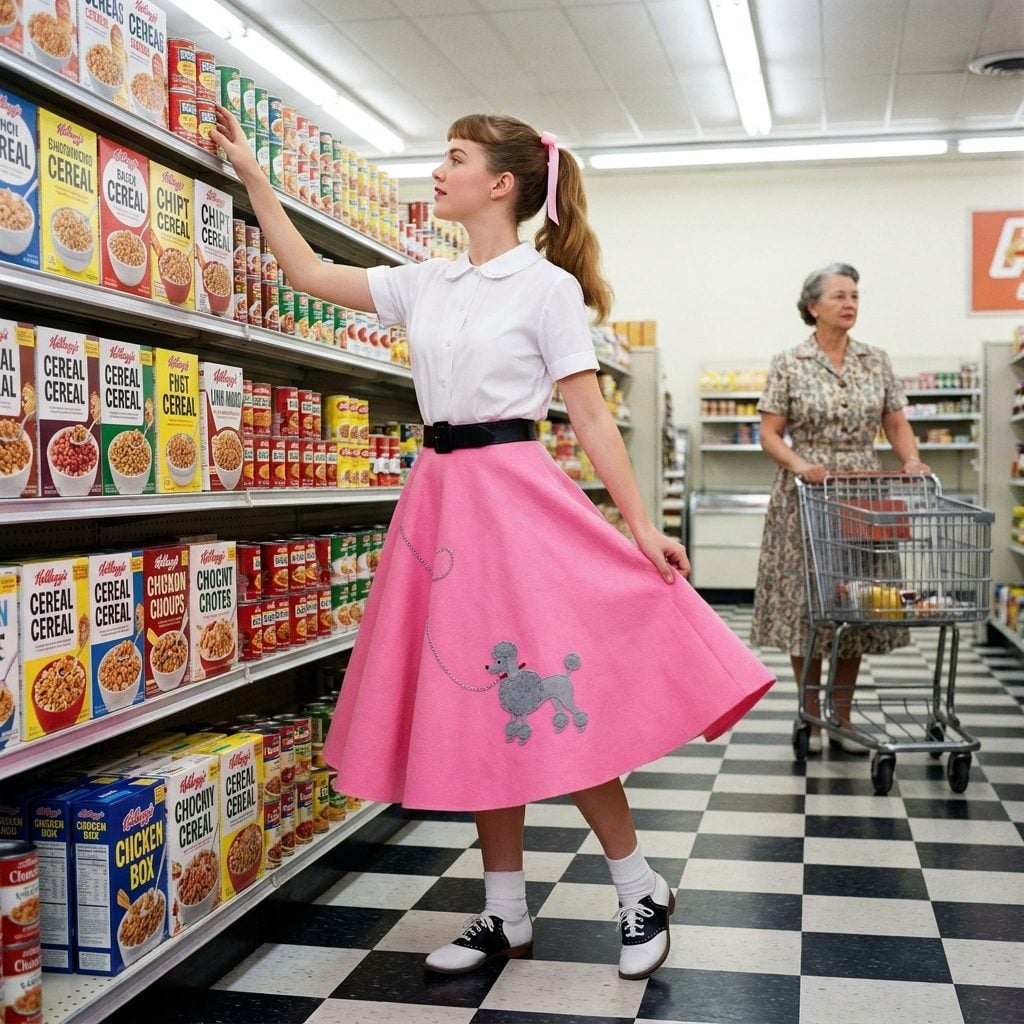
Not every woman wore one. The poodle skirt belonged to the younger crowd — late teens and early twenties, the ones who watched American Bandstand and had opinions about Pat Boone. But they absolutely wore them to the grocery store, because where else were they going on a Wednesday afternoon?
Full circle felt skirt, usually bright. Pink was the classic. Sometimes turquoise. An appliquéd poodle near the hem with a little chain leash, which — if you think about it for more than three seconds — is a genuinely strange design choice that somehow became the defining garment of an era. Paired with a tucked-in blouse and saddle shoes, the whole thing swishing as they walked past the canned vegetables.
16. Cigarette Pants Cropped Above the Ankle, Because Someone Had to Be the Audrey of the Neighborhood
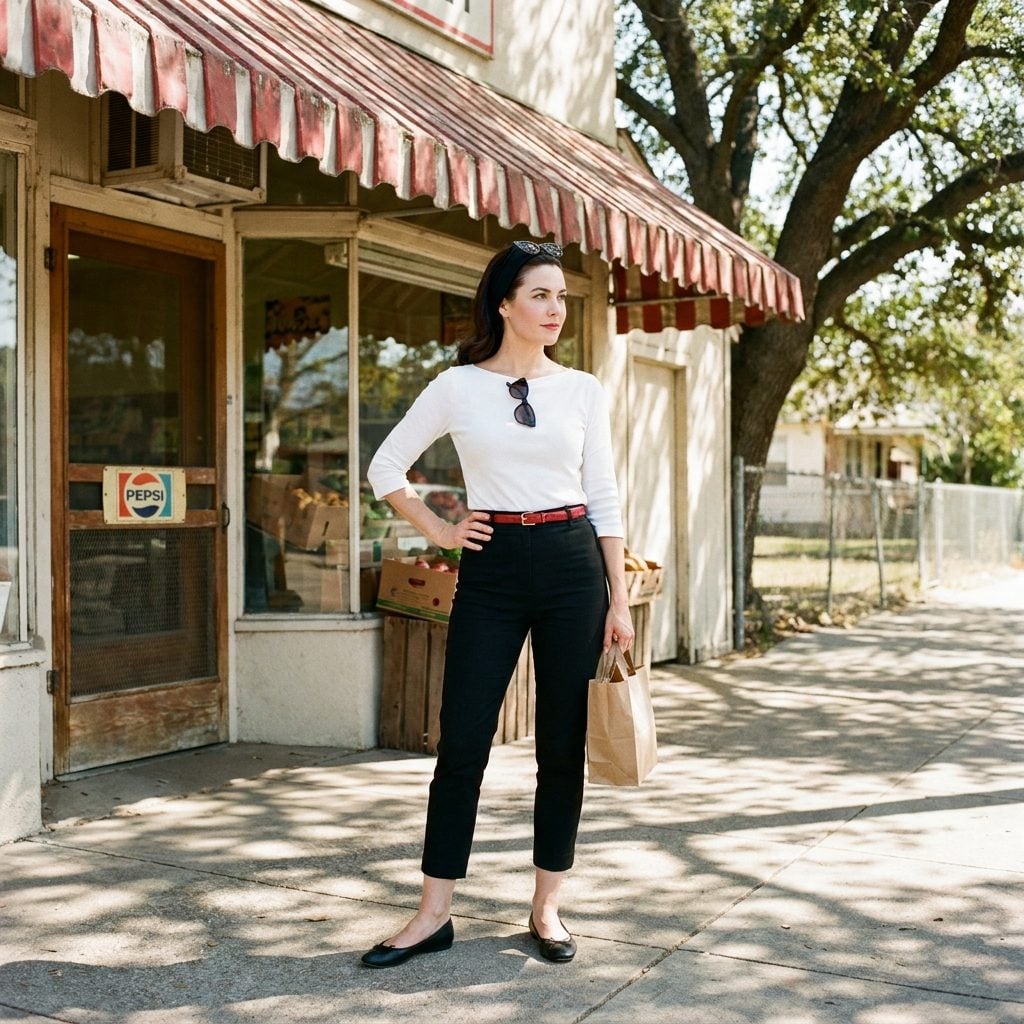
These were the rebel pants. Slim, tapered, cropped at the ankle — the kind that said you’d seen Funny Face and taken notes. Not every woman dared. Plenty of neighborhoods still considered pants on women to be a mild scandal, which is a sentence I just typed and it still feels uncomfortably real.
But the women who wore cigarette pants to the store wore them with conviction. Black was the default. A fitted top tucked in, ballet flats or low mules, maybe a headband. The silhouette was sharp and modern, and it telegraphed something specific: this woman read Vogue. Or at least wanted you to believe she did.
The cut sat high on the natural waist and tapered all the way down, ending a few inches above the ankle bone — no break, no pooling of fabric. Just a clean line that showed off whatever shoe you’d chosen, which suddenly mattered because under a full skirt, shoes had been invisible.
15. Pedal Pushers During Summer Months, the Only Acceptable Way to Show Your Calves
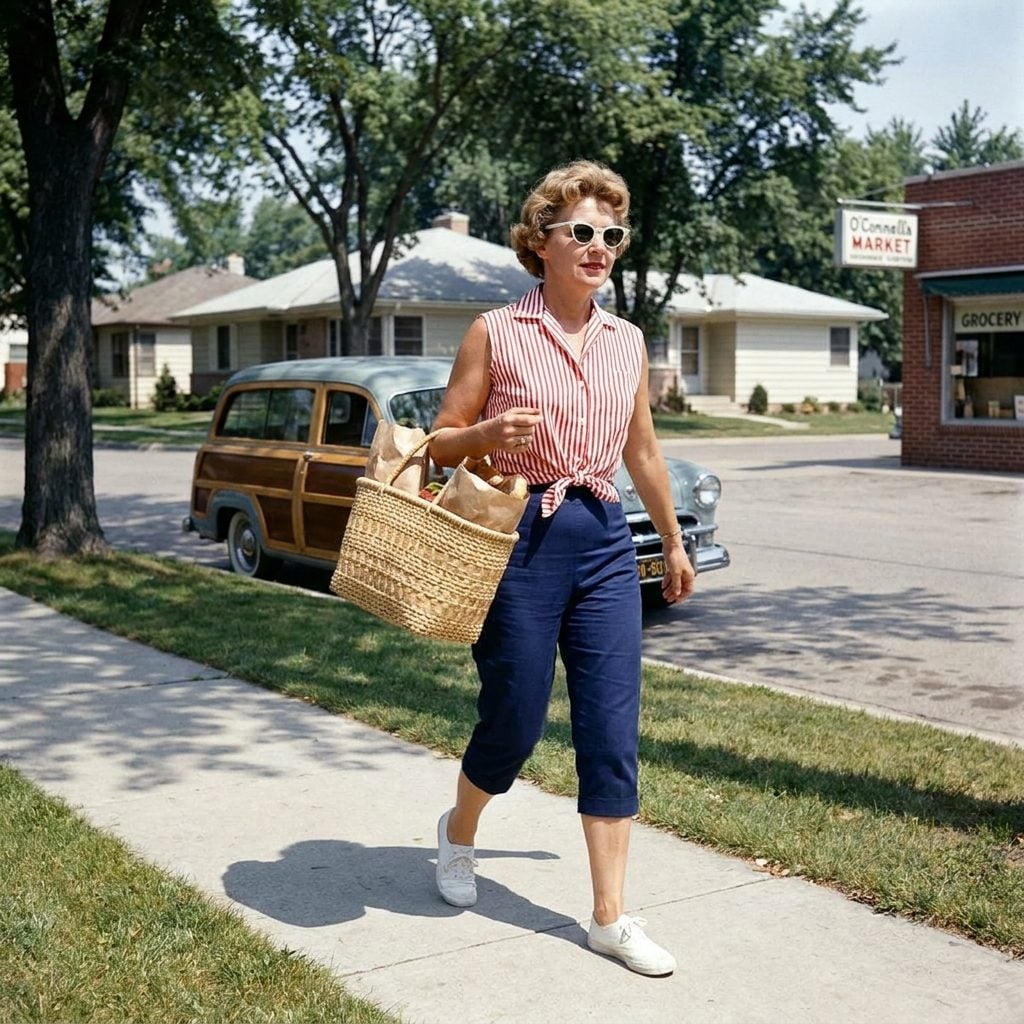
Shorts? To the store? In 1955? No. But pedal pushers — those calf-length cropped pants hitting right below the knee — were somehow perfectly fine. The logic was impenetrable. Nobody questioned it.
They came in cotton or lightweight denim. High-waisted, naturally. Slightly loose through the leg but not baggy. Paired with a sleeveless blouse or a cotton camp shirt, canvas sneakers or flat sandals — the summer uniform for suburban errands. The outfit that said it’s sweltering and I refuse to suffer in a skirt but I’m also not going to scandalize Mrs. Henderson next door.
14. Cardigan Sweaters Buttoned All the Way Up, Because That Was Just What You Did
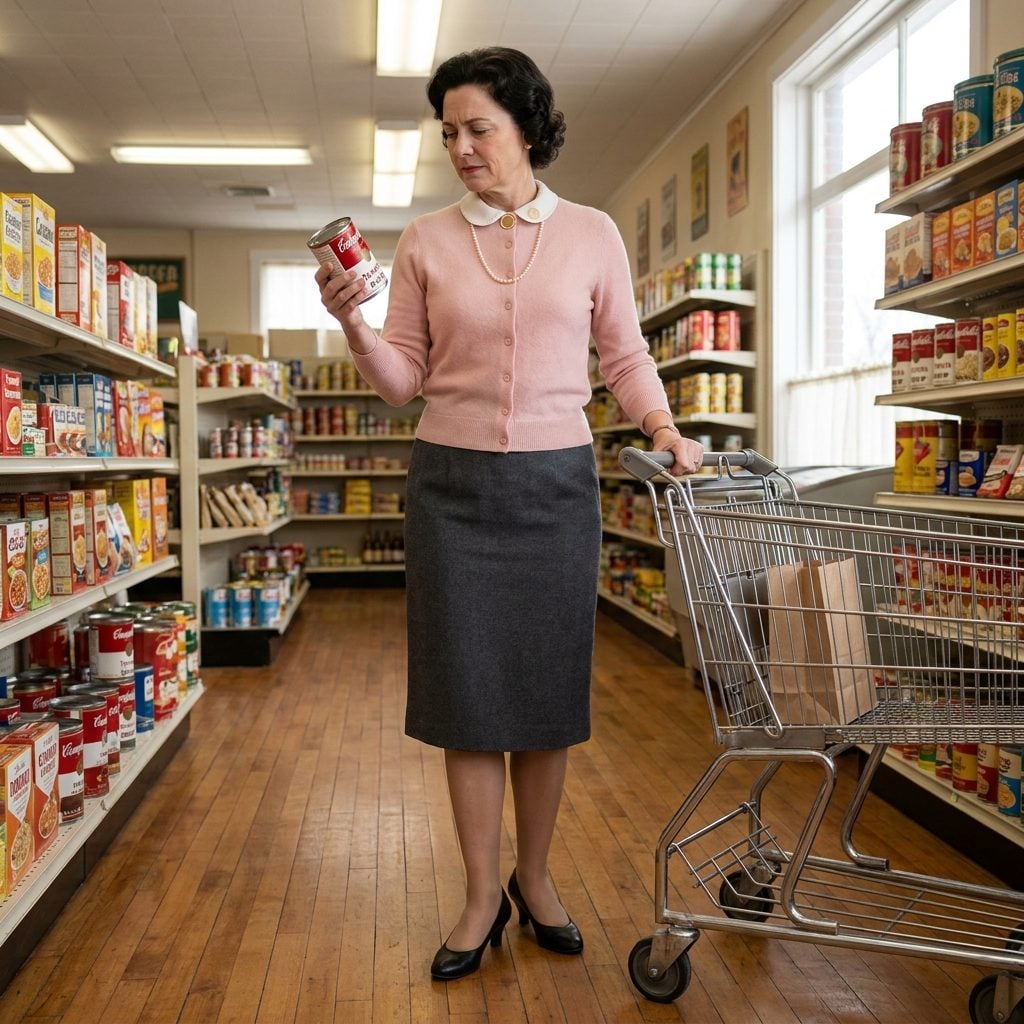
Not draped over the shoulders. Not left open. Buttoned — every single button, bottom to collar, like a soft knitted wall you built around yourself each morning. The 1950s cardigan sweater worn as a top was its own garment category, and women wore it everywhere, including while pushing a cart through canned goods at 10 AM on a Thursday.
Usually in a pastel: baby blue, pale pink, soft yellow, mint green. Sometimes a Peter Pan collar peeked out from underneath. A circle pin at the throat or a string of pearls sitting right against the buttoned-up neckline completed it. Fine-gauge wool, snug fit, and a general sense of tidiness that modern fashion has frankly given up on. I kind of miss it, even though I’d last about twenty minutes before unbuttoning the top two.
13. Brooches Pinned Onto Dresses and Coats Like Tiny Declarations of Personhood
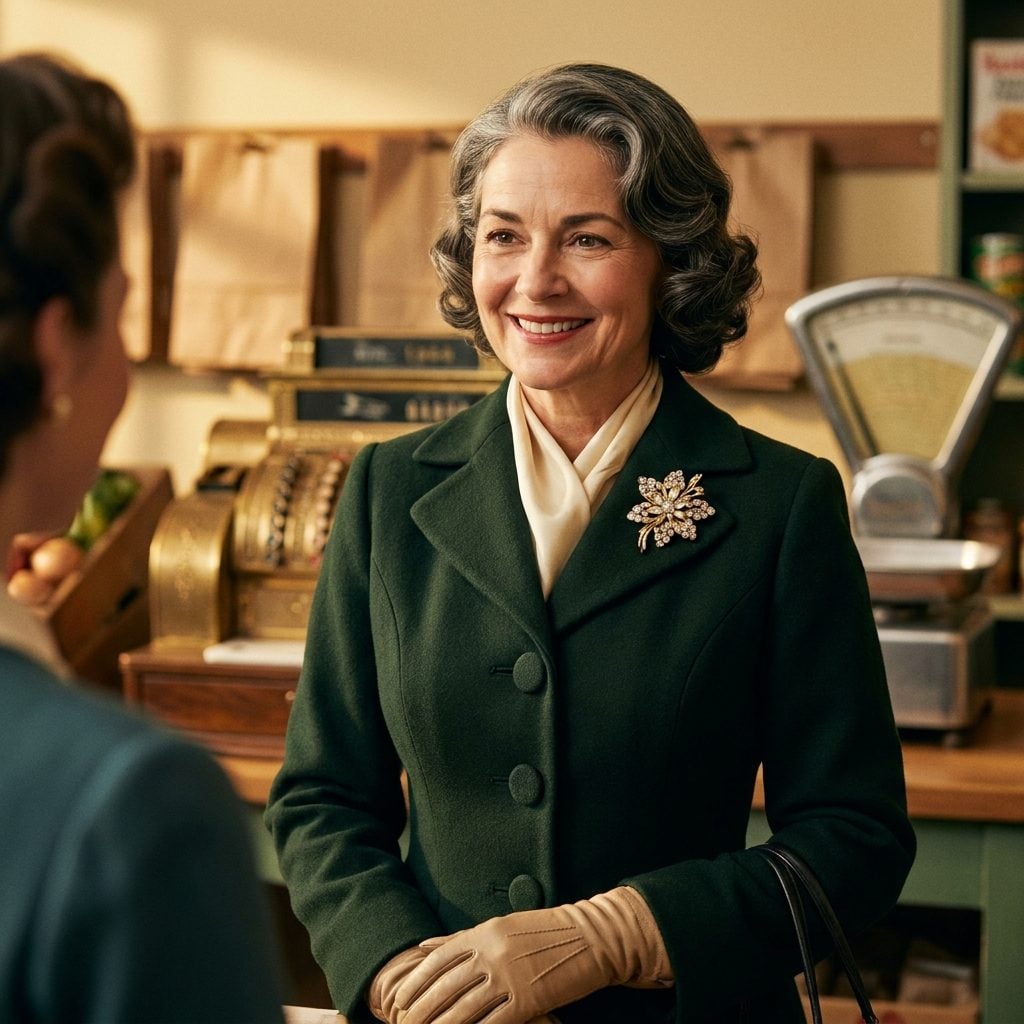
A brooch wasn’t jewelry the way a ring or necklace was. A brooch was a decision. You chose it, you placed it, and its position said something — left lapel, center collar, right shoulder. Each placement was a small act of composition, and women now in their eighties and nineties can still tell you exactly where theirs sat.
Rhinestone clusters for everyday. Enameled flowers. Little gold bows. Cameos if you’d inherited one. The fancier ones came out for church, but a perfectly good costume brooch went to the grocery store pinned to a wool coat or cotton dress without a second thought. It was the last gesture before walking out the door — the way you’d dot an i.
I think about brooches whenever someone asks what accessory we lost that we shouldn’t have. Earrings are passive. Necklaces fall where gravity puts them. A brooch, though, requires you to pick a spot and commit. That tiny choice made every outfit feel personal in a way that’s genuinely hard to replicate now.
12. The Cashmere Twin Set You Wore to Buy Canned Peas Like It Was a Board Meeting
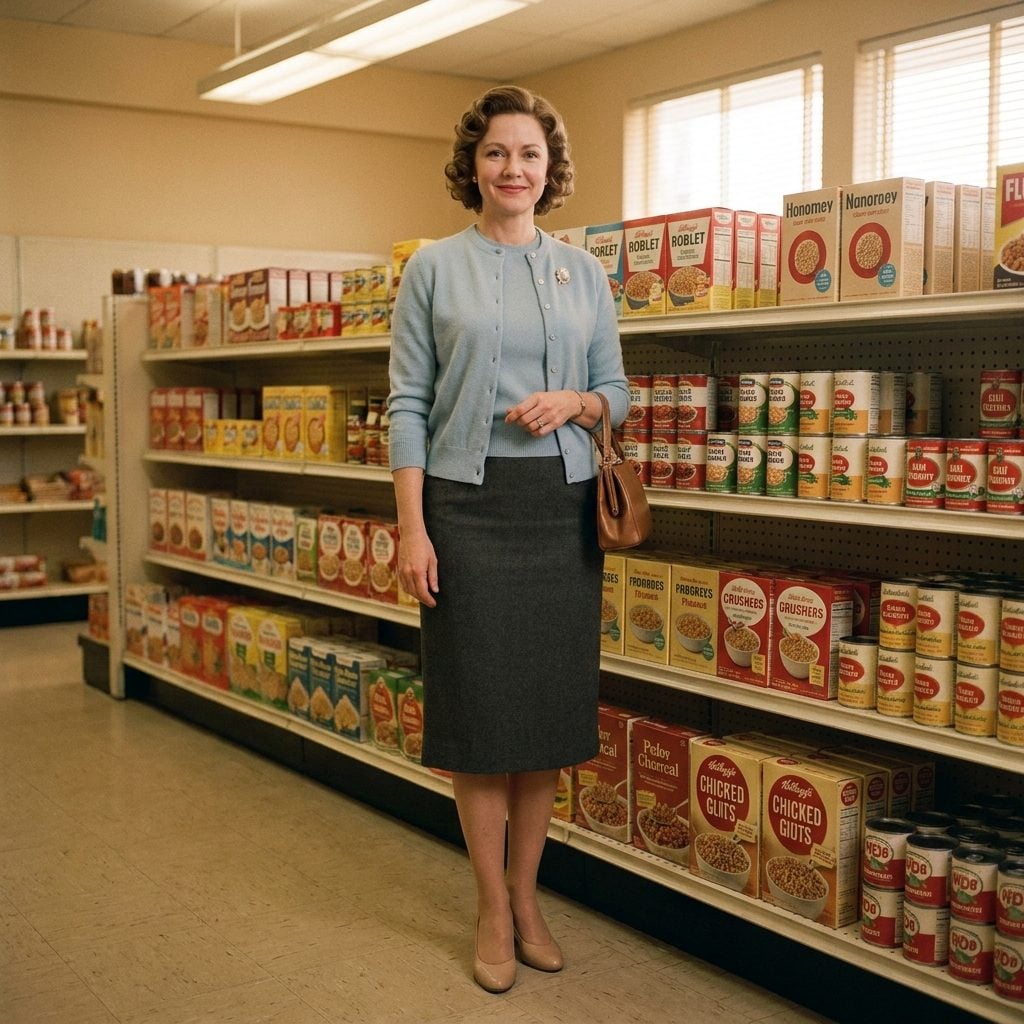
A matching short-sleeve shell and a cardigan buttoned at the top, both in the same shade of soft cashmere. This was the grocery store uniform of any woman who considered herself put-together — which, in 1955, covered pretty much everybody. The set came in pastels mostly: powder blue, ballet pink, buttercup yellow. You’d pair it with a pencil skirt, pin your brooch to the cardigan’s collar, and push your cart through the produce aisle like you had somewhere important to be afterward. Maybe you did. Maybe you didn’t. Nobody could tell the difference, and that was the whole game.
The twin set communicated total domestic command in ways no single garment could manage. Armor disguised as knitwear. Lord & Taylor and Bonwit Teller sold them by the dozens, and women collected them in every color the way we’d later hoard workout tops from Target.
The soft knit top lives on: asked to pick one new top to buy, 59% of our readers chose a fine knit, compared with 30% for a blouse.
11. Red Lipstick at 9 A.M. on a Tuesday, Because That Was Just What You Did
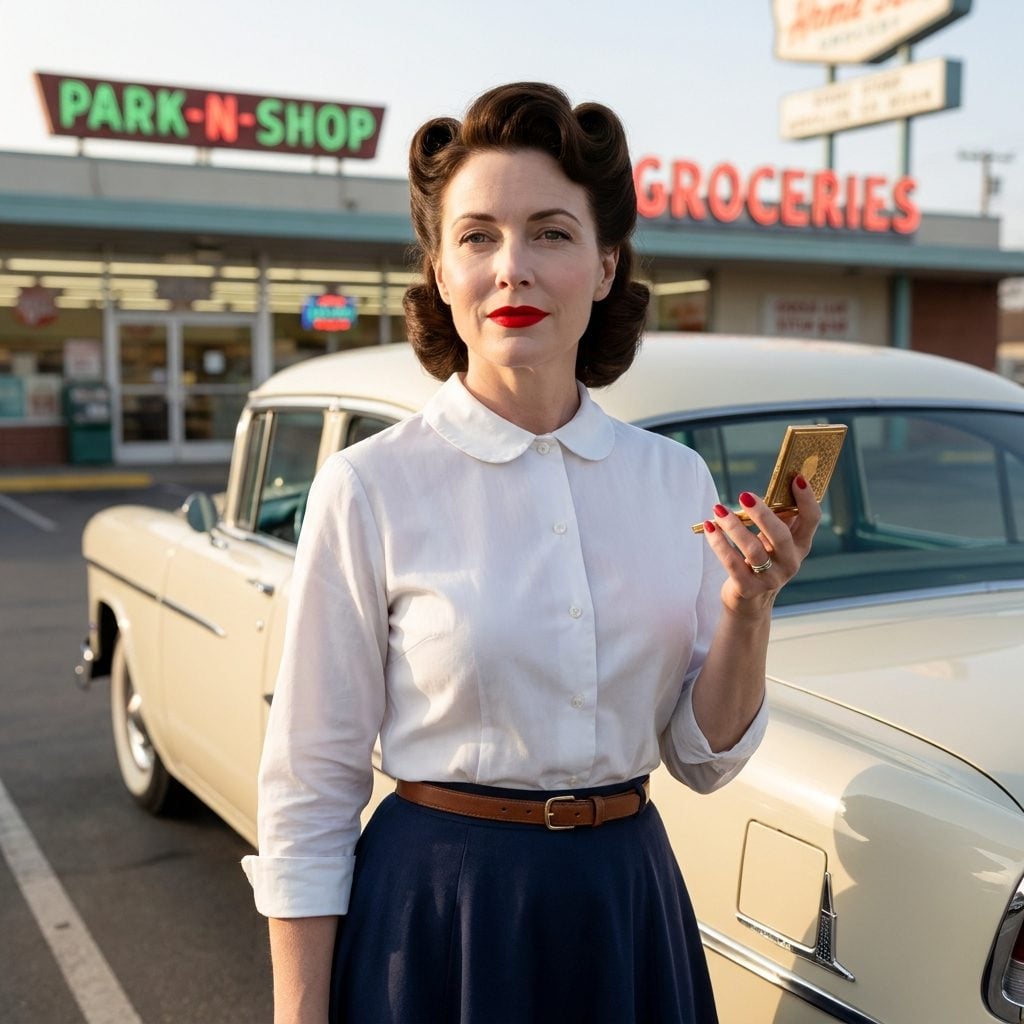
No one was going anywhere without lipstick. Not to the mailbox. Not to answer the door for the milkman. And absolutely not to the grocery store.
The shade was almost always red — not berry, not mauve, not “your lips but better.” Revlon’s Fire and Ice, launched in 1952, was practically a civic duty. You blotted it on a tissue, checked your compact mirror in the car, and walked into the A&P like a woman who needed flour before the roast went in at noon. Because you did.
Here’s what’s wild: this wasn’t considered “done up.” It was baseline. Bare lips would’ve earned you a concerned look from the checkout girl. Red lipstick in the 1950s functioned the way clean hair does now — the absolute floor for appearing in public as a functional adult woman.
10. The Bullet Bra That Turned Every Blouse Into a Geometry Lesson
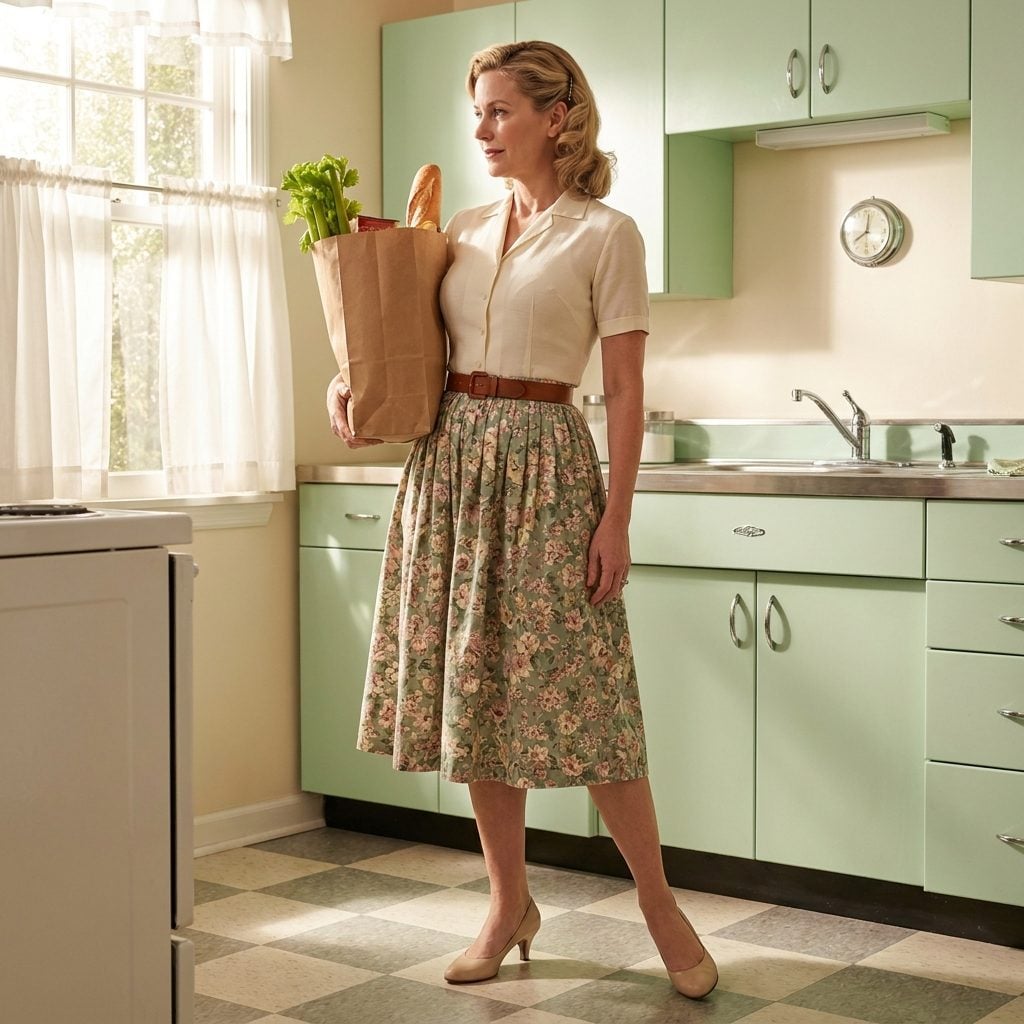
We need to talk about the bra situation. Underneath every pressed blouse and every cashmere shell was a foundation garment engineered with the precision of a Cold War missile — which, honestly, is probably where the name came from.
Maidenform and Playtex dominated. The cups were conical, stitched in concentric circles that created a pointed, almost aggressive silhouette. Intentional. Sculptural. And every woman shopping for ground beef on a Wednesday morning had this torpedo situation happening under her clothes like it was the most natural shape in the world.
The truly fascinating part? Nobody discussed it. The pointed bust was just how a woman’s body was supposed to look — same way we all collectively agreed that extremely thin eyebrows were normal in 1998. Future generations will find our Skims equally baffling.
9. A Full Slip Under Everything Because Your Skirt Was Nobody’s Business But Yours
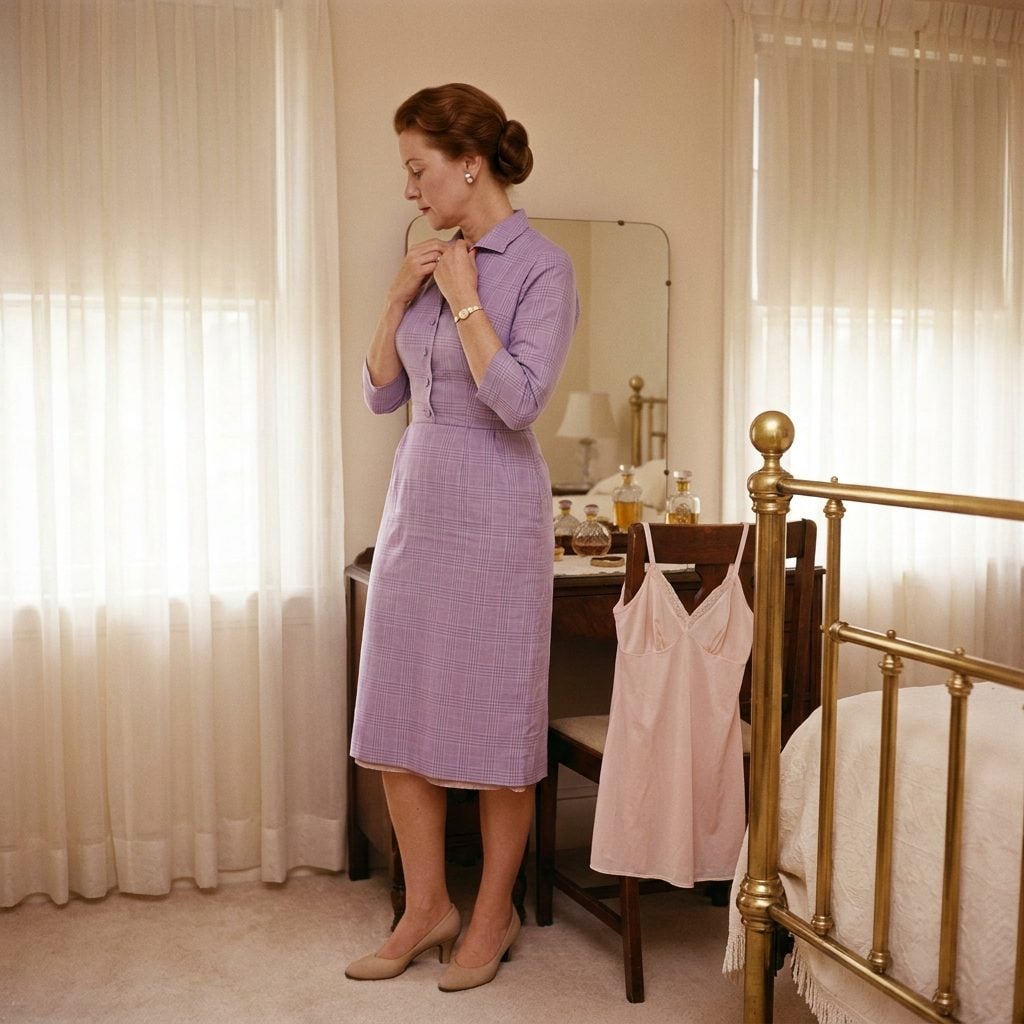
The slip was non-negotiable. It went on after your undergarments and before your dress, and skipping it would have been like leaving the house without shoes — technically possible, socially catastrophic. Cotton and wool skirts could cling, and nobody wanted the outline of their girdle showing through at the frozen foods section. But it was also a modesty layer, a propriety buffer, a quiet declaration that your body existed under there and the specifics were classified information.
Most were nylon or rayon, white or pale pink, trimmed with a narrow band of lace at the hem. You bought them at the same department store where you bought everything else, and you owned at least three in rotation. Losing one to a torn seam felt like losing a soldier.
8. Bobby Socks and Saddle Shoes, Even If You Were Thirty-Five and Buying Chuck Roast
❤️ Would you like to save this?
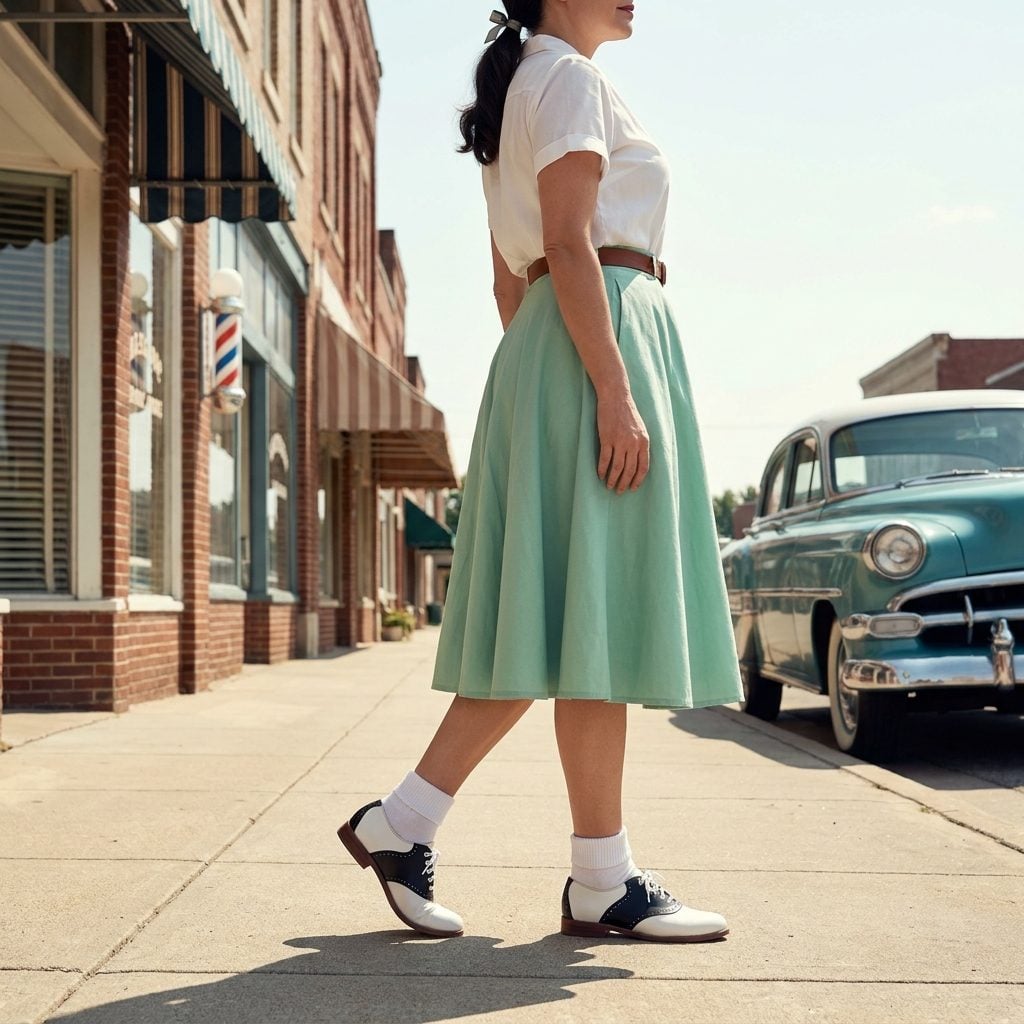
These were supposed to be for teenagers. That was the official line. Bobby socks cuffed neatly above the ankle, paired with two-tone saddle shoes or penny loafers — all very sock hop, very malt shop. But plenty of grown women wore some version of this to run Saturday errands, especially with a casual cotton skirt and a blouse.
Always white socks. Always folded down exactly once. The shoes: black and white or brown and white. There was a crispness to the combination that made even a thrown-together outfit look deliberate, and you could spot it from across a parking lot. Something about those stark white cuffs against dark leather just read as clean American competence.
7. Circle Skirts With Enough Crinoline Underneath to Upholster a Couch
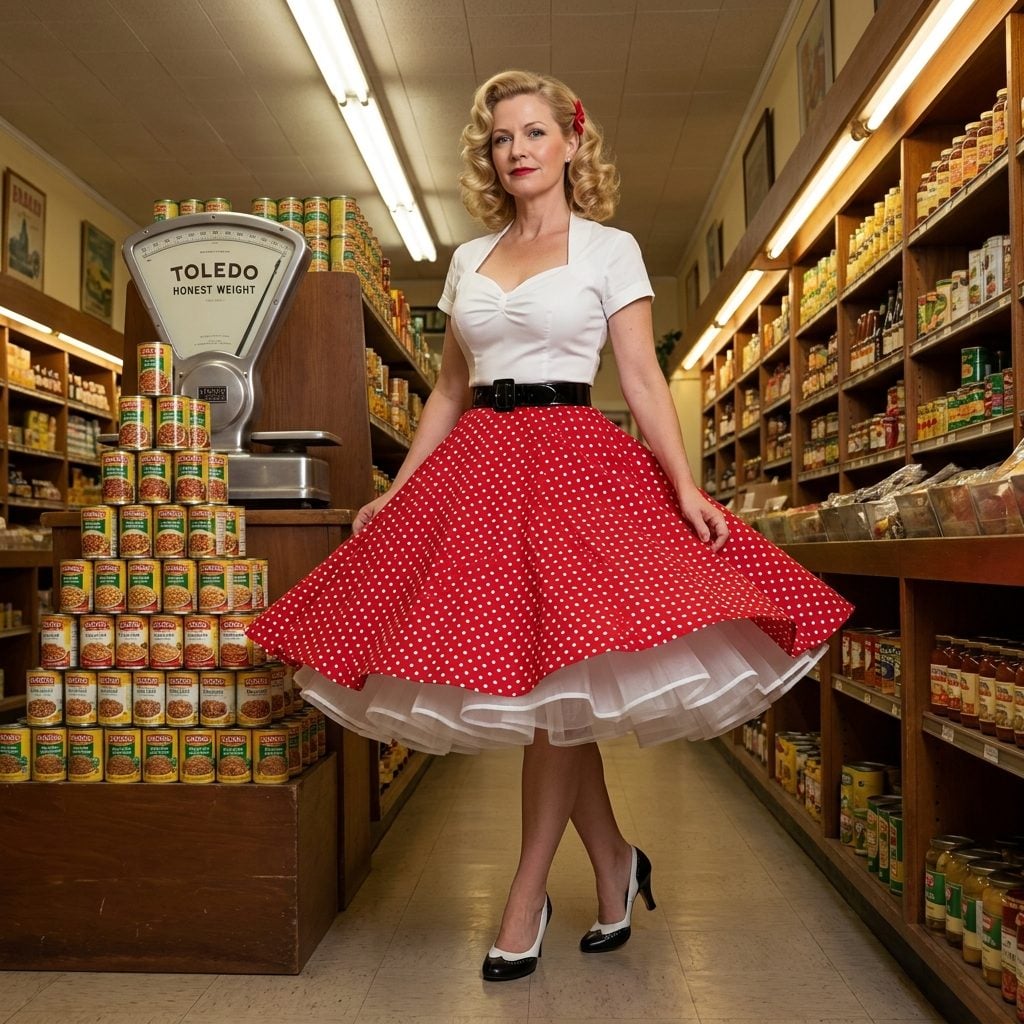
The volume. The sheer structural ambition of walking into a grocery store with a skirt that occupies the entire aisle. Circle skirts needed engineering underneath — crinolines and petticoats, stiff layers of tulle or nylon netting that turned a flat piece of cotton into something with its own gravitational field.
Getting into a car wearing one required a specific technique: sit first, then swing both legs in while holding the skirt down with your forearms. Navigating a narrow checkout lane was its own athletic event. But that silhouette — the tiny waist, the dramatic flare — was worth every inconvenience and every bruised hip from catching a store display.
Some women starched their petticoats in sugar water to make them even stiffer. Let that sink in. They were boiling their undergarments on the stove to achieve maximum poof at the Piggly Wiggly.
6. The Plastic Rain Bonnet Folded Into a Square the Size of a Credit Card
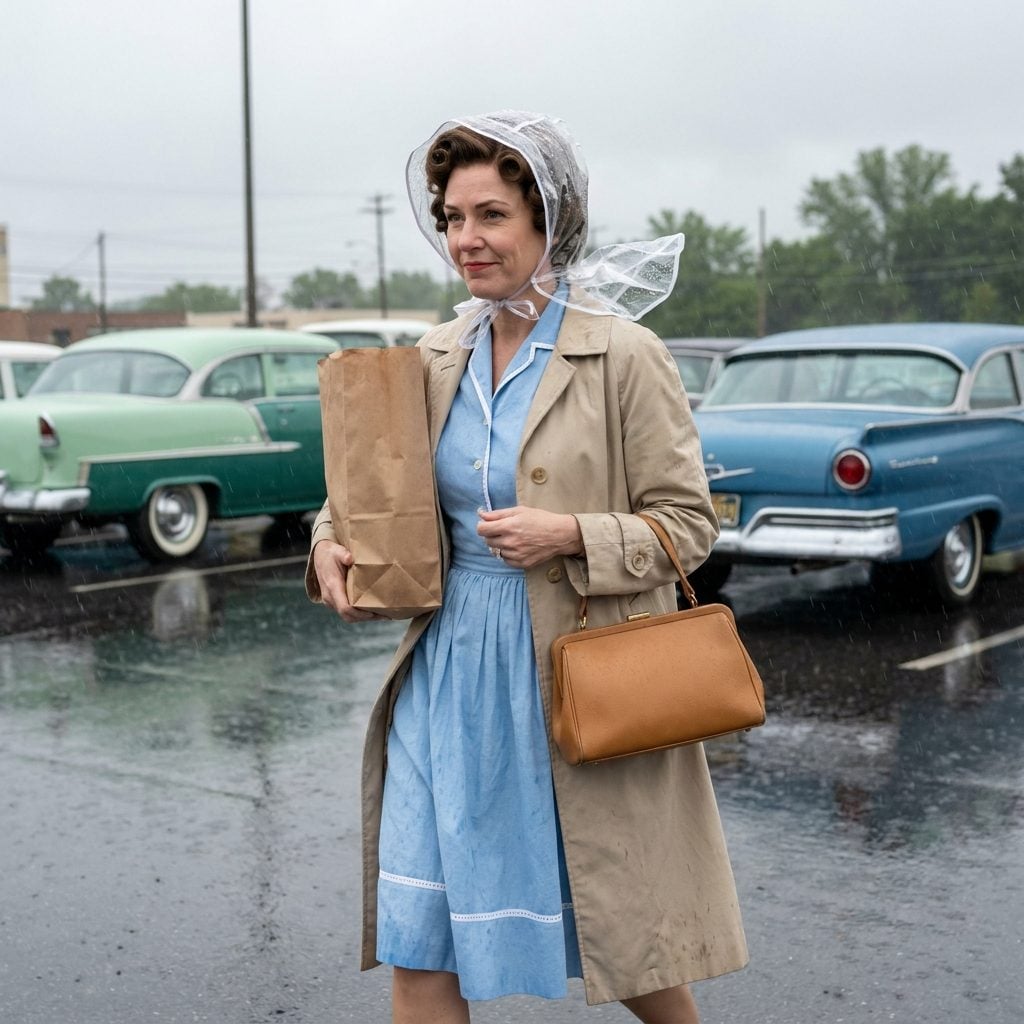
Every purse had one. Every single purse. A thin, clear plastic bonnet folded down to almost nothing, tucked into a little pouch or envelope, ready for deployment at the first hint of a cloud. Your hair was set — forty-five minutes of rollers, pins, possibly a salon visit that cost real money — and rain was absolutely not going to undo that investment between the store and the car.
You tied it under the chin with two thin plastic strips, knotted quickly, usually mid-stride. It made everyone look vaguely like a shower cap had escaped into the wild. Nobody cared. Vanity was for dry days; practicality ruled the parking lot.
5. A Leather Belt Cinched So Tight It Doubled as a Corset
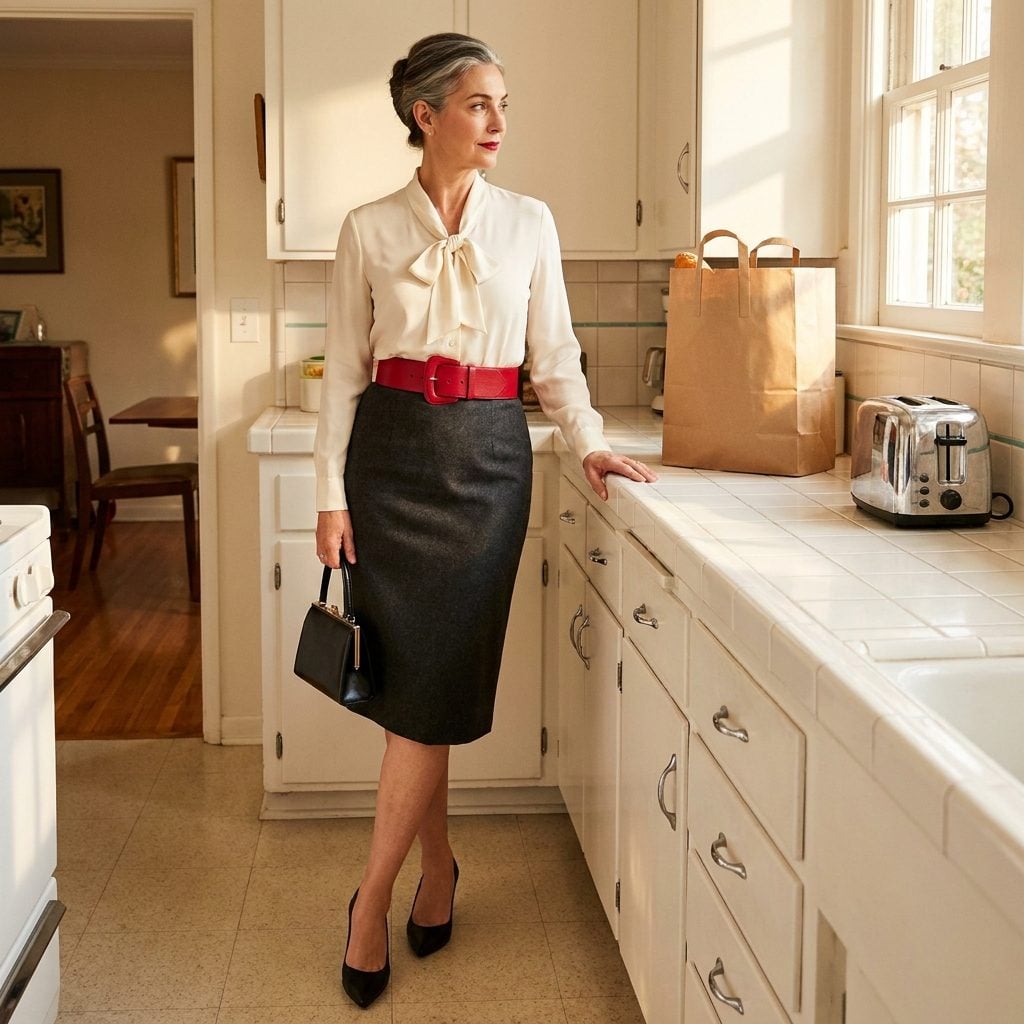
The waist was the organizing principle of 1950s dressing. Every outfit orbited around a defined, cinched, unmistakable waist, and the leather belt was how you got there — wide or narrow, black or brown or cherry red, buckled to the tightest comfortable notch and sometimes one past it.
Christian Dior’s New Look had declared the nipped waist the silhouette of the decade, and regular women followed that directive with real commitment. A wide leather belt over a full skirt created the hourglass; a narrow one over a sheath dress sharpened it. An unbelted dress in 1955 felt like a sentence without punctuation — technically complete but deeply, visibly wrong.
4. A Linen Handkerchief Tucked Into Your Handbag Like a Tiny White Flag of Civility
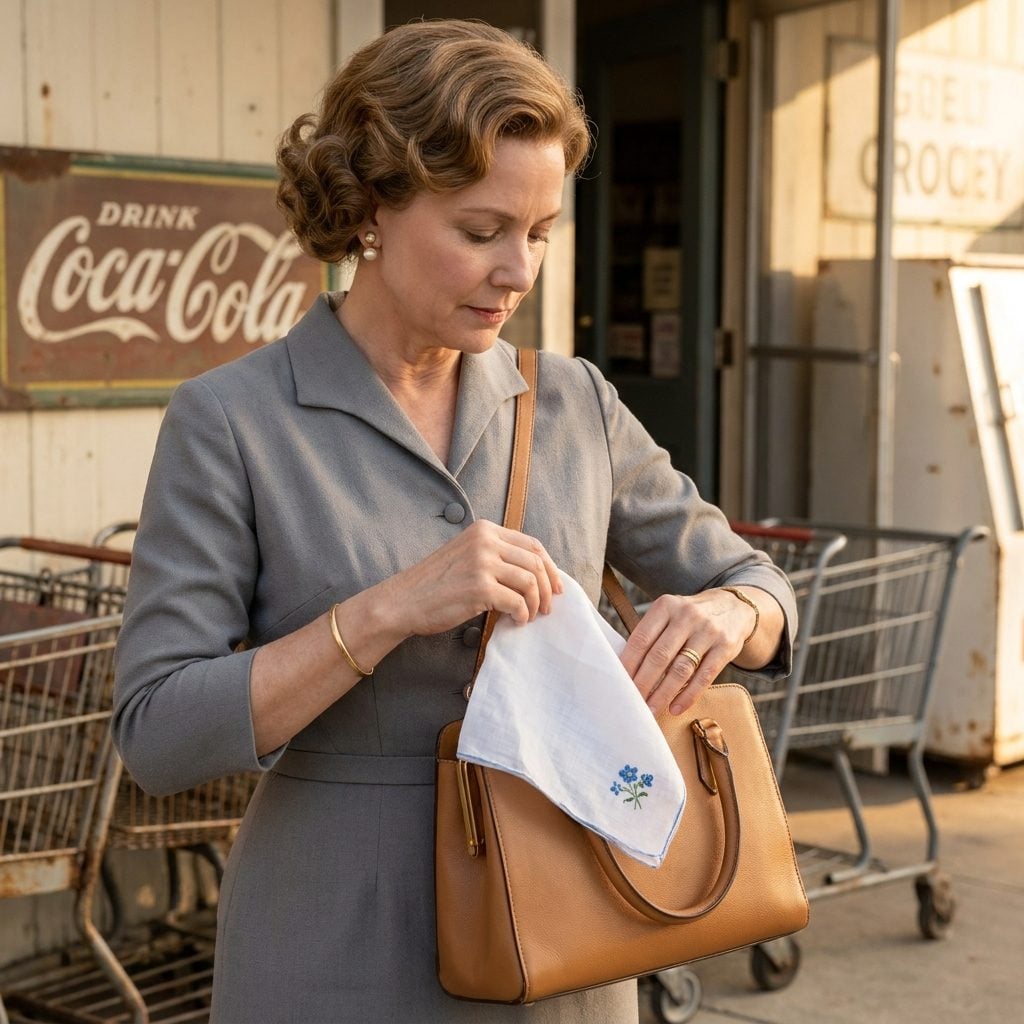
Nobody carried tissues. That’s the thing. Kleenex existed, sure, but a proper woman carried a handkerchief — cotton or linen, usually white, sometimes with a crocheted edge or a tiny embroidered initial in one corner. Your grandmother probably made yours.
It lived in your handbag or tucked into your coat pocket, and it served roughly fifteen purposes: blotting lipstick, dabbing a child’s ice cream face, drying your hands after the rain bonnet incident, wrapping a piece of penny candy, pressing against your temple on a scorching afternoon. At the grocery store, you might use it to grip a cart handle that looked questionable. The original multi-tool, decades before anyone used that word.
3. Short White Gloves Removed Finger by Finger Before You Dared Touch a Tomato
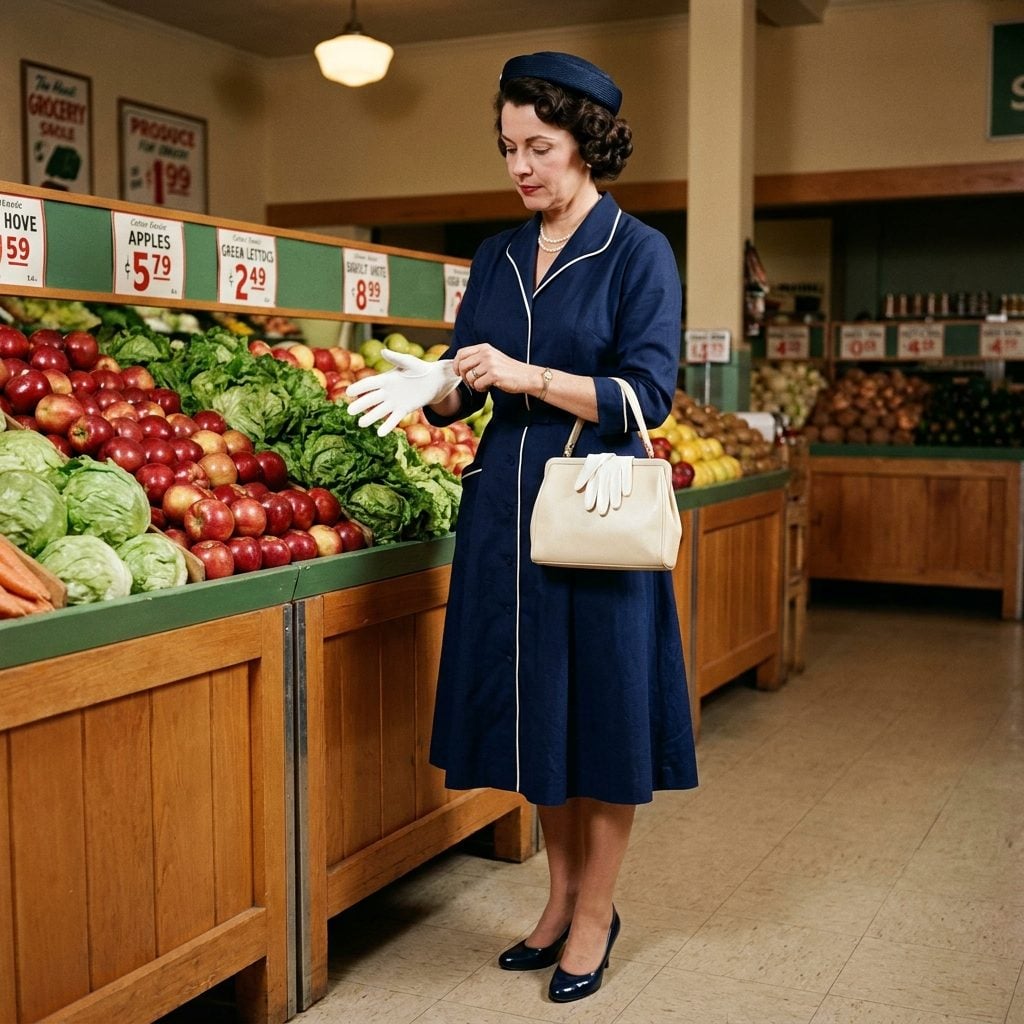
This is the one that really gets people. White cotton gloves. To the grocery store. On a regular day. Not Easter, not a wedding — just Tuesday.
Wrist-length, usually cotton or nylon, and simply part of being dressed. You put them on when you left the house the way you’d grab your keys now. But here’s where it gets choreographed: you removed them before handling produce or handing money to the cashier. Each finger pulled loose one at a time, both gloves tucked neatly into your hat or handbag, business conducted with bare hands, gloves back on before you reached the car.
It seems absurd now. Completely. But there was a grace to it — a built-in ritual of care and attention that made even buying canned corn feel like an act with some dignity attached. I sometimes wonder if we lost something real when we stopped bothering with small ceremonies like that, or if I’m just romanticizing inconvenience. Probably both.
2. Hair Held in Place With Generous Amounts of Setting Lotion (And Nobody Flinched)
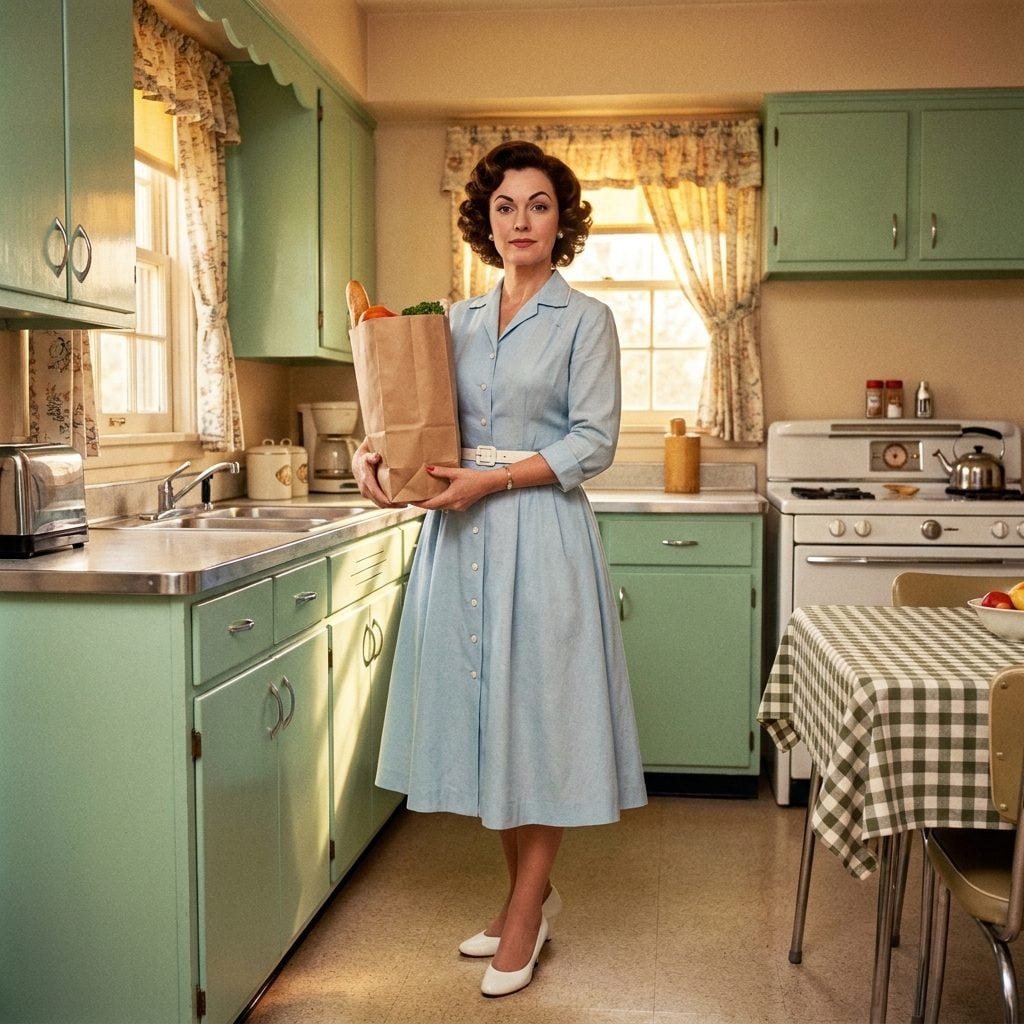
That sticky-sweet smell of Lilt or Dippity-do on damp pin curls, set the night before under a bonnet dryer or — more realistically — a headscarf tied tight while you slept on rollers that left dents in your scalp. By morning, the curls were shellacked so thoroughly a Kansas wind couldn’t budge them. You brushed them out, teased the crown, and walked into the Piggly Wiggly looking like you had a standing salon appointment.
Nobody questioned it. A set hairstyle was baseline grooming, same as brushing your teeth. Showing up anywhere with limp, unstyled hair would’ve raised more eyebrows than arriving in a ballgown. Setting lotion was the invisible scaffold beneath the whole production — every silk headscarf and pillbox hat relied on it for structure.
1. Wool Skirts Paired With Tucked-In Blouses, Even in July (Almost)
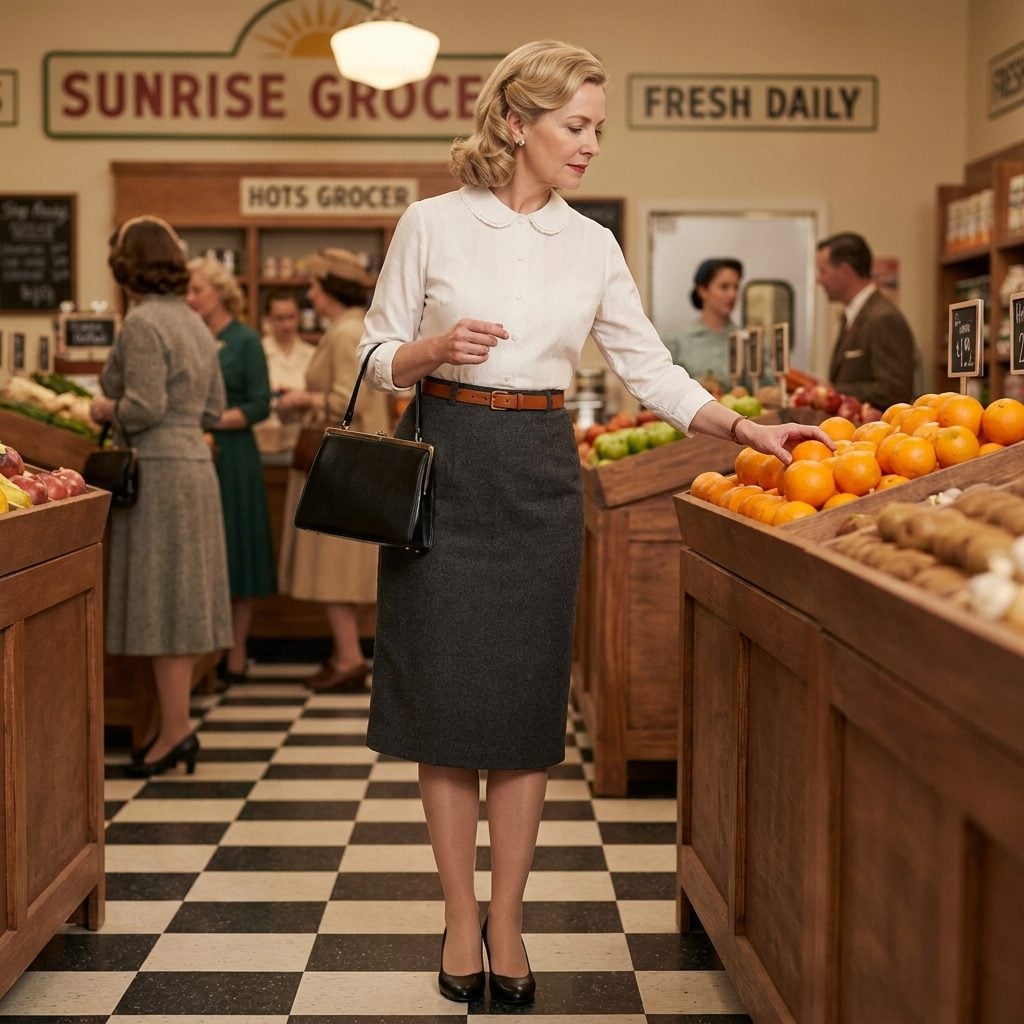
The tuck was non-negotiable. A wool pencil skirt or an A-line hitting just below the knee — always lined, always pressed — paired with a blouse tucked in so crisply you’d swear she ironed herself into it. This was the weekday uniform for the bank, the butcher, the can of Green Giant corn.
Charcoal, navy, or a muted plaid for the skirt. Cotton or rayon blouse with a Peter Pan collar or a neat pointed one, buttoned to the second button from the top. A thin leather belt usually sat at the natural waist because the silhouette demanded a visible waistline the way a sentence demands a period.
And then there’s the fabric weight, which is genuinely absurd by modern standards. These were proper wool skirts, not some blended novelty fabric. Women wore them through spring and well into early fall armed with nothing but resolve and talcum powder. Air conditioning was a luxury. The grocery store might have had it. Your car absolutely did not. You just sweated politely and kept your posture.