❤️ Would you like to save this?
The hostess had a fondue pot on the counter, Burt Bacharach on the record player, and absolutely zero patience for anyone who showed up underdressed. Getting ready for a 1970s cocktail party was an event in itself: the hairspray cloud in the bathroom, the specific drag of pantyhose up cold legs, the final spritz of Charlie that announced you were officially ready. We committed. Fully, gloriously, sometimes disastrously. Here’s proof.
FYI, thanks to AI imagery software, we’re able to create very specific fashion and hairstyle examples to illustrate the points being made. In some cases, imagery is exaggerated to hammer home the point. Also, assume links that take you off the site are affiliate links such as links to Amazon. this means we may earn a commission if you buy something.
27. The Sequined Gold Lamé Halter Jumpsuit That Outshone Every Light Fixture
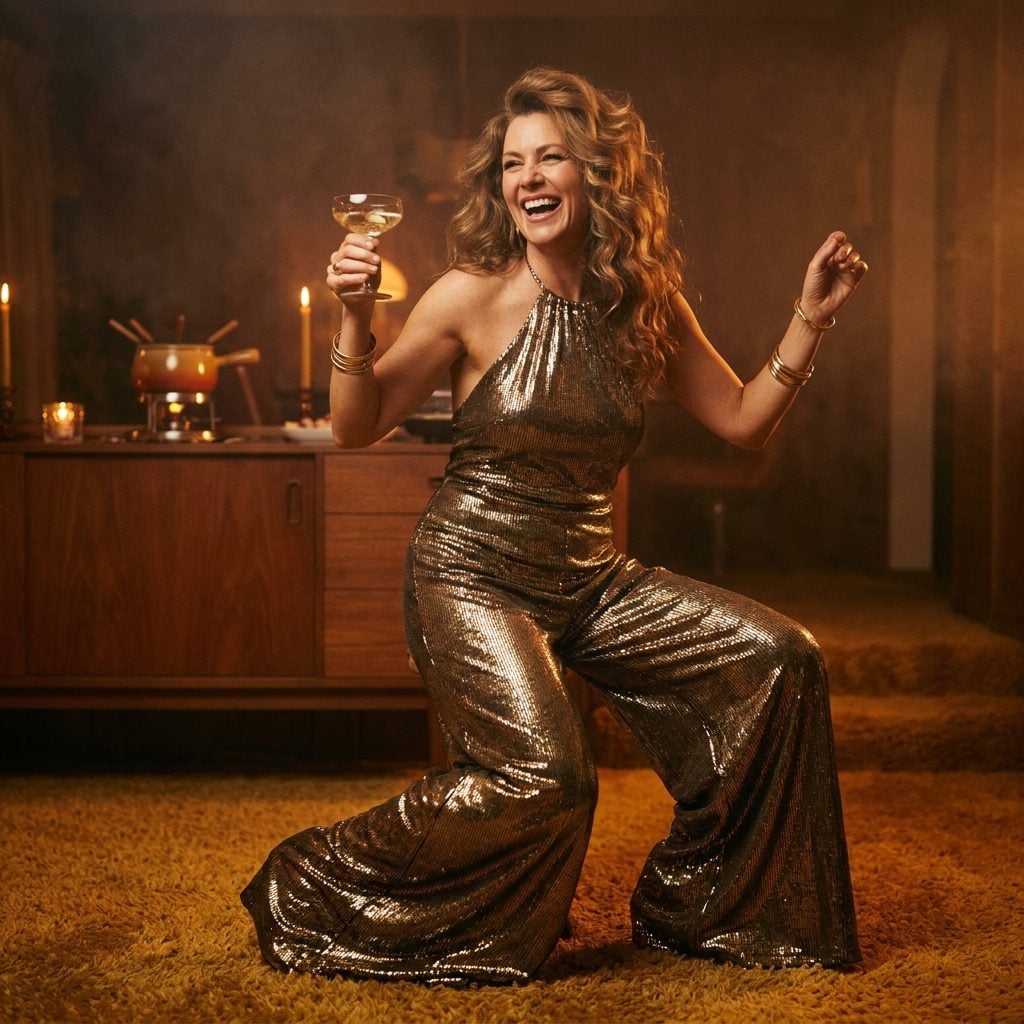
You had to be committed to wear this. Not confident, committed. The gold lamé sequined halter jumpsuit was essentially a disco ball you could walk around in, and the palazzo legs meant every step sent a ripple of light across the ceiling. Women who wore this didn’t enter a party, they arrived.
The halter tie was always slightly uneven by the second hour, the sequins scratched your collarbone by midnight, and nobody cared even a little bit. This was the 1970s version of power dressing, and the power was entirely in the shimmer.
What Our Readers Say
- Asked what they’d wear for an evening out, ThreadCurve readers split almost evenly between a dress and separates, and only 10% picked a jumpsuit.
- Today, nearly two out of three of our readers say comfort comes first when they get dressed, with polish taking second place.
From ThreadCurve reader polls and votes.
26. The Floor-Length Hostess Caftan With Sleeves That Could Knock Over a Candle
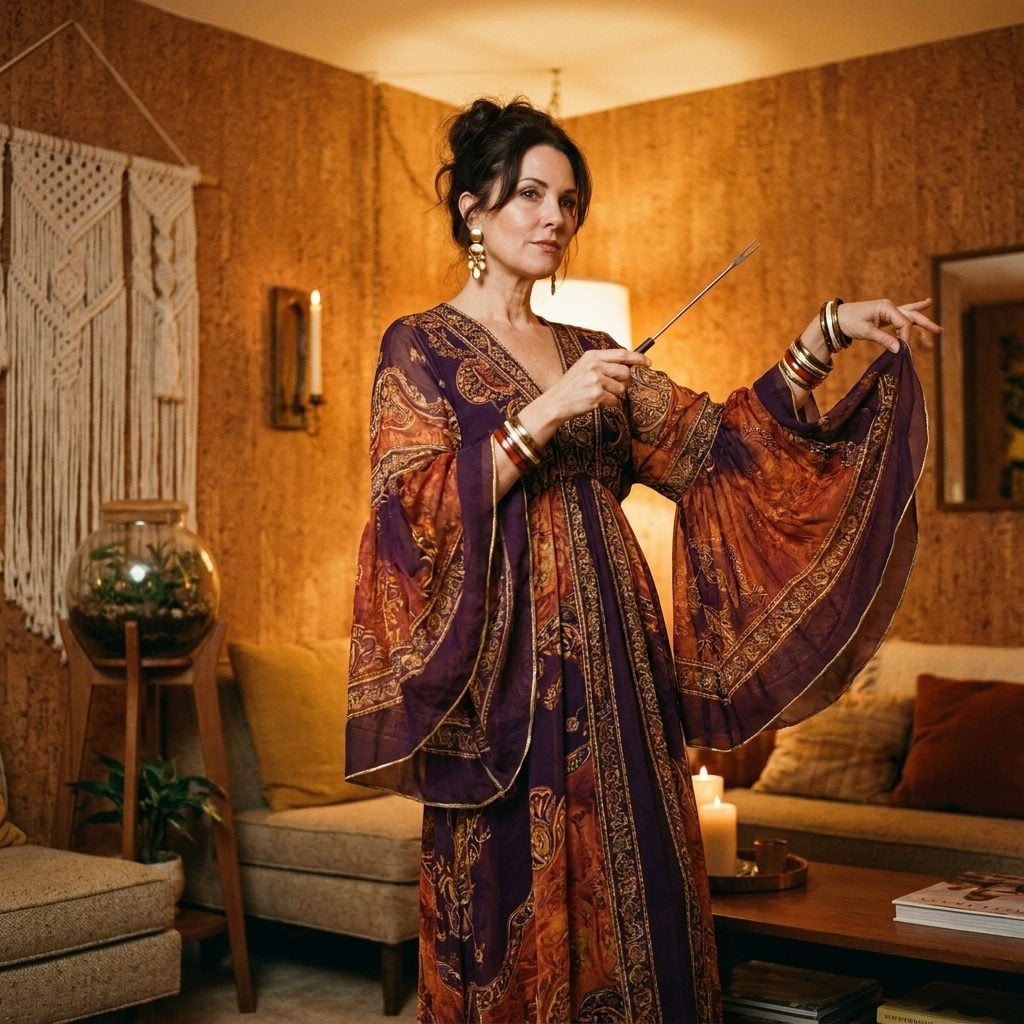
The hostess caftan was genius and also a liability. It was a garment that said: I live here, I throw parties here, and I will not be constrained by sleeves that end before my elbow. The bell sleeves on these things were genuinely architectural, wide enough to catch a breeze, long enough to trail dangerously close to the fondue pot.
Diane von Furstenberg hadn’t fully taken over yet, so the caftan was still the reigning hostess uniform. You could buy them at Bloomingdale’s in fabrics that looked vaguely Moroccan, vaguely Byzantine, and completely perfect for standing near an open bar while making everyone feel welcome.
25. Cigarette Pants and a Disco Blouse Unbuttoned to an Altitude That Required Nerve
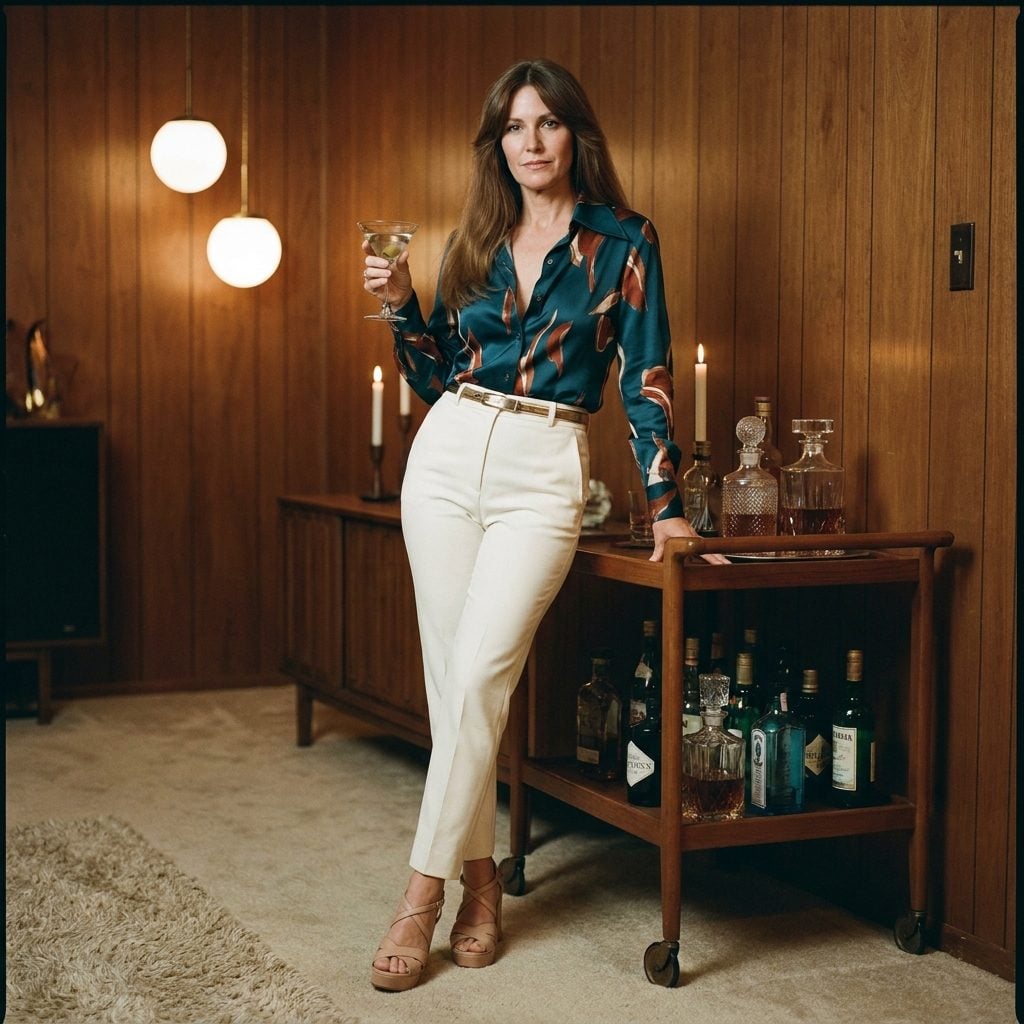
That blouse was doing real work. The silky disco blouse in this combination was technically a top, technically, but the undone buttons transformed it into something else entirely, a statement about confidence that the 1970s made completely, unapologetically available to women who wanted it.
Cigarette pants were the counterbalance: sharp, tailored, serious. The combination of severely structured trousers and a blouse that had given up on buttons three closures ago was the whole decade in one outfit. Nobody called it daring. They called it Thursday.
24. The Faux Fur Stole She Wore Indoors All Night and Nobody Asked Why
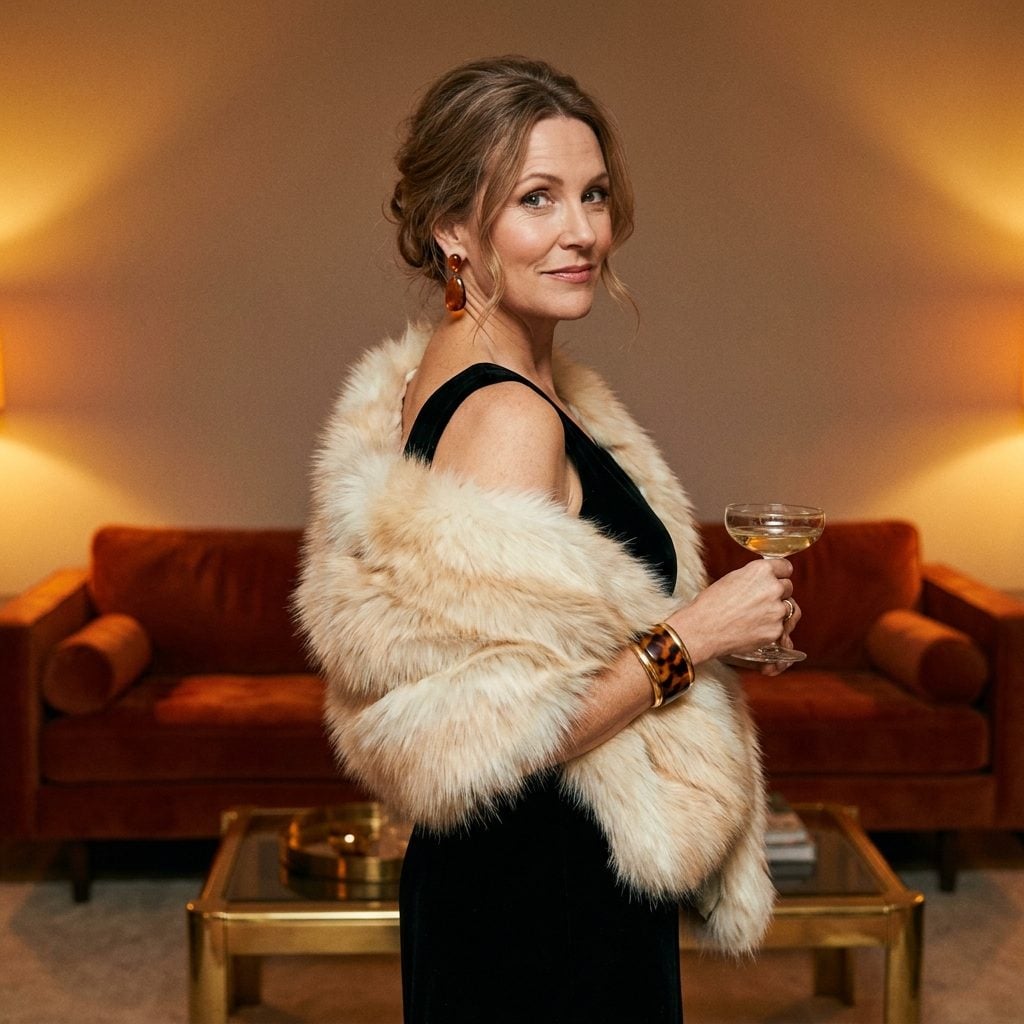
The faux fur stole was never about warmth. The party was inside. It was 72 degrees. She wore it anyway, draped over both shoulders for the first hour, then dramatically off one shoulder for the second, then abandoned on a velvet armchair by hour three when someone put on Donna Summer and priorities shifted.
Wearing a stole indoors was a very specific 1970s flex: it said Old Hollywood but I rent this apartment. It paired with everything, the black velvet sheath, the slinky disco dress, even the hostess caftan if you had genuine boldness. It cost almost nothing from a department store and looked like it cost a great deal.
23. Platform Heels So High They Require a Structural Engineer (and Some Dignity Backup)
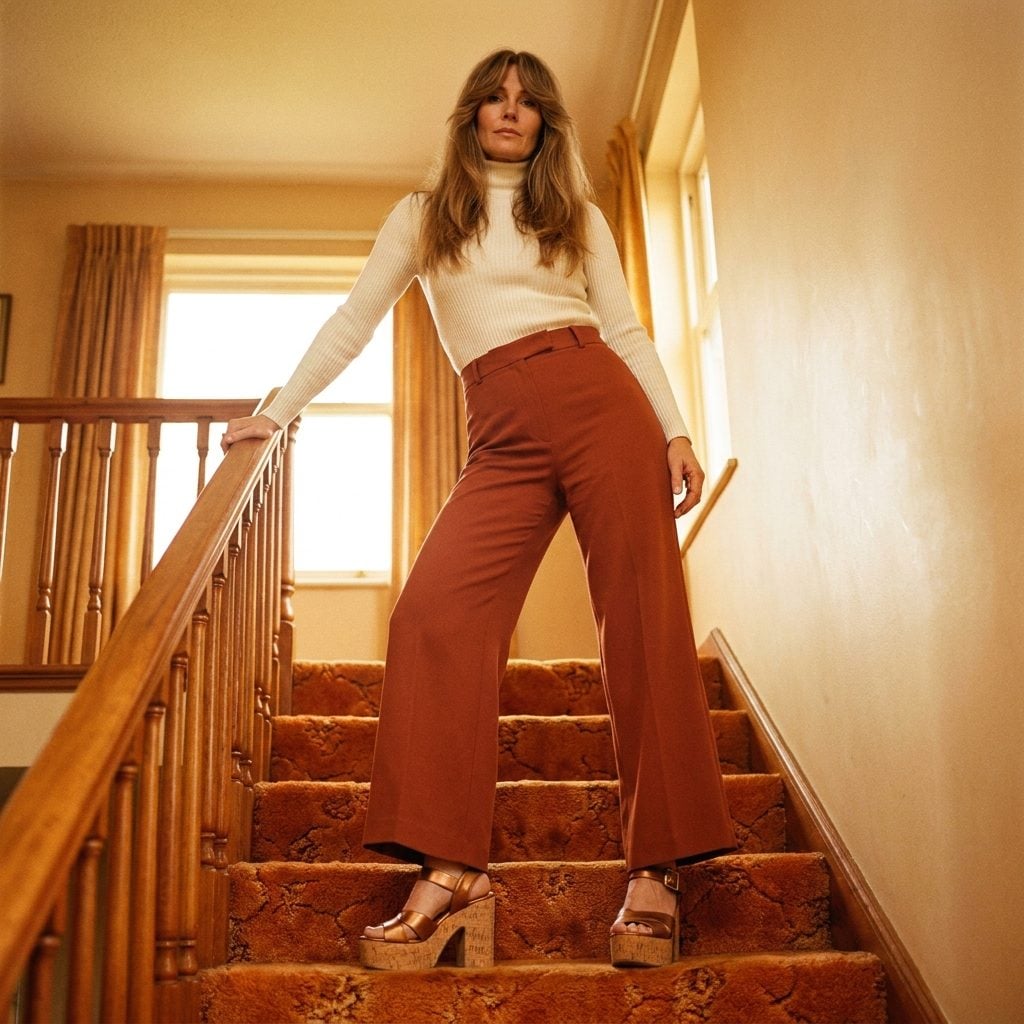
Four inches of cork platform before you even got to the heel. The mathematics were wild. You were basically wearing a small building on each foot, and the flared trousers were essential not for style but as structural cover, hiding the full architectural reality happening at ankle level.
Getting down a staircase required planning. A full risk assessment, really. One hand always on the banister, one eye always on the carpet edge. And yet the silhouette was genuinely extraordinary: legs that went to the ceiling, a posture that was part model, part tightrope walker.
“The platforms didn’t make you taller. They made you untouchable. There’s a difference.”
Today our readers keep things much lower: in one poll, flat and low heels were neck and neck at the top, and only 14% picked high heels.
22. The Plunging Wrap Dress in Jersey That Made Every Woman Look Like She Knew Something You Didn’t
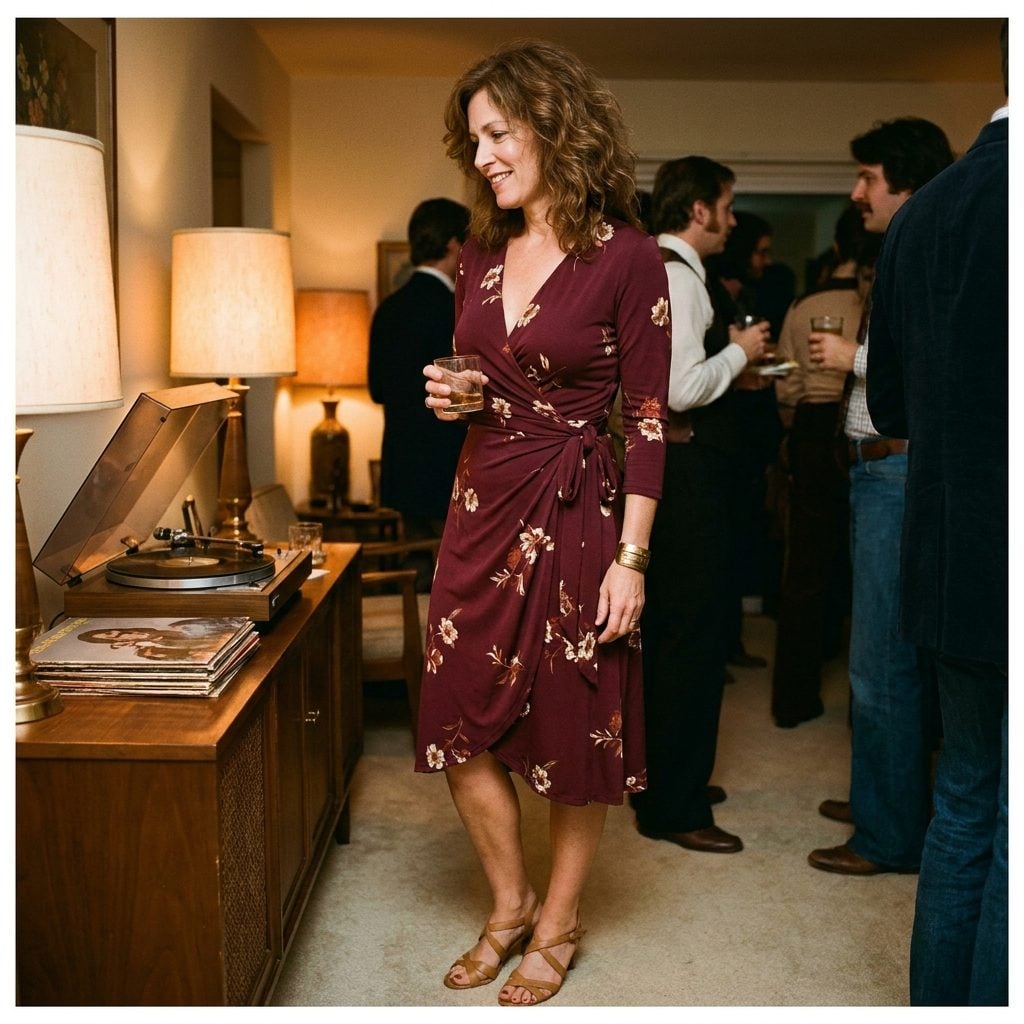
Diane von Furstenberg launched the wrap dress in 1974 and reportedly sold five million of them in two years. That number feels completely plausible once you understand what this dress did: it fit virtually every body, it moved in a way that jersey has no business moving, and the wrap silhouette created a waist where there was a waist and was polite about the situation where there wasn’t.
Every woman at a 1970s cocktail party had either worn one that week or was about to. The genius was in the non-commitment, you could adjust the wrap all evening, tightening for dramatic effect, loosening slightly after the hors d’oeuvres. The 1970s understood stretch and drape before the rest of fashion caught up.
21. Chandelier Earrings That Grazed the Collarbone and Announced You Before You Arrived
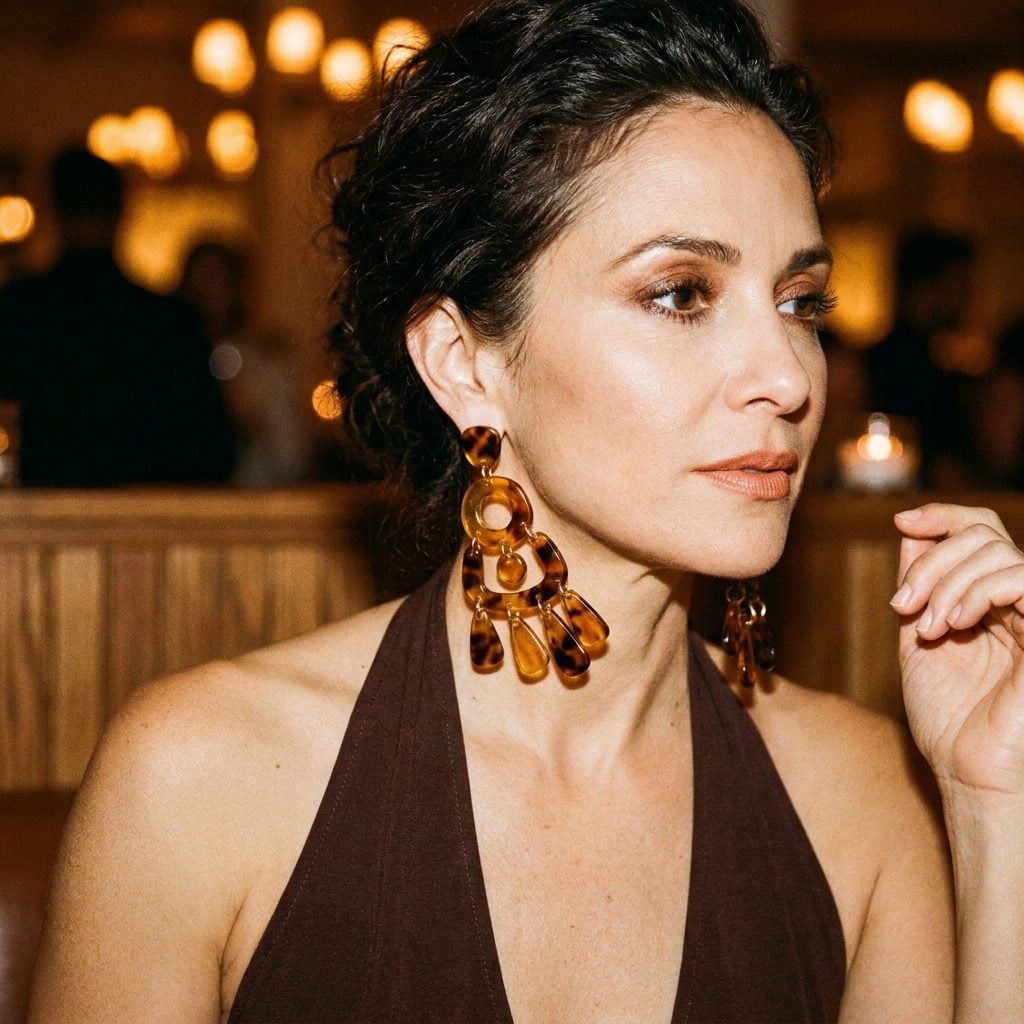
These weren’t earrings. They were a commitment to a lifestyle. The chandelier earring of the 1970s was three to four inches of cascading amber resin, tortoiseshell, hammered gold, or semi-precious stone, the kind of earring that required you to sweep your hair up or permanently tuck it behind your ear, because any other option meant a very bad situation with a hairbrush by the end of the night.
They clicked when you walked. They caught the candlelight. They were genuinely audible in a quiet room. Nobody considered this a problem. The whole point was presence, the idea that you should register on every sense available, including sound.
20. The Satin Jumpsuit, Cinched by a Medallion Belt the Size of a Small Country
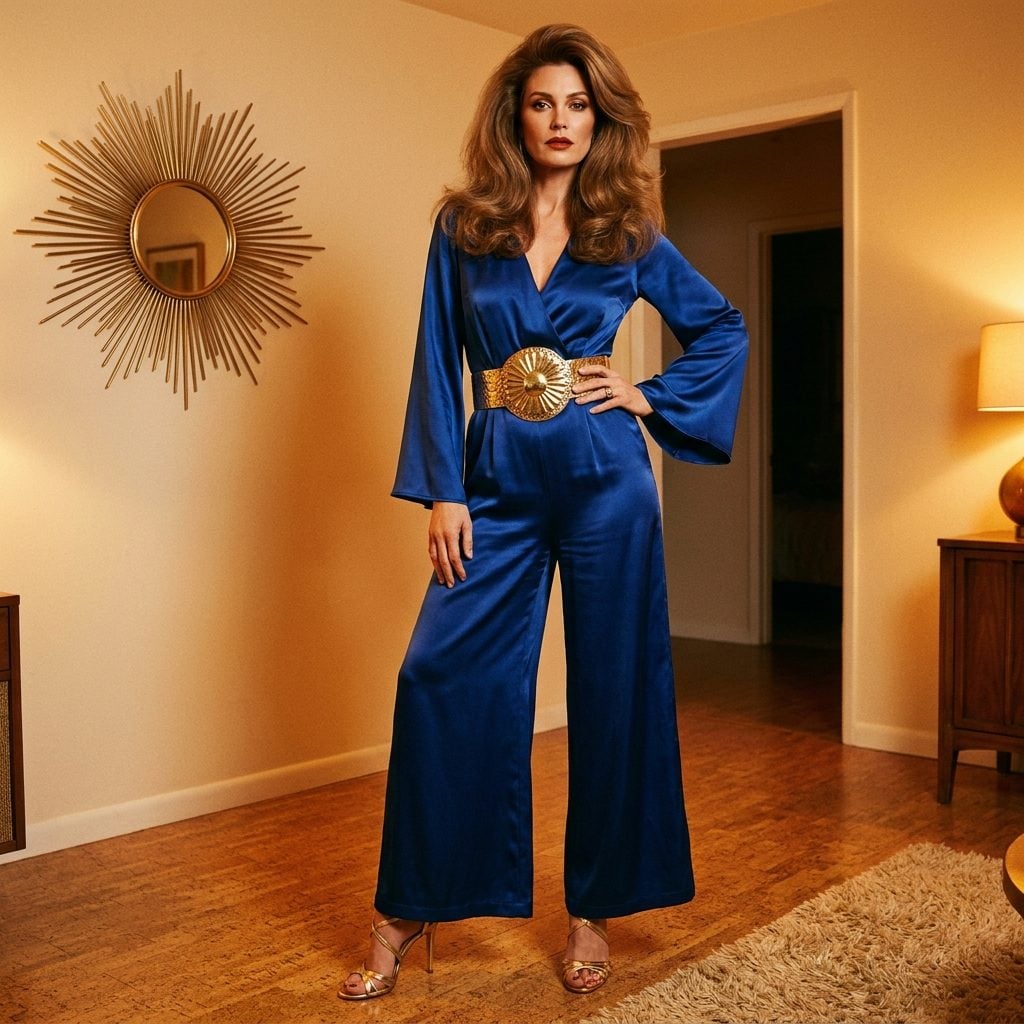
The medallion belt was the final word. You could wear almost any 1970s athleisure top adjacent silhouette, the slinky jumpsuit, the wide-legged trousers, the flowing halter, and the massive hammered-gold medallion belt was the punctuation mark that finished the sentence. It was a belt the size of a dinner plate and it was completely serious about itself.
The cobalt satin jumpsuit was already a statement on its own terms: all that liquid blue fabric, the wide palazzo legs, the sheen catching every warm tungsten light in the room. Add the medallion belt and you had achieved something the 1970s was genuinely after, a look that didn’t need justification, context, or a second opinion. It just was.
19. Blue Eyeshadow That Started at the Lash Line and Kept Going
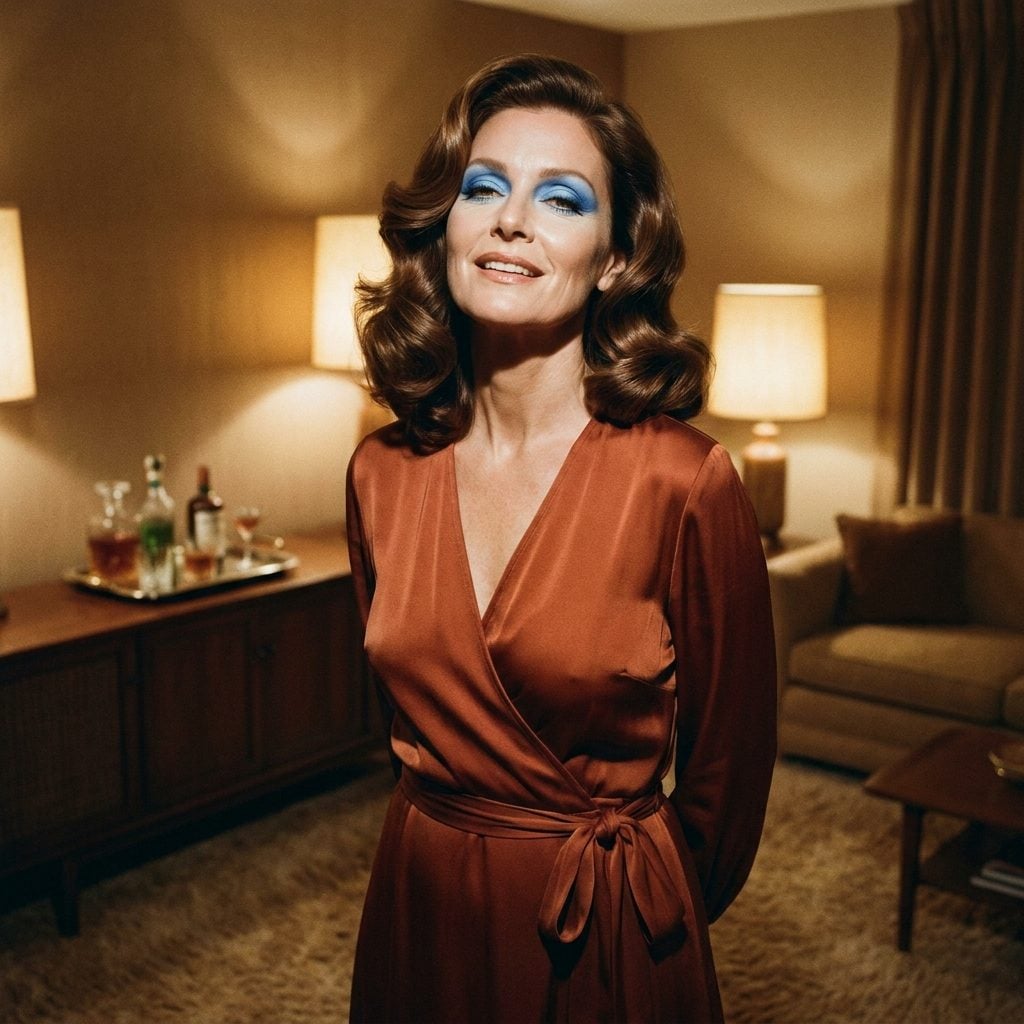
The shade was called something like “Midnight Sky” or “Azure Dream” and it came in a little plastic compact from the drugstore for about a dollar fifty. You applied it with the sponge-tip applicator, and if that didn’t give you enough coverage, you used your finger. The goal was not subtlety. The goal was to be seen from across the room.
This was the defining makeup move of 1970s party dressing, lifted straight from the pages of Vogue and worn by every woman from Manhattan to Milwaukee who wanted to look like she meant business. Nobody was blending it into a smoky nothing. You put it on like war paint, and you walked in like you owned the place.
18. The Backless Disco Dress Held Together by Pure Nerve
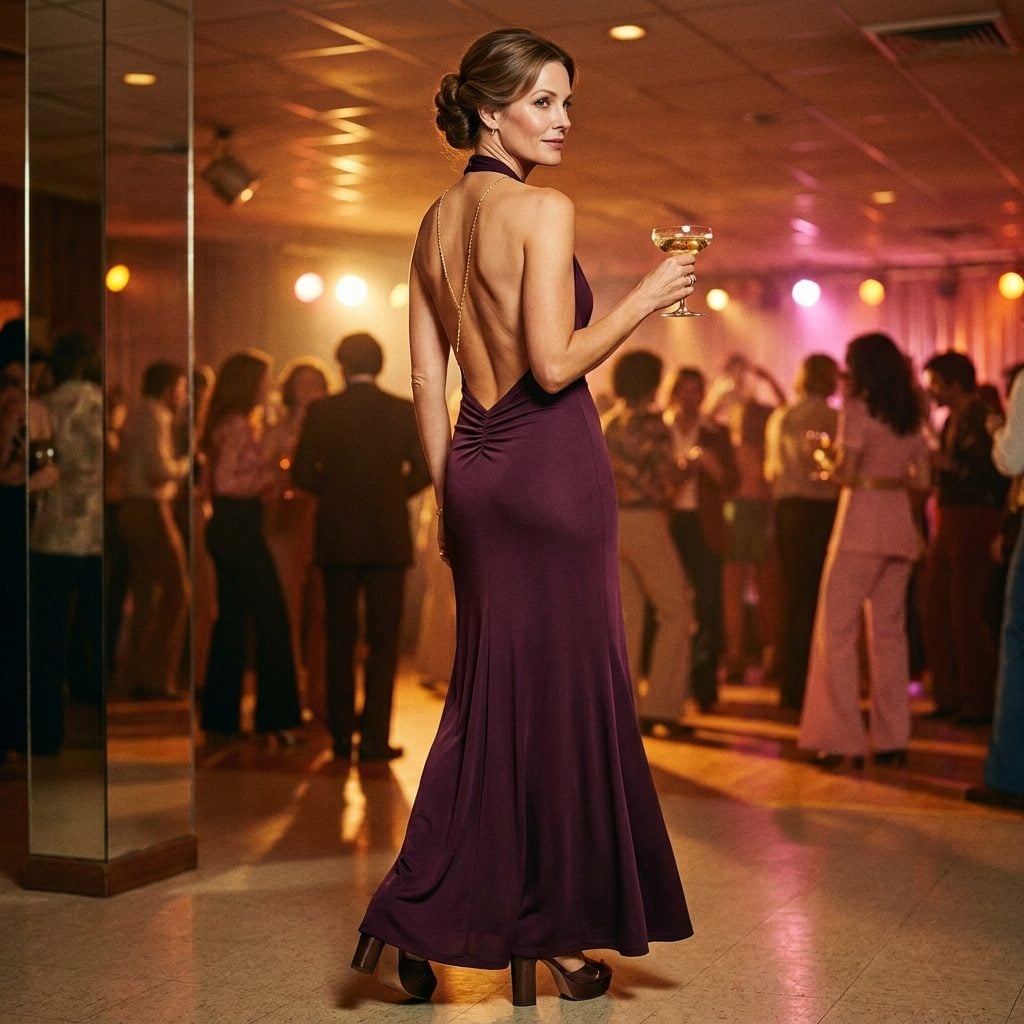
There was absolutely no architecture holding this dress up. No underwire, no boning, no built-in bra, just a halter tie at the nape of your neck and the grim determination not to lean too far forward. We wore them anyway. We wore them proudly.
The dress was usually jersey, usually a color that didn’t exist in nature (deep plum, liquid gold, a green so dark it was almost black), and it moved when you moved, which was the entire point. You found it at a boutique that smelled like patchouli, and you paid too much for it, and you wore it until it fell apart at the seam.
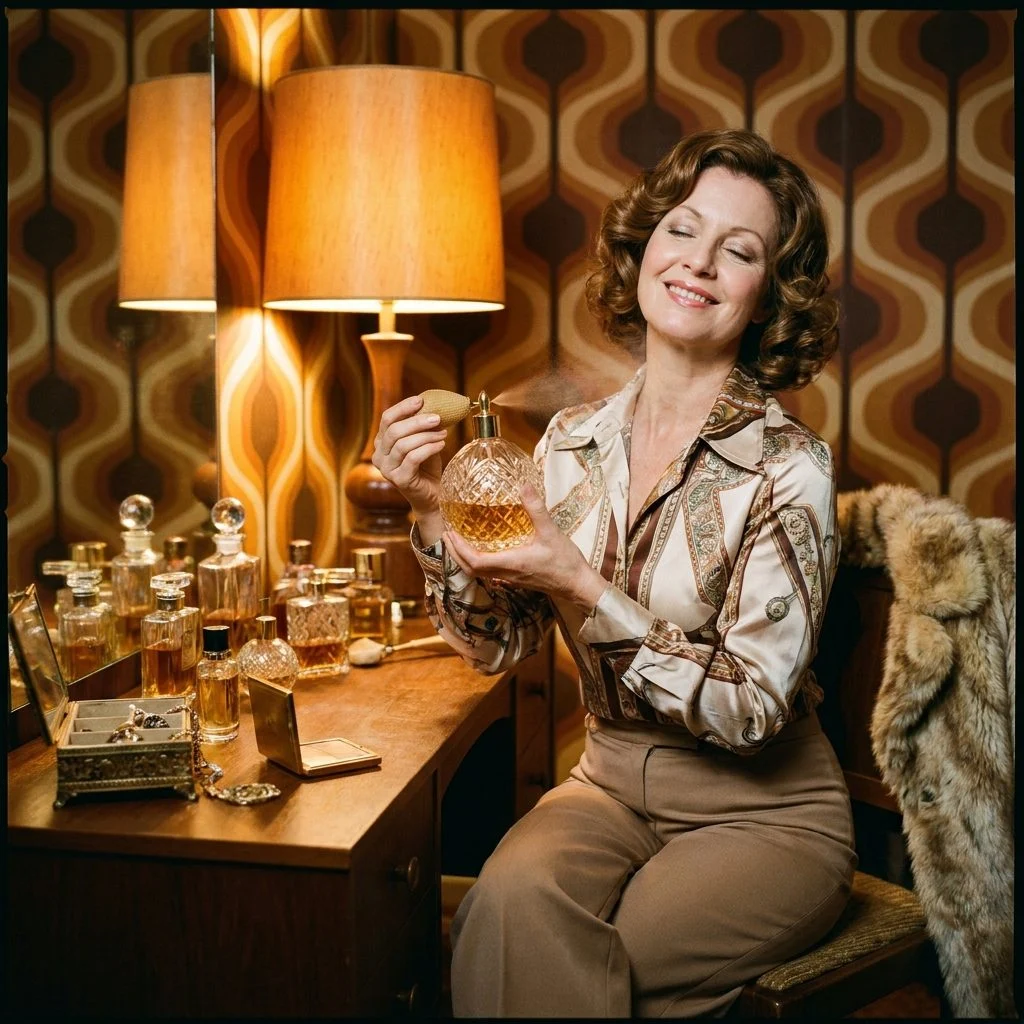
17. The Perfume You Applied Until the Neighbors Knew You Were Getting Ready
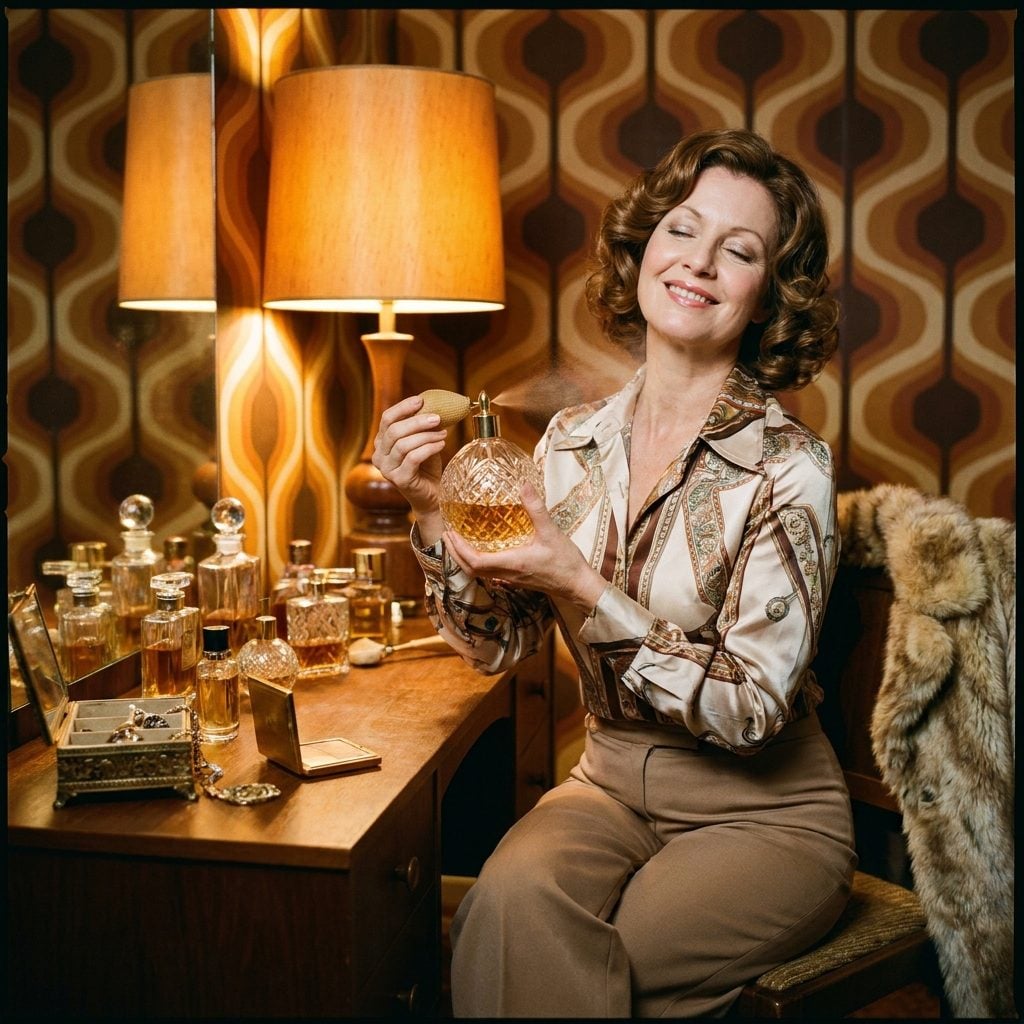
Not one spritz. Not two. A full cloud, applied at the wrists, the neck, behind the knees, and once more into the air to walk through, because someone read that in a magazine and we all believed it. The bottle was heavy, the scent was heady, and the whole ritual felt enormously glamorous.
The fragrances of the era were not shy. Charlie by Revlon. Opium by Yves Saint Laurent. Joy by Jean Patou, which advertised itself as the costliest perfume in the world and which nobody’s aunt could stop buying. These were not delicate skin scents. They announced you.
16. A Velvet Pantsuit in Emerald or Burgundy That Made Every Entrance Theatrical
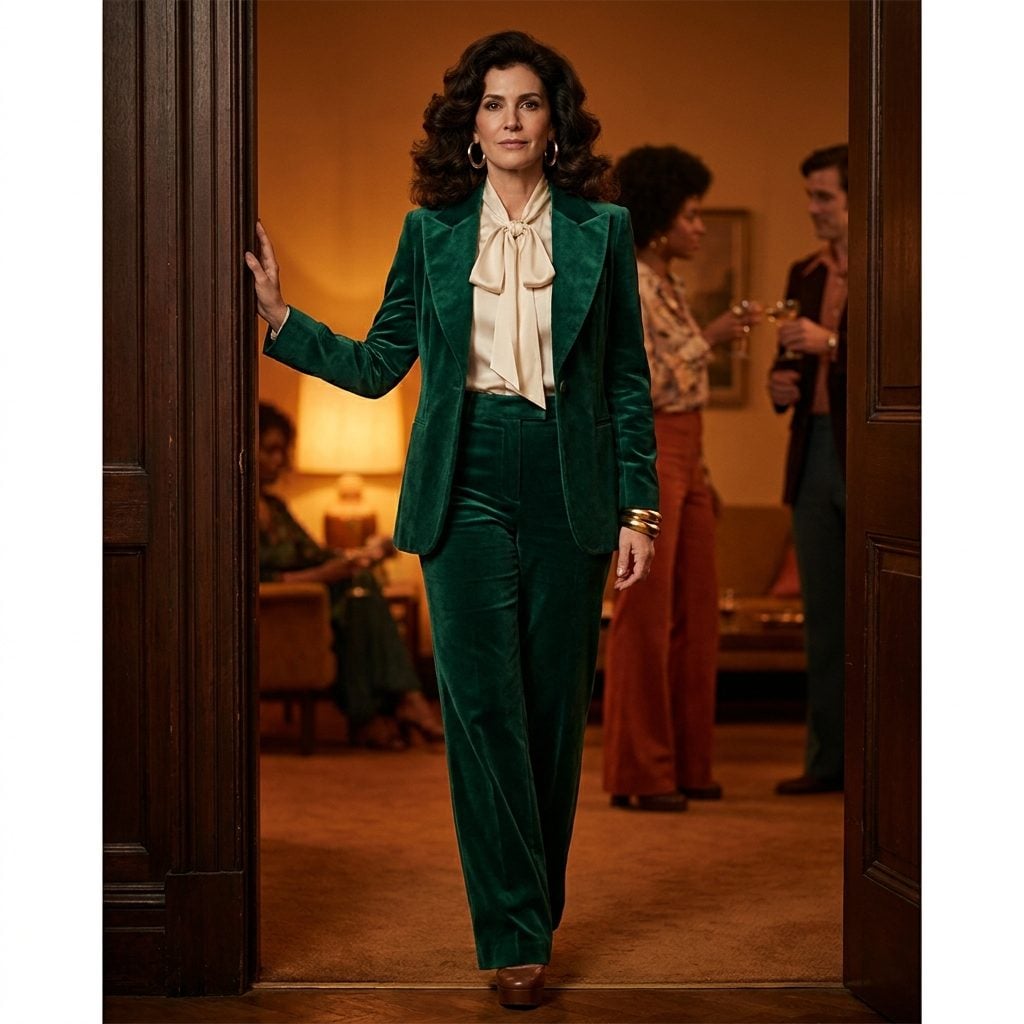
The velvet pantsuit was not a casual choice. You wore it when you wanted people to stop talking when you walked in. The wide lapels, the high-waisted trousers breaking just so over a pair of platforms, the way velvet absorbed light in a room full of people trying to reflect it. Burgundy or emerald, almost always. Never beige, never navy.
This was also the outfit that required its own maintenance. You couldn’t sit against anything with texture or the pile would go flat in patches. You learned to perch. You also learned that velvet and cigarette smoke make an unfortunate combination, which was a problem in 1974 because every room had both.
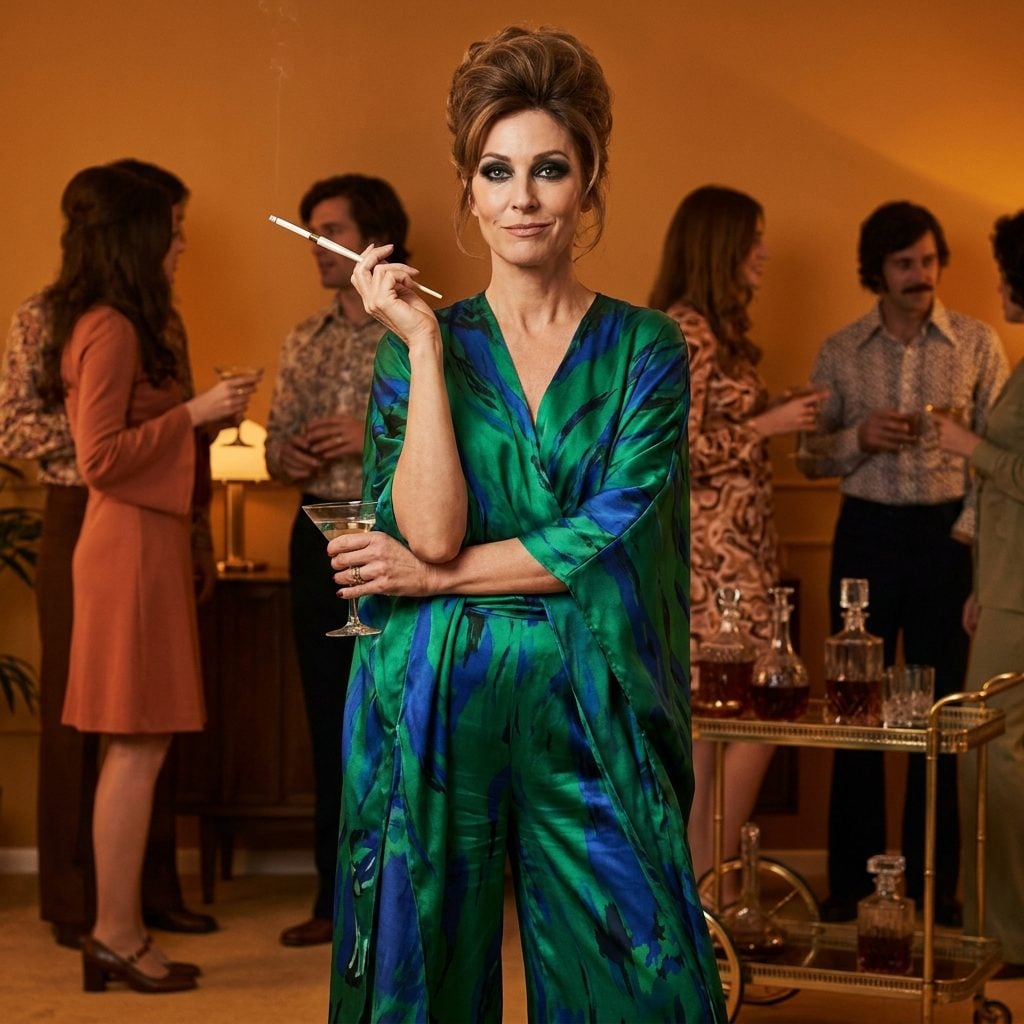
15. The Cigarette Holder That Was 100% an Accessory and 0% About Smoking
❤️ Would you like to save this?
The cigarette in the holder was almost beside the point. This was a prop. This was theater. You held it the way you’d hold a conductor’s baton, at just the right angle, so that when you spoke you had something elegant to gesture with and when you listened you had something to lower with great significance.
Every woman who carried one had practiced the move in front of a mirror. Don’t tell me she hadn’t.
14. The Chainmail-Effect Metal Top That Treated Discomfort as a Minor Detail
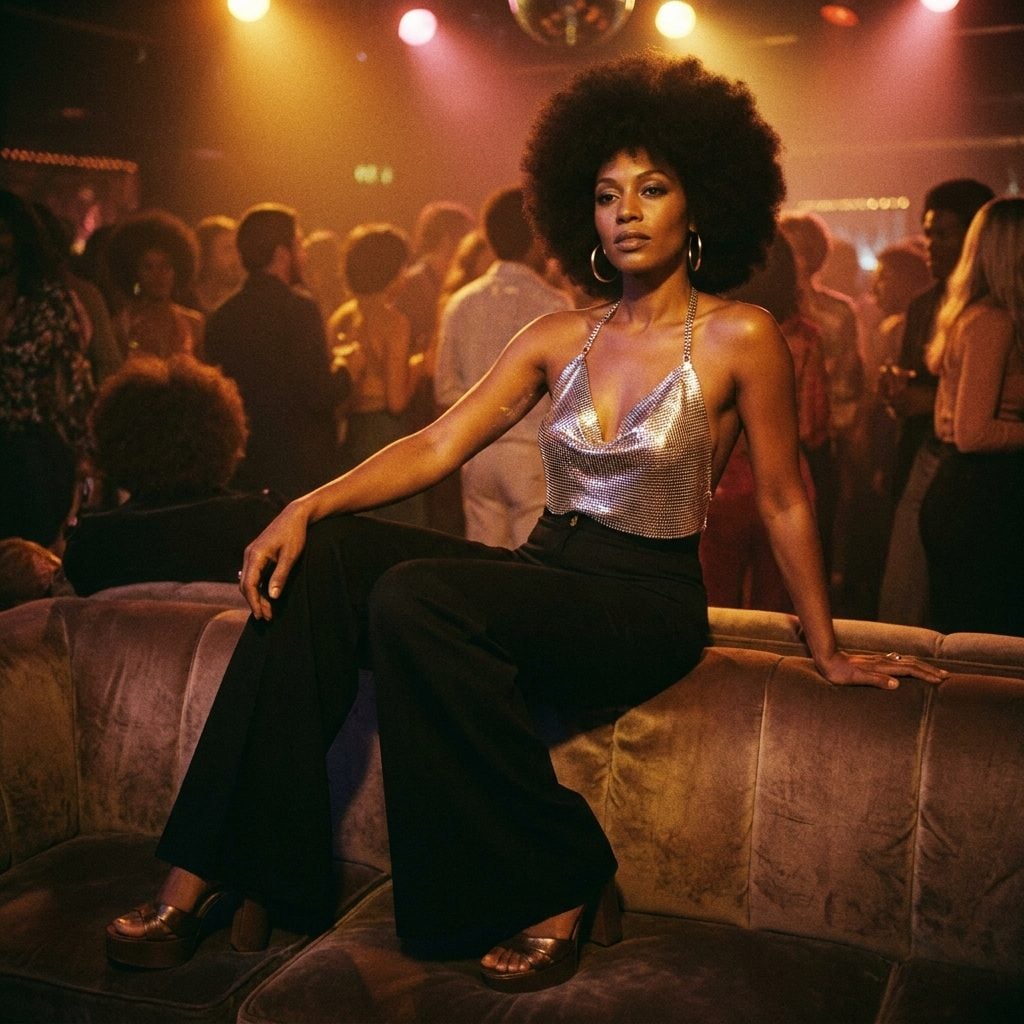
It weighed more than it looked like it should. It left faint grid marks on your skin if you wore it for more than two hours. And it was cold for exactly thirty seconds when you put it on, and then it was warm in a way that discouraged removing it at any point for the rest of the evening.
Women wore these straight from the pages of the fashion spreads coming out of the Studio 54 era, where the logic was simple: if Halston or Bob Mackie made it flash under a light, it was worth whatever physical inconvenience came with it. The inconvenience was real. The payoff, in a room with a mirror ball, was also real.
13. Glossy Nude Pantyhose With a Shimmer That Caught Every Light in the Room
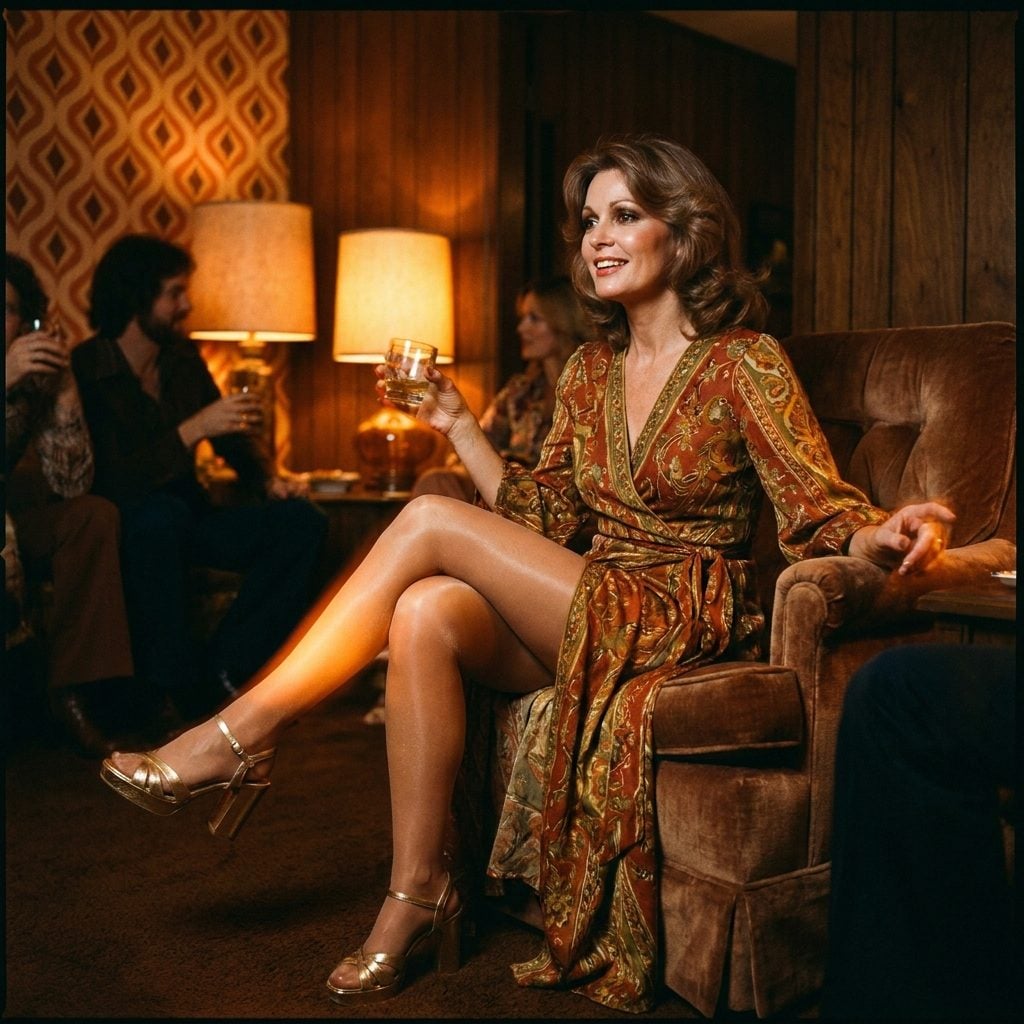
Suntan shimmer. That was the shade. Not quite your skin tone, glossier than skin has any right to be, with a faint gold or pearl shimmer woven into the knit that caught the light every time you crossed your legs or walked past a lamp. Nobody thought this was strange. We all bought the same ones from Hanes or No Nonsense and we all shimmered together.
“The pantyhose were not optional. They were the finish coat. You were not dressed without them.”
The waistband sat somewhere near your ribcage and you tugged it up all night anyway. It didn’t matter. The shimmer distracted from everything.
12. A Wide-Brim Floppy Hat Worn Indoors, Tilted at Exactly the Right Angle
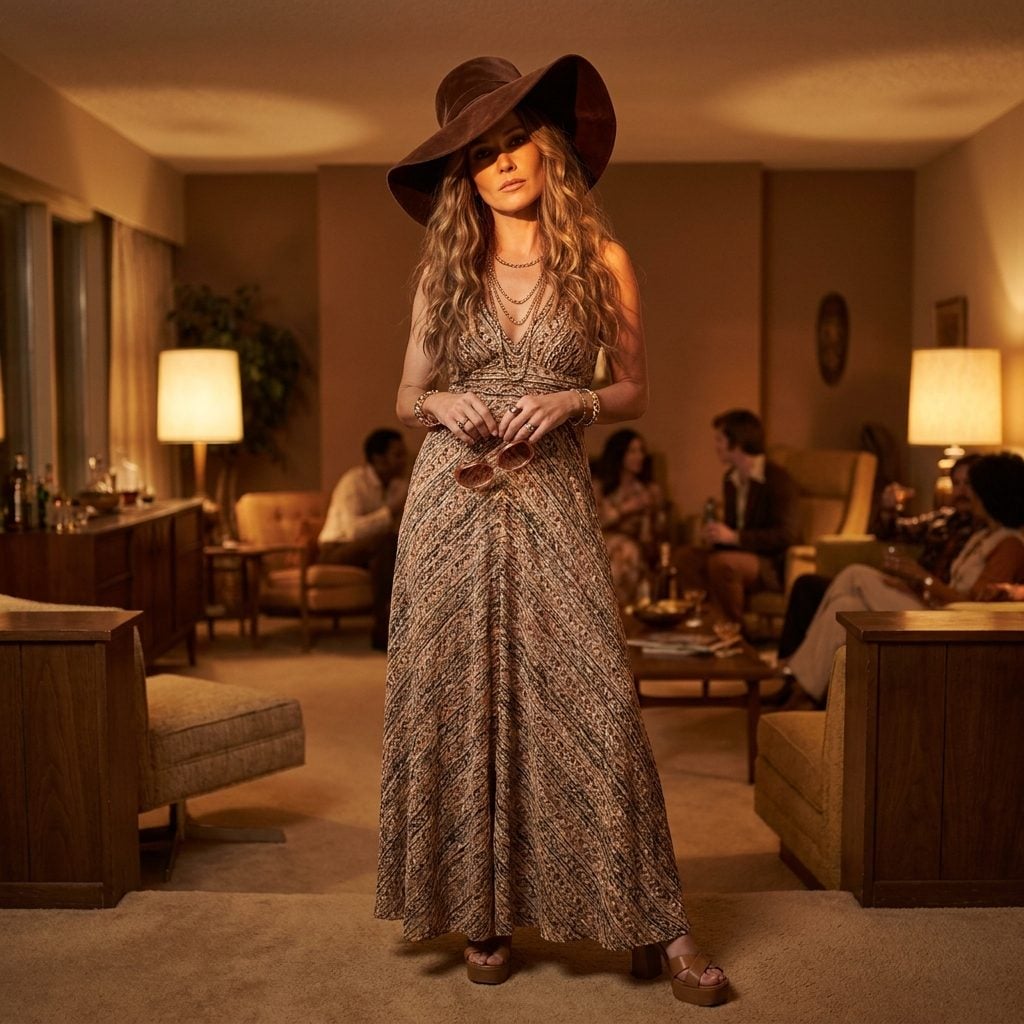
She did not take it off when she came inside. That was the whole point. The cocktail party setting was irrelevant to the hat. The hat existed in its own context, which was the context of being extremely committed to a look and absolutely not taking questions.
Wide-brim floppy hats were everywhere in the early-to-mid 1970s, worn with everything from midi dresses to velvet pantsuits, indoors and out with complete indifference. Bianca Jagger wore one. Stevie Nicks practically lived in one. The woman at your mother’s party who always arrived last and left first definitely wore one. You remember her vividly and you don’t even know her name.
11. Gold Lamé Hot Pants and Knee-High Boots: The Outfit That Said ‘I Arrived’
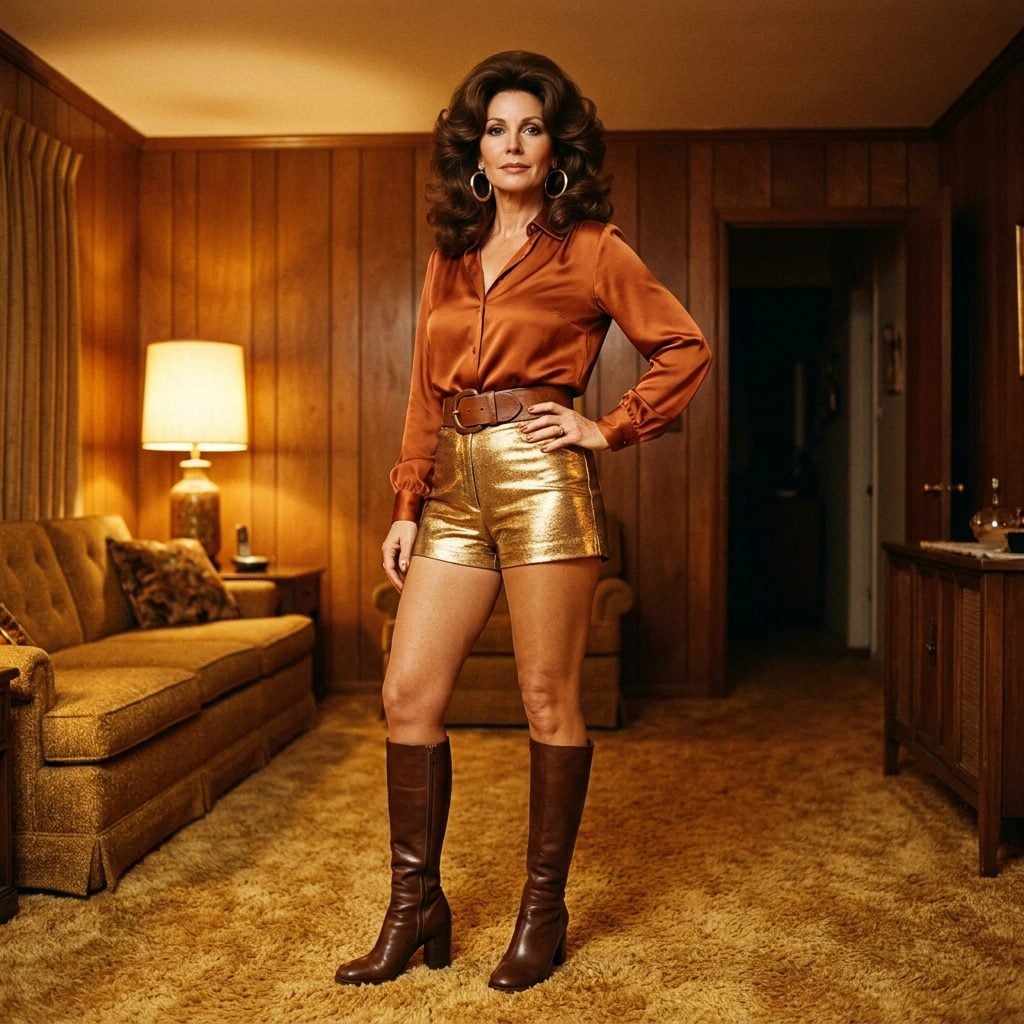
Hot pants to a party. Not a nightclub, not a concert in the park. A proper cocktail party with a passed hors d’oeuvres tray and someone’s parents in the corner. And not just any hot pants, gold lamé, so reflective you could signal aircraft. You paired them with knee-high boots because bare legs between the boot top and the hot pants hem was apparently the fashion sweet spot of 1973.
The whole look required a specific kind of confidence that felt completely normal at the time. A modern hostess seeing this walk through her front door would simply set down her champagne flute and stare.
10. The Sheer Chiffon Blouse Worn Over Absolutely Nothing Practical
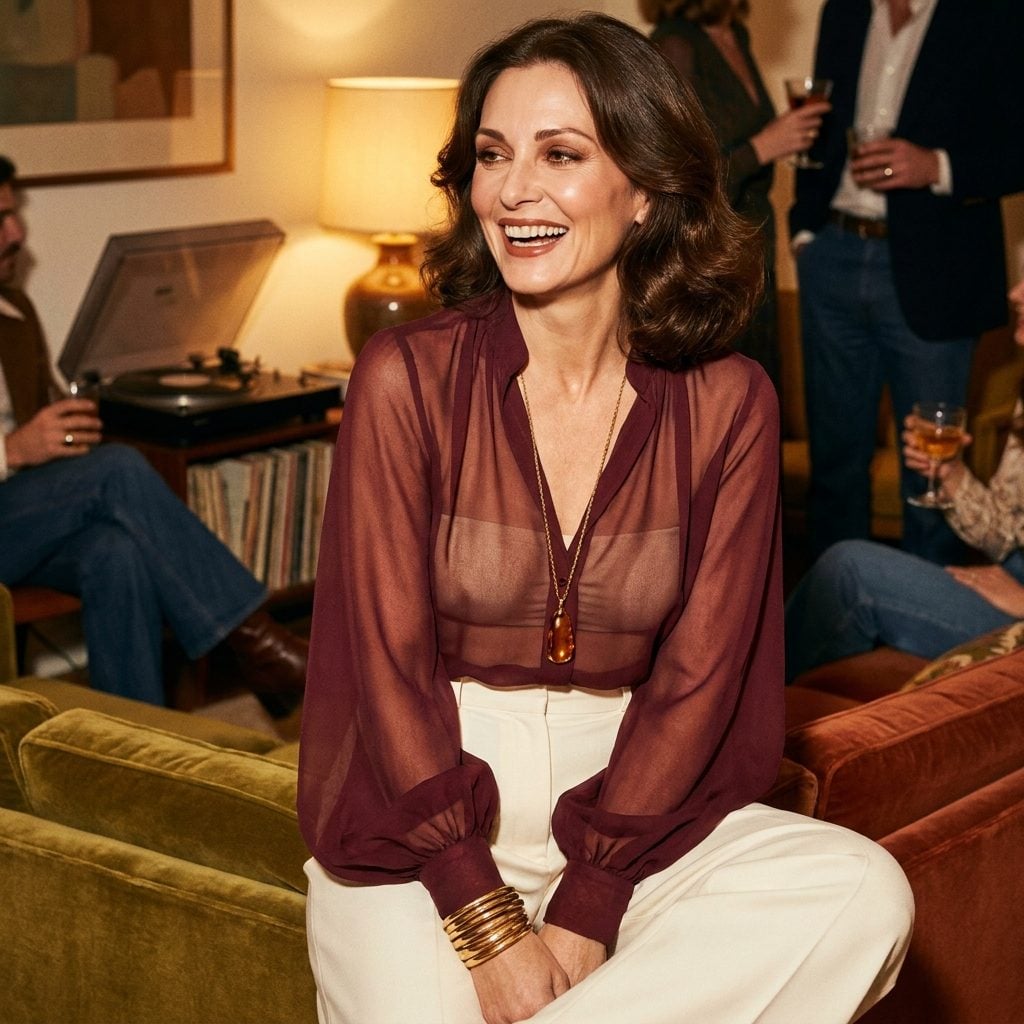
The genius of the sheer chiffon blouse was its complete commitment to looking dressed while being technically underdressed. It floated. It caught every draft. It told the room you were artistic. What went underneath was a philosophical question nobody answered consistently, sometimes a camisole, sometimes a bra in a contrasting color worn deliberately, sometimes genuinely nothing because the blouse was the statement and practicality was for other people.
A modern hostess would hand you a cardigan before you’d fully crossed the threshold. In 1976, her mother would have complimented the blouse.
9. The Cocktail Ring So Large It Was Technically a Weapon
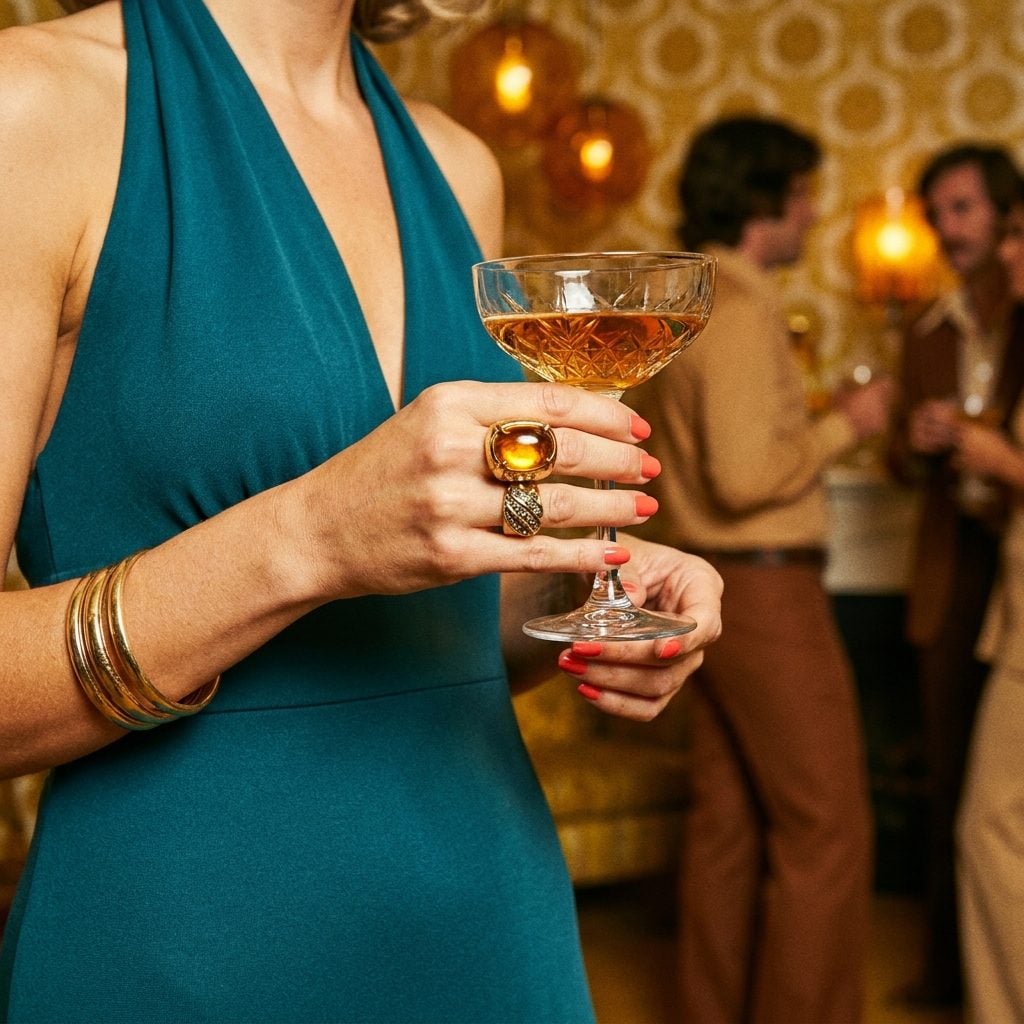
Every woman at the party had one, and no two were the same. The cocktail ring of the 1970s wasn’t jewelry, it was punctuation. A massive amber cabochon, or hammered brass surrounding a turquoise chunk the size of a small river stone, or a faux topaz in a setting so ornate it caught sleeve fabric and didn’t let go.
You gestured with that hand specifically. You rested your chin on it while making a point. When you reached past someone at the buffet table, there was a real risk of structural damage to their chiffon. Nobody cared. The ring was the point.
8. Farrah Fawcett Hair: The Feathered Wings That Took Forty Minutes to Achieve ‘Natural’
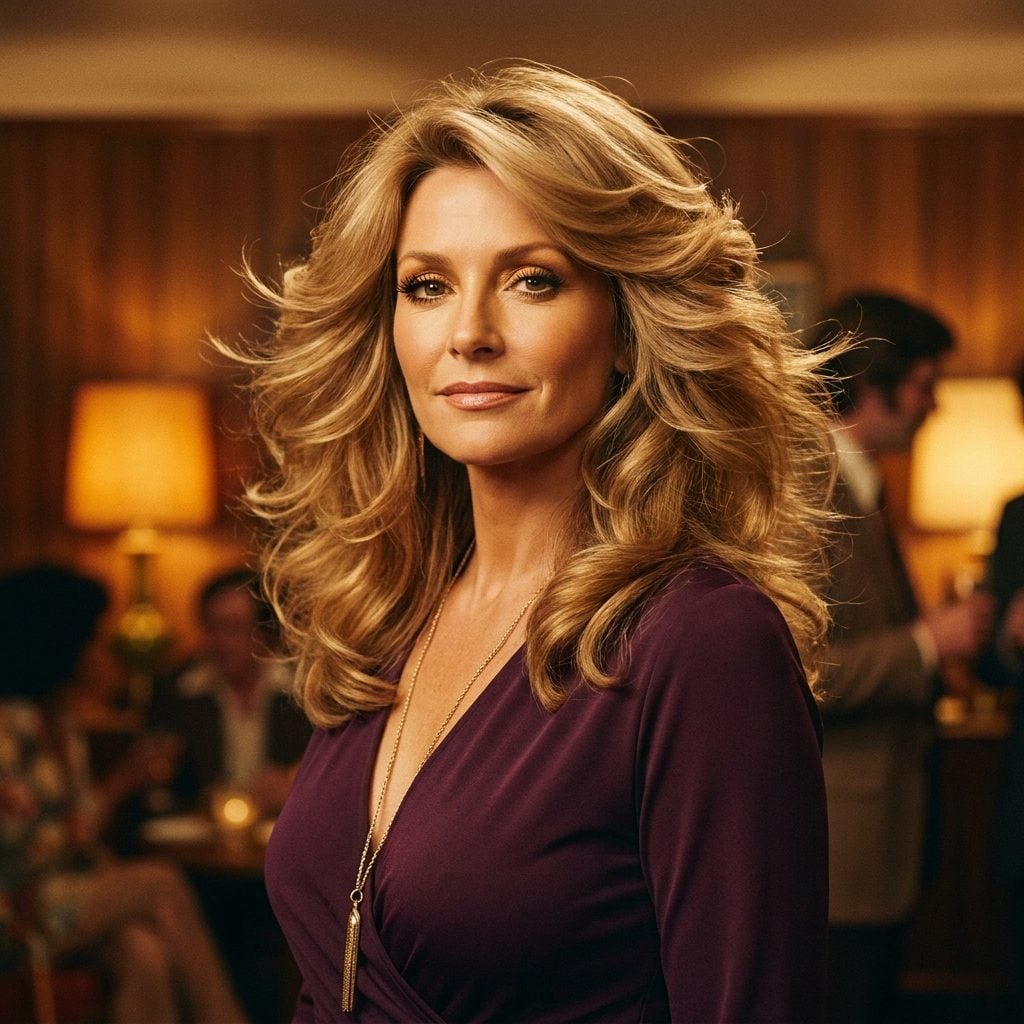
Calling it ‘feathered’ undersells what it actually was. This was architecture. Every layer had to catch the light at the exact right angle, and if one wing flipped under instead of back, the whole structure was compromised. We used a round brush the size of a soup can, a blow dryer held six inches from the roots, and enough Aqua Net to make the air in the bathroom technically a fire hazard.
Farrah Fawcett’s 1976 poster did more for this hairstyle than any trend piece ever could. Every woman who arrived at a party that decade with her hair moving in that particular slow-motion way was communicating one specific thing: she’d spent real time on this, and it showed, and she needed you to know.
Not everyone today chases that lift: in our reader polls, 54% chose flat and smooth hair, though 46% still voted for volume.
7. The Polyester Three-Piece Set With Lapels That Could Block Sunlight
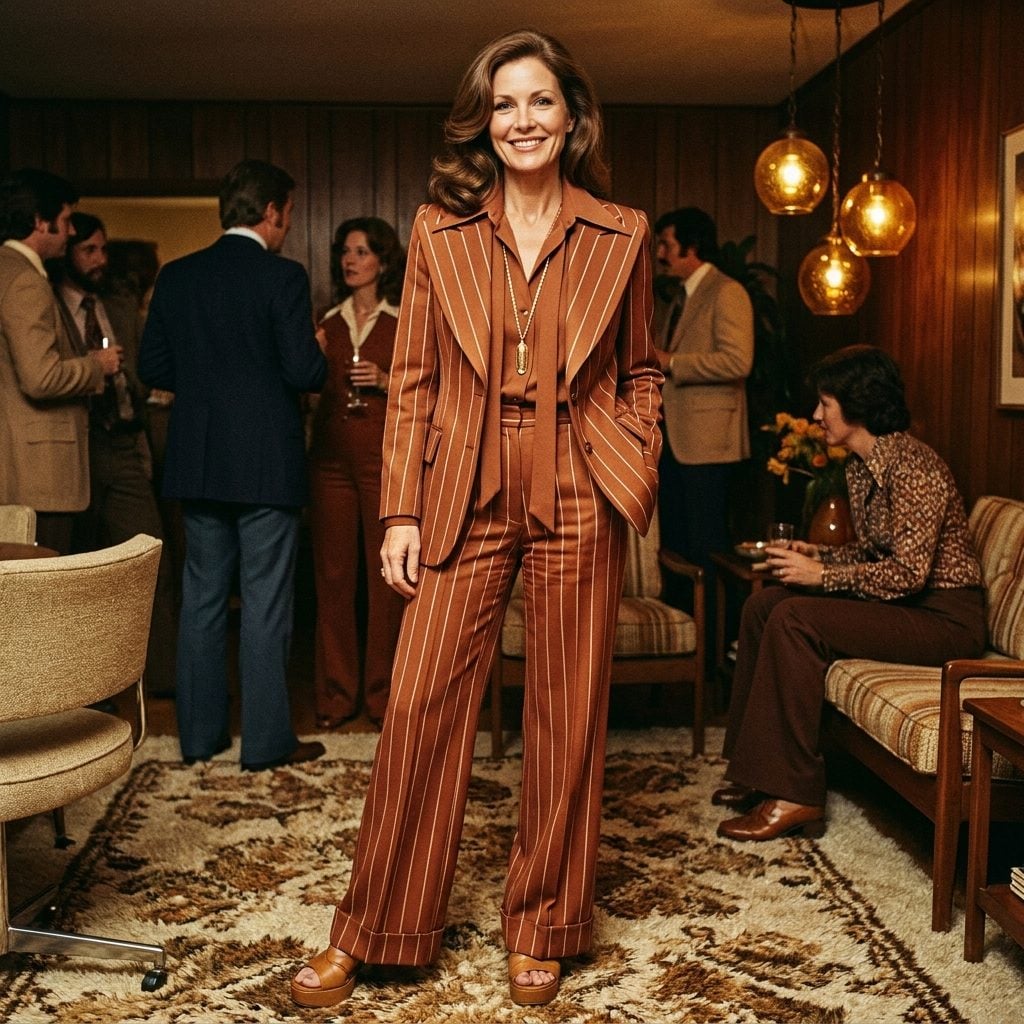
The matched three-piece polyester set was the 1970s power move. Jacket, trousers, and a coordinating blouse, all in the same fabric, sometimes even the same pattern, told the room you had not left your outfit to chance. The lapels deserve their own paragraph.
Those lapels. Starting practically at the shoulder seams and meeting somewhere near the navel, they were less a design feature and more a statement of intent. The polyester itself had a particular personality: it didn’t breathe, it didn’t wrinkle, and it caught overhead lighting with a subtle gleam that looked expensive in 1974 photographs and looks absolutely spectacular in them now.
6. Open-Toe Mules With Marabou Feather Trim and the Confidence to Match
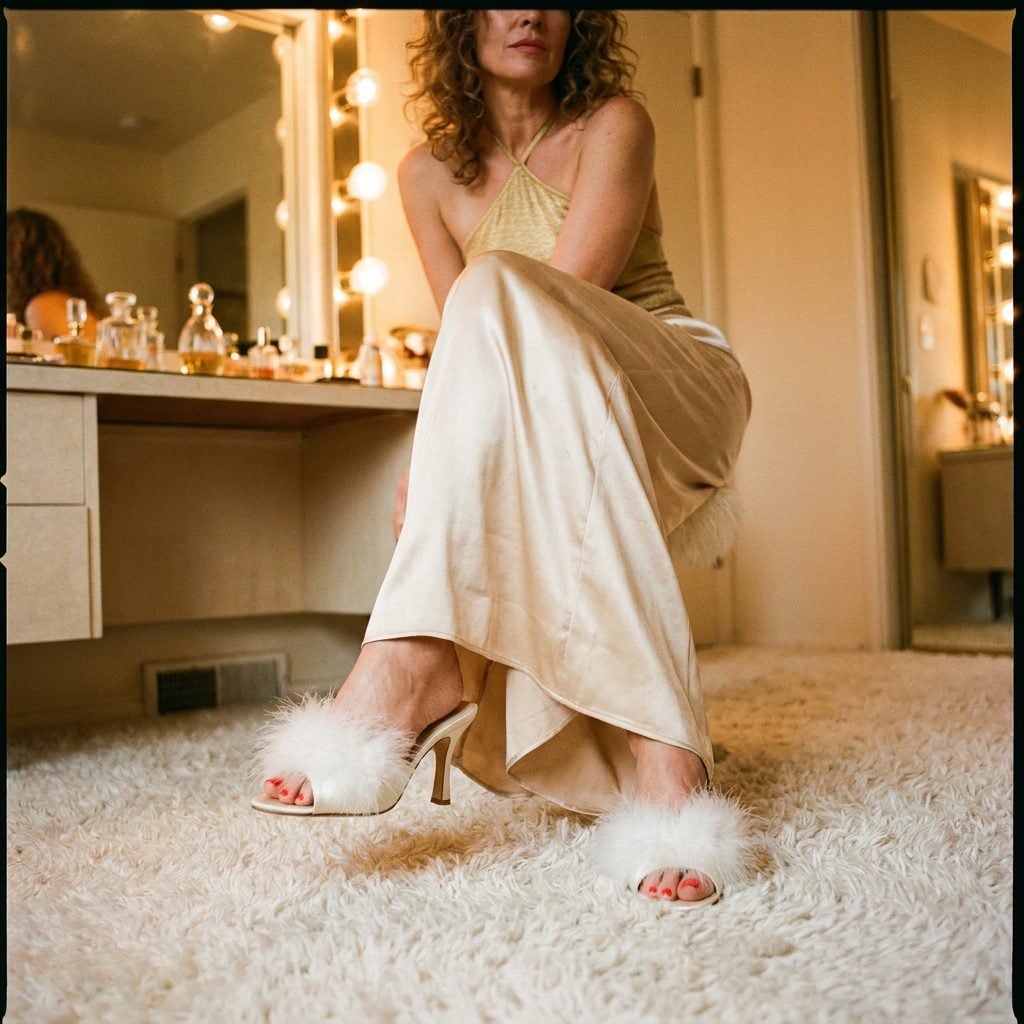
Marabou feather trim on shoes should have stayed firmly in the boudoir scene of every 1940s film noir, but the 1970s had other plans. These mules showed up at cocktail parties, dinner parties, and at least one memorable New Year’s Eve gathering where someone stepped too close to a candle arrangement.
They shed. Constantly. You left a soft trail of white fluff wherever you walked, like a very glamorous, very impractical breadcrumb trail. They were also genuinely difficult to walk in, which meant you moved slowly and deliberately, which meant you actually looked sort of amazing.
5. The Leopard-Print Wrap Dress Drowning in Gold Chain Jewelry
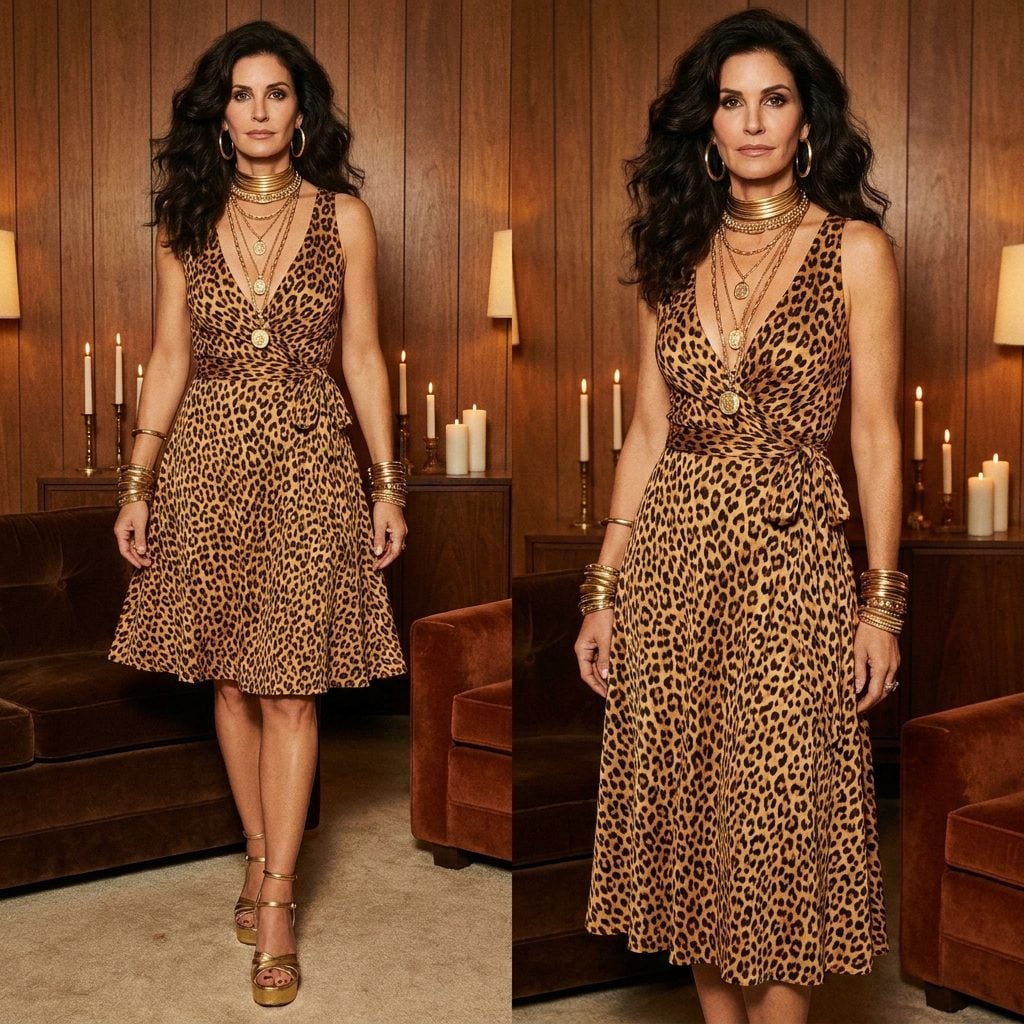
Diane von Furstenberg’s wrap dress arrived in 1974 and women treated it the way people now treat a perfect pair of jeans: buy every print, wear it everywhere, make it the backbone of your entire social wardrobe. The leopard print version was the most committed version. It already said something. And then we added the gold.
Not one chain. Not a tasteful pendant. We’re talking layered necklaces in three different lengths, bangles stacked halfway up the forearm, and hoop earrings large enough to be considered structural. The cocktail party uniform of an entire generation of women who had figured out exactly who they were.
4. A Tube Top and Palazzo Pants: The Disco Era’s Greatest Two-Part Invention
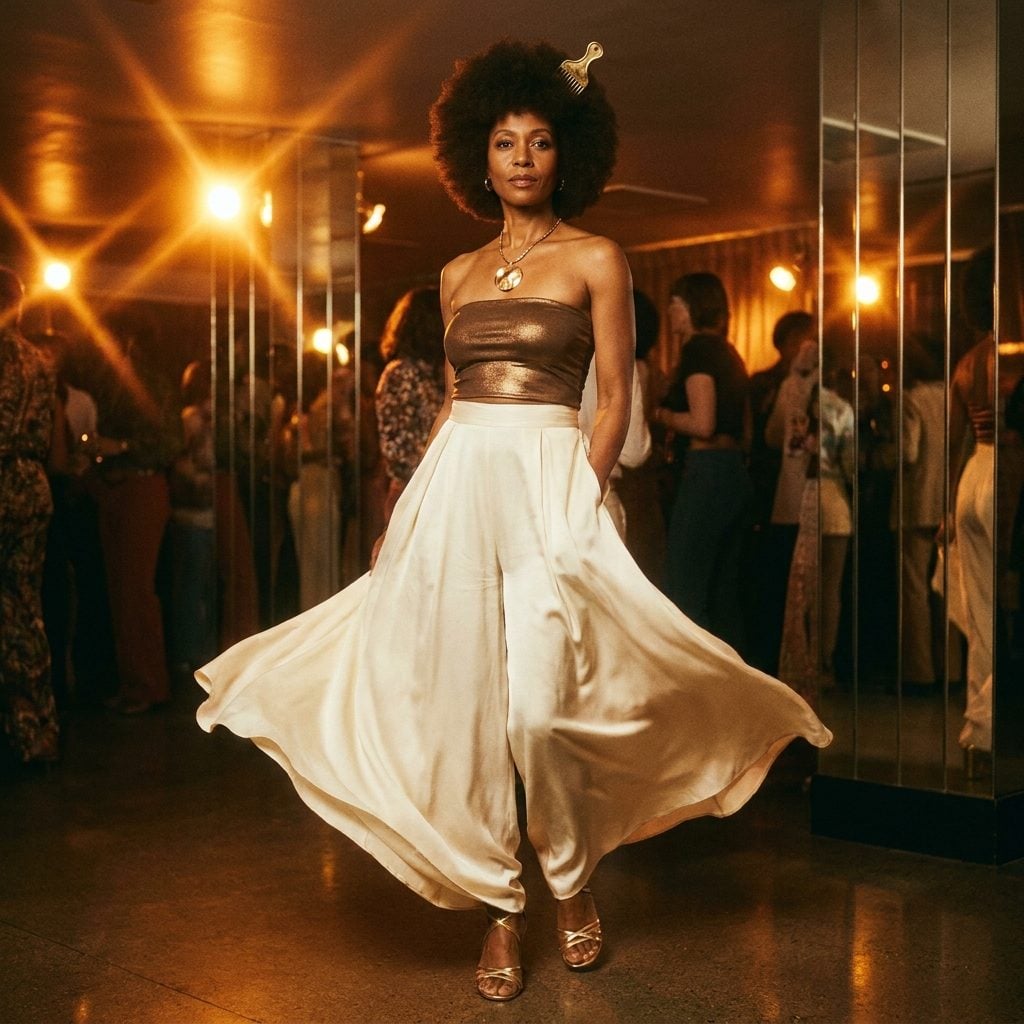
The physics of this combination were quietly brilliant. The tube top was minimal to the point of engineering audacity, a band of fabric held up entirely by determination and body heat. The palazzo pants compensated for this with maximum fabric. Together they averaged out to a normal amount of coverage, which is not at all how clothing is supposed to work but somehow absolutely did.
You moved differently in palazzo pants. Slowly, deliberately, with a kind of sweep. Pair an athleisure top silhouette that fitted like the tube top with something that dramatic below the waist and you understood immediately why disco needed its own fashion category. This wasn’t club wear borrowed for a party. It was the uniform of a specific, specific moment in social history that we all got to live inside for about four very good years.
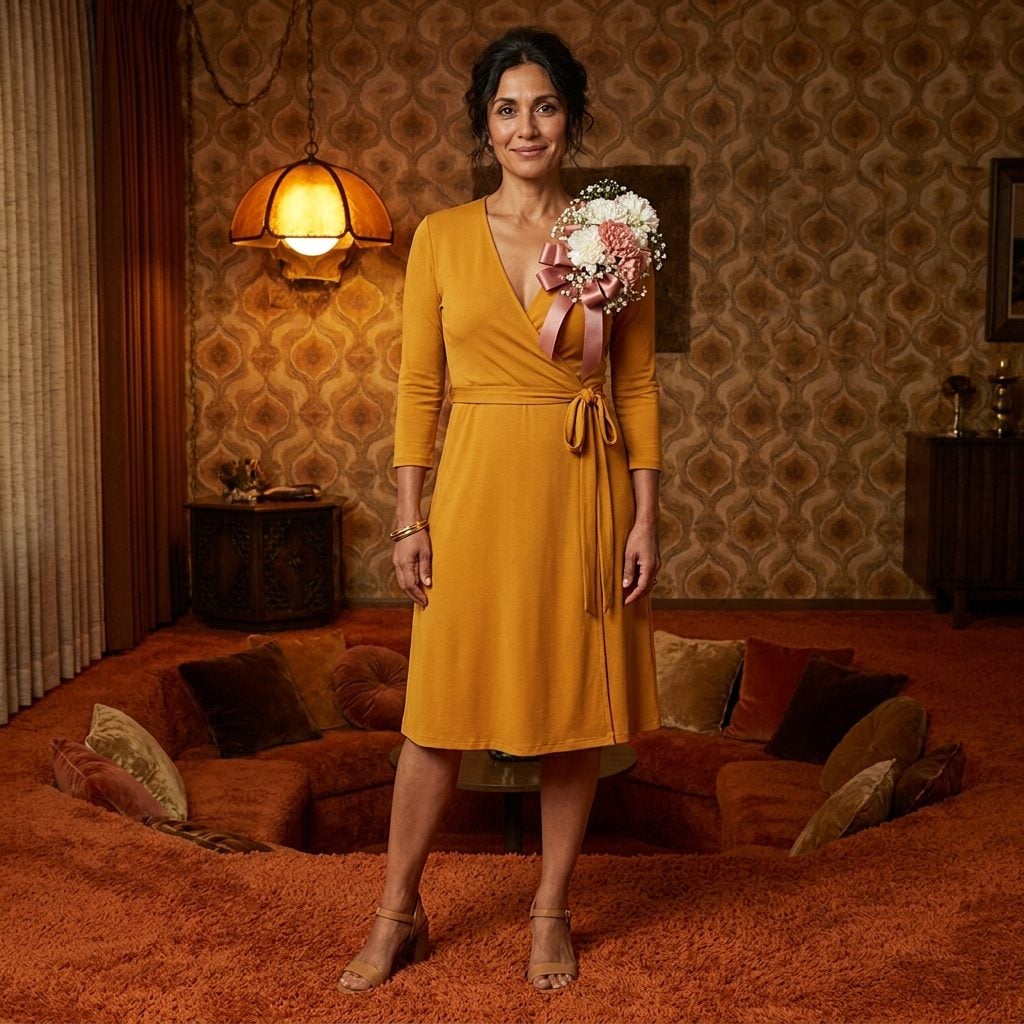
3. The Giant Corsage Pinned Directly to the Dress Like a Trophy
❤️ Would you like to save this?
It wasn’t a small corsage. It was never a small corsage. The 1970s corsage was engineered to be seen from across a party, a carnation-and-baby’s-breath situation the size of a small cabbage, pinned with a straight pin directly through the fabric of whatever you were wearing, creating a tiny hole that would remain forever. The ribbon was always satin. The bow was always enormous. Nobody questioned any of this.
Your husband pinned it on before you left the house. That was the tradition. He’d stab the pin in with roughly the confidence of someone assembling flat-pack furniture, and you’d stand there hoping he didn’t draw blood. And yet wearing one felt genuinely glamorous, like you’d been selected for something. You walked into that party like you’d already won.
2. The Deep-V Satin Gown Where the V Just Kept Going
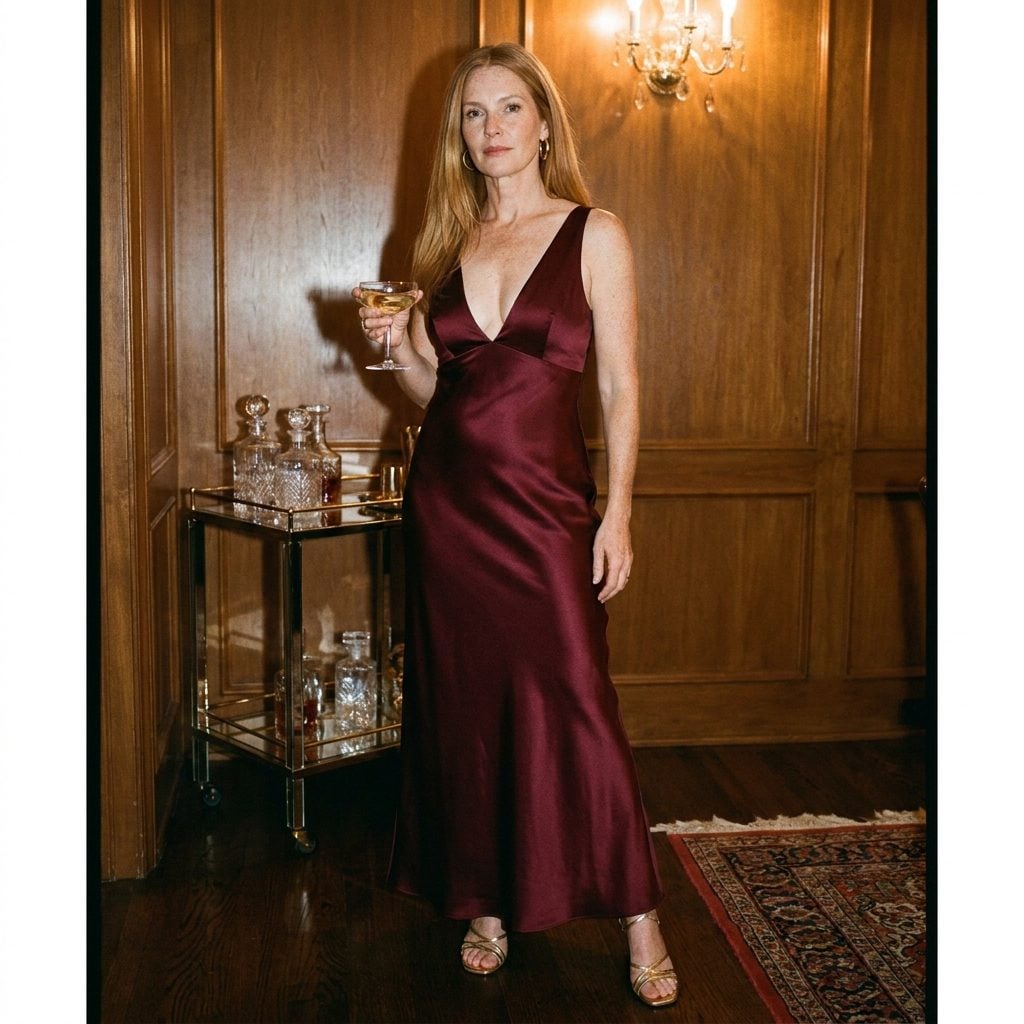
The neckline started at the collarbone and simply did not stop. This was the cocktail party gown that made structural engineering feel optional, a deep-V satin column in wine, forest green, or midnight navy where the V extended so far south you spent the entire evening calculating angles before you bent to pick anything up. Roy Halston was partly responsible. Bianca Jagger wore versions of this. Everyone who wanted to feel like Bianca Jagger bought a knockoff from a department store and wore it to a dinner party in suburban Ohio.
A bra was simply not part of the equation. The physics of the neckline made it impossible, which 1970s fashion considered a feature rather than a problem. Double-sided tape hadn’t been invented yet as a consumer product, so you just committed to the dress and hoped for the best. Remarkably, everyone pulled it off with an ease that feels almost mythological from here.
1. The Metallic Clutch That Held Exactly a Lipstick, a Key, and a Pack of Virginia Slims
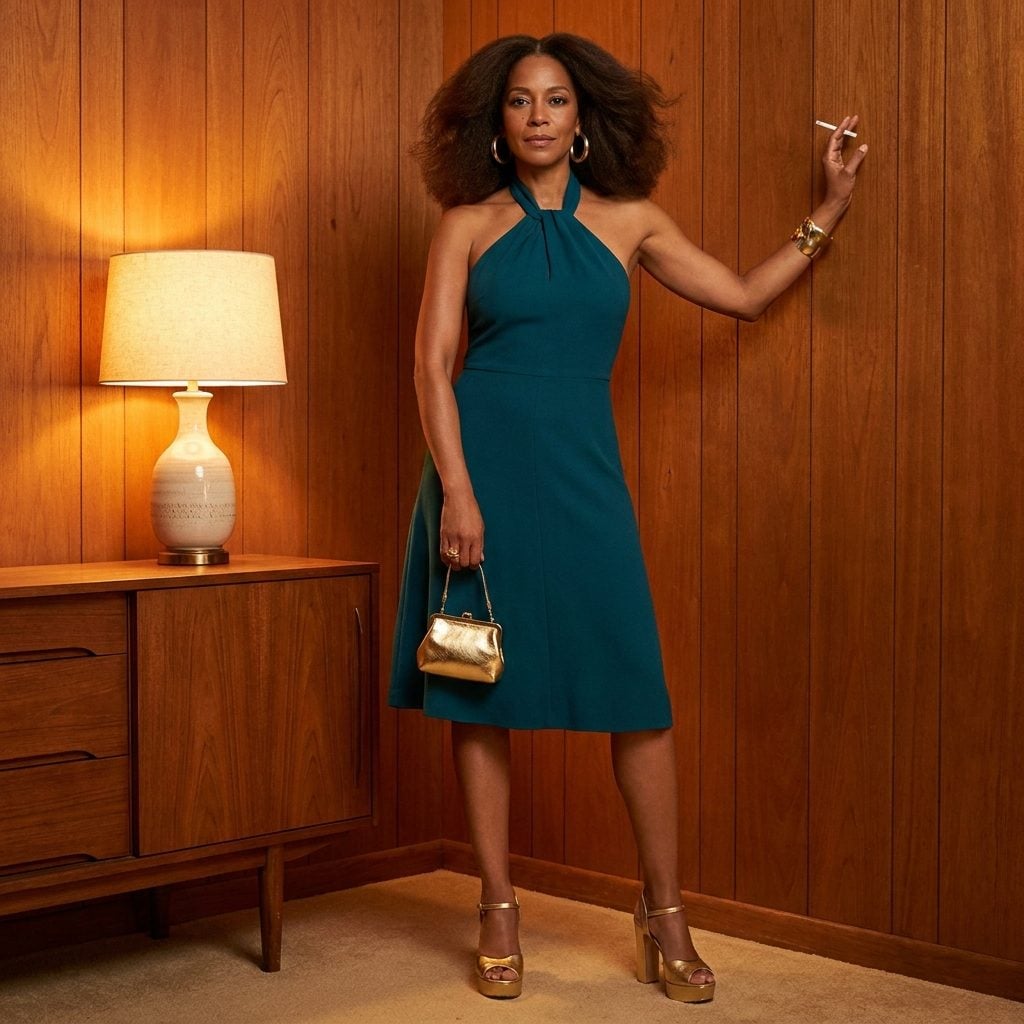
That clutch was not designed to carry anything you actually needed. Six inches across on a good day, rigid frame, fold-over clasp with a satisfying metallic snap, it held a red lipstick, a single folded bill, one key, and either a pack of Virginia Slims 100s or a small comb, but never both simultaneously. Your license stayed home. Your money stayed mostly home. You were going to a party, not running errands, and the clutch was a deliberate signal that you had left practicality at the door along with your coat.
The metallic finish was non-negotiable. Gold was most common, silver for the women who wore a lot of black. Some versions had a small chain handle thin enough to cut into your fingers after an hour, which you ignored because the look was correct. There was a whole art to holding it, loosely, in one palm, slightly extended, the way you’ve seen women hold a champagne coupe in every 1970s party photograph ever taken. You practiced this without realizing you were practicing it.