❤️ Would you like to save this?
The smell of Coppertone and freshly cut grass. The click of kitten heels on a hot sidewalk. The particular rustle of a cotton skirt catching a breeze while you pretended not to notice. Summer in the 1960s came with an unspoken dress code that we all followed without a single question, because that’s just what you wore. You wore gloves in July. You matched your flats to your handbag. You ironed your play clothes.
Looking back, some of these vintage summer staples were genuinely brilliant. Others were borderline unhinged. Here are 37 we all treated like the most natural thing in the world.
FYI, thanks to AI imagery software, we’re able to create very specific fashion and hairstyle examples to illustrate the points being made. In some cases, imagery is exaggerated to hammer home the point. Also, assume links that take you off the site are affiliate links such as links to Amazon. this means we may earn a commission if you buy something.
37. Sleeveless Lilly Pulitzer Shifts in That Unmistakable Palm Beach Pink and Green
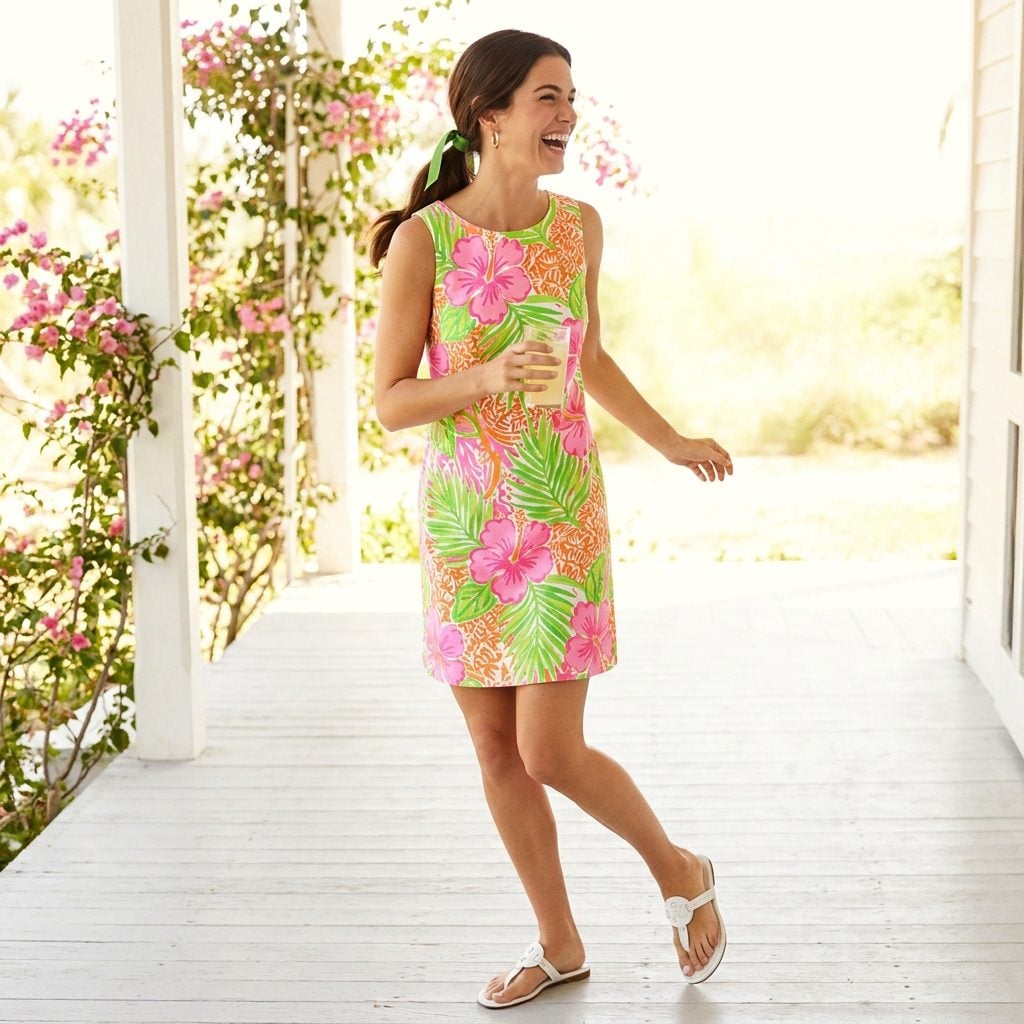
You could spot a Lilly from across the country club parking lot. Those splashy tropical florals in pink, green, and sometimes a rogue burst of orange were practically a uniform for a certain kind of summer. The cotton was thin enough to breathe in ninety-degree humidity but structured enough that you didn’t look wilted by noon.
What’s wild is how Lilly Pulitzer literally invented the dress to hide juice stains from her roadside citrus stand in Palm Beach. The story sounds made up. It is not. By 1962, every woman with a set of monogrammed towels and a subscription to anything wanted one.
We wore them to cookouts, to church, to the beach with nothing underneath but a swimsuit and confidence. A pair of white Jack Rogers sandals and you were done getting dressed for the day.
36. Capri Pants With Boat-Neck Striped Tops and Canvas Espadrilles (The Brigitte Bardot Starter Kit)
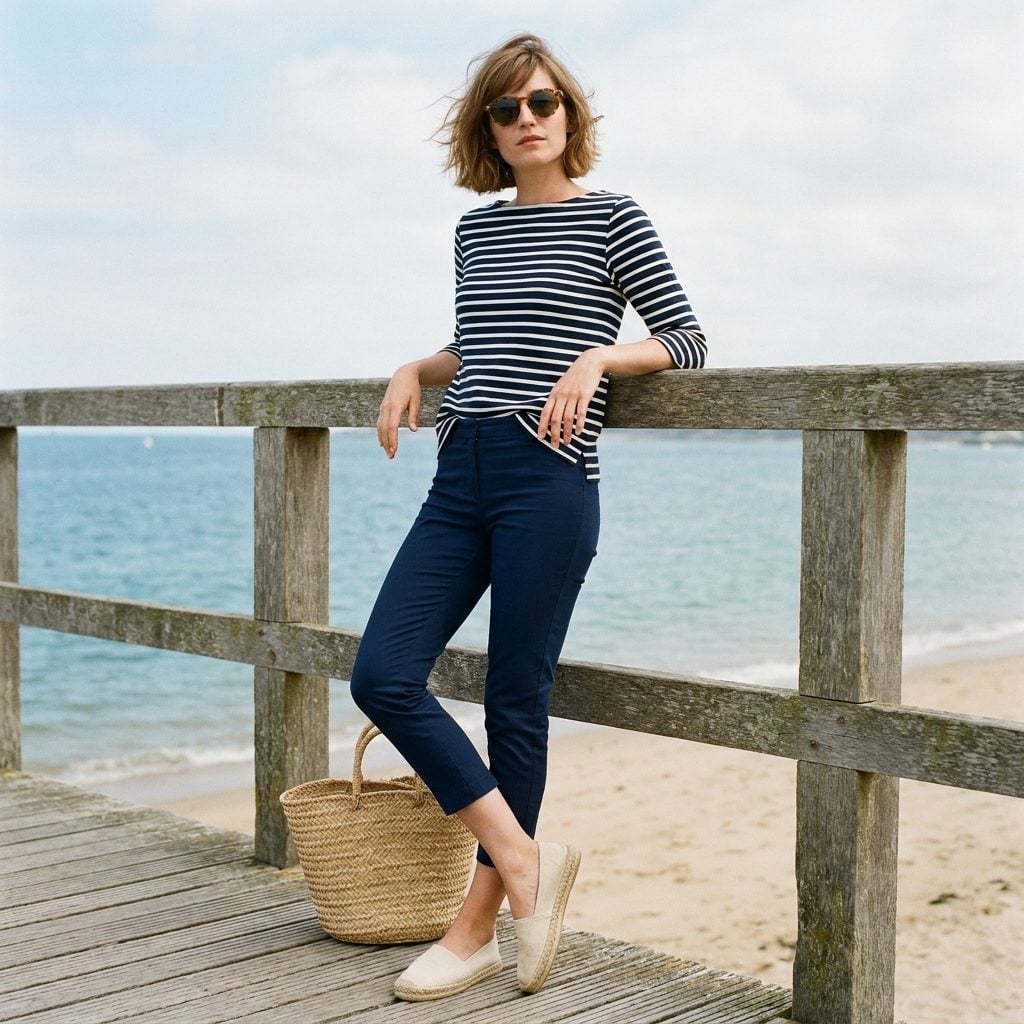
Every woman in 1963 was trying to channel the French Riviera whether she was in Saint-Tropez or Saint Louis. The formula was deceptively simple: slim navy or black capri pants cropped right at the calf, a Breton-striped boat-neck top in navy and white, and flat canvas espadrilles that cost next to nothing and fell apart by August.
Bardot wore this. Audrey wore this. Your mother wore this to every single beach vacation your family ever took. It was the rare outfit that looked equally appropriate pushing a stroller down the boardwalk and sipping wine at a seaside café, which is exactly why it survived the entire decade without anyone getting tired of it.
35. Pedal Pushers Paired With a Sleeveless Cotton Blouse Tied at the Waist
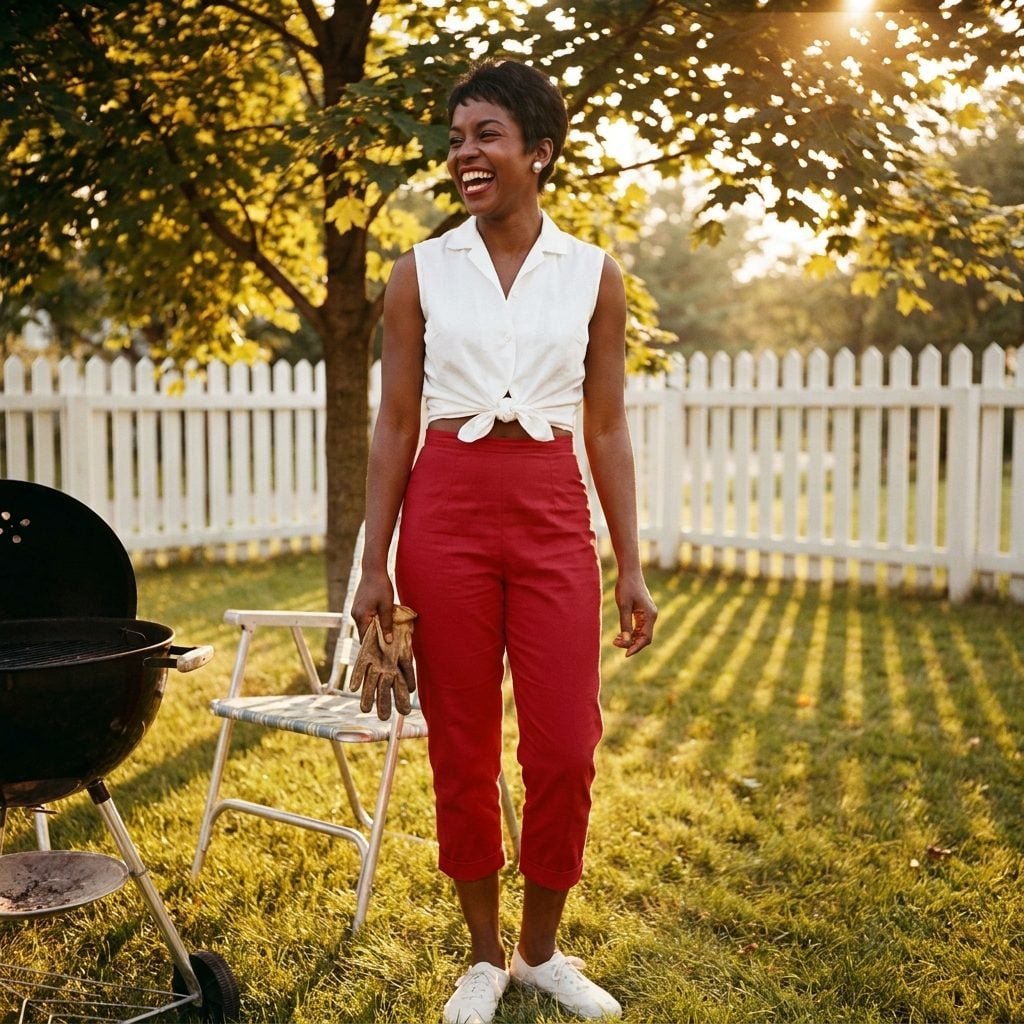
Shorter than capris, longer than shorts, and the subject of actual debate among neighborhood mothers about whether they were appropriate for the supermarket. Pedal pushers hit right below the knee and clung to the thigh in a way that felt just daring enough to be interesting.
You knotted a sleeveless white cotton blouse at the waist because tucking it in looked too fussy and leaving it out looked too sloppy. That knot was the Goldilocks zone of casual ’60s dressing. A flash of midriff, just enough to feel like you were getting away with something while technically remaining decent.
What Our Readers Say
- Times have changed a little: in our reader polls, 64% of ThreadCurve readers chose separates over dresses.
- Splashy prints ruled 1960s summers, but today 80% of our readers say they rarely wear prints at all.
From ThreadCurve reader polls and votes.
34. Seersucker Sundresses With Spaghetti Straps and Skirts That Actually Twirled
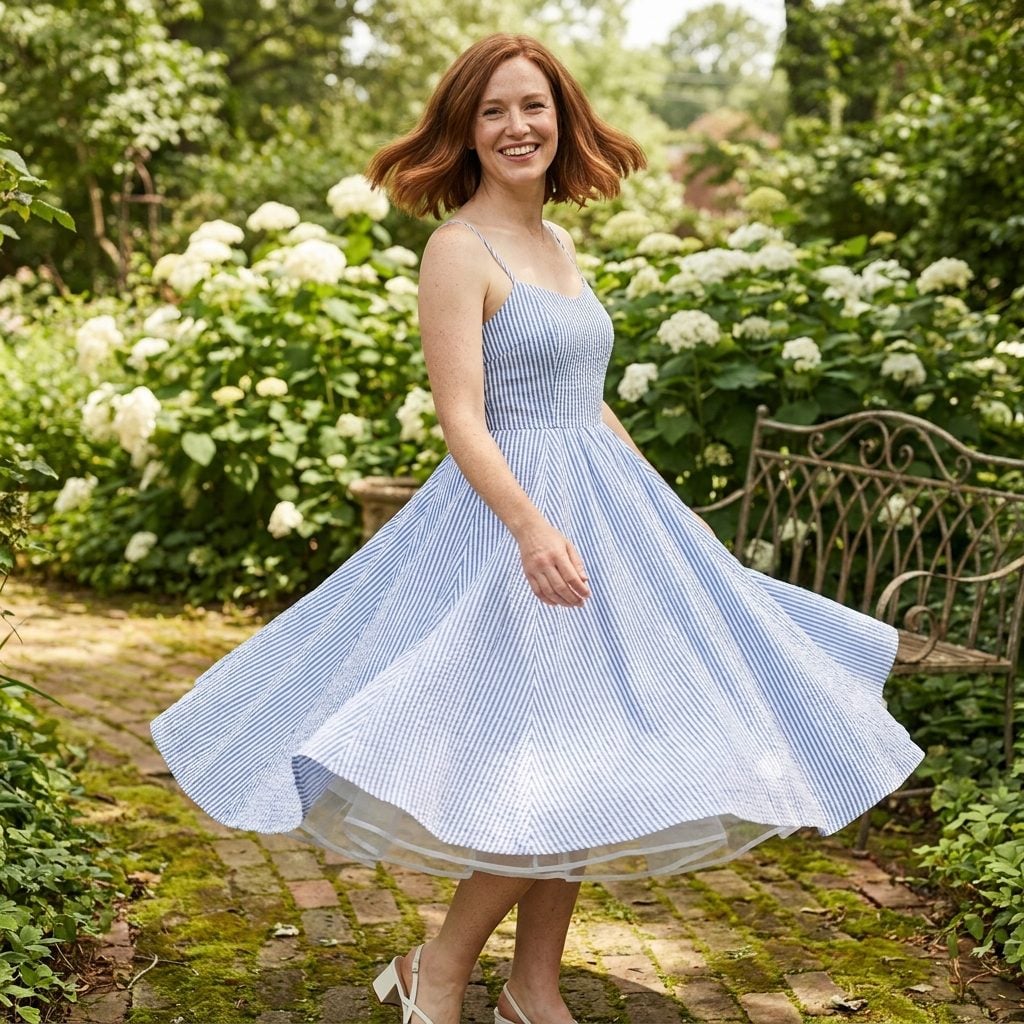
The fabric did half the work. Seersucker’s puckered texture meant it never needed ironing, which in the days before wrinkle-free everything felt like actual magic. You pulled this seersucker sundress off a hanger, stepped into it, and you were ready. Blue and white stripes were the classic, but pink and white had their devoted following too.
The full skirt was the real joy. Petticoats underneath gave it that bell shape, and the thin shoulder straps kept things cool when July turned brutal. This was the dress you wore to every outdoor event from Memorial Day to Labor Day without a single person suggesting you were repeating outfits. Because you were. Happily.
33. A-Line Shirtwaist Dresses in Gingham Check With a Patent Leather Belt Cinching Everything Together
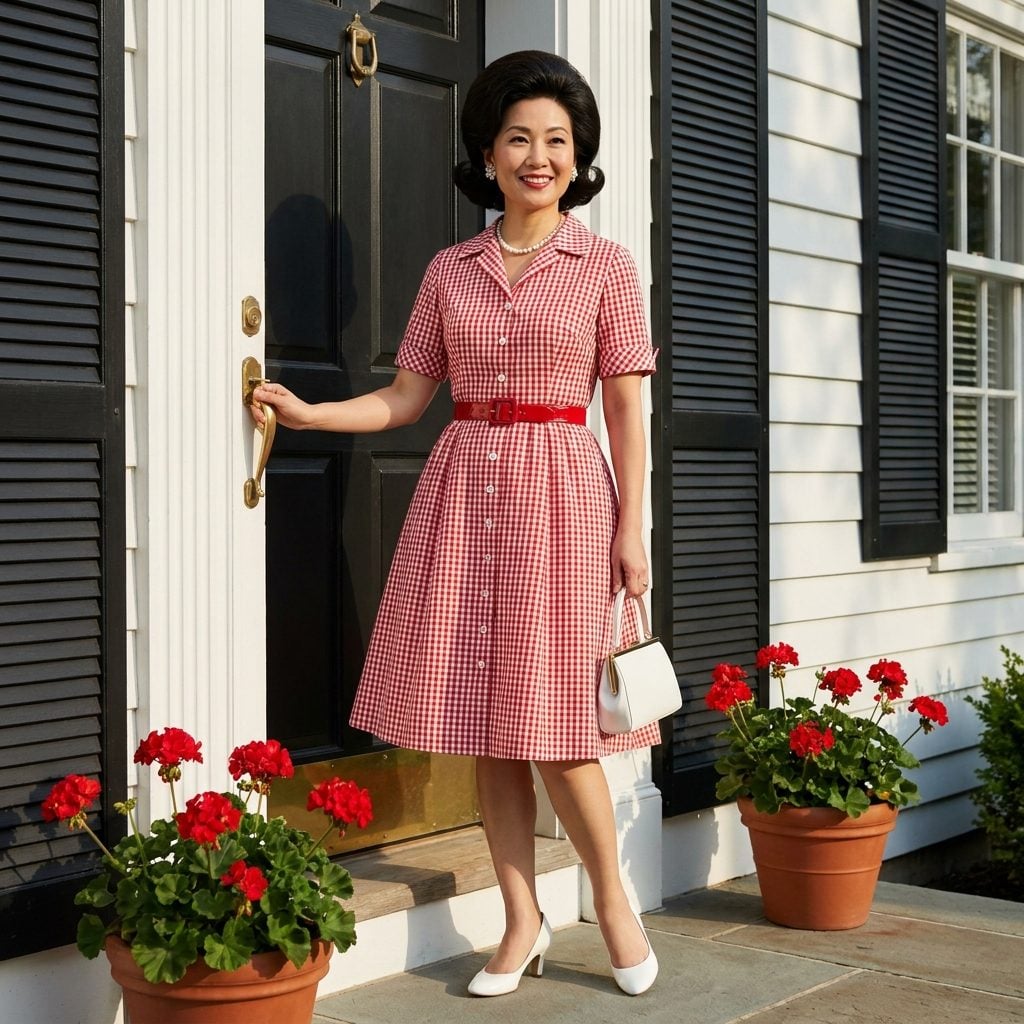
This was the dress that meant you had your life together. Even if you didn’t. Especially if you didn’t.
A crisp gingham check shirtwaist in red and white or blue and white, buttoned neatly down the front, with a collar that sat just so. The A-line skirt forgave lunch. The patent leather belt, always in a coordinating color or classic black, gave it that pulled-together quality that made you look like you’d been up since six doing something productive even if you’d been reading a novel on the porch since nine.
The shirtwaist was basically the little black dress of daytime America in 1965. You wore it to PTA meetings, doctor’s appointments, bridge club, and casual dinners where casual still meant putting on lipstick first.
32. Cotton Piqué Sheath Dresses in Sherbet Colors That Made Everyone Look Like a Pastel Dream
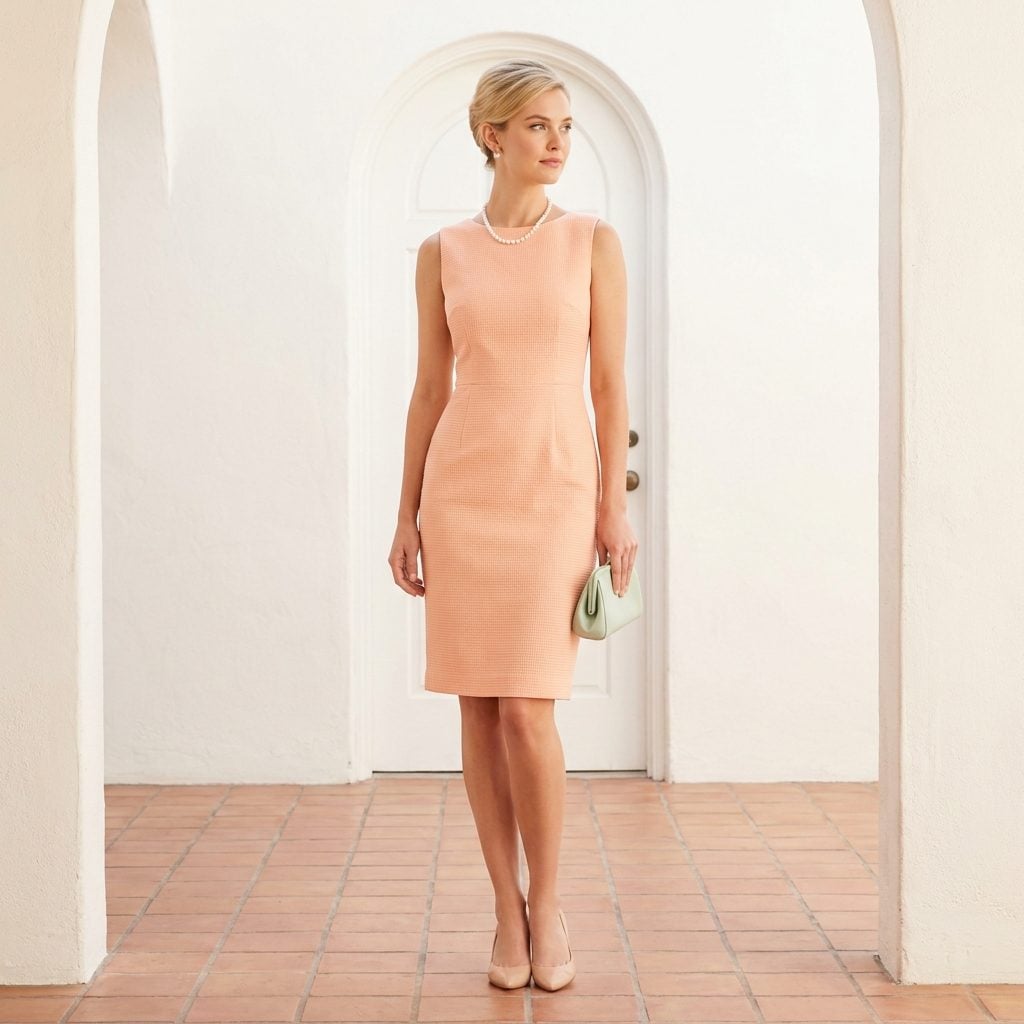
Peach. Mint. Lemon. Lavender if you were feeling bold. These cotton piqué sheath dresses turned every woman into a walking sorbet, and not a single person complained about it.
The textured waffle-like weave of piqué cotton gave the dress enough structure to hold its shape without a lining, which mattered enormously when the thermometer hit ninety. Jackie Kennedy understood this fabric. She wore piqué like it was armor, and the rest of the country followed. The sheath silhouette, fitted but not tight, with a simple round or bateau neckline, required almost nothing else. A strand of pearls. Maybe a brooch if you were going somewhere that warranted one. Your best posture.
31. Sleeveless Linen Sheath Dresses With Matching Jackets for Daytime Luncheons (Because You Never Left the House Uncoordinated)
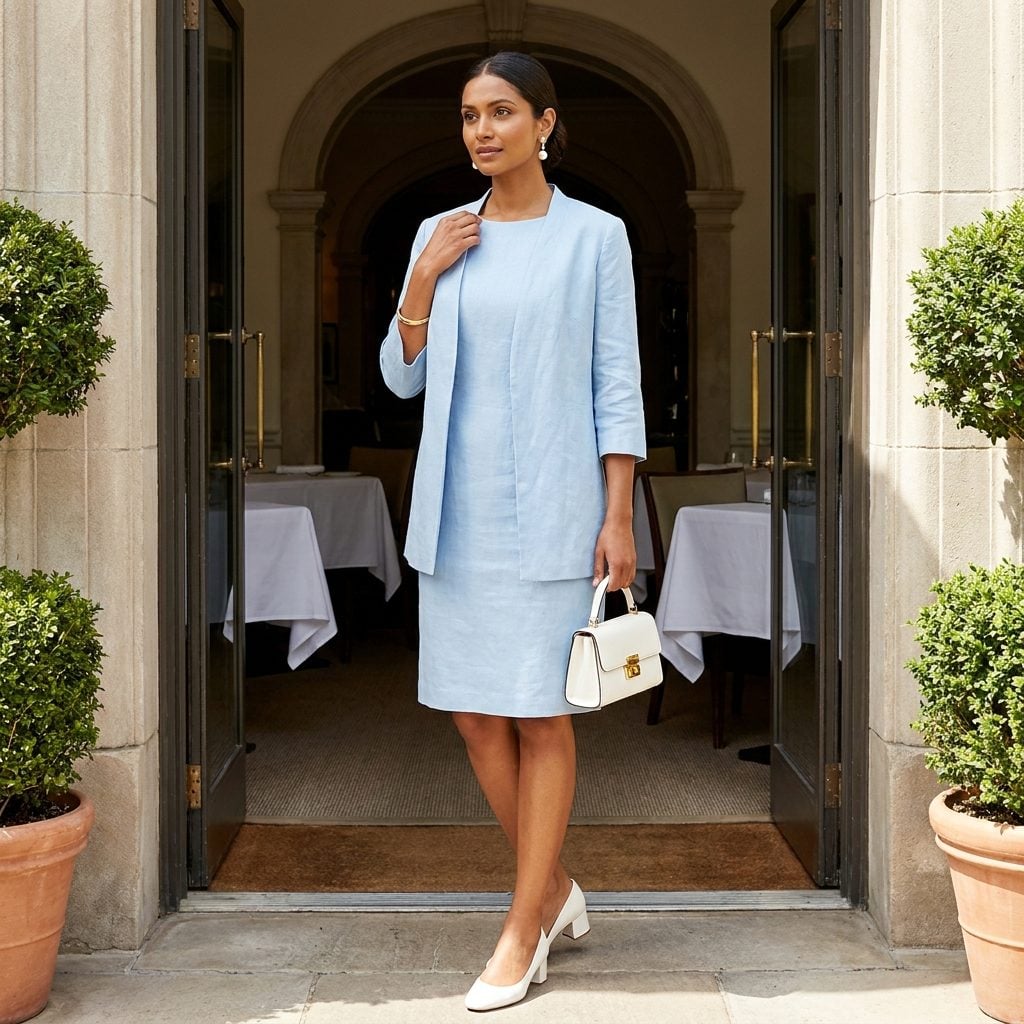
The matching jacket was non-negotiable. You wore it into the restaurant. You removed it at the table like you were revealing a second, slightly more relaxed version of yourself. Then you put it back on before you stood up because sitting in a sleeveless dress in a dining room was fine but walking through a lobby in one felt somehow incomplete. The choreography of this outfit was as ritualized as a tea ceremony.
The linen sheath and jacket set came in ivory, powder blue, or pale yellow. It wrinkled by the time you got to the car, which was linen’s single act of rebellion against an otherwise impossibly polished look.
30. Culottes in Bright Solids Paired With Sleeveless Knit Shells (The Outfit That Confused Everyone’s Grandmothers)
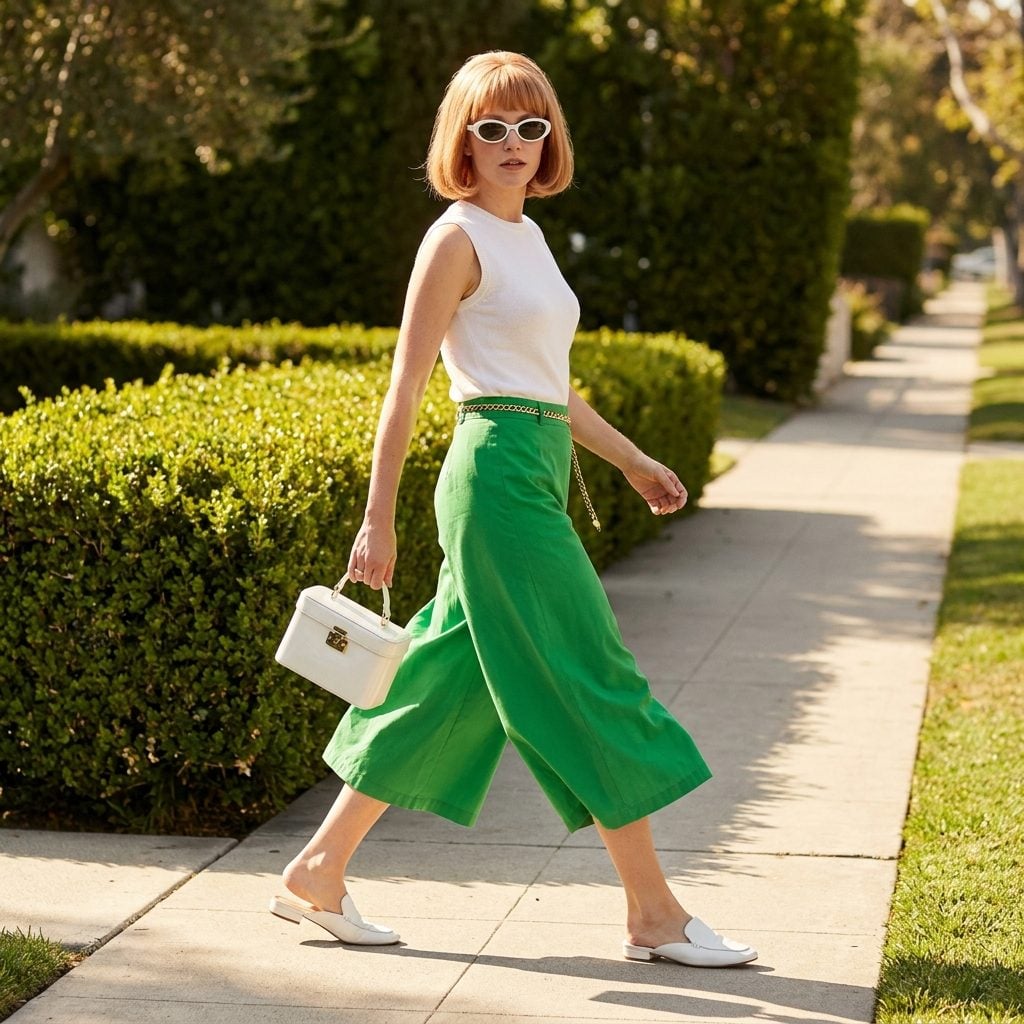
Were they a skirt? Were they shorts? The answer was yes, and your grandmother had feelings about it. Culottes were the fashion equivalent of a loophole: you got the freedom of pants with the silhouette of a skirt, and in 1966 that distinction genuinely mattered to people.
Bright orange, kelly green, lipstick red. You paired them with a fitted sleeveless knit shell top in white or a coordinating color, and the look was crisp, modern, and just confusing enough to spark conversation at every barbecue. André Courrèges had championed culottes on the runway, and by the time they hit Simplicity patterns, every woman with a sewing machine was making a pair.
29. Bermuda Shorts With Knee Socks and Keds Sneakers for Casual Outings That Were Still Somehow Put Together
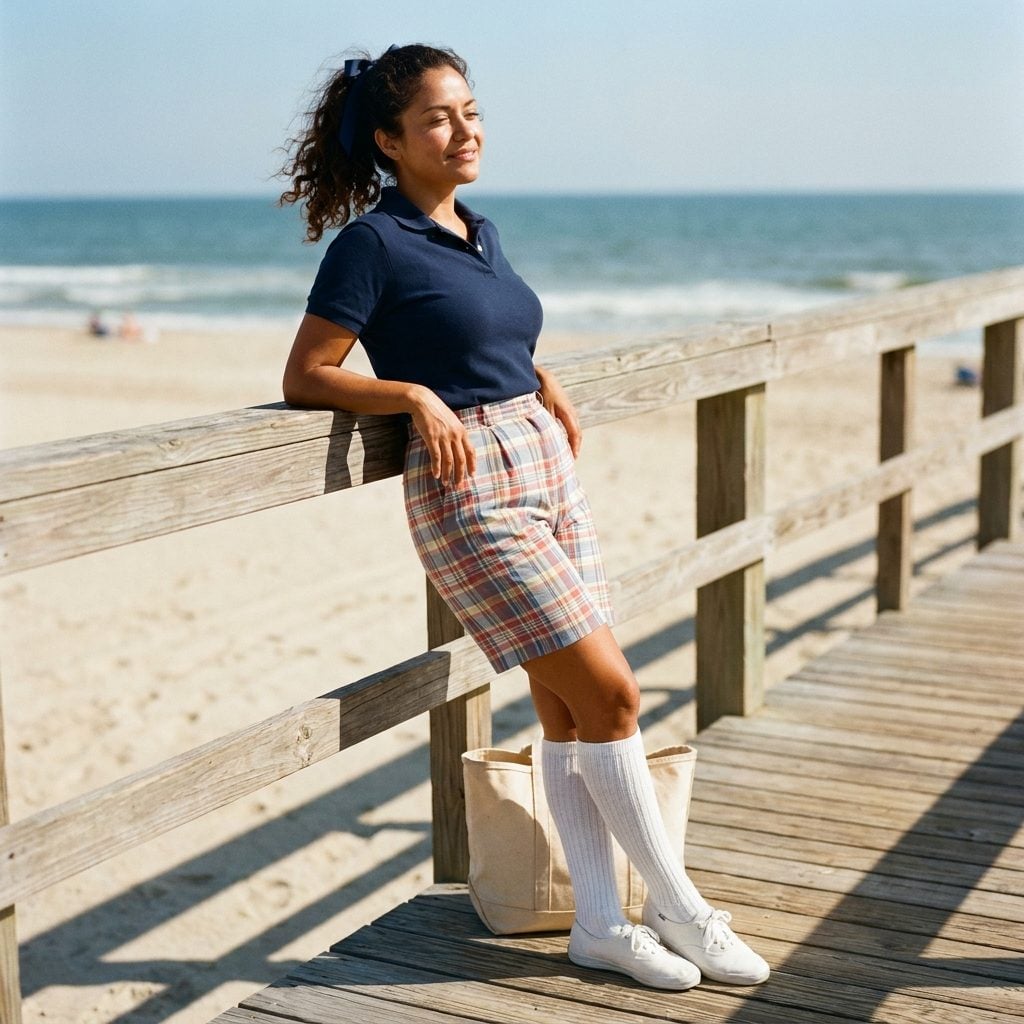
This combination sounds like a costume now. It was not. It was a perfectly acceptable way to run errands, go to the beach boardwalk, or attend a casual Saturday gathering without anyone questioning your judgment.
Bermuda shorts in madras plaid or solid khaki, hemmed precisely at the knee. Knee-high socks in white or a coordinating color. White Keds with rubber soles that squeaked on every floor. A polo shirt or a simple sleeveless top completed the picture. There was a strange dignity to this look, a kind of sporty formality that said “I’m relaxed but I still ironed these shorts.”
28. Halter-Neck Sundresses With Full Gathered Skirts and Wide Sashes That Practically Begged to Be Twirled In
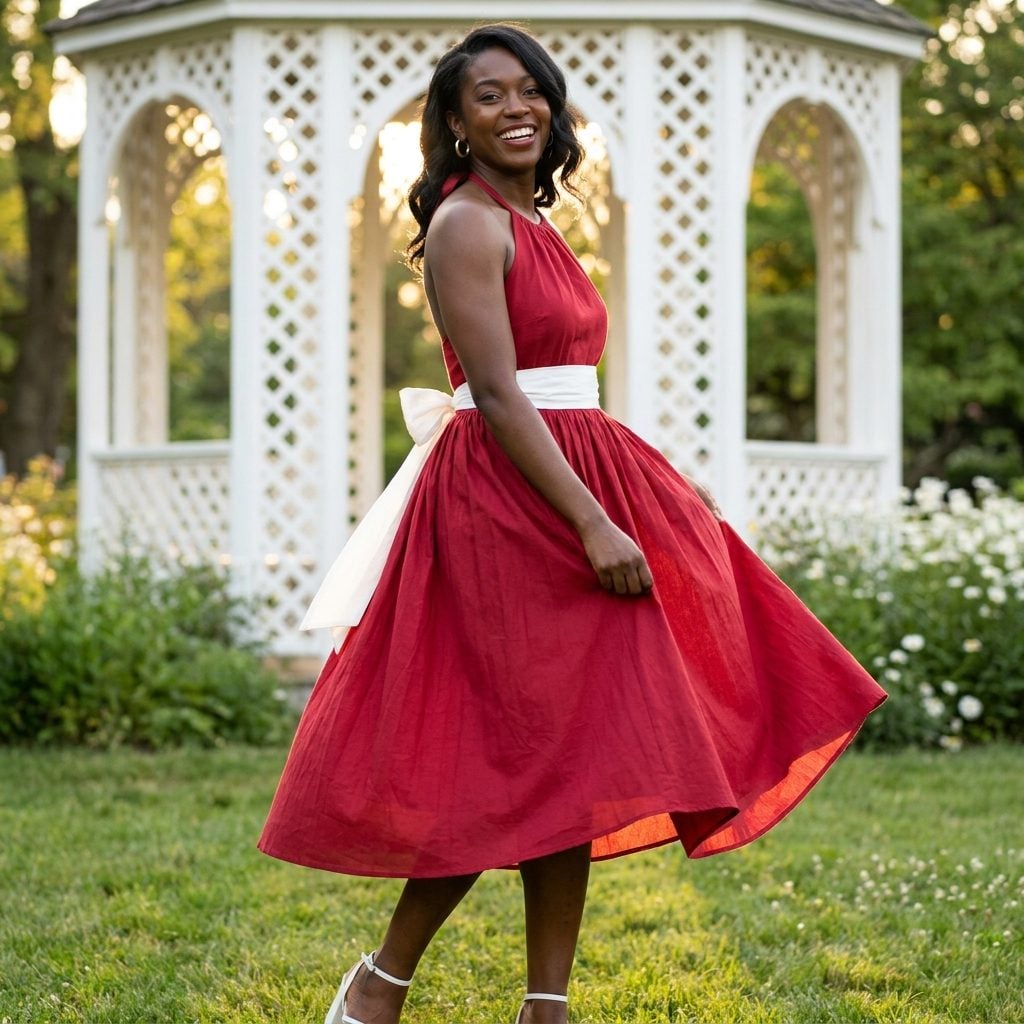
This was the dress that made you feel like a movie was being filmed about your life.
The halter tied behind your neck, leaving your shoulders and back bare in a way that felt glamorous rather than revealing. The wide sash, often in a contrasting fabric or color, cinched the waist and tied in a bow at the back that trailed behind you when you walked. The full gathered skirt had enough fabric to catch a breeze and do something interesting with it.
You wore this to summer dances, to outdoor concerts, to any event where twirling was even a remote possibility. Red and white was the classic combination, but a solid yellow halter sundress with a white sash could stop conversations from across a lawn.
27. Madras Plaid Wrap Skirts With Coordinating Sleeveless Blouses (The Outfit That Said ‘I Summer as a Verb’)
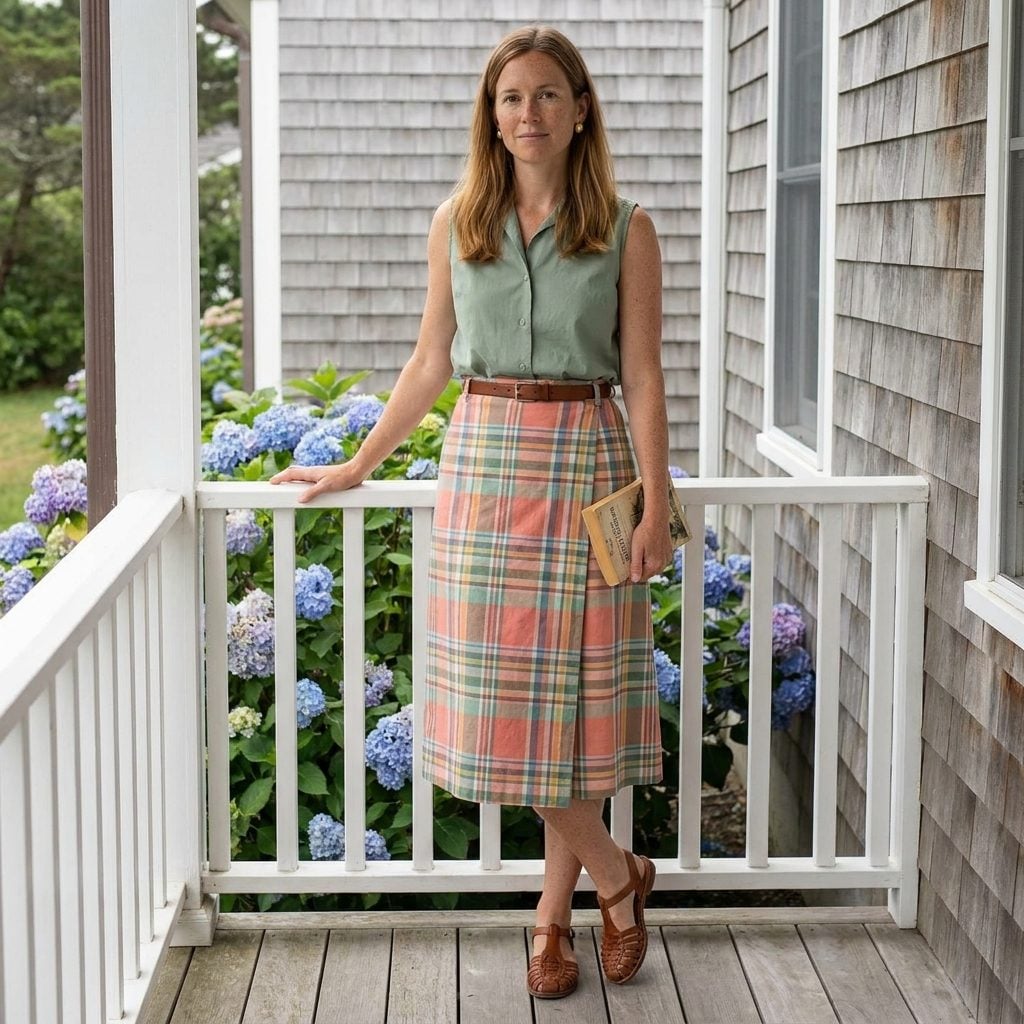
If you owned a madras wrap skirt, you owned at least three. The bleeding dyes were the whole point: those soft, slightly faded plaids in combinations of coral, sage, mustard, and sky blue that ran together more with every wash until the pattern became uniquely yours. Each one was technically imperfect, which was what made them perfect.
The vintage madras fabric came from India, bled intentionally, and smelled faintly of the wooden shelf it had been stored on all winter. You wrapped it around your waist, secured it with a single button and the sheer force of optimism, and paired it with a sleeveless blouse in one of the plaid’s colors. White if you couldn’t decide.
There was a specific confidence required to wear a skirt held together by one button and a fabric overlap. We all had it. We never questioned it.
26. Candy-Striped Terrycloth Beach Cover-Ups That Were Basically Just Fancy Towels
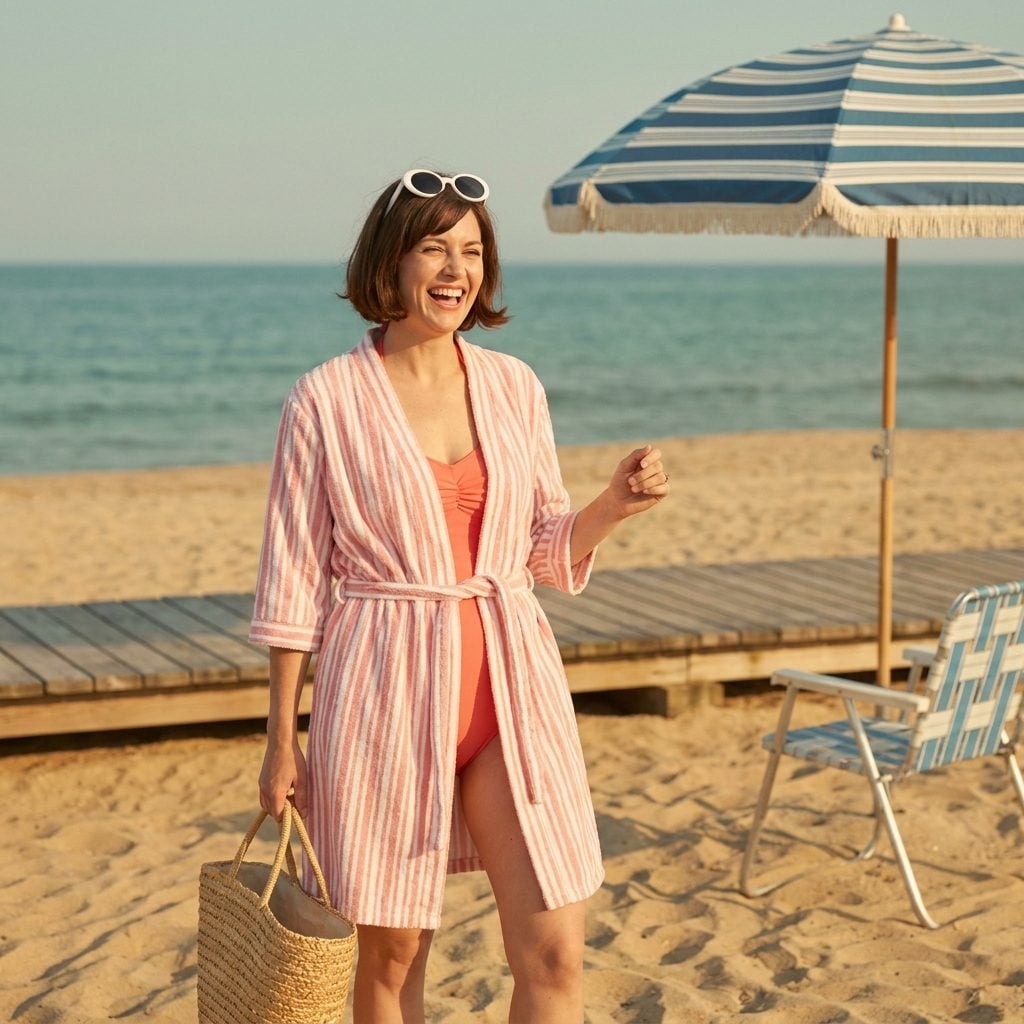
You wrapped yourself in what was essentially a bath towel with armholes, and nobody blinked. These terrycloth cover-ups came in pink, turquoise, and lemon-yellow stripes, cinched at the waist with a self-tie belt that always came undone the second you stood up from your beach chair. You wore them over your one-piece swimsuit, walked straight from the sand into the Howard Johnson’s for lunch, and the hostess seated you without hesitation.
The fabric was thick enough to absorb an entire ocean, which meant the hem stayed damp and heavy for hours. But the colors were so cheerful, so perfectly matched to the plastic frames on your sunglasses, that discomfort was beside the point. Sears had them for about four dollars. You bought two.
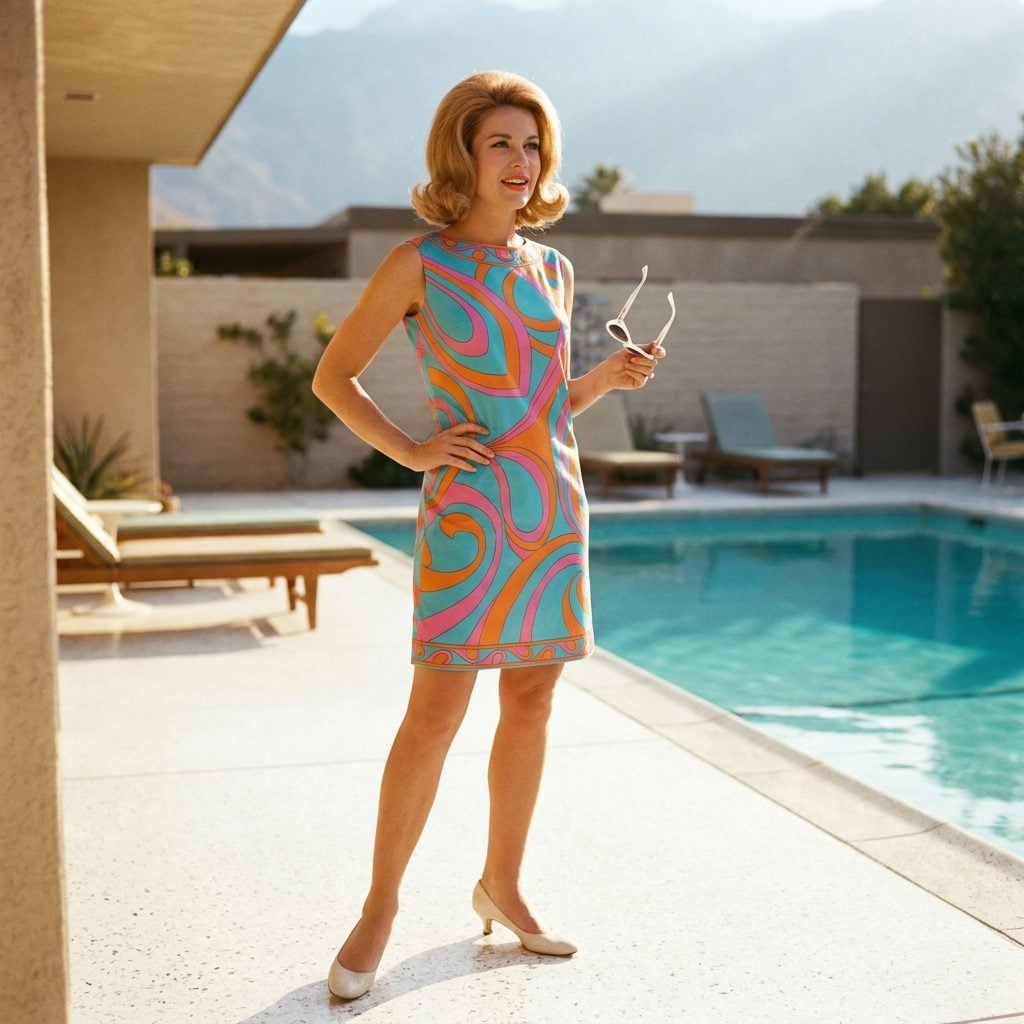
25. Shift Dresses in Bold Geometric Pucci-Style Prints With Those Little Kitten Heels You Wore Everywhere
❤️ Would you like to save this?
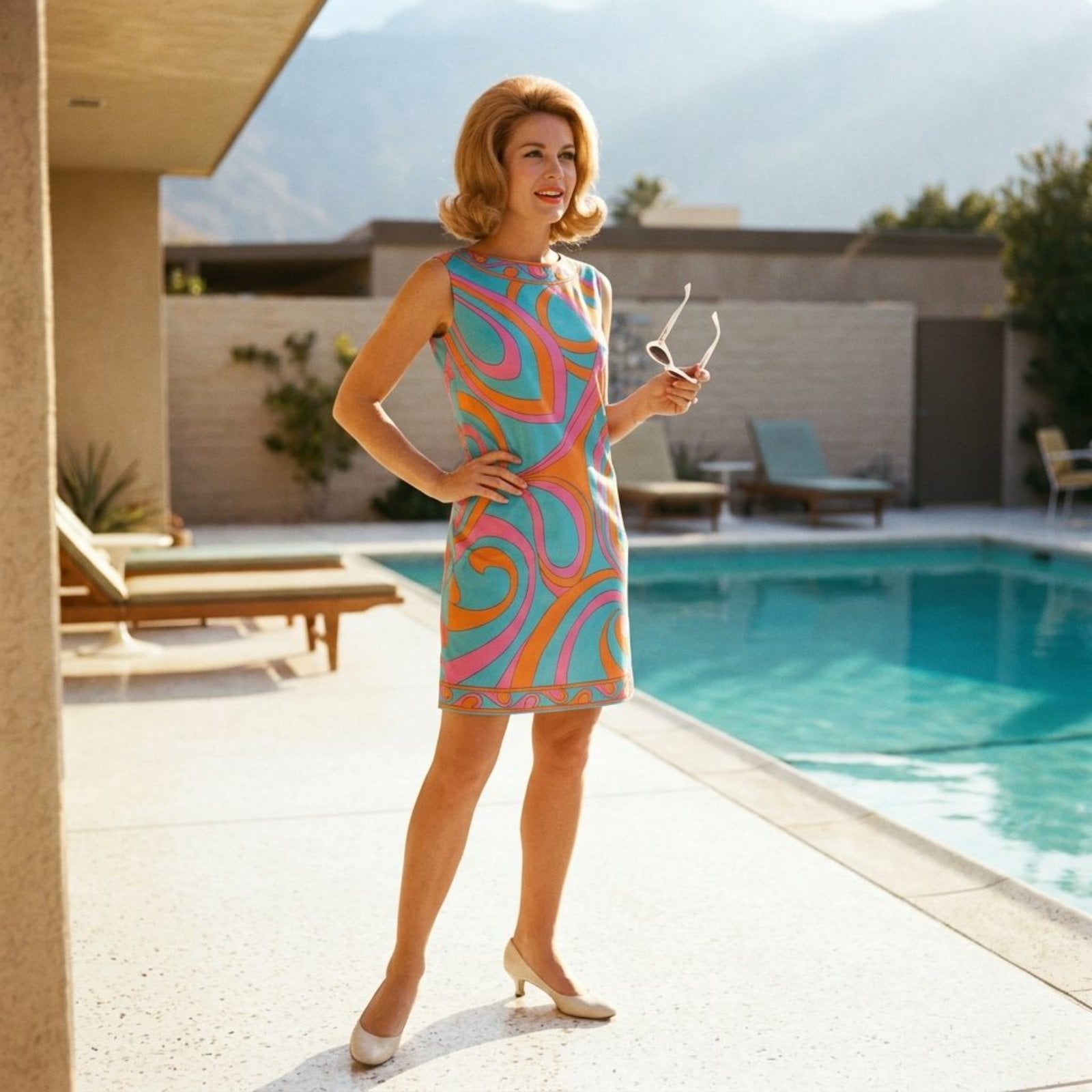
The colors hit you first. Electric turquoise crashing into hot pink, swirling into tangerine, all contained within those hypnotic geometric shapes that looked like someone had dropped a kaleidoscope on fabric. You wore this to the grocery store. To pick up the kids. To water the garden. Nobody blinked.
The shift dress was a feat of engineering in its simplicity: no waist, no fuss, no asking permission. Paired with low kitten heels in white or bone, you looked like you’d just stepped off a yacht in Portofino even if you were stepping out of a station wagon in Pasadena. Emilio Pucci himself had made these wild prints respectable, and every department store from Saks to Sears had their own version by 1964.
24. One-Piece Swimsuits with Built-In Skirts (Because Your Thighs Were Apparently Nobody’s Business)
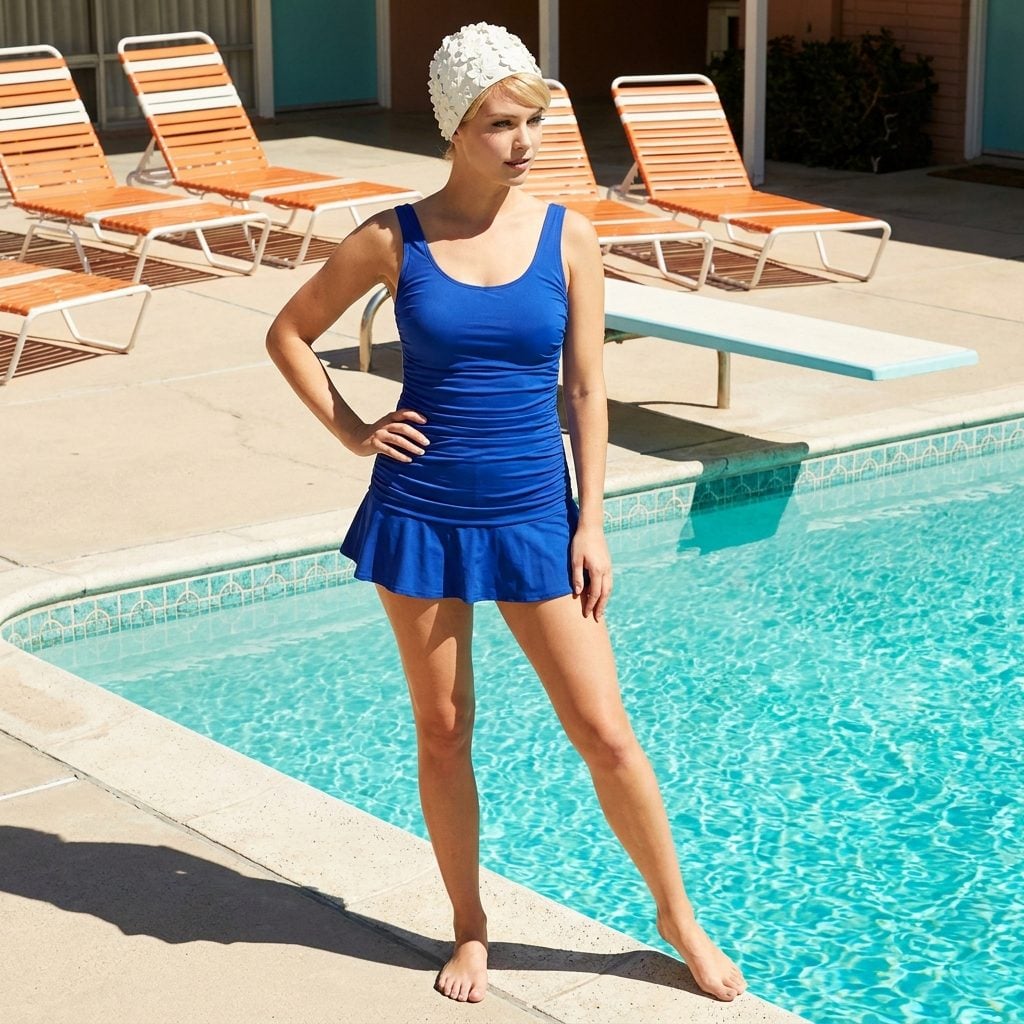
The skirted maillot was armor disguised as swimwear. That little panel of fabric fluttering around your upper thighs served no athletic purpose whatsoever. It didn’t help you swim. It didn’t dry fast. It existed purely because someone at Jantzen or Rose Marie Reid decided women needed modesty protection between the pool deck and the snack bar.
The ruched bodice, though? That was engineering. Horizontal gathering across the bust and midsection that somehow made every woman look like she had a defined waist, regardless of actual anatomy. The fabric was a thick nylon-Lycra blend that could withstand chlorine, saltwater, and an entire summer of wear without losing its shape.
Most came in solid jewel tones: sapphire, emerald, deep cherry red. You accessorized with a white rubber swim cap covered in rubber flowers, because hair was too important to get wet.
Today, ThreadCurve readers lean toward covering up a different way: about two out of three picked a tankini over a one-piece in our poll.
23. Two-Piece Playsuits: The Matching Shorts-and-Blouse Combo We Ironed Before Going to the Grocery Store
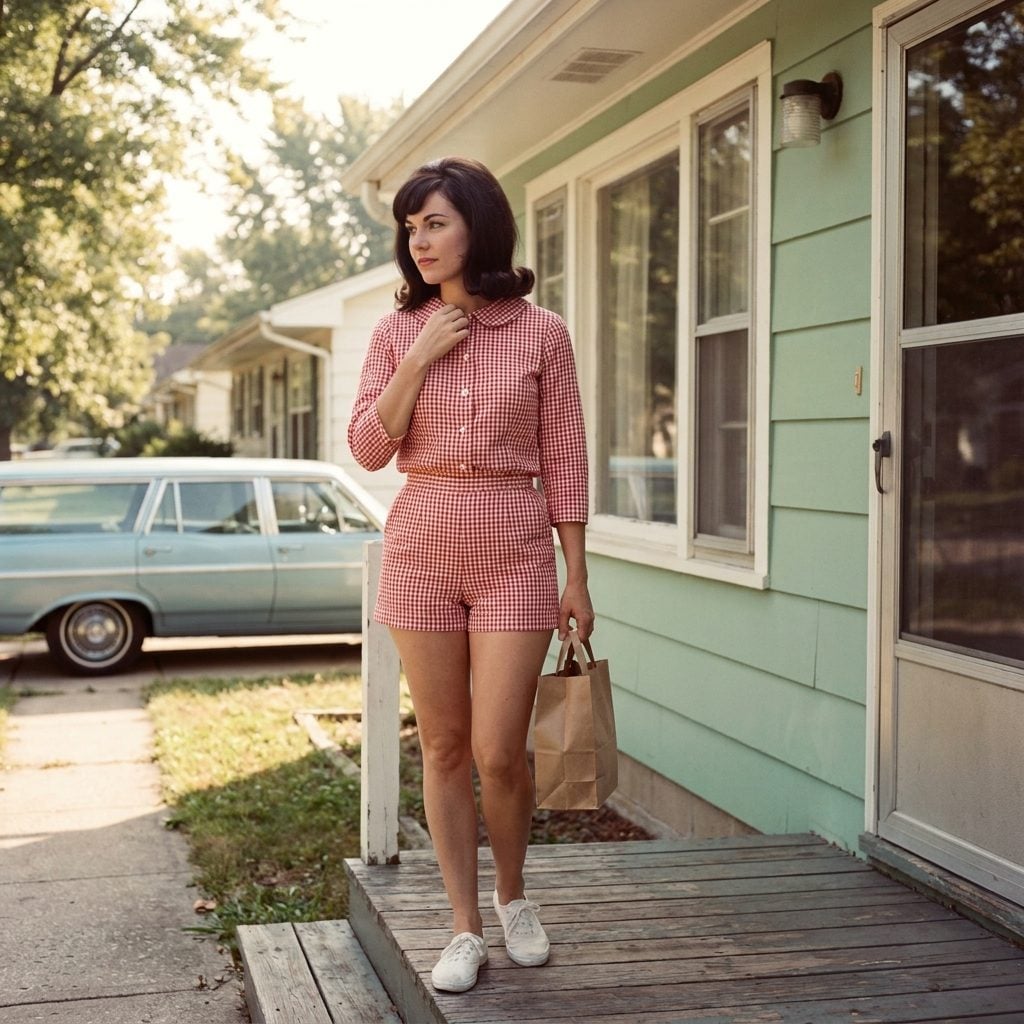
There was a time when running errands required a coordinated outfit, and the two-piece playsuit made that nonnegotiable. A buttoned cotton blouse with a Peter Pan collar, tucked into high-waisted shorts that hit exactly two inches above the knee. Both pieces in the same gingham, the same polished cotton, the same tiny floral print. You ironed both. You ironed the shorts.
These came from Montgomery Ward or JCPenney, and they cost about six dollars for the set. The shorts had a side zipper because front zippers on women’s clothing were still considered slightly vulgar in certain circles. You wore them with white Keds and felt completely put together for a trip to the A&P.
22. Pastel Polyester Mock-Turtleneck Shells That Could Survive a Nuclear Winter
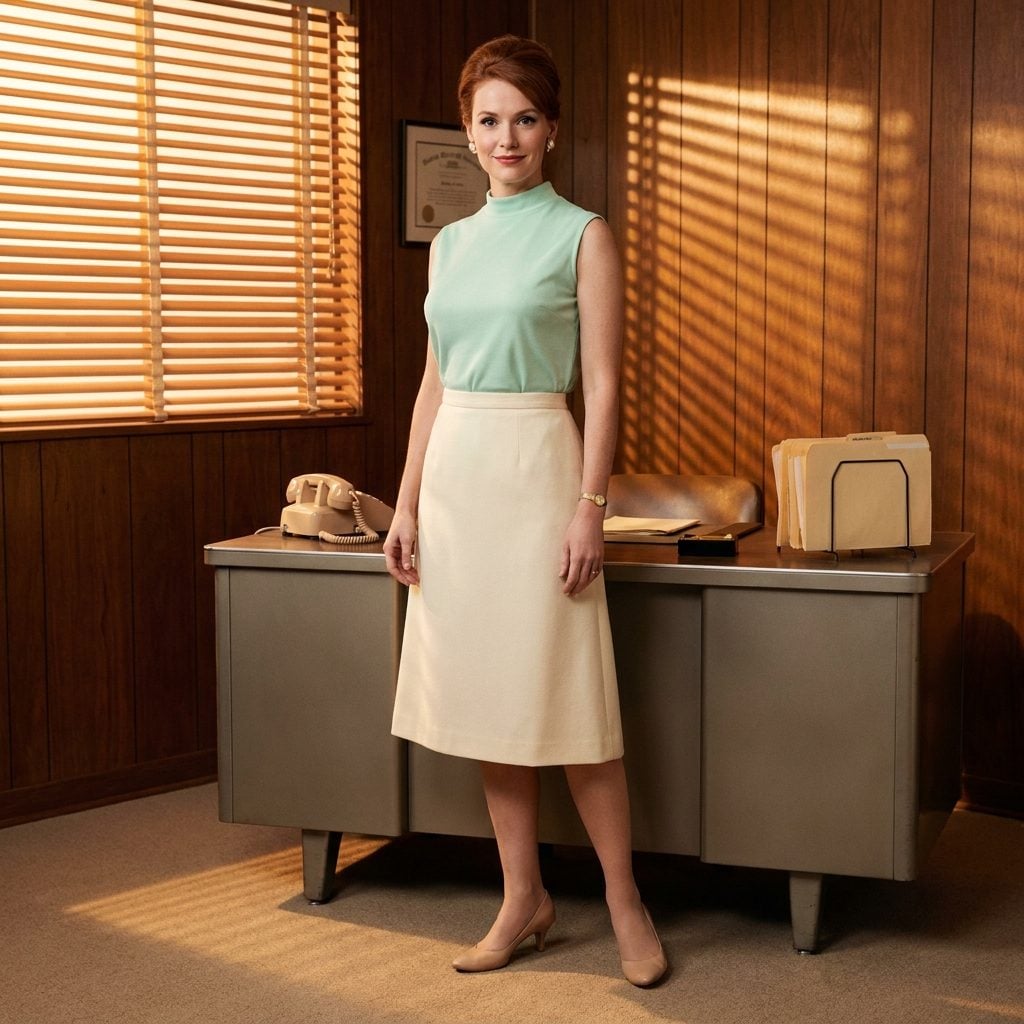
Indestructible. That’s the word. These sleeveless mock-turtleneck knit tops came in mint, baby pink, powder blue, and buttercup yellow, and you could wash them four hundred times without a single pill or pull. The polyester was so tightly knit it practically repelled stains. Tuck one into a skirt, and you looked like you worked at an insurance office in a movie where everyone was attractive and competent.
21. The Jacqueline Kennedy Summer Uniform: Sleeveless Shift, Pillbox Hat, White Gloves, and Pumps Even in 90-Degree Heat
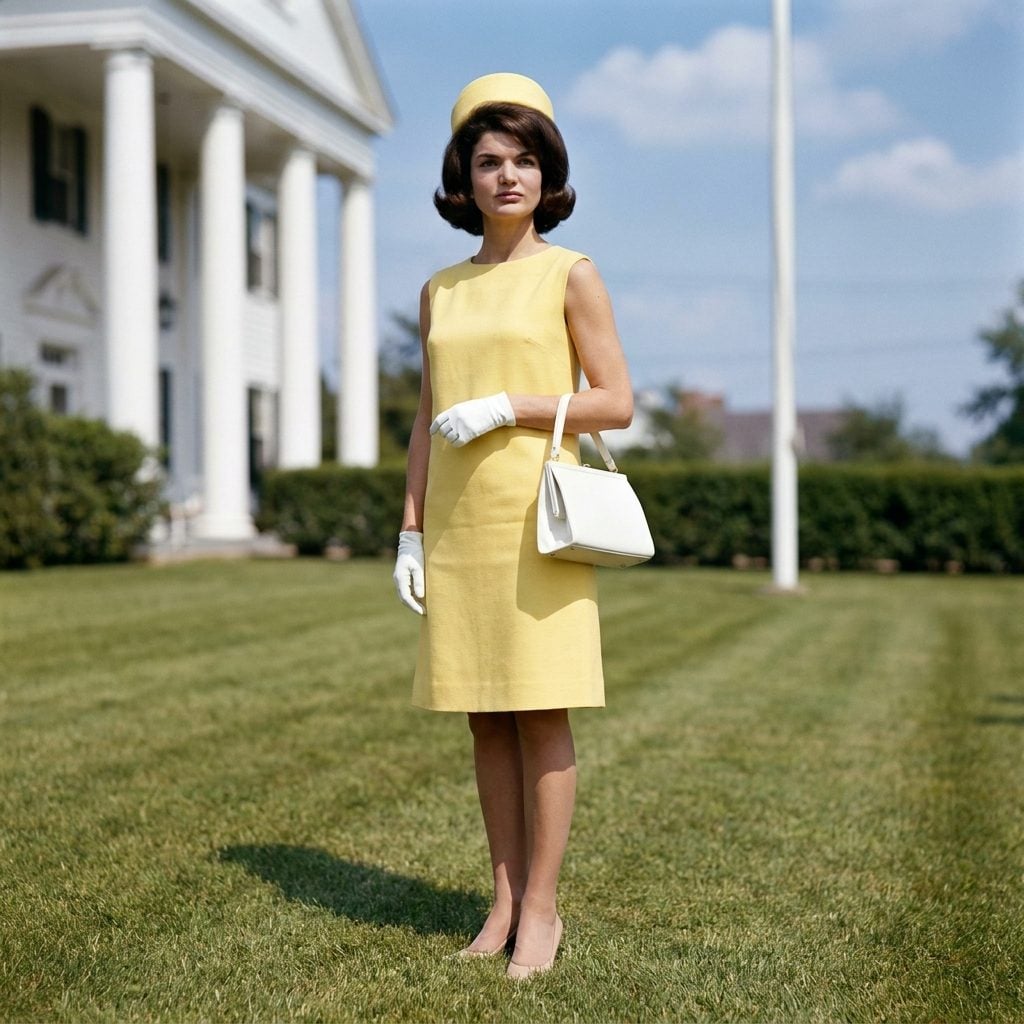
She made it look like the most natural thing in the world to wear white wrist-length gloves in July. And we believed her. Every woman in America between 1961 and 1963 owned some version of this formula: a sleeveless A-line shift in a solid color (lemon, coral, sky blue), a small structured hat perched on the back of her head, low-heeled pumps in a matching or neutral shade, and those gloves.
The gloves. They were cotton. They turned gray after one wearing. You had to wash them by hand with Woolite and lay them flat on a towel to dry, reshaping each finger individually. This was considered a completely reasonable use of your evening.
Oleg Cassini designed Jackie’s originals, but the copies showed up at every price point within weeks. By the summer of 1962, you could buy the entire look at Sears for under twenty dollars, hat included. The low-heeled pumps and the shift were practically a national uniform.
20. Empire-Waist Baby-Doll Dresses in Floral Cotton Lawn That Made Everyone Look Vaguely Pregnant
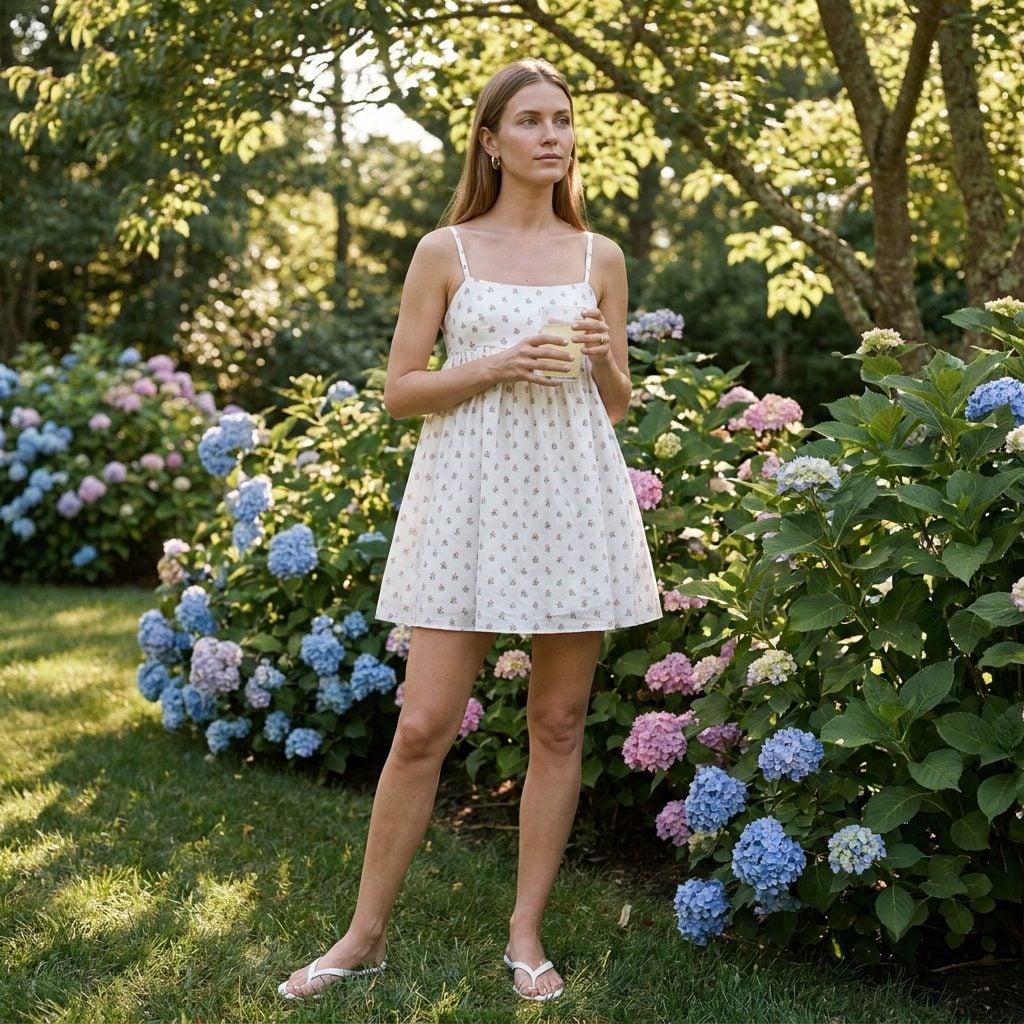
Nobody asked. That was the unspoken social contract of the baby-doll dress. The empire seam sat directly under the bust, and everything below it fell in a gentle A-line tent of floral cotton lawn so sheer you could practically read through it. Were you expecting? Were you just comfortable? The dress wasn’t telling.
The prints were always tiny: miniature rosebuds, ditsy daisies, scattered forget-me-nots on white or pale yellow backgrounds. The fabric was featherweight, almost tissue-like, which meant you needed a full cotton slip underneath unless you wanted to give the neighbors a very clear outline of your undergarments at the backyard barbecue.
19. Chiffon Patio Dresses with Matching Palazzo Pants for Evening Garden Parties (Yes, Pants Under a Dress)
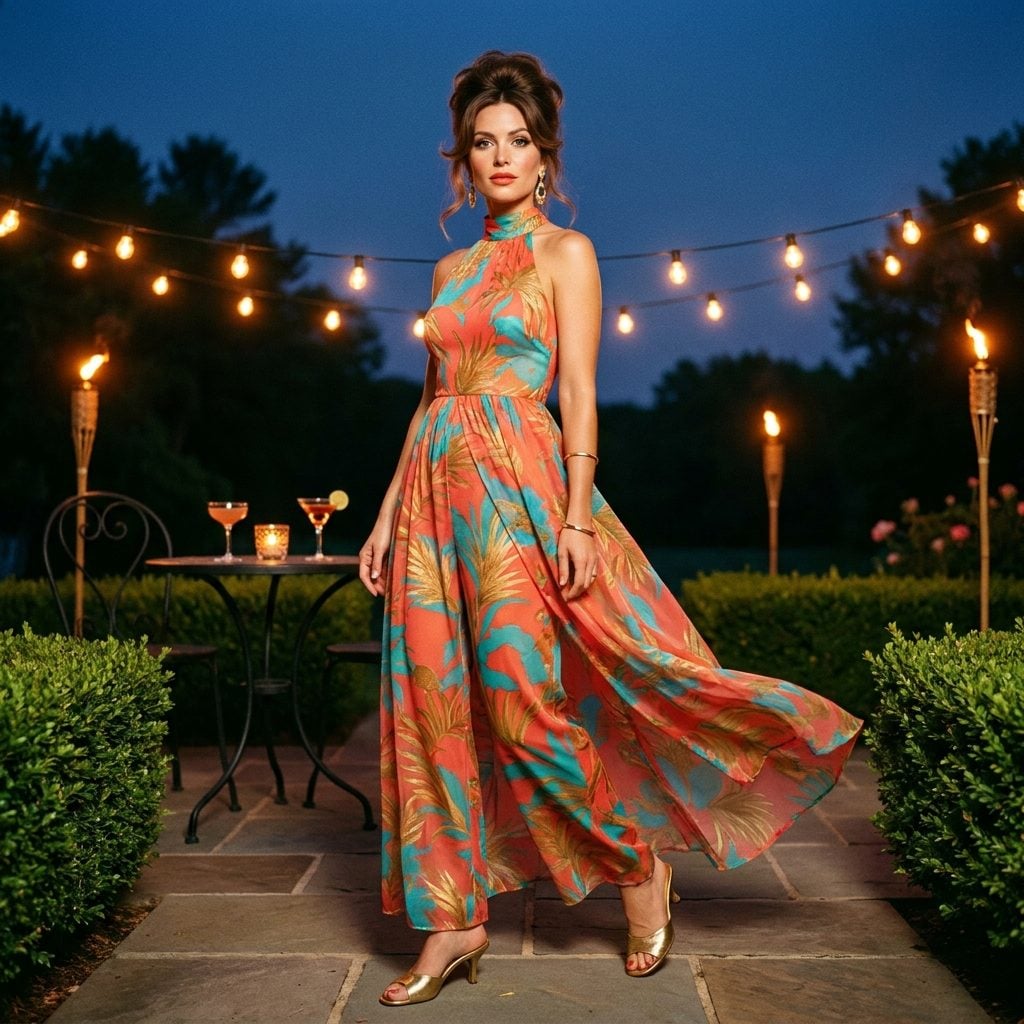
This was a full commitment. A floor-length chiffon dress, usually in a bold abstract print or tropical floral, worn over wide-leg palazzo pants in a matching or coordinating fabric. The pants were not optional. The pants were the point. The dress billowed over them so you looked like you were floating across the patio on a cloud of printed chiffon while also being technically covered from waist to ankle twice.
Emilio Pucci popularized the concept, but the department store versions from Lord & Taylor or Bonwit Teller brought it to every garden party in Westchester County. You wore this with kitten-heel mules, a cocktail in one hand, and the absolute certainty that you were the most glamorous person near the tiki torches.
18. White Cotton Eyelet Blouses Tucked Into Slim Cropped Pants (The Official Outfit of Being Put Together)
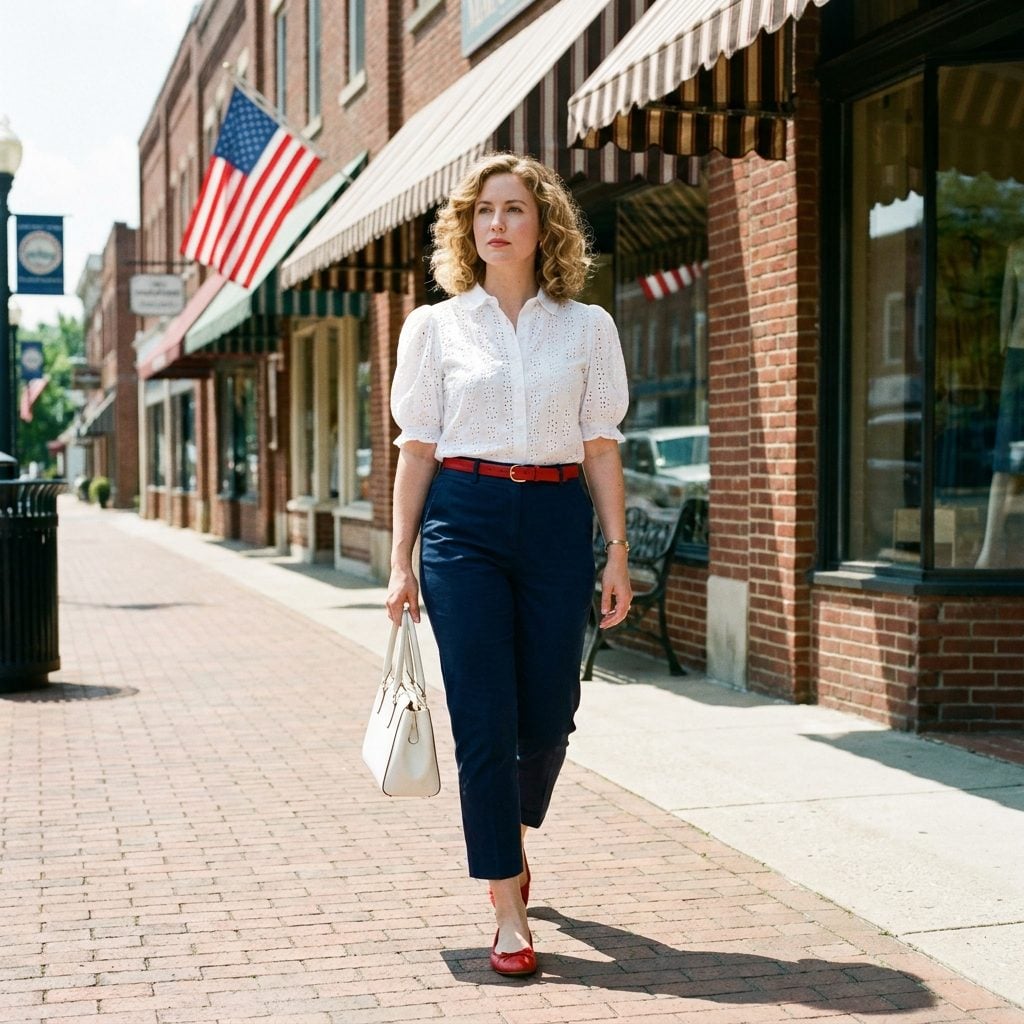
If you owned one white eyelet blouse, you owned three. The embroidered cutwork pattern, the scalloped hem, the way it went with literally everything. Tucked into slim navy cropped pants, it was Saturday errands. Tucked into a full skirt, it was church. Left untucked over shorts, it was the lake house.
The eyelet pattern did most of the work, but you still had to wear a camisole underneath because the holes were actual holes, which seems obvious but somehow caught people off guard every single summer. The blouses came from everywhere: Lerner’s, the local fabric store if your mother sewed, or the Sears catalog. The cotton wrinkled if you looked at it wrong, which meant the iron came out again.
17. Paisley Silk Scarves Tied Under the Chin Over Teased Bouffant Hair That Took 45 Minutes to Build
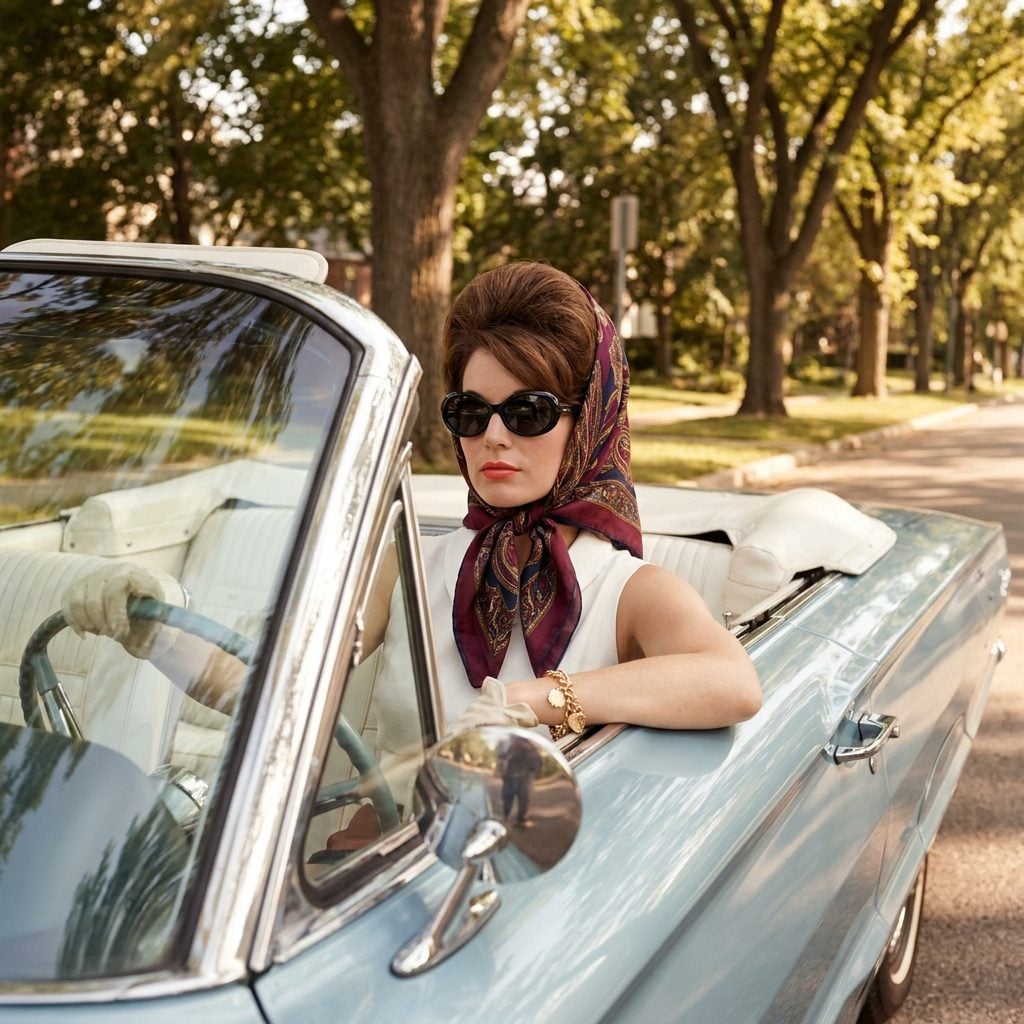
The scarf was never about warmth. It was about preservation. You spent the better part of an hour teasing, backcombing, and shellacking your bouffant with Aqua Net, and you were not about to let a car ride with the windows down destroy it. So you tied a paisley silk scarf under your chin, Grace Kelly style, and your hair arrived at its destination intact.
The scarves were genuine silk or a convincing acetate, usually in rich paisley patterns of burgundy, navy, and gold. You folded them into a triangle and knotted them just below the jawline. Combined with oversized sunglasses, the look communicated a very specific message: I have somewhere important to be, and my hair agrees.
16. Capezio Ballet Flats in Every Color Because One Pair Was Never Enough
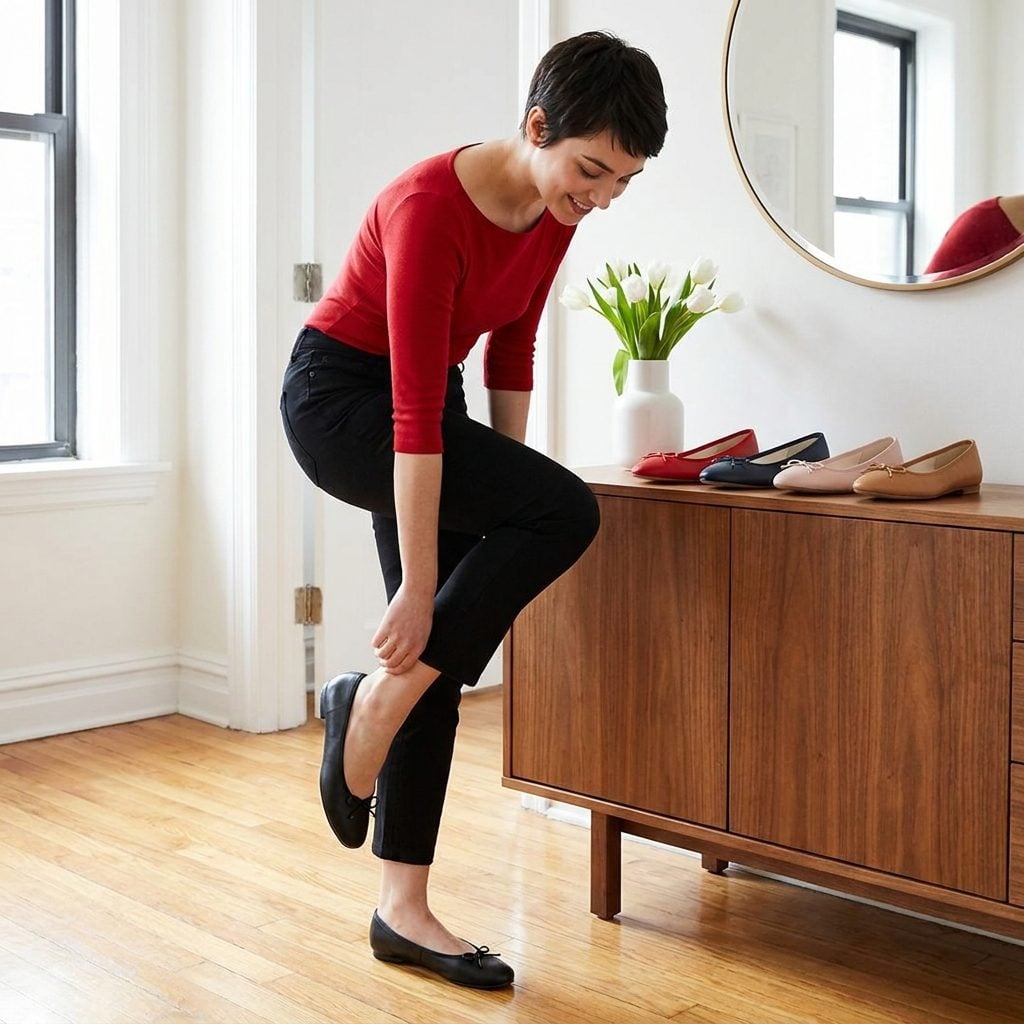
Red pair for the red skirt. Navy pair for the navy dress. Black for everything else. And then a pink pair because they were on sale and you deserved them. Capezio ballet flats were the workhorse shoe of the 1960s woman who needed to look polished but also walk more than ten feet without wincing.
The soles were practically paper-thin. You could feel every pebble, every sidewalk crack, every subway grate through that leather. But they were light, they were simple, and they went with the clean lines that dominated the decade. Audrey Hepburn wore them in “Funny Face” in 1957, and by the early sixties, every college girl and young professional had a row of them lined up inside her closet door.
Flats still have a loyal following: 29% of our readers named them their daily shoe, though sneakers took 51% of the vote.
15. Sleeveless Linen Tunic Tops Over Cigarette Pants: The Look That Said ‘I Read Vogue and Also Do Things’

Clean. Architectural. Slightly intellectual. The sleeveless linen tunic hit mid-thigh, had a straight hemline and usually a single chest pocket or a mandarin collar, and it turned slim cigarette pants into something that belonged in a gallery opening.
This was the look of the woman who had opinions about modern art and could also make a decent gin and tonic. The linen was always wrinkled by noon, which you either fought with starch or simply accepted as the natural consequence of choosing a natural fiber. The color palette stayed controlled: sand, ivory, slate blue, olive. You wore it with flat leather sandals or those Capezios mentioned above, a single bold bangle, and absolutely nothing fussy.
It borrowed heavily from Scandinavian design principles that were filtering into American vintage fashion at the time: simplicity, clean lines, functionality first.
14. Pastel Tweed Chanel-Style Boucle Suits with Three-Quarter Sleeves, Even When It Was 85 Degrees Outside
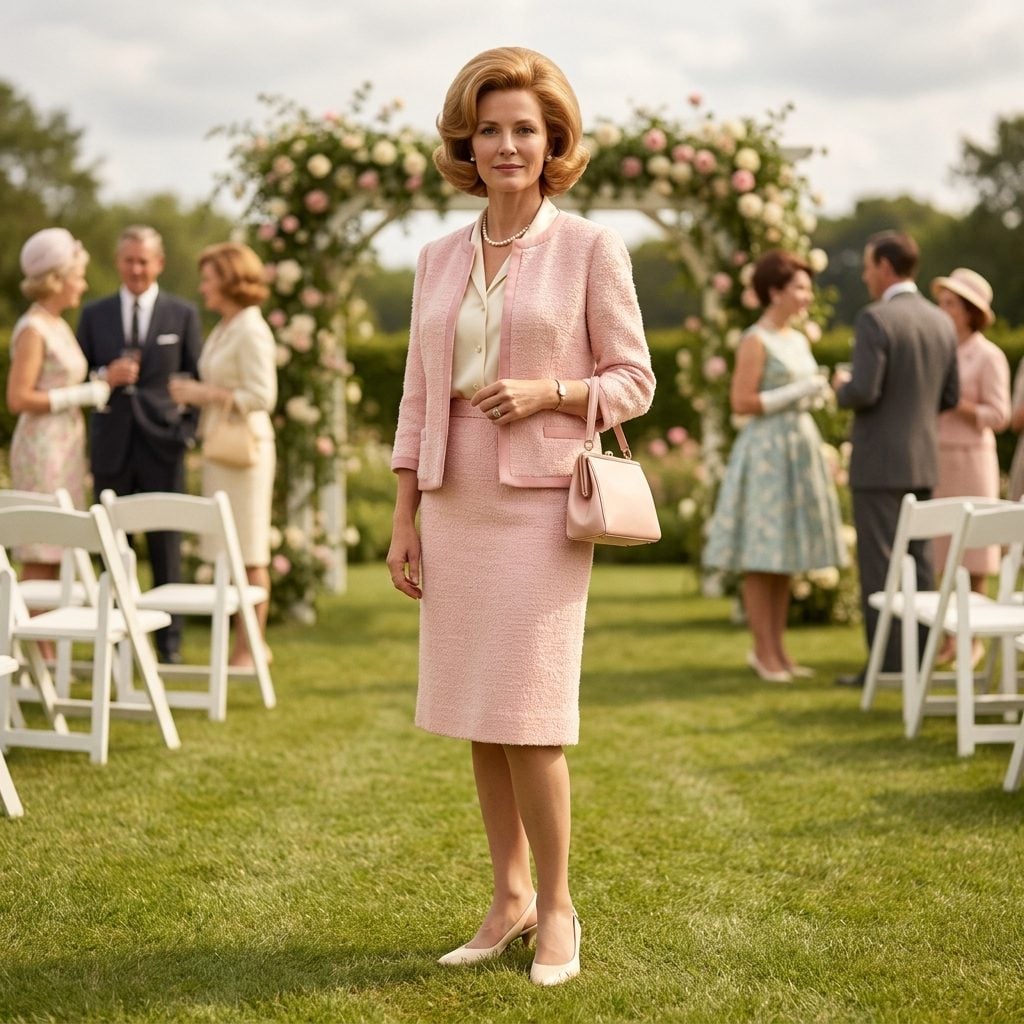
You wore a wool-blend suit to a garden wedding in June because that’s what proper women did. The boucle was lighter than it looked, or at least that’s what we told ourselves while perspiring through the lining. Three-quarter sleeves showed just enough wrist for a bracelet. The collarless jacket had a grosgrain ribbon trim at the edges and sat open over a matching or contrasting silk shell. The skirt was straight, hitting just below the knee, and it had a small back vent so you could actually walk.
Coco Chanel introduced this silhouette in the 1950s, but by the mid-sixties it was everywhere. Real Chanel cost a small fortune. The copies from B. Altman or Bergdorf’s junior line ran about forty dollars. The copies from the sewing pattern catalogs ran about four, and plenty of women made their own from McCall’s patterns, choosing pastel pink, pale lilac, or seafoam green boucle from the fabric store.
Pair it with cream slingback pumps, a structured handbag, and a single strand of pearls, and you were the most appropriately dressed person at any summer occasion that required a chair and a printed program.
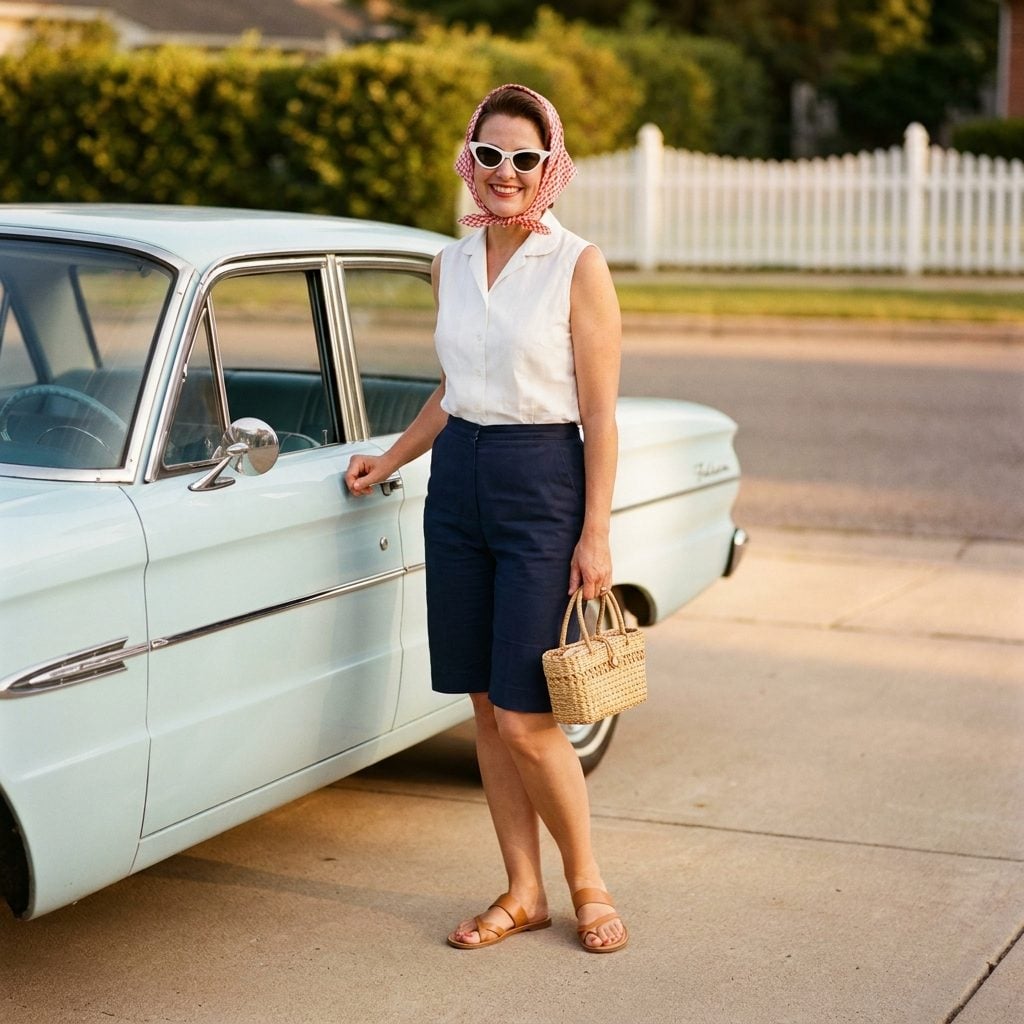
13. The Gingham Head Scarf Tied Kerchief-Style with Cat-Eye Sunglasses (Like You Were Driving a Convertible You Didn’t Own)
❤️ Would you like to save this?
You didn’t need the convertible. You didn’t even need the car. All you needed was a square of gingham cotton folded into a triangle, knotted under your chin, and a pair of cat-eye sunglasses perched on your nose. Suddenly you were Audrey on holiday. Every woman had a drawer full of these scarves in red, blue, and yellow checks, and they served triple duty: bad hair day fix, sun protection, and instant glamour.
The real trick was the knot. Too loose and it slid off. Too tight and you looked like you were heading into surgery. But when you got it right, paired with a sleeveless blouse and white shorts, you looked like the most put-together woman at the lake house. The fact that your hair was in rollers underneath was nobody’s business.
12. Nautical Sailor Dresses with Middy Collars, Red Ties, and Every White Button Polished to a Shine
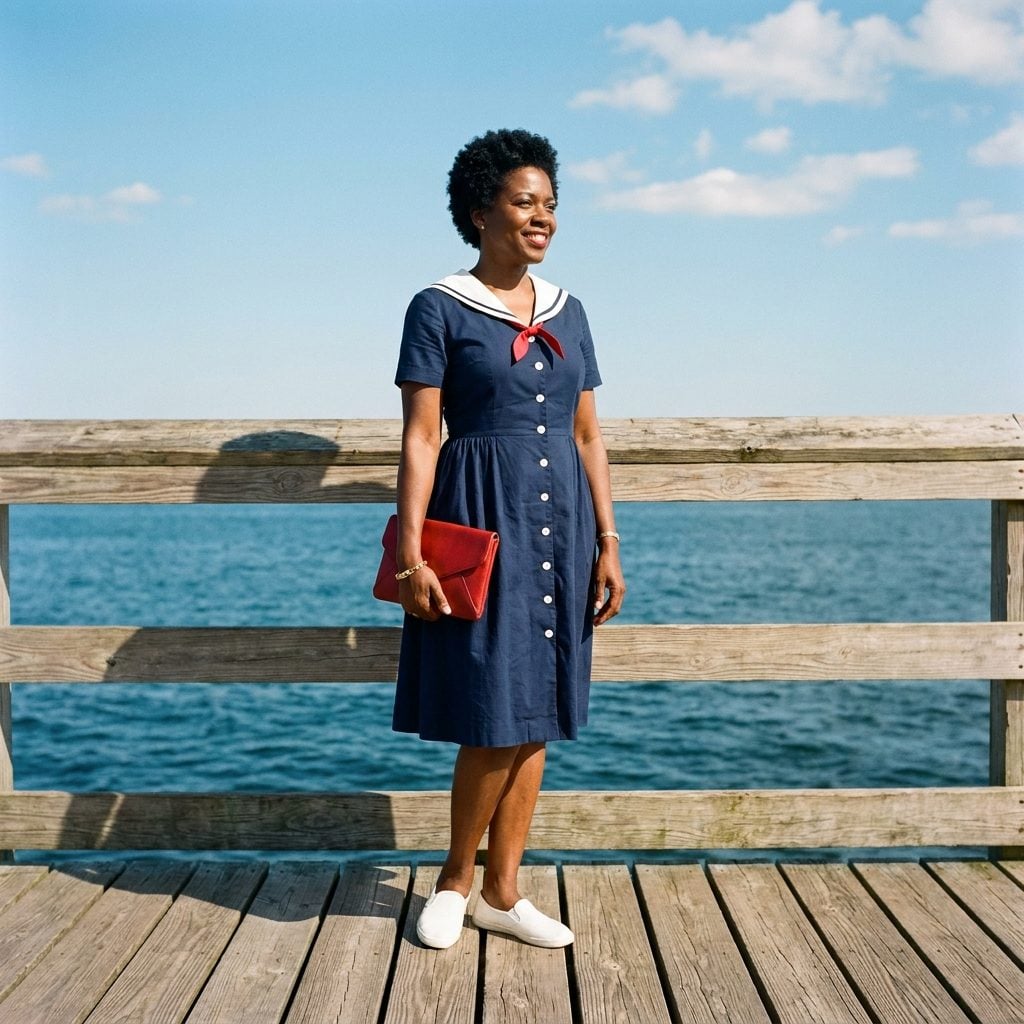
These dresses didn’t whisper nautical. They screamed it. The wide middy collar that draped across your shoulders, the little red ribbon tie, the double row of white buttons marching down the front like you were about to inspect the fleet. Navy blue cotton with white piping, always. And we wore them to everything: Fourth of July picnics, church suppers, Saturday errands.
The look came straight from a Sears catalog and cost about eight dollars, but it made you feel like you belonged on a yacht in Cape Cod. The collar alone took up half your upper body. The A-line skirt hit right at the knee, and you paired it with flat white canvas shoes that got dirty approximately four minutes after you put them on.
Nobody questioned why we were all dressed like we served in the Navy. It was summer. It was patriotic. It was normal.
11. The Hostess Caftan in Bold Hawaiian Florals (Because Backyard Cocktails Required a Costume Change)
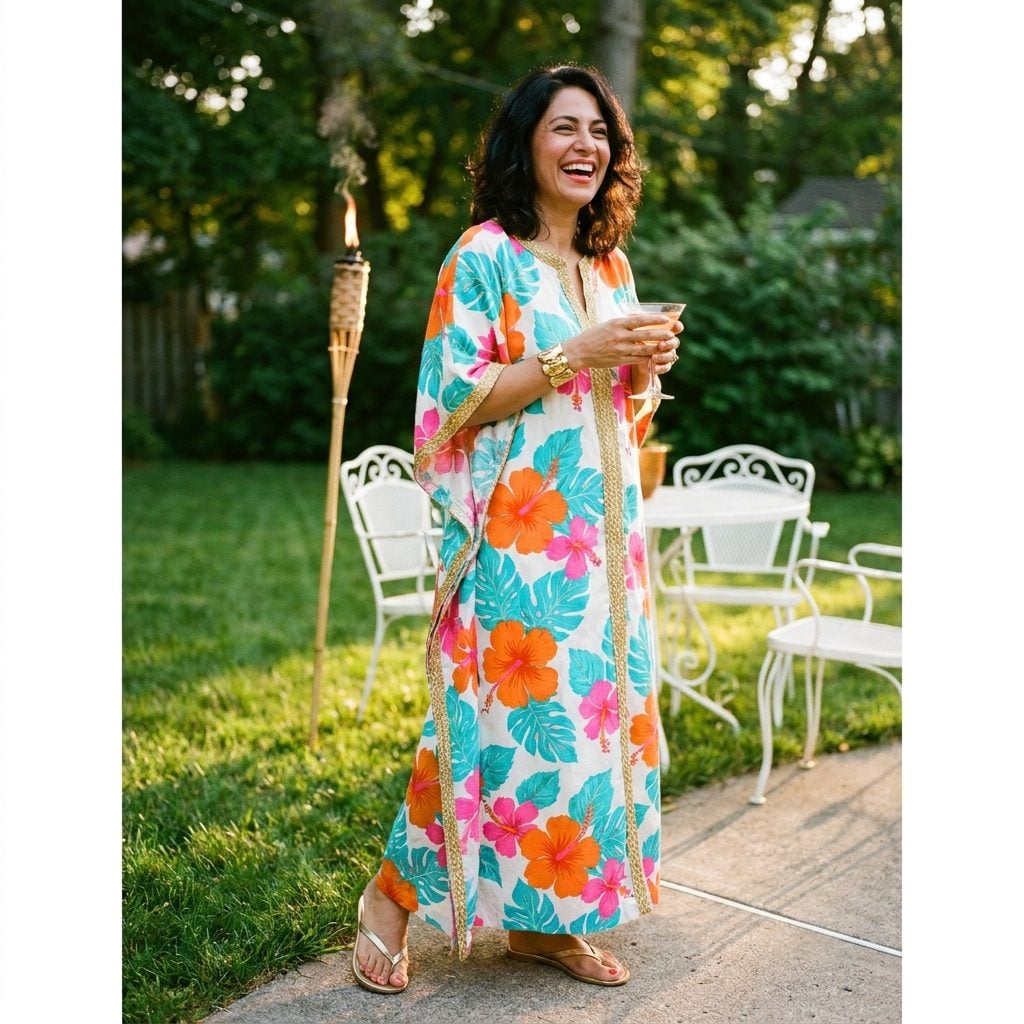
Somewhere around 5 PM on a Saturday, your mother or your neighbor or your aunt disappeared into the bedroom and emerged in a floor-length caftan covered in hibiscus flowers the size of dinner plates. Orange, pink, turquoise, all fighting for attention on the same garment. She was holding a Tom Collins and she looked magnificent.
The floral caftan was the 1960s answer to the question nobody asked: what if getting dressed for a party meant wearing more fabric, not less? Kimono sleeves wide enough to knock a drink off the patio table. A neckline trimmed in gold braid. The whole thing billowed when you walked, which was the point. You weren’t just arriving at the party. You were making an entrance from your own kitchen.
10. Printed Cotton Housedresses with Front-Zip Closures That Somehow Went Everywhere
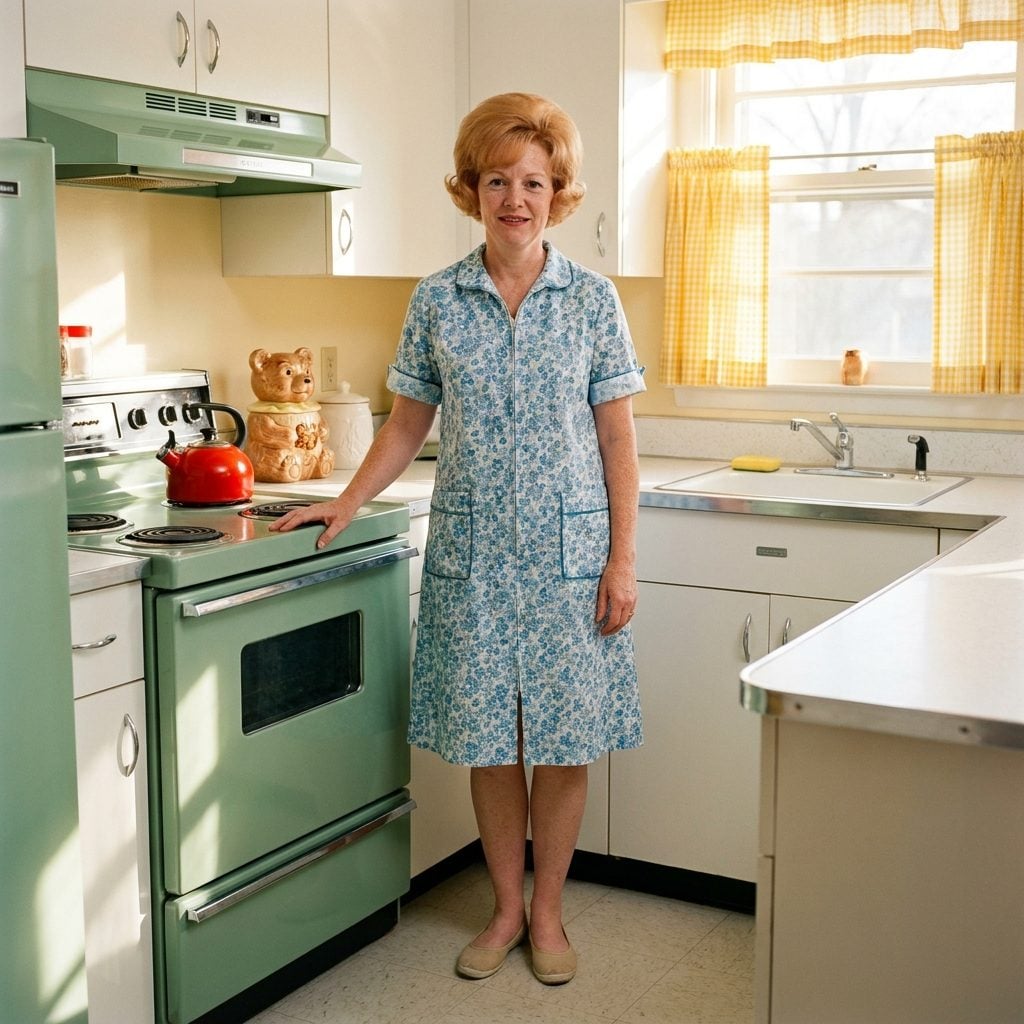
Let’s be honest about the housedress. It was not fashion. It was a uniform. And every woman over the age of 25 owned at least three: one for cooking, one for cleaning, and one that was “nice enough” to answer the door when the mailman rang.
The front zipper was the whole innovation. You stepped in, zipped up, and you were dressed. Small floral prints, usually in blue or pink on a white background. Short sleeves with a little cuff. Two patch pockets big enough to hold a pack of cigarettes and a grocery list. The hemline hit mid-calf, always, as if there were a law.
Your grandmother wore hers with flat canvas slip-ons. Your mother wore hers with bare feet in the kitchen. And somehow, nobody thought it was strange that this was the default female uniform for an entire decade. You could buy them at Sears, Woolworth’s, or the five-and-dime, and they cost less than a gallon of gas.
9. Pleated Tennis Skirts with Sleeveless Polos and Canvas Sneakers (Even If You’d Never Held a Racket)
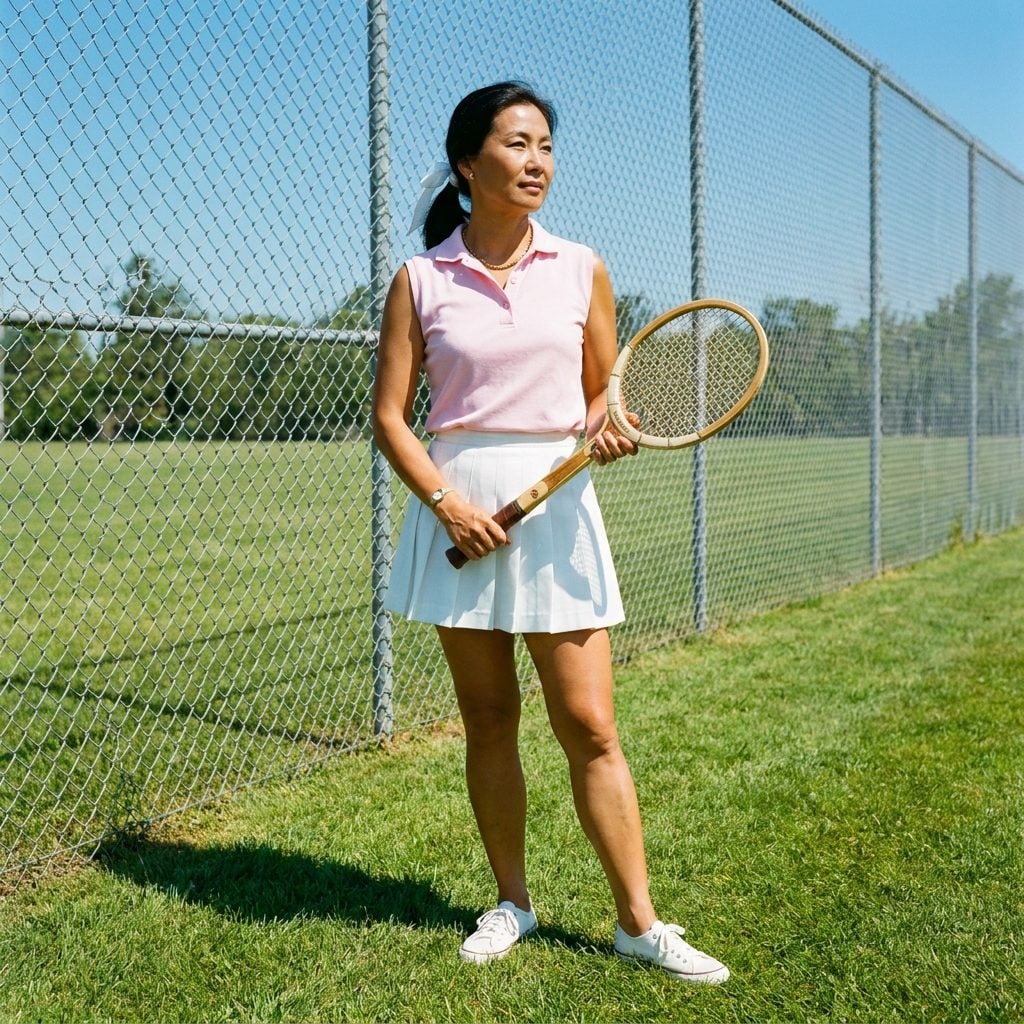
The tennis skirt had absolutely nothing to do with tennis for most of us. It was a white pleated excuse to show off your legs, and we paired it with a sleeveless polo in pastel pink or mint green and white canvas sneakers that stayed clean for approximately one afternoon. The whole look said “country club” even if the closest you got to a club was the community pool.
Those knife pleats, though. They swished when you walked. They fanned out when you spun. And they wrinkled the second you sat down in the car, which meant you spent the entire drive to wherever you were going trying not to crush them.
8. Kimono-Sleeve Blouses in Silk Shantung with Slim Summer Skirts
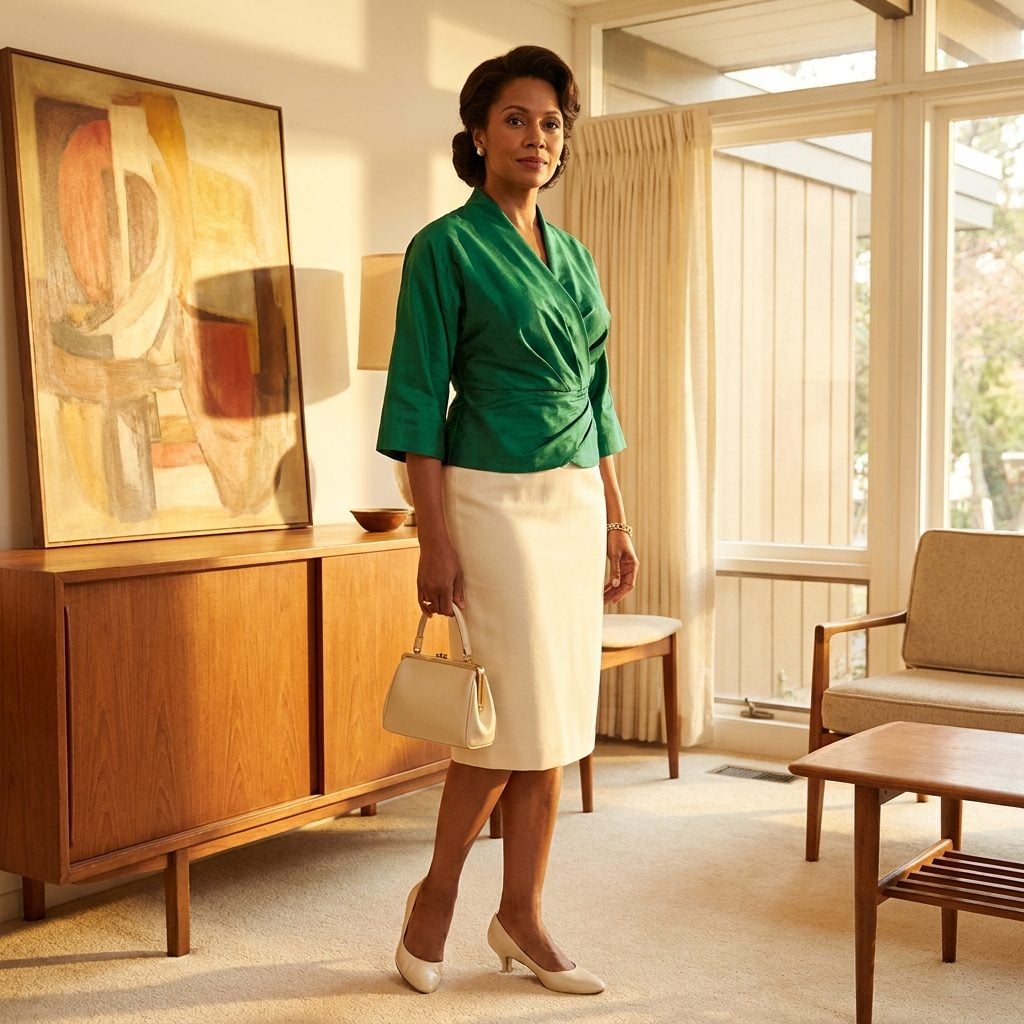
This was the outfit that made you feel like a grown woman. Not a girl, not someone’s wife in a housedress. A woman. The blouse was silk shantung, which had that slightly nubby texture that caught the light in a way cotton never could. Kimono sleeves fell softly from dropped shoulders, and the whole thing bloused just enough at the waist before tucking into a slim pencil skirt in cream or taupe.
You wore this to a luncheon. To a gallery opening. To meet someone’s parents. The silk shantung came in jewel tones: emerald, sapphire, a dusty rose that looked expensive even when it wasn’t. And because the sleeves were so wide, you had to be careful reaching for your iced tea or you’d drag them through the butter dish.
7. Dotted Swiss Blouses with Peter Pan Collars Tucked into Full Circle Skirts (Peak Innocent Summer Energy)
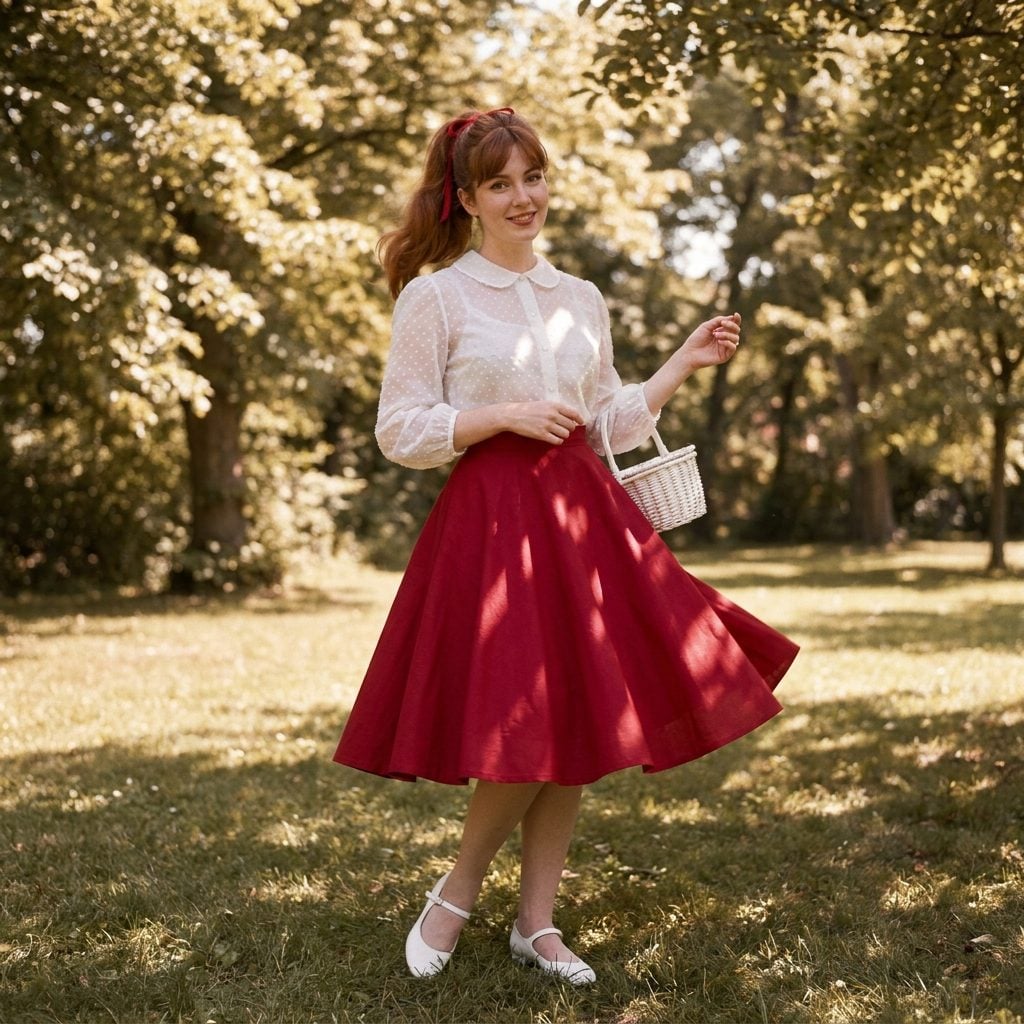
If the silk shantung blouse made you feel like a woman, the dotted Swiss made you feel like a woman pretending to still be a girl. And that was part of its charm. That sheer white fabric with its tiny raised dots, that sweet little Peter Pan collar lying flat against your collarbone, the whole thing tucked neatly into a full circle skirt in cherry red or cornflower blue.
The fabric was see-through enough that you absolutely needed a camisole underneath, which added another layer of getting dressed in July heat that nobody complained about because that’s just what you did. The collar had to be pressed. The skirt had to be starched. Your ponytail had to have a ribbon that matched the skirt.
It was a lot of effort to look that effor… that simple.
6. Jamaica Shorts with Sleeveless Cotton Camp Shirts for Beachside Strolls
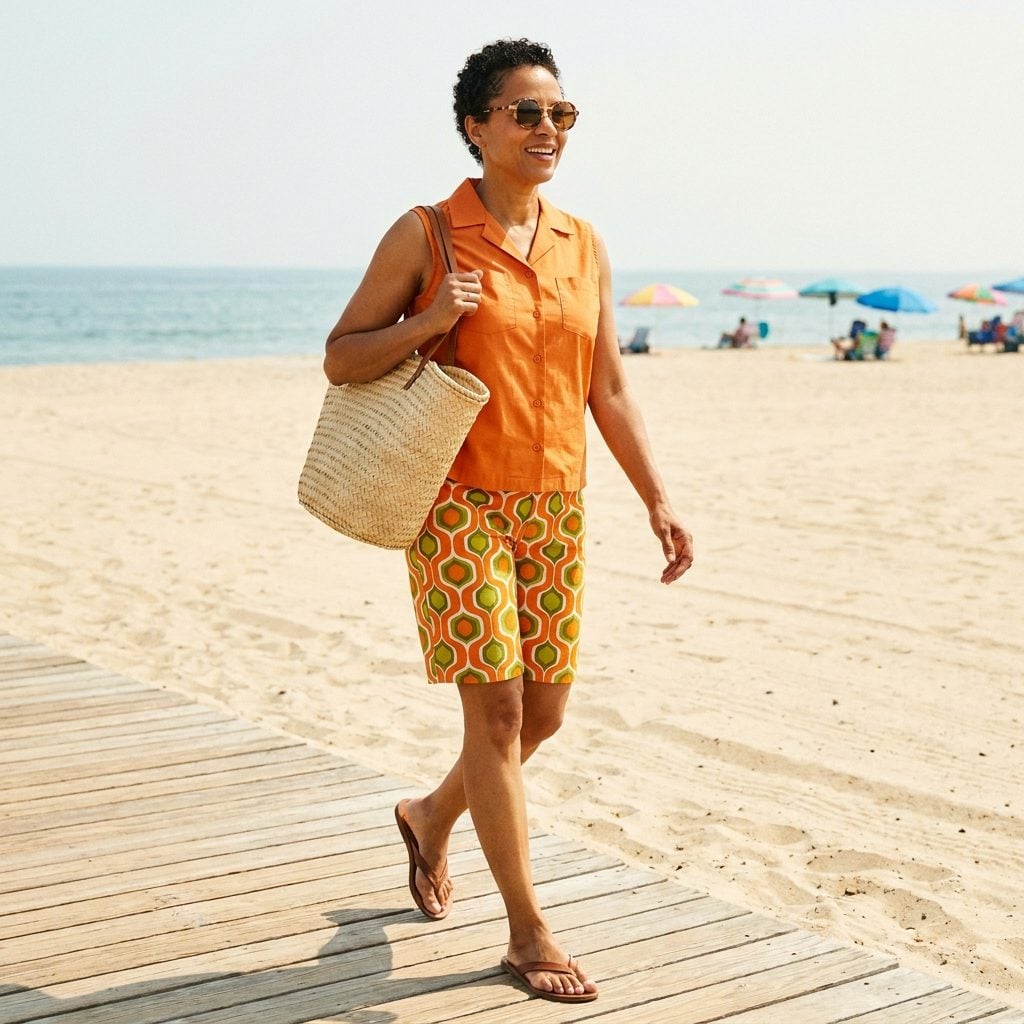
Before we called them “Bermuda shorts” and long before the internet told us what length was flattering, there were Jamaica shorts. They hit right at the knee, sometimes a hair above, in bold prints that had no business being that loud: oversized paisleys, tropical birds, geometric patterns in orange and avocado green. You paired them with a sleeveless camp shirt, usually in a solid color that sort of matched one shade in the print if you squinted.
This was your boardwalk outfit. Your ice cream errand outfit. Your “running into your neighbor at the A&P” outfit. Flat leather sandals, maybe a straw tote. Hair pinned back because of the humidity.
5. Cotton Wrap Dresses with Low Wedge Sandals (The Original ‘Throw It On and Go’)
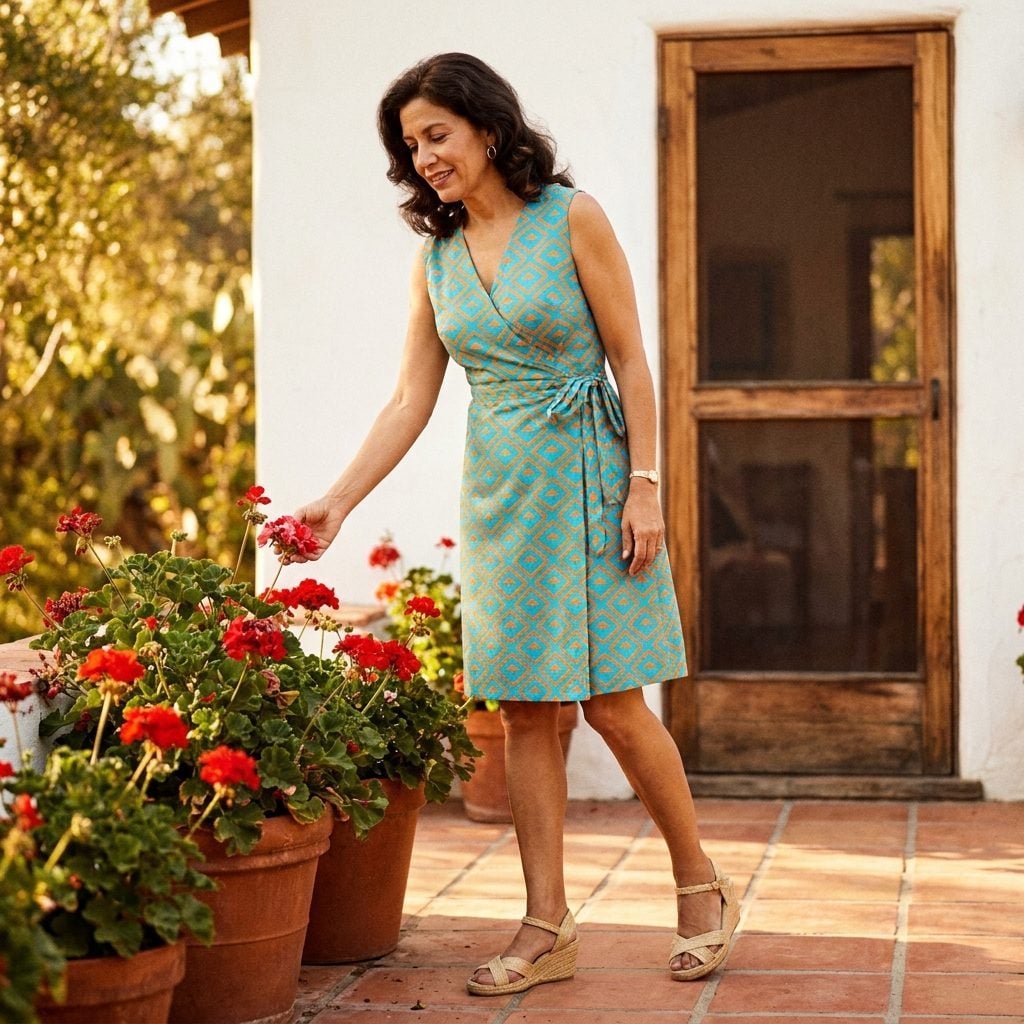
Before Diane von Furstenberg made the wrap dress famous in the 1970s, the 1960s cotton version was already doing quiet, practical work in closets everywhere. No zipper. No buttons. Just wrap, tie, done. The fabric was always cotton, usually in a cheerful print: small daisies, geometric squares, abstract splotches in turquoise and tangerine.
You wore low wedge sandals with this one because the hemline sat right at the knee, and a little height made the proportions feel right. Straw wedges with a canvas strap, usually. Nothing dramatic.
The wrap dress was the great equalizer. It fit everyone because it adjusted to your body, not the other way around. It was forgiving after a big lunch, it dried fast when you washed it by hand, and it looked pulled-together enough for a restaurant if you added a pair of earrings. Every woman had one. Most had three.
4. Short-Sleeve Cardigan Sets Worn with Knee-Length Skirts and Low Pumps (The Matching Was Non-Negotiable)
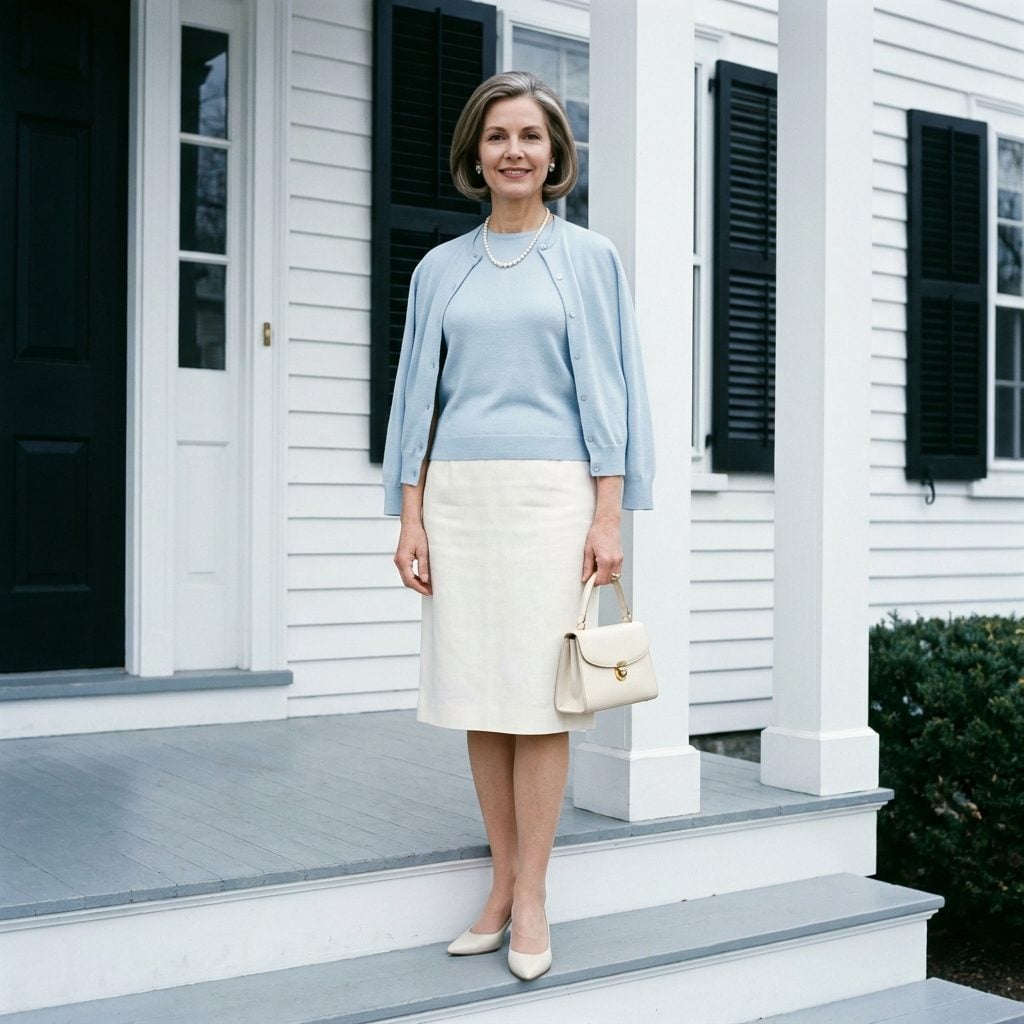
❤️ Would you like to save this?
The cardigan set. The twinset. Whatever you called it, the rules were absolute: the short-sleeve shell underneath matched the cardigan on top, which matched your mood, which was “polished.” Pale yellow. Powder blue. Shell pink. Mint. You buttoned the cardigan only at the top button, or you draped it over your shoulders like a cape, and both choices communicated something specific about what kind of day you were having.
A knee-length skirt in a coordinating neutral, low-heeled pumps in bone or navy, and a single strand of pearls. That was the formula. Nobody deviated. Nobody needed to.
3. Sleeveless Sheath Dresses Styled with Oversized Sunglasses and Structured Handbags (The Jackie Effect)
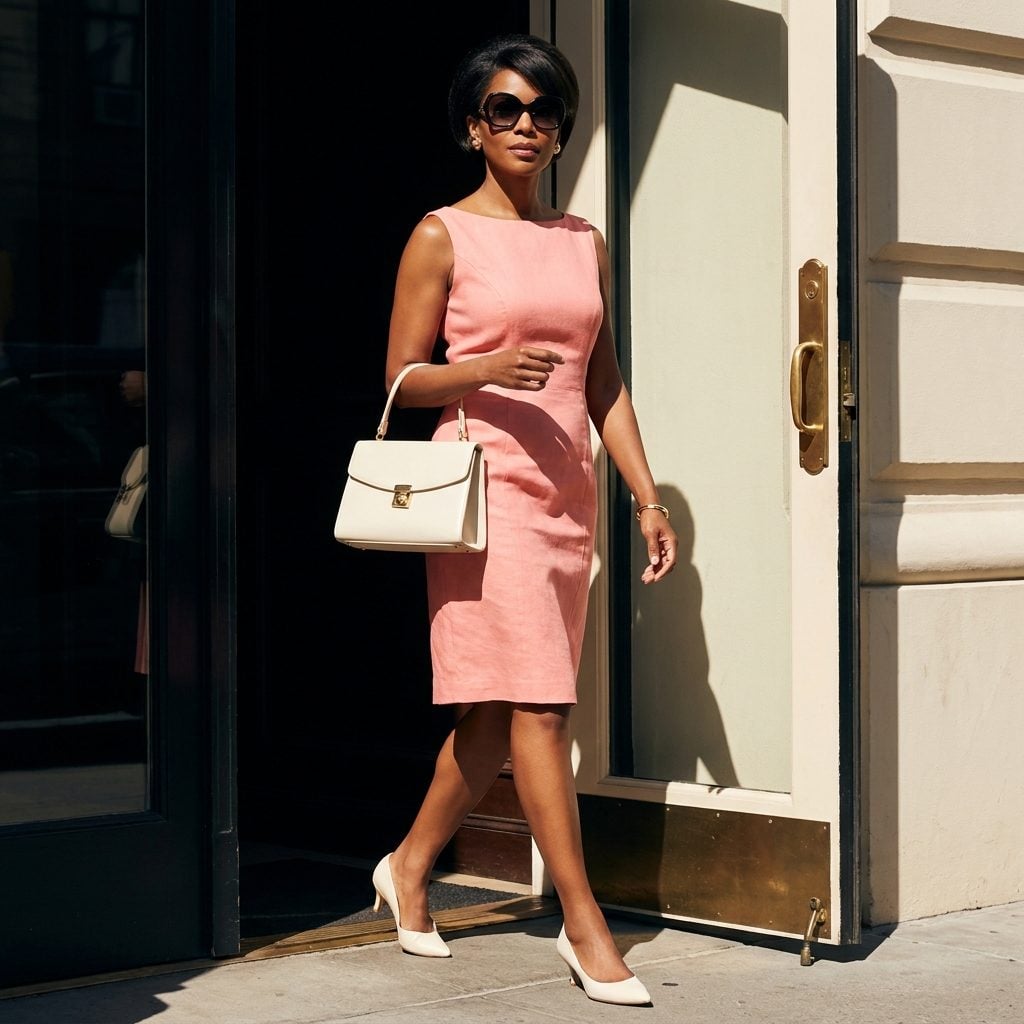
We all know who started this. Jackie Kennedy stepped off a plane in a sleeveless sheath dress, oversized dark sunglasses, and a rigid leather handbag, and an entire nation said “yes, that.” By 1963, you could not walk through a department store without seeing racks of these dresses in every color. Linen. Cotton piqué. Sometimes a lightweight wool blend that made no sense in July but looked incredible.
The sheath hit right at the knee. Not above. Not below. Right at. The oversized sunglasses were round or slightly squared, always dark, and they covered half your face, which was the point. The structured handbag had a short handle, a gold clasp, and it sat in the crook of your elbow like it had been placed there by a stylist.
This wasn’t just a vintage look. It was the look. The one that made you feel like you could handle anything, from a PTA meeting to a press conference, without breaking a sweat.
2. Tailored High-Waisted Shorts Paired with Crisp Blouses and Leather Sandals (Summer’s Smartest Outfit, Full Stop)
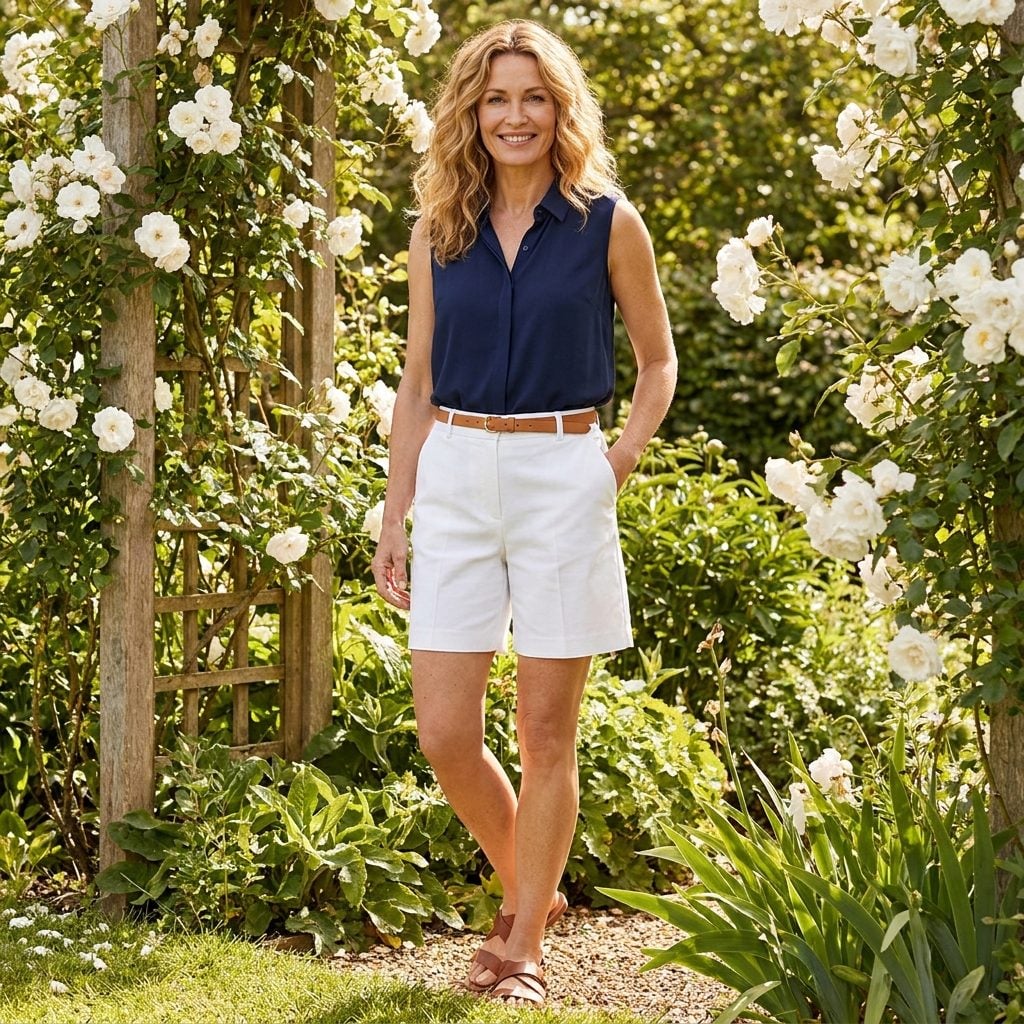
Here’s what nobody tells you about 1960s summer shorts: they were tailored. Actually tailored. With a proper waistband, a flat front, sometimes even a crease pressed down the center of each leg. They sat at the natural waist, which meant they hit your body at the narrowest point, and the legs were wide enough to move in but structured enough to hold a line. No stretch fabric. No drawstring. Just cotton twill or linen, in white, navy, or khaki.
You tucked in a crisp cotton blouse, sleeveless or short-sleeved, with a collar that you pressed that morning because wrinkles were a personal failing. Flat leather sandals, usually brown or tan, with a simple strap across the toes. Maybe a woven belt.
The whole thing took fifteen minutes to put together and looked like you had a personal stylist. It worked because every single piece fit properly. No oversizing. No undersizing. Just clothes that were made to sit where they were supposed to sit. We could learn something from that.
1. The Lightweight Linen Skirt, Sleeveless Blouse, and Ballet Flats Combo That Was Basically a Summer Uniform
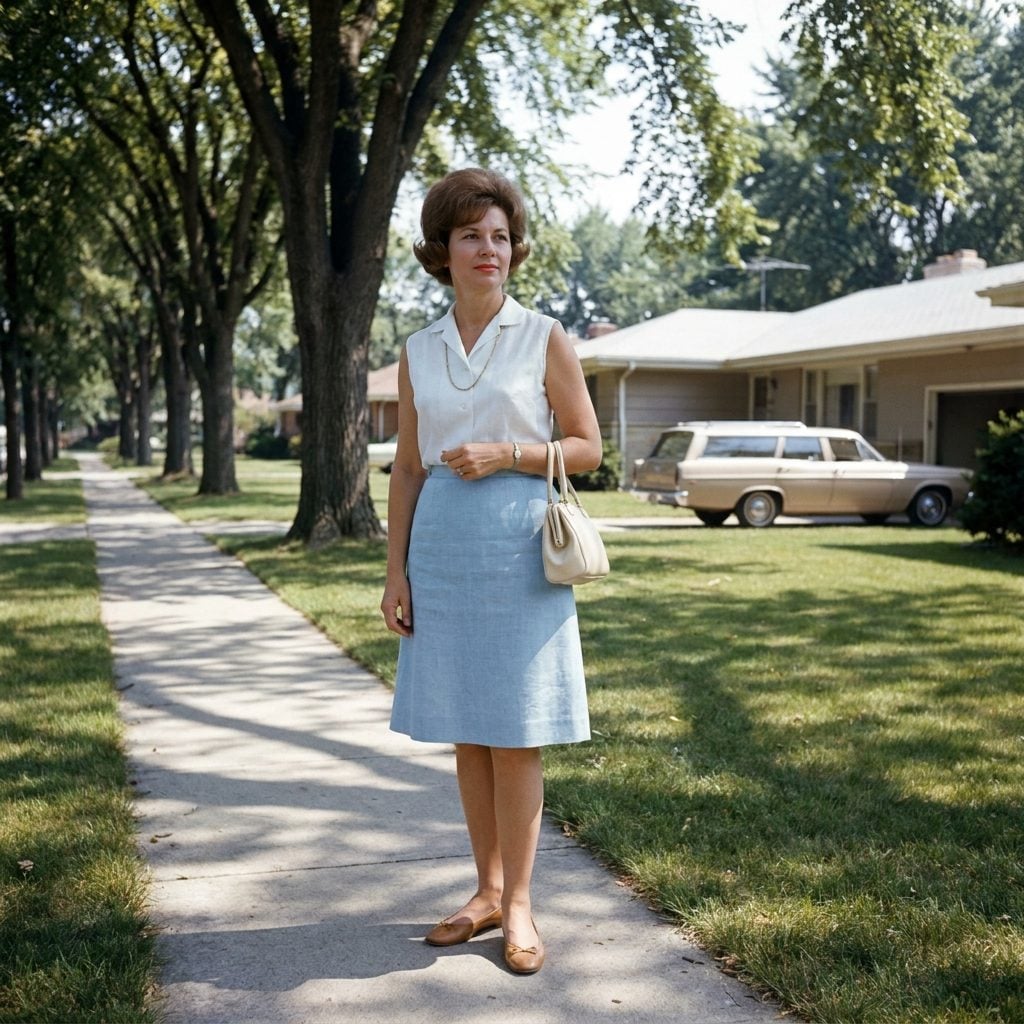
This was the outfit your mother wore to the grocery store, the post office, and a neighbor’s backyard cocktail party, all in the same afternoon, without changing a single thing. A linen A-line skirt in cream or pale blue, hitting just below the knee. A crisp sleeveless cotton blouse tucked in with military precision. And a pair of simple leather ballet flats in tan or bone that she’d owned for three summers straight.
Nobody called it “capsule wardrobe” back then. It was just getting dressed. The skirt wrinkled by noon because linen does what linen wants, and nobody cared. You looked put together without looking like you tried, which was the entire point. The blouse collar sat flat and open at the throat. Maybe a thin gold chain. Maybe not. The whole thing whispered competence.
What’s wild is how hard the fashion industry now works to recreate exactly this level of unfussy polish. Entire Instagram accounts are dedicated to “quiet luxury” that your grandmother achieved by default on a Tuesday in 1964. She wasn’t making a statement. She was making dinner.