❤️ Would you like to save this?
The halter tie left a permanent crease on the back of your neck. You could feel the polyester holding onto heat like a grudge, and somewhere between the macramé belt and the prairie hem dragging through the grass, you just thought: yes, this is how a dress should work. No questions asked.
The ’70s gave us summer dresses with details so specific, so strange, so deeply committed to their own logic that we wore them without blinking. Here are thirty-four of those details, and honestly, every single one still lives in my body somewhere.
FYI, thanks to AI imagery software, we’re able to create very specific fashion and hairstyle examples to illustrate the points being made. In some cases, imagery is exaggerated to hammer home the point. Also, assume links that take you off the site are affiliate links such as links to Amazon. this means we may earn a commission if you buy something.
The Midi Dress That Moved Like It Had Somewhere Better to Be
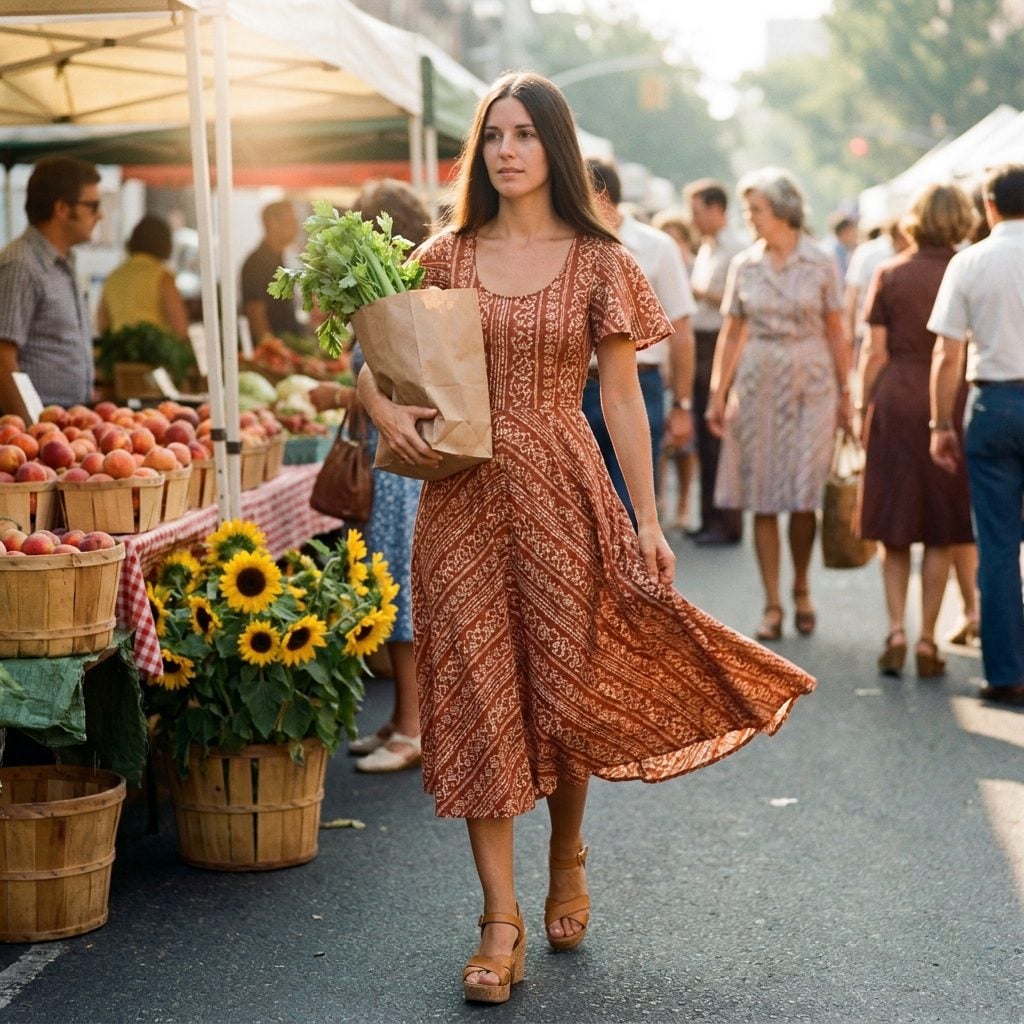
There was a specific velocity to this dress. You didn’t walk in it so much as it moved around you, fabric catching air a half-second behind every step. Mid-calf, long enough to feel grown-up, short enough that stairs didn’t become a hazard.
Lightweight rayon or crepe, usually. Something with weight enough to swing but too light to cling. Solids worked fine, but the committed ones had abstract prints in burnt orange, mustard, and olive, colors that looked like the upholstery inside a van. A good midi could take you from a farmers market to a dinner and nobody questioned it, which was rare for anything in your closet that decade.
Mini Sundresses Still Hanging On From the ’60s Like a Guest Who Won’t Leave the Party
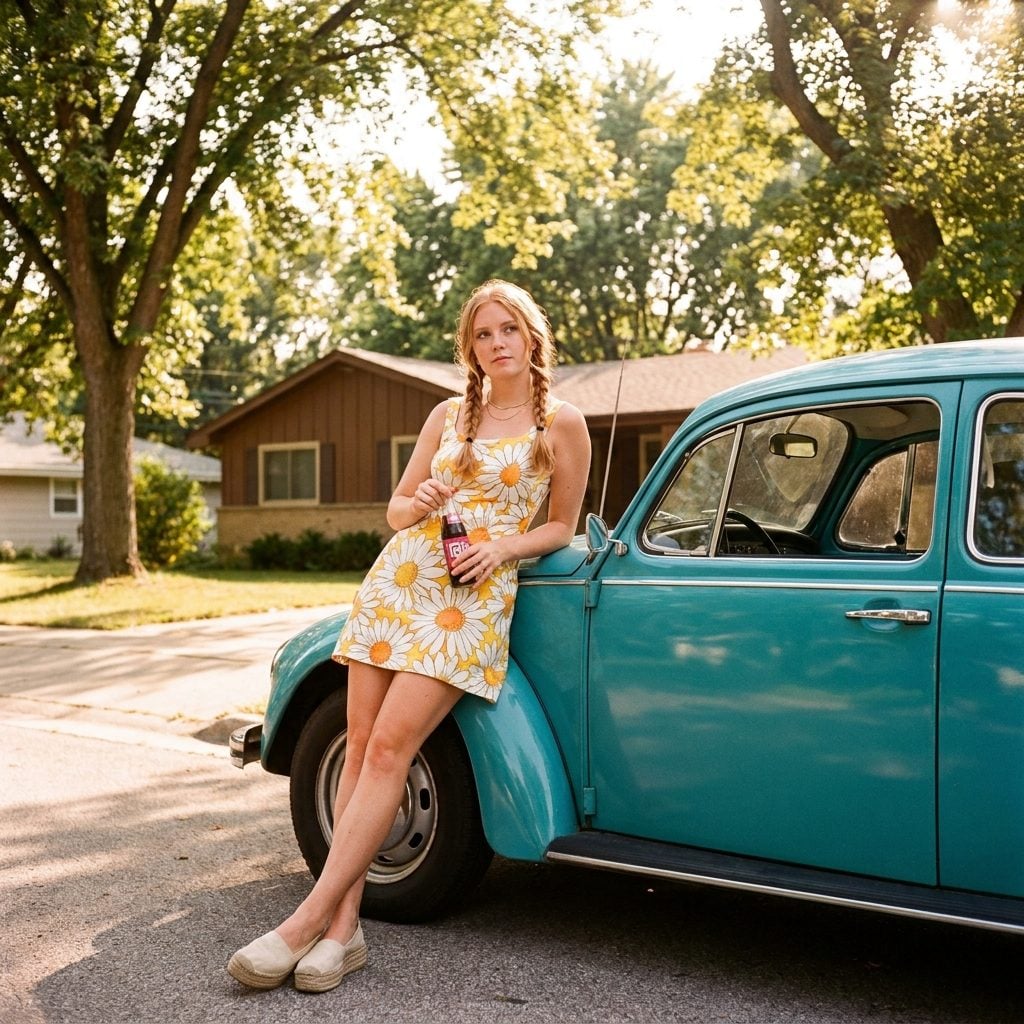
By 1973, the fashion magazines had moved on. Midi was in. Maxi was in. Hemlines were supposed to be heading south. But the mini sundress didn’t get the memo, and honestly, neither did most of us.
Still there in every department store, still hanging on the sale rack at Woolworth’s. Simple A-line, cotton, usually in a loud floral or a candy stripe. You paired it with platform sandals that added three inches, defeating whatever modesty those extra inches of fabric might have provided. The silhouette was pure 1967 but the prints had shifted: bigger, bolder, more saturated. Nobody was calling it retro yet because it hadn’t been gone long enough to miss.
Empire Waistlines That Turned Every Summer Dress Into a Maternity Guessing Game
Pregnant or just wearing an empire waist? The question haunted every family gathering for most of the decade. Your aunt would squint at your midsection. Your neighbor would ask if you were “expecting something fun this summer.” And you were just wearing a sundress from Sears.
The seam hit right below the bust and the fabric fell straight, no shaping, no darts, nothing between you and total formlessness. Comfortable in a way that felt almost subversive, honestly. No girdle, no waist cinching, just fabric and gravity and the persistent social anxiety of strangers making assumptions about your body. Which, come to think of it, hasn’t really changed.
The DVF Wrap Dress You Wore to Everything Because It Was the Only Dress That Actually Worked
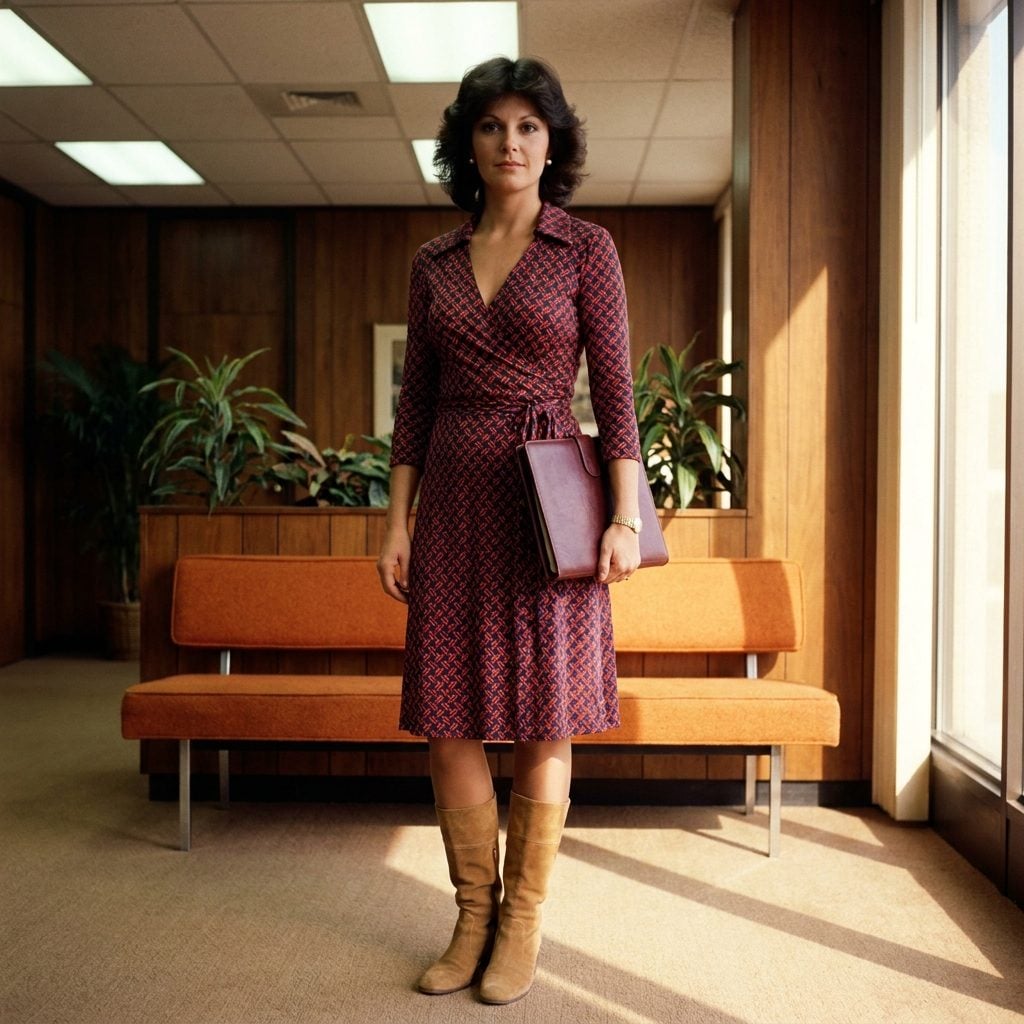
Wrap dresses were selling at staggering volume by the mid-’70s. And every woman who bought one wore it like she’d personally invented the concept of getting dressed.
You pulled it on, wrapped it across your body, tied it at the waist, and suddenly the neckline, waistline, and hemline all cooperated. Other dresses required negotiation. The wrap just worked, no hidden zippers, no wriggling, no compromise.
The prints ran bold. Geometric chains, abstract florals, swirling paisleys in jewel tones. You wore it to the office Monday and a dinner party Saturday and nobody blinked because the wrap dress was genuinely the most versatile garment any of us owned. DVF understood something about women’s bodies that most designers were still pretending was complicated. That understanding sold millions.
Peasant Dresses So Billowy You Could Smuggle a Whole Picnic Under There
Enough fabric in one peasant dress to upholster a loveseat. Gathered yoke, puffy sleeves, a skirt that started at approximately your collarbones and ended at your ankles with no waistline anywhere in the journey. You were basically wearing a very pretty tent.
White cotton with embroidery was the classic, usually imported from India or Mexico, or “imported” from a rack at a head shop that smelled like patchouli and candle wax. The embroidery was always colorful, always slightly uneven, and that unevenness mattered. Machine-perfect stitching would have ruined it. You wanted it to look handmade by someone’s grandmother, even if it came off a factory line in a shipping container. The imperfection was the credential.
Halter Necklines and the Permanent Tan Line They Burned Into Your Shoulders
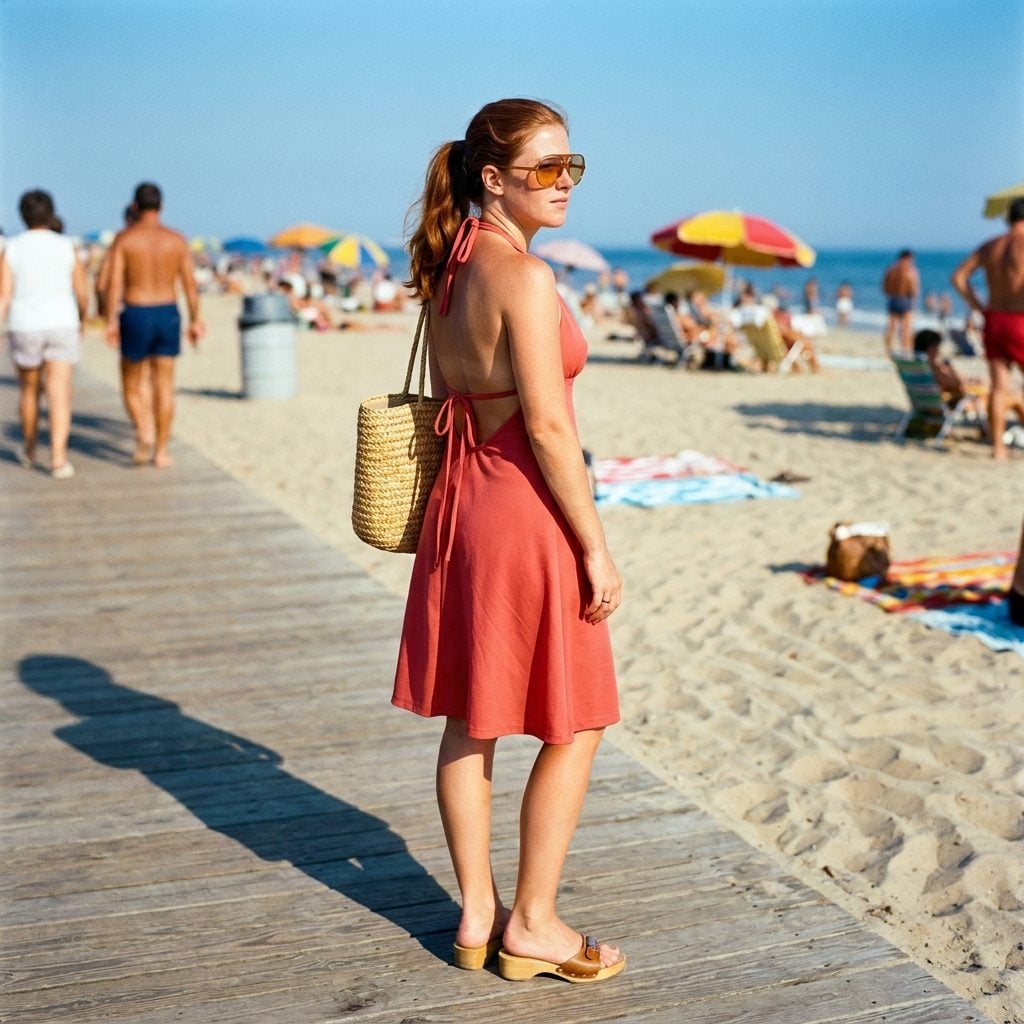
You can still see the lines if you look closely, two diagonal stripes across the back of your shoulders where the halter ties blocked the sun, etched there by every July from about 1972 forward. No amount of baby oil (and Lord, there was a lot of baby oil) could even the damage out.
Open back, bare shoulders, that deep V in front. The halter was the most daring silhouette the decade offered. You wore a halter sundress and felt dangerous, even if you were just picking up your brother from baseball practice. But the construction was suspect, that single tie behind the neck bore all the responsibility. A loose knot and you were in genuine trouble at the block party.
Spaghetti Strap Sundresses and the Fiction That a Bra Was Optional
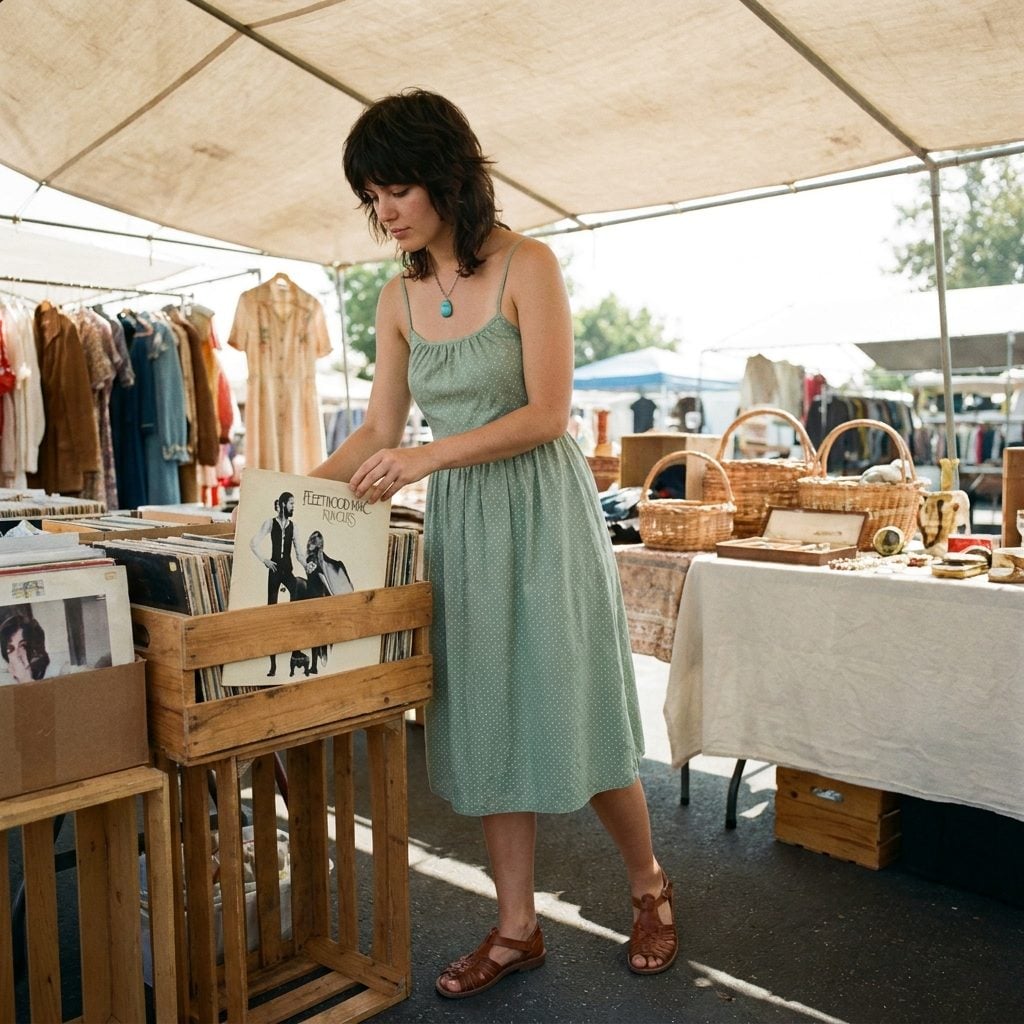
Two strings of fabric the width of angel hair pasta, and those were your straps. The whole structural support system. Gravity and optimism.
Spaghetti strap sundresses were everywhere by mid-decade, cheap enough to buy several because they wrinkled on contact and you needed a rotation. The real dilemma was underwear. A regular bra turned the whole thing into a strap catastrophe visible from every angle, so you went without, or you safety-pinned a strapless bra that migrated south within the hour, or you just gave up and let whatever happened happen. That was the decade in miniature, really. A collective decision to stop worrying about things that would later seem important.
Off-the-Shoulder Necklines That Spent All Day Slowly Migrating Back Up
The promise: a casually sexy neckline that draped across your shoulders. The reality: an elastic channel that spent every waking moment inching back toward your armpits.
Tug it down. It creeps back up. Tug again. By the end of any social event you’d touched your own shoulders more times than was socially comfortable, and everyone around you had watched it happen. The off-the-shoulder dress demanded constant maintenance that nobody warned you about. Beautiful? Sure. But you were never relaxed in one. Not once. It was like owning a car that stalled at every red light, gorgeous paint job, fundamentally annoying to operate.
Shirtdresses with Every Single Button Undone Past the Point of Reason
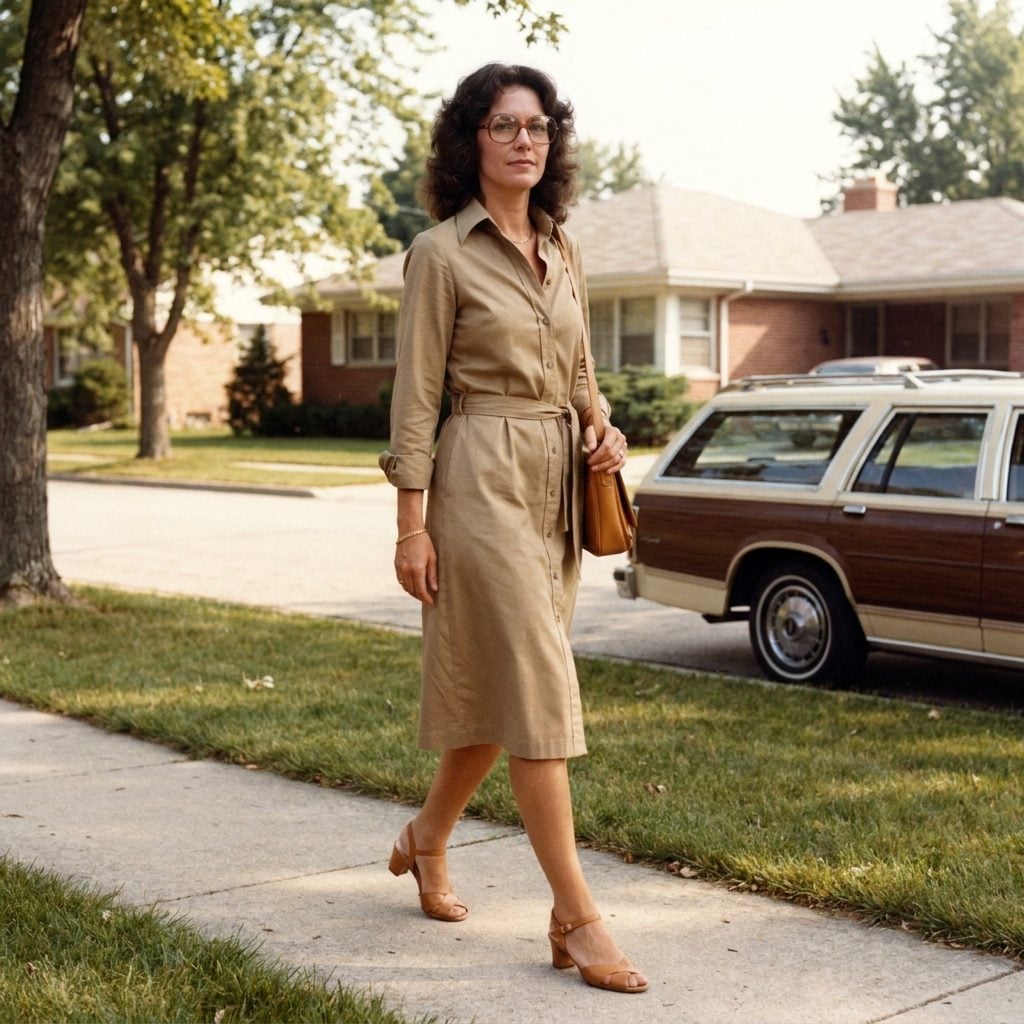
A dress that looked like it had a job. Collar, cuffs, button placket running throat to knee, a belt that meant business. Most structured garment in the summer rotation. You wore this one when people were supposed to take you seriously.
Then you undid three buttons from the top and two from the bottom and suddenly the serious dress was doing something else entirely.
On a hanger, the shirtdress read conservative. On a body, strategic unbuttoning, belt cinched tight, it was anything but. Lauren Hutton wore them. Faye Dunaway wore them. Your mom wore one to parent-teacher conferences and your dad never complained about going. That duality was the entire trick, and it never stopped working.
Gunne Sax Prairie Dresses That Made You Look Like a Pioneer Woman at a Disco
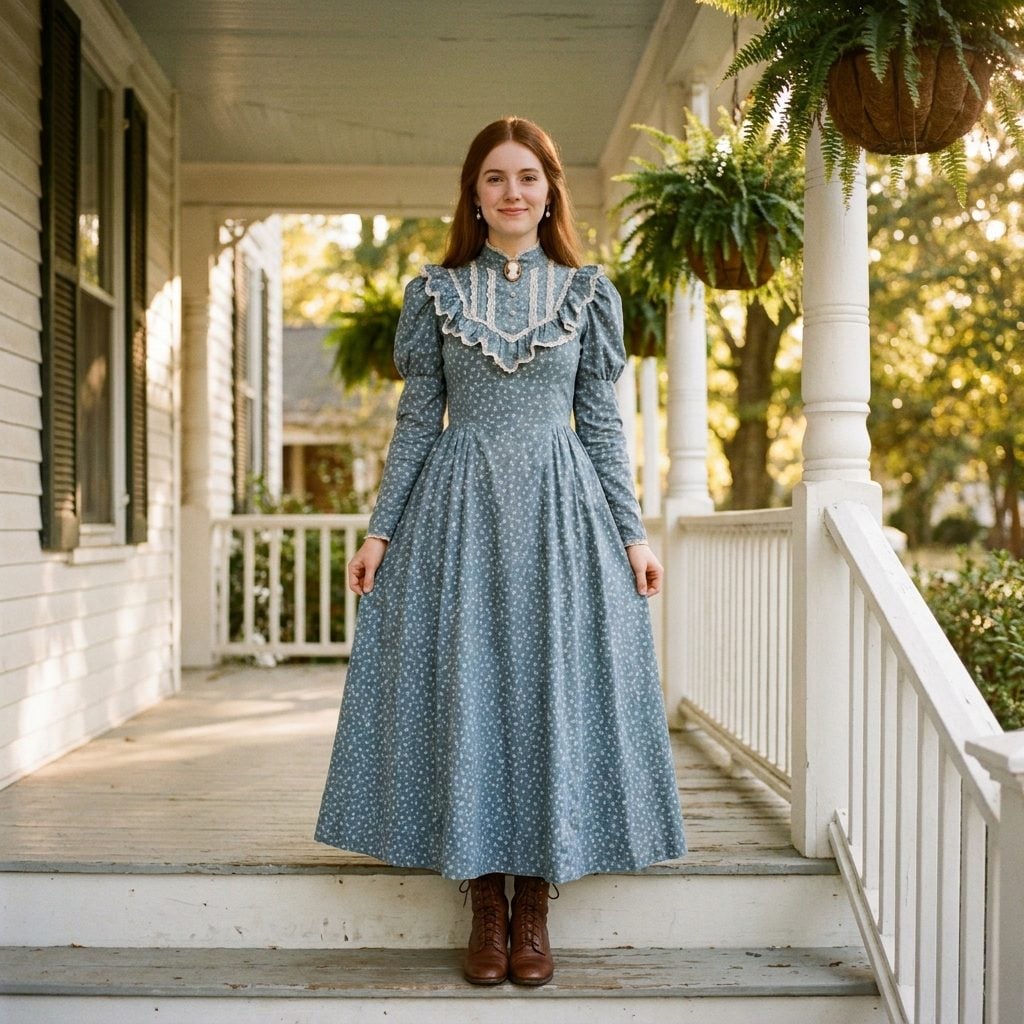
Jessica McClintock’s Gunne Sax line turned an entire generation into Little House cosplayers and we thought it was the most beautiful thing we’d ever seen.
Calico prints. Lace yokes. Ruffled hems dragging across gymnasium floors at school dances. High necklines with cameo brooches pinned right at the throat. You looked like you should be churning butter, but you felt like a painting, and that dissonance was everything. The construction surprised people, too. Heavy cotton, real lace trim (or at least convincing lace), and enough skirt fabric to require serious ironing, which your mother was not thrilled about.
Prom dresses. Sunday dresses. “I want to look like I live in a meadow” dresses. They worked despite every logical objection, and I suspect that’s precisely why people loved them so fiercely.
Handkerchief Hemlines That Made Every Dress Look Like It Was Unraveling on Purpose
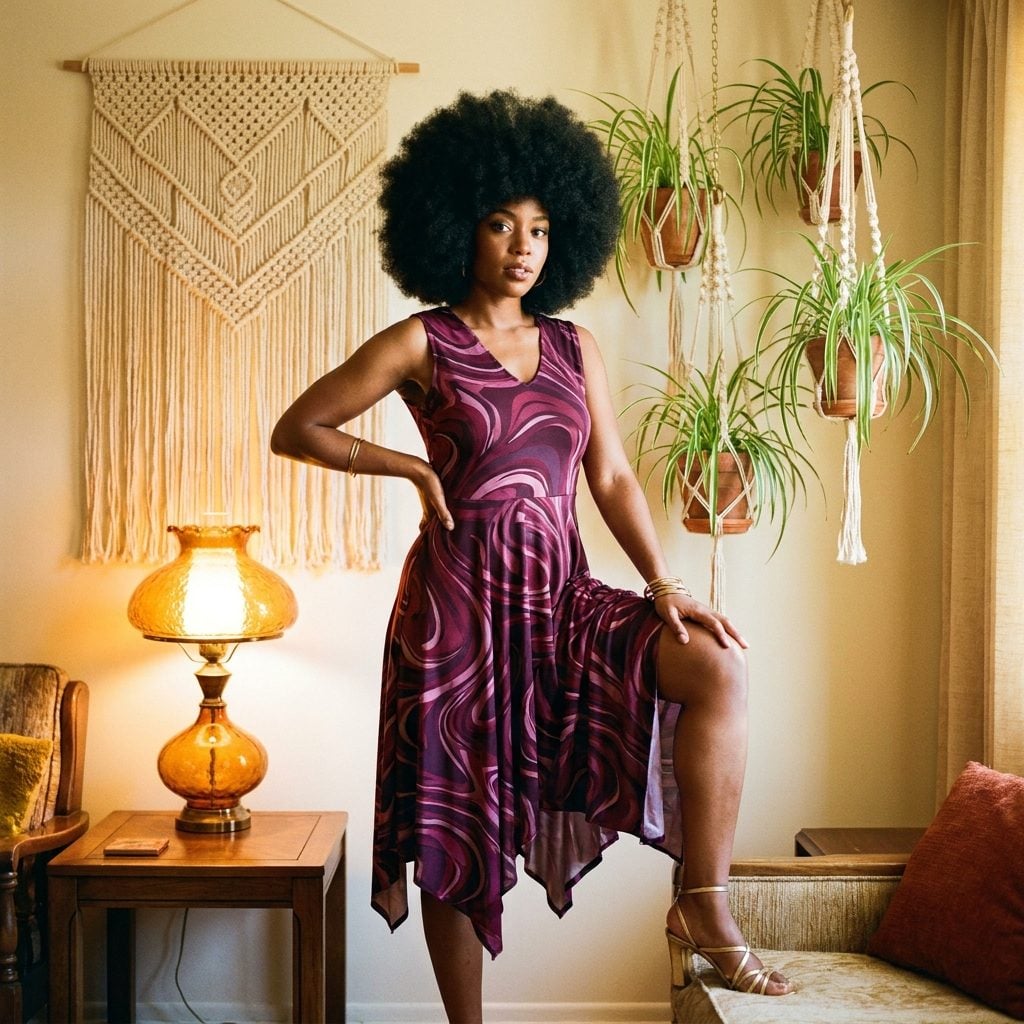
Was it finished? Was the hem done? Did the tailor have a stroke? Reasonable questions, all of them, but nobody asked because the handkerchief hem was accepted as intentional. Pointed fabric panels hanging at different lengths, a hemline that looked like a geometry teacher’s anxiety dream.
But the effect was genuinely dramatic. Walking made the points swing and flutter at different tempos, catching air and light in ways a straight hem simply couldn’t match. Most movement you could get from a dress without actual wind. Usually done in drapey jersey or chiffon, deep jewel tones, plum, wine, forest green, so the angular shapes felt moody rather than chaotic. I still think about how these moved. Plenty of ’70s trends deserve to stay buried. This one? I’m honestly not sure.
Tiered Broomstick Skirts With Those Crinkled Pleats That Never, Ever Came Out
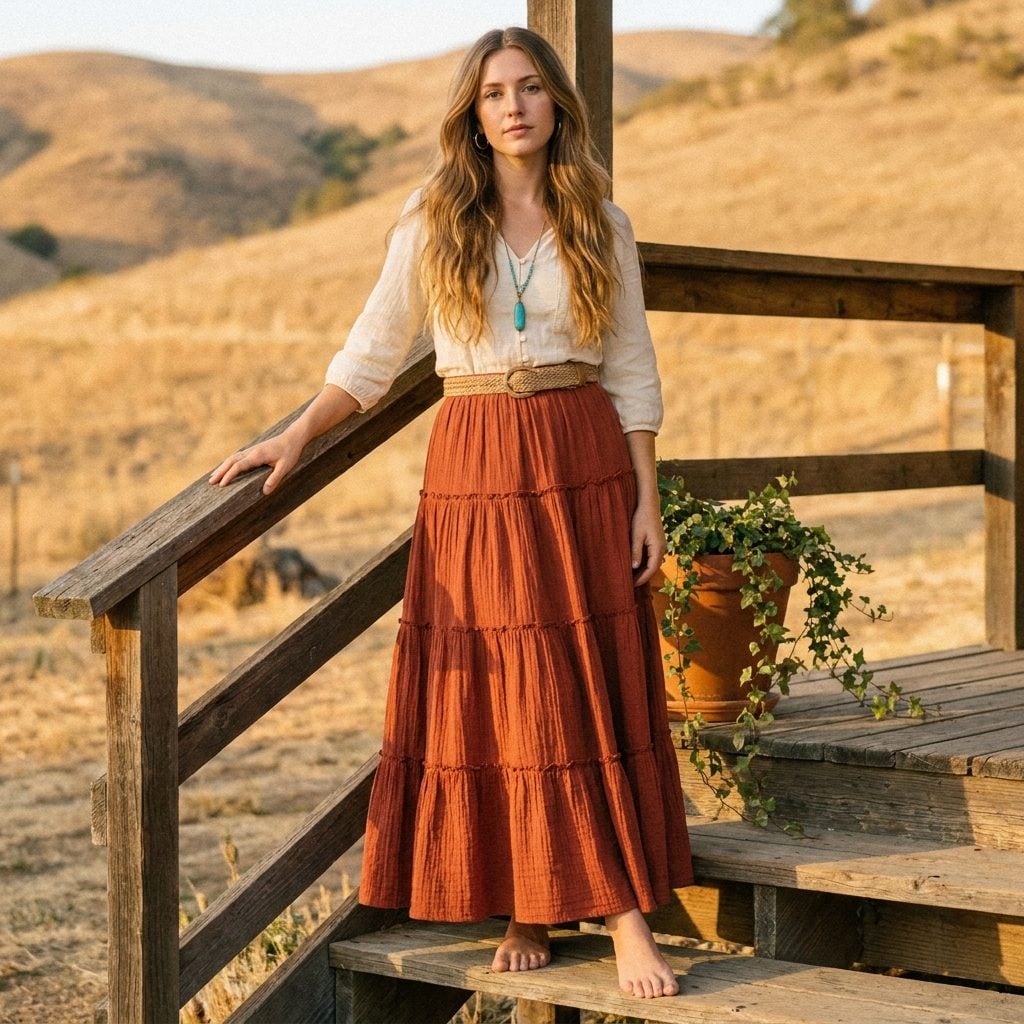
You could wad one of these into a ball the size of a grapefruit, shove it in your bag, pull it out three hours later, and it looked exactly the same. That was the entire sales pitch, and we bought it completely. The crinkle was permanent, truly permanent, as in, your iron meant nothing here.
Every tier swished independently, which made walking through a parking lot feel like a production number. They came in rust, burgundy, forest green, and a dusty mauve that every single import shop in America seemed to carry. You wore them with a tucked-in peasant blouse or a too-tight ribbed tank, feeling like someone who’d just returned from Marrakech even if you’d never left Ohio.
Bell Sleeves So Wide You Dipped Them in Your Soup and Didn’t Even Flinch
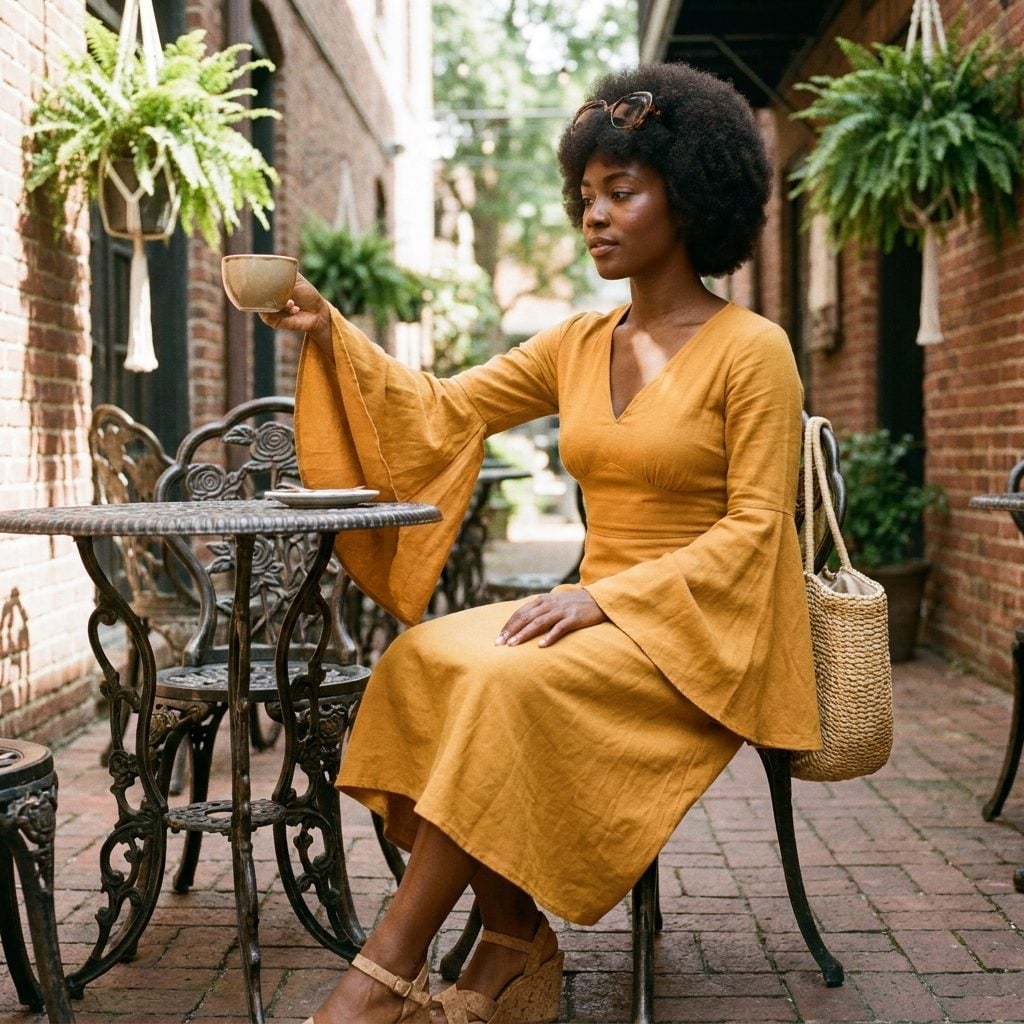
Eating was a hazard. Candles were a genuine threat. And reaching for anything on a high shelf meant the sleeve fell back to your elbow and revealed you hadn’t shaved in a week, which, also very 1970s.
But God, they were beautiful. A bishop sleeve with a fitted cuff had some restraint; bell sleeves had absolutely none. The fabric just kept going, wider and wider, like the sleeve had ambitions the rest of the dress couldn’t match. You’d find them in gauzy cotton, printed chiffon, that slippery polyester that caught on everything. Stevie Nicks made them look supernatural. The rest of us looked like we were attempting liftoff in the grocery store checkout line. We were fine with that.
Smocked Elastic Shirring That Was Somehow Both the Structure and the Decoration
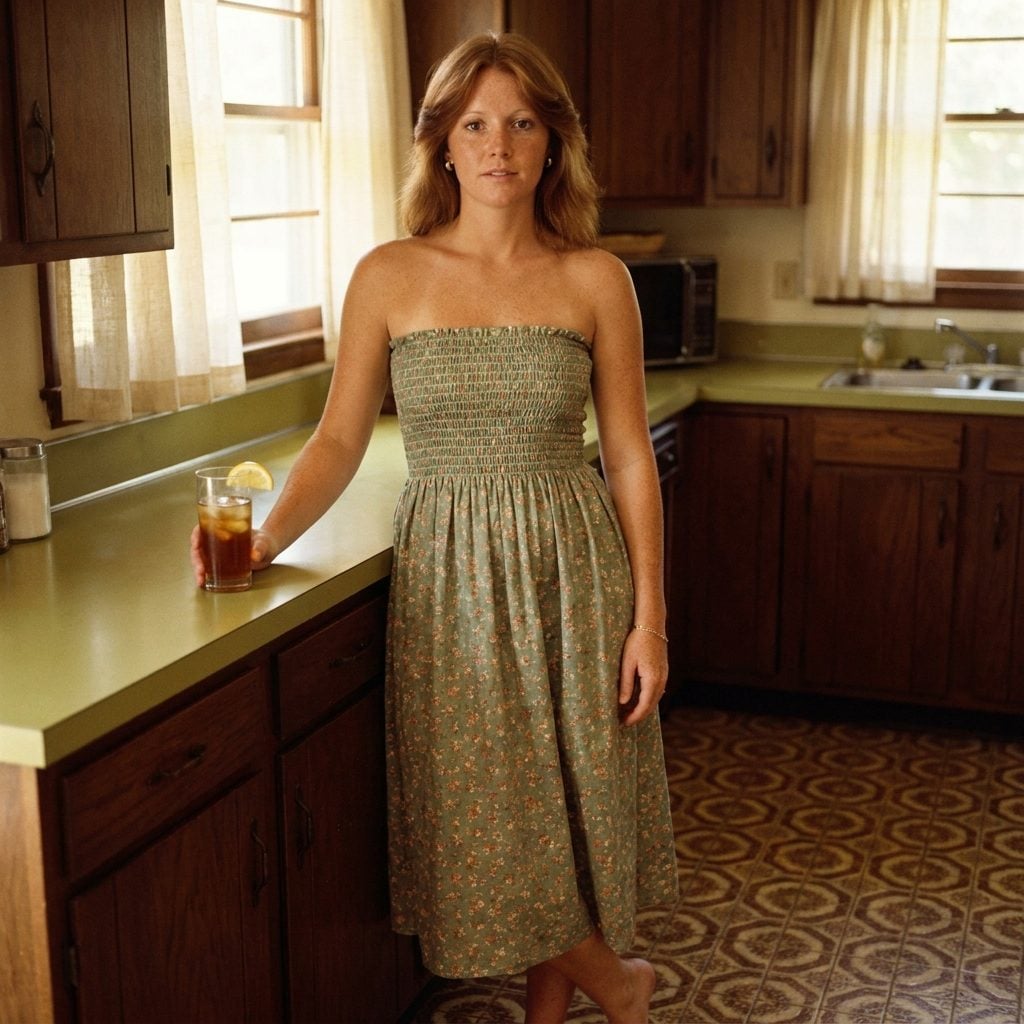
No zipper. No buttons. No hooks. Just rows and rows of tiny elastic channels gathered so tight they formed their own structural system, a feat of garment construction that we treated like a basic.
You pulled the smocked bodice sundress on over your head, tugged it into place, and the shirring just… held. It held all day at the county fair, through a canoe ride, while you danced at your cousin’s backyard wedding reception. The fabric bunched and stretched and bunched again. You spent the whole summer with a faintly waffle-textured tan line across your chest that didn’t fully fade until October.
The Lace-Up Corset Bodice That Made Every Sundress Feel Like a Renaissance Faire
Renaissance Faire meets Tuesday afternoon. Nobody questioned it.
The lacing was almost never functional, you couldn’t actually tighten or loosen the bodice with it. The cord just sat there threaded through grommets or eyelets, decorative as a bow on a present. Sometimes leather, sometimes a flat woven braid, sometimes a ribbon that frayed by July. But it gave every cotton sundress a vaguely medieval quality that we apparently craved, because these turned up everywhere from Sears to the boutiques on Melrose.
Real commitment? When the lacing went all the way up to the collarbone. You paired it with platform sandals and turquoise jewelry and felt like you should be riding a horse through a meadow instead of driving a Pinto to the bank.
Crochet Trim on Every Possible Edge, Like the Dress Couldn’t Decide When to Stop
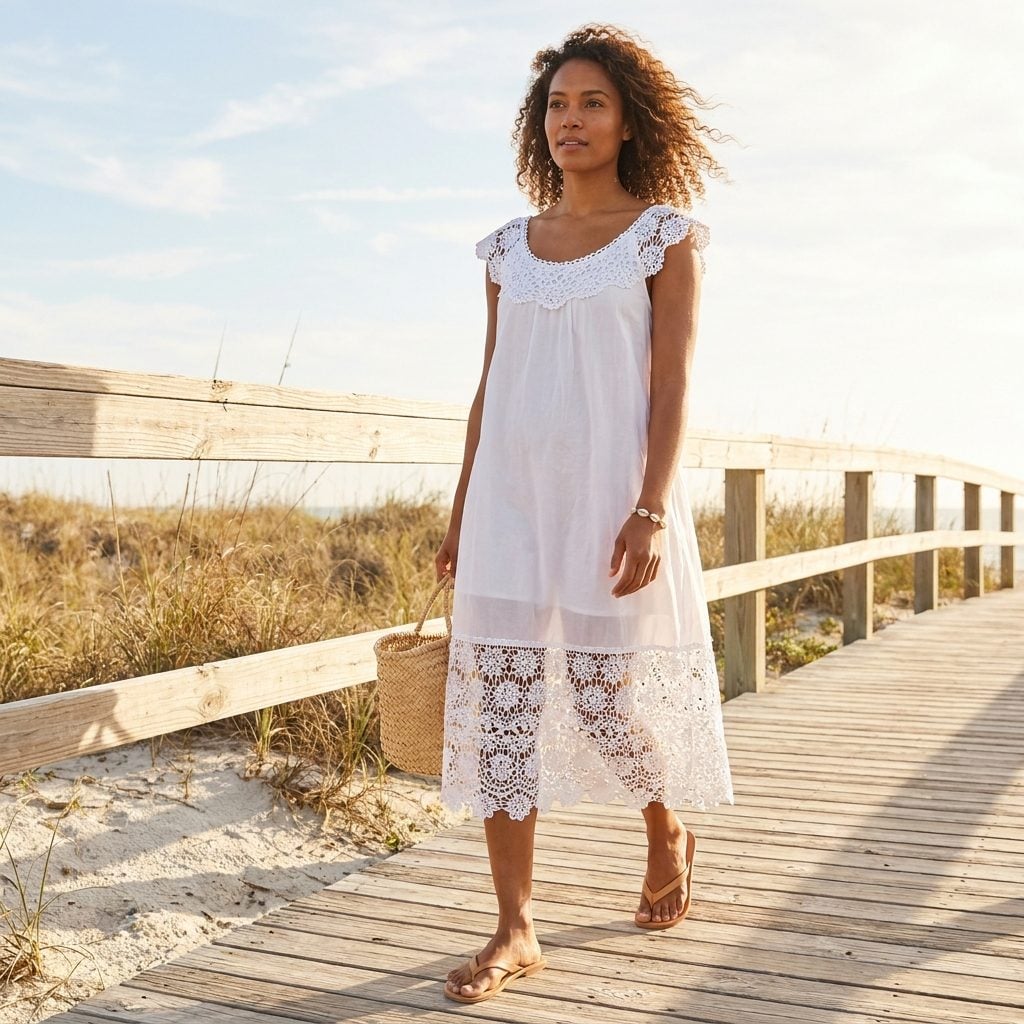
If there was an edge, there was crochet on it. Neckline, hemline, sleeve opening, waistband, some dresses had crochet trim on edges you didn’t even know qualified as edges. The pocket opening. The slit. The bottom of a ruffle that was itself already decorative. Trim on trim. Glorious.
The crochet was either a cottony ecru that yellowed in the wash or a brittle white that snagged on your rings. It got caught in zippers, caught on wicker furniture, and if you machine-washed it even once on the wrong cycle, the trim puckered and the dress was finished. But standing in front of a full-length mirror with all that lacy edging catching the light? You looked like a Victorian ghost on summer vacation. That was absolutely what we were going for.
The All-White Eyelet Cotton Dress You Wore Until It Went Gray
White eyelet was the unofficial uniform of every church picnic, graduation party, and Saturday brunch through most of the seventies. Those little punched-out holes formed flowers or geometric patterns, and the whole thing read as innocent and summery without requiring a single creative thought on your part.
Fresh out of the package, an white eyelet cotton dress was crisp and perfect. By August it had gone slightly dingy, a shade of off-white that no amount of bleach could fully rescue. You’d hold it up to a new white towel and confront the truth. But you wore it anyway, because what were you going to do, skip eyelet in summer? Impossible.
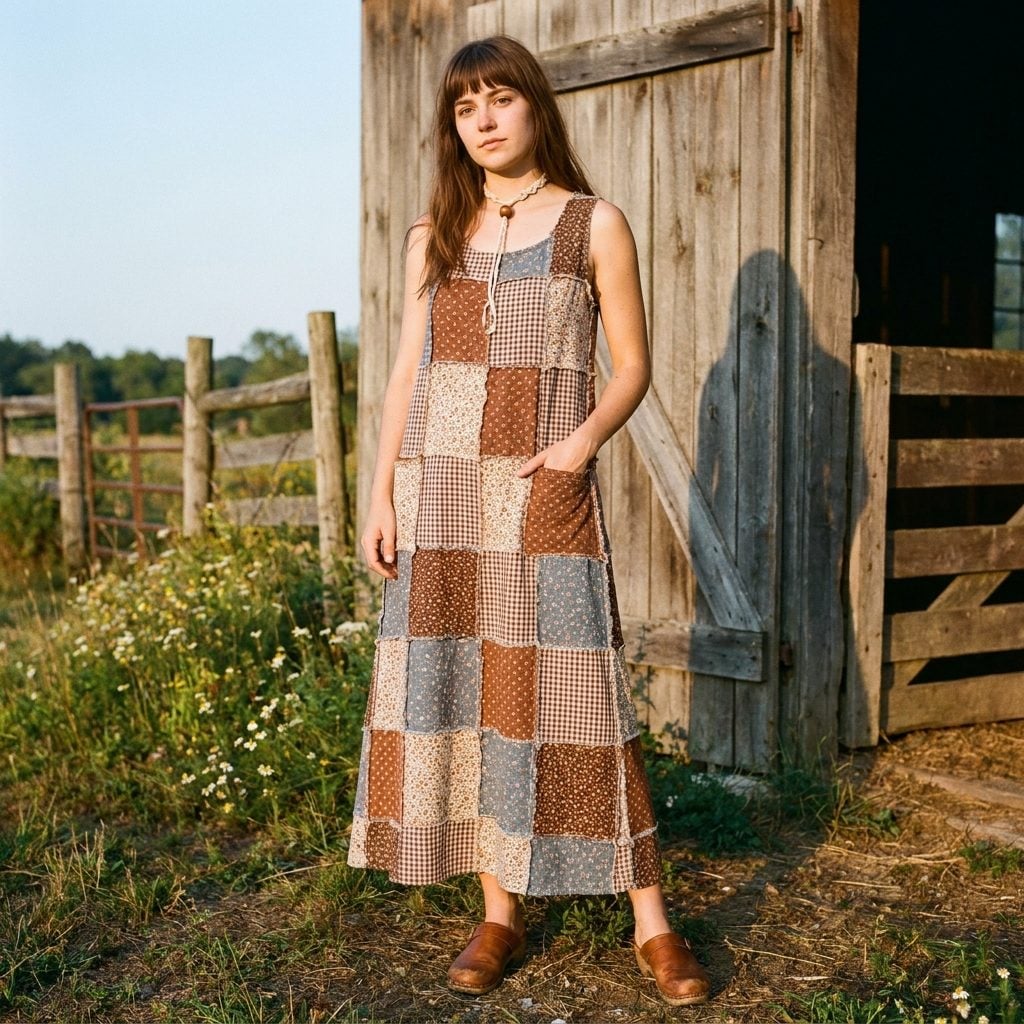
Patchwork Dresses Stitched Together Like Your Grandmother’s Quilt Got Ideas
❤️ Would you like to save this?
Somebody, at some point, looked at a quilt and thought: what if you could walk around in that? A million pattern companies agreed. Suddenly every fabric store stocked a patchwork dress pattern, and every woman with a Singer and a bag of calico scraps was making one.
The store-bought versions used coordinated fabrics that merely suggested randomness, polite chaos, curated disorder. The homemade ones were genuinely unhinged: a square of your old curtains next to a piece of your sister’s outgrown blouse next to a swatch from a remnant bin. Every patch carried a backstory. You wore your whole personal history to the farmer’s market.
Cheesecloth Fabric So Thin You Could Read a Newspaper Through It
You held it up in the store and you could see your hand through it. You bought it anyway.
Cheesecloth cotton had the structural integrity of a suggestion. It wrinkled if you looked at it, shrank if you breathed on it, and in direct sunlight became transparent in a way that was either intentional or deeply unfortunate depending on who you asked. But the feel of it, in July heat, wearing a cheesecloth dress was the closest thing to wearing nothing while still technically being dressed. The fabric barely registered against your skin. It moved with every breath of wind. Most impractical fabric of the decade, most comfortable fabric of the decade. I definitely wore a slip under mine only about half the time.
Polyester Double-Knit Dresses That Could Survive a Nuclear Event but Not a Cool Breeze
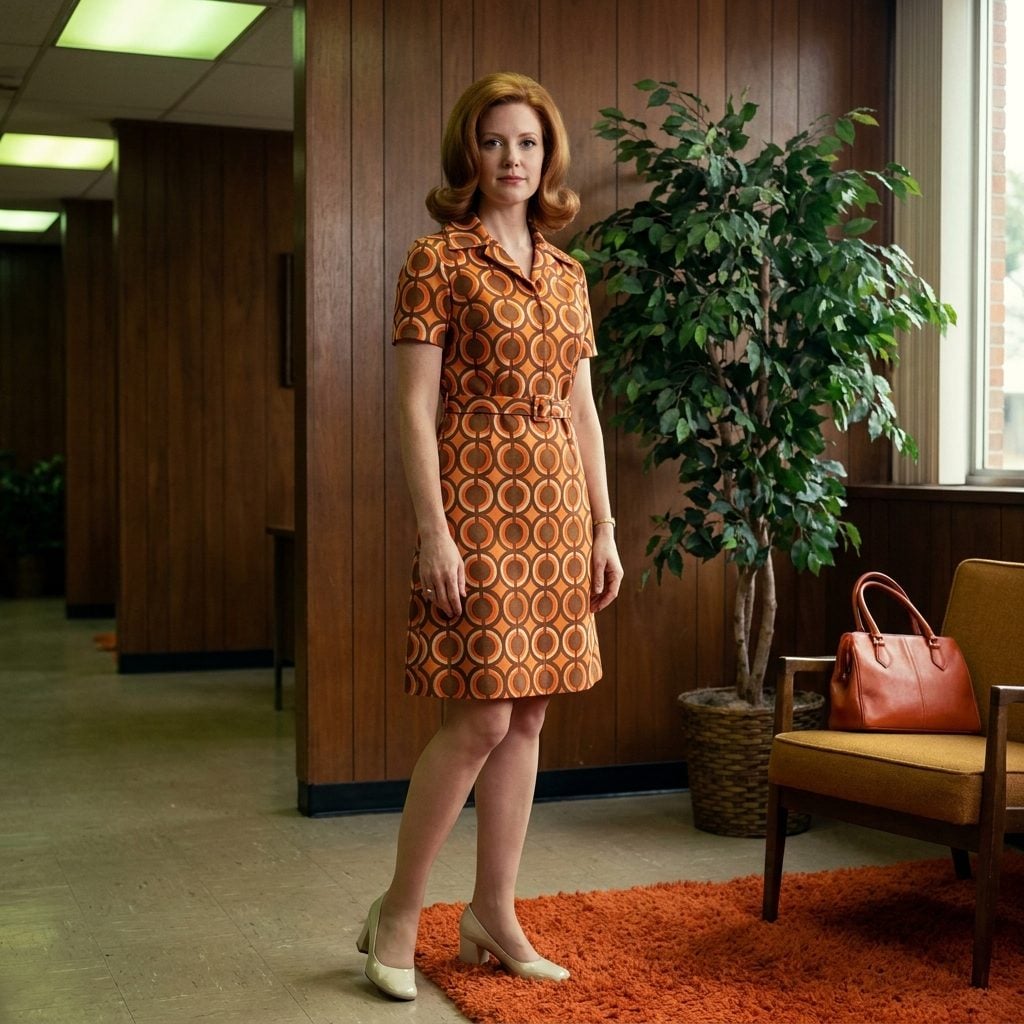
These dresses could not be destroyed. Wash them, dry them, fold them, sit on them, shove them in a suitcase for a week, they came out looking freshly pressed. They held their shape through car rides, office days, and Thanksgiving dinner. Polyester double-knit was immortal.
Also: a sauna. The fabric breathed about as well as a plastic bag, and in summer that meant visible sweat marks by noon and a clammy feeling no amount of talcum powder could fix. But the convenience was addictive, you never ironed, never worried about creases. Those dresses would outlive you, and some of them probably have. I’m fairly certain a few are still hanging in closets right now, unchanged, biding their time.
Qiana Nylon: The “Silk” That Wasn’t Silk and Clung to Everything Including Your Dignity
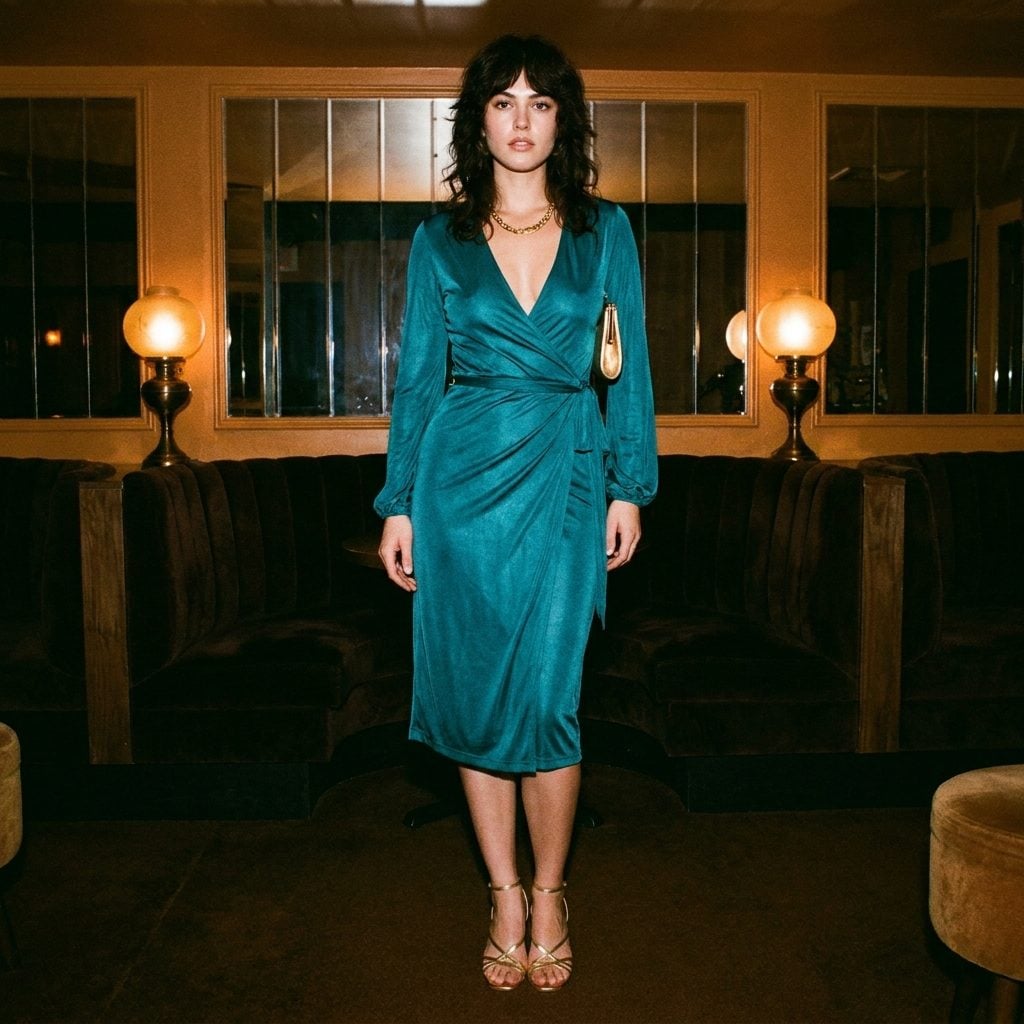
DuPont introduced Qiana nylon in 1968 and marketed it as a synthetic silk. It had the drape and the sheen, cost a fraction of the price, and in warm weather stuck to your body like a second skin composed entirely of static electricity and poor decisions.
Qiana wrap dresses were the going-out uniform for a solid chunk of the mid-to-late seventies. The fabric felt slippery and cool in air conditioning, then turned clingy and unforgiving the second you walked outside. It telegraphed every line underneath, which is how half-slips became non-negotiable. You literally could not wear this fabric without strategic layering beneath it.
And yet. Under the right lighting, in the right restaurant, a silky wrap dress in Qiana looked expensive, glamorous, and entirely intentional. It photographed like a fortune and wore like a garbage bag. We kept coming back anyway.
Rust, Mustard, Olive, and Burnt Orange: The Four Horsemen of the 1970s Color Palette
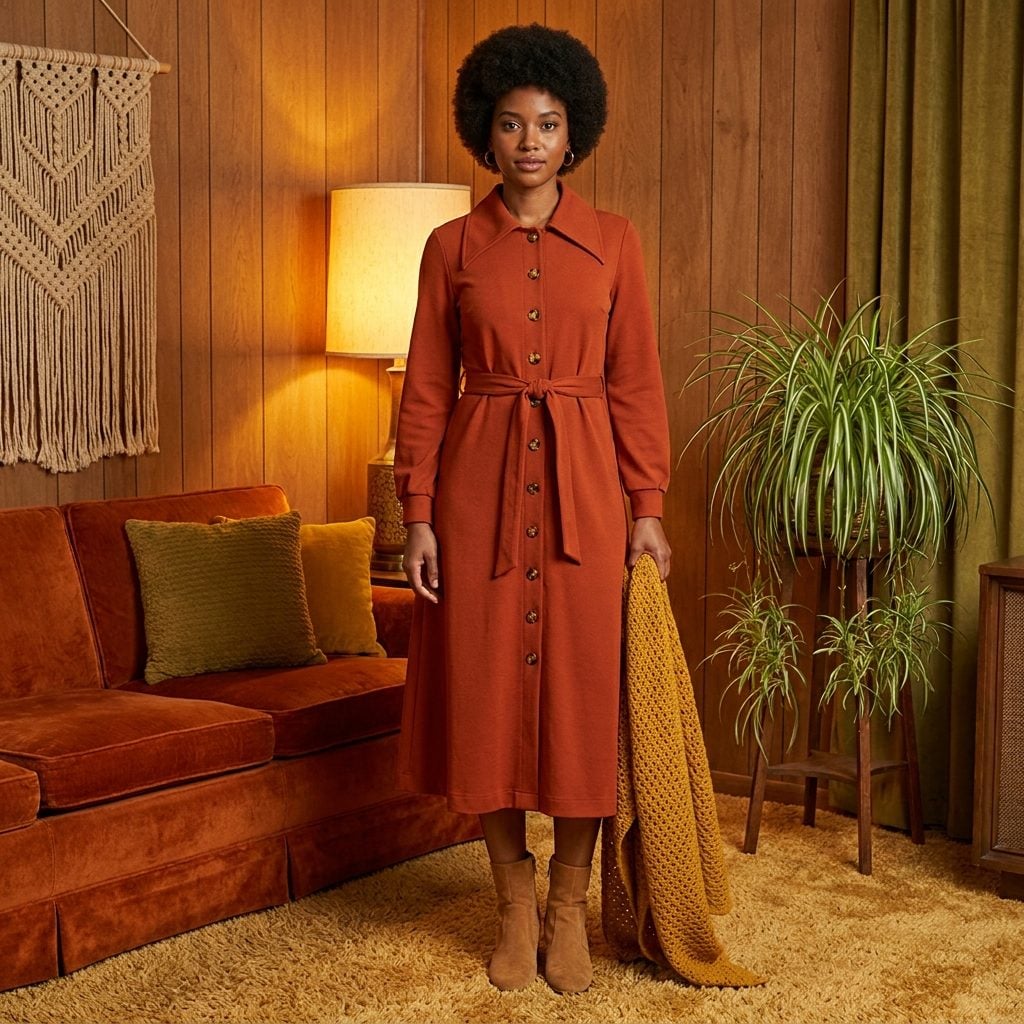
Go ahead and name a color from the 1970s. I’ll wait.
It was rust, wasn’t it? Or mustard. Possibly olive. Maybe burnt orange if you were feeling daring. These four colors owned the decade so completely that finding a dress in cobalt blue felt like an act of rebellion. Department store racks in July looked like someone had spilled an entire autumn forest into the women’s section, rust orange midi dresses, mustard yellow halter tops, olive green wrap skirts. Your closet, your couch, your kitchen, and your car interior all matched, because the entire visible world had apparently agreed on the same four Crayola shades.
What’s funny is those colors looked genuinely good on almost every skin tone. Warm, flattering, forgiving, and when you put them all together, you looked like you belonged on a Joni Mitchell album cover, which was the highest compliment available at the time.
Sun-Faded Pastels That Looked Better After Three Washes Than They Did New
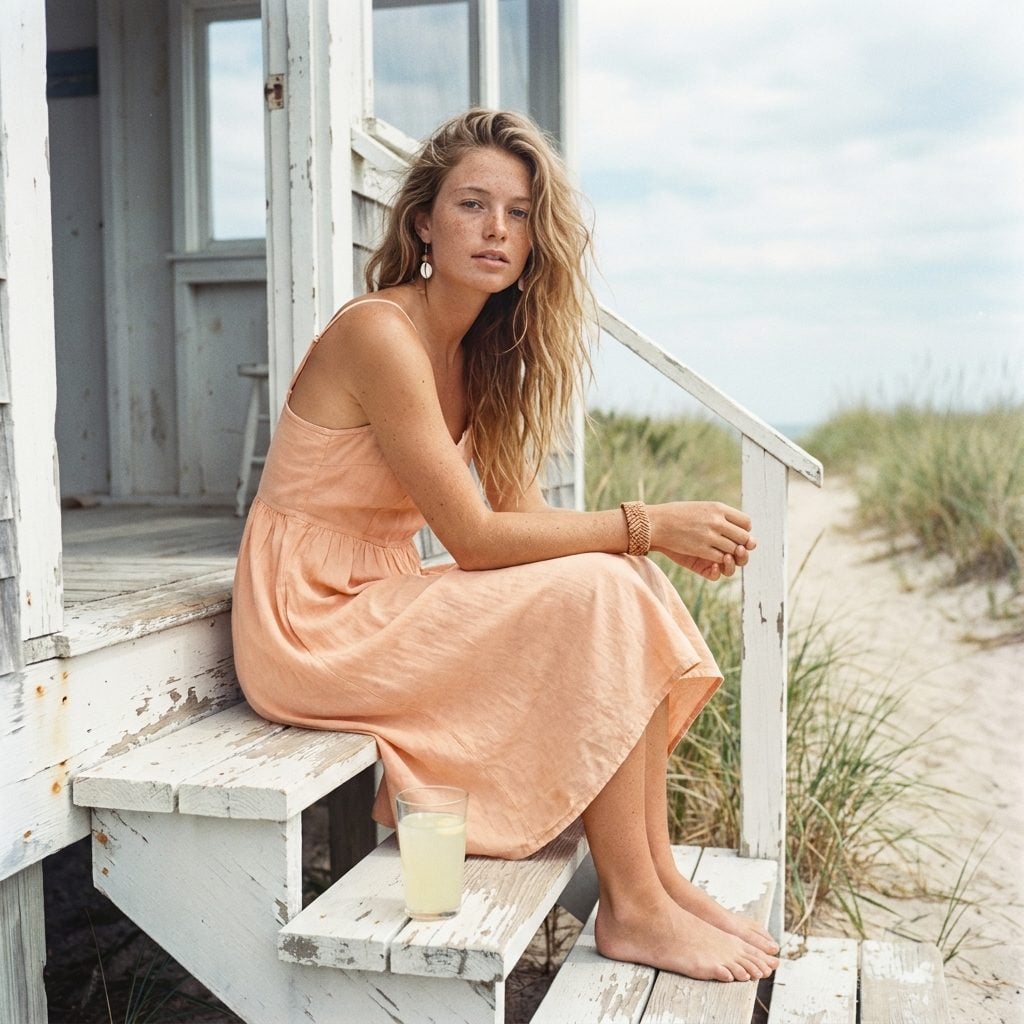
Peach. Dusty pink. Pale yellow. Lavender if you were adventurous. These pastels didn’t look like candy, they looked like candy that had been left on a windowsill for a summer.
The fading was half the point. A peach cotton sundress fresh off the rack looked fine, a little too bright, a little too eager. After a few washes and a few afternoons drying on the clothesline, though, the color softened into something that looked like it had always been yours. The fabric got softer too, thinner, more lived-in. By late August the dress was practically transparent at the shoulders where the sun hit hardest. That was when it looked its absolute best.
I think about this sometimes when I see brand-new clothes intentionally pre-faded and pre-softened, sold at triple the price. We did that for free. It was called doing laundry and going outside.
Bold Oversized Floral Prints in Colors That Had No Business Being Together
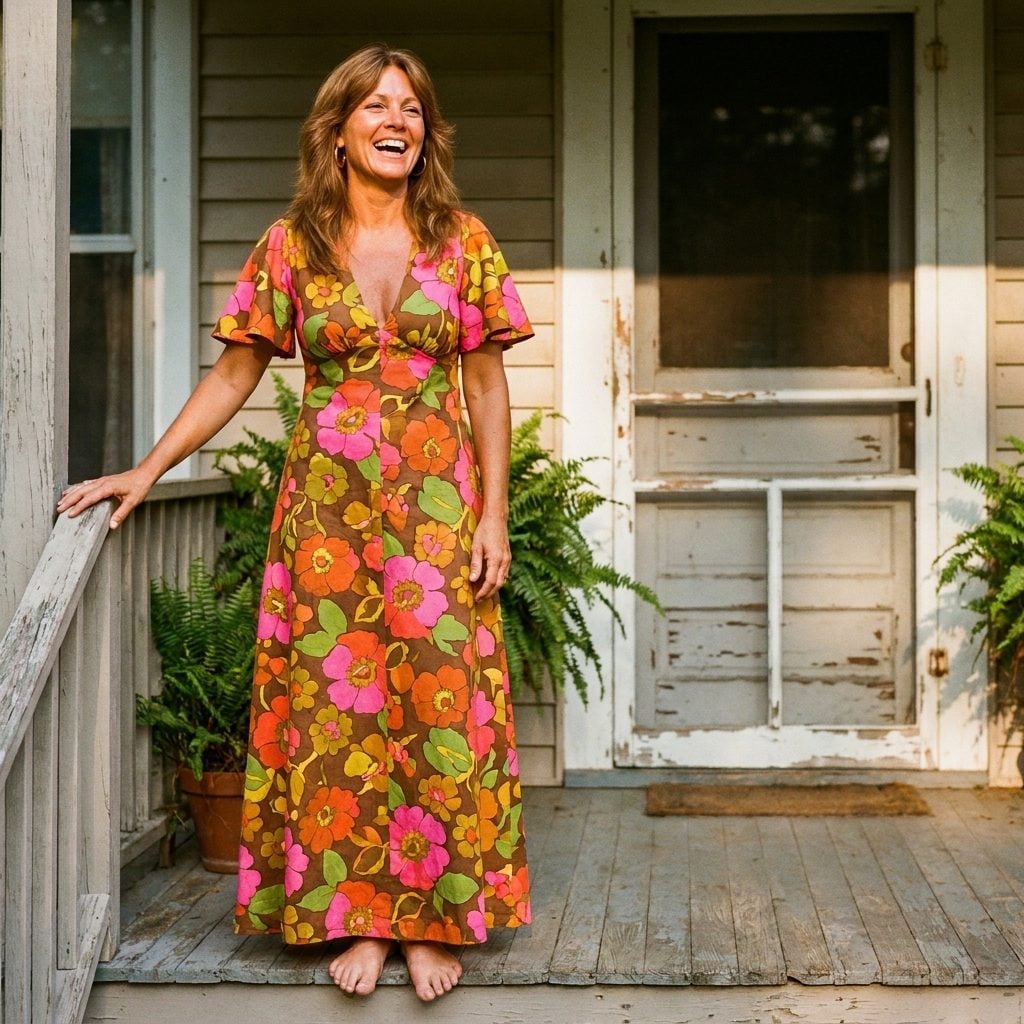
Magenta daisies the size of your hand, printed right next to burnt orange poppies, on an avocado green background. Nobody blinked. We wore these combinations to the grocery store, to barbecues, to church if the hemline cooperated. The flowers weren’t delicate or tasteful, they were aggressive, almost confrontational, like the fabric was yelling at you from across the parking lot.
The prints came from everywhere: JCPenney catalogs, Sears, little boutiques that smelled like patchouli and candle wax. And here’s what people forget, they worked. Not because the colors made sense together, but because we wore them like we meant it. Confidence was the only accessory those dresses needed. No earrings, no belt, just sheer nerve and a good hemline.
Paisley and Bandana Prints on an Entire Dress (Because Why Stop at a Scarf?)
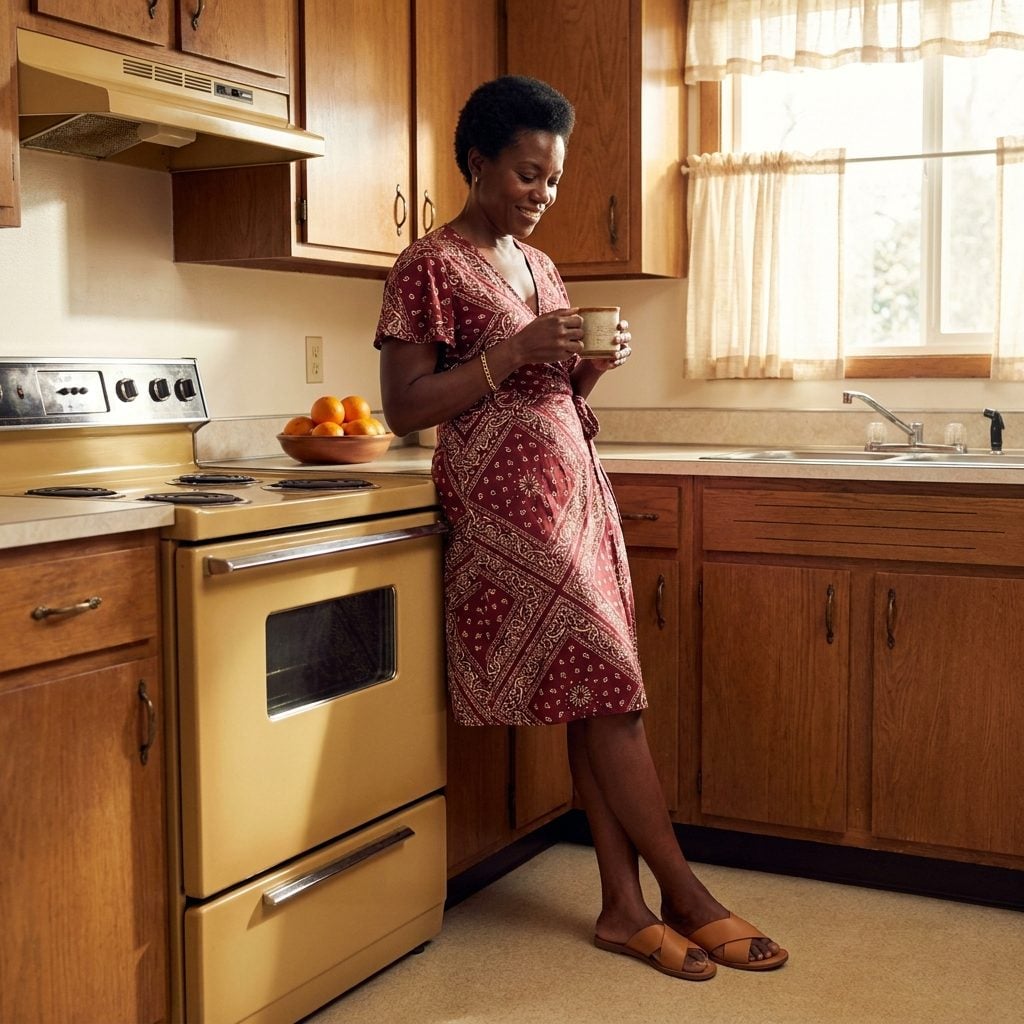
The bandana was already doing fine as a hair accessory, a pocket square, a thing you tied around your dog’s neck. But someone in 1973 decided: what if the whole dress? And honestly, we just went with it.
Red paisley was the classic, hanging at every department store between the gingham and the terry cloth cover-ups. The print was so dense and busy that wrinkles barely showed, which made it the perfect travel dress, the perfect “throw it in the backseat” dress. Boots made it country. Sandals made it bohemian. Paisley wrap dresses had this peculiar talent for looking intentional no matter how little effort you’d actually invested, which was probably the real reason we loved them.
Psychedelic Swirls and Op-Art Geometrics We Stared at Until We Got Dizzy
If you stared at your own midsection long enough, the pattern started to move. That was considered a feature.
These prints borrowed heavily from album covers and concert posters, concentric circles in purple and teal, chevron waves in orange and white, geometric diamonds that seemed to vibrate when the light caught them. The fabric was almost always a slippery polyester blend, so the patterns literally shimmered as you walked. I’m fairly sure at least one migraine I had in 1976 was caused by standing too close to someone’s dress at a potluck. Could I prove it? No. Do I believe it? Absolutely.
The Drawstring Waist with Dangling Tassels That Got Caught on Everything
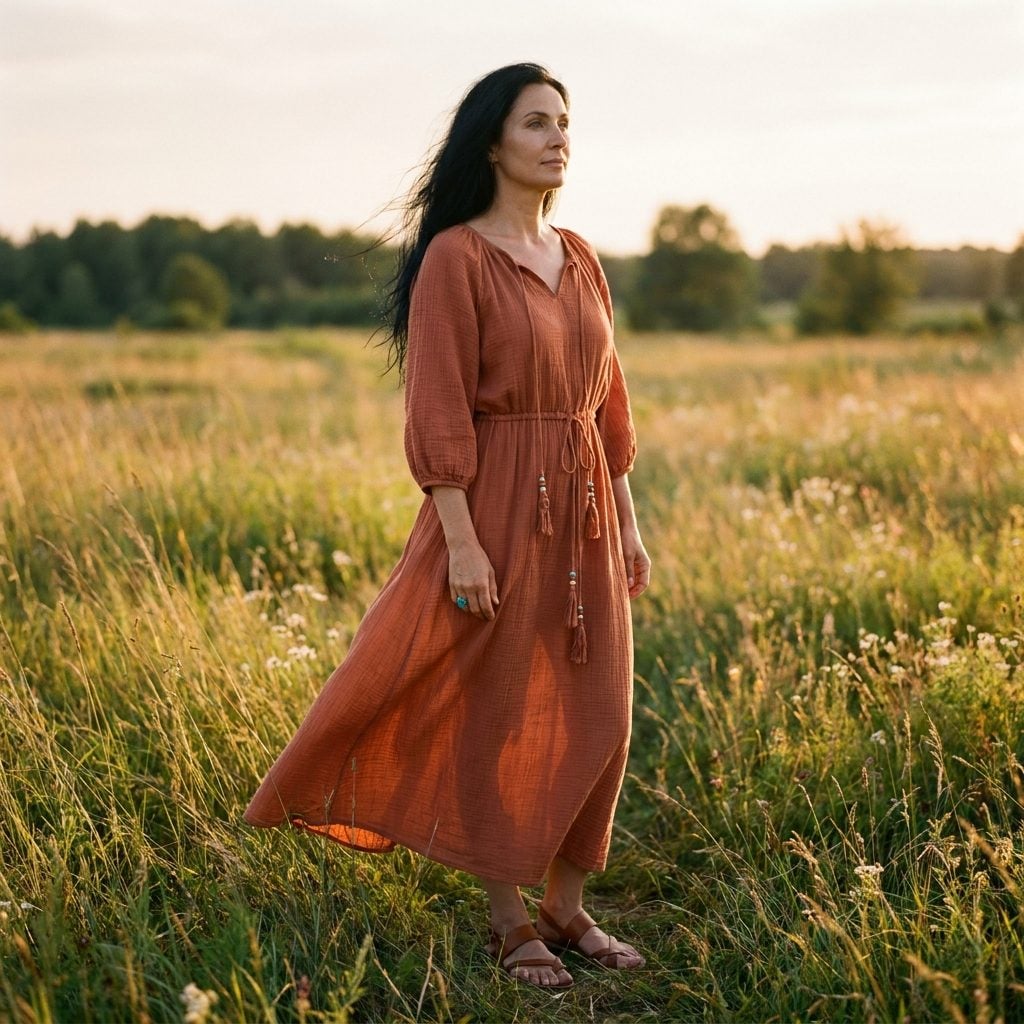
Those tassels. Dangling there at your hip, swinging with every step, collecting salad dressing and doorknob encounters like little fabric magnets. The drawstring waist was supposed to be the democratic alternative to zippers and buttons, one size fits most, adjustable, forgiving after a second plate of potato salad. And it was all of those things.
But the tassels had a mind of their own. They’d dip into your iced tea. Get pinched in car doors. Tangle with your wooden bead necklace until you were essentially macraméd to yourself. Still, we loved them, the weight of those little beaded ends swinging when you walked gave the whole dress a sense of rhythm and momentum. A good tassel swing could make you feel like you were in a shampoo commercial, honestly, even while hauling groceries.
The Built-In Fabric Sash You Tied in a Bow at the Back (and Retied Forty Times)
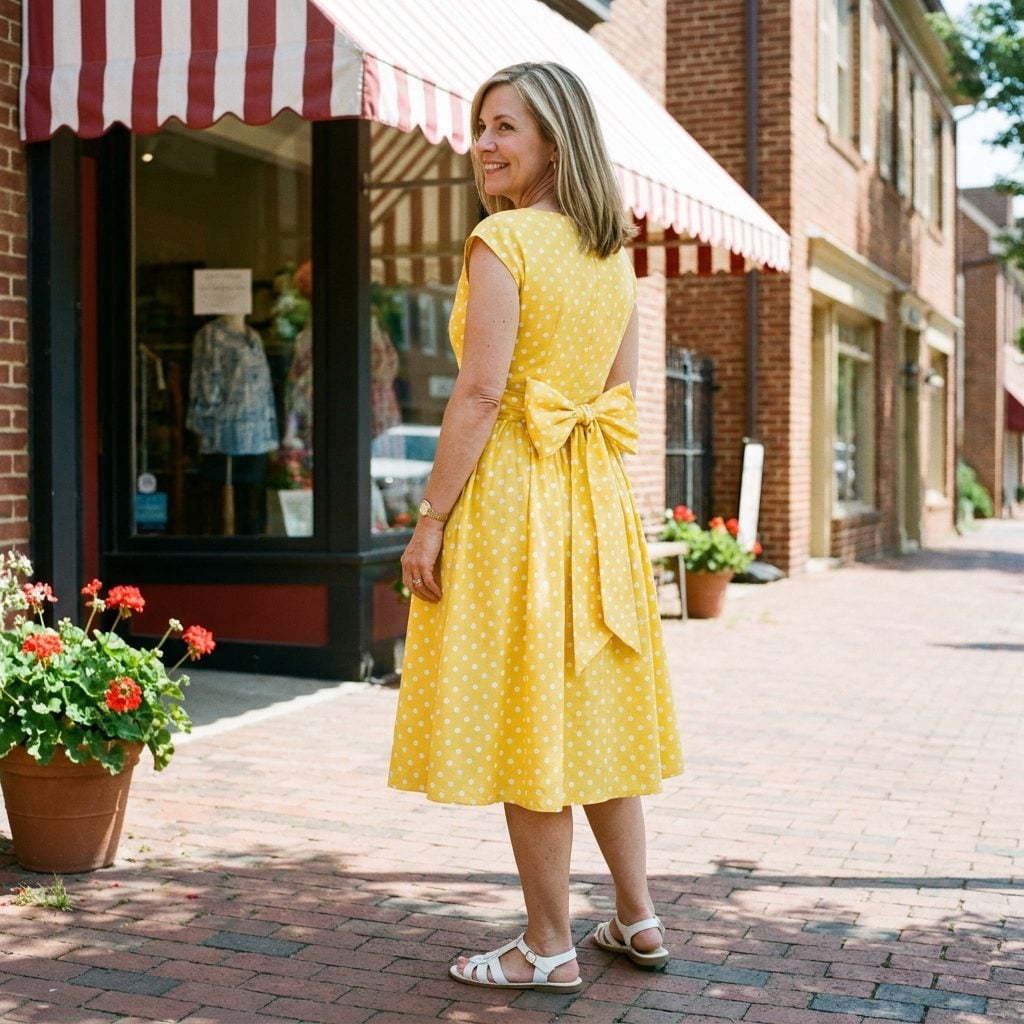
Nobody ever got that bow right on the first try. Or the fifth.
The built-in sash appeared on summer dresses from about 1971 onward, a matching fabric belt, sewn into the side seams, that you wrapped around and tied at the back. Simple concept. Maddening execution. You’d reach behind yourself, fumble with two limp strips of cotton, try to create something resembling a bow, and then ask the nearest human to fix it. Every photograph from that decade has at least one woman with a lopsided back bow she’s pretending she can’t feel.
Worth the hassle, though. The sash cinched the waist just enough to give those loose, flowing dresses some shape without a zipper, and the trailing ends added a kind of sway that made even a polka dot cotton dress from Sears feel almost romantic. The imperfect bow was part of the charm, really, fashion that looked like a person did it, not a machine.
Wooden Buttons, Coconut Shell Rings, and Bead Accents Where a Normal Neckline Would Do

A perfectly good scoop neck wasn’t enough. It needed a wooden ring. Or a row of coconut shell buttons that served no structural purpose whatsoever. Or three wooden beads strung on a leather cord that dangled right at the collarbone, clicking together every time you leaned forward.
These details turned simple cotton dresses into something that felt handcrafted and vaguely earthy, even when the dress came off a rack at Montgomery Ward. The wooden ring halter was particularly everywhere, fabric threaded through a single large ring at the front of the neck, creating this gathered, almost toga-like drape that was somehow both modest and revealing. A neat trick, when you think about it. One ring doing all that work.
Maxi Dresses That Literally Swept the Sidewalk and We Called That Fashion
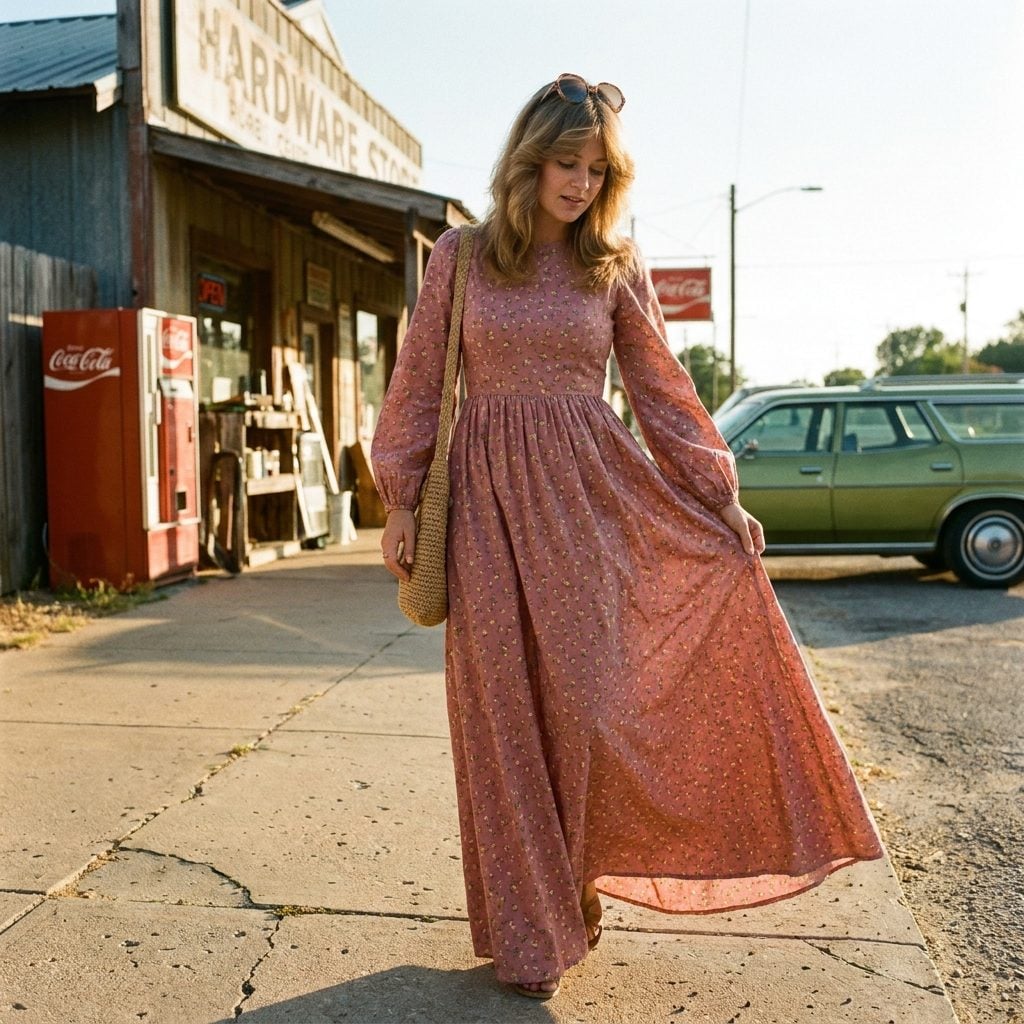
The hem collected everything, pebbles, cigarette butts, the occasional wet leaf, and you’d come home from a July afternoon with a dress that looked like it had mopped a gas station floor. Somehow that was fine. Nobody hemmed these things because the whole point was the puddle of fabric pooling around your sandals.
Cotton, usually. Sometimes a gauzy poly blend that stuck to your legs in the humidity. The print was always small and busy, tiny flowers or paisleys doing the heavy lifting so the dirt wouldn’t show. You wore these to cookouts, to the grocery store, to the movies where you’d sit on three inches of your own skirt and yank it free when the credits rolled.
Embroidery and Folk Stitching on Hems, Yokes, and Anywhere a Needle Could Reach
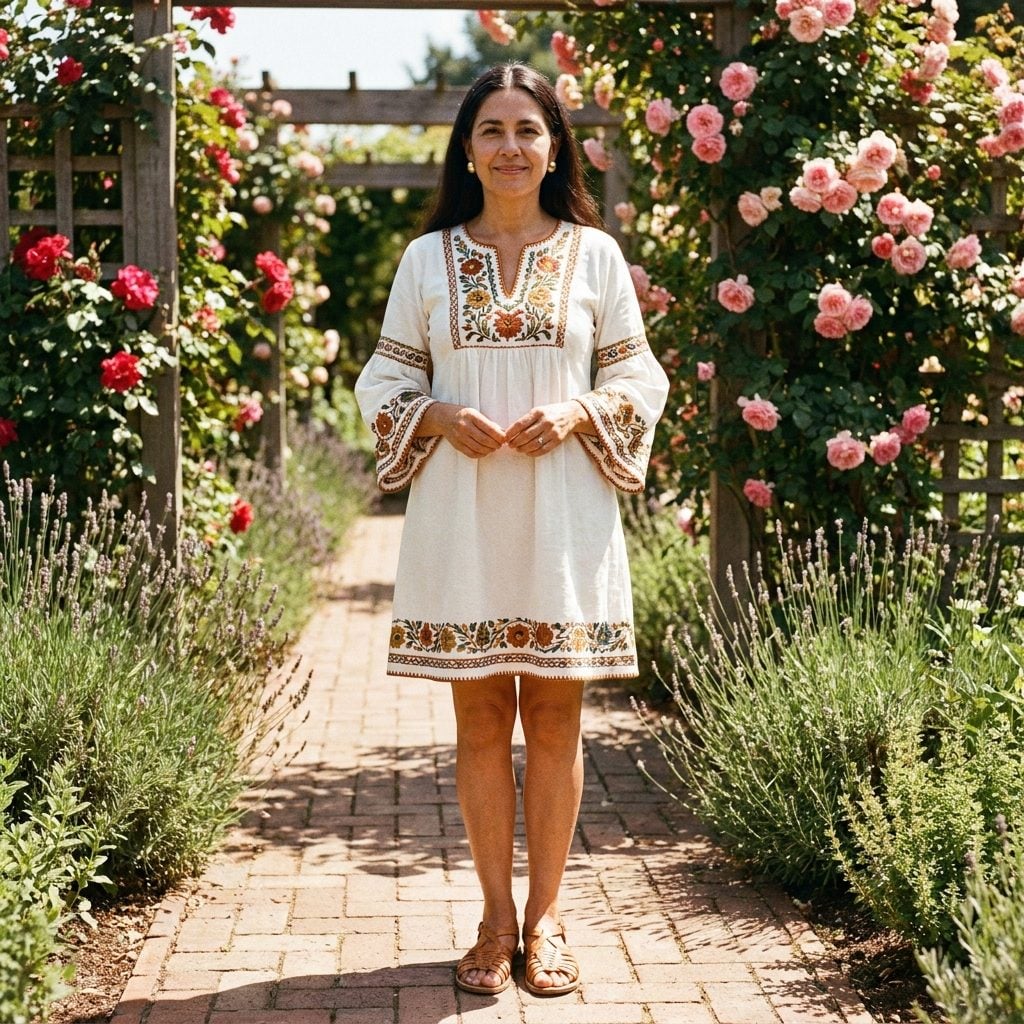
The stitching showed up on everything. Yokes, cuffs, hemlines, pockets, empire waistlines, nowhere was safe. Tiny chain-stitch flowers in rust and goldenrod marching in neat rows. Little birds. Geometric borders that referenced Hungarian, Mexican, or Indian textile traditions, sometimes all at once on the same dress, which nobody questioned because questioning it would have spoiled the fun.
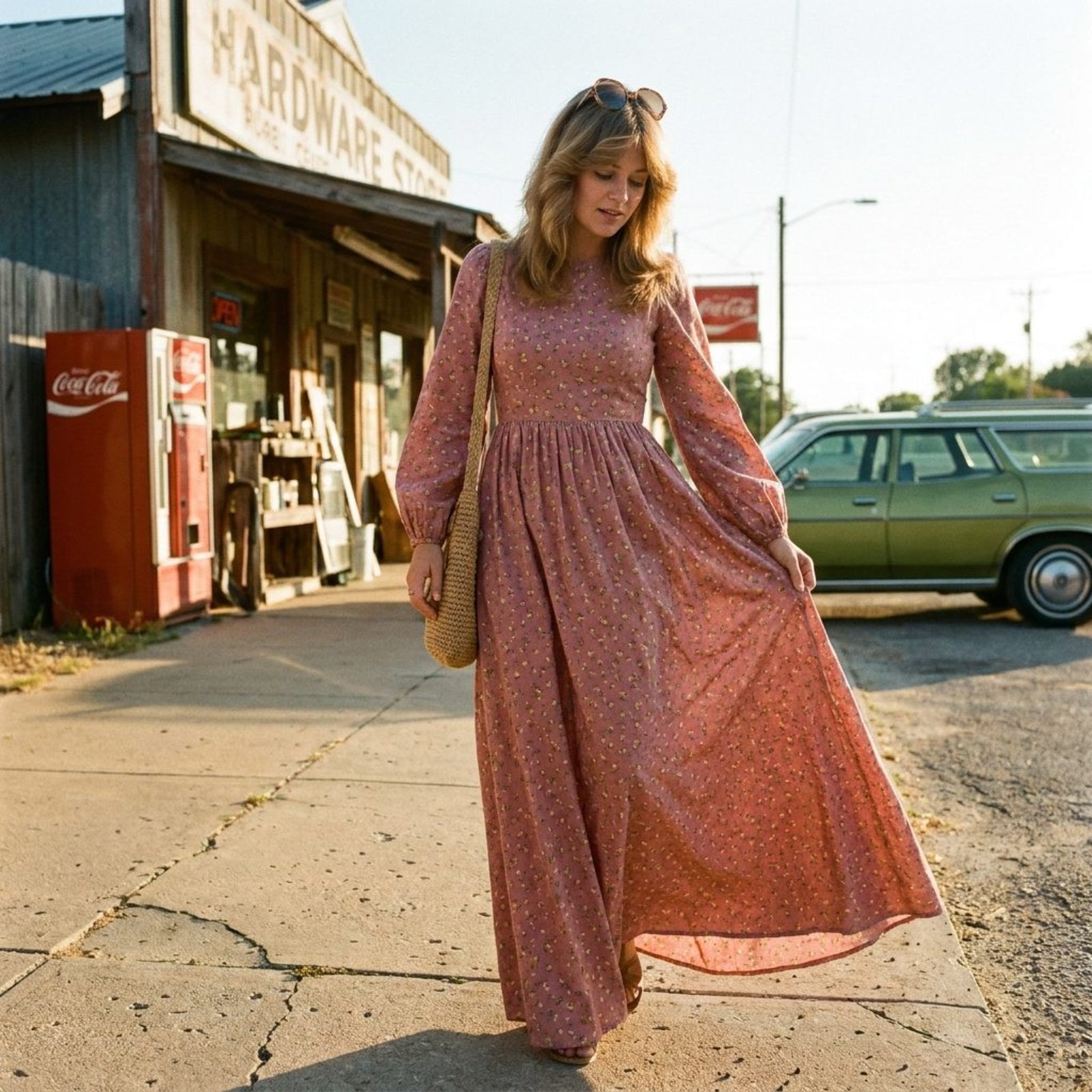
Some of it was genuinely hand-embroidered, imported from India or Guatemala and sold at shops that also stocked incense and brass bells. Most of it was machine-stitched in a factory and sold at Kmart. Both versions were beautiful, I refuse to be a snob about this. The embroidered white peasant dress became such a universal summer staple that it’s the one 1970s trend that genuinely never fully disappeared. It just got quieter for a while, then came back like it never left.
The Front Slit on a Maxi Dress That Turned Every Sidewalk Into a Runway
❤️ Would you like to save this?
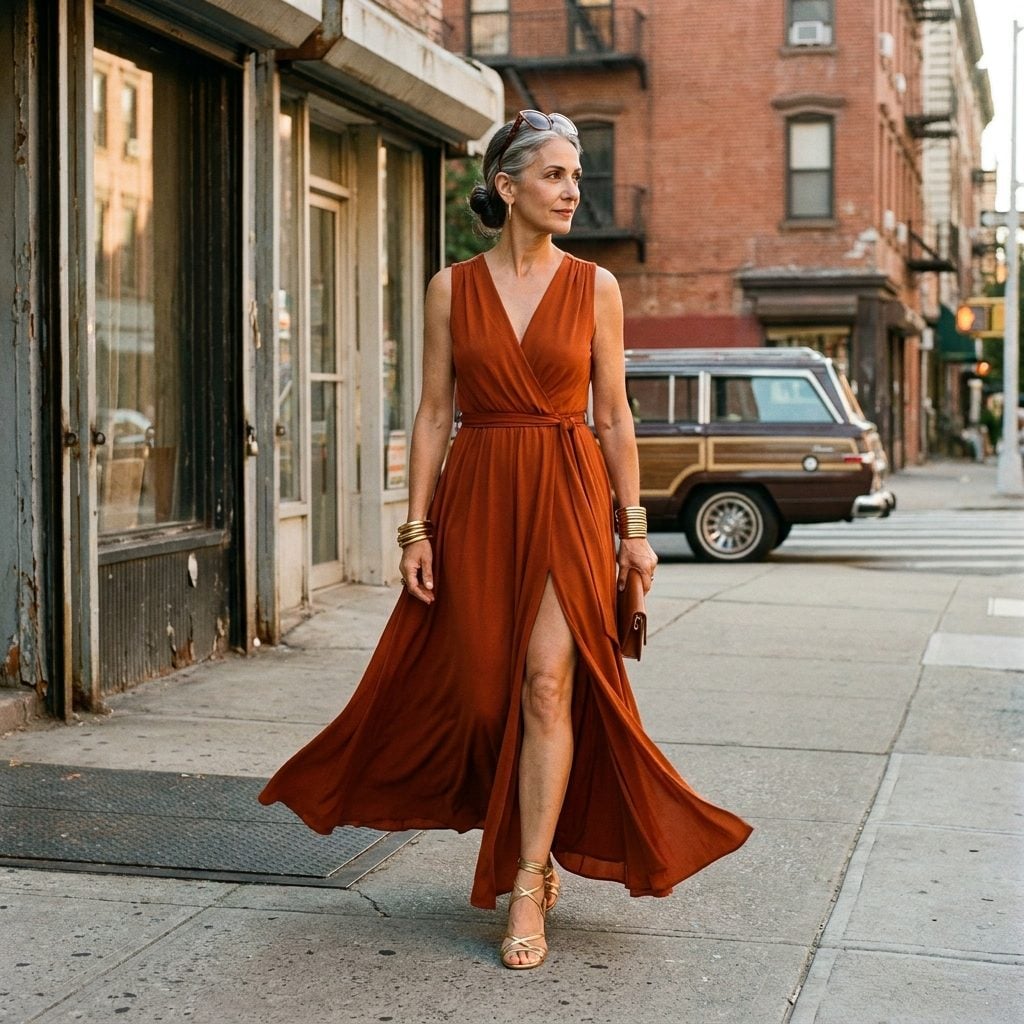
Functional? Sure, you could walk in it. But functional wasn’t really what was happening here.
The front slit on a maxi dress did something theatrical, with every step, it opened and closed like a curtain, flashing a triangle of leg and then concealing it again. Walking across a parking lot became a minor performance. The slit was usually center front, starting anywhere from mid-thigh to just above the knee, and the construction was dead simple: the skirt just wasn’t sewn shut for those last several inches. No special engineering. No hidden snaps. Just an absence of stitching that changed everything.
You couldn’t shuffle in a front-slit maxi. You had to stride. And striding in a long rust-colored maxi dress with the fabric swinging around your ankles made you feel like you had a soundtrack playing behind you, even if you were just walking to the mailbox in your bare feet.