❤️ Would you like to save this?
The smell of Coppertone and hot vinyl car seats. The sound of wooden clogs on a grocery store floor. The particular confidence it took to walk into a Sears in a terry cloth romper and zero undergarments like it was the most natural thing on earth. Seventies summers had a dress code that ran on vibes, not rules, and most of it would make a Gen Z woman tilt her head sideways in genuine confusion.
FYI, thanks to AI imagery software, we’re able to create very specific fashion and hairstyle examples to illustrate the points being made. In some cases, imagery is exaggerated to hammer home the point. Also, assume links that take you off the site are affiliate links such as links to Amazon. this means we may earn a commission if you buy something.
Tube Tops With Zero Structure and Even Less Fabric
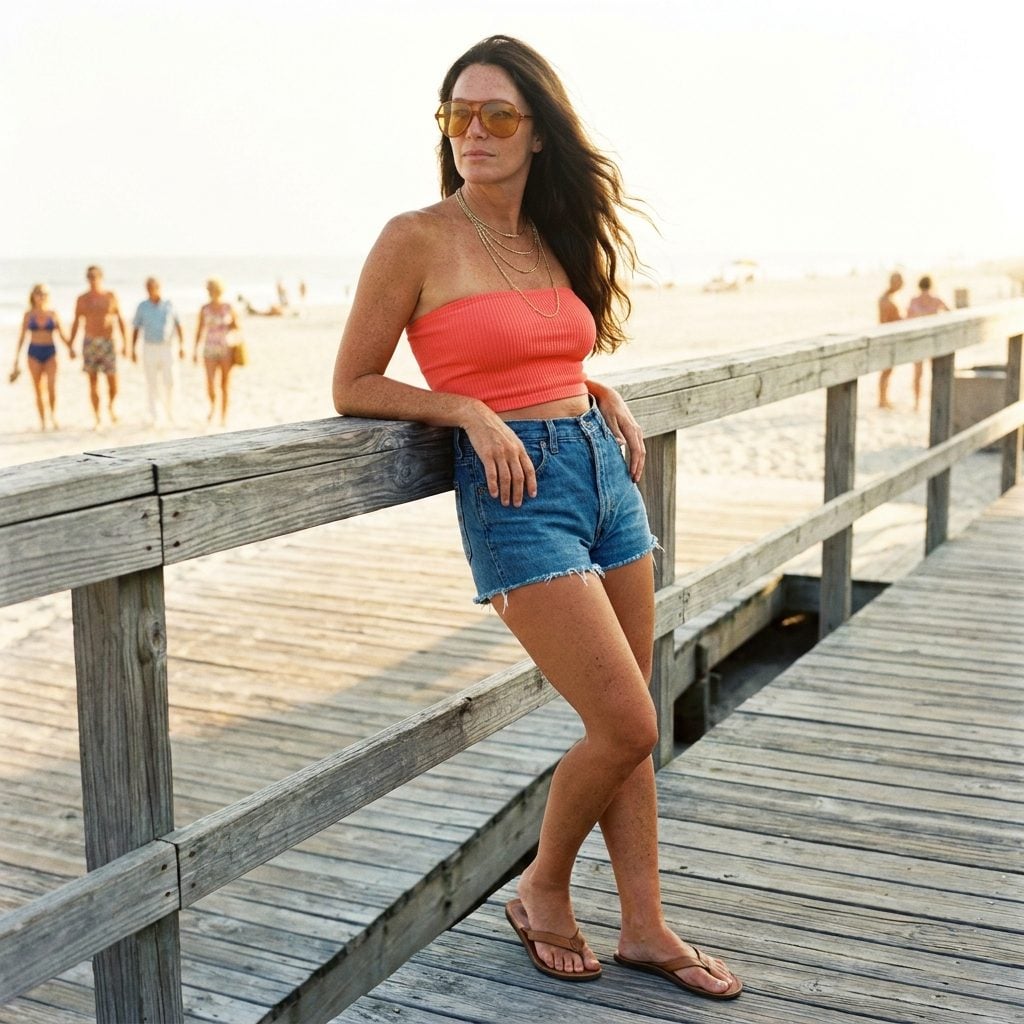
No straps. No boning. No underwire. Just a strip of stretchy fabric and sheer audacity. The 1970s tube top was an act of faith in elastic and gravity, and somehow we all committed to it. You’d find them at Woolworth’s in every color of the rainbow, three for five dollars, and you’d buy them like socks.
The constant adjusting became second nature. A subtle upward tug mid-conversation, so automatic you didn’t even register doing it. The bright tube top in terry cloth was the pool-to-party version. The shiny polyester one was for roller rinks. And the ribbed cotton? That was everyday wear, paired with cutoffs and a tan line that told the whole story of your summer.
Halter Maxi Dresses With Open Backs So Low They Were Basically a Dare
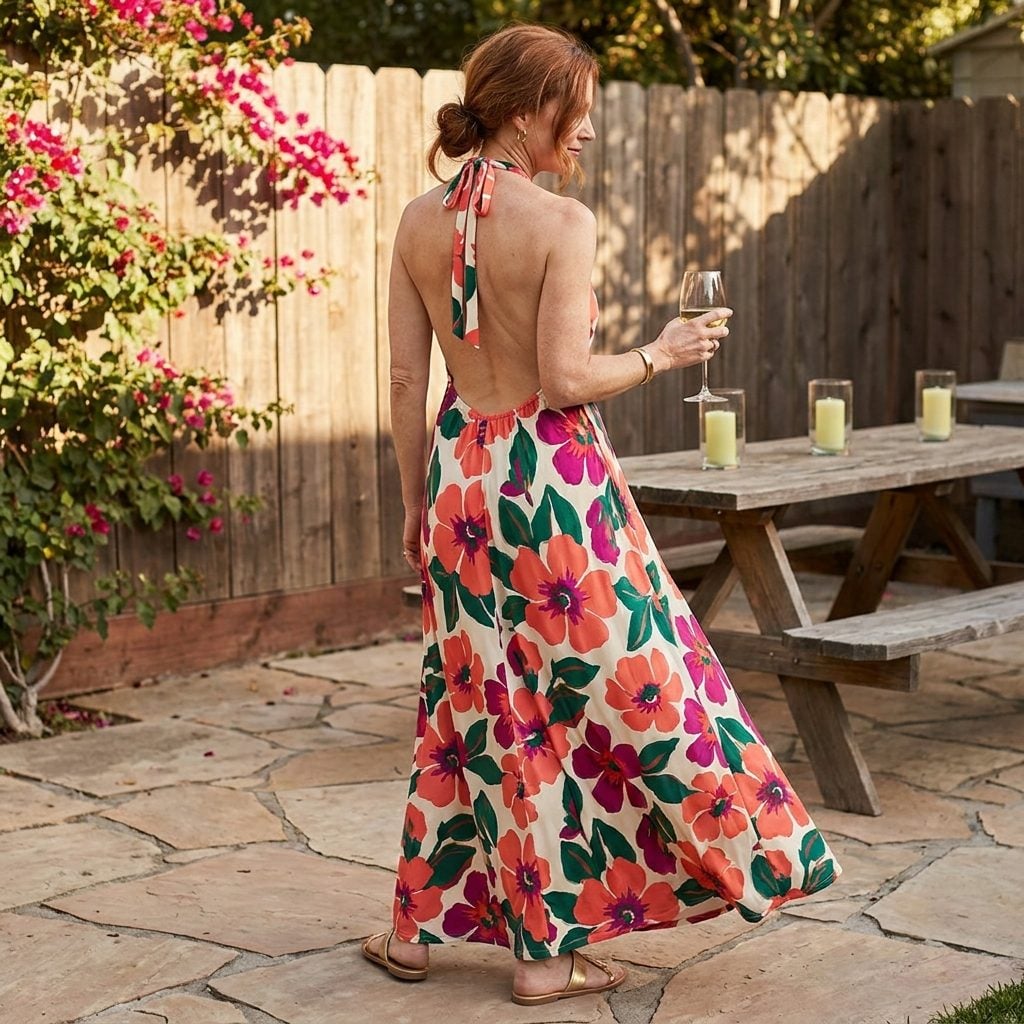
The back of these dresses didn’t just dip. It plunged to somewhere around your lower spine and kept going. Two thin straps tied behind your neck, the fabric fell away entirely from behind, and your whole back was the accessory. Bras were not part of this equation.
The prints were always oversized florals: big splashy dahlias, tropical hibiscus in orange and magenta, or those abstract swirl patterns that looked like a lava lamp in textile form. You’d wear one to a backyard barbecue and feel like you were starring in your own movie. The floral halter maxi was the dress that made you stand up straighter, because the whole architecture of the thing depended on good posture.
A woman under 30 today would look at one and ask where the back went. We’d just smile.
Hot Pants Cut So Short the Pockets Hung Below the Hem (On Purpose)
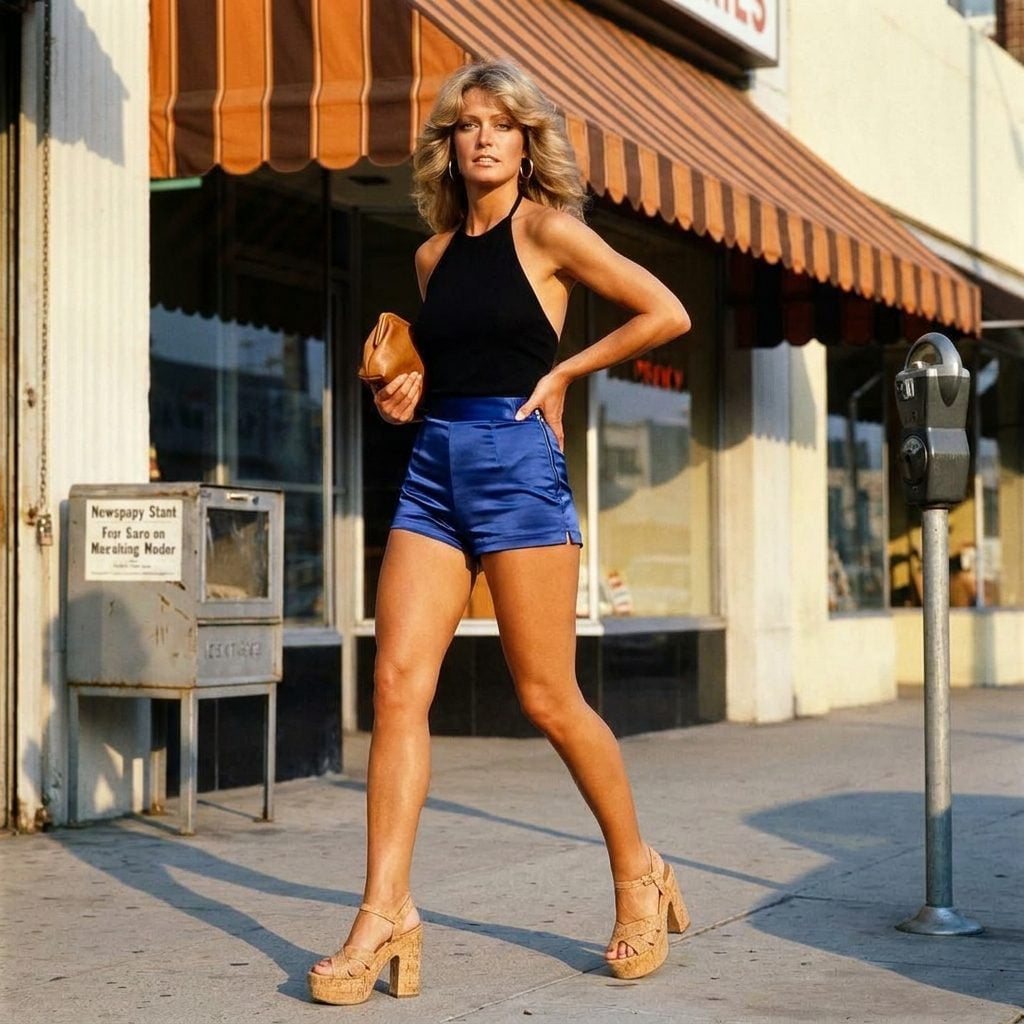
Let’s be precise about what we mean by “short.” We mean the inseam was one inch. Maybe two if the manufacturer was feeling conservative. Hot pants weren’t shorts with a cute name. They were a cultural event.
The satin ones came out at night, usually in jewel tones: sapphire blue, emerald, deep burgundy. Daytime called for the velveteen pair or the polyester ones in white or tan. You’d style them with platform shoes and a fitted top, and suddenly your legs looked seven feet long. That was the entire point.
Gunne Sax Prairie Dresses That Made You Look Like a Victorian Ghost at a Garden Party
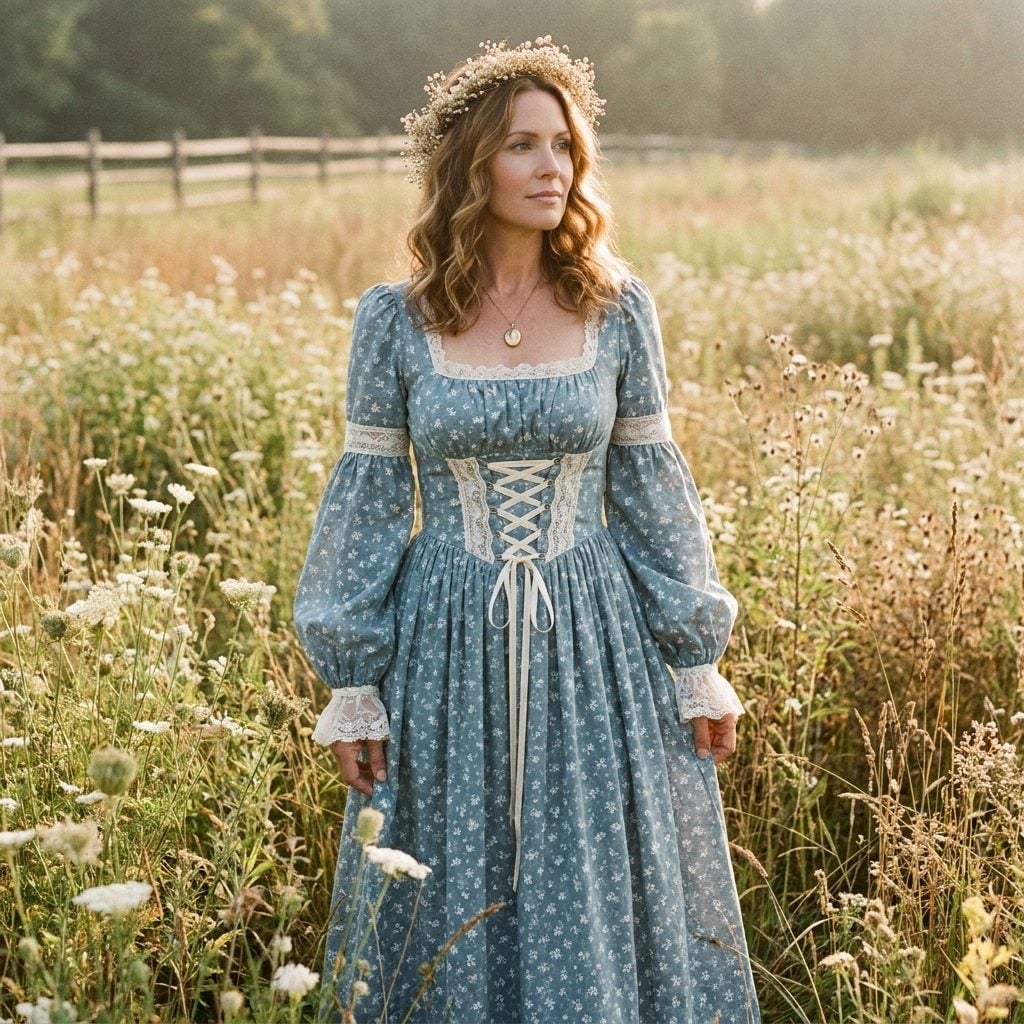
There was a very specific type of girl who owned a Gunne Sax, and she was all of us. These dresses showed up at proms, at weddings, at Easter brunch, and at the Sears portrait studio. The calico prints were tiny and sweet. The lace trims cascaded everywhere. The corset-laced bodice cinched your waist while the skirt billowed out to your ankles, and the whole effect was somewhere between Little House on the Prairie and a Fleetwood Mac album cover.
Jessica McClintock knew exactly what she was doing. The prairie dress felt romantic in a way that nothing else in the decade did. You couldn’t wear one ironically. You had to fully commit to the fantasy, and we did, with flower crowns and everything.
Gauchos: The Pants That Confused Everyone Who Wasn’t Alive in 1975
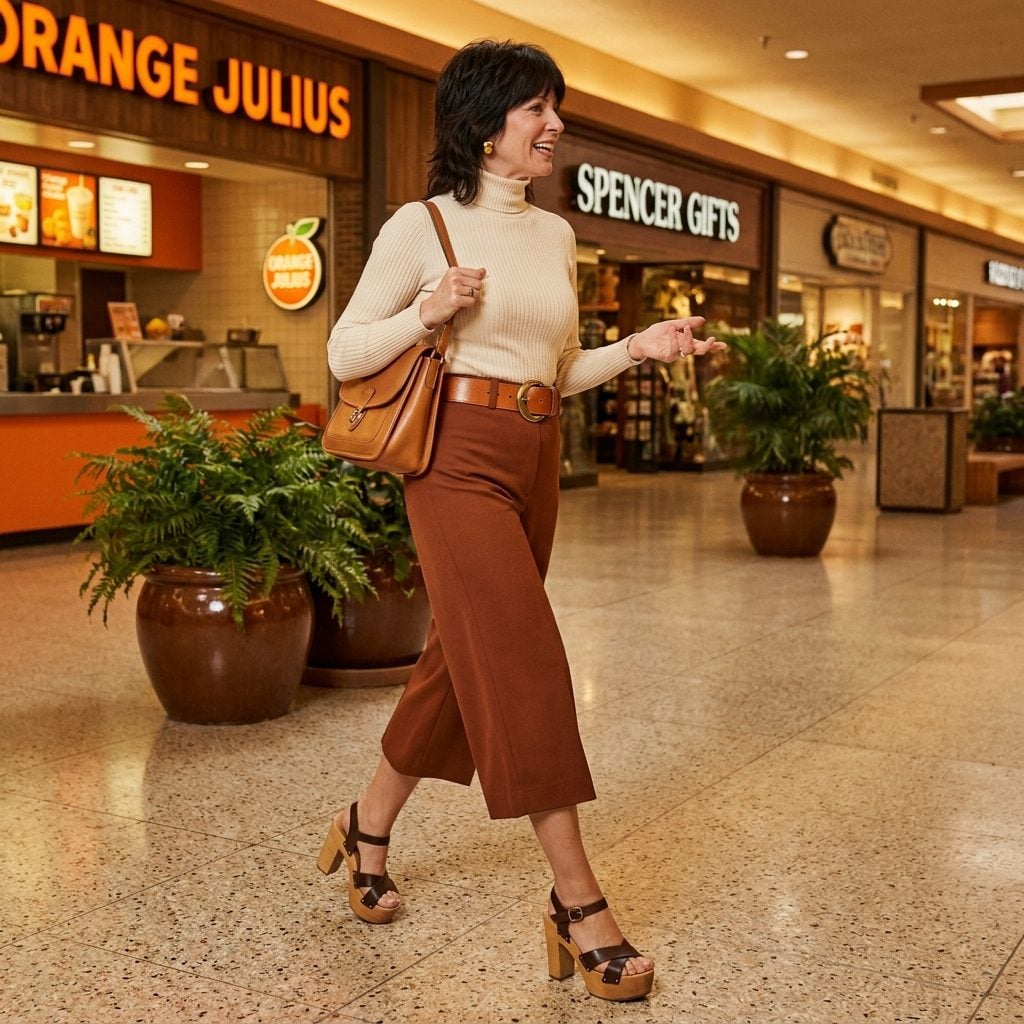
Try explaining gauchos to someone born after 1995. “They’re like wide-leg pants, but they stop at your calf.” You’ll get a blank stare. “Like culottes?” Sort of, but fuller. “Like capris?” Absolutely not. Gauchos existed in their own category, and the only way to understand them is to have lived through them.
Most were polyester. Many were brown, rust, or forest green. You wore them with wooden clogs or platform sandals, and the silhouette was genuinely dramatic: all that fabric swinging at mid-calf, your shoes adding three inches, a wide belt cinching the waist. The whole outfit moved when you moved. Walking into a room wearing gauchos was an entrance, not an arrival.
What Our Readers Say
- In our reader polls, comfort still comes out ahead: 63% of ThreadCurve readers say they dress comfort first, while 37% put polish first.
- Bold prints are a harder sell today, with 80% of our readers saying they rarely wear prints and only 20% saying they wear them often.
From ThreadCurve reader polls and votes.
Dr. Scholl’s Exercise Sandals and the Unmistakable Sound of Wood on Linoleum
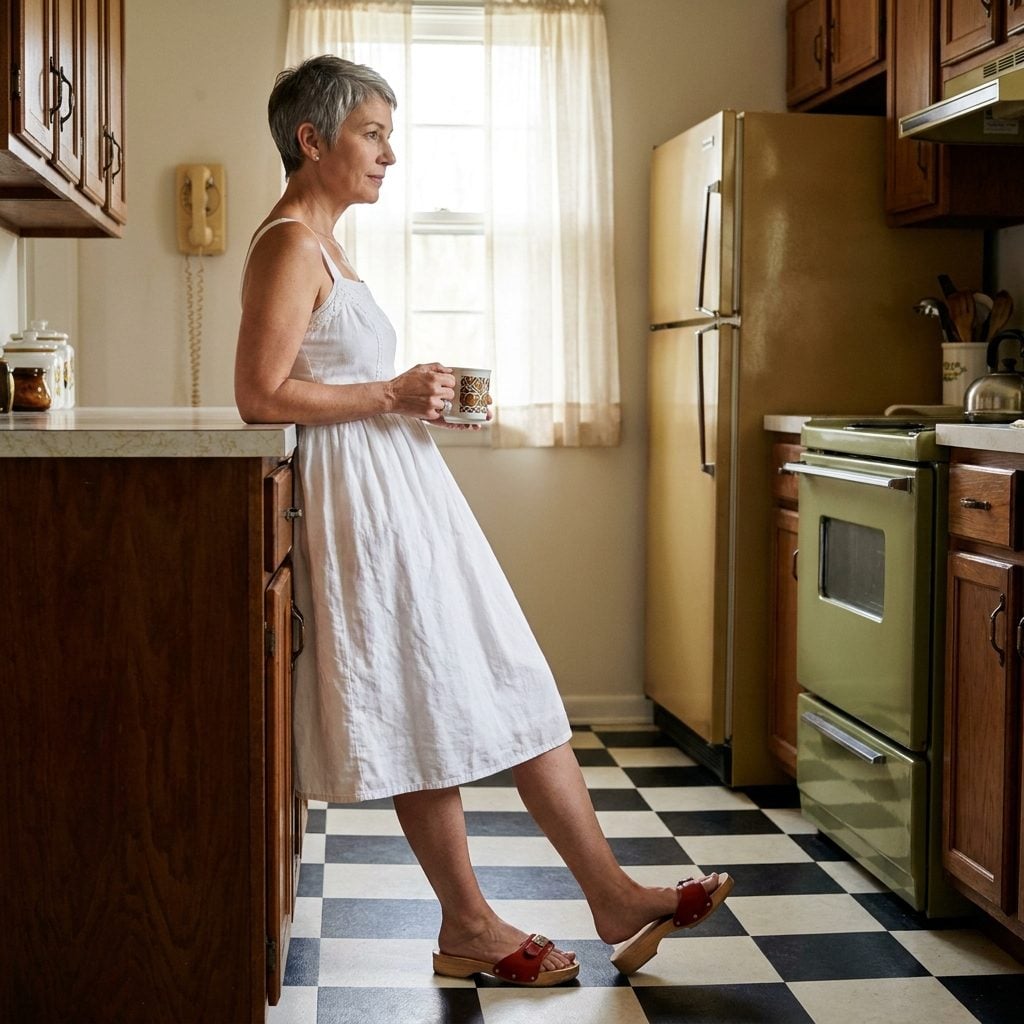
You heard them before you saw them. That distinct clop-clop-clop echoing down the hallway. Dr. Scholl’s exercise sandals weren’t quiet shoes, and nobody cared. One leather strap across the toes, a carved wooden sole with that signature toe-grip bump, and a backless design that meant your heel lifted with every step. The marketing claimed they toned your legs. We just liked how they looked with everything.
The original came in bone or red leather. Later, navy. You’d grab a pair at the drugstore for under ten dollars, which seems impossible now. They went with sundresses, with jeans, with your work uniform if your boss wasn’t paying close attention.
The Dr. Scholl’s sandal wasn’t really about fashion or fitness. It was about the specific pleasure of a shoe that asked nothing of you except to keep walking.
Cork Platform Wedge Espadrilles With Ankle Ties That Took Ten Minutes to Lace Up
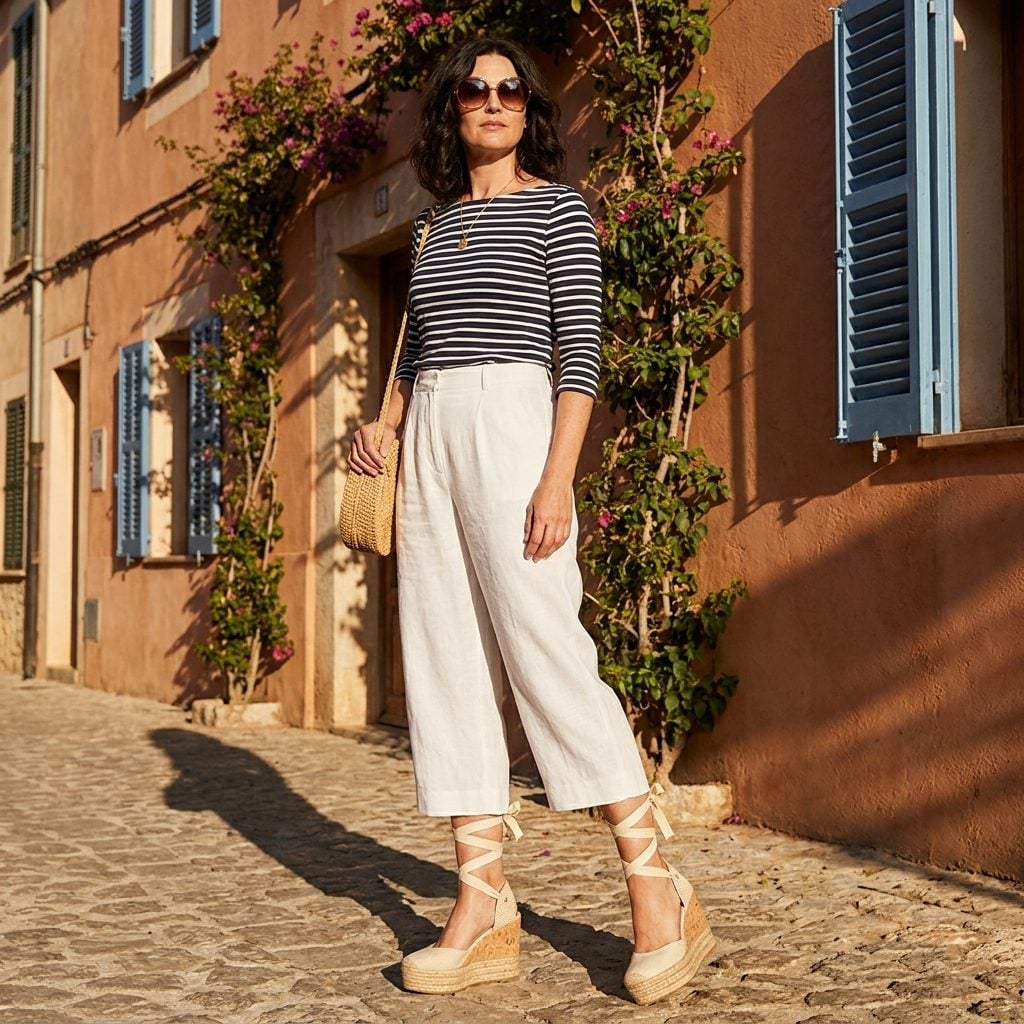
Getting ready wasn’t complete until you sat on the edge of your bed and spent a solid ten minutes wrapping those ribbons around your calves. The cork platform wedge with ankle ties was not a grab-and-go shoe. It was a commitment. A ritual.
The cork sole added three, sometimes four inches. The jute-wrapped platform gave them that earthy, Mediterranean look. And those fabric ties, usually in natural canvas or sometimes a bright woven pattern, crisscrossed up past your ankle to mid-calf. You had to decide: tight and structured, or loose and flowing? Thick wraps or thin? How high up the leg? Every choice was a style statement.
Walking on grass was out of the question. Dancing was ambitious. But standing still and looking incredible? That’s what these were designed for.
Huarache Sandals That Smelled Like a Leather Shop and Offered Zero Arch Support
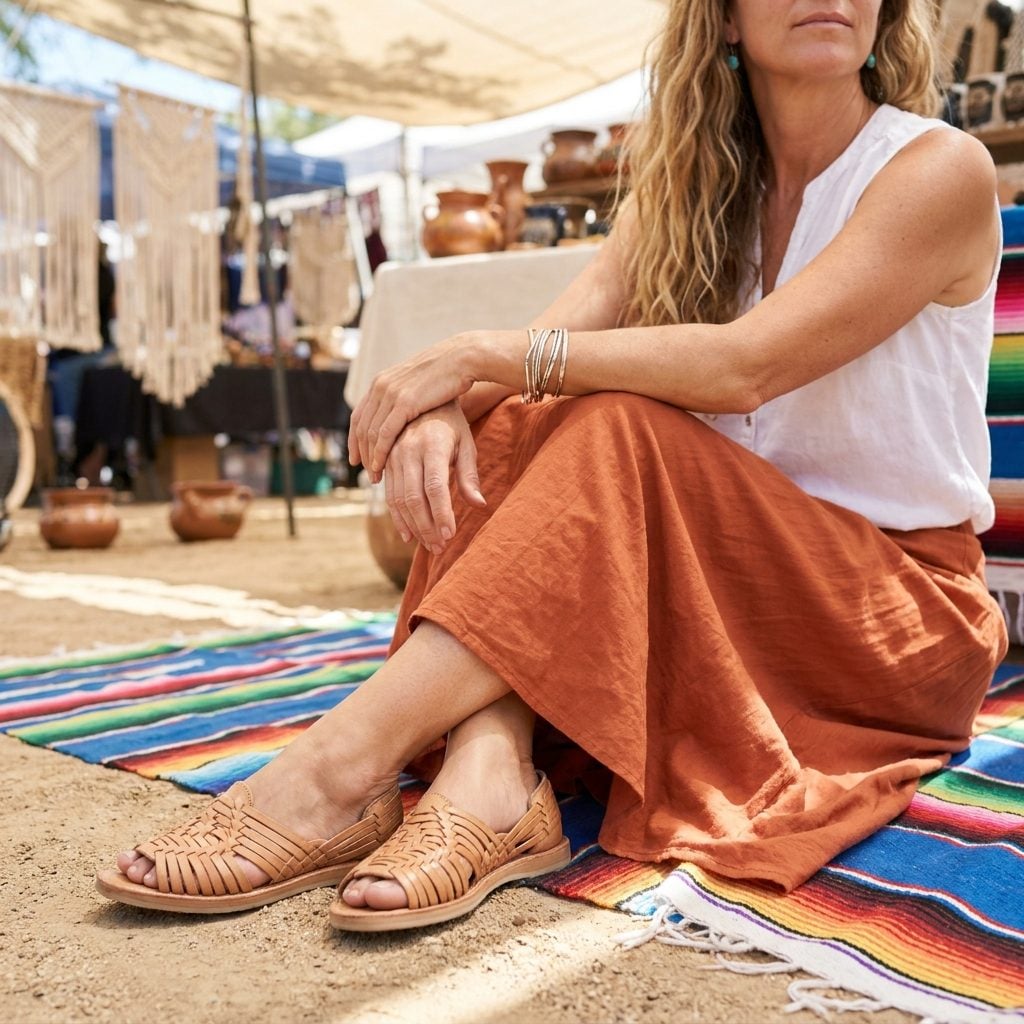
You bought them at a craft fair, or from that one leather goods booth at the flea market, or sometimes from a guy selling them out of his van in a beach parking lot. Huarache sandals were woven leather strips forming an open lattice across your foot, a flat leather sole, and that was it. No cushion. No contour. Just leather and the ground and your feet in between.
They smelled amazing when they were new. Like a saddle shop in the sun. Over the summer they’d darken from sweat and wear, molding to your exact foot shape until they were basically custom. You couldn’t share them with a friend. They were yours.
Crochet Vests Over Bare Skin, Because Apparently That Counted as a Shirt
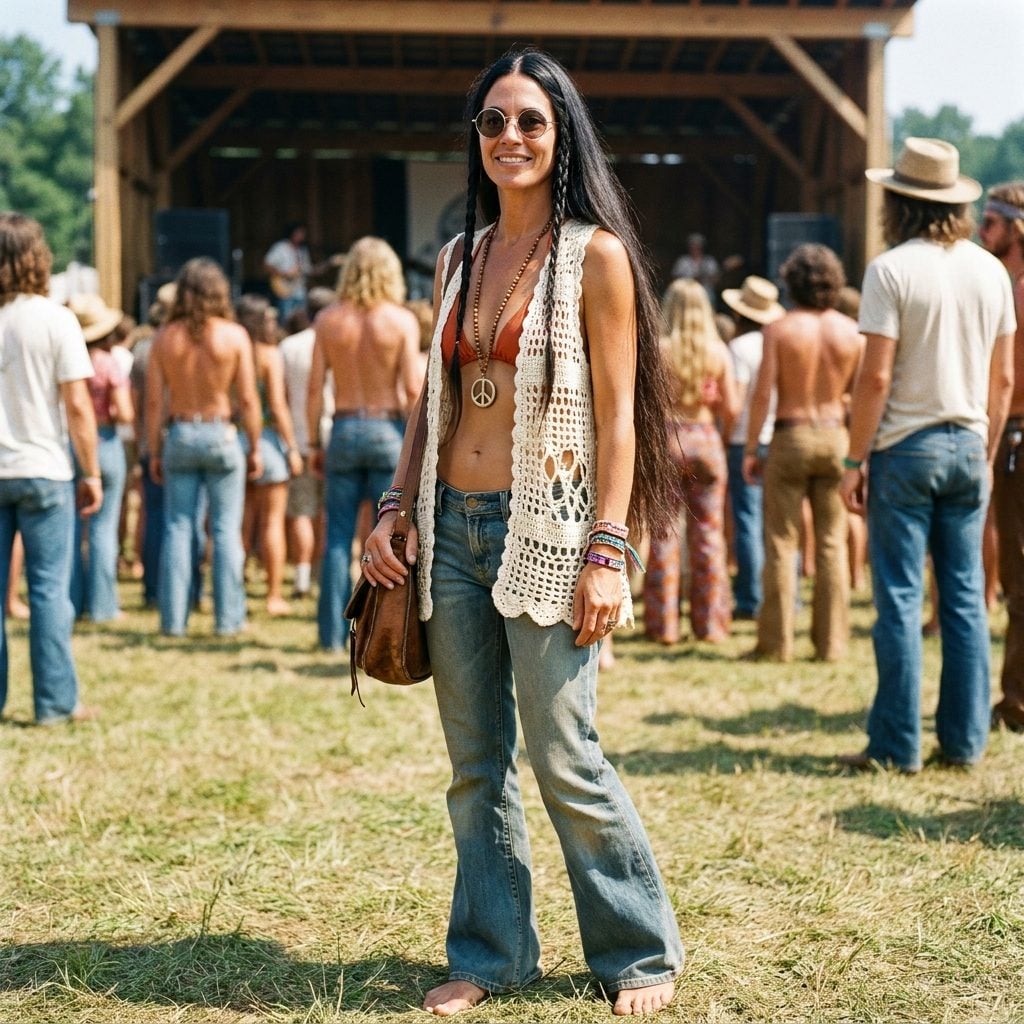
The coverage was theoretical at best. A crochet vest is, by definition, more hole than fabric. You’d layer one over a bikini top, or over nothing, or over a thin tank top if you were heading somewhere that technically required a shirt. The open weave meant everything underneath was visible, and that was precisely the point.
Your mom crocheted one. Your neighbor crocheted one. You attempted to crochet one yourself and ended up with something that looked like a fishing net having a bad day. The homemade versions had a specific wobbliness to them, slightly uneven tension in the yarn, one armhole bigger than the other, and you wore it with more pride than anything store-bought.
Peasant Blouses With Sleeves So Big They Could Double as Parachutes
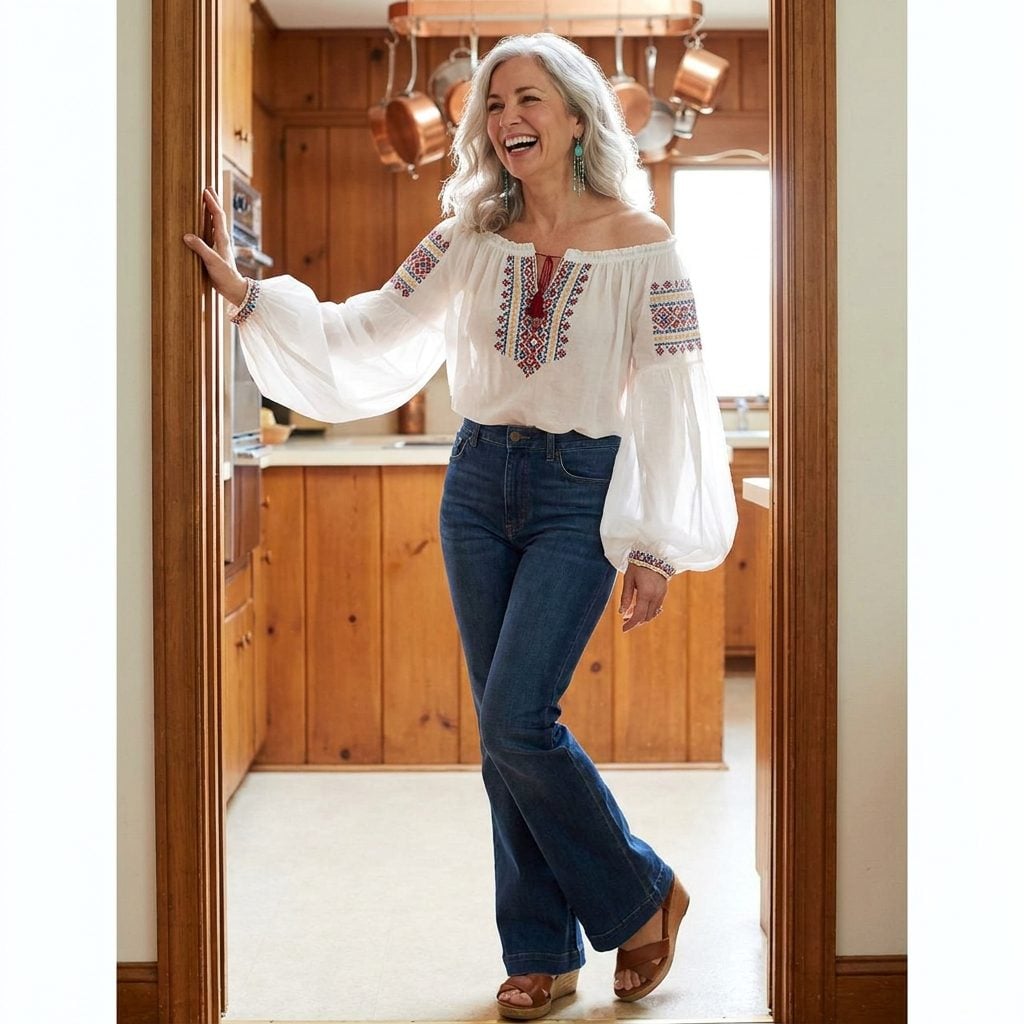
Those sleeves. You could fit a whole second arm in each one and still have room. The peasant blouse was all about volume up top: billowy bishop sleeves gathered tight at the wrist, an elasticized neckline you could pull down over one shoulder (or both, if the mood struck), and embroidery along the yoke in colors that looked like someone raided a Mexican mercado.
The fabric was always thin cotton or gauze. Light enough to go sheer in direct sunlight, which you discovered the hard way. You wore one to feel bohemian and free-spirited, and then spent the afternoon fishing your sleeve out of your soup bowl, catching it on door handles, and accidentally dipping it in candle wax. Worth it every time.
The Diane von Furstenberg Wrap Dress That Changed What Getting Dressed Could Mean
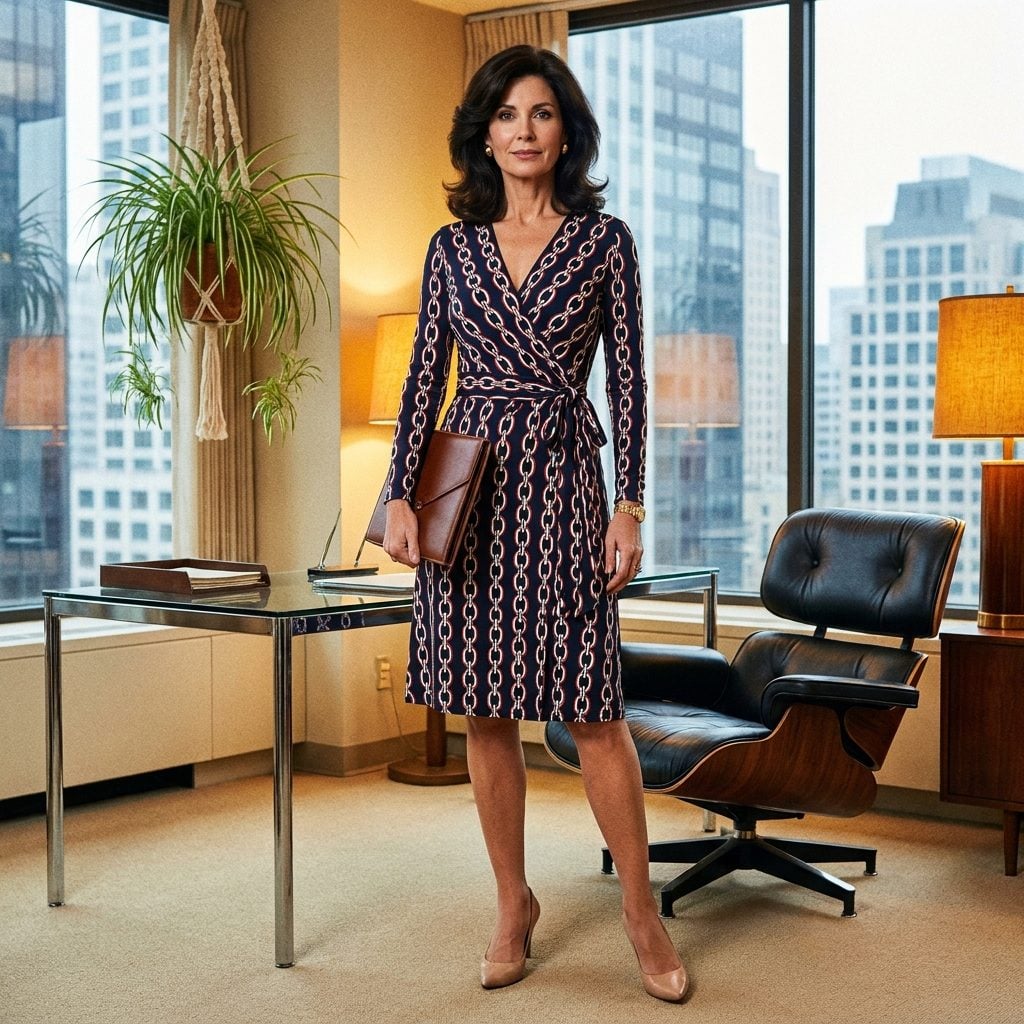
One piece of fabric. A tie at the waist. Done. The DVF wrap dress arrived in 1974 and quietly solved a problem most women didn’t even know how to articulate yet: how to look put-together, feel attractive, and get out the door in under five minutes.
The jersey fabric was lightweight and slightly clingy in a way that moved with you rather than against you. The geometric prints were bold: chain links, abstract swirls, graphic dots in saturated colors. You could wear it to the office, to a dinner party, on a date. It packed flat in a suitcase. It needed no zipper, no buttons, no special undergarments. Just you, wrapping yourself into it.
Diane von Furstenberg sold over five million of them by 1976. Five million. That number tells you everything about what women were hungry for: something that was ours, on our terms, and looked incredible without asking permission.
The Polyester Jumpsuit in a Print So Bold It Had Its Own Gravitational Pull
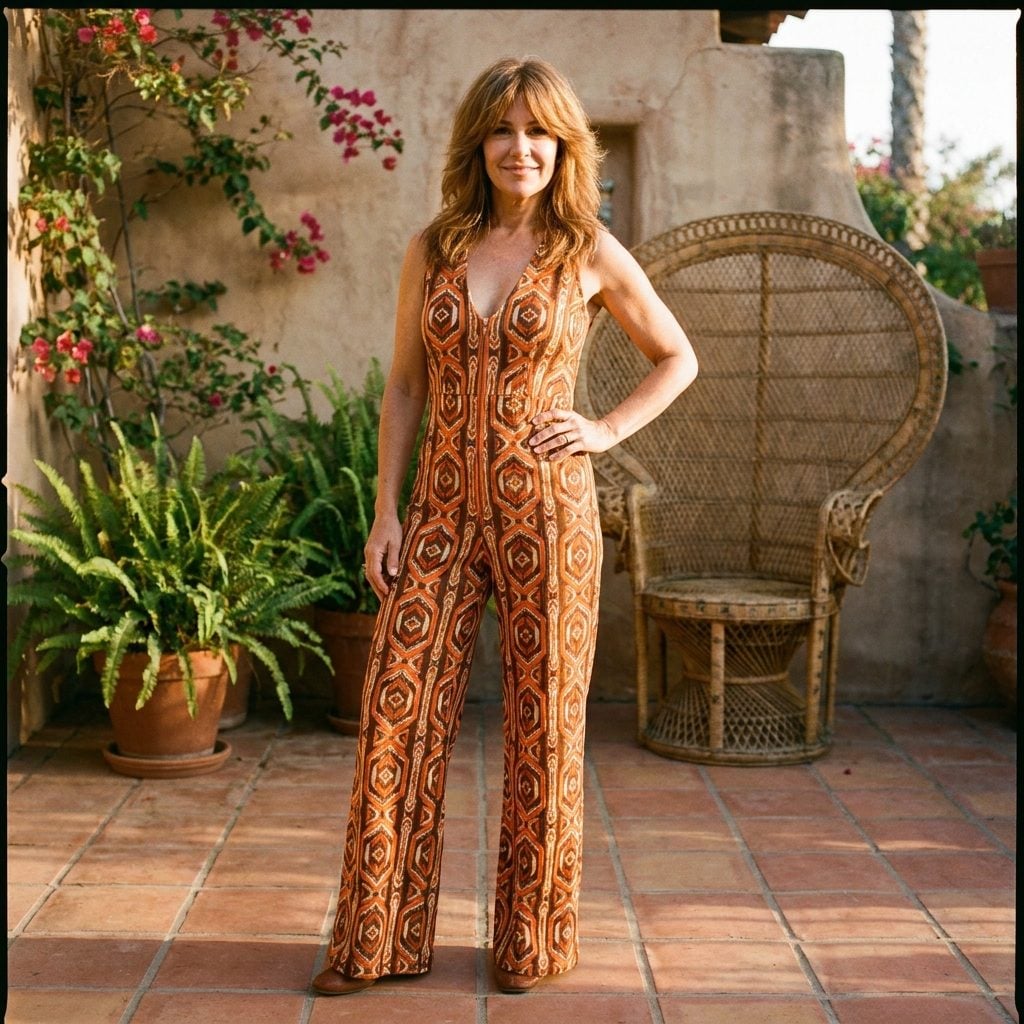
You could hear these coming before you saw them. That synthetic swish of polyester against polyester, announcing your arrival at every backyard barbecue and roller rink within a half-mile radius. The prints were fearless: oversized daisies, op-art chevrons, color-blocked panels in orange and avocado green that no modern algorithm would ever suggest together.
The zipper ran from sternum to navel, and the fit was… optimistic. No stretch. No forgiveness. You committed to that floral jumpsuit the way you committed to a religion. Bathroom logistics alone required planning and determination. But walking into a party in one? You were the main character before that phrase existed.
A woman under 30 would look at the fabric content label and genuinely ask if it was a costume. It was not. It was a Tuesday.
Bandana Halter Tops Tied at the Neck and Back (Two Knots, Zero Support)

❤️ Would you like to save this?
This was a top made from a square of fabric and sheer audacity. You folded a bandana in half diagonally, tied two strings around your neck and two around your ribs, and called it fashion. That was the whole engineering plan. No darts, no boning, no safety net.
The best ones came from actual bandana bins at the five-and-dime. Red paisley was the classic. Navy was “dressy.” Every girl on the block owned at least three, and we rotated them like they were couture. Pair it with cutoffs and leather flat sandals, and you were ready for anything from the county fair to a Fleetwood Mac concert.
Handkerchief Hem Dresses With Points So Sharp They Could Poke an Eye Out
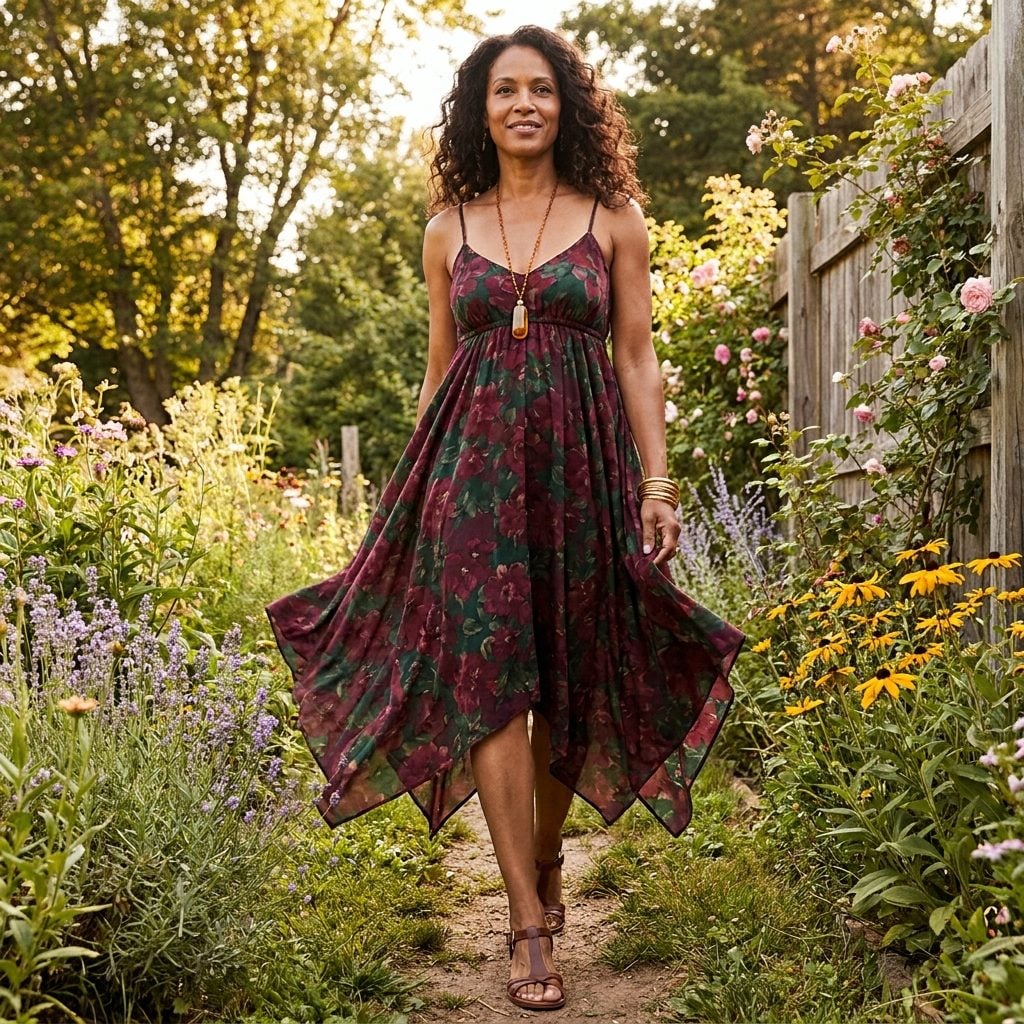
Imagine explaining this to someone born after 1995: the hemline wasn’t even. On purpose. Multiple triangular panels of fabric hung at different lengths, creating jagged, asymmetrical points that fluttered when you walked and occasionally got caught in car doors.
These dresses moved like nothing else. Lightweight rayon or polyester in jewel tones or earth-dipped florals, and every step created this hypnotic sway of fabric points dancing around your calves. You felt like a forest nymph at Woodstock’s afterparty, even if you were just picking up milk at the A&P.
Indian Gauze Tops So Sheer You Were Basically Wearing a Suggestion

The fabric was called cheesecloth for a reason. It had roughly the same opacity as the stuff your grandmother wrapped around a ball of mozzarella. And we wore it proudly, usually in white or cream, usually with nothing underneath that a modern HR department would approve of.
These tops came with tiny mirrors sewn in, or delicate embroidery around the neckline, or little bells on the drawstring. You bought them at import shops that smelled like sandalwood and patchouli, and wearing one made you feel connected to something larger than your suburb. The outfit was simple: gauze top, flared jeans, a sense of worldly sophistication that was entirely imagined.
They wrinkled if you looked at them wrong. They shrank in the wash. They were perfect.
Patchwork Denim Skirts and Jeans Made From Every Pair You’d Ever Owned
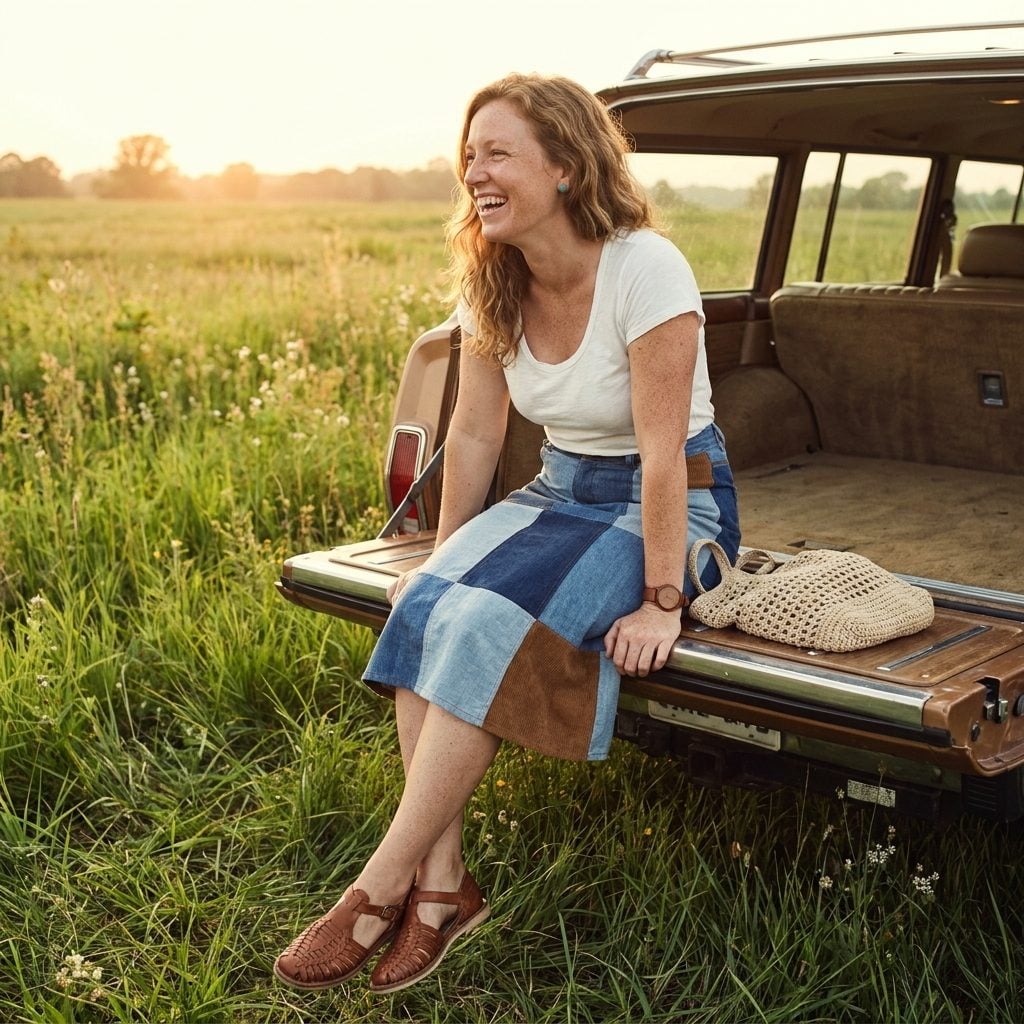
Before “upcycling” was a word anyone used, we were doing it with a Singer sewing machine and a pile of jeans that had blown out at the knee. Different washes, different weights, sometimes corduroy or calico thrown in because why not. The result looked like a quilt your grandmother might make if she’d dropped acid at a Grateful Dead show.
Some girls bought theirs pre-made. The really cool ones made their own. You could tell the difference, and both were acceptable. A patchwork denim vest over a white tee was basically a personality statement that said: “I’m creative, possibly a Joni Mitchell fan, definitely not worried about matching.”
Tie-Dye Everything, and We Do Mean Everything
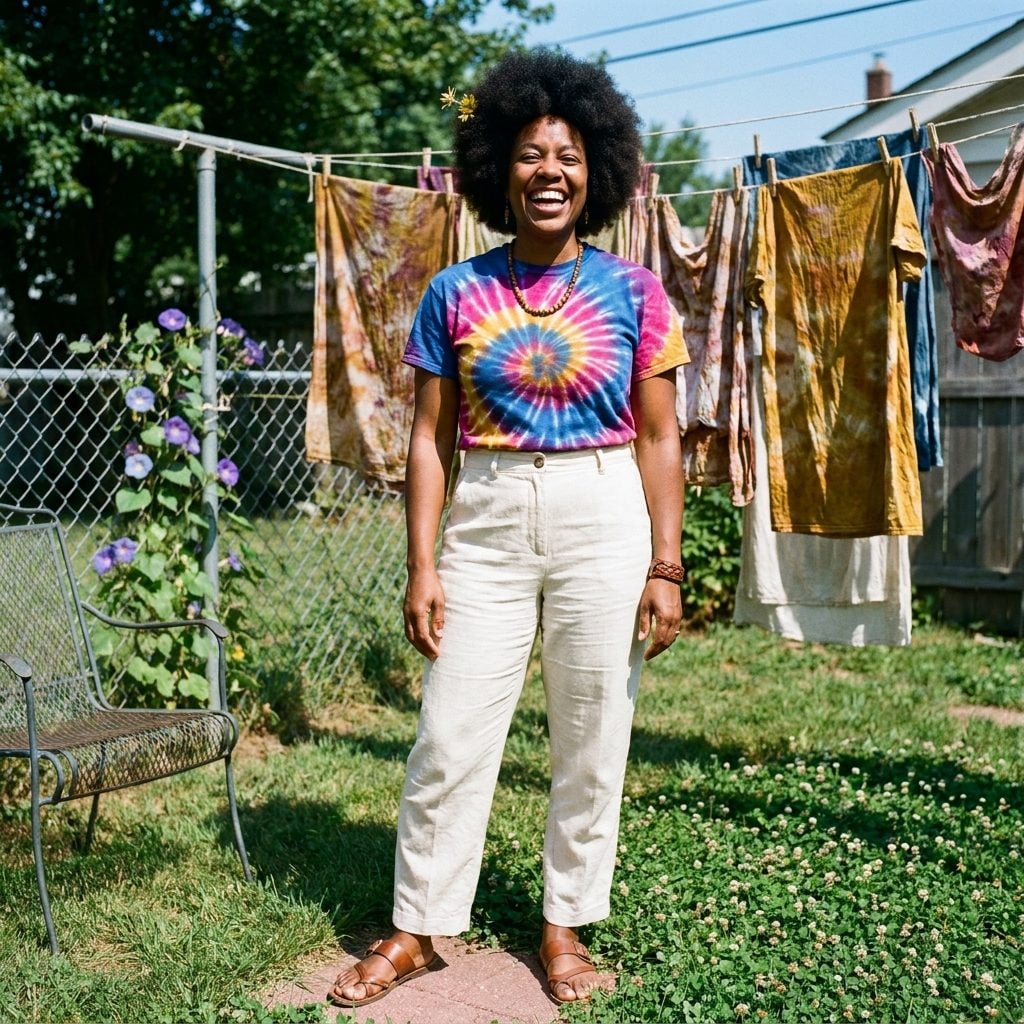
Your hands were stained purple for three days. The kitchen smelled like vinegar. Rubber bands left permanent dents in the wet fabric, and you had no real control over the outcome, which was sort of the whole point.
Tie-dye in the 70s wasn’t the millennial pastel-swirl-on-a-$90-sweatshirt version. It was saturated, chaotic, and handmade. Bold spirals in cobalt and magenta. Earthy batik-style patterns in rust and olive. You dyed your t-shirts, your pillowcases, your boyfriend’s undershirts (without asking). It was craft project, fashion statement, and philosophical position rolled into one.
High-Waisted Short Shorts in Rust, Mustard, and Every Color the Earth Has Ever Been
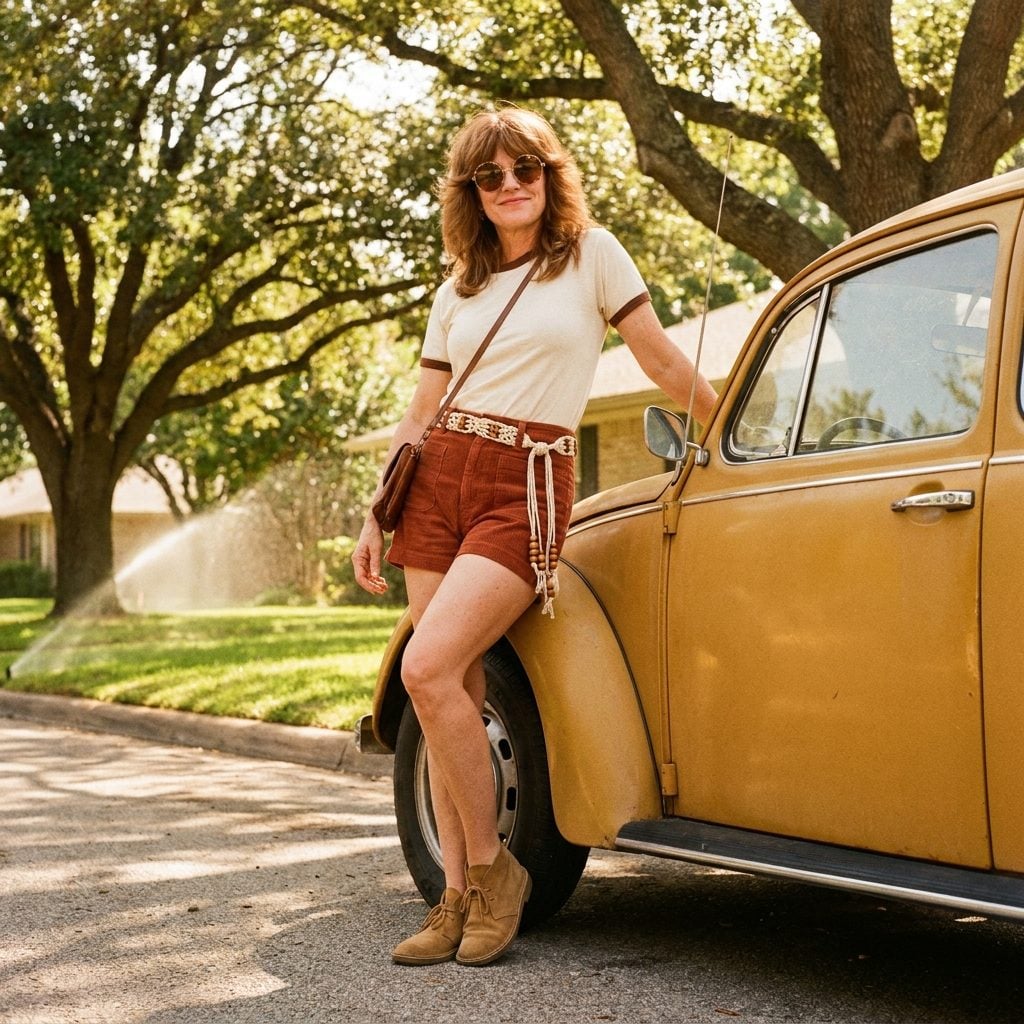
The waistband sat at your actual waist. Your real waist. The one located several inches above where low-rise jeans would later convince an entire generation it belonged. And the inseam? Generous is not the word. Minimal. The inseam was minimal.
These came in colors pulled directly from a 1970s kitchen: rust, mustard, avocado, burnt sienna, chocolate brown. Corduroy pairs were everywhere. So were brushed cotton and that weird slightly stiff polyester blend that made a specific sound when you sat on vinyl. You wore them with a tucked-in ringer tee or a macramé belt you’d made at camp, and nobody questioned the proportions because this was simply how shorts worked.
Flowy Maxi Dresses in Psychedelic Prints That Made You the Most Interesting Person at the Cookout
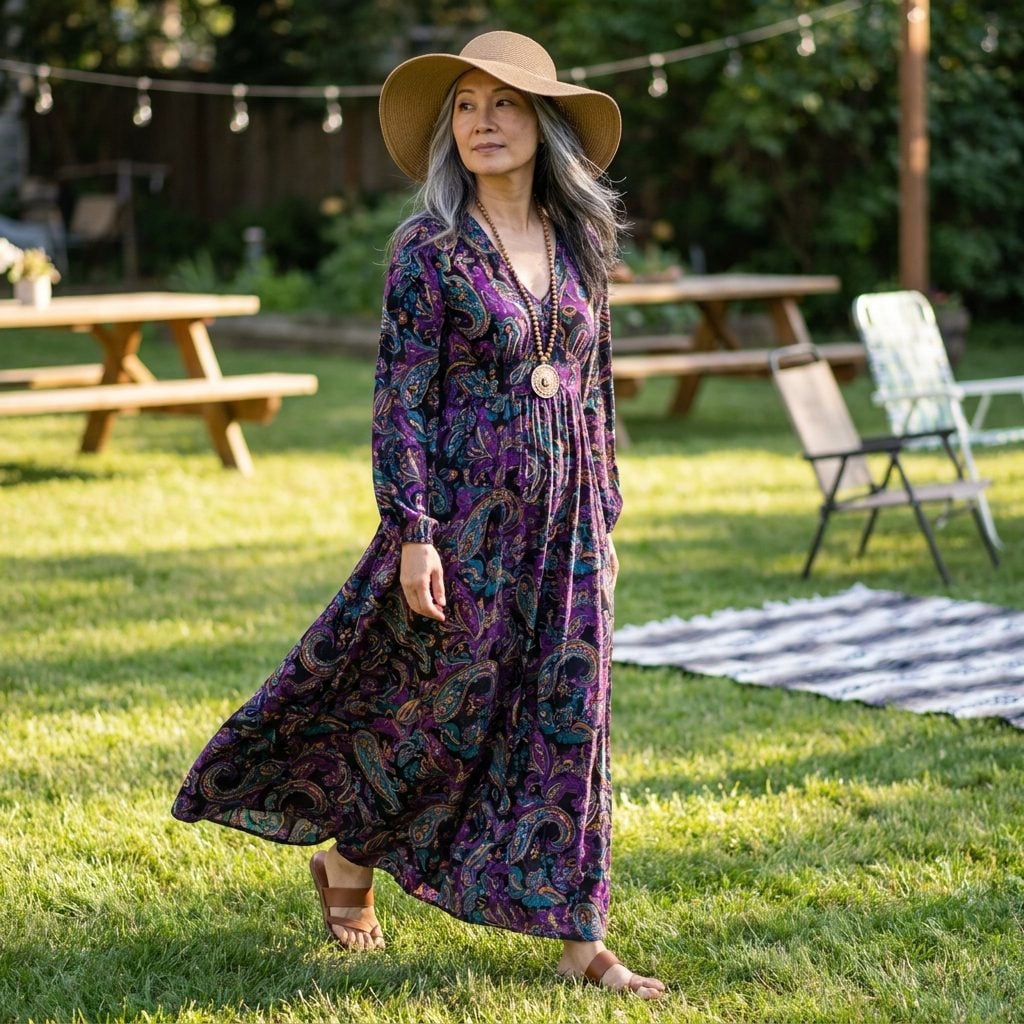
Floor-length in July. That fact alone would baffle anyone under 30, who associates summer dresses with showing as much leg as structurally possible. But the 70s maxi dress wasn’t about revelation. It was about movement, about the way printed chiffon or cotton caught a breeze and turned a walk across the lawn into something cinematic.
The prints were wild. Swirling paisleys in purple and teal. Oversized poppies on black backgrounds. Abstract washes of color that looked like someone had melted a sunset and poured it onto fabric. Paired with simple brown leather flat sandals and maybe a floppy hat, the look was simultaneously casual and dramatic.
Getting the hem muddy at an outdoor party was inevitable and nobody cared.
Fringed Suede and Cotton Tops That Moved Like They Had Somewhere to Be
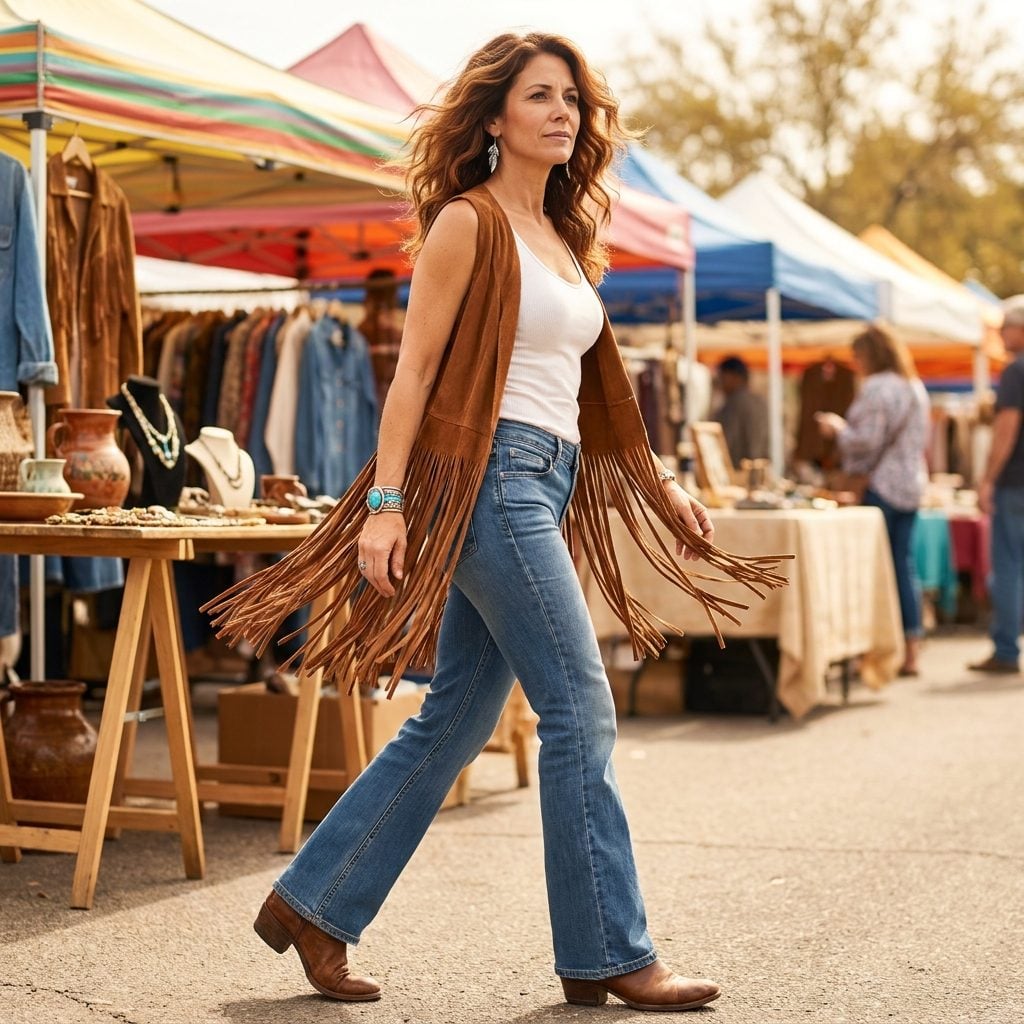
Fringe was not an accent in the 1970s. It was a lifestyle. Suede vests with three-inch fringe along every seam. Cotton crop tops where the entire bottom half was just dangling threads. Ponchos that were more fringe than poncho. The movement was addictive. You’d catch yourself swaying just to watch it sway back.
The suede versions came in tan, cognac, and that specific shade of brown that existed only in the 70s, somewhere between “saddle” and “old boot.” They smelled like leather and campfire smoke even if you’d never been near a campfire. Wearing one over a plain tank with your fringed vest swaying as you walked felt deeply, specifically cool in a way that’s hard to explain to anyone who wasn’t there.
High-Cut One-Piece Swimsuits Worn as Bodysuits With Cutoffs, Like It Was Normal
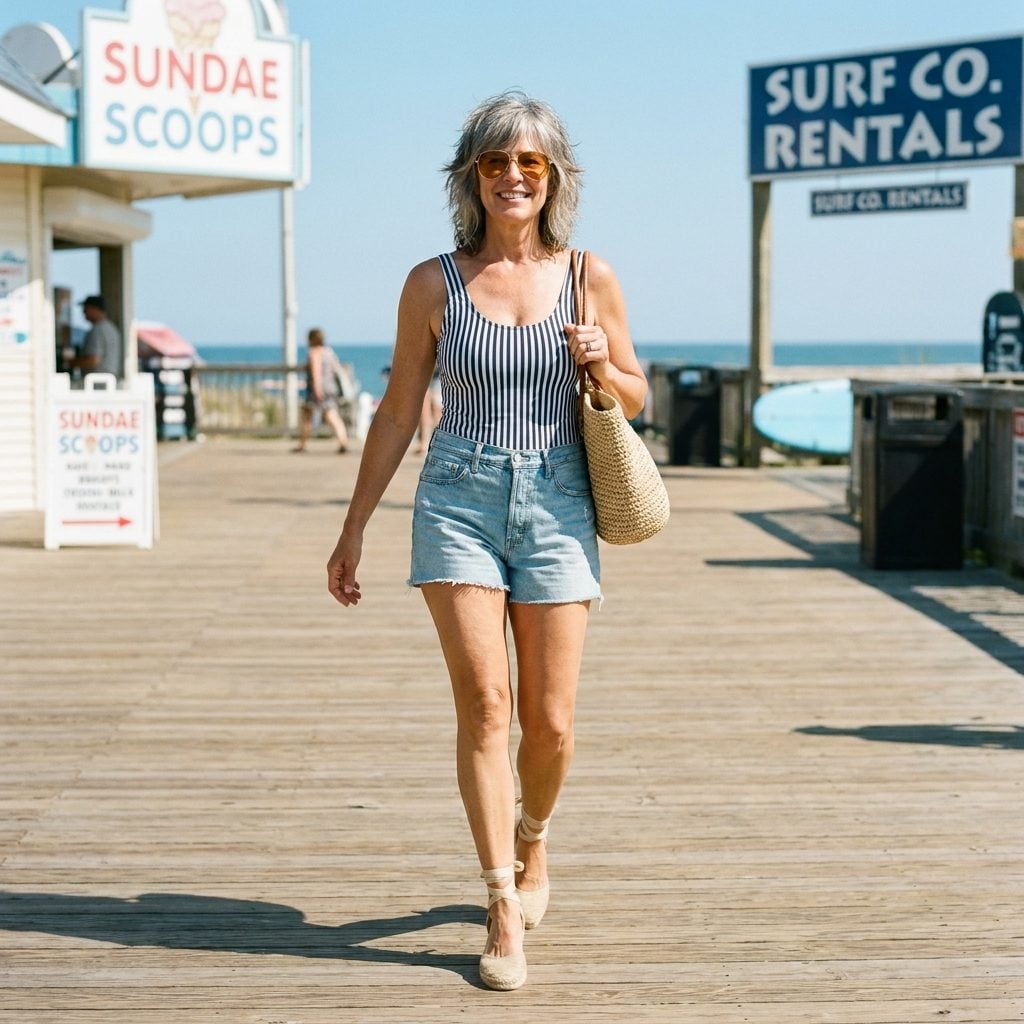
Because it was normal. The line between swimwear and daywear in the 1970s was imaginary, and nobody respected it. A high-cut one-piece in solid navy or a bold stripe served as a perfectly acceptable top for running errands, grabbing lunch, or going to the movies. You just threw shorts over the bottom half and walked out the door.
The leg openings were cut high enough to make the hip bone a featured architectural element. The necklines scooped or haltered. And unlike the athletic one-pieces of later decades, these had real structure: molded cups, interesting back details, sometimes a wraparound tie at the waist.
It was the original bodysuit moment, decades before Zara started selling them for $25.99 and calling it innovation.
Today, our readers lean the other way at the beach: asked which swimsuit they would buy, 69% picked a tankini and 29% a one-piece.
Platform Sandals and Chunky Wedges Worn to Do Absolutely Ordinary Things
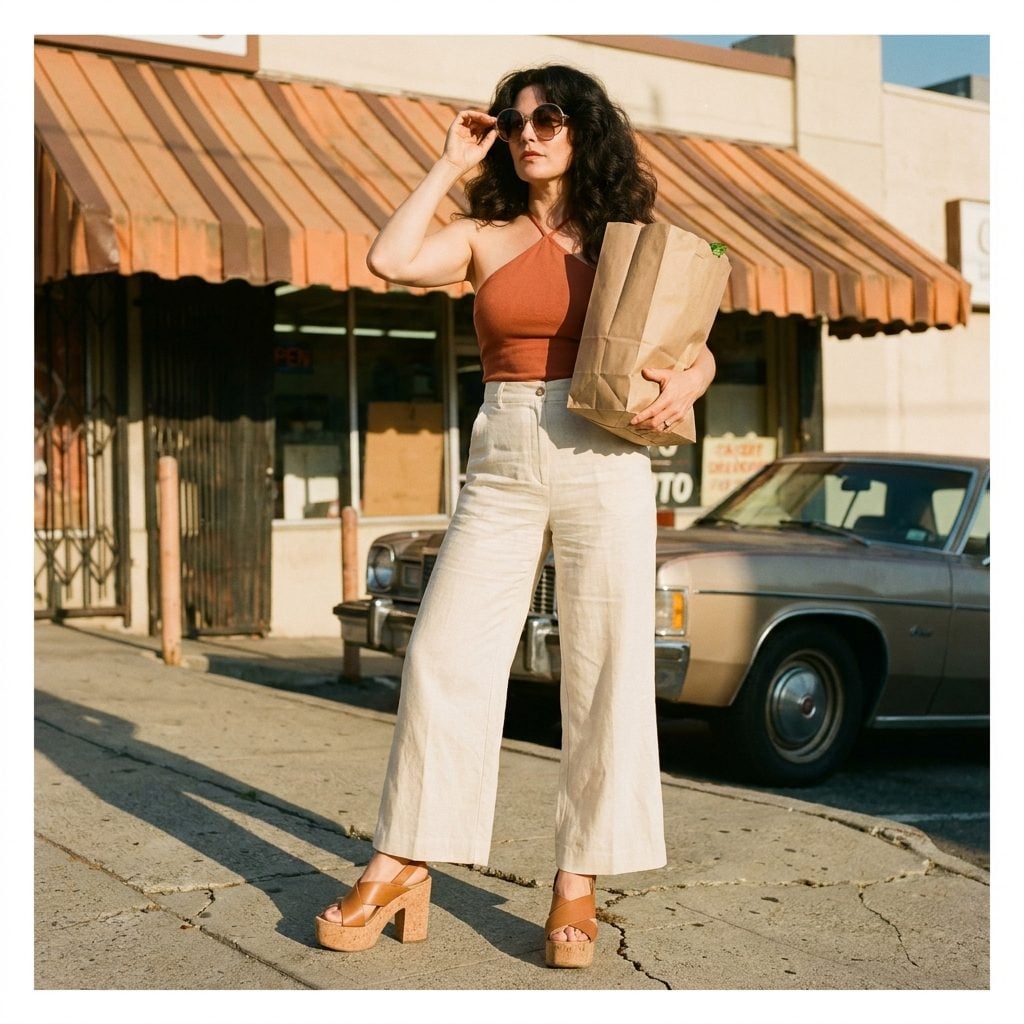
You wore four-inch cork platforms to the grocery store. To the post office. To water the garden, potentially. The 1970s did not recognize the concept of “occasion-appropriate footwear.” If you owned platforms, you wore platforms, and you wore them everywhere, on every surface, regardless of terrain or common sense.
The soles were cork, wood, or that strange spongy rubber that compressed unevenly over time so you’d eventually be walking at a slight tilt. Leather straps, sometimes woven, sometimes in colors like burnt orange or cream. The cork platform sandals added height and a particular kind of deliberate, slightly wobbly walk that became its own body language. You didn’t stride in these. You navigated.
Every woman over 40 has a sprained ankle story. Every single one.
Wooden Clogs With Everything, and We Mean Everything
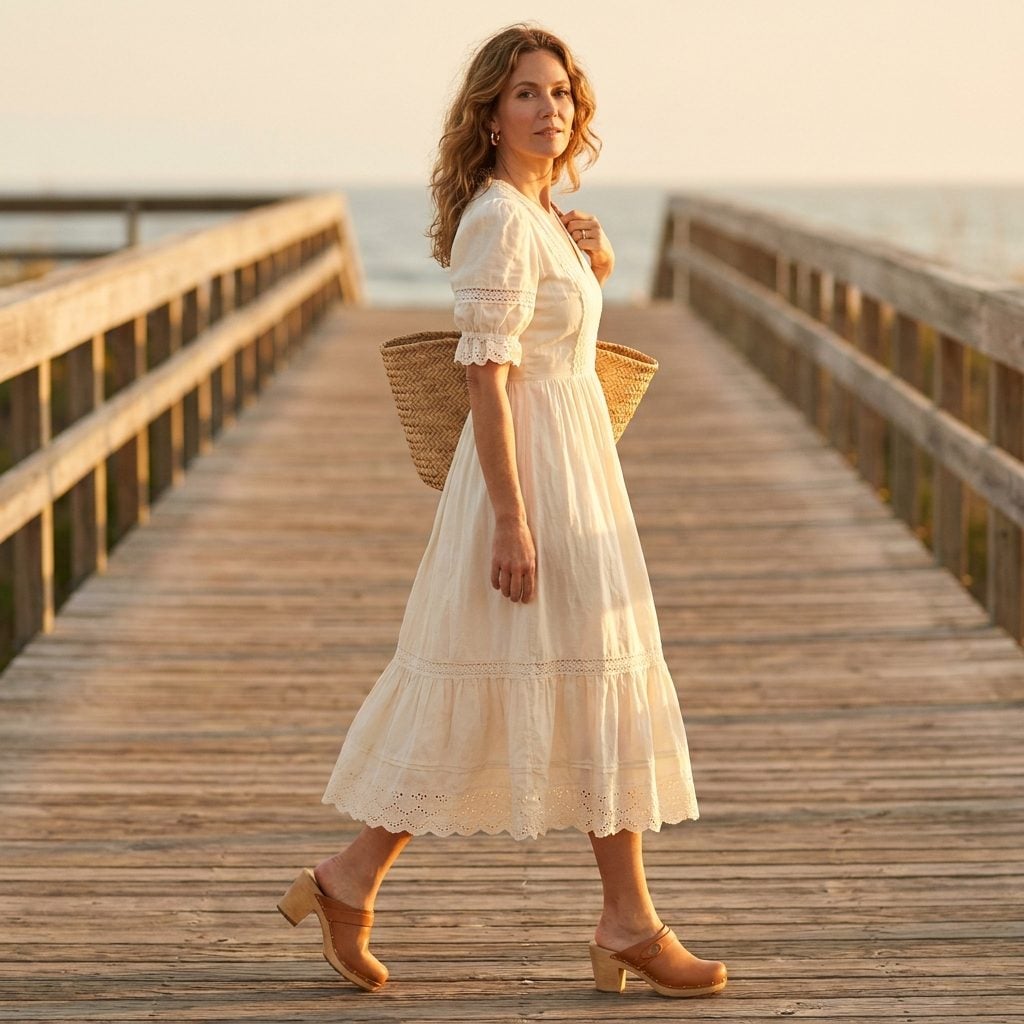
The sound alone could announce your arrival from two blocks away. Wooden clogs, usually from Dr. Scholl’s or some import shop that smelled like sandalwood, went with absolutely everything in your closet. Sundresses, cutoff shorts, prairie skirts. Nobody questioned it.
The soles were rock-hard, the heel was chunky, and your toes gripped the front like your life depended on it because there was often nothing but a single leather strap holding them on. Walking on grass? Forget it. Cobblestones? A death wish. But the look was non-negotiable. You’d clop through parking lots and grocery stores with the confidence of someone who’d never rolled an ankle, even though you absolutely had.
The wood darkened over time from wear and sweat and sun, and somehow that made them look better. We didn’t call it “patina” back then. We just called them broken in.
The Floppy Wide-Brim Hat That Made You Feel Like a Movie Star
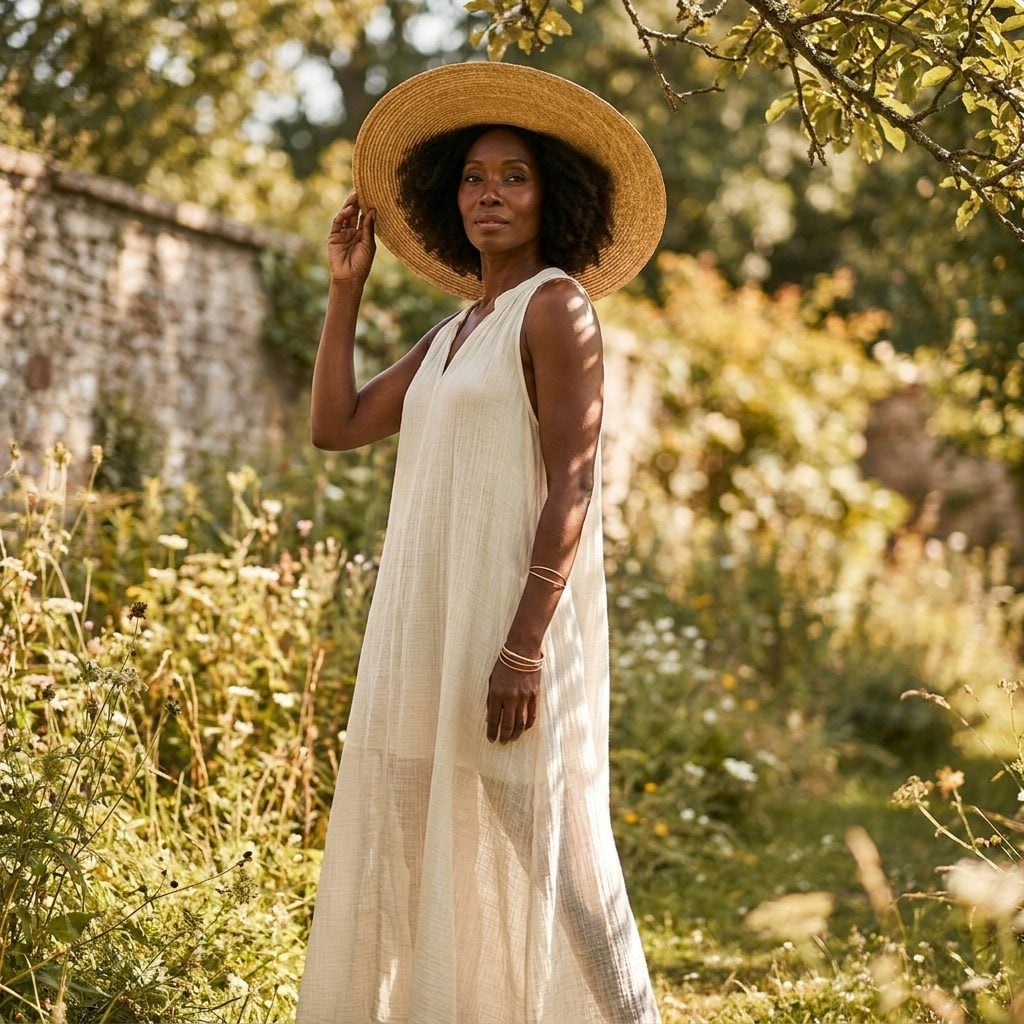
Every woman owned one, and every woman believed she looked like Ali MacGraw in it. The wide-brim floppy hat, usually in natural straw or soft felt for cooler evenings, sat perched on your head like a gentle announcement that you had somewhere romantic to be. Even if that somewhere was the Piggly Wiggly.
You paired it with everything loose and flowing. A gauze caftan. A halter top and palazzo pants. The hat demanded that the rest of the outfit keep things breezy. Anything structured underneath would have looked ridiculous, and somehow we all understood that rule without anyone writing it down.
The brim flopped in your peripheral vision. It blew off in the wind at least once per outing. But the silhouette was worth every inconvenience.
Oversized Aviators So Big They Practically Counted as a Helmet
❤️ Would you like to save this?
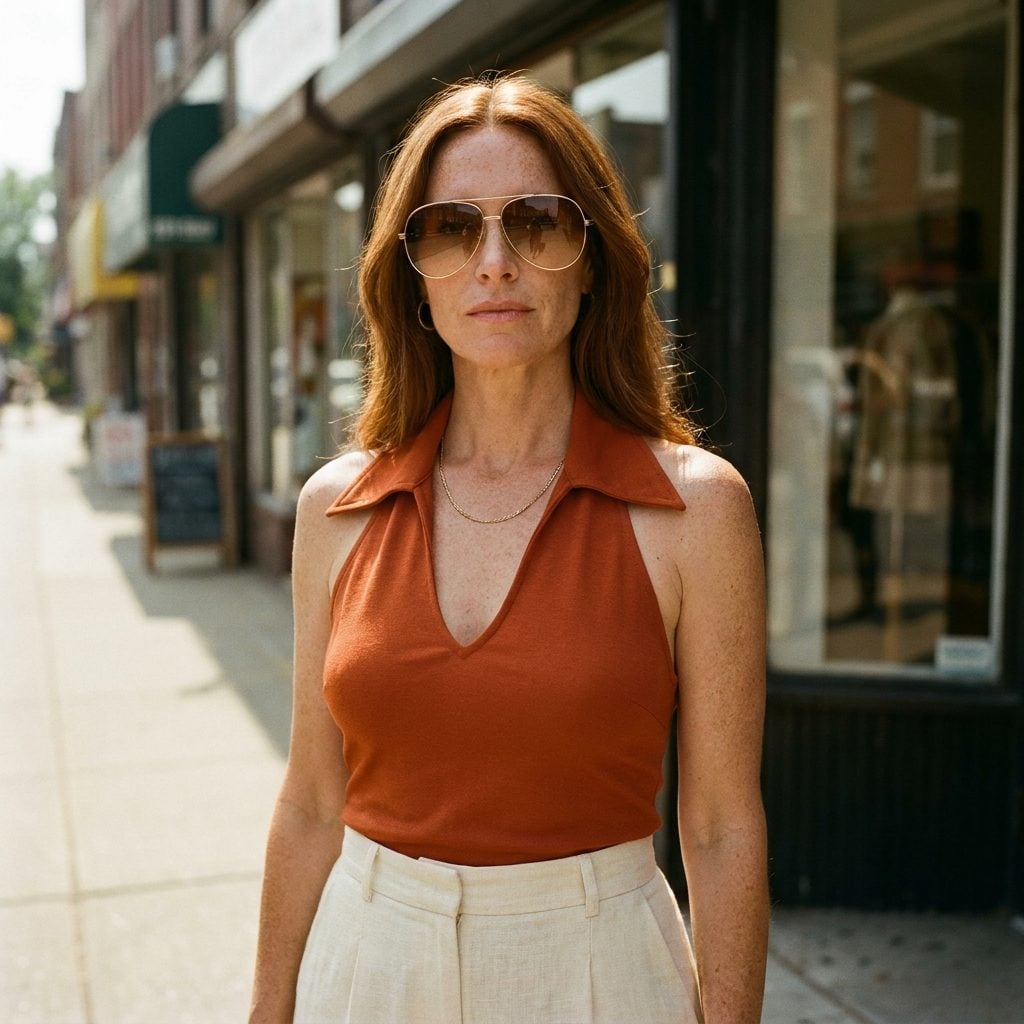
The lenses covered your eyebrows. Sometimes your cheekbones too. Oversized aviator sunglasses in the ’70s weren’t about subtle UV protection. They were face furniture. Gold wire frames, brown or amber gradient lenses, and a shape that suggested you might be about to board a private jet even though you were waiting for the bus.
Round frames ran a close second, especially if you were going for the Janis Joplin vibe instead of the Jackie O one. Either way, bigger was always better. The logic was simple: if someone could still see a significant portion of your face, the sunglasses weren’t large enough.
Layered Beaded Necklaces and Shell Jewelry Over Bare Skin

Three strands minimum. That was the unspoken rule. You layered wooden beads with puka shells with turquoise pendants with whatever your best friend brought back from a vacation to Mexico, and somehow the chaos worked. The less clothing you wore underneath, the more jewelry went on top. A simple tube top or a bikini became the canvas, and the necklaces became the actual outfit.
Puka shells were the real currency of coolness. If they were actual shell and not plastic, you made sure people knew. You’d hold one up to the light and explain the difference like a jeweler appraising diamonds. These necklaces clicked together when you moved, a soft clatter that became the background music of every beach bonfire and backyard barbecue from 1972 to 1979.
Macramé Belts With Fringe So Long It Had Its Own Zip Code
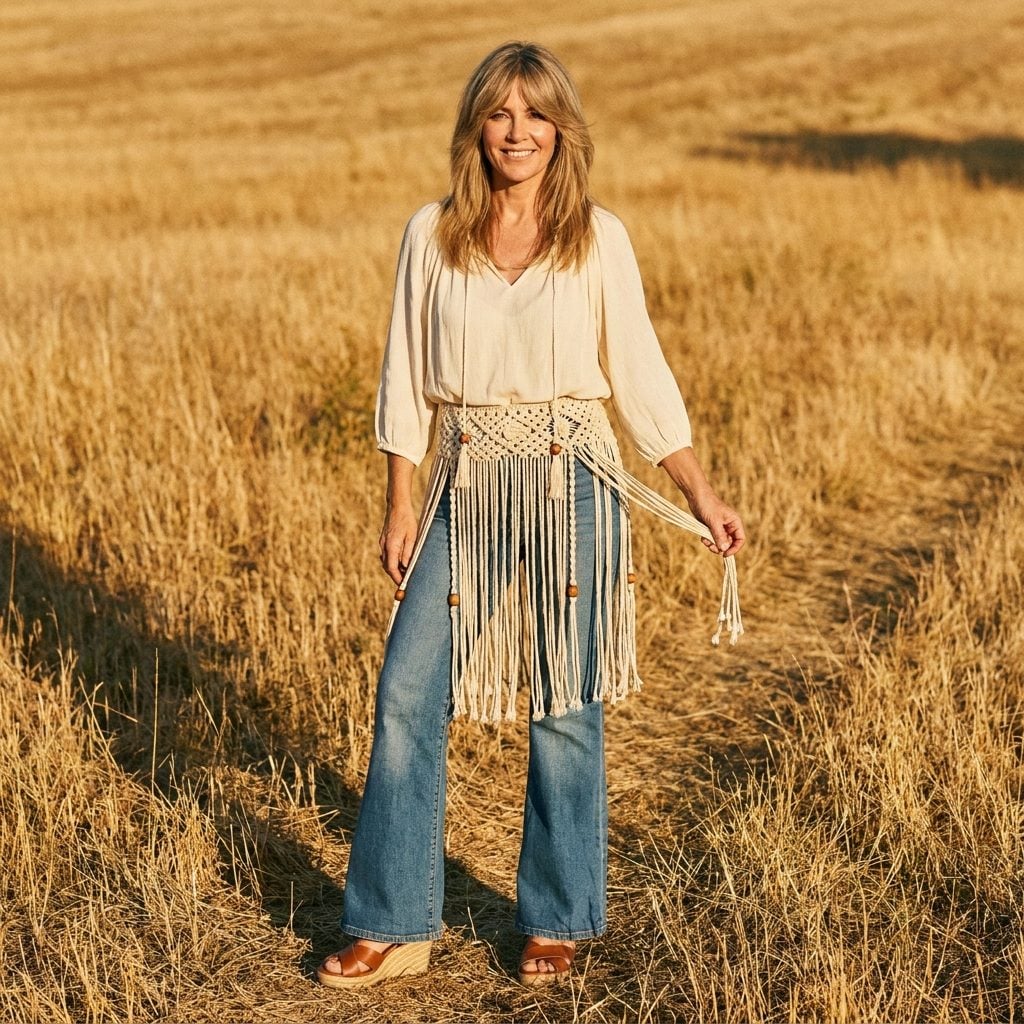
You either made yours or you knew someone who did. The macramé belt was the ultimate ’70s accessory outfits demanded: knotted hemp or cotton cord, usually in natural tan or cream, cinched at the waist or slung low on the hip, with fringe that hung down to your thigh. Sometimes past your thigh. The fringe swayed when you walked and got caught in car doors with alarming regularity.
These belts turned a pair of plain jeans and a peasant blouse into a statement. The craftsmanship varied wildly. Some were intricate, with tiny wooden beads worked into the pattern. Others looked like a third-grader’s first attempt at friendship bracelets, scaled up to belt size. Both versions were worn with equal pride.
Earth Tones on Earth Tones on Earth Tones (Not a Primary Color in Sight)
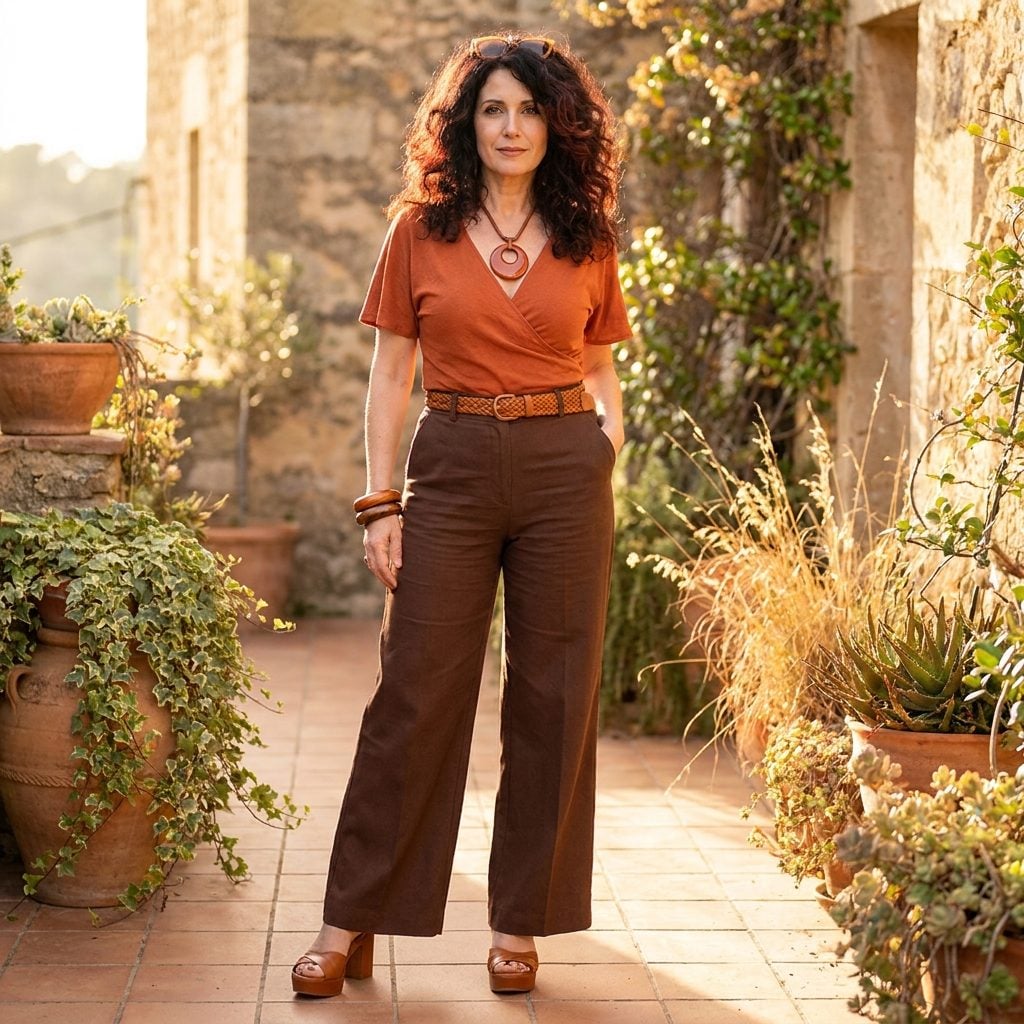
Rust. Avocado. Harvest gold. Burnt sienna. Chocolate brown. Terracotta. These weren’t just colors, they were the entire spectrum of a 1970s summer wardrobe. If your closet looked like the inside of a pottery kiln, you were doing it right.
Primary colors felt almost aggressive by comparison. A bright red top in a sea of ochre and tan would have made you look like you’d gotten dressed in the wrong decade. The palette came from everywhere at once: from natural dye movements, from the earthy aesthetic of folk music culture, from a genuine desire to look like you might have just walked out of a desert landscape at sunset.
The funny part is that these tones are notoriously tricky on certain skin tones. But nobody cared. We all committed to looking like a beautiful autumn leaf regardless of whether autumn-leaf colors actually suited us.
Terry Cloth Zip-Front Rompers in Sherbet Pastels You Wore Literally Everywhere
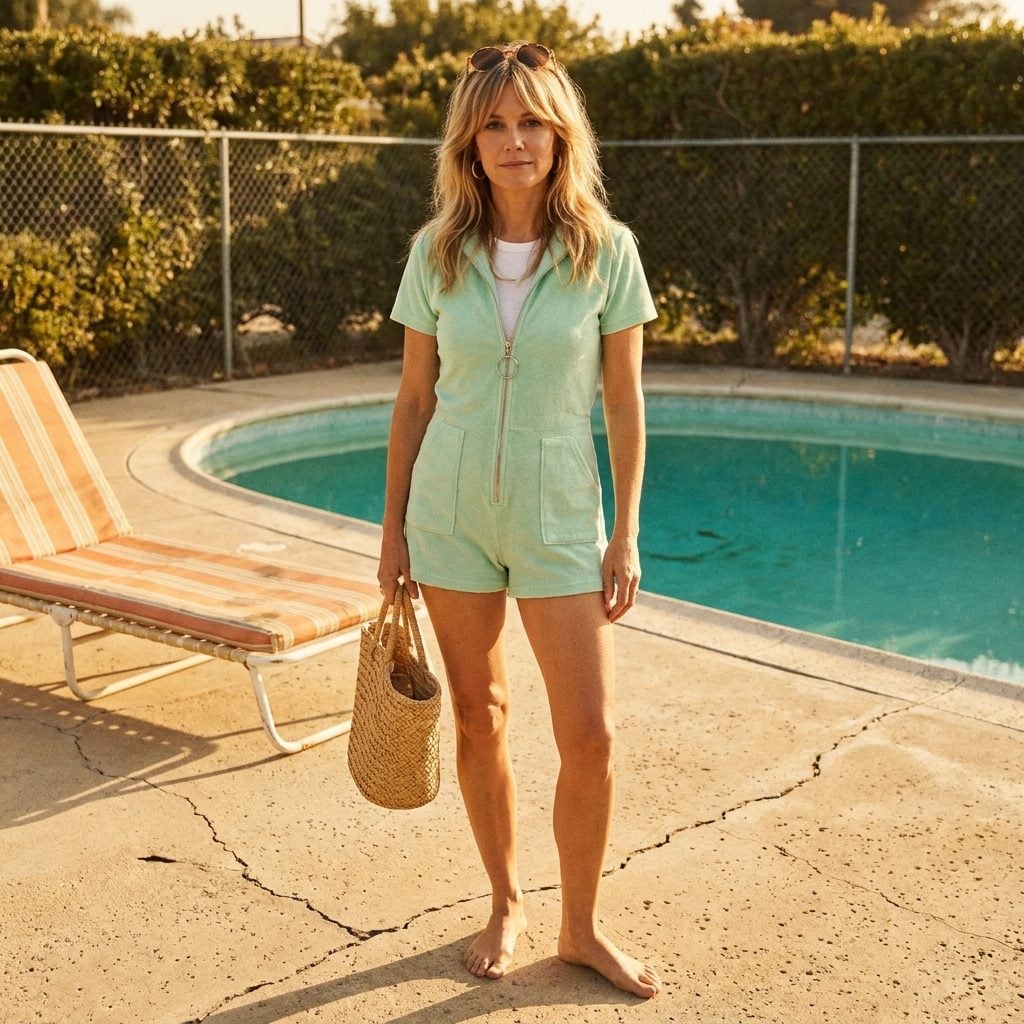
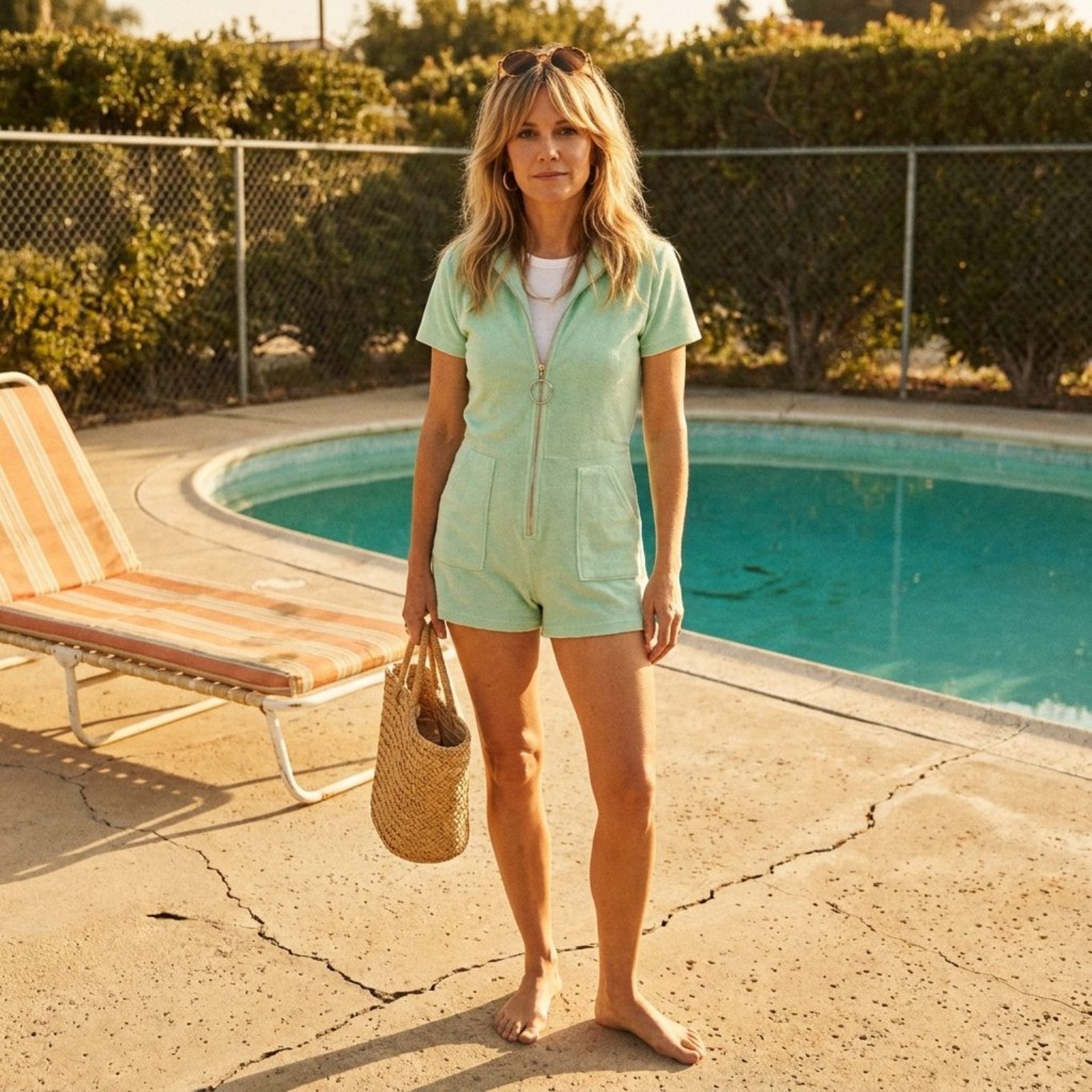
You’d zip one of these up over a still-damp swimsuit, slide into your car’s vinyl seats (ouch), and suddenly you were dressed enough for the grocery store. That was the logic, anyway. The fabric was basically a towel sewn into the shape of a jumpsuit, and nobody questioned it.
The colors ran from mint green to buttercup yellow to a dusty rose that photographed as straight-up pink. Most had a chunky metal ring pull on the zipper, and if you were feeling modest, you zipped it all the way to the collar. Feeling bold? Halfway down. The beauty of the terry cloth romper was that it dried you off while you ran errands, which is honestly more practical than anything we wear now.
The Chambray Shirt You Wore Open, Tied, Knotted, and Every Way But Buttoned
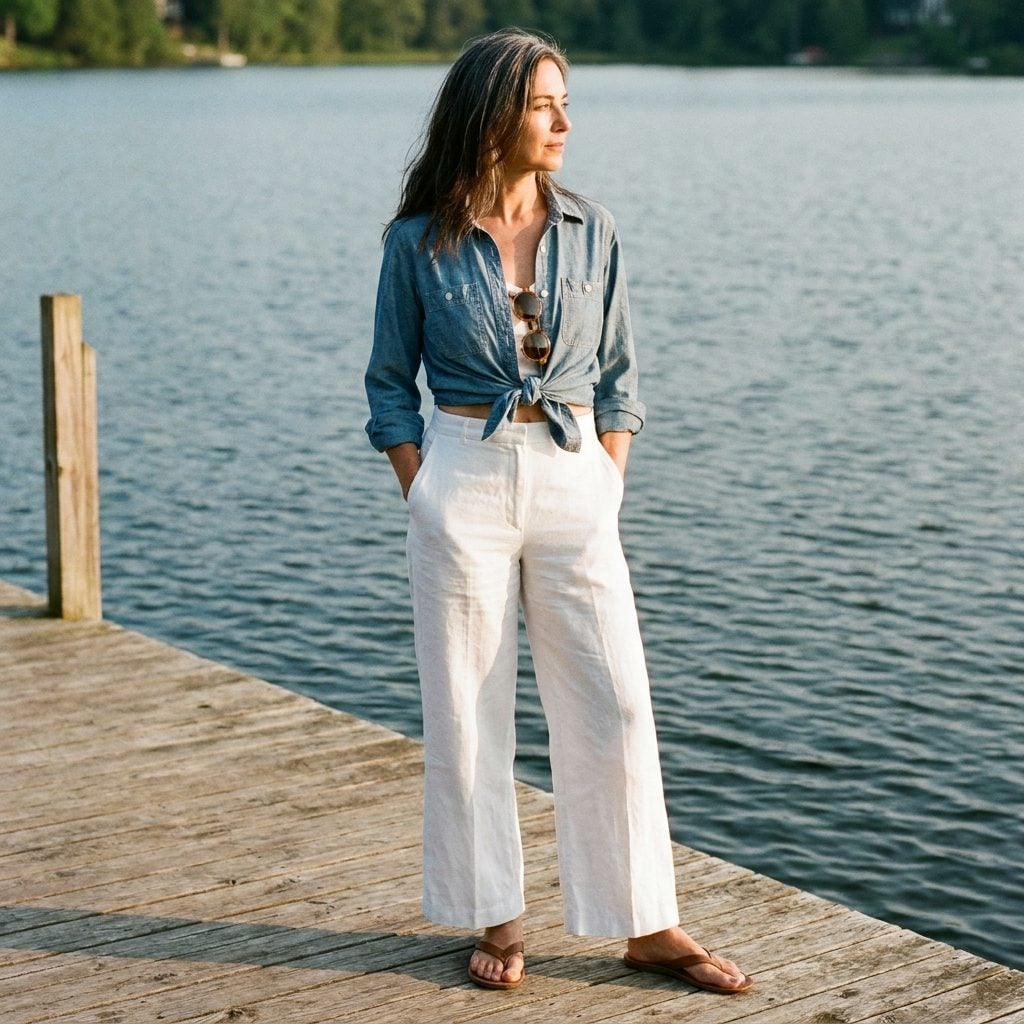
Buttoning a chambray shirt all the way up defeated the entire purpose of owning one. The lightweight chambray shirt was a layering tool, a styling weapon, a thing you threw over a bikini top or tied in a knot above your belly button with the sleeves rolled to your elbows. It was never, ever a shirt in the traditional sense.
The fabric was soft from the first wear, unlike stiff denim. That was the whole point. It draped. It moved. It gave you that specific look of someone who just happened to grab a shirt on the way out the door and look effortless doing it, even though you’d spent ten minutes getting the knot placement exactly right.
Barefoot or Barely-There Sandals as an Entire Lifestyle
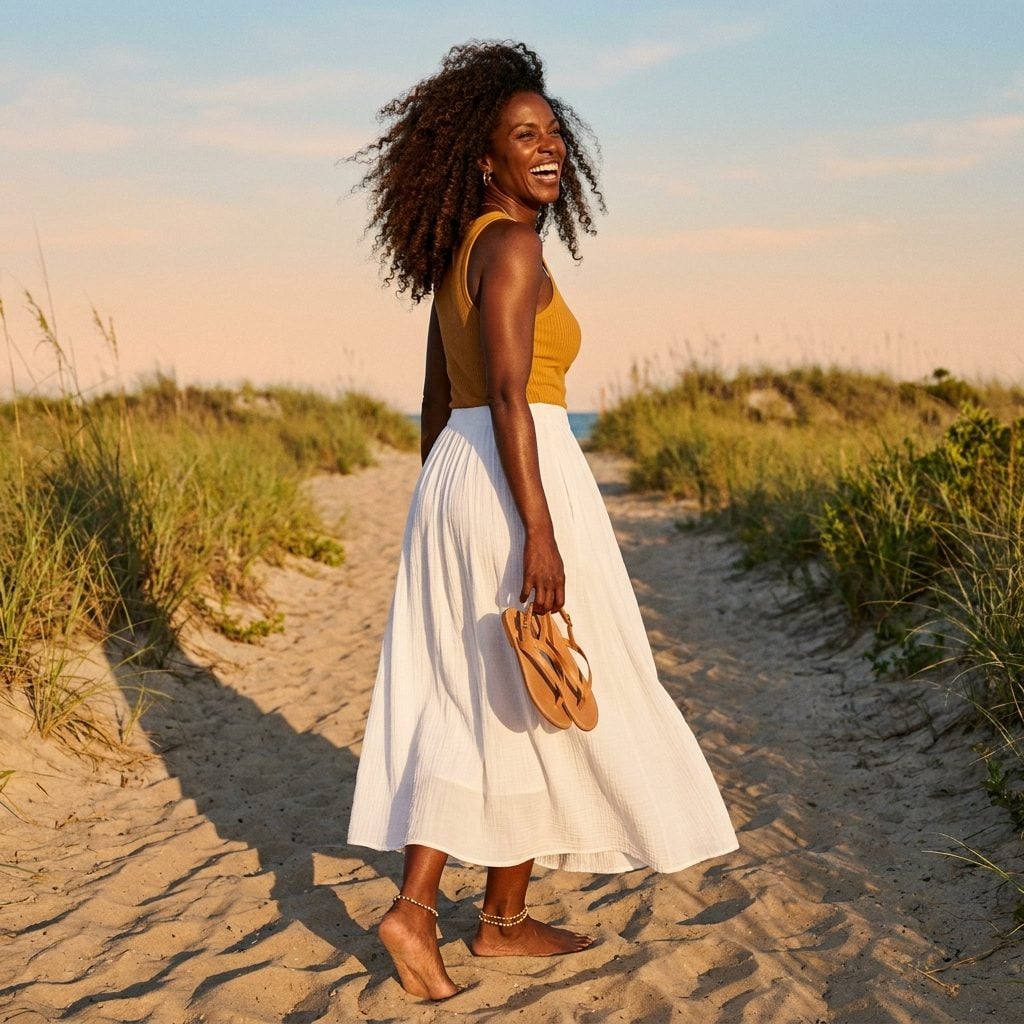
Shoes were optional in the ’70s summer, and honestly, a lot of us preferred the optional route. But when something went on your feet, it was the thinnest possible leather sandal. Two straps. Maybe one. A sole so minimal you could feel every pebble.
The brands that mattered were simple. Bernardo made a beautiful flat that felt like wearing almost nothing. Famolare had the wavy rubber sole that was supposed to help you “get there.” Birkenstock existed but hadn’t yet become the cultural monolith it is now. Mostly, you found your sandals at a leather goods shop or a craft fair, and they smelled like tanned hide for the first six months.
Going barefoot carried no stigma whatsoever. Gas stations, grocery stores, concert lawns. Your feet turned brown on the top and calloused on the bottom, and that was considered perfectly normal. The bottom of your foot was basically a shoe.
The flat-sandal habit has staying power, since about half of ThreadCurve readers chose flat sandals over wedges and heels when asked which pair they would buy.
Sun-Bleached, Air-Dried Hair That Hadn’t Seen a Blow Dryer All Summer

Your hair told the story of your summer. By August it was three shades lighter than it had been in May, dry at the ends from salt water and chlorine and sun, and you wore it exactly as it landed after air-drying. No products. No heat. No apology.
Center parts were universal. The hair just fell where it fell, sometimes tucked behind one ear, sometimes not. If you had naturally wavy hair, the waves got wilder as the humidity climbed. If you had straight hair, it hung like a curtain, parted clean down the middle, shining in the sun. Both were correct.
There was something honest about 1970s hair. It looked like the person wearing it had been outside living her life, not sitting in front of a mirror perfecting it.
Lemon juice was the closest thing to a styling product. You squeezed it in, sat in the sun, and waited. Sun-In came along later in the decade for anyone who wanted to speed the process up, though the results were often more orange than blonde. Nobody’s highlights were even or deliberate. They just happened, and they were perfect because of it.