
❤️ Would you like to save this?
The 1980s blazer has been sitting on resale racks for forty years, waiting for someone to figure out what to do with it. Wide shoulders. Lapels with opinions. A fit that isn’t what fits now — which is exactly why it works, once you know how to handle it. What follows are the specific moves that pull a vintage blazer into the present without costume, without apology, and without pretending the shoulder pads aren’t there.
FYI, thanks to AI imagery software, we’re able to create very specific fashion and hairstyle examples to illustrate the points being made. In some cases, imagery is exaggerated to hammer home the point. Also, assume links that take you off the site are affiliate links such as links to Amazon. this means we may earn a commission if you buy something.
26. Bike Shorts and Sneakers to Break the Formality
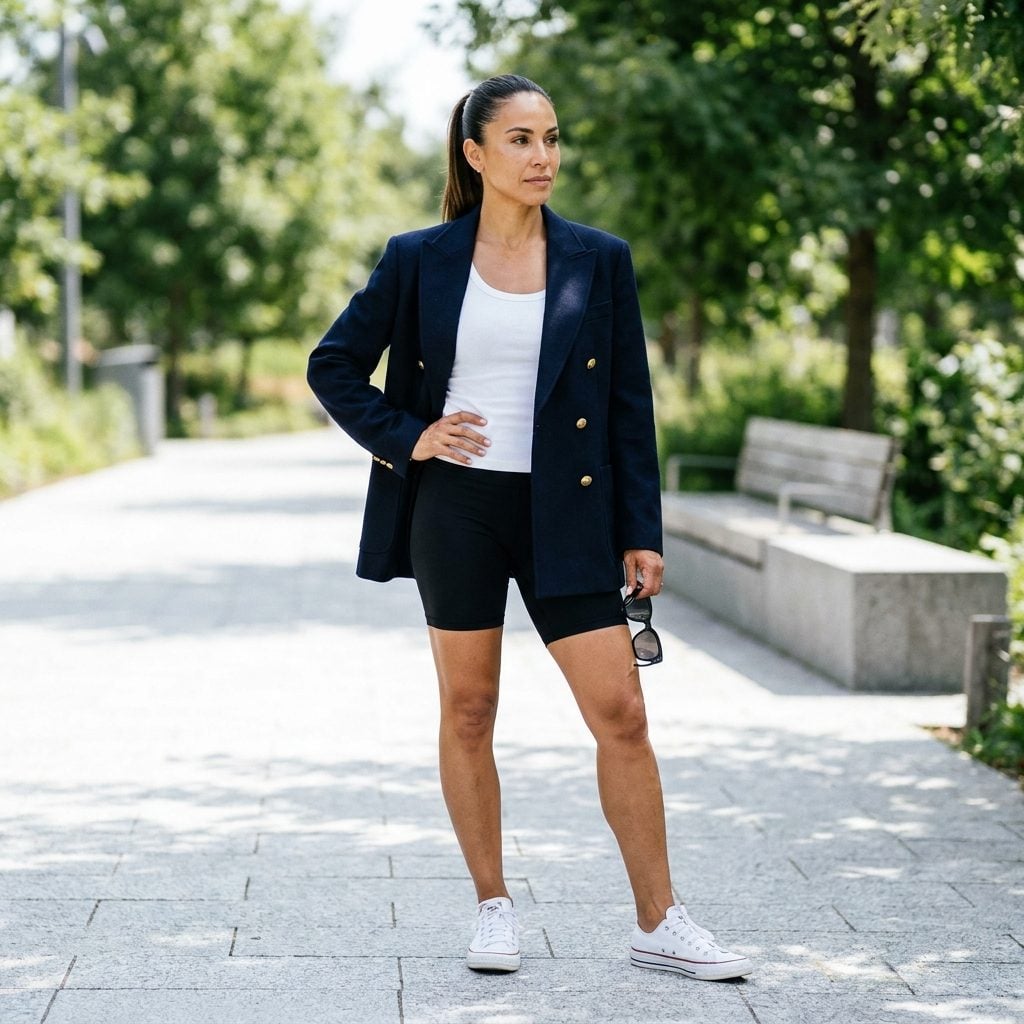
The combination shouldn’t work and does. Blazer says boardroom, shorts say spin class, sneakers say Sunday. Together they say a woman who dresses for herself.
Proportional honesty is the rule. The blazer must be genuinely oversized. The shorts must be genuinely fitted. If either one softens toward the middle, the contrast collapses and you look confused. Commit to both extremes.
25. Cut the Shoulder Pads Out for a Softer Drape

Take a seam ripper to the shoulder pads. Ten minutes. The whole personality of the blazer changes.
What you end up with is the silhouette everyone is currently trying to buy new for four hundred dollars — that slouchy 90s minimalism drape, on a jacket you already own. The wool remembers the old shape a little at first, then it forgets. Give it a week.
24. Push the Sleeves and Let the Lining Show
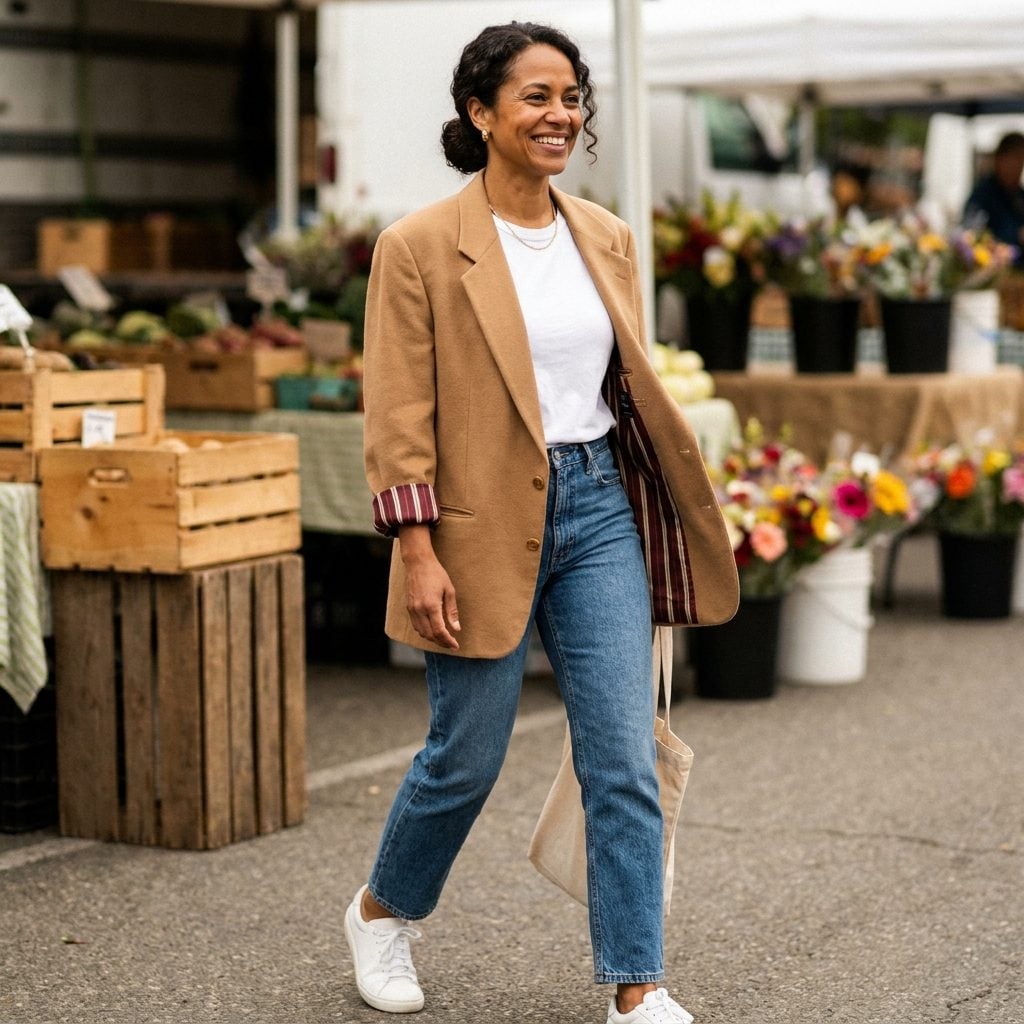
Old blazers almost always have a good lining — silk, striped, sometimes paisley, sometimes a color that has no business being in there. Modern blazers do not do this anymore because it costs money.
Push the sleeves up. Let two inches of that lining show at the cuff. You’ve just introduced a second color and a second texture without adding a single accessory, and you’ve signaled that this is a real garment, not fast fashion. Smallest possible styling move, biggest story about what you’re wearing.
23. One Button Closed Over Wide-Leg Trousers

22. Vintage Graphic Tee Under a Serious Jacket

One serious piece, one unserious piece. The blazer is the serious one, so everything it touches has to be a little rough or the whole thing tips into costume.
A soft faded tee with a graphic your teenager would recognize does the work. Jeans that have actually been worn. Boots that have walked somewhere. The blazer needs a scruffy counterweight or it reads like you’re on your way to a deposition.
21. The Silk Scarf Pocket Square Move

An old silk scarf your mother had, or one from a resale bin for six dollars, folded roughly into thirds and tucked into the breast pocket. Not styled. Not precise. Just tucked.
This move reads expensive because nobody does it anymore. The 80s blazer originally came with a breast pocket meant to hold something — give it something to hold.
20. Belt It Over a Slip Dress to Kill the Boxy Fit

The belt is the whole trick. An 80s blazer runs boxy from shoulder to hem by design, which is exactly what makes it read dated on its own. Cinch it at the natural waist over a fluid slip and the silhouette flips from rectangle to hourglass in one motion.
The slip has to be genuinely fluid, not structured — you want the blazer doing the sharp work up top and the dress doing the soft work below. Both structured, and you get a costume. Both soft, and you get pajamas. This is the tension that carries the look.
19. French Tuck a Fitted Tee Into High-Waisted Denim

The half-tuck exists because a full tuck under an oversized blazer makes you look like you are wearing your dad’s clothes to a first day of school, while a no-tuck erases the whole midsection.
Pinch the front of the tee, push it behind the waistband, walk away. That’s the whole technique.
18. Slip Skirt and Combat Boots to Rough It Up
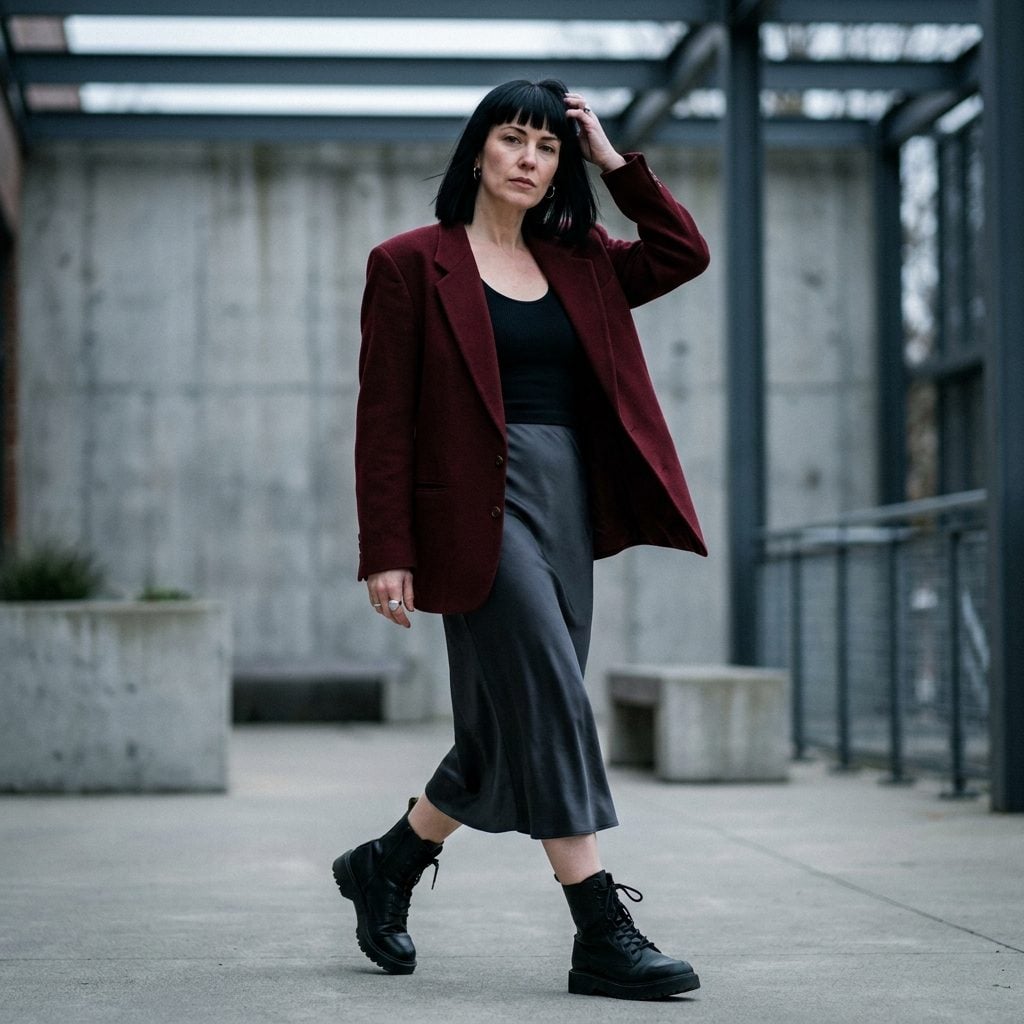
Slip skirt does the femininity. Boots refuse to apologize for it. Blazer plays referee.
What keeps this from feeling like a teenager’s first attempt at grunge is the quality of the individual pieces — a satin slip with real drape, boots with weight, a wool blazer with proper structure. Three good things having an argument.
17. Statement Earrings, Everything Else Quiet

When the outfit is quiet, one loud thing becomes the point. Tonal dressing plus a serious earring is the formula that always works and almost nobody uses, because it feels too simple to be a strategy.
Sculptural gold, oversized pearl, anything with weight that catches light. Blazer stays open. The rest of the outfit stays in one color family. The earring does the talking — and it will out-dress rooms full of people who tried much harder.
16. Shorten the Hem and Add a Skinny Belt to Break the Boxy Line

The eighties blazer earned its bad reputation for one reason — the silhouette drowned everyone in a wide rectangle. Cut the hem to just below the ribcage, belt it over the jacket itself, and suddenly the shoulders you spent years trying to hide become the entire point of the outfit. Proportional play is the whole trick, and shortening the hem while cinching the waist recovers an hourglass line the original cut buried under all that wool.
Pair it with a fitted midi skirt in a darker tone. The eye stops at the belt.
15. Drape It Cape-Style Over Your Shoulders and Let the Sleeves Hang
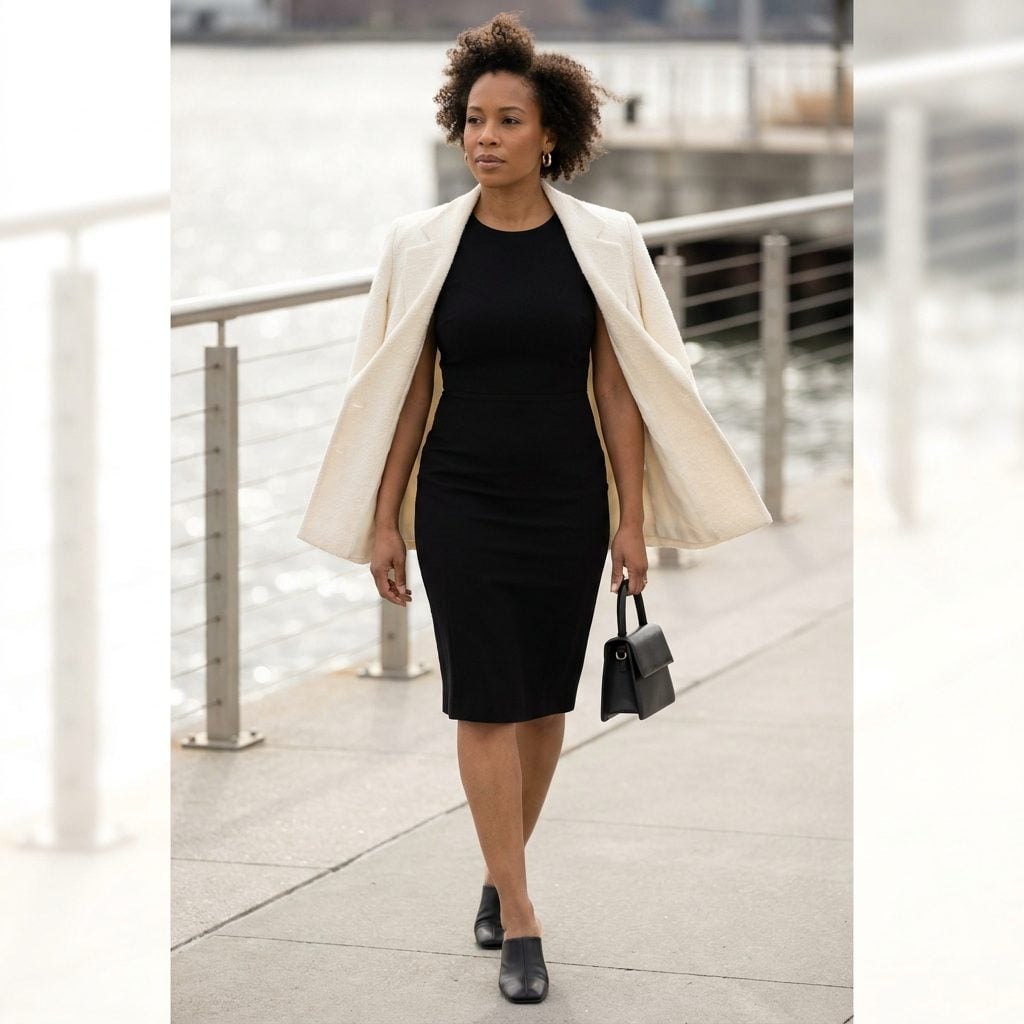
Wearing the blazer without actually wearing it is the oldest trick in the editorial book, and it works because it sidesteps the eighties fit problem entirely — you never have to reckon with the shoulder pads or the sleeve width. The jacket becomes a layer of texture and color rather than a garment with rules.
Contrast drives it. Fluid dress underneath, structured tailoring floating on top. Two opposing weights held in balance by one confident posture, and it reads intentional every single time.
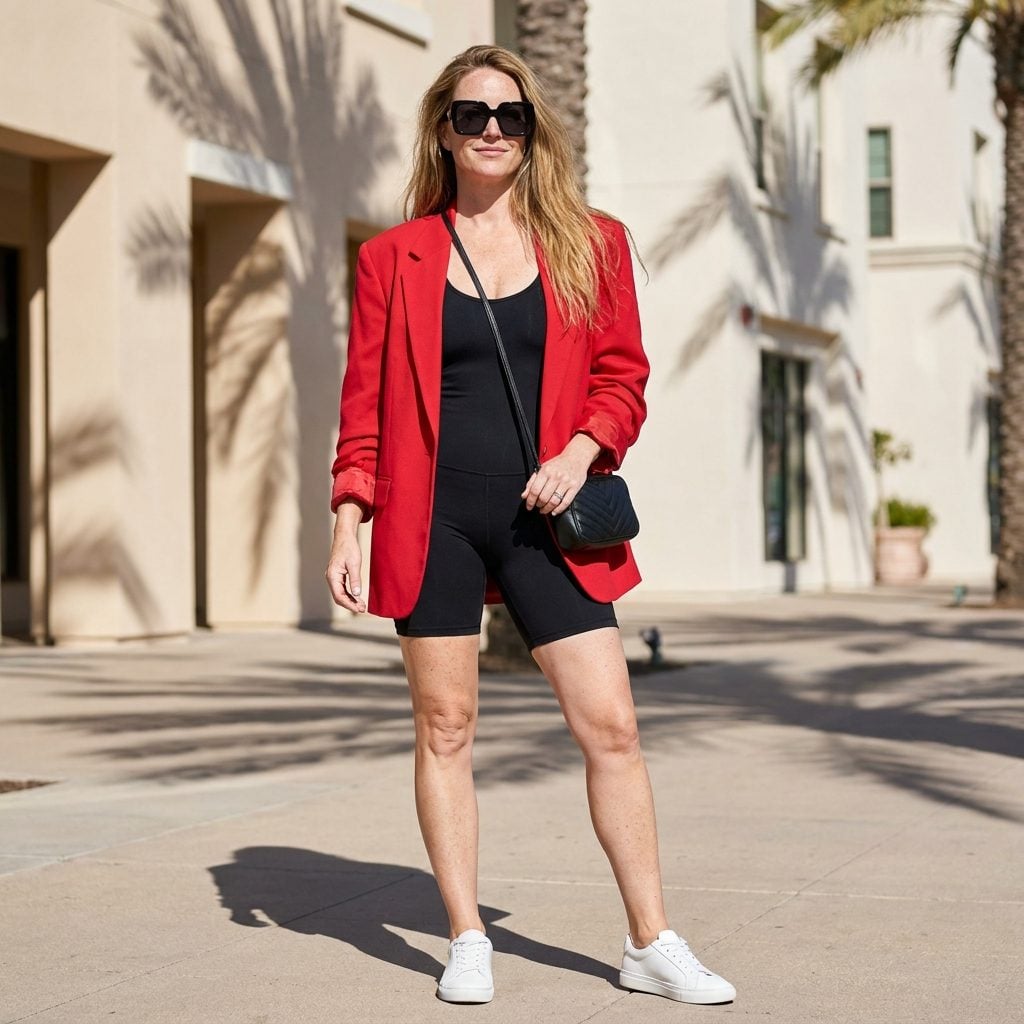
14. Throw It Over a Bodysuit and Bike Shorts for the Sport-Luxe Contradiction
❤️ Would you like to save this?
Two garments the eighties never imagined together, which is exactly why this works.
The look runs on collision — bike shorts read athletic and current, the blazer reads formal and vintage, and slamming them together short-circuits the reference before anyone can name it. Nobody thinks eighties. They think now. Push the sleeves to the elbow so the bulk of the jacket doesn’t swallow the leaner pieces underneath, and let the sneakers ground the whole outfit against gravity.
13. Turn It Into a Matching Set with a Skirt Cut from the Same Fabric
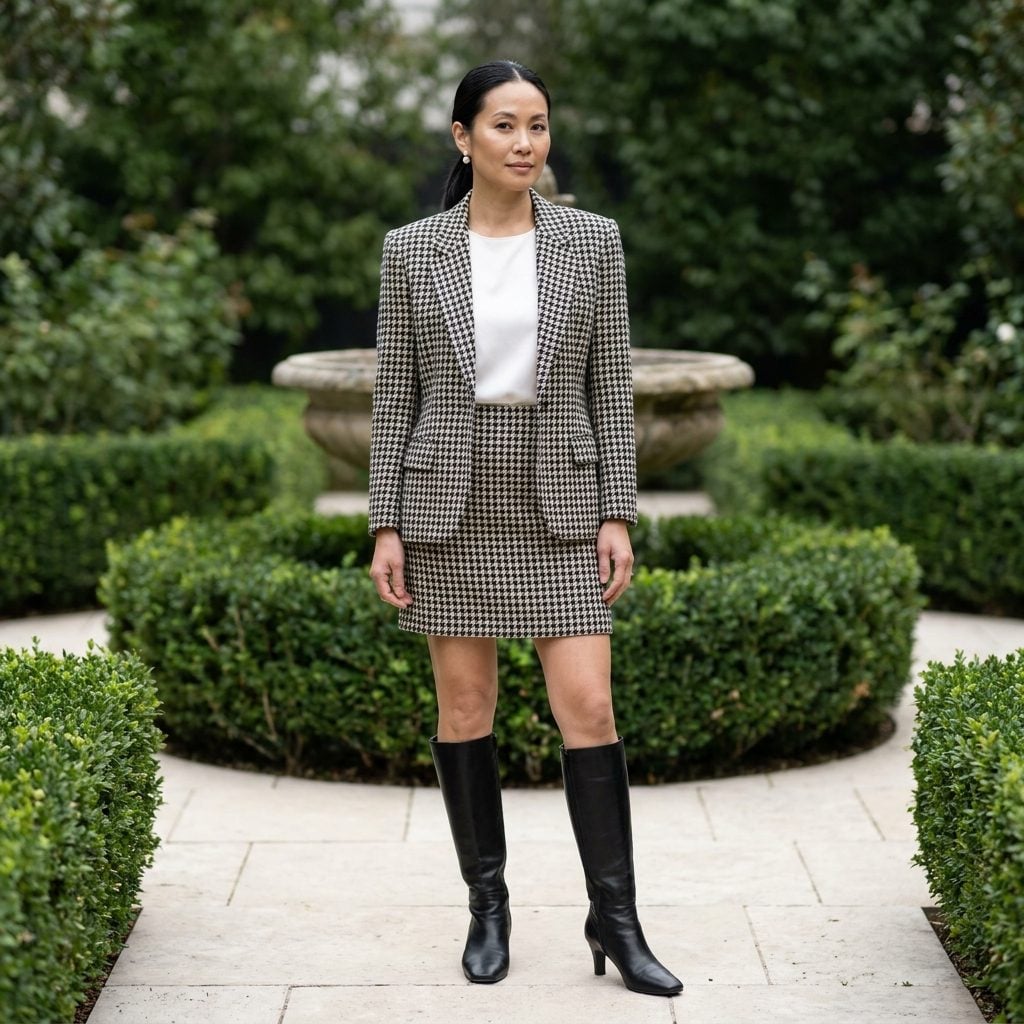
Find a tailor. Bring them the blazer along with enough remaining fabric — or ask them to source a close-matching wool — and request a mini or short skirt cut to your measurements. Suddenly the suiting becomes a set, and a set reads intentional in a way separates never quite manage.
Color and fabric commitment do the heavy lifting here. When top and bottom match completely, the eye reads one long silhouette rather than a jacket plus a skirt, which elongates the whole line and quietly makes the shoulders look proportional again.
12. Wear It Over Leggings and Sneakers as Elevated Athleisure
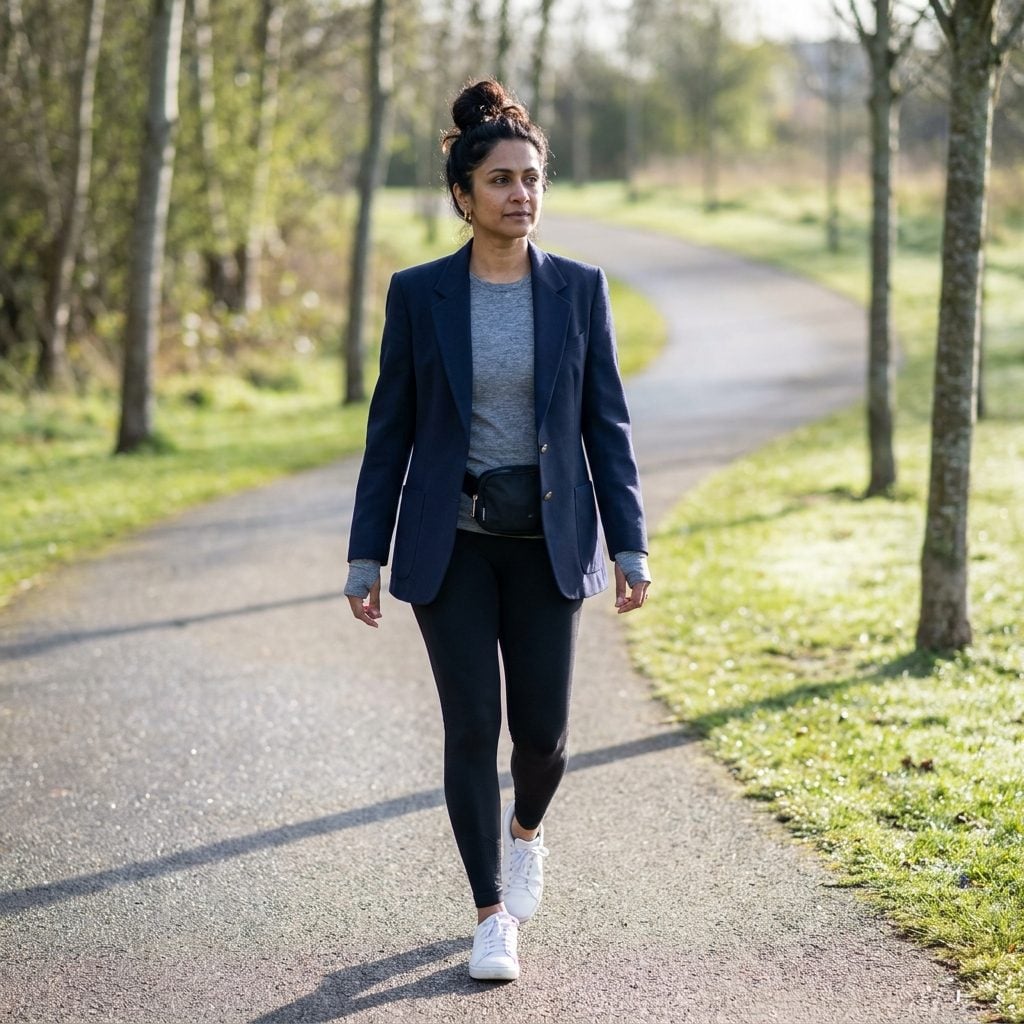
The sharpest way to modernize a vintage jacket is to force it into a context it was never designed for, and leggings with sneakers read 2020s the moment you see them. Slip the blazer on top and the whole outfit pulls up a level without being asked to work any harder.
Push the sleeves. That one move separates polished athleisure style from a woman who put a blazer on over her workout clothes and hoped nobody noticed.
11. Pair It with Wide-Leg Linen Trousers for Effortless Tailored-Casual

Wide-leg linen is the great equalizer. Drop those trousers under any structured jacket and the outfit loses its formality without giving up its shape.
Proportion carries this one. Relaxed volume below softens the boxier top half of the blazer, so instead of reading dated, the whole silhouette reads considered. Roll the trouser hem a half turn if the length runs long — a tiny adjustment that separates a woman who dressed carefully from one who simply got dressed.
10. Half-Tuck It Into a Leather Mini Skirt for a Slightly Reckless Edge

A full tuck reads businesslike, no tuck reads casual, and the half-tuck reads like you have somewhere to be and know exactly what you’re doing on the way there.
Grab a fistful of the front hem on one side, push it into the skirt waistband, walk away. Asymmetry is the whole game, and it’s why the outfit stops looking like a costume and starts looking like a real Wednesday night decision made by a real Wednesday night woman.
9. Layer It Under an Open Trench for Depth on Cold Days
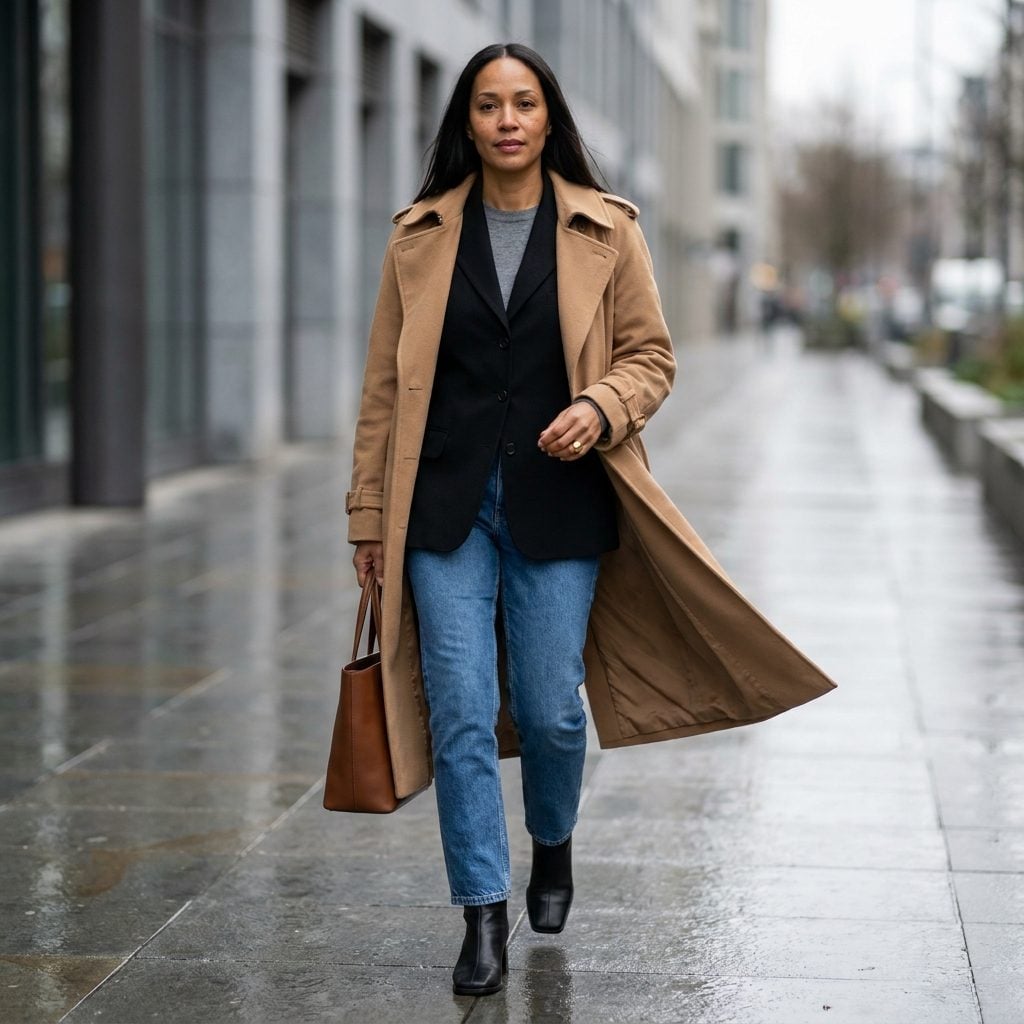
Two coats. Yes.
The trench-over-blazer combination works because the two garments do completely different jobs. The blazer defines your waist and holds structure across the chest, while the trench floats over everything and adds a long vertical line down the whole outfit. Layered together, the eye gets three depths of tailoring, which is a level of considered dressing most people won’t attempt on a weekday.
Leave the trench belt hanging loose or knot it at the back. A buckled belt over a blazer over a shirt is one buckle too many.
8. Cinch It with a Corset Belt to Rebuild the Waist the Eighties Erased
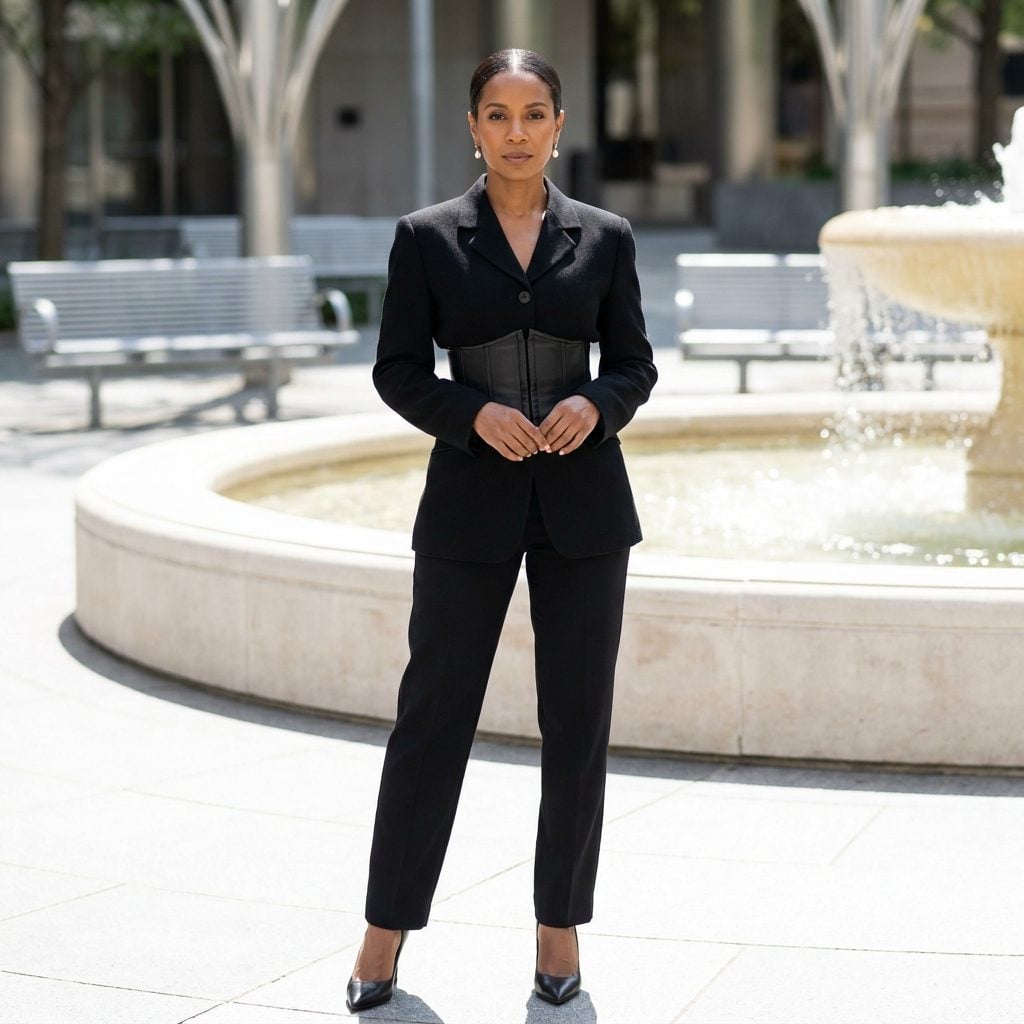
The eighties blazer was designed to hide the waist entirely. A corset belt undoes that in ten seconds flat.
Wider and more structured means more decisive reshaping. Look for something at least three inches wide with real internal stiffening, not a soft strap that will crumple by lunch. Position it just above the natural waist rather than directly on it, which visually lengthens the leg line below and telescopes the torso upward.
7. Roll the Sleeves and Ground It in Dark Denim

The sleeve roll is the whole trick. An 80s blazer reads dated when the shoulder line sits high and the sleeve runs long, so pushing the fabric back to three-quarter length shortens the visual weight up top and shows wrist, softening everything.
Dark indigo denim does the second job — anchoring the wool, keeping the outfit from tipping nostalgic, and quietly signaling that the blazer is a choice rather than a leftover from a former job.
6. Open Over a White Tee With One Strand of Pearls

Pearls against a plain white tee is the styling move most women skip because it sounds too obvious. It isn’t. The tee strips the pearls of their formality, the pearls lift the tee out of laundry-day territory, and the blazer sits between them doing translator work.
Leaving it open matters. A buttoned 80s blazer commits to the decade. Unbuttoned, it becomes outerwear — and outerwear doesn’t age. The style reads editor, not archivist.
5. Layer It Over a Bodysuit and Palazzo Pants

Palazzo pants in the same color family as the blazer create a column, and the column is what makes the shoulder line stop looking loud. Instead of a padded 80s top half fighting a modern bottom, the eye reads one continuous vertical from collarbone to floor.
The bodysuit is the load-bearing piece. It keeps the waist defined under the volume, which is the difference between fluid and shapeless. Swap in a loose tucked tee and the whole thing collapses.
4. Silk Cami and Tailored Bermudas for Summer

Bermudas and a blazer sound like a costume until you tailor both. Shorts hit at the knee, no higher. Blazer skims, doesn’t swallow. Those two proportions in agreement turn the outfit editorial instead of eccentric, and without that agreement the whole thing looks borrowed from a middle-school production of Working Girl.
The silk cami softens everything. Wool on top, silk in the middle, tailored cotton on the bottom — three textures in one tonal family, and that texture triangle carries more weight than any single piece in the outfit.
3. Shrug It Over a Slip Nightgown-as-Dress for the Bedroom-to-Boulevard Trick

The whole tension between lingerie-soft and boardroom-hard is what makes the outfit land. A slip alone reads too undressed for most public rooms, and a serious 80s blazer alone reads like a costume you rented for a party. Put them together and each piece negotiates with the other until you arrive somewhere that actually feels current.
Proportional restraint is the driver. Do not button the blazer, do not belt it, and let it hang open and slightly off the shoulders so the silk does the talking while the wool just frames the conversation. A bias-cut ivory slip dress under strong shoulders is the same move Carolyn Bessette pulled thirty years ago. Still lands.
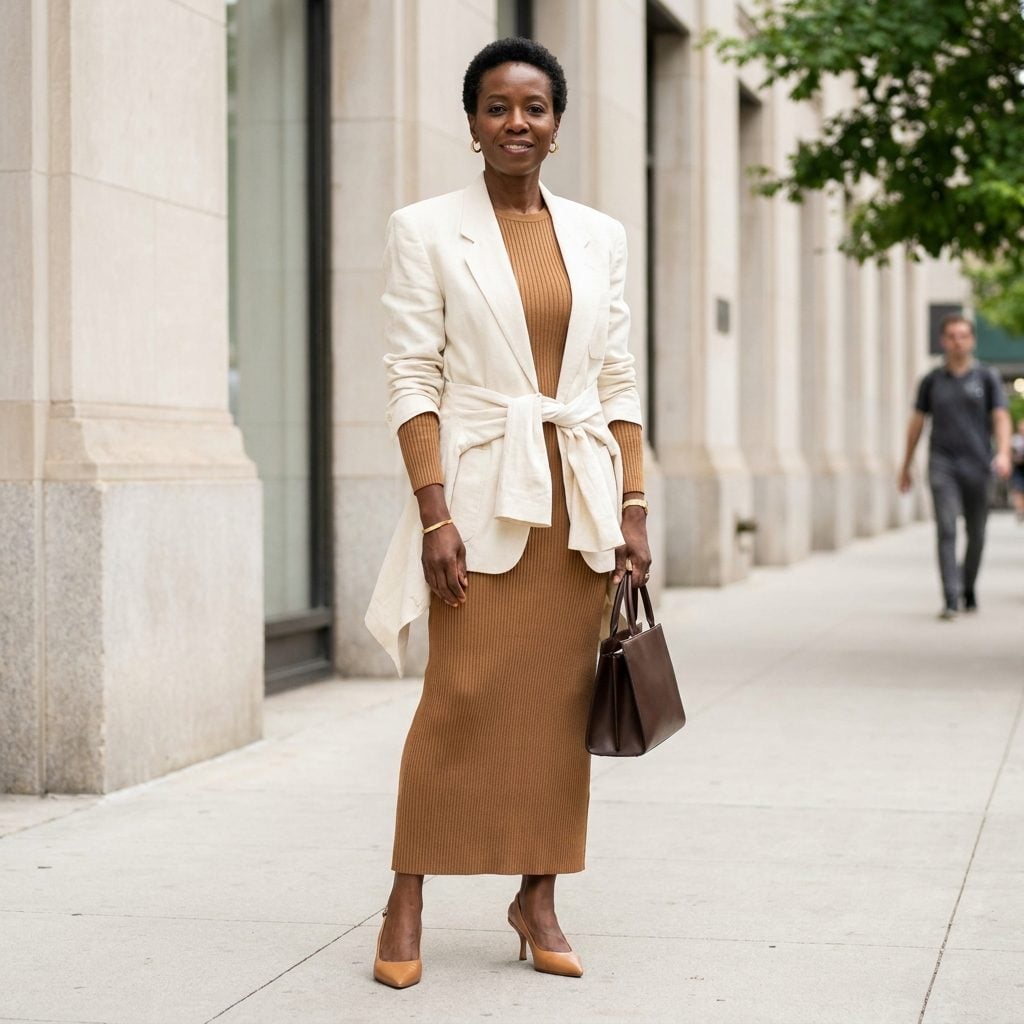
2. Knot It at the Waist Over a Column Dress to Fake a Peplum
❤️ Would you like to save this?
Here’s the specific problem this solves — what to do with a jacket when the room is too warm to wear one. Tie it.
The knot at the waist rebuilds a shape the column dress otherwise skips over, and the fabric fanning out behind you does peplum duty without committing to an actual peplum. A camel knit in one long unbroken vertical benefits enormously from being interrupted at the smallest part of the torso, which is where the manufactured waistline earns its keep. Tie the sleeves in a soft flat knot, never a tight bunch, so the body of the jacket drapes instead of clumping. Slingbacks and a top-handle bag keep the whole look upright. I got this wrong for years by cinching too hard and ending up with a lump of fabric riding my hip. Loose knot. Long tails. Try it.
1. Pop the Collar and Wear It as the Only Top with High-Waisted Trousers
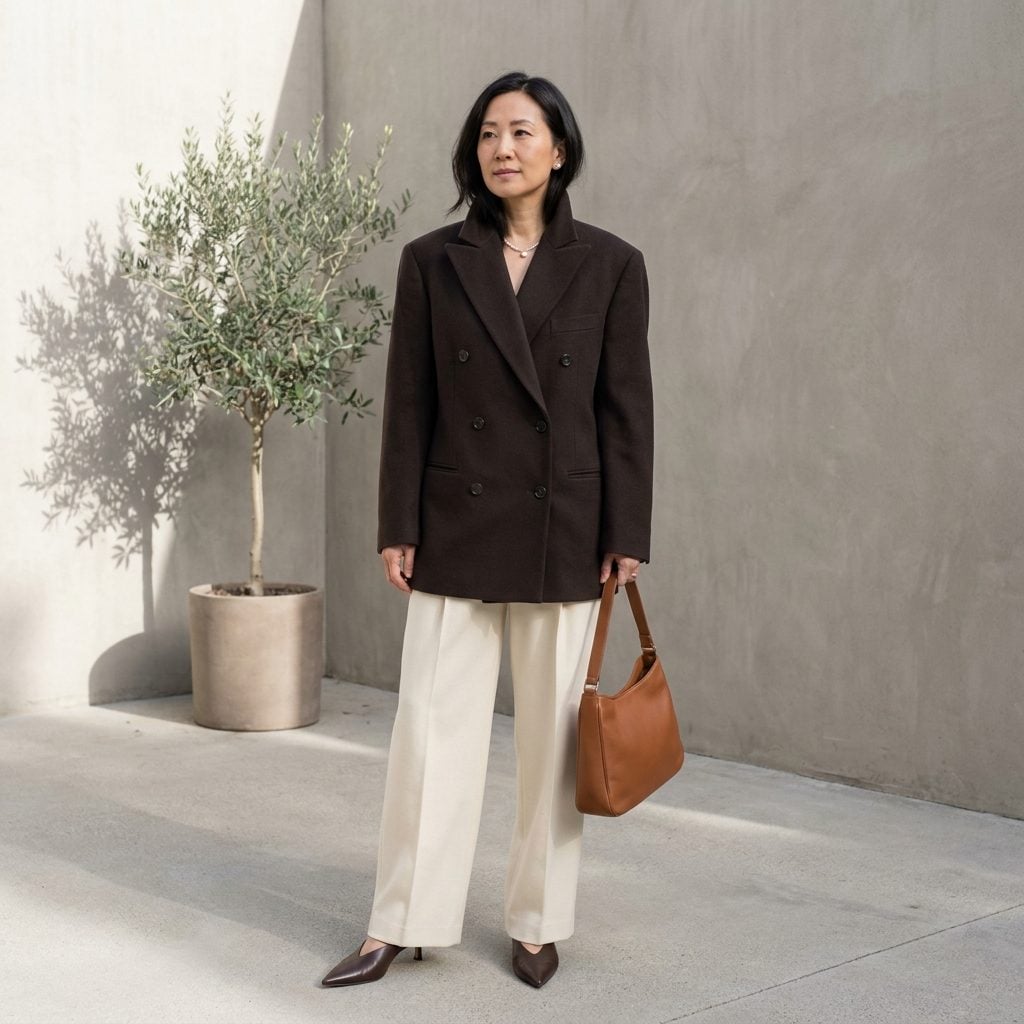
Buttoned all the way up, collar flipped high behind the neck, nothing underneath. That’s the move that turns the blazer from outerwear into a garment.
The popped collar does the heavy lifting — it reframes the neckline, drags attention up to the face, and gives the silhouette a slightly aristocratic tilt that keeps the outfit from reading as a compromise. Meanwhile the cream pleated trousers stay quiet on purpose so the wool up top can breathe. A single strand of small pearls at the throat finishes it, and skipping the shirt underneath is what pulls the whole thing forward into now instead of parking it in 1987. Anyone can wear a blazer over a tee. Wearing the blazer as the tee takes a woman who already knows what she looks good in.