❤️ Would you like to save this?
There was a specific version of dressed-up that existed only on Mother’s Day in the ’90s. Not work clothes, not casual weekend clothes, something in between, something that smelled like White Linen and took twenty minutes to iron. You watched your mom get ready and thought she looked like a whole other person. The pantsuit came out of the dry-cleaning bag. The good earrings went in. Here’s what she wore, and honestly, what we wore right alongside her.
FYI, thanks to AI imagery software, we’re able to create very specific fashion and hairstyle examples to illustrate the points being made. In some cases, imagery is exaggerated to hammer home the point. Also, assume links that take you off the site are affiliate links such as links to Amazon. this means we may earn a commission if you buy something.
26. The Silk Blouse in Jewel-Toned Paisley That Only Came Out for Special Occasions
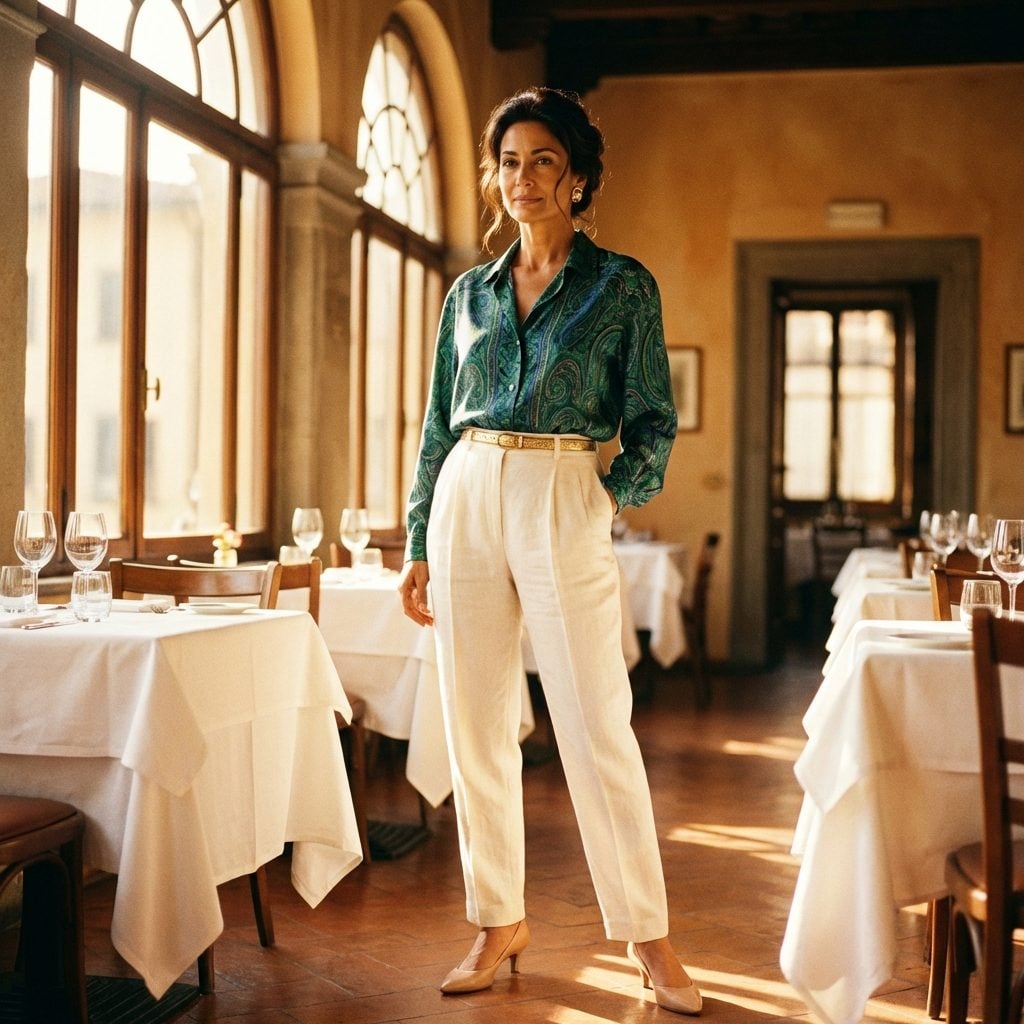
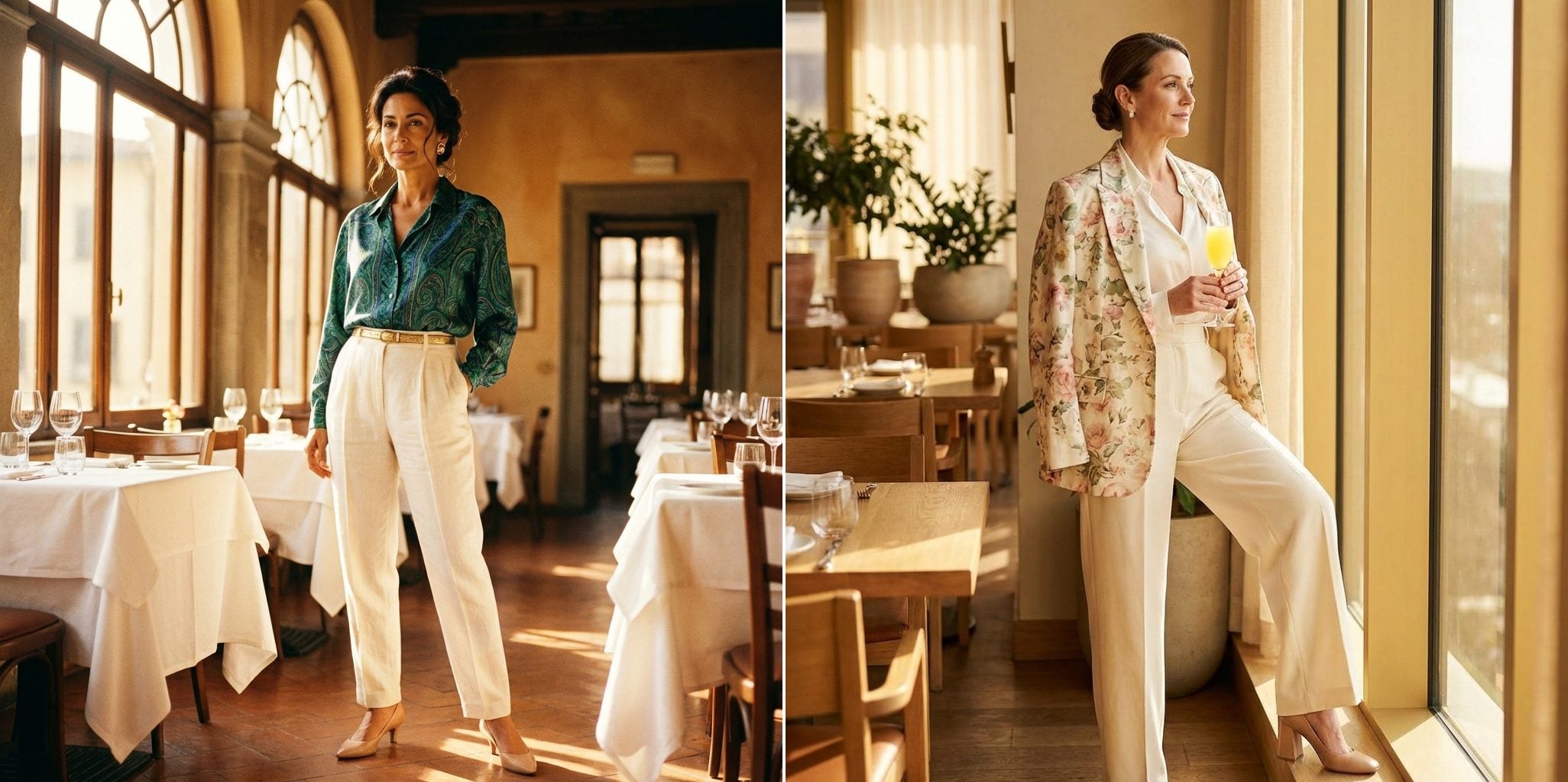
It lived in the back of the closet in a dry-cleaning bag, and the rustling sound of that plastic meant something good was about to happen. The jewel-toned paisley silk blouse was the ’90s mom’s answer to a special occasion. Emerald, sapphire, burgundy, always multiple colors at once, always with that liquid drape that made every movement look intentional.
It got tucked into high-waisted trousers with a thin gold belt, and the combination read like someone who had genuinely considered what she was doing. The fact that silk wrinkles the second you sit down was a problem she dealt with in real time. We all pretended not to notice.
25. The Floral Blazer She Wore Over Literally Everything
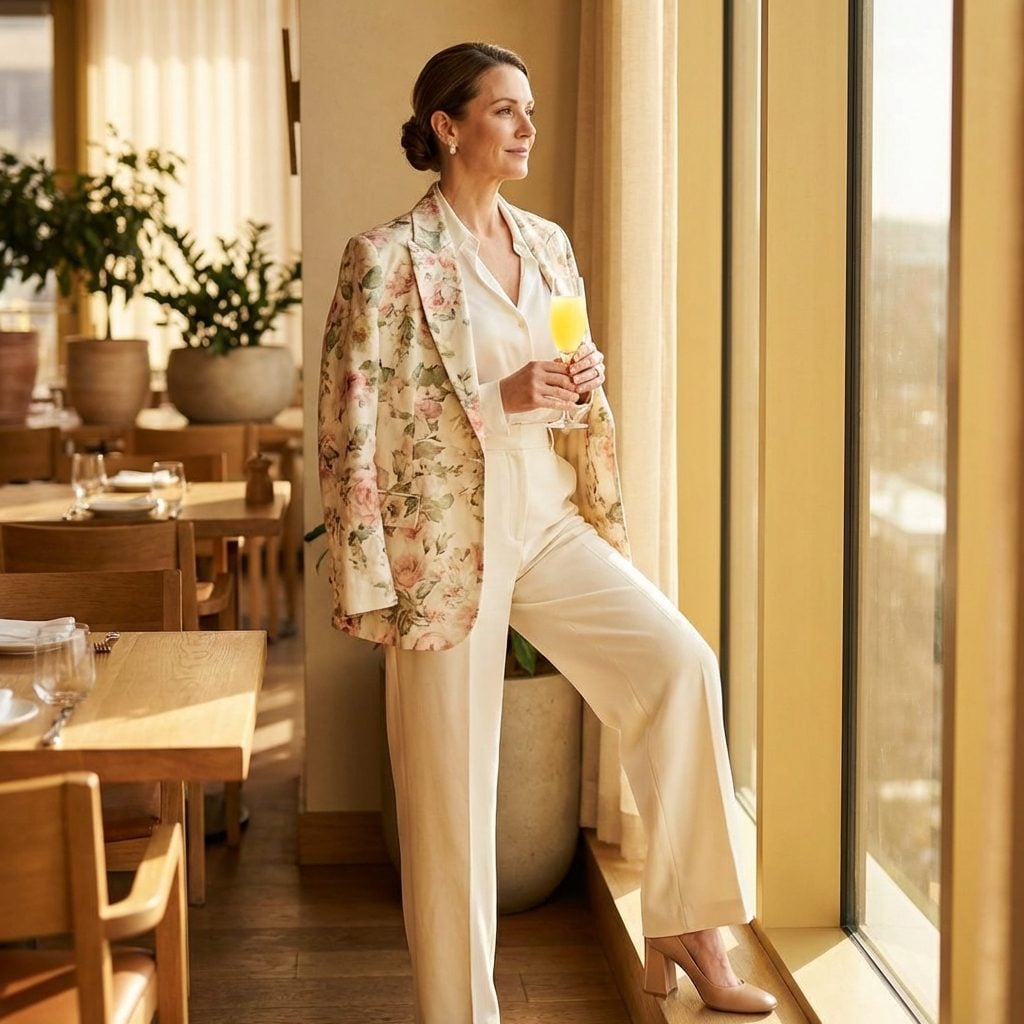
It lived on the back of the dining room chair all spring. The floral blazer, usually from Ann Taylor or Casual Corner, always in some combination of ivory, blush, and kelly green, was the ’90s mom’s answer to dressing up without overdoing it. She’d throw it over a silk shell for brunch, over jeans for the PTA meeting, over her nightgown on a lazy Sunday. We teased her relentlessly.
Now? A floral blazer is the coolest thing you can wear to brunch. We owe her an apology and a shopping trip.
24. Taupe Pantyhose. Always. Non-Negotiable.
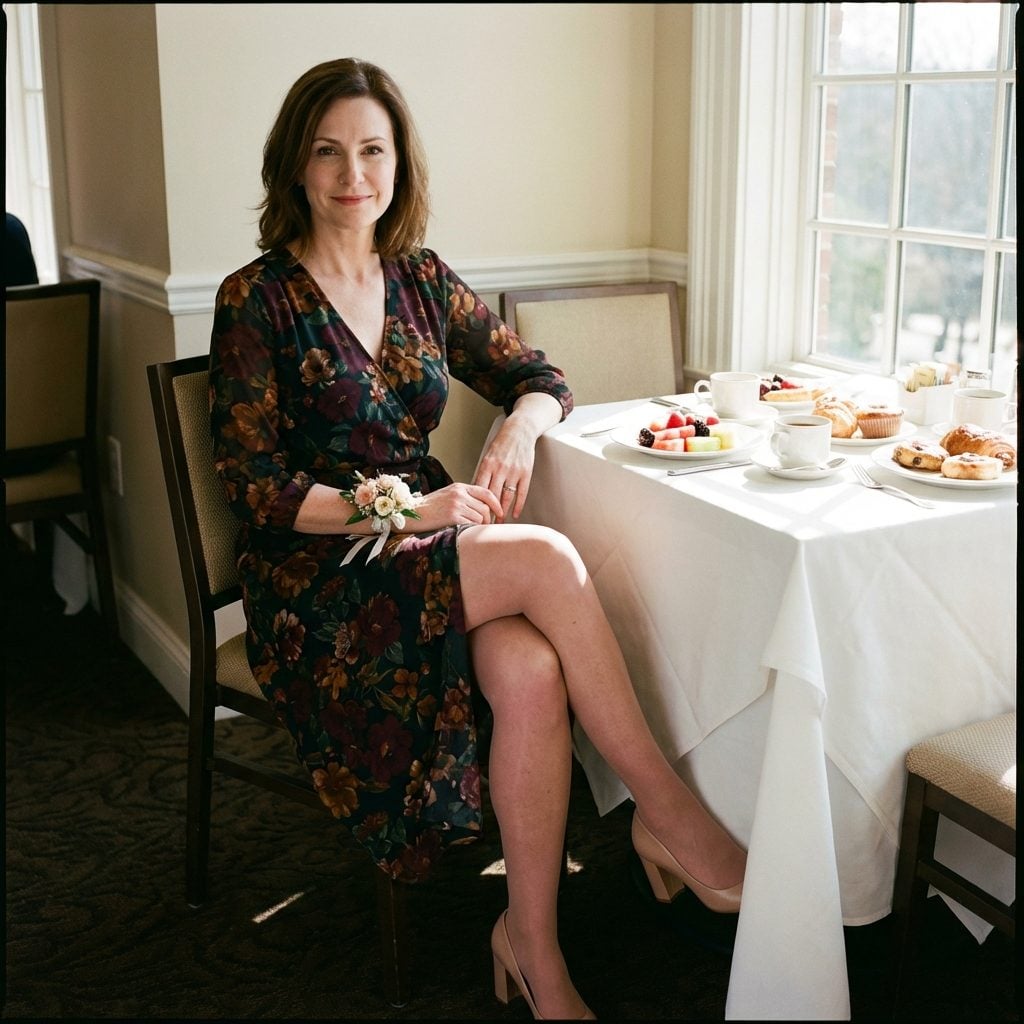
There were no bare legs at Mother’s Day brunch in 1994. That was not a thing that happened. You wore your good dress, your good shoes, and your taupe Hanes Silk Reflections pantyhose, and you did not question this. The shade was always called something like “Barely There” or “Nude Beige,” which was essentially the color of a Band-Aid.
The ritual of getting them on without a snag was its own sport. One wrong fingernail and you were rooting under the sink for the backup pair. And there was always a backup pair.
23. The Square-Toe Kitten Heel in Every Neutral
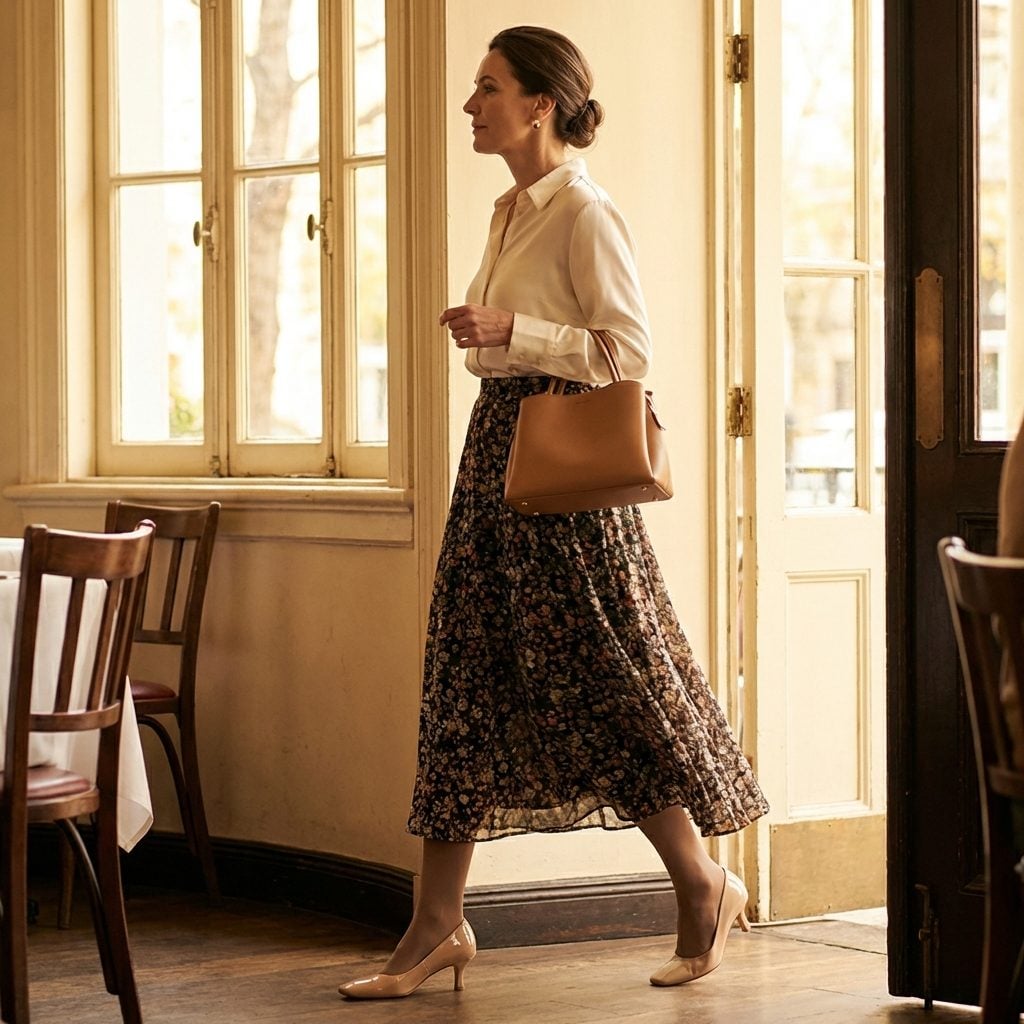
She had them in bone, in taupe, and in a dusty mauve she wore exactly twice a year. The square-toe kitten heel was the official shoe of ’90s occasion dressing, and every mom owned at least two pairs, almost certainly from Nine West or Easy Spirit. The toe box was wide and flat, the heel barely two inches, the leather slightly glossy in a way that read “good shoes” without being showy.
They made a very specific sound on restaurant tile. If you grew up in the ’90s, you know exactly what sound we mean.
22. A Silk Scarf Tied at the Neck (Not the Wrist, at the NECK)
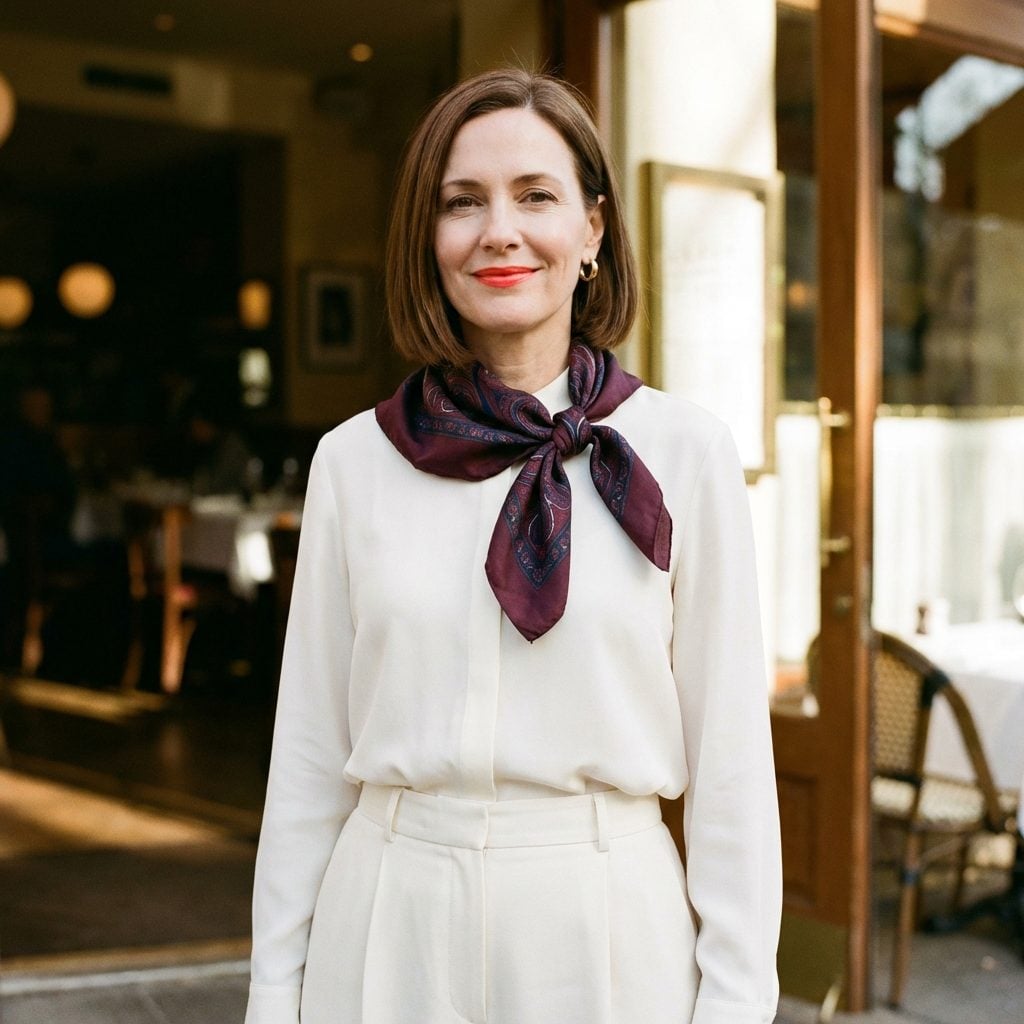
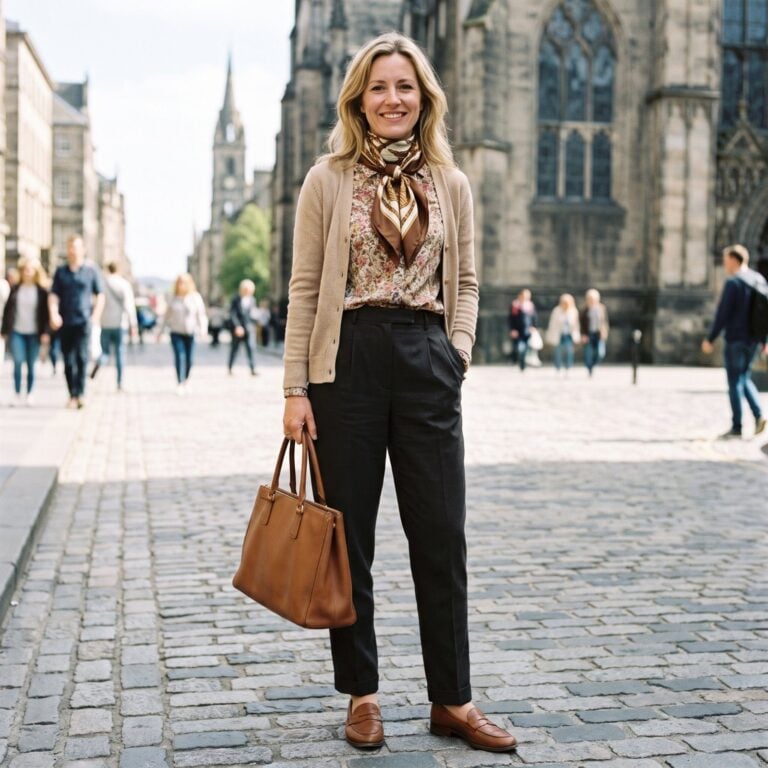
There was a specific way ’90s moms tied a silk scarf, and it was always at the neck, always knotted loosely on one side, and always purchased from either Talbot’s or the accessories section of Dillard’s. The scarves themselves were paisley, geometric, or floral, in colors like burgundy, hunter green, or royal blue. They read “put together” in a way that took approximately forty-five seconds to achieve.
The scarf at the neck isn’t ironic anymore. It’s genuinely chic. French women never stopped doing it, which means we should have listened to our mothers the entire time.
21. The Corsage She Pretended Not to Love But Absolutely Loved
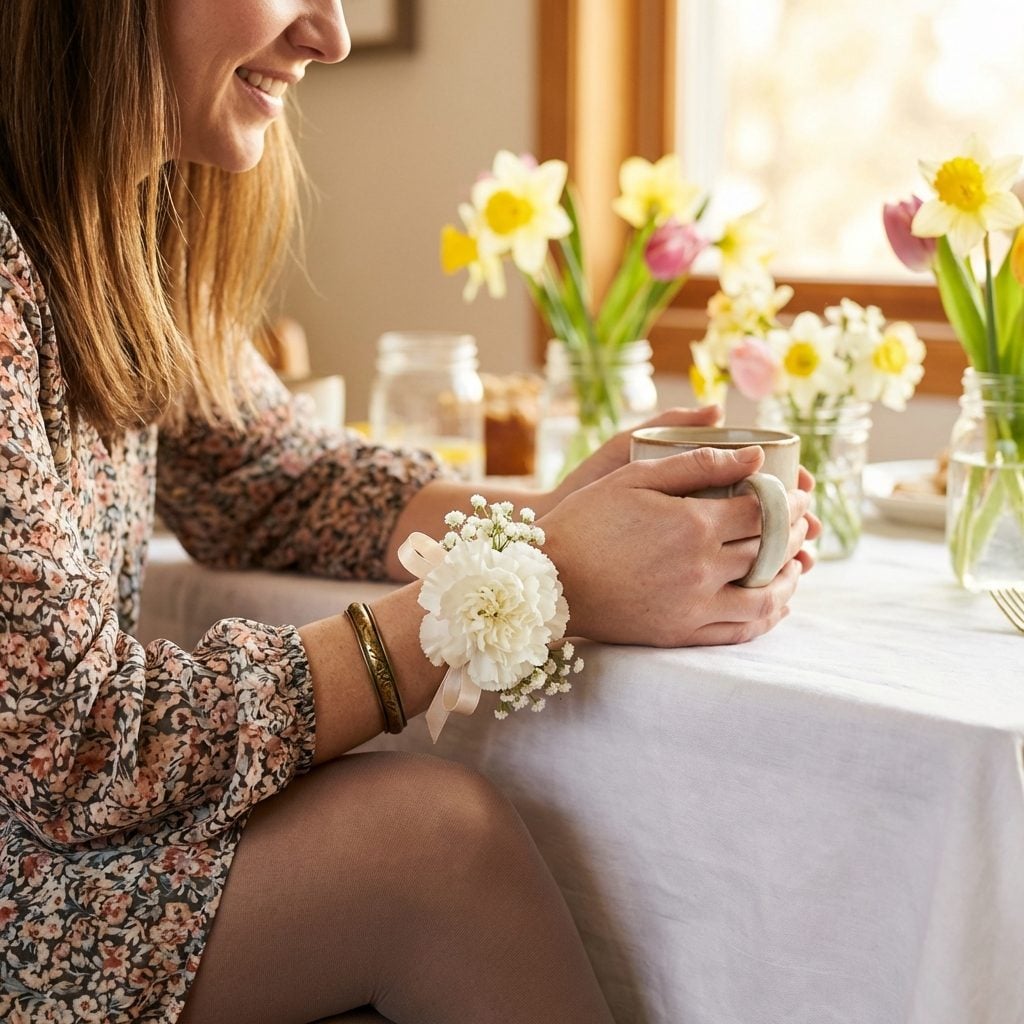
Someone showed up with a white wrist corsage from the grocery store floral department, carnations, baby’s breath, a little satin ribbon, and she said “Oh, you shouldn’t have” while already sliding it onto her wrist. It stayed on through brunch, through the car ride home, through at least half of the afternoon. She set it carefully on the kitchen counter when she finally took it off, and it dried there for two weeks before anyone threw it away.
20. Pleated High-Waisted Trousers in a Color We’re Calling ‘Dusty Melon’
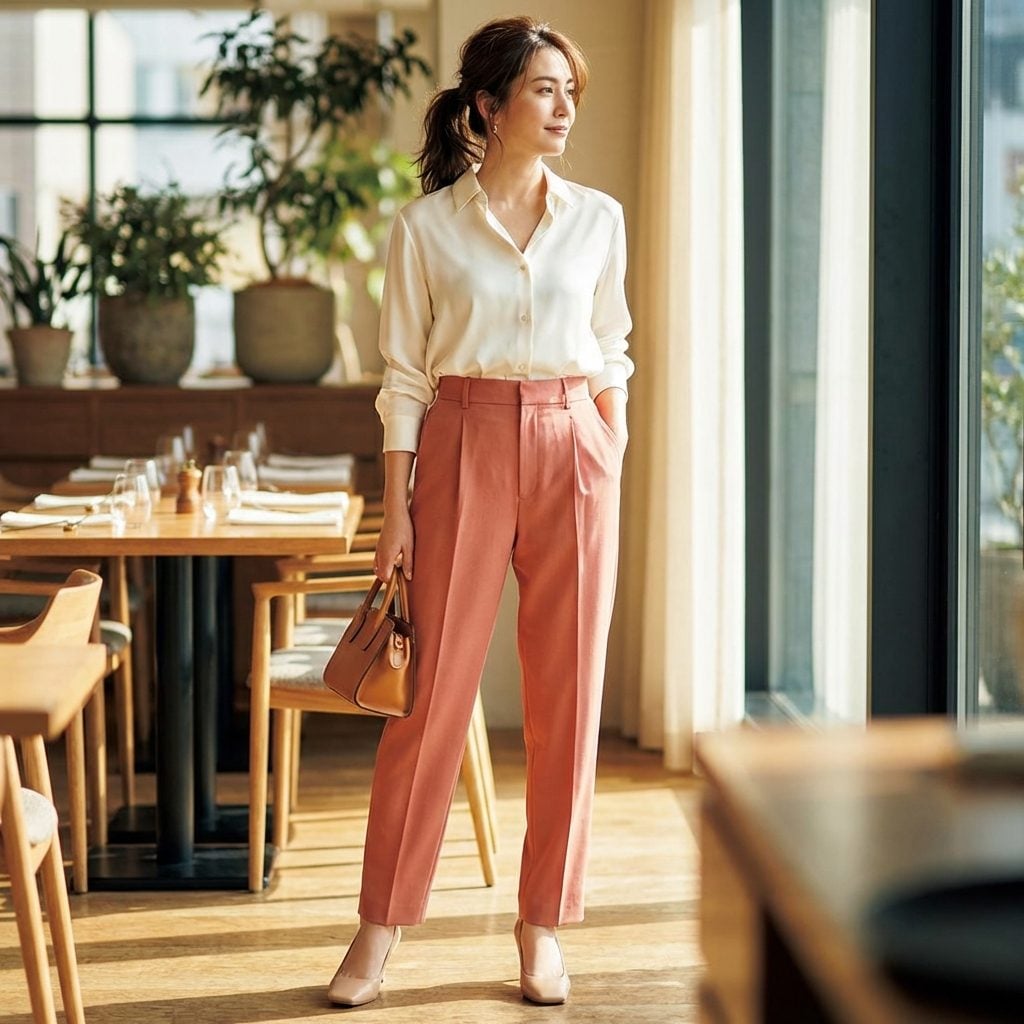
Not quite orange. Not quite salmon. Not quite blush. The color had no real name, which is how you know it was deeply ’90s. The trousers were always fully lined, always had a center front crease, always came from somewhere like Liz Claiborne at the department store, and they always had two front pleats that somehow looked completely correct on every body at the time.
Pleated trousers came back for a reason. The high waist, the fluid drape, the way they move, there was real elegance there that our collective low-rise detour made us forget. These deserve a full rehabilitation.
19. The Good Cardigan (It Was Always the Good Cardigan)
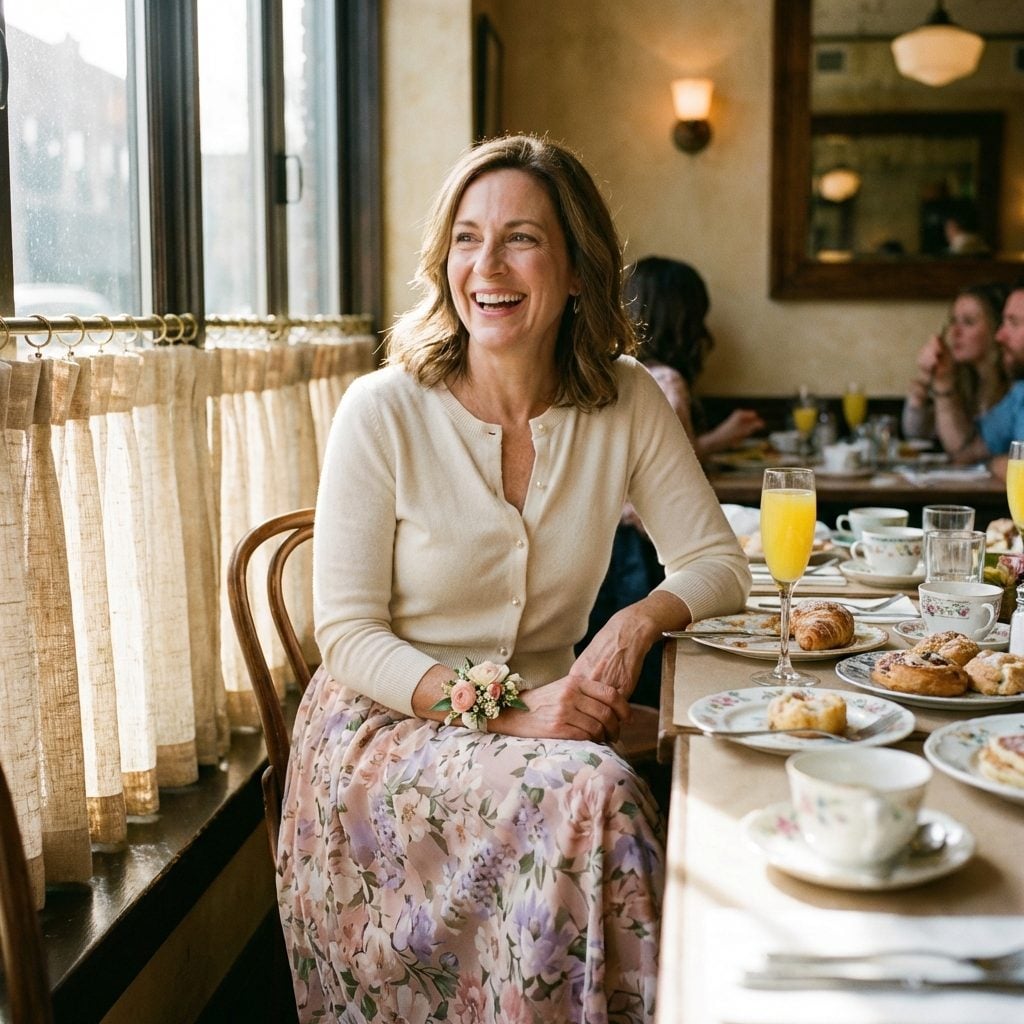
“Don’t stretch out the good cardigan.” Every mother in America, 1991-1999.
Every household had a “good” cardigan. It was usually a fine-gauge knit in ivory, cream, or soft lilac, with small pearlescent buttons up the front, and it only came out for church, holidays, and brunch. It was washed by hand and laid flat to dry. You were not to touch it.
Worn over a floral dress or a silk shell, it was the quintessential finishing layer of ’90s occasion dressing for women who wanted to look polished without feeling stiff. We’d wear this to every brunch on the calendar if we could find the right one today.
18. The Midi Dress With the Handkerchief Hem
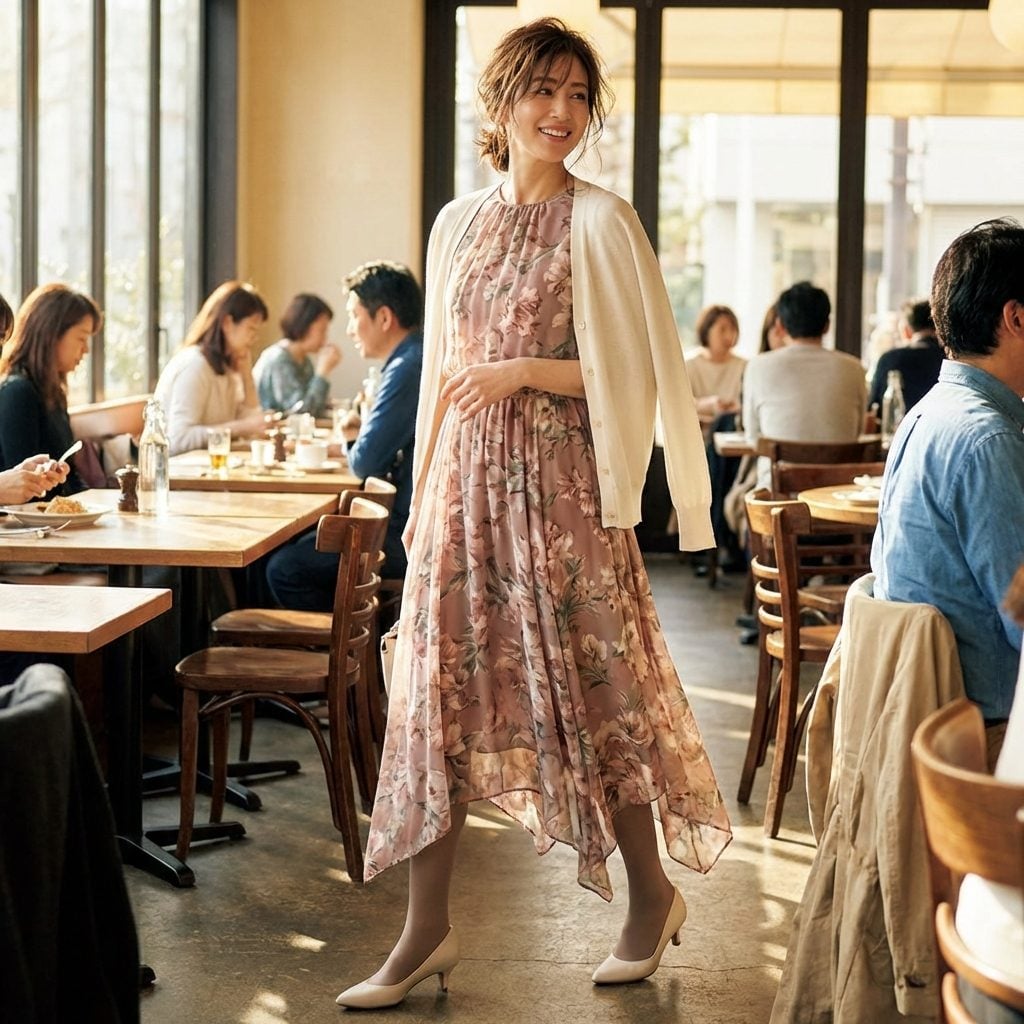
The handkerchief hem floated at different lengths with every step, which was the point. In a dusty floral chiffon, it said “I made an effort” and “I am comfortable” simultaneously, which is still the goal, is it not? These were everywhere in the early-to-mid ’90s: flutter-hemmed, softly printed, worn with a cardigan and low heels. Brunch season, holiday dinners, and any occasion that required what our mothers called “something nice.”
17. A Brooch. On the Lapel. Yes, an Actual Brooch.
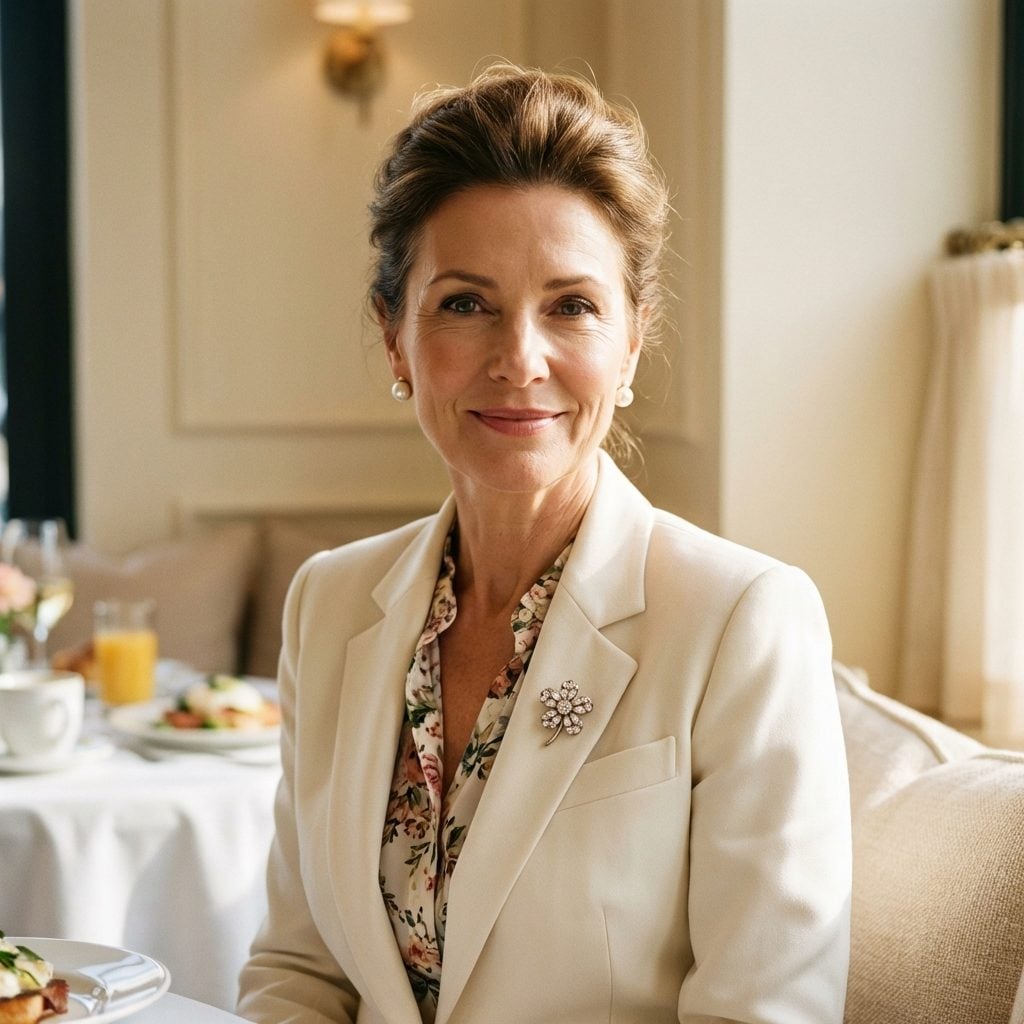
Hers might have been a cameo. Or a small spray of rhinestone flowers. Or that gold-and-pearl bow from a Christmas gift she actually liked. It lived in a small divided jewelry box and came out four times a year, Easter, Mother’s Day, Thanksgiving, and any occasion she considered “worth a brooch.”
She pinned it to her blazer lapel, to her cardigan, sometimes directly to a silk blouse. A brooch is not costume jewelry; it’s a conversation that happens without words. The fashion world spent five years pretending to rediscover brooches, and anyone who had a mother in the ’90s knows we never actually forgot.
16. Lipstick in a Color That Was Simply Called ‘Mauve’
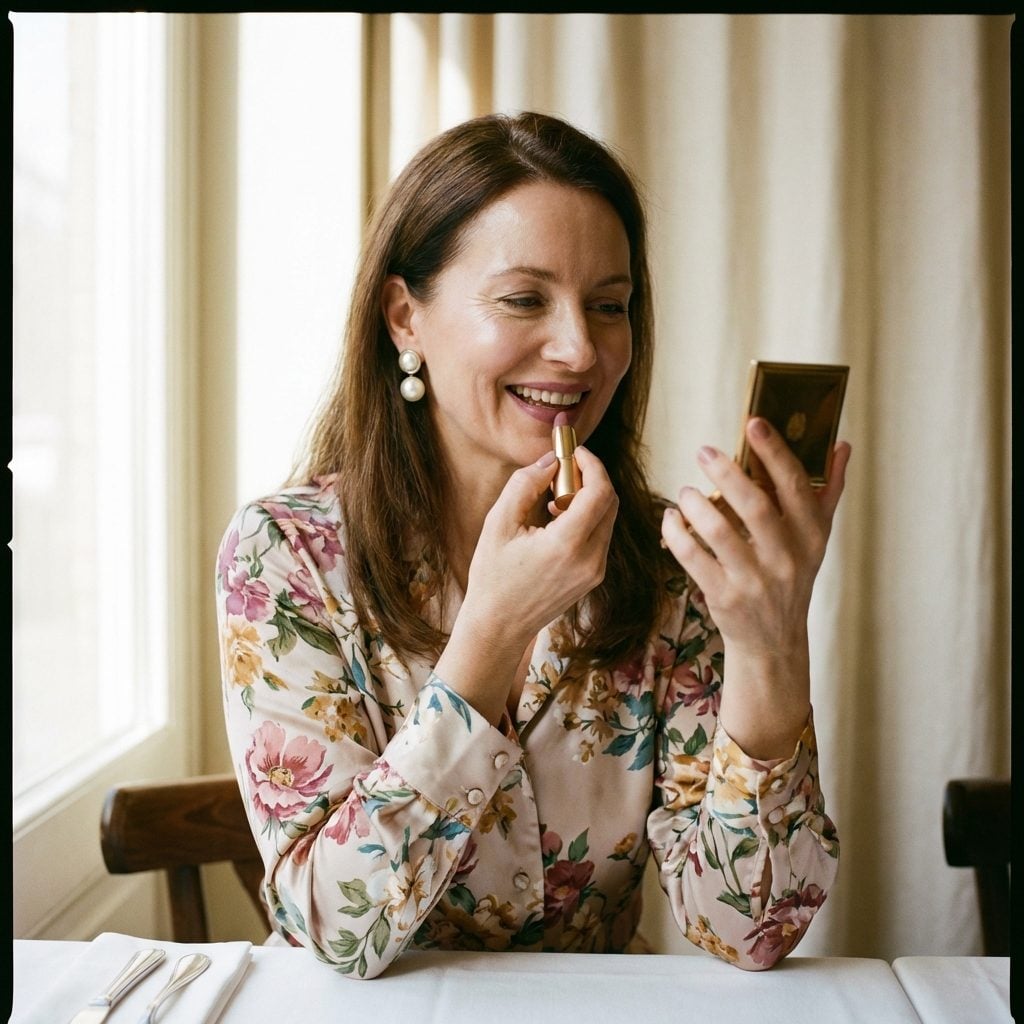
Not pink. Not brown. Not berry. Mauve. She reapplied it at the table after brunch, with no apology, using a compact mirror from her purse. The lipstick itself was always from Revlon or Estée Lauder, in a shade named something like “Dusty Rose” or “Rose Sand” or simply “Mauve”, a color that existed between blush and brown and somehow looked correct on every woman who wore it in 1993.
It left a perfect ring on every coffee cup. It transferred onto cheeks when she kissed you hello. And it was, by any measure, a beautiful shade of lipstick that we abandoned for no good reason when the nude lip took over in the 2000s.
15. The Structured Handbag in a Color Called ‘Bone’
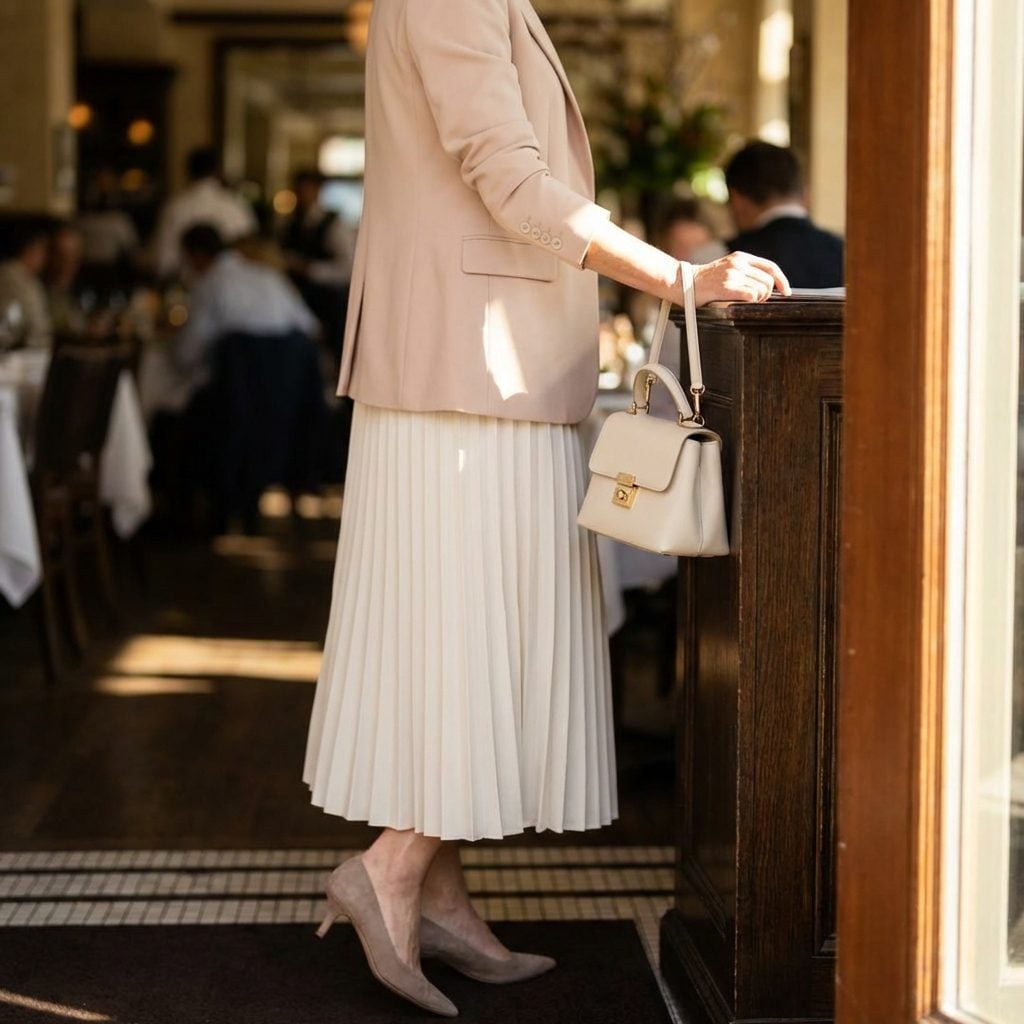
Not white. Bone. There is a difference, and she knew it. The bone-colored structured handbag was a deliberate choice that said: I coordinate, I plan ahead, I do not carry a tote bag to brunch. It was always small to medium, always had a single top handle, always closed with a clasp that clicked shut with satisfying firmness. Liz Claiborne made a version. So did Coach. So did approximately every department store house brand from 1989 to 1997.
The bag lived in a dust bag in the closet, wrapped in tissue. It came out for occasions. And it matched, to within one tone of accuracy, everything else she was wearing. That level of coordination doesn’t come naturally. It’s a skill, and it’s one worth relearning.
14. The Shoulder Bag With the Gold Chain Strap She Guarded With Her Life
❤️ Would you like to save this?
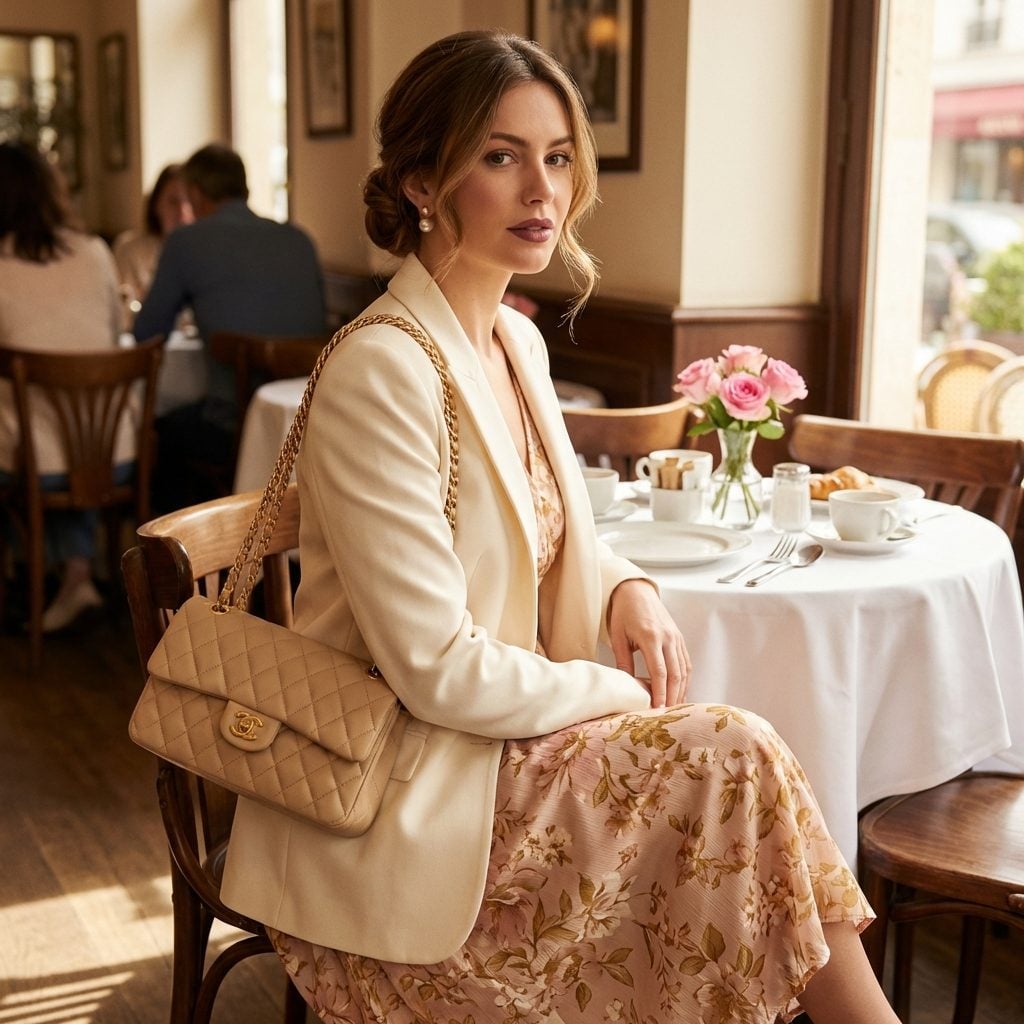
That bag did not leave her shoulder. Not when she was greeting the hostess, not when she sat down, not even when someone offered to hang it on the chair hook. The quilted chain shoulder bag was the ’90s equivalent of a status symbol for women who weren’t interested in broadcasting status, they just wanted something structured, beautiful, and extremely hard to get into quickly at checkout.
The gold chain strap was the detail that made it. Not flashy. Just present. It caught the light in a way that said “I have been dressed like this for three hours and I am not even slightly tired.” Most of these bags were in beige, ivory, or that specific shade of taupe that matched every blazer she owned. They weighed approximately eleven pounds and contained exactly: lipstick, a comb, a handkerchief, and a single credit card.
13. Sheer Floral Knee-Highs Under Open-Toe Pumps (Yes, Both)
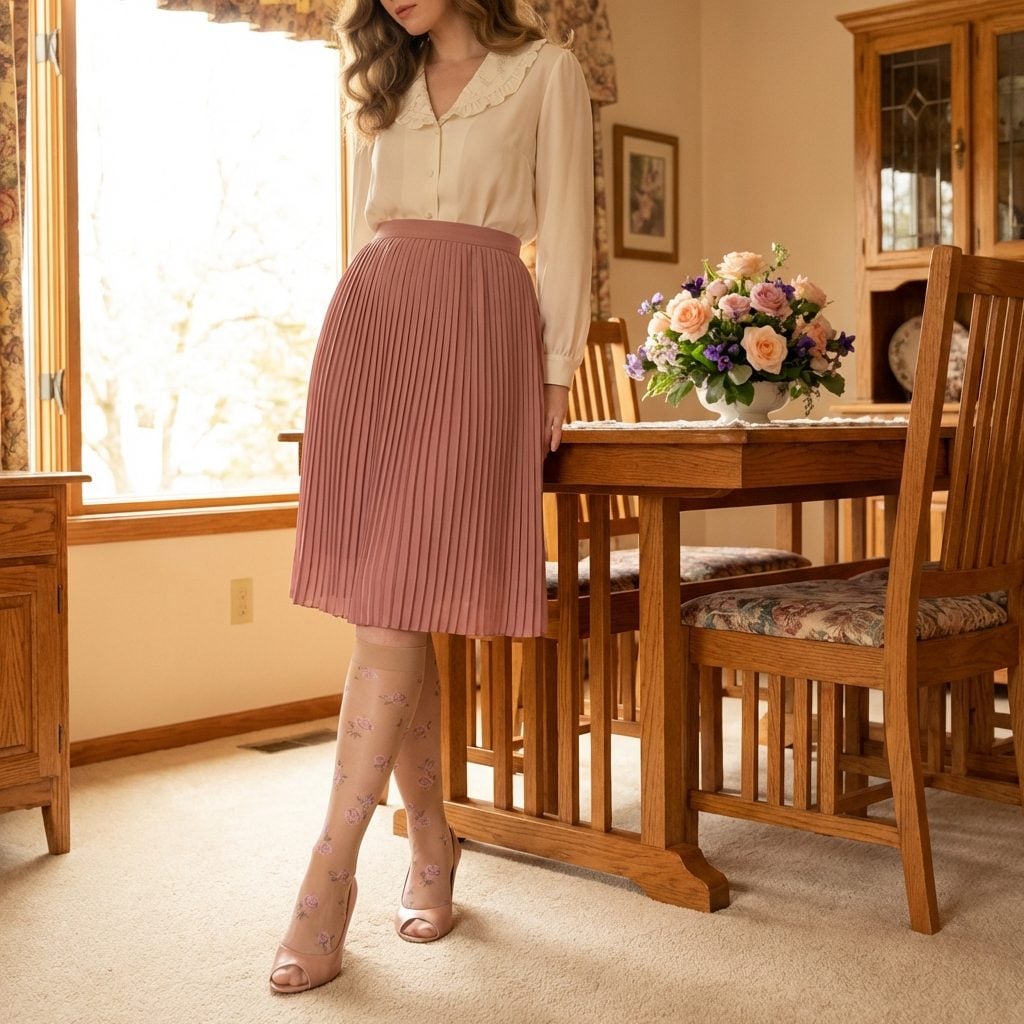
Nobody questioned this. That is the part that requires sitting with for a moment. Sheer stockings with a woven floral pattern, visible flowers, actual petals, trailing vines in pale lavender, worn inside an open-toe pump so that the design sat right at the toe cleft like a little garden peeking through. And every woman at the table thought this looked correct.
It did, though. That is the honest answer. There was a very specific kind of dressed-up femininity that these floral sheer stockings communicated, something soft and deliberate and Sunday-special that plain nude hose simply could not deliver. They said: I put thought into this. I accessorized my legs. You are welcome.
12. The White Eyelet Blouse With the Peter Pan Collar
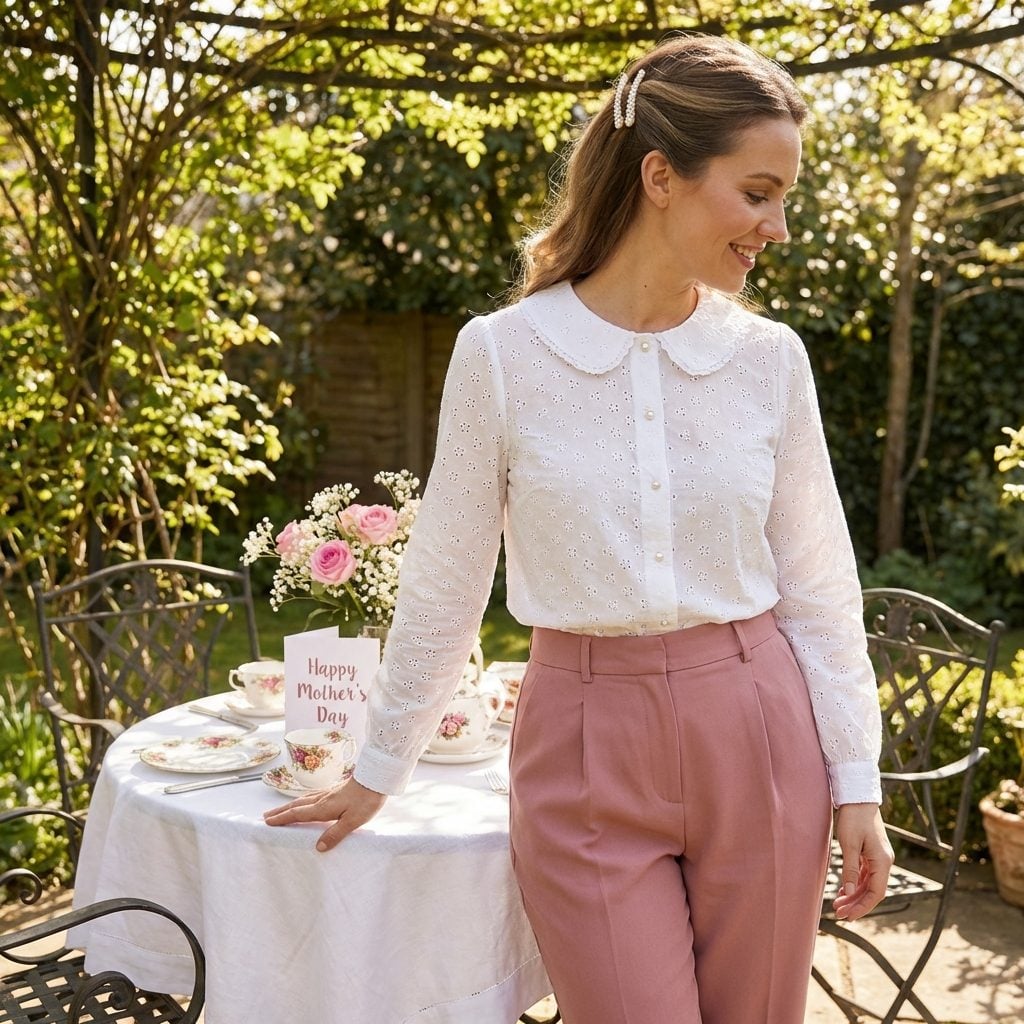
This blouse worked harder than it looked. The eyelet fabric was lightweight enough for late May heat but formal enough for a restaurant, the Peter Pan collar borrowed just enough innocence to feel sweet without veering into costume. Tucked into high-waisted trousers with a thin woven belt, it became the kind of outfit that read as put-together without appearing to try.
Every department store in America sold a version of it: Dillard’s, Bealls, JCPenney, Sears. Sometimes with pintucks down the front. Sometimes with tiny embroidered flowers at the collar edge instead of eyelet. The white eyelet blouse was a Mother’s Day uniform so reliable it might as well have come with the brunch reservation. And honestly? The silhouette is sitting in trend forecasts right now, which is less surprising than it sounds.
11. A Single Strand of Pearls. Real or Not, Nobody Asked.
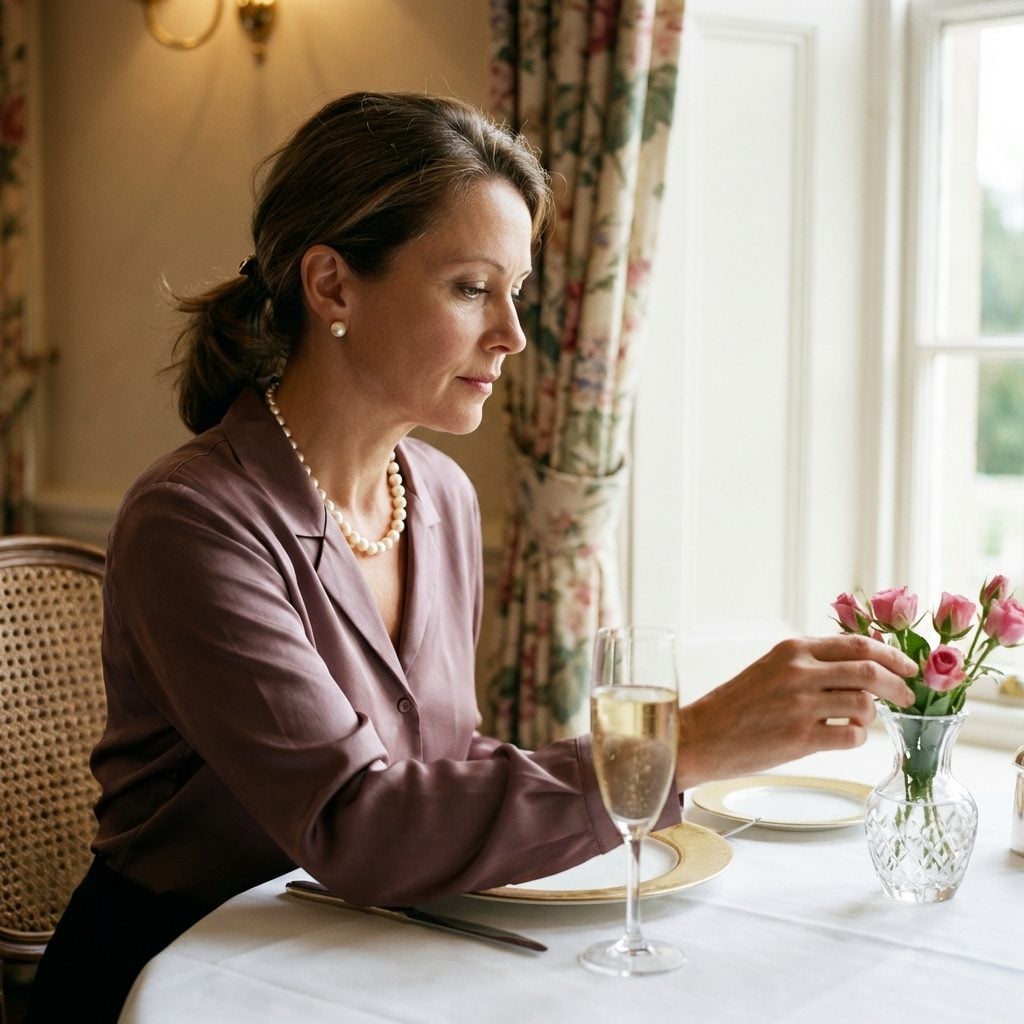
The pearl necklace was a sentence. It said: I have been an adult for a long time, I have opinions about table manners, and I dressed appropriately for this occasion before you were even born. One strand, collar-length, always with matching pearl stud earrings because wearing just the necklace would have been half-dressed.
Whether they came from a jewelry box inherited from a grandmother or from a Macy’s three-for-$12 counter, the effect was identical. The single strand pearl necklace wasn’t about authenticity. It was about the specific quiet authority it granted the wearer the moment she clipped that gold clasp.
10. The Pastel Linen Blazer She Only Took Off When It Got Too Hot
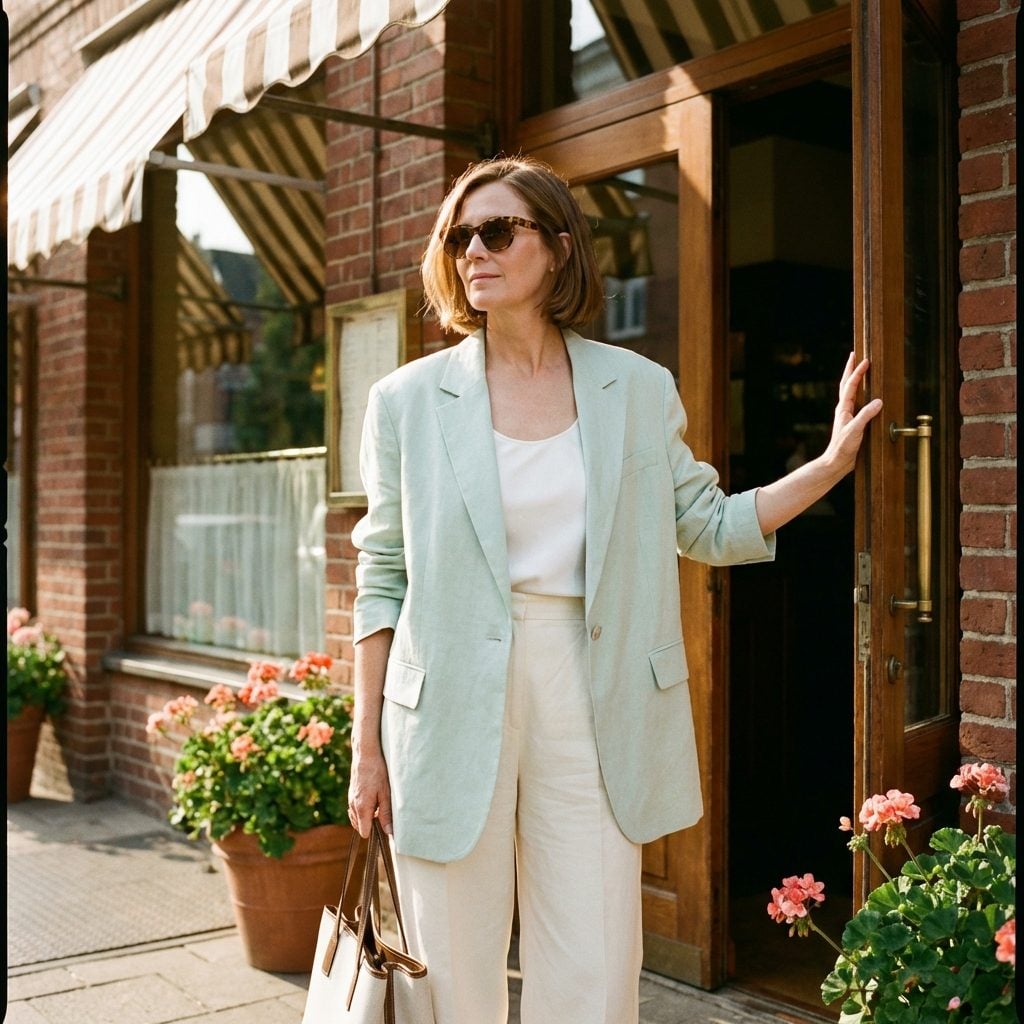
The linen blazer in a color that had “spring” baked directly into it: pale mint, powder lavender, the kind of peach that only exists in April. Worn over a white shell top with the sleeves pushed up to the forearm because linen in May is a commitment, and by the second mimosa, compromises were being made.
The pastel linen blazer was the ’90s answer to the question “how do I look formal enough for a restaurant but breathable enough for a parking lot in Florida.” It draped beautifully, wrinkled immediately, and nobody cared because the wrinkles were part of the character. She wore it the whole brunch, took it off in the car, and had it dry-cleaned before the following Sunday.
9. The Draped Wrap Dress in Abstract Watercolor Print
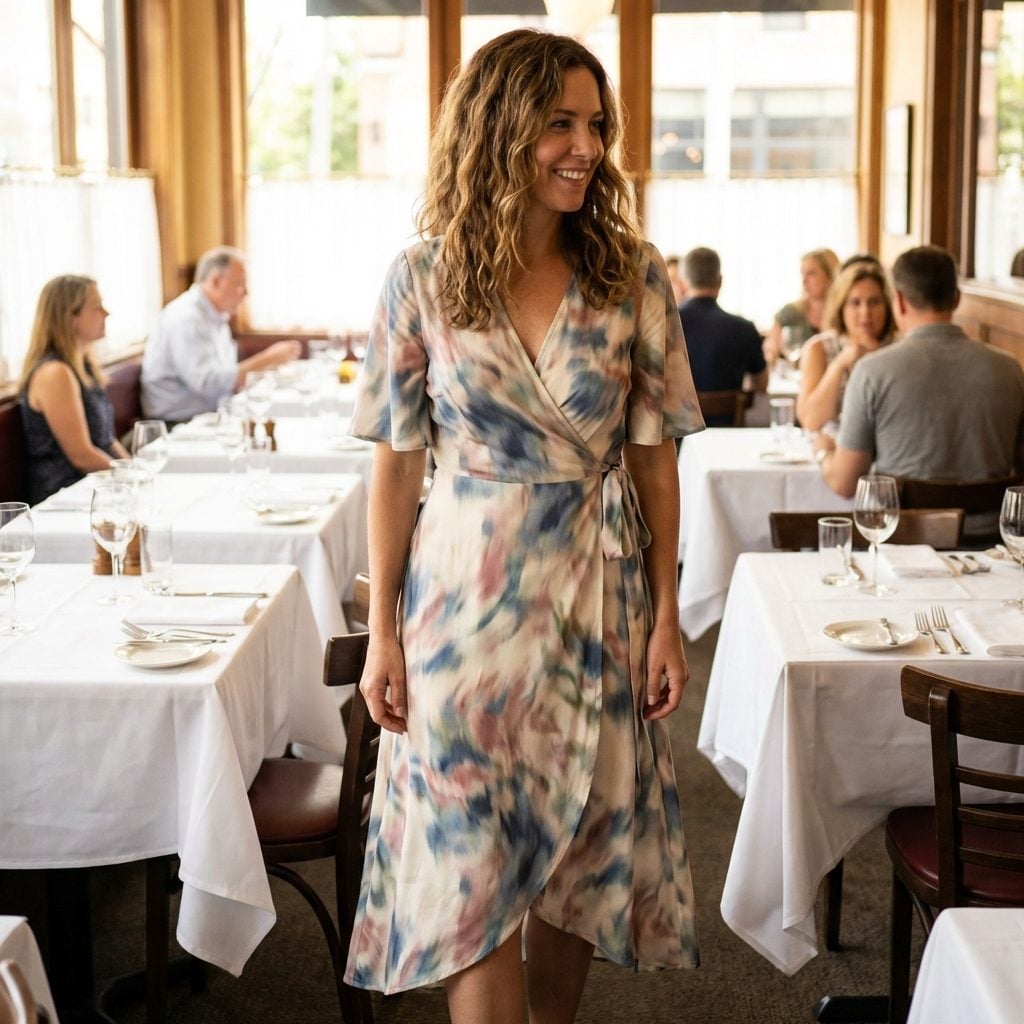
The wrap dress was doing a lot of work in 1993, and this version, the one in watercolor abstract print that somehow managed to feel both artistic and totally practical, was the crown jewel of the format. You bought it at Talbots or Ann Taylor and it fit every body at the table differently, which was the whole genius of the wrap.
The print itself deserves a moment of recognition. Not geometric, not floral, not plaid, it existed in its own aesthetic category that we might call “feelings rendered in textile.” It communicated effort without looking like you tried too hard, and for Mother’s Day brunch, that was the precise target.
8. Low-Heeled Leather Mules in Bone or Blush
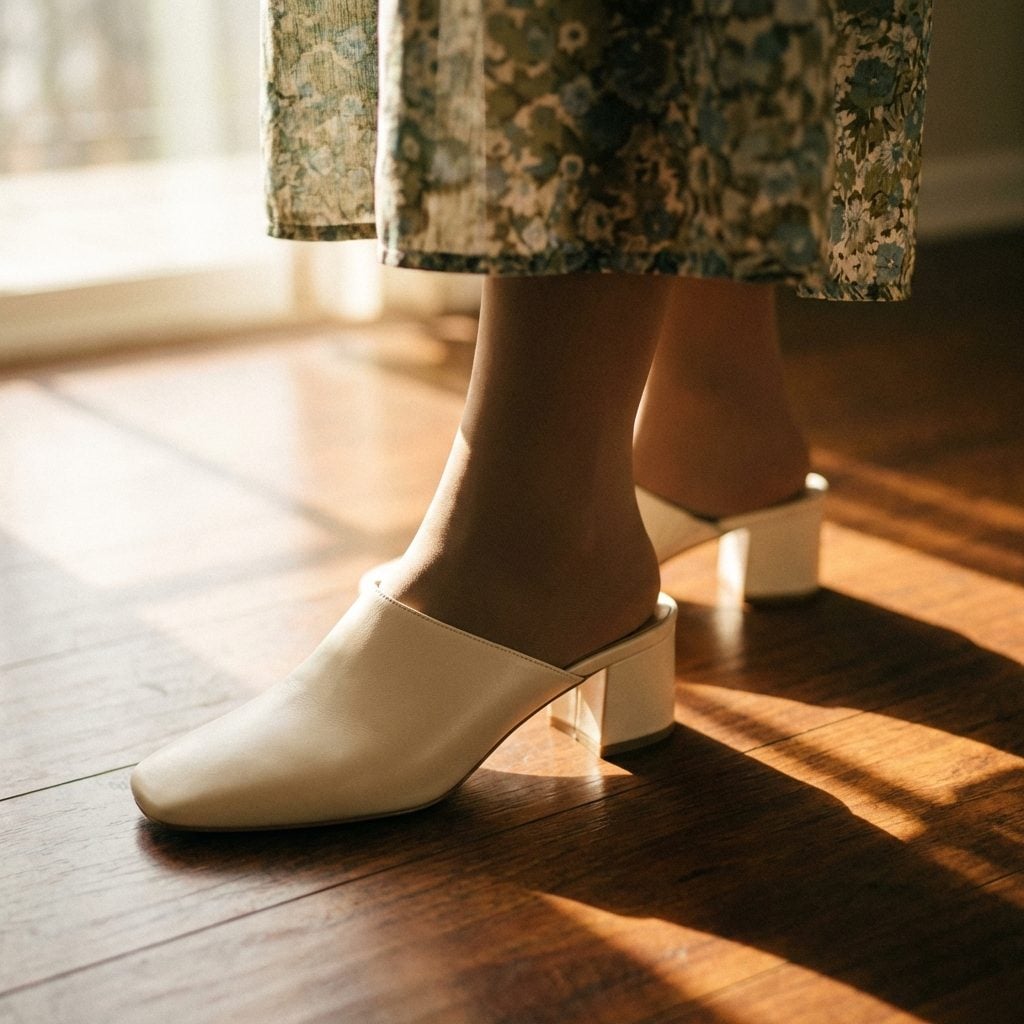
These were not sandals and they were not pumps and that in-between status was entirely the point. The low-heeled leather mule in bone or blush was the shoe you could walk to the car in without gripping a doorframe, which made it the rational choice for anyone who had been in heels since 1978 and had opinions about it.
Every mom had a version of these. Some from leather mule heels at Nine West, some from the Naturalizer section of a department store she would never admit to shopping at. They lived in the closet near the good handbags and came out exclusively for occasions involving tablecloths.
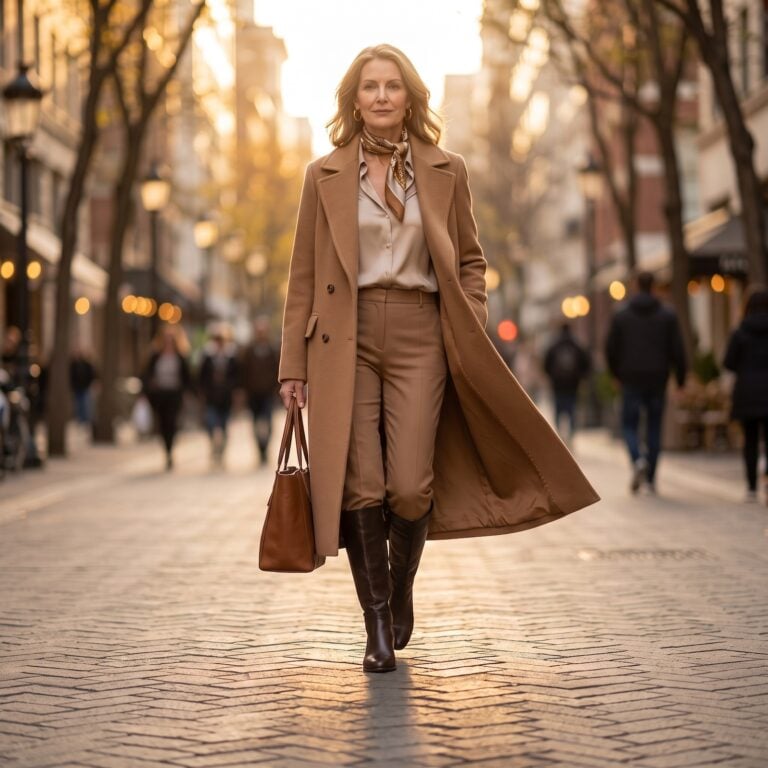
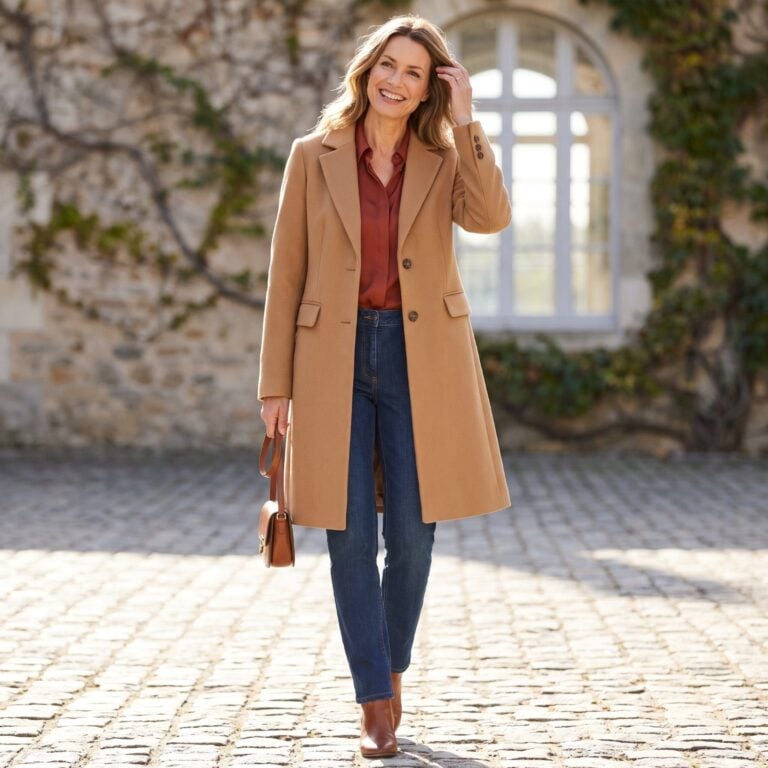
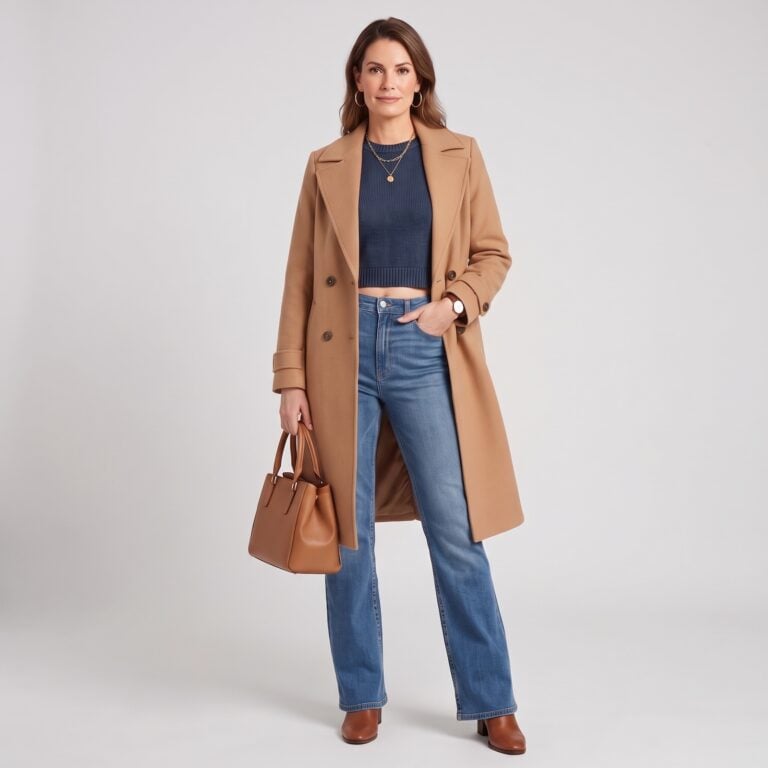
7. The Belted Trench in Camel That She’d Had Since 1987
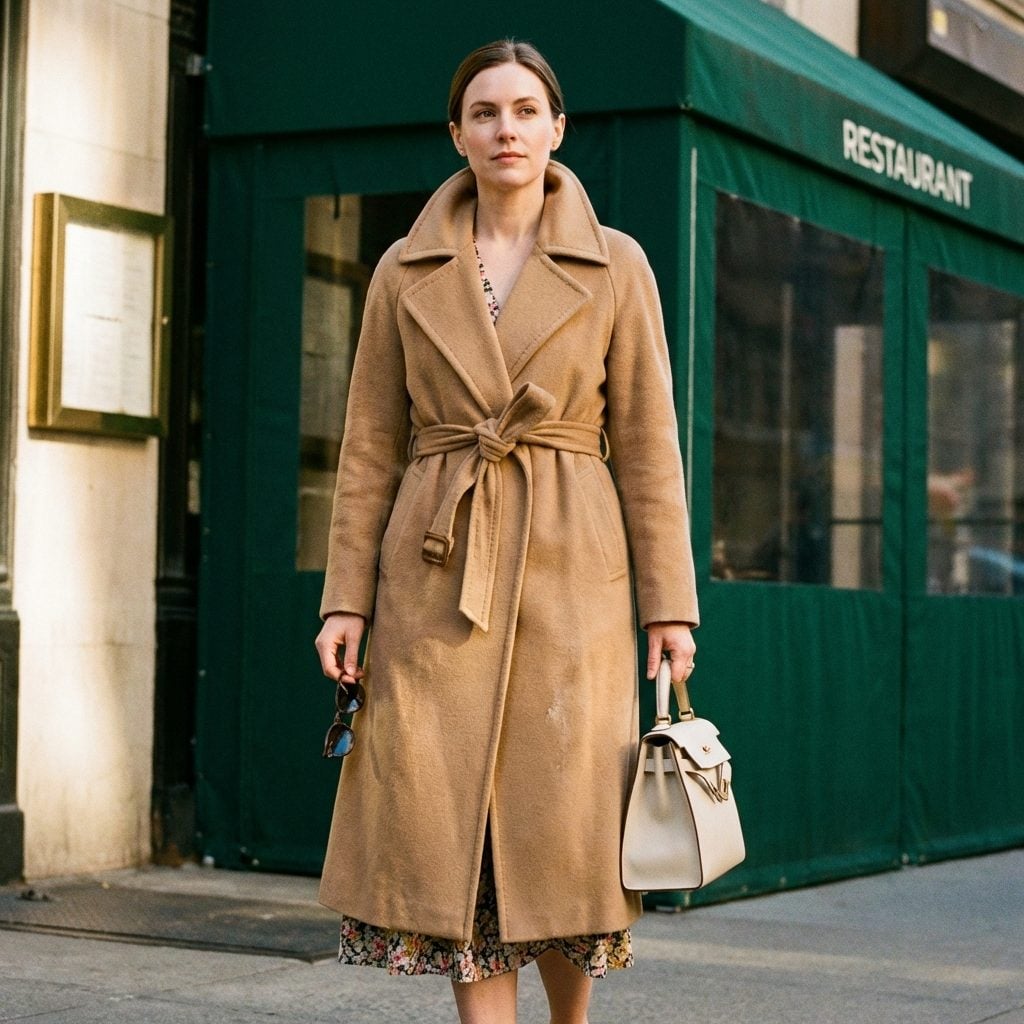
She had worn it to her sister’s wedding rehearsal dinner. She had worn it to parent-teacher conferences. She had worn it over a hospital gown once, briefly, on the way out. The camel trench was less an item of clothing and more a biographical document.
The belt was always tied, never buckled. The shoulders always sat exactly right because the coat had learned her shape over years of wear. No one in 1993 used the phrase “investment piece” but that is precisely what this was: a garment that got better as it got older, in a way its owner fully understood because she was doing the same thing.
6. Clip-On Pearl Earrings She’d Had Since Her Own Mother Gave Them to Her
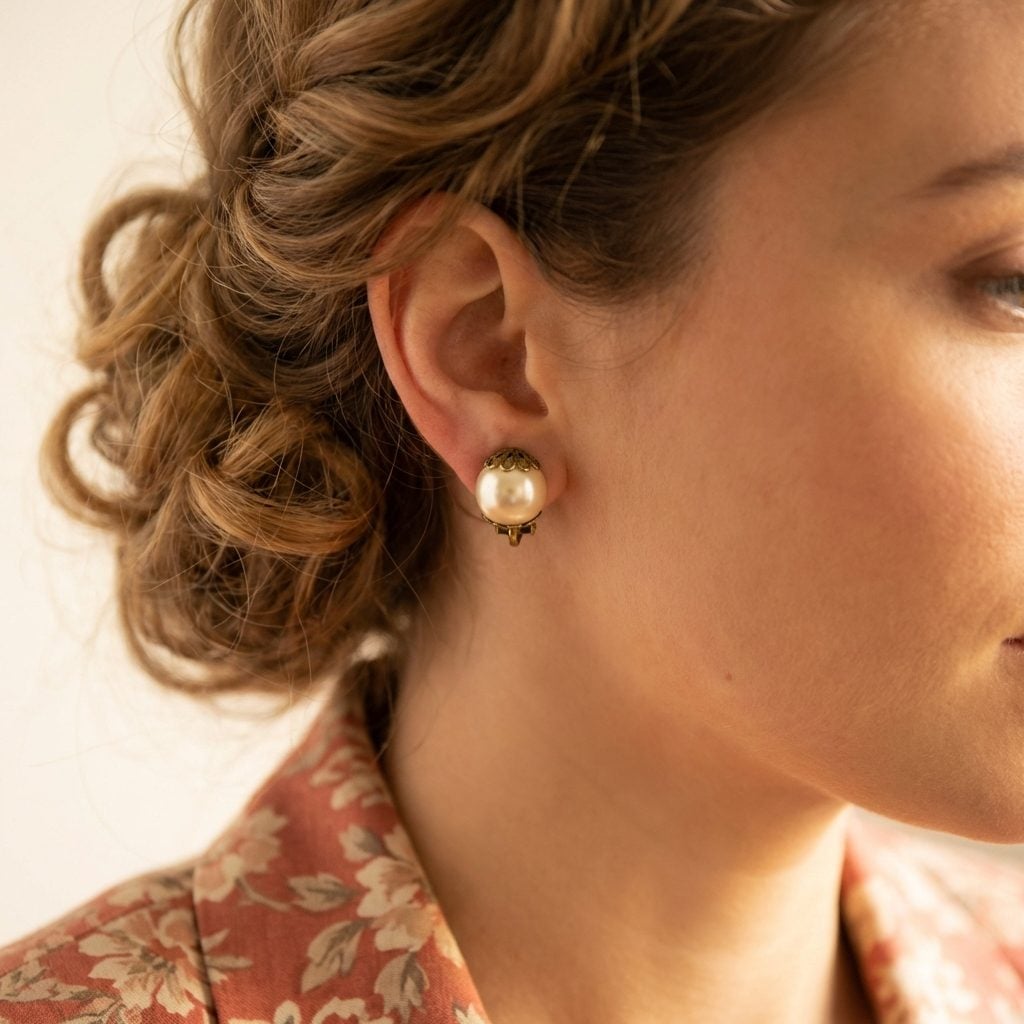
Not everyone’s ears were pierced, and besides, the pearls that mattered were the ones that came in a small velvet box from someone else’s jewelry drawer. Clip-ons got a bad reputation for pinching, and they deserved it, but these were worth the two hours of mild discomfort because they were hers before they were yours.
Wearing them was a form of continuation. You were not just wearing jewelry; you were wearing a relationship. That psychological weight is why a simple ring or a pair of clip-on pearls from a mother’s collection can feel more significant than anything you could buy yourself, regardless of price.
5. The Chiffon Overlay Skirt That Moved When She Walked
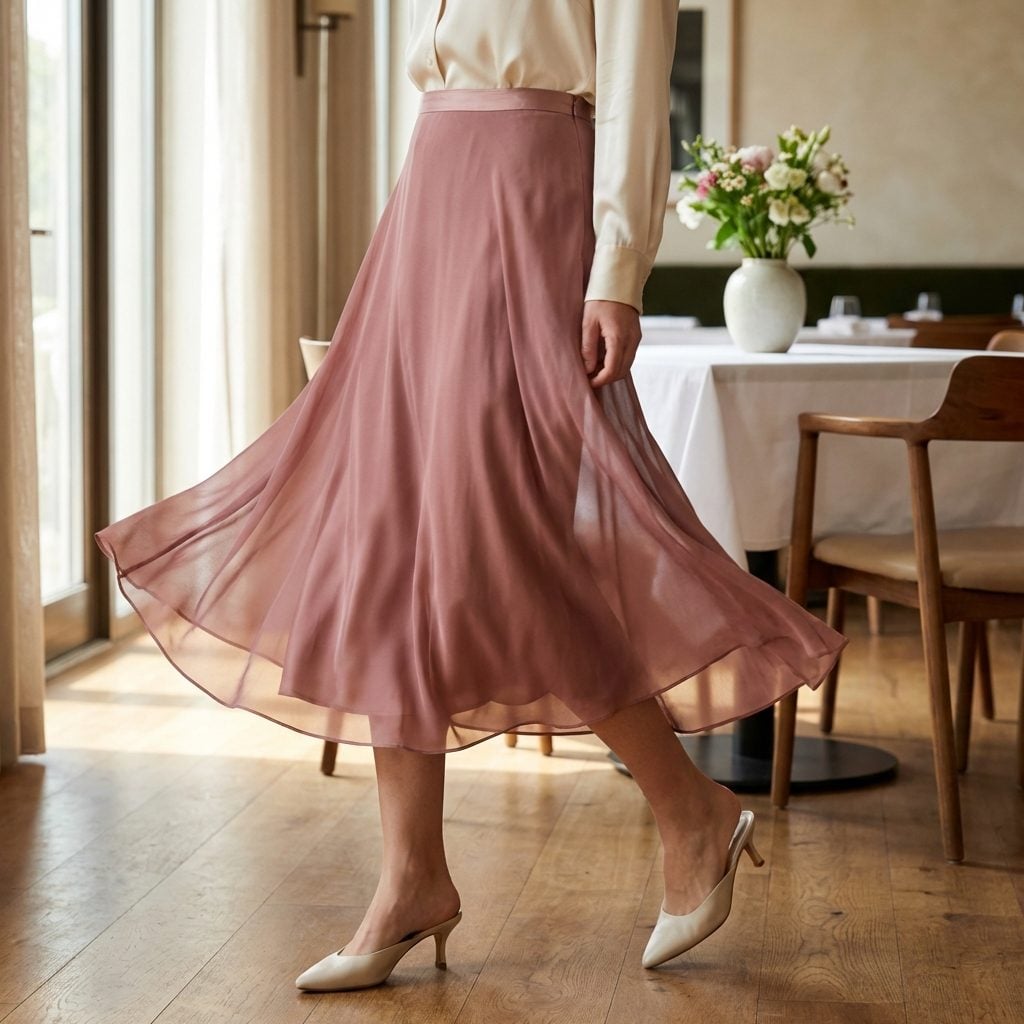
There was a category of clothing in the early ’90s that existed specifically to have movement, and the chiffon overlay skirt was its purest expression. You did not buy this skirt for warmth or practicality. You bought it because it did something when you walked, and that something was worth the whole purchase price.
The layered construction, satin or crepe lining under a full chiffon overlay, meant the skirt had its own internal logic. The lining held the shape; the chiffon performed it. She paired it with the tucked-in blouse and the kitten heels and she walked into Mother’s Day brunch like someone who had made specific choices and stood behind all of them.
“The skirt moved before she moved. You saw it coming from across the restaurant.”
4. The Floral Tea-Length Skirt She Paired With Everything (Including Things She Shouldn’t Have)
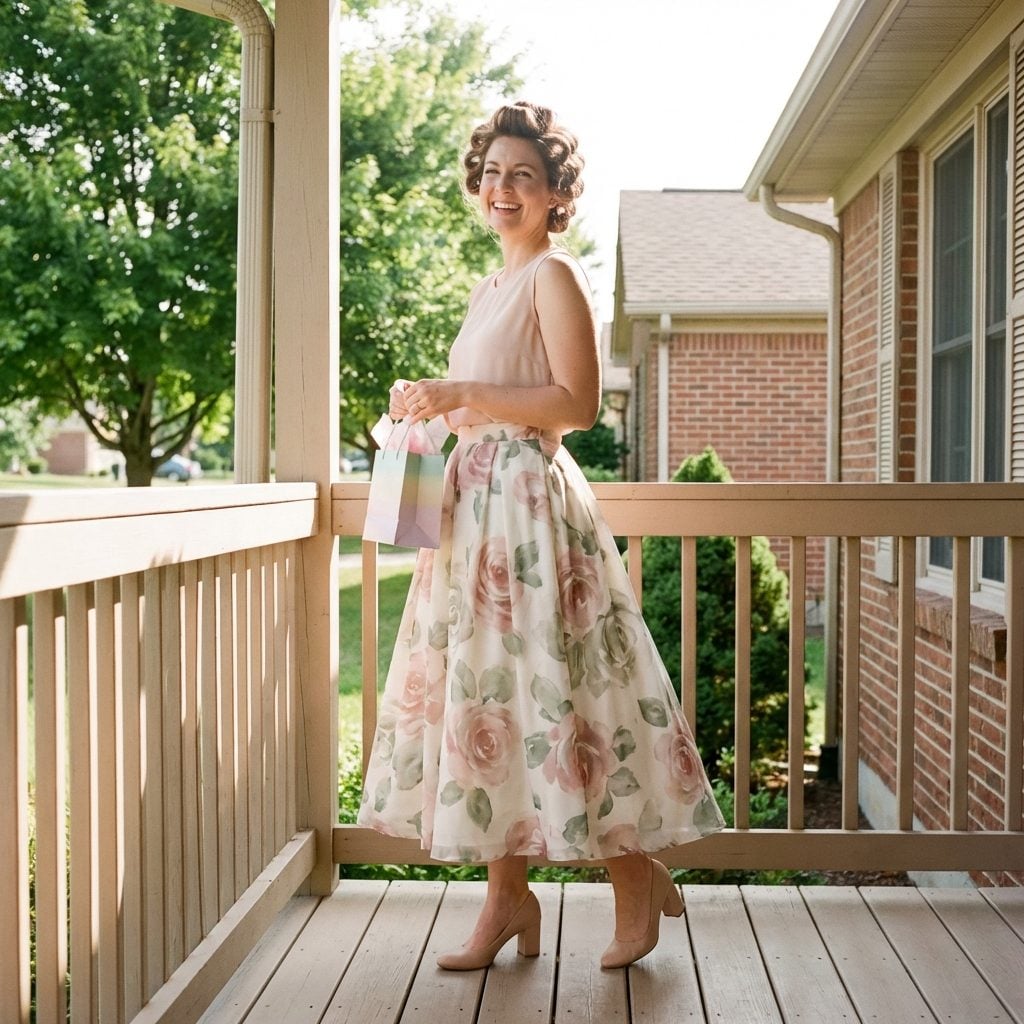
That skirt existed in every mother’s closet in at least two colorways. The floral tea-length skirt was the unofficial uniform of every ’90s Mother’s Day, Easter, and church anniversary. It came from Lerner New York or Casual Corner, folded into a gift box with a department store bow, and was worn for the next seven years straight without irony.
The styling logic was simple: the full, swishing hem did the work, so the top stayed quiet, usually a tucked satin shell in blush or cream. It moved when she walked, which felt deliberate even when it wasn’t. There is something genuinely lovely about a skirt that announces you’re arriving somewhere worth arriving at.
3. Frosted Pink Lipstick in a Gold-Cap Tube (The One From the Clinique Counter)
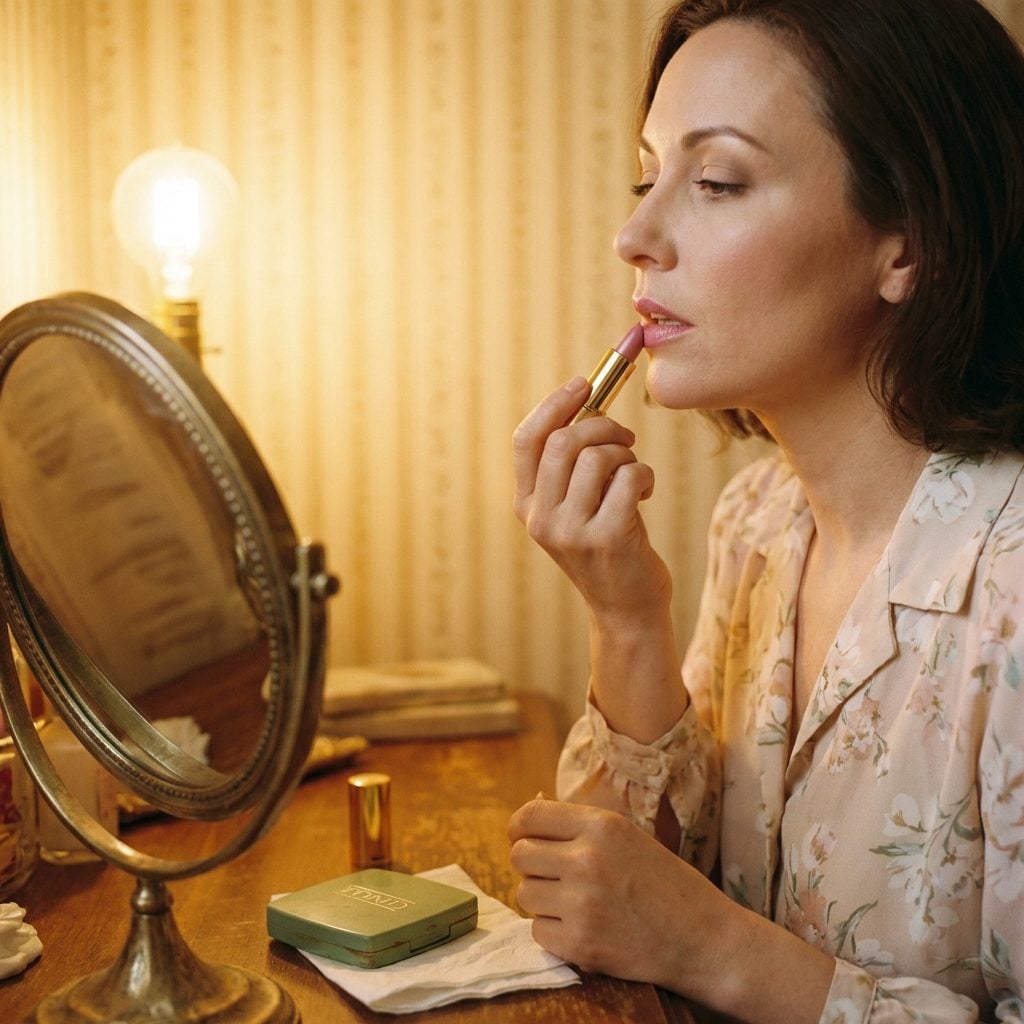
Frosted pink was not a color so much as a philosophy. It said: I made an effort, I bought this at a counter, and a woman with a white coat helped me choose it. The Clinique version lived in a short gold-cap tube, smelled faintly cosmetic-clean, and left a ring on every coffee cup it ever touched.
In 1994, frosted lips were the middle ground between a natural look and a statement. They were the lipstick equivalent of a polite cough, present, intentional, visible without being loud. Worn over a lip liner one shade darker, obviously.
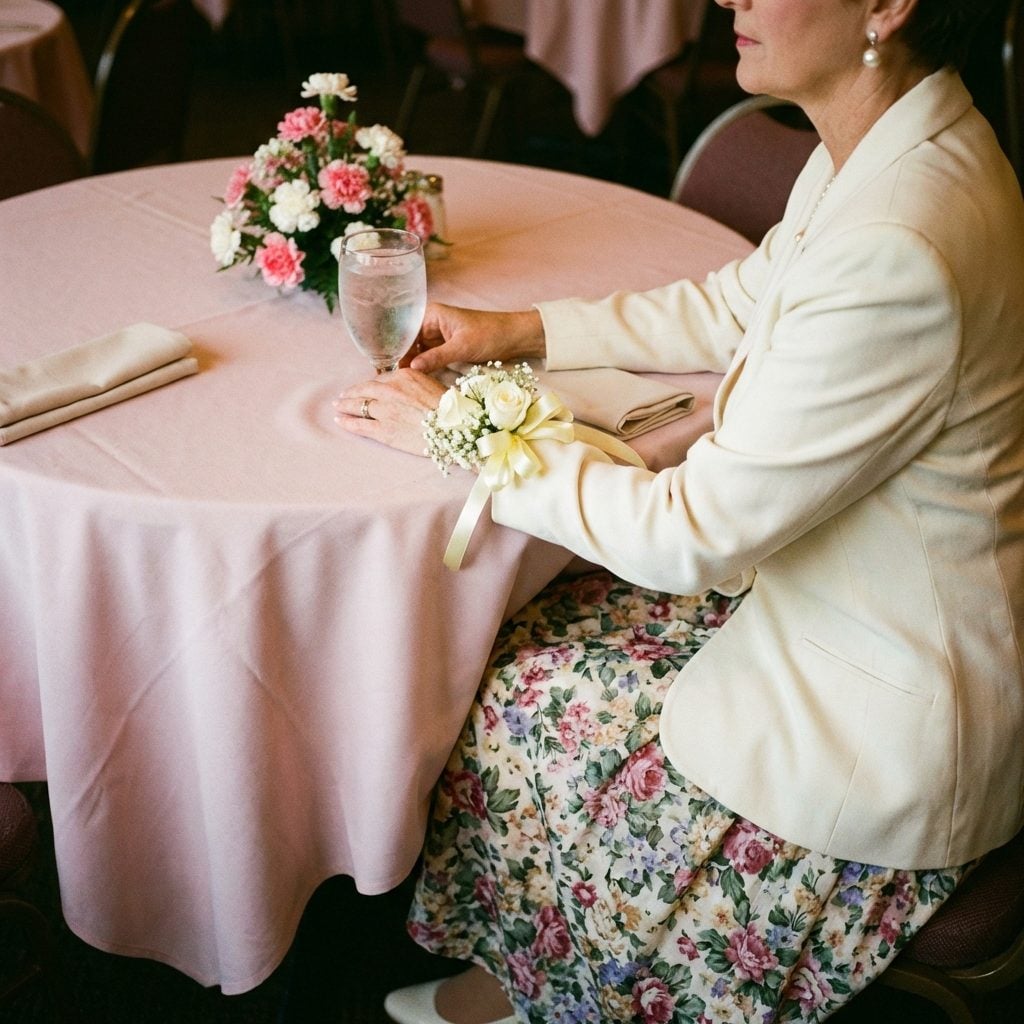
2. A Floral Wrist Corsage She Definitely Told Everyone She Didn’t Need
❤️ Would you like to save this?
“You didn’t have to do that,” she said. Then she wore it for the entire brunch and kept glancing at it. The wrist corsage was the most theatrical piece of the entire ’90s Mother’s Day ensemble, two roses, baby’s breath, a satin ribbon, and approximately forty feelings about being seen and appreciated.
The kids ordered it from the grocery store florist. It came in a small plastic box. It was pinned slightly too tight and left a ribbon mark on her wrist by noon. She kept it on anyway.
1. Sheer Ivory Pantyhose With a Subtle Shimmer (Not Taupe. Ivory. There Was a Difference.)
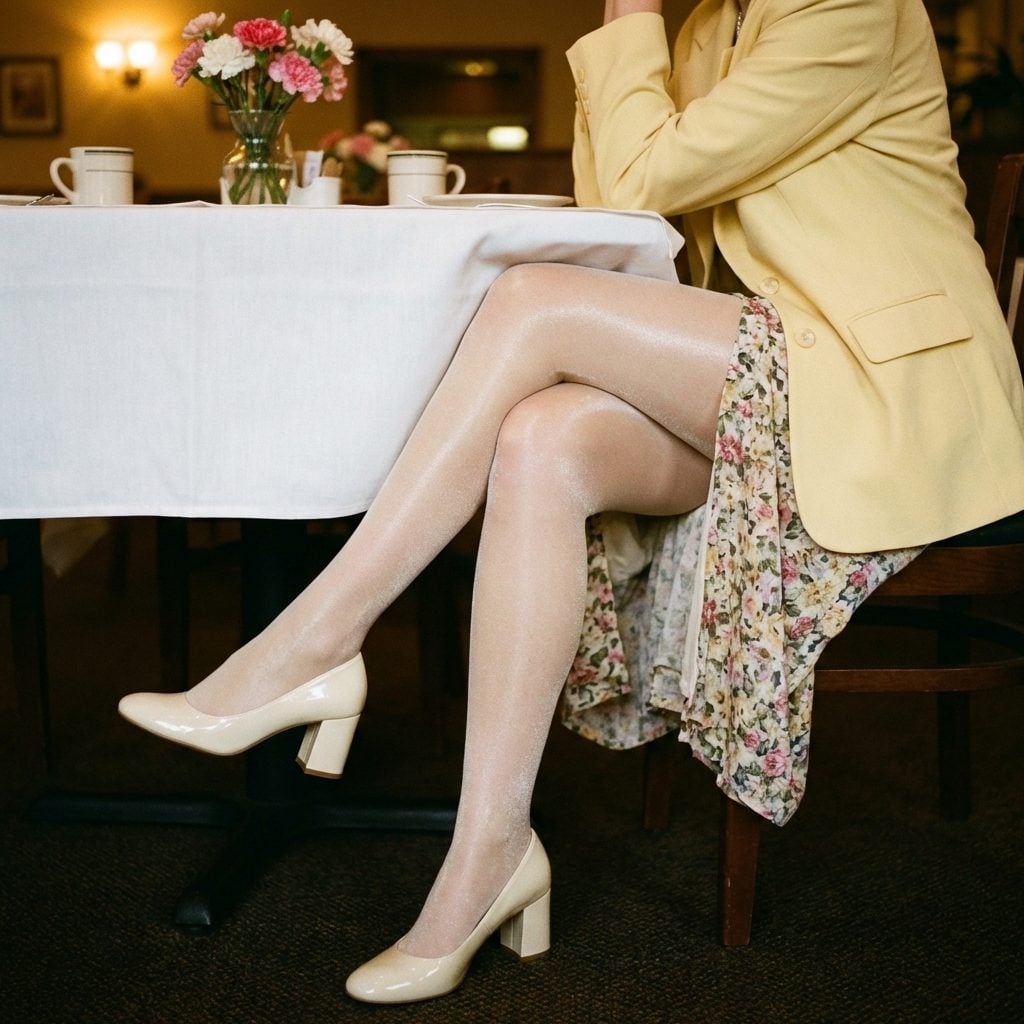
There was a whole taxonomy here that outsiders never understood. Taupe pantyhose were for the office. Suntan pantyhose were for church. Ivory pantyhose with a shimmer were for the occasion. That subtle luminescence, barely there, more of a suggestion than a shine, was the hosiery equivalent of putting on your good earrings.
They came from Hanes or Leggs, usually in a plastic egg or a flat cardboard envelope, and they ran approximately twelve seconds after you put them on. But for those twelve seconds before brunch began? Flawless. Completely worth it. We would absolutely wear them again and we are not apologizing for that.