❤️ Would you like to save this?
Quiet luxury sounds simple: neutral tones, quality fabrics, nothing too loud. But that simplicity is exactly what makes it so easy to get wrong. Too beige and you disappear. Too oversized and you look like you borrowed someone else’s wardrobe. Wrong fabric combination and the whole thing reads expensive accident instead of intentional chic. Before you spend real money chasing a look that requires more nuance than it lets on, see what actually goes wrong, and why.
FYI, thanks to AI imagery software, we’re able to create very specific fashion and hairstyle examples to illustrate the points being made. In some cases, imagery is exaggerated to hammer home the point. Also, assume links that take you off the site are affiliate links such as links to Amazon. this means we may earn a commission if you buy something.
31. The Beige-on-Beige-on-Beige Situation That Forgot Contrast Exists
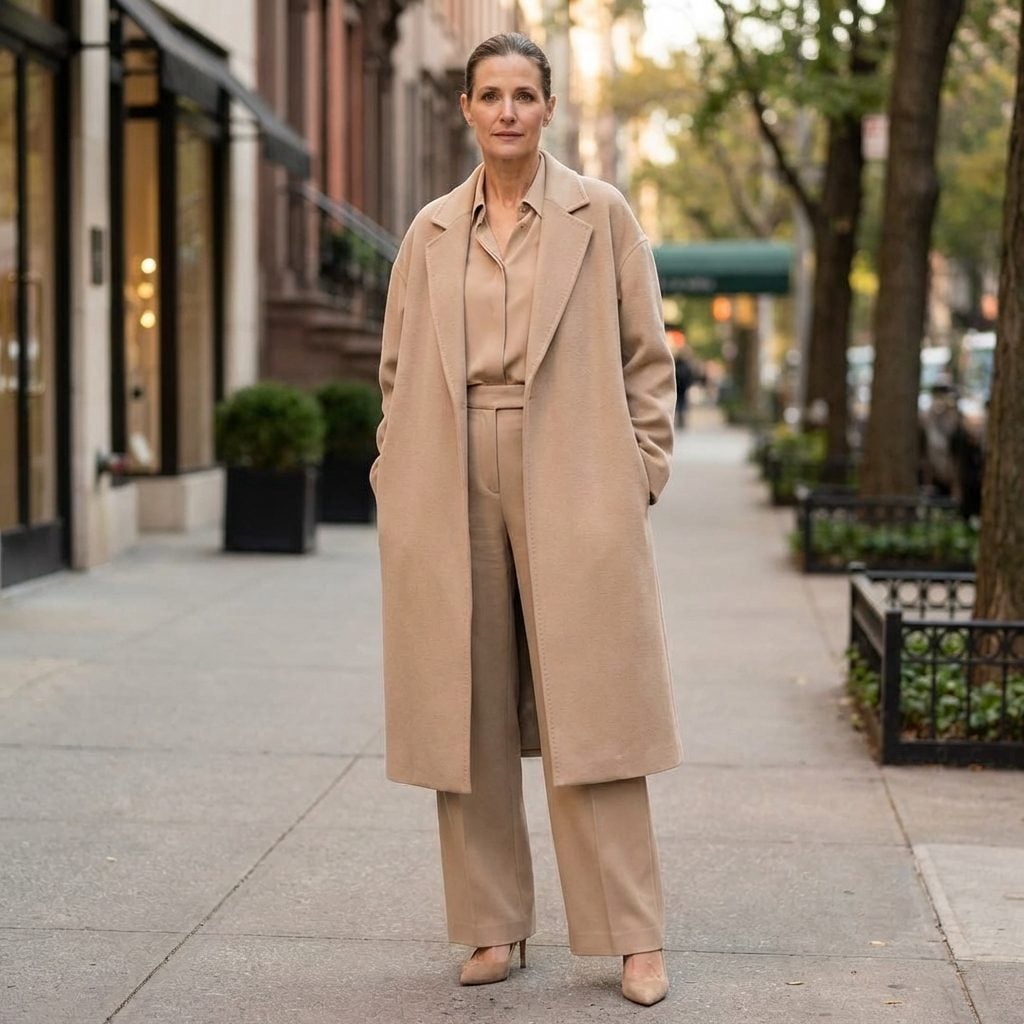
Quiet luxury loves a tonal moment. But there’s a difference between a considered monochromatic look and wearing every beige thing you own at once. When the blouse, trousers, coat, and shoes are all the exact same flat sand tone, with zero variation in fabric weight or finish, the result isn’t refined. It reads as someone who got dressed in the dark.
The fix is simple: one piece needs to shift. Ivory, camel, oatmeal, or warm taupe, pick two that contrast enough to create dimension. The eye needs somewhere to travel.
30. When the Cashmere Sweater Is Three Sizes Too Big and Nobody Said Anything
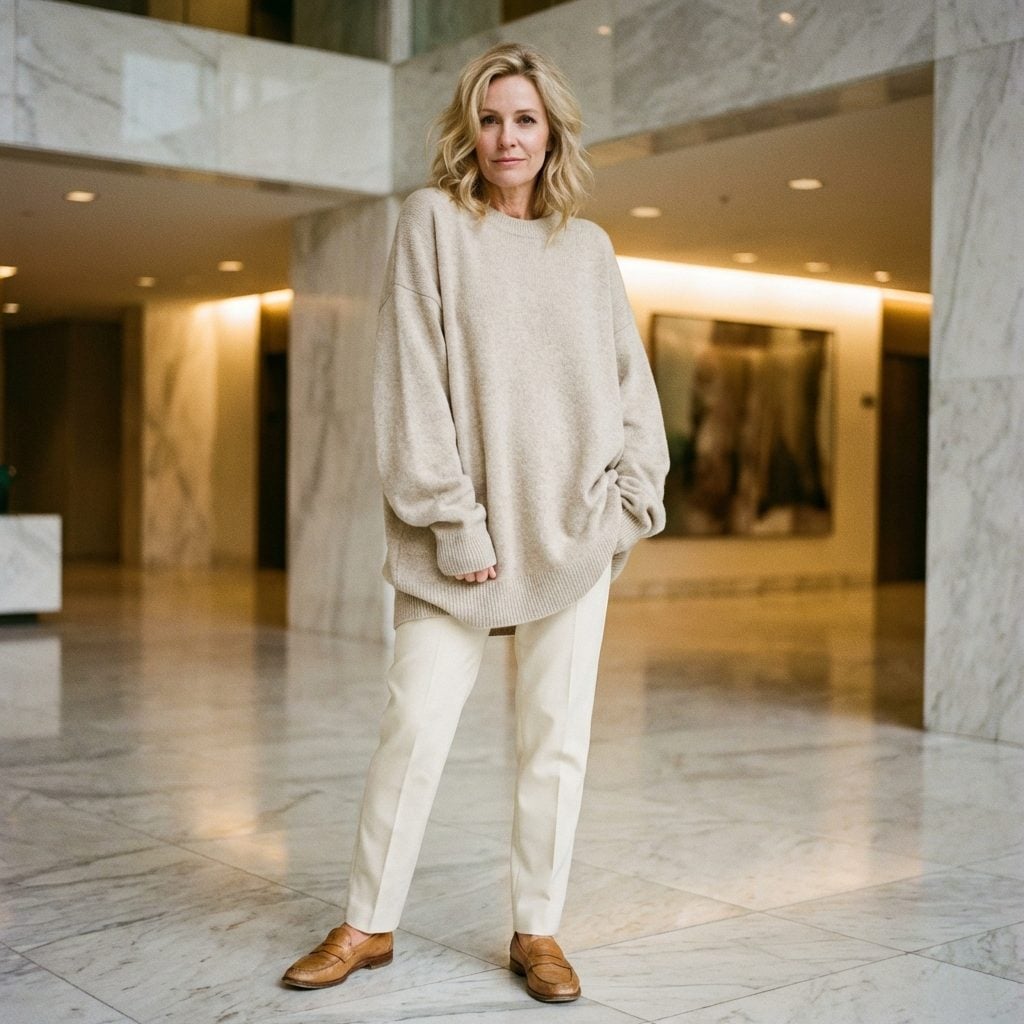
Oversized knitwear is deeply appealing in theory. A slouchy cashmere sweater that drapes beautifully is a genuine quiet luxury staple. The problem arrives when “oversized” becomes “borrowed from someone twice your size.” Sleeves swallowing your hands, a hem hitting mid-thigh with no intentional proportion at play, shoulders drooping to the elbows. That’s not luxurious. That’s just large.
Intentional oversize has structure within the volume. The fabric holds its shape. There’s a tuck, a half-tuck, or a deliberate pairing with slim tailored pieces below. Without that counterbalance, oversized knits in quiet luxury colors just look like you gave up.
29. Technically Neutral, But the Undertones Are Having a Full Argument
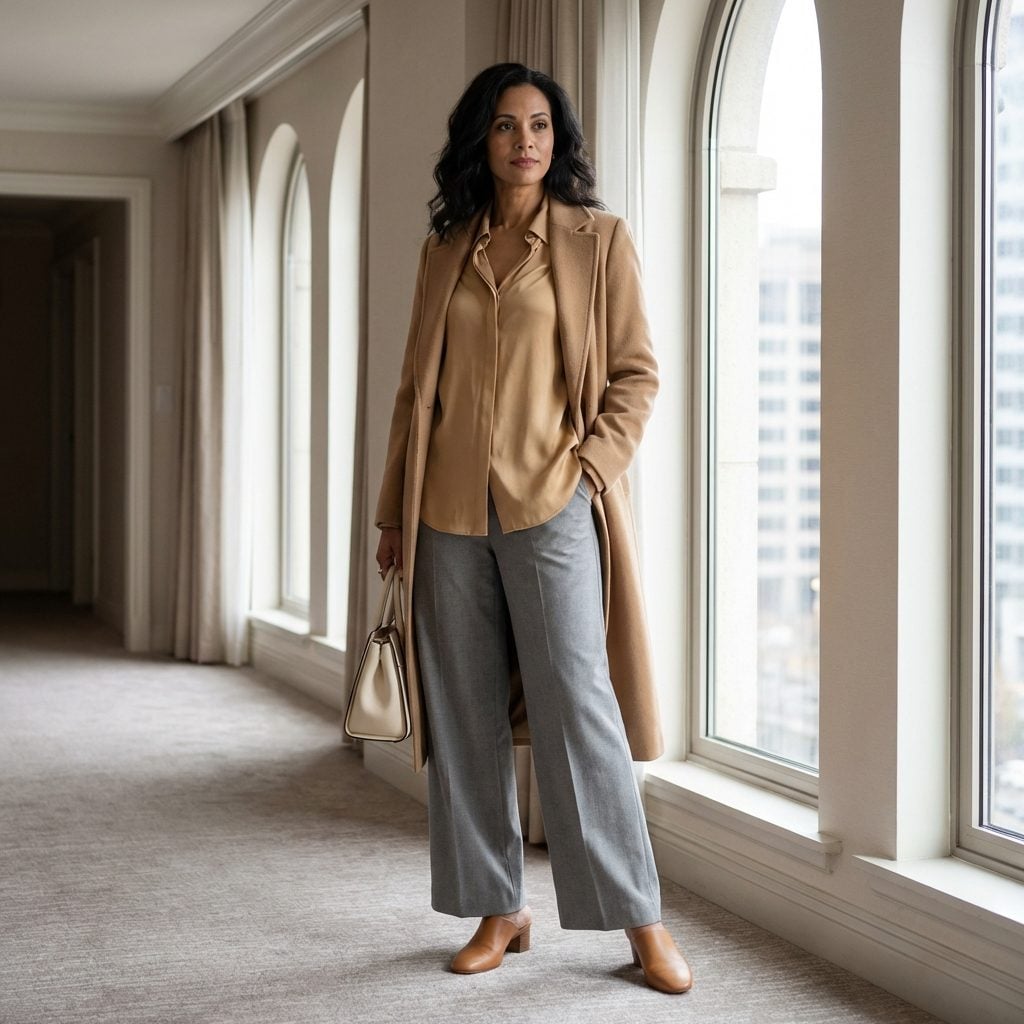
She invested in quality. Every piece is genuinely nice. The problem? Her cool-toned grey trousers, warm greige blouse, and distinctly yellow-toned camel coat are all technically “neutral” but their undertones are fighting openly. Grey with yellow undertones reads muddy. Cool taupe next to warm sand looks dirty rather than refined.
Quiet luxury neutrals only coexist gracefully when they share an undertone family. Warm neutrals together. Cool neutrals together. Mixing warm and cool tones without a deliberate bridge piece is the fastest way to make expensive clothes look cheap.
28. The Logo-Free Bag That Somehow Still Screams Too Hard
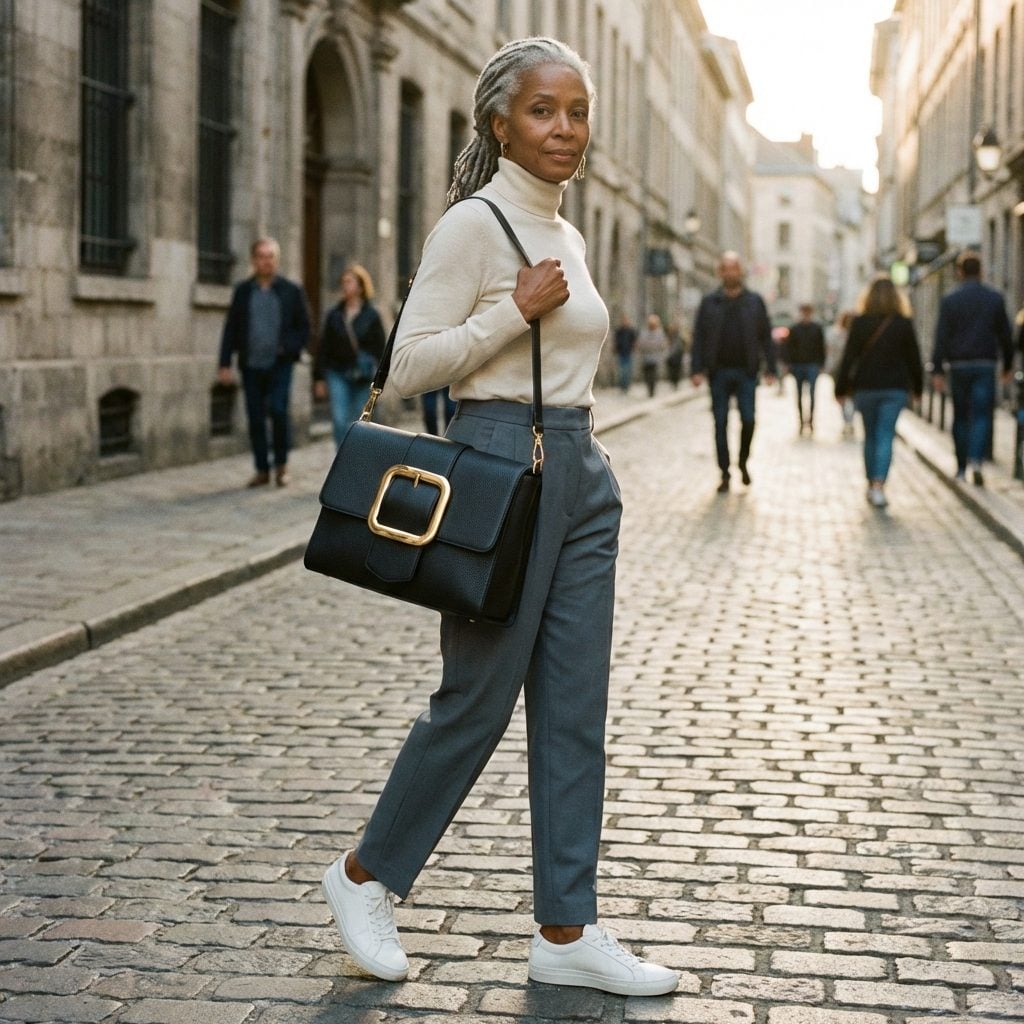
Not every plain bag is a quiet luxury bag. The silhouette matters enormously. This outfit gets almost everything right then introduces a bag with stiff, almost plastic-looking pebbled faux leather, a slightly too-gold oversized clasp, and a boxy shape that sits awkwardly against the hip. No logo, but the hardware is doing more talking than the rest of the outfit combined. Quiet luxury bags whisper through material quality and refined proportion. This one is clearing its throat.
27. Expensive Trousers, Deeply Unfortunate Length

The fabric is beautiful. The cut at the hips and thighs is genuinely flattering. But these wide-leg wool trousers hit at the absolute worst possible point on the ankle, not long enough to graze the floor dramatically, not cropped with enough intention to read as a deliberate style choice. They just end. Awkwardly. Mid-shin. On heels they might recover. On flat loafers, they cut the leg and compress the silhouette into something stumpy and unresolved.
Hem length is the detail that separates a well-dressed woman from an almost-well-dressed one. It’s the cheapest alteration a tailor does. There’s no excuse for it.
26. When Silk Looks Like Polyester Because It Was Styled That Way
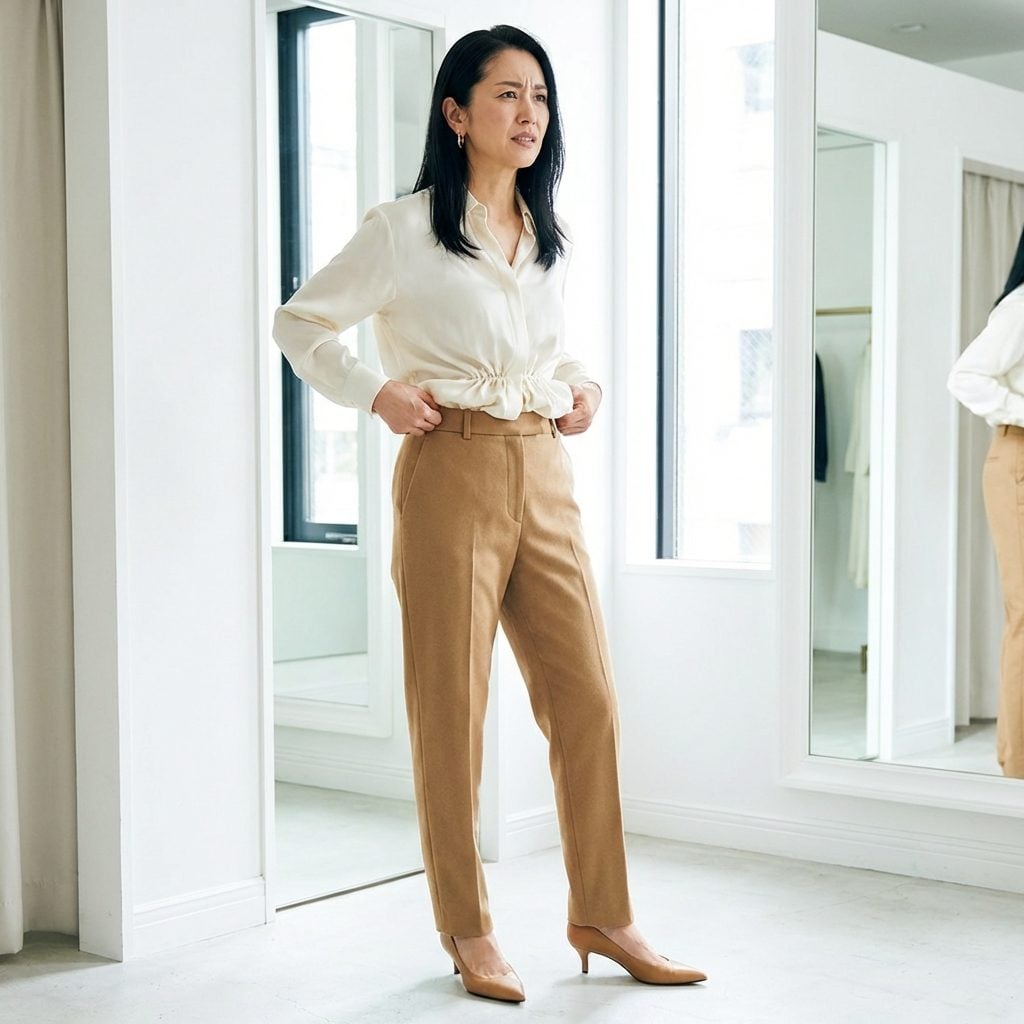
A truly gorgeous ivory silk blouse is in this outfit. It’s real silk. The problem is the way it’s been tucked, bunched, and bloused into high-waisted trousers has created a bubble of fabric at the front that catches light in all the wrong places, creating creases that look synthetic and unintentional. Silk is forgiving of wrinkles when draped. It is deeply unforgiving when bunched.
The quiet luxury rule for silk: let it skim, not grip. A clean French tuck or a full tuck with the excess smoothed back and down. The moment silk starts gathering at the waist, the entire fabric’s credibility collapses.
25. Quiet Luxury Suiting That’s Just Slightly Too Matched
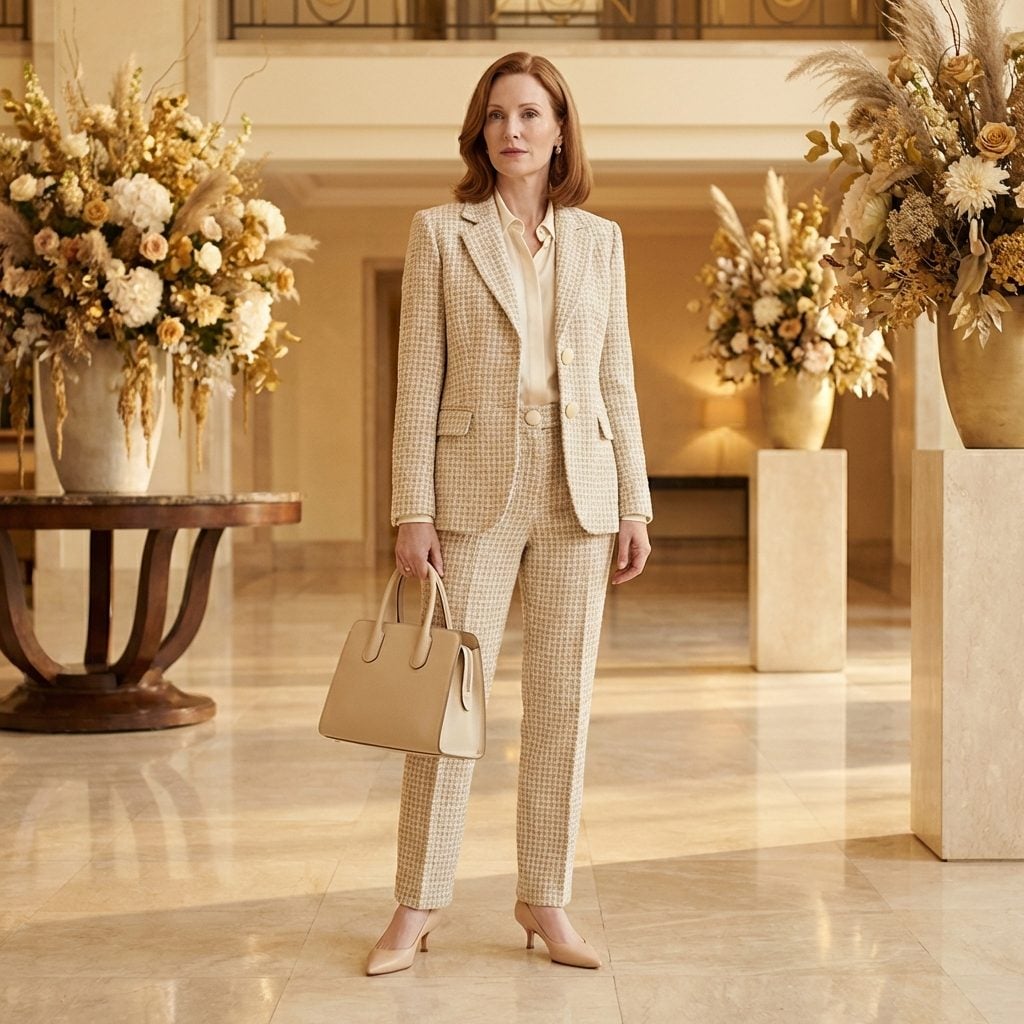
Matching suits are back. A beautifully cut matching blazer and trouser set in a refined fabric is one of the cleaner expressions of the quiet luxury aesthetic. Unless it looks like a costume. This particular set is in a pale oatmeal-and-cream tweed: lovely fabric, good construction. But the jacket, trousers, bag, and shoes are all in the exact same oatmeal family, the buttons match, the lining matches. It has crossed from coordinated into costumed.
One deliberate departure breaks the pattern: a deep ivory blouse instead of cream, a cognac heel instead of nude, a dark navy bag as a counterpoint. The break is what makes matching feel intentional rather than matchy-matchy.
“The difference between dressed and overdressed is usually just one piece that wasn’t trying quite so hard.”
24. The Minimalist Jewelry Choice That Accidentally Looks Like Nothing
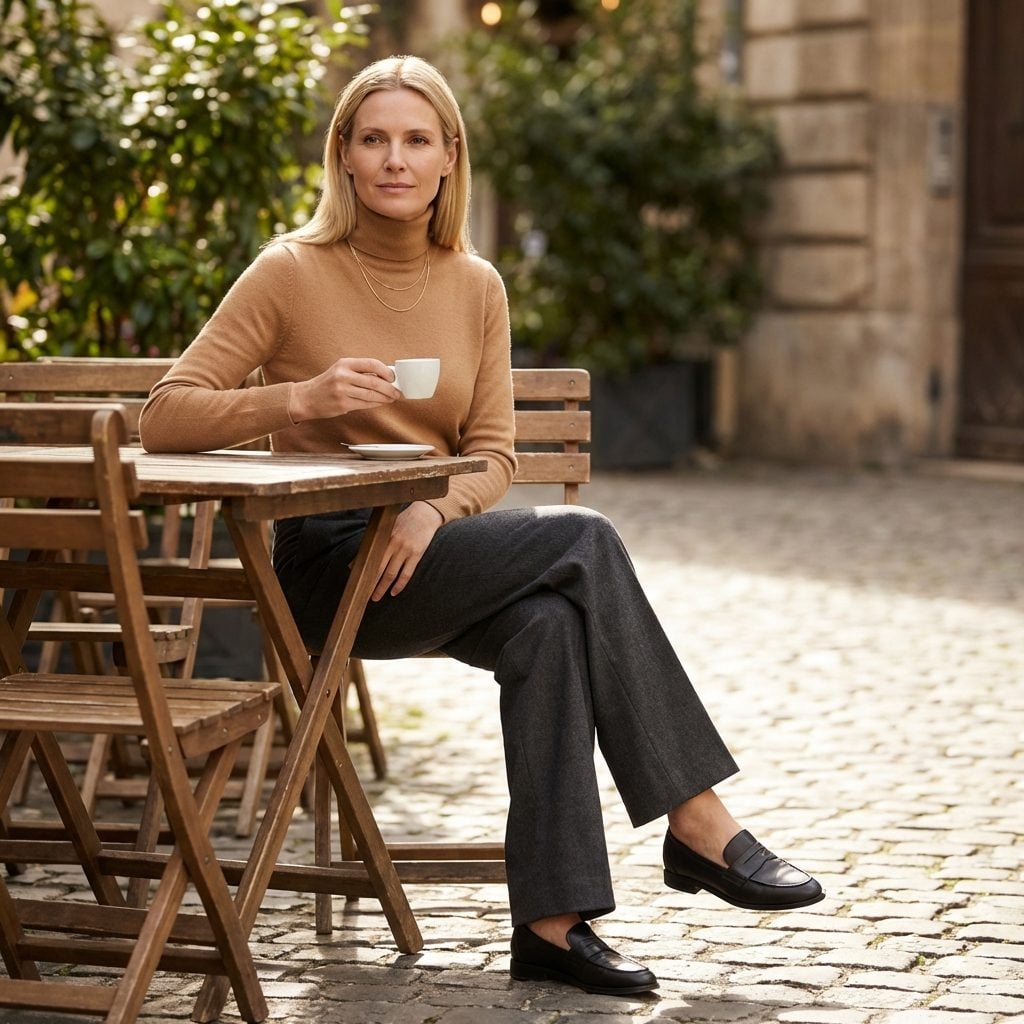
Quiet luxury jewelry is supposed to be subtle. The goal is pieces that register upon closer inspection, that reward attention rather than demanding it. But there’s a threshold below which subtle becomes invisible, and invisible reads as forgetting to get dressed.
This outfit is immaculate from neck to toe. A beautifully draped camel cashmere turtleneck, slate trousers, sleek loafers. The jewelry choice: two extremely fine gold chains, each under 0.5mm thick, worn against the turtleneck’s high neckline where they disappear completely. No earrings. No watch. No ring. The result is an outfit that feels somehow unfinished without anyone being able to say exactly why.
Minimalism requires at least one anchor piece. A watch. A visible ring. A chain thick enough to catch light. Something real.
23. When the Fabric Says Luxury But the Fit Says Off-the-Rack Compromise

This is perhaps the most common quiet luxury miss of all. The fabric is genuinely beautiful, a softly structured double-breasted blazer in a dove grey wool blend with subtle texture. But the fit is doing nobody any favors. The shoulders sit a full half-inch too wide, the chest buttons gap slightly when she stands naturally, and the sleeves hit just below the wrist at a point that makes the arm look oddly long and unfinished.
Off-the-rack tailoring in quality fabric is still off-the-rack tailoring. Quiet luxury is built on fit first, fabric second. Without the former, the latter is just expensive disappointment.
22. Quiet Luxury in a Print That Is Absolutely Not Quiet
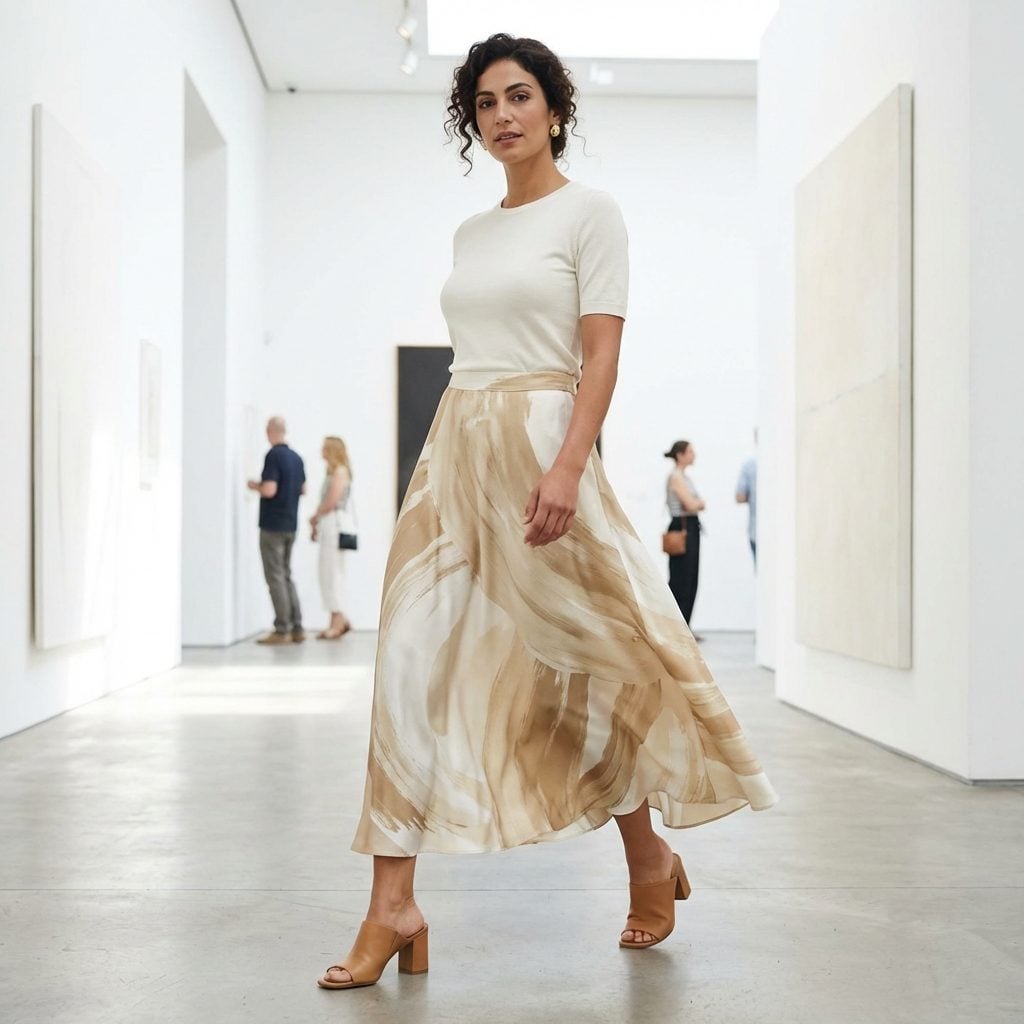
Someone told her a neutral color palette means anything goes print-wise. The silk midi skirt is technically in beige and cream. But the abstract brushstroke print across it is large, graphic, and bold enough to read from a considerable distance. Paired with a simple ivory blouse and tan mules, the skirt overwhelms everything. It is not quiet. It is a conversation happening at full volume in what was meant to be a library.
Quiet luxury prints, if they exist at all, are micro. A hairline stripe. A tone-on-tone jacquard. A barely-there houndstooth at 20% scale. When the print has a gesture, it’s no longer a quiet luxury garment, regardless of the color family it lives in.
21. The Cashmere Turtleneck That’s Two Sizes Too Large and Swallowing Her Whole
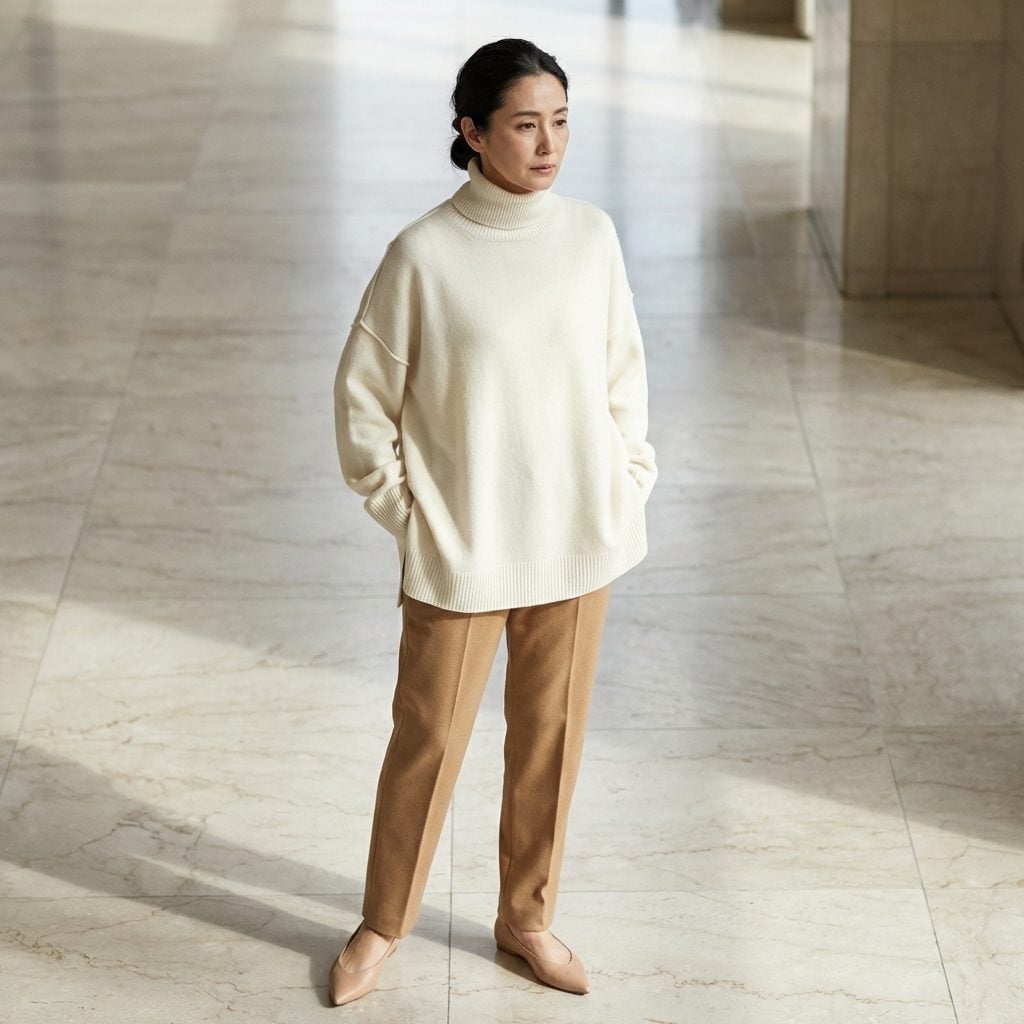
Oversized has a ceiling, and this outfit blew right past it. The ivory cashmere turtleneck is genuinely beautiful fabric, but when a sweater swallows your collarbone, your shoulders, and your hips simultaneously, you stop looking relaxed and start looking like you borrowed clothes from someone significantly larger. Quiet luxury depends on intentional proportion. This reads accidental.
The slim camel trousers underneath are actually the right call. But they’re completely overwhelmed. You can’t register the good choice because the sweater ate the whole outfit.
20. Beige Linen Blazer Over a Cream Silk Blouse Over Oatmeal Trousers: A Tonal Disaster
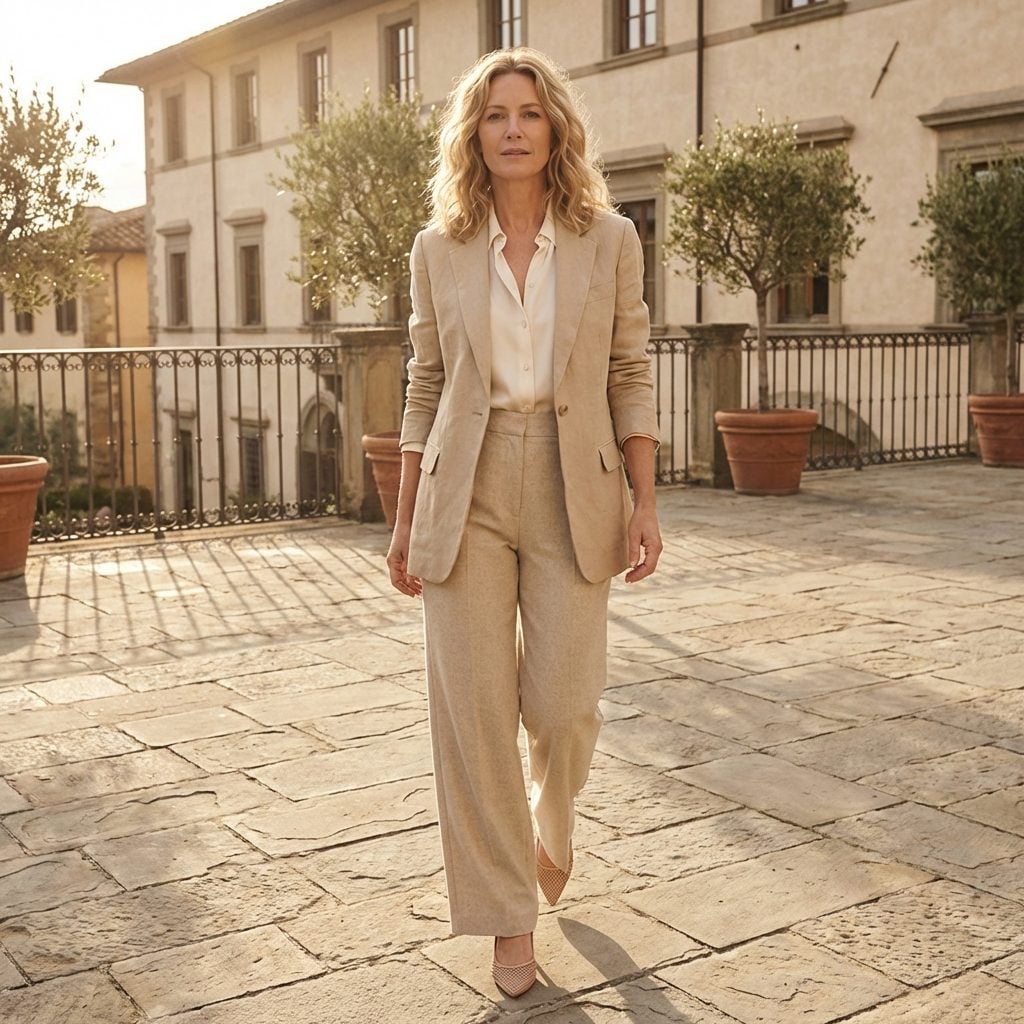
Tonal dressing is one of the most sophisticated moves in the quiet luxury playbook. Until you lose all contrast and look like you got dressed inside a beige fog.
This woman’s blazer, blouse, and trousers are all within the same narrow sand-to-oatmeal range, and none of them are the same shade, which means they clash in the most polite and expensive way possible. The textures (linen, silk, wool crepe) are all lovely individually. Together, without a single grounding element or contrast note, the eye has nowhere to land.
One dark accessory, one shoe in a contrasting tone, or even a slightly deeper bottom would have saved this entirely. The pieces are not the problem.
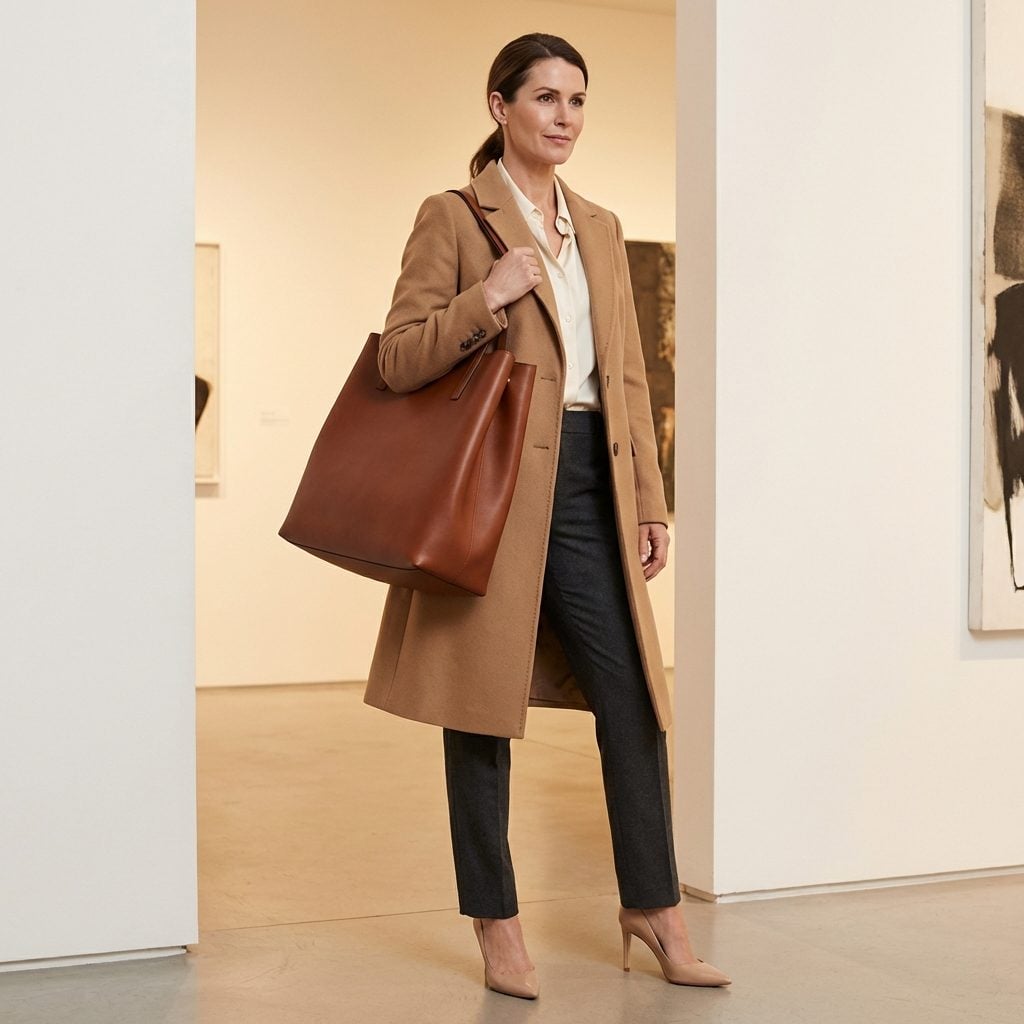
19. The Structured Bag That’s Clearly Wrong-Scale for the Entire Outfit
❤️ Would you like to save this?
She found the perfect camel coat. Tailored charcoal trousers. A silk blouse in antique white. And then she grabbed a structured tote bag so enormous it practically needs its own seat reservation.
Bag scale matters enormously in quiet luxury dressing, because the aesthetic is built on visual balance. A tote that hits mid-thigh on a petite frame doesn’t read as practical chic. It reads as luggage. The outfit underneath is genuinely well-constructed. But the bag is pulling focus in the worst way, making everything else look like an afterthought.
18. Perfectly Pressed Cream Trousers With a Cashmere Knit That’s Visibly Pilling
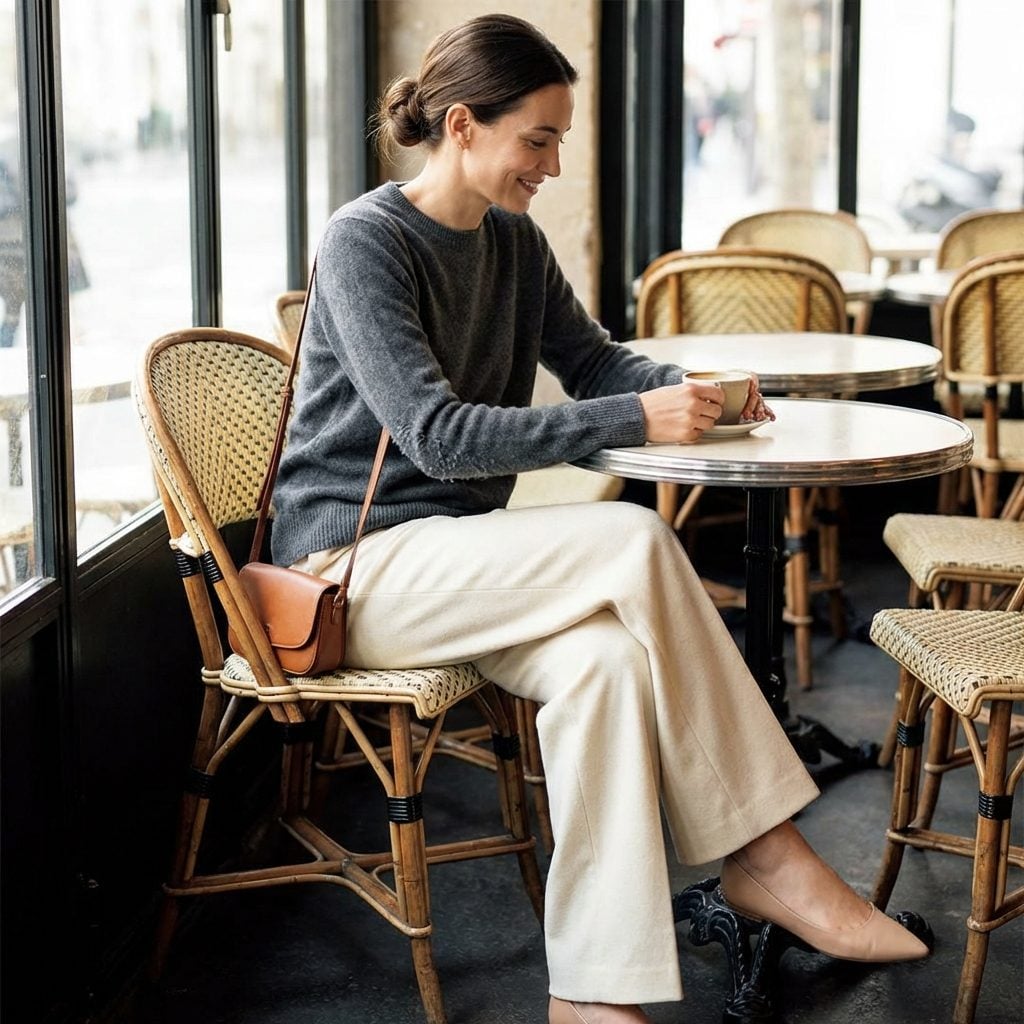
This is the quiet luxury equivalent of a chipped manicure at a black-tie dinner. The cream wide-leg trousers are pristine. The posture is confident. The shoes are right. And the cashmere knit sweater in soft grey is clearly once-beautiful.
But pilling is visible across both elbows and along the hem, and in a look built entirely on the quality of individual pieces, one worn-out item contaminates everything. The whole premise of quiet luxury is that the fabric speaks for itself. When the fabric is saying ‘I’ve been through the wash too many times,’ no amount of good styling rescues it.
17. The Silk Midi Skirt With a Tucked-In Knit That Creates a Lumpy, Bulky Waist
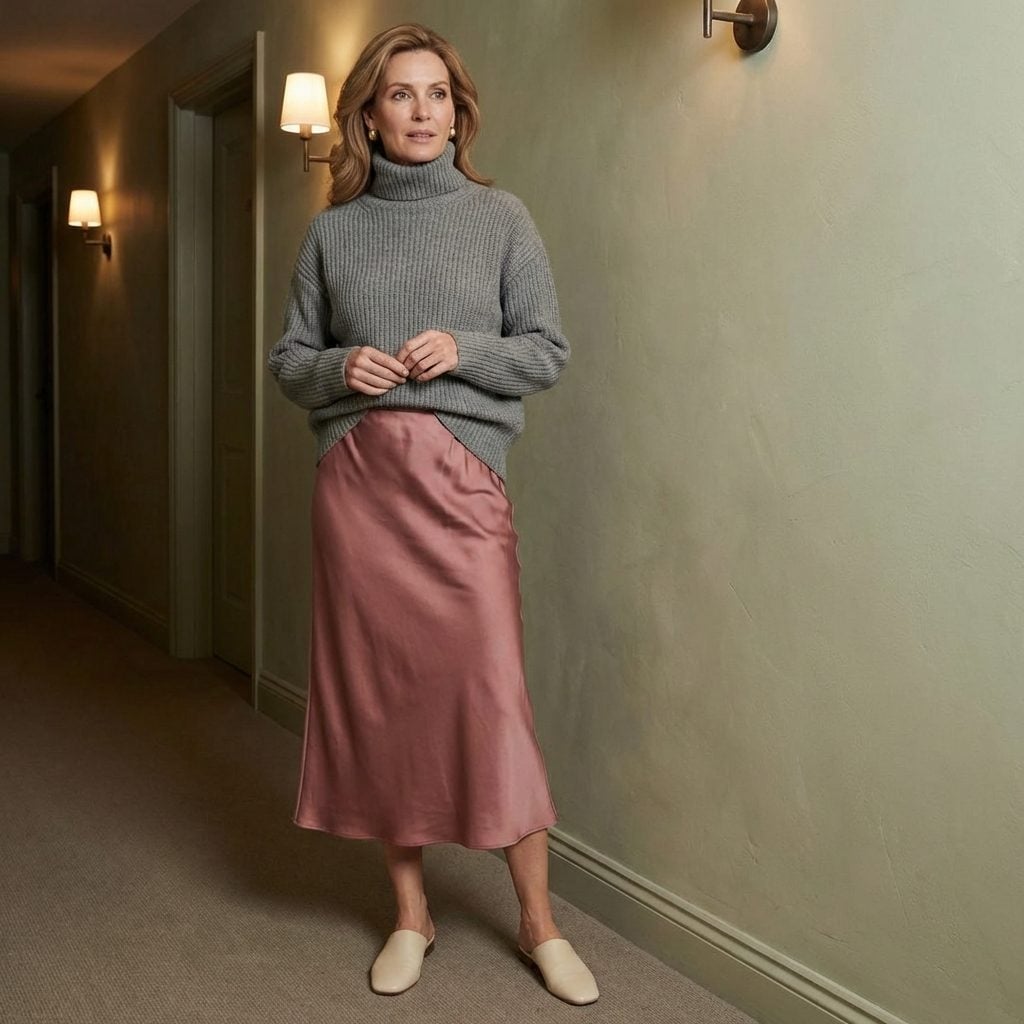
Both pieces are correct. The problem is the combination.
A fluid silk midi skirt in dusty rose paired with a ribbed turtleneck knit sounds like a quiet luxury dream on paper. In reality, the bulk of the ribbed knit tucked into the waistband of the skirt creates a thick, uneven ridge around the midsection that no amount of smoothing resolves. The silk clings to every tuck and pull, and the waistline reads as wide and confused rather than defined and graceful.
The fix is almost embarrassingly simple: either a thinner slip-weight layer tucked in, or the knit left just slightly out. But as-is, the outfit is fighting itself right where it should be working hardest.
16. Monochrome Navy Done Slightly Wrong: Three Shades of Blue That Clash Politely
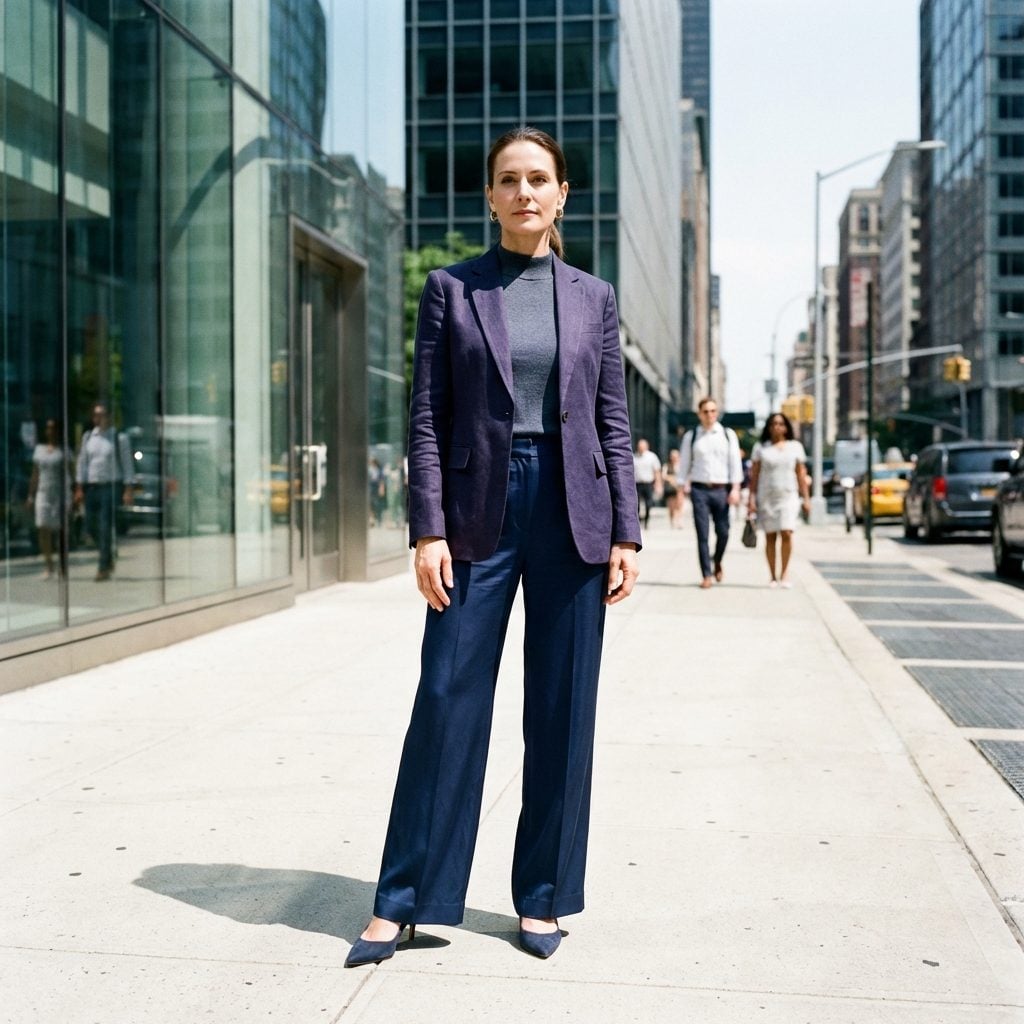
Navy is not one color. It is approximately forty-seven colors that all look the same in low light and wildly different in daylight, which is exactly what happened here.
The navy linen blazer reads slightly purple-blue. The navy silk trousers pull towards true indigo. The navy mock-neck underneath has a slight grey-blue cast. On their own, all three are beautiful. Together in direct light, they create that specific quiet-luxury fail where everything technically matches but the eye reads it as a mistake rather than an intention.
This is the monochrome trap. One shade, executed precisely, is sophisticated. Three shades hovering near each other reads as an accident you almost pulled off.
15. The Expensive Belt That’s Cinching in Exactly the Wrong Place
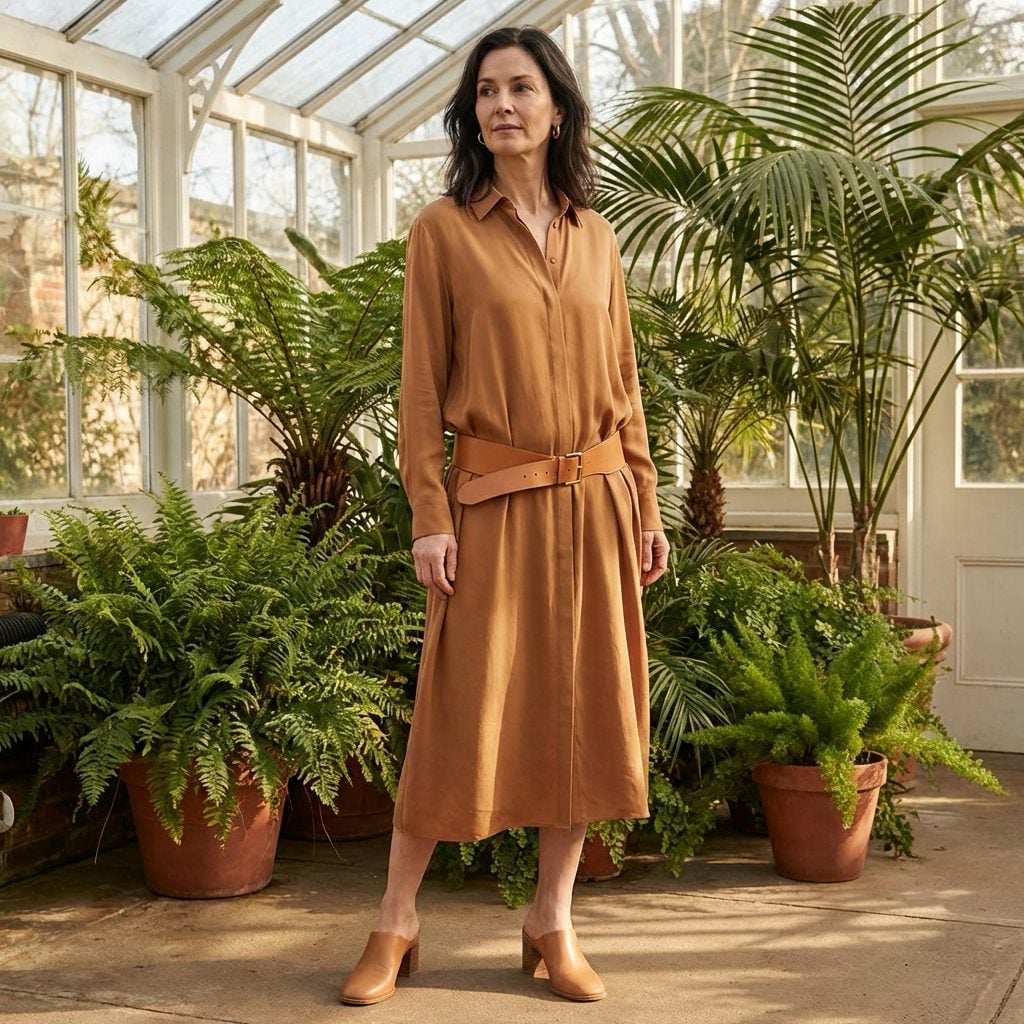
She invested in the right pieces: a fluid caramel silk shirtdress and a genuine leather belt with a clean gold buckle. The instinct to add a belt was correct. The placement was not.
The belt is sitting two full inches below the natural waist, at the widest part of the hip curve. On a silk shirtdress, this placement doesn’t create a waist. It creates a strange horizontal interruption that cuts the silhouette at its broadest point and makes the skirt portion pool awkwardly below. High-waist belting on this silhouette would have been the move. Instead, the one accessory meant to define the look is undermining it.
14. Head-to-Toe Grey That Forgot Texture Entirely
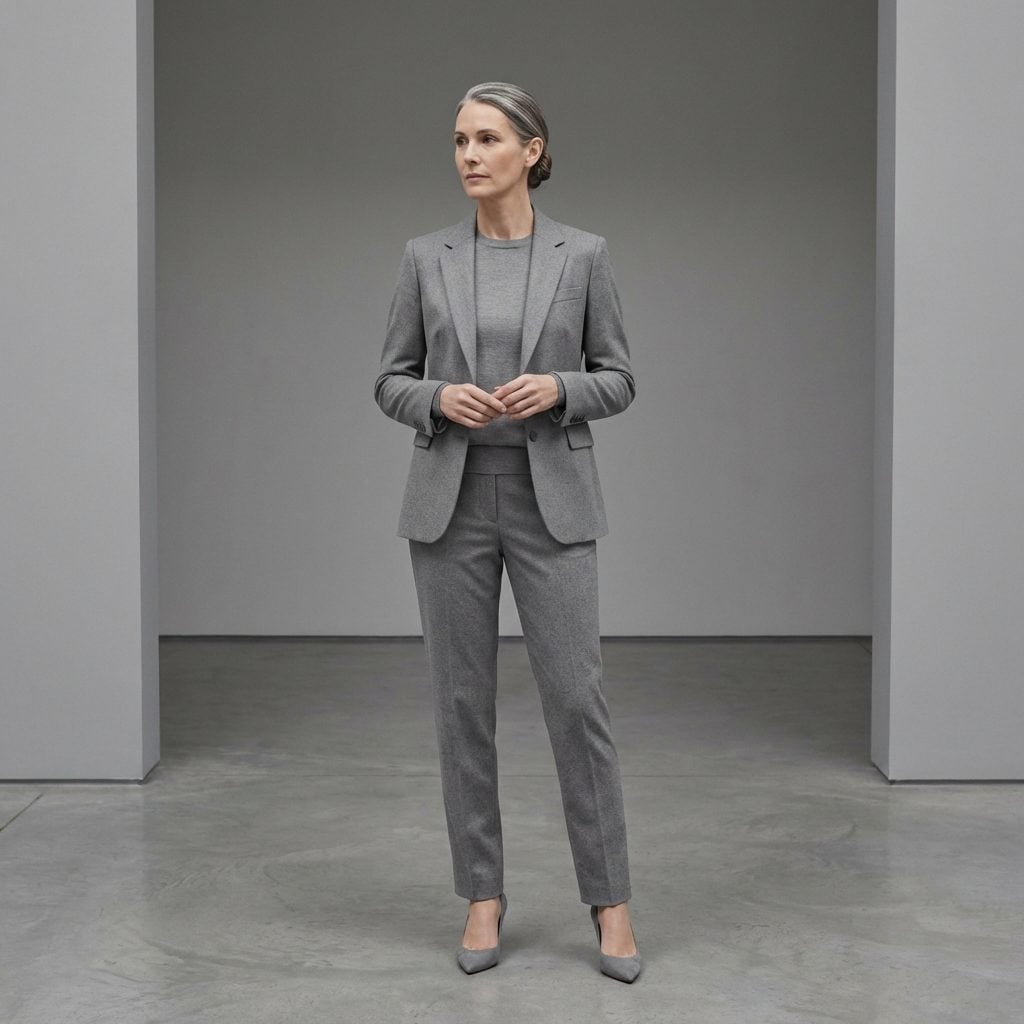
Grey on grey can be one of the most refined looks in quiet luxury dressing. The catch: it only works when each grey piece offers something texturally distinct from the next. Matte against sheen. Smooth against nubby. Fine-gauge against chunky.
This outfit went grey on grey on grey in the same flat, matte finish across every piece. The trousers, the blazer, and the knit underneath are all mid-grey, all similarly weighted, all without variation. The result is not quiet luxury. It is institutional.
13. The Wide-Leg Trouser That’s Two Inches Too Long and Dragging on the Ground
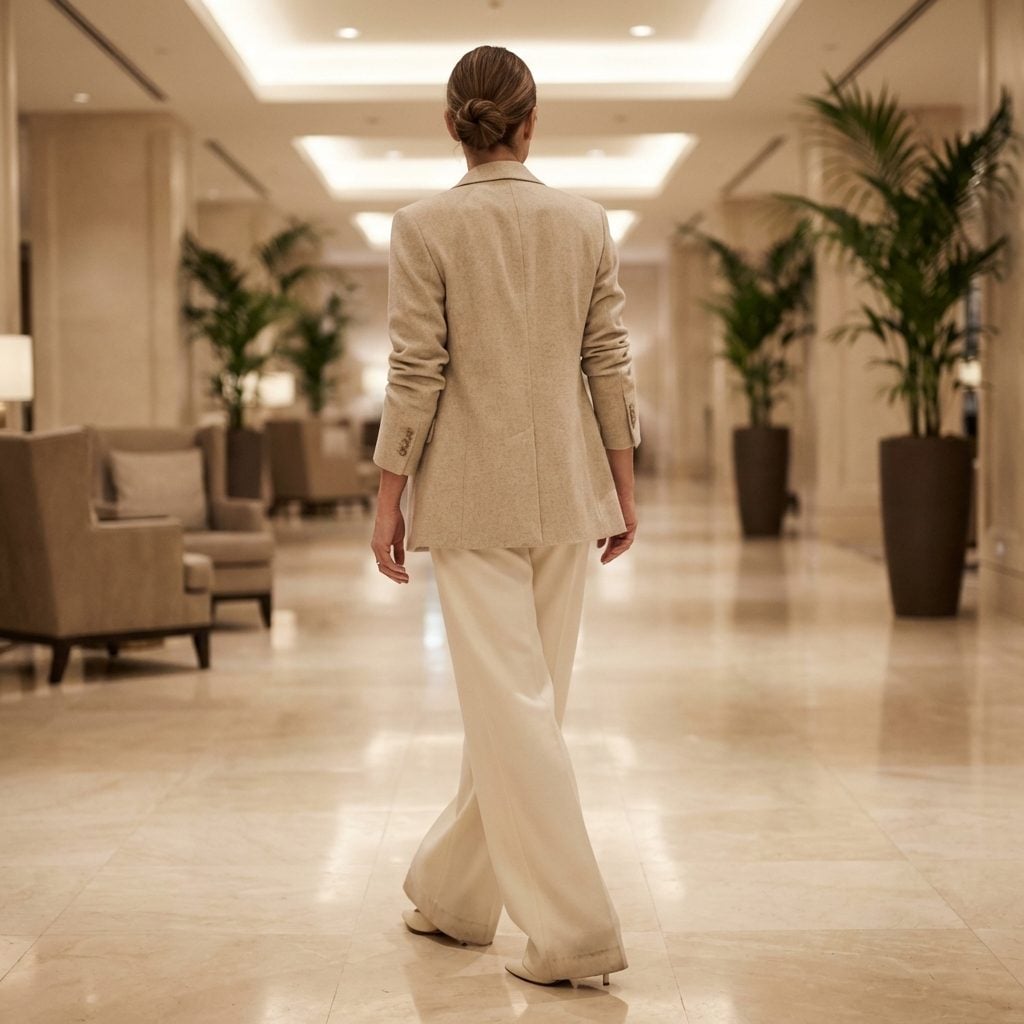
Hem length on wide-leg trousers is not a minor detail. It is the entire point.
These wide-leg trousers in ivory wool crepe are clearly high-quality. The fabric is weighty and moves well. But they’re landing a full two inches past the heel, bunching against the floor with every step, the hem slightly soiled at the back from dragging. In quiet luxury dressing, where every line is supposed to be intentional, a hem that puddles reads as careless, even if everything above the ankle is perfect.
The tragedy is how close this came to working. Six dollars at a tailor would have fixed it.
12. Quiet Luxury but the Shoes Are Visibly Scuffed

In an aesthetic built on the idea that you spend money so nothing looks like it cost money, shoes are the tell. Specifically, scuffed shoes are the tell.
This woman’s outfit is genuinely composed: a soft white structured blazer, straight-leg stone-coloured trousers, a thin gold chain necklace. The kind of look that signals taste without effort. And then the camera drops to her feet, where her beige pointed-toe pumps have visible scuff marks across both toe boxes and a worn-down heel on the left shoe. It is the one element that unravels everything above it. Quiet luxury has no tolerance for shoes that have clearly logged miles without maintenance.
Your shoes are telling a story your outfit is trying to contradict.
11. The Elegant Coat That’s Paired With an Overly Casual Canvas Tote
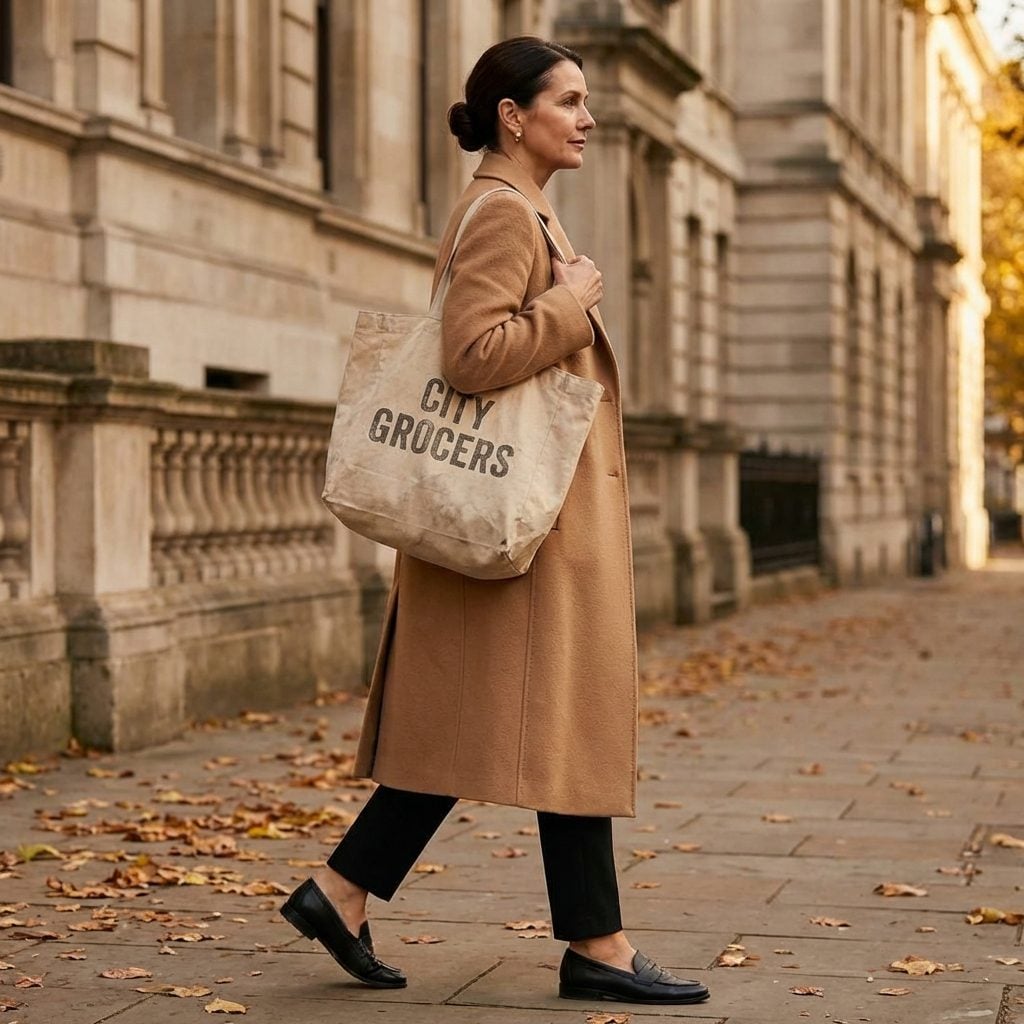
There is a version of high-low dressing that works beautifully, and there is this. A long camel coat in boiled wool, perfectly proportioned, paired with slim black cigarette trousers and simple black leather loafers. The style is composed and confident from the waist up and below the knee.
And then there is the large canvas tote bag slung over one shoulder, the kind with a logo printed across the front and slightly drooping handles, looking as though it was grabbed on the way out of a grocery run. The coat and the bag are operating in entirely different registers. One signals investment dressing. The other signals a to-do list.
10. The Silk Blouse Tucked Into High-Waisted Trousers With Too Much Volume at the Tuck
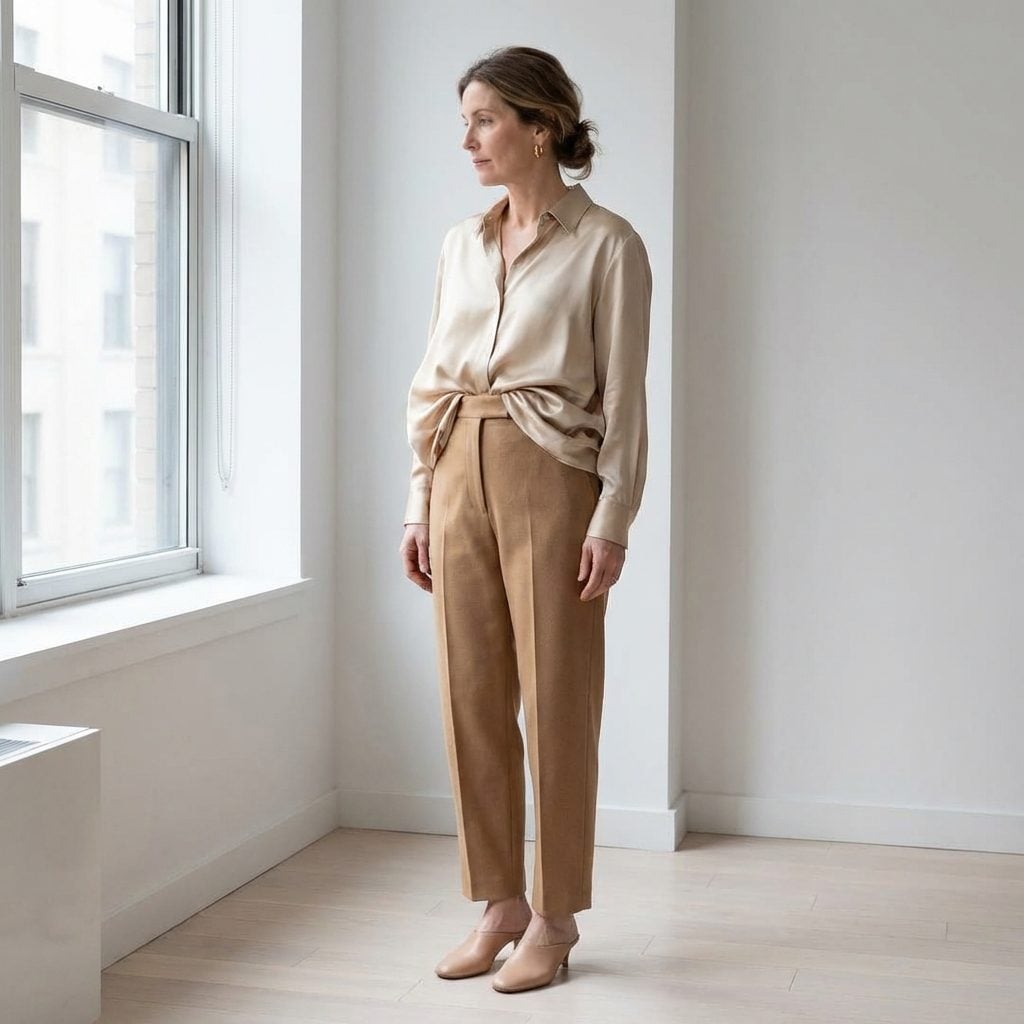
The French tuck is a skill. This is not a French tuck. This is a full, enthusiastic stuffing of a generous silk blouse into the waistband of high-waisted camel trousers, creating a thick roll of fabric all the way around the waistline that adds three visual inches to the midsection.
Silk doesn’t compress. It redistributes. Every centimetre pushed into a waistband has to go somewhere, and here it went outward, creating a ring of bunched fabric that transforms a flattering high-rise waist into something much wider than it actually is. The silk blouse in champagne is genuinely beautiful. The high-waist camel trousers are the right cut. The tuck is actively working against both.
9. Greige on Greige on Greige: When Tonal Dressing Flatlines
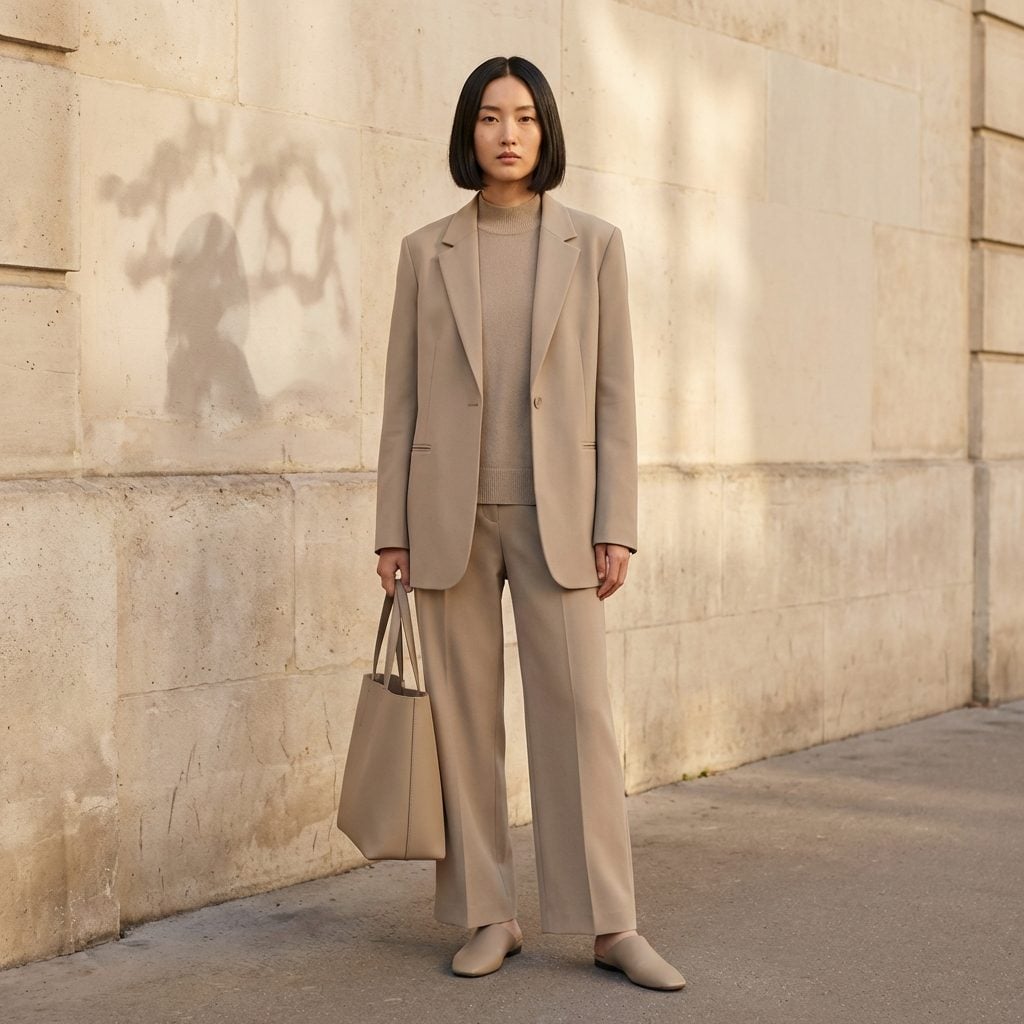
Tonal dressing is one of quiet luxury’s most praised techniques. It also fails spectacularly when every single item, from the trousers to the blazer to the bag to the shoes, lands in the exact same mid-range greige with zero variation in depth, texture, or finish.
The result isn’t polished. It reads like the woman got dressed in the dark from a single shelf. Tonal dressing requires at least three stops on the value scale: a light, a medium, and a shadow. When everything is the same flat beige, the outfit has no visual entry point, no place for the eye to rest or travel.
8. The Silk Blouse Tucked Into Trousers at Exactly the Wrong Waist Height
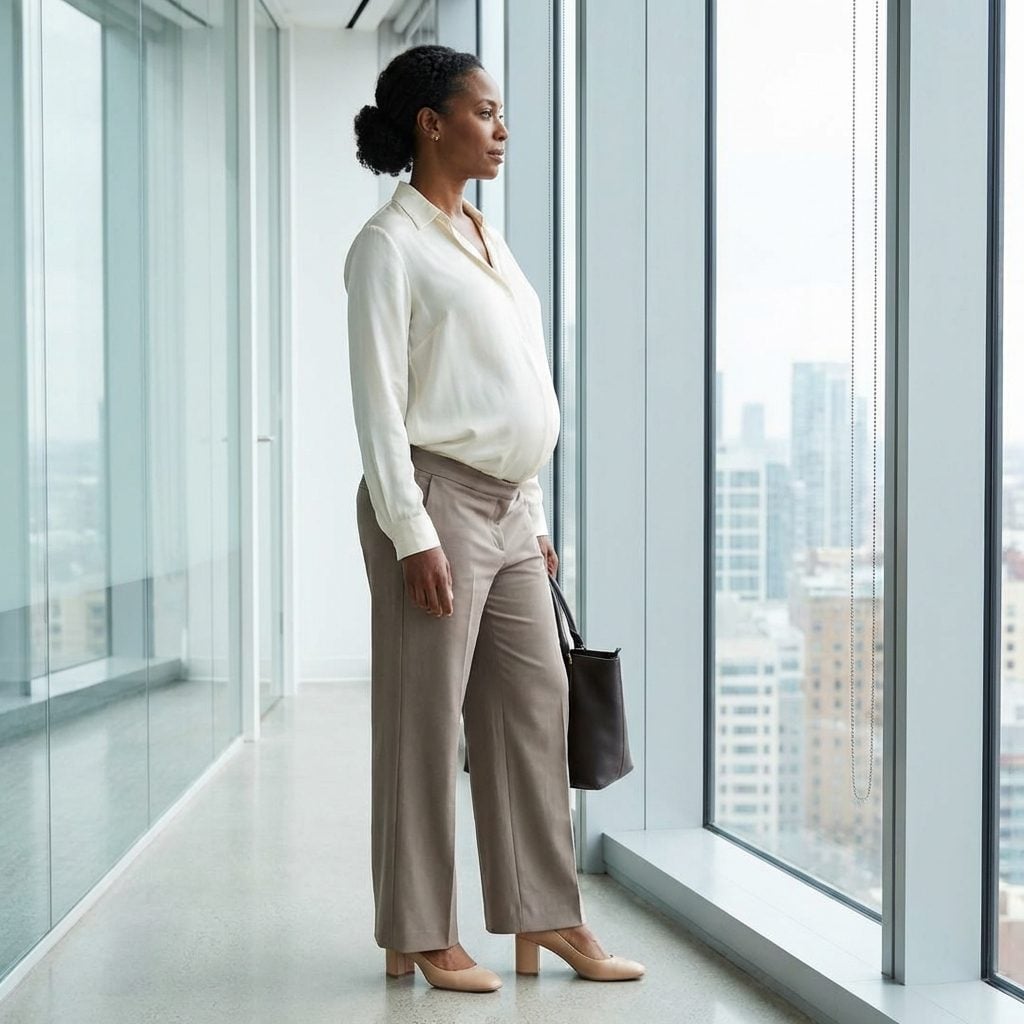
Fit architecture matters more than any individual piece. A beautiful silk blouse tucked into high-waisted trousers at the natural waist should create a long, clean line. But when the trousers sit slightly too low and the blouse blooms out in a thick fabric bubble just above the waistband, the whole proportion shifts. Suddenly the torso reads short, the hips read wide, and the expensive silk looks like it’s trying to escape.
The fix is almost embarrassingly simple: pull the trousers up to where they were designed to sit. But most women never identify this as the problem because they’re focused on the pieces, not the architecture between them.
7. Quiet Luxury in Theory, School Uniform in Practice: Navy and White Gone Wrong

❤️ Would you like to save this?
Navy and white is a genuinely timeless combination. It’s also one of the easiest ways to accidentally assemble an outfit that looks like expensive prep school attire rather than the refined coastal ease it was meant to project.
The culprit is usually cut. When the navy is a slightly boxy blazer and the white is a standard-collar button-down with the top button fastened, the outfit tips from polished into institutional. Quiet luxury in navy and white needs one element that breaks the formula: an open collar, an unexpected texture, a fluid silhouette, or a shoe that adds an edge. Without it, the look checks every box and still misses entirely.
6. Linen Blazer Over a Linen Shirt: A Texture Conversation That Goes Nowhere
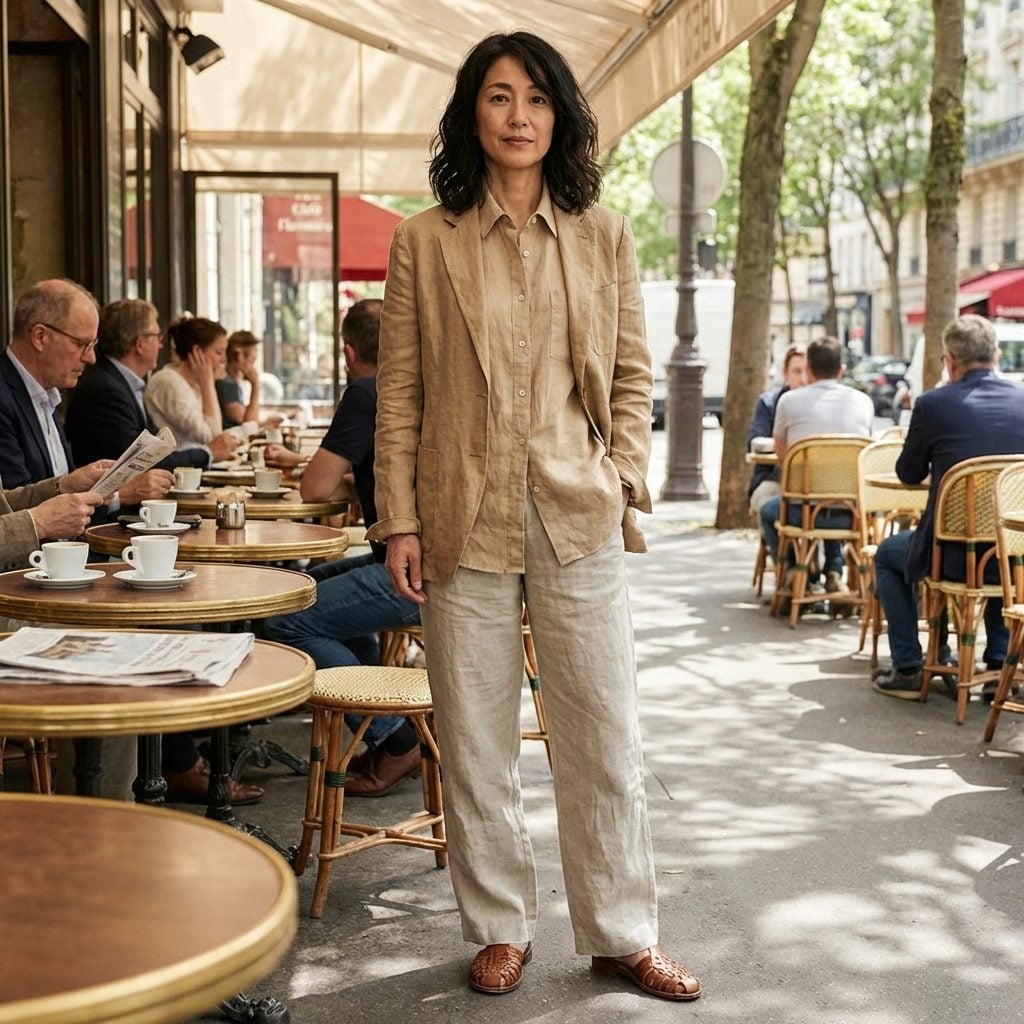
Layering the same fabric over itself seems like it should work in a tonal, considered way. In practice, linen on linen in the same weight creates an outfit with the visual depth of a paper bag. Both pieces wrinkle on their own schedule, they fight each other texturally without creating contrast, and the result looks accidental rather than intentional.
Real layering requires at least two different fabric families. Linen blazer, yes. But underneath: a silk tank, a fine cotton poplin, a knit so lightweight it breathes. The contrast between the natural weave of the linen and the smoothness of a different fabric is what creates that quiet tension that style is actually built on.
5. White Trousers with an Off-White Top: The Almost-Match That Distracts Immediately

Nothing draws the eye faster than two whites that almost match but don’t. A crisp optical white wide-leg trouser paired with a cream or warm ivory knit creates an unresolved tension that most viewers can’t name but everyone notices. It reads as an accident, not a choice.
The fix is to either match the whites precisely or separate them decisively. If your top is warm ivory, your bottom should be warm ivory too. Or go completely different: pair the white trousers with a strong contrast, a deep camel, a soft black, or a dusty sage. Quiet luxury requires confidence, and nothing undermines confidence like an almost-there color match that looks like you ran out of the right pieces.
4. The Chunky Gold Chain That Broke the Quiet
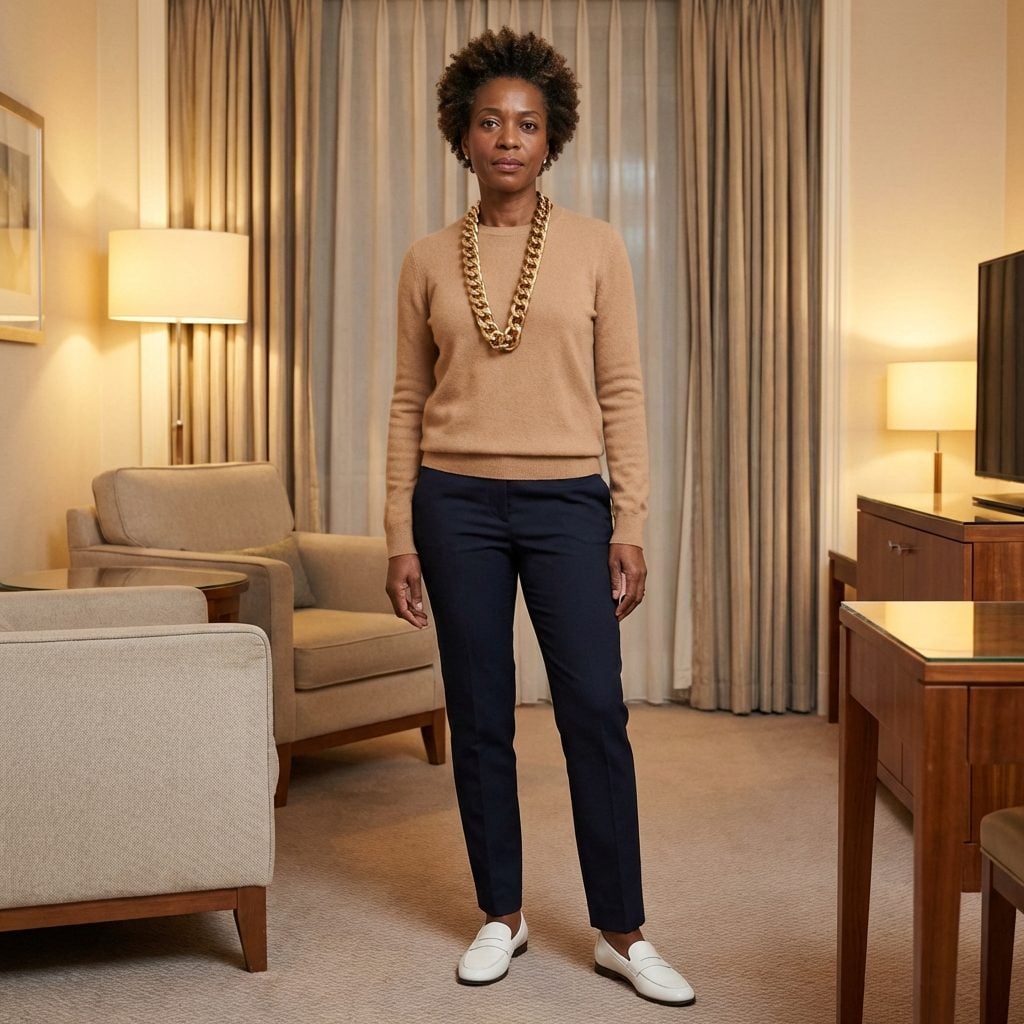
Accessories in a quiet luxury outfit should whisper, not announce. A thick, heavily linked gold chain necklace worn with fine cashmere and tailored trousers creates a jarring shift in register. The clothes say restraint. The necklace says something entirely different. It’s not that bold jewelry has no place in elevated dressing. It’s that this specific pairing creates a conflict where neither element wins.
Quiet luxury jewelry tends toward clean gold hoops, a slim cuff, or a single delicate pendant. When the accessories speak louder than the clothing, the careful calibration of the whole outfit unravels. The chain isn’t wrong on principle. It’s wrong here.
3. Wide-Leg Trousers in a Fabric That Won’t Hold Its Shape by 11am
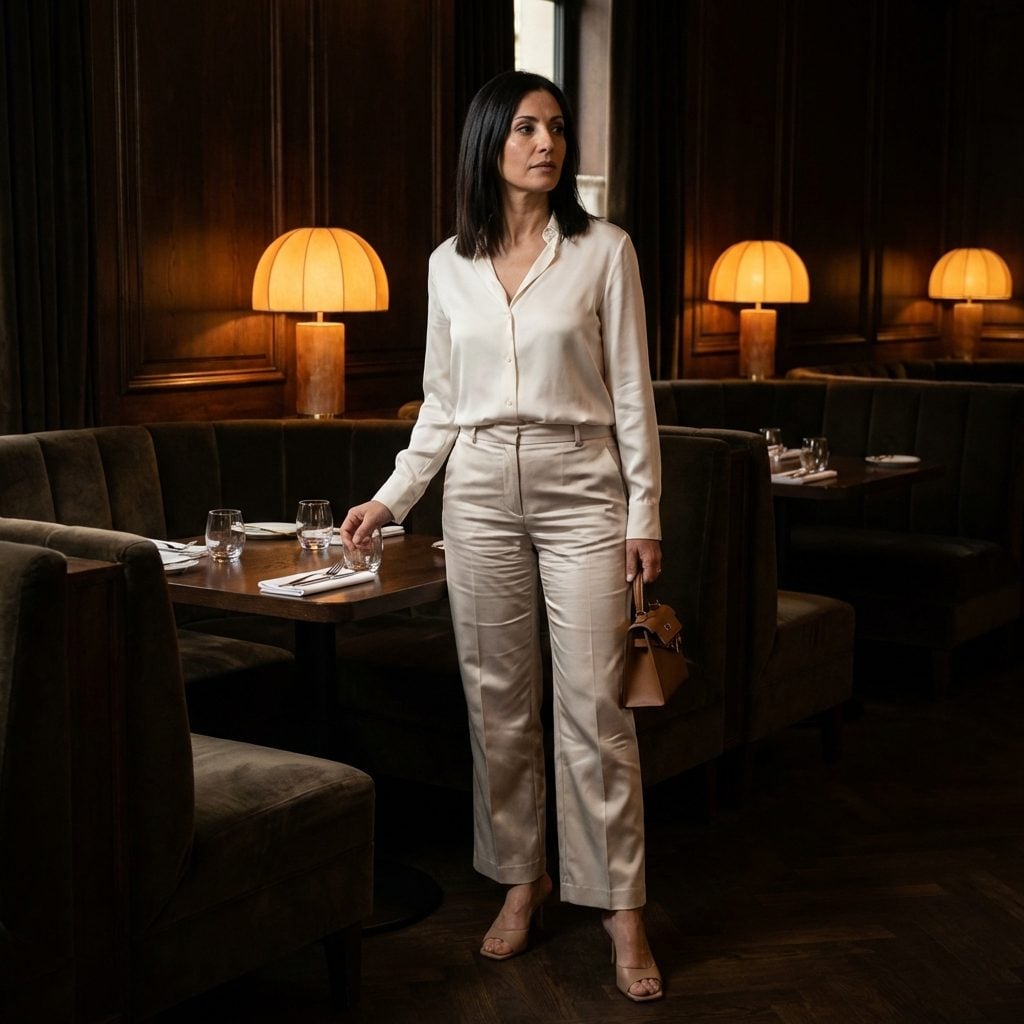
Fabric selection makes or breaks wide-leg trousers. The silhouette requires structure: wool crepe, ponte, heavyweight cotton, a quality viscose-blend that drapes with intention. When a wide-leg trouser is cut in a flimsy polyester that loses its crease, bunches at the knee, and clings statically by mid-morning, the look that started the day sharp turns floppy and cheap by the second coffee.
This is one of the most common quiet luxury failures because the silhouette is right but the fabric is doing the opposite of what’s needed. You can see exactly this happening when the trouser leg folds inward at the thigh rather than falling cleanly to the shoe. The jeans you reach for instead might actually serve you better than a poorly fabricated wide leg.
2. The Ballet Flat That Shrinks Every Elegant Outfit to the Ankle
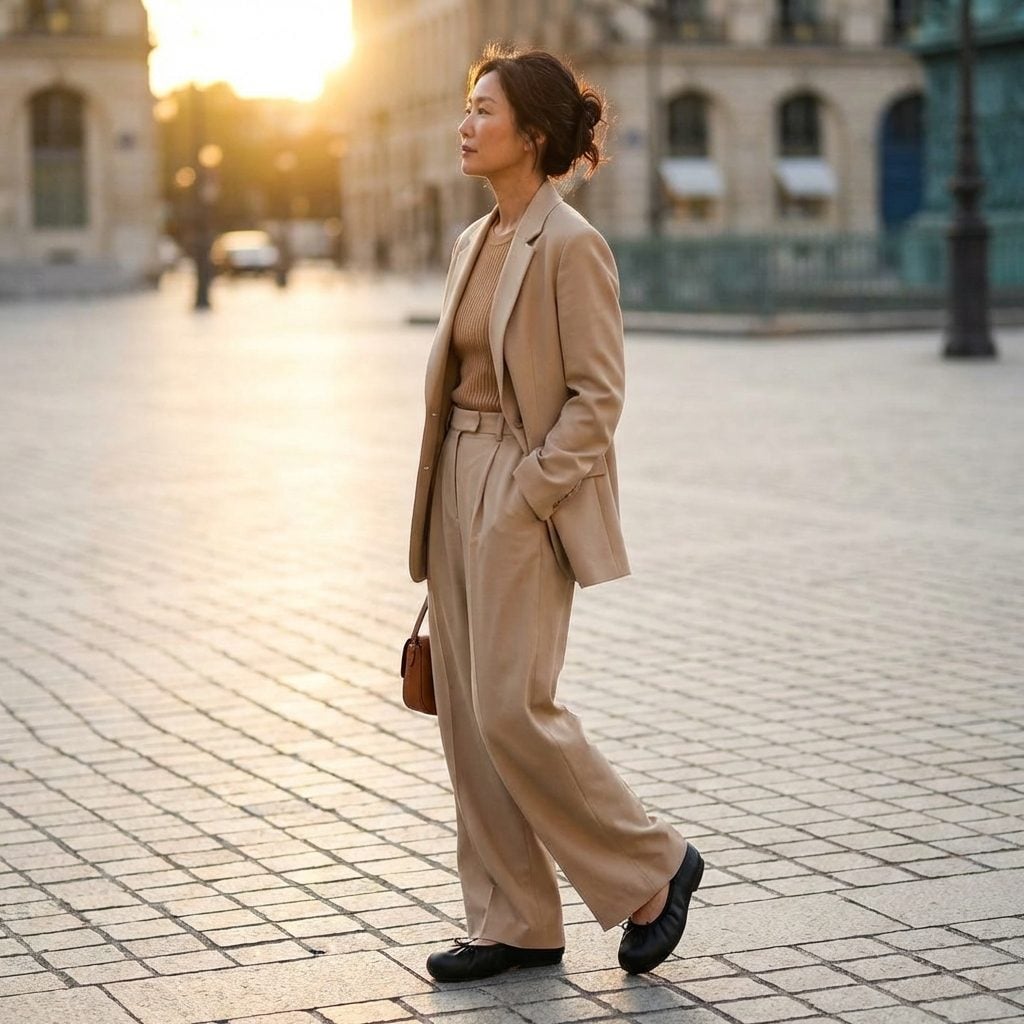
Ballet flats have had a strong quiet luxury moment, and rightly so when they’re the right cut. But a very round-toed, heavily padded, thick-soled ballet flat worn with fluid wide-leg trousers or a midi skirt creates a visual anchor that stops the eye at the foot and shortens the entire leg line.
Shoe geometry matters. The toe shape, the court’s silhouette, and the point of termination at the ankle all influence how much of the leg line reads as continuous. A rounder, bulkier flat essentially places a visual period at the foot. A slightly more tapered or almond-toed flat in a close-to-skin tone does the opposite and lets the leg line breathe.
1. Quiet Luxury at the Top, Completely Forgotten at the Bottom: The Socks and Loafers Miscalculation
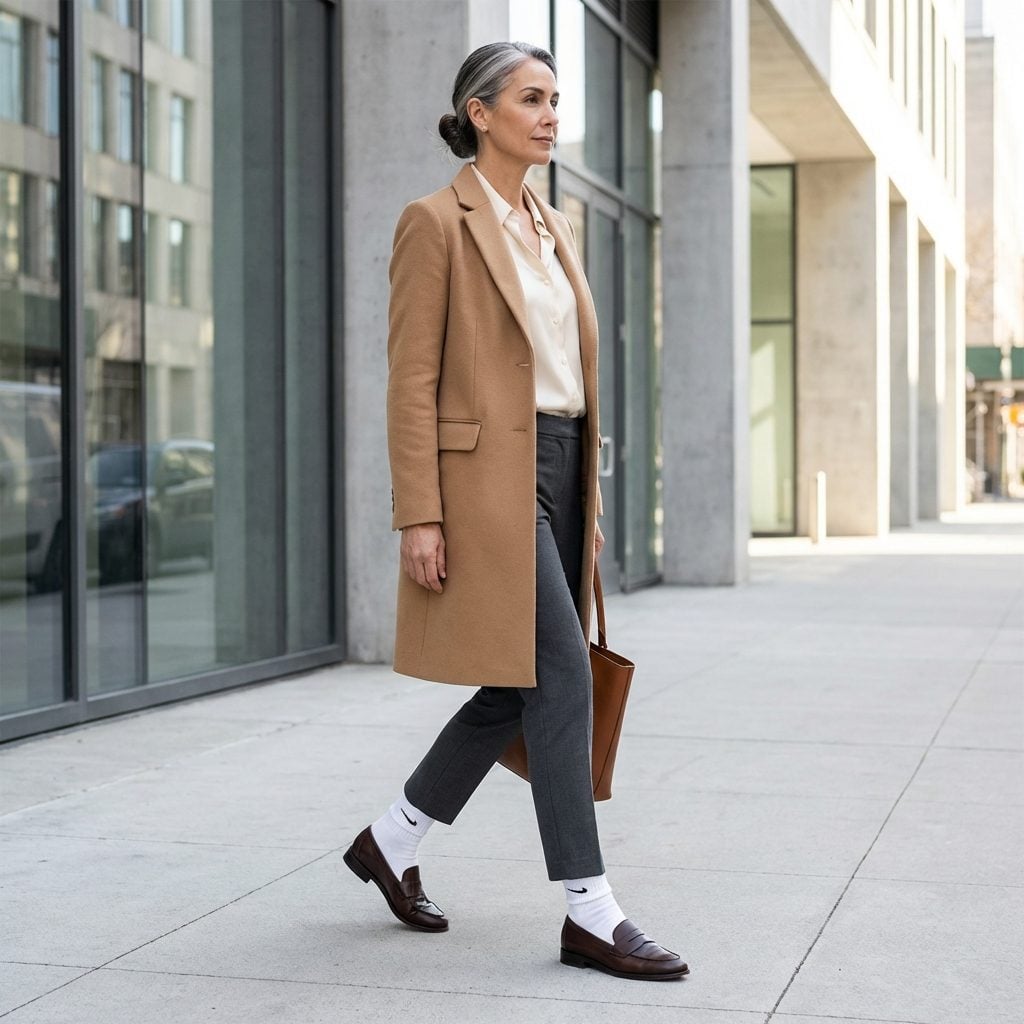
There’s a version of loafers with socks that is intentionally directional and genuinely works. Then there’s the version where someone added visible white athletic socks to a beautifully tailored camel coat, fine wool trousers, and a silk shirt because their feet were cold and they didn’t think anyone would notice. They were wrong. In a quiet luxury outfit, every single centimeter that shows is making a statement. The gap between trouser hem and shoe is one of the most closely read inches in the whole look.
When the sock choice is wrong, it unravels the careful restraint of every piece above it. It signals that the outfit was assembled with attention up to a point and then abandoned. Quiet luxury demands consistency from collar to toe, and the final two inches matter as much as the cashmere.