❤️ Would you like to save this?
Close your eyes for a second. You’re in your bedroom, Mariah Carey is on the radio, and you’re lying flat on your back trying to zip up jeans that have no business fitting a human body. The carpet smells like CK One and hair spray. Everything about this moment made complete, total, unquestionable sense to you. We all had the same closet, and we were all absolutely convinced we looked incredible. Here’s the proof.
FYI, thanks to AI imagery software, we’re able to create very specific fashion and hairstyle examples to illustrate the points being made. In some cases, imagery is exaggerated to hammer home the point. Also, assume links that take you off the site are affiliate links such as links to Amazon. this means we may earn a commission if you buy something.
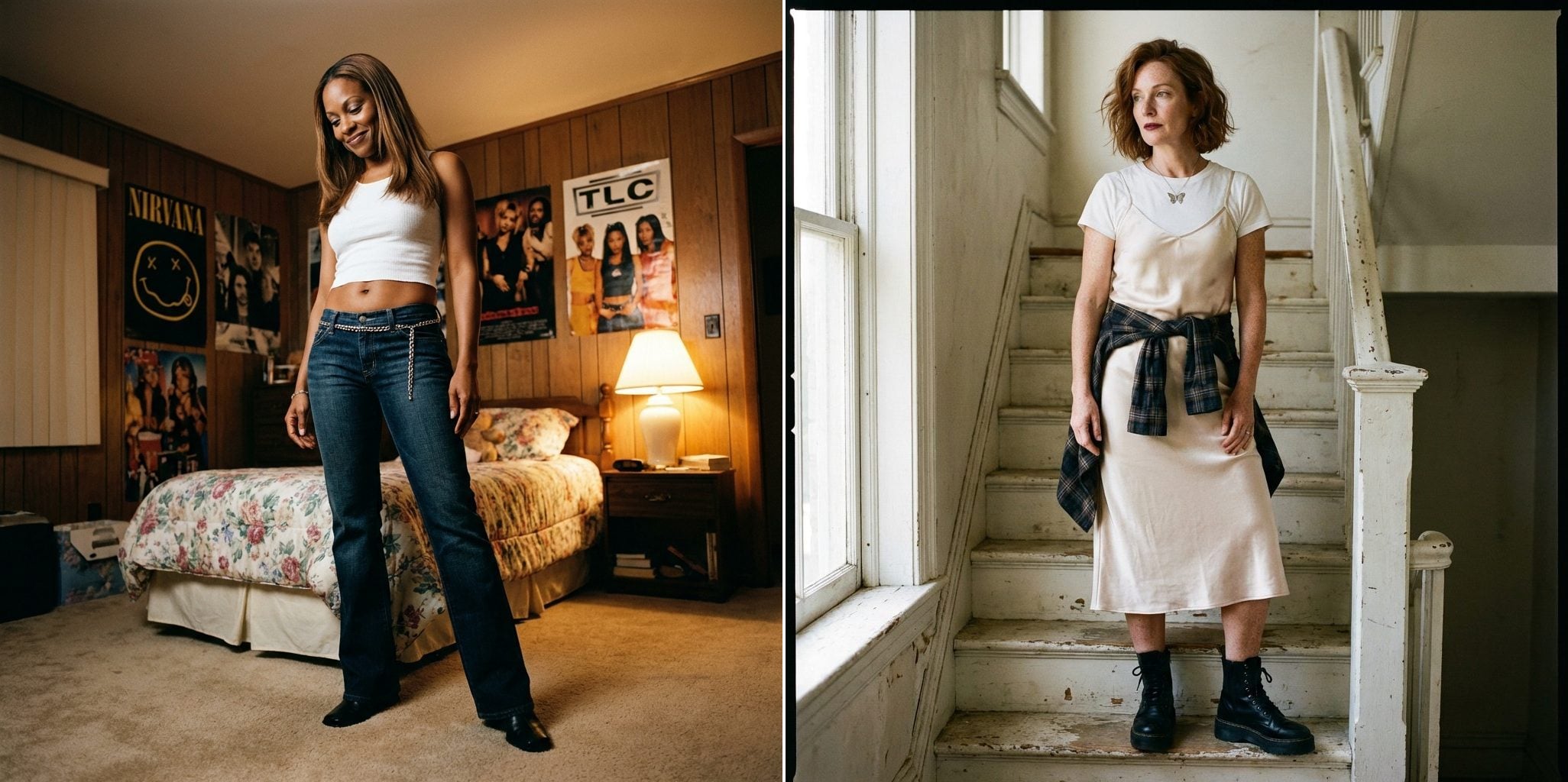
17. Low-Rise Jeans So Low You Needed a Prayer and a Belt to Leave the House
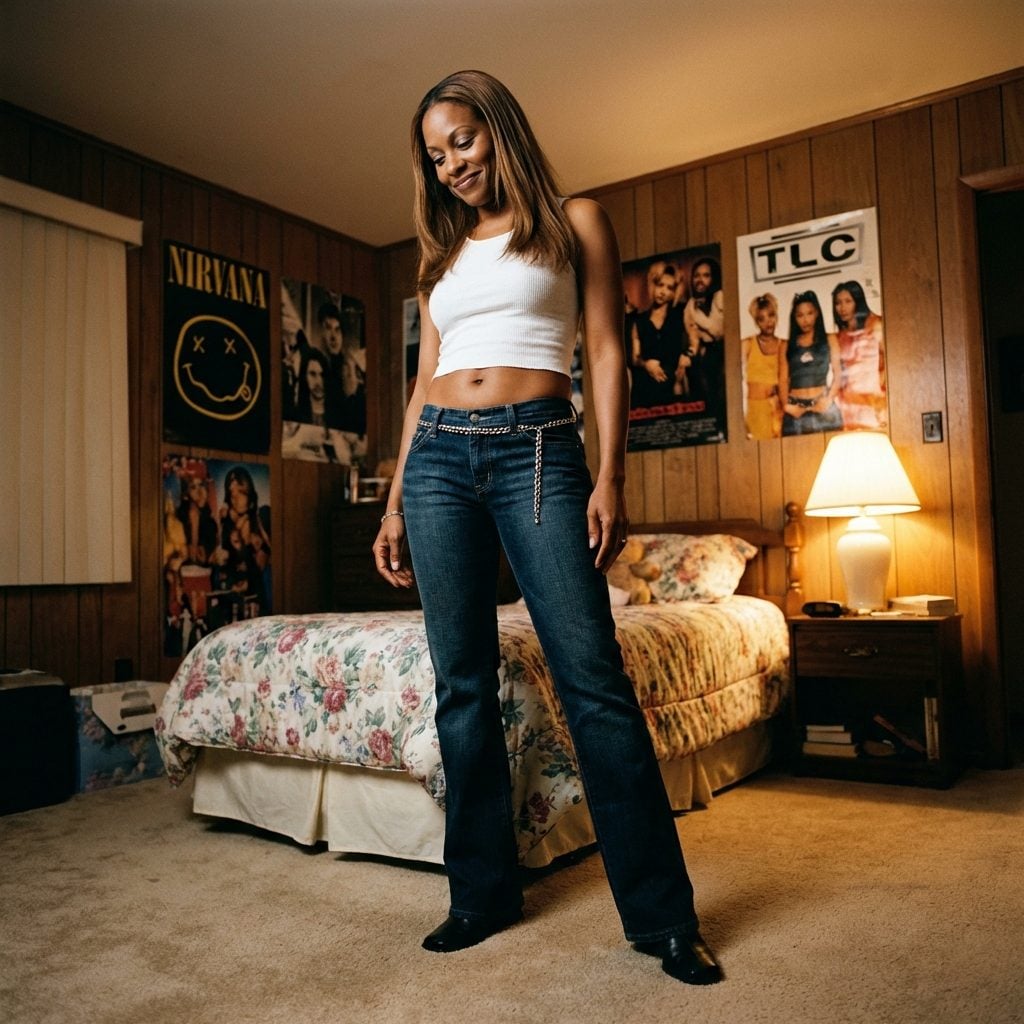
You had to lie down on the bed to zip them up, and we all acted like that was a completely reasonable part of getting dressed. The ritual was: zipper first, then breath, then standing up slowly while holding the waistband taut. Then you’d check the mirror from three angles and declare yourself ready.
These jeans were the defining garment of an era. Everyone from Kate Moss to your cousin Dani in homeroom was wearing them. The lower the rise, the more effortful the achievement. We paired them with a strip of visible midriff and, critically, a belt we had no structural need for. The belt was purely decorative, a thin rhinestone or silver chain number looped through every other belt loop, which, let’s be honest, could destroy your outfit in the blink of a mismatched buckle. We ignored that risk completely.
16. The Slip Dress Worn Over a White T-Shirt (The Grunge Formal)
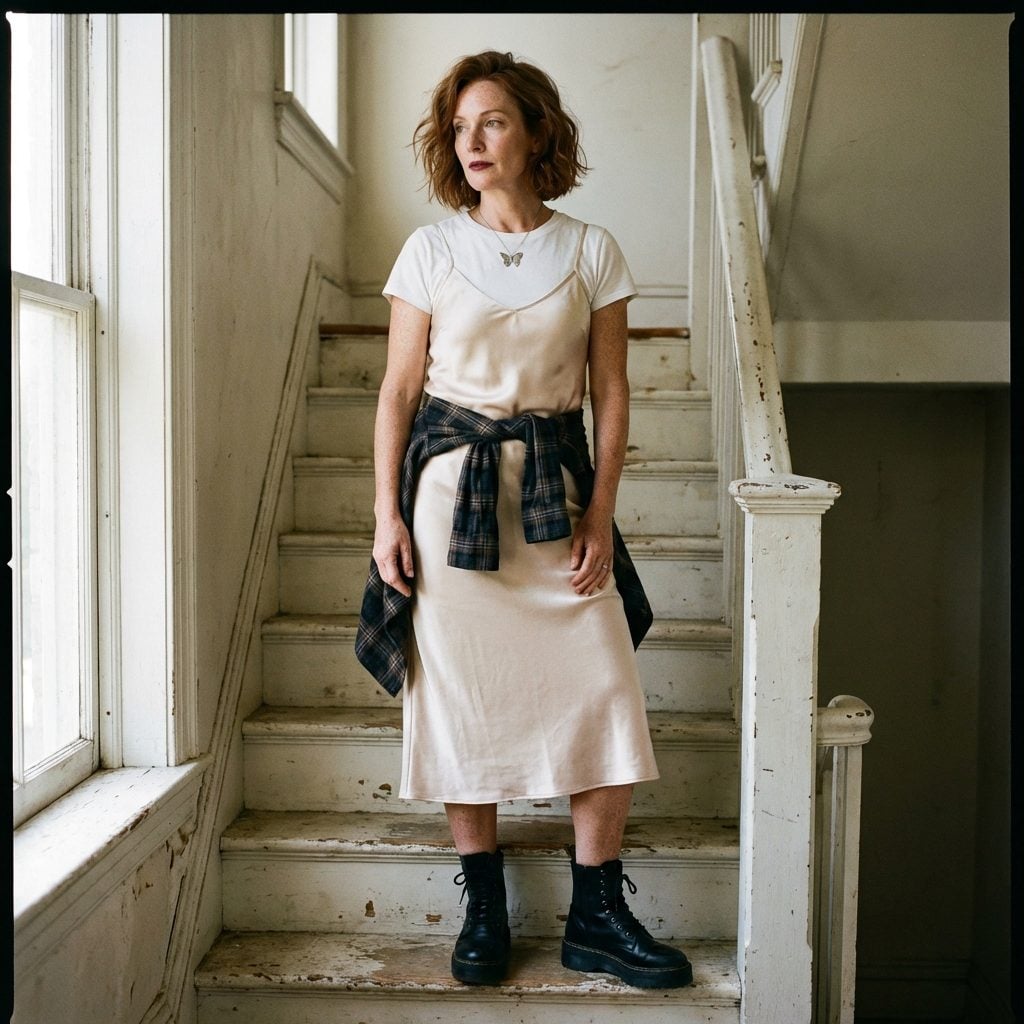
The slip dress over a white tee was the look that said: I’m going to a party but I’ve also read Sylvia Plath this week. It was formal and disheveled in the same breath, and that was entirely the point. Courtney Love wore it, Drew Barrymore wore it, and then every girl with a Delia’s catalog wore it.
The magic was in the mismatch. Silky, bias-cut, clearly lingerie-coded satin on top. Plain cotton crew-neck underneath. Flannel tied at the waist if you wanted to signal you’d been at a concert recently. The combo shouldn’t have worked. It absolutely did.
15. Butterfly Clips Covering Every Square Inch of Your Head
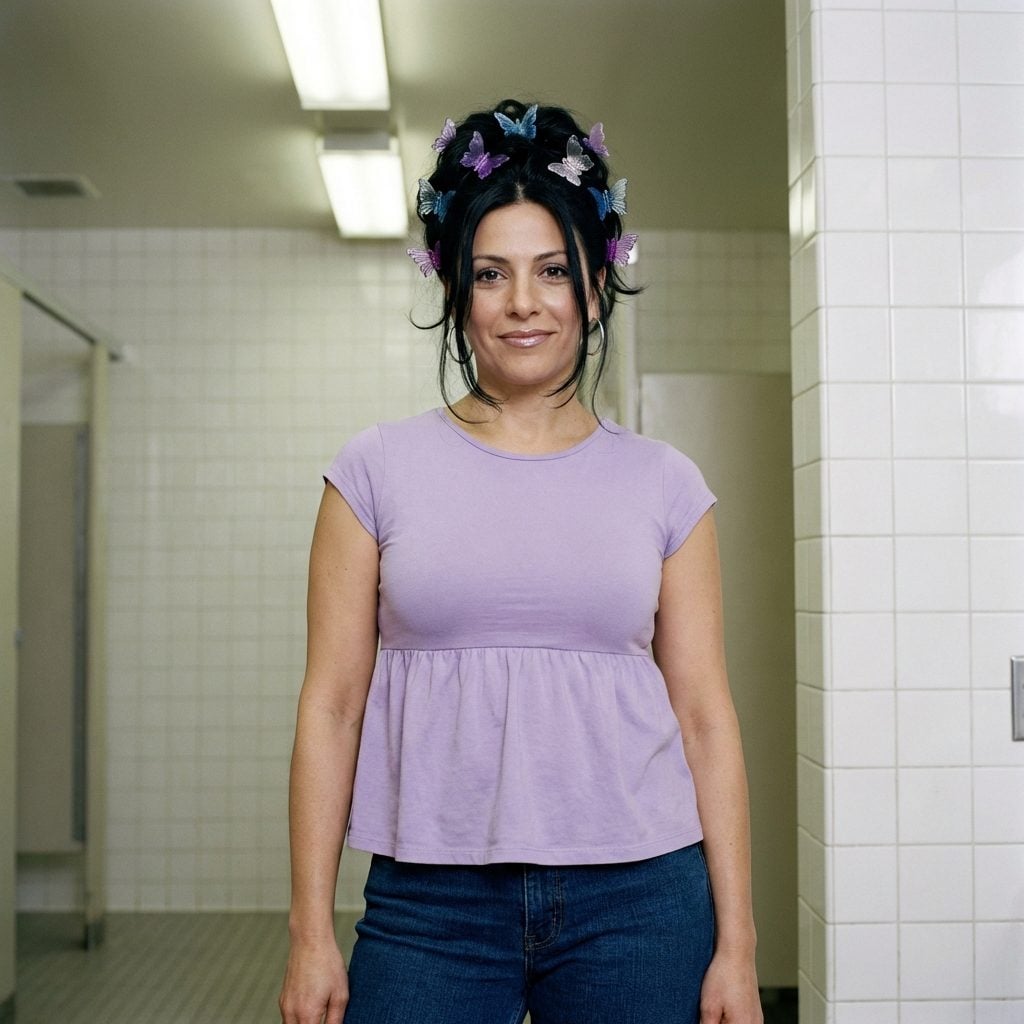
There was no such thing as too many. You started with two, then three, then you were standing in Claire’s holding a six-pack thinking: this is not enough. The butterfly clip collection had a weight limit and it was your entire head.
Translucent plastic in every pastel: lavender, pale yellow, clear iridescent. Some had tiny rhinestones. Some were the size of an actual butterfly, which in retrospect was the most reasonable option. You wore them pinned across the crown, down the side, catching back half-up sections that you called a hairstyle. The NSYNC girls wore them. Your favorite babysitter wore them. You wore them on a Tuesday to school because why not.
14. Velvet Chokers: Five for a Dollar at the Mall Kiosk
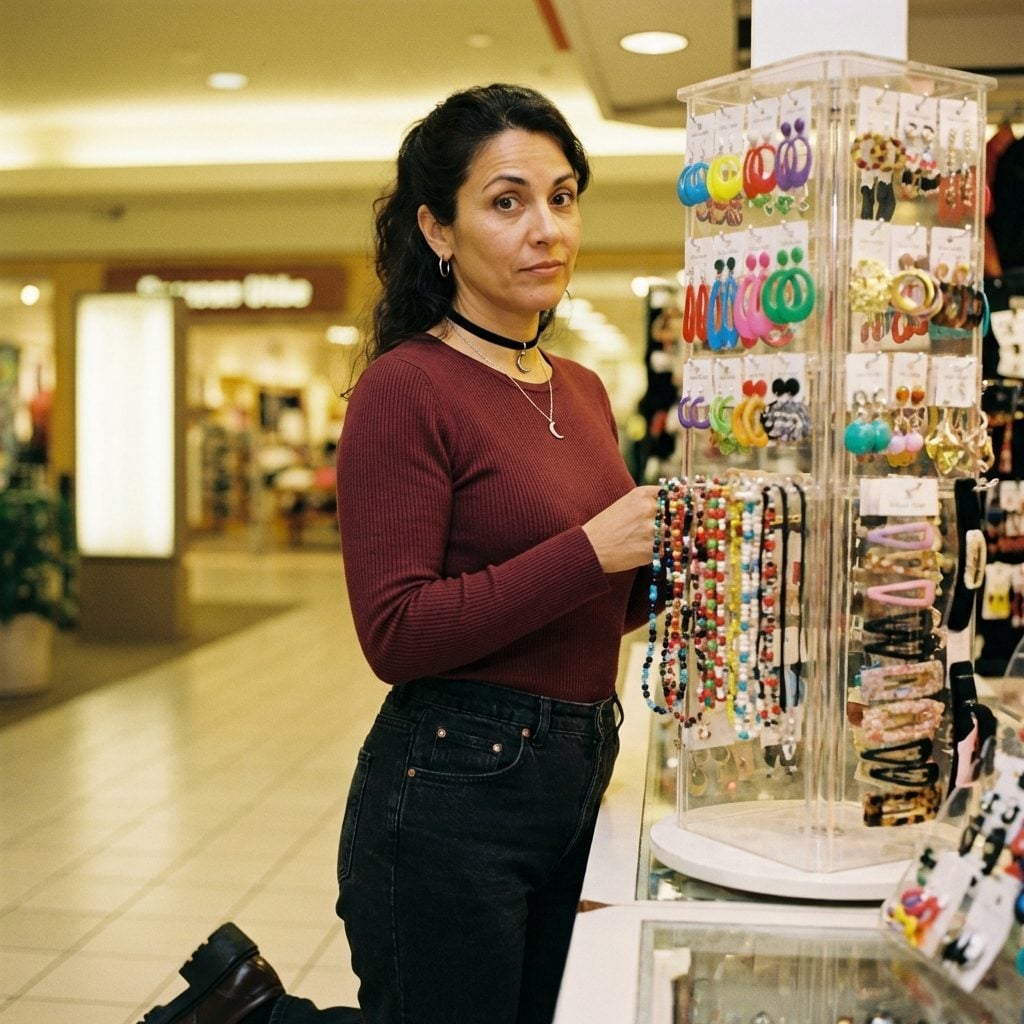
Black velvet, approximately one centimeter wide, sitting at the exact center of your throat: this was the accessory of the decade and it cost less than a soda. The mall kiosk sold them five to a bag and you bought three bags because what if you lost one. You did not lose them. You have sixteen velvet chokers in a drawer somewhere right now.
Every variation existed. The plain black velvet. The one with a tiny charm in the center (a star, a cross, a dolphin, no judgment on the dolphin). The tattoo-print version that looked like actual ink at a certain distance. And the multipack that had one velvet, one elastic lace, one plastic beaded, all worn simultaneously if you were feeling bold. Which you were. Always.
13. The Babydoll Dress That Was Somehow Both Childlike and Trying Very Hard
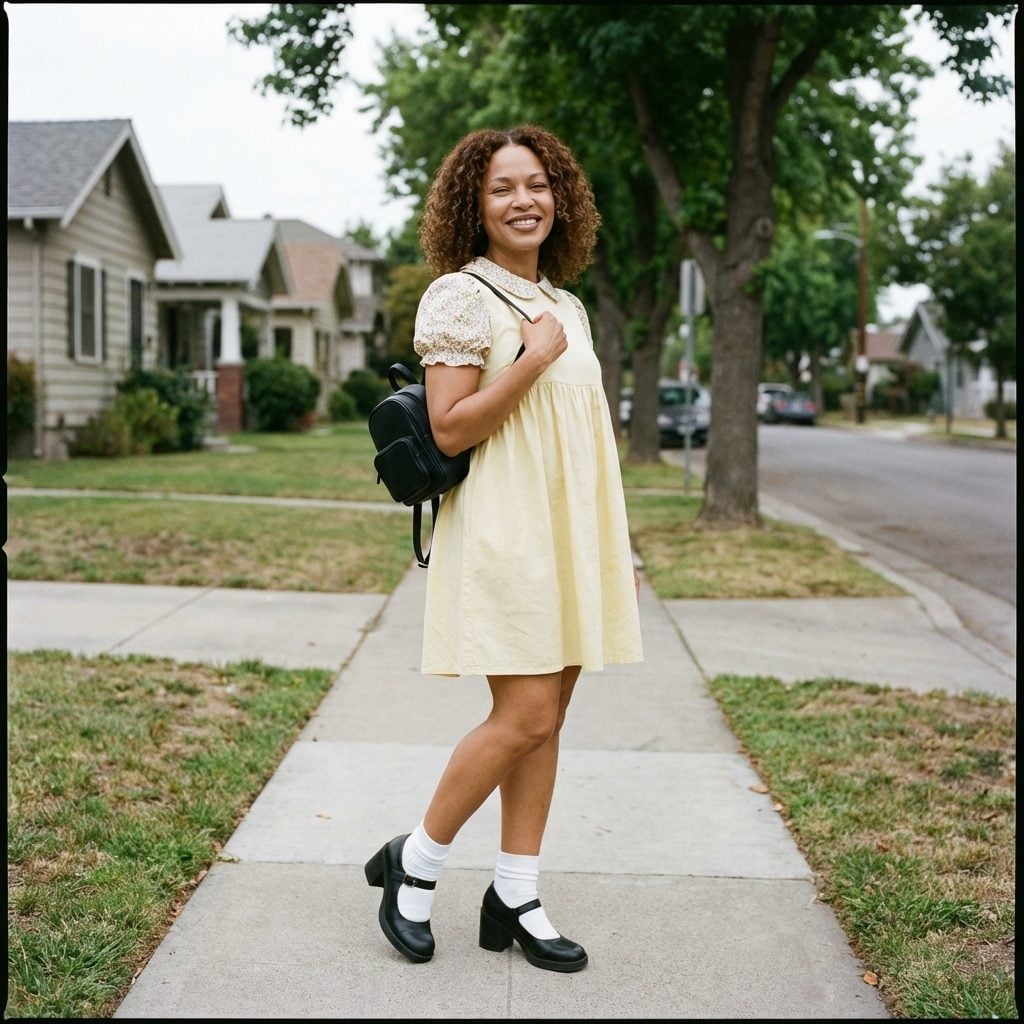
The empire waist. The Peter Pan collar. The floral print from a Laura Ashley catalog that your aunt actually owned. The babydoll dress occupied an entirely specific psychological space: it looked sweet and innocent while being worn specifically to look interesting and slightly provocative, and somehow everyone pretended not to notice this tension.
You bought it at Express or Wet Seal or from a Delia’s catalog page you’d dog-eared for three months. It came in pale florals, in plaid, in that specific dusty lavender that only existed in the mid-90s color palette. You wore it with Mary Janes and white socks because completing the schoolgirl aesthetic was, apparently, the goal. The chunky sole added the necessary contradiction: innocent silhouette, serious footwear.
12. Platform Sneakers That Added Four Inches and Zero Ankle Support
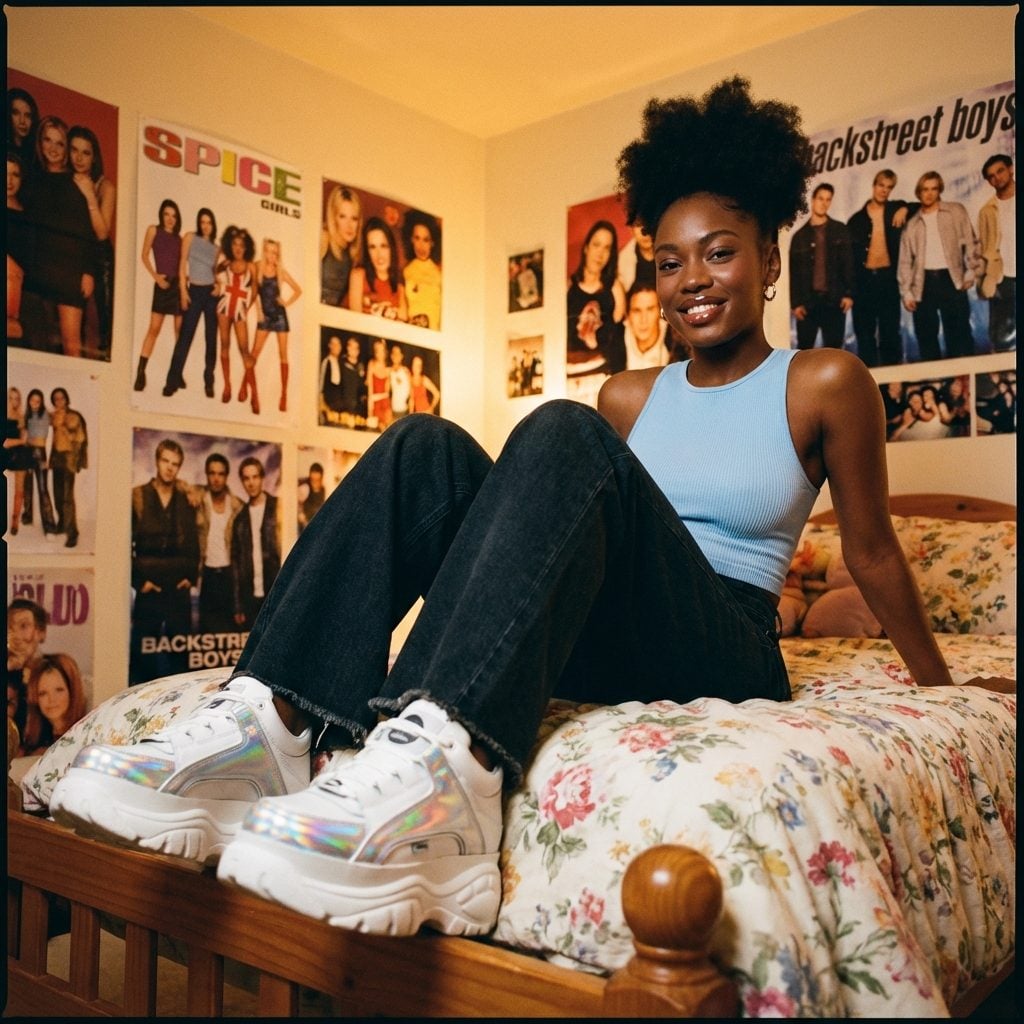
The Spice Girls did it first. Within eighteen months, every mall in America had a Payless endcap stacked with knockoffs and the average girl’s height had increased by a statistical four inches. These were not subtle shoes. They were load-bearing footwear.
The soles were made of what appeared to be compressed foam and optimism. They came in white leather with holographic panels, in chunky black with transparent heels filled with water and glitter (yes, real), in pastel leather with platform heights that required a commitment to the bit. Walking in them took practice. Running in them was inadvisable. Looking cool in them took zero effort because the shoes did all the work.
11. Overalls With One Strap Deliberately, Purposefully Unclipped
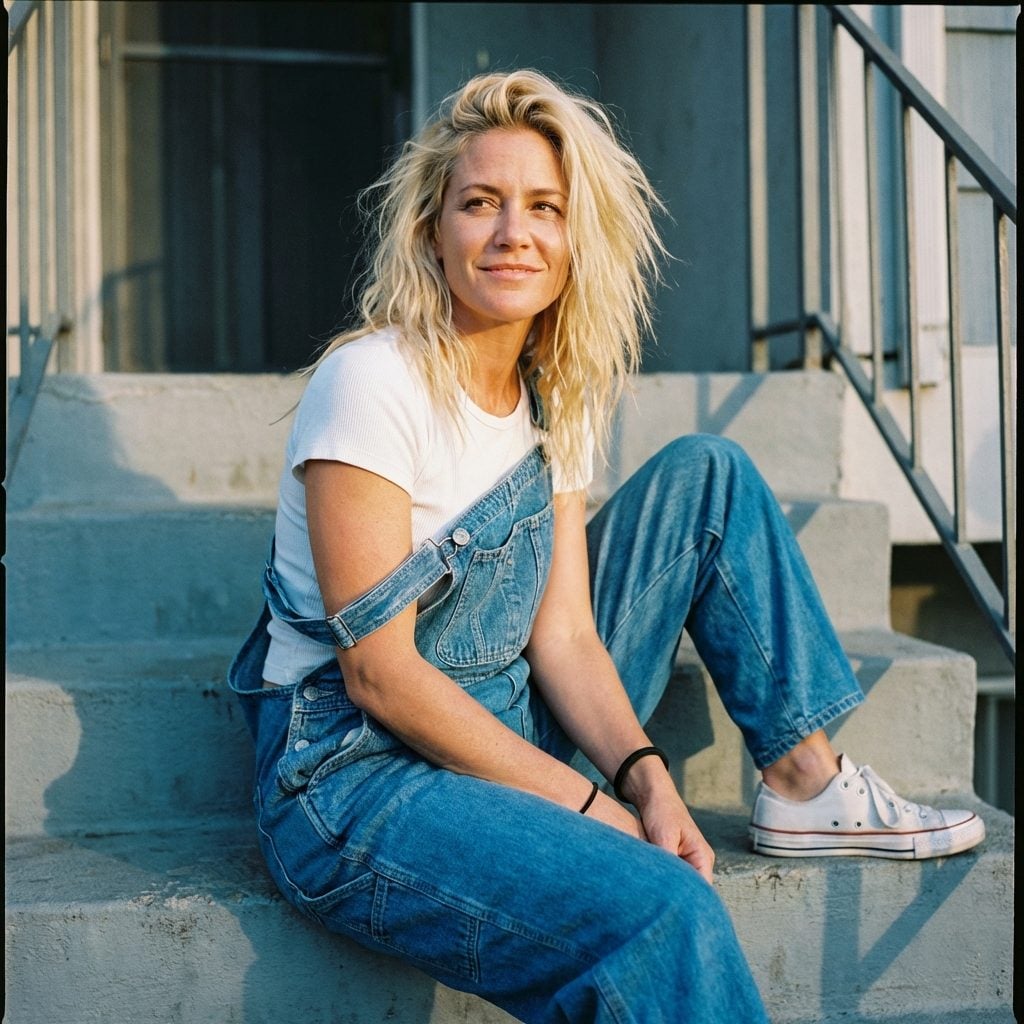
Both straps was too try-hard. Both straps undone was a different genre of look entirely. The correct answer was always one. The left one, specifically, for reasons no one could fully explain but everyone accepted.
The unclipped strap was a whole posture, a whole attitude. It flopped around as you walked. It occasionally got caught on things. At some point during the day you had to hike the bib back into place because physics existed. You did this without complaint. The look demanded minor structural inconvenience and you paid that price without hesitation, every single morning.
10. The Windbreaker in Every Neon Color That Swished When You Moved
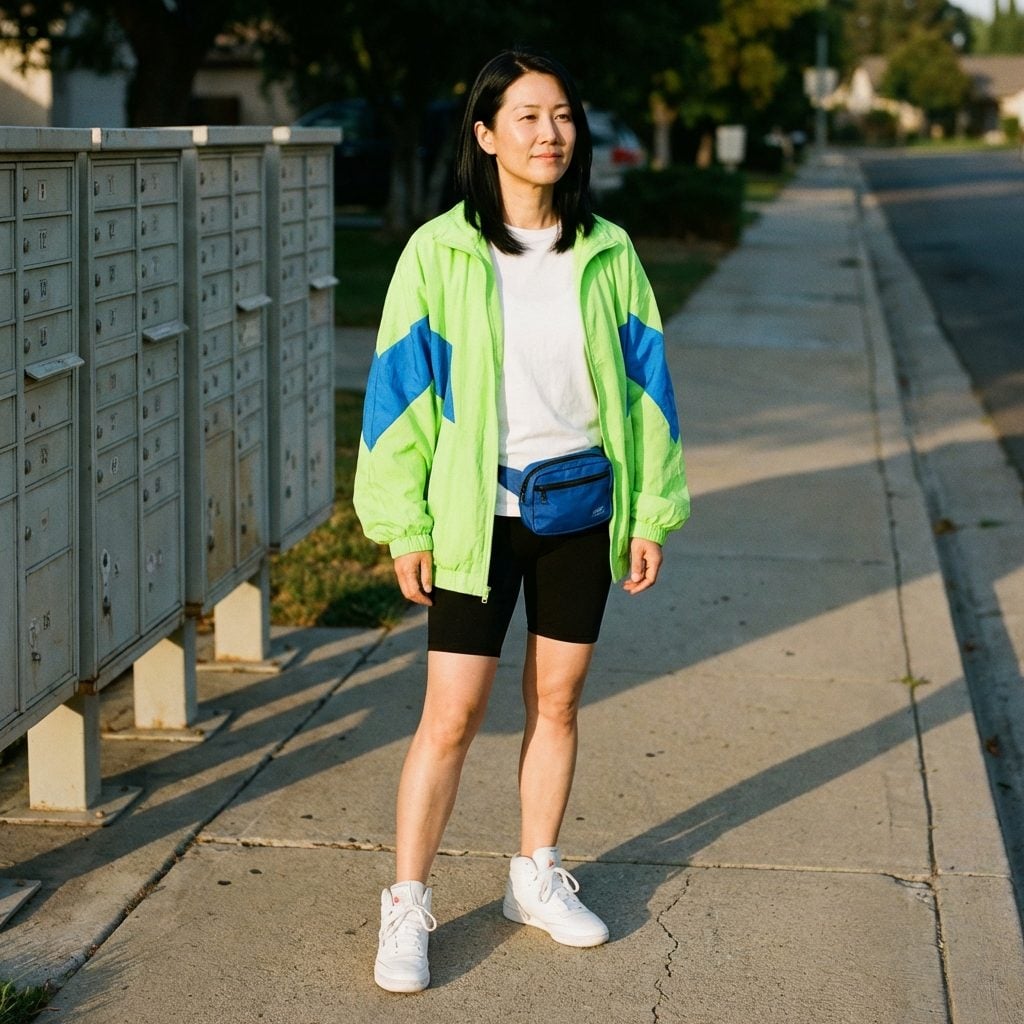
It made a sound. A very specific swish-swish sound as you walked, the nylon panels moving against each other with every step. You could hear someone coming from two hallways away if they were wearing a windbreaker and moving at any speed above a casual stroll. This was not considered a problem.
The colors were aggressively non-subtle: neon green with royal blue sleeves, hot pink with teal panels, orange with purple color-blocking that had no explanation beyond the mid-90s visual decision-making process. They came from starter packs, from Nike, from Reebok, from the sporting goods section of a department store where your mom bought you one and you wore it approximately four hundred times over two years.
“The nylon windbreaker was the 90s saying: I am technically ready for weather, but primarily I am ready to be seen.”
9. Doc Martens With a Floral Dress (The Contradiction That Was Actually the Point)
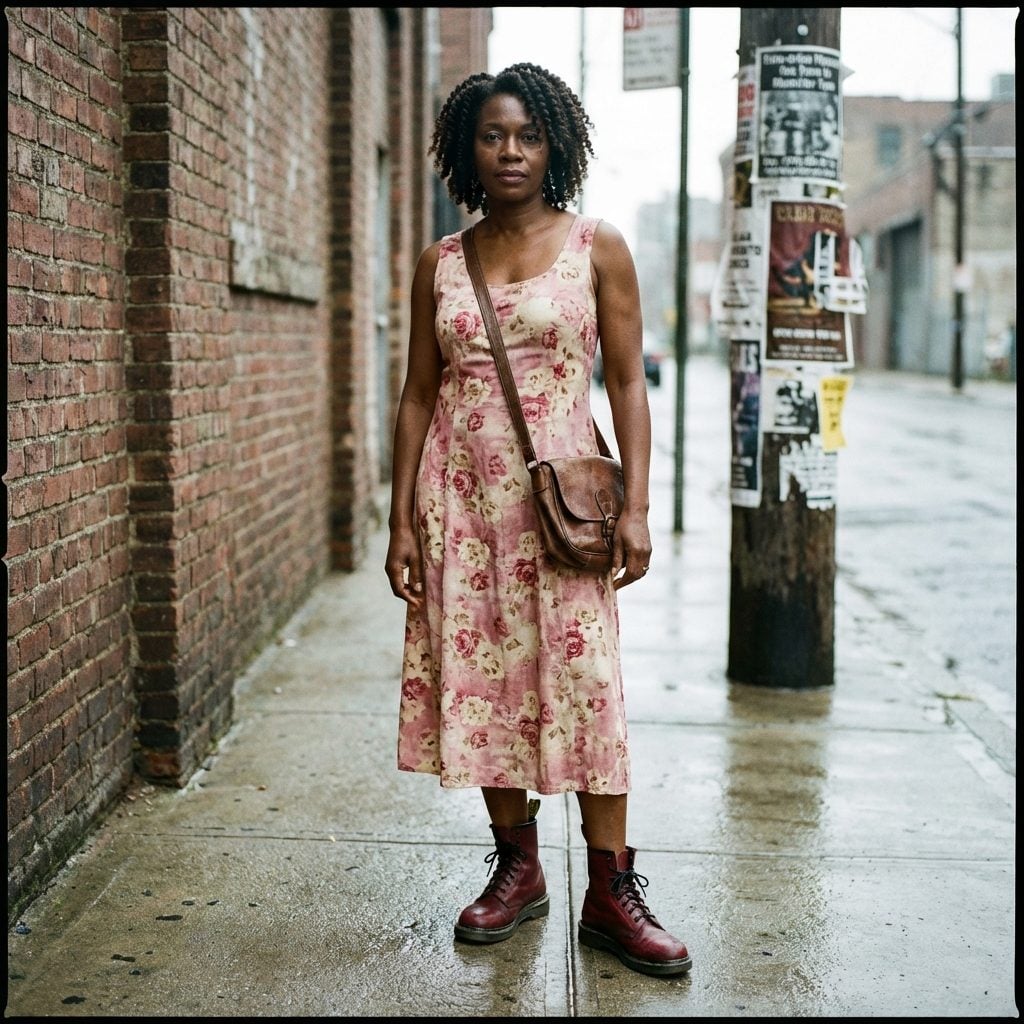
The whole premise was the tension. Boots that were designed for English factory workers on a floor-length Laura Ashley print that was, technically, your grandmother’s aesthetic. You wore them together and they created something that neither piece contained on its own.
Doc Martens arrived in American high schools through a specific pipeline: alternative music, MTV, the flannel-and-flower aesthetic that grunge borrowed from somewhere between Seattle and vintage thrift stores. The cherry red 8-hole with a floral dress was the most universally recognizable translation. It said: I own soft things and hard things. You quickly learned that belts could destroy your outfit in the blink of a mismatched decision, but the right boots? They could save almost anything.
8. The Crimped Hair That Took 45 Minutes and Lasted 20
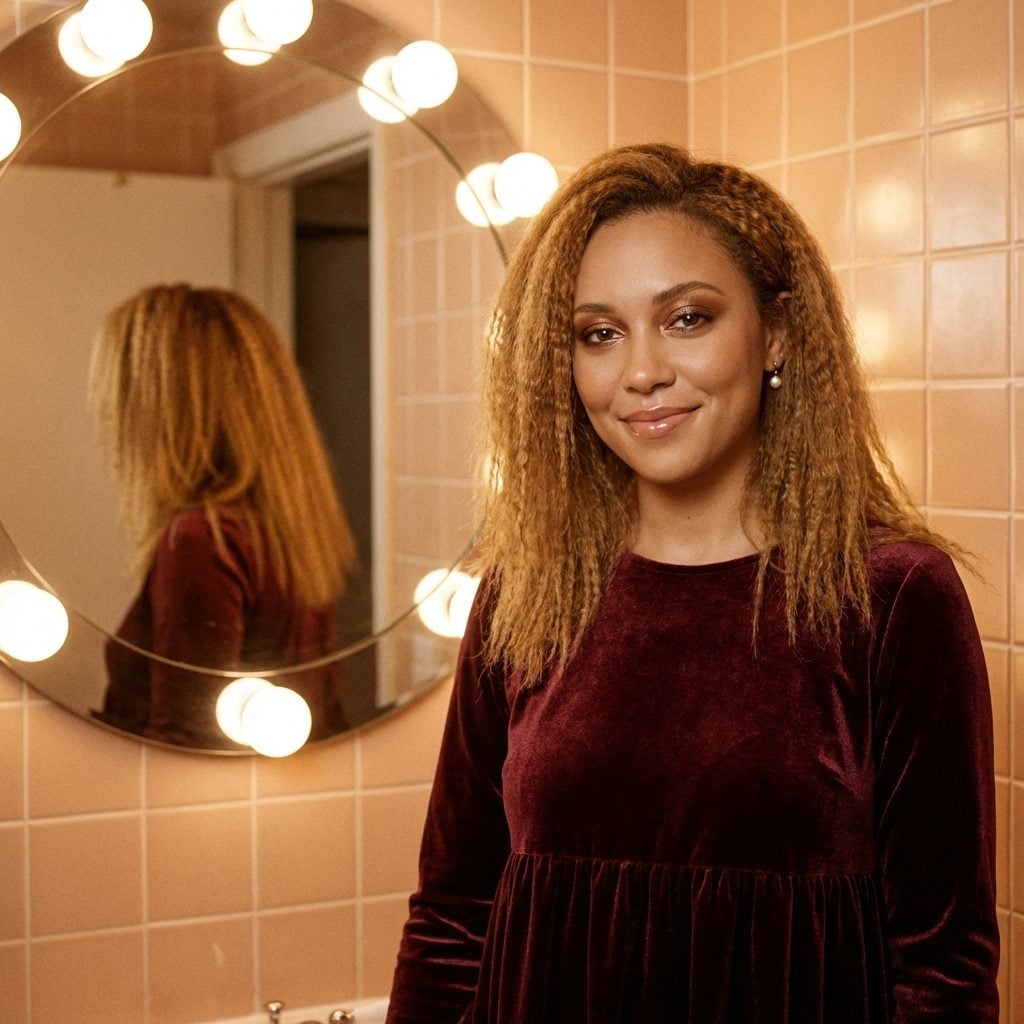
The crimping iron sat in the bathroom drawer next to the actual curling iron and the hot rollers, and periodically you chose it instead of either of those because you wanted volume and you wanted texture and you wanted to look like a specific extra in a Cher video from 1989 that you weren’t technically old enough to remember but had absorbed anyway through cultural osmosis.
The process was: section by section, starting at the bottom, moving up, clamping the iron in overlapping rows. The result lasted through first period at best. By lunch the pattern had softened into a general frizz that you had to simply commit to for the rest of the day. We considered this an acceptable outcome and did it again the following week.
7. Chunky Highlight Streaks You Had Frosted At the Salon (Or Possibly a Box at Home)
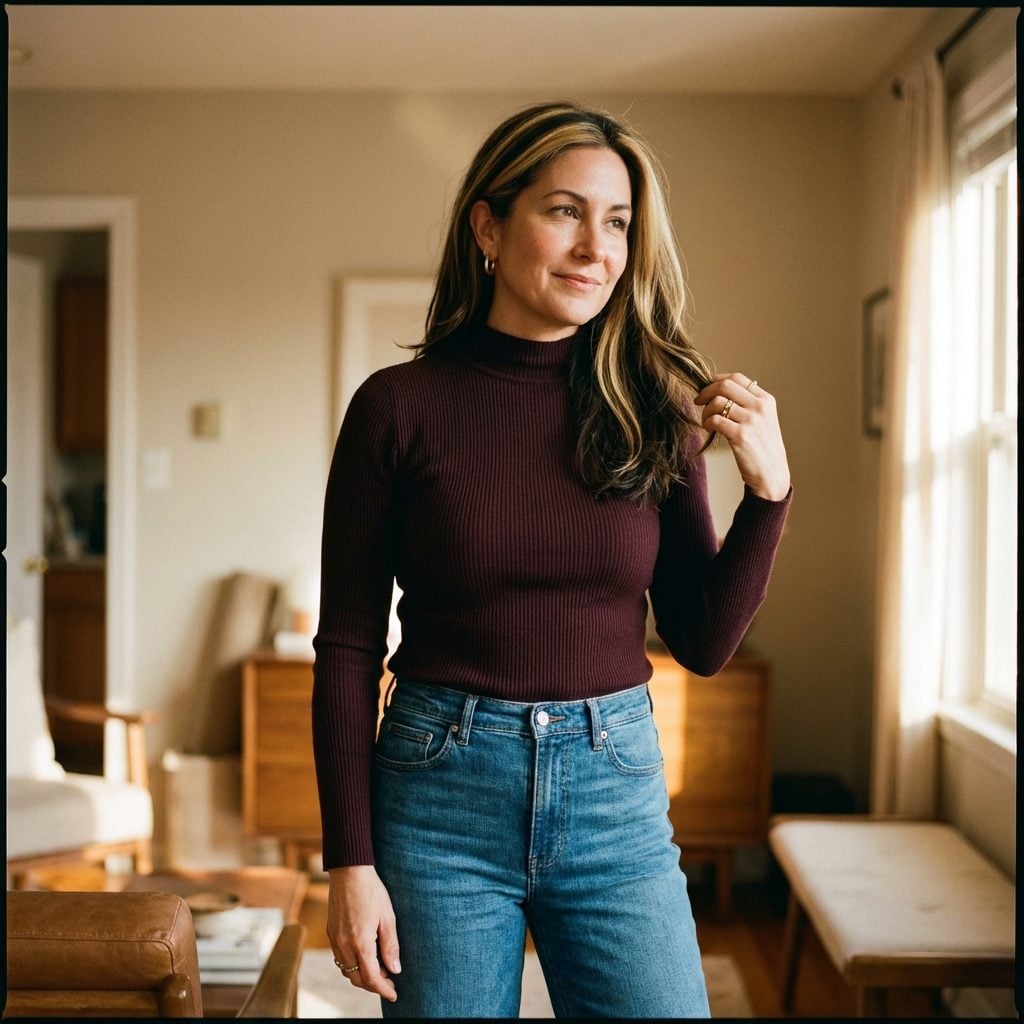
These were not subtle. The frosted highlight cap came out, the hook went through, and you ended up with thick, painted-on blonde or copper streaks that started approximately at your roots and went nowhere near blending. The goal was Jennifer Aniston. The result was more “assistant manager at a Suncoast Video,” but you loved them anyway.
If you couldn’t afford the salon, there was the Sun-In bottle, which turned brunette hair a very specific shade of orange that the bottle called “golden” and your mother called “a mistake.” Either way, you went back for more. Every single summer.
6. The Choker Necklace, Specifically the Plastic Tattoo-Print Stretchy One
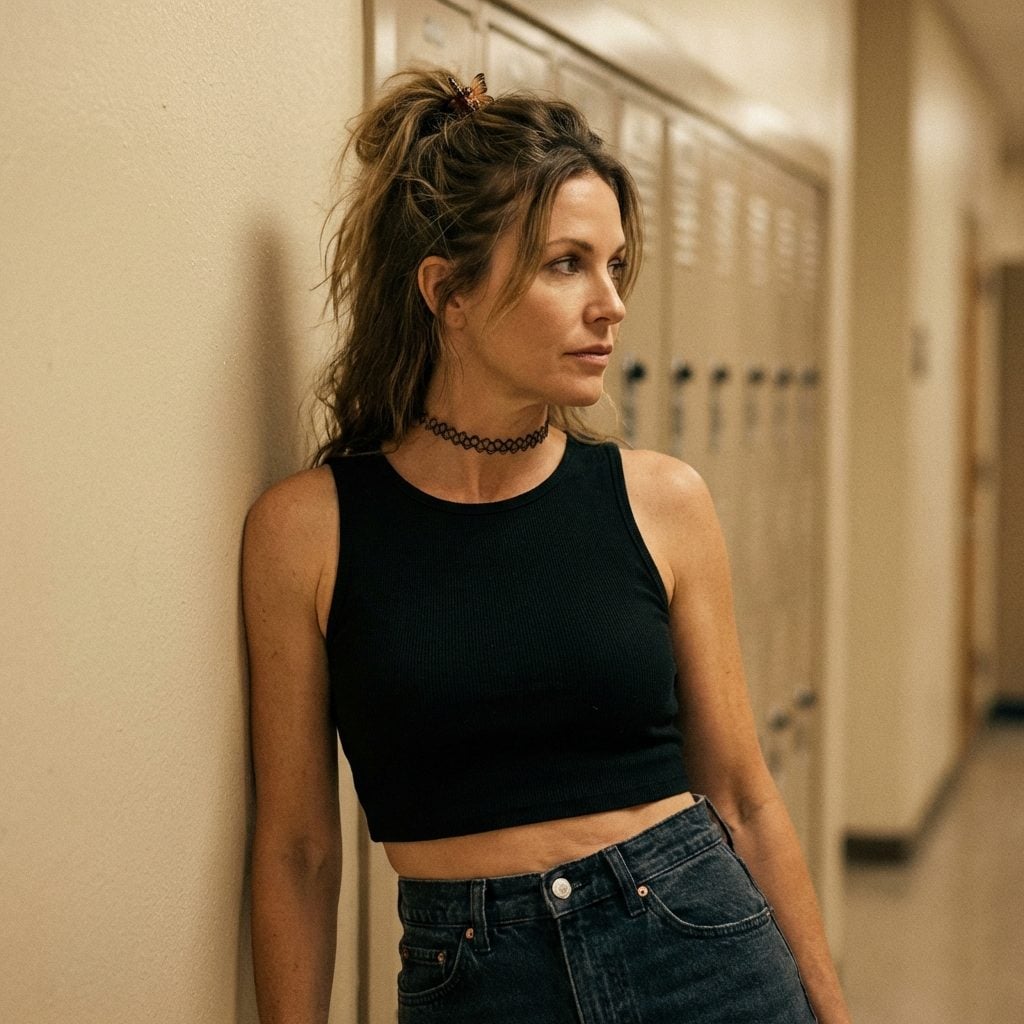
There were chokers and then there were THE chokers. Not the elegant velvet ribbon kind. The ones we’re talking about are the half-inch wide stretchy plastic band printed to look like a tattoo, sold in a three-pack at Claire’s for $4.99. You wore it so tight it left a faint red mark on your neck by third period and you did not care one single bit.
The velvet versions felt sophisticated by comparison. The metal snake-chain ones said you were possibly going through something. But the tattoo-print plastic choker said exactly one thing: you were thirteen, it was 1993, and you had somewhere to be.
5. The Bra Strap You Wore on Purpose (Which Was Revolutionary)
❤️ Would you like to save this?
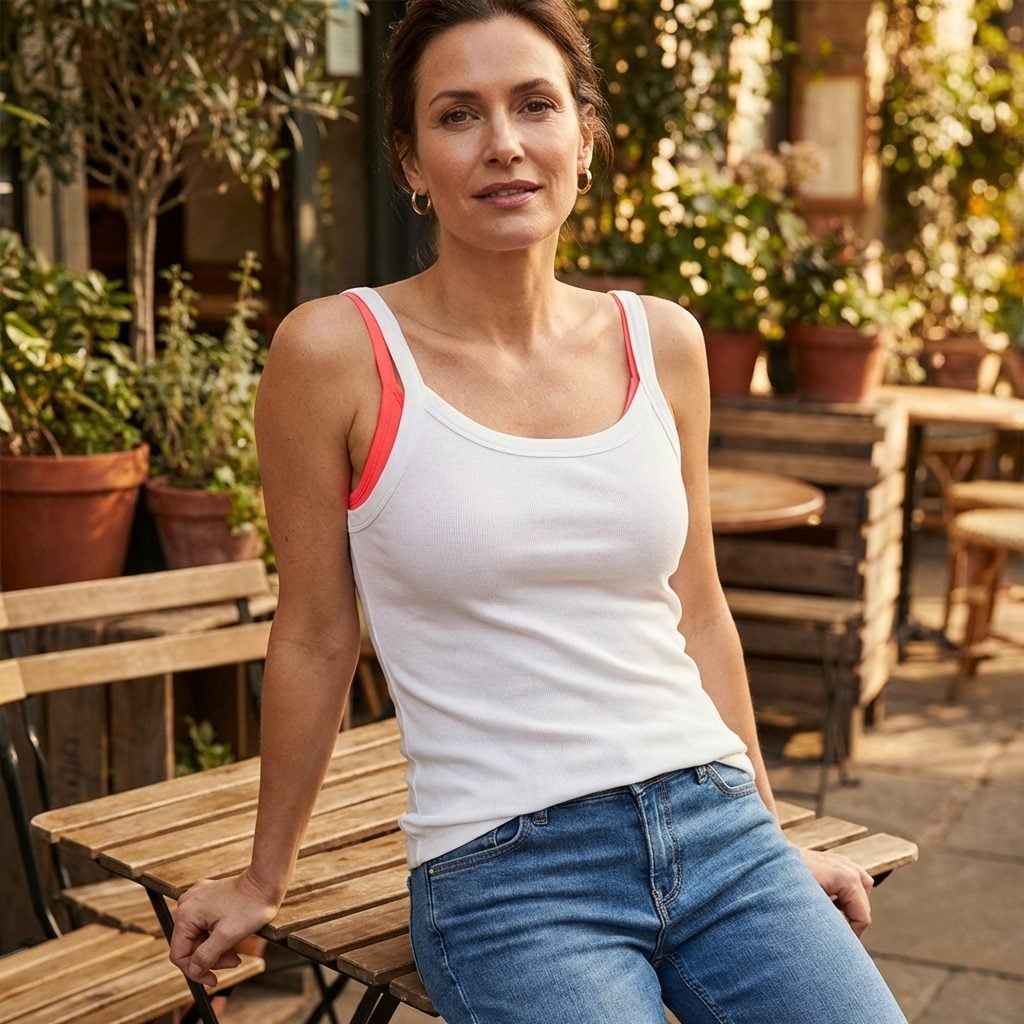
At some point in the late ’90s, showing your bra strap stopped being an accident and became a statement. You bought a bright-colored or patterned bra specifically so the strap could be seen above the neckline of your tank top. This was considered edgy. Teachers asked you to cover up. You considered that a success.
4. Baby Tees With Extremely Specific Words Printed Across the Chest
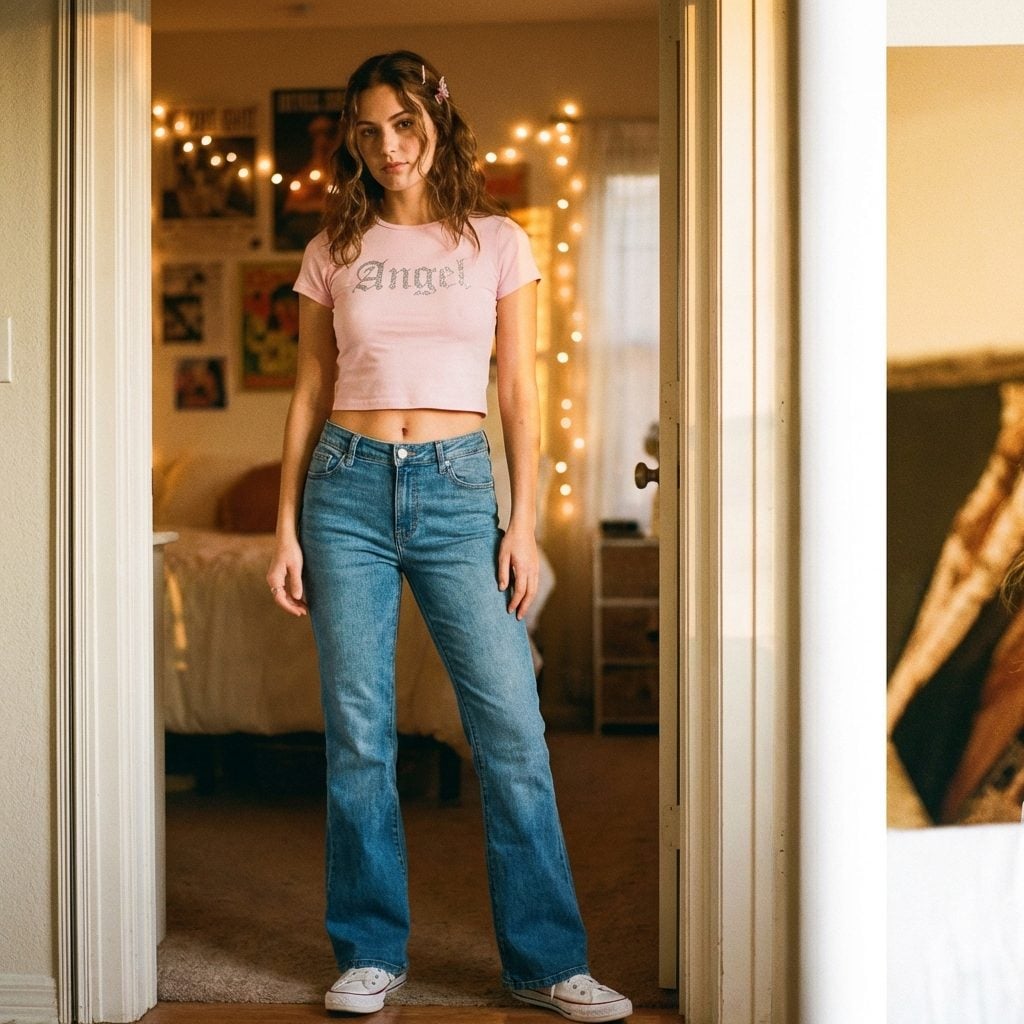
“Angel.” “Spoiled.” “Foxy.” Sometimes the name of a city you had never visited. Sometimes an Italian word that may or may not have been correctly translated. These were printed in glitter iron-on, rhinestones, or that slightly pilled velvet flocking that felt incredible under your fingertips and looked incredible for approximately three washes before it started flaking off in patches.
The shirts were tiny. Intentionally so. The word across the chest was the whole point. You picked the one that felt most accurately like a personality, even if the personality was “a seventeen-year-old who found this at Wet Seal for $8.”
3. The Crossbody Mini Purse That Held Exactly One Lip Gloss and Your ID
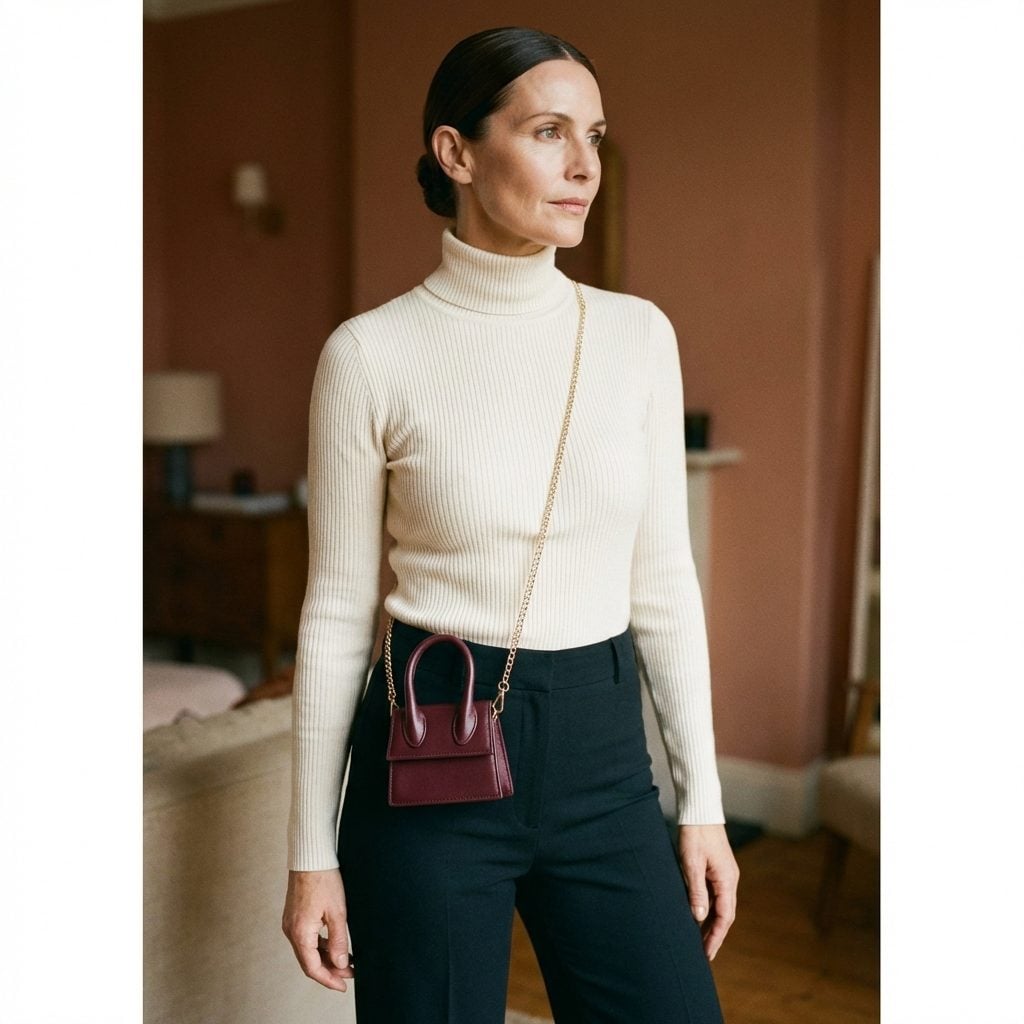
It held your ChapStick, a folded-up dollar bill, maybe your house key if you wedged it sideways. That was it. That was the purse. And you wore it across your body on the thinnest possible strap, usually over a chunky sweater or puffer jacket, where it sat like a tiny determined rectangle against your hip.
These came in every material imaginable: faux leather, velvet, clear vinyl, denim with floral patches. The size was not a limitation. The size was the aesthetic. You chose to carry less because the bag was cuter small, which is a completely deranged logic that also makes total sense if you were there.
2. Cargo Pants With So Many Pockets They Were Basically a Storage Unit
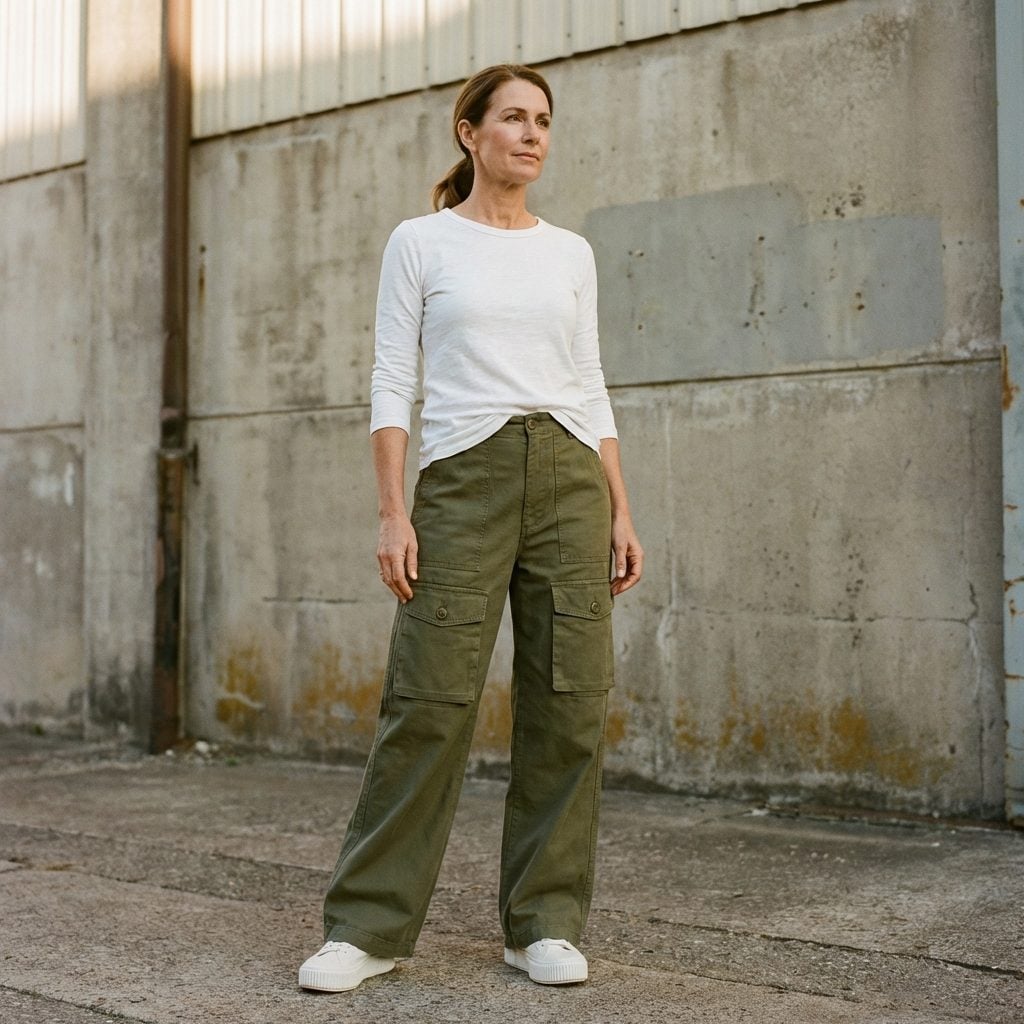
The number of pockets on these pants was deeply, fundamentally unnecessary. There were pockets on the thighs. Pockets on the calves. A pocket on the back knee that served no earthly purpose. And every single pocket had a button or a snap or a Velcro flap that you fastened maybe twice before giving up and leaving everything open. They were usually khaki, or olive green, or that specific shade of dark gray that Gap called “charcoal” but was really just “almost black.”
1. The Wide Cloth Headband Worn Across the Very Top of Your Forehead

Not across your hairline like a sensible person. Across the TOP of your forehead, pushed forward so it sat like a fabric crown about an inch above your brows. This required the rest of your hair to be either completely down and fluffy around the band, or pulled into a messy bun BEHIND the band, leaving the front section flat and pressed down in a way that looked intentional when it absolutely was not.
These came in velvet, gingham, floral cotton, or that ribbed athletic material in the same colors as your sports bra. You could get a 6-pack from Target for $5. You wore every single one.