

❤️ Would you like to save this?
There’s something hanging in your closet right now that you haven’t touched in years. You move it aside when you’re looking for something else. You’ve reorganized around it. You might have even packed it into a bag for donation twice, then quietly put it back. It’s not a practical piece, and honestly, you know you’ll never wear it again. But there it stays.
Clothing psychologists have a name for this. It’s not sentimentality, and it’s not disorganization. It’s something more specific, more human, and more revealing about how your identity lives inside your wardrobe than almost anything else. What that item is holding for you is the real story.
FYI, thanks to AI imagery software, we’re able to create very specific fashion and hairstyle examples to illustrate the points being made. In some cases, imagery is exaggerated to hammer home the point. Also, assume links that take you off the site are affiliate links such as links to Amazon. this means we may earn a commission if you buy something.
The Item Almost Every Woman Has (And Almost No One Admits To)
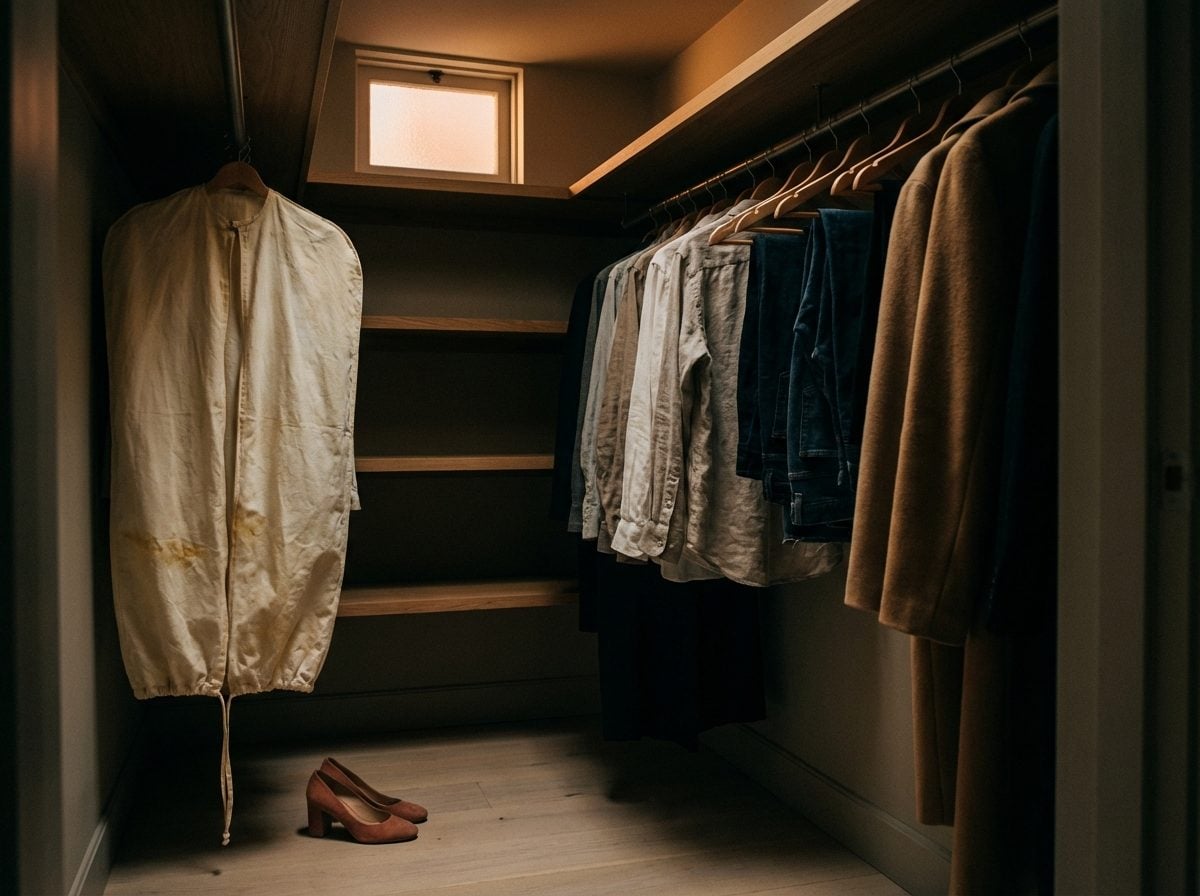
You know exactly what it is. It hangs slightly apart from everything else, like it knows it doesn’t belong with the Tuesday-morning rotation. It might be a wedding dress sealed in a garment bag, a blazer from a job you loved twenty years ago, or a silk dress you bought for a trip you never took. According to a 2023 study in the International Journal of Fashion Design, Technology and Education on wearer-clothing relationships, researchers found that some garments are kept for long periods despite not being used precisely because they become memory-holders, objects whose value has nothing to do with wearability and everything to do with what they witnessed.
The item isn’t taking up space. It’s holding ground. There’s a reason you move it from apartment to apartment, city to city, relationship to relationship, and never once consider giving it away. It’s not clutter. It’s a physical record of a moment your nervous system hasn’t finished processing yet.
Why You Haven’t Touched It in Years But Can’t Move It to the Donate Pile
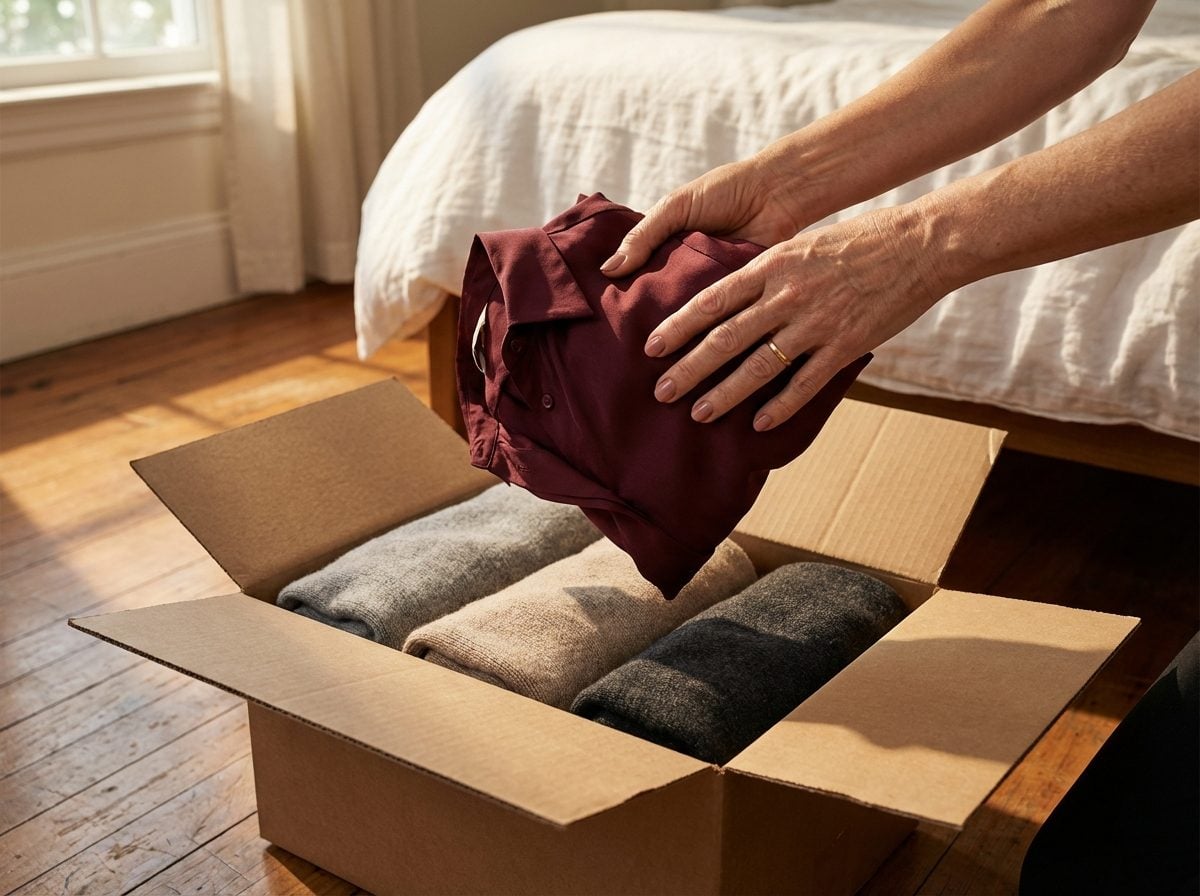
Put it in the bag. Walk it to the car. Drive it to the donation center. Easy, right? Except it’s never easy, and there’s a reason for that rooted in how the brain physically responds to potential loss. According to the Wikipedia entry on the endowment effect, a 2007 fMRI study by Knutson et al. found that the insula, the brain region associated with loss aversion, activates when people consider relinquishing objects they own. This isn’t sentimentality. This is neurology. Your brain reads giving that item away as a threat, not a choice.
The endowment effect compounds this further: once you own something, you value it more than you would if you were seeing it for the first time. You’re not being irrational. You’re being human. The tricky part is that this effect intensifies for items tied to emotional memory, meaning the blazer you wore to your first board presentation isn’t just a blazer anymore. It’s a trophy your nervous system has quietly filed under “things that proved I was capable.”
The Version of Yourself It Belongs To

The piece that’s hardest to release is almost never about the fabric. It’s about the person wearing it in your memory. Consumer psychologist Russell Belk’s foundational 1988 work, “Possessions and the Extended Self,” published in the Journal of Consumer Research, argued that our possessions are not separate from who we are, they are extensions of the self. His central premise: “we are what we have.” Which means giving something away isn’t tidying a closet. It’s amputating a version of yourself.
The dress you wore when you felt most alive. The coat from a chapter of your life when everything was possible and nothing had been decided yet. Keeping these items isn’t nostalgia, it’s a refusal to fully close a door. And that refusal, it turns out, is one of the most psychologically complex things a person can do.
“Our possessions are a major contributor to and reflection of our identities.”, Russell Belk, Journal of Consumer Research, 1988
What Clothing Psychologists Say About Objects We Keep for “Someday”
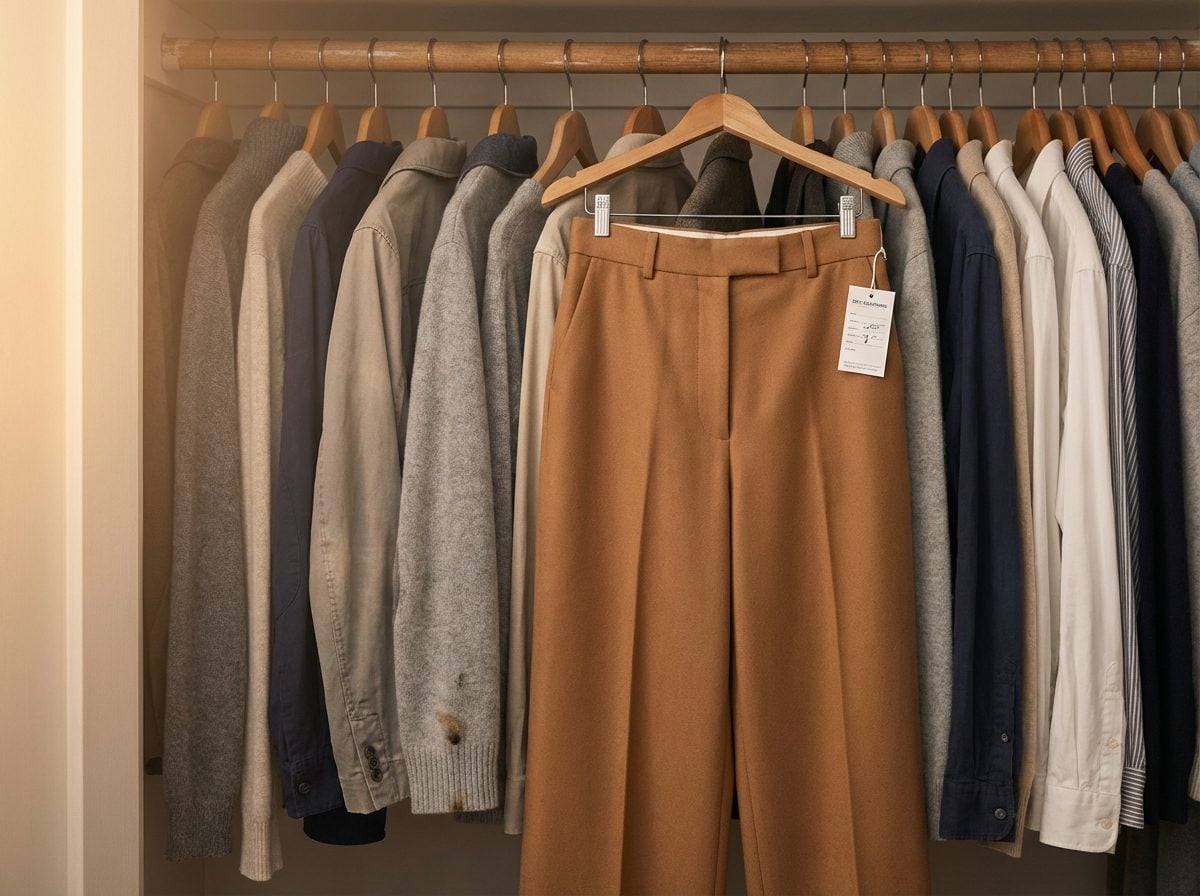
There’s a specific category of unworn clothing that lives in almost every woman’s closet: the aspirational item. The too-small pair of trousers kept for “when I lose the weight.” The sequined top purchased for “when I have somewhere to go.” The structured coat bought for “the person I’m becoming.” As noted in a detailed breakdown of clothing hoarding psychology, these items function as psychological placeholders for potential futures, physical representations of goals, aspirations, and selves that haven’t fully materialized yet. Psychologists call this “material symbolism”: the object becomes an external vessel for an internal desire.
The problem is that the someday item carries a quiet psychological cost. Every time you pass it, you’re not just seeing a garment. You’re measuring the distance between who you are and who you planned to be. For some women, this is motivating. For most, over time, it becomes a low-grade source of self-judgment that hides in plain sight.
- The aspirational item, kept for a body, life, or occasion that hasn’t arrived
- The transitional item, belongs to a professional or personal identity that’s shifting
- The legacy item, too meaningful to wear, too meaningful to release
The Specific Life Moment Most of These Items Come From
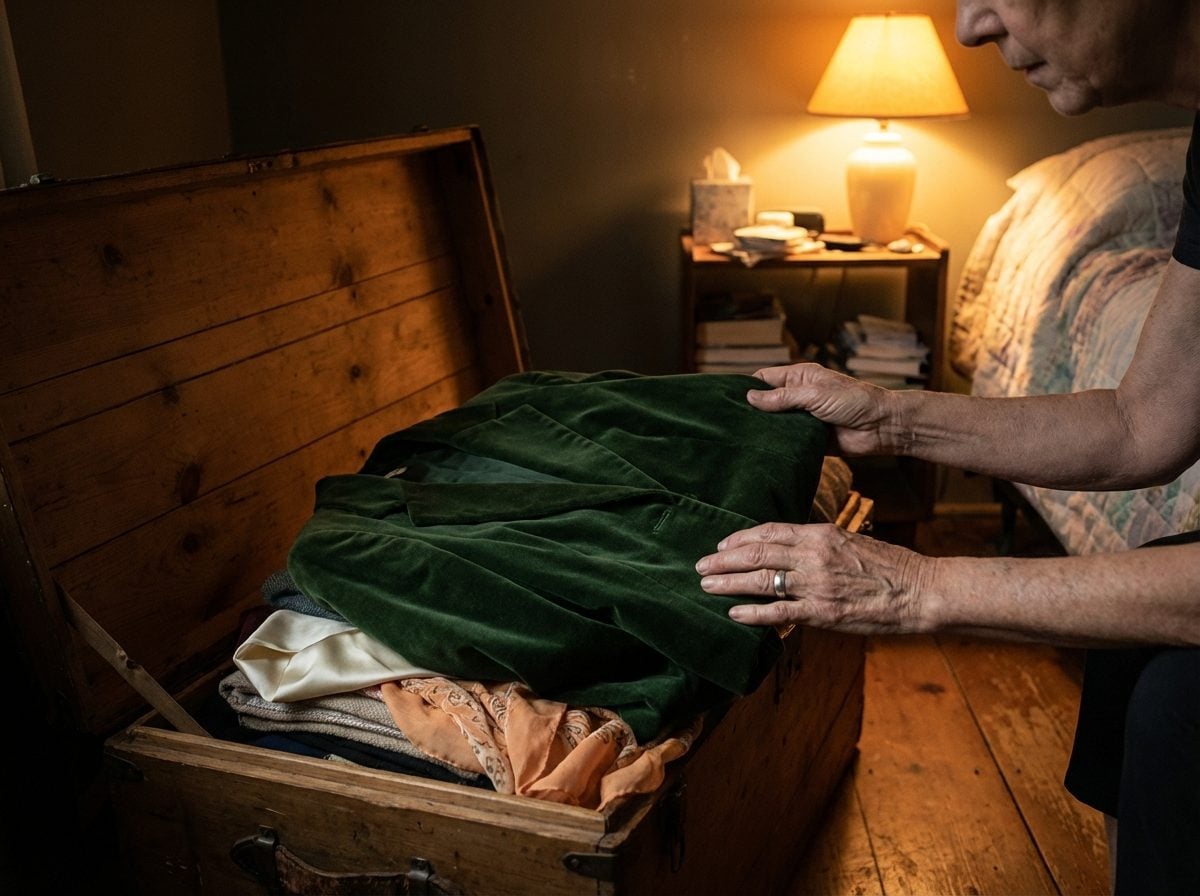
Ask any woman what she’s never worn but will never give away, and the story usually begins with a single sentence: “It was the night I…” or “I bought it after…” or simply, “She gave it to me before she died.” According to an Essence feature on fashion and memory, licensed psychotherapist Dr. Akua K. Boateng notes that clothing provides both psychological and emotional comfort because it holds not just the physical garment but the symbolism of a pivotal moment, and that sometimes, her patients can speak about a loved one’s favorite fashion pieces even when they can’t yet speak about the loss itself.
This is because garments worn at high-emotion moments are encoded differently in memory. The dress from the night everything changed. The blouse from the interview that altered the entire trajectory of your career. The coat that came home from a trip you took alone to prove something to yourself. These items aren’t sentimental clutter. They’re sensory archives, held in the body as much as in the mind.
Why Your Brain Categorizes It Differently From Everything Else in the Closet
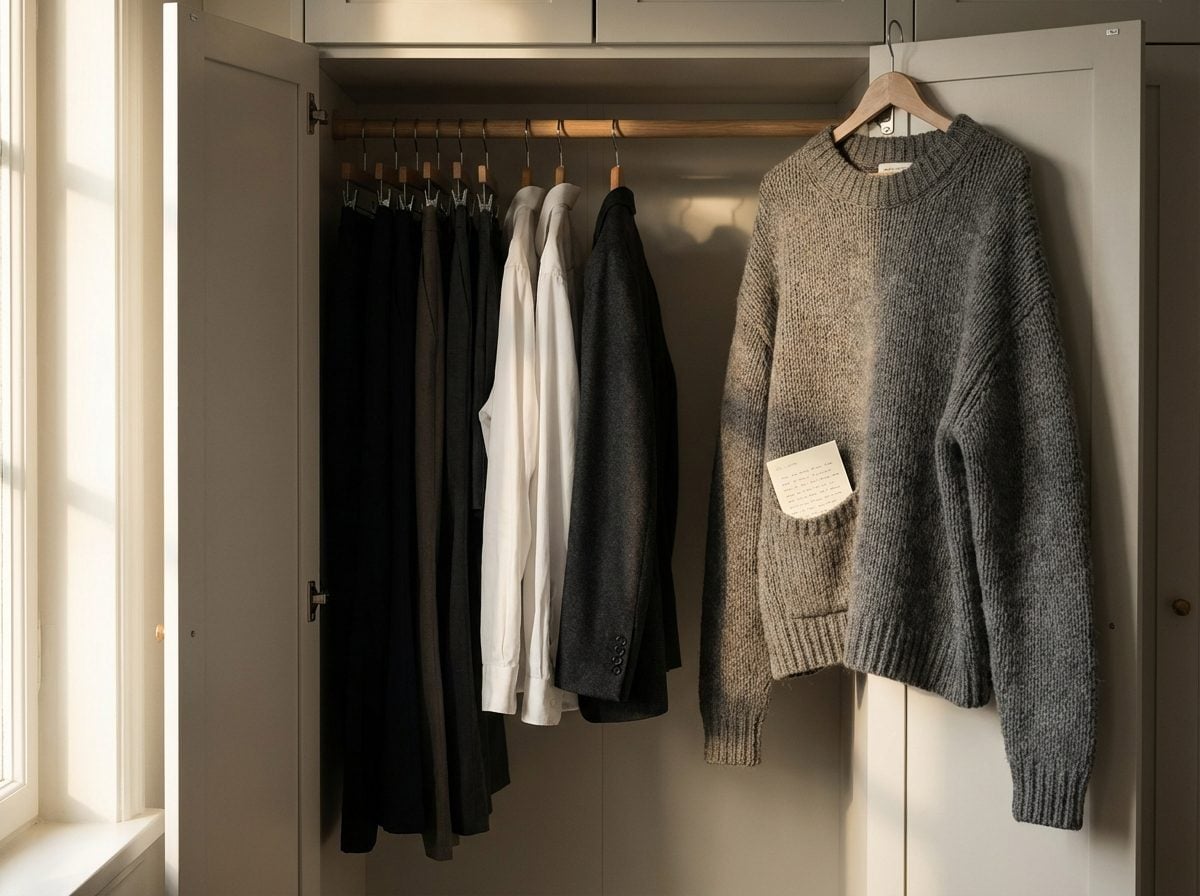
Here’s the thing most wardrobe-clearing advice misses: not all clothing lives in the same cognitive category. The grey t-shirt and the dress you wore to your mother’s last birthday are not stored the same way in your brain, and they never will be. Research on wearer-clothing relationships published in the International Journal of Fashion Design, Technology and Education identifies a key distinction: emotional attachment can lead to “extended ownership but not necessarily extended use.” The item is kept not because you’ll wear it, but because the object has become a container for something that can’t be stored anywhere else.
Belk’s extended self theory, confirmed in decades of subsequent consumer psychology research, explains why our possessions become genuine extensions of our identity, meaning that involuntary separation from a beloved item can produce something that functions like grief. The brain doesn’t distinguish between losing a person and losing an object that represents them. Both activate the same loss-processing systems.
This is also why the item never quite fits into your regular decluttering logic. You can talk yourself out of keeping a duplicate spatula. You cannot talk yourself out of keeping the jacket she wore when she told you she was proud of you.
The Story You’re Still Telling Yourself About It
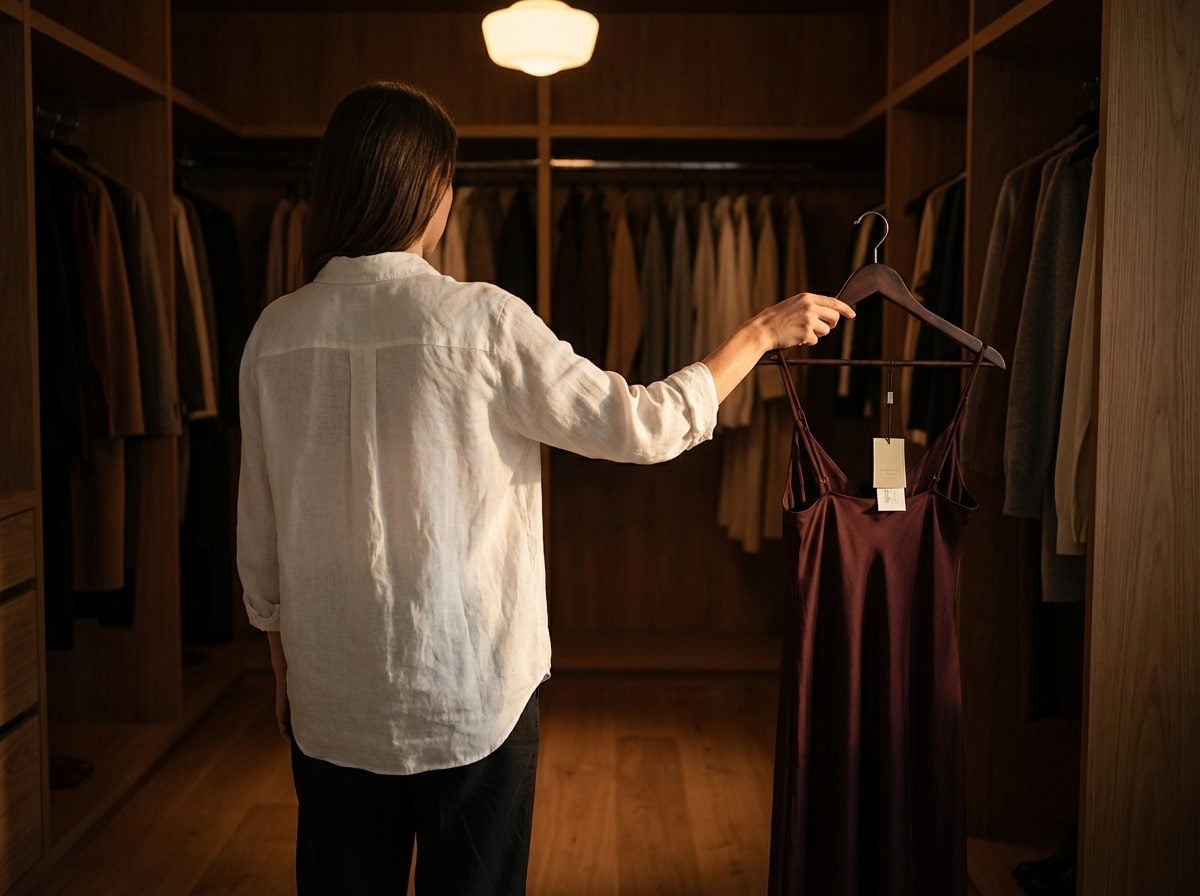
There’s a dress, or a blazer, or a pair of heels still in the back of the closet, tags on, or worse, worn once. You know you’ll never reach for it again. And yet every time you face it, you hear a version of the same quiet justification: maybe someday. That voice is not laziness. It’s identity psychology at work.
According to a Psychreg analysis of fashion and personal identity, keeping old clothes is a documented way of staying linked to the past, particularly to versions of ourselves we remember as positive or whole. The garment isn’t just fabric. It’s a chapter in the story you’ve been telling yourself about who you are, and removing it from the closet feels less like decluttering and more like editing your autobiography without permission.
The narrative function of clothing is real. A peer-reviewed study on clothing practices and personal identity published in PMC defines the “psychological closeness” of clothing as the degree to which a garment is recognized as “a significant symbol of one’s identity, mood, or attitude” or “an expression of self-regard or self-worth.” That item in your closet isn’t just unworn, it’s still actively doing psychological work, anchoring a self-image you’re not quite ready to update.
Why Getting Rid of It Feels Like a Decision, Not Just a Declutter
Throwing something away and deciding to throw something away are not the same act. One is physical. The other is psychological, and your brain treats them very differently.
Research from the field of behavioral economics, documented in a 2023 Frontiers in Psychology fMRI study on possessions and loss aversion, shows that the mere act of letting go of a personally owned item activates the brain’s anterior insula, a region associated with negative somatic states including pain, disappointment, and disgust. We’re not being dramatic when discarding something feels genuinely uncomfortable. Our brains are registering it as a form of loss.
This connects directly to loss aversion, the cognitive bias established by Kahneman and Tversky: we weigh losses more heavily than equivalent gains. The item in your closet may cost you nothing to keep. But getting rid of it triggers the same neural threat response as losing something valuable. So you leave it there, not from sentimentality exactly, but from the same hardwired calculus that made our ancestors hoard food through winter.
What Keeping It Is Actually Costing You

That unworn item isn’t neutral. Every time you open your closet and see it, your brain registers it, even if you think you’ve stopped noticing. A Psychology Today piece on clutter and cortisol references findings that women living in cluttered environments carry higher cortisol levels throughout the day, the body’s primary stress hormone, compared to those in organized spaces. Visual clutter is not passive. It actively drains cognitive resources.
Researchers at Princeton’s Neuroscience Institute found that disorganized environments force the visual cortex to process irrelevant stimuli, leaving fewer neural resources for focus and decision-making. Every object competing for your attention, including the one you haven’t worn in four years, adds friction to your mental load.
The real cost isn’t closet space. It’s the low-grade decision fatigue that builds each morning when you scan past it, the quiet cortisol tick of unresolved visual noise, and the subtle reminder that your physical space and your current self are slightly out of alignment. A wardrobe that reflects who you are now is not an indulgence. It is, quite literally, better for your brain.
The Difference Between Honoring the Past and Being Held By It

Nostalgia has been rehabilitated by science. What was once dismissed as melancholy or sentimentality is now understood as a functional psychological mechanism, one that reinforces identity continuity across life stages. A peer-reviewed study on nostalgia and global self-continuity in PMC found that people use valued possessions to feel closer to past selves and preserve a coherent sense of identity, particularly during major life transitions.
That’s the honoring part. Keeping a garment because it genuinely connects you to a meaningful chapter, a decade of real confidence, a relationship that shaped you, a version of yourself you’re proud of, that is psychologically valid. It serves a function.
When Honoring Becomes Holding
The shift happens when the item stops being a bridge and becomes a wall. Psychology researchers studying nostalgia bias note that nostalgia involves cognitive distortions, specifically “rosy retrospection,” the tendency to magnify the pleasant aspects of the past while minimizing its difficulties. When you hold onto a garment because the body or the life it belonged to felt more certain, more whole, more loveable, you may not be honoring a past self. You may be comparing your current self unfavorably to an idealized one. That’s not memory. That’s a trap.
How to Know When You’re Actually Ready to Let It Go
Readiness is not a feeling. It is a realignment.
Clinical psychologist research published in The Conversation found that a values-based approach to decluttering, not a joy-based one, is what actually works, particularly for adults over 50. When study participants were guided to identify their current values first and then evaluate their possessions against those values, they were more successful at letting go and reported higher positive affect afterward. The key insight: “Too often, people focus on the immediate ability of an object to ‘spark joy’ and forget to consider whether an object has greater meaning and purpose.”
Applied to your closet: the question is not “does this still make me happy?” The question is “does this reflect who I am now, and who I am becoming?” You’ll know you’re ready when the answer is a quiet, undefended no. Not guilty. Not nostalgic. Just honest.
- The story you tell about it has past tense. You say “I used to wear this” more than “I should wear this.”
- You feel lighter imagining it gone. Not sad, relieved. That’s your nervous system confirming alignment.
- You can name who you were then and who you are now without needing the item to prove either.
What the Empty Hanger Means
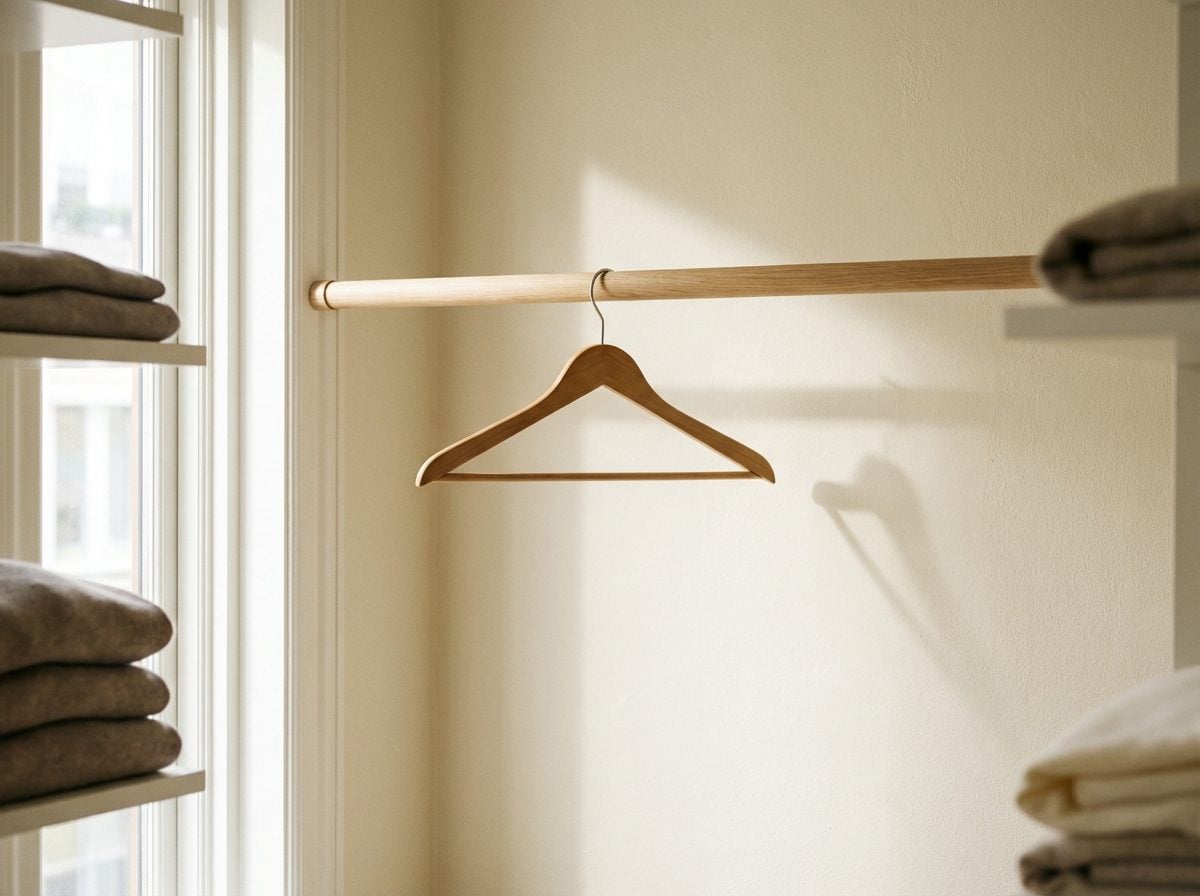
There is a specific psychological experience that happens after you finally let something go. The hanger left behind is not absence. It is possibility.
A Psychology Today analysis on attachment styles and material possessions draws on Bowlby’s attachment framework to show that securely attached individuals have a more balanced relationship with their belongings, they can regulate their emotional needs without material objects. The goal of letting go, then, is not minimalism. It’s security. It’s the confidence that you do not need a garment to prove a version of yourself that already exists inside you.
Research on possessions and the extended self, particularly Russell Belk’s foundational work in the Journal of Consumer Research, established that we incorporate possessions into our identity. Which means that clearing them out, intentionally and with awareness, is also an act of identity-making. The empty hanger is not what was lost. It’s what you chose to keep instead: the present version of yourself, unencumbered, with room to grow into whoever comes next.
“The key to breaking free from unhealthy attachment to possessions lies in understanding that memories reside in our hearts and minds, not in our stuff.”
The Bottom Line
You already know which one it is. You didn’t need a moment to think when you started reading this, and you don’t need one now. It might be the dress from the night you felt most like yourself, the one from your twenties when everything still felt possible and your body felt like yours. It might be something she gave you, or something you wore the day your life quietly divided into before and after. Whatever it is, it has been hanging there, patient and specific, waiting for you to decide what it means that you kept it.
Here is what the research keeps circling back to: you were never confused about the item. You were working something out. And if you have read this far, you probably have a better sense now of what that something is. The item is not the point. You are. The version of you it belongs to was real, and she mattered, and you do not have to throw her away to make room for who you are now. You just have to know the difference between keeping something because it still belongs to your story and keeping it because you are afraid your story has already peaked. One is an archive. The other is a weight. Only you know which one that hanger is holding.