
❤️ Would you like to save this?
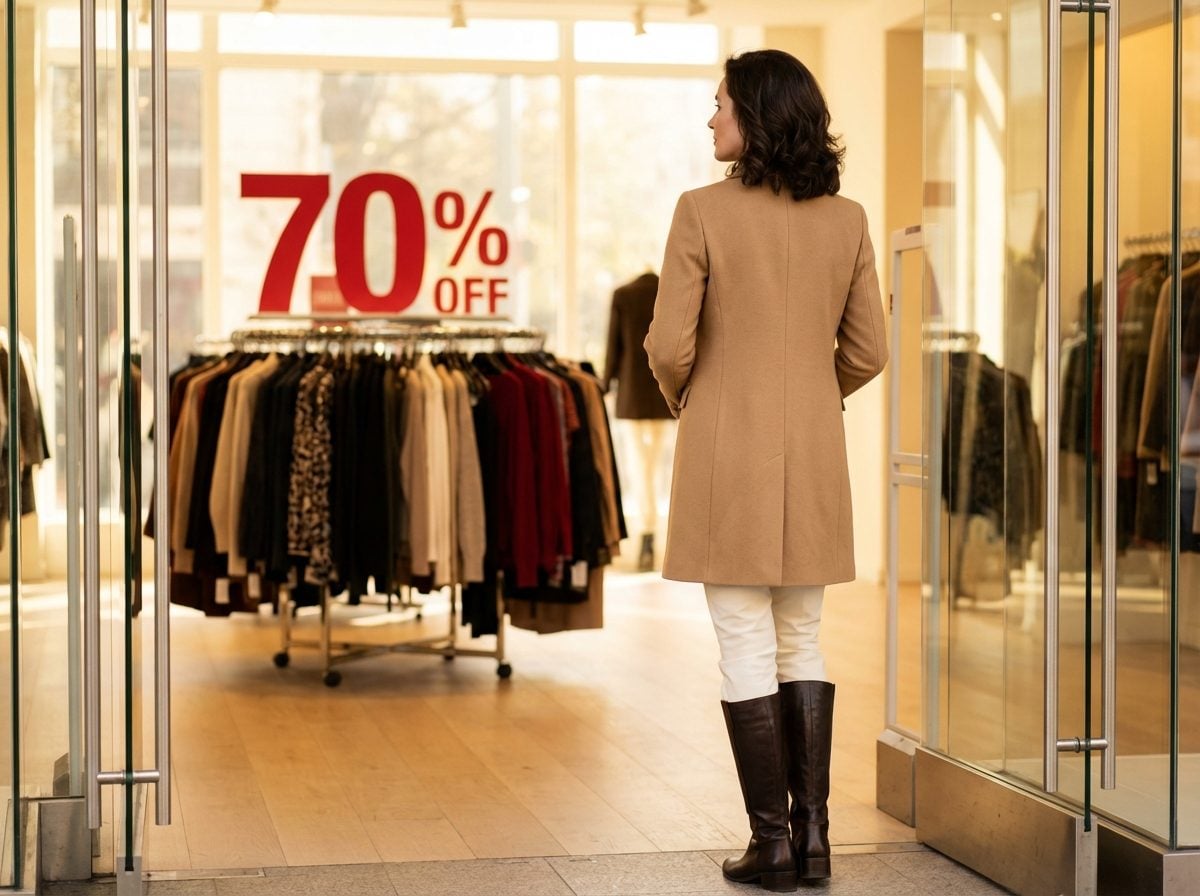
Here’s something that will quietly rearrange the way you think about your wardrobe: the women whose style you admire most are not better shoppers than you. They’re not luckier, they don’t have bigger budgets, and they’re not immune to the dopamine spike of a good deal. They’ve just figured out something that takes most of us an embarrassing number of ill-fitting, never-worn, deeply discounted blouses to learn. There is one section of every store, every single store, that costs more than anywhere else in the building. Not in price. In something far more personal. The answer is not what you’re expecting, and once you see it, you will never walk through a store the same way again.
FYI, thanks to AI imagery software, we’re able to create very specific fashion and hairstyle examples to illustrate the points being made. In some cases, imagery is exaggerated to hammer home the point. Also, assume links that take you off the site are affiliate links such as links to Amazon. this means we may earn a commission if you buy something.
The Psychological Trap That Makes a Bad Purchase Feel Like a Win
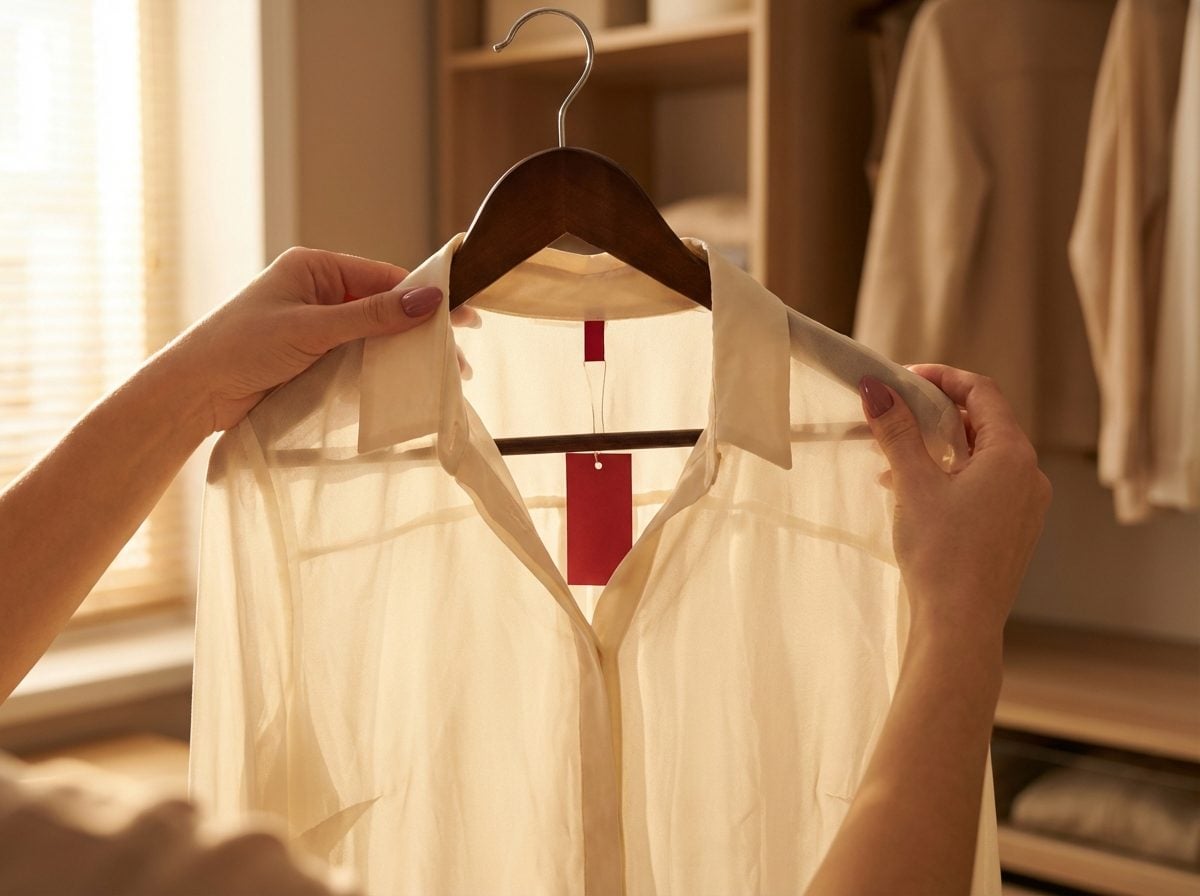
Here’s something worth sitting with: the moment you save $60 on a blouse you didn’t actually need, your brain registers it as a gain. Not a purchase. A win. That is not a shopping instinct, it’s a cognitive hijack, and it has a name.
The sunk cost fallacy is usually discussed in the context of bad investments or stalled projects, but behavioral economists at The Decision Lab describe it as our tendency to continue investing in something, a relationship, a business venture, a wardrobe full of things we never reach for, because we can’t bear to write off what’s already been spent. In shopping, it works in reverse. The anticipation of getting something for less creates the same irrational logic before you’ve even bought it. You’re already calculating the imaginary loss of not buying it. That mental math is what makes the sale rack feel like opportunity rather than compromise.
The trap isn’t the discount. It’s that the discount reframes your entire decision. You stop asking “Do I love this?” and start asking “Would I be foolish to leave this here?” Those are two very different questions, and only one of them has anything to do with your actual wardrobe.
Why Your Brain Physically Cannot Calculate What Something Actually Costs You
The price on the tag is the least accurate number in the entire transaction. And your brain, for all its sophistication, is wired to treat it as the only number that matters.
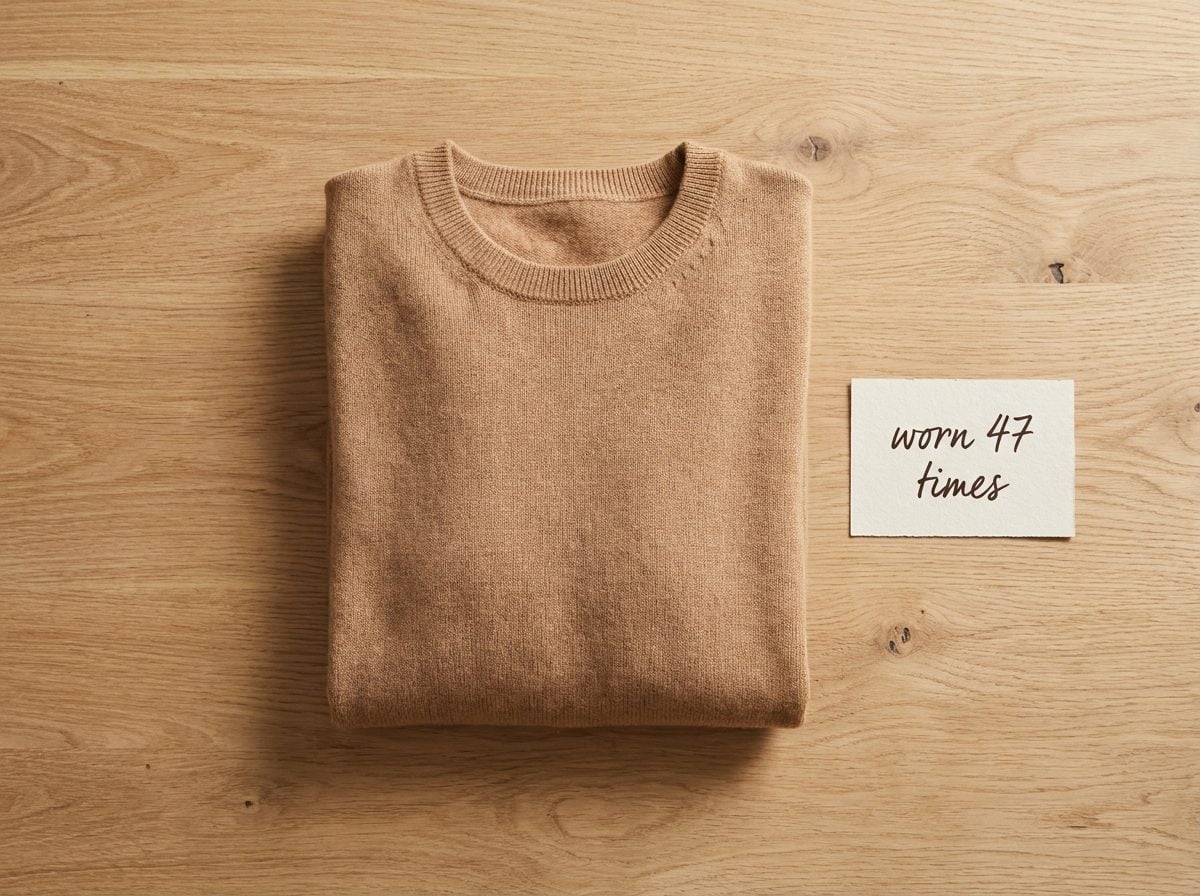
When you pick up a $14 blouse marked down from $38, you process the $14. You do not process the dry cleaning it will need before every wear. You don’t process the tailoring required to make it sit right on your shoulders. You don’t factor in the mental overhead of trying to build outfits around something that doesn’t quite fit your existing wardrobe, or the eventual donation-bag guilt when you realize, six months later, that you never once reached for it. Research published in Psychology & Marketing explored the concept of “cost per wear”, dividing a garment’s total price by how many times it’s actually worn, and found that communicating this single metric dramatically shifts consumer preference toward quality over price. The problem is that retailers never show you that number. They show you the markdown.
Women who consistently look put-together tend to think in cost-per-wear almost automatically. A $180 merino crewneck worn 90 times costs $2 a wear. A $22 polyester top worn twice costs $11 a wear, and still takes up a drawer, still creates decision fatigue every morning, still whispers that it was a mistake.
The Neurological Reason a Red Tag Shuts Down Your Better Judgment
It’s not that you lack willpower in the sale section. It’s that the sale section is specifically engineered to make willpower irrelevant.
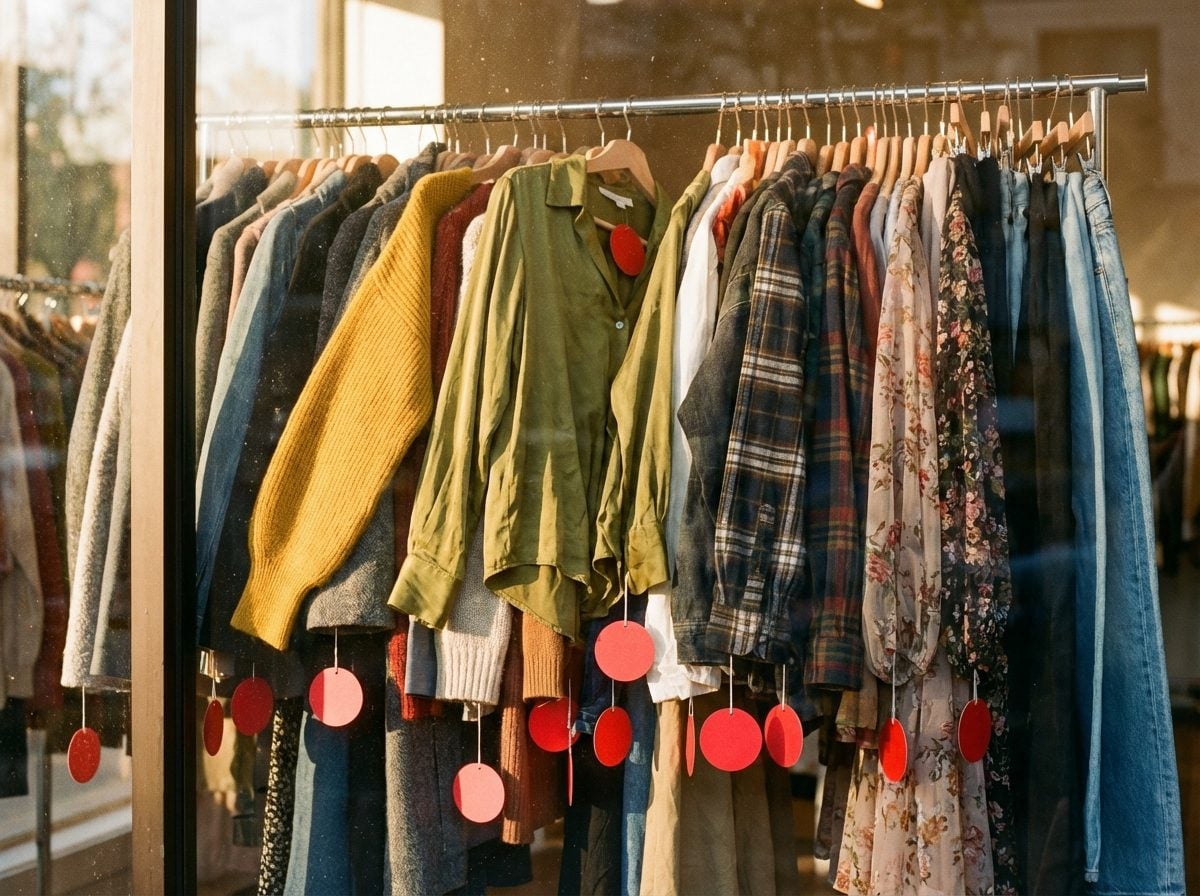
The color red is not accidental. Research on price sticker psychology consistently shows that red is associated with urgency, excitement, and the need to act quickly, which is exactly why clearance rails are draped in it. But the neurological story runs deeper than color theory. According to neuroscientific research on the scarcity effect, when the brain perceives limited availability, the amygdala fires, the same region responsible for fight-or-flight. The result is a measurable shift from analytical thinking to instinctive action. You stop deliberating and start grabbing.
This is not a character flaw. This is biology being exploited by retail architecture. The crowded rack, the mismatched sizes, the sense that someone else might take this before you do, all of it is a carefully constructed pressure system. And once your amygdala is in the loop, the prefrontal cortex (the part that knows you already own three navy blazers) gets functionally sidelined.
What Happens to Your Identity When You Dress in Someone Else’s Compromise

Sale sections are, at their core, collections of things other people didn’t want enough to buy at full price. That’s not a judgment, it’s just logistics. But it has a psychological implication worth examining: when you build an outfit around someone else’s rejected choice, whose style are you actually expressing?
Clothing is one of the most powerful identity signals we have. Research on fashion psychology and self-perception identifies something called “clothing-identity dissonance”, the discomfort that arises when what you’re wearing conflicts with your internal sense of self. It’s low-grade, often below conscious awareness. You just feel slightly off. Slightly less like yourself. The outfit isn’t wrong enough to take off, but it’s not right enough to forget about either.
By 40, most women have a deeply developed sense of their own aesthetic, what cuts work on their body, which colors light up their face, what fabrics feel like them. That self-knowledge is one of the genuine privileges of this decade. The sale section asks you to set all of it aside in exchange for a price that someone else decided was fair.
“Clothing serves as an extension of identity and provides a tangible reflection of a person’s perceptions, dissatisfactions, and desires.”, Fashion Psychology, Wikipedia
The Cognitive Bias That Turns a $14 Blouse Into a $200 Mistake
You already know the sunk cost fallacy in theory. Here’s what it looks like in practice, in your wardrobe, right now.
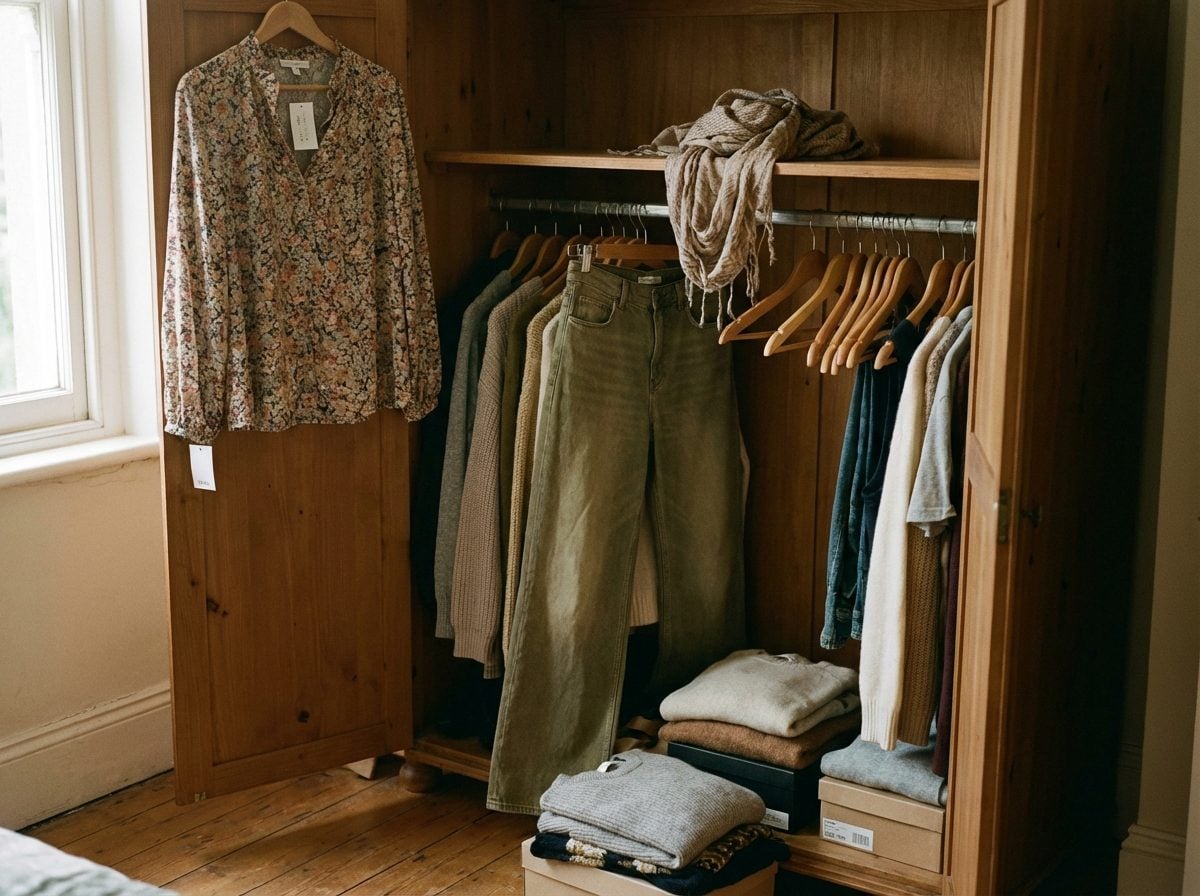
You buy the discounted blouse. It doesn’t sit right, but you paid for it, so you keep it. You try to build outfits around it, which means you buy a pair of earrings to make it look more intentional, and then a trouser in a color that works with both pieces. One compromise cascades into three purchases, none of which you’d have made had you simply walked past the rack. Research published in the International Journal of Psychological Research confirms that the sunk cost fallacy is most powerful when the initial investment is monetary, and that even wearing an unattractive piece of clothing becomes more likely when it was expensive (or, in this case, felt like a bargain).
The real math of a sale purchase isn’t the sticker price. It’s the total weight of every decision that purchase forces you to make afterward, the cognitive load, the additional spending, the wardrobe clutter, and eventually, the quiet resignation of donating the whole cascade with the tags still on half of it.
- The purchase: $14 blouse you didn’t need but couldn’t leave
- The justification: $40 earrings to make it look deliberate
- The completion: $68 trousers to pull the whole thing together
Why the Women Who Always Look Pulled Together Have Smaller Wardrobes
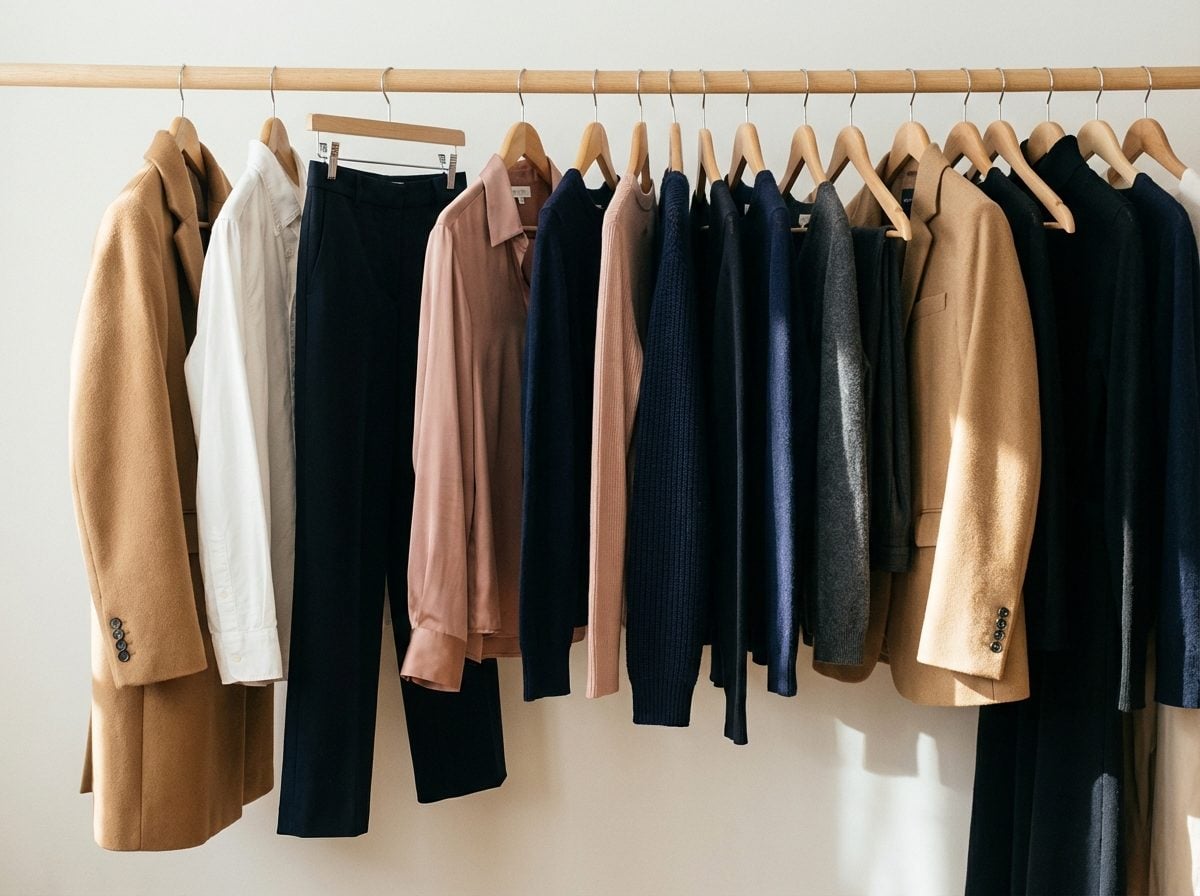
There’s a particular woman you probably know, or aspire to be, who seems to get dressed without effort. Her outfits are coherent. She looks like herself every time. You’ve probably assumed she just has good taste, or a good budget, or more time. The real answer is almost certainly simpler: she has fewer things.
A 2022 study in the International Journal of Market Research on capsule wardrobe experiences found that participants who limited their clothing to quality pieces they genuinely loved reported feeling less stressed, more detached from trend pressure, and more creatively engaged with getting dressed. The constraint wasn’t limiting, it was clarifying. And psychologist Barry Schwartz’s foundational work on the paradox of choice explains why: more options don’t produce more satisfaction. They produce more anxiety, more second-guessing, and the specific low-grade misery of standing in front of a full wardrobe feeling like you have nothing to wear.
The sale section is the wardrobe equivalent of fast food: accessible, cheap, oddly satisfying in the moment, and a direct threat to the coherent, intentional thing you were trying to build.
The Emotional Weight of Clothes That Were Never Really Yours
Every unworn garment in your wardrobe has a feeling attached to it. Not the feeling you hoped it would give you, the feeling it actually gives you every time you see it and don’t reach for it. A faint, persistent signal that something didn’t work out the way you planned.
This is not trivial. Research from the Fashion Law Journal on clothing and self-esteem notes that wearing clothes that don’t fit well or fail to express individual identity actively diminishes confidence and creates feelings of disconnection. The reverse is also true: the physical presence of those clothes, hanging in your wardrobe, sitting in a drawer, keeps that low-level feeling alive even when you’re not wearing them. It’s background noise. The sartorial equivalent of an unfinished conversation.
Sale pieces are the most likely candidates for this phenomenon. They were bought for their price, not for the way they fit your life. They arrived as compromises and they remain as compromises, fabric reminders that on one particular Tuesday, the deal was more compelling than your own judgment.
The women who never seem burdened by their wardrobe haven’t found the secret sale. They’ve simply stopped letting one-sided transactions take up space in their closet and, quietly, in their heads.
What Retail Architects Know About Your Brain That You Don’t
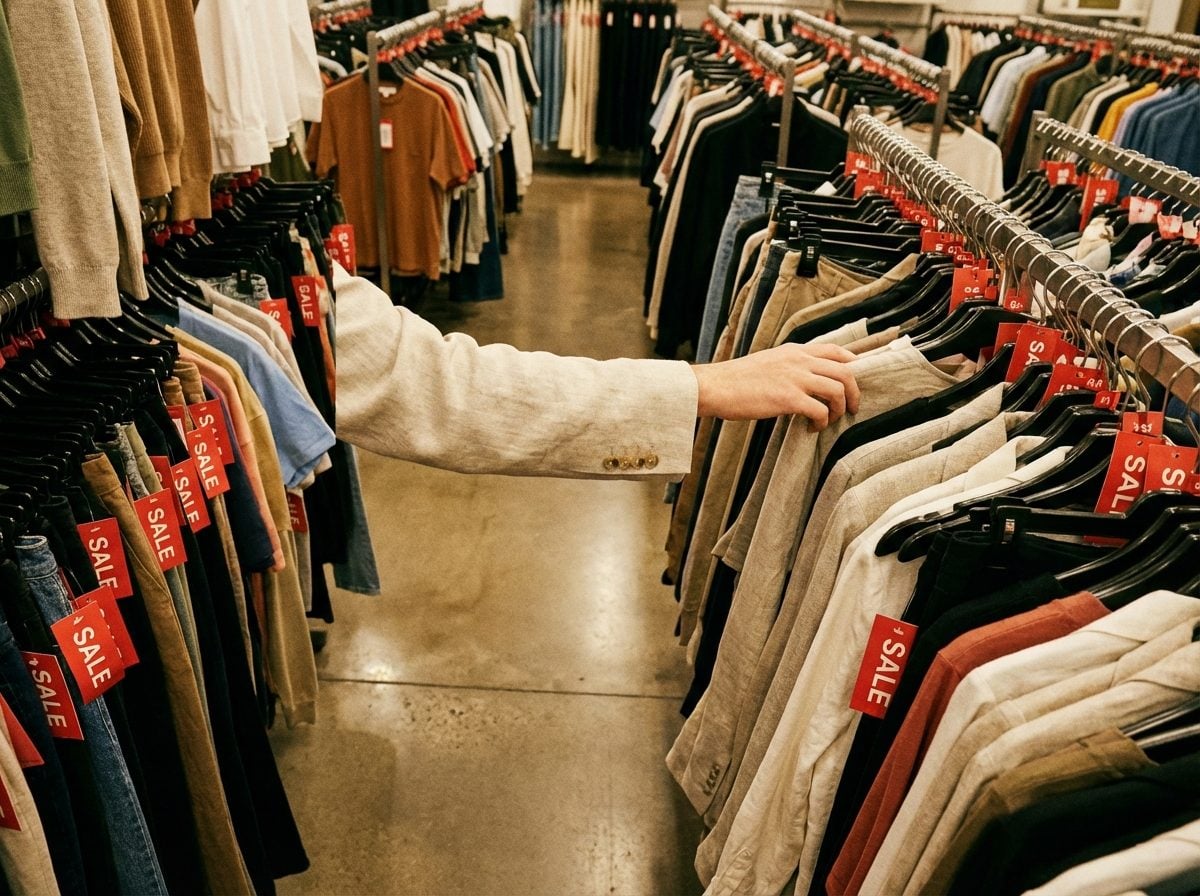
The sale section is not at the front of the store by accident. It’s not at the back by accident either. Every square foot of a well-designed retail environment has been studied, tested, and optimized by people who understand consumer behavior at a level most shoppers never suspect.
Retail psychology researchers describe the “Gruen effect”, named after architect Victor Gruen, as the moment shoppers enter a stimulating retail environment and become overwhelmed by the array of choices, losing their original intention and slipping into a browsing, susceptible state. The music tempo, the lighting temperature, the density of the racks, the scent pumped through the vents, all of it is calibrated. Sale sections are typically designed to feel slightly more chaotic than the main floor: crowded rails, mixed sizing, the treasure-hunt sensation. That chaos is intentional. It activates the seeking behavior in your brain, the same neurological loop that makes scrolling feel compulsive.
There’s a reason stylish women with coherent wardrobes often describe avoiding sale sections entirely, not because they can’t afford a bargain, but because they’ve recognized that the environment itself is working against their own intentions. You don’t browse a sale rack with your full self. You browse it with the slightly compromised, slightly overloaded version of your brain that the store has been carefully cultivating since you walked through the door.
The Subtle Way a Discount Dress Erodes How Others Read You

First impressions are formed in seconds, and your clothes are writing the headline. Research in fashion psychology consistently shows that what you wear communicates something long before you open your mouth. A 2023 review in the Journal of Consumer Behavior found that dress is a “fundamental component of person perception”, people attribute competence, status, and intention based on clothing cues with remarkable speed and consistency.
Here’s where it gets uncomfortable. The issue with a discount piece isn’t that it looks cheap, plenty of sale items are perfectly attractive on the hanger. The problem is what happens to you when you wear something that doesn’t fully match your self-concept. Research published in the Global Scientific Journal found that clothing congruent with a person’s identity and preferred social role produces stronger self-assurance and more positive self-perception, while incongruent clothing quietly undermines both. When you feel slightly off in what you’re wearing, it shows. Posture shifts. Eye contact wavers. That fractional hesitation is what other people are reading, not a price tag.
Why Scarcity Messaging in Stores Is Designed to Bypass the Part of Your Brain That Knows Better
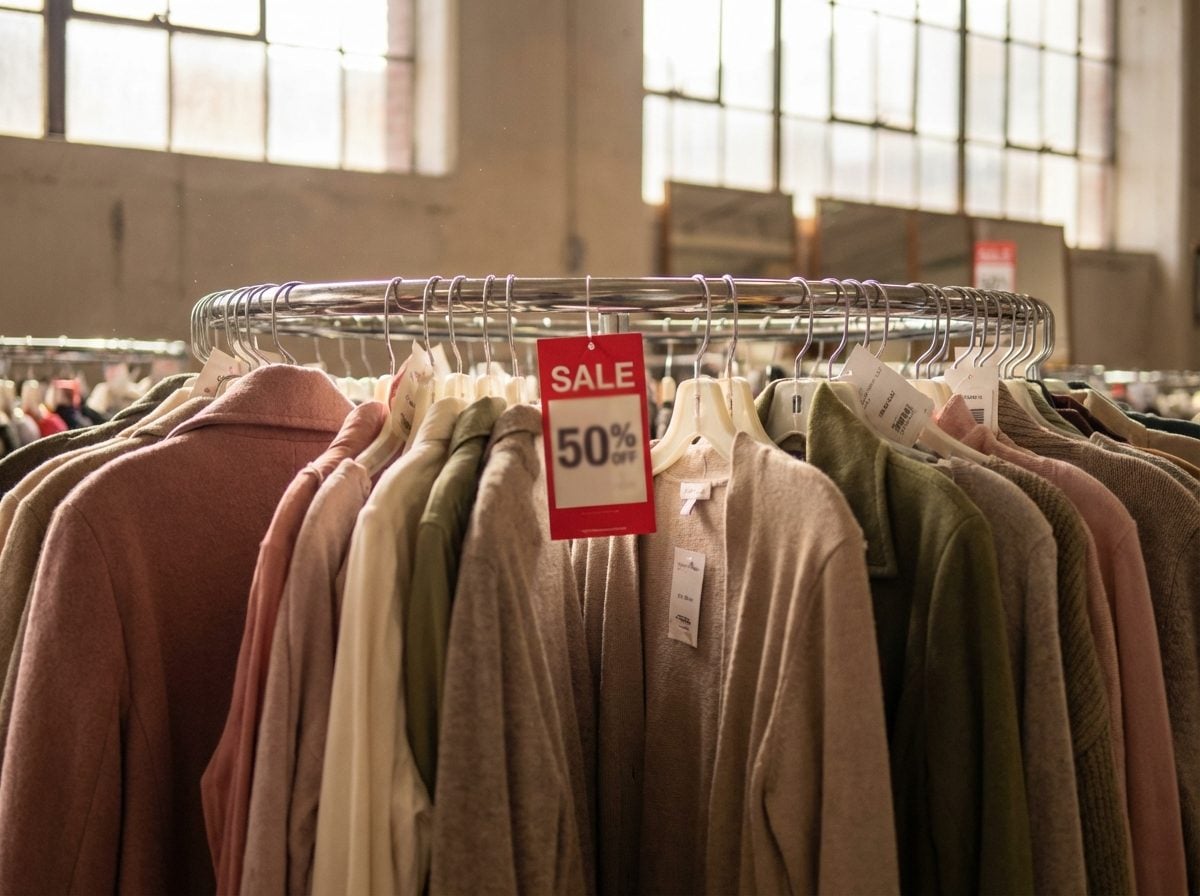
“Only 3 left.” “Sale ends midnight.” “Other shoppers are viewing this now.” These phrases aren’t just marketing copy, they’re a calculated neurological intervention. Functional MRI studies cited by behavioral researchers show that limited-time offers trigger increased activation in the amygdala (the brain’s emotional processing center) while simultaneously reducing activity in the prefrontal cortex, the region responsible for rational evaluation. In plain terms: urgency messaging turns up your emotional response and turns down your ability to think clearly at the exact same moment.
The mechanism goes deeper than impulse. Research grounded in Daniel Kahneman and Amos Tversky’s work on loss aversion explains that people feel the pain of a potential loss roughly twice as intensely as an equivalent gain. When that sale badge reads “last chance,” your brain doesn’t process it as a shopping opportunity. It processes it as a threat, something slipping away from you. The shoe on the markdown rack stops being a shoe and becomes a rescue mission.
There’s also the reactance effect to consider. Psychological reactance theory suggests that when we perceive our freedom to choose something is being restricted, we want it more, not because the item got better, but because securing it feels like reasserting control. The retailer isn’t selling you a blazer. They’re selling you back a sense of agency you didn’t know you’d “lost.”
The Hidden Psychology Behind Why Sale Items Feel Different Once You Get Them Home

You know the feeling. It was perfect in the store. The light was right, the price was right, you were already carrying the bag and halfway out the door when doubt crept in. By the time you get home, something has shifted. The dress doesn’t look the same on your bedroom mirror. The color reads different. The cut that looked architectural under fluorescent lighting now looks merely boxy.
This is post-purchase dissonance, the psychological discomfort that surfaces when a purchase fails to match the version of it you imagined. According to MasterClass’s editorial overview of consumer psychology, post-purchase dissonance occurs specifically when a product doesn’t align with the expectations formed before buying, and it’s especially common with clothing, where the gap between imagined self and reflected reality can be wide. Sale items amplify this gap. When urgency drives the decision, you don’t take the time to ask the right questions: Does this fit my actual life? Would I buy this at full price? Is this actually me?
The kicker: research on post-purchase rationalization suggests that after buying, people often convince themselves they got more value than they actually did, what some behavioral economists call “Buyer’s Stockholm Syndrome.” You tell yourself it was a good deal. You hang it up. The tags stay on for three months. And slowly, that unworn piece starts to say something about the gap between who you thought you were buying for and who you actually are.
What Your Closet Full of Unworn Bargains Is Actually Telling You About Yourself
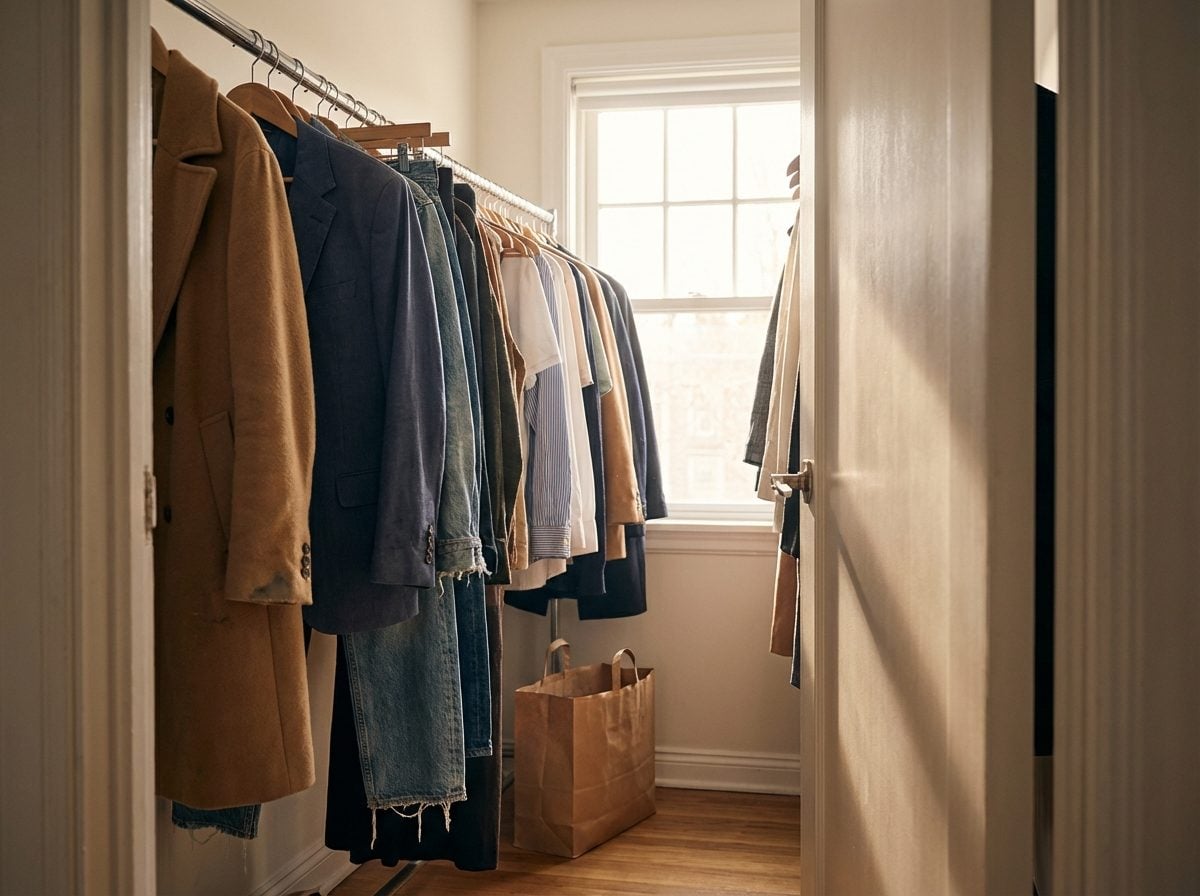
Pull open your wardrobe and look honestly. Not at what you wear, at what you don’t. The pieces still in their bags, still tagged, still waiting for an occasion that never quite arrives. Each one is a record of a decision made under the wrong conditions: excitement, pressure, the seductive promise of a good deal. Together, they form a kind of accidental self-portrait.
A 2021 study in Frontiers in Psychology on clothing practices and self-concept found that personal style is deeply linked to how women construct and maintain their identity, and that clothing misaligned with that identity creates subtle but persistent psychological friction. The unworn dress isn’t just clutter. It’s evidence of a self-concept conflict: the version of you who bought it and the version of you who actually gets dressed every morning are two different people.
There’s also a practical weight to it. Decision fatigue is real, and a closet full of “maybe” pieces, things bought cheaply enough to keep but not loved enough to wear, contributes to it. Every morning you stand in front of that wardrobe and see ten things that don’t feel right before you find the one that does. That friction compounds.
“A wardrobe that works for you” is not about volume. It’s about alignment, between the clothes you own and the person you are on an ordinary Tuesday morning.
The Reason Stylish Women Treat Price Reductions as a Warning Sign, Not a Reward

❤️ Would you like to save this?
Consider what it actually means when something is heavily marked down. The item didn’t get better. The fabric didn’t improve. The cut didn’t suddenly become more flattering. What changed is that the store couldn’t sell it at full price, which usually means it didn’t resonate with the people who were shopping with intention, not urgency.
Women who dress with consistency and personal authority tend to have an almost instinctive wariness around sale sections, and there’s psychological logic behind it. Research on fit, confidence, and consumer behavior suggests that discounts grab attention but rarely build the kind of trust and identity-alignment that produces long-term satisfaction. When price becomes the reason you buy something, you’ve replaced “does this serve my life?” with “does this serve the number on the tag?” Those are entirely different questions, and only one of them matters when you’re standing in front of your wardrobe at 7am.
The most stylish women aren’t immune to this pull, they’ve just learned to recognize it. A discount doesn’t signal opportunity. For the practiced eye, it signals: pause and ask harder questions than usual.
How the Rush of a Good Deal Mimics the Rush of Self-Expression, and Why That’s Dangerous

The neurochemistry of finding a bargain and the neurochemistry of expressing your personal style through a perfect piece have something uncomfortable in common: both produce dopamine. As behavioral psychologist Susan Weinschenk explains in Psychology Today, dopamine isn’t released when you get the reward, it’s released in anticipation of it. The hunt itself is the hit. Your brain doesn’t distinguish between “I found something that’s completely, authentically me” and “I found something that was $180 and is now $34.”
This is the mimicry problem. A good sale produces a genuine dopamine surge, and that surge feels, in the moment, like the same satisfaction you get from a truly intentional purchase. Your nervous system can’t easily tell the difference between the joy of self-expression and the joy of a discount. Both feel like winning.
But one of them builds a wardrobe that reflects who you are. The other builds a wardrobe that reflects who you were when you were trying to feel something quickly.
The Identity Foreclosure Happening Every Time You Buy Something Just Because It Fits the Price

Every clothing purchase is a small act of self-definition. You are not just buying fabric, you are deciding, briefly and repeatedly, who you are. This is identity-based consumer behavior in its most tangible form. Researchers Reed et al., in a widely-cited 2012 paper in the International Journal of Research in Marketing, established that consumers use clothing and possessions to enact identities, and that when a purchase is consistent with a person’s self-concept, it reinforces a clear and coherent sense of self. The inverse is also true.
When price drives the decision, the identity question gets skipped entirely. You don’t ask: does this reflect my values, my aesthetic, my actual life? You ask: is this a good deal? That skipped question is identity foreclosure, closing off the moment of self-inquiry that intentional dressing requires.
Over time, this accumulates. A wardrobe full of price-driven purchases is a wardrobe that was never really curated with you in mind, it was assembled by whatever happened to be discounted during your weaker moments. And every morning you get dressed from that wardrobe, you’re working with a self-portrait painted by accident.
Why the Clothes You Wear on Your Best Days Were Almost Never on Sale

Think back to the last time you felt genuinely, quietly, completely yourself in what you were wearing. Not dressed up, not costumed, just right. The cream linen trousers you’ve reworn thirty times. The dark green cashmere that you save for the days when you need to feel anchored. The perfectly cut navy blazer that makes your shoulders look like a decision.
Were any of those pieces a bargain? Probably not. And this isn’t a coincidence. The purchases you make from a place of clear intention, when you know exactly what you need, when you’ve taken the time to ask whether this piece fits your actual life, tend to be the ones that integrate into your wardrobe and your self-image. Research on enclothed cognition and self-perception consistently shows that when we wear clothing that aligns with our preferred identity and self-concept, we don’t just feel more confident, we perform differently, think differently, and present differently to the world.
The clothes that show up on your best days weren’t discounted, because you didn’t need a discount to justify them. They made sense. They fit your life at full price, which is the only price that actually matters. The sale section is full of things that almost made sense to someone.
The Bottom Line
The one place stylish women never shop is the clearance rack, not because they can’t afford to, but because they understand that a sale is a store’s admission that something didn’t belong to anyone, and they refuse to let that become their problem. Every discounted item is a garment that failed to find its person at full conviction; wearing it means inheriting that mismatch. The next time a red tag catches your eye, ask yourself the only question that matters: would you want this if it cost more than you were willing to spend?