❤️ Would you like to save this?
A slip dress on its own is a statement. Layered correctly, it becomes a whole conversation. Spring outerwear is where that conversation gets interesting, the right topper shifts the dress from bedroom-adjacent to boardroom-adjacent, from brunch to opening night. These ten outerwear types each bring something completely different to the slip, and understanding what each one does is how you stop second-guessing yourself in the morning.
FYI, thanks to AI imagery software, we’re able to create very specific fashion and hairstyle examples to illustrate the points being made. In some cases, imagery is exaggerated to hammer home the point. Also, assume links that take you off the site are affiliate links such as links to Amazon. this means we may earn a commission if you buy something.
21. The Oversized Blazer: Structure Meets the Slip’s Softness
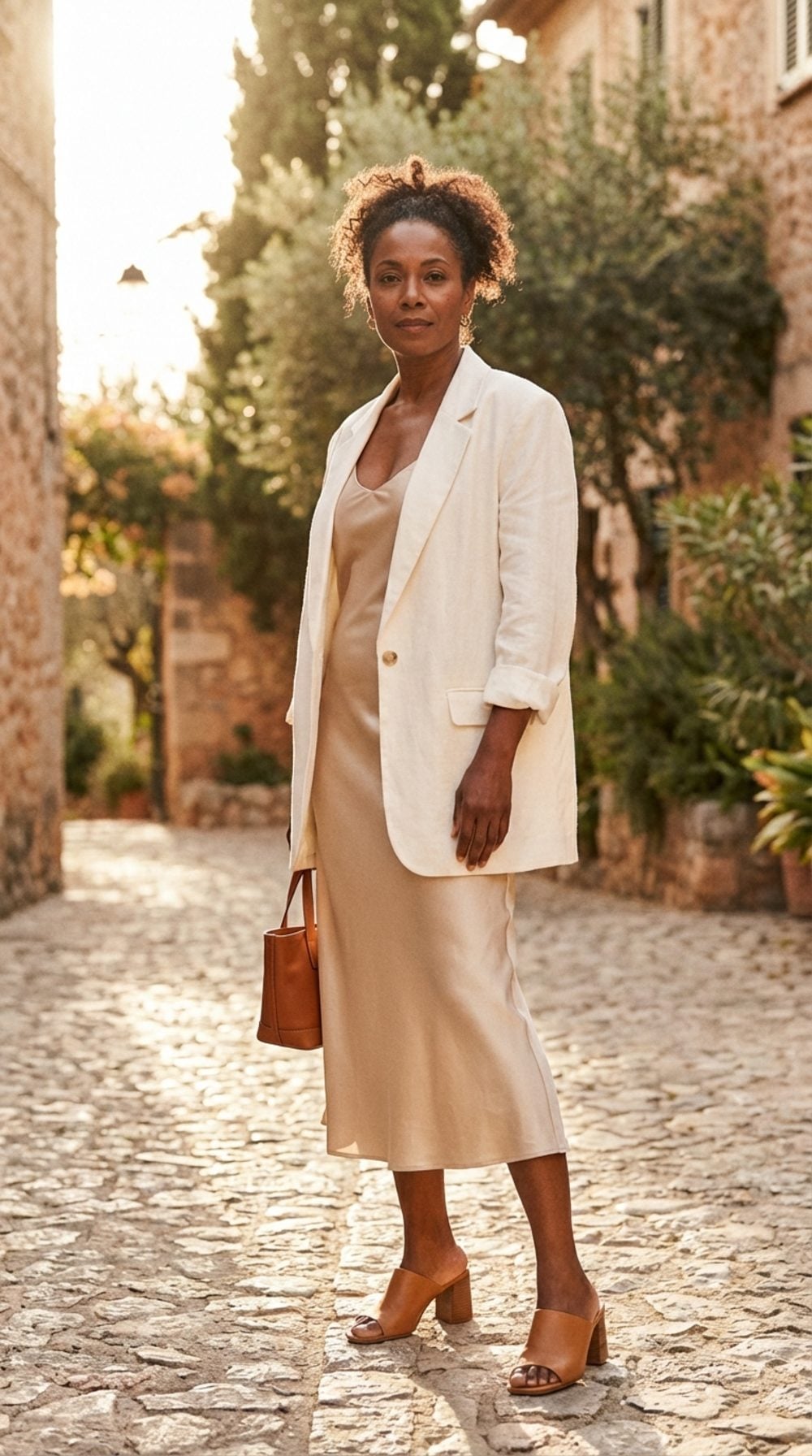
The oversized blazer is the most versatile slip dress layer in existence, and the mechanism behind why it works is purely structural. The slip dress, by design, has no architecture, it is fluid, body-skimming, surface-clinging. The blazer introduces sharp shoulders, a defined front opening, and rigid lapels. That contrast, soft fabric interrupted by hard geometry, is where all the visual interest lives.
For spring, reach for blazers in linen, lightweight wool crepe, or washed cotton. The fabric should have enough drape to avoid looking stiff against the slip’s softness. Two or more sizes up is the right proportion, the slip’s silhouette should still be readable beneath it, not buried.
Women who have spent decades understanding their own style will love this combination specifically because it communicates authority without trying. The slip is sensual, the blazer is controlled. The wearer mediates both, which reads as confidence rather than effort.
20. The Lightweight Trench Coat
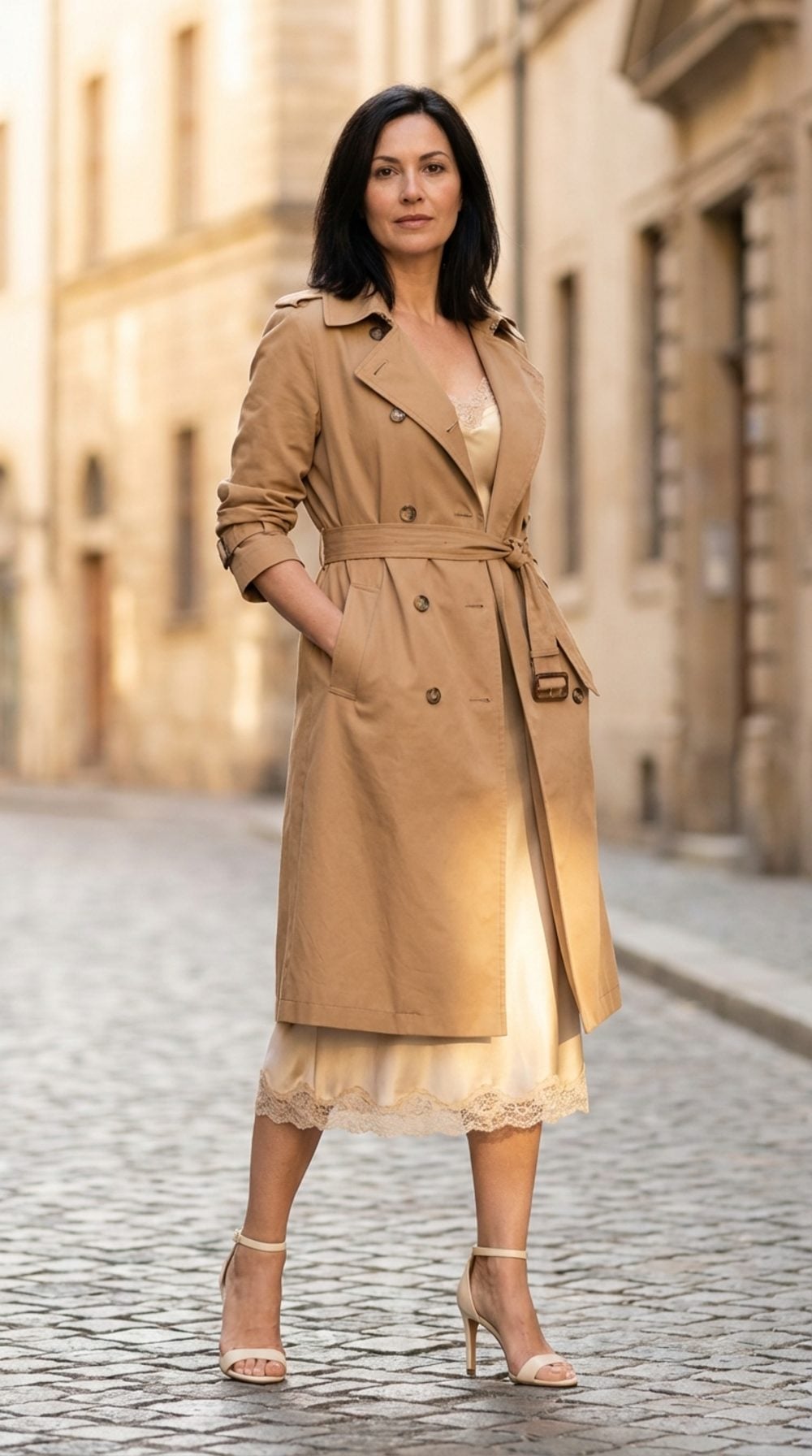
No other layer reads “I have figured myself out” quite like a well-cut trench over a slip dress. The contrast is the whole point: structured, belted tailoring against fluid satin or silk challis creates a visual tension that looks intentional rather than thrown together. Go for cotton or poly-blend versions in the classic sand or camel, though blush, sage, and even dusty lilac have all arrived as genuinely wearable spring alternatives.
The belt is everything here. Cinch it at the waist rather than letting it hang open and you transform the whole proportion. Midi slip lengths work brilliantly with knee-length trenches, while a shorter slip under a longer trench plays with hem layering in a way that feels current rather than confused. Women with broader shoulders can size up one in the shoulders and still achieve a clean silhouette by cinching the waist; those with a smaller frame do better in a petite cut to avoid overwhelm.
19. The Linen Blazer
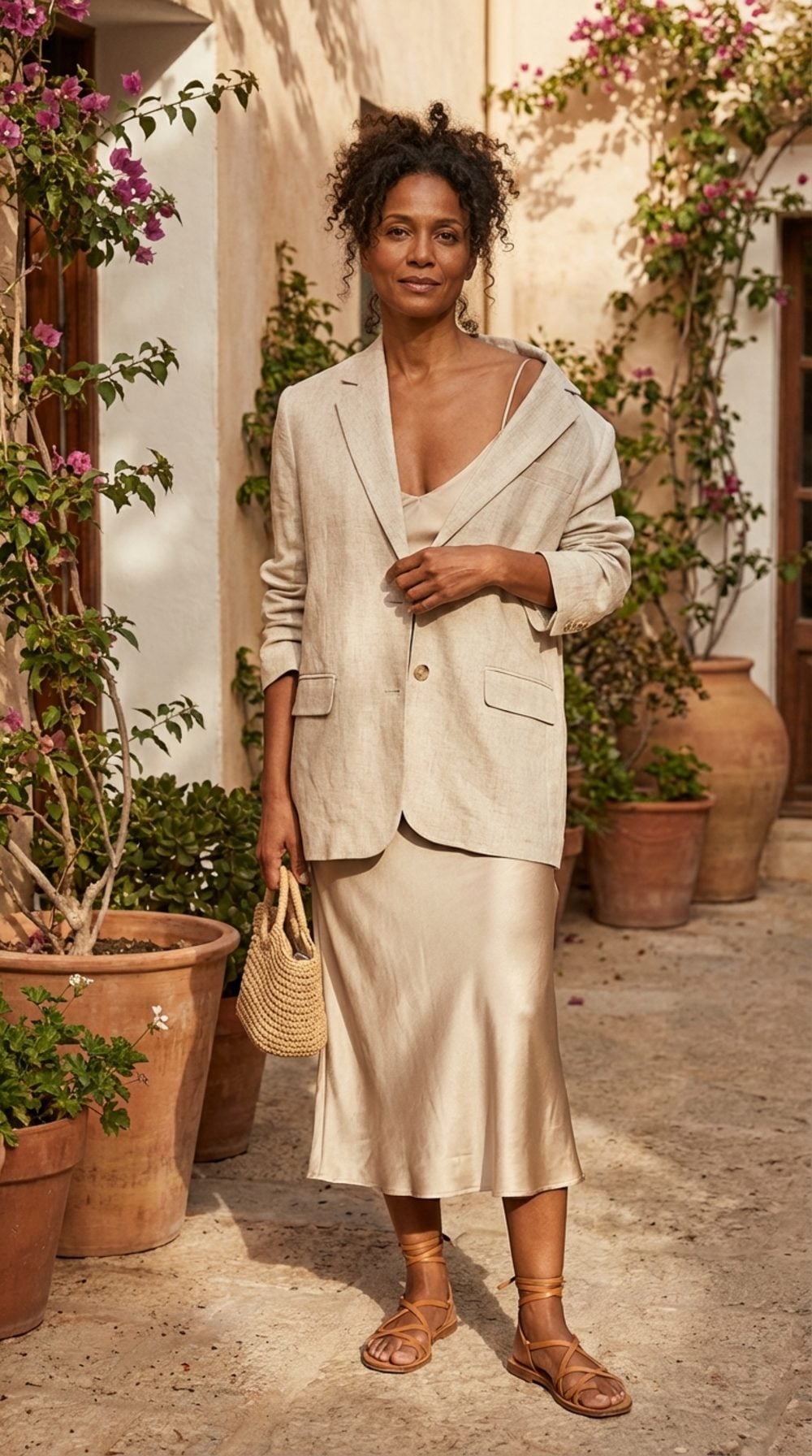
Linen blazers are a near-perfect partner for a slip dress because the fabrics exist on opposite ends of the tactile spectrum: one crisp and slightly textured, the other liquid and smooth. That contrast is visually rich without any extra effort. Reach for a relaxed, slightly oversized cut rather than a stiff structured one, the ease of a linen blazer shoulder that just grazes past your own reads as deliberate style, not a sizing mistake.
Color Pairings Worth Knowing
Ivory or oatmeal linen over a champagne slip reads as tonal dressing done right, luxurious and quietly considered. White linen over cobalt blue slip feels fresh and resort-ready. If you’re drawn to a pop of color, try terracotta linen over a cream or blush slip for a combination that photographs beautifully and works for both lunch and early evening.
18. The Cropped Leather Jacket
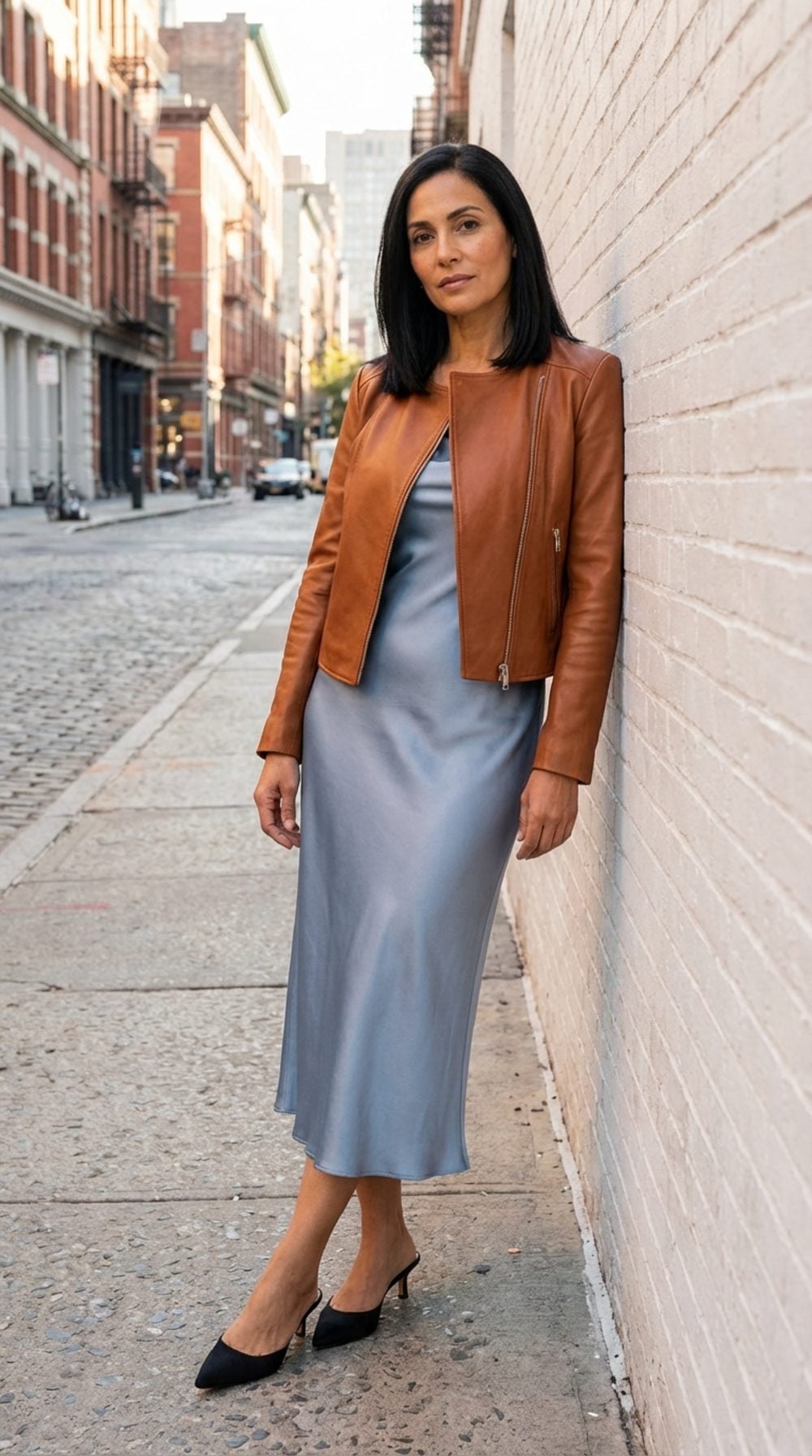
A slip dress under a cropped leather jacket is one of those combinations that has no business working as well as it does. The slip’s softness completely neutralizes the jacket’s edge, landing somewhere between tough and romantic that feels genuinely modern. For women 40+, this pairing signals that personal style hasn’t narrowed, it’s sharpened.
Fit is everything: the jacket should hit at or just above the natural waist, and ideally have enough stretch or ease across the back to layer comfortably without pulling. Black is classic, but cognac, cream, and deep burgundy all work beautifully against the cool, light colors that dominate spring slip dresses. Pair with kitten-heel mules or ankle boots rather than trainers to keep the overall register polished.
17. The Relaxed Cardigan
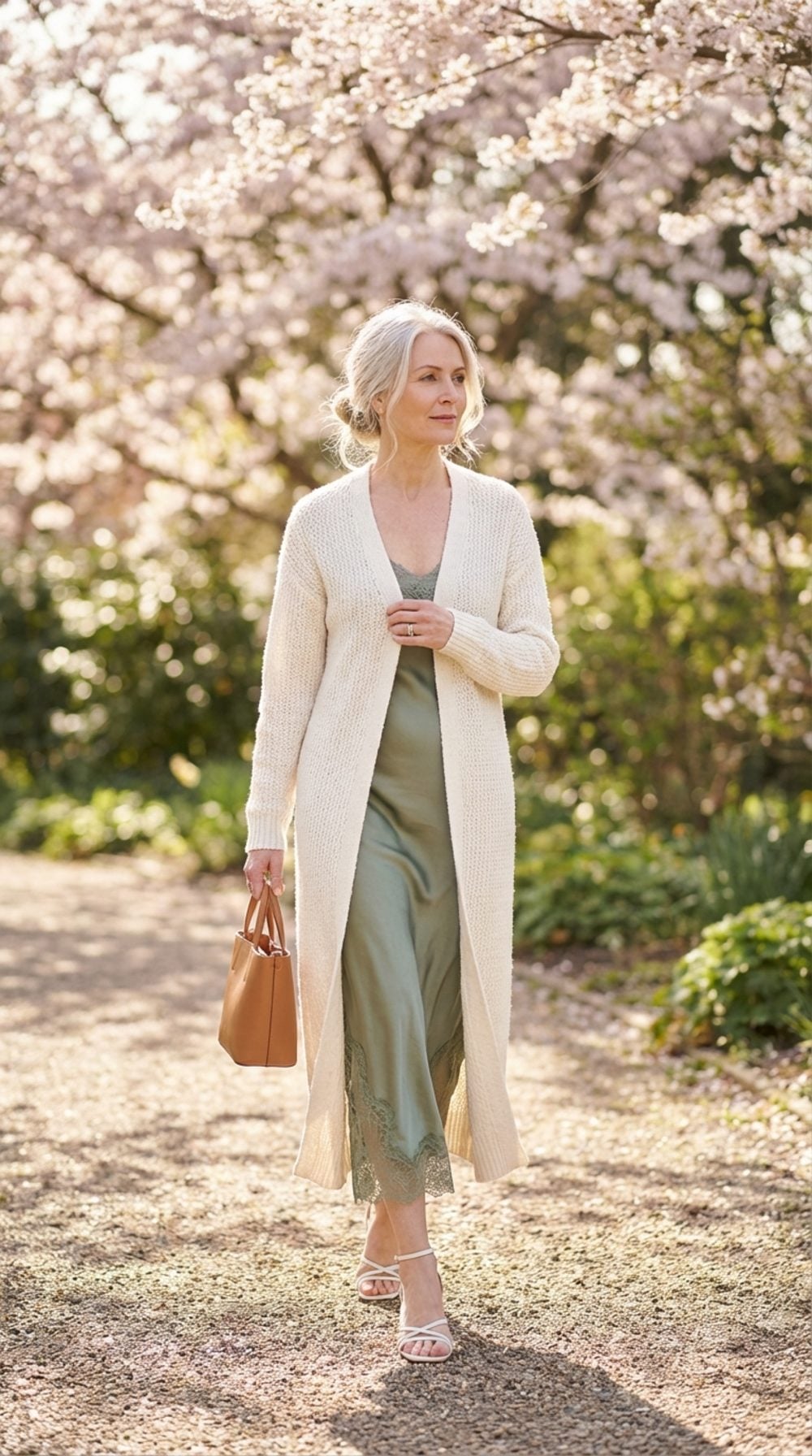
The cardigan is the most underrated of all slip dress layers, possibly because it requires the most thought. A too-small, boxy cardigan can break the dress’s fluid line awkwardly. But a long, open-front cardigan in a fine-gauge knit, or better yet, a duster-length version in cotton or silk-blend, gives the whole outfit a layered ease that other options can’t quite replicate.
Spring is the season for lighter weights: airy openwork knits, tissue-weight cashmere, or modal-cotton blends that don’t add bulk. Let it drape open rather than buttoning it up. The cardigan then acts almost like a soft coat, adding coverage without closing off the dress entirely. Especially flattering for women who want arm coverage without sleeve bulk.
16. The Cropped Denim Jacket
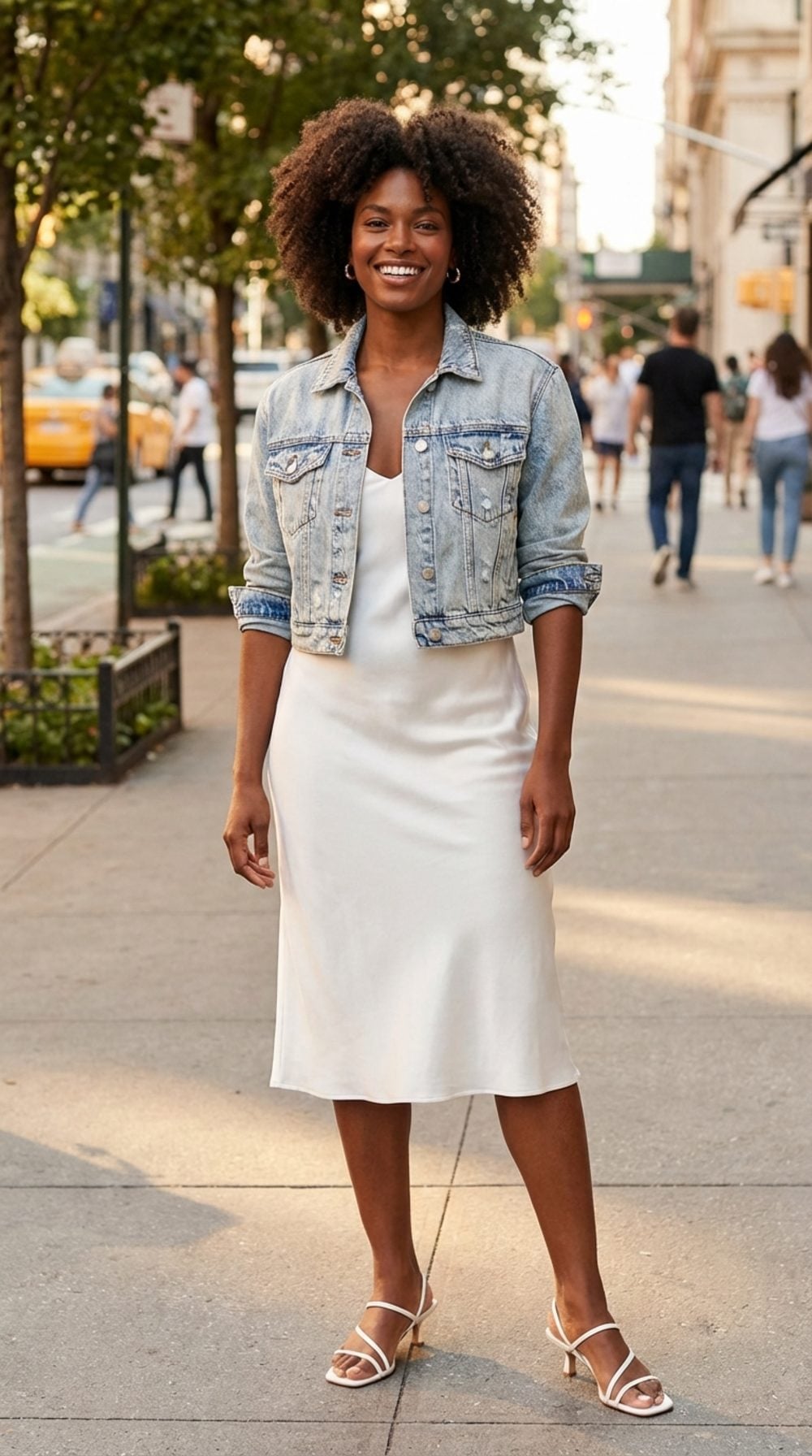
There is something endlessly reliable about denim against satin. The denim jacket’s visual weight anchors the floatiness of a slip dress without overpowering it, and the two textures together, rough and smooth, give an outfit a life that single-fabric looks rarely achieve. A light to medium wash works best for spring; reserve the dark indigo versions for transitional weather in autumn.
- Keep the jacket cropped and loose. A boxy fit that ends at the waist doesn’t compete with the dress’s length.
- Vintage-wash denim feels less stiff. The more worn-in the jacket, the more naturally it drapes over the slip’s delicate fabric.
- Distressing works. A little fading or wear at the collar actually adds character rather than looking sloppy over a dressier slip.
15. The Silk or Satin Kimono
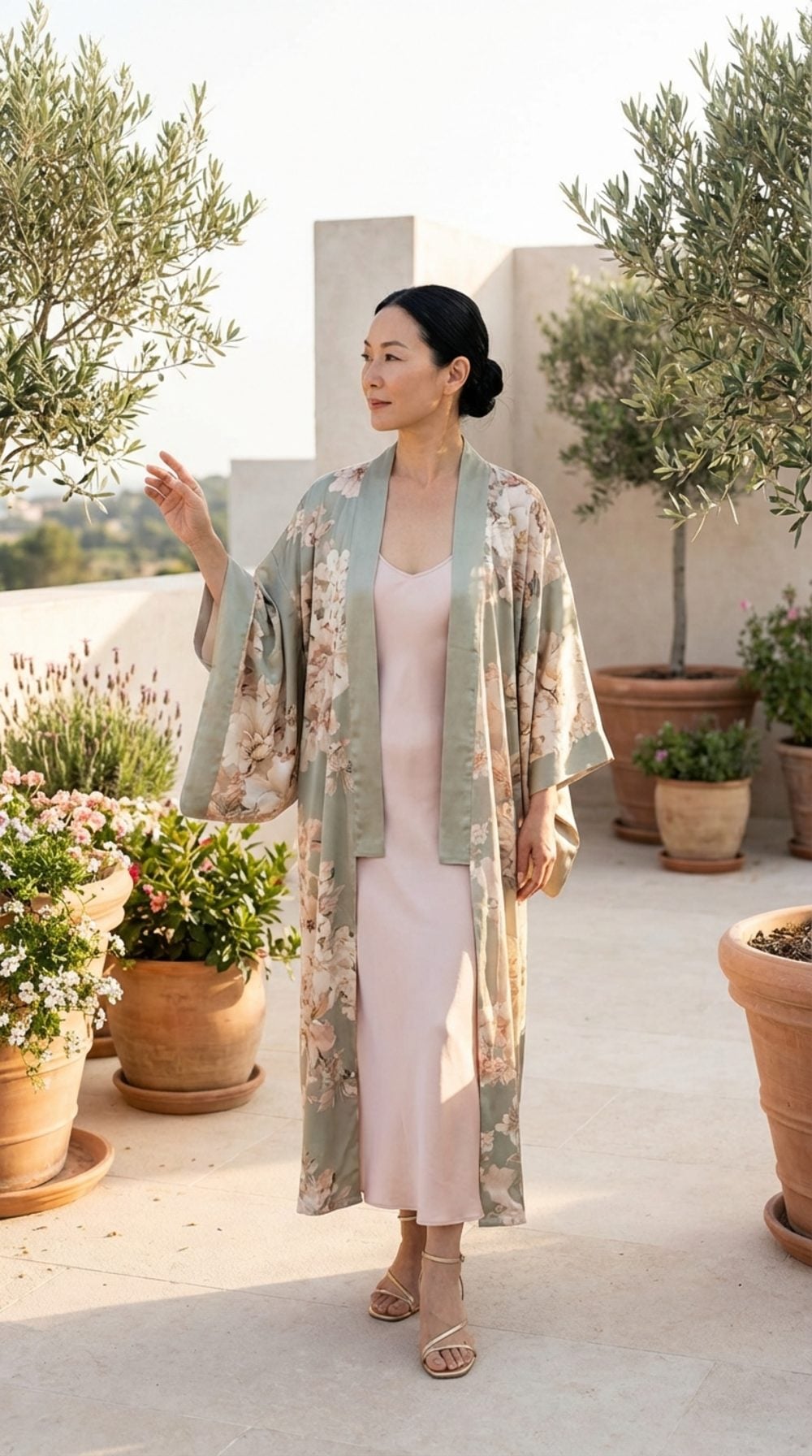
A kimono-style wrap worn over a slip dress is one of the clearest examples of fabric-on-fabric dressing done with intention. The two share a silky register, so the layering feels harmonious rather than haphazard. What separates this from looking like a bathrobe situation is specificity: choose a printed kimono over a solid slip, or a embroidered or jacquard-woven one in a coordinating tone.
Floral prints, botanical patterns, and abstract brushstroke designs all translate particularly well in the kimono format, and spring is their natural home. The draped, open-front structure suits almost every body type because it creates vertical movement rather than adding visual bulk. Women who find structured jackets restricting love this option for its ease of movement and the way the fabric catches and diffuses light.
“The kimono over a slip dress has one job: to make getting dressed feel like a ritual rather than a decision.”
14. The Tailored Short Blazer
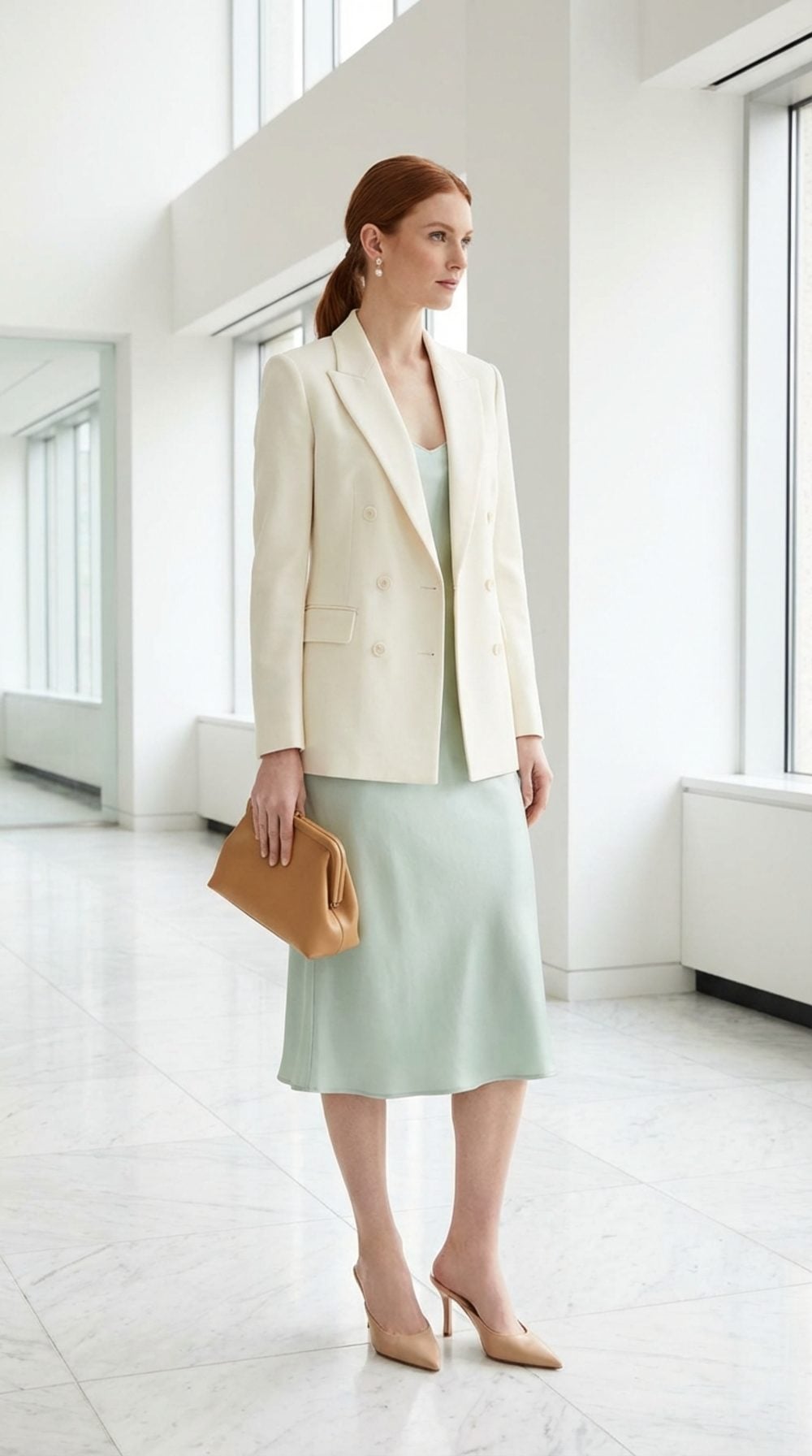
Precision is the selling point here. While the relaxed blazer reads as casual and the trench as classic, the tailored short blazer, fitted through the waist, structured in the shoulder, ending at or just below the hip, is the most polished of the spring layering options. It takes the slip dress somewhere professional and even boardroom-adjacent without stripping out the femininity.
Double-breasted versions in spring-weight wool crepe or ponte add formality. Single-breasted styles with minimal lapels feel cleaner and more modern. The slip dress hemline should extend noticeably below the blazer, at least four to five inches of dress hem should be visible for the silhouette to read correctly. Without that contrast, the look collapses into ambiguity.
13. The Longline Vest
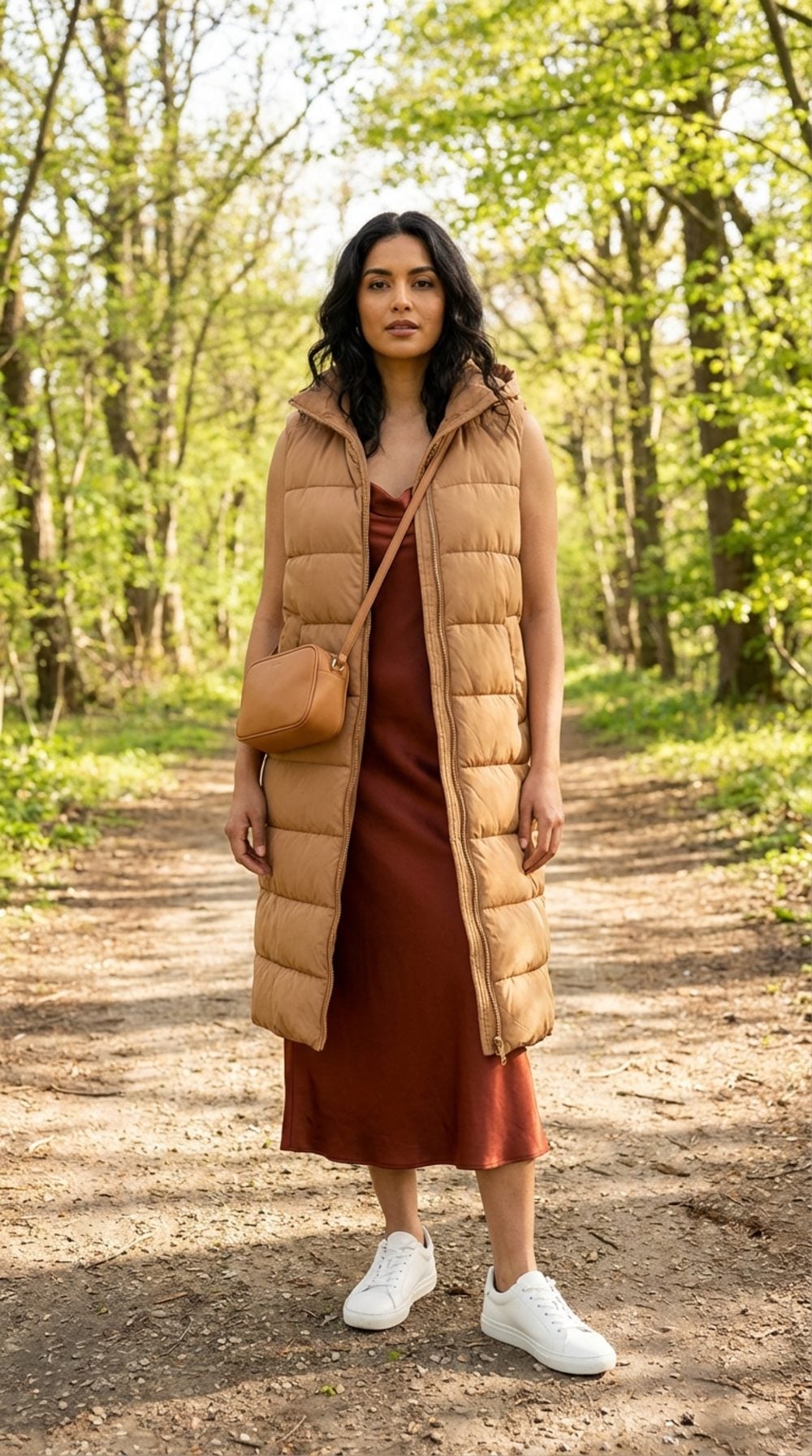
Sleeveless outerwear is having a real moment, and the longline vest over a slip dress is the version that earns its place in a wardrobe rather than just passing through a trend cycle. A padded version adds structure and warmth on cool spring evenings; an unpadded, oversized version in linen or heavy cotton reads more like a sophisticated layer than traditional outerwear.
The visual logic is straightforward: the vest adds coverage to the torso without hiding the arms, which keeps spring dressing airy and season-appropriate. Quilted puffer vests in neutral tones over a silk or satin slip feel wonderfully contemporary and are genuinely functional for the unpredictable temperatures that define early spring. Women who run warm particularly appreciate this option.
12. The Sheer Organza or Chiffon Jacket
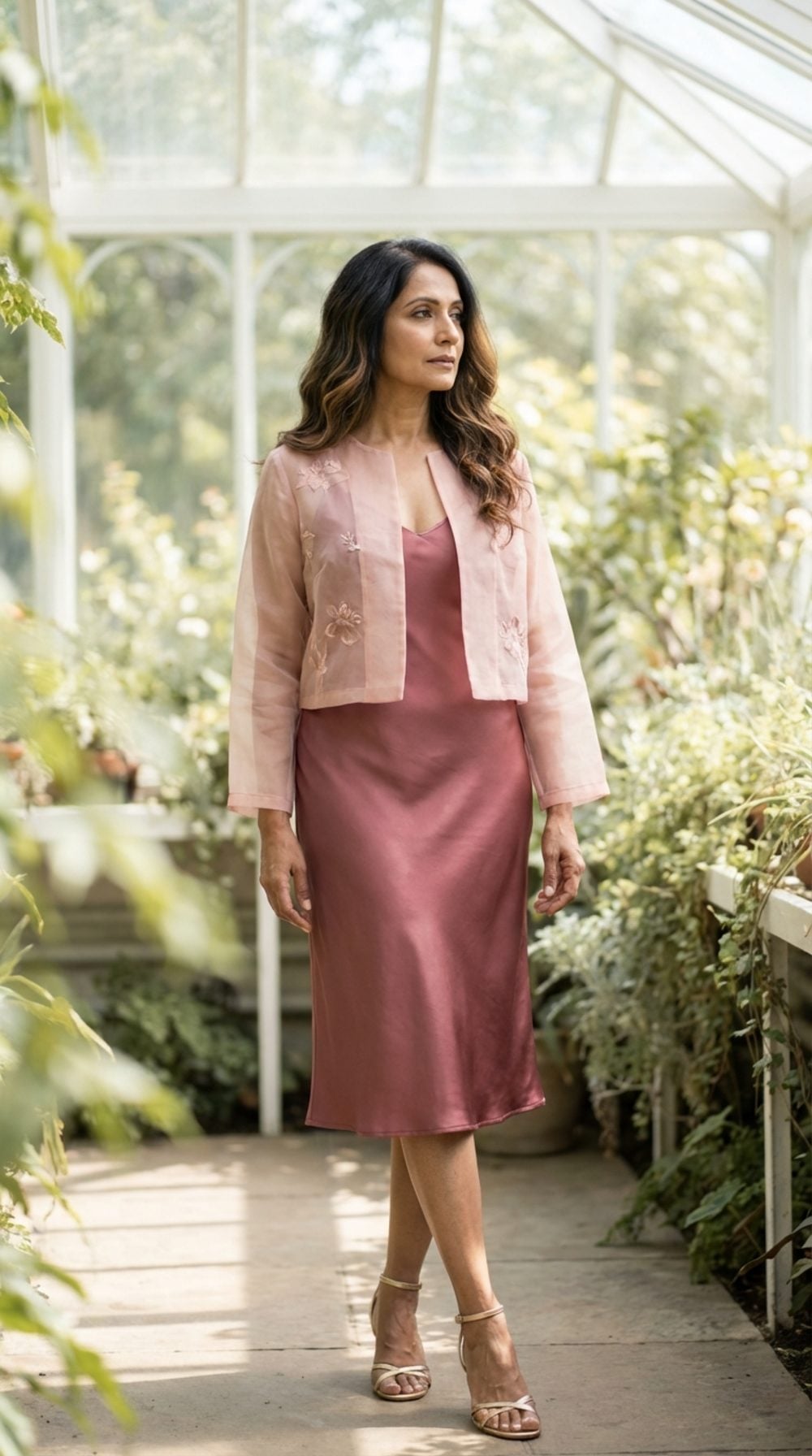
Fabric over fabric, light over light: the sheer jacket is the most unabashedly romantic option for layering a slip dress this spring.
Organza and chiffon jackets, whether boxy and cropped or sweeping to the hip, serve the same function as a kimono but with a lighter hand. They add presence without weight, a haze of color or texture without obscuring what’s underneath. An organza jacket in ivory over a white slip creates a tonal, almost bridal effect that works beautifully for garden events. A printed chiffon jacket in bold florals over a neutral slip gives the outfit focus and personality.
For women who feel exposed in a slip dress but don’t want the formality of a blazer or the warmth of a coat, this is the answer. The sheer layer signals thoughtful layering to any observer and provides just enough psychological coverage to feel polished rather than underdressed.
11. The Wrap Coat in Spring Weight
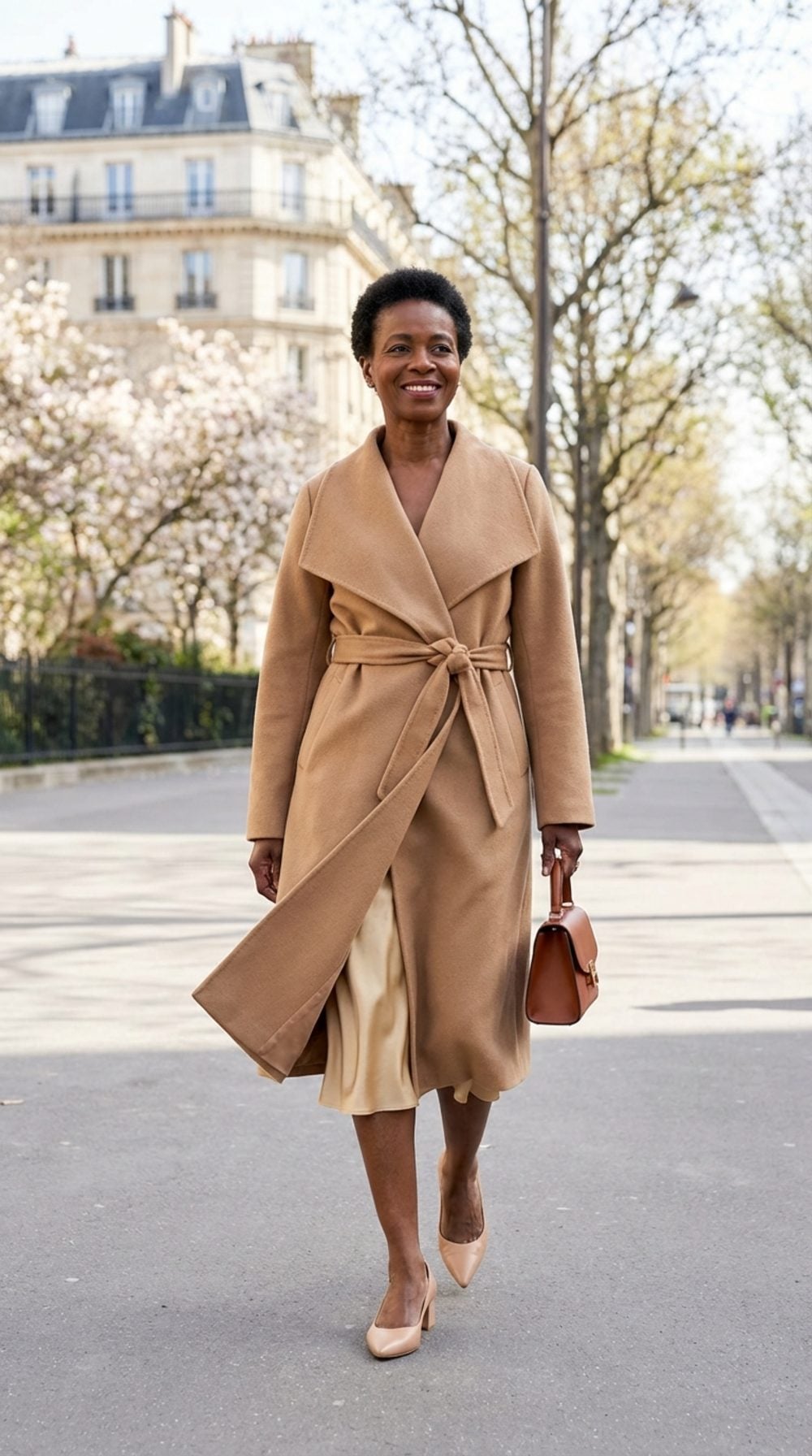
The wrap coat sits at the sophisticated end of the spring layering spectrum. Unlike its heavy wool winter counterpart, the spring version arrives in fluid fabrics: lightweight cashmere, brushed cotton, tropical-weight wool, or even a substantial viscose blend that drapes without bulk. It’s the layer that announces intent, that says this is an outfit rather than an assembly of pieces.
The wrap structure is inherently flattering because it’s adjustable. The V-neckline it creates draws the eye vertically, and the belted waist creates definition that a boxier coat eliminates. Slip dresses that fall in a similar fluid line as the coat create a unified, elongated silhouette from neck to hem. The most successful spring colorways are warm neutrals and dusty botanicals: camel, dune, moss, terracotta, and dusty rose all photograph beautifully.
10. The Bomber Jacket
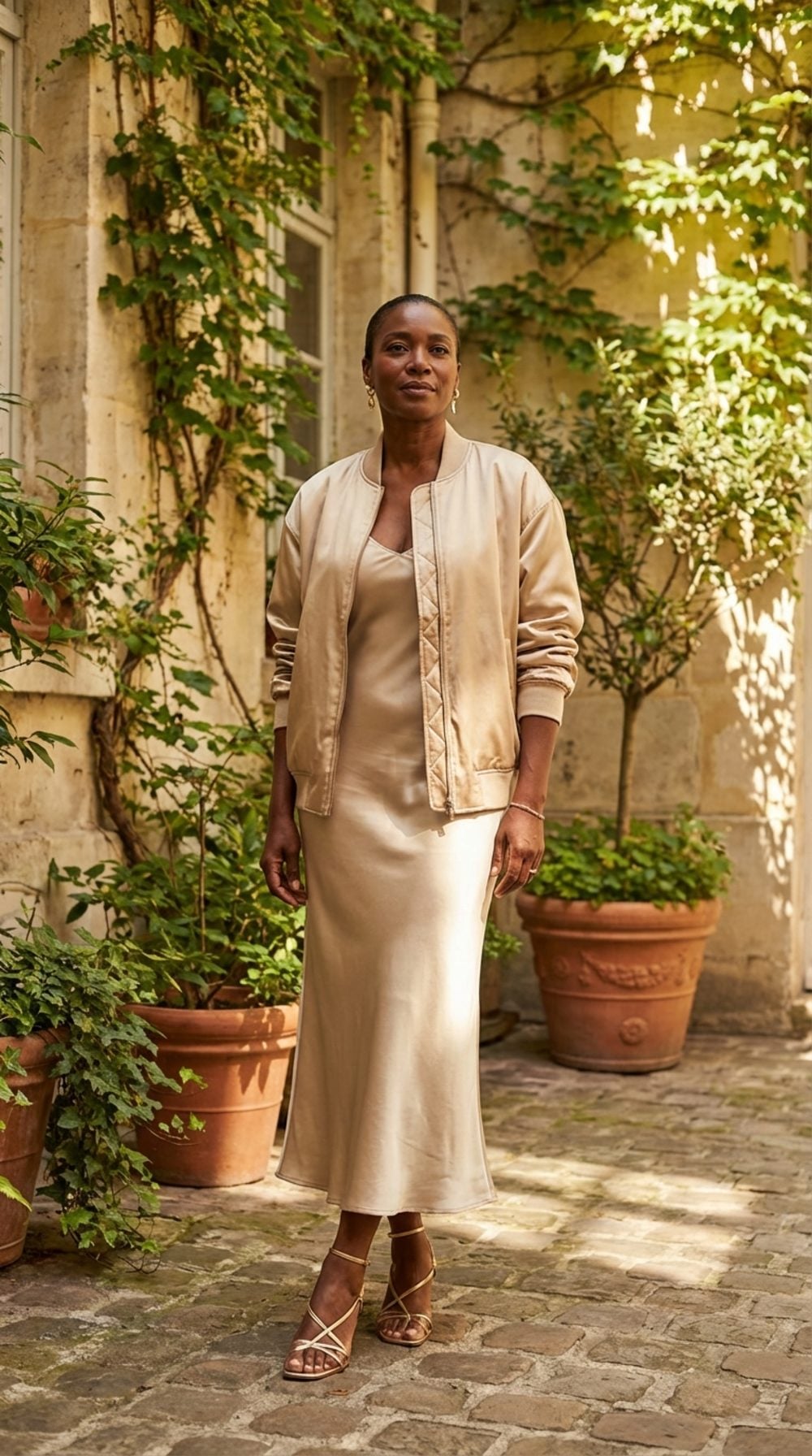
The tension between a bomber jacket’s athletic ancestry and a slip dress’s languid femininity is exactly what makes this combination work. Neither piece wins, they negotiate. For the most cohesive result, reach for a satin or silk-finish bomber rather than nylon, which keeps the fabrication in conversation with the dress underneath rather than pulling against it.
Tonal dressing, bomber and slip in the same champagne, blush, or ivory family, is the most sophisticated approach. It removes any question of clash and lets the texture contrast between matte-sheen ribbing and liquid satin do all the talking. Slip a pointed-toe mule underneath and the whole read shifts from sporty to intentional.
9. The Moto Jacket
❤️ Would you like to save this?
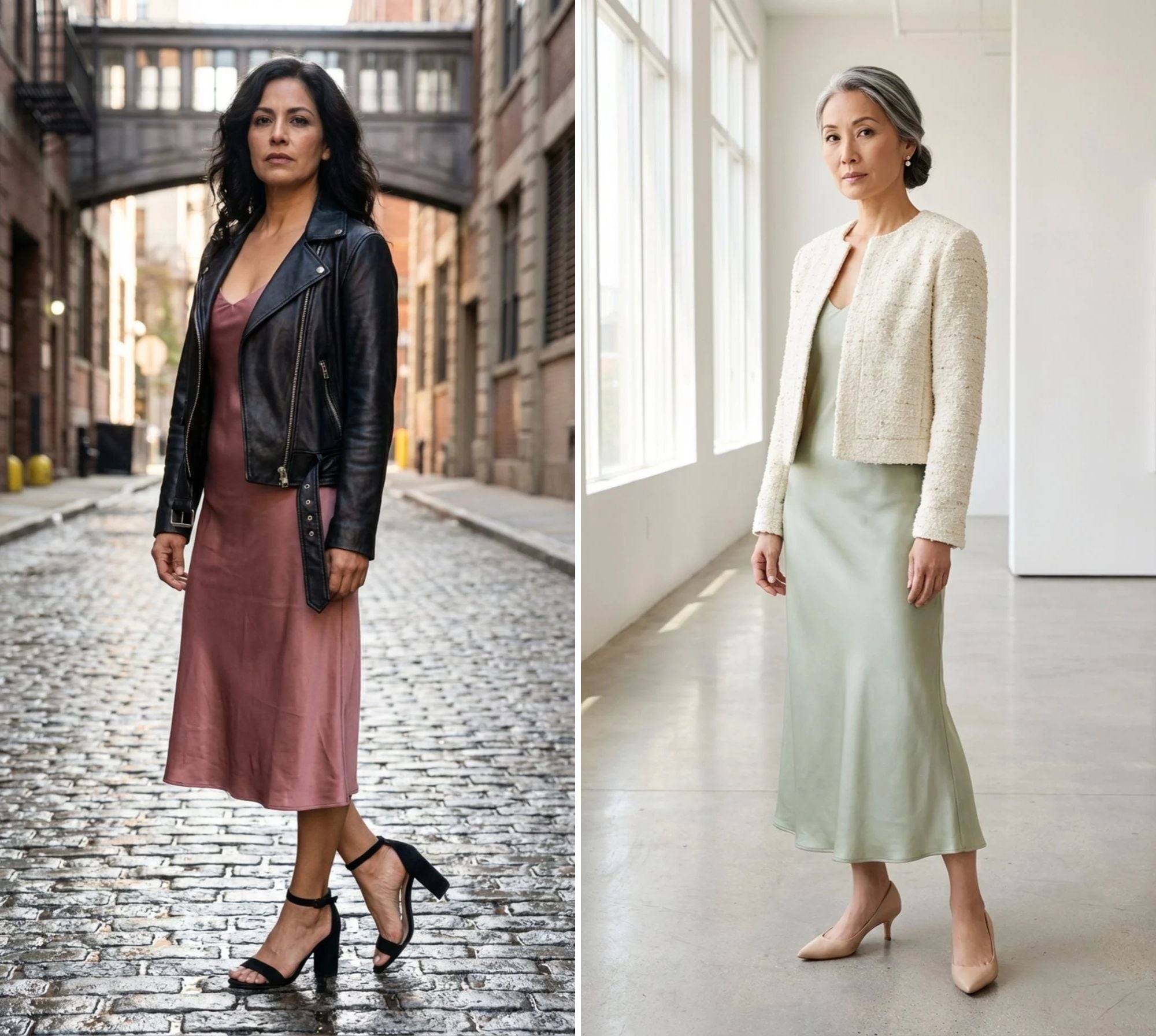
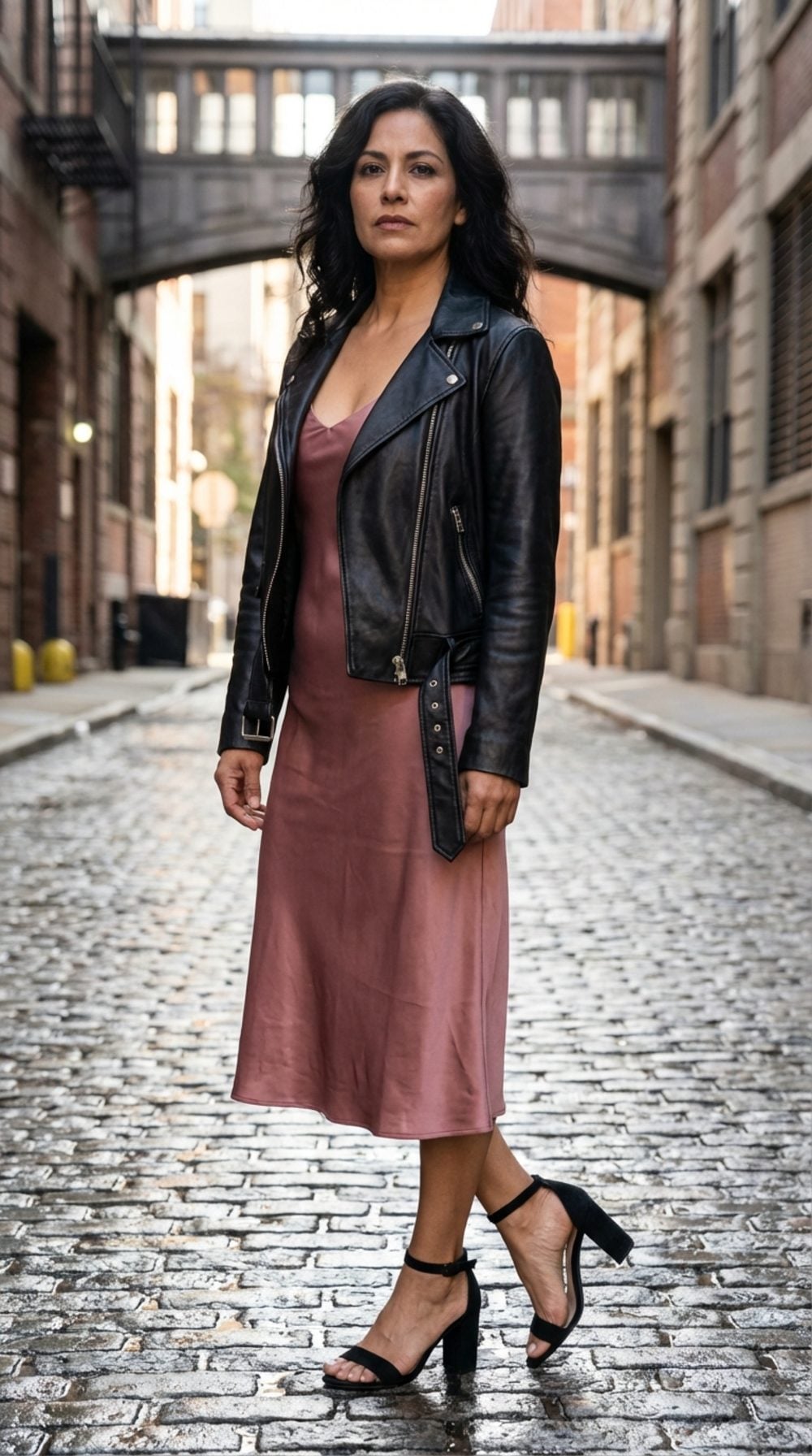
The moto jacket earns its place over a slip dress precisely because it does not try to be delicate. Where other layering pieces echo the slip’s softness, the moto jacket contradicts it, and that contradiction is the point. Panelled leather, asymmetric zippers, and structured seaming create a physical weight and formality that grounds a floaty slip without flattening the overall effect.
For spring, look for motos in soft, slightly worn-in leather rather than stiff patent, or consider a faux leather option in a blush, caramel, or cognac tone that softens the typically dark palette. The hardware still reads sharp; the color brings warmth. Wear it fully zipped for an intentional, editorial look, or leave it open and let the slip’s neckline take over.
8. The Bouclé Jacket
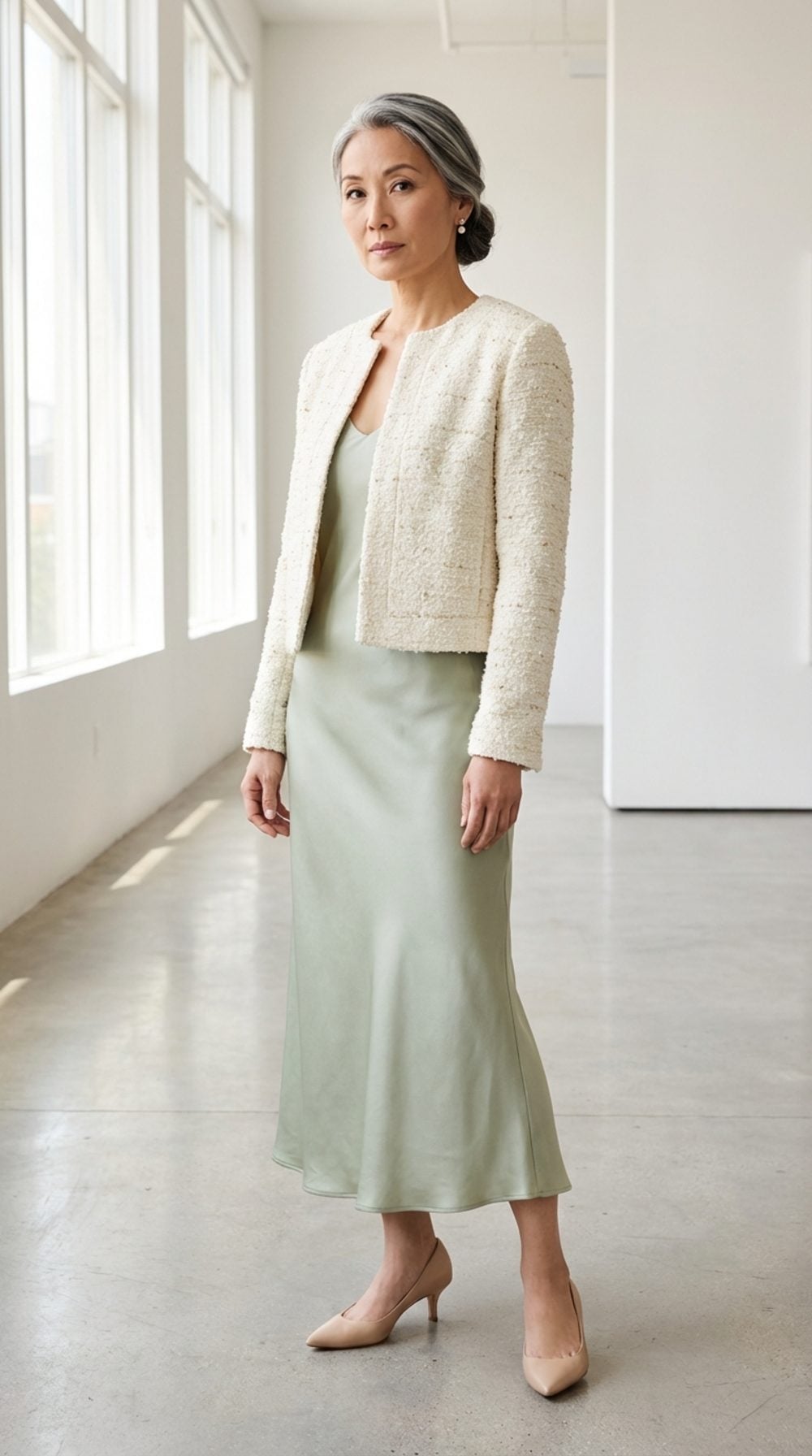
Liquid satin against loopy, nubby bouclé is one of those fabric pairings that looks like it was designed by a textile scientist with an eye for theater. The rough-smooth contrast photographs at an extraordinary level of detail, which is part of why this combination recurs season after season on European runways.
Collarless and cropped is the only prescription here. A lapel competes with the slip’s neckline; a hip-length hem loses the proportion. Keep the jacket finishing at or just above the natural waist, and let the slip’s skirt portion fall freely below. In spring, choose bouclé in white, cream, pale camel, or soft dusty pink for a palette that reads both fresh and expensive.
7. The Shacket (Shirt Jacket)
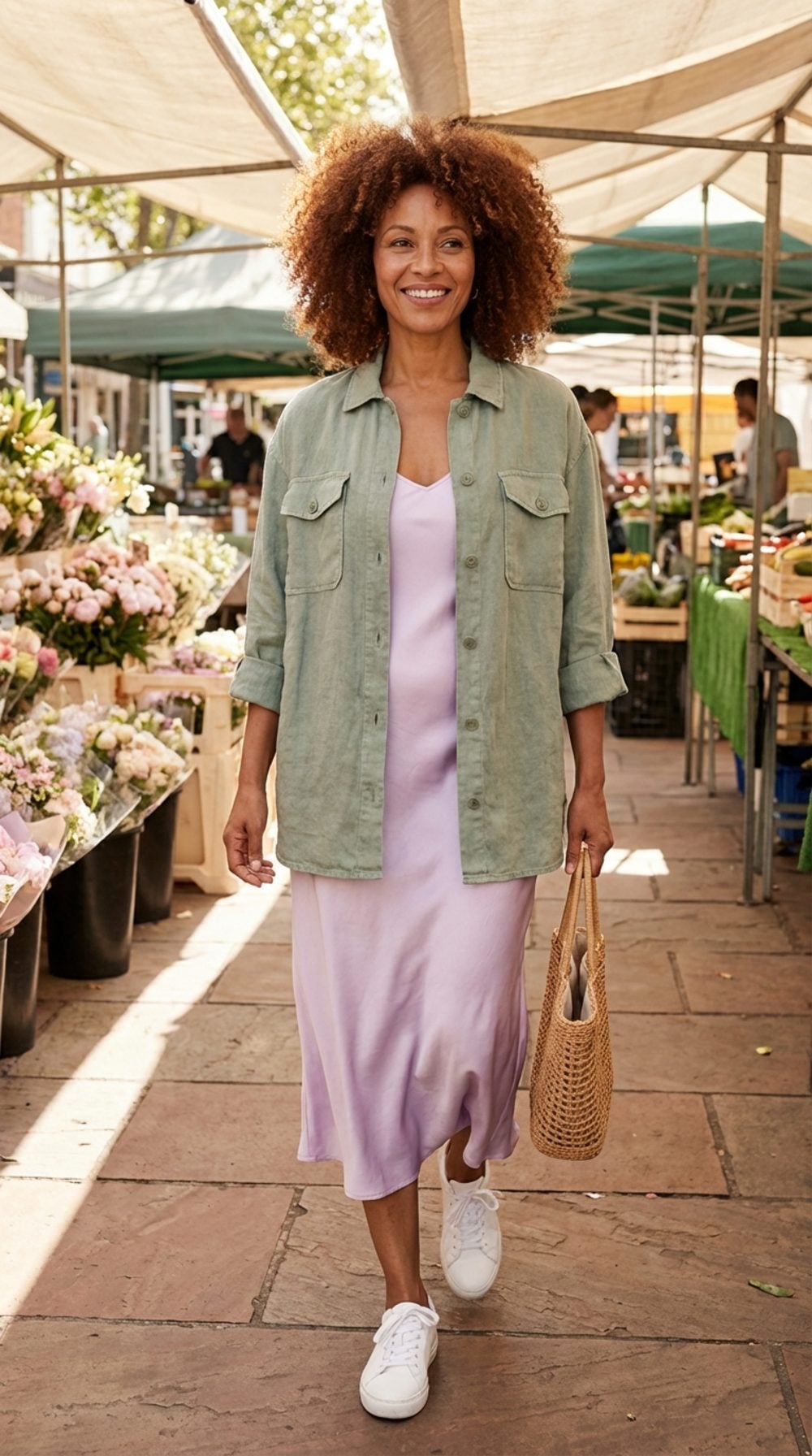
Worn open, the shacket doesn’t compete with the slip dress, it frames it. That distinction matters. The slip remains the outfit’s visual center while the shirt jacket adds texture and practicality without any formality cost. Linen shackets work particularly well in spring because the fabric breathes and the natural crinkle texture adds casual character that softer materials can’t replicate.
- Keep it open: Buttoning a shacket over a slip turns it into a top-and-skirt situation. The layered slip-beneath-open-shirt logic is what makes it feel relaxed rather than mismatched.
- Size up slightly: An oversized shacket adds the right amount of volume over the slip’s body-skimming silhouette without swamping it.
- Match the mood with footwear: Sneakers or flat sandals keep the register casual; a kitten heel mule shifts it toward smart-casual without changing anything above the ankle.
The slip dress has never really gone anywhere. It has stayed in rotation for decades because the silhouette is simple and the fabric moves well. What changes is how women choose to wear it once the temperature drops or the occasion calls for something more layered.
Outerwear is where the look either comes together or falls apart. A heavy coat can overwhelm the delicate cut of a slip dress. The wrong length, fabric, or structure can make the whole outfit feel mismatched rather than intentional.
This guide covers the types of outerwear that actually work with a slip dress, including options for different seasons, body types, and occasions. Women over 40 tend to have a clear sense of what they want from their wardrobe, and that practicality is built into every suggestion here. The goal is a look that reads as polished without sacrificing comfort.
6. Bomber Jacket Over Slip Dress: Why the Contrast Works

She layers a cream bomber jacket with navy ribbed collar, cuffs, and hem trim over a pale mint slip dress, the V-neckline just visible at the open zip. The jacket’s lightweight shell fabric and relaxed fit sit comfortably against the fluid drape of the dress beneath it. Carrying a canvas tote, she moves through a farmers market with her silver-grey hair swept loosely back. The pairing works because the structured knit ribbing of the bomber gives the slip dress’s bias-cut softness something to push against.
5. Wool Coat Over Slip Dress: How Warm Tones Do the Work

Draped in a camel-toned wool coat with a relaxed double-breasted front and wide lapels, the figure here layers over a sage green slip dress cut with a V-neckline and a smocked elastic waist. The coat’s fabric reads mid-weight, structured at the shoulder but loose through the body, which keeps the silhouette from feeling stiff. A cream leather crossbody bag with fringe detail hangs at the hip, and a small gold pendant necklace sits at the collarbone. Red-copper hair in soft waves picks up the rust undertone in the coat fabric. The olive and terracotta pairing holds together because neither color competes for dominance.
4. Oversized Cardigan Over Slip Dress: Letting Texture Lead

Worn over a sage-green slip dress with a V-neckline and fluid midi length, the oatmeal chunky-knit cardigan hits at the ankle, matching the dress hem almost exactly. That length alignment is doing real work here, creating one unbroken vertical line instead of chopping the silhouette at the waist or hip. The cardigan’s loose, open front and blouson sleeves add volume without bulk. Nude mule flats and a canvas tote in the same warm neutral keep the palette tight. A gold pendant necklace sits at collarbone length, the only metallic note in an otherwise matte outfit.
3. Crochet Cardigan Over Slip Dress: When Open Knit Earns Its Place
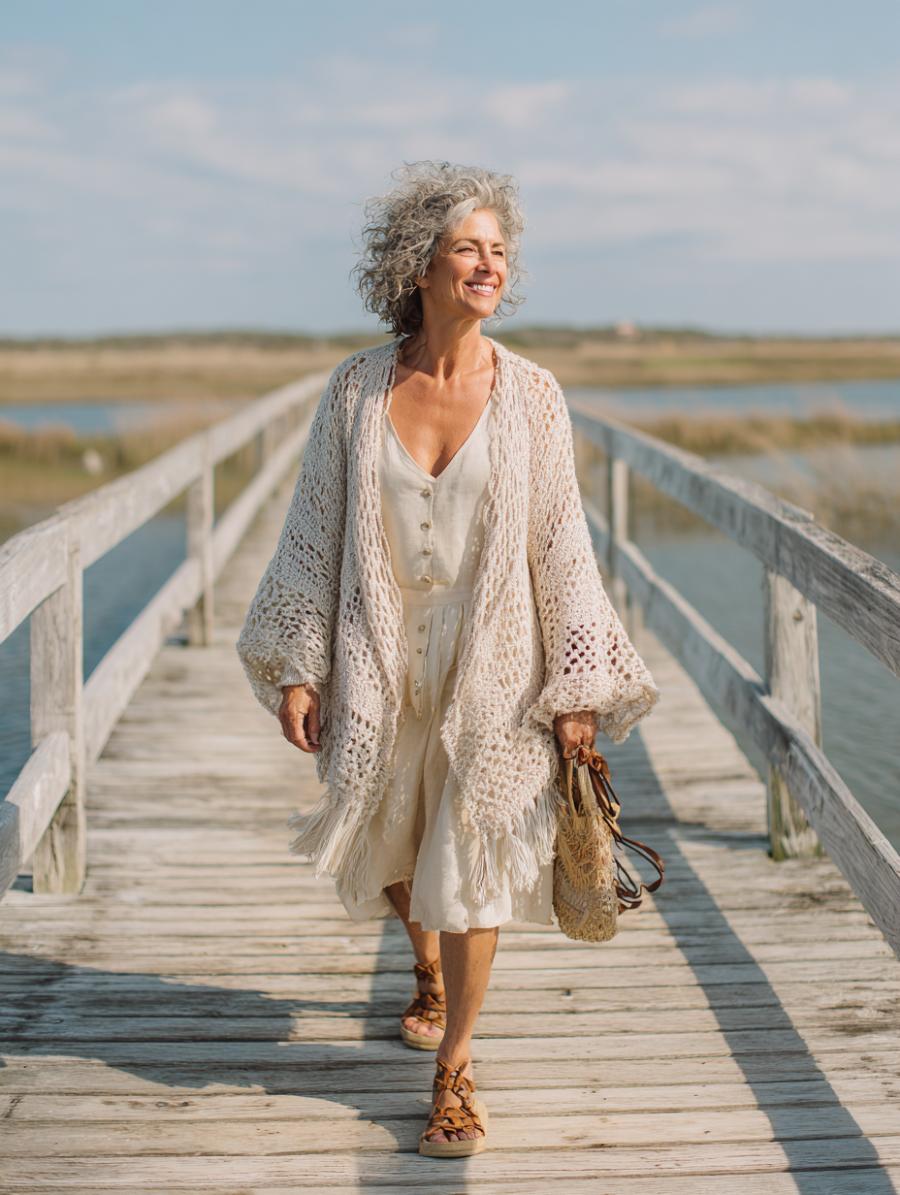
An open-weave crochet cardigan in ivory does something a solid layer cannot: it adds visual weight without blocking the slip dress beneath. The cardigan’s oversized silhouette, wide sleeves, and fringe hem pull the eye downward, giving the midi-length cream button-front slip a longer, more fluid line. The fringe sits at roughly knee level, moving independently from the dress as the wearer walks.
Texture contrast is doing the structural work here. The loose, chunky knit of the cardigan reads rough against the smooth, lightweight fabric of the slip. That friction between surfaces is what keeps the all-neutral palette from flattening out.
Brown leather gladiator sandals with lace-up ankle straps ground the look with a hint of warmth. A woven market bag in natural straw with leather handles reinforces the coastal setting without forcing the point. Silver-grey curly hair worn loose adds volume that balances the cardigan’s wide shoulder span.
2. Blazer Over Slip Dress: How Blush Builds a Case for Itself
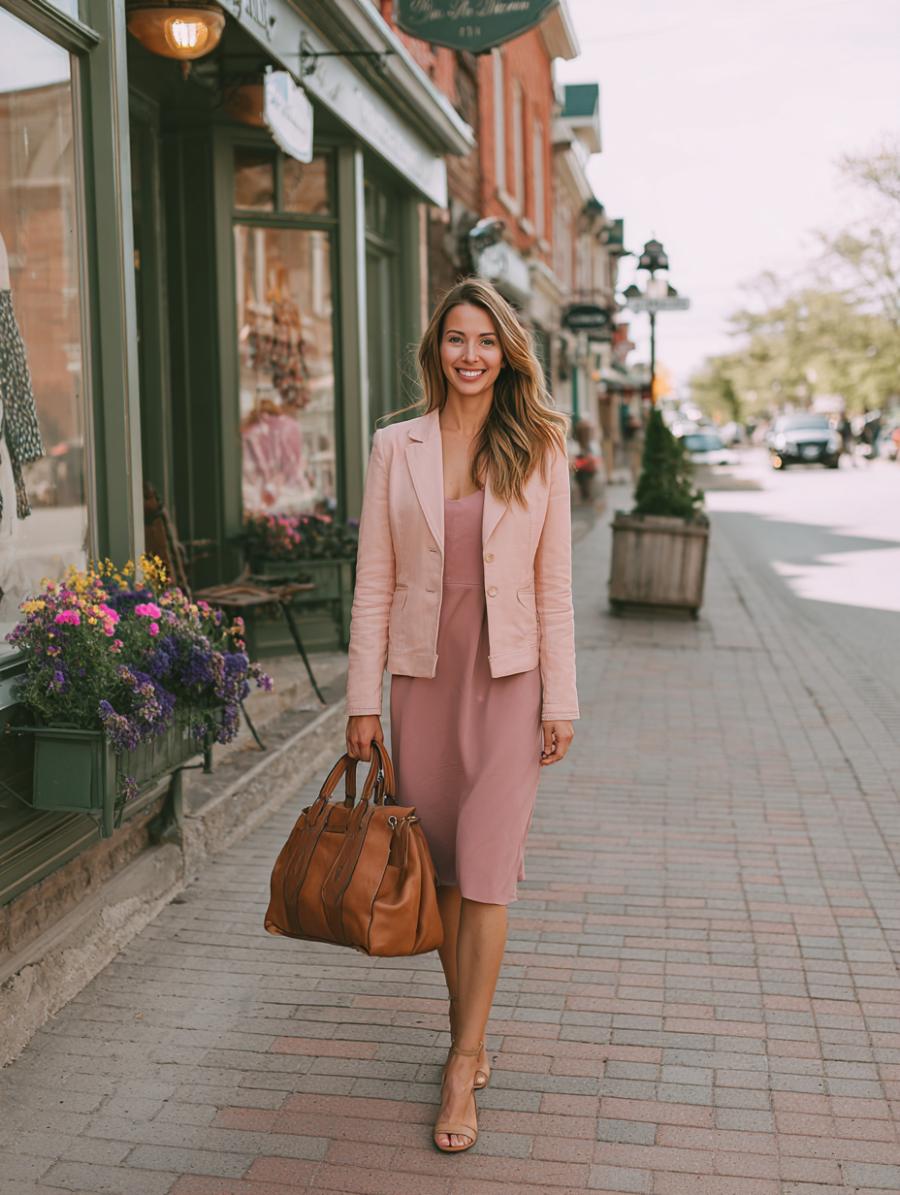
Pairing a light pink blazer over a dusty rose midi slip dress works because both pieces share the same tonal family without being identical. The blazer reads structured — notched lapels, two-button closure, fitted shoulders — while the slip dress underneath stays fluid with a simple square neckline and knee-grazing hem. A tan leather tote with buckle hardware and double handles grounds the palette without pulling attention. Nude block-heeled sandals keep the proportions honest. No jewelry. No scarf. The restraint is deliberate.
Wardrobe Math: A blazer in a lighter shade of the same color family as the dress is called a tonal stack, and it reads more polished than a contrast layer without requiring any color-matching precision. For women 40+ who want to wear color without committing to a bold statement, this approach keeps the look intentional. Dusty rose and blush sit close enough on the spectrum that they read as one cohesive decision.
1. Chunky Knit Over Slip Dress: How Neutral Builds on Neutral

Oversized ribbed knitwear in camel sits over a blush midi slip, and the proportion does most of the work here. The sweater’s dropped shoulders and relaxed body keep the silhouette from reading stiff, while the slip’s fluid hem adds length without weight. Brown leather loafers with a thin strap detail ground the palette at the ankle. Statement clip earrings in what appears to be an off-white resin add contrast against the dark hair without pulling focus from the layering. The marble cafe table and cobblestone setting confirm the setting as Paris, but the outfit holds up without location doing any favors. Tonal dressing in the caramel-to-blush range works because each piece shares enough warmth to read as deliberate rather than accidental.