❤️ Would you like to save this?
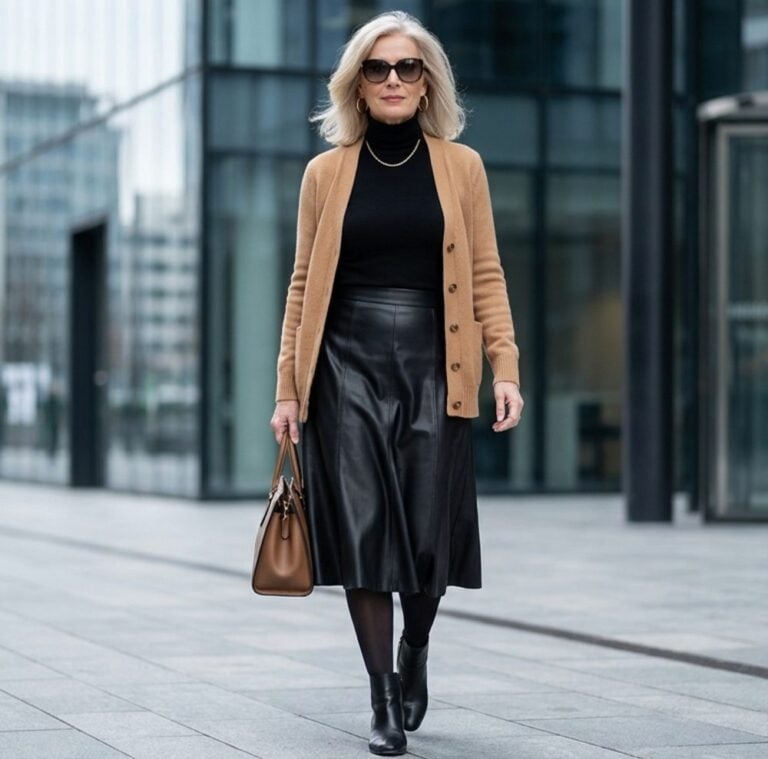
There’s a woman you know. She walks into every room looking completely, quietly herself. Her clothes fit. Her choices feel intentional. She never mentions a sale, never shows up in something that still has the tags on, never looks like she’s trying too hard. And here’s the part that will rearrange something in your brain: she probably owns far less than you do.
Most of us were sold the idea that more options equal more freedom, more style, more confidence. Psychologists, neuroscientists, and fashion researchers are now saying the opposite is true. Your closet might be working against you in ways you haven’t even noticed yet. The evidence is quietly fascinating.
FYI, thanks to AI imagery software, we’re able to create very specific fashion and hairstyle examples to illustrate the points being made. In some cases, imagery is exaggerated to hammer home the point. Also, assume links that take you off the site are affiliate links such as links to Amazon. this means we may earn a commission if you buy something.
The Wardrobe Paradox That Neuroscientists Can’t Stop Talking About
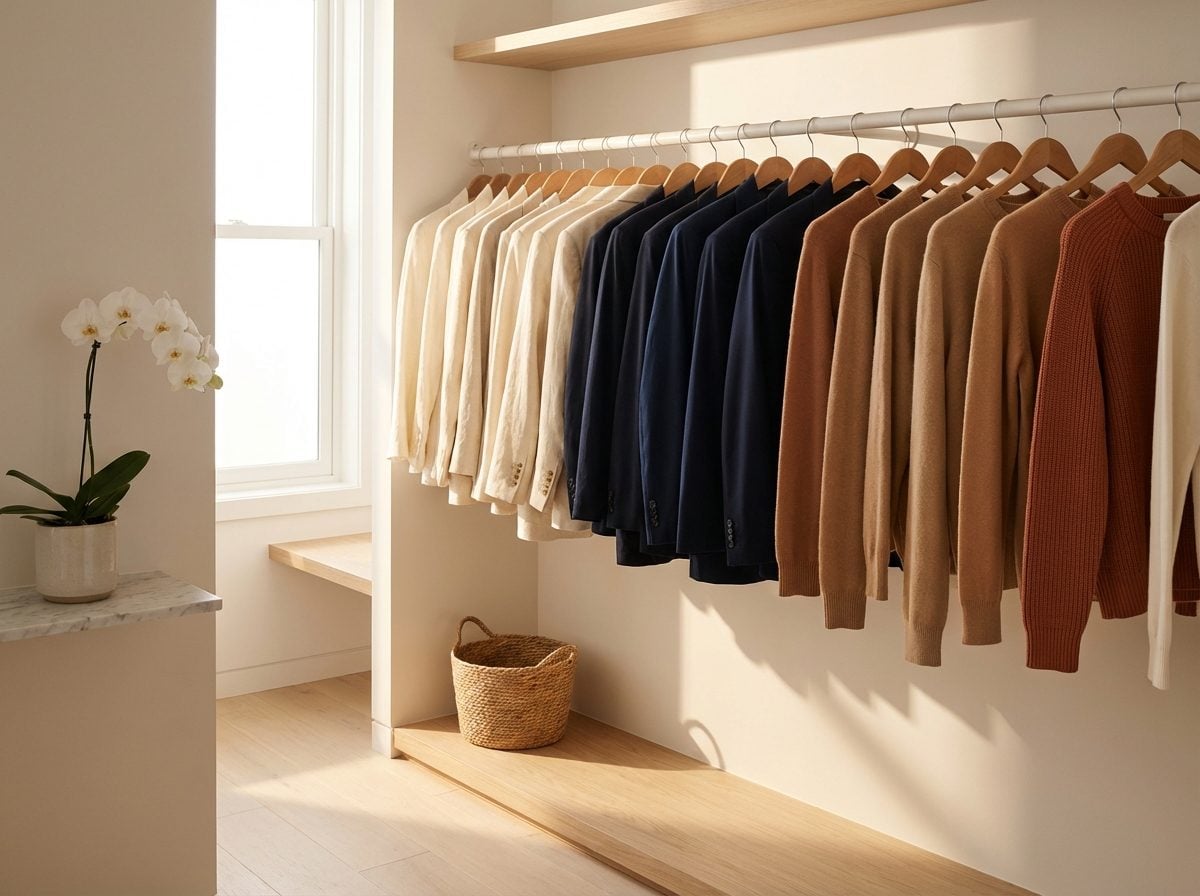
There’s a strange reversal at work in the closets of the most polished women you know. More clothing, more confusion. Fewer pieces, more clarity. It sounds like a riddle, until you look at what neuroscience has quietly been documenting for years.
The brain processes your visual environment constantly, even when you’re not consciously registering it. Research on visual clutter and cognitive load shows that when our eyes take in a chaotic scene, the brain’s visual cortex works overtime, filtering competing stimuli and taxing working memory. Princeton University’s Professor Sabine Kastner found that visual clutter actively “competes with our brain’s ability to pay attention and tires out our cognitive functions over time.” Your overcrowded rail of unworn blazers? That’s not just a storage problem. It’s a neurological one.
What nobody tells you is that the women who consistently look pulled together haven’t necessarily cracked some complex styling code. They may have simply removed the noise. But why does subtraction produce such a confident result? The paradox runs deeper than tidiness, and the answer isn’t what most people expect.
Why the Woman Who Owns 40 Pieces Feels More Free Than the Woman Who Owns 400

Freedom, counterintuitively, shrinks as options multiply. Psychologist Barry Schwartz spent years making this exact case, and it holds up remarkably well when applied to wardrobes. In his landmark book The Paradox of Choice: Why More Is Less, Schwartz argues that an abundance of choices doesn’t liberate us. It paralyzes us. It generates anxiety. And critically, it produces dissatisfaction with whatever we ultimately pick, because the alternatives never fully disappear from our minds.
A woman standing in front of forty considered pieces she genuinely loves faces an entirely different psychological experience than the woman confronting four hundred. The first chooses quickly, dresses with conviction, and moves on. The second deliberates, second-guesses, settles, and often carries a faint background hum of regret through her whole day. Schwartz calls this the maximizer trap: the compulsive need to consider every option to find the “best” one. Maximizers, his research shows, consistently report lower happiness than satisficers, people who identify what meets their standards and stop searching.
There’s something quietly radical about a wardrobe built on satisfaction rather than on inventory. But the psychological freedom that produces? That’s only part of the picture.
The Hidden Stress Response Triggered Every Time You Open a Crowded Closet
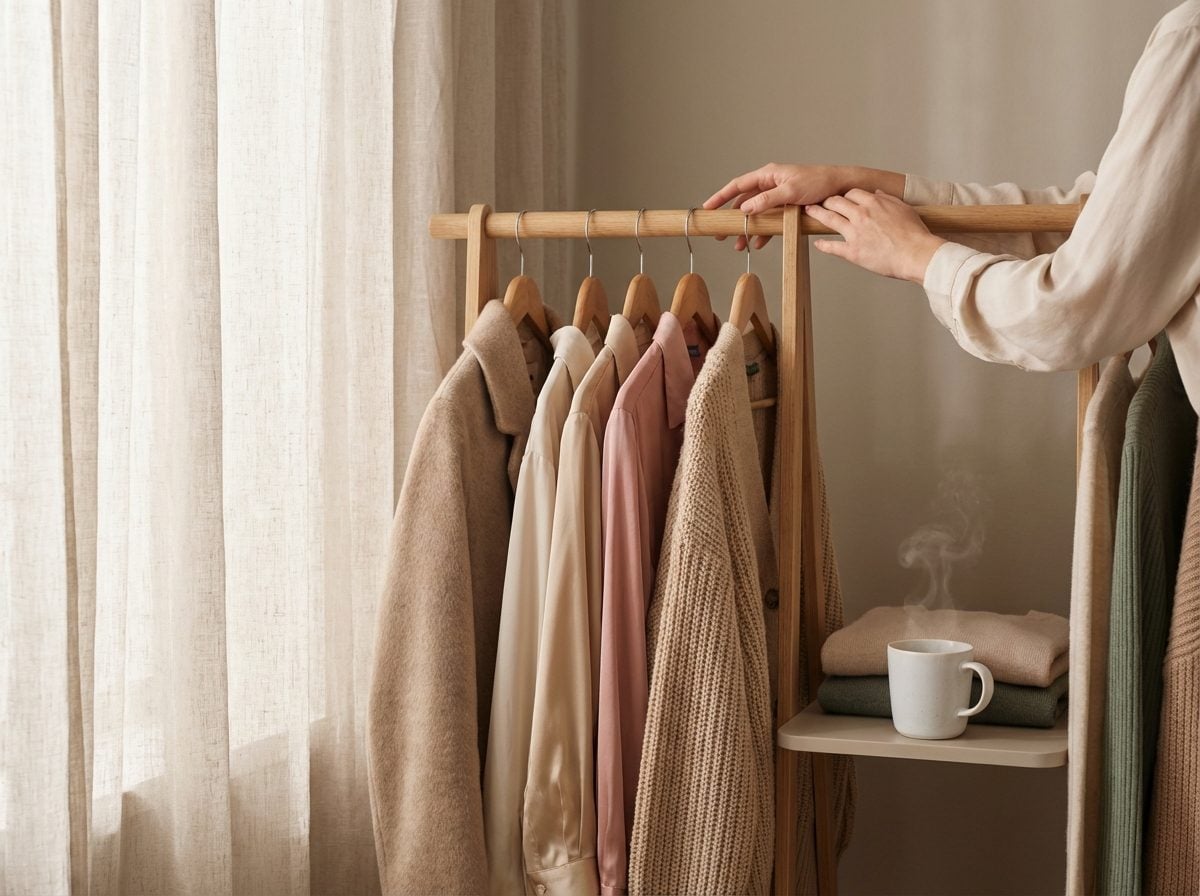
Your closet may be doing something to your body that you’ve never connected to fabric and hangers: raising your cortisol levels before your day has even begun.
A notable study referenced in Psychology Today found a clear link between cluttered home environments and elevated cortisol, the body’s primary stress hormone, particularly in women. The UCLA Center on Everyday Lives of Families documented that women who described their spaces as cluttered showed measurably higher cortisol throughout the day compared to those in organized environments. A crowded closet isn’t a neutral backdrop. Research in environmental psychology shows that the brain registers visual noise and allocates cognitive resources to it even when you’re not consciously processing it, like a background app draining your phone’s battery.
Every unworn impulse purchase, every hanger jammed against the next, every “maybe someday” piece you haven’t touched in two years: your nervous system is registering all of it. The question is what that quiet, chronic activation costs you before your coffee is even finished.
Why Your Brain Releases the Same Chemical When You Stop Shopping That It Once Released When You Started
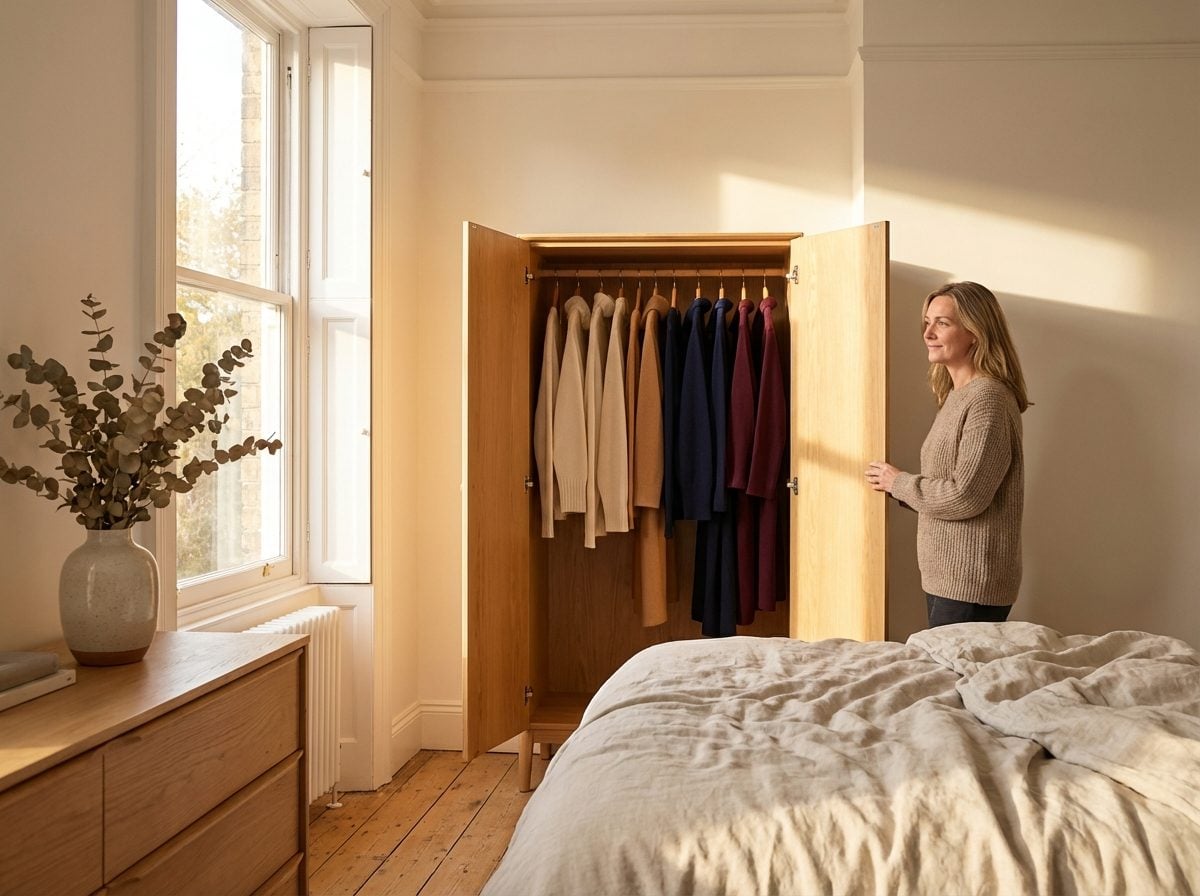
Here’s the thing neuroscience keeps trying to tell us about shopping: the chemical that pulls you toward the rack is the same one that can, eventually, find satisfaction in walking away. Dopamine is not the reward. It’s the wanting. According to neuroscientist Robert Sapolsky’s research, dopamine spikes in anticipation of a reward, not upon receiving it, which is why the hunt feels better than the haul, and why a closet full of last season’s impulse buys rarely delivers the feeling you chased at the register.
The loop is slippery. A 2022 TIME piece on the neuroscience of shopping addiction notes that Harvard neurosurgeon Ann-Christine Duhaime explains our brains release more dopamine when rewards are unexpected and variable, precisely the condition a sale rack creates. But here’s where it gets interesting for the women who’ve quietly stepped off that treadmill: the brain is adaptive. When you stop chasing the hit through acquisition, the reward circuitry doesn’t go dark. It recalibrates. The satisfaction of opening a closet where every piece earns its place? That calm clarity has its own neurochemical signature, one that doesn’t come with a credit card statement.
The Quiet Power Move of Women Who Dress From a Place of Enough

There’s a particular quality to how certain women move through a room. Not louder. Not more decorated. Just, settled. It reads as authority, and it is, but not the kind that was bought last Tuesday.
Fashion psychology has a useful frame for this: scarcity versus sufficiency as psychological operating modes. When you shop from a place of lack, chasing a trend, filling an emotional gap, trying to look like someone you haven’t become yet, it shows in the cumulative effect of the wardrobe. Pieces don’t cohere. There’s no through-line. The closet becomes a record of anxious acquisition rather than self-knowledge. Women who dress from sufficiency have usually arrived at their style through subtraction, not addition. They know what works because they’ve worn it enough times to be certain.
The psychology here isn’t about minimalism as an aesthetic. It’s about the signal that certainty sends. Research published in a 2023 review on dress and person perception confirms that we decode others’ clothing for personality, status, and intent almost instantly, and that coherence (rather than quantity or novelty) is what registers as confident self-knowledge. Dressing from enough is, in its own quiet way, a power statement.
The Psychological Term for Why That ‘Just In Case’ Dress Has Lived in Your Closet for Seven Years Unworn

It’s not sentiment. It’s not laziness. It’s a cognitive bias with a name, and once you know it, you’ll see it everywhere in your wardrobe.
The Sunk Cost Fallacy, Applied to Your Closet
The sunk cost fallacy is our deeply wired tendency to hold on to things because of what we’ve already invested in them, regardless of whether they’re serving us now. The Decision Lab’s overview of the sunk cost fallacy describes it plainly: we follow through on past decisions not because they’re still good ones, but because abandoning them feels like admitting a loss. That $280 dress that’s never quite fit right, the silk blouse in a cut you bought for a version of yourself that never quite materialized, they stay because getting rid of them means confronting what the purchase represented.
Tangled into this is loss aversion, the related phenomenon first mapped by Kahneman and Tversky, which holds that the psychological pain of losing something is roughly twice as powerful as the pleasure of gaining the equivalent. Your brain isn’t being irrational when it refuses to donate that dress. It’s doing exactly what it evolved to do. But evolution didn’t account for fast fashion, next-day delivery, or the fact that your closet might be quietly storing seven years of decisions you’ve never properly made.
What Studies on High-Performing Women Reveal About the Ritual of Wearing the Same Things Repeatedly

The conversation about wearing the same things repeatedly has been dominated by men, Obama’s gray suits, Zuckerberg’s gray tees, Jobs’ black turtleneck. The reasoning is always decision fatigue: Obama himself explained it to Vanity Fair: “I’m trying to pare down decisions. I don’t want to make decisions about what I’m eating or wearing. Because I have too many other decisions to make.” The cognitive science holds up, we make roughly 35,000 decisions a day, and the quality of each one degrades as the day progresses.
But for women, the ritual of a reliable wardrobe carries an additional layer. When you reach for the same well-cut trousers on a Monday morning, you’re not just conserving mental energy, you’re accessing a known, proven version of yourself. There’s something settling about a uniform that isn’t about limiting expression. It’s about not having to renegotiate your identity before 8 a.m. The outfit becomes a shortcut to a state of mind.
Research into decision fatigue shows that when required to make important decisions, a brain under cognitive load will either make poor choices or avoid deciding altogether, which is why high-performing women who’ve built a tight, trusted wardrobe aren’t limiting themselves. They’re protecting their most valuable cognitive resource for the work that actually demands it.
The Subtle Status Signal That Only Works When Your Wardrobe Is Smaller Than You Think It Should Be

Loud logos have been replaced, at the top of the status hierarchy, by something far harder to fake: the appearance of not needing to try.
Researchers at Princeton found that clothing perceived as “richer” by observers led to significantly higher competence ratings, and this effect persisted even when participants were warned about the bias and given extra time to reconsider, the judgment was that automatic. But what reads as “richer” in 2025 isn’t volume or visible branding. It’s restraint. It’s the unspoken implication that you already know who you are, that you don’t need to announce it.
This is the logic of what some call “stealth wealth”, the counterintuitive signal sent by a wardrobe built around quality, fit, and a tightly edited color palette rather than trend velocity or conspicuous consumption. The interesting psychological twist: this signal only works when the wardrobe is genuinely smaller. A crowded closet with ten “investment pieces” buried among impulsive acquisitions reads differently than a spare collection of twenty things, all of which are exactly right. The edit itself is the message.
Why ‘Knowing Your Style’ Is Actually a Neurological Achievement, Not a Shallow One

People who haven’t figured out their personal style yet often frame it as a creative failing. They haven’t found their “look.” But fashion psychologists would reframe that entirely. Knowing your style, really knowing it, with the deep ease that means you never second-guess a purchase, is the product of a significant amount of cognitive work that happens, largely, below conscious awareness.
The brain builds style knowledge the same way it builds any expertise: through pattern recognition developed over thousands of micro-decisions, each one teaching the neural circuitry what works and what doesn’t on this particular body, in this particular life, for this particular self-presentation goal. Adam and Galinsky’s landmark 2012 “enclothed cognition” research showed that clothing physically alters cognitive performance, but the deeper implication is that clothing also alters self-concept, and over time, the accumulated experience of wearing what works rewires how you understand yourself.
Women in their 40s and 50s who have clear personal style didn’t stumble into it. They built it, through the equivalent of years of deliberate practice. The brain that can reach into a closet and know immediately whether something belongs is demonstrating the same neural architecture as any other form of mastery. Calling it “shallow” is like calling fluency in a language shallow because it feels easy.
The Loss Aversion Trap That Keeps You Holding Onto Clothes That Are Quietly Draining Your Confidence
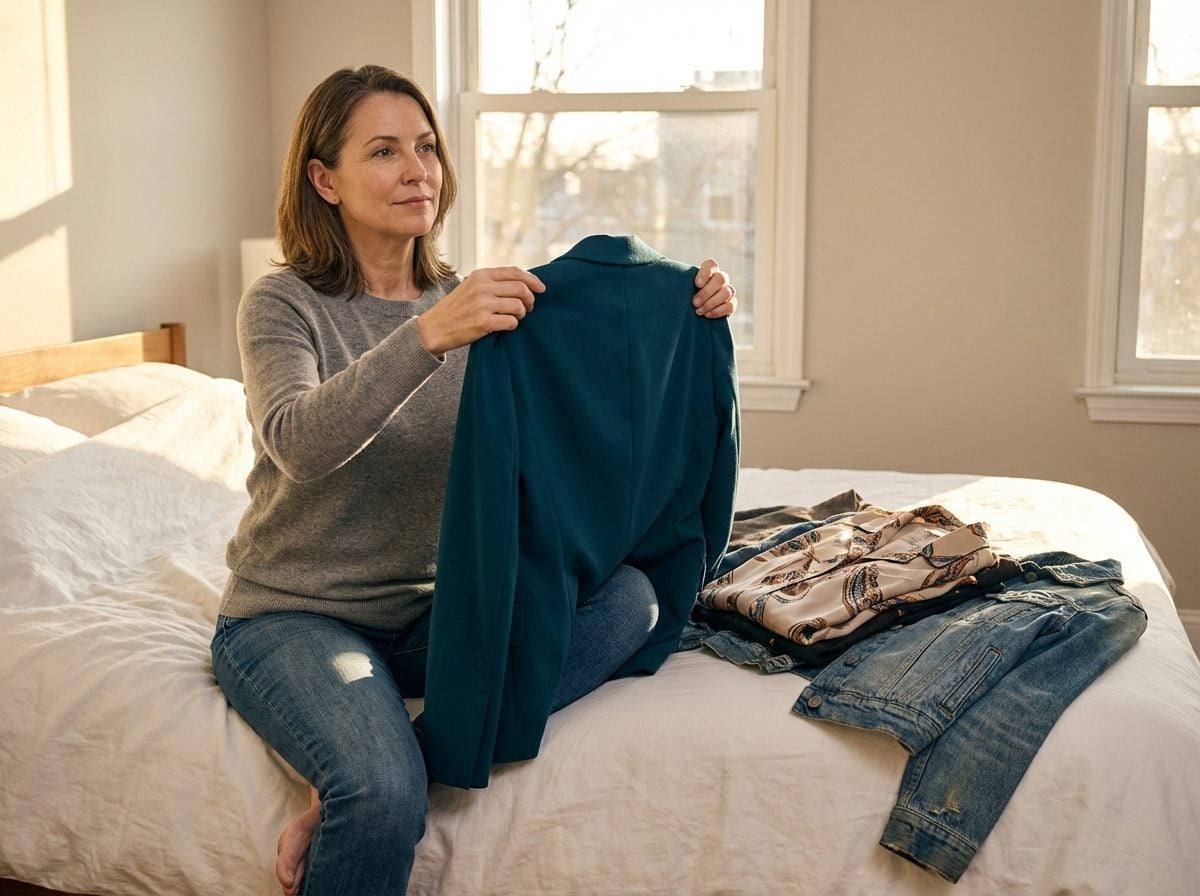
Every closet has a category of clothing that functions like a low-grade anxiety. Not the clothes that make you feel good. Not the ones you’ve decluttered. The ones in the middle: the pieces that don’t quite fit, that belong to an older self-image, that you keep because discarding them would mean acknowledging something you’re not ready to acknowledge.
Kahneman and Tversky’s prospect theory established that losses feel roughly twice as psychologically painful as equivalent gains feel pleasurable, which explains why the average woman holds onto a piece of clothing for over a year past the last time she wore it. The pain of “wasting” the purchase outweighs the mild pleasure of the freed closet space.
But here’s what this framing misses: those pieces aren’t neutral. Research on enclothed cognition suggests that clothing affects your psychological state even when you’re just looking at it, not wearing it. A closet full of things that don’t fit your current body, don’t match your current life, or silently remind you of a self you’ve outgrown creates a kind of low-level cognitive friction every single morning. The sunk cost has already been paid. The ongoing cost, the daily, small drain on confidence, is the one worth calculating.
The Unexpected Way a Capsule Wardrobe Changes How Other People Perceive Your Authority

You might expect that more variety signals more options, more resources, more status. The psychology goes the other way.
In a series of nine studies from Princeton researchers, participants consistently rated people as more competent when their clothing appeared more considered, and this judgment happened in as little as 130 milliseconds, faster than conscious thought could intervene. You cannot reason your way out of a first impression. The signal gets sent and received before rational override is even possible.
What a capsule wardrobe does, structurally, is ensure that every piece you reach for meets a consistent standard. There are no “bad outfit days” born from reaching past the good pieces to grab something mediocre. The floor rises. And the consistent quality of what you wear becomes a consistent quality of how others read you: as someone who makes deliberate choices, who values precision over volume, who is not chasing trends but has arrived somewhere. These are the exact cognitive shortcuts observers use when forming impressions of authority and competence.
What Fashion Psychologists Mean When They Say Your Closet Is Either Working For You or Against You

Fashion psychologist Karen Pine, whose research explores the relationship between clothing and psychological state, has argued that clothing doesn’t just reflect how we feel, it actively shapes it. Her work points to something that every woman has experienced but rarely named: the wardrobe is not a passive storage system. It’s a daily environment that either supports or undermines your self-concept, depending on what you’ve put in it.
A closet stocked with aspirational purchases from a version of yourself you haven’t become yet creates a particular kind of friction. A 2024 study in the Global Scientific Journal on the psychological effects of clothing choices found that wearing clothes that contradict your self-concept or don’t align with your current identity may undermine psychological well-being, the inverse of the confidence boost that comes from dressing with intention.
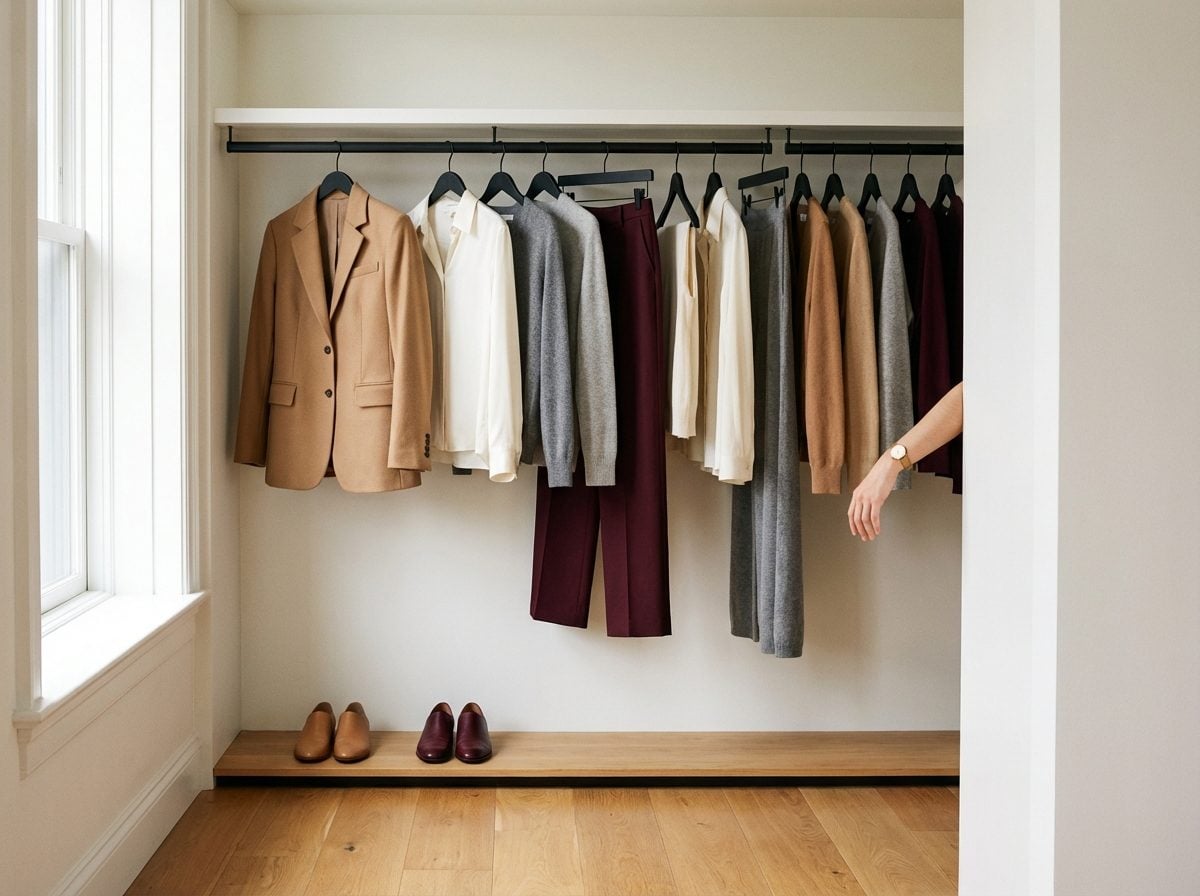
The women who never seem to struggle with getting dressed aren’t the ones with the most options. They’re the ones whose closets have been edited down to a clear conversation with who they actually are, right now, not five years ago, not in an imagined future. Every morning that closet either tells you something confirming or something conflicted. The question worth sitting with isn’t “What should I buy?” It’s: “What is my closet currently saying about how I see myself?”
The Bottom Line
Here’s the bottom line: the most put-together women you know don’t shop less because they have more discipline, they shop less because they have already decided who they are, and everything in their closet confirms it. When your identity is settled, a store has nothing to offer you that you don’t already own. So the one thing worth doing today isn’t decluttering or budgeting, it’s asking yourself, with complete honesty, whether the clothes you own reflect the woman you actually are, or the one you’ve been auditioning to become.