❤️ Would you like to save this?
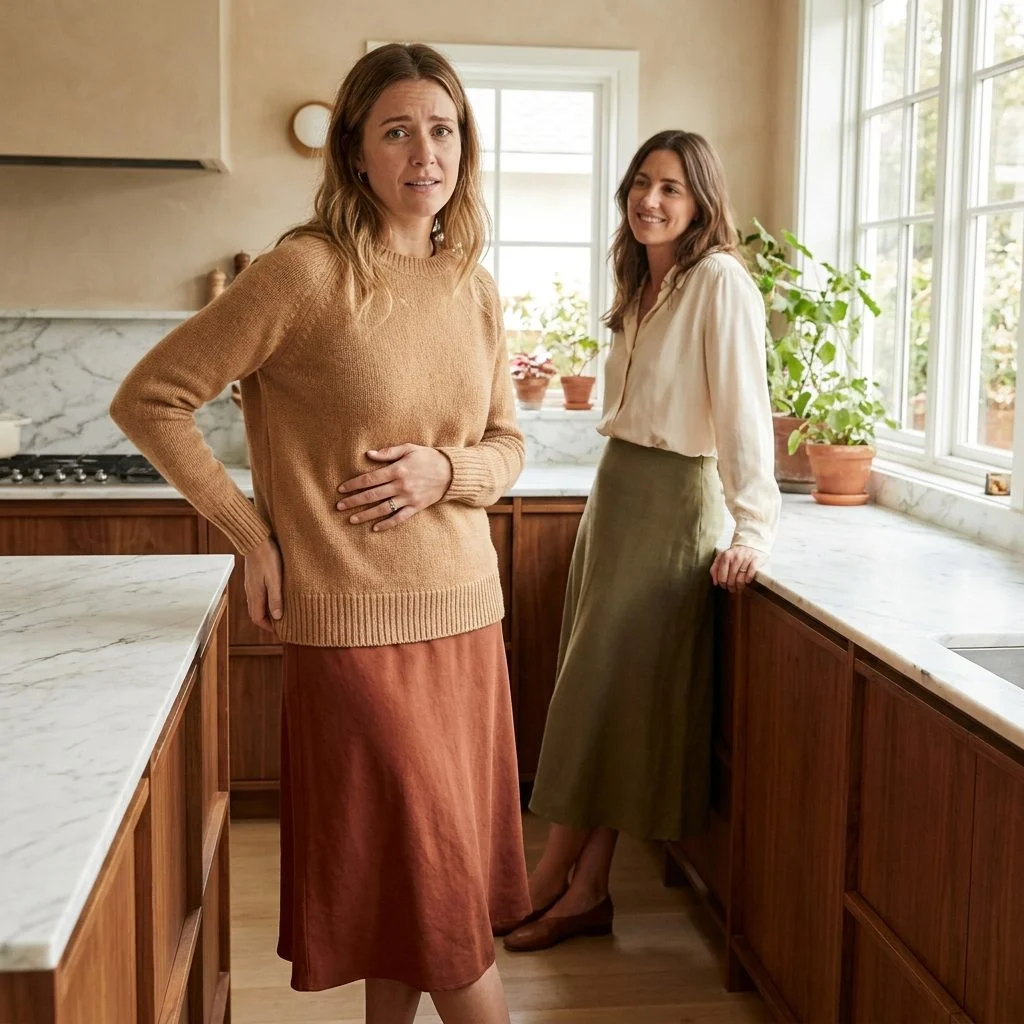
It wasn’t the jumpsuit that failed her—it was the math.
She had chosen well: a beautifully made linen piece, a flattering color, a perfectly acceptable fit. By every logical measure, it should have worked. But in the mirror, something felt off. Her frame looked shorter, slightly compressed, as if her proportions had quietly shifted against her.
What she was reacting to wasn’t the fabric or the cut, but a subtle ratio her brain flagged instantly. A near-invisible split in how the outfit divided her body. There’s a precise proportion that determines whether an outfit elongates or truncates, and most people never realize they’re breaking it.
FYI, thanks to AI imagery software, we’re able to create very specific fashion and hairstyle examples to illustrate the points being made. In some cases, imagery is exaggerated to hammer home the point. Also, assume links that take you off the site are affiliate links such as links to Amazon. this means we may earn a commission if you buy something.
The Visual Illusion That Tricks Every Brain Into Seeing You as 3 Inches Taller
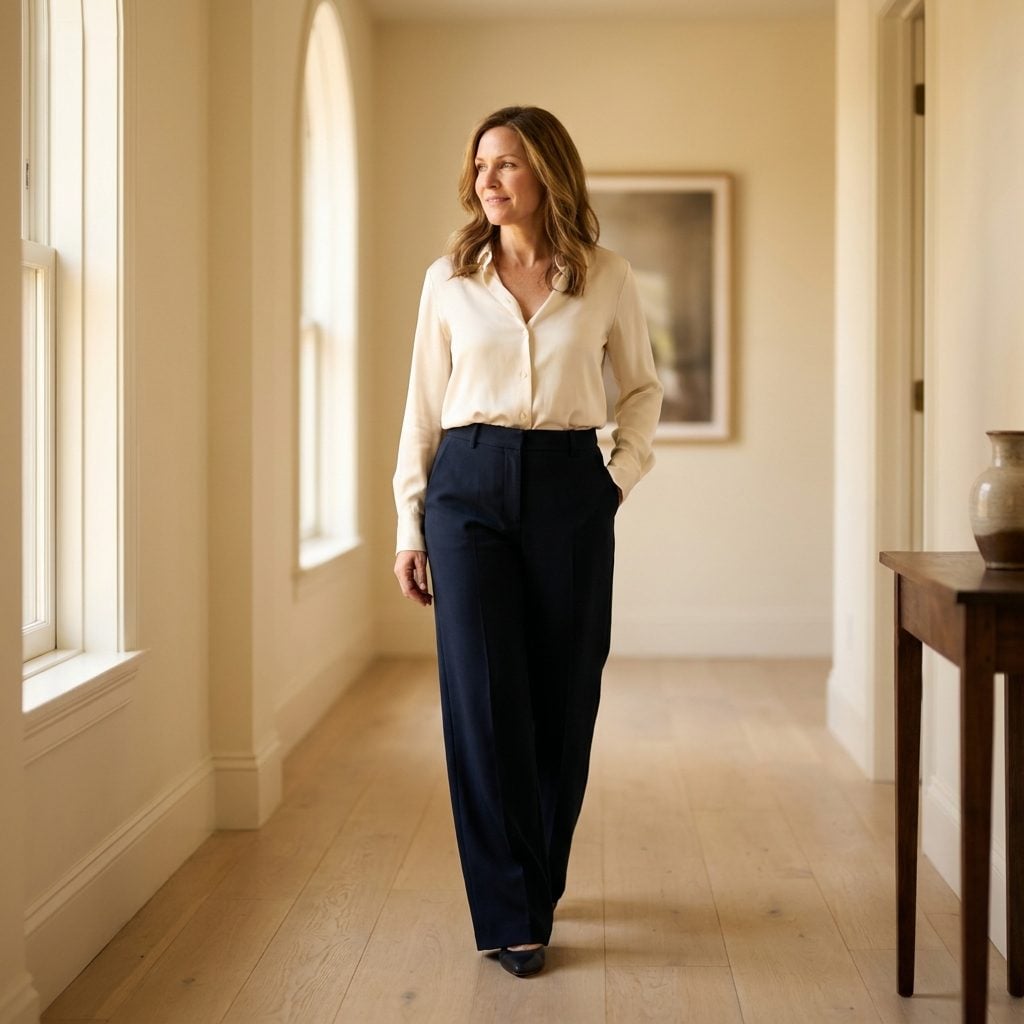
There’s a 19th-century optical illusion most people have never heard of, and it quietly governs how tall you appear in every outfit you own. Hermann von Helmholtz noted that illusions in which filled space seems larger than unfilled space were common in everyday life, adding the observation that ladies’ frocks with horizontal stripes make the figure look taller. The principle works because the brain exaggerates distance in the direction perpendicular to visual lines. A square composed of horizontal lines appears taller and narrower than an identical square made up of vertical lines. That same mechanism operates on your body. When a (Source) outfit creates an unbroken vertical column, or when the eye encounters stacking elements (like a tucked blouse meeting high-waisted trousers), the brain perceives the filled vertical space as longer than it is.
And here’s the kicker: it isn’t subtle. Researchers found that a rectangle of vertical stripes needs to be extended by 7.1% vertically to match the height of a square of horizontal stripes. On a 5’4″ frame, that perceptual stretch adds the visual equivalent of several inches. No heels required. The trick isn’t about what you wear. It’s about how your brain reads the geometry of your silhouette.
Why Your Most Awkward Outfits All Share the Same Hidden Mathematical Flaw
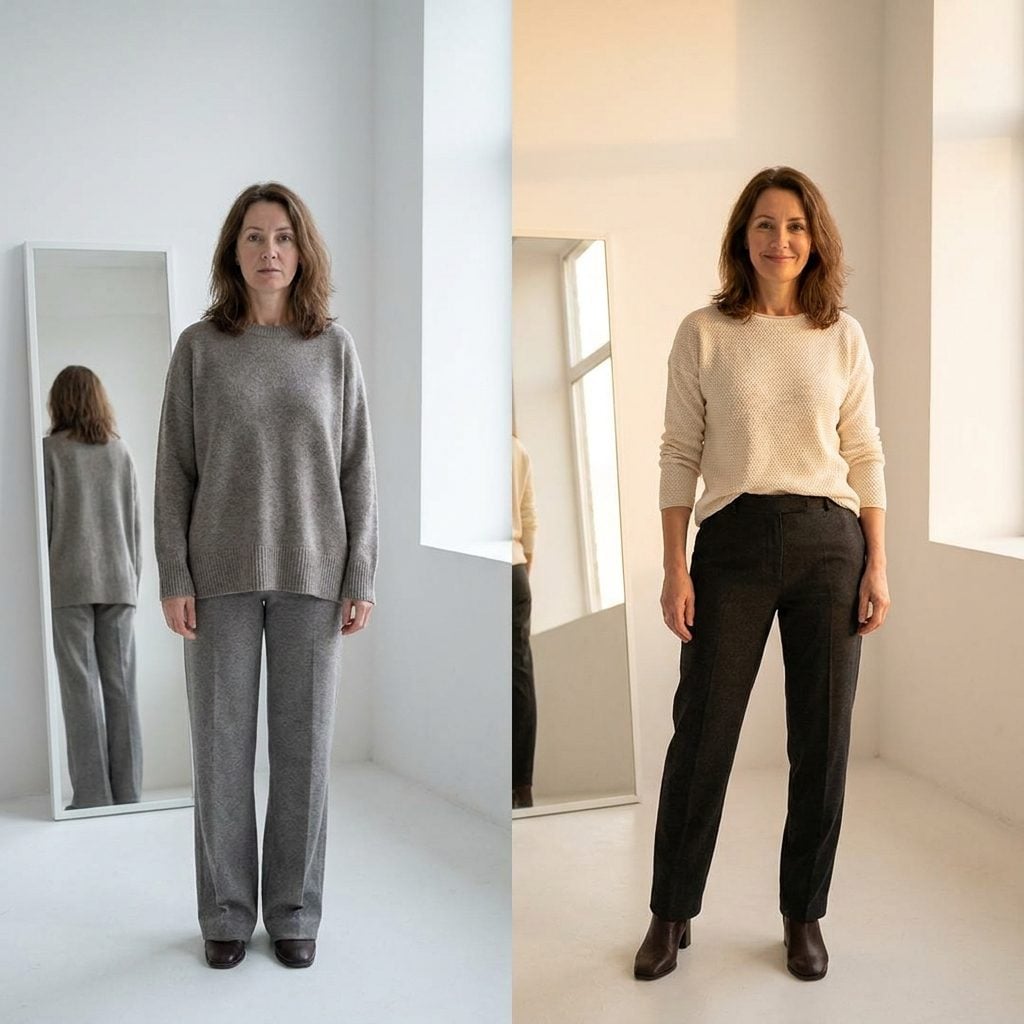
Pull up a photo of an outfit that made you feel inexplicably wrong. Ten dollars says the top and bottom split your body almost exactly in half.
We really like uneven proportions. When we dress in a 1:1 ratio (halves) we find it looks blocky, boxy, and unflattering. Using a 1:2 ratio where we have a longer proportion and a shorter proportion (1/3 or 2/3) will elongate your body. This isn’t opinion. It’s a measurable perceptual preference baked into human visual processing. Our eyes naturally gravitate towards asymmetrical proportions. In fashion, the ultimate goal is often to achieve a 5:8 ratio known as the “Golden Ratio,” which is considered the epitome of aesthetic balance. Source
I spent years in tunic-length tops and mid-rise pants, never understanding why everything felt dumpy. The flaw was always the same: a 50/50 split right at the widest point of my hips. The fix was so small it felt insulting. A half-tuck. A slightly shorter top. A higher-rise wide-leg pant. The proportions shifted from equal halves to unequal thirds, and suddenly the same body looked completely different.
The Proportion Hack Renaissance Painters Used That Still Rewires How People See Your Body

Leonardo da Vinci didn’t know it, but he was basically the first personal stylist. Dating back to ancient Greece, mathematicians have been studying what makes things perfect and precise. This resulted in a formula of measurements which yield the ratio 1:1.618, known as The Golden Ratio. The Golden Ratio is a number that shows up all over the human body, from the length of the arms and legs compared to the torso, and it seems to define what proportions look best. Source
Renaissance painters used this ratio obsessively in their compositions. They discovered that dividing a canvas at approximately one-third to two-thirds creates visual harmony that the human brain registers as “right” without knowing why. When applied to fashion, it guides how to proportion different parts of an outfit. Dividing your look into 1/3 on top and 2/3 on the bottom is far more flattering than splitting it evenly.
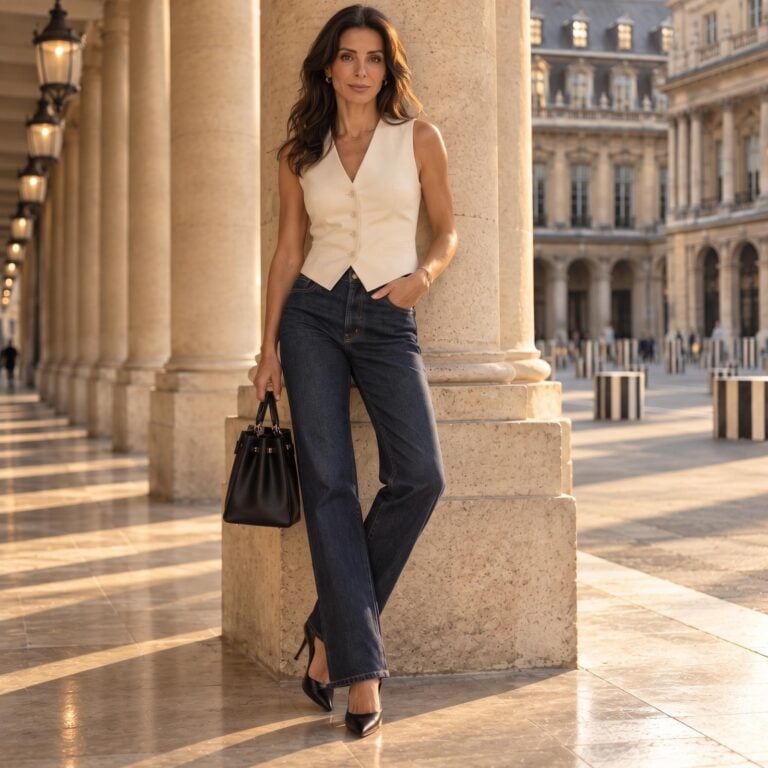
The practical application is almost embarrassingly simple: make sure your top and bottom don’t occupy equal visual space. A cropped blazer ending at the natural waist, paired with full-length trousers, gives you roughly that 1/3-to-2/3 ratio. Your brain registers it as balanced, elongated, intentional. Sculptors knew this. Architects knew this. And now you know it too, which honestly feels like an unfair advantage.
What Happens in Your Brain the Instant You See an Unbroken Vertical Line
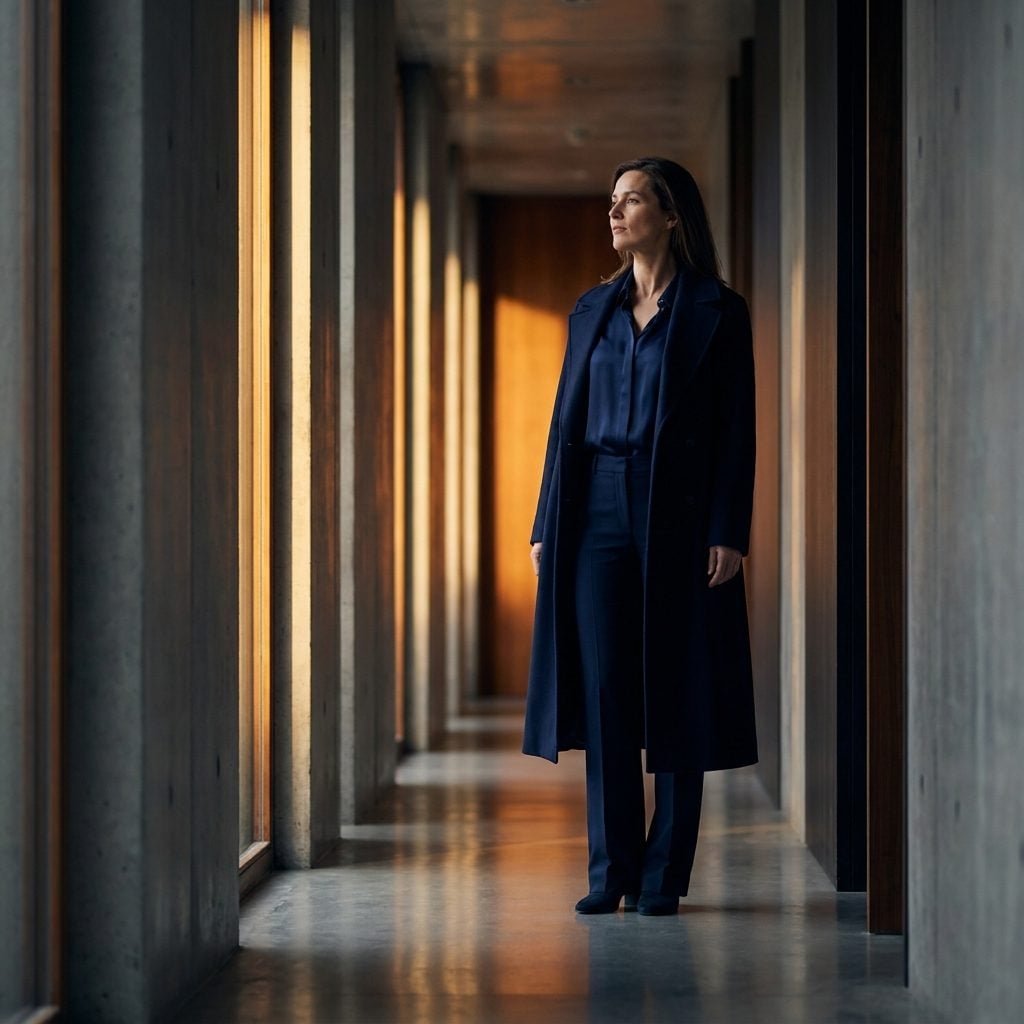
Something strange occurs in the first few milliseconds of visual processing when the brain encounters a vertical line versus a horizontal one. More than 150 years ago, Hermann von Helmholtz noted that a square filled with vertical lines appeared wider than taller, whereas a square filled with horizontal lines appeared taller than wider. Source But recent neuroscience has dug deeper into the why. Researchers suggest this Helmholtz illusion arises due to changes in spatial attention that entail changes at very early stages of perceptual processing.
In plain language: the direction of lines on your body literally reshapes how someone’s visual cortex maps the space you occupy. The attentional focus is slightly elongated along the orientation of the lines, which comes with a decrease in density of receptive fields along the direction of the lines. So when you create one long column of color from shoulder to shoe, maybe with a monochromatic matching knit set or a floor-length long cardigan over a tonal base, you’re not just “looking taller.” You’re changing the actual neurological event that happens in someone’s brain when they see you.
The Psychological Reason a Simple Tuck Changes How Powerful You Feel

Here’s something I didn’t believe until I tried it: the act of tucking in a shirt doesn’t just change how you look. It changes how you think.
Researchers introduce the term “enclothed cognition” to describe the systematic influence that clothes have on the wearer’s psychological processes. They propose that enclothed cognition involves the co-occurrence of two independent factors: the symbolic meaning of the clothes and the physical experience of wearing them. Source A tuck is a micro-gesture of intention. It says: I’m here on purpose. And your brain receives that message from the inside out.
Enclothed cognition is a psychological phenomenon where the clothing a person wears influences their thoughts, feelings, and behaviors. A recent meta-analysis found that the size of the effect clothing has on thoughts, feelings, and behaviours is small to moderate but consistent enough to matter in daily life. Source So when you do a half-tuck or a full tuck into high-waisted jeans, you’re not just shifting the proportions from 50/50 to one-third/two-thirds. You’re physically engaging with your clothes in a way that signals “polished” to your brain. And your brain, in turn, starts acting accordingly.
Why Splitting Your Body in Half Triggers an Unconscious ‘Something’s Off’ Response
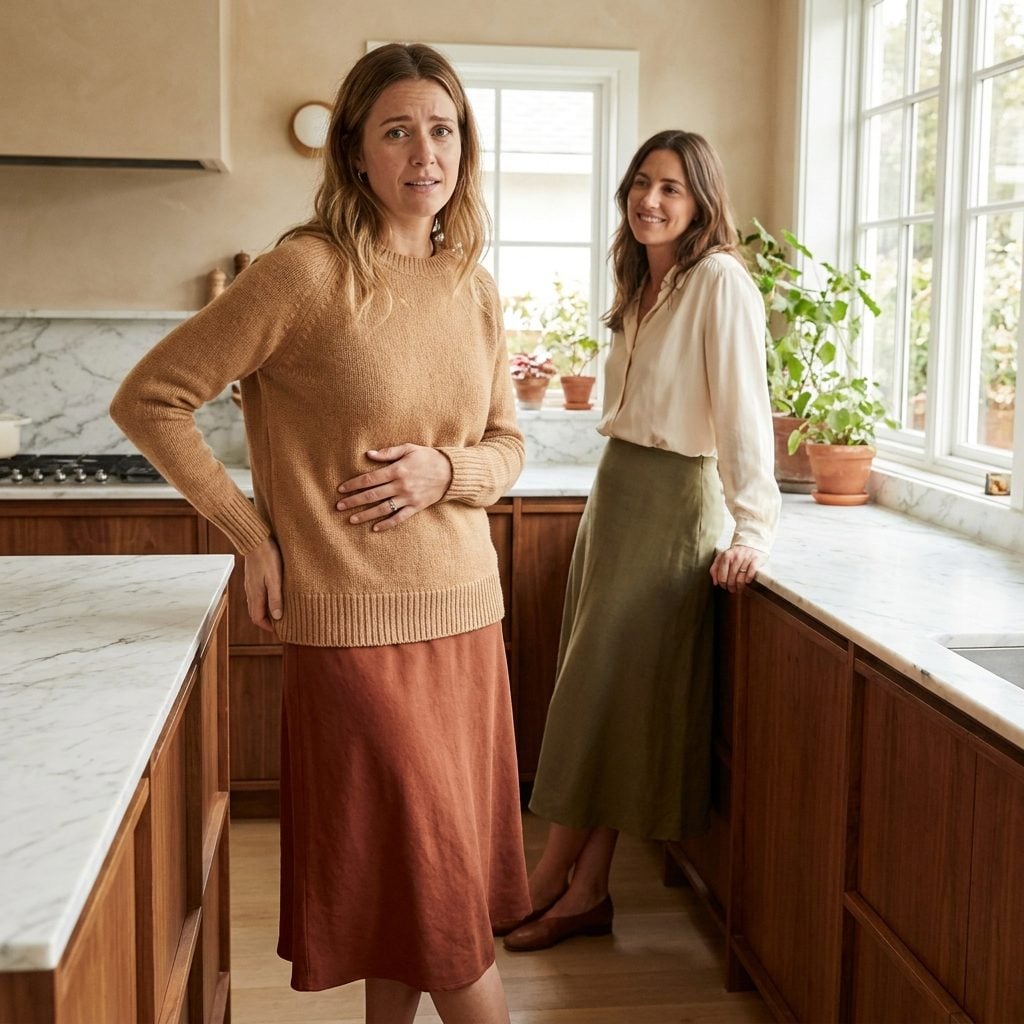
Designs with unequal proportions can be more captivating and intriguing than those with equal proportions. That sentence from design theory research barely scratches the surface of what’s happening when someone sees you in a 50/50 split. Source
The human visual system is wired to seek hierarchy. Think about it: every natural landscape has a foreground, a midground, a background. Every well-composed photograph follows the rule of thirds. The rule of thirds is a simplified version of the more complex golden ratio. It involves dividing a garment into three equal sections. According to this rule, if the top section occupies one-third of the total size, the bottom section should take up the remaining two-thirds. When you split yourself into two perfectly equal zones, there’s no visual hierarchy, no story for the eye to follow. The brain reads it as unresolved. Something’s off, but the viewer can’t articulate what.
I learned this the hard way with a beautiful midi skirt that hit at exactly the wrong point. Loved the color, loved the fabric. Wore it twice and never reached for it again. The skirt wasn’t the problem. The proportion was.
The Confidence Shift That Starts the Moment Your Reflection Looks Longer
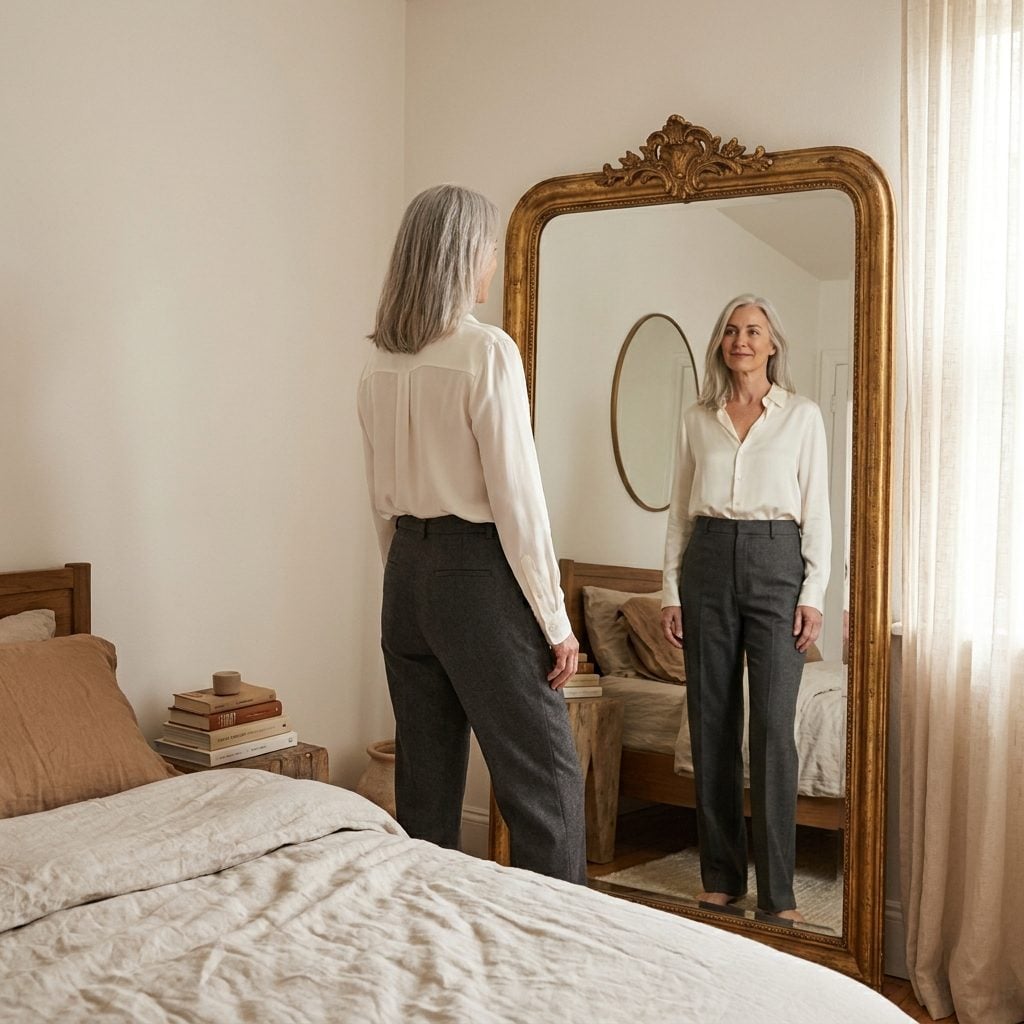
When we’re feeling confident, the same face in the mirror can look entirely different. Body image and self-esteem are rarely fixed: they bend in response to how we’re feeling, even if nothing has changed externally. Source This cuts both ways. A reflection that reads as elongated and proportional doesn’t just please the eye. It sends a signal back to the brain that rewrites your internal self-image in real time.
Research has shown that women tend to use clothes to present or disguise their bodies and that clothing practices can be predicted by body image. But the reverse is equally true. Openness to experience may foster body-positive clothing practices. Their choice of clothing can help women overcome objectification and cultural body-ideal pressures, promoting self-validation and mastery. (Source)
This is what makes the proportion trick more than a styling tip. When a woman over 40 looks in the mirror and sees a longer, more intentional silhouette, she’s not just noticing an optical illusion. She’s experiencing a cognitive shift. The confidence doesn’t come from deception. It comes from alignment, from seeing an outside that matches the inside.
How Your Eye Naturally Travels Up a Body, and the One Thing That Stops It Cold
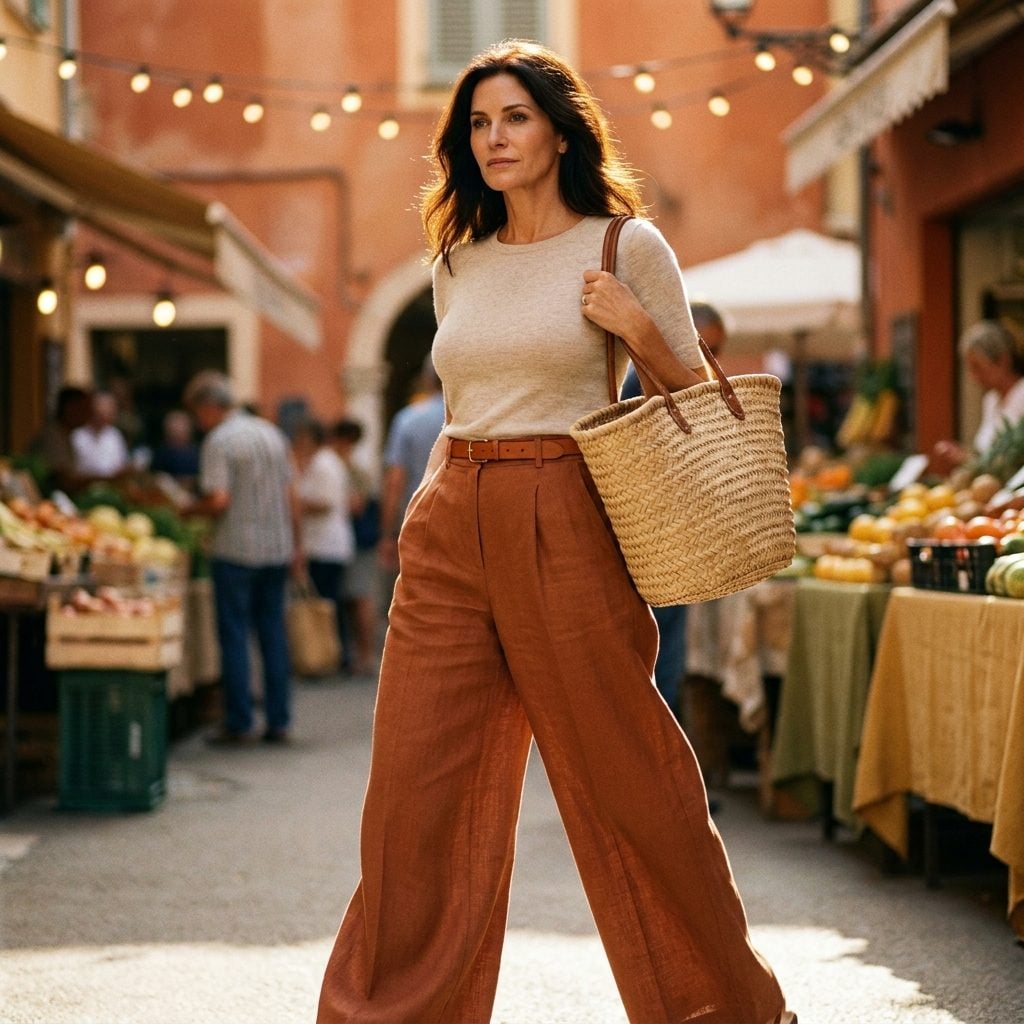
Eye-tracking research on body perception found that most visual attention was paid to the chest and midriff, but this pattern differed slightly depending on the judgement being made. (Source) The eye doesn’t just wander randomly across a person’s body. It follows predictable paths, moving quickly between areas of high contrast and visual interest.
And this is precisely where the one-third/two-thirds rule earns its keep. A strong horizontal line at the exact center of the body creates what designers call a “visual stop”: a high-contrast boundary that catches the eye and holds it there. The gaze parks. It doesn’t travel upward to the face. It doesn’t sweep down to admire the full line of a tailored trouser. It just… stalls.
Move that line up to the natural waist, though, and you create a launch point. The eye lands there, then continues upward to the face and outward to the shoulders. The lower two-thirds read as one long, uninterrupted column. The gaze travels. The silhouette reads as longer. And nobody, including you, can consciously explain why the whole outfit just works. Which, honestly, might be the best part of all this. The trick disappears inside the result.
The Neuroscience Behind Why Monochromatic Dressing Feels So Satisfying
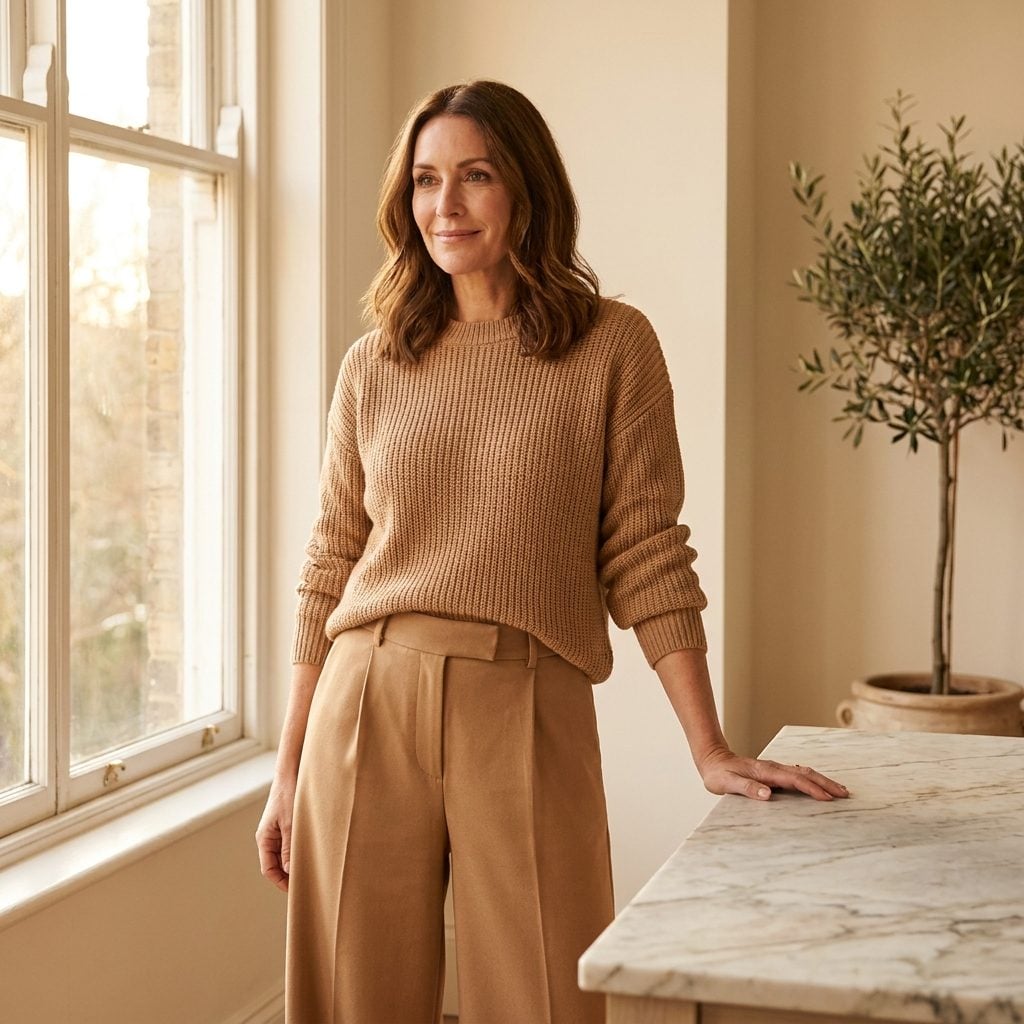
A single-color column of fabric, head to toe, does something peculiar to the human brain. It stops working so hard. Your visual cortex, which normally fires in overdrive to parse mismatched hues and contrasting blocks, suddenly gets a break. Source. That mental quiet isn’t just comfort. It’s neurological relief, the same kind you feel walking into a decluttered room or hearing a chord resolve.
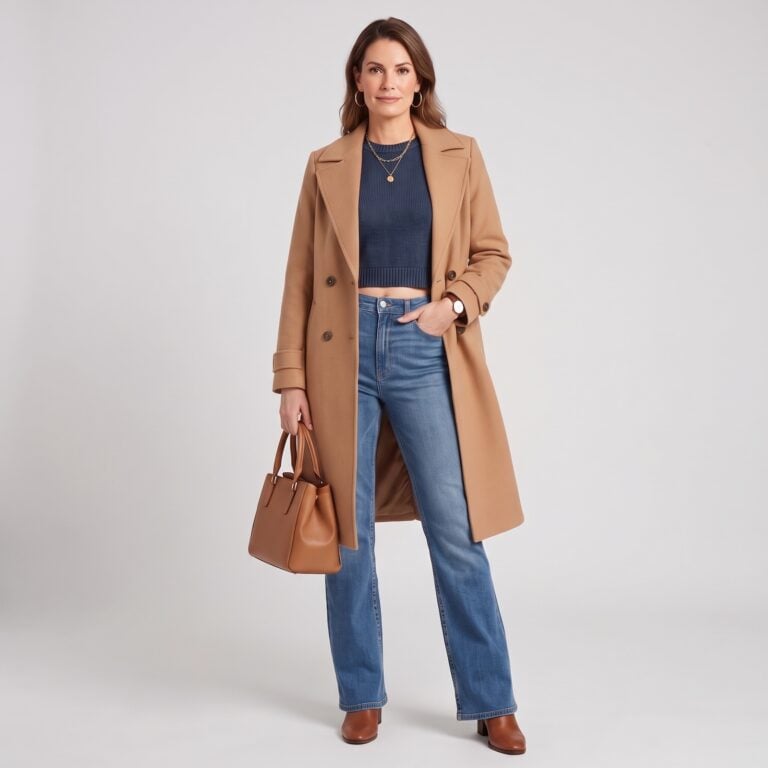
Here’s where proportions sneak in: a monochrome outfit only reads as one long, fluid line if the proportions don’t chop you in half. An unbroken visual stream from a camel knit top into camel wide-leg trousers creates what designers call a “visual column,” and the brain processes it as a single, taller shape. I fought this for years, insisting that mixing colors was more “interesting.” It is. But the satisfaction of one-tone dressing isn’t about interest. It’s about neurological coherence, and your brain rewards that coherence with a little hit of calm.
The Two-Thirds Secret Stylists Know That Has Nothing to Do With Fashion Taste
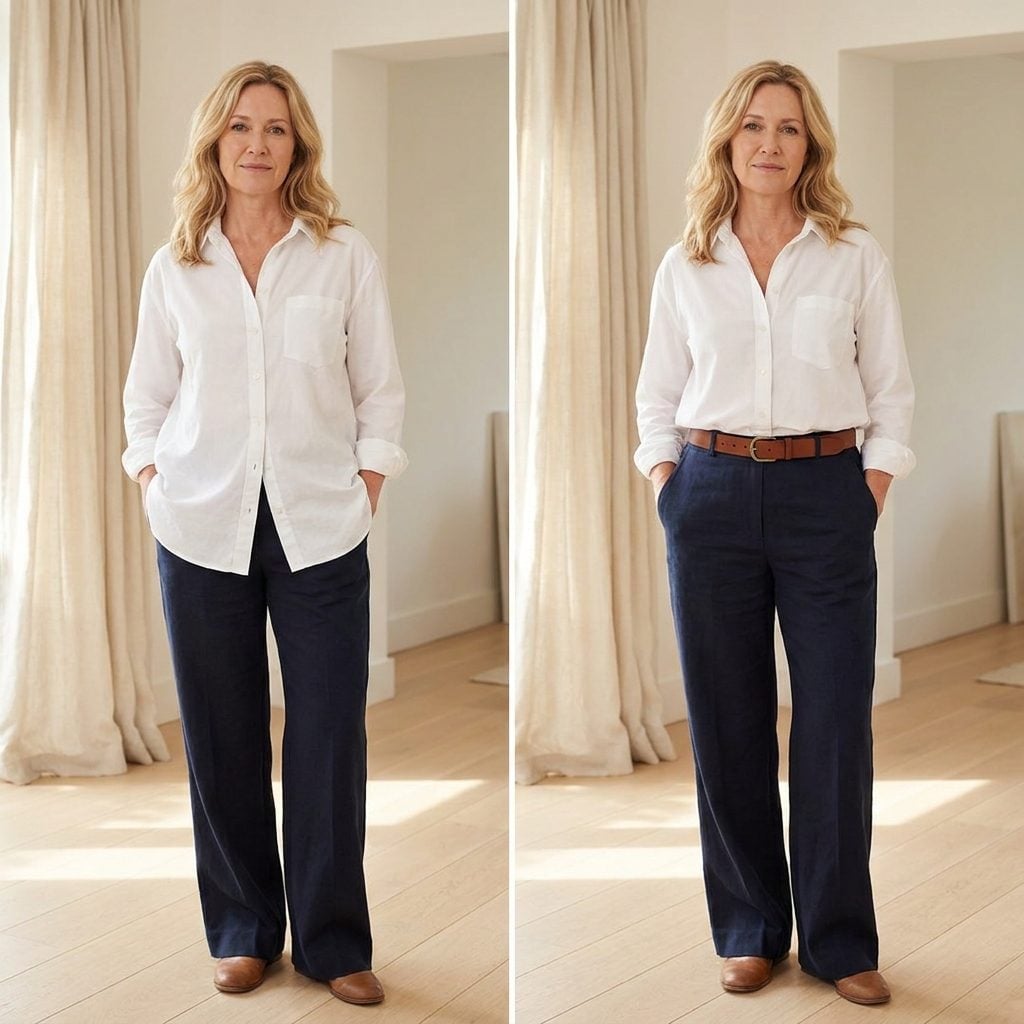
Most outfits fail not because the clothes are wrong, but because they cut the body at its mathematical midpoint. A top that ends at the hip bone, paired with a bottom that starts right there, splits the silhouette into two equal rectangles. And equal halves? The eye reads them as squat, static, boring. There’s no visual story being told. No hierarchy for the brain to latch onto.
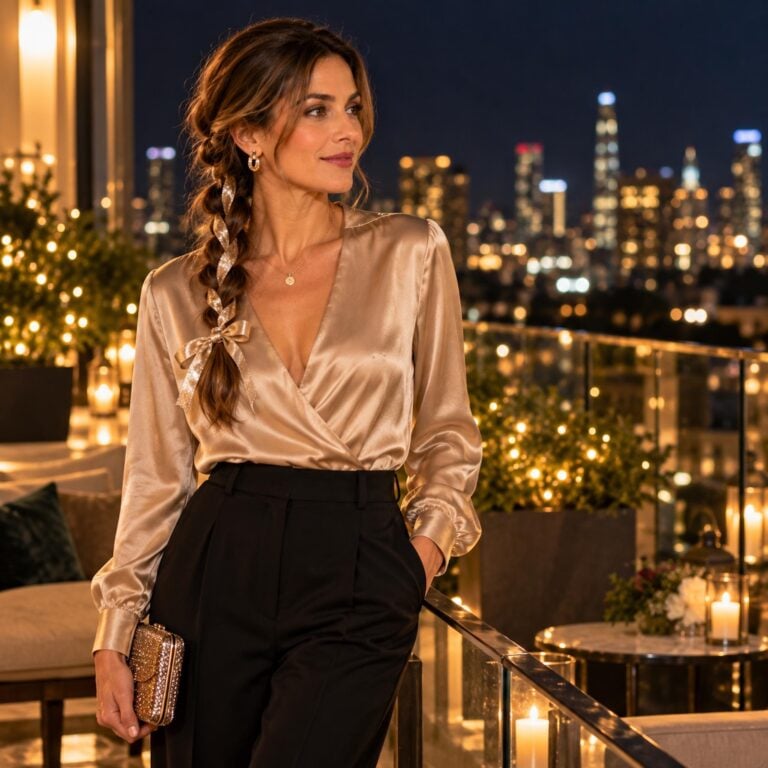
The fix is almost absurdly simple. Divide the body into roughly one-third on top and two-thirds on the bottom (or flip it). Tuck a blouse into high-waisted trousers. Let a longer longline blazer fall over a fitted skirt. This asymmetry creates what the Golden Ratio has been doing for architecture and art for centuries: it generates movement, and movement reads as height. Your eye travels the longer line first, and that longer line stretches the whole composition upward.
Stylists don’t discuss this as a “rule.” They call it proportion play, and it has nothing to do with taste, budget, or body type. It works on every frame. The trick isn’t buying new clothes. It’s adjusting where your top ends and your bottom begins. Sometimes a half-tuck or a cuffed sleeve is all it takes.
Why Women Over 40 Are Neurologically Primed to Master This Better Than Anyone Else
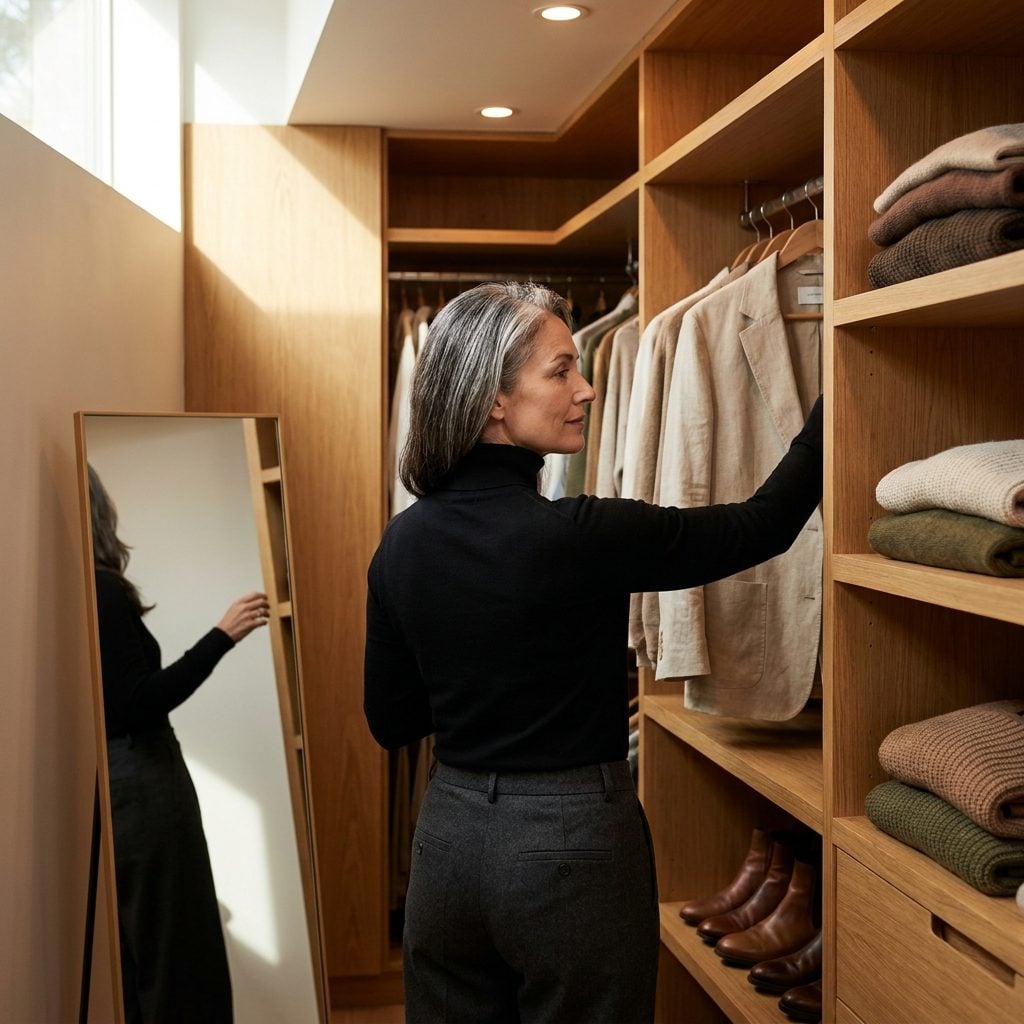
There’s a reason this proportional trick lands differently after 40. Decades of getting dressed, of standing in front of mirrors in dressing rooms, of registering what works and discarding what doesn’t, builds something neuroscience calls perceptual expertise. It’s pattern recognition refined through repetition, and it’s the same process that makes experienced radiologists spot anomalies faster or sommeliers identify a grape by smell.
By your 40s, you’ve assembled a massive internal library of visual data about your own body. You know, without measuring, when a look feels “off.” That instinct isn’t random. It’s your brain running a rapid comparison against thousands of previous outfit attempts and drawing a conclusion in milliseconds. Younger women are still building that library. You’ve already indexed it.
Fashion psychology research confirms that clothing choices reflect and reinforce how we feel about ourselves, and that personal style built over time becomes “anchored in personal identity.” (Source). The confidence to break a “rule” or trust a proportional instinct comes from accumulated self-knowledge, not from youth. And that accumulated knowledge is, bluntly, a cognitive advantage. Nobody is better equipped to calibrate a hemline by feel than someone who’s been doing it for 25 years.
The Enclothed Cognition Effect That Makes Tailored Proportions Change How You Think
In 2012, researchers Hajo Adam and Adam Galinsky published a now-famous experiment that coined the term “enclothed cognition.” Participants who wore a white lab coat described as a doctor’s coat performed measurably better on attention tasks than those wearing the same coat described as a painter’s. Source. The implication was startling: clothing doesn’t just change how others see you. It changes how you think.
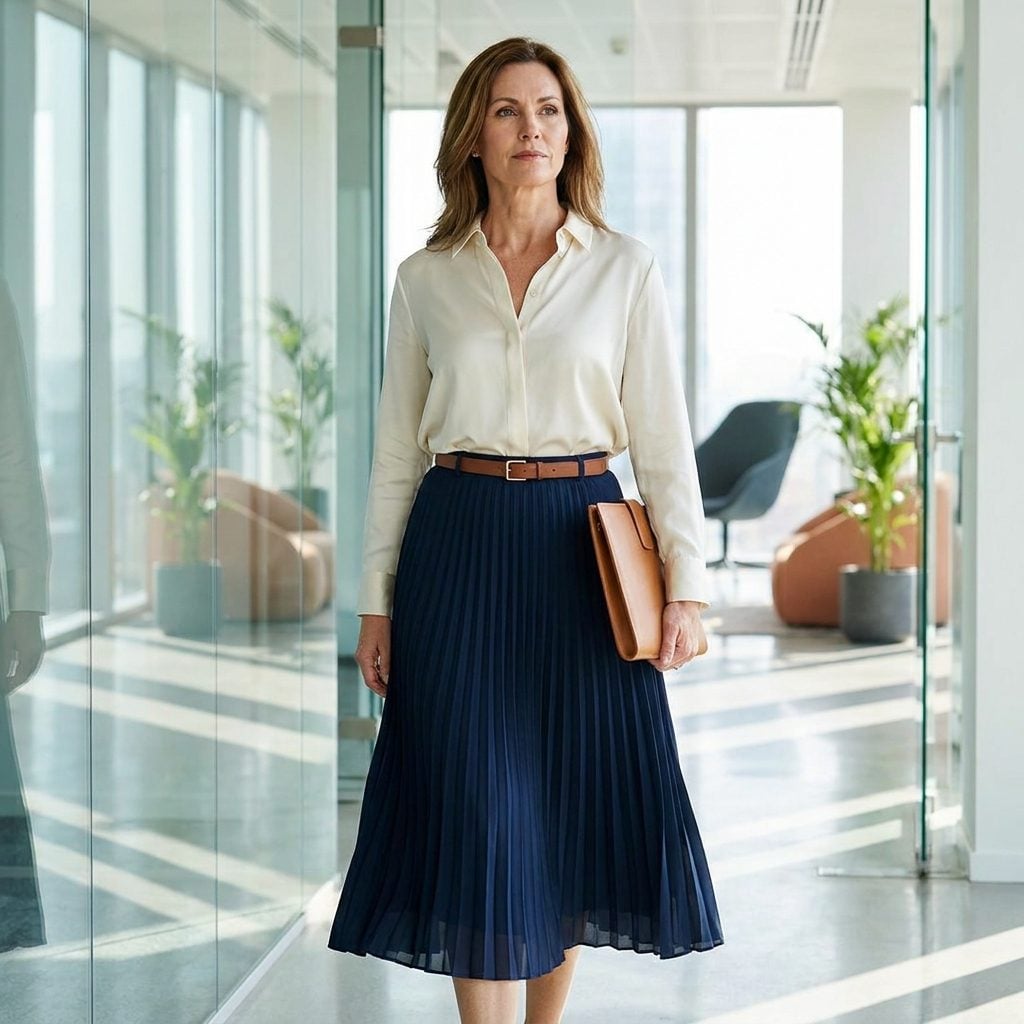
Now apply that to proportional dressing. When you put on an outfit where the top ends at your natural waist and a midi skirt carries that two-thirds line downward, you perceive yourself as taller. And that perception shifts something internal. A 2023 meta-analysis affirmed that the core principle of enclothed cognition, that clothing can impact how the wearer thinks, feels, and acts, holds up, particularly in studies published after 2015. Source.
I’ll be honest: I used to think the whole “dress well, think well” idea was motivational poster nonsense. But the research is pretty clear. Your brain doesn’t separate the symbolic meaning of a garment from the physical sensation of wearing it. A well-proportioned outfit that makes you appear elongated and polished sends your brain a signal: this person (you) is composed, capable, in control. And you start behaving accordingly.
The Gestalt Principle Hiding in Every Outfit That Makes You Look Effortlessly Put Together
❤️ Would you like to save this?
In the early 1900s, a group of German psychologists figured out something that fashion still hasn’t fully caught up with: the human brain doesn’t see parts. It sees wholes. They called this Gestalt psychology, and one of its core principles is “good continuation,” the idea that we naturally perceive smooth, unbroken lines rather than choppy, disjointed segments. Source.
What This Means for Your Outfit
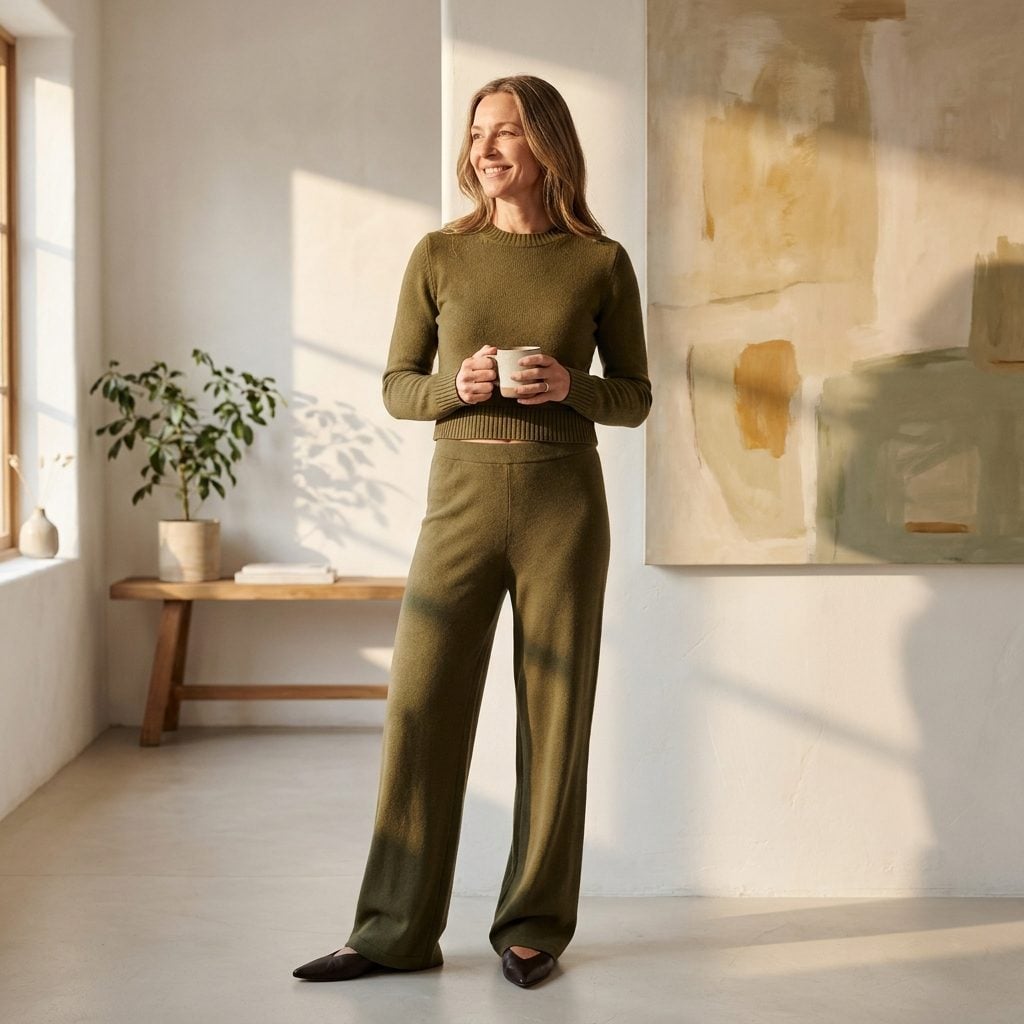
An outfit that splits your body at the exact middle creates two distinct blocks. Your brain reads them as separate objects. But an outfit with a clear one-third/two-thirds ratio? That creates one dominant line, and the brain follows it like a road with no speed bumps. The Gestalt principle of continuity explains why a navy jumpsuit with a belt at the natural waist feels so “together,” why a cropped jacket over a maxi dress reads as elegant rather than awkward, and why a tan tonal outfit with proportional contrast looks polished even when it’s completely casual.
The brain craves visual order. Proportional dressing delivers it without the viewer (or the wearer) needing to understand why.
Why the ‘Right’ Hem Length Produces a Measurable Spike in Self-Assurance
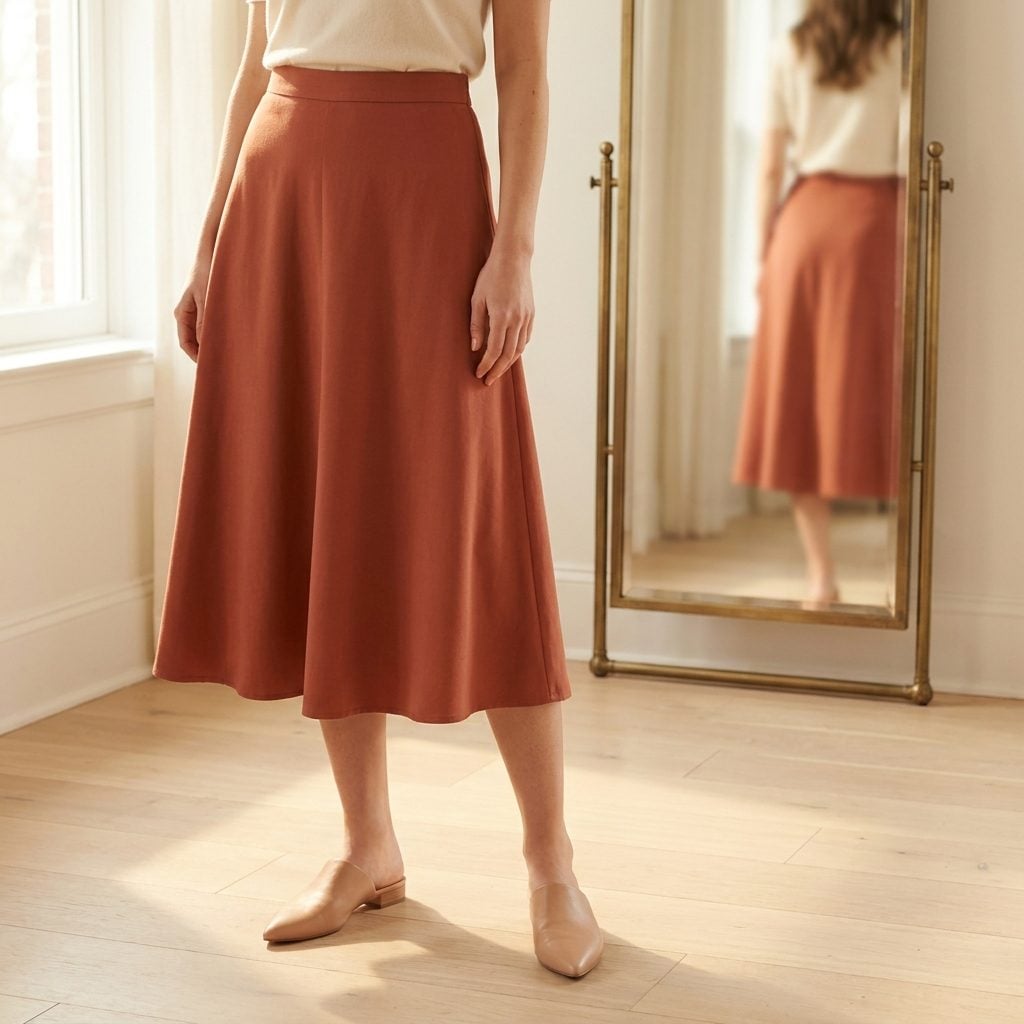
Professor George Taylor first noted the “Hemline Index” in 1926, suggesting that skirt lengths rise during prosperous times and fall during uncertainty. Source. The economics have been debated endlessly, but the underlying psychological connection between hemline and emotion hasn’t. Fashion psychologist Katherine Erskine puts it plainly: “A woman’s hemline is meant to be an indicator of confidence; it is an emotional response.”
But here’s what most people miss. The “right” hem length isn’t a fixed point on the leg. It’s the hem that creates the most flattering proportion for your specific frame, and that’s almost always determined by the one-third/two-thirds ratio. A skirt that ends at the knee might chop a petite woman exactly in half. The same skirt hemmed two inches higher, or swapped for a midi that falls below the calf, creates a dominant leg line that the eye reads as longer.
Fit research confirms this connection. When women wear clothing that highlights features they appreciate or creates flattering proportions, they experience what one researcher calls a “significant boost in body satisfaction.” Source. The spike in self-assurance from the “right” hem isn’t about the hem itself. It’s about the proportion it creates.
The Psychological Armor of Looking Taller Without Heels

Height is loaded. Decades of research in evolutionary and social psychology show that taller individuals are perceived as more authoritative, more competent, and more likely to be chosen for leadership roles. Source. That’s not fair, and it’s not something most of us consciously think about. But the bias is there, embedded deep in social cognition, operating below the threshold of awareness.
So when a simple proportional shift, a tucked blouse, a higher waistline, a pointed-toe flat instead of a rounded one, makes you appear even slightly taller, the psychological payoff goes far beyond aesthetics. It’s armor. Not the flashy, aggressive kind. The quiet kind that changes how you hold your shoulders and how quickly you speak up in a meeting.
Confidence isn’t just about appearance; it’s about how you perceive and present yourself.
Virtual reality studies have found that feeling taller leads to real-time increases in self-esteem. (Source). You don’t need to actually be taller. The perception alone shifts the internal dial. And that’s the quiet power of proportional dressing for women over 40: it’s a tool that doesn’t require discomfort, doesn’t require heels that wreck your knees by 3 p.m., and doesn’t announce itself. It just works, one-third on top, two-thirds on the bottom, and your brain fills in the rest. Alright, go try it.
The Bottom Line
The one proportion rule your brain is obsessed with is the two-thirds to one-third ratio, the same golden division that Renaissance painters used to create visual harmony, and the same split your nervous system instinctively reads as balanced, elongated, and powerful. Every outfit that felt inexplicably “off” was likely cutting your body at the halfway point instead. Tomorrow morning, before you leave the house, look in the mirror and find the two-thirds line, then build your outfit around it and notice what shifts, both in how you look and how you carry yourself through the day.