❤️ Would you like to save this?
There’s a woman at every dinner party who looks exactly right. Not overdressed, not underdressed, just right. And the unnerving thing is, you can’t immediately explain why. Her outfit isn’t louder than everyone else’s. If anything, it’s quieter. But something about the way she’s put together reads as completely, quietly authoritative.
Stylish women are doing something most people don’t realize: they’re reading every outfit in the room within seconds of arrival, picking up on signals that have nothing to do with brand names or price points. They notice fit, intention, coherence, and one very specific thing that almost nobody talks about. This is what they see. And why it tells them everything.
FYI, thanks to AI imagery software, we’re able to create very specific fashion and hairstyle examples to illustrate the points being made. In some cases, imagery is exaggerated to hammer home the point. Also, assume links that take you off the site are affiliate links such as links to Amazon. this means we may earn a commission if you buy something.
The Silent Signal Stylish Women Read Before You Even Sit Down

The moment you walk through the door, something is already being decided about you. Not your dress size, not your label, not even your lipstick shade. What’s being registered, in under three seconds, is whether your outfit has a point of view. Psychologists who study person perception have found that a 2023 review in Personality and Social Psychology Review on dress as a component of person perception, with observers rapidly inferring social identity, mental state, status, and aesthetic taste from what a person is wearing, often before a single word is exchanged.
What stylish women are actually reading, though, is something more elusive: coherence. Not coordination, not matching, but a sense that the pieces exist in conversation with each other. An outfit that has been assembled reads differently from one that has been chosen. The former has a kind of visual noise. The latter has quiet. And the women who notice these things notice them the way you notice a wrong note in a familiar song: they can’t tell you which note it was, but they heard it.
Why the Woman Who Looks Most ‘Effortless’ Spent the Most Time Thinking

Effortlessness is the most labor-intensive look in fashion. There is a reason it took you three outfit changes to land on the one that looked like you just grabbed it off the chair. The paradox has a name: in Renaissance Italy, it was called sprezzatura, the art of making difficult things appear natural and unstudied. The concept was codified by Baldassare Castiglione in 1528, but stylish women have been practicing it quietly for centuries.
What the most polished woman at the table has actually done is make all the visible decisions invisible. As fashion commentators and stylists consistently observe, achieving genuine effortlessness requires significant forethought, wardrobe editing, and a precise understanding of which elements must be in harmony. The mental work is front-loaded: into building a wardrobe where pieces already speak to each other, into knowing which shapes work before the event, into eliminating rather than adding. By the night itself, there is nothing left to think about.
That absence of visible effort is the signal. It tells every other woman in the room that this person has arrived at herself. Not that she tried and succeeded, that she already knew.
The One Outfit Element That Tells Every Woman in the Room Exactly How You Feel About Yourself

Ask any stylist what they look at first and they will pause before they answer. It is not the bag. It is not the shoes. It is the relationship between a woman’s posture and her clothes, specifically, whether she is wearing her outfit or hiding inside it.
Research published in Frontiers in Psychology found that clothing choices can be a direct reflection of how women feel about themselves, with body image strongly predicting which function a garment serves: assurance, concealment, or expression. The telling element is the waistline, or rather, the choice to define it or avoid it. Women who are in a settled relationship with their bodies tend to make a waist legible, even subtly. Women who are in conflict with their bodies tend to obscure it, not always with shapeless clothes, but with layering, tucking choices, or proportion shifts that avoid committing to a silhouette.
This is not about size or shape. It is about self-regard made visible. A woman who has arrived at herself, at any size, tends to wear her proportions with a kind of directness. That’s the element other women read, and recognize, before the entrée arrives.
What Your Accessories Are Saying When You’re Not Looking
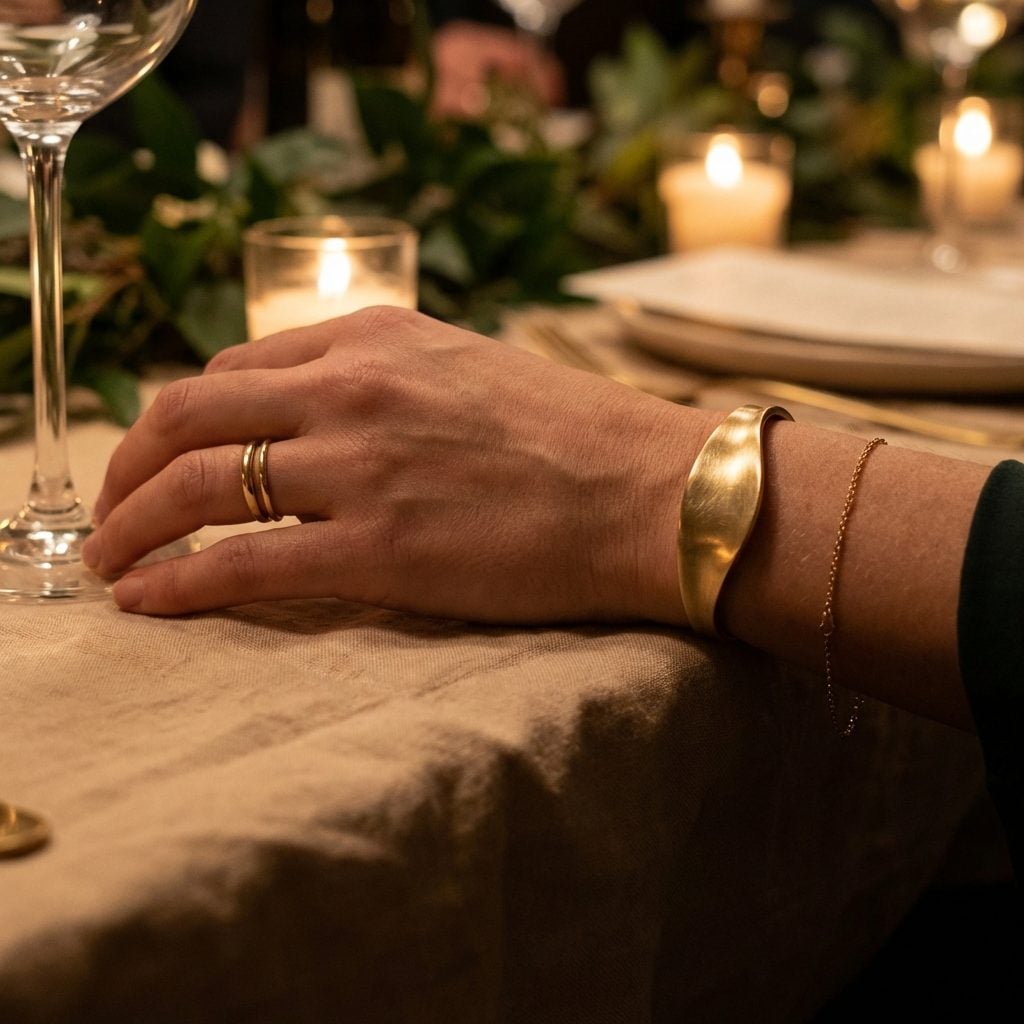
Your accessories are the part of your outfit that gives everything away, because they are chosen last and therefore chosen most honestly. The main garments can be deliberate. The bag you grabbed on the way out, the earrings you put on in the car, the rings you always wear, those are the subconscious declarations that psychologists describe as our way of asserting identity when our internal sense of self feels uncertain.
Clinical psychologist Dr. Carolyn Mair, author of The Psychology of Fashion, describes clothing choices as a feedback loop: what we wear shapes how we see ourselves, and how we see ourselves shapes what we reach for. Accessories, because they are often old, or inherited, or habitually worn, tend to reveal an earlier version of that loop. The bold statement earrings on an otherwise quietly dressed woman broadcast something she has not yet found room for anywhere else. The single meaningful ring on a hand full of nothing else whispers something she has already made her peace with.
Three things stylish women register in your accessories:
- How many there are relative to the outfit’s visual weight
- Whether they feel chosen for tonight or worn on default
- Whether they belong to the same woman as the clothes
The Psychological Reason One ‘Trying Too Hard’ Piece Cancels Out Your Entire Look

There is a psychological concept called cognitive load, and it applies to outfit reading the same way it applies to everything else the brain is asked to process. When every element of an outfit is calibrated, the brain moves through it smoothly and forms a coherent impression. When one element demands more attention than the rest, too much shine, too high a heel for the occasion, a bag that belongs to a different social moment, the brain stalls. The impression fragments.
The piece does not add to the outfit. It asks a question the rest of the outfit cannot answer. Why is this here? And once that question is raised, the whole look becomes something to solve rather than something to absorb. This is why a things about getting dressed that confuses even seasoned dressers: you can wear all the right pieces individually and still end up with a look that reads as effortful. The problem is rarely any single element in isolation. It is the relationship between the one piece that is trying and the rest of the outfit that is not.
Why the Outfit You Almost Wore Would Have Been Better
This one will sit with you.
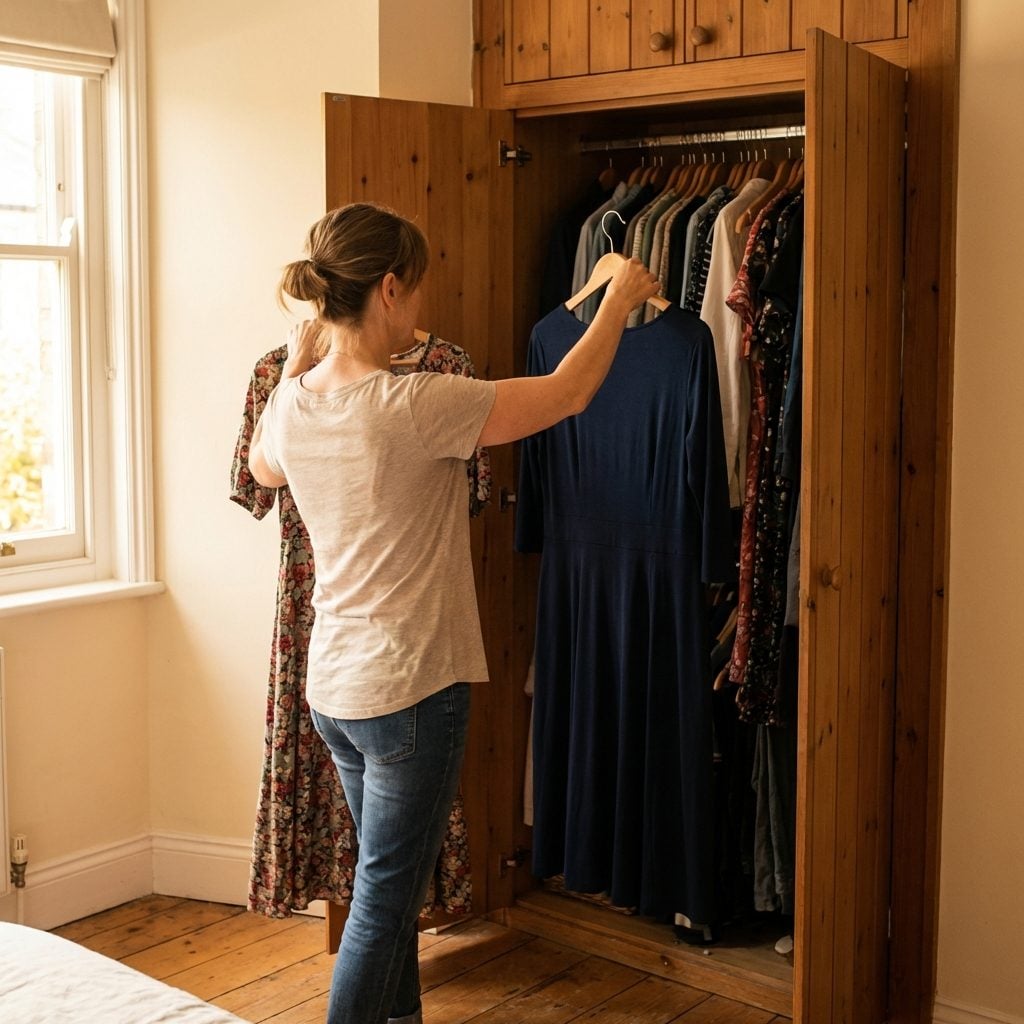
The outfit you rejected, the one you held up, almost put on, then hung back because you weren’t sure, was almost certainly closer to right. The reason: first instinct in dressing reflects your actual self-image, before the social anxiety of the occasion rewrites it. The second, third, and fourth options tend to be chosen from fear rather than desire. Fear of being overdressed. Fear of standing out. Fear of wearing something that asks the room to see you in a specific way.
Adam and Galinsky’s foundational work on enclothed cognition established that clothes carry symbolic meaning, and that meaning changes how the wearer thinks and behaves. What that implies for the rejected outfit is significant: the dress you almost wore would not just have looked different. It would have made you act differently. More settled in yourself. Less available for the low-level social management that comes from wearing something you’re not entirely sure about.
The backup outfit is chosen by your anxiety. The first choice is chosen by your taste. And taste, at a dinner table full of stylish women, is the only currency that actually holds.
The Color You Chose Tonight Is Broadcasting Something You Didn’t Mean to Say

Color in fashion is not decoration. It is language. And like most languages, you speak it most fluently when you are not thinking about it, which is exactly when you say things you didn’t plan to.
Psychologists describe a phenomenon called mood-congruent dressing: the colors we reach for reflect our internal state, even when we consciously believe we are making an aesthetic choice. When you are depleted, you reach for darker, more enveloping colors. When you are seeking approval, you tend toward safer, more neutral tones. When something in you wants to be seen, you find yourself pulling out the red, or the cobalt, or the unexpected emerald that has been hanging unchosen for months.
Color psychology research consistently shows that warm tones like red signal energy and dominance, while cool tones such as navy communicate composed authority. The women across the table from you are reading this. They may not name it. But when you walked in wearing black on a night when you are usually in color, they felt the shift before they could articulate why.
What Stylish Women Actually Mean When They Say ‘You Look Amazing’

“You look amazing” is the fashion equivalent of “I’m fine.” It is almost never about the dress.
What is actually being registered, and left unsaid, is something closer to: You look like you know who you are tonight. Stylish women do not compliment the pieces, they respond to the gestalt. The specific, involuntary thing that makes a woman look right at a dinner party is not her shoes or her blowout or even her proportions. It is the absence of self-consciousness. The sense that she dressed and then forgot about it.
This connects directly to what psychologists call the confidence-competence loop. Research on clothing fit and self-evaluation has found that when a garment aligns with a woman’s self-concept, it reduces self-discrepancy, the gap between who she is and who she feels she should appear to be. When that gap narrows, the physical signals change: posture opens, eye contact steadies, the voice carries differently. None of this is about confidence as a performance. It is confidence as a state. And stylish women clock the state, not the performance.
“You look amazing” is their way of saying: you closed the gap tonight.
The Fit Detail That Separates Women Who Know Themselves from Women Who Don’t, Yet
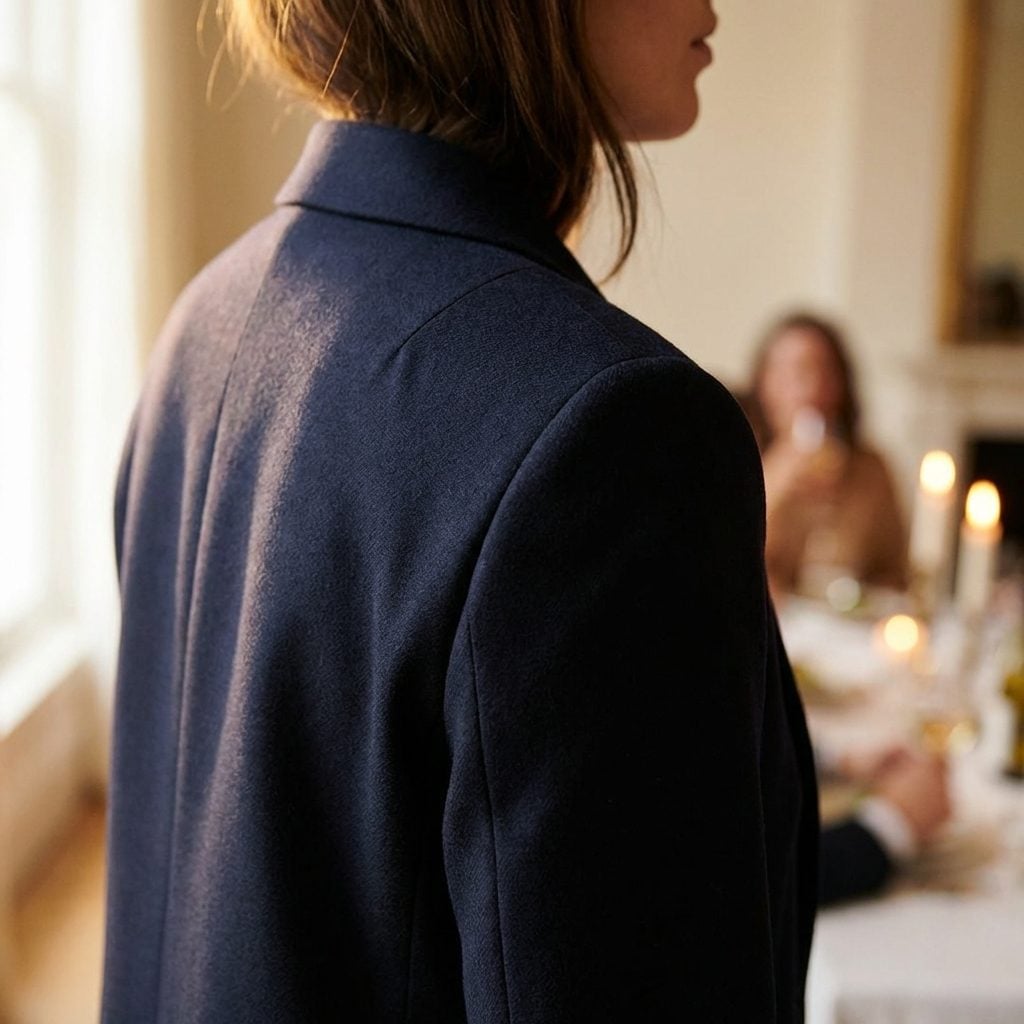
It is the shoulder seam. Always the shoulder seam.
When a garment’s shoulder seam sits exactly where a woman’s shoulder ends, not drooping past it, not pulling toward the neck, the entire silhouette resolves. Everything below a correctly set shoulder hangs the way the designer intended. Everything below an incorrectly set shoulder fights the body underneath it. You can have the most expensive, most considered outfit in the room, and if the shoulder seam is a centimeter off, the clothes look borrowed.
A 2024 study examining fit factors and self-evaluation found that clothing fit characteristics directly influence self-schema, body satisfaction, and self-esteem, with garments that match a woman’s self-concept producing measurably different psychological outcomes than those that don’t. What that means, practically: a woman who has been tailoring her clothes, or buying with fit as her primary criterion, doesn’t just look different. She carries herself differently, because the gap between her actual body and her dressed body has closed.
Women who know themselves have usually learned this the hard way, through the decade of ‘s that made perfect sense at the rack but fell apart on the body. The shoulder seam is where that knowledge shows.
Why the Most Powerful Woman at the Table Is Almost Never the Most Dressed

There is a well-documented phenomenon in the psychology of status signaling: the most secure people have the least need to signal. Psychologists describe this as “secure high status”, a deep confidence in one’s position that eliminates the need for constant material reassurance. In fashion terms, it produces the quietest woman in the room.
She is wearing good fabric and almost nothing else. No visible logo. No statement piece. No look-at-me moment. Her cashmere sweater is the color of warm stone and fits without commentary. Her trousers have a single, perfect break at the ankle. Research into inconspicuous luxury consumption has found that status is increasingly signaled through subtle markers identifiable only to those with the cultural capital to decode them, a shift from logos to knowledge, from visibility to fluency.
The most dressed woman at the table is often the most anxious. The least dressed woman, if she is dressed with precision, is almost certainly the most arrived. She has nothing to announce. She already knows.
The most stylish women at any dinner party instinctively clock whether your outfit looks chosen or assembled, whether the pieces have a coherent point of view, or whether you simply got dressed. What they notice, and never mention, is that the women who look most effortlessly right aren’t wearing more. They’ve just removed the one thing that was trying too hard.
The Subconscious Reason You Keep Reaching for the Same Outfit for Every Social Event
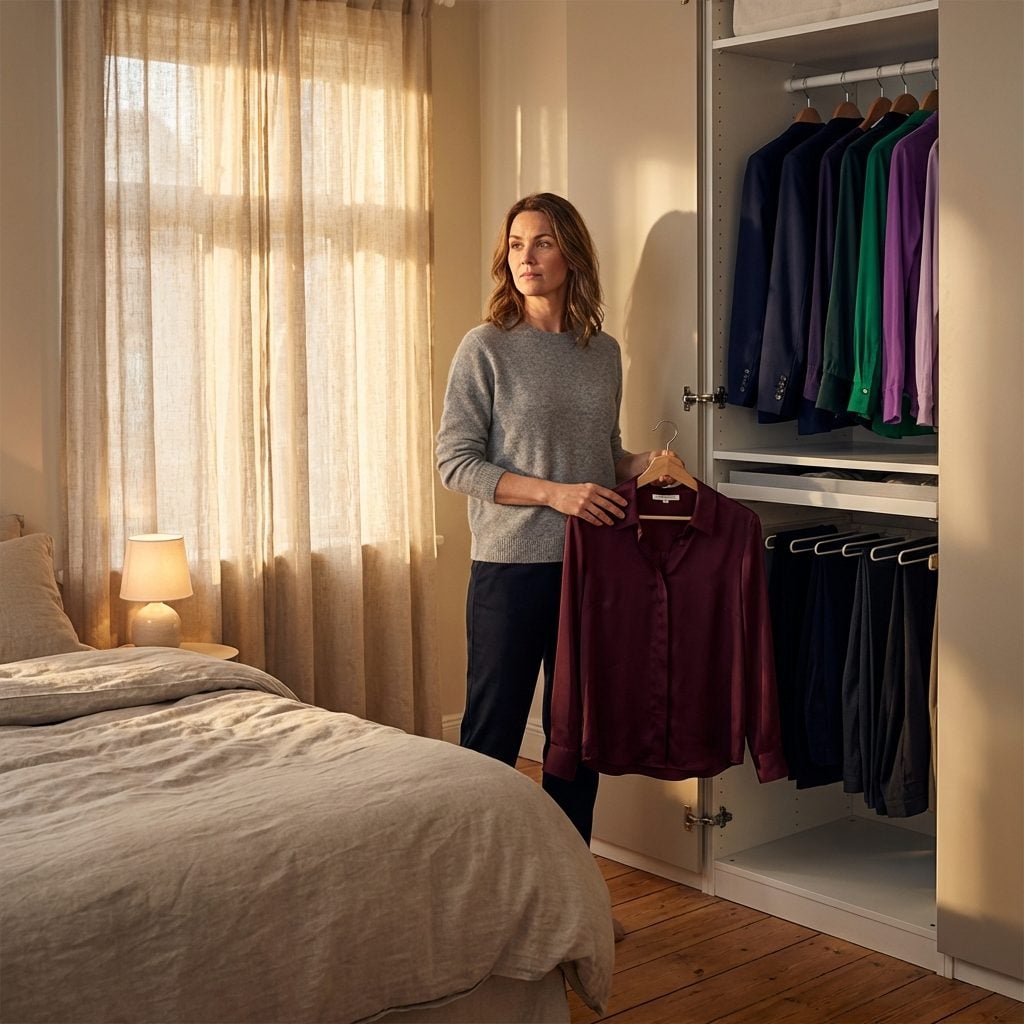
There’s a name for it. Fashion psychologist Dr. Dawnn Karen calls it repetitious wardrobe complex, the pattern of returning to the same outfit not out of laziness, but as a form of psychological self-regulation. According to a breakdown of enclothed cognition types by fashion psychologist Dr. Dawnn Karen, dressing in the same outfit repeatedly can be a strategy to increase productivity and reduce anxiety by borrowing confidence from a past success. Your brain remembers how you felt in that outfit, poised, at ease, yourself, and it wants that feeling again.
The instinct makes complete sense. Clinical research on clothing and mental health notes that people dealing with anxiety will often gravitate toward repetitive outfit choices as a way of reducing the threat of social exposure. The familiar outfit functions less like a style decision and more like a security object. What’s worth examining, though, is whether the outfit you keep reaching for is actually the best version of you, or just the safest one. There’s a difference, and stylish women at a dinner party can feel it.
What the Absence of Jewelry Communicates, and Why It’s Louder Than You Think
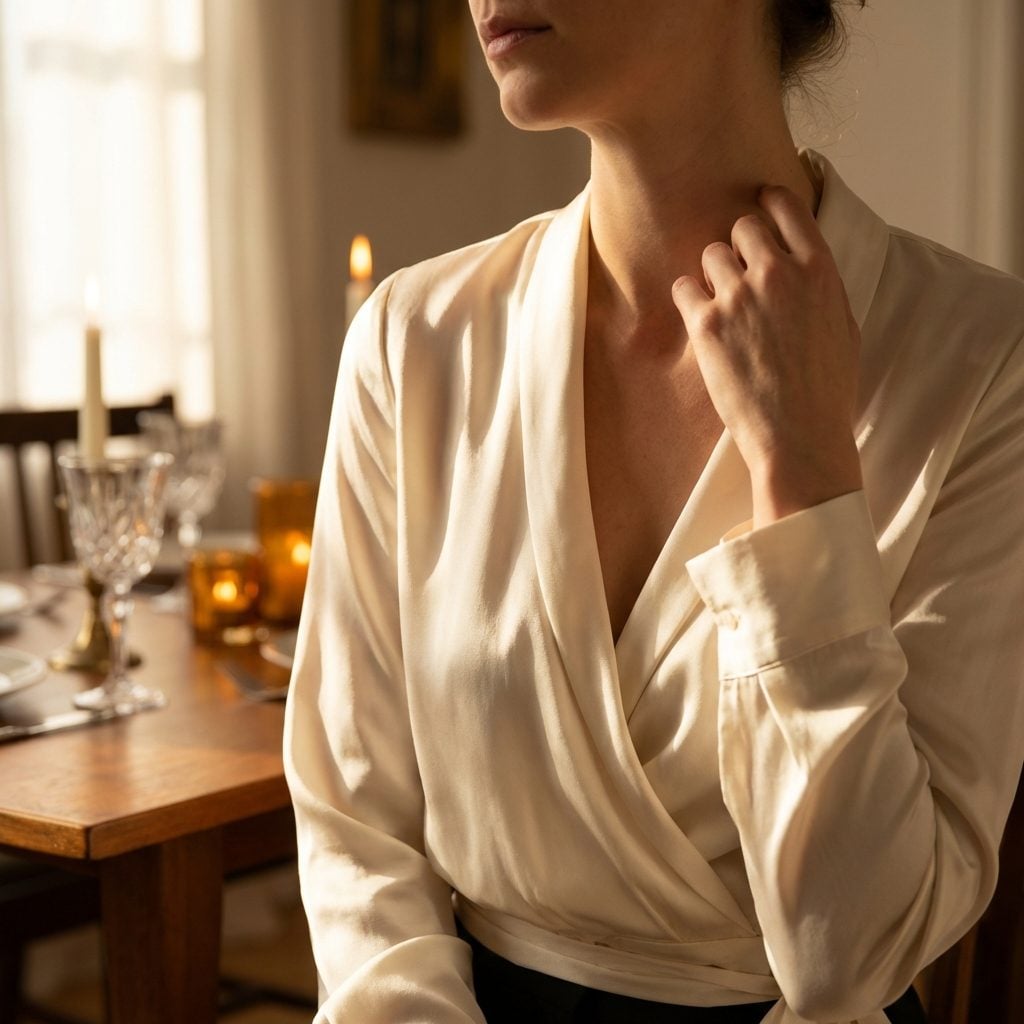
Accessories are not decoration. They are, in the language of nonverbal communication, what researchers call artifacts, the deliberate signals we attach to our bodies to convey identity, status, and intent. Communication scholars studying nonverbal behavior describe clothing and jewelry as static extensions of personal identity that operate continuously in social environments, whether the wearer is speaking or not.
When jewelry is entirely absent, that signal doesn’t go quiet. It gets louder. A bare neck, no earrings, no watch, nothing on the wrist, reads in a room full of perceptive women as either deeply intentional minimalism or an outfit that simply didn’t get finished. The difference lies in everything else: posture, the weight of the fabric, the precision of the fit. Intentional bare is one of the most sophisticated moves in a stylish woman’s repertoire. But unintentional bare looks like something was forgotten on the nightstand. The eye goes looking for a focal point and finds none, which becomes its own kind of focal point.
The Psychological Moment Every Stylish Woman Recognizes in Someone Else’s Outfit
❤️ Would you like to save this?
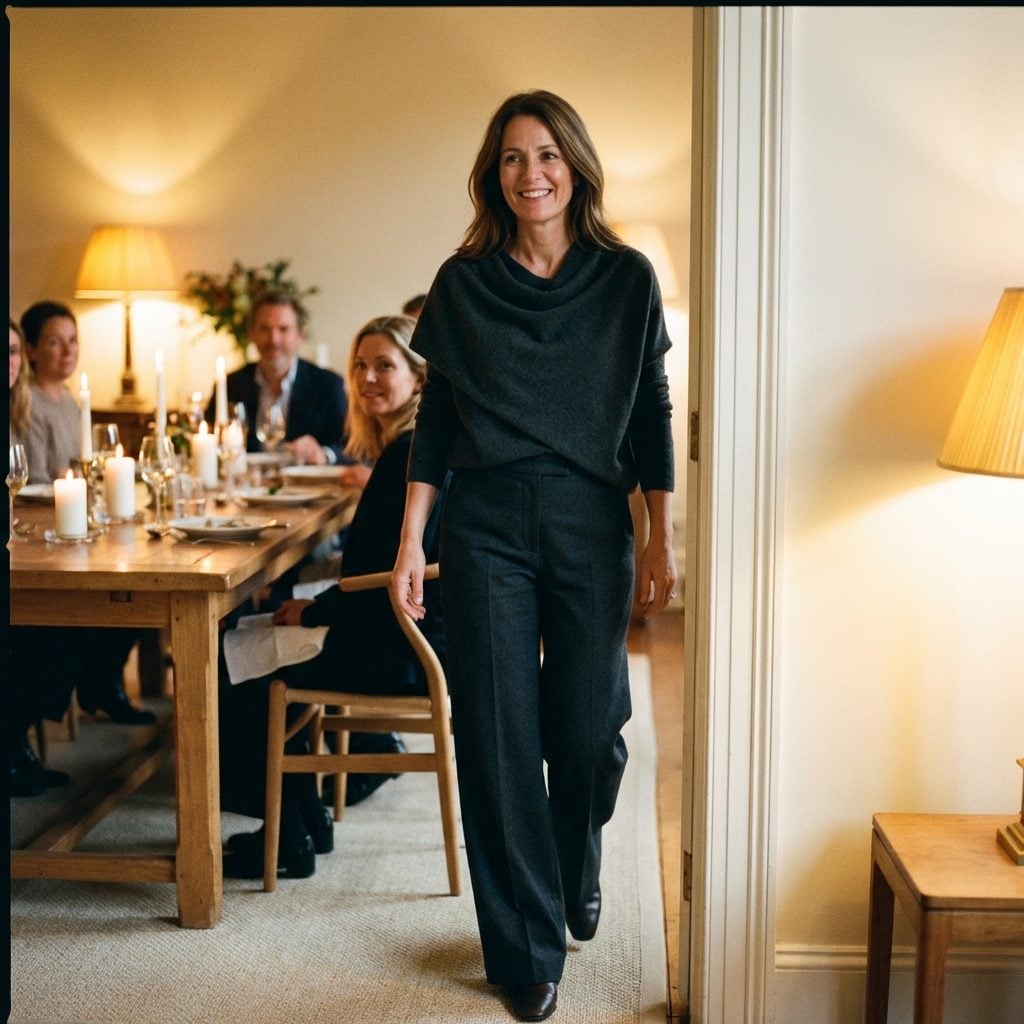
It happens in under three seconds. The moment someone walks through the door and the room, without deciding to, registers whether this person chose their outfit or assembled it. Psychologists who study person perception describe this as part of the broader first-impression mechanism: we categorize, evaluate, and assign social meaning to appearance almost instantaneously, and a 2023 review in Personality and Social Psychology Review on dress as a component of person perception confirms that dress is among the very first signals processed when meeting someone new.
What stylish women specifically recognize, and this is the part no one says out loud, is the decision point in an outfit. They can see where you stopped caring. The dress that fit perfectly but got paired with the wrong shoes because it was getting late. The jacket that was added at the door for warmth, not intention. It’s not a judgment so much as an involuntary read. People fluent in style notice coherence the way readers notice a grammar error: not critically, just immediately.
Why Your Brain Reads ‘Coherence’ as Confidence Before Your Host Has Poured a Single Glass

The concept is embedded in Adam and Galinsky’s foundational 2012 enclothed cognition research, which established that the symbolic meaning of clothing shapes not only how wearers feel, but how observers interpret them. An outfit with a coherent point of view communicates that the person inside it has made decisions, and people who make clear decisions read, neurologically, as people in control.
Coherence isn’t about matching. It’s about resolution. An outfit is coherent when the pieces appear to have been chosen in conversation with each other, when the proportion of the trouser relates to the volume of the top, when the shoe grounds the palette rather than fighting it, when the accessories feel chosen rather than applied. The brain processes this visual harmony as a proxy for competence. It’s the same mechanism that makes us trust a well-organized desk or a precisely set table. Order signals agency. And at a dinner party, where social assessment runs quietly beneath every glass of wine, agency is everything.
The Comfort Compromise That Stylish Women Can Spot from Across the Room

You know the one. The shoes that were practical, not intentional. The blazer worn over a dress it wasn’t meant to be worn over, because the evening turned cold. The waistband that was easier than the trouser that would have looked better. These are comfort compromises, and research on the relationship between clothing and the nervous system confirms that restrictive or unfamiliar clothing genuinely increases cortisol, so the impulse to default to comfort has real physiological roots. You’re not imagining the tension in a dress that doesn’t quite fit your evening.
The problem isn’t the choice itself. It’s the hesitation it broadcasts. Fashion psychology research notes that sacrificing comfort for style leads to reduced confidence, while focusing solely on comfort in a context that calls for considered dressing can leave someone feeling misaligned. The sweet spot, an outfit that’s both physically and psychologically comfortable, is what produces the ease that reads as confidence. A visible comfort compromise looks exactly like what it is: a negotiation the wearer didn’t fully win.
What Wearing Something New to a Dinner Party Does to Your Nervous System
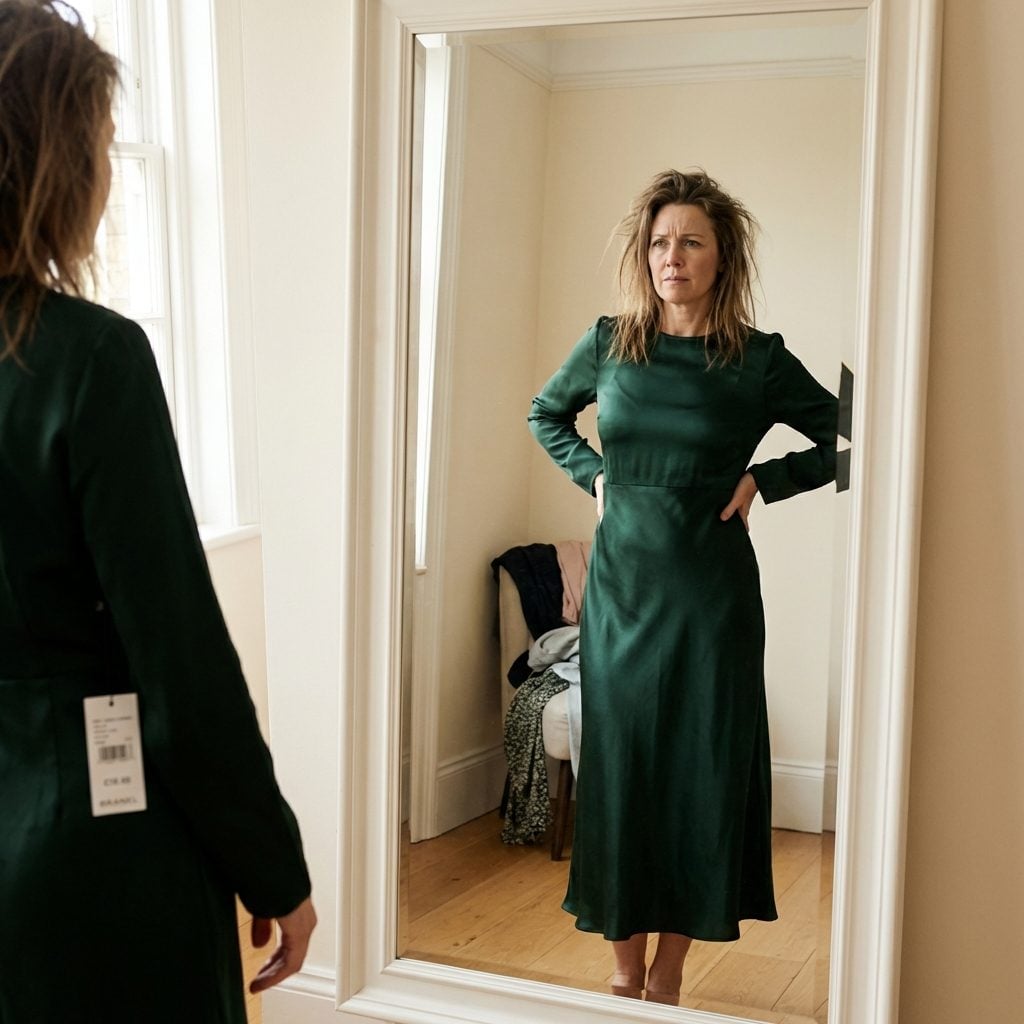
The ritual of wearing something new to a social event is genuinely physiological. Your nervous system registers novelty as a form of low-grade uncertainty, and UCL anthropologist Daniel Miller’s extensive ethnographic research on fashion and anxiety found that fears and uncertainties around clothing choices are a near-universal daily experience for women, particularly acute when the social stakes feel higher.
There are two distinct psychological directions this can go. Wearing something new you’ve already tried on, moved in, and made peace with produces a low hum of excitement, novelty plus security, the best combination. But wearing something new that you haven’t fully tested, something that requires adjustment or monitoring, routes cognitive resources away from social presence and into body surveillance. You become partially occupied by your own outfit.
The link between well-fitting clothing and reduced cortisol is well-documented, comfortable, familiar fabrics physically lower stress hormone levels. Which means the truly elegant move isn’t to wear the oldest thing in your wardrobe, but to have already broken in whatever you’re wearing. New to the room. Not new to your body.
The Invisible Line Between a Statement Piece and a Cry for Attention
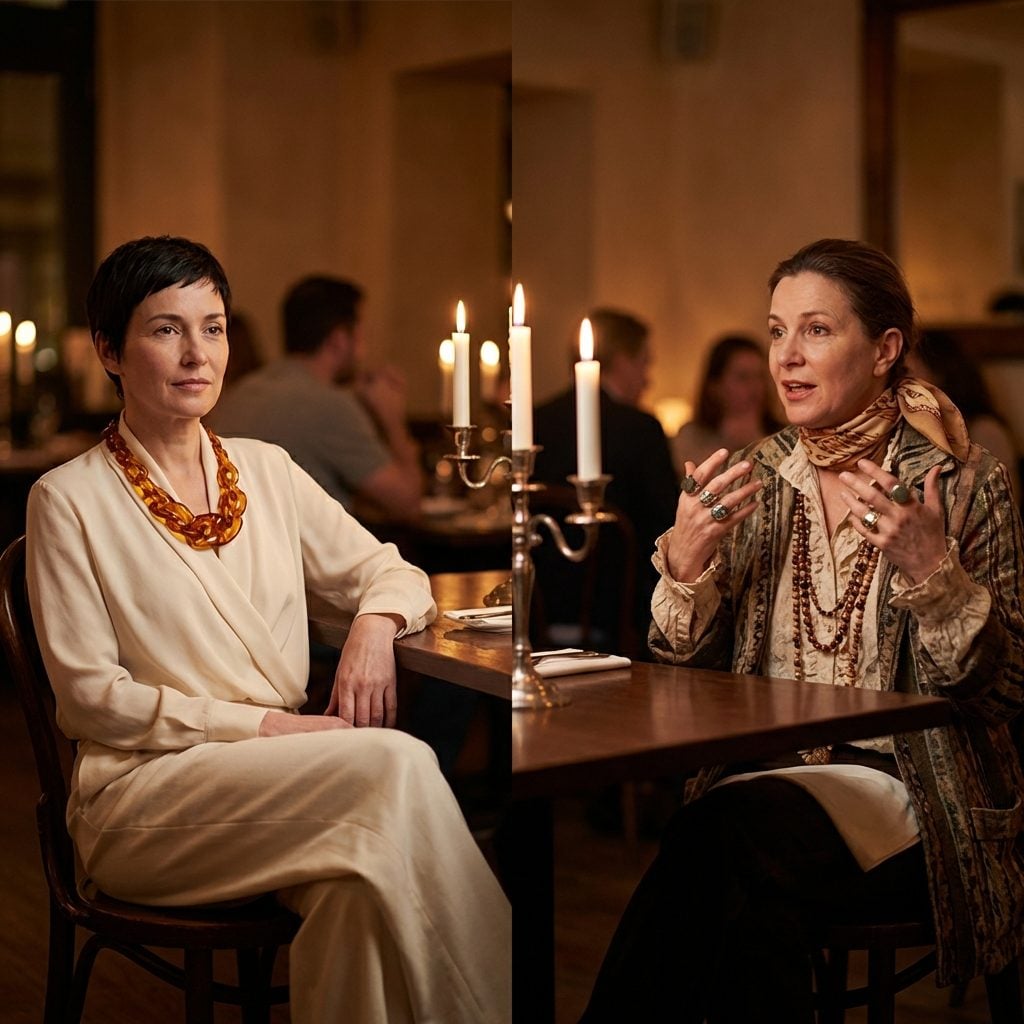
The line is real, and it lives almost entirely in the psychology of intention. A statement piece, a sculptural oversized resin earring, an architectural structured leather clutch in an unexpected color, a single striking ring, does its work and then stands down. It adds a point of interest to an outfit that already has a coherent voice. The piece is in service of the whole.
A cry for attention operates differently. It arrives before the rest of the outfit has been resolved, compensating for uncertainty, filling a gap where confidence should be. Fashion psychologist Dr. Carolyn Mair has noted in her work on fashion and identity that bold dressing from a place of security reads entirely differently than bold dressing from a place of need. The garments can be nearly identical. The psychological signal they broadcast is not. Stylish women pick up on this not because they’re unkind, but because they’re fluent in the language. The principle holds across fashion psychology writing: one intentional bold piece, supported by a considered outfit, communicates taste. Multiple bold pieces competing for dominance communicate something else entirely.
Why the Women Who’ve Stopped Trying to Impress Everyone Always Look the Most Impressive
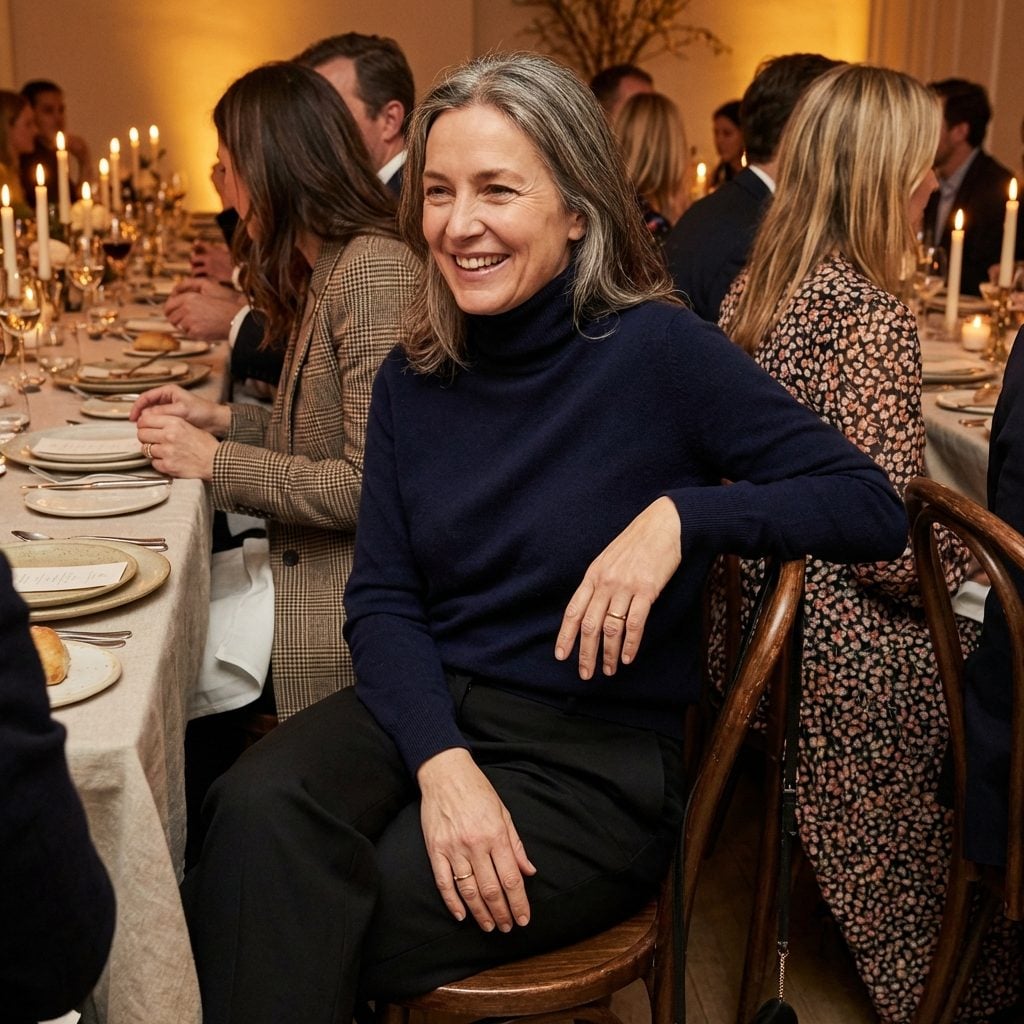
This is perhaps the most counterintuitive thing about dinner party dressing, and the one that things about getting dressed changes most profoundly with age. Women who’ve stopped dressing for a room and started dressing from themselves carry a quality that has no direct name in fashion vocabulary. It’s closer to what psychologists call self-concept clarity, a stable, confident internal sense of who you are that doesn’t shift under social pressure.
The research backs up what the eye already knows. Psychology research on clothing and identity consistently finds that wearing what aligns with your authentic self reinforces self-worth and projects genuine confidence, not performed confidence, which exhausts itself by the second course. Women in their forties and beyond who’ve built that alignment wear it visibly. The outfit doesn’t try to explain itself. It simply arrives, coherent and settled, the way the woman inside it is.
“In a world that often prioritizes convenience over care and trends over timelessness, reclaiming elegance is a way of standing out, not for attention, but for authenticity.”
The Subtle Power Move Hidden in What Stylish Women Choose NOT to Wear

Restraint is the hardest skill in dressing. Anyone can add, the practiced move is knowing what to leave out. The enclothed cognition framework established by Adam and Galinsky proposes that what we wear carries symbolic meaning, but the corollary, less often discussed, is that what we deliberately don’t wear carries meaning too. The missing belt. The necklace left on the dresser. The heel swapped for a flat at exactly the right moment. These are not concessions. They are decisions.
The most stylish women at any dinner party instinctively clock whether your outfit looks chosen or assembled, whether the pieces have a coherent point of view, or whether you simply got dressed. What they notice, and never mention, is that the women who look most effortlessly right aren’t wearing more. They’ve just removed the one thing that was trying too hard.
The Bottom Line
Here it is: what stylish women notice immediately, and never say, is whether your outfit is a conversation with yourself or a performance for the room. They can feel the difference before you’ve said a word, because coherence between who you are and what you’re wearing radiates in a way that no amount of expensive pieces or careful trend-following can fake. Tonight, before you get dressed, ask yourself one question: am I wearing this for me, or am I wearing it for a version of me I’m hoping they’ll believe?