❤️ Would you like to save this?
You step outside in your favorite summer outfit, feeling great. Then a photo surfaces and you barely recognize yourself. The culprit isn’t your body. It’s the clothes. Certain cuts, fabrics, and proportions act like a fun-house mirror, visually packing on ten or more pounds that simply aren’t there. The frustrating part? Most of these mistakes are incredibly common, and almost all of them have a simple fix once you know what to look for.
We broke down 29 of the most frequent warm-weather styling missteps that add bulk, shorten your frame, or erase the shape you actually have. Each one comes with a moodboard showing exactly what the mistake looks like in action, so you can spot it in your own closet before your next mirror check.
FYI, thanks to AI imagery software, we’re able to create very specific fashion and hairstyle examples to illustrate the points being made. In some cases, imagery is exaggerated to hammer home the point. Also, assume links that take you off the site are affiliate links such as links to Amazon. this means we may earn a commission if you buy something.
29. The Boxy Oversized Top That Swallows Your Waistline Whole
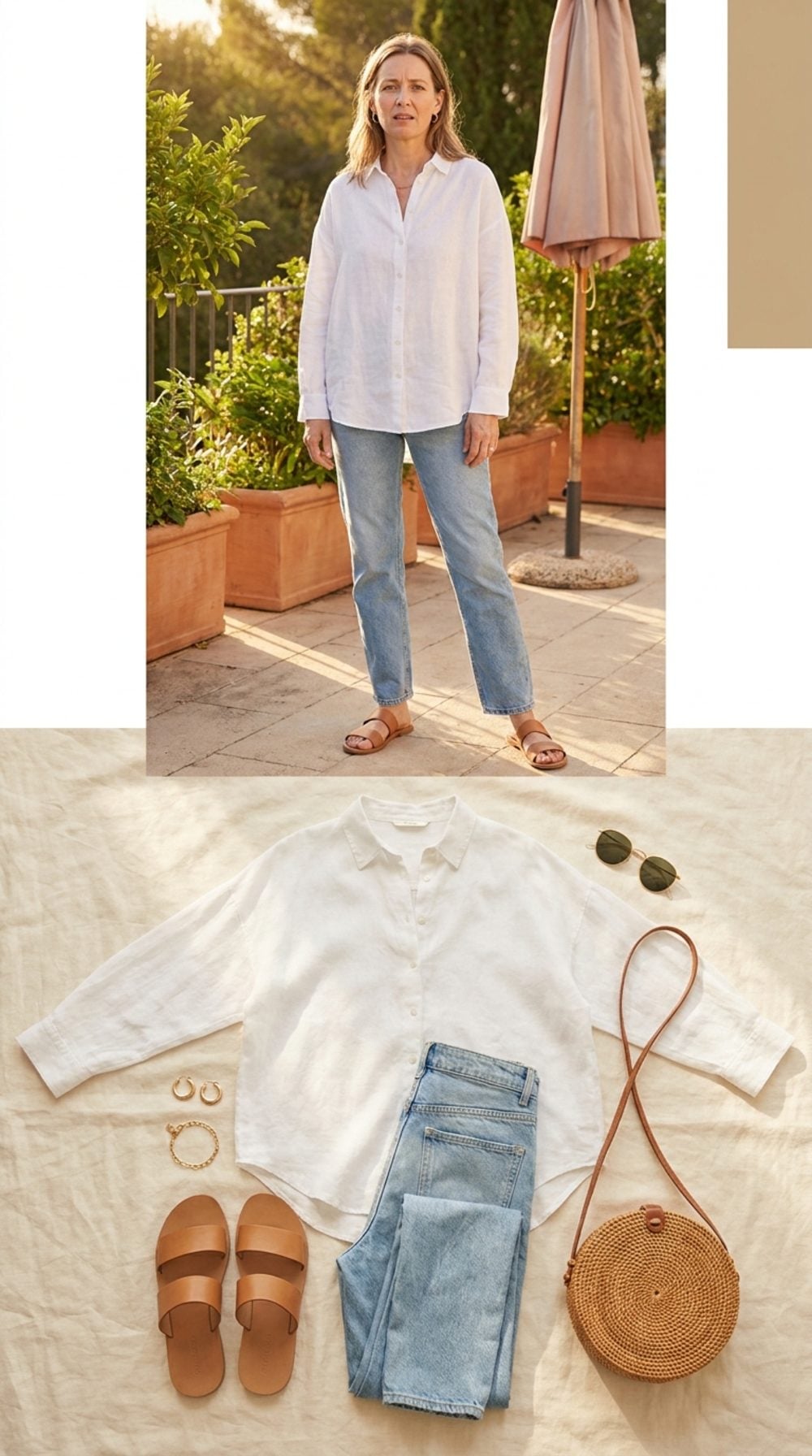
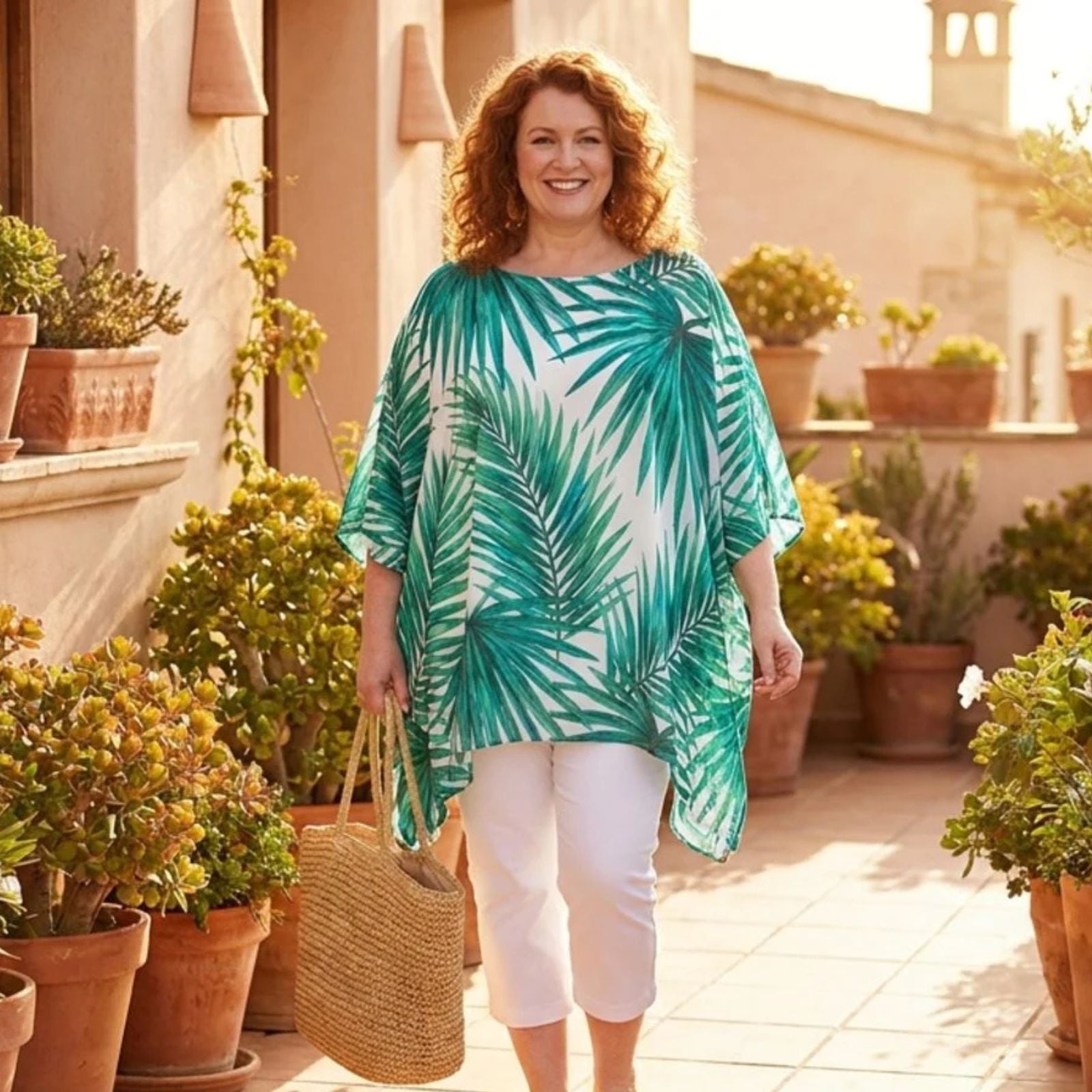
That relaxed linen top feels like freedom, but the rectangle it creates from shoulder to hip is doing you zero favors. When fabric hangs straight from the widest point of your bust with no acknowledgment that a waist exists underneath, your eye reads the entire torso as one solid block. The visual weight isn’t about actual pounds. It’s about geometry.
Notice how the oversized linen top in this moodboard balloons outward at the sides, catching air like a sail. Every inch of extra fabric between your body and the garment’s outer edge registers as you. A simple half-tuck or a thin leather belt cinched at the natural waist would interrupt that wide column instantly.
28. Capri Pants That Slice Your Leg at the Worst Possible Spot
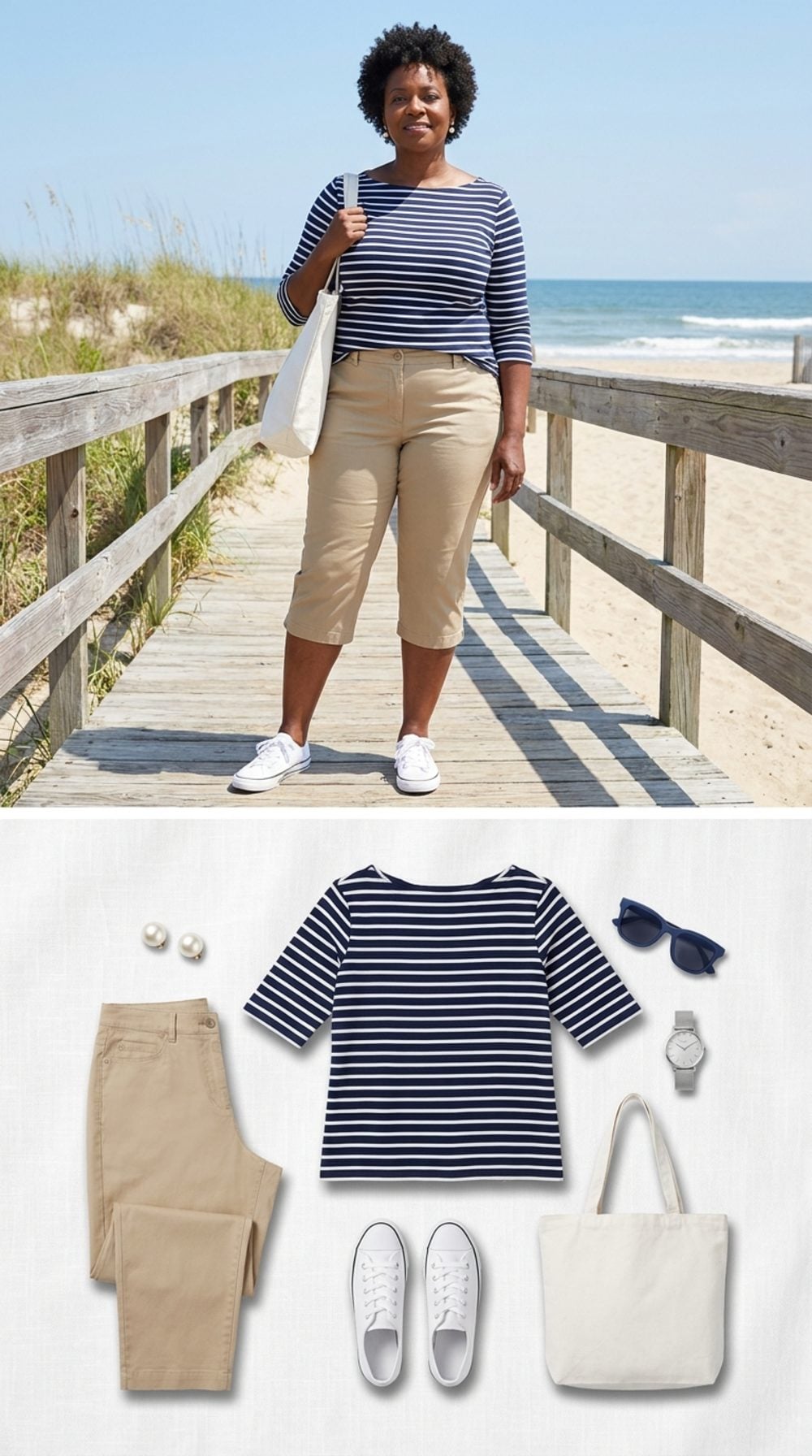
The mid-calf crop is the optical illusion nobody asked for. Your calf muscle reaches its widest circumference right around the spot where capris end, and that horizontal hem line acts like an arrow pointing directly at it. Instead of one long, continuous leg line from hip to ankle, you get two stubby segments.
This moodboard shows exactly the problem: a khaki capri pant ending three inches below the knee, paired with a striped top that adds its own horizontal noise. The result? A compressed lower half that makes the whole frame look shorter and wider. A cropped pant hitting just above the ankle bone gives you the breeze of summer with about four extra visual inches of leg.
27. The Tunic-Over-Leggings Combo That Adds a Full Dress Size on Sight
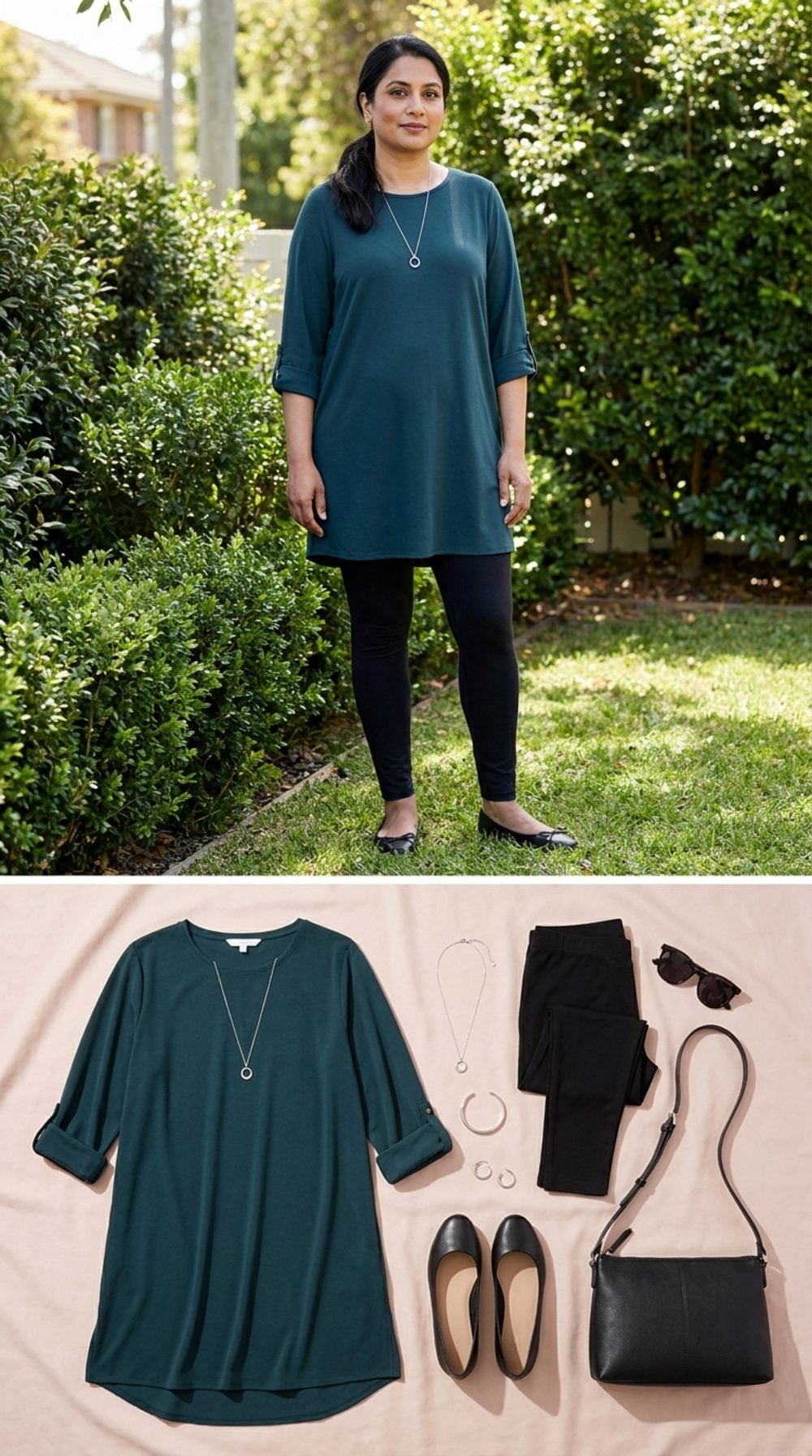
This is the outfit equivalent of giving up. I know that sounds harsh, but hear me out: a long tunic dropping past the hip paired with skin-tight leggings creates a silhouette that’s all top, no proportion. The generous volume above meets the compressed leg below, and your brain reads the contrast as “big torso, thin legs” which paradoxically makes the upper body look even larger.
The issue isn’t the tunic or the leggings individually. It’s the ratio. When 70% of your visible outfit is loose fabric and 30% is second-skin, the loose part dominates. A tunic hemmed to just below the hip bone, combined with a straight-leg pant that echoes some of that volume below, would balance the whole story.
26. Tent Dresses with Zero Waist Definition: Comfort at a Visual Cost
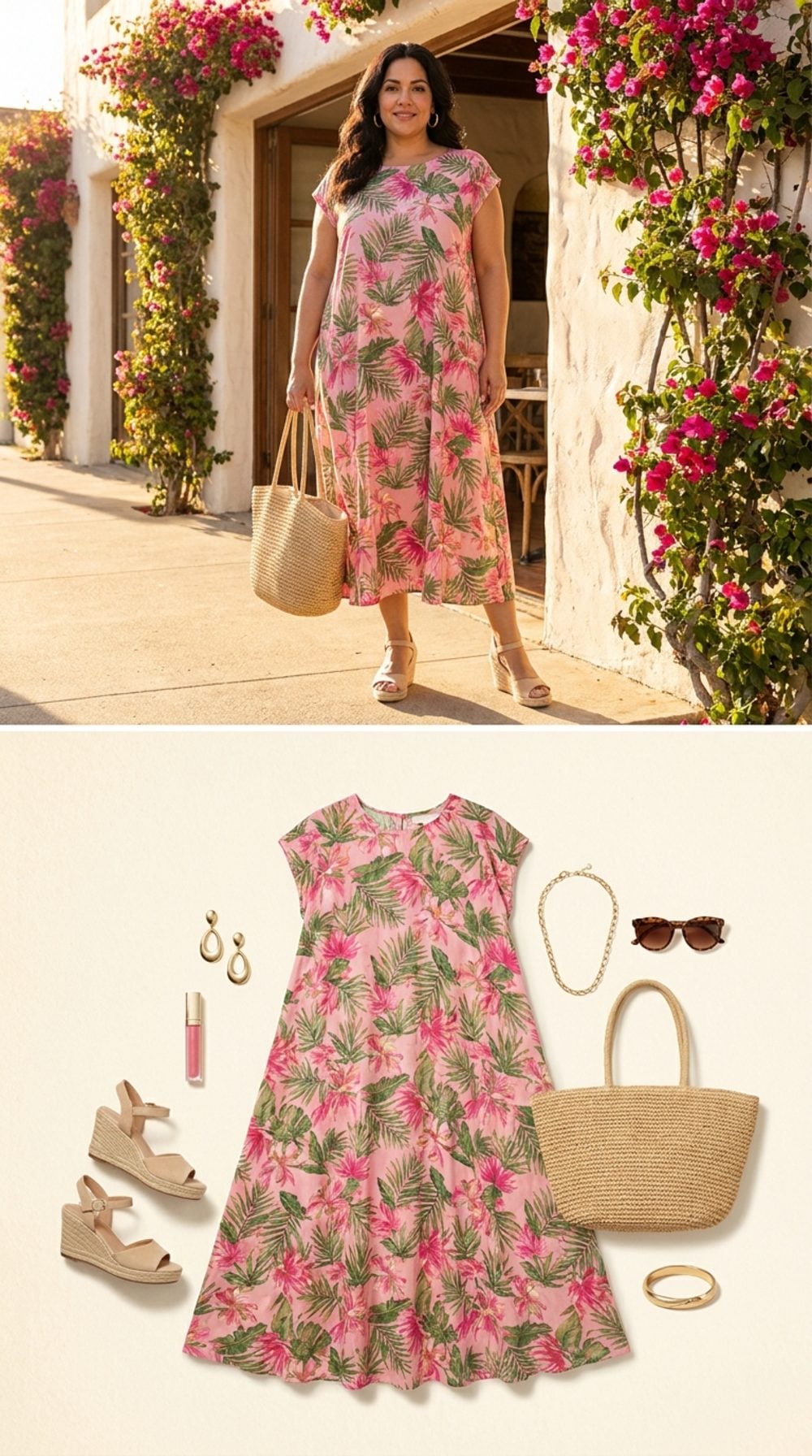
Shapeless shift dresses that fall from shoulder to knee in one uninterrupted A-line feel like the kindest thing you can do for your body on a 90-degree day. But that unbroken triangle of fabric is quietly adding visual mass at every level. Without a single point of interruption, the widest point of the dress becomes the assumed width of your body.
Look at the floral shift dress in this moodboard. The busy print compounds the problem because your eye can’t find a resting point. It scans the entire surface area and registers all of it as volume. A wrap dress or even this same dress with a woven raffia belt at the waist would create a figure-eight silhouette that communicates shape rather than size.
25. Bermuda-Length Shorts That Widen Every Thigh They Touch
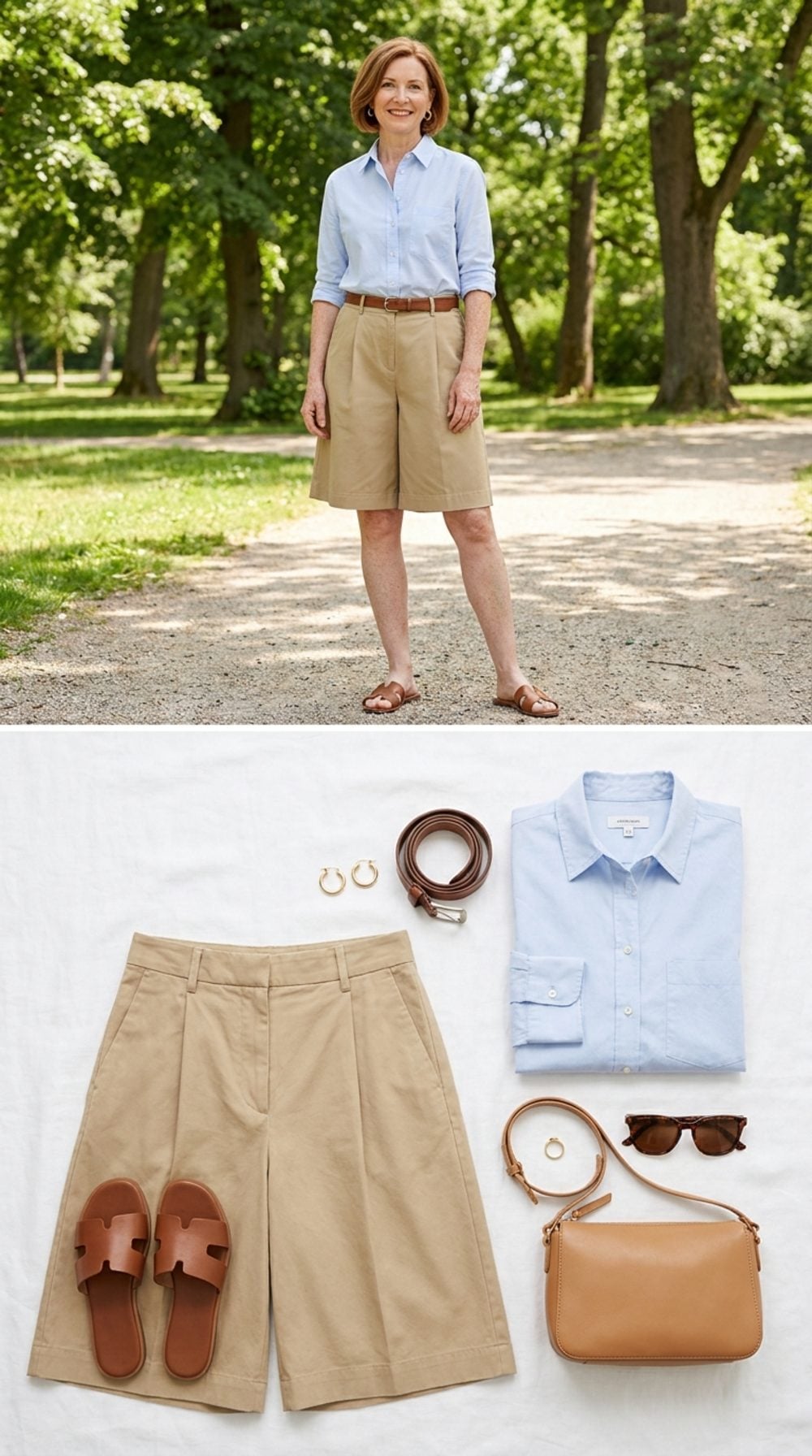
There’s a specific length of shorts that functions like an optical widening tool, and it falls right around mid-thigh to just above the knee with a generous leg opening. Bermuda shorts in a stiff cotton or cargo fabric that gape outward from the thigh create a boxy lower half that reads as heavier than you actually are.
The culprit in this moodboard is volume in the wrong place. Those khaki bermuda shorts stand away from the leg, and the wide hem opening creates a second horizontal line that cuts the thigh at its broadest. A 5-inch inseam with a slightly tapered leg would show more skin, yes, but it would also reveal the actual shape of your leg rather than hiding it behind a curtain of fabric.
24. Low-Rise Bottoms That Bisect Your Midsection at Its Softest
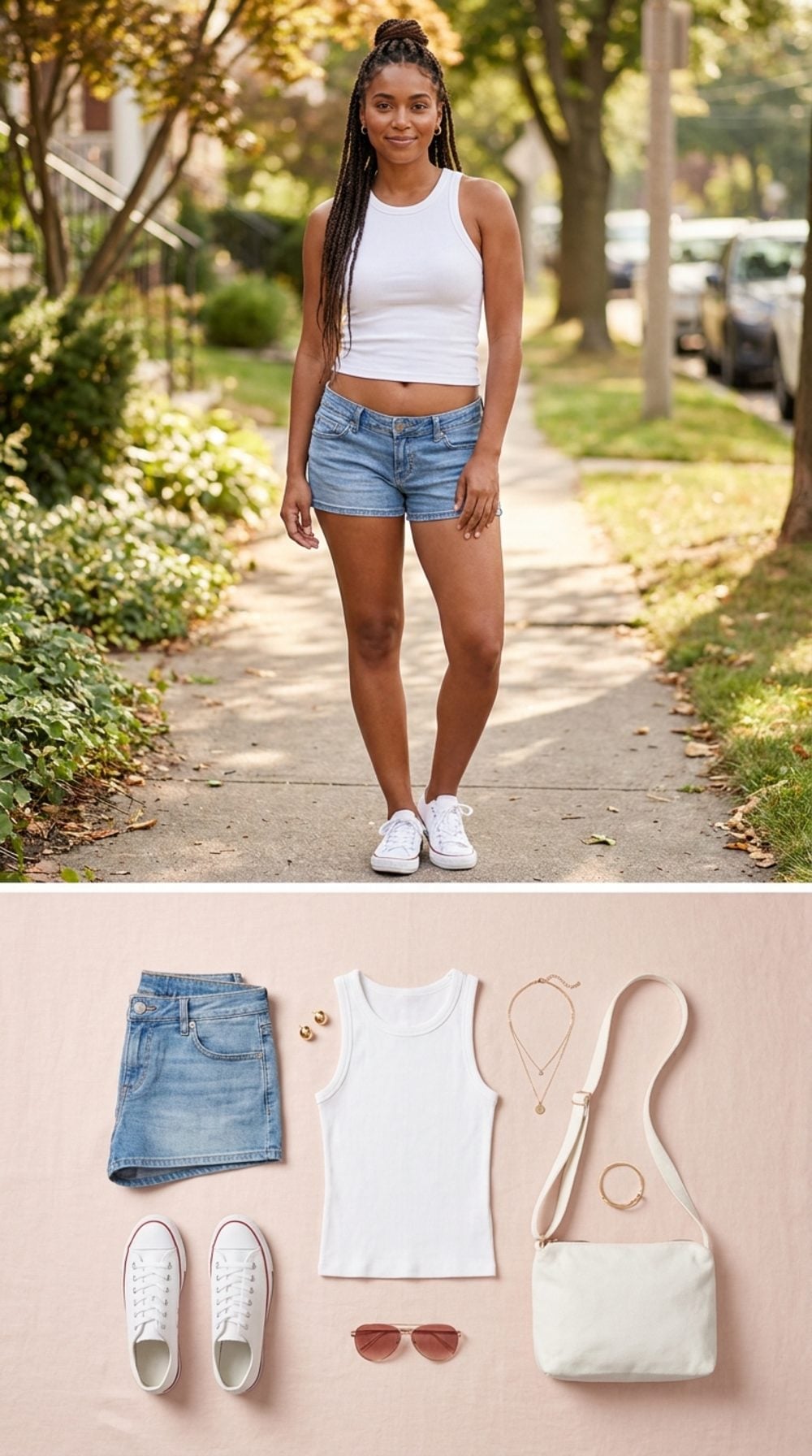
Here’s the physics of it: a low-rise waistband creates a shelf. It pushes the softest tissue of your lower belly upward and outward over the band, and suddenly you have a visible roll that wouldn’t exist in a mid-rise or high-rise pant. The waistband itself becomes a frame around the exact area most women over 40 would rather not spotlight.
This moodboard tells the whole story. The low-rise denim shorts sit a full three inches below the navel, and the fitted tank top above ends right where the muffin top begins. Two garments conspiring to draw every eye to one trouble spot. A mid-rise with the same look would sit at the narrowest part of the torso and create a flat, clean line from waist to hip.
23. When Your Hem Hits the Widest Part of Your Hips, Everything Expands
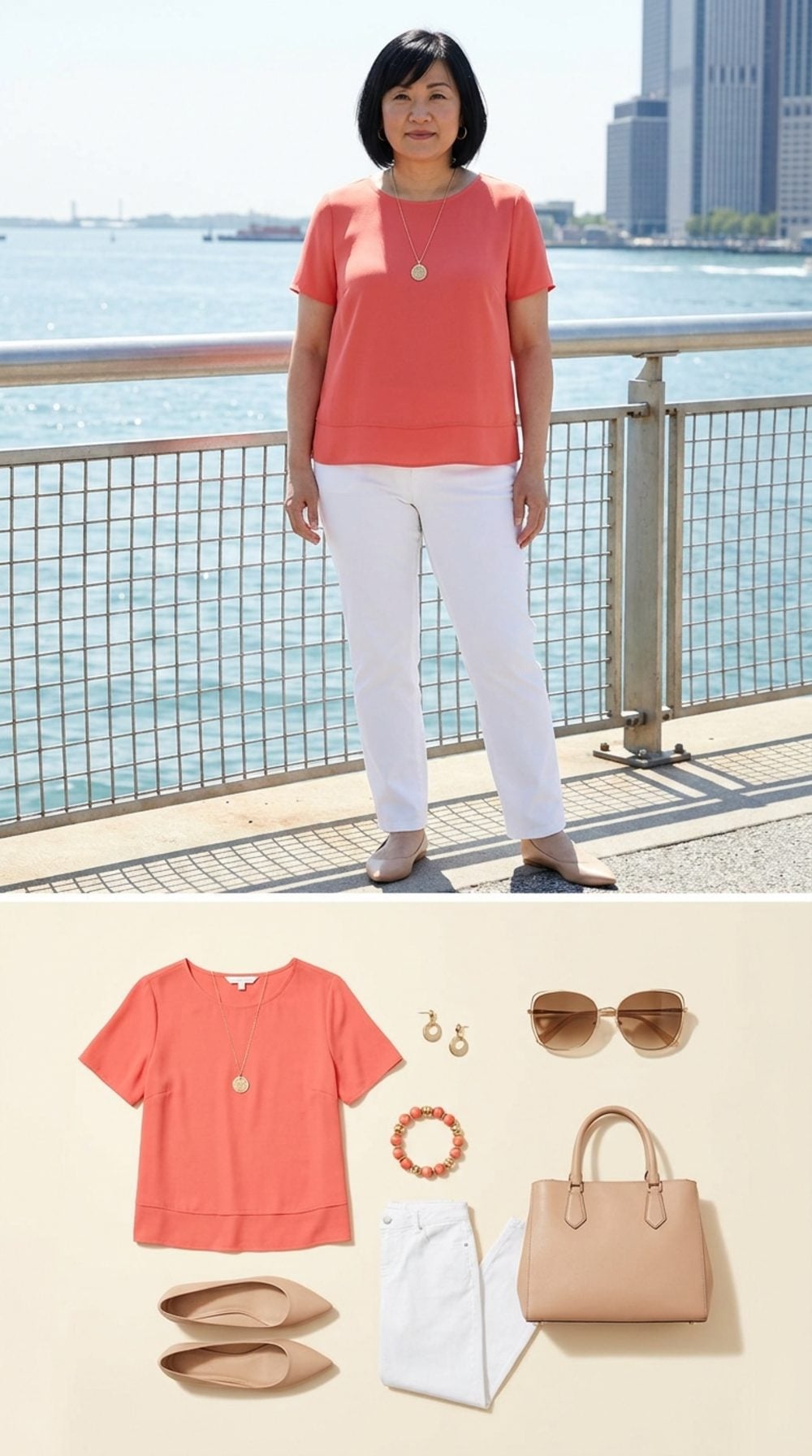
Hem placement is the single most underrated factor in whether an outfit reads as flattering or frumpy. A top that ends precisely at the widest point of your hips creates a horizontal line that acts like a spotlight: “Look here. This is how wide I am.”
You can see it clearly in this moodboard. The coral blouse terminates at the exact latitude of maximum hip width, and the white straight-leg pants below provide a light, expansive canvas that amplifies the effect. Moving that hem just two inches higher (to the hip bone) or four inches lower (to mid-thigh) would change the entire proportion.
22. Clingy Summer Fabrics That Narrate Every Bump and Line
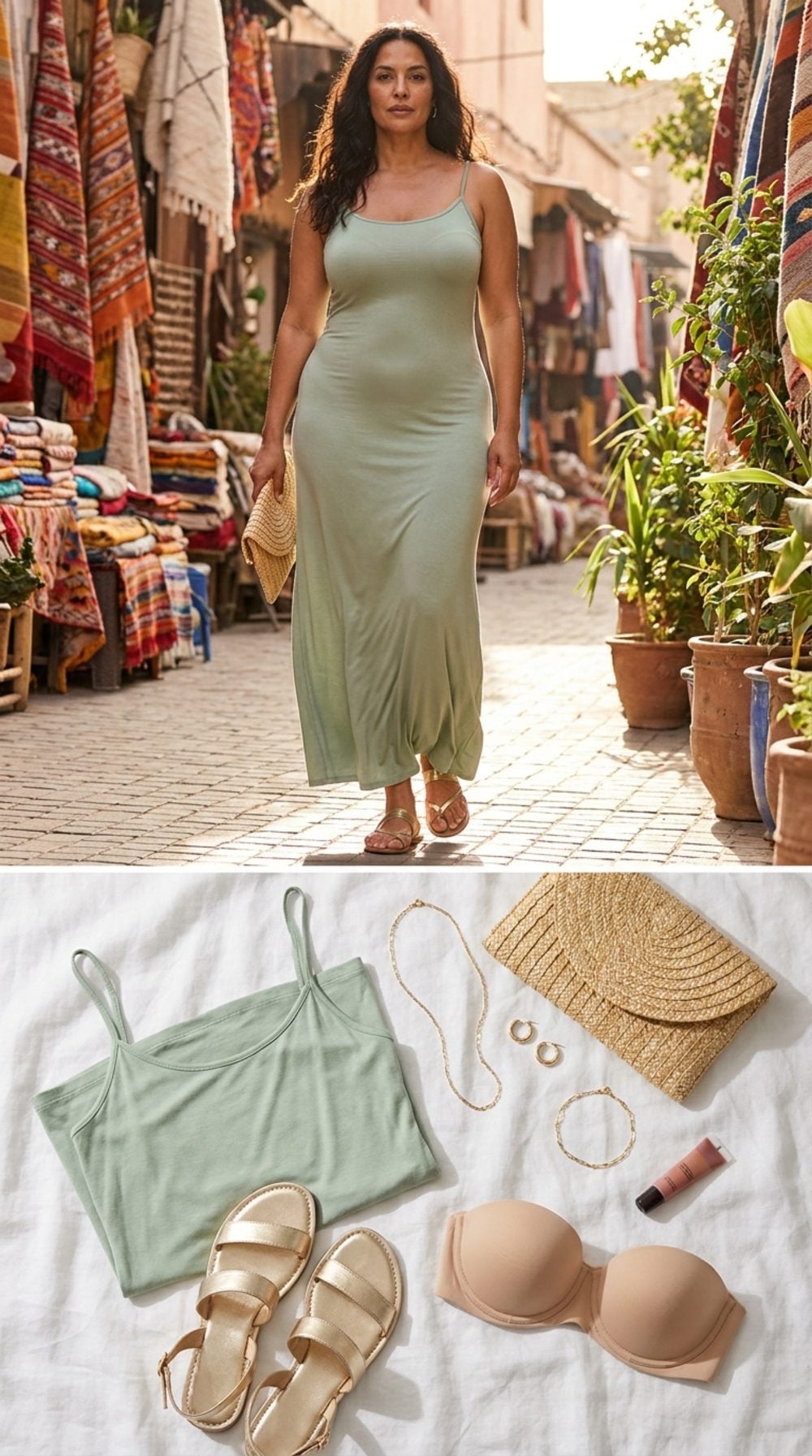
Thin jersey, cheap rayon, unlined viscose. They drape beautifully on a hanger. On a body with any texture at all (which is every body), they become a topographic map. Every bra line, every elastic indent, every seam from your underwear gets broadcast in high definition.
The moodboard shows a jersey maxi dress in a pale sage that clings to the stomach, catches on the hip bones, and pools between the thighs. The fabric has no memory, no structure, no resistance. It just surrenders to gravity and takes your silhouette with it. A dress in the same color but in a matte crepe or a ponte knit with some body would skim rather than cling, suggesting shape without cataloging it.
21. Stiff Bulky Fabrics That Build an Armor of Extra Inches Around You
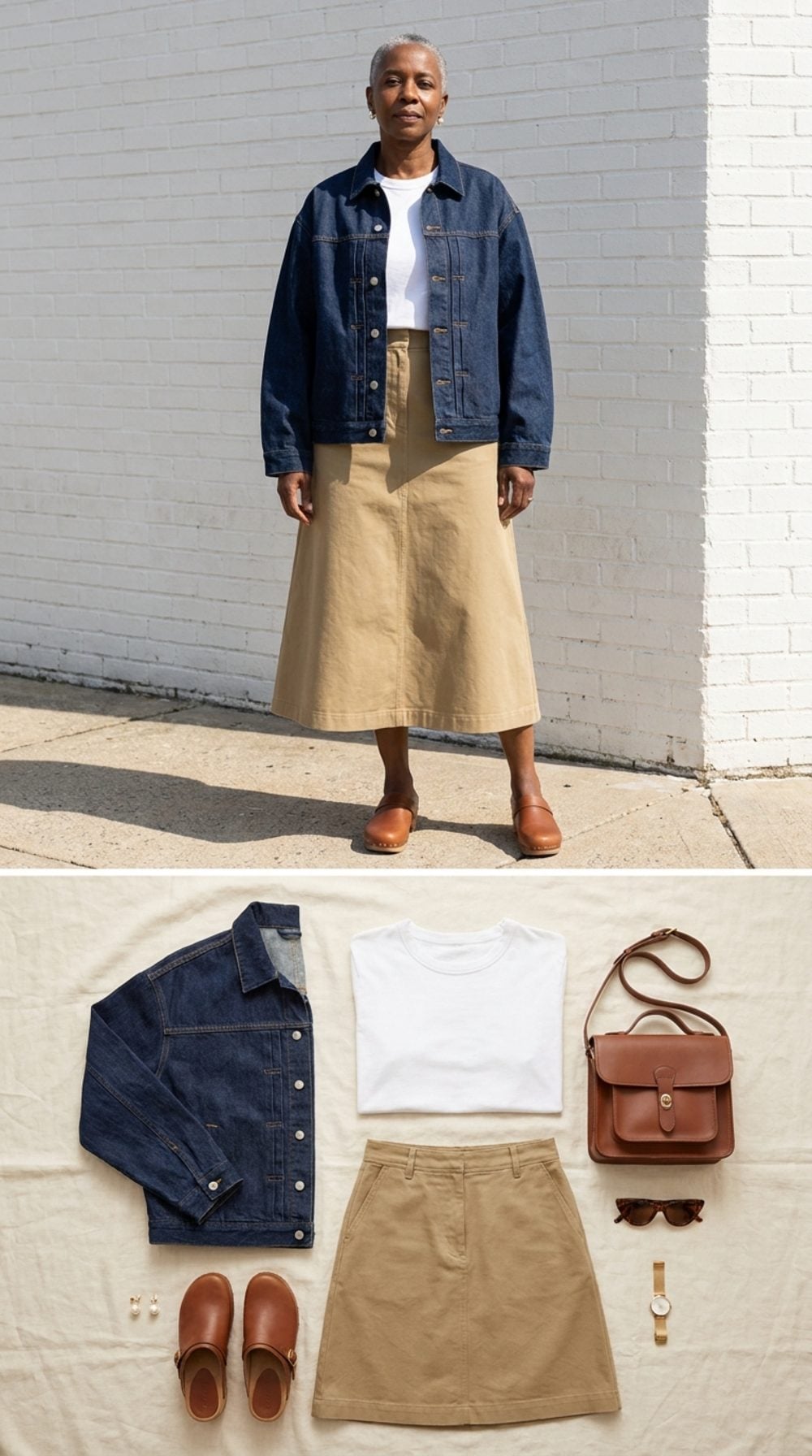
Heavy cotton canvas, thick denim, stiff linen that refuses to soften: these fabrics don’t drape around your body. They construct a shell around it. And that shell is always bigger than you are.
This is the opposite problem from clingy fabric, but the result is the same. The stiff denim jacket in this moodboard stands a full inch away from the torso at every point. The heavyweight cotton skirt below holds its own shape regardless of the body inside it. You’re essentially wearing a costume of a larger person. Fabric with a soft hand that follows the body’s contours, like a washed cotton or tencel blend, would maintain coverage while actually revealing your proportions.
20. Head-to-Toe Dark Outfits in Heavy Summer Fabrics That Erase All Dimension
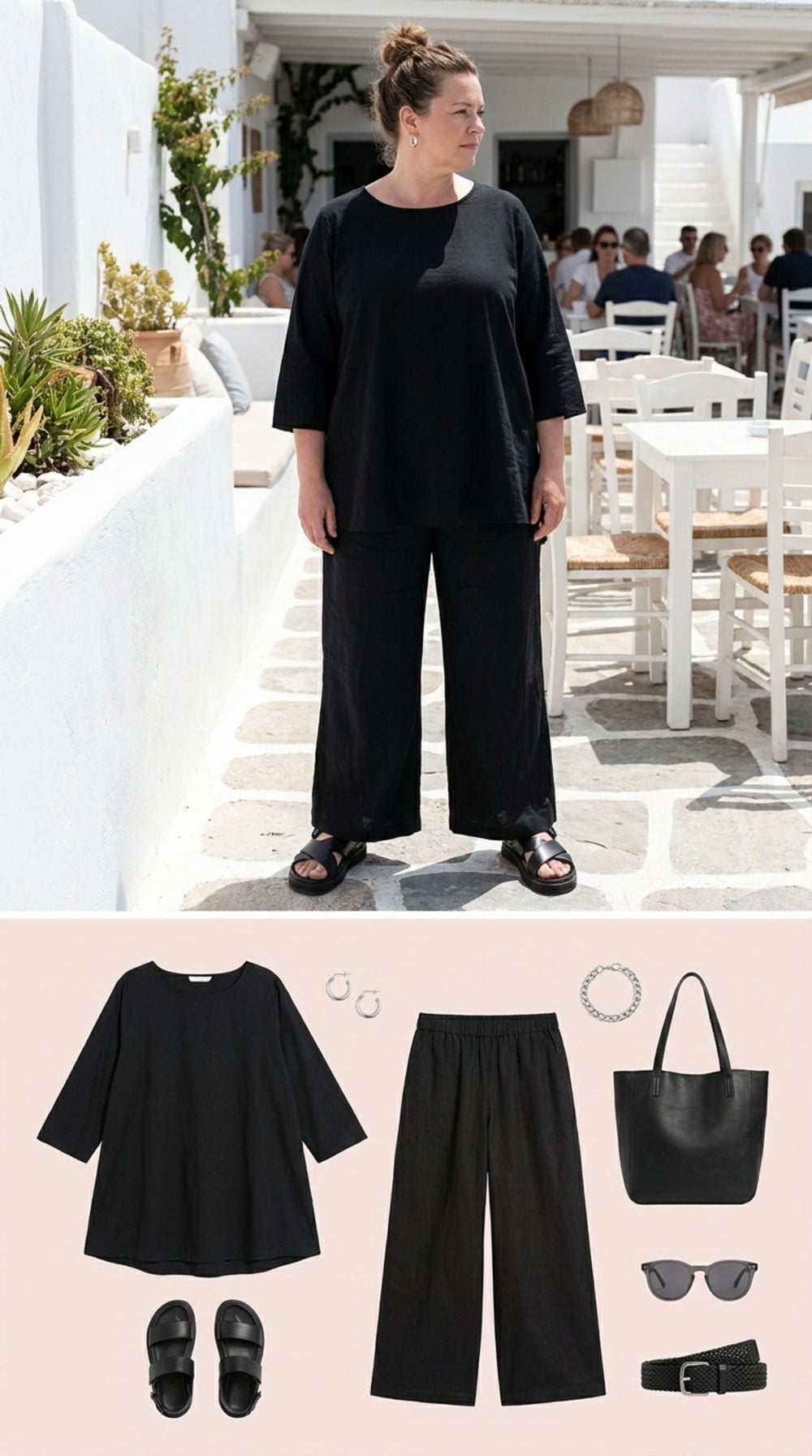
Black is supposed to be slimming. So why does a full dark outfit in summer sometimes make you look heavier?
Because slimming requires contrast and dimension. A monochrome dark palette in thick, light-absorbing fabrics flattens your entire body into a single shadow. There’s no highlight at the collarbone, no lightness drawing the eye inward, no tonal variation to suggest the curves and valleys of an actual three-dimensional form. You become a silhouette of yourself, and silhouettes always read as wider than the body that casts them.
The black linen wide-leg pants and black cotton tunic here merge into one dark mass. Adding even one lighter piece near the face, or swapping to a fabric with sheen that catches light, would reintroduce the depth that dark absorbs.
19. High Necklines That Compress Your Neck and Broaden Your Shoulders
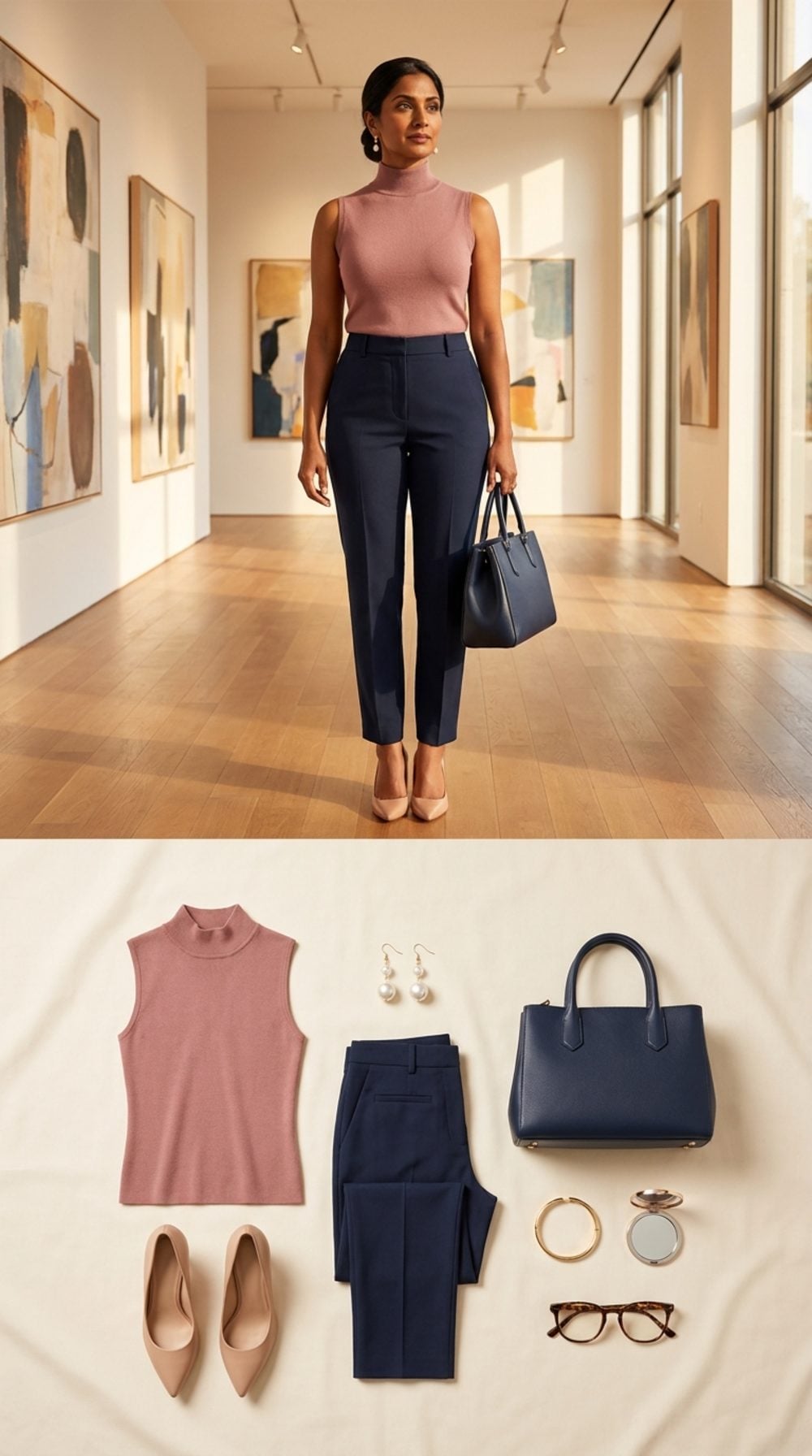
A mock neck or a high crew in summer seems conservative and polished. What it actually does is eliminate the visual breathing room between your chin and your chest. Your neck disappears, your face appears to sit directly on your shoulders, and the whole upper body reads as a wide, compressed block.
The mock-neck sleeveless top in this moodboard demonstrates the effect perfectly. Without any visible collarbone or décolletage, the eye has no vertical line to follow upward. Everything stacks horizontally. A V-neck, a scoop, even a simple notch collar would open a triangle of skin that lengthens the torso and narrows the upper frame. Exposing even three inches of chest creates the illusion of a longer, leaner line from shoulder to shoulder.
18. The Classic Crew-Neck Tee That Quietly Boxes in Your Entire Upper Half
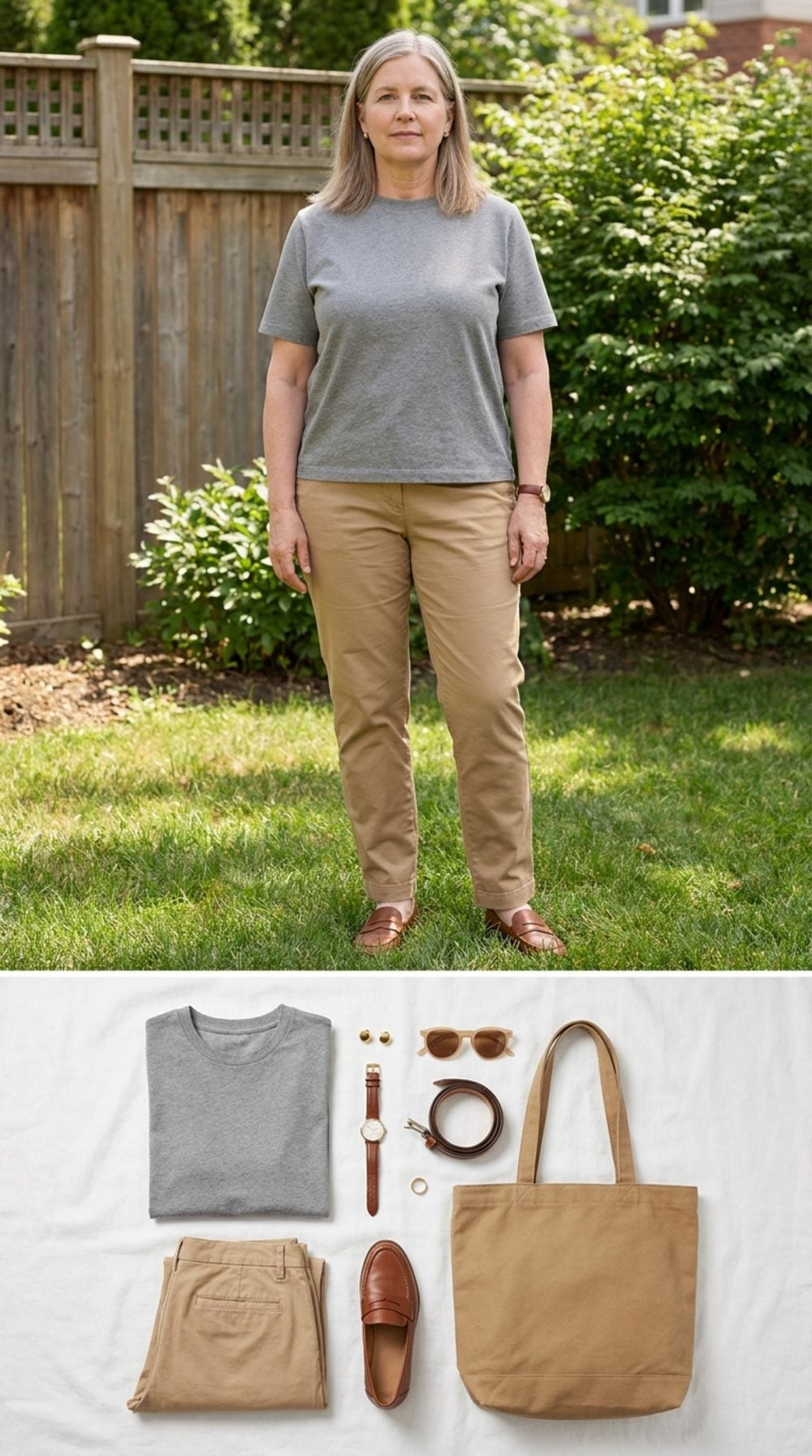
It’s the most democratic garment in fashion, the one piece every woman owns in multiples. And it’s quietly making your upper body look ten pounds heavier than it is.
The geometry problem with crew necks after 40
A standard crew-neck tee draws a perfect circle at the base of the throat. That circle creates a closed frame that your eye reads as a boundary: everything inside it is face, everything below it is torso, and there’s no visual transition between the two. The round neckline echoes the round shape of a fuller face, reinforcing width rather than introducing a contrasting vertical.
In this moodboard, the plain gray crew-neck tee sits flat across the collarbone, hiding what is actually one of the most flattering features of the female frame at any age. Paired with tan chinos, the monochromatic blandness of the palette compounds the issue. A slight V opening, even just two inches deep, would create a downward arrow that draws the eye inward and lengthens the whole torso.
17. Bulky Summer Layering That Turns You Into a Human Sleeping Bag
❤️ Would you like to save this?
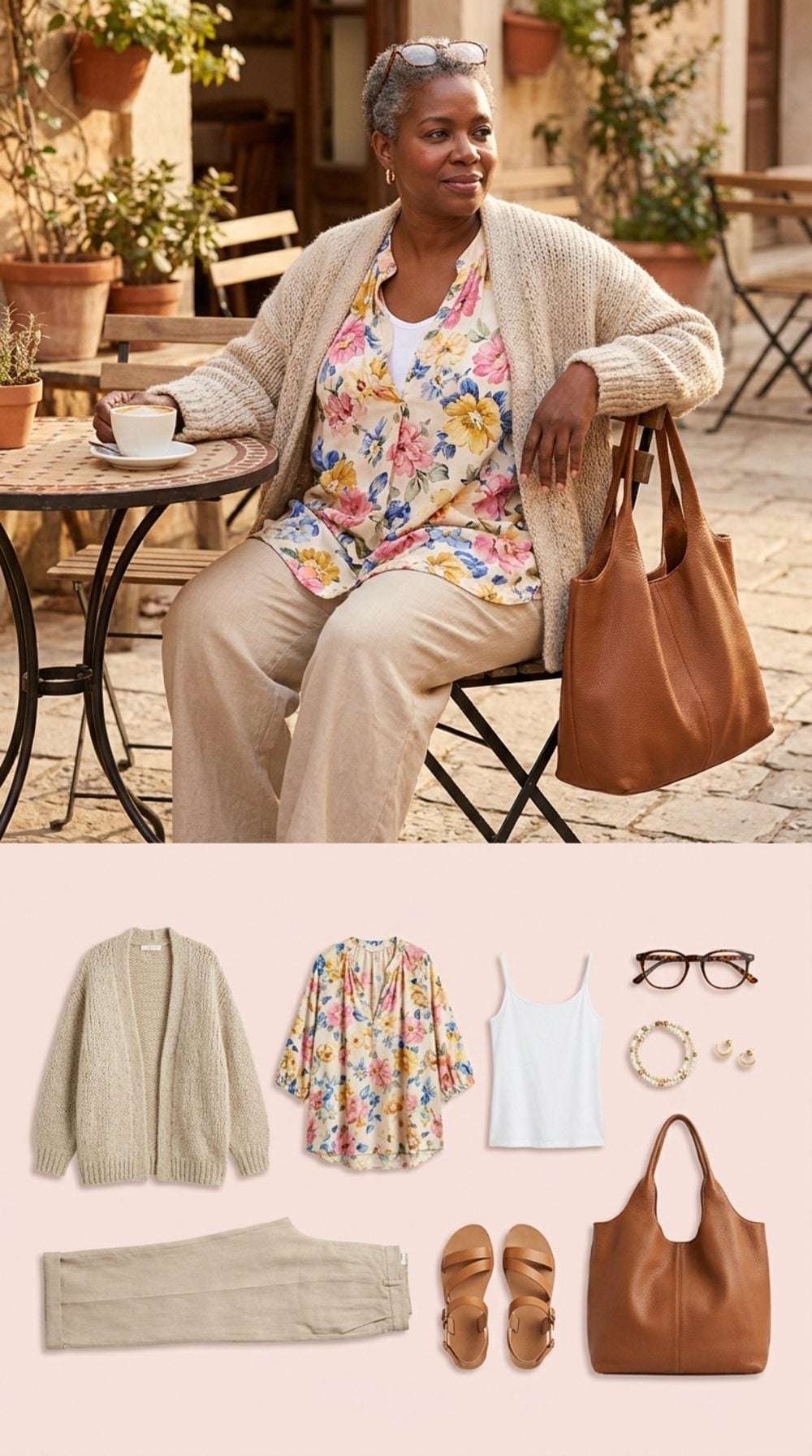
Three layers in July is not a style statement. It’s a volume multiplier. A chunky cardigan over a loose blouse over a camisole creates a solid block of fabric from shoulder to hip, erasing every curve and adding what looks like fifteen pounds of pure bulk. Your waist vanishes somewhere between layer two and layer three.
Summer layering only works when each piece is tissue-thin. A linen kimono jacket over a fitted tank, for instance, adds dimension without mass. The trick is transparency of weight: you should barely feel the top layer on your shoulders.
16. Cropped Pants That Chop Your Legs Off at the Worst Possible Spot
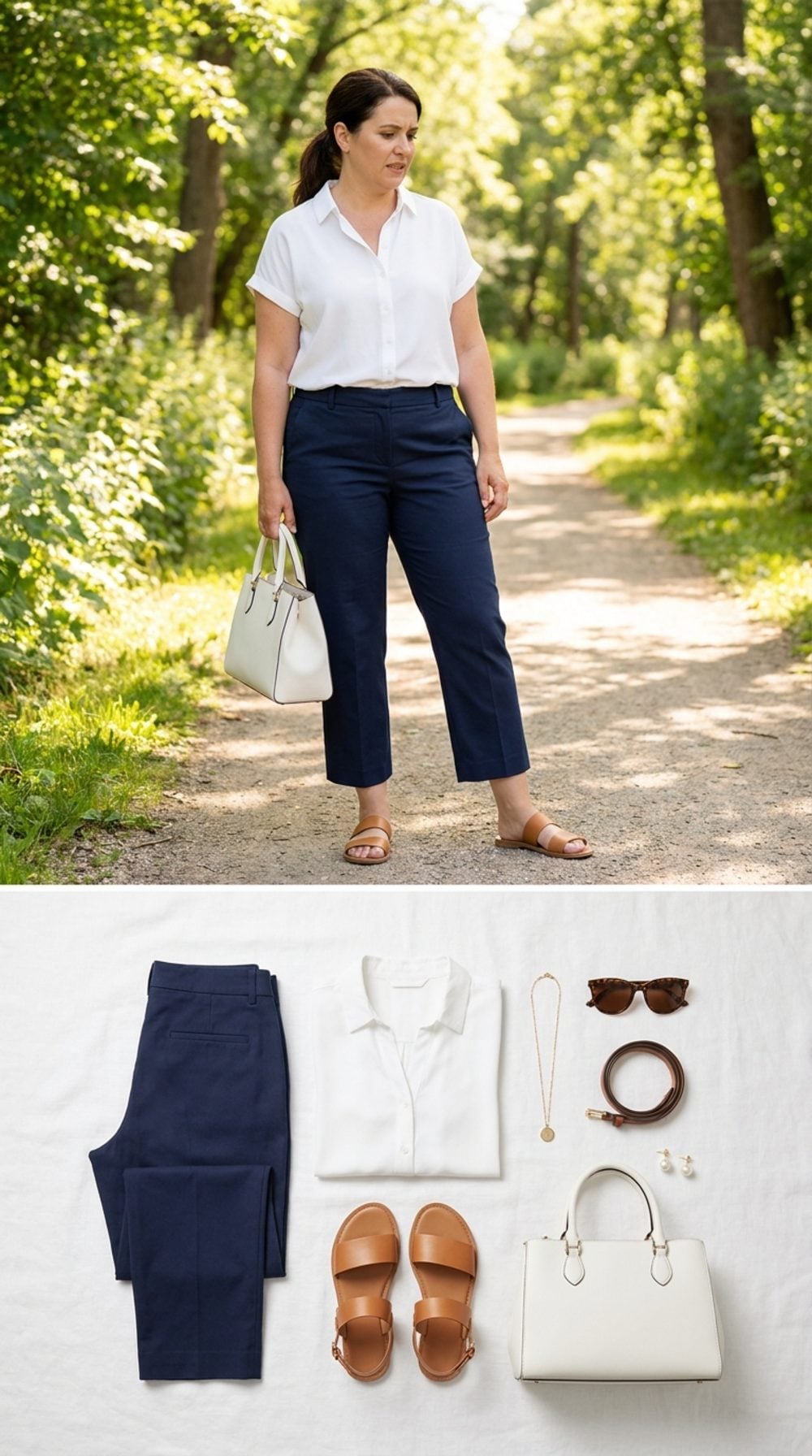
Where a pant hem lands is where the eye stops. And when that hem hits at the widest part of your calf, it draws a visual finish line right where your leg is thickest, making everything above look shorter and wider. This is basic proportion theory, and cropped pants break every rule of it in summer.
The most flattering length for warm weather sits either just above the ankle bone or right at it. An ankle-length slim trouser in a mid-weight cotton gives you back several inches of visual leg length. That small difference between mid-calf and ankle changes everything about how your silhouette reads from a distance.
15. Wide-Leg Crops at Mid-Calf: The Outfit Equivalent of a Fun-House Mirror
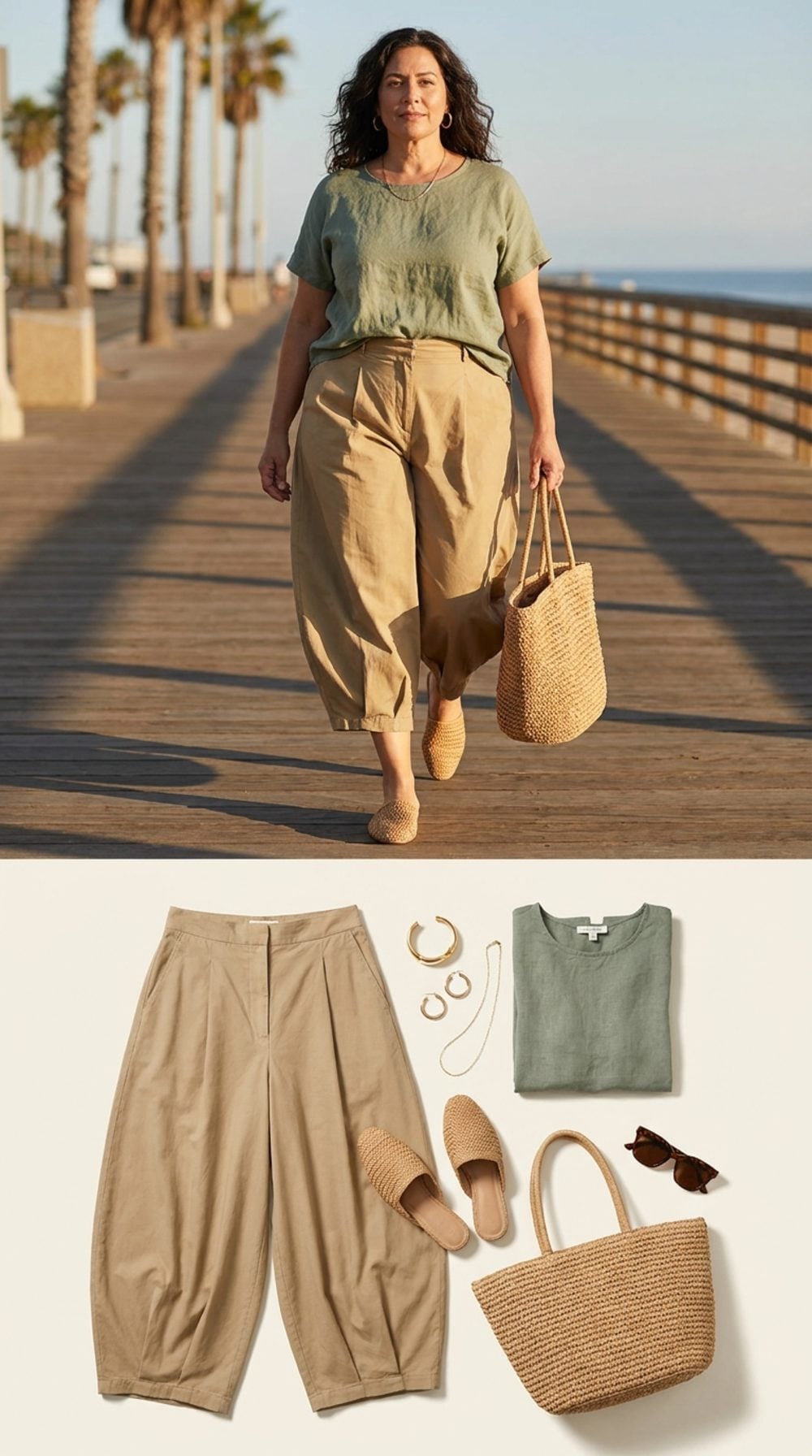
This is the previous mistake’s more aggressive cousin. Wide-leg pants that also crop at mid-calf create a flared bell of fabric ending at the leg’s widest circumference. The visual effect is startling: your lower body reads as a solid rectangular block from hip to mid-shin, and the sudden cutoff makes calves and ankles appear swollen by comparison.
Your outfit proportions depend on continuous lines. If you love the wide-leg silhouette in summer, commit to full length. A wide-leg linen pant that just brushes the top of your sandal creates a gorgeous column of movement. Chopping that column at half-mast turns architecture into accident.
14. Ankle-Strap Sandals That Slice Your Legs Into Stumpy Segments
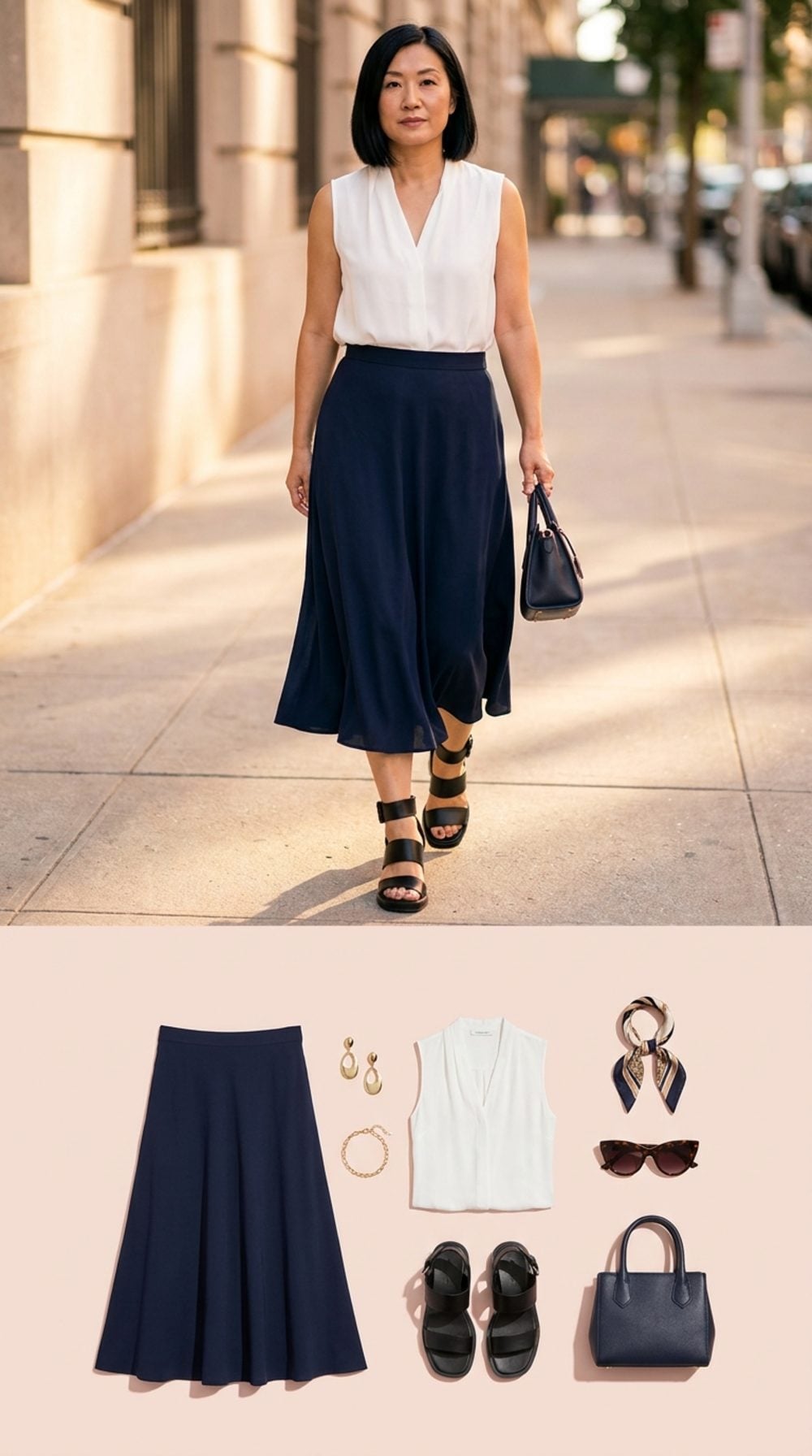
A strap across the ankle acts like a tourniquet for your proportions. It draws a hard horizontal line at the narrowest part of your lower leg, visually severing foot from calf and making everything above that line appear thicker and more compressed. For women over 40 who carry any fullness in the lower leg, this one detail can add visible pounds.
Swap for a leather slide sandal or an open-top mule. Anything that leaves the ankle and instep exposed creates an unbroken skin line from mid-calf to toe, which is the single fastest way to add visual length to your legs without heels.
13. Heavy Clunky Shoes That Anchor Your Entire Silhouette to the Ground
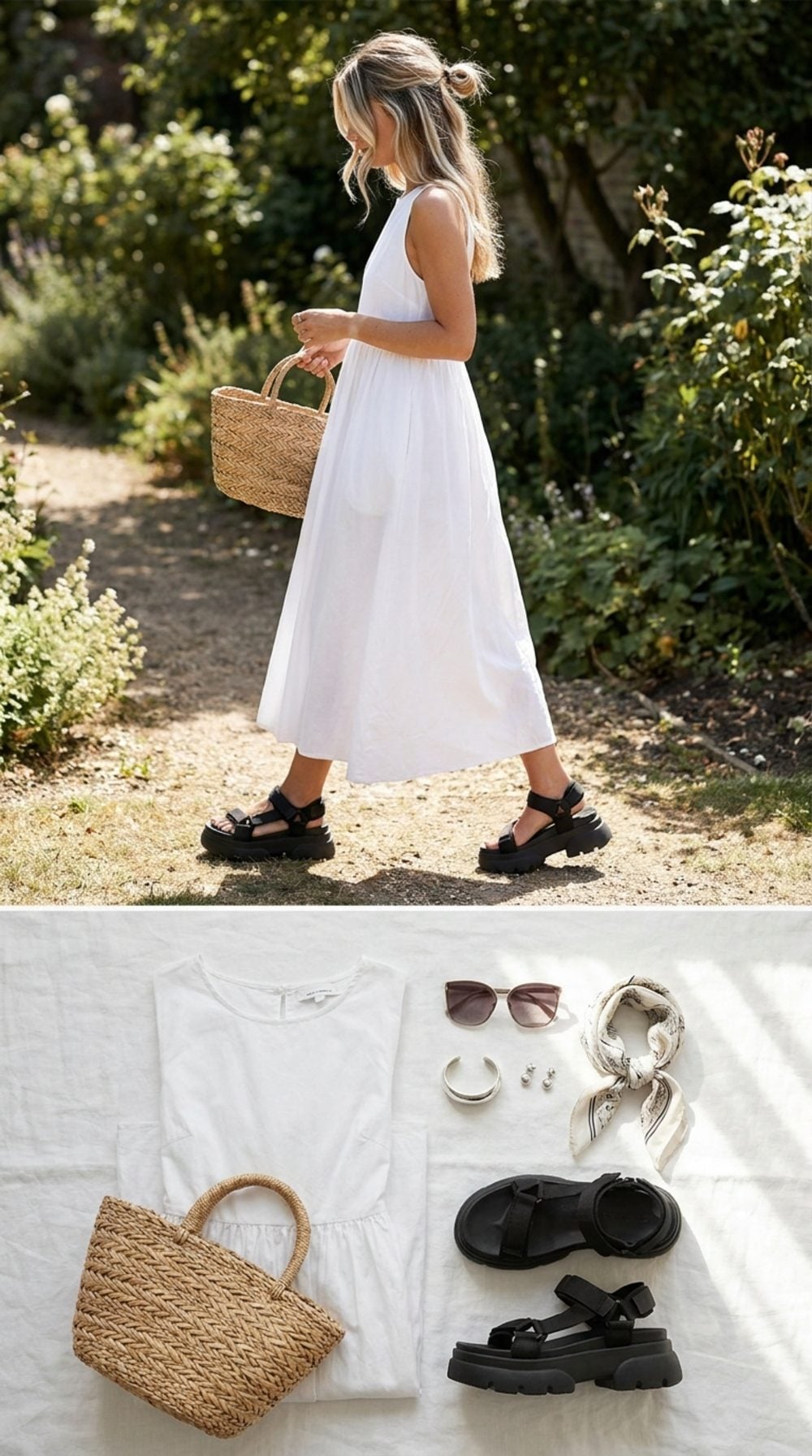
Shoes communicate weight. A thick rubber platform sandal or a chunky sport sandal tells the eye that everything above must be equally substantial, even when it isn’t. Your brain fills in the blanks: heavy base, heavy body. It’s an optical trick, and it works against you every time.
In summer especially, a strappy flat sandal with minimal sole thickness keeps your whole silhouette feeling light. Think of your shoes as the period at the end of a sentence: a delicate full stop, not a sledgehammer.
12. Busy Micro-Prints That Turn Your Body Into a Vibrating Optical Illusion
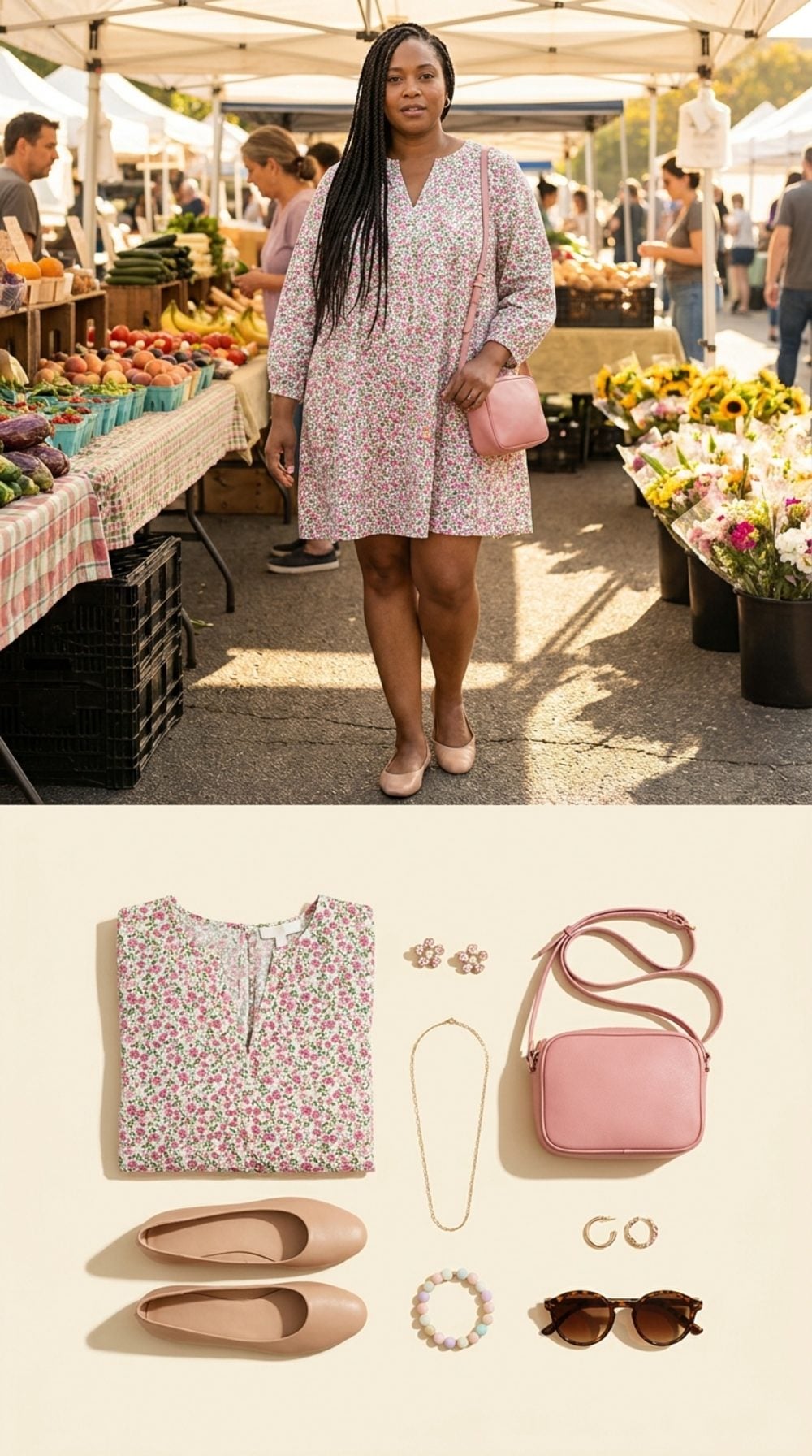
Small ditsy florals, tiny polka dots, dense geometric patterns. When the print is small and covers a large area, individual motifs blur together from a distance and the eye reads the entire surface as one solid, expanded mass. The visual noise actually makes the body look bigger because there’s no resting point for the eye, no negative space, just a buzzing field of color that inflates every curve.
Scale matters more than most women realize. A medium-to-large print with visible background space between motifs lets each piece of the pattern breathe, and your body gets the same courtesy. If you love print in summer, go bigger and bolder, with a large floral print blouse in a palette of no more than three colors.
11. Oversized Prints That Swallow You Whole Like a Tropical Wallpaper Sample
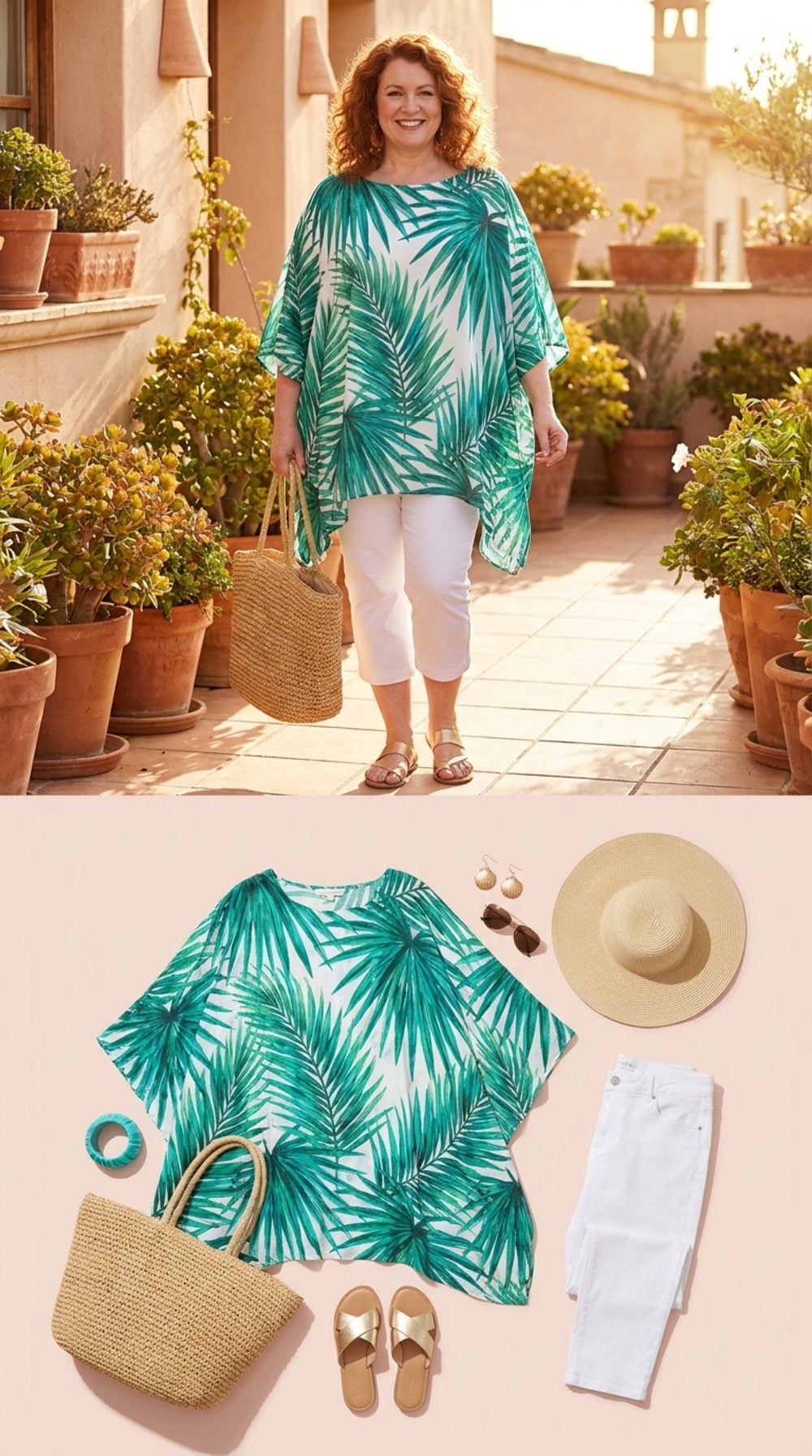
Giant palm leaves. Enormous abstract swirls. Massive cabbage roses the size of your head. When the print is too large for your frame, each motif stretches across curves and distorts, making the body beneath look like the surface those shapes are projected onto. You become the canvas, not the art.
There’s a scale sweet spot. Prints where the largest motif is roughly the size of your closed fist tend to flatter most frames over 40. They’re visible, interesting, and proportional. The oversized Hawaiian shirt print that looked fun on the hanger reads very differently once it’s draped across real three-dimensional hips and shoulders.
10. Horizontal Stripes Parked Right Across Your Hips, Stomach, or Bust
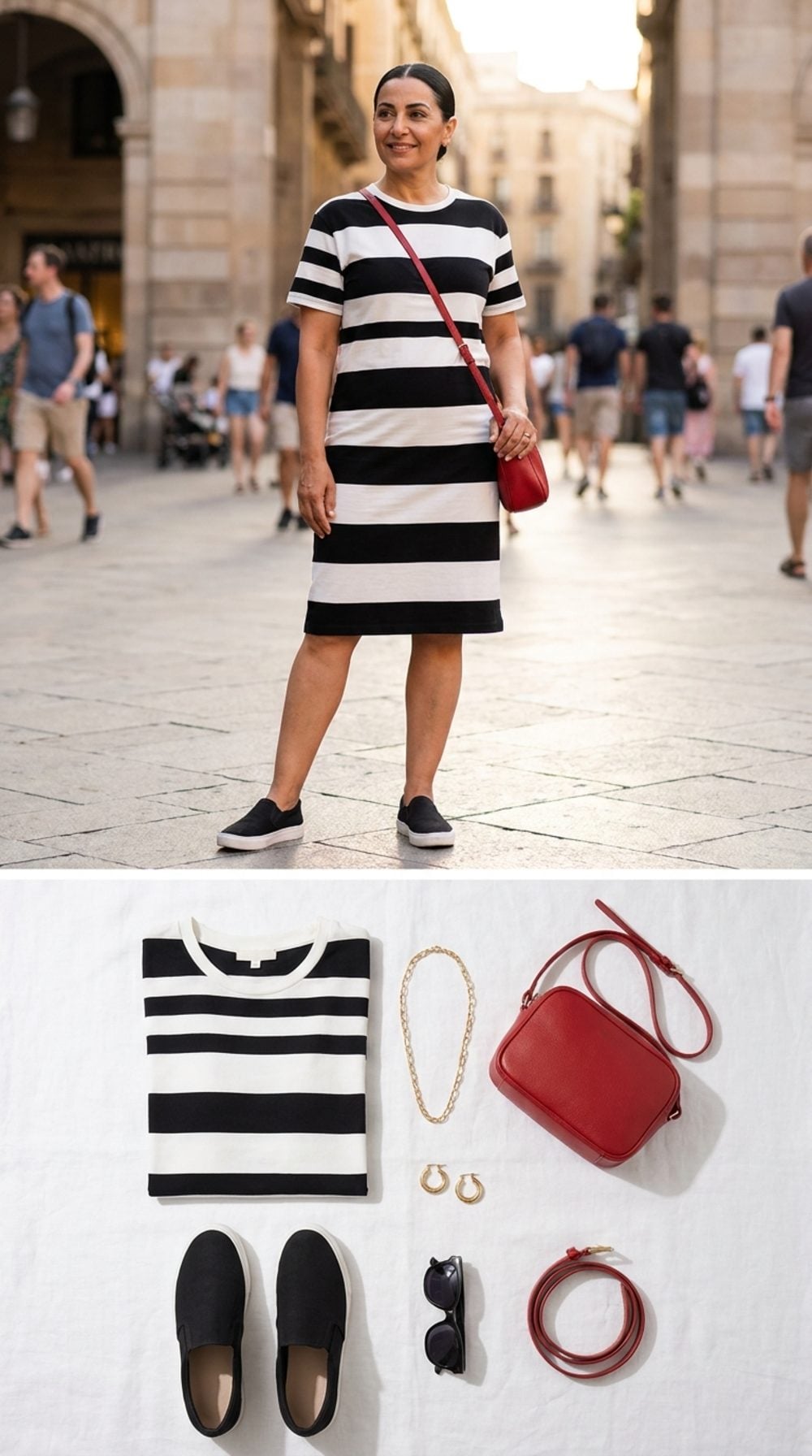
You already know horizontal stripes widen. But the real damage happens when they land at your broadest point. A striped top that places its thickest bands right across the bust or a striped dress with the pattern running unbroken across the belly: these are the specific combinations that can genuinely add ten visual pounds in a photograph.
Stripes aren’t the enemy. Placement is. Vertical stripes on a vertical stripe midi skirt lengthen beautifully. Diagonal stripes redirect the eye. Even horizontal stripes work above the collarbone or below the knee, where they add visual interest without inflating anything. The mistake isn’t the stripe itself. It’s parking it at the widest part of your body and calling it a summer look.
9. Washed-Out Pastels That Dissolve Your Edges and Blur Every Line
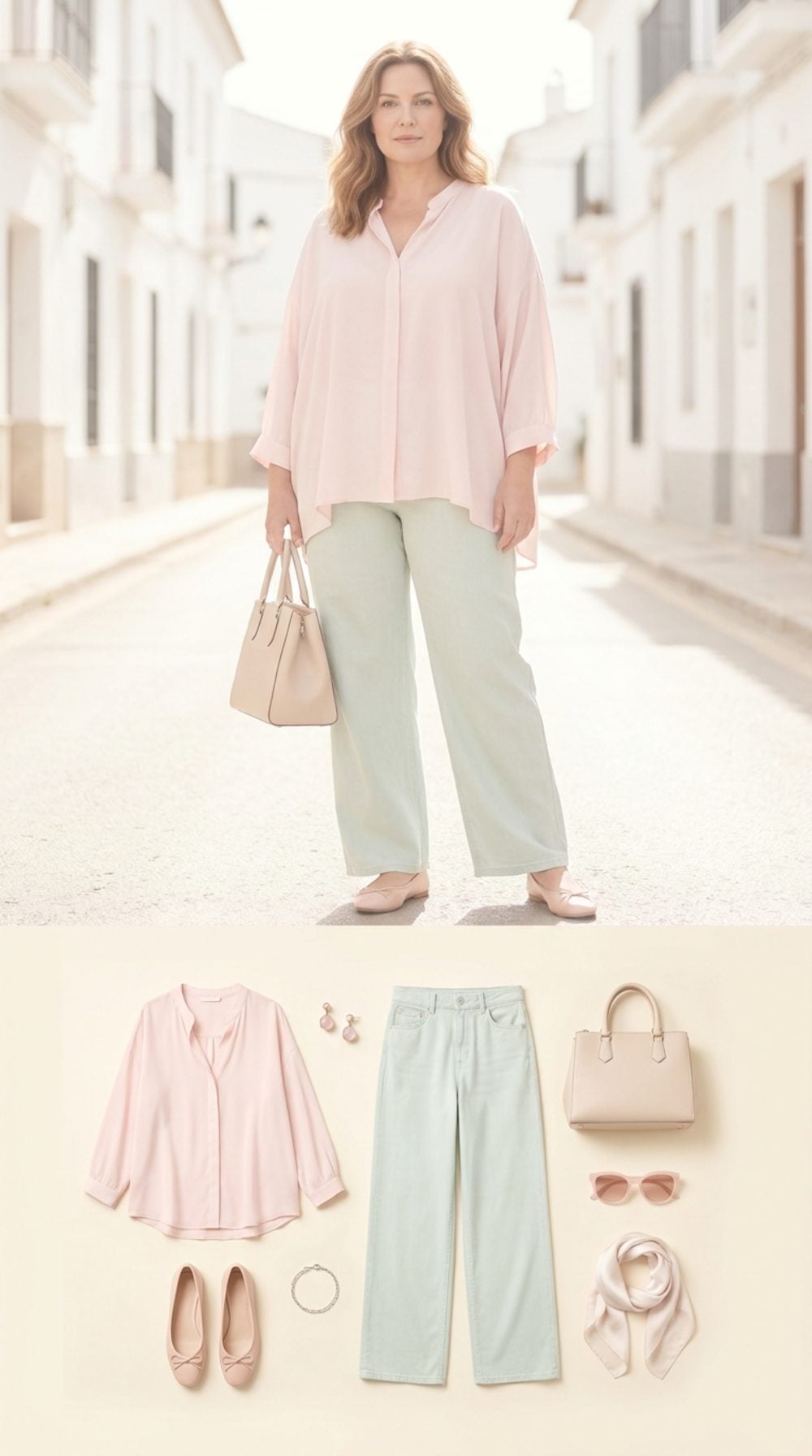
Pale pink. Baby blue. Soft lavender. They sound harmless. But on many skin tones after 40, washed-out pastels sit too close to the skin’s own value, creating zero contrast between where fabric ends and body begins. The result: your silhouette loses definition. Without a clear boundary between you and your clothes, the eye reads one continuous, slightly larger shape.
This doesn’t mean you need to wear all black in July. Saturated versions of those same colors work brilliantly. A rich tan or a deep coral instead of baby pink. A cobalt blue linen top instead of powder blue. The point is contrast. Your clothes should frame you, not fade into you.
8. All Soft, No Structure: When Every Piece Drapes and Nothing Defines
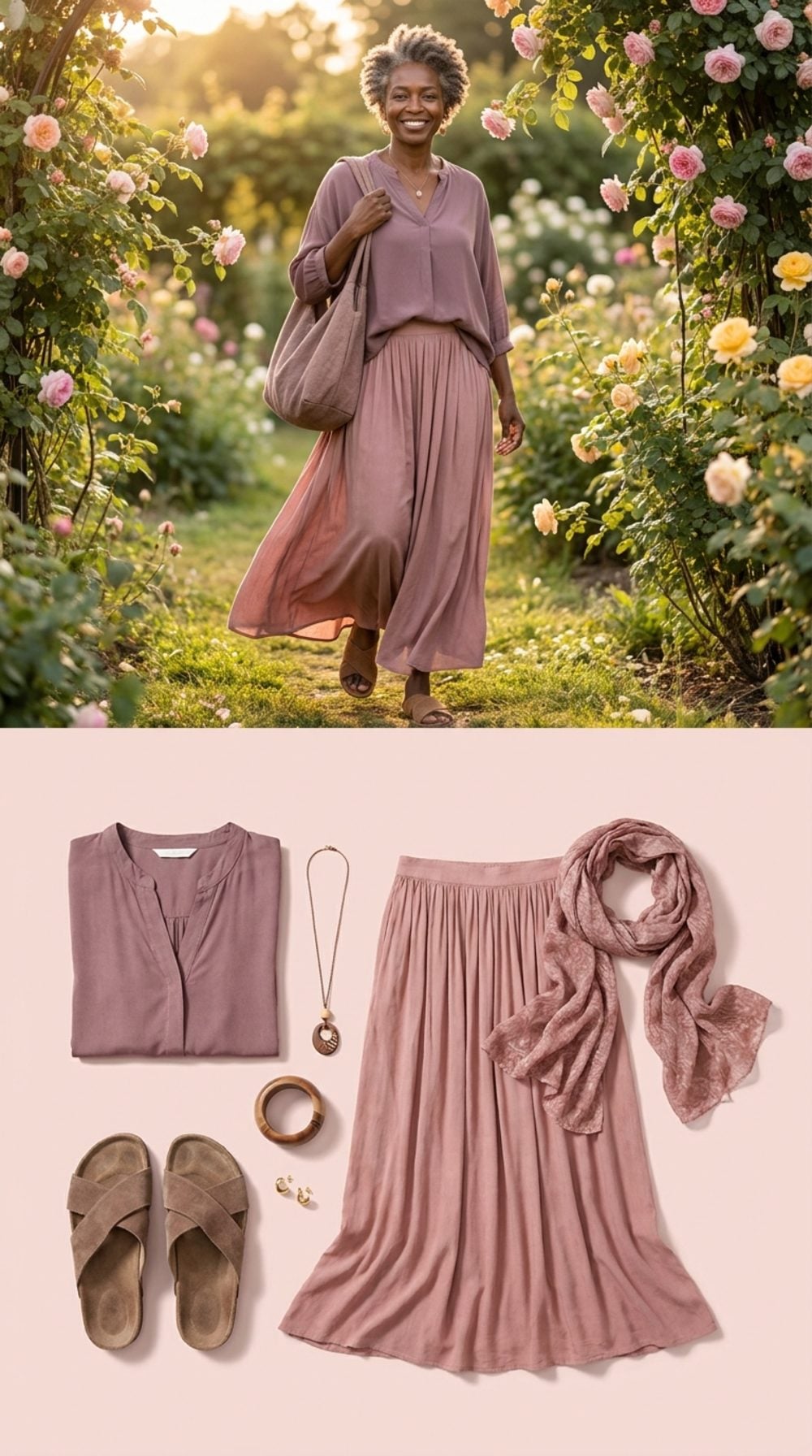
A floaty top with a floaty skirt and soft sandals and a slouchy bag. Every single element melting downward. Without one piece of structure in the mix, the entire silhouette collapses into an amorphous shape that reads heavier than you actually are.
Structure is your secret weapon. One tailored element, just one, changes the entire equation. A fitted linen blazer over that floaty dress. A leather belt cinching a loose caftan. A structured tote instead of a fabric slouch bag. The contrast between soft and sharp is what creates the illusion of shape. Without it, gravity wins, and gravity always makes things look bigger.
7. Thin Elastic-Waist Pants That Cling to Every Curve You’d Rather Skip
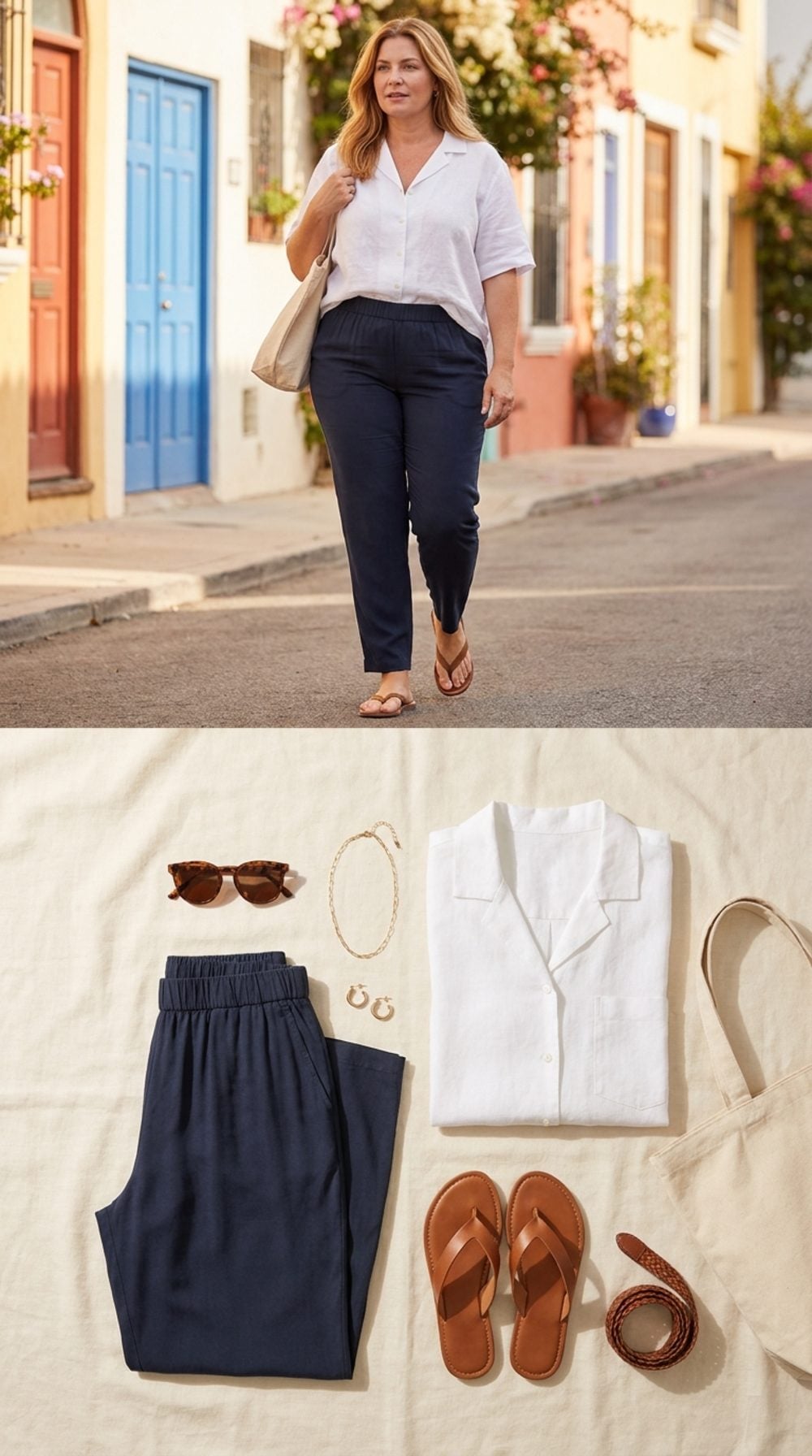
There’s a reason these show up in every comfort-first summer wardrobe, and a reason they photograph so poorly. Thin rayon or viscose elastic-waist pants have no internal structure. They suction to the thighs when you walk, outline the elastic waistband in a visible ridge across the belly, and pool at the crotch in a way that draws the eye to exactly the places you’d least like highlighted.
The gathered elastic also creates bunching at the waist, adding a ring of visual bulk right at the midsection. Compare that to a flat-front trouser with a side zip: the waistline sits clean and smooth, and the fabric falls from a fixed point rather than clinging from a gathered one.
If you love the ease of a pull-on pant, look for one with a wide flat waistband and a heavier drape. A pull-on wide-leg trouser in a structured crepe gives you the comfort without the cling. The fabric should swing when you walk, not stick.
6. The Pleated Tuck-In Trap: Why Your Midsection Looks Twice Its Size
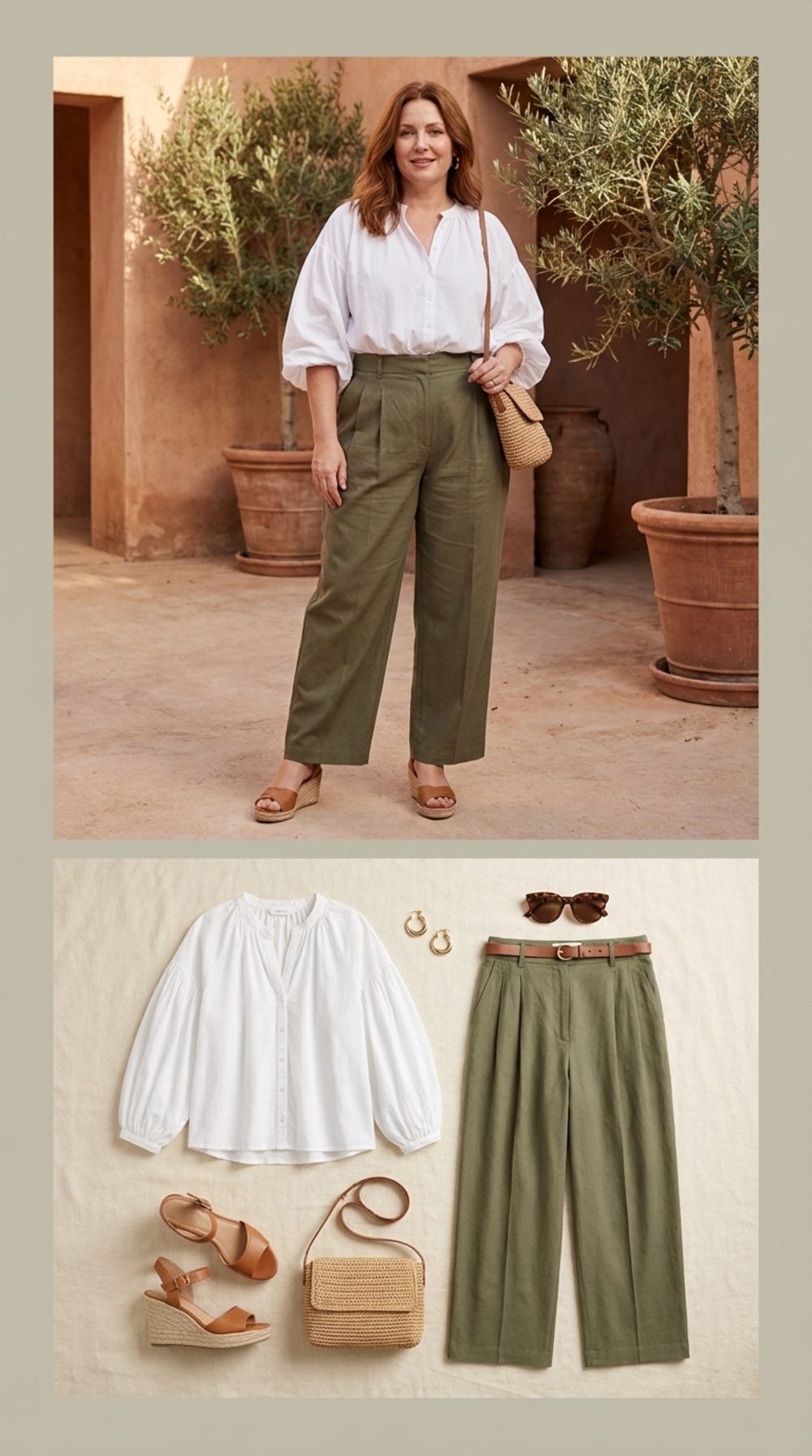
That instinct to tuck your blouse into a pleated skirt or wide-leg trouser? It’s creating a visual collision right at your waist. Pleats already add structured fabric volume, and when you push a top into them, you’re doubling the bulk exactly where you least want it. The fabric bunches, the waistband strains, and your midsection becomes the loudest part of your outfit.
A half-tuck into a flat-front bottom works. A French tuck with a single pleat can work. But a full tuck into an accordion of pleated fabric? That’s geometry working against you. Try a silk tunic top that skims over the waistband instead, or swap the pleats for a flat-front wide leg pant if you love the tuck.
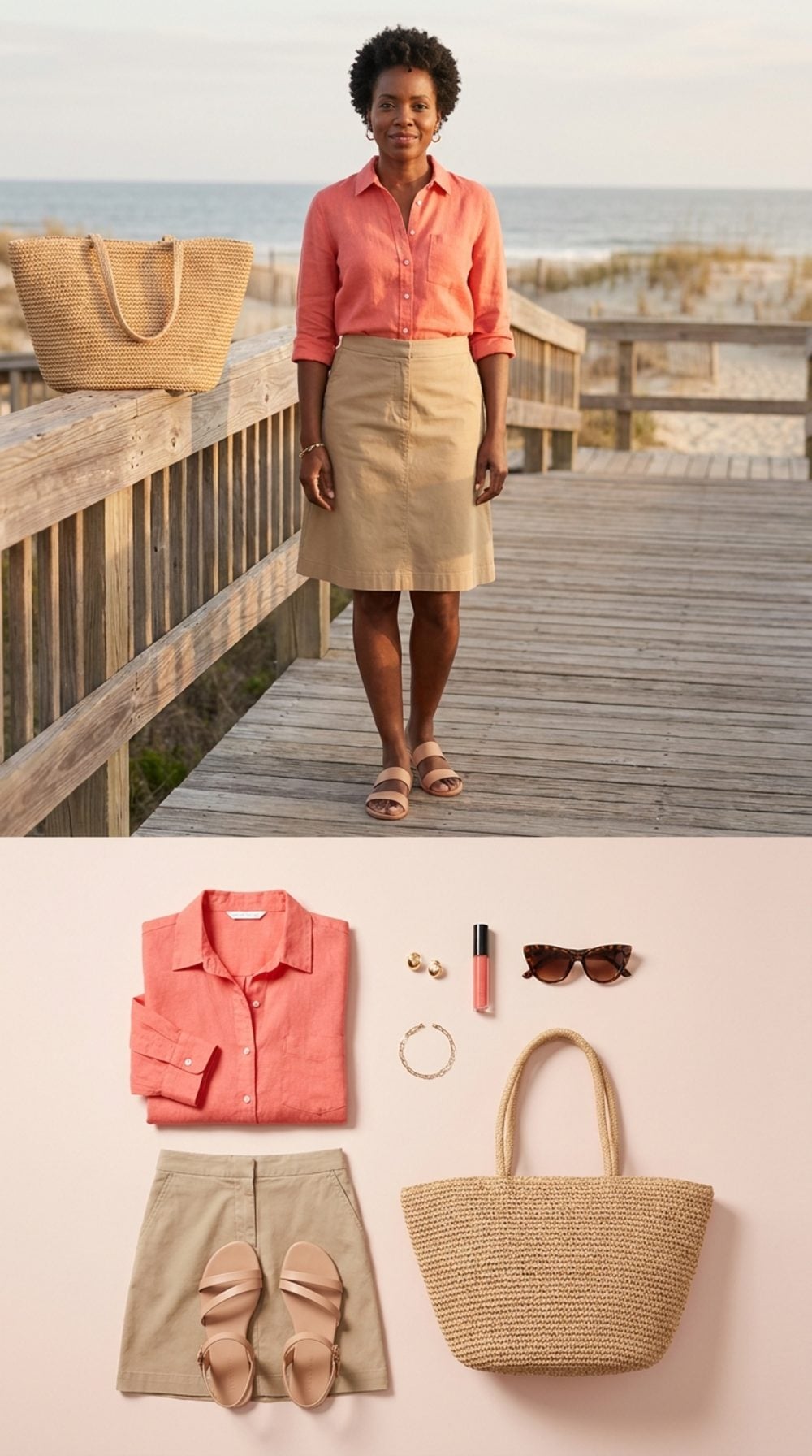
5. The Knee-Length Cut-Off That Chops Your Legs in Half
❤️ Would you like to save this?
Your knee is the worst possible hemline destination this summer. A skirt or pair of shorts that lands right at the kneecap draws a hard horizontal line across the widest point of your leg, splitting your lower half into two stubby segments. The visual effect is immediate: shorter legs, a heavier frame, and zero flow.
Move the hem two inches above the knee or take it to midi length, and you’ll see a completely different person in the mirror. The above-the-knee cut reveals the tapered part of your thigh, while a midi skirt creates one long unbroken line from hip to shin. Both options give your legs visual length that the knee-cap chop destroys.
4. Ruffles, Bows, and Chest Details That Broadcast Extra Volume
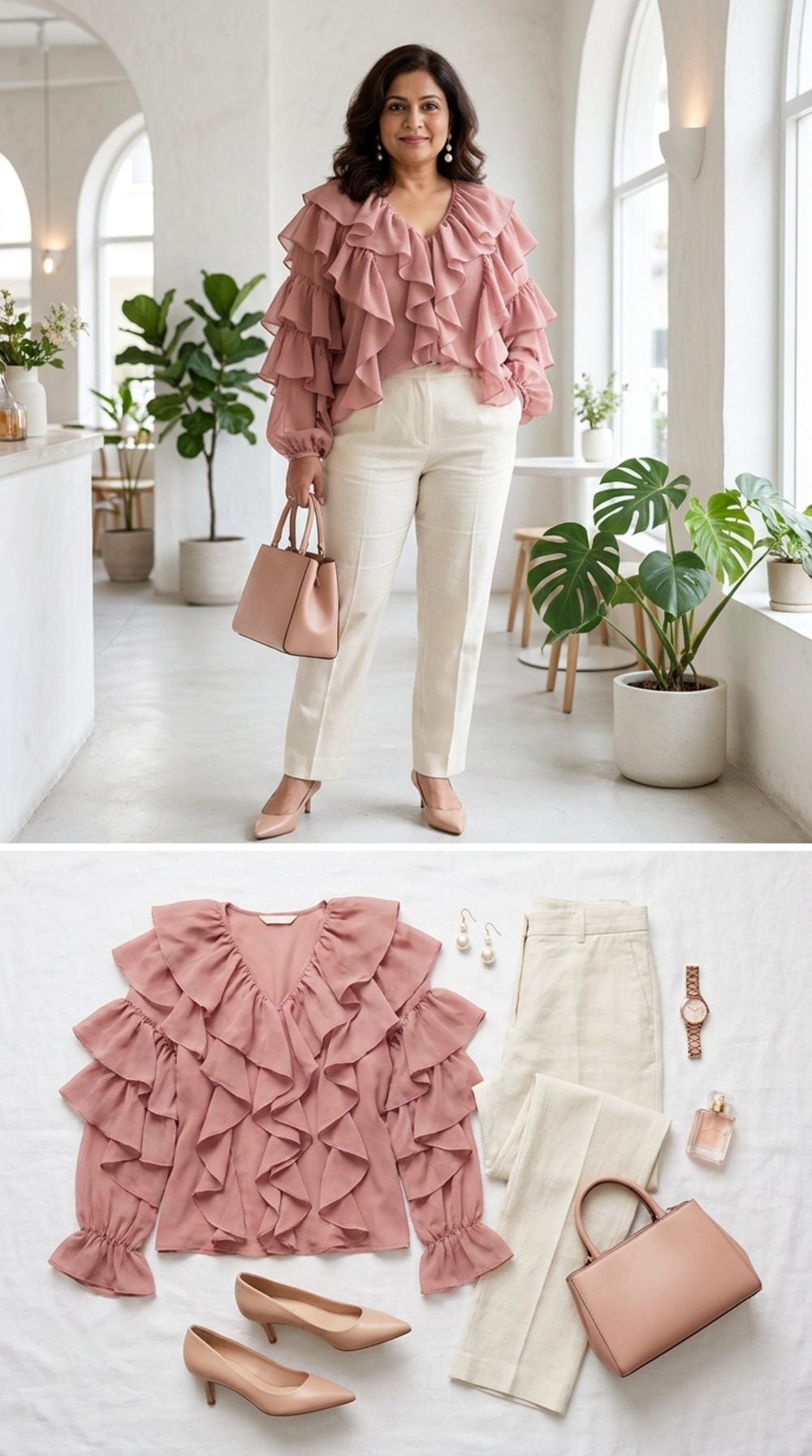
Ruffles are having a moment. But on the wrong silhouette, that moment costs you ten visual pounds concentrated right across your bust and shoulders. A ruffle-front blouse layers fabric on top of fabric on top of your body, creating dimension where most women over 40 already have plenty.
The same applies to pussy bows, oversized chest pockets, embellished necklines, and any detail that sits between your collarbone and your waist. Each one acts like a spotlight, drawing the eye to the broadest part of your upper body and making it appear broader still. If you love texture, try it below the waist instead: a ruffled hem, a textured shoe, an interesting bag. Keep the torso clean and fitted, and let the drama happen somewhere it actually helps the proportions.
3. The Wrong Belt Placement That Steals Inches from Your Legs
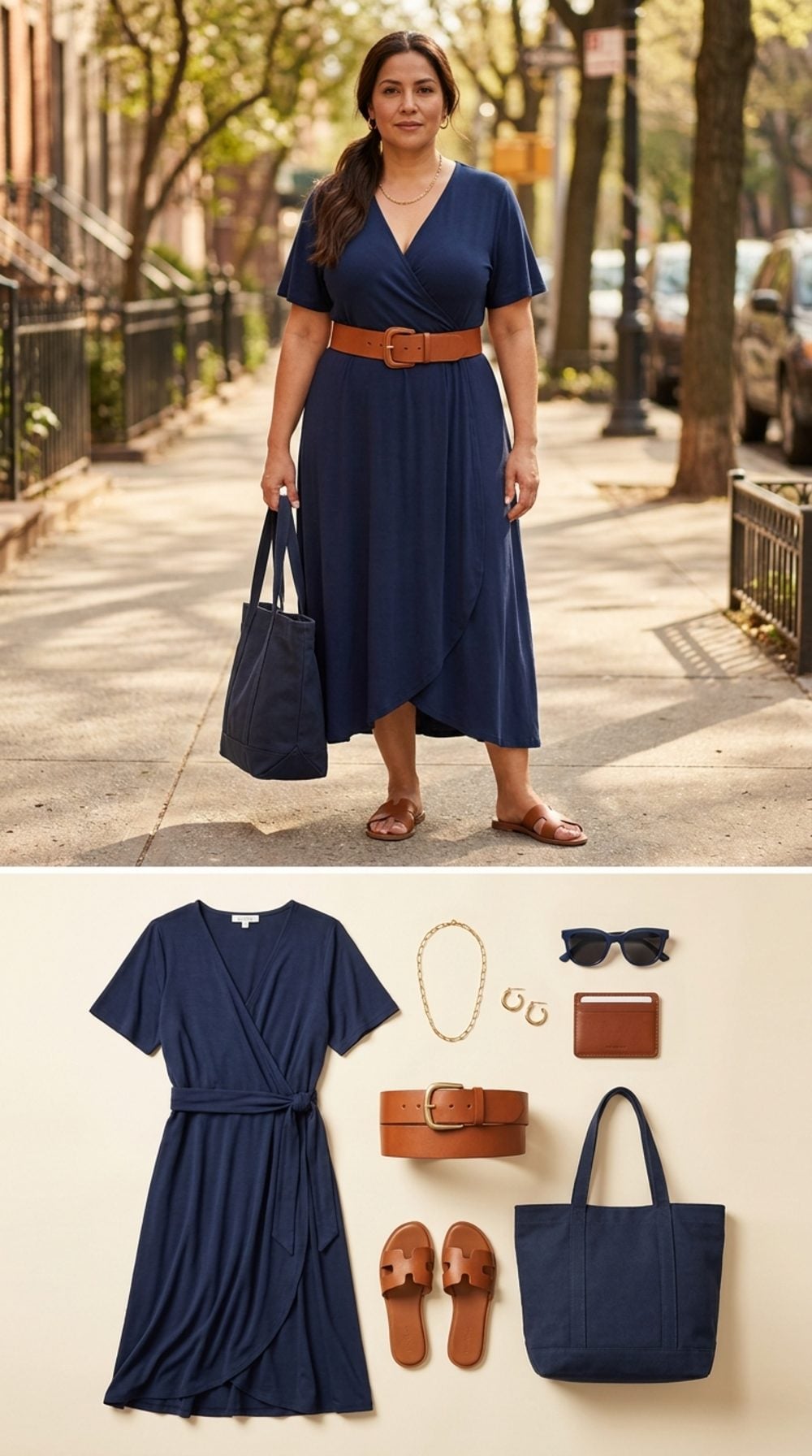
A belt sitting at your natural waist should be your best friend. But cinch one at the wrong spot, even half an inch too low, and it redraws your entire body map. A wide belt worn at the hip or low waist shortens the distance from belt to floor, which your eye reads as shorter legs. Shorter legs means a stockier frame. Simple math, visual consequences.
The thick wide leather belt over a summer dress is a classic culprit. It drops from its intended position throughout the day, settling lower, compressing your torso into a squat rectangle. Pair that with a tan or matching-tone belt that disappears against your clothing, and you’ve lost the waist definition entirely. You’re left with a horizontal band that does nothing except interrupt your silhouette at its least flattering latitude.
2. Skipping the Right Foundation Garments (And Paying for It in Every Photo)
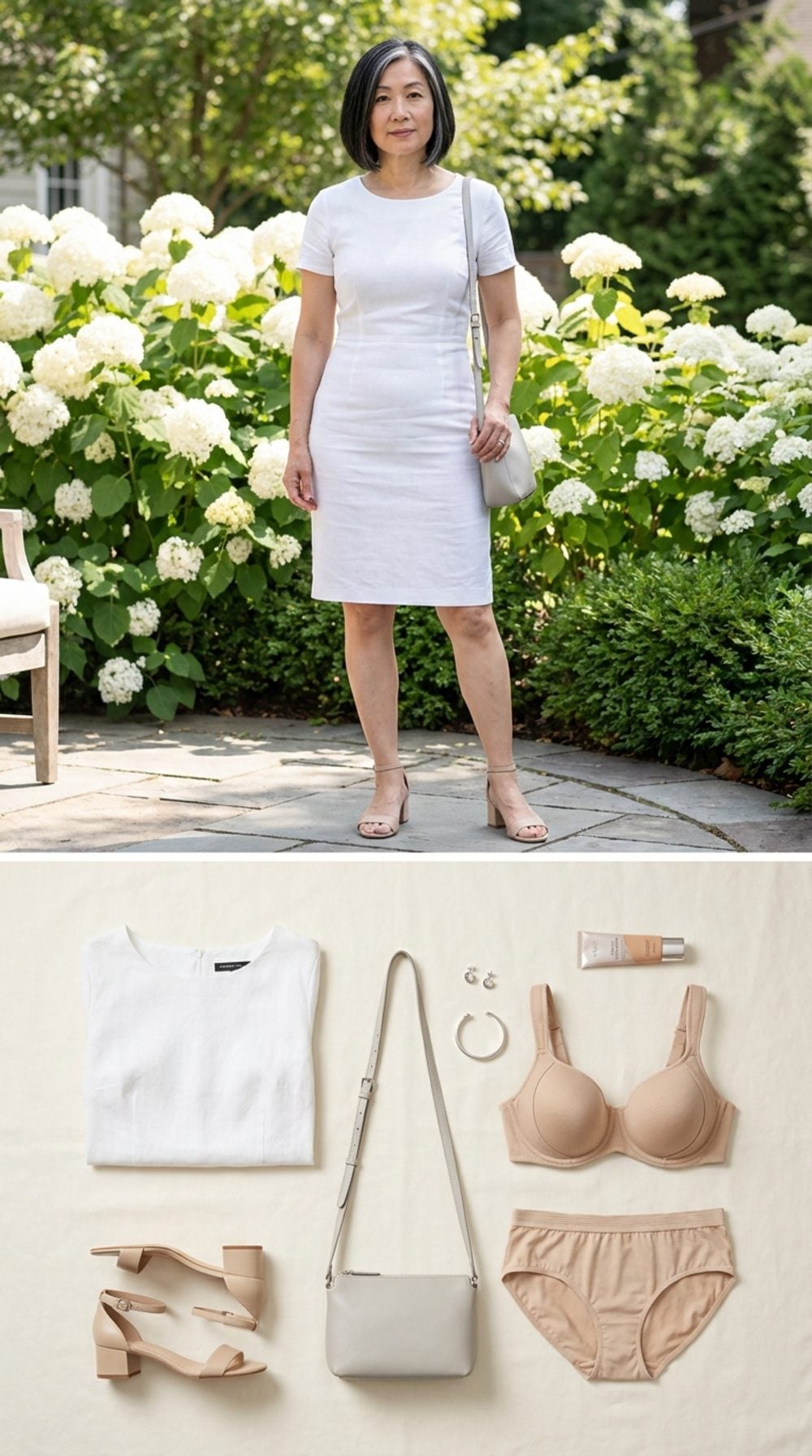
Nobody wants to talk about this one, but it might be the most consequential mistake on this list. A poorly fitted bra changes your entire upper body profile. Cups that gap add phantom volume. A band that rides up pushes tissue forward. Straps that dig create visible indentations through summer’s thinner fabrics. Every ripple, every line, every shift in support shows up as perceived extra weight.
Style Tip: Get professionally fitted at least once a year. Your size shifts with weight fluctuations, hormonal changes, and aging. A smoothing seamless T-shirt bra in your actual size can take a full visual size off your upper body. It’s the least exciting purchase and the most impactful one.
And it’s not just bras. The wrong underwear line under a linen summer dress creates ridges that read as bulk. A slip dress without a slip shows every contour the fabric catches. Foundation garments are invisible architecture. When the architecture is wrong, the whole building looks off.
1. Missing the Vertical Layer That Would Have Changed Everything
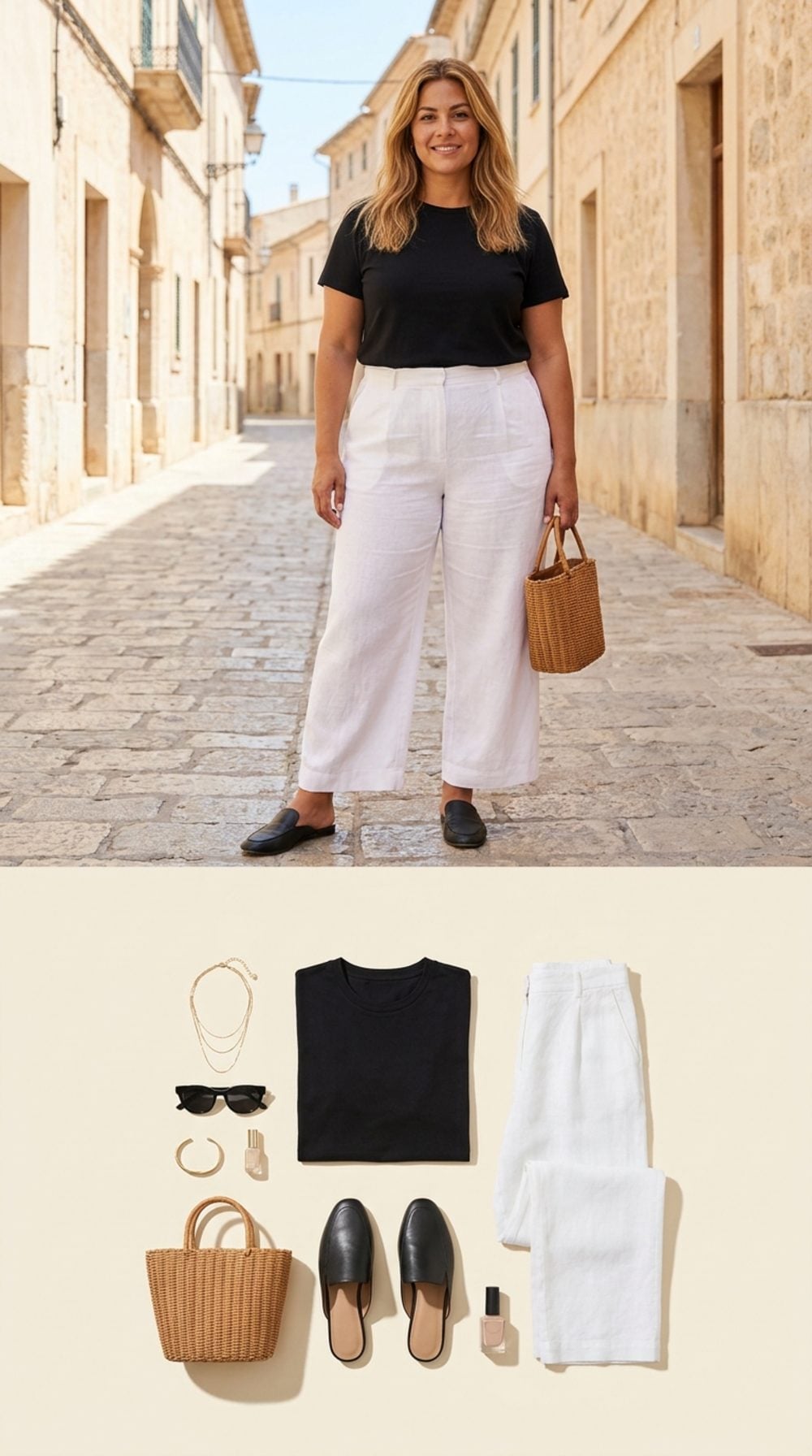
Here’s what separates a frumpy summer look from a polished one: a single vertical layer. An open cardigan, an unbuttoned linen shirt, a long lightweight vest. That’s it. Without one, you’re a block of horizontal color. Your eye hits the silhouette and scans side to side. Add a vertical piece, and suddenly the eye tracks up and down, following the open edges like a frame.
This matters most with relaxed summer basics. A T-shirt and cropped pants without a third piece reads as shapeless. The same combo with a long linen duster cardigan draped open over it? Now you have structure, movement, and two vertical lines that visually narrow the body between them.
The trick is keeping the layer lightweight and unfastened. Button it up and you lose the vertical lines entirely, reverting right back to a solid rectangle. Let it hang open, let it move when you walk. The fabric in motion draws the eye downward, suggesting length. That suggestion alone can counteract ten pounds of visual weight that a bare T-shirt would broadcast.