❤️ Would you like to save this?
Here’s the uncomfortable truth: most women over 40 with “boring” wardrobes don’t actually lack taste. They have plenty of it. What happened is quieter than that. Somewhere between the last decade’s closet purge and the minimalist content you consumed online, your clothes stopped saying anything at all. Not loud, not quiet. Just… muted. The fit is fine. The quality is decent. But if someone asked you to describe your style in three words, you’d hesitate. That pause? It’s telling. These 35 signs aren’t about what’s wrong with your closet. They’re about what’s missing from it, and most of them hide behind the word “practical.”
FYI, thanks to AI imagery software, we’re able to create very specific fashion and hairstyle examples to illustrate the points being made. In some cases, imagery is exaggerated to hammer home the point. Also, assume links that take you off the site are affiliate links such as links to Amazon. this means we may earn a commission if you buy something.
34. You Own the Same Basic Tee in Six Colors and Consider That Variety
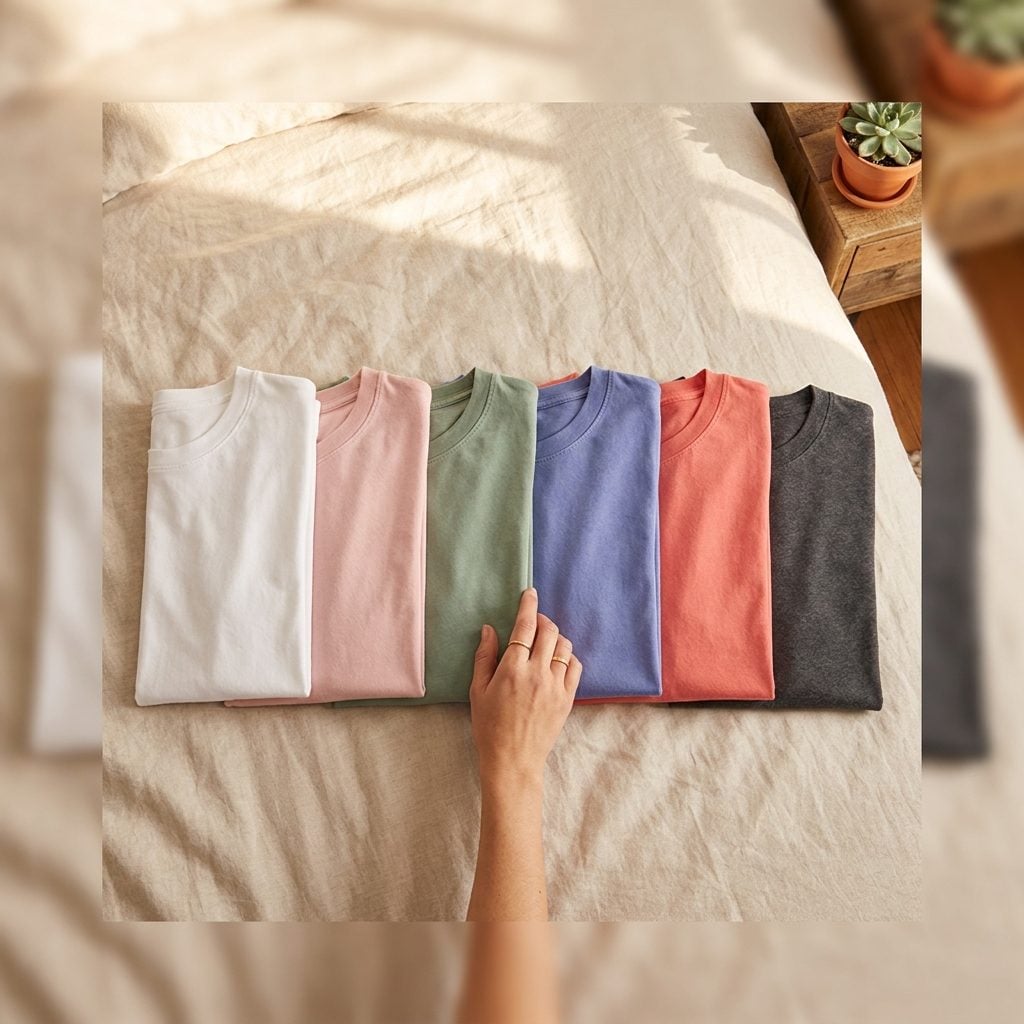
Six cotton crew necks in different shades is not a range. It’s a color wheel attached to a single idea.
The basic tee is a workhorse, and nobody is suggesting you ditch it. But if your entire warm-weather rotation is built on one silhouette repeated across the spectrum, your closet has the personality of a paint swatch card. Real variety means mixing textures, necklines, sleeve lengths, and fabrications. A linen camp shirt reads completely differently than a fitted tee, even in the same color. A silk camisole layered under a lightweight blazer creates dimension that no crew neck can replicate. Variety lives in structure and drape, not just the color on the hanger tag.
33. Your ‘Going Out’ Outfit Is Just Your Everyday Look With Slightly Better Shoes
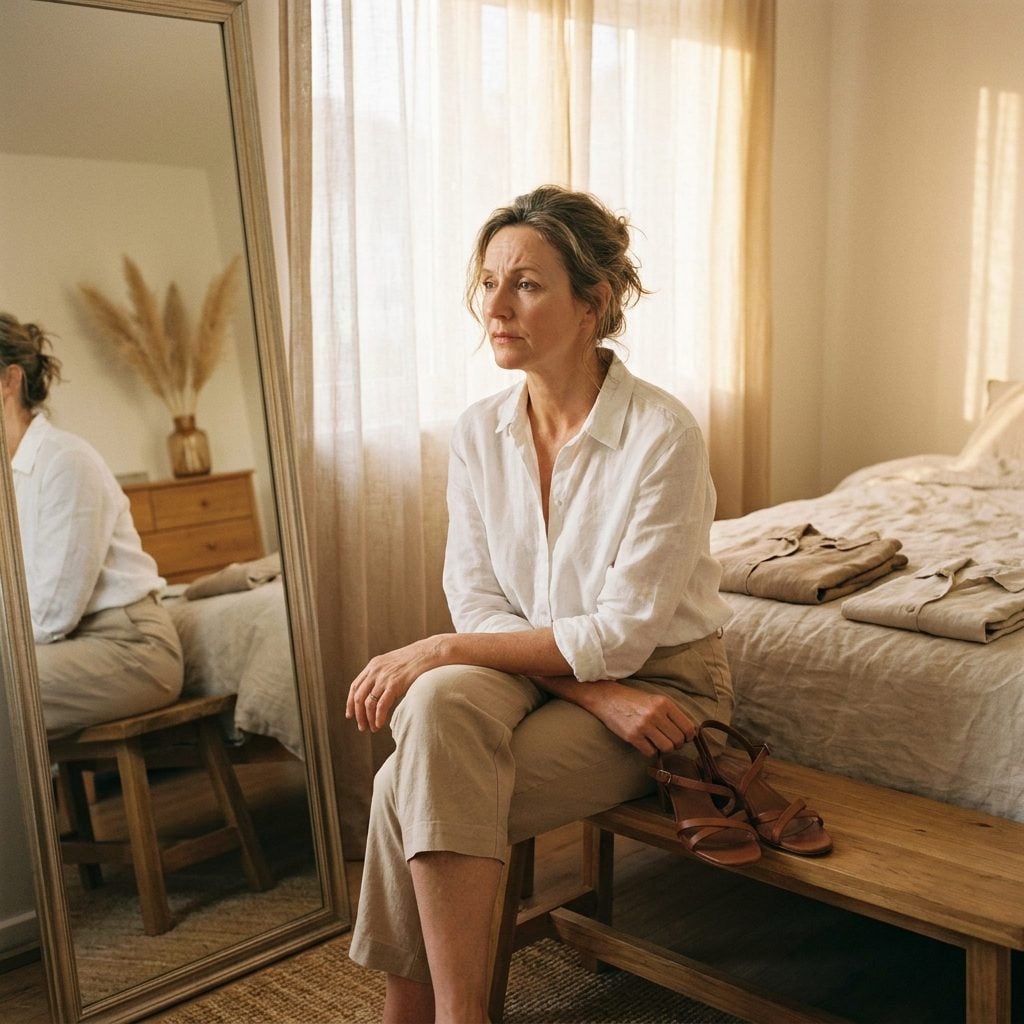
If the only thing separating dinner reservations from the grocery store is a pair of wedges, something needs to shift. Getting dressed for an evening or event should feel like a different chapter, not the same paragraph with a comma. This doesn’t mean sequins or cocktail dresses. It means intentional choices: a fabric with more weight, a silhouette that feels deliberate, a neckline you wouldn’t wear to carpool pickup.
The fix is smaller than you think. A draped midi skirt instead of cropped pants. A structured top instead of a relaxed one. Earrings that catch light. The goal isn’t to look like a different person. It’s to signal to yourself that this moment is different from the last one.
32. The Same Pair of Sandals Goes to Every Barbecue, Wedding, and Beach Walk
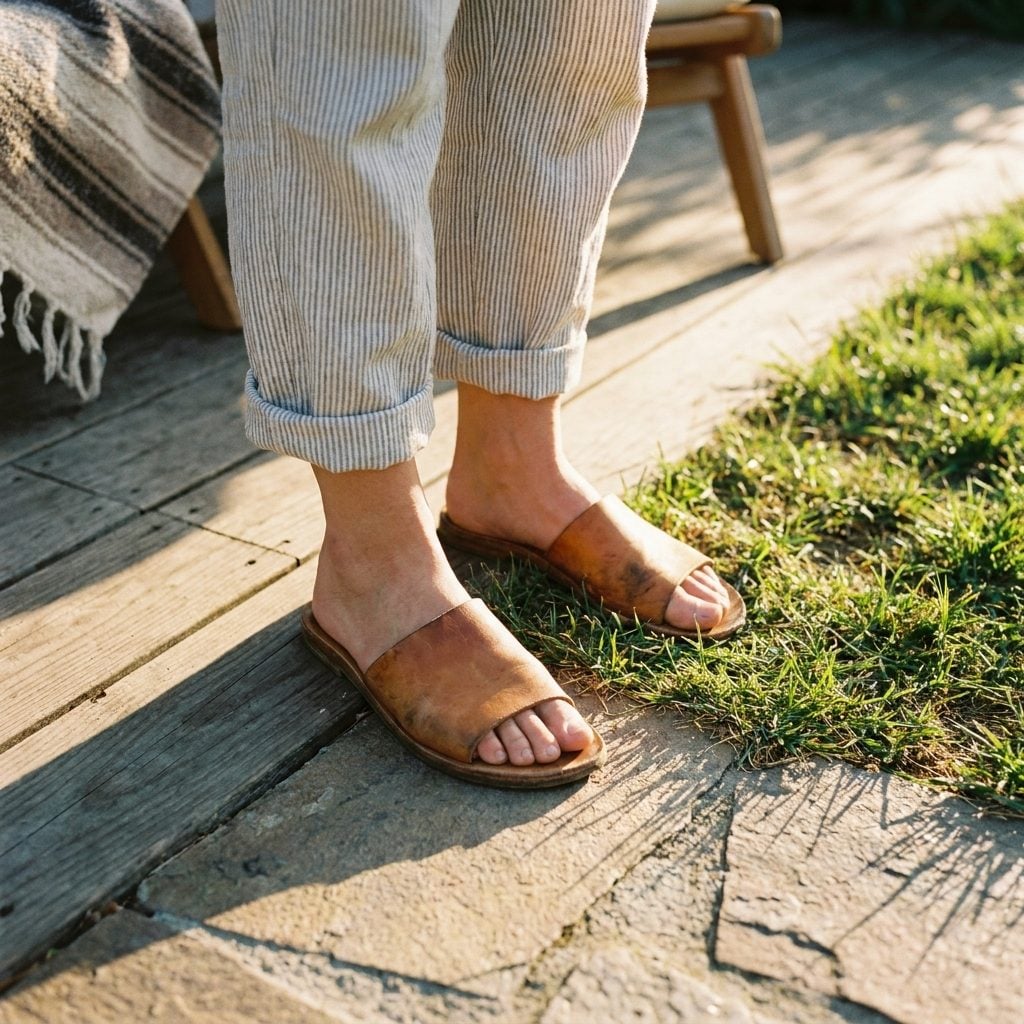
One pair of shoes for every summer scenario is loyalty to a fault. Your feet deserve context.
Shoes do more psychological heavy lifting than almost any other piece of clothing. Studies in nonverbal communication have found that people form first impressions based on footwear faster than on any other garment. A flat leather sandal at a garden party says something wildly different than that same sandal at a beach bonfire, and neither message is quite right.
You don’t need twenty pairs. You need three that feel distinct from each other:
- A polished flat or low heel for events with intention
- A relaxed, textured sandal for casual days
- Something with personality: color, woven detail, or an unexpected sole shape
The third pair is where most women stall. But that’s the pair that actually introduces your closet to the concept of range.
31. Your Jewelry Hasn’t Changed Since Your Last Passport Photo
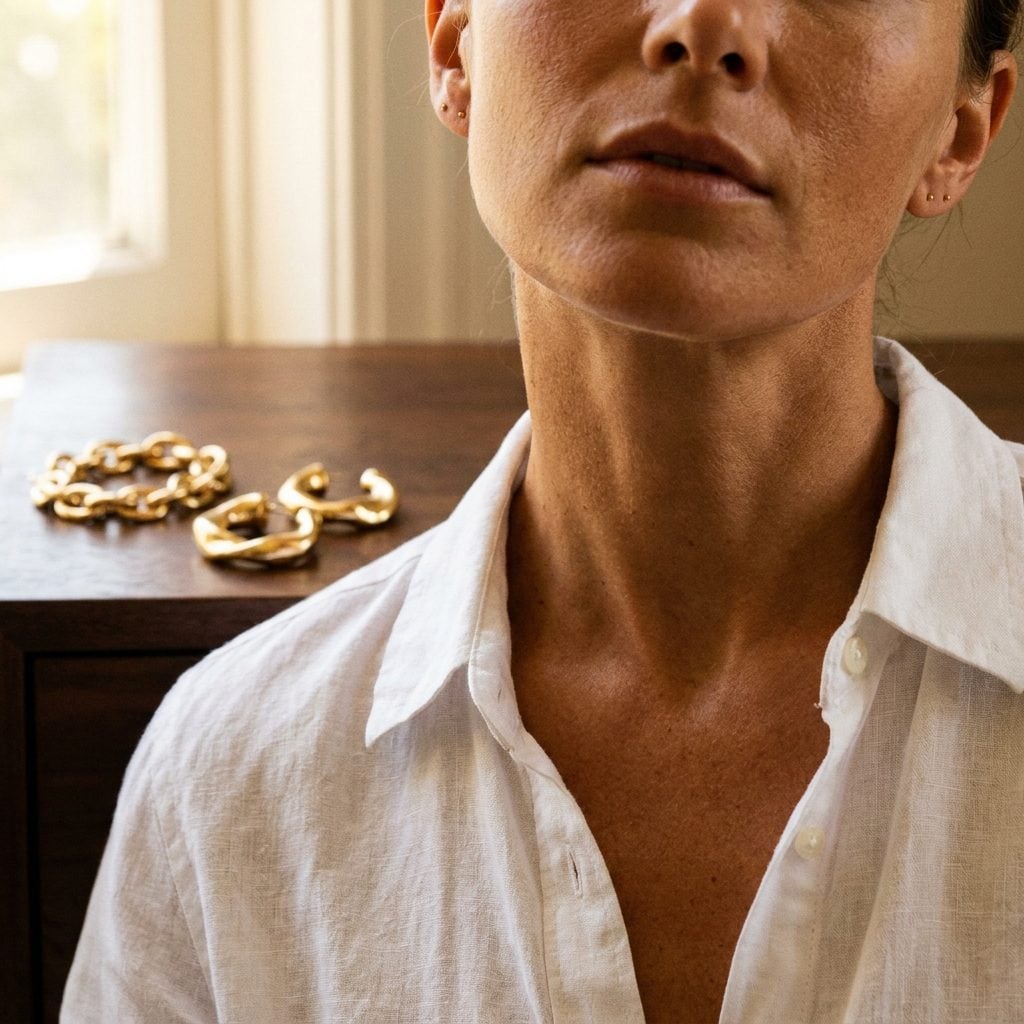
Small gold studs are lovely. They’re also invisible. And if they’re the only thing in your jewelry box that sees daylight, your accessories are doing zero work for your outfits.
Jewelry is one of the lowest-risk, highest-impact ways to inject personality into any look, and it requires no fitting room. A hammered gold cuff bracelet changes the entire energy of a plain white blouse. A pair of resin drop earrings in an unexpected color gives a face something to frame. The reluctance to wear anything “noticeable” often comes from a misplaced worry about overdoing it. But at 40 and beyond, your face has earned something interesting next to it.
30. The Most Interesting Thing in Your Closet Is Something You Bought in 2016
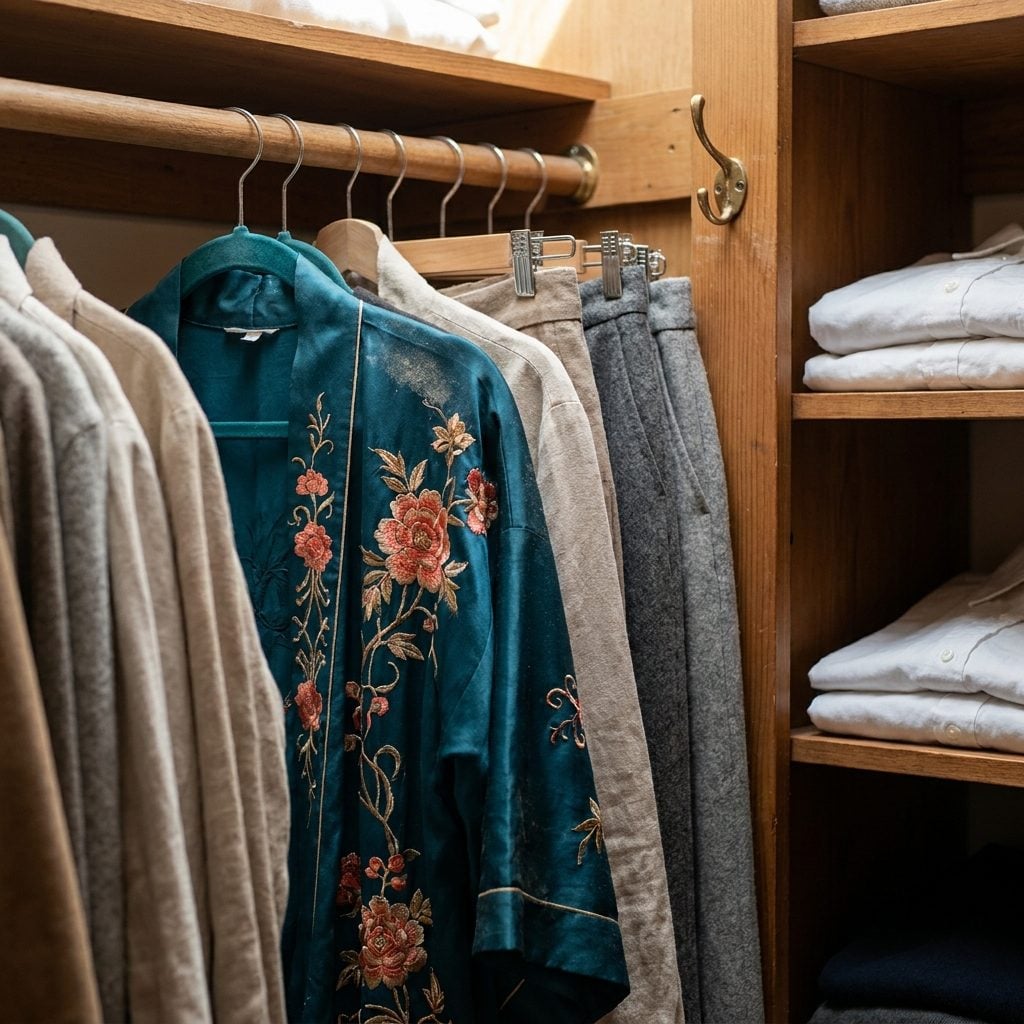
That embroidered jacket. The printed wrap dress from a vacation market. The shoes with the unusual buckle detail. You can probably picture the piece right now, and you probably haven’t worn it in months because nothing else in your closet knows how to talk to it.
Here’s what’s quietly happening: that piece represents the version of you who was willing to take a risk. She saw something with personality and said yes. The rest of your wardrobe has slowly drifted toward safe choices that won’t compete with anything, but they also won’t complement that one interesting piece. So it hangs there, a relic of better instincts.
The fix isn’t to get rid of it. The fix is to buy its friends.
29. All Your Shorts Hit the Same Length in the Same Three Neutrals
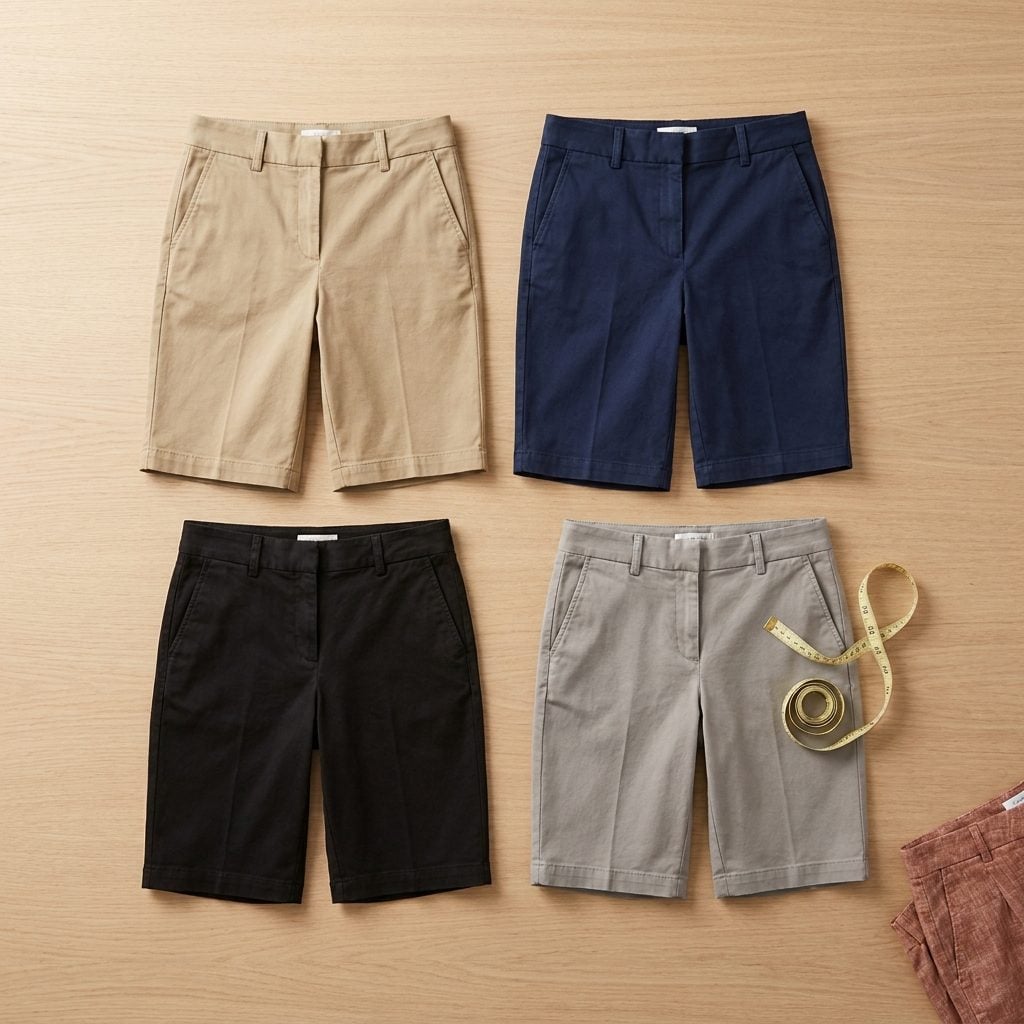
Khaki Bermudas. Navy Bermudas. Black Bermudas. If your shorts drawer looks like a uniform catalog for a very casual military branch, you’ve confused comfort with style.
Bermuda length works on many body types, and there’s nothing wrong with gravitating toward it. But when every pair is the same cut, the same inseam, and the same flat-front neutral, you’ve removed every variable that could make an outfit feel personal. Consider a paperbag waist short in olive or rust. Try a slightly wider leg. Introduce a print that isn’t stripe or plaid. Even swapping cotton twill for linen changes how a basic short catches air and light on a warm day.
28. Every Dress You Own Has the Same Safe Shape and a Print Your Grandmother Would Approve Of
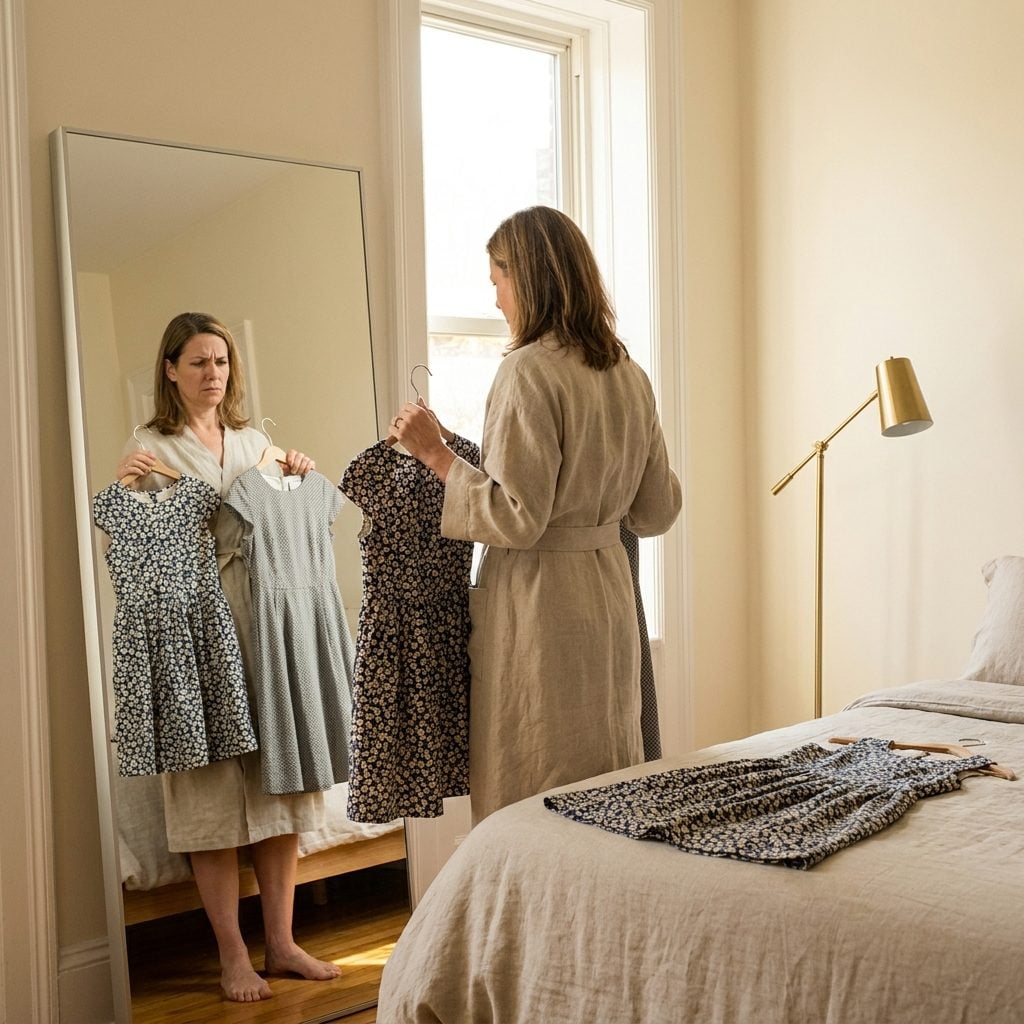
The A-line dress in a small floral. The A-line dress in a muted geometric. The A-line dress in a ditsy print that reads “I’m wearing a pattern” without actually committing to one. Sound familiar?
A-line silhouettes are forgiving and flattering on a wide range of figures, which is precisely why they become a crutch. The shape stops requiring thought. The prints stay small and safe because large-scale prints feel like a gamble. But the result is a dress collection that could belong to any woman on any street in any decade since 1998.
“The dress you reach for shouldn’t just fit your body. It should fit your mood that day.”
Consider a midi shirt dress with a defined waist for structure. Or a wrap style in a bold botanical print where the leaves are actually visible from across the room. One confident dress choice can recalibrate how you see yourself in the mirror.
27. You Describe Your Style as ‘Classic’ But Can’t Name One Thing You’ve Added This Year
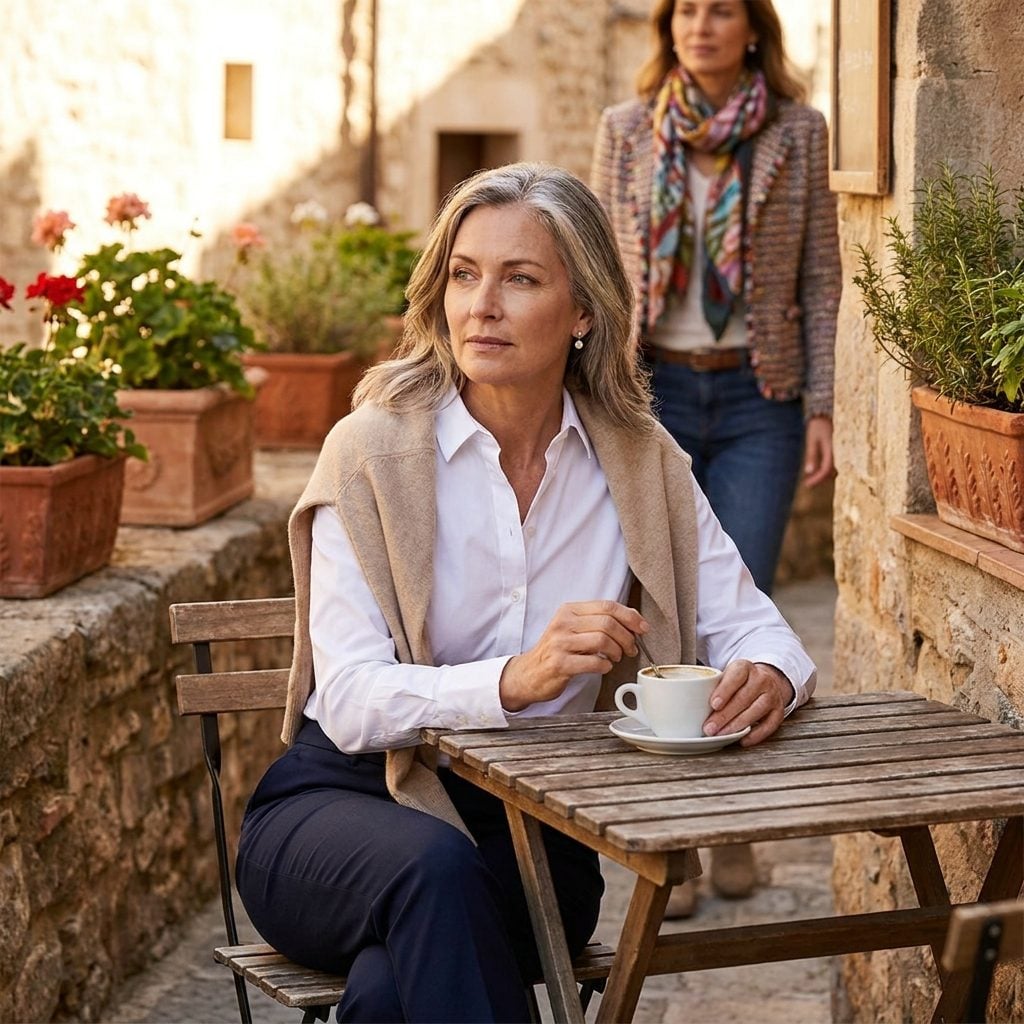
Classic is not a destination. It’s a direction. And if the word has become a shield you hold up to avoid any evolution at all, it has stopped serving you.
True classic style is alive. Think of the women who actually define it: they’re constantly making small, deliberate adjustments. A slightly different trouser width. A new proportion between top and bottom. A color they haven’t worn before that somehow feels entirely like them. “Classic” without movement is just stagnation wearing a trench coat.
Ask yourself: what was the last piece you added that surprised you? Not something you needed. Something that made you feel a small thrill when you put it on. If you can’t answer that within the last twelve months, your style isn’t classic. It’s paused.
26. Your Handbag Was Chosen Specifically to Match Everything and Stand Out for Nothing
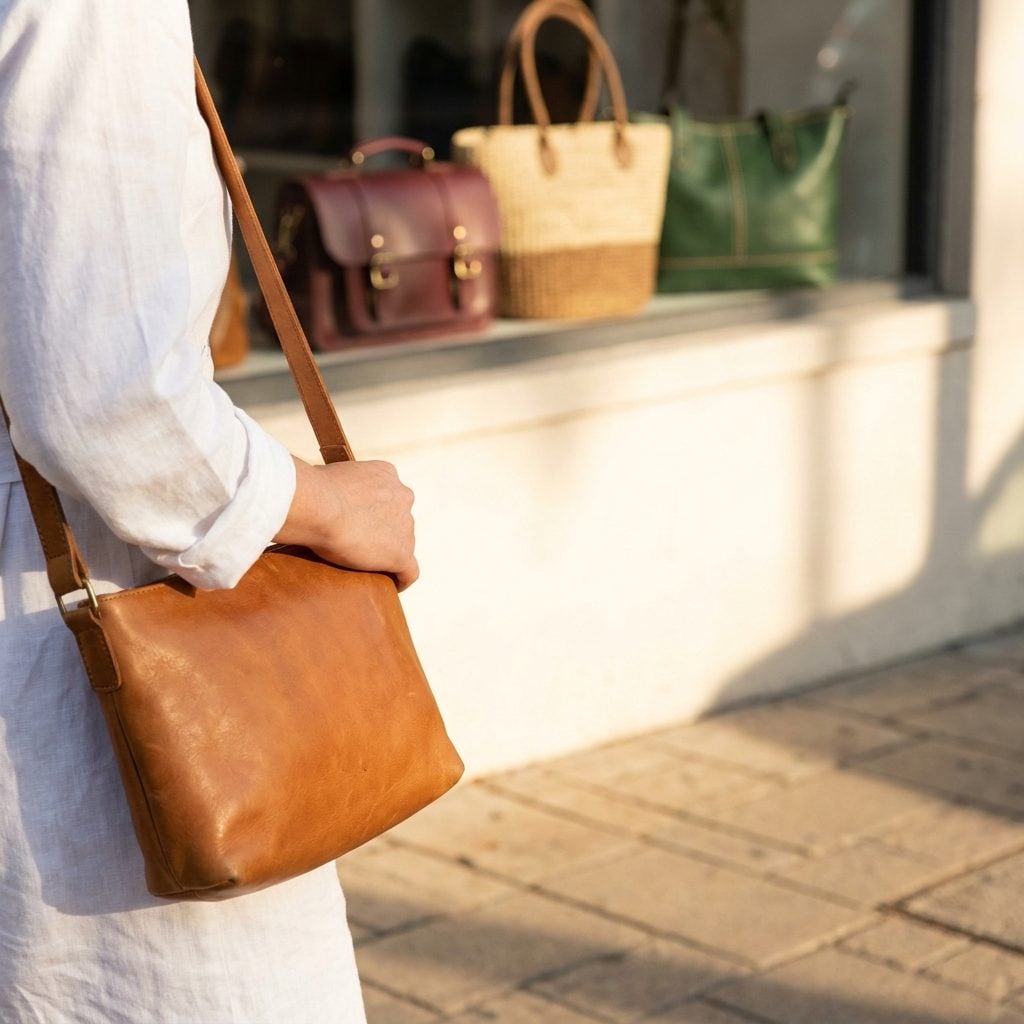
The tan crossbody. The black leather tote. Chosen not because they spoke to you, but because they wouldn’t clash with anything you already own. That’s not versatility. That’s invisibility.
A bag is the one accessory you carry every single day, which means it has more repetitions than any other piece in your wardrobe. It’s the item strangers notice while you’re standing in line, sitting across a table, or walking through a parking lot. And you chose it to disappear.
One bag with personality can rewrite how people read your entire outfit. A woven texture. An unexpected hardware detail. A color that actually has a name beyond “neutral.” Your bag doesn’t need to match. It needs to mean something.
25. You Own Statement Pieces But They Live in a Drawer You Never Open
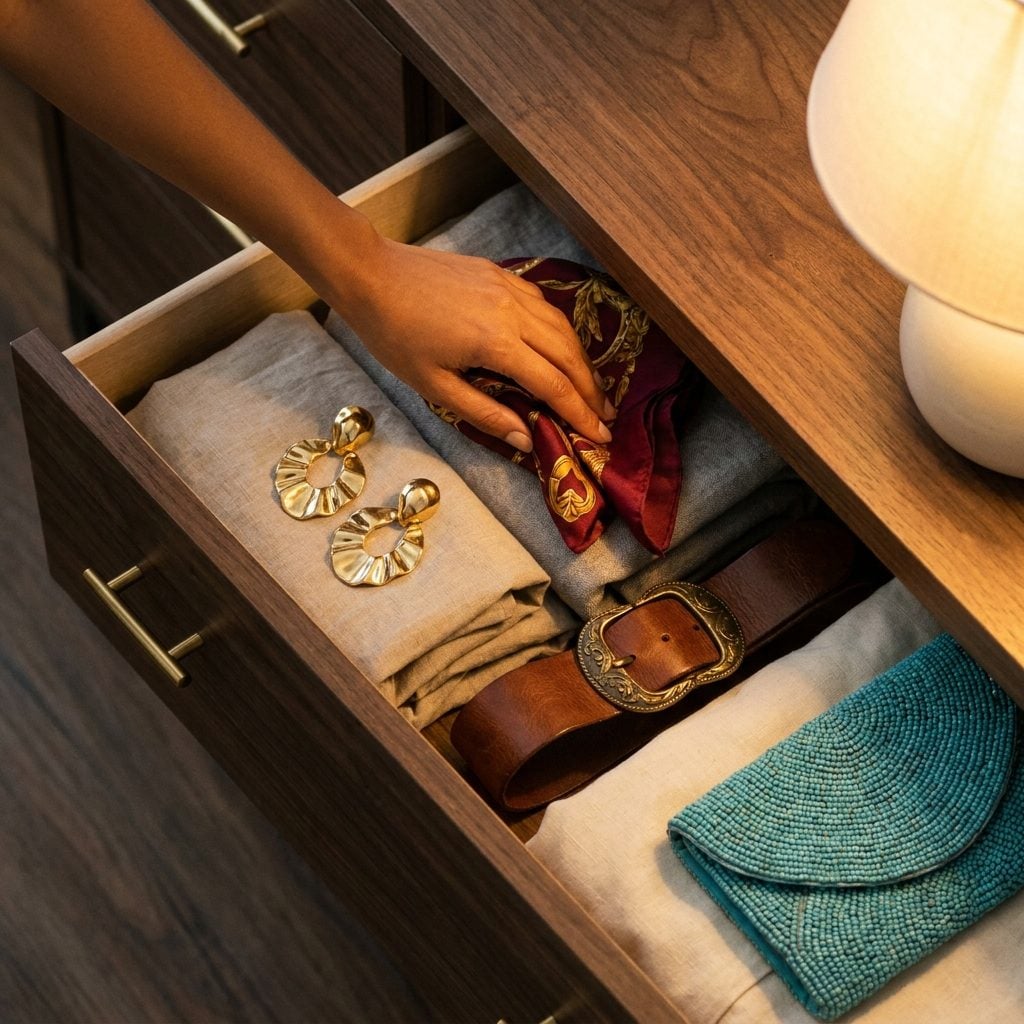
Somewhere in your dresser is a scarf with a print that made you stop in a store. A pair of earrings someone brought you from abroad. A belt with a buckle that has actual character. You bought them or received them because they felt like you. Then you put them away because nothing in your daily rotation seemed like the right moment.
The right moment is a myth. No outfit is going to tap you on the shoulder and say, “Now is the time for the turquoise cuff.” You have to create the moment by putting the piece on first and building around it. Start with the scarf. Choose a top that doesn’t fight it. Walk out the door. Notice that nobody recoils in horror. Repeat.
24. Your Swimsuit Was Chosen to Avoid Attention Rather Than to Feel Good

Dark solid color. Full coverage. Maximum camouflage. If your swimsuit selection process sounds more like a military briefing than a shopping trip, the goal has shifted from “What do I want to wear?” to “How do I become invisible near water?”
Visibility is not the enemy. Noticing your own body in fabric that has texture, color, and shape is not vanity. It’s presence. A ruched one-piece swimsuit in a rich cobalt or warm paprika does everything a black suit does for silhouette while also suggesting that the woman wearing it hasn’t given up on being seen. And you haven’t. You just forgot.
The beach doesn’t require bravery. It requires a suit that wasn’t chosen out of fear.
23. You’ve Never Once Tucked, Rolled, or Knotted Anything and It Shows
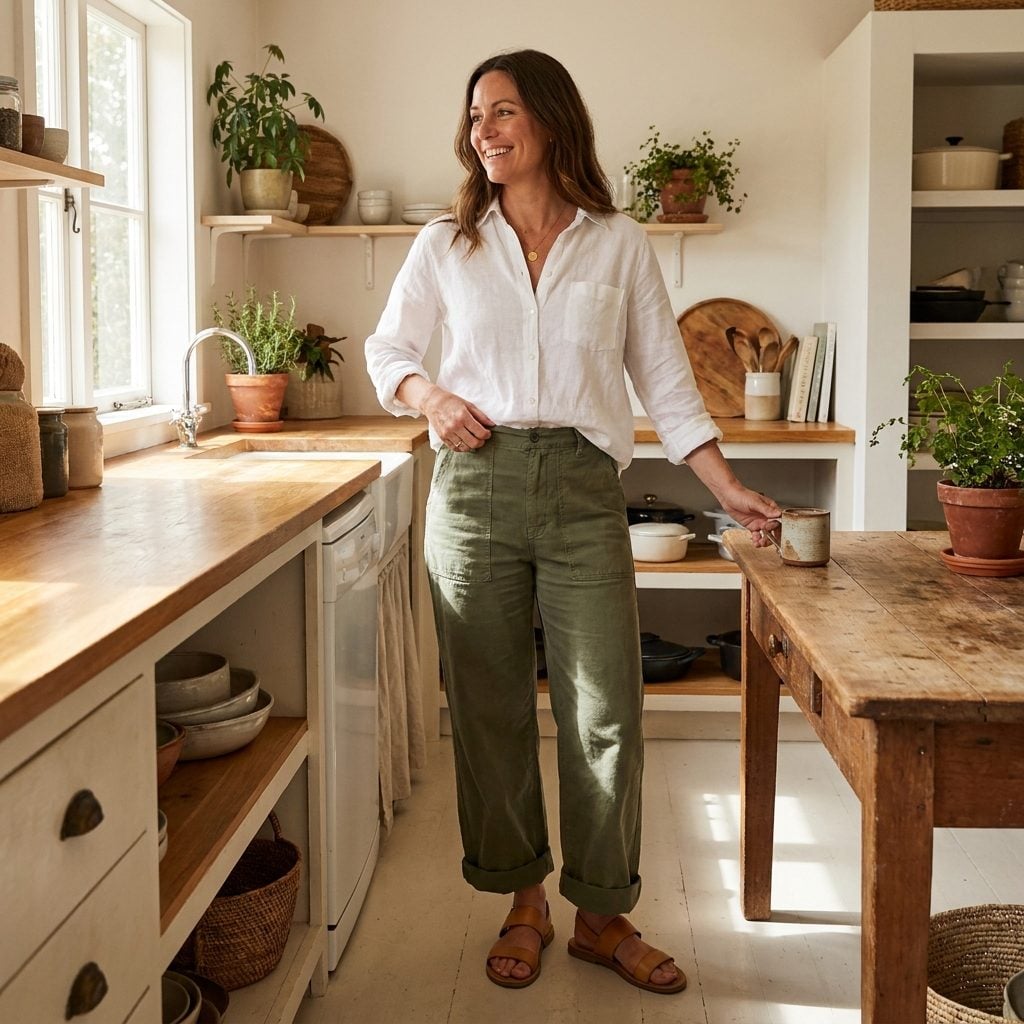
Styling details are the difference between a woman who got dressed and a woman who decided how she wanted to look today. If every top falls straight to your hips, every sleeve sits at its manufactured length, and every hem lands wherever the factory intended, your clothes are wearing you. You’re a mannequin in a department store, technically put together but communicating nothing.
A simple front tuck on a linen button-front shirt changes your entire silhouette in two seconds. Rolling the cuffs on wide-leg trousers shows off your leather flat sandals and adds a casual confidence that screams intention. Knotting the tail of an oversized tee at one hip gives a structured linen skirt some attitude. These micro-decisions take five seconds but communicate something powerful: you care about how your clothes sit on your specific body, not just some imagined average body on a hanger.
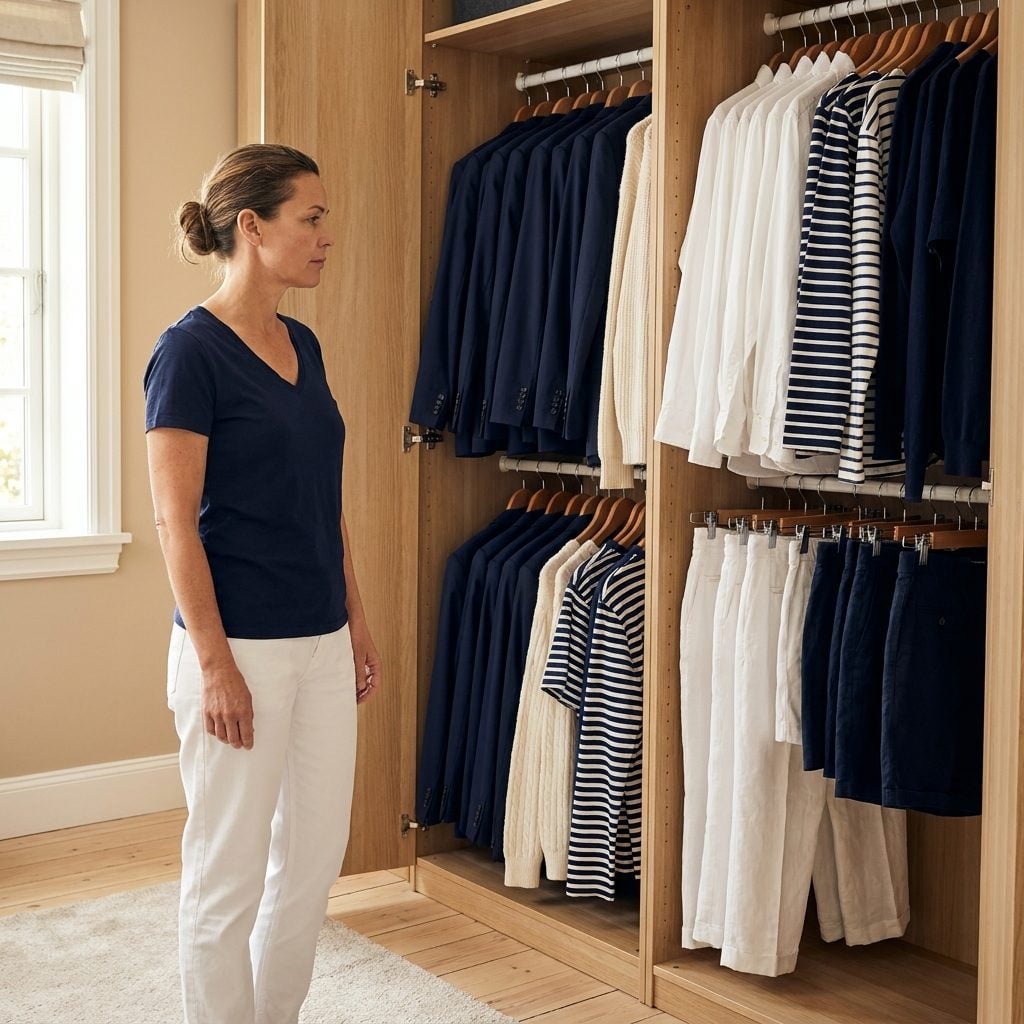
22. Your Entire Definition of ‘Color’ Is Navy Paired with White
❤️ Would you like to save this?
Navy and white is not a color palette. It’s the absence of a decision. It’s what happens when you reach into your closet half-asleep and know nothing will clash because nothing can. And look, the combination is fine. Clean. Appropriate. But if every sundress, every tank-and-trouser pairing, every beach cover-up circles back to this same two-tone safety net, your wardrobe has a personality problem.
Color after 40 is not about wearing head-to-toe fuchsia. It’s about discovering that terracotta actually makes your skin look warmer, or that a muted sage green does more for your eyes than navy ever did. Try a terracotta midi skirt with a cream top. Swap the white tee for one in dusty rose. The shift is subtle, but people will notice, and more importantly, you’ll feel something when you catch your reflection.
21. You Own Four Pairs of the Same Pants in Shades Only You Can Tell Apart
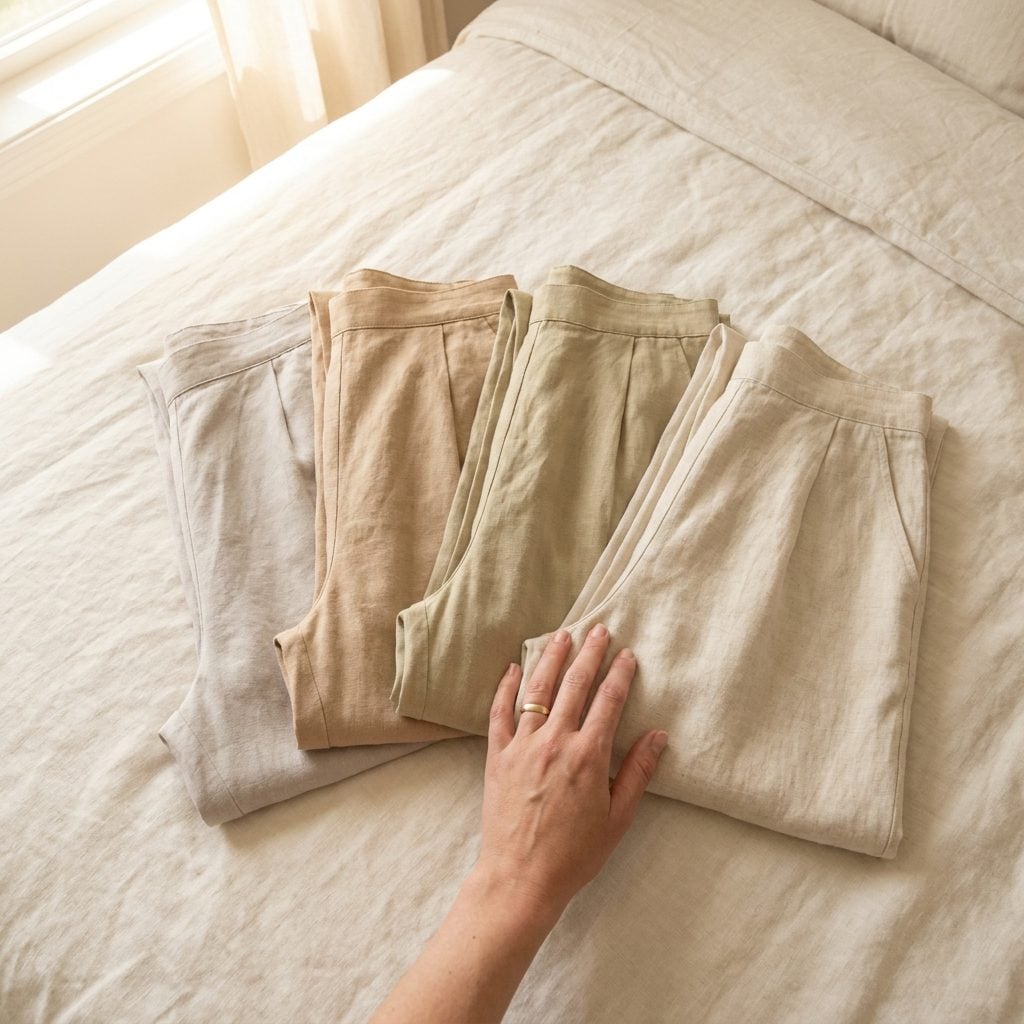
Stone. Sand. Khaki. Oatmeal. You own all of them and you’d defend each purchase individually, but lined up side by side, they look like paint chips from the same swatch card. This isn’t building a versatile wardrobe. This is decision paralysis disguised as practicality.
The psychology here is interesting: researchers at Columbia have found that when people feel uncertain about their personal taste, they gravitate toward minor variations of things that already feel safe. You’re not choosing; you’re repeating. And repetition breeds invisibility.
One pair of truly well-fitting wide-leg linen trousers in a warm sand shade can replace three mediocre pairs. Use the freed-up closet space for something that actually makes you think before you pair it, like a cropped trouser in olive or a straight-leg pant in faded brick.
20. Every Layer You Reach For Exists to Block Wind and Nothing Else

A cardigan that matches nothing. A zip-up hoodie from a vacation five years ago. That thin grey pullover you keep in your bag just in case. If every layer in your rotation was chosen purely because temperatures drop in restaurants, you’re missing one of summer’s best style opportunities.
Layering in warm weather is where personality lives. A open-knit cotton cardigan in a saturated color, draped over a simple tank dress, tells a completely different story than that black fleece you grabbed at the outlet. A linen blazer with pushed-up sleeves over a camisole and jeans communicates something about the woman wearing it. Even a lightweight silk scarf worn loose over the shoulders does double duty as warmth and intention.
19. Your ‘Boldest’ Piece Would Barely Register as Interesting on Anyone Else
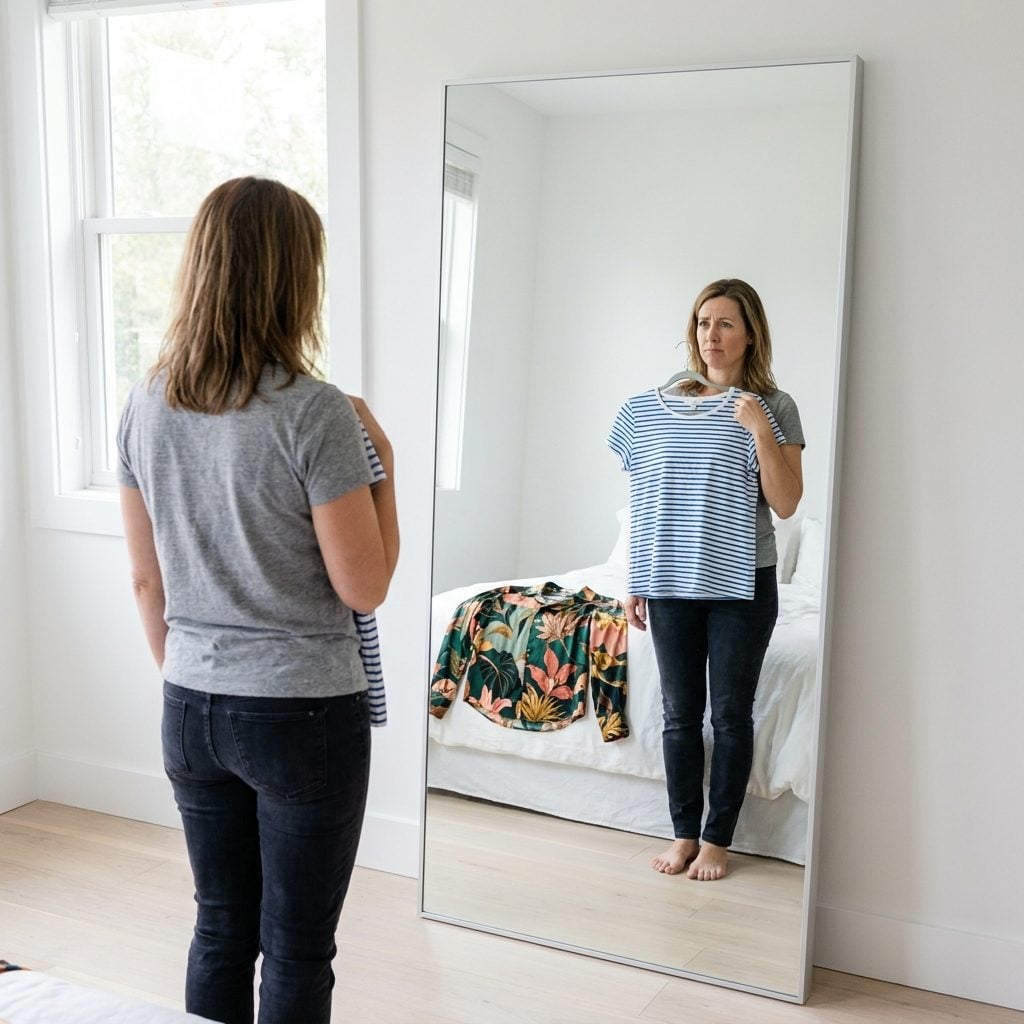
You call it your statement piece. It’s a striped top with a slightly wider stripe than usual, or a pair of wedges in tan instead of brown. If the bravest item in your summer closet would blend into any random crowd without a single head turn, that’s not bold. That’s bold-adjacent.
Real boldness at this age doesn’t require runway extremes. It means owning something that makes you feel a flicker of uncertainty when you put it on, a print that’s genuinely unusual, a silhouette that’s different from your default, a color you love but feel nervous about. That small nervous energy? That’s personality trying to surface.
18. Your Shoe Rotation Has Three Settings: Walking, Errands, and Dinner
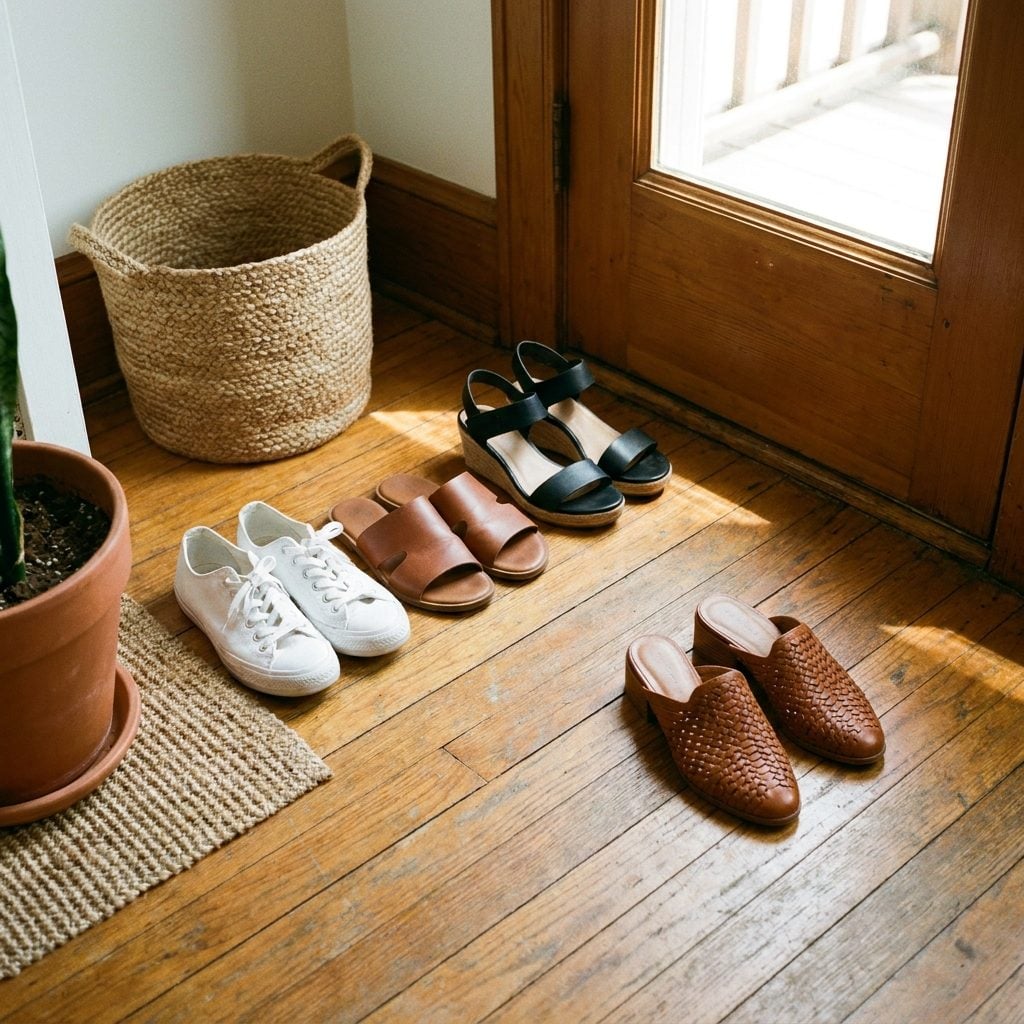
White sneakers for walking. Brown sandals for errands. Black wedges for dinner. If your entire summer shoe situation can be described as a flowchart based on activity rather than mood, you’ve reduced footwear to a logistics problem.
Shoes are the first place personality leaks into an outfit. A woven woven leather mule in a warm cognac says something different than a basic slide, even if both serve the same function. A pair of metallic flat sandals can go to the grocery store and a rooftop dinner without a costume change.
The women I know with the best style after 40 all share one thing: they buy at least one pair of shoes each season that serves no practical purpose except making them feel like themselves. Not comfortable. Not sensible. Just right.
17. You Avoid Prints Unless They’re So Subtle They Basically Disappear
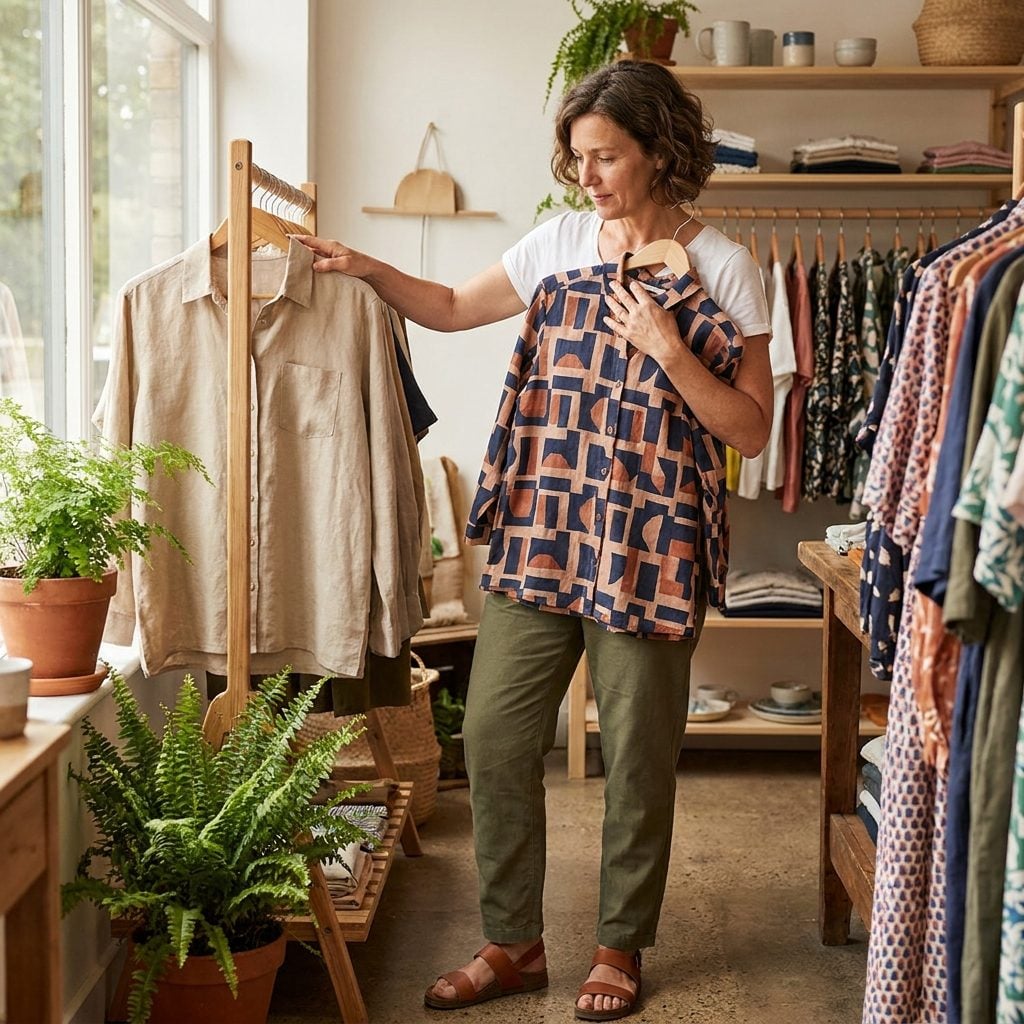
A micro-dot that reads as solid from three feet away. A tone-on-tone stripe you have to squint to see. A floral so muted it could pass for beige. If your idea of print is something that requires close inspection to even identify as a pattern, you’re not wearing prints. You’re wearing plausible deniability.
Prints are one of the fastest ways to inject personality into summer dressing, and there’s a wide, comfortable middle ground between invisible patterns and head-to-toe tropical chaos. A linen shirt in a block-printed geometric. A midi skirt with an oversized abstract botanical. These read as intentional and confident without screaming.
The right print for you isn’t about the scale or the trend. It’s about the one that makes you stand up a little straighter when you catch sight of it.
16. Your Sunglasses Haven’t Changed Since the Year You Bought Them by Accident

They were on a spinner rack at a gas station or a drugstore checkout. You’ve had them so long you forgot they were a placeholder. But sunglasses are the single most visible accessory on your face, and wearing the same generic pair year after year is like hanging a blank frame where a painting should be.
Frame shape changes how people perceive your entire face. A slightly oversized acetate cat-eye adds structure and draws the eye upward. A warm tortoiseshell round frame softens angles. Even swapping from black plastic to a rich amber shade shifts the temperature of your whole look. One good pair of sunglasses, chosen with the same care you’d give a piece of jewelry, does more for a summer outfit than any single garment change.
15. Your Summer Accessories Are the Same Ones That Came Out of Storage Last June
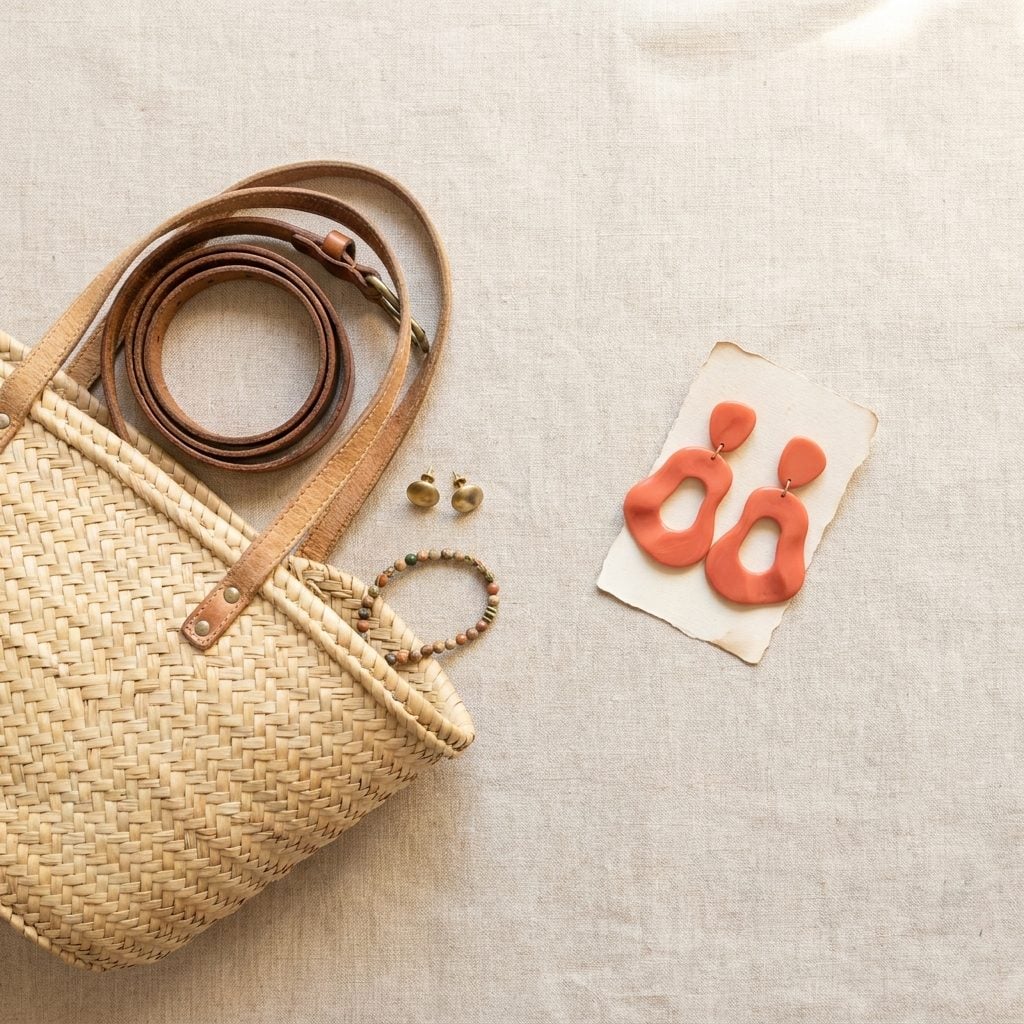
Same straw tote. Same beaded bracelet from that market in 2018. Same belt. If your accessories emerge from a seasonal box completely unchanged year after year, they’ve become wallpaper. You don’t see them anymore, and neither does anyone else.
Accessories are the lowest-risk, highest-impact place to experiment with personality. A single new piece, a resin statement earring, a belt in an unexpected width, a scarf tied as a headband, can make last year’s dress feel like a completely different outfit. The key isn’t replacing everything. It’s adding one thing each summer that surprises you a little, something that wouldn’t have appealed to you three years ago. That gap between past-you and present-you is where personal style actually develops.
14. Your Closet Is Small and Efficient and No One Would Remember a Single Piece From It
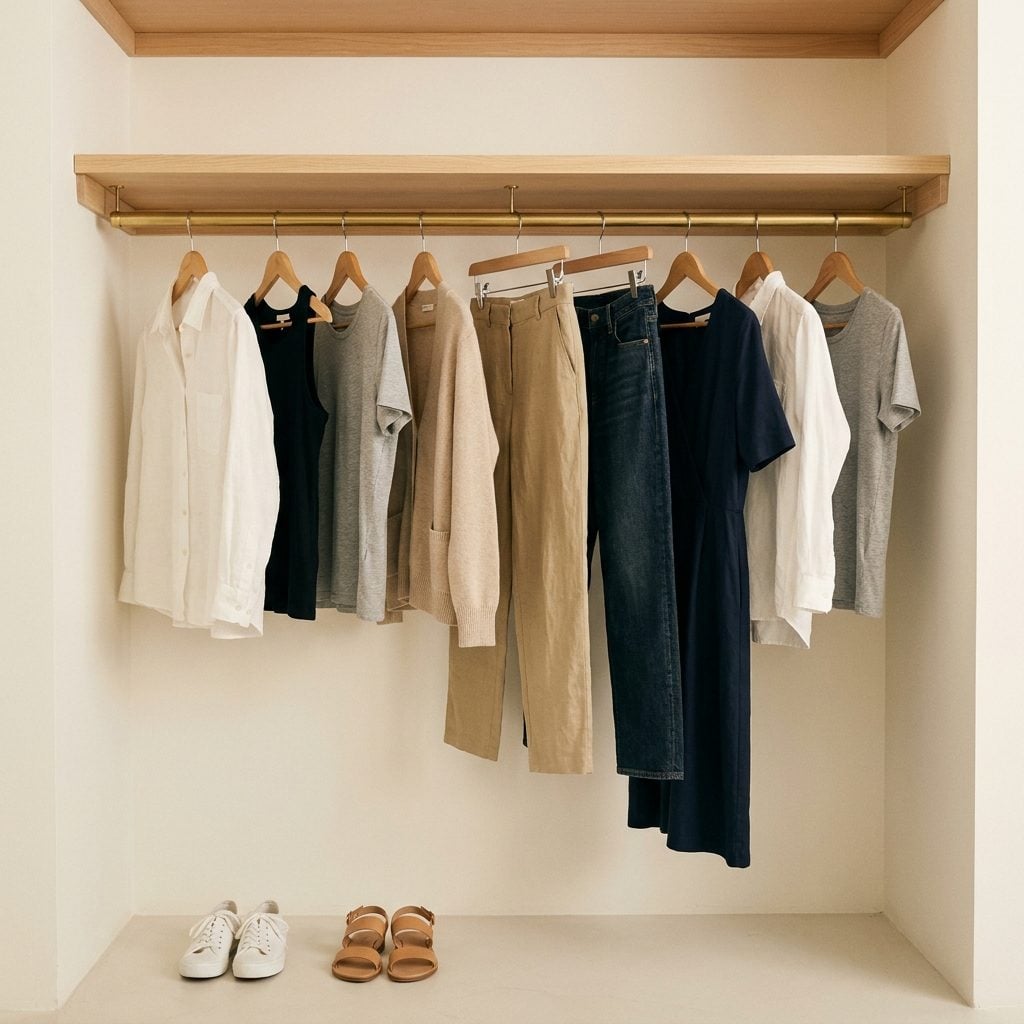
You followed the capsule wardrobe advice. You edited ruthlessly. Everything fits, everything coordinates, and you can get dressed in the dark. Congratulations: you’ve built the world’s most forgettable collection of clothing.
There’s a difference between a curated closet and a personality-free one. Minimalism works when each remaining piece carries weight, when the ten items you kept are so distinctly you that they couldn’t belong to anyone else. But if your pared-down wardrobe reads like a generic packing list (white tee, black tank, neutral linen pants, denim jacket), you haven’t found your style. You’ve just avoided having one.
Ask yourself this: if someone opened your closet without knowing you, could they guess a single thing about your personality? Your sense of humor? The places you’ve traveled? If the answer is no, efficiency isn’t the problem. Absence is.
13. You Live in Basics But Haven’t Done a Single Thing to Make Them Yours
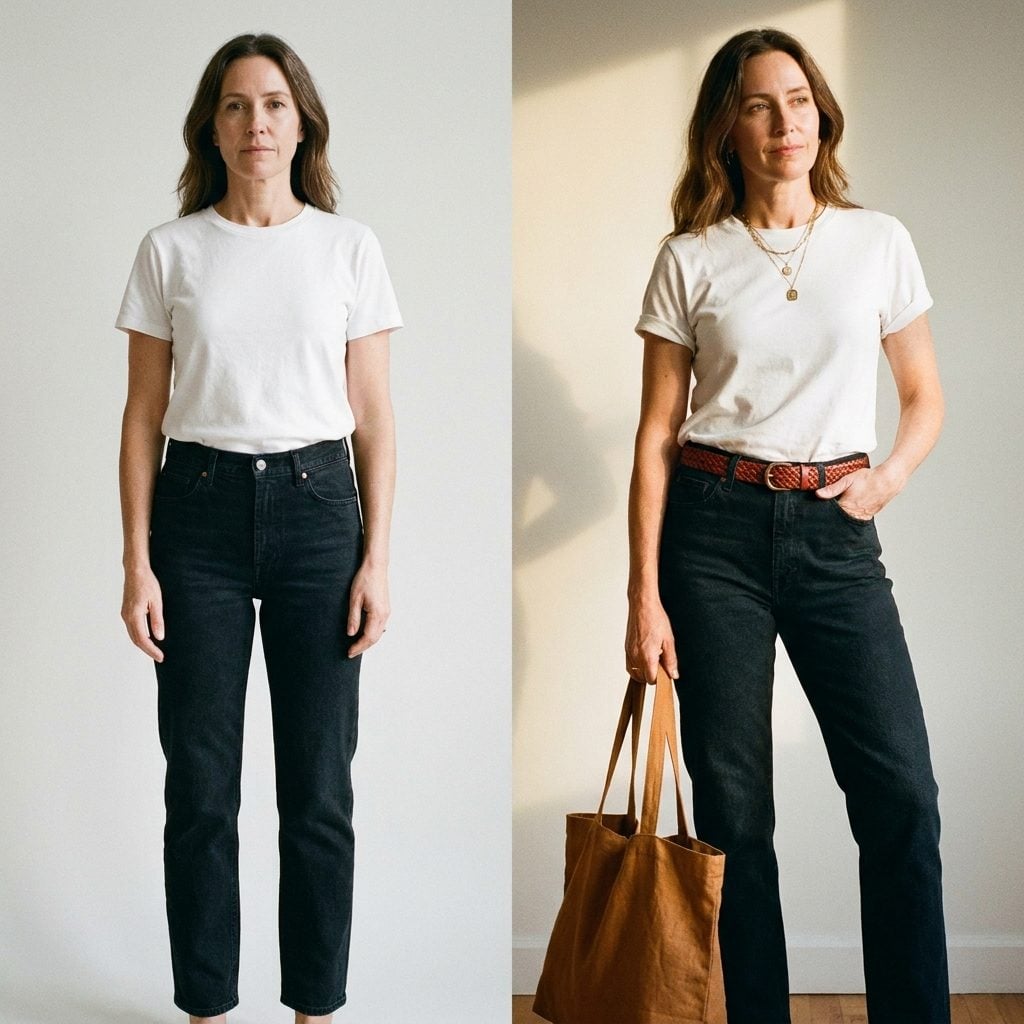
Basics are a foundation, not a finished house. A white t-shirt is a starting point. A white t-shirt with a knotted vintage silk scarf, layered gold chains, and sleeves pushed to the elbows is a decision. The difference between a woman who wears basics well and a woman who just wears basics is everything that happens after the base layer goes on.
Three fast ways to make any basic feel owned:
- Add one piece of jewelry with actual visual weight, not a delicate chain but something someone could identify from across a room
- Break the proportion by pairing a fitted top with volume on the bottom, or the reverse
- Introduce one color or texture that doesn’t “match” but still works, like a rust-colored woven leather belt with an all-grey outfit
12. Every Outfit You’ve Worn This Month Follows the Exact Same Blueprint

Top. Bottom. Flat shoe. Maybe a bag. Repeat. If someone scrolled through photos of your last ten summer outfits, would they struggle to tell which was which? When every look follows the same proportional formula, the same neckline family, the same hem length, the same shoe height, you haven’t built a style. You’ve built a uniform without meaning to.
Uniforms work for people who chose them deliberately (think of a woman who always wears a black turtleneck because it’s her thing). But accidental uniforms happen when you stopped experimenting and didn’t notice. The fix isn’t a wardrobe overhaul. It’s disrupting one variable at a time.
Break Your Formula in One Move
If you always wear fitted tops with relaxed bottoms, flip it. If everything hits at the knee, try ankle length or above. If you never wear a dress, wear one on Tuesday. Change a single element and you’ll discover how much range already exists in the clothes you own, hiding behind a formula you didn’t realize you were following.
11. Statement Pieces Live in Your ‘Maybe Someday’ Category, and Someday Never Comes
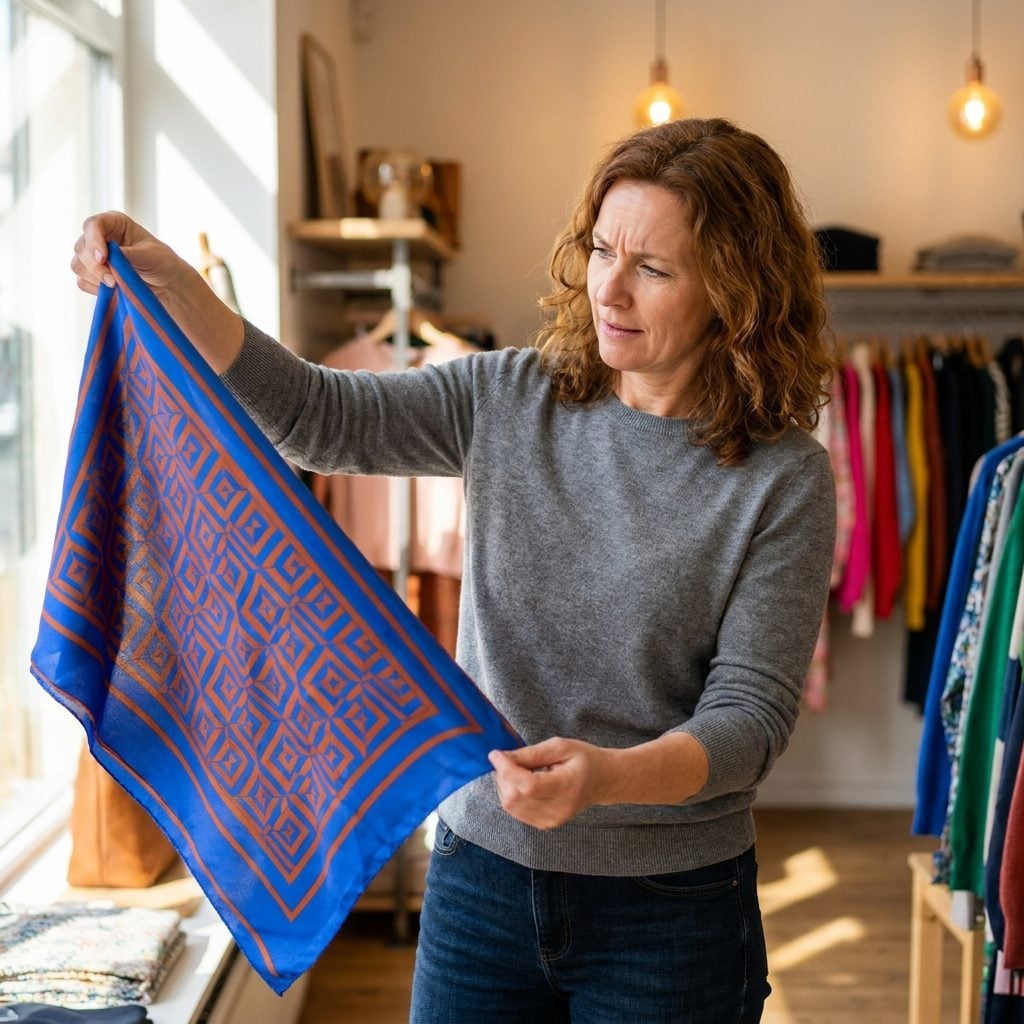
That printed midi skirt you admired online for twenty minutes before closing the tab. The bold earrings you picked up in a shop, held against your face, then quietly set down. You tell yourself these pieces are “too much,” but what you really mean is they’d draw attention, and attention feels unpredictable after forty.
But personality in dressing isn’t about volume. It’s about specificity. A single oversized gold cuff with a simple black tank says more about you than a closet full of carefully coordinated basics ever could. The women whose style you admire? They aren’t wearing wilder clothes. They’re just wearing one unexpected thing with absolute conviction.
Start small. One piece per outfit that makes you pause and think, “This is distinctly mine.” That’s all a statement piece needs to be.
10. Your Accessories Are So Subtle They’ve Essentially Disappeared
❤️ Would you like to save this?
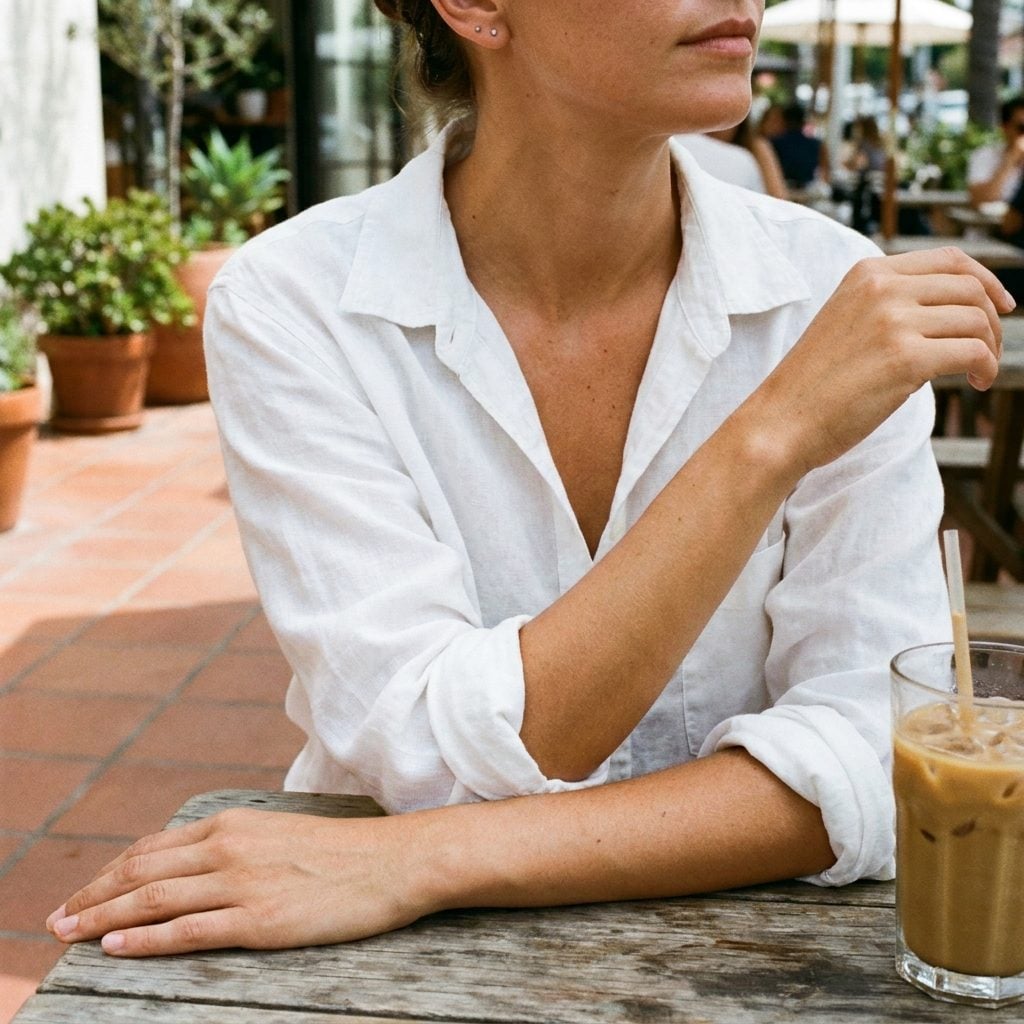
Minimalism is a choice. Invisibility is a habit. And the gap between the two matters more than most women realize. If your summer accessories consist of the same small studs you’ve worn since your daughter’s christening and a watch you forget to put on half the time, you’re not curating a minimalist look. You’re just not accessorizing.
Accessories are where personality lives in an outfit. They’re the easiest, lowest-commitment way to inject something personal into even the most basic combination of pieces. A stack of mixed metal bangles, a woven belt in an unexpected color, a pair of tortoiseshell sunglasses with real presence. None of these require a wardrobe overhaul. They require noticing that the blank spaces in your outfit are saying something, too.
9. Someone Could Swap Your Outfit for a Stranger’s and You’d Both Look the Same

Your outfits are appropriate. They’re clean and pressed and perfectly suitable. And they communicate absolutely nothing about who you are, what you love, or how you move through the world.
Personality in clothing doesn’t require eccentricity. It requires intention. The woman who always wears one vintage ring from a flea market in Lisbon has personality in her wardrobe. The woman who ties her scarves in a particular way her mother taught her has personality. The woman who gravitates toward a specific shade of olive because it reminds her of a place she lived once has personality. These details are tiny, private, almost invisible to anyone who isn’t paying attention. But they make the difference between getting dressed and expressing something.
If your outfit could belong to any woman your age in your zip code, it’s doing a job. It’s just not doing your job.
8. You’ve Bought the Same White Tee Four Times Because Change Feels Like Effort
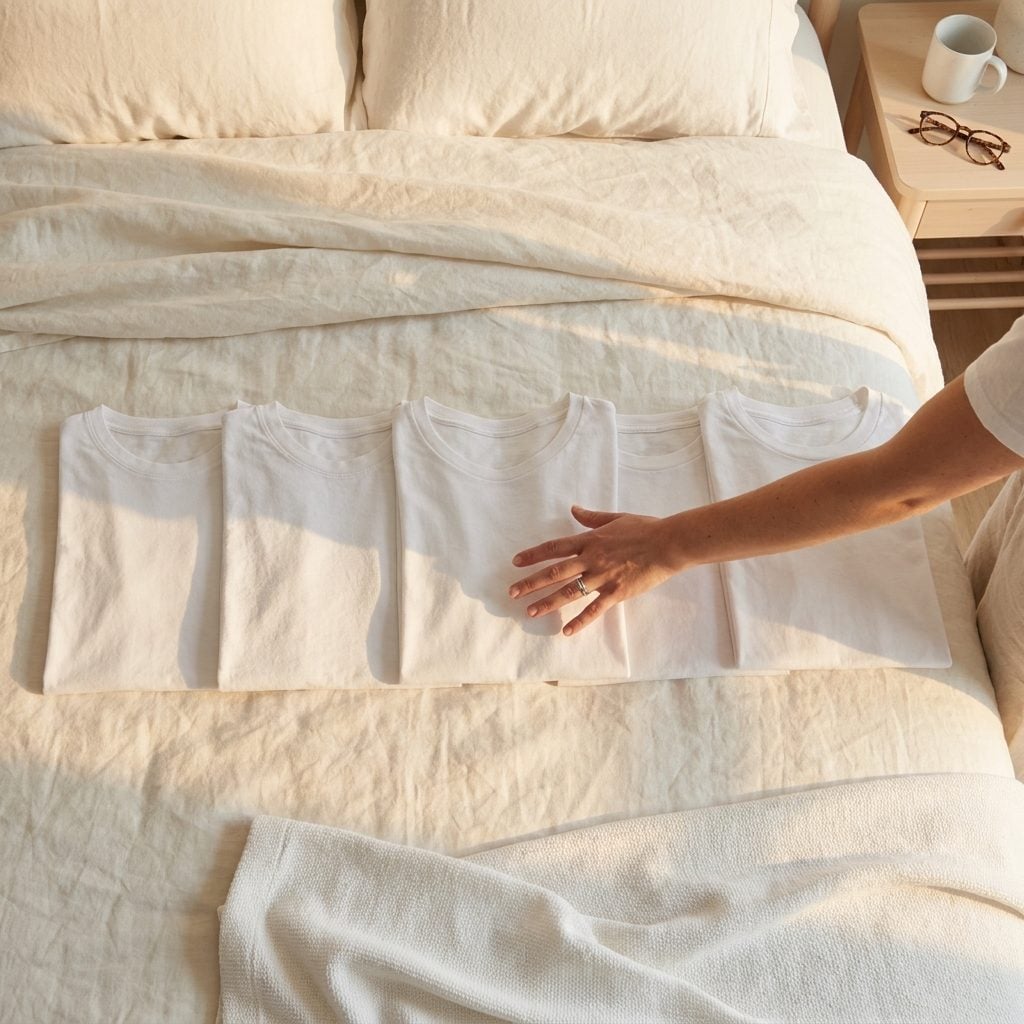
Owning multiples of a staple you genuinely love is smart wardrobe strategy. Buying duplicates because you can’t muster the energy to explore anything new is a completely different behavior wearing the same disguise.
Ask yourself honestly: did you buy that fourth white cotton crewneck because it’s the perfect tee and you’ve tried dozens? Or because opening a browser to look for something different felt exhausting, and clicking “reorder” felt safe? The answer matters. One is a woman who knows what she wants. The other is a woman who has stopped looking.
7. Everything Fits Perfectly and None of It Turns a Single Head
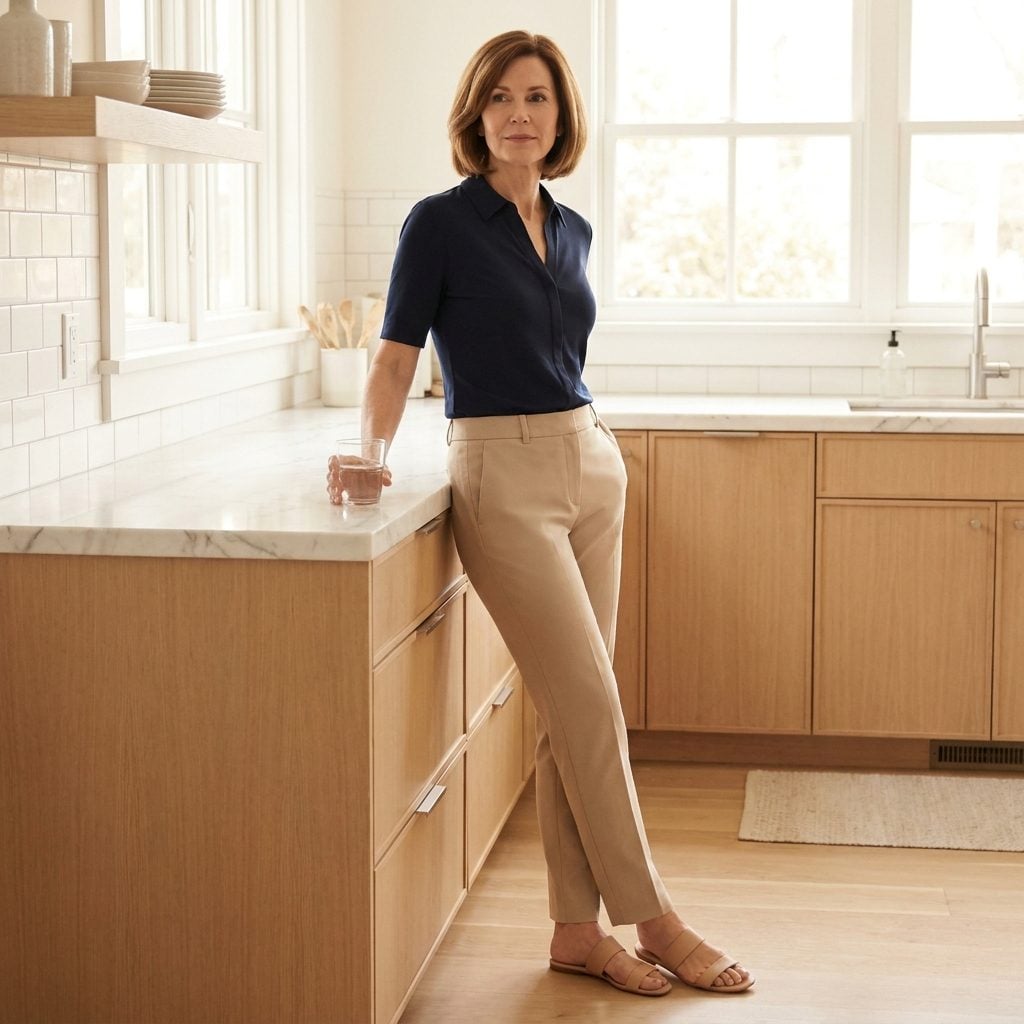
Good fit is supposed to be the foundation. Somewhere along the way, it became the entire house. You’ve mastered proportion, you know your measurements, your hems hit exactly where they should. And yet you walk into a room and no one registers what you’re wearing. Not because it looks bad. Because it looks like nothing.
Fit without personality is like a well-built room with no furniture. Technically correct, spatially sound, completely empty of character. The fix isn’t complicated: it’s layering one element of surprise onto that excellent foundation. A printed silk kimono over a perfectly fitted tank. An unexpected shoe. A color that doesn’t match but somehow works.
You’ve already done the hard part. Now do the interesting part.
6. You Haven’t Tried a New Silhouette Since the Obama Administration
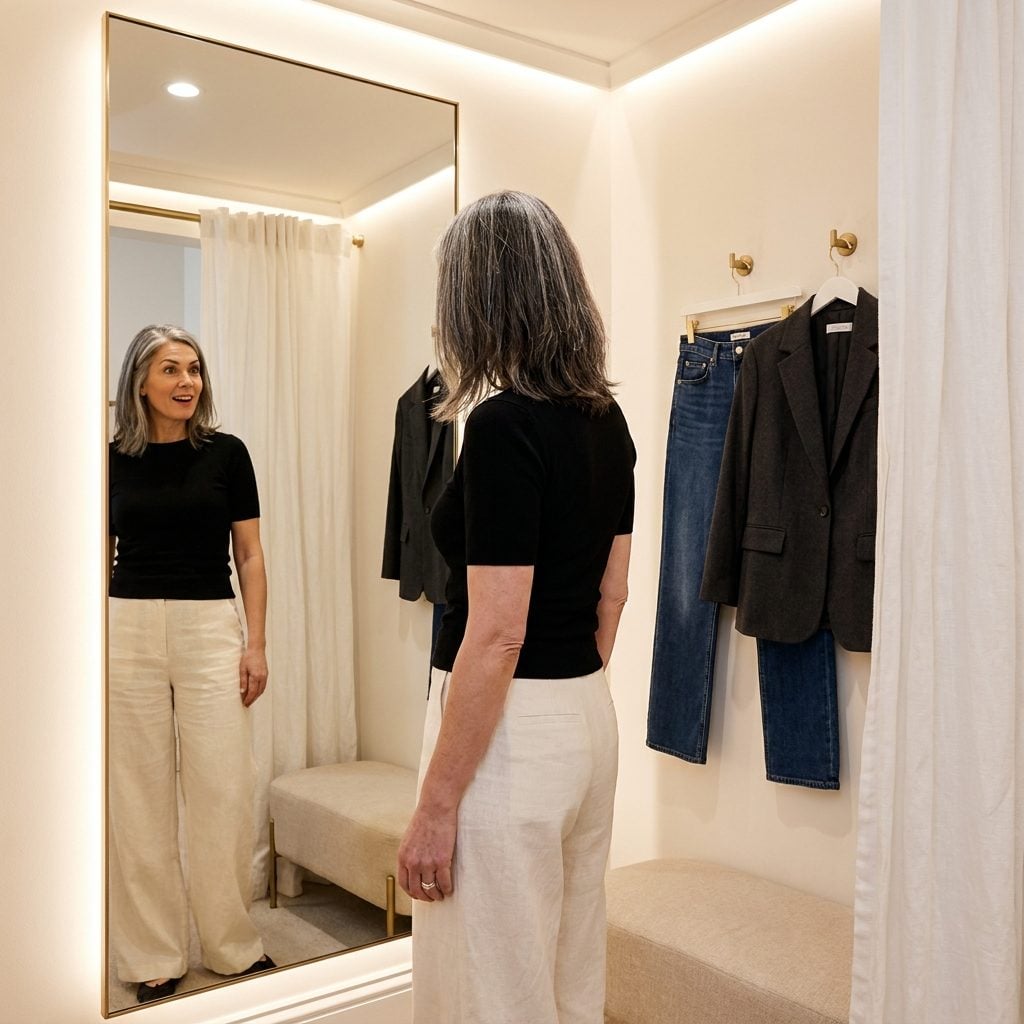
Wide-leg trousers showed up and you thought “not for me.” Midi skirts came back and you said “too trendy.” Relaxed-fit blazers appeared everywhere and you decided they looked sloppy. At some point, the pattern isn’t about individual trends being wrong for your body. It’s about a blanket resistance to anything unfamiliar.
Your body has likely changed since you last experimented with a new cut or proportion. The silhouettes you dismissed five years ago might actually be the ones that feel most comfortable now. A wider leg can be more forgiving than the straight-cut pants you’ve defaulted to for a decade. A longer hemline might suit the way you move today better than the above-the-knee length you committed to in 2012.
Trying something new doesn’t mean abandoning what works. It means checking whether what “works” still does, or whether it just feels familiar.
5. Every Piece in Your Closet Has the Same Texture, and You Never Noticed Until Now
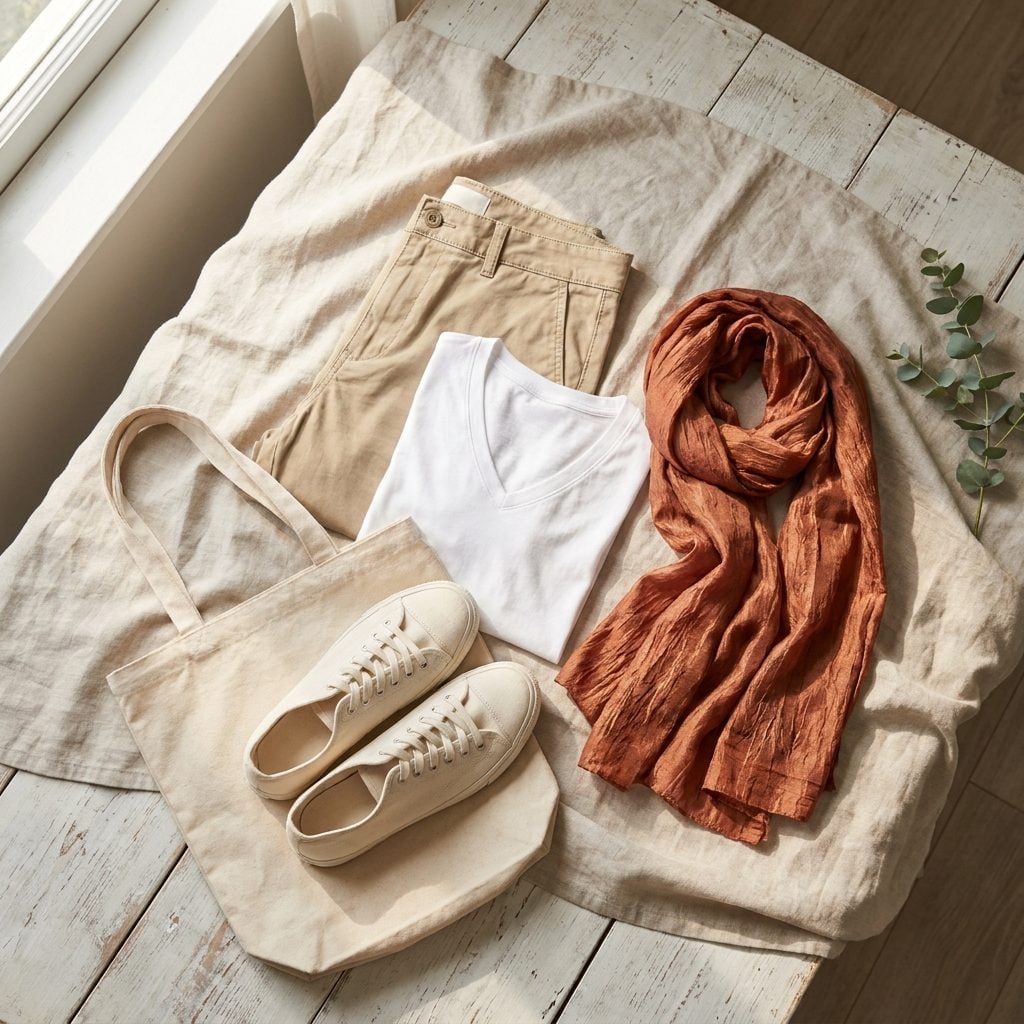
Cotton tee, cotton shorts, cotton dress, cotton cardigan. Maybe a polyester blend thrown in for variety. Run your hand across your summer closet right now. Does everything feel roughly the same under your fingers?
Texture is the most underrated dimension of personal style. It’s what separates an outfit that looks interesting from one that just looks correct. When every piece shares the same weight and hand-feel, the eye has nowhere to travel. There’s no contrast, no friction, no visual rhythm. A raw linen wrap skirt against a smooth ribbed knit top creates conversation between the pieces. Cotton eyelet layered over a silk camisole gives depth that a single-texture outfit never achieves.
4. People Say ‘You Look Nice’ and It Sounds Like the Verbal Equivalent of Beige

“Nice” is the compliment people give when they have nothing specific to say. Nobody remembers nice. Nobody texts their friend about nice. Nice is the lukewarm water of fashion feedback, and if it’s the only word your outfits generate, your clothes are doing the bare minimum.
Compare that to the compliments that actually land: “Where did you get that necklace?” or “I love how you wear color” or “That jacket is so you.” Those responses happen when an outfit contains at least one element of genuine specificity. Something chosen, not defaulted to. Something that reveals a preference, a sensibility, a point of view. Your goal for summer isn’t to look nice. It’s to look like yourself.
3. Every Top You Own Is White, Black, or Navy and You Call It a ‘Capsule Wardrobe’
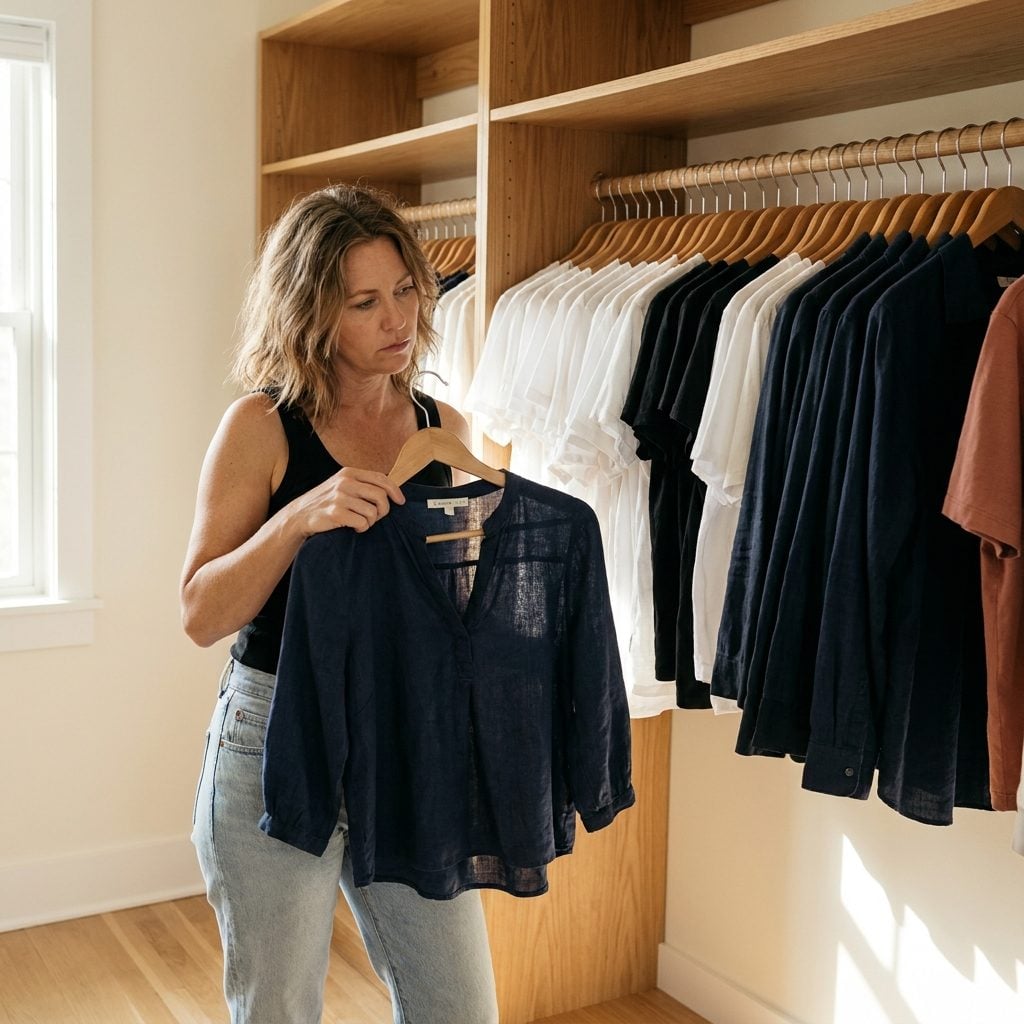
There’s a difference between a curated wardrobe and a wardrobe that’s simply afraid to speak up. A real capsule collection has intention behind every piece, including color. Yours might just have… avoidance.
The capsule wardrobe concept was never meant to strip your closet of personality. It was supposed to streamline decision-making while keeping your identity intact. But somewhere along the way, “capsule” became code for “I stopped trying.” If you can reach into your closet blindfolded and pull out something interchangeable with everything else, that’s not efficiency. That’s a uniform.
Try introducing one warm neutral you haven’t considered: terracotta, sage, or even a dusty rose. One single color outside the safe trio can shift how the entire closet feels without any overhaul.
2. If Someone Asked You to Describe Your Style in Three Words, You’d Draw a Complete Blank

Try it right now. Three words. Not “casual” or “classic” or “comfortable,” because those describe temperature settings, not identity.
Women who have developed real personal style can usually articulate it, even loosely. “Relaxed but deliberate.” “Warm-toned and textural.” “A little bit 1970s.” These aren’t fashion-magazine answers. They’re self-knowledge translated into clothing. If you genuinely cannot name what your style is, that’s not modesty. That’s evidence of a gap between who you are and what you wear.
And here’s the interesting part: the inability to describe your style often predates the wardrobe problem. You stopped defining what you like. Then you stopped buying what you like. Then you stopped noticing what you like. The closet just followed the silence.
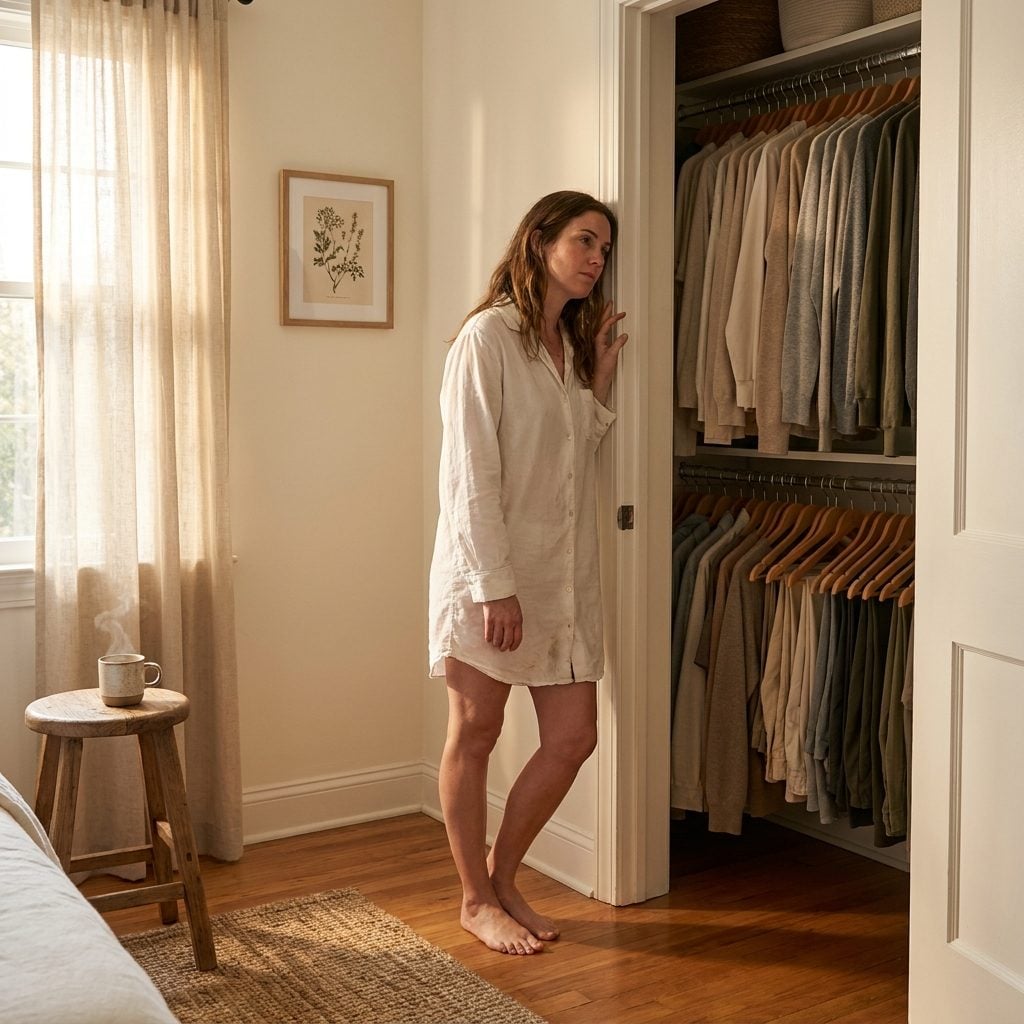
1. Getting Dressed Feels Like Clocking In for a Shift, Not Like Choosing Who to Be Today
❤️ Would you like to save this?
This is the sign that holds all the others together. When your closet feels like a uniform rather than a vocabulary, every morning starts with obligation instead of possibility. You open the doors, scan the hangers, grab what’s clean and serviceable, and move on. There’s no pause, no pleasure, no moment where you think: this one. This is the one that matches who I am today.
Personal style after forty isn’t about keeping up. It’s about catching up to yourself. You have more self-knowledge now than you did at twenty-five, more texture in your life, more specificity in your preferences. Your closet should reflect that complexity. If it doesn’t, it’s not because you’ve aged out of interesting dressing. It’s because somewhere, you started believing that practical and personal were opposites. They aren’t.
A wardrobe with personality doesn’t require more money, more pieces, or more time getting ready. It requires one decision: to stop treating your clothes like a task and start treating them like a language. You’ve had something to say this whole time. Your wardrobe just needs permission to say it.