❤️ Would you like to save this?
There’s a woman you’ve seen, perfectly coordinated, every piece intentional, every accessory placed just so. And yet something feels off. Not wrong, exactly. Just… too much. You can’t name it, and neither can she. That’s the cruelest part of the “trying too hard” signal: it’s invisible to the person sending it.
Fashion psychology has a name for this tipping point, and it has almost nothing to do with boldness, trends, or even taste. It’s about what your outfit communicates about your state of mind before you say a single word. The answer is more specific, and more fixable, than you’d expect.
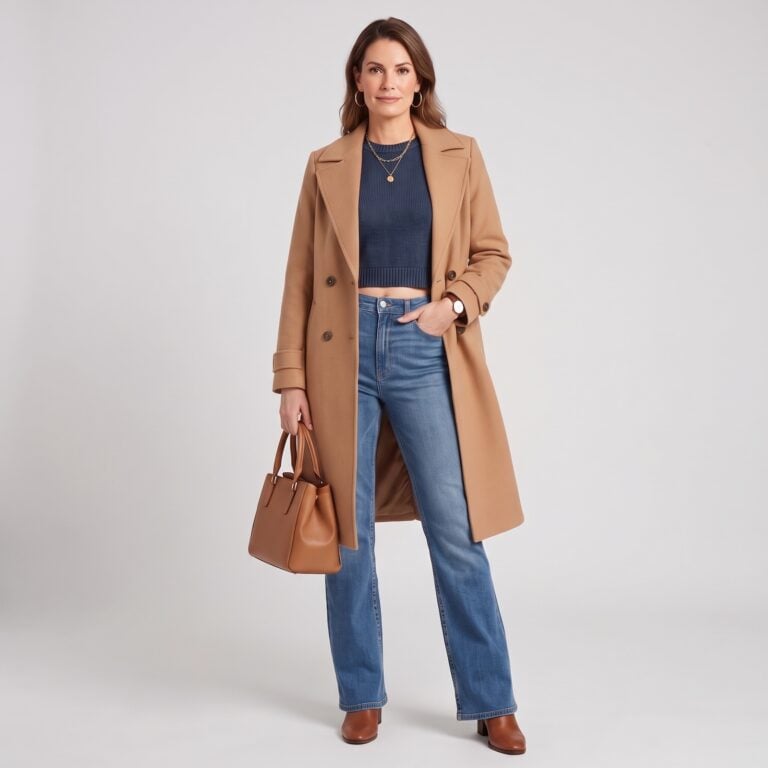
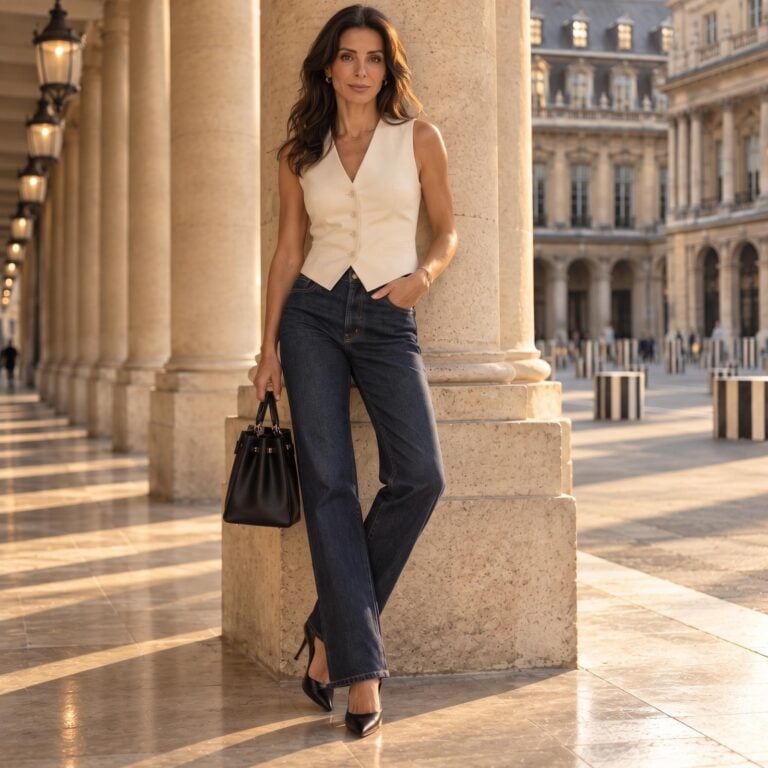
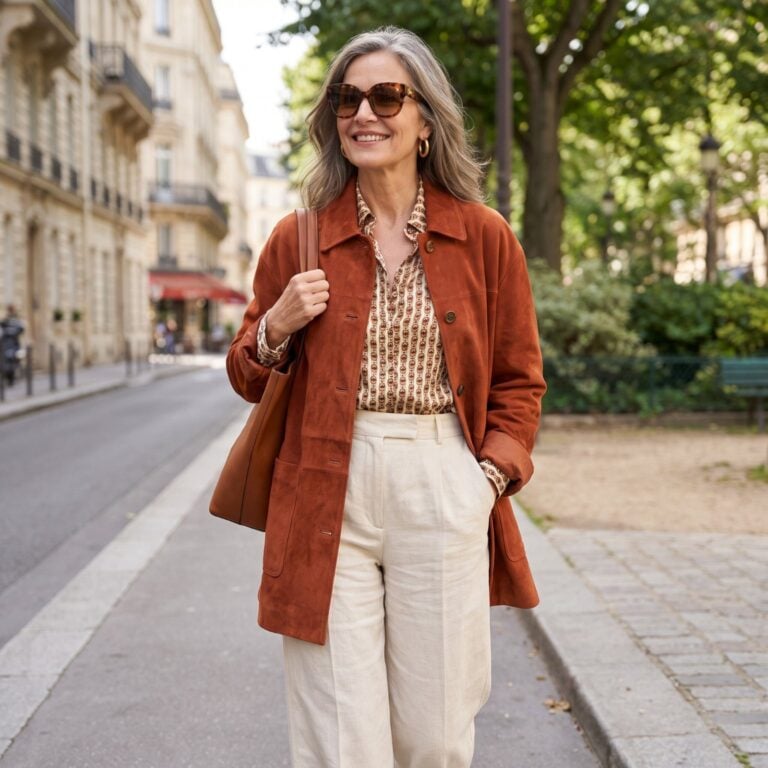
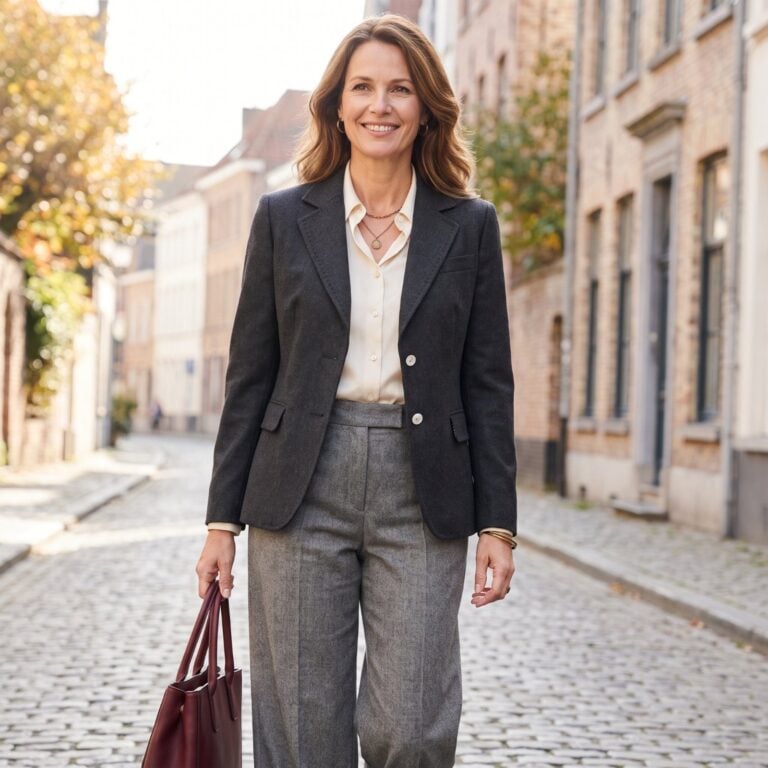
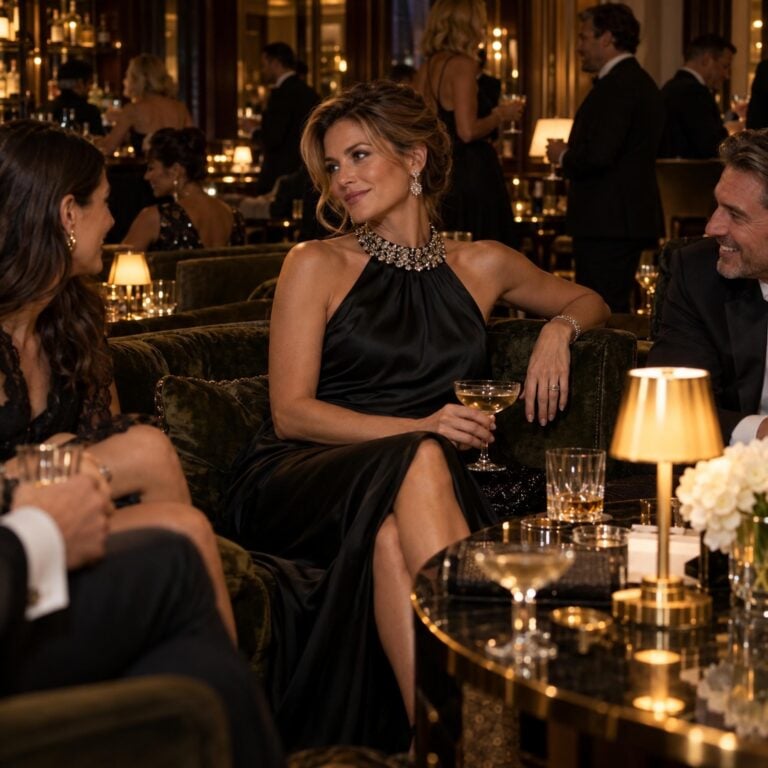
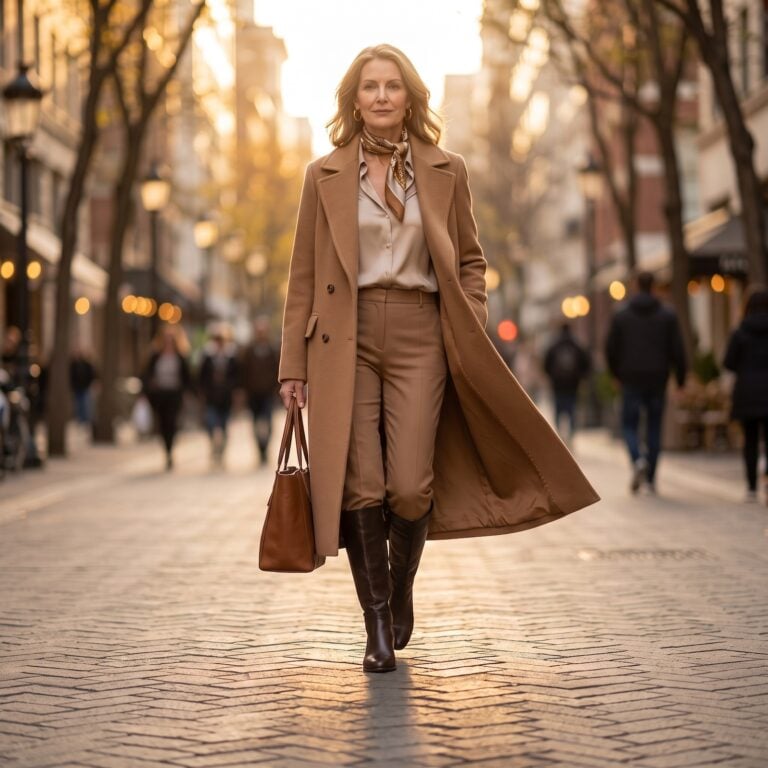
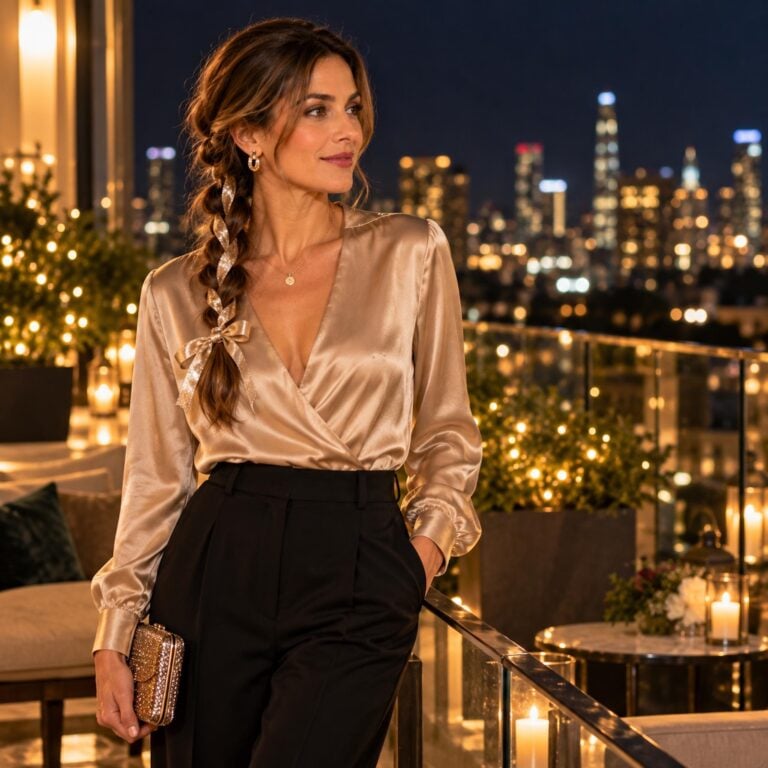
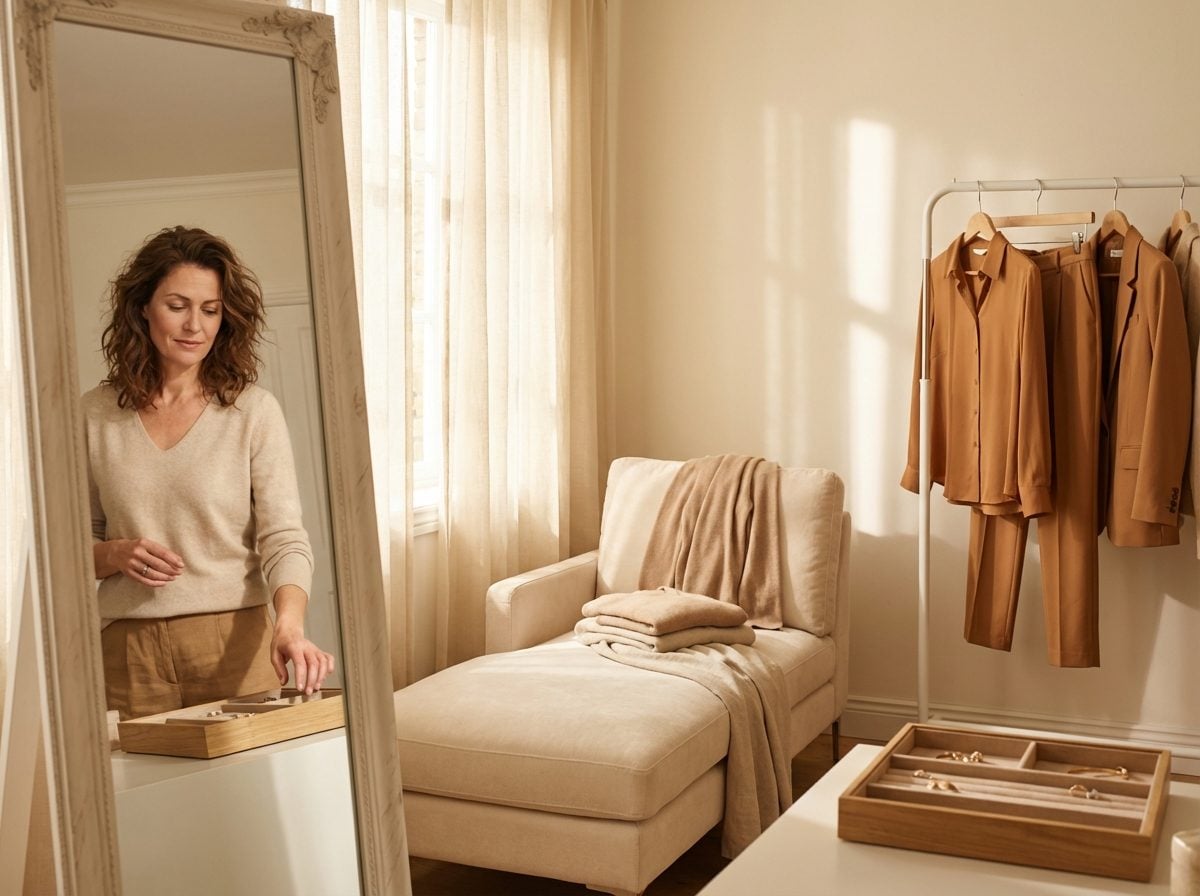
FYI, thanks to AI imagery software, we’re able to create very specific fashion and hairstyle examples to illustrate the points being made. In some cases, imagery is exaggerated to hammer home the point. Also, assume links that take you off the site are affiliate links such as links to Amazon. this means we may earn a commission if you buy something.
The Invisible Signal Your Brain Sends When an Outfit Looks Like It Has a Goal
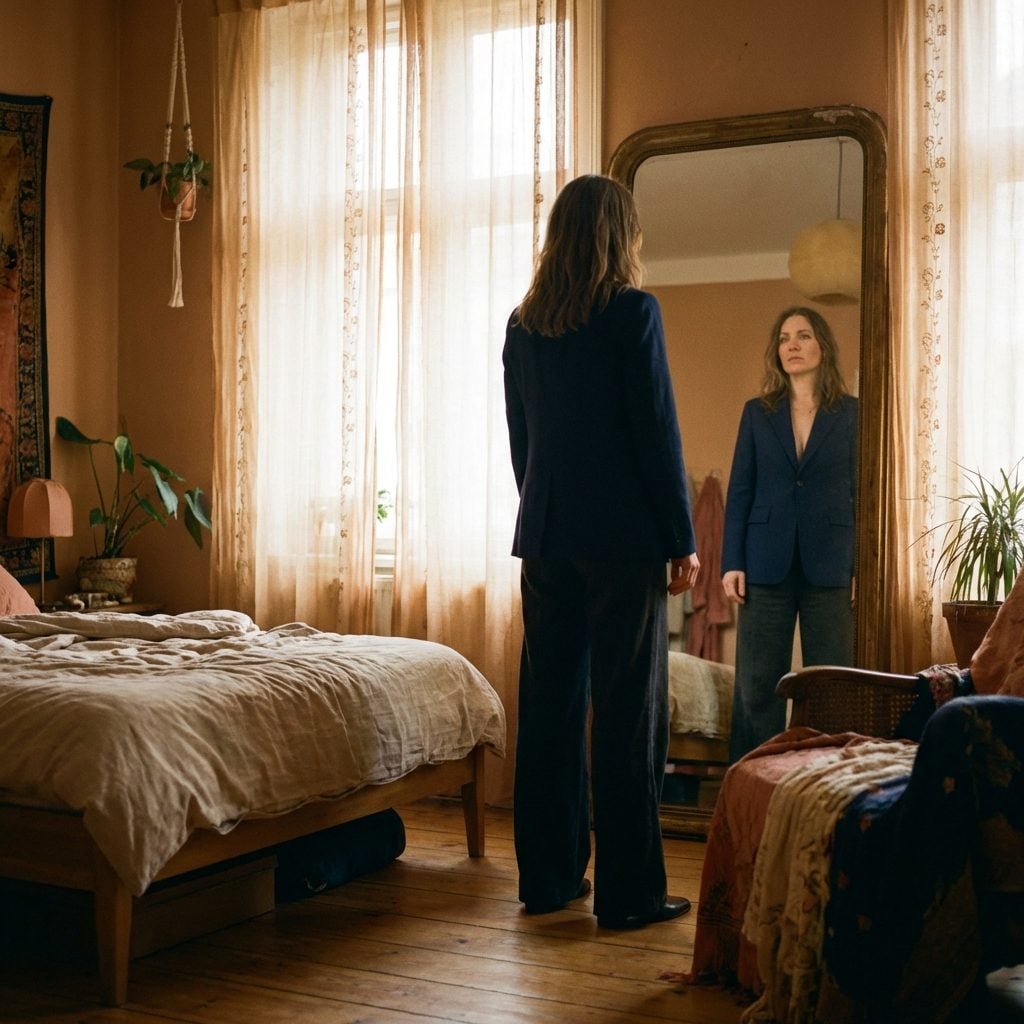
Every outfit communicates something. But there’s a specific, unsettling frequency that certain looks broadcast, one your brain picks up before you’ve processed a single detail. Researchers studying person perception have found that people read social categories, cognitive states, status, and aesthetics from dress (Source), all within the first seconds of encountering someone. The brain doesn’t evaluate these one at a time. It reads them all at once, like a chord.
The problem isn’t boldness. It isn’t color, or pattern, or price. The signal that quietly derails an otherwise strong look is something subtler: the sense that an outfit is working toward something. That every element has been consciously deployed to create a specific impression. When observers pick up that signal, the reading shifts. The look stops feeling like a person and starts feeling like a pitch.
Think about the difference between a woman who just happens to be wearing a great structured blazer and a woman who is wearing one to look powerful. Same jacket. Different energy. The research suggests your brain can feel that distinction even when it can’t articulate it. And that distinction, between dressing and performing, may be the invisible fault line the whole article is circling.
Why the Most Polished Women You Know Always Leave One Thing Undone
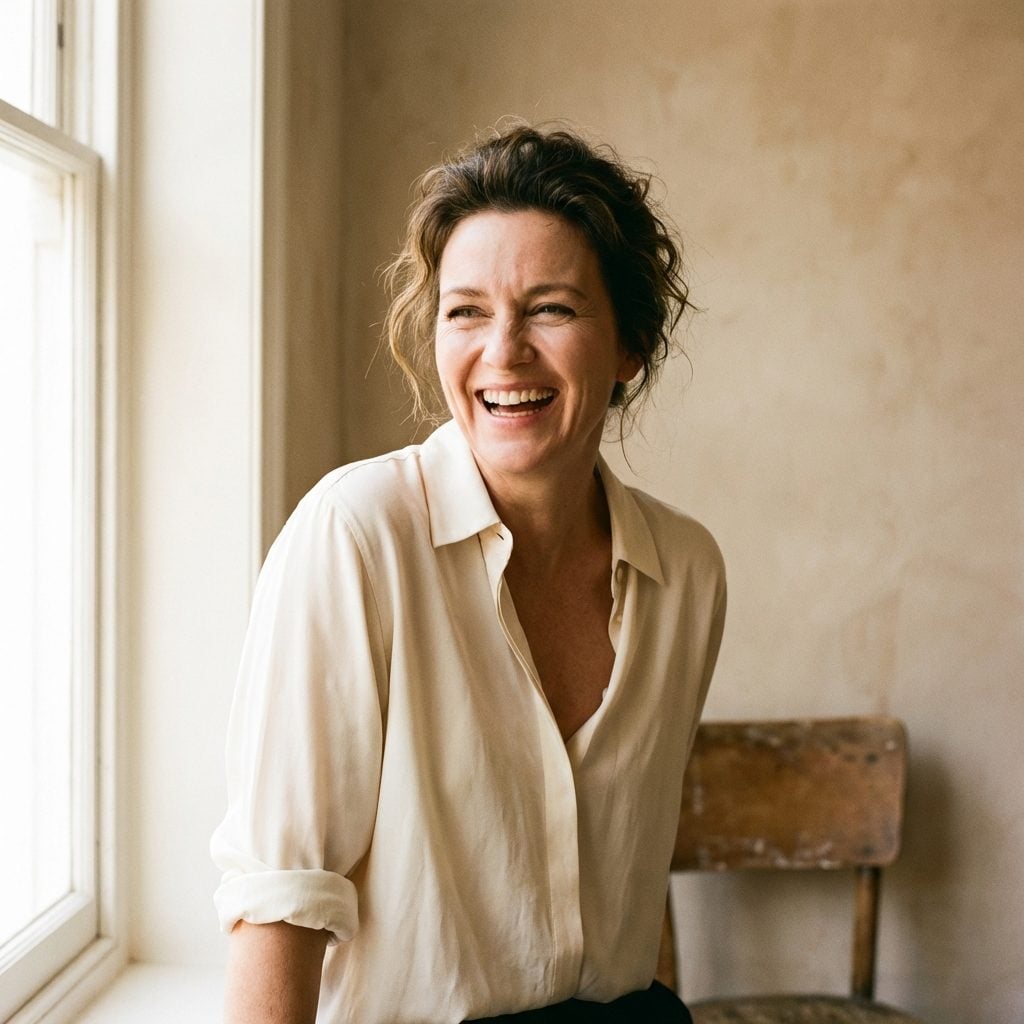
Pay attention next time you admire someone’s style instinctively, before you’ve analyzed why. Chances are, something is slightly loose. A shirt untucked at one side. A sleeve pushed up. A belt left off entirely. An outfit worn in a way the designer didn’t intend. This isn’t accidental. It’s one of the most psychologically sophisticated moves in personal style.
The deliberate imperfection signals something specific to observers: ease. And ease, neurologically, reads as confidence. Confidence requires no explanation, no effort, no performance. According to experts on the psychology behind what we wear (Source), we dress to project a version of ourselves, but the most compelling versions always hint at something withheld. The woman who looks like she threw her look together in ten minutes and landed perfectly hasn’t made less effort. She’s made a very specific kind of effort: the effort of restraint.
There’s a reason this lands so hard psychologically. A look with one undone detail doesn’t ask for your approval. It doesn’t need it. And people are drawn, almost helplessly, to the energy of not needing approval.
The Psychological Reason Over-Coordination Reads as Insecurity, Not Style
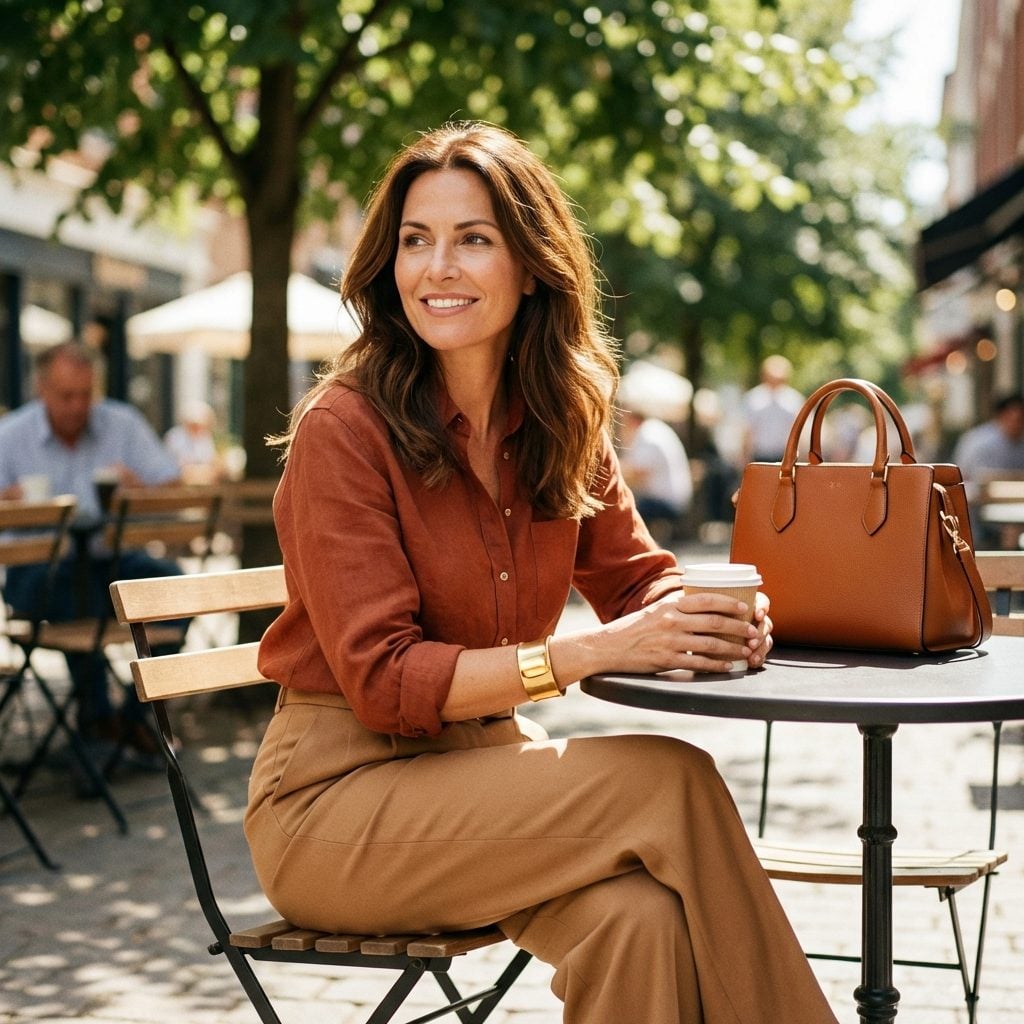
A perfectly matched outfit, bag, shoes, belt, earrings, all in the same cognac, should signal control and intentionality. Psychologically, it often signals the opposite.
Here’s why. When every element of a look is tightly coordinated, observers subconsciously register the amount of cognitive effort behind it. The more perfectly matched the details, the more visible the planning. And visible planning, in the psychology of impression formation, reads as anxiety about being perceived correctly. (Source) confirms that observers simultaneously assess both status and cognitive state from clothing, and a look that broadcasts intense deliberation can paradoxically undercut the status impression it was designed to create.
The truly confident dressing of women who’ve figured out their style tends to have what might be called internal coherence without surface uniformity. The pieces speak the same language without reciting the same sentence. A cognac leather bag against a rust-toned top against a cream trouser, similar undertone family, different shades, different textures, slight visual tension. That tension is what gives a look life. Strip it out in the pursuit of perfect coordination, and something quietly dies in the overall impression.
Why Your Brain Registers ‘Too Many Statement Pieces’ as Social Anxiety, Not Confidence
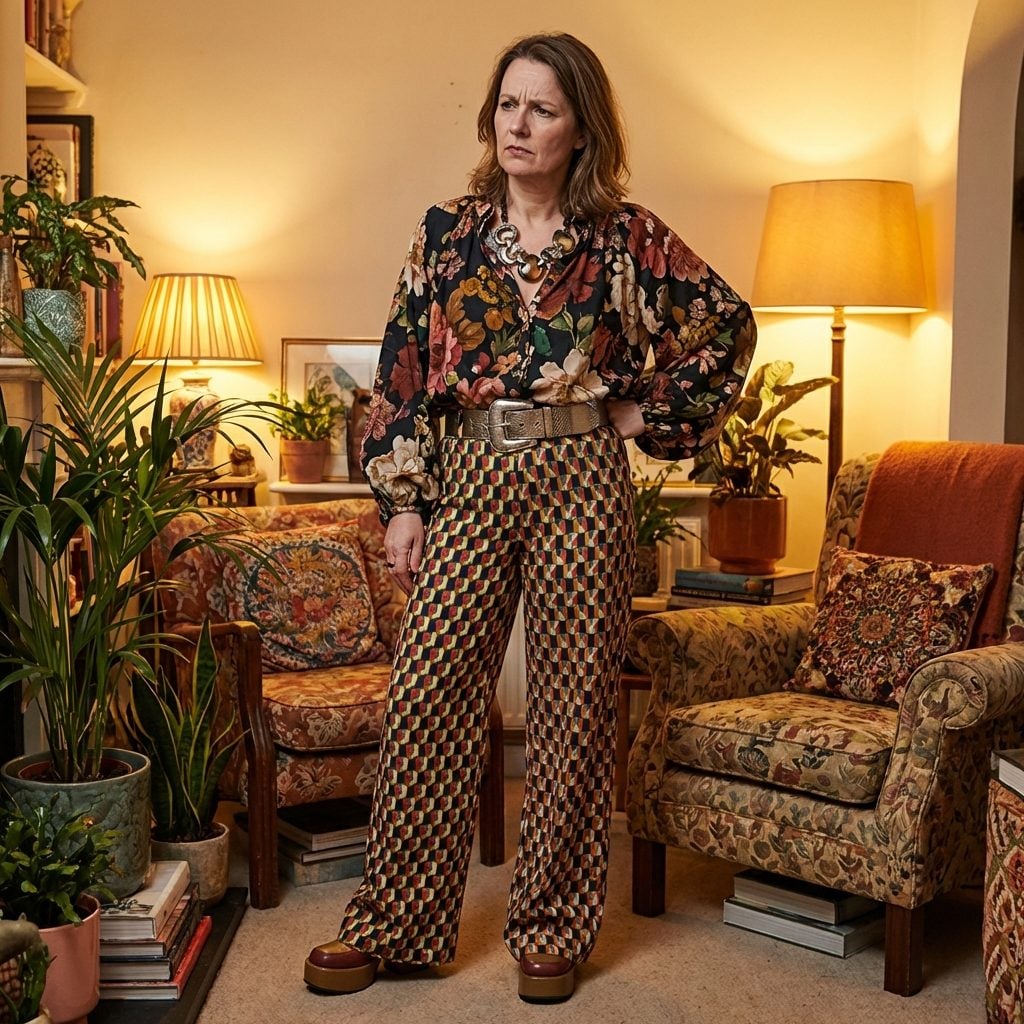
A bold print. A sculptural necklace. An architectural shoe. Each of these, worn alone, reads as a confident aesthetic choice, a person comfortable enough with attention to invite it on their own terms. Stack all three in one look, and something in the psychological transmission garbles. The confidence signal scrambles.
The reason reaches back to how observers decode social intent through clothing. According to research on the psychology of attire (Source), observers use dress to make rapid inferences about a person’s mental and emotional state, not just their status. A look with multiple competing focal points communicates fragmentation rather than coherence. And fragmentation, in social cognition, tends to read as internal conflict rather than intentional expression.
There’s something specific happening when too many statement pieces collide in one outfit: each one was chosen to speak, but they end up speaking over each other, and the listener hears only the noise of wanting to be heard. The most psychologically secure dressing tends to have one thing worth noticing. Not because the wearer has less to say, but because they’re not desperate to say all of it at once.
The Psychological Phenomenon That Makes Trend-Stacking Look Like a Cry for Approval
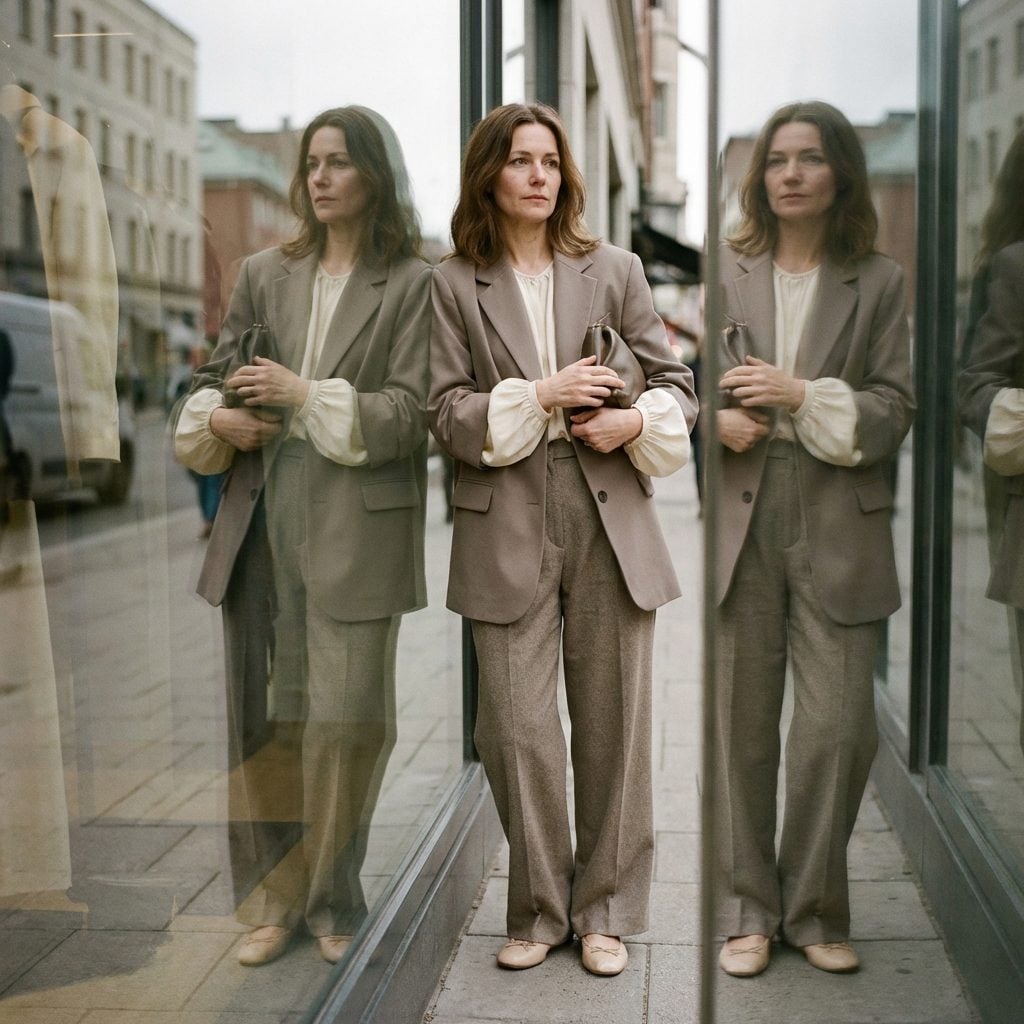
Wearing multiple trends simultaneously, the coastal grandmother silhouette with the quiet luxury palette, the ballet flat with the wide-leg barrel jean with the oversized blazer borrowed from menswear, creates a very particular impression. Not fashion-forward. Not confident. Something closer to the visual equivalent of name-dropping.
This isn’t arbitrary aesthetic judgment. It connects directly to what researchers call self-objectification in fashion contexts: the shift from dressing as inner expression to dressing as outer performance. Research on the psychology of fashion in a filtered world (Source) describes this precisely: when clothing choices are guided less by inner signals and more by imagined reactions from others, the look stops being identity and starts being content. Trend-stacking is the wardrobe manifestation of this shift.
The fundamental issue isn’t trends themselves. It’s the anxiety embedded in wearing too many at once, the look of someone trying to cover all their bases, to be recognized by every possible audience. That anxiety is legible. The research on enclothed cognition (Source) suggests that what we wear shapes not just how others see us, but how we see ourselves, and a look assembled from trend checkboxes rather than personal pull is one where the wearer rarely feels fully themselves, either. The body knows. And somehow, so does everyone else in the room.
What Color Blocking Your Entire Outfit Actually Communicates to Other People’s Subconscious
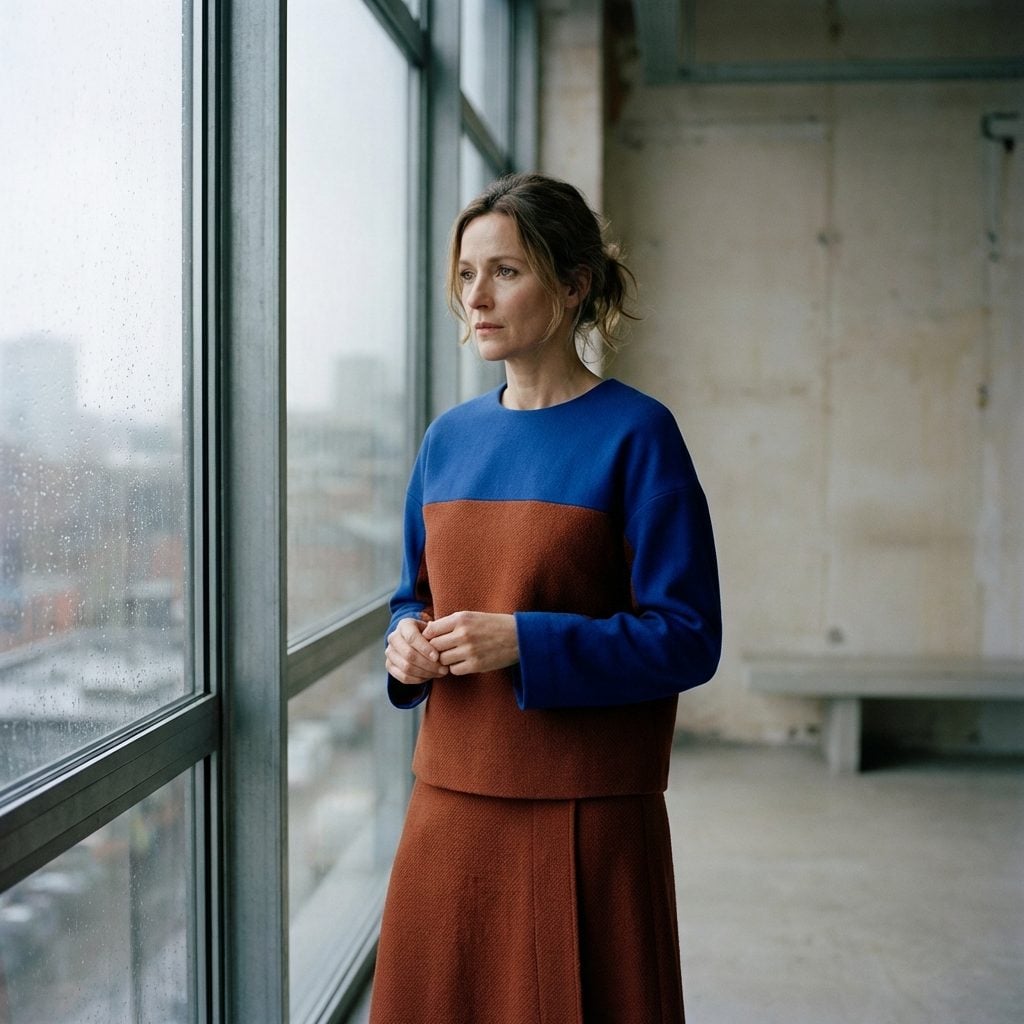
Color is never just decorative. It is a language, and other people’s brains are translating it before they form a single conscious thought. A study on clothing color-associated attributions (Source) found that clothing color produces subtle, subconscious shifts in how observers read a person’s posture, facial expression, and social dominance, effects that happen automatically, without the observer even registering them.
Here’s where color blocking gets complicated. A single bold color read as intentional confidence. Two well-chosen contrasting blocks can read as graphic and assured. But full-body color blocking, three or more high-contrast zones, top to bottom, starts to fragment attention rather than focus it. The observer’s eye gets handed a puzzle instead of a person. Research on color psychology in fashion (Source) confirms that color perception triggers immediate psychological and physiological reactions, all before conscious judgment kicks in.
The subconscious takeaway from a maximally color-blocked outfit isn’t “bold” or “creative.” It’s closer to “studied”, an ensemble that seems to announce itself rather than the person wearing it. There’s a fine, almost invisible line between using color as a personal signature and using it as armor. One signals ease. The other signals effort.
The Subtle Body Language Shift That Happens When a Woman Knows Her Outfit Is Too Considered
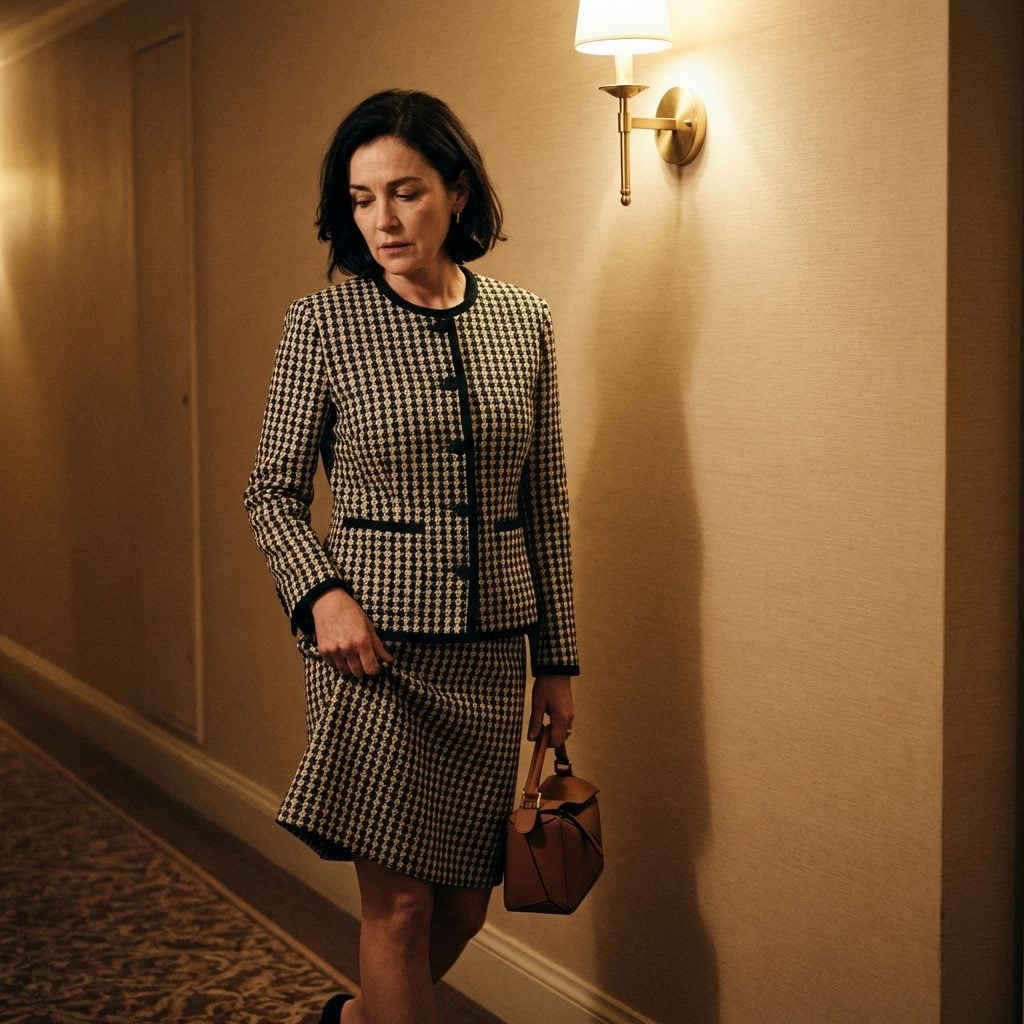
The body always knows, even when the mind is still convincing itself the look is working. According to research distinguishing perceiver and wearer effects of clothing color (Source), what we wear produces subtle and often subconscious shifts in posture, head position, and facial expression, effects the wearer herself cannot always detect.
When an outfit feels genuinely right, the body settles. Shoulders drop. The gaze steadies. Movement becomes unhurried. But when something is slightly off, when a look has been assembled too deliberately, when every element was chosen to produce an effect, the wearer often becomes faintly hyperaware of herself. She checks her reflection. She smooths fabric that doesn’t need smoothing. She holds her body in a way that signals she is conscious of being observed.
This self-monitoring posture is readable. People around her pick it up, not as a named observation, but as a vague feeling that something is slightly performative. It is the body broadcasting the gap between who she is and what she dressed to project. The irony is sharp: the outfit that was meant to communicate total confidence ends up producing its exact opposite in the room’s ambient social reading.
Why the Clothes That Feel the Safest Are the Ones That Look the Most Desperate
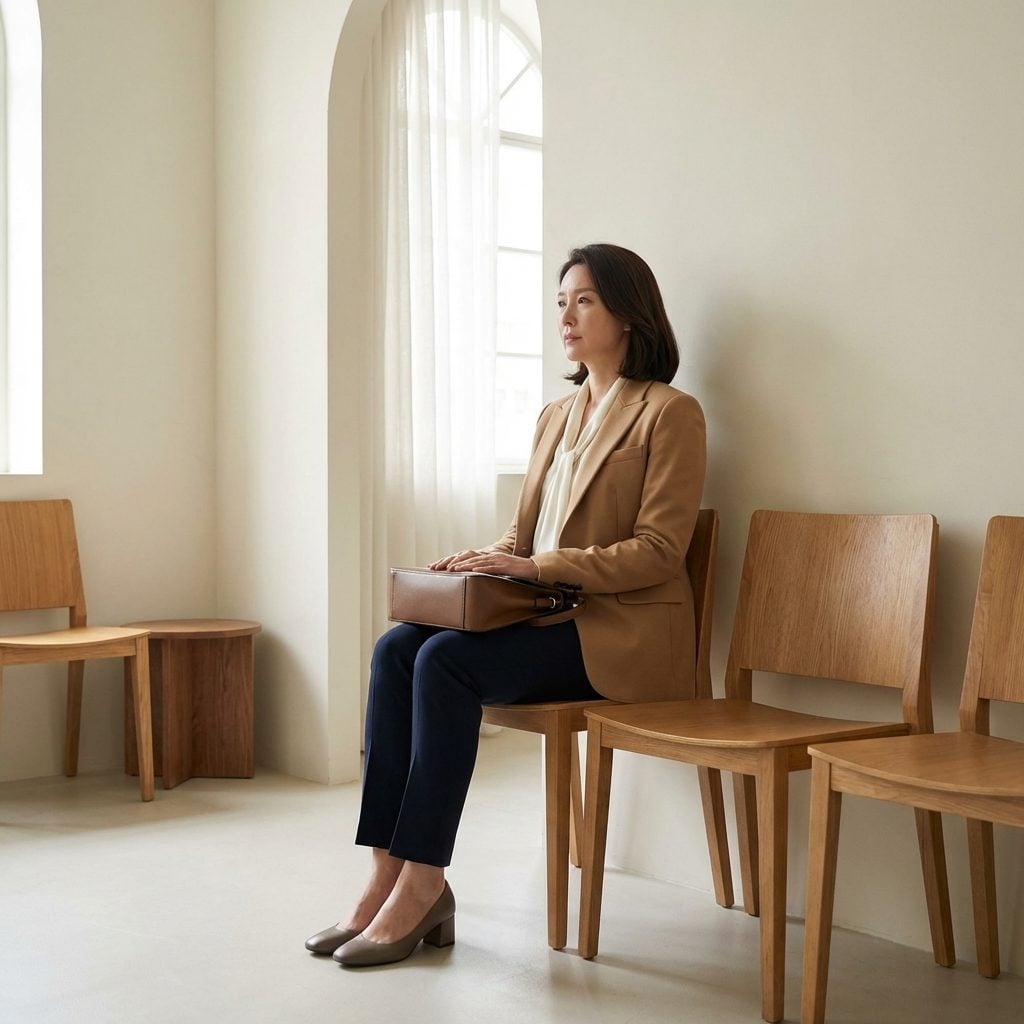
There is a particular category of outfit that women reach for when they are most anxious about being seen: the one that is supposed to cover all bases. The dress that works for everything. The blazer that makes anyone look competent. The neutral palette that offends no one. Safety dressing is understandable, but research on the psychology of fashion in a filtered world (Source) suggests that when people choose clothes primarily to avoid negative judgment rather than to express something true, the resulting outfit often registers as anxious rather than assured.
The problem isn’t neutrality itself. Plenty of women wear simple, understated clothes with total conviction. The problem is when every choice within an outfit is defensive: the neckline that covers enough but not too much, the heel height that is impressive but sensible, the bag that signals taste without being too conspicuous. When the whole ensemble is built from hedges, observers read the underlying energy, not the clothes. What they sense is a person who dressed to avoid being criticized, not a person who dressed because she knew exactly what she wanted.
Psychologists describe this as the difference between approach motivation and avoidance motivation in dress. One produces presence. The other produces a particular kind of visible effort that reads, paradoxically, as desperation in disguise.
The Cognitive Load Effect: Why a Visually ‘Busy’ Outfit Makes People Trust You Less
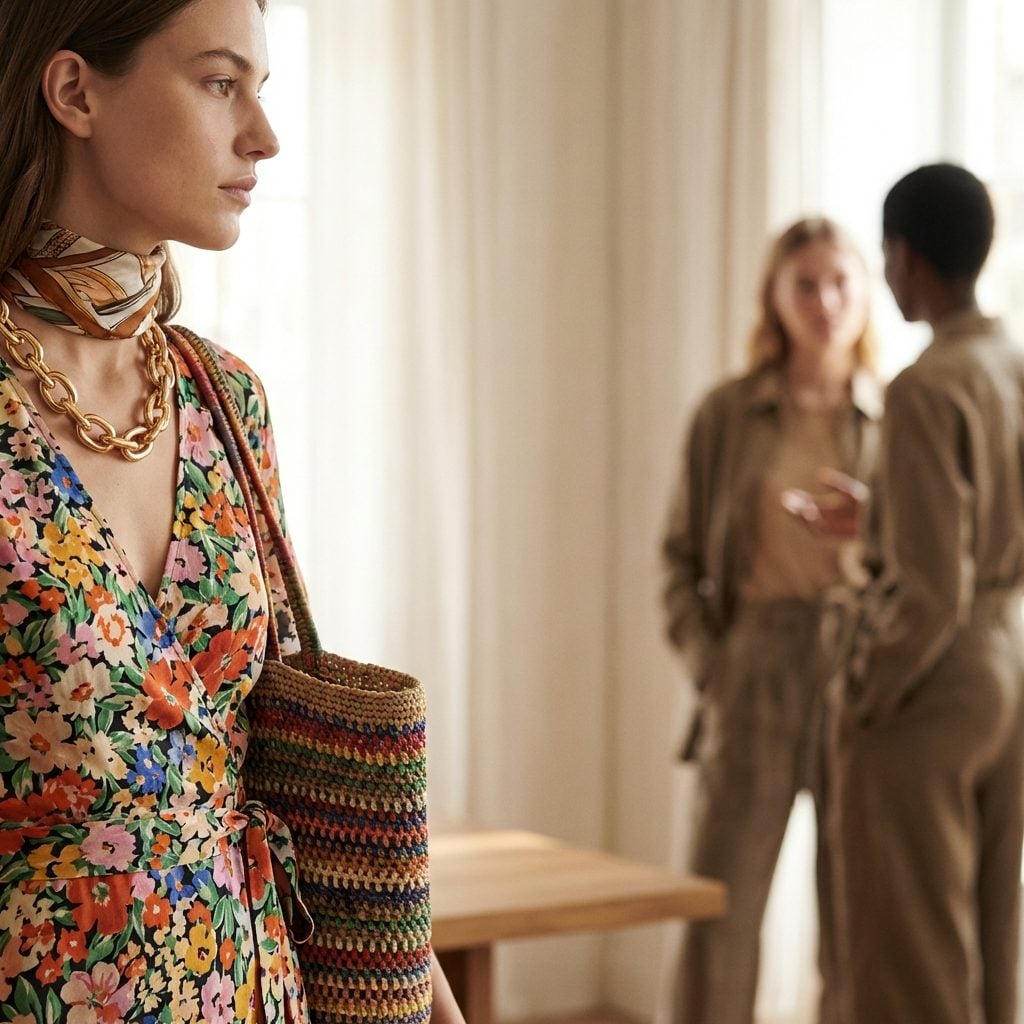
Your brain makes trust assessments in milliseconds, and visual clutter is one of the fastest signals it uses to pull back. Research on visual complexity and trust (Source) consistently shows that less complex visual presentations generate more favorable trust assessments, while higher visual complexity creates friction in the observer’s cognitive processing.
Applied to clothing, this plays out in a very specific way.
- Pattern on pattern on pattern forces the observer’s visual system to work overtime segmenting and processing competing information.
- Multiple competing focal points, a bold print, a statement necklace, a patterned shoe, a printed bag, fragment attention so no single impression of the wearer emerges clearly.
- Color contrast saturation across an entire look triggers arousal responses that, according to research on visual complexity and affect (Source), are consciously accessible only to a small degree, meaning the unease is felt but not named.
The result: observers don’t consciously think “that outfit is too busy.” They just feel slightly less at ease. Slightly less certain. Slightly less inclined to lean in. The clothes are doing cognitive work that draws attention away from you, and trust requires attention.
What Stylists Call the ‘Costume Effect’, and Why It Silently Undermines Every Room You Enter
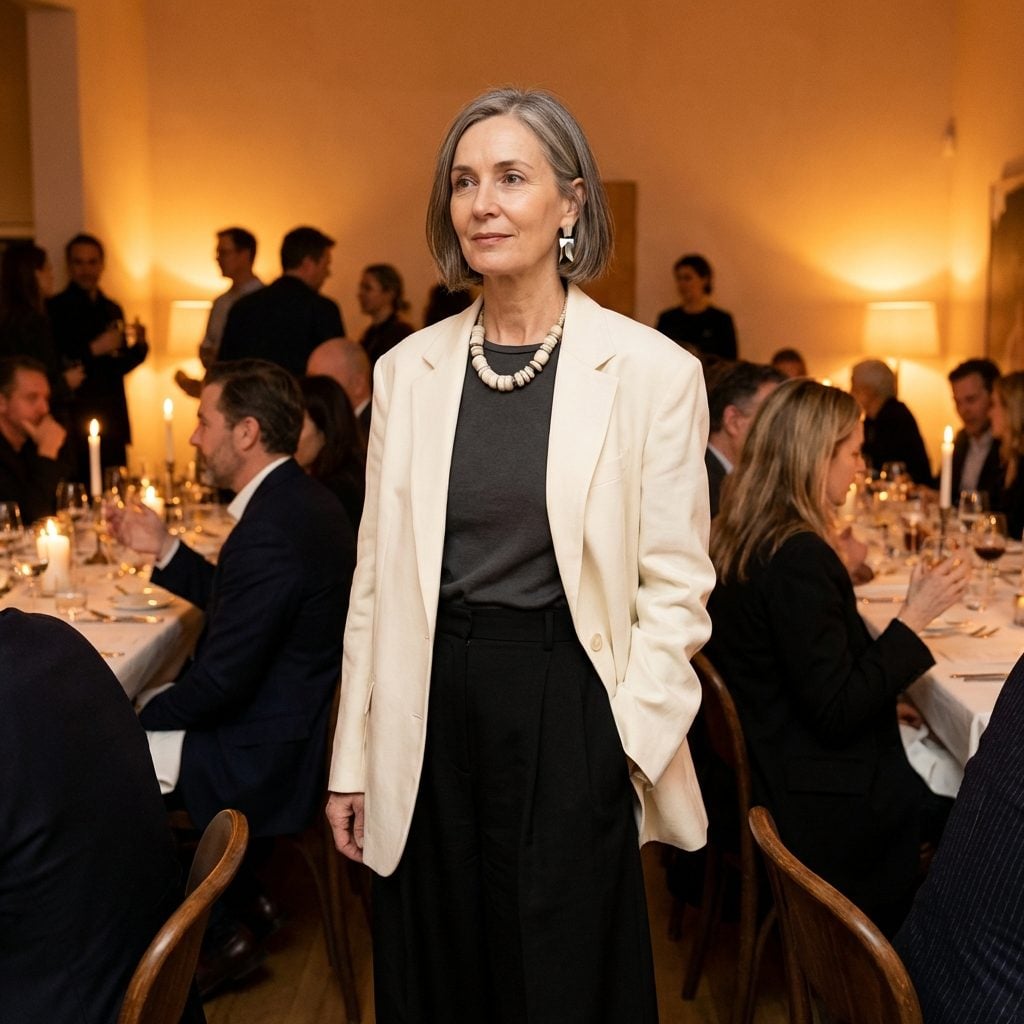
Fashion stylists use the term “costume effect” to describe a specific failure mode: when an outfit reads as a character a person is playing rather than a direct expression of who they are. It’s not about being bold or expressive, plenty of loud, maximalist dressers escape this entirely. The costume effect is about the feeling that every element has been assembled to project a specific identity, rather than to clothe an actual one.
The psychology here connects directly to the landmark research on enclothed cognition (Source), which found that the psychological effect of clothing depends on two things working together: the symbolic meaning of the garment and the physical experience of wearing it. When someone is wearing the idea of a confident woman rather than simply being one, the gap between the two is legible to observers, even if they can’t name what they’re reading.
The costume effect shows up most often in three recognizable forms: the “I just came from a board meeting” power outfit worn to a casual dinner; the “creative director” aesthetic assembled from runway references rather than personal instinct; and the “effortless weekend” look that contains so many carefully chosen pieces it has clearly required significant effort. In each case, the outfit announces an intention. And announced intentions, in fashion as in life, tend to undermine themselves.
The Psychological Distance Between Dressing With Intention and Dressing for Approval
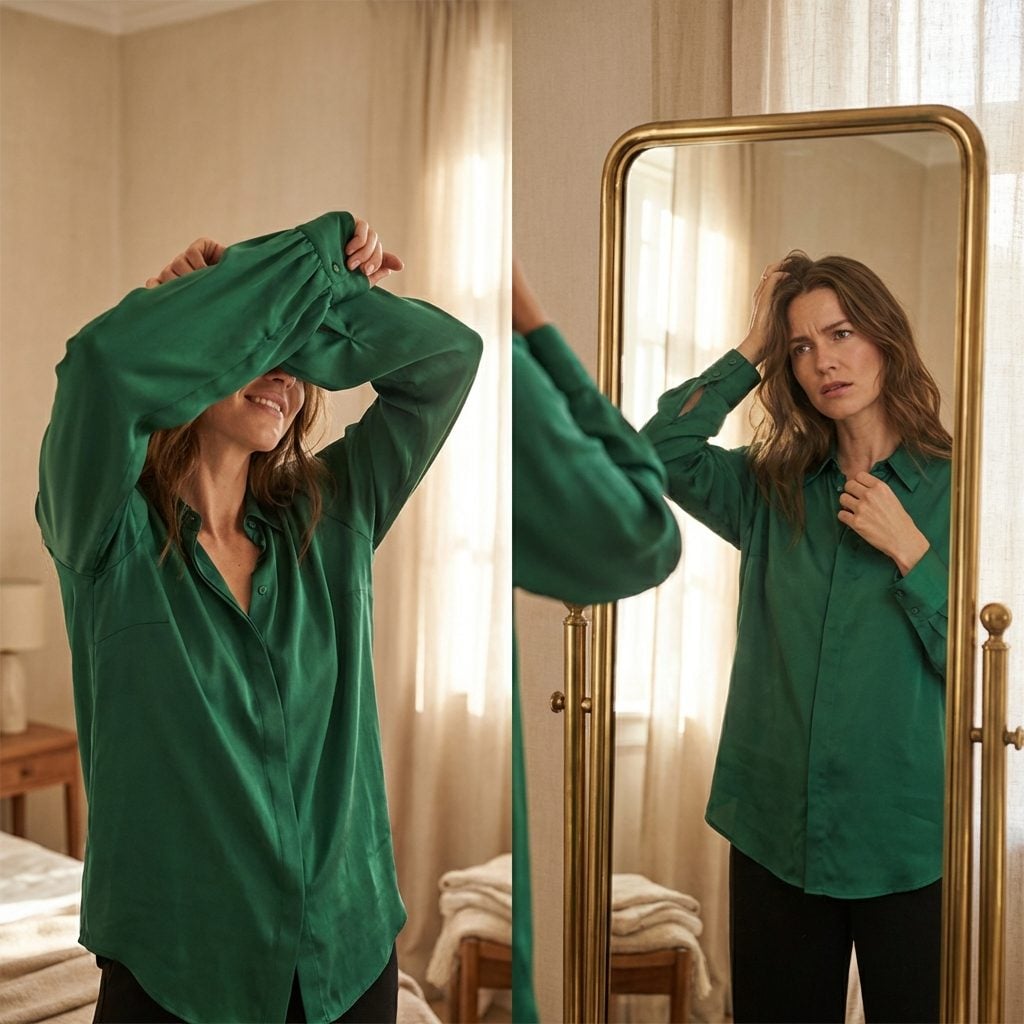
Psychologist Paola D’Elia’s research on fashion and social media (Source) put it plainly: when people choose clothes mainly to gain approval, they report feeling constantly observed and less confident that their clothes reflect who they truly are. The anxiety of approval-seeking dressing shows up in the body, in the choices, and, eventually, in how the whole look reads to other people.
Dressing with intention is its mirror opposite. Intentional dressing begins from the inside: what do I want to feel today, what does this occasion ask of me, what do I actually love wearing. Approval-seeking dressing begins from the outside: what will they think, what will they notice, what will they respect. The process looks similar, both involve selecting clothes with care. But the emotional architecture is entirely different, and it produces entirely different results.
The distinction matters more after 40 than at any other point. By this stage, most women have accumulated enough self-knowledge to dress intentionally, they know their colors, their fit preferences, the silhouettes that make them feel settled. The temptation is to override that knowledge in high-stakes moments, reaching for what seems impressive rather than what feels true. That override is where the “trying too hard” signal originates. It’s not the boldness of the clothes. It’s the motive underneath them.
Why the Women Who Always Look Effortless Are Actually Following One Counterintuitive Rule
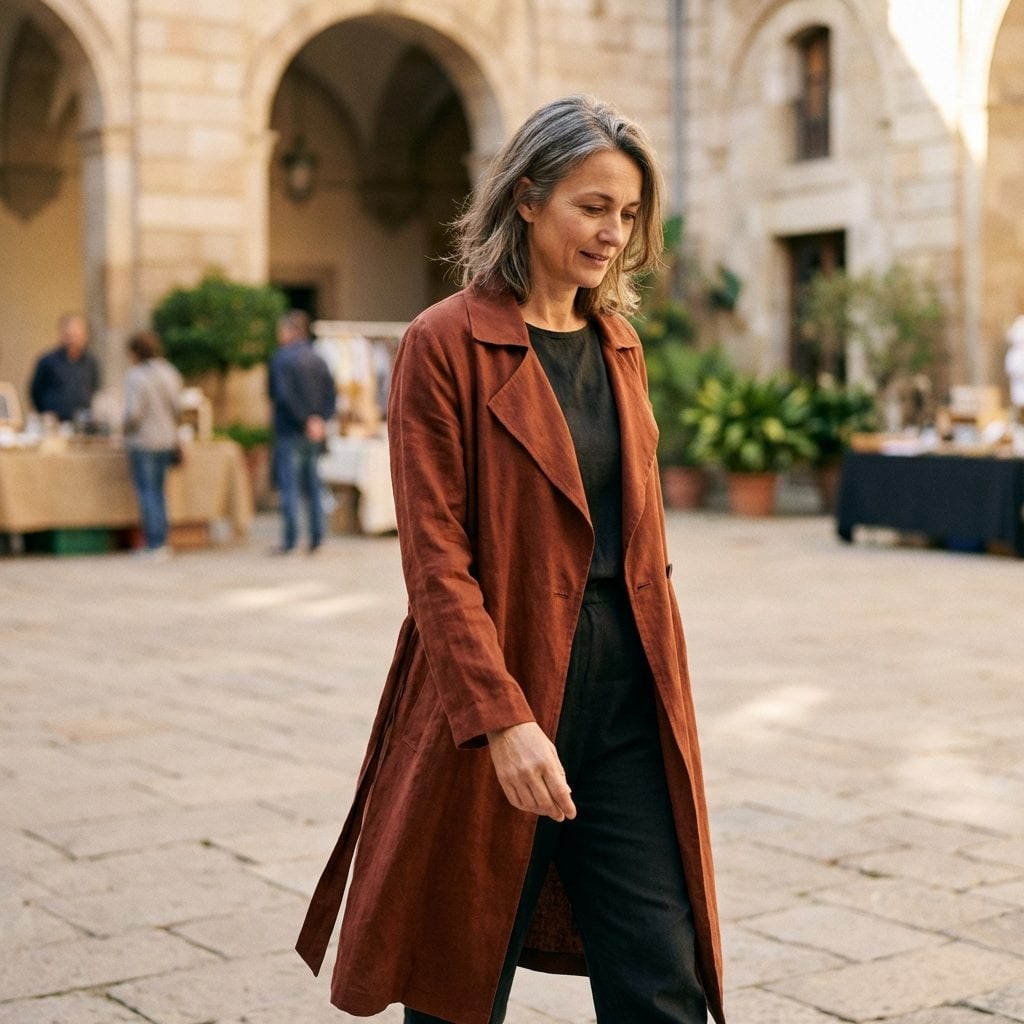
Every woman can name one. She is always put-together, never overdone, consistently herself across every context. She might be wearing something simple or something bold, the point is that whatever she’s wearing, it looks like it couldn’t be anything else. People describe her style as effortless, but effort is rarely the actual variable.
The counterintuitive rule she is following, consciously or not, is this: she edits for coherence, not for completeness. Most outfits that tip into “trying too hard” territory do so not because they contain too many bold elements, but because they contain too many intentions. Every item is making an argument. The necklace is making a statement. The shoes are making a point. The bag is establishing context. The scarf is adding interest. When each piece is doing its own psychological work, the ensemble stops functioning as a whole and starts reading as a committee decision.
The women who look effortless have typically internalized what (Source) confirms: people infer social identity, mental state, and aesthetic taste from clothing as a unified impression, not as a sum of parts. An outfit that reads as unified, where the choices feel to have emerged from a single sensibility, generates a coherent first impression. An outfit where each element jostles for prominence generates cognitive work and social unease.
The rule is simply this: let one thing lead. Everything else follows.
The Bottom Line
The detail that quietly tips your outfit into “trying too hard” territory is coordination itself, specifically, the absence of a single unresolved element. When every piece answers every other piece, the outfit stops looking like you and starts looking like a pitch, and people’s subconscious reads that pitch as neediness, not confidence. The one rule the effortlessly stylish follow: leave something slightly off, an untucked hem, a mismatched metal, a shoe that doesn’t quite “go”, because that small imperfection is the only thing that makes the rest look intentional.