❤️ Would you like to save this?
There’s a specific kind of frustration that happens at 7 a.m., standing in front of a closet full of clothes, wearing nothing. Not because nothing fits, but because nothing feels right. By your 40s, you’ve earned the right to a wardrobe that actually reflects who you are right now, not who you were at 32 or who you were trying to be last spring. These are the signs that your closet has quietly fallen out of sync with your life, and that it’s time to do something about it.
FYI, thanks to AI imagery software, we’re able to create very specific fashion and hairstyle examples to illustrate the points being made. In some cases, imagery is exaggerated to hammer home the point. Also, assume links that take you off the site are affiliate links such as links to Amazon. this means we may earn a commission if you buy something.
1. You Stand in Front of a Full Closet Every Morning and Feel Like You Have Nothing to Wear
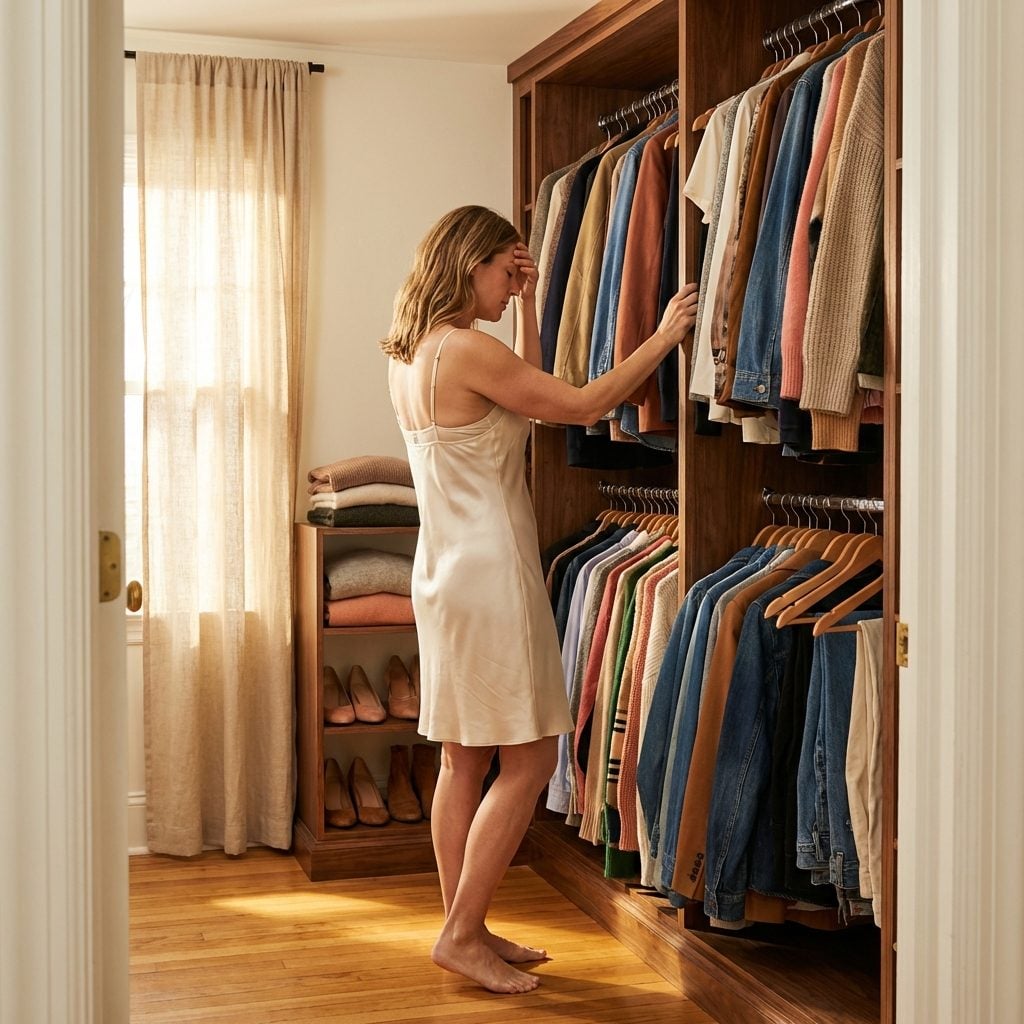
The paradox is almost funny until it isn’t: more clothes than you’ve ever owned, and yet nothing to put on. This isn’t a storage problem. It’s a signal. When a closet full of options produces zero workable choices, it means the clothes you have stopped matching the person doing the choosing.
The culprit is usually accumulation without intention. Pieces from different eras of your life stacked on top of each other, none of them in conversation. Your brain scans the rod and quietly says: none of this is you. And it’s right. The overwhelm isn’t laziness, it’s your own taste working perfectly, rejecting what no longer fits your life.
2. The Woman You Are Now Would Never Walk Into a Store and Buy What’s Already Hanging in Your Closet

Walk into your closet right now and ask yourself honestly: would you buy this today? Not the piece you spent two hundred dollars on in 2019. Not the dress you kept because it still has tags. If you were shopping fresh, with your current eye and current life, would any of it make the cut?
For most women hitting this particular sign, the answer is a quiet, uncomfortable no. Your taste has moved. Your priorities have shifted. Your wardrobe just hasn’t caught up yet.
This gap between who you are as a shopper and who you are as a wearer is one of the clearest indicators that a real overhaul is overdue. Your eye knows exactly what it wants. It’s your closet that’s behind.
3. Getting Dressed Has Become Something You Dread Instead of Something You Do

Dread is not the same as laziness. When getting dressed shifts from neutral habit to something you’d rather skip, it almost always means the process has stopped working. You’re not dreading the act of getting dressed. You’re dreading the outcome, the moment you realize, again, that nothing you own makes you feel like yourself.
There’s a compounding effect here. Each bad morning chips away at your relationship with your own style. Eventually, the closet starts to feel like evidence of a problem you haven’t solved, and avoidance feels easier than confronting it. That’s when a ten-minute task becomes a twenty-minute source of low-grade anxiety.
4. You Own Clothes in Three Different Sizes and Wear None of Them Confidently
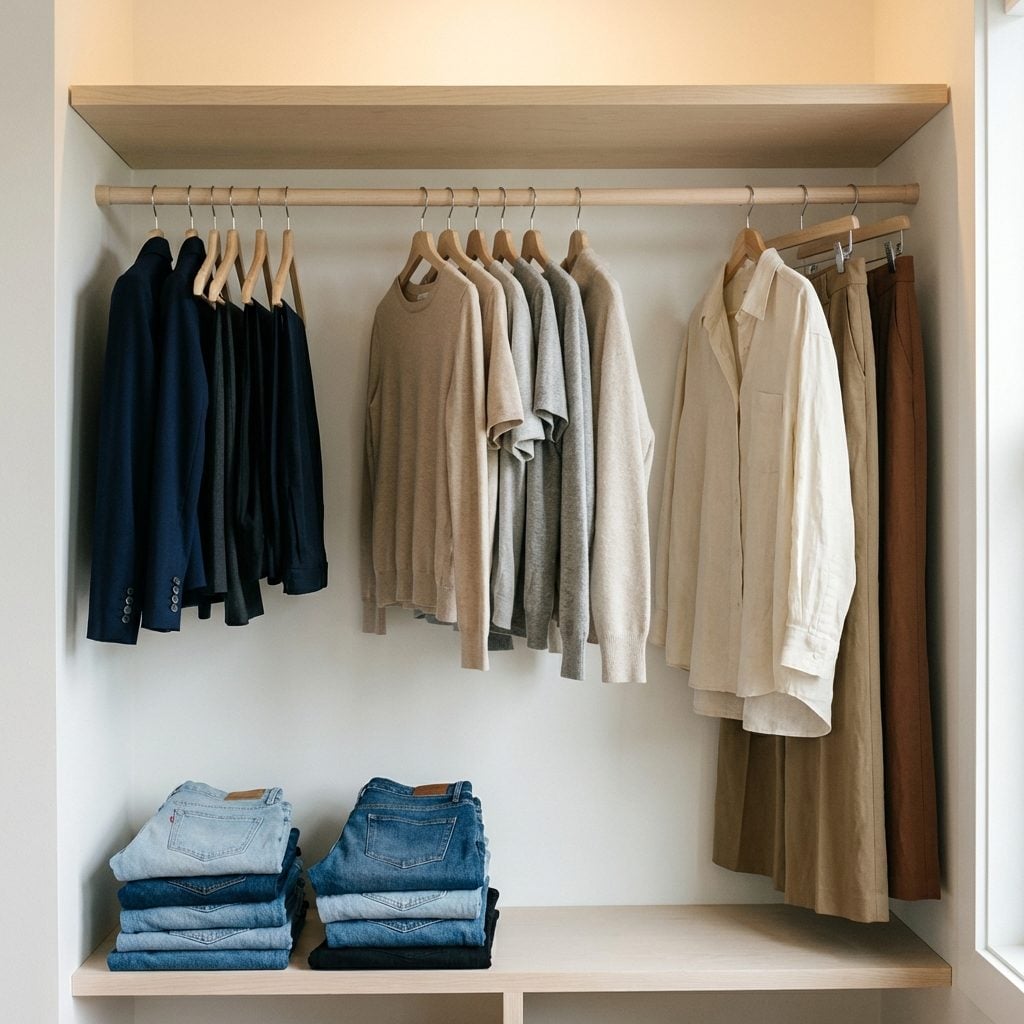
Three size sections in one closet is extremely common and almost never talked about. There’s the “aspirational” section (too small, kept just in case), the “current” section (worn out of necessity rather than love), and the “comfort” section (too big, but soft and forgiving on hard days). The result is a closet that serves no version of you particularly well.
Wearing clothes that don’t fit the body you have right now sends a low-level signal all day. Fit is the single most powerful styling variable, more than color, brand, or price. A well-fitted blazer in a fabric you love will always outperform three pieces that almost work.
5. The Compliments Stopped, and You Can’t Remember the Last Time Someone Noticed What You Were Wearing

Compliments are not vanity metrics. They’re social feedback telling you that what you’re projecting is landing. When they stop, it often means one of two things: either you’ve gone so neutral that you’ve become visually invisible, or the energy behind your clothes has quietly dimmed.
The last compliment you received is worth remembering in detail. What were you wearing? How did you feel that morning before you put it on? Chances are it was a day you dressed for yourself rather than default. That is exactly the energy a black wardrobe gone dull or a closet stuck in safe-beige mode tends to eliminate over time.
6. You’ve Been Wearing the Same Five Pieces on Rotation for Months Without Realizing It
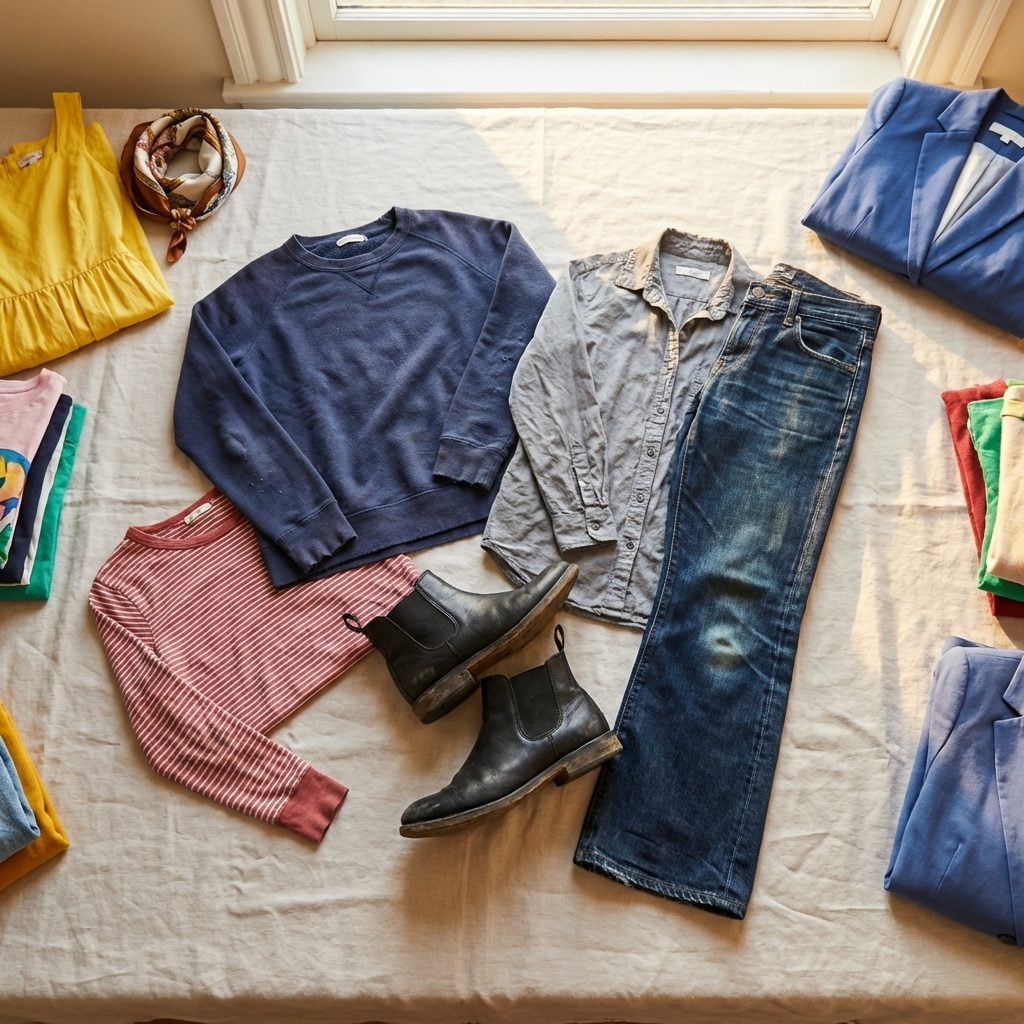
A five-piece rotation is not minimalism. It’s a wardrobe telling you something is wrong.
True capsule dressing is intentional. What this sign describes is different: a closet full of options that you unconsciously bypass every single day in favor of the same five pieces that feel safe, known, and effort-free. It’s not a style strategy, it’s a coping mechanism.
The tell is the wear patterns. Those five pieces show use. Everything else hangs pristine, barely touched. If you photographed your closet today and counted the pieces with actual hanger marks versus the pieces still holding their original fold, the ratio would be telling. This is the wardrobe equivalent of only sitting in one chair in a house full of furniture.
7. Your Closet Tells the Story of Someone You Used to Be, Not Who You Actually Are
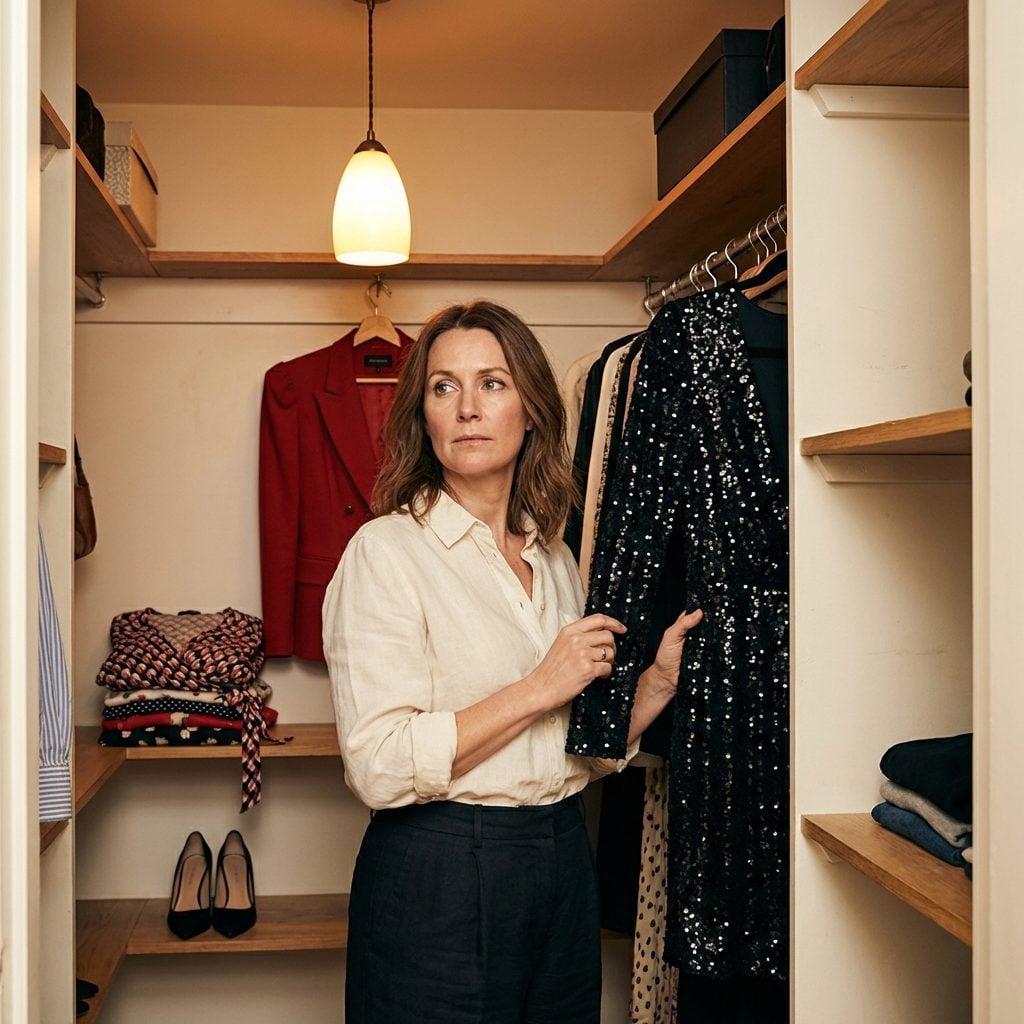
Every closet is an autobiography. The problem comes when the chapter you’re living doesn’t match the chapter your clothes are still narrating. The sharp-shouldered blazer from the corporate years. The cocktail dresses from a social life that looked different. The yoga-adjacent athleisure from the phase you were building an athleisure wardrobe around a version of yourself you were trying on.
None of those pieces are wrong. They were right once. But a wardrobe built for a previous chapter actively works against you now, because every time you get dressed from it, you’re trying to live someone else’s life.
8. You Buy New Things Constantly and Still Feel Like Nothing Fits Your Life
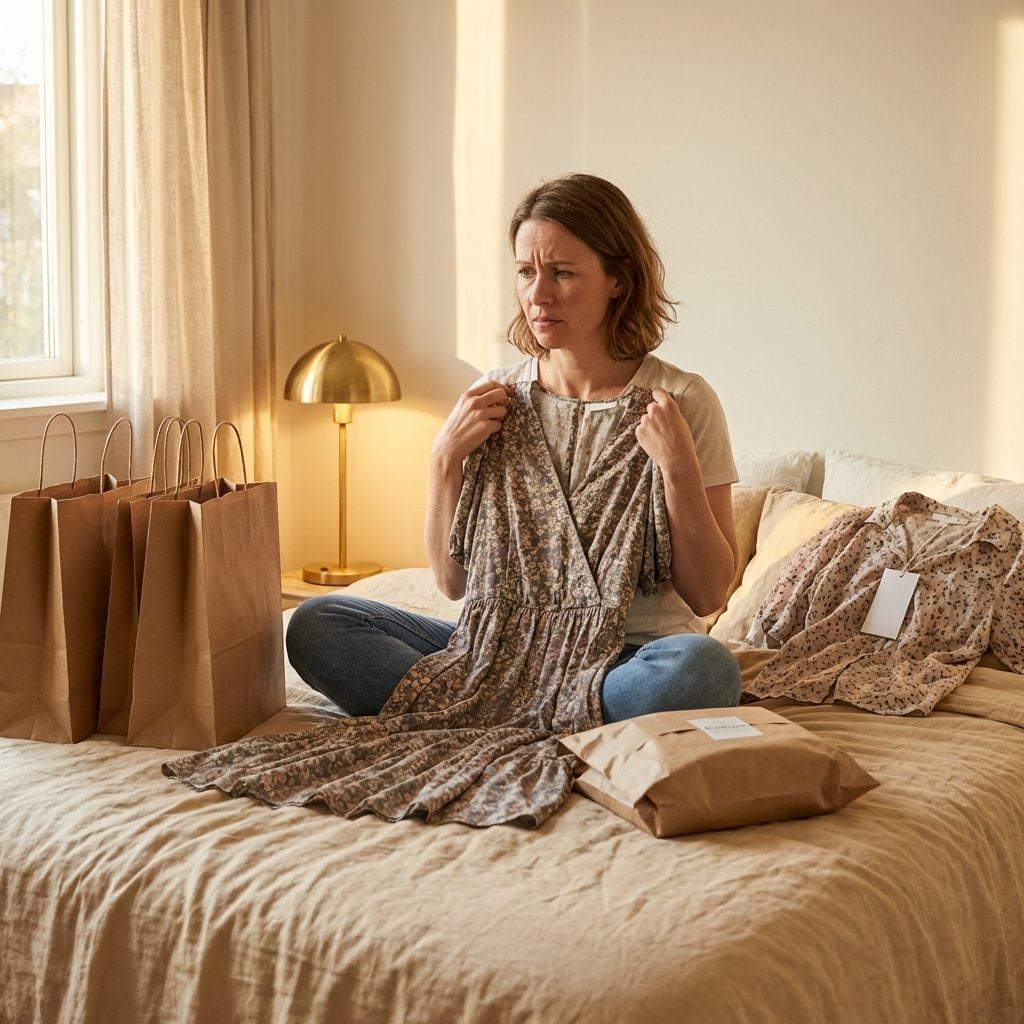
Retail therapy is not the same as building a wardrobe. Frequent buying without a clear point of view produces the fashion equivalent of a pantry stuffed with ingredients that don’t make a single complete meal.
The spending doesn’t stop the empty feeling because the problem isn’t scarcity, it’s direction. Without knowing what your work life, personal life, and everyday life actually need from a clothing standpoint, every purchase is a guess. Some guesses get worn. Most hang there quietly, price tags removed but purpose never found.
Shopping more is not the answer. Shopping differently is.
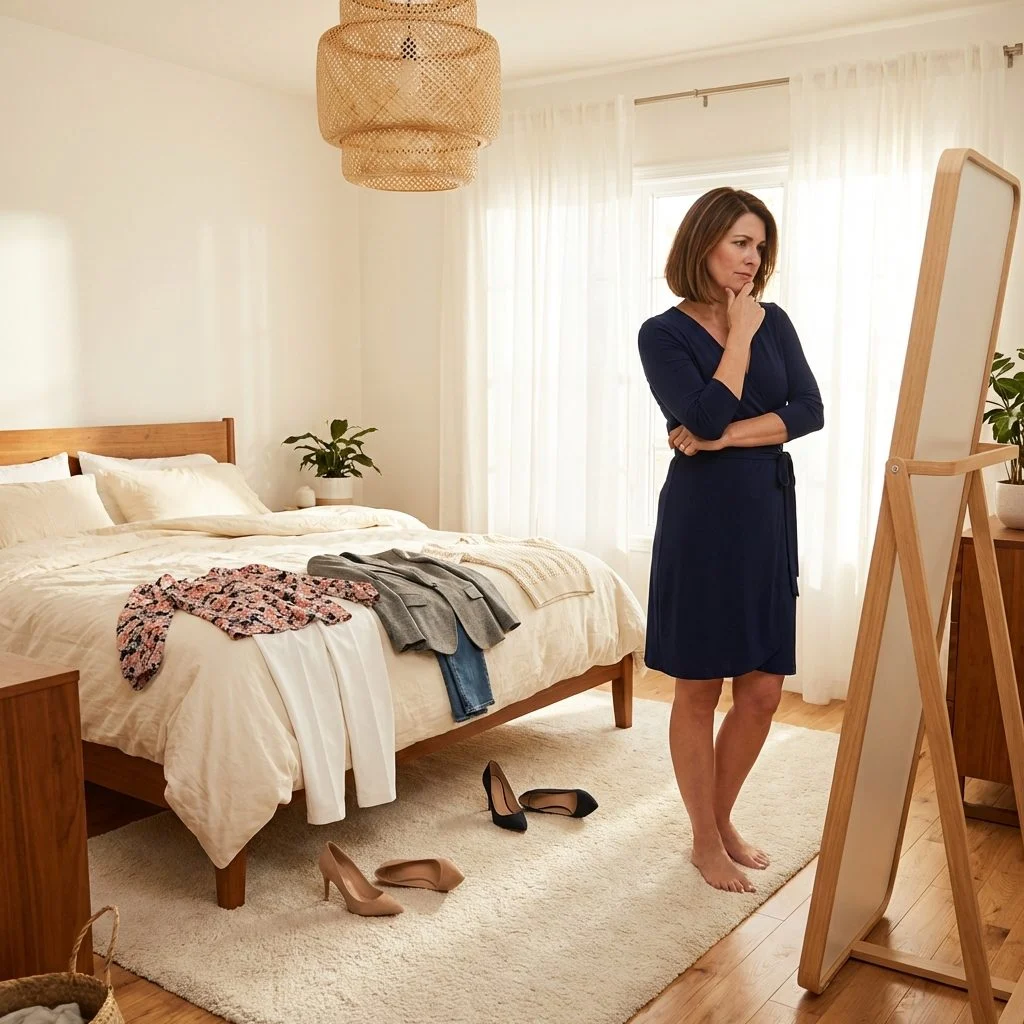
9. Every Morning Ends With a Pile of Rejected Outfits on the Bed
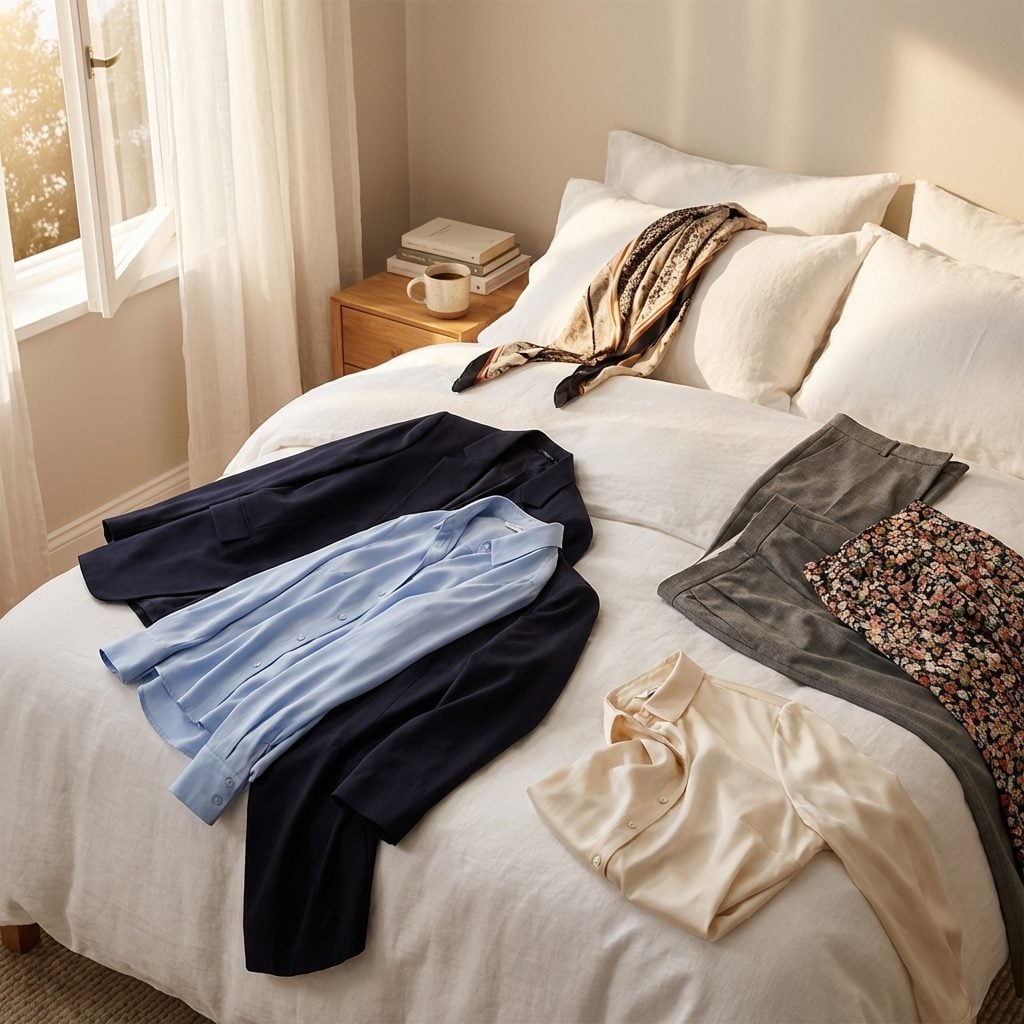
The bed pile is a diagnostic tool. Every piece on it was a decision that went wrong, tried, rejected, removed. What those pieces have in common is worth examining: wrong fit, wrong fabric for the day, wrong mood, wrong occasion, wrong era of your life. The pile is not evidence that you can’t dress yourself. It’s evidence that your closet is not stocked with enough reliable options for who you are right now.
10. You’ve Stopped Dressing for Things You Used to Look Forward To

This one cuts the deepest. The dinner reservation you almost cancelled. The birthday party you went to in whatever required the least thought. The holiday event you attended in the same safe navy dress you’ve worn to six other functions because actually deciding felt like too much.
When style starts to contract around fear rather than preference, the problem is bigger than the closet. Getting dressed for occasions you love used to feel like participation, a way of showing up fully. When that stops, it’s often because the clothes available don’t match the person you are at those moments. And rather than solve that, it’s easier to show up smaller.
That’s the sign worth paying attention to. Not the outfit, the withdrawal.
11. The Clothes You Feel Best In Live in a Single Drawer or One Small Section of Your Closet
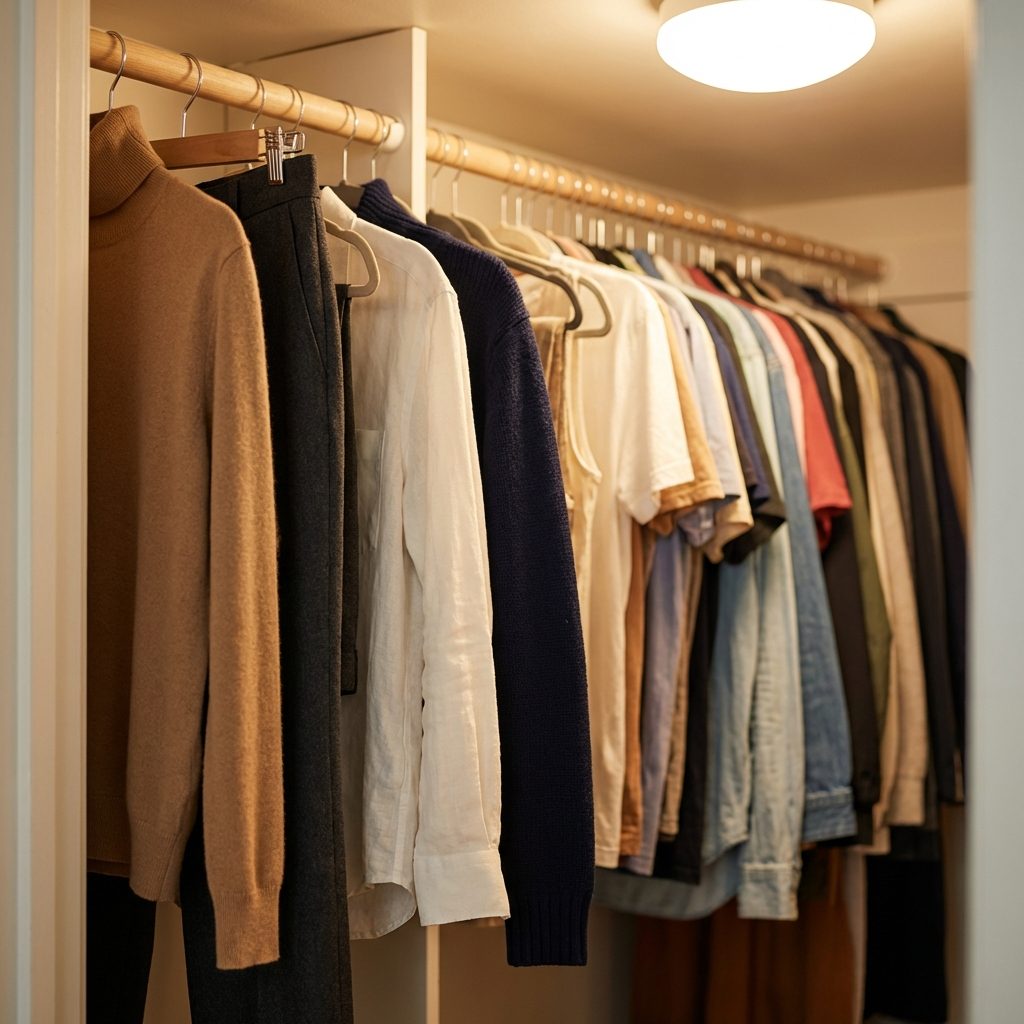
The geography of a wardrobe tells the truth. Most women can walk to their closet right now and point to exactly the twelve-inch section they reach into daily and the remaining four feet they work around. The small section is the blueprint. It’s not accidental, those pieces made the cut because they align with who you actually are, how you actually move, and what actually makes you feel capable in your own body.
The rest of the closet isn’t a resource. It’s friction. And the distance between those two sections is exactly the size of the overhaul that’s needed.
12. You Wear Your Least Favorite Pieces Most Often Because the Good Ones Feel Too Precious to Use

Saving the good pieces for a special occasion that never comes is one of the most common wardrobe dysfunctions there is.
The cashmere sits folded. The silk blouse stays dry-cleaned and bagged. The leather tote you spent three months saving for gets used maybe twice a year. Meanwhile, the pilled jersey top and the stretched-out tank cycle through the rotation indefinitely, because they’re already compromised so it doesn’t matter.
The logic feels protective but it produces the opposite result: your daily life gets your worst, and the life you’re waiting for, the occasion worthy of the good stuff, never quite arrives. Wear the good pieces. Today is the occasion.
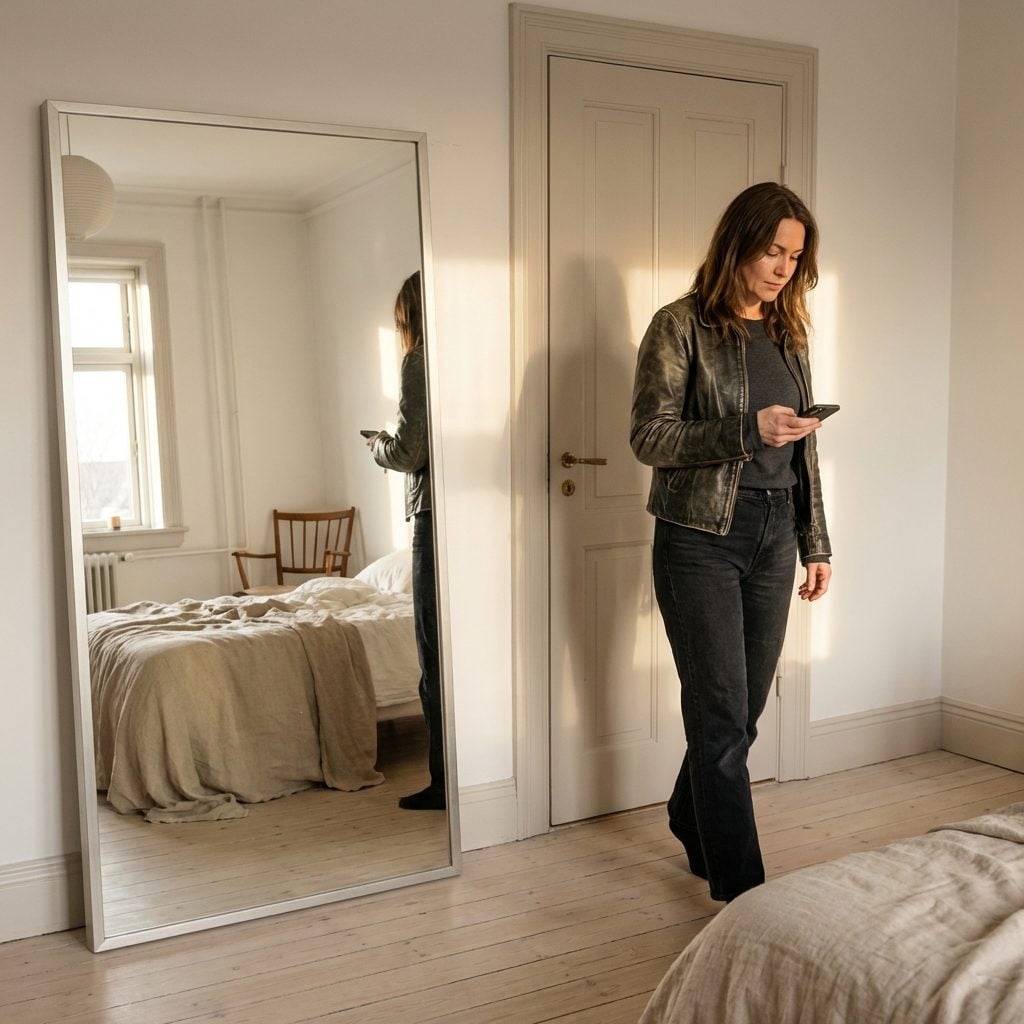
13. You’ve Started Avoiding Mirrors, or Stopping Yourself From Looking Too Closely
❤️ Would you like to save this?
Mirror avoidance is one of the more quietly significant signs on this list. Not the dramatic kind, not distress or distorted self-image, but the small, habitual kind. The glance redirected. The full-length mirror passed without use. The deliberate decision to not look before leaving because looking doesn’t feel useful or good.
This happens when clothes have stopped making you feel like yourself. The reflection doesn’t confirm who you are, it contradicts it. And when that happens enough mornings in a row, the logical response is to stop checking. But the cost is that you walk through your day slightly disconnected from your own presence, and that disconnection builds.
14. Nothing in Your Wardrobe Crosses Over Between Your Different Roles and Lives
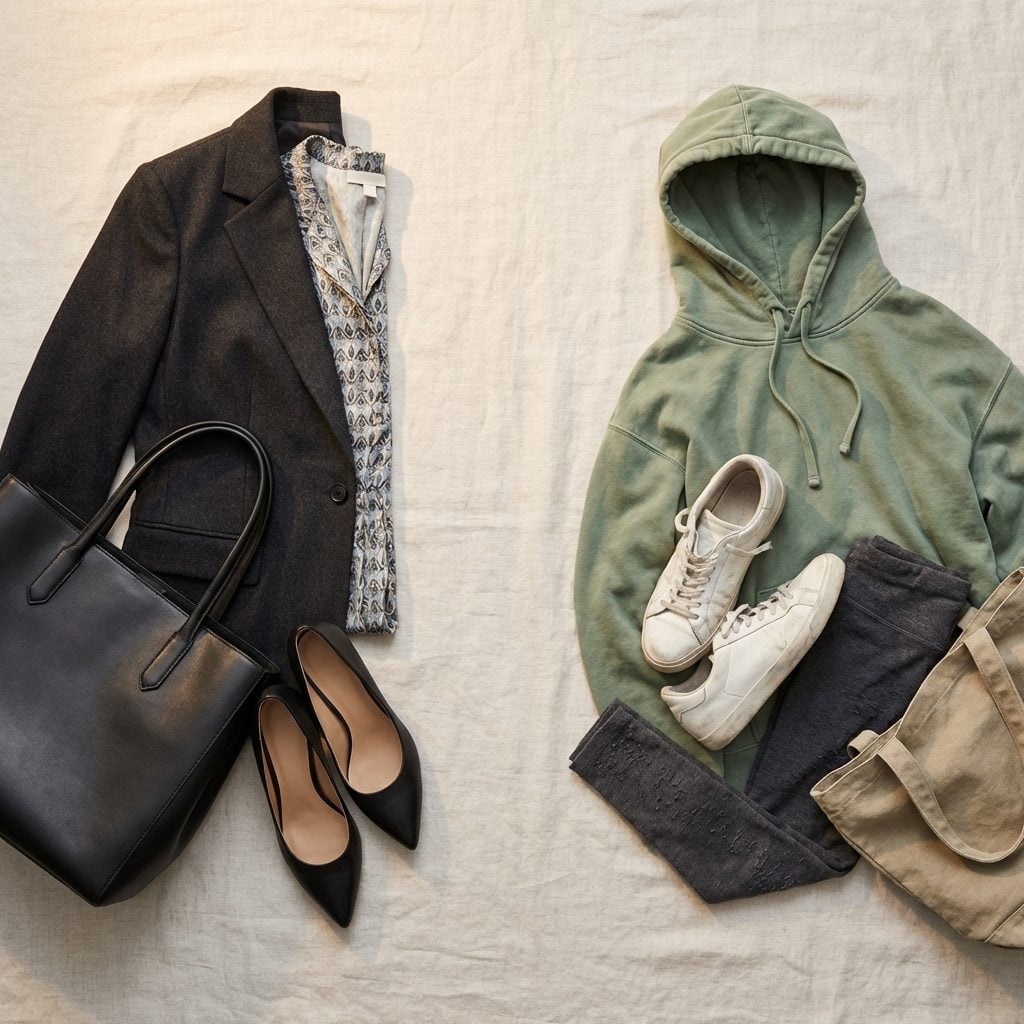
A wardrobe that’s actually working has range and crossover. A androgynous wardrobe might move from a board meeting to dinner without a full change. A great tailored trouser shows up at the office Monday and at a casual weekend lunch Friday. When nothing crosses over, you’re effectively maintaining multiple separate wardrobes with none of them fully stocked.
The sign is specific: you feel underdressed at personal things and overdressed at work things, or completely transformed when you change from one context to another, not by intention, but because there are no pieces fluent in more than one part of your life.
Crossover pieces are the backbone of a functional closet. Without them, every role you play requires its own costume, and that’s exhausting to maintain.
15. You Can Describe Your Ideal Style Perfectly But Can’t Find a Single Outfit in Your Closet That Matches It
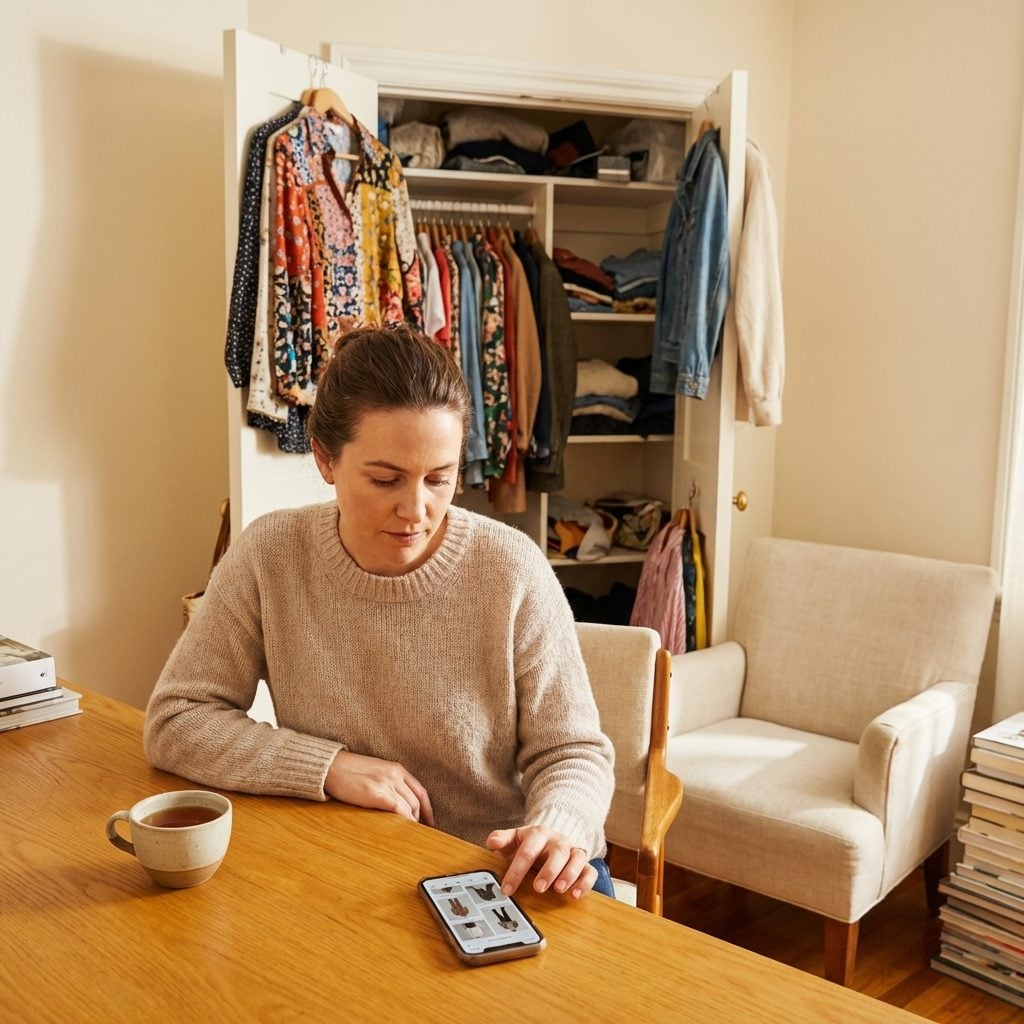
This is the most clarifying sign of all. The vision is fully formed. You know the palette (warm neutrals, maybe a strong color). You know the silhouette (relaxed but intentional, never sloppy). You know the fabric feel (natural, substantial, lived-in). You can describe the aesthetic in a sentence without hesitating.
And then you open your closet and none of it is there.
That gap between vision and reality is not a failure of taste or imagination. It’s actually the most useful information your wardrobe can give you. You know exactly what you want. You’ve just never built it deliberately. The overhaul isn’t a mystery from here, it’s a project with a clear brief.
The version of your style that lives in your head? She’s not aspirational. She’s just the next chapter. And the only thing between you and her is a closet that finally tells the truth.
16. Your Clothes Require Constant Managing, Tucking, Pulling, Adjusting, Just to Get Through the Day

There’s a particular kind of exhaustion that comes from wearing clothes that fight you. The waistband that creeps, the neckline that gaps, the shirt that untucks itself within twenty minutes of leaving the house. You spend the day in a low-grade battle with your own outfit, and that battle takes up mental space you didn’t agree to give it.
Good fit is quiet. You put it on, and it disappears into the background the way it’s supposed to. When clothes demand constant attention, it’s not a minor inconvenience, it’s a clear signal that something in your wardrobe is fundamentally off. The right size, the right cut, the right fabric weight, these things mean you stop thinking about your clothes and start living your day.
17. You Kept Everything ‘Just in Case’ and That Phrase Has Started to Mean Never
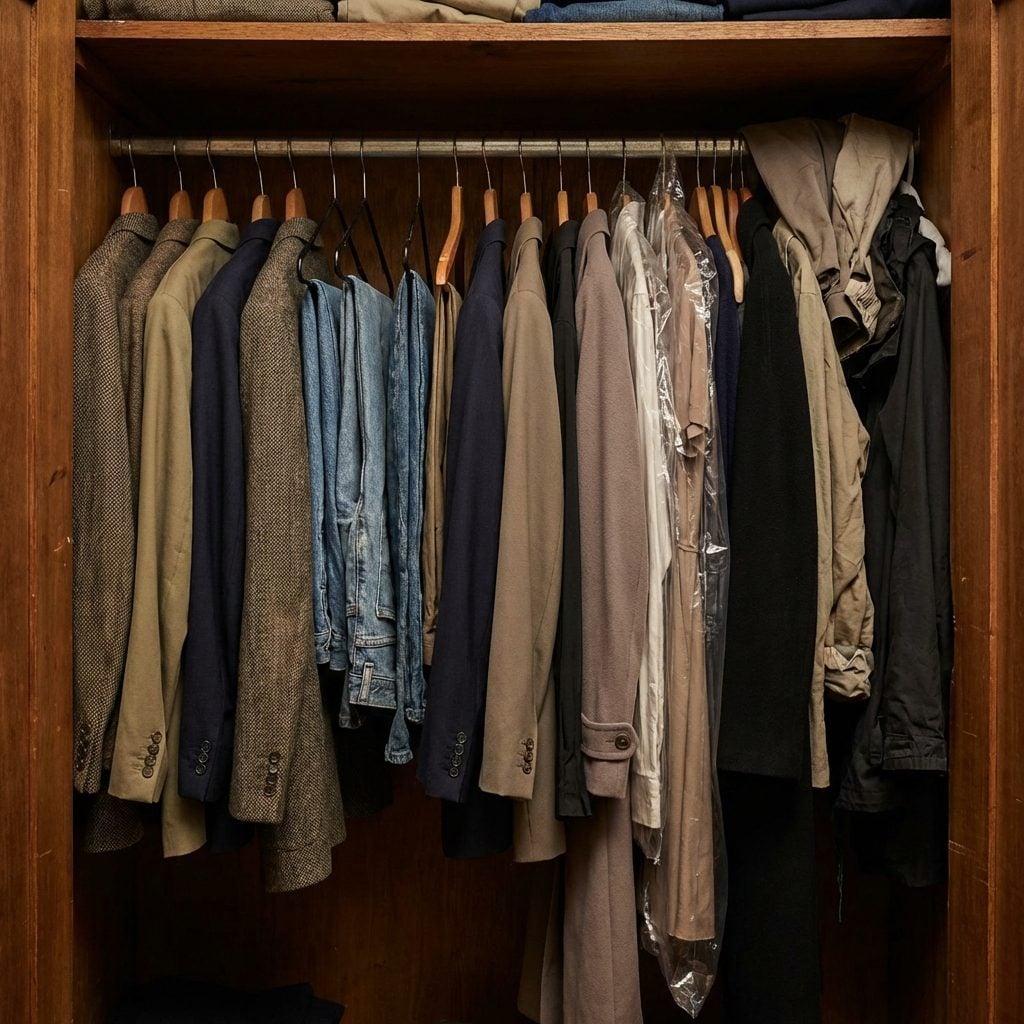
“Just in case” is a phrase that sounds reasonable until you say it forty times in a row while standing in front of a packed closet you can’t get dressed from.
The blazer from a job you left. The dress that almost fit after that particular summer. The jeans kept for gardening or painting, which you last did in 2019. Every single one of these items has a story that justifies its presence, and none of them have a future in actual rotation. A wardrobe full of “just in case” is a wardrobe built around a version of your life that isn’t happening anymore.
There’s also a quieter thing going on here. Holding onto clothes for hypothetical scenarios keeps you from building a closet for the life you’re actually in. Every “just in case” piece takes up physical space and, more importantly, visual space, it contributes to the sense that you have nothing to wear even when the rail is full.
18. Shopping Feels Like a Chore Because You Already Know Nothing Will Work When You Get It Home

When shopping stops being pleasurable and starts feeling like a duty with a predictable ending, that’s information. Not about your attitude toward fashion. About the fact that your current wardrobe has no coherent base for new pieces to land on.
The cycle is familiar: you buy something that looked promising in the store, get home, try to build an outfit around it, and realize it doesn’t connect to anything you own. Back it goes, or it stays and becomes another orphan in the back of the closet. After enough repetitions, your brain starts protecting you from the disappointment by making the whole experience feel flat before you even walk in.
Shopping doesn’t fix a broken wardrobe. It just adds more pieces to a puzzle with no picture on the box.
19. You Feel Invisible in Your Clothes, Not Understated, Actually Invisible

Understated is deliberate. Invisible is different. Understated means you made a choice to let your presence speak louder than your outfit. Invisible means your clothes are erasing you rather than framing you, and somewhere inside, you know the difference.
It shows up in small ways. You walk into a room and feel like you could leave and no one would track your exit. You stand in front of a mirror and feel a vague absence, like the clothes are wearing a placeholder instead of a person. This isn’t about being loud or maximalist. It’s about whether your clothes have any relationship to who you actually are. When that connection breaks, what you’re wearing becomes a kind of camouflage, and not the empowering kind.
20. Your Work Wardrobe and Your Real Life Have Absolutely Nothing in Common
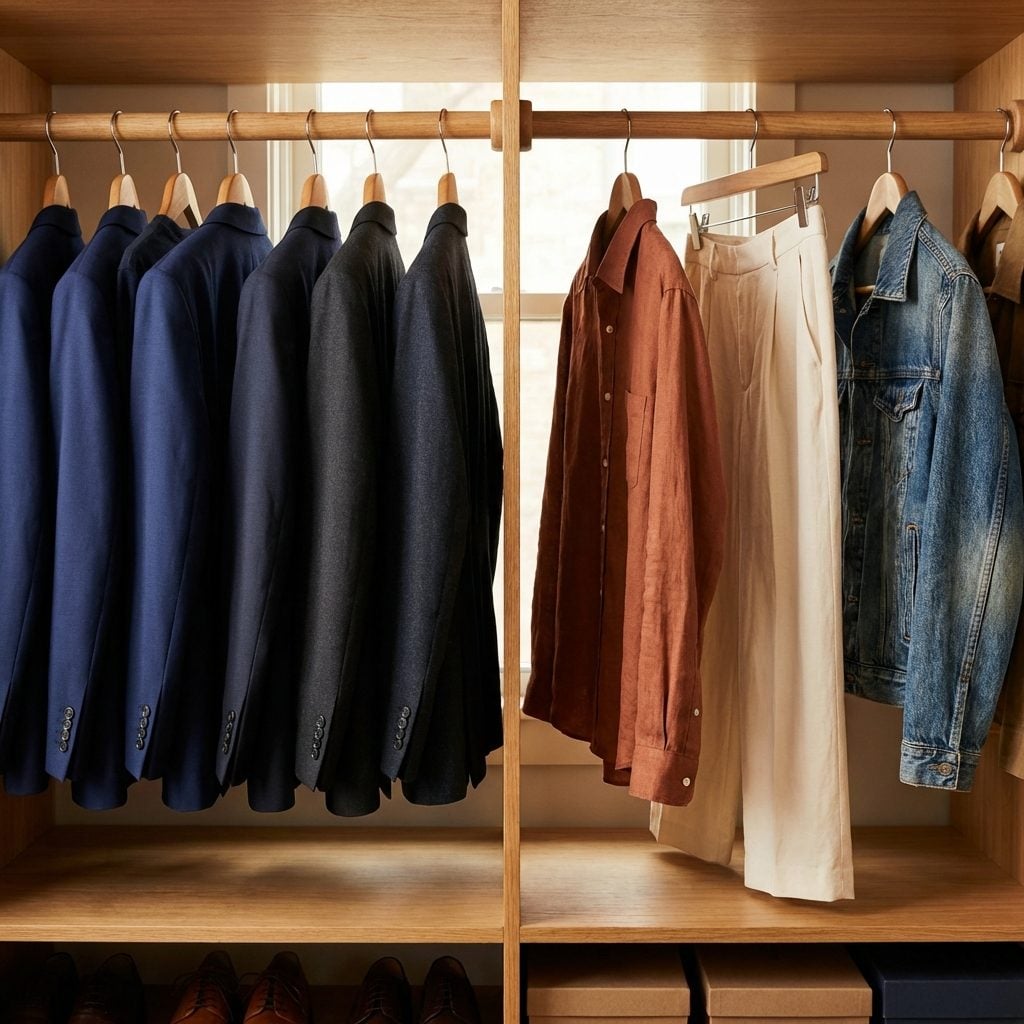
Two wardrobes living in the same closet, sharing no vocabulary. One is for the version of you that has to be somewhere by 8:30am. The other is for weekends, real dinners, the life you actually inhabit. And never the twain shall meet.
This split is so common it barely registers as a problem, until you realize that half your clothes cost the most money and get worn in a context that doesn’t feel like you. The work wardrobe accumulates pieces chosen for performance rather than personality, and over time it starts to dominate the rail, crowding out everything that actually reflects who you are.
The real signal isn’t that these two parts of your life exist, it’s when they share absolutely no overlap. When not a single piece moves freely between contexts, your wardrobe has calcified into two separate costumes for two separate roles. That’s a design problem, not a personality one.
21. The Decade Your Closet Belongs To Is Not the One You’re Currently Living In
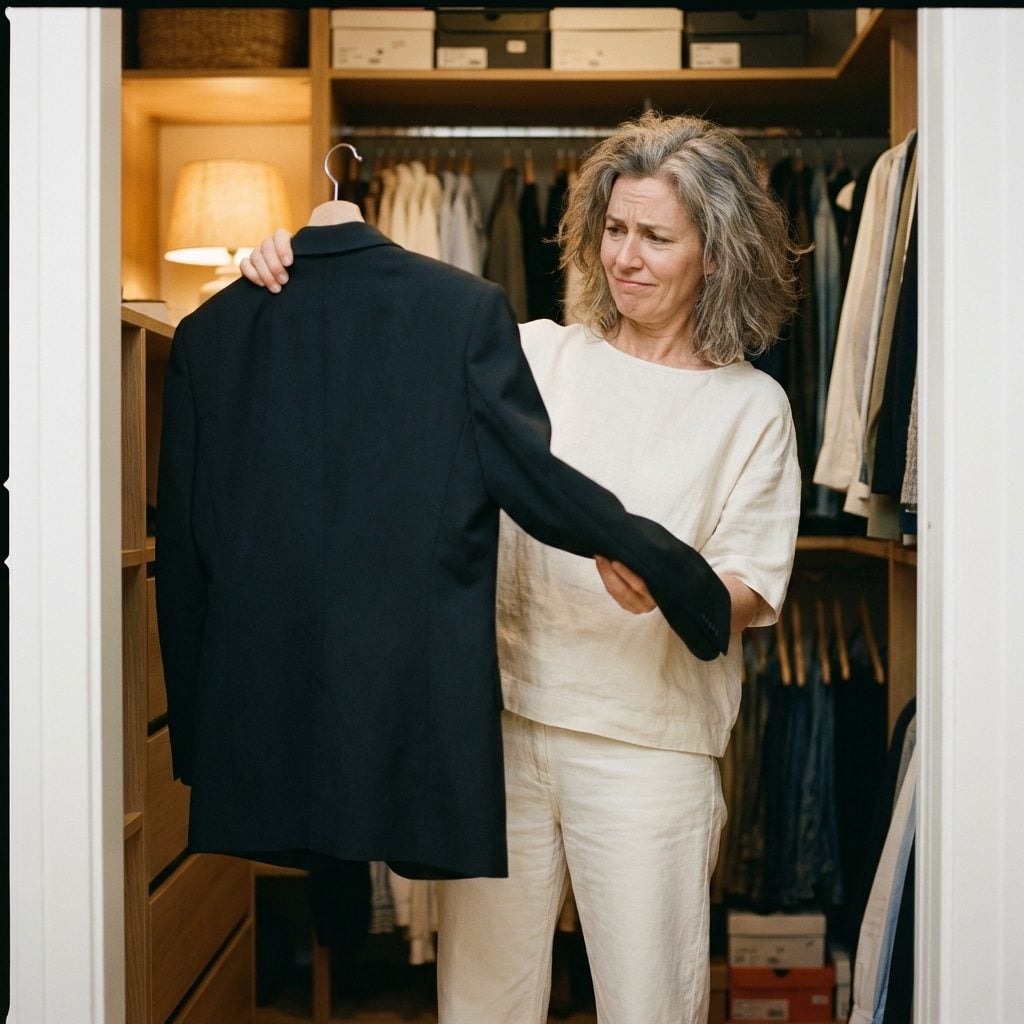
Fashion has a kind of gravitational pull toward the era when you felt most confident. For a lot of women, that’s a decade or two back, and the closet becomes a slow-motion time capsule without anyone making a conscious decision to preserve it.
The silhouette that suited you at 35 may not be the one that works now, not because your body has necessarily changed, but because you have. Tastes shift. Context shifts. The structured power shoulder, the ultra-low rise, the logo-heavy piece that felt right in 2008, these things leave residue. The wardrobe that doesn’t update doesn’t just look dated; it disconnects you from the present version of yourself.
22. You Have Expensive Pieces You’ve Never Worn Because You Don’t Know What to Wear Them With
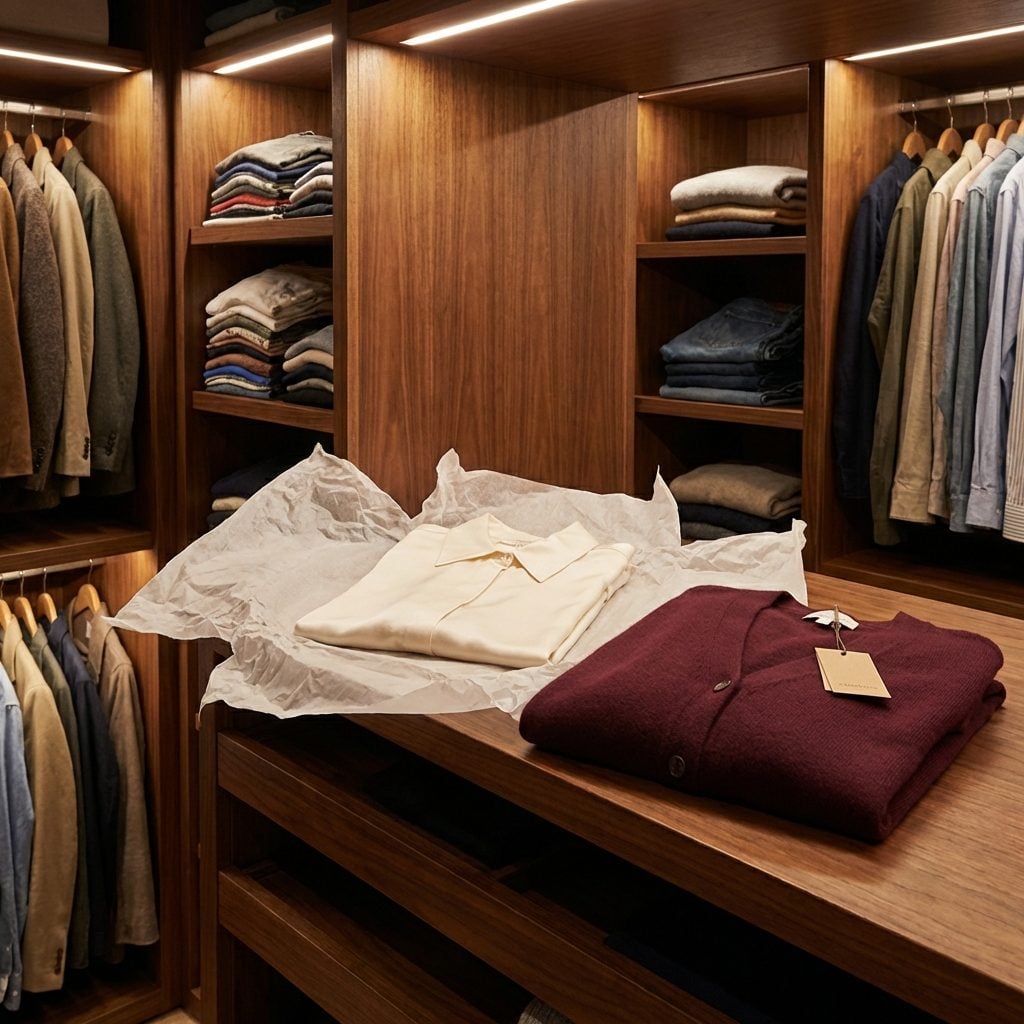
The silk blouse still in the tissue paper. The cashmere cardigan with the tag on. The leather trousers that seemed like an investment when you bought them.
These orphan pieces are a specific kind of wardrobe failure, not because you spent money, but because they reveal a gap between aspiration and infrastructure. You bought something you genuinely loved, and your existing wardrobe had no framework to receive it. The piece didn’t fail you. The system around it did.
This is actually the clearest diagnostic sign in this entire list. An unworn expensive piece isn’t a shopping mistake, it’s an x-ray of exactly what your wardrobe is missing. Look at the tag-still-on items and ask what would need to exist around them for them to finally come off the hanger. That answer is your overhaul blueprint.
23. Getting Dressed Takes Significant Time and Energy but Never Actually Pays Off

Twenty minutes of trying things on, discarding, reconsidering, settling. And at the end of it, you leave the house feeling approximately the same as if you’d grabbed the first thing you saw.
The time isn’t the problem. Some people spend twenty minutes getting dressed and feel genuinely good at the end of it. The problem is the ratio: high effort, low return. That ratio doesn’t improve with more clothes. It improves when your wardrobe has enough coherent pieces that getting dressed is a short conversation rather than a negotiation.
24. You’ve Started Borrowing Other People’s Style Language Because You’ve Lost Your Own
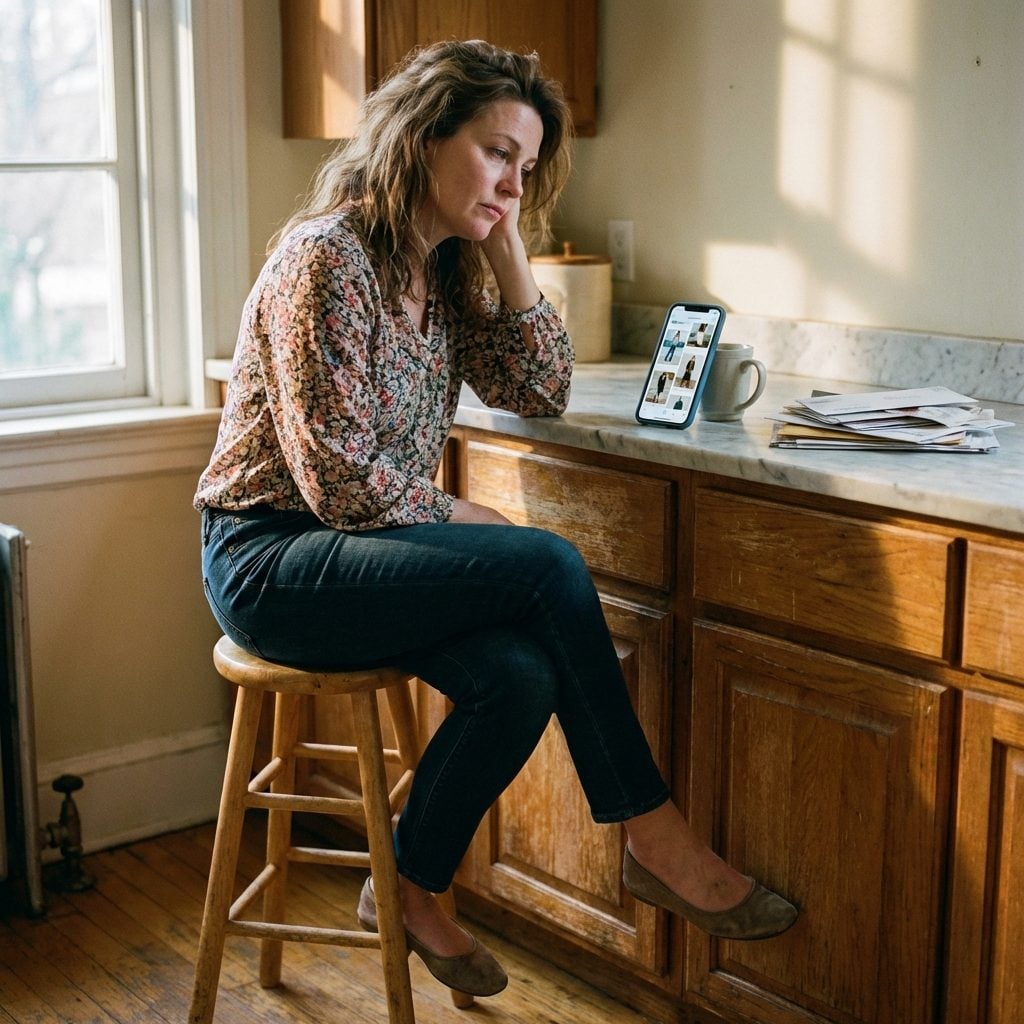
You screenshot outfits you’d never actually wear. You buy things because a woman you admire wore something vaguely similar. You copy a colleague’s aesthetic and it still doesn’t feel right, because it isn’t yours.
Borrowing inspiration is healthy. Borrowing identity is a signal. When you’ve been in a wardrobe that doesn’t work for long enough, your own style instincts go quiet. You stop trusting your own eye because your eye has been consistently wrong, or so it seems. What’s actually happened is that the visual noise of a mismatched closet has drowned out the signal of what you actually respond to.
The way back isn’t more inspiration boards. It’s stripping back, wearing only what you feel good in for a week, and noticing what those pieces have in common. Your style language is still there. It’s just been buried under a decade of settling.
25. Your Body Has Changed and Your Wardrobe Is Still Pretending It Hasn’t

❤️ Would you like to save this?
Bodies change. This is not a revelation and it is not a problem to solve. But a wardrobe built for a body that no longer exists in the same form is a source of daily friction that most women underestimate.
It’s not just about size. Proportions shift. What drapes well changes. The neckline that worked at 38 may feel different at 48, not because of any failure, but because the geometry has moved. Holding onto an old fit standard as the benchmark, even unconsciously, means you keep reaching for things that were right then and feel slightly off now.
A wide-leg trouser, a relaxed linen blazer, a differently proportioned silhouette, these aren’t concessions. They’re just clothes that fit the actual body you have today. The woman who insists on squeezing into her 2015 standards isn’t honoring her past self. She’s just making her present self uncomfortable.
26. The Pieces You’re Most Loyal To Are Held Together by Habit, Not by How They Make You Feel
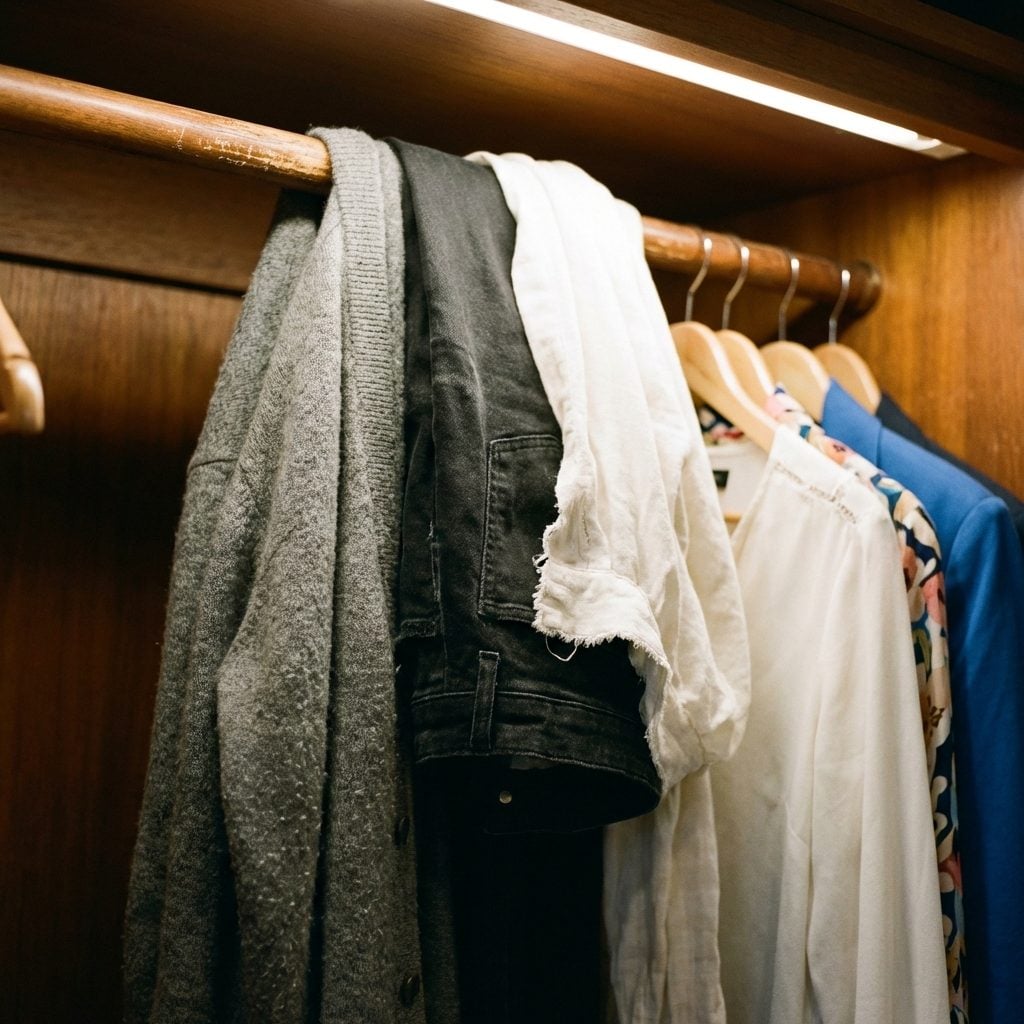
There’s a category of clothes that lives in heavy rotation not because it’s loved but because it’s known. The grey cardigan. The black trousers that go with everything, sort of. The shirt that requires no thought. These are comfort picks, and comfort, in wardrobe terms, is not the same as feeling good.
Loyalty by default is different from loyalty by choice. One comes from genuine love of a piece. The other comes from the low-friction relief of not having to decide. The irony is that these default pieces often contribute most to the invisible, low-energy feeling the whole wardrobe produces.
27. You Feel a Quiet Envy When You See Other Women Who Seem Put Together Without Appearing to Try
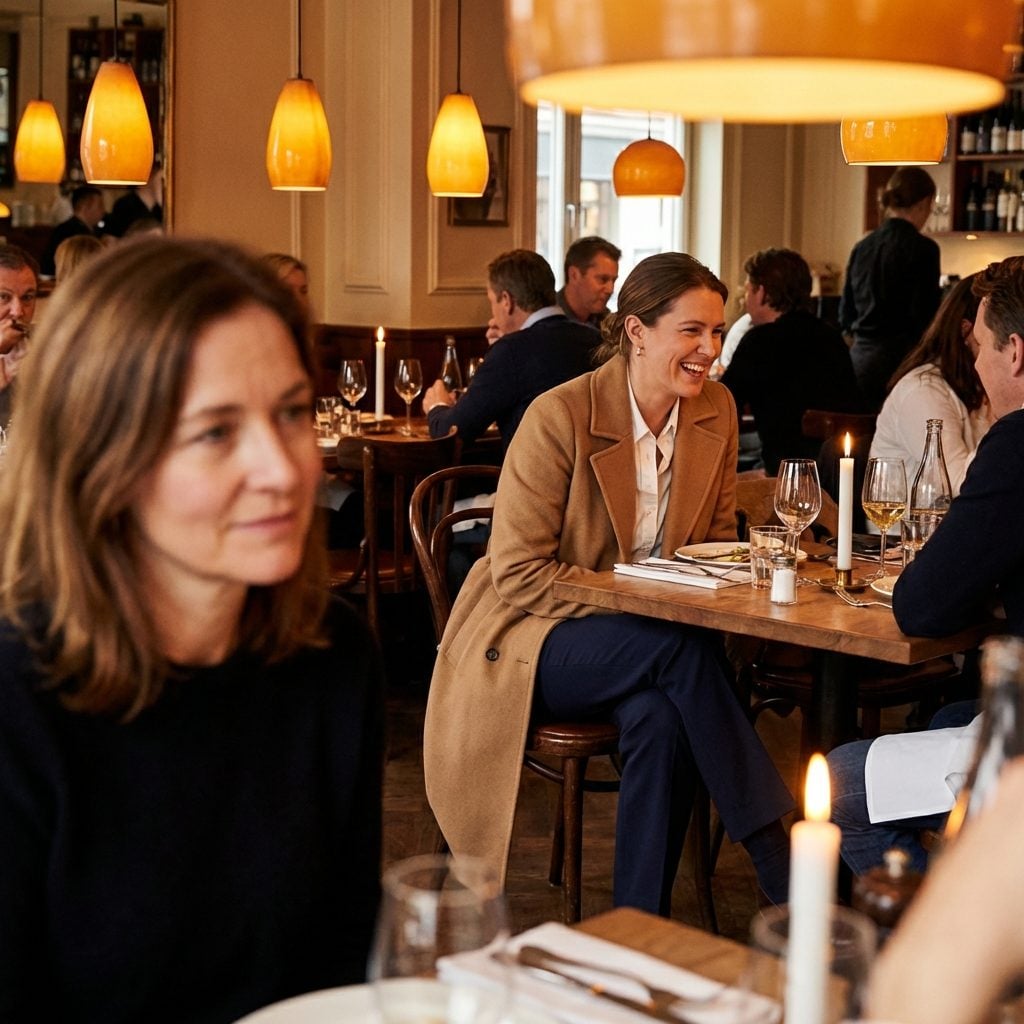
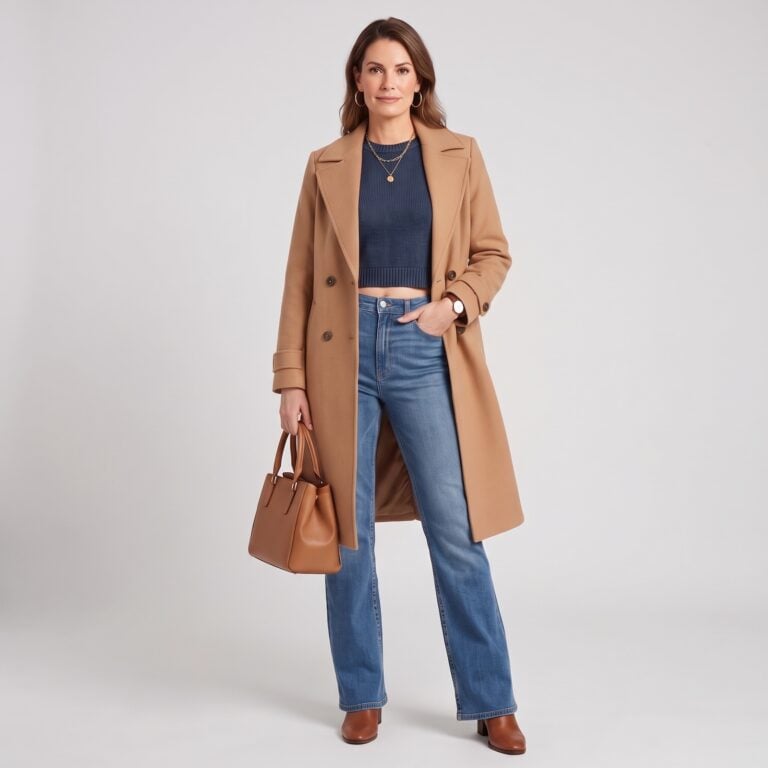
It’s not jealousy exactly. It’s more specific than that. It’s the woman at a table across the restaurant whose outfit looks simple but reads with total coherence. The friend who throws on a camel wool coat over basics and looks like she planned it for a week. The colleague in a navy silk blouse and tailored trousers who you know spent exactly four minutes getting dressed.
What you’re reading in those women isn’t luck or genetics or more money. It’s clarity. They know what works for them, so they stopped experimenting and started repeating. That coherence reads as ease from the outside. The envy you feel toward it is a direct signal: your own wardrobe isn’t giving you that, and part of you knows it could.
28. Your Clothes Don’t Survive a Full Day, By Afternoon Something Is Always Wrong

By 2pm, the hem has dropped. The waistband has rolled. The fabric has done that thing where it clings in the back and bunches at the front. The shoes that seemed fine at 8am are now a negotiation. What started as a functional outfit is now a series of small management tasks.
Clothes that fail over the course of a day are usually signaling one of three things: poor fabric quality, wrong fit, or both. Natural fibers tend to move with the body rather than against it, a heavy cotton, a linen midi dress, a wool blend that doesn’t stretch out by noon. When synthetic fabrics are cut slightly wrong, they migrate. When a waist sits on the wrong part of your torso, it spends the entire day trying to correct itself.
29. You Already Know, Somewhere Underneath All the Excuses, That It’s Time to Start Over
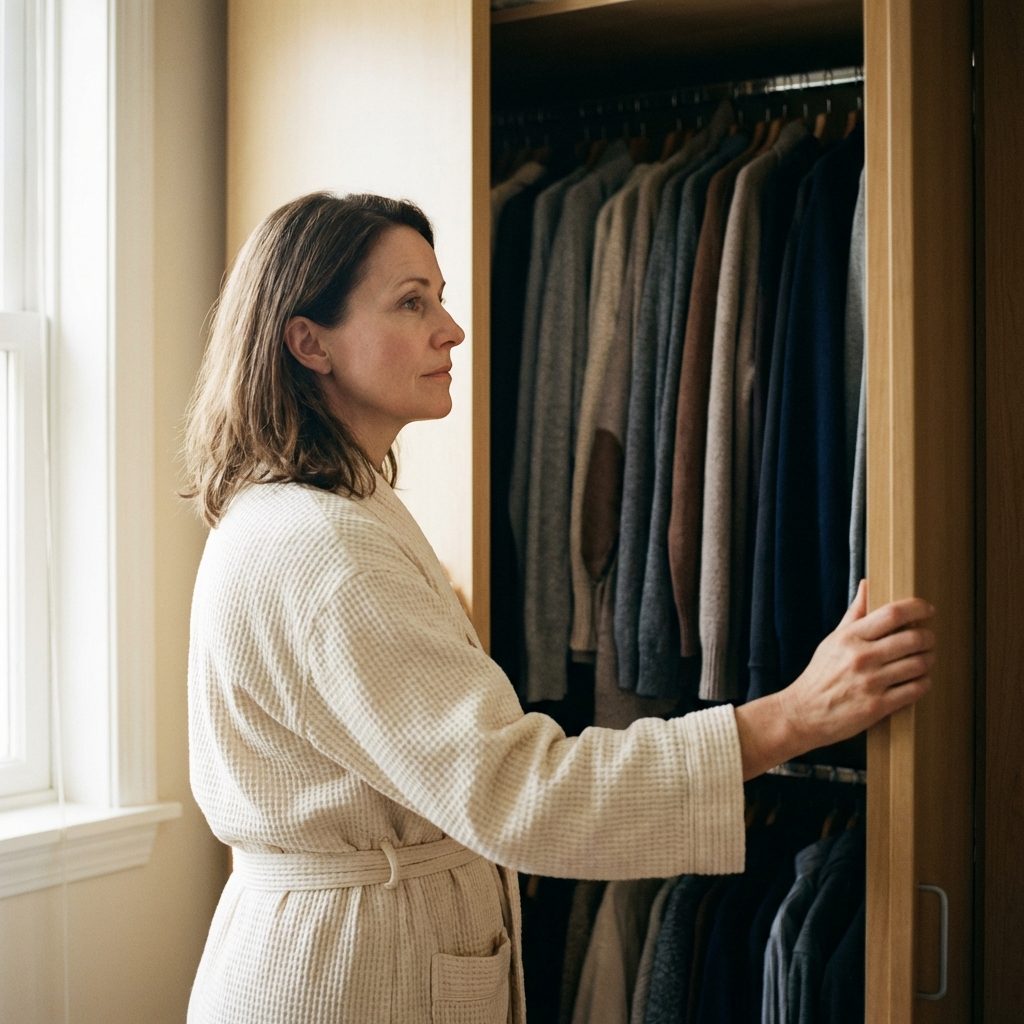
This one doesn’t need a list of observable signs. You feel it when you open the closet in the morning. You feel it when you get dressed and leave the house and spend the first ten minutes of your day feeling slightly wrong. You feel it when you pass a mirror and look away faster than you used to.
The excuses are real but they’re not the truth. The timing isn’t right. The money isn’t there. You’ll do it after the next thing, the next season, the next version of your life that will somehow be more suited to a wardrobe overhaul than this one. But the cost of waiting isn’t just aesthetic. It’s the accumulated daily tax of getting dressed in something that doesn’t work, the low-level drag it puts on your morning, your confidence, your sense of yourself before the day has even started.
An overhaul doesn’t require a budget or a stylist or a free weekend. It requires being honest about what’s not working and making a single decision to stop pretending otherwise. You already know which pieces to let go. You’ve known for a while.
30. You Change Outfits Multiple Times, and Still Walk Out Wearing Something You Don’t Actually Like
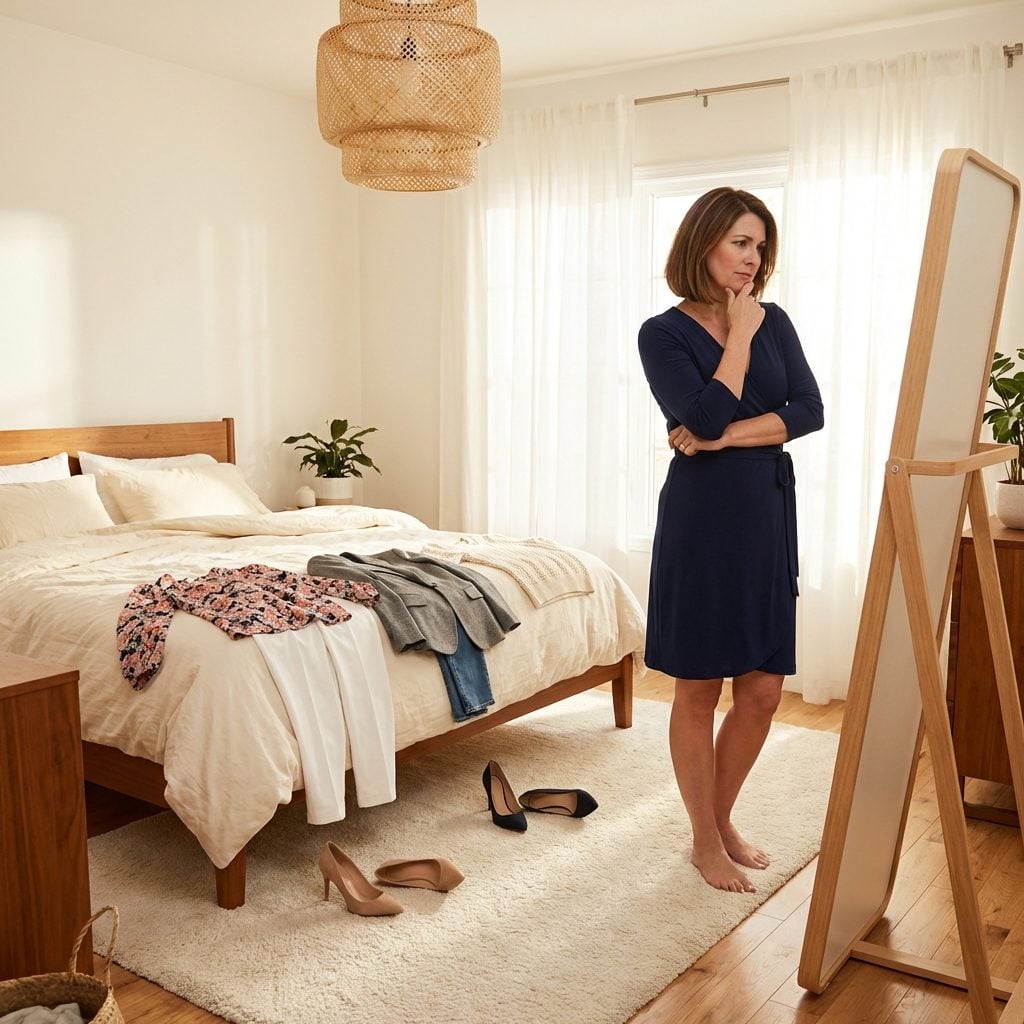
Three outfits on the bed. Four more tried and discarded. And somehow you still leave the house in something that feels like a compromise. This isn’t indecision, it’s your closet failing you in real time.
When a wardrobe is working, you don’t audition every piece. You reach, you wear, you leave. The multiple-outfit spiral is a signal that the pieces you own don’t fit your life, your body right now, or your actual taste. You’re not too picky. You just don’t have the right things.
31. You’re Turning Down Invitations Because Your Closet Makes You Panic
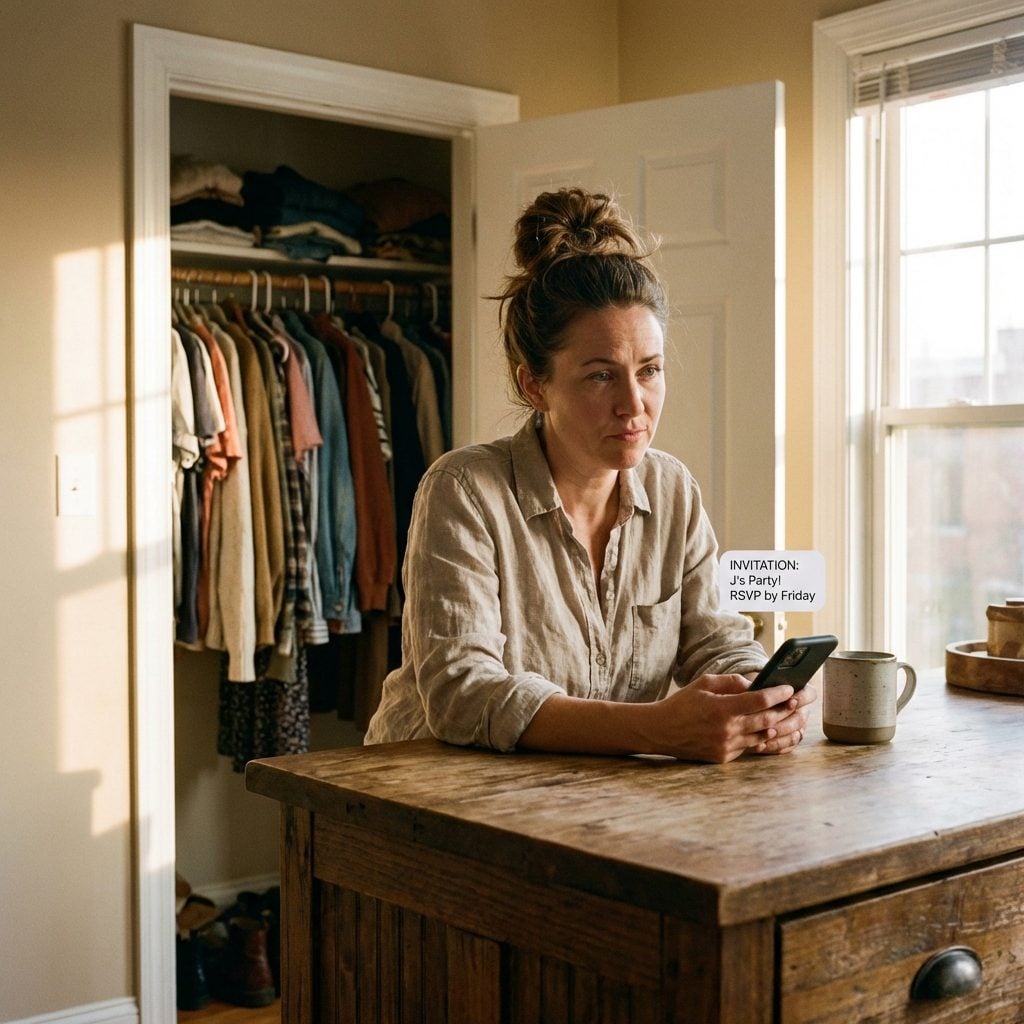
A dinner invitation arrives and instead of excitement, your first thought is: I have nothing to wear. So you decline. Or you make an excuse. This is the moment a wardrobe problem crosses into a life problem.
Avoiding occasions, a party, a work event, a weekend trip, because the thought of getting dressed feels impossible is not a personality trait. It’s a clear symptom. Your clothes are not just failing to serve you; they’re actively shrinking your world.
32. Your Closet Is Full of Pieces That Are Almost Right, and That ‘Almost’ Is Costing You Everything
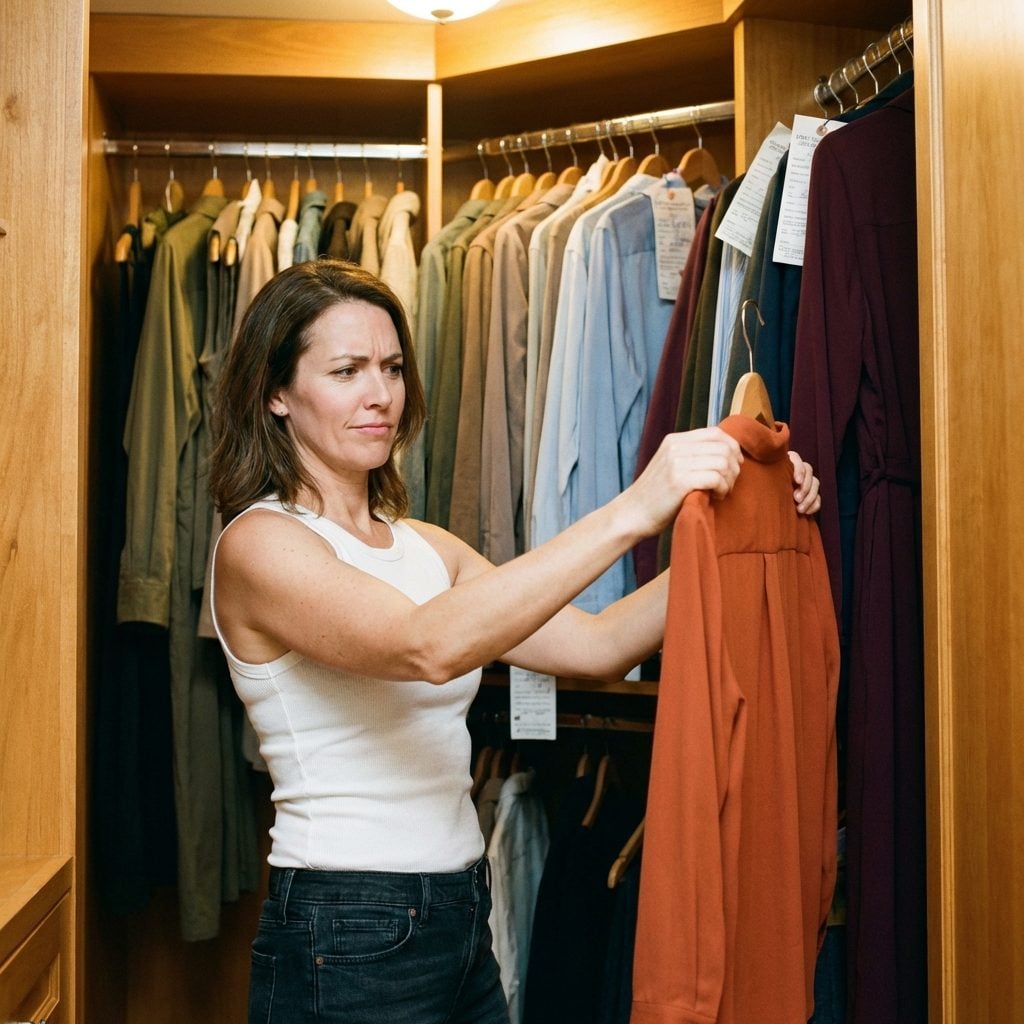
The trousers that fit everywhere except the waist. The blouse in a color that’s close to your best color but slightly off. The coat you love in theory but never actually reach for. These pieces feel like good ideas on a hanger, and like quiet disappointments in practice.
“Almost right” pieces are the most insidious kind of clutter. They trick you into thinking your wardrobe has options when it actually has obstacles. Every time you try one on and put it back, you spend decision fatigue on something that was never going to work.
33. You’re Using Accessories as Bandages on Outfits That Were Never Going to Survive

A silk scarf to make the blouse feel less boring. Statement earrings to distract from a dress that doesn’t quite fit right. A belt cinched to give shape to something shapeless. Accessories are supposed to be the finish, not the foundation.
There’s a difference between accessorizing an outfit and resuscitating one. When you find yourself reaching for a statement earring or a silk scarf to rescue a look rather than to complete one, that’s the closet asking for a harder conversation.
34. You Can’t Actually Describe Your Style Anymore, and That Blank Pause Tells You Everything
❤️ Would you like to save this?
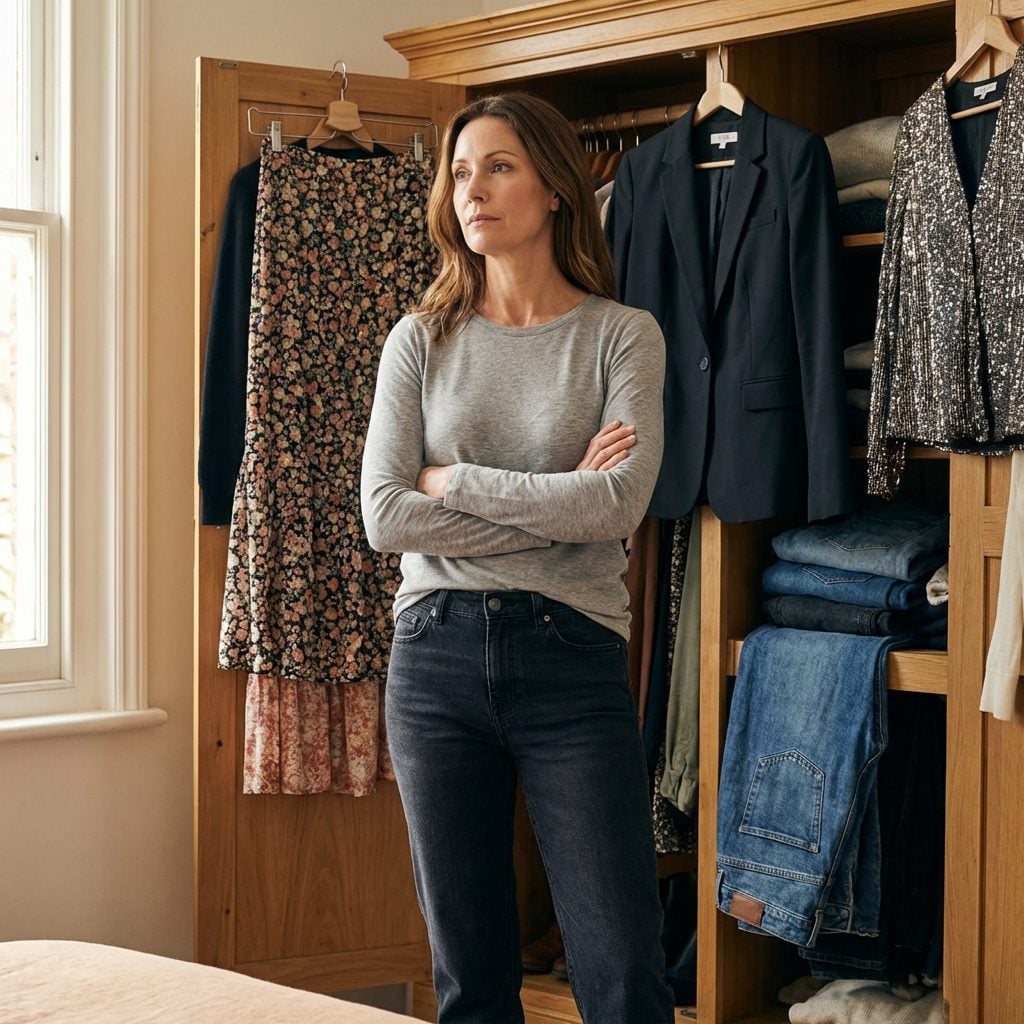
Someone asks what your style is. You pause. “I don’t know, kind of classic? But also casual?” You reach for descriptors that feel borrowed from someone else’s closet. The truth is, you’ve been dressing on autopilot for so long that the thread between who you are and what you wear has gone slack.
“Style is knowing who you are, what you want to say, and not giving a damn.”, Gore Vidal
This isn’t an identity crisis. It’s more specific than that. Your life has shifted, maybe significantly, and your wardrobe never updated to reflect it. The style you once had made sense for a version of you that no longer exists.
35. You’re Shopping the Sale Rail, and Wondering Why Nothing You Own Feels Like You

Discount-led shopping is one of the quietest ways a wardrobe unravels. You buy the burgundy blouse not because you wanted a burgundy blouse but because it was 70% off and it seemed like a reasonable thing to own. Multiply that by two years and you have a closet full of reasonable things you never actually wear.
A good deal on the wrong piece is still the wrong piece. Price is not a reason to own something.
36. You Have an Entire Fantasy Wardrobe Living in Your Head That Your Actual Closet Cannot Produce
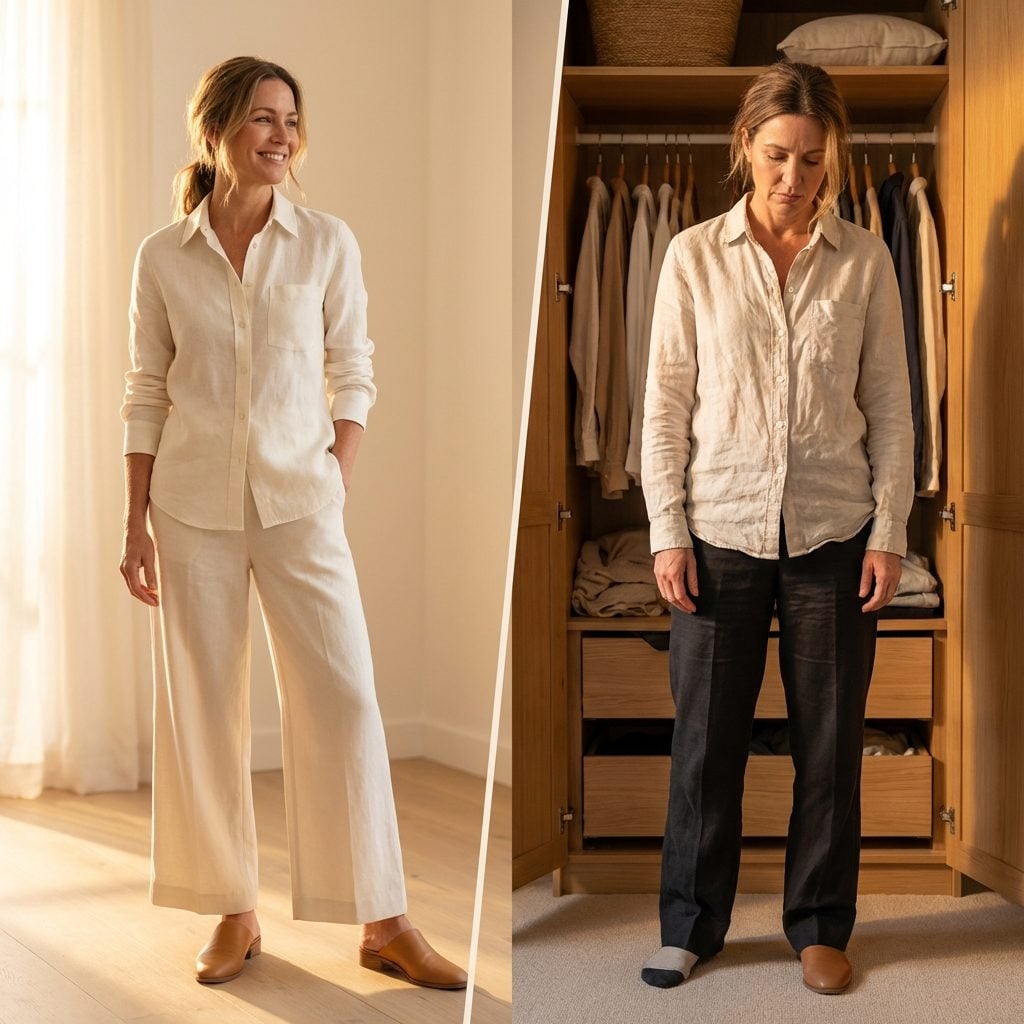
You know exactly what you’d wear to that dinner. You can picture the outfit: a relaxed tailored trouser, a crisp but soft white shirt, a low-heeled mule. You can feel the fabric. Then you open your closet and none of those pieces exist, or the trouser is there but the shirt isn’t, or the mule needs resoling.
This gap between the wardrobe you imagine and the one you have is one of the clearest signs of a system that’s broken. The vision is there. The inventory just hasn’t caught up.
An androgynous wardrobe built around a few precise pieces often solves this faster than a packed closet ever could. Fewer gaps, fewer compromises.
37. Everything Technically Fits, But You Still Feel Slightly Off in All of It
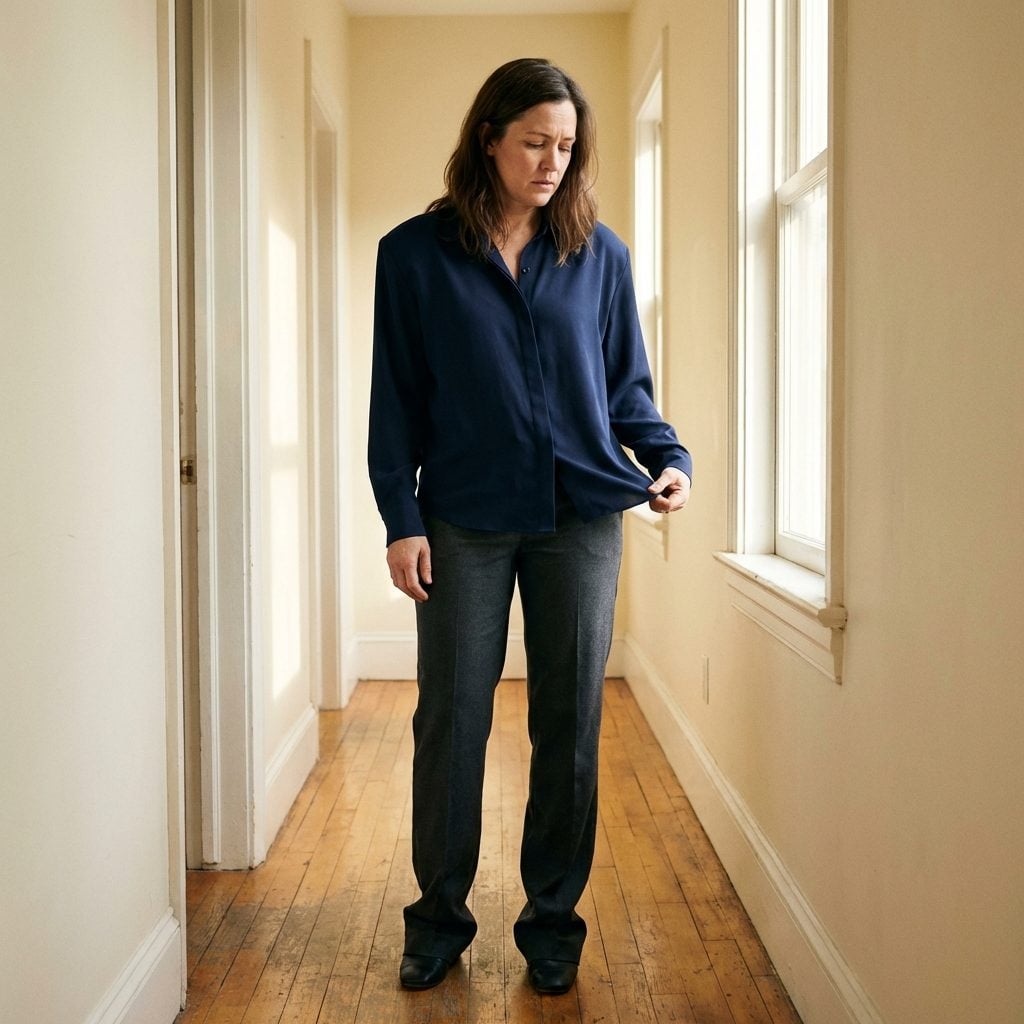
This is the most frustrating kind of wardrobe failure because it’s hard to name. Nothing is wrong, exactly. The seams are in the right places. The size is correct on the label. And yet you spend the whole day tugging at your hem, readjusting your collar, not quite inhabiting the clothes.
What “slightly off” usually means
- The proportion is wrong for your specific frame, even if the size is technically right.
- The fabric doesn’t move the way your body moves, it works against you rather than with you.
- The color is close to your palette but not quite in it, creating a visual flatness you can’t articulate.
Fit is not just about size. It’s about proportion, fabric behavior, and color resonance. When all three are slightly off, you feel it all day.
38. Half Your Closet Still Has the Tags On, and You Know Exactly Why You’re Not Wearing Any of It
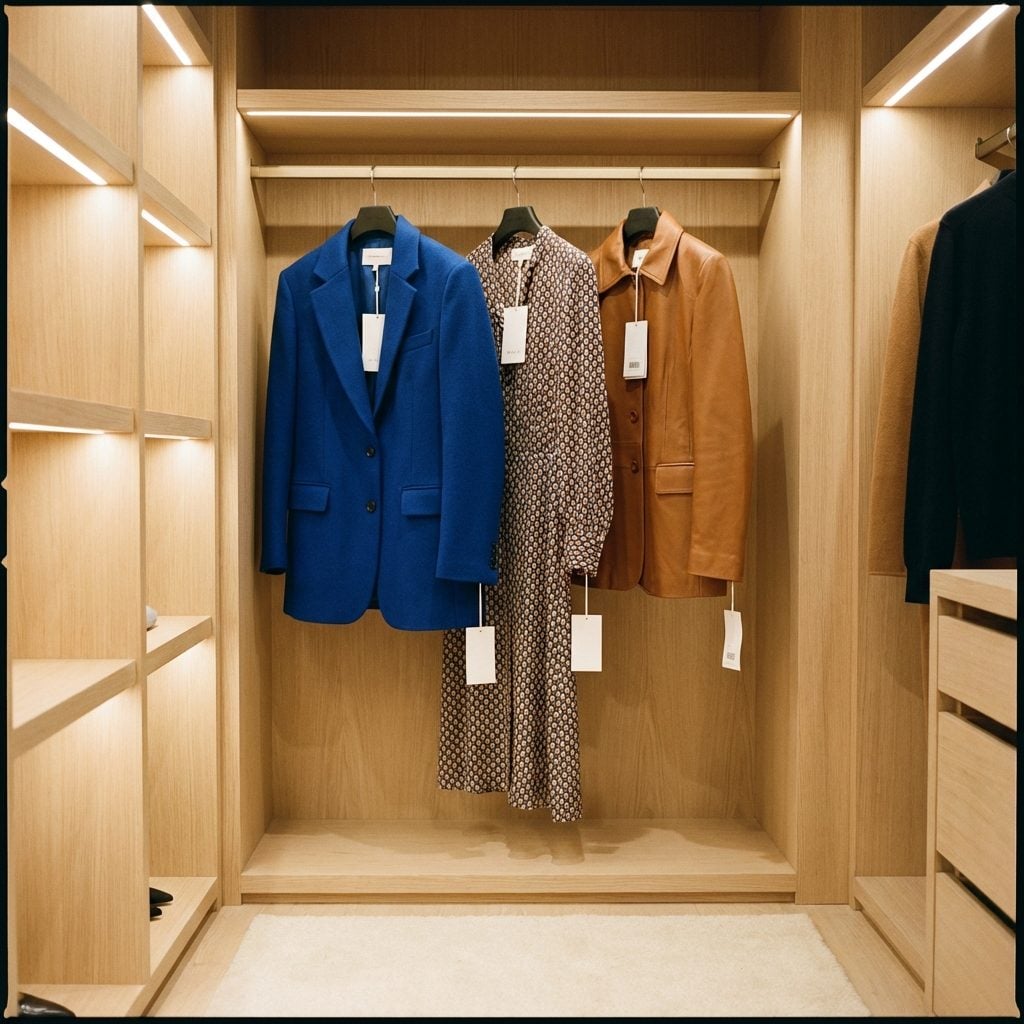
The tags aren’t a sign of discipline or keeping things nice. They’re evidence of purchases made in hope rather than clarity. You bought the piece imagining a version of your life where you’d wear it, and then your actual life showed up and it didn’t fit in.
A closet full of unworn tagged items is actually a useful diagnostic. Pull them all out. Look at what they have in common. Are they too formal for how you actually live? Too casual for how you see yourself? Too trendy for your real taste? The tags will tell you exactly where your self-knowledge broke down at the point of purchase.
39. You’re Dressing for a Version of Yourself That Either Doesn’t Exist Yet or Doesn’t Exist Anymore
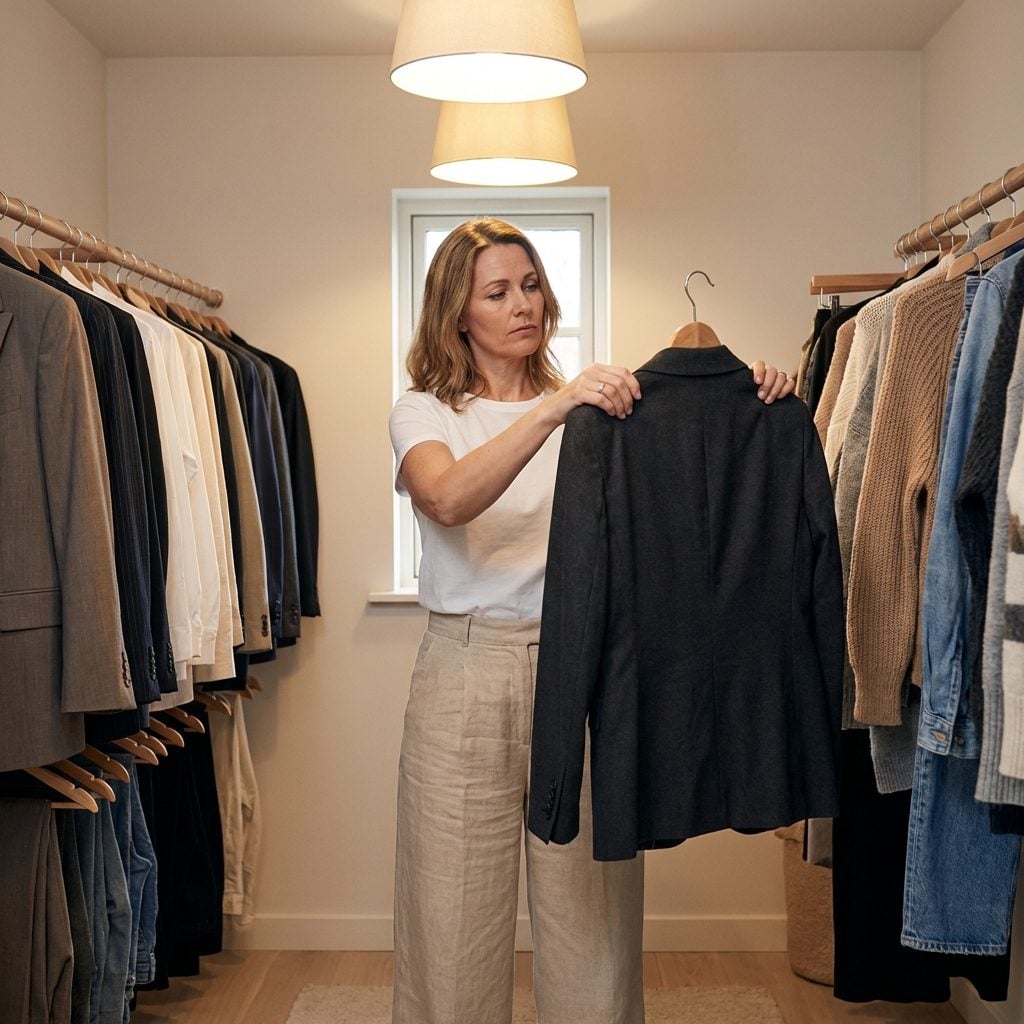
The power suits from the corporate chapter. The going-out tops from a decade ago. The “aspirational” pieces bought for a life that never quite materialized. Or conversely: the overly casual, almost invisible dressing that says “I’ve given up on being seen.”
Both directions are the same problem. You’re performing an identity through clothing rather than expressing a real one. The woman you’re dressing as no longer matches the woman opening the closet door each morning.
This isn’t about reinvention for its own sake. It’s about honest accounting. Your style should serve your actual life, the work you actually do, the places you actually go, the person you genuinely are right now.
40. Getting Dressed Takes So Long Because Nothing Feels Good Enough, and “Good Enough” Is Already a Low Bar
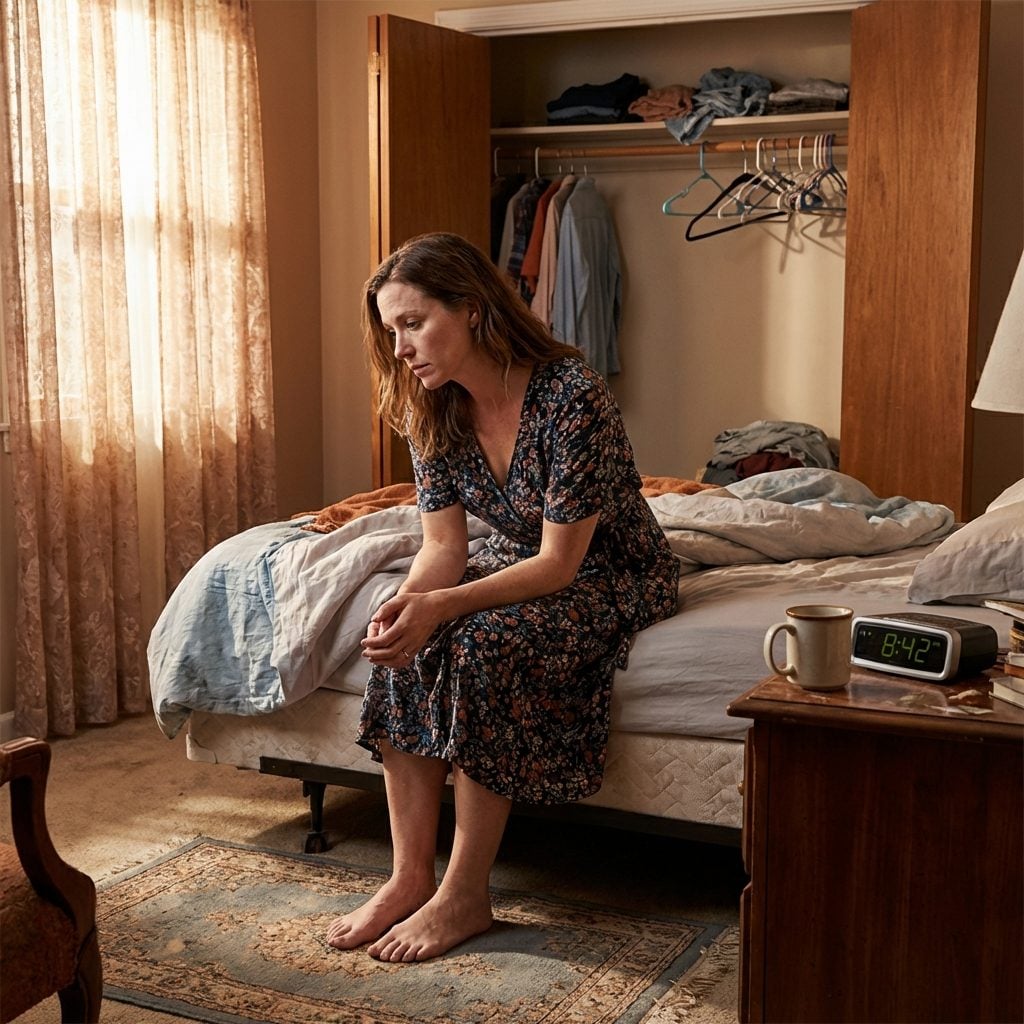
Thirty minutes. Forty-five. An hour. Not because you’re indulgent or slow, but because you’re cycling through options that all feel like a slightly wrong answer. The real cost isn’t time, it’s the low-grade stress that follows you into the rest of your day.
Research on decision fatigue shows that the quality of every decision you make decreases with each one you’re forced to make. A morning spent auditioning outfits means you arrive at your day already depleted. A functional athleisure wardrobe or a well-built capsule solves this not because it limits choices, but because every choice in it is actually a good one.
41. Your Internal Style Dialogue Has Collapsed to “Just Whatever Fits”, and You Know That’s Not Who You Are
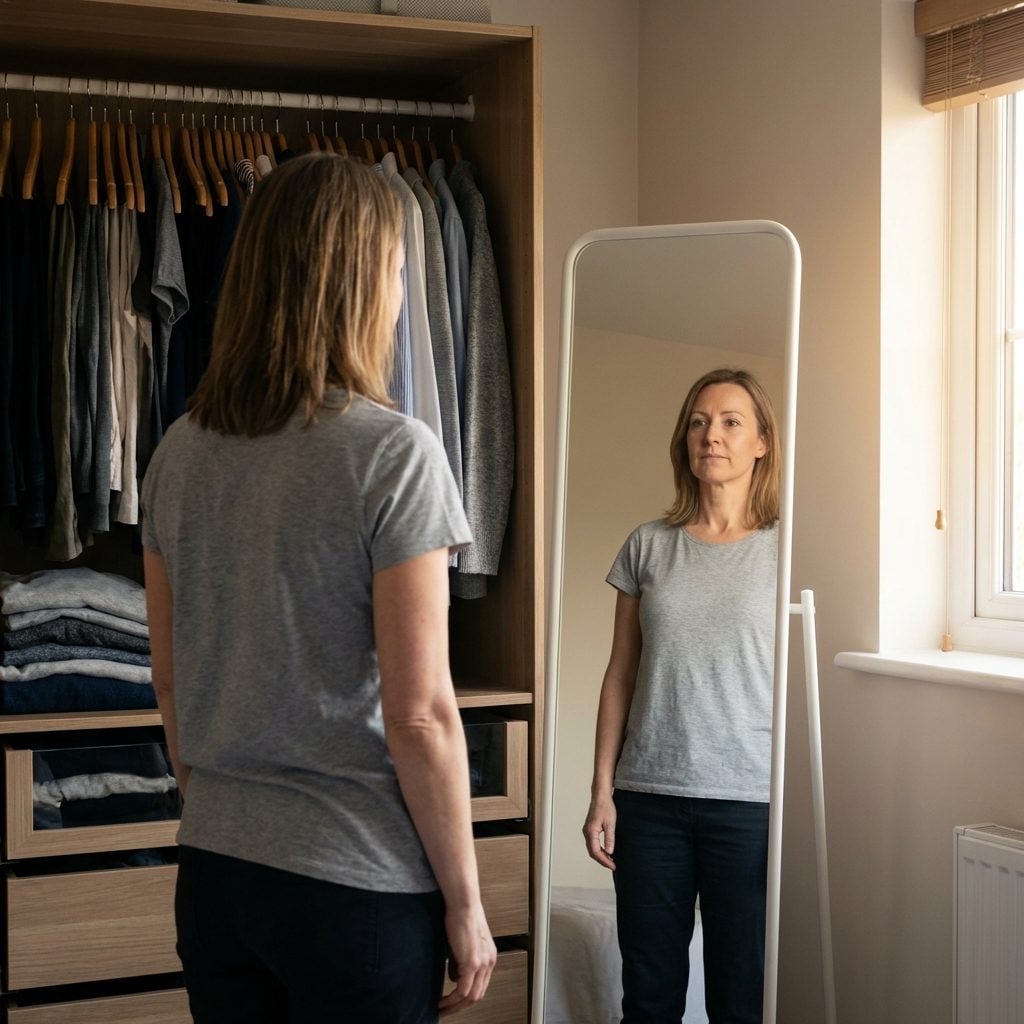
This is the final sign, and often the quietest one. You used to have opinions about what you wore. Strong ones. Now when you get dressed, the internal monologue is just: does it fit? Does it cover what needs covering? Is it clean? Done.
“Just whatever fits” isn’t a style. It’s surrender. And it doesn’t mean you’ve stopped caring, it means you’ve been worn down by a closet that consistently fails you until you stopped asking it for more.
The good news is that this specific feeling, this flatness, is the clearest possible starting point for a real overhaul. You know what isn’t working. You know it deeply, specifically, and honestly. That self-knowledge is not nothing. It’s actually exactly where a better wardrobe begins.