❤️ Would you like to save this?
Something happens around 40 that no style guide ever prepares you for. It isn’t a sudden interest in “age-appropriate” dressing or a retreat from color. It’s quieter than that, and far more interesting. Women start reaching for different things, not because trends told them to, but because something inside them shifts first. The closet changes because the woman changes. Researchers in behavioral psychology and identity development have been tracking this phenomenon for decades, and what they’ve found challenges almost everything the fashion industry assumes about women in midlife. This isn’t about letting yourself go. It’s about something you’ve been holding onto finally letting you go.
FYI, thanks to AI imagery software, we’re able to create very specific fashion and hairstyle examples to illustrate the points being made. In some cases, imagery is exaggerated to hammer home the point. Also, assume links that take you off the site are affiliate links such as links to Amazon. this means we may earn a commission if you buy something.
The Moment Your Brain Stops Caring What Strangers Think (And Why It Hits at 40)

There is a particular afternoon, somewhere in a woman’s early forties, when she catches herself wearing exactly what she wants to wear and realizes, with a small start, that she is not the least bit worried about what anyone else thinks of it. This is not apathy. It is neurology.
The medial prefrontal cortex, the region most implicated in social cognition and self-monitoring, undergoes significant structural remodeling during midlife, according to a 2021 study published in Communications Biology that analyzed social brain architecture in nearly 10,000 UK Biobank participants. At the same time, socioemotional selectivity theory, developed by Stanford psychologist Laura Carstensen, proposes that as women move through their forties, the brain begins actively deprioritizing the exhausting work of impression management with strangers, redirecting that cognitive energy toward what genuinely matters emotionally.
In practical terms, this means the low-grade anxiety that once drove outfit decisions, the mental rehearsal of how this hemline reads in a meeting room, or whether this color signals the wrong thing, begins to lose its grip. The brain is not becoming less socially sophisticated. If anything, social judgment accuracy actually matures throughout adulthood. But the motivation to perform for peripheral social audiences? That starts to quietly recede. Something is shifting, but the full shape of it is still coming into focus.
The Invisible Weight Women Carry in Their Closets That Has Nothing to Do With Fabric
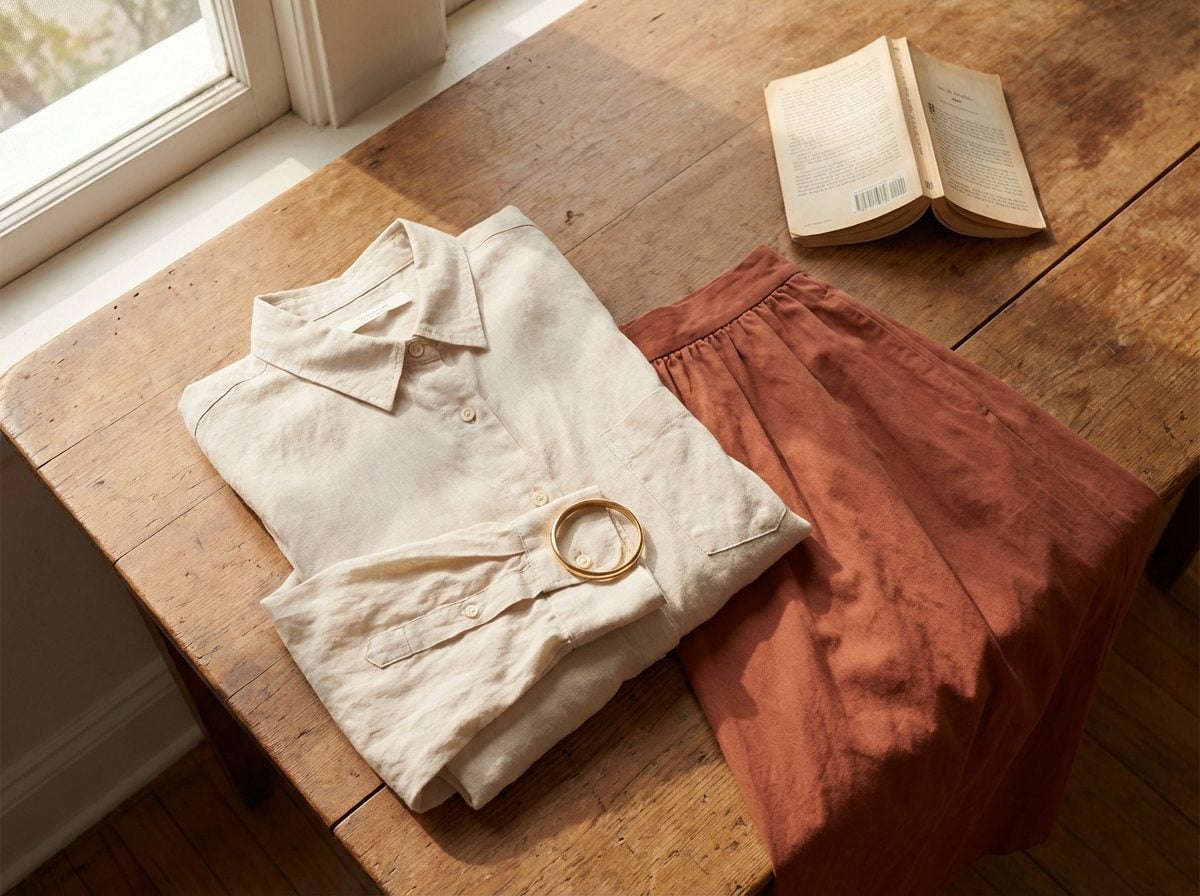
UCL anthropologist Daniel Miller once spent a year studying women’s relationships with their wardrobes in North London, and what he found was not vanity. It was anxiety, almost universally. His ethnographic research found that the primary emotional experience most women have with their clothing is not pleasure or self-expression, it is the daily confrontation with the question of what on earth to wear, accompanied by low-level dread.
This dread is not irrational. Clothing functions as a social signal, a professional cue, a body-image battleground, and an identity statement all at once. Research in occupational psychology shows that wardrobe anxiety is particularly acute during major life transitions, not because women care more about clothes at those moments, but because the self-concept is in flux and clothing is the daily visible evidence of that instability.
For many women, a summer wardrobe is less a collection of clothes and more a record of old negotiations: the dress bought to look thinner, the cover-up purchased to hide, the pair of jeans kept as motivation. None of it was ever really about fabric. The question is what happens when a woman decides she’s done carrying that particular weight.
Why the Colors You Reach For After 40 Are Actually a Neurological Signal
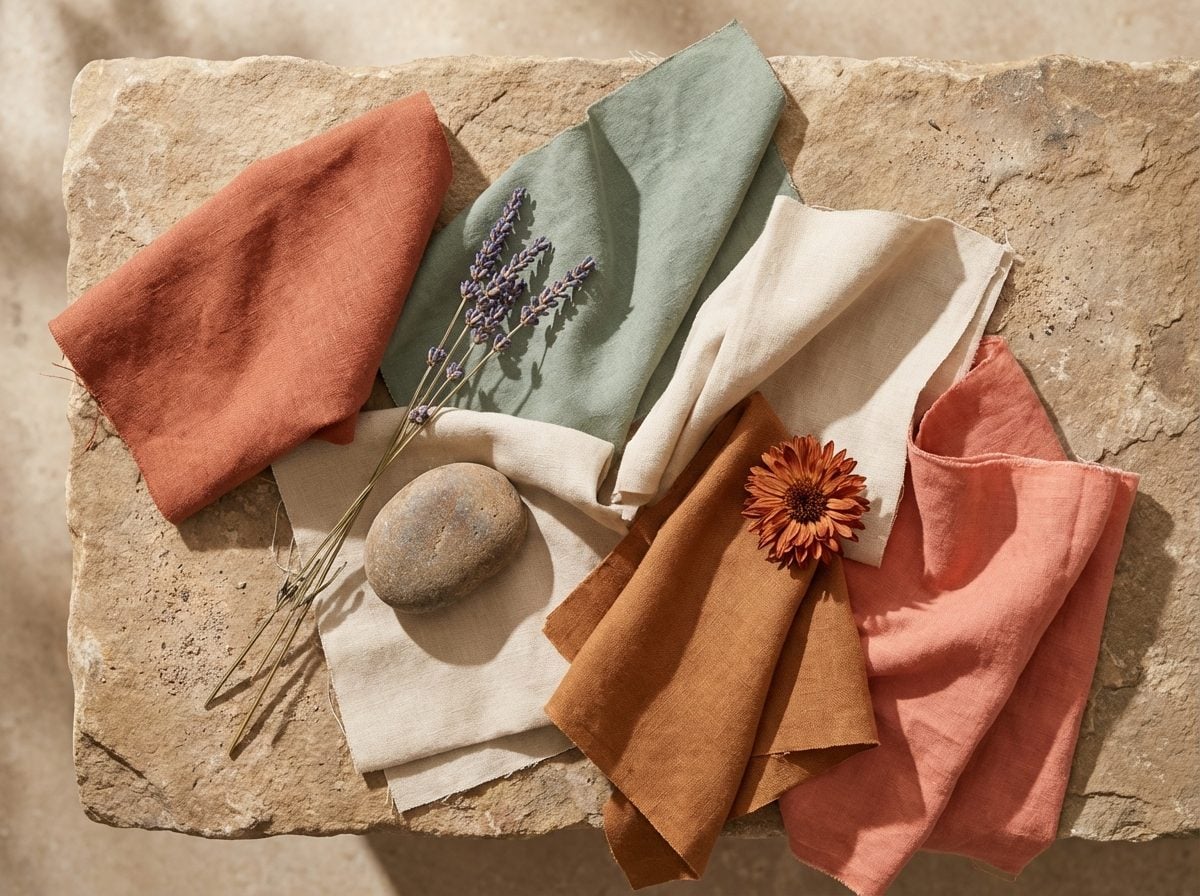
Color preference is not fixed across a lifetime. A comparative study published in Gerontology tracked color preferences in 842 adults aged 19 to 90 and found that preferences shift in statistically significant ways as people age. Younger adults leaned heavily toward cool blues and high-contrast palettes. With age, warmer earthy tones gained favor, greens, reds, and deeper naturals.
Part of this is physiological: the crystalline lens yellows slightly with age, altering how certain hues are perceived. But the psychological dimension is just as interesting. According to a 2025 Psychology Today piece on wardrobe reset and emotional alignment, colors carry distinct emotional functions, dark navy or deep olive can feel grounding and stabilizing, while earth tones often signal a retreat from performance into presence.
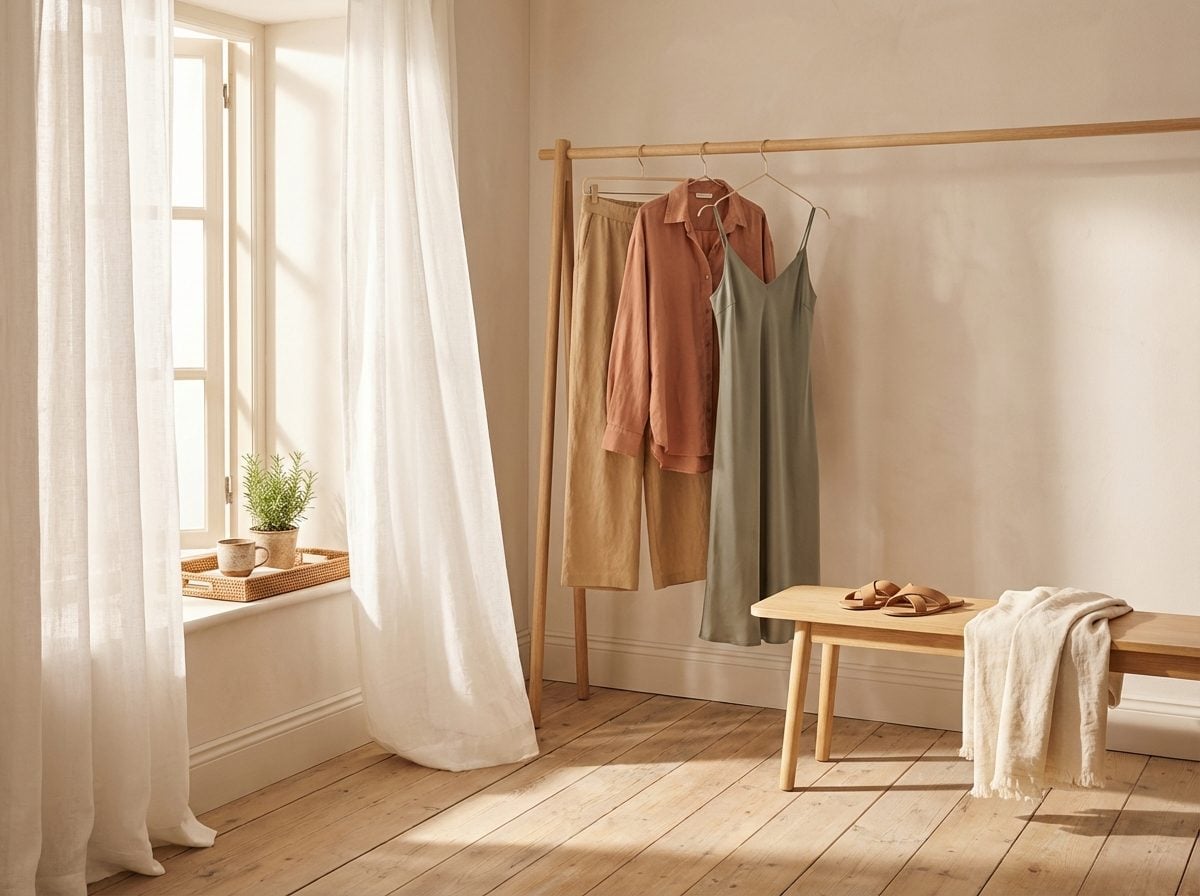
When a woman in her forties starts gravitating toward terracotta linen instead of the electric-blue bodycon she wore a decade ago, she is not losing her edge. She may be gaining something more precise: a color vocabulary that works for her nervous system rather than for a room’s attention. The palette is shifting toward the self, not away from it. Whether this is purely neurological, or something more like wisdom wearing an aesthetic disguise, is the thread running through all of this.
The Psychological Phenomenon That Makes Comfort Feel Like a Moral Failure
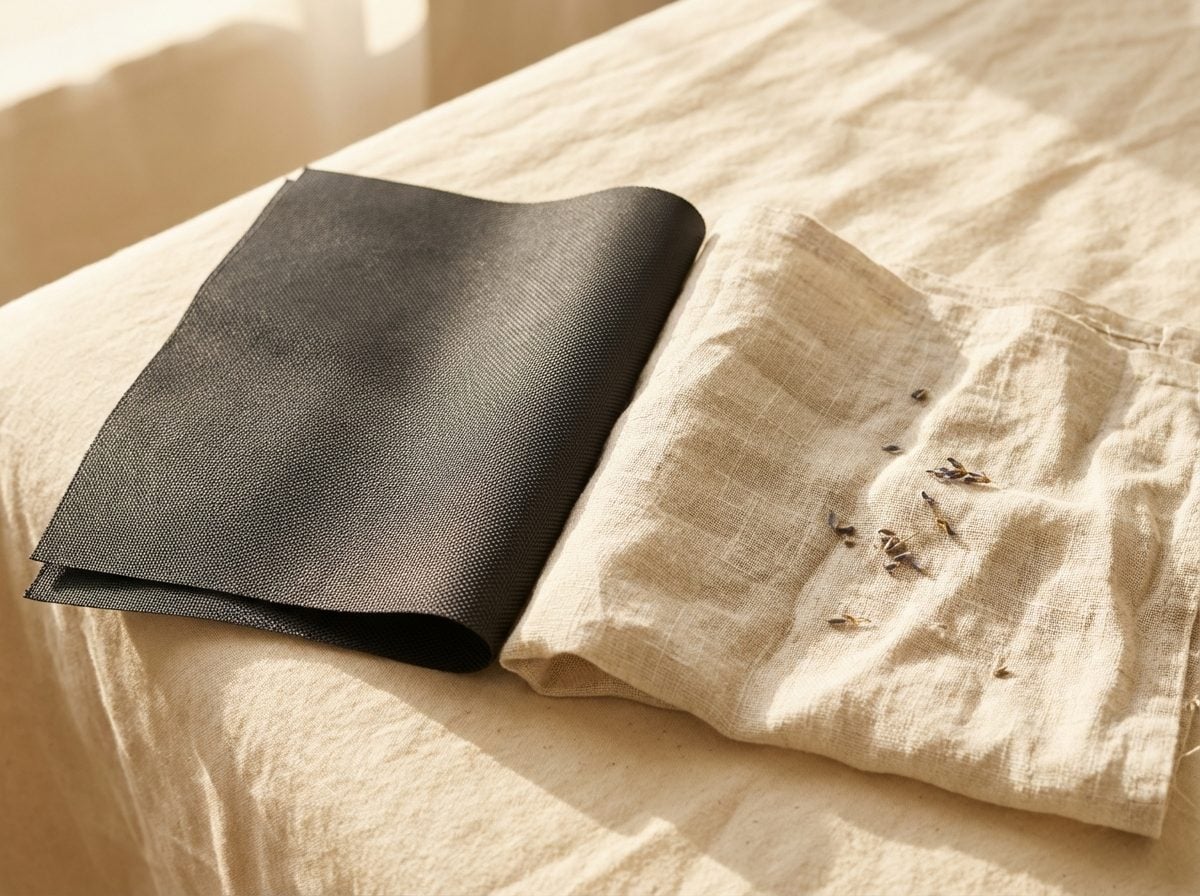
The idea that comfort is lazy and constraint is virtuous has a long, well-documented history. A Fashion Institute of Technology research paper on comfort in clothing traces this back centuries: corsets in 18th-century Europe were not merely fashionable, they were ideologically coded, with tight lacing explicitly linked to discipline, self-control, and moral standing. The bent-over posture of working-class women was positioned against the rigid uprightness of corsetted aristocracy, and the language of virtue was woven directly into the garment.
That story did not end with the corset. It just changed shape. Today, the cultural equation of tight clothing with self-discipline persists with remarkable stubbornness. A woman choosing a loose linen dress over body-skimming knit still risks the unspoken social read that she has somehow given up. This framing, that the discomfort itself proves something admirable about the wearer, is precisely what research on women’s clothing practices and body image identifies as a driver of body dissatisfaction rather than body confidence.
The whole architecture is built on a fiction. Choosing ease is not capitulation. It may be the first genuinely self-directed clothing decision many women have ever made, and why it feels faintly radical to so many of them.
What Researchers Found When They Asked Women Over 40 What They Actually Wanted to Wear
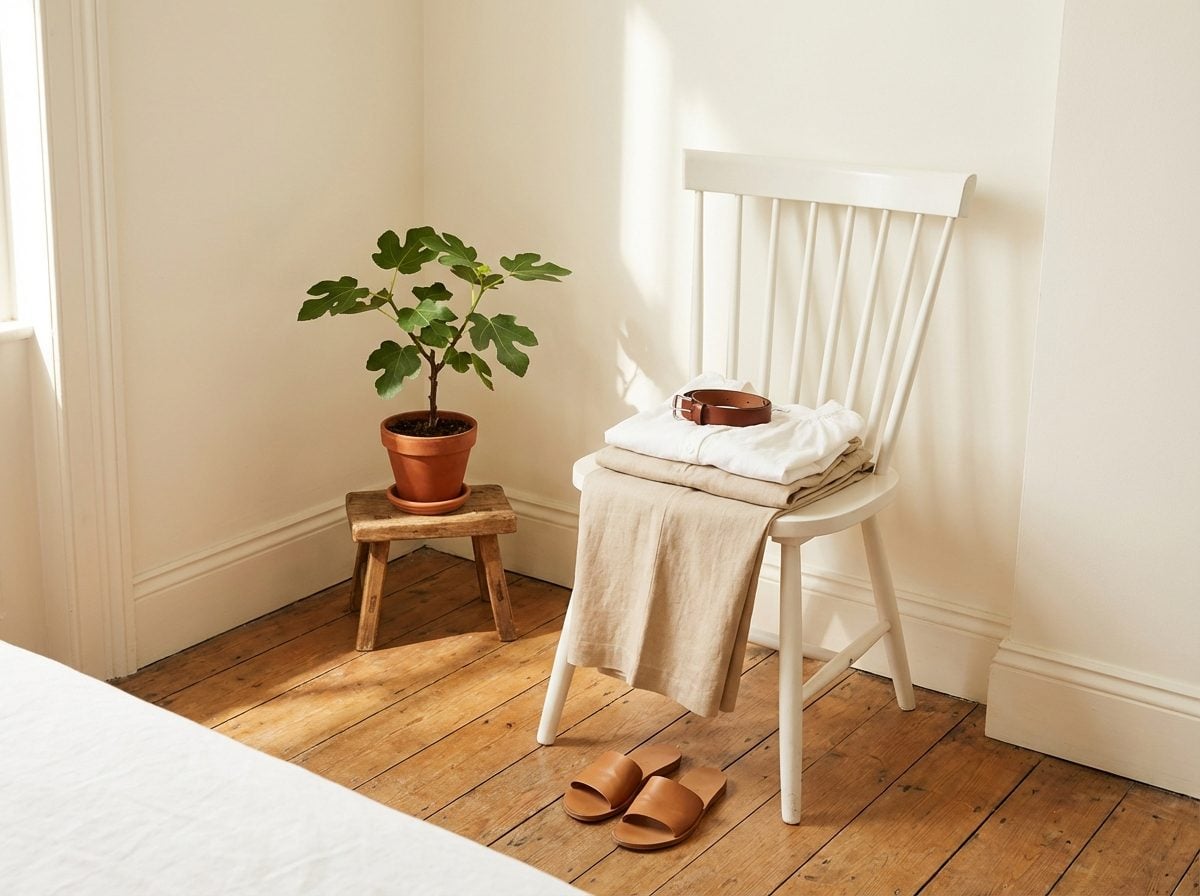
The fashion industry has historically been poor at asking this question and worse at listening to the answer. A nationwide survey by UK retailer JD Williams found that 60% of women aged 40 to 60 have felt invisible at some point due to their age, a figure that points less to midlife vanity than to genuine unmet need. Separately, a 2023 AARP study found that more than 70% of women over 50 feel mainstream fashion does not reflect them.
But the more revealing data is qualitative. Stylists who work specifically with midlife women report the same pattern again and again: their clients arrive not knowing what they want, but with extreme clarity about what they no longer want. They no longer want to spend the morning deciding if an outfit is appropriate. They no longer want to adjust, pull, tuck, and manage their clothing throughout the day. They no longer want to dress for a version of their life they are no longer living.
What They Actually Asked For
- Clothes that move with the body rather than display it
- Fabrics that work in heat without requiring maintenance
- A wardrobe that requires fewer decisions but delivers more ease
These are not requests for invisibility. They are requests for peace. The distinction matters, and it points somewhere specific, even if that somewhere is still coming into view.
The Surprising Reason Linen Feels Like Relief and Polyester Feels Like Punishment

This is not precious. It is physics, biology, and a little bit of psychology converging in the body at the same time.
Peer-reviewed textile science research confirms what anyone who has worn linen through a humid July already knows intuitively: linen absorbs and releases moisture quickly, conducts heat well, and maintains a microclimate against the skin that keeps body temperature regulated. Polyester does the opposite, it traps heat, resists moisture wicking, and on a warm day essentially wraps the body in a slow-building envelope of discomfort. Studies on sensory comfort in eco-friendly textiles confirm that natural fibers including linen and cotton consistently outperform synthetics in thermal regulation and perceived skin comfort.
The psychological layer adds texture to the physical story. Fashion psychology research on fabric preferences suggests that attraction to natural fibers frequently correlates with psychological openness to experience and a rejection of artificiality, values that researchers find tend to consolidate rather than diminish with age. Linen also wrinkles. And unlike the distress wrinkles cause in youth, many women describe reaching an age at which the wrinkle simply does not register as a problem anymore. That shift, from maintenance anxiety to material ease, may be exactly the kind of signal worth paying attention to.
The Social Performance Women Quietly Retire, And the Calm That Follows

Stanford psychologist Laura Carstensen spent decades mapping how human motivation changes with age, and what she found consistently surprised people. Far from becoming more anxious or socially withdrawn, older adults actually reported better subjective control over their emotions and more positive emotional experience than their younger counterparts. Carstensen’s socioemotional selectivity theory explains why: as people move through midlife, they become increasingly selective about where they invest emotional energy, systematically pruning social performances that no longer return genuine meaning.
In wardrobe terms, this retirement of performance looks quiet from the outside. A woman stops buying the party dress she will never wear to the party she never enjoyed. She donates the collection of structured blazers she kept as armor for rooms she no longer needs to dominate. She stops dressing for a hypothetical audience and starts dressing for the actual Tuesday morning in front of her.
Carstensen’s research found that this shift toward emotional meaning over social performance is associated with genuinely higher wellbeing, not resignation, but refinement. The calm that follows the retirement of performance is not emptiness. Something is being chosen, not abandoned. The question is what name to give it.
Why Your Brain Conflates Tight Clothing With Self-Discipline (And Why That Changes)
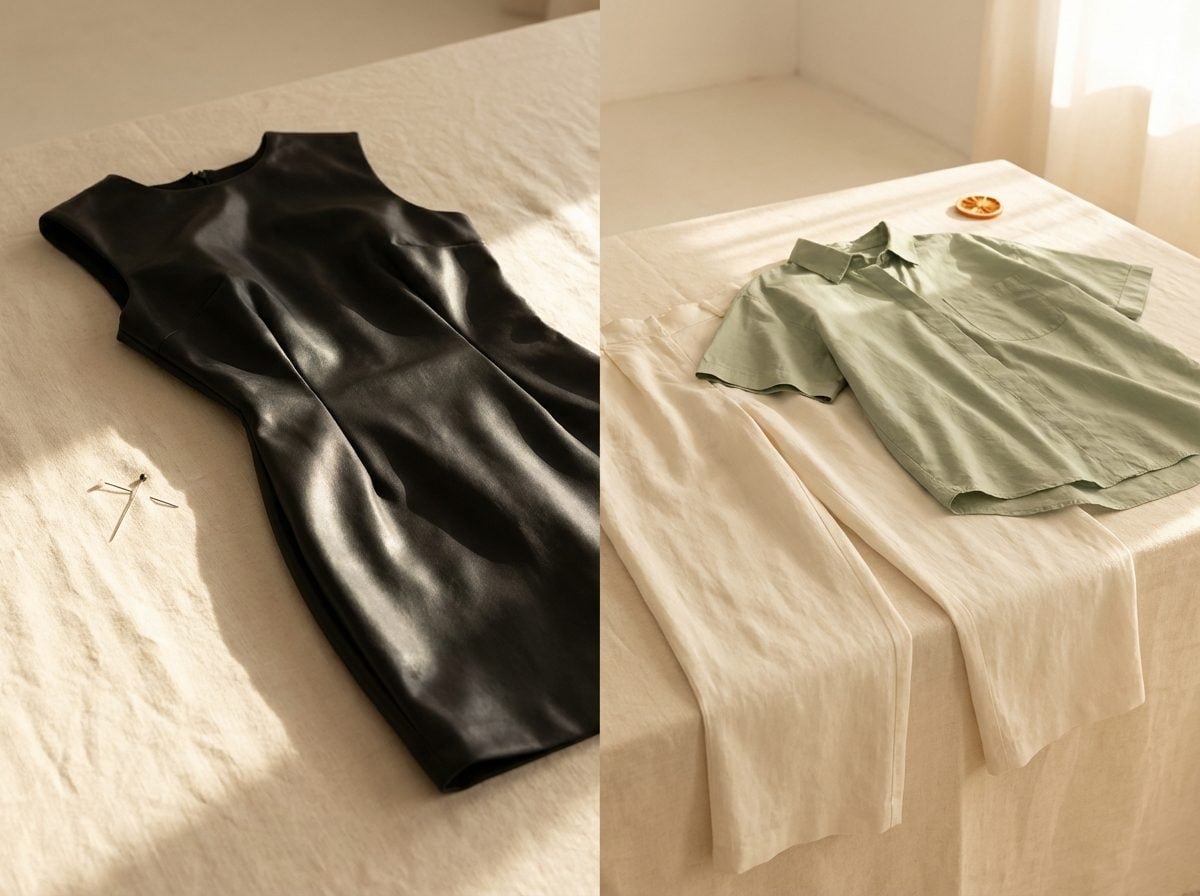
The connection is not accidental, it was built deliberately, across centuries, into the visual language of women’s bodies and what their silhouettes were supposed to signal about their character.
Research in the social psychology of dress shows that clothing communicates moral as well as social information to observers, and that these readings are deeply internalized by wearers themselves. A woman who wears body-skimming clothing is often performing a kind of visible self-discipline, signaling to others that she is managing, containing, controlling. The irony is that a study on Israeli women’s clothing practices and body image found that women motivated by camouflage and comfort actually reported lower body assurance, not higher, suggesting that the performance of containment frequently masks a deeper disconnection from the body rather than reflecting confidence in it.
What changes in midlife is not indifference to appearance. It is the untangling of discipline from discomfort. A woman who stops wearing tight clothes is not abandoning self-respect. She may be, for the first time, housing it somewhere more honest, in the choosing of things that feel good rather than things that signal effort. This is a different kind of discipline entirely, and it does not compress anything.
The Midlife Wardrobe Edit That Has Less to Do With Style and More to Do With Identity

Identity coherence, the sense that your external presentation matches your internal sense of self, is not a luxury. A Psychology Today piece on wardrobe reset and emotional alignment references psychologist Dan McAdams’ work on identity coherence, noting that maintaining consistency between who you are and how you present yourself is associated with measurable psychological wellbeing.
For many women, the midlife wardrobe edit is the first time their closet has ever fully reflected their actual life. Not the life they were working toward, not the life they performed for others, not the life their body was supposed to aspire toward, the life actually being lived on a Tuesday in July. Stylists who work with midlife women describe the same phenomenon repeatedly: the disconnect between a client’s energy and the energy of her clothes, and the specific relief that arrives when the two are finally brought into alignment.
What this article has been circling, section by section, is a single insight that resists being stated plainly until the very end: when a woman stops dressing for other people’s eyes and starts dressing for her own peace of mind, everything she reaches for changes. Not the hemlines, not the labels, not the trend cycles, but the reason her hand moves toward one thing and away from another. The summer wardrobe that finally feels right is not the one that impresses. It is the one that costs nothing to wear and returns something real. That is not a style evolution. That is a woman choosing herself, in the most practical possible terms, every single morning.
The Psychological Term for Dressing to Disappear, And Why So Many Women Are Done With It

There is a name for what happens when a woman looks in the mirror and sees herself through someone else’s eyes. Psychologists call it self-objectification, and it describes the process by which women come to view their own bodies primarily as objects to be evaluated by others. It is not vanity. It is not insecurity in the ordinary sense. It is a learned habit of self-surveillance, one that quietly shapes which clothes a woman reaches for every morning.
The concept was first formalized in 1997 by psychologists Barbara Fredrickson and Tomi-Ann Roberts, who proposed in their foundational objectification theory paper in Psychology of Women Quarterly that girls and women are acculturated to internalize an observer’s perspective as their primary view of their physical selves. That habitual body monitoring, they argued, leads to shame, anxiety, and a quiet dimming of internal awareness. In practical terms: she stops asking how the dress feels and starts asking how it looks to whoever might be watching.
What makes the shift happening in women’s wardrobes after 40 so interesting is the other finding buried in the research. A cross-cultural study on self-objectification found that as women get older, they tend to report lower levels of appearance-related social pressure and diminished self-objectification. Something loosens. The gaze that was once external starts, slowly, to turn inward. The question is: what fills that space?
What Self-Continuity Theory Explains About Why You’re Finally Keeping Things That Feel Like You

Psychologists who study identity describe a concept called self-continuity: the subjective sense of connection between who you were, who you are now, and who you are becoming. It sounds abstract until you hold up a blouse that has never felt quite right and realize you only own it because someone else said it suited you.
A 2023 Annual Review of Psychology chapter on self-continuity describes this as the felt thread that runs through a person’s sense of self across time, linking past preferences, present choices, and future identity. When clothing choices are consistently made to please external observers rather than to honor an internal sense of self, that thread frays. A wardrobe built entirely from outside approval has no continuity. It is a costume collection, not an identity.
What researchers have also found is that college-educated women consistently reported greater identity integration from age 40 to 50, according to studies cited in a PMC paper on self-concept clarity during adulthood. The internal picture of who a woman is gets sharper, not blurrier, with age. And sharper self-knowledge tends to produce cleaner decisions: fewer impulse purchases in colors that drain, fewer hemlines held to standards that were never her own.
The wardrobe that finally feels right isn’t a capsule collection. It’s a mirror held up to a self that has stopped looking away.
The Hidden Exhaustion of Dressing for Other People’s Eyes

Dressing for the approval of others is not just emotionally hollow. It is cognitively expensive. Every morning spent interrogating the mirror, does this make me look too old, too casual, too much, not enough, draws from the same finite pool of mental energy that powers the rest of the day’s decisions.
Decision fatigue research from The Decision Lab explains that the quality of our choices declines as we make more of them, and that even seemingly minor decisions contribute to this cumulative depletion. Crucially, when there are no clear personal parameters for what suits you, getting dressed becomes a loop of micro-decisions that sap time, energy, and confidence before the day has properly begun.
For women who have spent decades dressing with external approval as the primary metric, this tax is hidden. It feels normal. But the woman who reaches 40 and begins, almost instinctively, to simplify her wardrobe is often doing something deeply rational. She is not losing interest in clothes. She is reclaiming the cognitive bandwidth that was quietly leaving with every morning spent performing for an imaginary audience. The linen trousers, the worn-in cotton shirt, the shoe chosen for the way it feels on the pavement, these are not aesthetic retreats. They are small, deliberate conservations of energy.
Why Ease of Movement Stops Being a Luxury and Starts Feeling Like a Right

❤️ Would you like to save this?
For a long time, ease of movement in clothing was framed as a concession, something you traded away in exchange for looking put-together, professional, or attractive enough to be taken seriously. The body was treated as a display surface, and comfort was what you got when you were no longer trying.
This framing has a documented psychological root. Research on self-objectification and physical performance found that objectification theory posits girls’ and women’s actions grow tentative when they self-objectify, leading to smaller movements to avoid taking up physical space. In other words: the tight skirt, the heel, the waistband that demands stillness, these are not neutral garments. They shape how a woman moves through the world, literally and psychologically. They teach her to take up less room.
Something shifts when a woman stops accepting that premise.
Choosing clothes that move freely with the body is not a capitulation to comfort over style. It is a refusal to let clothing dictate how much physical space she is permitted to occupy. The wide trouser leg that lets her stride, the dress with no cinch at the waist, the flat sole that keeps her grounded, each choice is a quiet insistence on inhabiting herself fully. It is worth asking whether this is what women in their 40s and beyond are finally deciding they deserve. Not the appearance of ease. Actual ease.
The Bottom Line
The quiet shift happening in women’s summer wardrobes after 40 is this: the brain finally reassigns dressing from a performance task to a self-expression task, and comfort stops being a concession and becomes a conviction. It’s not about giving up, it’s about the neurological and psychological convergence of self-knowledge and self-trust finally outweighing decades of external expectation. The next time you reach for something soft, roomy, or easy without guilt, recognize it for what it is: not a style choice, but a hard-won act of psychological clarity.