
❤️ Would you like to save this?
The smell of face powder and cigarette smoke. A purse that snapped shut with such authority it could silence a room. Every woman in 1955 carried a handbag packed with the full infrastructure of her daily life, and none of it felt strange at the time. Hat pins. Smelling salts. A calling card case. Pull any one of these out at a dinner party today and watch the table go quiet. Here’s what was in there.
FYI, thanks to AI imagery software, we’re able to create very specific fashion and hairstyle examples to illustrate the points being made. In some cases, imagery is exaggerated to hammer home the point. Also, assume links that take you off the site are affiliate links such as links to Amazon. this means we may earn a commission if you buy something.
30. A Cigarette Case Packed Neatly Beside a Matching Coordinated Lighter
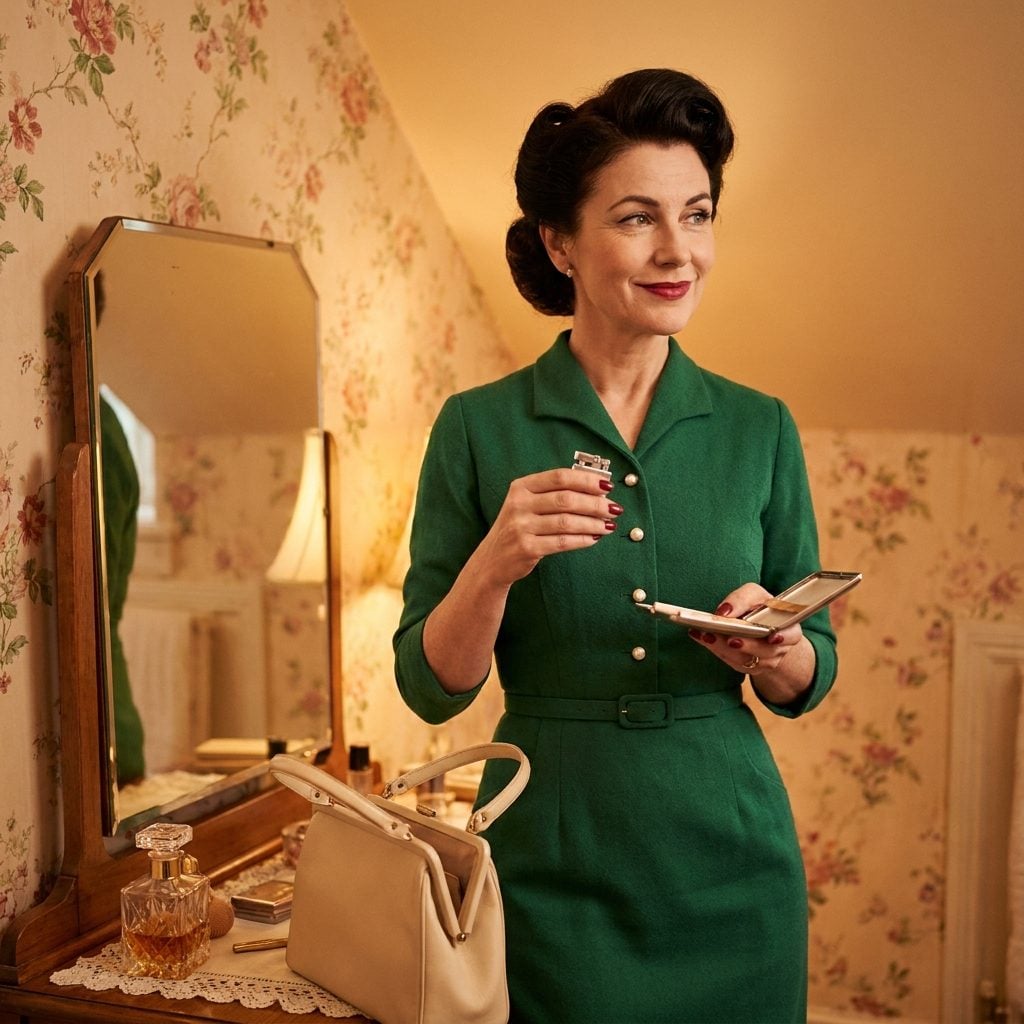
The cigarette case wasn’t just storage. It was theater. Chrome or silver, sometimes leather-wrapped, always monogrammed if she had any sense of occasion, it snapped open with a specific sound that meant a woman had settled in for a conversation worth having. Tucked right beside it: the matching lighter, because carrying a mismatched set was apparently a personality flaw.
What makes this strange now isn’t just the smoking. It’s how organized it was. We didn’t shove a crumpled pack into a coat pocket. We had a system. A dedicated compartment. Coordinating accessories. The whole ritual had more editorial thought behind it than most modern flat lays.
29. Folded White Cotton Gloves You Were Apparently Naked Without
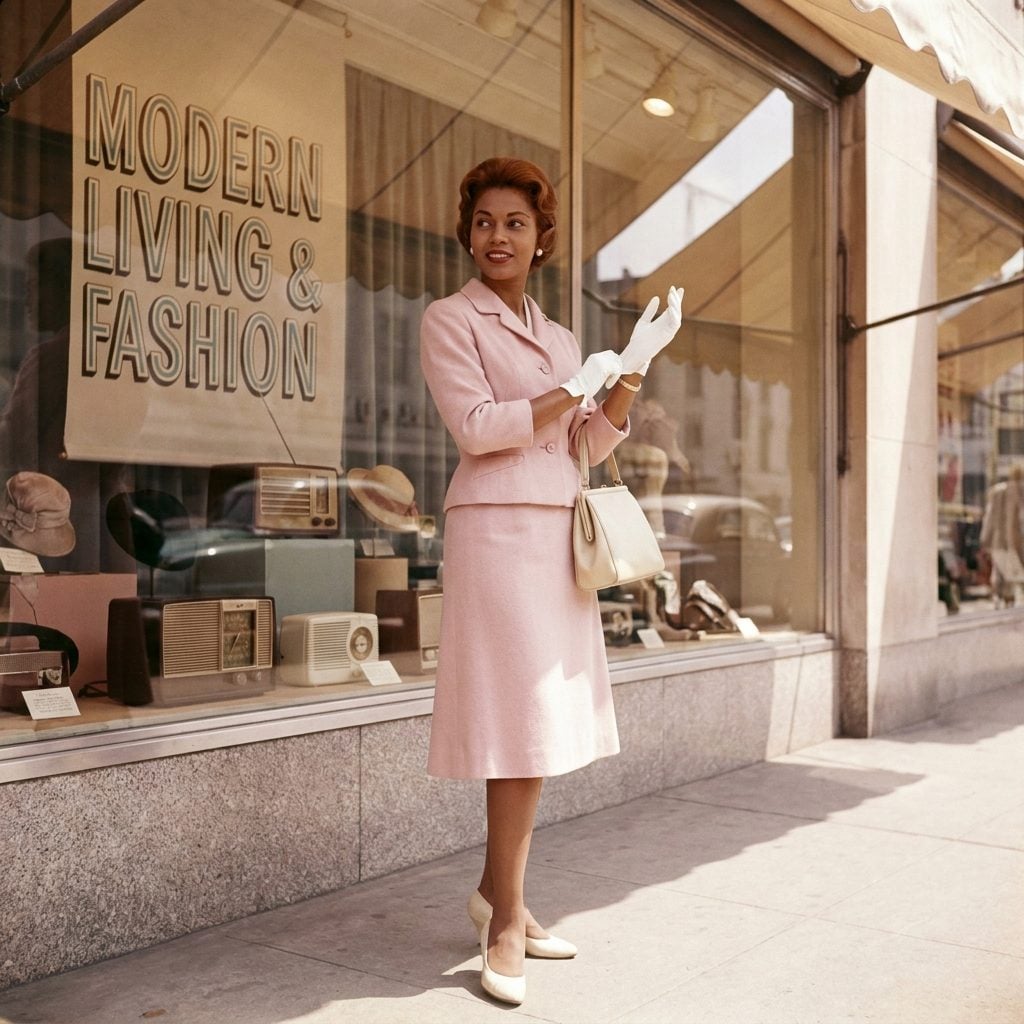
They lived folded into a neat rectangle at the top of the handbag, because arriving somewhere without them was apparently the equivalent of showing up in pajamas. White cotton, always. Church, lunch, shopping downtown, a doctor’s appointment. The occasion barely mattered. The gloves were the occasion.
There was a whole etiquette around removing them, too. You took them off before eating but left them on while greeting people. You never handed them to someone else. You stored them folded, not balled up, because a woman who balled up her gloves clearly had no standards.
The most quietly wild part of this? They were beautifully impractical. Cotton shows every mark. They required hand washing. And yet millions of women kept a fresh pair in their bag every single day and thought nothing of it.
What Our Readers Say
- Times have changed: in our reader polls, 63% of ThreadCurve readers say they put comfort first, while 37% still put polish first.
- The handbag still matters, though. Asked which statement piece they would buy, about half of our readers chose a bag, well ahead of shoes or a top.
From ThreadCurve reader polls and votes.
28. The Compact That Came Out Six Times Before Noon
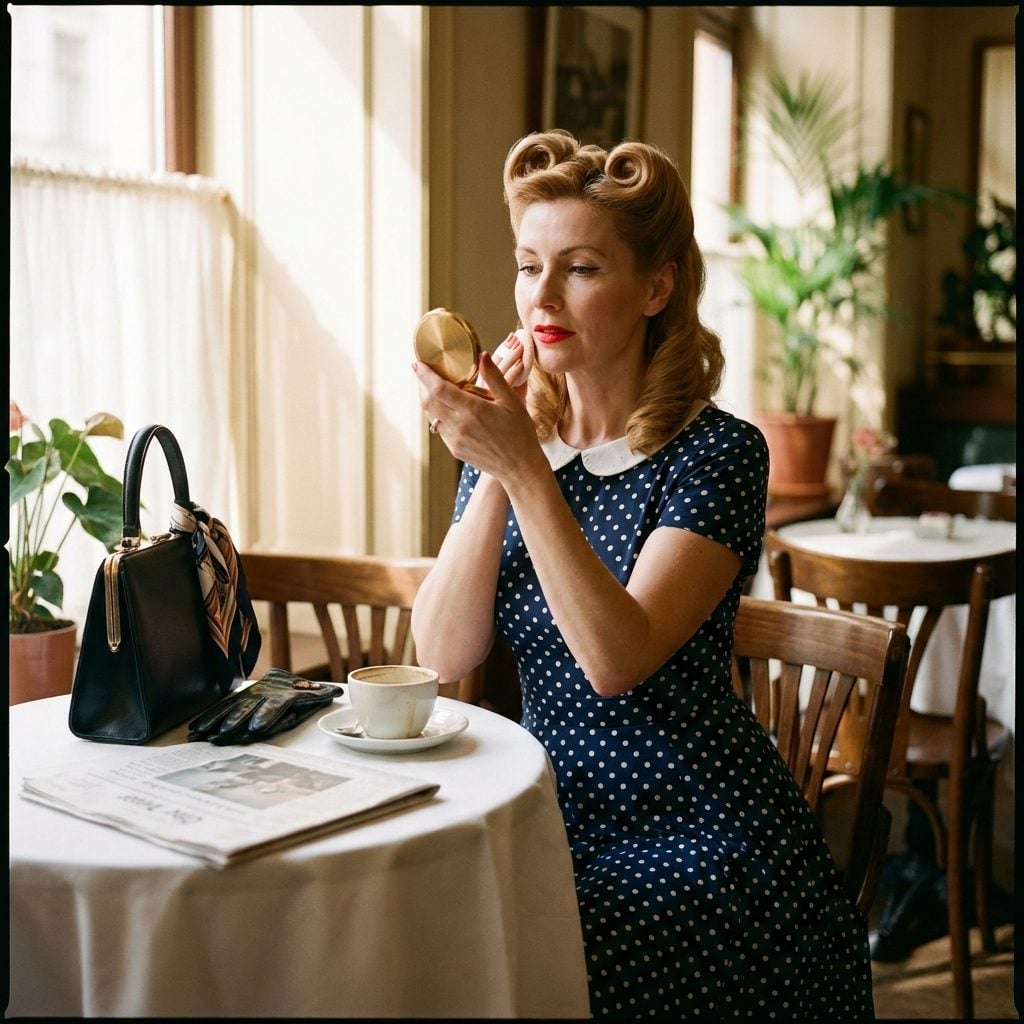
Pressed powder, a mirror the size of a postage stamp, and a tiny velvet puff that shed its powder onto absolutely everything in the bag. That compact came out constantly. Before a meeting. After lunch. In the taxi. In the elevator. During a long conversation at a department store counter where the lighting was particularly unflattering. The act of checking one’s face wasn’t a nervous habit. It was maintenance. Scheduled, deliberate, socially acceptable maintenance.
Brands like vintage powder compact cases in gold-tone metal were the norm, often given as gifts and kept for years. Some women used the same compact for an entire decade, refilling the powder puck when it ran out. The mirror always fogged slightly. That was fine. You knew your own face well enough by then.
27. A Monogrammed Handkerchief That Smelled Like Her and No One Else
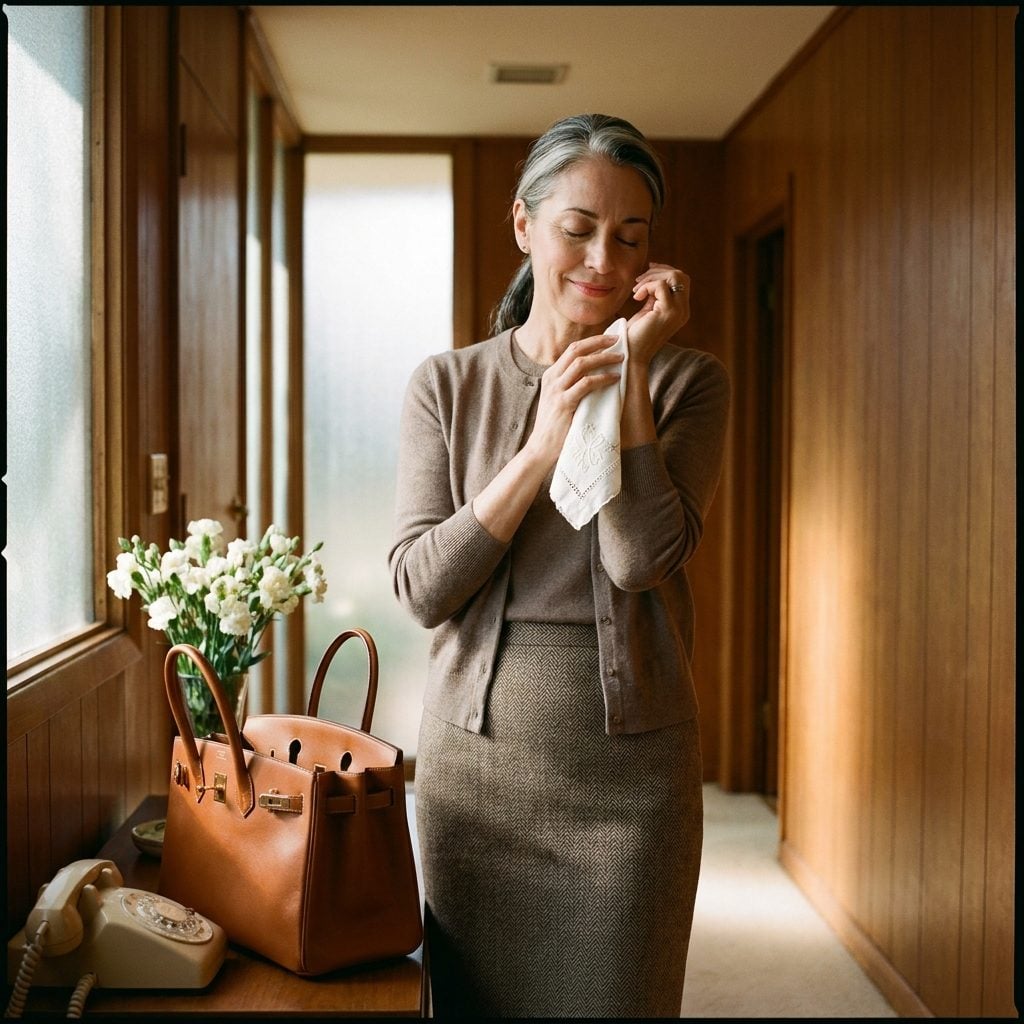
Every woman of this era had at least one, and her mother had given it to her, and it was embroidered with her initials in a color that matched something she used to wear. Linen, usually. Sometimes cotton with a tatted lace edge. Always lightly scented with whatever perfume she considered hers, because you pressed a handkerchief against the inside of your wrist after applying fragrance and that was simply what you did.
It handled tears at weddings, smudged lipstick, the occasional sneeze with considerably more dignity than a crumpled tissue. But mostly it just sat in the bag smelling like her specifically. If you ever found one of these tucked in a drawer after someone was gone, you understood immediately why people kept them.
26. Bobby Pins Loose at the Bottom: A Archaeological Hazard
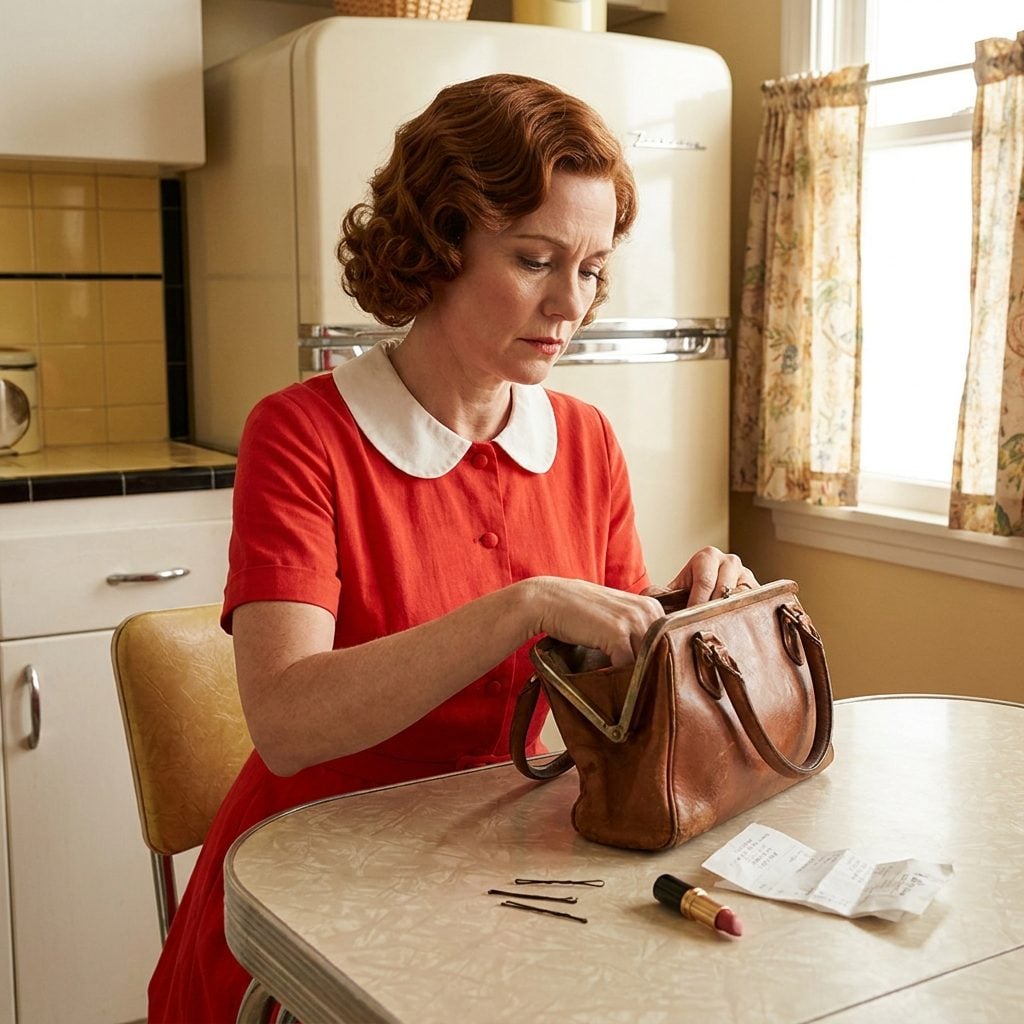
Not stored in a tin. Not clipped together. Just loose. Rattling around among the change and the lipstick and the compact and the bus tokens and everything else, finding their way into every corner of the bag like they had their own agenda. You never put them in there on purpose. They simply accumulated. By Thursday there were fourteen of them and you’d only gone looking for one.
The genuinely inexplicable part is that they were also always slightly bent. How? From what? Nobody knew. You’d find them, straighten one against your thumbnail, slide it into your hair, and then forget about it entirely until it fell out at dinner and skidded under a restaurant table. This was considered completely normal behavior and nobody discussed it.
25. A Book of Green Stamps You Were Absolutely Going to Redeem Someday
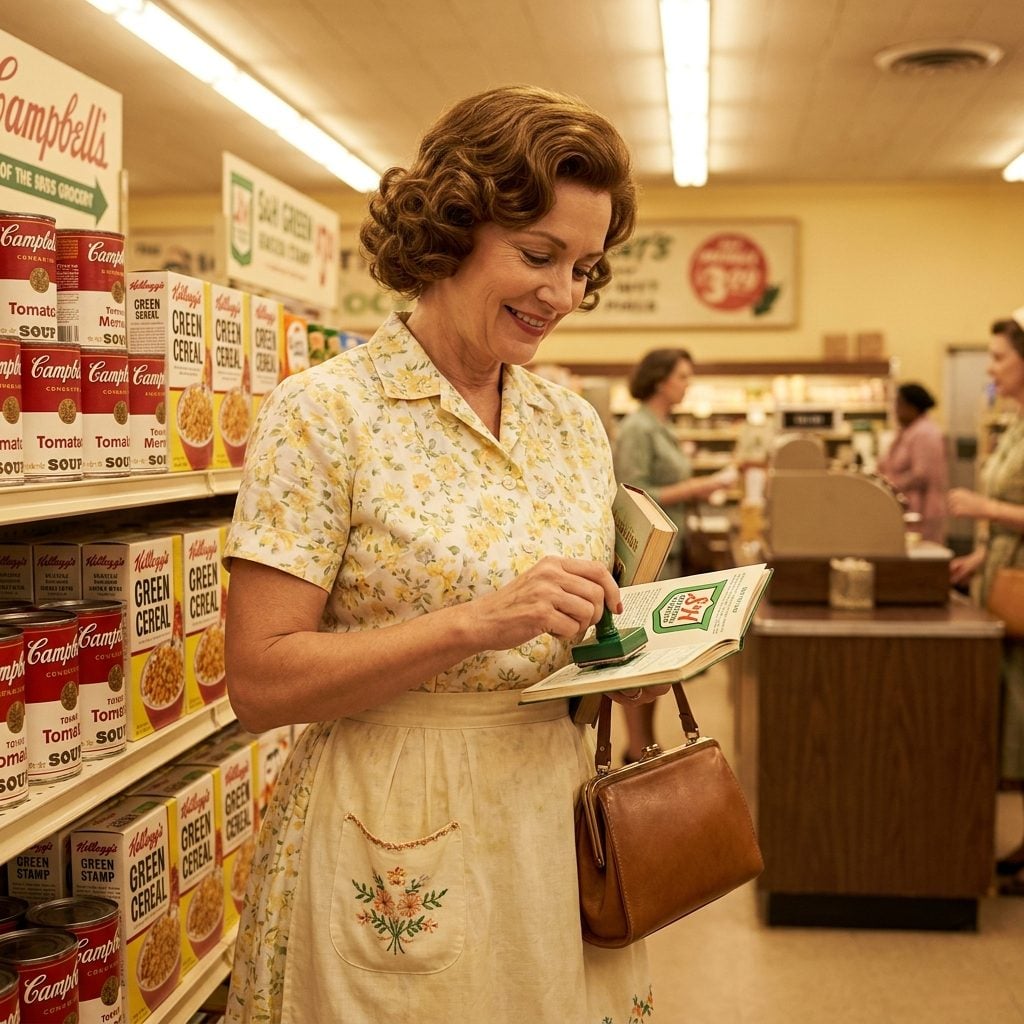
S&H Green Stamps. Plaid Stamps. Gold Bell Stamps. Every grocery store had its own allegiance and every woman had her booklet, slightly sticky at the corners, with a few pages already filled and many pages waiting. You licked them and pressed them in, careful to get the rows aligned, because filling a booklet properly was apparently a point of personal pride.
The catalogs those stamps unlocked were legitimately aspirational. Toasters. Waffle irons. Electric blankets. A full set of dishes. You could furnish a kitchen with enough stamps if you were patient and strategic about where you shopped. Women compared stamp programs with the same analytical energy we now bring to airline miles and credit card points. The mechanism is identical. Only the stickiness has changed.
24. The Coin Purse: Small, Specific, Non-Negotiable
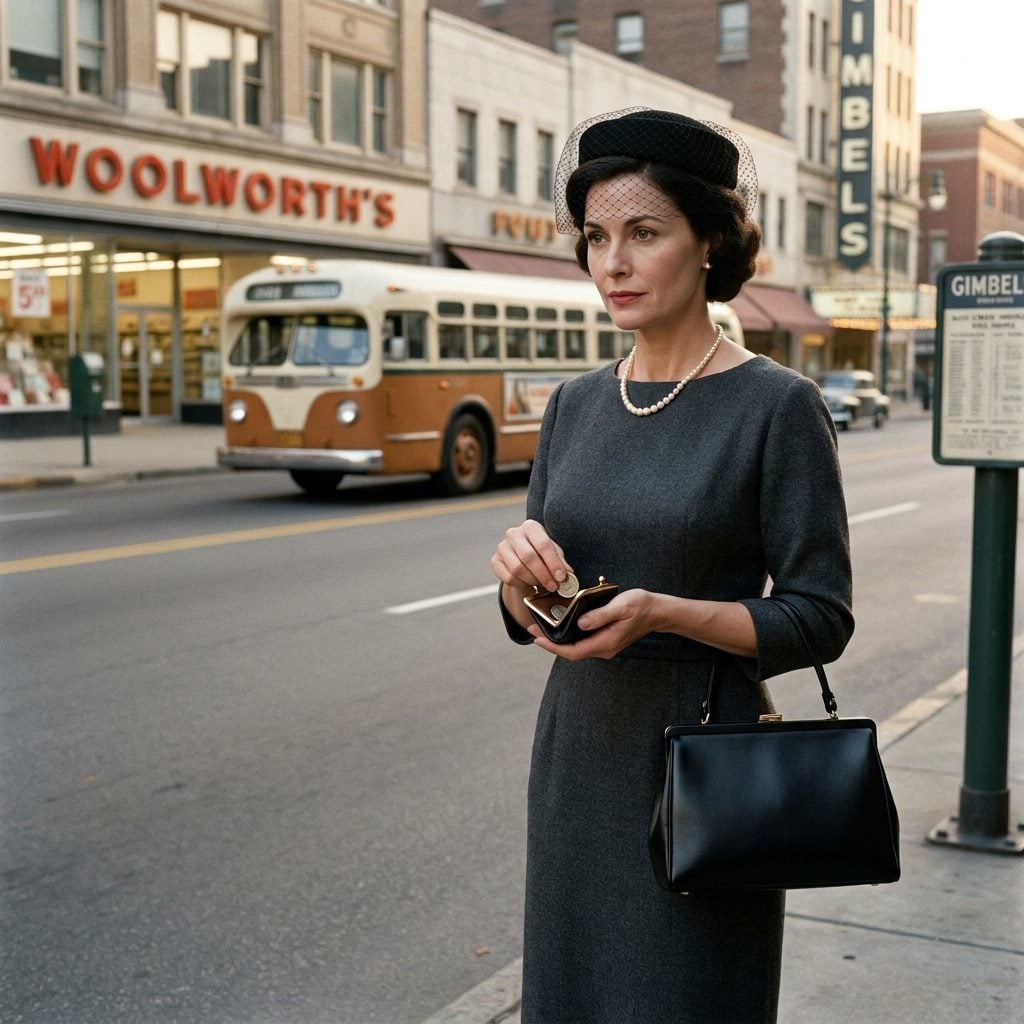
Separate from the wallet. Always separate. The coin purse was its own closed ecosystem, snapping shut with a satisfying brass clasp, containing exactly what it needed to contain: bus fare, pay phone change, and possibly a dime for a soda fountain Coke if the day called for it. Digging through a regular wallet for coins in front of a bus driver was apparently not how things were done.
There’s something quietly organized about this that modern life has completely abandoned. We have apps for transit now, contactless payment, phones that double as wallets. But nobody had a system quite as pleasingly tactile as a small leather coin purse with a brass frame clasp. You knew exactly what was in it. You knew exactly what it was for. That kind of clarity is actually hard to come by.
23. A Lipstick in a Gold-Tone Tube That Clicked Shut Like It Meant It
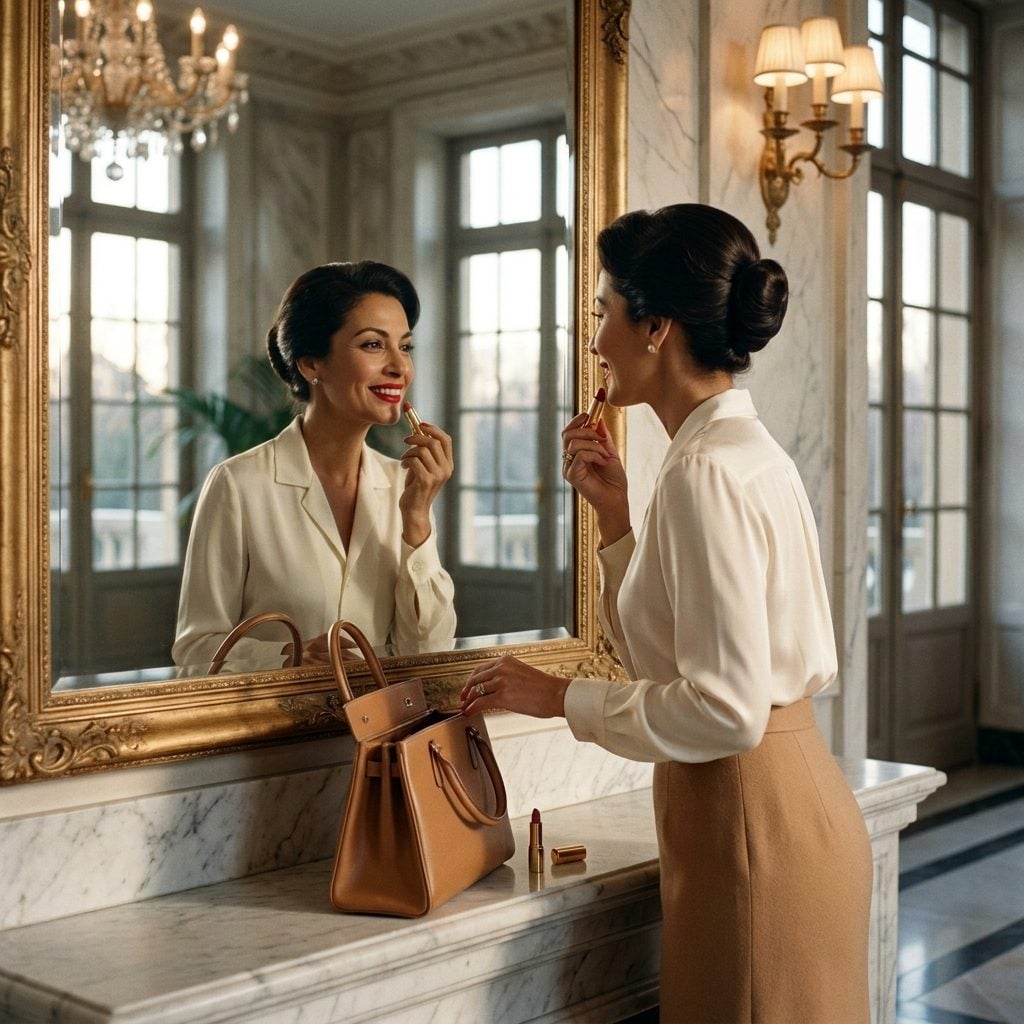
Not a twist-up in plastic. A proper gold-tone lipstick tube with real weight to it, the kind that required you to actually pull the cap free and then press it back on with a firm, definitive click. That click mattered. It was the punctuation mark at the end of the whole gesture, and the gesture meant something. Applying lipstick in public was a statement. It said: I am still paying attention to myself. I am not done yet.
Shades ran toward true reds, warm corals, and deep roses. Brands like Revlon and Tangee were household names. The bullet itself was often curved slightly at the tip from use, shaped to her mouth specifically, which made it hers in a way that felt almost intimate. Finding someone else’s lipstick in a borrowed bag was immediately alarming for exactly this reason.
22. The Paper Tissue Pack with Tiny Roses on It (Not to Be Confused with Actual Kleenex)
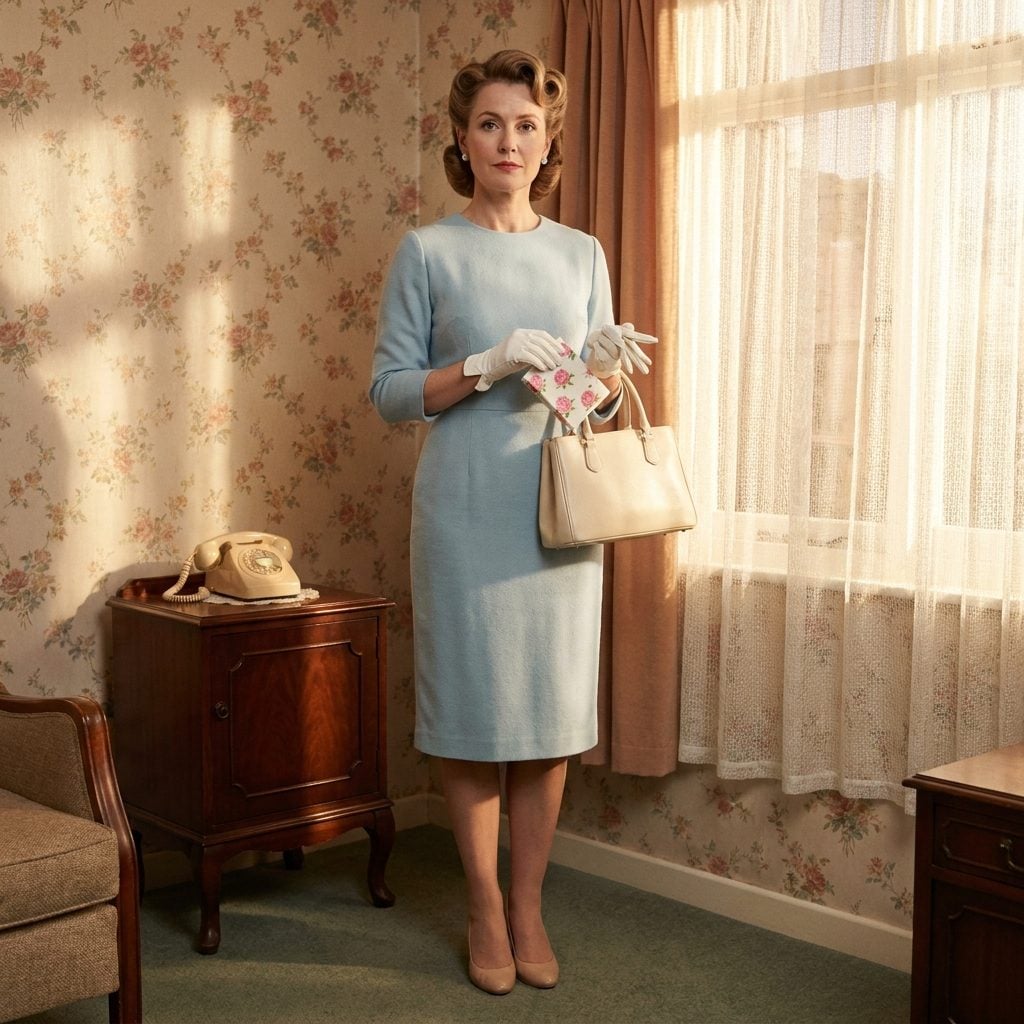
These weren’t Kleenex. They were something smaller, stiffer, and inexplicably more formal, printed with little roses or forget-me-nots as if weeping into them might require a certain level of elegance. Every woman’s bag had a packet, usually half-used, slightly damp at one corner from proximity to a lipstick or a loose mint.
They came in pastel colors. Pink, lavender, mint green. The tissue itself was about the texture of crepe paper and did approximately nothing for an actual cold, but they were never really for that. They were for dabbing, for patting, for the ladylike performance of composure. Throwing a crumpled one away felt almost rude.
21. The Tiny Address Book You’d Have Been Lost Without (Literally)
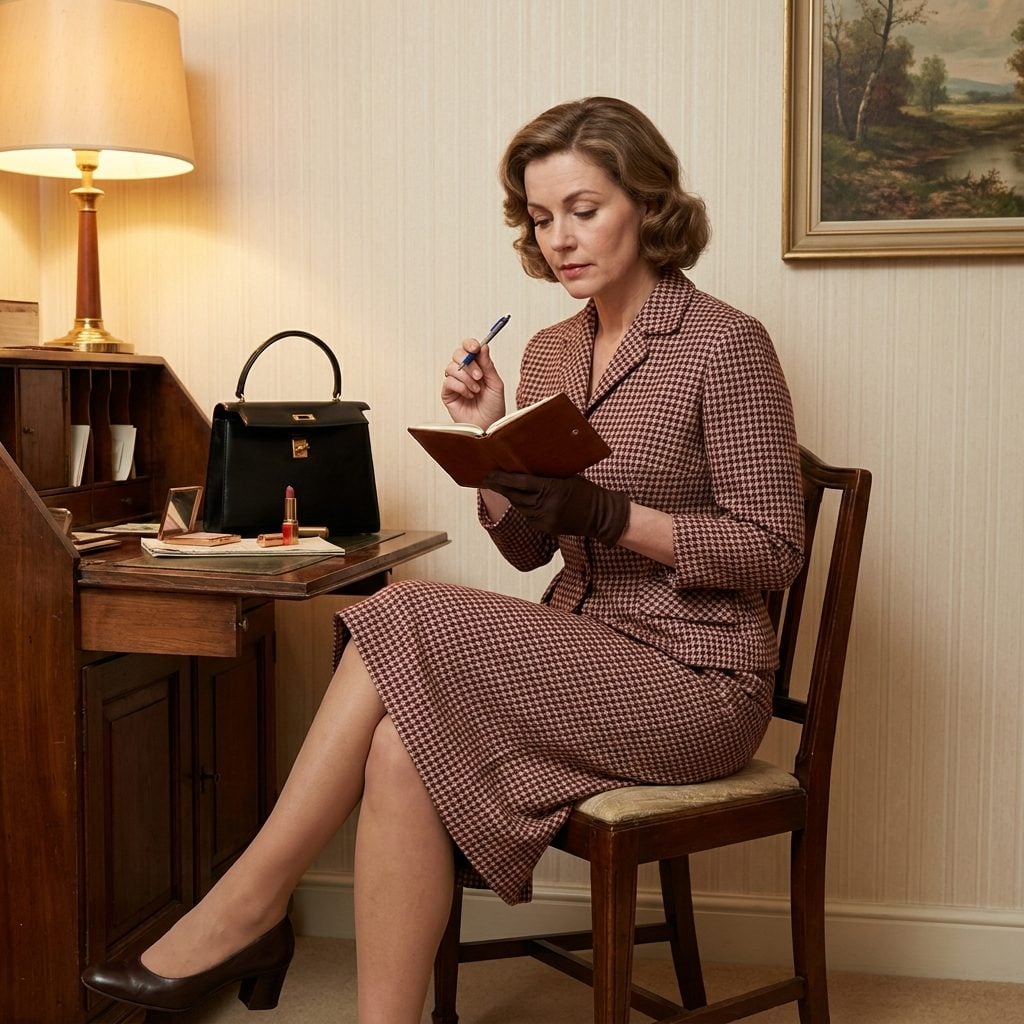
Every single phone number a woman needed, transcribed by hand in her neatest writing, occasionally crossed out and rewritten when someone moved. The good ones had tiny alphabetical thumb-cut tabs down the side. The entries weren’t just phone numbers either. They had addresses, sometimes notes: call before 5, ask for Margaret, don’t ring on Sundays.
Lose this and you had nothing. No backup. No cloud. No way to reconstruct years of carefully maintained social infrastructure. The weight of that now is genuinely dizzying.
20. Scented Cachous in a Decorative Tin (Breath Mints, But Make It Victorian)
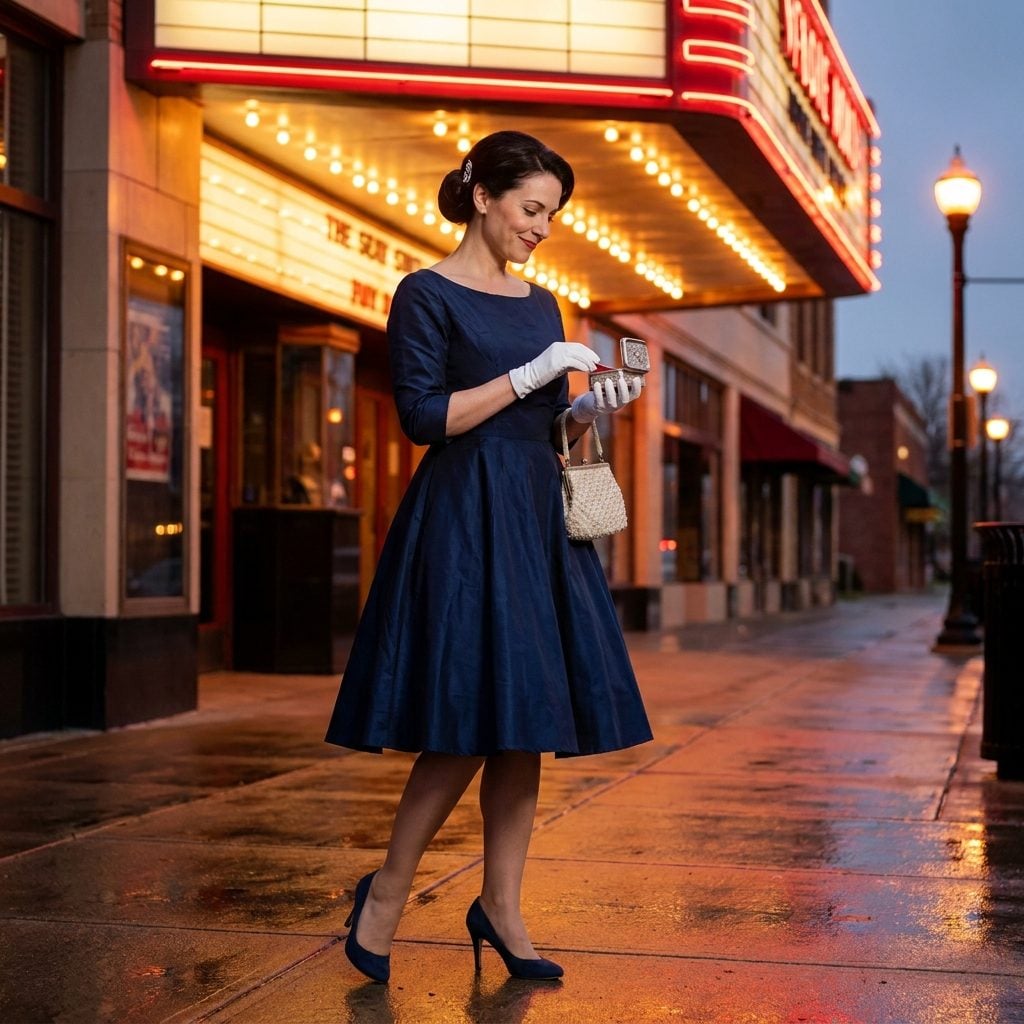
Cachous were tiny, hard, violet-scented sweets that came in miniature tins so pretty they could have passed for jewelry. Silver or gold, embossed with flowers, about the size of a large coin. You’d tap one out onto your palm and pop it before a conversation got close. They tasted faintly of soap and old-fashioned perfume counters, and somehow that was exactly right.
Altoids are their distant, brusque descendent. The cachou tin was a different object entirely: delicate, refillable, passed between women at the theater without a word, the whole transaction conducted with total discretion. A small ceremony of femininity that has no modern equivalent.
19. The Rosary in the Inside Pocket, Said Nothing to Anyone
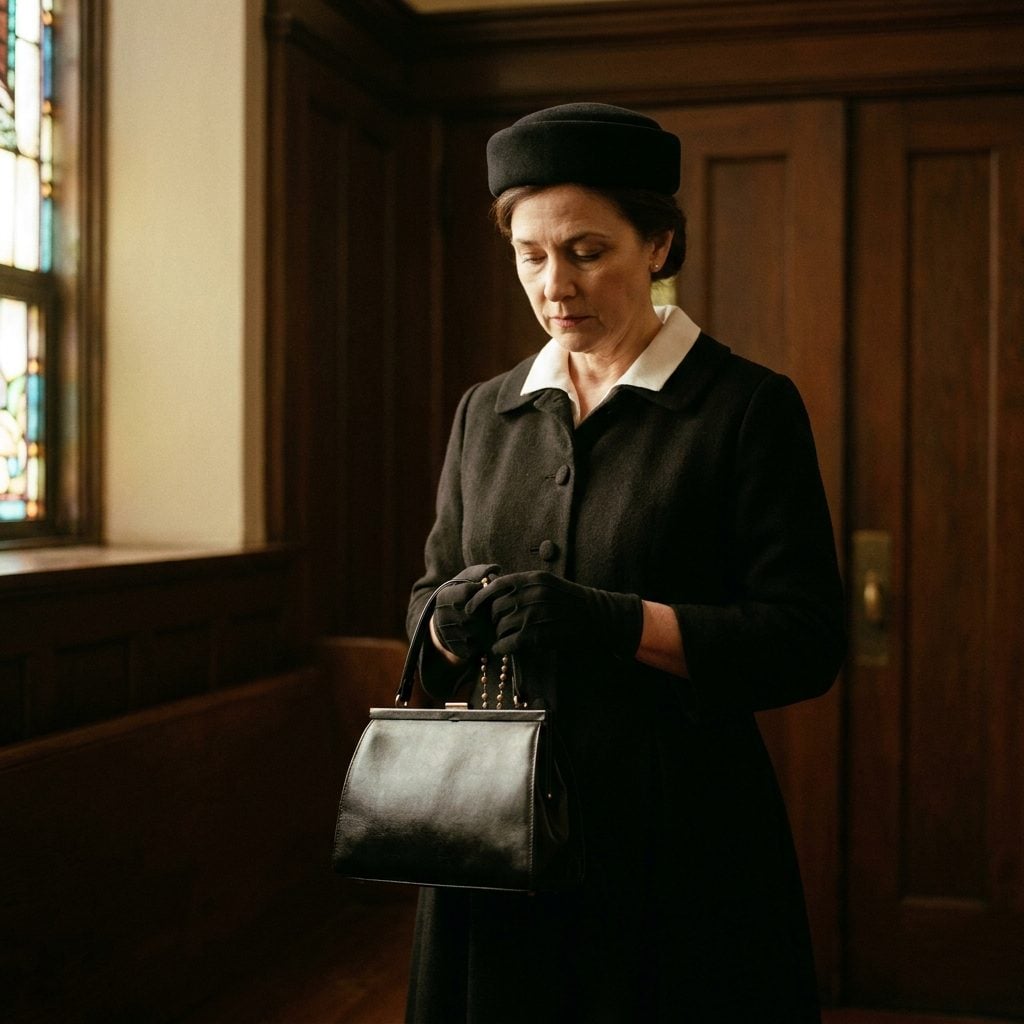
It wasn’t on display. It wasn’t discussed. It sat in the narrow inner pocket of her handbag, wound neatly around two fingers’ worth of space, beads worn smooth from use. Some women carried it for faith. Some carried it because their mothers did. Some kept it for the same reason people keep lucky objects they don’t entirely believe in.
The intimacy of it is striking. A thing carried daily, close and private, not decorative. If you found one in a secondhand bag now, you’d hold it carefully and wonder about the woman who last touched it.
18. The Shopping List on the Back of an Envelope Because Waste Not
❤️ Would you like to save this?
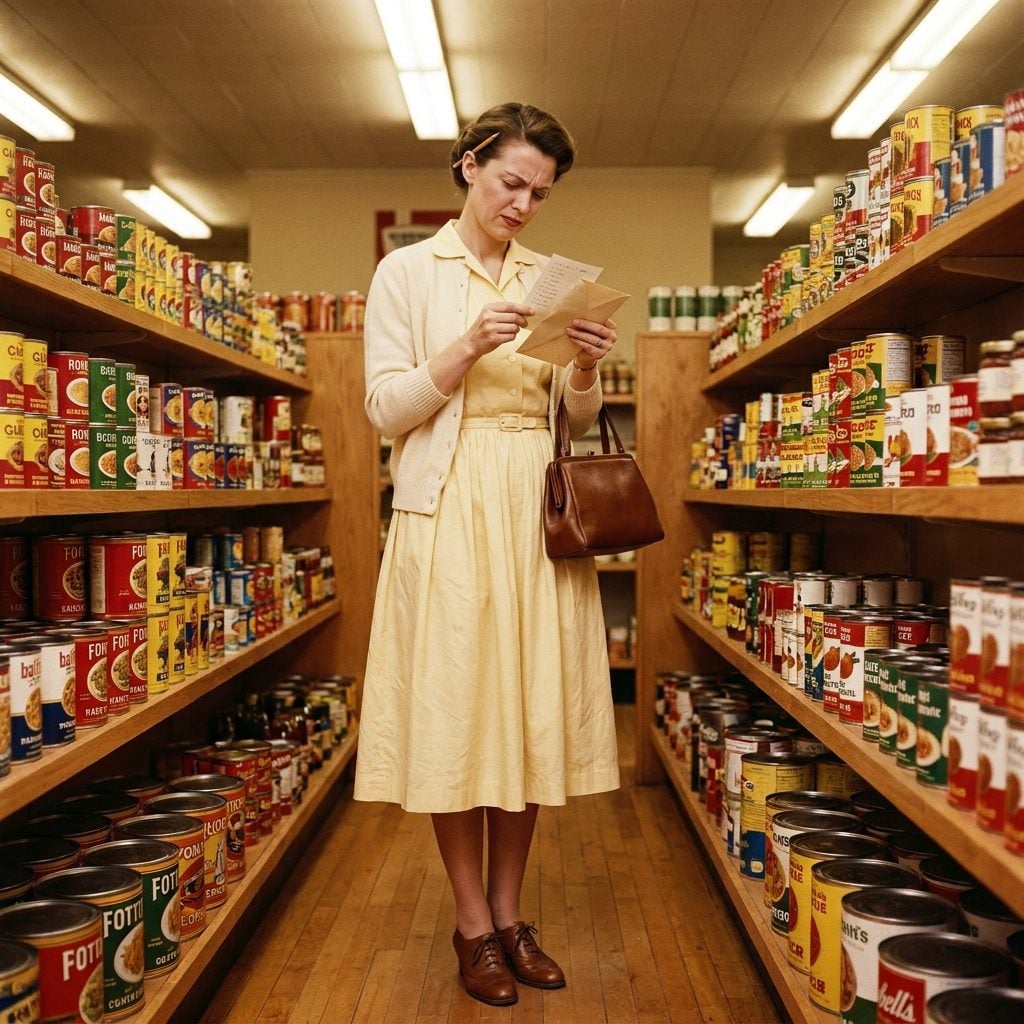
The back of an envelope, a gas bill, a receipt from the chemist’s, whatever was to hand when she remembered she needed butter and kidney beans and something for the tin drawer. The list written in pencil, sometimes two columns if she was organized, sometimes a single vertical run that drifted sideways by the fourth item.
Nothing was wasted. Paper was useful until its very last surface. The writing on these lists tells you more about a woman’s daily life than most documents ever could: Oxo, pilchards, 2 oz thread, Brylcreem (ask Stanley’s size).
17. The Spare Nylons, Folded Small, For When the Day Went Wrong
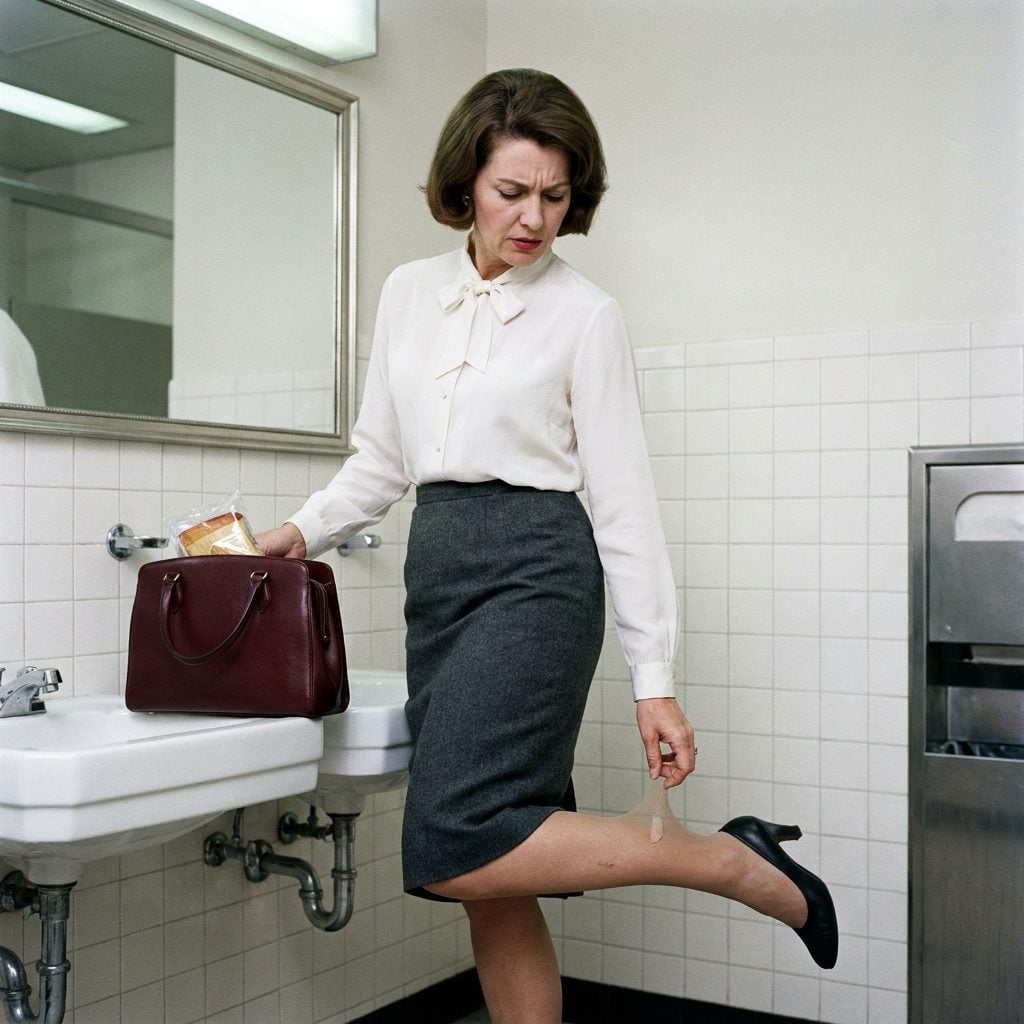
A run in your stocking was not a minor inconvenience. It was a visible, spreading catastrophe that needed to be handled before you reached wherever you were going. So the backup pair lived in the bag, folded into a rectangle the size of a playing card, still in their tissue paper if you were organized about it.
Putting on a fresh pair in a office restroom cubicle with your bag hooked on the back of the door was a particular skill set, and every woman had it.
16. The Garter Clip Repair Pin, Because the Alternative Was Unthinkable
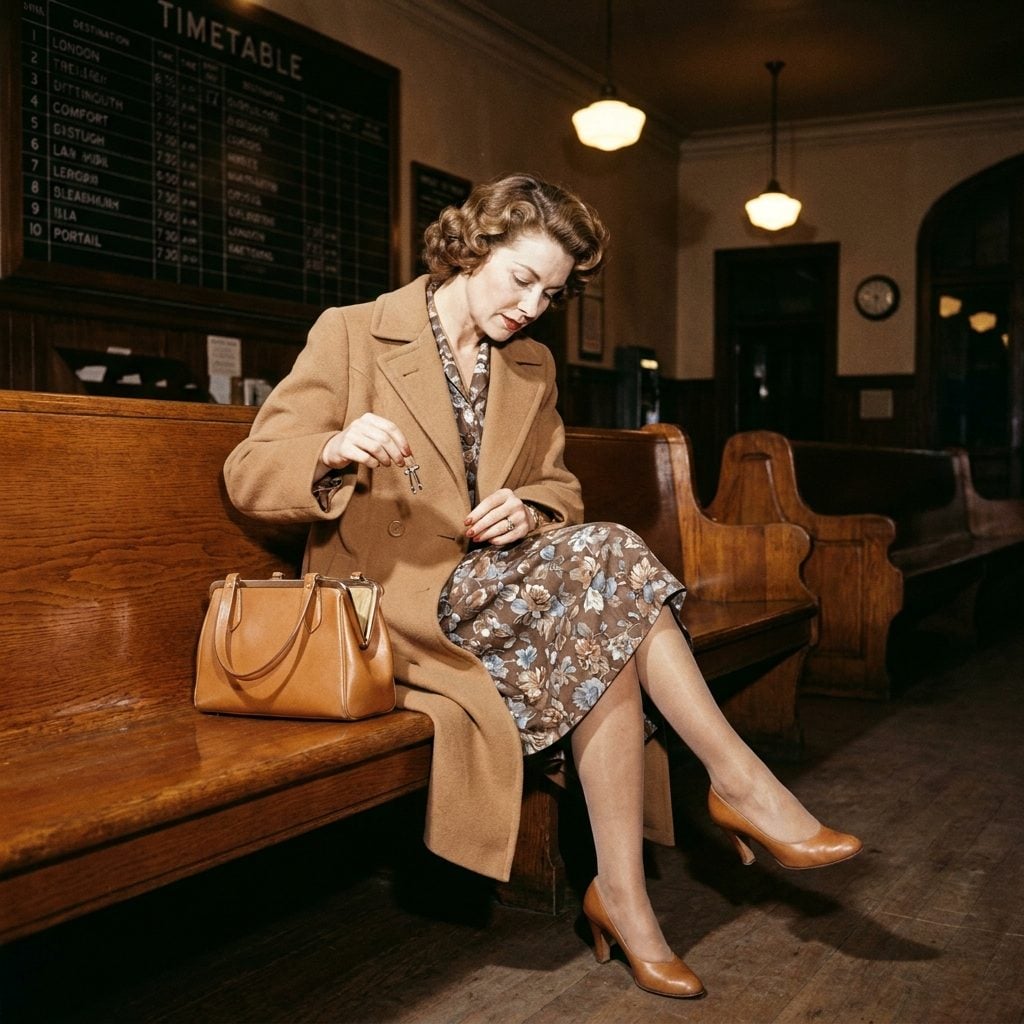
If you don’t know what a garter clip repair pin is, your stocking never failed you at the worst possible moment in a public place. The metal tab on a suspender belt that gripped the stocking top would sometimes give way, leaving one stocking drifting slowly toward the knee with no announcement. The repair pin was the emergency workaround, small enough to fix the clasp from the outside through the fabric, discreetly, ideally in a restroom but sometimes not.
Carrying one wasn’t paranoia. It was experience.
“The repair pin was the emergency workaround, small enough to fix the clasp from the outside through the fabric, discreetly, ideally in a restroom but sometimes not.”
15. The Compact Sewing Kit, Smaller Than a Matchbox, Ready for Anything
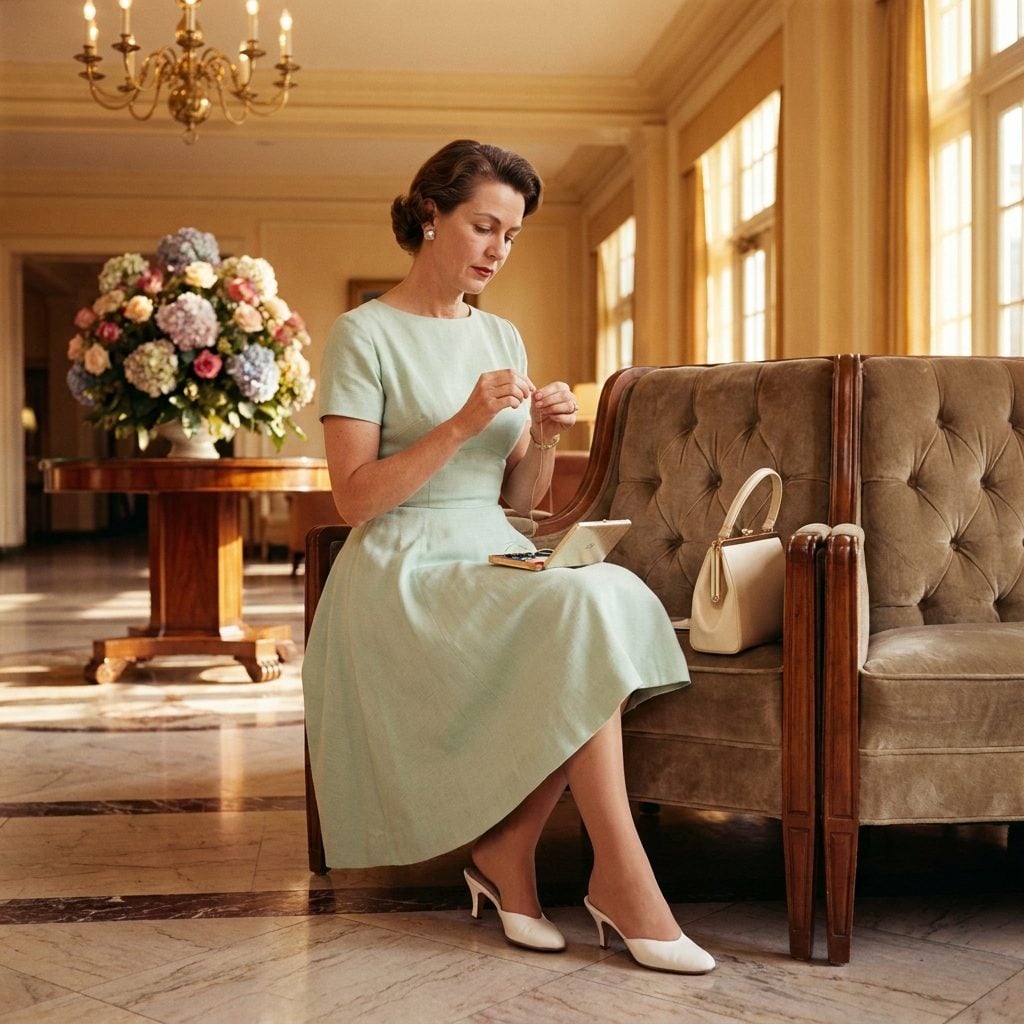
About the size of a flat tin of Vaseline, and packed with an almost absurd level of optimism: four or five threads wound on tiny cardboard bobbins, a thimble the size of a pea, three needles in a strip of felt, and two or three spare buttons in colors that didn’t match anything but were better than nothing.
The idea was that a lost button or a split seam was a problem you solved on the spot, in a cloakroom or a ladies’ lounge, before continuing your day. Not a reason to go home. Not something you’d leave the house without the means to fix.
There’s something quietly impressive about that level of self-sufficiency. The kit cost almost nothing and weighed almost nothing, but carrying it was a statement: I am prepared. I will not be undone by a loose button.
14. The Powder-Blue or Pale Pink Plastic Comb That Lived at the Very Bottom of Every Purse
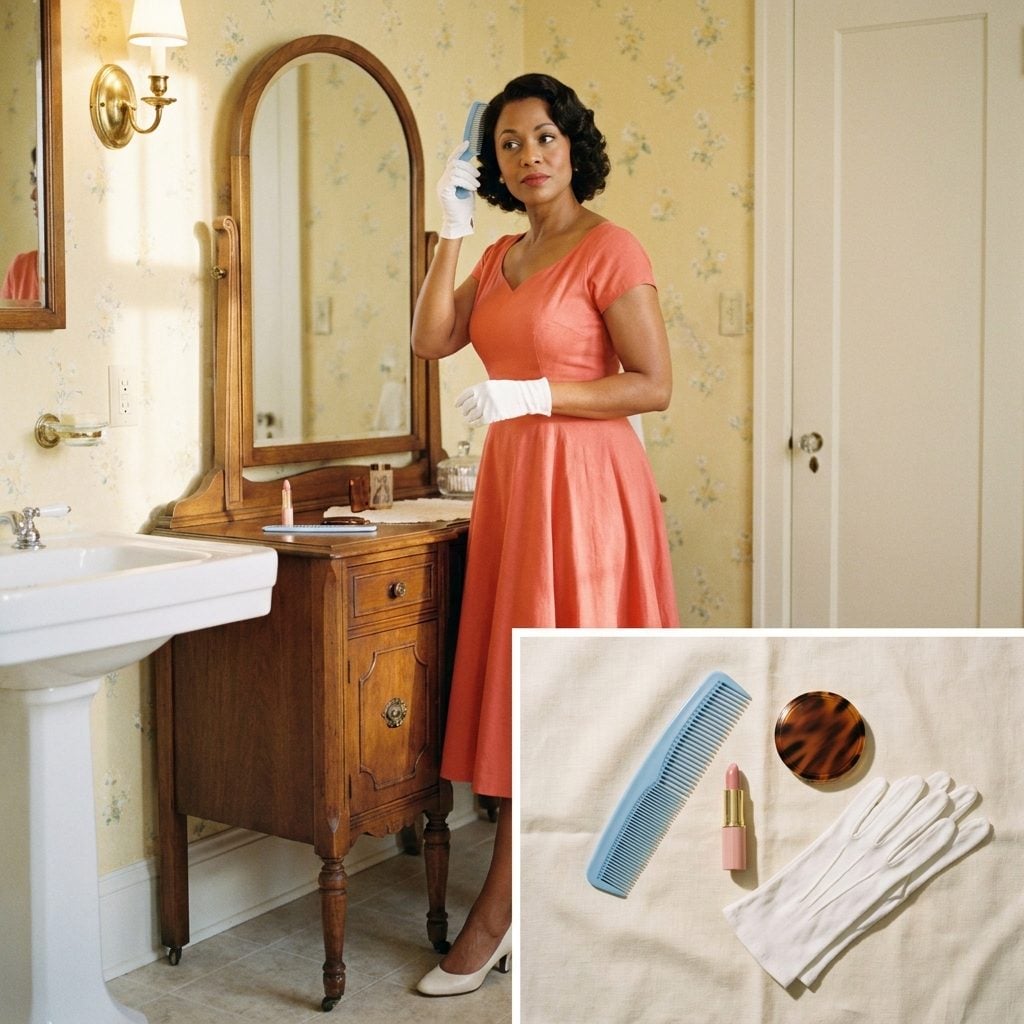
Every single one of us had a version of this comb and not one of us could ever locate it quickly. It was always at the bottom, underneath the receipts and the aspirin tin, coated lightly in face powder. The color was the whole personality of it: powder blue or ballet pink, translucent plastic, occasionally missing a tooth from some aggressive detangling incident nobody spoke about.
The logic was airtight by 1950s standards. You had a set. You needed to maintain the set. Wind existed. Hats came off. A small hat could undo twenty minutes of pin-curl work in seconds, and that comb was your emergency repair kit. Women kept their hair in a state of managed perfection, and that little plastic comb was part of the maintenance crew.
13. The Matchbook Collection That Had Nothing to Do With Smoking and Everything to Do With Going Places
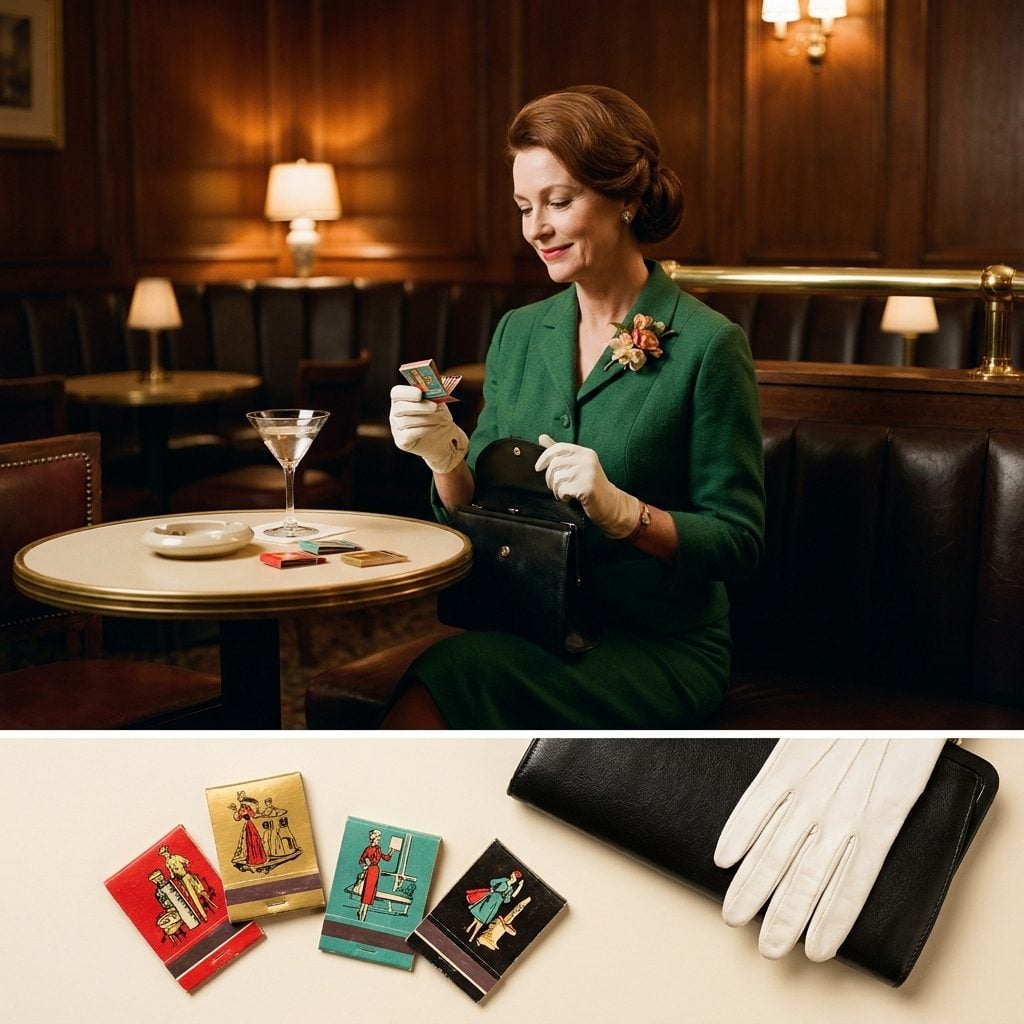
Nobody in 1955 thought keeping a purse full of matchbooks was strange. It was practically a social record. The Drake Hotel, Chez Henri, the Pine Room at the Statler. Every matchbook was a breadcrumb from somewhere worth remembering, and a woman’s collection told you exactly what kind of life she was living.
Some women genuinely used them. Some didn’t smoke a day in their lives but collected them anyway because the covers were beautiful, and because pulling out the right matchbook at the right moment said something about where you’d been. It’s the 1950s equivalent of having a very specific Instagram location tag, except the matchbook was tangible proof.
12. A Wallet Absolutely Packed With Department Store Charge Cards, Because Banks Were Basically Irrelevant
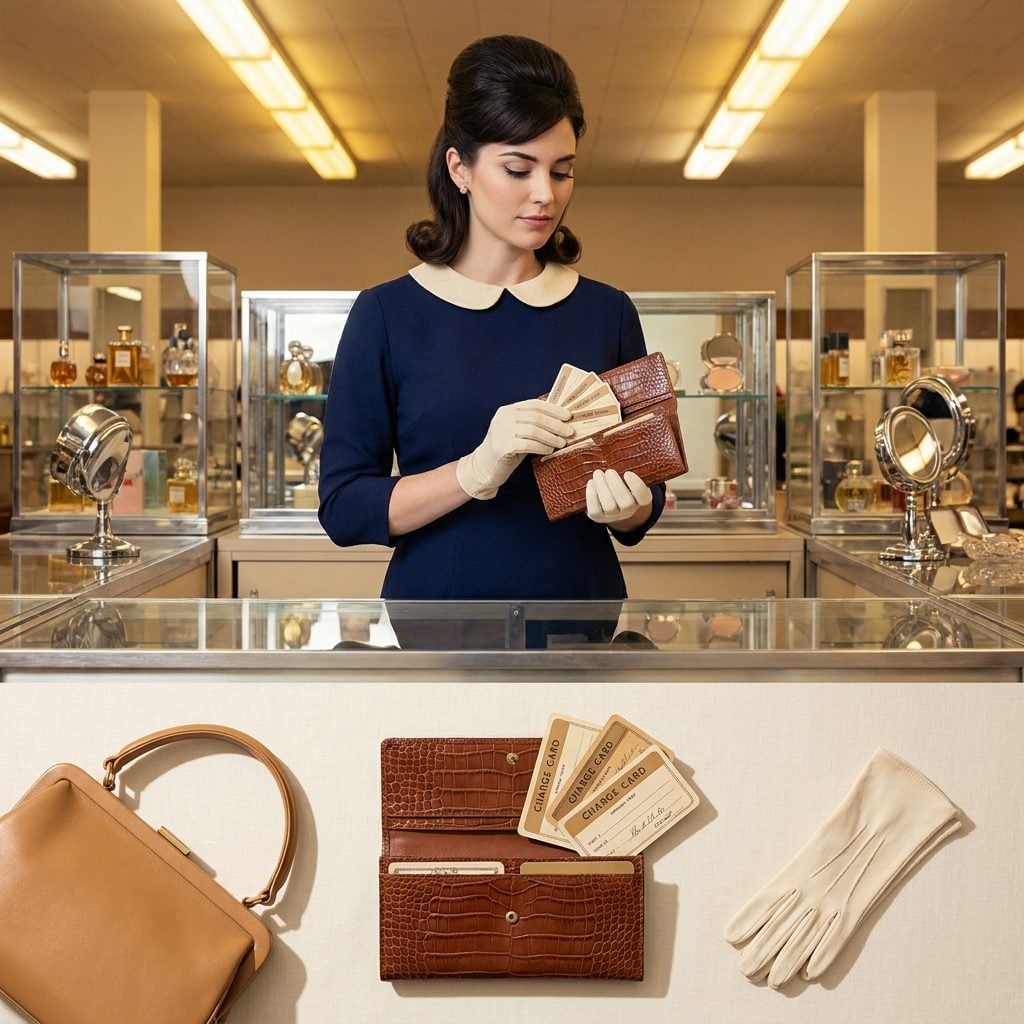
Carrying a bank card in 1955 wasn’t really an option, because universal bank credit cards didn’t exist yet. Instead, a woman’s wallet was a vertical filing system of individual store accounts: Macy’s, Marshall Field’s, Neiman Marcus, Saks. Each card was specific to one retailer. Each account had its own billing cycle, its own credit limit, its own monthly statement arriving in a crisp envelope.
The organizational commitment this required was genuinely impressive. You had to remember which card went where, which account had room, and which bills were coming due. A woman with a well-stocked charge card wallet wasn’t being frivolous. She was managing a small personal financial portfolio, one cashmere sweater at a time.
11. The Fountain Pen That Leaked a Little and Stained the Lining and You Just Lived With That
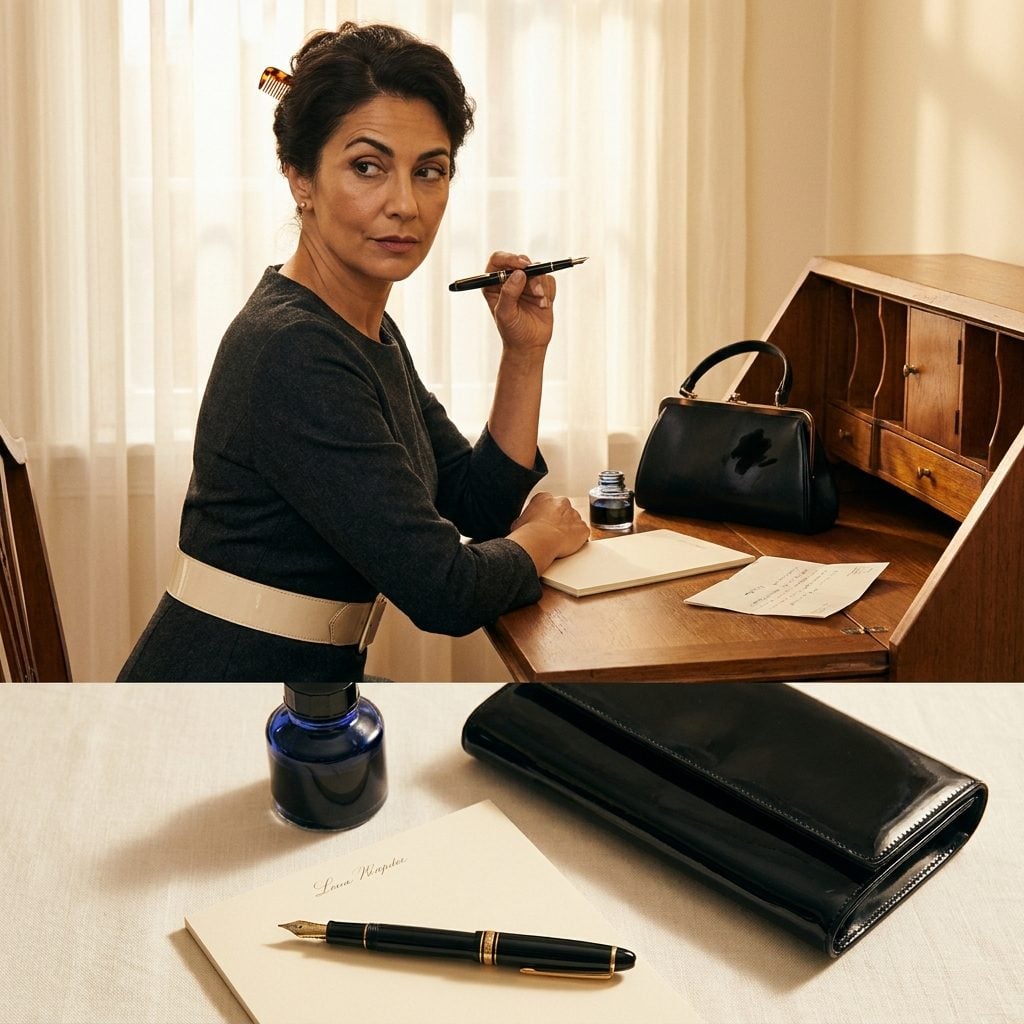
There was always a thin blue or black stain somewhere in that lining. It just became part of the bag. You didn’t throw the bag out. You didn’t throw the pen out. You blotted it with a handkerchief and moved on with your life, because that was the 1950s attitude toward objects: they were worth maintaining, worth tolerating.
Fountain pens were still the serious writing instrument of choice for women who wrote letters regularly, which was nearly all of them. A ballpoint worked fine for a grocery list. Actual correspondence required actual ink. The pen had weight and presence and a gold nib that caught the light, and those qualities mattered enough to accept the occasional disaster inside your purse lining.
10. The Small Metal Aspirin Tin That Rattled Quietly at the Bottom of Every Handbag Like a Little Shaker
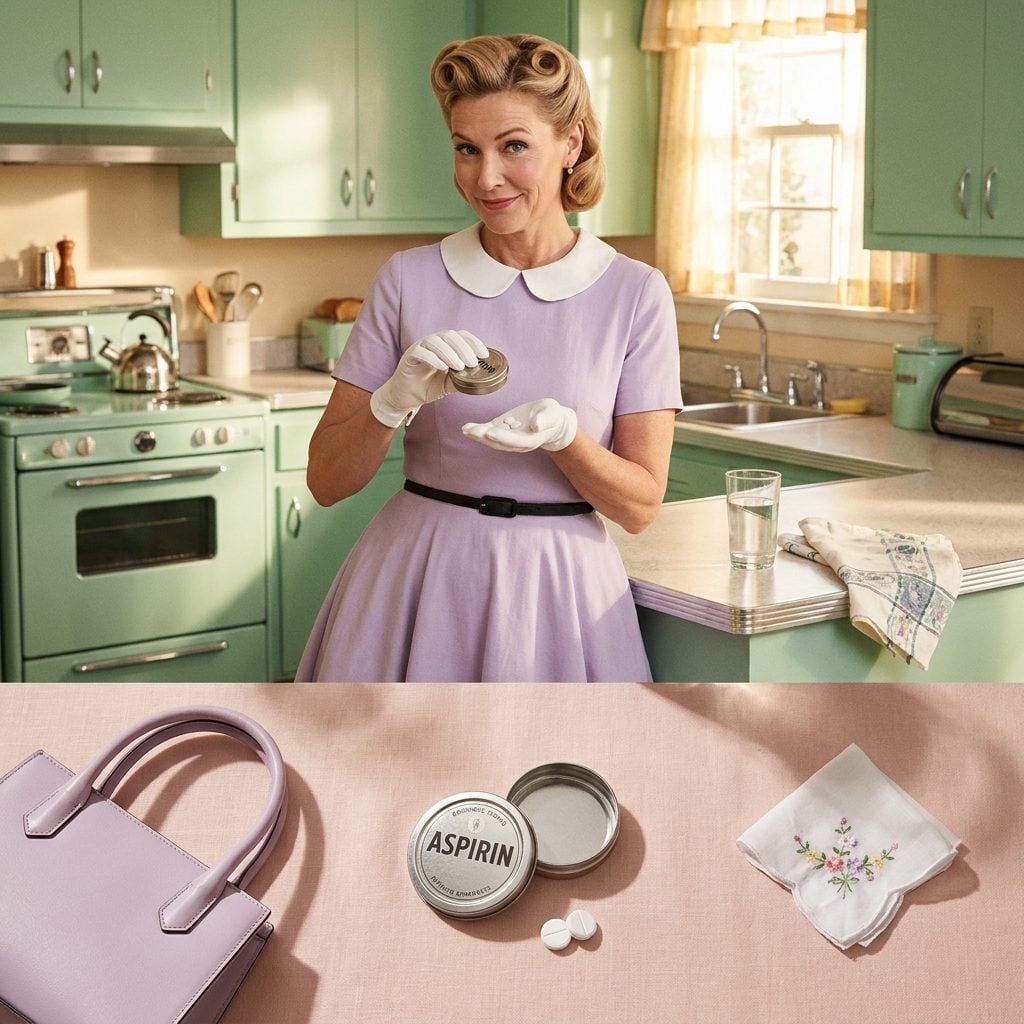
That rattling sound. Every woman who carried a bag in the 1950s knows exactly the sound: a small tin, slightly loose lid, rolling against the metal frame of a structured handbag at the bottom of an elevator. It was the sound of being prepared.
Aspirin was the entire medicine cabinet back then. Headache, cramps, general malaise, a husband being difficult. The answer was always aspirin, and having your own tin meant you were the woman at the luncheon who people came to when something hurt. That was a kind of social status, honestly. Being the one with the aspirin tin made you responsible and organized and slightly maternal in the best possible way.
9. Calling Cards With Your Name Engraved on Them, Because Scribbling Your Phone Number on a Napkin Was Beneath You
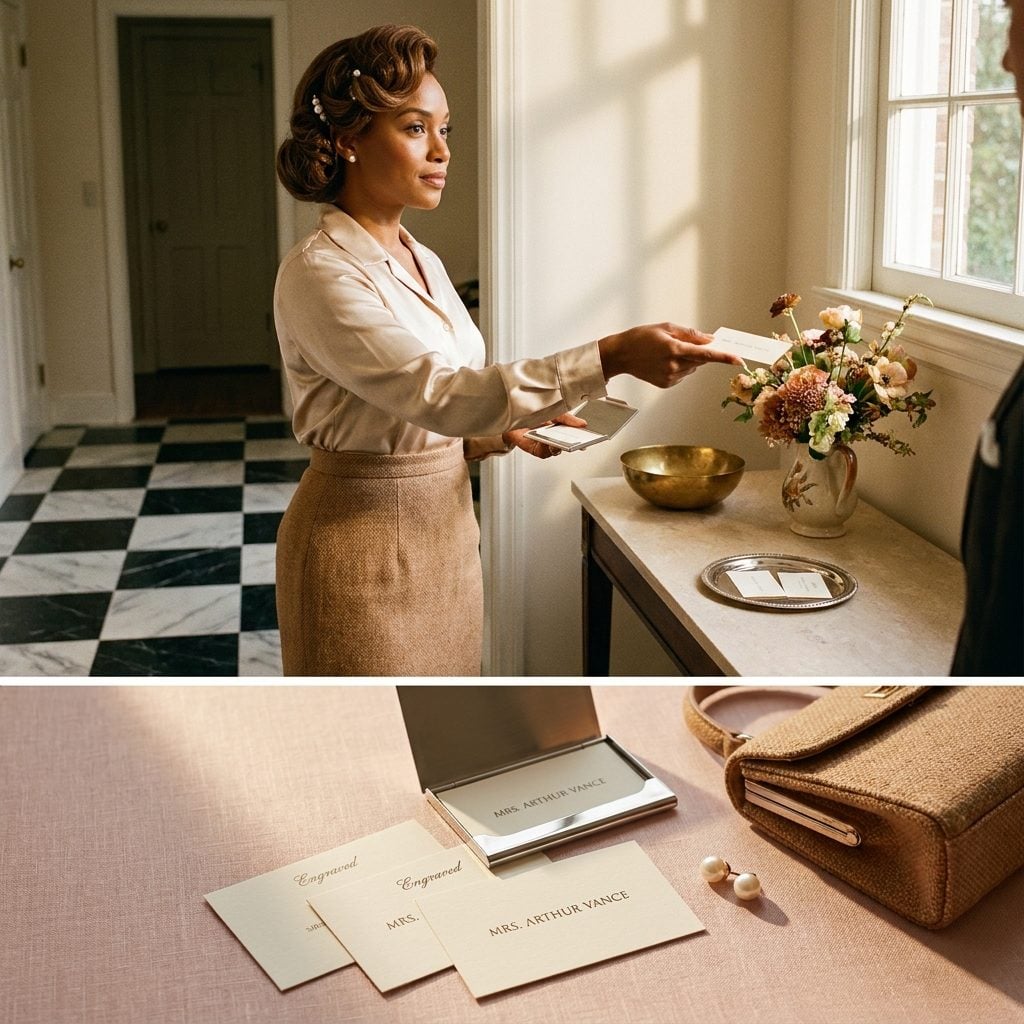
Handing someone your calling card was a specific social gesture with a specific social weight. It was not the same as giving someone your number. It was more formal, more deliberate, more permanent. A card with your name engraved in a clean serif typeface said: I am a person of standing, and I would like to be known to you officially.
Most women kept their cards in a slim silver or tortoiseshell case nestled inside their bag. The case itself was part of the presentation. You didn’t fish a card out of a loose stack. You opened the case with a small satisfying click and offered the card with two fingers. The whole ritual took four seconds and communicated something that four seconds of Instagram scrolling still can’t quite replicate.
“A calling card wasn’t an introduction. It was a declaration.”
8. The Tiny Perfume Atomizer That Made You Feel Like a Film Star Every Time You Used It
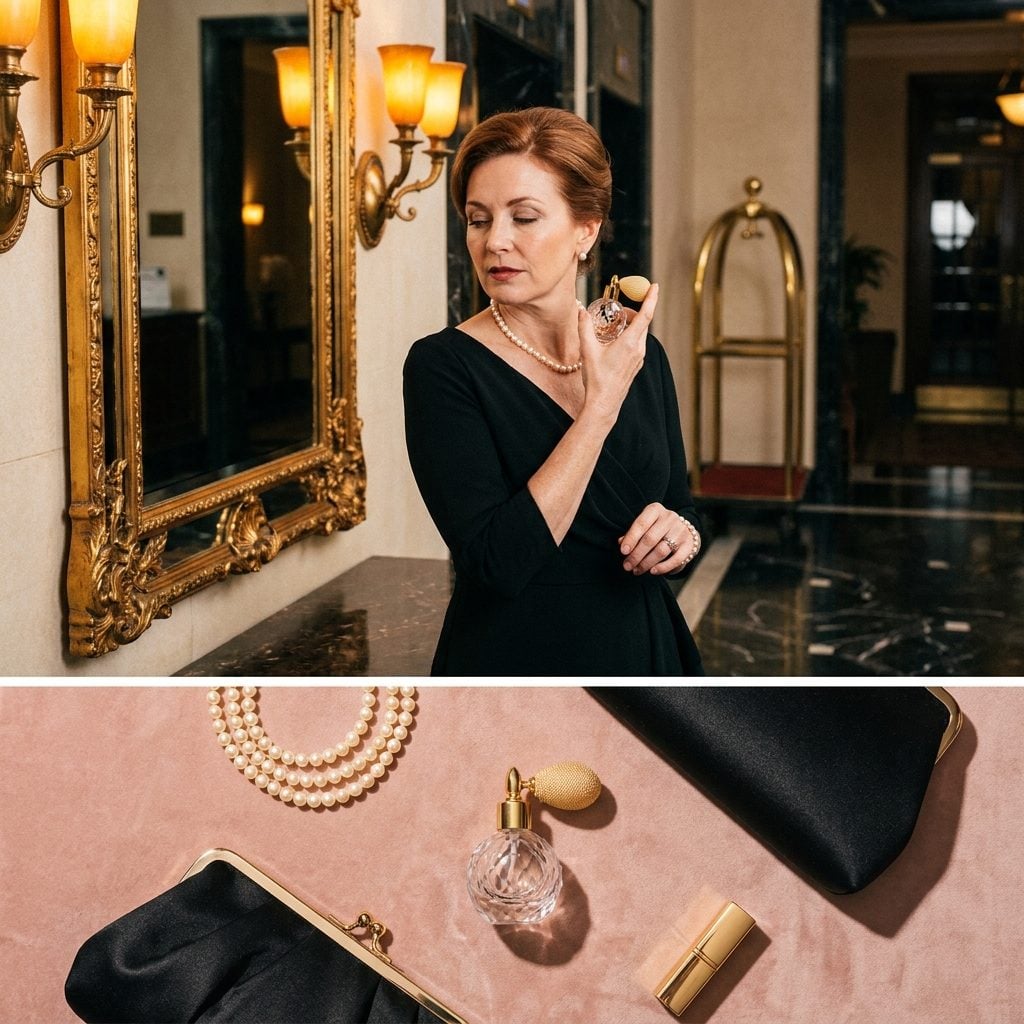
Small enough to fit in the palm of your hand, usually crystal or frosted glass with a little gold or brass mechanism and a rubber bulb that you pressed with two fingers. The sound it made was unmistakable: a soft pneumatic hiss, then the scent hit before you even finished the gesture.
The point was preparation. You refreshed before dinner, before an appointment, before you walked back into a room after being away from it. Scent as punctuation. L’Air du Temps and Shalimar and Arpege traveled in these little atomizers, decanted carefully from the big bottle at home. The bag ideas that came with owning one of these were layered: you needed the atomizer, a case for it, a handkerchief for the inevitable drip. A whole system for smelling wonderful.
7. The Cat-Eye Sunglasses in a Hard Case That Snapped Shut Like They Meant Business
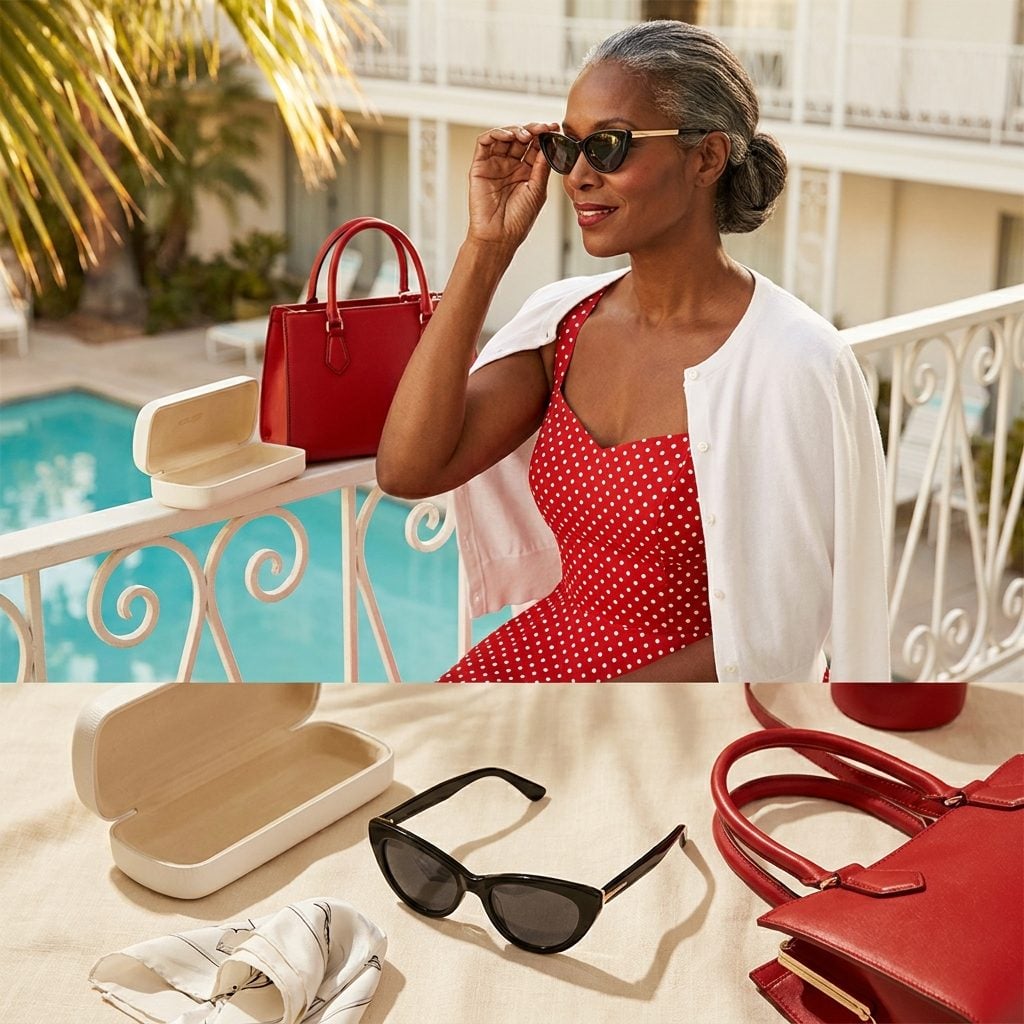
The hard case was non-negotiable. You didn’t drop cat-eye frames loose into a bag because those upswept corners were precision-shaped acetate and they scratched if you looked at them wrong. The case snapped shut with a click that felt like a period at the end of a sentence.
Cat-eye frames in the mid-1950s weren’t a trend in the way we use that word now. They were simply the shape that sunglasses were. Black, tortoiseshell, occasionally a deep wine or cream, with pointed corners sometimes set with tiny rhinestones or gold detailing. Marilyn Monroe wore them. Grace Kelly wore them. Your neighbor Mrs. Hartley wore them to pick up her dry cleaning. That was the democracy of good design: it looked exactly as intentional at the dry cleaner as it did at the Cannes Film Festival.
The shape has lasted: asked which sunglasses they would buy, 49% of ThreadCurve readers chose cat-eye, ahead of round at 26% and aviators at 22%.
6. The Little White Envelope She Never Left Home Without on Sunday Morning

❤️ Would you like to save this?
It sat in a specific pocket, always. Not loose at the bottom with the lipstick and the receipts, but tucked deliberately, because losing it before the collection plate came around would have been a social catastrophe of the first order. The small white tithing envelope, often pre-printed with the family name and pew number by the church office, was as much a part of Sunday dressing as the white gloves.
Most women kept a small supply folded inside the back lining of their structured leather handbag, replenished each week. The act of filling it, sealing it, and carrying it felt like part of the ritual itself. Nobody would dream of just handing over loose bills. That was something else entirely.
5. The Coupon Envelope: Clipped, Sorted, and Treated Like Actual Currency
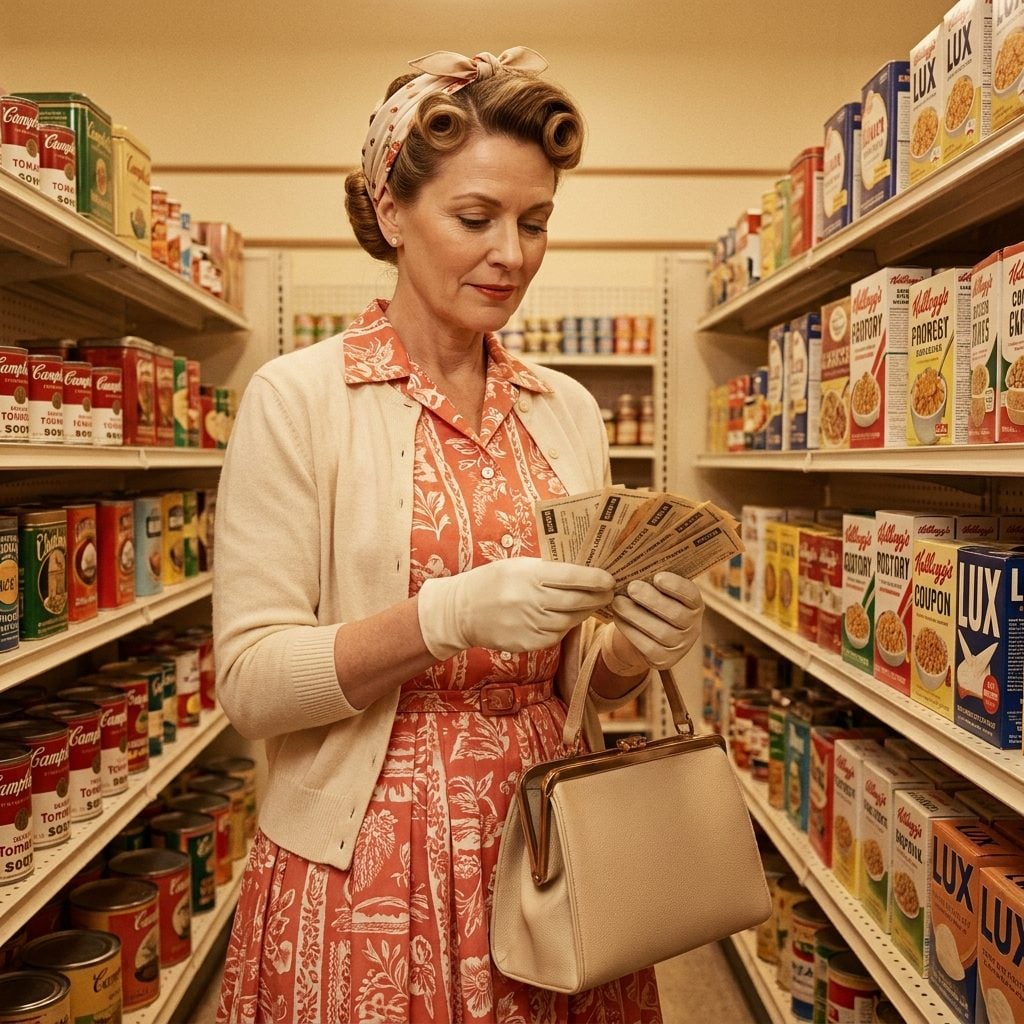
Not the casual stuff-it-in-your-coat-pocket approach. These were organized. Clipped with proper scissors from the Saturday paper and the Good Housekeeping pages, then sorted into a small envelope or a dedicated accordion sleeve that lived in the handbag at all times. Some women kept them grouped by product category. My grandmother kept hers by expiration date. She would look at you with quiet disappointment if you let a coupon expire.
The psychological weight of this practice was real. Using a coupon wasn’t embarrassing, it was competent. It meant you ran a tight household. The vintage cotton shirtwaist dress and the coupon envelope were both signals of the same thing: a woman who had her affairs in order.
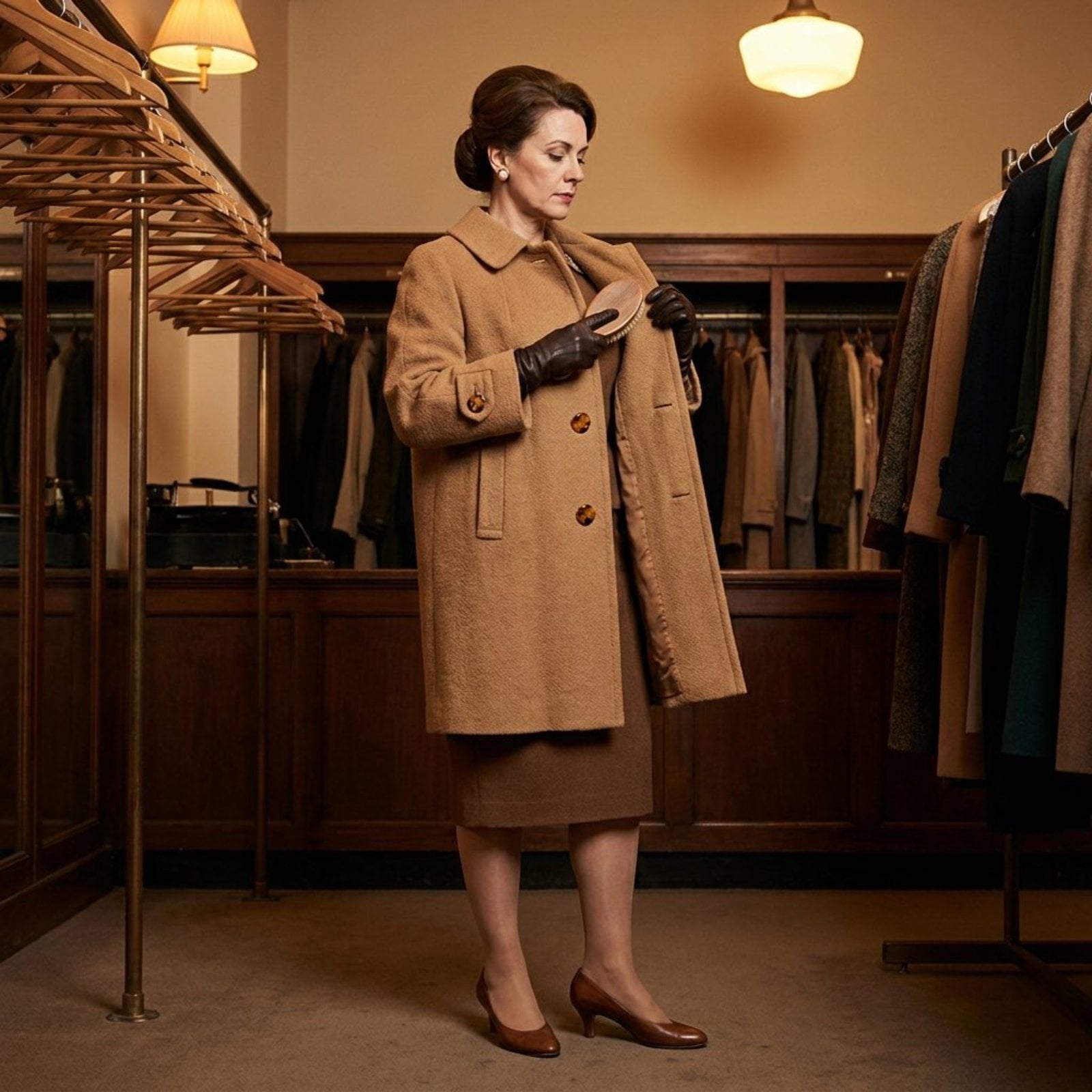
4. The Clothes Brush That Lived in Her Bag Because a Speck of Lint Was Simply Not an Option
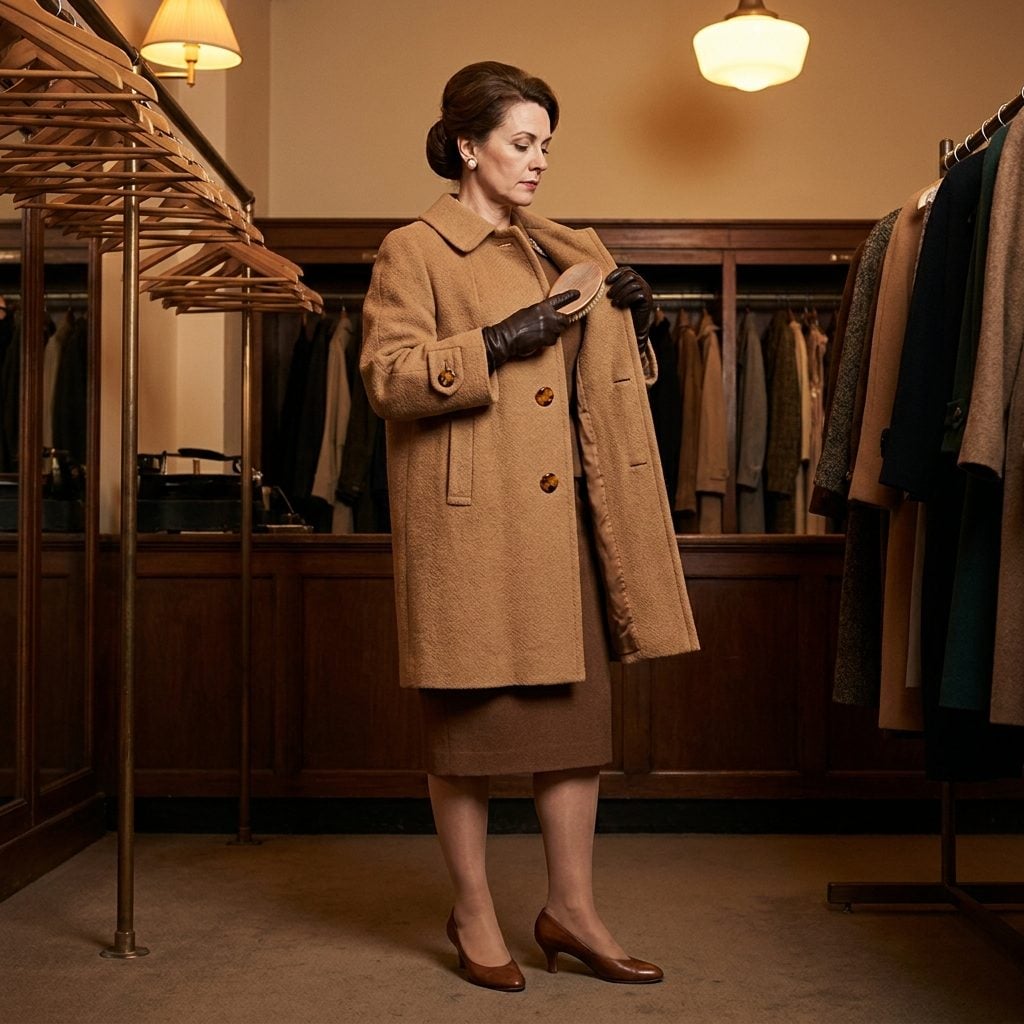
Compact, oval-backed, with natural bristles set into dark wood or tortoiseshell-patterned plastic. The camel wool coat was an investment, and it was going to stay perfect. Lint was not a personality trait anyone aspired to in 1952.
This wasn’t vanity so much as armor maintenance. A woman’s coat and suit were meant to look freshly pressed at all times, which required active upkeep throughout the day. The clothes brush lived in the bag the way a phone lives in our pockets now: you reached for it constantly, almost without thinking. The idea of arriving anywhere with a visible cat hair on your lapel was, frankly, unthinkable.
3. The Tiny Photograph Hidden Behind the Compact Mirror, Where Only She Would See It
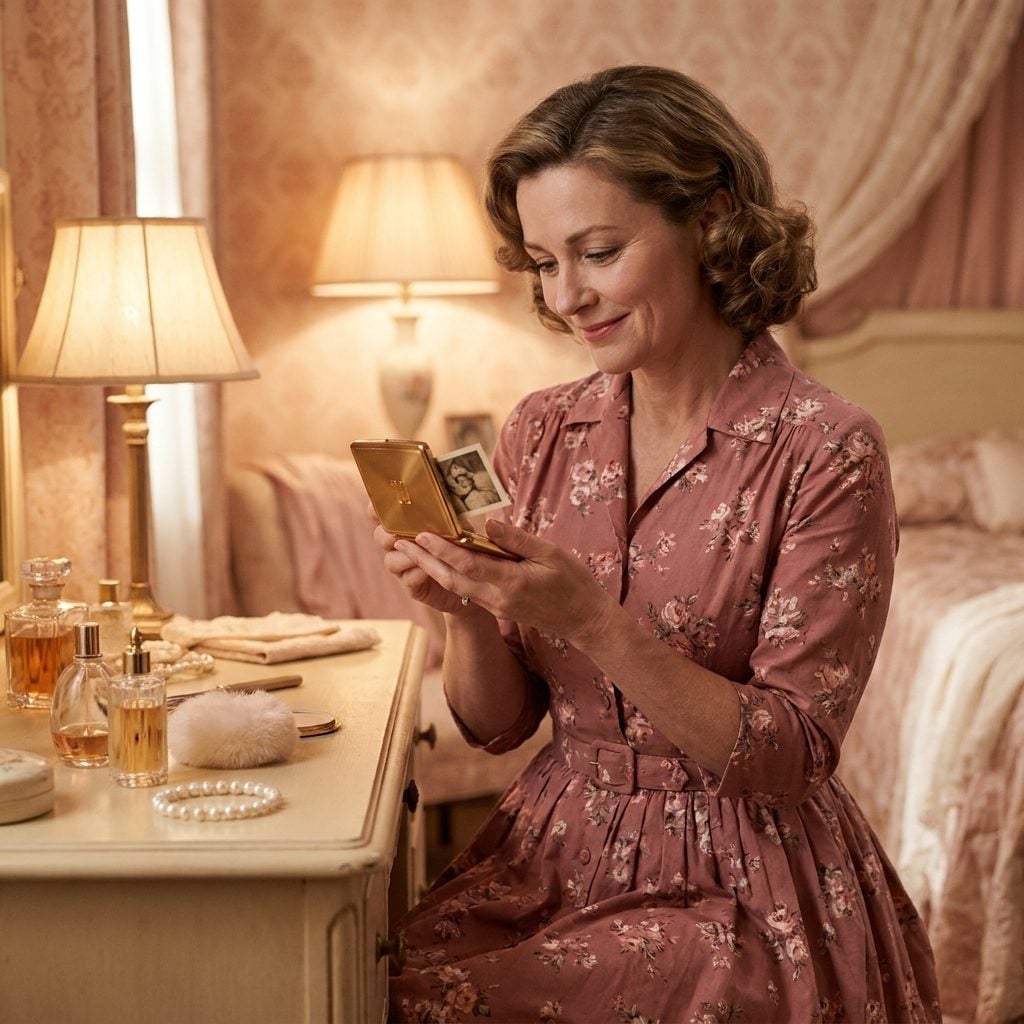
Tucked into the lid of the compact, behind the mirror, pressed flat so the powder didn’t warp it. Usually a school photograph, a wallet-sized portrait from a studio sitting, occasionally a snapshot taken in the backyard. Small enough that nobody else would notice it unless they borrowed your compact, which they would not do without asking.
There’s something quietly moving about this one. The compact was the most frequently opened item in the bag, which meant she looked at that photograph a dozen times a day without really thinking about it. It wasn’t a grand gesture. It was just there, behind the reflection of her own face.
“She looked at that photograph a dozen times a day without really thinking about it. It wasn’t a grand gesture. It was just there.”
2. A Driver’s License With No Photo on It, Which Was Somehow a Legal Document
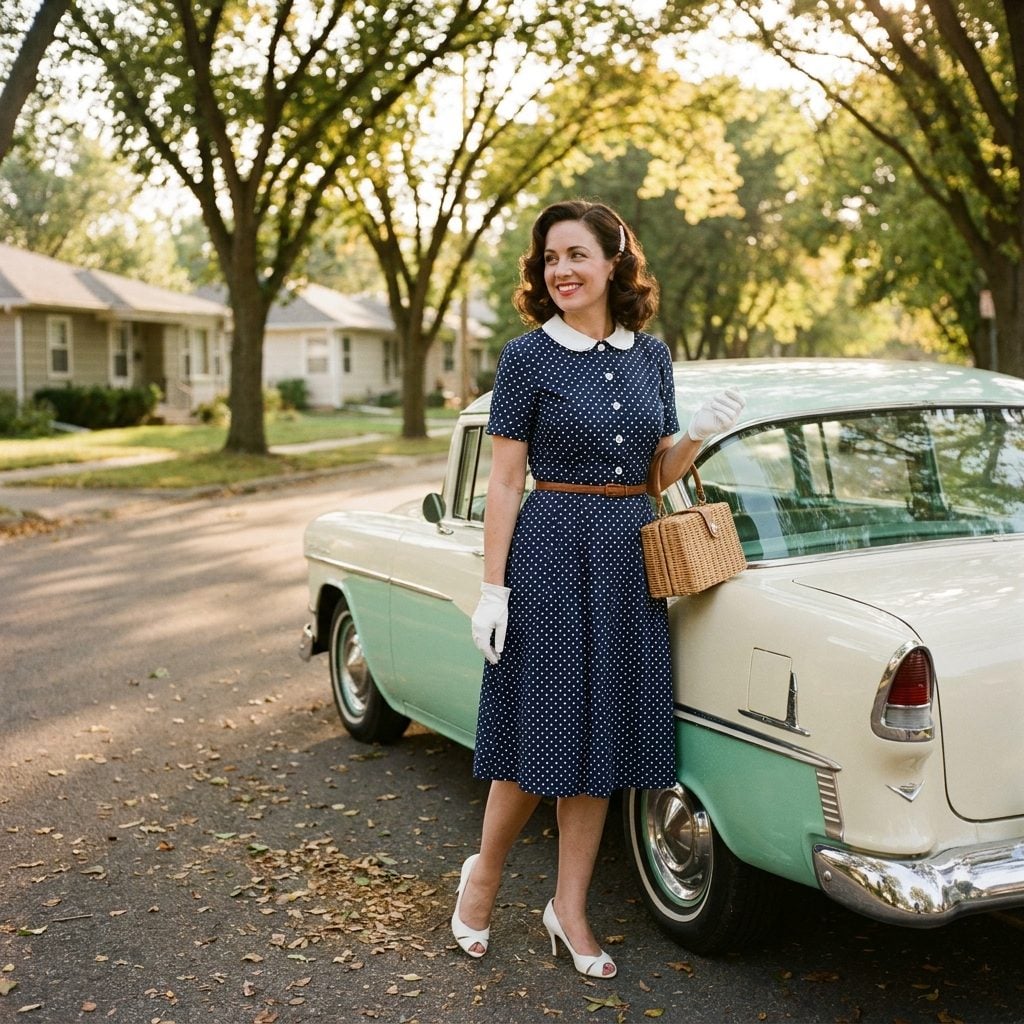
Just your name, your address, your height, and a signature. No photograph. In several states well into the early 1950s, a driver’s license was essentially an index card that said you existed and claimed to be who you said you were. The honor system, laminated.
It sits in the billfold section of the handbag next to your library card and your social security card, both of which also have no photograph on them. The entire contents of a 1950s woman’s wallet were, from a modern security standpoint, absolutely terrifying to think about.
1. The Little Notebook Where She Tracked Every Penny, Every Grocery Total, Every Christmas Gift
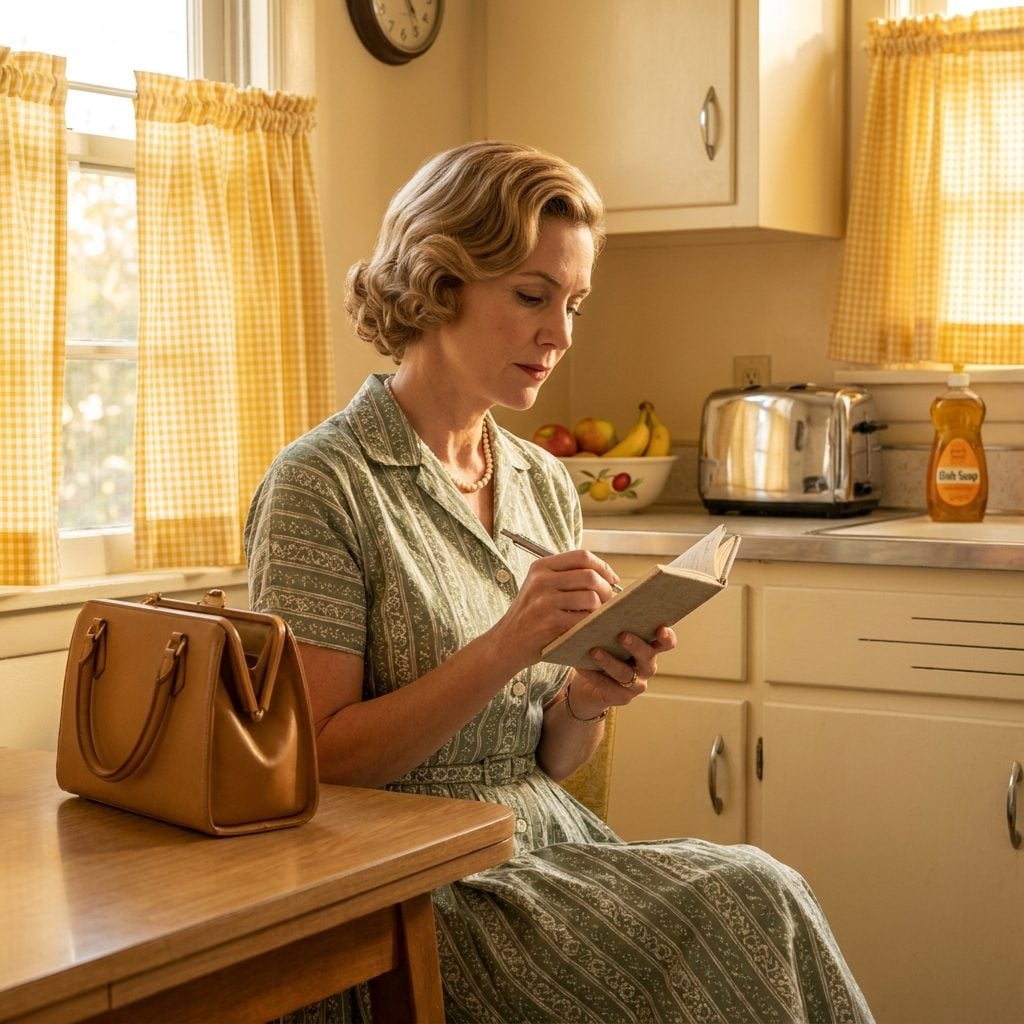
About the size of two playing cards stacked together, covered in a small print cloth or plain cardboard, with a tiny pencil looped through the binding. The notebook was the household budget made portable. Grocery totals were tallied on the spot at the checkout. Gift ideas got written down the second someone mentioned wanting something, because she wasn’t going to remember it in November.
Some women kept separate ones for different purposes. Others crammed everything into one: the price of ground beef this week versus last week, the name of the curtain fabric she saw at the dry goods counter, what the plumber said he’d charge, the date of the dentist appointment she needed to reschedule. The bag ideas she clipped from magazines sometimes got folded in here too.
It was analog intelligence, and she updated it constantly. Losing it would have been a genuine crisis. There was no backup copy anywhere.