
❤️ Would you like to save this?
The smell of coconut oil mixed with sunscreen that was basically tanning accelerant, a transistor radio the size of a brick, and a beach towel so thin it dried in four minutes flat. That was the whole vibe. Beach days in the 1970s operated by a completely different rulebook, and the packing list was a masterpiece of its era: practical in some ways, absolutely chaotic in others. Here’s everything that lived in that woven straw bag, and exactly how it looks in the cold light of now.
FYI, thanks to AI imagery software, we’re able to create very specific fashion and hairstyle examples to illustrate the points being made. In some cases, imagery is exaggerated to hammer home the point. Also, assume links that take you off the site are affiliate links such as links to Amazon. this means we may earn a commission if you buy something.
28. Baby Oil Mixed With Iodine in a Spray Bottle, Our Homemade Tanning Serum

We mixed it in the kitchen the night before, poured it into whatever spray bottle was under the sink, and carried it to the beach like it was a luxury product. The ratio was never exact, some bottles ran more amber, some practically looked like weak tea, and we spritzed it on with the confidence of women who had absolutely no idea what a free radical was.
The iodine was supposed to deepen the color. We believed this. We told our friends. Our friends told their friends. The dermatologists of the 1980s were not pleased with any of us, but honestly, the tans were extraordinary.
27. Crisco Straight From the Can, The Most Unhinged Suncare Routine of Our Lifetime
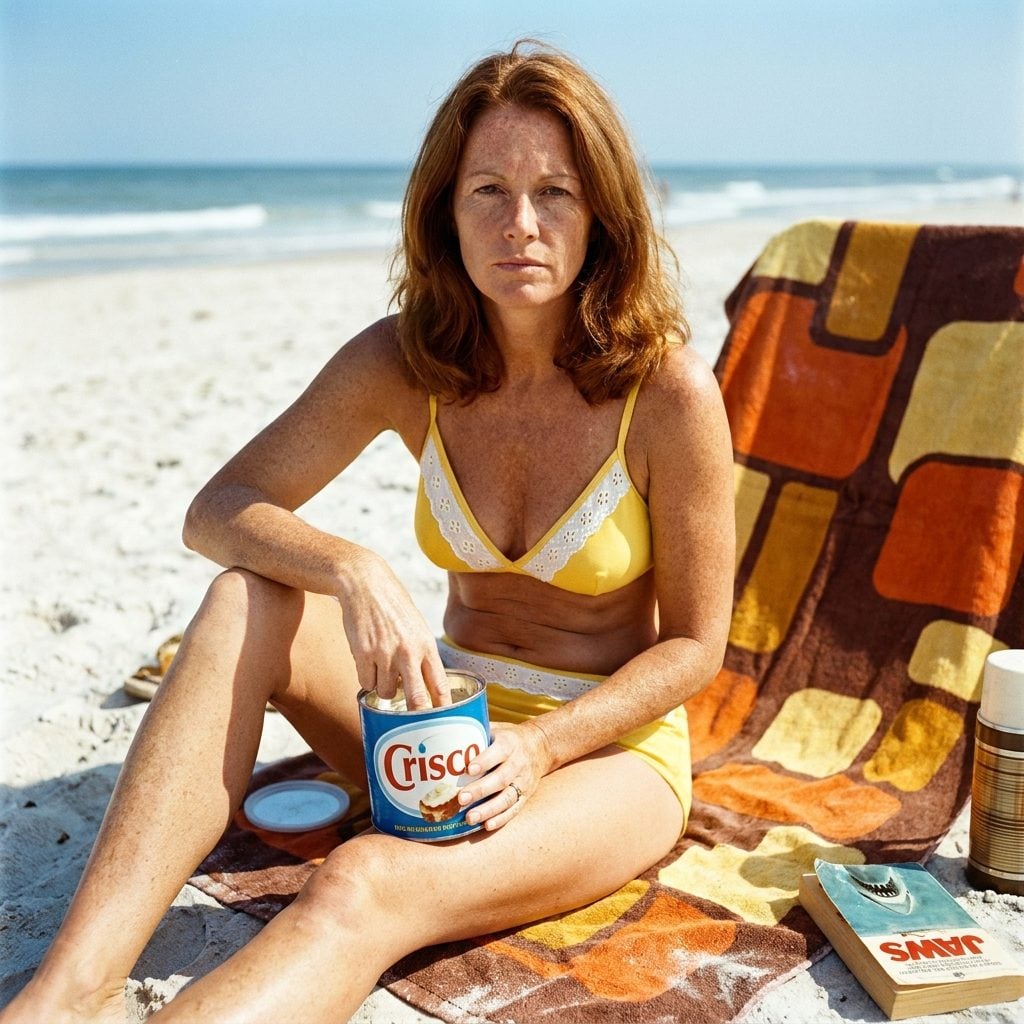
Someone’s mother started it. Nobody remembers whose. But at some point along every shore in America, a woman cracked open a blue can of Crisco, scooped some out with two fingers, and rubbed it across her shoulders with total conviction.
The logic was basically the same as the baby oil, moisture equals tan, tan equals beauty, consequences are a problem for future-you. And future-us did eventually meet those consequences. Mostly in the form of a dermatologist holding a magnifying glass and sighing heavily.
26. The Foil Reflector That Roasted Your Face Like a Butterball Turkey
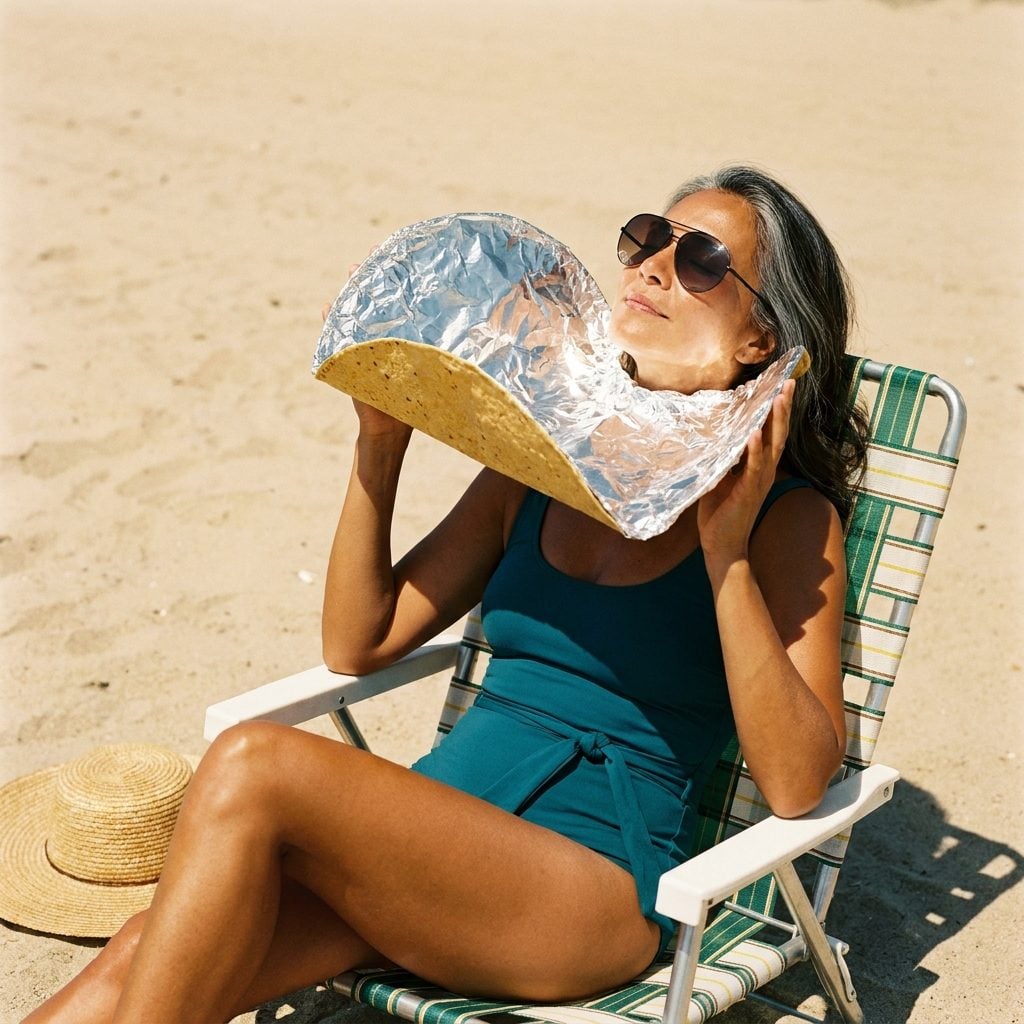
Picture a piece of cardboard, lined with Reynolds Wrap, bent into a crescent shape, and deployed at your chin like you were a satellite dish pointing your face directly at the sun. Now picture doing this for three hours. Now picture doing this every summer from 1971 to 1983 and genuinely believing your complexion would thank you.
These came in drugstores near the tanning lotions, which should tell you everything about what the beauty industry thought about our long-term skin health. The goal was an even, golden face tan. The result was, in many cases, a leather wallet with eyes.
We pointed our faces at the sun like little aluminum satellites and called it self-care.
25. Sea & Ski Tanning Lotion With SPF 2, Technically Sunscreen, Functionally a Dare
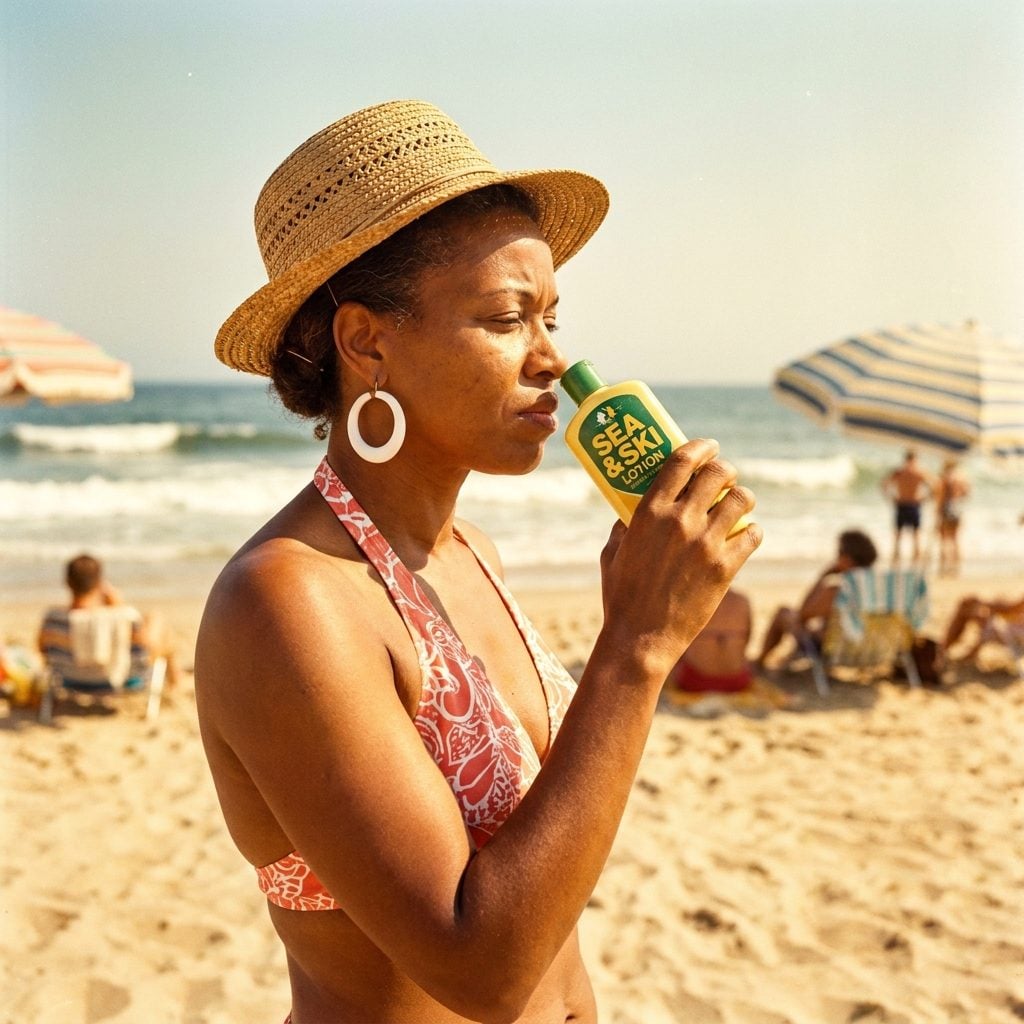
SPF 2. Two. That was the number on the bottle and everyone thought it was fine. For context, sitting inside near a window gives you roughly the same level of UV protection. Sea & Ski’s tanning lotion was the compromise option for women who wanted a tan but had at least read the word ‘sunburn’ before. It smelled tropical, it came in a satisfying squeeze bottle, and it did essentially nothing.
To be fair to Sea & Ski, they also made actual sunblock. We just didn’t buy that one. We were at the beach, not a construction site.
24. Coppertone QT Quick Tanning Lotion That Turned Every Pair of Hands Into Proof of a Crime
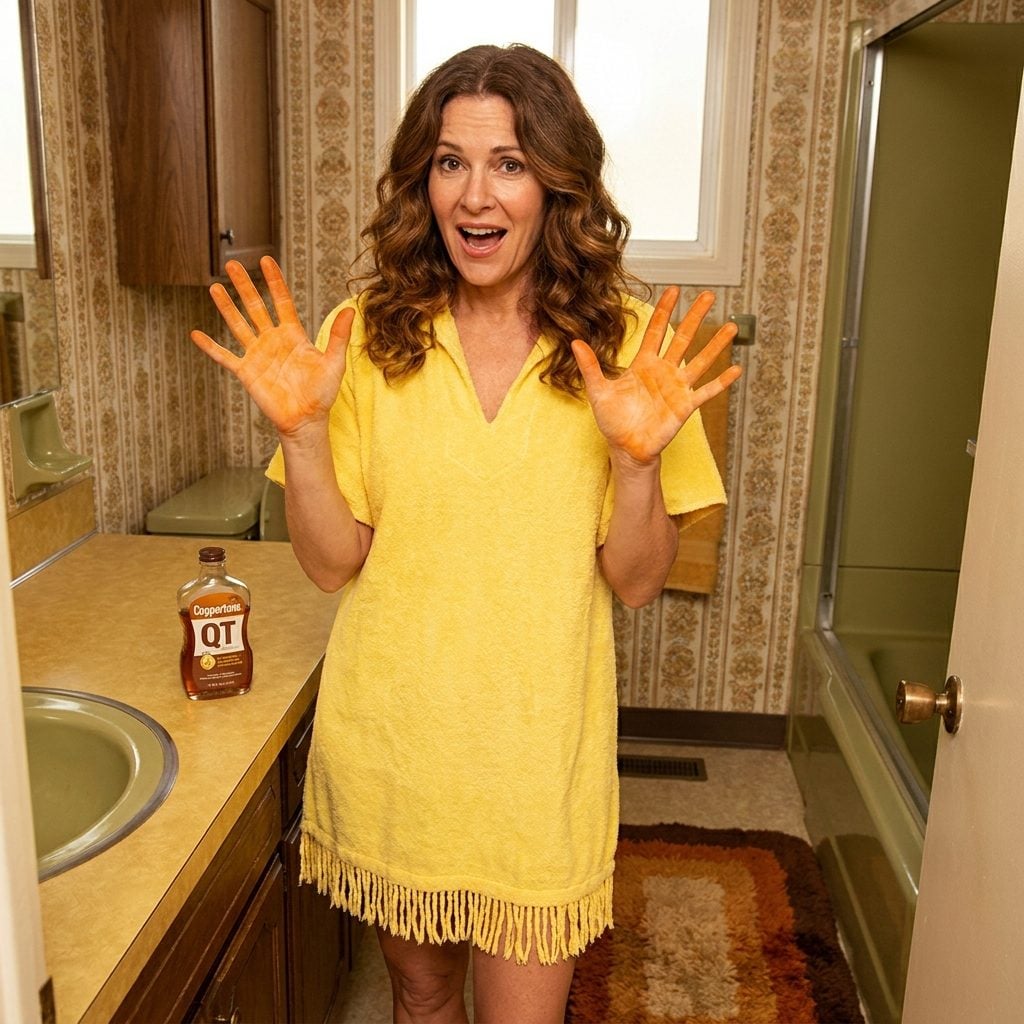
Coppertone Quick Tanning Lotion was supposed to give you a tan without the sun. Revolutionary concept. Slightly chaotic execution. You applied it, waited a few hours, and emerged with something that was definitely not quite your own skin color but was, technically, darker. The problem was your palms. Your palms were always the problem.
Every woman who used QT in the 1970s has a specific orange-hands memory. Maybe it was at school. Maybe it was on a first date. Maybe it was the morning of a job interview when you looked down and realized your hands looked like you’d been peeling carrots for six hours.
23. The Crocheted Bikini That Was a Swimsuit Until the Moment It Touched Water

Dry, these were genuinely beautiful. Boho masterpieces. The kind of thing your cool older cousin made herself at a beach house in Malibu and everyone wanted one. Women crocheted them by hand, bought them at craft fairs, and wore them with total confidence onto every beach on every coast.
Then they got wet.
The instant that first wave hit, the crocheted bikini transformed from a swimsuit into a small structural suggestion. The holes in the crochet expanded. The fabric clung. Everything became load-bearing in a way the original design had not accounted for. We wore them anyway, because they were so pretty dry, and hope is eternal.
22. Hawaiian Tropic Dark Tanning Oil, A Bottle of Coconut-Scented Ambition
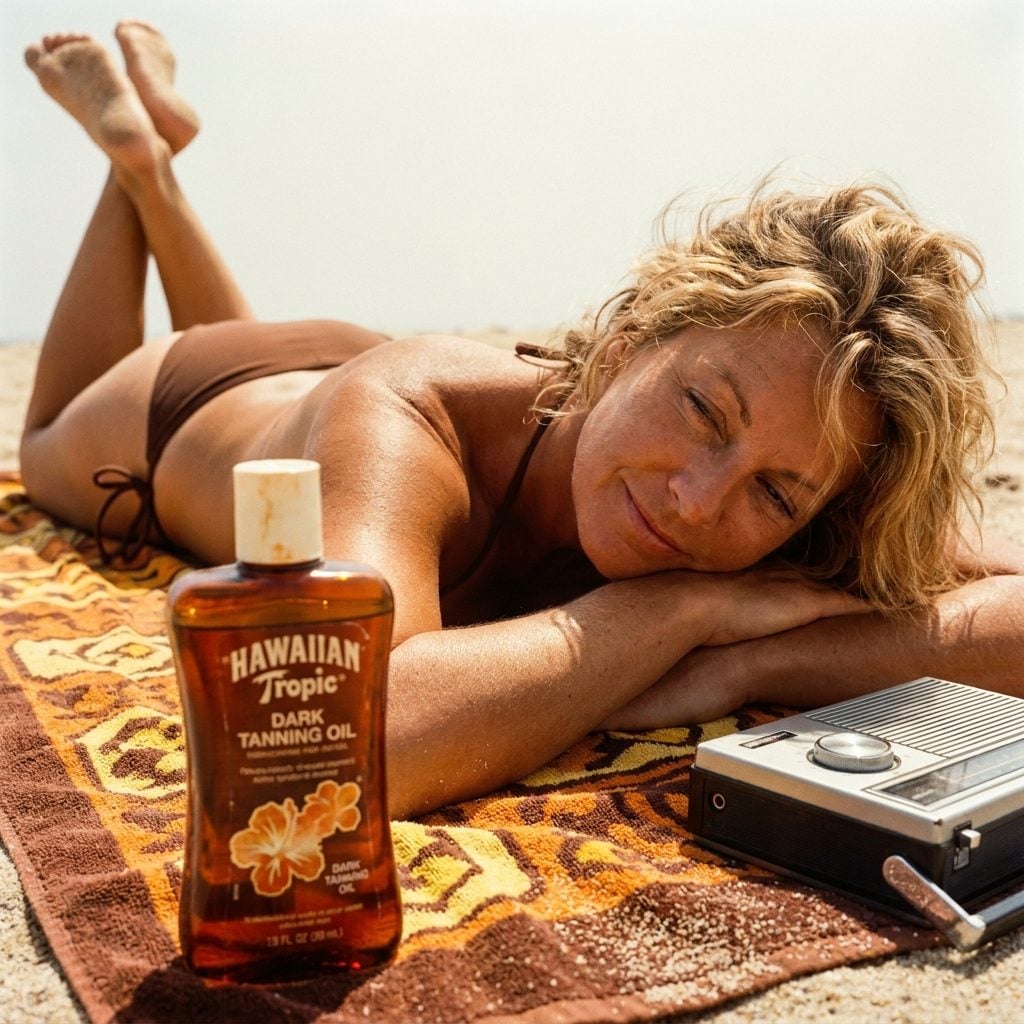
The bottle was huge. It was always huge. Hawaiian Tropic dark tanning oil came in a size that suggested you were either coating your entire body or preparing a very large turkey, and the smell, that thick coconut-tropical-synthetic-something smell, was the unofficial scent of every American beach from approximately 1972 to 1989.
SPF 0. Not a misprint. Zero. The whole point was maximum sun contact, maximum color, maximum consequences deferred to your forties. We bought it in bulk. We lent it to strangers on the beach. We still remember exactly what the pump nozzle looked like.
21. The Woven Straw or Macramé Beach Bag That Left a Trail of Itself Across Three Zip Codes

Every beach bag from 1974 was either woven straw or knotted macramé, and both of them shed constantly. Fibers appeared on your towel. Fibers appeared on your sunglasses. Fibers appeared in your lunch. By the end of a beach day you’d left a breadcrumb trail of natural fiber the whole length of the boardwalk.
They held everything and kept nothing organized. Sunscreen rolled to the bottom, car keys were permanently missing, and if anything liquid opened inside, the bag simply absorbed it and kept moving. We loved them anyway. They looked exactly right slung over a shoulder with a coverup and flat sandals, and looking right was most of the job.
20. The Transistor Radio You Planted in the Sand Like a Flag
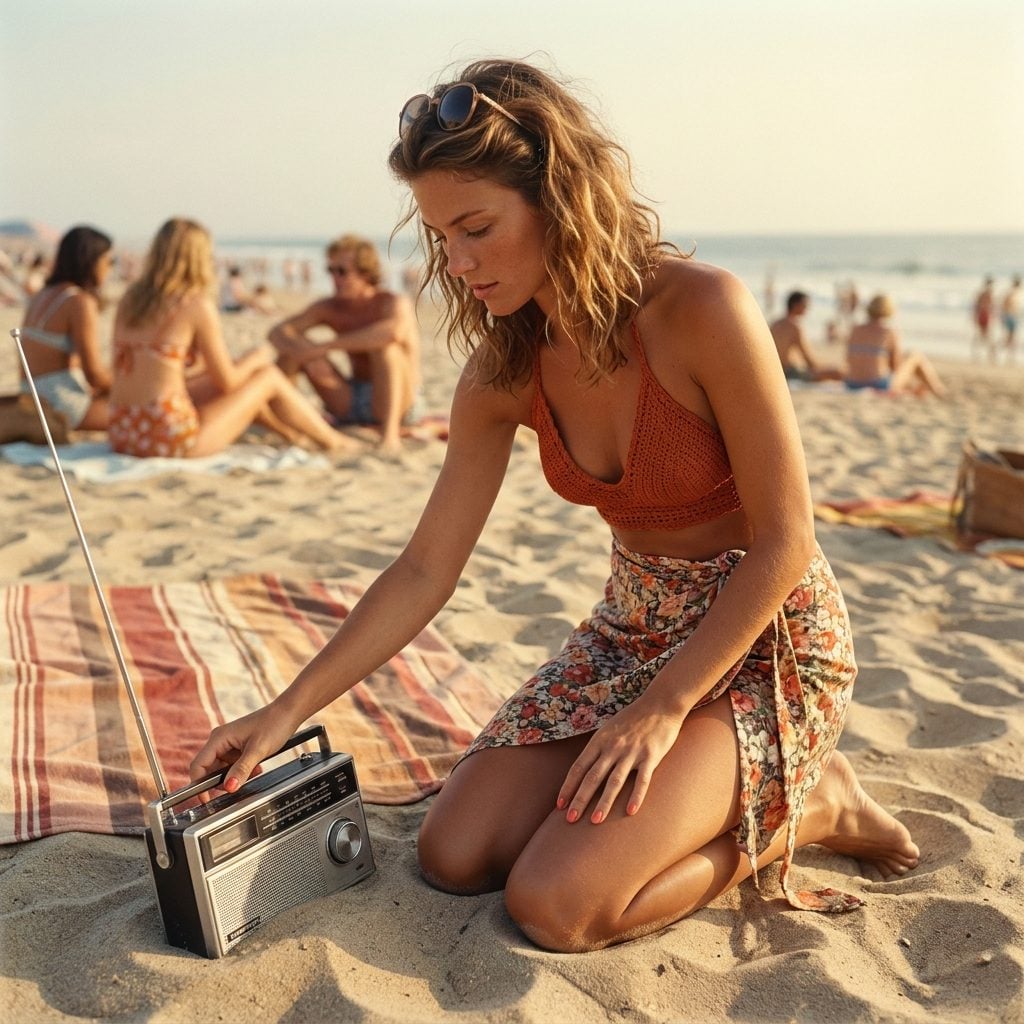
Nobody asked the beach whether it wanted to hear I Can See Clearly Now at full volume. Nobody asked the couple twenty feet away, either. You just wedged that little silver box into the sand at an angle, extended the antenna, and declared it your personal concert hall. AM static and all, because nobody was turning that dial for clearer reception when the song was this good.
The transistor radio was less a device and more a territorial marker. Yours meant the good stuff: WLS out of Chicago, WABC from New York, or whatever your local Top 40 station was serving that summer. You could hear four radios at once if the beach was full enough, and somehow that just felt like summer rather than noise pollution.
19. Tab Cola in a Glass Bottle, Sweating Ice Water Into the Cooler
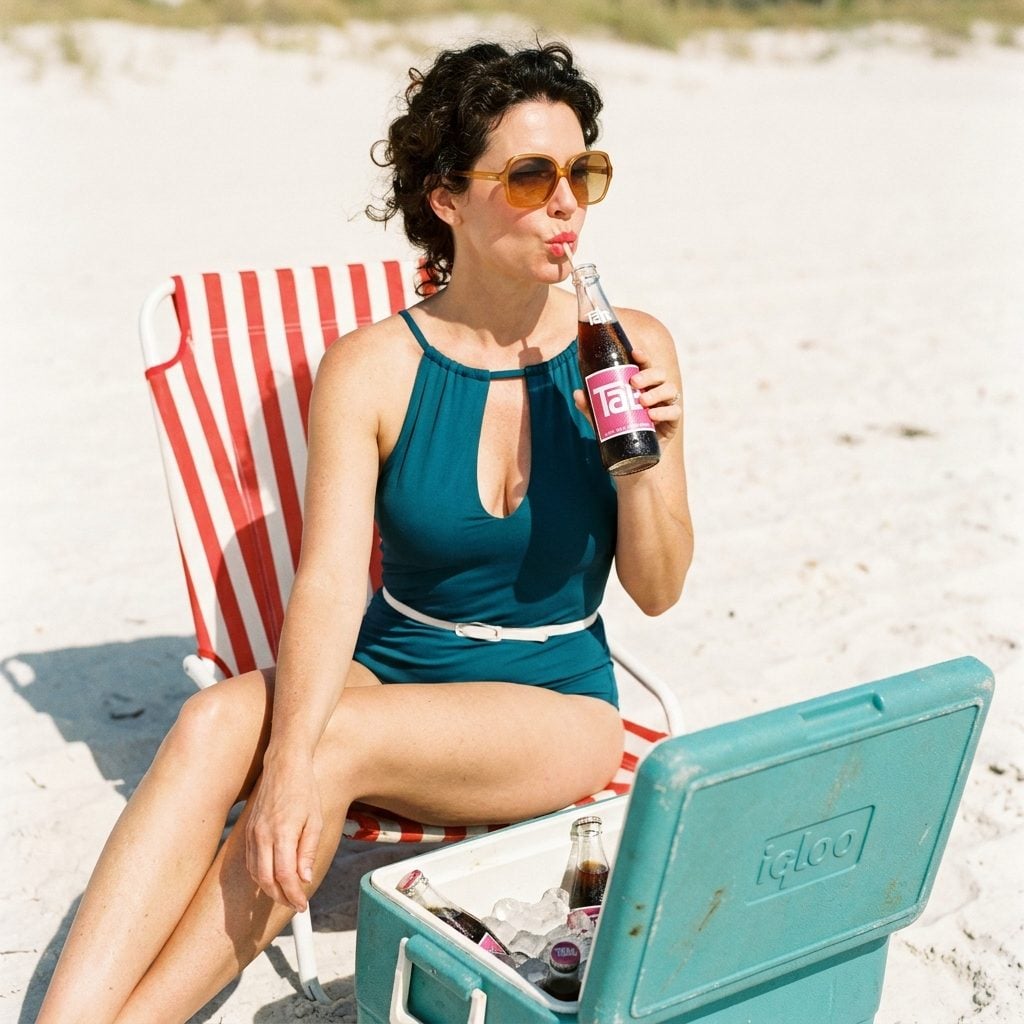
Tab cola did not taste good. This needs to be said plainly. It had a faintly chemical sweetness followed by something vaguely metallic, and the glass bottle made it sweat so aggressively that by the time you pulled it from the cooler your entire hand was soaked in ice water. We loved it. We loved it with a devotion that no modern diet drink has ever earned.
There was something about the pink label and the glass weight of it that felt like doing something slightly sophisticated. It was the diet soda of women who also owned a Jane Fonda workout record and genuinely believed both things were good for them. No judgment. We were all doing our best.
18. A Pack of Virginia Slims and a Paper Matchbook Tucked Inside the Cellophane

You’ve come a long way, baby. That slogan worked because it felt true at the time: a slim cigarette was coded as liberation, a marker of a woman who made her own choices, thank you very much. The matchbook was always from a restaurant or a hotel, folded inside the cellophane with the ease of someone who did this constantly, because she did.
Smoking on the beach was not only permitted but almost expected of a certain kind of woman in the 1970s. The cigarette would get sandy. The match would take three tries in the wind. None of this was seen as a problem. The whole thing was very French film in the imagination, even at a New Jersey shore beach in August.
17. A Bottle of Sun-In That Turned Brunettes a Particular Shade of Unfortunate Orange
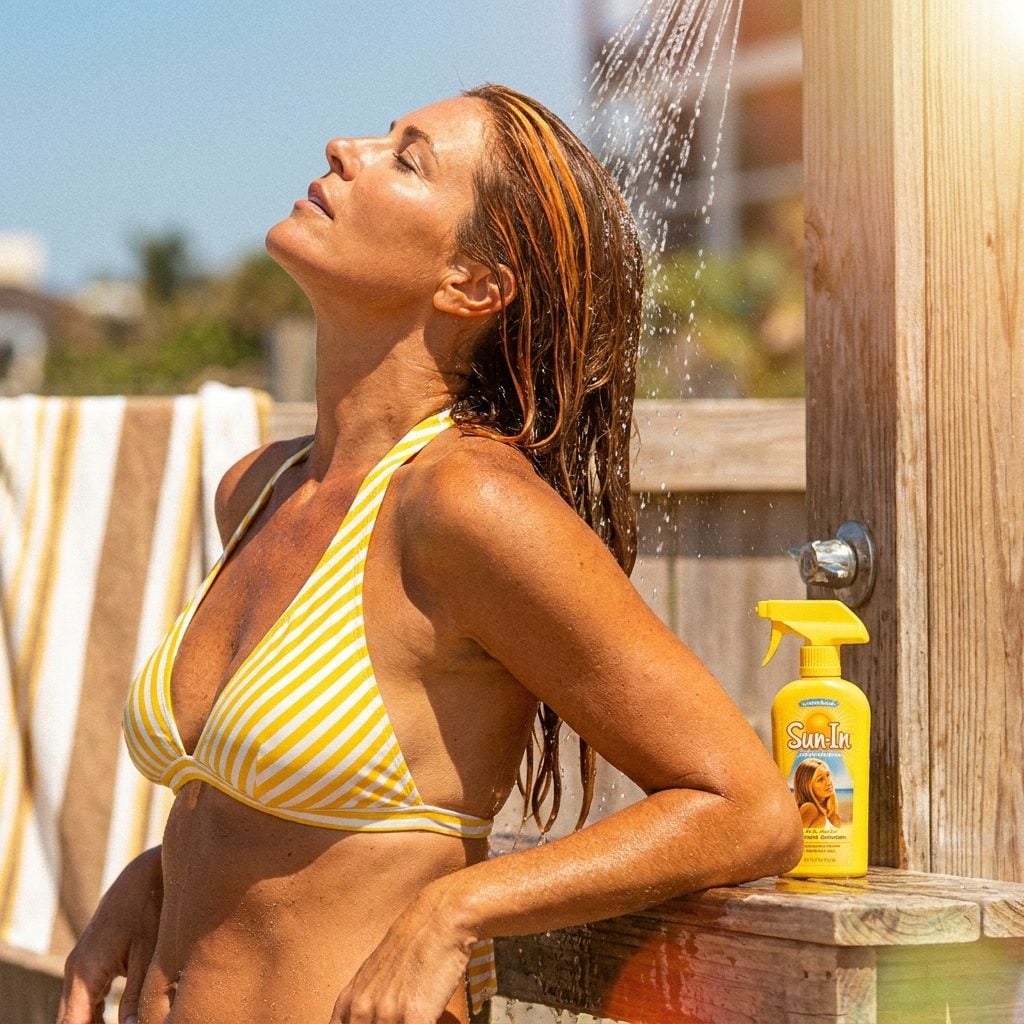
The bottle promised golden, sun-kissed highlights. What it delivered on anyone with brown hair was closer to the color of a traffic cone, but gradually, over the course of a week, so you never quite noticed the moment it went wrong. You’d spray it on, sit in the sun, and feel very much like the kind of person who had naturally lighter hair than they actually had.
The specific orange that Sun-In produced on dark hair is honestly one of the most recognizable beauty artifacts of the decade. It had its own color. There should be a Pantone chip for it. Somewhere between “harvest wheat” and “rusted mailbox,” and every single one of us wore it with complete confidence.
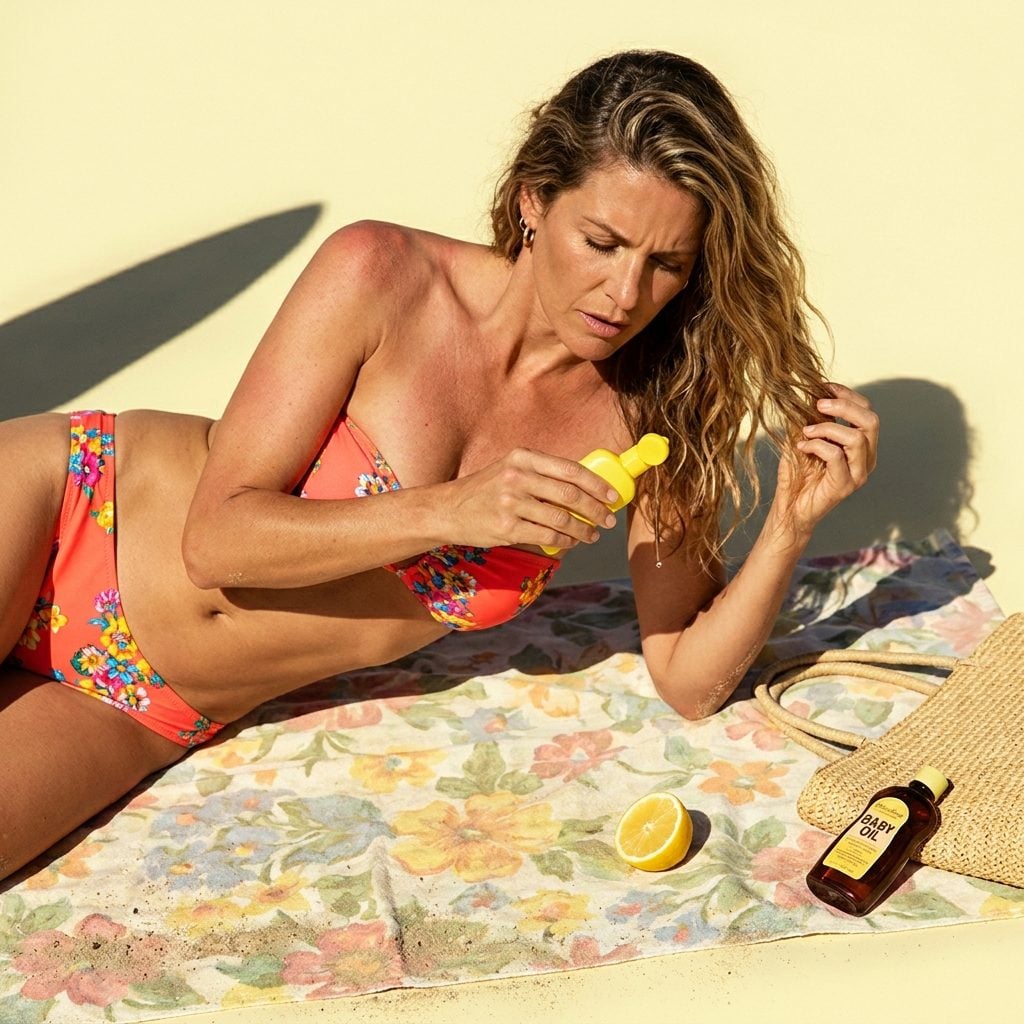
16. Lemon Juice in a Squeeze Bottle, the DIY Version That Actually Worked (Mostly)
❤️ Would you like to save this?
Before Sun-In, before anything came in a spray bottle with instructions, there was just your mother squeezing a lemon over her hair and telling you it was the same thing. And honestly? It kind of was. The citric acid opened the hair shaft, the sun did the rest, and if you were already light-haired you’d end up with something that looked genuinely natural.
The process had a certain ritual satisfaction to it. Half lemon, squeeze bottle, section your hair like you knew what you were doing, lie in the direct sun for two hours. The whole thing smelled like a lemon tart. The results were uneven in the best possible way, nothing like a salon, everything like a real summer.
15. Oversized Amber-Lens Sunglasses That Made Everyone Look Like a Movie Star or a Villain
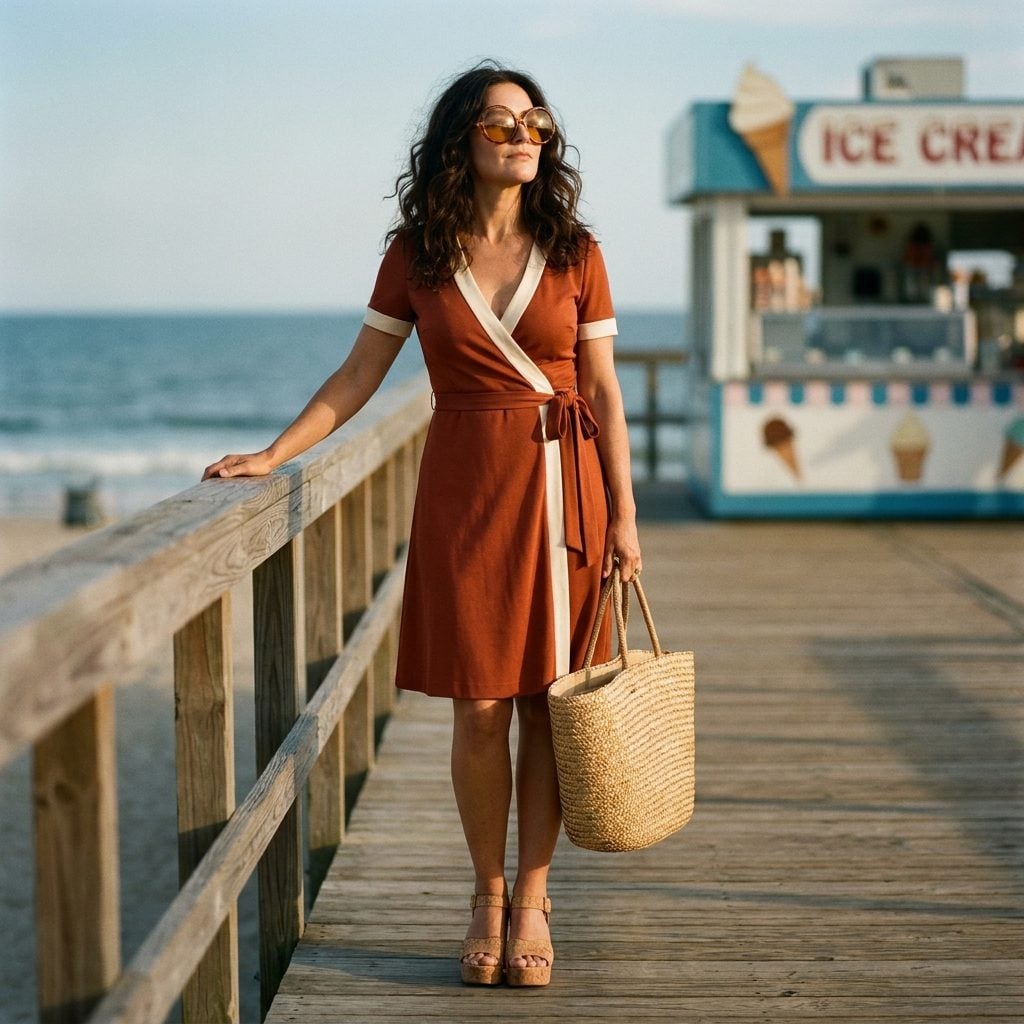
Everything looked better through amber lenses. The sky was more golden, the ocean was a deeper green, and you personally looked as though you had a film crew following you. The oversized round or slightly squarish frames of 1970s sunglasses were not subtle accessories. They were statements. They took up a third of your face and that was entirely the point.
The beach look was not complete without them. You needed something to do with your face when you were lying on a towel pretending not to watch people, and a giant pair of amber-tinted frames gave you both privacy and drama simultaneously. Jackie O understood this. We understood it too. We just expressed it at the public beach in New Jersey.
14. The Terry Cloth Headband Worn Bjorn Borg Style, For Every Activity Including Just Sitting There
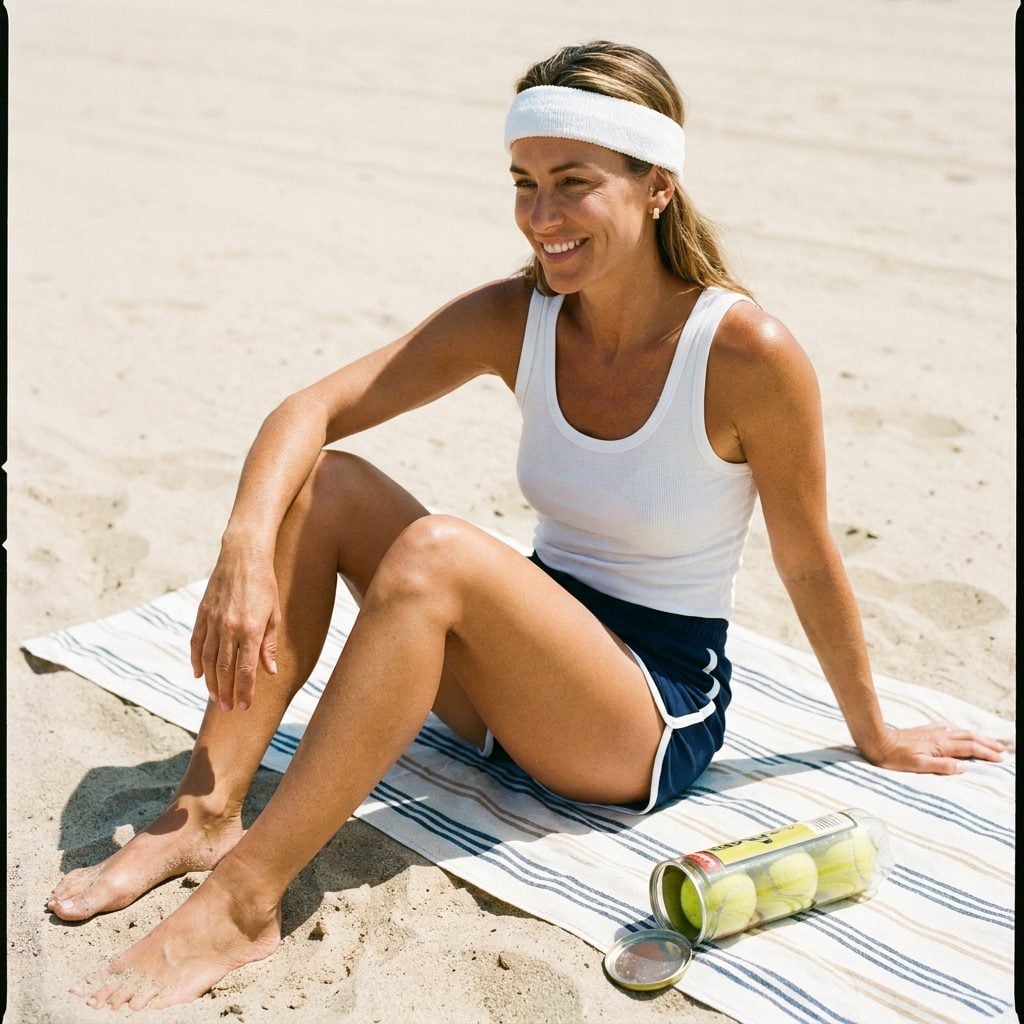
Bjorn Borg won Wimbledon in a headband and somewhere on every beach in America, women decided this was also relevant to their sunbathing situation. The thick white terry cloth headband was not functionally necessary at the beach. Your hair wasn’t that sweaty. You weren’t running anywhere. But it looked athletic and pulled-together in a way that said I do things, even while you were lying flat on a towel reading a paperback.
They came in colors too: red, navy, yellow, a sort of avocado green that was extremely 1977. Some women stacked two. Some wore them over a full blowout, which was a choice. The terry cloth material meant it picked up sand like velcro, and by the end of the day you had essentially a small beach on your head.
13. Jordache Jeans Folded in the Bag for After, Because the Evening Started the Second You Left the Sand

You did not go home between the beach and dinner. Going home was a defeat. The skill was fitting everything you needed for a full evening into one bag, and the centerpiece of that plan was always a pair of jeans so stiff with indigo dye they could practically stand on their own.
Jordache. Gloria Vanderbilt. Sergio Valente, if you were feeling ambitious. The logo on the back pocket was the entire point. These were status jeans at a time when jeans were becoming a serious fashion item rather than just workwear, and you changed into them in a beach restroom with the damp determination of someone who had plans.
You’d shake the sand out of your hair, pull on that peasant blouse you’d packed flat at the bottom, and walk out onto the boardwalk feeling like a completely different person than the one who’d been lying in the sand four hours earlier. That transformation, performed in a sticky changing room with no mirror, was its own kind of art.
12. Cork-Soled Wedge Sandals That Sank Two Inches Into the Sand With Every Step

You had to commit a full act of faith just getting from the parking lot to the shoreline in these. The cork compressed under your weight, your ankles rolled left, your dignity rolled right, and the sand swallowed the whole shoe up to the ankle strap before you’d gone six feet. Every woman on the beach was doing the same lurching walk and nobody said a word.
They came from Thom McAn or Baker’s, usually in tan or white leather with a little macramé detail near the toe. They were extraordinarily impractical and we wore them anyway because they made our legs look long and the 1970s demanded sacrifice.
11. The Jackie Collins Paperback That Gained Half a Pound in Water Weight by Tuesday

The spine cracked on page one. By page forty the whole thing had gone soft and puffy — a novel that had apparently spent the week in a steam room. Sand between pages 112 and 113. A smear of Coppertone across somebody’s dialogue about diamonds. The cover curled into a permanent C-shape you could never flatten, not that anyone bothered.
Nobody packed anything respectable. Jackie Collins, Sidney Sheldon, Harold Robbins if you were feeling reckless. Your mother grabbed it at the airport Hudson News without so much as glancing at the back cover, and she’d finished it before hotel checkout. These books were meant to be destroyed — they absorbed oil, salt, condensation from the Tab bottle, whatever else the beach flung at them. You didn’t dog-ear them. You just folded whole chapters in half while you rolled over on the towel.
Reading Hemingway poolside? That was for people who wanted to be seen reading. We wanted to find out if the heiress got the villa.
10. Tiger Beat or Cosmo Folded Open to a Quiz That Would Allegedly Change Your Life
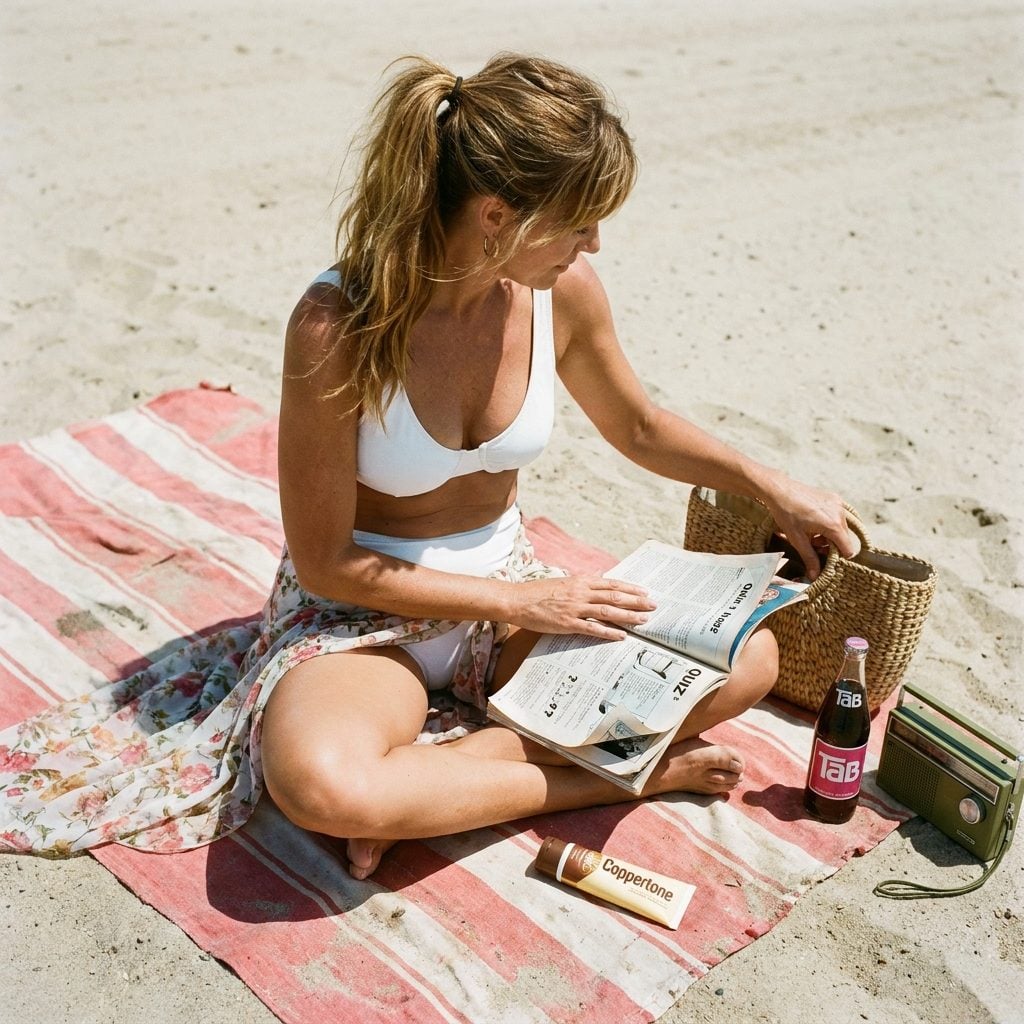
“Are You His Type? Answer These 12 Questions and Find Out.” The answer was always some version of yes, depending on which options you circled, and the options were frankly not a wide range. You did the quiz three times to get the result you wanted and then you read your horoscope and then you did the quiz again.
The magazine itself was already a disaster by the time you arrived. Folded in half lengthwise in the beach bag, salt-stiff at the corners, the subscription card fallen out somewhere in the dunes. Cosmo had actual journalism in it in the 1970s, which felt radical and odd next to the ads for Virginia Slims. Tiger Beat was just photos of Shaun Cassidy and nobody is pretending otherwise.
9. A Wicker Beach Mat With the Structural Integrity of a Suggestion
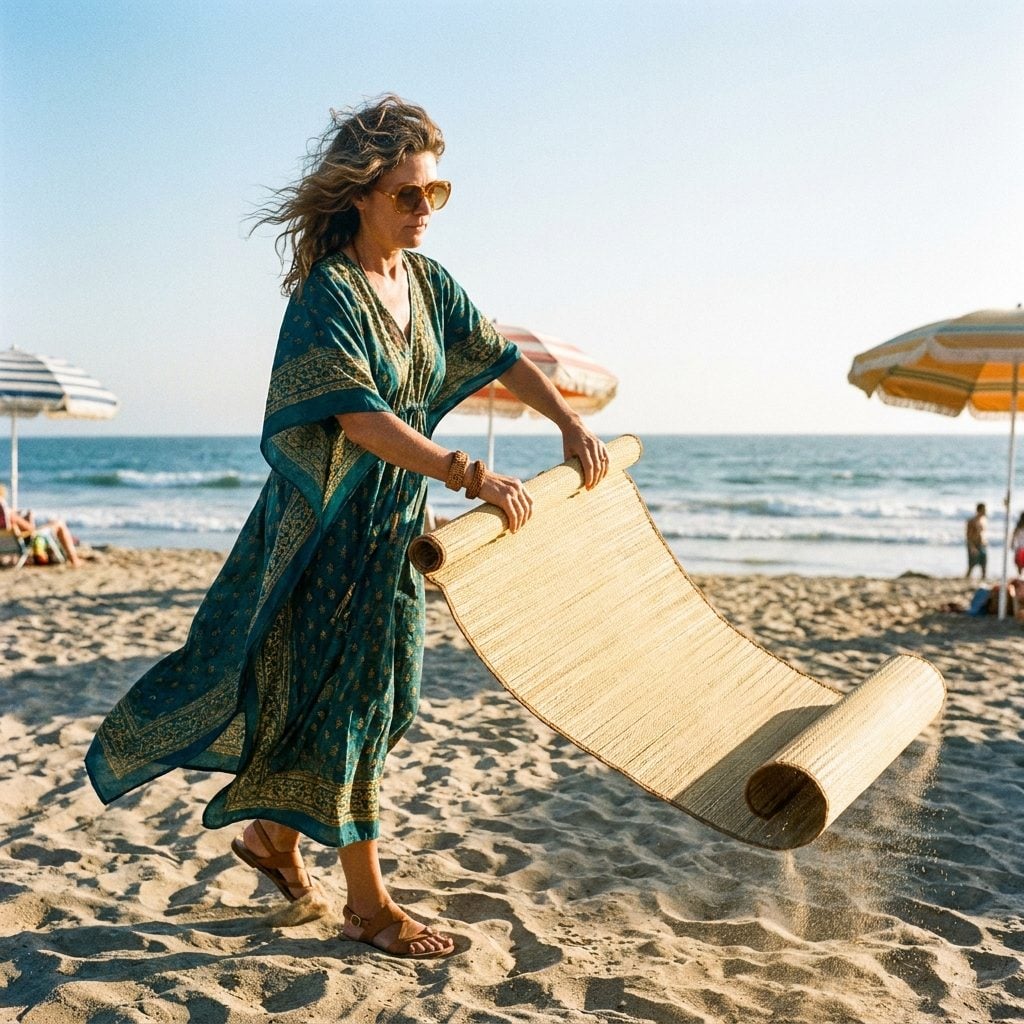
Every crease in the wicker left a perfect waffle impression on the backs of your thighs and you just accepted that as part of the beach experience. It didn’t insulate you from the heat of the sand in any meaningful way. It rolled up into a scroll and unrolled into a slightly different scroll, never fully flat, always curling at the two short ends like a diploma for a degree in poor life choices.
You used it because your mother used it before you. The terry cloth towel existed and was widely available and we still brought the mat. I have no good explanation for this.
8. Tupperware Packed with Egg Salad Sandwiches That Had Been Warm Since 9 a.m.
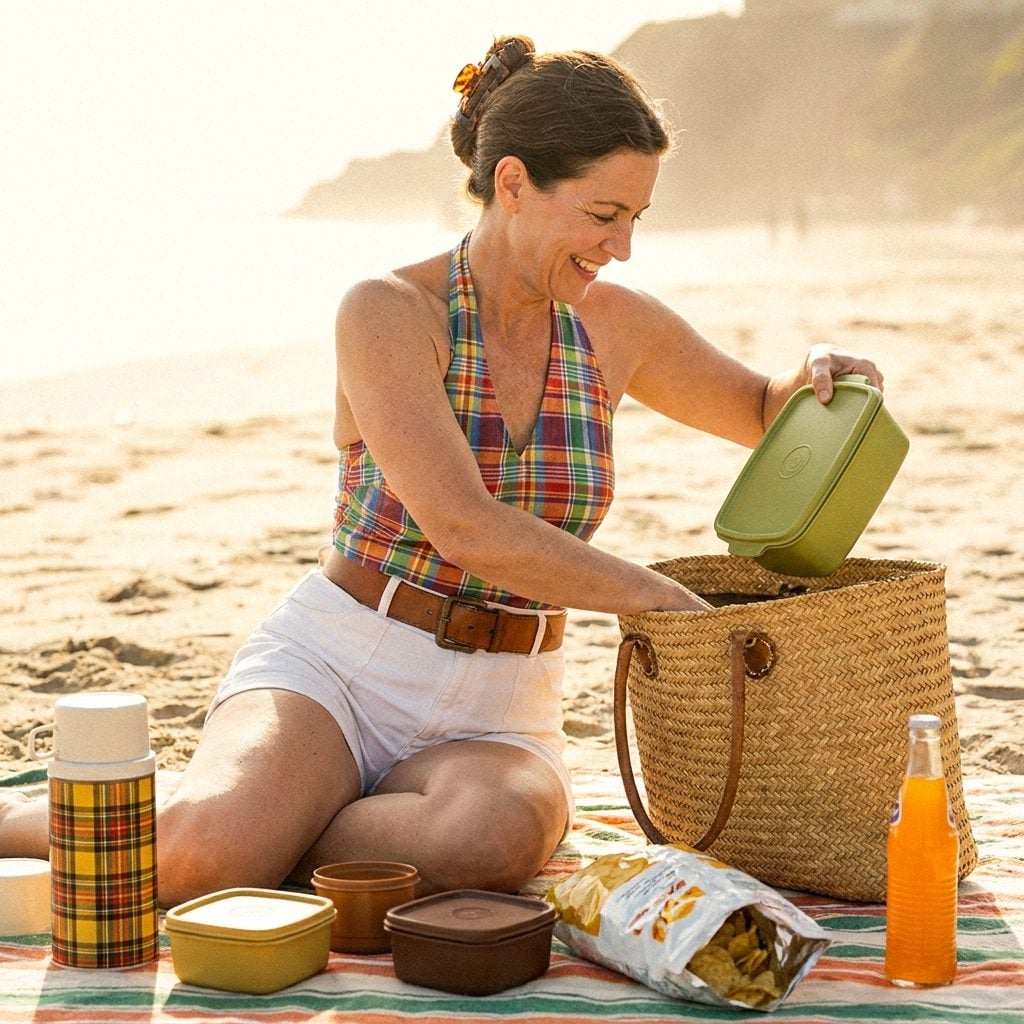
The Tupperware was in avocado green or harvest gold and it sealed with that satisfying burp-click that meant business. Inside: egg salad sandwiches on white bread, wrapped in wax paper, soft in a way that had moved past moist and into something approaching warm pudding. You ate them anyway because you were starving and your mother had made them at seven in the morning and the nearest food stand was a quarter mile of hot sand away.
There was also a container of warm grapes and some chips that had gone soft. Nobody complained. That was just lunch.
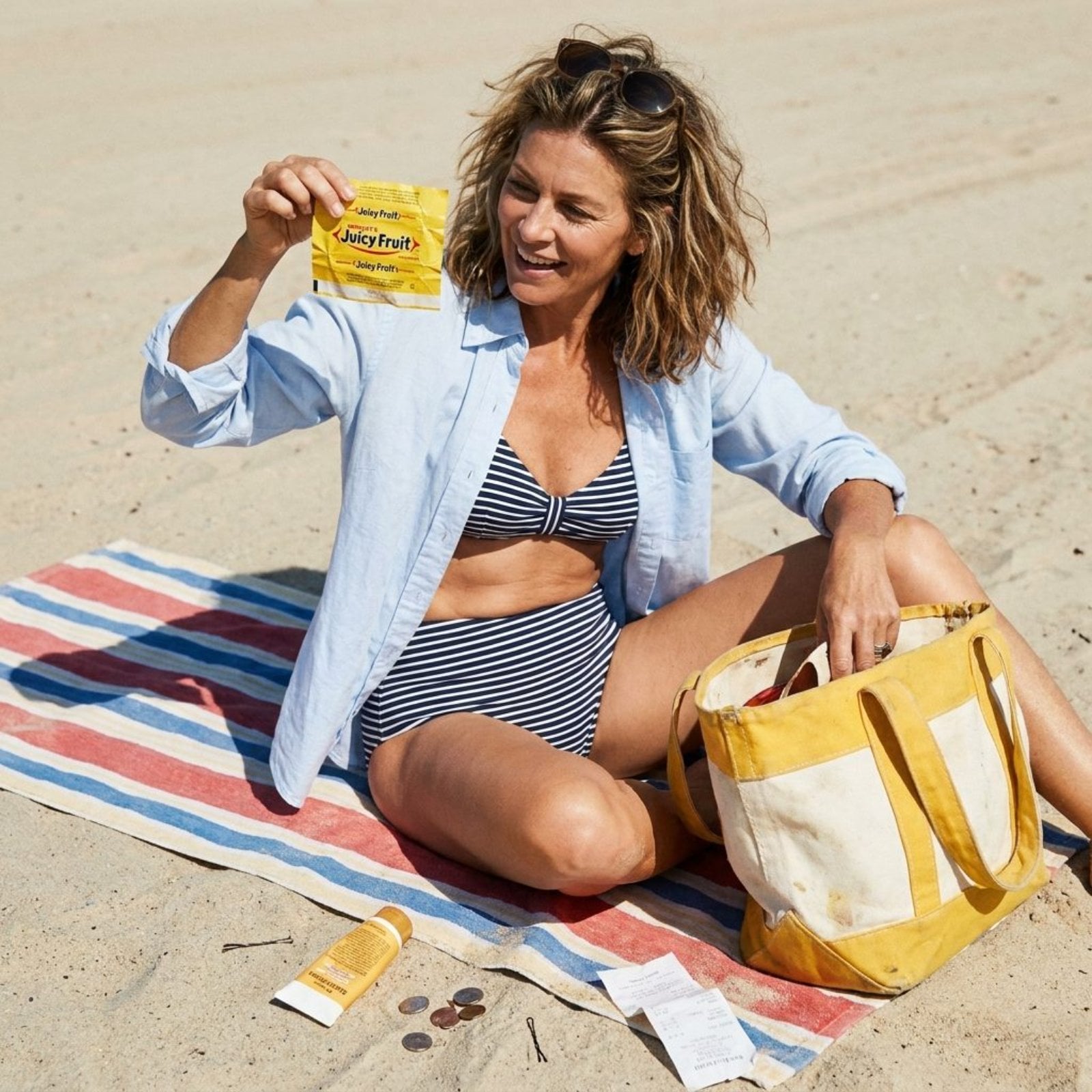
7. A Pack of Wrigley’s Juicy Fruit Fused to the Wrapper and Still Worth Eating
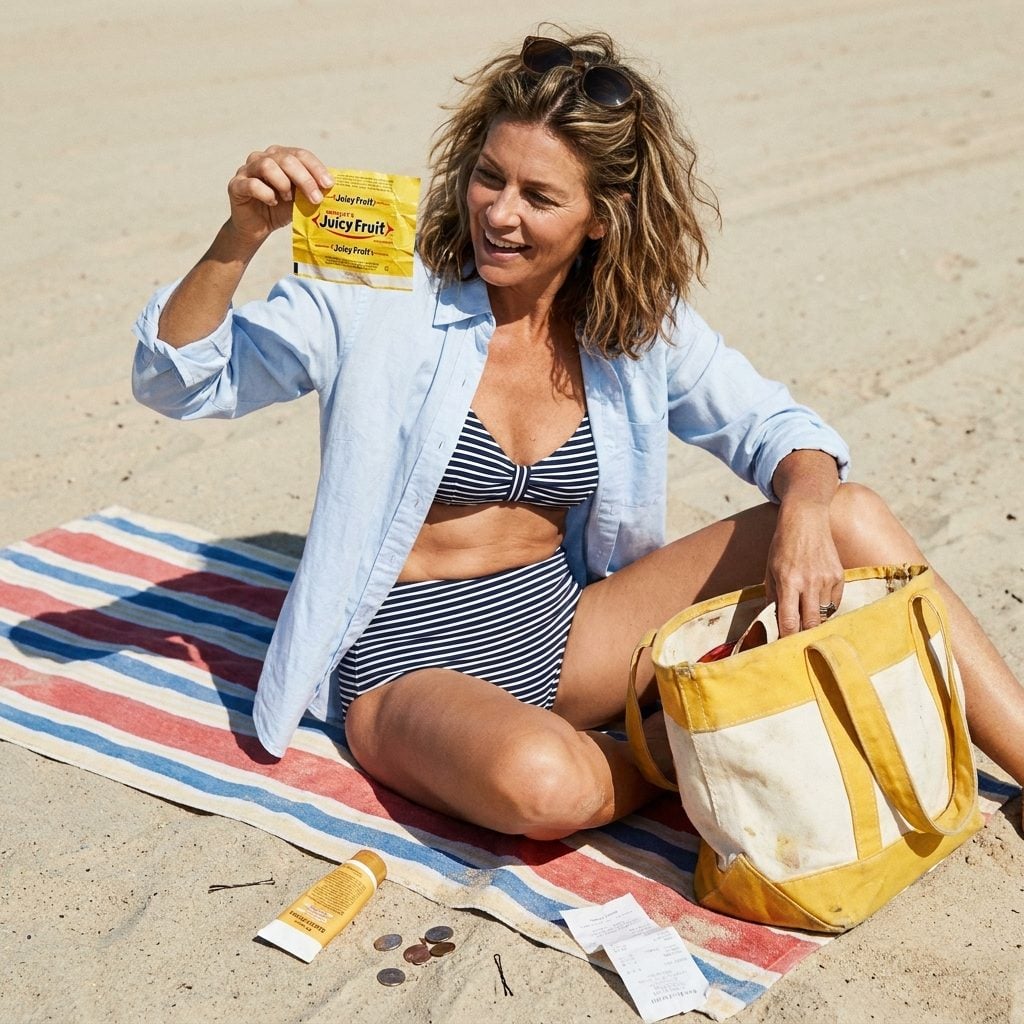
The wrappers fused to the sticks somewhere around the second hour and you peeled them off anyway and ate the gum anyway and the flavor lasted about forty-five seconds before becoming a bland, slightly waxy chew. Didn’t matter. Juicy Fruit at the beach was load-bearing. The yellow pack, flat and warm from the bottom of the bag, living alongside loose change and somebody’s broken barrette.
Spearmint was acceptable but Juicy Fruit was correct. This is not up for debate and I will not be entertaining alternative positions.
6. Love’s Baby Soft Sprayed Generously Over Sunscreen Like a Full Armor System

It smelled like powdered sugar and optimism and you absolutely marinated yourself in it before leaving the beach, over the top of dried-out Coppertone, over salt residue, over approximately four hours of accumulated summer. The combination created something that had never been classified by science and probably never should be.
Love’s Baby Soft launched in 1974 and immediately colonized every teenage girl’s dresser, locker, and beach bag in America. The ads were controversial even then, a little girl blowing a dandelion, the tagline “innocence is sexier than you think”, which in retrospect was deeply strange. We were all just trying to smell nice. The bottle was pink. That was enough.
5. A Bottle of Jovan Musk or Hai Karate Cologne Tucked in the Bag, Just in Case
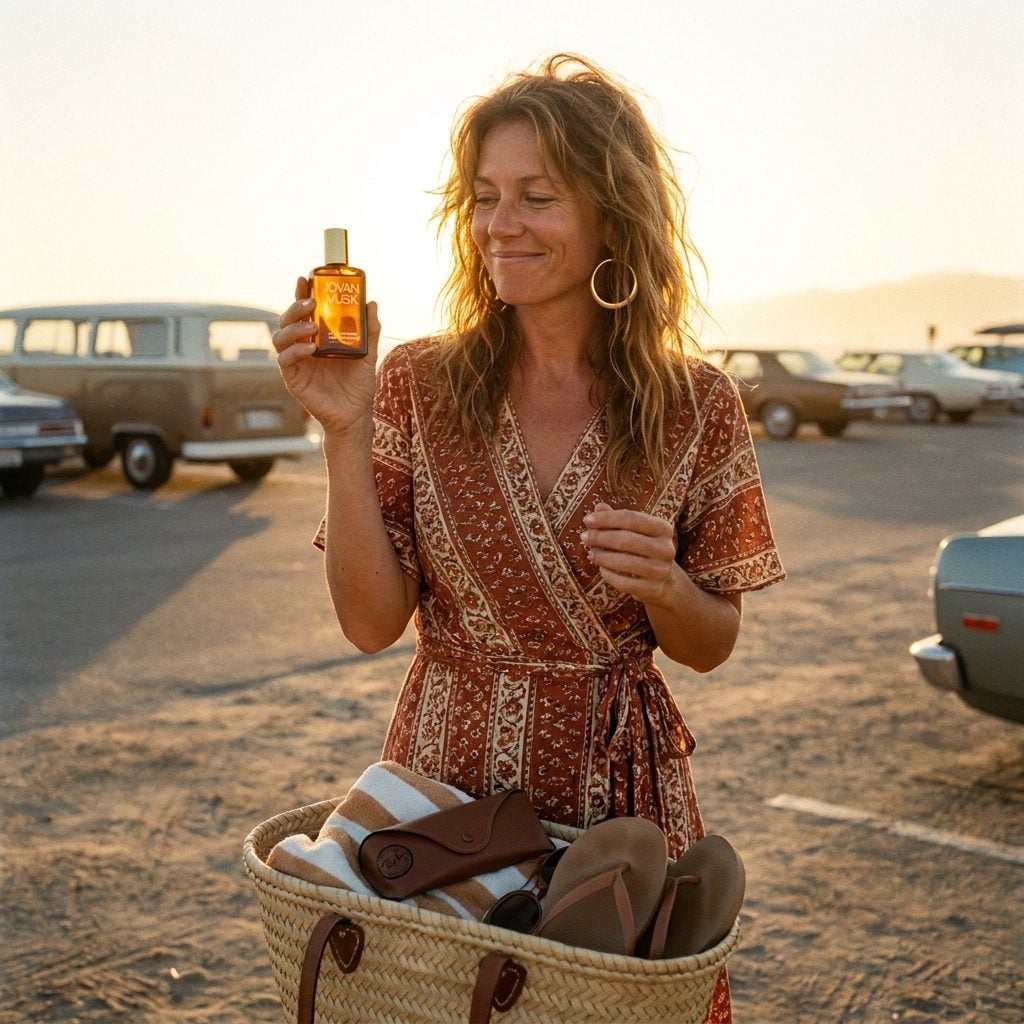
Jovan Musk launched in 1973 and immediately became the unofficial cologne of every person trying to signal something at the beach. It was musky and warm and slightly animalic and the ads were all about attraction in a very direct, non-subtle way that the 1970s found perfectly appropriate. You brought it to the beach the way you’d bring a contingency plan, you weren’t sure you’d need it, but the situation might develop.
Hai Karate was the budget alternative, the one that came in the box with the self-defense instructions because the cologne was supposedly too irresistible to leave unaddressed. This was the marketing and we accepted it completely. Both bottles lived at the bottom of the bag under the Tupperware and the melted gum, waiting for an opportunity that may or may not have ever arrived.
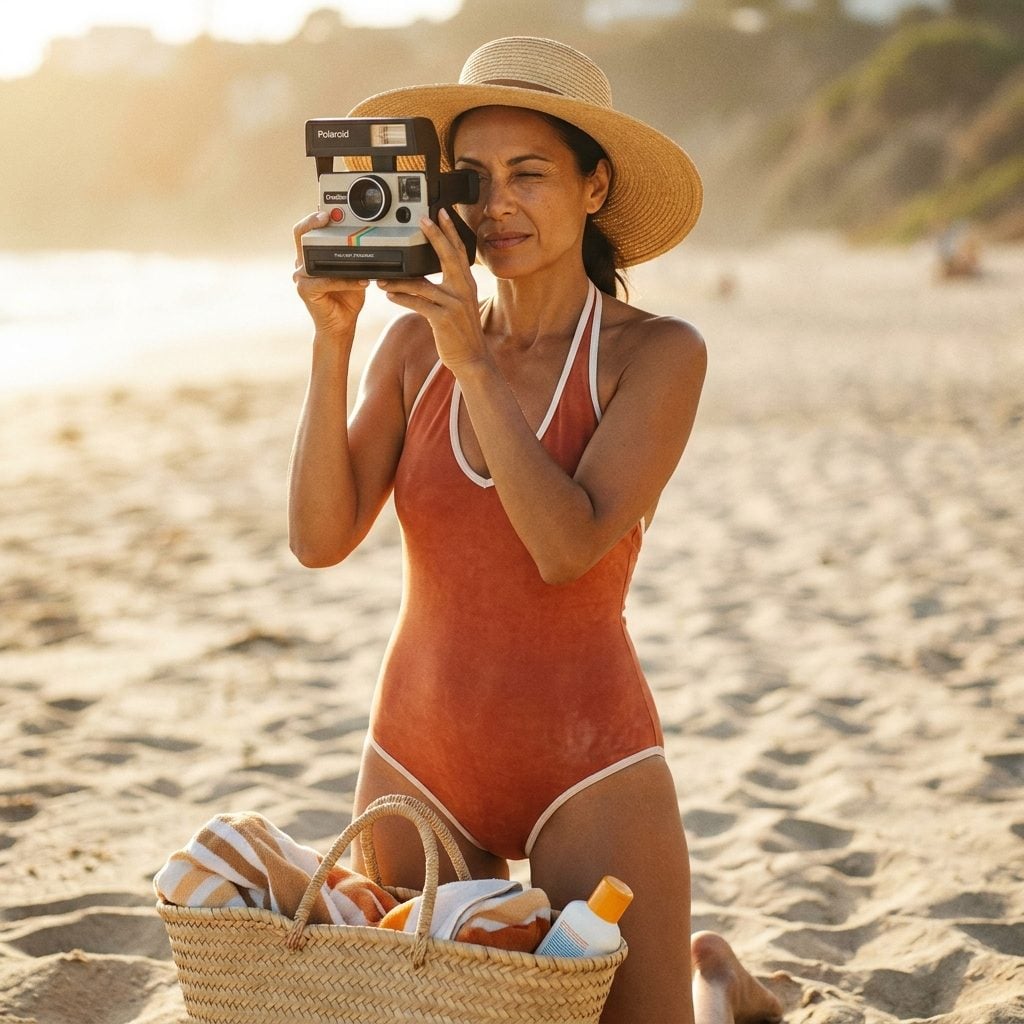
4. The Polaroid Camera You Treated Like a Loaded Weapon
❤️ Would you like to save this?
You got twelve shots per pack. Twelve. And each one made a small but real sound in your wallet. So you stood there, eye pressed to the viewfinder, watching your cousin try to look casual by the water, and you thought: is this the one? Is my cousin waving at a seagull actually worth sixty-seven cents?
The Polaroid Land Camera was the status object of every 1970s beach trip, and the ritual of watching the image bleed into existence under someone’s armpit (warmth helped, apparently) was genuinely thrilling. You fanned it. You checked it too early. You ruined it. Then you did the math on how many shots you had left and put the camera back in the bag for at least another hour.
3. Lip Smackers in Dr Pepper Flavor, Worn Down to a Sad Little Nub
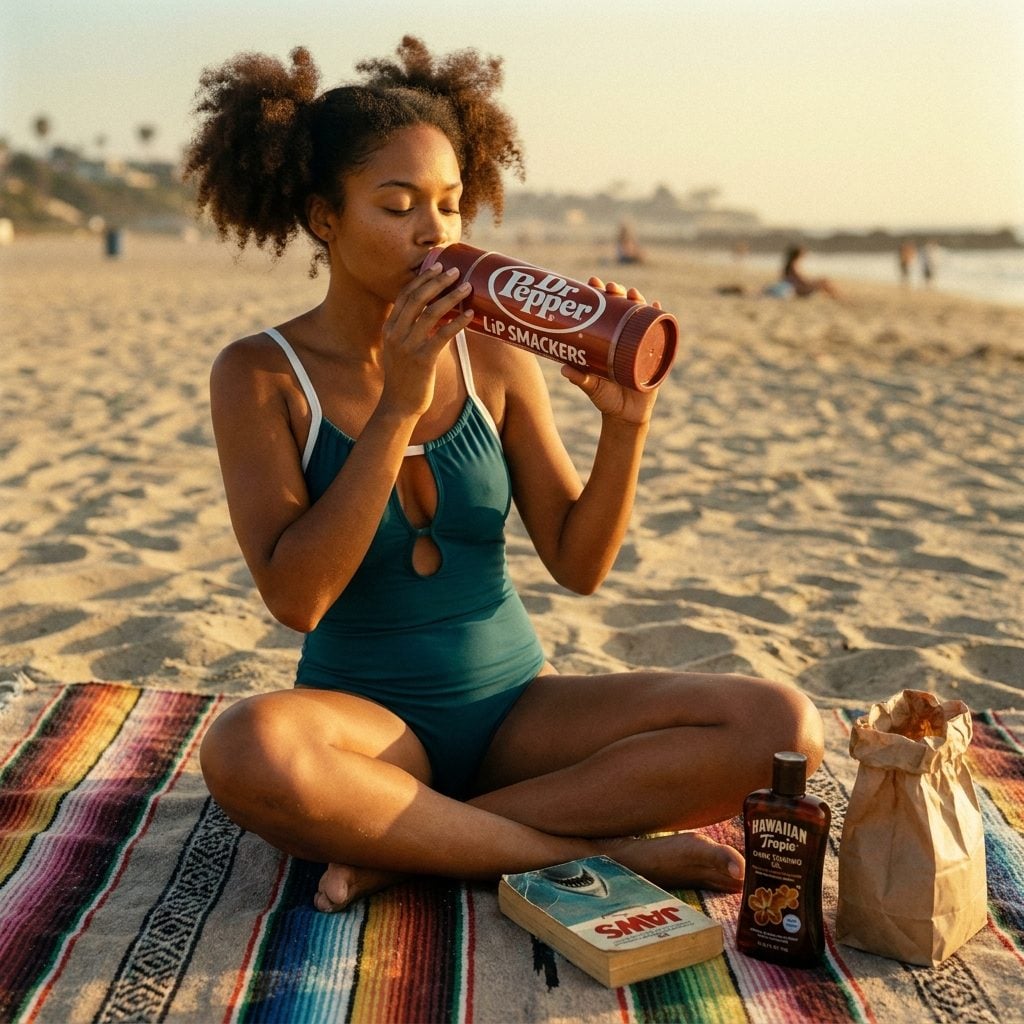
The Dr Pepper Lip Smackers was not lip balm. It was a personality. You kept it in the front pocket of your bag so it was always findable, you reapplied it approximately forty times per beach day, and if someone asked to borrow it, there was a brief internal negotiation about friendship before you handed it over.
Bonne Bell launched Lip Smackers in 1973, and the Dr Pepper flavor, that specific fake-cherry-cola sweetness, became the defining smell of 1970s girlhood faster than almost anything else. The tube got warm and soft in the sun and smelled even stronger for it. You can probably smell it right now just reading this.
2. The Plastic Rain Bonnet Folded Into a Square the Size of a Matchbook

Every woman over a certain age carried one of these, folded into a tiny laminated square at the bottom of her purse, and no one under forty had any idea it was there until it was suddenly on someone’s head in a light drizzle and you understood, viscerally, what practical elegance actually looked like.
The plastic rain bonnet was a holdover from the era when getting your hair set at the salon was a weekly event worth protecting. Taking it to the beach made perfect sense if the alternative was letting salt wind undo a Friday appointment. There is something almost radical about caring that much about your hair. We’ve lost that particular commitment entirely.
1. Ben-Gay Applied to a Third-Degree Sunburn Because the Body Deserved Consequences

Nobody reached for Ben-Gay on a sunburn because they thought it would help. They reached for it because it was there, it smelled medicinal, and the burning-on-top-of-burning sensation felt like at least something was being done about the situation.
This was the 1970s approach to sun damage in total: you went out at noon with SPF 2 Coppertone, you turned the color of a boiled lobster, and then you applied a mentholated muscle rub to your shoulders and called it a night. The idea that you might prevent the sunburn rather than dramatically treat it had simply not arrived yet.
The smell of Ben-Gay on a sunburn is one of those deeply specific sense memories that has no nostalgia in it whatsoever. Just pain. And yet somehow, the summer it happened was still a good one.