❤️ Would you like to save this?
There was nothing casual about denim in the 1970s. Every seam was a statement, every pocket a canvas, every waistband a declaration of exactly who you were and which side of the cultural divide you stood on. We ironed, embroidered, bleached, patched, and bedazzled our jeans into something that felt like self-portraiture. The smell of hot iron on a peace-sign decal. The satisfying weight of a wide belt sliding through loops built for exactly that moment. If any of this is already doing something to your chest, keep reading.
FYI, thanks to AI imagery software, we’re able to create very specific fashion and hairstyle examples to illustrate the points being made. In some cases, imagery is exaggerated to hammer home the point. Also, assume links that take you off the site are affiliate links such as links to Amazon. this means we may earn a commission if you buy something.
25. The Complete Denim Story: Every Detail That Made the ’70s
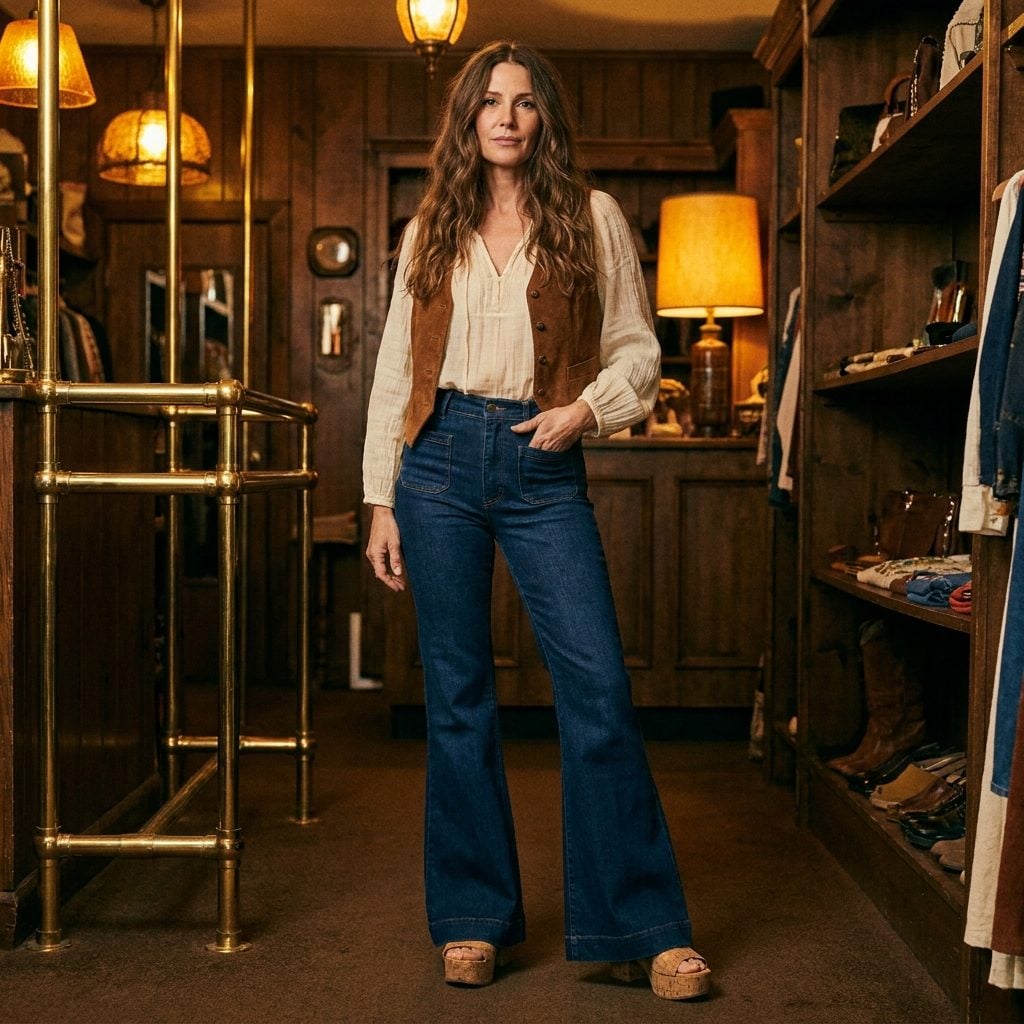
Before we get into the individual pieces, let’s be honest about something: the 1970s were the decade when denim stopped being workwear and became a full identity. You didn’t just wear jeans. You wore your jeans, broken in exactly right, flared at exactly the correct width, patched and embroidered and cuffed in ways that told people exactly who you were before you even opened your mouth.
From the campus hallways to the disco floor (yes, denim went to the disco), these were the details that separated the girls from the women, the followers from the originals. Scroll through and try not to remember every single one.
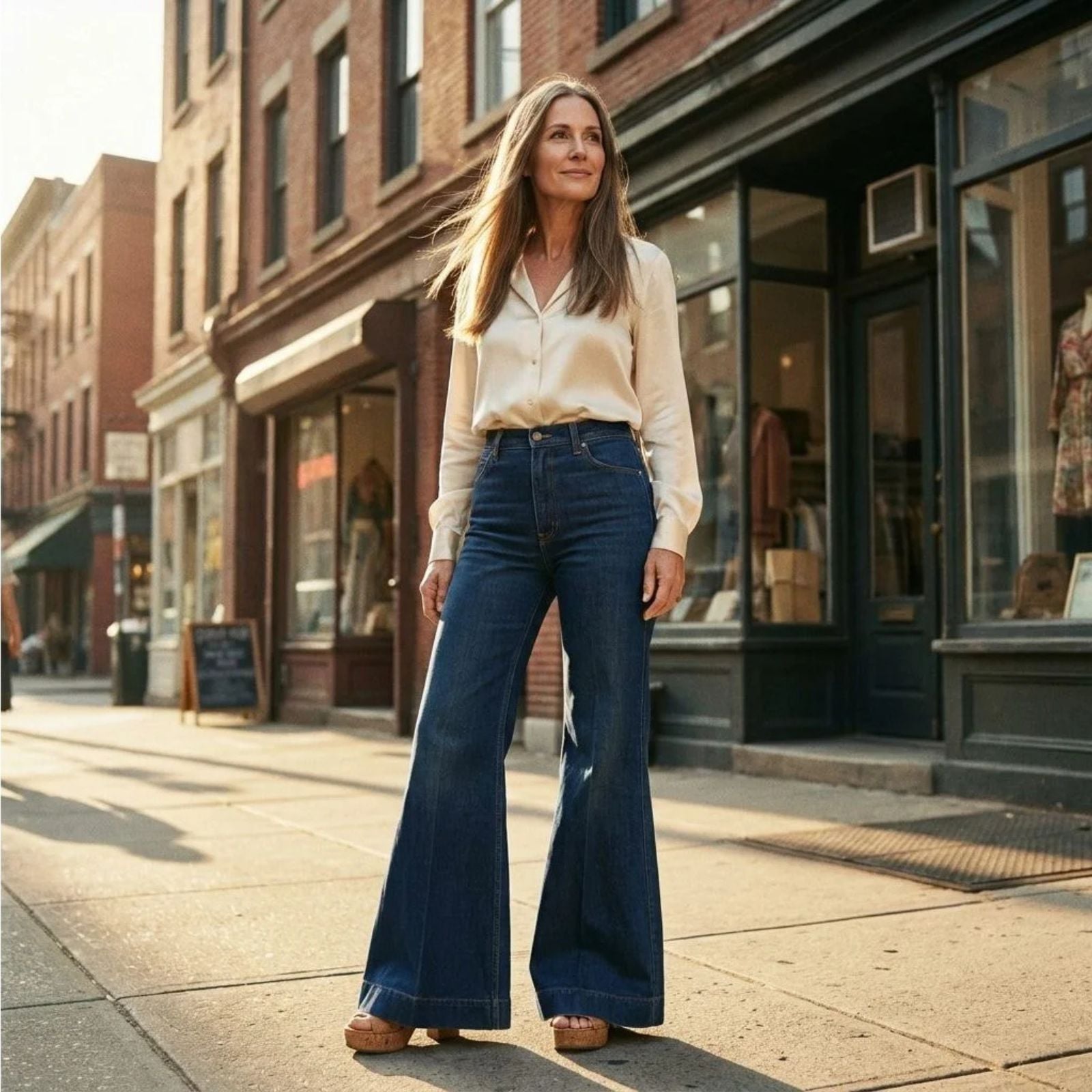
24. High-Rise Bell-Bottoms With Flares Wide Enough to Sweep the Floor
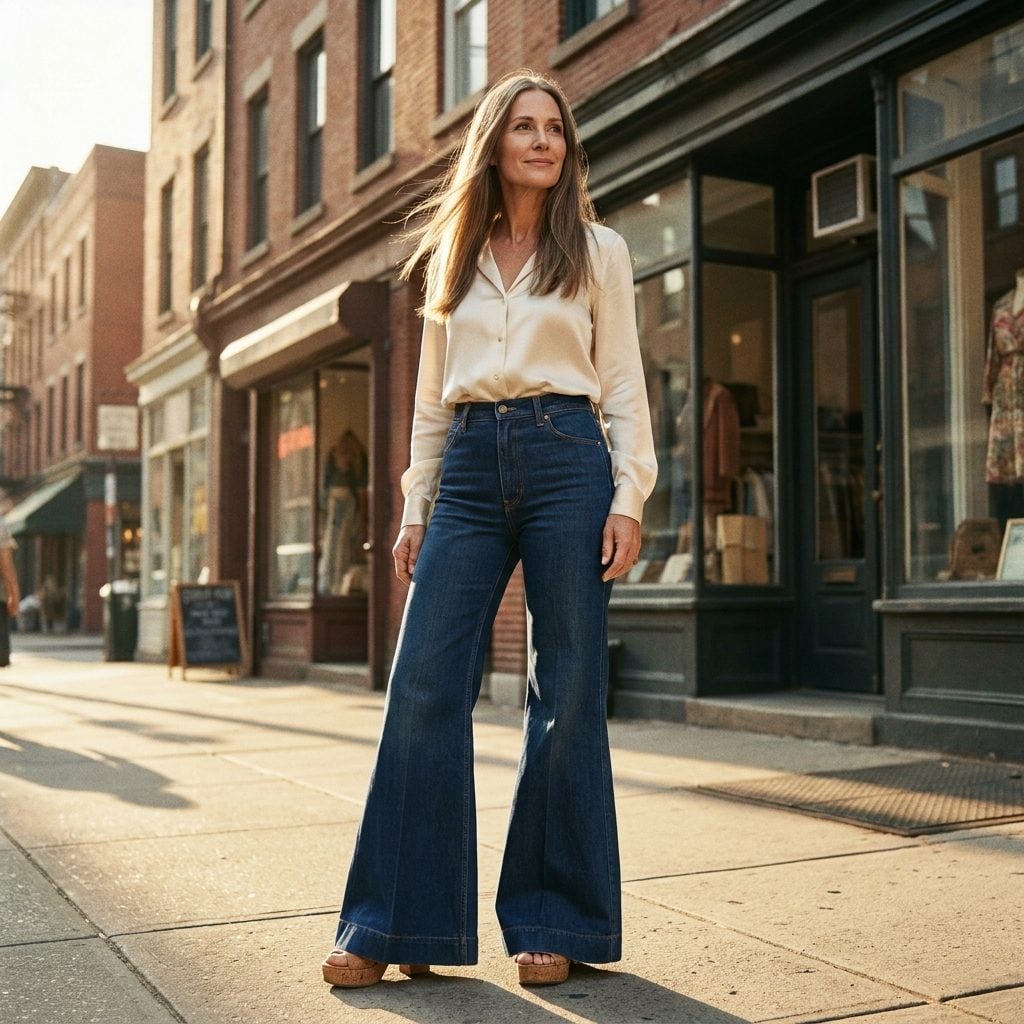
The waistband hit above your belly button. The flare started mid-thigh and kept going, past your knee, past your calf, until the hem was wide enough that it could swallow your entire platform shoe and still drag along the sidewalk. This was intentional. This was the point.
You wore them with a tucked-in satin blouse or a cropped knit top, and the combination made your waist look impossibly small and your legs look endless. Paired with a platform sandal that added three inches, you were basically six feet tall and entirely unstoppable. The drama was non-negotiable. Looking back, the sheer volume of fabric involved was almost architectural.
23. Hip-Hugger Jeans That Sat Three Inches Below Where Jeans Were Supposed to Sit
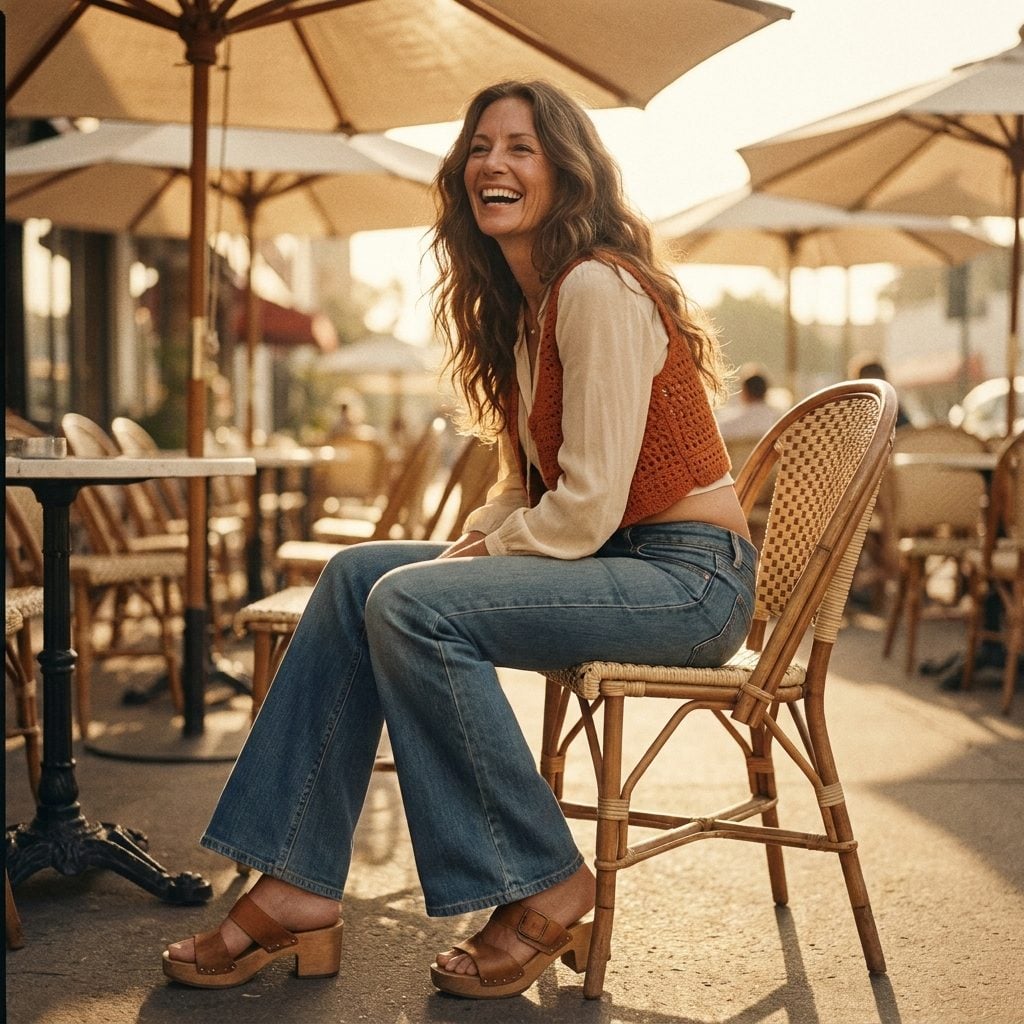
Hip-huggers were the low-rise jeans of their day, except nobody called them low-rise because there was no such thing as a jean that sat higher by comparison. These sat at the widest point of your hips, sometimes lower, and the whole fit was designed to show that strip of skin above the waistband that your mother loudly disapproved of.
They came in every wash and every weight of denim. You paired them with a midriff-baring peasant top or a cropped crochet sweater and felt like the bravest version of yourself. The early ’70s magazine ads showed models in hip-huggers with feathered hair and knowing looks, and we all understood the assignment perfectly.
22. Landlubber Jeans: The Brand Every College Girl Wore in 1972
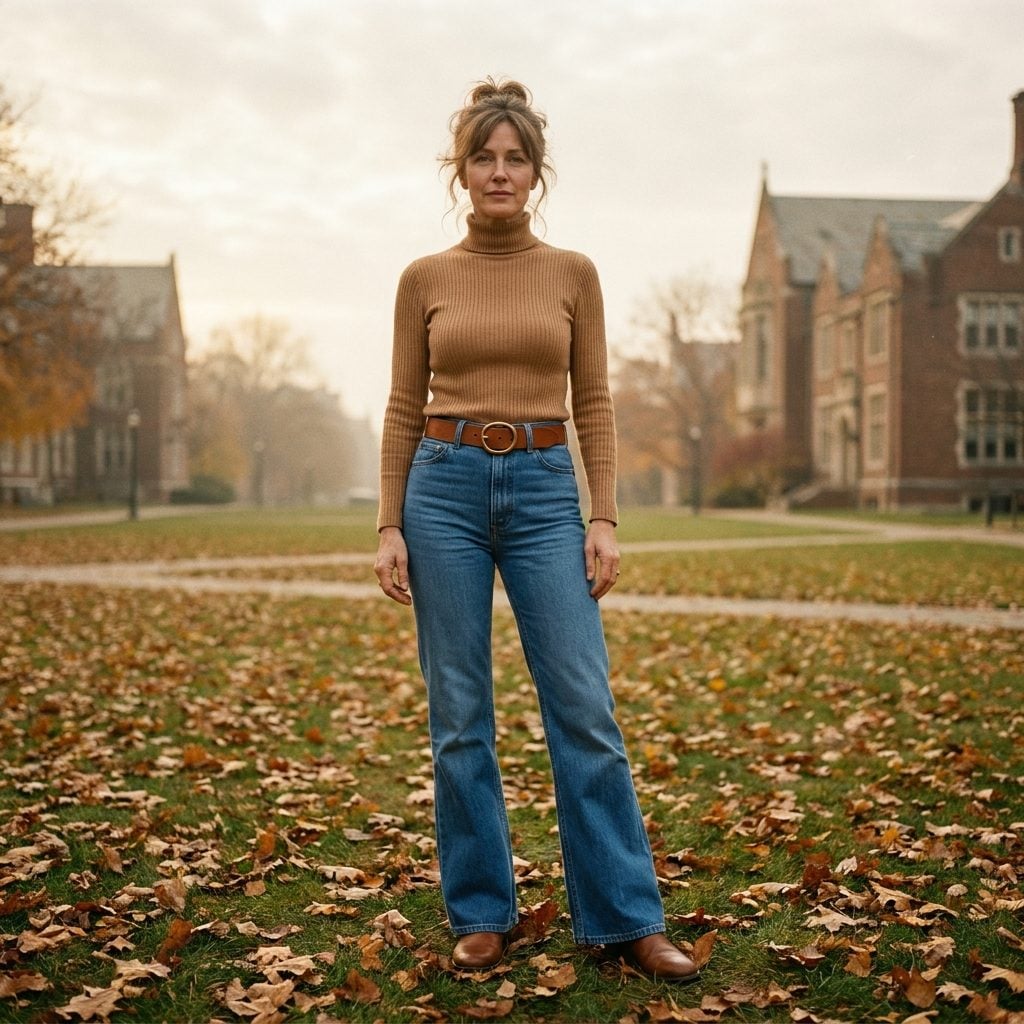
If you went to college in the early 1970s, you had Landlubbers. The brand was everywhere, dorm rooms, campus quad, the back of every lecture hall, and their jeans had that perfect combination of high-rise waist and smooth, clean flare that felt slightly dressier than your everyday Levi’s. The stitching was neat. The fit was reliable. The brand name, printed on a small label at the back pocket, was the detail you checked for before you bought.
Landlubber also did wide-leg sailor pants and denim blazers before denim blazers were a mainstream thing, which in hindsight was genuinely ahead of its time. The brand disappeared by the mid-1980s, and a surprising number of women still remember exactly what their pair looked like.
21. Levi’s 646 Orange-Tab Bell-Bottoms: The Ones You Saved Up For
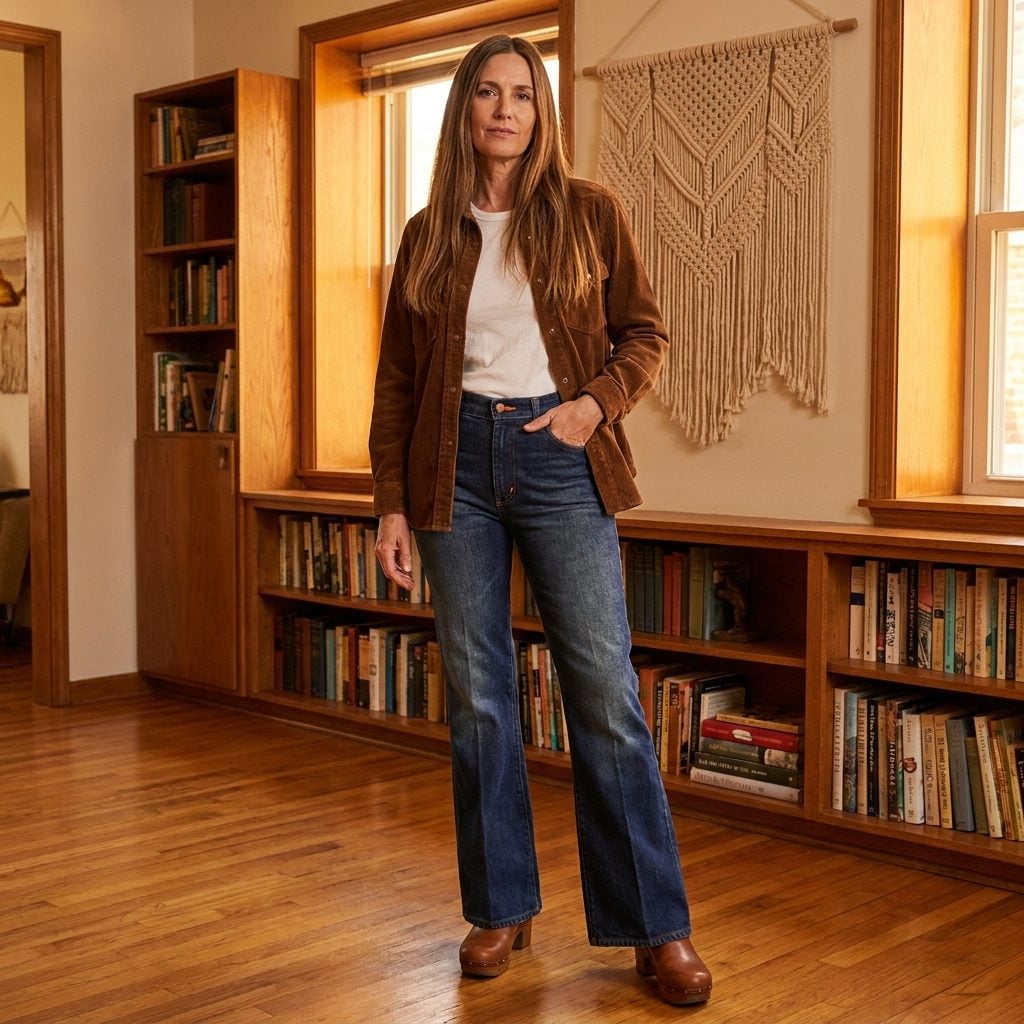
The orange tab meant something. Not the Red Tab, those were the standard Levi’s your dad wore. The Orange Tab was the fashion line, the one with the wider leg and the lower rise and the slightly stretchier denim that actually moved with you. The 646 was the specific cut: slim through the hip, dramatic flare from the knee, that iconic two-horse logo patch on the back waistband.
You bought them at the department store after saving babysitting money for three weeks. You washed them twice to get the deep indigo to fade to exactly the right shade of blue, then ironed a crease down the front of each leg because for some reason that was the sophisticated thing to do. The vintage denim flare revival of the past few years has never quite nailed what made these feel so exactly right.
20. Wrangler Western-Cut Jeans With the Cowboy Yoke You Couldn’t Argue With
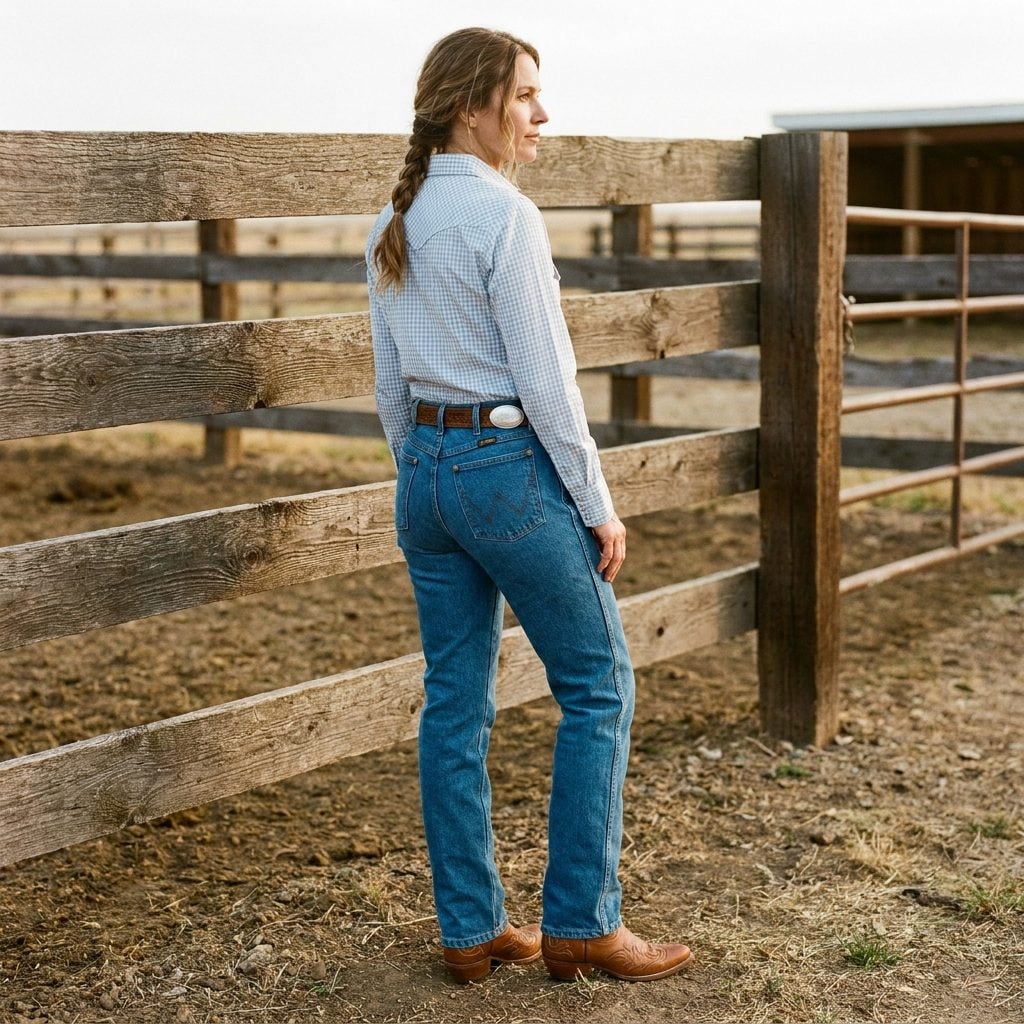
Not every ’70s woman was chasing the hippie-bohemian look. Some of us wanted the rodeo. Wrangler’s western cut had a distinctive yoke across the back, that curved seam above the seat that gave jeans a specific cowboy vocabulary, plus a straighter leg and a snugger fit through the seat than anything Levi’s was making at the time.
Country music was having a genuine cultural moment, and Wranglers were what you wore to a honky-tonk or a county fair or just to signal that your aesthetic was more outlaw country than Woodstock. Worn with a western snap shirt tucked in and proper cowboy boots, this was a complete identity, not just an outfit.
19. Lee Riders Straight-Leg Denim: For the Woman Who Wasn’t Following Anyone
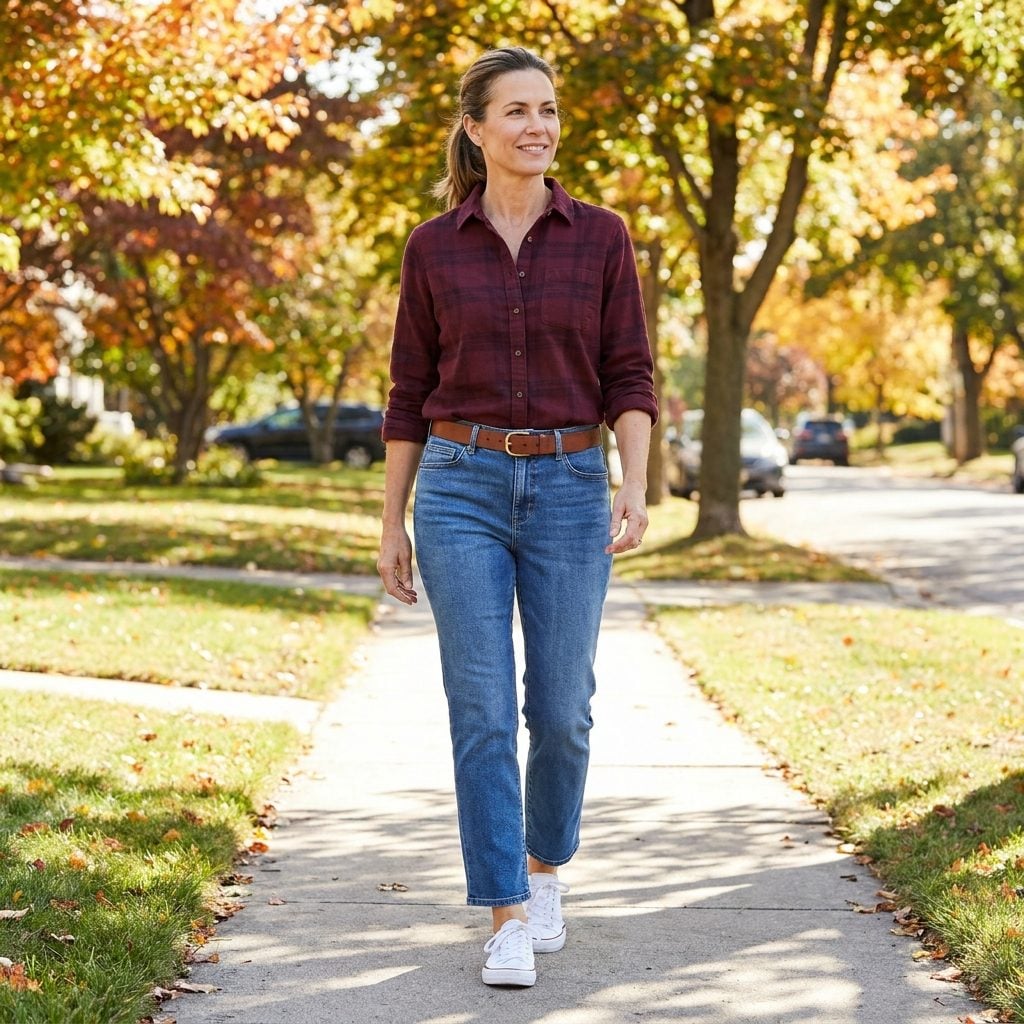
When everyone else was in bells, Lee Riders women wore straight legs and felt quietly right about it. The fit was consistent, mid-rise, straight through the hip and thigh, clean hem that actually showed your shoe, and the denim itself was sturdier than most. Lee’s signature was the fitted seat, which was a whole selling point at a time when most jeans either sagged or strangled.
These were the jeans you put on for a Saturday that involved actual activity: errands, a football game, helping someone move. They didn’t perform. They just worked, wash after wash after wash, until they were the softest thing you owned.
18. Gloria Vanderbilt Jeans and the Swan That Changed Everything
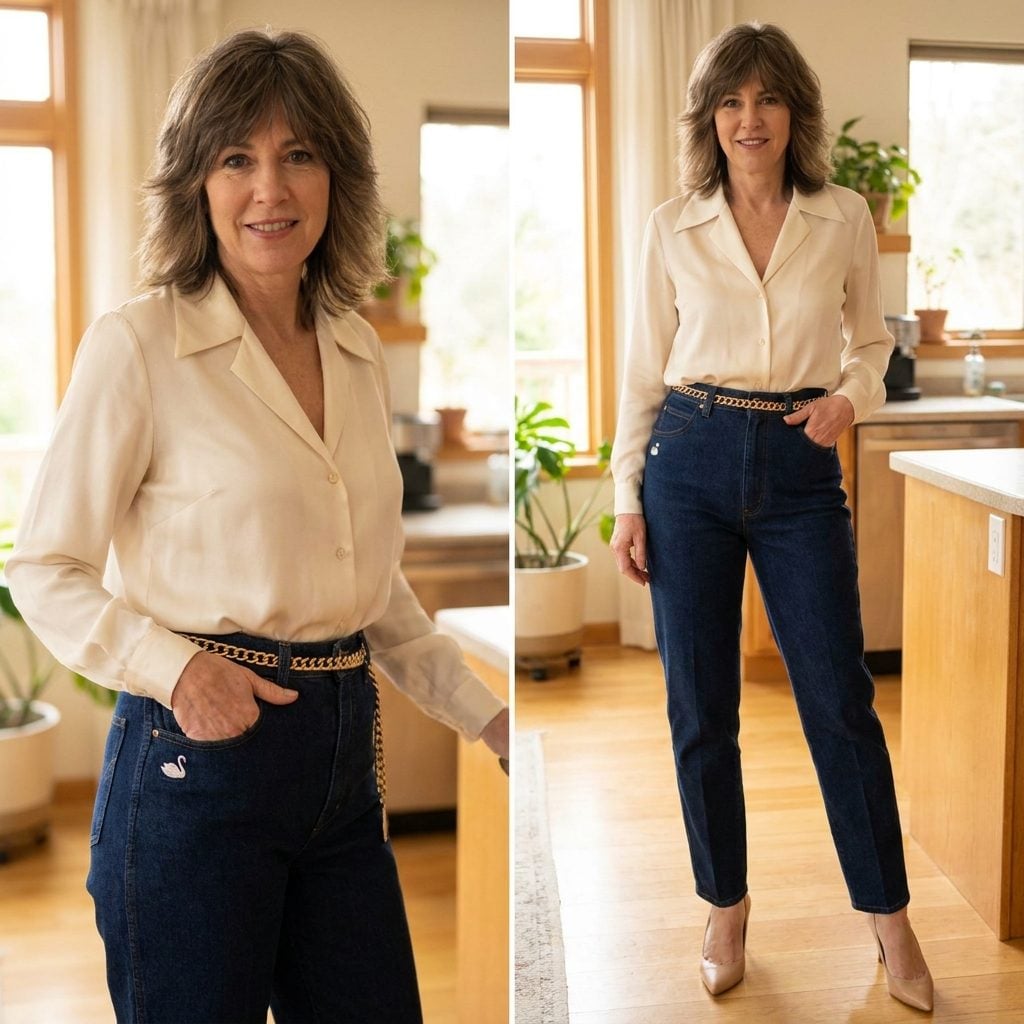
A tiny embroidered swan on the front pocket. That was it. That was all it took to turn a pair of jeans into a status symbol that teenage girls everywhere desperately wanted and parents loudly questioned the cost of. Gloria Vanderbilt launched her jeans line in 1976 and understood something that Levi’s and Lee hadn’t fully grasped yet: women wanted jeans that acknowledged they had curves, and they’d pay extra for that acknowledgment.
The cut was high-waisted with a fitted seat and a tapered leg, not a bell-bottom, not quite a straight leg, something more contoured and figure-conscious. The swan wasn’t subtle. Neither was the logo spelled across the waistband in script lettering. The whole thing was a flex before anyone used that word, and it worked on everyone from socialites to schoolgirls.
17. Calvin Klein’s First Slim-Cut Jeans and the Ad Campaign That Nobody’s Parents Approved Of
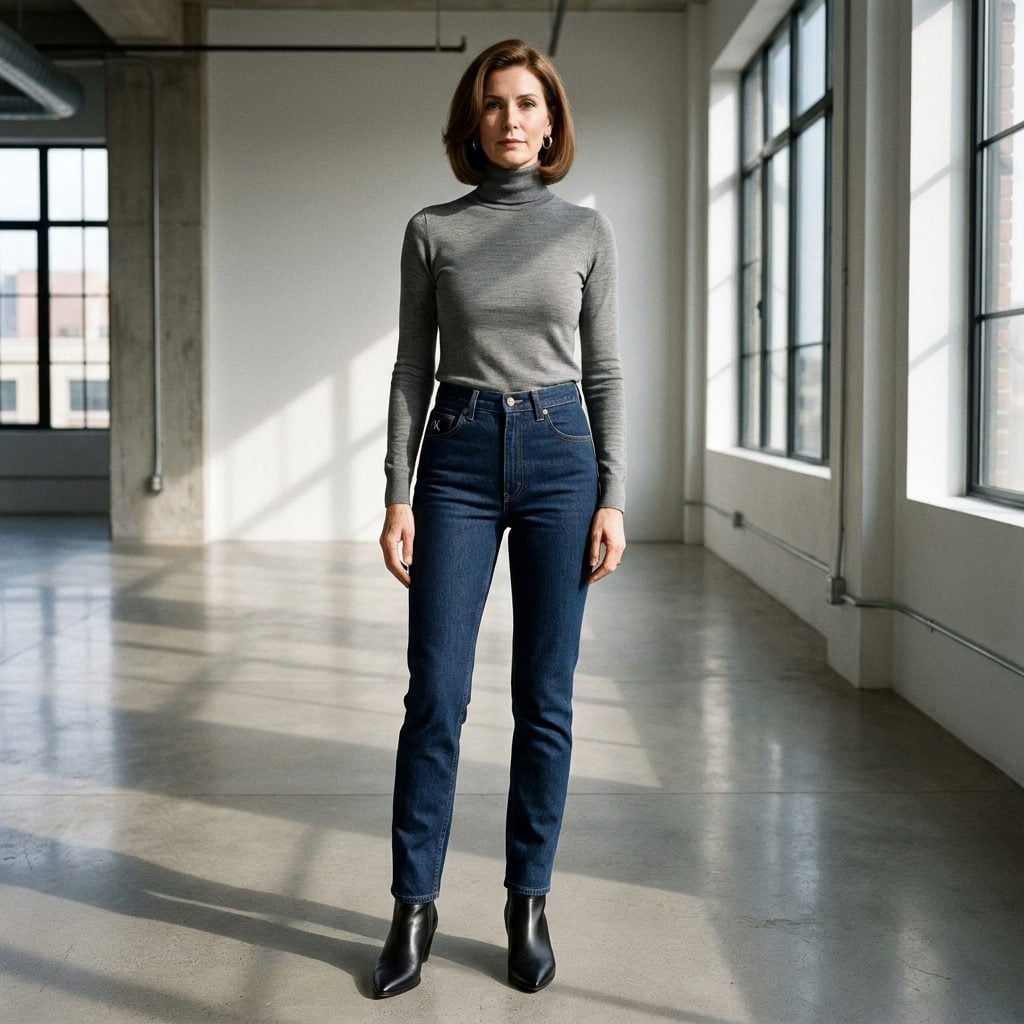
Calvin Klein launched his jeans in 1978 and immediately hired a fifteen-year-old Brooke Shields to say things into a camera that made an entire generation of parents turn off the television. The jeans themselves were a revelation: slim, dark, high-waisted, with a European-influenced cut that made the Levi’s hanging next to them on the rack look like they belonged in a different decade. Which, by 1979, they sort of did.
The logo on the back pocket was subtle, just the initials, clean and minimal, but the fit did all the talking. These were jeans that understood the female body as something worth dressing intentionally, and women noticed. The price point was a genuine sacrifice. Nobody cared.
16. Sasson’s ‘Ooh La La’ Jeans: European Attitude in an American Closet
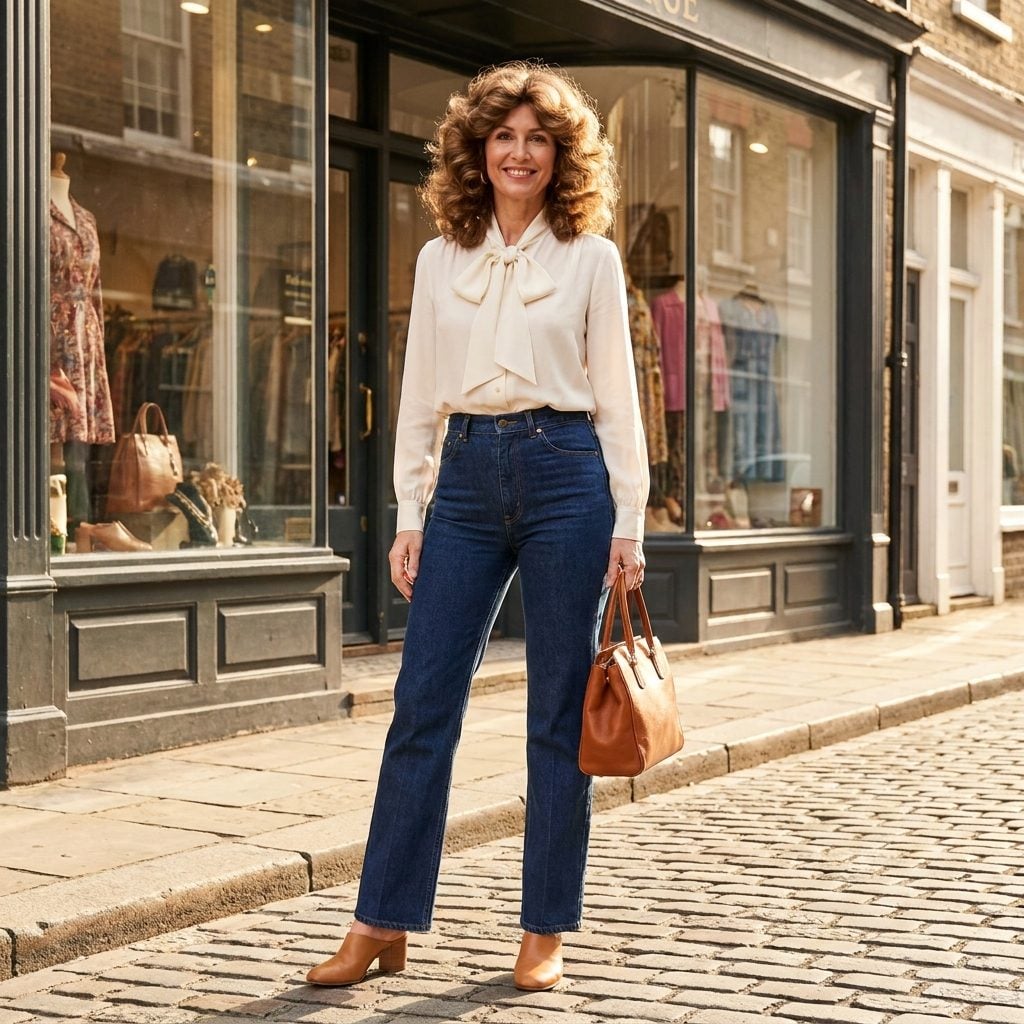
Sasson came in with a French-sounding name, a catchy tagline, and a contoured cut that was different enough from everything else on the market that women genuinely noticed the fit. The waist was high, the hip was fitted, and the leg had a subtle taper that felt more European and fashion-forward than the straight or flared options dominating most stores.
The television commercial with the “Ooh la la Sasson” jingle ran constantly, it was the kind of earworm that arrived uninvited thirty years later while you’re standing in a grocery store. The brand existed in that specific late-1970s window when designer denim was new enough to feel genuinely exciting, and even a label most people couldn’t place felt like a small act of sophistication.
15. Embroidered Patch Pockets: Flowers, Butterflies, and One Rainbow on Every Pair
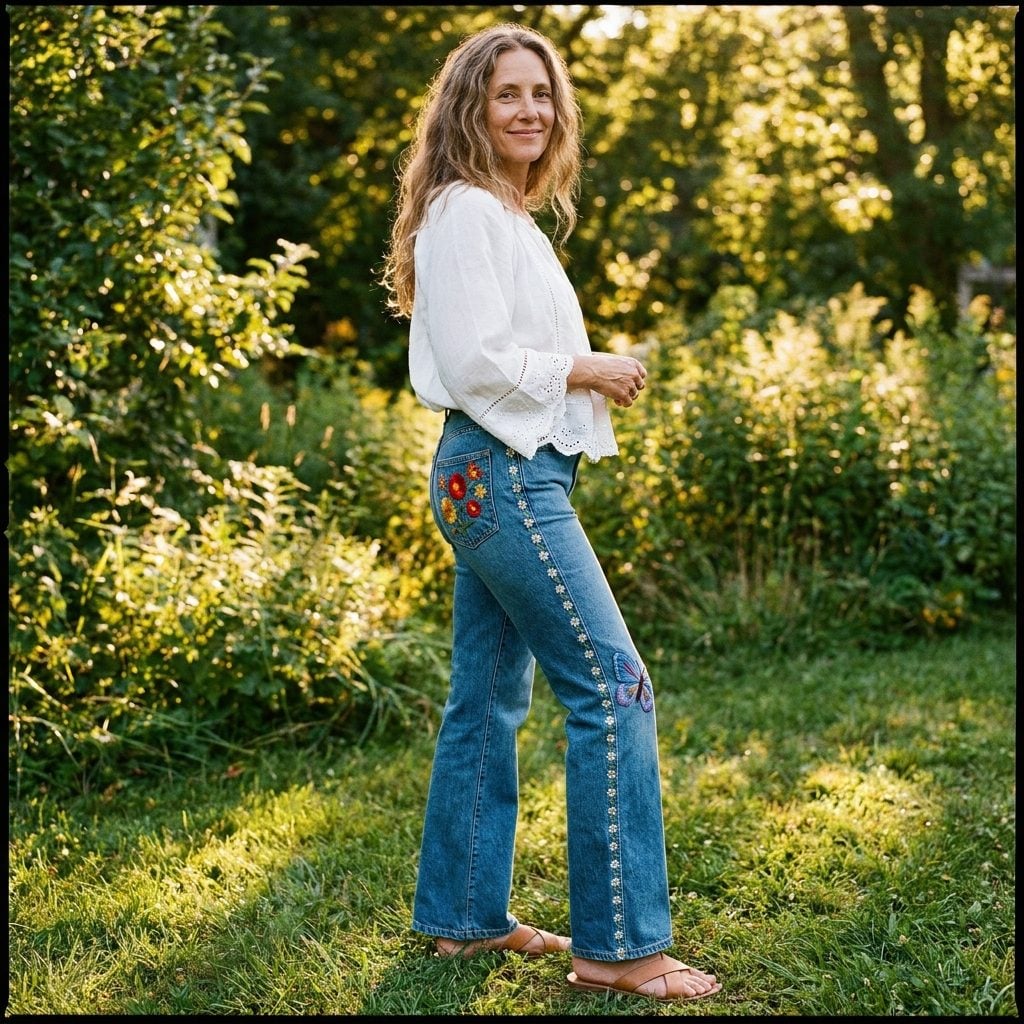
This was the detail that turned a plain pair of jeans into a declaration. Embroidered patch pockets appeared everywhere in the early-to-mid 1970s, fat daisy chains climbing the back pocket seam, a butterfly with orange and yellow wings spread across the knee, a rainbow arching from one hip pocket to the other with the most optimistic energy you’ve ever seen on a garment.
Some women bought jeans that came embroidered from the store. Others, the ones with patience and a good embroidery hoop, did it themselves, following patterns from magazines or inventing their own. Either way, the result was the same: jeans that were completely, specifically yours. No two pairs were identical. That was the whole idea.
It’s worth noting that embroidered denim is fully back, and the outfits that create a personal visual language are always the most memorable ones. The ’70s understood this instinctively.
14. Rhinestone-Studded Back Pockets That Caught Every Disco Light
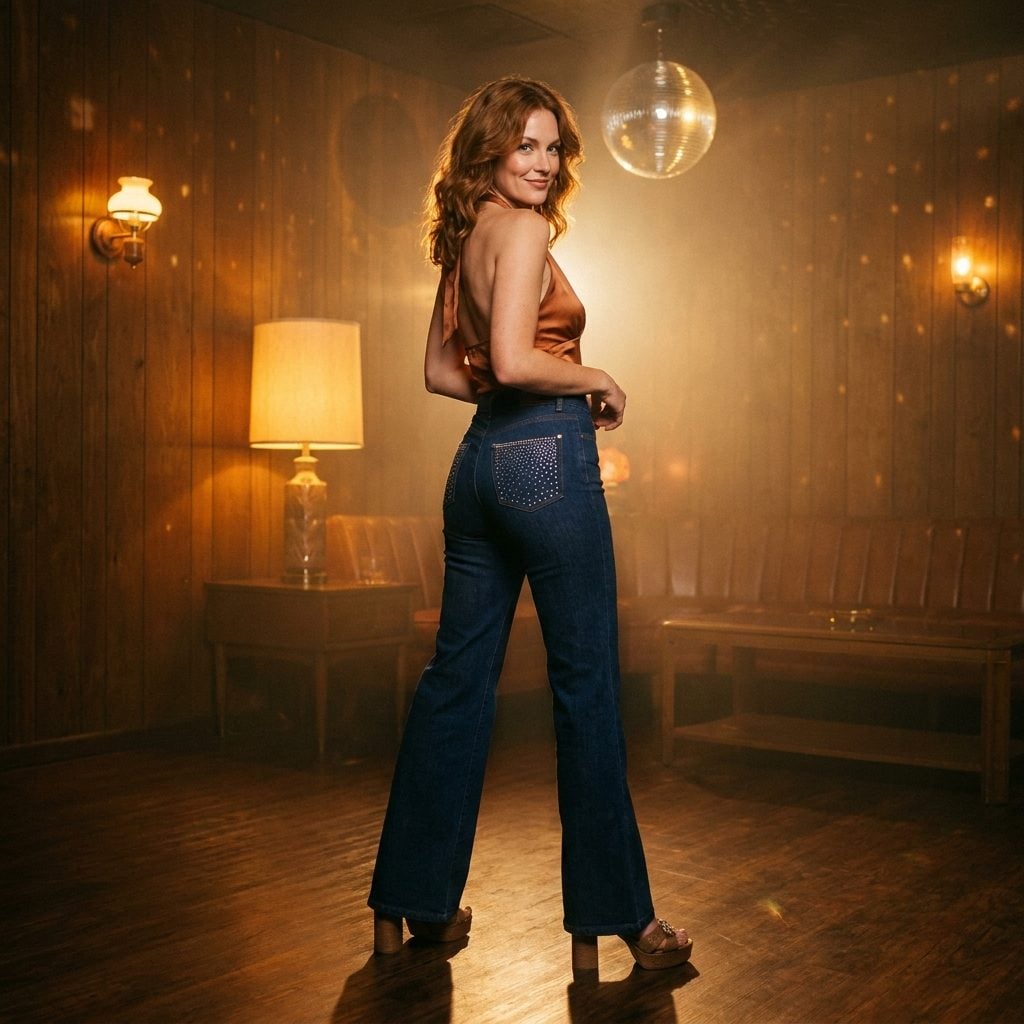
You didn’t just wear these jeans, you announced yourself in them. The rhinestones caught the light at Studio 54 knockoffs across every American city, sending tiny sparks across the dance floor every time you moved. Department stores like JCPenney and Sears sold them, but the coolest girls had theirs custom-done at the mall kiosk by a woman with a rhinestone gun who charged by the design.
The stones inevitably fell off in the wash, leaving little ghost craters in the denim. We kept wearing them anyway. A pocket with three rhinestones left somehow felt more authentic than a brand-new pair.
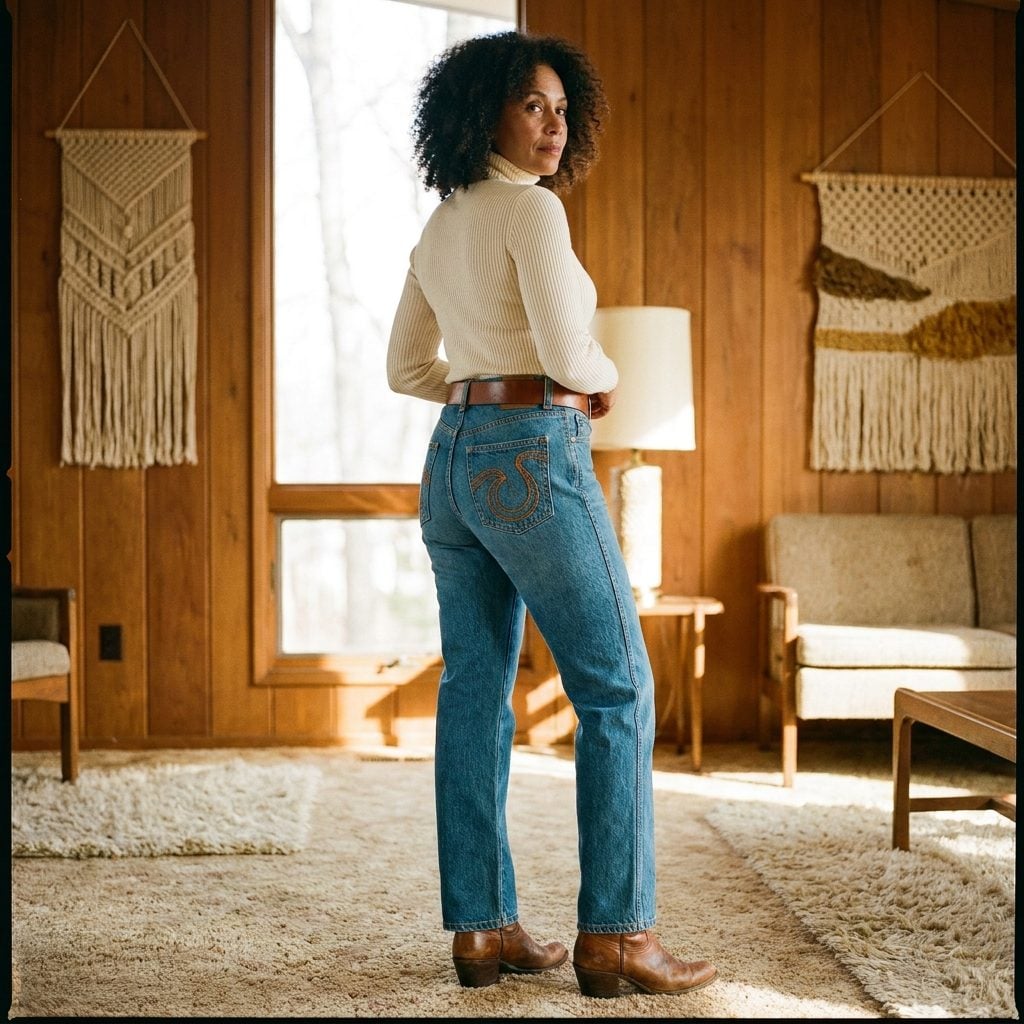
13. Contrast Stitching on Back Pockets: The Orange-Thread Signature You Always Recognized
❤️ Would you like to save this?
Bold orange or bright mustard topstitching on dark denim was practically a brand language before anyone used that phrase. Wrangler and Levi’s both did it, but then every budget label tried to copy the look, and suddenly the stitching design on your back pocket told the whole story of where you landed on the social hierarchy of your high school hallway.
The swirling, double-arc pocket stitching on a pair of Landlubbers? Chef’s kiss. The vague squiggle on the house-brand pair your mom bought at Kmart? You wore a long shirt to cover it.
12. Iron-On Decals: Peace Signs, Zodiac Symbols, and Rainbows Ironed Directly onto Everything You Owned
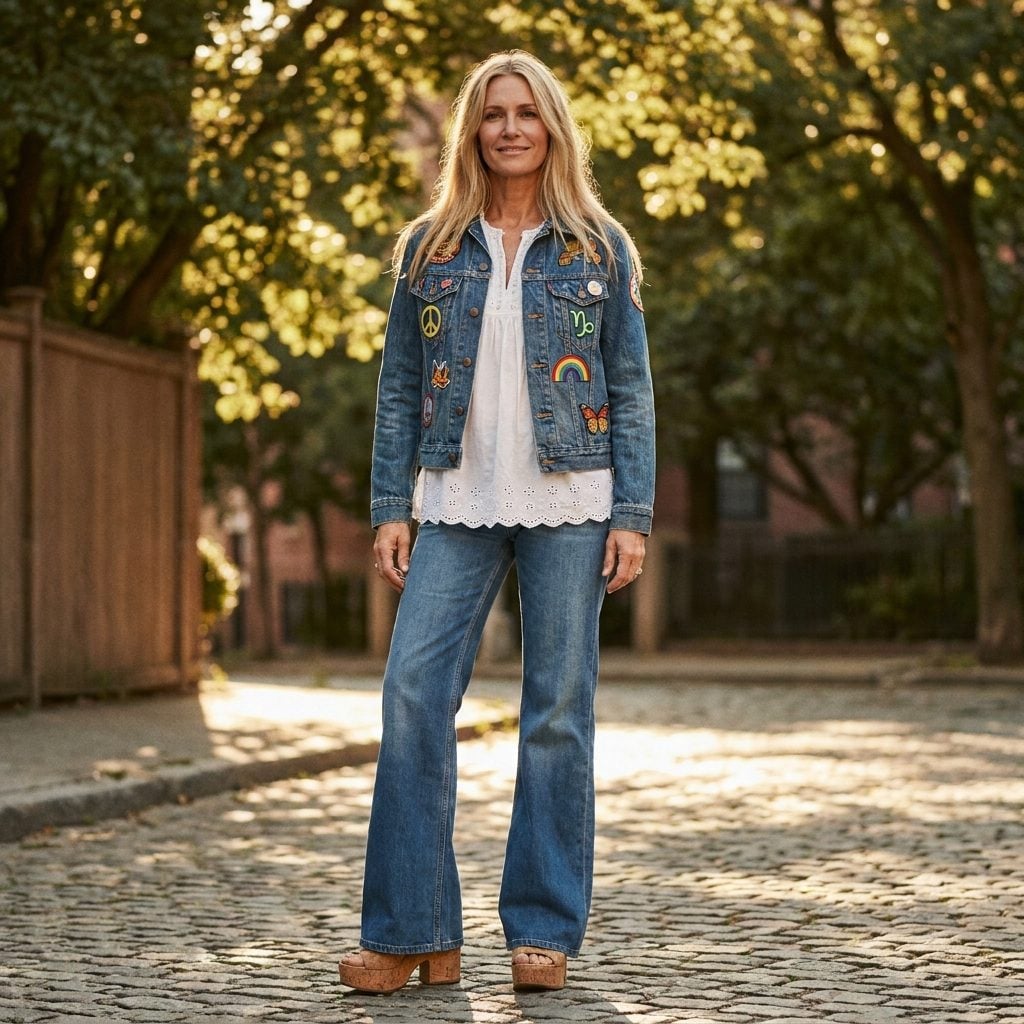
The iron sat heating on the kitchen counter, the decal lay face-down on the denim jacket draped across the ironing board, and you counted to thirty with the focus of a surgeon. Then you peeled back the paper and either celebrated or quietly devastated yourself, depending on whether the edge had lifted.
Woolworth’s sold them on spinning racks near the checkout. Peace signs, Scorpio scorpions, iron-on butterflies, flaming sunsets, roses, and the names of bands in chunky block letters. The Scorpio one always sold out first. Every girl who bought the Pisces fish had secretly wanted the Scorpio scorpion.
They started cracking within two wash cycles. This was universally accepted.
11. Bleach-Splattered and Tie-Dyed Denim You Destroyed in the Backyard on Purpose

You filled a spray bottle with undiluted bleach, took your least-favorite pair of jeans outside, and made art. Or what you were pretty sure was art. The results ranged from genuinely cool (a splattered fade that looked intentional) to alarming (a large irregular blob on the inner thigh that raised questions).
Tie-dye denim was the more committed version: rubber bands, a bucket of dye, forty-five minutes of effort, and then an overnight wait that felt interminable. The best outcomes hung on the line the next morning like prizes. The technique got a massive second life with every craft store selling dye kits after Woodstock filtered into suburban consciousness, and by the mid-70s, you could spot DIY denim from a block away.
10. Patchwork Jeans Sewn Together From Every Wash, Color, and Texture You Could Find
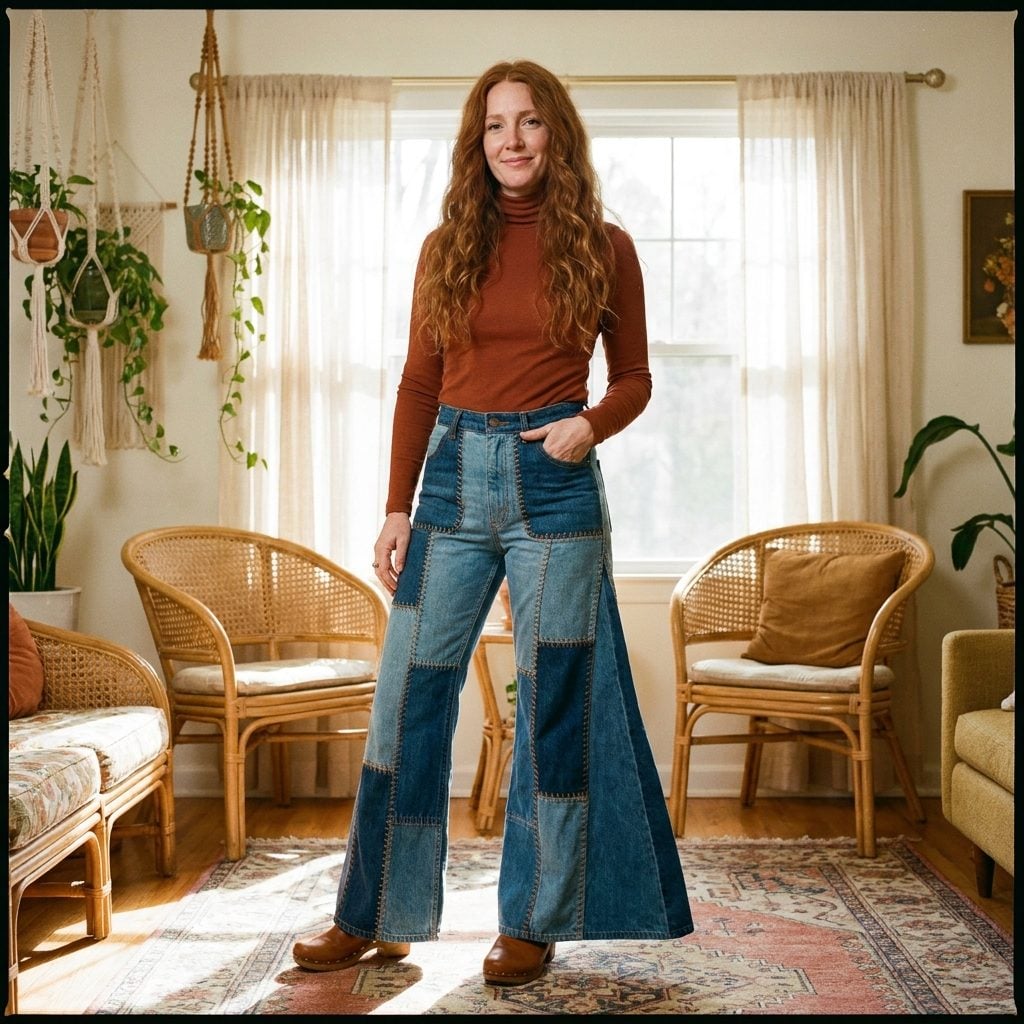
These were the jeans that required actual labor. Salvaged from old pairs that had blown out at the knee (inevitable, in the 70s), cut into rectangles and hexagons, then hand-stitched or machine-sewn into something that looked like a denim quilt had learned to walk. The patchwork jean sat at the intersection of necessity and artistry, and the best ones genuinely were art.
Fabrics mixed freely: light-wash patches next to dark indigo, corduroy squares beside chambray, canvas panels beside velvet. High-end boutiques in California started selling them pre-made for prices that made people gasp, which was the moment the DIY version became even more meaningful. Yours was the only one exactly like it.
9. Studded Denim Jackets With Metal Pyramid Studs in Patterns That Took All Weekend
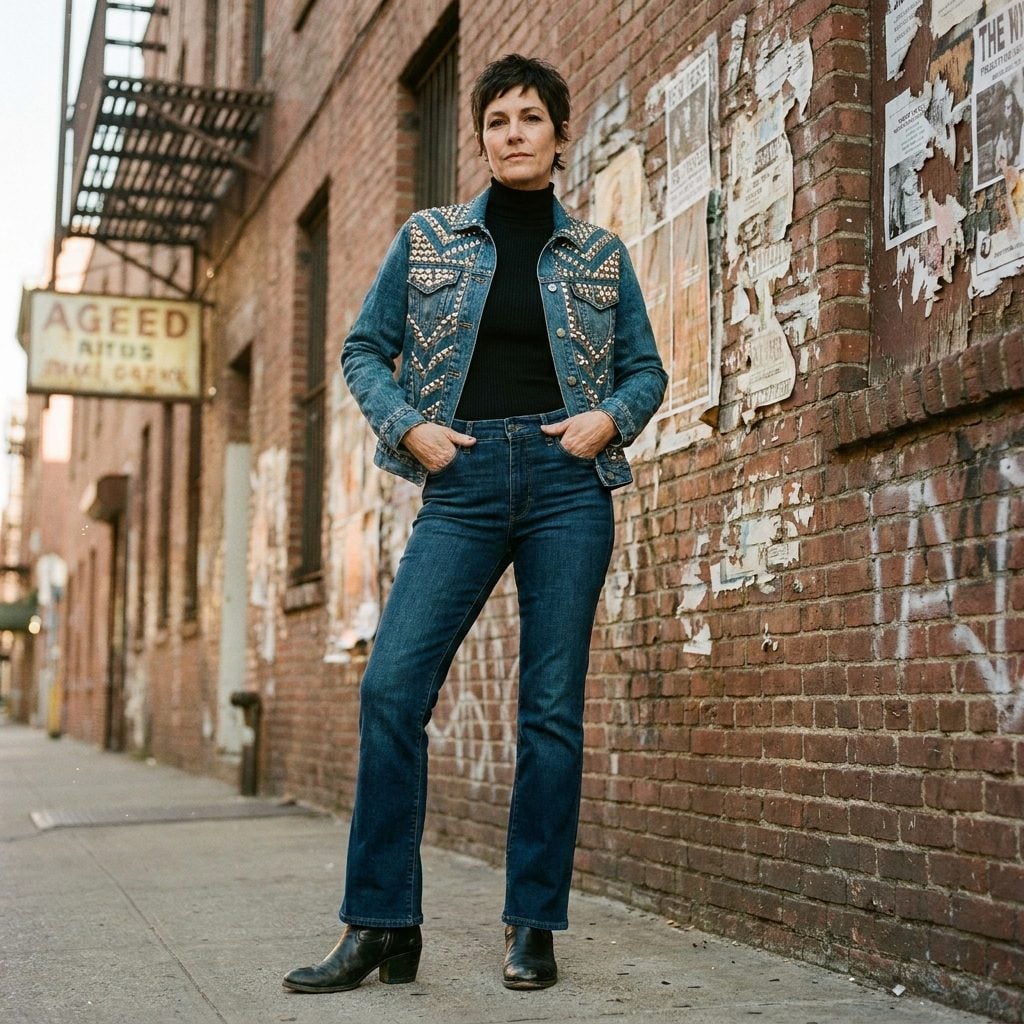
A studding tool, a bag of metal pyramid studs from the craft store, and a weekend afternoon: that was the recipe. You planned the design on paper first, measured with a ruler you borrowed from your school bag, and then popped each stud through the denim one by one, folding the prongs flat with the back of a spoon. Your fingers hurt by the third row. You kept going.
The finished jacket weighed noticeably more than when you started. Wearing it felt significant. This was a jacket that had been made, not bought. Girls who had studded jackets and girls who didn’t existed in slightly different social categories, though nobody said so directly.
8. Embroidered Yoke Denim Jackets With Western Roses and Thunderbirds Across the Back
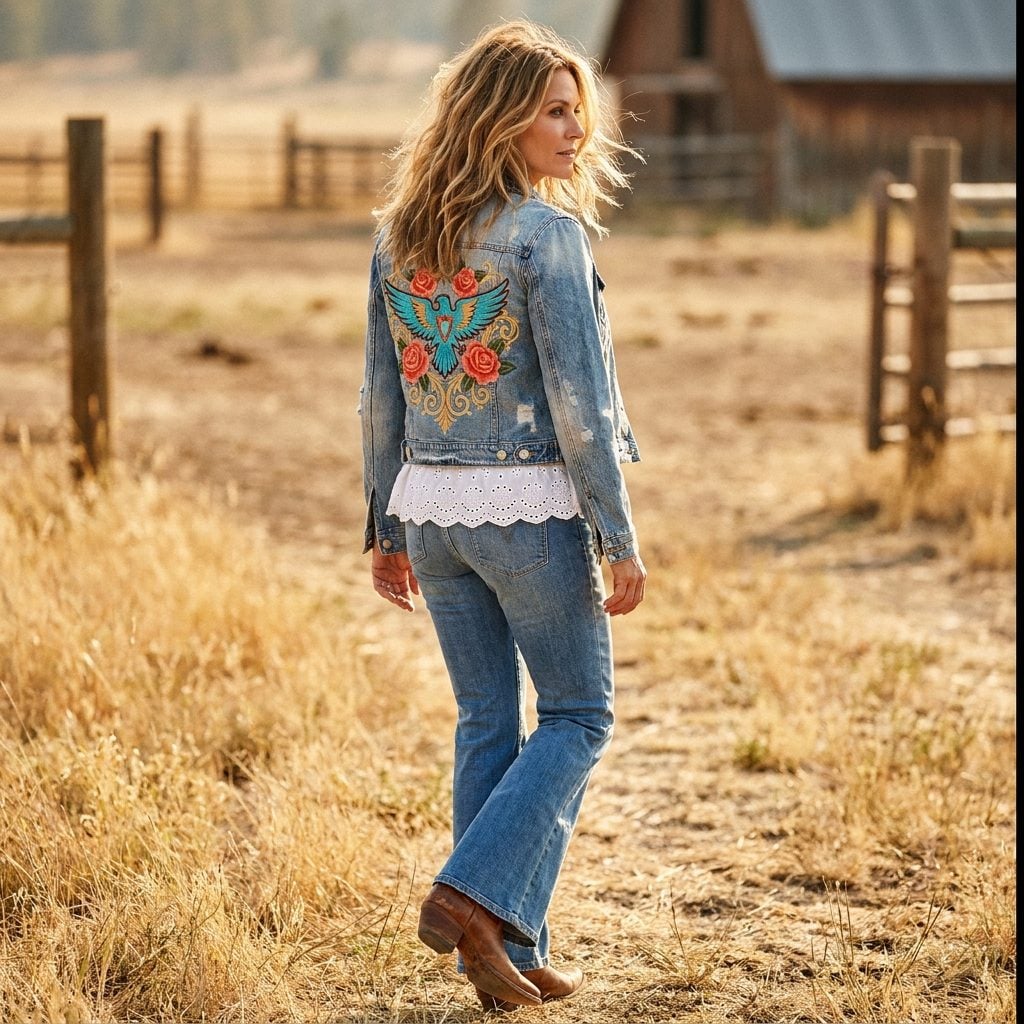
The embroidered yoke jacket was a different beast from the studded one. Studding was punk energy. Embroidery was something slower: a craft store hoop, six-strand floss in coral and turquoise and golden yellow, and hours spent watching television while your needle moved through the denim in tiny, even stitches.
The designs leaned hard Western: roses trailing along yoke seams, thunderbirds with spread wings centered on the back panel, cacti, longhorn silhouettes, bluebonnets. Nudie Cohn had been making embroidered Western suits for country stars since the 1940s, and his DNA ran through every hand-embroidered denim jacket a teenager finished in her bedroom in 1974.
The best ones looked like something that should be behind glass. The ones we actually made looked more like something enthusiastically attempted. Both were worn with equal pride.
7. Denim Maxi Skirts With A-Line Silhouettes That Swept the Ground (and Everything on It)
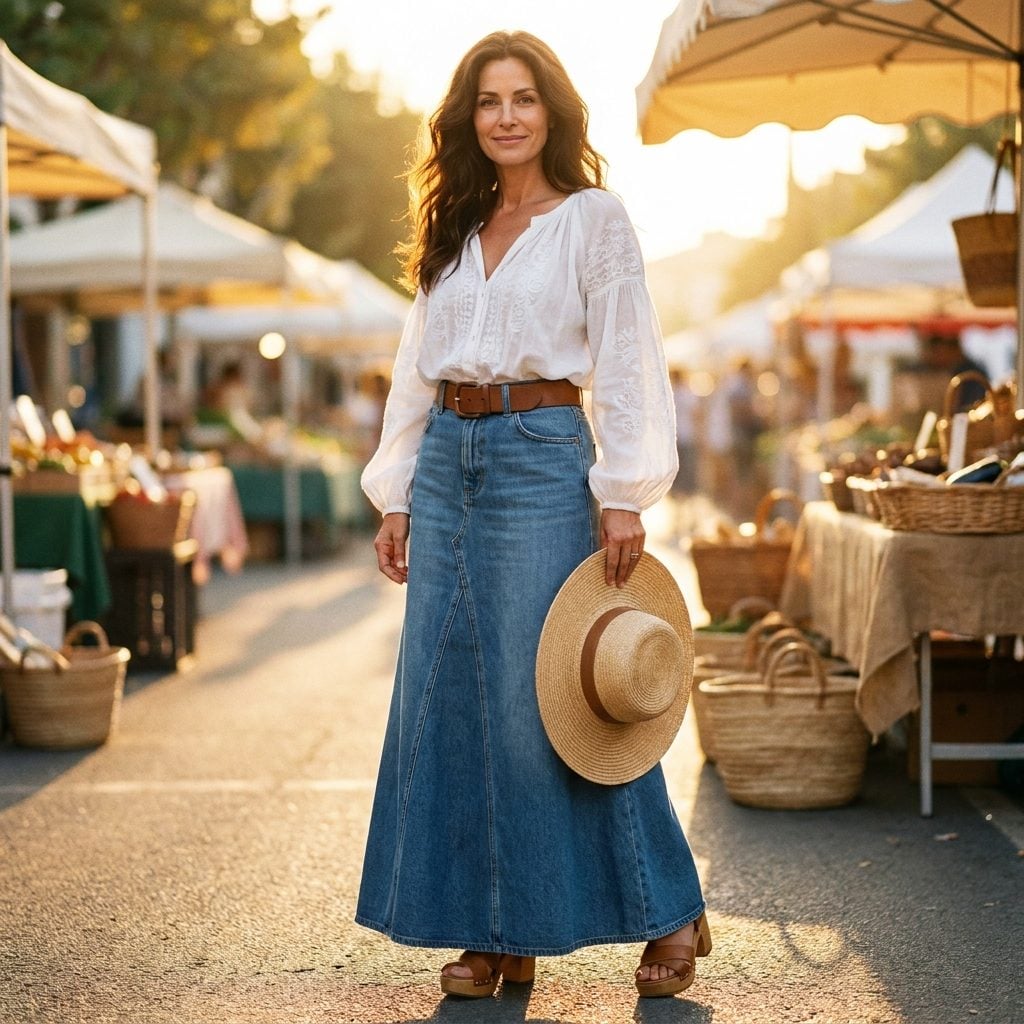
These skirts were a commitment. Floor-length, stiff as a sail when new, they gradually softened with wear until the hem moved with you instead of slightly after you. The A-line version flared from the hip in a clean triangle. The gored versions, cut in panels, flirted with a real swish that felt spectacular.
You wore them to school, to church, to the grocery store with your mother, and on dates to the movies. They were the modest-but-fashionable answer, which is why both your grandmother and your most stylish friend approved. Pair one with a peasant blouse and a wide-brimmed hat and you were essentially the visual definition of 1972 California.
6. Denim Gauchos: The Wide-Legged Cropped Pants That Were Somehow Both Casual and Fancy
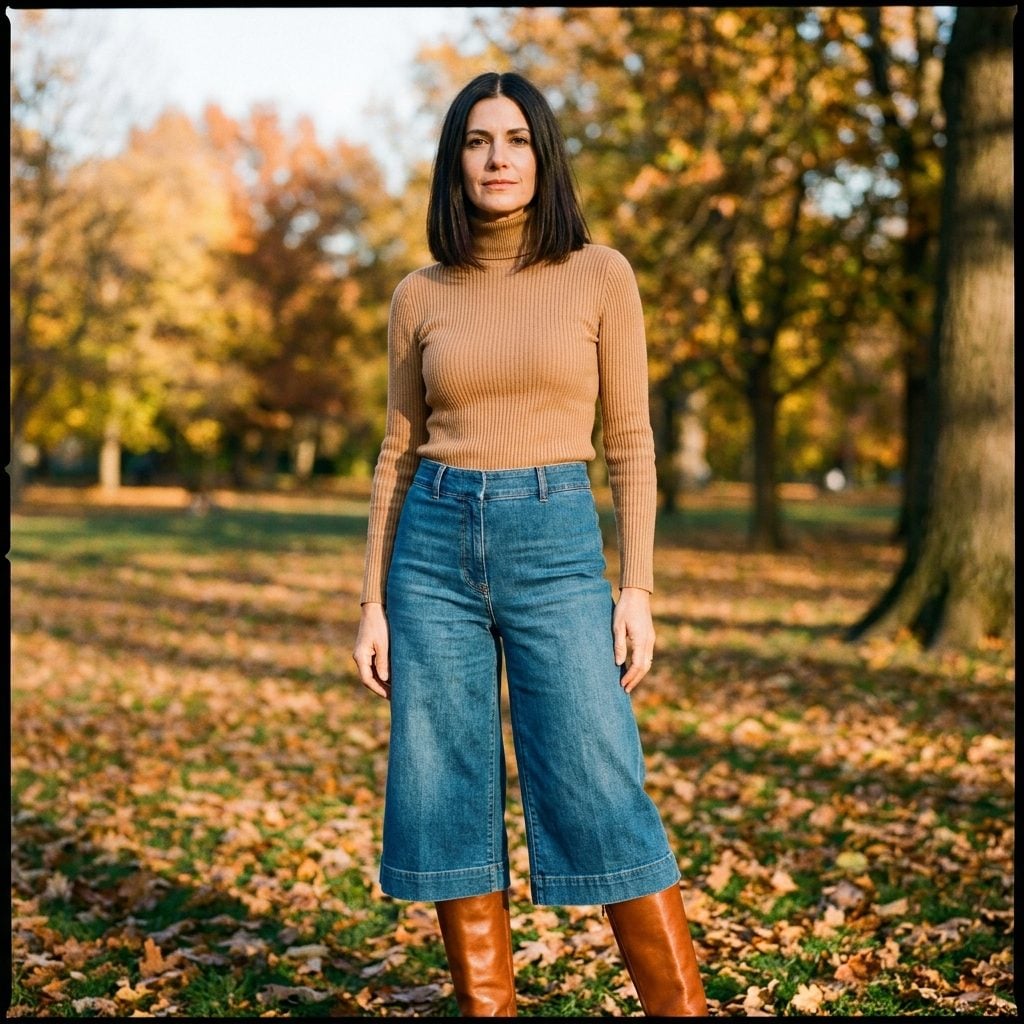
Mid-calf. Extremely wide. Made of denim. This description sounds chaotic on paper, and yet denim gauchos were one of the most worn silhouettes of the mid-1970s. They sat at a strange, specific length that was too short to be a maxi and too long to be a Bermuda, and somehow that no-man’s-land became its own aesthetic category entirely.
Sears and Montgomery Ward both had them in their fall catalogs. You wore them with tall boots or with platform sandals depending on whether you were going for a more Western vibe or something closer to Studio 54-adjacent. Neither choice was wrong, exactly.
5. Flare-Leg Denim Overalls With the One Strap Always Undone (On Purpose)
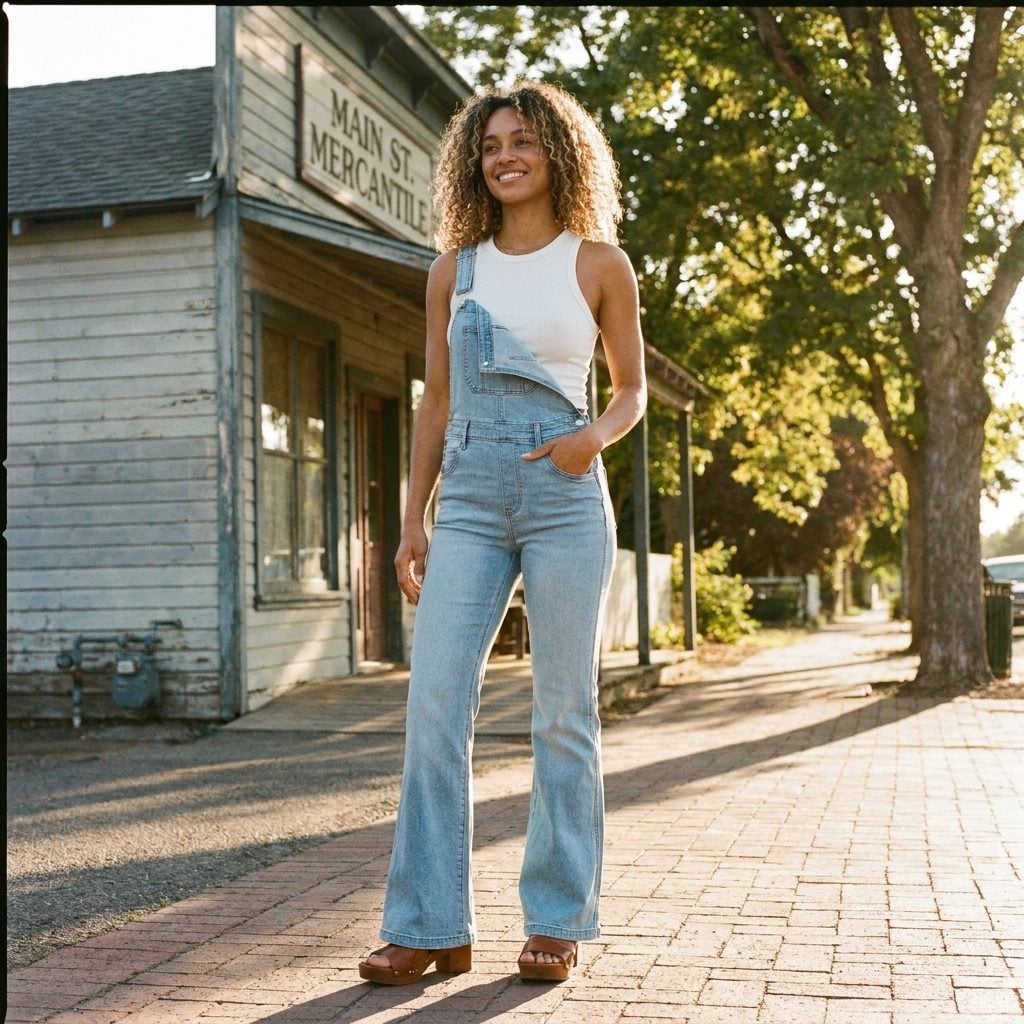
One buckle fastened. One strap left to dangle. This was not an accident or a wardrobe malfunction, it was a deliberate styling choice that communicated something important about your personality, though nobody could have told you exactly what. The intentionally undone strap said: I put this on but I’m not trying too hard. It said: I could take this off at any moment. It said a lot, apparently.
The overalls themselves flared dramatically below the knee, and underneath you’d wear a fitted ribbed tank or a cropped tee, sometimes a long-sleeved thermal in winter. Every conceivable variation was attempted. Bib overalls with a tube top underneath were a specific kind of summer confidence. The outfits that create that effortless, thrown-together feeling tend to involve exactly this kind of calculated undone detail, and the 70s invented it.
4. Chambray Shirts Worn Tied, Tucked, or Layered Over Everything
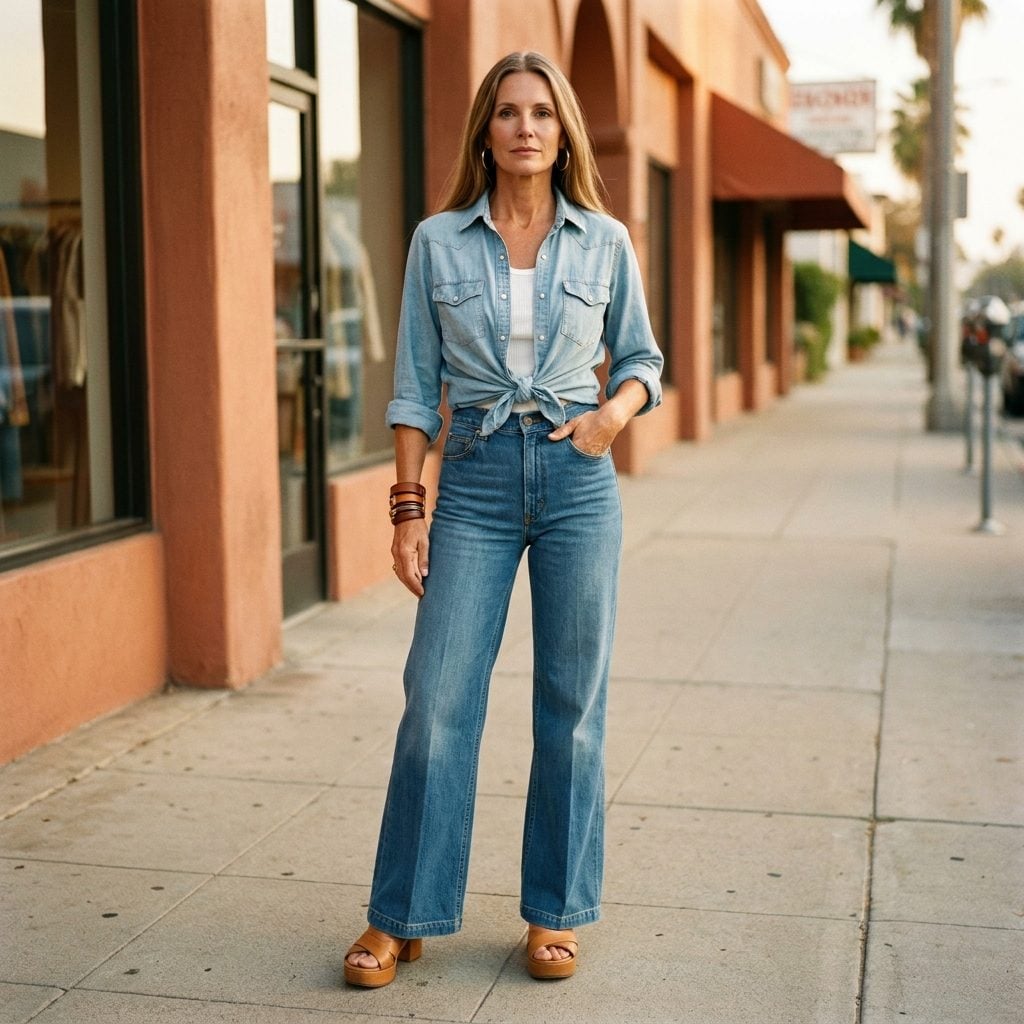
The chambray shirt had no wrong answer. You tied it at the waist over a sundress on Saturday, tucked it into high-waisted trousers on Monday, and draped it open over a ribbed tank on a Tuesday when you couldn’t quite commit to an outfit. It was softer than denim but belonged to the same family, and that mattered. It signaled effort without trying too hard, which was the whole point.
Most of ours came from the men’s section because the fit was better, the fabric heavier, and the buttons lined up on the right side which somehow made the whole thing feel more intentional. The faded blue ones, worn down to almost grey at the collar and cuffs, were the ones we kept for years. That particular softness doesn’t come in new.
3. Sailor-Front Button-Fly Closures: The Denim Detail That Felt Like a Whole Look
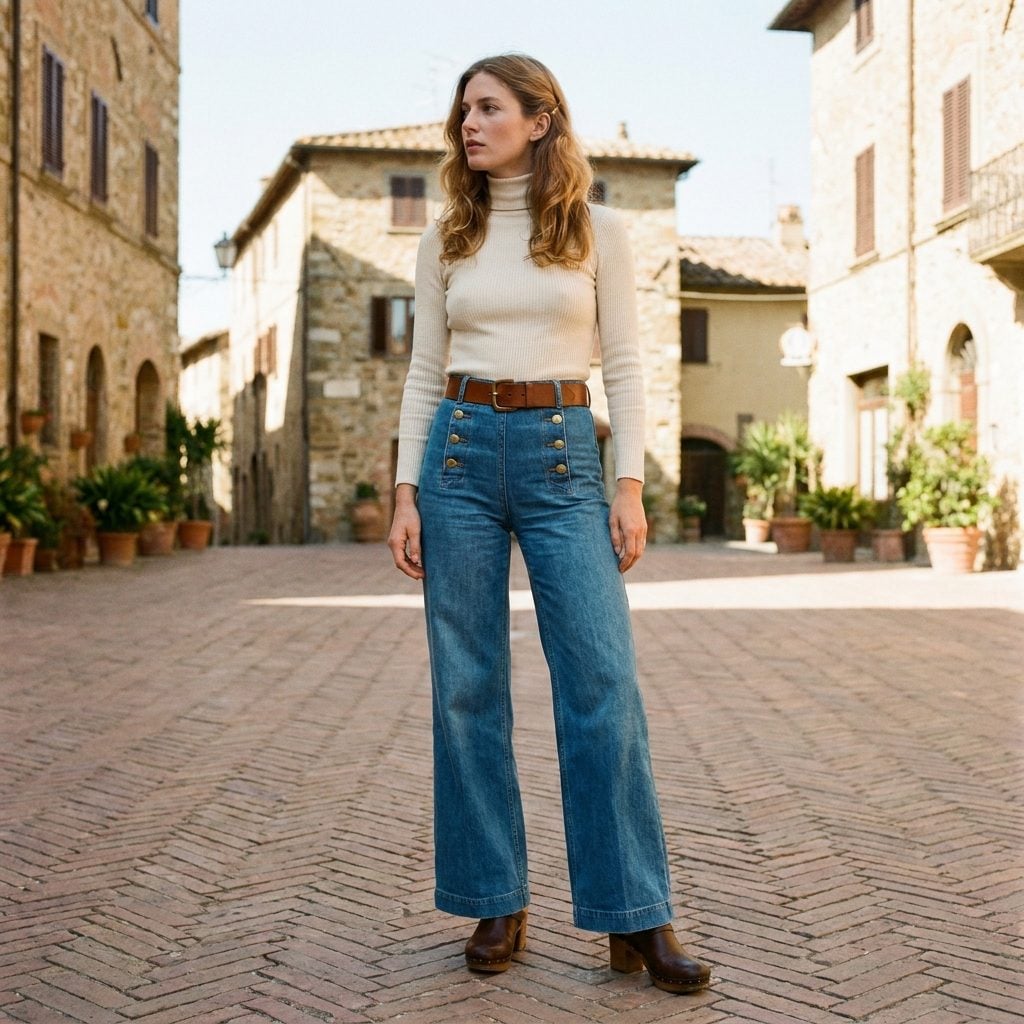
Not a zipper. Never a zipper. The sailor-front closure was a wide flat panel of fabric across the front of the hip, fastened with a horizontal row of four to six buttons that you had to undo from one side. It looked intentional in a way that a regular fly simply did not, and that was the entire point.
These showed up most dramatically on wide-leg and bell-bottom styles, where the flat front created a clean, unbroken line from waist to hem. No pockets to break up the silhouette, no hardware interrupting the drape. Just that flat expanse of denim and a row of buttons that announced the pants before you even registered the person wearing them.
The nautical reference was always there, even if nobody said it out loud. Wearing these felt like borrowing something from a merchant sailor who’d left port in 1943 and never came back for his trousers.
2. Frayed Hems That Started as a Mistake and Ended Up as a Whole Philosophy

Here’s what actually happened: someone’s jeans got caught on something, the hem started to unravel, and instead of throwing them out, she wore them to school and everyone lost their minds over it. By the following week, half the class had run their hems through the washing machine on purpose just to see what would happen.
The beauty of a frayed hem was that it looked like you didn’t care, which meant you had to care quite a bit to get it right. Cut-off shorts required a specific scissor technique: not straight across, not jagged, but slightly angled with the inseam left a little longer. Then you washed them twice and brushed the threads out with your fingers until the fringe hit exactly where you wanted it.
1. Wide Belt Loops Built for Belts That Meant Business
❤️ Would you like to save this?
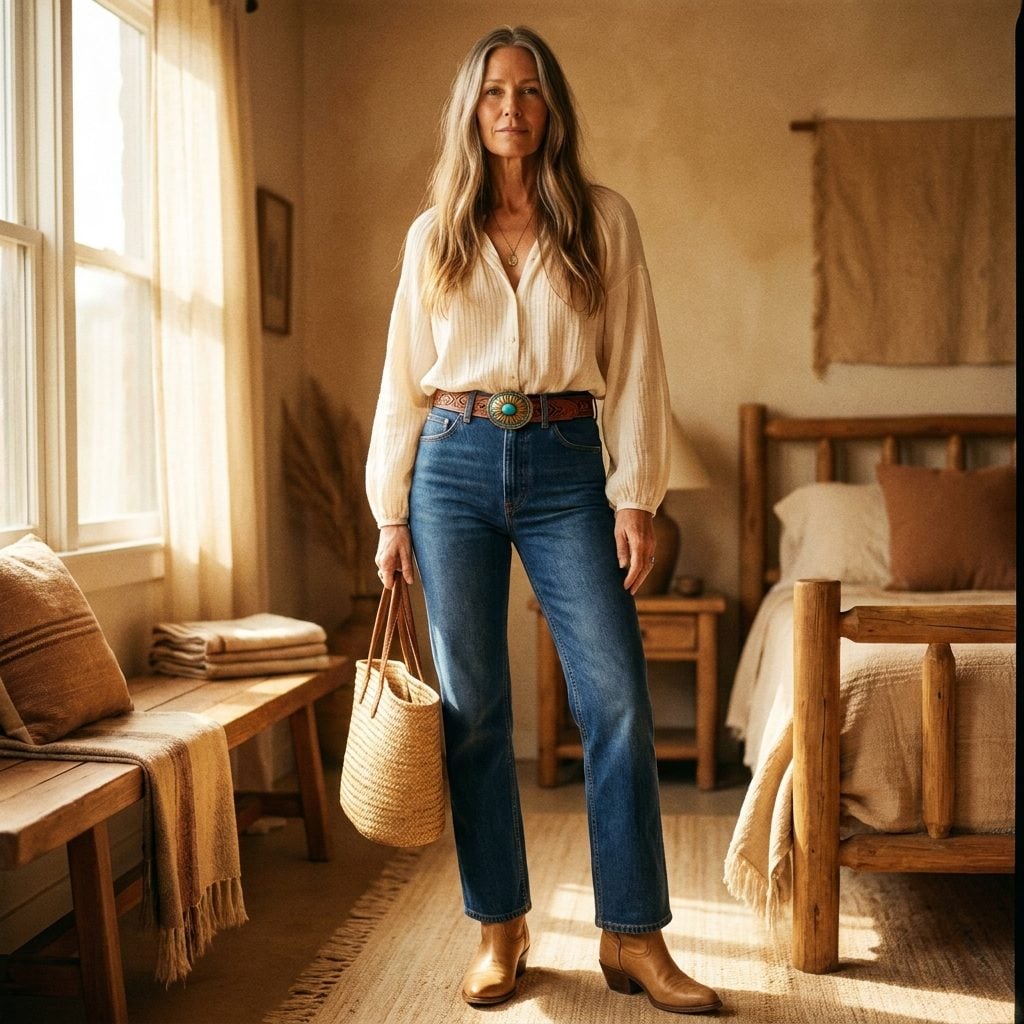
Standard belt loops on modern jeans are almost an afterthought. The loops on 1970s denim were structural features. Wide, reinforced, and stitched with the kind of conviction usually reserved for saddle leather, they existed to hold the belts that the era demanded: three-inch woven macramé, stamped tooled leather with turquoise hardware, braided suede with a brass tip, hand-painted canvas with a concho buckle.
The belt wasn’t an accessory in the 1970s. It was the focal point. Putting on the belt before you left the house was the equivalent of the finishing touch in any other decade, which is probably why those loops were built wide enough to actually hold the thing in place.
“The jeans were the backdrop. The belt was the painting.”
You can spot a piece of authentic vintage denim from this era almost immediately by the loops alone. Five across the back, wider than your thumb, with a reinforced box stitch at each end. No modern reproduction quite gets the proportions right, which tells you something about how seriously the era took its belts.