❤️ Would you like to save this?
You could smell them before you saw them. Leather and patchouli and the faint mustiness of a straw bag that spent too long in a hot car. Our mothers carried these bags, or we did, slinging them over one shoulder with a confidence that said we knew exactly who we were. Some were handmade on a back porch. Others cost a month’s rent and came wrapped in tissue paper from a department store counter.
Every single one of these 33 bags told a story about the woman holding it.
FYI, thanks to AI imagery software, we’re able to create very specific fashion and hairstyle examples to illustrate the points being made. In some cases, imagery is exaggerated to hammer home the point. Also, assume links that take you off the site are affiliate links such as links to Amazon. this means we may earn a commission if you buy something.
33. The Suede Fringe Satchel in Rust, Cognac, or Chocolate Brown
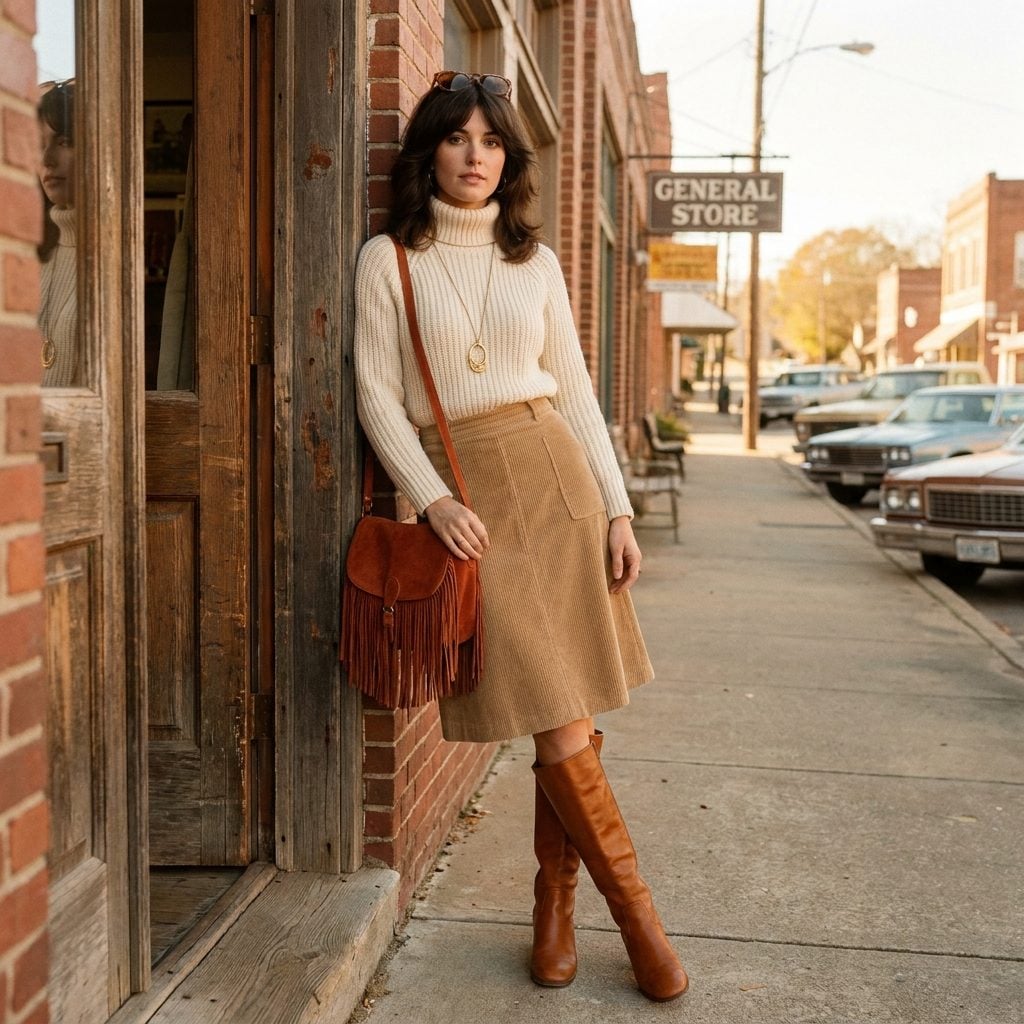
Suede was the decade’s love language. Soft, warm, slightly impractical. And the fringe satchel was its finest expression: strips of suede dangling from the flap and seams, swaying when you moved, making you feel like you were perpetually walking in slow motion through a Joni Mitchell album cover.
The color mattered. Rust if you leaned bohemian. Cognac if you were going for that Laurel Canyon folk-singer thing. Chocolate if you wanted something that could cross over into your office life. Every department store had a version by 1973, but the best ones came from small leather shops, the kind with handwritten signs and a proprietor who smelled like tanning solution.
Rain destroyed them. We carried them anyway.
32. Crocheted Granny-Square Bag in Orange, Avocado, and Mustard Yarn
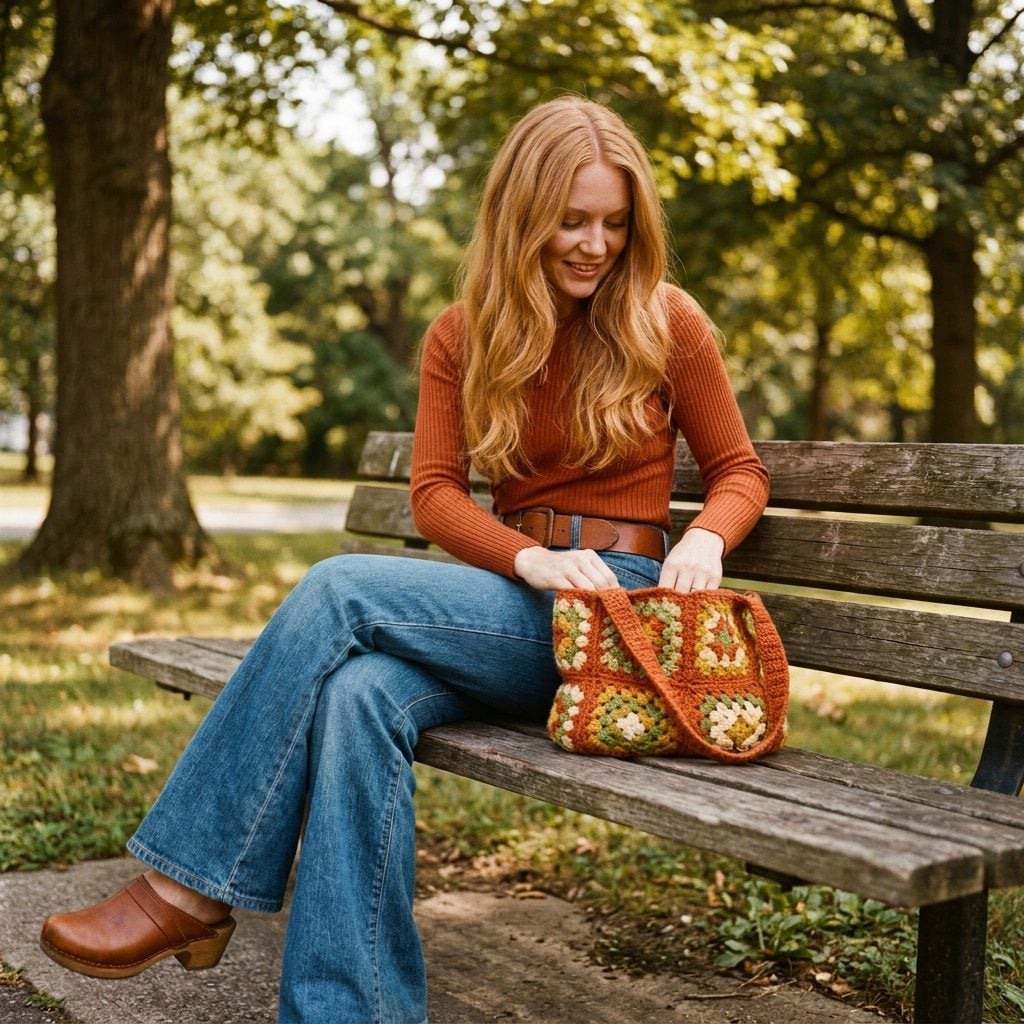
The color palette alone is a time machine. Burnt orange, avocado green, harvest gold. These were the exact same hues on your kitchen wallpaper, your bathroom towels, and your grandmother’s afghan. And now they were on your purse, crocheted into tidy little squares and stitched together into something that looked like a very small, very cheerful quilt you could carry.
If you were crafty, you made one yourself from a pattern in a McCall’s Needlework magazine. If you weren’t, you bought one from a friend who was, or maybe from a head shop that also sold candles and incense. The yarn was acrylic. It pilled within weeks. The wooden button closure never quite stayed shut. Your lipstick would fall out at least once a week. None of this diminished the bag’s appeal by a single stitch.
31. Patchwork Leather Hobo Stitched Together Like a Beautiful Accident
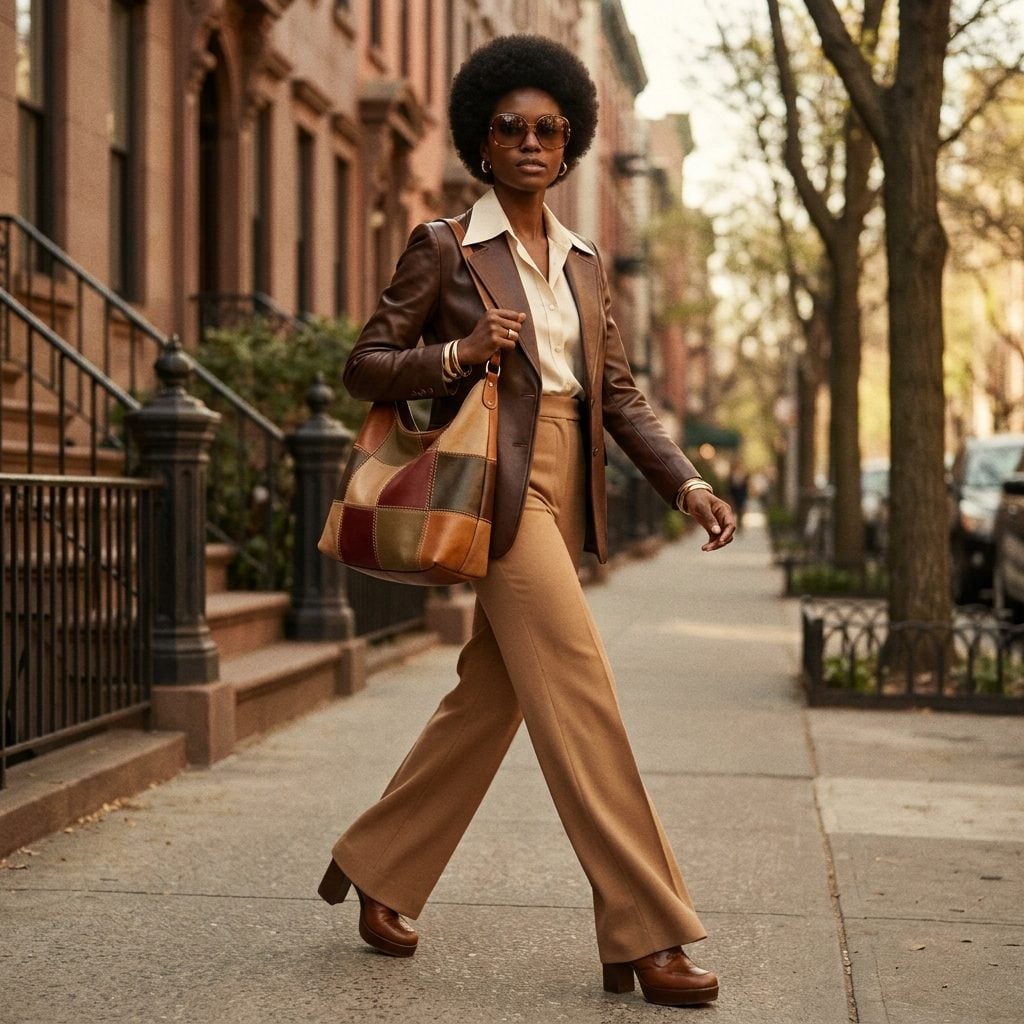
No two were identical, and that was the whole point. Scraps of suede and smooth leather in tan, burgundy, caramel, and olive, pieced together with visible stitching and just enough imperfection to look like someone had assembled it by hand in a workshop above a shoe repair shop. Which, honestly, someone probably had.
The hobo shape was everything: that slouchy crescent that collapsed against your hip, the single strap that slipped off your shoulder every four minutes. You’d hike it back up without thinking. It was part of the choreography of carrying one.
30. Woven Jute Market Tote With Leather Handles (And Sand From Last Summer Still in the Bottom)
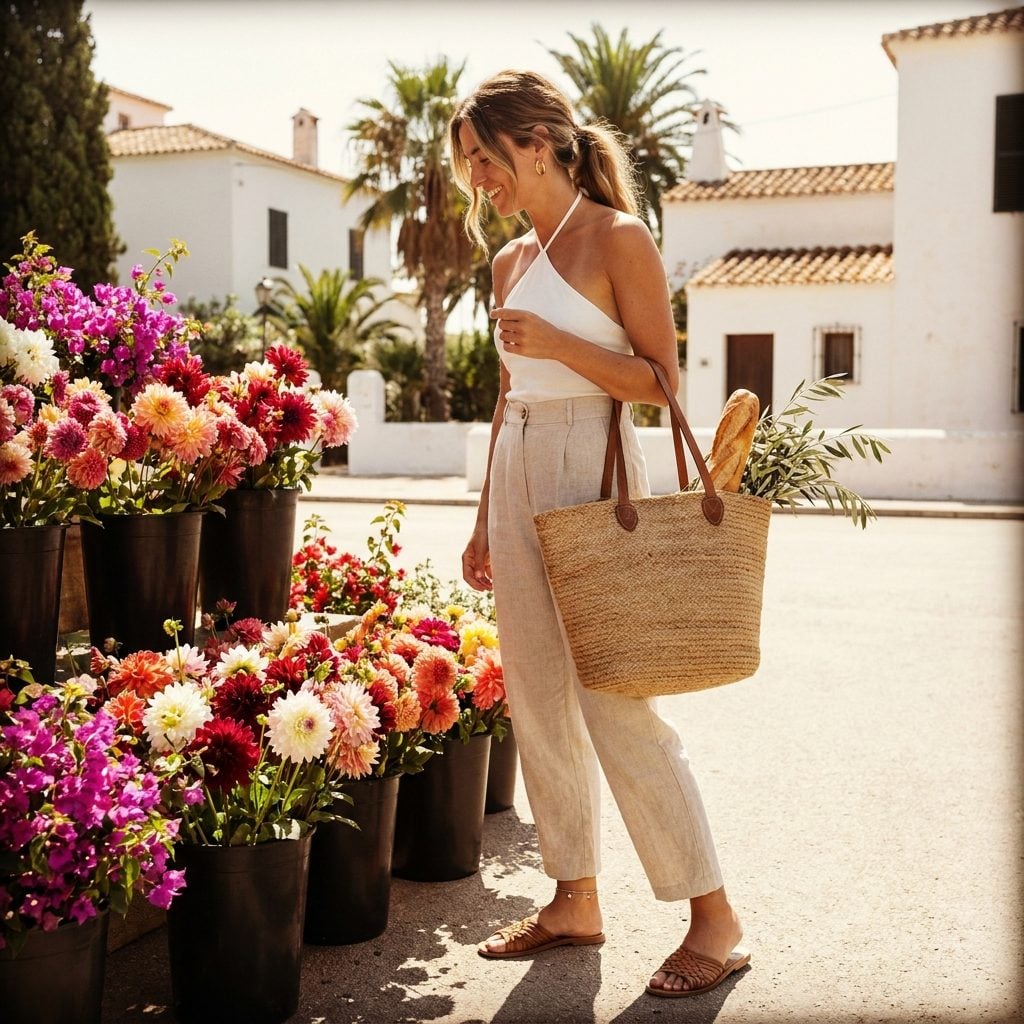
This was the bag you grabbed when you didn’t want to look like you were trying. The woven jute or sisal had that dry, grassy texture that felt like vacation even when you were just running to the A&P for milk and Tab. The leather handles darkened with use. The open top meant everything was visible and accessible, which was either liberating or chaotic depending on your personality.
It came home with you from a trip to Mexico, or the Bahamas, or a beachside import shop in any coastal town. And for years after, you’d find grains of sand worked into the weave. The smell was part of it: earthy, slightly sweet, like hay baking in sunlight.
29. The Embroidered Peasant Bag With Mirrorwork and Tassels That Made You Feel Well-Traveled
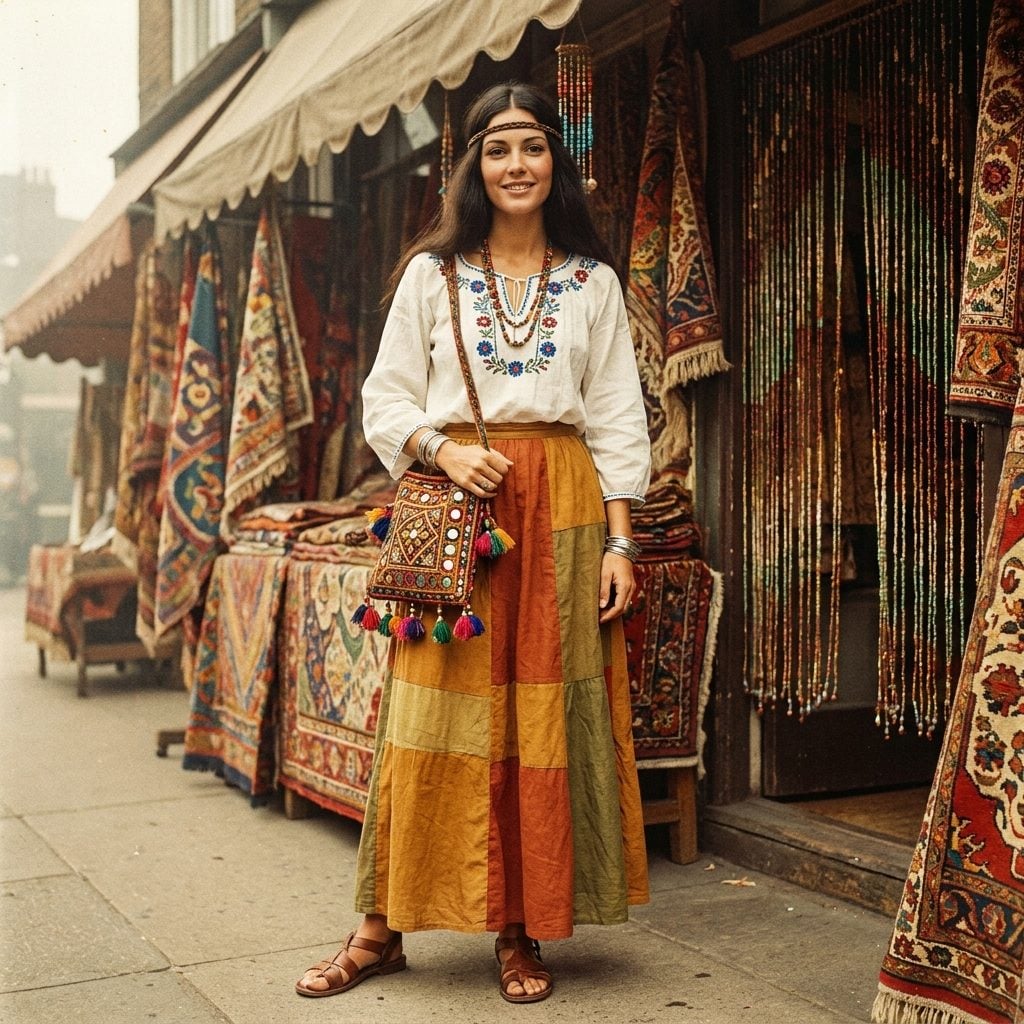
Even if you’d never left Ohio, this bag implied you had stories. Thick cotton or rough-woven fabric covered in chain-stitch embroidery, tiny circular mirrors (shisha work, if you were the type who knew the term), and tassels in saturated jewel tones. It arrived from India or Afghanistan by way of an import shop where everything cost under ten dollars and incense smoke hung in the air thick enough to taste.
The mirrorwork caught light in a way that felt almost magical. Little flashes of yourself and the sky reflected back at you from your own hip. The drawstring closure was never quite secure. The strap frayed. I lost a pair of sunglasses to a faulty drawstring and I still remember exactly which sunglasses they were.
28. Coach Bonnie Cashin “Cashin Carry” Bag With That Brass Turn-Lock You Could Hear Click Shut
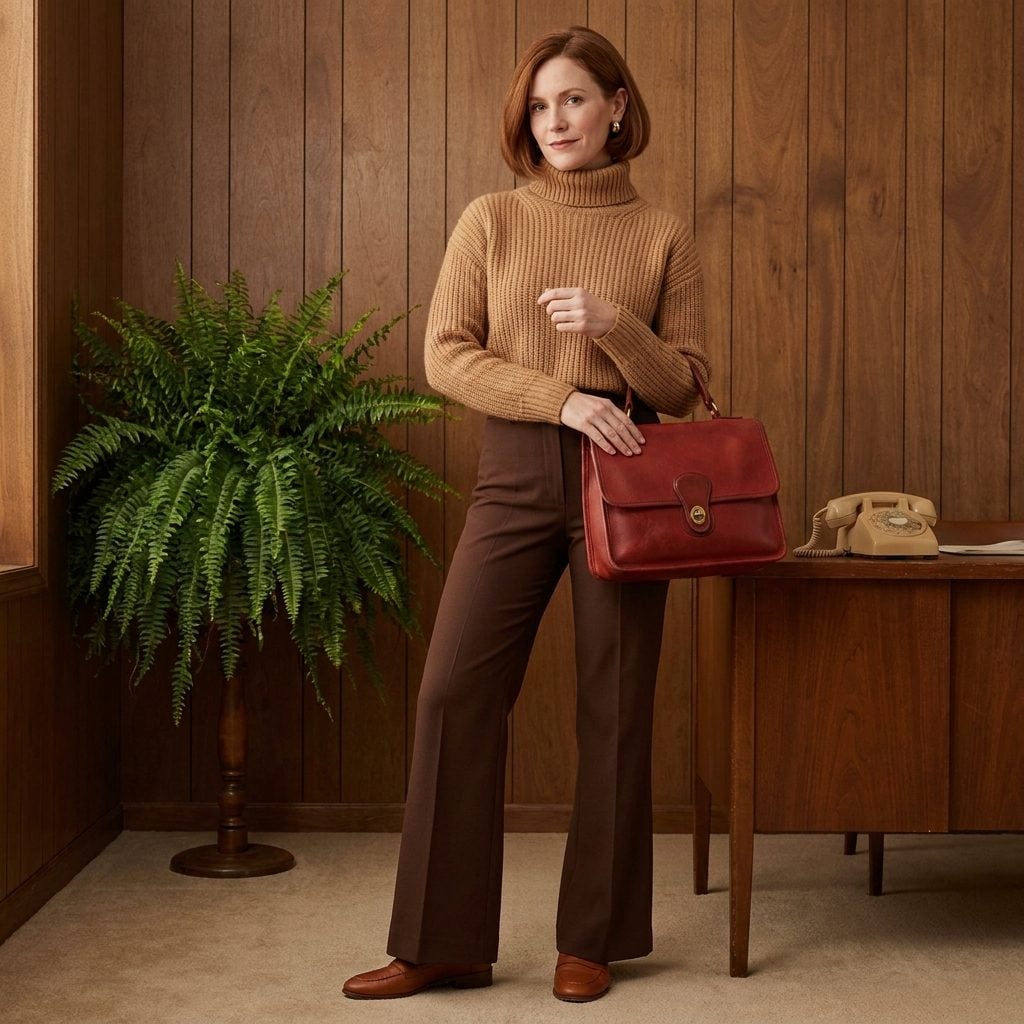
The sound. That decisive brass click. If you’ve ever owned a Coach bag from this era, you can hear it right now.
Bonnie Cashin’s designs for Coach in the late 1960s and into the early ’70s were radical in their simplicity. While European houses were doing logos and monograms, Cashin was making bags out of thick, unlined glove-tanned leather in colors like red, blue, and camel, held shut with a single brass turn-lock she’d borrowed from the clasps on convertible car tops. No lining. No excessive hardware. Just leather so buttery you wanted to press your cheek against it.
These weren’t status bags. They were smart-woman bags. The kind of thing a magazine editor or a college professor carried, and you noticed because the design was so clean it was almost startling against all the fringe and macramé surrounding it.
27. Gucci Jackie Hobo With the Signature Piston Closure Everyone Recognized Across a Room
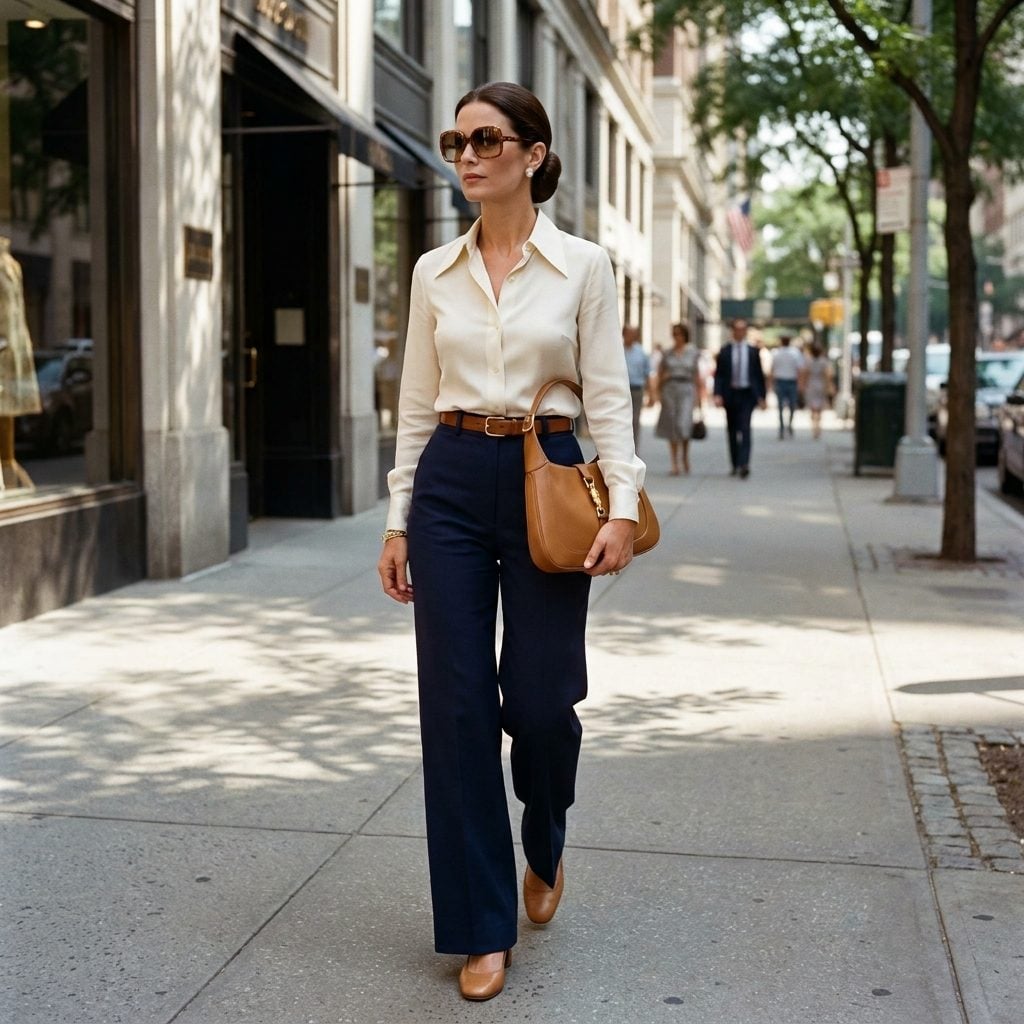
Named for Jackie Kennedy Onassis after she was photographed carrying it repeatedly through the streets of New York, this bag didn’t need a logo to announce itself. The shape did the work: that soft, sloping crescent with the distinctive metal piston closure running across the top. You knew what it was. Everyone knew what it was.
Jackie O. carried hers in tan leather, often tucked under her arm with oversized sunglasses and a headscarf, looking like she was simply running errands while being the most photographed woman in America. The rest of us saved for months or coveted from a distance. This wasn’t a bag you stumbled into owning. It was a decision.
26. Gucci Bamboo-Handle Top-Handle Bag (The One Your Mother Kept in Its Dust Bag)
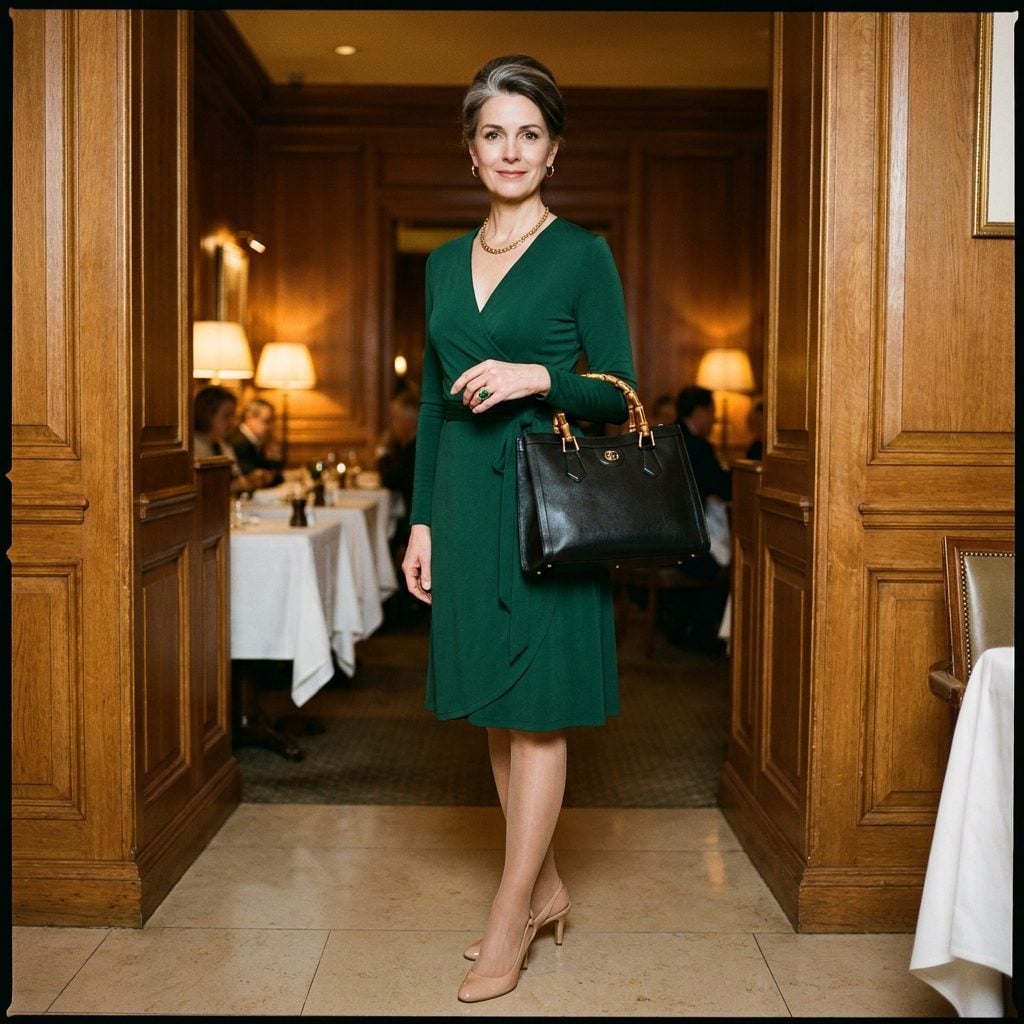
Some bags you carried. This one you presented. The bamboo handles had a warmth and an oddness that made the whole thing feel slightly tropical, slightly sculptural, like a piece of furniture that happened to hold your wallet and lipstick.
Gucci had been making bamboo-handle bags since 1947, born out of post-war material shortages when Japanese bamboo replaced metal and leather hardware. By the 1970s, it had become one of those perennial style signifiers: polished, international, a little bit exotic. Women who carried them tended to carry them for decades. I remember my mother’s lived on the top shelf of her closet in its flannel dust bag, brought out for dinners and special occasions like a guest of honor.
Some bags tell you where a woman shops. The bamboo-handle Gucci told you she believed in keeping beautiful things for a very long time.
25. Louis Vuitton Monogram Speedy, Carried Like It Was Just a Regular Tuesday
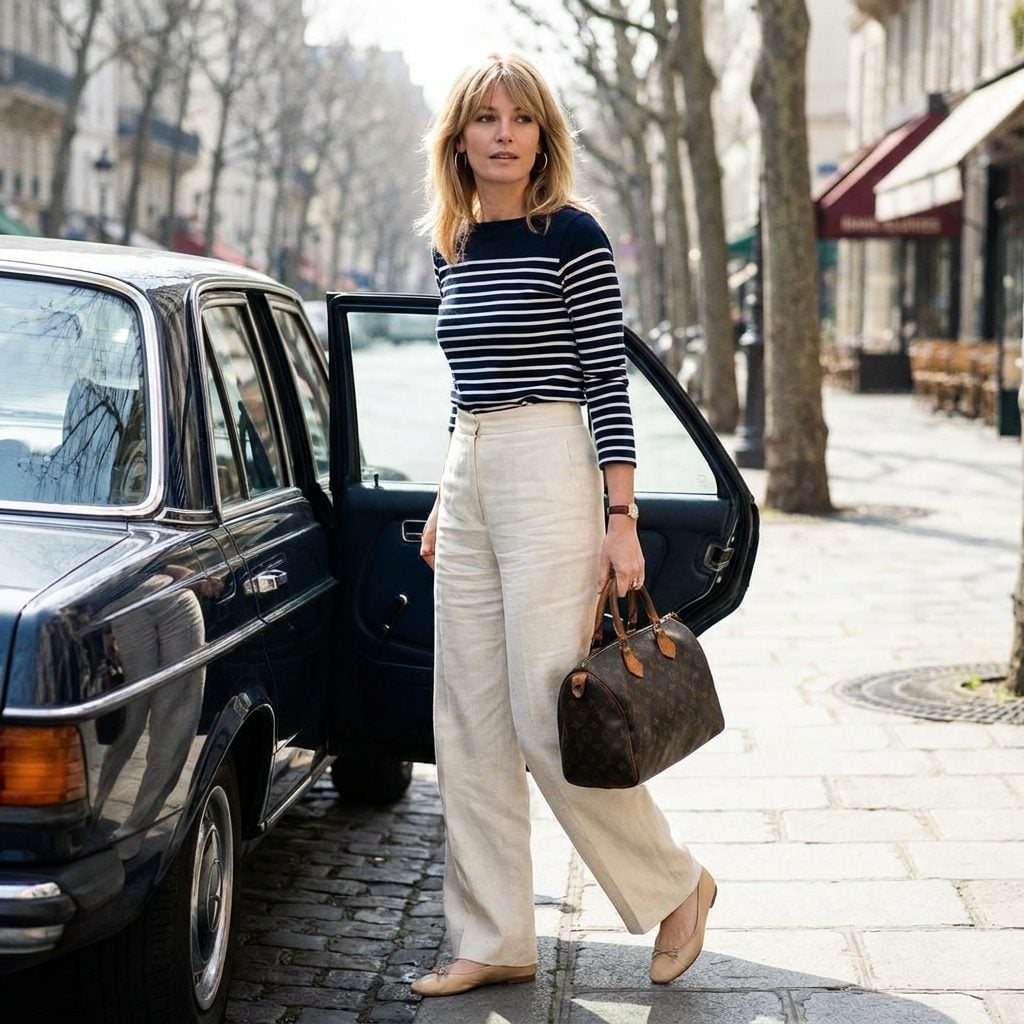
The trick with the Speedy was acting like it wasn’t a big deal. Audrey Hepburn had asked Louis Vuitton to make a smaller version of their Keepall travel bag in 1965, and by the 1970s, the Speedy 25 and 30 were the bags that certain women tossed onto restaurant tables with studied casualness. The monogram canvas, those interlocking LV’s in brown and gold on coated cotton, was recognizable from across a crowded room.
This was not a bag that whispered. But the women who carried them best made it look like an afterthought, just another thing in their hand alongside car keys and a pair of sunglasses.
24. The Hermès Kelly Bag in Grained Leather, Carried Like Quiet Authority
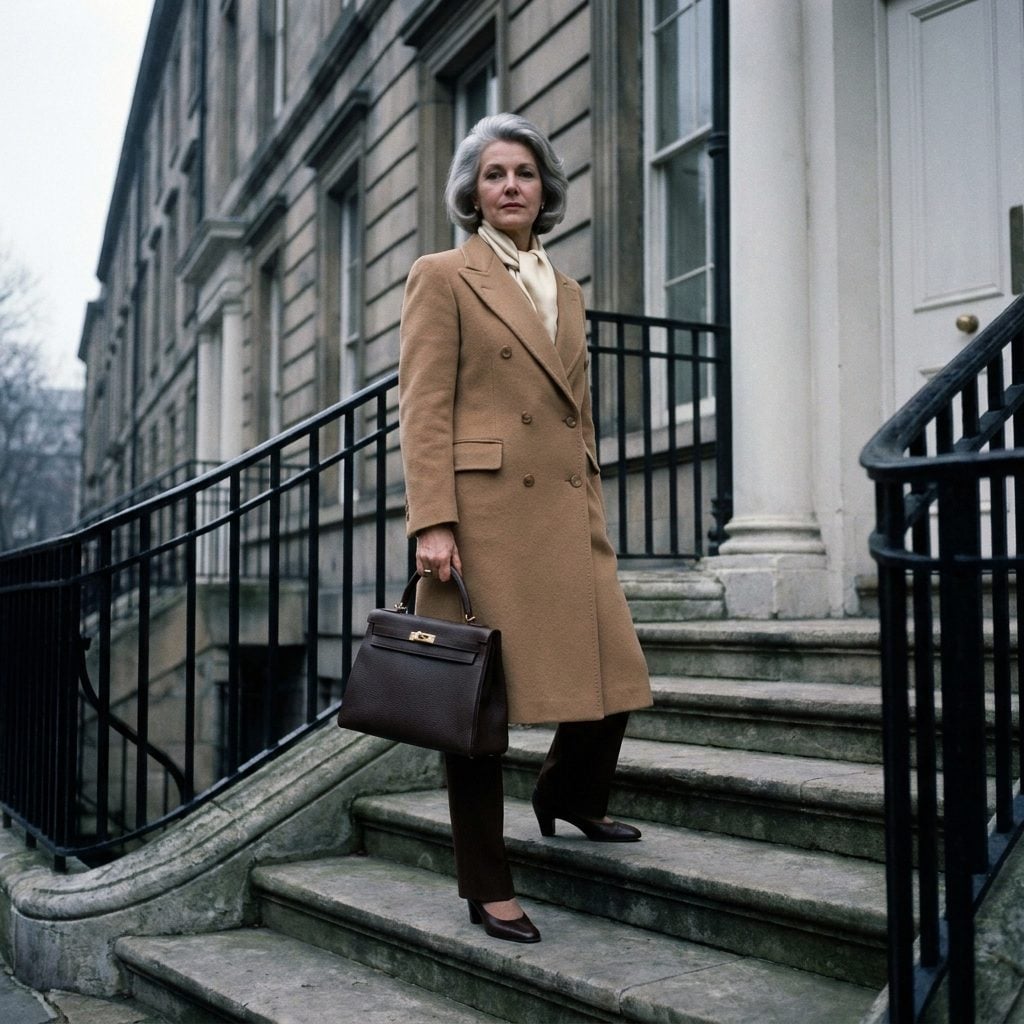
Let’s be honest: most of us didn’t own one. But we all knew what it was. The structured trapezoidal shape, the single handle, the flap with its signature sangles and cadenas lock. Grace Kelly had made it famous in the 1950s by using one to shield her pregnant belly from photographers, and by the 1970s, it had settled into its role as the bag that signaled a very particular kind of wealth. Not flashy wealth. Old wealth. The kind where you didn’t discuss what things cost.
Women who carried Kellys in the ’70s weren’t following trends. They were beyond trends. The grained leather (Togo or Clemence hadn’t arrived yet; this was likely Box or Ardennes) developed a patina that made it look better with age, which felt like a metaphor the bag’s owners would have appreciated.
23. The Saddle Bag With a Curved Flap and a Crossbody Strap Long Enough to Forget About
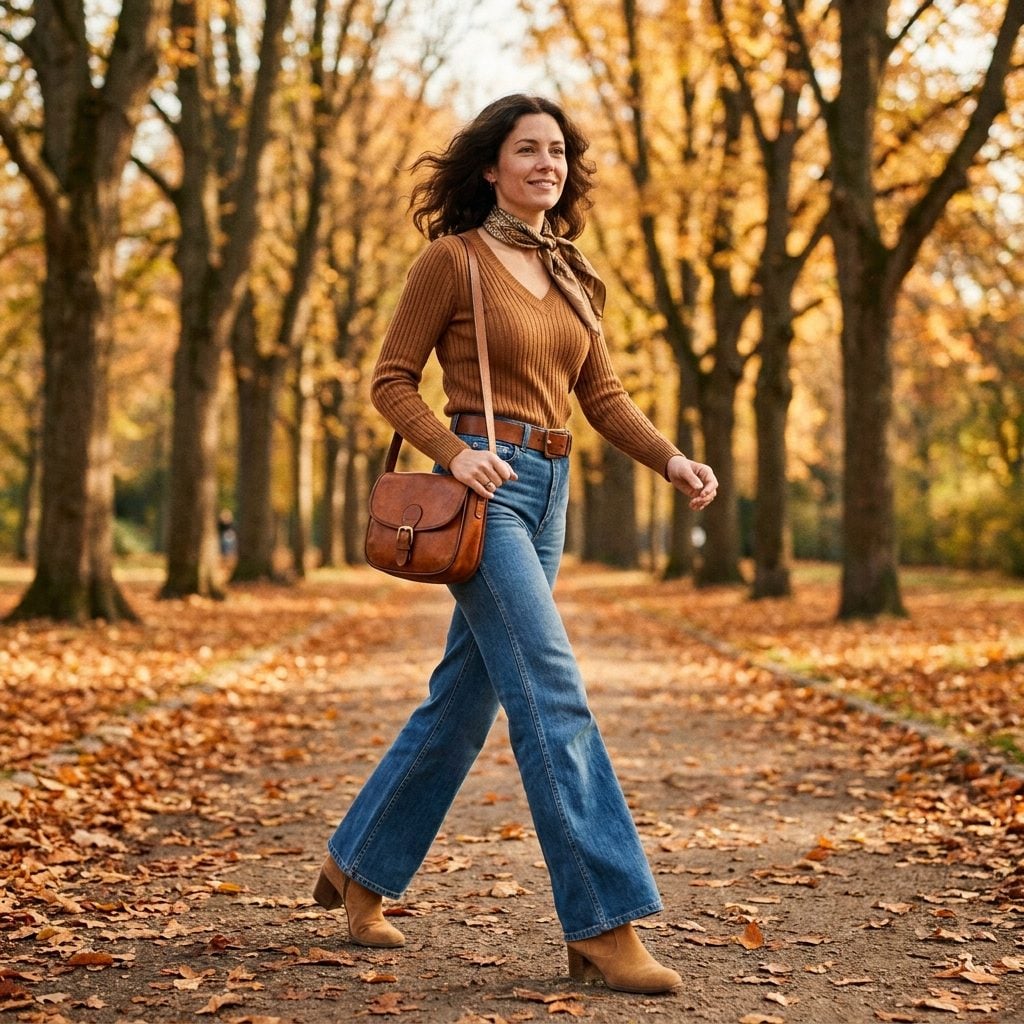
Hands free. That was the revolution. While structured top-handle bags demanded you carry them like a lady, the saddle bag slung across your body on a long strap and let you live your life. Both arms available for carrying groceries, holding a child’s hand, flipping through records at the shop, gesturing wildly while telling a story.
The shape borrowed from actual equestrian saddlebags: that distinctive curved, slightly rounded flap, a buckle or snap closure, soft leather that molded to your hip over time. They came in every shade of brown leather the decade could produce, and the strap was always long enough that the bag hit at your opposite hip, bouncing lightly when you walked.
This was the bag that said you had places to be and you weren’t going to slow down to carry something precious. It was practical in a way that felt almost radical for a women’s accessory. And honestly? The basic silhouette hasn’t been improved upon since.
22. The Wicker Basket Bag With the Hinged Lid You Carried Like a Tiny Suitcase
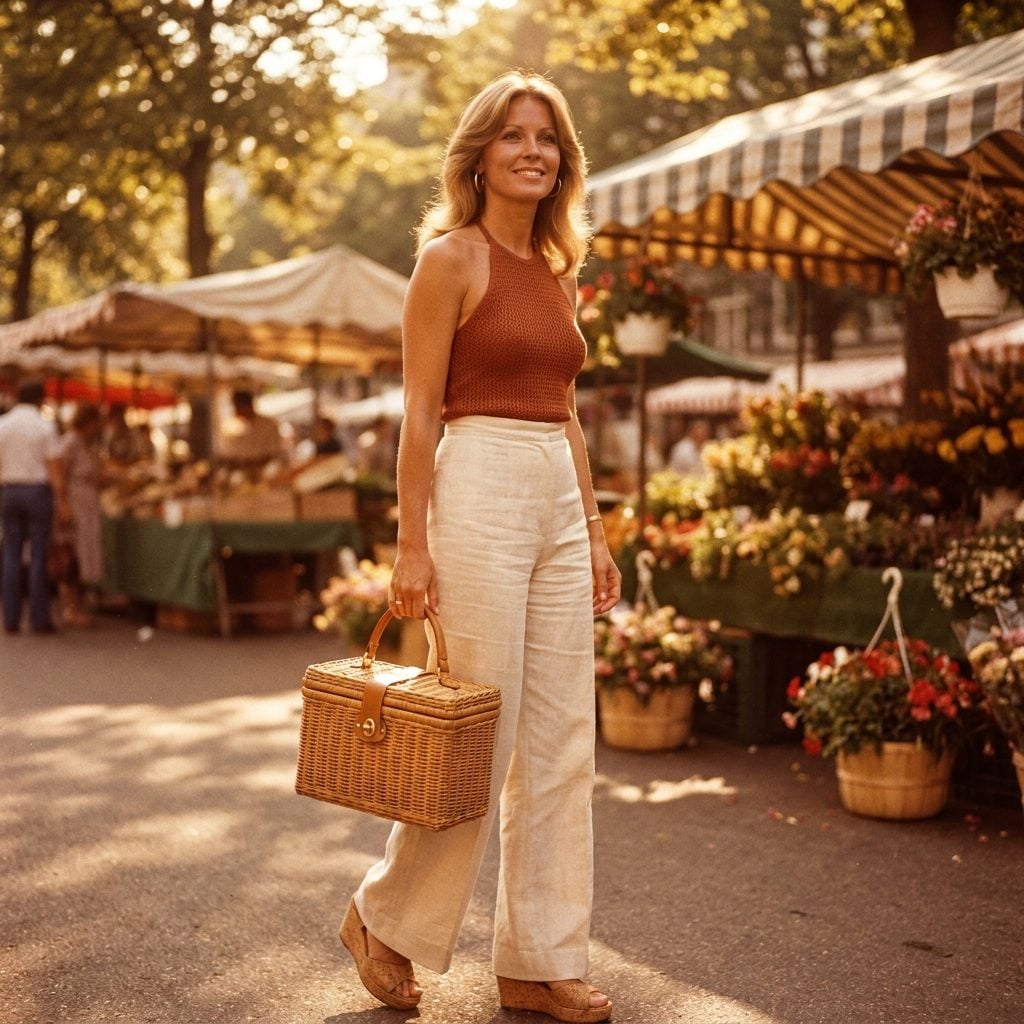
You’d unlatch it with a satisfying click, and the whole thing would swing open like a jewelry box. The wicker basket bag with its stiff leather trim and brass hardware was equal parts picnic accessory and purse, and nobody questioned it. You paired it with a halter top and wide-leg trousers or that cotton wrap dress you bought at Sears, and suddenly you looked like you summered somewhere European.
The interior was usually lined in gingham or a floral cotton, and it held almost nothing. Lipstick, a compact, your keys, maybe a pack of Virginia Slims. That was the whole point. You weren’t hauling your life around. You were making an entrance.
21. Straw Tote With Raffia Flowers (The Bag That Smelled Like Summer)
❤️ Would you like to save this?
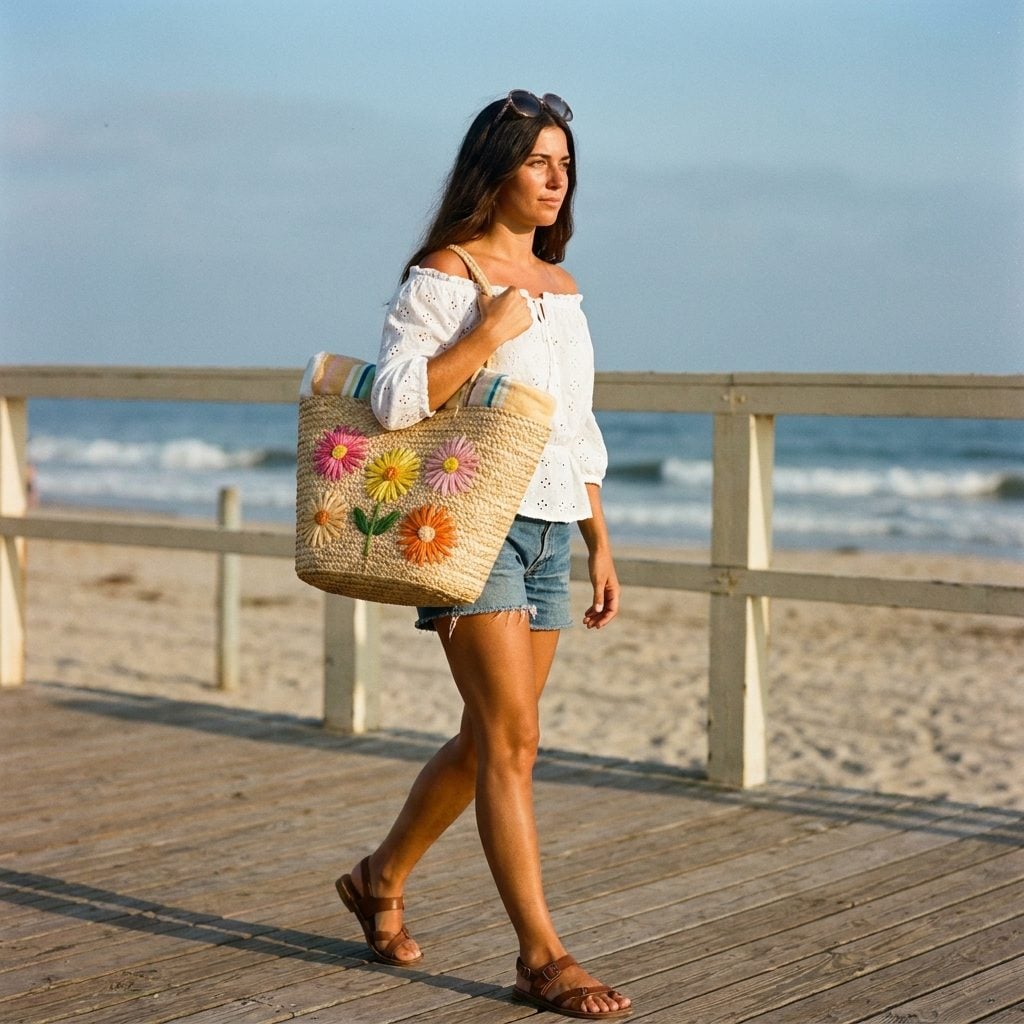
Close your eyes and you can smell it. That dry, grassy scent of a brand-new straw tote, the kind with chunky raffia daisies or roses hand-stitched across the front. Your mom had one. Your aunt had one. The lady at the grocery store had a slightly crushed version stuffed with coupons.
These came from everywhere: souvenir shops in Florida, import stores at the mall, sometimes the Avon catalog. The flowers were always a little uneven, which was part of the charm. You’d throw in your sunglasses, a Coppertone bottle, a worn paperback, and head to the beach or the backyard with equal confidence. They rarely survived more than two seasons before the straw started splitting at the handles, but that was fine. You’d just get another one.
20. The Metallic Envelope Clutch You Only Brought Out After Dark
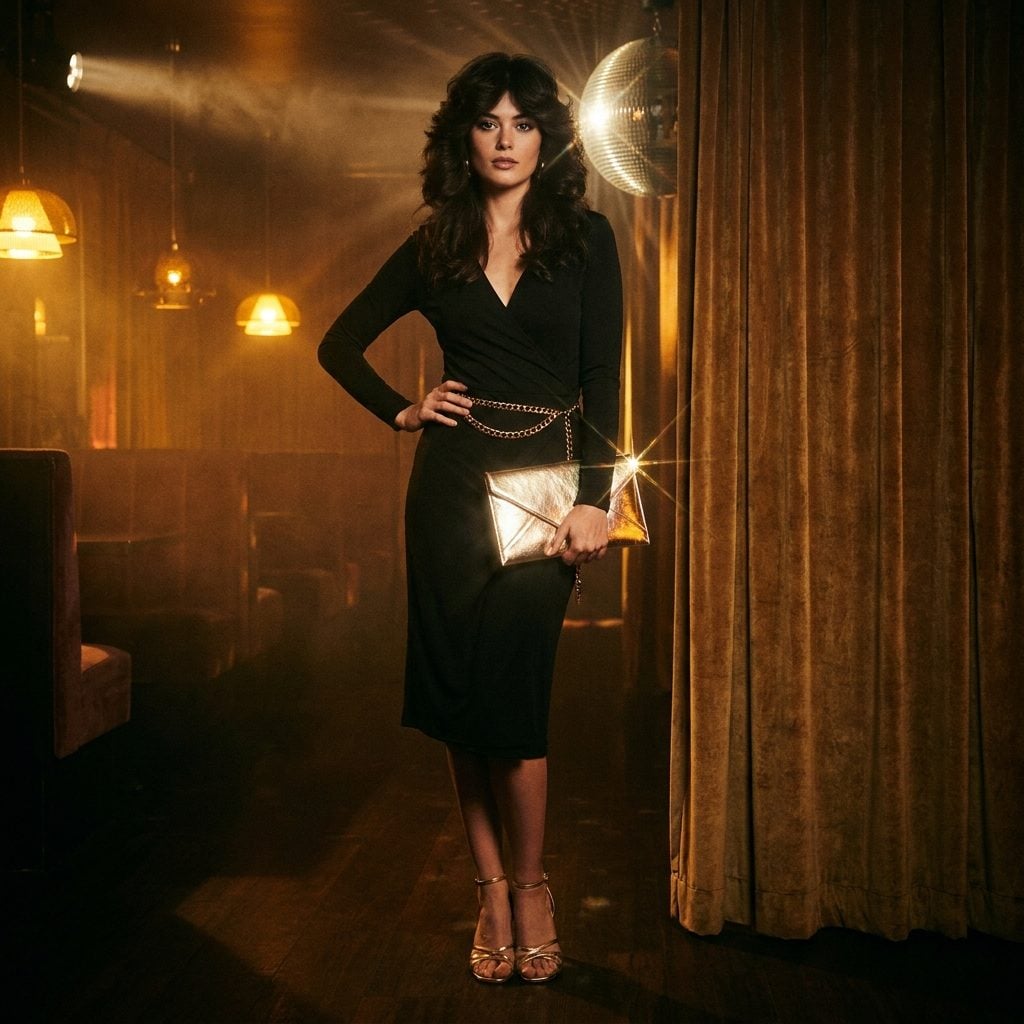
Gold, silver, or bronze. Those were your options, and you chose based on your outfit, your mood, or whichever one wasn’t buried at the bottom of your closet. The metallic envelope clutch was the universal signal that you were going out, not just out-out, but somewhere with a dress code and possibly a cocktail menu.
It was flat enough to tuck under your arm, which you did constantly because it never had a strap. The snap closure fought you every time. Inside: folded cash, a house key, maybe a Bonne Bell lip gloss. That’s all that fit. That’s all you needed when you were 23 and the night was just starting.
19. Python and Snakeskin Shoulder Bags in Every Shade of Brown Nature Could Offer
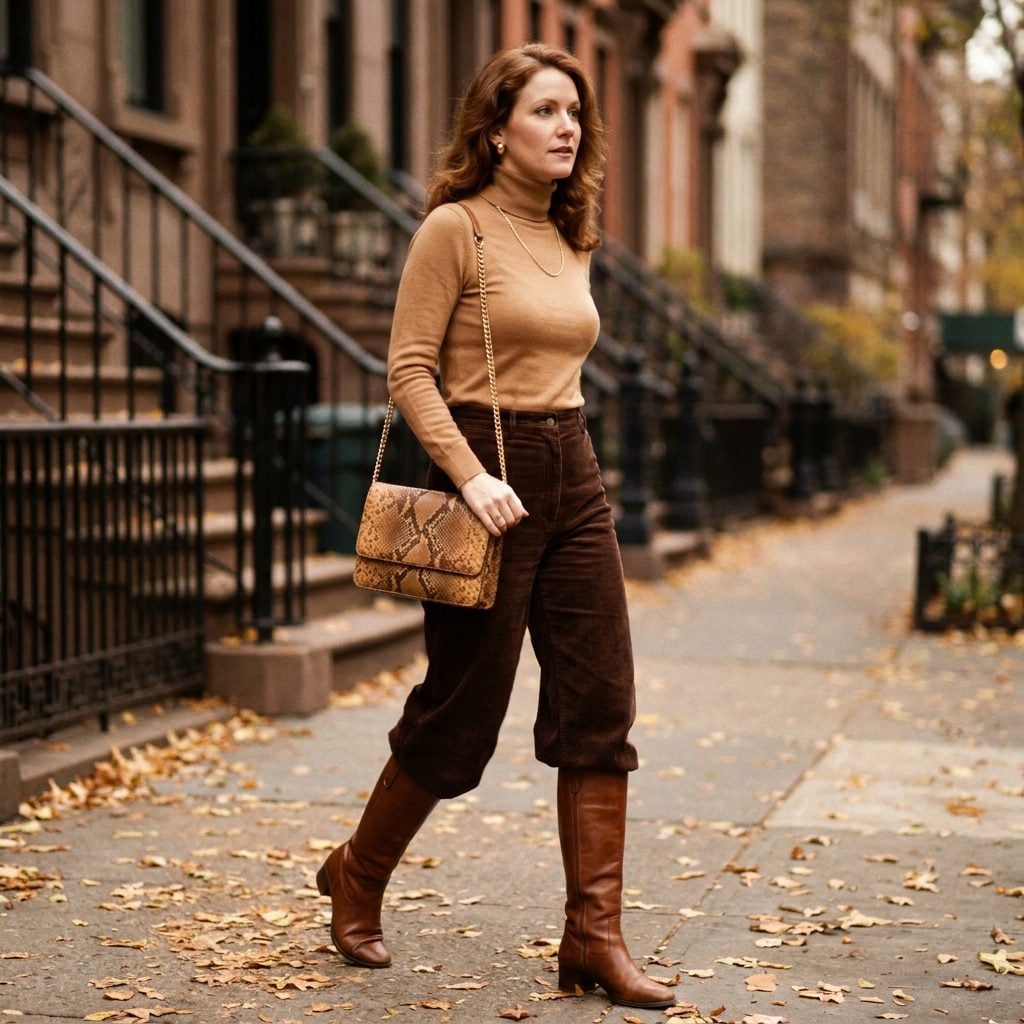
Nobody flinched. Real snakeskin, real python, draped over your shoulder with a long chain strap and a foldover flap. In muted tones of sand, cognac, ochre, and deep chocolate, these bags were everywhere from Bonwit Teller to your local leather goods shop. The scales had a cool, dry texture you’d run your thumb across without thinking about it.
Exotic skins in the ’70s weren’t a moral conversation. They were just fashion. Your bag matched your boots, your belt, sometimes your watchband, and that coordination felt like having your life together.
18. The Tooled Western Leather Bag With Floral Carving and a Concho That Meant Business
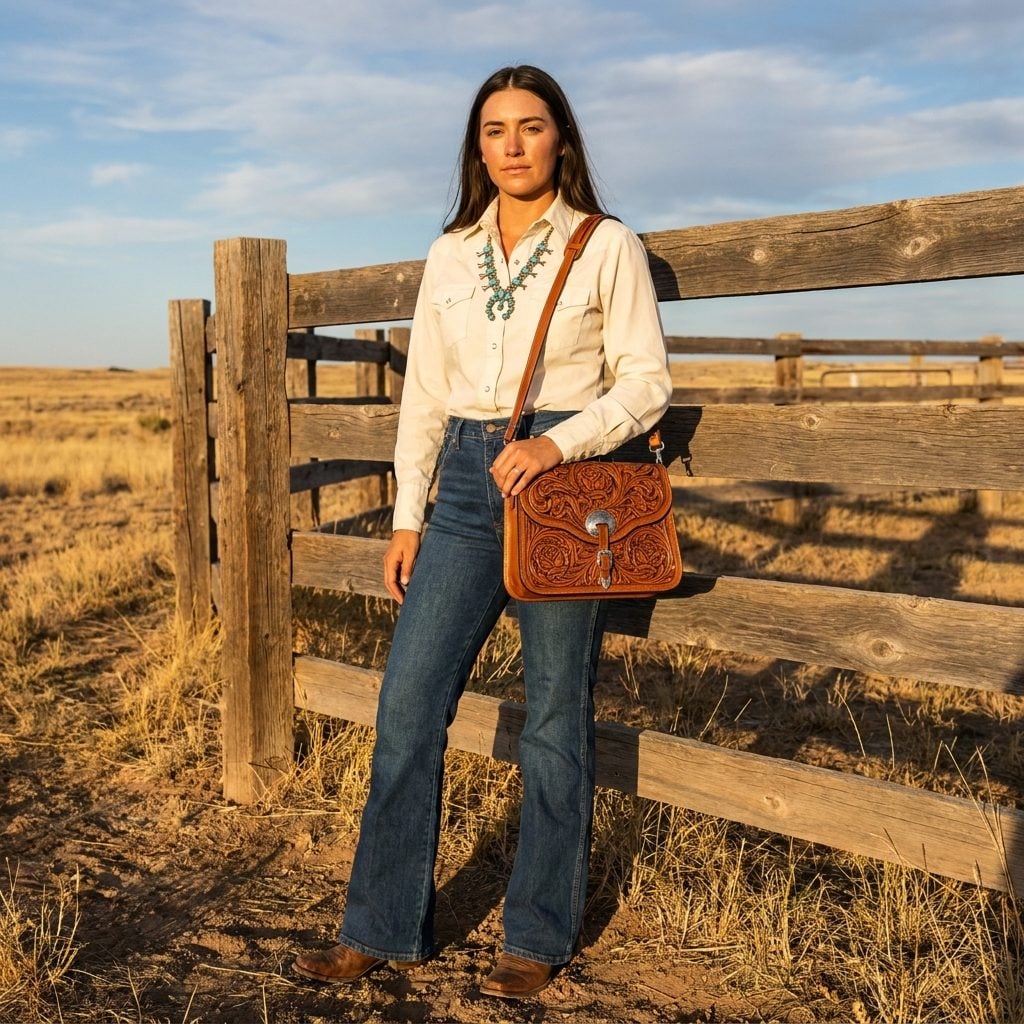
Somewhere between a cowgirl fantasy and genuine American craft, these bags had weight to them. Actual weight. Hand-tooled floral patterns pressed deep into thick saddle leather, a silver concho snapped shut at the front, and that particular smell of fresh hide that never fully faded.
You found them at Western wear shops, tourist stops in Santa Fe or Scottsdale, or occasionally in the back of your dad’s truck because he’d picked one up at a rodeo and figured your mother would like it. She did.
The tooling was always roses or wild flowers, sometimes leaves with scrollwork that must have taken someone hours to stamp. These weren’t fast fashion. I genuinely believe some of them are still in rotation in someone’s closet right now, the leather just getting better with age. That’s the thing about good tooled leather: it doesn’t quit.
17. Denim Patchwork Shoulder Bag With Contrast Stitching (You Might Have Made This One Yourself)
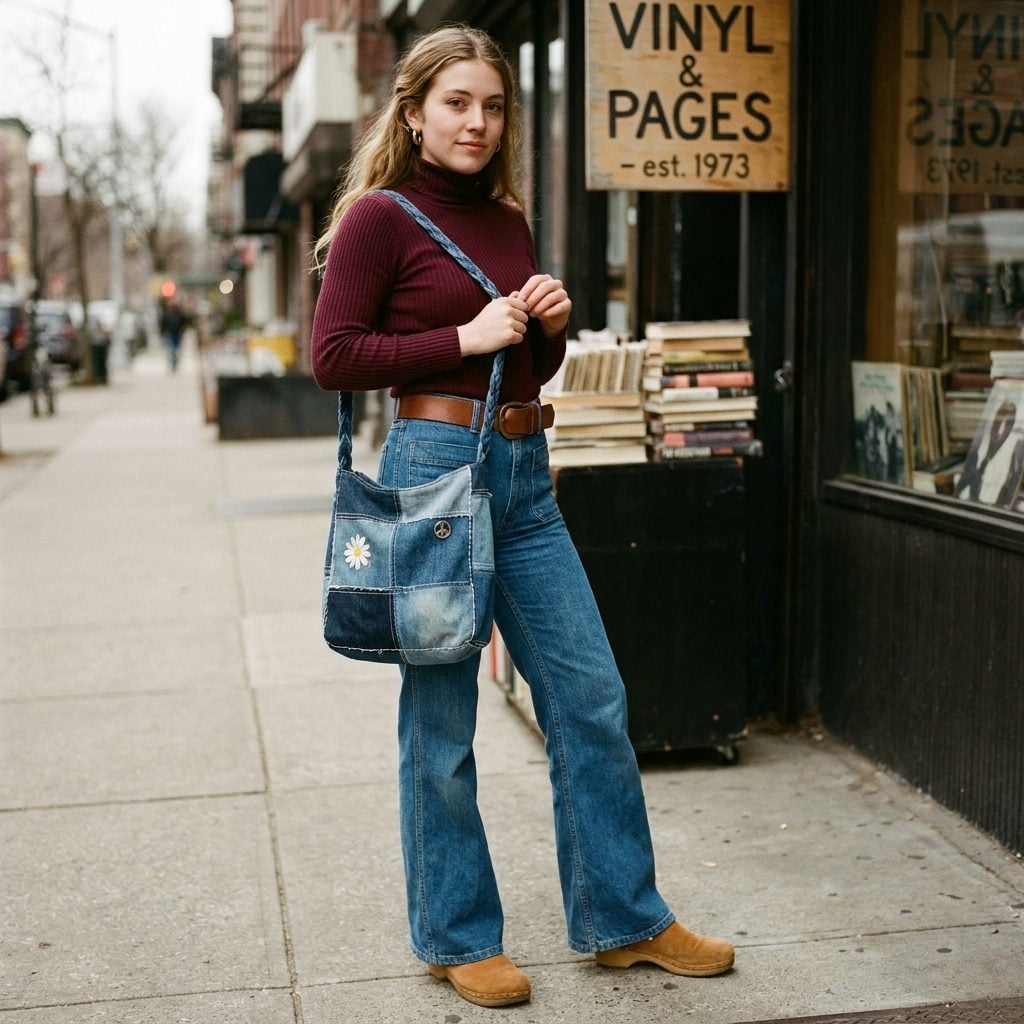
Half the appeal was that it looked handmade. The other half was that it probably was. Squares of faded denim in different washes, stitched together with thick white or gold topstitching, a long strap, and maybe a peace sign patch iron-pressed onto one corner. If you took Home Ec, you had the skills. If you didn’t, your friend did.
These showed up at craft fairs, head shops, and on the shoulders of every girl who read the Whole Earth Catalog. Commercial versions popped up at JCPenney by mid-decade, but the originals were scrappy and imperfect, cut from old jeans that had finally blown out at the knee.
16. The Needlepoint Bag With Bamboo Handles Your Grandmother Would Have Recognized Instantly
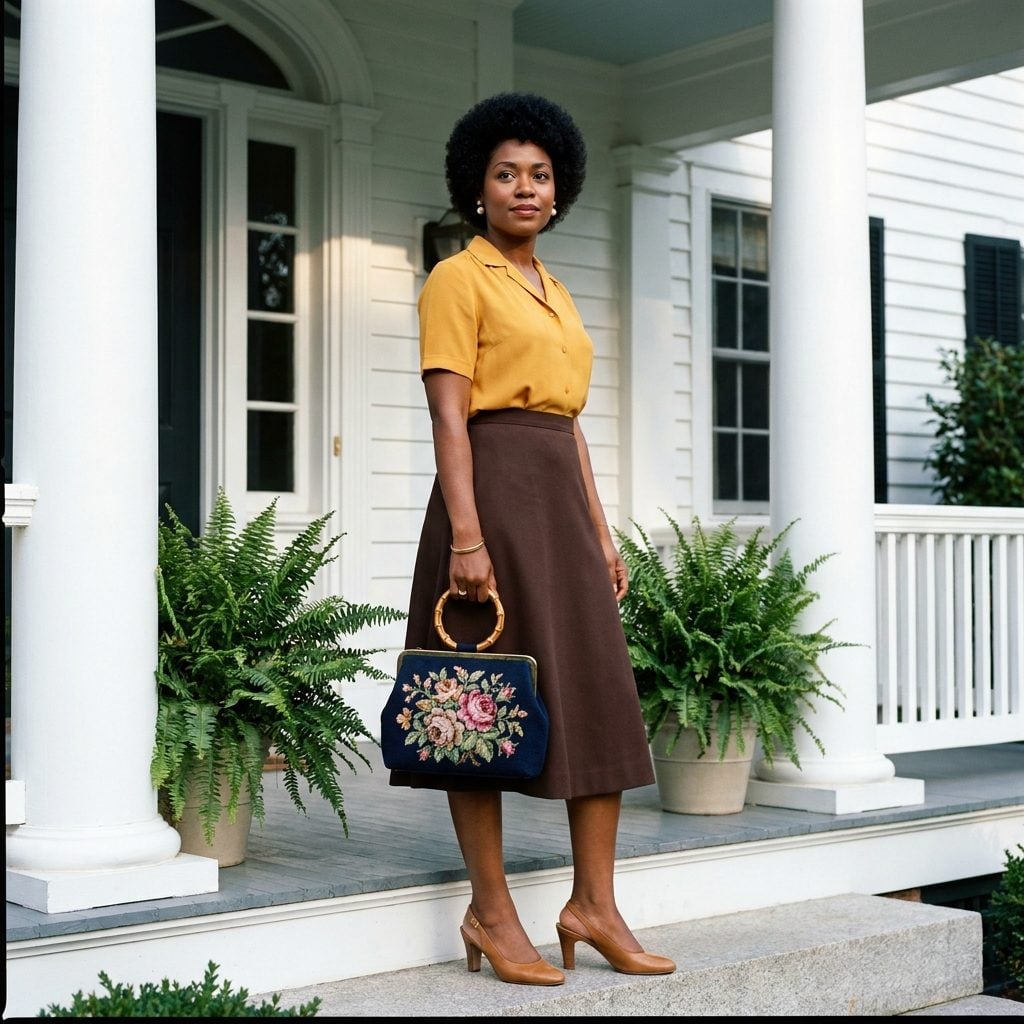
Floral needlepoint stretched across a structured frame, finished with bamboo or Lucite handles that arched above the bag like little rainbows. These were ladylike in the old-school sense, the kind of bag Jackie Kennedy might have carried to a garden party, and yet they were absolutely everywhere in the ’70s, carried by women in bell-bottoms and platform shoes without a trace of irony.
Some women stitched their own. Needlepoint kits from Bucilla or Erica Wilson sold in the millions, and finishing a bag was a point of genuine pride. The roses were always pink. The backgrounds were always dark, navy or forest green or black. And the bamboo handles gave the whole thing a slightly tropical edge that made zero logical sense with the Victorian floral motif, and we loved it anyway.
15. Carpet Bag in Tapestry Fabric With a Frame Clasp That Clicked Shut Like a Secret
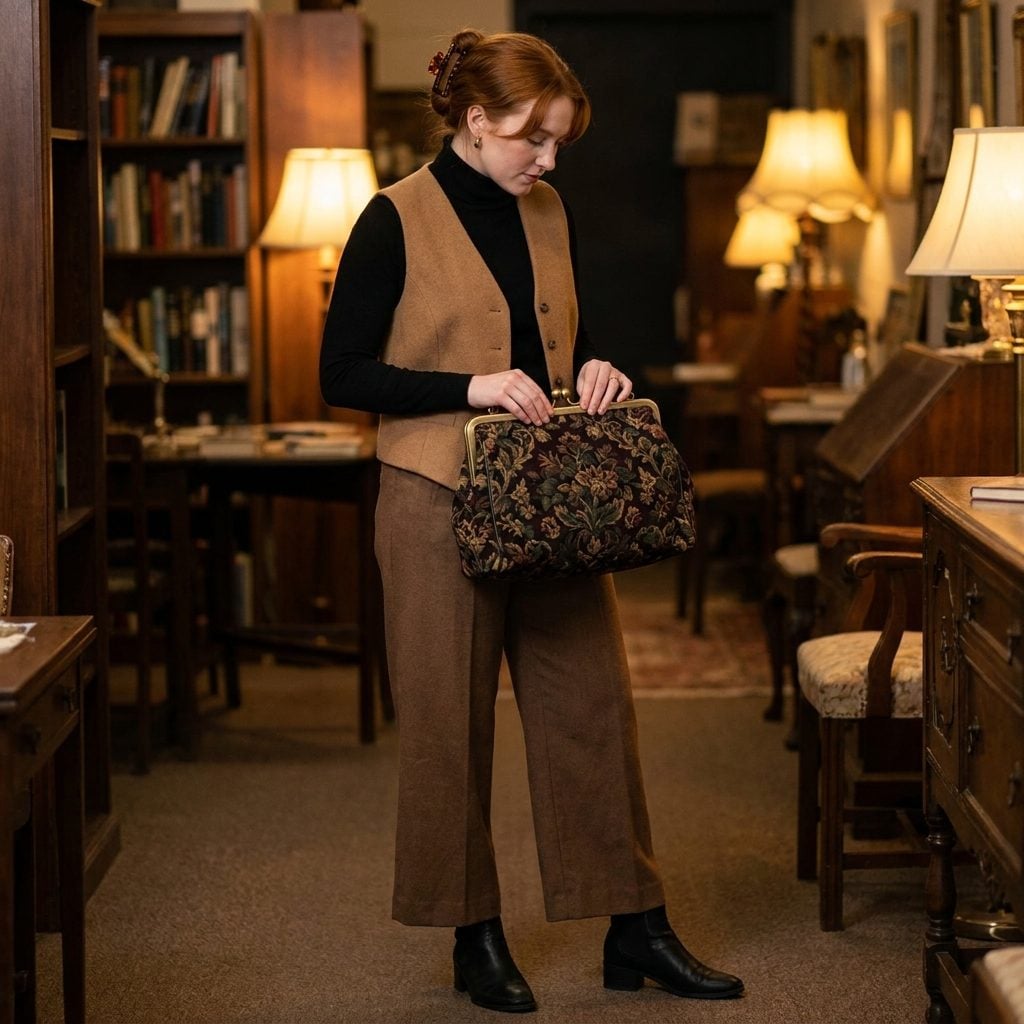
That clasp. You’d squeeze the two brass knobs together and the whole mouth of the bag would yawn open, revealing a silk-lined interior big enough for a paperback, a wallet, and half of what you actually needed for the day. Then you’d press it shut and hear that definitive click. It sounded expensive whether it was or not.
The tapestry fabric came in rich jewel tones: deep burgundy florals, forest green with gold threading, sometimes a blue paisley that looked lifted from your grandmother’s sofa. These bags were structured and serious, and carrying one felt like playing dress-up as an adult. For a lot of us, that’s exactly what it was.
14. The Metal Mesh Shoulder Bag That Caught Every Light on the Dance Floor
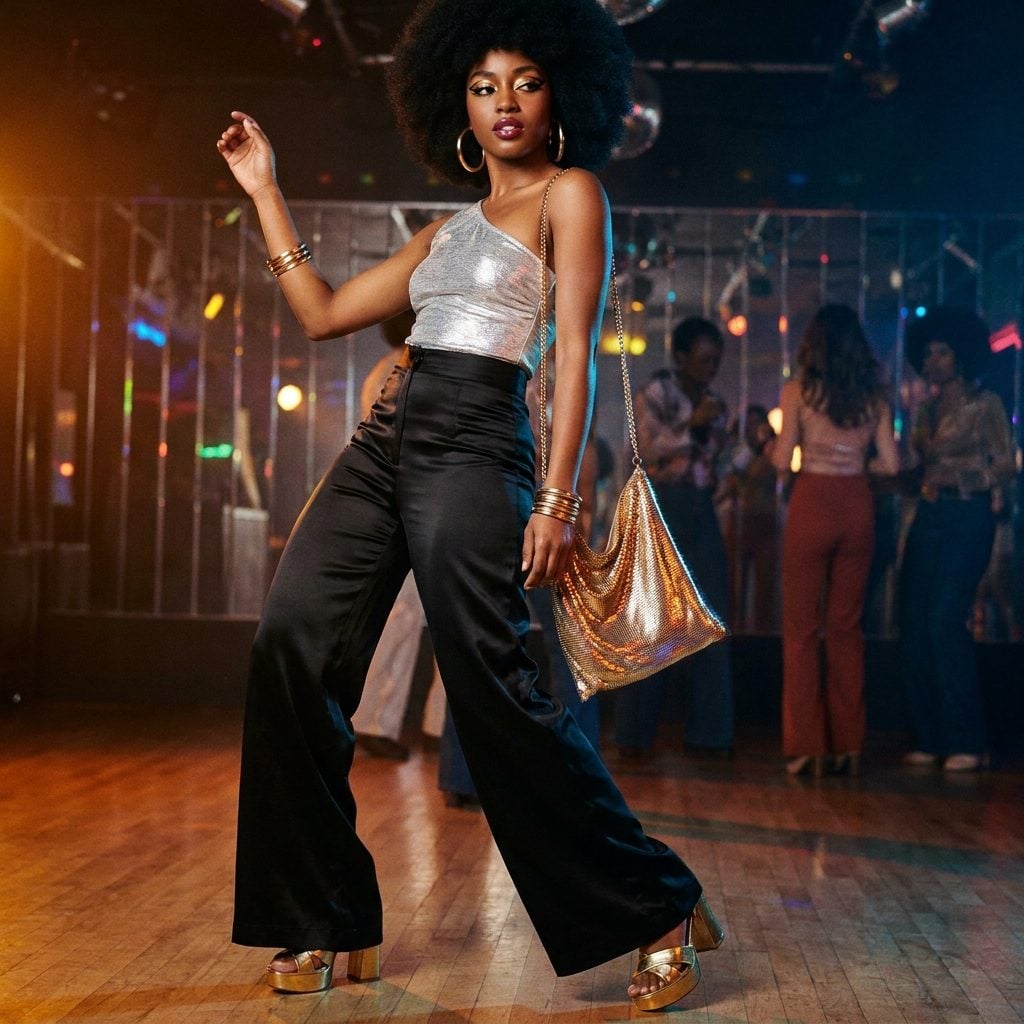
Liquid metal, basically. A cascade of tiny interlocking rings in gold or silver that draped and moved like chainmail, catching strobe lights and sending little sparks of reflection across the room. Whiting & Davis made the definitive version, and if you had one, you knew it. The brand name was stamped inside on a tiny tag you’d show anyone who asked.
It was cold to the touch when you first picked it up. By the end of the night it was warm from your body heat and had probably left a faint grid pattern pressed into whatever was inside. These bags were not practical. They were not comfortable against your hip. They were gorgeous, and that was the entire job description.
13. Lucite Box Purse in Amber or Tortoise (The Handbag That Was Basically Furniture)
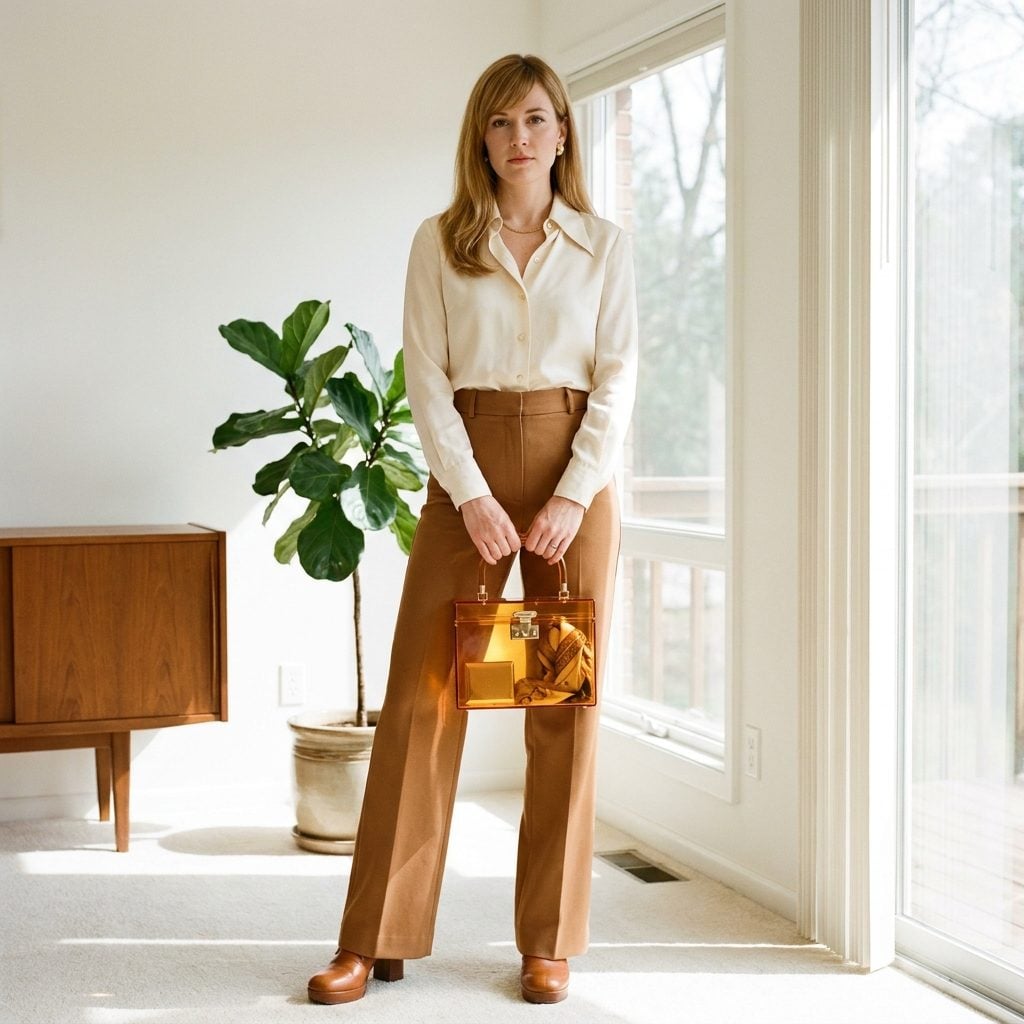
Hard, translucent, and absolutely rigid. The Lucite box purse sat on a table like a small piece of mid-century sculpture. In amber, smoky gray, or faux-tortoiseshell, it had clean geometric lines and a hinged lid that opened to reveal a surprisingly roomy interior, usually lined in satin.
Patricia of Miami and Wilardy were the names to know, though by the ’70s plenty of imitators crowded department store counters. The thing about a Lucite bag is that everyone could see exactly what was inside, which meant you curated your contents like a tiny display case. Compact, lipstick, a silk handkerchief. Nothing embarrassing. Ever.
12. The Fringe-Heavy Suede Bag That Swayed With Every Step You Took
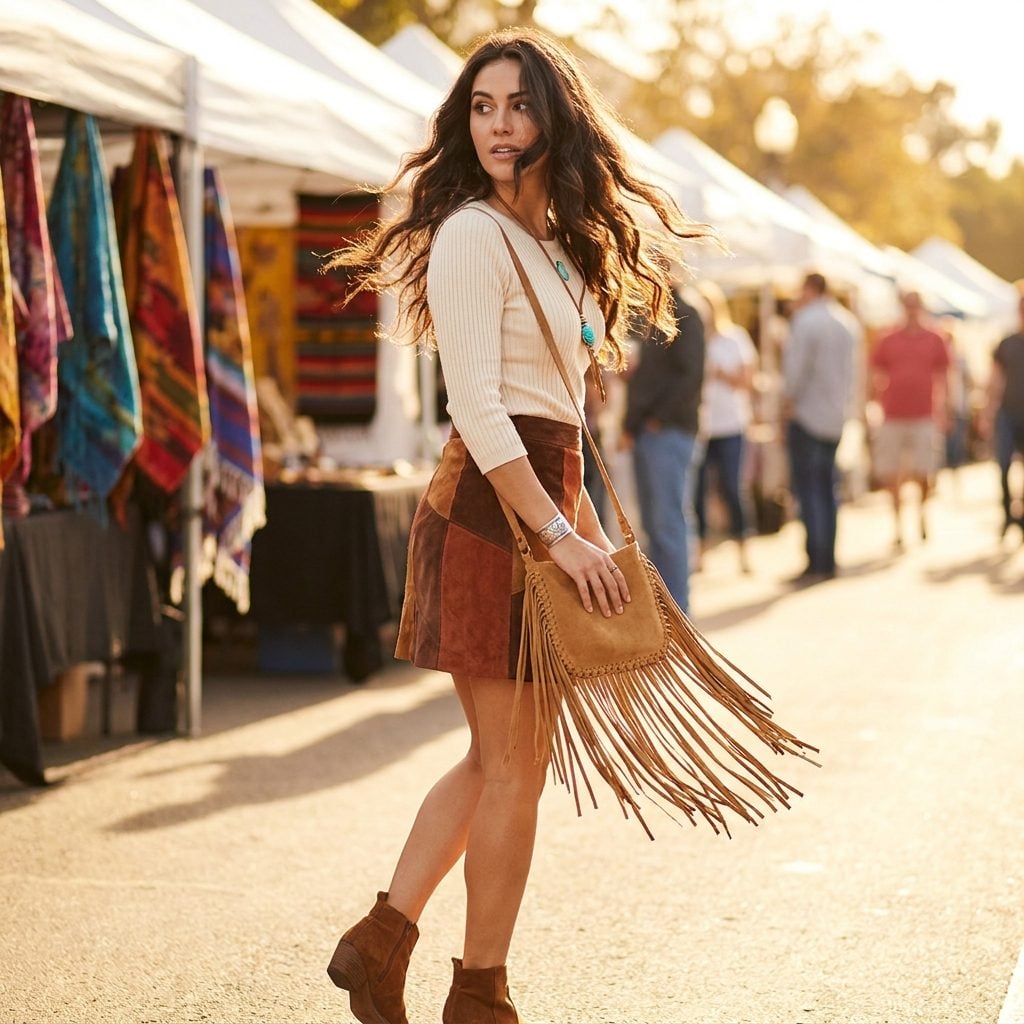
Six inches of suede fringe. Minimum. Hanging from the bottom edge, the flap, sometimes the strap itself, swinging and swaying with every step like the bag was alive. In tan, rust, or butterscotch suede, these bags owed everything to the Western fringe jacket trend, except they were easier to buy and didn’t require you to commit to wearing an entire cow.
You found them at import shops, leather goods stalls at flea markets, and anywhere that sold turquoise jewelry. The fringe got tangled. It got caught in car doors. It occasionally dipped into your soup. None of this mattered. The movement was the whole point, this sense that you were always in motion, always headed somewhere worth going.
11. The Oversized Slouchy Hobo in Soft Brown Leather That Held Your Entire Life
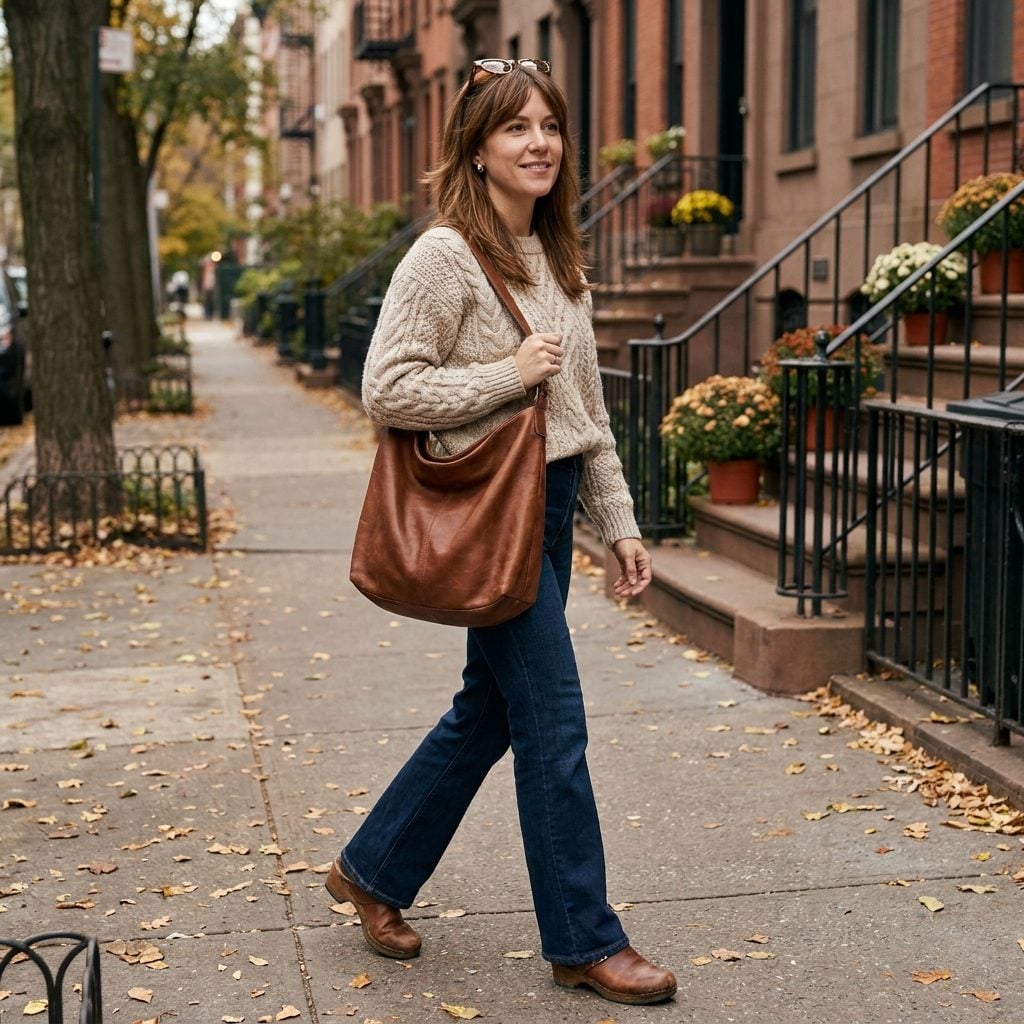
This was the bag. The one you actually used every single day. Soft, unstructured, in a brown so buttery it practically collapsed into itself when you set it down. No rigid frame, no fussy clasp. Just a wide shoulder strap, a zip top if you were lucky, and enough room inside for your wallet, your appointment book, your sunglasses, a banana, three pens, and a crumpled tissue you’d find six months later.
The slouchy hobo was the anti-status bag. It didn’t announce a designer or signal a tribe. It just worked. The leather developed a patina over years of use, darkening at the corners and along the strap where your hand gripped it. By the time it was really broken in, it was the most comfortable thing you owned.
The best bags aren’t the ones you show off. They’re the ones that eventually mold to the shape of your shoulder.
Every woman over 40 remembers the specific brown of her first good leather hobo. Not chocolate, not tan. Something in between. Something that went with everything because it went with you.
10. The Drawstring Bucket Bag You Carried Absolutely Everywhere
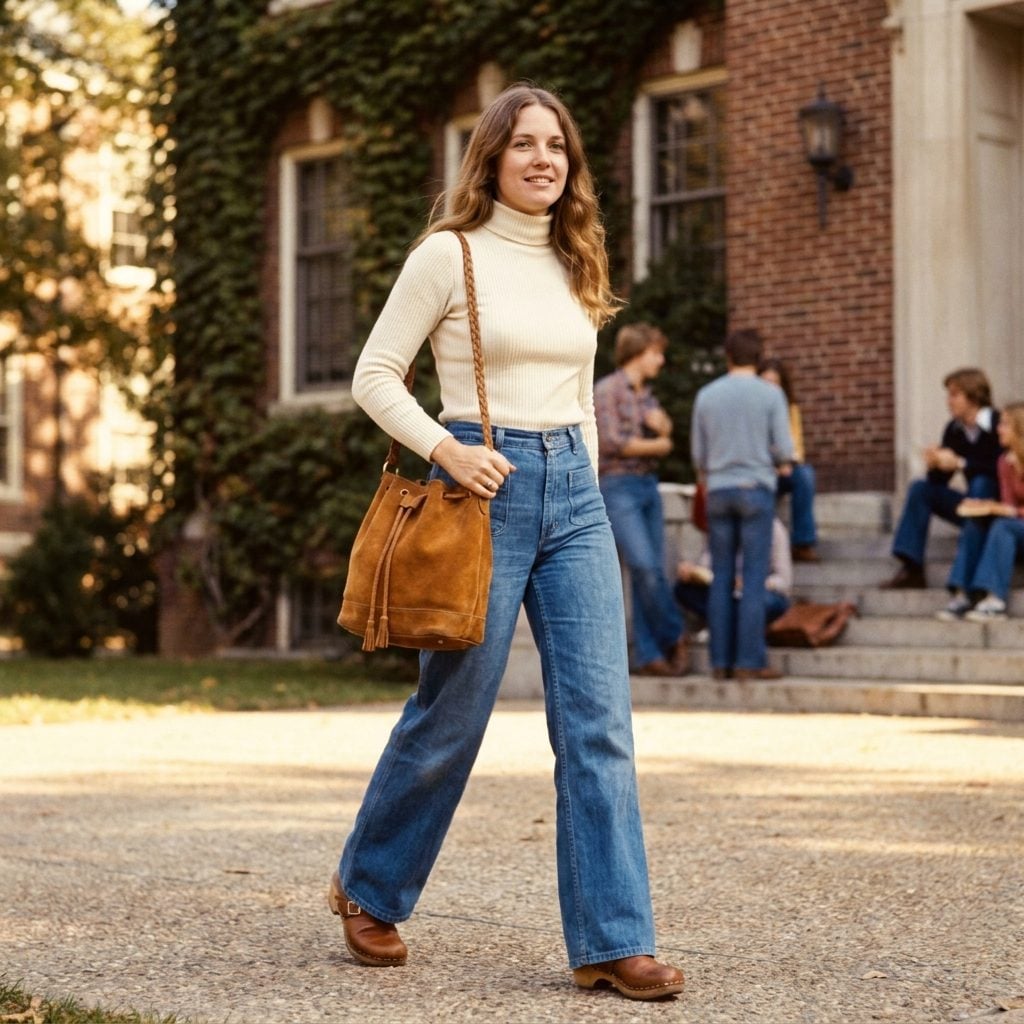
You could shove half your life into one of these and the cinched top kept it all a secret. That was the beauty of the drawstring bucket bag. Tan suede, saddle-brown leather, sometimes a deep burgundy if you were feeling fancy. The shoulder strap sat right in the groove of your collarbone, and the whole thing swung against your hip when you walked.
Most of ours came from department store sale racks or little leather goods shops in the mall. The good ones developed a patina over time, the leather softening until the bag practically molded itself to your body. The cheap ones just cracked. You learned fast which was which.
9. The Peace-Sign Canvas Tote That Told Everyone Exactly Where You Stood
❤️ Would you like to save this?
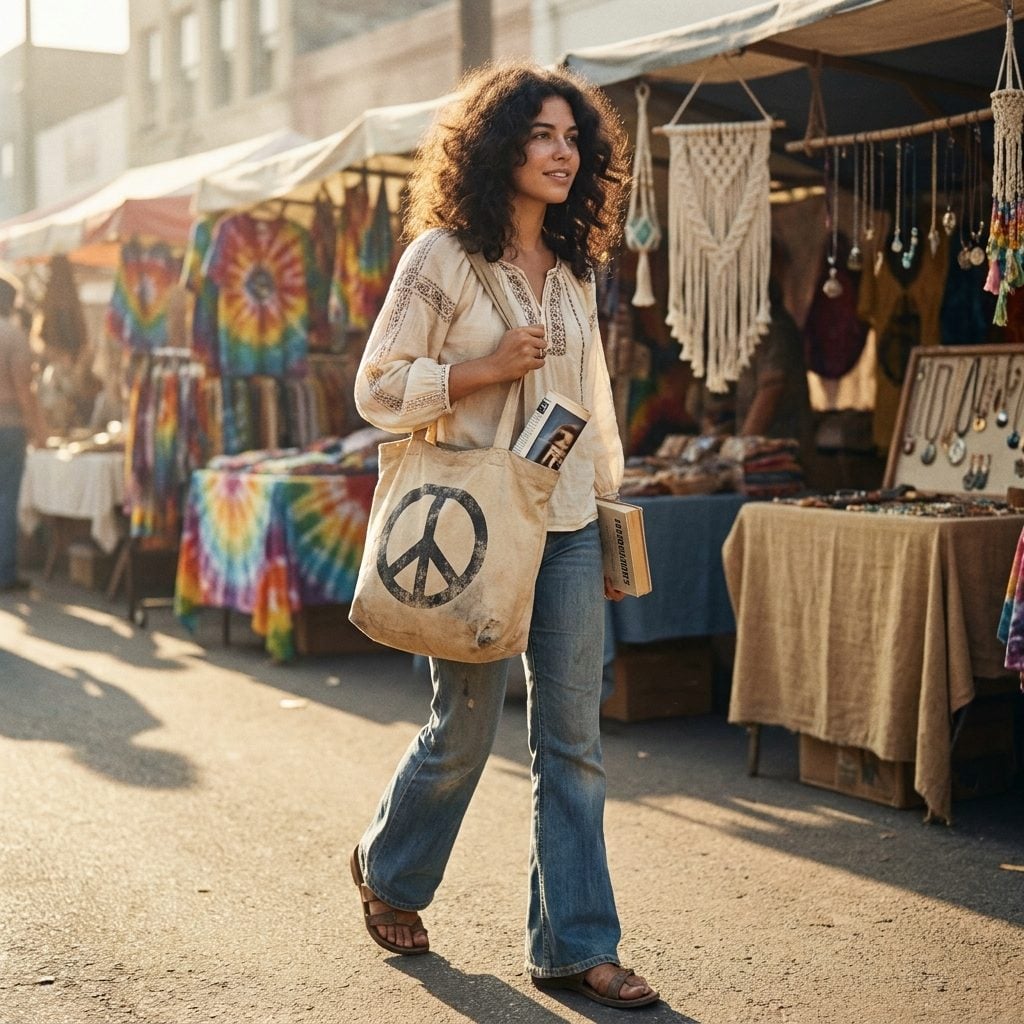
This wasn’t subtle, and it wasn’t trying to be. A big smiley face or a peace sign, screen-printed or appliquéd onto a canvas tote that you slung over one shoulder like a declaration. The canvas was usually natural or olive drab. The graphics were bold, a little rough around the edges, the ink cracking after a few washes.
You picked these up at head shops, street fairs, or from vendors set up outside concerts. They cost almost nothing. They held your records, your books, your change of clothes for crashing at a friend’s place. And they broadcast something about who you were before you opened your mouth, which was sort of the whole point of getting dressed in the ’70s.
8. Butterfly-Print Canvas Bags from the Folk Revival Nobody Could Resist
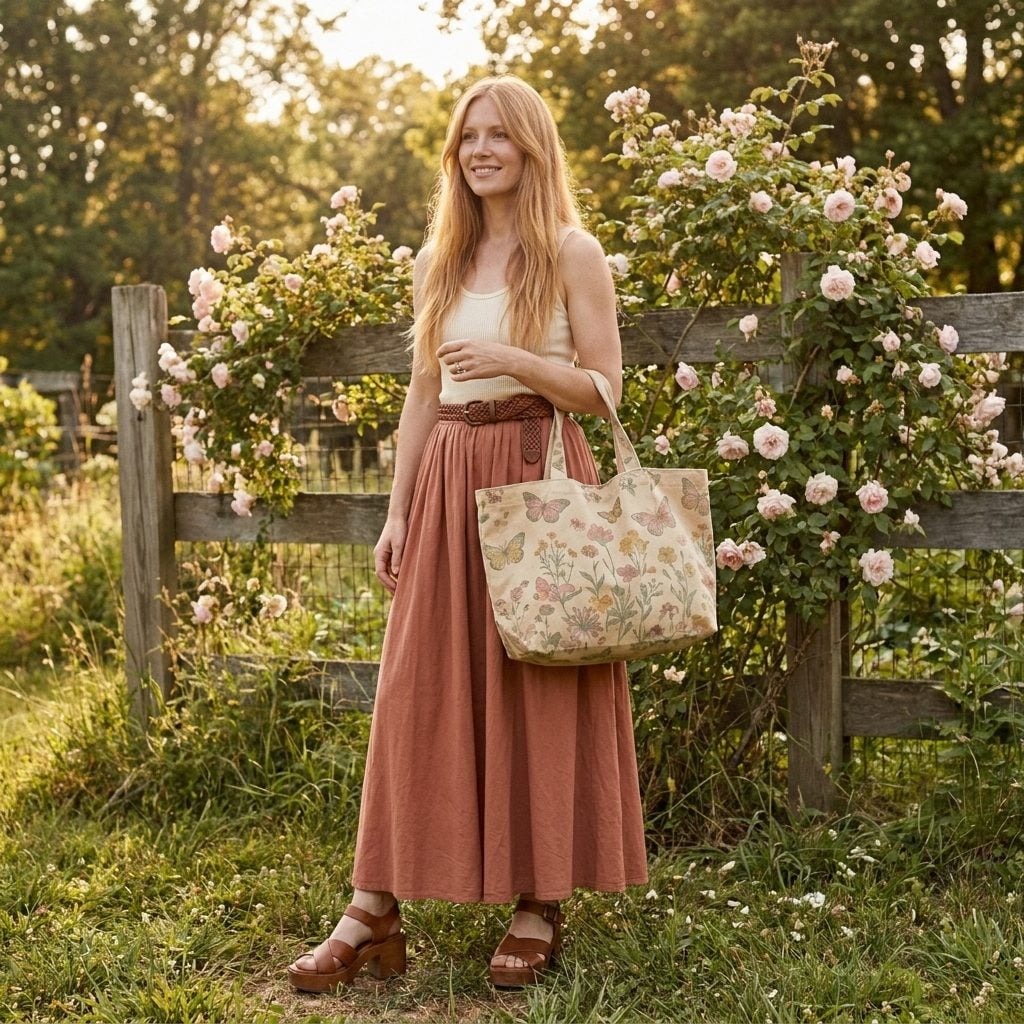
Somewhere between the Laurel Canyon scene and the folk revival that swept through every college town, these bags appeared. Canvas or heavy cotton, printed with butterflies, wildflowers, sometimes whole meadow scenes in dusty pinks, goldenrod yellows, and sage greens. They looked like something your grandmother’s curtains were made of, and we loved them without a trace of irony.
The butterfly motif especially hit different. It showed up on everything from printed canvas totes to denim patches to ceramic mugs, but on a bag it felt personal. Like you were carrying a little piece of the natural world into whatever fluorescent-lit space you were headed to next.
7. The Chain-Strap Quilted Shoulder Bag That Whispered Old Money
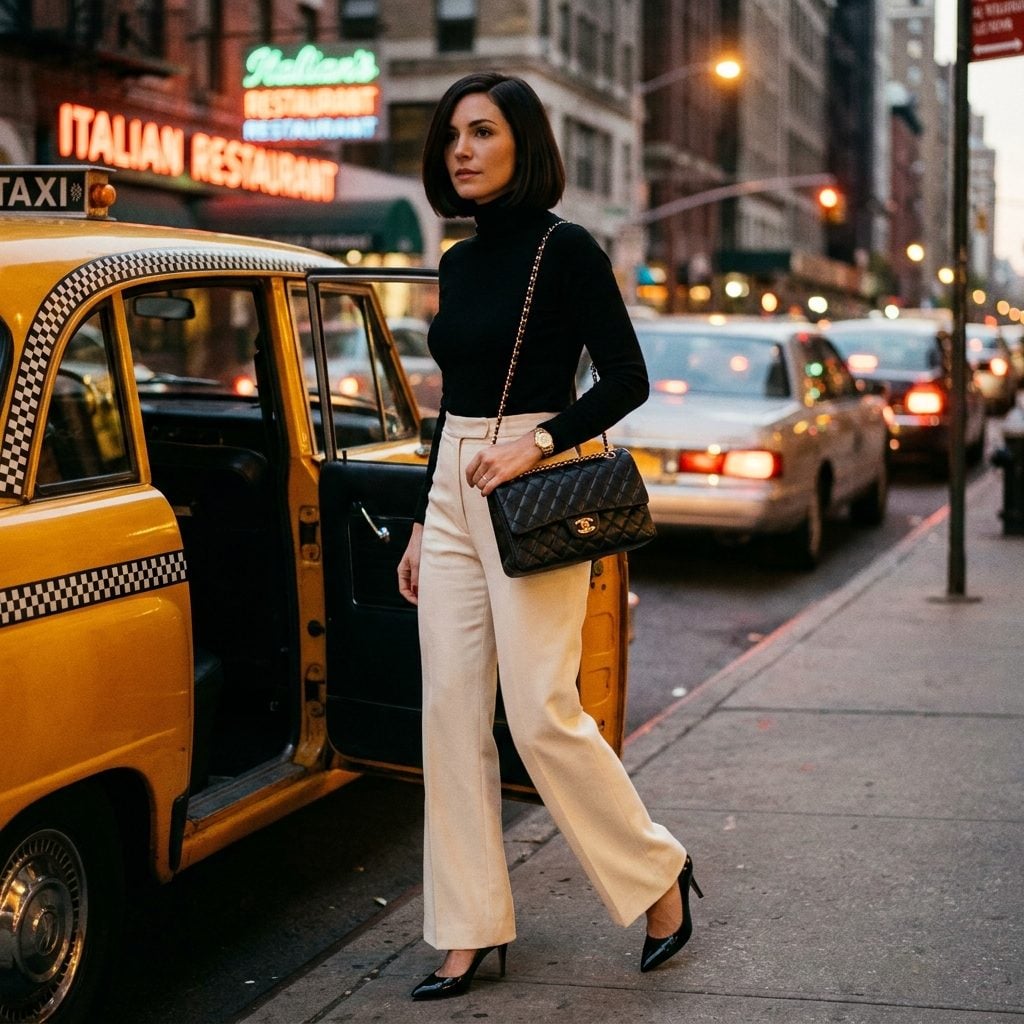
You didn’t have to own an actual Chanel 2.55 to participate in this trend, and most of us absolutely did not. But that quilted diamond pattern with the chain strap? It showed up everywhere by the mid-’70s, in department store versions and market knockoffs and everything in between. Black was the classic. Navy if you wanted to seem like you had a whole collection.
The chain made a specific sound when you set the bag down on a restaurant table. A soft metallic clink that said you had somewhere to be. I remember my mother had one in dark brown, no label worth mentioning, and she treated it like it was the real thing. She was right to.
Something about that quilted grid pattern just reads as polished. It still does, honestly, which is why the silhouette never fully disappeared.
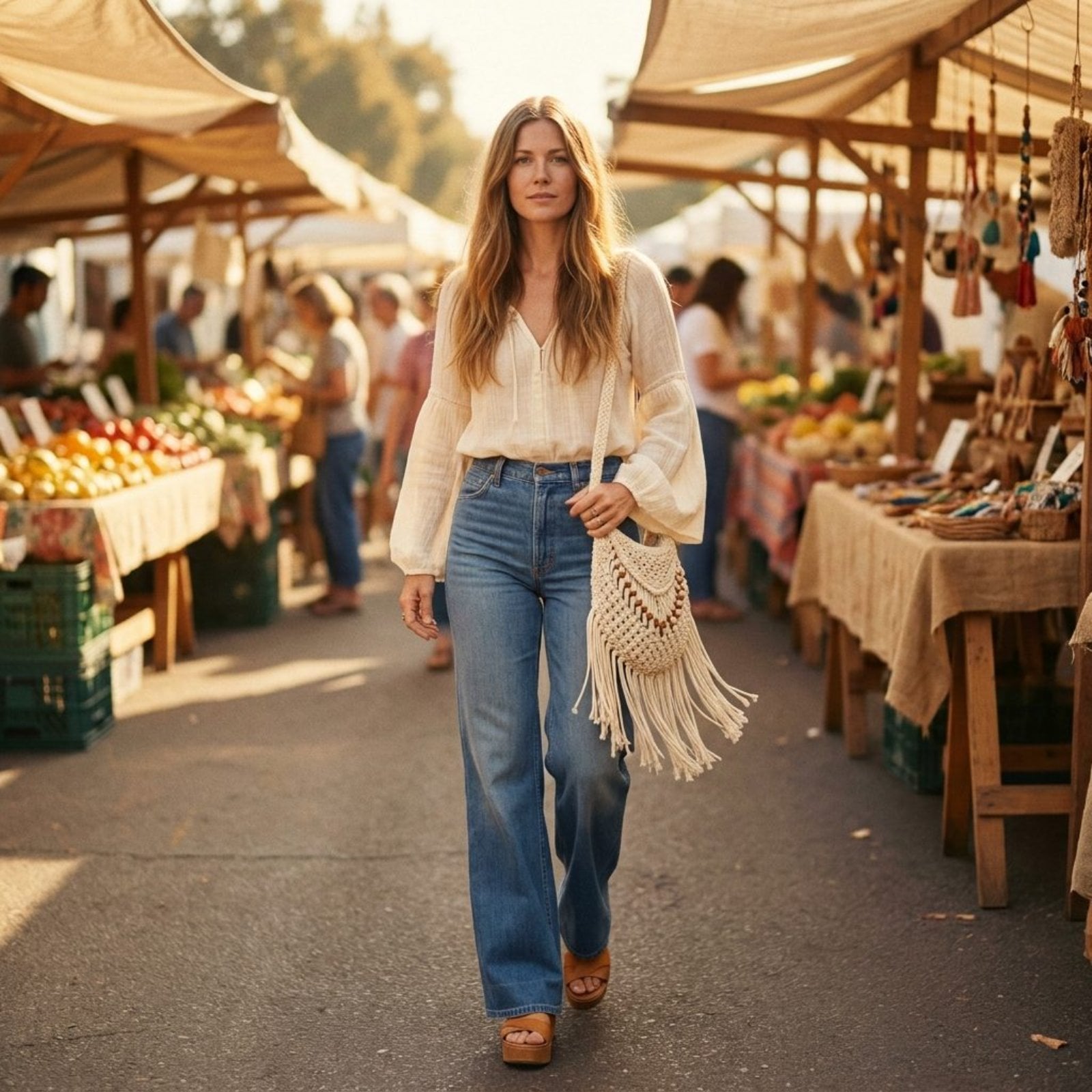
6. The Macramé Shoulder Bag With Wooden Beads and Fringe That Brushed Your Thigh When You Walked
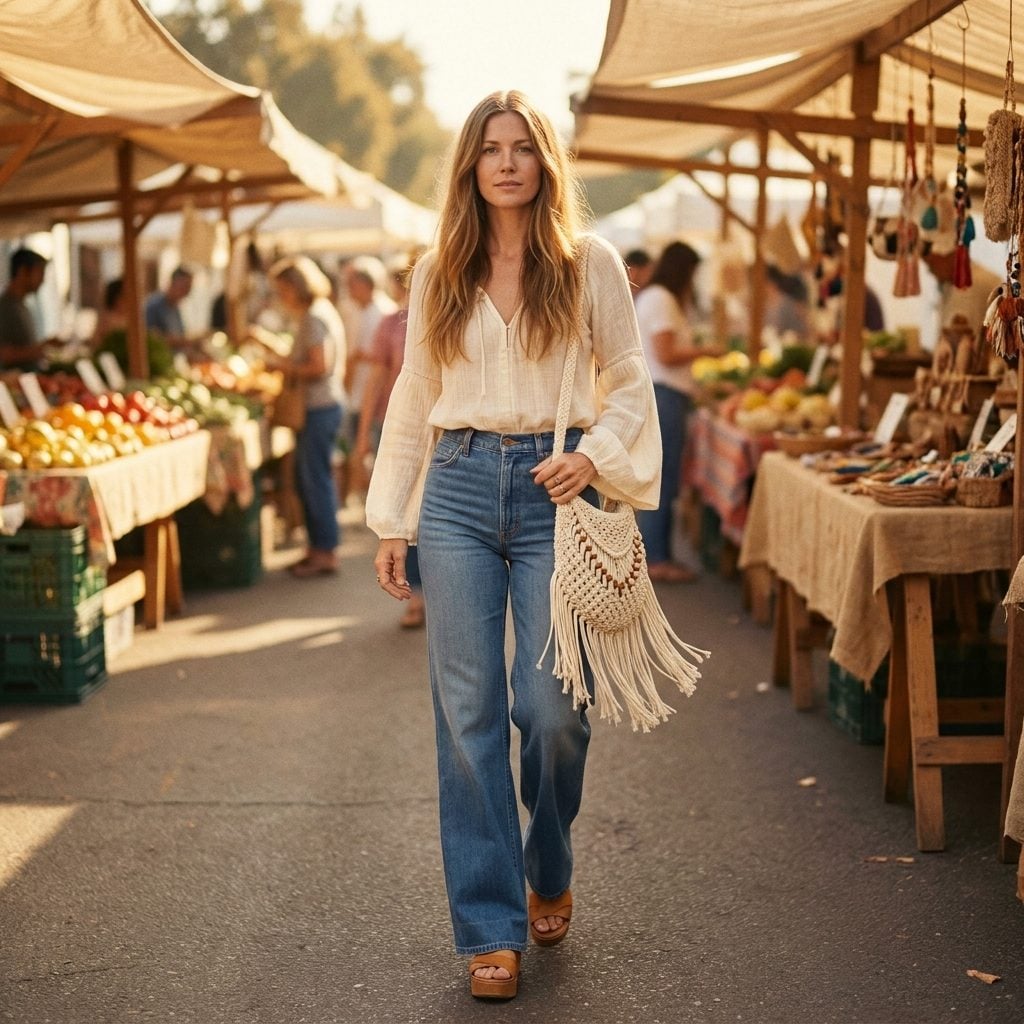
You could hear this bag before you saw it. The wooden beads knocked together with every step, a soft percussion that announced your arrival at the food co-op, the record store, the parking lot of whatever outdoor concert you’d driven three hours to attend. The knotted cotton cord smelled faintly of patchouli because everything you owned smelled faintly of patchouli.
Most of us didn’t buy ours. We made them, or our roommate made them, or we found one at a craft fair where a woman named something like Rain or Cedar sold them alongside plant hangers. The fringe was always too long. It caught on doorknobs. It didn’t matter. Carrying this bag meant you were the kind of person who valued handmade things, which in 1974 felt like a political statement.
5. The Céline Triomphe Clutch with Logo Hardware That Meant Business
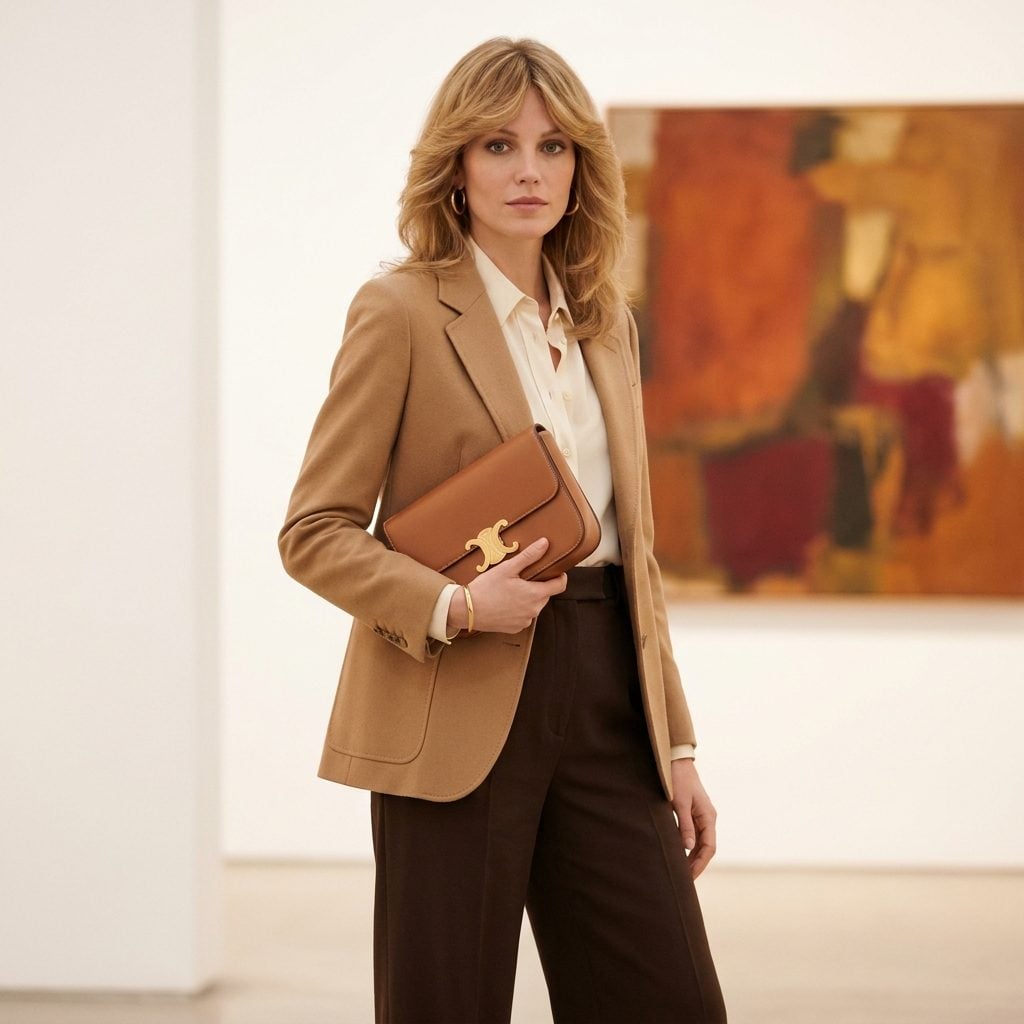
Before logo mania became a punchline in the ’80s, there was something genuinely chic about a discreet gold clasp with an interlocking C. Céline’s Triomphe hardware appeared on structured clutches and compact logo-clasp shoulder bags that European women had been carrying for years, but American women discovered them with a particular hunger in the late ’70s.
These bags were small. Almost aggressively small. They held a lipstick, a compact, your keys, and maybe a folded twenty. That was the point. Carrying one meant you had your life together enough that you didn’t need to haul everything with you.
4. Wooden Bead and Cork-Handle Bags with All the Boho Energy
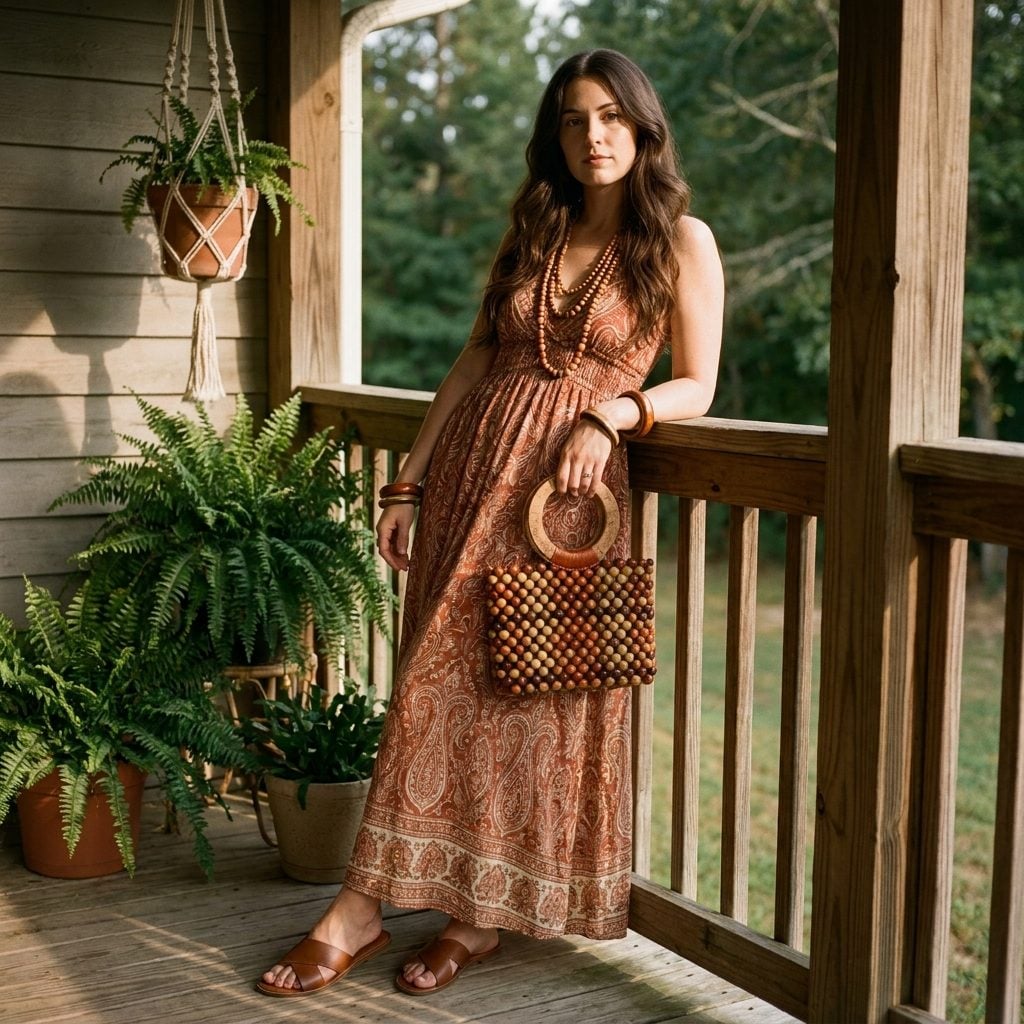
If you owned one of these, you also owned at least three macramé plant hangers. That’s just how it worked.
The wooden bead bag was a craft project and a fashion accessory at the same time. Strings of lacquered wooden beads in earth tones, sometimes accented with cork or bamboo handles, clicking softly with every step. Some women made them at home. Others bought them at import shops that smelled like sandalwood and patchouli. The construction was always a little unpredictable, gaps between the beads just wide enough that you’d lose a tube of Bonne Bell Lip Smacker through the bottom if you weren’t careful.
But the look was specific and committed. You couldn’t carry this bag ironically. It announced a whole worldview.
3. The Top-Handle Leather Satchel Your Mother Absolutely Swore By
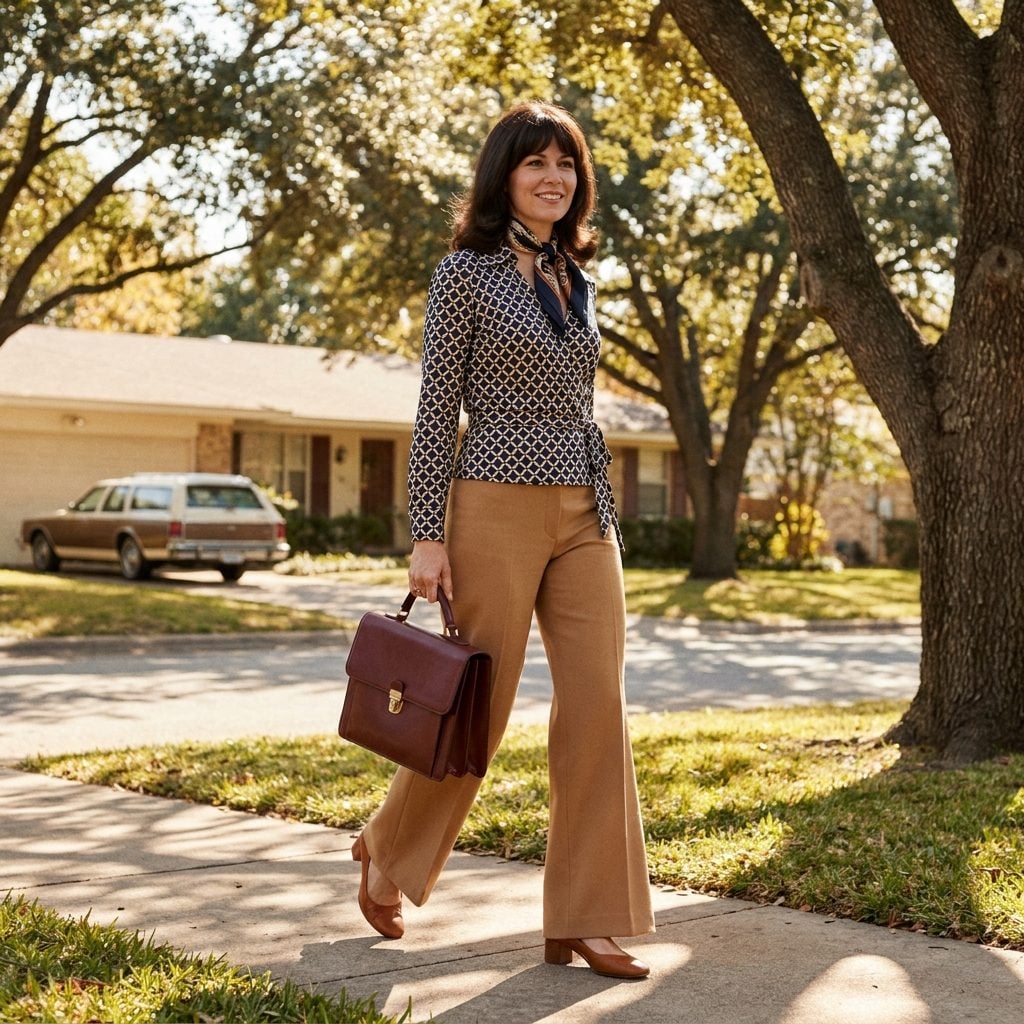
This was the bag of women who knew what they were doing. Smooth or pebbled leather, structured but not stiff, with a single top handle or two short handles that you gripped in the crook of your arm like you were headed to a meeting you were already running. Brown, black, oxblood. Maybe a deep forest green if your mother had adventurous taste.
No logo. No chain. No fringe. Just leather and hardware and a clean silhouette that worked with slacks and a blouse on Monday and a wrap dress on Saturday. Every woman I knew over thirty carried some version of this bag, and the best ones were inherited. My aunt’s brown pebbled leather satchel from the early ’70s is still in a closet somewhere, the leather gone dark and soft as butter at the handles.
2. The Doctor-Style Bag with the Structured Frame That Made You Feel Grown
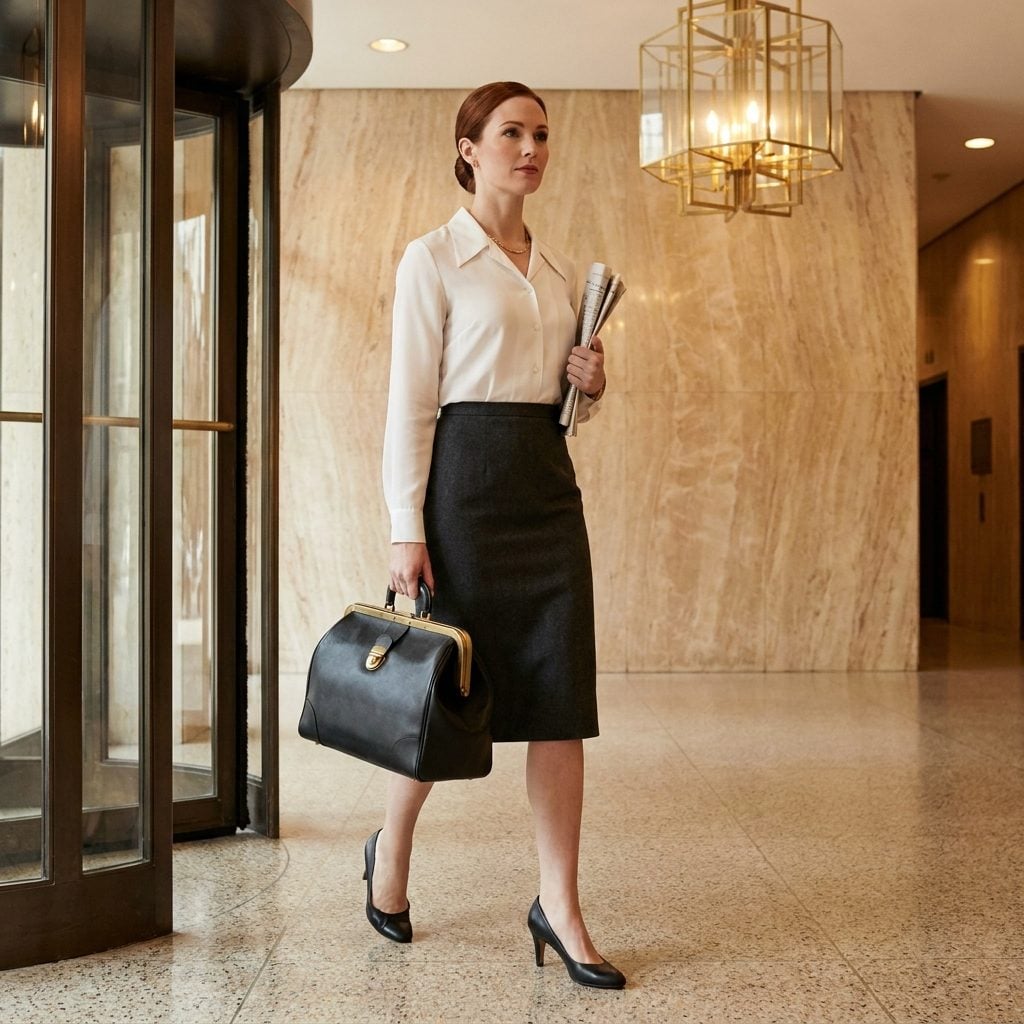
There was exactly one bag that made a twenty-five-year-old feel like she had a corner office and a retirement plan. The doctor bag. That rounded frame with the wide mouth that snapped open and shut with a satisfying clasp. Dark leather, usually black or deep brown, with brass or gold-toned hardware that developed a warm tarnish over time.
The style borrowed directly from men’s medical bags, which is what gave it that serious, no-nonsense character. You carried it by the top handle, never on your shoulder, because the frame was too rigid to drape. It forced good posture. It demanded that you stand up straight and walk with purpose.
1. The Crossbody Messenger Bag That Freed Up Both Your Hands
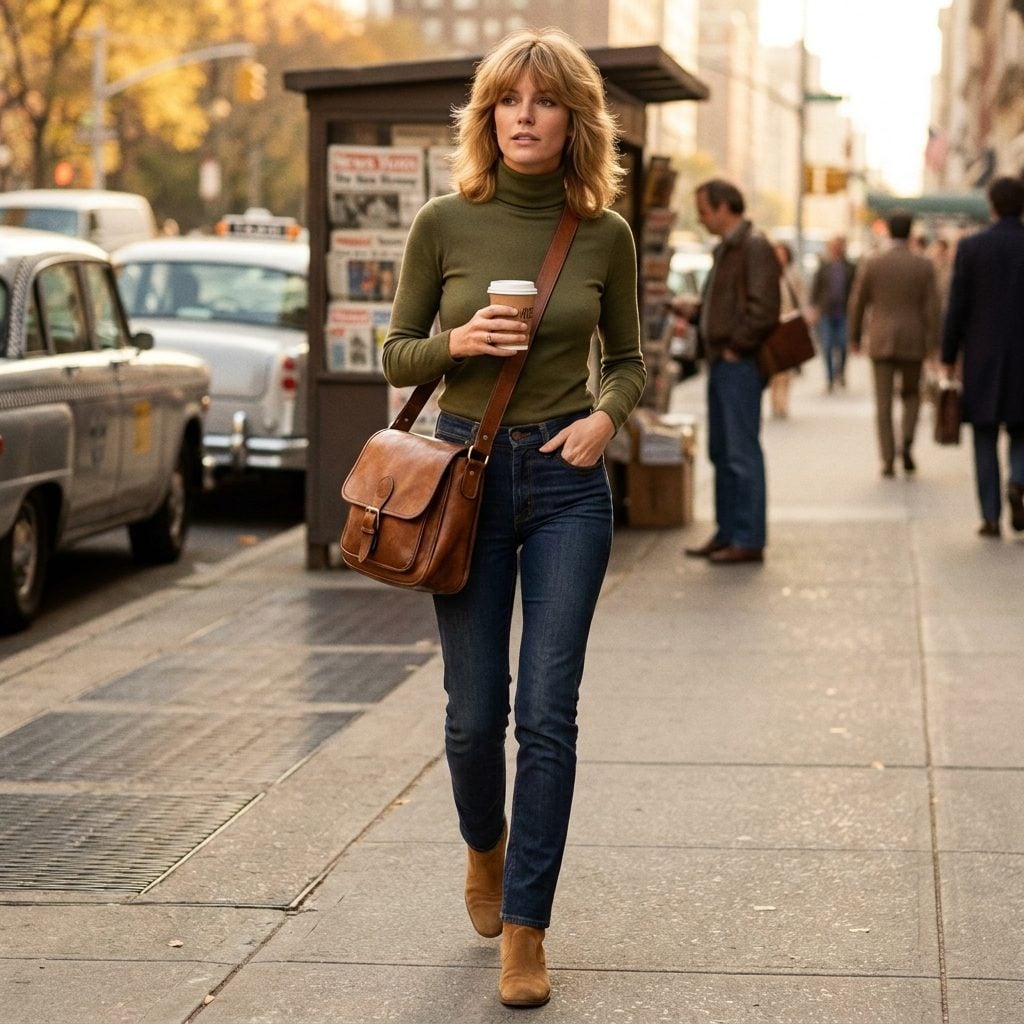
By the late ’70s, a quiet revolution happened. Women stopped wanting to hold their bags and started wanting to wear them. The crossbody messenger, with its wide adjustable strap and front flap closure, was the answer nobody knew they’d been waiting for.
These sat flat against your hip. The wide strap distributed the weight across your shoulder and chest. The flap kept everything secure without a zipper. And suddenly you could ride a bike, chase a bus, carry grocery bags in both hands, or just walk without that constant one-handed grip on a handle or chain.
Brown leather was standard. Canvas with leather trim showed up too, and those ones felt almost military, which was part of their cool-factor. The leather crossbody messenger was practical in a way that felt genuinely radical for women’s accessories at the time. We’d spent decades being handed bags that required a free hand. This one gave it back.